My next couple of days were devoted to exploring inland Puglia, with its pretty, white, hilltop villages and strange “trulli” (more about these below). I said a sad goodbye to Lecce and drove north to my first stop, Ostuni. This is arguably the prettiest town in Puglia, whose old town has a maze of windy lanes snaking up a hill. It dominates the surrounding plain and its visual impact is enhanced by the brilliant white colour of its houses, like villages in Greece.
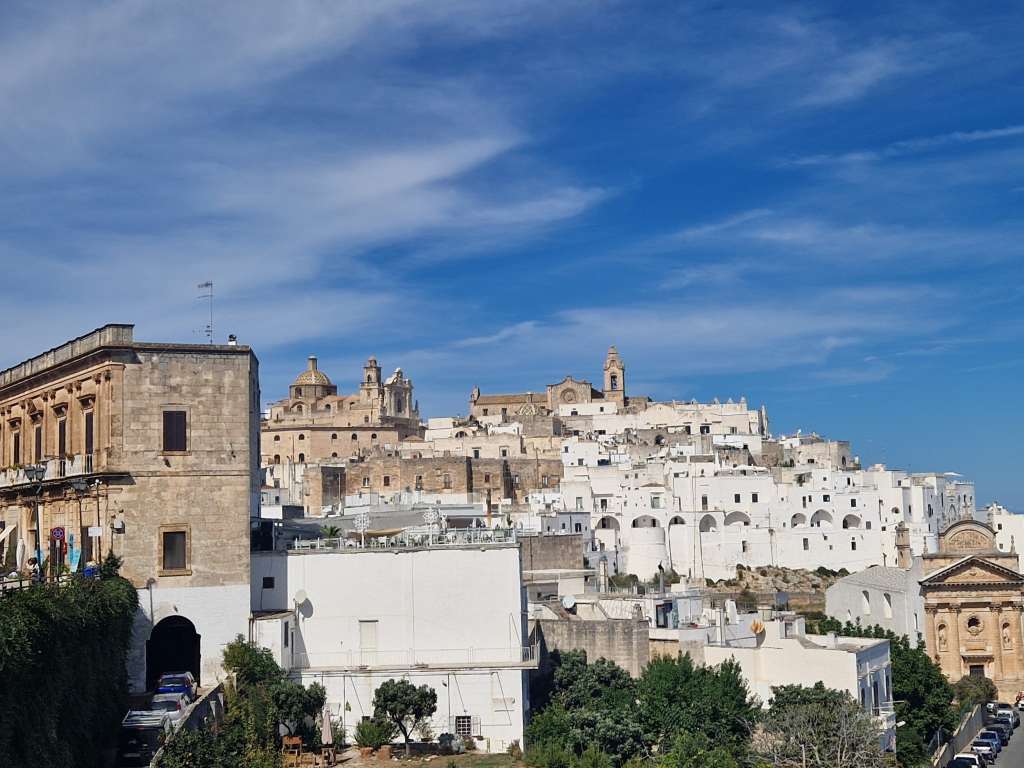
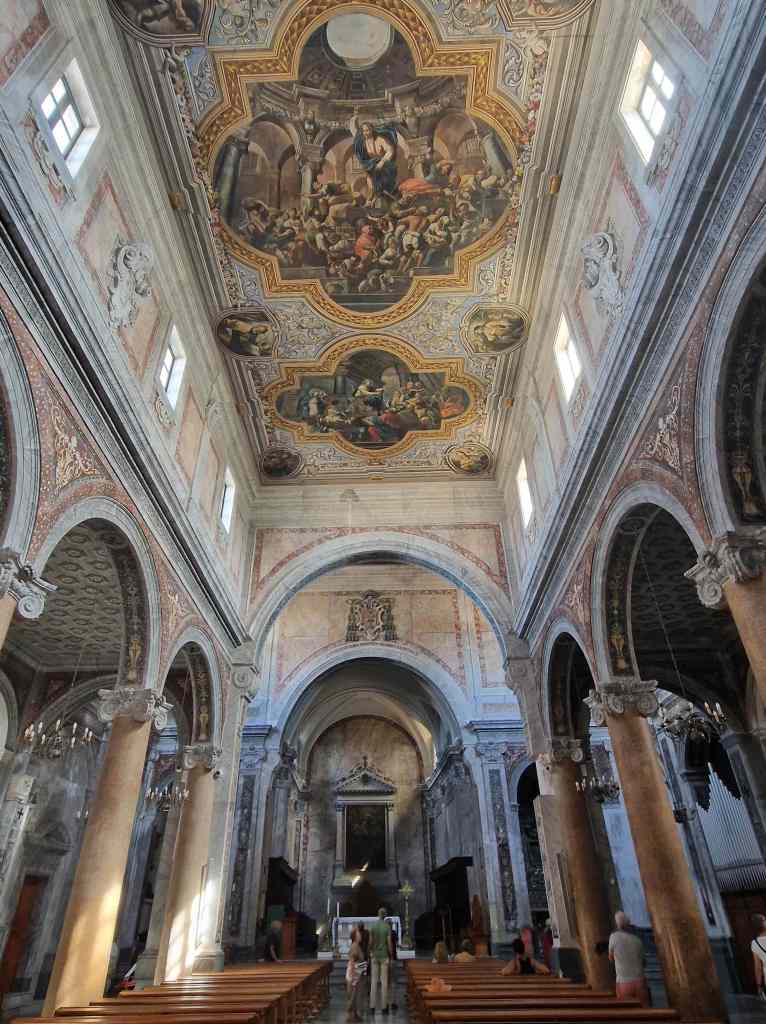
However, Ostuni’s beauty, and its proximity to the coast and the airport at Bari make it a popular destination for tour groups, and when I visited, it did not have enough small passageways to absorb the number of tourists it gets. I took lots of photos, but after a couple of hours wandering around, always seeming to come back to the same crowded piazza in front of the town’s 15th century cathedral, I had had enough and decided to drive on.

My decision to leave Ostuni earlier than I had planned left me with time to kill before I could check into my accommodation, and I decided to visit the little-known town of Cisternino. Unlike Ostuni, whose brilliant white old town is clearly visible for miles around, Cisternino’s was hidden behind more modern buildings, and on first appearances the city looked an unremarkable place. I had lunch in a local trattoria where I got a plate of excellent bombetti (little parcels of meat) for a ridiculously low price. Feeling very full after a big meal, I set off to look for the old town. I found a small archway in an ordinary looking modern building, and ducked under it to enter a different world – once again made up of winding narrow streets, white-painted houses and churches.
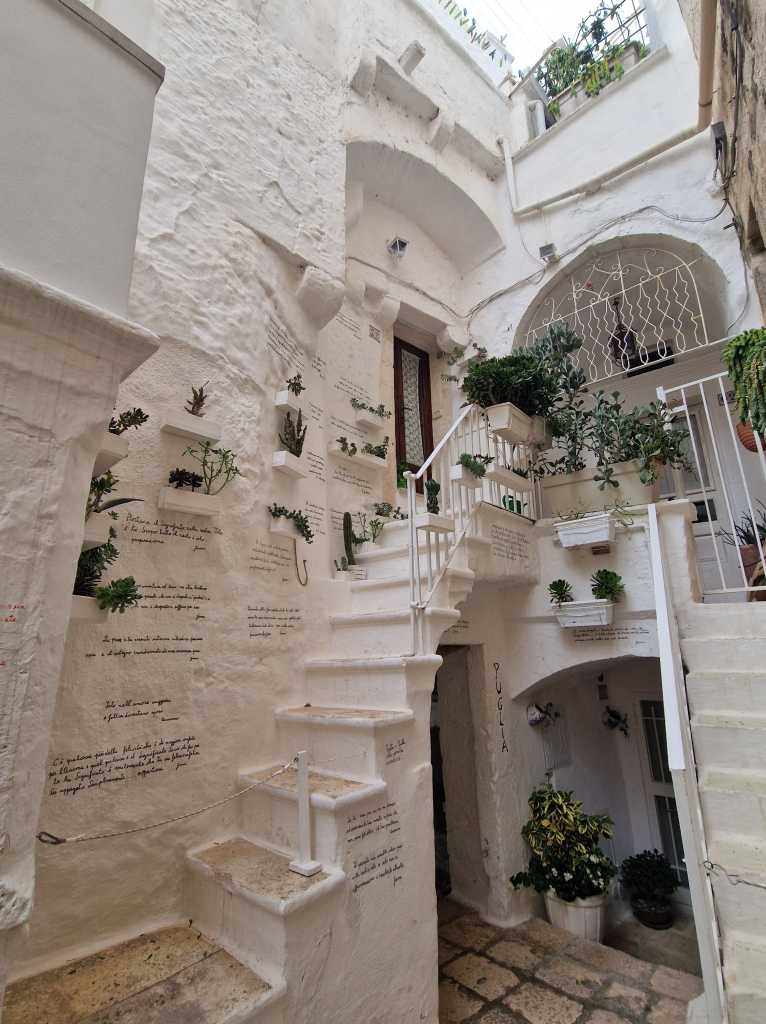
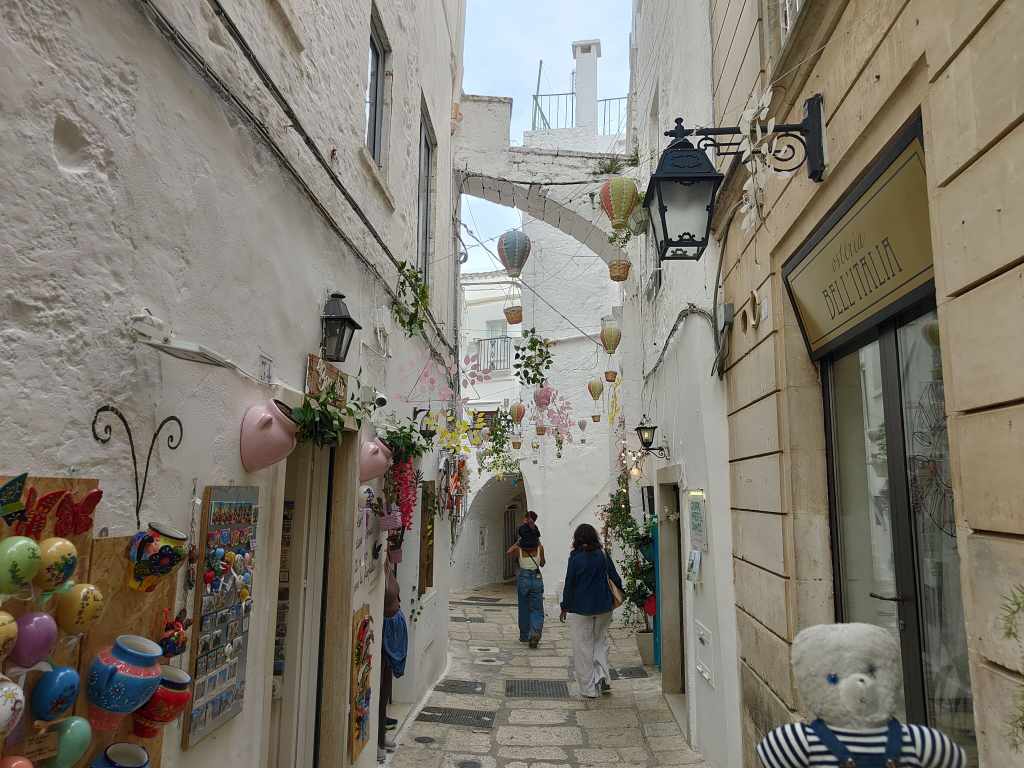
The residents of the old town had gone to great lengths to make the area interesting, decorating it in all sorts of imaginative ways. In some alleys, children’s swings with poetic inscriptions on the bottom of their seats hung above me; others were lined with red hearts and red flowers, and yet more displayed models of small hot air balloons hanging in the air above me.
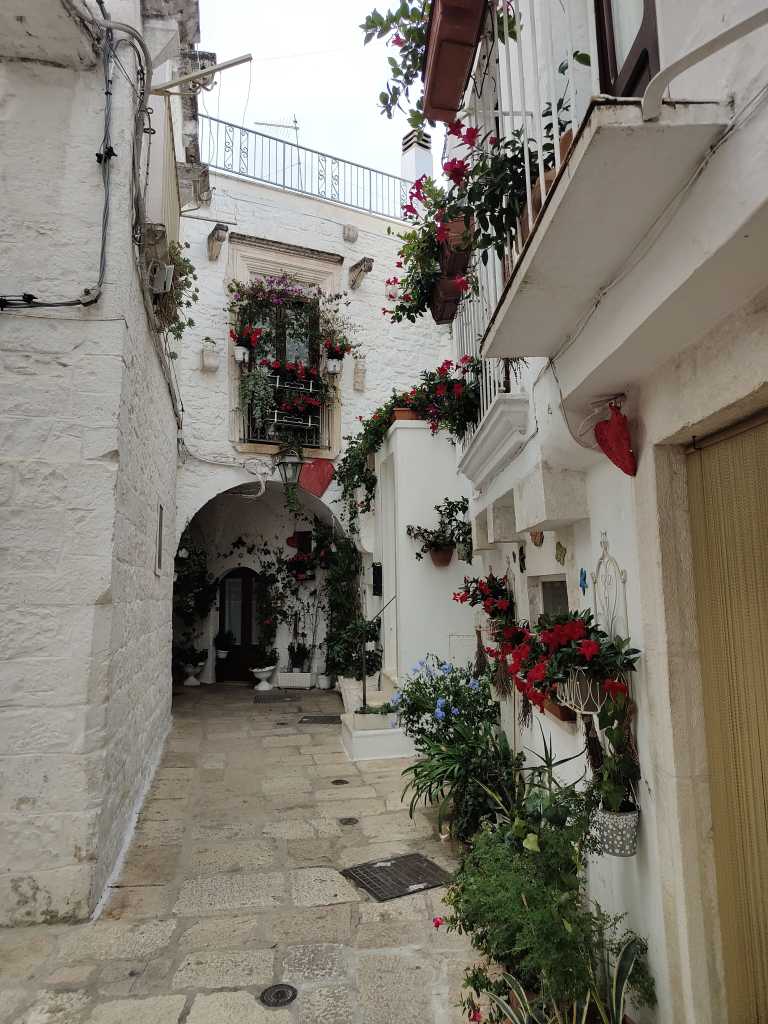
There were also some larger installations around the theme of countries in Asia – here is the one devoted to Persia:
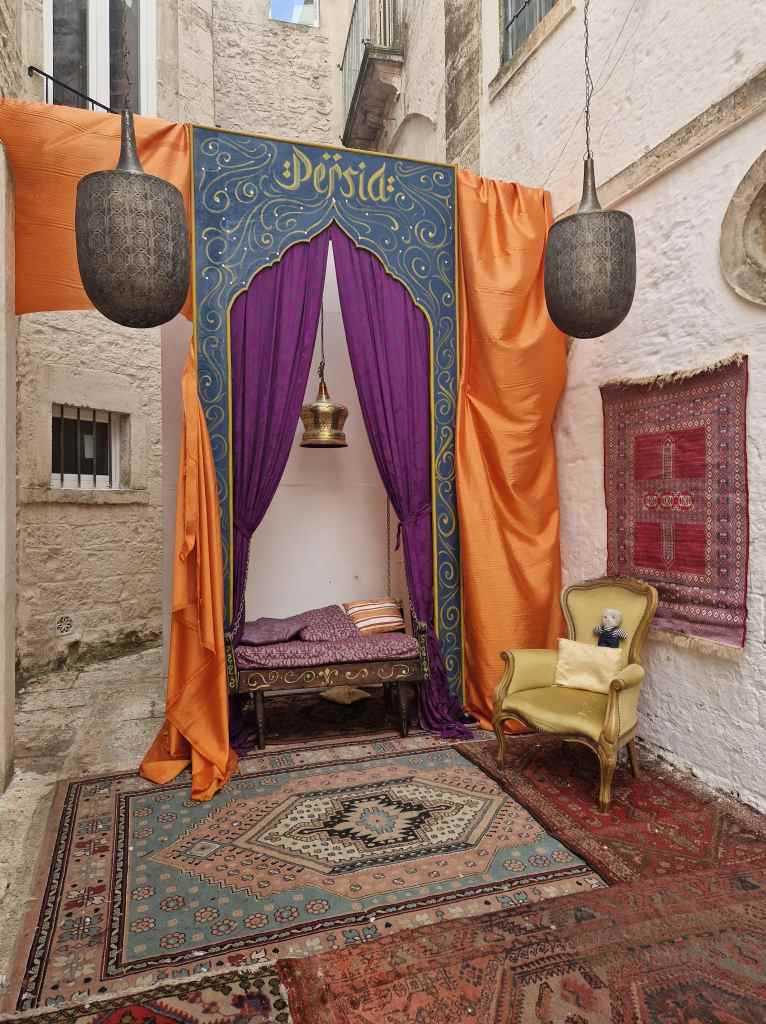
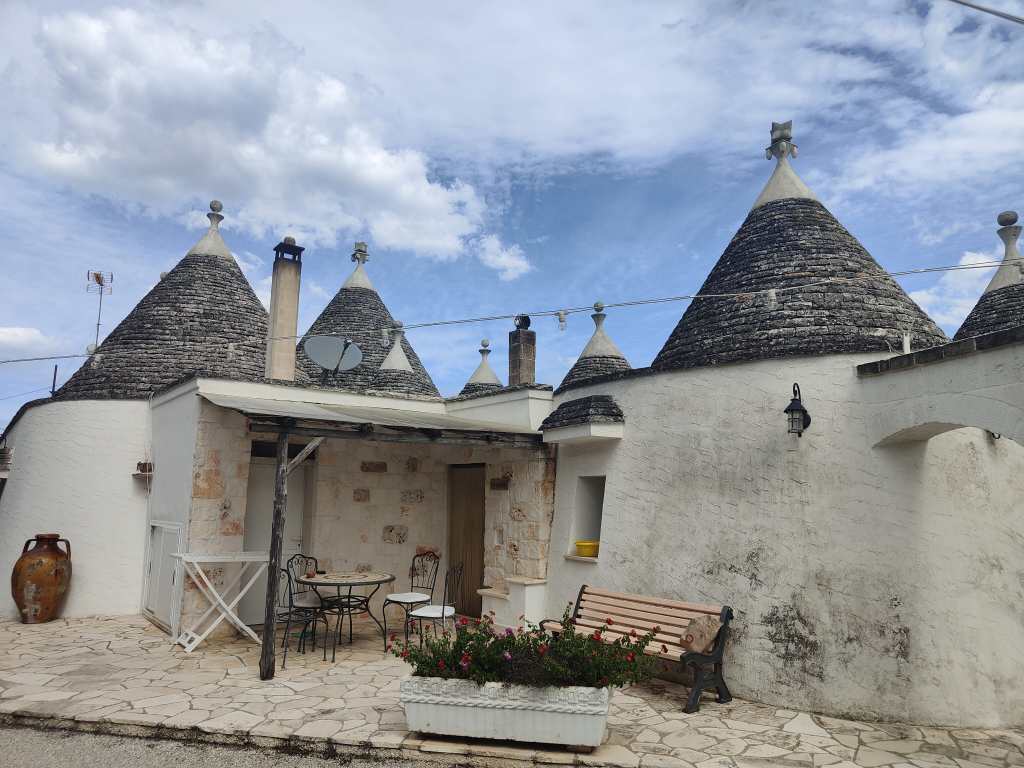
It was wonderful strolling around to see what new artistic ideas might lie behind the next corner. It was also very quiet – bumping into a fellow tourist was a pleasant surprise rather than a constant nuisance, like it had been in Ostuni. From being a stopgap to kill time before check-in, Cisternino had become one of the highlights of Puglia, and I was charmed by the place. But eventually it was time to go, and I drove on to my accommodation – a “masseria” or fortified farmhouse. The road led through the dry Puglia countryside down tiny country roads that crossed fields of olives or vines and were dotted with “trulli” – traditional stone huts with conical roofs. These were originally built as temporary storage facilities for farms, or as modest dwellings for agricultural labourers – but now many have been restored to provide accommodation for tourists.
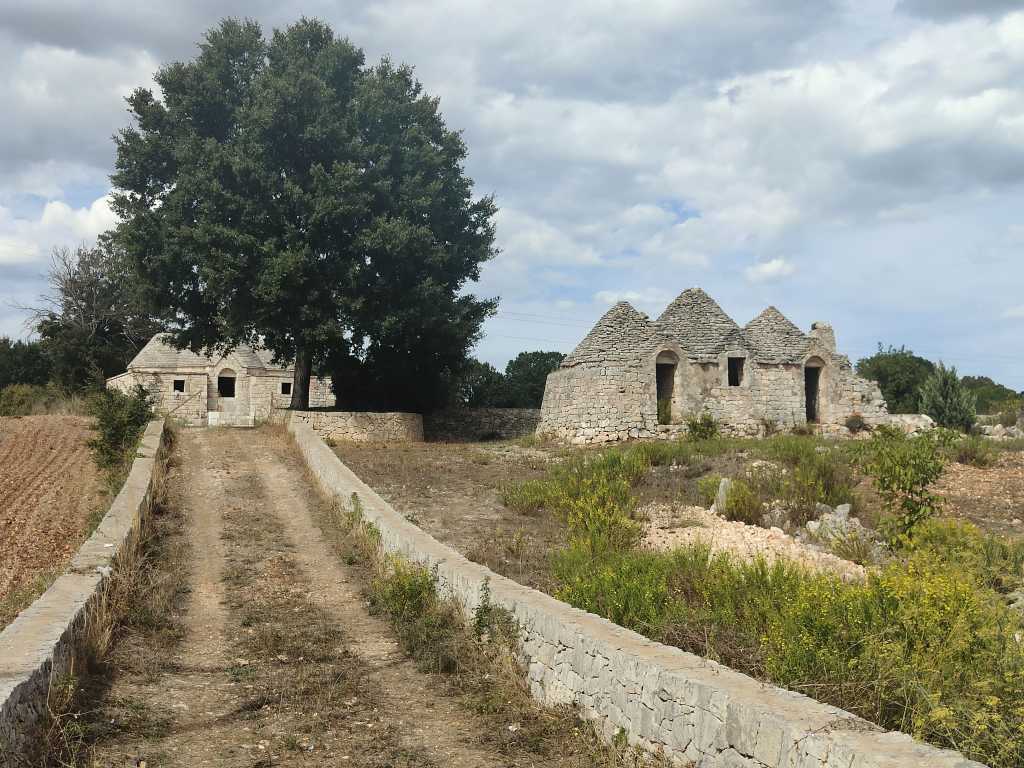
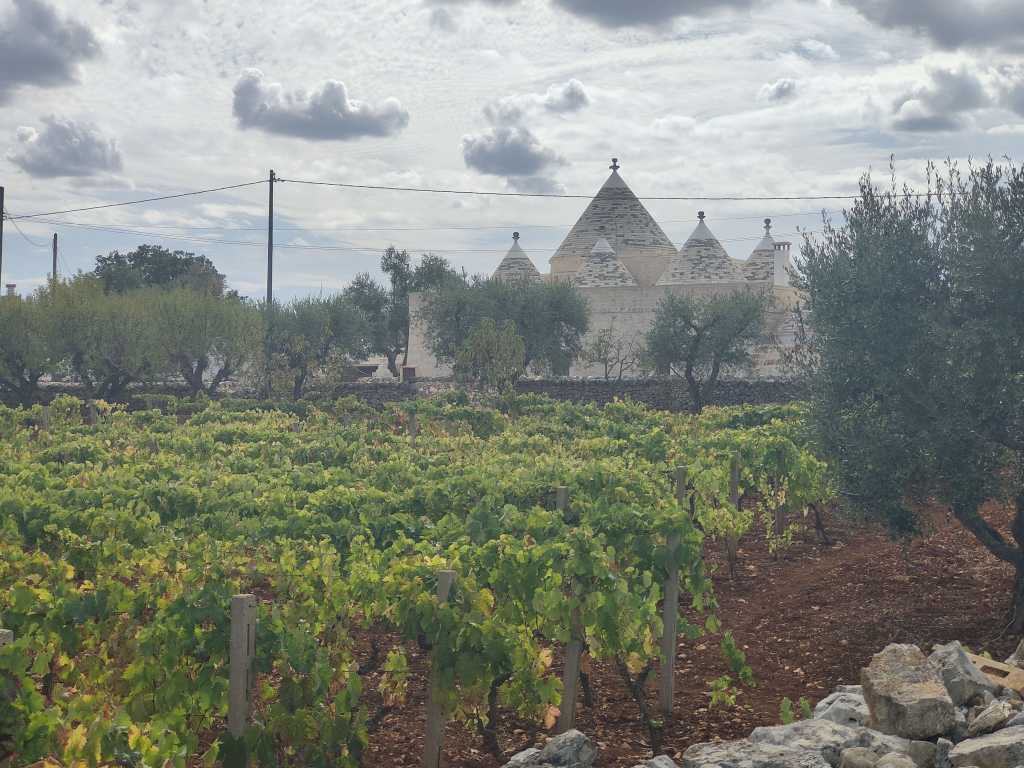
I eventually reached my masseria late in the afternoon. I had booked a room in one of these converted trulli, a popular idea with the many farmers who now make a living from agrotourism alongside cultivating crops. Staying in a trullo was something I thought I had to do whilst in Puglia, and was fun to do once, but I found the room a bit dark since the windows were very small.
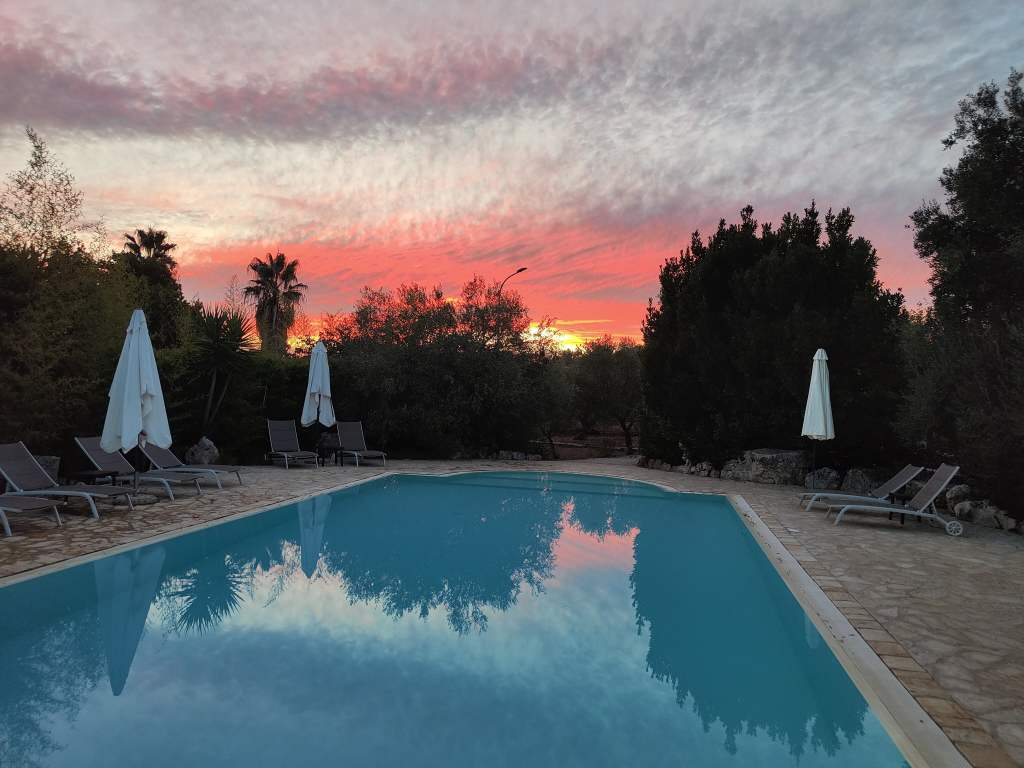
After check-in, I lay by the pool catching up on my blog. It had been a day of contrasts – I had been a bit underwhelmed by popular Ostuni, but charmed by little-known Cisternino, and was curious to see what other gems lay hidden in this remote part of inland Puglia – so remote in fact that my masseria had no mobile phone coverage.
Previous Post: Otranto and Puglia’s heel
Next Post: Puglia – Martina France and Alberobello
 Trouspinet travels
You seem to always be rewarded by running away from touristy spots and discovering little gems!
LikeLike
Je nedoute pas dr ce que vous êtes revenus enthousiastes de votre ballade italienne. Que de beautés à admirer… Kika
LikeLike
That pool is the perfect place to end the day. Lovely capture of the trulli and the vines too. A very pretty corner of Italy.
LikeLike