The second post in this series about Russia is devoted to Saint Petersburg. This is the Russian city most familiar to western visitors, and indeed its centre is a very pretty place well worthy of a few days’ stay, with world class attractions like the Hermitage and the royal palaces. My first visit was a holiday in the summer, which followed a classic circuit of the city’s highlights, but later I visited in winter and then I started to go there frequently on business. This gave me a very different perspective of the city and led to some of my most bizarre and fun adventures in Russia. I will cover the different sides of St Petersburg in two separate posts.
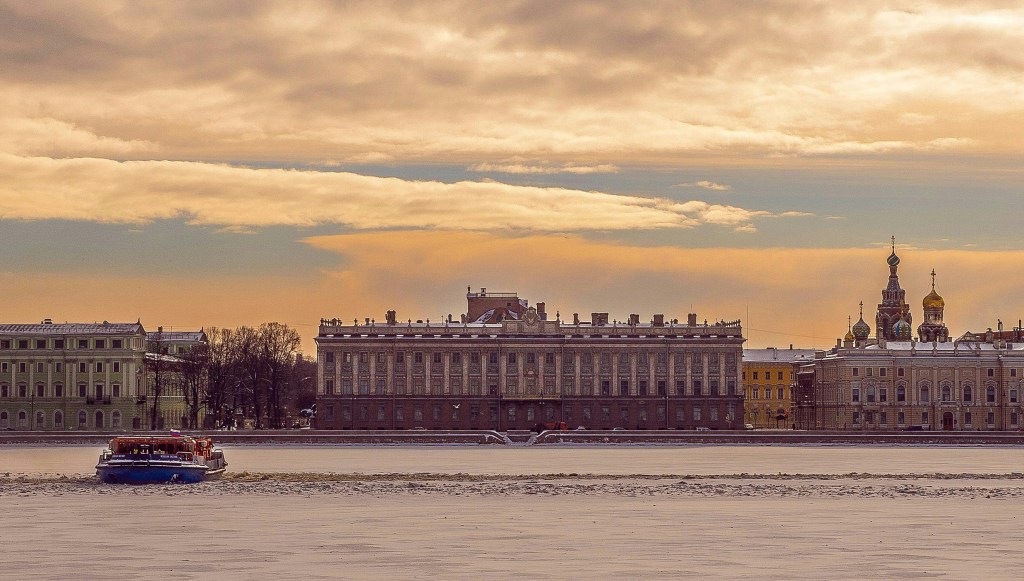
First, I will describe the classic St Petersburg that most tourists see. The city was founded in 1703 by the tsar Peter the Great, on boggy land on the shores of the Neva River – territory that had only just been claimed by Russia after a war with Sweden. Peter employed an Italian architect to design some beautiful classical buildings, whilst the labour force for its construction included many Swedish prisoners. Maybe not surprisingly, the centre of Saint Petersburg looks like other European cities built in the same period, with majestic houses along the Neva River and the surrounding canals. A boat trip along these waterways is a popular way for visitors to get a first impression of the city.
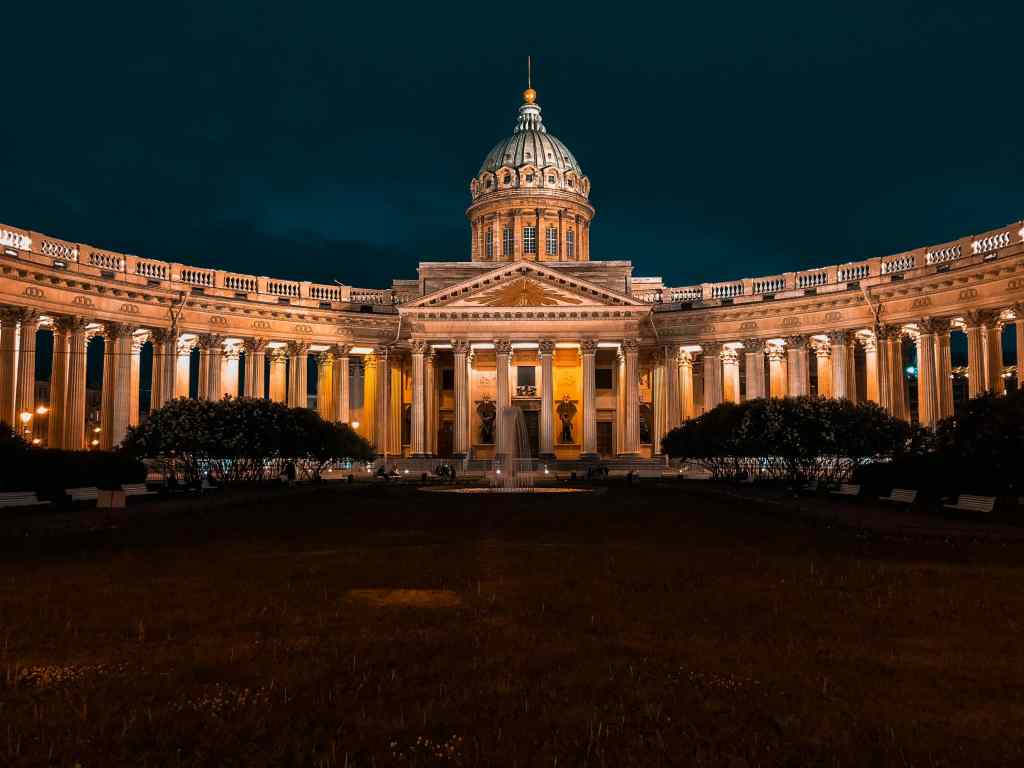
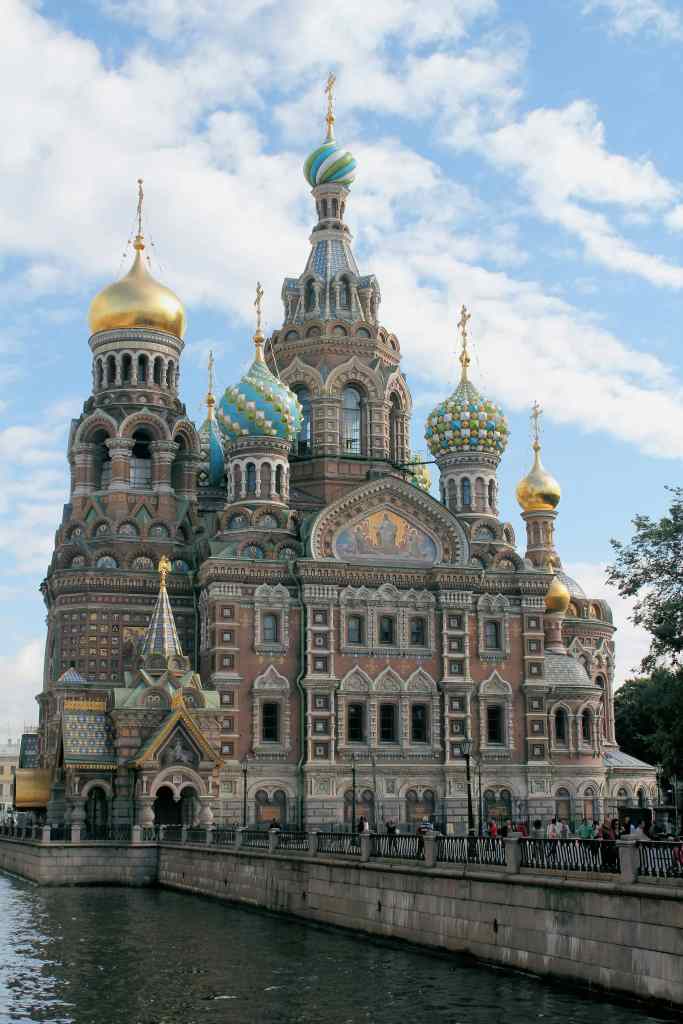
The centre of St Petersburg has many magnificent buildings, like Kazan Cathedral (first picture in this post) or the Church on Spilled Blood, built on the spot where tsar Alexandra II was assassinated in 1881.
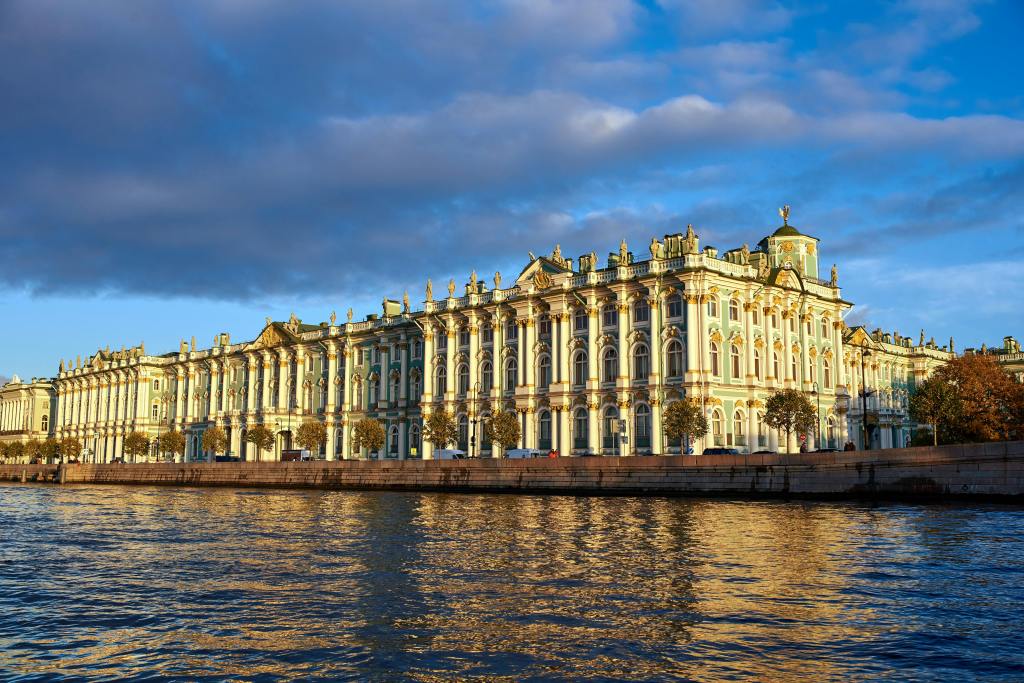
One of the highlights of the centre of St Petersburg is the famous museum, the Hermitage, which owns a staggering three million items – of which only a small proportion are put on display. It was founded by Catherine the Great in 1764 as an extension to her Winter Palace in order to house her growing art collection and acquired its name from its being an exclusive, inaccessible place that only the tsar’s family could visit. The collection steadily grew, and new buildings were added to house them – although a few major works were sold by the cash-strapped communist regime in the 1920s. The communists also transformed the tsars’ former Winter Palace into yet another part of the museum, and today is the second largest in the world by surface area.
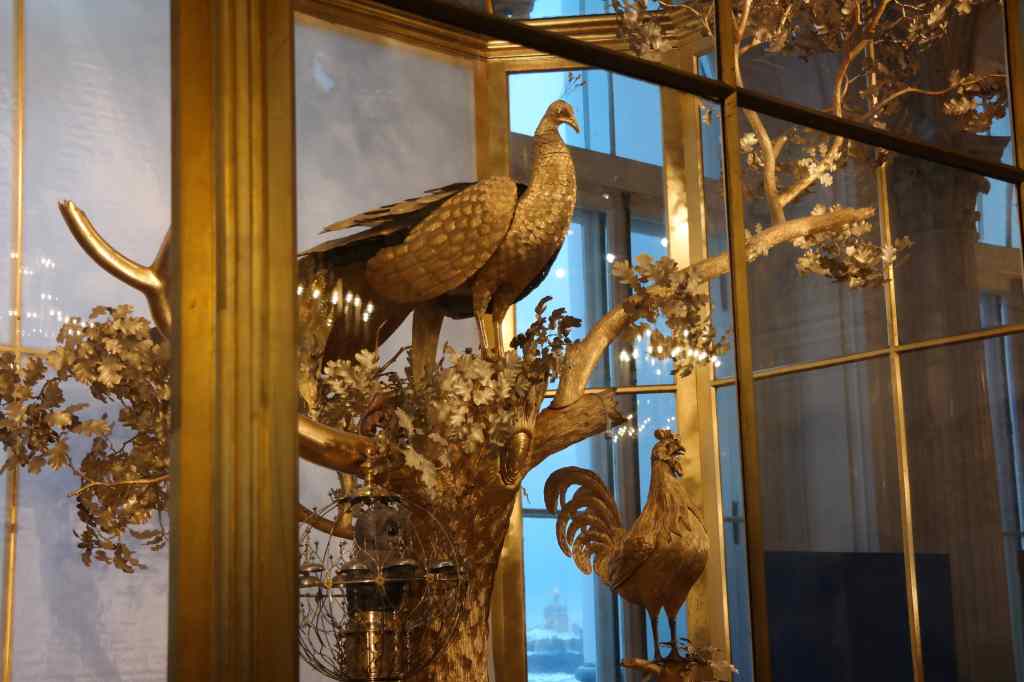
I have visited the Hermitage many times, and indeed its collection is amazing. Highlights include this incredible golden Peacock Clock and a collection of old masters that includes works by da Vinci and Rembrandt.
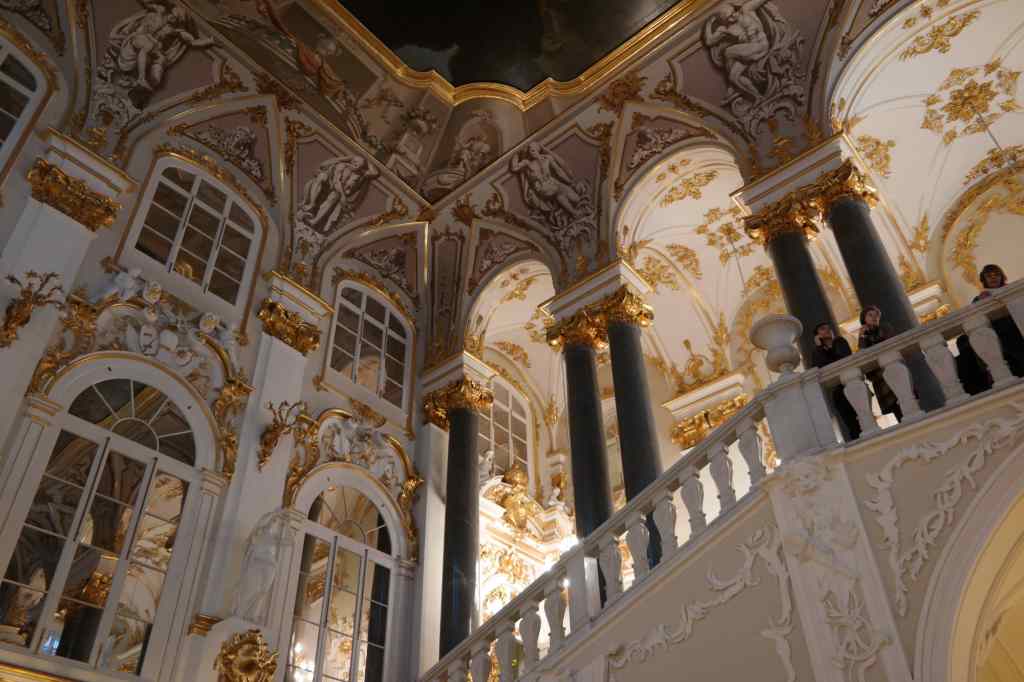
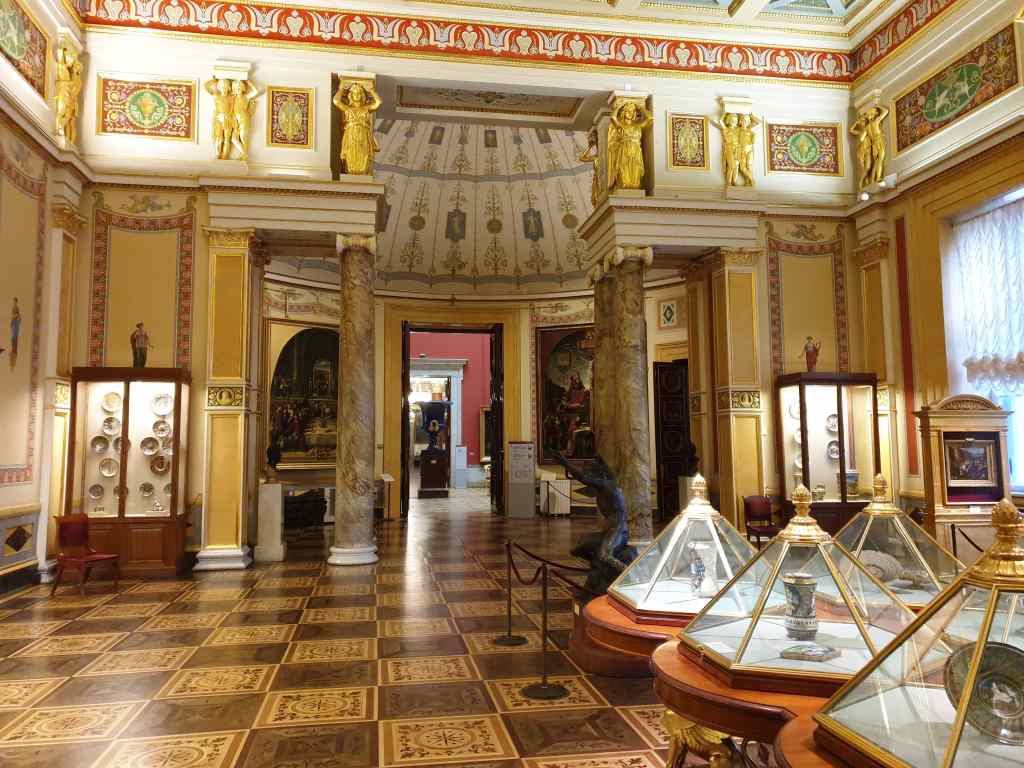
However, I think I actually simply prefer walking around and admiring the magnificent interiors of the former Winter Palace -such the Grand Gala Staircase or the Malachite Room, which was the home of the Russian Provisional Government formed after czar Nicholas II abdicated until the Hermitage was stormed by workers and sailors at the start of the Bolshevik Revolution.
Magnificent palaces are not confined to the centre of St Petersburg. A short distance away from the city are several of the Russian tsars’ summer palaces. One of the most spectacular is Peterhof, built by Peter the Great and most easily reached by a short ride in a hydrofoil. Peterhof is a huge palace, famous for its many fountains, of which the most impressive is the Grand Cascade, which sits between the palace and the sea.
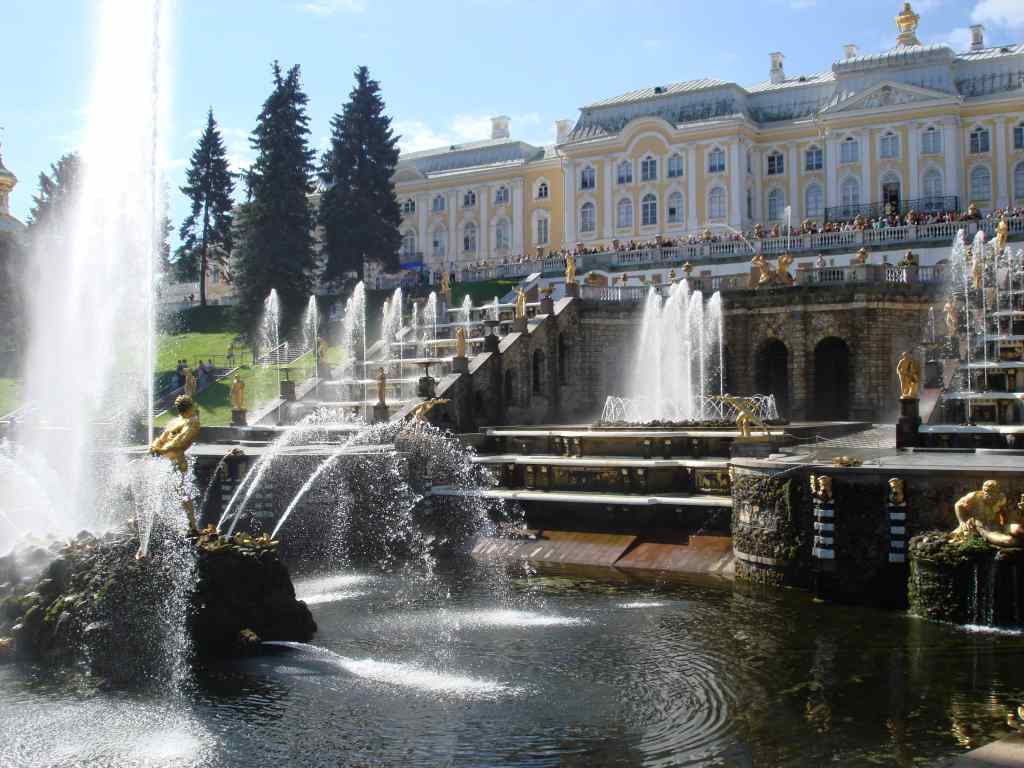
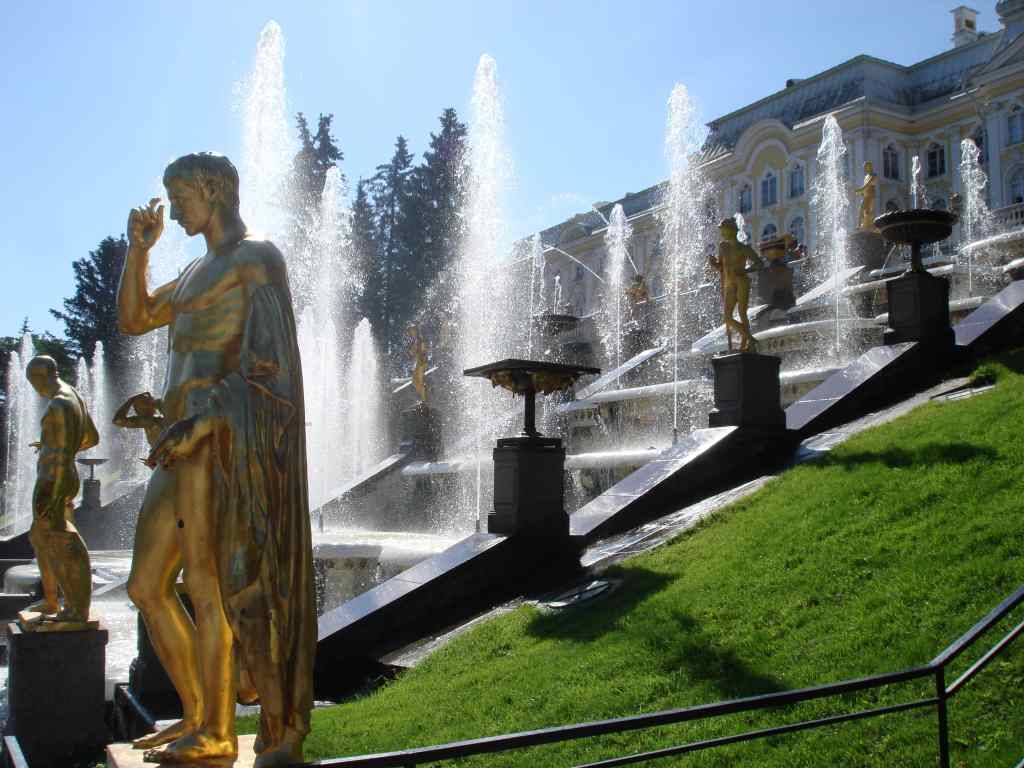
The palace itself is also beautiful, although what you see today is a reconstruction after the Nazis demolished the original structure during the siege of Leningrad.
Another huge palace complex near St Petersburg is Catherine’s Palace, located about 30km from the city in a town called Tsarskoye Selo or Pushkin. This is even bigger than Peterhof and was also completely gutted by German forces during WWII – so what you see today is again mostly restoration.
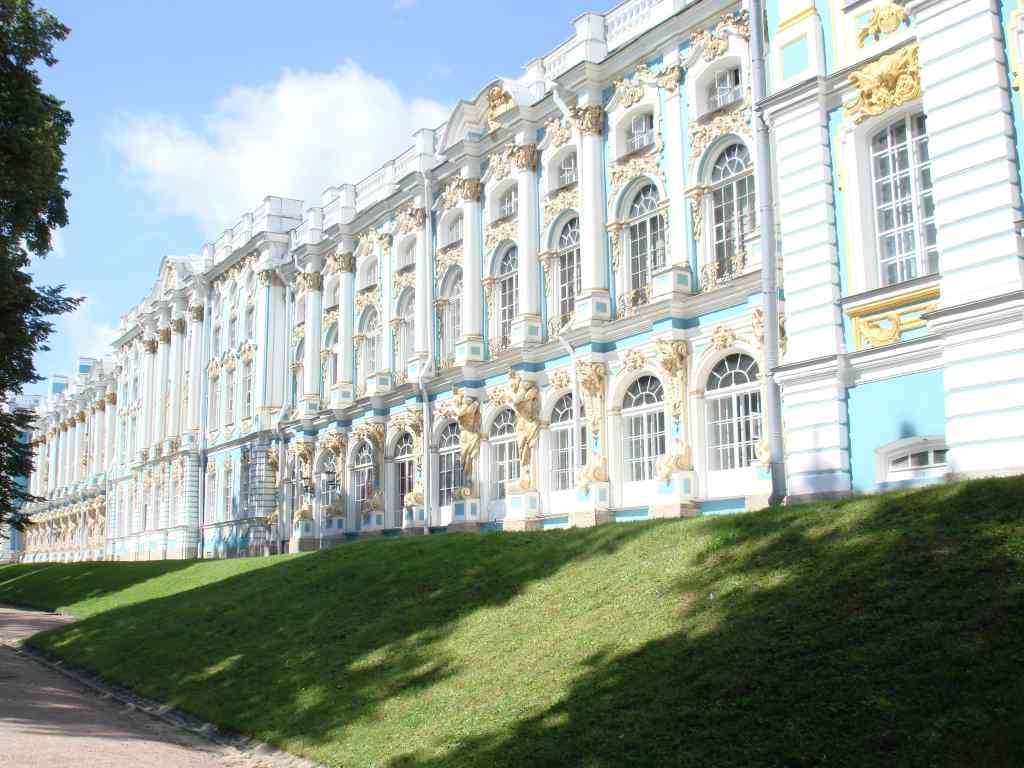
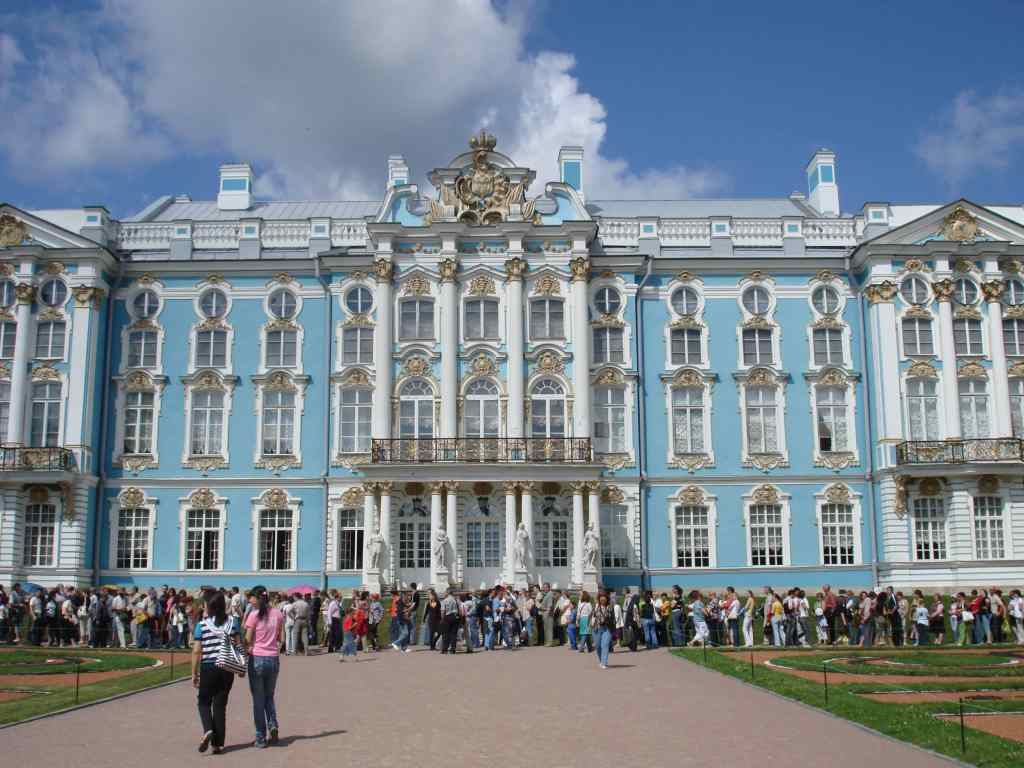
One of the highlights of Catherine’s Palace is the Amber Room, a chamber decorated with amber panels, which has a mysterious history. It was originally located in Charlottenburg Palace in Berlin but was given by the Prussian king to his ally, Peter the Great. Eventually it was moved to the Catherine’s Palace where it was feted as the “eighth wonder of the world”. When the Nazi forces occupied the area, they took apart the Amber Room and shipped it to Konigsberg in Germany (now Kaliningrad in Russia) – but when advancing Russian troops captured the city in 1945, no trace of the room could be found even after years of searching. Eventually it was decided to rebuild a new Amber Room in the restored palace, a project that was took 23 years and which finished in 2003.
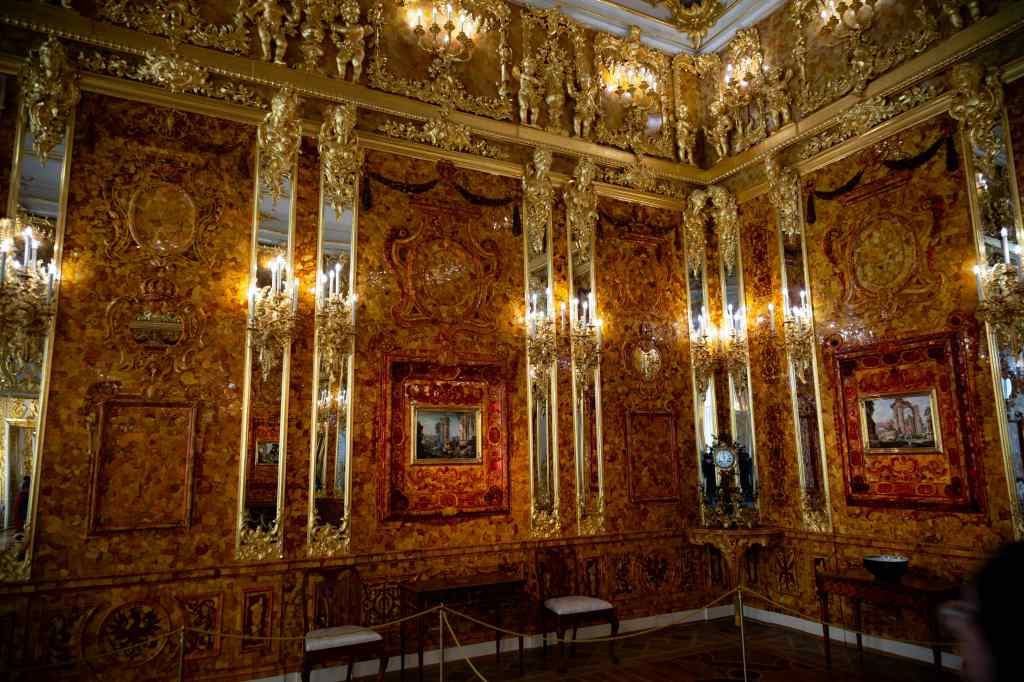
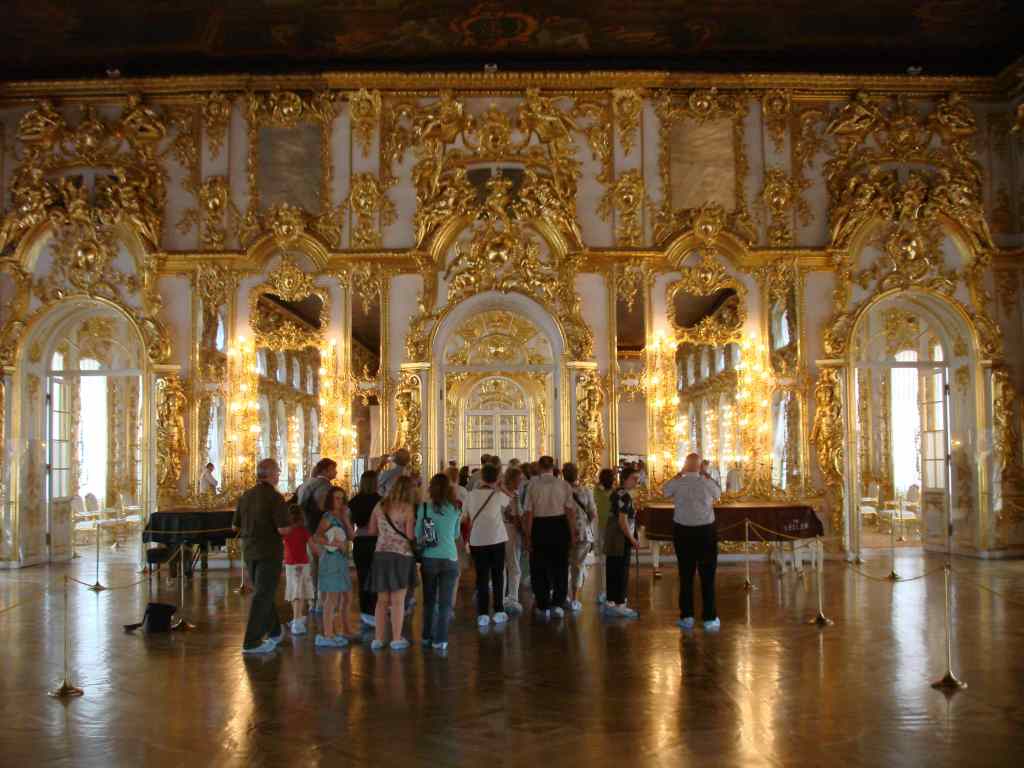
Sadly, the Amber Room was closed for maintenance on my visit, so I had to content myself with the rest of the palace. This was certainly opulent, but in my humble opinion, not always in the best taste – the architects seemed to have been instructed to cover the walls of every room with gilt, and after a while this endless dazzle of gold became a bit repetitive….and even a bit tacky.
My favourite St Petersburg Palace was the Yusupov Palace, located on a canal in the centre and a complete contrast to Catherine’s Palace and Peterhof. It was originally built in 1776 by a French architect, and over the years went through many modifications. In 1830 it was bought the Yusupov family, the second richest family in Russia after the Tsar’s.
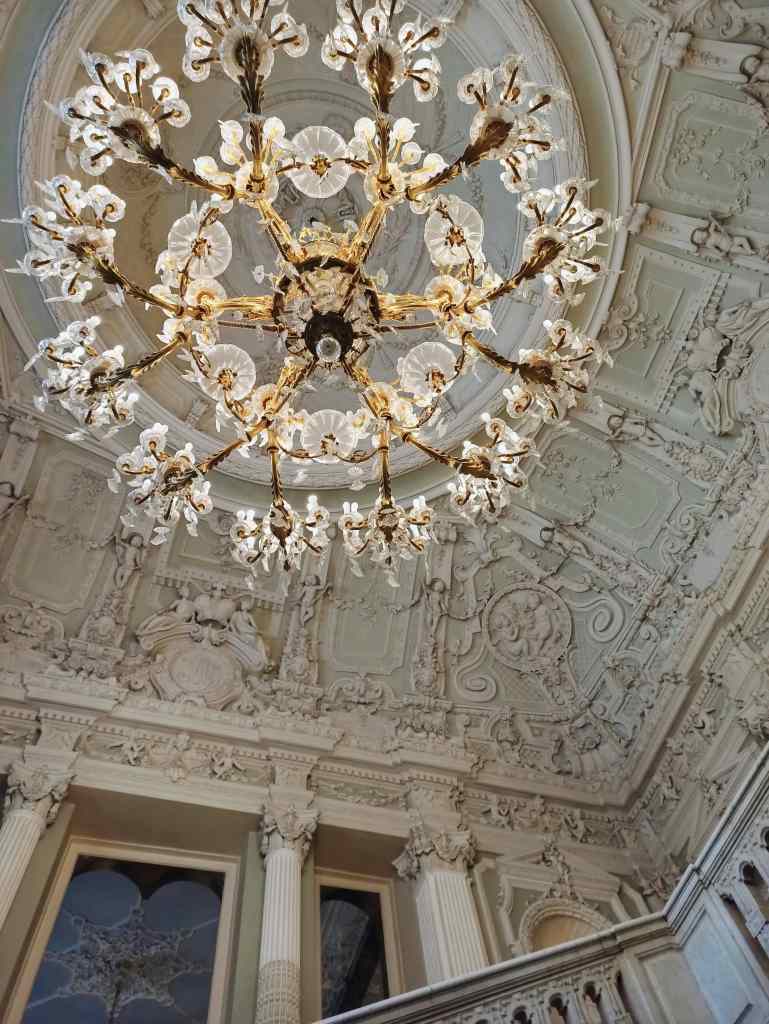
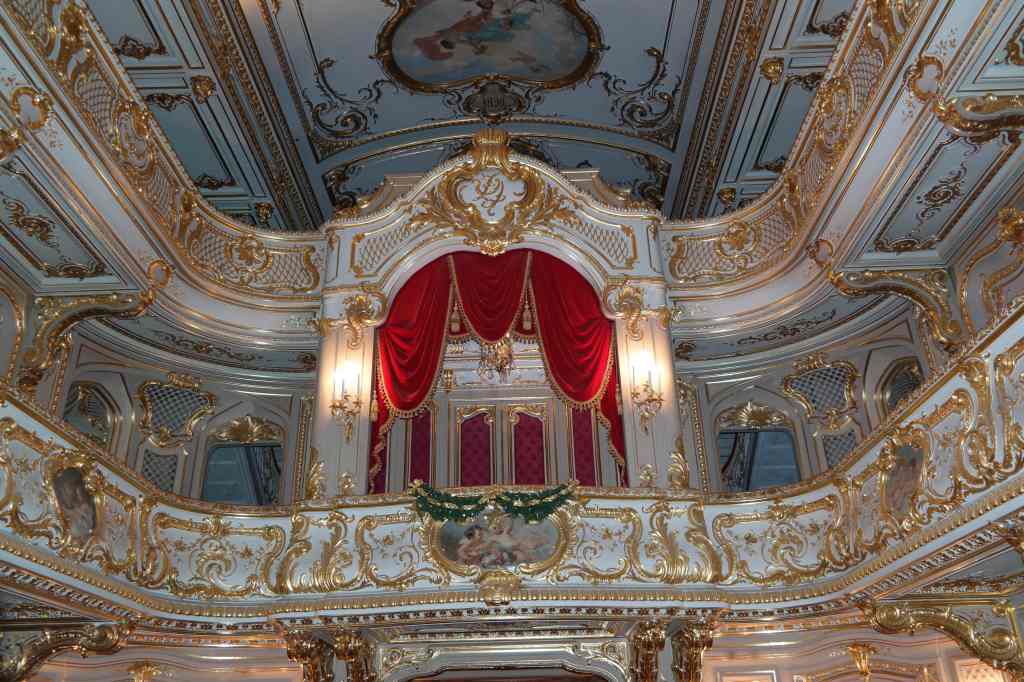
I liked this palace because of the range of architectural styles used to build it, its more human scale and its tasteful interior decoration. One of its highlights is its small theatre, where plays are still performed for the general public.
The Yusupov Palace is also famous as the place where the monk Rasputin was assassinated in 1916. Many Russian nobles had become deeply worried that his influence over the Tsarina was damaging the standing of the royal family and adding to the deep social unrest Russia was experiencing. A group of them, led by Prince Felix Yusupov, heir to the Yusopov fortune, lured him here for a dinner of pies laced with cyanide. This though failed to kill Rasputin, so instead they shot him three times and dumped his body into the nearby river. Felix escaped serious punishment for the murder, but his actions didn’t stop the revolution, which forced the whole family to leave their palace and flee to France with their best jewels and paintings.
The Yusupov Palance seems an appropriate place to end my blog on the traditional sights of St Petersburg – the scene of an unsuccessful attempt to forestall inevitable social change. Wandering around the excessive opulence of the Winter Palace, Peterhof, Catherine’s Palace and the many magnificent building of central St Petersburg, it is not surprising that the 1917 revolution happened. Especially when one contrasts the extravagant centre of the city with the its poorer areas, located only a short walk away – which I will cover in my next post.
Previous Post: Solovki Islands
Next Post: Off the beaten track in St Petersburg
 Trouspinet travels
Continuez Stuart, c’est passionnant. Merci. Nanouchka
LikeLike
Errr….. Trouspinet rather
LikeLike
😉
LikeLike
Russians never do things moderately!
LikeLike