Scusi, Scusi! The Amalfi Coast – the Path of the Gods and Positano

Starting the Path of the Gods, Amalfi

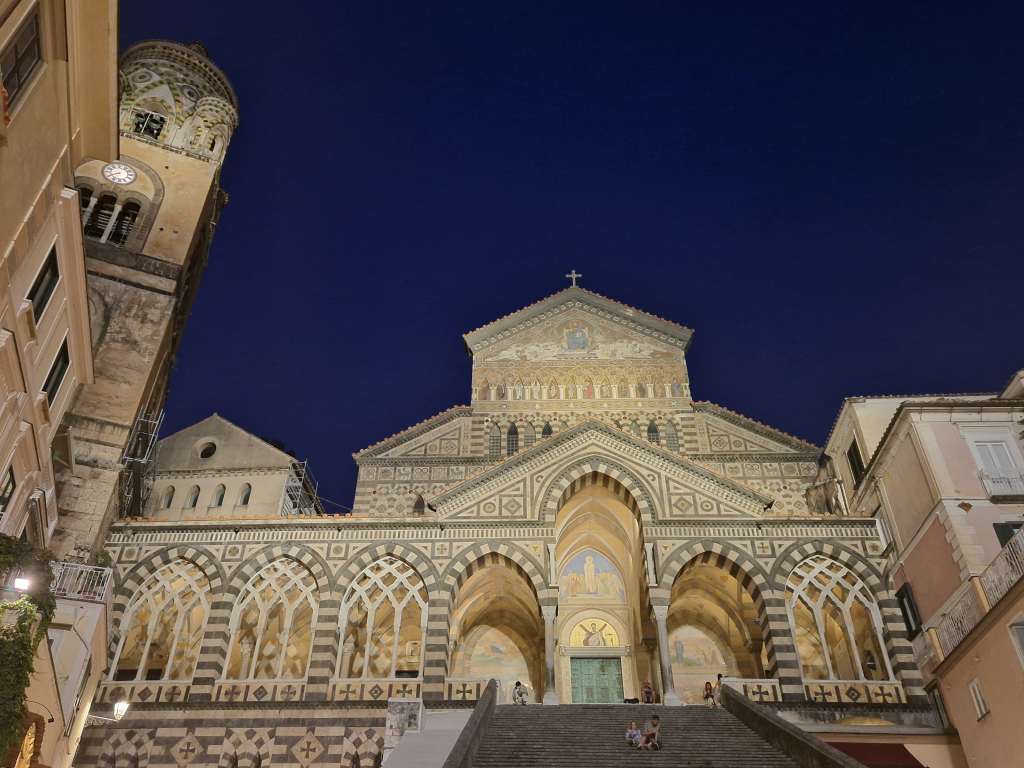
As well as its spectacular coastline, the Amalfi area is known for its brilliant hiking tracks. A dense network of trails links the coast’s mountain settlements and seaside towns. Today I ventured onto one of the best known hikes – the Path of Gods, which starts at a small village called Bomerano, accessible by bus from Amalfi. I set an alarm to wake up early to catch the 08.15 bus promised by SITA’s oneline timetable and got to the bus stop with a few minutes to spare. Several other tourists were waiting but as 08.15 and then 08.30 came and went, I approached the SITA employee selling bus tickets only to be told that the next bus was at 09.15. Along with the other early rising tourists I trudged off grumpily back into town to kill another 45 minutes, but at least I got another good view of Amalfi’s cathedral without the crowds.
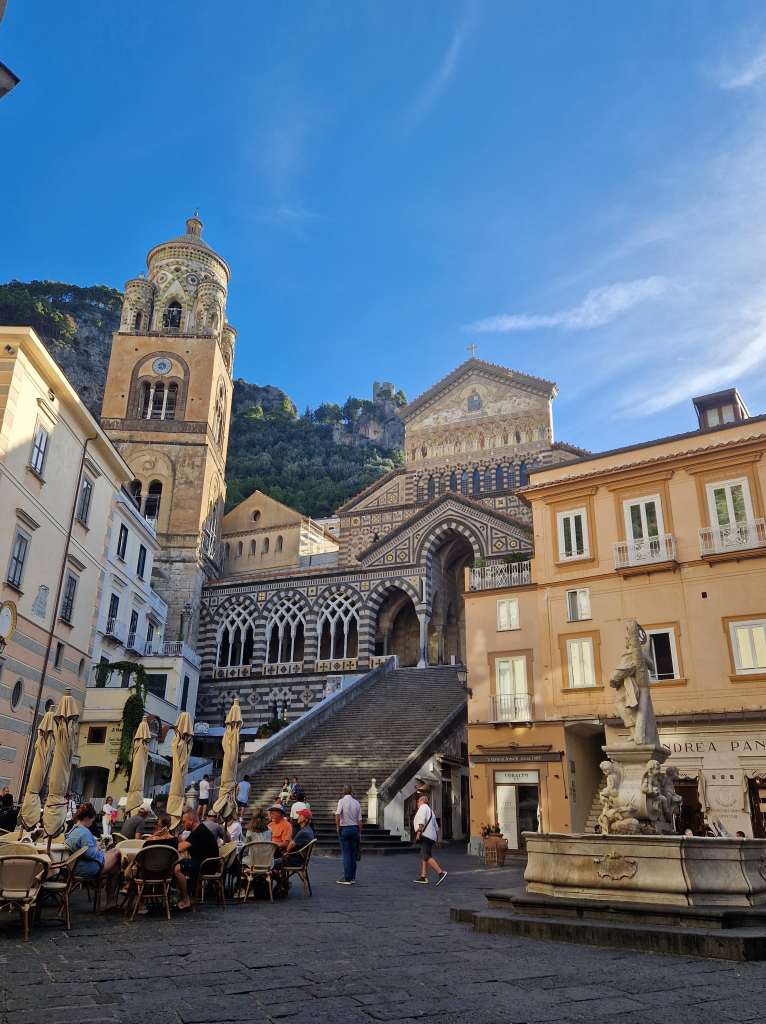
After my false start – back in Amalfi’s Piazza in the early morning

When 09.15 came, so did (this time) the bus. It was a very popular hike, and I was lucky to get a seat and not to have to stand as the driver sped up narrow mountain roads, testing himself, his vehicle and his passengers as he saw how quickly he could make the trip. The views of the coast far below, best glimpsed at the road’s many hairpin bends, were spectacular but fleeting – there was no question of being able to photograph them as the bus driver tested the laws of physics and centrifugal force with his bus. We soon arrived at Bomerano, and although the bus’s route carried on further, almost everyone disembarked. Indeed, the Path of the Gods is not a hike for those seeking solitude, and I set off behind a long straggle of fellow passengers along an easy path, which usually sloped gently downhill. As expected, the views were amazing and more than made up for times I had to negotiate my way through several organised tours of slower walkers, testing my Italian for “excuse me” (Scusi! Scusi!).
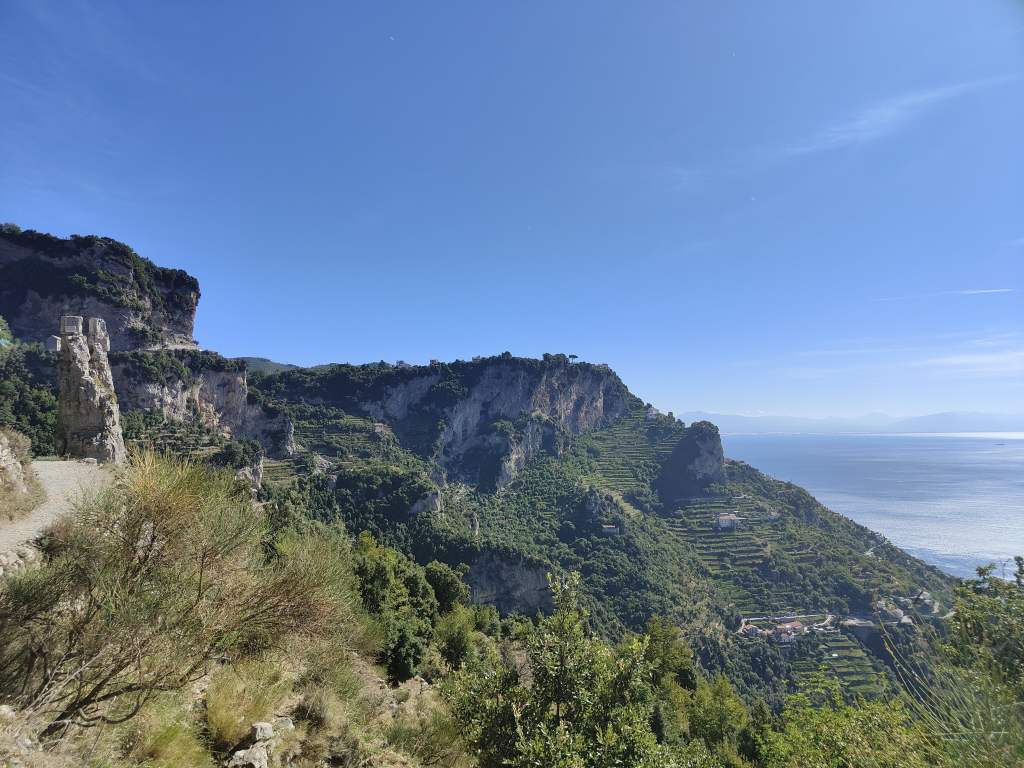
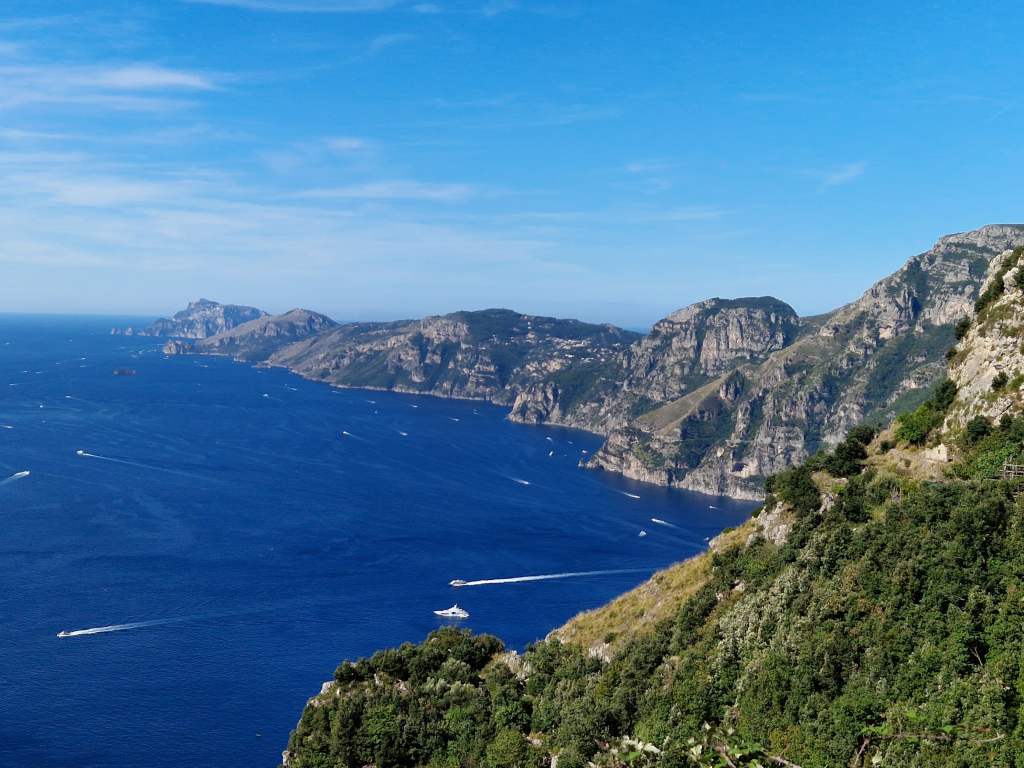
Near the start of the “Path of the Gods”
More stunning scenery along the way

The walk justified its reputation was one of the most beautiful of the Amalfi Coast – even though I felt that each view, although breathtakingly beautiful, was similar to the previous one.

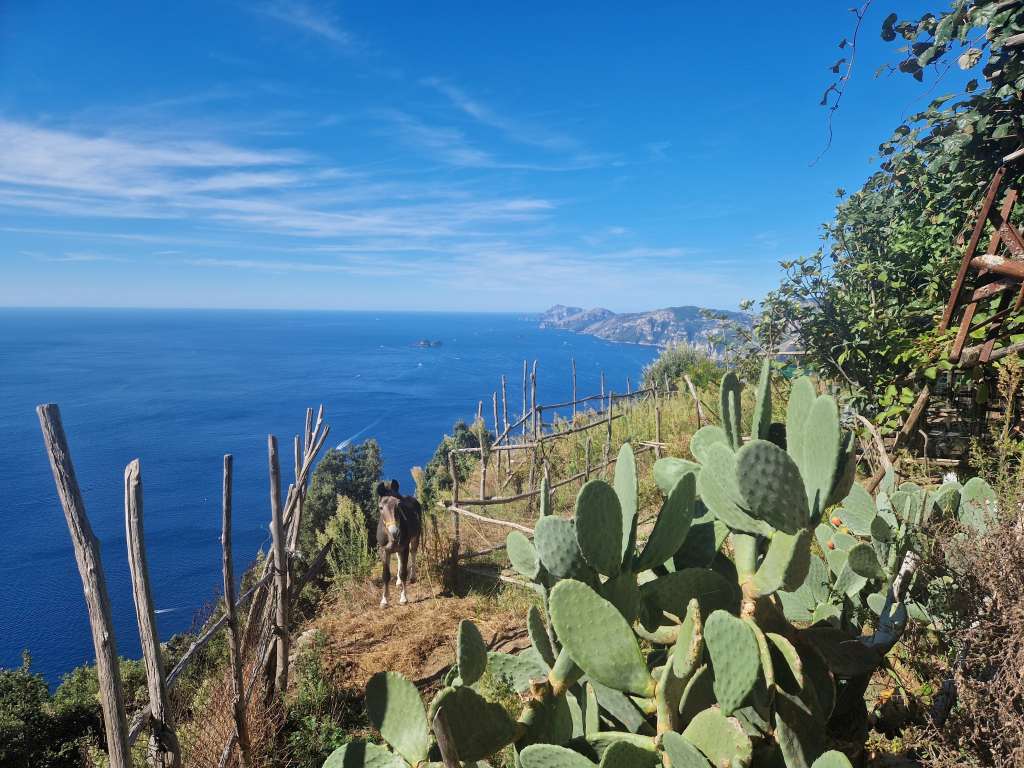
Yet more stunning views on the Path of the Gods, Amalfi

After a couple of hours, which had passed surprisingly quickly, I found myself at the end of the main walk in a village called Nocello. The place was used to receiving tired and thirsty walkers and had a nice kiosk selling coffee and – even better on a hot day – lemon granite.

From Nocello there was supposedly a bus down the mountain to Positano, the nearest village on the coast. But my earlier bus experiences had so disappointed me that I did not even bother to try to find it, and set off on a path leading steeply downhill.
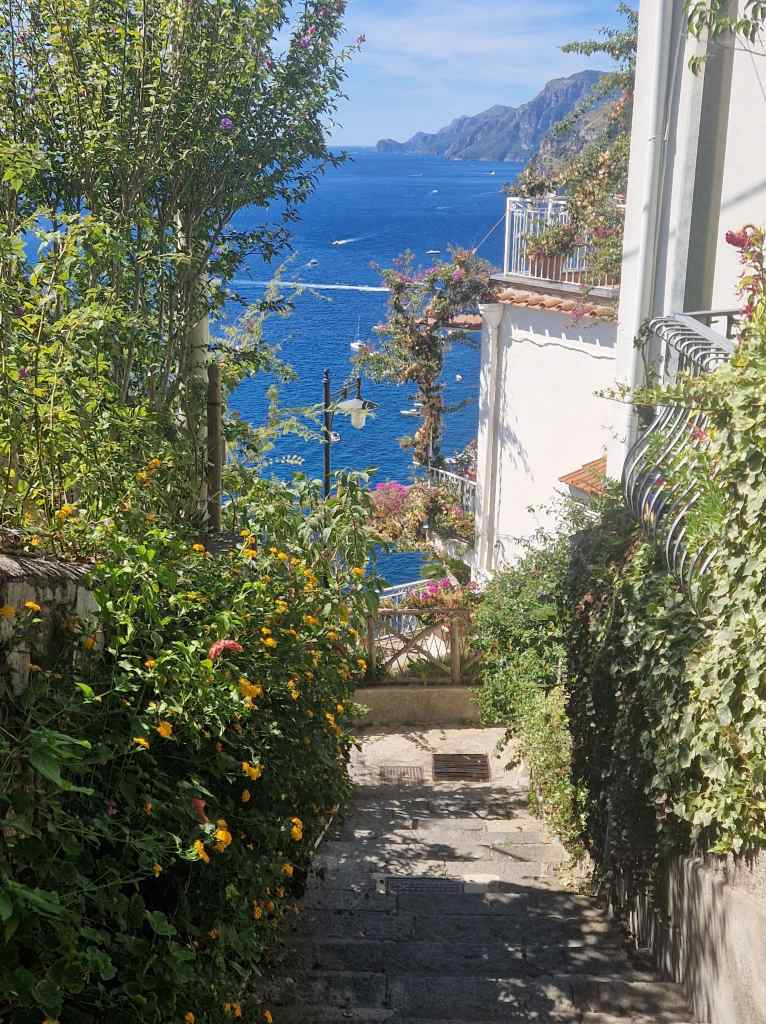
Starting the long descent to Positano

This might have been a mistake – there are 1700 steps on this path, and soon the calves of my little teddy legs were aching. I found this abrupt descent far harder than the steep climb up to Ravello I had made the day before. At the least the walk offered some nice views of Positano and the many boats anchored just offshore, which got bigger and bigger as I descended.
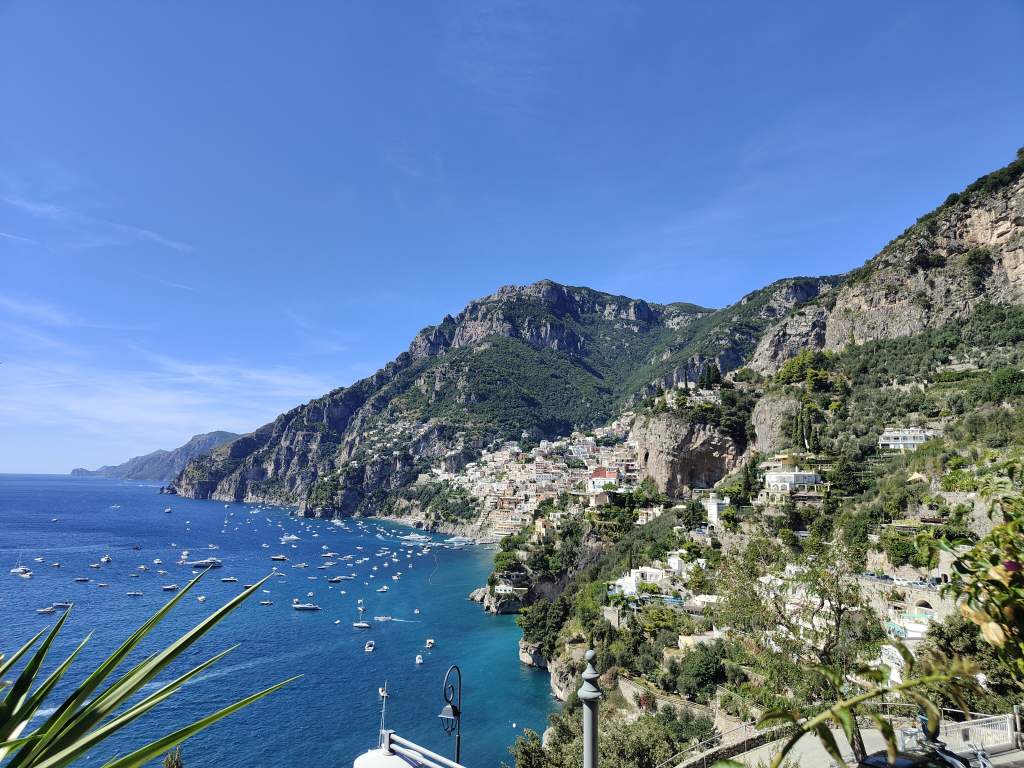
Positano comes into view

Soon I reached the main coastal road and had a decision to make – try to take a bus back to Amalfi or walk into Positano and take a ferry. Finding the bus stop answered this question quickly – there was already a large queue of hopeful passengers waiting for a bus which was supposed to have appeared ten minutes ago. I figured that even if this bus did eventually show up, the chance of me getting a space on it were as small as my little teddy legs, so I continued walking on into Positano. This is one of the Amalfi Coast’s most famous towns, but I disliked the bits I saw – narrow roads lined with shops selling upmarket goods and hopelessly crowded with fellow tourists. It took me another twenty minutes of “Scusi, Scusi!” to fight my way to the port – where my luck changed. There was a boat to Amalfi leaving in fifteen minutes, and I was soon enjoying the more civilised way to get around this region – by sea, enjoying once again the beautiful coast line between Positano and Amalfi, this time from sea level rather than from high on the mountains.
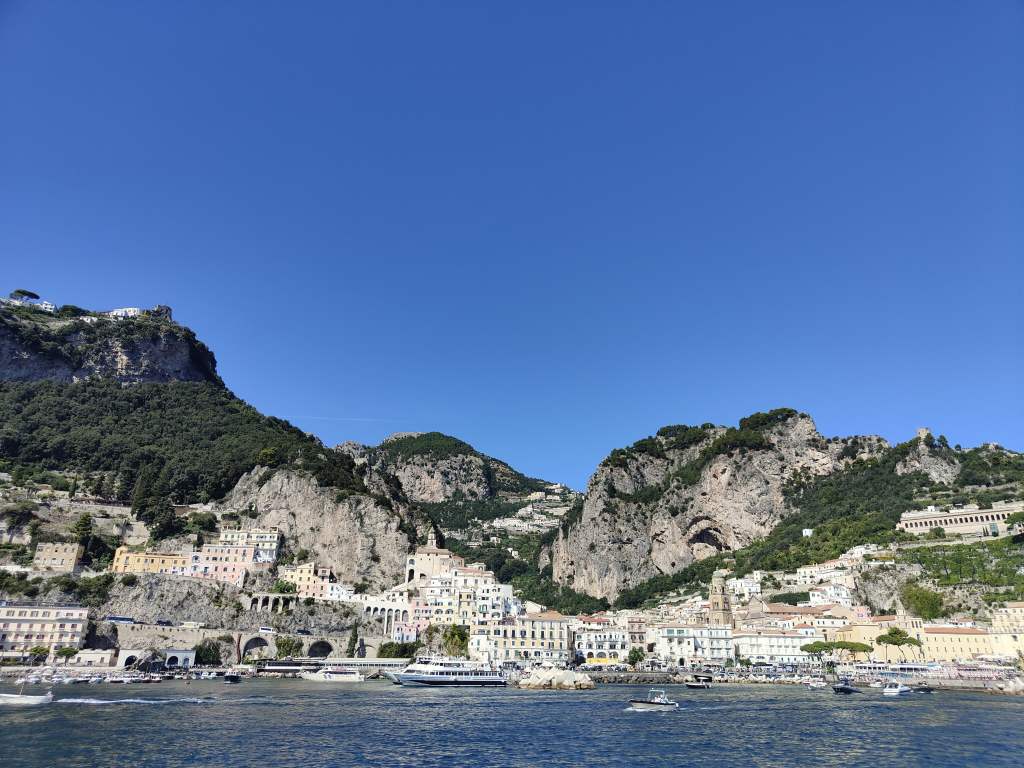
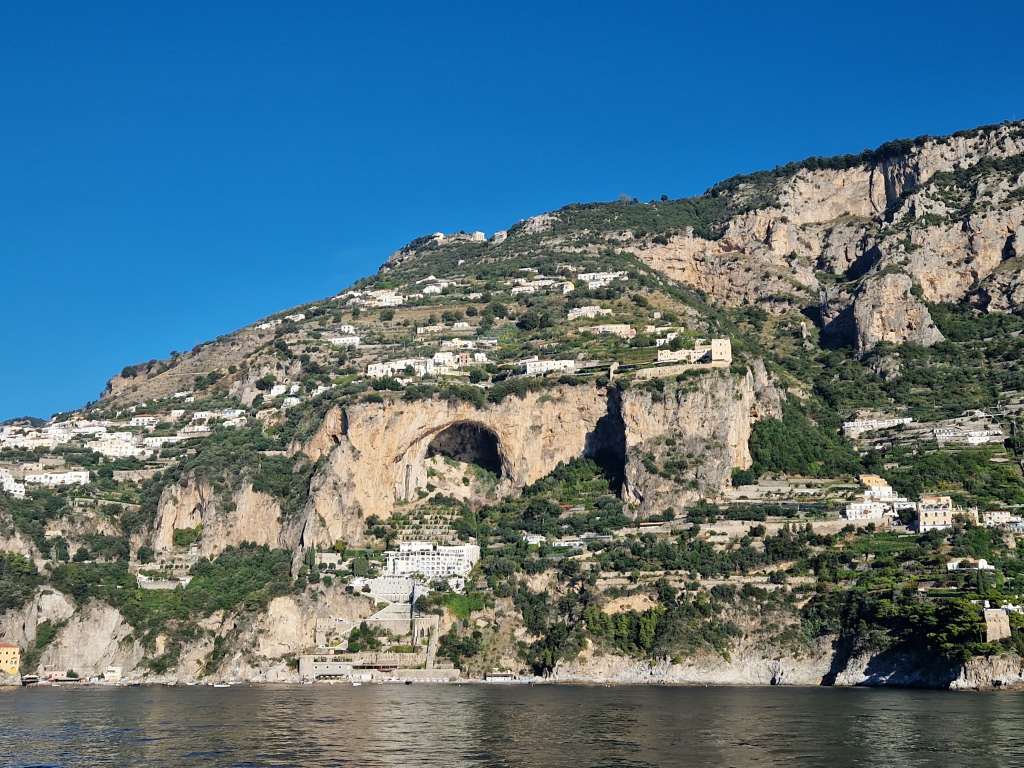
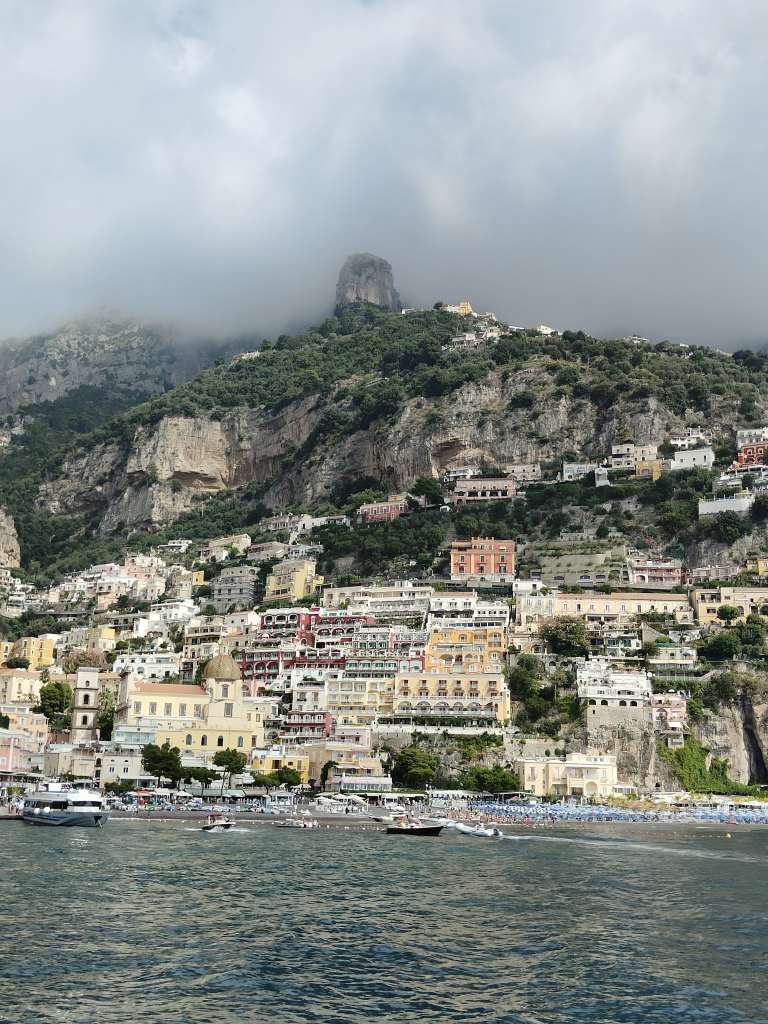
Positano – best viewed from the sea!
Interesting rock formations on the coast between Positano and Amalfi
Back in Amalfi!

It had been a mixed day. I had underestimated the difficulty of the long descent to Positano, the crowds in this popular town, and the unreliability of Italian buses. But the amazing views from the Path of the Gods and the pleasant ferry ride back to Amalfi more than compensated for these struggles. After all, this beauty is why the Amalfi Coast is so crowded in peak season.

Previous Post: Amalfi

Next Post: Capri
The Amalfi Coast

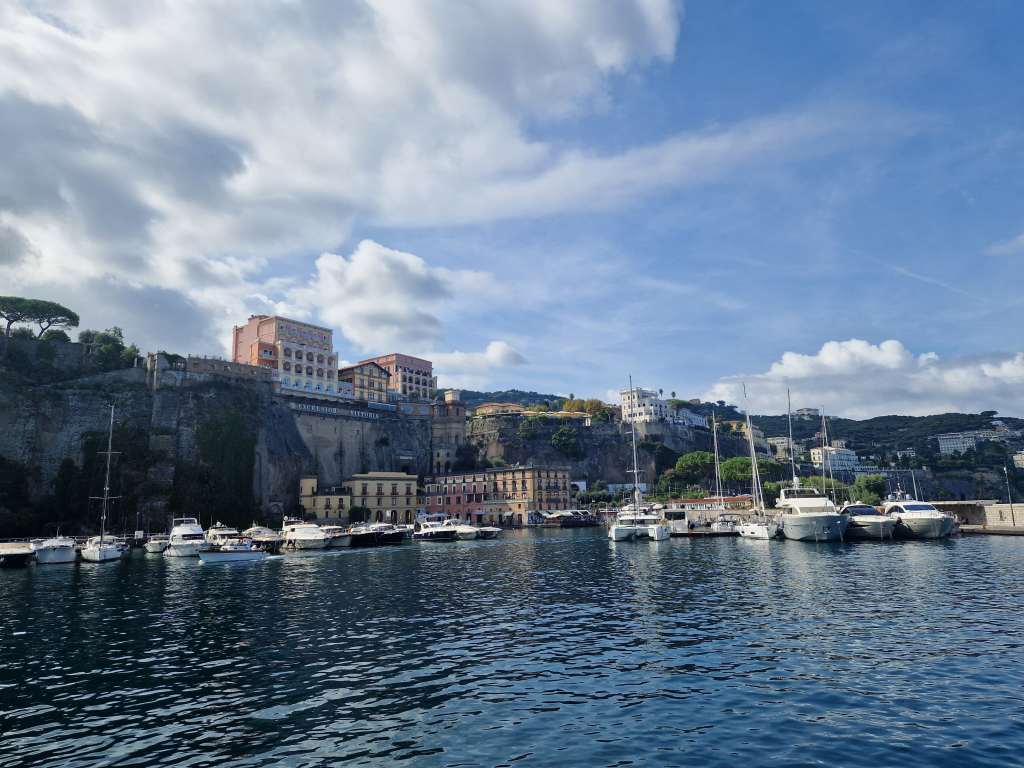
Back on the road again! The next few posts will devoted to my trip around southern Italy – Naples, the Amalfi Coast and Puglia. After a flight to Naples and one night there (more about this interesting city in a future post), I was soon on the morning ferry for the two-hour cruise to Amalfi. There were great views of the Bay of Naples with Mount Vesuvius looming behind, before we reached our first stop, the port of Sorrento. It looked a very smart place, but it was not the destination I had chosen for my stay.

On the way to Amalfi – Sorrento

Instead, I stayed on the boat as it rounded a cape and cruised past the island of Capri to the Amalfi Coast proper, with the scenery becoming more and more spectacular.
On the way to Amalfi – passing Positano
I arrived at Amalfi at around noon to learn the good news that I could check in early to my flat. I fought my way through the crowds in the town’s main road in the heat of the midday sun – even though it was mid- September, the temperature was 30C and my fur was hot and sticky by the time I arrived. I had a quick rest and some coffee before setting off to explore. My first stop was Amalfi’s cathedral, which was pleasantly quiet compared to the bustle of the main street. It was started in the 10th century, with many additions over the following years, and contains a mix of architectural styles. First I visited its peaceful and cool cloister with views of the surrounding mountains……..

The cloister of Amalfi’s Cathedral

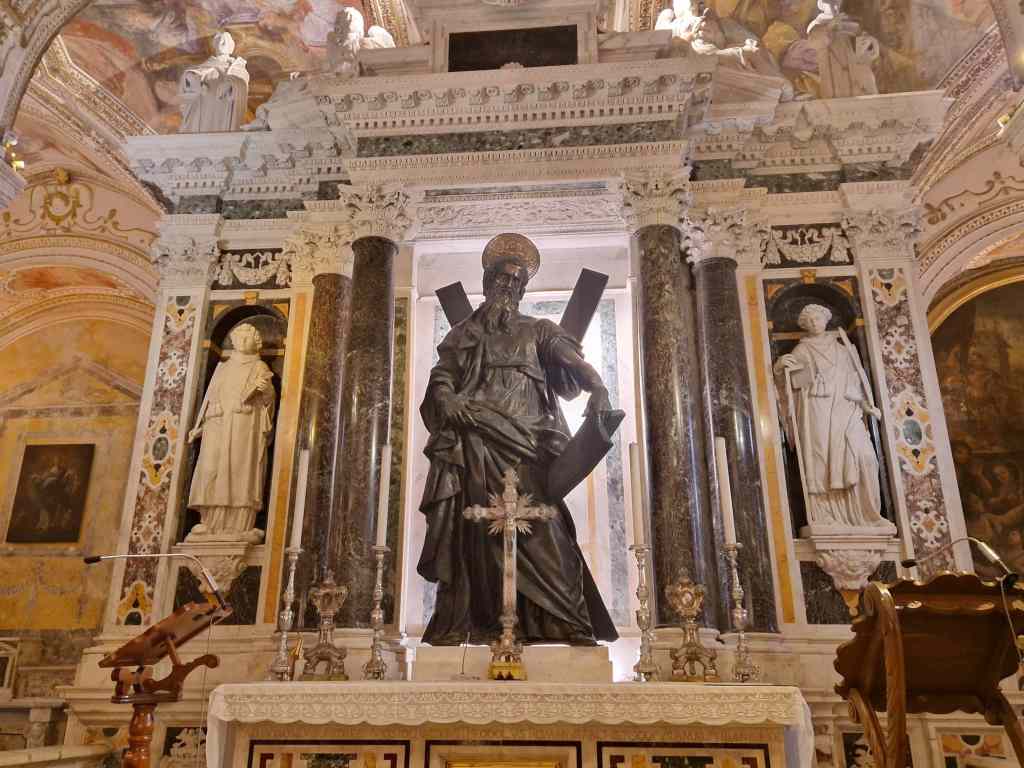
….and then a crypt which houses the remains of St Andrew. These were brought here by participants of the Fourth Crusade, who changed plans and sacked Constantinople instead of trying to conquer the Holy Land.

St Andrew’s tomb, Amalfi Cathedral

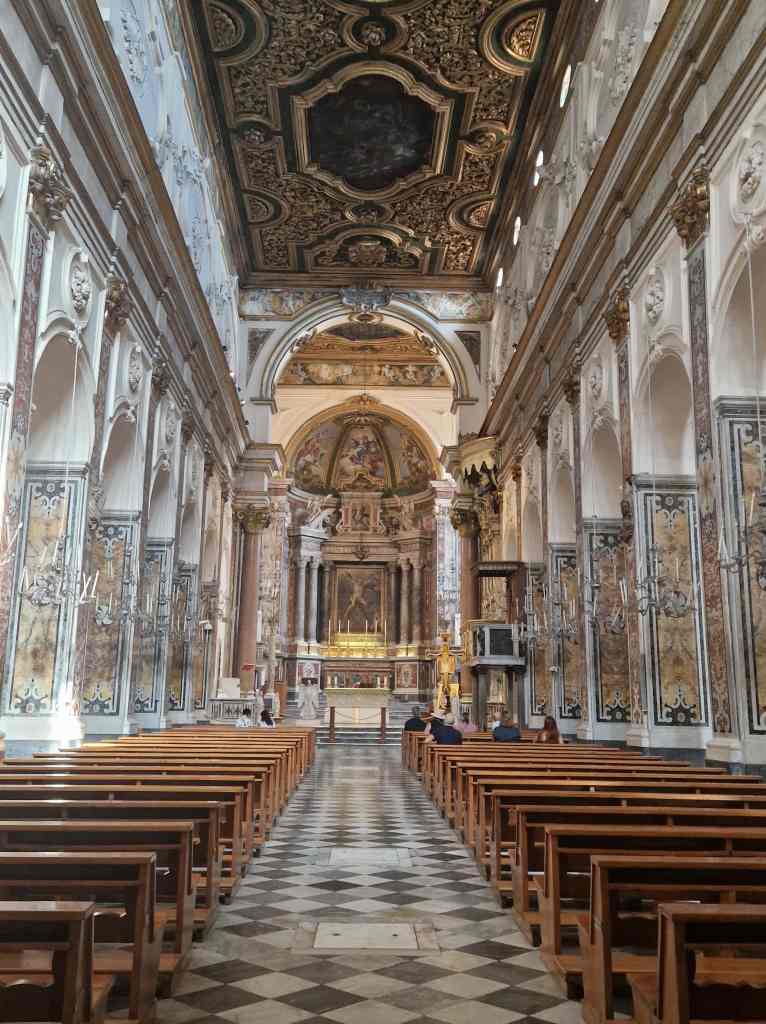
From the crypt, stairs led up to the stunning cathedral itself:

Amalfi Cathedral

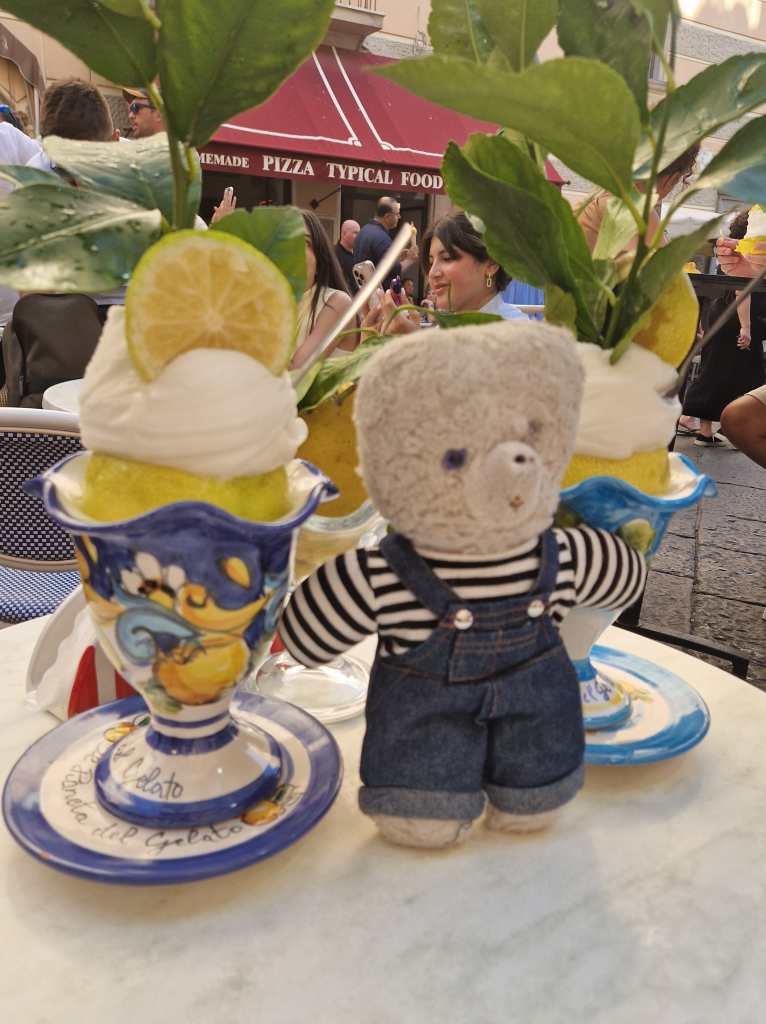
The main square in front of the cathedral was packed with tourists. Many seemed to simply arrive on boats and then sit in cafés, or queue for one of Amalfi’s specialites – lemon sorbet. The region is a big centre for growing lemons and production of Limoncello. I could not resist and sat down to try a huge sorbet, which was delicious but also very expensive – the Amalfi Coast is a justifiably famous destination, and has prices corresponding to its reputation and the deep pockets of the richer tourists that go there.

Lemon sorbet – delicious but expensive

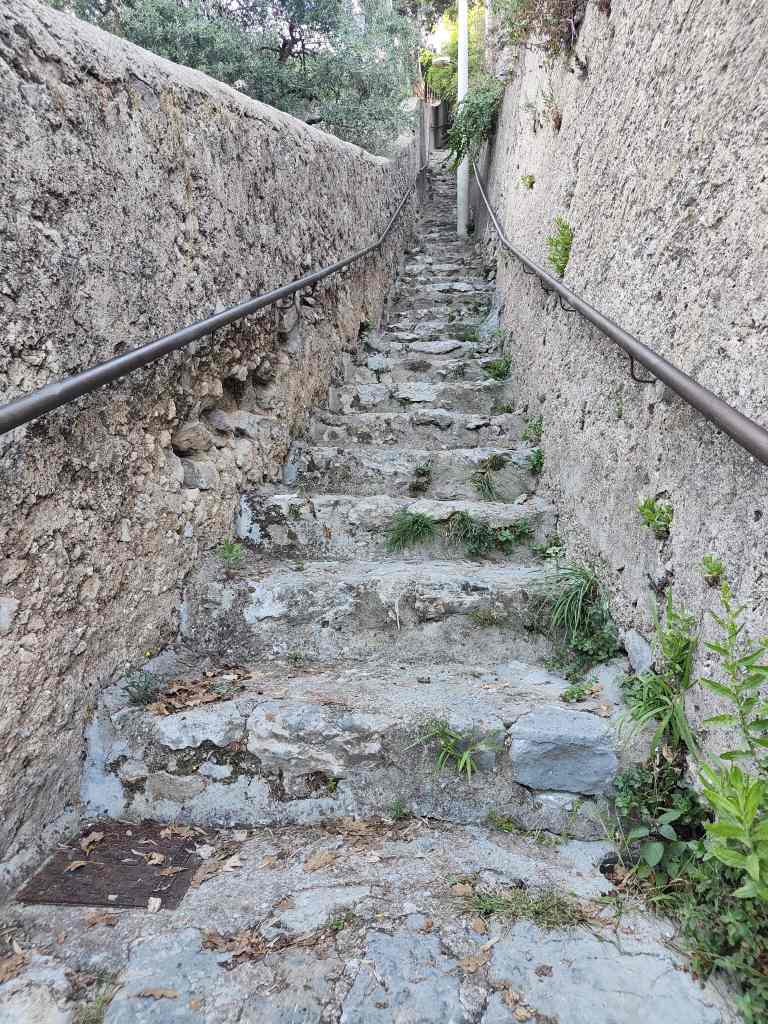
Refreshed and 24€ poorer after two sorbets, I decided to walk to Ravello, a town perched on top of the mountains surrounding Amalfi. The path first passed under the cathedral and then along many narrow winding staircases and alleyways to the nearby town of Altrani, which was pleasantly quiet compared to Amalfi.

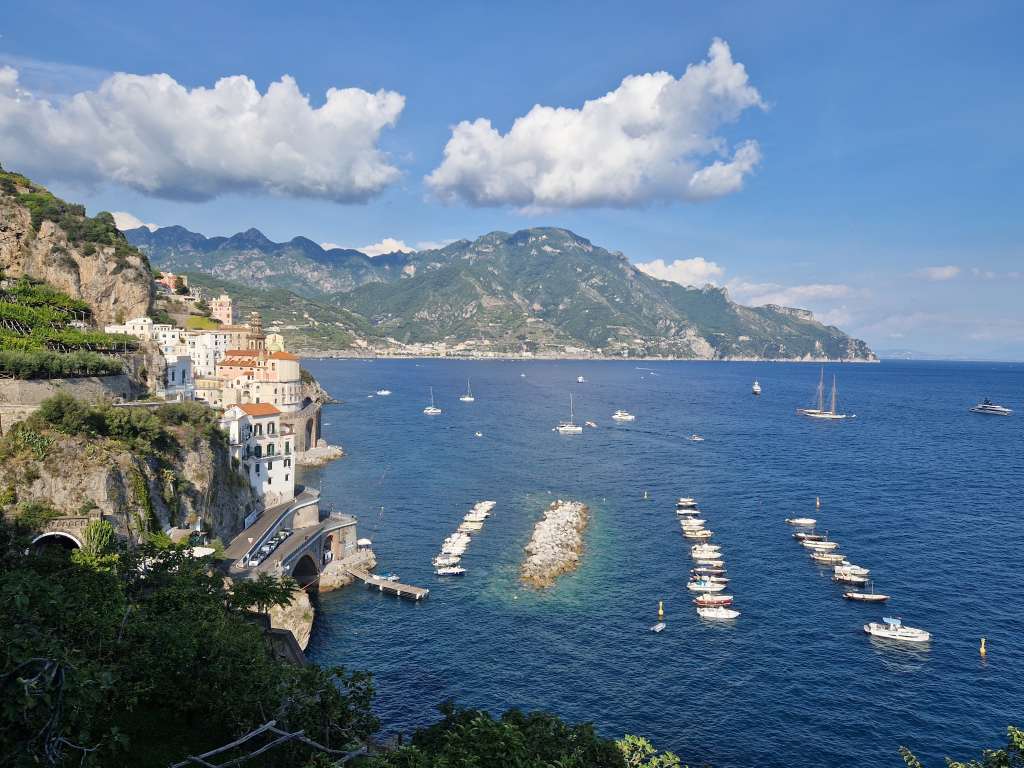
The view towards Altrani from Amalfi

Then my route headed steeply upwards. I sweated heavily in the heat of the late afternoon, but at least most of the path was in shade, protecting me from the fierce sun.

Ooof – hard for little teddy legs!
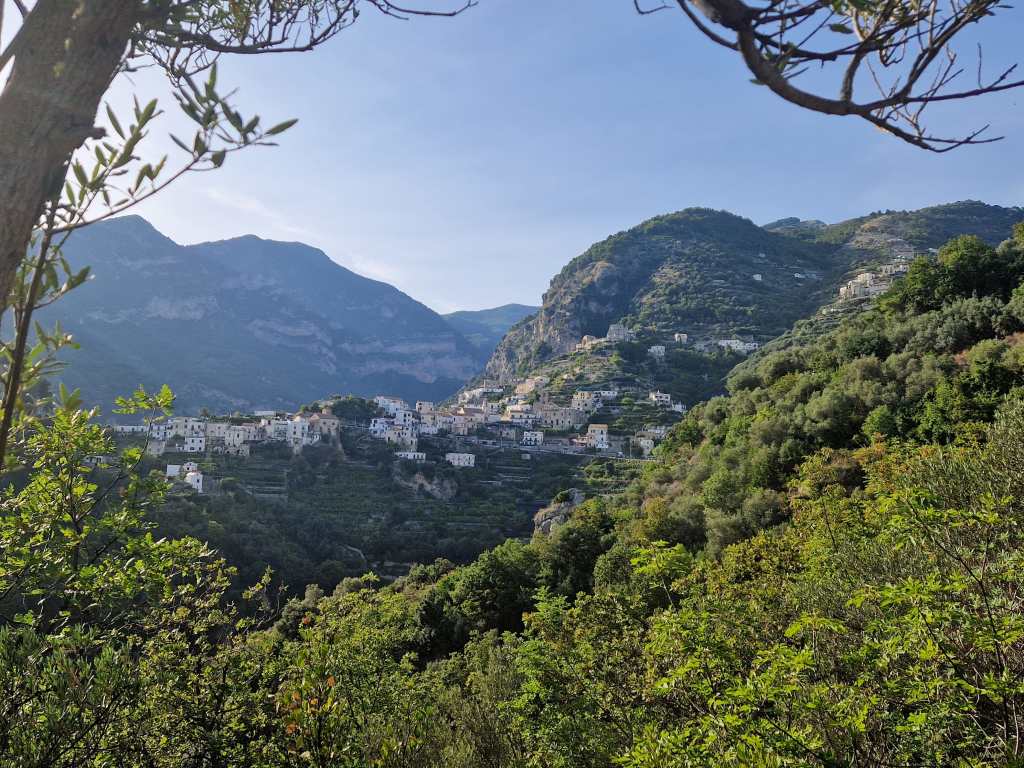
A view on the steep climb to Ravello

With great relief I finally made it to my destination, which turned out to be a charming place with some amazing views.

Finally – hot and sweaty but Ravello was worth the climb!

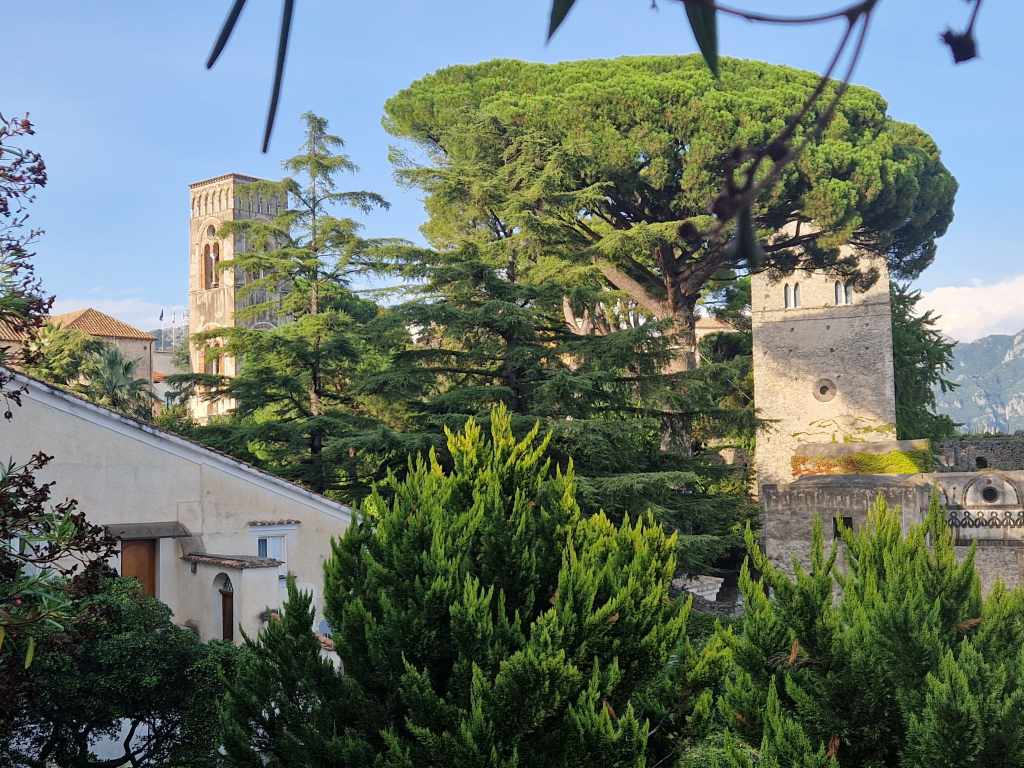
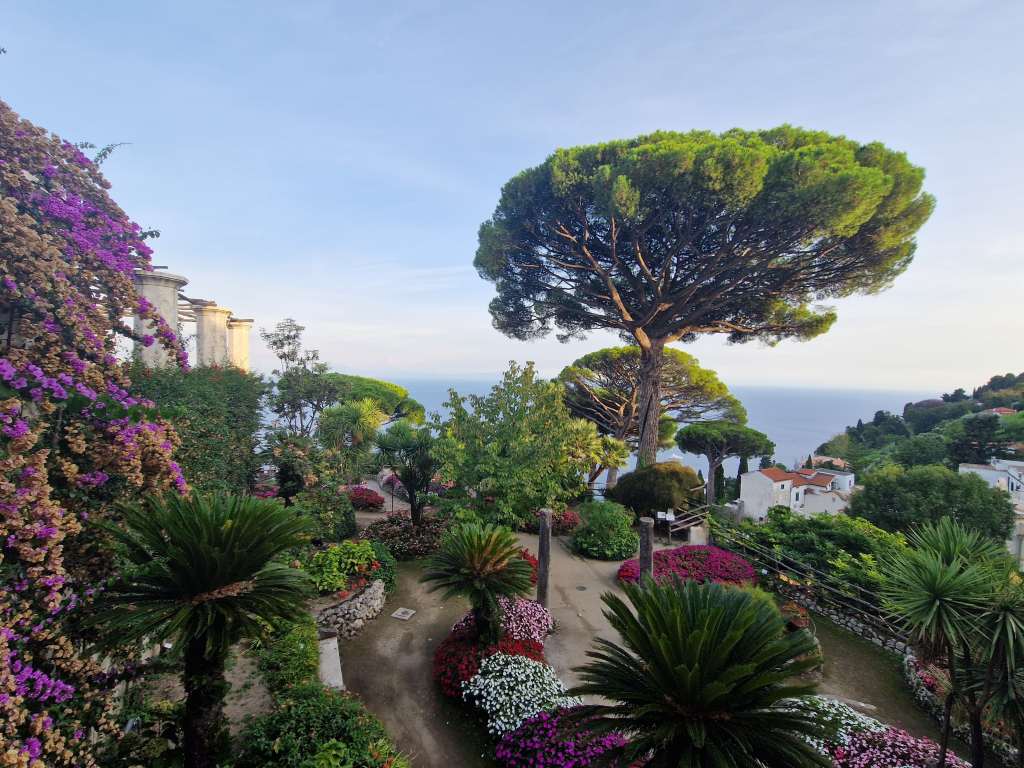
I had a drink in the main square to replenish my forces and noticed an interesting looking building at the edge of the piazza. This was the Villa Rufolo, originally built in the 13th century by the powerful family of the same name, but later extensively remodelled over the years. It has gardens with some of the best views of the Amalfi Coast (or perhaps of anywhere in the world….)

Villa Rufolo’s beautiful gardens
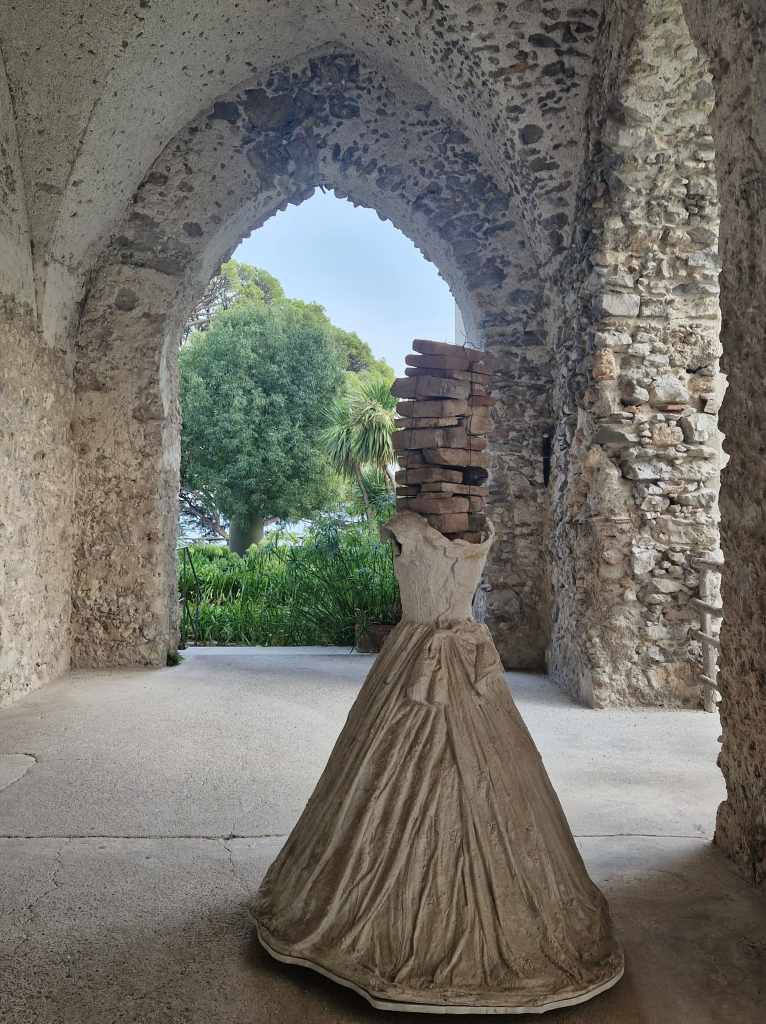
Wierd artwork in rambling Villa Rufolo
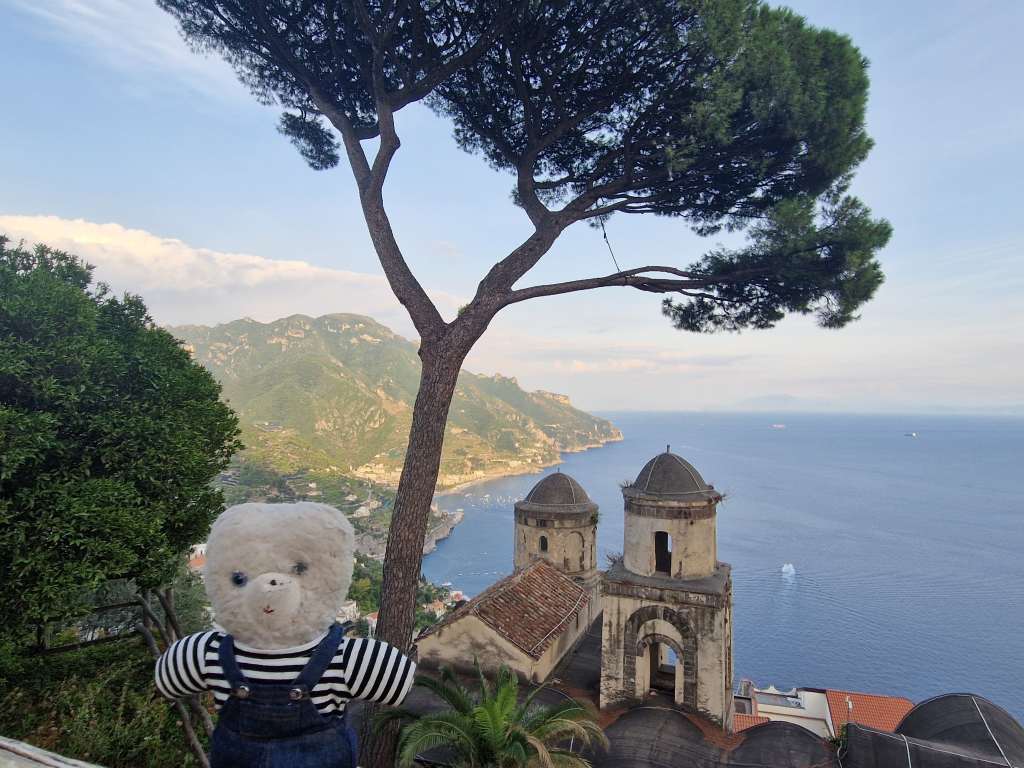
One of the best views of the Amalfi Coast

After visiting the villa it was getting late. I didn’t want to walk all the back to Amalfi in the fading light, and checked online to see if there might be a bus. The local bus company is called SITA and their website affirmed that there was one at 19.10, but on arriving at the stop there was a sign showing a different timetable and with a 19.20 departure. It turned out that the bus really left at 18.55, and I was quite lucky to have turned up early to catch it. Our driver negotiated the winding roads with extreme confidence and amazing speed; the other road users seemed to know it was wise to let the SITA bus have right of way.

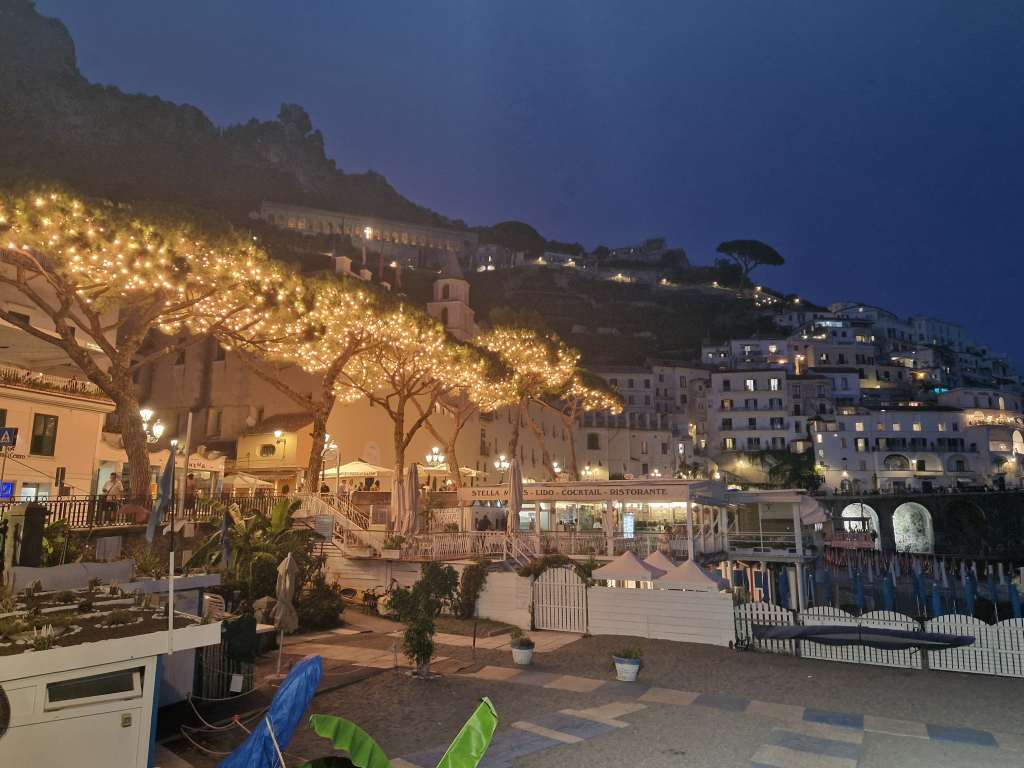
Amalfi seafront at night

I got back to Amalfi in the early evening and rewarded myself with a well-deserved drink in a seafront café after a very full day. Walking back to my flat I could also enjoy a great view of the cathedral, without the daytime crowds. I was looking forward to my next couple of days exploring the Amalfi Coast.

Amalfi Cathedral without the crowds!

Next Post: The Path of the Gods

Moscow: 2008-2009

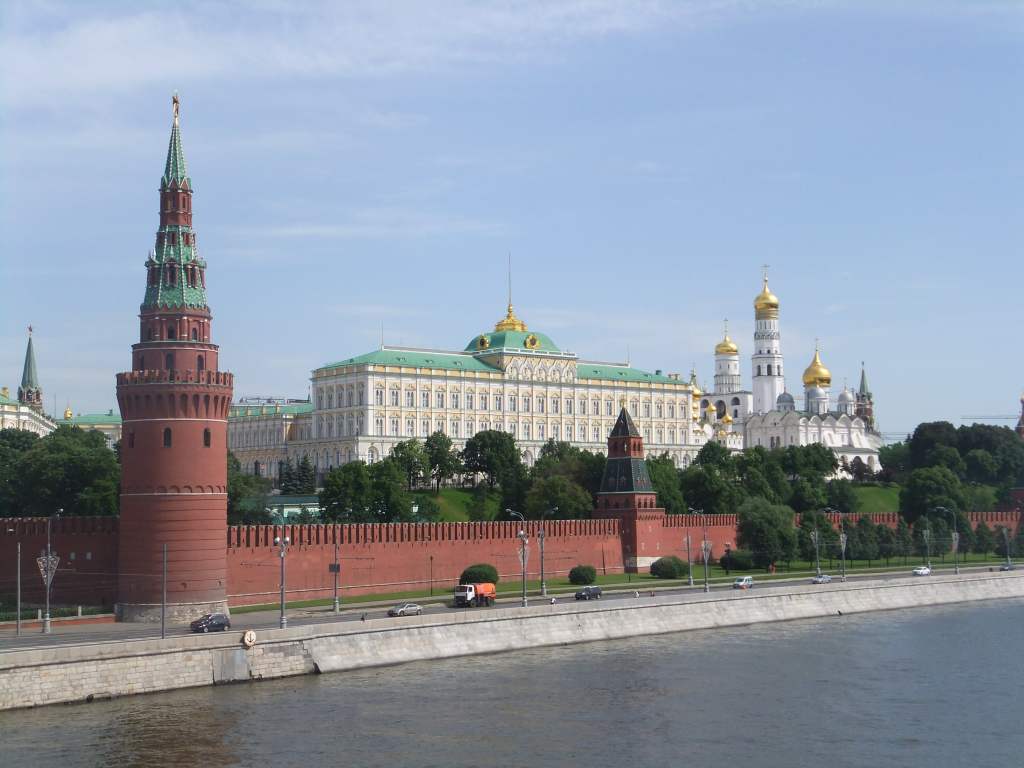
The classic view of Moscow – the Kremlin

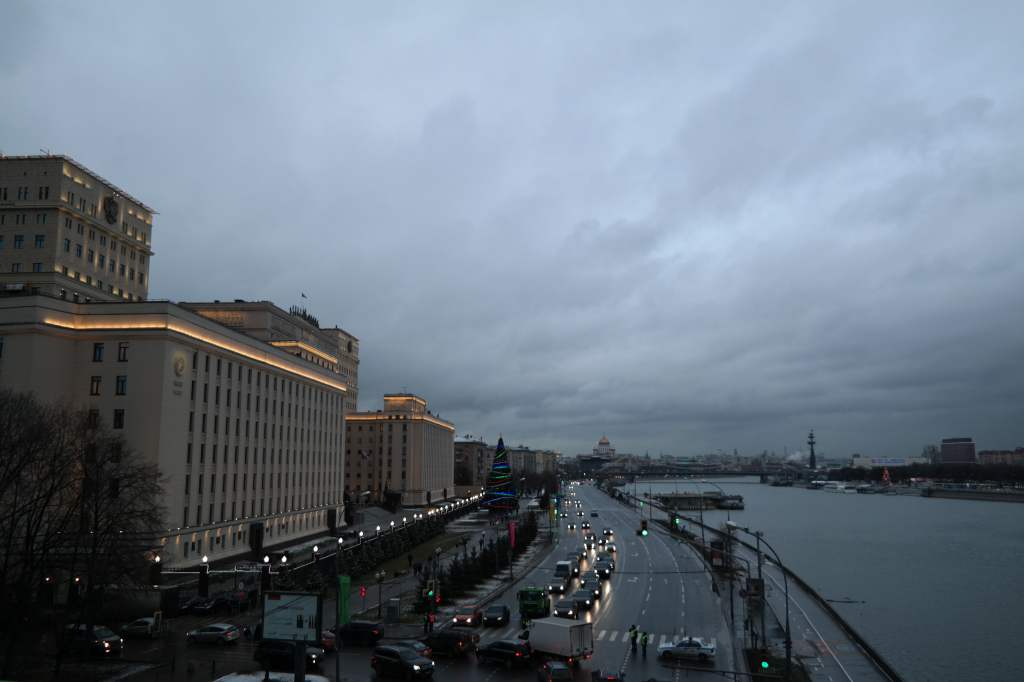
In the next couple of posts I will cover Russia’s capital city, Moscow. I lived there twice, from 2008-9 and from 2013-2019. The two experiences were completely different, and in this post I will describe the Moscow of the earlier years. I arrived in December 2007, just in time for the Russian winter, and my overwhelming memory of this time was of dark, grey skies, intimidating buildings and insane traffic jams.

Moscow in Winter – 2008

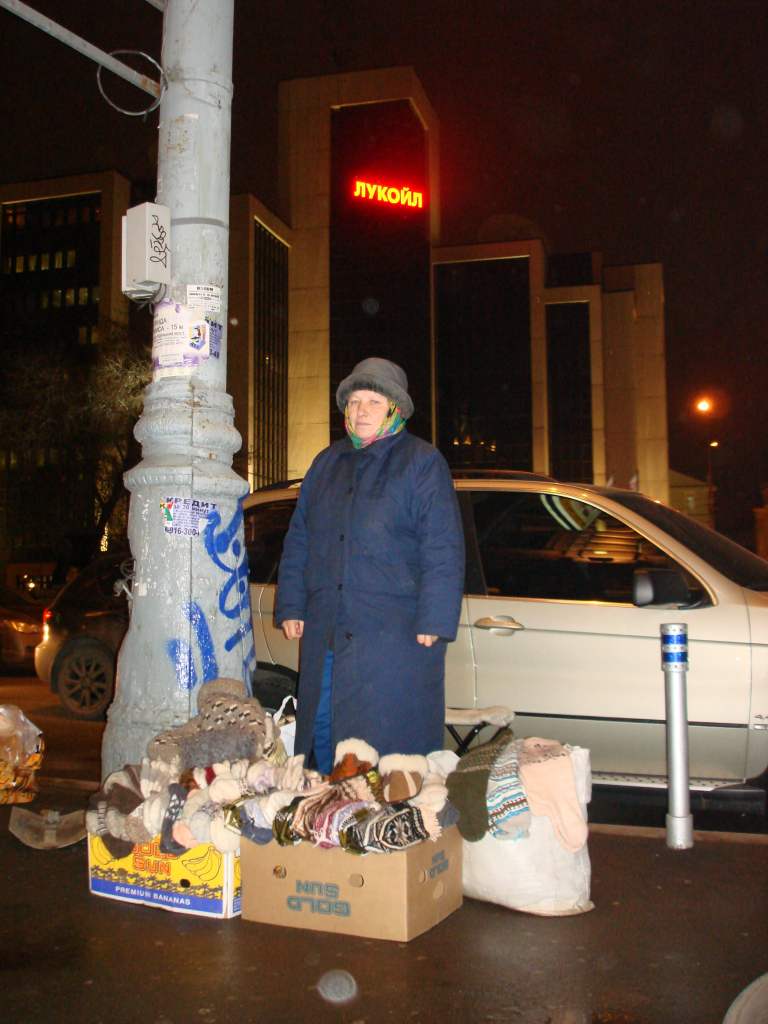
The streets were cold and unfriendly. There were a lot of stray dogs roaming around, a few beggars and homeless people, and old “babushkas” trying to make ends meet by selling items they had knitted.

Babushka selling knitwear

My own flat was in a well-known building, the Dom Rossiya, built just before the revolution to provide flats for Moscow’s emerging middle class. After the revolution it was converted to communal flats for workers, with each large apartment converted into several small ones, accessed from a long corridor leading to a communal kitchen. With the return to capitalism, many of these “communalkas” had been converted back into large flats, offices, or artists studios. Dom Rossiya’s many entrances and staircases were a hive of activity and each was slightly different. Mine was particularly run-down, and often smelt of urine, since homeless people (“Bomsh” in Russian slang) would come in and sleep there at night. But once I crossed the threshold of my flat, I entered a completely different world………..a 300m2 apartment, of which half had been designed as a venue for concerts, with rows of seats on two levels in a semi-circle around a grand piano.

Inside my flat, Moscow

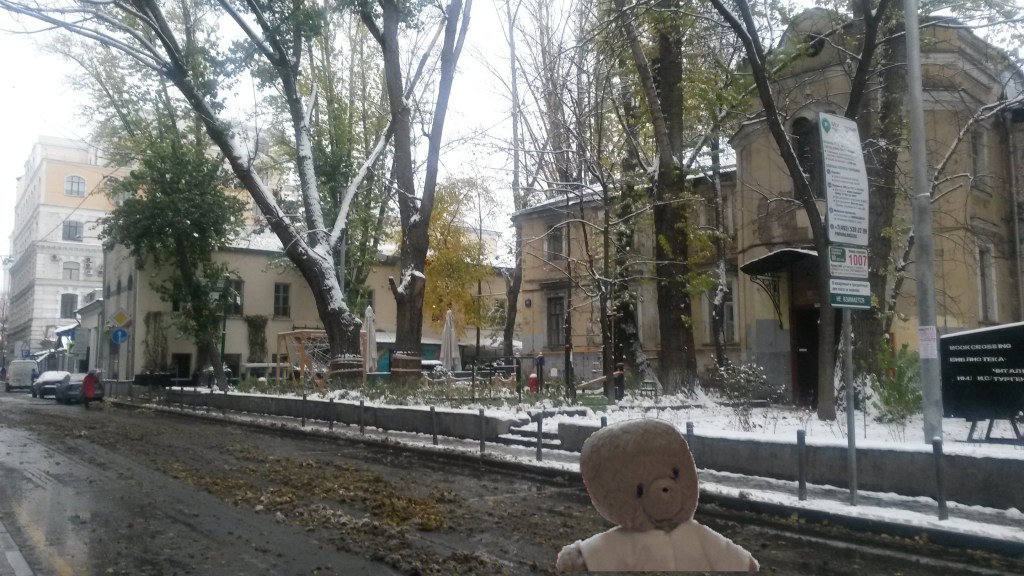
Many people assume that the Russian winter is hard to live through because it cold, but is not true – the interiors of buildings are kept warm (and often uncomfortably hot) by a huge city-wide communal hot water system. No, the Russian winter of 2007-8 was hard because of the lack of light. For five months the sun rises late and sets early, and even during the day the sky was usually a dark grey colour, as the city was covered with the smog from thousands of old cars sitting in huge traffic jams. After the long winter comes a short spring, but things don’t get much better. The winter snow thaws and turns into a yucky brown slush that coats your trousers and shoes.

Moscow in “spring”

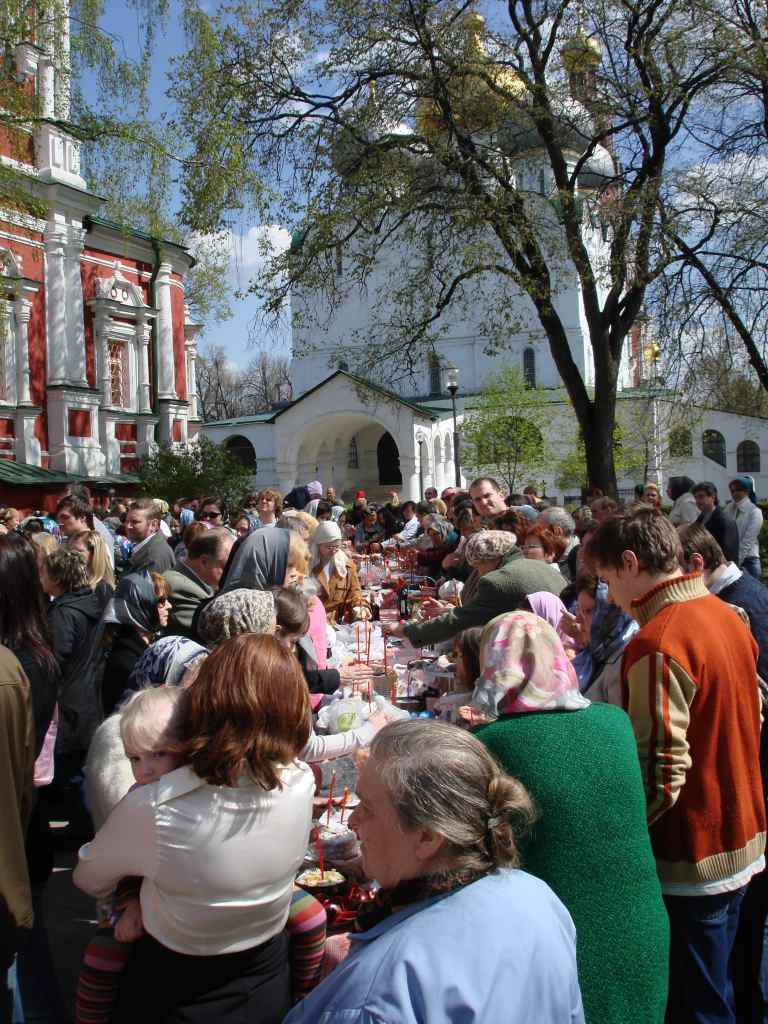
Finally, the snow melts away and the good weather arrives – and everyone leaves their cramped apartments and comes outside to celebrate. Sometimes this happens early with the orthodox Easter in late April or early May…….

Easter Celebration, Moscow 2008

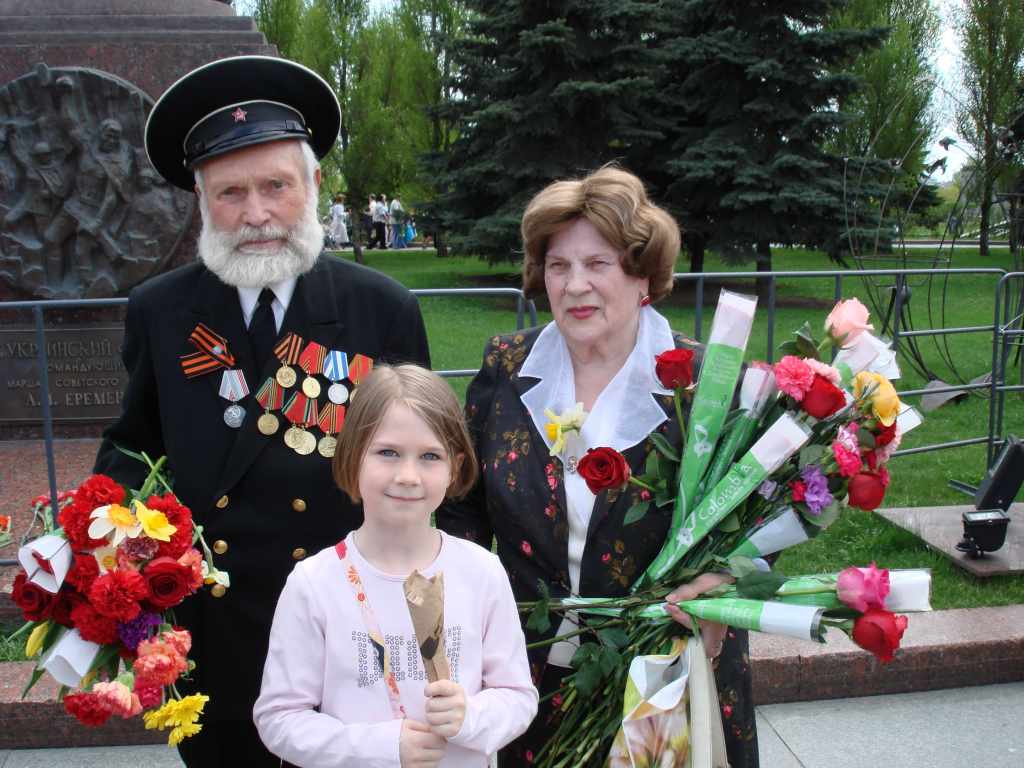
But more traditionally the good weather starts around Victory Day celebrations on the 9th, which are taken very seriously in Russia, a country that lost around a quarter of its population during World War II through military action or starvation. Of course, there is the famous parade on this day, but there are dozens of other activities taking place all through the city – concerts, lectures, fairground activities, street stalls selling WWII soldiers’ rations…. In 2008, there were still some war veterans alive, and there was a touching tradition of people offering them flowers.

Victory Day Veterans, Moscow 2008

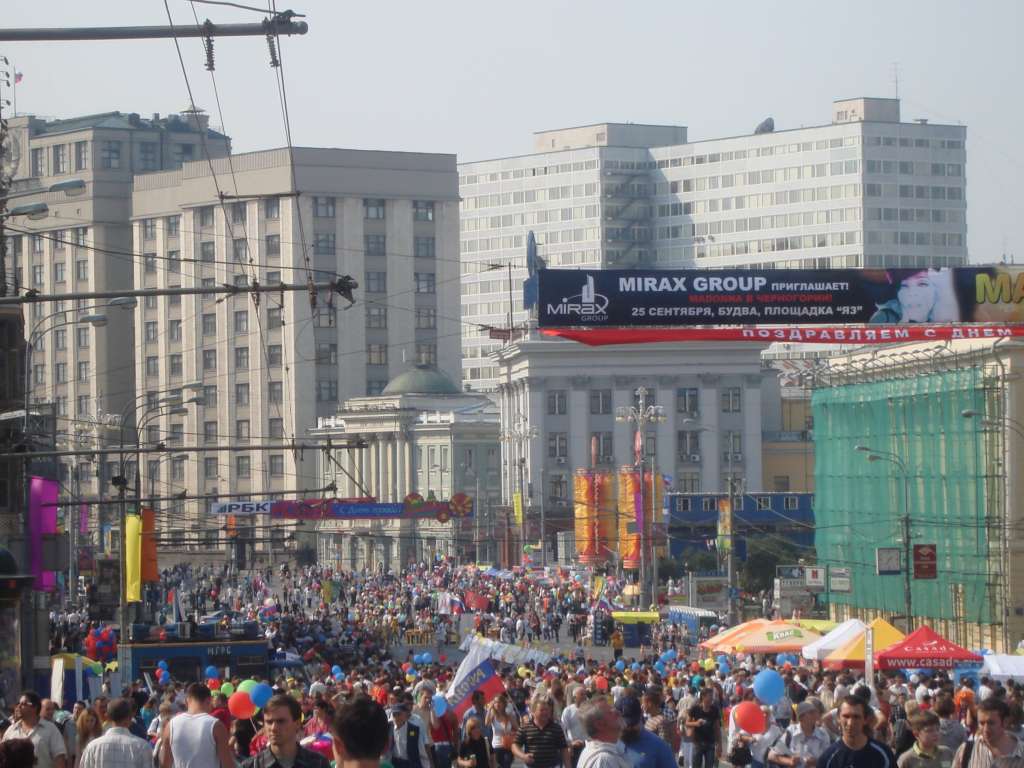
June, July and August bring the Russian summer. Just as winter is cold and dark, the summer is warm and light. The sun seems to hang in the air as a great glowing ball of fire, reluctant to dip below the horizon, and bathing the city in a strange orange light. The streets, once lonely and cold, fill with people enjoying drinks on pavement cafes, listening to excellent street performers, or simply strolling around and enjoying the weather.

Moscow City Day, 2008 – crowds on the street

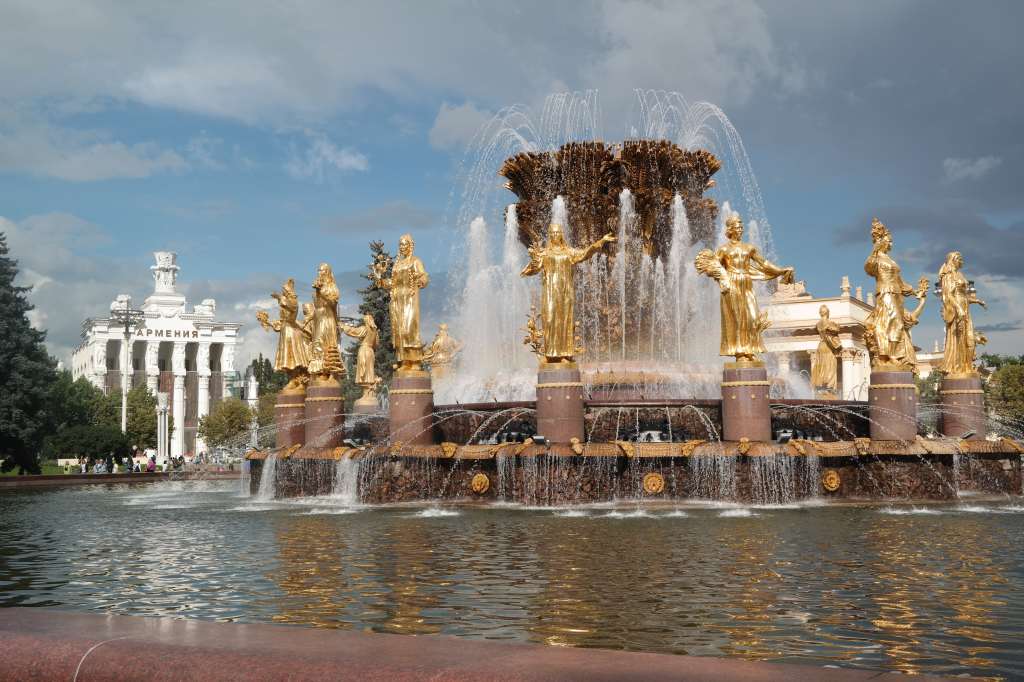
Apart from enjoying central Moscow, summer is also a great time to visit some of the attractions a bit further away, like VDNK, an exhibition centre built to celebrate the different republics that made up the Soviet Union and their supposed harmonious friendship….

The Fountain of the Friendship of Peoples at VDNK

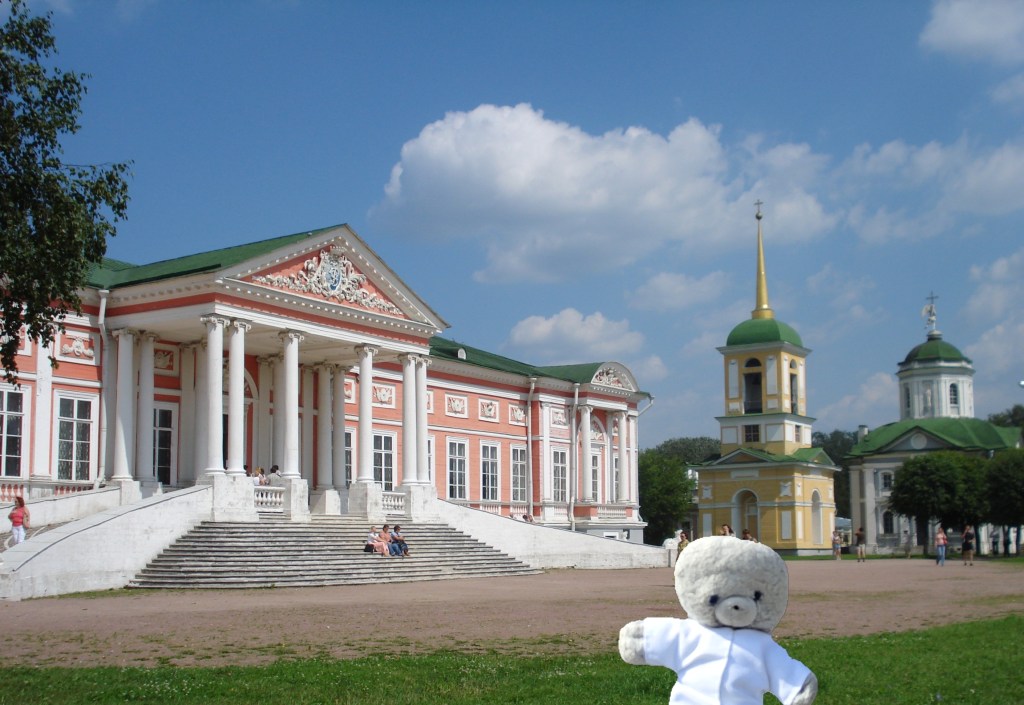
….or some of the old aristocratic or royal palaces that surround the city

A palace near Moscow

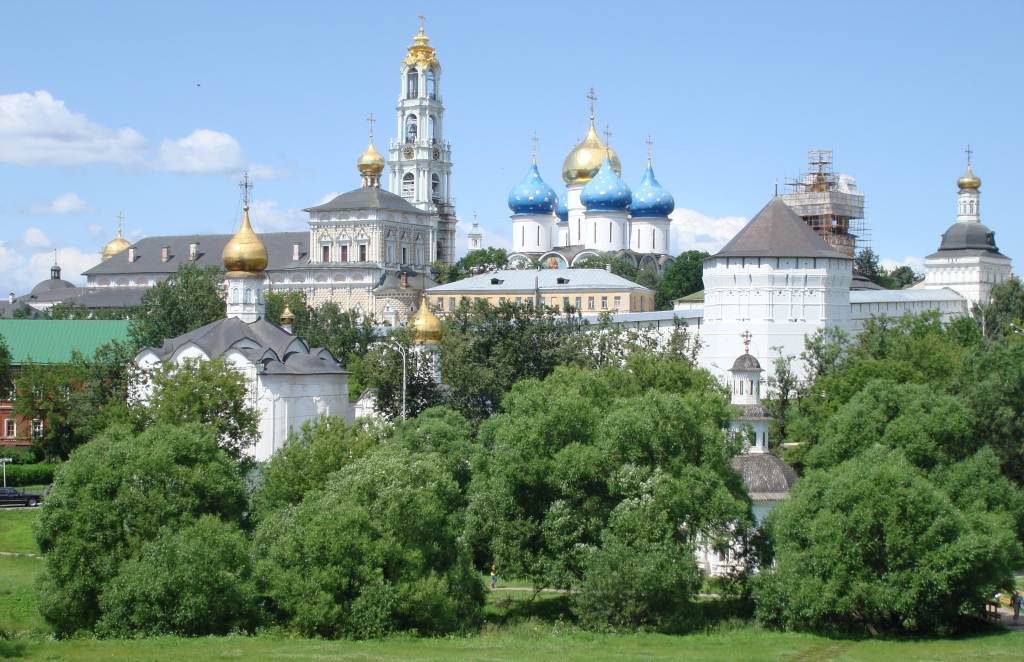
….or  the pretty towns of the “Golden Ring”, like the important religious centre, Sergeev Posad.

Sergeev Posad near Moscow

The Moscow autumn is very short. The weather beings to change in September. In October, the leaves suddenly fall from the trees over a couple of short weeks and in November, the first snow usually falls, and the long winter begins again.

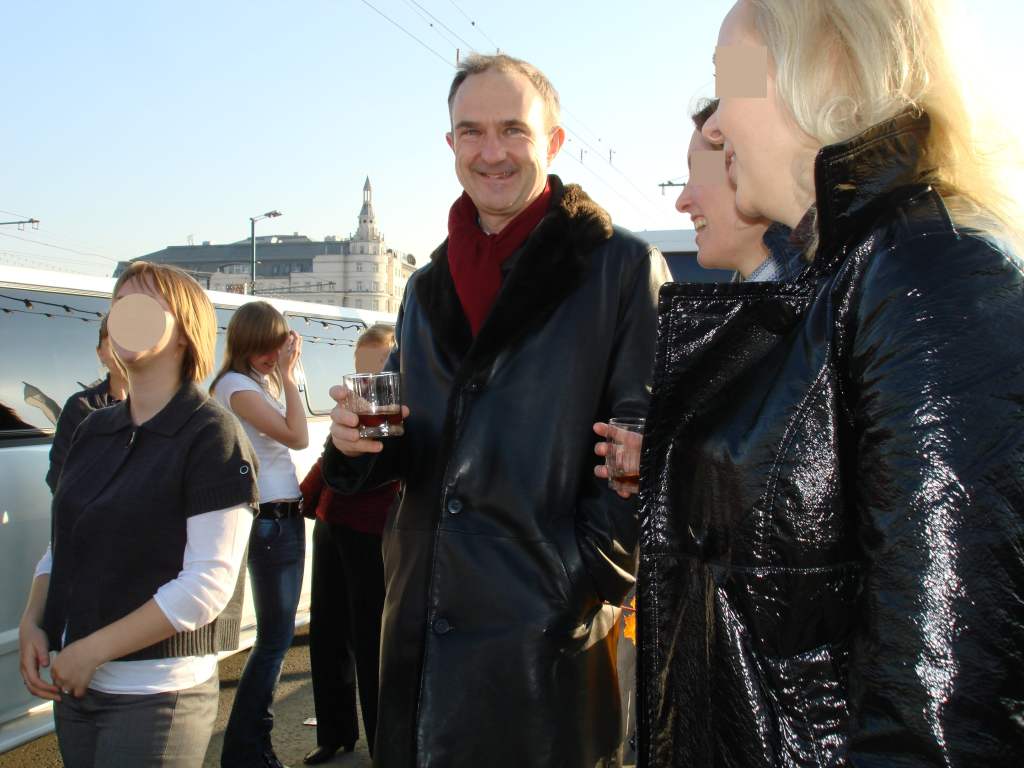
The Moscow of 2008-9 was an amazing place, full of contradictions and (usually pleasant) surprises. At first site, the Moscovites were a dour, unsmiling bunch, but once I got to know people, I made many lasting friendships. The city felt safe, because there were always lots of police on the streets, but in my relatively small expat community there were several violent deaths from bungled robberies or traffic accidents. When you went out, you could never be sure how the evening would end – quietly going back home or getting caught up in some drunk adventure with crazy Russians. One day I was walking over the bridge leading to the Kremlin with my chief editor, when we were accosted by a group of very merry ladies who were standing next to a stretch limousine and drinking cognac. They invited us to go for a drive, and……. the rest of the story can be read in my book, Caviar, Vodka and Tears.

My editor getting into trouble again…

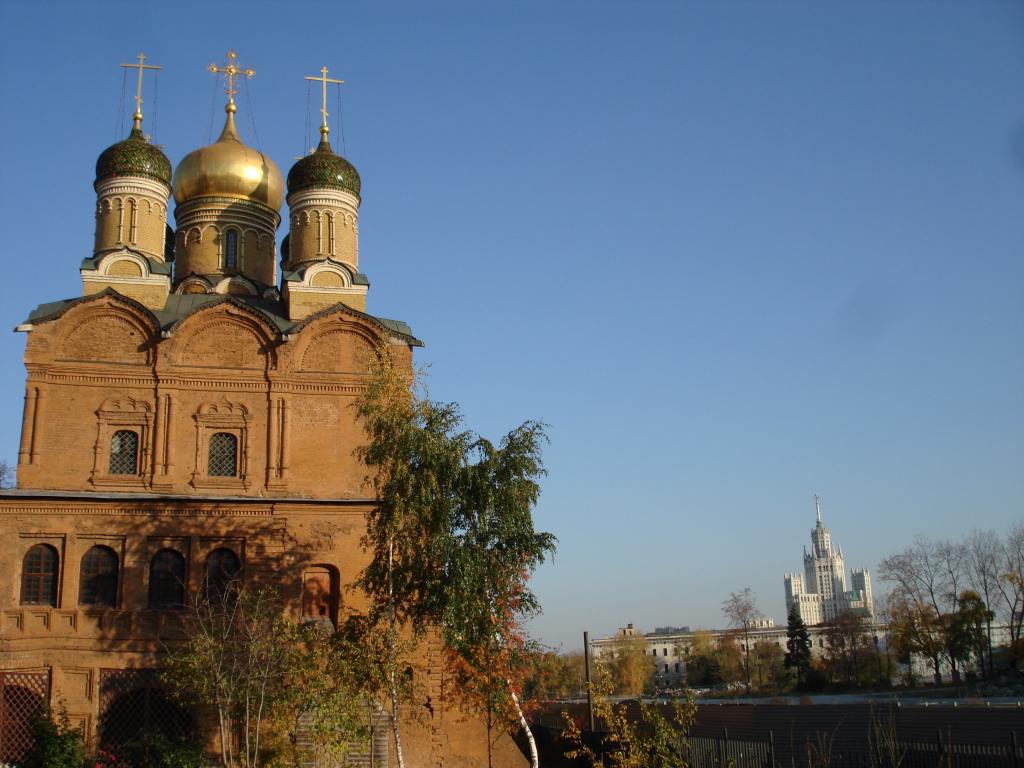
There was one special place that for me summed up the chaotic Moscow of 2008-9. It was a small parking area a short distance away from Red Square and was usually deserted. Directly in front of me, was a beautiful 17th century orthodox church.  In the distance on the horizon, stood one of the “seven sisters” – impressive buildings commission by Stalin to celebrate the might of the Soviet Union.

My favourite Moscow view, left hand side….

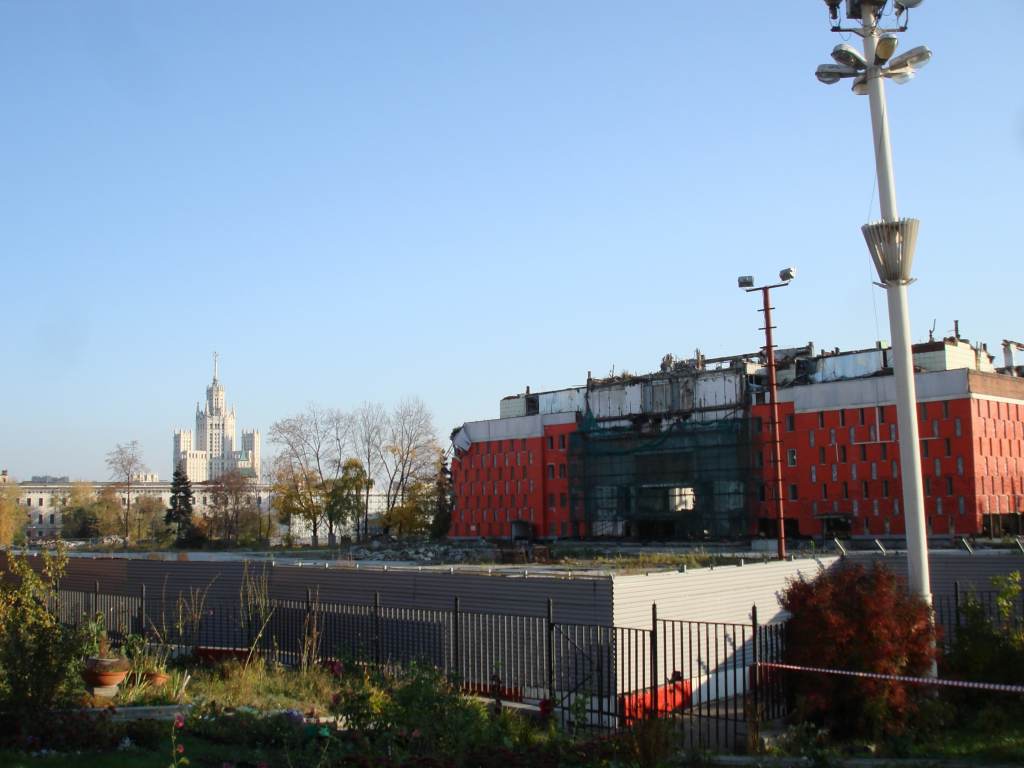
And to the right was the shell of an abandoned hotel surrounded by waste ground. This was the once elite Rossiya Hotel, used to accommodate dignitaries visiting the Kremlin. It was finished in 1967 but aged rapidly and was closed in 2006. A project was agreed to convert the area into an entertainment complex, but the developer who won the contract was accused of corruption and fled to the UK, leaving the decaying site you can see in the photo below.

…and right hand side

The power of the church, the state, and omnipresent corruption – this one vista summed up contemporary Moscow perfectly.

My next post will present the Moscow  of 2013-2109, a city transformed by massive investment. Stay tuned to see how it changed and what happened to my favourite view!

Previous Post: Off the beaten Track in St Petersburg

St. Petersburg – off the beaten track

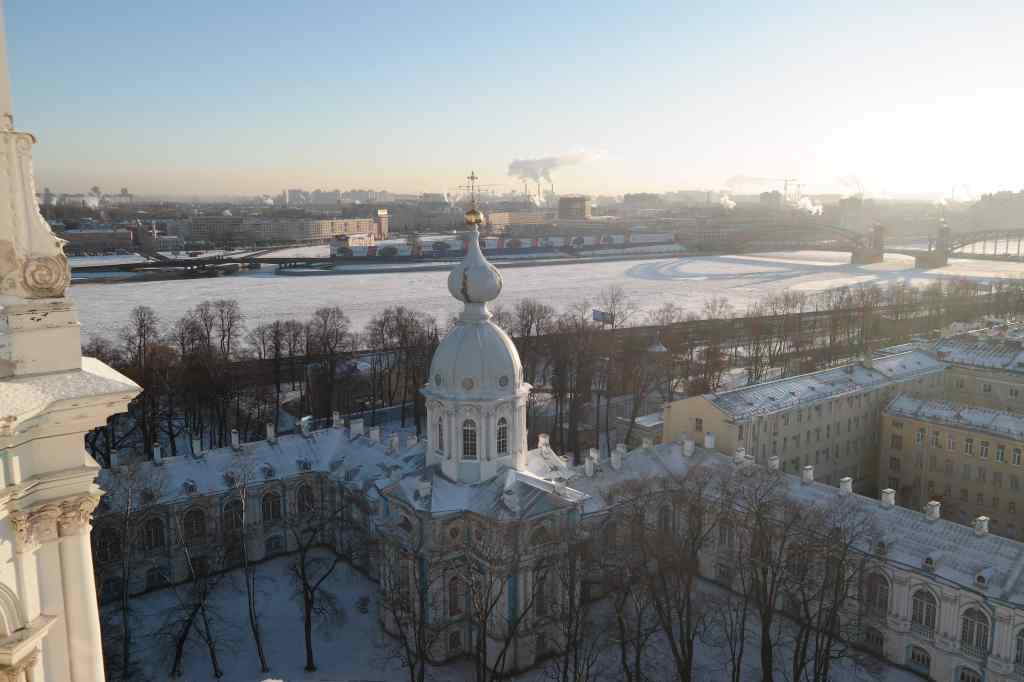
My previous post was about the classical sights of St Petersburg – this one will cover the sides of the city that a typical tourist never sees and some of the wild adventures that always seemed to happen to me or my team when I visited. My second trip to St Petersburg was during the Russian New Year holidays in January, in the middle of the Russian winter. Not surprisingly, it was very different to my visit during the summer. On a sunny day, the city would look beautiful under a light coating of snow….

St Petersburg on a sunny winter’s day – magical
The view from the tower of Smolny Cathedral
Smolny Cathedral

But on an overcast day, it would look like this – very damp and dark.

A dark winter’s day in St Petersburg

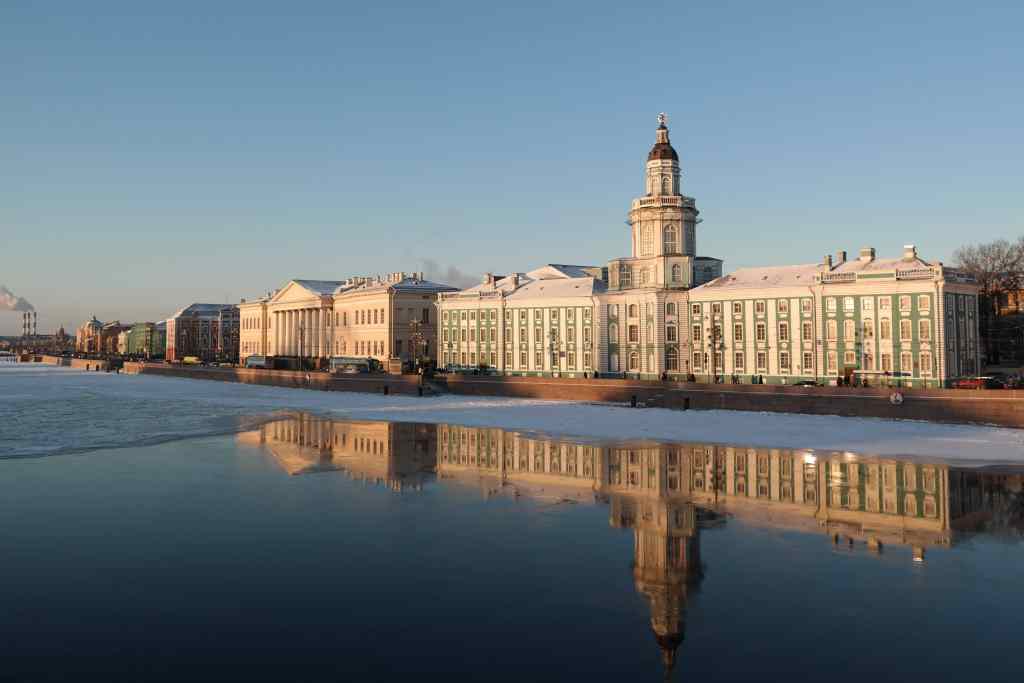
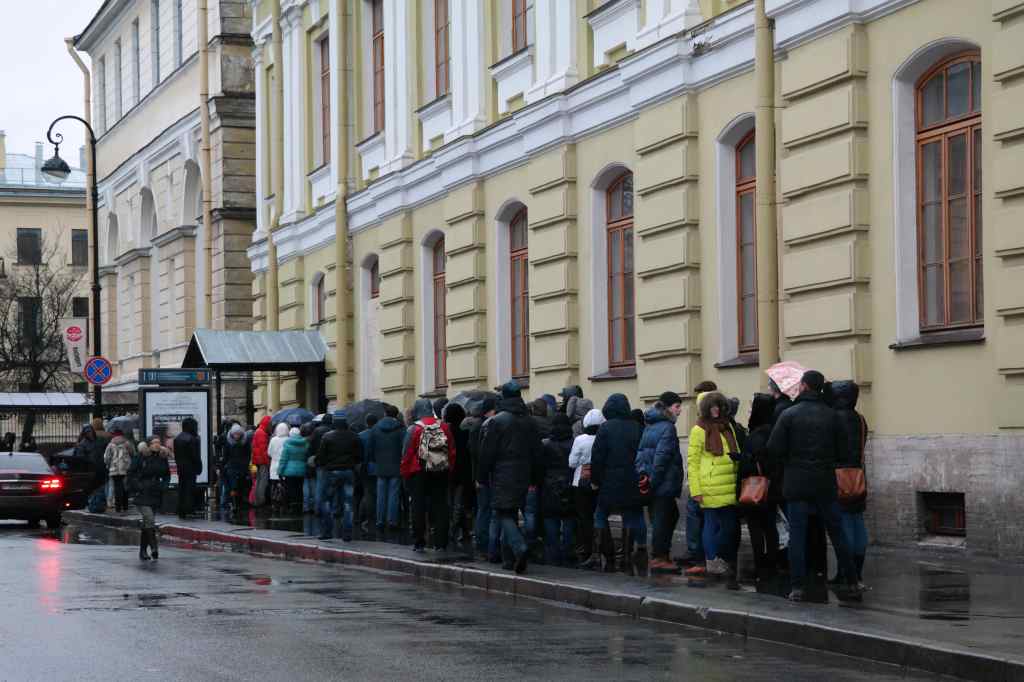
Although the temperature was slightly higher than in Moscow where I was living, it felt a lot colder, due to the high levels of dampness – it was a cold that rapidly reached your bones and made you shiver, even with warm clothes on. The days were even shorter than in Moscow’s winter, with sunrise at 10am and sunset at 4pm.  The foreign tourist crowds were gone…….to be replaced by crowds of locals all trying to visit the same famous attractions like the Hermitage or (below) the Kunstkamer (a collection of biological freaks assembled by Peter the Great) at the same time with their children.

Queuing to enter the Kunstkamer on a winter’s day

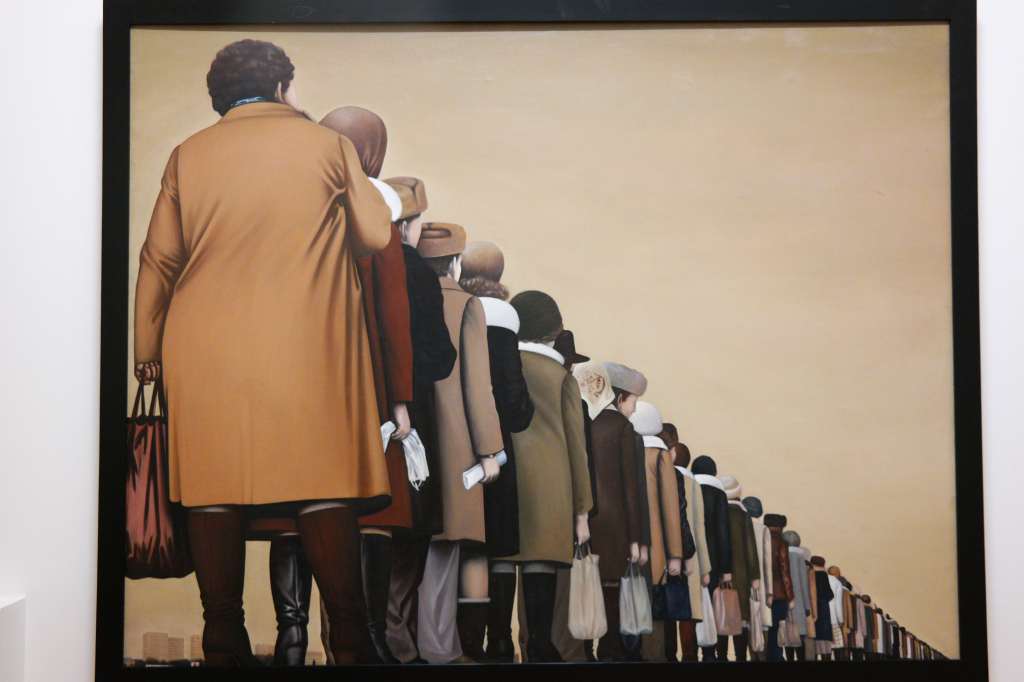
Fortunately, less well-known museums like the excellent Russian Museum were still almost empty.

One of the many excellent paintings in the Russian Museum, St Petersburg

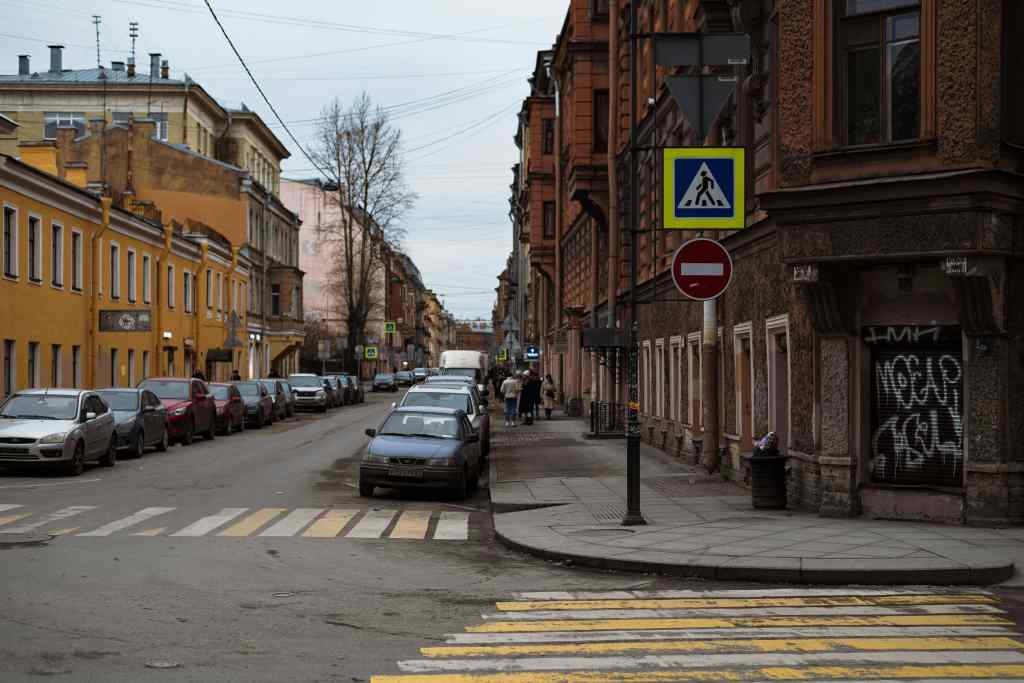
After my winter visit, I started going to St Petersburg on business at least once a month and visited the districts outside of the impressive centre. In these less touristy parts of the city, many of the buildings might once have been beautiful but were now old and crumbling. St Petersburg suffered terribly during WWII, when the siege of Leningrad by Finnish and German forces caused the death by starvation of around a fifth of its population and resulted in the destruction of many of its buildings. A huge restoration effort has gone into the most famous areas of the city, but much of the rest looks rather neglected.

Off the beaten track – typical St Petersburg suburb

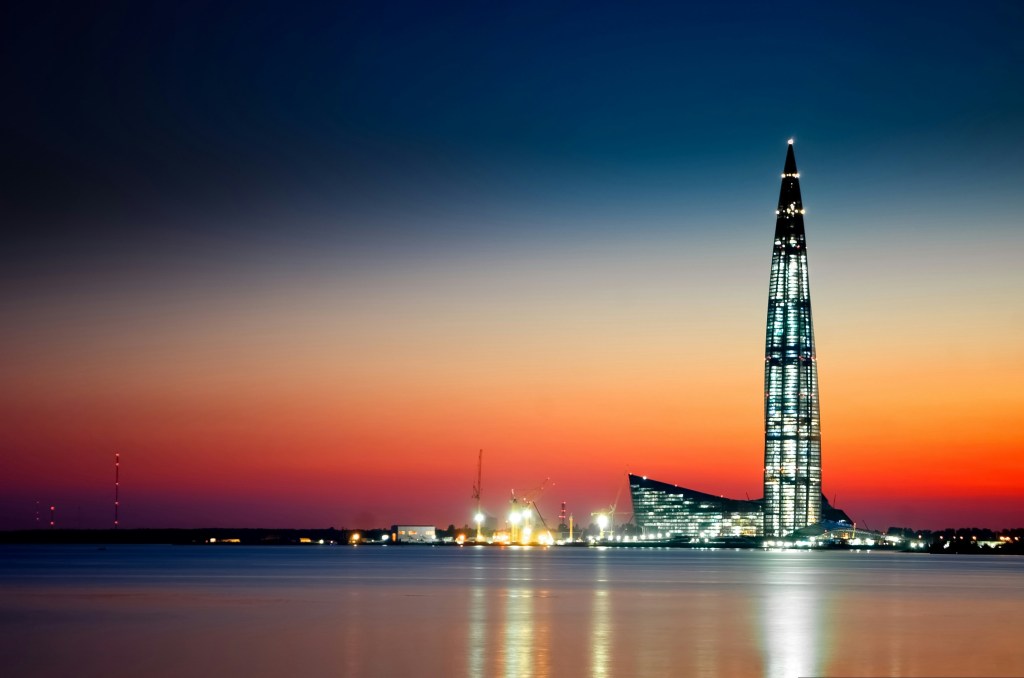
Not all of St Petersburg’s suburbs are run-down though. The islands to the north east of the historic centre used to be undeveloped land, but have now received massive new investments and are home to a brand new football stadium, expensive homes, trendy restaurants and flashy new office buildings – like Gazprom’s 87-story skyscraper at the Lakhta Centre.

The Gazprom tower at the Lakhta Centre

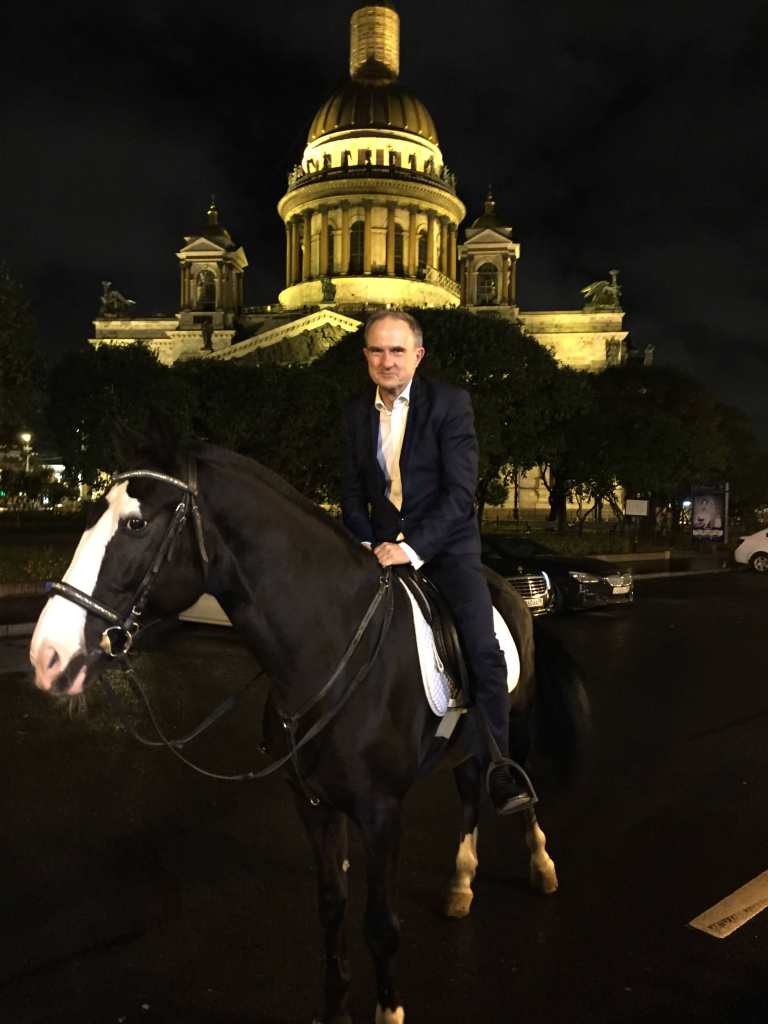
My many visits to St Petersburg allowed me to absorb and enjoy the city’s unique atmosphere – more laid back and arty than Moscow, occasionally slightly seedy, but usually lots of fun. As a result of befriending local residents, I had many adventures. On one occasion my chief editor was forced to ride a horse around St Isaac’s cathedral at 2am, after a drunken evening with the Russian publishing company we had just agreed a deal with.

Riding a horse around St Isaac’s Cathedral at 2am

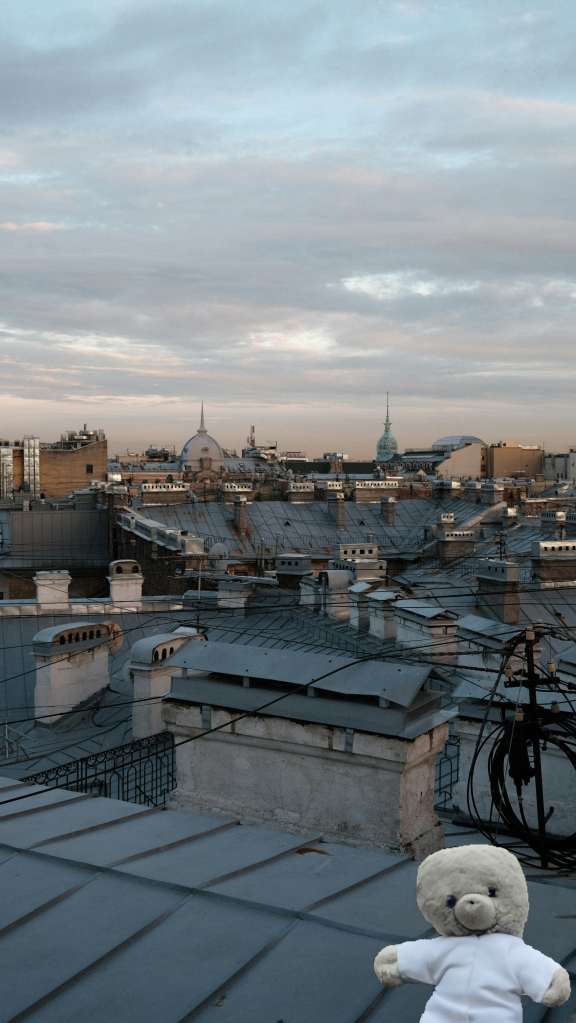
On another, I was invited to a rather hazardous excursion across the rooftops of the city. This is a popular, semi-official, activity for Russian tourists, but I found it pretty scary…….

A trip over the roofs of St Petersburg

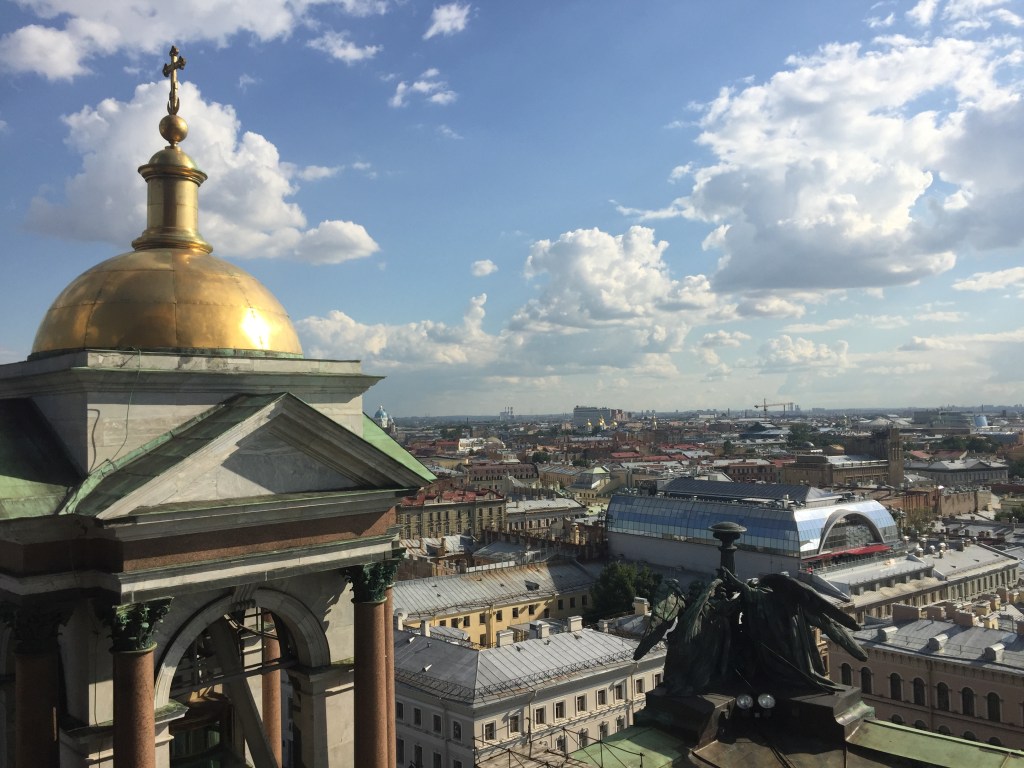
In any case the view is not as good as the one you get from the more traditional tourist attraction, the towers of St Isaac’s Cathedral….

The view from St Isaac’s Cathedral

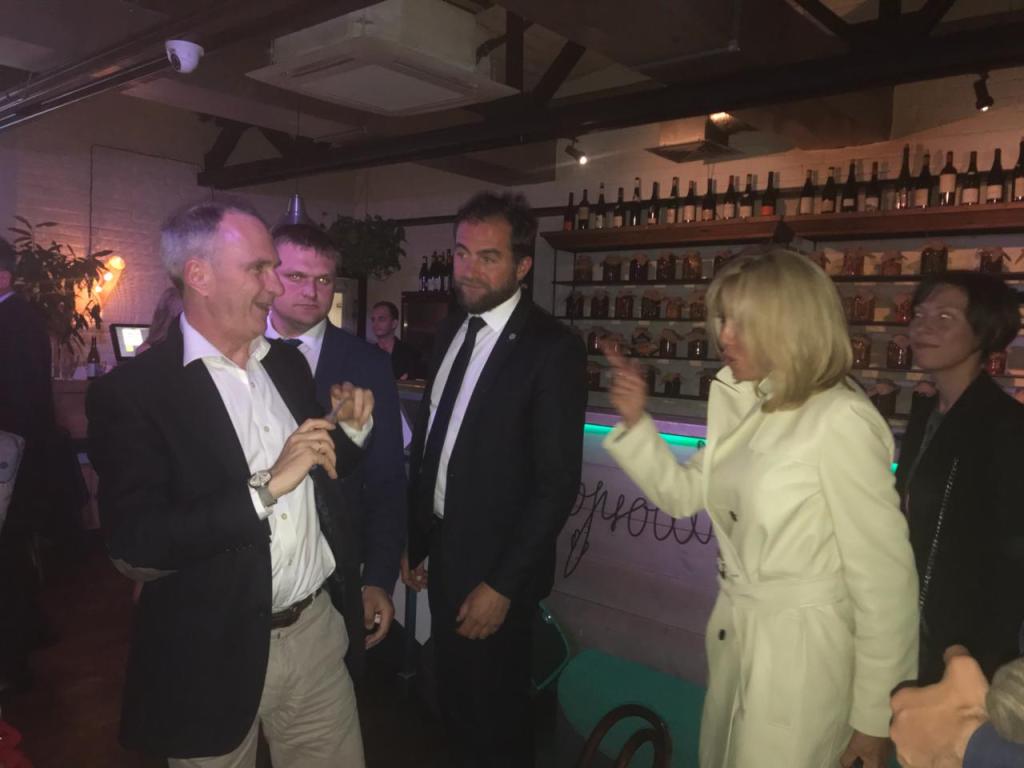
On another occasion my chief editor again got into trouble, at a trendy restaurant on one of the city’s many islands during the St Petersburg Economic Forum……

My editor in trouble with Mme Macron

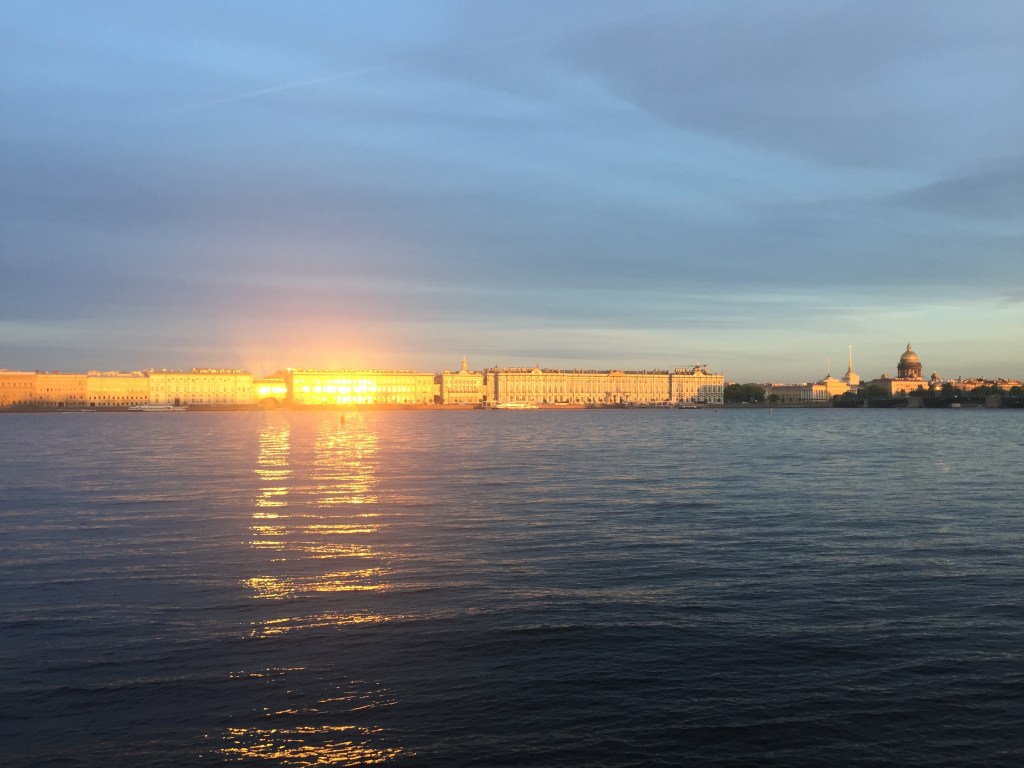
What an evening that was! The Forum takes place in June, and just as days are very short and dark in winter, in June they are long and light – although the sun sets at 10.30pm, it never seems to get completely dark before it rises again at 03.30. On this particular evening the setting sun was reflected in the many windows of the Winter Palace, making it look like the Neva River was on fire. This “White Nights” version of St Petersburg is the one I will remember forever. Some of my adventures in the city are described in my book, for more details click here.

The Winter Palace at sunset in summer

Previous Post: Classical St Petersburg

Next Post: Moscow 2008-2009

Saint Petersburg 1 – Classical sights

The second post in this series about Russia is devoted to Saint Petersburg. This is the Russian city most familiar to western visitors, and indeed its centre is a very pretty place well worthy of a few days’ stay, with world class attractions like the Hermitage and the royal palaces. My first visit was a holiday in the summer, which followed a classic circuit of the city’s highlights, but later I visited in winter and then I started to go there frequently on business. This gave me a very different perspective of the city and led to some of my most bizarre and fun adventures in Russia. I will cover the different sides of St Petersburg in two separate posts.

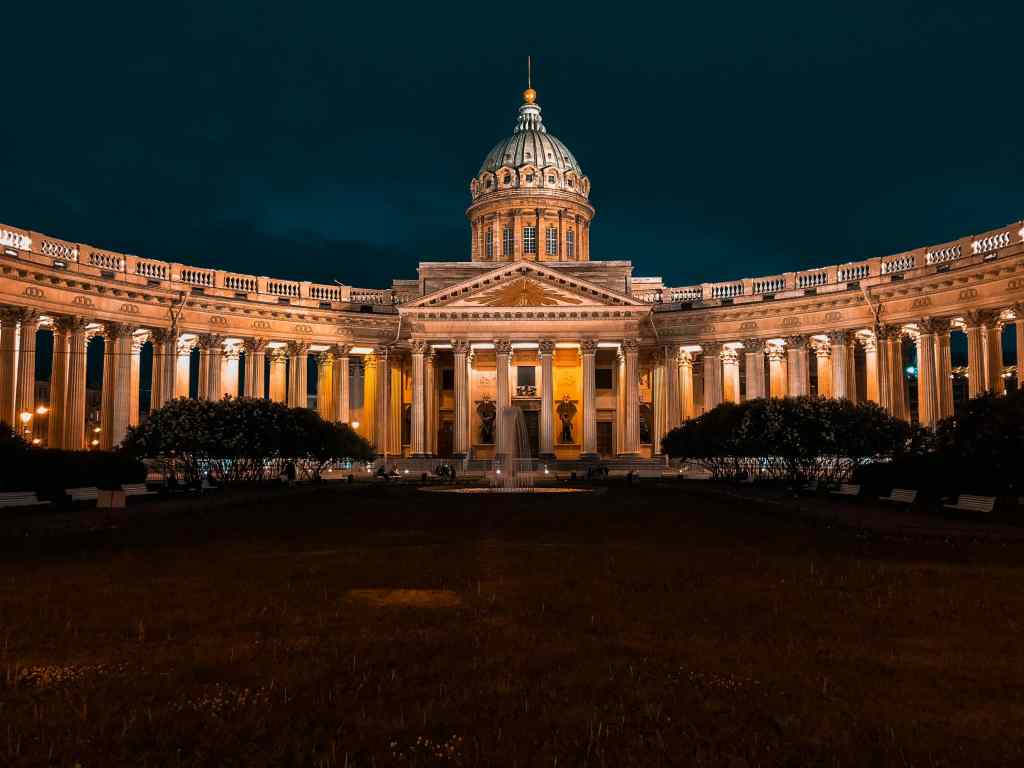
Classic St Petersburg – Kazan Cathedral

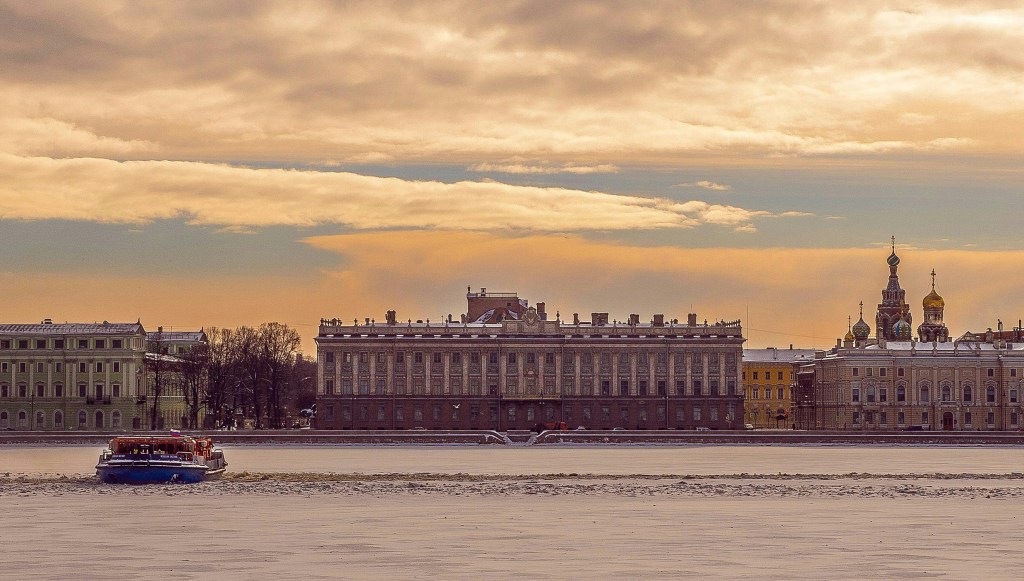
First, I will describe the classic St Petersburg that most tourists see. The city was founded in 1703 by the tsar Peter the Great, on boggy land on the shores of the Neva River – territory that had only just been claimed by Russia after a war with Sweden. Peter employed an Italian architect to design some beautiful classical buildings, whilst the labour force for its construction included many Swedish prisoners. Maybe not surprisingly, the centre of Saint Petersburg looks like other European cities built in the same period, with majestic houses along the Neva River and the surrounding canals.  A boat trip along these waterways is a popular way for visitors to get a first impression of the city.

A boat trip on the Neva River, Saint Petersburg

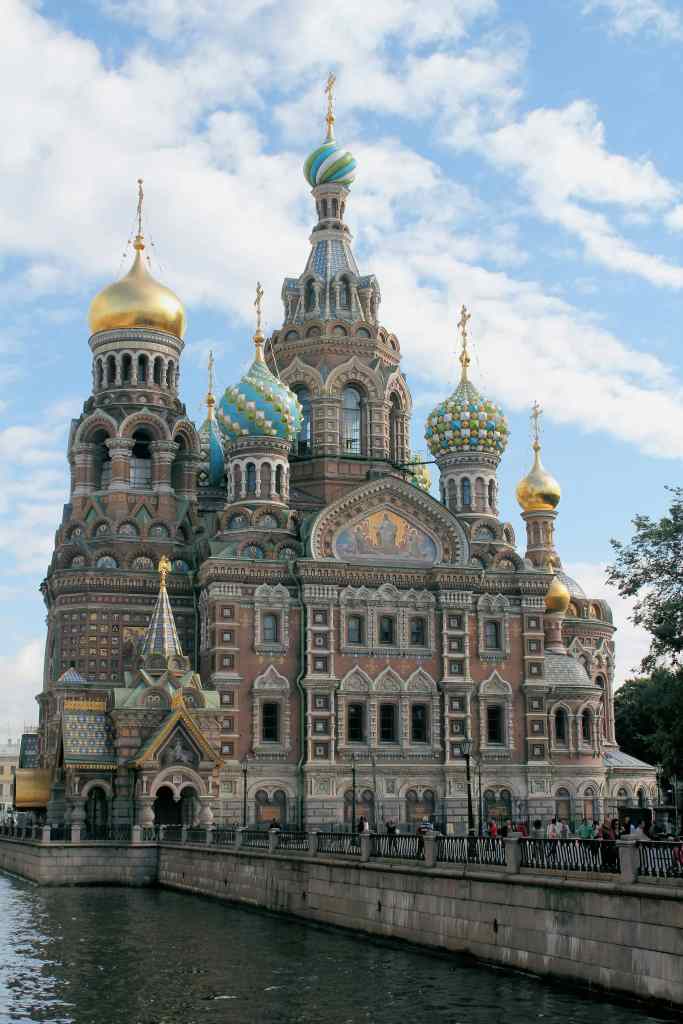
The centre of St Petersburg has many magnificent buildings, like Kazan Cathedral (first picture in this post) or the Church on Spilled Blood, built on the spot where tsar Alexandra II was assassinated in 1881.

The Church on Spilled Blood Saint Petersburg

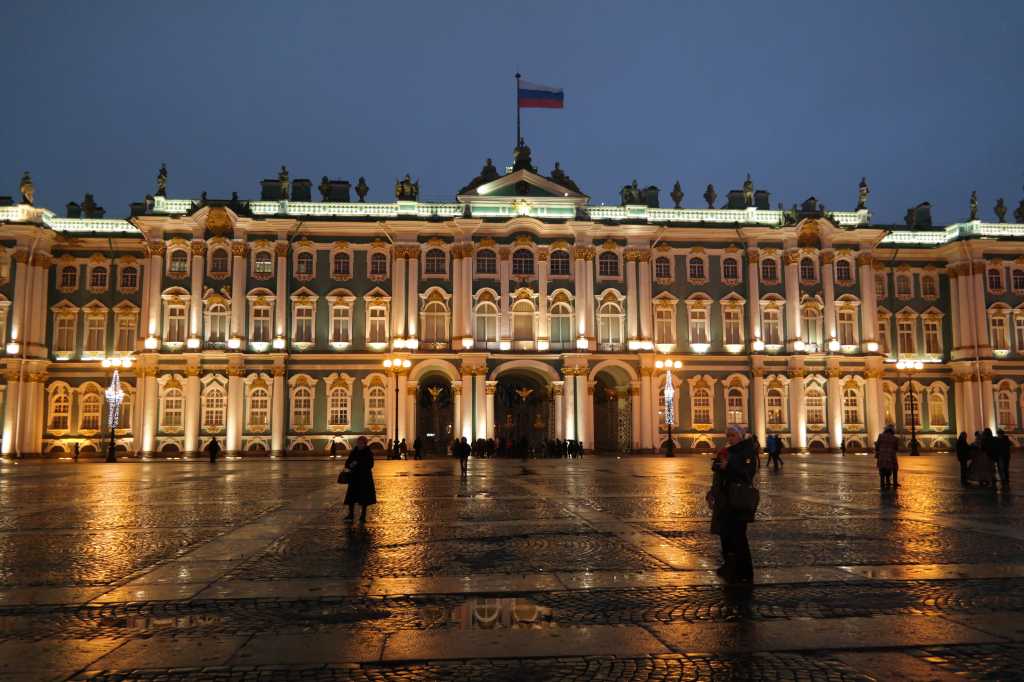
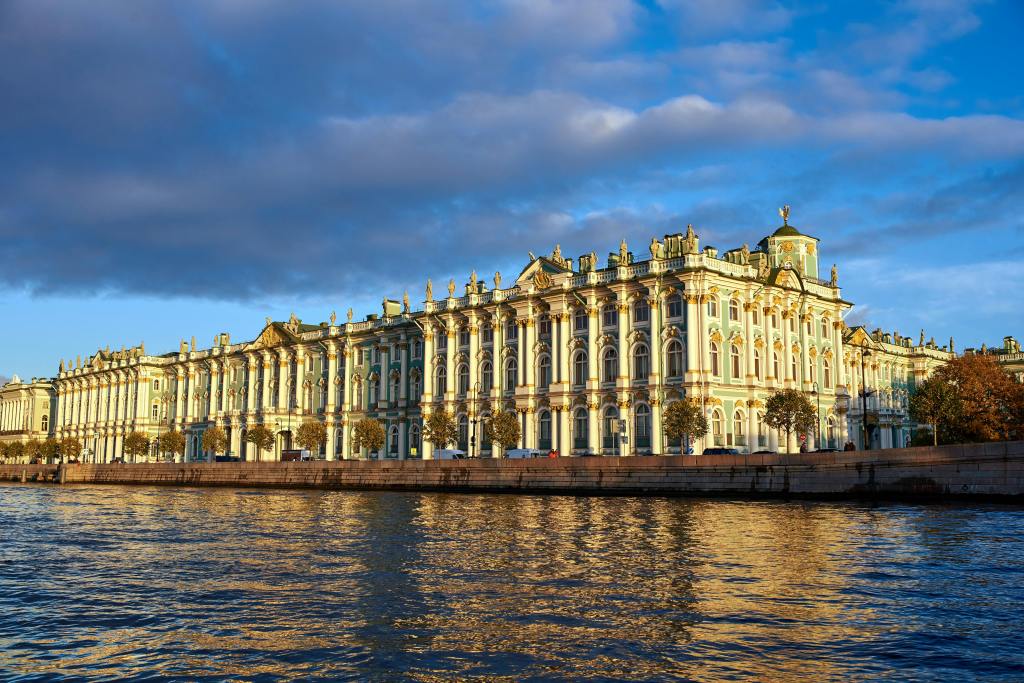
One of the highlights of the centre of St Petersburg is the famous museum, the Hermitage, which owns a staggering three million items – of which only a small proportion are put on display. It was founded by Catherine the Great in 1764 as an extension to her Winter Palace in order to house her growing art collection and acquired its name from its being an exclusive, inaccessible place that only the tsar’s family could visit. The collection steadily grew, and new buildings were added to house them – although a few major works were sold by the cash-strapped communist regime in the 1920s. The communists also transformed the tsars’ former Winter Palace into yet another part of the museum, and today is the second largest in the world by surface area.  

The Winter Palace

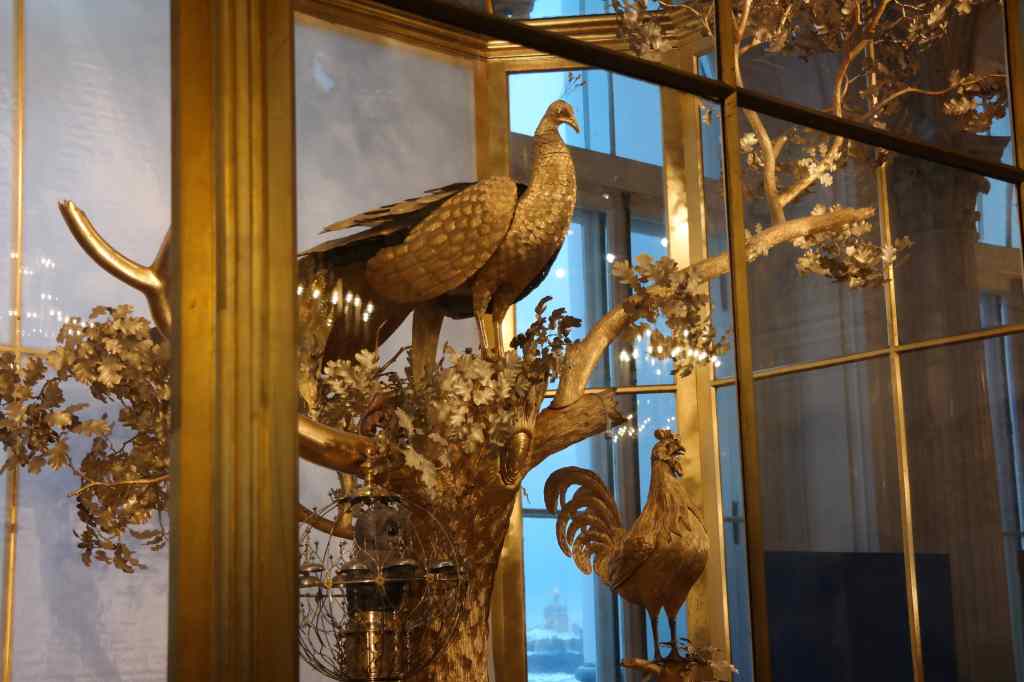
I have visited the Hermitage many times, and indeed its collection is amazing. Highlights include this incredible golden Peacock Clock and a collection of old masters that includes works by da Vinci and Rembrandt.

The Peacock Clock at the Hermitage Museum

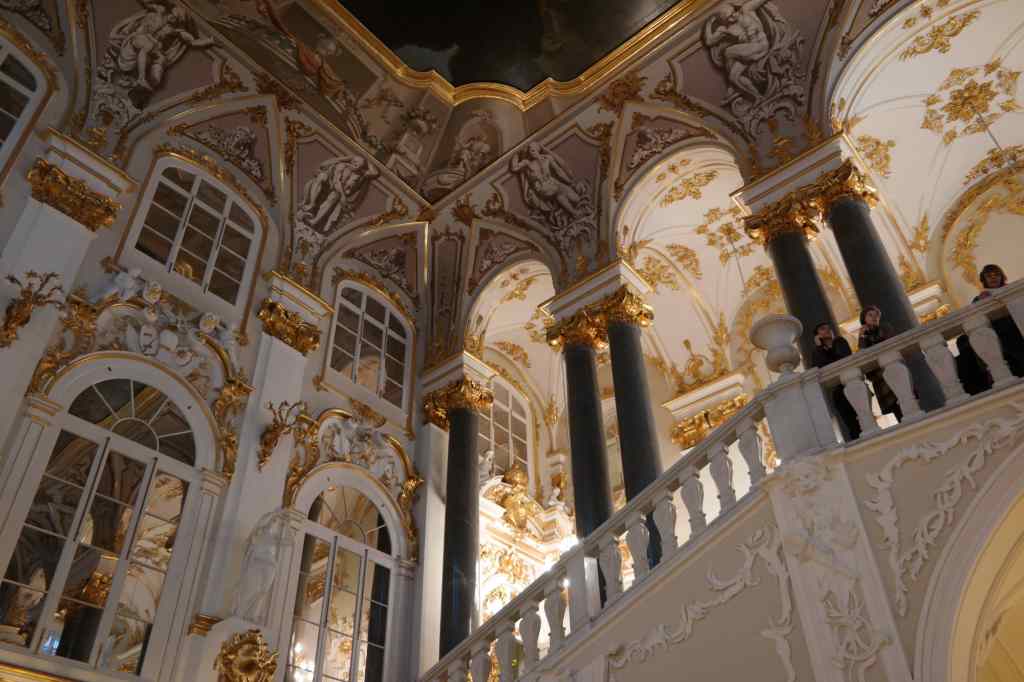
However, I think I actually simply prefer walking around and admiring the magnificent interiors of the former Winter Palace -such the Grand Gala Staircase or the Malachite Room, which was the home of the Russian Provisional Government formed after czar Nicholas II abdicated until the Hermitage was stormed by workers and sailors at the start of the Bolshevik Revolution.

The Grand Gala Staircase at the Hermitage
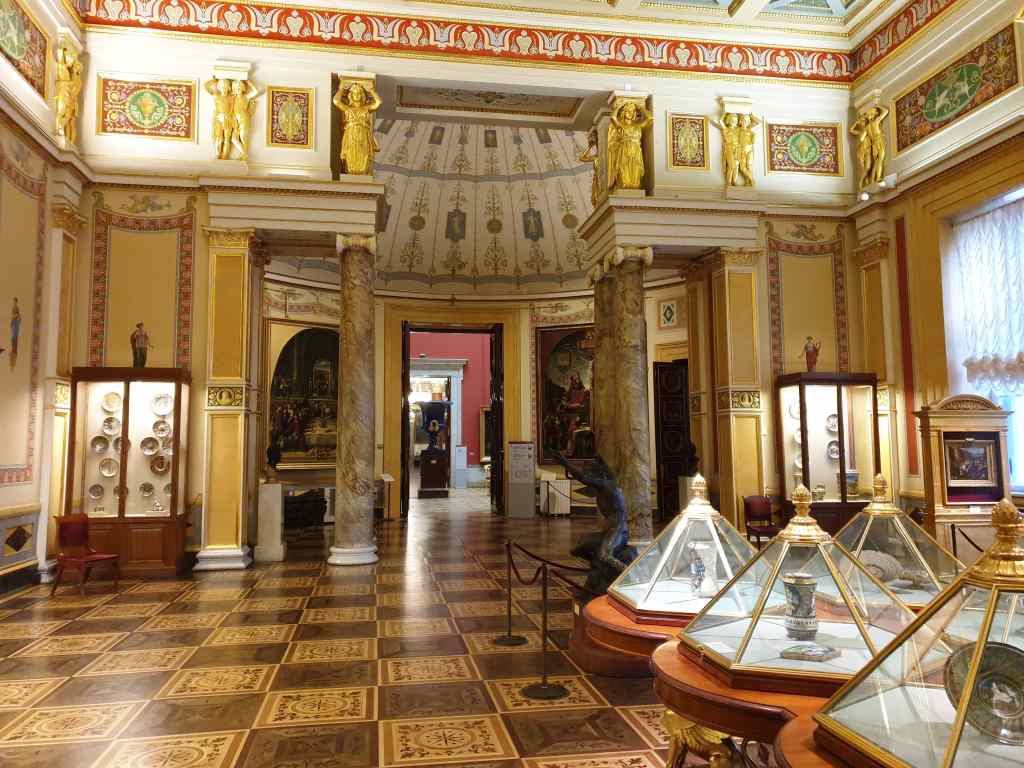
One of the quieter rooms in the Hermitage

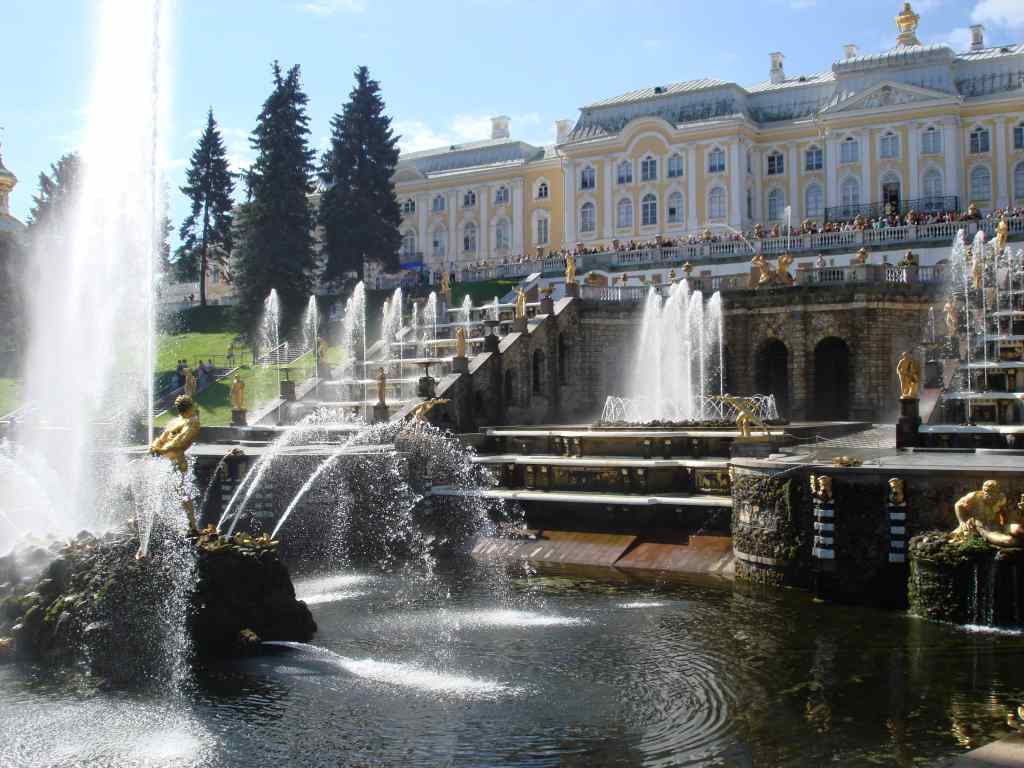
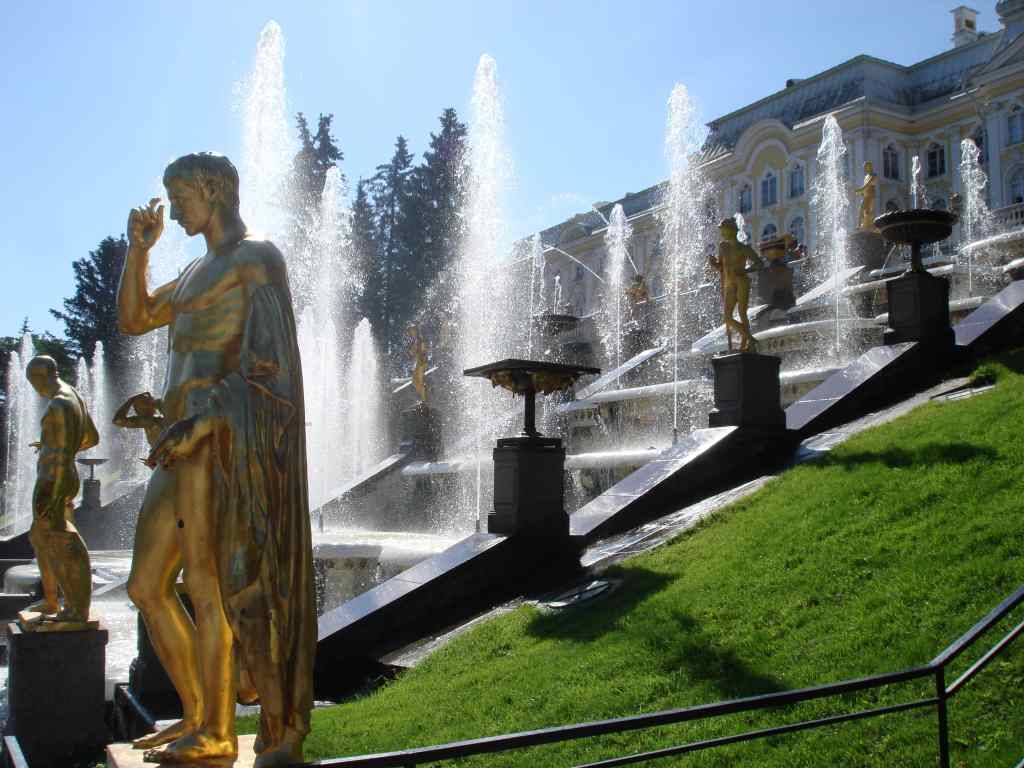
Magnificent palaces are not confined to the centre of St Petersburg. A short distance away from the city are several of the Russian tsars’ summer palaces. One of the most spectacular is Peterhof, built by Peter the Great and most easily reached by a short ride in a hydrofoil. Peterhof is a huge palace, famous for its many fountains, of which the most impressive is the Grand Cascade, which sits between the palace and the sea.

The Grand Cascade, Peterhof
Close up of the fountains of the Grand Cascade

The palace itself is also beautiful, although what you see today is a reconstruction after the Nazis demolished the original structure during the siege of Leningrad.

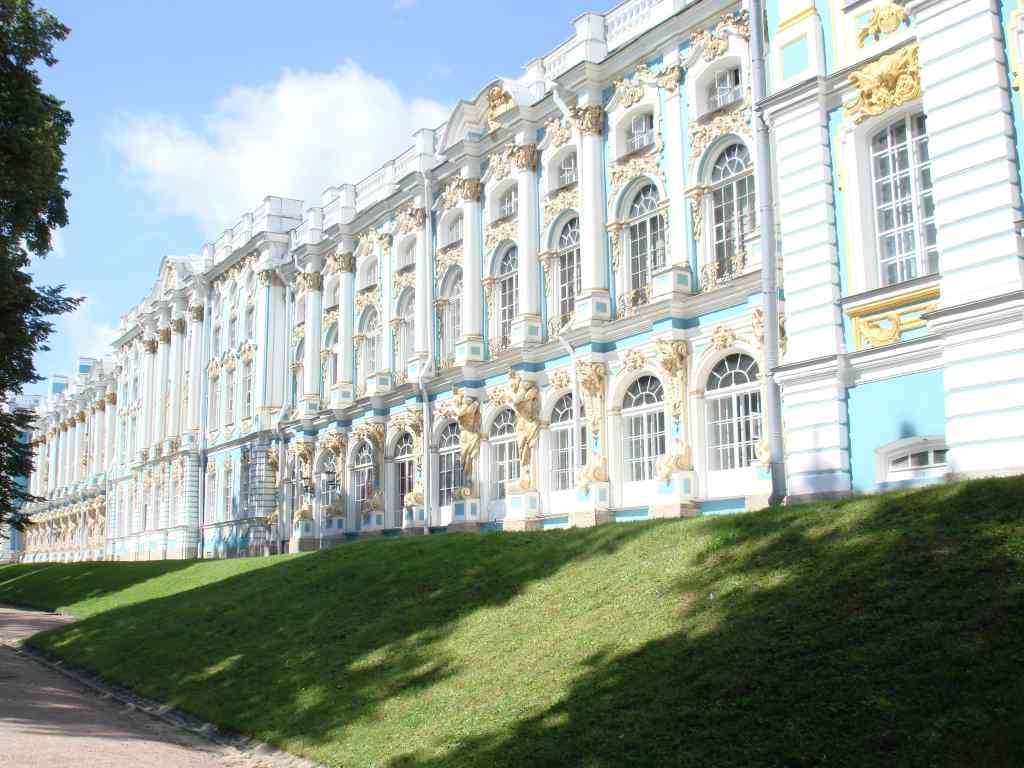
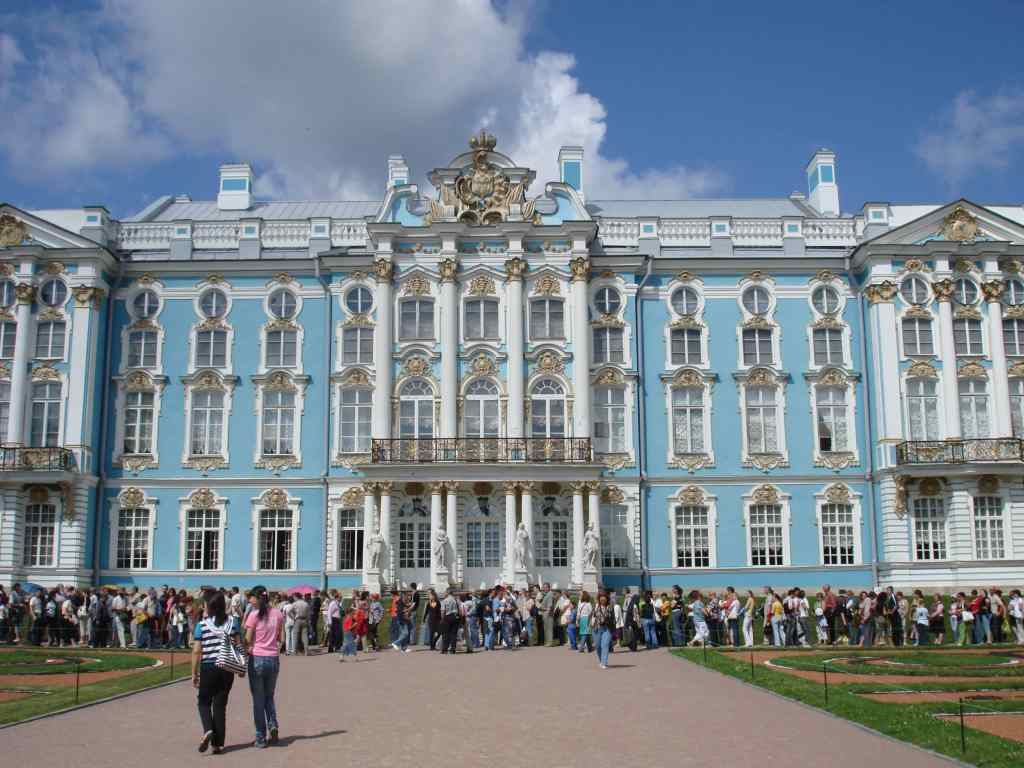
Another huge palace complex near St Petersburg is Catherine’s Palace, located about 30km from the city in a town called Tsarskoye Selo or Pushkin.  This is even bigger than Peterhof and was also completely gutted by German forces during WWII – so what you see today is again mostly restoration.

The exterior of Catherine’s Palace
…and the queue to get in!

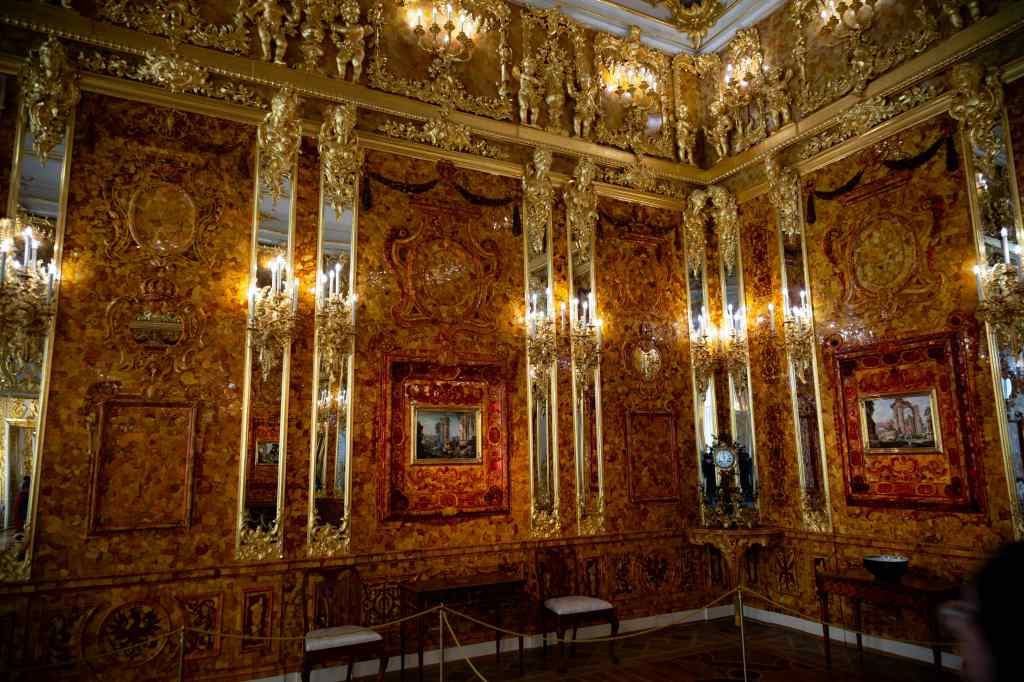
One of the highlights of Catherine’s Palace is the Amber Room, a chamber decorated with amber panels, which has a mysterious history. It was originally located in Charlottenburg Palace in Berlin but was given by the Prussian king to his ally, Peter the Great. Eventually it was moved to the Catherine’s Palace where it was feted as the “eighth wonder of the world”. When the Nazi forces occupied the area, they took apart the Amber Room and shipped it to Konigsberg in Germany (now Kaliningrad in Russia) – but when advancing Russian troops captured the city in 1945, no trace of the room could be found even after years of searching. Eventually it was decided to rebuild a new Amber Room in the restored palace, a project that was took 23 years and which finished in 2003.

The Amber Room, Catherine’s Palace

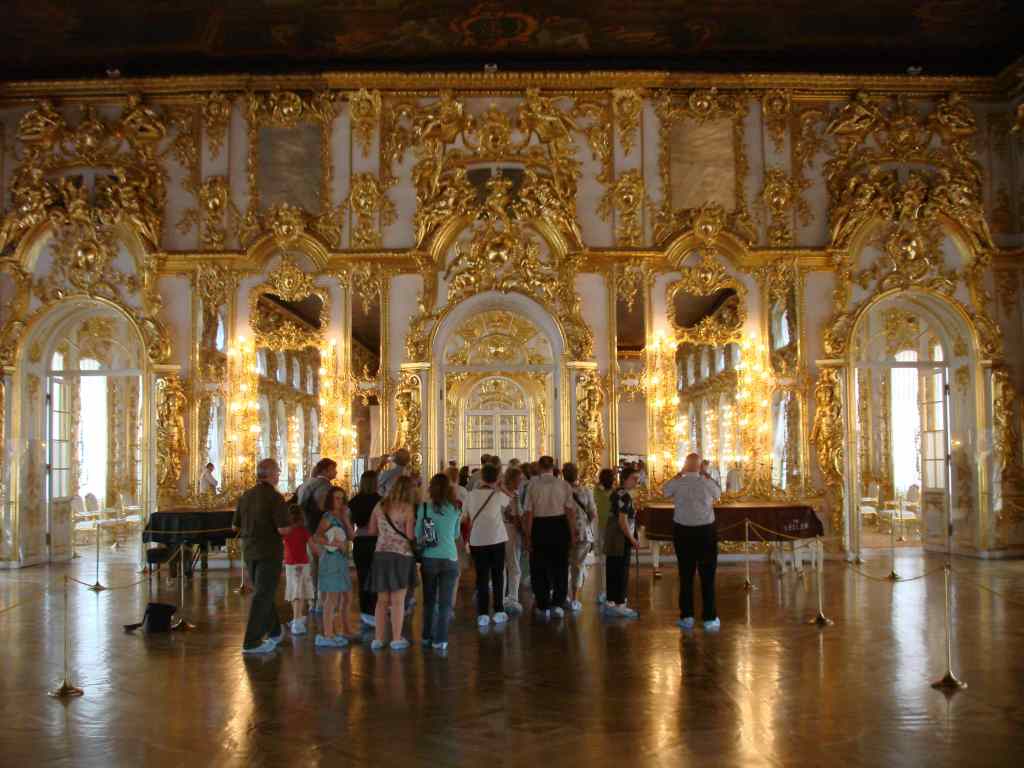
Sadly, the Amber Room was closed for maintenance on my visit, so I had to content myself with the rest of the palace. This was certainly opulent, but in my humble opinion, not always in the best taste – the architects seemed to have been instructed to cover the walls of every room with gilt, and after a while this endless dazzle of gold became a bit repetitive….and even a bit tacky.

One of an endless series of over-gilded rooms, Catherine’s Palace

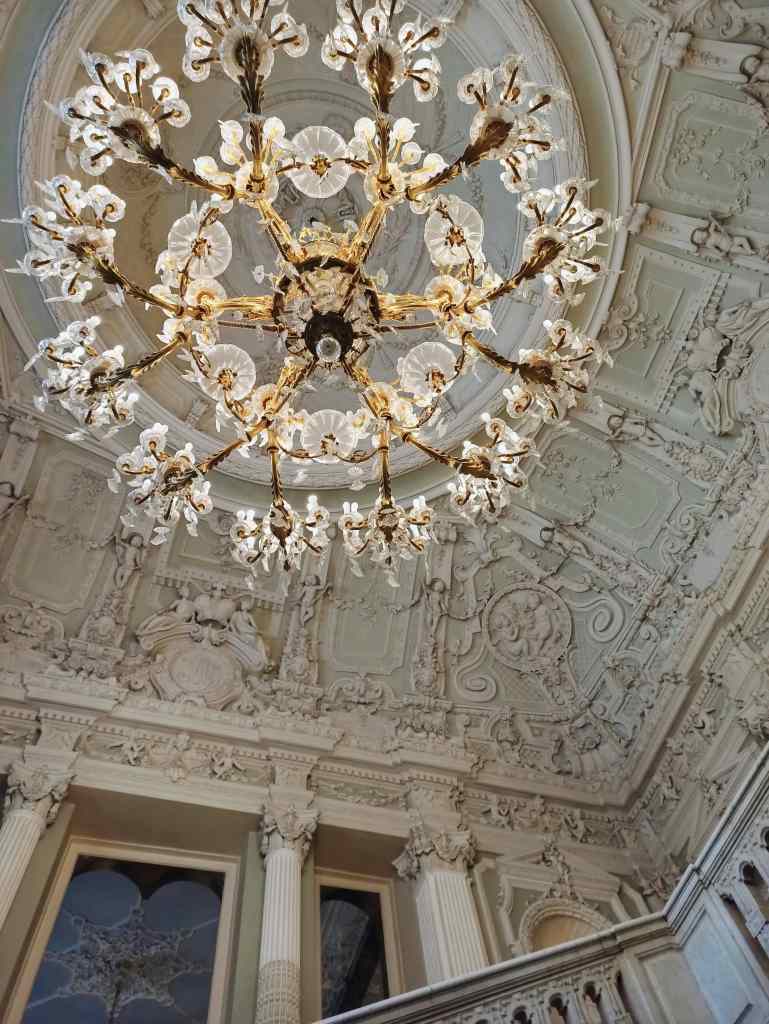
My favourite St Petersburg Palace was the Yusupov Palace, located on a canal in the centre and a complete contrast to Catherine’s Palace and Peterhof. It was originally built in 1776 by a French architect, and over the years went through many modifications. In 1830 it was bought the Yusupov family, the second richest family in Russia after the Tsar’s.

The Entrance Staircase at the Yusupov Palace

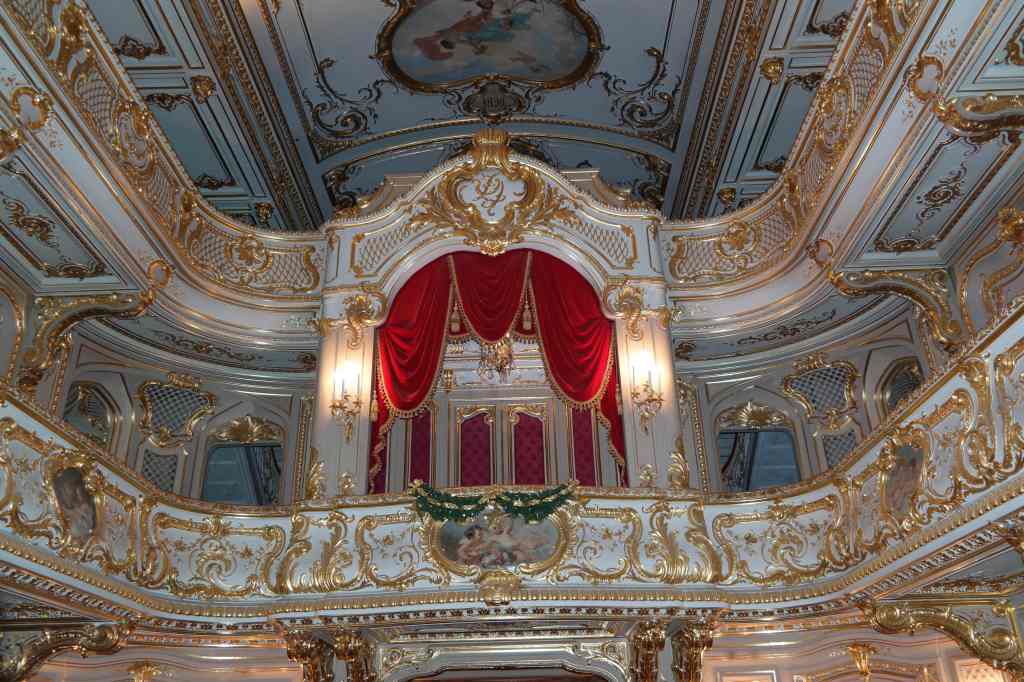
I liked this palace because of the range of architectural styles used to build it, its more human scale and its tasteful interior decoration. One of its highlights is its small theatre, where plays are still performed for the general public.

The Theatre at the Yusupov Palace

The Yusupov Palace is also famous as the place where the monk Rasputin was assassinated in 1916. Many Russian nobles had become deeply worried that his influence over the Tsarina was damaging the standing of the royal family and adding to the deep social unrest Russia was experiencing. A group of them, led by Prince Felix Yusupov, heir to the Yusopov fortune, lured him here for a dinner of pies laced with cyanide. This though failed to kill Rasputin, so instead they shot him three times and dumped his body into the nearby river. Felix escaped serious punishment for the murder, but his actions didn’t stop the revolution, which forced the whole family to leave their palace and flee to France with their best jewels and paintings. 

The Yusupov Palance seems an appropriate place to end my blog on the traditional sights of St Petersburg – the scene of an unsuccessful attempt to forestall inevitable social change. Wandering around the excessive opulence of the Winter Palace, Peterhof, Catherine’s Palace and the many magnificent building of central St Petersburg, it is not surprising that the 1917 revolution happened. Especially when one contrasts the extravagant centre of the city with the its poorer areas, located only a short walk away – which I will cover in my next post.

Previous Post: Solovki Islands

Next Post: Off the beaten track in St Petersburg

Beauty and the Beast – from Bielsa to Andorra

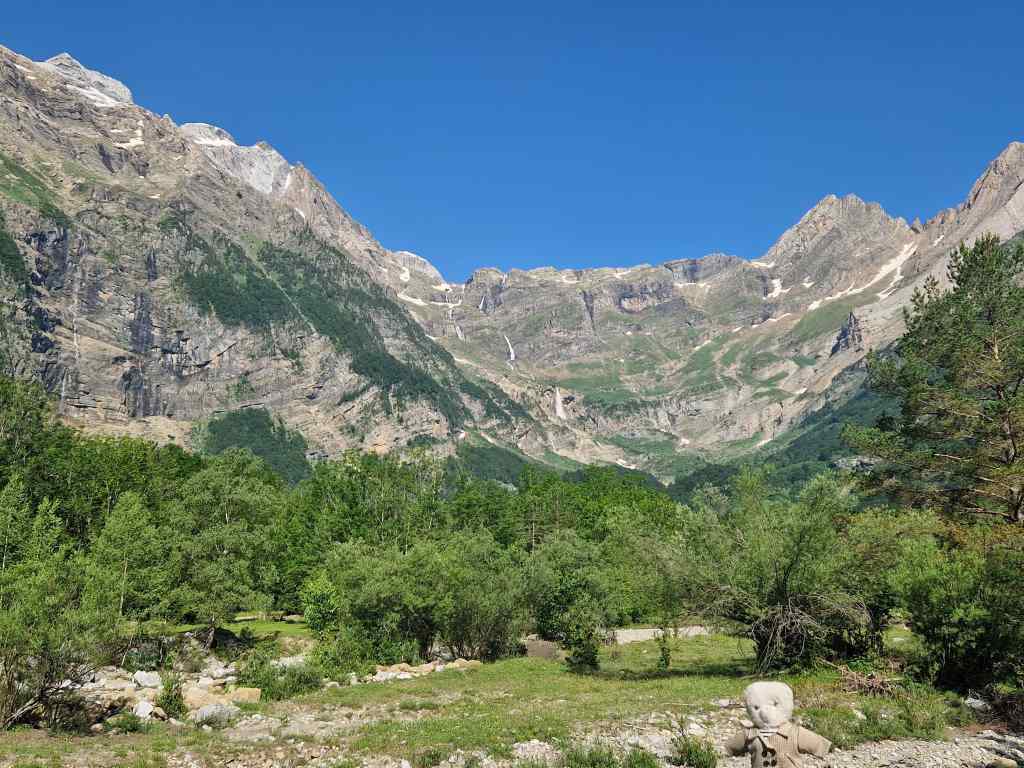
Today I began the long drive back to Toulouse via the tiny country of Andorra – a tiny principality sandwiched between Spain and France in the Pyrenees. First, I made a short detour driving up the Valle de Pineta from Bielsa to reach a semi-circular wall of mountains similar to the Cirque de Gavarnie that I had visited a couple of days before. I did not have time for a walk, so simply stopped to admire the view and take photos.

The magnificent scenery of the Valle de Pinetas

The road to Andorra was pleasant rather than spectacular. Occasionally I would stumble across pretty mountain villages but mostly the countryside was dry and deserted.

On the road from Spain to Andorra

My main excitement during the drive was watching the low fuel warning light come on and anxiously checking where the next petrol station might be – I had seen none for miles – but in the end I made it to the small border city of La Sue d’Urgell, which had one. The entry to Andorra, a few km further ahead, was marked by a large customs and immigration post, and suddenly the road changed completely. It still went through pleasant mountains but was much busier and lined on either side by shopping centres and (suddenly) endless petrol stations. As I approached Andorra la Vella – the country’s main and only city – the traffic became denser, and the ugly modern constructions more oppressive.

After fighting my way through traffic jams and roadworks, I found my hotel and set off to explore on foot. The city was unlike anything I had seen anywhere before. It completely filled what might once have been a pretty river valley, surrounded by mountains. There was a tiny old town, accessible by walking up a hill or taking an elevator, where I stopped for some inventive cocktails in one of the many cheap bars.

Entering Andorra’s old town
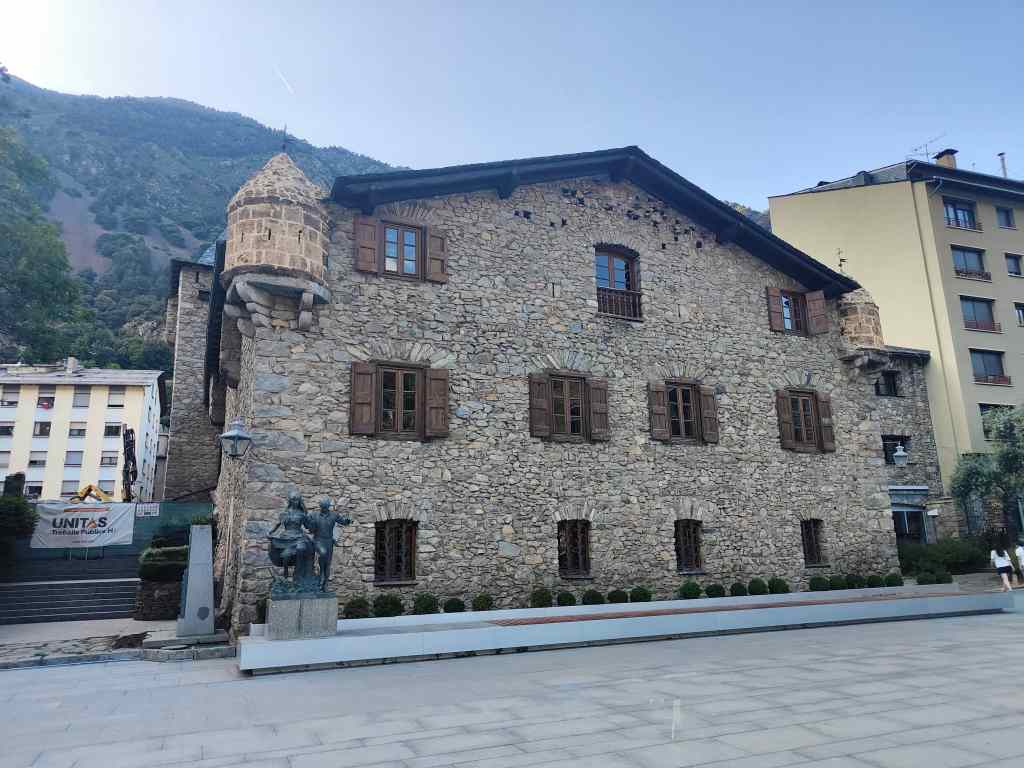
One of Andorra’s few old buildings
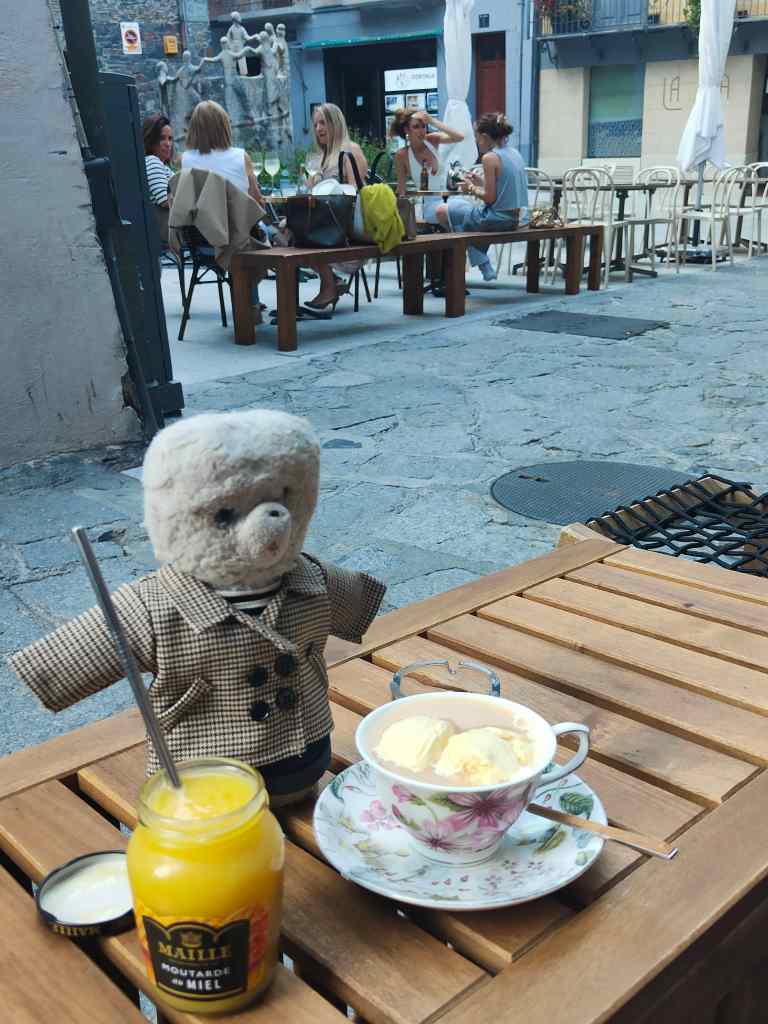
Enjoying cheap drinks in Andorra’s old town

Outside of this area, the city was a dense mass of duty-free shopping, traffic, building sites and road works. Its main landmark was the fast-flowing river La Valira that flows right through the centre – it seemed to me that the water was rushing to revert to nature and escape the ugliness of man’s work.

Andorra’s new town and a statue by Dali

Having bought some presents for my friends, I thought the best use of my time would be to treat myself to dinner in a good restaurant – and I was reward by an excellent and well reasonably priced feast. Andorra la Vella had been a strange experience. It has lots of duty free shops, good hotels, and some excellent value bars and restaurants…but frankly it is an ugly city. I was glad to see it once, but also glad to be moving on back to France the next day.

Previous Post: From the Canyon d’Añisclo to Ordesa and Monte Perdido National Park

Next Post: Back to France – Foix and Carcassone

Tarbes and Pau

Today I pulled back the shutters of my room to reveal thick clouds handing over Tarbes. My plans for walking in the high Pyrenees would have to be postponed for another day. Instead, I headed along the autoroute to Pau, a historic city less than an hour away from Tarbes. I was heading for Pau castle, but on entering the city was caught in an impossible one way system and ended up parking and walking the last kilometre, passing along a pretty promenade which would have yielded wonderful views of the high Pyrenees had the weather been better.

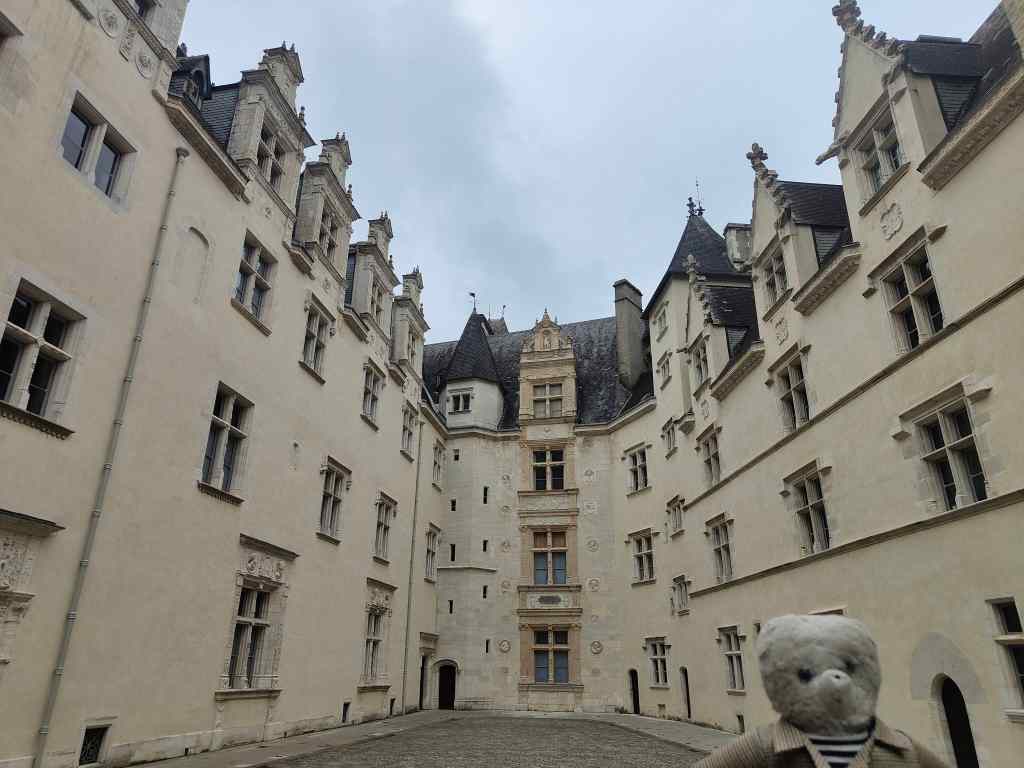
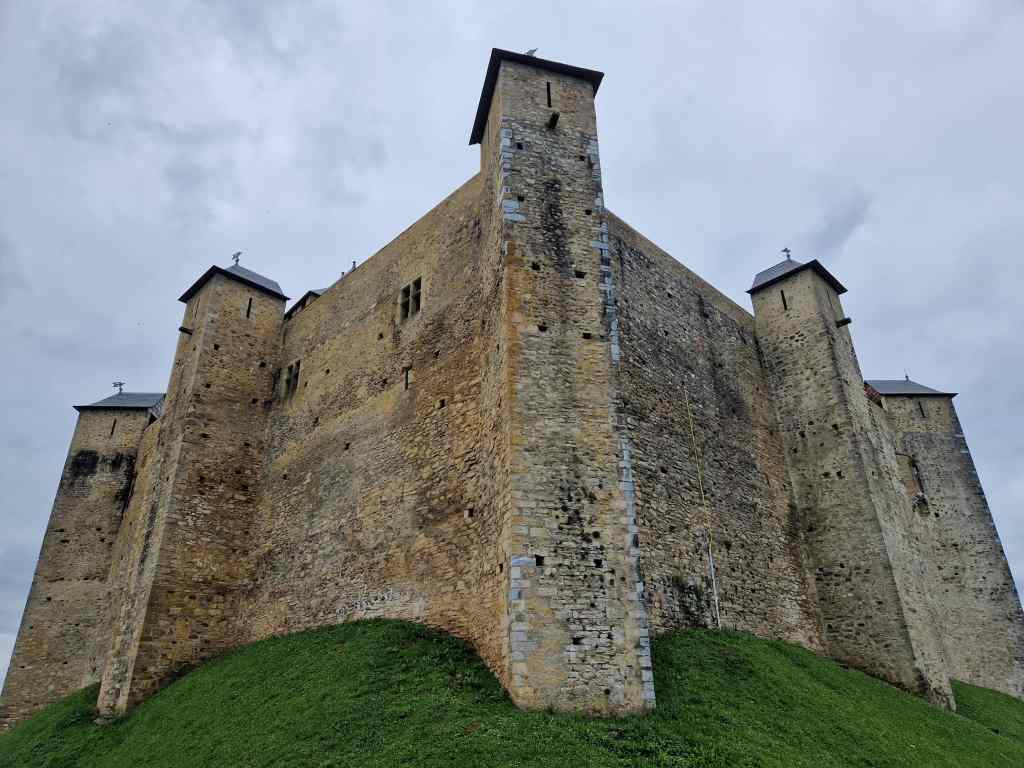
The Chateau de Pau is an impressive structure built up over many centuries. At its centre is a typical chateau fort of purely defensive nature – with thick walls and few windows. Around this structure were built the wings of a renaissance castle, built to impress and to be comfortable to live in. It was originally the base for the kings of Navarre, an independent French province in the Middle Ages. The Chateau de Pau is most famous as the birthplace in 1553 of Henry, later to become King of Navarre and still later Henry IV – one of France’s most famous kings and founder of the Bourbon dynasty.

The Chateau de Pau from the oustide

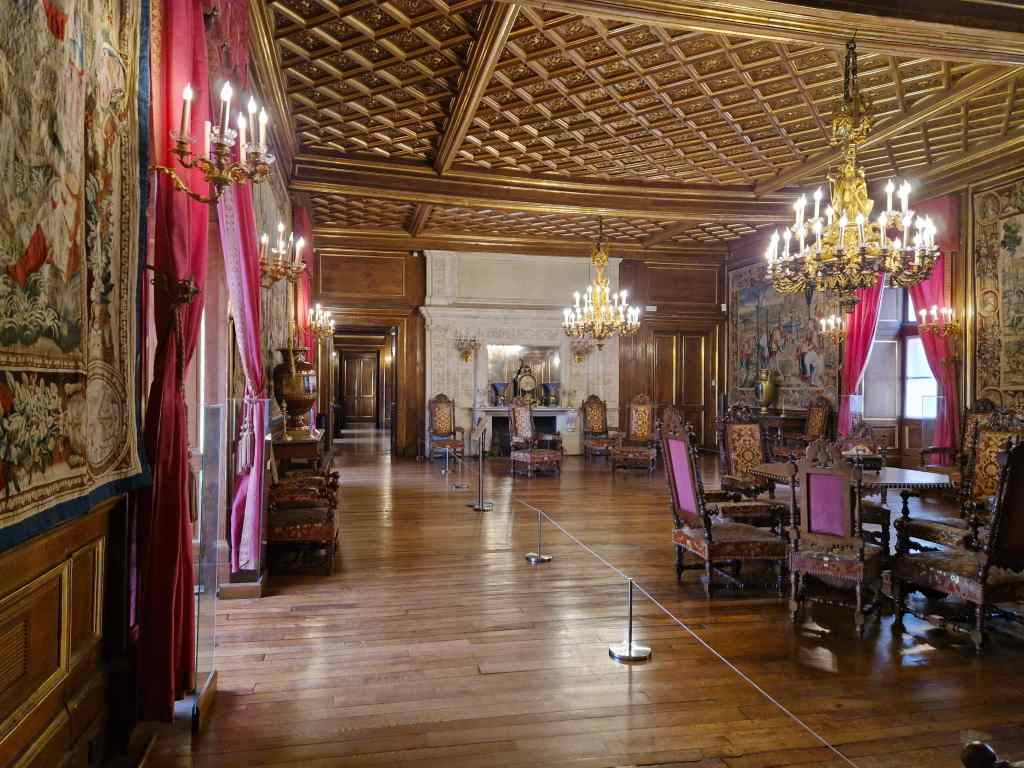
I enjoyed a guided tour of the castle, admiring its state rooms and many statues of Henry IV – a king always depicted with a slight smile on his face.

Reception room at the Chateau de Pau

One of the highlights was the display of the shell of a sea turtle, which had been the traditional crib for the newly born kings of Navarre, including Henry. During the French revolution, anti-royalist feelings ran high, and the authorities decided to remove and destroy this relic. However, a local royalist heard about this plan and managed to substitute the original shell with a different one. The copy was removed and destroyed, only for the original to be returned after it the restoration of the French monarchy.

Henry IV’s crib at the Chateau de Pau

After the visit, I strolled around the city of Pau. After its glory as the birthplace of Henry IV, it had another golden era as a spa town, and has some wonderful old houses built along a promenade looking out over the Pyrenees. However some of these grand old “maisons” were replaced by rather tasteless modern constructions, and the city today is an odd mix of the old and the new, its boarded-up branch of Galeries Lafayette a witness to its glorious past and uncertain present. Barber shops and tattoo parlours on its high street further emphasised the impression of a city in decline.

I headed back to Tarbes, which at first on a cloudy Sunday afternoon felt a bit like the slightly depressing city of Pau. However a stroll around town showed  that with a little digging, Tarbes was a pleasant an interesting place – albeit well off the main tourist trail. Its cathedral dates from the 12th century and has an impressive interior – including, for some bizarre reason a marble plaque carrying Louis XVI’s last will and testament before his execution.

Tarbes Cathedral
Interior of Tarbes Cathedral

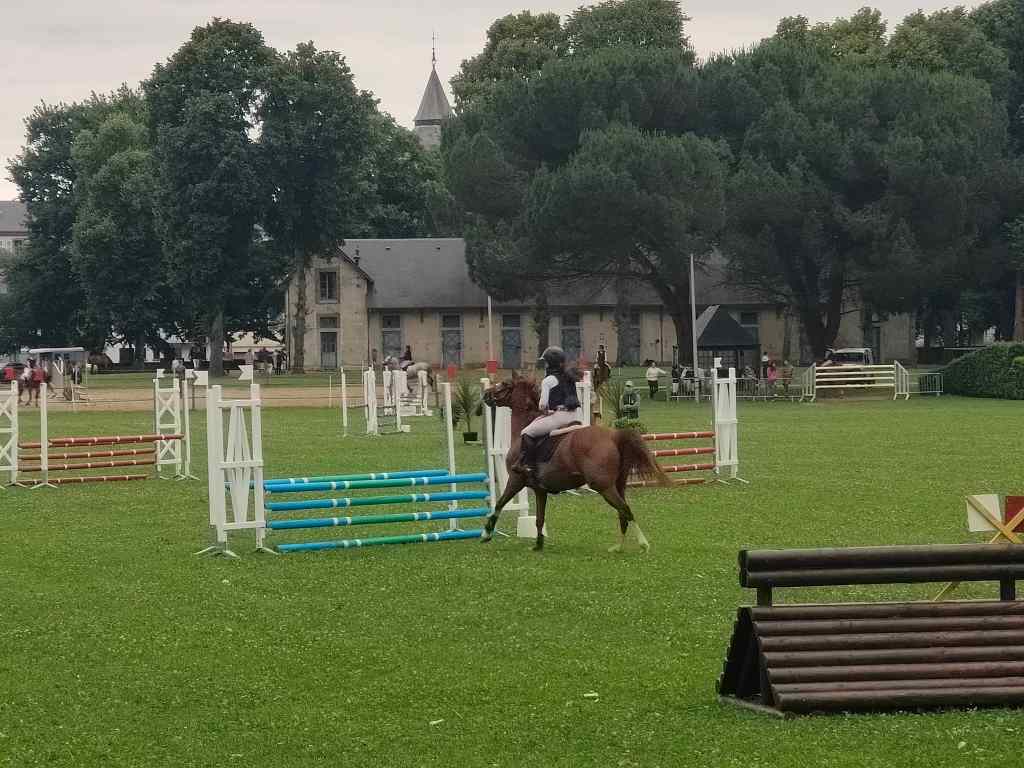
A further stroll brought me to the Haras, a stud farm and centre of equestrian learning established by Napoleon in1806 and now owned by the French army. I was lucky enough to visit during a show jumping competition, something I never seen before.

Show jumping competition at the Haras of Tarbes

I enjoyed watching the competition before heading back to  my hotel – La Maison aux Murs Anciens – for  the evening. It deserves a special mention as one of the most memorable places I have ever stayed. It was a house built into the old walls of the city of Tarbes, and converted by its owner, an architect and mason, into a small hotel. The room I stayed in had had one other famous guest – Bernadette Soubirous, the girl whose visions of the Virgin Mary in 1858 eventually caused Lourdes to become a major pilgrimage site (and ultimately grow into a much bigger city than Tarbes). She stayed – or was kept – there for a year as the Catholic church investigated her story.

In the same room as Bernadette Soubirous!

It was one of those days where you have to adapt your plan and expectations to the weather. In the circumstances, I had quite enjoyed my exploration of a couple of small Pyreneen cities. It turned out that a relaxing day exploring some low key attractions was exactly what I needed ahead of two exceptionally busy days in the high Pyrenees.

Previous Post: Bagneres-de-Bigorre and St-Betrand-de-Comminges

Next Post: The Cirque de Gavarnie

Driving in the Foothills of the Pyrenees – Bagnères-de-Bigorre and Saint-Betrand-de-Comminges

The Bear is Back! After my last trip to far away New Zealand, this one is much closer to home – the Pyrenees.  I flew from London to Toulouse in just under 2 hours (compared to 25h for my return from Auckland), picked up a hire car and was soon in my hotel in Tarbes, my base for the first few days (more about Tarbes in a future post).

The next day I set off in the direction of the high Pyrenees, ready to tackle the demanding hike to the Breche de Roland, a gap in the mountain range which by legend was formed when the hero Roland, mortally wounded at Roncesvalles, through away his sword. It landed 200km away and cut a cleft in the mountains.  However, just after leaving Tarbes I noticed that the high mountains were covered with thick cloud, and I was unlikely to see anything on my walk. So, I changed plans and went for a driving tour of the Pyrenees foothills.

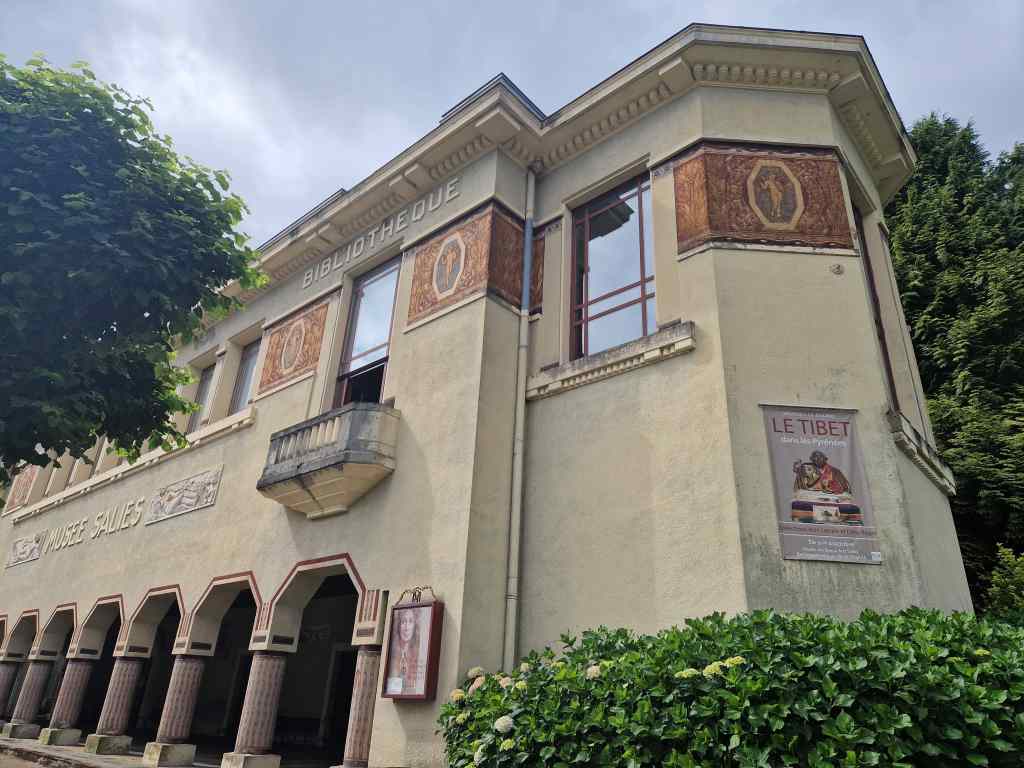
My first stop was the spa town of Bagnères-de-Bigorre. I refreshed myself with a coffee before exploring the many interesting buildings in the town, including a museum built by a rich resident…

Bagneres-de-Bigorre’s Museum

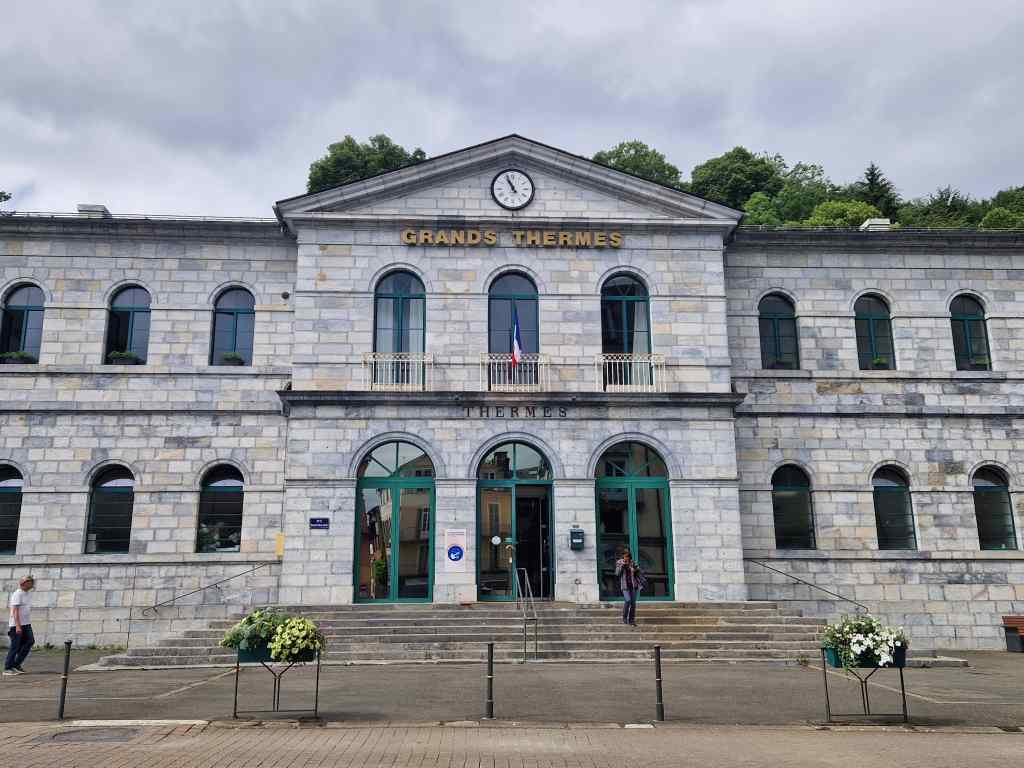
…the main thermal complex…..

The baths, Bagnères-de-Bigorre

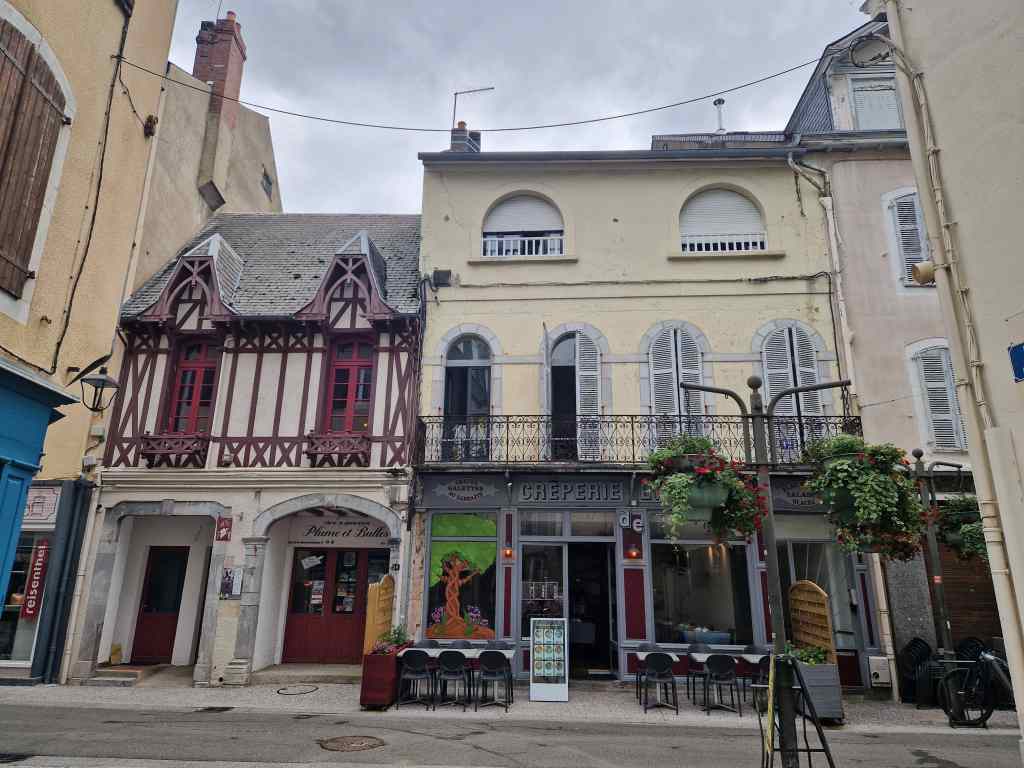
…quaint old houses…

Street scene in Bagnères-de-Bigorre

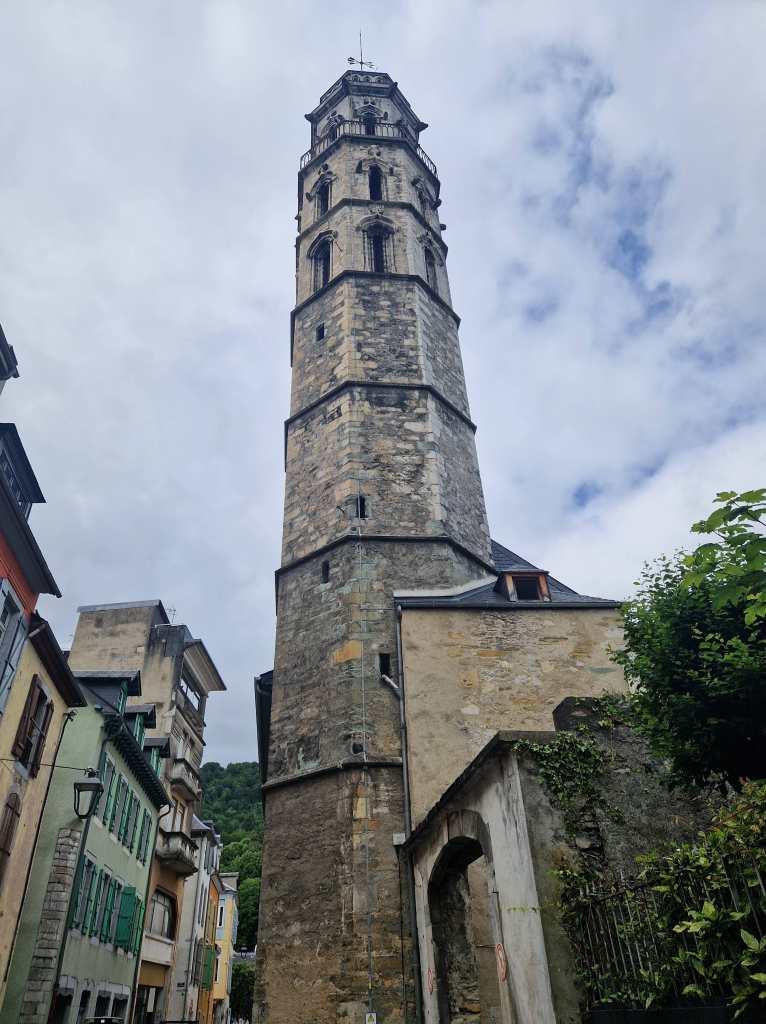
….and an ancient tower, all that is now left of a former church.

Tower, Bagnères-de-Bigorre

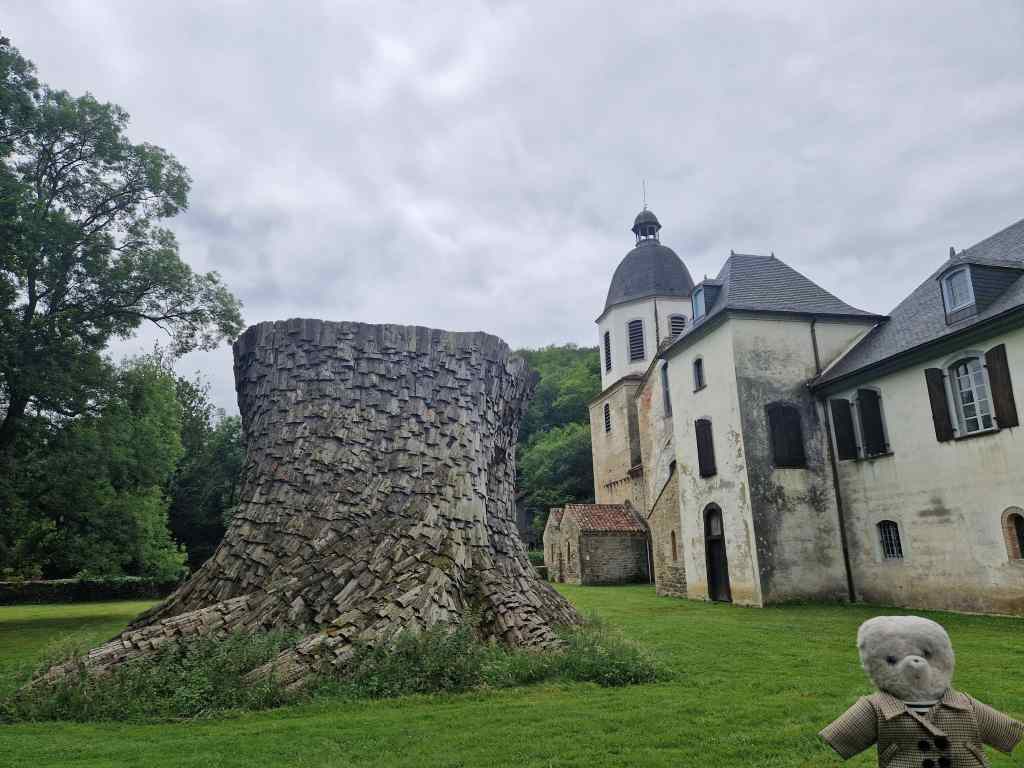
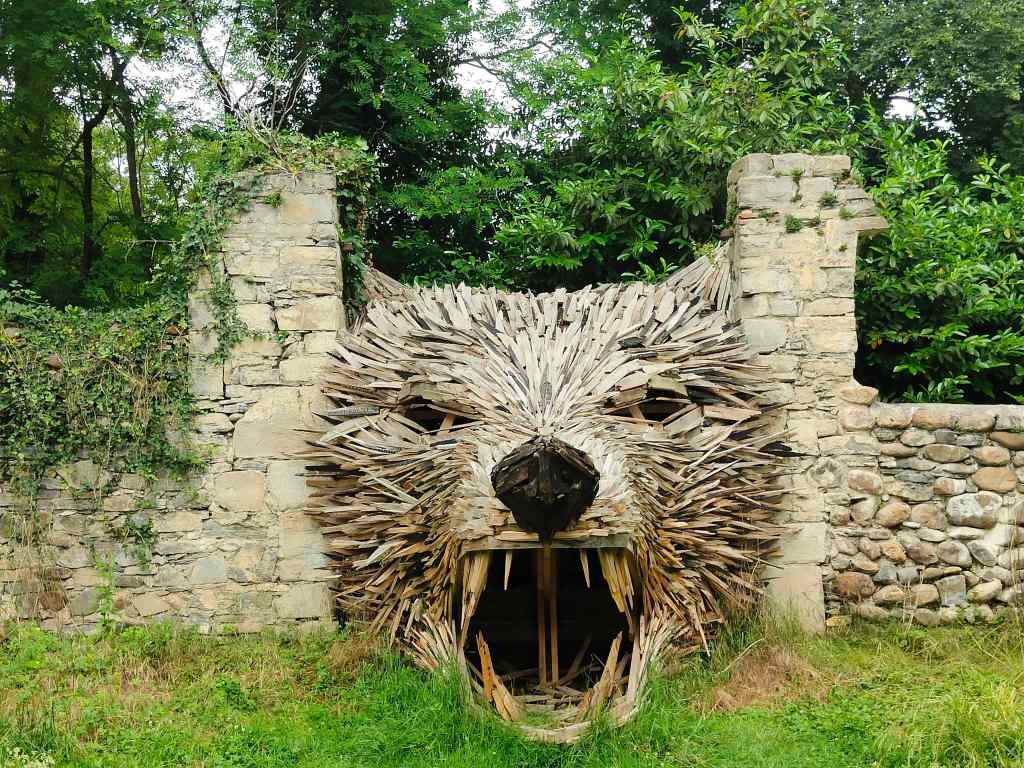
From Bagnères-de-Bigorre my trip took me deep into the countryside to the former Cistercian abbey of Escaldieu. The abbey and its grounds were the setting for a rather good contemporary art exhibition. The outdoor exhibits were particularly imaginative….

Escaldieu Abbey and some impressive modern art
More modern at at Escaldieu Abbey

After the abbey, I passed the impressive castle of Mauvezin…

Mauvezin Castle

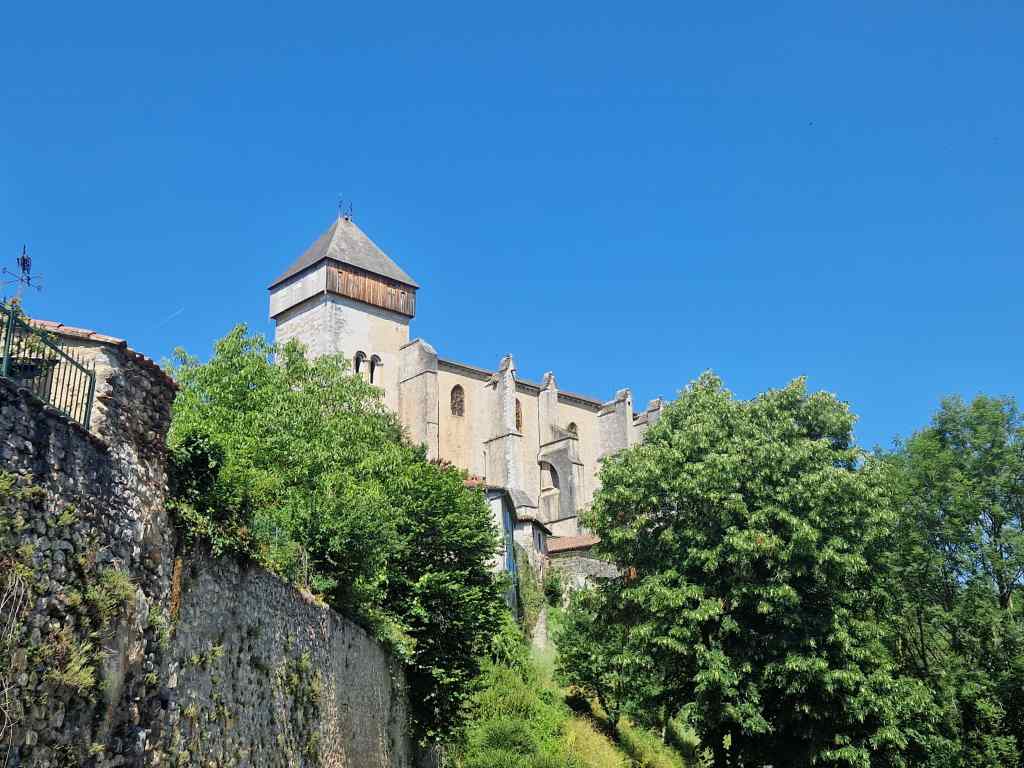
….before driving east through pretty countryside to Saint-Betrand-de-Comminges. This small town started as a Roman settlement, which eventually became an important centre of the Christian faith. It fell into decline after the fall of the Roman empire but remained a bishopric and came back into prominence when Bertrand of Comminges, a French knight, was nominated as its bishop in 1083. He organised construction of the cathedral that stands to this day, was later canonised, and gave his name to the town that he had put back on the map.

Saint-Betrand-de-Comminges’ cathedral seen from below

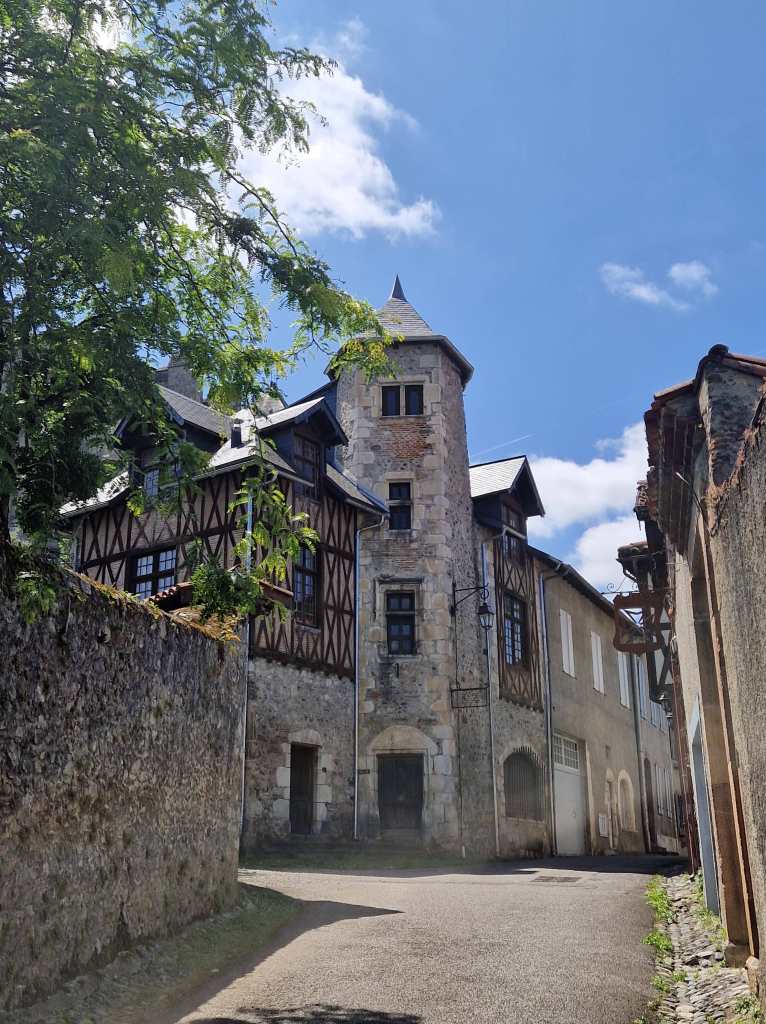
Today, Saint-Betrand-de-Comminges is a wonderfully preserved and peaceful medieval French town.

Street scene, Saint-Betrand-de-Comminges

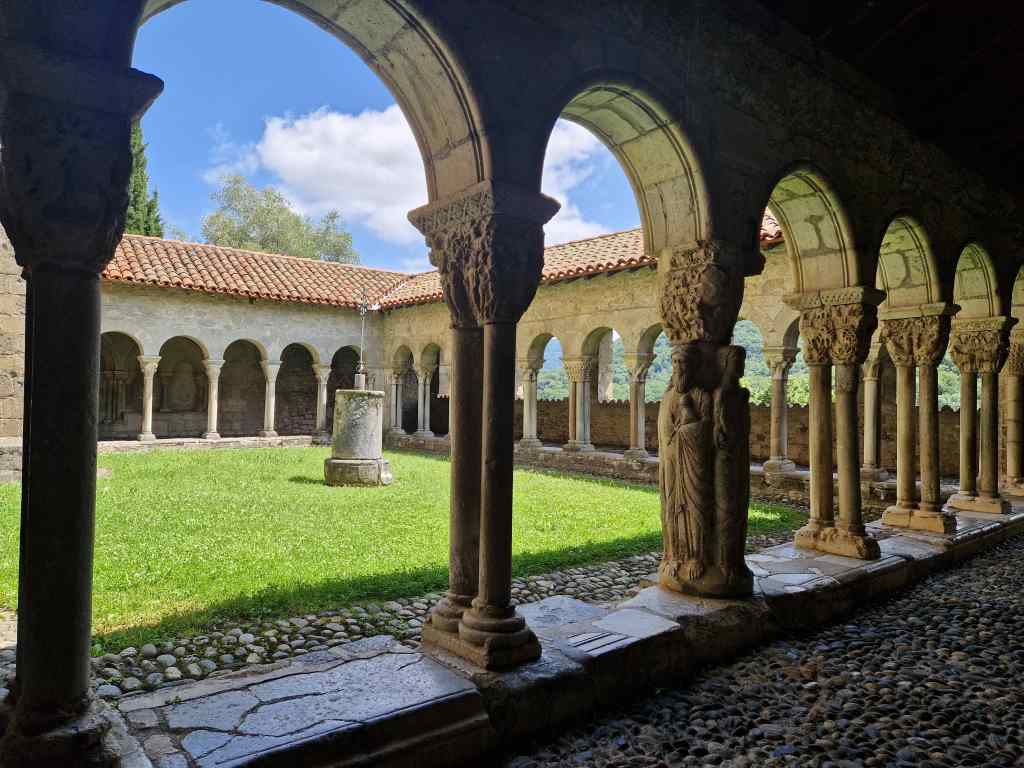
Aside from the tomb of St Bertrand himself, its cathedral has cloisters with a great view of the surrounding countryside…

the cathedral’s peaceful cloisters

…. some beautifully carved wooden stalls….

The stalls in the cathedral, Saint-Betrand-de-Comminges

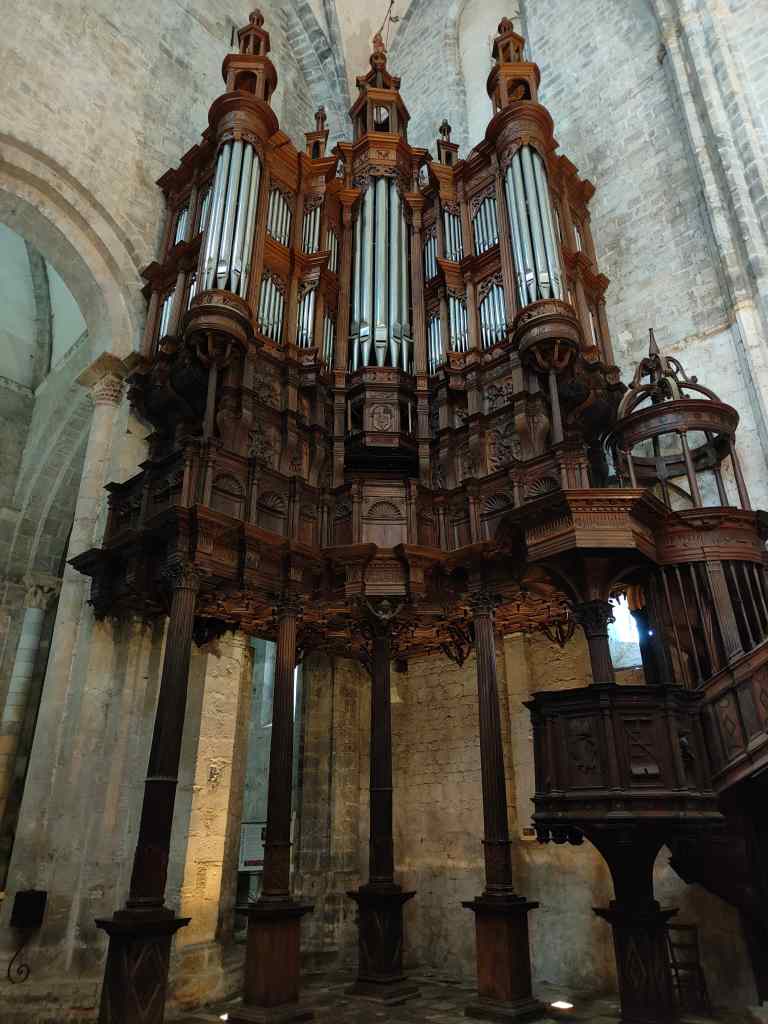
….and a huge organ, supported by wooden beams and hanging in mid-air.

The magnificent organ, Saint-Betrand-de-Comminges Cathedral

I spent a pleasant hour soaking up the atmosphere and enjoying a cold drink before heading back to Tarbes, over mountain roads that hinted at the grandeur of the high Pyrenees that I would see over the next few days.

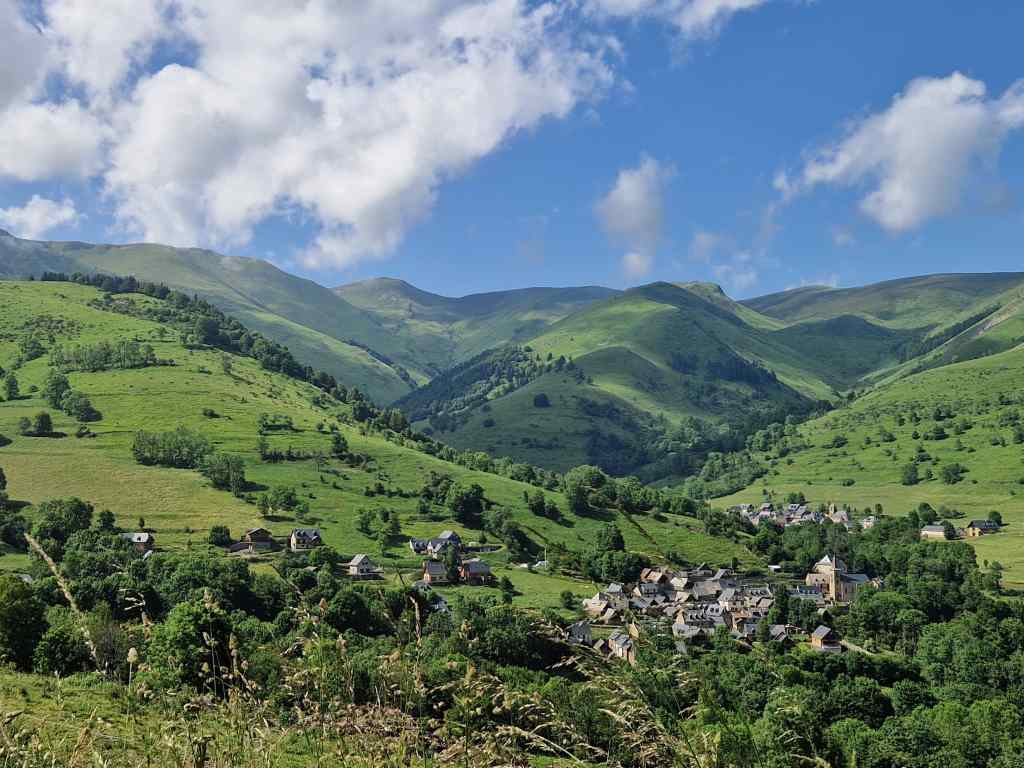
The foothills of the Pyrenees

It had been a great day – pretty French towns, some modern art, a medieval castle, and an ancient cathedral – all against the backdrop of the beautiful green countryside of the low Pyrenees.

Next Post: Tarbes and Pau

Bucharest and Farewell to Romania

My final Romanian post is devoted to its capital, Bucharest. I had spent one night here on my arrival in the country, before heading off to Transylvania. My first impression was negative – the main road from the airport to the centre looked dirty and dilapidated, with many crumbling buildings. I wondered how the city could ever have been called “the Paris of the East” – as it was a century ago. On my return at the end of my trip, I spent a whole day here and formed a more favourable impression. Large parts of Bucharest are indeed poorly maintained – the city suffered badly in the second world war and during the 1989 revolution that deposed the communist dictator Nikolae Ceaușescu. However, there is a central area where some fine old buildings have been renovated and I had a very pleasant stroll exploring.

The Central Bank, one of the elegant old buildings in Bucharest that has been restored
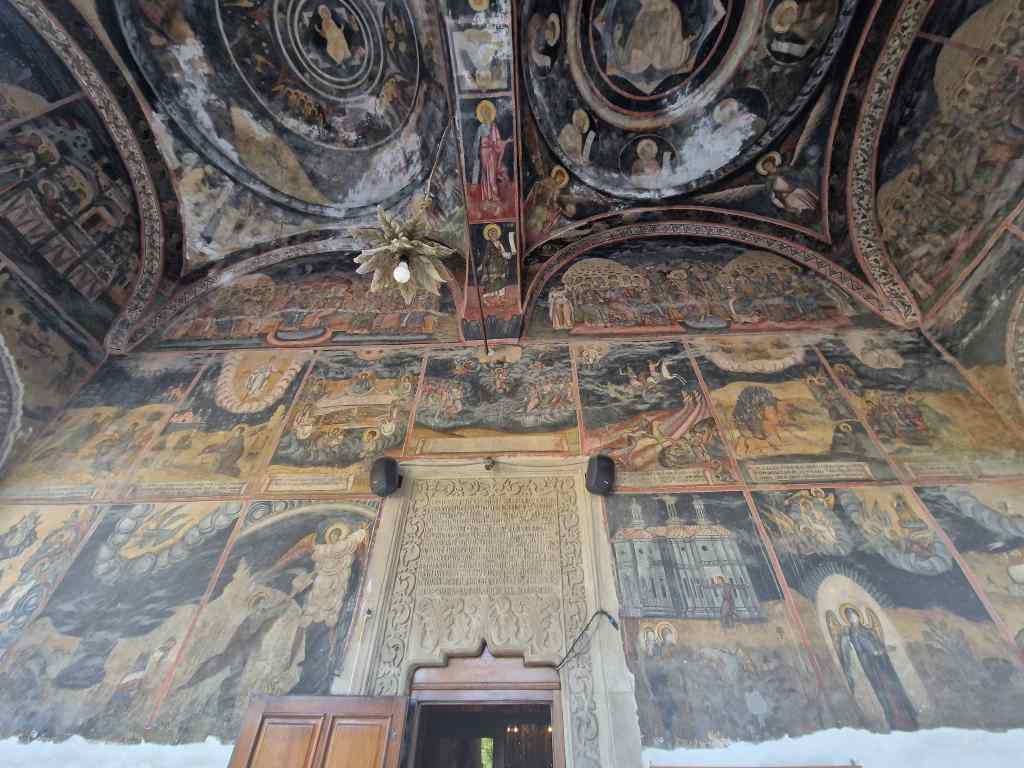
Inside an old orthodox church in Bucharest

The city reminded me more of Moscow in the early 2000s than Paris, with a mix of grand impressive monuments and old churches interspersed with modern concrete constructions and once handsome but now crumbling buildings from Bucharest’s “Golden Age” at the beginning of the 20th century. After taking in a few sights I stopped for a fancy coffee at one of Bucharest’s many excellent and very cheap cafés and restaurants.

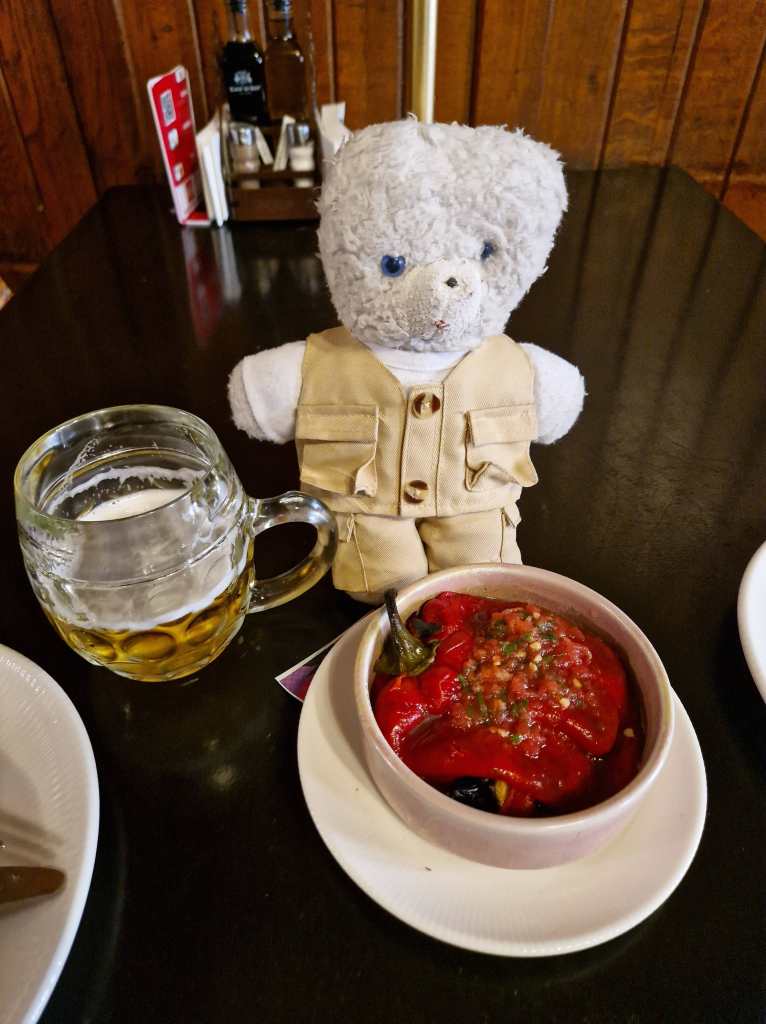
Morning refuelling!

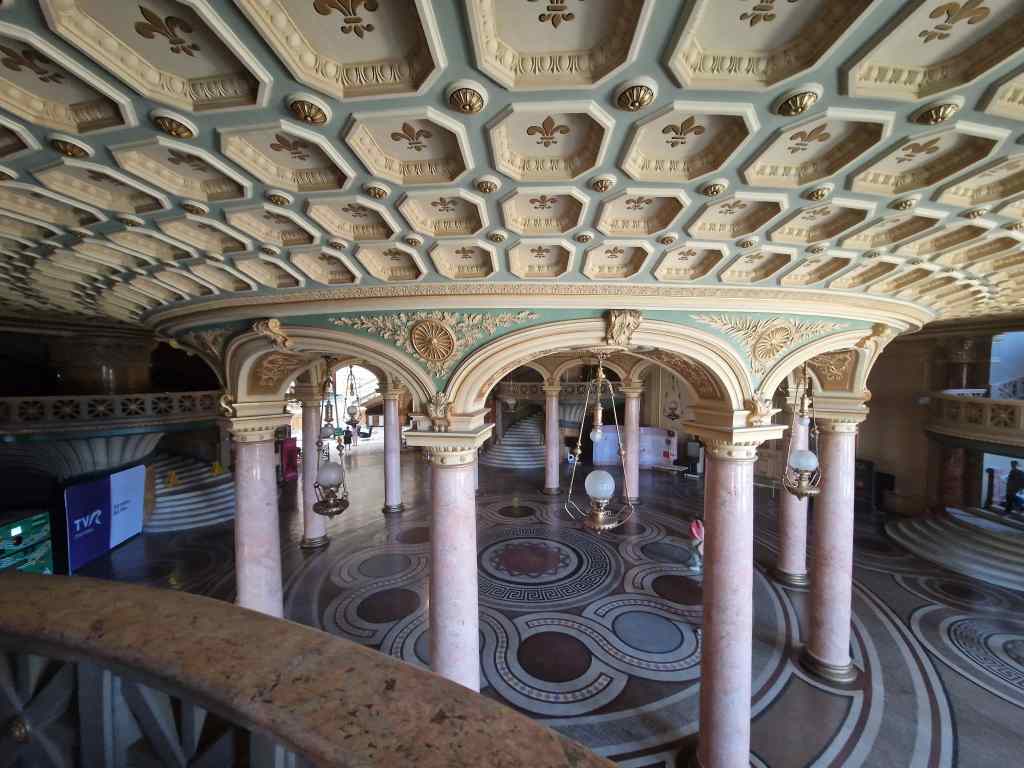
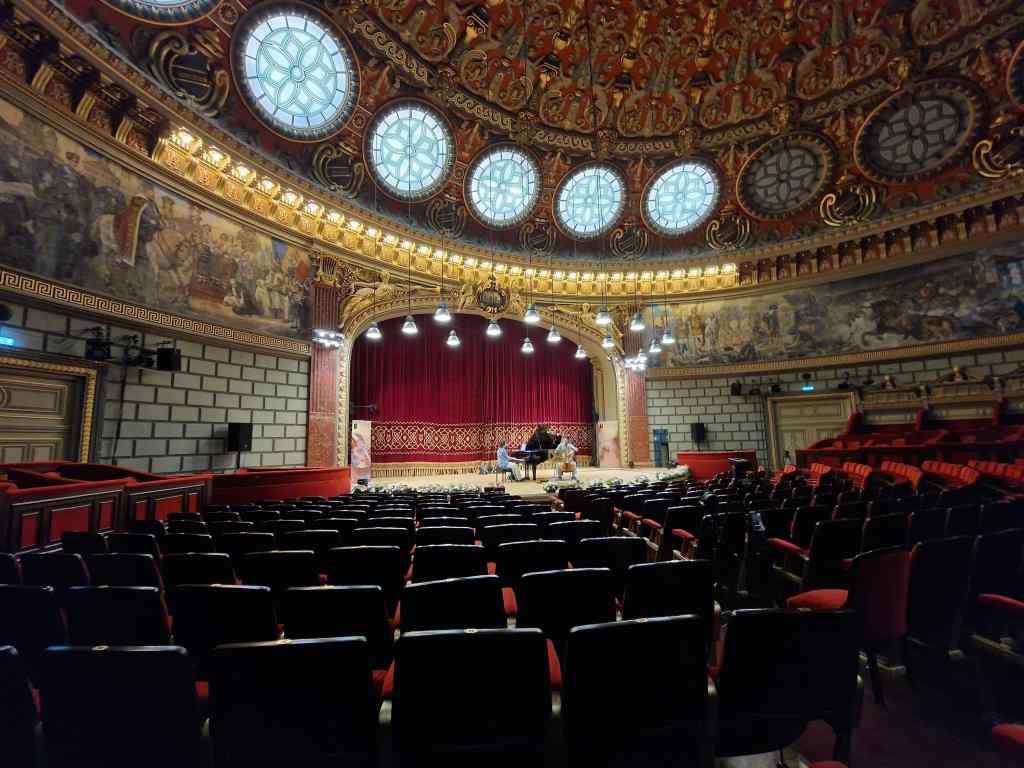
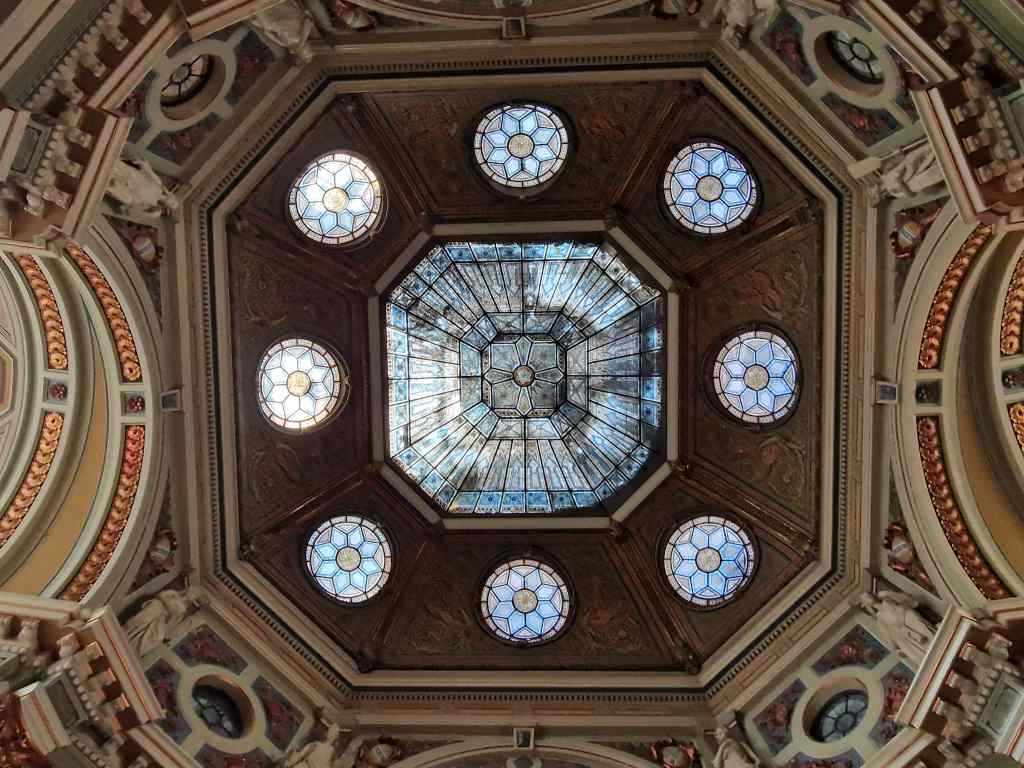
After coffee, my next stop – and a particular highlight – was the Romanian Athenaeum, probably the most striking venue for classical music I have ever seen. I was lucky to stumble across music students practicing for the Enescu Competition, named after Romania’s only famous classical composer. I stayed for nearly an hour listening to his music, resolving to hear some more when got home.

The Romanian Athenaeum – small but beautiful

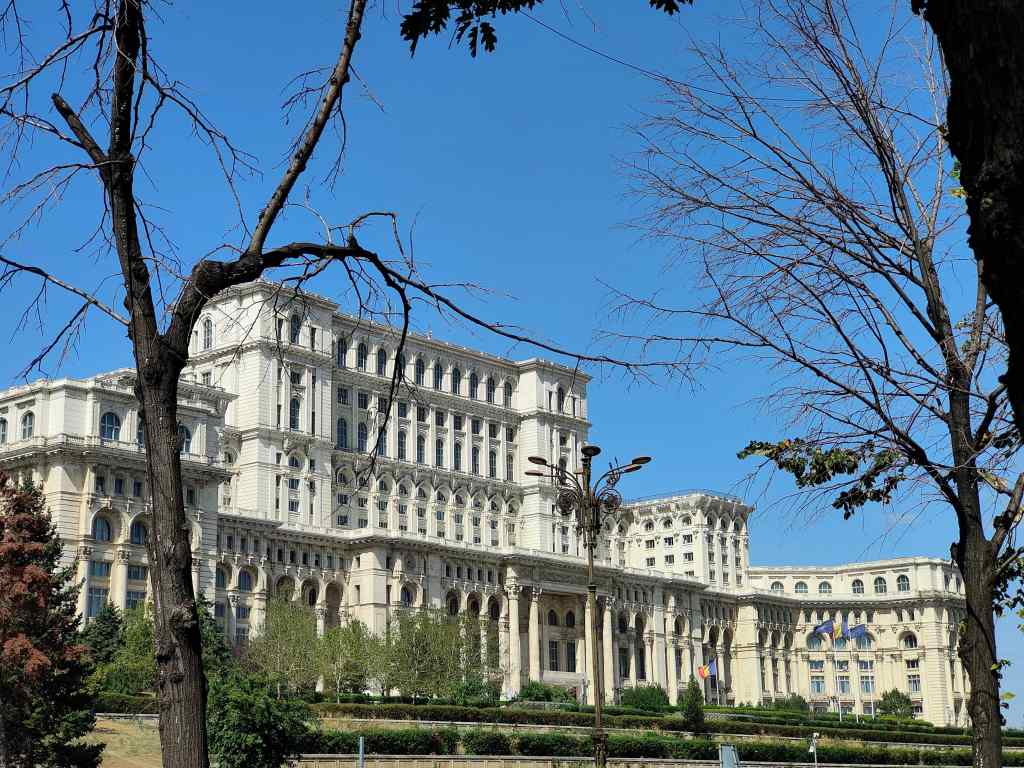
Another very different highlight was Romania’s Palace of Parliament, a huge complex dominating the surrounding area. It is the biggest building in Europe and the second biggest administrative building in the world (after the Pentagon). The palace was the idea of Ceaușescu, and work started in 1984 and lasted until 1997, long after the dictator’s fall and execution. Construction involved demolition of an existing neighbourhood, relocation of 40,000 people and huge expense – at a time when the country was already weighed down by the burden of huge international debts.

The Palace of Parliament – Big and Impressive

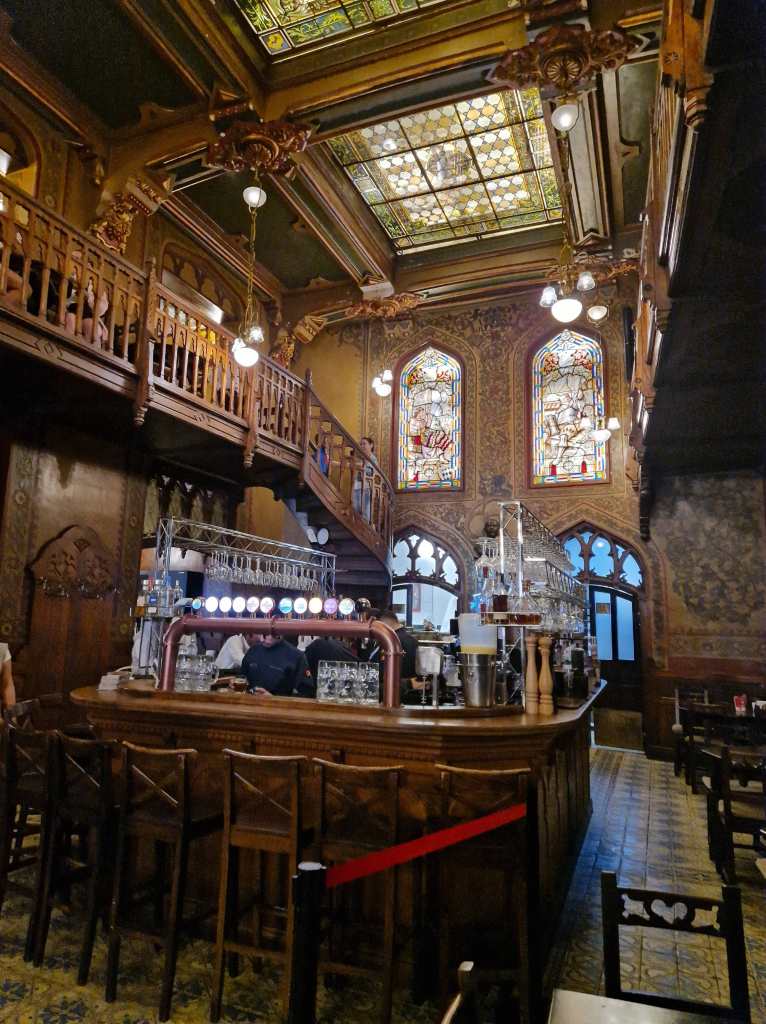
Suitably awed by the huge edifice, I headed off for lunch in Caru’cu Bere, a big restaurant in Bucharest’s historic centre. It was very busy with lots of tourists and waiters in local traditional costume – but it was also lots of fun, and the food was simple but good.

In Caru’cu Bere, a traditional restaurant

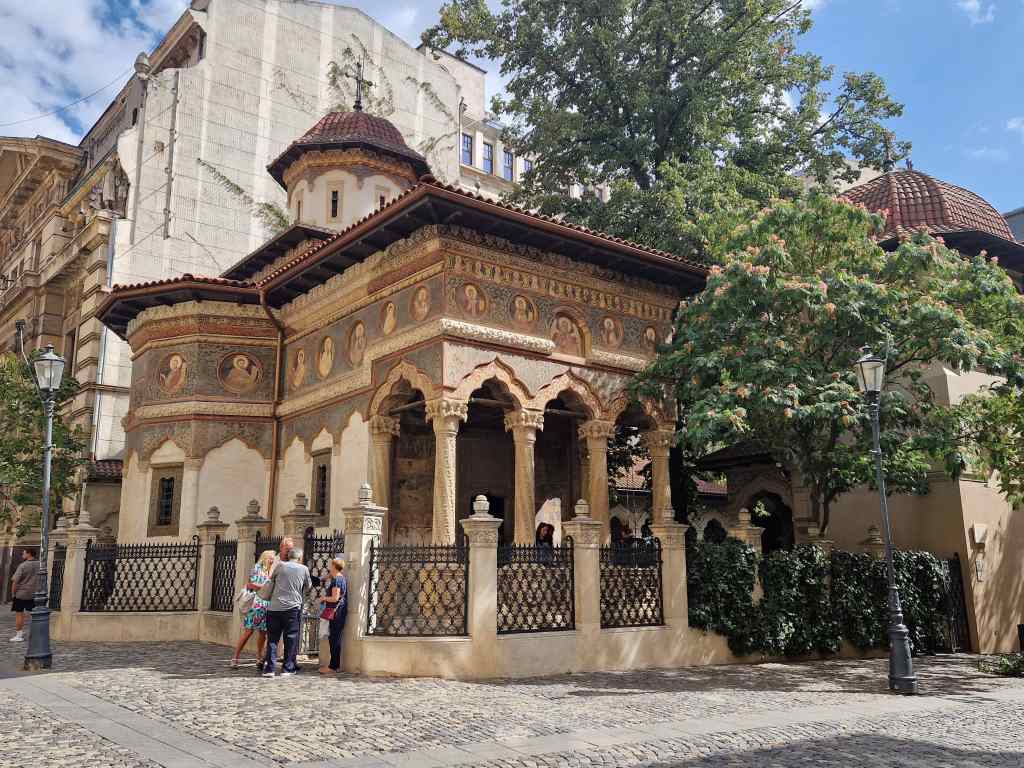
After lunch I explored the historic centre, which was popular with tour groups and stag parties and much less interesting than the centres of Sibui or Brasov. I took refuge from the crowds in an interesting set of galleries called “Art Safari”, housed in a beautiful old building.

A church in the Historic Centre of Bucharest
Historic centre – an old building now housing “Art Safari”

That evening, I had lobster risotto on the terrace of a chic restaurant near my hotel to celebrate the end of my short trip around Romania. I had very much enjoyed my time, even if it had not been what I had expected. I had thought the country would be poor, backward and maybe even a bit unsafe. Instead, the part I had visited was relaxed and seemed affluent, with well maintained roads and immaculately preserved towns and villages. Food and drink had also been a highlight – both were very good and very cheap compared to anywhere else in western Europe, and exploring some of the country’s unique wines had been great fun. Finally, Romania has around 9,000 bears living in the wild!

Probably my favourite highlight of Romania!

Some day I will return to Transylvania and maybe continue to explore Romania’s northern border with the Ukraine, to see if there are still some areas remaining that match my original vision of a remote and wild country. For the moment that is all – keep following me for my trip to Japan in a month’s time!

Next stop Japan (photo from my Berlin trip)

Previous Post – Sibiu, the Transfagarsan…and Wild Bears!

Sibiu, the Transfagarsan…and Wild Bears!

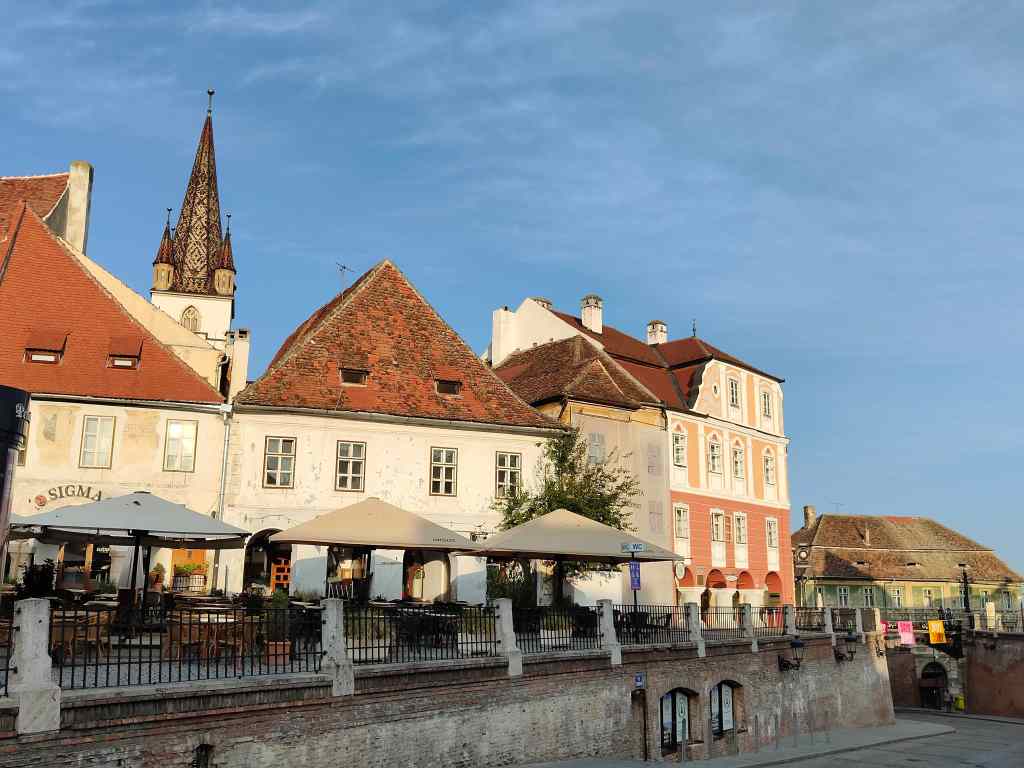
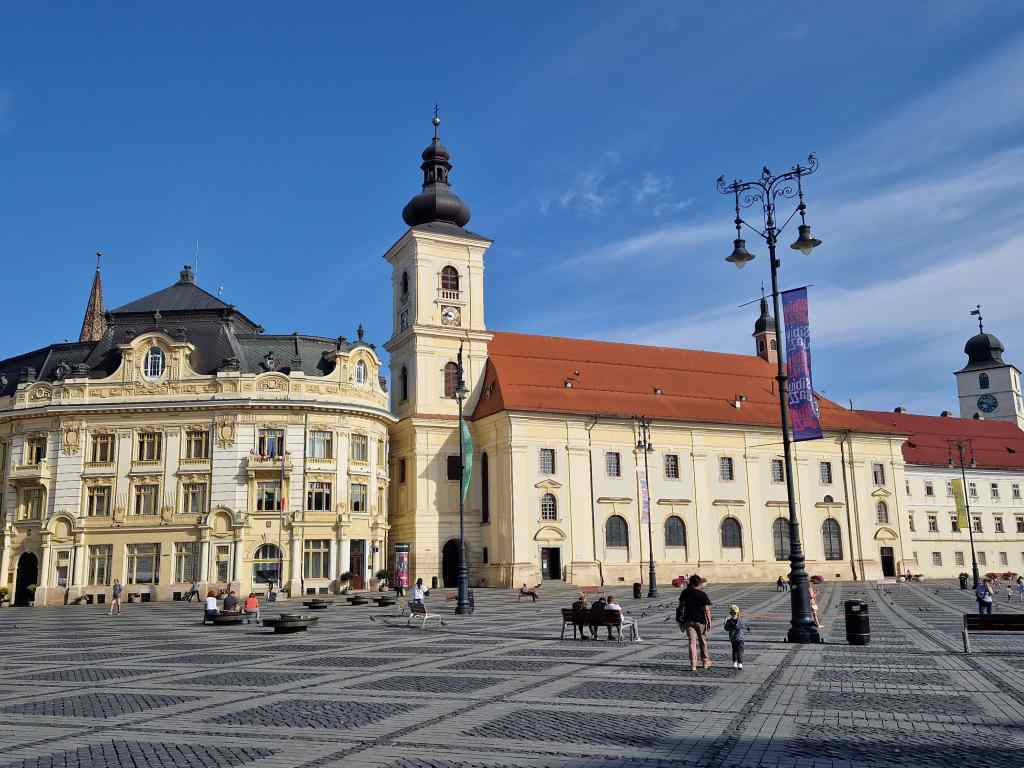
Today I was in Sibiu, originally a Roman village called Cibinium, then becoming yet another Saxon town and later an administrative centre for the Austrian province of Transylvania under the Habsburgs. Sibiu is also called by its Saxon name of Hermannstadt, and signs in  German are visible everywhere, even if the language is no longer spoken here. The city is also an artistic centre. In the 19th century famous figures like Strauss, Brahms and Liszt performed here; today the city has become a sleepier backwater, but still hosts Romanian’s most important jazz festival.

Sibui
The elegant squares of Sibiu in the early morning
Sibui
Sibiu’s main square
Sibiu
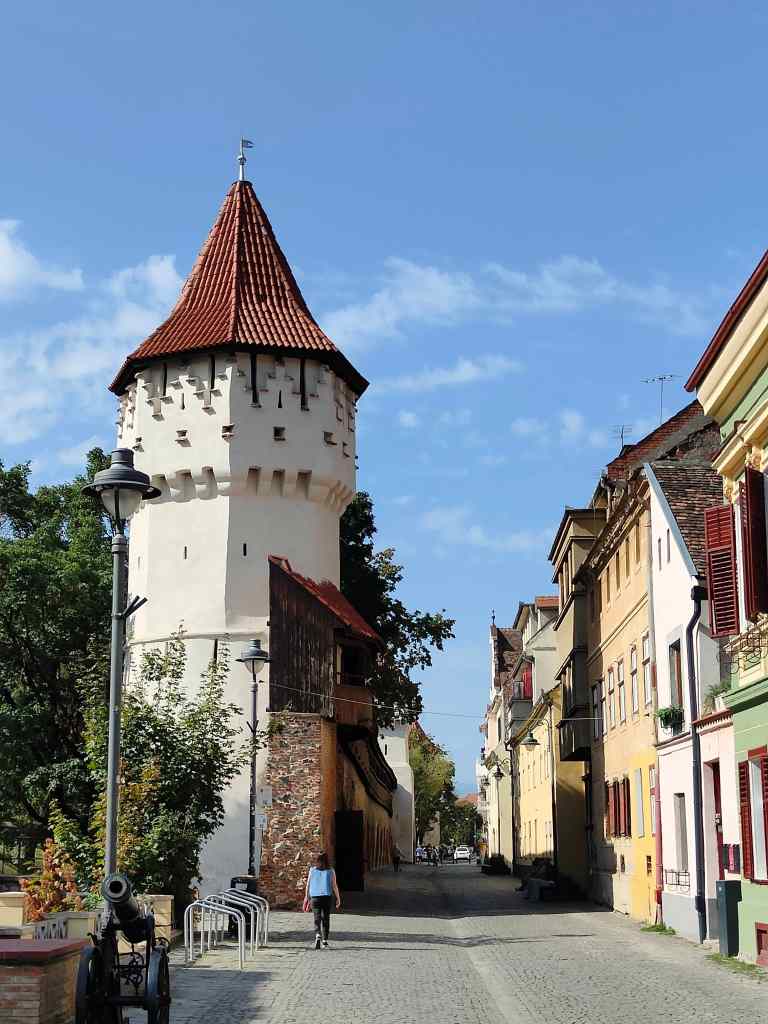
Sibiu’s ramparts

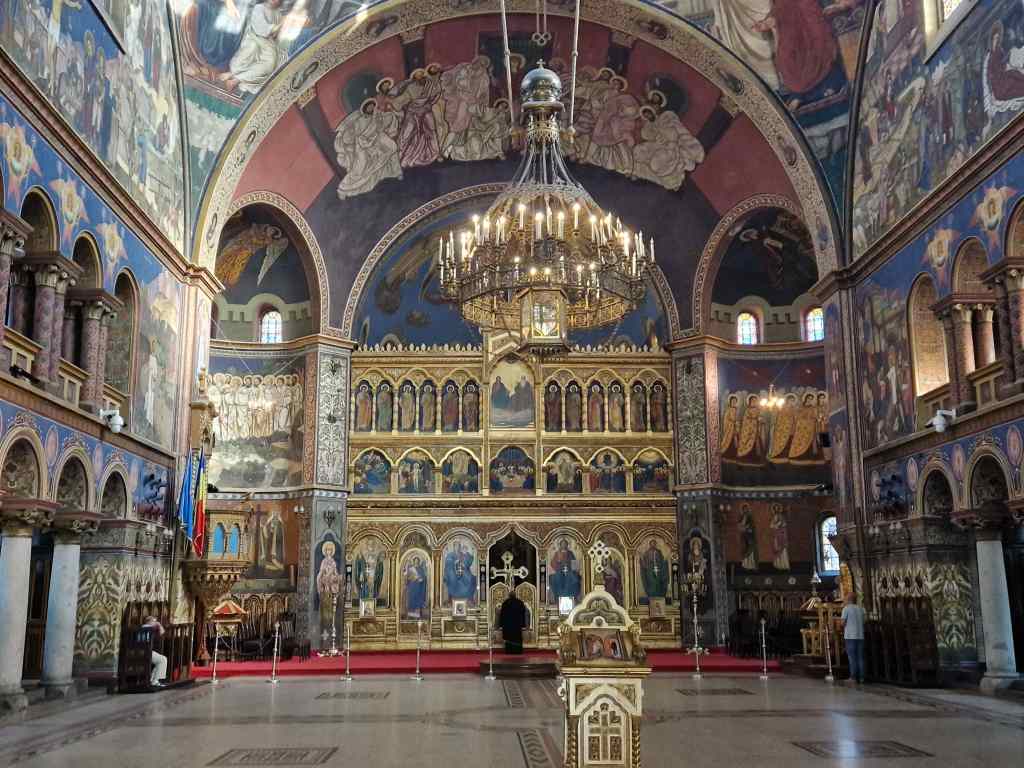
Sibiu has lots of beautiful buildings dating from different centuries and is a great place to simply stroll around, hopping from one outdoor café to another and occasionally visiting a pretty church – which is exactly what I did.

Sibiu Orthodox Cathedral
Outside and inside the orthodox church, Sibiu

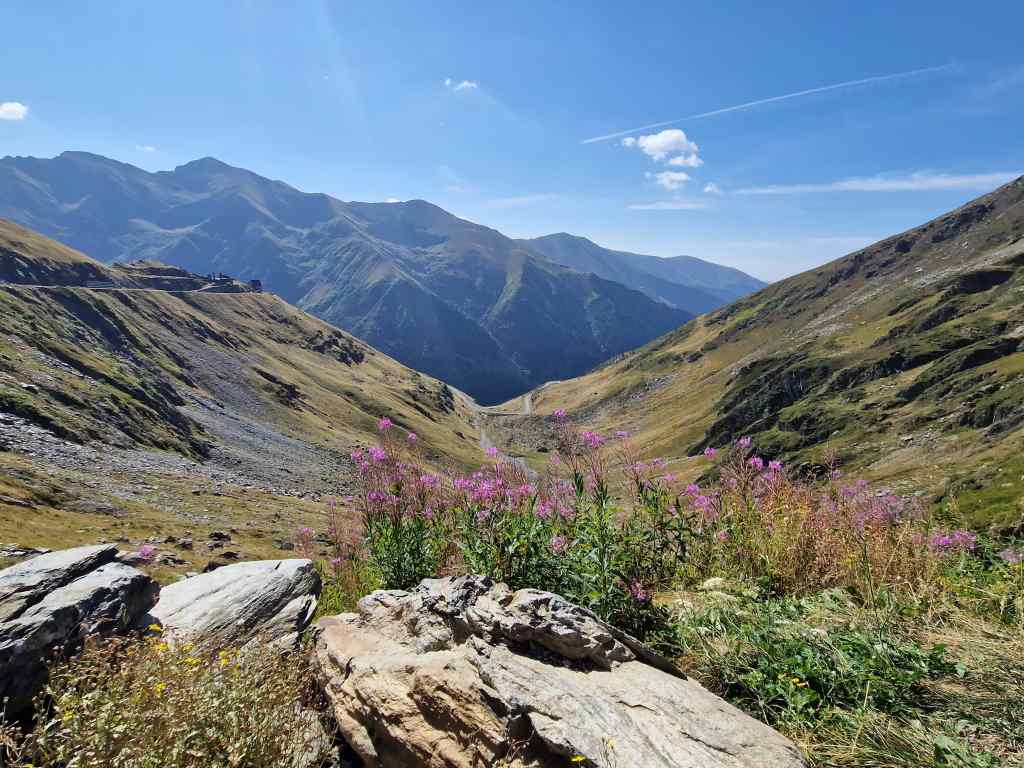
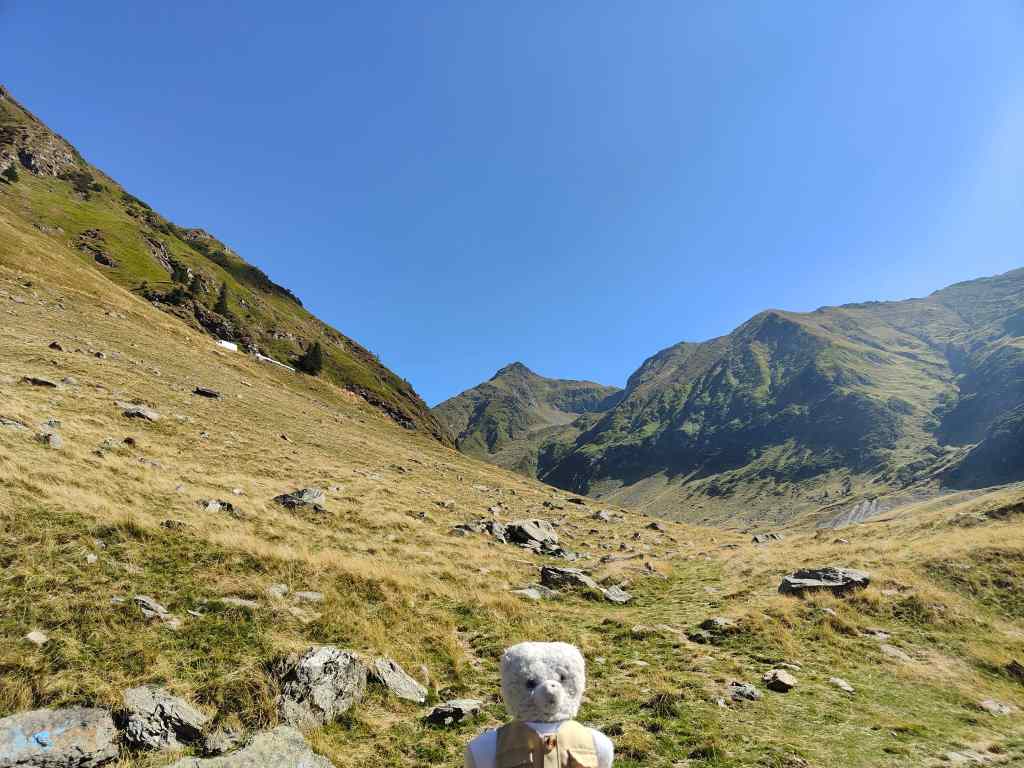
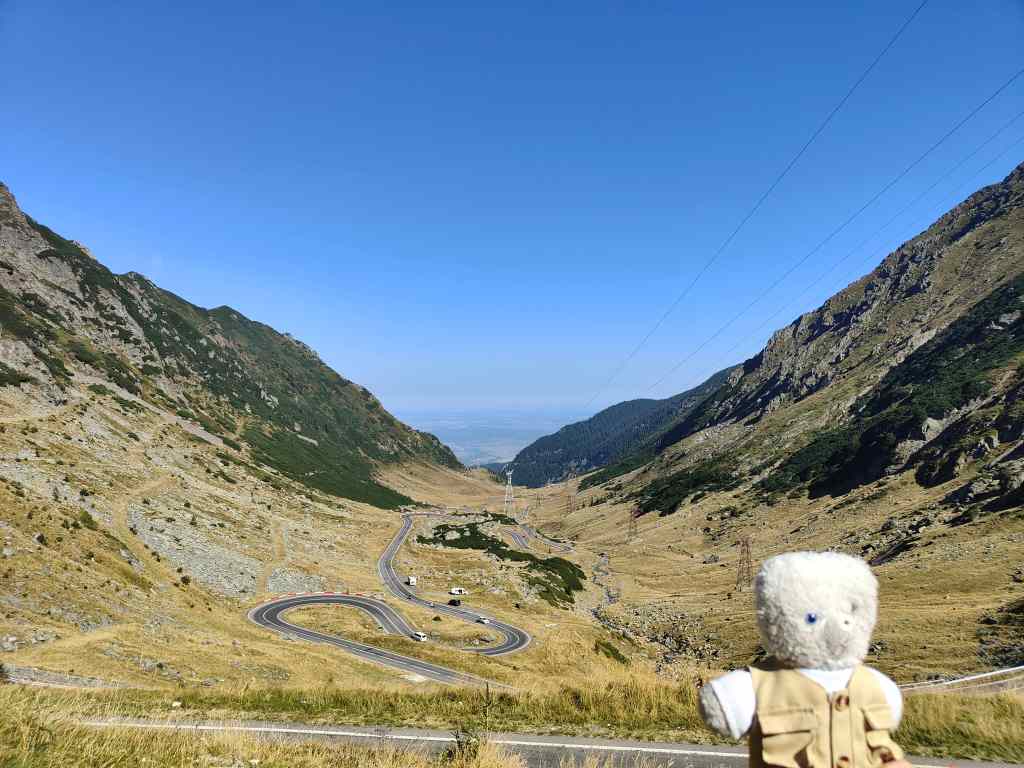
After a relaxing day in Sibiu, it was time to head back to Bucharest. I chose to take the famous Transfagarsan Road, claimed by the UK TV show Top Gear to be the greatest drive in the world. The road snakes steeply up a mountain, with lots of hairpin bends. It might be a great place for testing out a sports car, but in my opinion, it is far from being the world’s most scenic or most difficult route. The views were impressive, but I have seen better in the Central Asia, Alps, the US or Scotland.

Transfagarsan Road
Mountain scenery on the Transfagarsan

After Top Gear’s endorsement, the Transfagarsan road became very popular; fortunately, I got there early and was visiting outside of the main tourist season, but there was still a steady stream of traffic. This included a few idiots in supercar Porches and Lamborghinis, who overtook on blind corners. The best view of the road is from the top, where nearly all the hairpins can be seen at once, but the parking area there was overflowing so I settled for photos I had taken further down.

Transfagarsan Scenery
More pretty scenery
Transfagarsan Hairpin Bends
Transfagarsan Hairpin bends

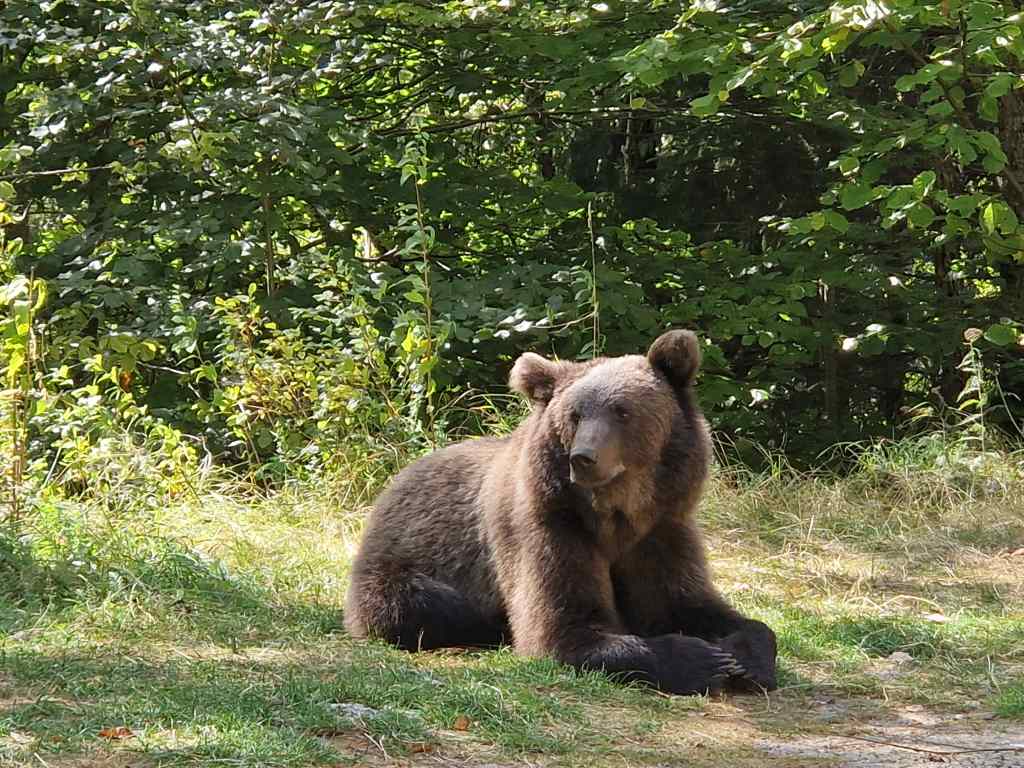
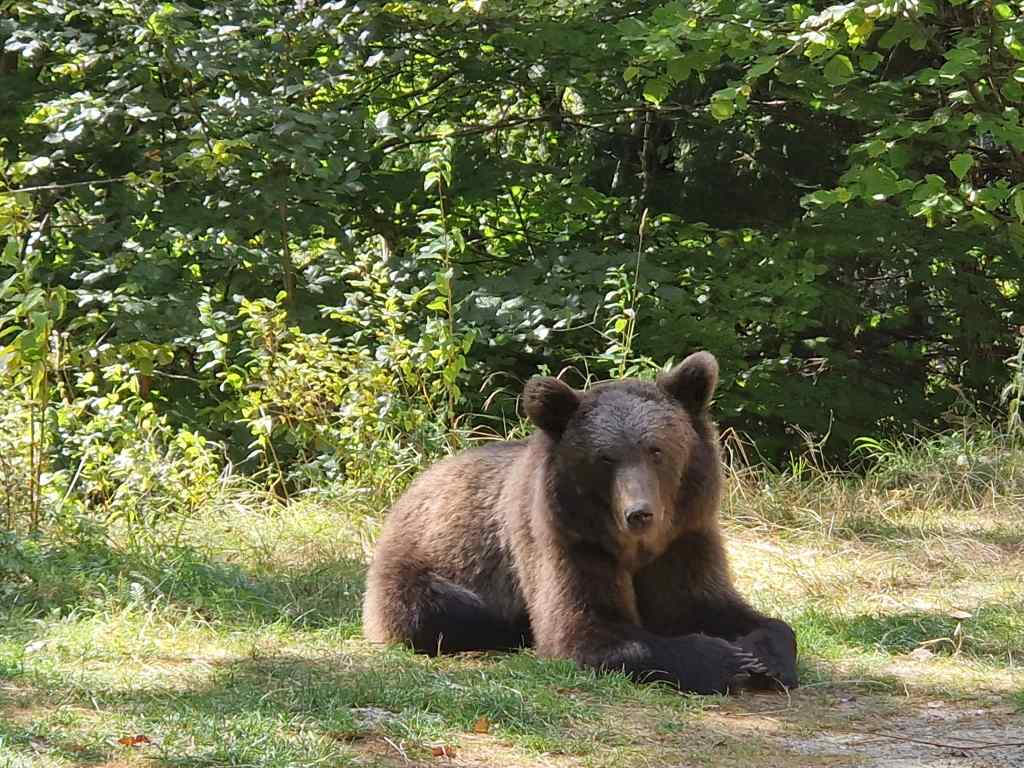
Descending back down from the mountain, the road plunged into a dense forest beside a large lake. I was driving along carefully when suddenly I had a very pleasant surprise – in a lay-by there was a young, friendly fellow bear – one of roughly 9,000 that live in the wild in Romania. I pulled over; he was unperturbed by my presence and let me stop to take photos from a few metres away (from the safety of my car – unlike teddies, wild bears can be unpredictable).

Wild Bear Romania
A friendly bear
Wild Bear Romania

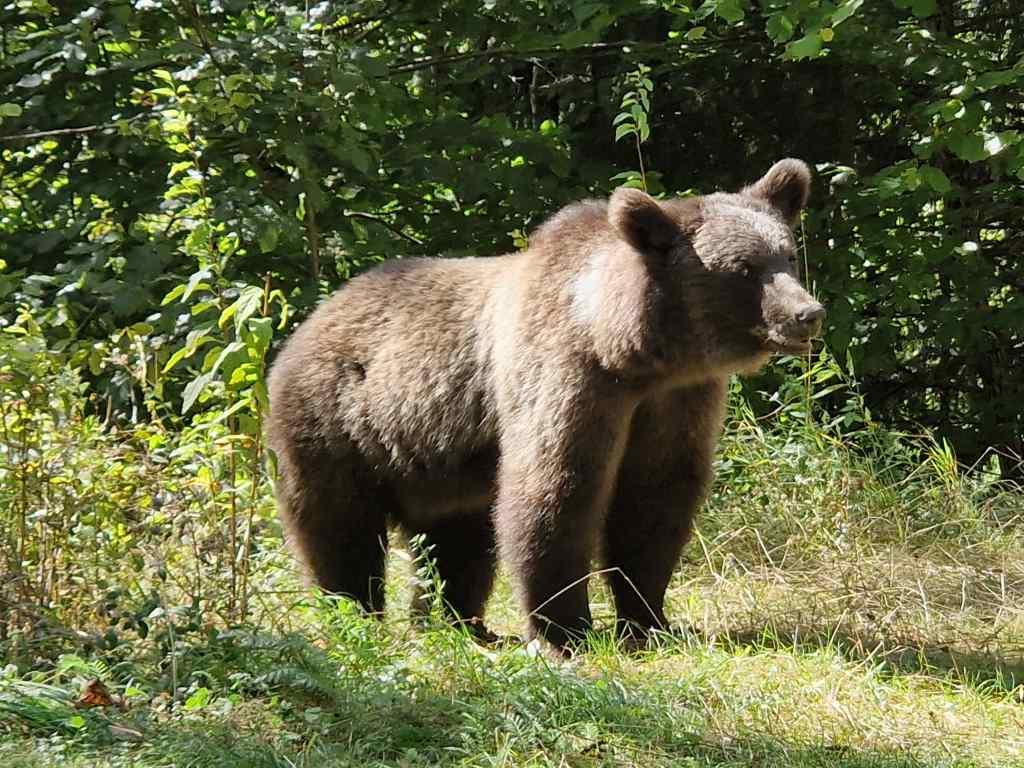
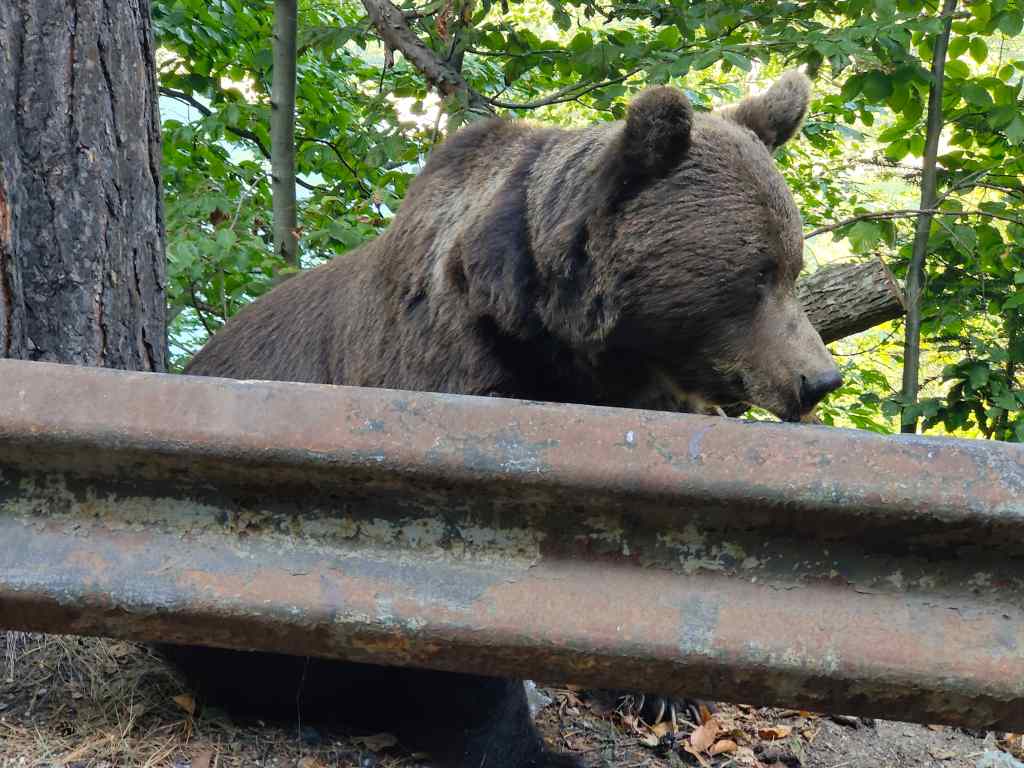
A few kilometres further along the road, I met another bear. He was older and looked rather tired and sad. Maybe he would be a good candidate for the “Libearty Sanctuary”…..

Wild Bear Romania
A sad bear

Meeting fellow bears in the wild more than made up for the slight disappointment of the Transfagarsan road, and after leaving the mountains I drove the remaining rather dull three hour stretch to Bucharest in excellent spirits.

Next Post: Bucharest

Previous Post: Sighisoara and Alba Iulia

Blog at WordPress.com.

Up ↑