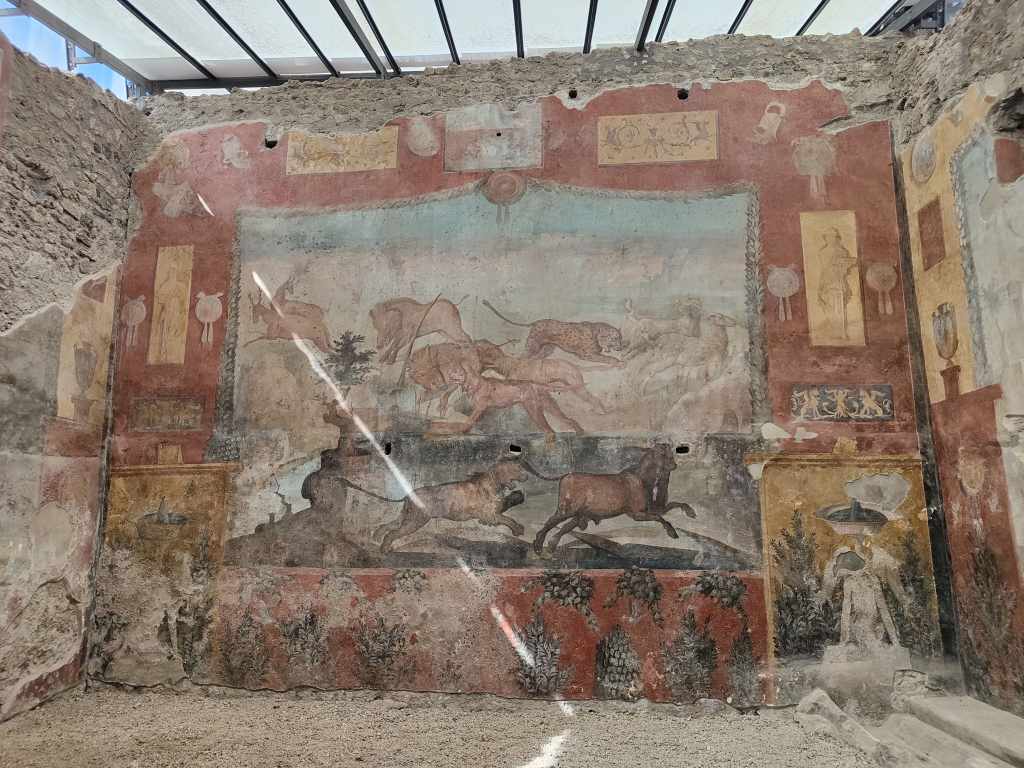
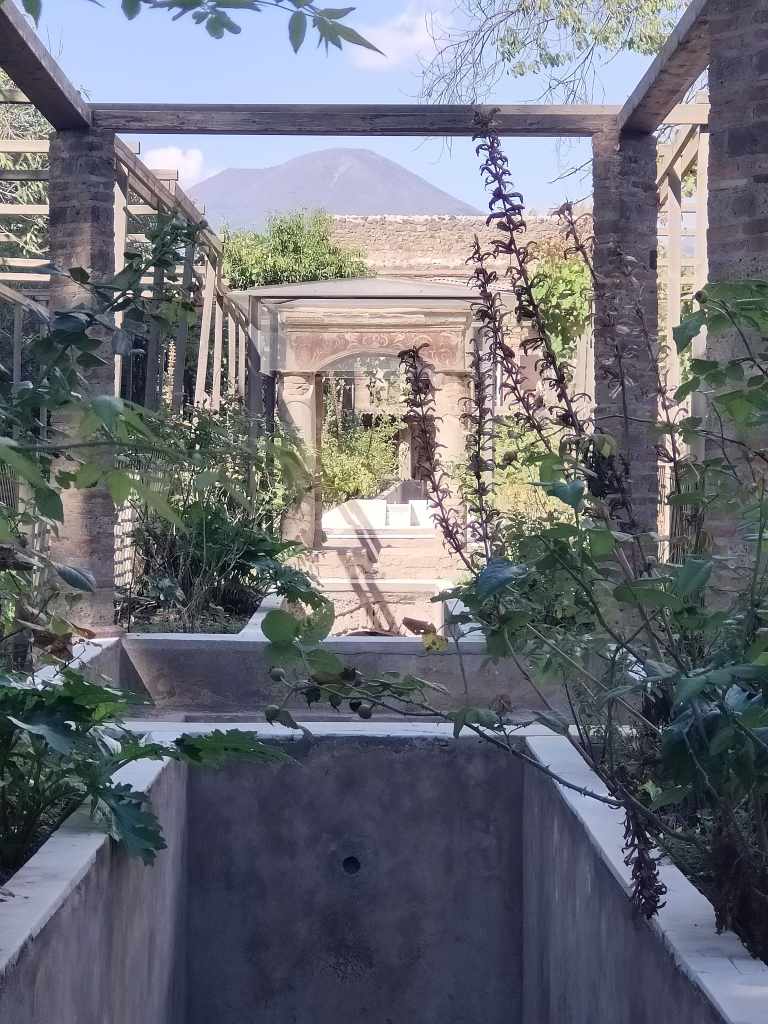
Today was the last full day of my Italy trip and I devoted it to visiting Pompeii, the famous archaeological site located half an hour away from Naples on a very crowded train. I arrived as early as I could, to avoid the heat of the afternoon sun and as many of the crowds as I could. I still faced a short queue to get in, and had to squeeze pass various tour groups just after the entrance to the complex.
Pompeii has a long history and was settled by various peoples but is best known as the prosperous Roman provincial town which was buried by the eruption of nearby Mount Vesuvius in AD79. After this disaster it remained hidden under volcanic ash until the 16th century when it was rediscovered. Major excavations only started in the 18th century and were accompanied by looting of some of the site’s art works. In recent years the excavation of Pompeii has been carried out to high archaeological standards, and even today the site continues to offer up new surprises. This was actually my third visit to Pompeii; my first was 50 years ago when I was a little cub, and I don’t recall much of it. The second was in 2000 twenty five years ago, and I remember a site which impressed by its size but not always its beauty, with lots of long, dusty and empty Roman streets laid out in a grid. But Pompeii is possibly the world’s most famous archaeological site, so I decided to make a third visit, and was very glad that I did.
I am not sure what exactly had changed since the year 2000, but this time I was enchanted by Pompeii. There seemed to be a lot more art work on display in the ruined houses, and a much bigger area to explore, including some gardens that provided a partial respite from the heat.
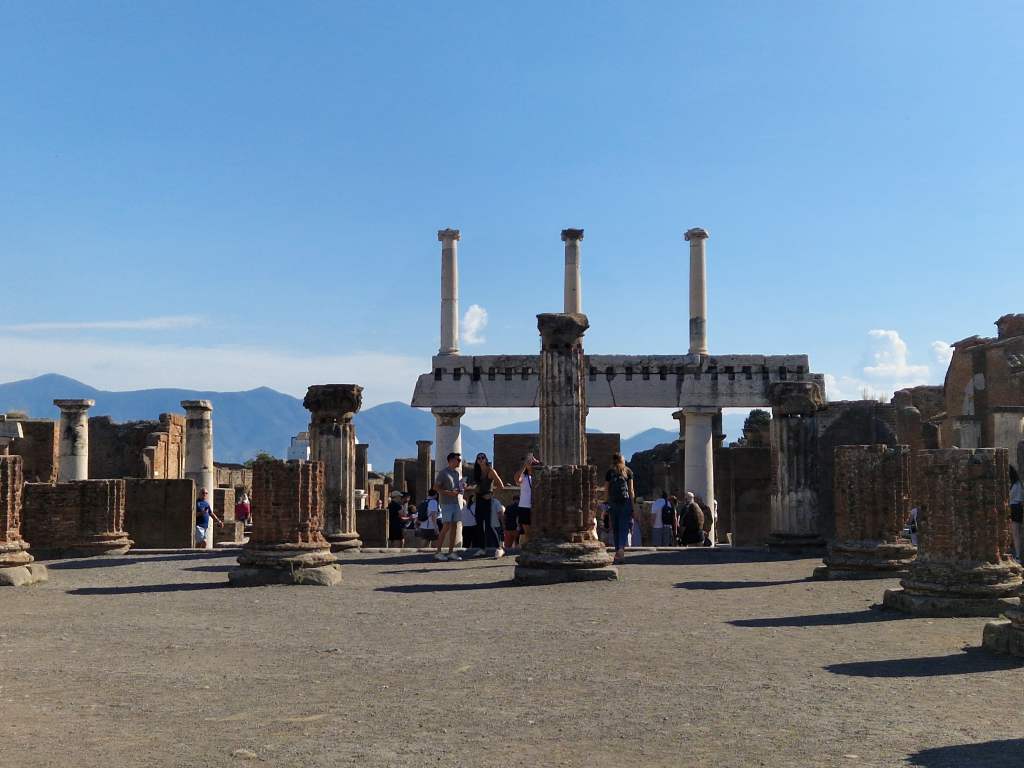

My first stop was the forum. Since this is located on the only road in from the main entrance, it is also everyone else’s first stop, and it was quite crowded. But it was still very impressive, with a fine view of the ruins and Vesuvius towering in the background. I was visiting on National Monuments Day, and to celebrate this the park authorities had arranged for staff to dress up as Romans and pretend to shop or participate in ancient religious rites.
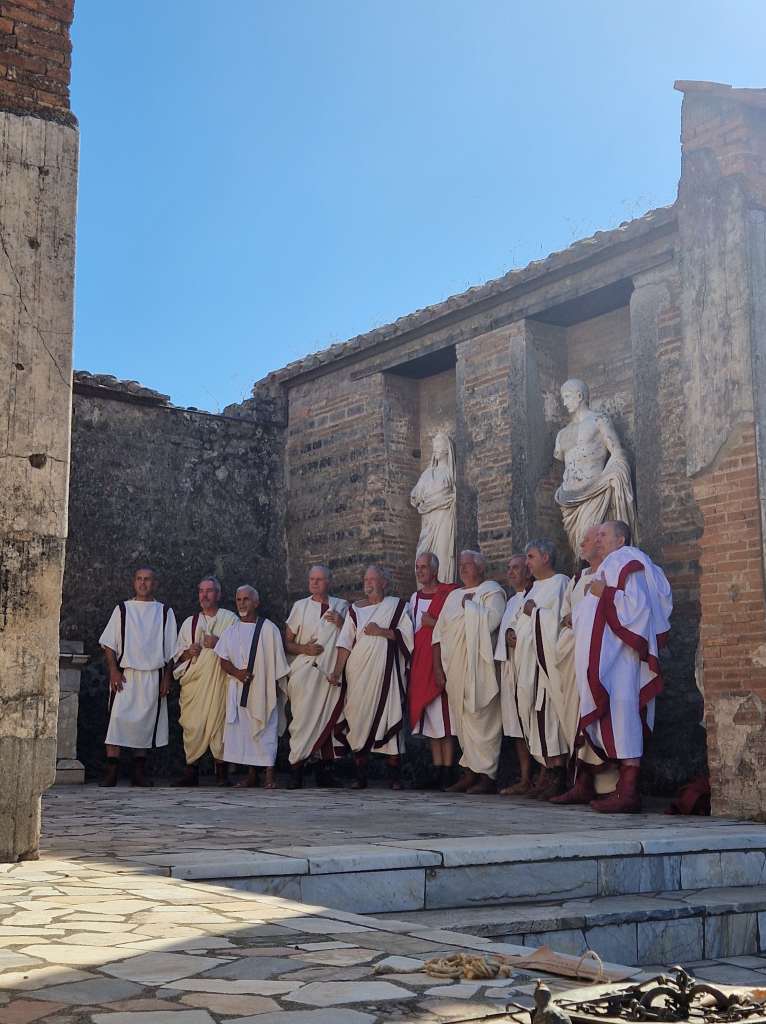
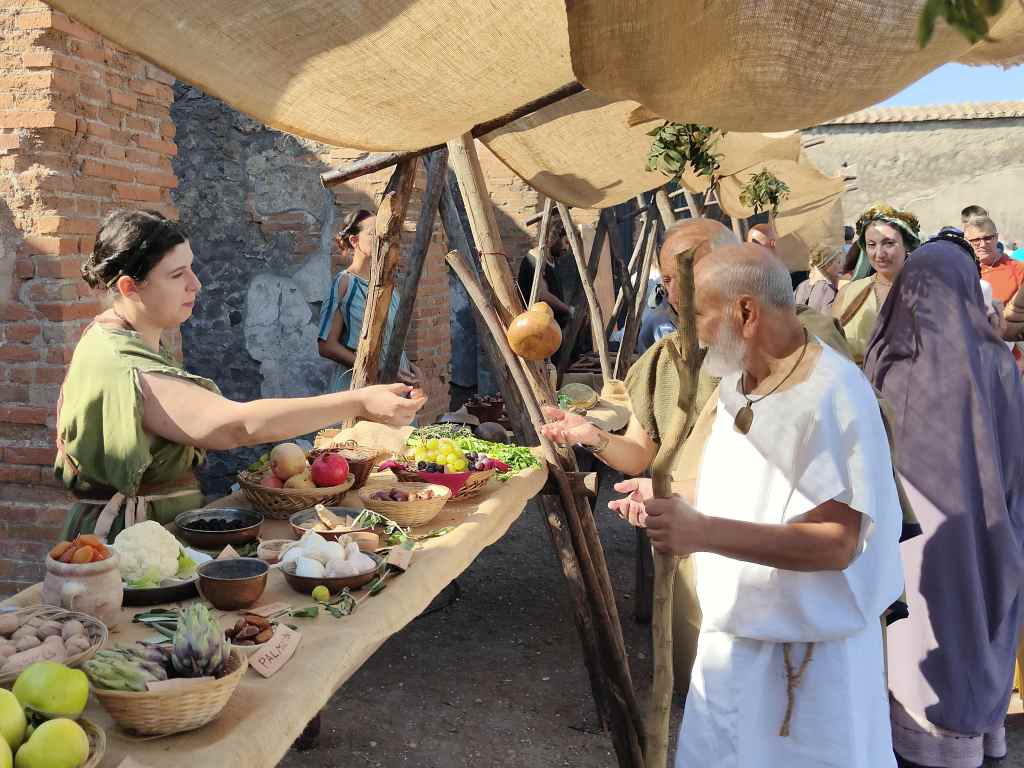
After the forum the many visitors could disperse along several different routes into the ruins and explore them at their leisure, and except for the times I bumped into a tour group visiting the same house, I found it pleasantly quiet. I used the map provided with my ticket to plan my route and try to visit as many as the highlights as possible – seeing everything is simply not possible on one visit. Places of special interest were marked by blue dots on the map – one famous example is the House of the Faun, probably the most opulent residence in the town and owned by an important family. It is named after a small but beautiful statue of a faun that stands in its entrance.

This house is also known for a famous mosaic, showing Alexander the Great in battle with the Persian Emperor Darius. The original has been moved to the Archaeological Museum in Naples (sadly not on display though when I visited) and what you see at Pompeii now is a reproduction.
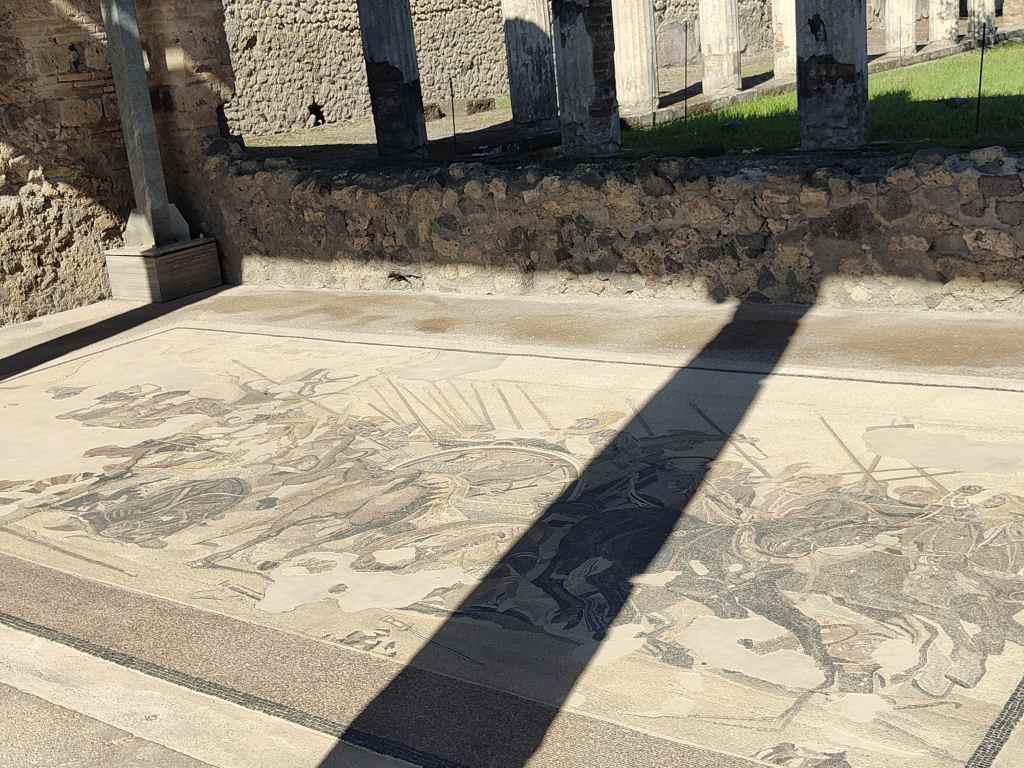
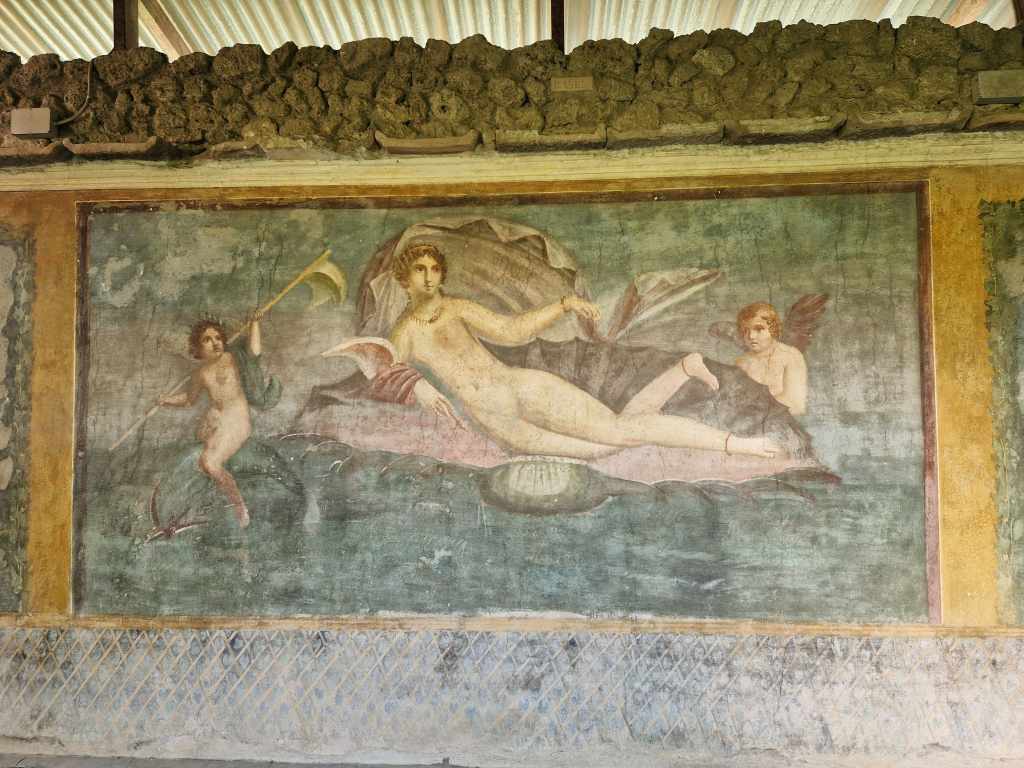
Although the Alexander mosaic is a copy, there are many other magnificent original mosaics and frescos dotted around the ruins. Some of these are well known, marked by a blue dot in the map, and attract a steady stream of visitors……..
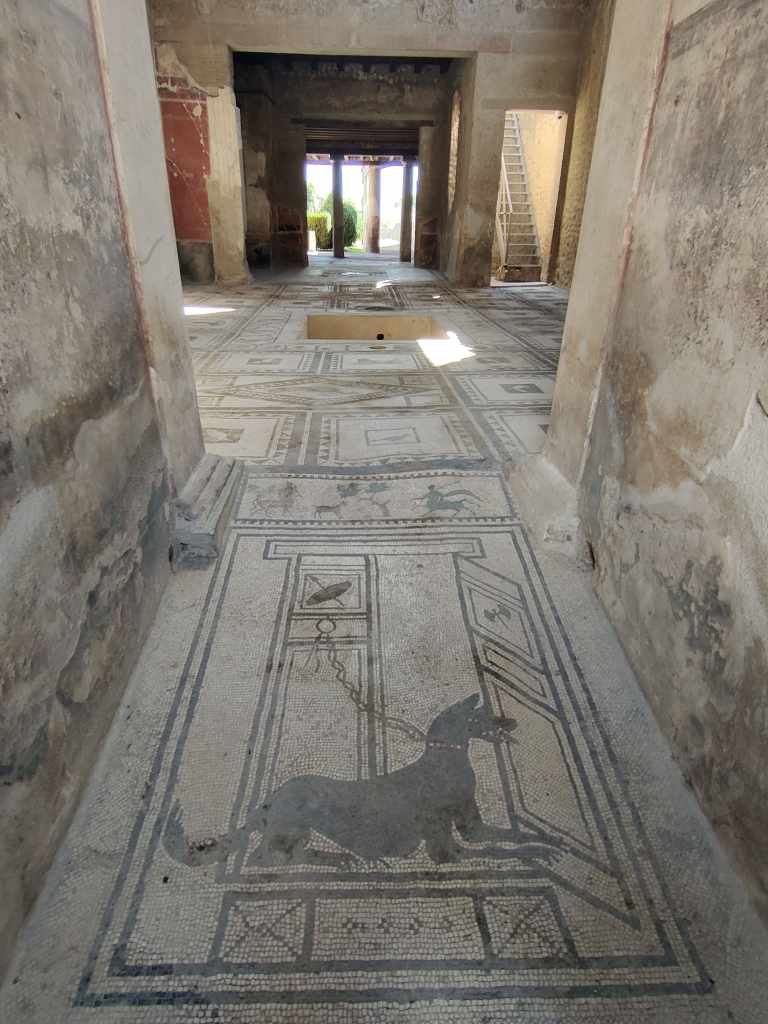

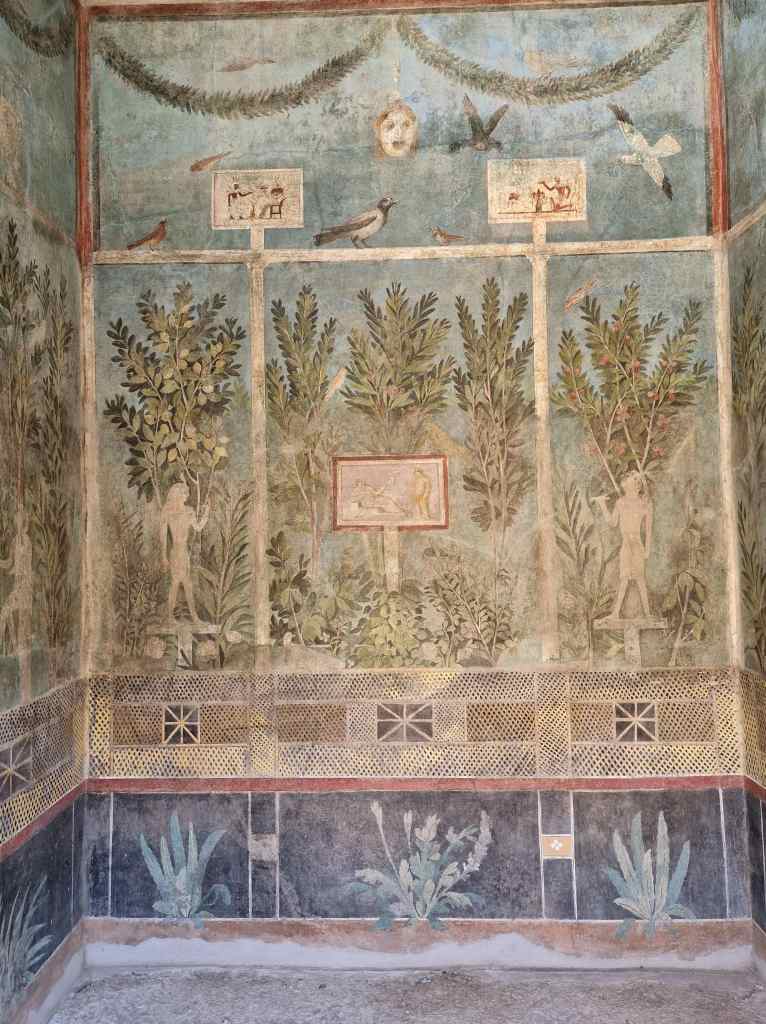
….but others, including a couple of my favourites, were less famous…
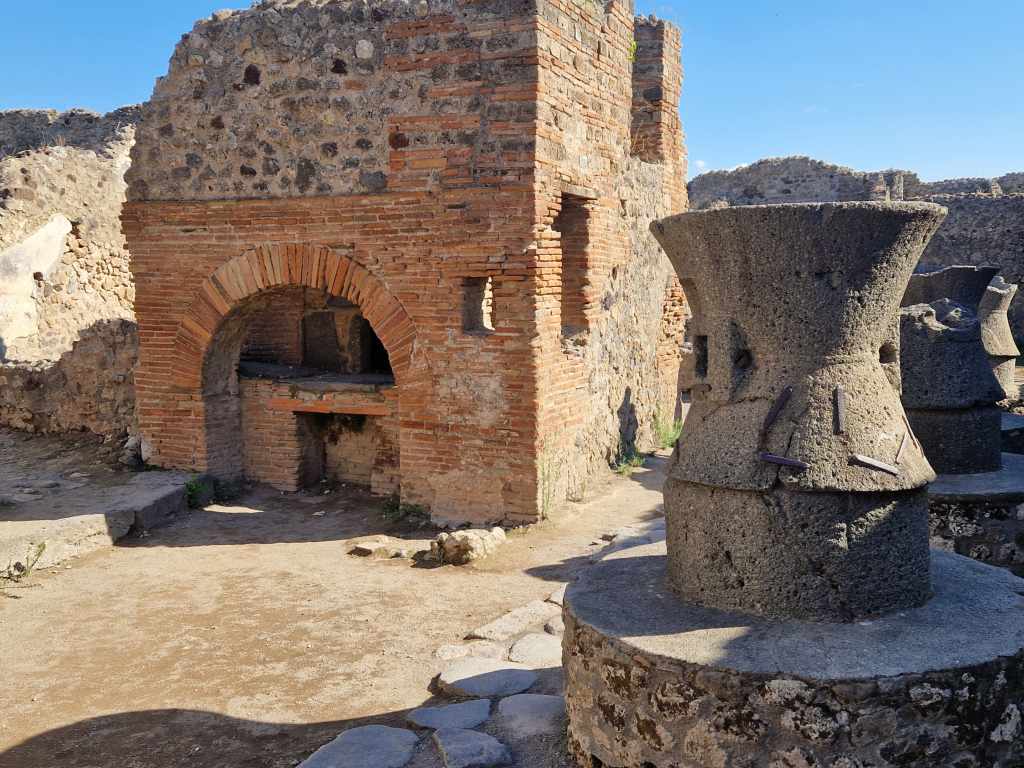
Apart from houses for rich people, with their amazing artwork, Pompeii also had many buildings providing essential services like shops and bakeries. I particularly liked this bread-making shop, with its well-preserved ovens.
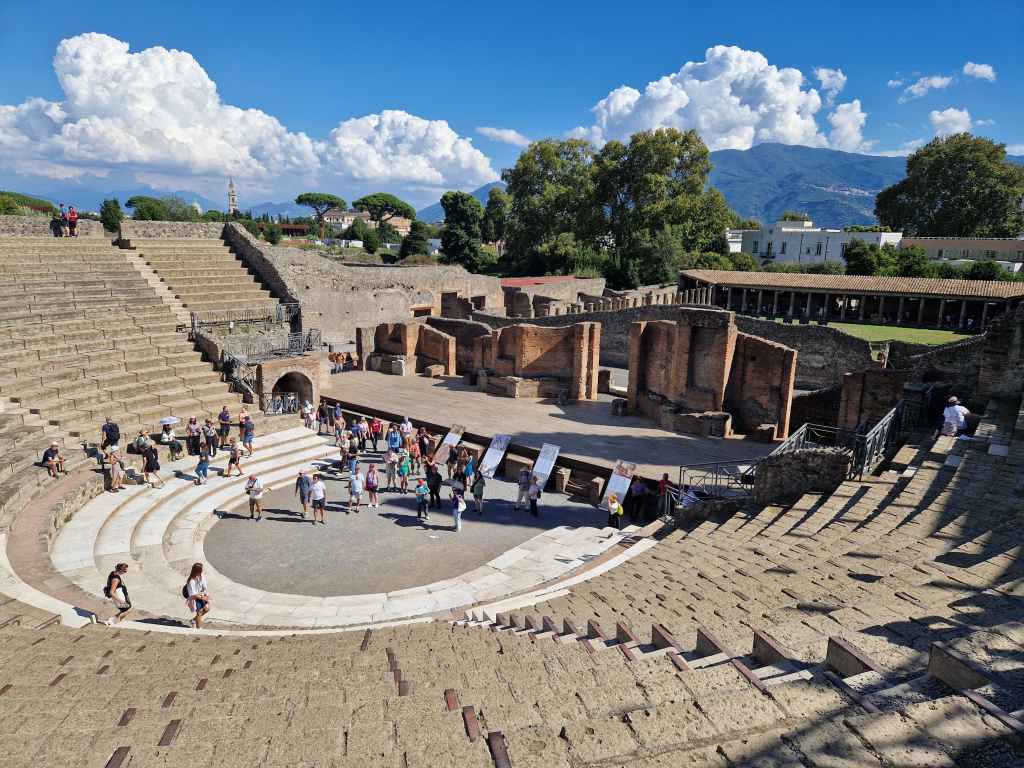
There were also leisure amenities, such as two sets of extensive baths, two theatres and one amphitheatre. That a town with a population of ten to twenty thousand could have such a range of entertainment options gives some idea of how rich the Roman Empire must have been.
After wandering around the part of the ruins accessible with a standard ticket, I paid for a “Pompeii plus” supplement to see a couple of sites located a short way outside of the main town. The first was the Villa of Diomedes, a large property with an amazing view of the surrounding countryside and pleasant gardens.

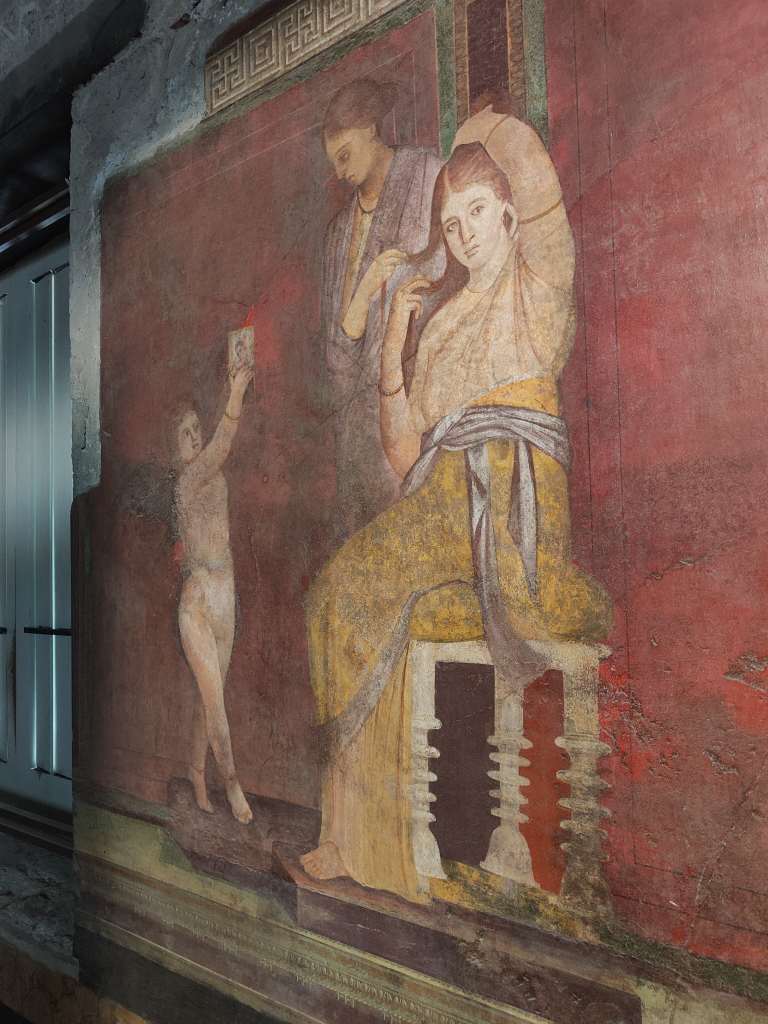
The second was the Villa of the Mysteries, so called because it contains an exceptionally preserved and beautiful fresco of what is thought to be a woman being inducted into a religious mystery cult.

Back in the main part of the town I explored some of the greener areas – one particular highlight was the Garden of the Fugitives, which contains the casts of thirteen victims of the disaster, adults and children. These people had probably successfully fled the initial phase of the eruption and had managed to take shelter here. However, a second phase saw a cloud of blisteringly hot toxic gases sweep the city and kill all remaining survivors. Their bodies were covered by volcanic ashes, and over time the organic matter rotted away to leave a hole. During the excavations these holes are injected with plaster to make a cast of the victim. Out of respect for those that died, I won’t include a picture of them in this post, but here is the garden….

After five hours and 20km of walking, my little teddy legs were feeling tired, and it was time to head back to the main entrance. On the way, I visited the Sanctuary of Apollo, which had been crowded on the way in but was now deserted. I stopped to take a last, rather naughty, selfie:

It had been an exceptional day. Pompeii seemed to have improved since my last visit twenty-five years ago – certainly more has been excavated, but there also seemed to be more mosaics and frescos on display, many of them of exceptional quality. The structural integrity of some of the Roman buildings, some standing for two thousand years, puts some of Naples’ crumbling monuments to shame. Finally, I don’t think the onsite coffee shop existed earlier, and the ability to get some caffeine and cold drinks halfway through my visit had definitely helped me keep going for so long. I hope that I will be a fit enough bear to make at least one more trip to Pompeii, in another twenty-five years’ time. Excavations continue, and it will be fascinating to see what treasures they unearth.
Well, that is all for this series of posts about South Italy. It was a great trip, with a bit of everything – the amazing and anarchic city of Naples, the scenery of the Amalfi coast, the beautiful villages and cities of Puglia, and the amazing ruins of Pompeii. I will be back, in particular to explore Naples, where there were very many things that I missed, and the surrounding area where I have yet to hike up Vesuvius, visit the ruins of Herculaneum, sail to Ischia…….the list of things to do is very long!
Previous Post: Naples






















 Trouspinet travels