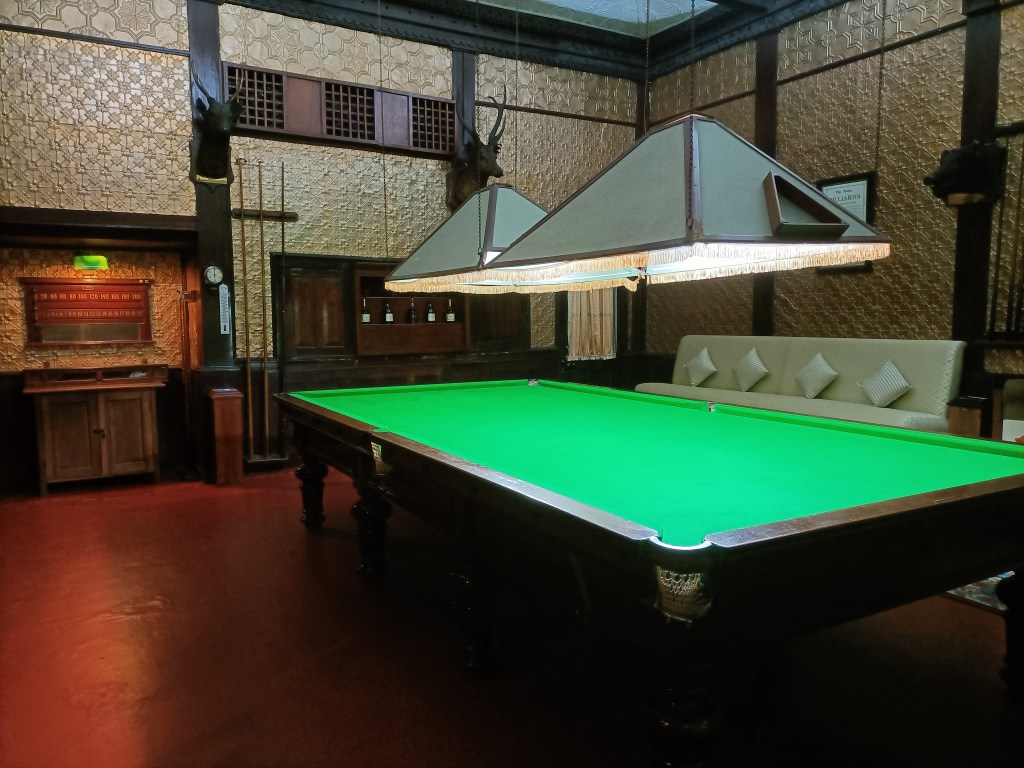
From salt to the colonial city of Salta

Sadly, today I had to leave the Quebrada of Humahuaca to drive back to Salta. I chose a different route, to avoid the boring stretch of highway I had driven last time. The spectacularly coloured, dry, mountains continued to flank the road up until the city of Jujuy, where they gave way to flat fields, with mountains brooding in the distance.

On the road to Salta from Purmamarca

I turned off onto RN9. After a few km the road entered a nature reserve and became very narrow and winding, with barely room for two normal cars to pass. It was a very pretty route, but also tiring as I continually crossed more experienced local drivers hogging more than their share of the available road space. I finally reached Salta at around 4 o’clock and checked into a wonderfully retro hotel located on the central Plaza – the Colonial. My room had two balconies, one that looked onto an ornate church and the other that looked out over the plaza, and I relaxed and enjoyed the view for a bit before setting off to explore the town.

The view from one of my balconies of my hotel in Salta
Grand Old Buildings on Salta’s plaza

Most impressive of all of Salta’s colonial buildings was the cathedral, which was built in 1878.
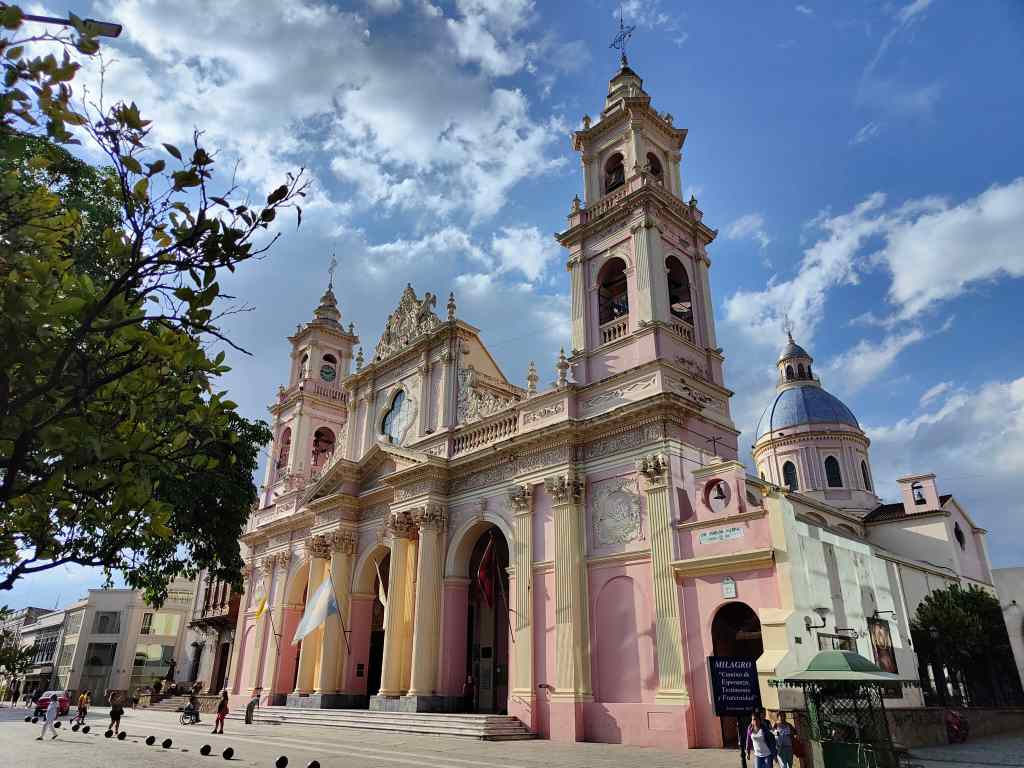
Salta Cathedral – outside….
and inside Salta’s cathedral

They seem to like gaudily coloured churches here – near the cathedral is the Iglesia San Francisco.
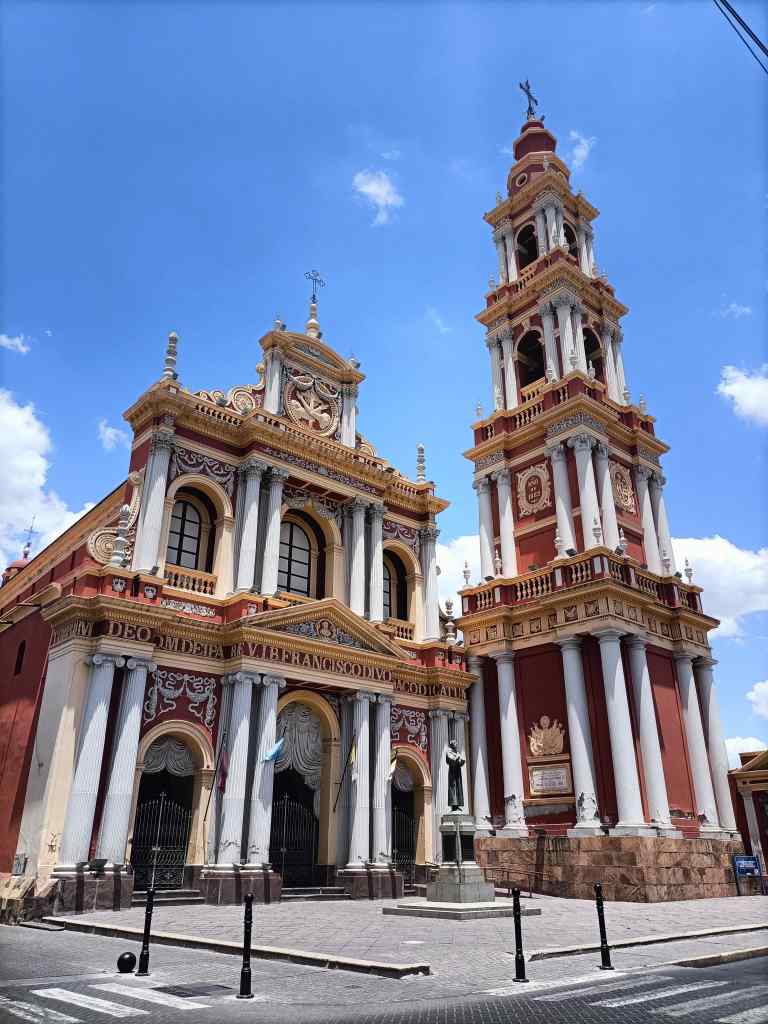
Iglesia San Francisco

For a rather different experience, I visited the Museum of High Altitude Archaeology, which was mostly devoted to an expedition to the volcano Llullaillaco in 1999 which discovered the bodies of three children offered to the mountain by the Incas. As part of an elaborate Inca ceremony, two young children from noble families were “married”, given an alcoholic drink to drug them, and then buried alive, high up on a mountain, whilst they slept. The Incas believed that the children simply passed to another state of existence, where they continued to watch over the living from the land of the dead. With the high altitude and dry air, the corpses were preserved and became mummified. One of the three children was on display – a young girl. Some time ago, her grave had been struck by lightning and part of her face was burnt. It was a macabre sight. I wondered whether they should not have been left in peace, where they had been found, but the museum’s display text claimed that they would have soon fallen victim to thieves. As a justification, the museum displayed a different body, which had been dug up by thieves and trafficked to private collectors before being recovered – in a poor state of preservation. Photos were not allowed, so you will have to imagine the bizarre sight yourself. To lift my mood after such a strange sight, I headed to small restaurant where I had dinner – a good steak with a bottle of wine from the nearby wine region of Cayafate. It was made from the “bonarda” grape– a variety I had never tried before, and which I liked a lot.  Then I spent some time enjoying the lively atmosphere on the main plaza at night, before heading back to my room.
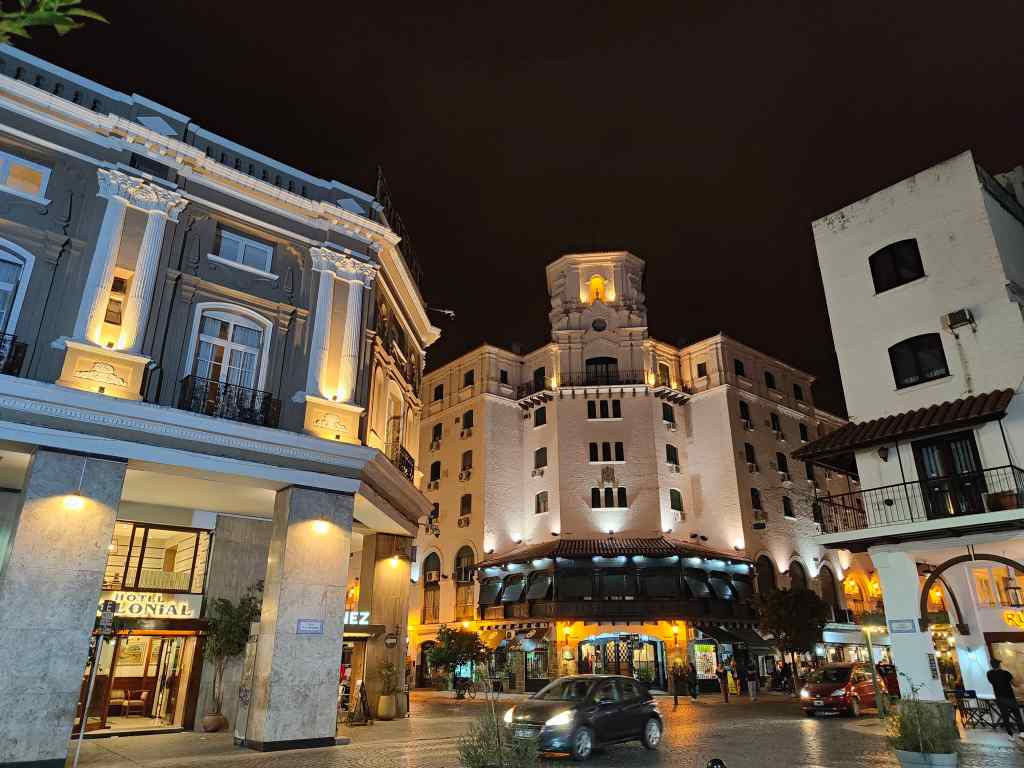
The view of my hotel (left) at night from the Plaza

I finally had some spare time to catch up on my blog and sort out my next delivery of pesos by Western Union.

Next Post: Cachi and the Parque Nacional de los Cordones

Previous Post: Salinas Grande

Salinas Grandes, Pucara, Tilcara…and Hungry Donkeys

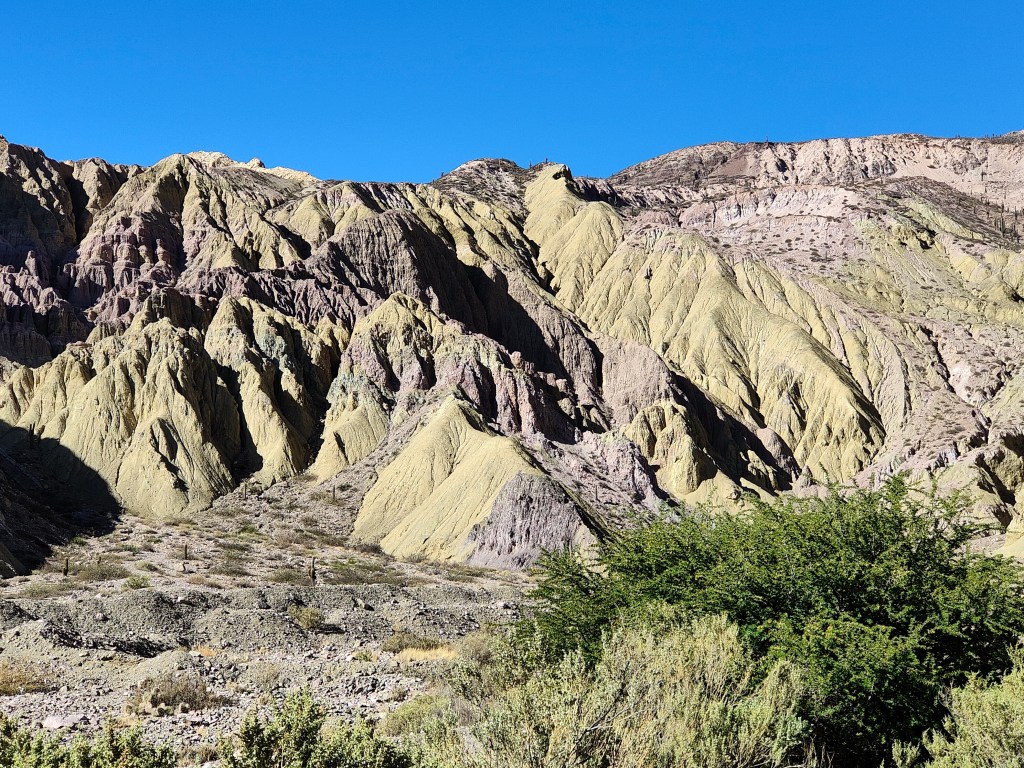
Today I set off early again, but this time I headed west towards Salinas Grandes.  At first the road ran past some spectacularly coloured rocks similar to those surrounding Purmamarca.

On the road from Purmamarca to Salinas Grandes

Then it climbed steeply, with many hairpin bends, to a pass of 4000m……

Hairpins on the road from Purmamarca to Salinas Grandes

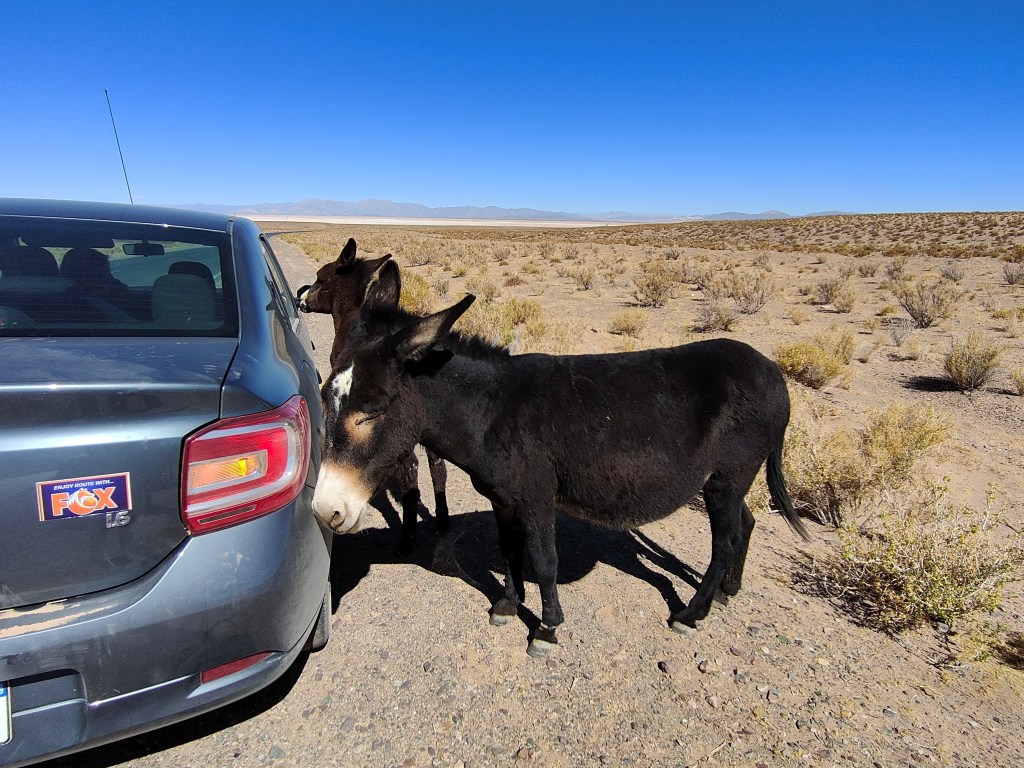
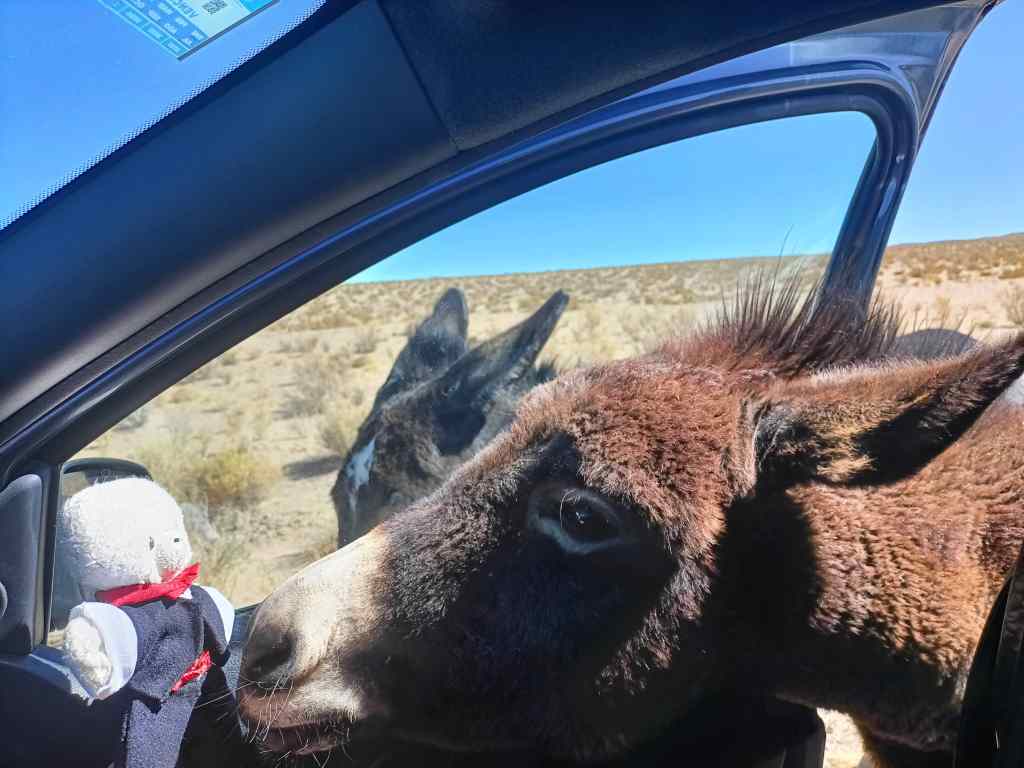
….. before dropping back down again to a flat, white plain.  On the way down I saw some wild guanacos (an animal similar to the llama). I stopped to photograph them, and my car was suddenly besieged by hungry wild donkeys that appeared out of nowhere. One pushed into my car to say hello….or perhaps to see if I was edible. Things were getting a little scary, when a large truck passed me and sounded its horn, scaring off the donkeys.

Hungry Donkeys near Salinas Grandes
Too close for comfort!

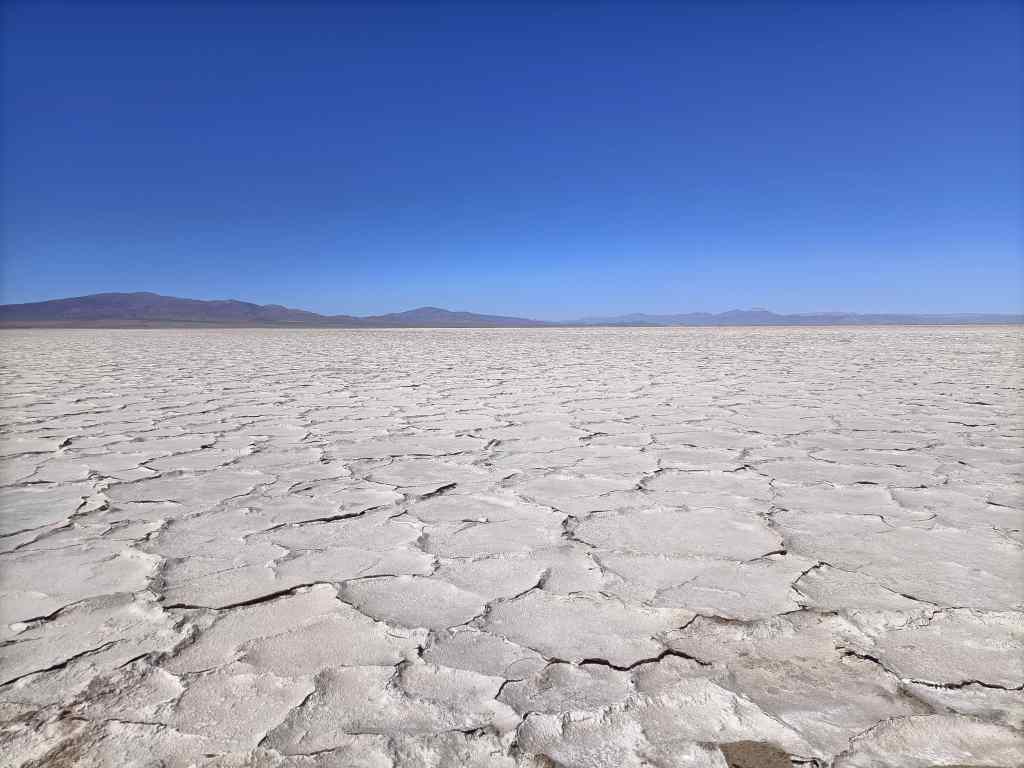
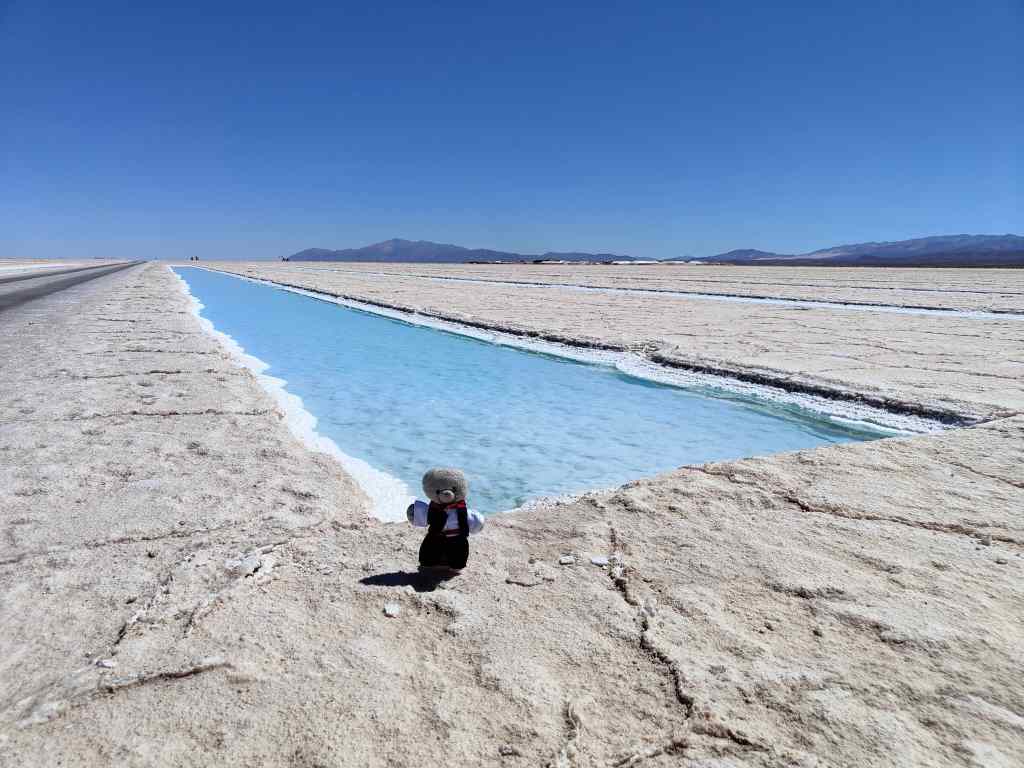
I continued my route; my destination was the salt plain of Salinas Grandes, a large expanse of glittering white salt left over from the evaporation of a large inland lake. A rough track allowed me to drive onto the salt pan to experience this strange phenomenon first hand and to watch a salt-mining operation located in the centre of the area.  

The salt flats at Salinas Grandes
Salt mining at Salinas Grandes

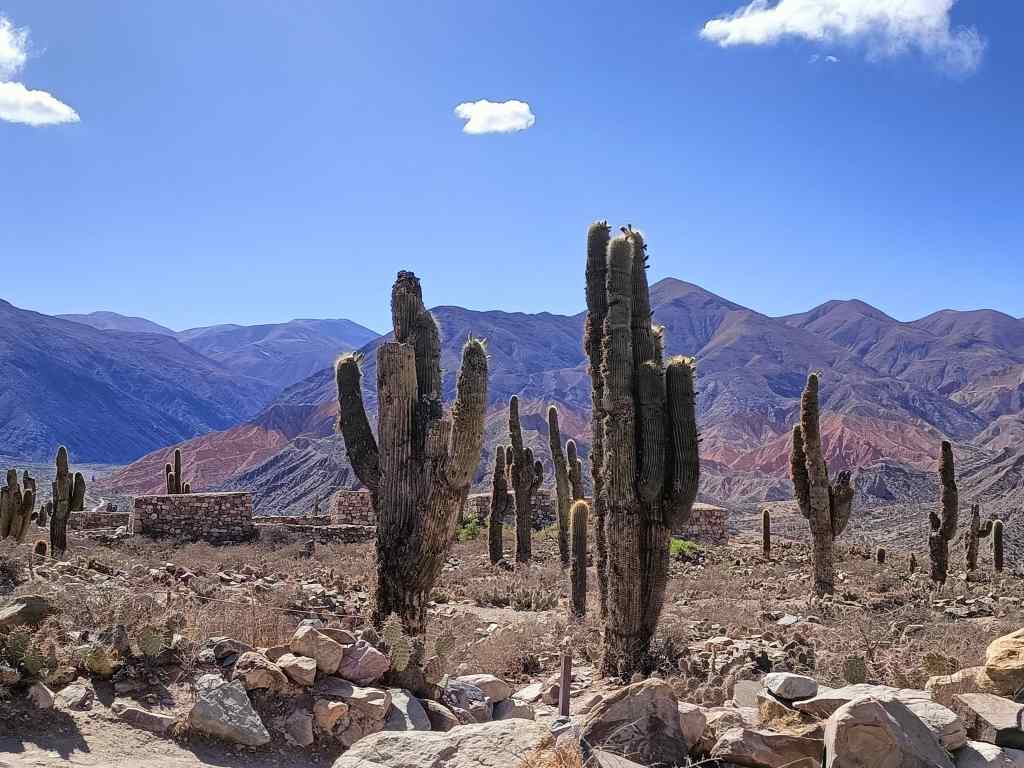
The straight open road continuing west from the salt plain beckoned me onwards. I would have liked to carry on driving all the way into Chile, only 100km away, but this wasn’t part of my complicated travel plan. Chile would have to wait until later in my trip. Instead, I drove back to Purmamarca and had a light lunch before heading north again, this time to the town of Tilcara. There I visited the Pucara, a site where archaeologists have restored an Inca village dating from Pre-Columbian times. The restored buildings were modest, and probably of interest only to specialists in Inca history, but the site offered amazing views of the main Humahuaca valley and a couple of pretty side-valleys. The Pucara also had an impressive collection of huge cacti.

Huge cacti at Tilcara’s Pucara

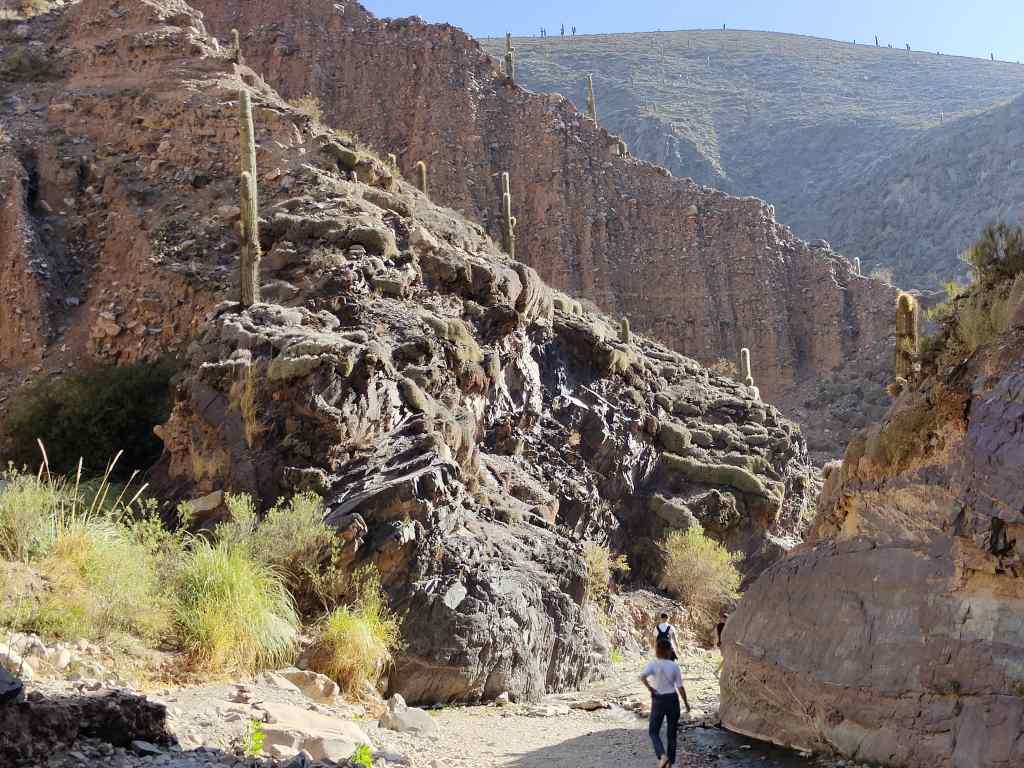
My final destination for the day was the Garganta del Diabolo, a waterfall in a canyon a short way outside of Tilcara.  I found the start of the path, where a signpost offered the choice of a direct 4km walk or an 8km drive by a different, longer route. It was baking hot, so I decided to a be lazy and drive. This may have been a mistake since the track was very steep, with a heavily pockmarked surface. Even though I went very slowly, it was a very stressful drive.  I finally reached a car park and gave a big sigh of relief. From there, it was a short walk to the waterfall, which turned out to be rather disappointing after all the effort to get there, but the canyon I walked through offered some interesting views and good photos.
In the canyon descending from the Garganta del Diabolo

After a full day exploring, I was tired and headed back to Purmamarca. I enjoyed the now very familiar display of coloured mountains – this time with strong early evening sunlight, which gave yet another set of colours to the rocks.  On arriving, I enjoyed a beer at an outdoor table of a café, admiring the final colours of the setting sun on the hills around the town.

Ending the day at a Purmamarca Cafe

I visited a different peña and enjoyed some more local music before collapsing into bed back in my hotel.  Every day of my holiday so far has started very early and finished late – there has been so much to see. As a result, I am bit behind in writing my blog. Maybe tomorrow I can catch up a bit.

Next Post: Salta

Previous Post: Quebrada to Humahuaca

The Quebrada de Humahuaca – Purmamarca and the Serrania de Hornocal

My next day was spent with getting to the Quebrada de Humahuaca in the far northwest of the country, near the borders with Boliva and Chile – famous for its spectacular coloured rock formations.  I had a couple of hours free in the morning before my flight, which I spent unsuccessfully looking for a Western Union branch that had enough money to pay my second transfer. After that it was a two-hour flight to Salta, and a three hour drive to the small town of Purmamarca. At first the road passed through nondescript, flat, featureless and dry country, with litter strewn by the side of the road. As I approached my destination, it climbed. The weather had become cloudy, but I could still make out the outlines of tall mountains all around me. I arrived at six, to find a town bustling with travellers and full of bars, shops and restaurants serving them; it had a nice, busy atmosphere.  I celebrated my arrival with a beer in a café on the town’s central plaza The clouds had lifted, and I could see that all around the town was surrounded by bright red, brown and green rock formations, promising some interesting exploration over the next two days.

After my beer, I had dinner in a peña – a restaurant where live music is played. The singer asked where everyone was from – the other diners were all from Argentina or other parts of Latin America. Everyone was very interested to meet a bear from London, and I had my photo taken with the singer.  The menu was very reasonably priced and even had a bottle of local red wine for 990 pesos (less than 3€). I was so intrigued that I ordered a bottle, and it turned out to be pretty good. I had a fun evening eating, drinking and listening to the others singing (my Spanish was not good enough to join in).

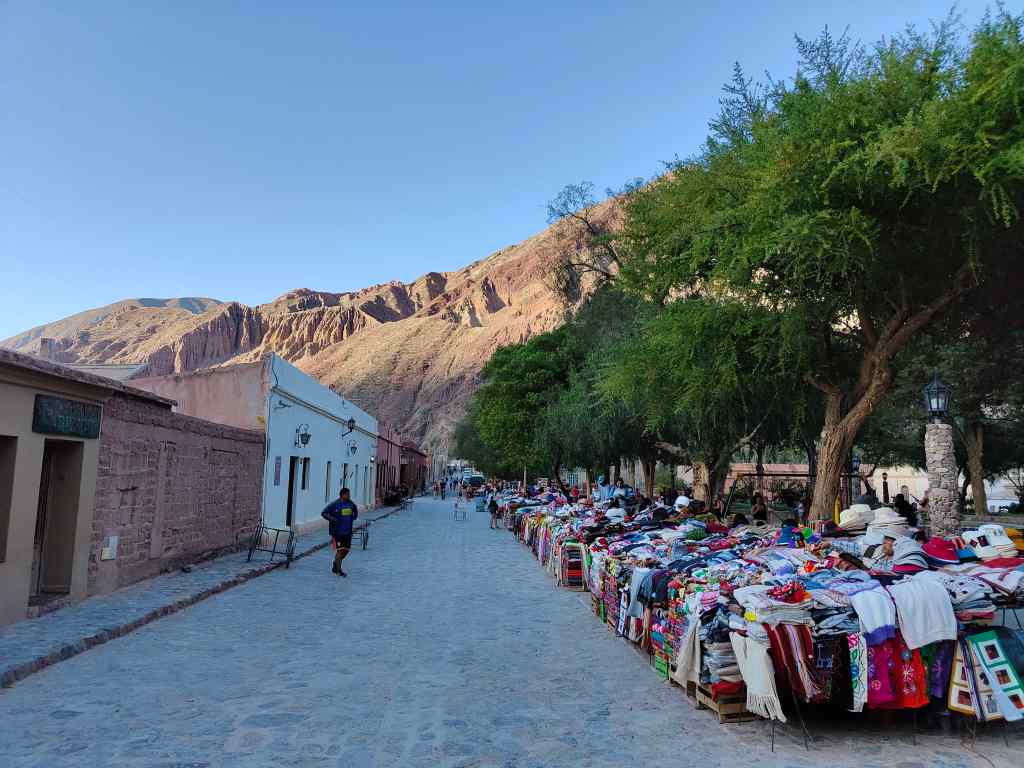
The next morning my jet lag caused me to wake early, at six. I had a slight headache, which I attributed to the high altitude rather than last night’s wine ;).  I got dressed and set off to explore the town of Purmamarca, hoping to find somewhere for a coffee. Everything was closed and the streets were quiet except for the traders setting up their stalls around the central square.

I abandoned my hunt for breakfast and explored the town instead, with its handsome old church…

……colourful shops

…colourful houses

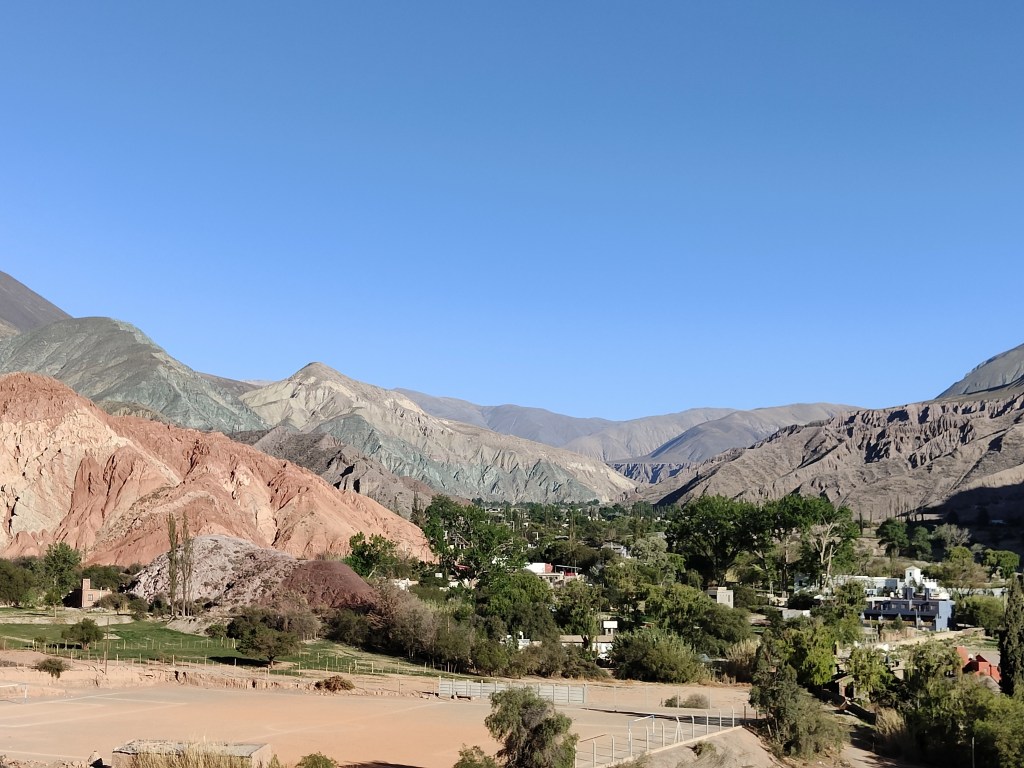
I walked up a steep hill on the outskirts of the town to a mirador (viewing platform) with a 360 view of the town and the surrounding mountains, which glowed in the morning sun. The scenery resembled an impressionist artists pallets, with many shades of red, orange, green, brown and purple. As the sun rose higher, the colours changed, a transformation that continued for the whole day.

The view from the Mirador

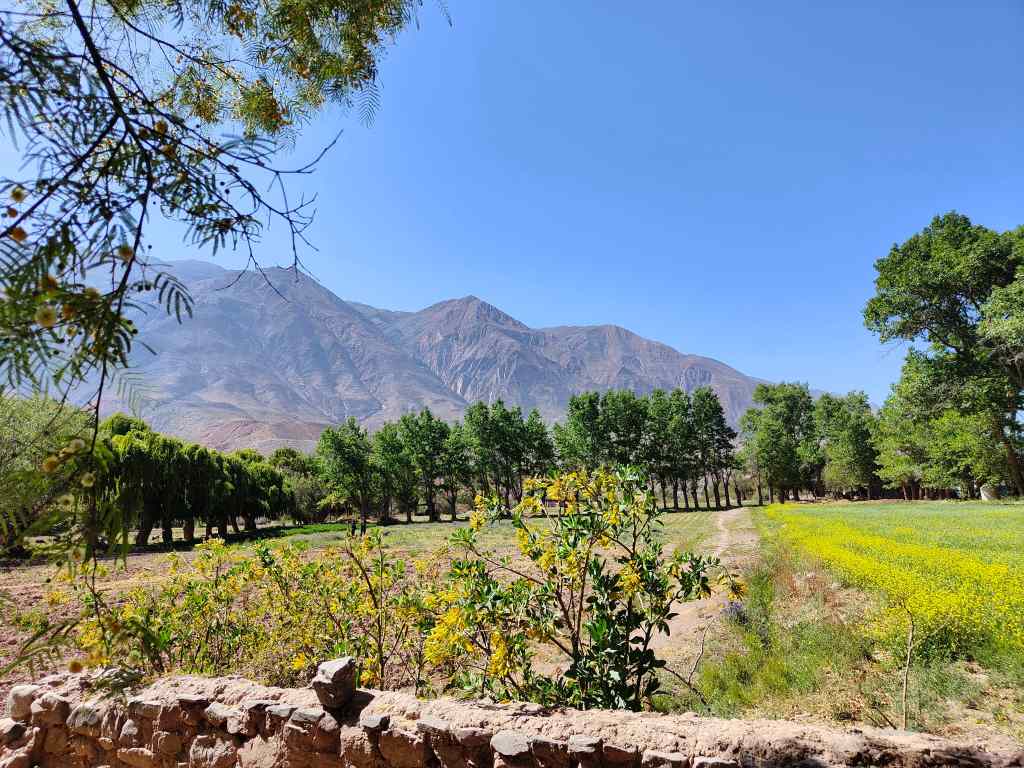
It was now eight, and a finally found a place for a reviving coffee before setting off north to explore the valley. The road was spectacular, running along a deep valley with towering, coloured mountains on either side. My first stop was a set of restored buildings which were one of the staging posts for travellers and mail along the route from Bolivia to Buenos Aires. The complex had a beautiful setting, and in the mid-morning sun the colours of the rocks had evolved again, becoming more subtle than the bright display of the dawn.

Next stop was an upmarket restaurant recommended to me by the Tourist Information Office as having the best coffee in the valley. When I arrived though, they had no electricity and could only make me some tea and a huge jug of lemonade, which helped my headache. This place also had amazing surroundings.

I continued driving north past many different strange and colourful rock formations until I reached the town of Humahuarca, the largest settlement in the region. It was a pleasant place with interesting old architecture, and I stopped to eat in the central plaza. I continued my exploration of the town after lunch and even managed to find a Western Union branch that actually had money!

In the late afternoon I set off to see one of the highlights of the region – the Serrania de Hornocal. I drove along a rough track for about an hour, which rose steeply until at 4350 metres I reached a viewing point for one of the most spectacular natural phenomena I have ever scene – a panorama of brightly coloured mountains shaped liked jagged shark’s teeth. It was quite cold and there was a strong wind. The few human visitors were shivering, but I was comfortable under my fur.

At the car park leading to the Serrania de Hornocal

I had hoped to sit and enjoy the view for a long time, watching as the rocks changed colour in the setting sun, but I was unlucky. I had only been there about fifteen minutes when clouds emerged.  The dramatic colours occasionally reappeared when the sun broke through the clouds, but the periods of light got shorter and shorter until the sky and the rocks were both dull grey. I comforted myself that I had arrived just in time to see something that I will remember for ever.

The magnificent Serrania de Hornocal
Colours change in the Serrania de Hornocal as the sun moves and the weather changes

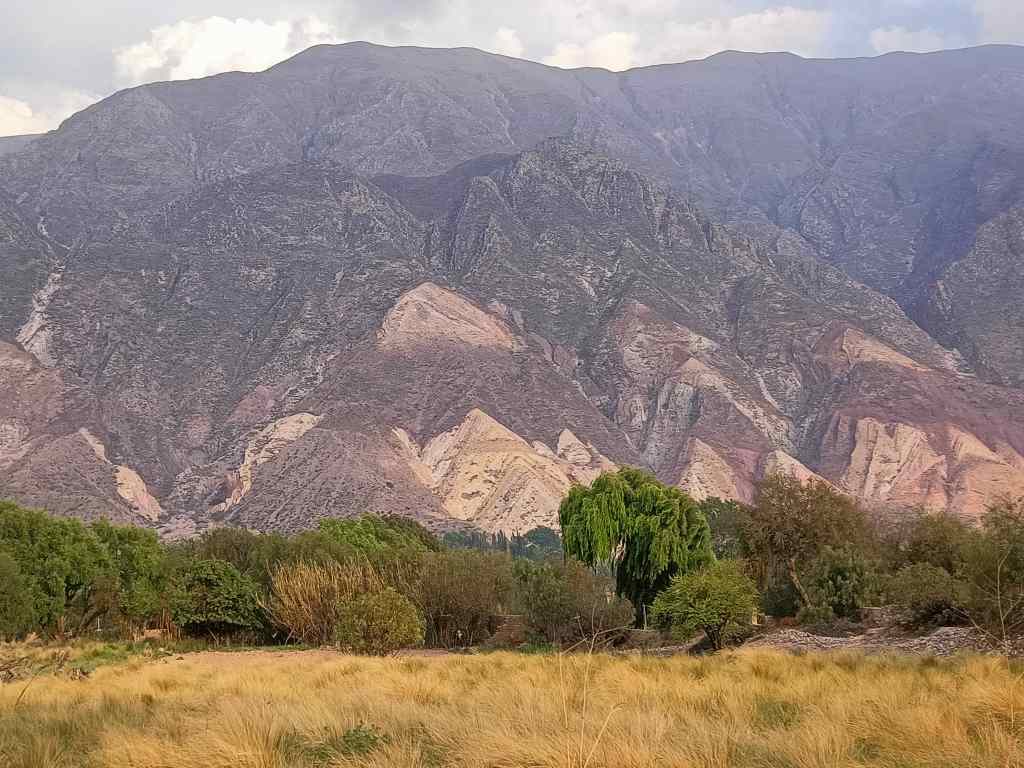
It was a long drive back to Purmamarca, but it was made memorable by yet more wonderful landscapes, now with the colours of the evening sun, which had now re-emerged.

On the road to Purmamarca

When I arrived the sun had already set. I opted for a quiet dinner this time – it had been a long but inspiring day with some of the most beautiful scenery I have ever seen.

Next Post: Salinas Grandes

Previous Post: Buenos Aires

A Bear in Buenos Aires

¡Hola! This time I am writing from Buenos Aires (BA), at the start of a month-long trip around Argentina that I invite you to follow on my blog. I have an ambitious schedule aiming to cover most of this huge country and part of Chile, with the aid of seven internal flights. I am little worried that if anything goes wrong – like a single cancelled flight – my whole plan will fall apart. I arrived on the overnight flight from London via Madrid, and to my relief my bags arrived with me, and I got through immigration and customs very quickly. One less thing to worry about. My plan for today is simple – chill out to recover from my flight and prepare for the next stages of my trip.

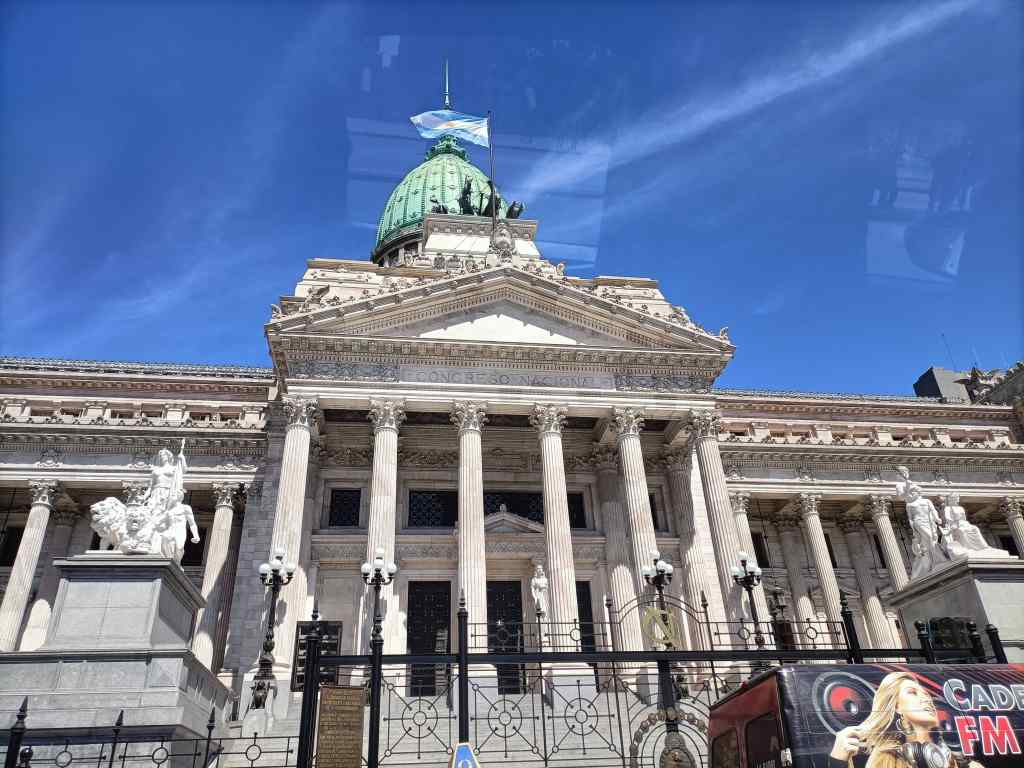
During the long taxi ride in from the airport was struck by the mix of architecture in the city. There are many skyscrapers, but also grand old buildings like the Congress…

The National Congress seen from my taxi

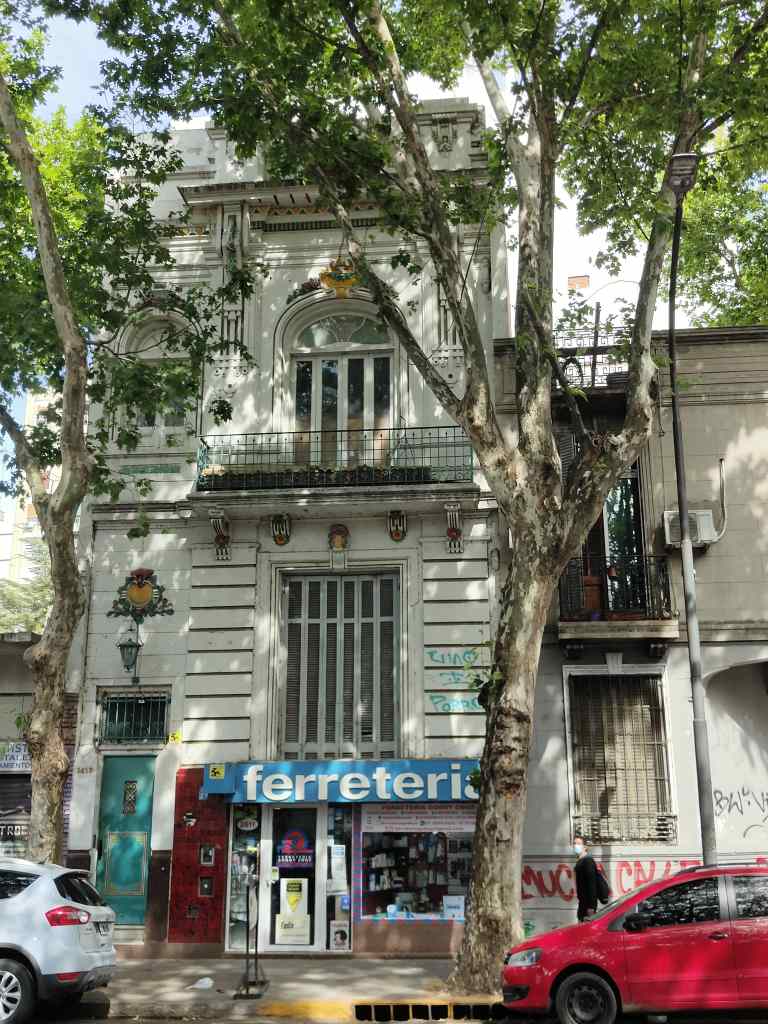
And crumbling but pretty older buildings like this…..

Buenos Aires street scene

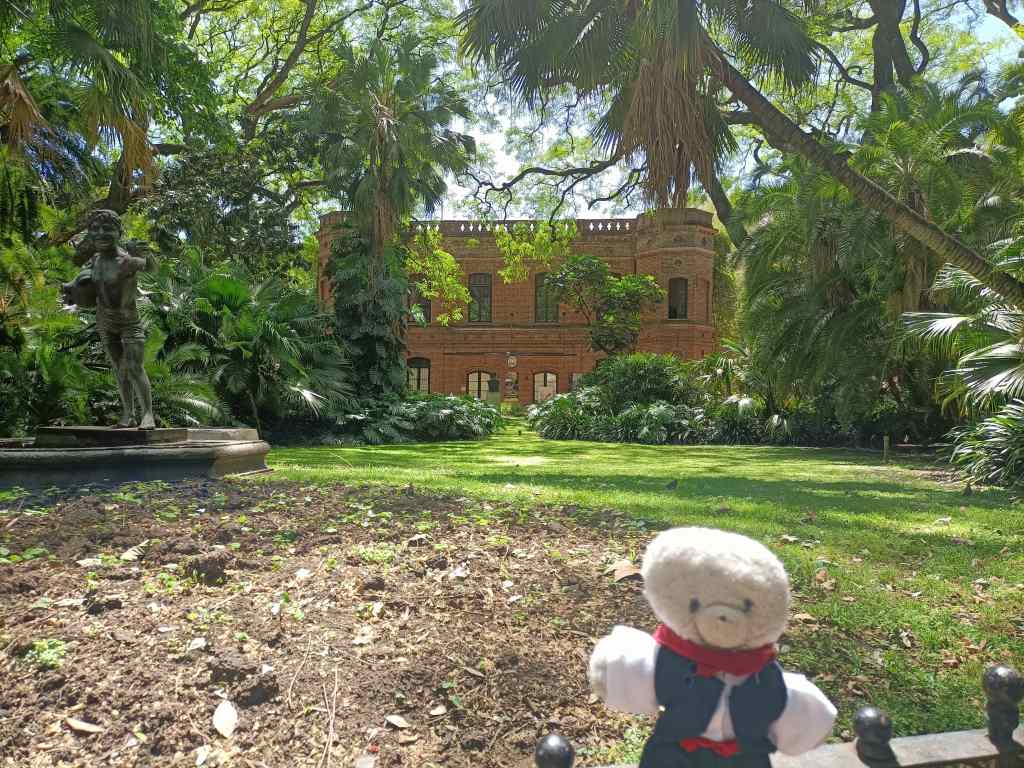
My hotel room was not ready yet, so I spent some time chilling in the Botanical Gardens. The part of Buenos Aires where I am staying is called Palermo and has lots of parks and gardens.

In the Buenos Aires Botanical Gardens

I got my Argentine Sim-Card, and then some local currency – Pesos.  There are two exchange rates in Argentina. The official rate is what you get if change money in a bank or bureau de change, or if you use your credit card. It is about 160 peso to the US$. The unofficial rate is 290 – almost twice as good. This great deal is available from shady and risky money changes in parts of Buenos Aires…….and with Western Union money transfers. WU is very popular here, and there are offices all over town. I found the one closest to my hotel, but they only had enough money for one of my two transfers…….- and in small denomination notes. Still it was enough for the next few days, and I enjoyed a reviving coffee with my newly purchase pesos.

A much needed coffee and one of several wads of pesos from Western Union

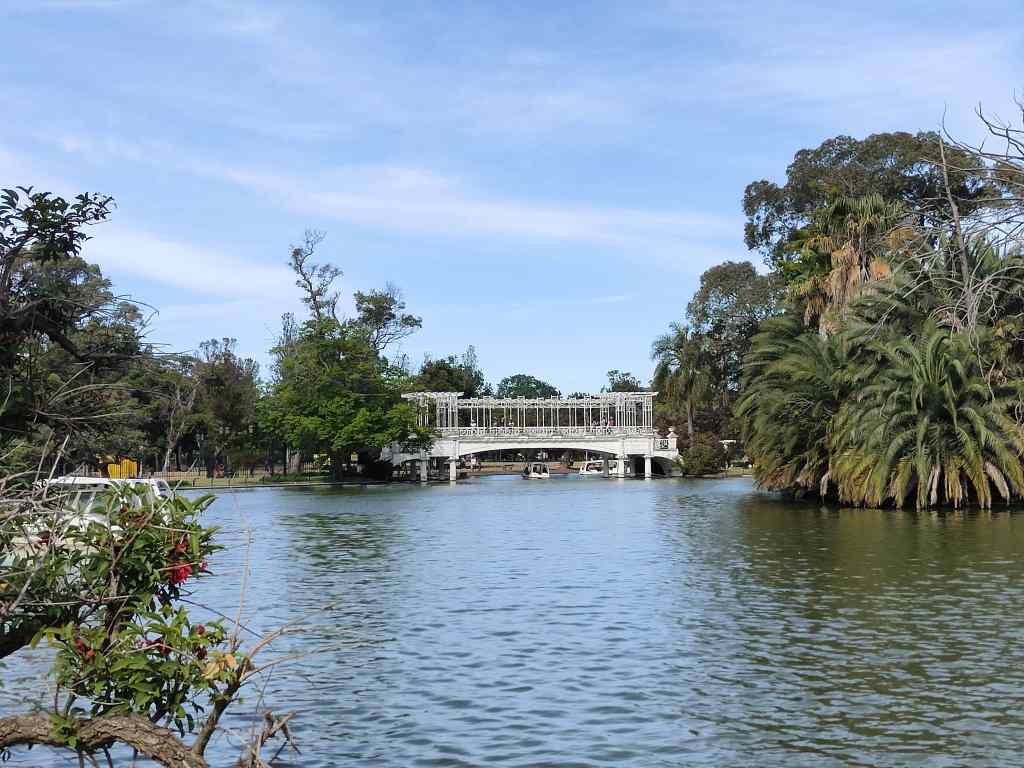
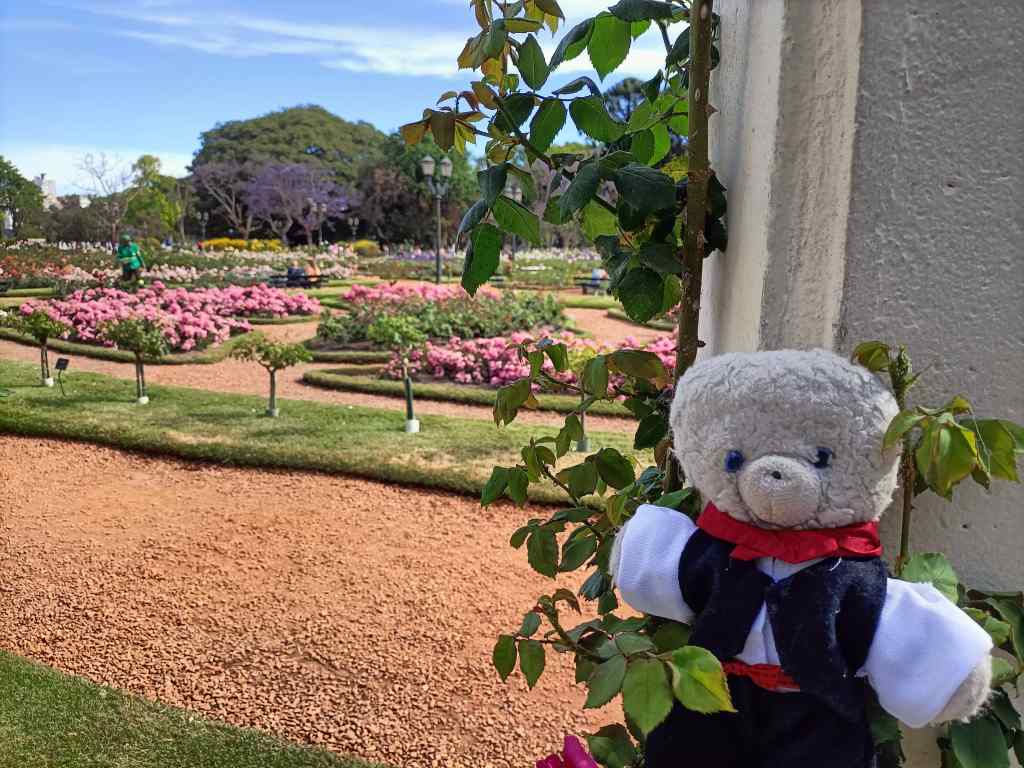
I checked back into my hotel at one, and after a short rest, set off to explore the city. First I found the 3rd of February park, a favourite haunt for Portenos (residents of Buenos Aires). It has rose gardens, lawns where people play football, and a lake where you can rent boats.

The lake in the 3rd of February Park, Buenos Aires
In the 3rd of February Park

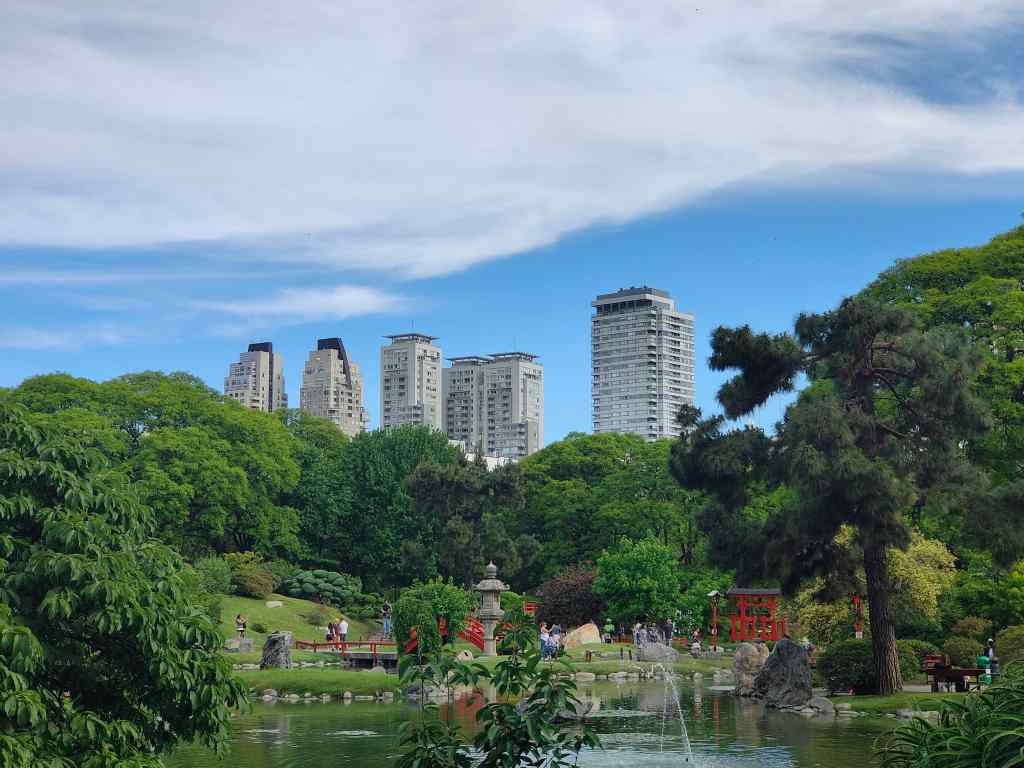
After the public park I visited the Japanese Garden. I was not sure quite what it was doing in the centre of BA, but it was a nice place to explore.

The Japanese Garden, Buenos Aires

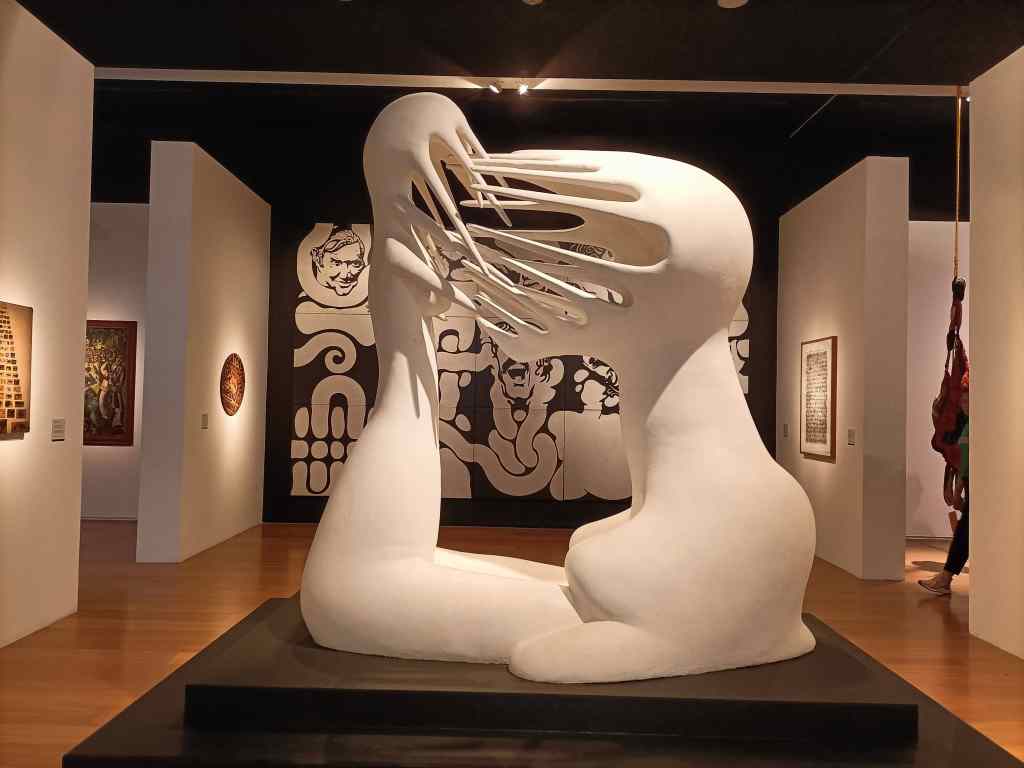
From there I headed to the Museum of Latin American Arts to see some really good displays of contemporary art.

Buenos Aires has a thriving arts scene

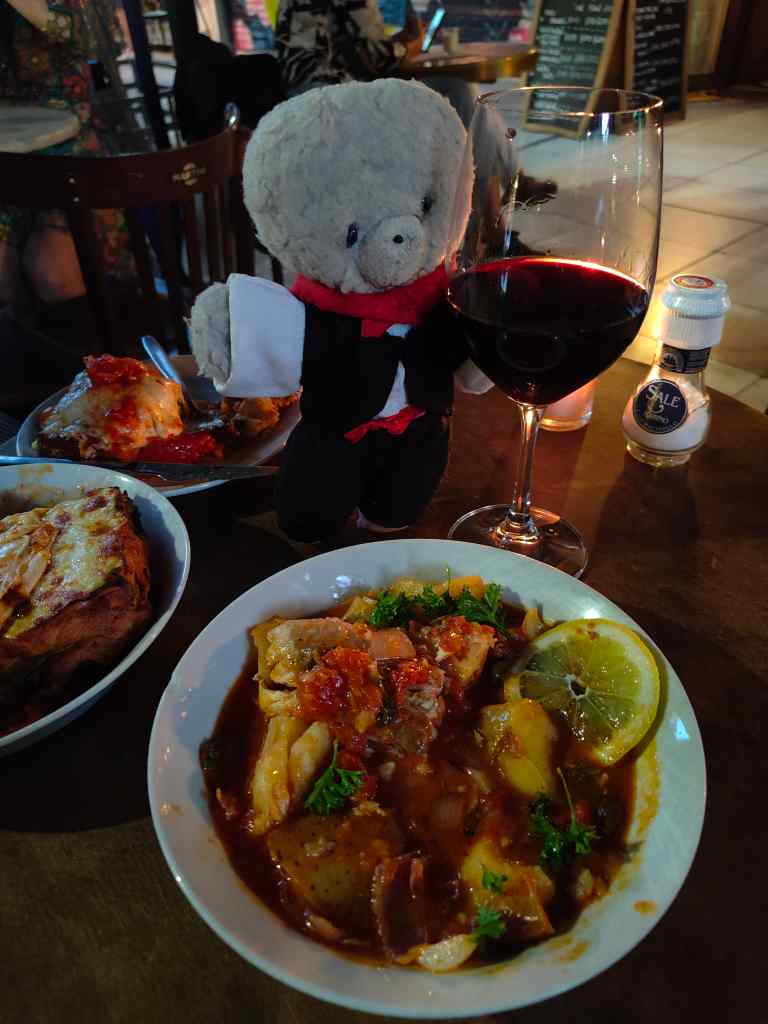
My last stop was an early dinner at a wine bar with a pavement terrace – of which there are lot, because both the weather and the wine are very good in Argentina.

Wine, Food, and Al Fresco restaurants – three things Argentina does very well

I enjoyed tasting some fantastic Argentine wine and food before heading back to the hotel for an early night.  The time difference between Buenos Aires and London is only 3 hours, but even so my body was telling me it was past midnight.

I was happy with my first day in Argentina. The sights I had seen had been pleasant rather than memorable, but I had really liked the atmosphere of Buenos Aires. The people are very friendly and seem relaxed and happy. They spend a lot of their time in the excellent open air cafes and restaurants – and so would I, with food and wine this good. My carefully-planned route takes me around the country without returning here before the very end, but I am looking forward to reporting back in more detail on this pleasant city.

Next Post: The Quebrada de Humahuaca

Sri Lanka Summary – go now before it gets busy again!

When I set off for Sri Lanka, lots of my friends were surprised at my “bravery” to continue my trip despite the constant headlines about fuel shortages and riots.  But my decision to go was based not on blind courage but instead on sound information from traveller websites like Tripadvisor. Everyone actually in Sri Lanka advised that travel was a bit more complicated, but still possible, and there was no reason to cancel.

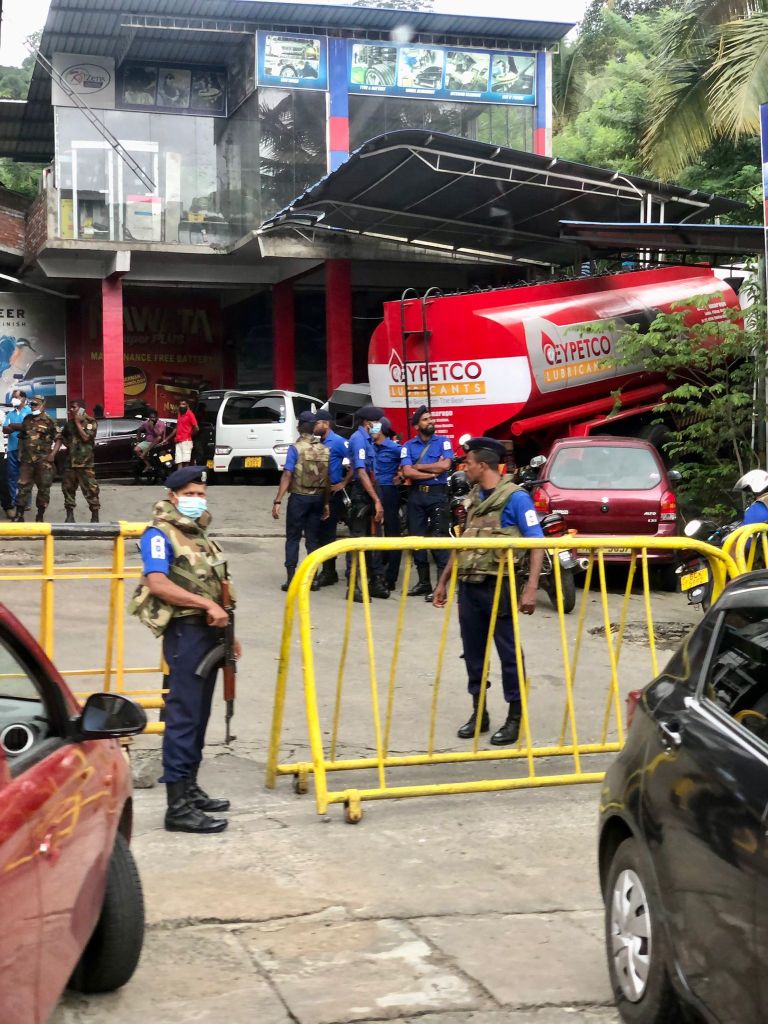
Hunting for fuel was the only downside to visiting at this time

My own experience was very positive. Finding fuel took up, on average, maybe 15 minutes each day, but apart from that, travelling was very easy. I had many more difficulties getting back home when my plane arrived back in Europe than I ever had travelling around Sri Lanka. I also felt safer and less hassled than in many other Asian countries. The people were wonderful, there were no tourist crowds, and the food excellent (and food hygiene was also good – not a single stomach problem in three weeks).

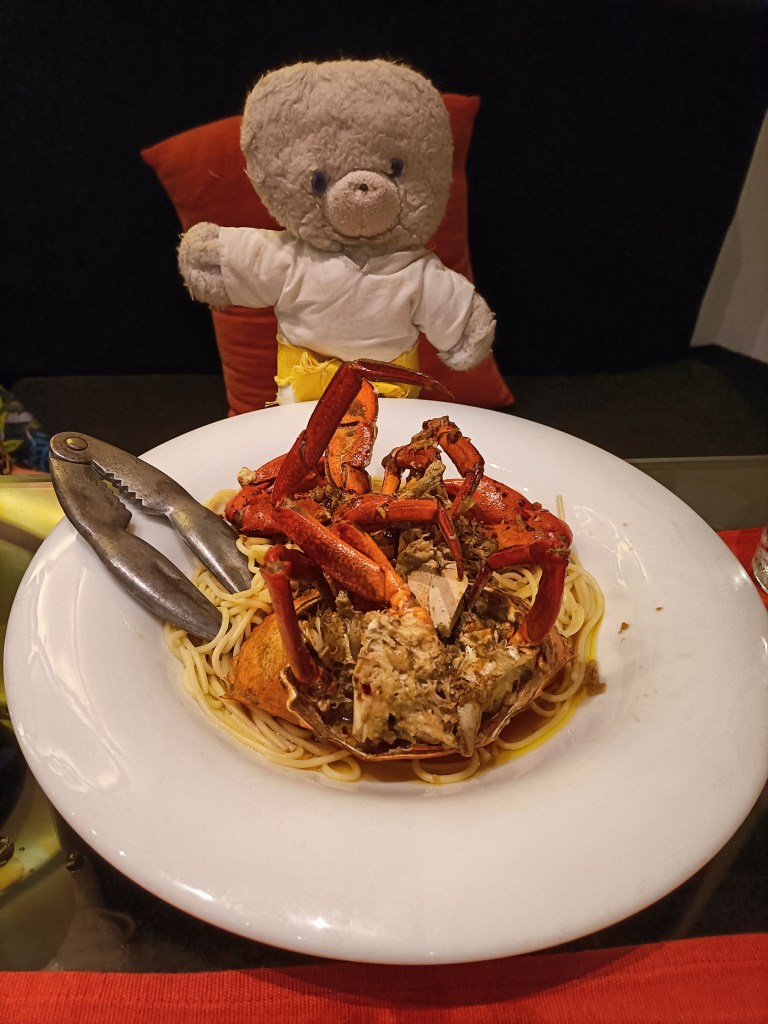
Excellent food all the way through the trip

Most of all though, I liked the variety of things to do and see. Sri Lanka may not have any must-do, “bucket list” sights like the Taj Mahal or Niagara Falls, but instead it crams ancient ruins, busy temples, beaches, mountains and nature reserves into a relatively small area. It never took more than a few hours to get from one interesting place to another – unlike the big distances you might have to cover in larger countries.  I had the added bonus of having many of these wonderful places almost entirely to myself.

Here are my most memorable experiences of the trip:

The unexpected Hindu/Buddhist procession at Kataragama

Safaris in Bundala and Kaudulla National Parks

Ruin hunting by bicycle in Anuradhapura and Polonnaruwa

Staying at the Hill Club

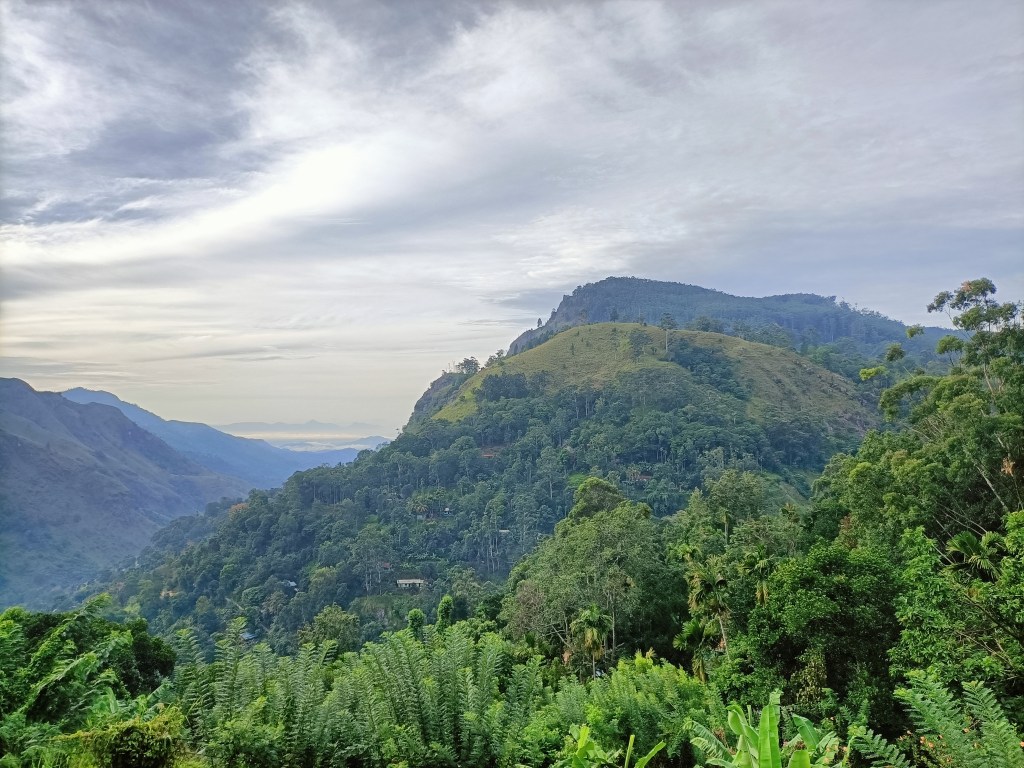
The view from my guest house in Ella and the “tea train” to Nuwara Eliya

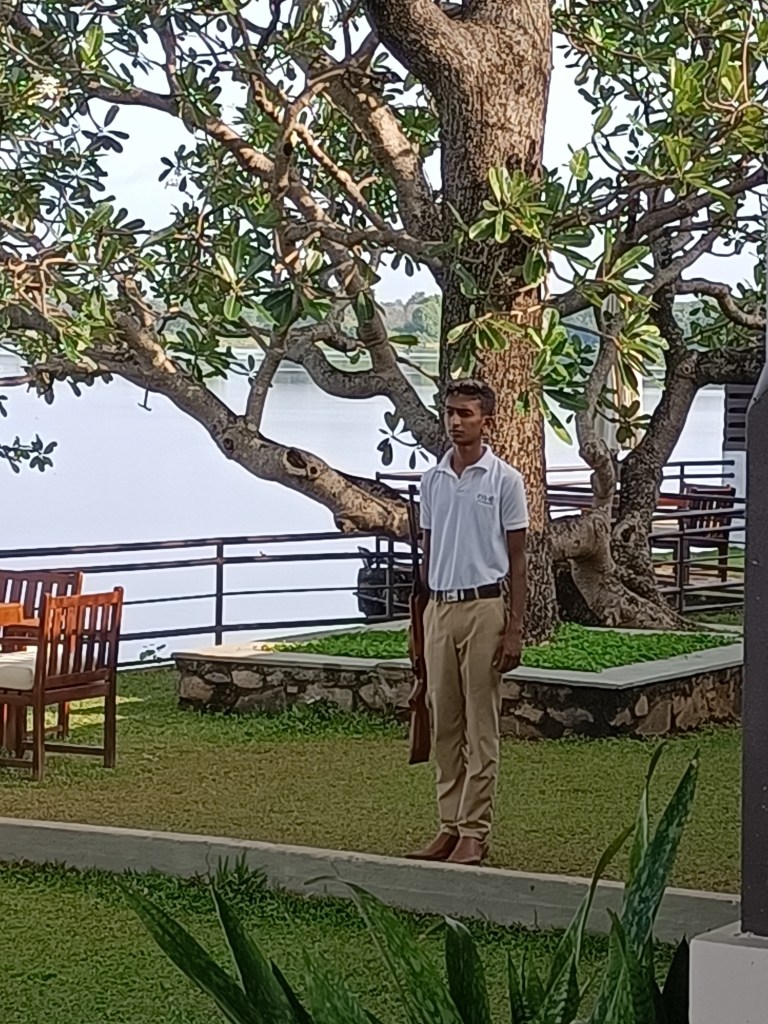
Breakfast with an armed guard to scare off monkeys at Polonnaruwa

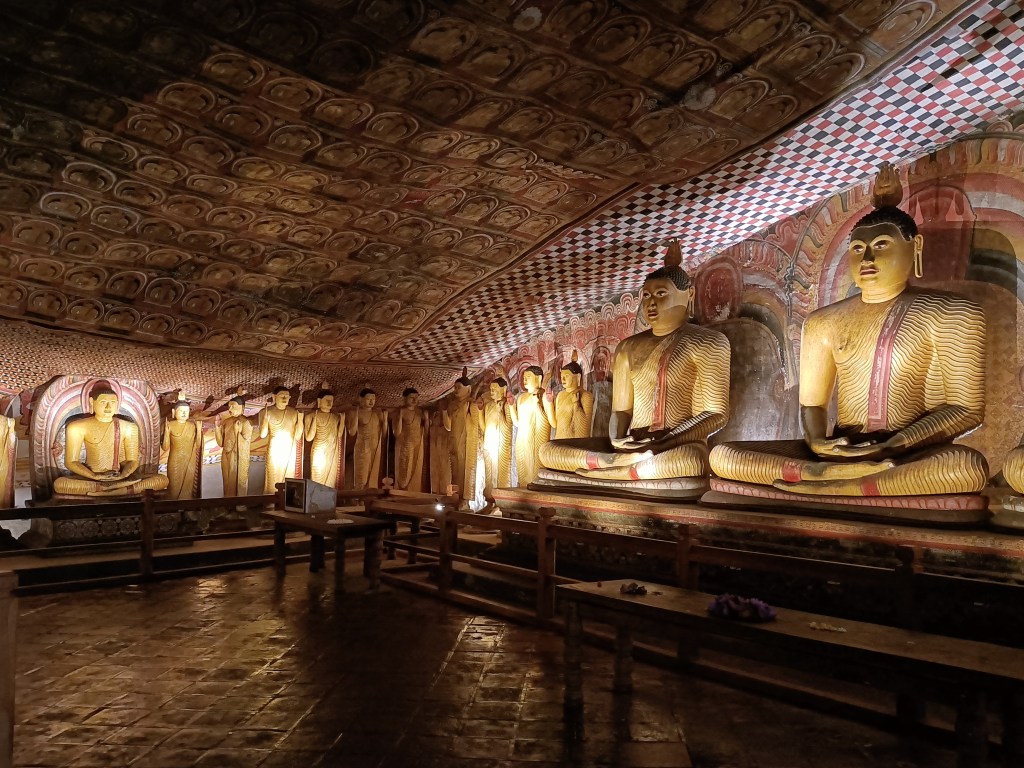
The Buddhas of the cave temples of Dambulla

Puja (service) at the Temple of the Sacred Tooth Relic, Kandy

And here is a “best of” list:

Best Hotels (there were a lot!): Heaven Upon Rice Fields, Anuradhapura; Ekho Lake House, Polonnaruwa; Paraiso Guest House, Ella; The Hill Club, Nuwara Eliya; Thaulle Resort, Tissa; Radh Hotel, Kandy; Le Jardin Du Fort, Galle

Best Food: Seafood in Nilaveli; Indian Hut, Galle; Take away Dosas, Kandy; Curry feast at the Radha Tourist home; Dinner at the Hill Club.

Best Beach: Nilaveli

Best City: Galle

Best National Park: Bundala

Overall, as of today (August 2022), my advice is go now. Plan carefully and you should have a brilliant time without crowds. Your travel budget will really help the hotels, restaurants and guides you spend it with. Yes, there is a risk that the political situation gets bad again, so check popular traveller websites regularly to see what is really happening on the ground – not the sensationalist western newspaper headlines. Currently, I evaluate this risk as very low, and it has to considered in the context of a country that is otherwise very safe for travel (low crime, good roads and high driving standards for Asia, excellent food hygiene, no malaria). The Sri Lankans are wonderful people and deserve your help, and their country is one of my favourites!

That’s all for this trip. Please sign up to follow my blog and get automatic email notifications the next time I hit the road. If you would like to ask a question, type it in the section for “thoughts” at the bottom of the page and I will get back to you.

I leave the very last word to one of my fellow animal friends….

Going back in time – Galle

From Tissa, I headed to Galle, a historic city on Sri Lanka’s southern coast. It was founded by the Portuguese in 1505, when one of their fleets was blown off course and took shelter in the harbour there. The Portuguese built a small fort but were soon replaced by the Dutch who rebuilt the fort in the 17th century; it still stands today.  Galle was Sri Lanka’s main seaport and trading centre for 200 years, before losing its crown to Colombo in the 19th century. Today, it is Sri Lanka’s second largest city with a population of 133,000 and sprawls out over a few kilometres in all directions from the original fort.

As we reached the centre of town, I saw a small booth with anti-government slogans. During three weeks of travelling, it was the very first sign I had seen of the protests that had toppled the previous president, had made headlines in the western press and scared many tourists away from Sri Lanka.

The only sign of anti-government protests I saw in three weeks’ travelling

At the central railway station, the road turned off to the sea through gates of the old Portuguese fort, and we reached a peninsula surrounding by defensive ramparts. It felt like going back in time by a few centuries – low rise buildings, narrow lanes and little traffic. Many of the houses were originals from the Dutch period, or were the homes of the Muslim spice traders that also settled in Galle.

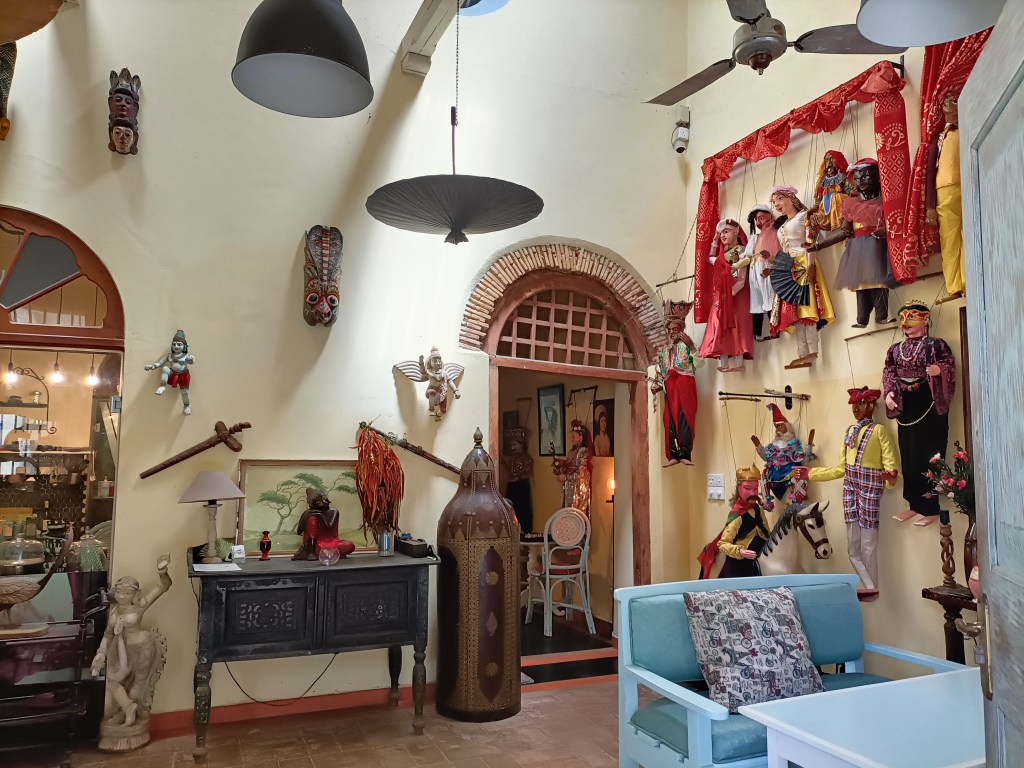
My hotel was in a typical old building, with a veranda facing the street, and a large shady interior with a courtyard. The owner had upgraded my room (as had usually happened in Sri Lanka) to a large suite on the upper floor. 

My hotel owner had a collection of puppets

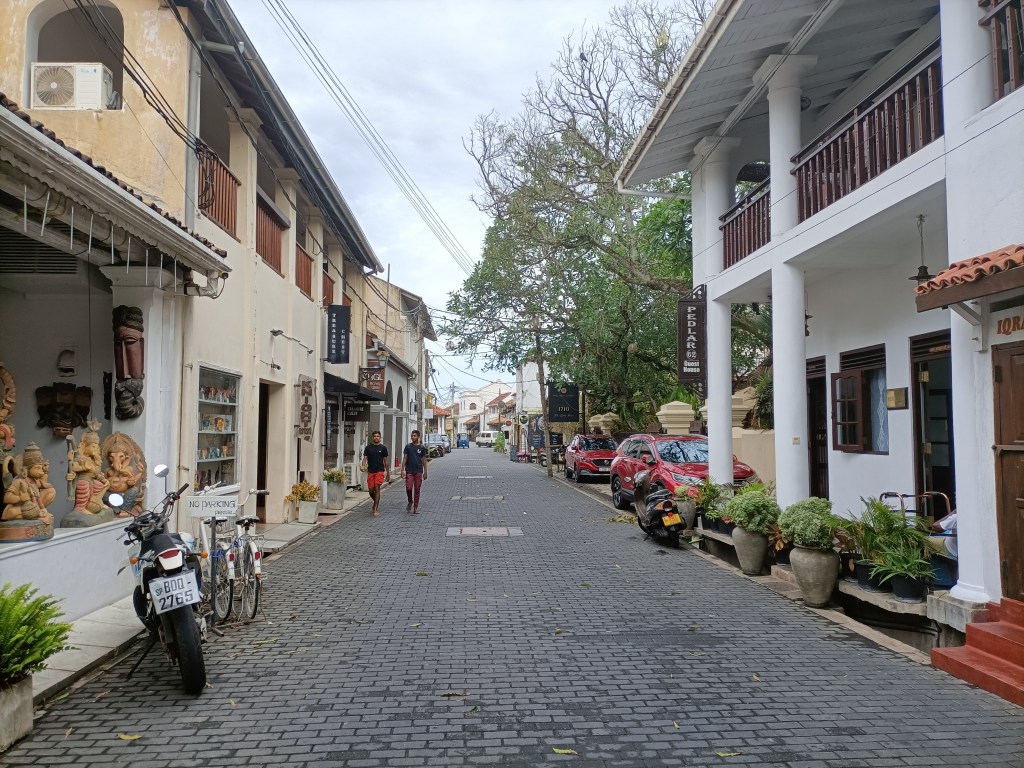
After settling in, I set off to explore the town.  The fort area was a typical popular traveller destination, with many small shops, bars, tea rooms and restaurants – but very few visitors.

The closest thing Galle has to a main road

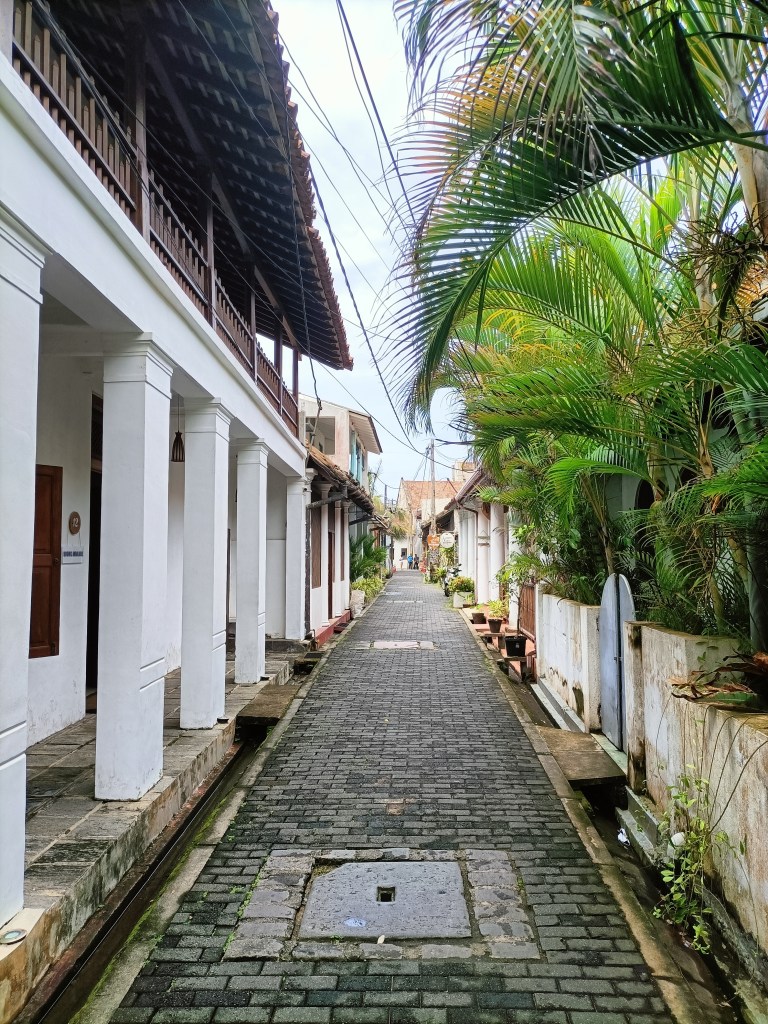
Several tuk-tuk drivers proposed their services to me with what seemed like a hint of desperation in their voices; a third year with few tourists has hit many people very hard here. Away from the larger lanes there were even smaller, quieter residential side streets where people lived and went about their daily business.

Quiet side street

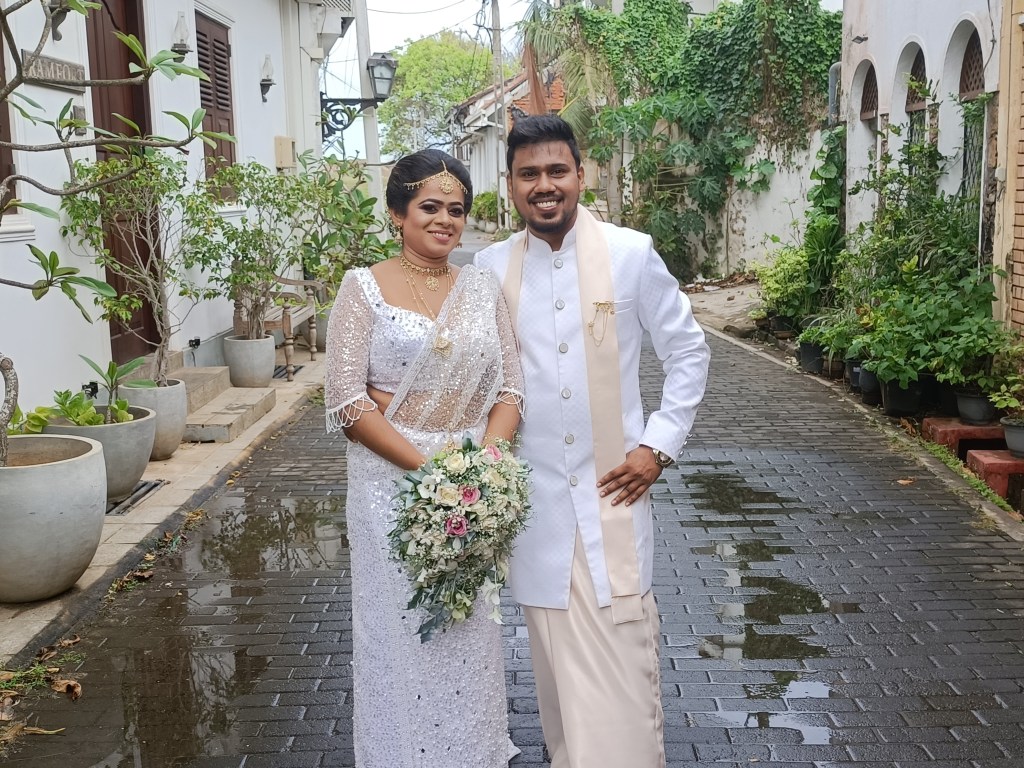
These quieter areas were a popular place for couples to have wedding photos taken.

A handsome couple having their wedding photos taken

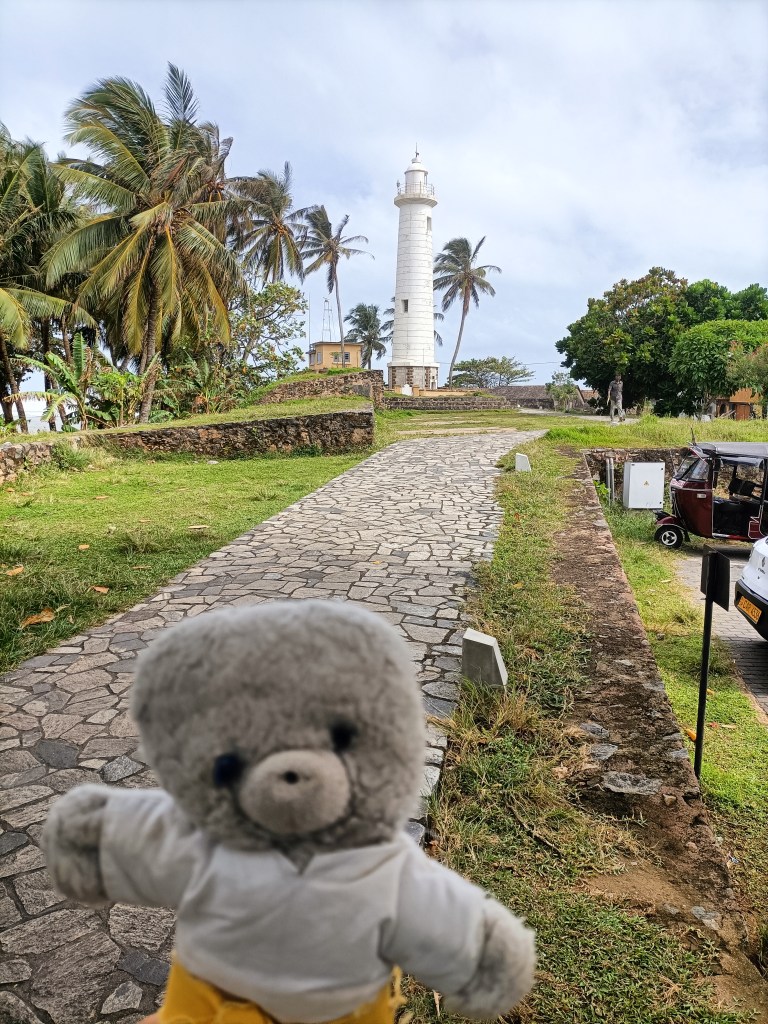
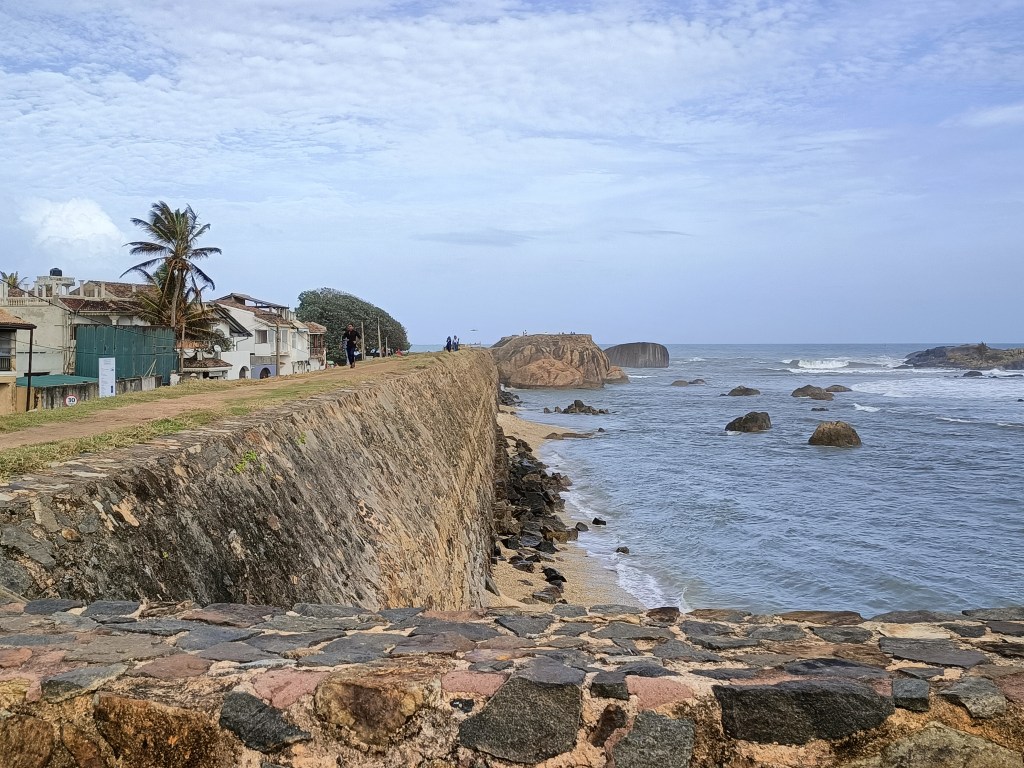
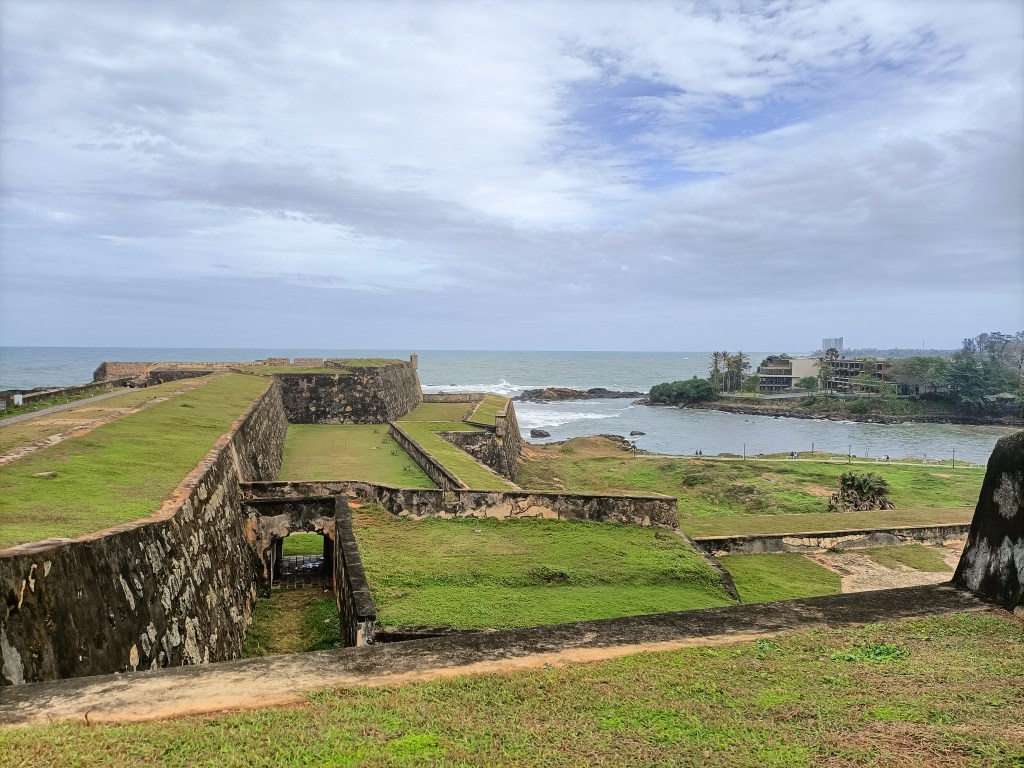
After enjoying the centre of the fort area, I made the classic circuit of the fort’s ramparts, which is popular not only with tourists but also locals, especially courting couples. There were fine views of the fortifications, Galle lighthouse and the sea.

Around the ramparts…the lighthouse
More rampart photos

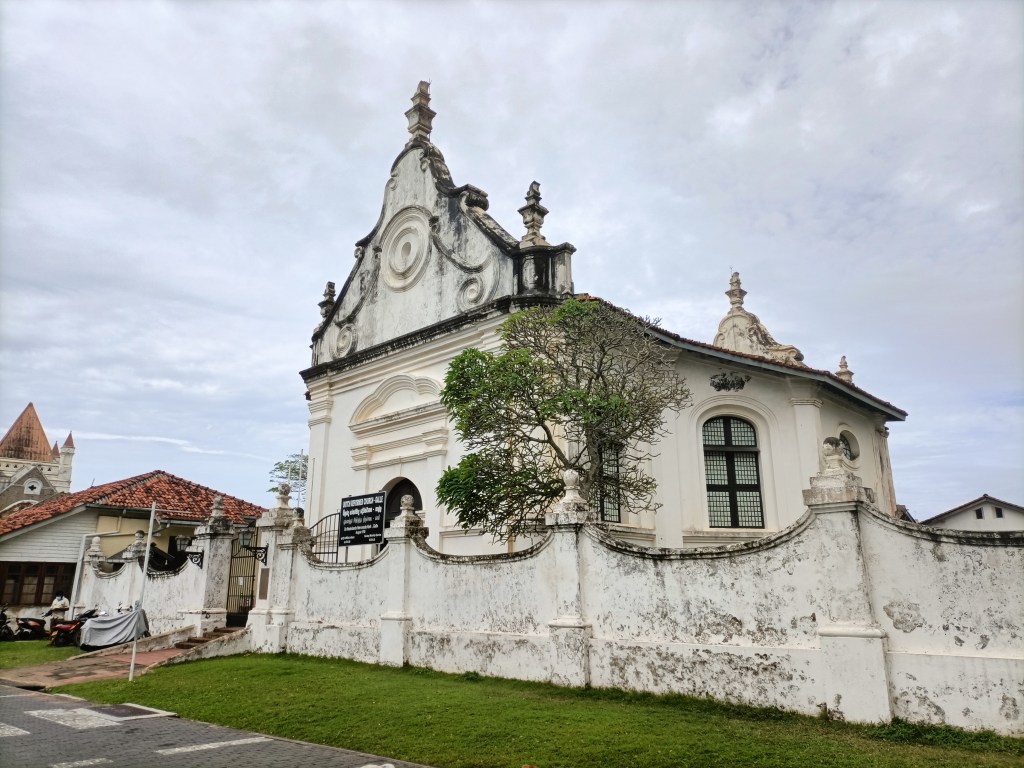
There were also many green spaces, which were invariably occupied by people playing cricket – the national sport and passion. Finally, I reached the Dutch church, dating from 1752.

The Dutch church

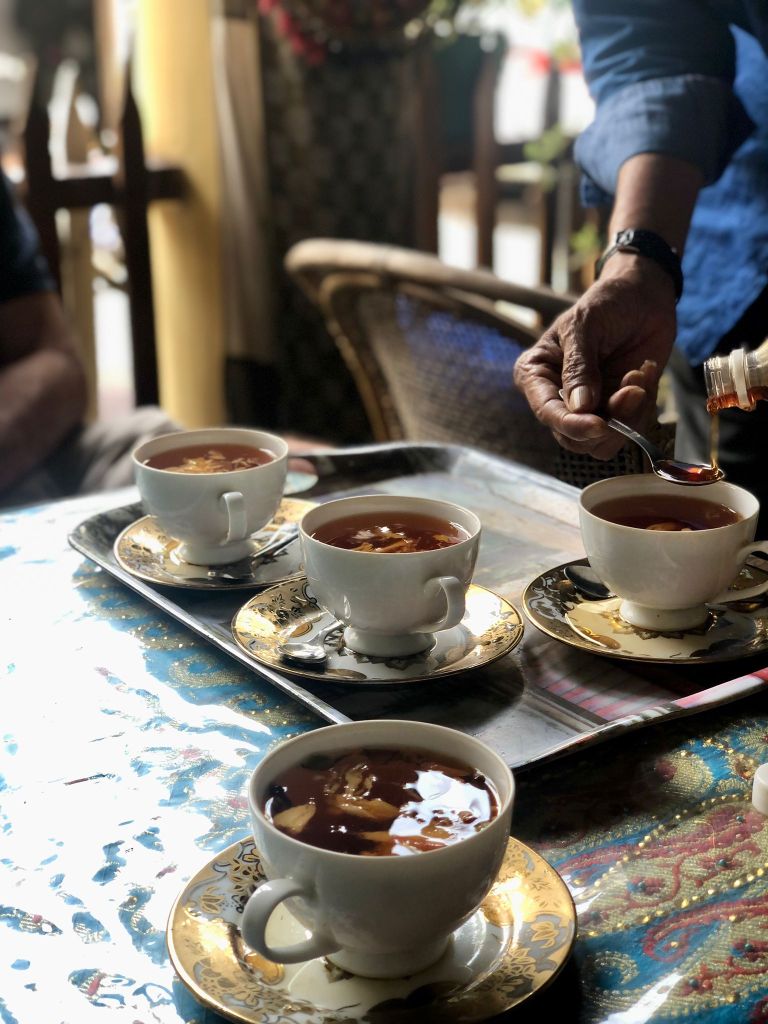
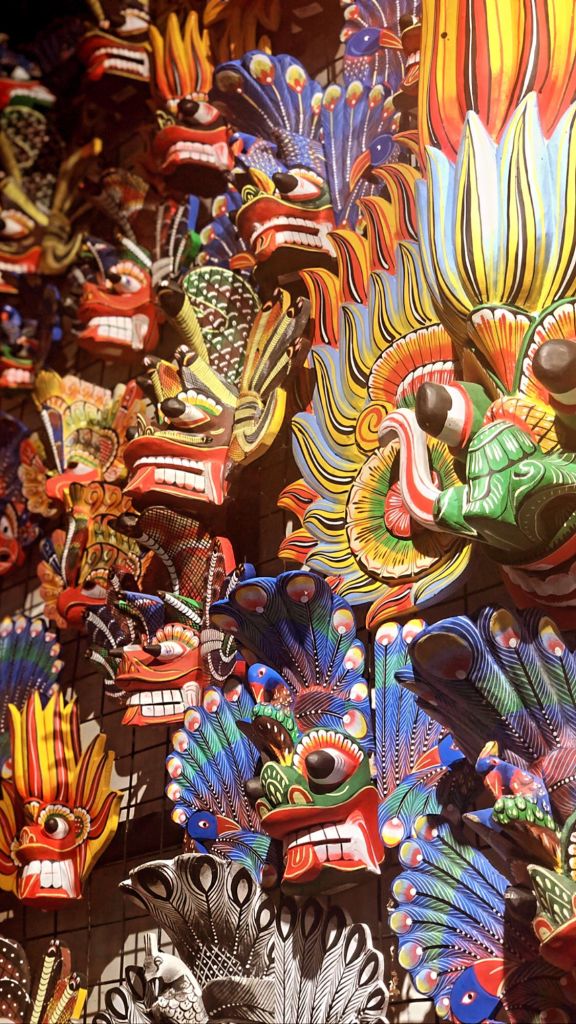
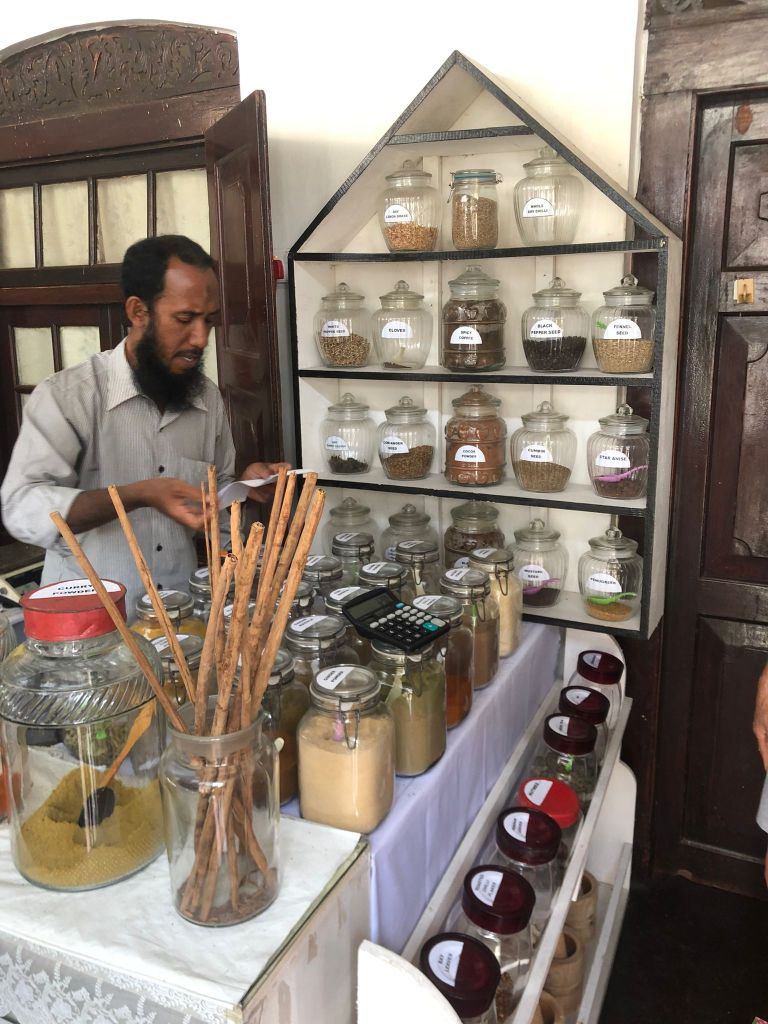
There are no spectacular sights in Galle that would make anyone’s “bucket list”, but its mix of interesting old buildings and relaxed feel makes for a very nice destination to spend a couple of days. It is a place to sit back and enjoy life, whether that means drinking spiced tea, shopping, or snacking in one of the many restaurants – which is exactly what I did on my first day.

Preparing spiced tea
Shopping for masks….
…and spices
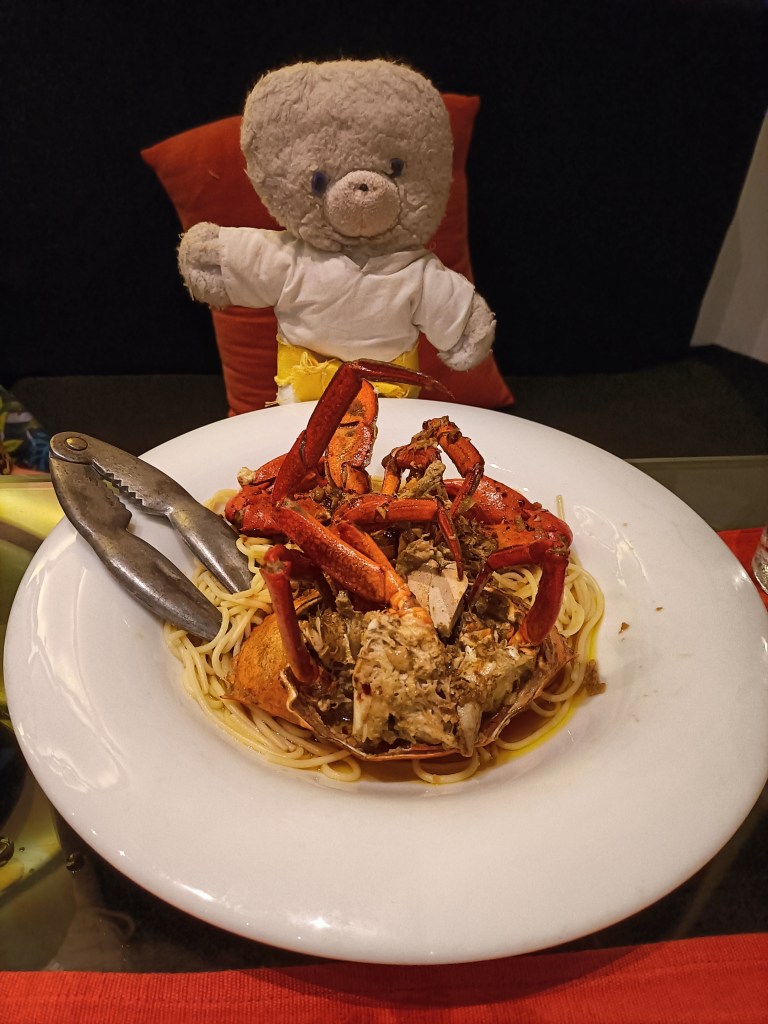
Some of Galle’s excellent seafood

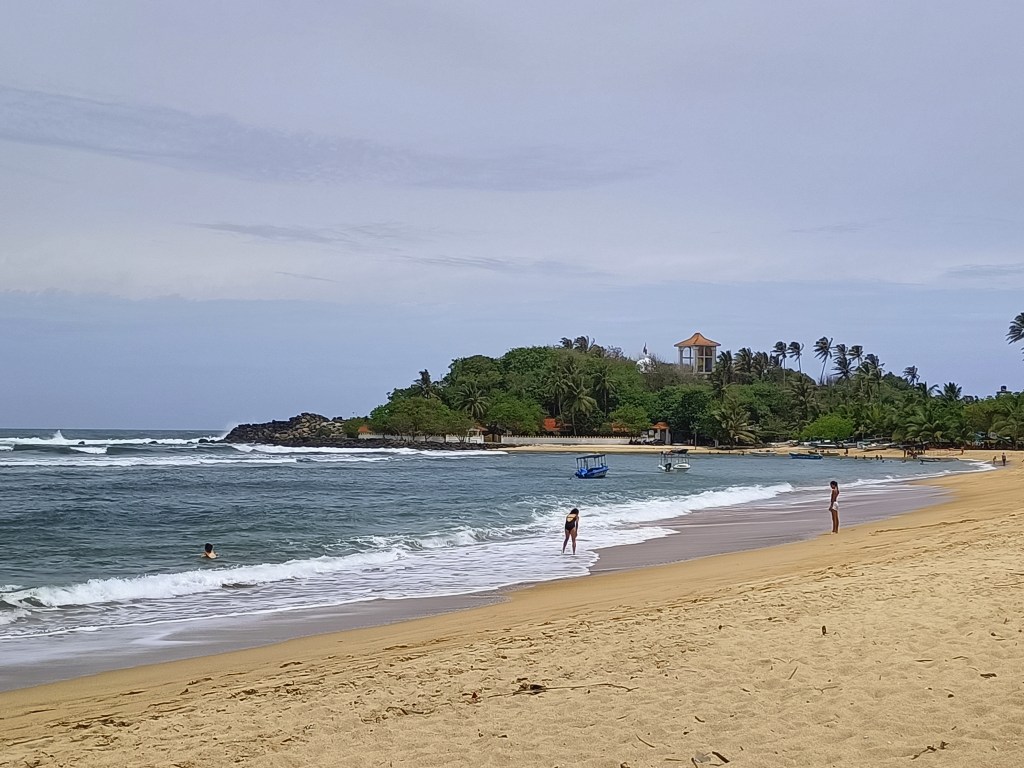
I stayed two nights, and on the second day made the short trip to Unawatuna beach. Sri Lanka has countless beaches like this dotted around its coasts, some deserted like my earlier destination of Nilaveli, some a bit more developed like this one. Behind the beach itself, but well hidden from it, was a street packed with tourist hotels, restaurants and spas offering massages.

Unawatuna beach

I returned to Galle in the mid-afternoon to avoid spend the hottest part of the day in my air conditioned bedroom, before heading out again in the evening for another stroll and dinner – this time in a restaurant called “Indian Hut”.  The meal was excellent – Indian rather than Sri Lankan cuisine for a change – and a nice way to spend my penultimate night in Sri Lanka.   

My stay in Galle felt like the end of my holiday even though I had one more night to spend in Colombo. Many travellers skip Sri Lanka’s capital city but I wanted to stay somewhere closer to the airport to be on time for my morning flight back to Europe. To be honest, Colombo did not make a great impression on me but perhaps you need to give it more than the half day that I had available.  In contrast I found the rest of Sri Lanka to be a wonderful travel destination, easier to travel around and safer than many other places in Asia (or Europe for that matter). My final post in this series will be a summary of my thoughts about the trip.

Bundala, the National Park at the End of the World

Today I had booked another safari – but this time leaving in the afternoon. Two very early starts in the last few days were as much as I could take, no matter how many animals I might miss. My destination was Bundala National Park, which is also very near Tissa, but which receives a fraction of the visitors that crowded Yala does.

I spent the morning relaxing by the pool and admiring the lake, where a man was fishing, and some women were washing clothes. They seemed unconcerned by the sight of small crocodile sunning itself on a nearby rock – I would have been worried that it might have larger and hungrier parents.

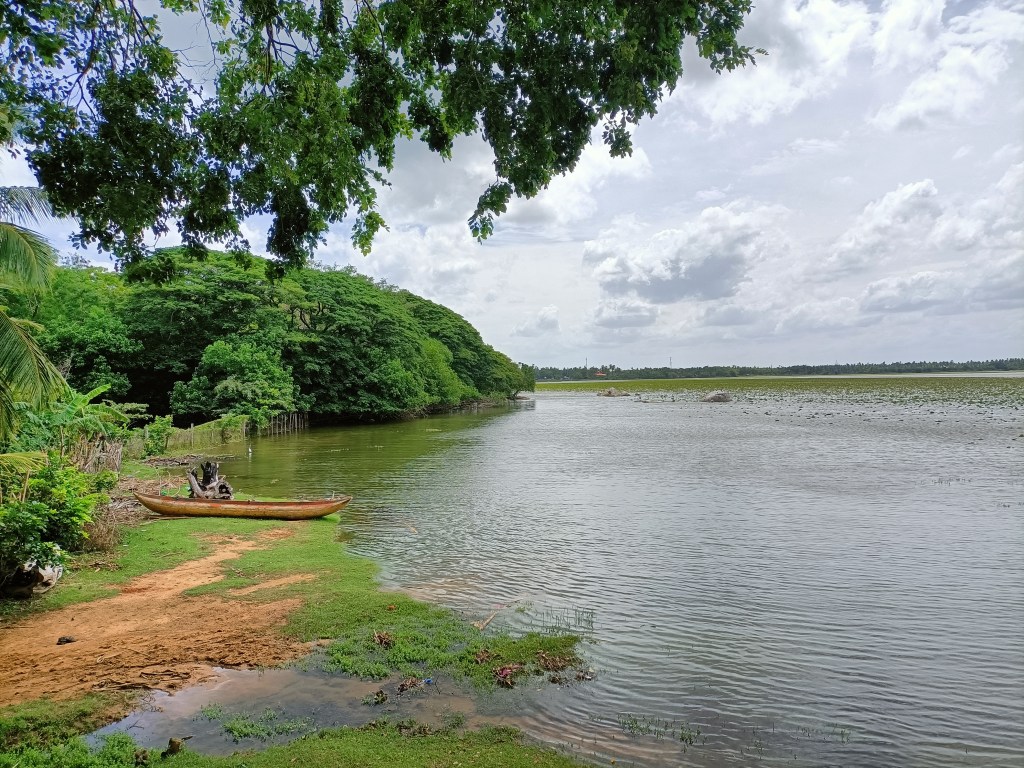
View from my hotel over the lake

My safari jeep arrived, and we set off at two o’clock. Unlike the modern road to Yala, the road to Bundala was in poor repair. I sensed that very few people went this way. The park entrance also looked uncared for and dilapidated.  A few dogs came up to inspect us, but there were no humans around to ask us to pay the entrance fee, and my guide had to open the gates himself.  We were clearly the only visitors.

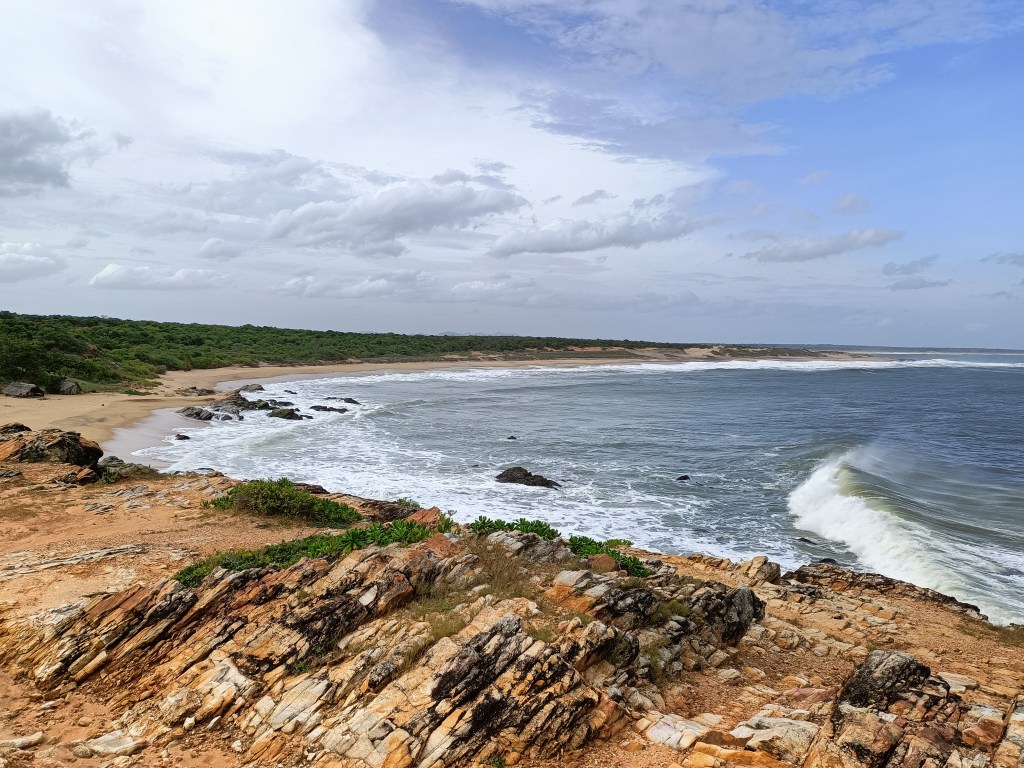
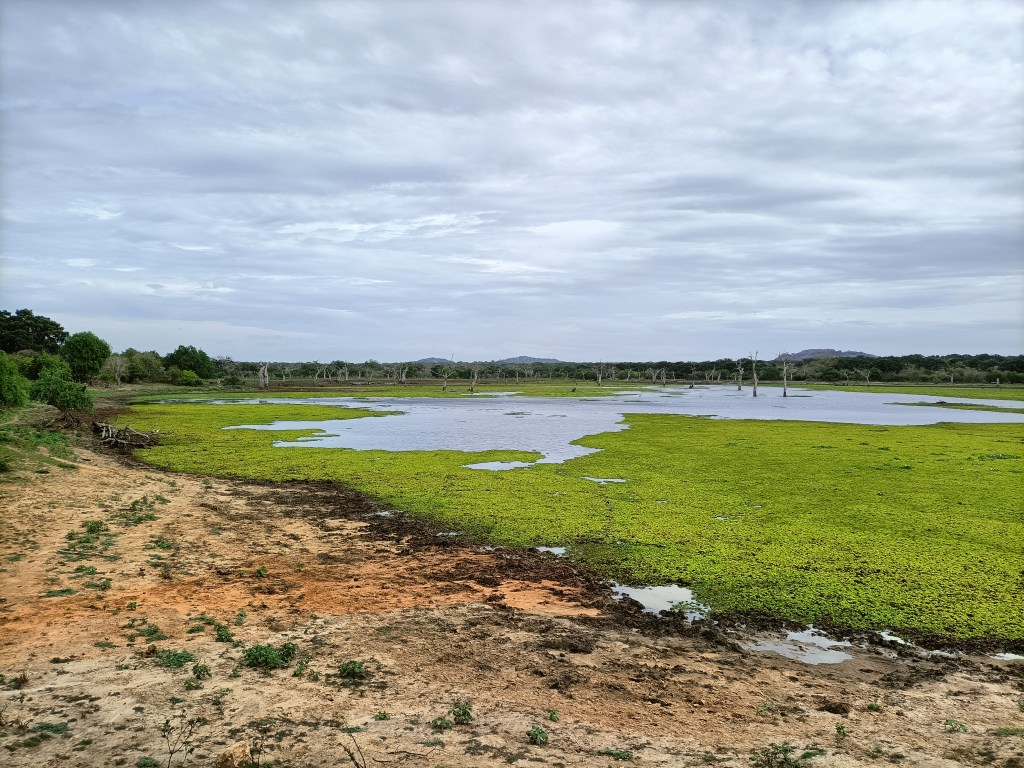
Typical Bundala scenery

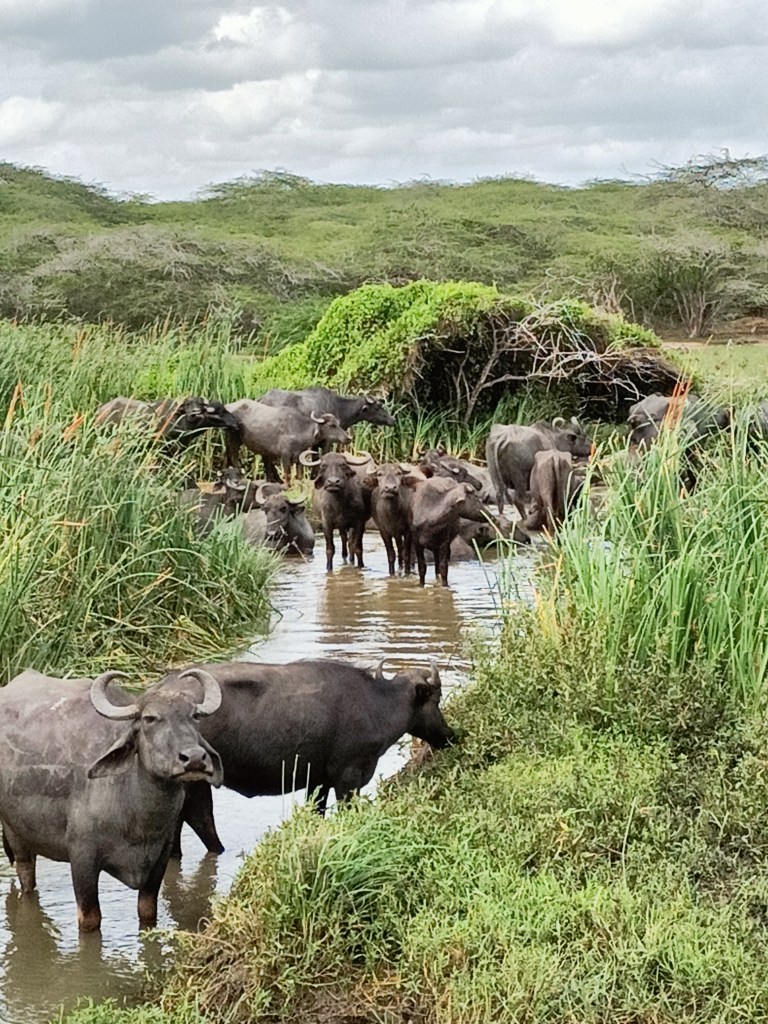
Bundala is a wetland park formed out of many lakes lying just in from the coast, and a sign at the entrance announced that was ranked 287th in UNESCO’s list of wetland areas deserving protection. I had never heard of this list, and thought it was maybe better not to publicise appearing in 287th place. The first animals I saw were water buffalo. Unlike Yala, where multiple jeeps would descend on a solitary leopard, here the buffalo queued up to check out the unusual sight of a visitor.

In this park the animals queued to watch tourists

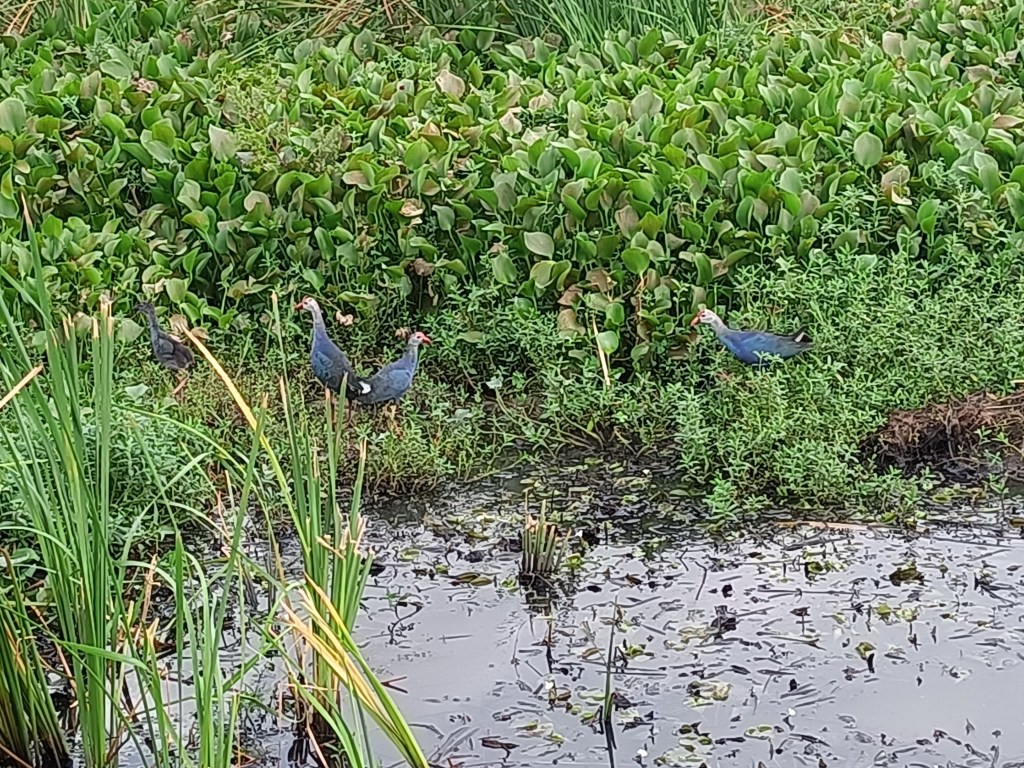
Bundala is most famous for its birdlife and sure enough there were birds everywhere – large groups of peacocks, brightly coloured kingfishers, bee-eaters, egrets, herons, and eagles hunting for fish.  There were also some species I had never seen before, like the purple swamp hen and the spoonbill. They all seemed more nervous of our jeep than the birds in Yala, and the peacocks would run away from us at great speed.

The purple swamp hen
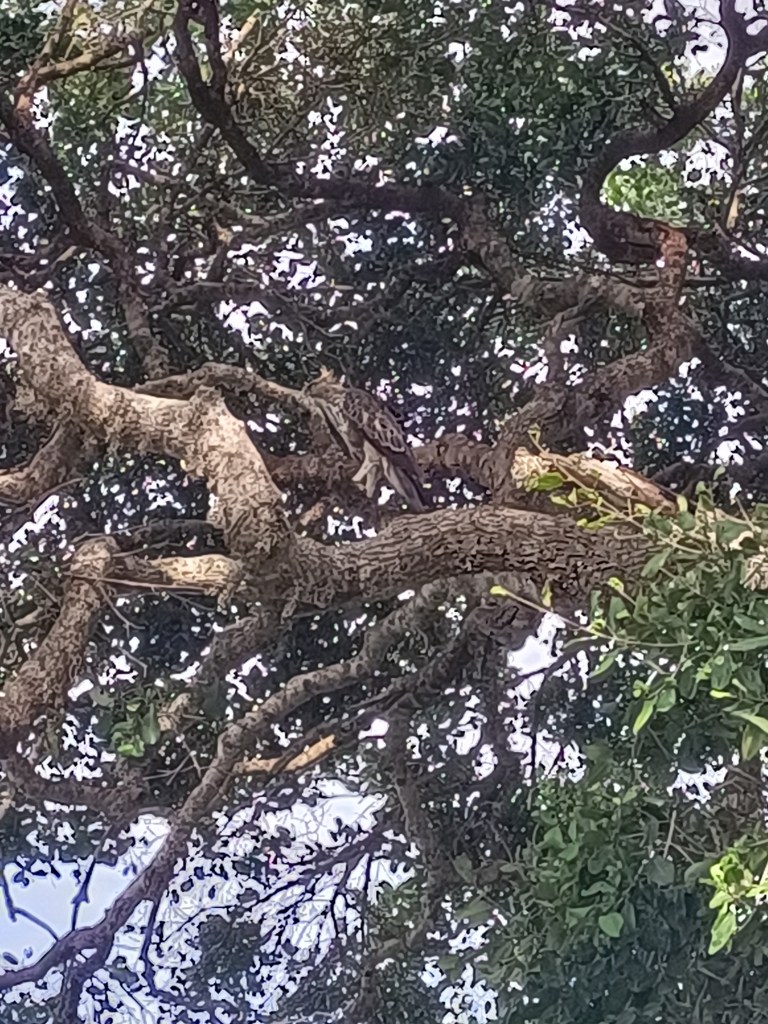
Test – spot the eagle

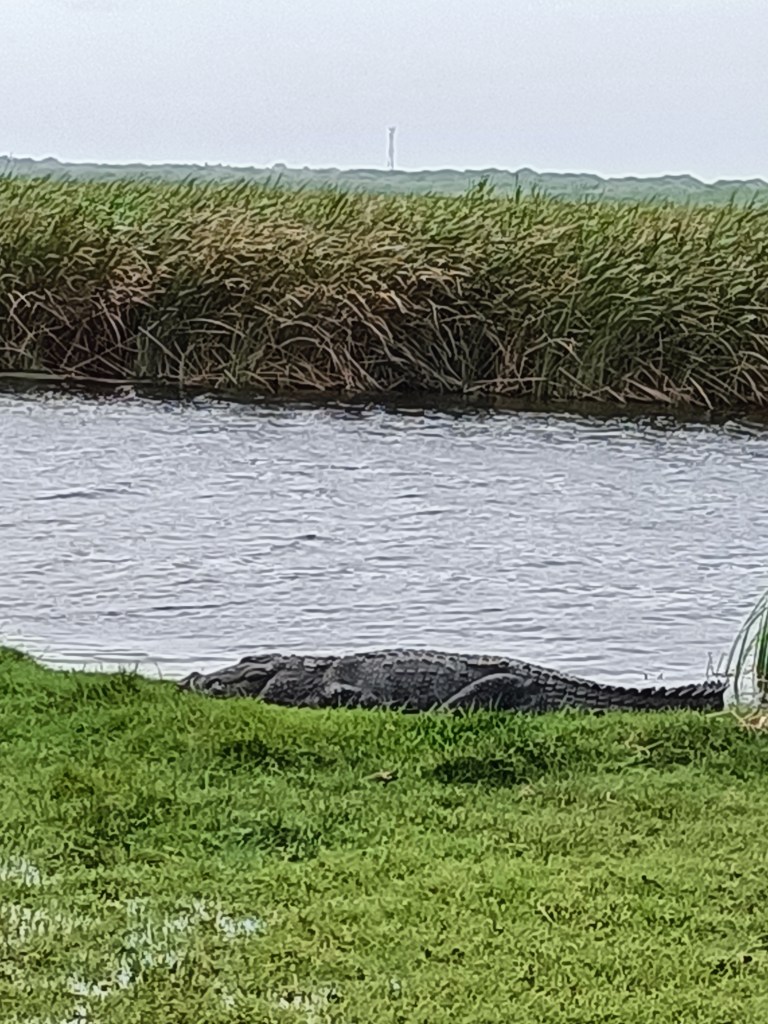
Bundala’s other speciality was crocodiles. I saw so many that after a while, I only paid attention to the very biggest ones. The reptiles often lay on the road directly in front of us and would only get out of the way when they were sure we were heading in their direction. Then they would scramble into the water and disappear, leaving only a train of bubbles.

Camouflaged Crocodiles – how many can you see?
Too big to bother to hide

Although I made fewer sightings of larger mammals at Bundala than I had at Yala, the experience of driving around a deserted nature reserve was much more rewarding.

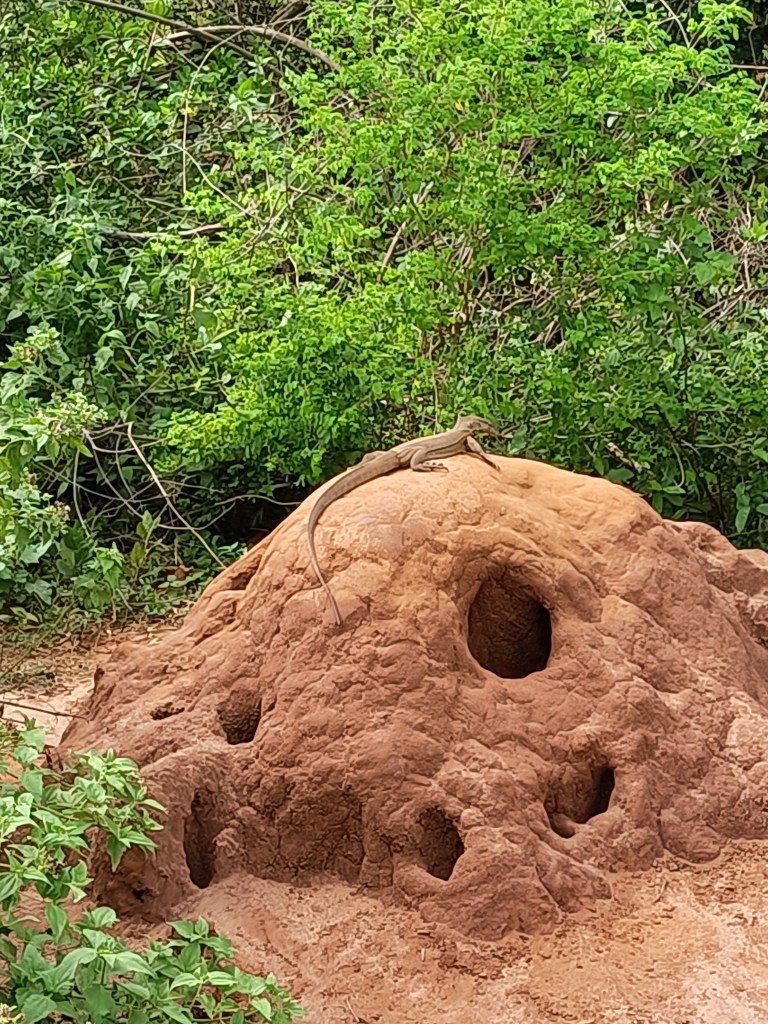
Giant lizard on a termite nest

The sense of being all alone increased when we reached a cliff overlooking the sea. Large waves rolled in and broke over the boulders below me. Ahead of me, the sea stretched to the horizon – looking south, the next land would be Antarctica, thousands of miles away. It felt like the end of the world – and in some ways, it was.

The end of the Indian sub-continent

The afternoon was drawing on, and as the sun approached the horizon its light reflected off the myriad of small lakes that make up the park. A strong breeze from the sea kept me pleasantly cool. The park was quiet, except for the murmur of our jeep’s engine and the rustle of leaves in the wind.  

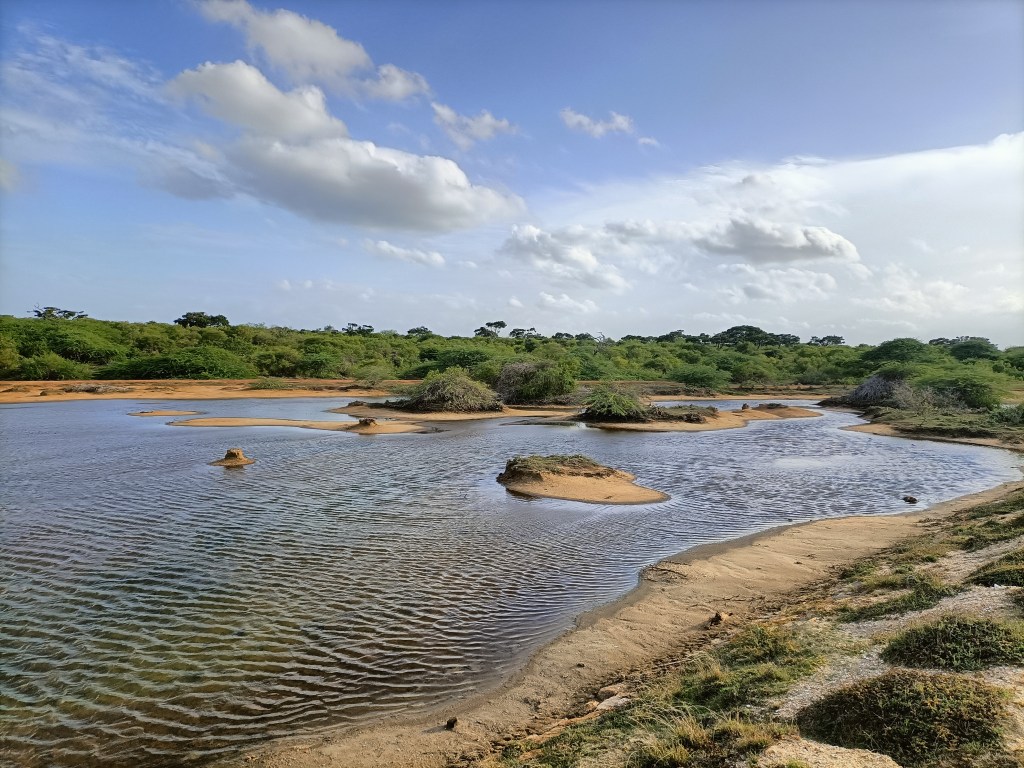
More typical Bundala scenery

I was rather sorry when the park gates appeared in front of us again, meaning the safari was over. This time, a park ranger was on duty. My guide gestured to ask whether we should sign our vehicle in and out again, but the ranger silently replied with a shake of the head to say that could go without any formalities. Words seemed unnecessary. I said a fond goodbye to Bundala, one of Sri Lanka’s least visited, but in my view best, national parks.

Leopards and Dancers

This morning I duly struggled to get up at 4.30am to leave at five for my safari in Yala national park. Yala is famous as being the best place to see wild leopards in Sri Lanka, and so is the most visited park on the island.  Sure enough, my safari jeep and its specialist guide/driver were waiting for me at the hotel entrance, as was my packed breakfast. The early start ensured we were the second vehicle in the queue to enter when the park opened at six, which was also when the sun rose.

My driver went along well-established trails of red soil that led through the jungle.  As it became light, I could admire the scenery, with its mix of red (the soil) green (the jungle), brown (large rocks on the horizon) and blue (lakes) colours.  

Yala scenery

The guide said that sightings of leopards, elephants and bears were rare, but that there would be lots of other animals and birds to see. Sure enough, we saw bee-eaters (small brightly coloured birds), eagles, deer, crocodiles, and a jackal. Sadly, my mobile phone camera proved woefully inadequate for taking pictures needing a zoom, so most of my photos are not worthy of my blog.

After an hour, my guide got excited. The guides keep in touch with each other by phone, and one of them had spotted a leopard.  We rushed around the park to be the second jeep to arrive on the scene, and sure enough, lazing in the sun on a distant rock, was a leopard.  The view was partly hidden by trees, so it took me a while to spot it, with my guide’s help. I just had time to take a (rather poor and fuzzy picture) when more jeeps arrived.

Leopard?

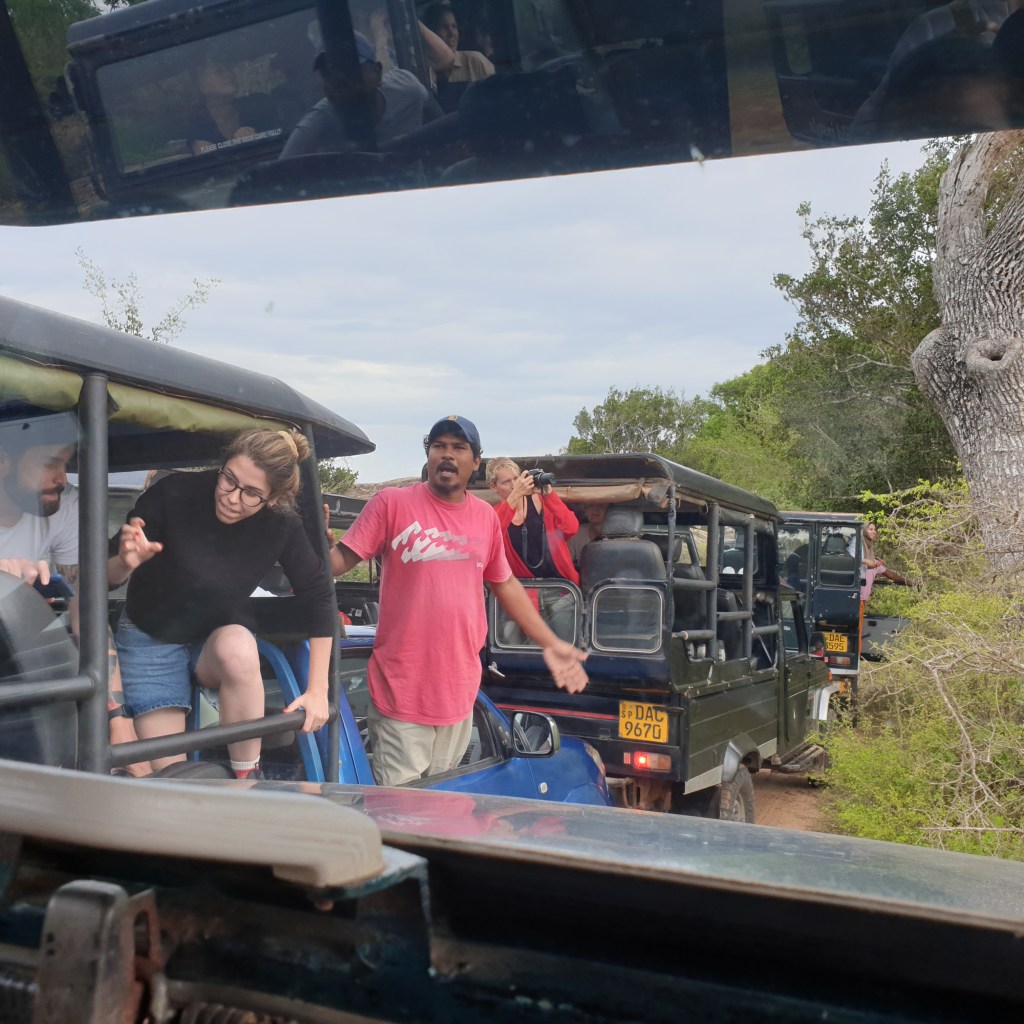
The peace of the scene was shattered as vehicles jostled for position and tourists squeeled with excitement. One newly arrived jeep pulled up just in front us, blocking my view. The vehicles all kept their engines running, and soon the air filled with the stench of diesel fumes.

LEOPARD!!!!!! LEOPARD!!!! LEOPARD!!!!

Somewhat disappointed by the “circus” of a leopard sighting, I asked my driver to move on – which proved difficult, since he had been blocked in by the other jeeps.  We finally got free and continued our exploration of the park alone, which I found much more enjoyable.  We saw lots more smaller animals and birds – my favourite was a mongoose and her baby, who came up close to investigate us.

Mother mongoose checks us out

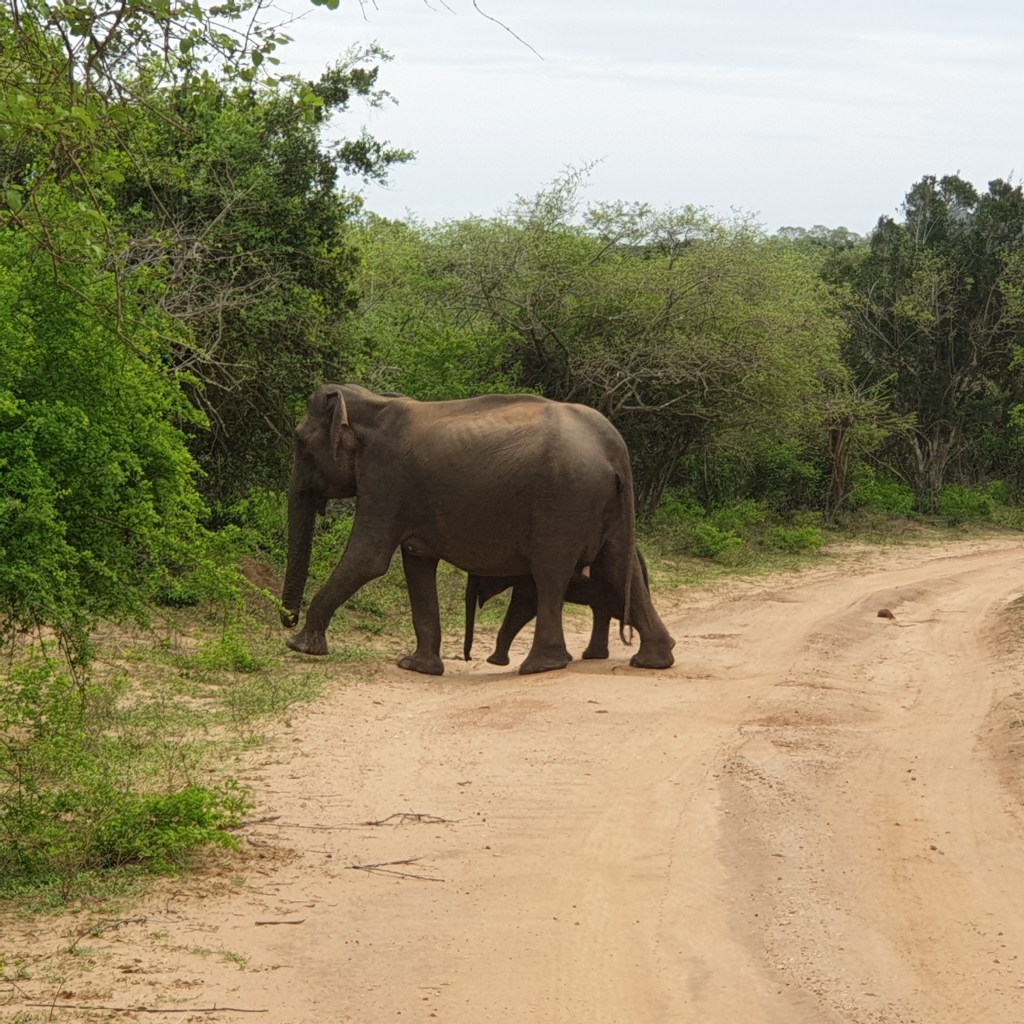
Our driver was heading to the park exit, when he got another message on his phone, turned his jeep around and rushed to a spot where elephants had been heard.  When we arrived there were a couple of other vehicles watching a small group of the animals through thick jungle. We waited, and our patience was rewarded when they broke cover and crossed the road.

Tick the box – Elephants

After the elephants, my driver took me back to the hotel, happy that he had delivered the top two attractions – leopard and elephant – and could therefore expect a good tip. It is a shame that the park’s bears are very rarely seen – I would have liked to greet a distant relative.

I spent the hot afternoon catching up on sleep and then lazing by the pool. I texted my regular guide that in the evening I would like to visit  Kataragama, a holy town and pilgrimage site with some temples. My guidebook said at this time of year there should be a major religious festival happening there, and that pilgrims walked the entire length of Sri Lanka to attend. However, it was impossible to find any more details about this on the internet, or the exact dates. My guide texted back with great excitement to say that today there would be a big procession, which only took place once a year, to mark the end of the festival.

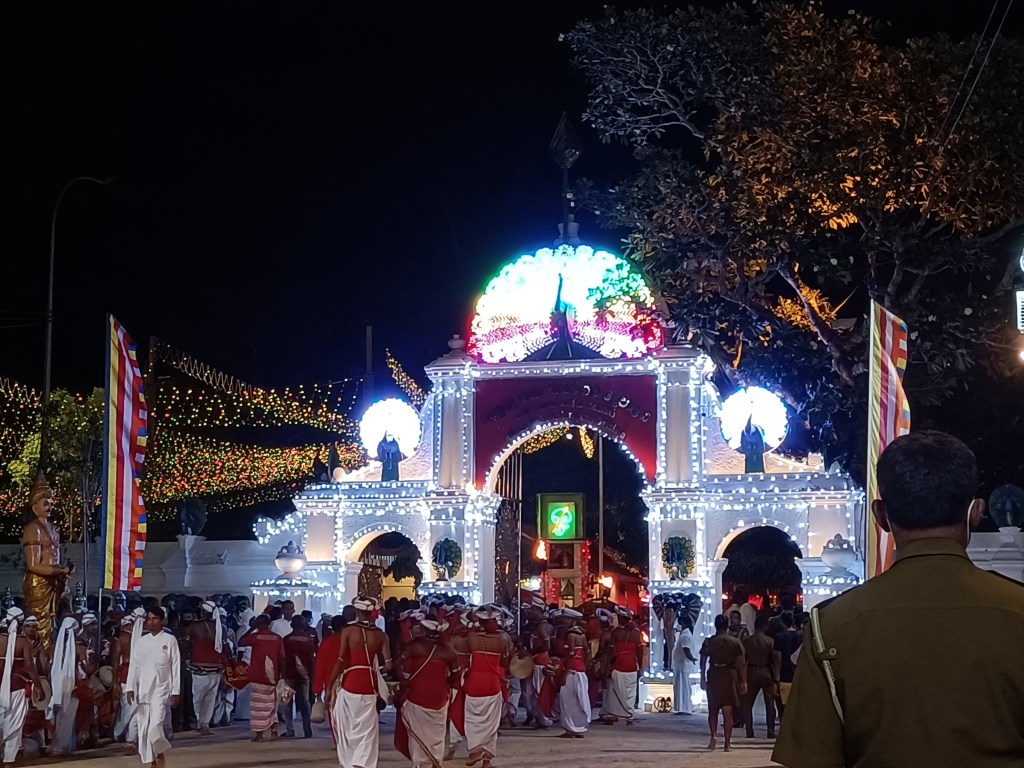
We made the short drive to the temple and found that a large but well-organised crowd had gathered along the procession route, and saw the last of the performers entering the temple to take up their places.

The Temple at Kataragama

My guide found me an excellent space, from which even a short little teddy bear had a good view of the route. I sat down like everyone else to enjoy the show; one of the other spectators lent me a plastic sheet to sit on. The procession exceeded all my expectations. It started with a group of men cracking huge whips (sounding like firecrackers or gunshots).

These were followed by a group of men juggling fire. Fire was a recurring theme, with men bearing flaming lamps walking by the side of the route. There was even someone with a big cylinder of fuel to refuel them as they went.

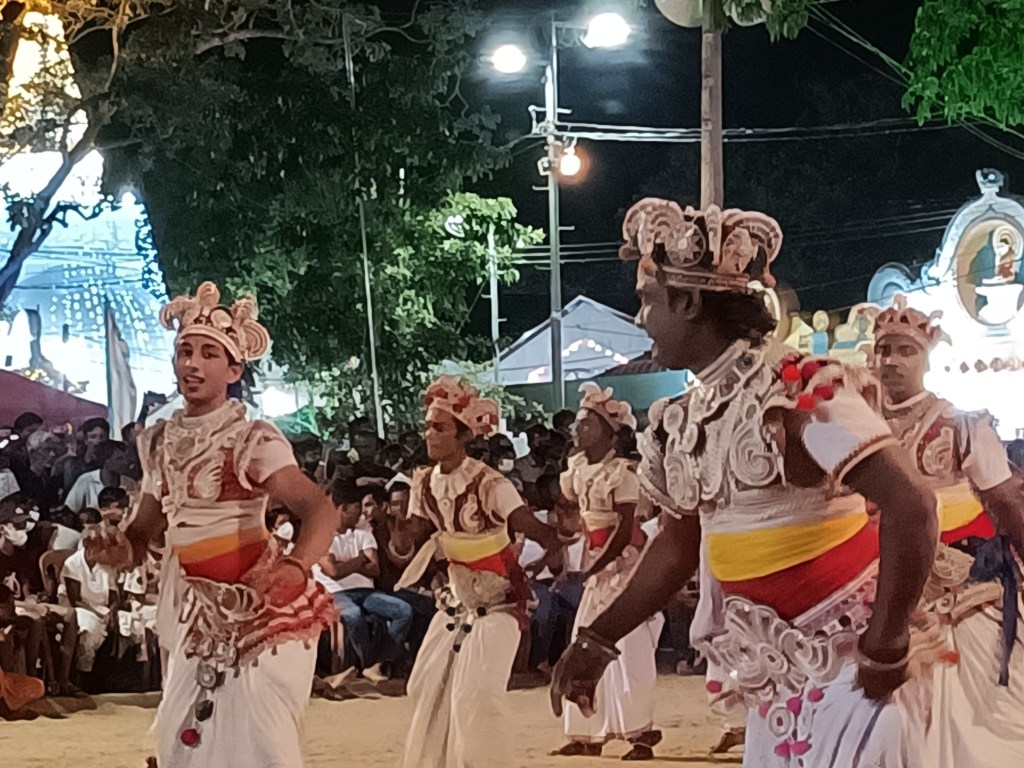
After that, wave upon wave of dancers in elaborate costumes filed past to the sound of drums and various wind instruments. Each wave was completely different to the preceding one.

The procession starts….

The guide said the procession was Buddhist, but then changed his mind and said it was Hindu. It seemed to have elements of both – the temple was definitely Hindu, but the performers also often carried Buddhist flags.

These flags might be of the Hindu god Garuda
Buddhist Flags

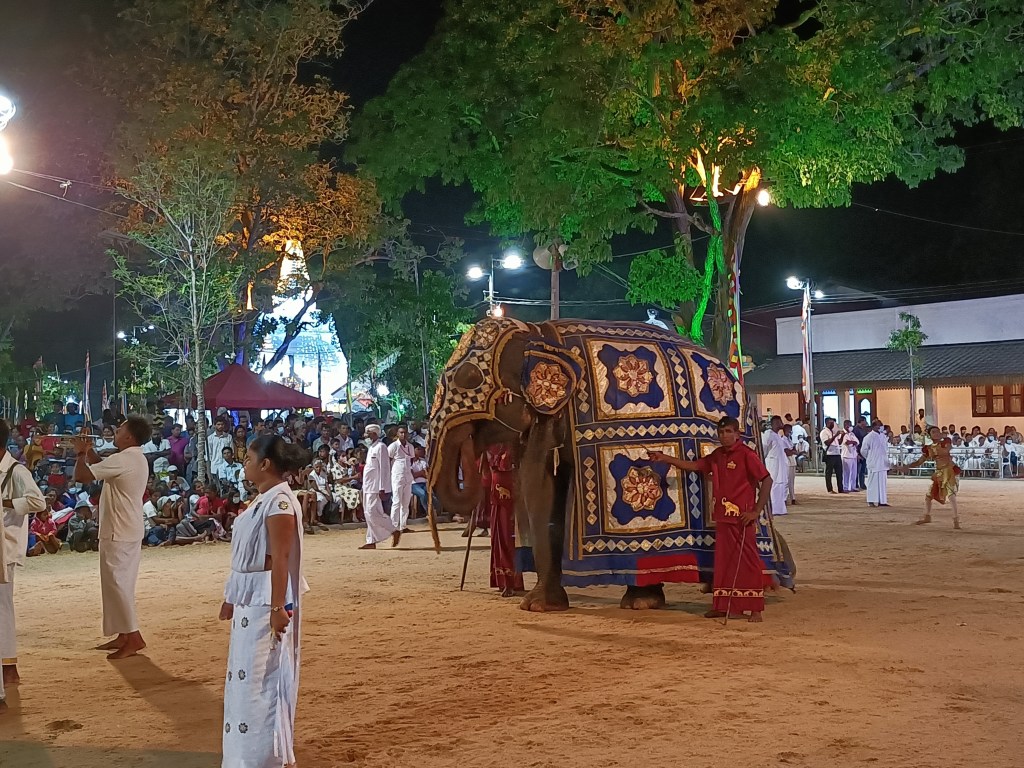
After each five groups of dancers, there would be a processional elephant covered in brightly coloured cloth.

The first elephant arrives
Another elephant

I lost count how many groups of dancers there were – maybe around thirty, meaning that there must have been around six hundred performers. Not only were their costumes magnificent, and their dancing elegant, but they all seemed to be having a good time and smiled broadly.

The dancers all seemed joyful

The procession closed with a large richly dressed ceremonial elephant carrying a sacred relic (my guide couldn’t explain to me what exactly). The crowd rose to throw flowers over the animal.

The end of the procession – an elephant carrying a sacred relic

I had sat, captivated, for over an hour – this unexpected event had been one of the highlights of my trip. It had been the polar opposite of touristy Yala park – I think I was the only tourist present.

From the Hill Country to the Coastal Plains

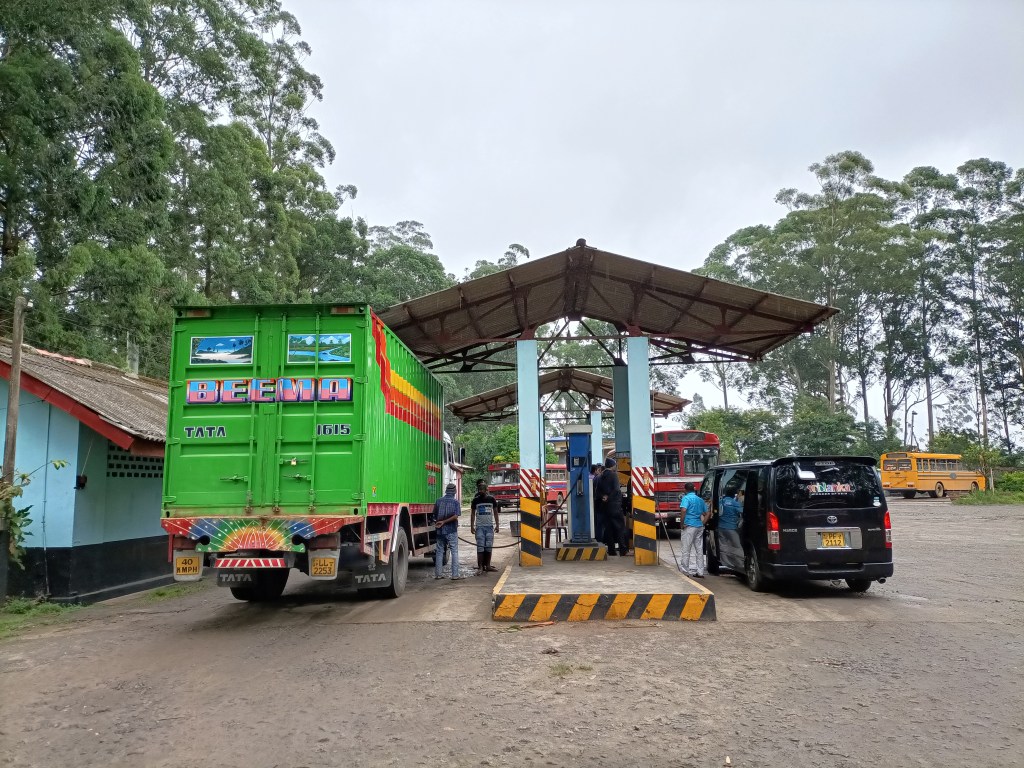
Today my destination was Tissamaharama (or “Tissa” for short) in the southeast of Sri Lanka.  This involved retracing my steps across the hill country back to Ella. Regular readers will have noticed that my route has not been very logical over the last few days, travelling the section between Nuwara Eliya and Ella three times, but I won’t bore you with the reasons for this. Just outside of Nuwara Eliya I experienced yet another version of the hunt for fuel – this time a successful refuelling at a bus depot.  This was a much more relaxed experience, without the embarrassment of cutting in front of long queues of people who had been waiting for days.

Relaxed refuelling at a bus depot

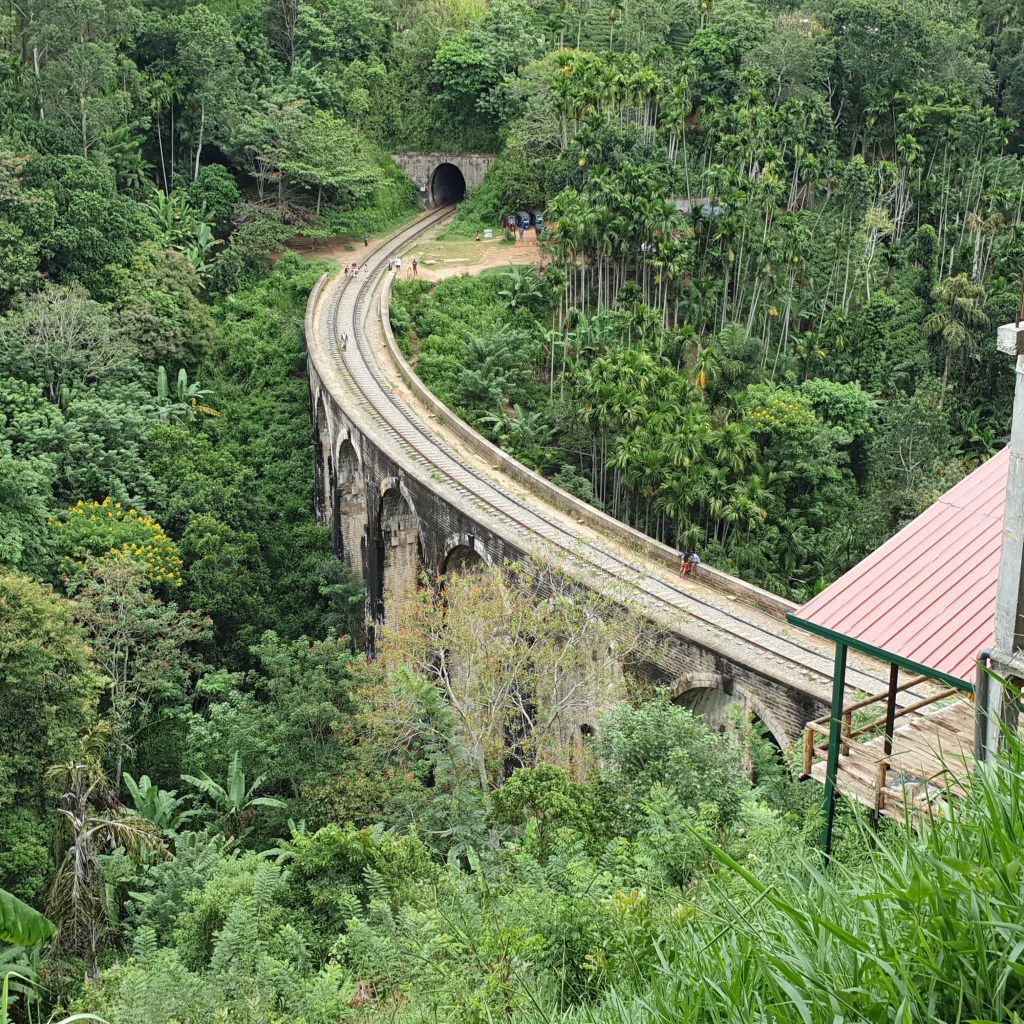
We stopped at Ella so that I could get a drink in one of the many cool cafes. Then I asked to make a short detour to visit the famous nine arches bridge, one of Ella’s most famous sights and one which I had missed on my earlier visit. The narrow path was not suitable for our van, so I asked the price from a tuk-tuk for the short 1.5km trip to the bridge. His offer was very high, and he refused to negotiate (more tourists in this part of Sri Lanka!) so I set off on foot instead. I am not sure if I found exactly the right way, because the view of the bridge I saw was different to the one that you see in all the tourist brochures. Still, it was nice to stretch my legs a bit.

An unusual perspective of The Nine Arches Bridge

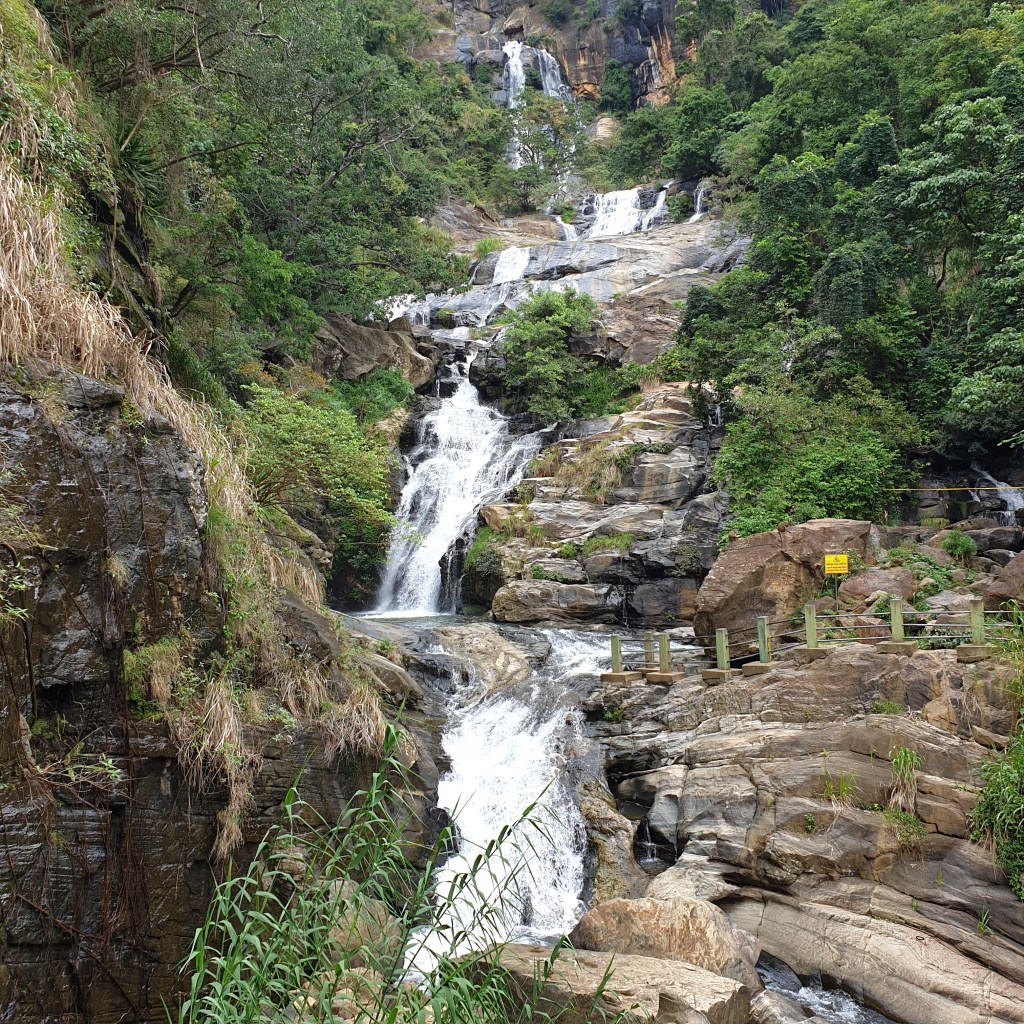
From Ella, the road led steeply downhill towards the coastal plains. The scenery was pretty, with many waterfalls.

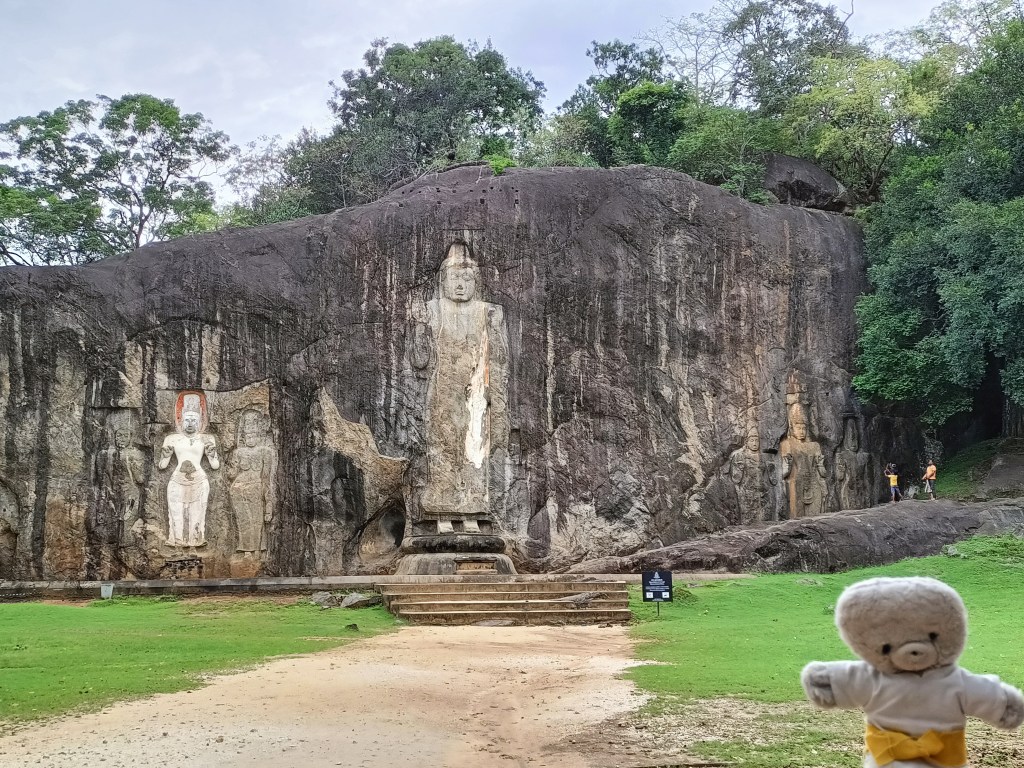
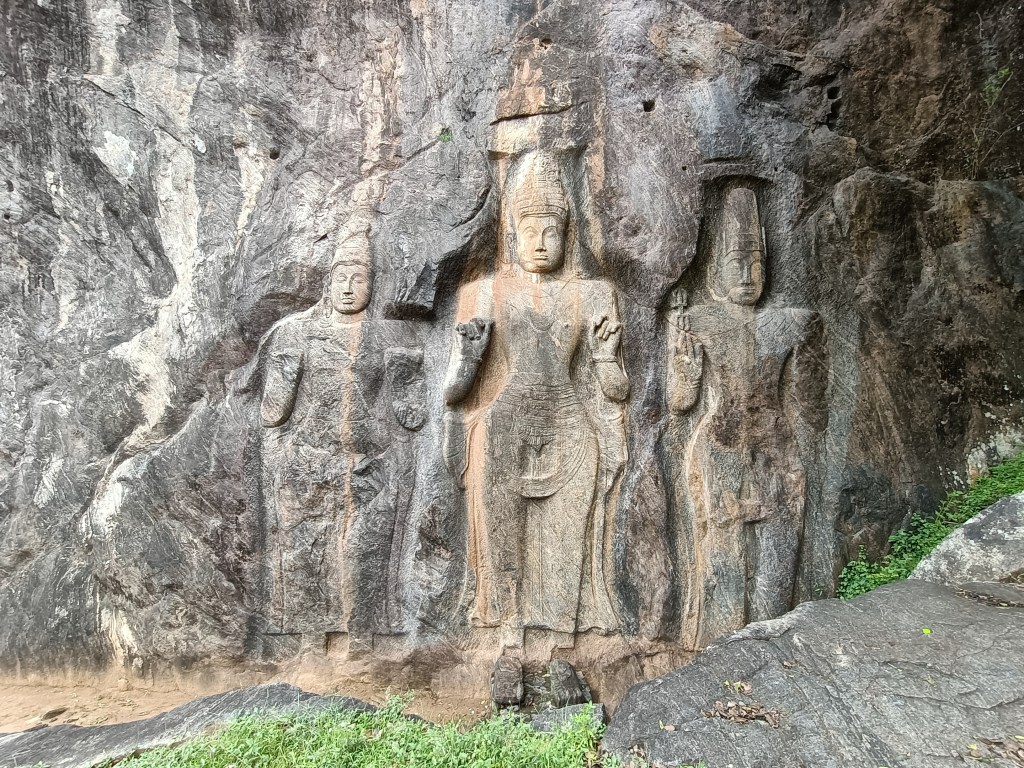
Near the town of Wellawaya I asked the guide to do another detour to see some famous standing buddha statues, carved out of a large rock.  Once again, I had a beautiful site with ancient (1000 years old) monuments all to myself.

1000 year old Buddha carvings

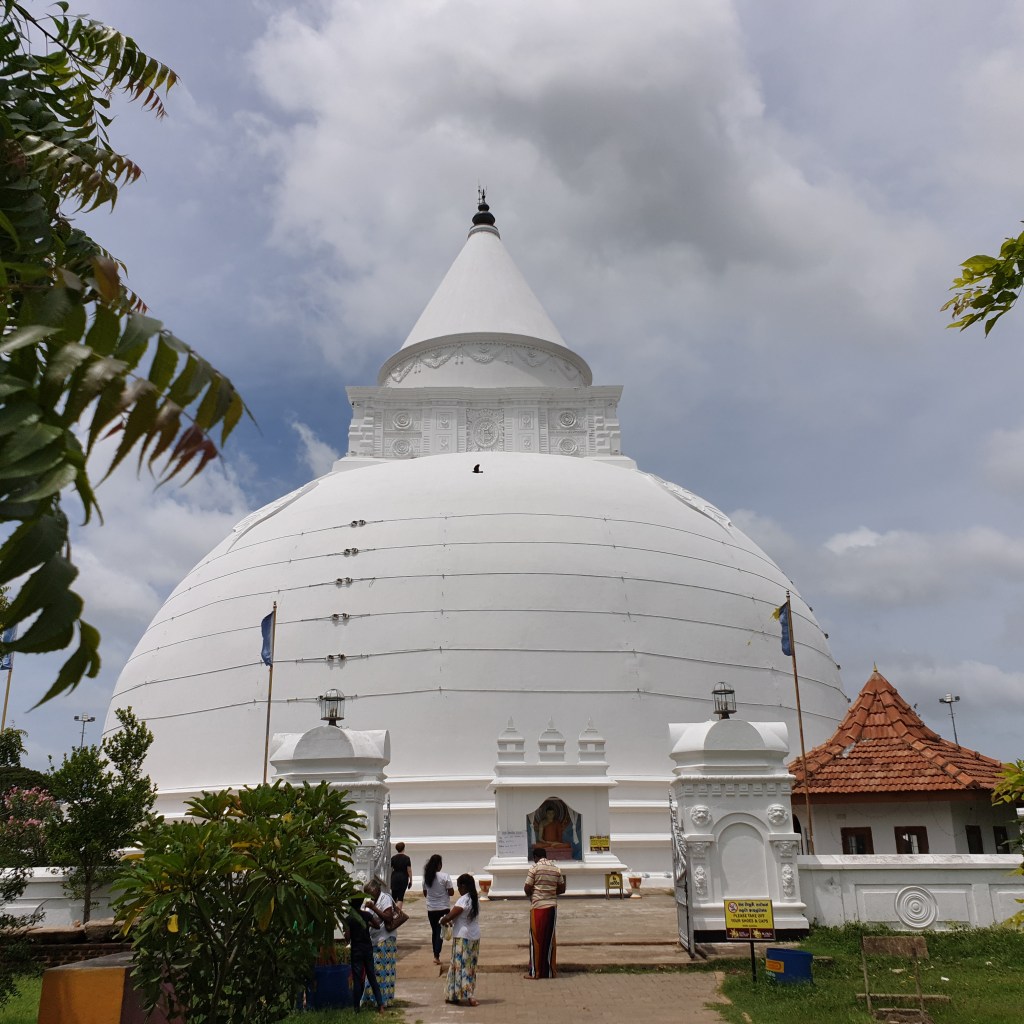
Form Wellawaya the road became flat and straight, and I dozed off until we had arrived at Tissa, where we made another stop to admire the brilliant white, perfectly formed Tissa Dagoba. This was originally built in 200BCE but was in excellent condition, having been completely restored about a hundred years ago.

Tissa Dagoba

The town of Tissa had a beautiful location, sitting on a large artificial lake covered with lilies and lotus flowers. My hotel was a little way outside of the centre, next to a different lake.

Waiting in vain for a sunset

After I checked in, I sat by the lake for a while hoping to see the sunset, but yet again, the sun dipped behind clouds just before setting – I have yet to see a sunset in Sri Lanka. I had an early dinner, admiring the view of brightly-lit Tissa Dagoba in the distance across the lake.  I went to bed very early – the next day I had booked a safari to the famous Yala National Park, and had to leave at 5am.

Wet, Wet, Wet

Today I had booked a tour to the Horton Plains, a national park located on a high plateau, where there is a famous view called World’s End – a sheer cliff, with all of western Sri Lanka stretching away into the distance.  My guide advised leaving very early, since the view is usually covered with mist from the mid-morning.

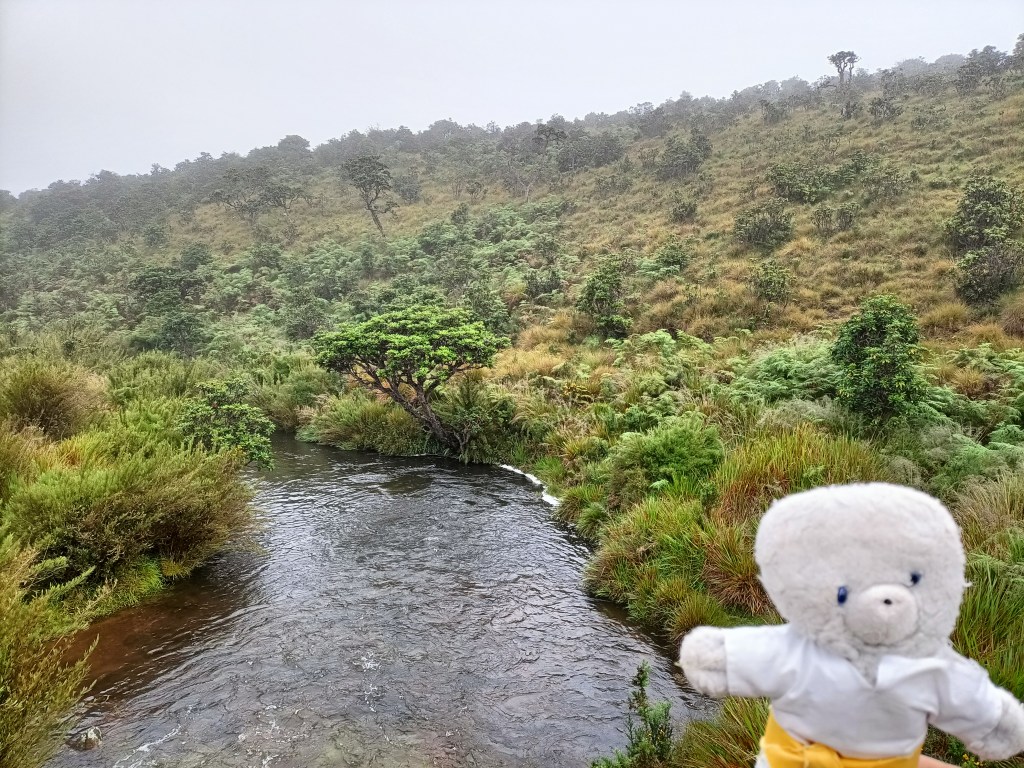
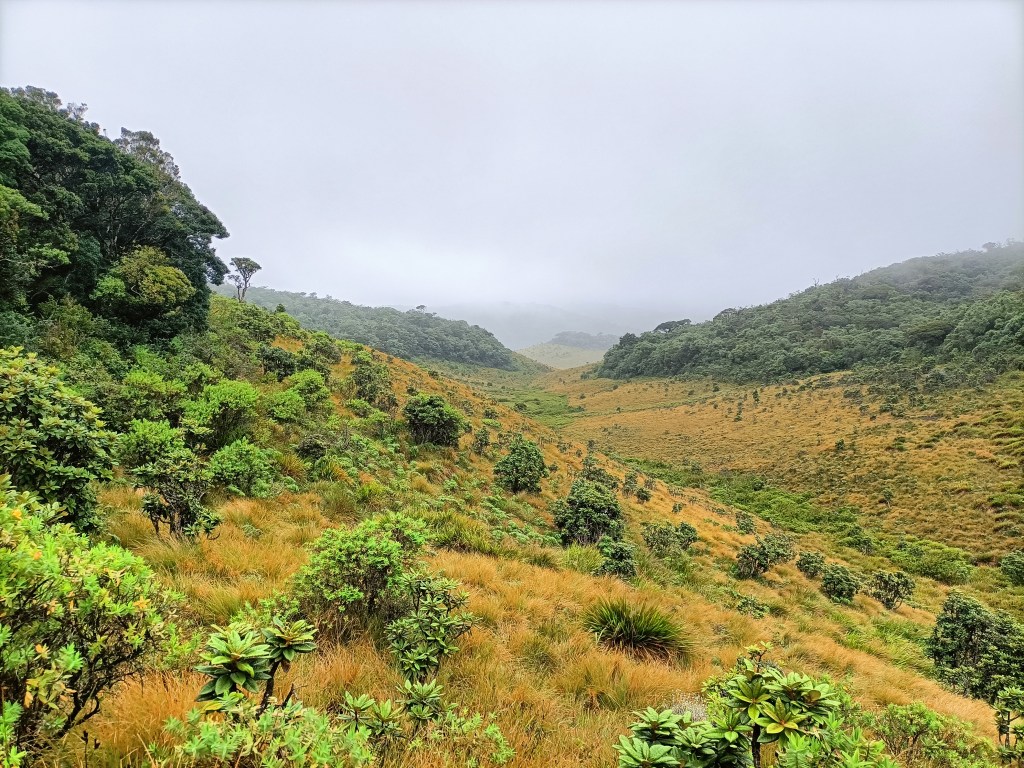
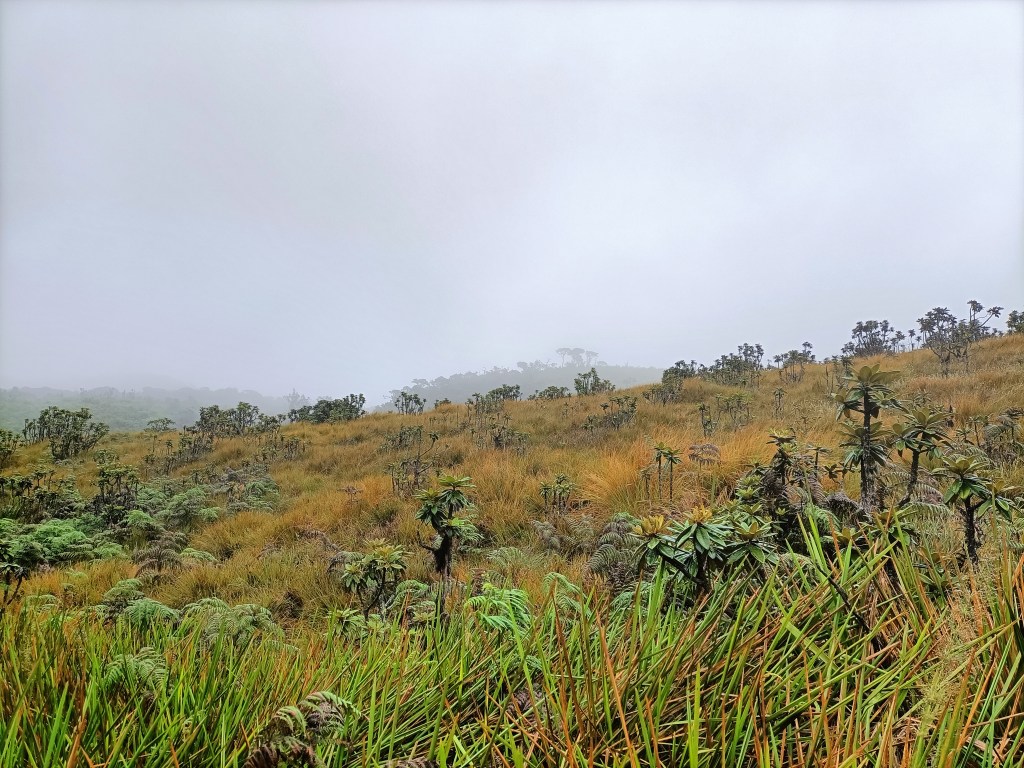
The weather forecast for the day was bad, but suggested it might not rain early in the morning. When we left at half past five there was only a light drizzle, which soon stopped. At around six, it got light, and I could watch the passing tea plantations and small villages. At half past six we reached the park, and I started my walk. The landscape and plants at this relatively high altitude were completely different to anything I had seen before in Sri Lanka – or anywhere else for that matter.

Landscapes in the Horton Plains

The path first arrived at “Little World’s End” – a smaller cliff, also with a view. I was relieved that it was still not raining and that despite the clouds the famous view was partially visible.

“Little World’s End”
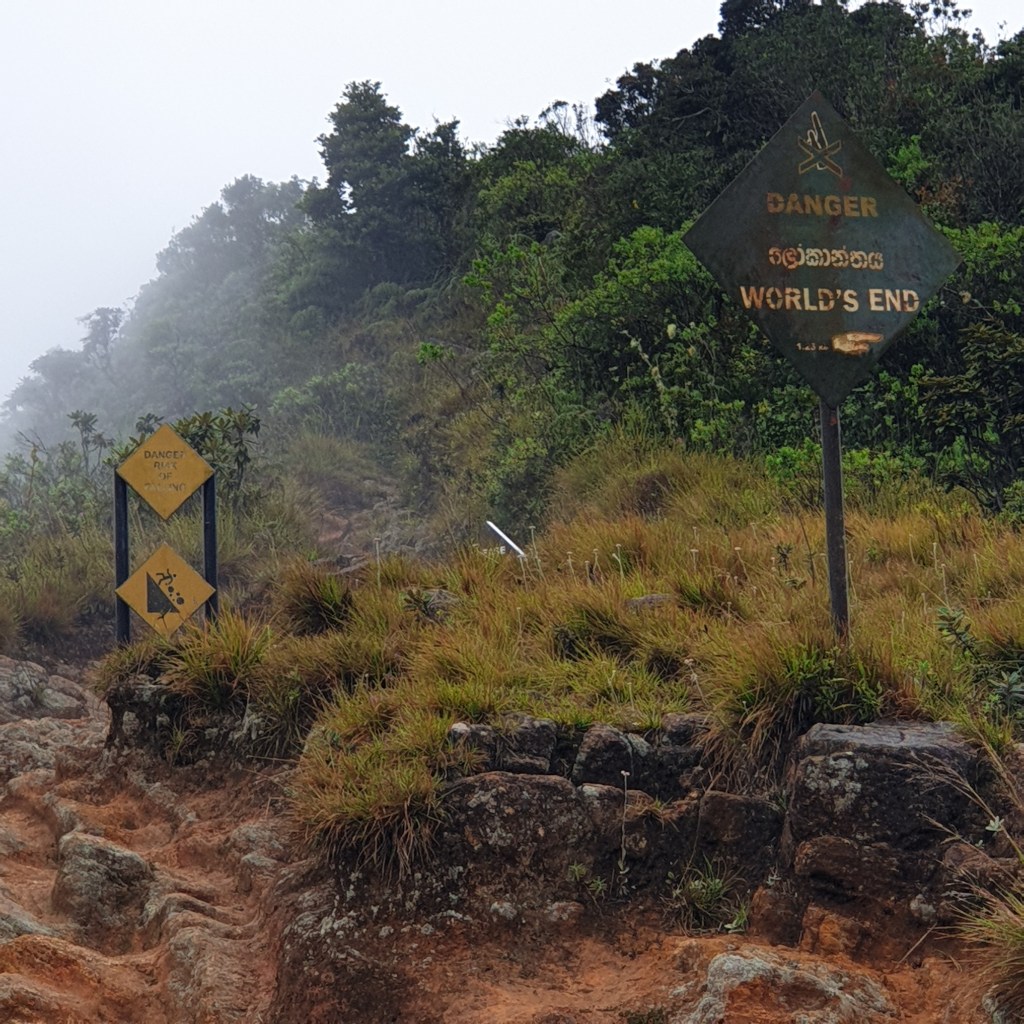
Another helpful Sri Lankan warning sign – the end of the world is nigh!

I hurried on, but after a few more minutes the inevitable happened – it started to rain heavily. I pulled on a waterproof top, but had to accept my legs and paws getting soaking wet. The path turned into a small stream.

Path or stream?

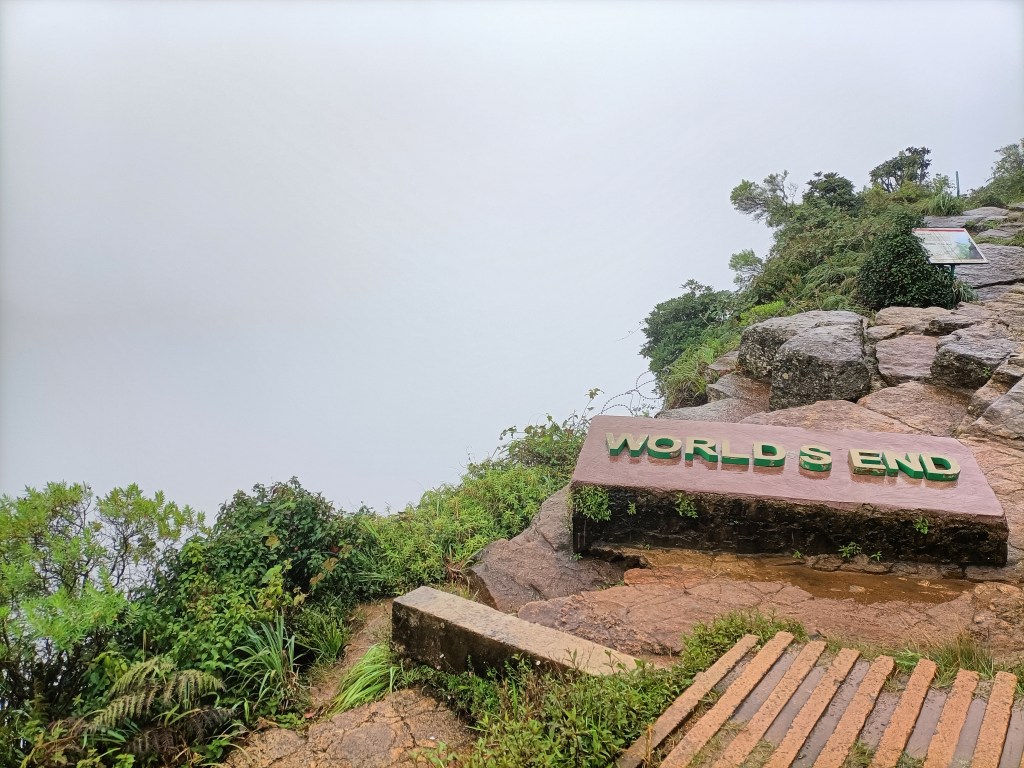
Arriving at World’s End, all there was to see was a big bank of thick cloud.

The name feels appropriate…

I carried on along the path, and the rain continued to fall steadily. Although it was unpleasant to have wet fur all down my legs, after a while I got used to it. The rain was even pleasantly cool, and the scenery was interesting.

The land is green for a good reason!

The next highlight of the walk was Baker’s Falls, a powerful waterfall swollen by the recent rains.

Baker’s Falls

After the falls, the path became easier and less like a small river. There were more lonely, windswept landscapes to admire until suddenly I was back at the park entrance.

Another lonely landscape in the rain

Back at the van, I changed my trousers and took off my soaking shoes. The one-hour trip back felt very long – I hadn’t had enough sleep, my fur was still wet, and the windows of the van steamed up to obscure any interesting views.  I reached the Hill Club at around noon, with a sense of relief. It was now raining heavily, so I went straight to bed for a well-needed nap.  I awoke an hour later to the find water streaming down from the ceiling of my room – the strong winds must have damaged the roof, creating a big leak.  I changed rooms and set out about hanging up my wet things in the hope that they might dry.

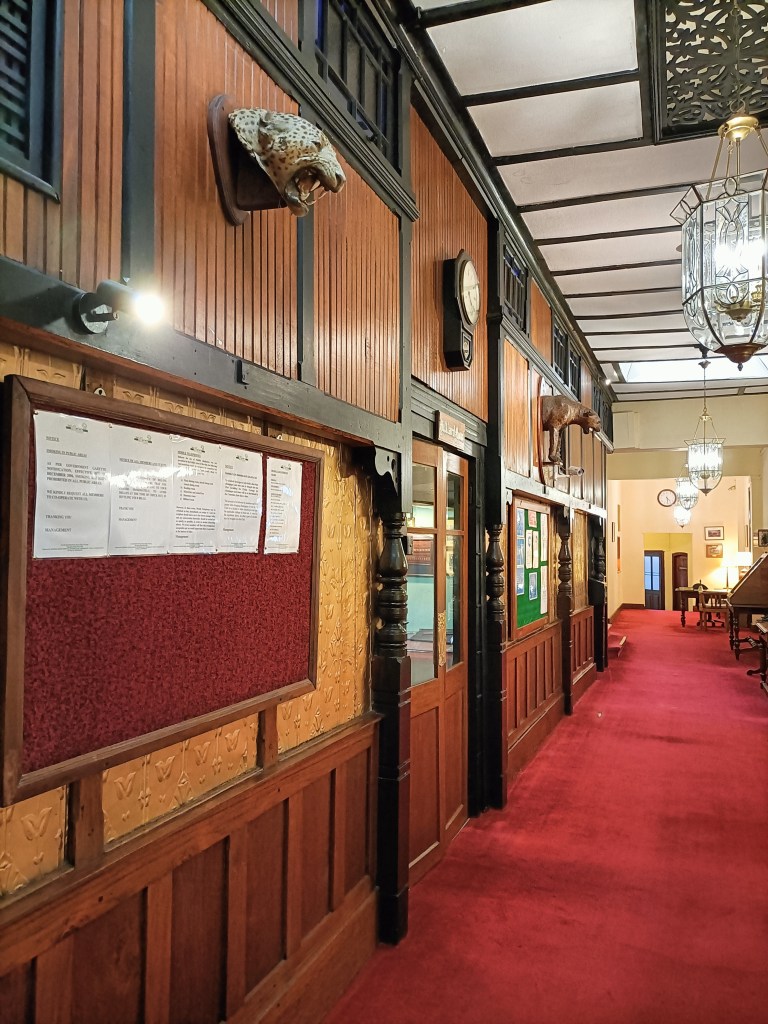
There was nothing to do but simply enjoy the old colonial Hill Club. I wandered around, taking more photos…….

Hunting trophies at the club. No bears happily, but even so Trouspinet does not approve!

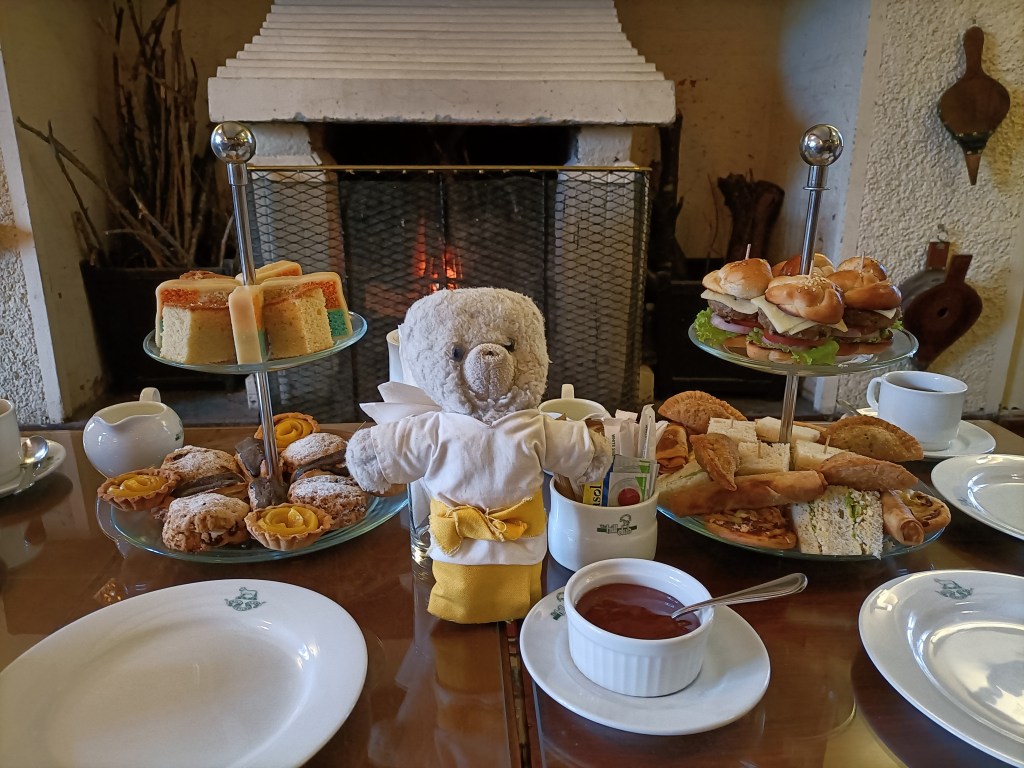
……and then treated myself to high tea, a wonderful club tradition where you stuff yourself with cakes, savoury snacks and tea in the mid-afternoon.

The solution to a rainy afternoon – High Tea!

After such a huge tea, I sat and wrote my blog in the reading room. In the early evening I tried a game of snooker in one of the club’s two billiard rooms – although the table was so big it was hard work for a small teddy bear.

I dined late and chose Indian Ocean Kingfish, which was a bit like tuna in texture and taste, washed down with a bottle of wine (my first wine since I had arrived in Sri Lanka). It had been a difficult day, but sometimes the life of a traveller is like that. The walk had been very interesting, if wet, and the comforts of the Hill Club more than made up for spending half the day with wet fur.

Blog at WordPress.com.

Up ↑