The next morning, I set off to visit the ceramics museum. Mostly, I was interested in exploring the interior of the wonderful old palace it was housed in, but the museum itself was also interesting, with a sprawling collection ranging from Roman pottery to works by Picasso.
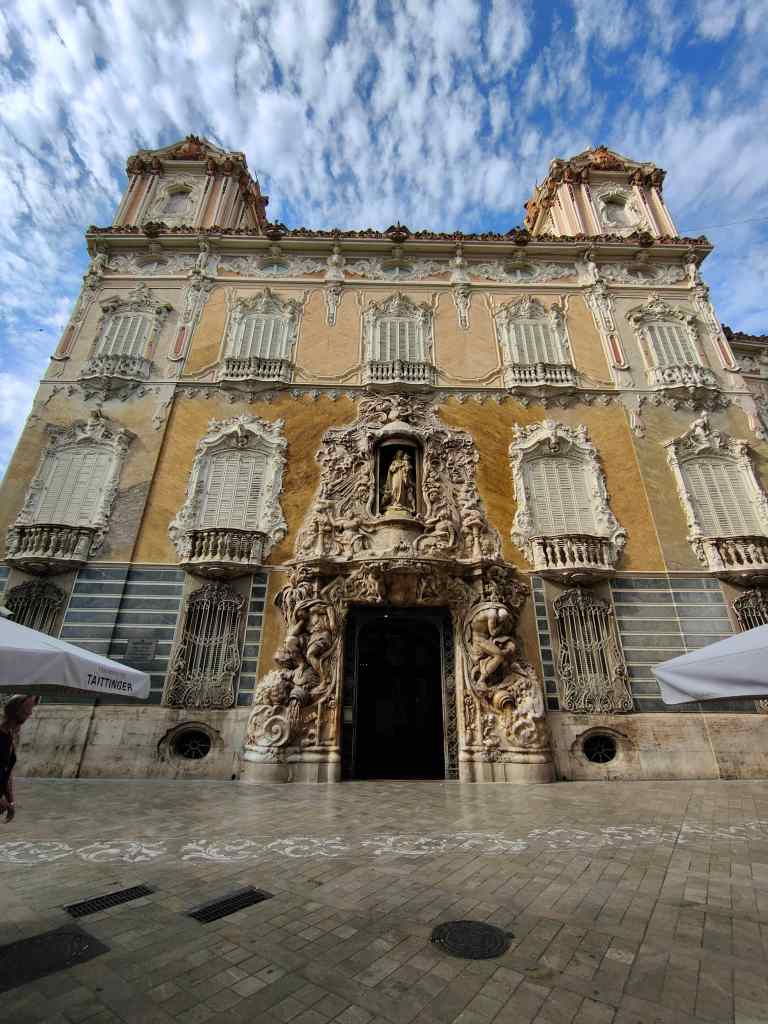
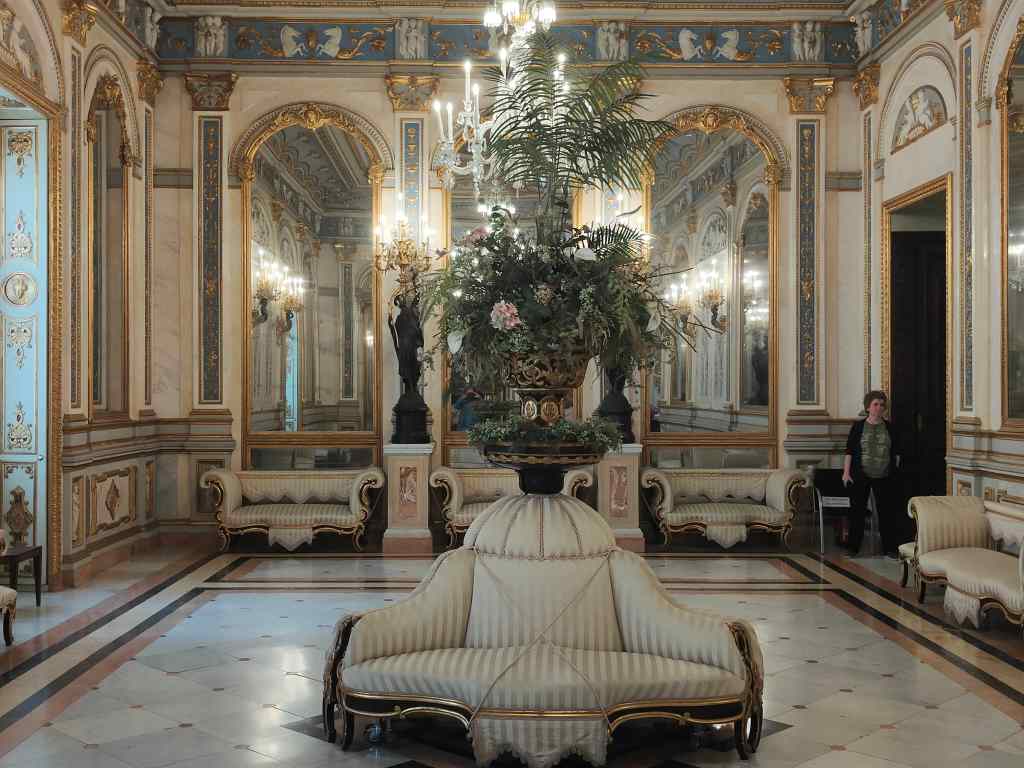
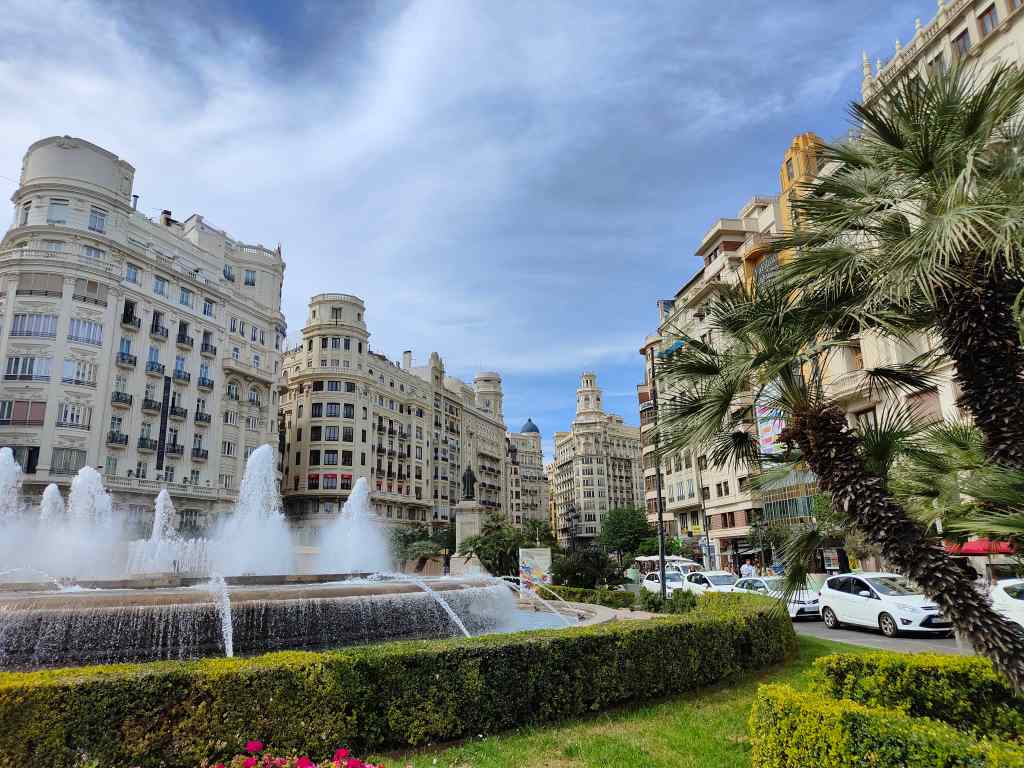
I then made my way southeast, towards the port and the sea. The city changed character as old winding lanes gave way to wide avenues with tall, elegant buildings.
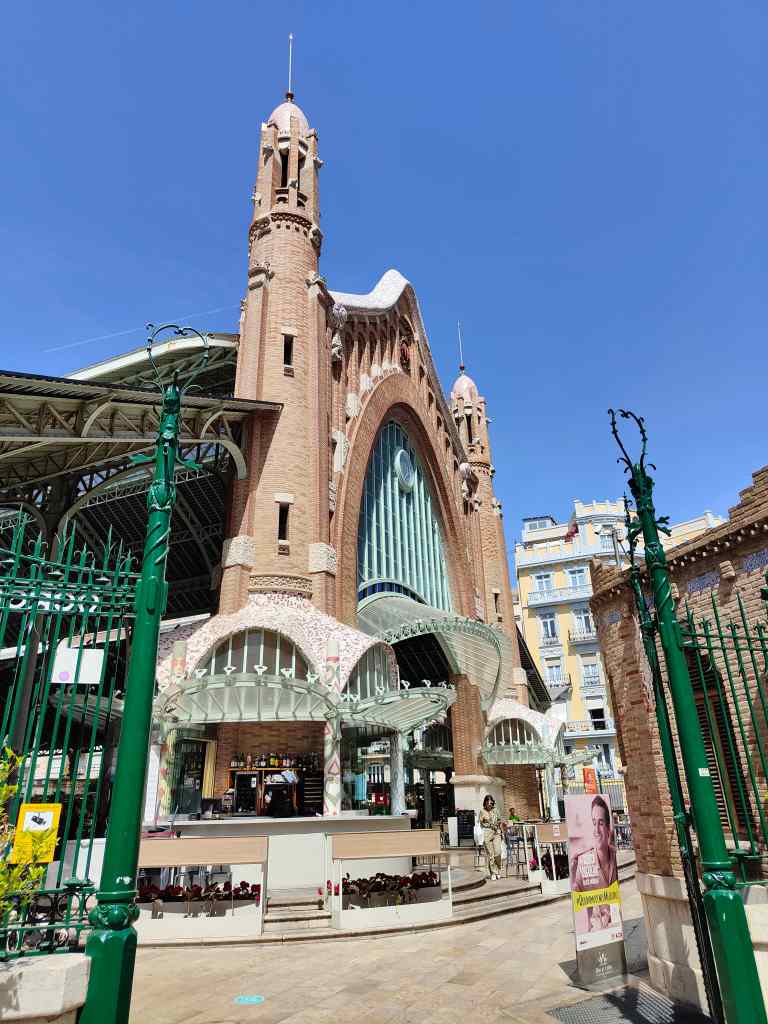
A highlight was the Mercado de Colon – a former market, which is now home to many small restaurants and cafes. Its art nouveau style reminded me of Gaudi in Barcelona, although it was the work of a different, local, architect.
Next, I found Valencia’s Turia Park, an 8km-long stretch of gardens and sports grounds, laid out along now dry bed of the Turia river and winding around the city’s north and east sections. The park led to Valencia’s City of Arts and Sciences, which contains many spectacular modern buildings designed by architect Santiago Calatrava, including the city’s concert hall, a science museum, and a cinema.
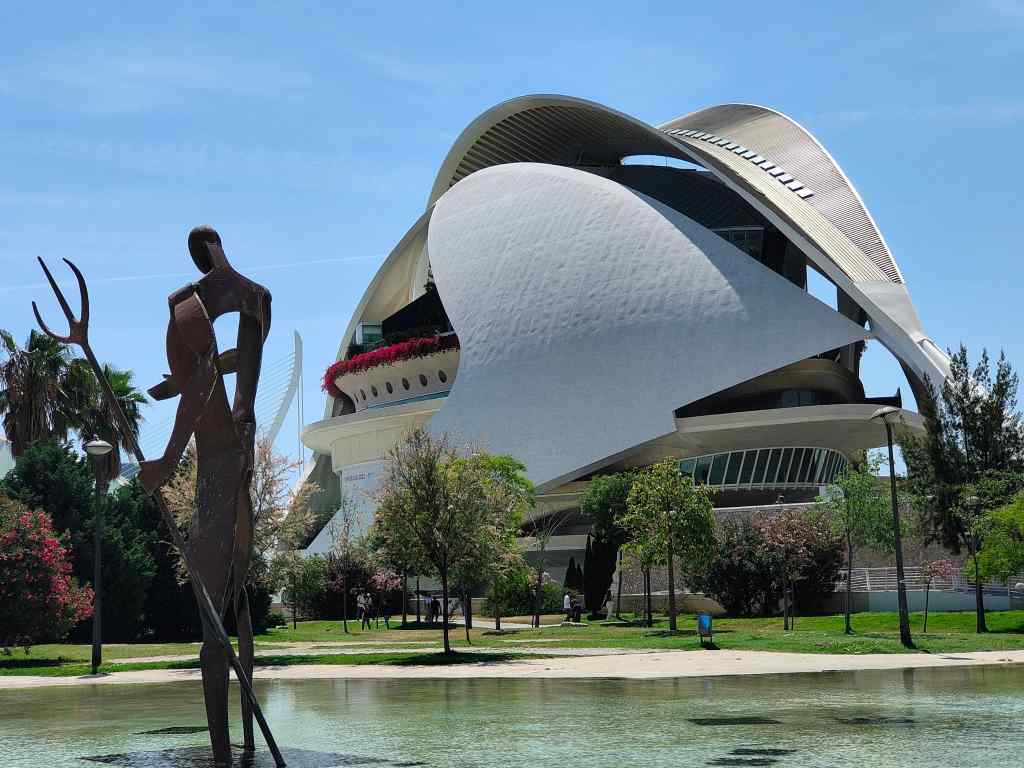
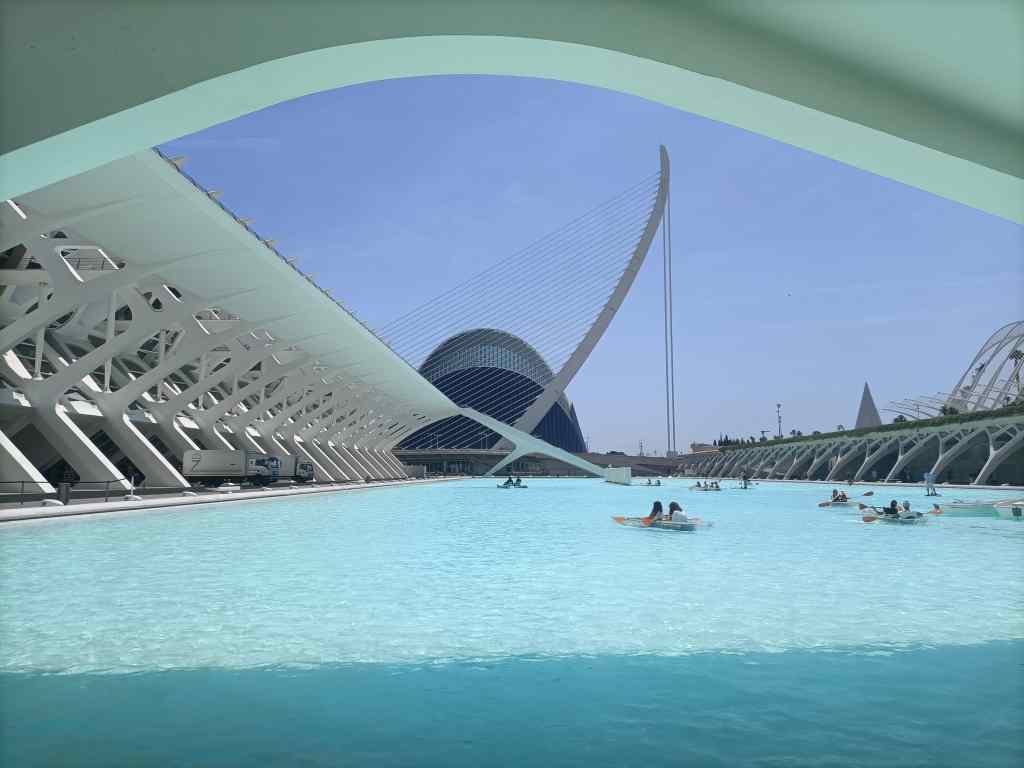
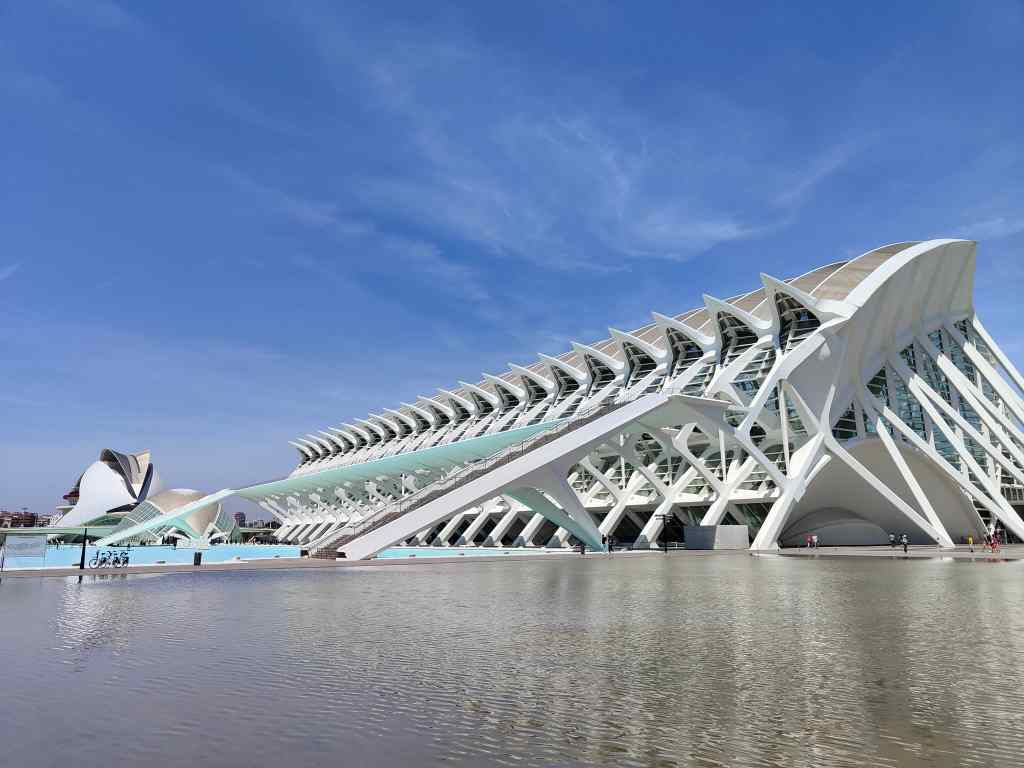
It was some of the most successful modern architecture I had ever seen. The walk ended in a garden, which offered some shade against the hot afternoon sun.

A short distance away, I could see the huge cranes of Valencia’s harbour, a reminder that the city remains an active container and ferry port.
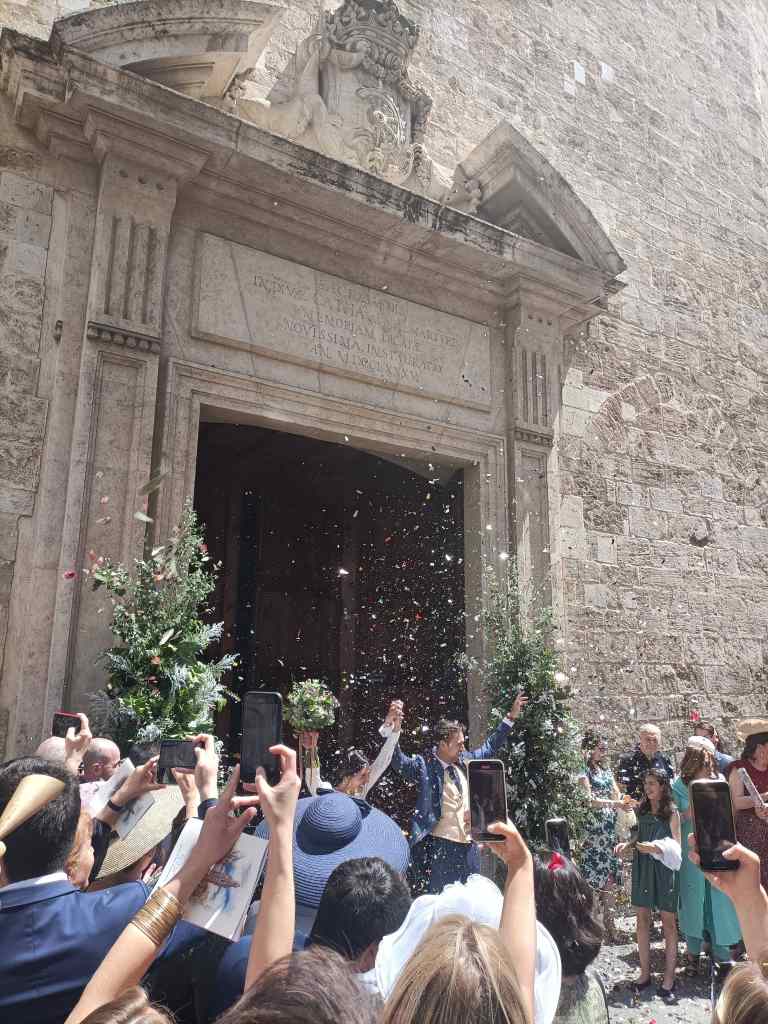
My final day in Valencia was devoted to my first Spanish wedding. It started early, at 1pm, with the marriage service in a pretty church in the old city. Emerging outside, the newly-weds were greeted by the traditional showers of confetti, plus (a Spanish custom) a salvo of military-grade firecrackers – which were so powerful that the road had to be cordoned off to protect passers-by. From the church we took a bus to an estate (“hacienda”) outside the city for a drinks reception and a large, late lunch. This was followed by sketches presented by the newly-weds’ friends and animated dancing. At 11pm, huge plates of paella were prepared and served, whislt the dancing continued. The buses finally returned to the city at 1am. It was one big, 12-hour celebration of life – the Spanish certainly now how to party!
Next Post: Cuenca
Previous Post: Valencia’s Old Town
 Trouspinet travels
I just came across this post — both the photos and the narrative are beautiful. Well done!
LikeLike