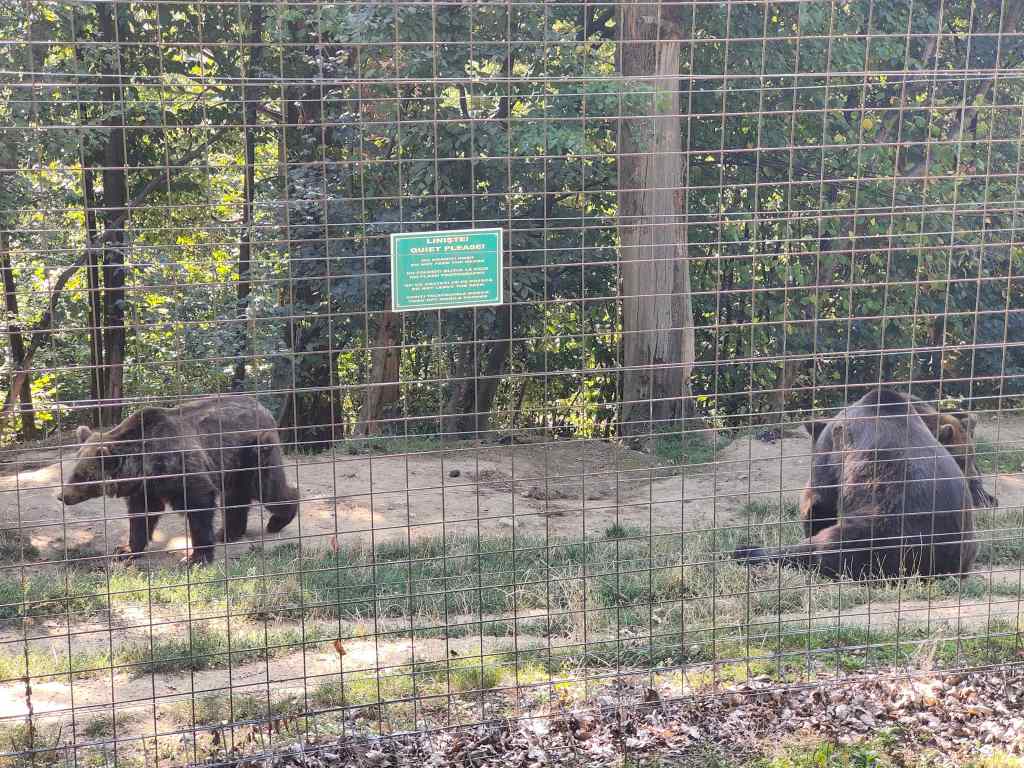
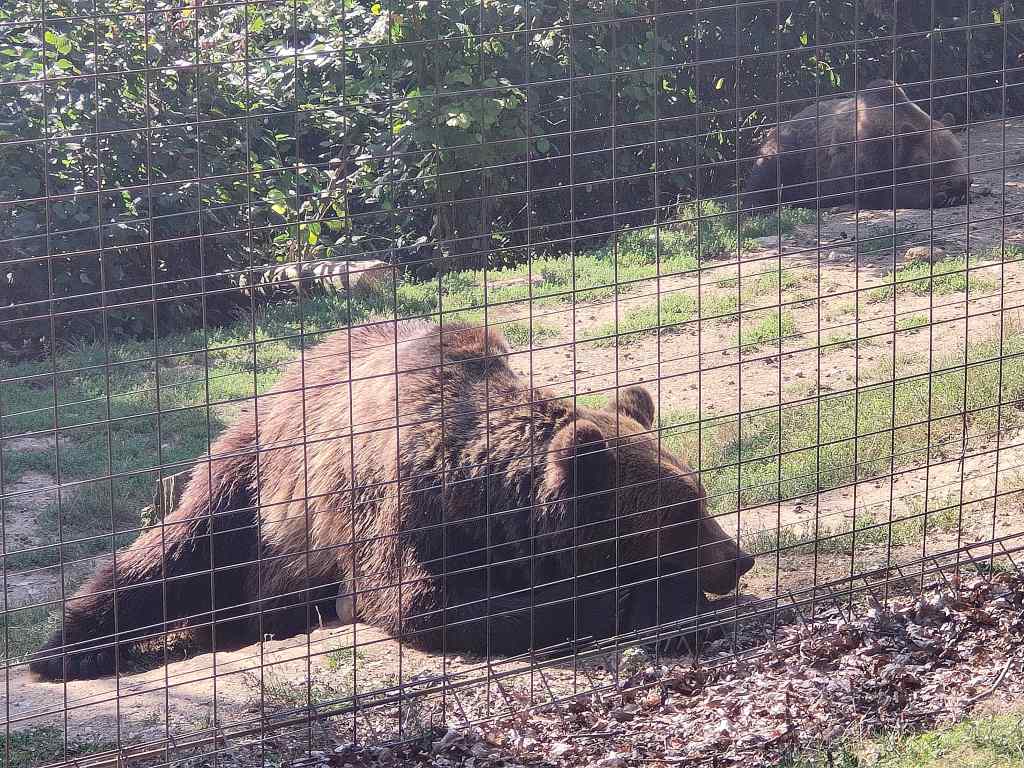
My first stop today was to a very novel tourist attraction, and a must-see for any teddy bear – the Libearty (sic) Bear Sanctuary. The people here take in bears kept in appalling conditions in circuses or as pets and give them the chance to end their years in large, forested enclosures where they are cared for and fed (these bears would be too traumatised to survive if released back into the wild). Many of their 145 guests come from Romania, but some come from further afield – even from places as far away as the USA.
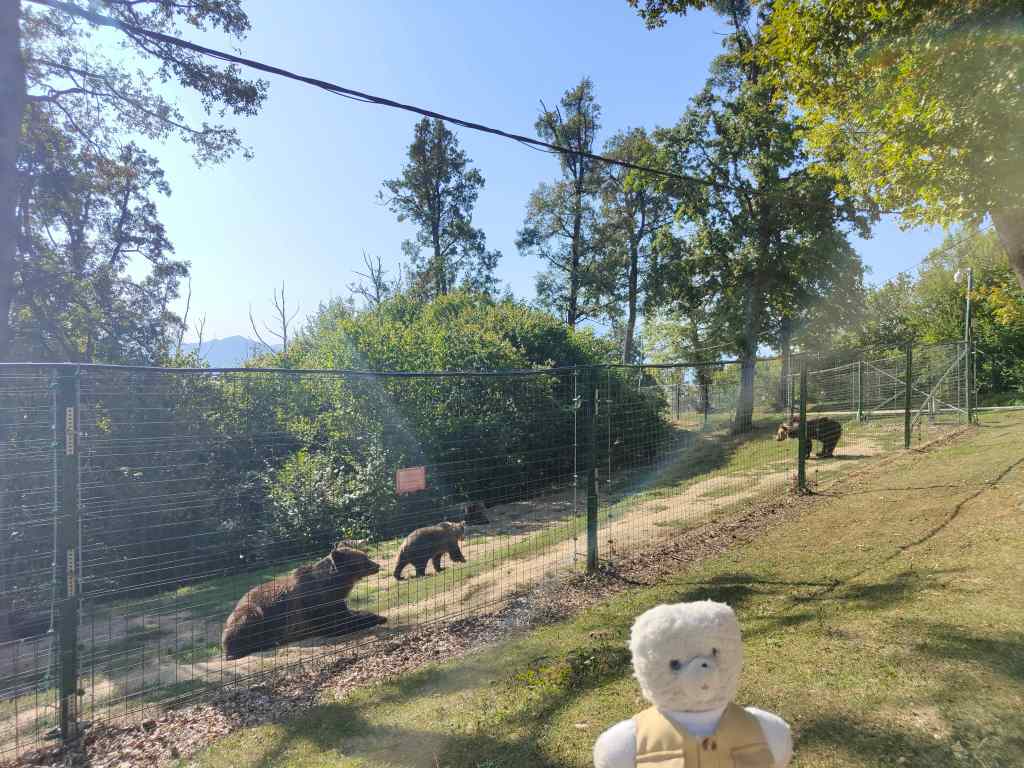
It was heartwarming to see some of my fellow species, even if the stories of what they endured in captivity were very sad. One of the residents spends their time walking around in circles, ignoring the open space of her enclosure – as she had been forced to do in the circus. Another had been blinded, his claws removed and then regularly drugged with beer, to make him passively accept having his picture taken with tourists outside a castle. Fortunately, it is now illegal to use bears in this way in Romania.
My next destination was a short drive away – the fortified church of Harman. This was built in 1240 by Transylvanian Saxons, people of German origin who were encouraged by the then Hungarian rulers of the area (Transylvania only became Romanian after the end of the first world war) to settle here to help protect the eastern border of their kingdom. Traces of the Saxon village have long since disappeared from the now Romanian town of Harman, but the church remains and deserves its reputation as one of the most beautiful of its kind.
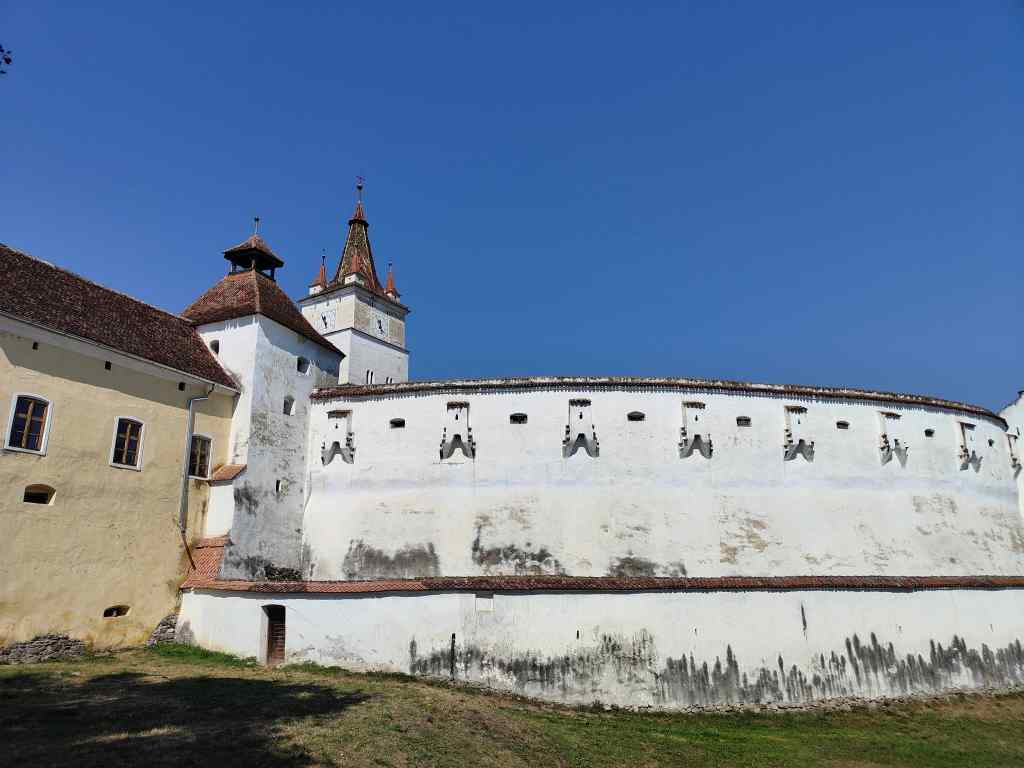
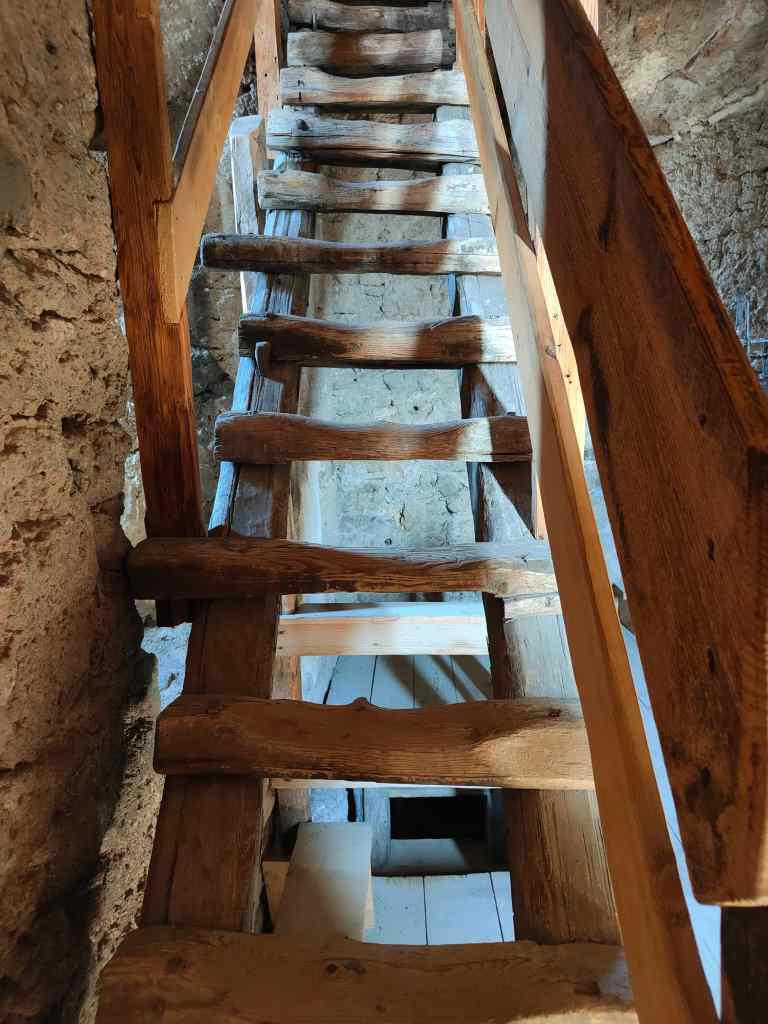
Unlike Bran castle, there were very few visitors to Harman, and I had the church almost to myself. The man at the ticket office advised me to be careful of the steps. I was a little surprised by this until I saw the ladder/staircase leading up to the bell tower, which was steep, wobbly and crooked. I made the risky ascent, only to find that the views from the top were very limited. Fortunately, the parts of the complex which were accessible at ground level more than made up for this disappointment.

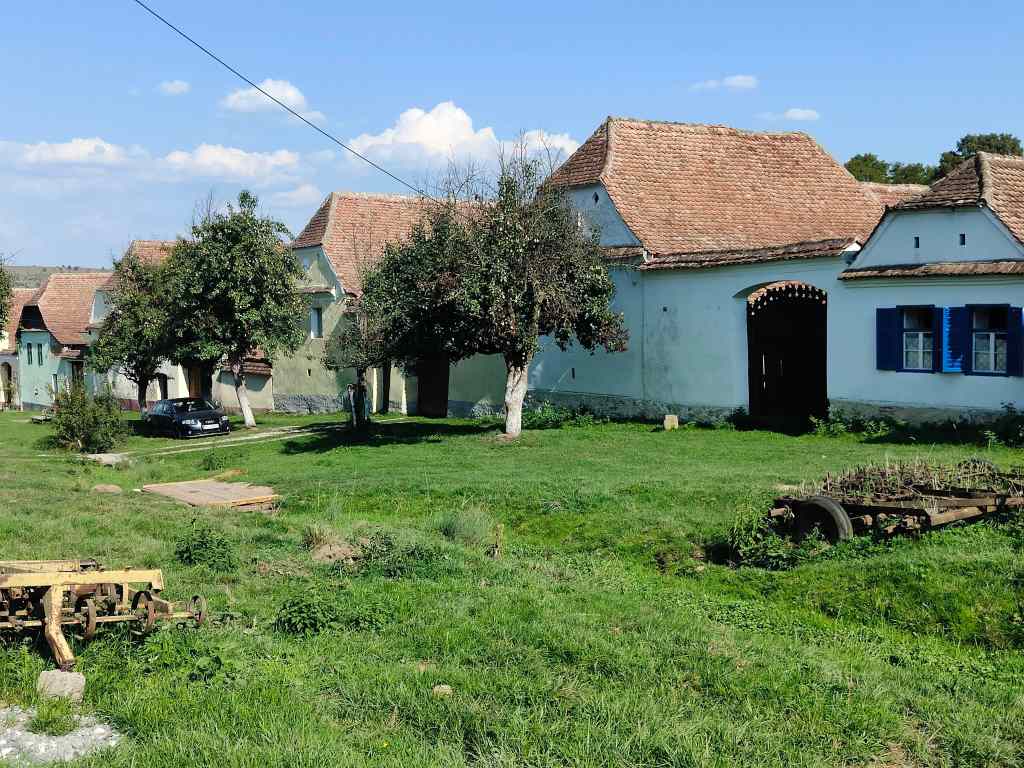
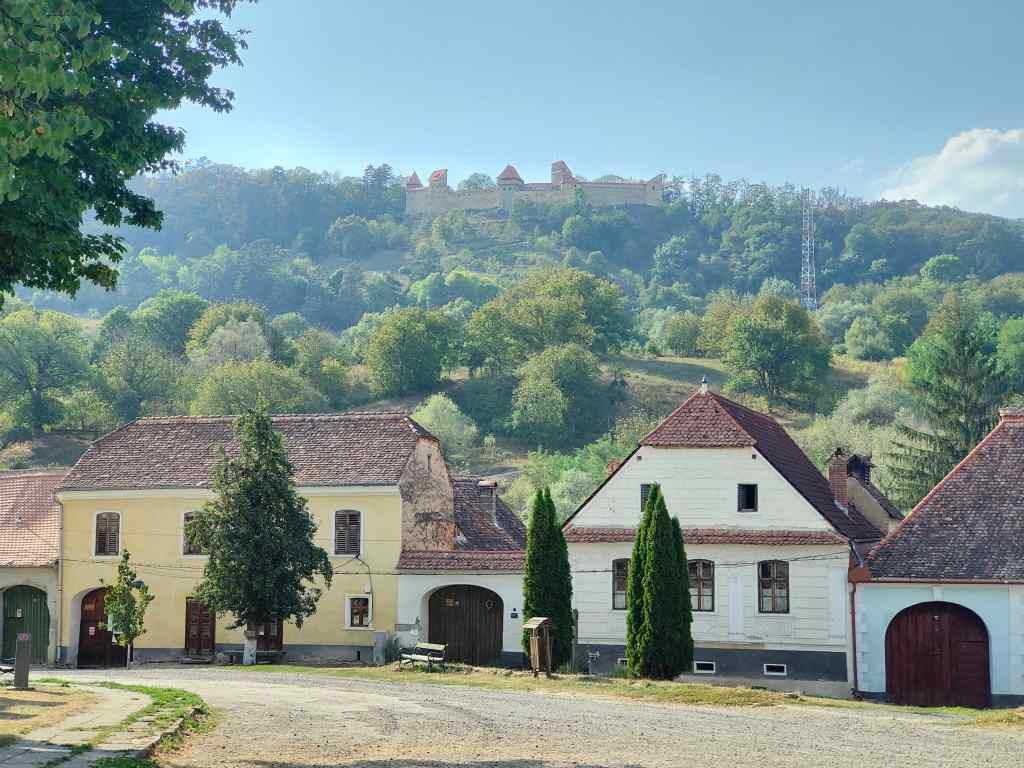
After Harman, my exploration of the Saxon influence in Transylvania continued with a visit to the village of Viscri, which felt like it had remained frozen in time since the Middle Ages. Unlike Harman, where a modern town had sprung up around the old church, here development had stopped a long time ago, leaving only the original houses built by the early Saxon settlers. Many of the original families had moved out – the region saw mass emigration back to Germany after the fall of the Iron Curtain – but the village remained well maintained, and some new Romanian arrivals had opened small cafés and craft shops. One notable new owner is King Charles III of Great Britain, who likes Transylvania so much that he has bought two properties there, one of which is at Viscri.
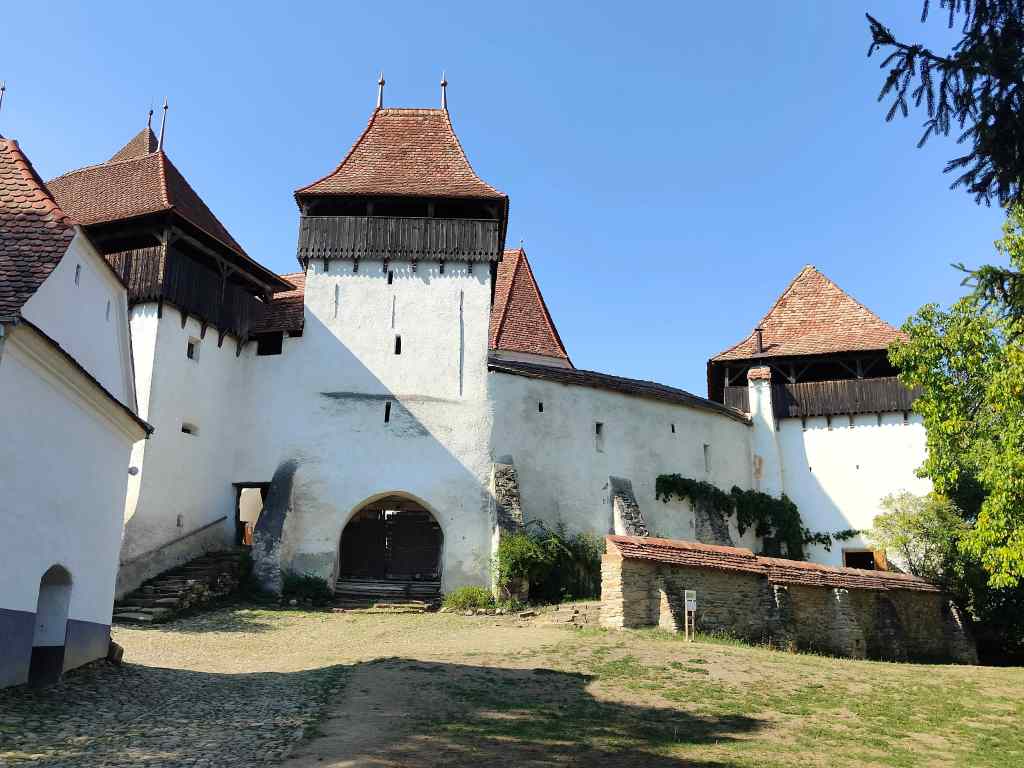
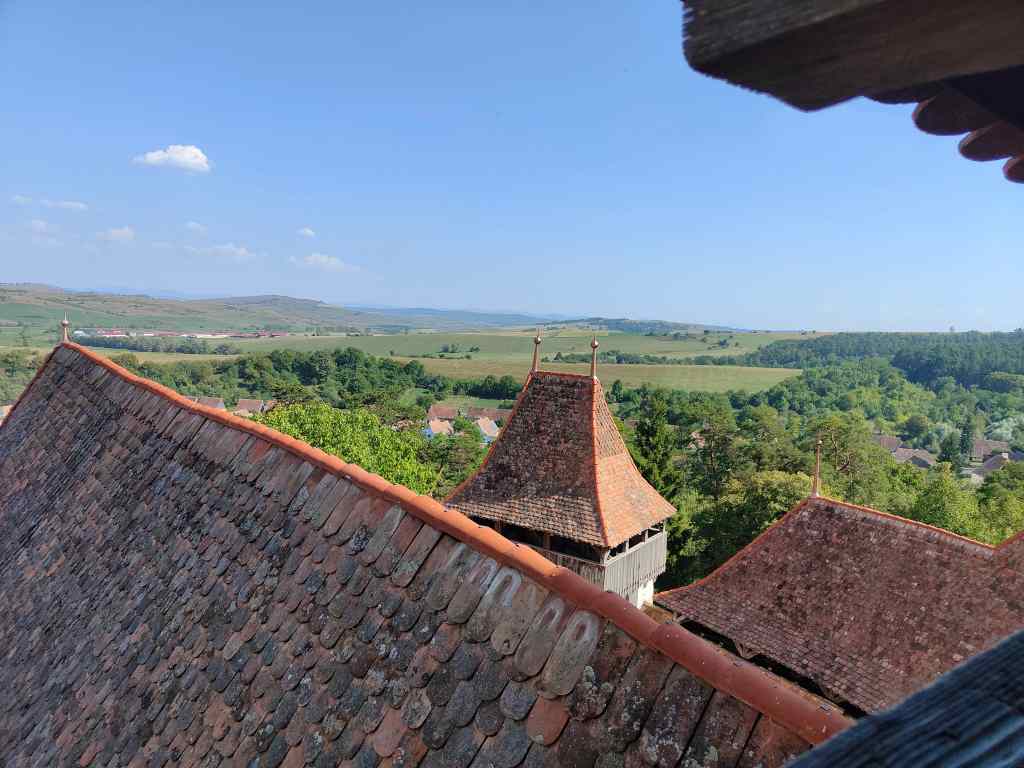
After strolling through the peaceful village, I headed for the fortified church, whose bell tower offered much better views (and a safer set of stairs) than the one at Harman. I stayed there for a while enjoying a gentle breeze.
From Viscri I drove towards Sighisoara (subject of tomorrow’s blog), where I had booked a hotel for the night. On the way, I passed through another charming Saxon town called Saschiz, whose fortified church was supplemented by a protective fortress. In total there are seven Saxon towns and around 250 Saxon villages in Transylvania. It would have been possible to spend my entire holiday visiting them, but Romania has many more attractions to offer.

Next Post: Sighisoara and Alba Iulia
Previous Post: Brasov and Bran Castle
 Trouspinet travels