Modern Valencia and its City of Arts and Sciences

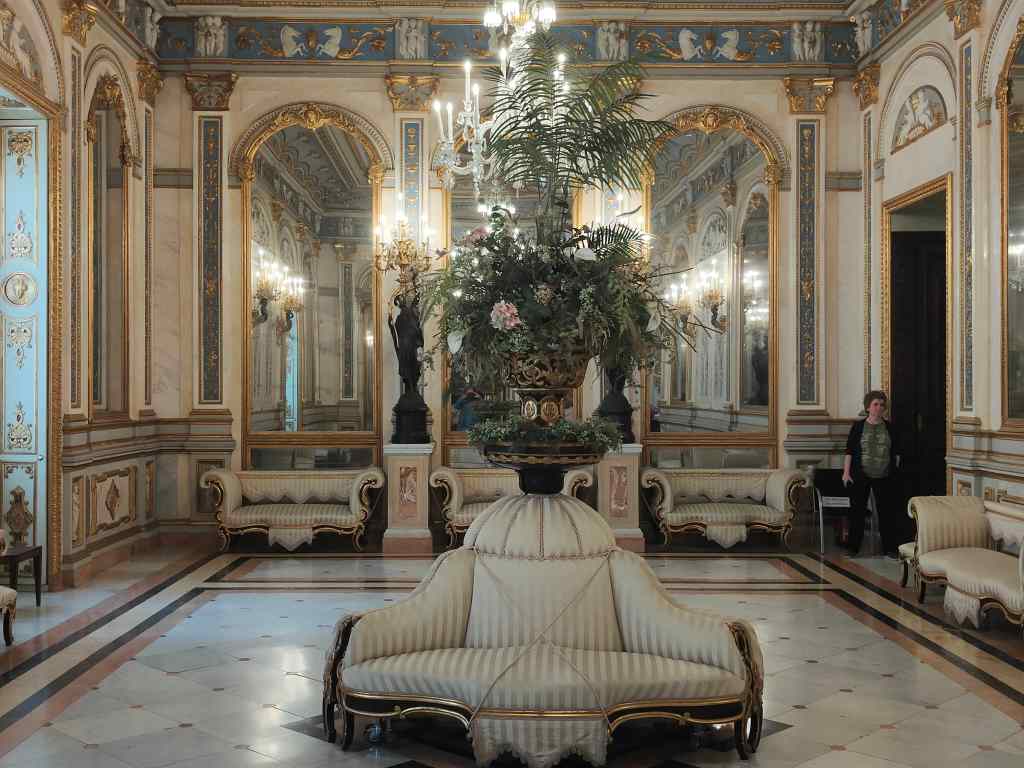
The next morning, I set off to visit the ceramics museum. Mostly, I was interested in exploring the interior of the wonderful old palace it was housed in, but the museum itself was also interesting, with a sprawling collection ranging from Roman pottery to works by Picasso.
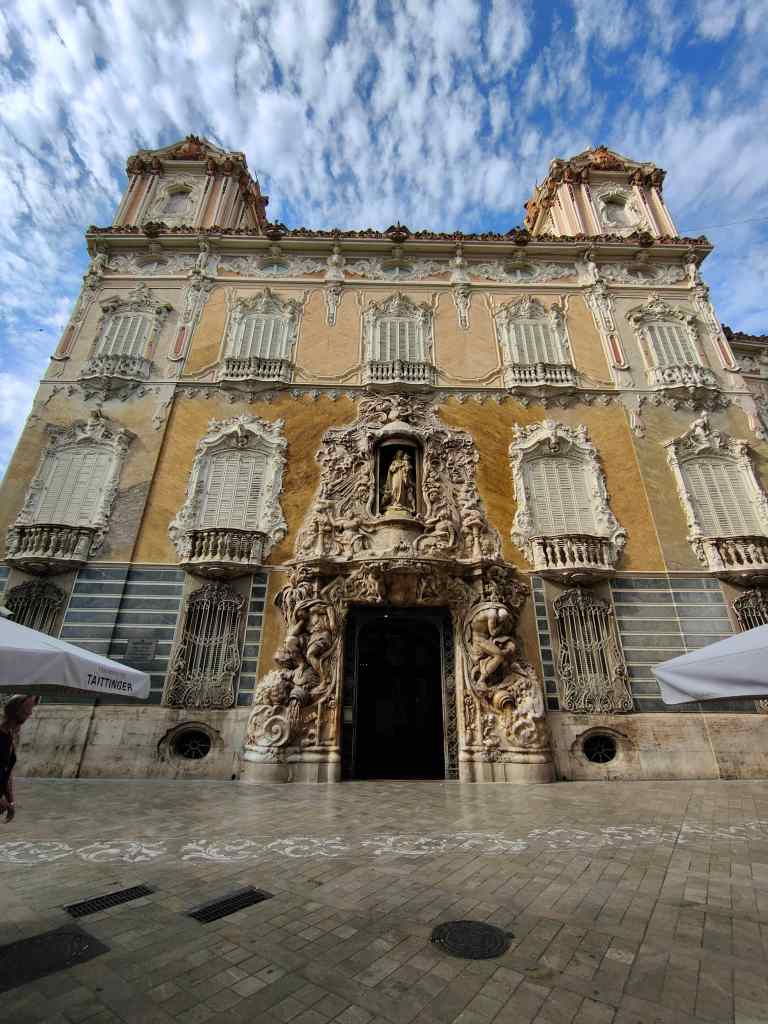
The ornate exterior of Valencia’s Ceramics Museum
Inside Valencia’s Ceramics Museum

I then made my way southeast, towards the port and the sea. The city changed character as old winding lanes gave way to wide avenues with tall, elegant buildings.
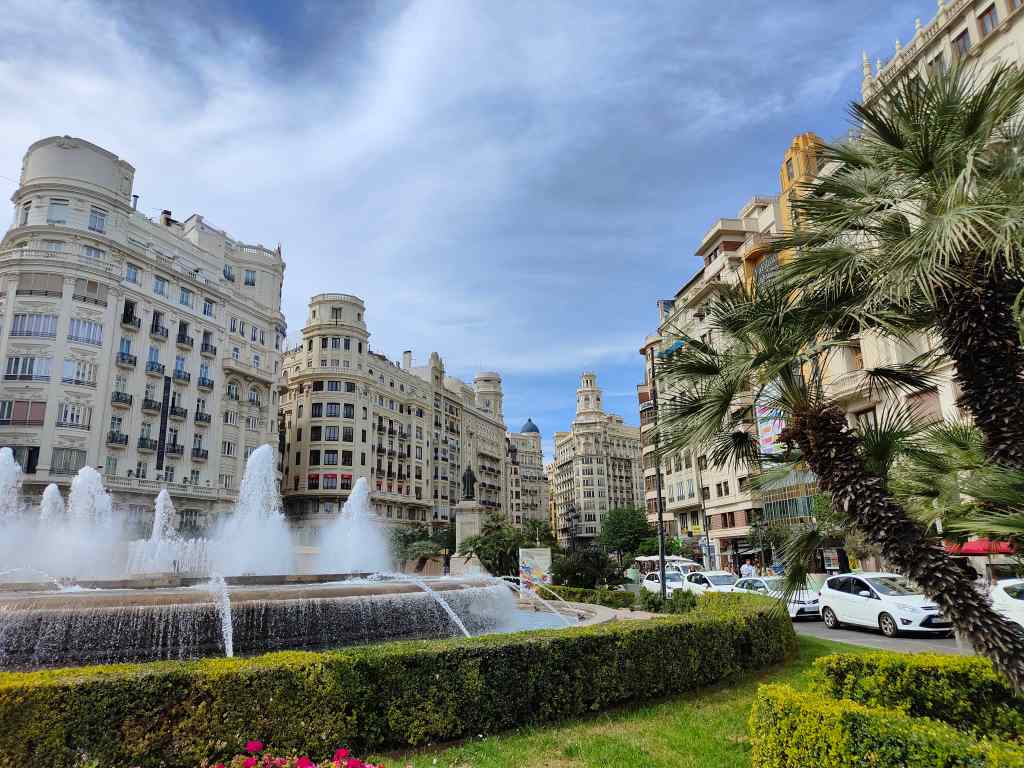
Wide streets and elegant buildings of modern Valencia

A highlight was the Mercado de Colon – a former market, which is now home to many small restaurants and cafes. Its art nouveau style reminded me of Gaudi in Barcelona, although it was the work of a different, local, architect.
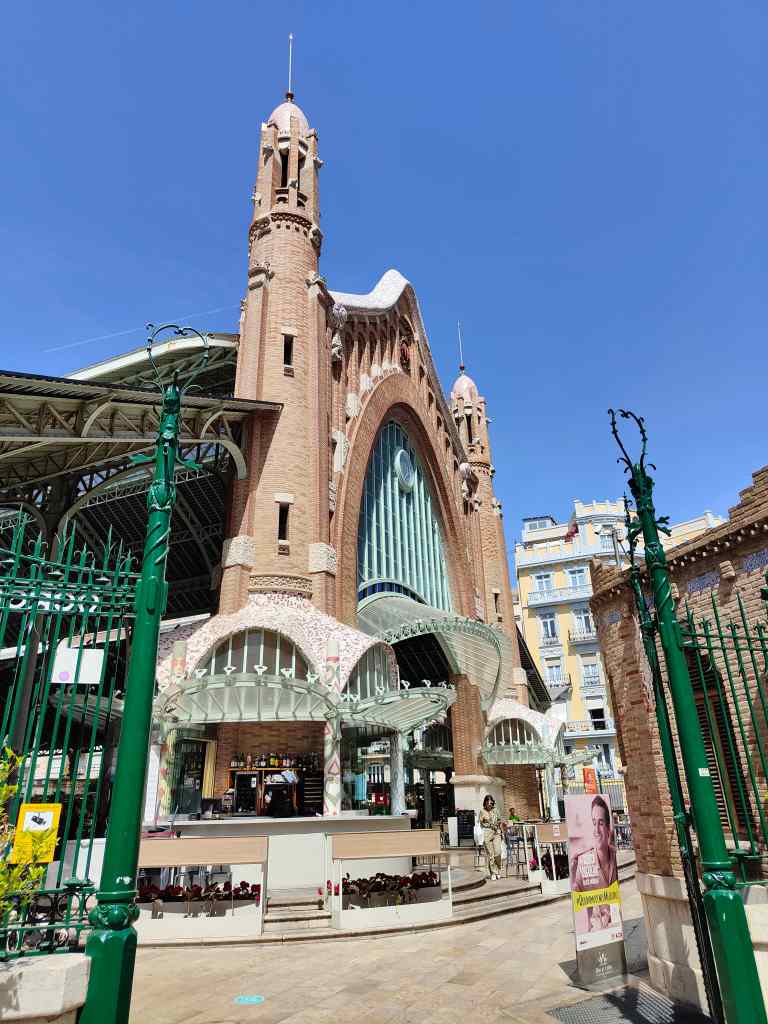
The Mercado de Colon, Valencia

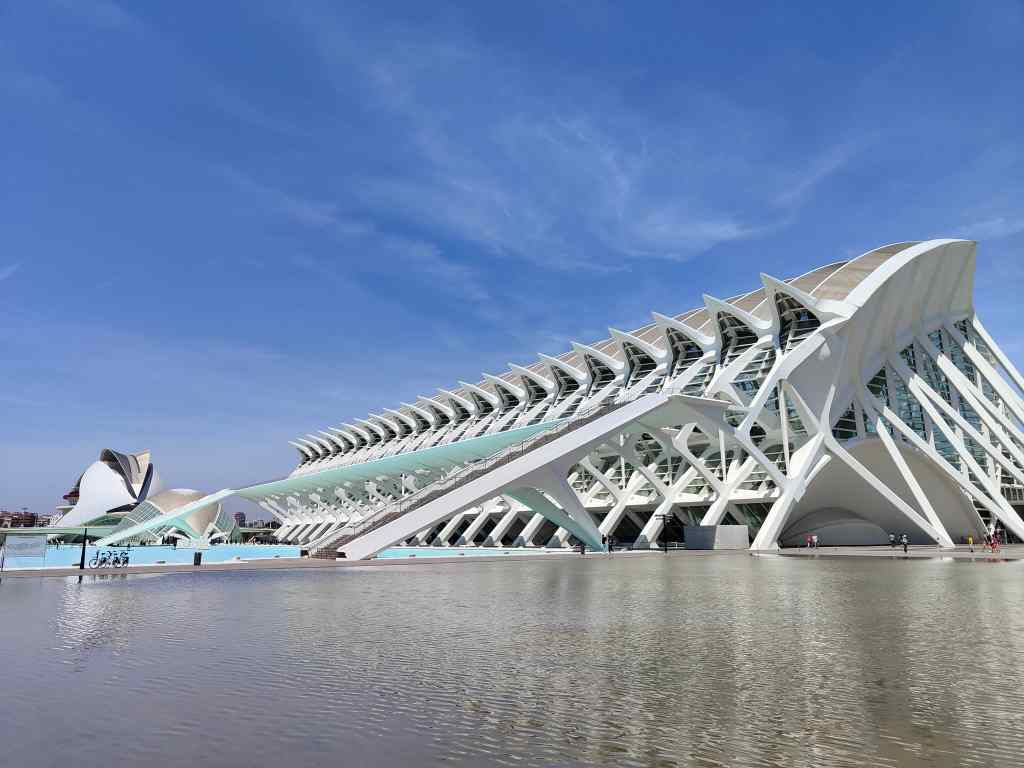
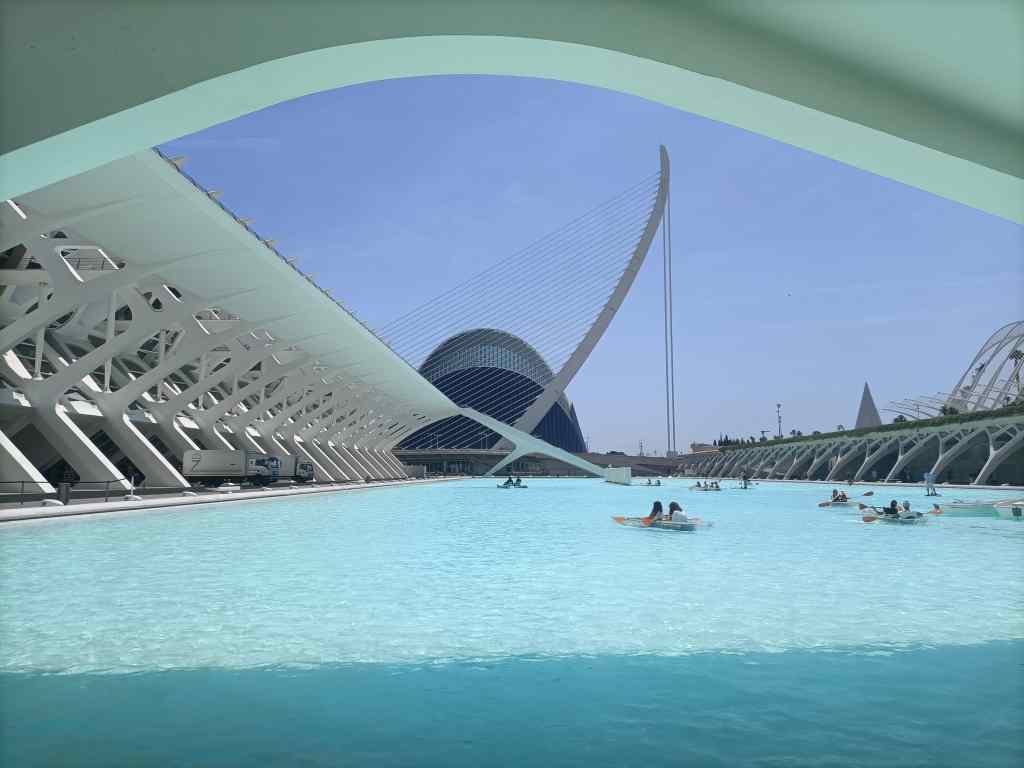
Next, I found Valencia’s Turia Park, an 8km-long stretch of gardens and sports grounds, laid out along now dry bed of the Turia river and winding around the city’s north and east sections. The park led to Valencia’s City of Arts and Sciences, which contains many spectacular modern buildings designed by architect Santiago Calatrava, including the city’s concert hall, a science museum, and a cinema.
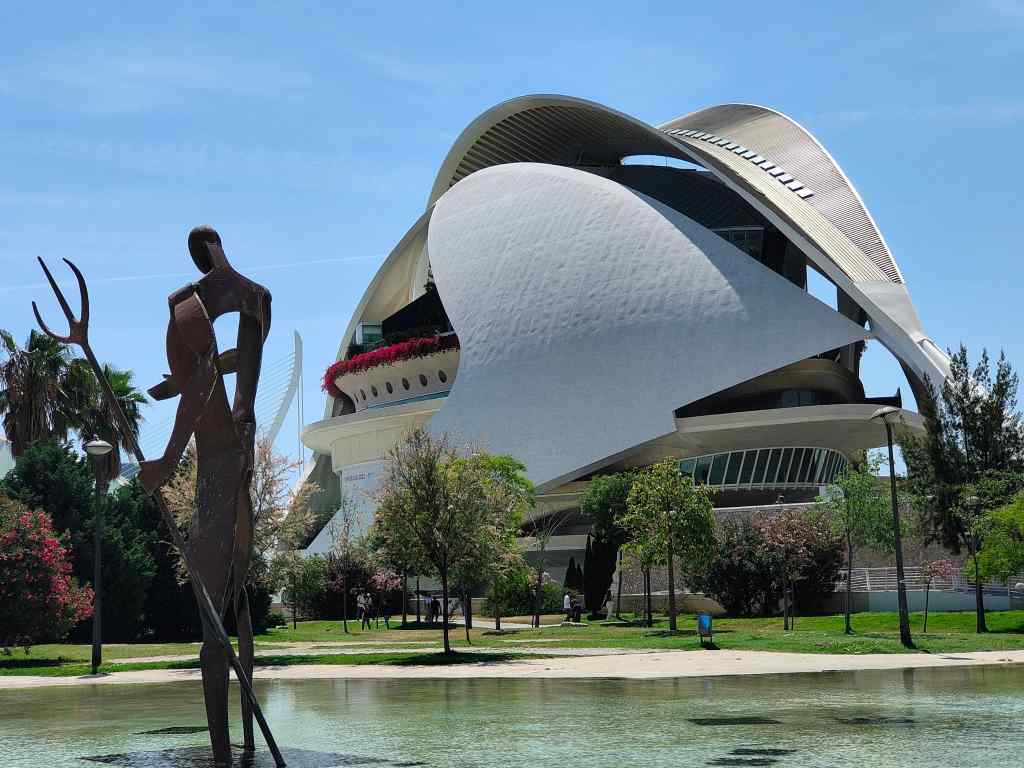
An ultra-modern venue for concerts, City of Arts and Sciences
Valencia’s Science Museum and pool for kayaking or paddleboarding
Valencia’s Science Museum, City of Arts and Sciences

It was some of the most successful modern architecture I had ever seen. The walk ended in a garden, which offered some shade against the hot afternoon sun.

A beautiful garden in the City of Arts and Sciences, Valencia

A short distance away, I could see the huge cranes of Valencia’s harbour, a reminder that the city remains an active container and ferry port.

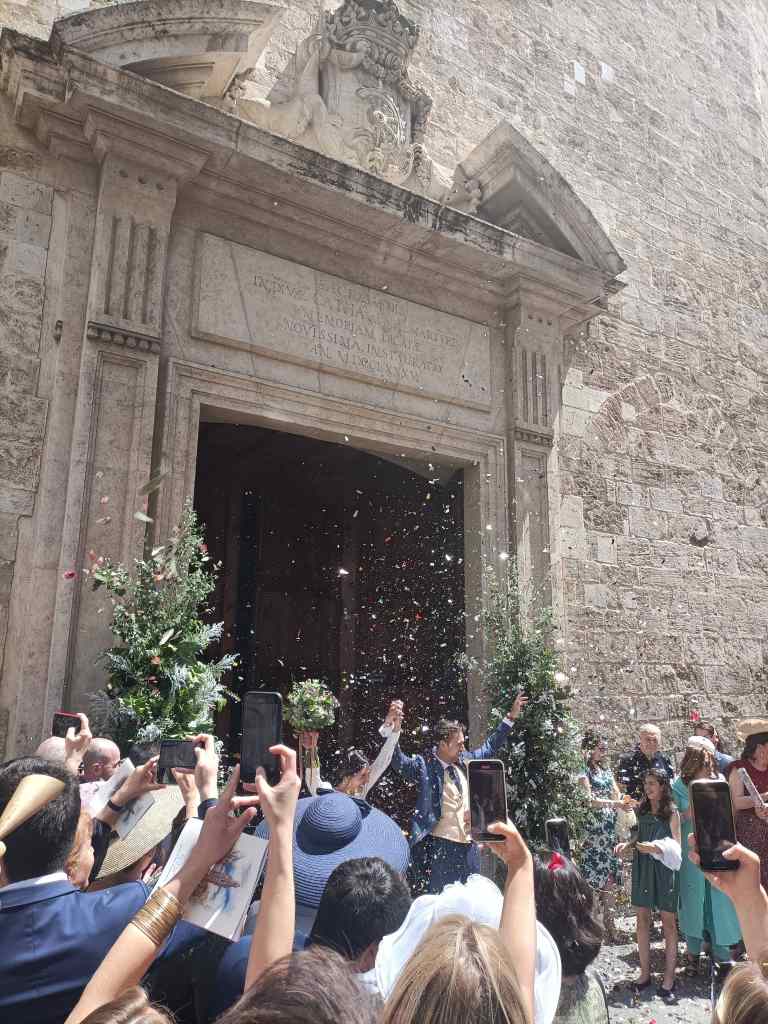
My final day in Valencia was devoted to my first Spanish wedding. It started early, at 1pm, with the marriage service in a pretty church in the old city. Emerging outside, the newly-weds were greeted by the traditional showers of confetti, plus (a Spanish custom) a salvo of military-grade firecrackers – which were so powerful that the road had to be cordoned off to protect passers-by. From the church we took a bus to an estate (“hacienda”) outside the city for a drinks reception and a large, late lunch. This was followed by sketches presented by the newly-weds’ friends and animated dancing. At 11pm, huge plates of paella were prepared and served, whislt the dancing continued. The buses finally returned to the city at 1am. It was one big, 12-hour celebration of life – the Spanish certainly now how to party!
Next Post: Cuenca

Previous Post: Valencia’s Old Town
Valencia’s old city – Lonja, Valencia Cathedral and Torres de Serranos

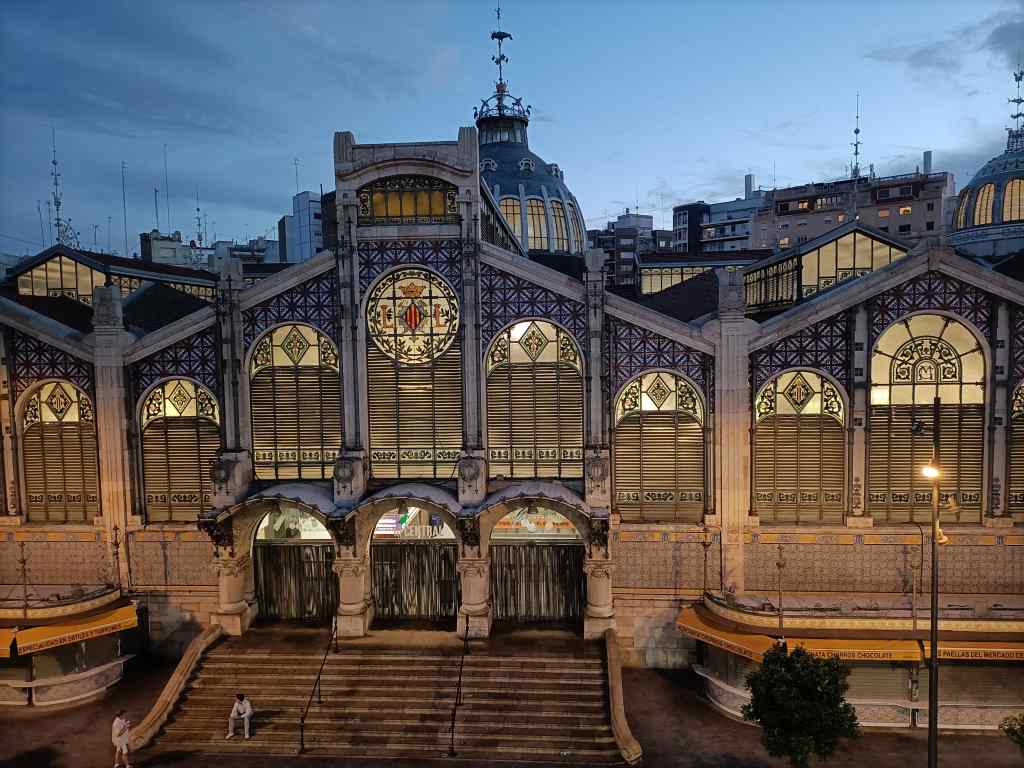
Brrrrrr. It has been a long, cold, wet………spring in London. I was beginning to wonder why I bothered to emerge from hibernation to endure such miserable weather. It was definitely time to feel the warmth of the sun again, so I seized on the chance to attend a marriage in Valencia, Spain. This is Spain’s third largest city, but is much less visited than more popular Spanish destinations. It is located on the country’s Mediterranean coast, about 350km southeast of Madrid. I arrived and found my flat – right in the centre, opposite the huge central market building.

View of the Valencia’s market at night from my flat

The next morning I visited the market to get some ham and cheese for later….

Inside Valencia Market on the next morning

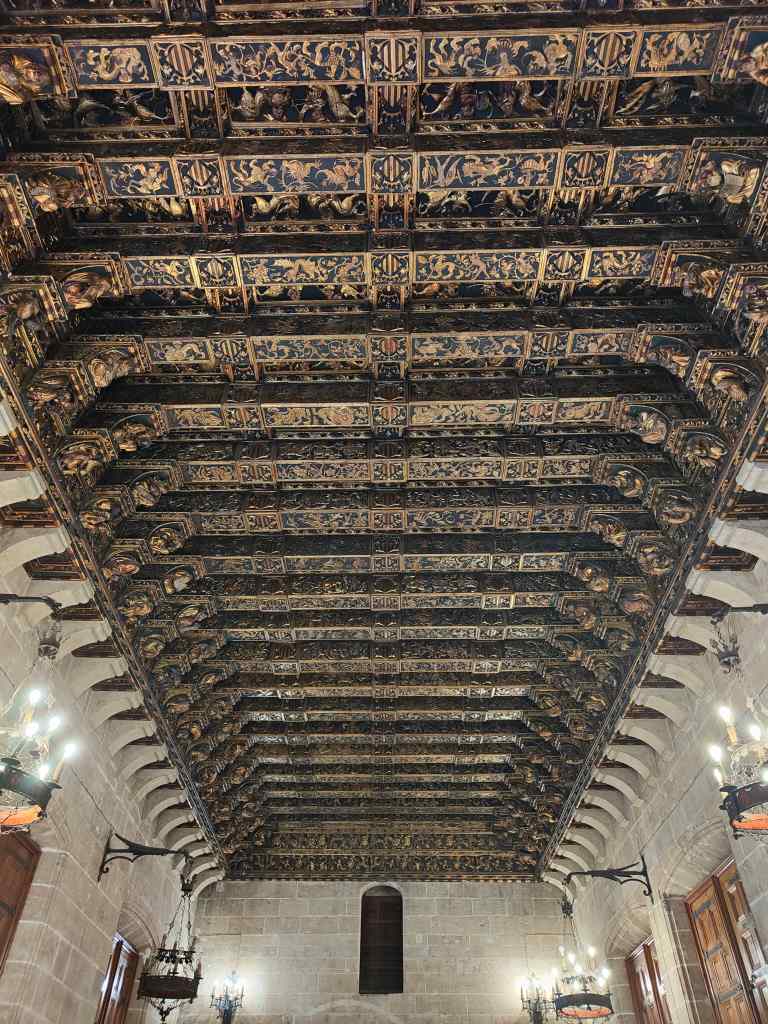
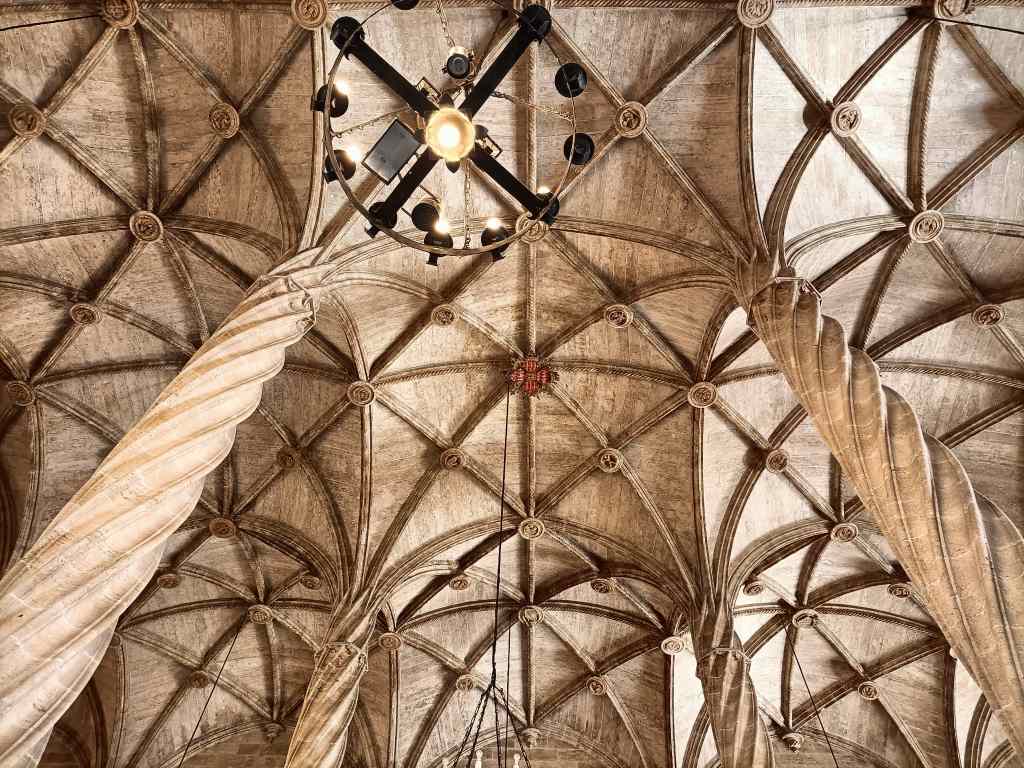
…… and then set off to discover the city. Today, I explored the “old city” with its winding lanes and shady squares. Valencia’s golden age was in the 14th and 15th centuries, when it was a centre for trade with other Mediterranean cities. One of my first stops was a building dating from this period – the UNESCO-listed Lonja. It has two wings – a trading hall, where contracts were settled, and a maritime tribunal, for settling disputes.

The Lonja, Valencia from the outside
The ornate ceiling inside the hall of the maritime tribunal…
….and the ceiling of the trading hall, Valencia

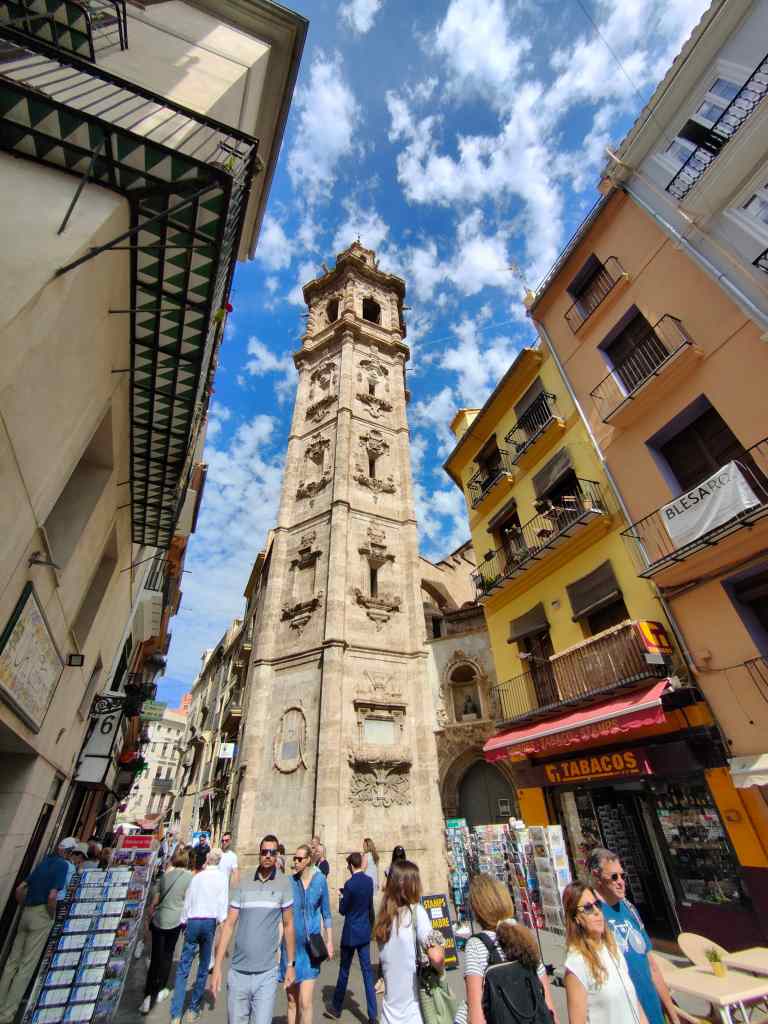
I spent a pleasant morning wandering around, occasionally popping into some of the many ancient churches or stopping for a drink in one of the countless cafes. Sitting outside in the sun was a blissfully experience after the past few months in London’s rain. It was a pleasantly warm 25C; May is a good time to visit, before the summer heat becomes oppressive.

The old town hall, Valencia
Typical street scene in Valencia
One the many squares in Valencia’s old city, viewed from my café

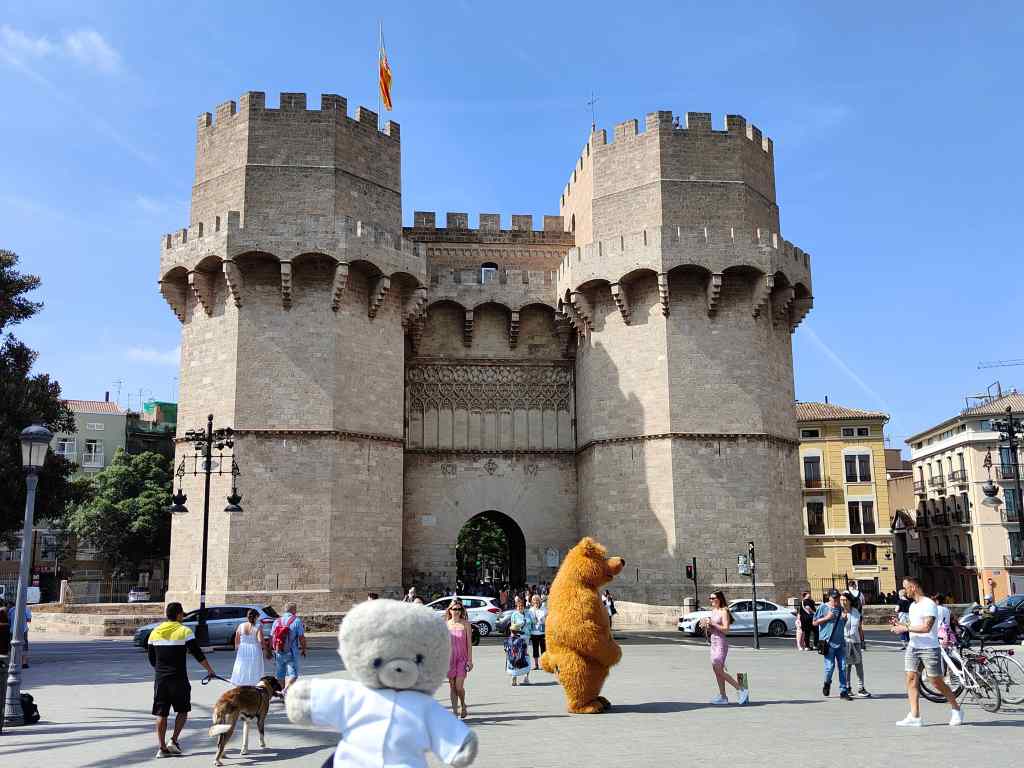
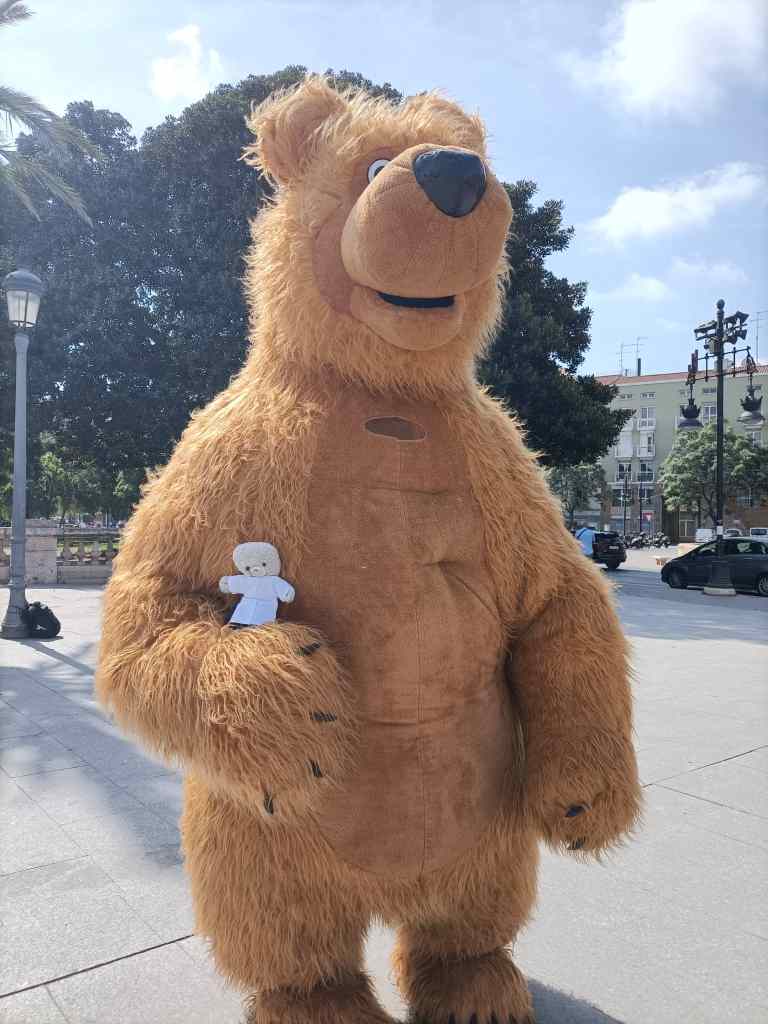
The old city used to be surrounded by a wall, but all that remains of it now are two gates, of which the 14th century Torres de Serranos is the more impressive.  There, I thought I had met a fellow bear, only to discover that in reality it was a human dressed in a costume. For a reason I cannot understand, some other humans would occasionally give him money. I felt sorry for him; it must have been very hot inside his outfit and not worth the small change he was collecting from passers-by.

The Torres de Serranos, Valencia
Not the fellow bear I had thought he was….

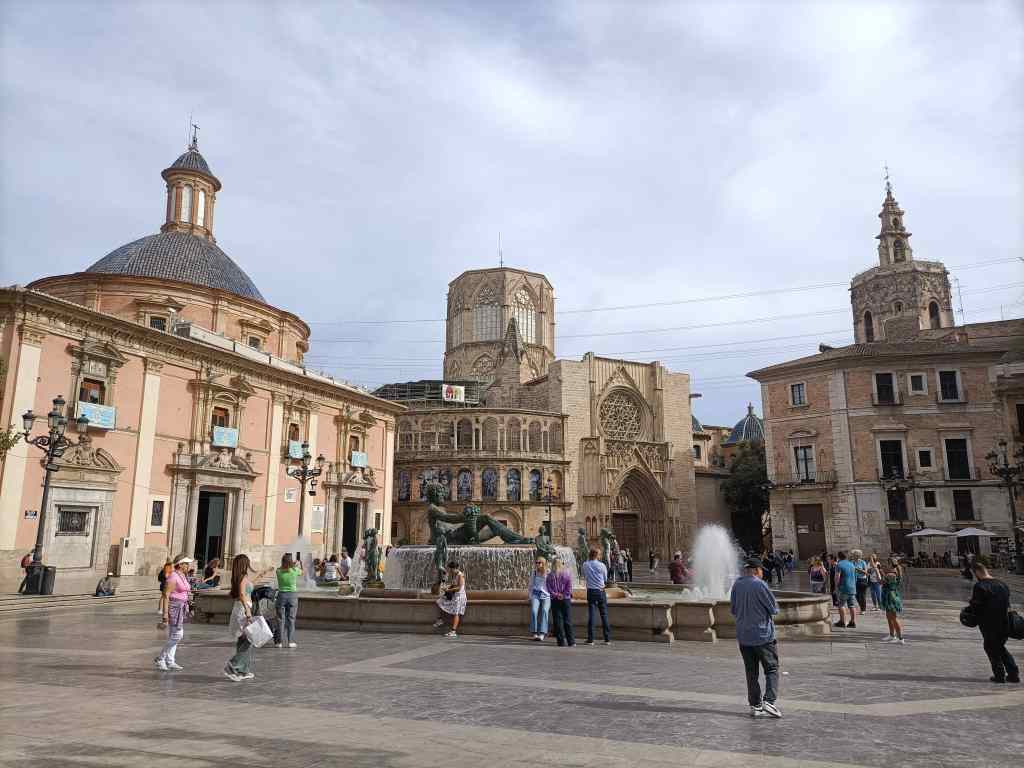
Next, I found Valencia’s cathedral, which has a famous relic – supposedly the cup Christ drank from at the last supper.

The chapel housing Christ’s cup from the Last Supper (in the middle)

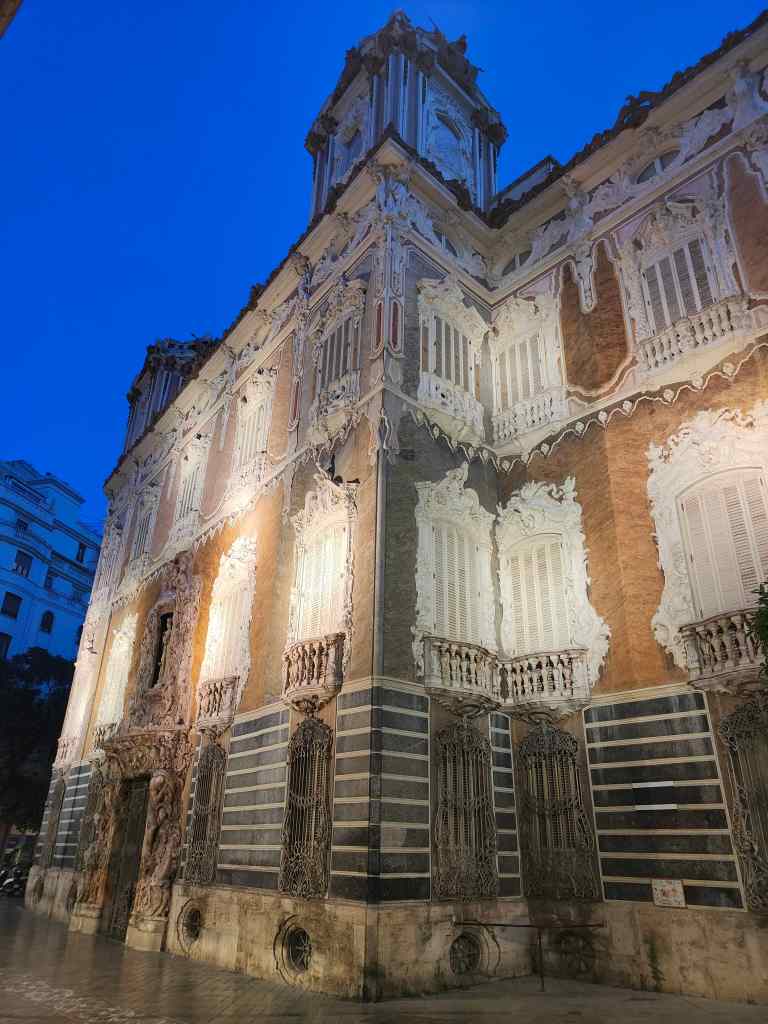
On my way back to my flat, I bumped into what was possibility the prettiest building I had seen so far – the Palace of the Marqués de Dos Aguas. It was originally a gothic building but was converted to its current Baroque appearance in the 18th century. It now houses a ceramics museum, which I decided to visit first thing next day.

One of the most elegant palaces of Valencia’s old city

Back in my flat, I enjoyed bread, cheese, ham and some good Spanish red wine………with my window wide open to enjoy the evening air. Not something I could do back home in London in May!

Next Post: Valencia – City of Arts and Sciences

Blog at WordPress.com.

Up ↑