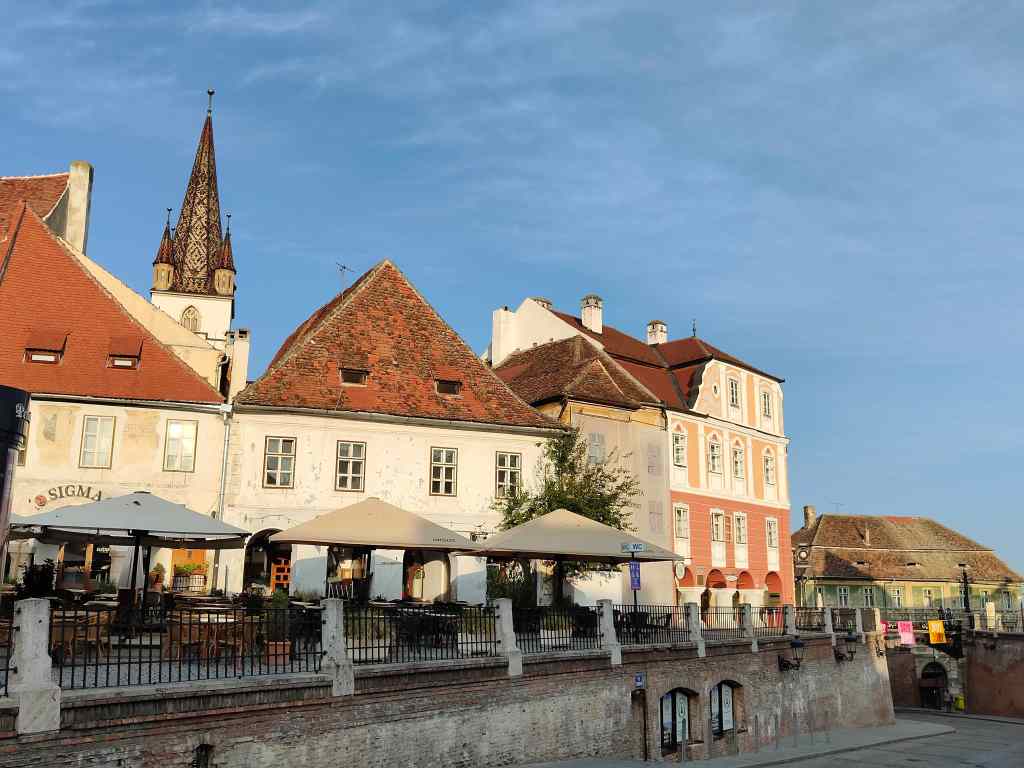
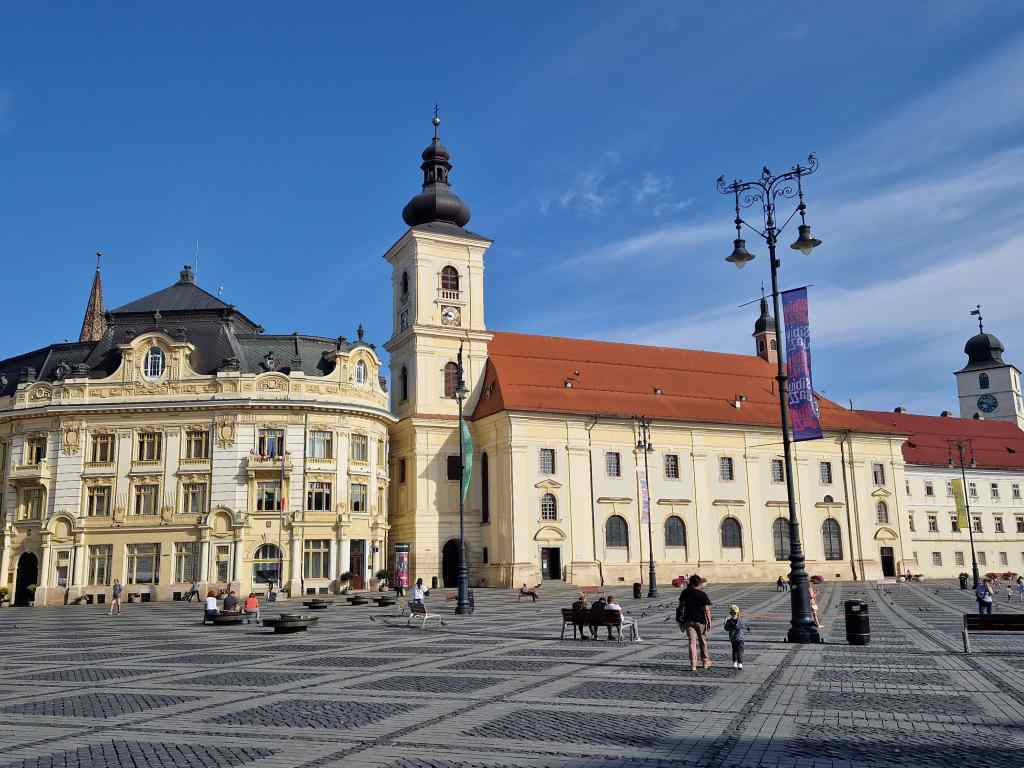
Today I was in Sibiu, originally a Roman village called Cibinium, then becoming yet another Saxon town and later an administrative centre for the Austrian province of Transylvania under the Habsburgs. Sibiu is also called by its Saxon name of Hermannstadt, and signs in German are visible everywhere, even if the language is no longer spoken here. The city is also an artistic centre. In the 19th century famous figures like Strauss, Brahms and Liszt performed here; today the city has become a sleepier backwater, but still hosts Romanian’s most important jazz festival.
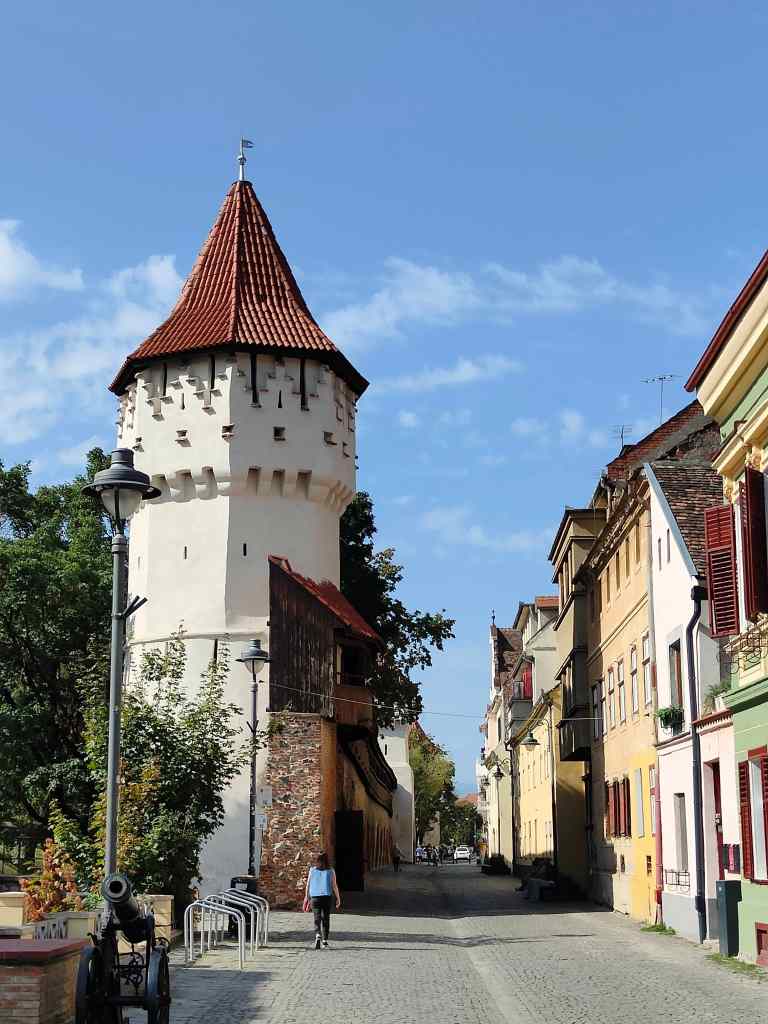
The elegant squares of Sibiu in the early morningSibiu’s main squareSibiu’s ramparts
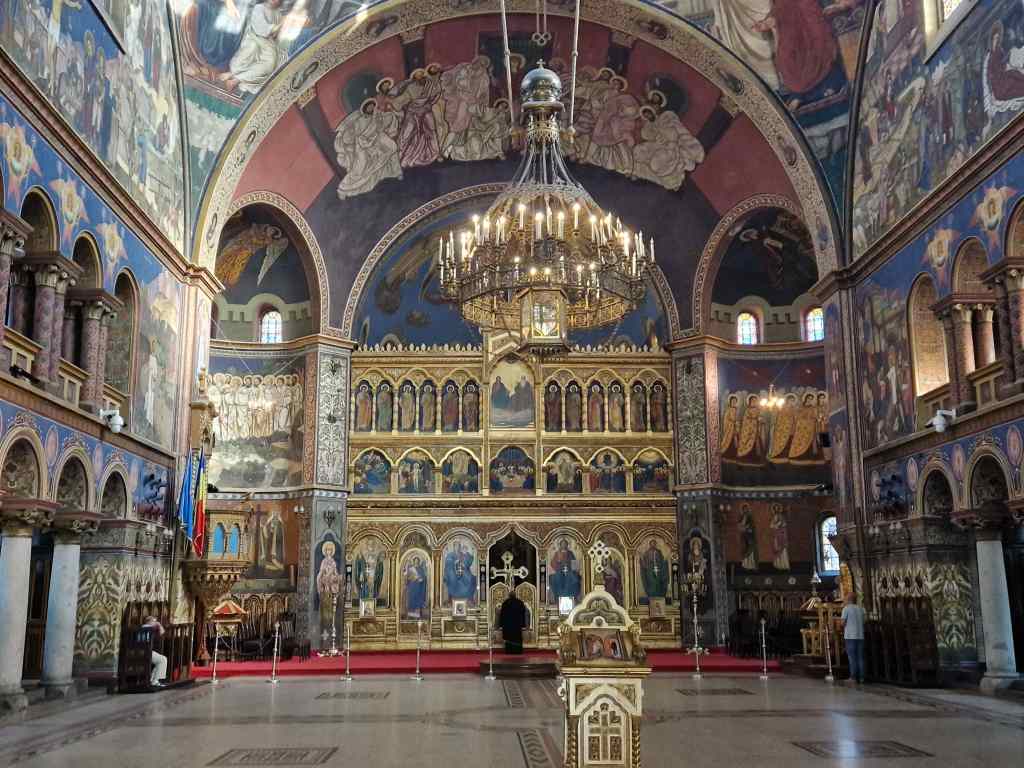
Sibiu has lots of beautiful buildings dating from different centuries and is a great place to simply stroll around, hopping from one outdoor café to another and occasionally visiting a pretty church – which is exactly what I did.
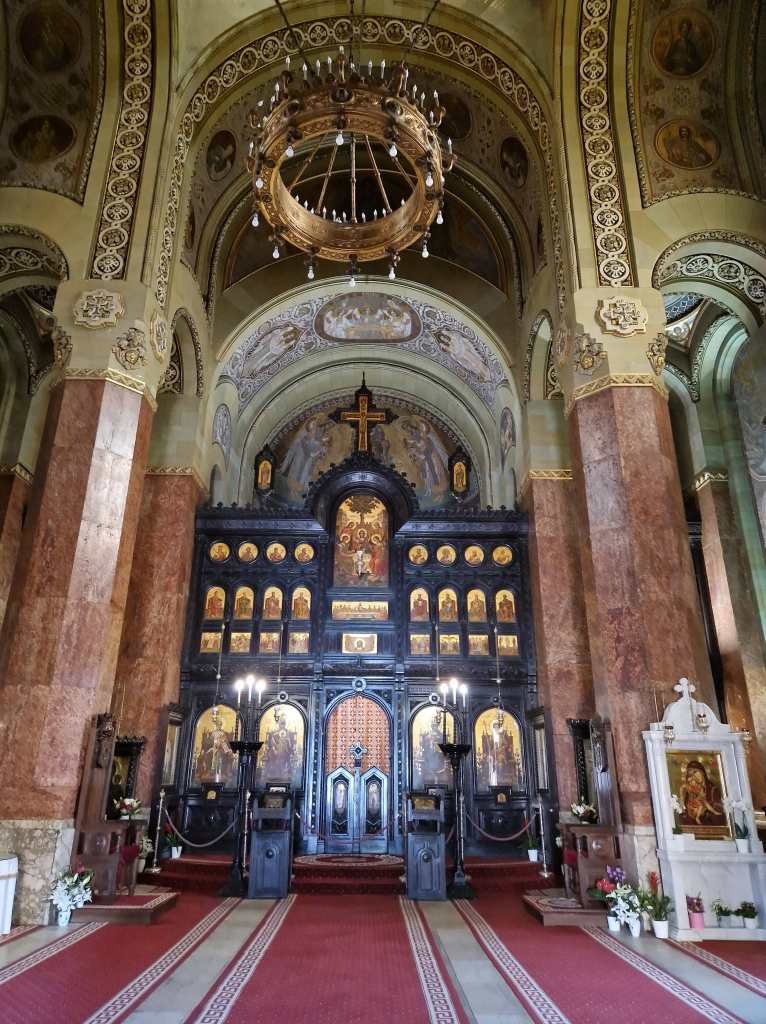
Outside and inside the orthodox church, Sibiu
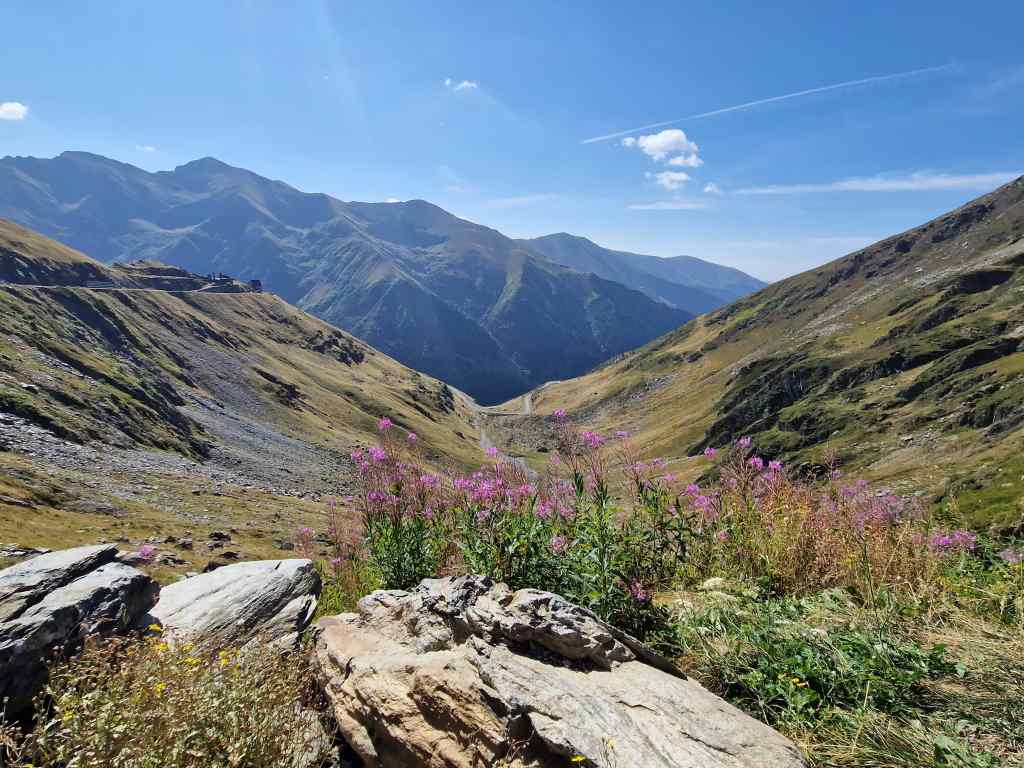
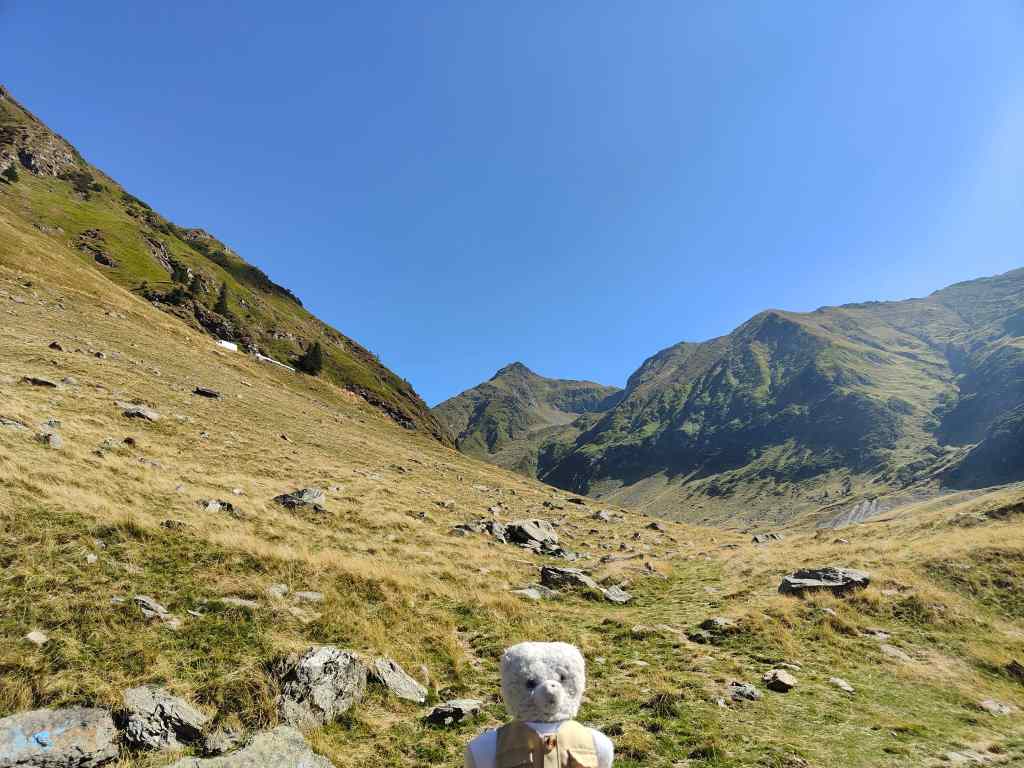
After a relaxing day in Sibiu, it was time to head back to Bucharest. I chose to take the famous Transfagarsan Road, claimed by the UK TV show Top Gear to be the greatest drive in the world. The road snakes steeply up a mountain, with lots of hairpin bends. It might be a great place for testing out a sports car, but in my opinion, it is far from being the world’s most scenic or most difficult route. The views were impressive, but I have seen better in the Central Asia, Alps, the US or Scotland.
Mountain scenery on the Transfagarsan
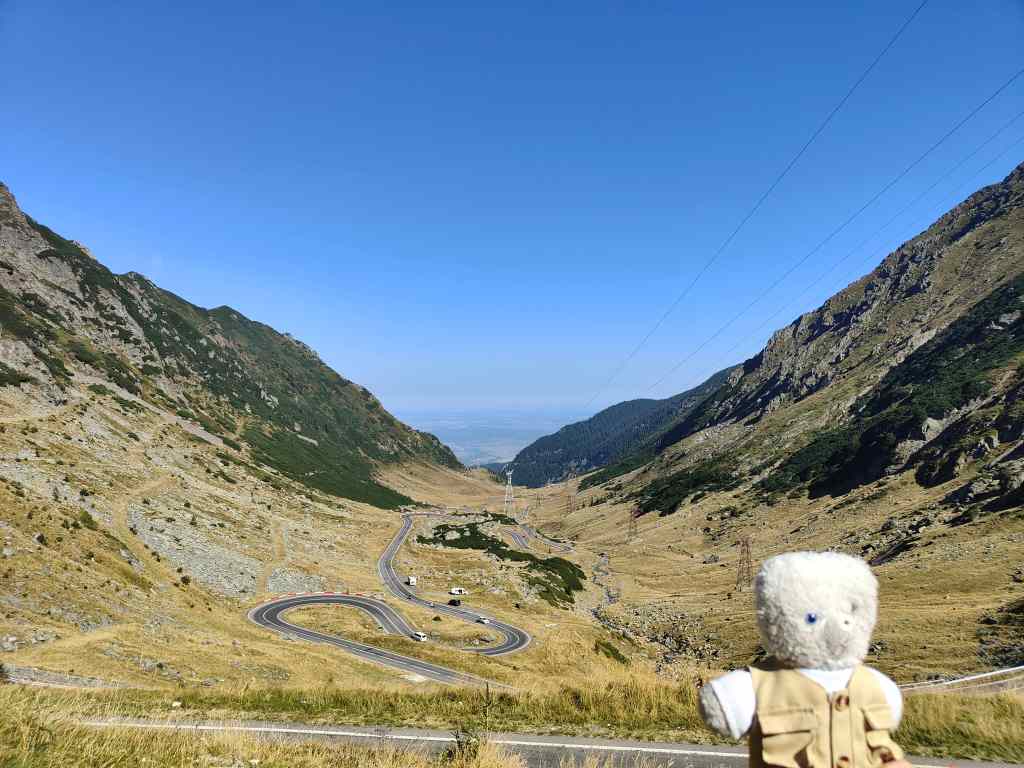
After Top Gear’s endorsement, the Transfagarsan road became very popular; fortunately, I got there early and was visiting outside of the main tourist season, but there was still a steady stream of traffic. This included a few idiots in supercar Porches and Lamborghinis, who overtook on blind corners. The best view of the road is from the top, where nearly all the hairpins can be seen at once, but the parking area there was overflowing so I settled for photos I had taken further down.
More pretty sceneryTransfagarsan Hairpin bends
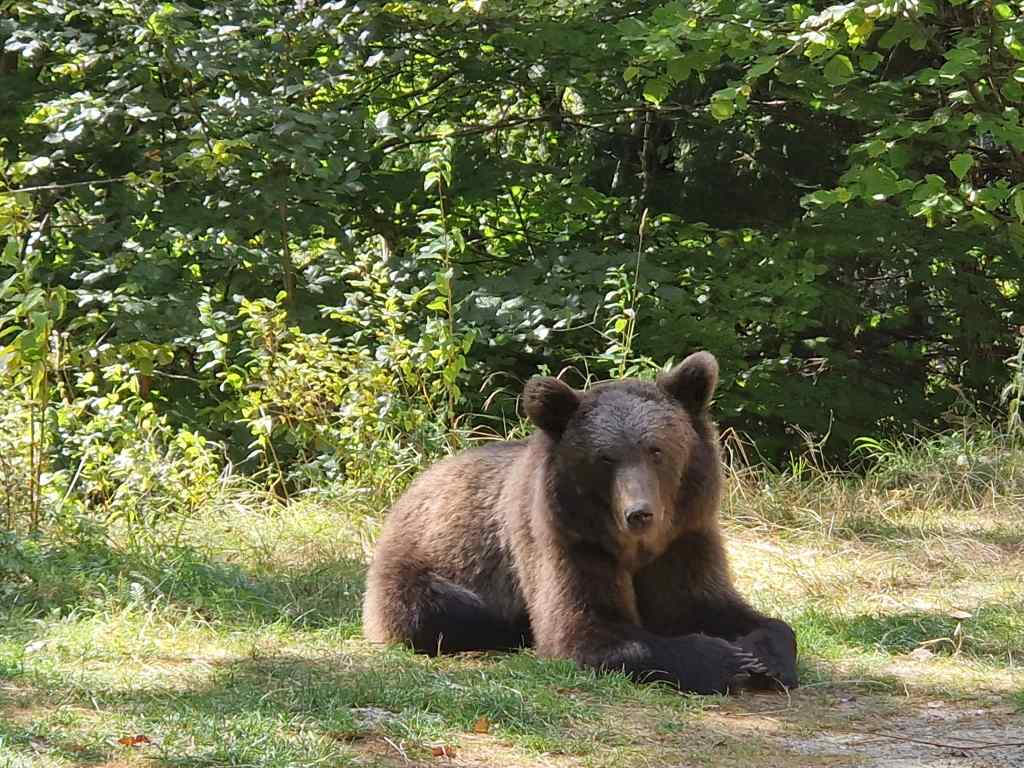
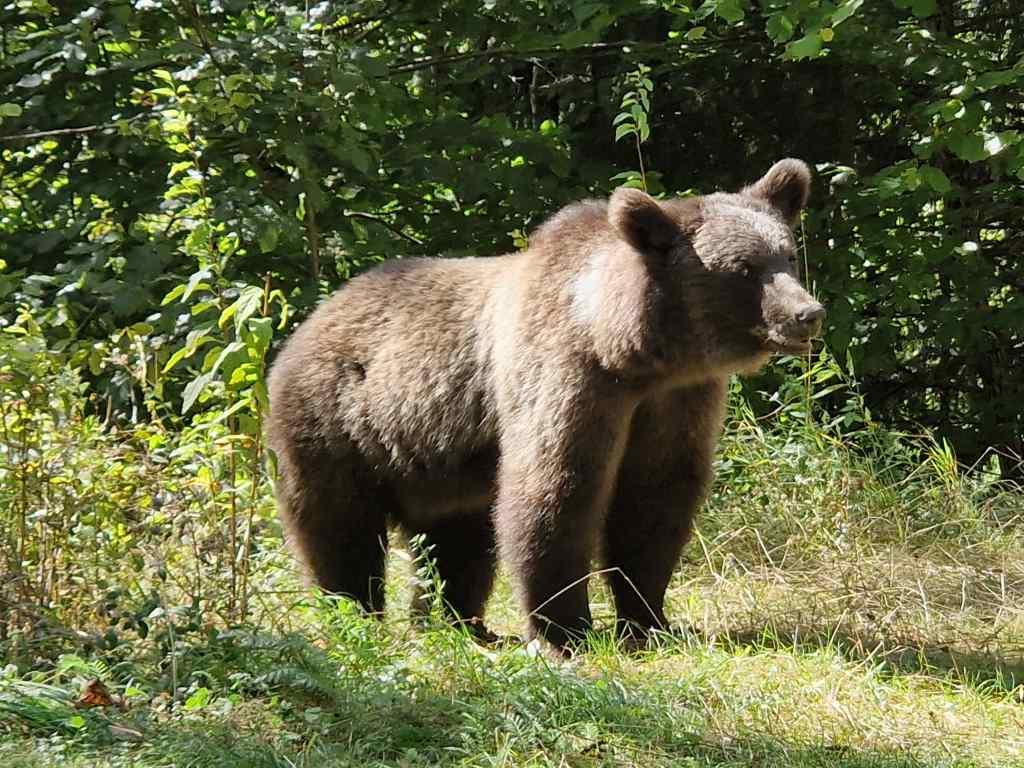
Descending back down from the mountain, the road plunged into a dense forest beside a large lake. I was driving along carefully when suddenly I had a very pleasant surprise – in a lay-by there was a young, friendly fellow bear – one of roughly 9,000 that live in the wild in Romania. I pulled over; he was unperturbed by my presence and let me stop to take photos from a few metres away (from the safety of my car – unlike teddies, wild bears can be unpredictable).
A friendly bear
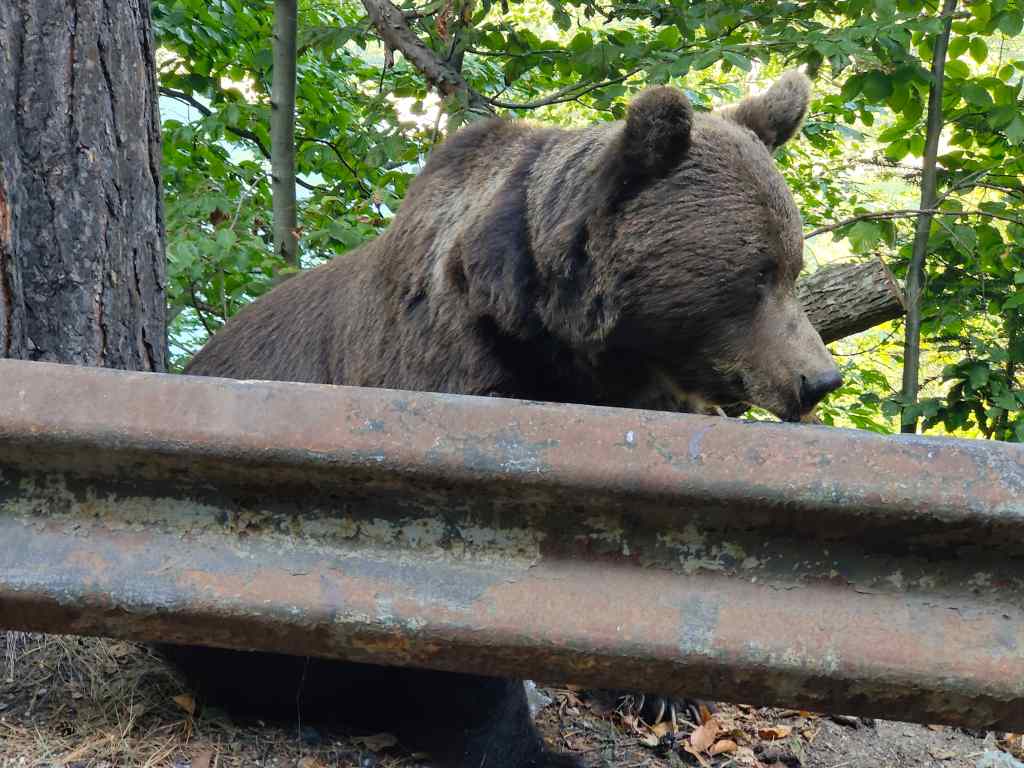
A few kilometres further along the road, I met another bear. He was older and looked rather tired and sad. Maybe he would be a good candidate for the “Libearty Sanctuary”…..
A sad bear
Meeting fellow bears in the wild more than made up for the slight disappointment of the Transfagarsan road, and after leaving the mountains I drove the remaining rather dull three hour stretch to Bucharest in excellent spirits.
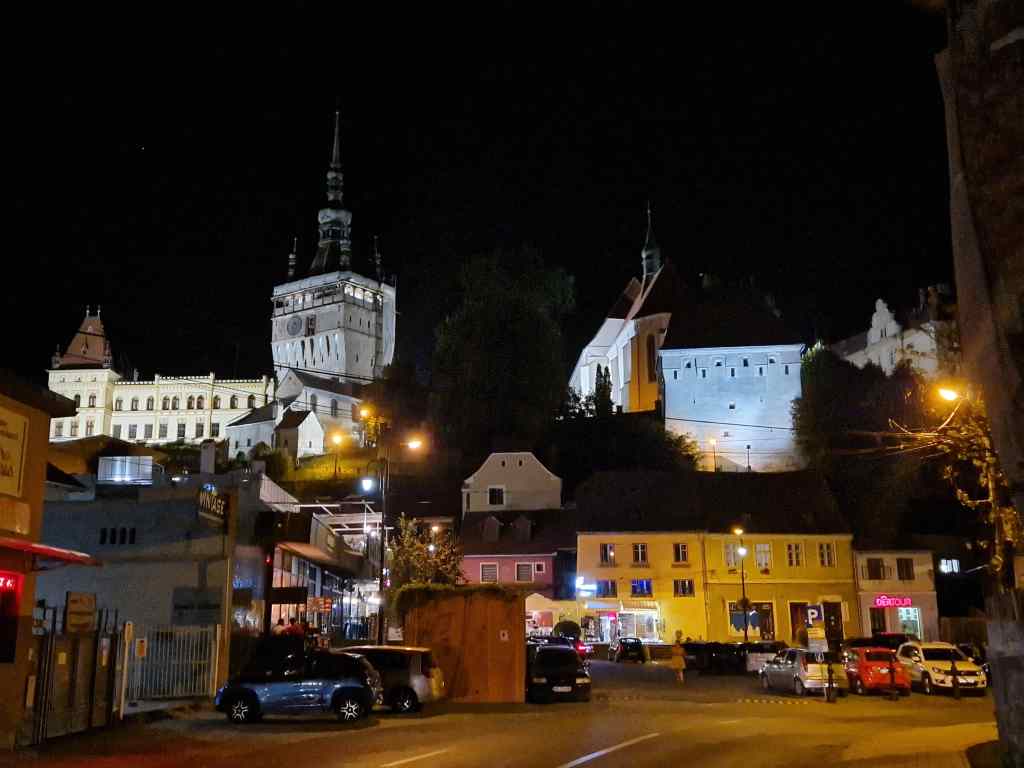
I arrived at my destination – Sighisoara – in the evening, and immediately went out for dinner. On the way back to my hotel I admired the spectacular old town, sitting on top of a steep hill.
Sighisoara Old Town at night….…and in the early morning
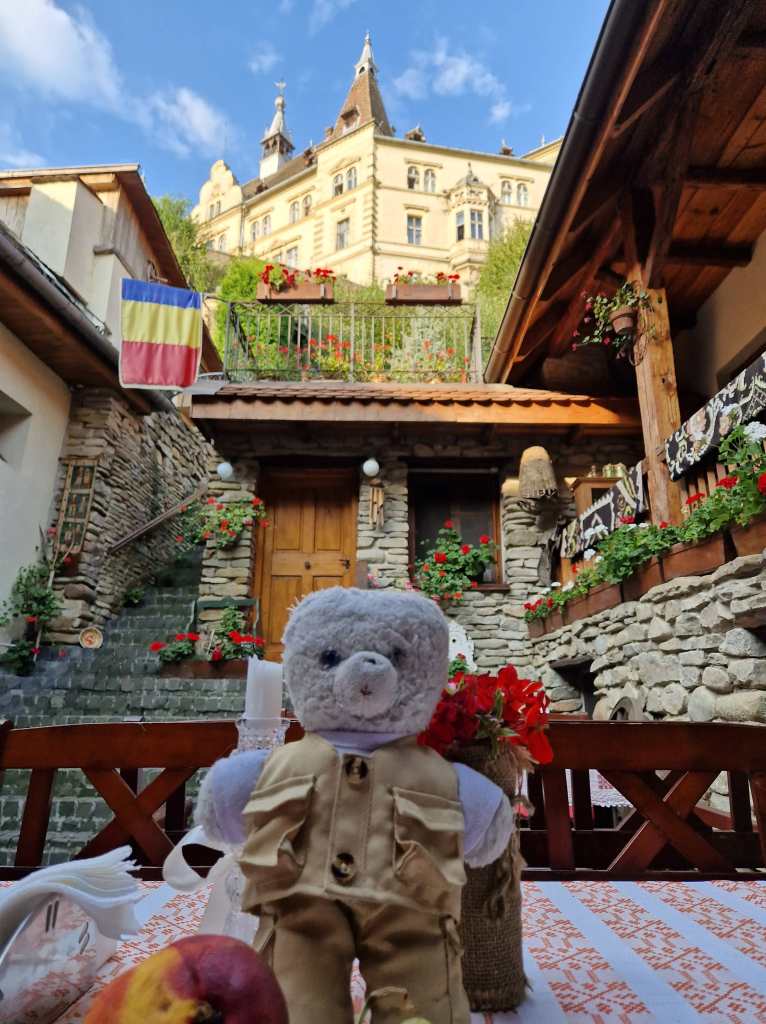
The next day I had breakfast in the small courtyard of my hotel with a great view of the castle, before setting off to explore.
Breakfast with a view!
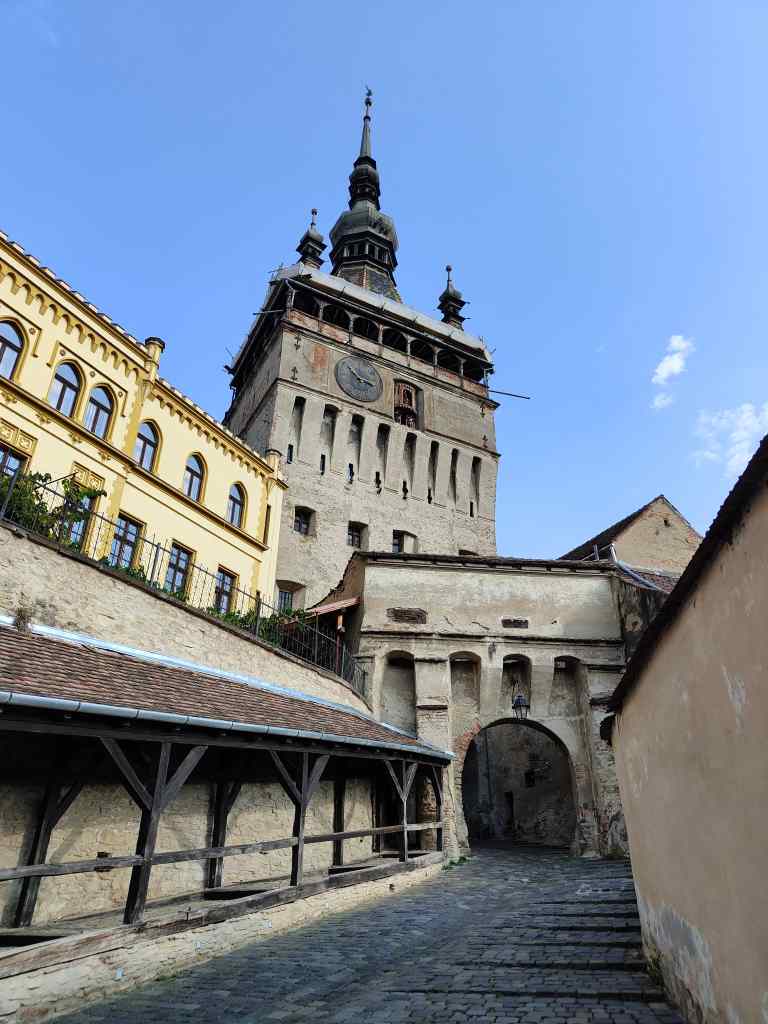
Sighisoara was – inevitably – founded by Saxon settlers in the 12th century and grew to become an important trade centre in the Middle Ages. Today it is one of the best preserved and prettiest fortified towns in the world and is very popular with Romanian tourists in the summer. I climbed up some steep steps to the old town and spent a very pleasant morning strolling around and taking in the relaxed atmosphere.
Climbing up to Sighisoara’s old townA peaceful square in the Sighisoara backstreets
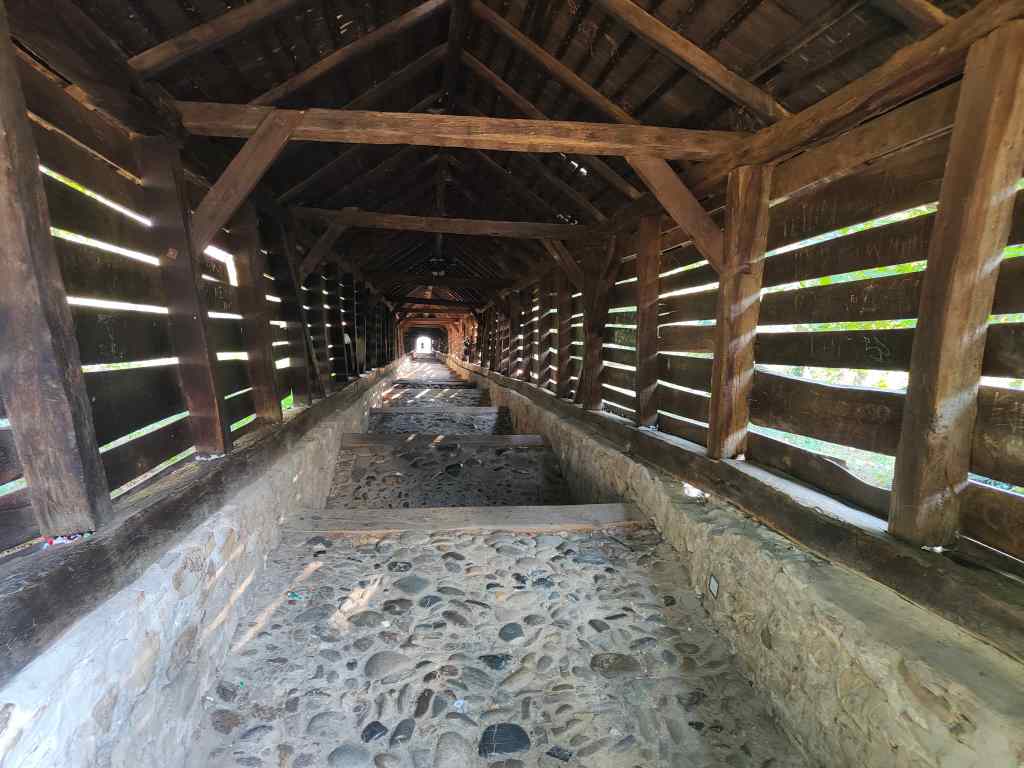
One curious sight was a long, covered staircase, built in 1652, to give children protection on their walk to the school right on top of the hill.
Luxury for schoolchildren
The school still functions to this day. I ended my tour at the central square, where, of course, I had coffee at one of the cafés.
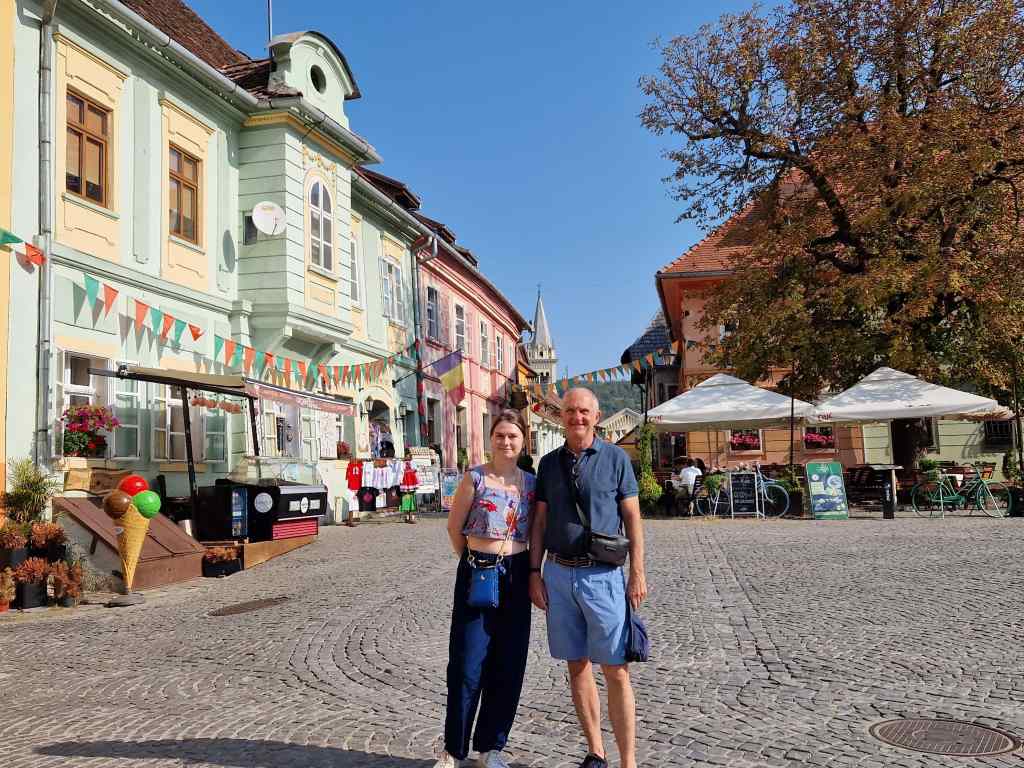
Sighisoara’s central square……which is hard to photo without other tourists getting in the way!
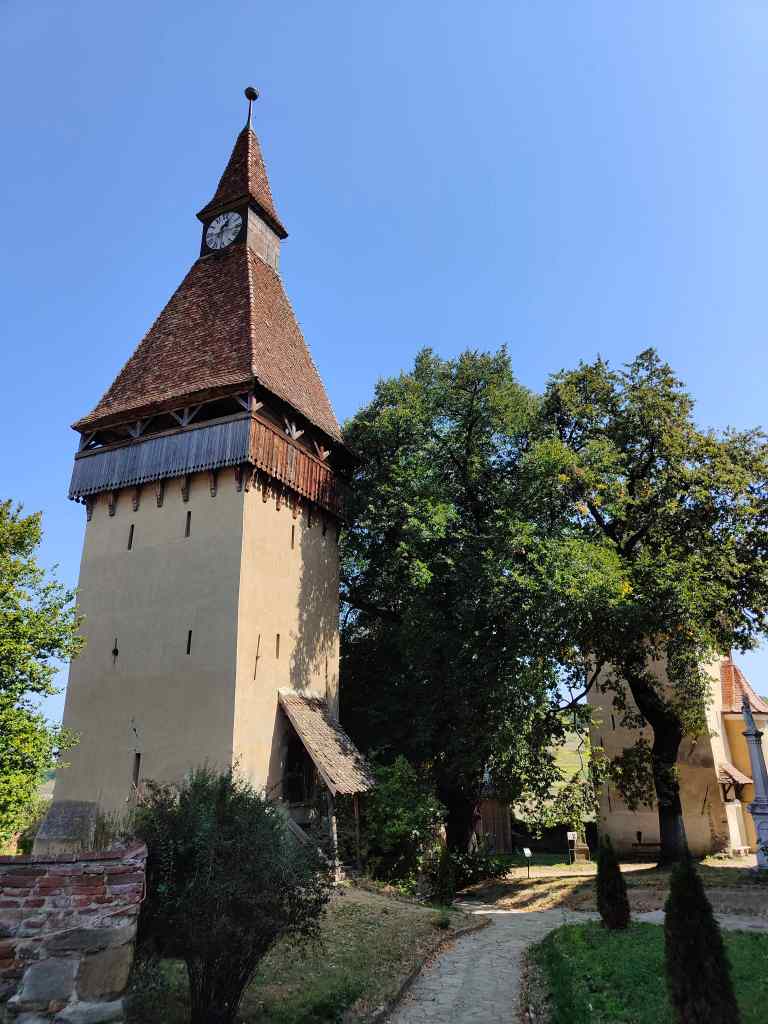
It was time to move on. I checked out of my hotel and continued driving west. My first stop was yet another Saxon village, called Biertan, which of course had a fortified church.
A tower in Biertan’s church
One original feature of the church was a prison for unhappy couples. The local priest kept squabbling spouses locked up there in a small room, until they resolved their differences.
A prison for unhappy couples, Biertan Church
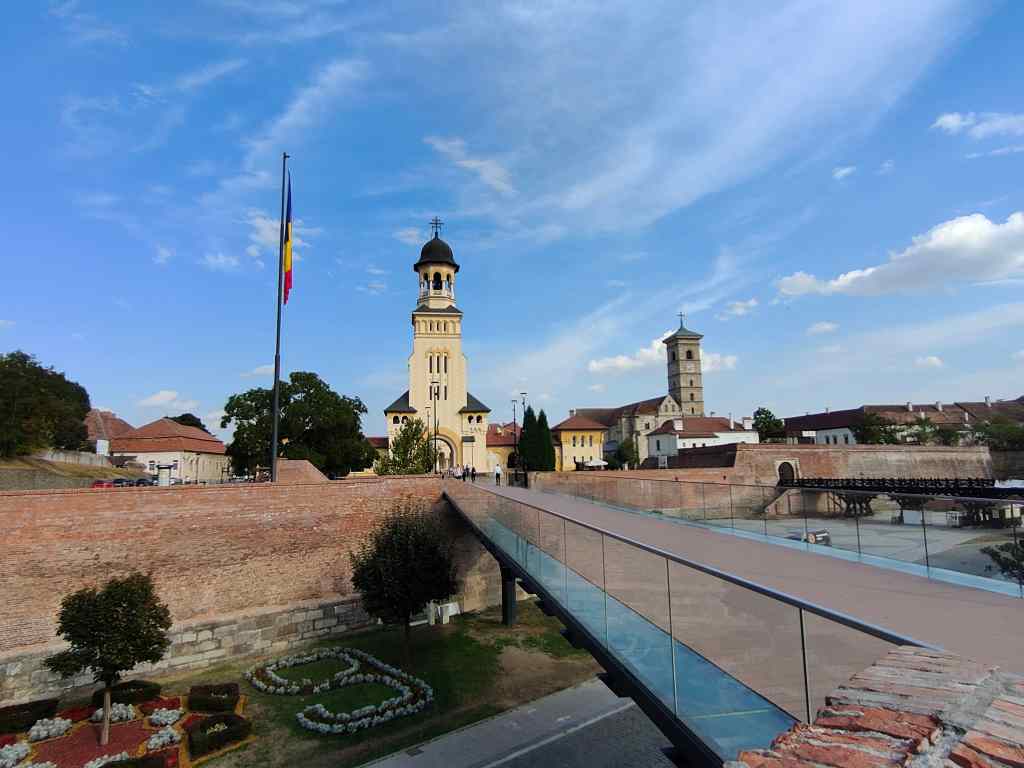
From Biertan I drove to the city of Alba Iulia in the centre of Romania. This had been the largest Roman settlement in the Dacian province of their empire, and housed an important fort, some of whose ruins are still visible. Centuries later, the city was a major hub of the eastern part of the Austro-Hungarian empire, whose rulers built the impressive citadel that is the main tourist attraction of today.
A defensive gate at the entrance to the citadel of Alba Iulia
Later, churches and monuments were added inside the defensive walls. At the end of the first world war, the citadel was where the union of Transylvania with the rest of Romania was signed, creating the modern-day Romanian state, and a few years later in 1922 Ferdinand and Maria were crowned here as king and queen of all Romania in the newly constructed Coronation Cathedral.
Inside the Coronation CathedralOverview of Alba Iulia’s citadel
I found Alba Iulia to be a pleasant change to visiting Transylvania’s charming Saxon villages and towns, and to be well worth the ninety minutes detour to get there. My next destination was yet another former Saxon stronghold, the city of Sibiu – to be covered in tomorrow’s blog.
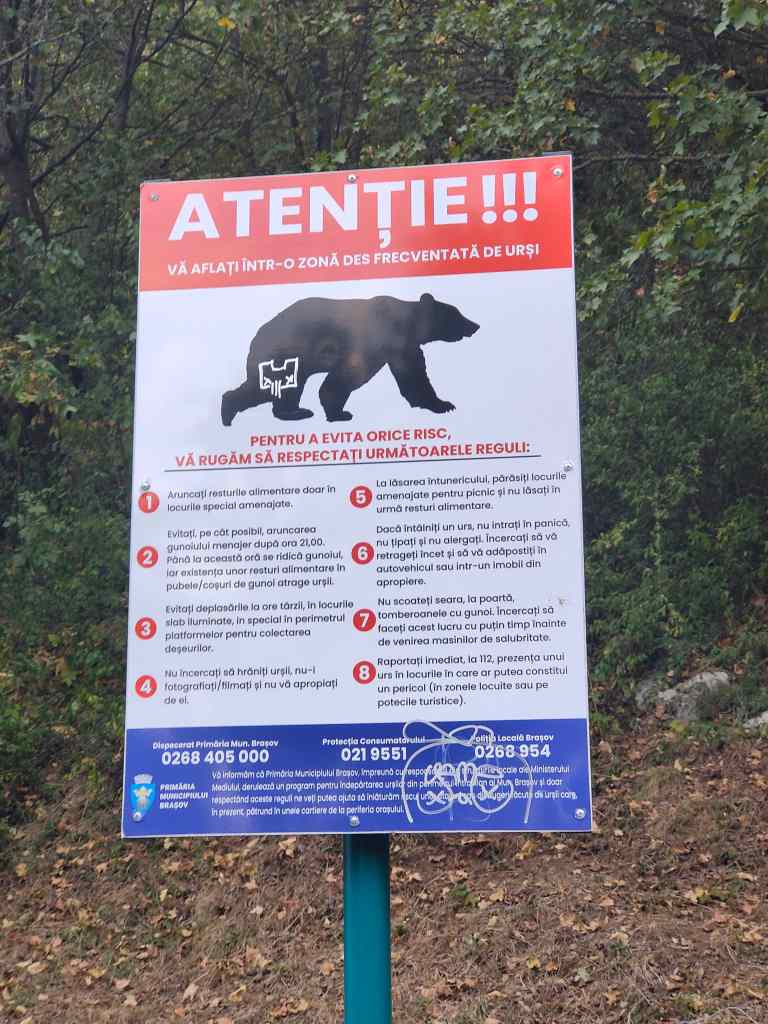
This time, my trip is to Romania in Eastern Europe, a little-known destination for most travellers, famous mostly for Dracula, Transylvania and spooky castles. After a short overnight in the capital Bucharest (more about this in a later post) I drove north by hired car to the city of Brasov, to find an interesting warning sign on the street outside of my Airbnb flat. It appears that bears are common in Romania but sadly not welcomed by the human population. Maybe I will be lucky enough to meet one of my fellow species!
Not the welcome I was hoping for
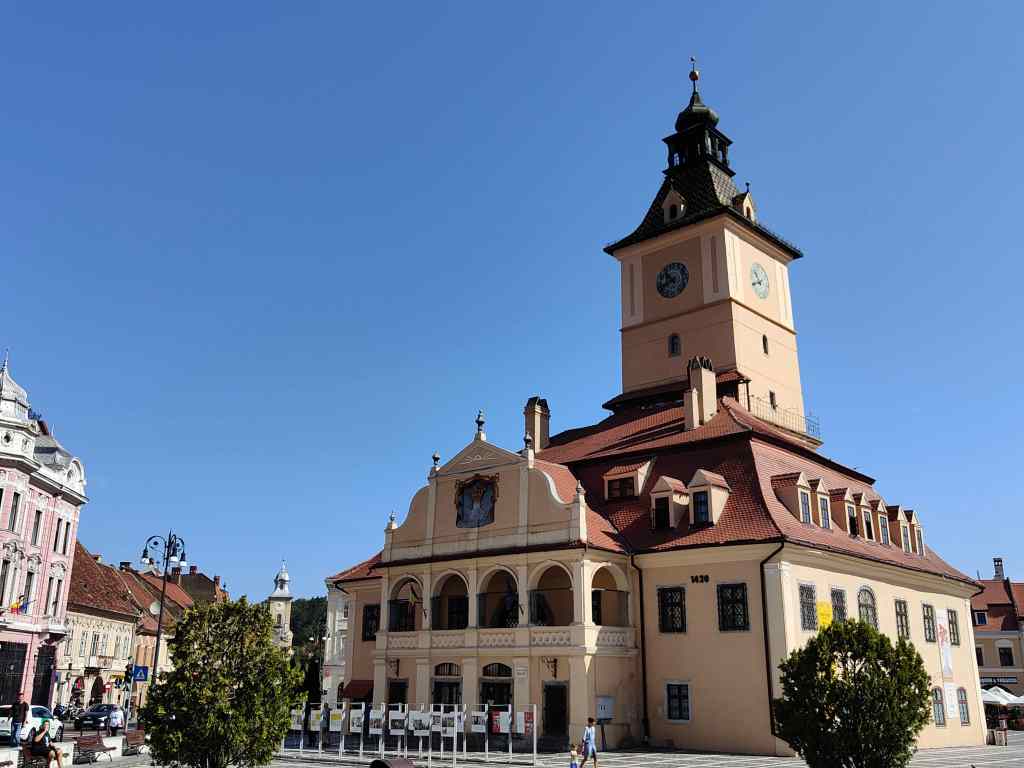
My first morning was spent visiting the city, which sits in a valley surrounded by steep green mountains, and which has a very pleasant historic centre with lots of outdoor cafés.
Street Scenes in Brasov
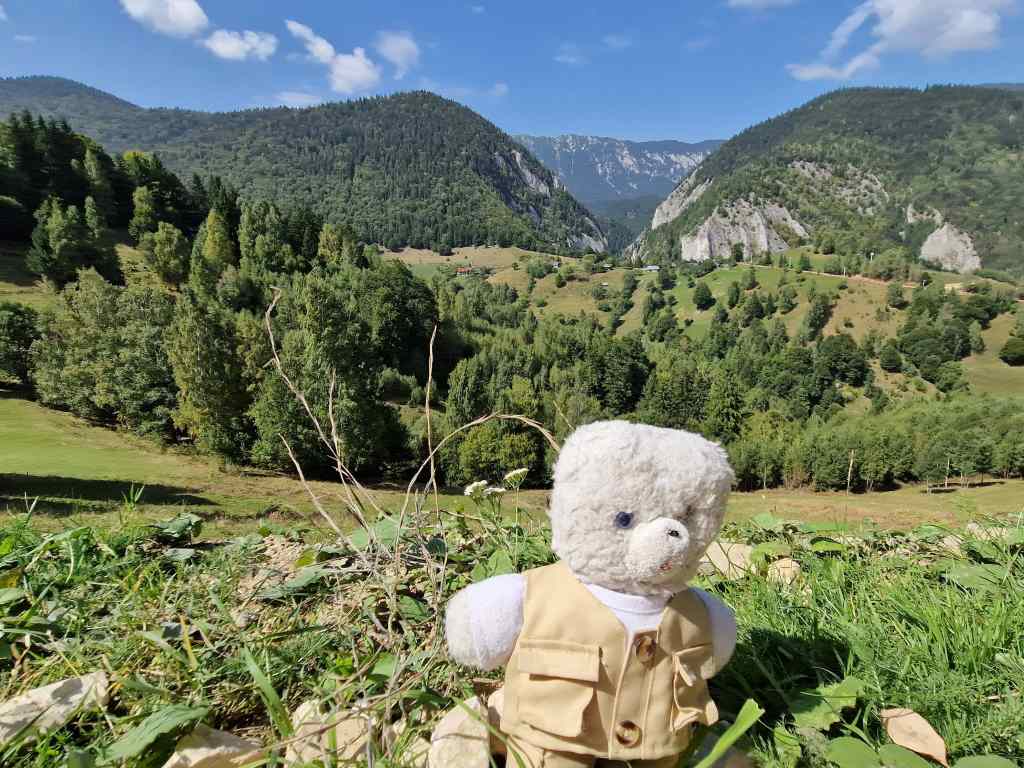
Having explored Brasov itself, I set off to visit a remote Romanian village, which my guidebook said was still locked in the past, with horse drawn carriages and people in traditional costume. I found it that had now become a place for the second homes of people earning their living in Bucharest. BMWs were more common than horses. This was to be a recurrent theme of my trip – the parts of Romania I visited were much more modern and developed than I had expected. I got over the slight disappointment of not seeing a traditional village and instead made a pleasant walk through some pretty Transylvanian countryside.
Transylvanian mountains near BrasovCountryside near Brasov
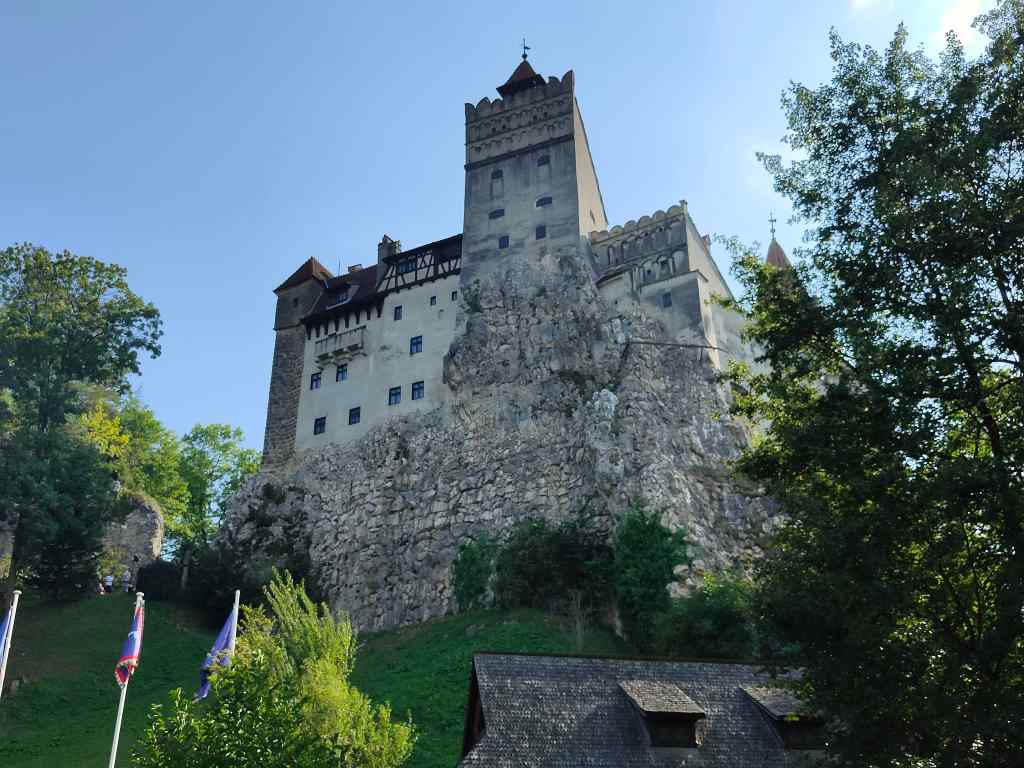
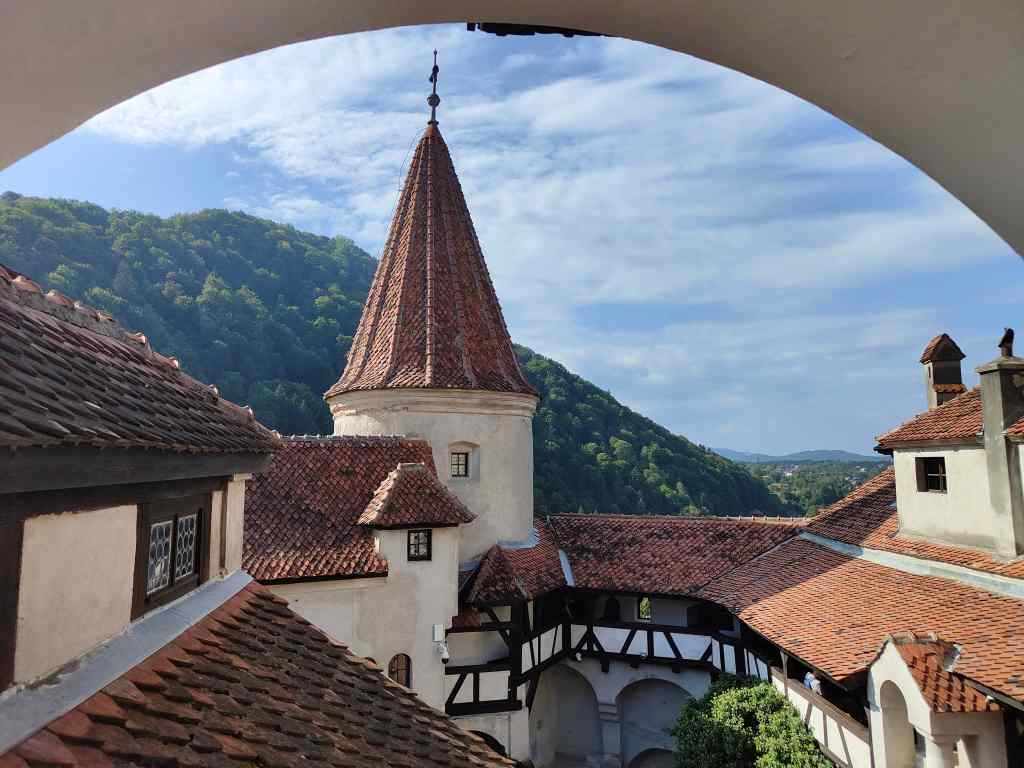
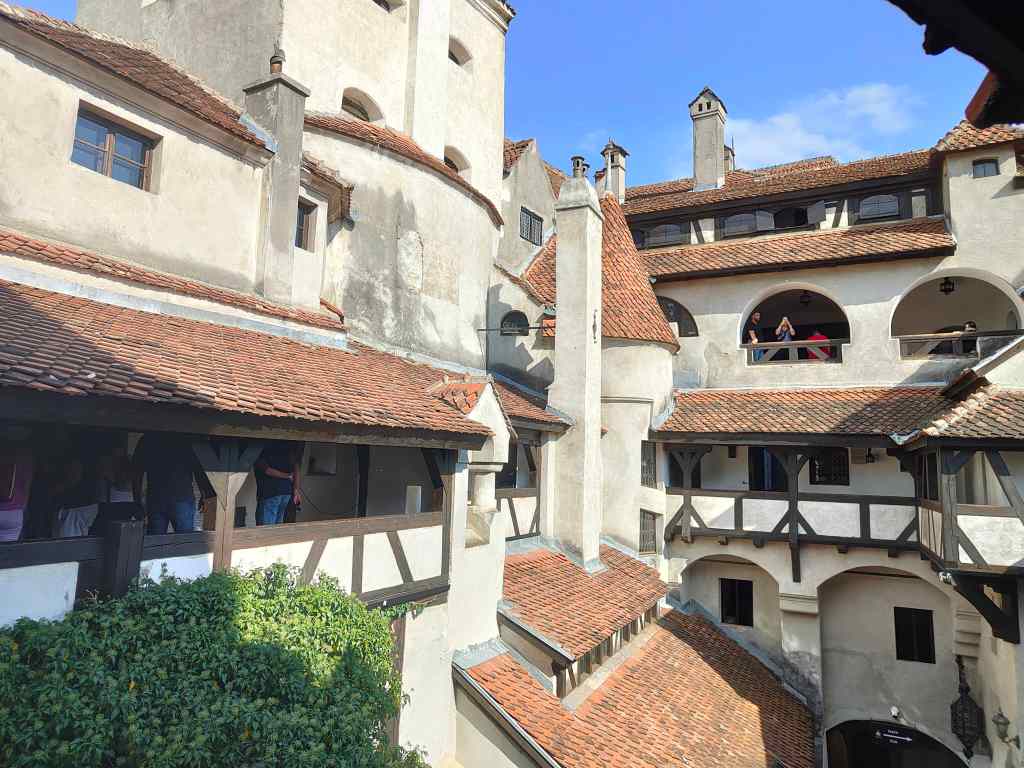
Next, I headed on to the town of Bran, home to Romania’s most visited castle. Although heavily marketed as “Dracula’s castle”, Vlad Tepes (the inspiration for Bram Stoker’s vampiric count) probably never lived here. It was originally built in the 14th century by Saxon knights who had been invited by the local rulers to settle in the area and build protective fortifications. For over five hundred years the castle served a purely military purpose until it became a royal residence in 1920 and the favourite home for Queen Marie, who had the place extensively renovated. Despite the lack of a historical link to the real Dracula, Bran Castle certainly looks the part from the outside, and would not be out of place in a vampire movie. Inside, it was a pleasant – if crowded – place to visit, with lots of elegant towers surrounding a quaint interior courtyard.
Bran castle – from the outside, imposing and spooky….….on the inside, a cosy royal residence
From Bran, I returned to Brasov to enjoy dinner on the terrace of my flat, which was surprisingly well-appointed and had a terrace overlooking the town. I tried some rather good Romanian wine with dinner as I watched the sunset. Good accommodation, good food, good wine……I like Romania already even if it is not the wild frontier destination I had been expecting.
The final leg of this trip was a short visit to Warsaw, a further 2 hours away by train. The city was founded in 1300 and became Poland’s capital in 1596. Over the next centuries, it had more than its fair share of wars, plagues and famines. From 1795 until the end of the WW I, it spent a prolonged period as a provincial city in the Russian empire, during the time when Russia and Prussia had decided to divide Poland amongst themselves. Warsaw’s biggest suffering however came during WW II, when it was occupied by the Nazis. First its Jewish population was confined to a cramped ghetto, and then completely exterminated. Later, as Soviet troops advanced towards the city in 1944, the Polish resistance rose up against the German occupiers. Stalin cynically ordered his army not to help, and after a sixty-three day battle the uprising was brutally repressed. Hitler ordered the systematic destruction of the city as revenge, and by the end of the war Warsaw had lost 85% of its buildings had a similar proportion of its population. Given its turbulent past, I had expected Warsaw to be rather grim and grey. But once again, Poland confounded my preconceptions. As I emerged from the train station, I saw a clean, well-organised and modern city.
My first view of Warsaw
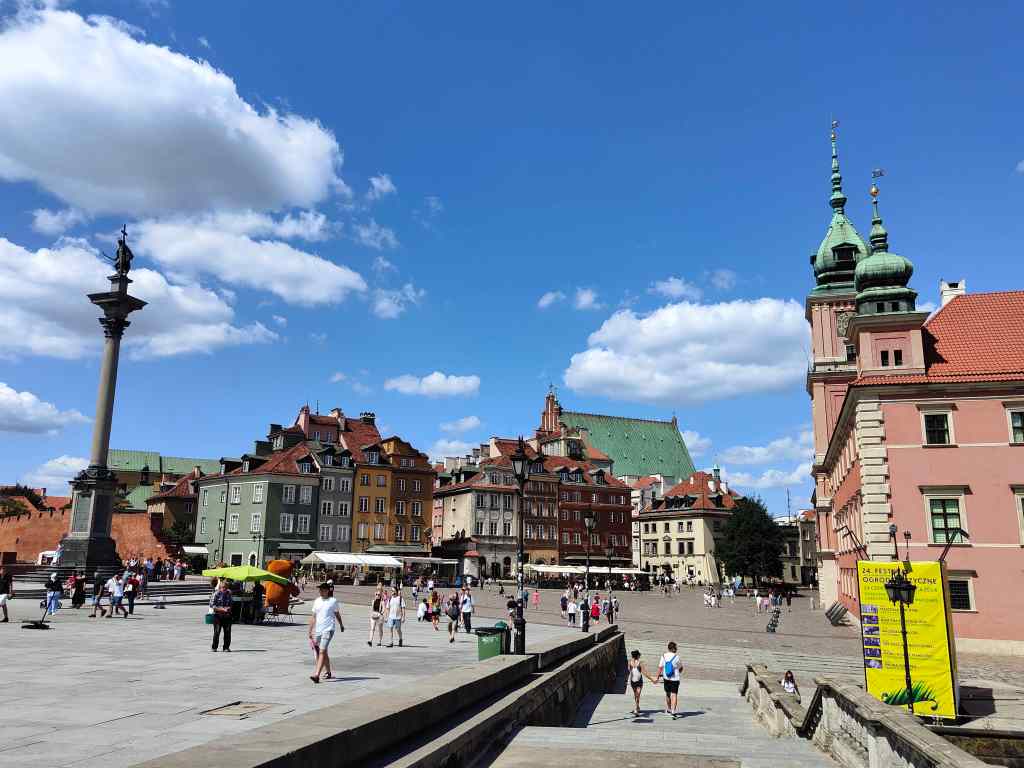
I found my hotel and set off to explore. First on my list was the old town, which was reconstructed to be exactly as it was before the war, in a process involving meticulous research and then a building programme that lasted until the 1960s. The result is amazingly successful, and the old town today looks like much like the centre of the many other beautiful Polish cities that were fortunate enough to avoid Warsaw’s fate.
Entering the Warsaw Old Town, near the castle
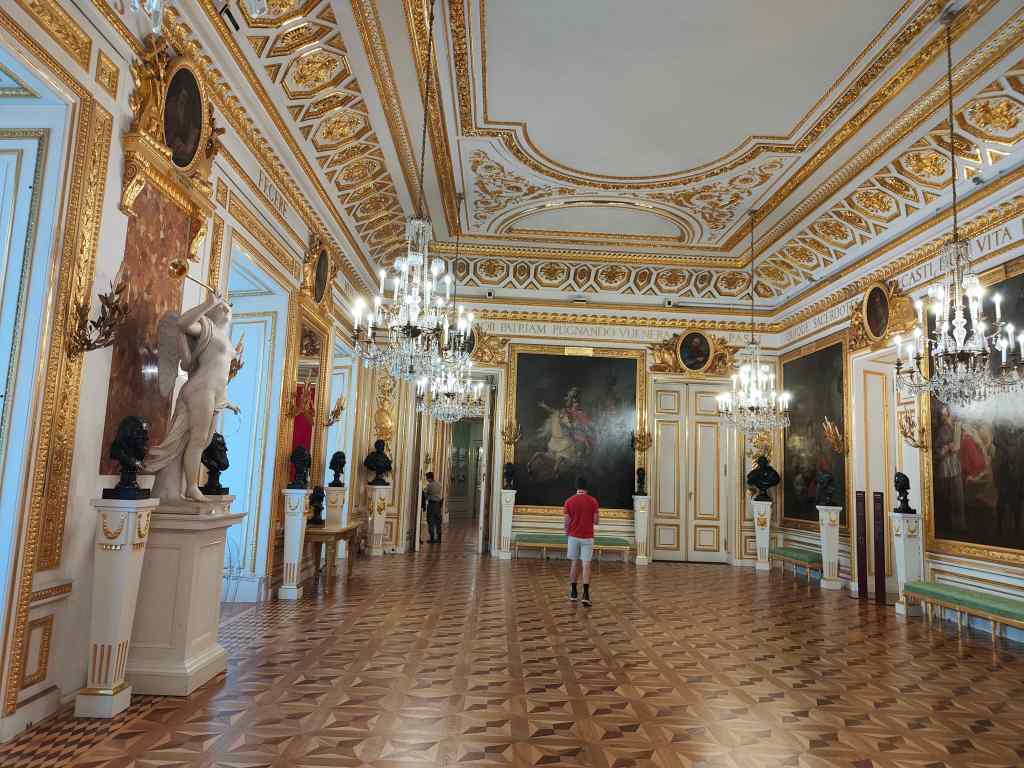
The rebuilding project including recreating the Royal Castle, which I of course visited.
A reception room in Warsaw’s Royal Castle
Next I strolled around the old town, through narrow streets….
Warsaw Old Town streets
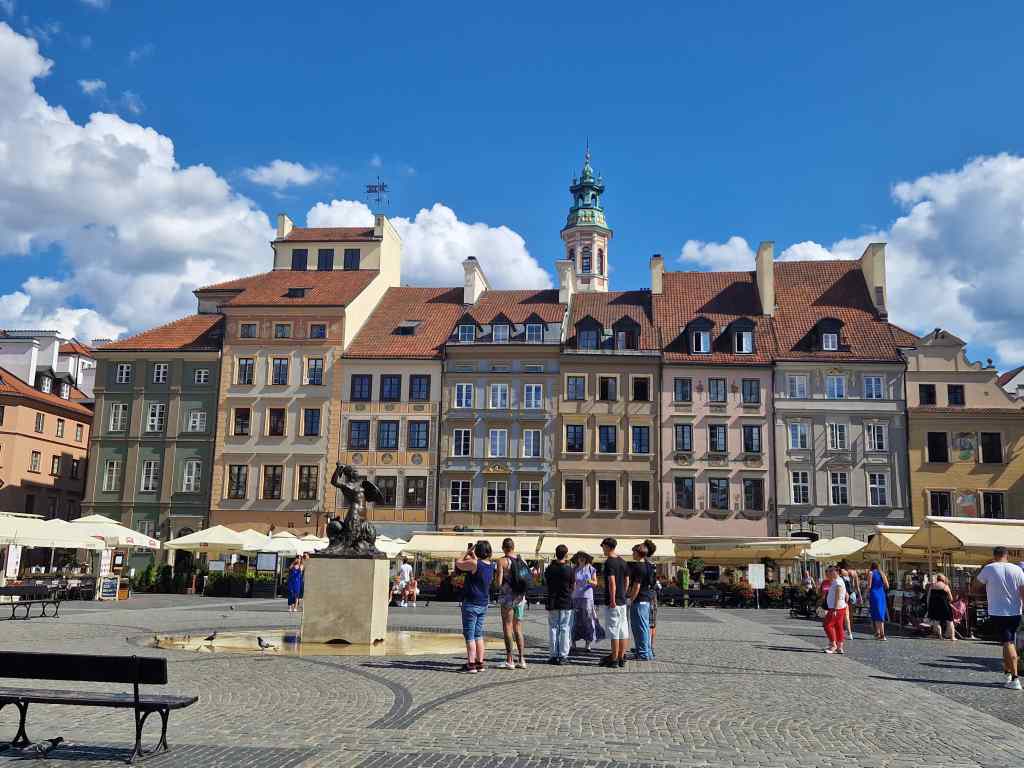
…to the inevitable market square. On the square is the interesting Museum of Warsaw, which chronicles the city’s remarkable and tragic history.
Market Square, Warsaw Old Town
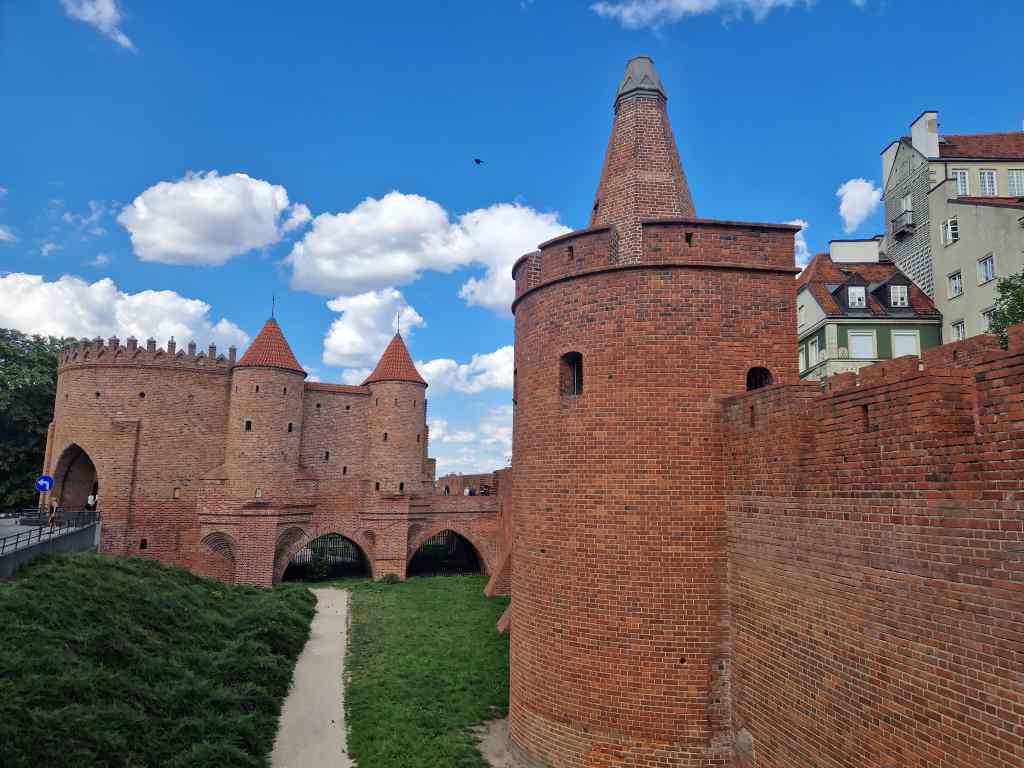
Next I discovered the old town’s fortifications.
The Barbican, Warsaw
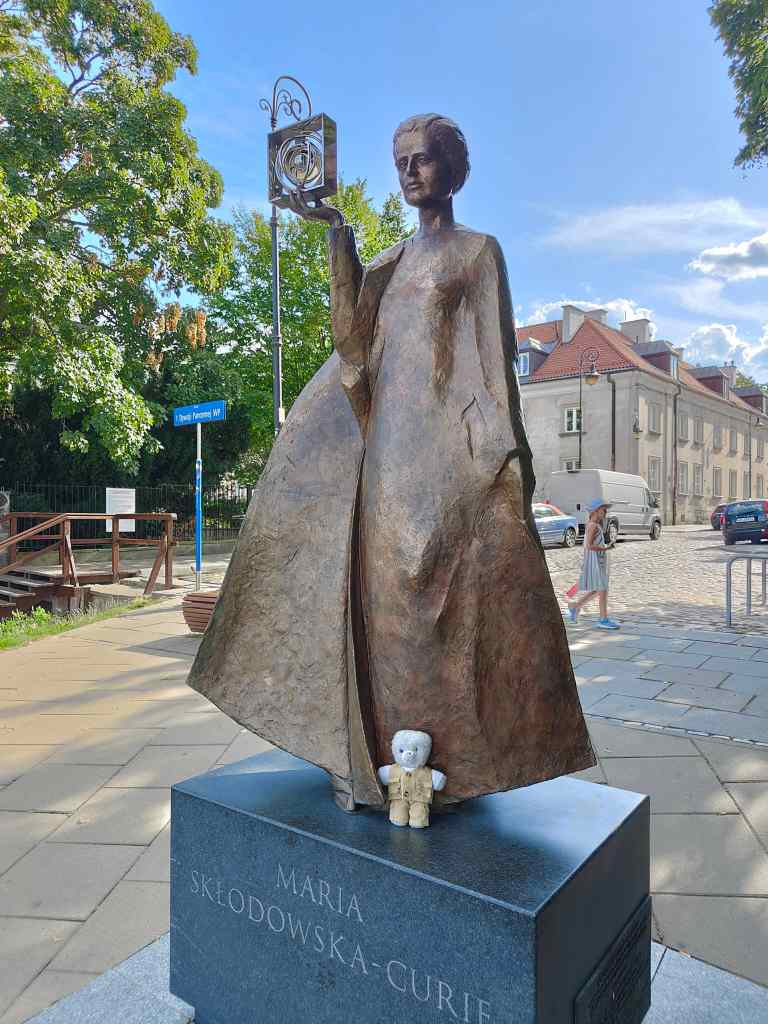
Polish cities have lots of monuments to writers, statesmen and artists who were unknown to me. I was happy to finally stumble across a statue of someone that I did recognise.
Marie Curie and me
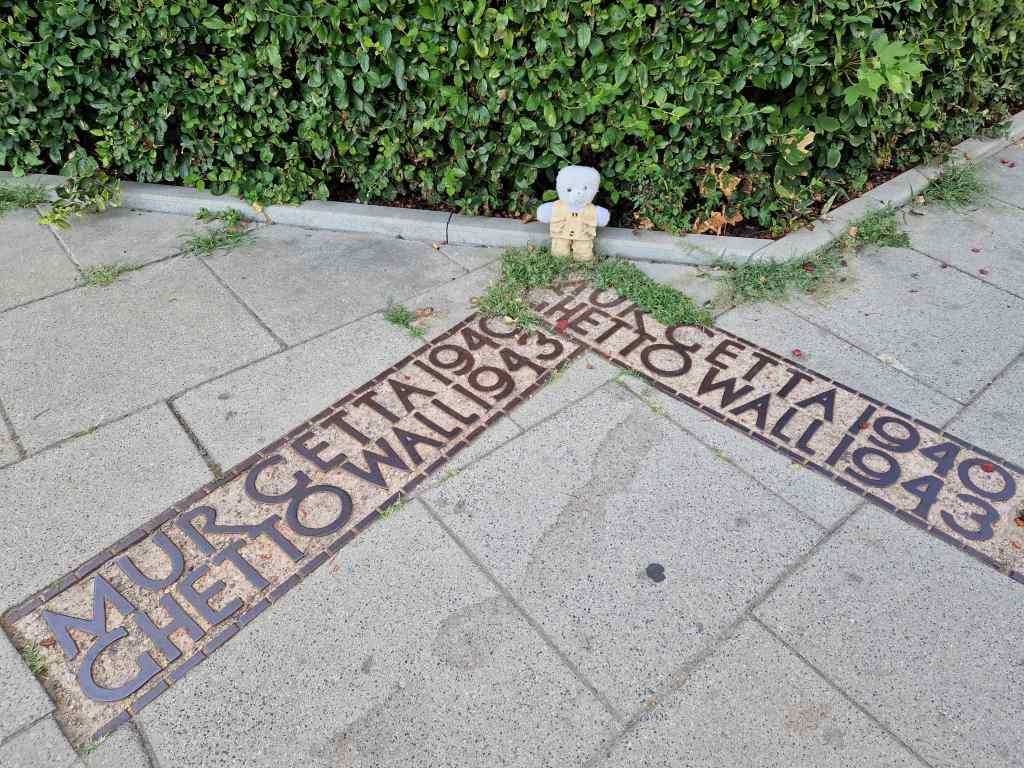
I strolled away from the old town to explore different parts of the city. On the way I came across this marker for the former wall of the Nazi’s ghetto for the Jews.
Marking the boundary of Warsaw’s WWII Ghetto
Next I found this pretty palace, one of many in Warsaw, which is now a library..
The Krasiński Palace, Warsaw
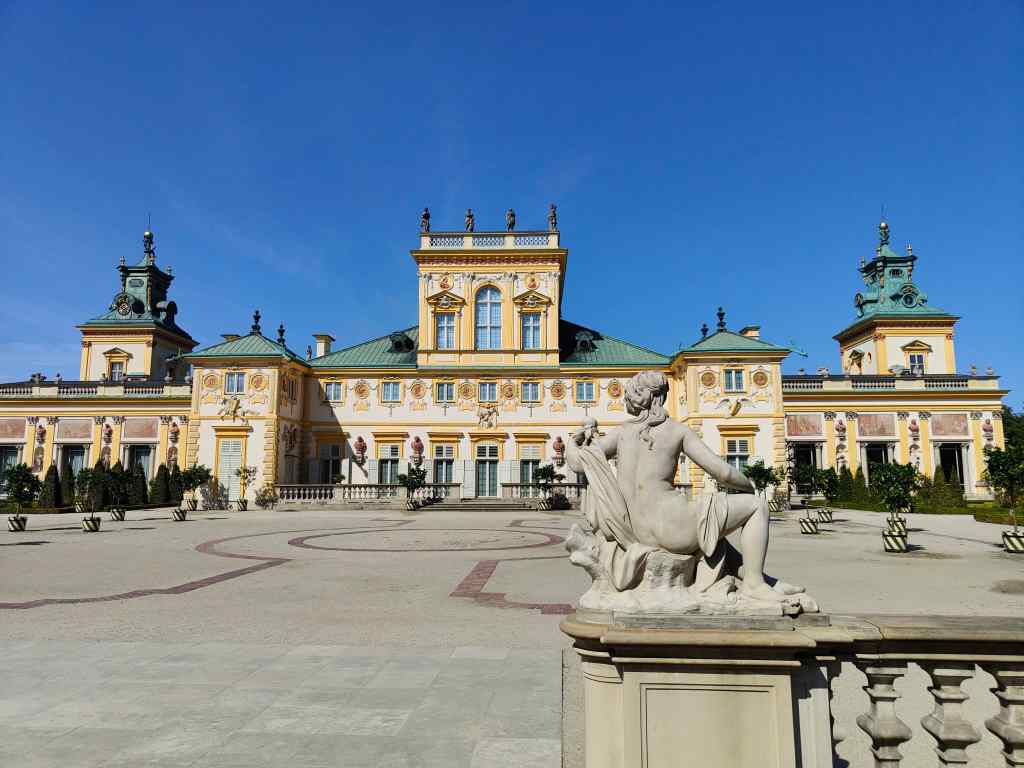
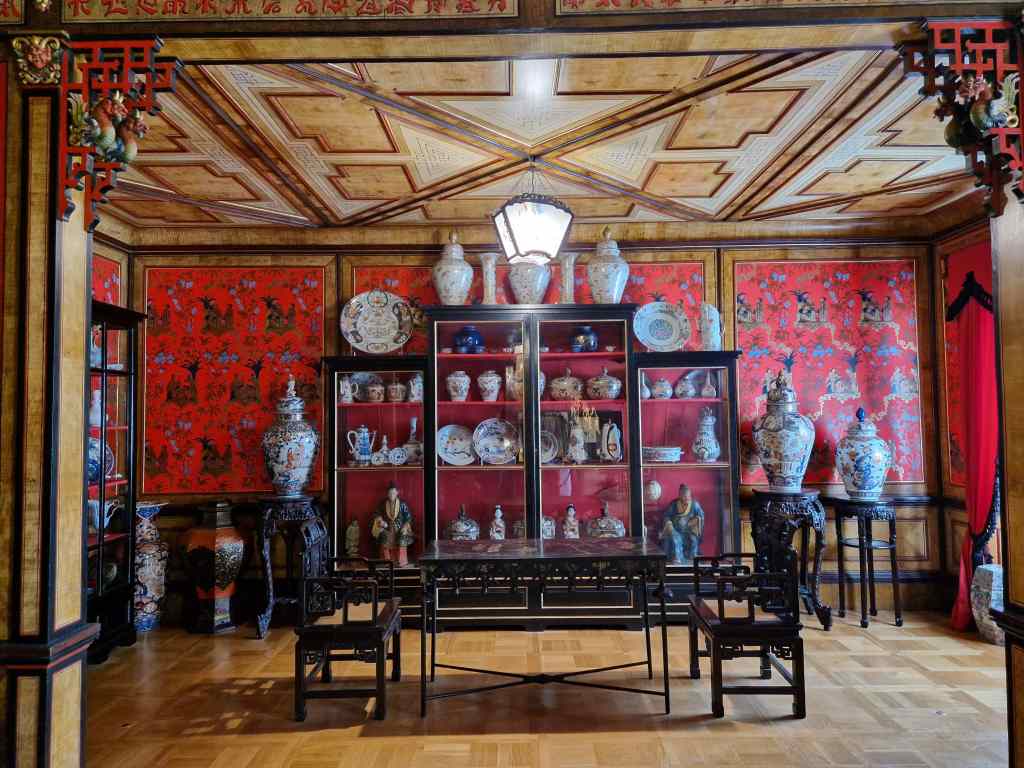
I had dinner in one of Warsaw’s many up-market restaurants. The next day I had time to make two more quick visits before my flight – the first to the beautiful Wilanow Palace, a short bus ride to the south of the city. It was built between 1677 and 1696 for King Jan III and was later a residence for various aristocratic Polish families, most notably the Potockis. Remarkably, the palace survived Warsaw’s various crises intact (although it was damaged during WW II) and it remains one of the finest examples of baroque art in the world.
Wilanow Palace, WarsawOne of the oriental rooms in the Wilanow Palace
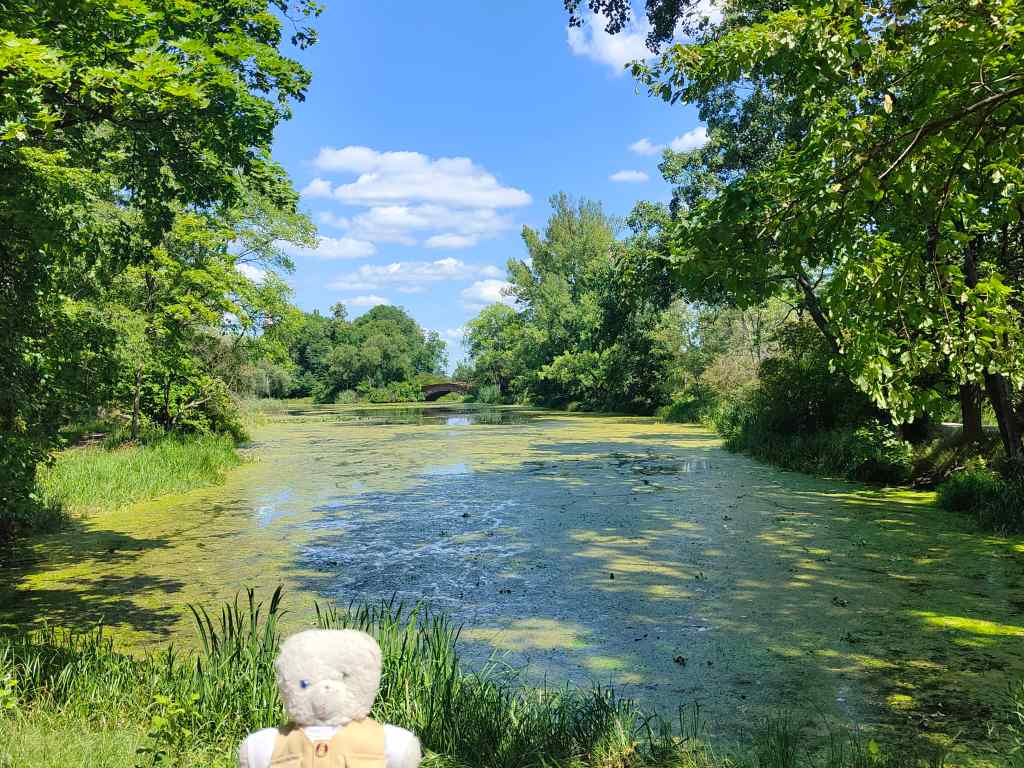
Apart from suitably impressive reception rooms, the palace also houses an art museum. I was the only person there – I think the other visitors failed to find the rather small door leading to the gallery. On the approach to the museum there was a display of empty frames, symbolising the pictures taken by the Germans or Russians during the war and so far not returned. I ended my visit with a stroll around the palace’s park.
Empty Frames, Wilanow Palace galleryThe Wilanow palace also has a pleasant park.
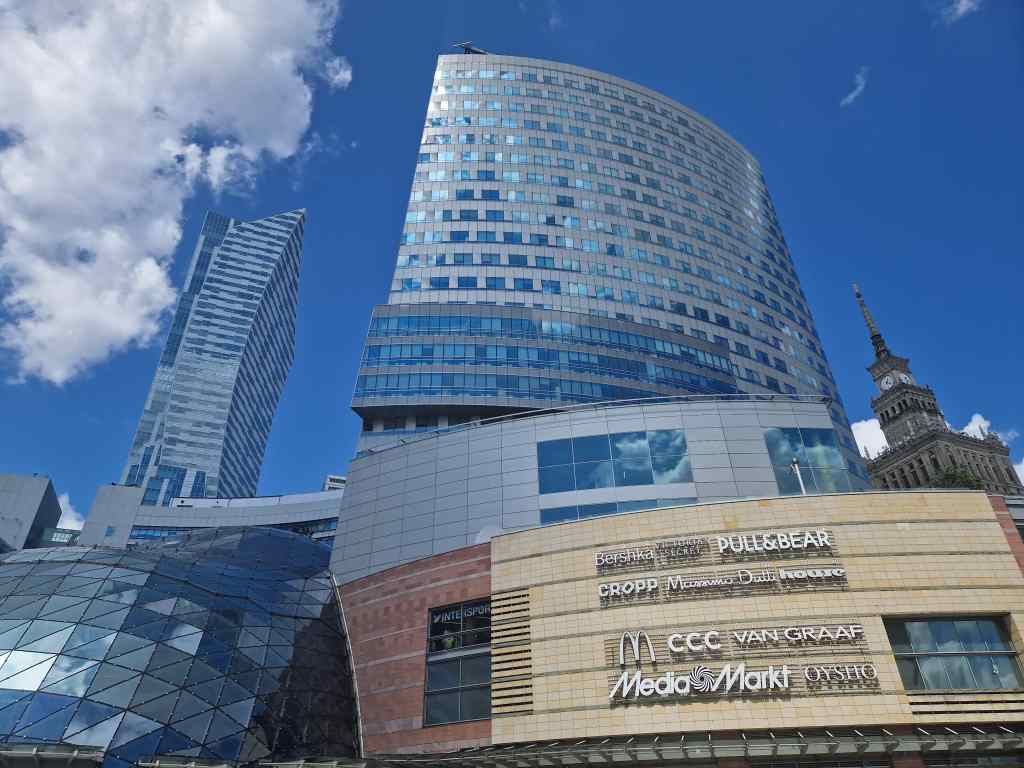
My final visit of this trip was to the Palace of Culture and Science, right in the centre near the main train station. This was built in the 1950s as a “gift” from the Soviet Union to Poland and when completed was the eighth tallest building in the world. It closely resembles the “seven sisters” buildings commissioned by Stalin for Moscow, and for many years dominated the Warsaw skyline in much the same way that Russia dominated Poland.
The imposing Palace of Culture and Science, Warsaw
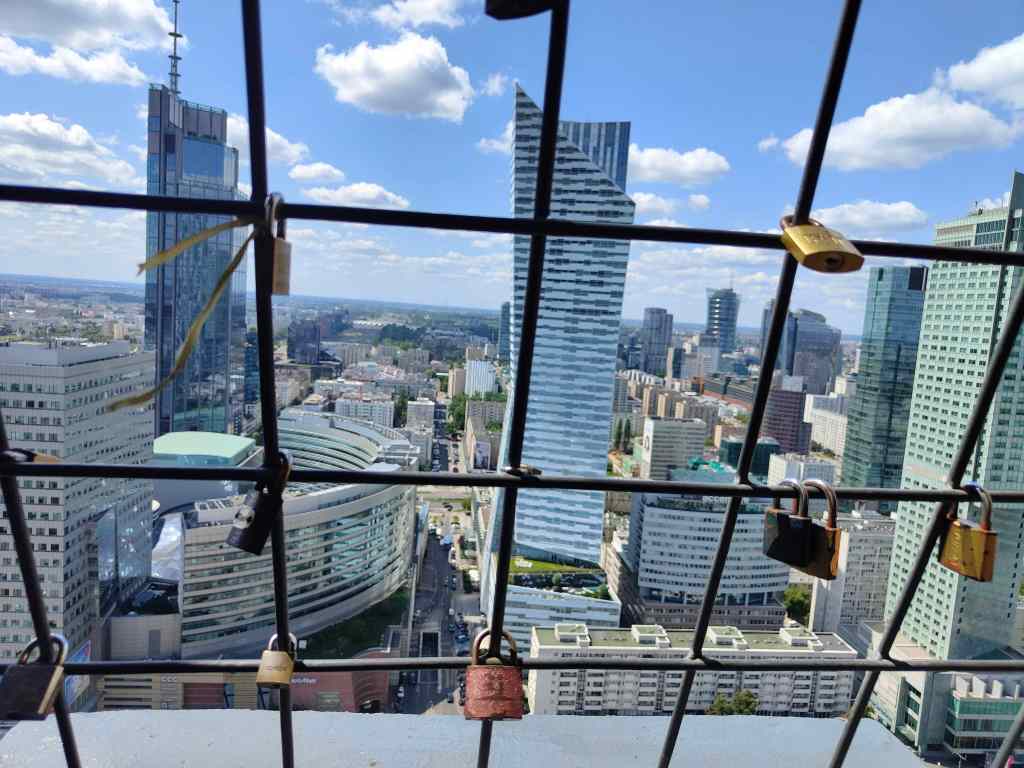
The palace is a maze of buildings including concert halls, cinemas and a theatre but the tower is its most popular part and is Warsaw’s most-visited tourist attraction.
The view from the top of the Palace of Culture and Science
I took the fast lift to the top, admired the views and enjoyed the cool breeze blowing through the observation platform. It was a good way to end my second visit to Poland, a country that I am getting to like a lot. Stay tuned (i.e. subscribe!) for my next trips – Romania in September, and then Japan over October and November!
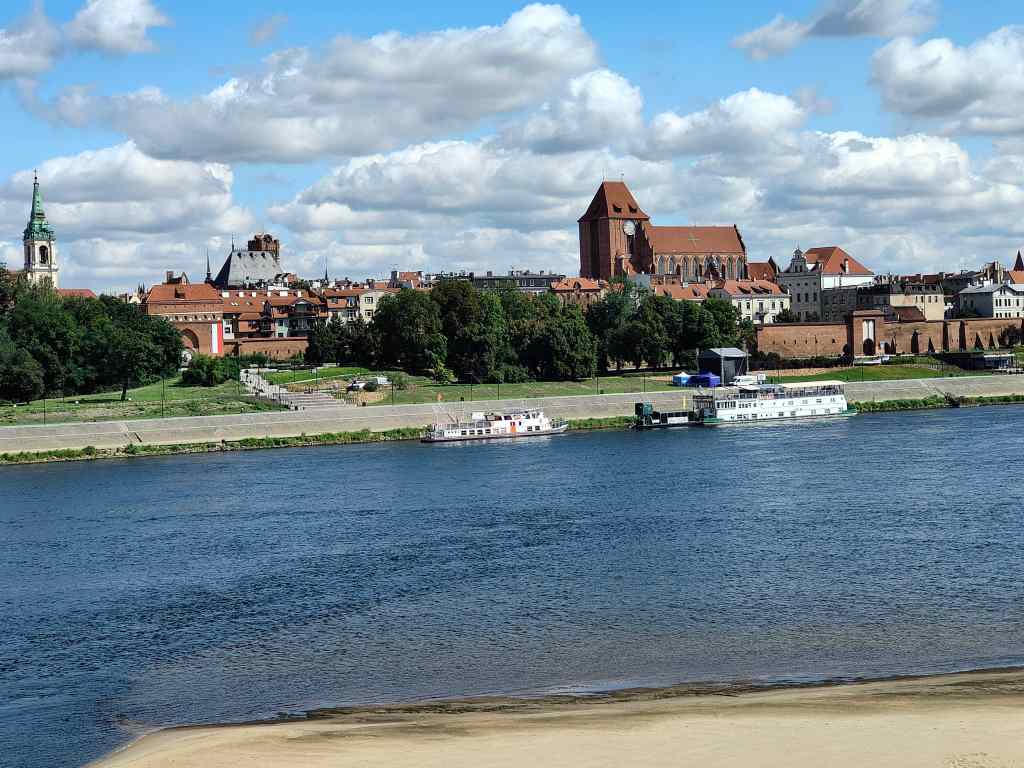
My next destination was Torun, an ancient city first settled in the 8th century, which became a base for Teutonic Knights in 1233 and a later a major trading hub and member of the Hanseatic League. Today it is a small place with a population of only 200,000. Even though it is a UNESCO listed world heritage site, few people seem to have heard of it and it attracts many fewer tourists than, say, Krakow. So much the better for me, for I was able to visit at a relaxed pace without crowds. My first view of the city and its ancient walls was as I crossed the bridge from the train station over the Vistula river, ….
Torun and the Vistula river
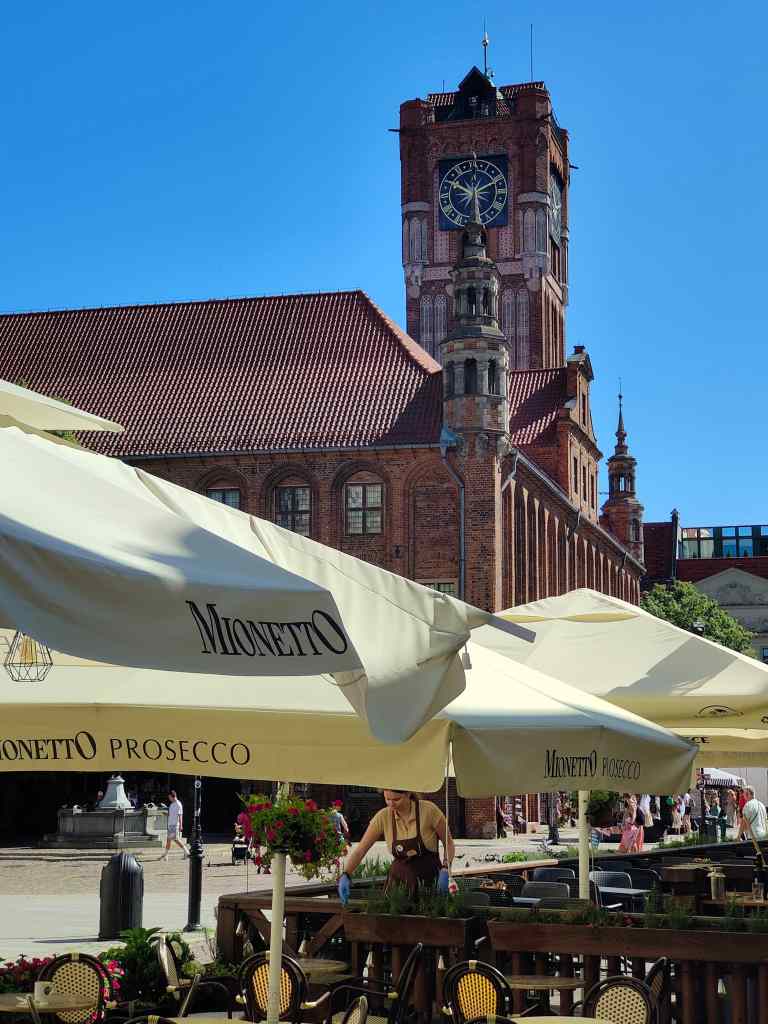
A first stroll through town revealed Torun’s charms. First, there was the inevitable market square and town hall…..
Torun’s town hall
….with a tower offering views of the city….
The view from Torun Town Hall’s Tower
….and lots of cafés. I treated myself to this rather strange coffee, topped with cream, then burnt like a crème brulée, and sprinkled with small marshmallows. Yum.
Mid-morning coffee stop in Torun’s square
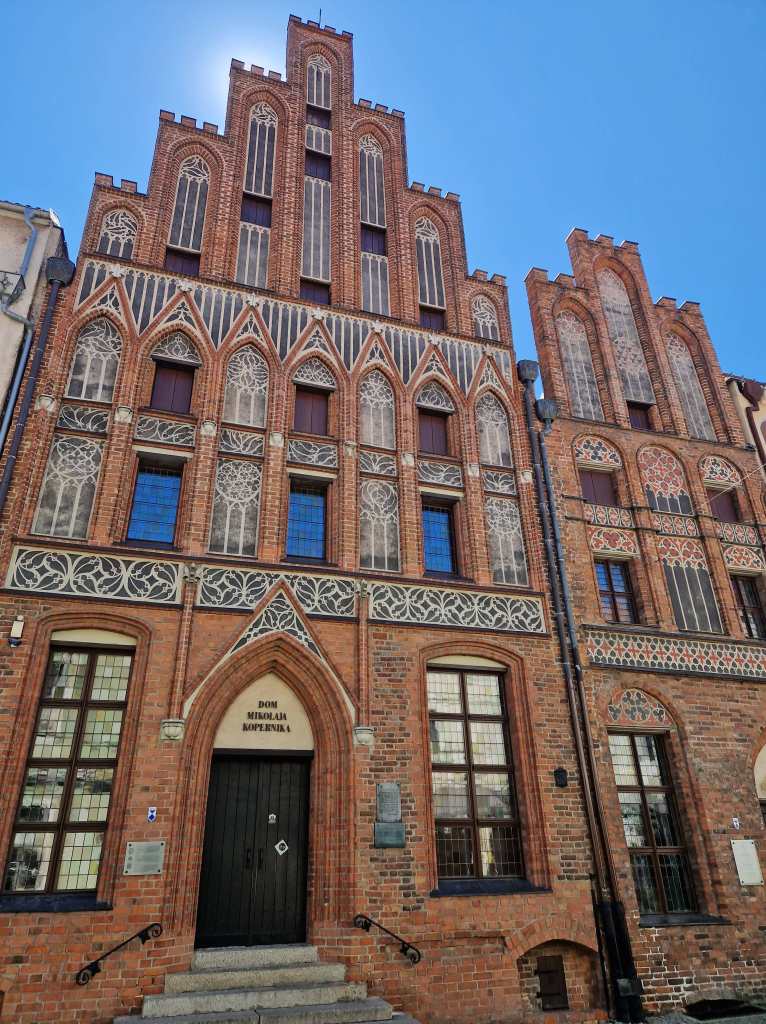
Torun has several museums. The town hall itself had an interesting art collection, whilst a very pretty building on the market square called the “House Under the Sun” had a collection of far eastern art. Probably the most famous museum though is the place where the polymath Nicolas Copernicus was born and spent the early years of his life. Copernicus changed the thinking of the world through his major work, published close to his death in 1543, devoted to the then revolutionary idea that the earth rotated around the sun. The museum covered the everyday of the Copernicus family (his father being a merchant) and Nicolas’ works and their reception (his ideas were slow to take on, and his book was banned by the church some sixty years after it was first printed).
Copernicus’ house, Torun
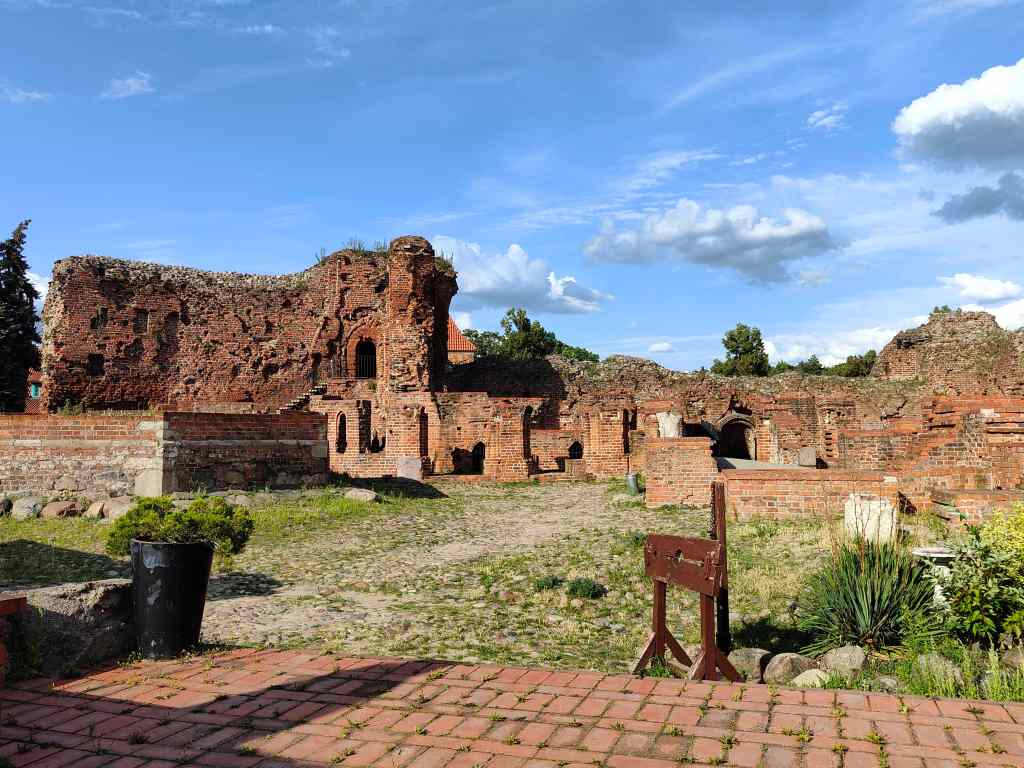
After educating myself about Copernicus I visited the final main attraction in Torun – the ruined castle of Teutonic knights, an extensive European religious and military order who were involved in protecting the Catholic Church’s interests and went on crusades to the Holy Land and Eastern Europe. The knights based in Torun also imposed restrictions and taxes on the city, which annoyed the townspeople so much that one night they stormed the castle and then set about dismantling it.
The ruins of the castle of the Teutonic Knights
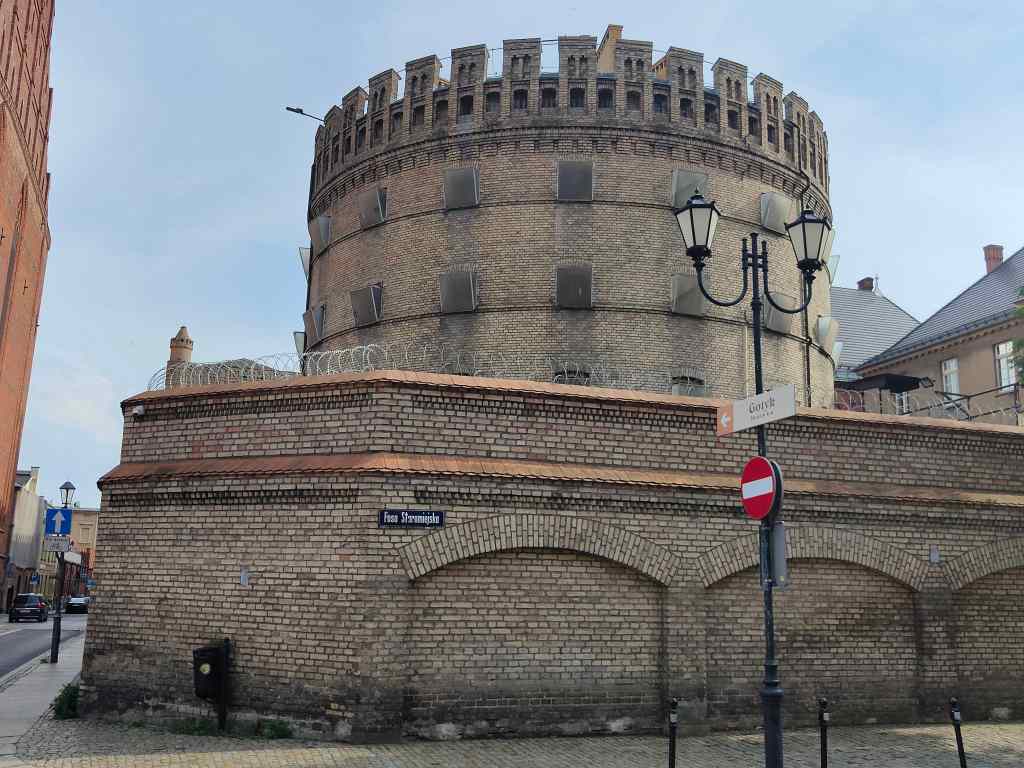
After visiting the castle, I had completed all the “must-see” sights in Torun and spent my time pleasantly wandering the streets. I found a prison, bizarrely located in the centre of town….
Not the greatest advert for the Gotyk Hotel
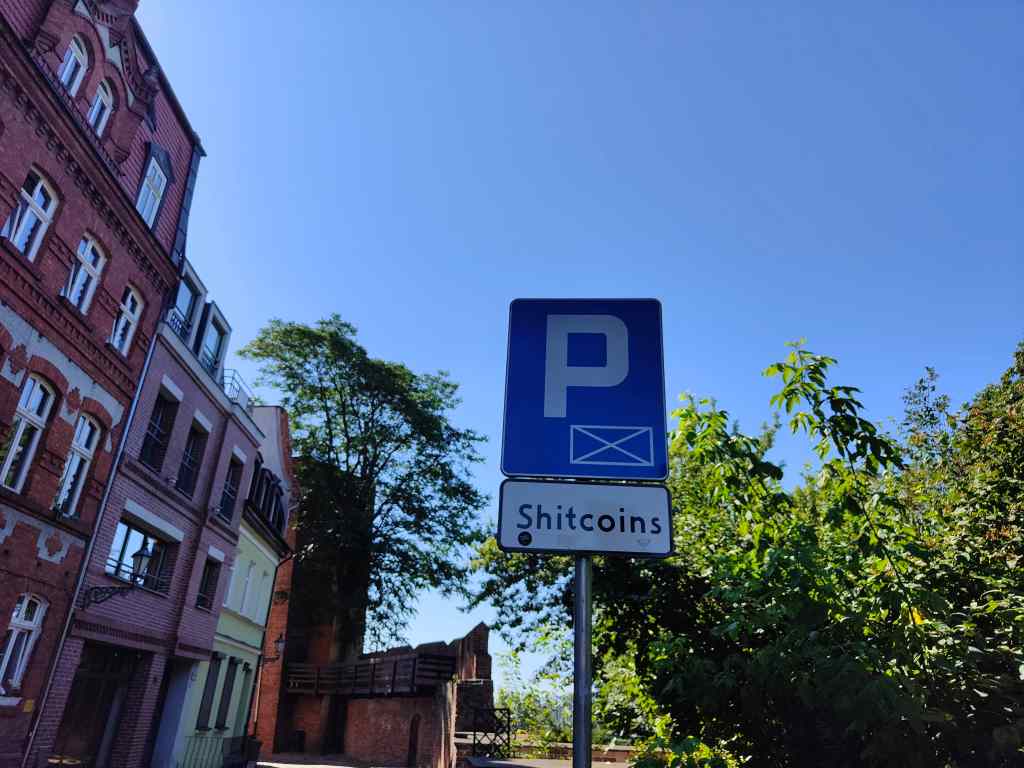
…..an unusual parking sign…..
A novel way to pay for parking?
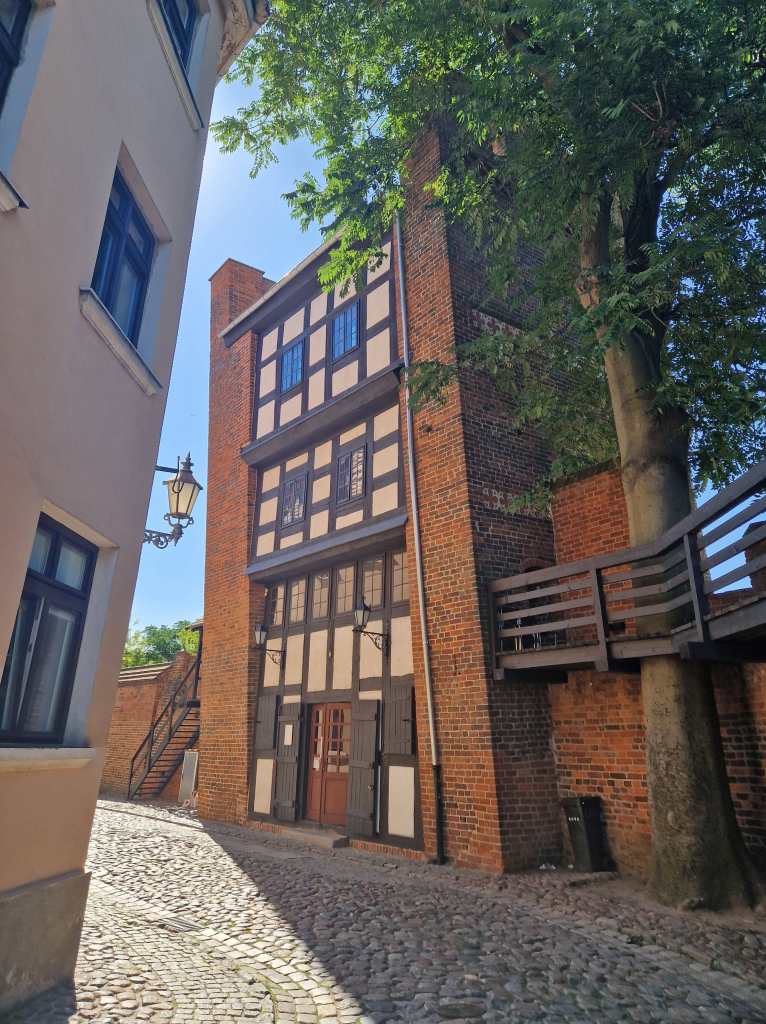
….and the leaning tower in the city walls, reputedly built by one of the Teutonic Knights.
Torun’s leaning tower
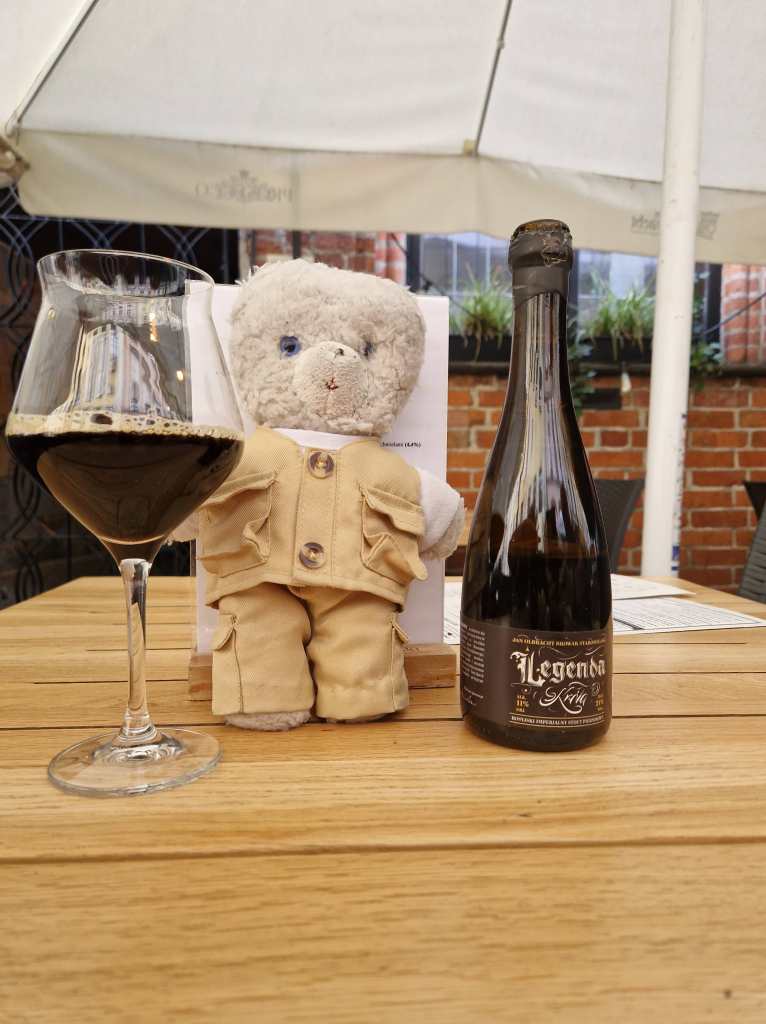
Torun is famed as a centre for production of gingerbread, and there were shops everywhere selling the stuff, and even two museums devoted to it. I ended my day – as so often in Poland – at a pleasant pavement café. This one brewed its own craft beers, including one which was flavoured with gingerbread. It turned out to contain 11% alcohol, which is why I am slightly unsteady on my paws in this picture.
And Torun’s leaning teddy. 11% by volume…almost the same as wine
Today I took the S-Bahn to the Hauptbahnhof to make the trip east to Poznan in Poland, a trip of about two and half hours. Poznan is the country’s fifth biggest city, and one of its oldest – it was once one of the four historic capitals of medieval Poland. A few dejected English football fans joined me on the train, having seen their team lose the final of the European Championship the night beforehand – they were no doubt heading for Poznan’s airport, which has direct flights to London. On my trip to the south of Poland last year I had been surprised that the country was very clean, green and looked affluent – quite different to the post-industrial landscape of decay that I had expected. I thought that maybe this time, travelling in the north, I would see a different side to the country – but no, from the train I saw nothing but pleasant green fields and on arrival, Poznan’s station was much more modern and cleaner than Berlin’s.
I checked into my hotel, had a quick snooze to avoid the worst of the afternoon heat (it was finally hot and sunny) before walking through town to visit the impressive cathedral to the east of the city.
Poznan cathedral
Near the cathedral was a clever trompe l’oeil mural occupying the entire side of a house
Poznan street art
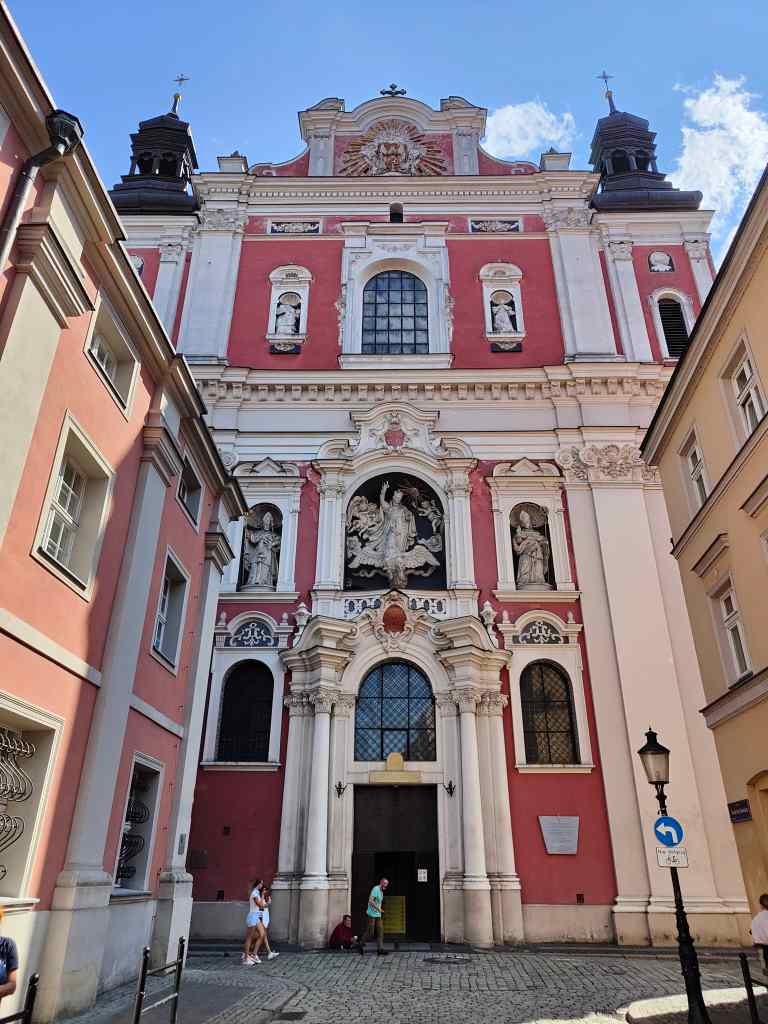
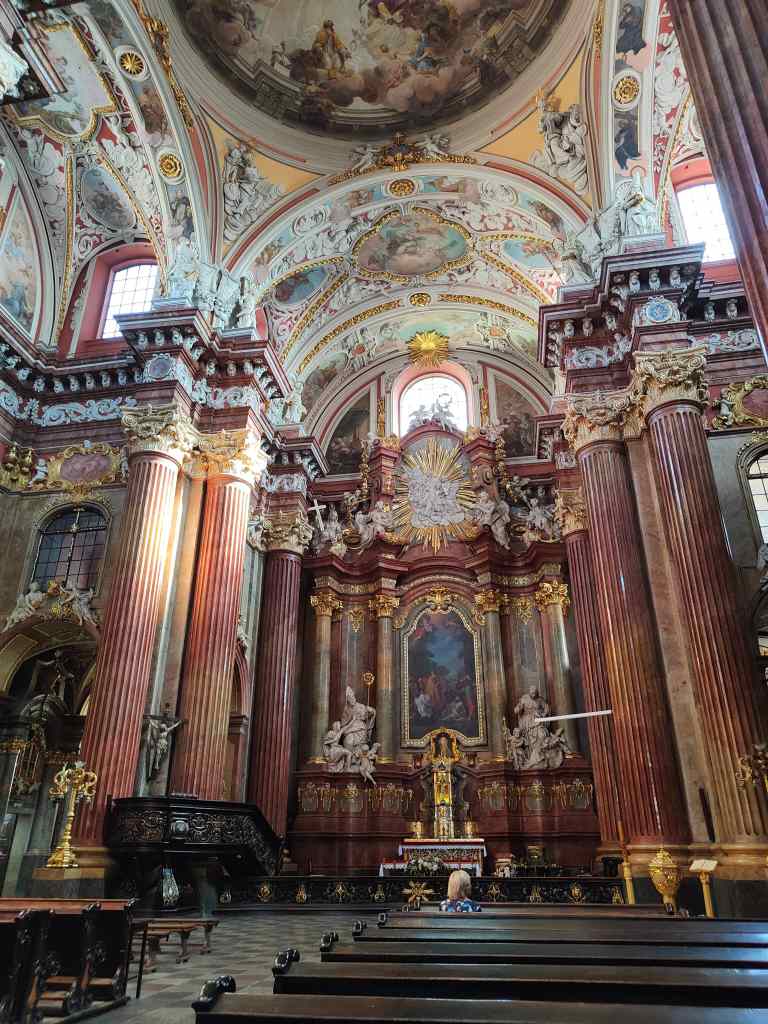
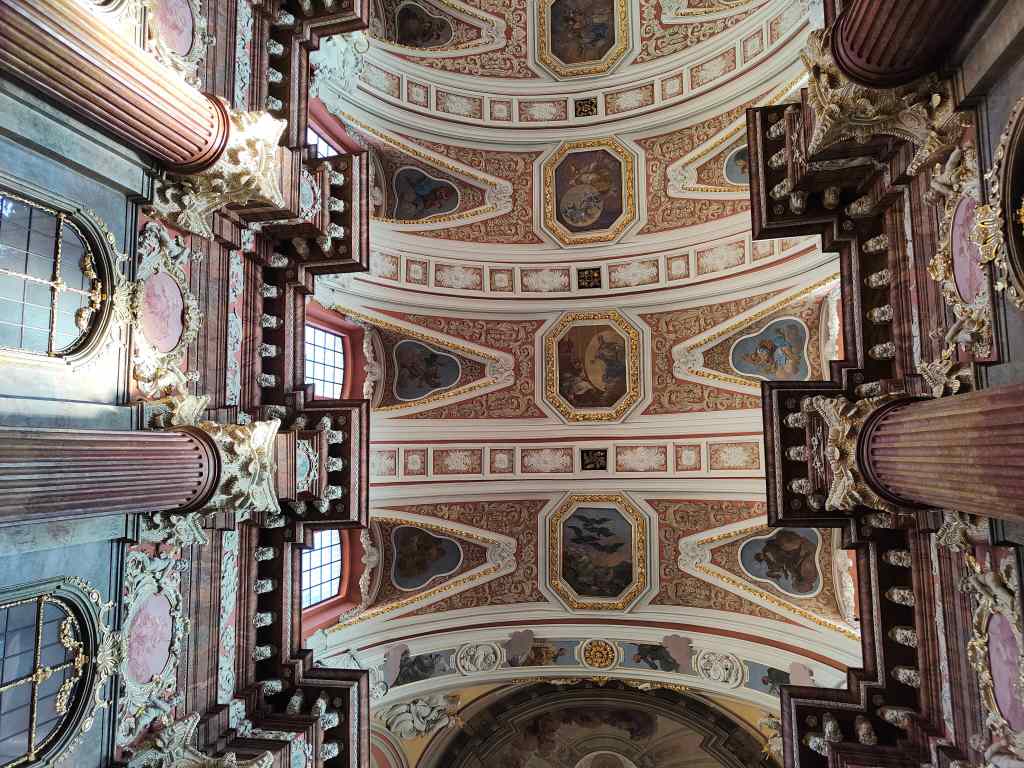
I strolled back to the old town and visited a magnificent baroque church, the Basilica of our Lady of Perpetual Help, which is one of the most beautiful I had ever seen.
Outside and Inside Poznan’s beautiful basilicaInside Poznan’s Basilica
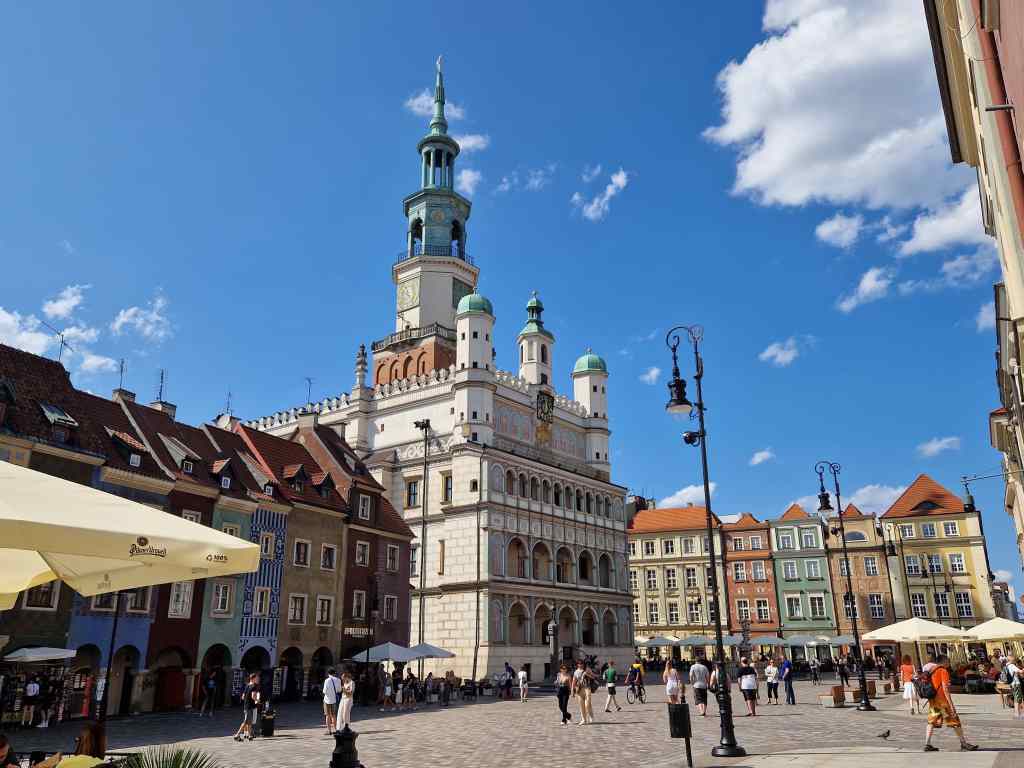
The centre of many Polish cities is the old market square, and Poznan had a very photogenic one, with a particularly beautiful town hall. The latter was first built in 1253, rebuilt in its current style in the 16th century, badly damaged during the second world war and reconstructed in the 1950s. Except for a few scattered groups of England fans (who were much quieter than they had been in Berlin!) there were almost no tourists, no tacky souvenir shops and no money changers.
Poznan’s market square and town hall in the afternoon
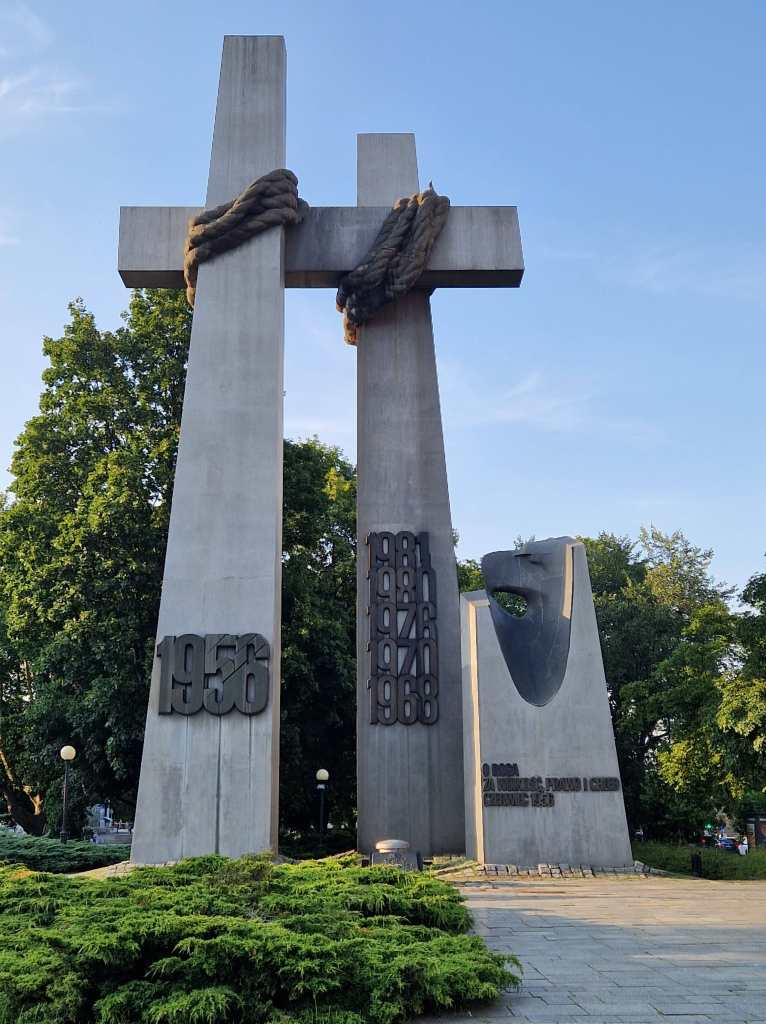
After coffee on the square, I continued my exploration. On first appearances, the centre of town appeared small, and I thought I would soon run out of things to do. But the more I walked, the more interesting things I found – old buildings, monuments, small parks, little squares, and lots more beautiful churches.
A monument to the victims of the 1956 anti-soviet uprising
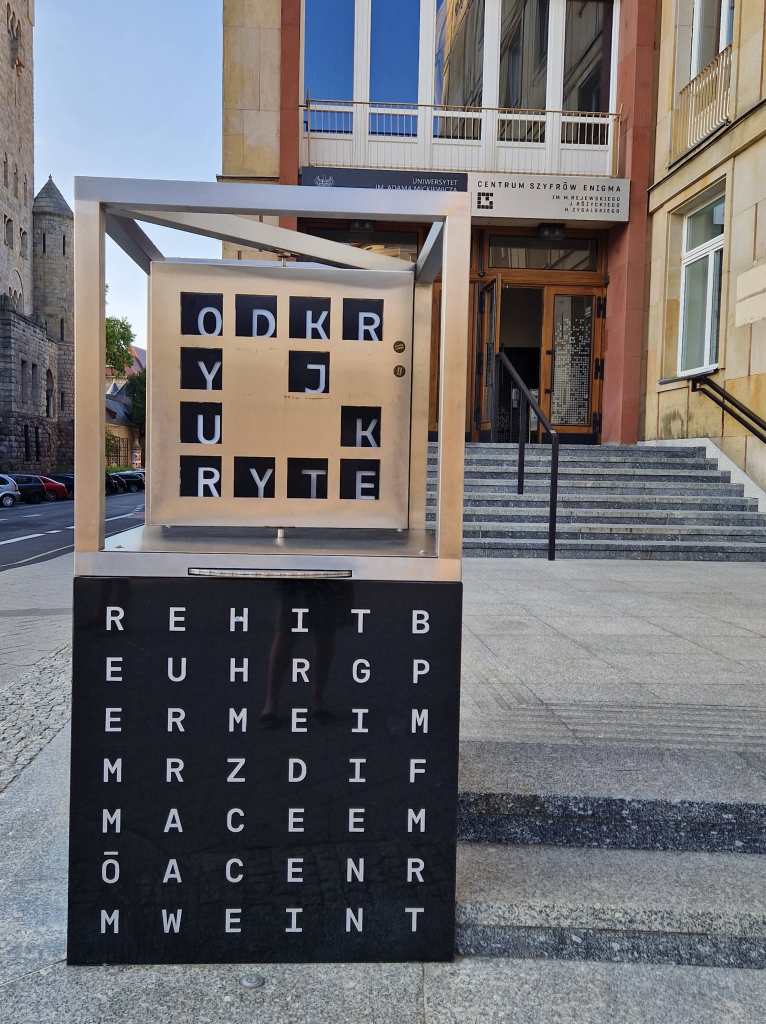
I also stumbled upon the “Imperial castle”, built under German occupation for Kaiser Wilhelm II of Germany in 1910, but which is now part of Poznan’s university and was where Polish mathematicians first started working to break the German Army’s Enigma code.
A monument to the Enigma code breakers
I ended up enjoying the early evening sun in a pleasant park with a few locals….
Relaxing in a pleasant park in Poznan
….before having dinner on the square and then a cocktail in one of the many of busy bars in a nearby street – many students study in Poznan, and the nightlife scene reflects this.
Partying in Poznan
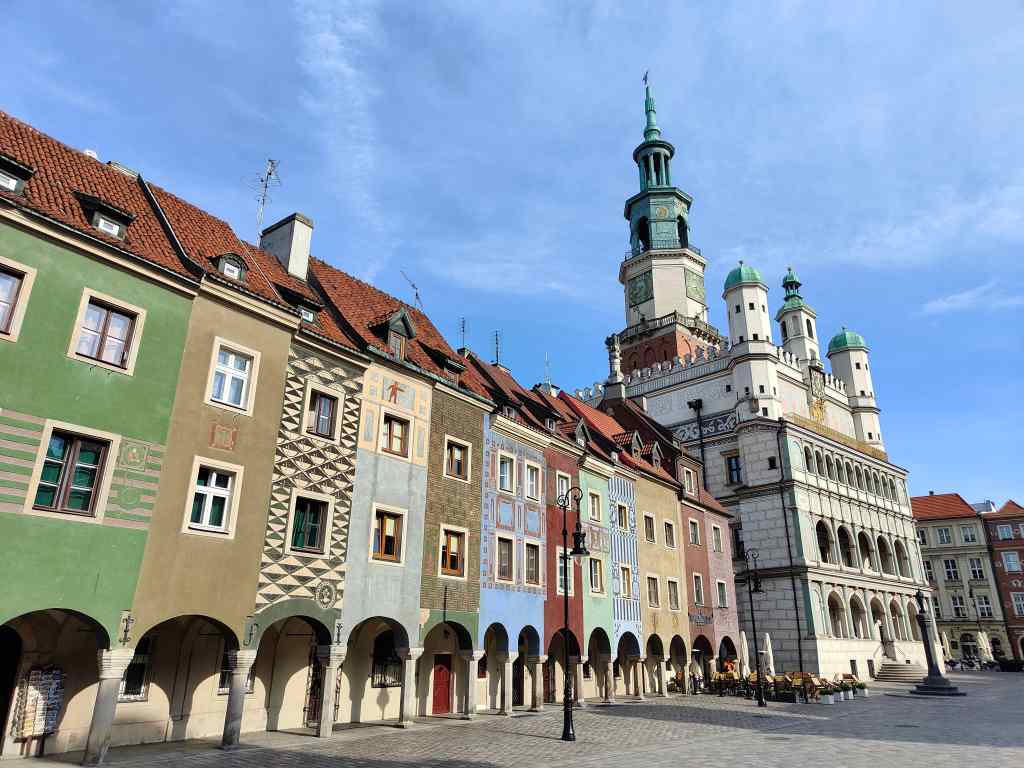
The next morning I had a couple of hours to continue exploring before my train at noon. I revisited the market square to take pictures without any other people around…
Poznan square in the morning
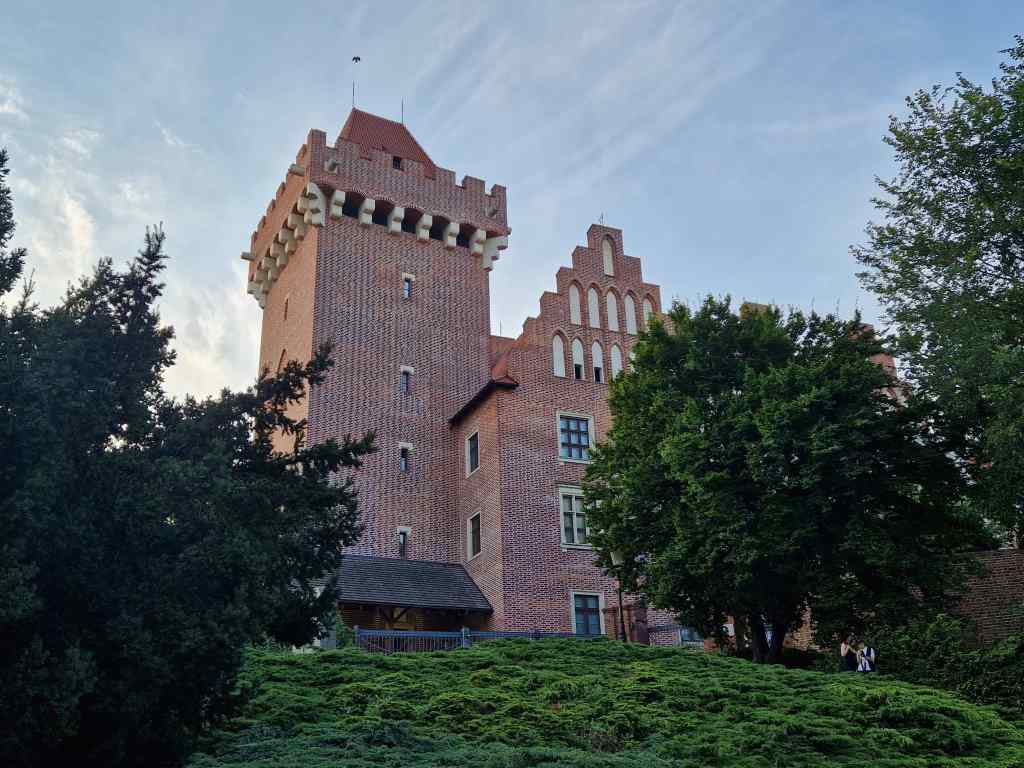
…..and then found that the old “Royal” castle was open and took the lift to the top of its tower for a last view of the city. Unlike the Imperial Castle, this one was built for a Polish king, and originally dates from the 13th century. Most of what you can see today is reconstructed, after heavy damage suffered during the second world war.
Poznan’s “Royal” Castle, largely reconstructed
I had been very impressed by Poznan – a pretty, clean place with lots of things to do. And like everything else in Poland, amazingly cheap. I think I will be back some time on the direct flight from London, but for now my next destination was the ancient town of Torun, another two hours’ train ride further east.
The Bear is Back! And what better place to start a new trip than Berlin, a city that has a bear as its symbol.
The author with the coat of arms of Berlin
I am here for two reasons – firstly to visit friends, and secondly on a long-term project to completely cross the earth in multiple trips by land or by boat, without using a plane. I have already crossed Russia by train, the USA by bus and most of Europe by car or rail. I am missing a final section through Eastern Europe, either from Krakow to Kiev (which looks difficult for the moment) or from Berlin to Kaunas in Lithuania. So, after Berlin my trip will carry on through Poland to Warsaw covering about half of the missing section.
Museum Island – one of Berlin’s highlights
On this trip I was also hoping to get some much-needed sun after the wettest, coldest start to a summer in London that anyone can remember. Sure enough, I arrived in Berlin’s new Brandenburg airport (finally complete years late and well over budget) in bright sunshine in the late afternoon and found my flat in the west of the city without trouble. Imagine my disappointment when, contrary to the forecast, I woke up the next morning to hear heavy rain beating against the windows.
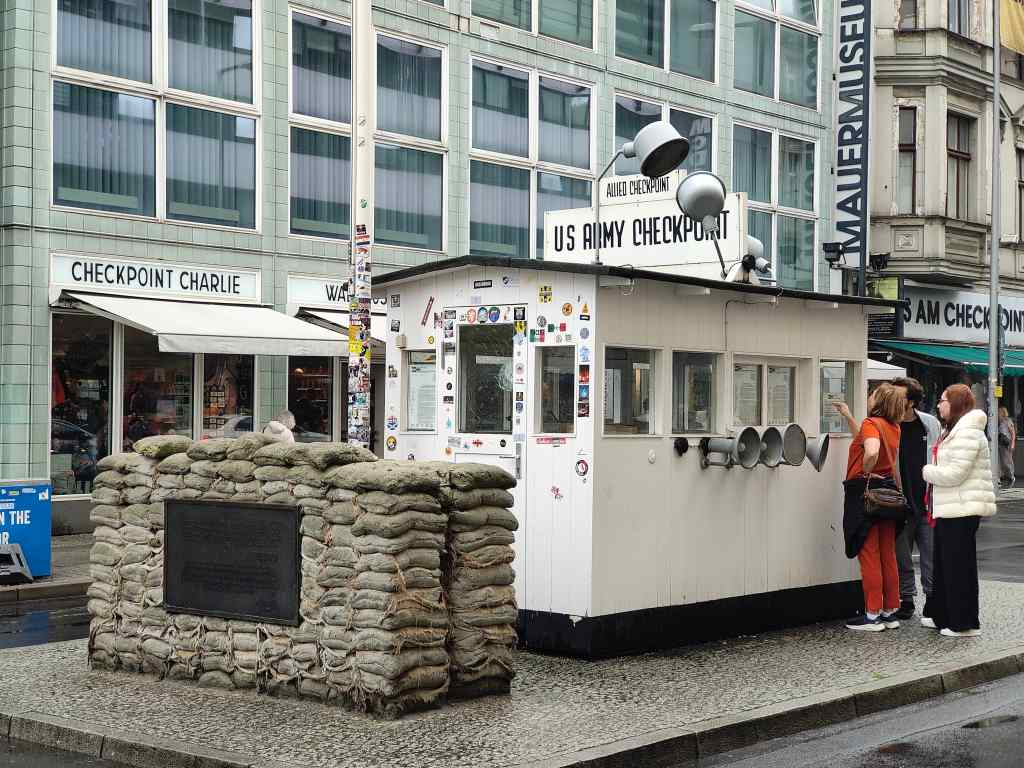
I had a visit of the Reichstag terrace booked for the morning, but in view of the weather changed my plans and started with stroll around town, including Checkpoint Charlie, the main point of entry or exit between the west and east parts of the city during the period when the city was partitioned by the Berlin Wall. I was last here in 1985 when I made the crossing to the east and it was a functioning US/Soviet checkpoint. Today it is a popular tourist destination with a small booth remaining from the US side, an interesting display about the history of the Wall, and lots of tacky tourist shops.
Checkpoint Charlie, Berlin
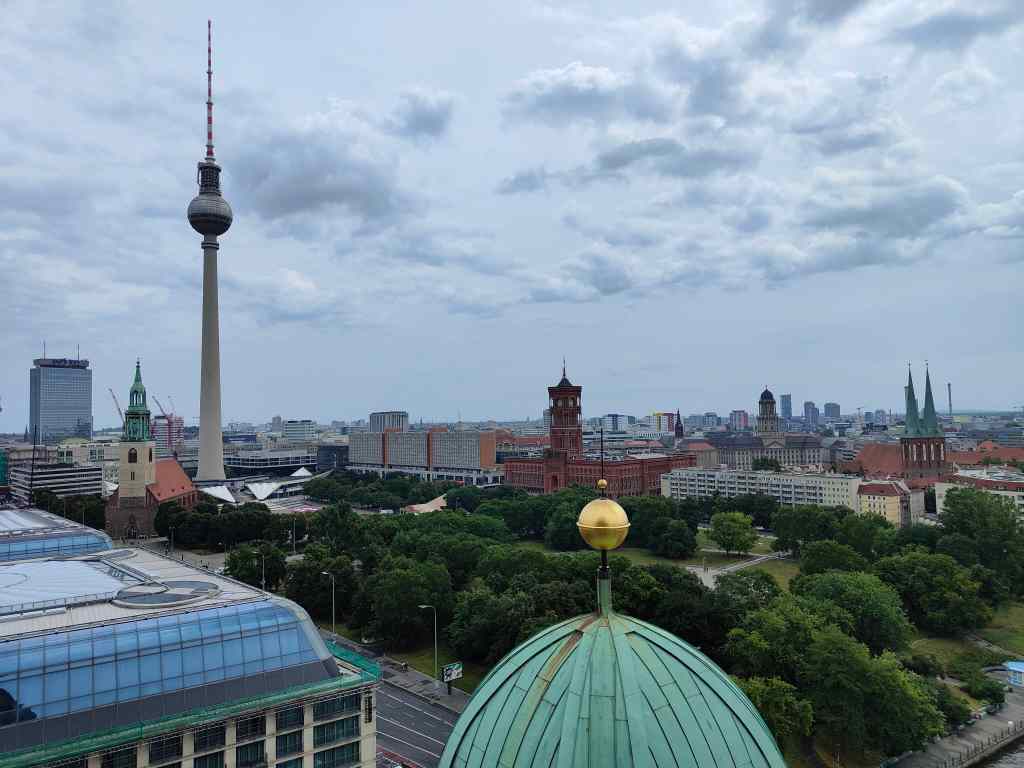
From Checkpoint Charlie, I headed east to Museum Island, home to some of Europe’s best museums. Unfortunately, the most famous of them all, the Pergamon, had recently closed for major repairs and is scheduled to reopen in 2028 (but given Germany’s record for public construction projects, don’t hold your breath). But there was still plenty of choice. It had stopped raining, so first I visit Berlin’s impressive cathedral (Dom) with its cavernous interior and then climbed the tower for the good views from its roof.
Inside Berlin’s DomThe view from the roof of the Dom on a rainy day
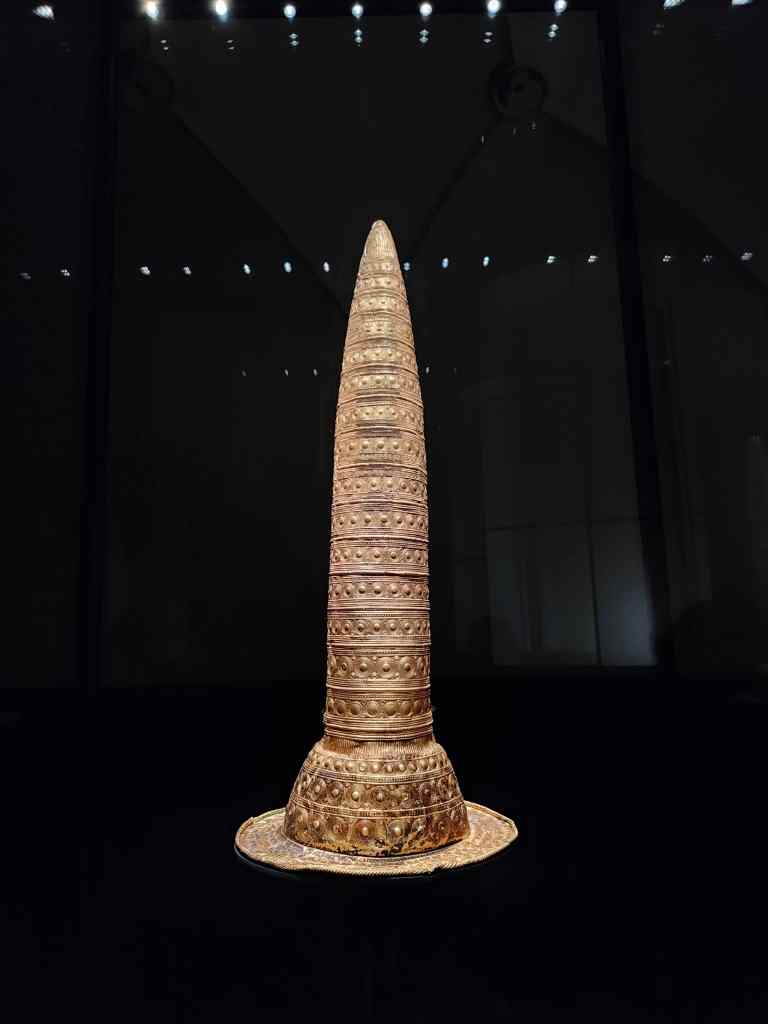
Next, I visited the Neues Museum, built in the middle of the 19th century, but looking a lot older, having been damaged by bombs in the second world war and then neglected during communist rule. It was brilliantly restored after reunification – in many of the rooms the original brickwork is left exposed, giving an old, decaying atmosphere that I found was a great way to present the exhibits. Highlights included a famous bust of the Egyptian queen Nefertiti (no photos allowed here!), a ceremonial gold hat from the bronze age which made me think of Hogwart’s sorting hat in the Harry Potter books, and parts of the treasure of Troy found by the enterprising German business and amateur archaeologist Schliemann.
Inside the Neues Museum, BerlinThe hat from Hogwarts? – Neues Palace, Berlin
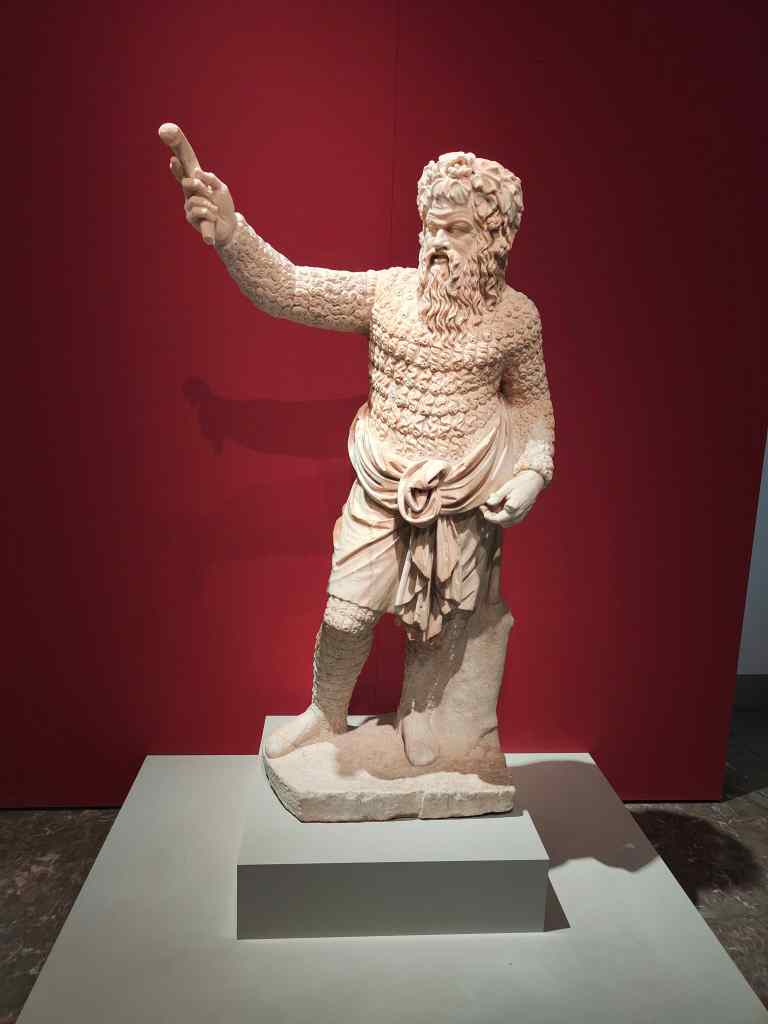
After a wonderful couple of hours wandering around, I visited the nearby Altes Museum, built slightly earlier and looking much older from the outside, but modern on the inside with bright white walls. Its collection is not quite as good as its neighbour’s, but it does have some great pieces like this statue of a roman actor.
Exhibit in the Altes Museum, Berlin
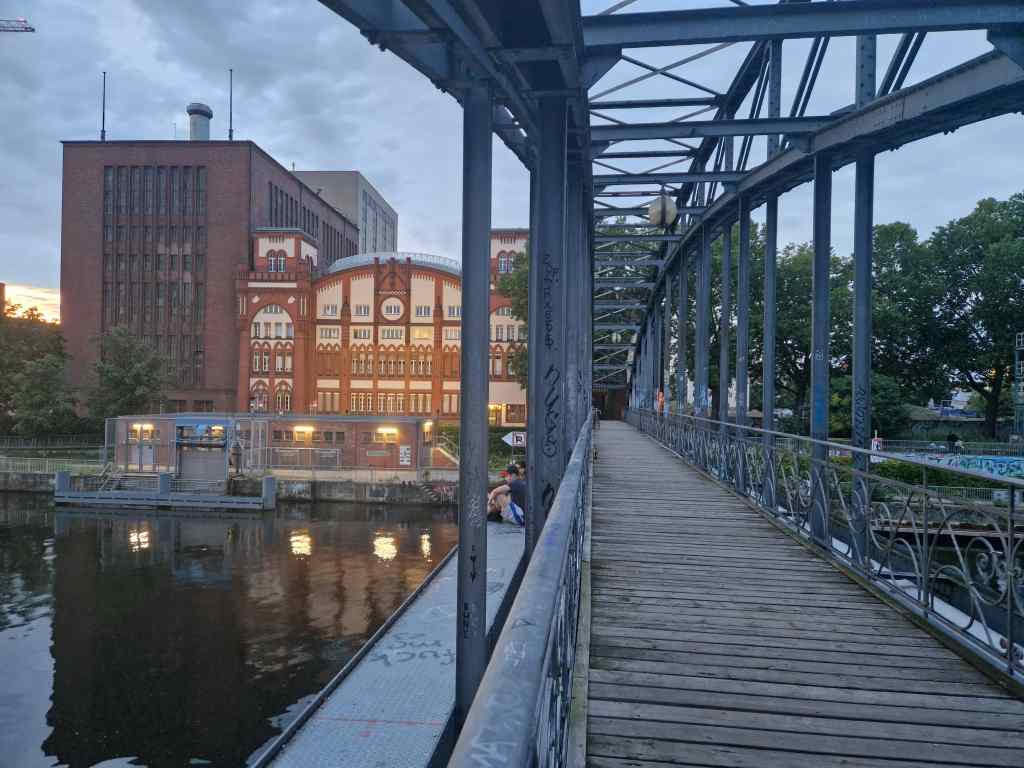
Originally I had planned to visit one more attraction on the island, the Alte Nationalgalerie, but there was long queue outside even for people who already had tickets. I didn’t fancy waiting for an hour in the rain, so headed home to relax. I had dinner with old friends who live in the Charlottenburg area of western Berlin. During our meal it had finally stopped raining, so afterwards we strolled around to explore the area, which had an interesting mix of architecture………
Post-industrial architecture in Charlottenburg, Berlin
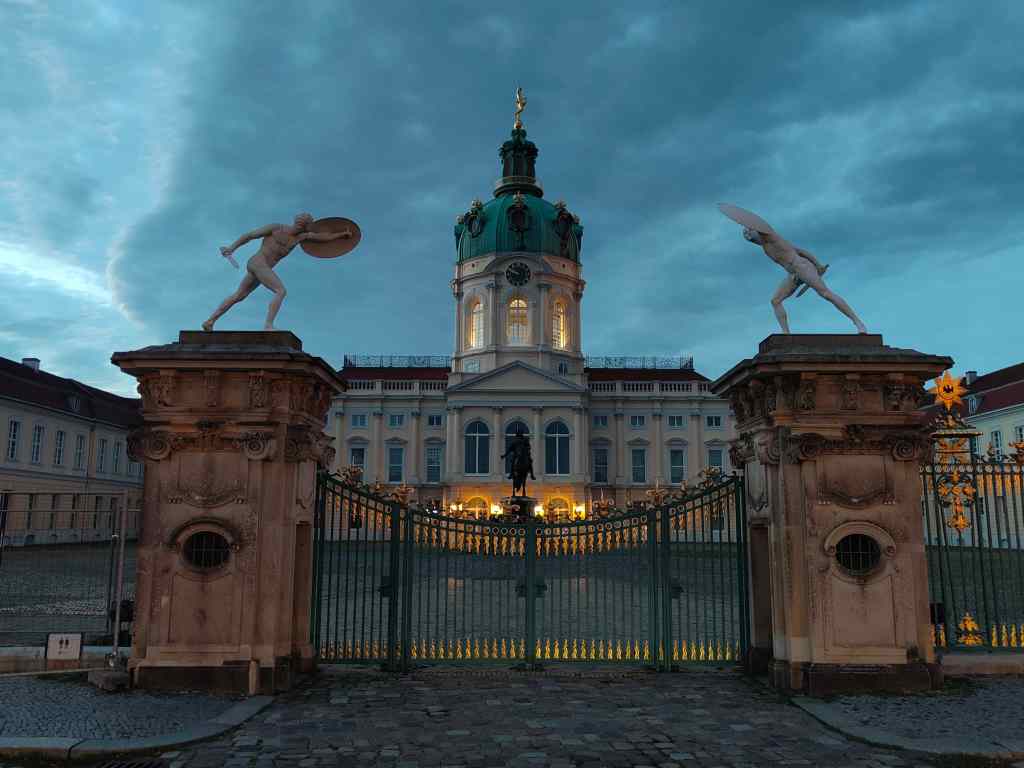
….and was also home to Charlottenburg Palace, whose construction was started around 1700 by Frederick I, King of Prussia and continued through the first half of the 18th century until it became one of the biggest palaces in Europe. I could only admire the building from the outside but did not mind, since on the next day I planned to visit an even more impressive place…….
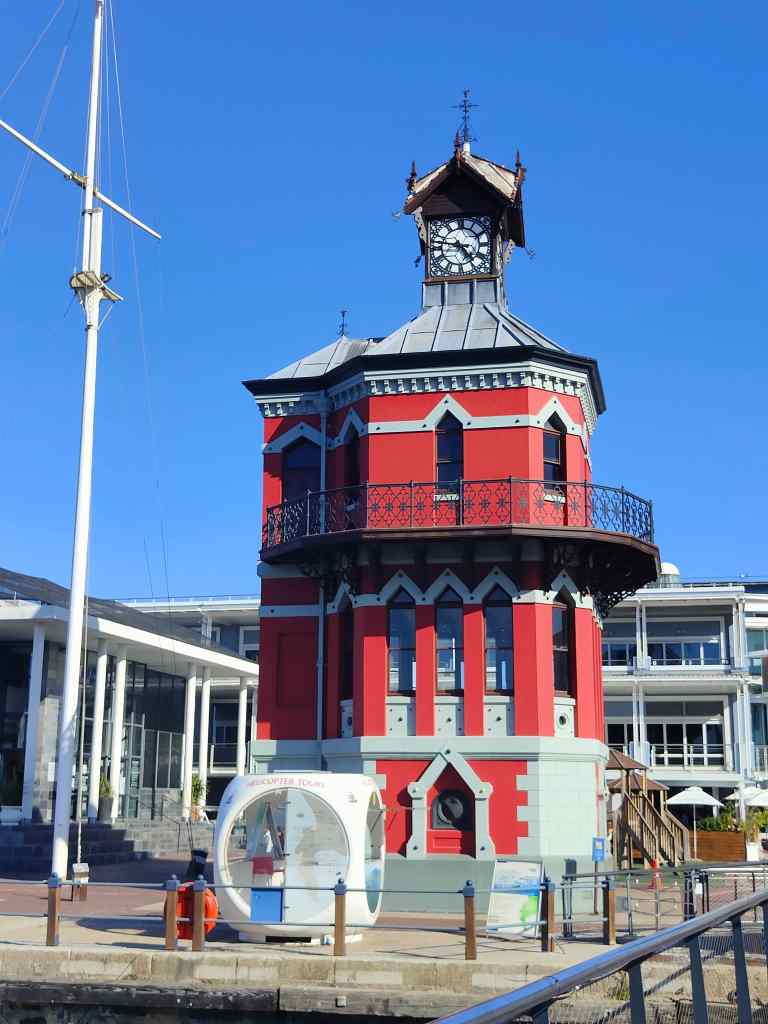
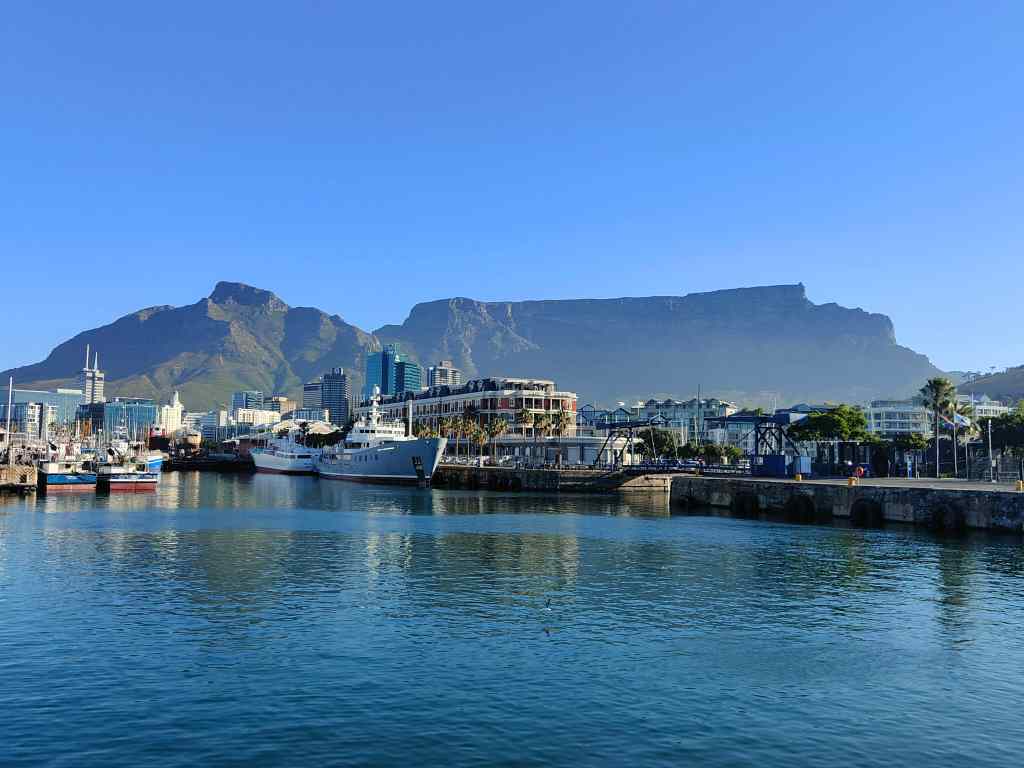
I spent today exploring the V+A Waterfront. This was the first part of Cape Town to be settled and claims to be the oldest working harbour in the southern hemisphere. The Victoria and Alfred (Victoria’s son) docks were busy during Cape Town’s role as a centre for gold and diamond exports from South Africa in the late nineteenth century. In the 1990s, the area was redeveloped. One working dry dock for ship repairs remains, but the remaining shipping activity is now entirely pleasures cruises. The warehouses have been converted to shops, restaurants, offices and a conference centre.
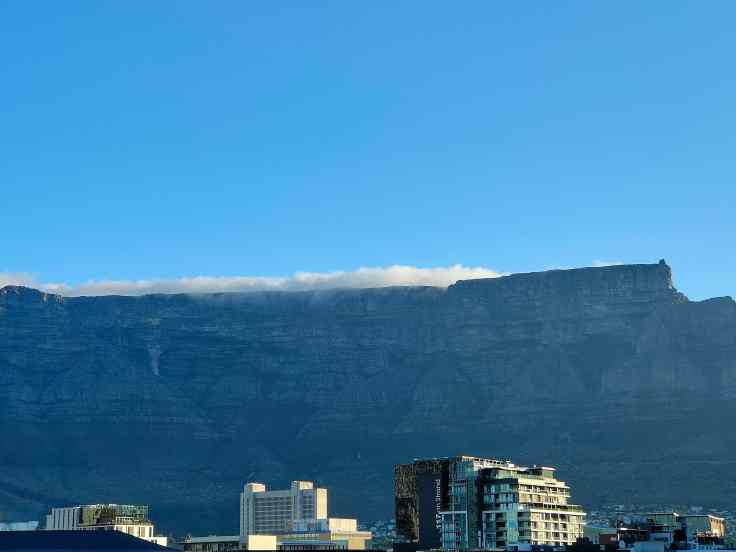
The conversion was very successful. The area was beautiful, with the spectacular backdrop of Table Mountain.
Scenes from the V+A Waterfront
The souvenir shops sold lots of interesting articles. My favourite place was the African Trading Post. Its ground floor housed traditional souvenirs, plus some unusual ones – like Zimbabwe bank notes. The highest denomination I found was for fifty trillion Zimbabwe dollars.
You can be a trillionaire in Zimbabwe it seems
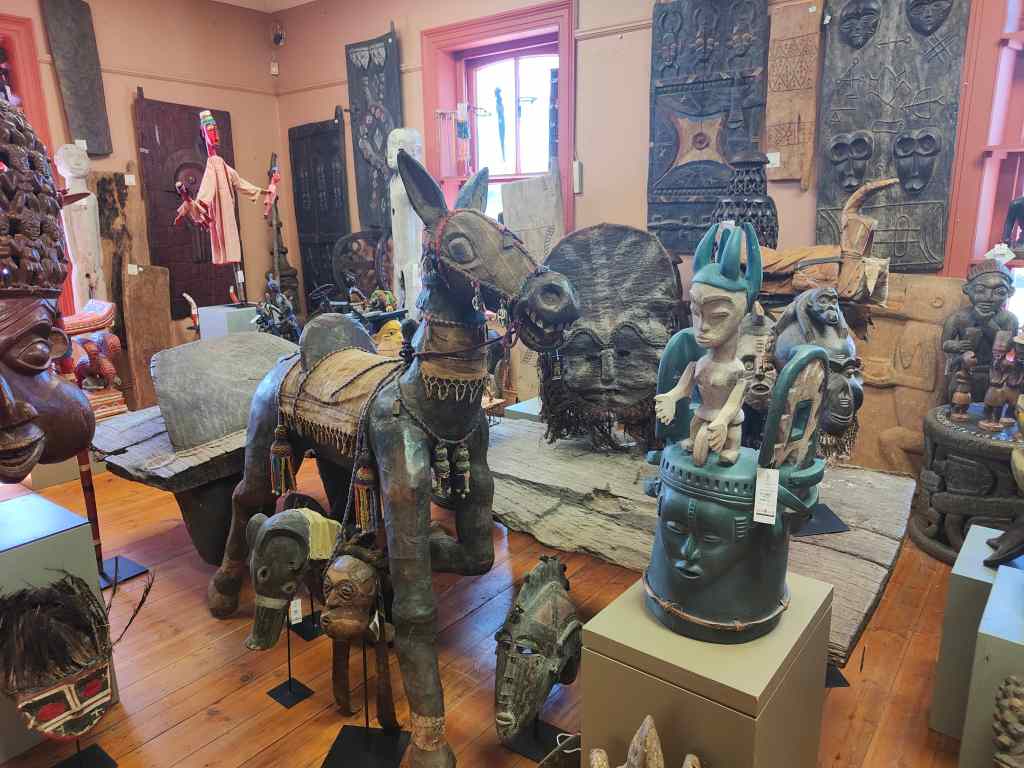
Its three upper floors were given over to increasingly exuberant carvings and sculptures, with finally a museum on the top floor.
Second floor of the African Trading Post
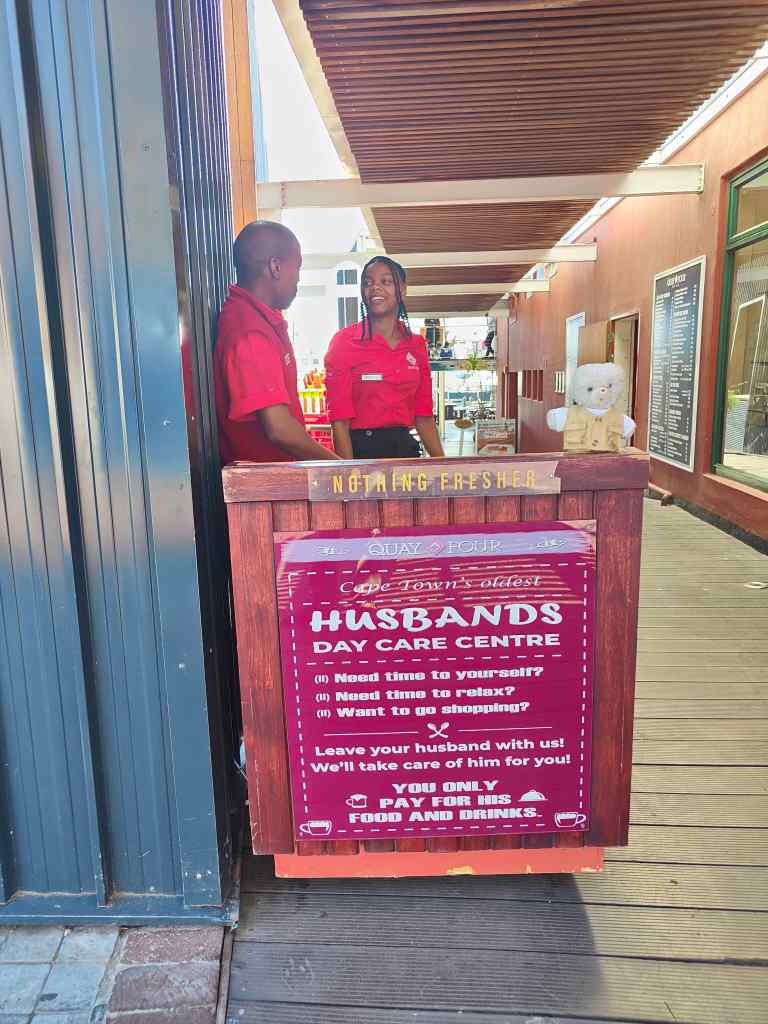
The Waterfront has lots of open-air restaurants and cafés. Recognising that shopping might be stressful for men, one place had set up a day care centre for husbands where wives could leave their partners before going round the countless shops.
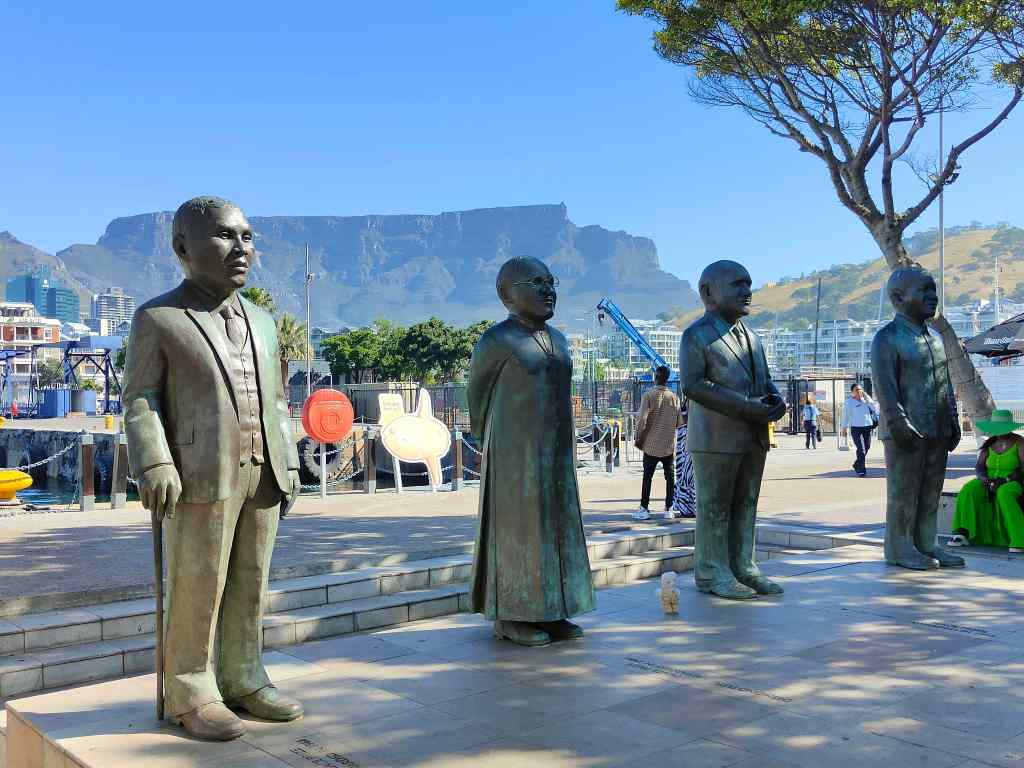
The area also had statues of famous people…….
Four giant figures in the ending of Apartheid, and one small bear
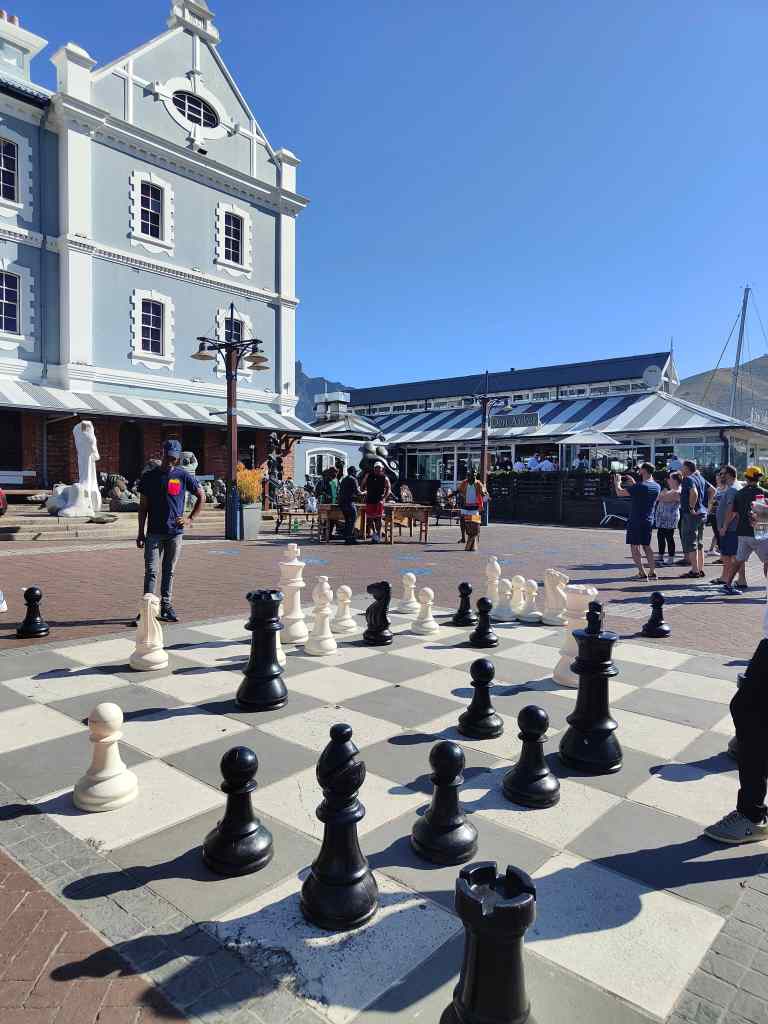
……..and a popular large scale chess set.
There were security guards everywhere, meaning the atmosphere was more relaxed than the rest of Cape Town. People gathered to enjoy a range of high quality street performers, including an excellent young people’s choir. My shopping completed, I headed back to my flat, and then later went out for dinner in the City Bowl area at the Sea Breeze restaurant, where I had a tasty fish curry.
Sadly that was my last day of my brief tour around South Africa before my flight back to London. It was a country I had liked a lot, with its beautiful scenery, great food and friendly people. These more than made up for the night-time insecurity and need to be constantly vigilant in Cape Town. I will be back, probably returning to Cape Town but heading further east next time, as far as Durban.
Today I saw three very different aspects of Cape Town. The day started with a tour of Langa, Cape Town’s first township. Our arrival was delayed by nearly ninety minutes as the guide and his driver searched frantically and ineptly around the city for the remaining tour participants, in a performance worthy of Laurel and Hardy. Fortunately, we managed to arrive at Langa intact, without having killed anyone, despite our driver ignoring several no entry signs and nearly hitting a pedestrian on a crossing .
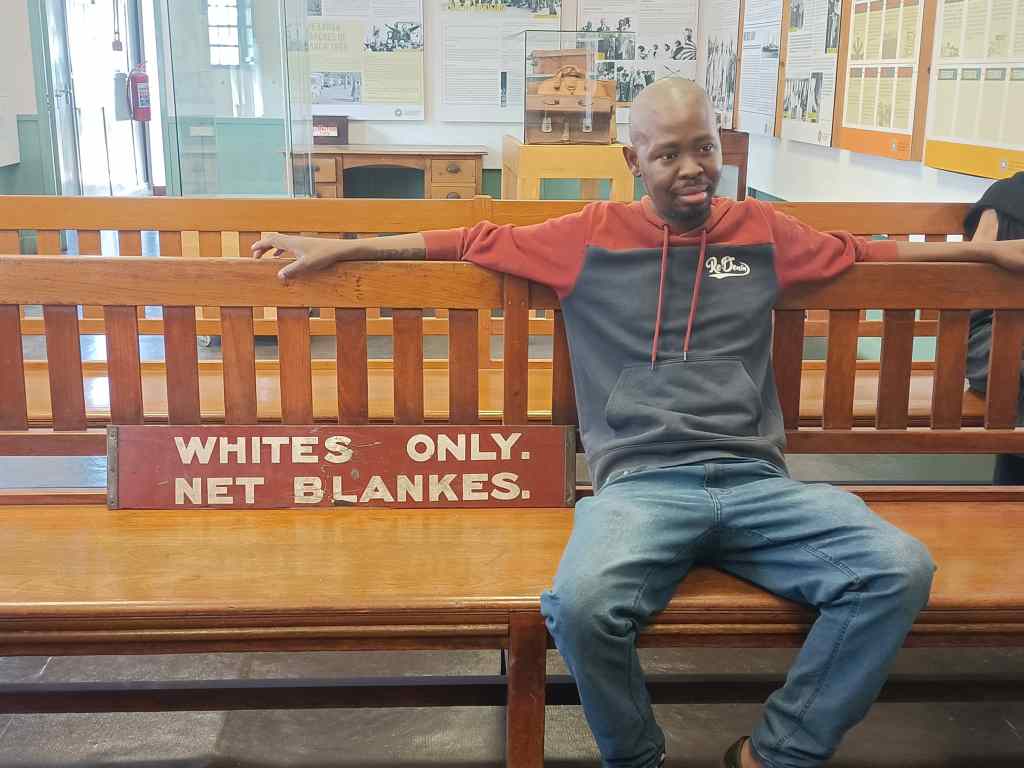
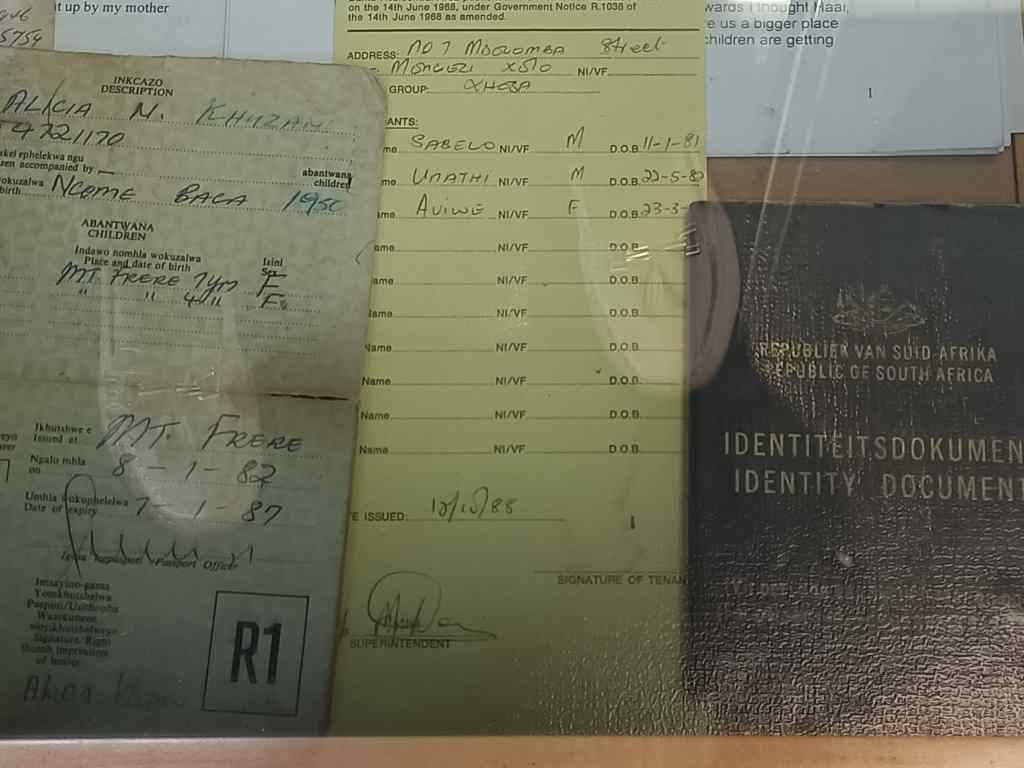
Our first stop was the township’s museum, where the curator was impossibly enthusiastic and told us more about the history of the place in a rapid, sometime confusing, babble. Langa was the Cape Town’s first township, where black people were forced to live, segregated from whites. The conditions they lived in were close to slavery, with dozens of black men sharing single sex dormitory accommodation in order to work for white businesses. Every black had to carry a “dompas” which allowed them to travel; it had to be renewed every two weeks. The hated dompas was the focus of the first demonstrations against the Apartheid system, which had been introduced by the National Party in 1948. Further demonstrations flared up over the decades, each time being suppressed violently by the police. Apartheid continued until the 1990s, until the South African President FW de Clerk realised that minority white rule was unsustainable, released Nelson Mandela from prison and allowed coloured people to vote in elections.
A “White’s Only” sign on a bench, with the curator’s sonThe hated Dompas and other ID documents
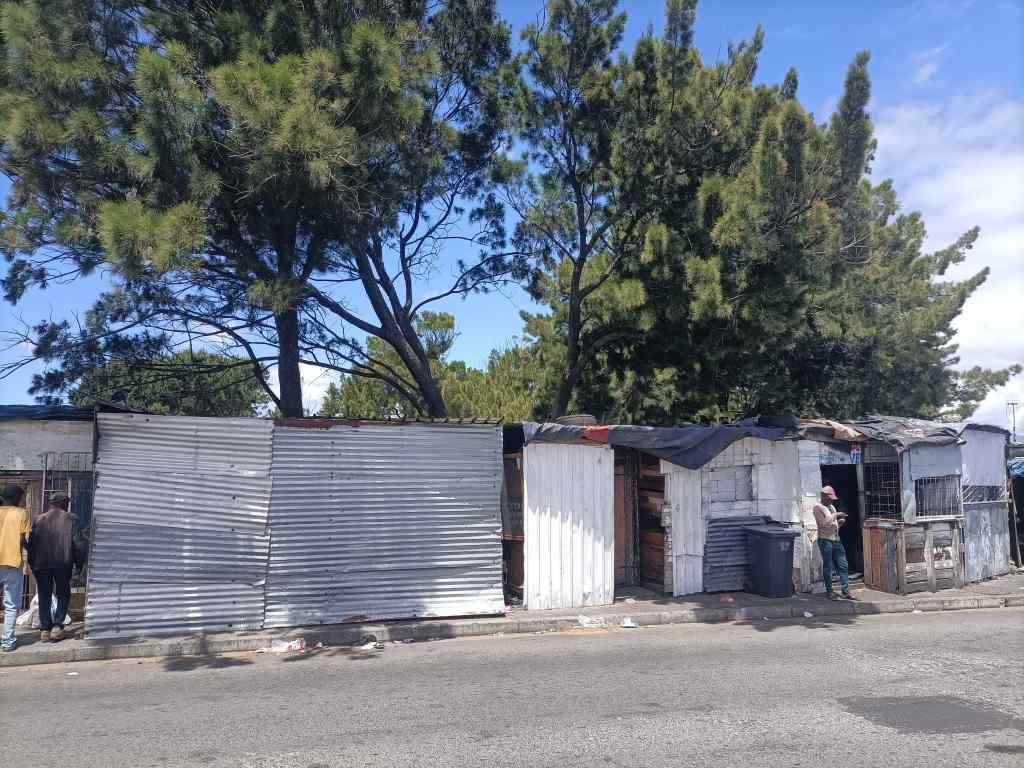
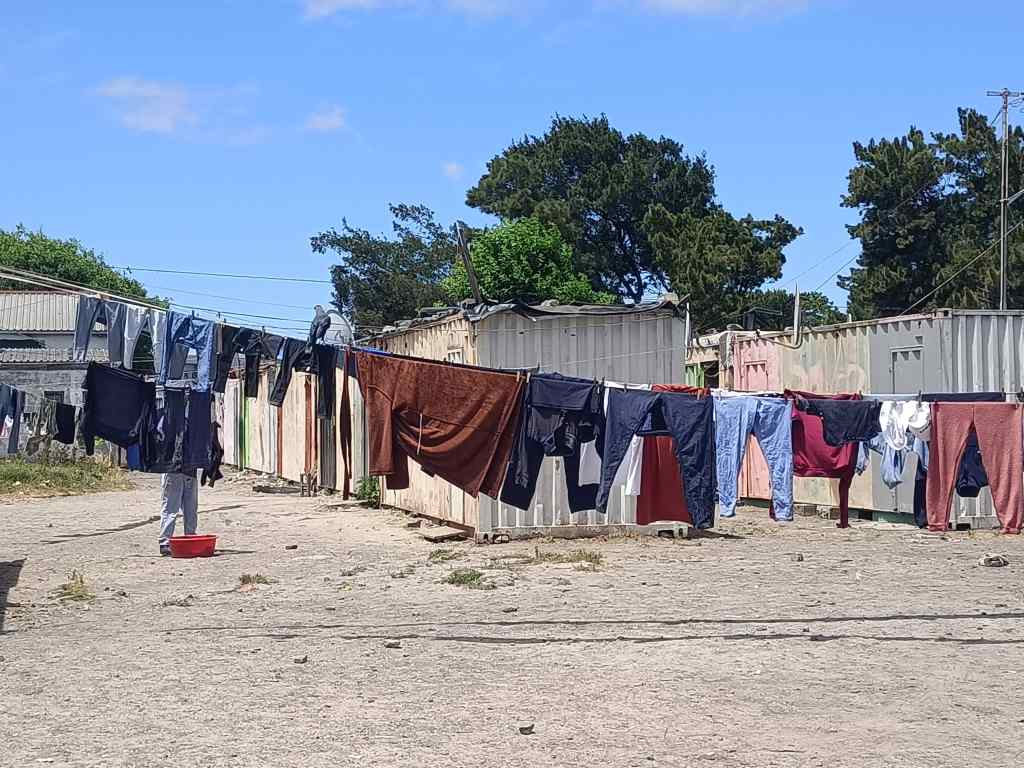
The township had many different types of housing. At one end of the scale, there were shanty houses built out of corrugated iron. People living here had to borrow electricity from neighbours and get water from a pump outside.
Shacks in Langa
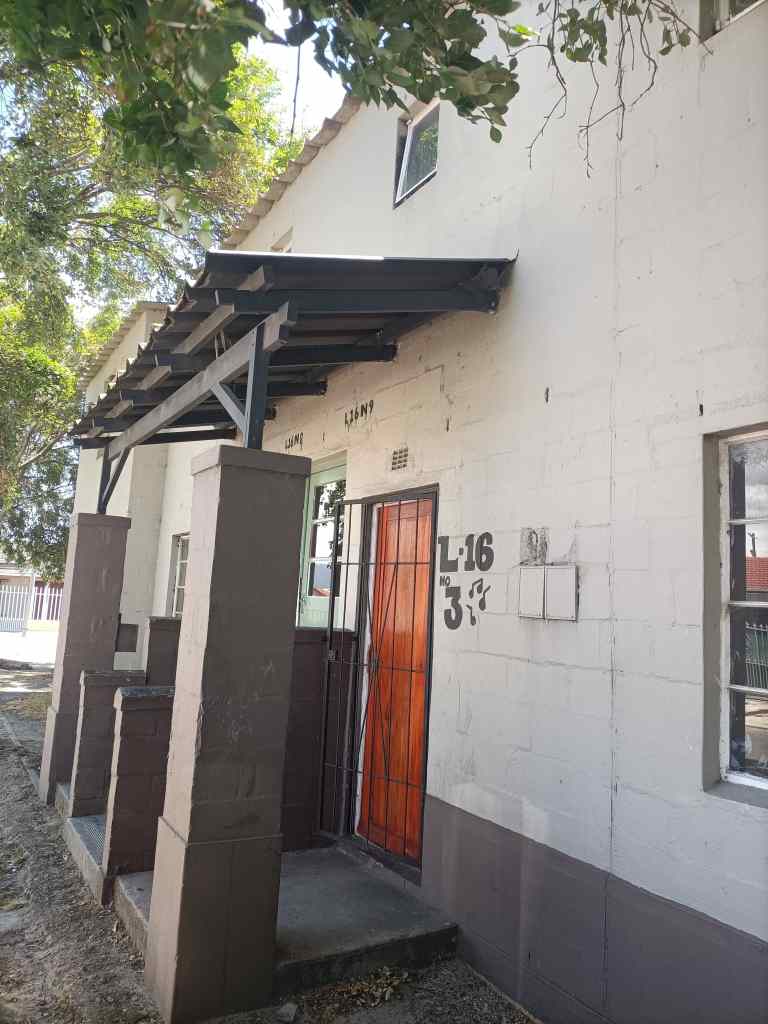
The lived in the hope that the government would need the land they occupied and would then build them a proper house, like the mid-range accommodation that made up most of the township….
Mid-range housing, Langa township
At the top end, the township had an area nicknamed “Beverly Hills” with very nice modern houses. These were given to people like teachers or nurses who had worked for the government for a long time. They even had brilliant views over Cape Town.
“Beverly Hills”, Langa Township
Our guide assured us that there was very little crime in Langa. The fancy houses in Beverly Hills were not a source of resentment, but one of inspiration, where people could see what was possible if they worked. Walking around the streets, the atmosphere was very friendly and relaxed. Lots of people came to greet our guide, who seemed to know almost everyone. One resident came to embrace one of our group, because he was wearing a South Africa rugby shirt. Lots of children would approach us and spontaneously hug their white visitors.
“Free hugs” at Langa
Langa certainly seemed to be a friendly community, which had become a pleasant place to live – overcoming tough obstacles on the way. Its residents were proud to be there. However, our guide told us that many other townships were not like this, with many suffering from rule by criminal gangs and harsher poverty than what we had seen in Langa.
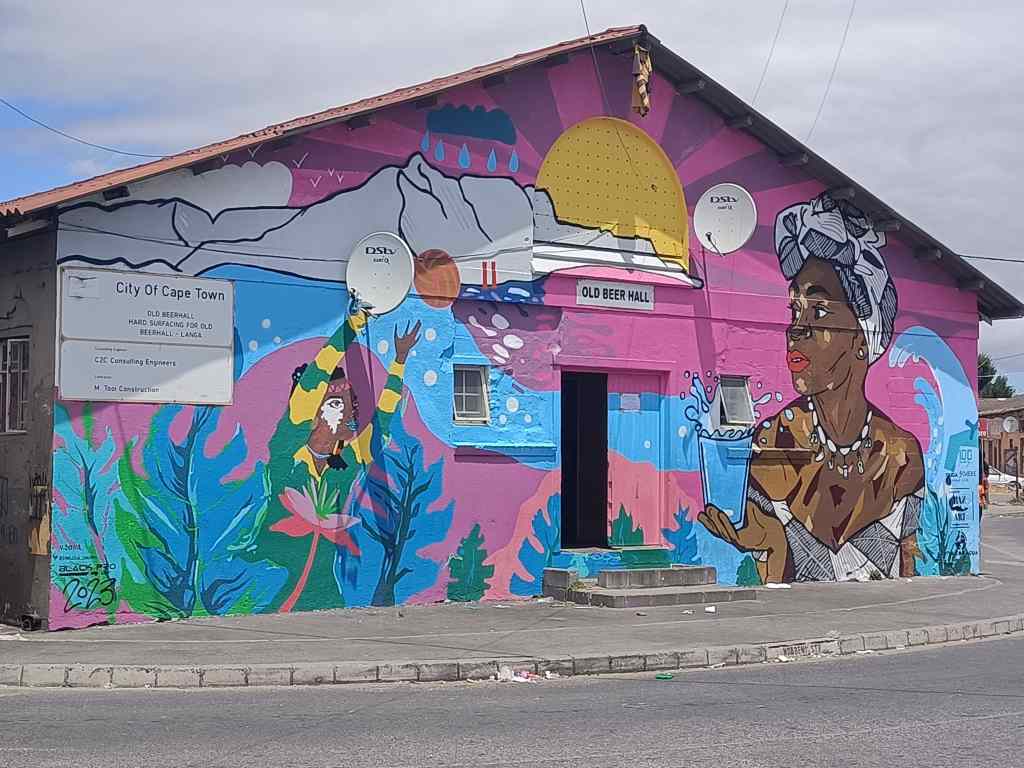
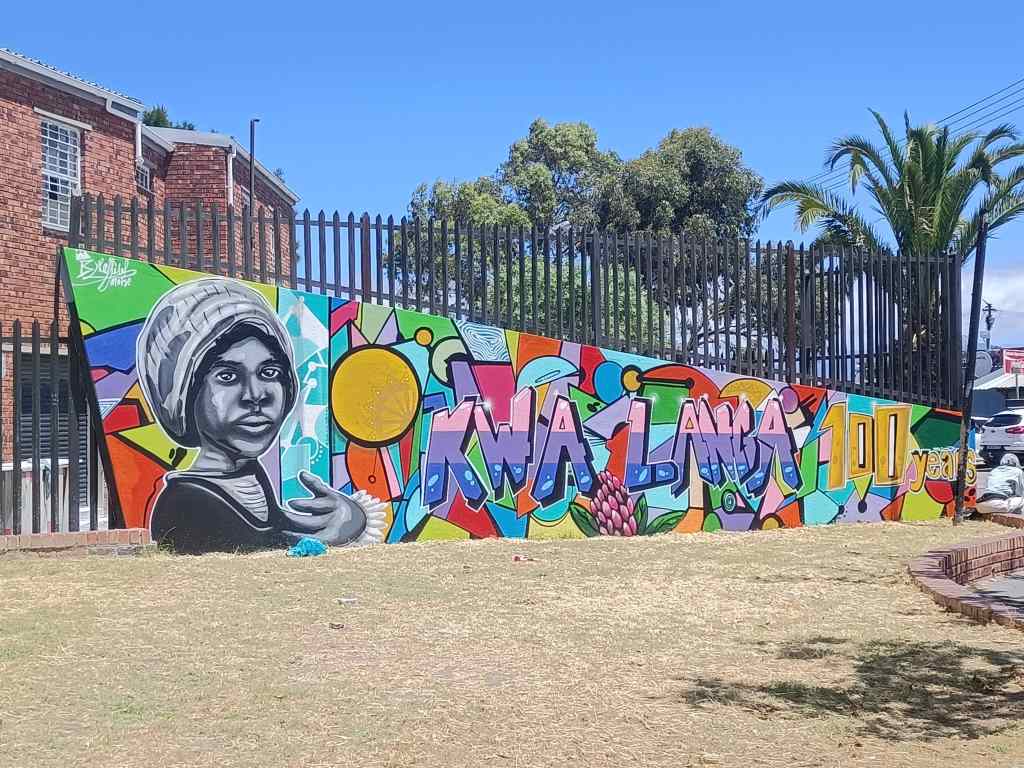
Mural at the entrance to Langa
Our trip ended – inevitably – in a building housing several art galleries, selling painting, carved wooden goods or ceramics. The owner of the latter business told me about the difficulties of operating with unreliable power supply – like all of South Africa, Cape Town experiences scheduled power cuts of two to three hours per day, called “load shedding”.
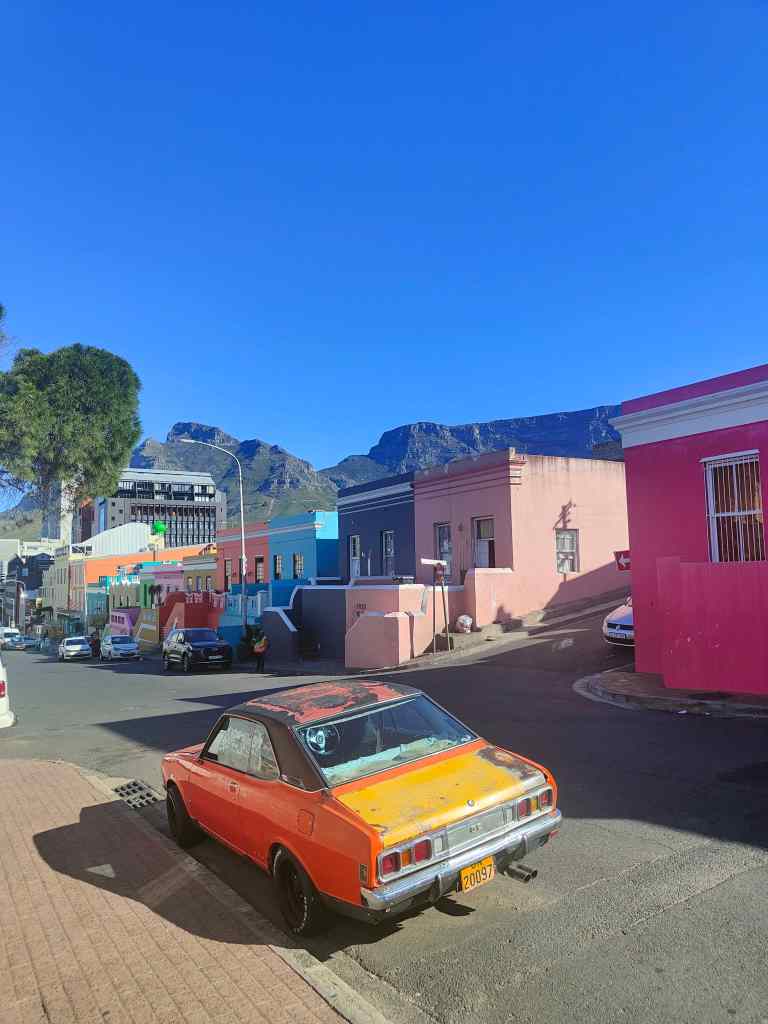
After the township tour, I set off to see two other areas of Cape Town. The first was Bo-Kaap, the city’s oldest surviving residential area, dating from the mid-18th century. The area is famous for its brightly coloured houses.
Street scene in Bo-Kaap
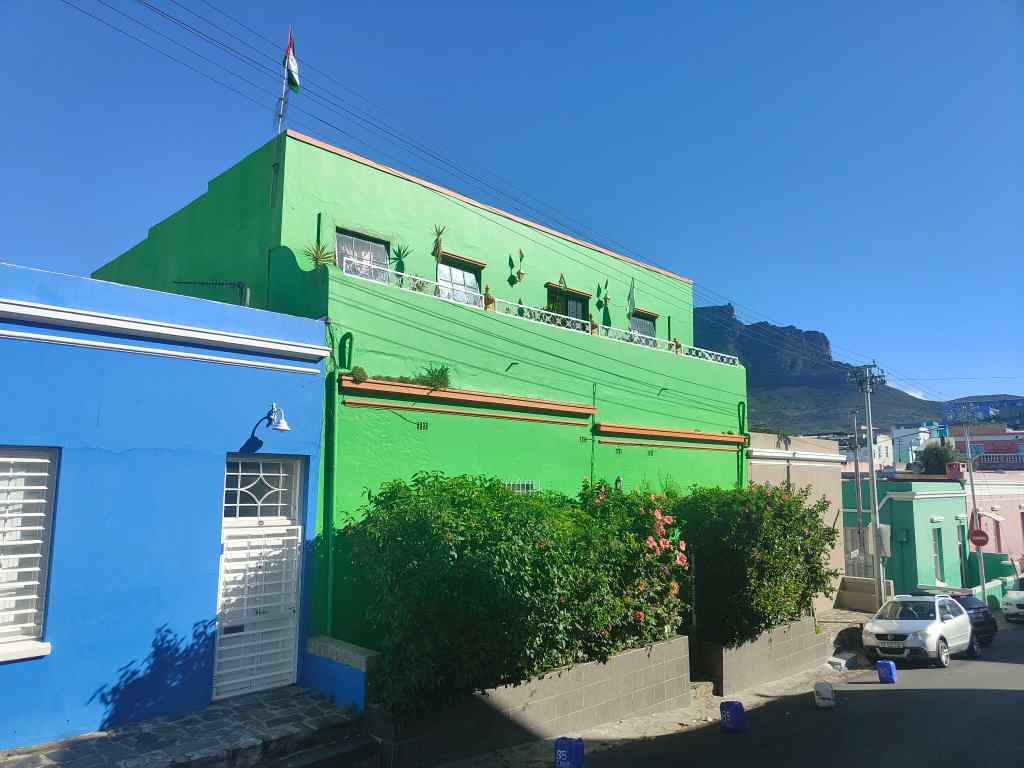
Many of the people who live here are descendants of Muslim workers who arrived from southeast Asia over a century ago, and the area has many mosques.
A mosque in Bo-KaapLots of Palestinian flags in this Muslim area of Bo-Kaap
There were a few people hanging around on the street corners. One group shouted a greeting to me and, relaxed after my visit to the friendly Langa township, I replied to them. Another person walking nearby whispered to me urgently. “Don’t talk to them” he said. “They will try to steal your phone”.
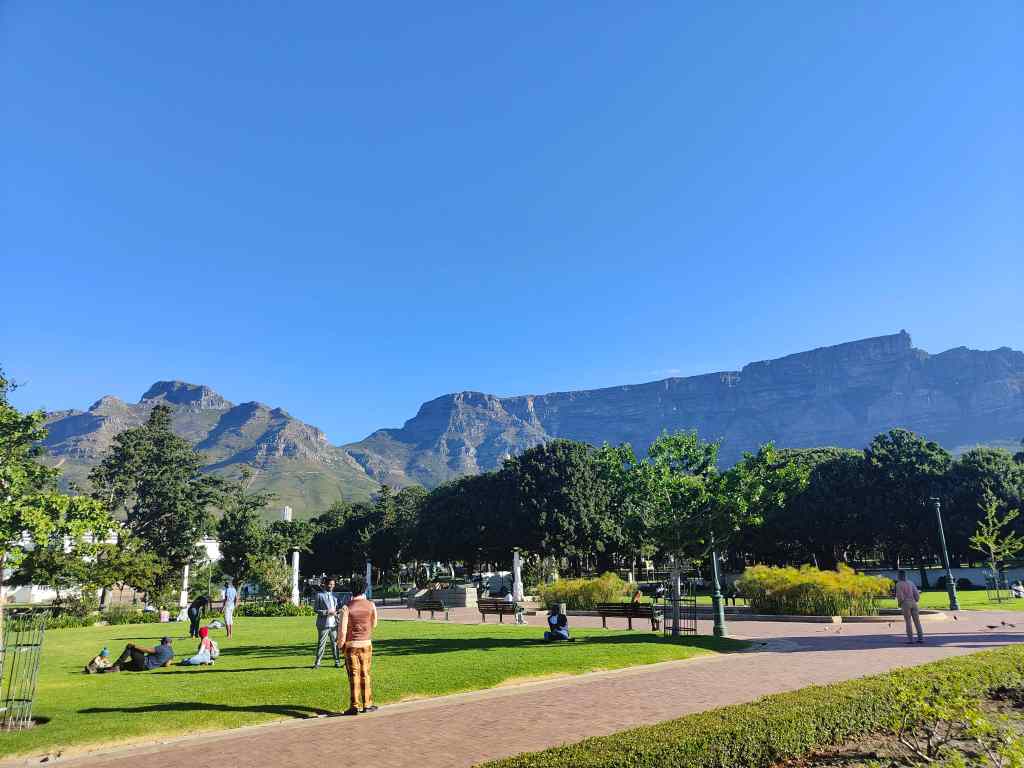
From Bo-Kaap, I walked to the City Bowl area – the heart of Cape Town. This is the main business area, and has shops, restaurants, high rise buildings (not quite skyscrapers though) and lots of top end hotels. By day, it was a pleasant and obviously affluent area, with people strolling from café to café. I soon found the Company’s Garden, which is the city’s oldest green space. It was set up by the East India Company in 1652 to grow fruit and vegetables for the fledgling Cape Town colony. In the following century it was transformed into ornamental gardens, and became famous around the world. On this late Sunday afternoon, centuries later, it was full of people enjoying the collections of exotic trees and flowers or just sitting on the grass. Couples enjoyed picnics together, parents played with their children, and at least one marriage was being celebrated.
The Company’s Garden, City BowlMemorial to Smuts and the National Art Gallery
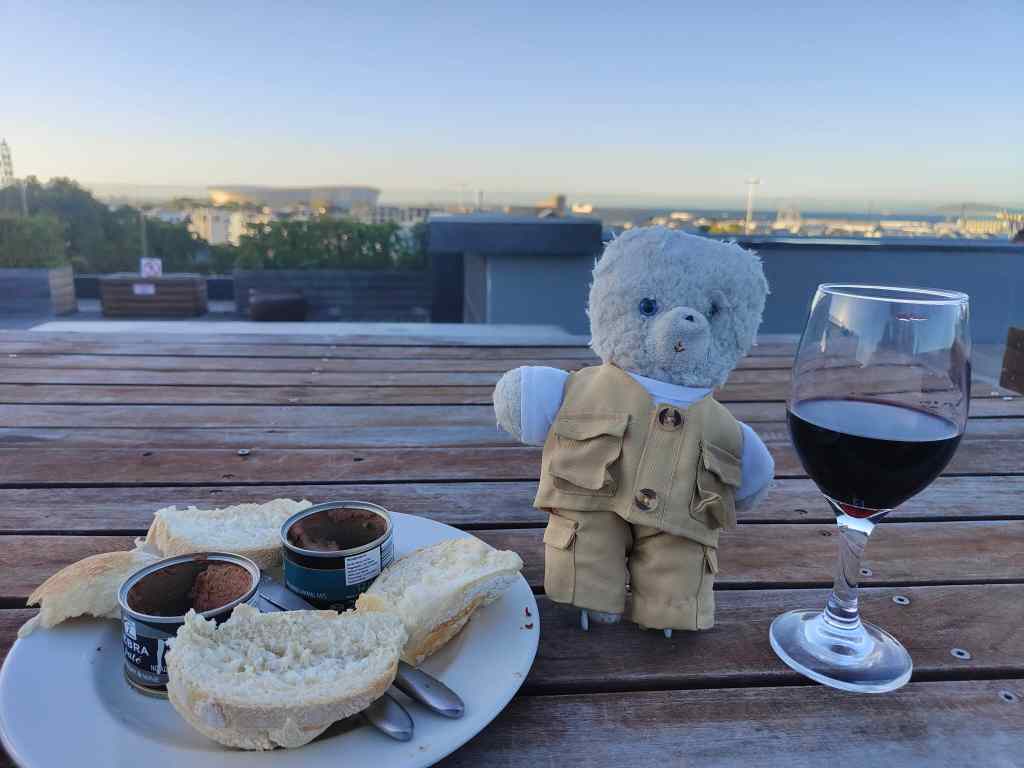
I walked through to the west end of the garden, where there was an open area, with a few monuments and the national art gallery. There were also a lot of homeless people stretched out on the grass. As the sun began to set, the shadows in the gardens lengthened. A sudden transition occurred. The happy, relaxed crowd I had seen earlier rapidly disappeared leaving behind the homeless and beggars. The remaining visitors walked faster, and looked around frequently. I followed suit, and walked quickly back to my hotel via the local shop, where I brought some excellent springbok paté and wine for dinner. I ate this on the roof terrace of my hotel, contemplating the day’s events, and my good fortune in life compared to many of the other people I had seen today.
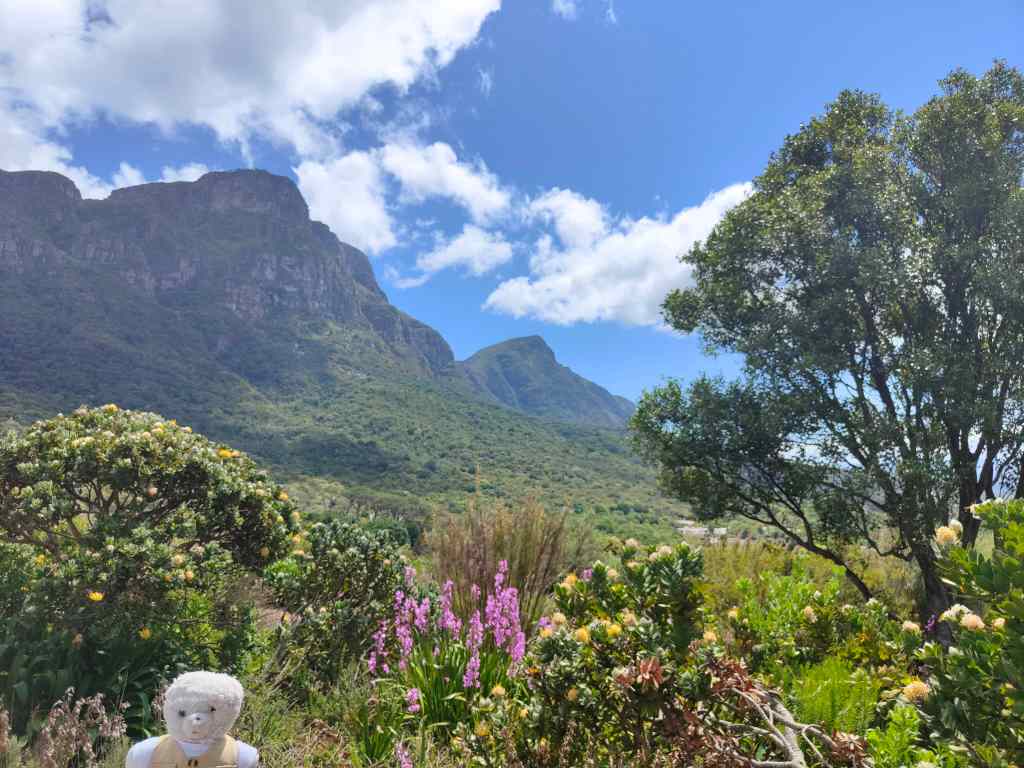
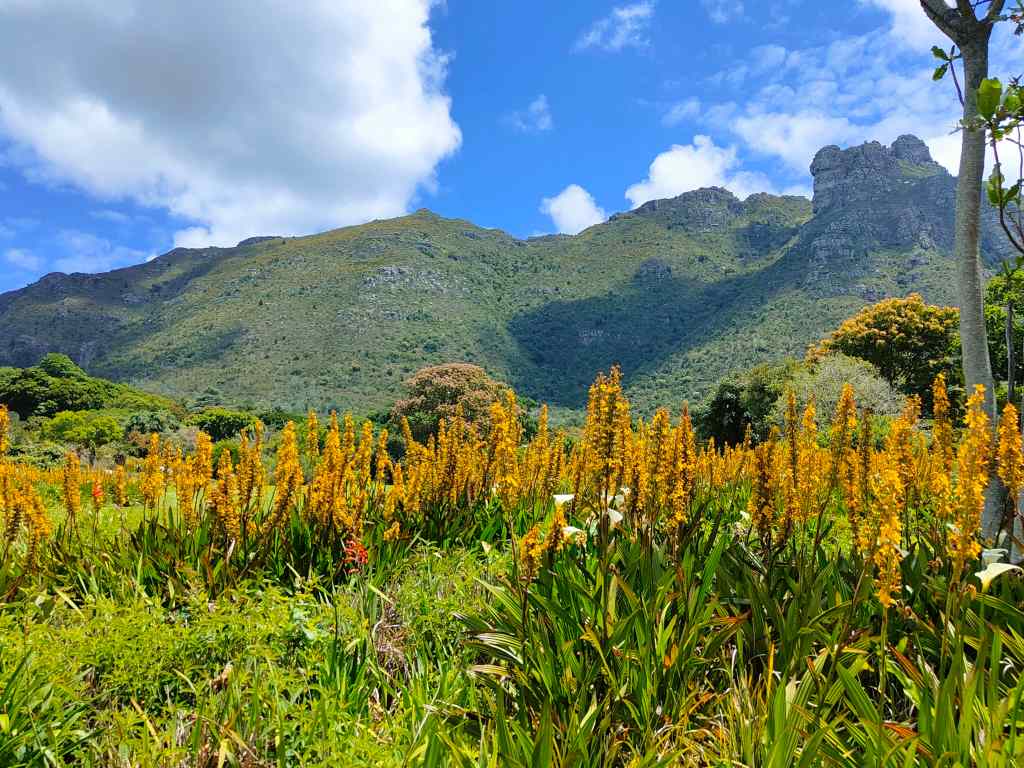
Today my original plan was to visit the Botanical Gardens and then explore the City Bowl area of Cape Town’s centre. I reached the Kirstenbosch Gardens without problem by taxi. They are among the oldest botanical gardens in the world, being founded in 1903, and sit in a magnificent setting at the foot of Table Mountain.
Kirstenbosch Gardens have an amazing location
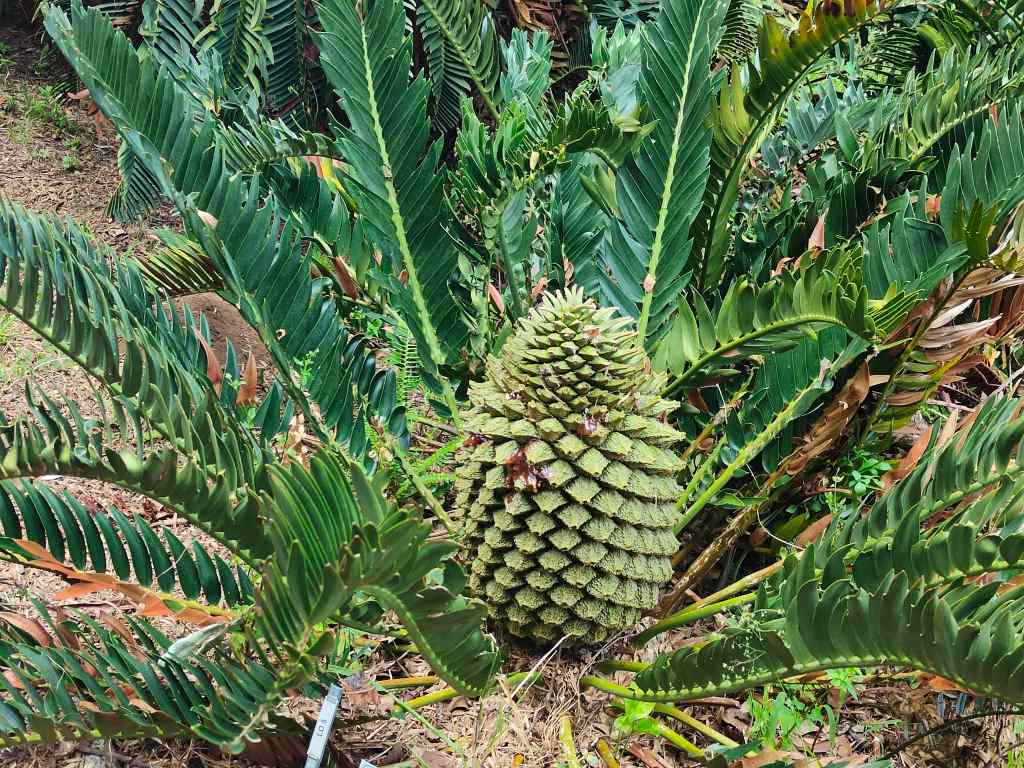
The gardens showcase a collection of typical South African flora, of which I particularly liked the cycads.
A cycad, a type of plant that first appeared when dinosaurs roamed the earth
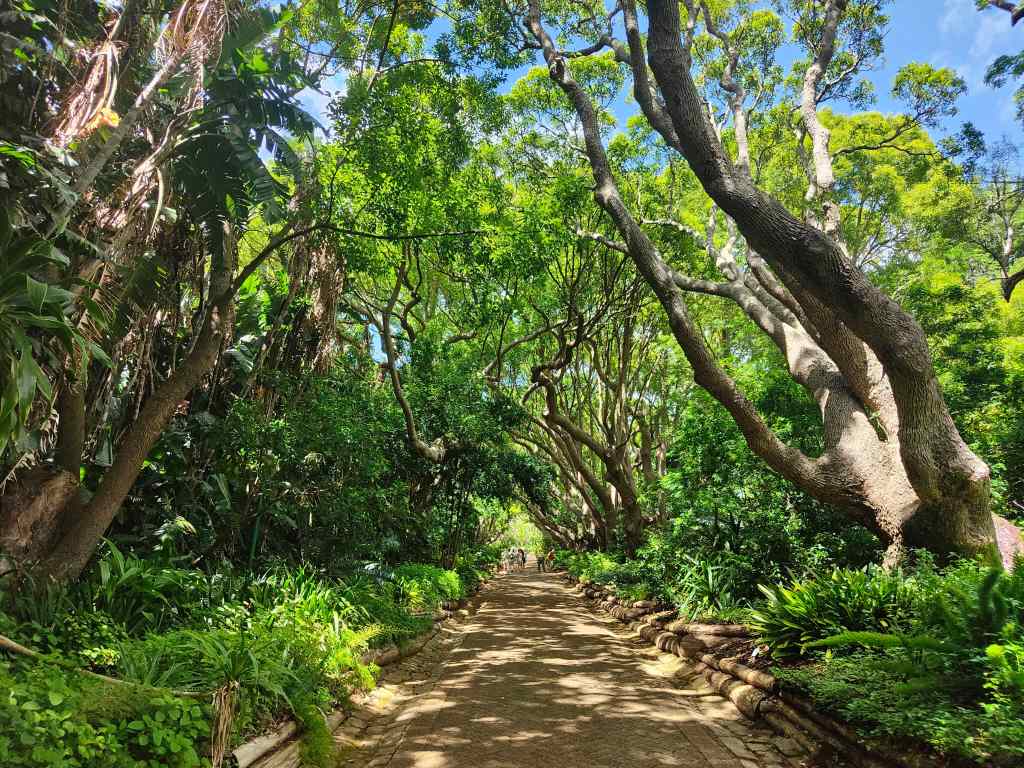
They also had some pretty walkways, shaded by trees, that provided protection from the hot morning sun.
A shady walkway, Kirstenbosch Gardens
When I reached the eastern edge of the garden, I saw an intriguing sign to “Skeleton Gorge”. I remembered that this was one of routes to climb Table Mountain. It was not part of my plan for the day, and I was not equipped for walking, since I had town shoes on my feet, and no cold weather clothing. But despite the lack of preparation, I could not resist and set off on a path that led steeply upwards.
At the top of Skeleton Gorge
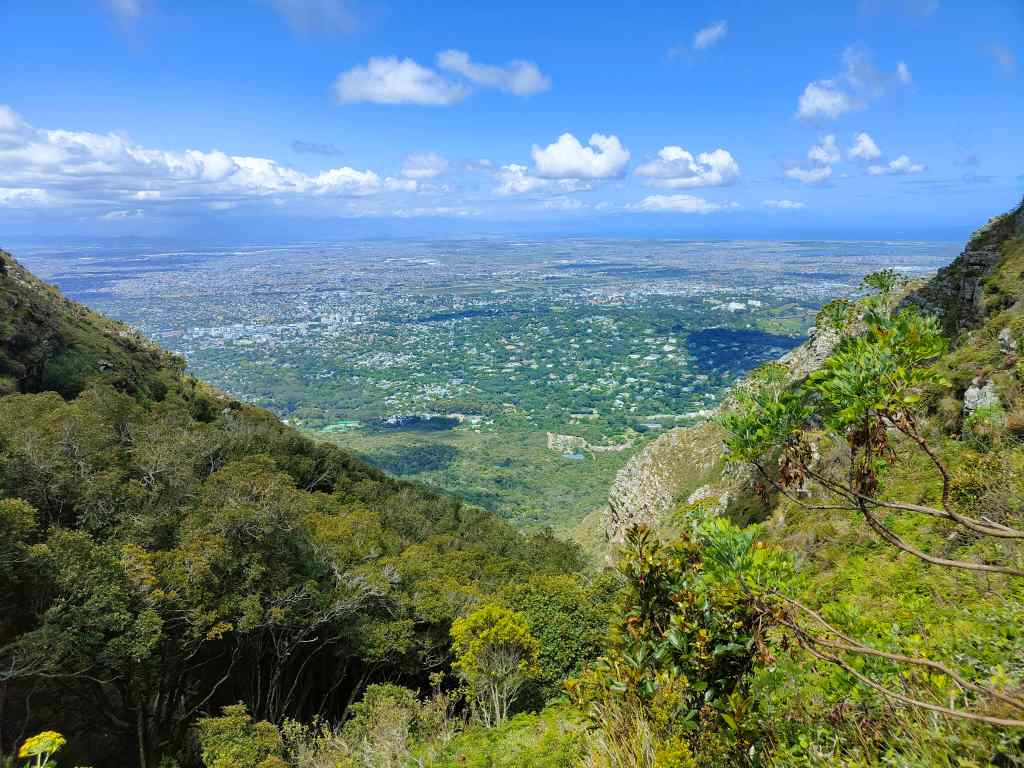
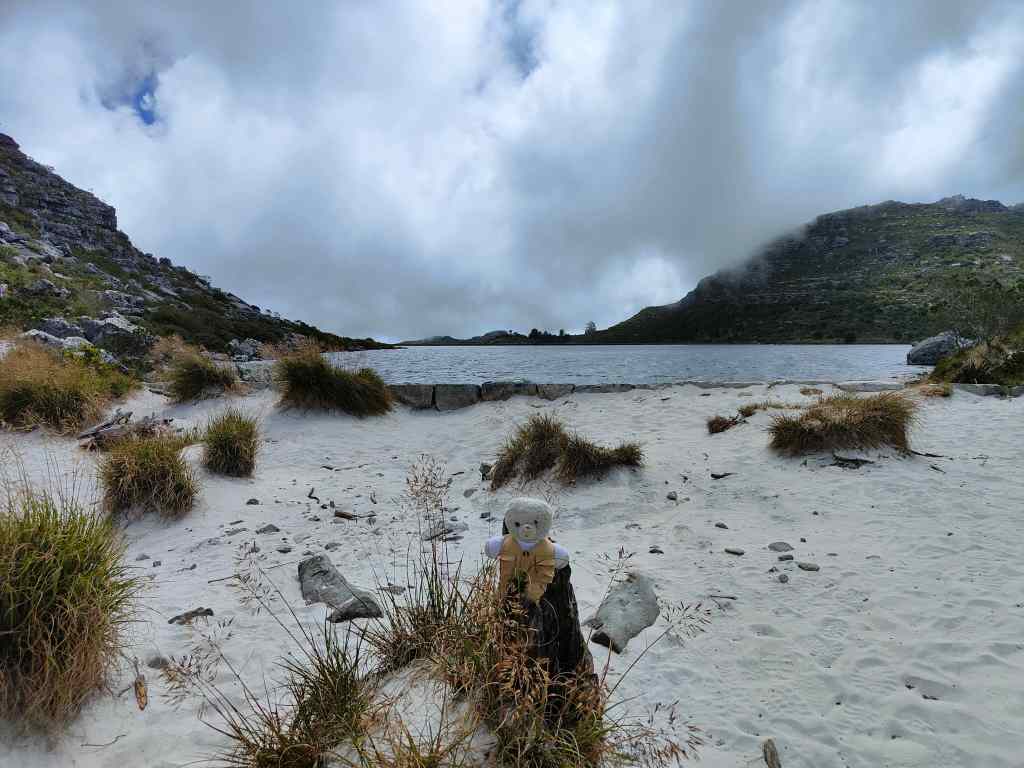
After climbing fifty minutes, I reached the “table” of Table Mountain – the place where the ground becomes flat(tish). There were great views back over Cape Town, and an intriguing small lake surrounded by sand.
Table Mountain is home to a small, sandy lake
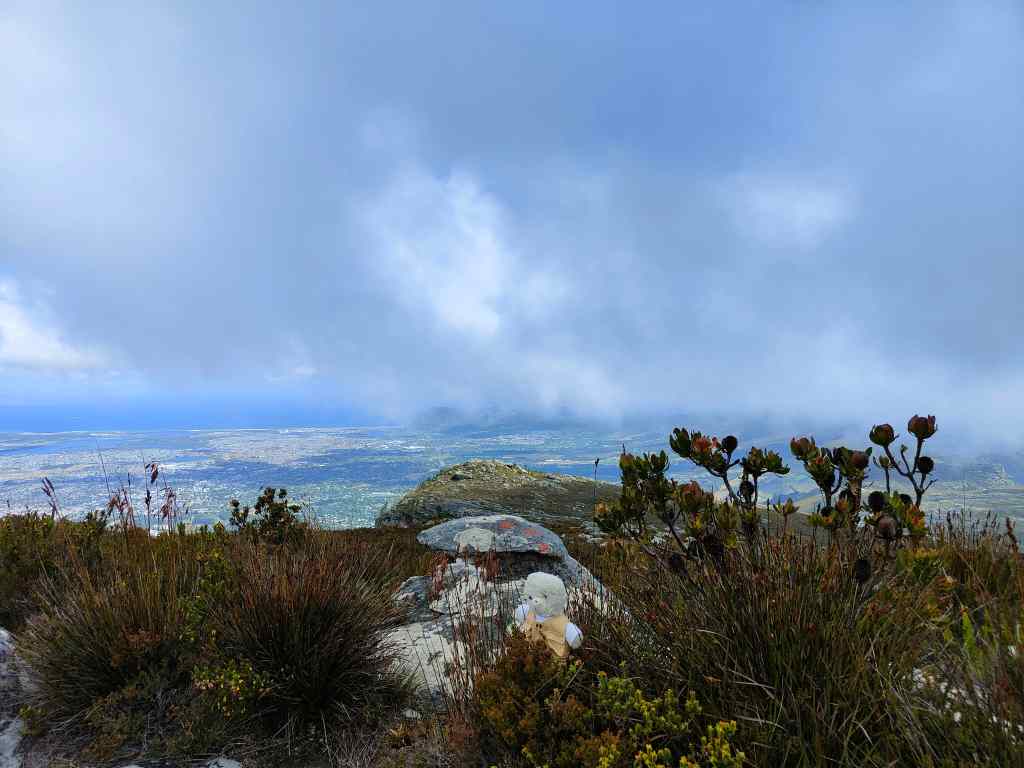
I had more walking to do – first another forty minutes to find the highest point on the mountain, Maclear’s Beacon, and then another forty minutes to the upper cable car station. The weather had become cloudy, but the sun broke through occasionally to light up more amazing views and stop me getting cold. There were also lots of pretty flowers, including some proteas.
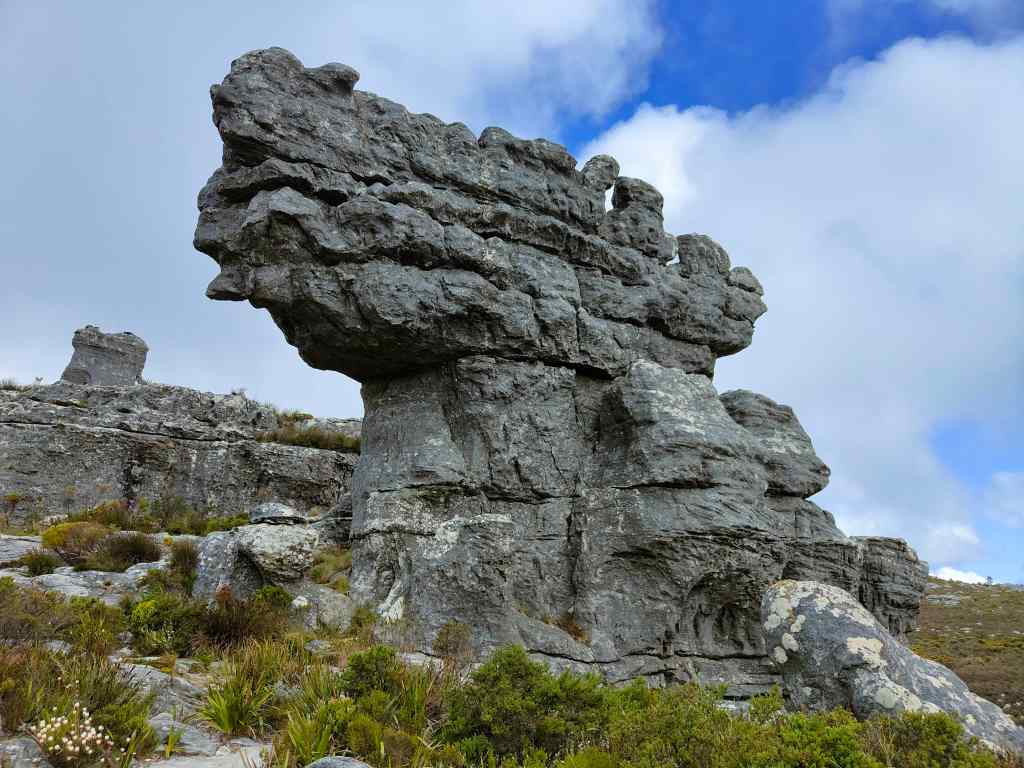
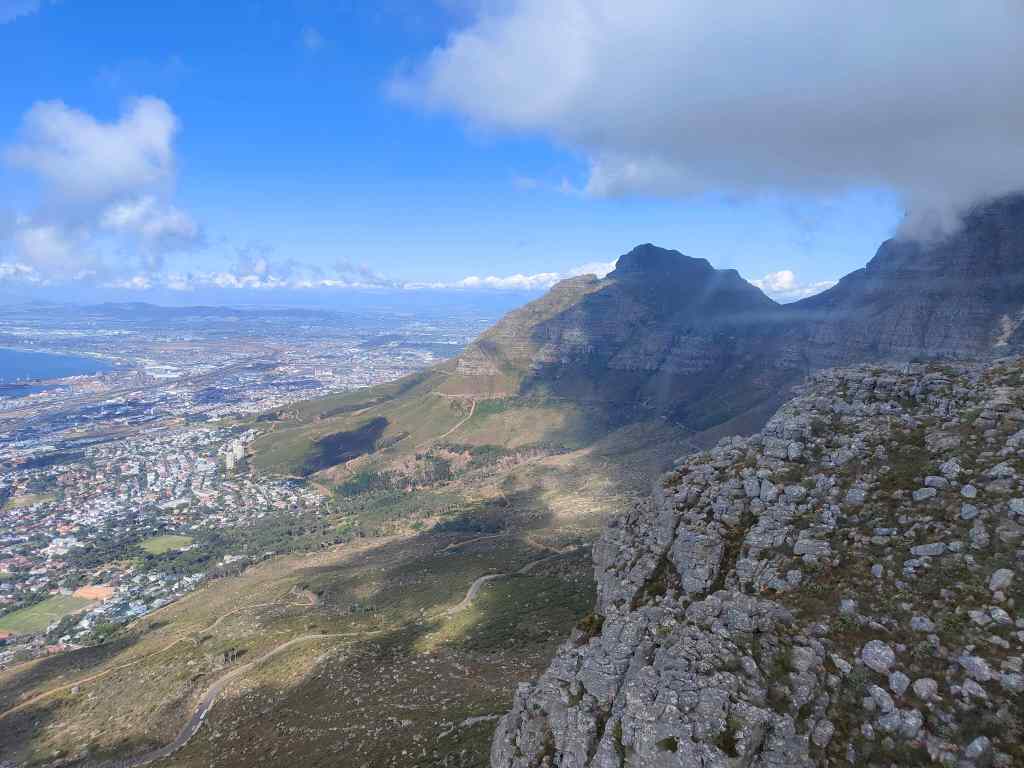
On top of Table Mountain – pretty flowers, amazing views……strange rock formations…and more views. It was getting cold…
At Maclear’s Beacon, the clouds became thicker and a strong wind gusted. I knew I was not equipped for such conditions and hurried onwards, occasionally stopping to take some atmospheric photos of the scenery.
More jaw-dropping scenery
I finally reached a crossroads, at a place I knew was near the cable car station. The signs were not clear, and the mountain was now covered in thick mist. I took what I thought was the right path, but it continued for longer than I expected, finally reaching a sign saying “This is not an easy way down”. I was cold and confused but was saved by two girls walking up towards me. They told me that this was the “Indian Fenster” route, which had been a tough climb for them and would be an even harder descent for me. I had gone the wrong way. I retraced my steps with the girls and found the junction where I had gone wrong earlier. This time, I could just make out another path in the mist. It was lined with posts and chains, and had to be the way to the cable car. I jogged along to warm up a bit, and on arrival headed straight to the café to order a hot chocolate.
The ride down in the cable car gave more opportunities for photos. The cabin had a revolving floor, so that everyone could get to see the full range of views over Cape Town and back to the mountain itself.
Table Mountain cable carView from the cable car, going down from Table Mountain
Back at ground level I stood in the sun for a bit to warm up, and then ordered a taxi back to my flat. It had been a memorable day, even if I had to have a long hot shower to recover from the cold weather on the mountain. My visit to Kirstenbosch and Table Mountain had confirmed that Cape Town is indeed one of the world’s most beautiful cities.






























 Trouspinet travels