Mount Aspiring and Wanaka

Today was a very full day, since I had to get from Te Anau in the south to Wanaka, in the middle of New Zealand’s South Island. On the way there was the usual pleasant New Zealand scenery, especially near Lake Wakitipu on the approach to Queenstown.
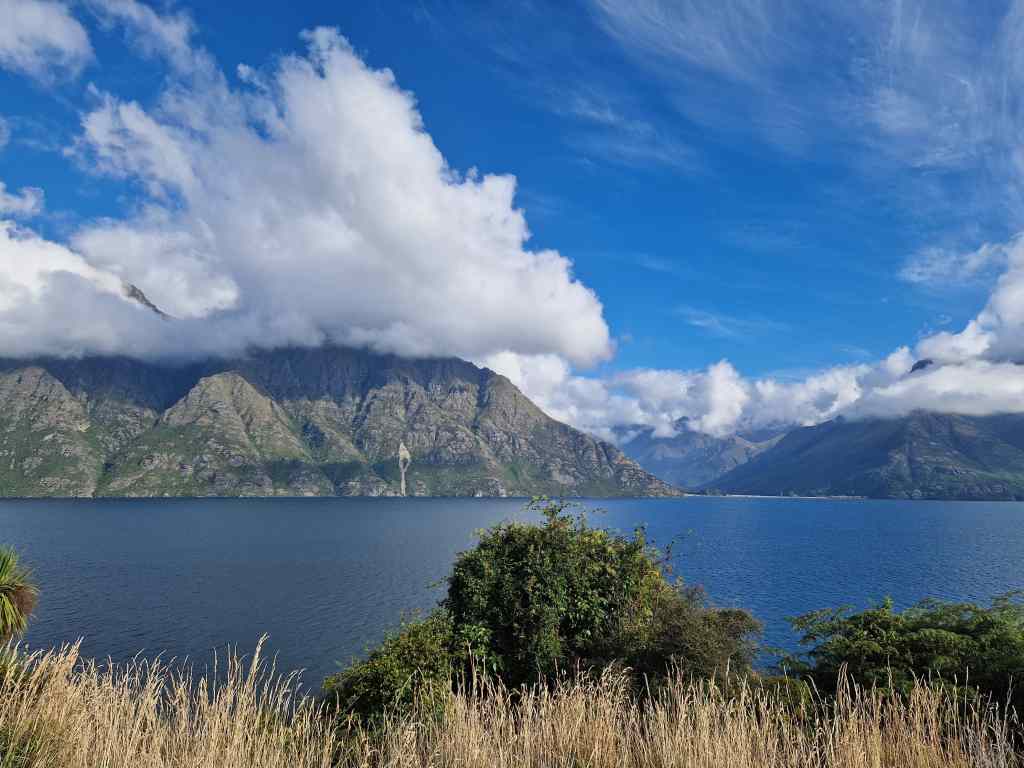
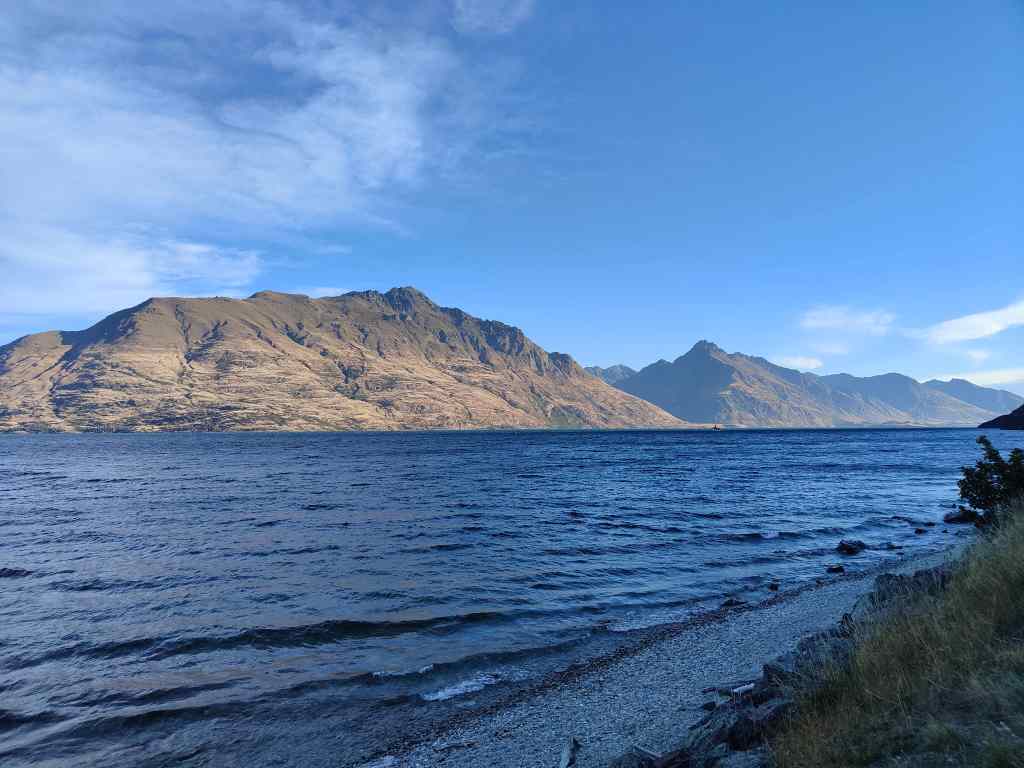
Lake Wakitipu, near Queenstown

I made a brief stop for a morning coffee at Arrowtown, a small gold rush town that time forgot. It has one main street with traditional old houses……..and lots of tourists.
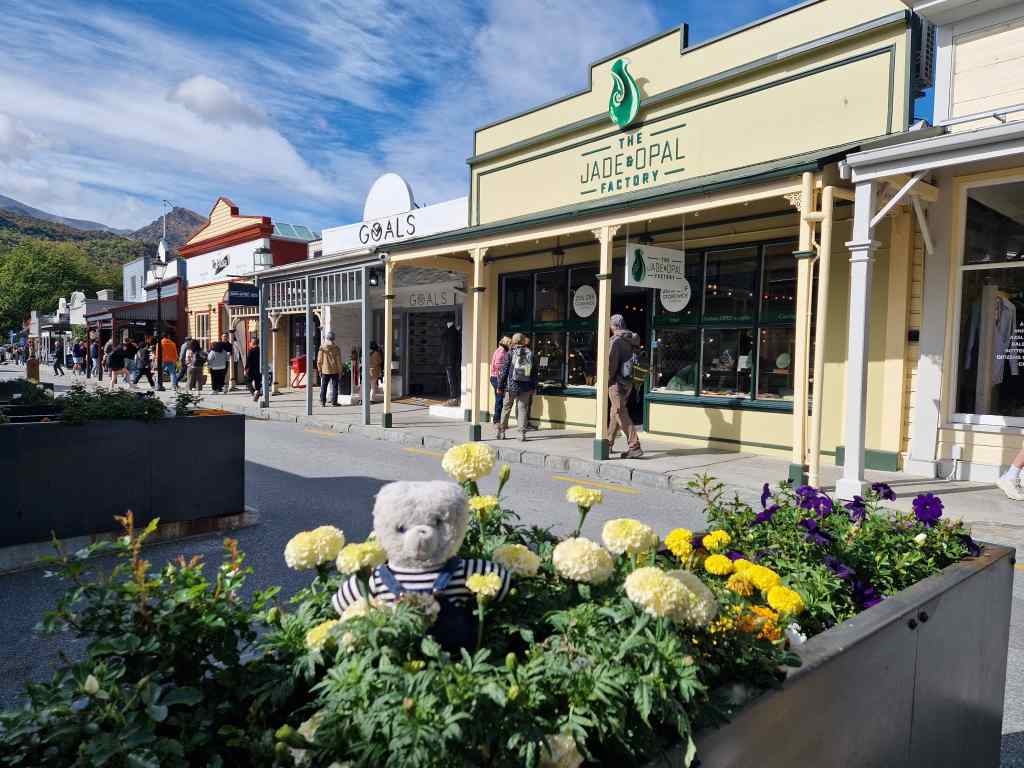
Arrowtown’s main (only?) street

From Arrowtown, I continued my route north over the scenic Crown Range of mountains.
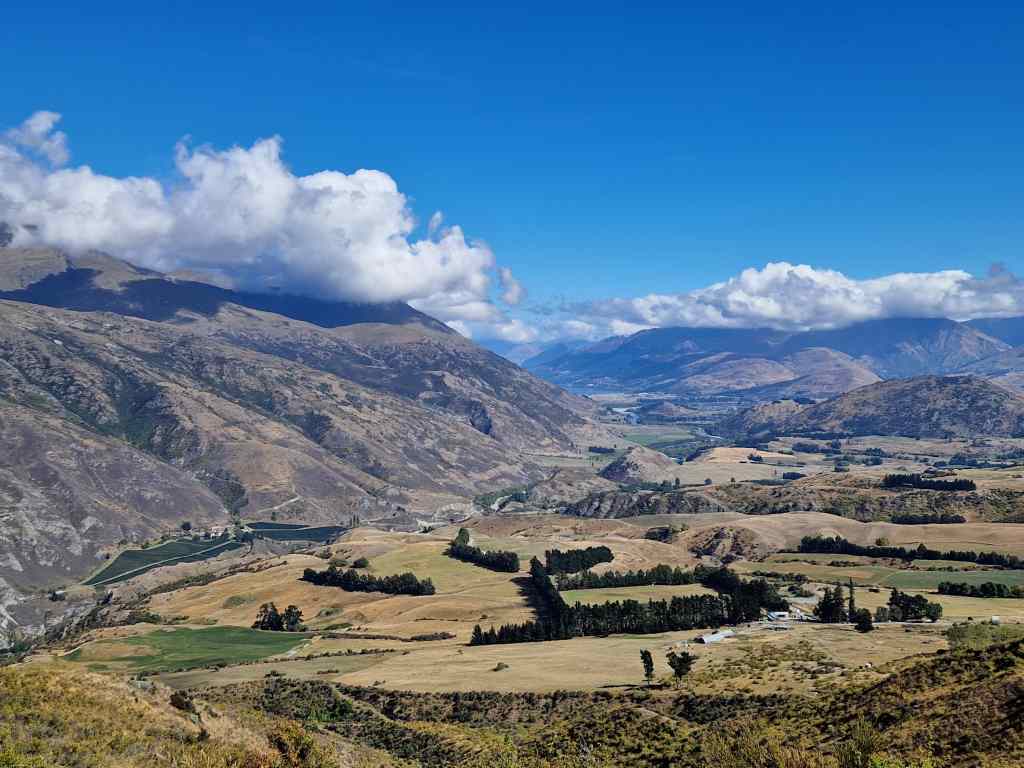
Crossing the scenic Crown Range

In the early afternoon I arrived at Wanaka, a popular tourist destination located on a lake. It seemed to be similar to Queenstown but on a smaller scale and more laid back. I found my B+B, quickly dropped my stuff and immediately set off again for the day’s main activity – a hike up to Mount Aspiring’s glacier. The road to get there was worth the trip in itself, and went through some beautiful countryside, with my destination often visible at the end of a long valley.
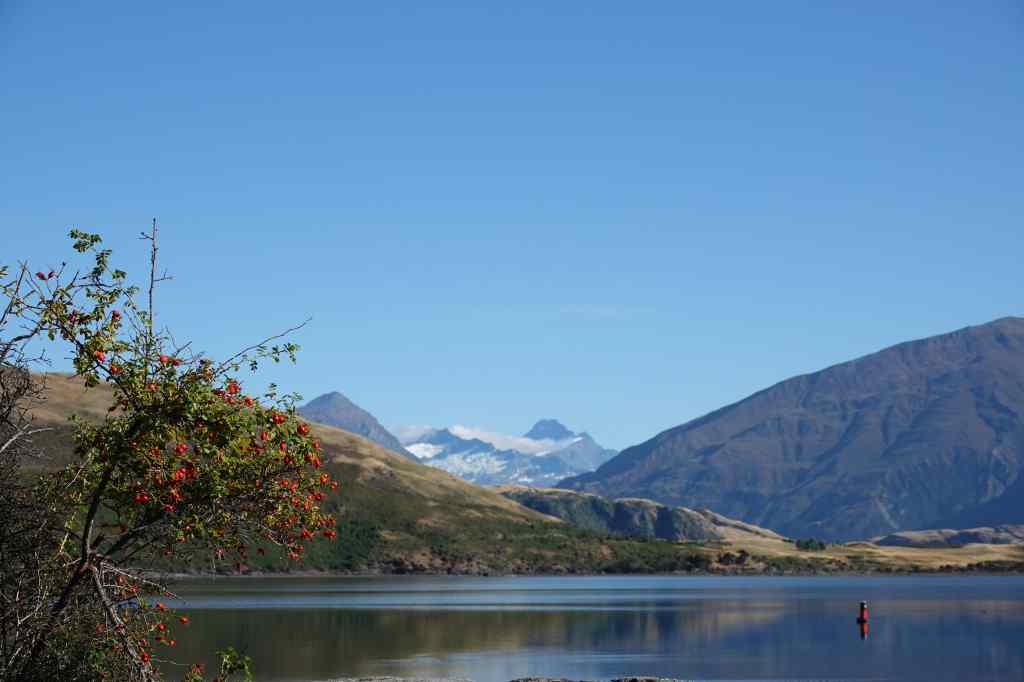
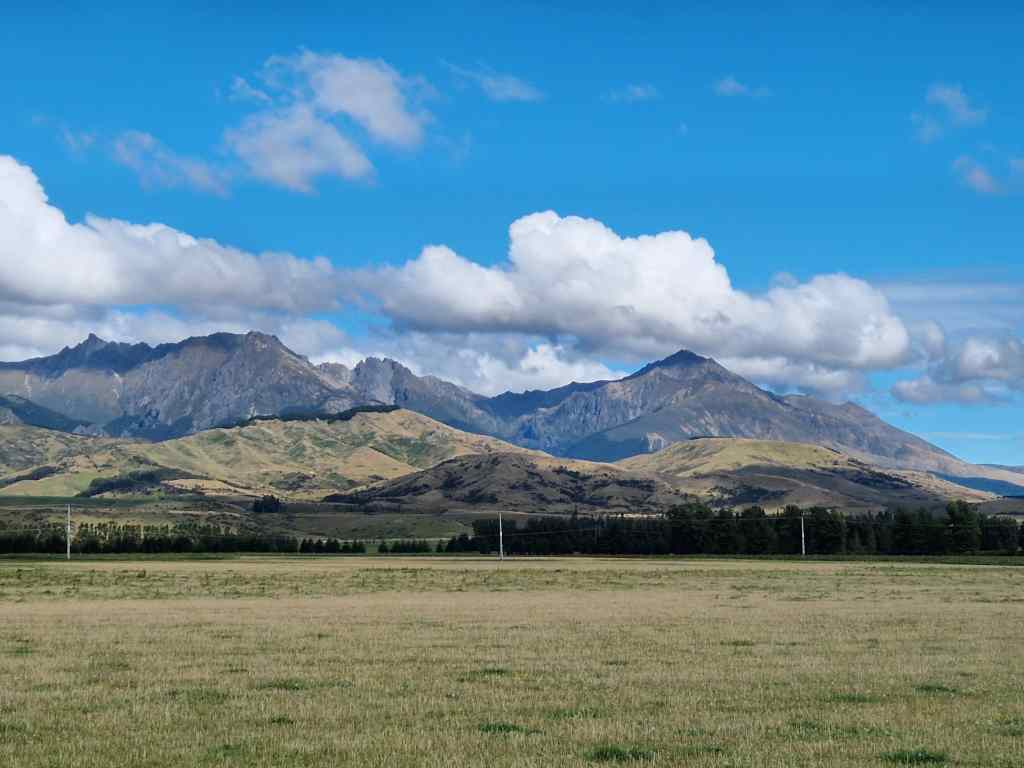
Mount Aspiring from a distance

On the way there were some road hazards typical of New Zealand….

New Zealand Road Hazard

Just before the starting place for the hike I made a short stop at the incredibly scenic Wishbone Falls, where water tumbled down from cliffs into a lush valley with rich vegetation.
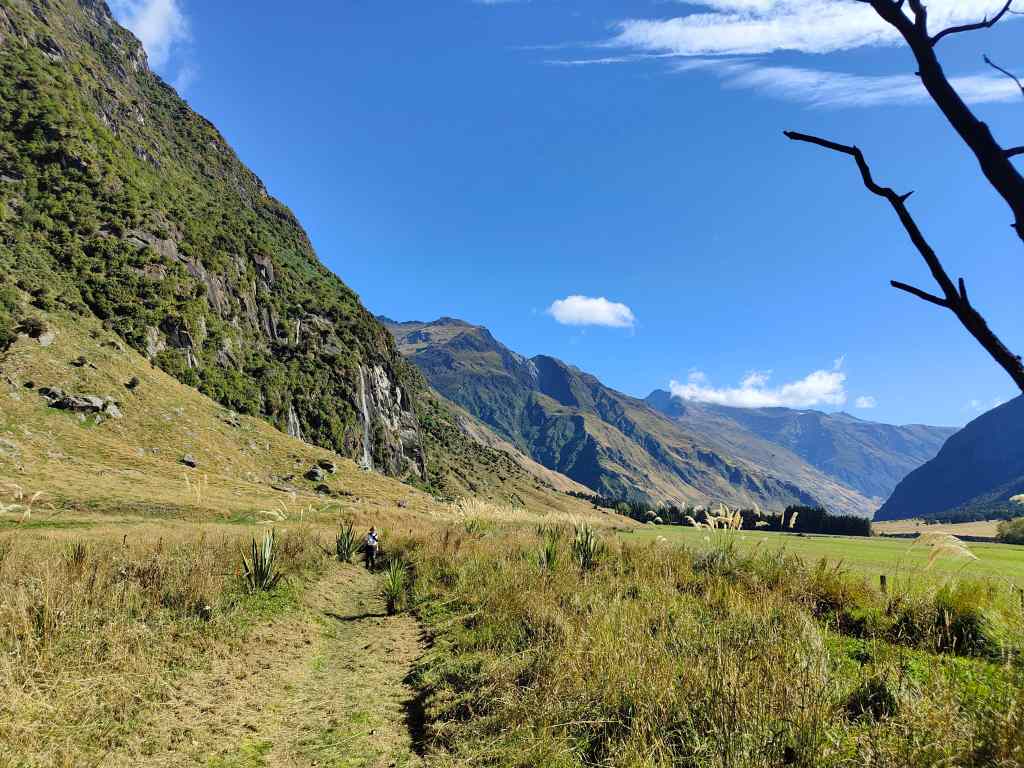
Wishbone falls from afar….
…and close up, with rainbow

A few minutes’ drive further on from the waterfall was the end of the road and the car park for hikers walking to Mount Aspiring. The path was quite easy and went through even more beautiful countryside…
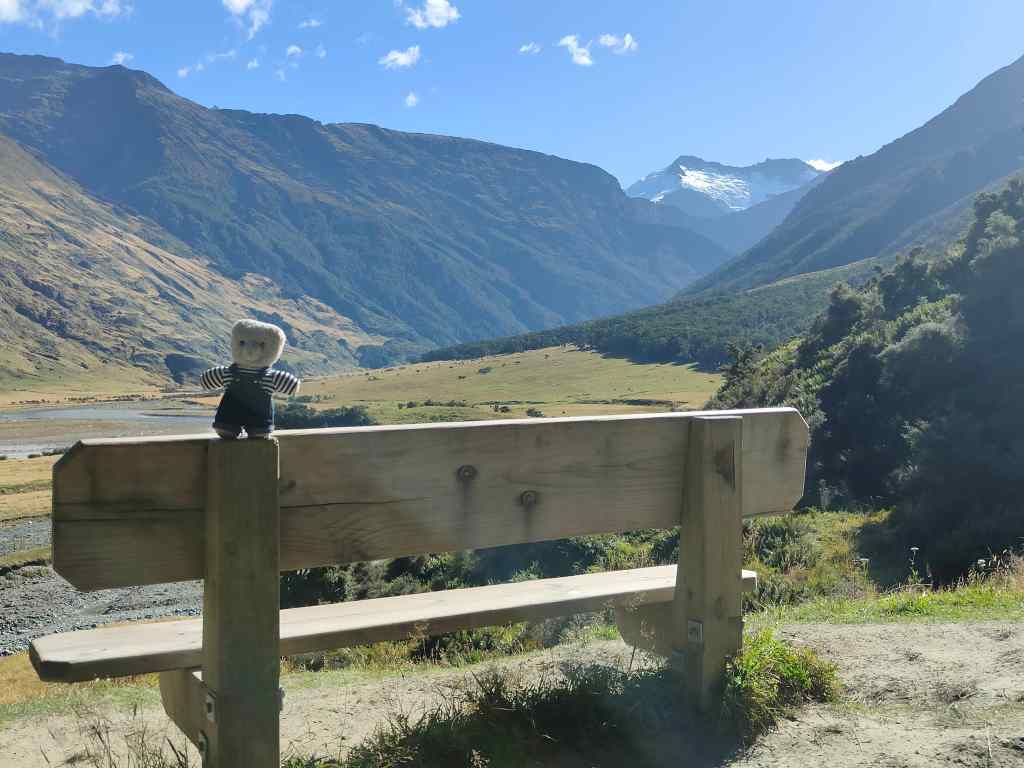
Mount Aspiring’s glacier beckons in the distance

….and then rose more steeply through a forest.
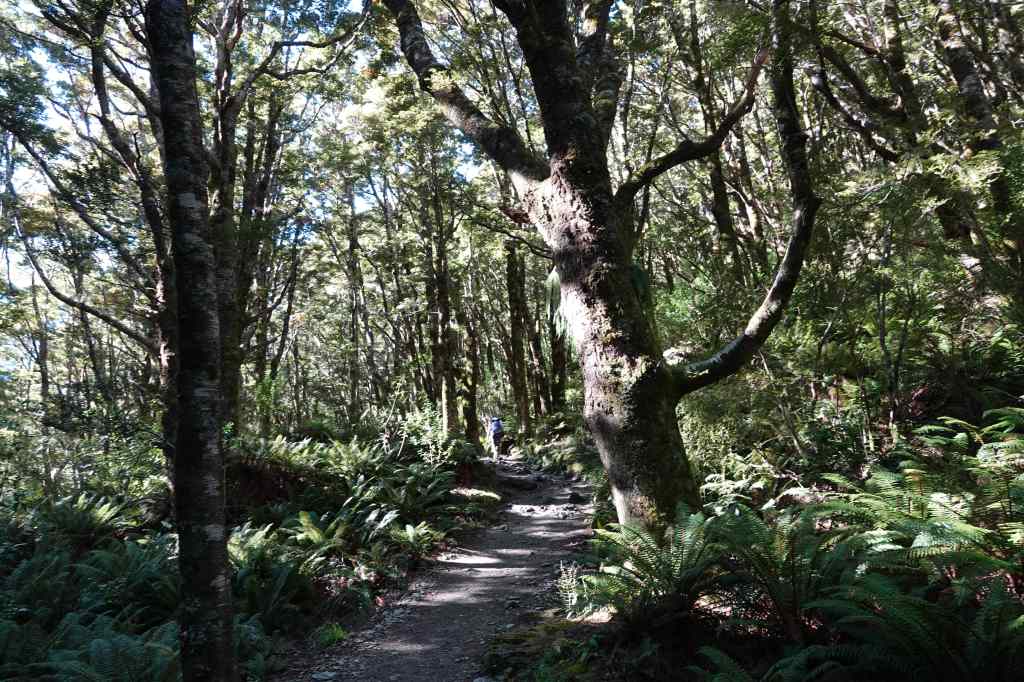
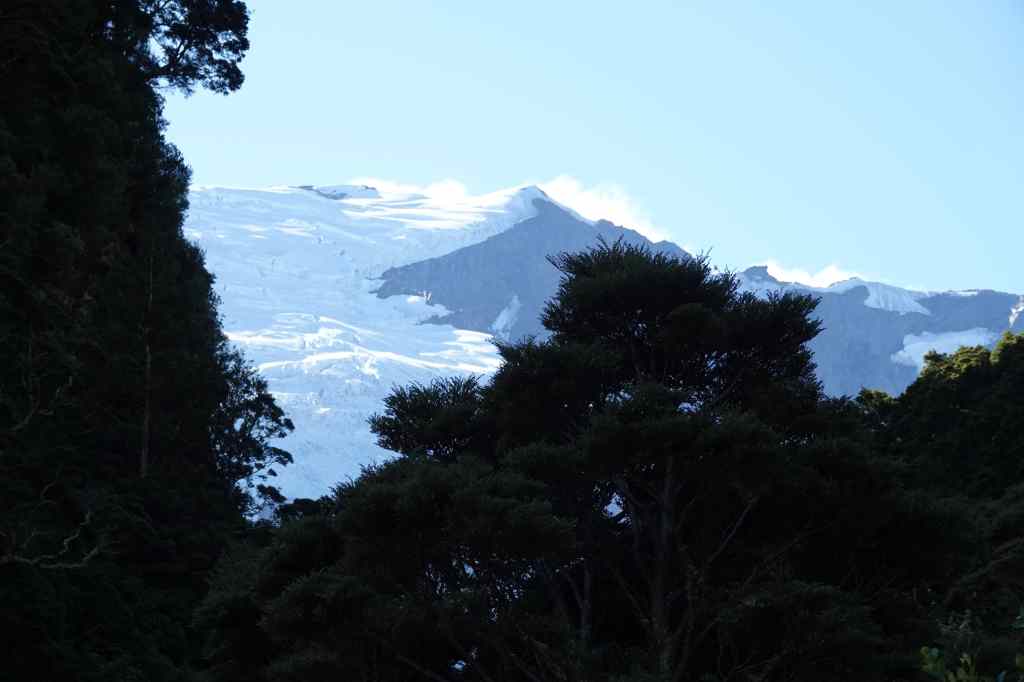
Ahead, the Mount Aspiring’s glacier played peek-a-boo with me as it ducked in and out of sight.

The glacier plays hide-and-seek

A final steep climb brought me to the upper viewing station, which gave an uninterrupted view of glacier in all its glory and about a dozen waterfalls falling from it. Unfortunately, since I had set off late, the glacier itself was in shade so my photos were a bit disappointing, but it was still an amazing sight.

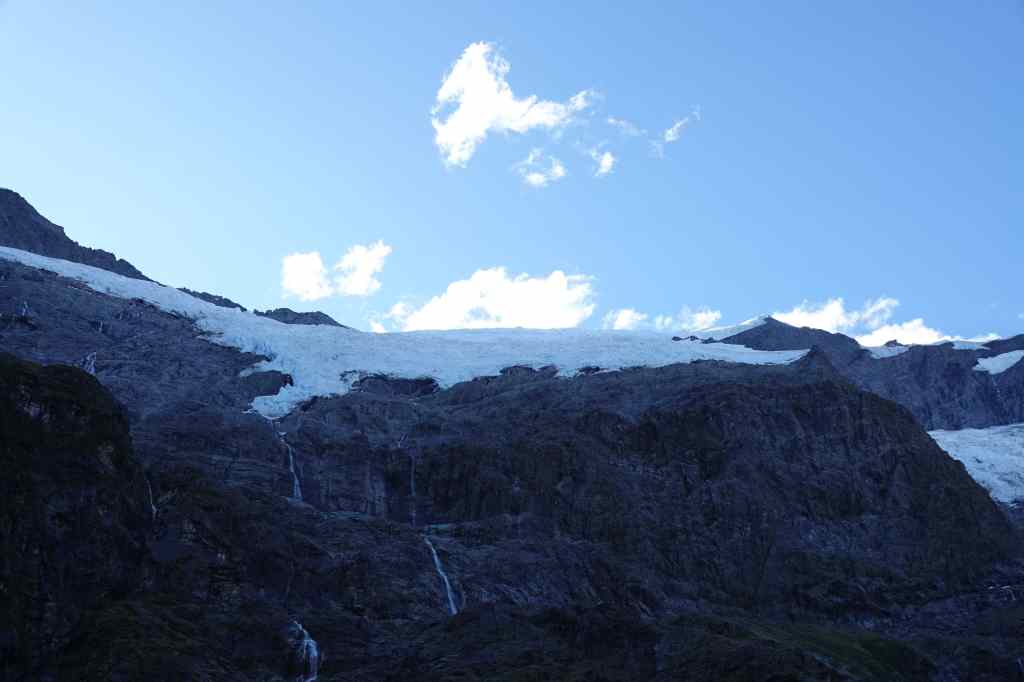
Mount Aspiring glacier
Close up of the glacier
The glacier towers over the forest

The return trip brought out the positive side of my late start – the evening sun brought out wonderful colours in the mountains ahead of me. Sometimes I thought I was looking at a huge canvas of abstract modern art, painted with bold, broad brushstrokes on the cliffs.
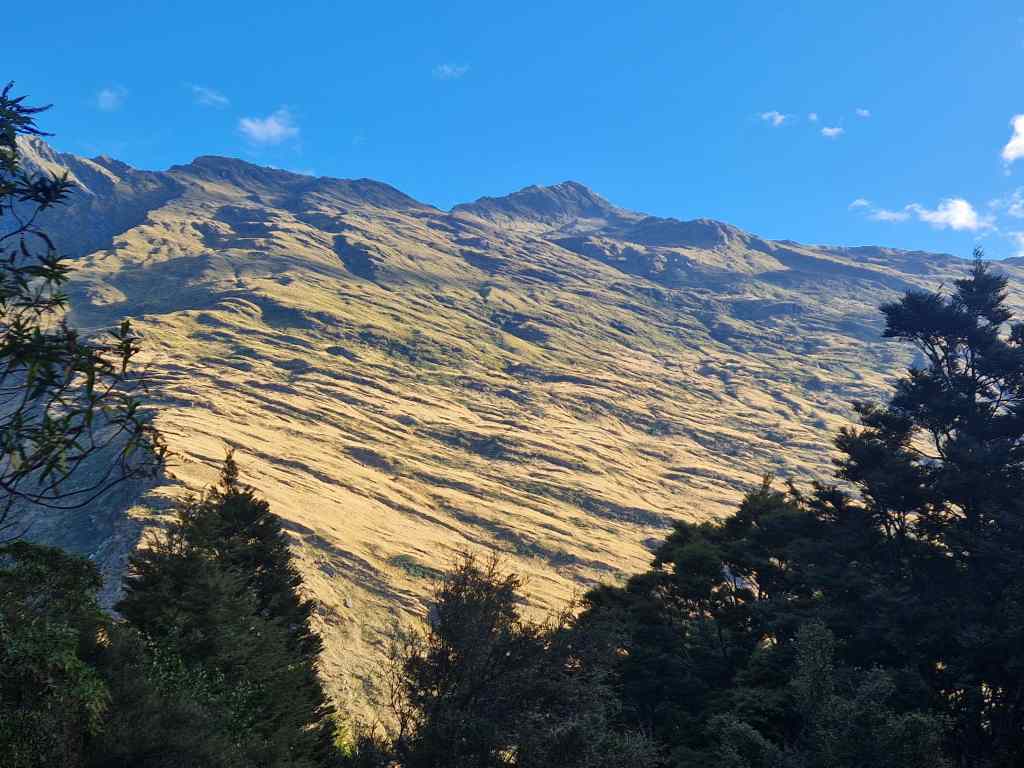
Evening light, Mount Aspiring area
Clouds cast shadows on the mountains
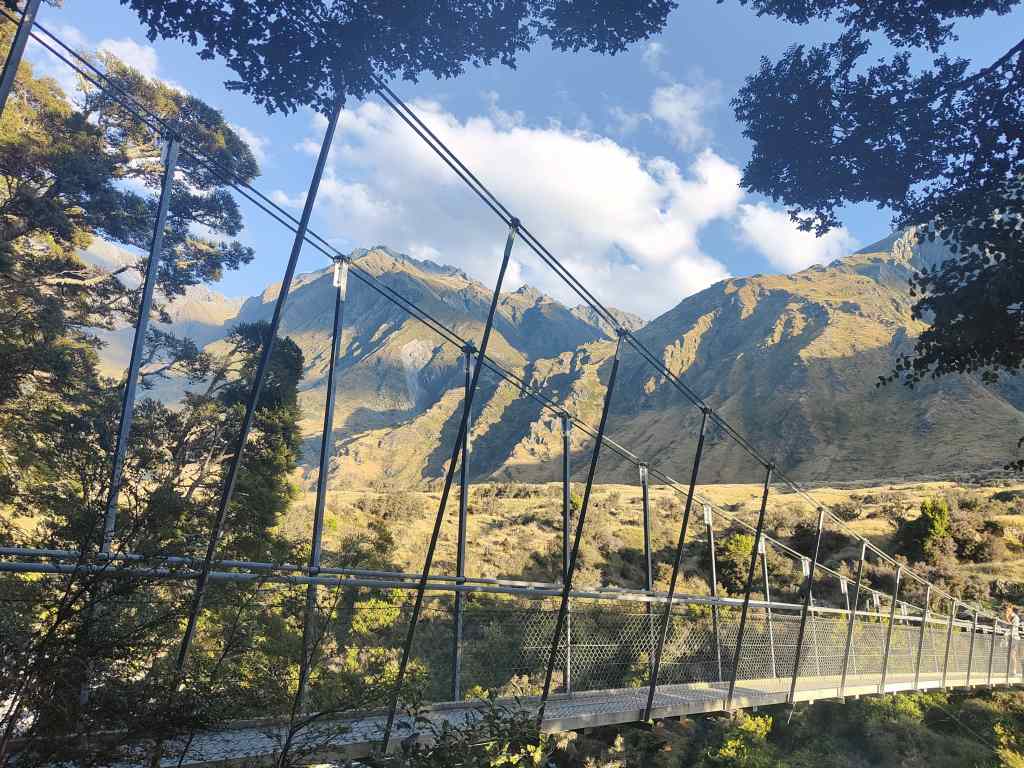
Typical NZ hikers’ bridge

The drive home was just as beautiful as the outward trip, but looked quite different in the fading light. It had been a very good day and one of the best hikes I had ever done – alpine pastures, mountain streams, forests, waterfalls and a glacier all in the space of a fairly undemanding 11km walk. As a reward I treated myself to a very good dinner in one of the few restaurants still open in Wanaka by the time I got back, and contemplated the wonders of nature over monkfish and some excellent New Zealand sauvignon blanc.

Previous Post: Milford Sound

Next Post: Mount Cook and the Hooker Valley Track
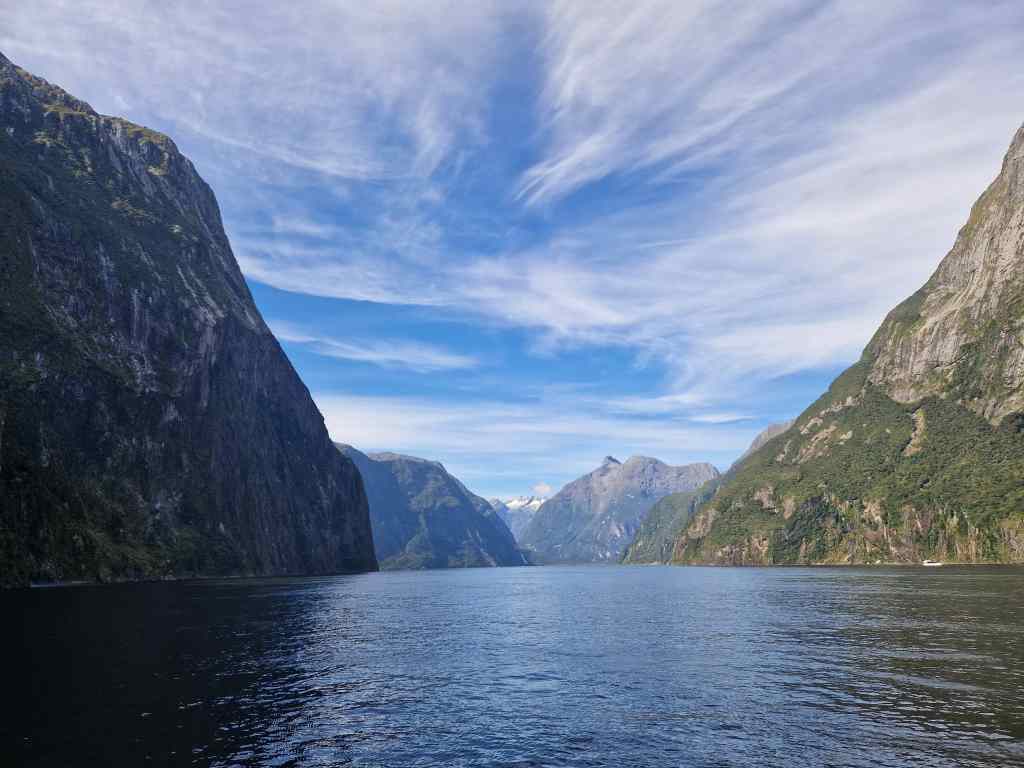
The Amazing Milford Sound

The wonderful Milford Sound

From Queenstown I drove to the small town of Te Anau, which sits on the lake of the same name (actually the biggest lake by volume of water in Australasia). It took a 2 and half hour drive to get there. Although I had heard that the road was boring compared to others in New Zealand, I found it quite pretty.

Typical NZ scenery on the way from Queenstown to Te Anau

On arrival I used my time to make an interesting trip across the lake to see a cave inhabited by thousands of glowworms. The cruise was scenic…..

Lake Te Anau

……and the glowworm cave visit very atmospheric. There was an interesting explanation about the glowworms, which are the maggots of a fly called the fungus gnat. They make a nest of sticky threads and then light themselves up to attract flies and moths, which get stuck and are then eaten. The cave visit was conducted mostly in silence, with filming or use of mobile phones prohibited. The highlight was a boat trip, during which we floated in total silence and darkness through a tunnel, admiring the cave roof with its glowworms. It was like looking up and admiring the constellations of the night sky.

However, my main reason for coming to Te Anau was not glowworms. The town is one of the main access points to New Zealand’s Fjordland National Park, and in particular to Milford Sound, one of the world’s most famous scenic spots. This “sound” is more accurately called a fjord, since it is a long, deep inlet of the sea, with very steep walls, formed millions of years ago by the action of glaciers. It is possible to visit the area on a very long day trip from Queenstown, but I preferred to not to be in a rush and to have more time to explore. I had booked an 11.15 boat trip along Milford Sound, wanting to avoid the midday rush, when lots of tour groups arrive from Queenstown. I set off early along the Milford Road that leads to the fjords. It was incredibly beautiful, but on the way there I only had time to make a couple of stops.

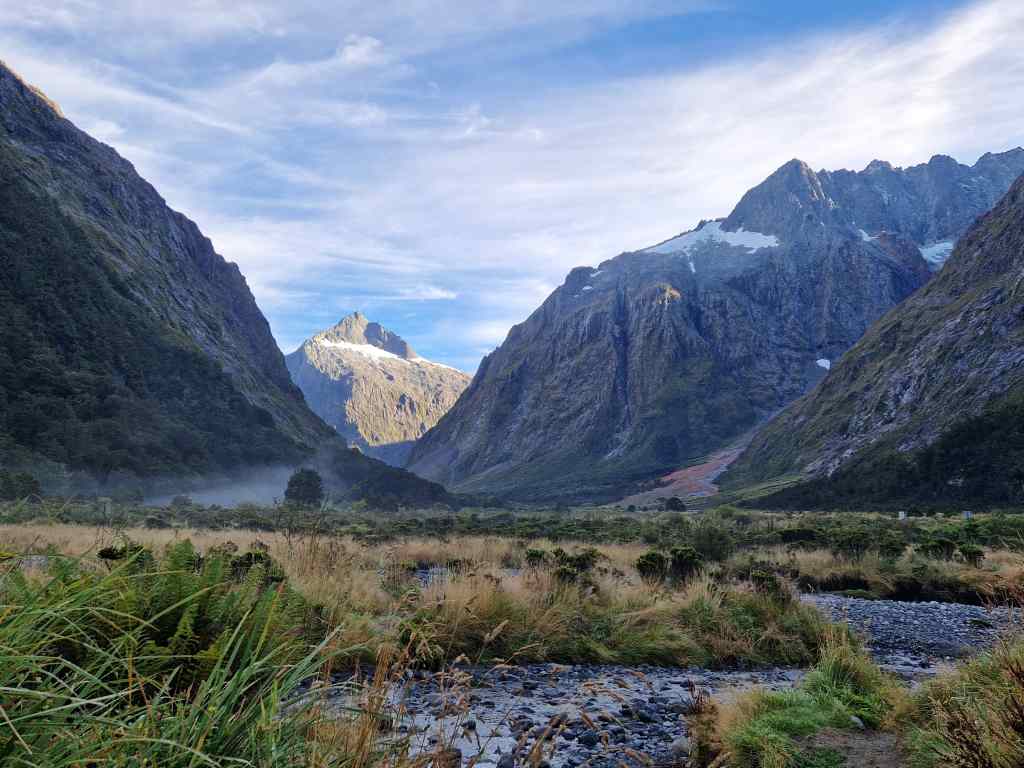
On the way to Milford Sound
More Milford Road scenery

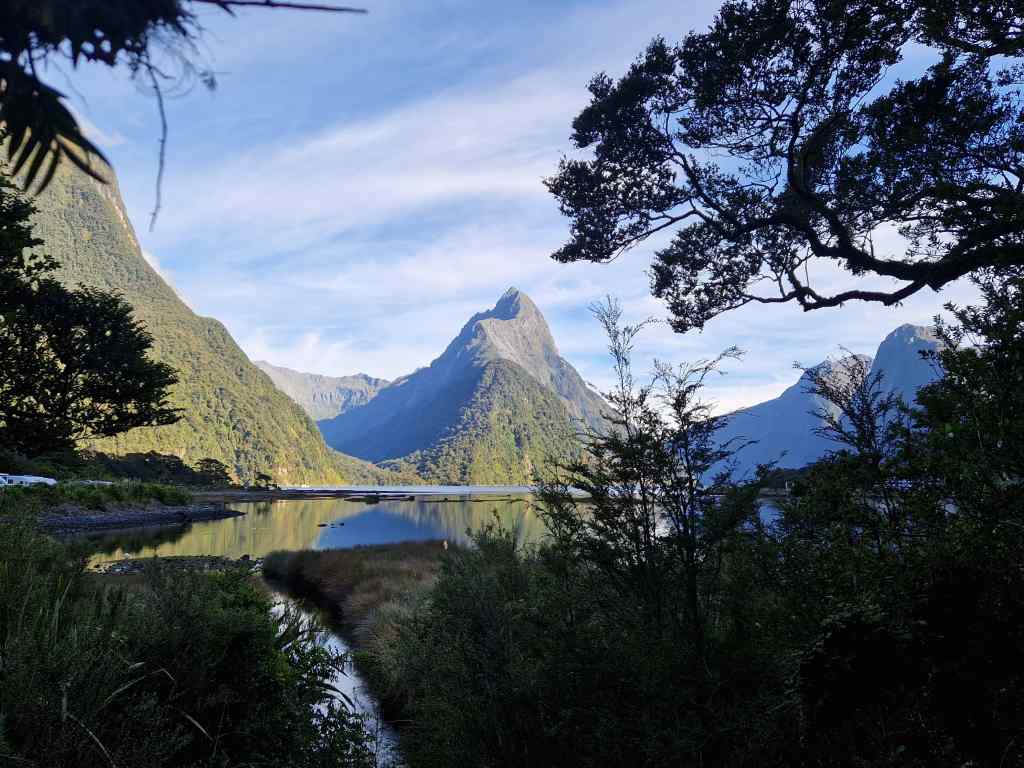
I arrived in good time, parked my car and strolled through an empty parking area for buses to the ferry terminal. On the way I stopped to admire Mitre Peak, an iconic landmark of Milford Sound.

Mitre Peak, a Milford Sound landmark

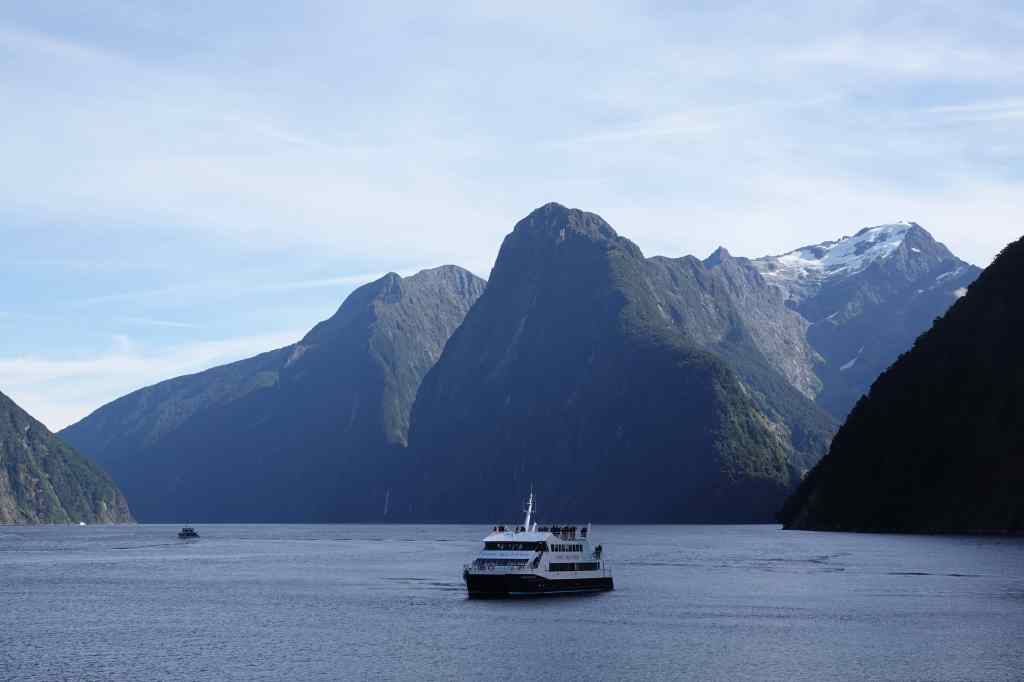
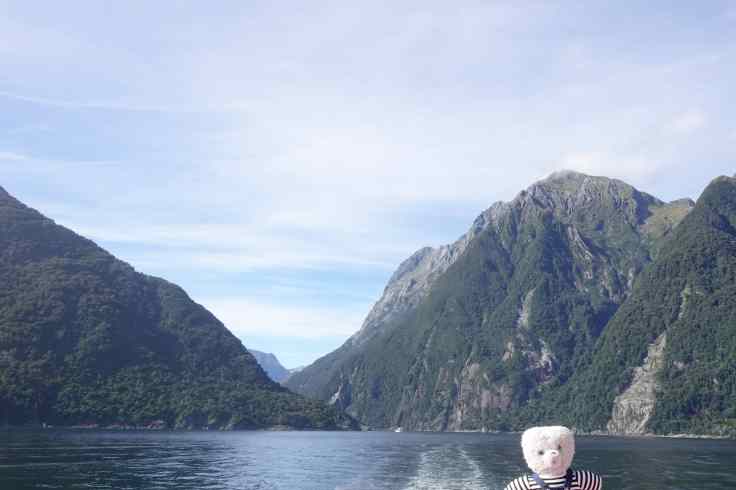
Soon I was on my way on a modern cruise ship, admiring some fantastic scenery.

Cruise ship on Milford Sound
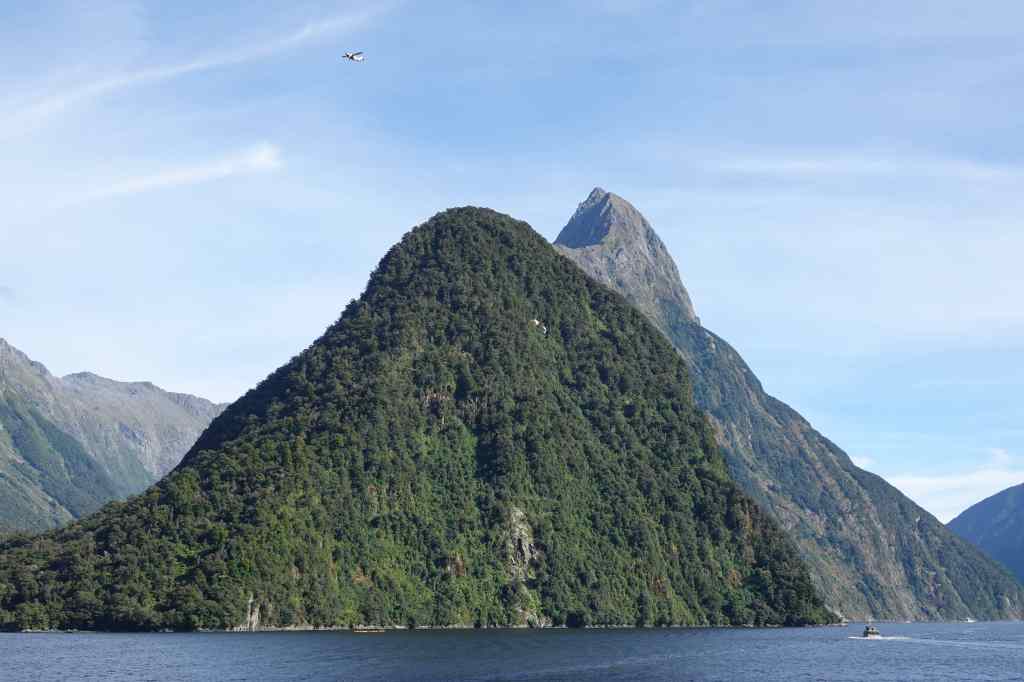
Mitre Peak up close
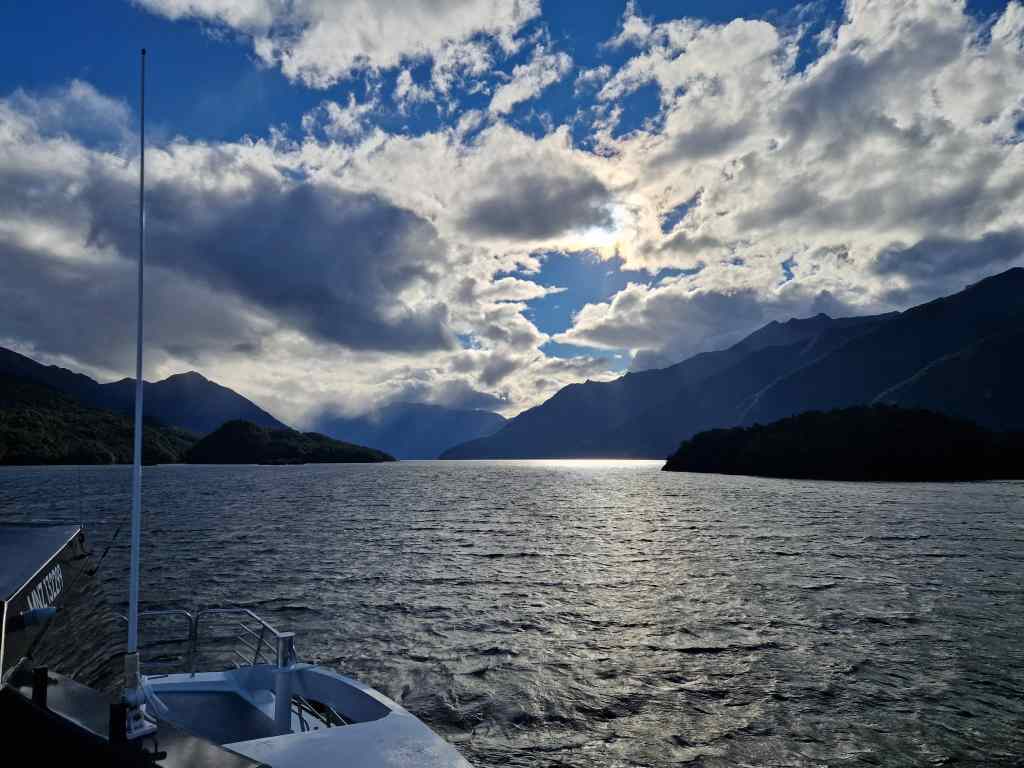
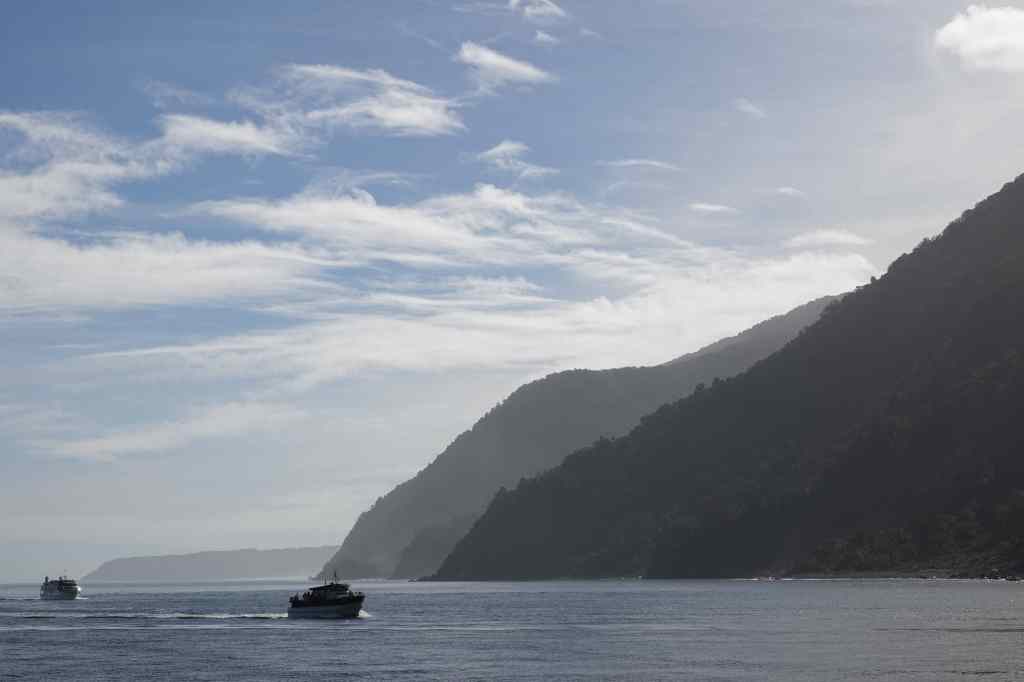
Cruising on Milford Sound

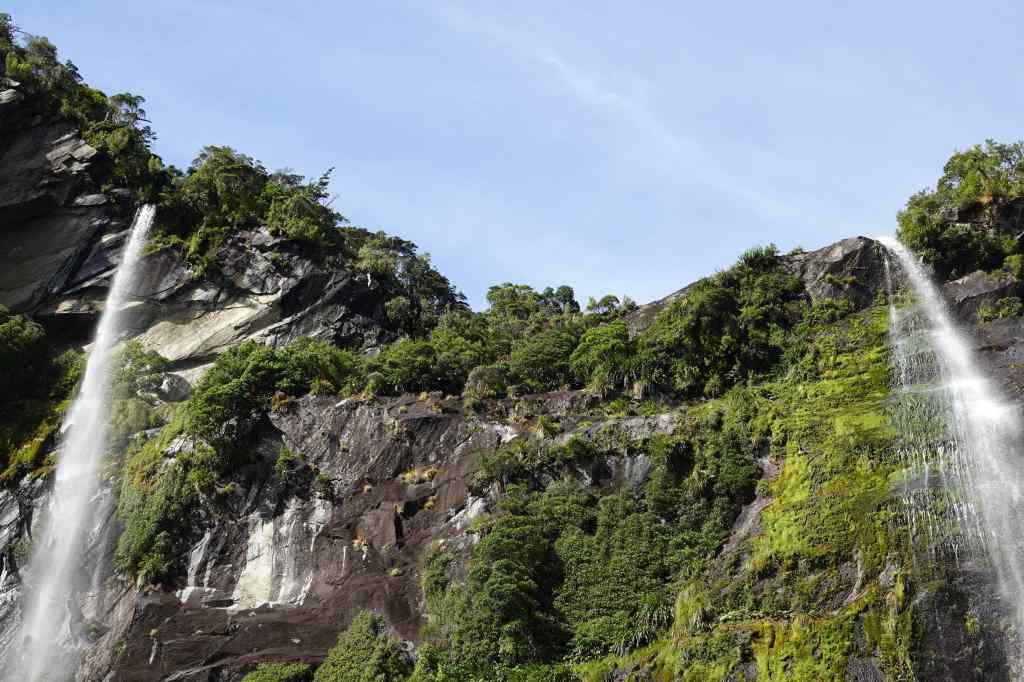
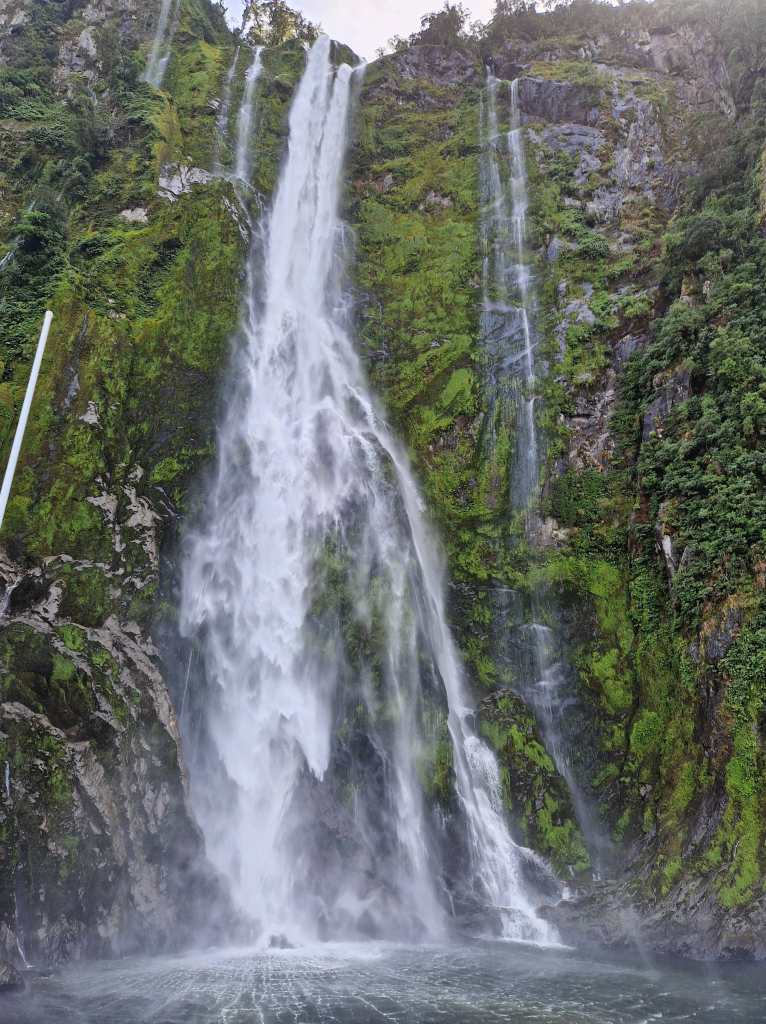
I don’t think my sailing was sold out, so as we passed Milford Sound’s famous waterfalls, it was possible to take pictures without too much jostling from other tourists.

Milford Sound Waterfalls
…and another
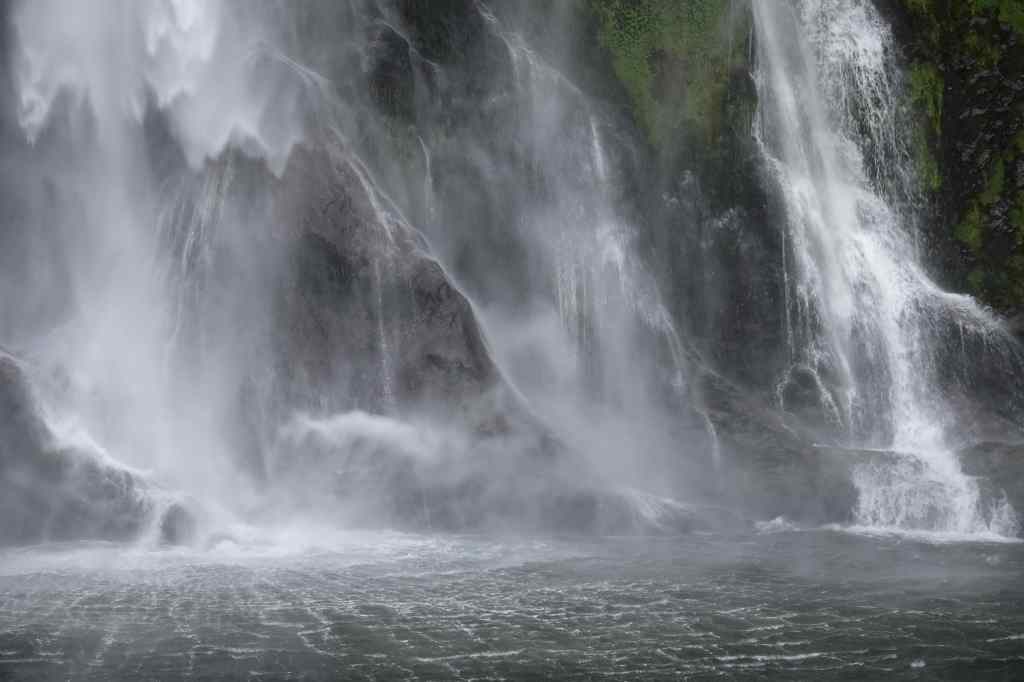
Up close in the waterfall

The cruise headed down the fjord to the beginning of the Tasman Sea, which separates New Zealand from Australia.

There, it turned around to head back to port. On the way back I could see why Milford Sound remained undiscovered for many years – from the open sea, the tall mountains of the shore appear to be continuous. It was only discovered in 1812 by accident by a Welsh captain, whose ship had been blown close to the shore in a storm. He named it after his home town of Milford Haven.
Harrison Cove, Milford Sound

The time flew by as one spectacular vista followed another, and after 90 minutes we were back at the ferry terminal to disembark. It was now rush hour; long queues were waiting to board the ships moored there, and the parking area which had been empty earlier was now full with over a hundred buses. I drove back to Te Anau at a leisurely pace, pausing to visit some scenic spots I had had to rush past in the morning. These included the well-known Mirror Lakes, whose water reflects the surrounding mountains on a still day.
Mirror Lakes, Milford Road

I got back to Te Anau in the late afternoon. It had been a very special day; Milford Sound fully deserves its reputation as one of New Zealand’s highlights, but I think I might even have preferred the spectacular drive along the Milford Road to get there.
Previous Post: Queenstown

Next Post: Mount Aspiring

Welcome to New Zealand – Queenstown, Ben Lomond and jet boating

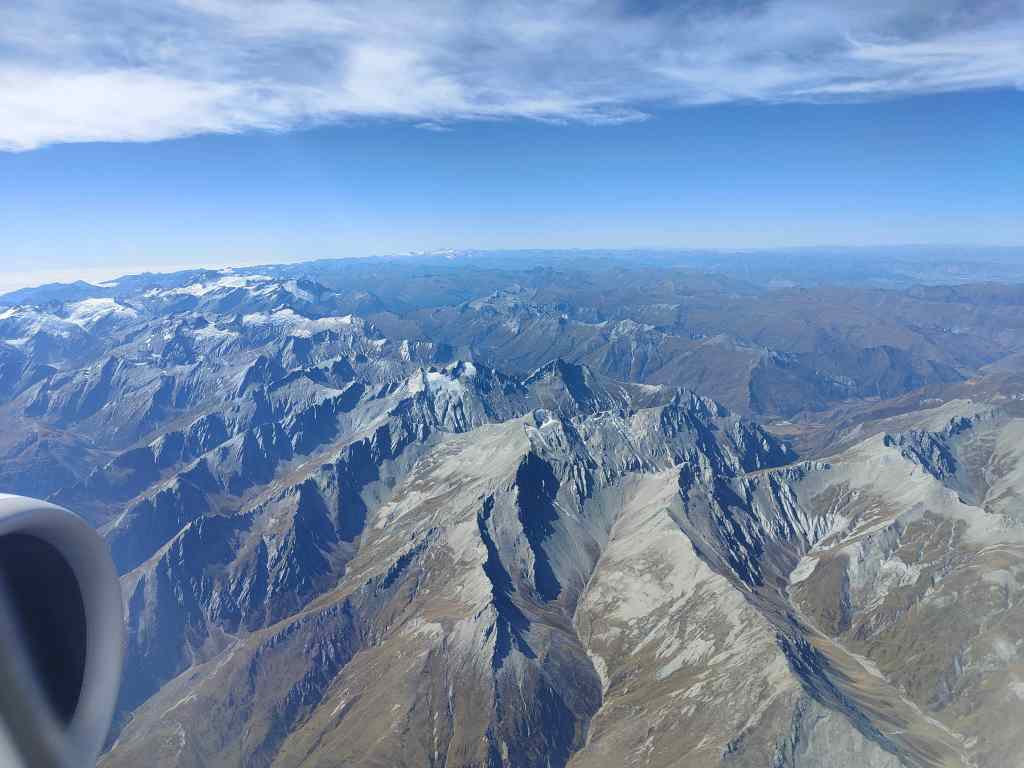
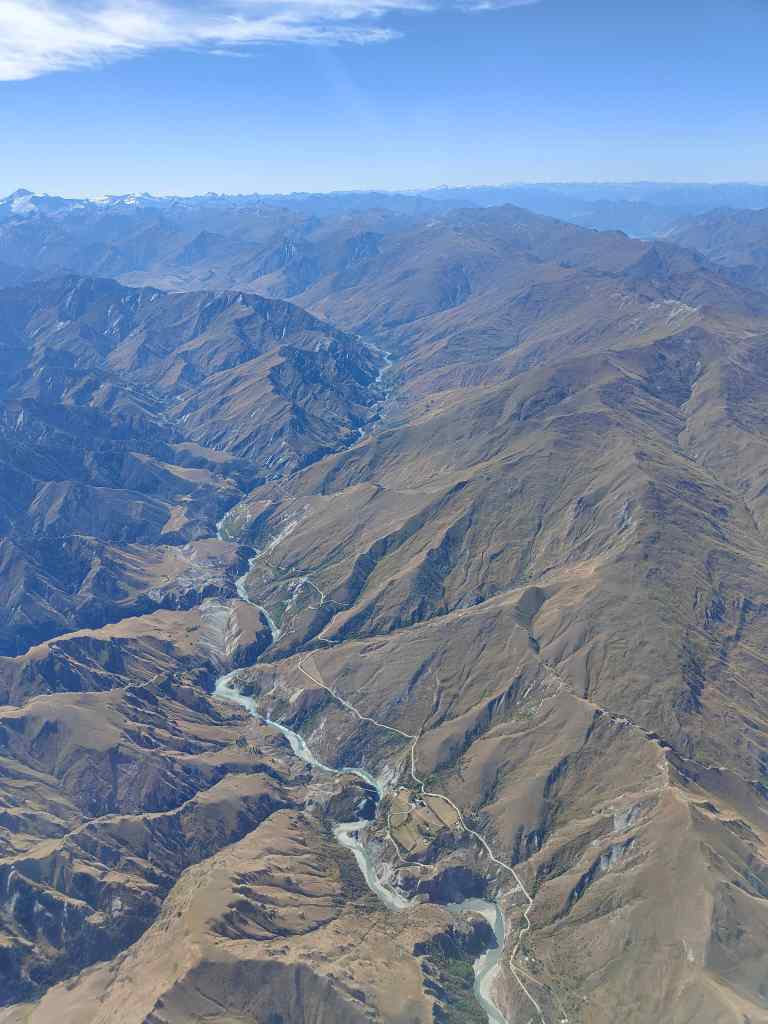
From Melbourne I flew to New Zealand, where I planned to spend three weeks travelling. It was already deep into New Zealand’s autumn, so I decided to visit the South Island first and then make my way up to the North. The flight into Queenstown gave a spectacular introduction to New Zealand’s amazing scenery.

Views from the flight Melbourne-Queenstown

Queenstown is a small city sitting on a lake, which is a major transit hub and tourist destination. From my hotel I strolled to the lakeside, the heart of the town. On the way I passed travel agencies offering every imaginable type of outdoor sport – bungee jumping, parachuting, canyoning, mountain biking and more. There were shops selling the requisite gear for these activities, including several outlets selling goods for the upcoming ski season. The streets were full of tourists, some slim and in sporty outdoor gear, and some plumper and in normal casual clothes. The vibe was like a French ski resort in high season, and indeed in winter Queenstown is also one of New Zealand’s most popular ski destinations.
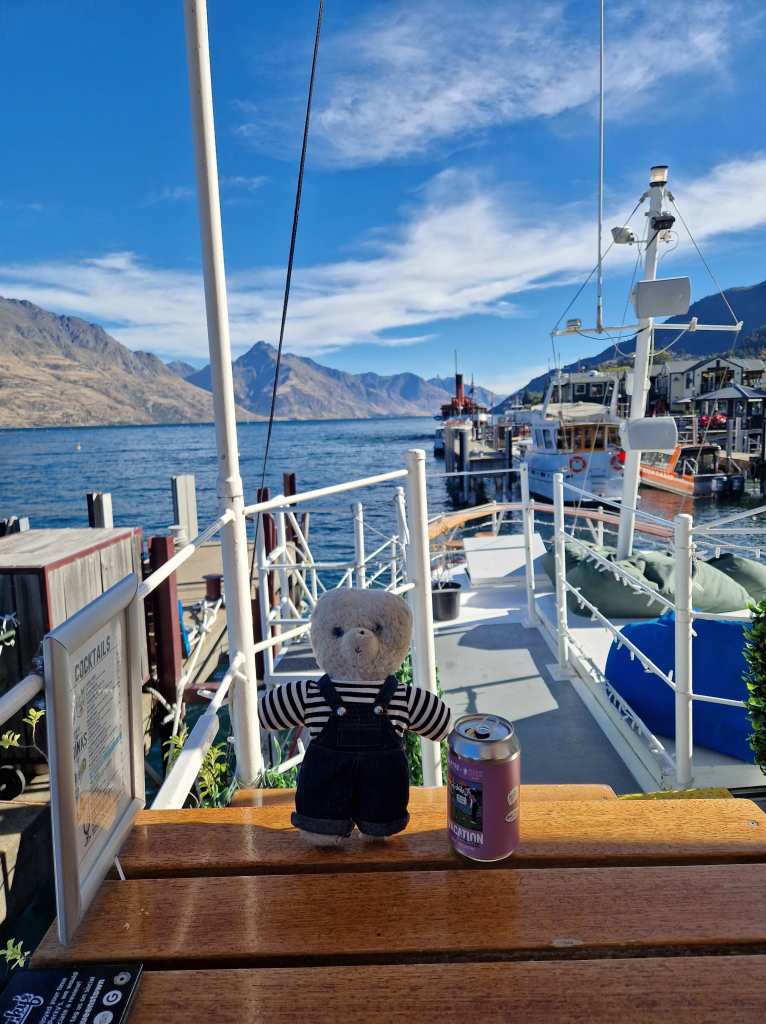
I spent my first afternoon making a short walk along the lake and then chilling on a floating bar back in town.

Queenstown’s Lake Wakatipu
Drinking by the side of (or on) Lake Wakatipu is a popular activity in Queenstown

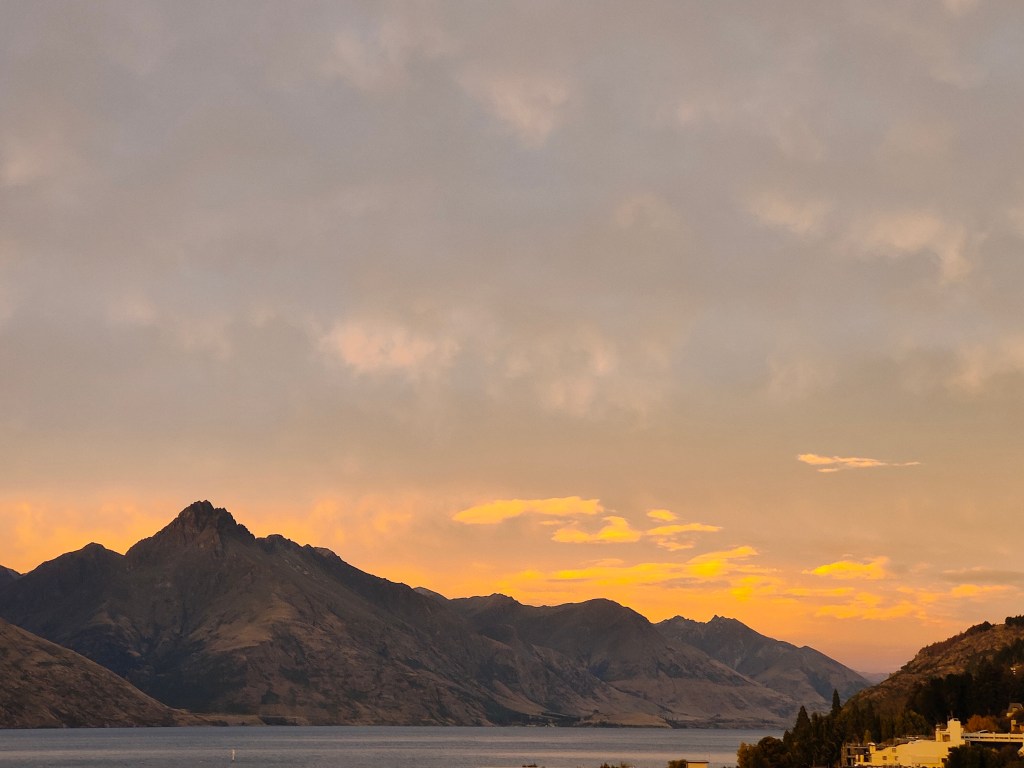
The next morning, I woke up early and enjoyed sunrise from my hotel’s terrace.

Sunrise over Queenstown

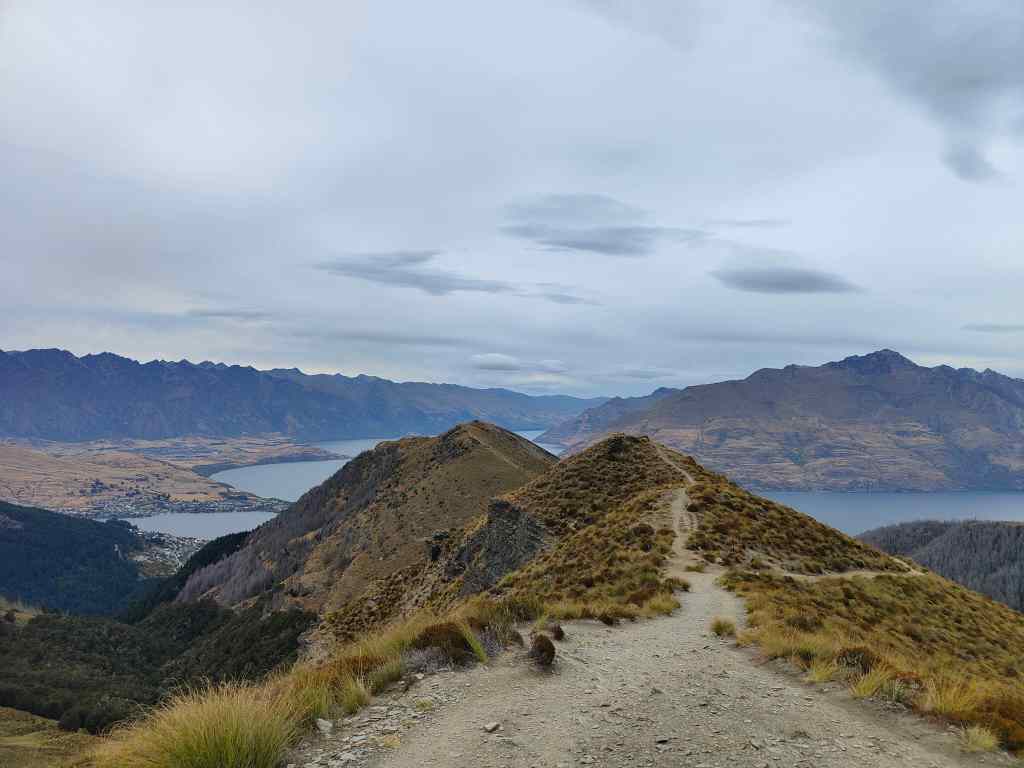
My body was now totally confused – Melbourne had been 11 hours ahead of the UK, but the time difference with New Zealand was 13 hours. I didn’t think that more than 12 hours was possible but then realised that New Zealand, unlike London, was still on summer daylight-saving time. Profiting from the cool morning air, I set off on Queenstown’s most interesting walk, the ascent of Ben Lomond. At first, I was a bit disappointed, because the forecast sun had not materialised, but as I made the steep climb up, I started sweating and was happy for the shade the clouds provided. As my climb progressed, the views got better and better.

The view half way up Ben Lomond…
….and the summit ahead

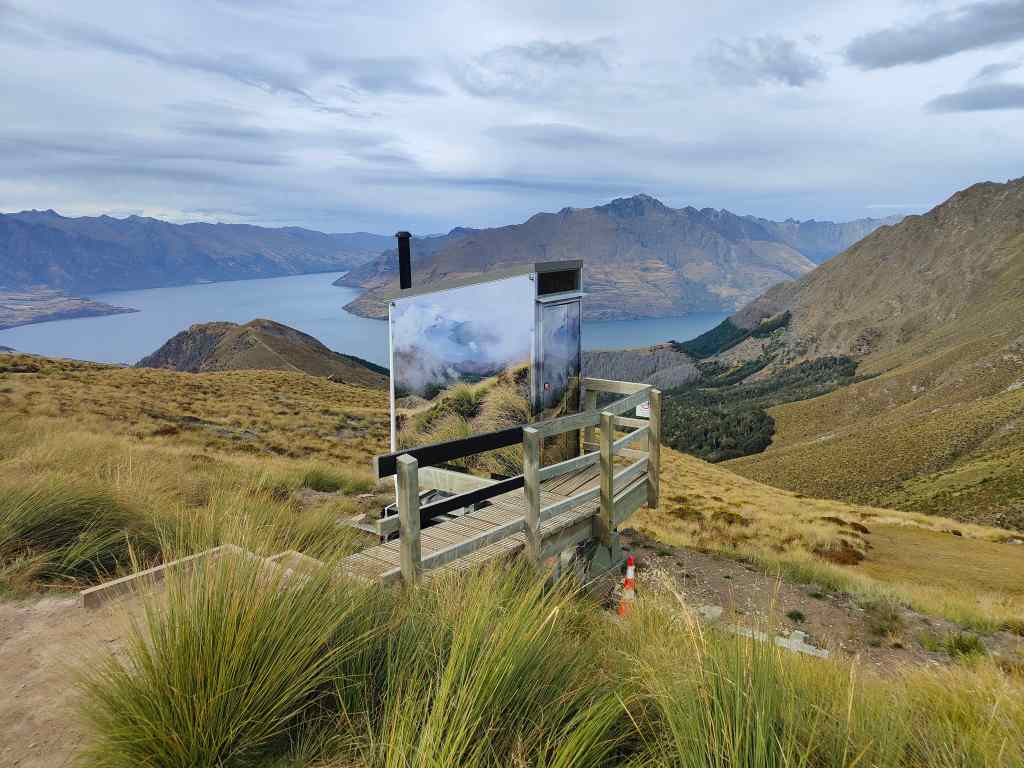
At roughly the halfway point there was a rather special toilet for hikers, painted so that it blended into the mountain landscape.

An original toilet for hikers on Ben Lomond

The summit offered 360° views. In the west I could see Queenstown far below, whilst to the east mountains towered out of a bank of approaching dark clouds. The mountains to the south, in the Fjordland National Park (subject of a future post), still carried the vestiges of last winter’s snow. I enjoyed the views and snacked on some chocolate bars until the first drops of rain on my fur announced that it would be a good time to head back down.

Views from Ben Lomond’s summit


The climb and descent had taken me around four and half hours, so I had plenty to time to try some other typical Queenstown activities. First, I had a coffee in a trendy café, then I decided to try a jet boat ride.

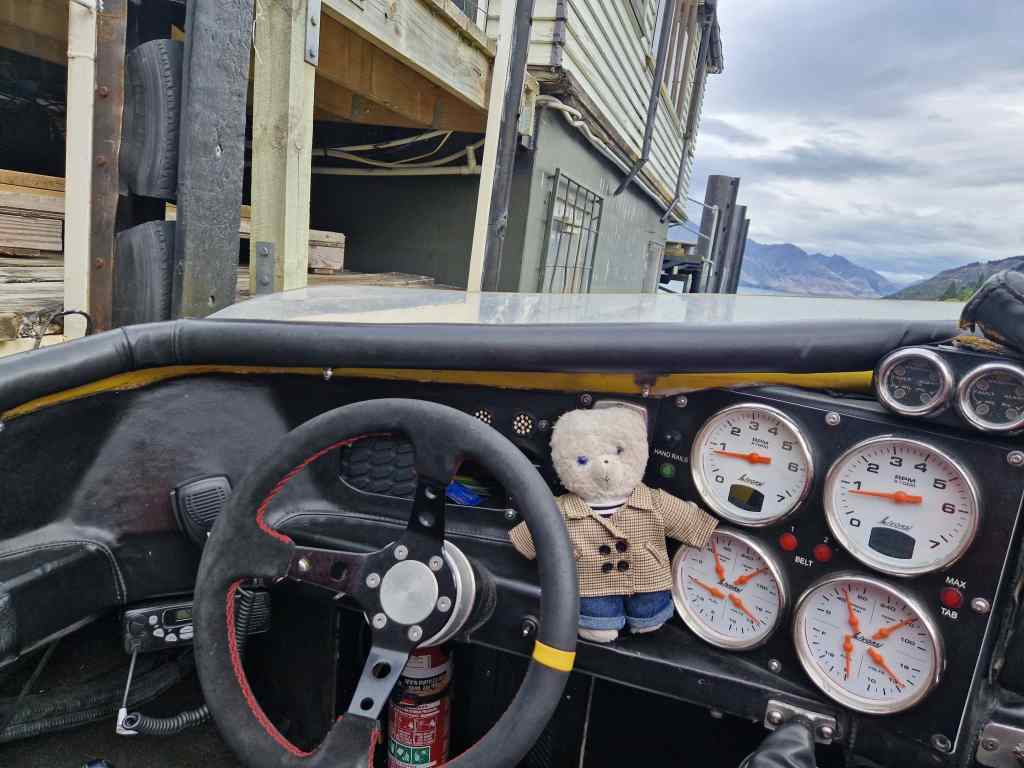
Yes, I have a jet boat licence!

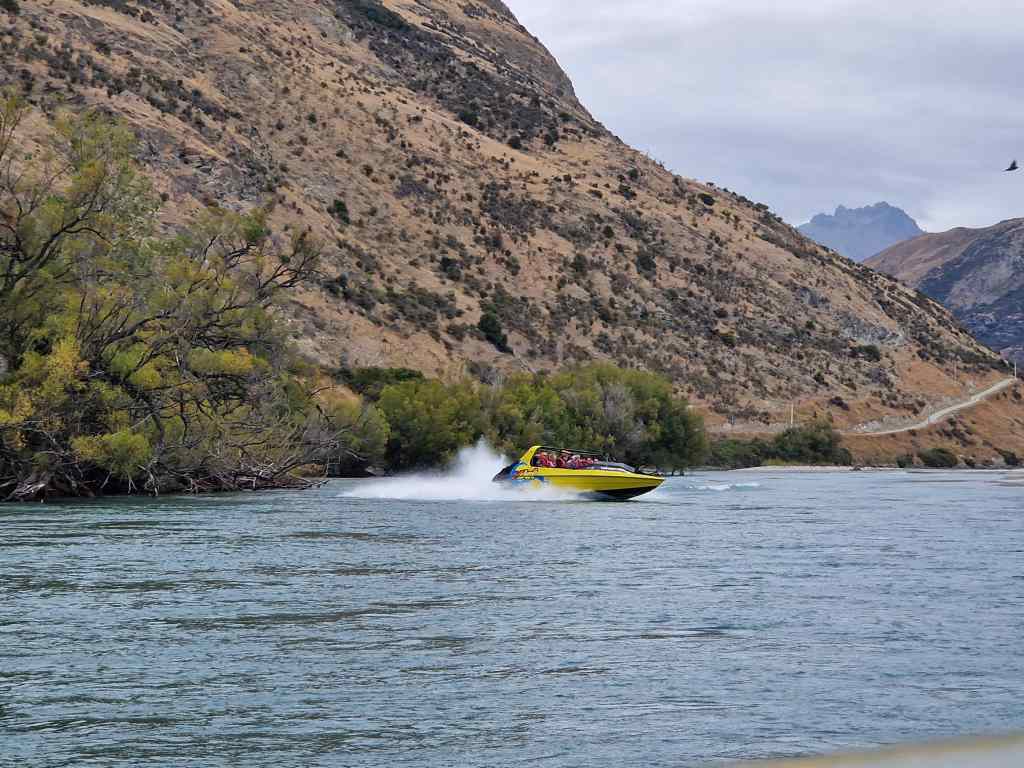
I chose one of the operators offering tours from the main jetty on the lakeside and was soon whizzing across the lake and then up the Shotover River at speeds of up to 95kmph.

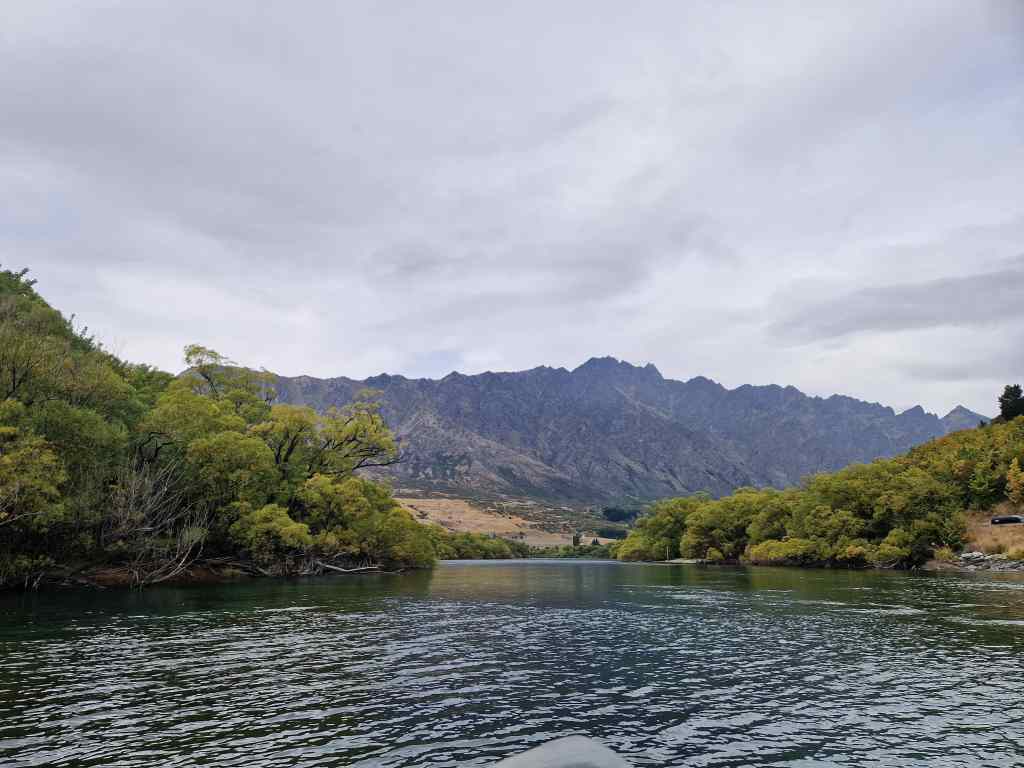
Speeding up the Shotover River

To add some excitement to the speed, our pilot entertained us by making several 360° spins.

A jet boat does a spin

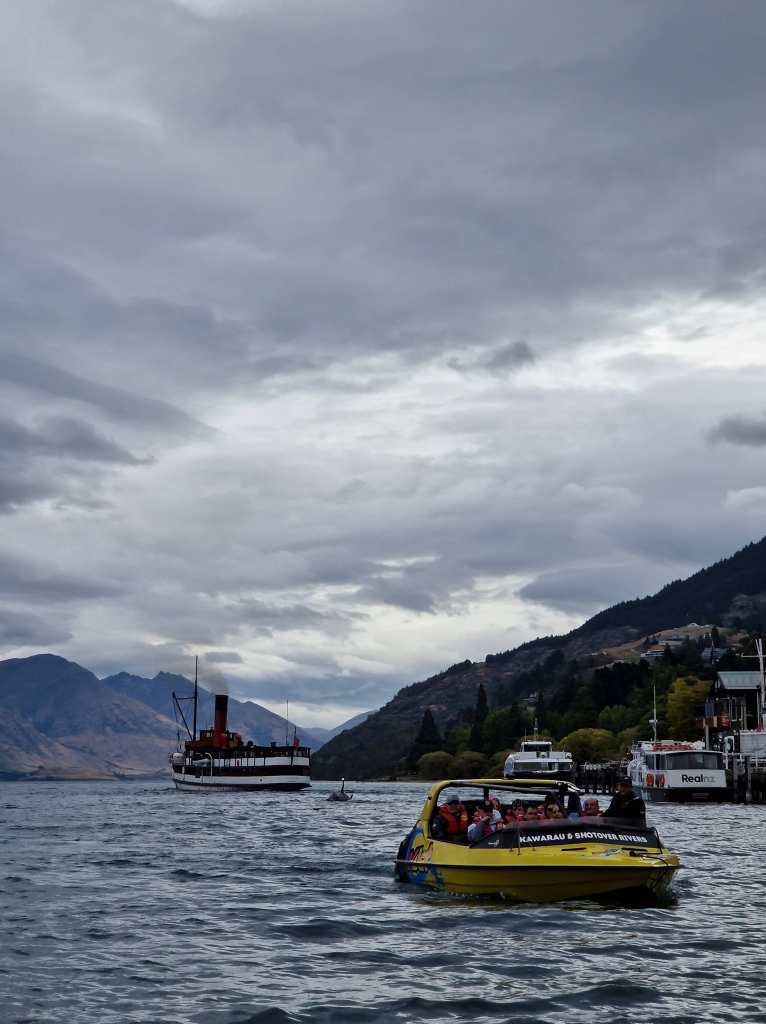
Our boat returned to the quay with happy passengers. On arrival, we could see almost the whole range of Queenstown boating options – a traditional old wooden ferry, a jet boat, and a strange two-seater shark-shaped vessel (just visible in the photo below), part way between a boat and a submarine, which was apparently capable of great speed.

Maritime transport in Queenstown

My first day had been an encouraging introduction to New Zealand. On the way back to my hotel (a slow walk with stiff legs after the climb) I bought a bottle of Pinot Noir and an obscenely large pizza and enjoyed both on the terrace of my hotel.

Previous Post: Melbourne

Next Post: Milford Sound

Melbourne – the Botanic Gardens, NGV, Victoria Market and Mornington Peninsula

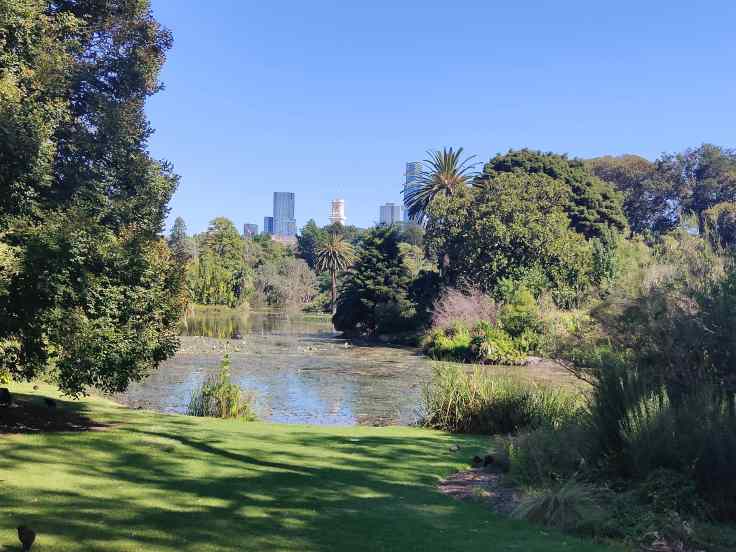
On the next couple of days I visited some of Melbourne’s more traditional sights. To the southeast of the city centre is a large expanse of green parkland along the banks of the Yarra River, which houses the Rod Laver Stadium , Melbourne’s iconic Cricket Ground and its Botanic Gardens…….

Melbourne’s Botanic Gardens
A huge cone at the Botanic Gardens

Melbourne also is home to the NGV or National Gallery of Victoria, which has two centres, one devoted to international art and one to Australian works. I visited the latter, of which the highlight was the aboriginal art collection.

The NGV, Melbourne

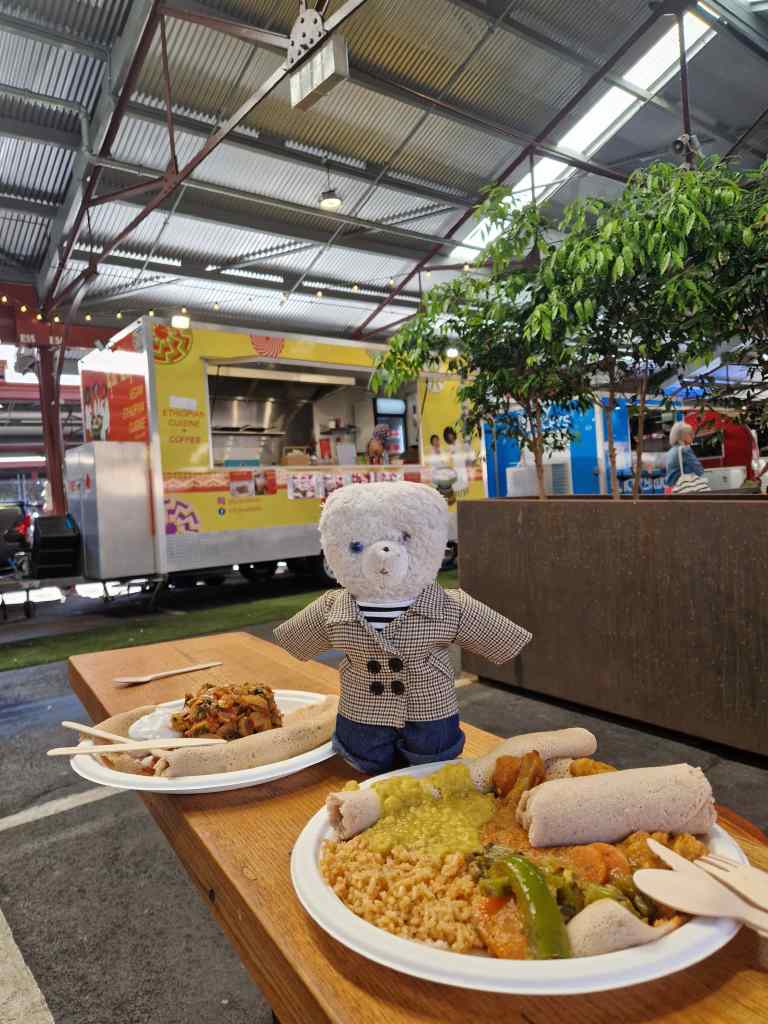
As well as art and cultural life, Melbourne is famous for its food scene. Eateries range from top end places, ranked amongst the best restaurants in the world, to the incredibly cheap Asian options cramming Chinatown’s streets. It would be silly not to indulge, so I visited Melbourne’s foodies paradise, Victoria market, to buy some food for the evening and had some cheap Ethiopian street food for lunch.

Victoria Market, Melbourne
Enjoying street food in Victoria Market

Having explored Melbourne’s centre for a couple of days, I next ventured further afield– first on a long tram trip to the beach neighbourhood of St Kilda. The route went through a residential area, amazingly composed almost entirely of quaint one- and two- storey houses – as surprisingly small as the centre’s skyscrapers seem excessively tall.

Typical house outside of Melbourne’s centre

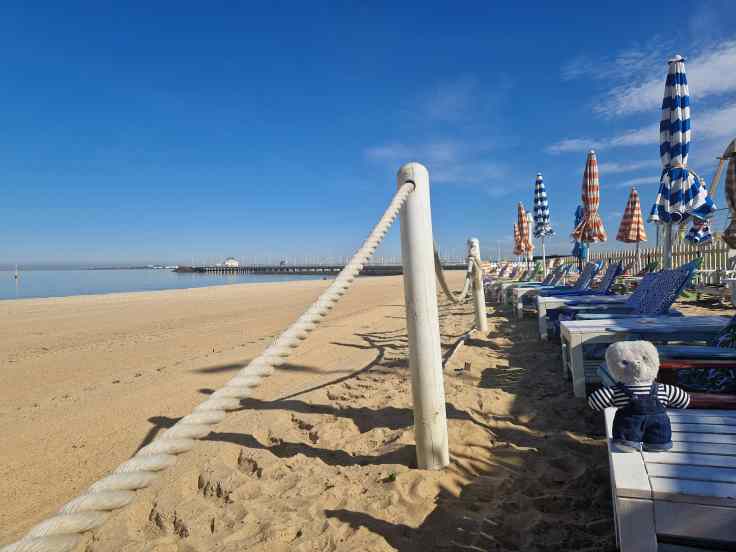
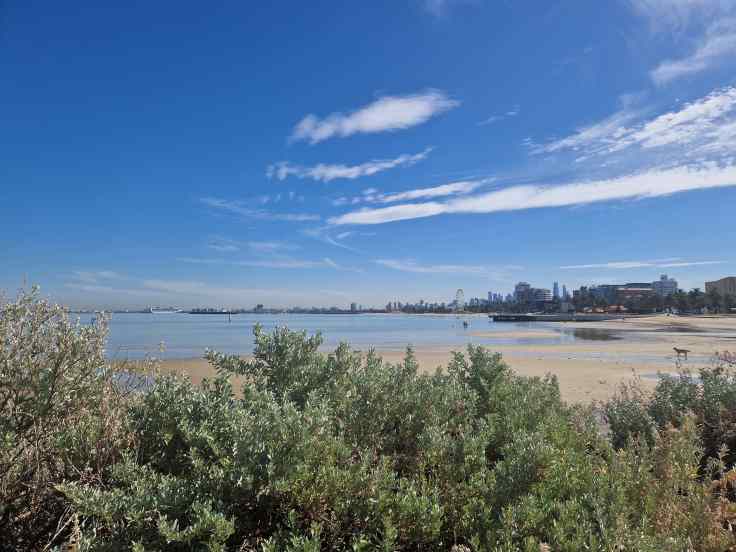
After the crowds of the city centre, St Kilda’s beach was a pleasant place to chill, with a view over the sea – flat like a mirror – all the way back to the city centre.

Kicking back at St Kilda’s beach
St Kilda Beach

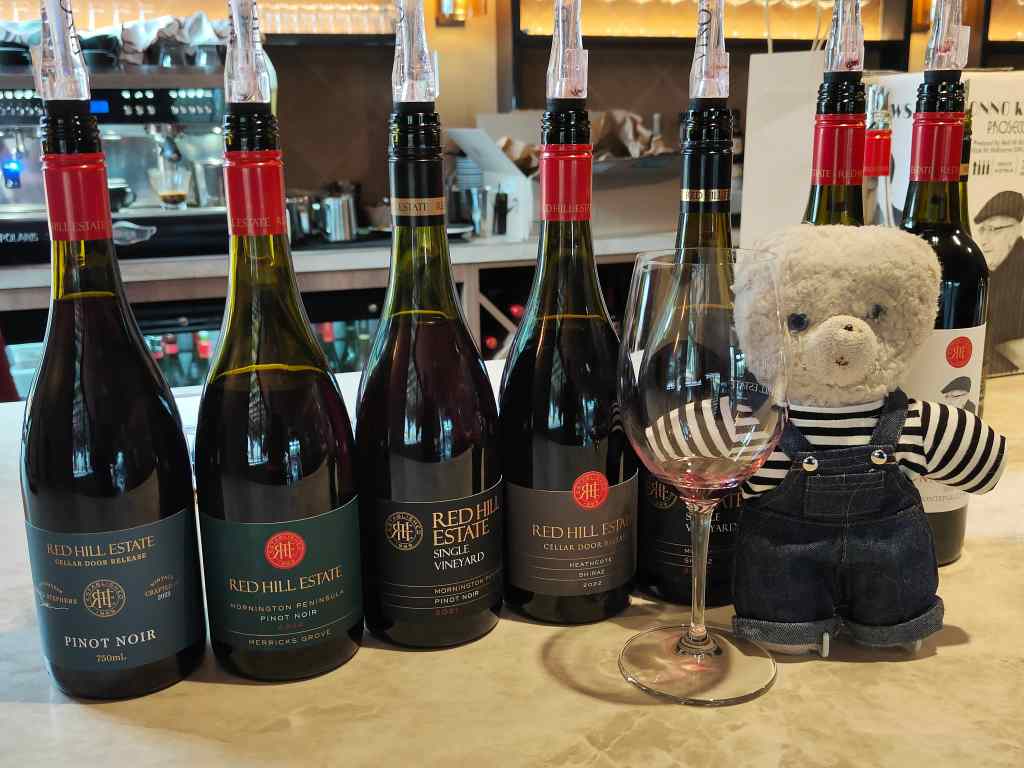
I also made a longer trip by hire car to the Mornington Peninsula. The city’s suburbs stretch for miles, but after an hour of driving I found myself in pleasant countryside – an area with farms, craft breweries, gin distilleries……..and lots of wineries. It would be a crime to come to Australia and not do a wine tasting, so I visited the well-known Red Hill Estate and tasted a range of excellent wines made from cold climate grape varieties like chardonnay or pinot noir.

Wine tasting at the Red Hill Estate, Mornington Peninsula

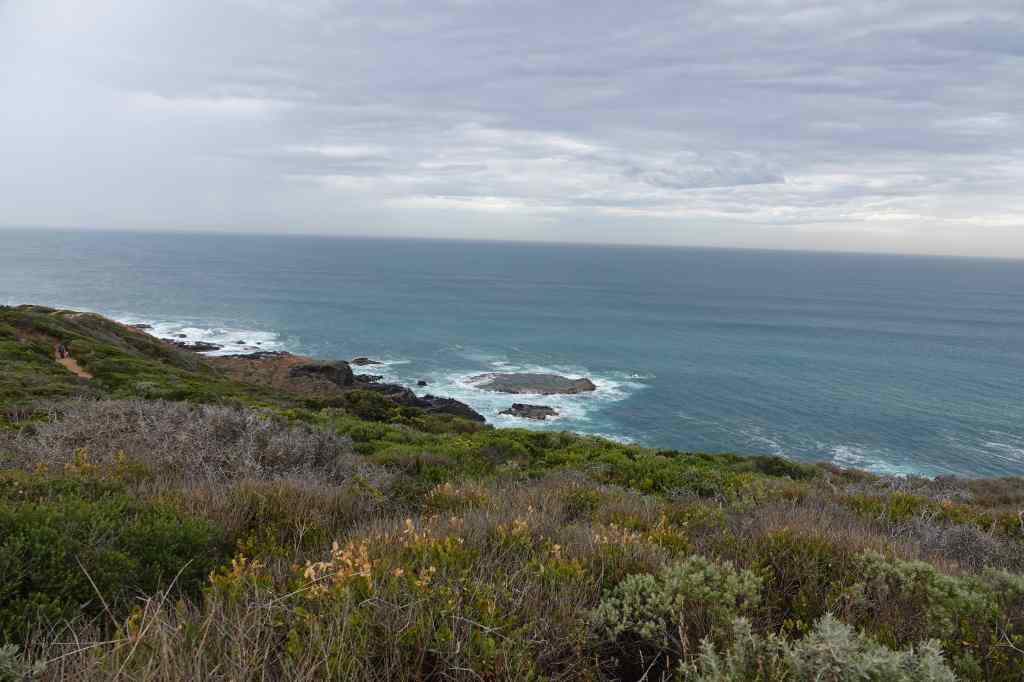
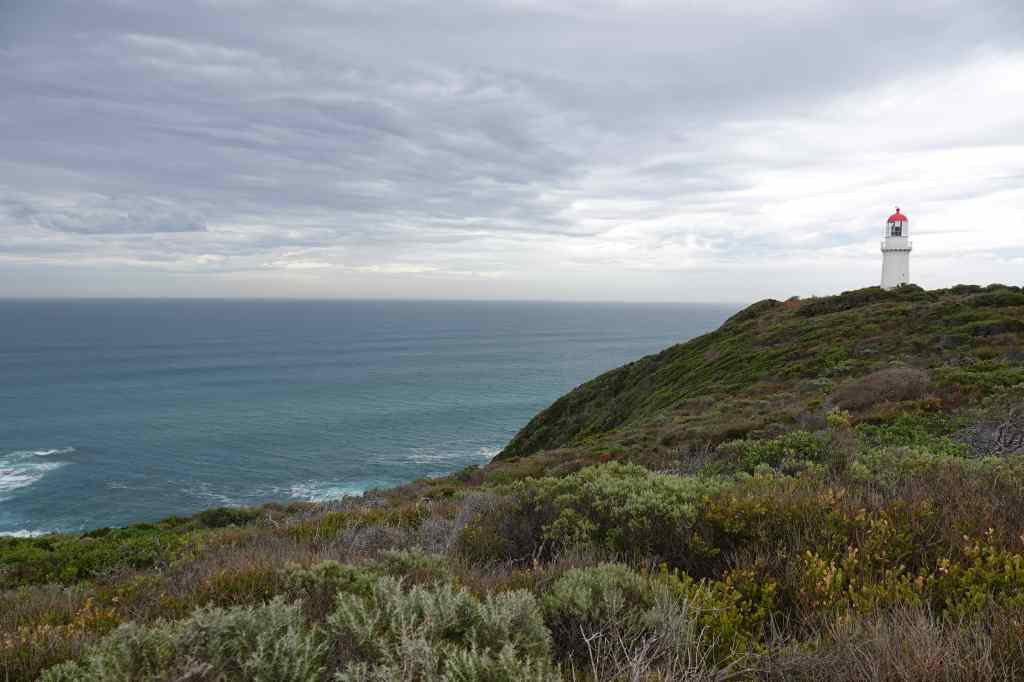
The peninsula also houses two pretty national parks, where I went for a brief walk before rain started to fall (the first rain of my Australian trip).

Cape Schanck Lighthouse, Mornington Pensinsula
Coastal scenery on the Mornington Peninsula

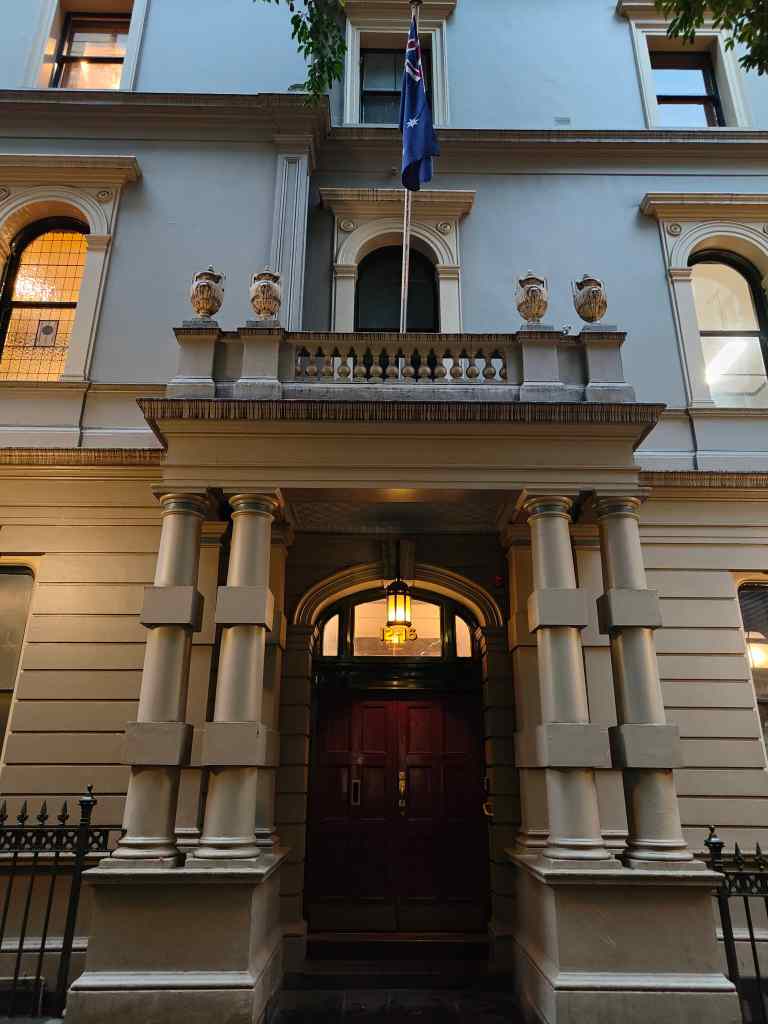
On my last night in the city, I had time for one last typically Melbourne experience – a private members club. The Savage Club sits in this impressive building which dates from the city’s 19th century boom years.

The Melbourne Savage Club

Inside (no photos allowed sadly) there were lots of the rooms typical of clubs back in London, with huge leather armchairs so deep, soft and comfortable that once seated with a glass of port in my paw it was hard to move. Fortunately, the seat I had chosen allowed an excellent view some extraordinary Polynesian and Melanesian tribal art, tastefully displaced around all four walls of the bar room. The foundation of this collection came from a past member who had been a governor of Papua New Guinea and had received many gifts from the local people there, which he later donated to the club. The Melbourne Savage Club is modelled on its London namesake and attracts writers, musicians and painters. Some of the regular members came up to welcome an unfamiliar face (something that would not happen in a London club!) and chatted about my impressions of their city. The club was a wonderful way to end my exploration of Melbourne – a place which rewards those that spend a few days to dig under its surface.

More Melbourne Street Art

Previous Post: Melbourne Street Art

Melbourne – street art and hidden gems

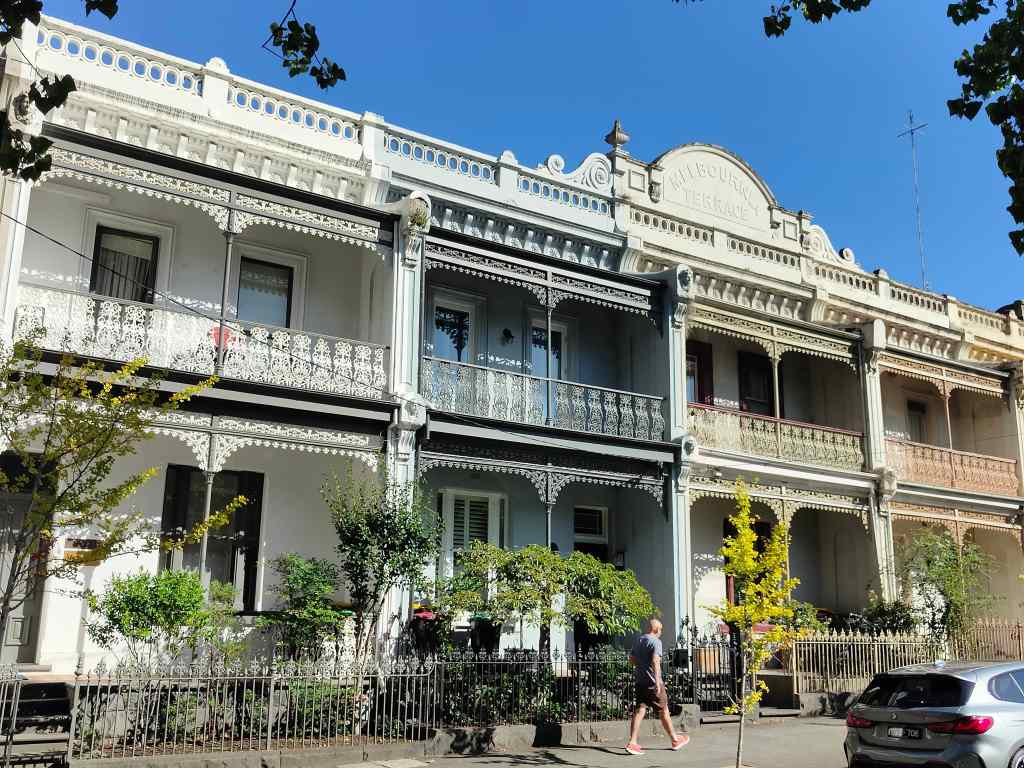
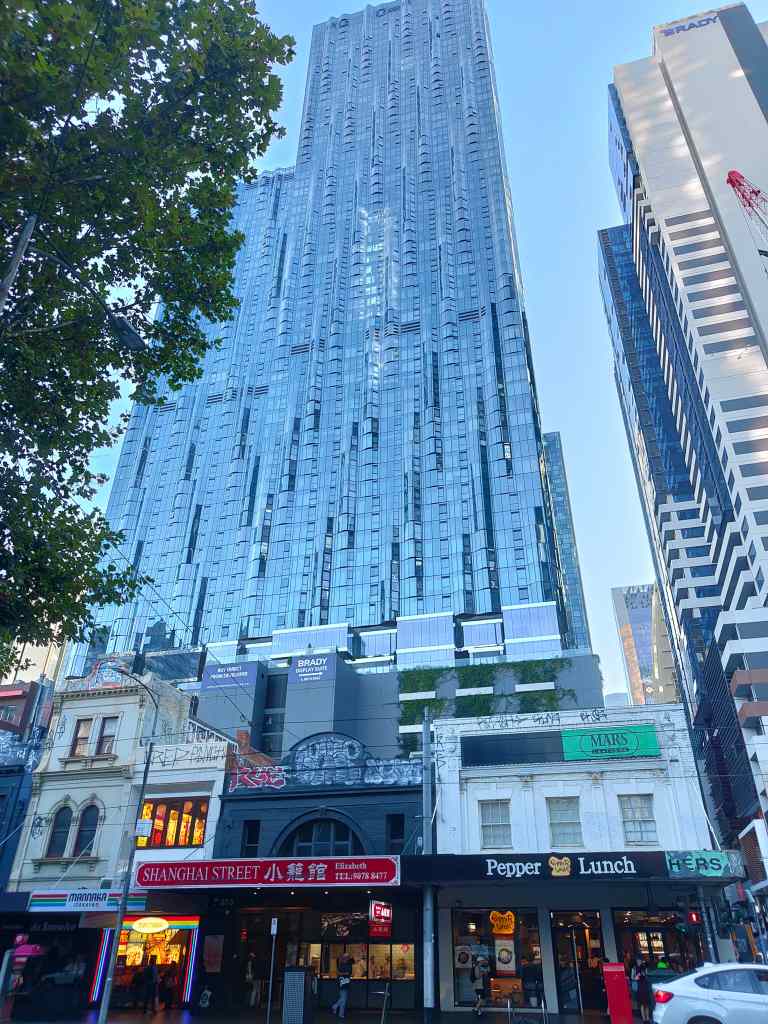
Melbourne was very different to Sydney. The streets were busy and slightly scruffy, and there were roadworks everywhere. The population seemed very young and very Asian. The city was laid out on a neat grid, but its buildings were an anarchic mix of elegant old constructions from Melbourne’s boom years in the late 1800s (with the Victoria gold rush) and improbably tall modern skyscrapers, sometimes built right next to modest two-storey houses.

Contrasting styles in Melbourne

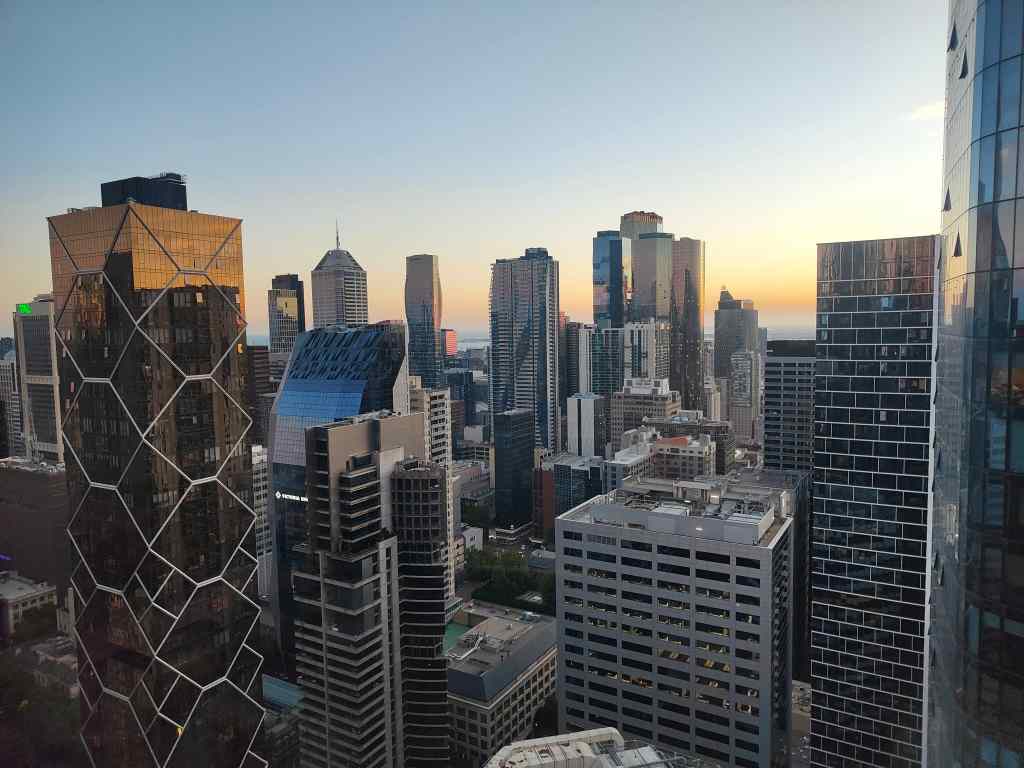
My accommodation was a flat in one of the skyscrapers and I dropped my stuff off and went out to explore.

The view from my flat in Melbourne

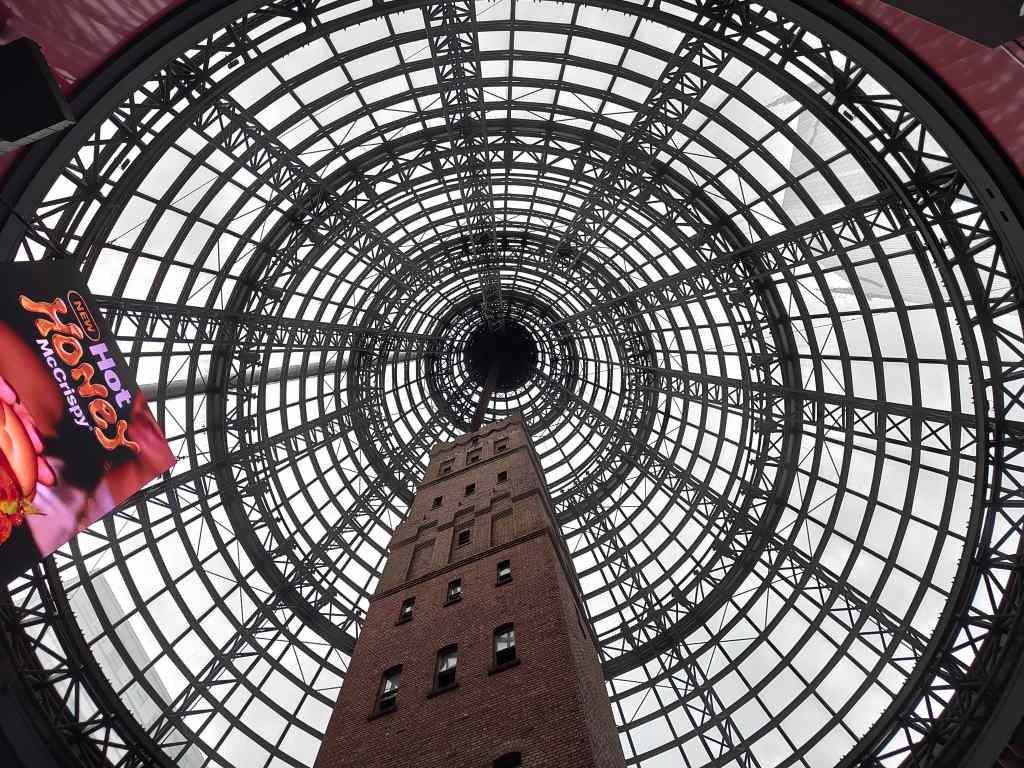
The city teamed with life, like an anthill on steroids. A lot of the modern architecture was very successful, like this shopping arcade….

A shopping mall in Melbourne

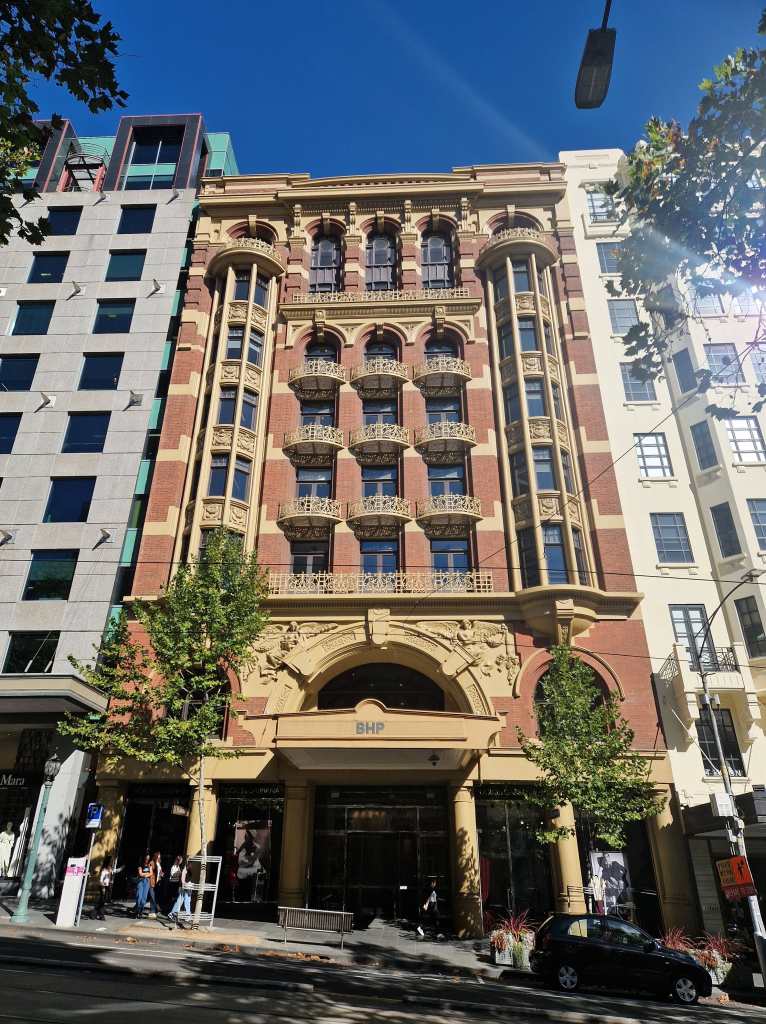
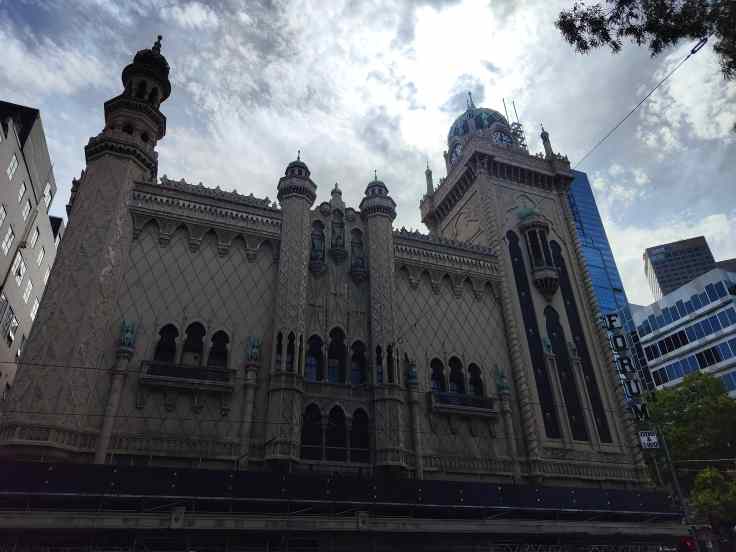
Amongst the modern skyscrapers were some glorious old buildings.

An elegant old Melbourne building
The Forum, a Melbourne institution and performance venue

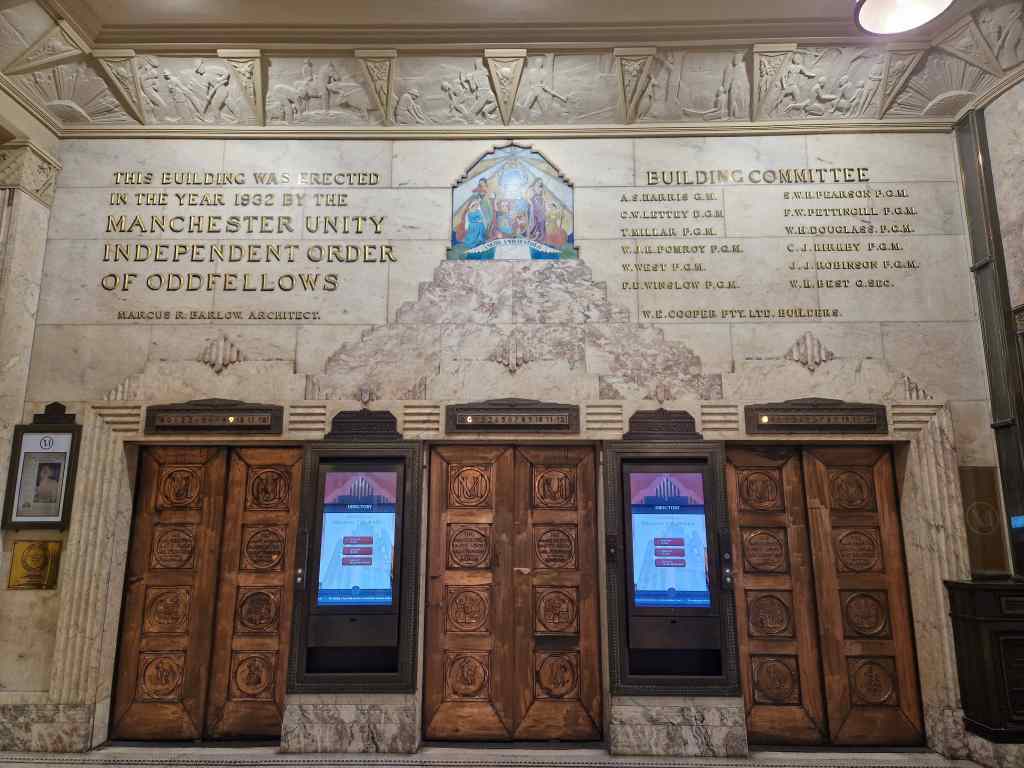
Some of the old buildings had semi-hidden entrances that an intrepid bear could walk through to admire the stylish interiors.

Inside an old Melbourne building

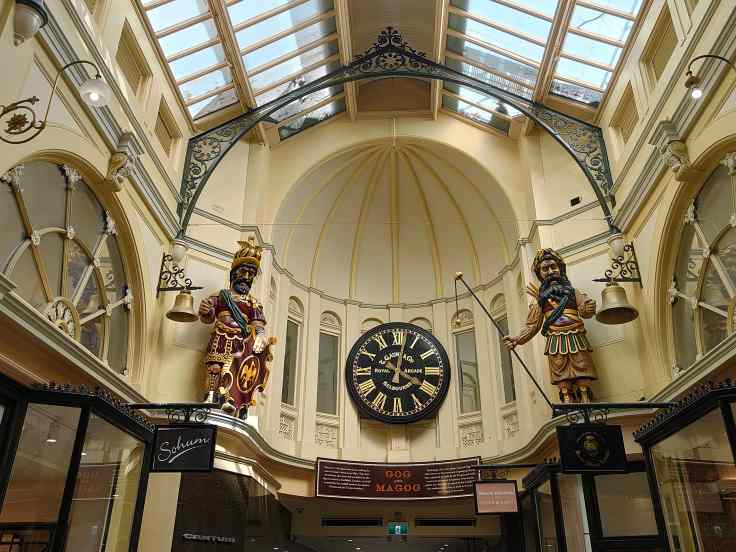
Melbourne turned out to be a city where the best things are hidden and need to be searched out – in contrast to Sydney’s in-your-face Opera House and harbour. Leading off the main streets are small arcades, filled with small shops, bars and cafes.

Gog and Magog guard a swanky arcade in Melbourne

Walking around and exploring this chaos was a lot of fun, and a good way to build up a thirst for another Melbourne tradition – the roof top bar, of which there were dozens. I dropped into one to enjoy the early evening atmosphere. I was half-way through my first beer, when five o’clock struck and suddenly a wave of visitors clambered up the stairs to join me – it seems that many Melburnians do not work a minute more than their contractual hours.

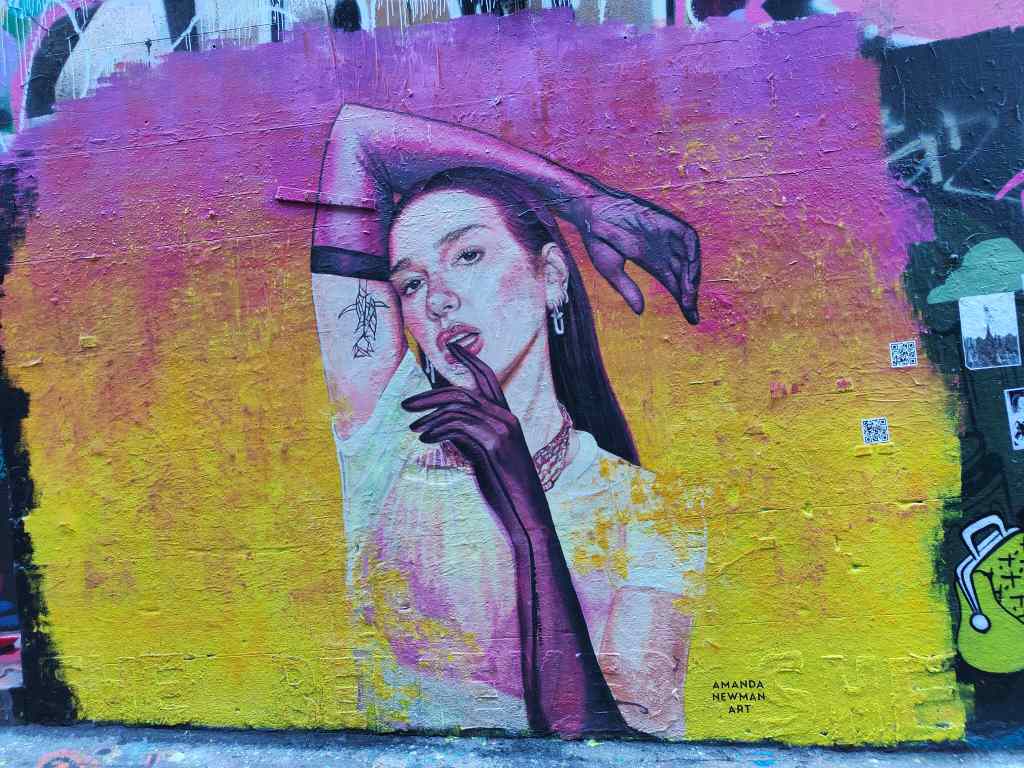
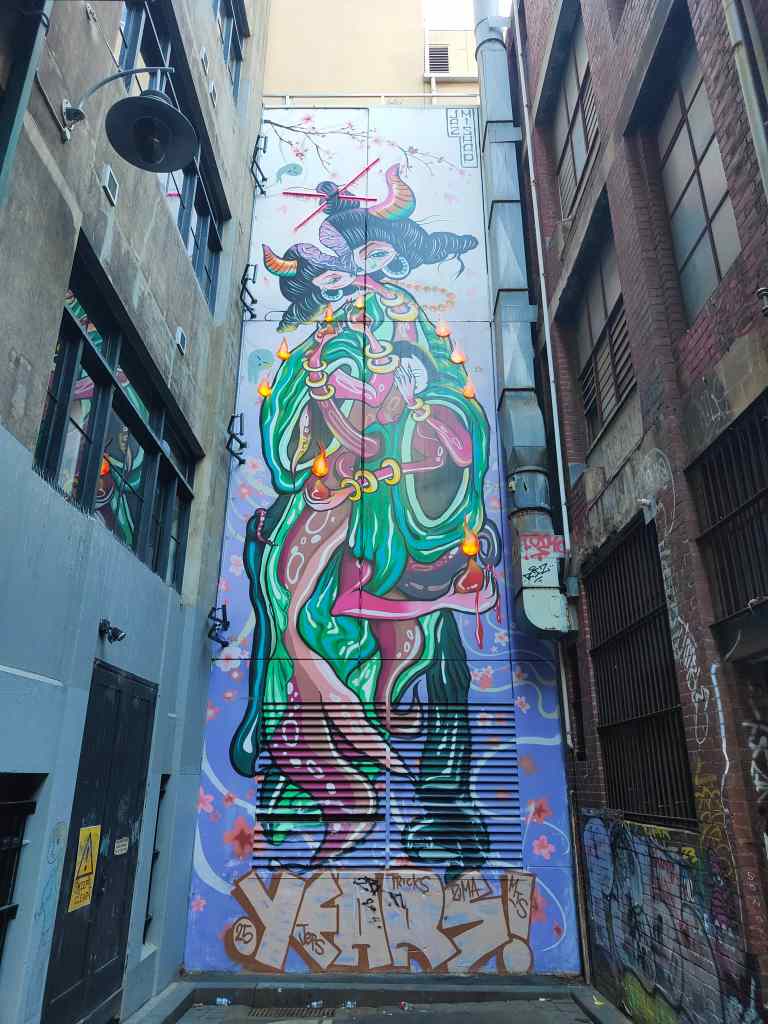
Another of Melbourne’s hidden attractions is its amazing collection of street art, mostly hidden away down dingy alleyways. An incredible diversity of art is mostly painted….

Melbourne street art

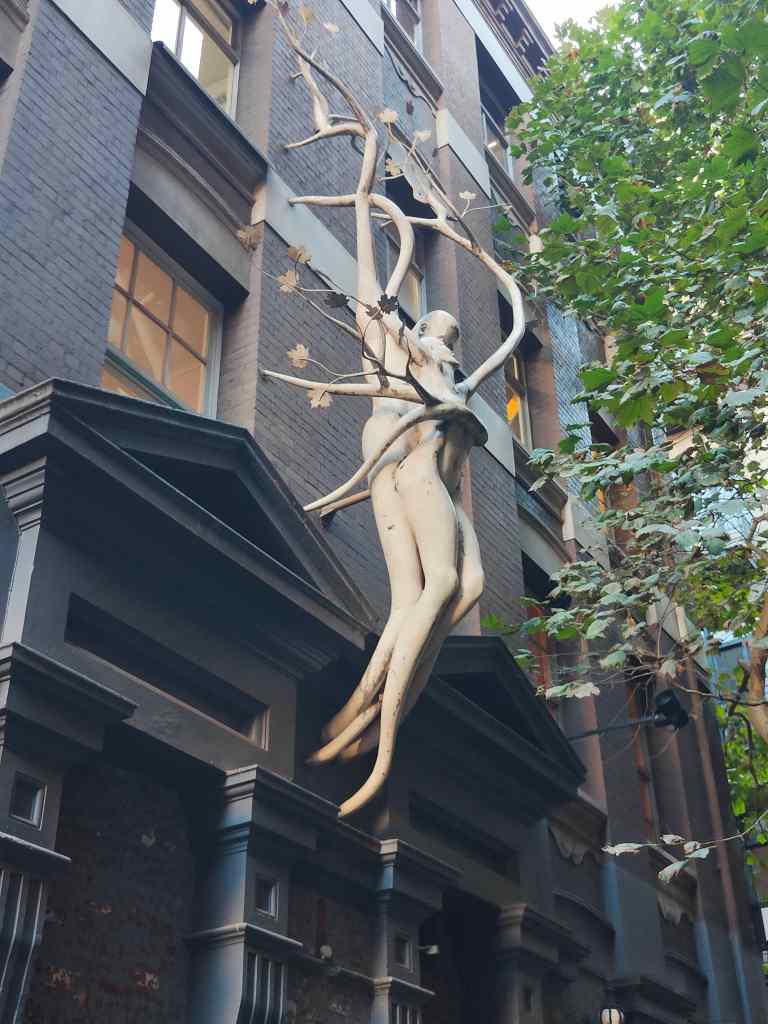
….and sometimes stuck onto the walls of the city.

Art stuck onto a building in Melbourne

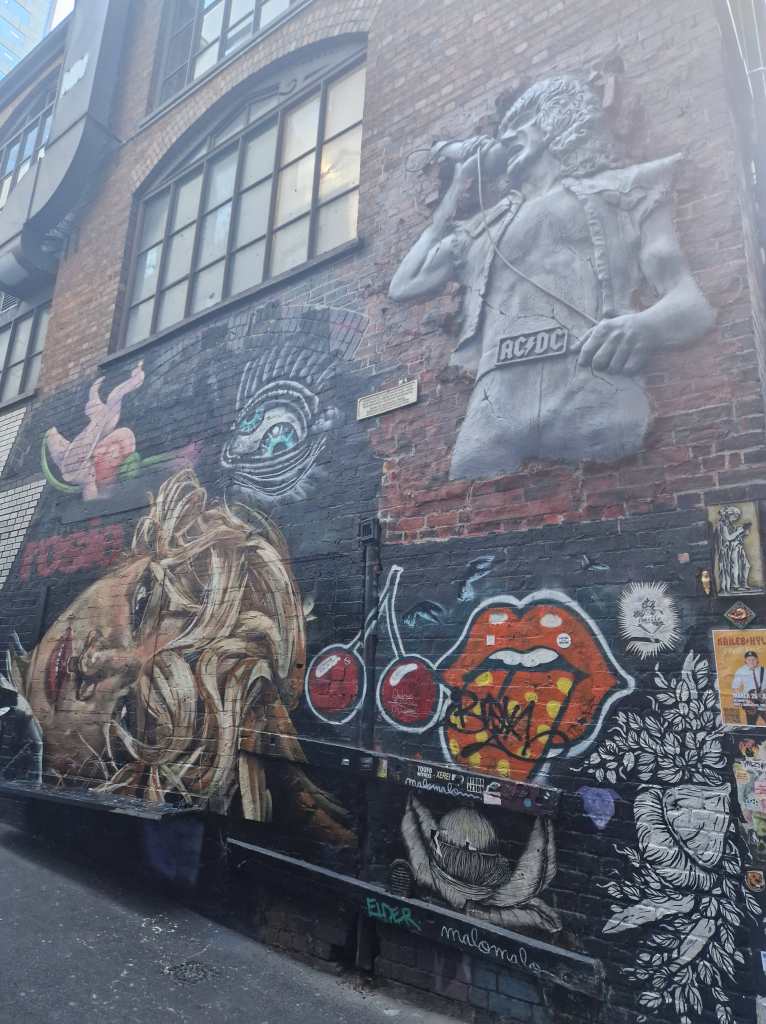
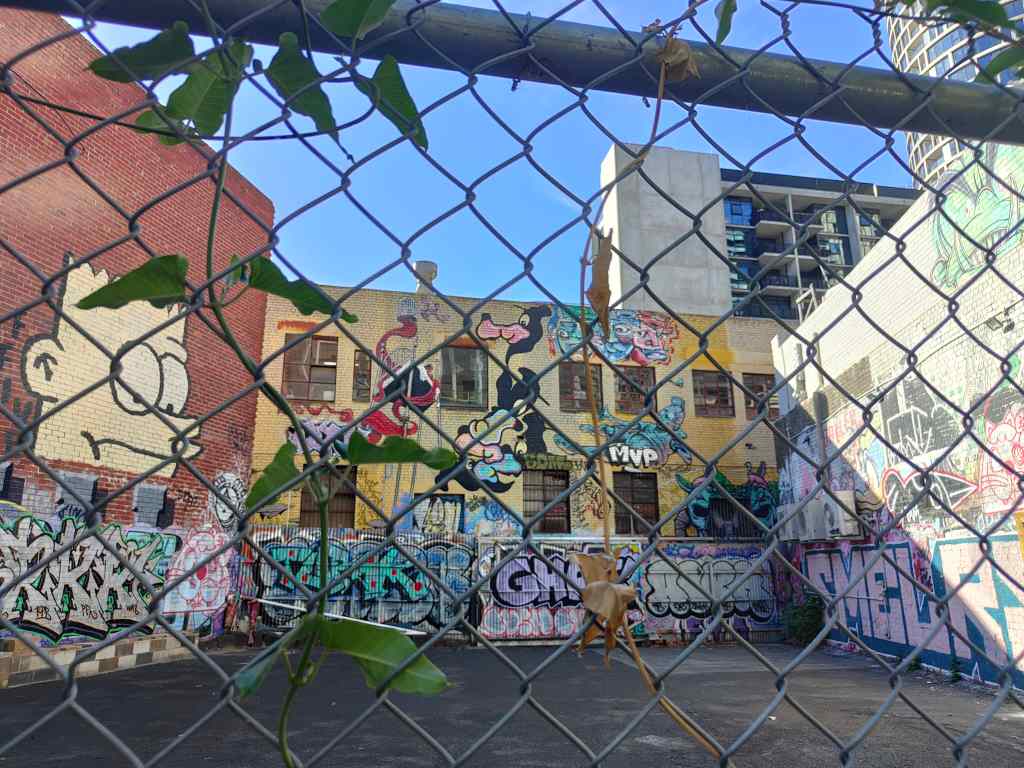
Some of these art installations are in popular places that are firmly on the tourist trail, like the famous AC/DC Alley, and others are in quiet, edgy neighbourhoods where drug addicts and graffiti artists hang out.

Touristy AC/DC alley in Melbourne
Street art in edgy part of North Melbourne

I ended my tour of Melbourne street art in yet another rooftop bar. My initial impressions of the city were a bit negative, but after a couple of days of walking around exploring hidden arcades and alleyways, I am getting to like it a lot.

Previous Post: Sydney Indoors

Next Post: Melbourne, traditional sights

Indoor Sydney on a baking hot day

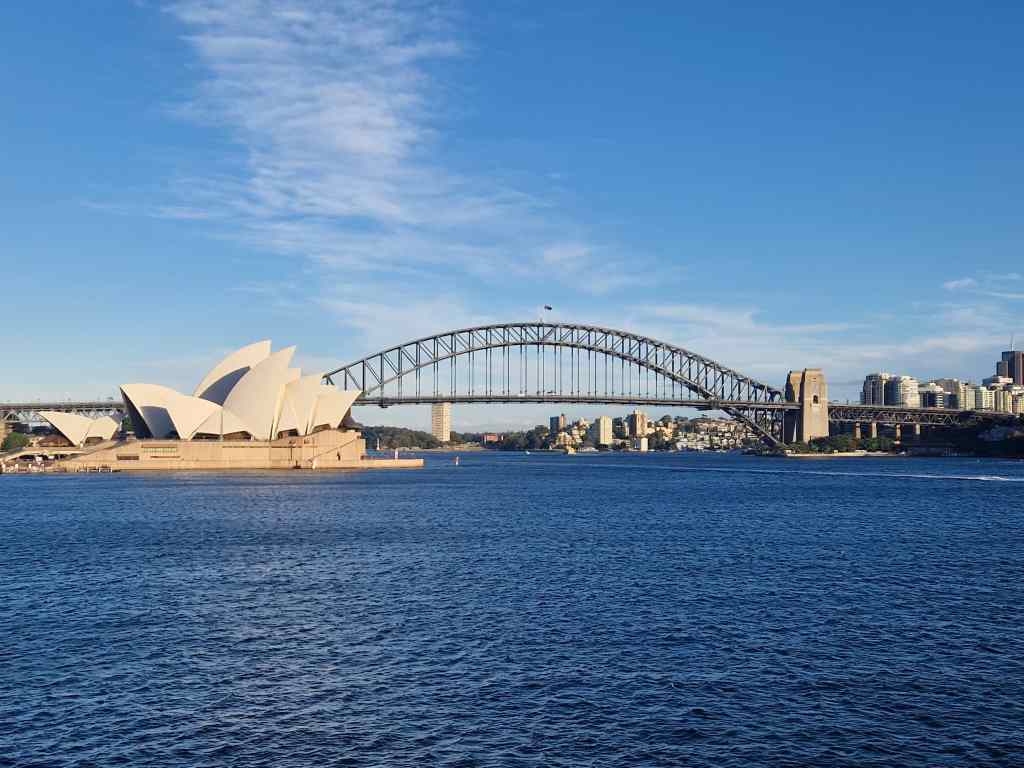
Today the weather forecast was for a cloudy day of sweltering heat, with afternoon temperatures of 38°C – a full thirty degrees higher than back home. There was only option for such a day – Sydney’s air-conditioned museums! I left my club early and strolled through the Botanical Gardens, stopping briefly to take a shot of Sydney Opera House in the morning light…..

Sydney Opera House in the morning

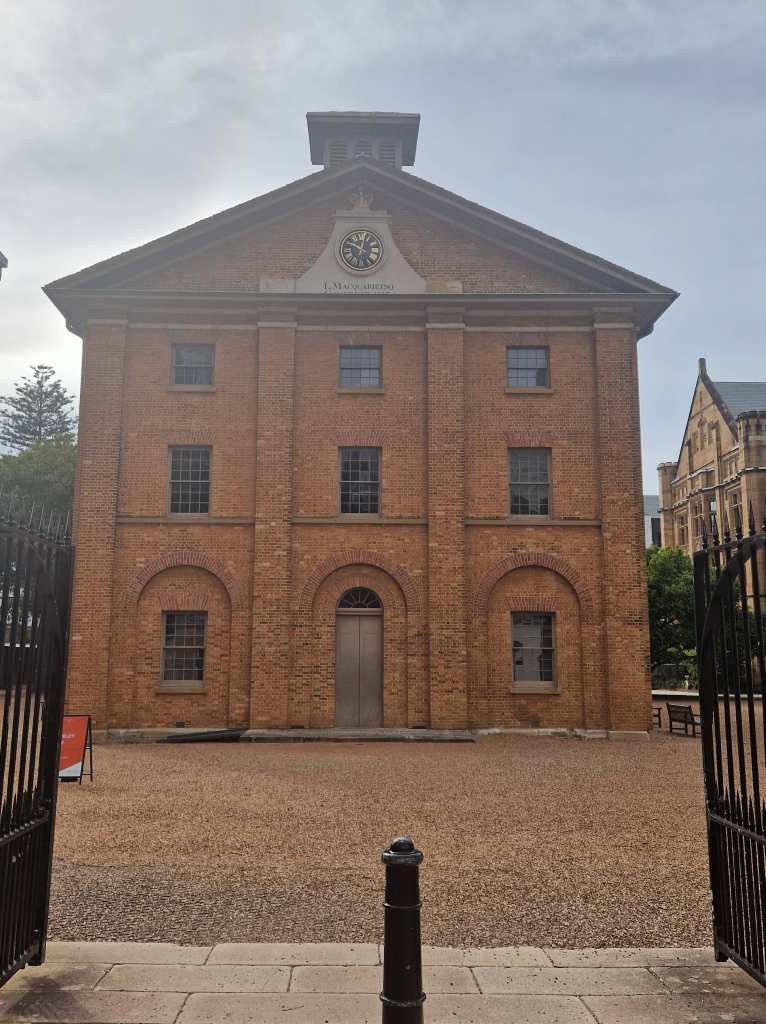
…..and to continue to my first destination, the UNESCO-listed Hyde Park Barracks. This was built in 1817-1819 on the orders of Governor McQuarrie, the fifth governor of the fledgling settlement of Sydney.

Hyde Park Barracks

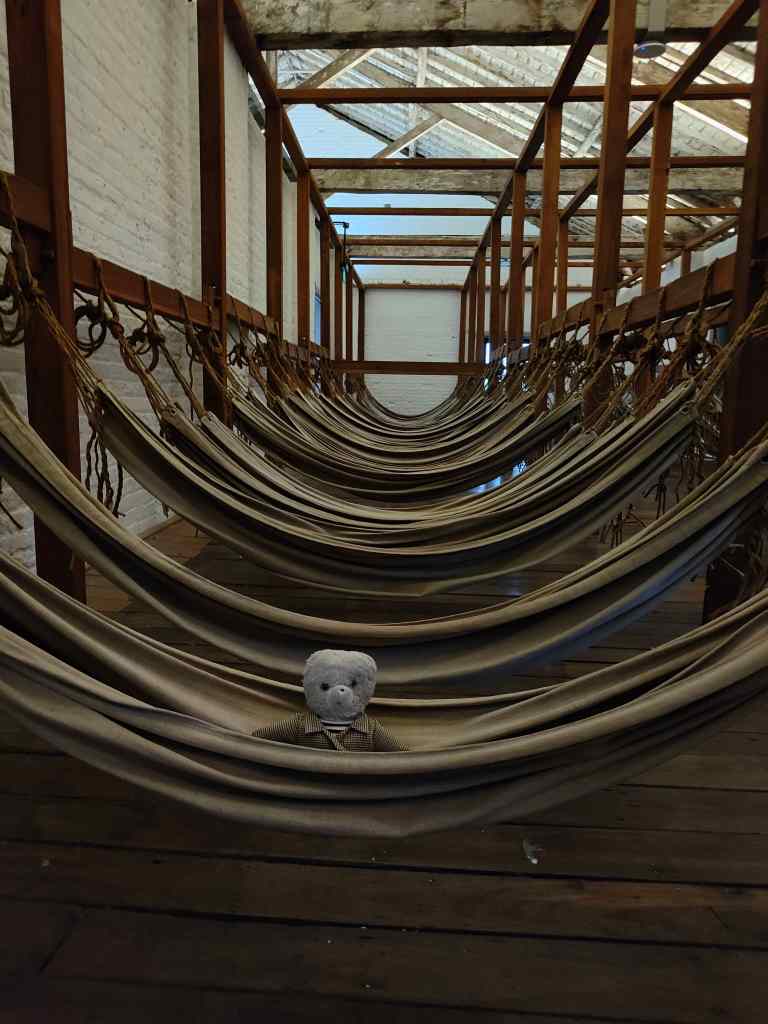
Its original purpose was to house convicts, but shortly after convict shipments stopped in 1840, the barracks were repurposed to accommodate female immigrants, particularly Irish women escaping the great famine. Today the site is a museum with interesting displays that recount the harsh lives of the convicts, and also the devastating impact the expanding colony of Sydney had on the indigenous aboriginal population.

Where the convicts had to sleep in Hyde Park Barracks

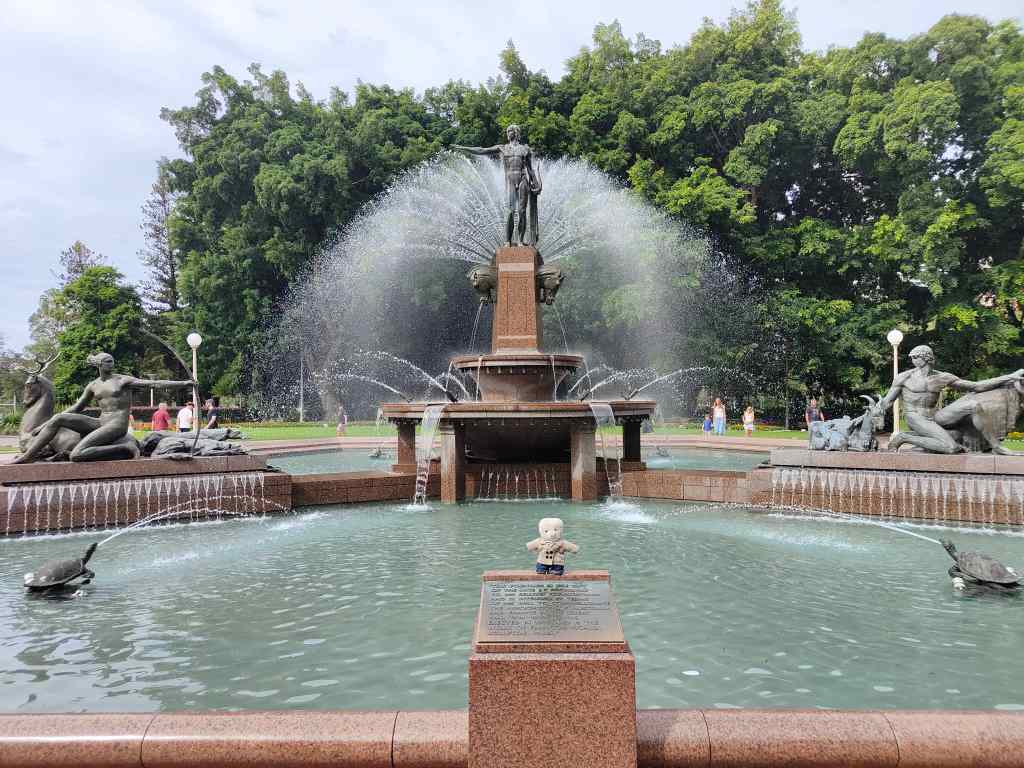
The museum was very well presented……..and despite being an old building it also had powerful aircon to keep visitors cool. I left the barracks and stopped briefly at Hyde Park, one of Sydney’s many green spaces….

Hyde Park, Sydney

….. before continuing on to my next destination, the Art Galley of New South Wales, which has a collection of Australian art. Rather than display their collection chronologically, the curators mixed art from different periods in the same rooms, a successful idea that produced many interesting contrasts.

In the Art Gallery of New South Wales

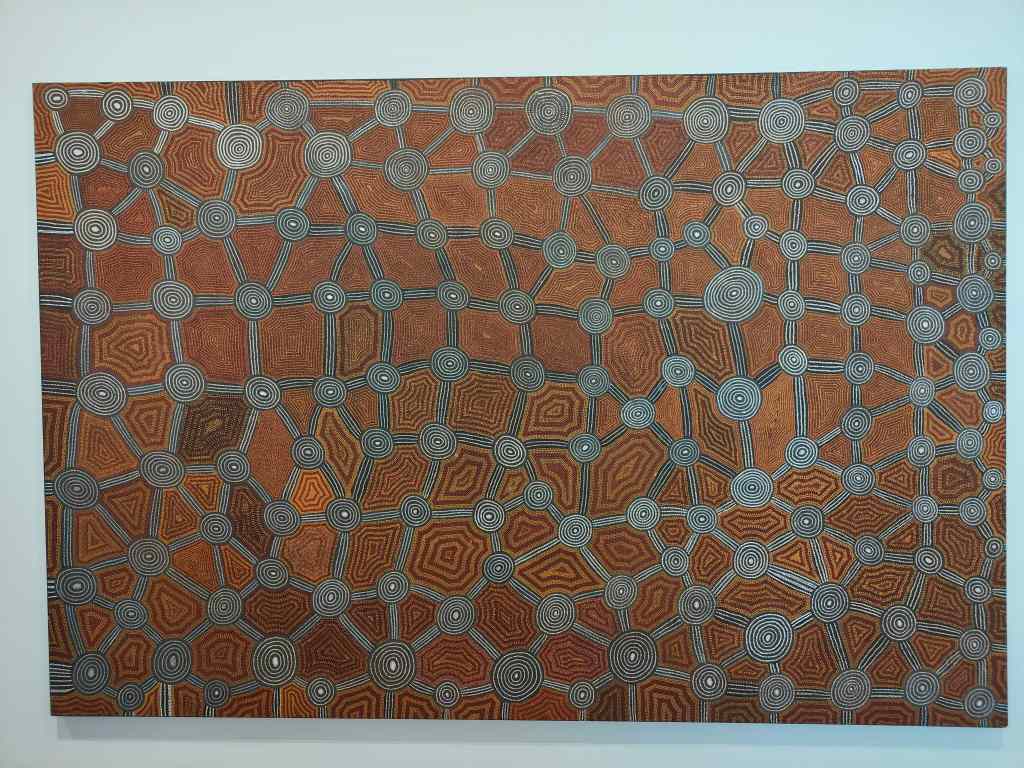
The gallery has a new annex, where they displayed their extensive collection of aboriginal art.

Aboriginal Art in the Art Gallery of NSW

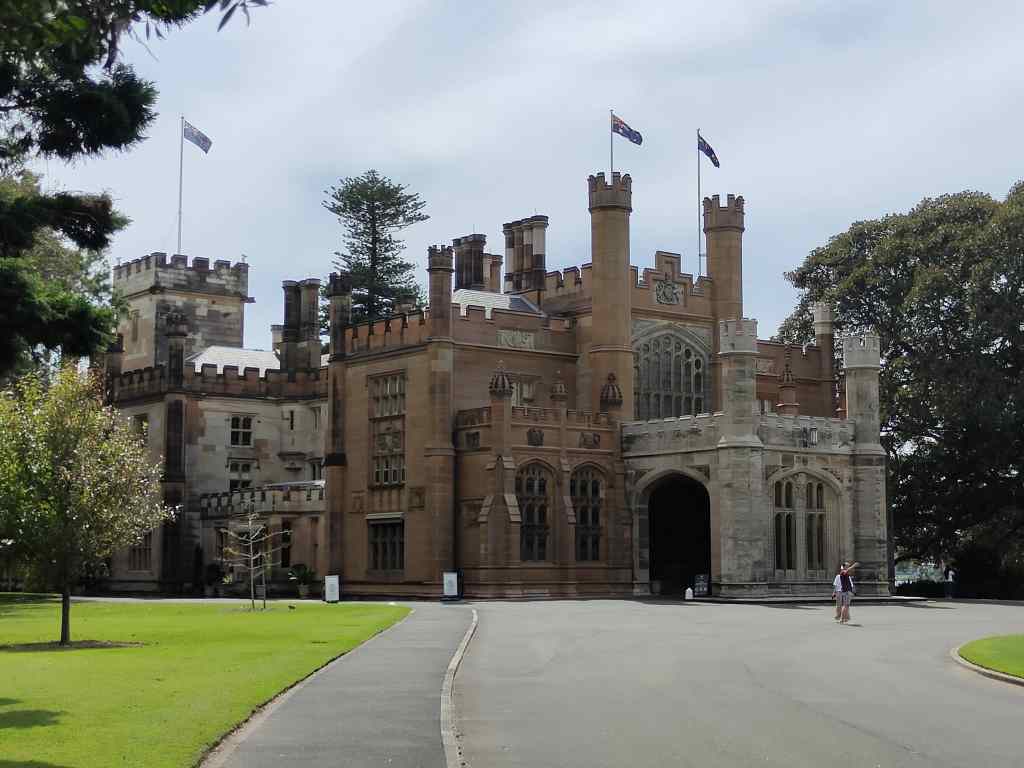
I spent a pleasant hour wandering around the gallery, enjoying its aircon. As noon approached however, it was time to brave the outside air to walk back through the Botanical Gardens to my next destination, a tour of Sydney Opera House. On the way I managed to see a couple things I has missed on my earlier visit to the Gardens, like Government House, the official residence of the Governor of New South Wales.

Government House, Sydney

The opera house tour lasted an hour and was full of interesting facts about the construction and operation of what is now an iconic landmark and the most recently built UNESCO world heritage site. I learnt that the competition for designing the Opera House was won by Danish architect Jorn Utzon, but that he did not then have a plan for constructing his inspired but technically challenging design. A solution was only found once work had started, and this and other difficulties led to delays and cost overruns. Eventually Utzon was forced to quit the project and left Australia, never to return or see his finished masterpiece. The Australian Peter Hall took over the project, and was primarily responsible for designing the building’s interiors, which our tour focused on.
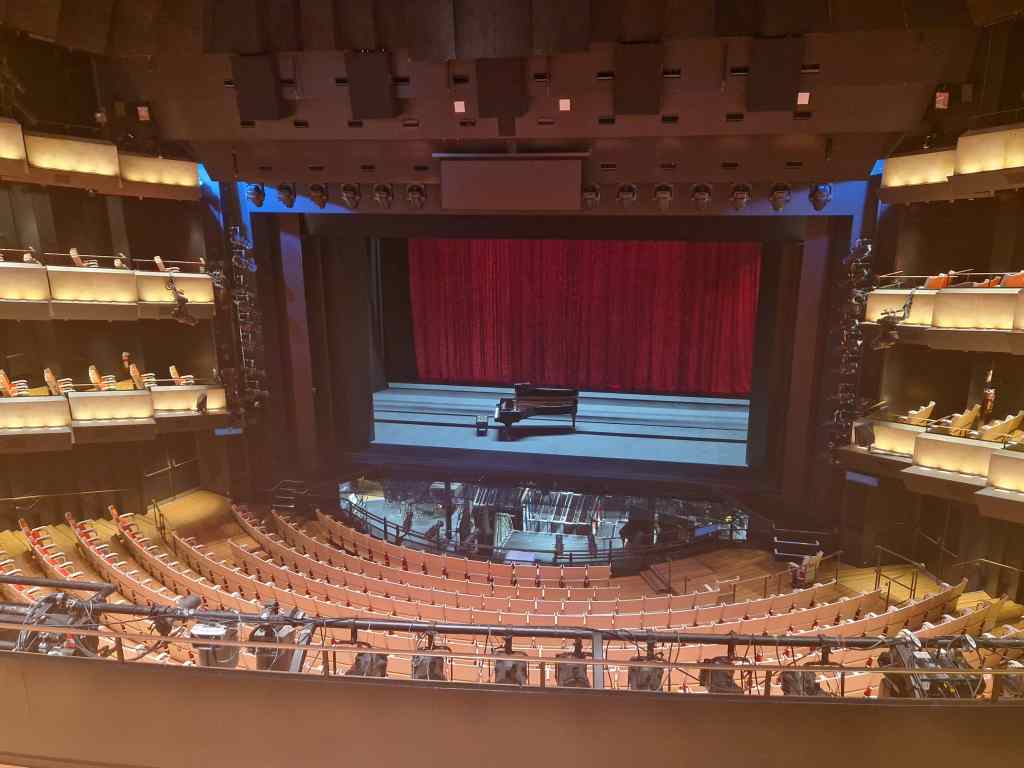
It was good to see inside such a famous building, but in my humble view, the interior is far less impressive than the magnificent exterior. The most interesting room by far was the huge concert hall, which can house 2,500 visitors – but sadly photos were not allowed there. Opera and ballet are presented in a different venue, the much less impressive Joan Sutherland Hall.

The Joan Sutherland Hall, Sydney Opera House

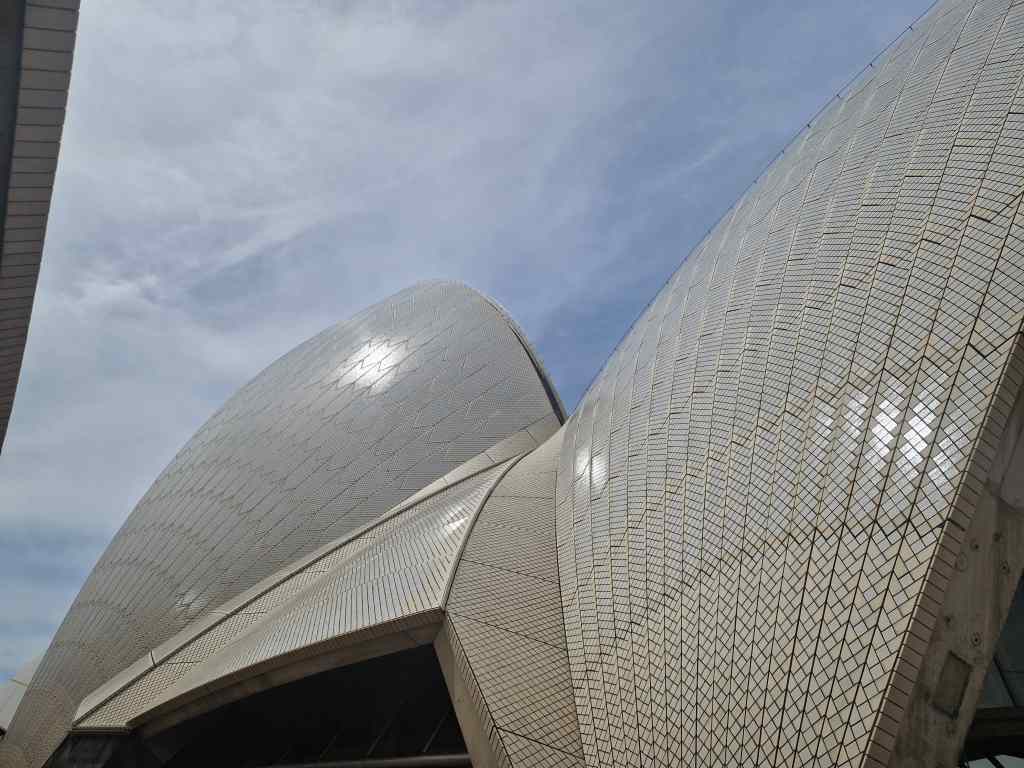
Highlight of the trip was going out onto the roof and seeing the famous white “sails” up close. They are made from a mosaic of 1,056,006 white or off-white tiles, of which only 10,000 have needed to be replaced since construction finished in 1973 (fifteen years after it started in 1958).

On the roof of Sydney Opera House

When our tour finished, we were released back into the baking afternoon sun, and I did the only thing possible on such a hot day – head back to my room for a bear nap and to start writing the first posts for my blog.
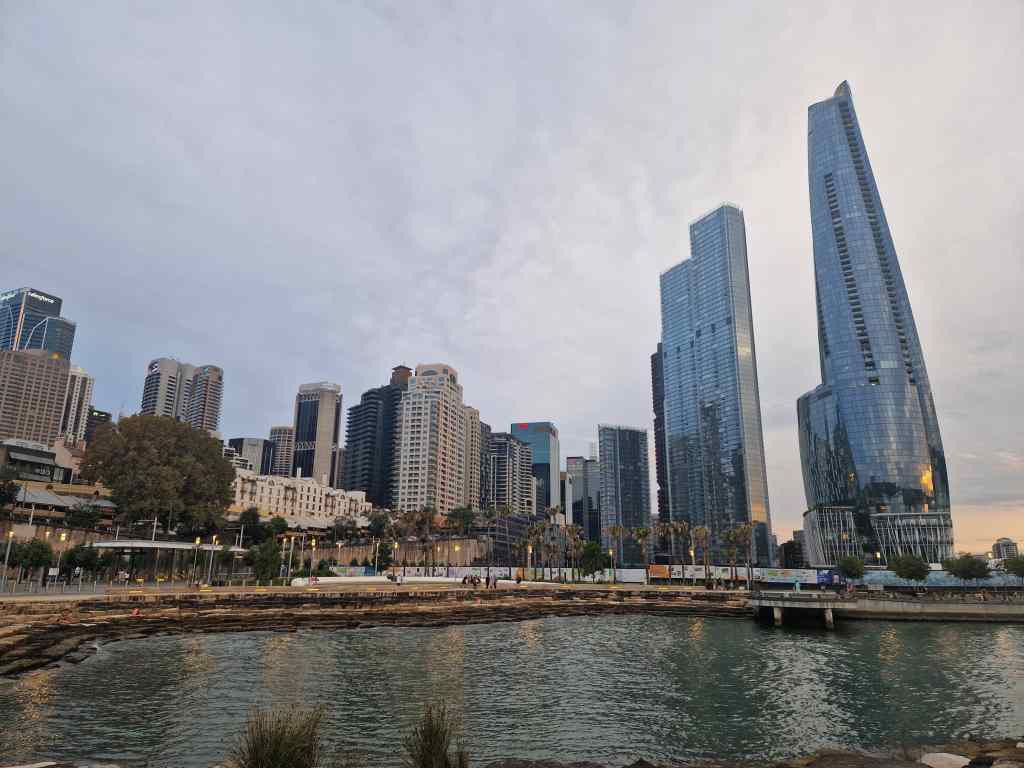
In the slightly cooler evening air, I ventured out again to the western part of the Rocks area, which gave me yet another perspective of Sydney’s skyscrapers.

Sydney as seen from the Rocks, Barangaroo

I visited a historic pub – the Lord Nelson Brewery Hotel, Australia’s oldest pub brewery – for a cold beer before heading off for dinner in a local restaurant.

Cold beer should be available on prescription on days like this!

It has been one of those days where the crushing heat had made it hard to do much. Temperatures were forecast to drop on the next day, but I would be leaving Sydney for next destination, Melbourne, which would turn out to be a completely different type of travel experience.

Previous Post: From Bondi to Coogee

Next Post: Melbourne Street Art

From Bondi Beach to Coogee

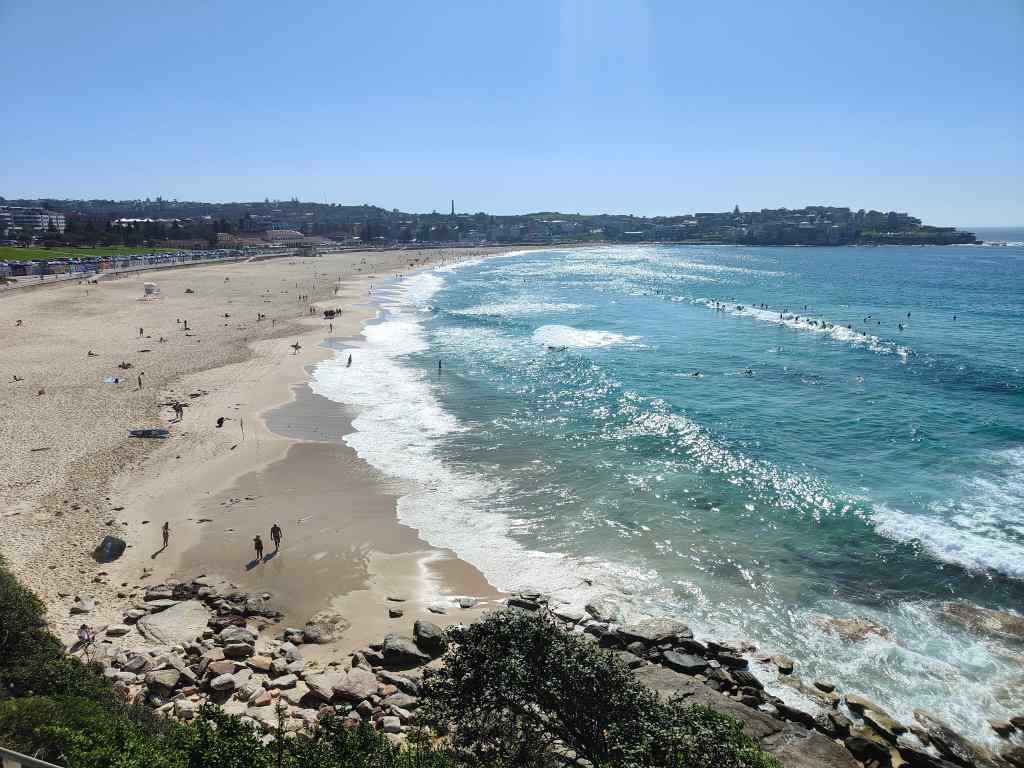
After the fast pace of my first day in Australia, today I wanted to take it easier. Even though I am not usually a beach-going bear, I could not miss one of Australia’s most iconic places, so I caught a cab to Sydney’s famous Bondi Beach.

Bondi Beach

I have to confess to being a little underwhelmed. The beach is nice enough, but I have seen more exotic and/or longer ones in many other parts of the world. There was hardly any breeze, so the famous Bondi surfers were struggling to put on a show for me. Probably the most interesting part of Bondi was the Icebergs artificial sea water pool complex at the very end of the beach.

Iceberg Complex, Bondi Beach (picture courtesy Pexels)

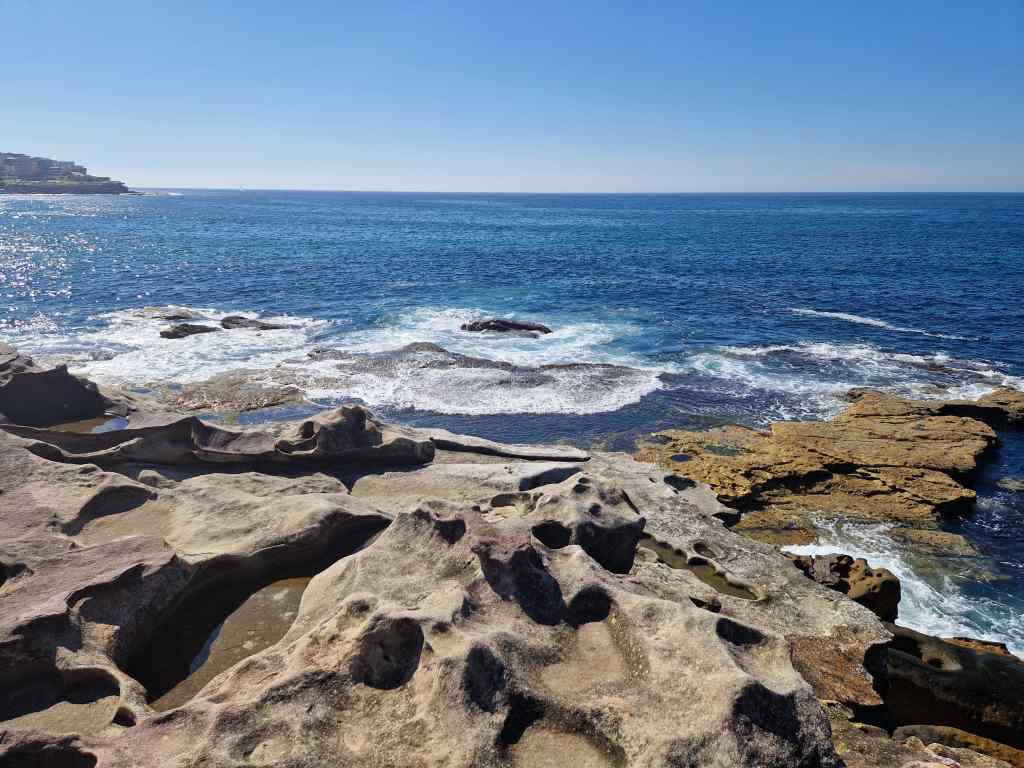
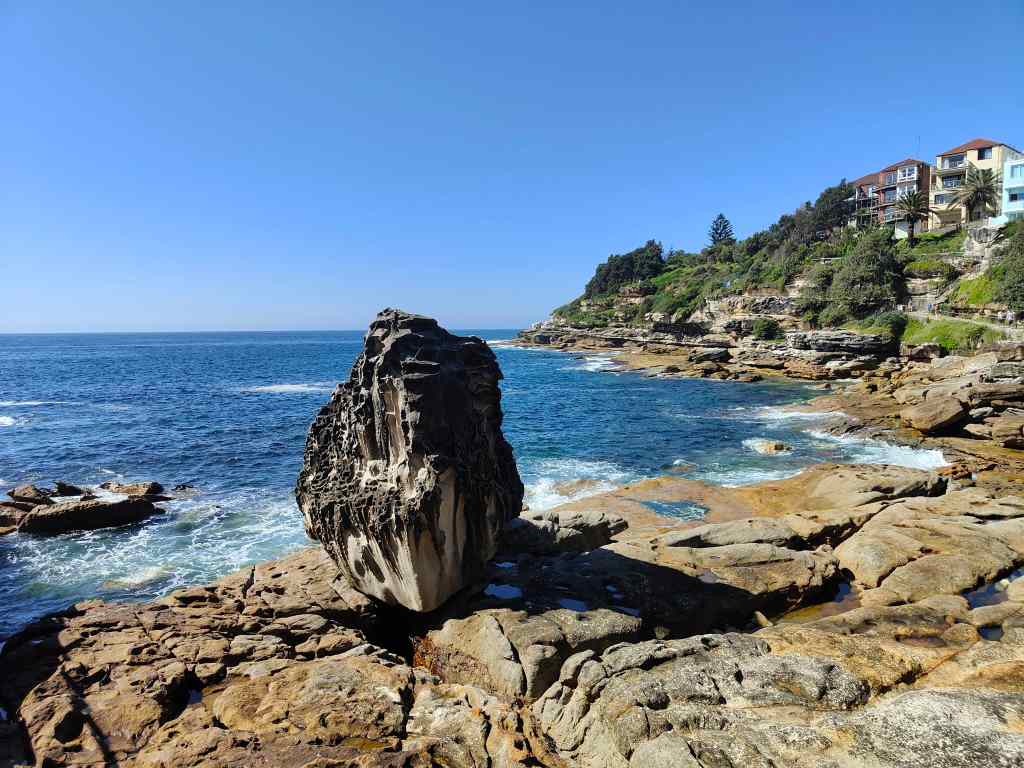
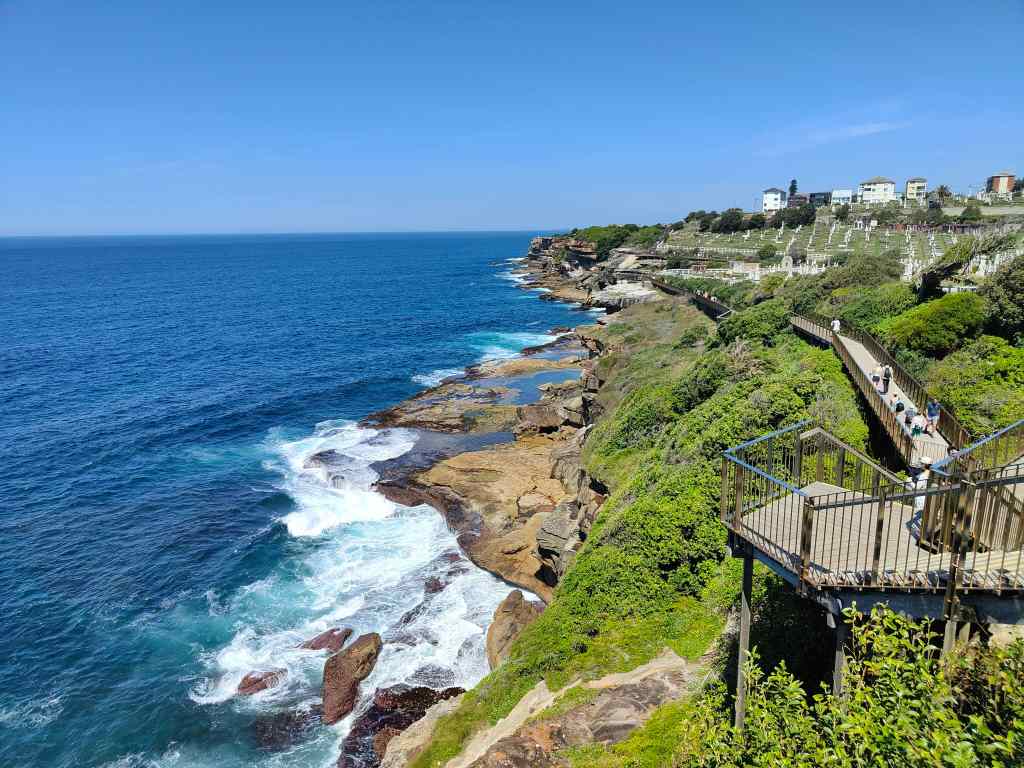
I was tempted to have a dip but had other plans for the day – to walk the coastal path from Bondi to Coogee. Sooner after leaving Bondi, I was admiring some wonderful scenery, with the reddish brown rocks of the coast contrasting with the deep blue sea and bright blue sky.

Beautiful scenery on the Bondi-Coogee Path

The path links many smaller beaches, less famous than Bondi but sometimes prettier.

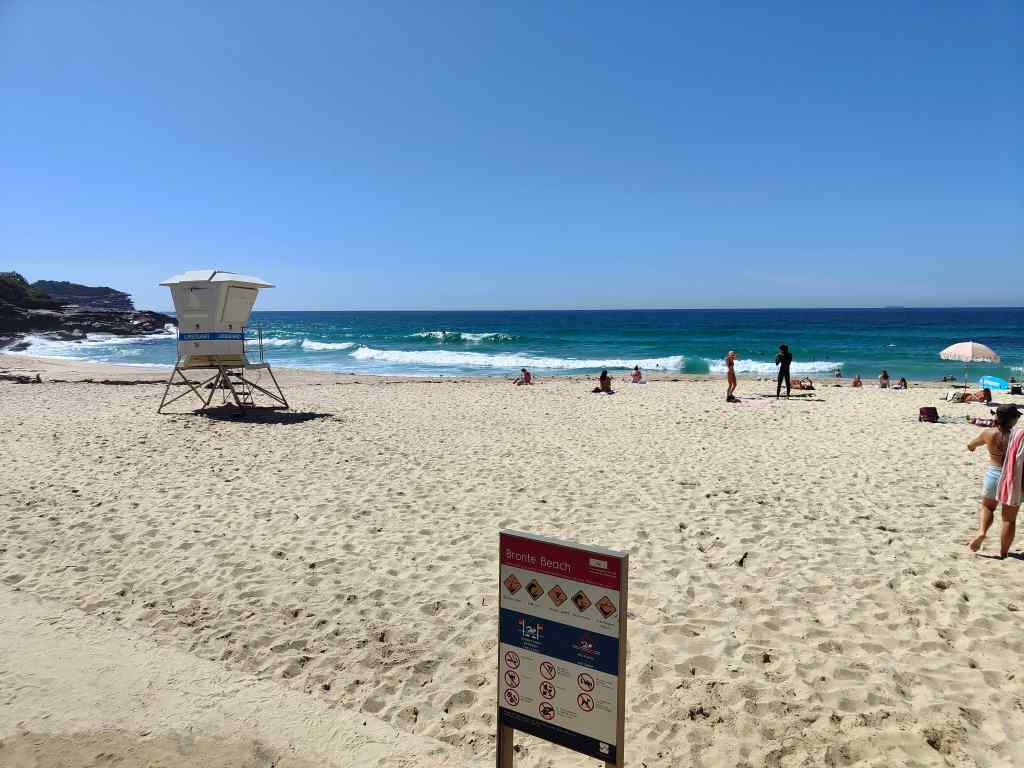
Bronte Beach life

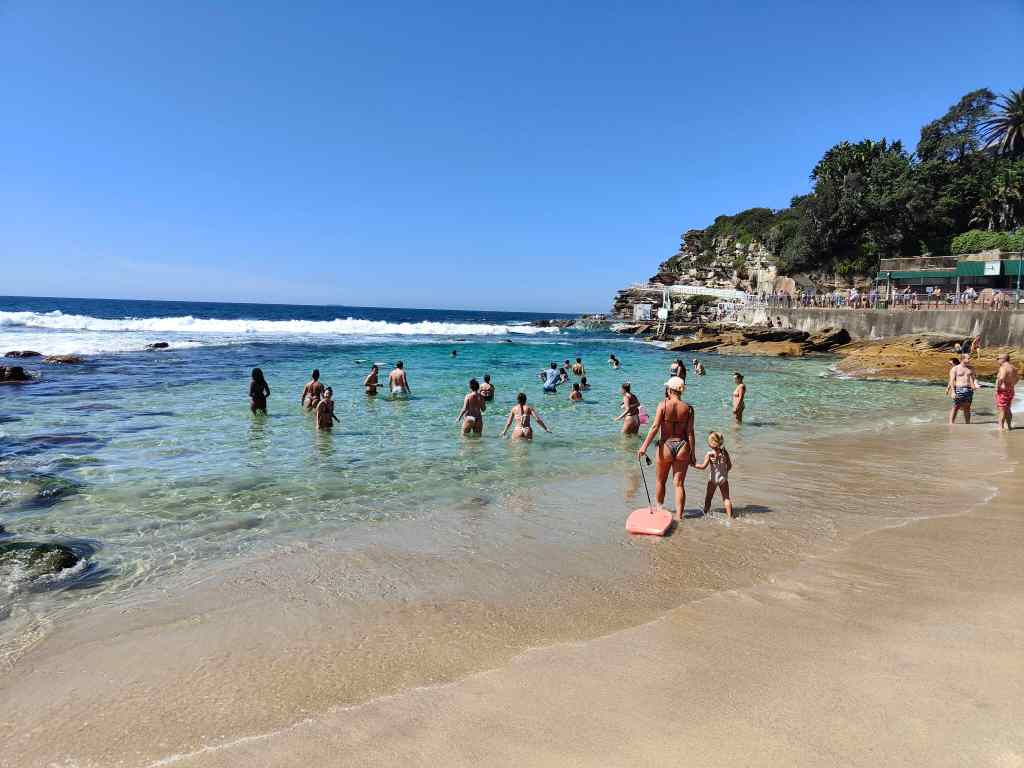
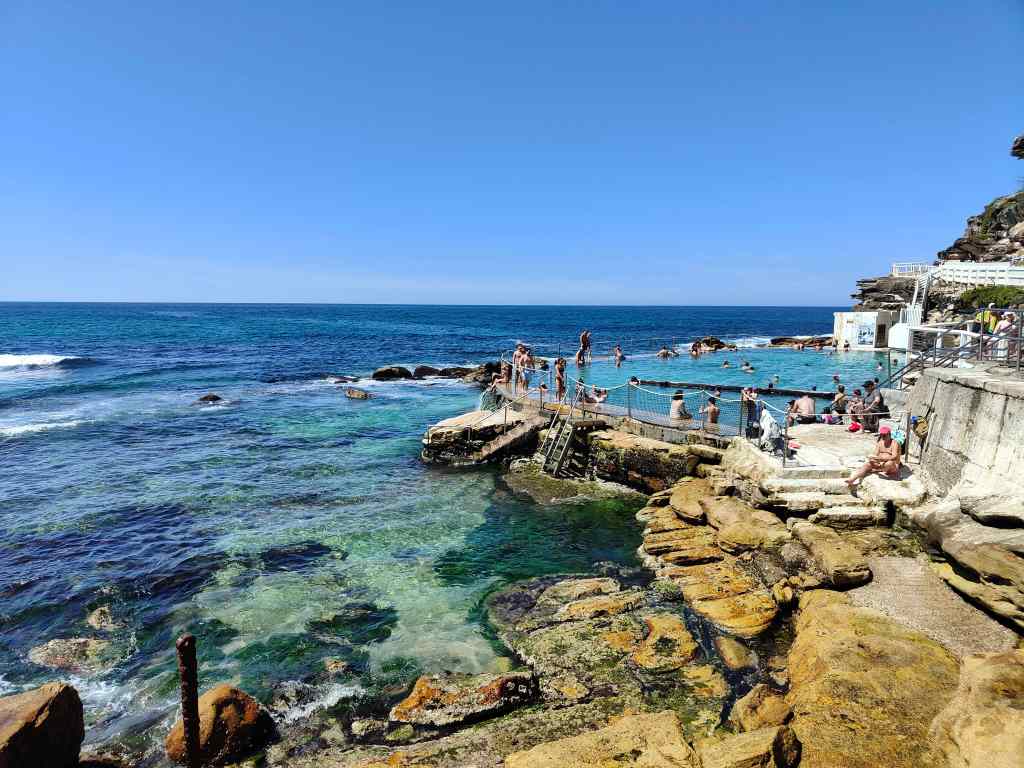
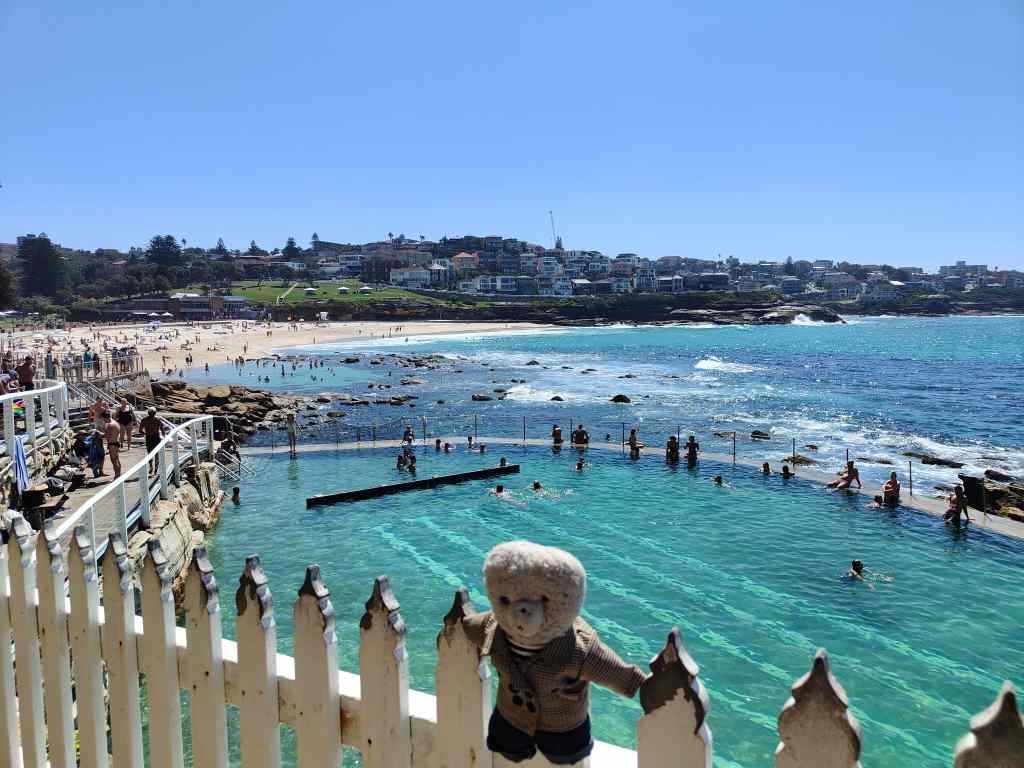
I particularly liked Bronte beach, which had a natural protected pool in the sea (the “Bogey Hole”) as well as its own artificial saltwater pool.

The “Bogey Hole” at Bronte Beach

I stopped for a dip – the sea was cool, but the late morning sun was hot, and by dipping in and out of the water I could maintain a comfortable body temperature.

Salt water basin at Bronte Beach

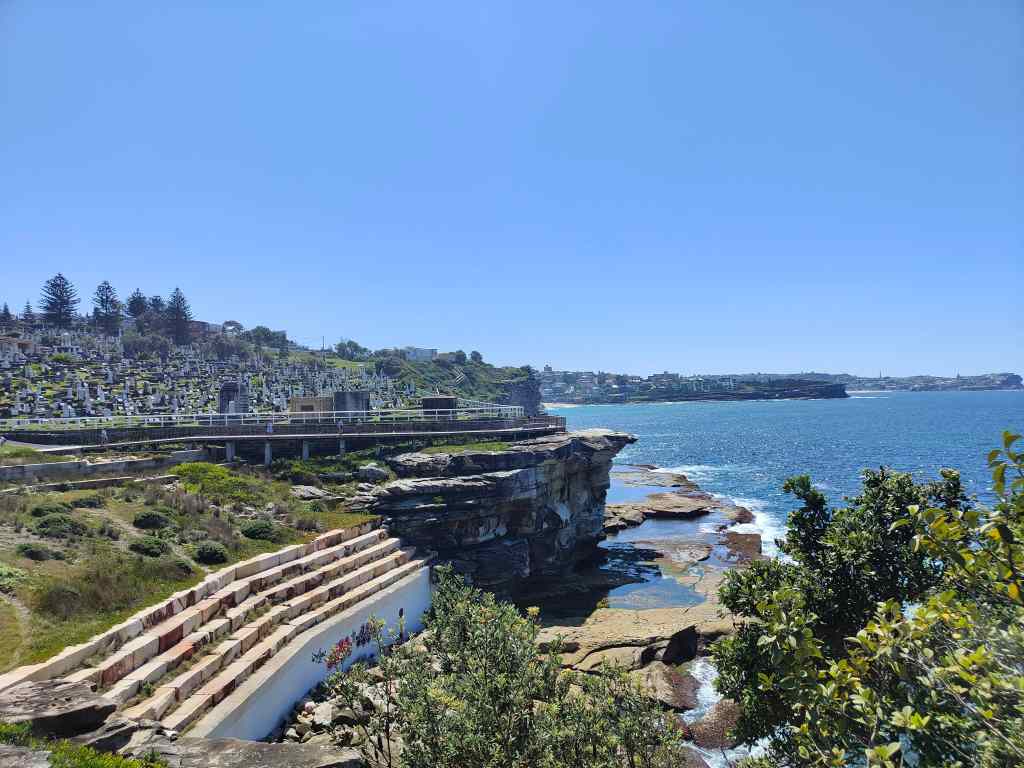
After an hour or so I showered and got dressed again to continue the coastal path. It passed by more beaches and then skirted the Waverley cemetery, where many famous Australians are buried.

The Bondi-Coogee Path skirts Waverley Cemetery

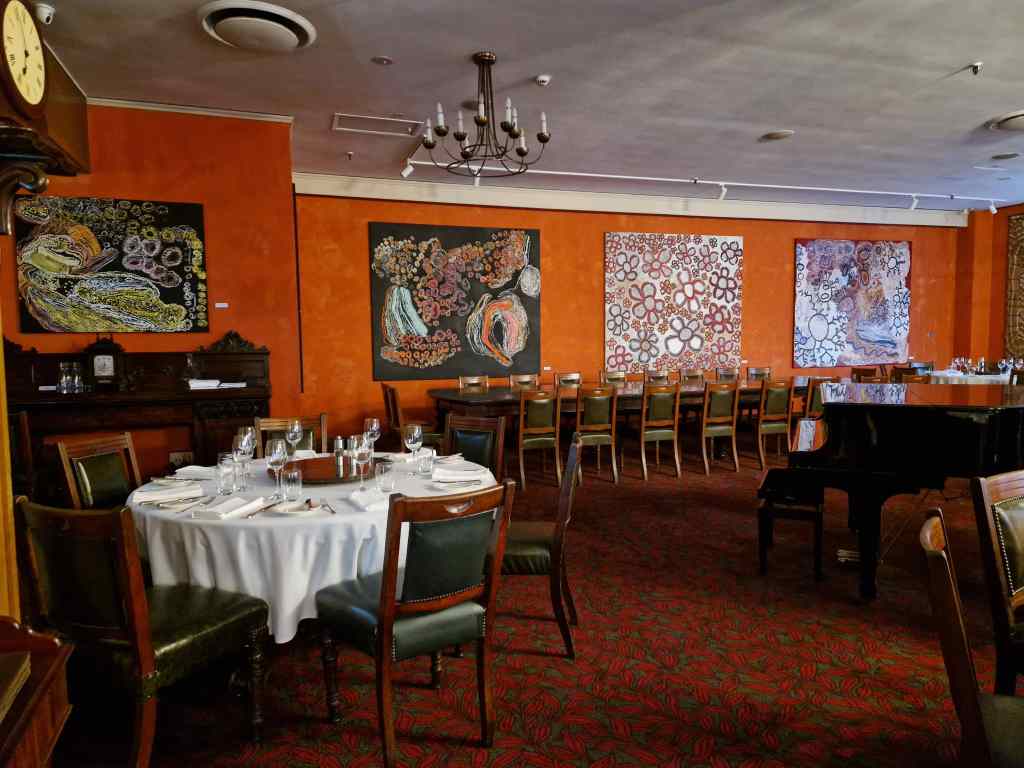
I finally arrived in Coogee in time for a late lunch of Australian mussels. The food, sun and sea air made me a bit sleepy, so I found a shady corner of beach and dozed off. When I woke up it was time to head home again. I spent the evening chilling in the refined ambience of the club I was staying in, the UUSC club – Australian cities have many such clubs, reflecting the cultural influence of Britain.

Dining Room at UUSC

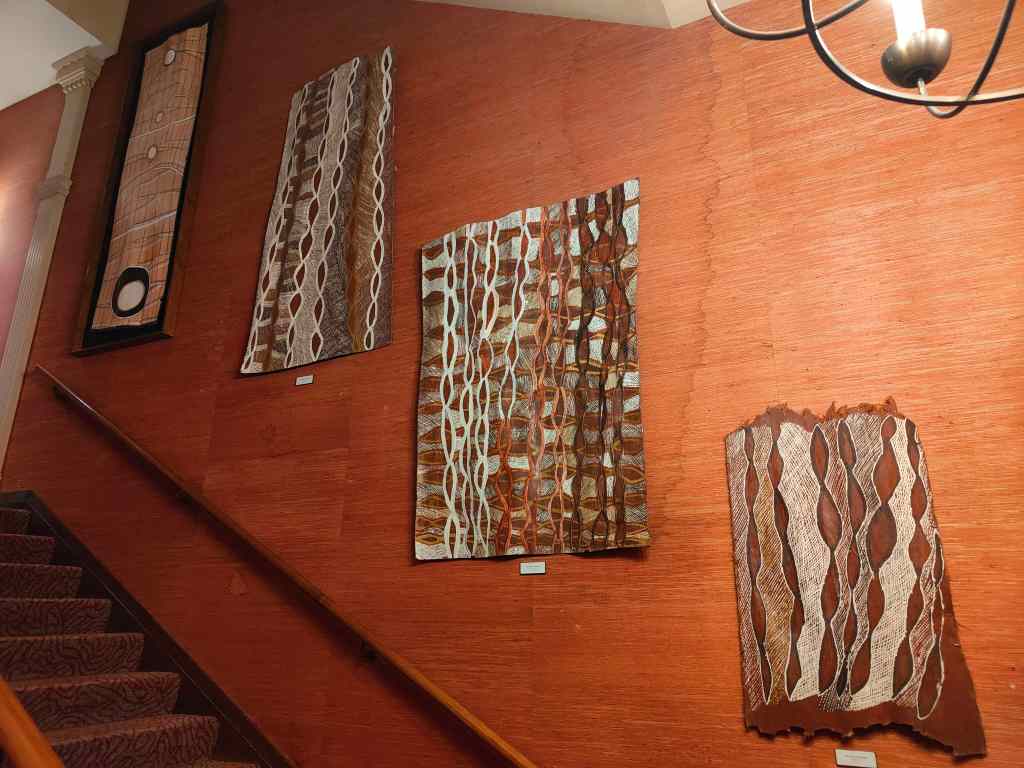
In addition to the usual elegant sitting rooms, dining rooms and bar, the UUSC had a small art collection that I admired with a glass of club wine in my paw.

Some of UUSC’s art collection

It had not been the busiest day’s travelling of my life, but I had enjoyed the slower pace and fresh sea air. I felt that I had recharged my batteries, ready for another day visiting Sydney tomorrow.

Previous Post: Sydney

Next Post: Indoors Sydney on a baking hot day

Sydney – the other side of the world

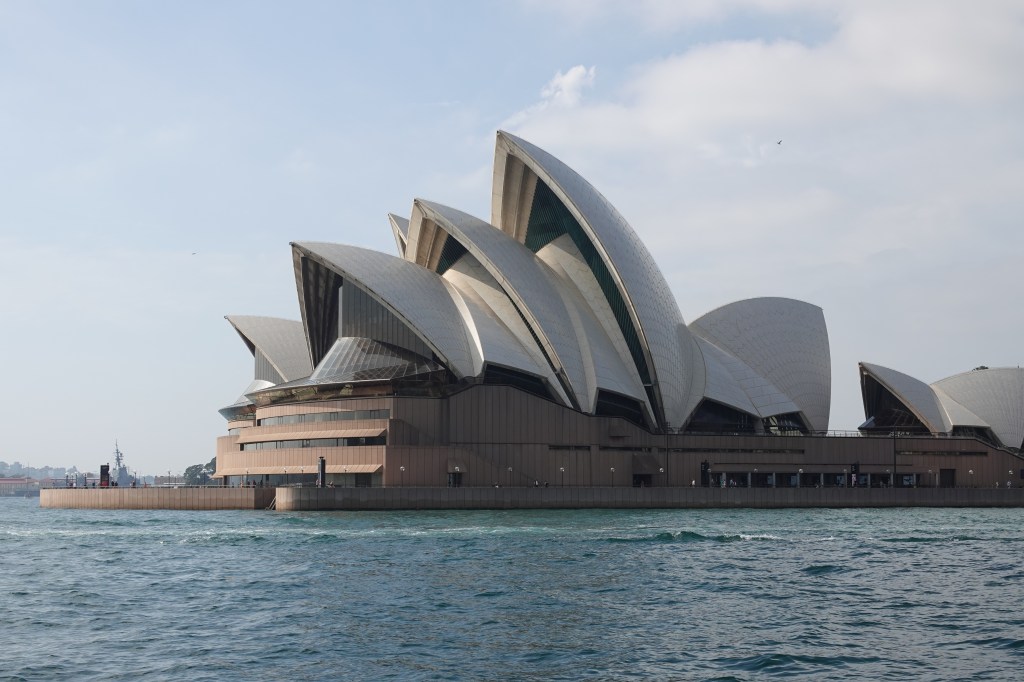
Sydney Opera House

Travel is a wonderful thing. From a cold (8°C) London evening I emerged very early in the morning, after 20 hours in a plane, to a sunny, 28°C Sydney in Australia. Immigration turned out to be surprisingly chaotic – I filled in a form on the plane, then queued up to be rejected by the automatic passport control (like 90% of my fellow passengers) and queued again for a passport check by a human. At each stage I was asked if I had a criminal record, which I thought a bit strange – surely you no longer need one to enter Australia? However, baggage collection, customs inspections (strict in Australia) and transport into town went more smoothly and I found my accommodation, the Union University and Schools Club (UUSC), quite easily. The club is located in a old building surrounded by the skyscrapers of Sydney’s CBD (central business district).
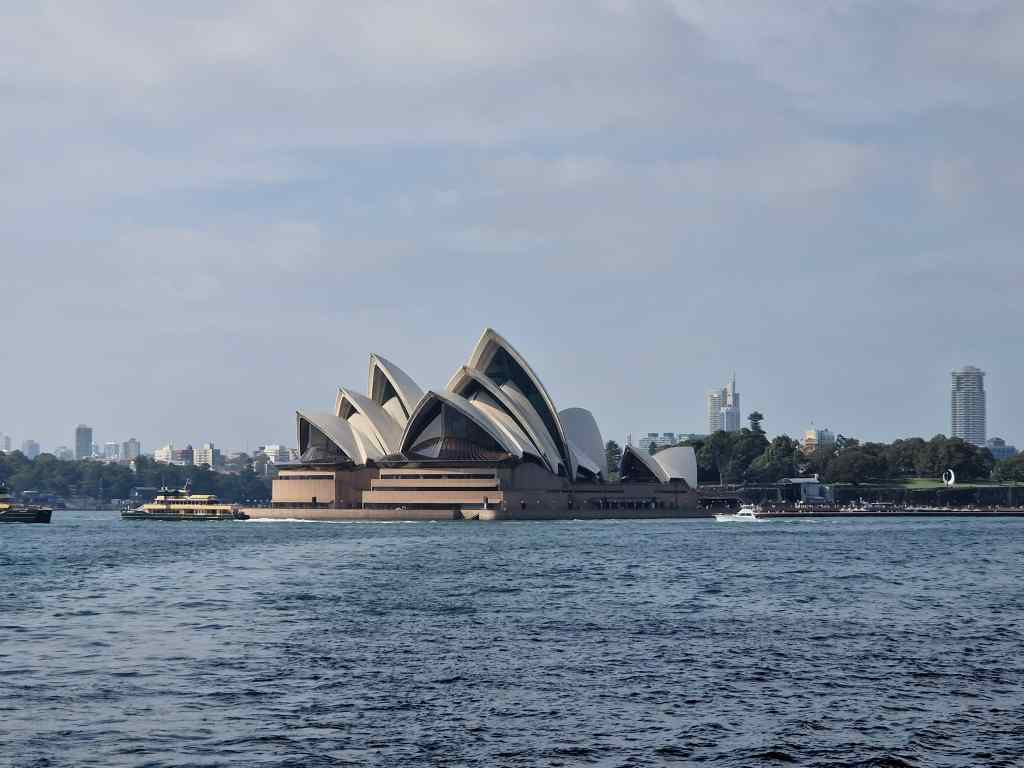
After a brief nap, I set off to explore. I devoted today to Sydney’s highlights, heading to the harbour at Circular Quay to take the boat across to Milsons Point. The short trip offered some great views of Sydney’s Iconic Opera House.

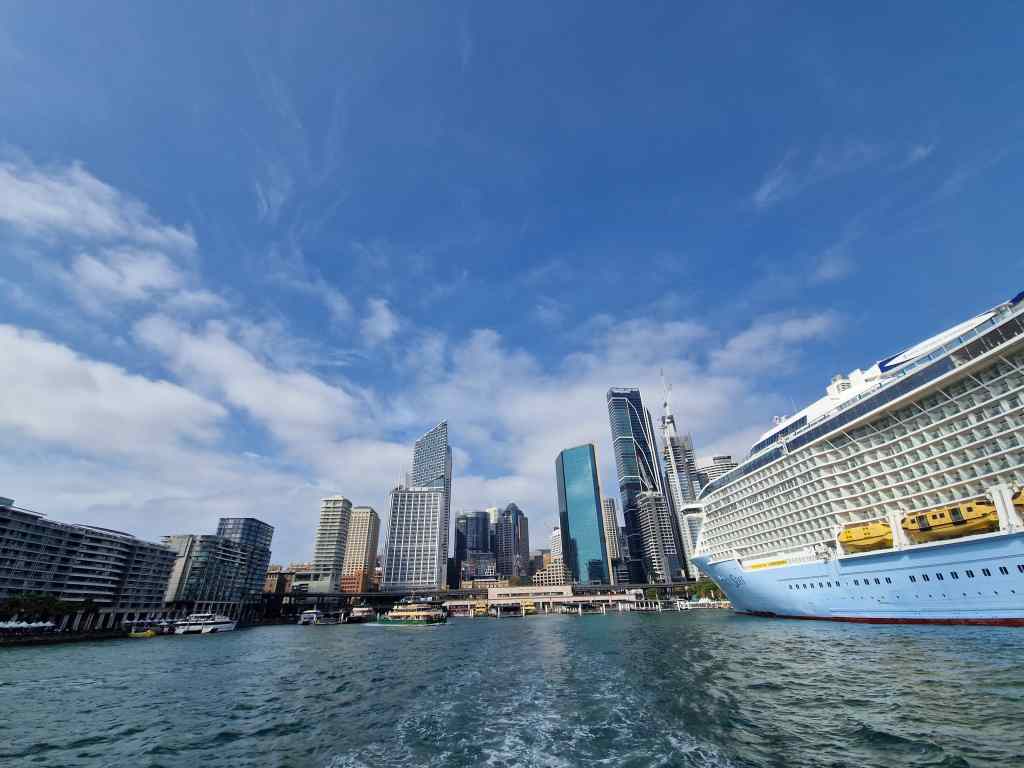
Sydney’s CBD from the ferry
Cruising past the Opera House

On arrival, the jetty offered one of the classic views of Sydney:

The Harbour Bridge from Milsons Point

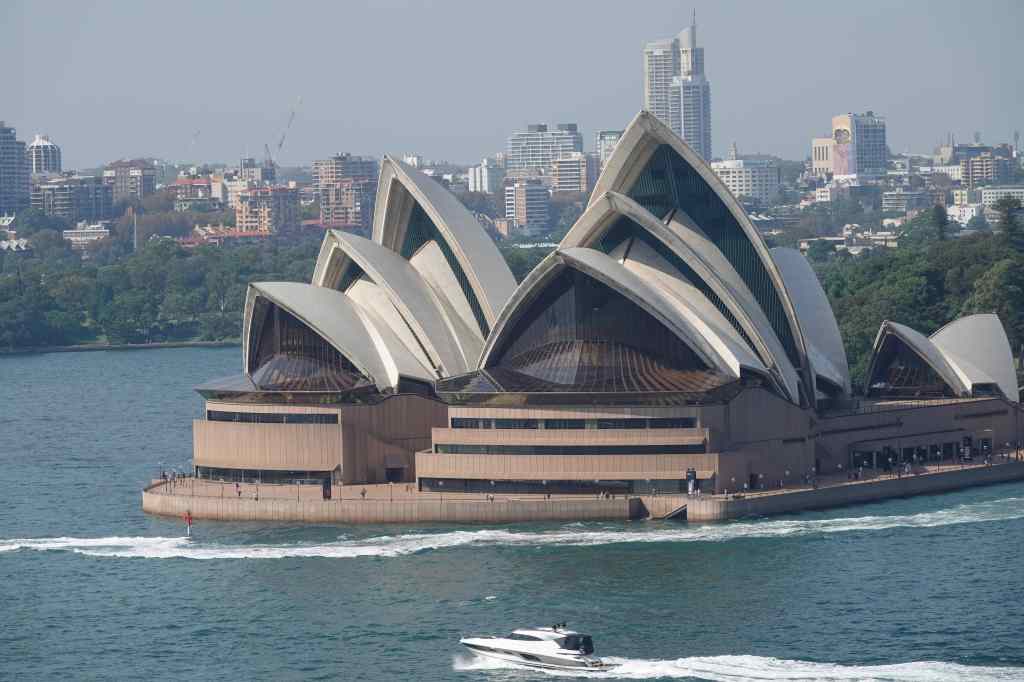
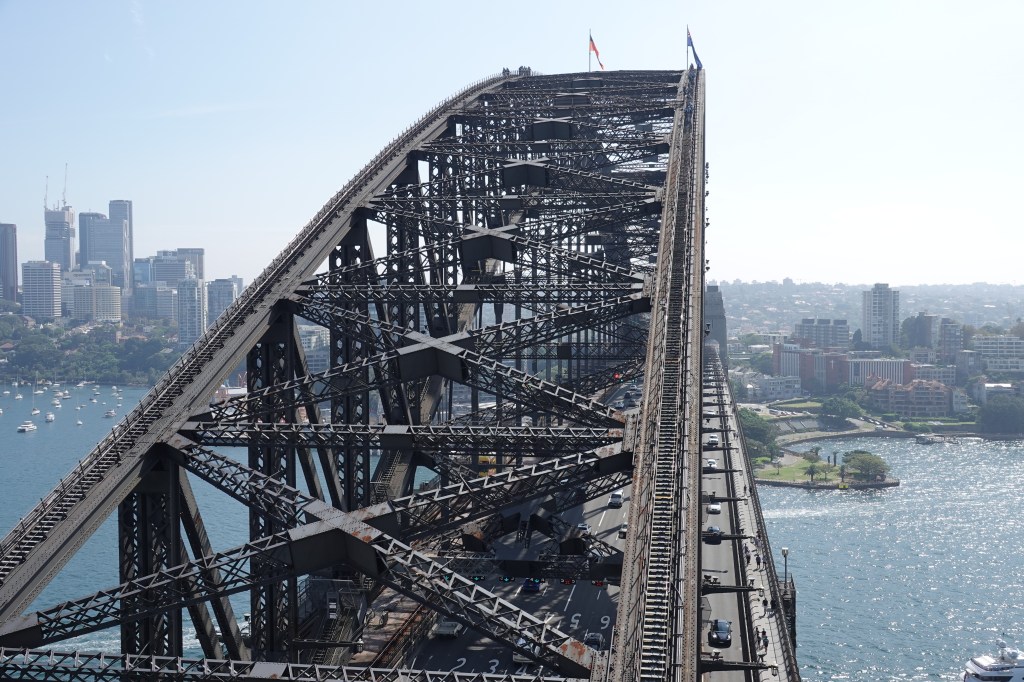
I took the lift up onto the bridge and started walking down the pedestrian path on the far left hand side back towards central Sydney. Nearing the other end, I reached one of the supporting towers or pylons where there was an interesting museum covering the history of the bridge’s construction over 1923 to 1931. On the top was a viewing platform with the best views yet.

Sydney Opera House taken from the Harbour Bridge

On top of the bridge’s steel arch I could see groups of tourists climbing up – the views must be even better right on the top, but the climb is apparently very expensive and not for the faint-hearted. As a small, light teddy bear I would be worried about being blown off.

Harbour Bridge Climbers

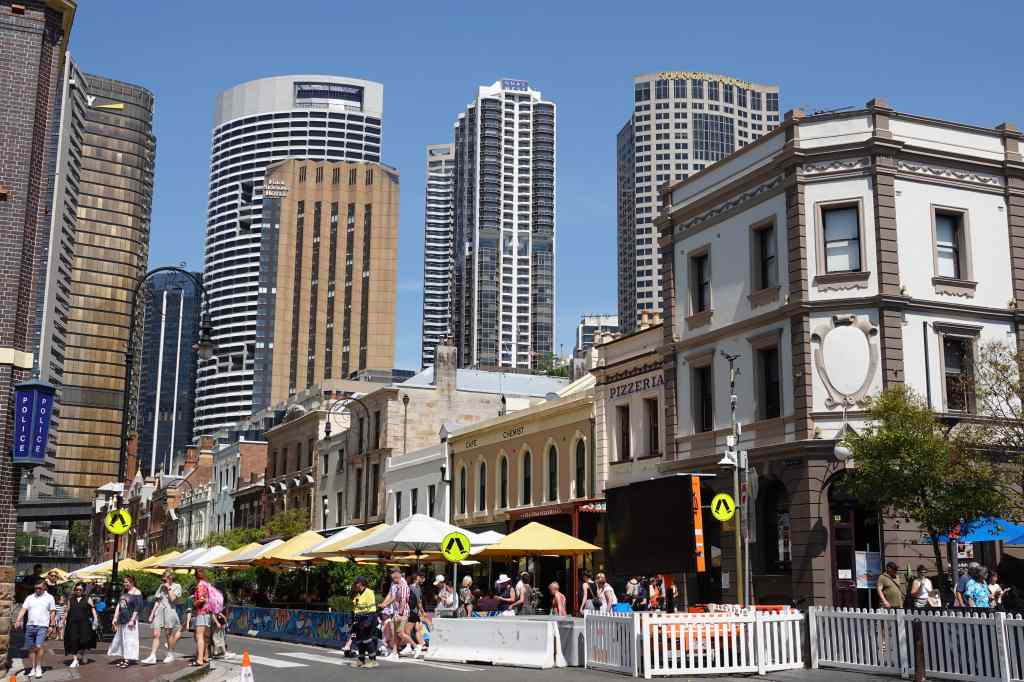
After enjoying a cool breeze on top of the pylon, I finished crossing the bridge and took a lift down to the historical Rocks area of Sydney. This is where the first Australian settlers made their homes, and some of the old buildings survive to this day (including Sydney’s oldest pubs). Today the Rocks is a tourist and arts centre, with a market, small shops, cafes and the Museum of Contemporary Art.

Street scene in the Rocks
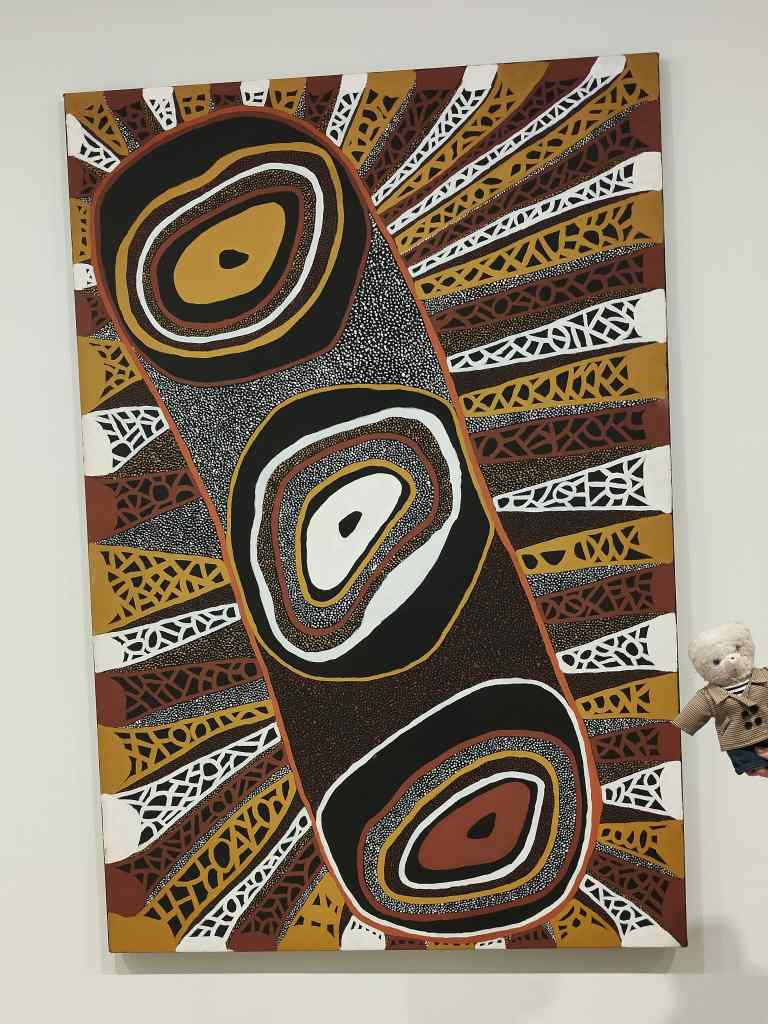
Aboriginal Art in the MCA, the Rocks
Harbour Bridge from the MCA Roof Terrace

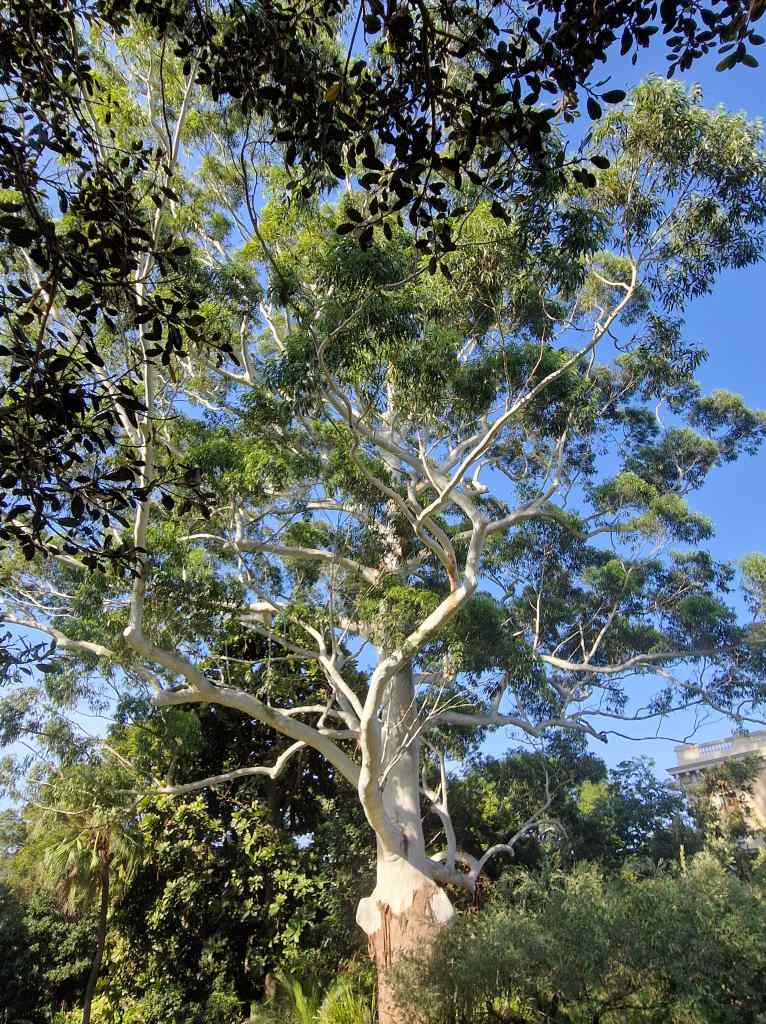
It was now early afternoon and the unaccustomed heat and 11-hour time difference with London was beginning to affect me – back home, it was 3am, which I simply could not get my head around. I headed back to my club for another snooze and to avoid the afternoon sun. As evening approached I set off again to visit the Botanical Gardens, which were a short walk away. They were packed with exotic plants which in Kew Gardens, near my home in London, would be in glasshouses, but which here thrived in the open.

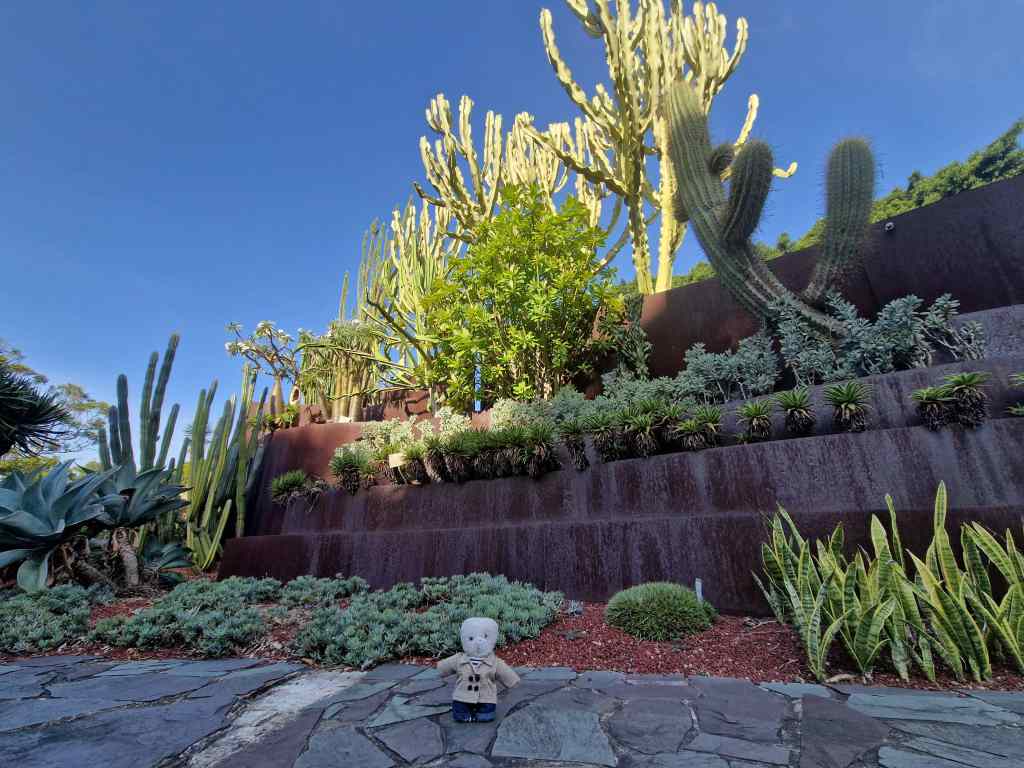
The Botanic Gardens, Sydney
Exotic Tree in Sydney Botanic Gardens

I left the gardens briefly to stroll down to Mrs McQuarrie’s Point, a peninsula which gives a magnificent view of the harbour, its busy boat traffic, the bridge and the Opera House.

The view from Mrs McQuarrie’s Point
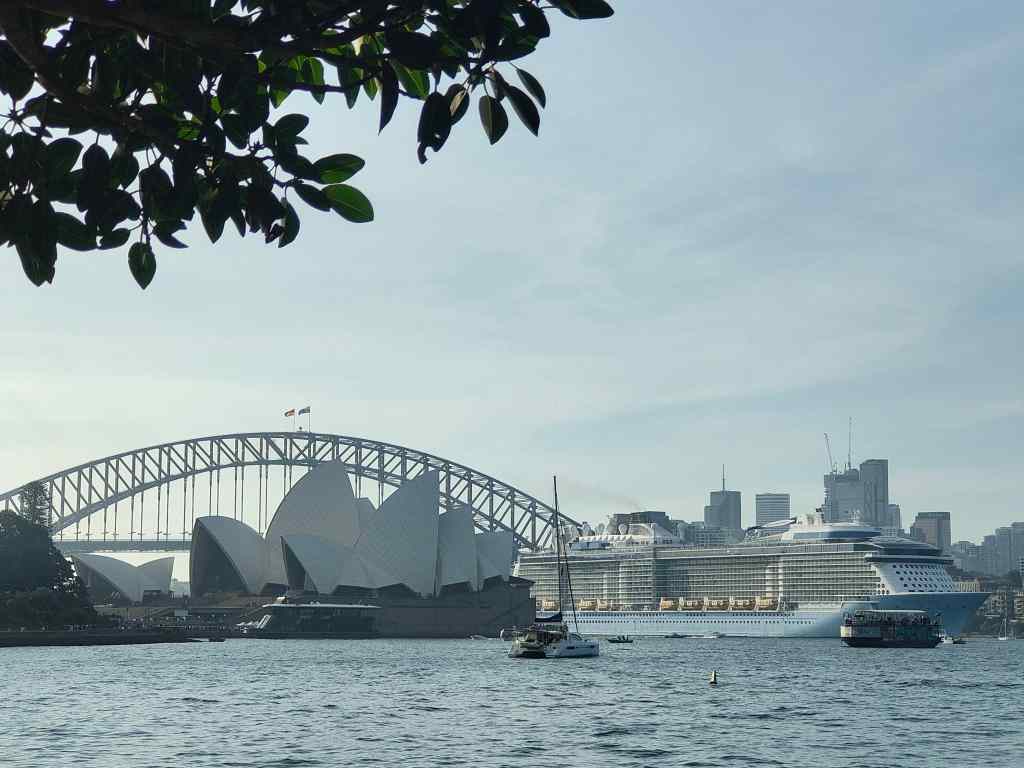
Taken from the Botanic Gardens – a huge cruise liner sails away

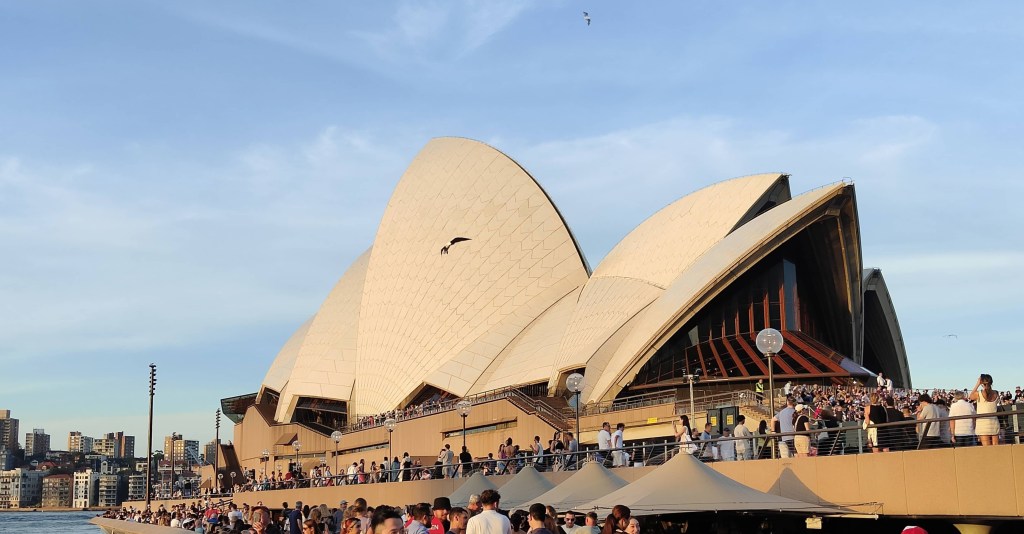
Another short stroll through the gardens took me to the Opera House itself, which on a sunny Friday evening had become a magnet for Sydney’s young population to come to enjoy a beer whilst enjoying one of the world’s most famous views.

Friday evening – Party Time at the Opera Bar

The Opera House has a highly-rated restaurant, which was fully booked for that evening, so instead I headed back into the CBD and had an excellent dinner at a place called Morena. It was good to unwind after a first day packed with iconic sights. After dinner, the heat and the jet lag finally caught up with me and once back in the UUCS club I collapsed onto my bed and fell fast asleep.

Next Post: From Bondi Beach to Coogee

Kew Gardens through the seasons

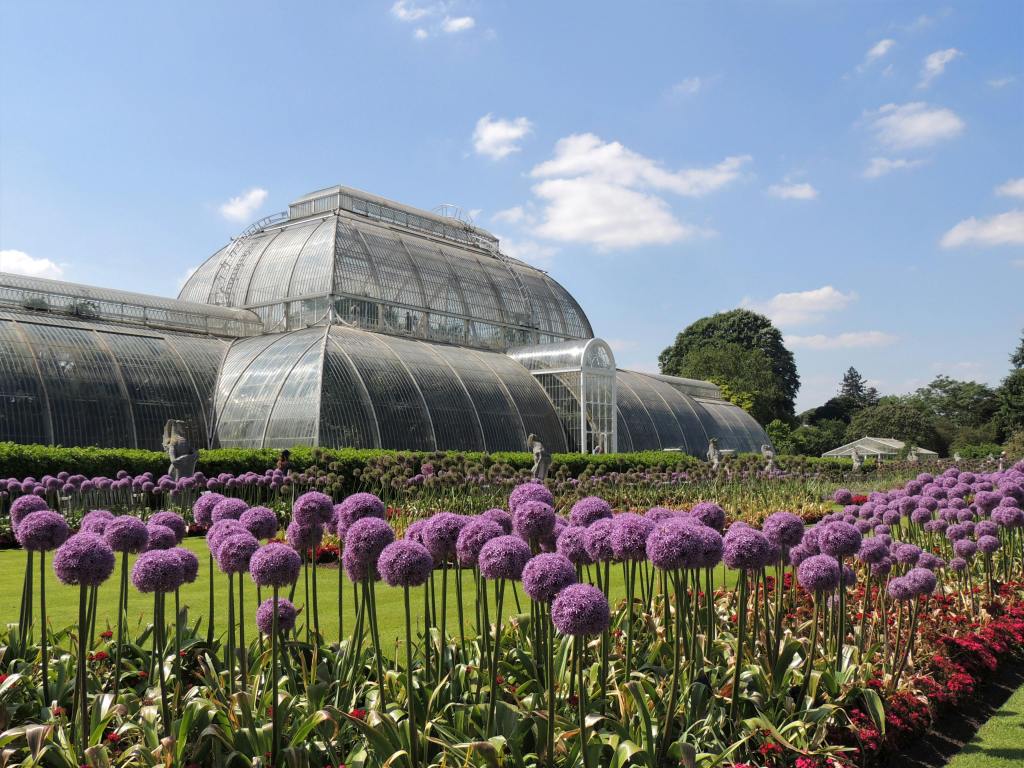
Kew’s Palm House (courtesy Patrick Nizan, Pexels)

Today’s post is devoted to Kew Gardens, which is one of the world’s most important botanical gardens, and which holds the record for the biggest collection of plant species held on a single site (16,900). The origins of Kew go back to 1759, when Princess Augusta, mother of King George III, founded a nine-acre botanic garden. Some of the first exotic plants came from samples sent back in 1768 by the great Botanist Joseph Banks from Captain Cook’s voyages of exploration; a few years later Francis Masson, Kew’s first plant collector, added thousands of plants from South Africa. In 1840 Kew Gardens were transferred from the crown to the government, and were opened to the public. Over the years, various hot houses and other buildings were added, including a herbarium which now contains over seven million species of preserved and catalogued plants. Today Kew Gardens is a major centre for scientific research and conservation, a popular tourist attraction, and a UNESCO world heritage site. Luckily for me, it is a twenty minute stroll away from Richmond.

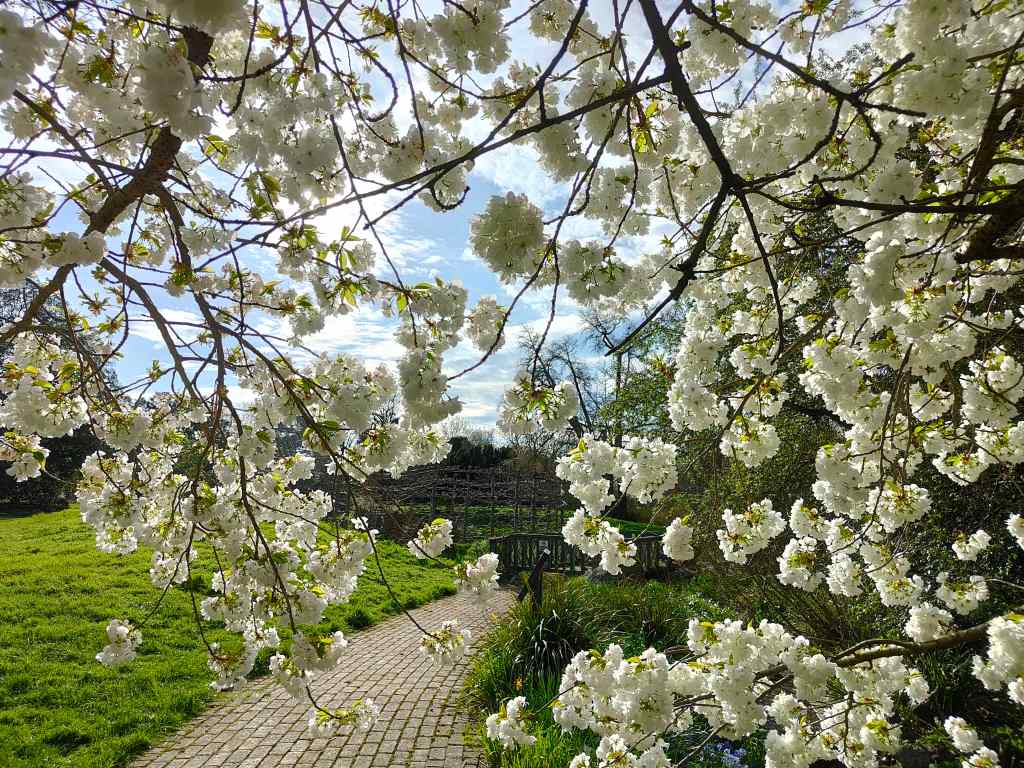
There are different things to see in Kew for every season of the year. I will start with one of the highlights of the year – spring and fruit blossom. There is an amazing cherry blossom display, which can rival any sakura in Japan, but without the crowds.

Spring Cherry Blossom at Kew Gardens

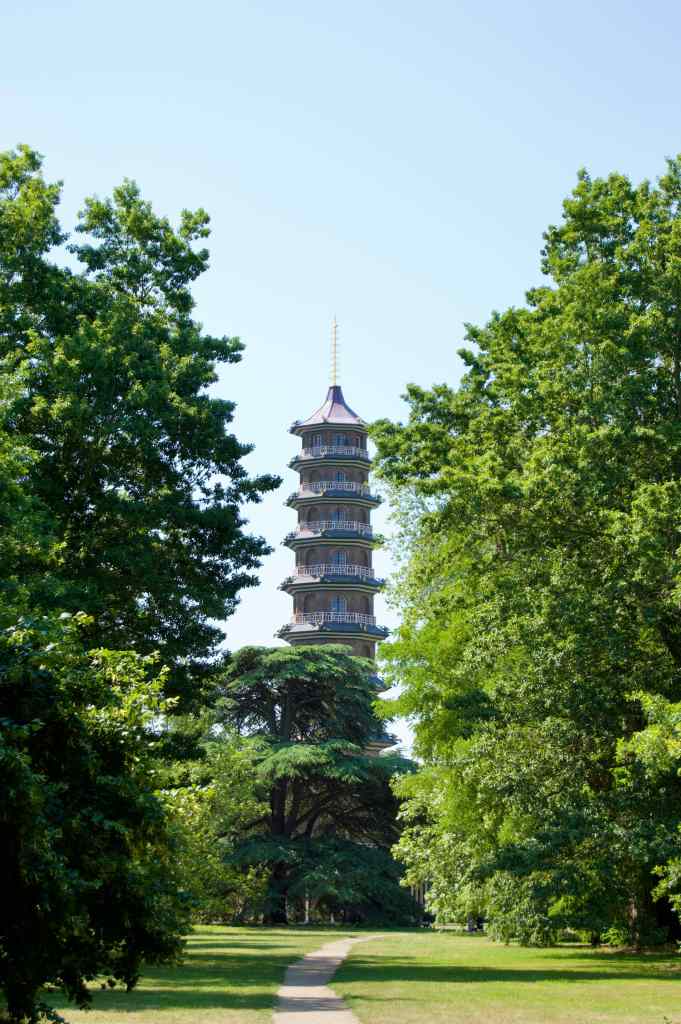
After the spring flowers, summer at Kew is a time to explore the long avenues with the fine views – like this avenue leading up to the Japanese pagoda

Kew Pagoda (courtesy Marian Havenga, Pexels)

….or to check out places like the Japanese garden….

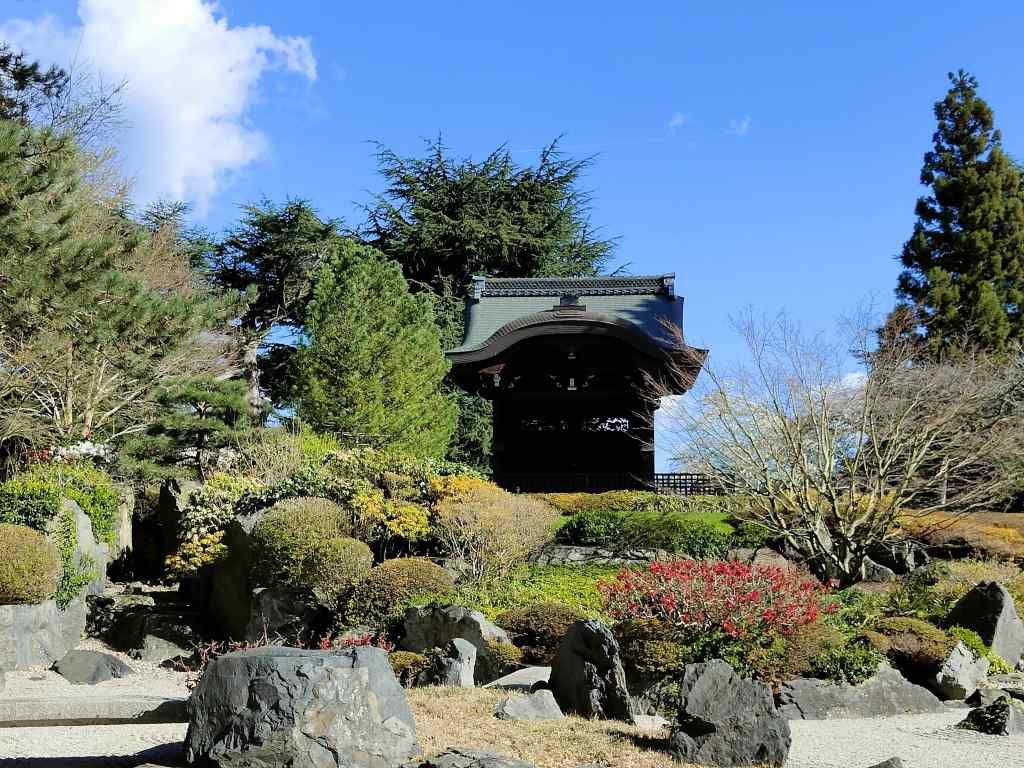
Japanese Garden at Kew

….or the alpine garden……..

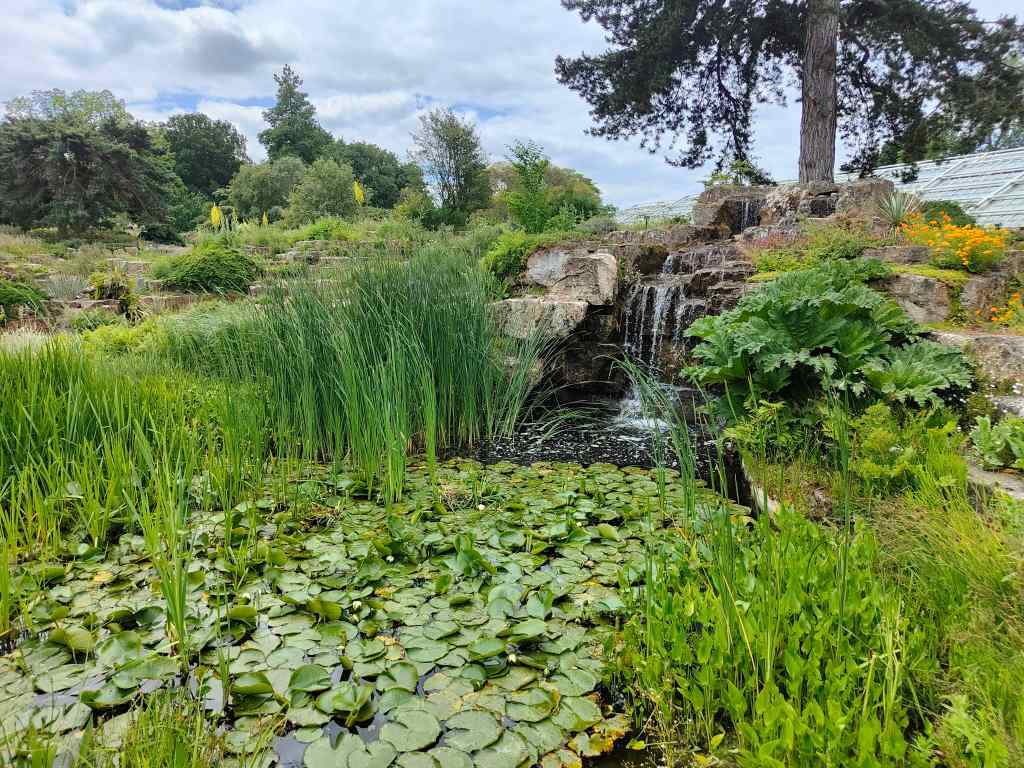
Alpine Garden at Kew

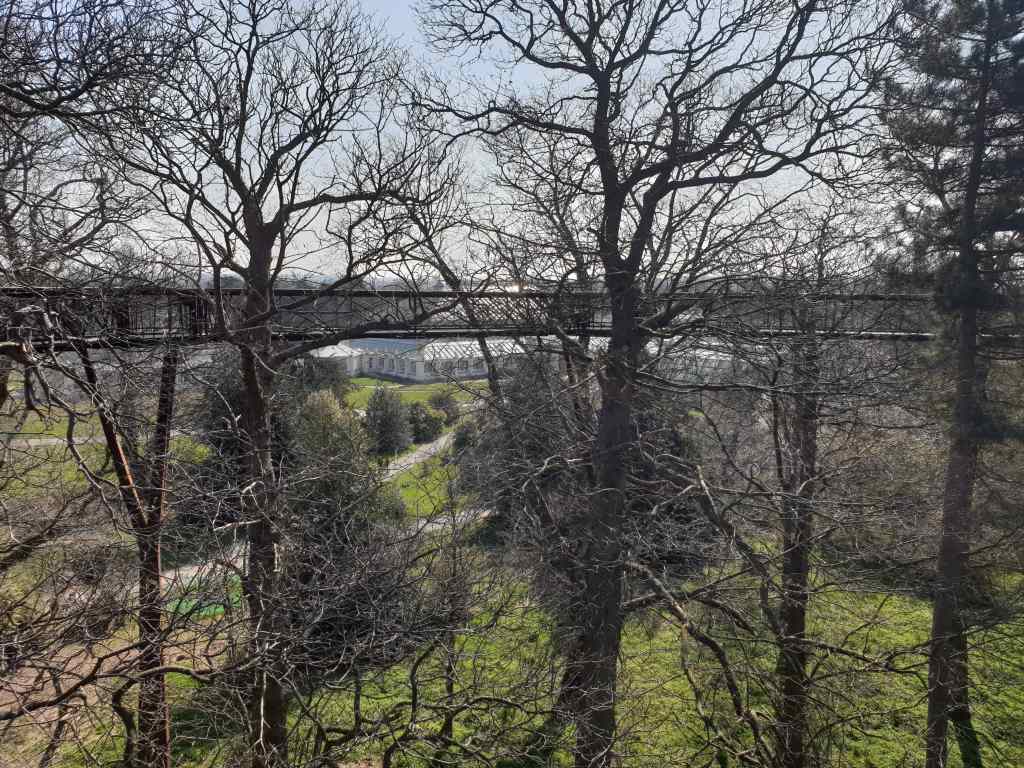
Autumn is the best time for the tree top walkway, one of Kew’s more recently introduced features

Kew’s Tree Top Walkway in Autumn

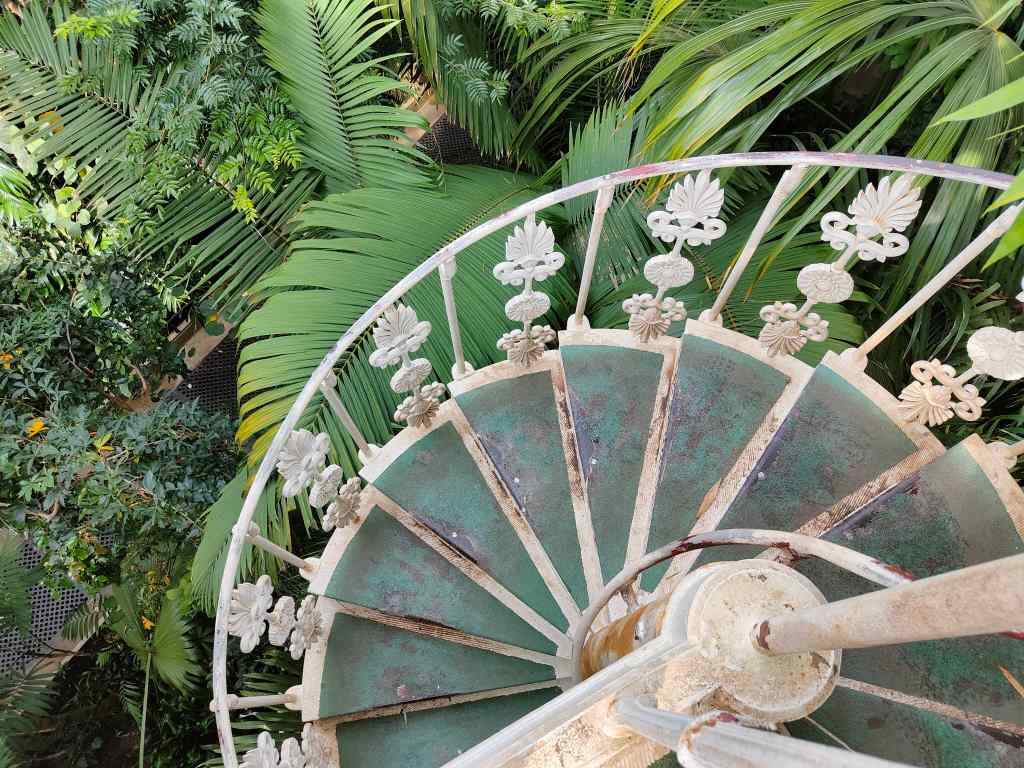
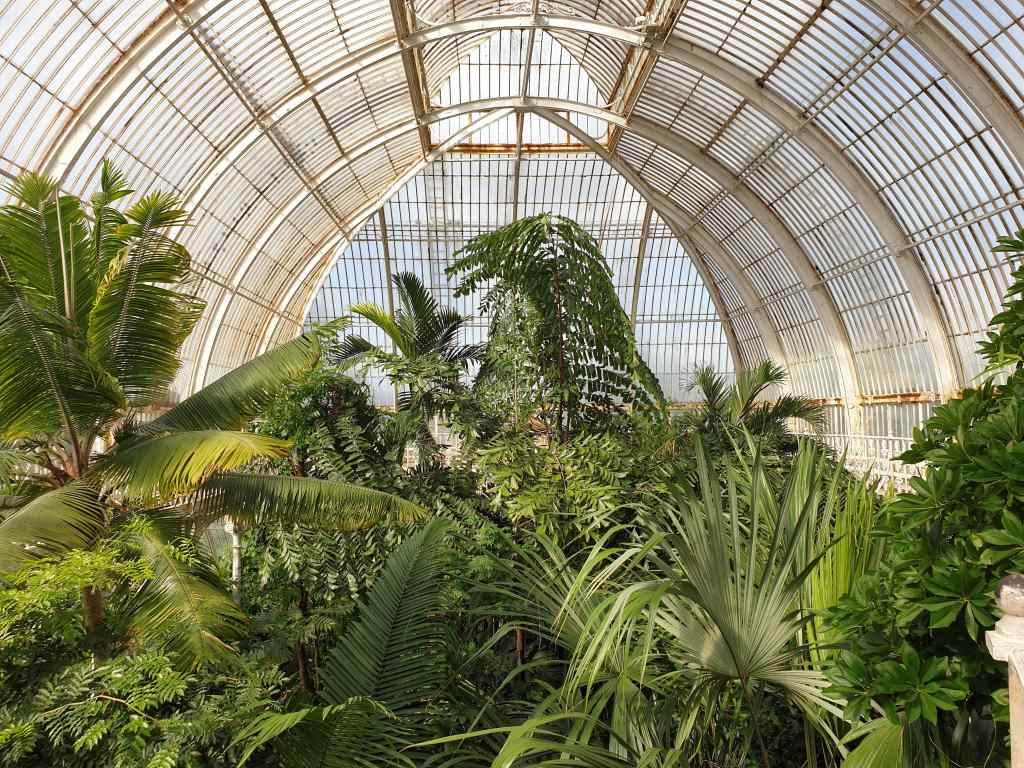
Finally, winter is the time to visit Kew’s hothouses. The largest is the Palm House, built in 1848. I particularly like some of the unusual perspectives you get when you climb the stairs to the gallery at the top of the Palm House.

Striking views in Kew’s Palm House

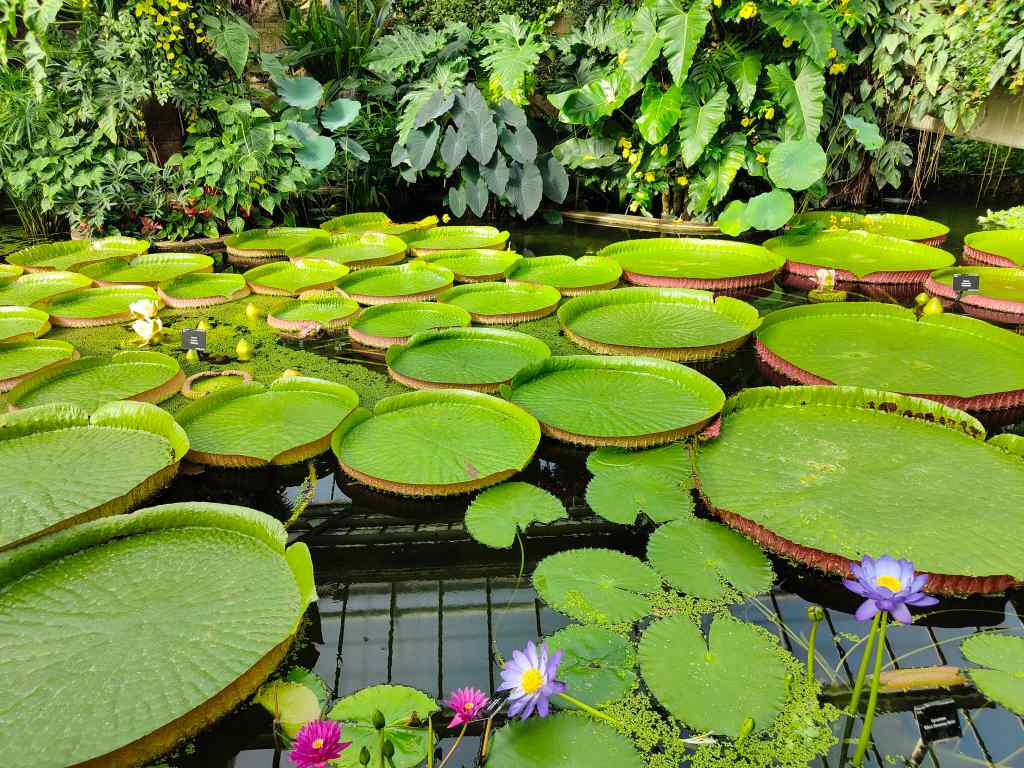
Probably the most interesting hothouse at Kew is the Princess of Wales Conservatory, which houses cacti, giant water lillies, ferns and orchids in areas that range from arid to wet, and from temperate to tropical.

Giant Lillies at the Princess of Wales Conservatory

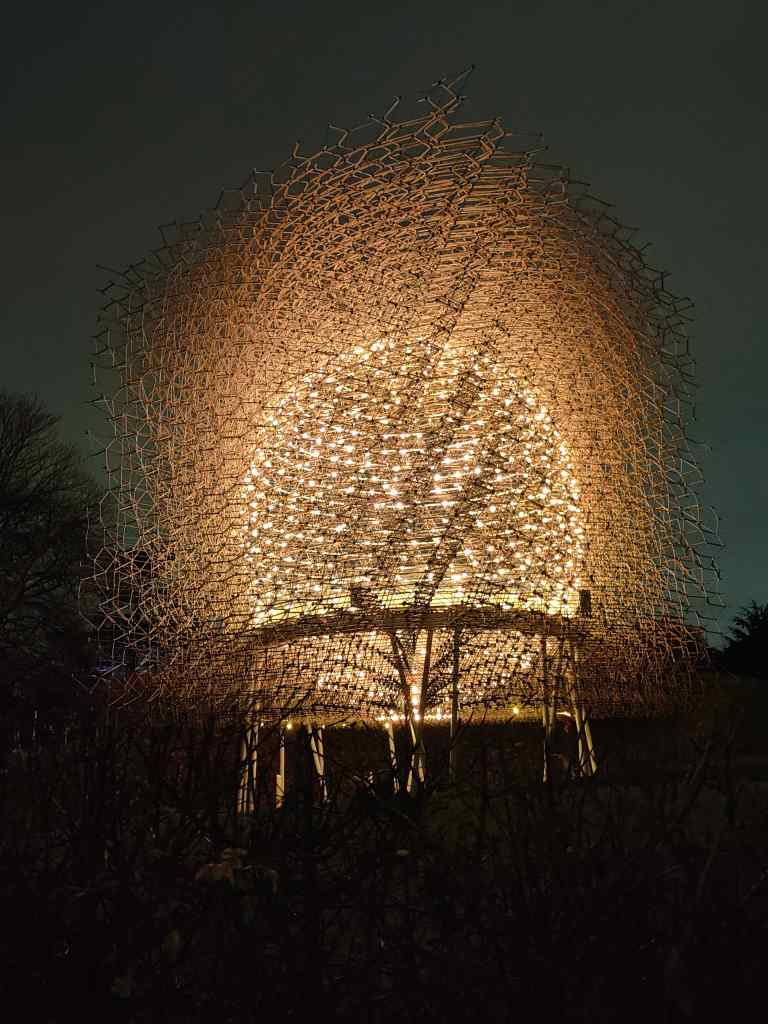
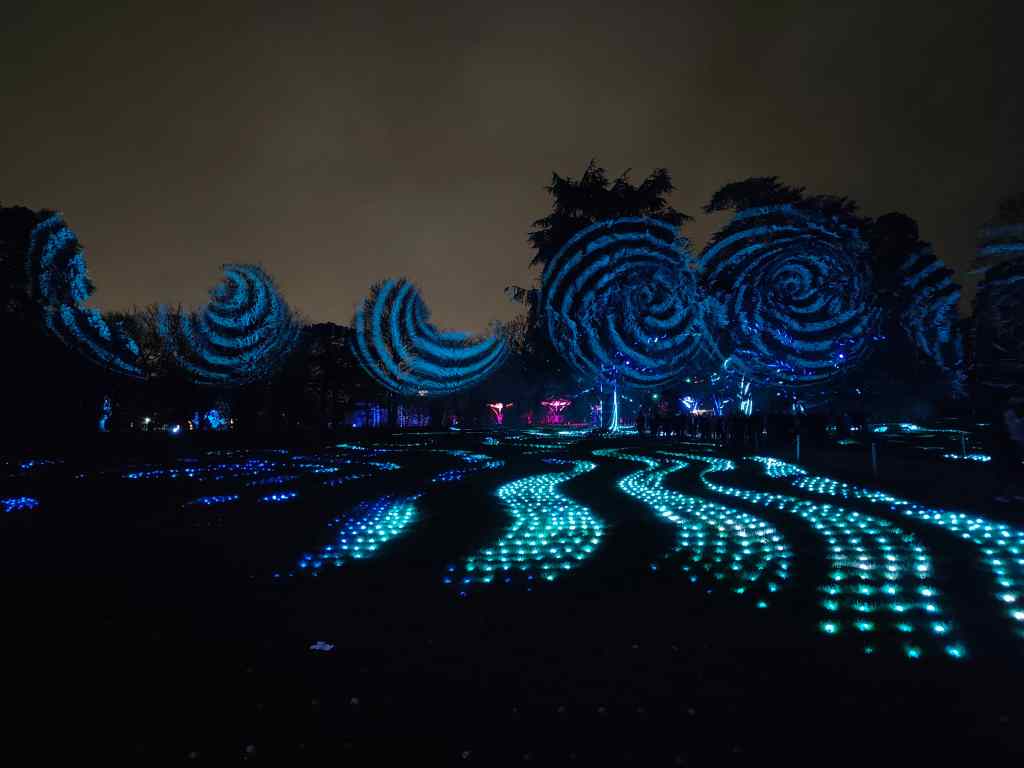
Winter is also the time of a Kew at Christmas, where you can walk a fixed path through the gardens at night to see some light displays – some of which are really striking

The Hive, lit up at night for Christmas at Kew
Light display, Christmas at Kew

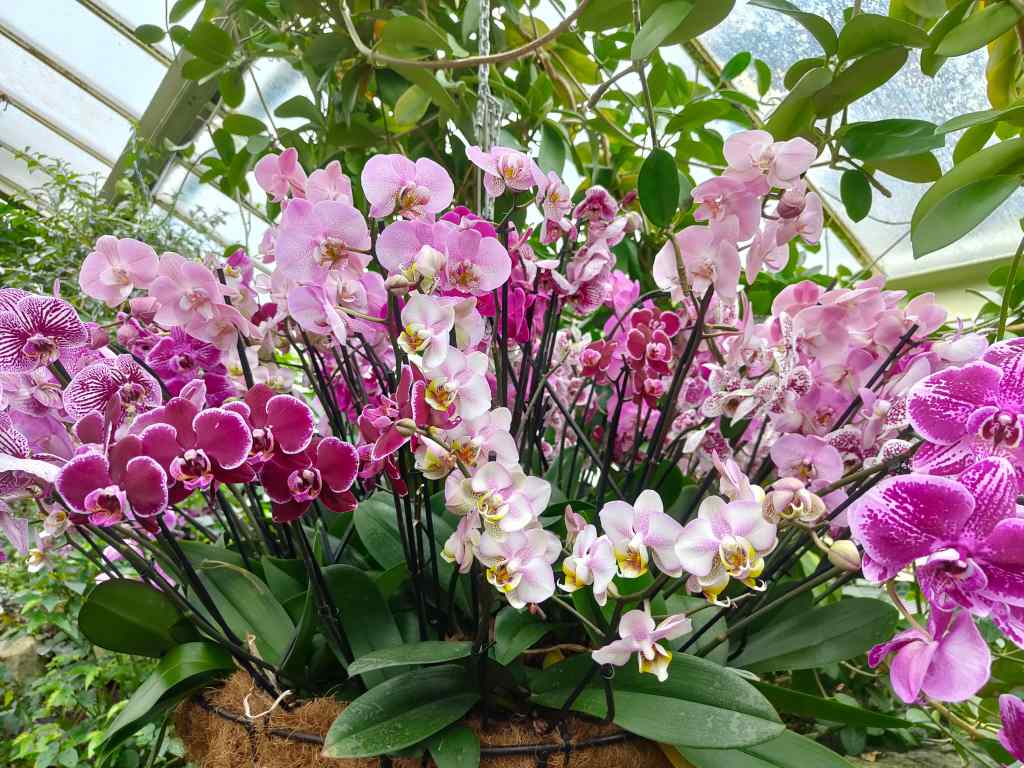
Finally winter also sees Kew’s Orchid festival, with specatuclar displays of thousands of orchids.

Kew Orchid festival (February)

Previous Post: From Richmond to Twickenham

From Richmond to Twickenham – Ham House and Eel Pie Island

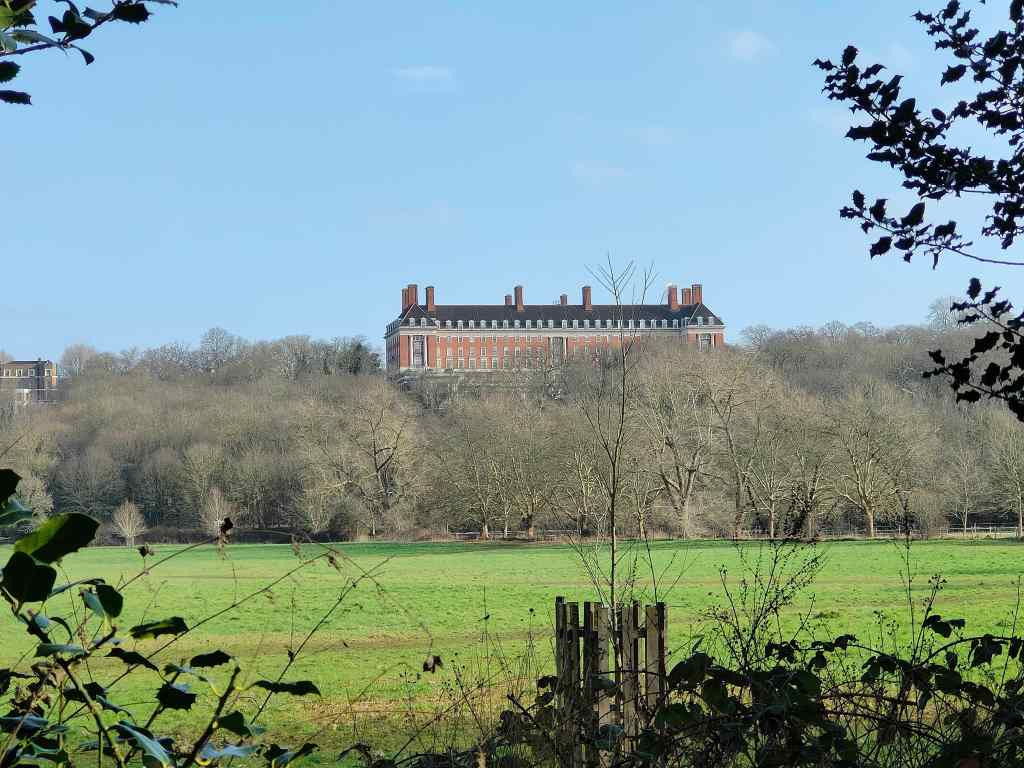
Today’s post is devoted to the stretch of the river Thames between Richmond and Twickenham. As you leave Richmond along the Thames tow path, there is a fine view across a lush green meadow to Richmond Hill, with the Star and Garter Hotel (covered in my previous post) sitting on top.

The Star and Garter Hotel sitting on top of Richmond Hill
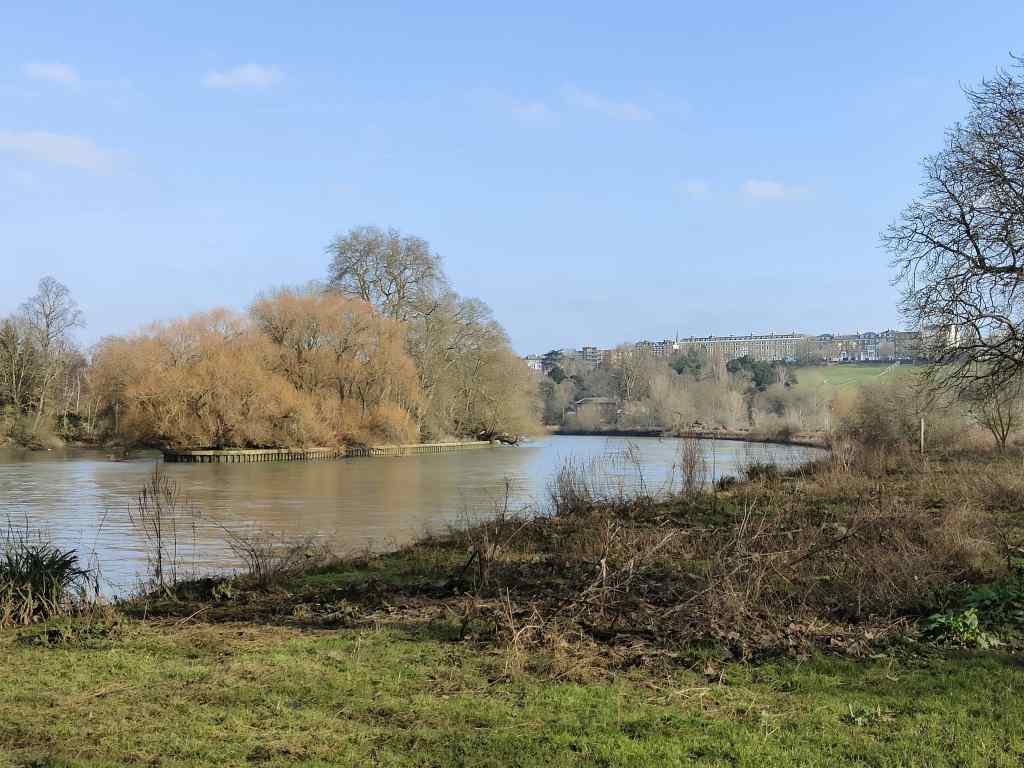
View of the Thames back towards Richmond Hill

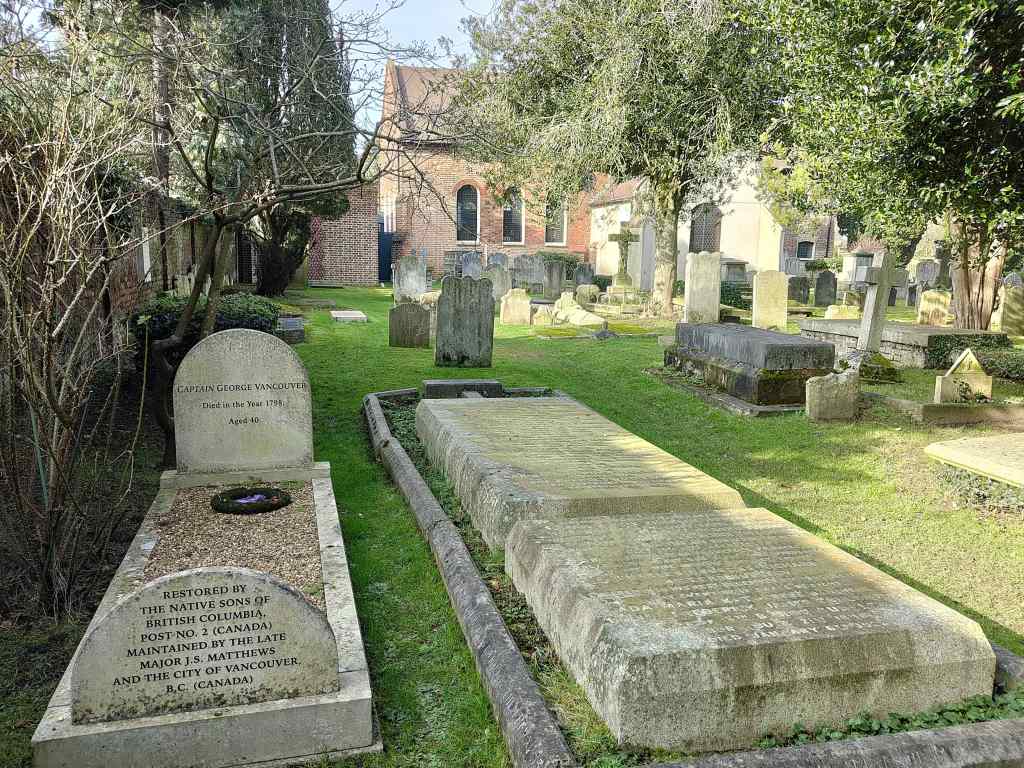
The tow path passes by the pretty little town of Petersham, whose little St Peter’s Church houses the grave of George Vancouver, the 18th century explorer who gave his name to the Canadian west coast city.

Vancouver’s grave in Petersham

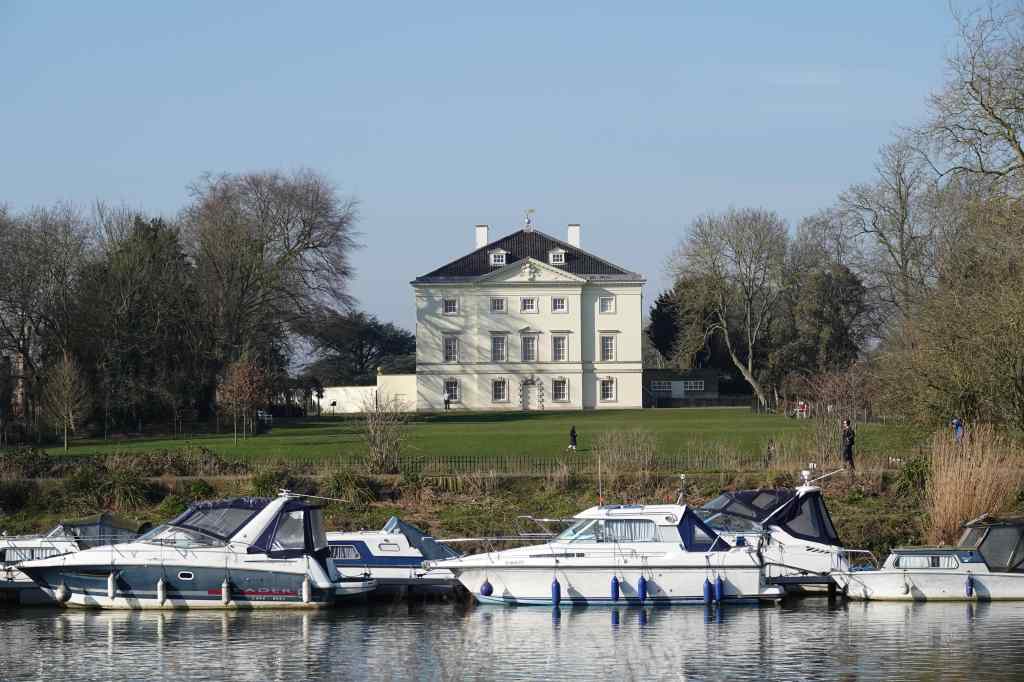
A little further along the river, on the Twickenham side, is Marble Hill House, built in the style of an Italian Palladian villa over 1724-1729 for Henrietta Howard, the mistress of King George II. Henrietta was an intelligent and charming woman, and her house became a centre for intellectual and political debate, with prominent visitors such as Jonathan Swift, Horace Walpole and Alexander Pope.

Marble Hill House

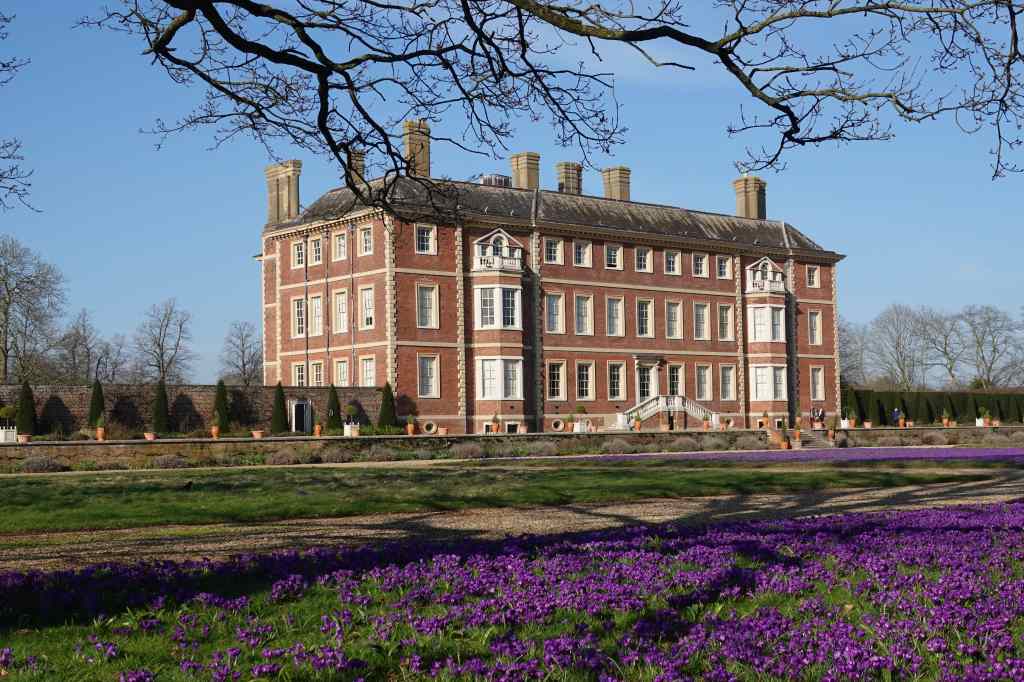
Continuing on along the Thames you reach Ham House, a magnificent Tudor mansion, first built in 1610 in the reign of Queen Elisabeth I and later expanded in the 1670s. The house became of the ancestral home of the Dysarts, a noble family periodically close to the royal family. In 1935, the ninth Earl of Dysart gave Ham House to the National Trust, and it remains in their care to this day.

Ham House, seen from the rear
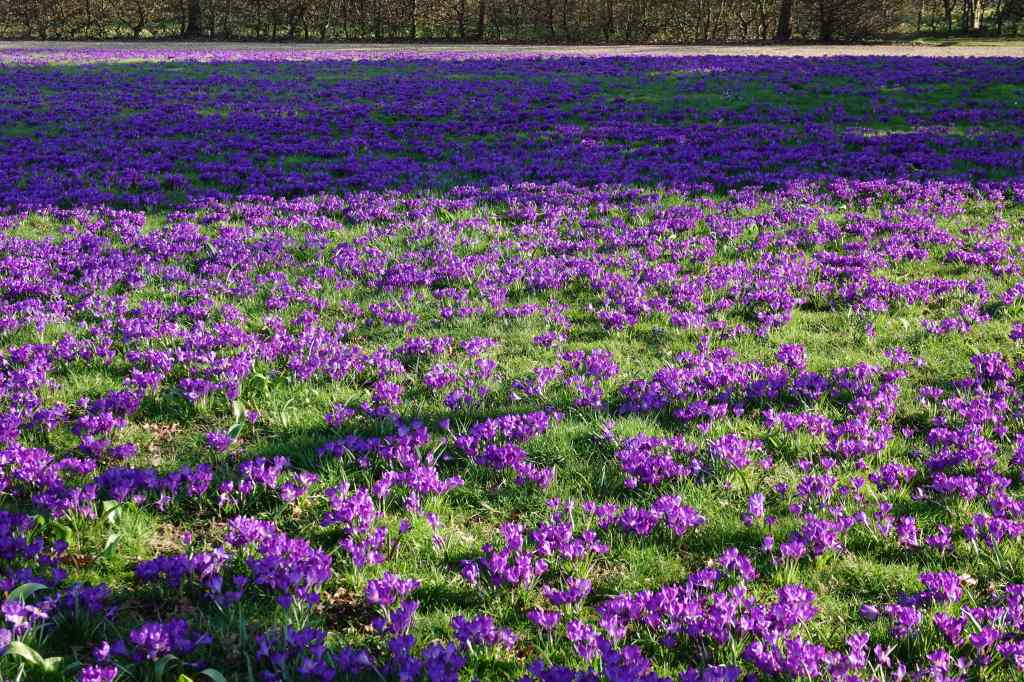
Crocuses in Ham House Garden
An interior room at Ham House
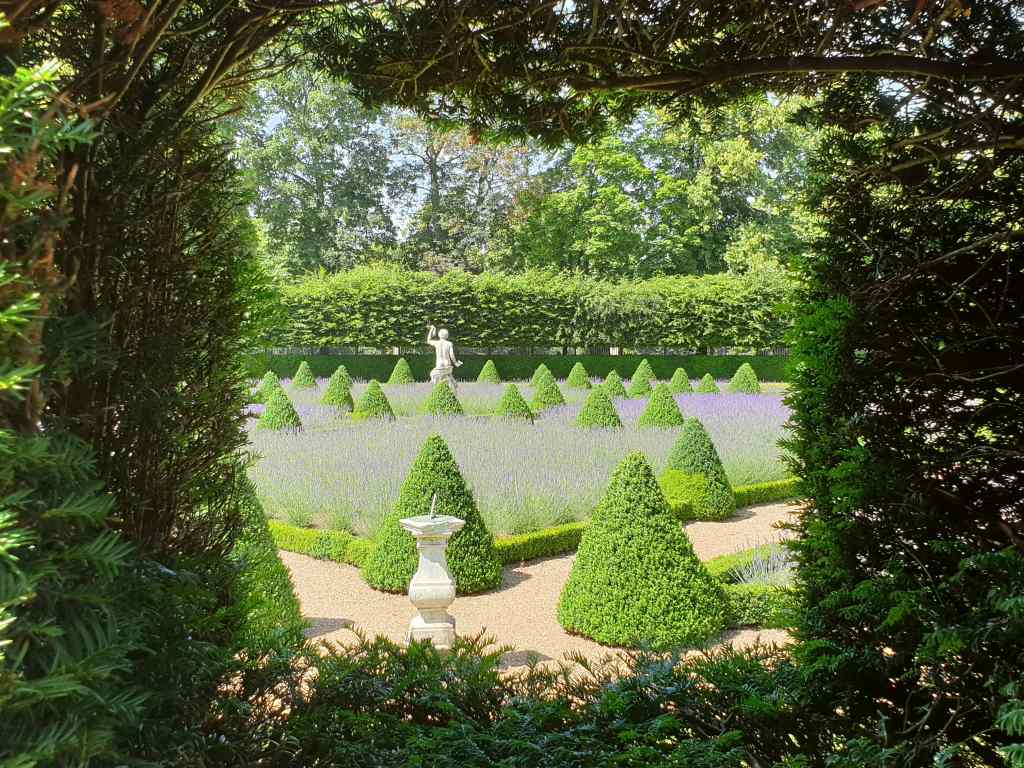
Ham House’s Lavender Garden

On the river near Ham House is Hammerton’s Ferry. This was established in 1908 by the local resident Walter Hammerton, after a 1902 Act of Parliament gave the public access to the tow path running past Ham House. However, Hammerton’s right to provide the ferry service was challenged in court by the then Lord Dysart, who owned a competing ferry service further downriver. The case eventually ended up in the House of Lords, and was won by Hammerton, who continued to operate the service until 1947.
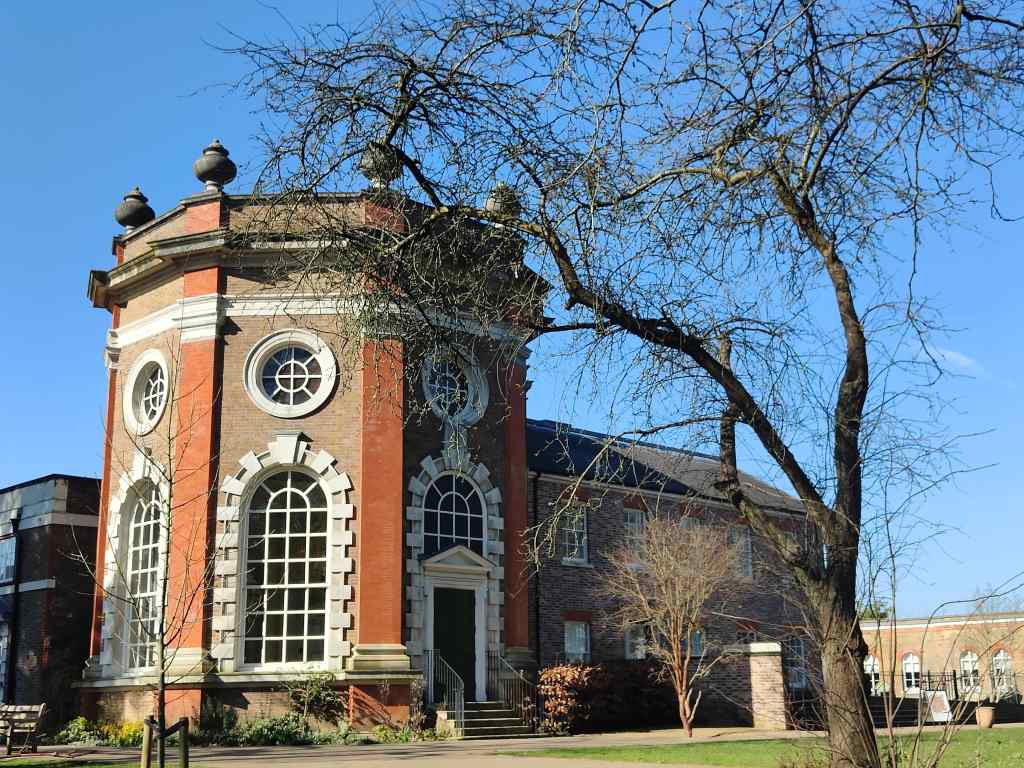
The ferry takes you over the river to Twickenham, where first you bump into Orleans House, a palladian villa built in 1730 which was later named after its most famous owner – Louis-Philippe, Duke of Orleans, who lived here in exile before returning to France to become king.

Orleans House, Twickenham

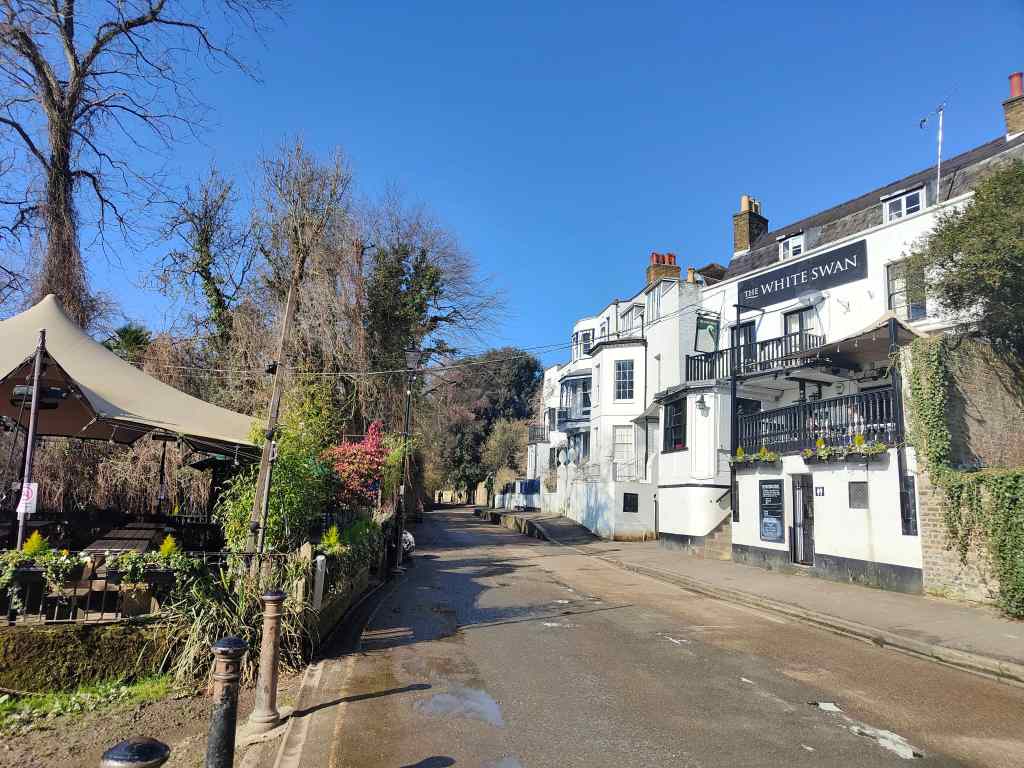
The road continues along the river past the popular White Swan pub…

The White Swan pub at Twickenham

… and then arrives at York House, a mansion first built in 1630. Over its nearly four hundred years existence, it has had many noteworthy owners – including Count Philippe of Paris (a descendant of Louis Philippe and pretender to the French throne) and the Indian industrialist Sir Ratan Tata. In 1923 the house was bought by the local council and turned into offices, and to this day it remains the headquarters of the London Borough of Richmond on Thames. The inside is not open to visitors, but its pretty gardens are, with this striking water feature.

York House Gardens in Twickenham

After York House you reach Twickenham riverside, a popular place on summer evenings for drinkers in the local pubs or rowers and paddleboarders out on the River Thames.

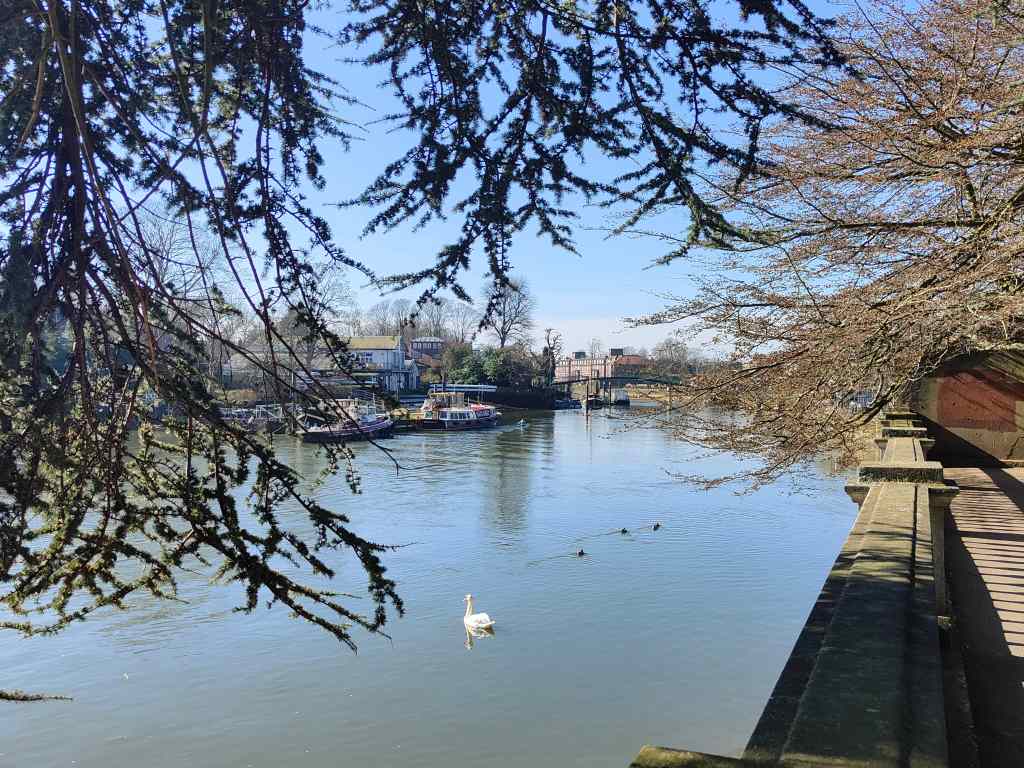
View of the Thames and Eel Pie Island from York House Gardens
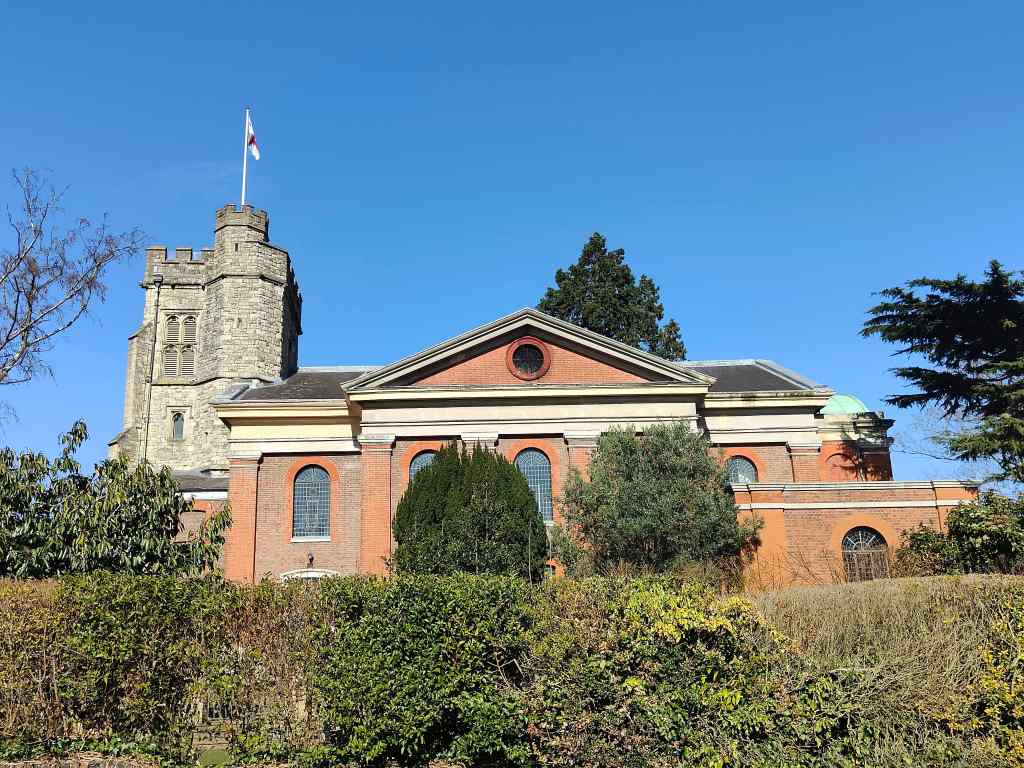
St Mary’s Church, Twickenham Riverside

A small pedestrian bridge leads across the river to Eel Pie Island, one of London’s quirkiest places with an amazing musical history. The island was initially a stop for people making boat trips along the Thames, and from 1743 had a tavern…that may have served eel pies. In 1830, the Eel Pie Island Hotel was built and in 1898 a ballroom was added, serving an elegant clientele until the 1930s. The hotel then went into decline but in the 1950s found a new vocation as a venue for jazz concerts, which in the 1960s turned into rock concerts. An amazing roster of then unknown, but now famous, artists performed there including the Rolling Stones, Yardbirds, Rod Stewart, Jeff Beck, David Bowie, Pink Floyd, Genesis, the Who and Deep Purple. Although the concerts were very successful, the owners did not maintain the venue and it fell into disrepair, causing the local council to revoke its licence. The hotel later burned down, and the land was used to build houses.

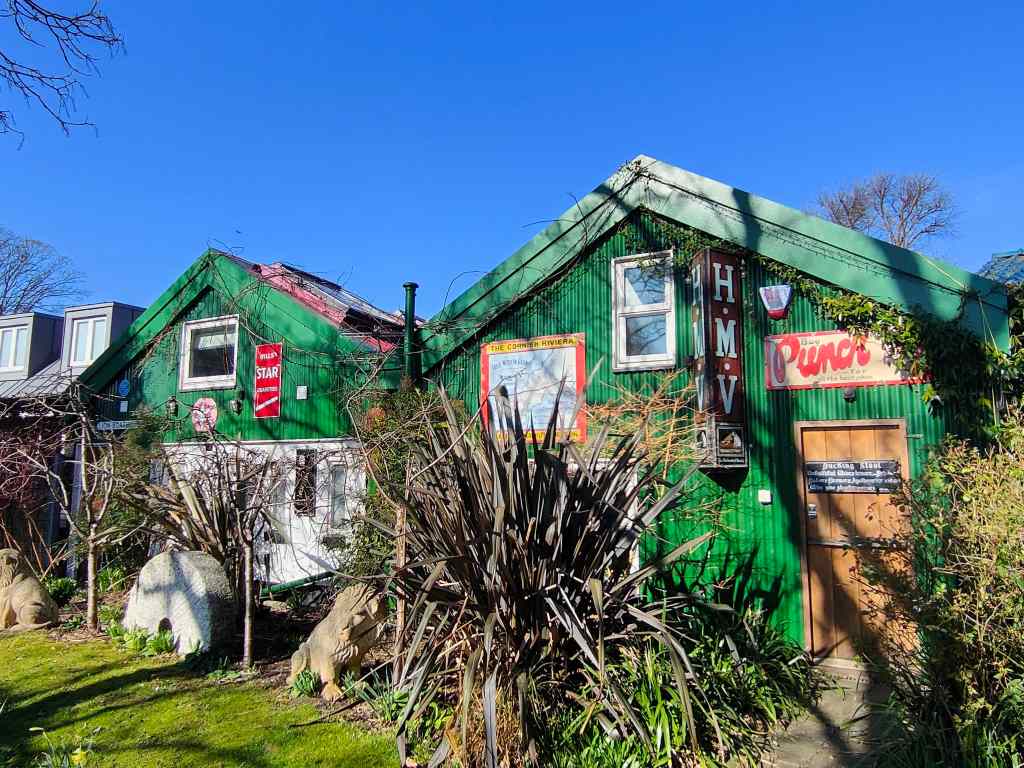
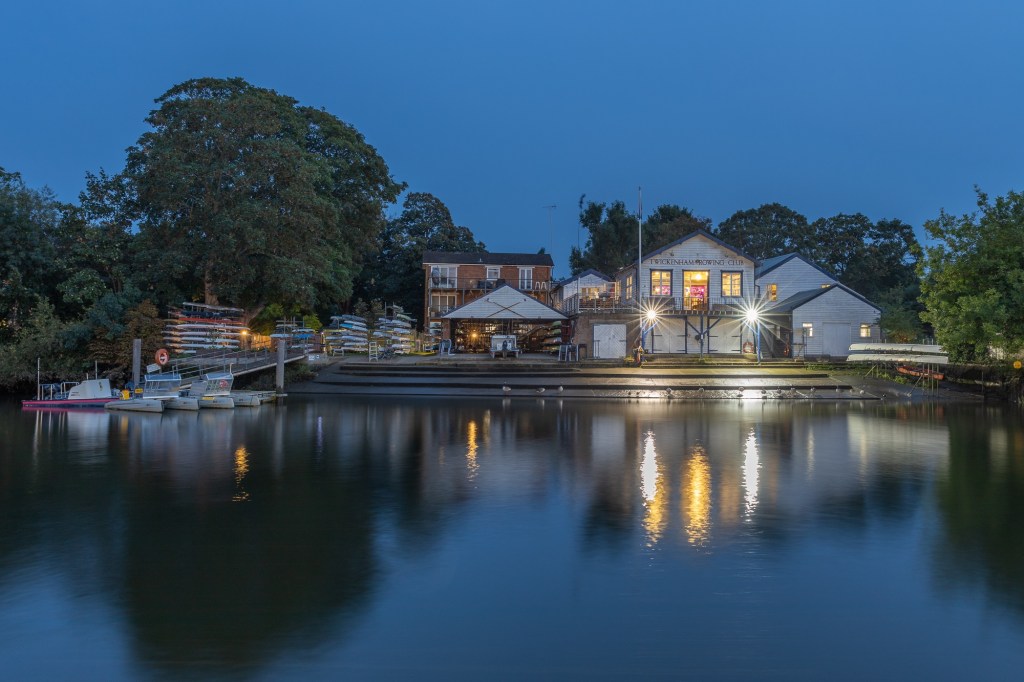
Today Eel Pie Island is an eclectic mix of artists’ studios, houses, rowing and yachting clubs, and boat repair workshops – all still accessed by the pedestrians-only bridge.

On the footbridge to Eel Pie Island looking back towards Twickenham
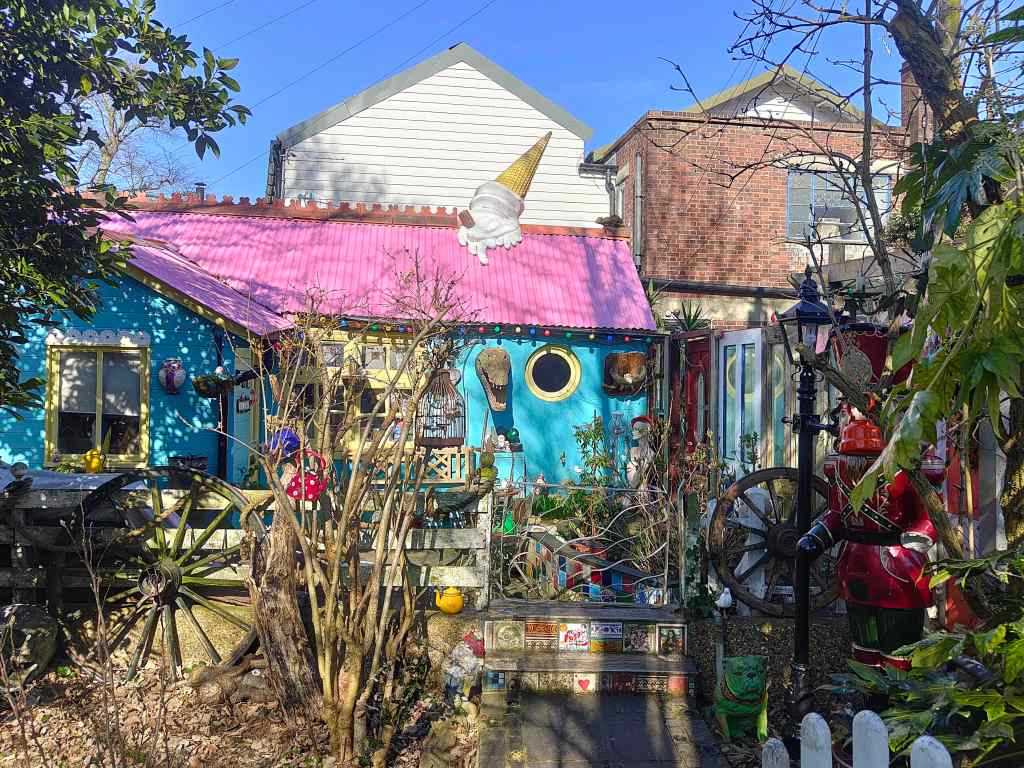
Cool Artists Houses on Eel Pie Island
I have always wanted an ice-cream on my roof
Twickenham Rowing Club on Eel Pie Island (photo courtesy of Colette Hewitt)

That’s it for this post. My next post will cover another interesting place near Richmond, Kew Gardens.

Previous Post: Richmond Park

Blog at WordPress.com.

Up ↑