The Red and Bent Pyramids of Dashur, Saqqara and the Pyramid of Zoser

For my last day in Egypt I had arranged to visit the “other” pyramids at Dashur and Saqqara, close to, but further away than, the better-known Giza pyramids. I didn’t want to book a guided tour and instead went with an Uber taxi driver I had met two days earlier. He was almost unique in that his car had rear seat belts, he spoke some English and (especially rare) he drove carefully.

I had a clever plan for the day – I needed to check out of my houseboat, so planned to take my luggage with me in the taxi and then go straight from the pyramids to the airport. This would save time and solve the problem of where to keep my bags. My clever plan began to seem a bit shaky when my taxi driver texted me that he could not find the houseboat. It took several explanatory messages, and finally sending him my location on Whatsapp, to bring him to the right place.

After this hiccup, we made it to Dashur without incident. The whole plain south of Cairo, from Giza to Dashur, is dotted with ancient pyramids in various degrees of preservation – this area was close to the capital of ancient Old Kingdom of Egypt, Memphis. First I visited the Red Pyramid, Egypt’s first successful attempt to build a large smooth-sided pyramid. It was built from 2575 to 2551 BC and is the third largest pyramid in Egypt (after Khufu and Khafre in Giza). 
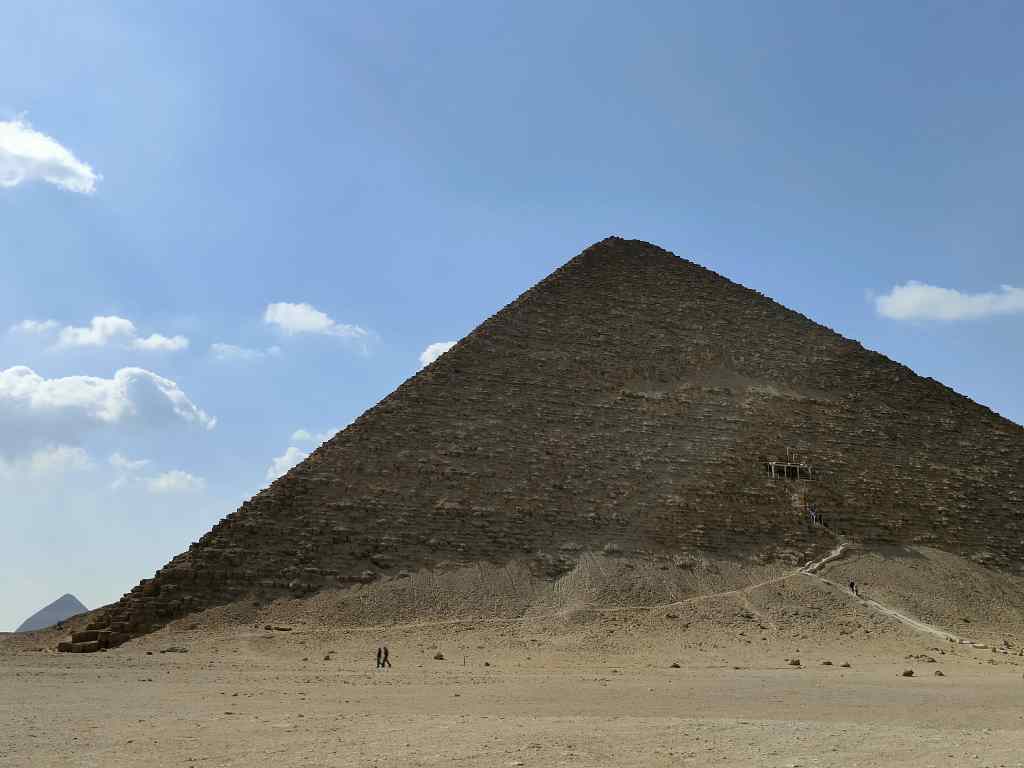
The Red Pyramid with the Bent Pyramid in the background

A long and steep passage led down into the heart of the structure and the pharaohs burial chamber – not a place for the claustrophobic!

The steep descent into the Red Pyramid, Dashur

It was an elegant structure, but I think I preferred the nearby “Bent Pyramid”. This was constructed slightly earlier. Initially, it was constructed with a steep angled slope, but when it was half finished, it became clear that it was not stable. The builders changed plans and began to build with a more stable, shallower slope – giving the pyramid its unusual shape.

The quirky Bent Pyramid, Dashur

From  Dashur we headed back towards Cairo to visit Saqqara, the place where pyramid building started. It is home to the step pyramid of Zoser, whose building was started in 2650 BCE. The construction was a radical step-up in complexity from the simple graves of earlier pharaohs – tombs dug into the ground, topped by a small mud-bricked structure. It was reputedly designed by the brilliant architect Imhoptep and is the world’s oldest ever large stone monument. Imhoptep is a shadowy figure. He was little mentioned in texts around the time of his life, but his popularity grew in the 3000 years following his death, until he became one of very few non-pharaohs to be deified. In contemporary culture, he survives as the main antagonist in the “Mummy” films. If indeed he did design this pyramid, he succeeded brilliantly, and his work survives today, over 4,500 years later.

The Step Pyramid of Zoser, Saqqara
Inside the Step Pyramid, Saqqara

Although smaller than the pyramids at Giza, I found Saqqara more impressive, since it marked such a dramatic change from anything humanity had attempted before. The site was also much more pleasant to visit – only a handful of people hassled me for a camel ride. Climbing the embankment that surrounded the pyramid I was treated to a magical moment. In the distance I could see the pyramids of Abu Sir, and beyond them the great pyramids of Giza. Other than them, the land was a totally empty expanse of sand, which the wind blew up into small clouds. Suddenly the call for prayers started and wind carried the sound from the hundreds of distant mosques in Giza and Cairo to me, as I stood beside one of humanity’s greatest achievements.

The view from Saqqara to the pyramids of Abu Sir, with the giant pyramids of Giza in the distance.

From the main attraction of Zoser’s pyramid, I explored Saqqara further and found the Serapeum, a temple dedicated to the god Serapis, who was associated with the sacred bull Apis. The main site visible today is an underground complex, built by Ramses II, containing dozens of huge black granite sarcophagi – the tombs of sacred “Apis” bulls.

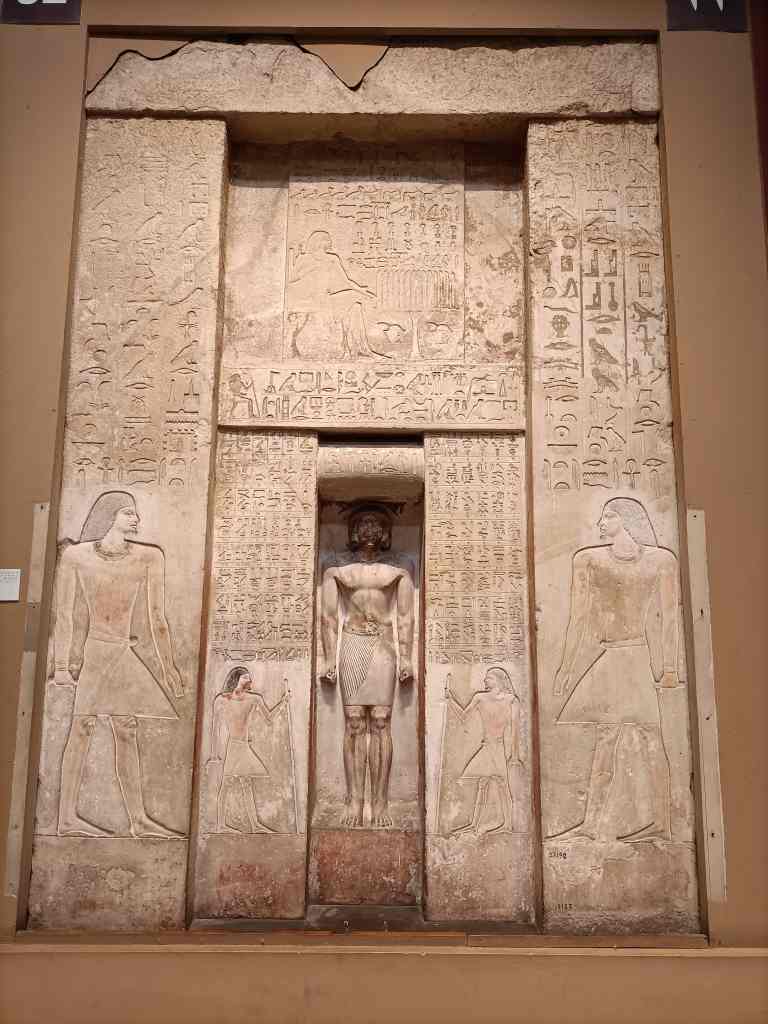
Finally I sought out the tomb of Ti, the overseer of the Abu Sir pyramids and sun temples under several kings in the 5th dynasty. His tomb probably dates from around 2450BC, and had astonishingly fine artwork, chronicling daily life in this period.

The tomb of Ti was the very last thing I visited on my tour around Egypt. From there, my driver took me straight to the airport in time for the long flight home (my clever plan had worked!). It was a fitting end to a trip that saw me visit some of ancient civilisation’s greatest achievements – as well as enjoy the river Nile, the Red Sea, and the frenetic metropolis of Cairo.
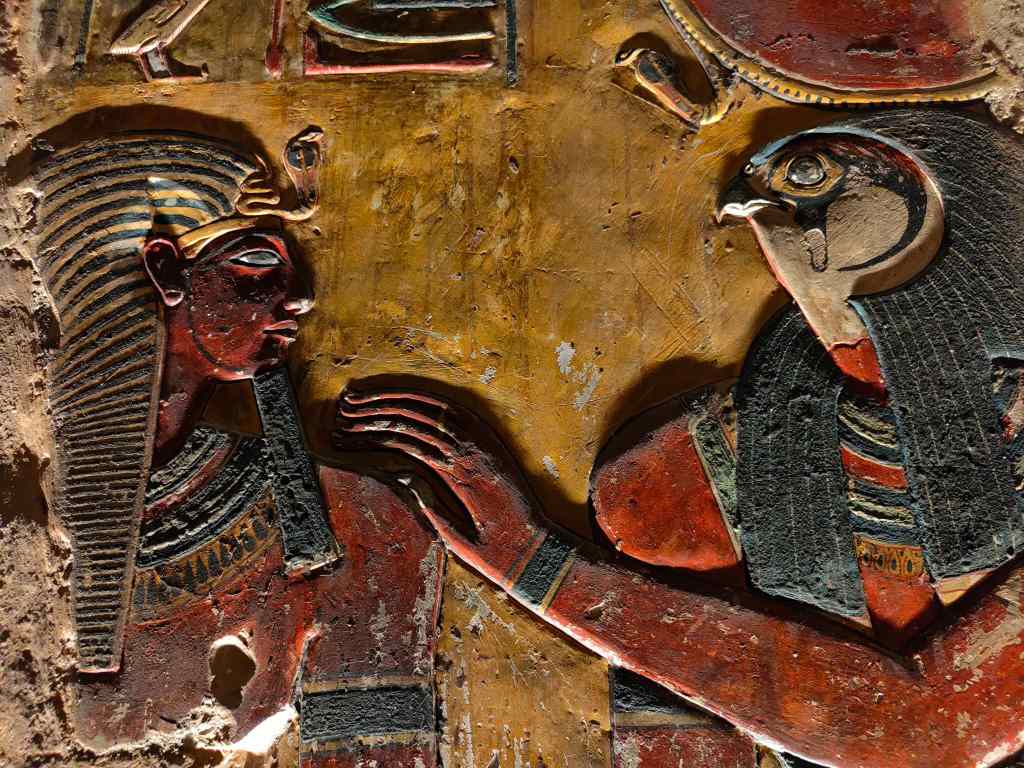
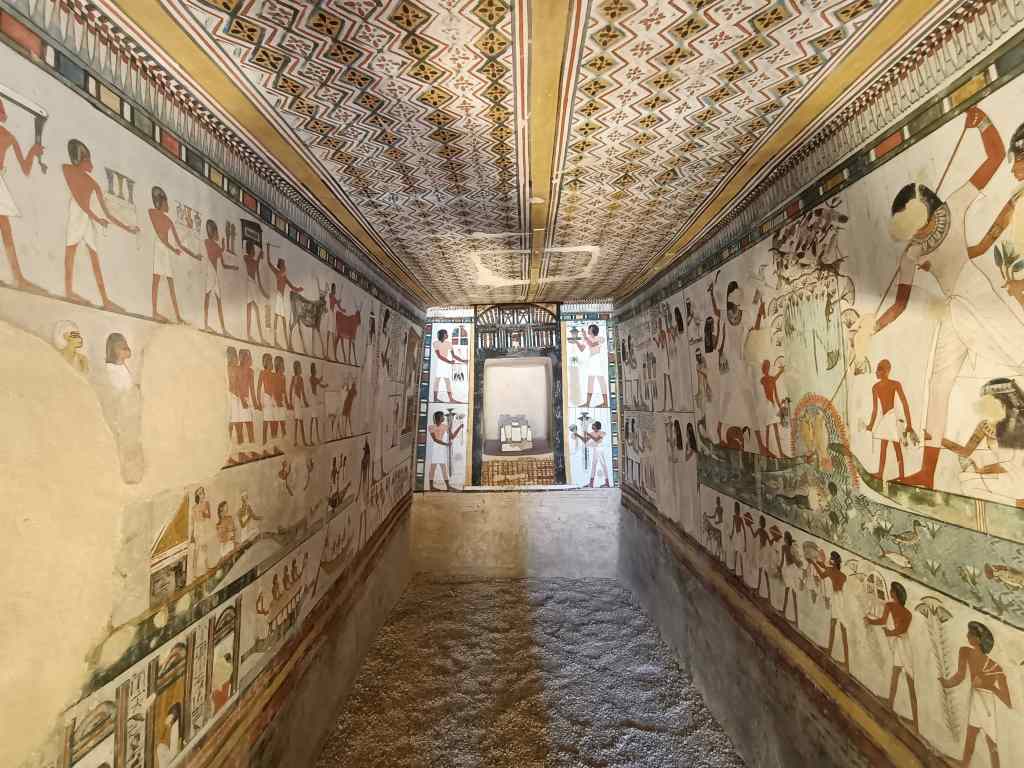
Farwell, Egypt. Detail from the Tomb of Seti I, my personal highlight of the trip

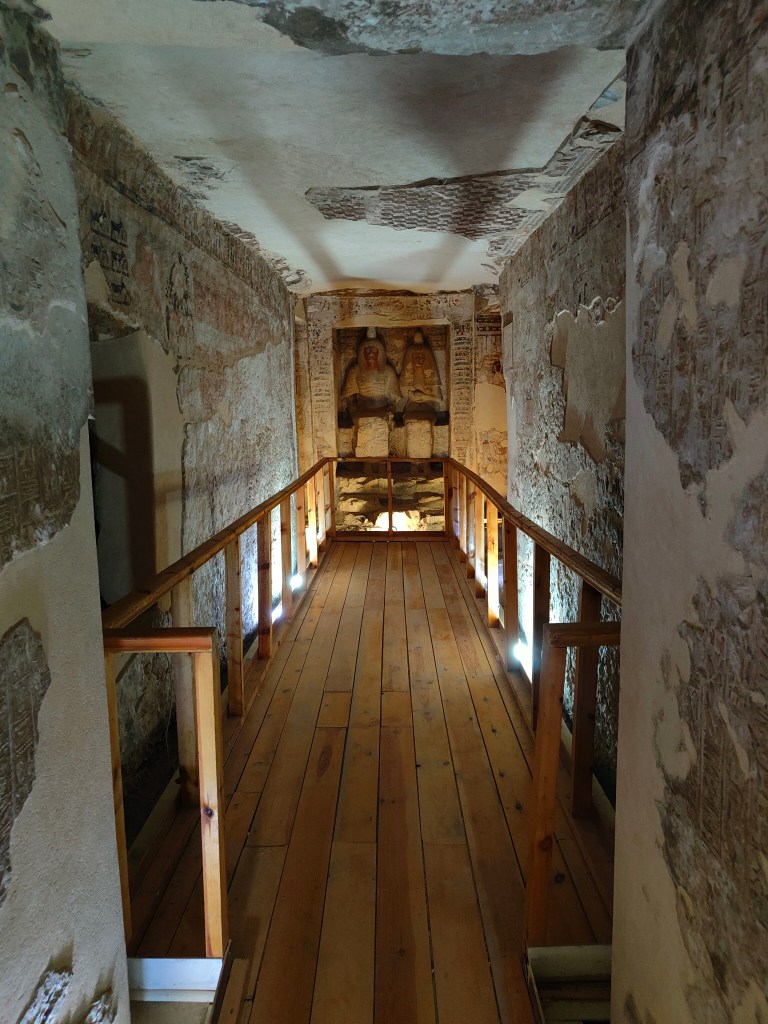
I will leave the very last word to Ti. The heart of his tomb contains a “serdab”, or small room containing his statue, with two small holes for him to look out at the world. Ti has been staring out from his resting place for nearly 4,500 years – who knows how much longer he will keep his vigil?
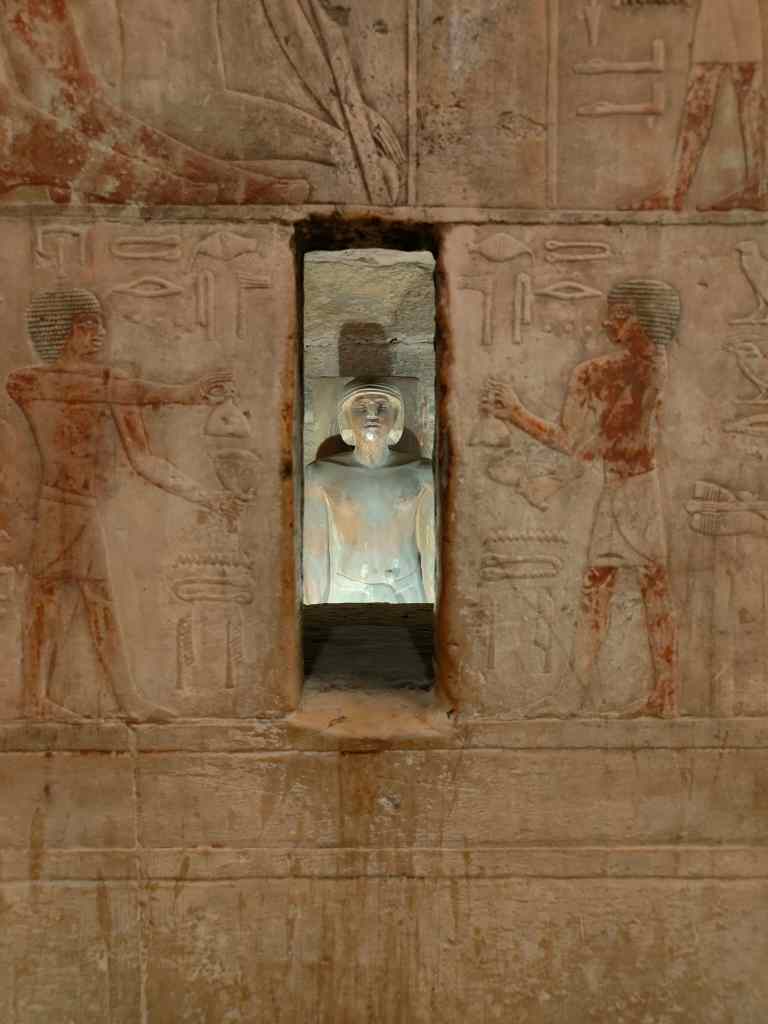
Ti stares out for eternity from his serdap, Saqqara

Previous Post: Islamic Cairo
Temple of Hathor, Dendara and El Gouna, Red Sea

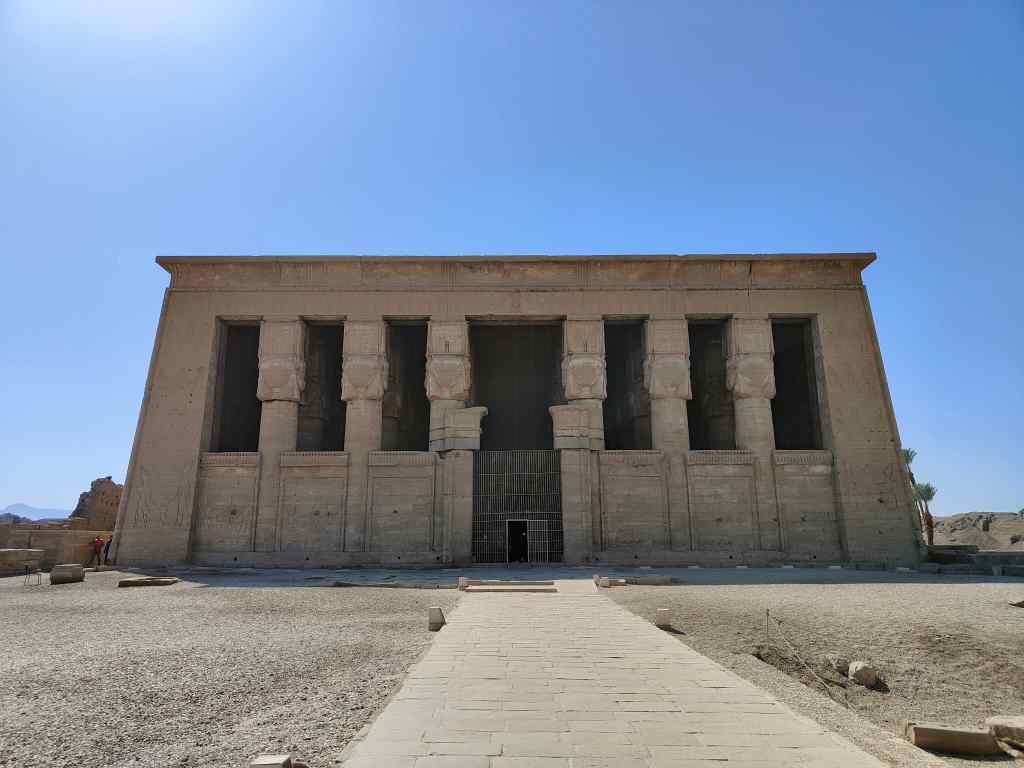
Today I left Luxor to head to the Red Sea. On the way, I made a brief stop to see the Temple of Hathor (goddess of love) at Dendara. It is relatively recent by Egyptian standards, with its main structures being built under the Ptolemeic pharaohs just before Roman rule.

The Temple of Hathor at Dendara

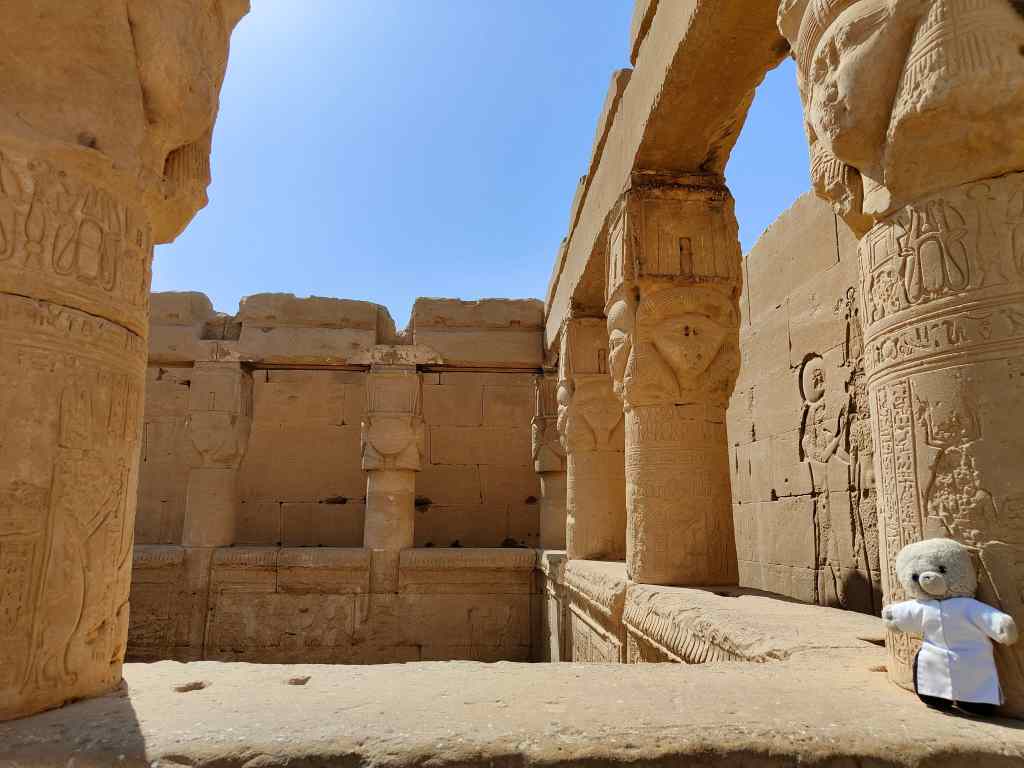
The art work on the columns and ceiling was amongst the most beautiful I had seen in Egypt.

Richly decorated columns and ceiling at the Temple of Hathor, Dendara
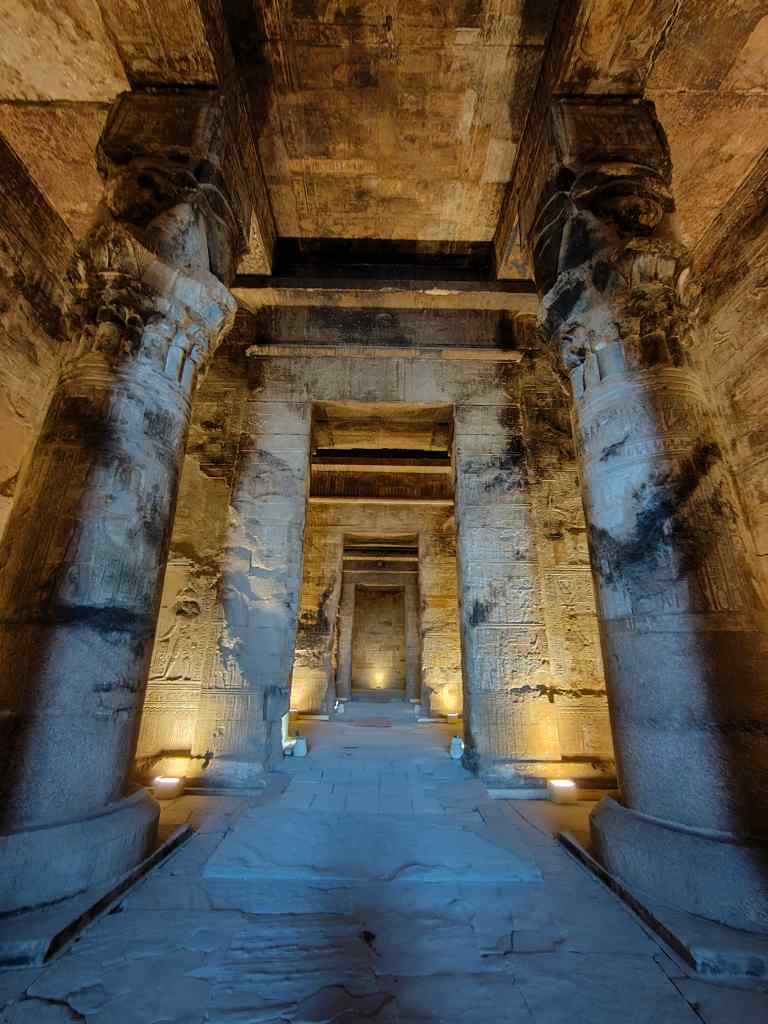
A dark, atmospheric main hall leading into the Temple of Hathor

It is one of the best preserved ancient temples, and still has its roof – which you can walk up on to.

Amazing detail on the ceiling – Temple of Hathor, Dendara
Me on the roof of the Temple of Hathor, Dendara

An hour after Dendara, the road reached the coast and then headed north. To my left, was desolate, empty desert. To my right, all along the sea, there was mile after mile of ugly concrete sprawl around the main city called Hurghada. Many buildings had been abandoned unfinished – perhaps the Egyptians like ruins so much that they skip the “completed” stage of a building project and go straight to “ruined”. But when I reached my destination of El Gouna, things completely changed – the town was surrounded by lush green vegetation, which contrasted with the barren sand all around. There was a security check to enter town, and the buildings suddenly became modern and well-maintained.

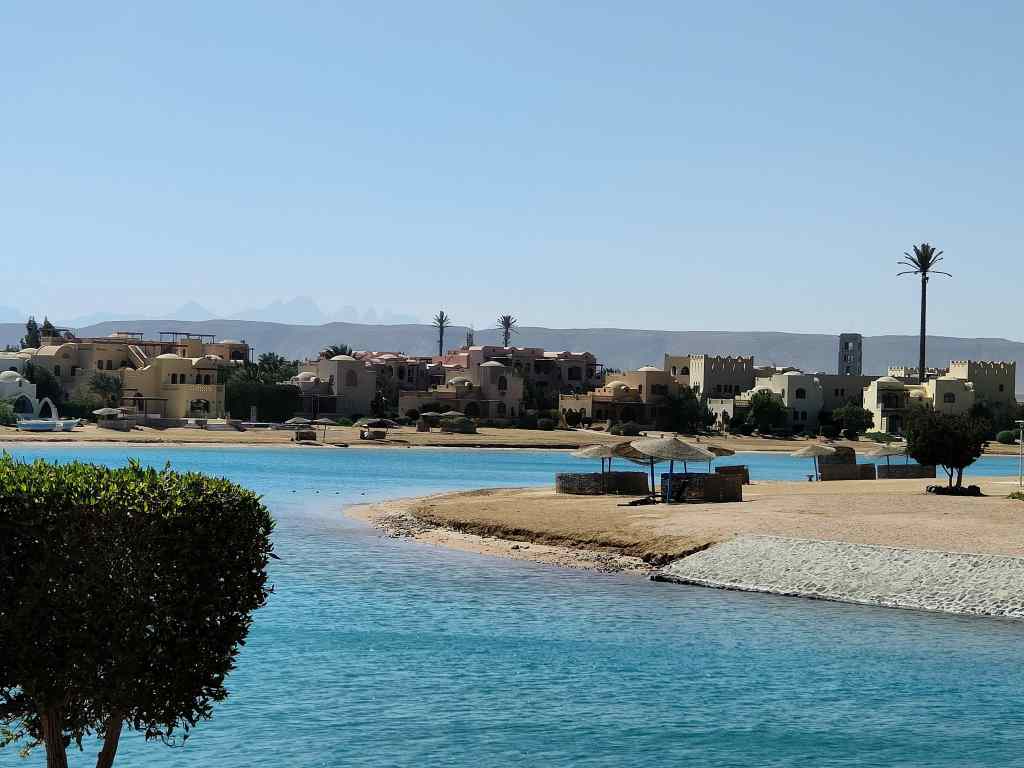
After ten days of intensive visiting of ancient ruins, I had booked a couple of days here to unwind by the sea. On my first day, I wandered around the town. It was built around a lagoon, with many gated communities and some impressive private houses – again, with their own security. It felt more like the US than Egypt.

An impressive private house on its own island at El Gouna
The sea behind me, mountains in the far distance – El Gouna

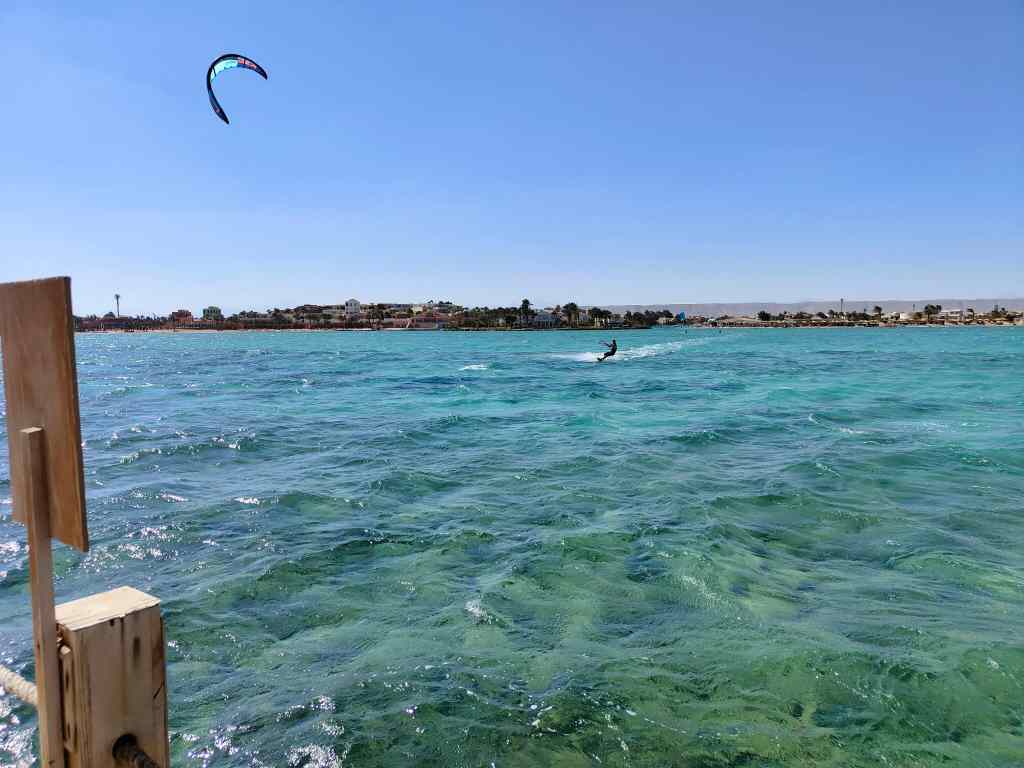
When I reached the beach, I found that El Gouna was popular with kite-surfers. The wind was strong, and good kite-surfers had fun making extravagant jumps, whilst beginners struggled to stay upright. The location was beautiful, with the mountains of the Sinai peninsula in the background across the sea. I have always wanted to try kite-surfing, but with a wind like this a little fluffy bear like me would have been blown all the way to Sinai.

Kite surfer at El Gouna

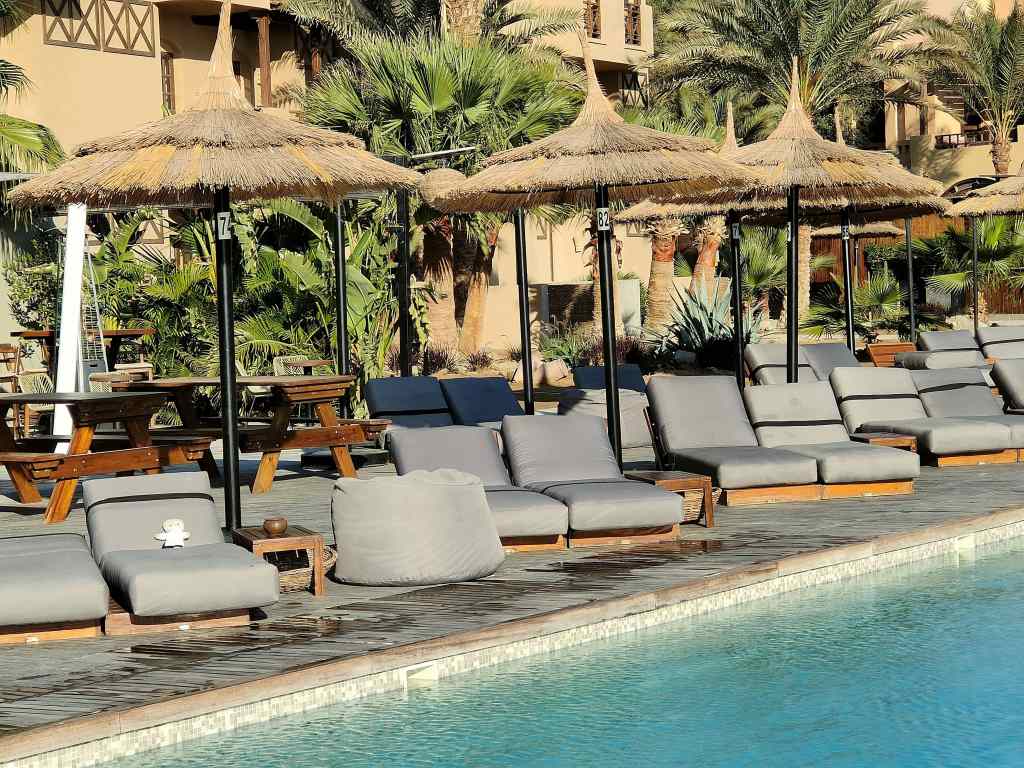
My own sport is diving, and I did a couple of dives the next day, the highlight of which was seeing a worryingly large (remember I am small!) camouflaged octopus. After diving there was not a lot to do except laze by the pool – the weather was just warm enough for this, with the late February sun.

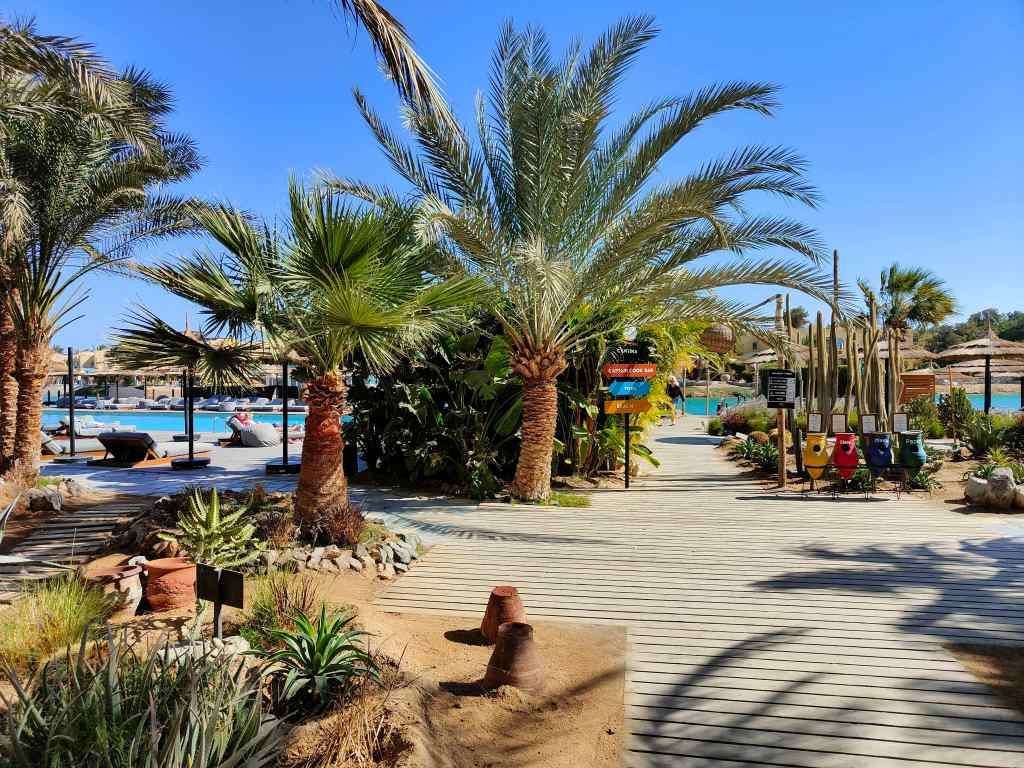
My hotel at El Gouna on the Red Sea
Chilling by the pool – el Gouna

It was nice to recharge for a couple of days after seeing so many ruins. My next stop was Cairo, which would require all of my energy…

Next Post: Cairo, the city that never sleeps

Previous Post: Luxor, Valley of the Kings

Luxor’s West Bank – Medinat Habu, Deir al Medina, Valley of the Queens and Tombs of the Nobles

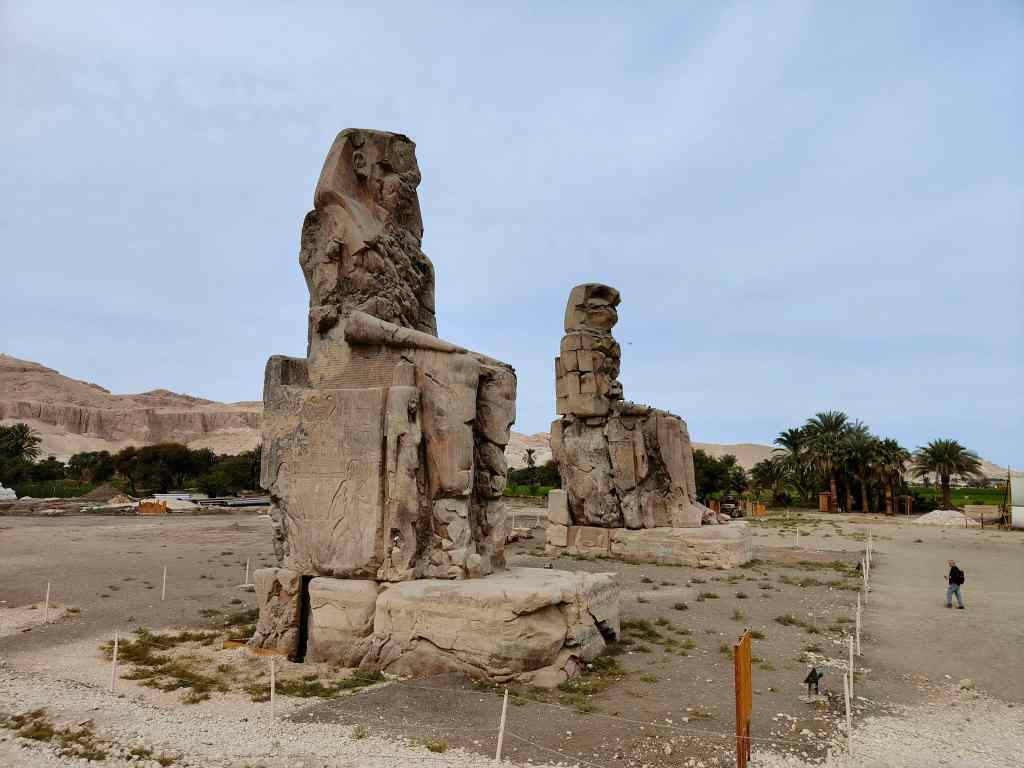
I had decided to spread my visit of Luxor’s west bank – site of countless ancient tombs – over two days. It was a wise decision.  My hotel provided me with a car and driver and I set off.  The entry to the west bank is guarded by two giant statues of Amenhotep III, which were rather worse for wear and now resembled modern art sculptures. 

Luxor’s West Bank – ancient art begins to look like modern art…

Behind these statues a large area was being excavated, which my driver said was the site of a huge, now totally ruined, temple – possibly even bigger than Karnak.

We headed first to the ticket office. Luxor’s west bank can be frustrating to visit – tickets to many sites are only sold at the central office, so you need to plan in advance exactly what you want to visit, if you want to avoid having to come back to buy more.

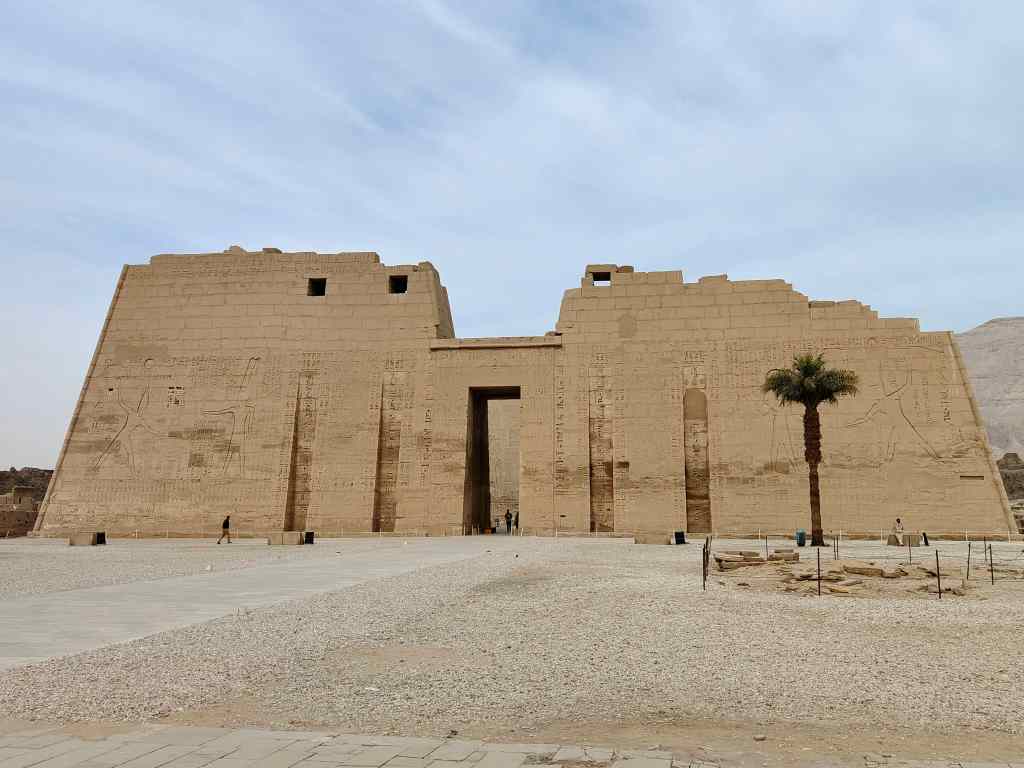
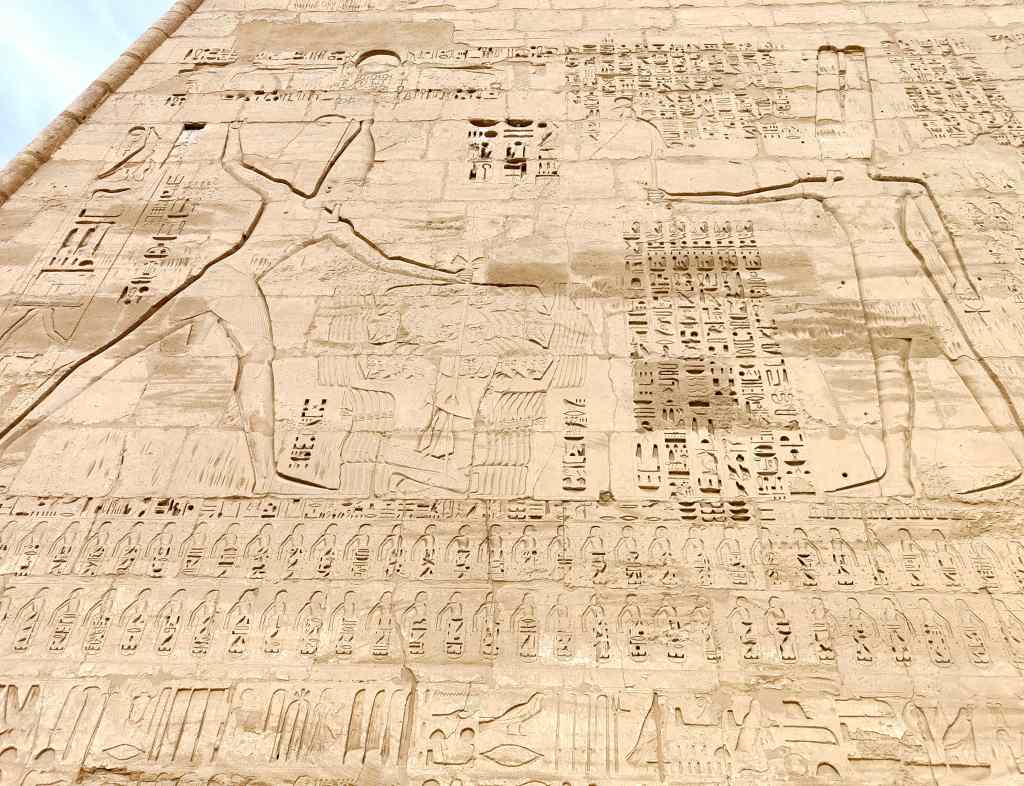
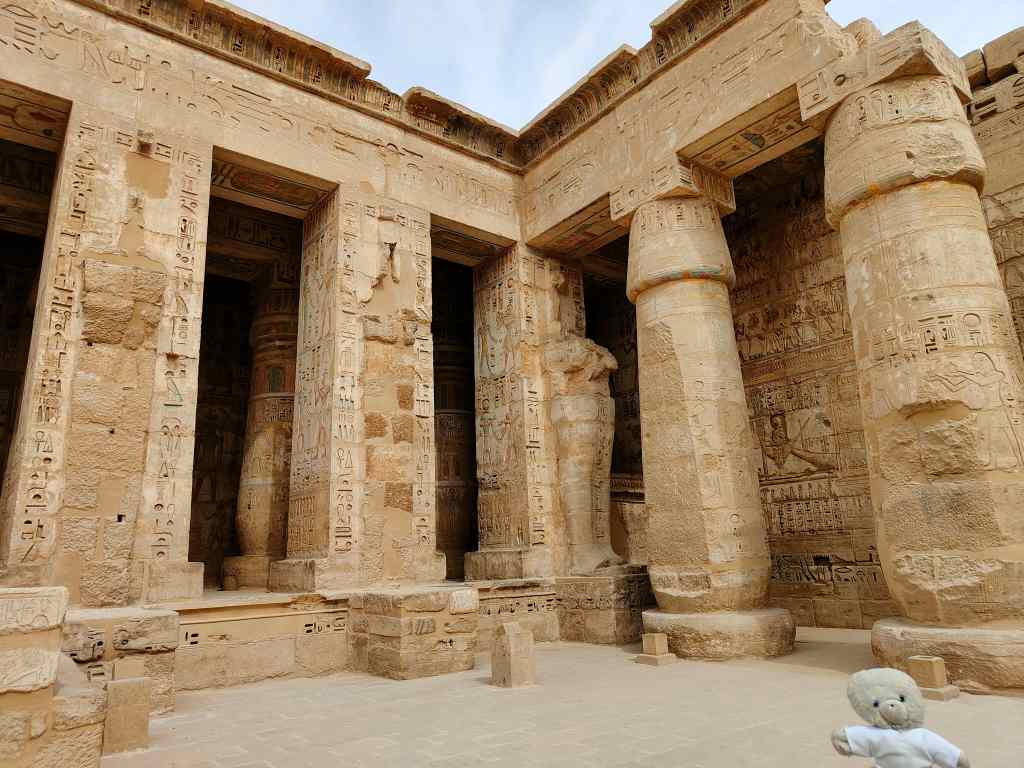
Tickets in hand, I went first to the temple of Medinat Habu, dedicated to the local god Amun and built by Ramses III around 1150BC. Though it is not one of Luxor’s most famous places, I enjoyed its graceful structure, setting amongst hills, and well-preserved painting and stone relief carvings. A particularly striking set of reliefs showed Ramses III slaughtering Libyan invaders, with many scribes counting the thousands of prisoners. Some of the latter were shown later with their heads cut off – no Geneva convention in those days!

The entrance gate (“pylon”) to Medinat Habu, Luxor West Bank
Ramses III slaughters many Libyans as his scribes count the bodies and prisoners
Inside Medinat Habu, Luxor West Bank

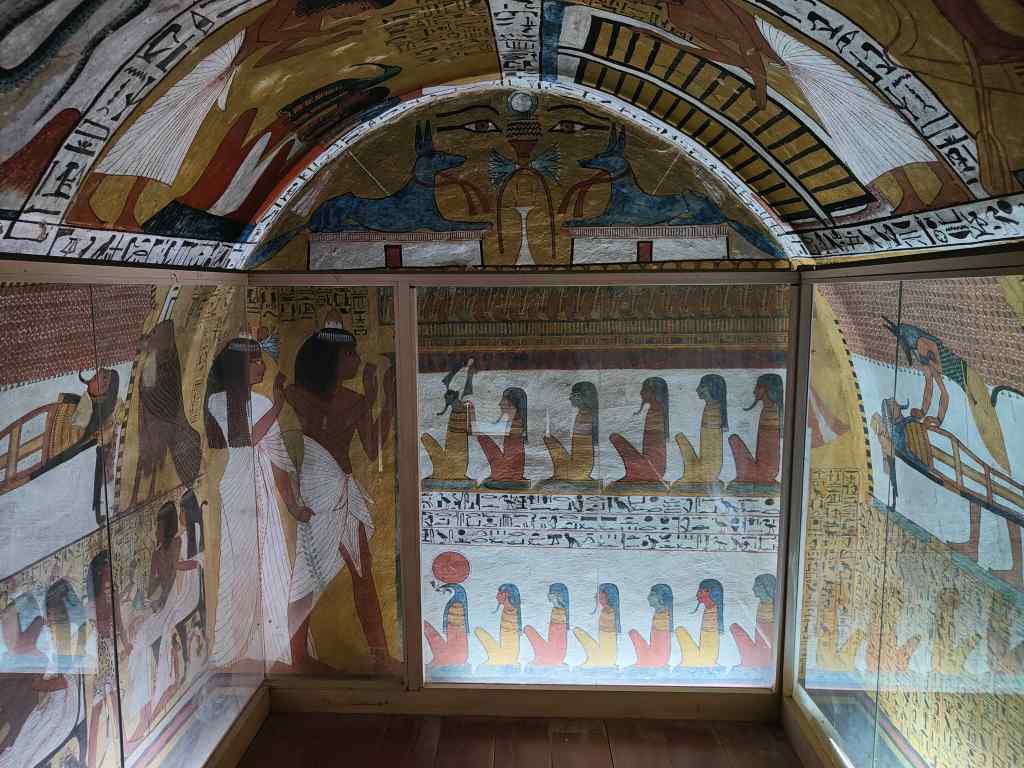
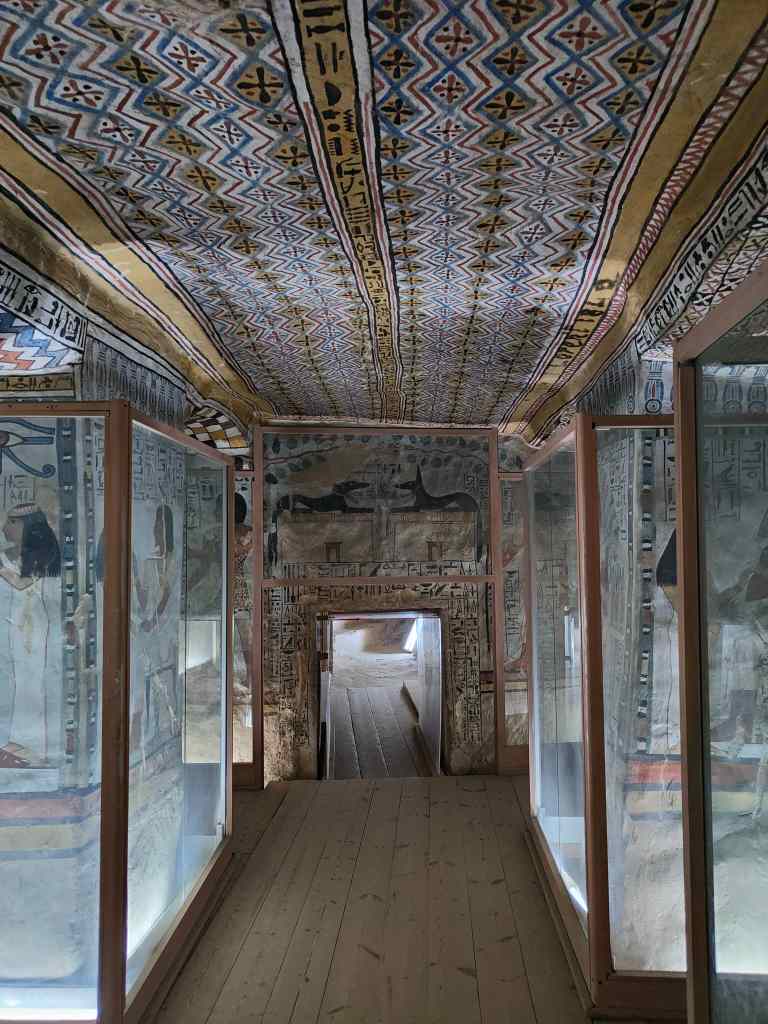
My next stop in Luxor’s West Bank was Deir al Medina, where many of the painters and sculptors who made the rich peoples’ tombs lived and were buried.  There are hundreds of tombs here, and the hillside sometimes looks like Swiss cheese, but only a few of them were open. The few I managed to visit were all similar – small, with wall paintings of the owner’s body being prepared for the afterlife by mummification. The painting seemed like a recent restoration, rather than the original paint, but there was little explanation available anywhere. The tomb particularly recommended by my guidebook needed an extra ticket….which of course I had forgot to buy at the central ticket office.

A restored tomb of one of the painters who worked on richer people’s tombs at Deir al Medina

From there I headed on to the Valley of Queens, who were buried in a separate area of Luxor’s West Bank to the male pharaohs. These tombs were more elaborate than those of the workers but still fairly small and modest compared to what I would later see elsewhere. The most famous tomb is that of Ramses II’s favourite queen Nefertari, which is small but extremely richly decorated. However, to preserve the paintwork, visits of this tomb are limited to a maximum of ten minutes and required a separate and very expensive ticket. I decided to pass, and thought I had made the right decision when I saw a long queue outside. 

The next best tomb to Nefertari’s is that of Amunherkhepshef – actually not a queen, but a prince. I had the place almost to myself.

Tomb of Amunherkhepshef, in the Valley of the Queens, Luxor West Bank

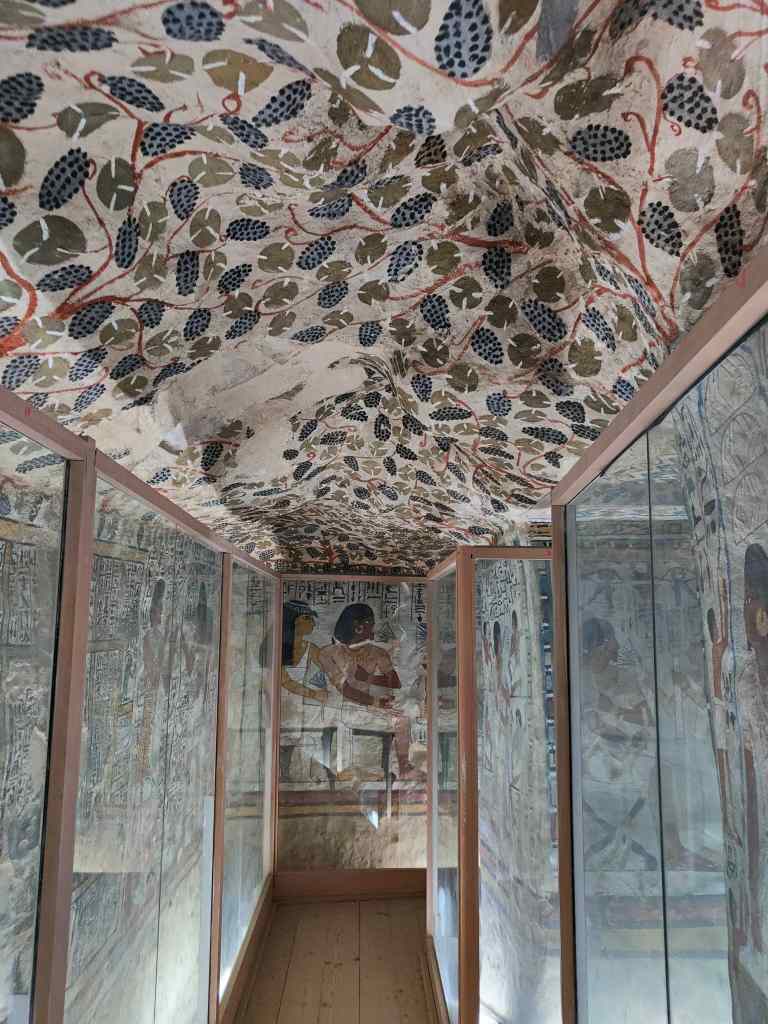
The final stop in today’s tour of Luxor’s West Bank was the area of the Tombs of the Nobles. These were by far the most impressive tombs of the day. They were built deep in the ground and their walls were covered with scenes of their daily life. My favourite was the tomb of Sennofer, the mayor of Thebes in time of Amenhotep II. Its roof was covered with paintings of vines and grapes – Sennofer was presumably a bon vivant.

Tomb of Sennofer, a man who obviously liked wine – area of the Tombs of the Nobles
Some of the tombs of the nobles are very deep in the ground, down steep stairs

From Sennofer’s tomb I headed across the dusty site to the more remote tombs of Menna (an estate inspector) and Nahkt (an astronomer). These were locked, and I had to wait for the guardian to come and unlock them for me.

The tomb of Menna (Tombs of the Nobles area, Luxor West Bank)

The guardian also showed me the tomb of Amenemore, a high priest in the reigns of Ramses III, IV and V. This was not supposed to be open to tourists. It was not the best-preserved tomb I had seen, but its remoteness and the sense of being invited to see something that is normally off-limits made it one of my favourites.

The Tomb of Amenemore (Tombs of the Nobles area, Luxor West Bank)

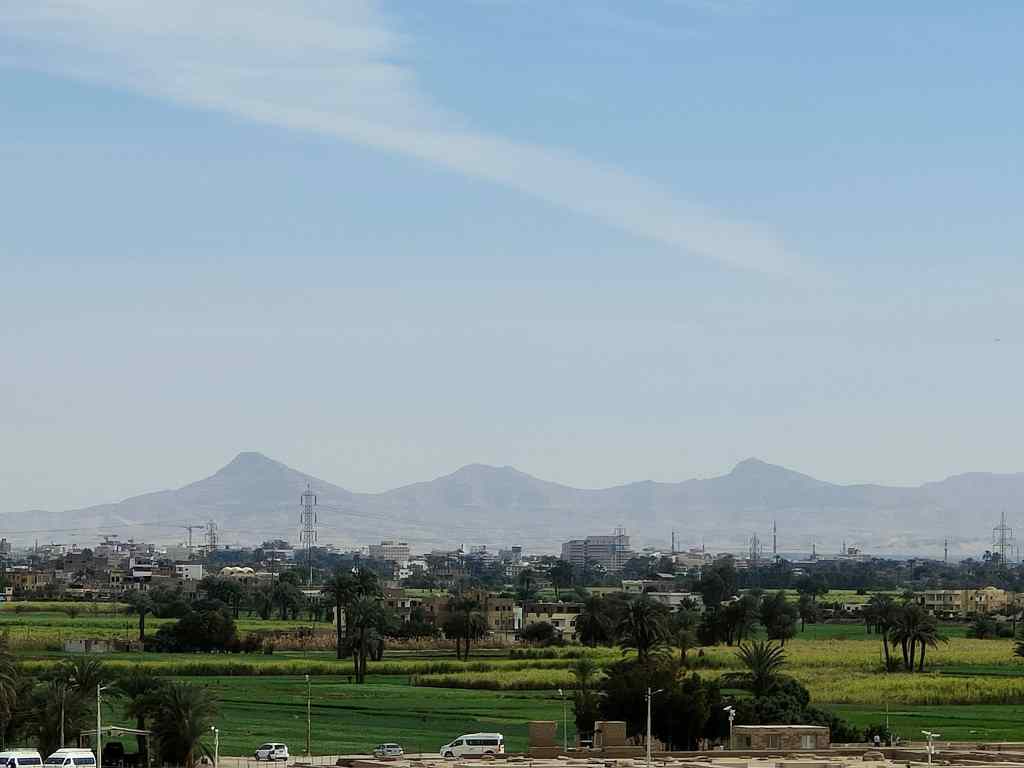
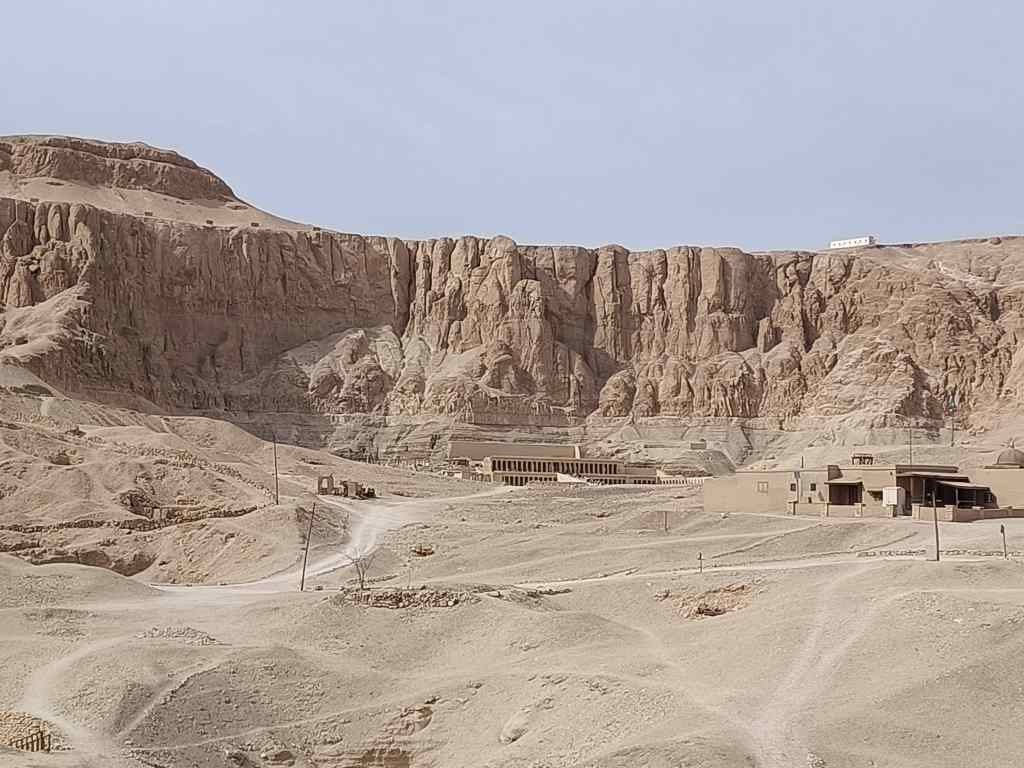
I thanked the guardian with some baksheesh, and he invited me to have some tea with him. His little hut was simple but had a great location on top of a small hill, with a view over to the Nile and Luxor in one direction and to the Temple of Hatshepsut in the other. From a distance, the latter looked like an IT-billionaire’s house in California….

The view back to Luxor
The view inland to the Temple of Hatshepsut, Luxor West Bank

I was a bit tired. I had seen a mind-boggling number of tombs – and was going to see even more on my next day in Luxor’s West Bank. I headed back to the hotel to relax and went out to dinner in local restaurant in the village. After days of eating only fish (freshly caught from the Nile) or vegetables I took the risk of eating meat, and was rewarded with an excellent chicken tagine.

Next Post: Valley of the Kings, Temple of Hatshepsut, Carter’s House

Previous Post: Karnak

Luxor’s East Bank and Karnak

Today I crossed the river again to visit the sites on the Luxor’s east bank.  I reached the centre of Luxor, which was much nicer than the part I had visited the day before, with a pretty waterfront opposite the Temple of Luxor.

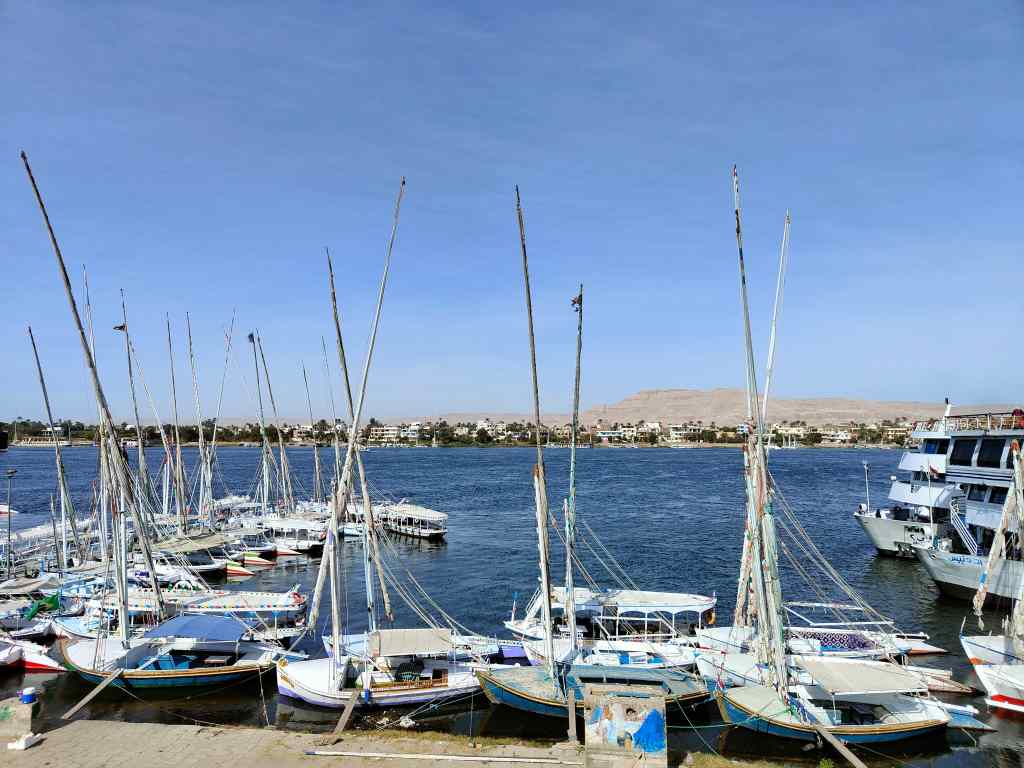
The view across the Nile from Luxor’s corniche
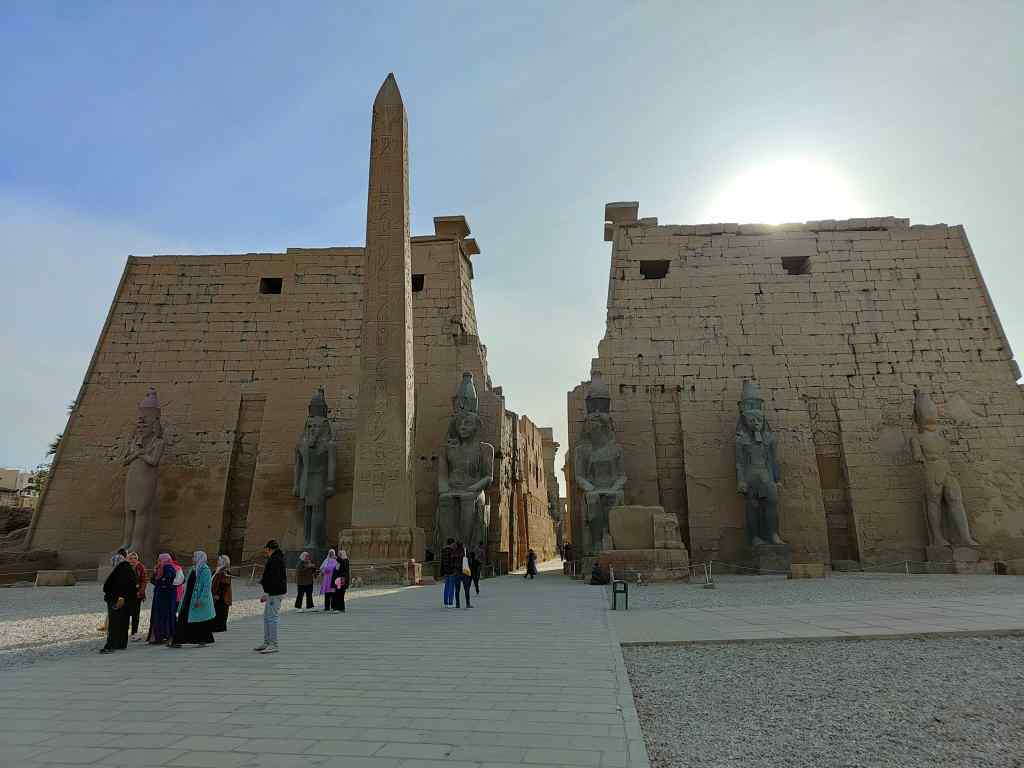
Luxor Temple from the outside

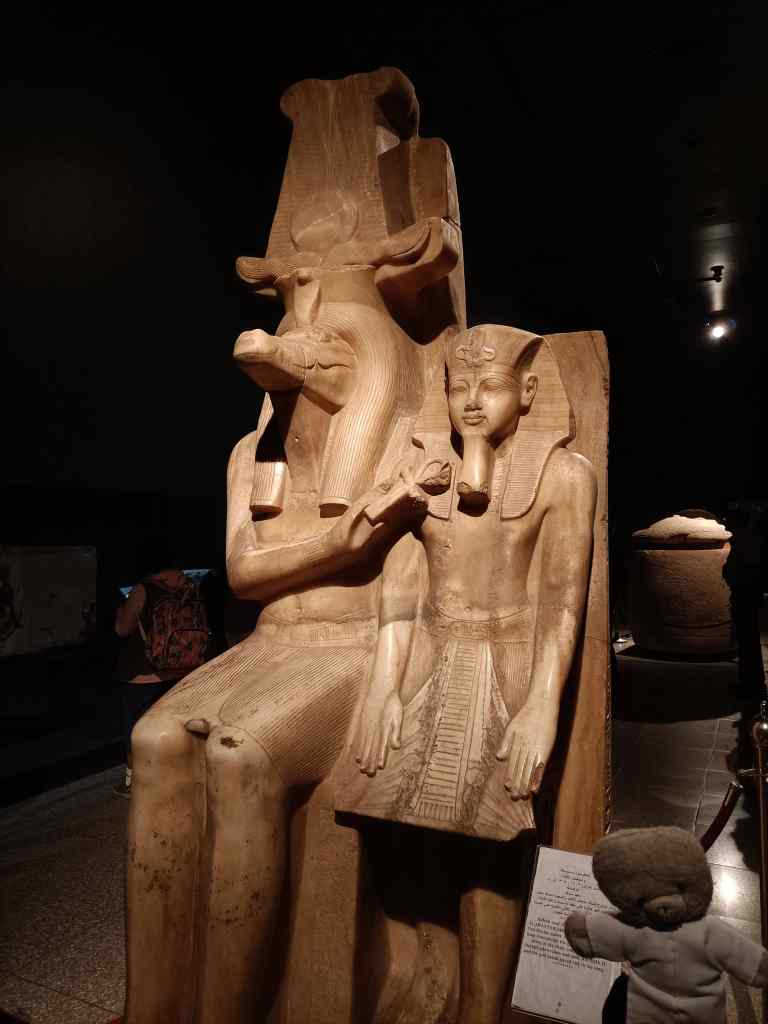
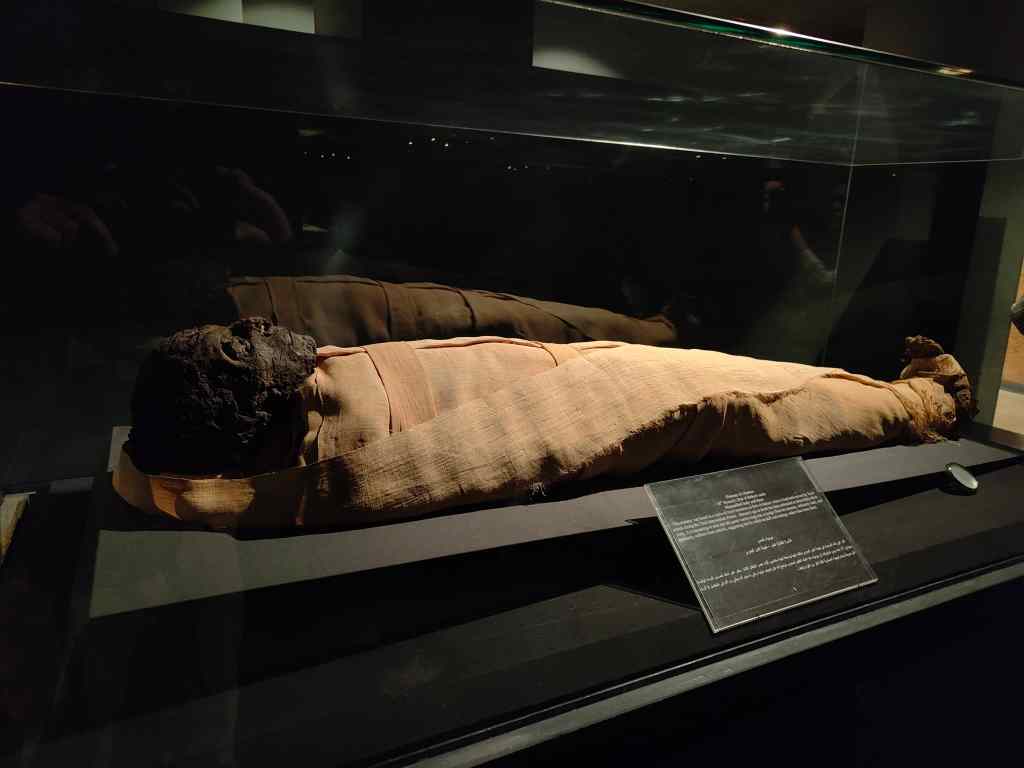
My first visit was to the Luxor museum – a small but high quality collection of the items found in the area. I particularly liked this statue of the god Sobak with pharaoh Amenhotep III.  There were also two mummified bodies on display; I wondered if the owners would have appreciated being dug up to be inspected by tourists.

The god Sobak, Pharaoh Amenhotep III and me
Mummy of Pharaoh Ahmose

From the museum I walked up along the Nile to Karnak, a place of superlatives. This complex of temples became Egypt’s most important religious site when the kingdom’s capital was moved to Thebes (now called Luxor) and royalty started to be buried in the Valley of Kings on the city’s west bank. Starting around 1950 BC, for nearly 2000 years  successive pharaohs sought to leave their mark for posterity by adding to the previous structures. The most impressive and largest buildings were constructed during the reigns of Seti I and Rameses II, around 1290 BC.  The final complex consisted of a huge central temple to Amun, the local god, and several smaller temples devoted to other gods, and covers a vast area. The central Temple of Amun alone is bigger than St Paul’s Cathedral and St Peter’s Basilica combined.

The entrance to Karnak

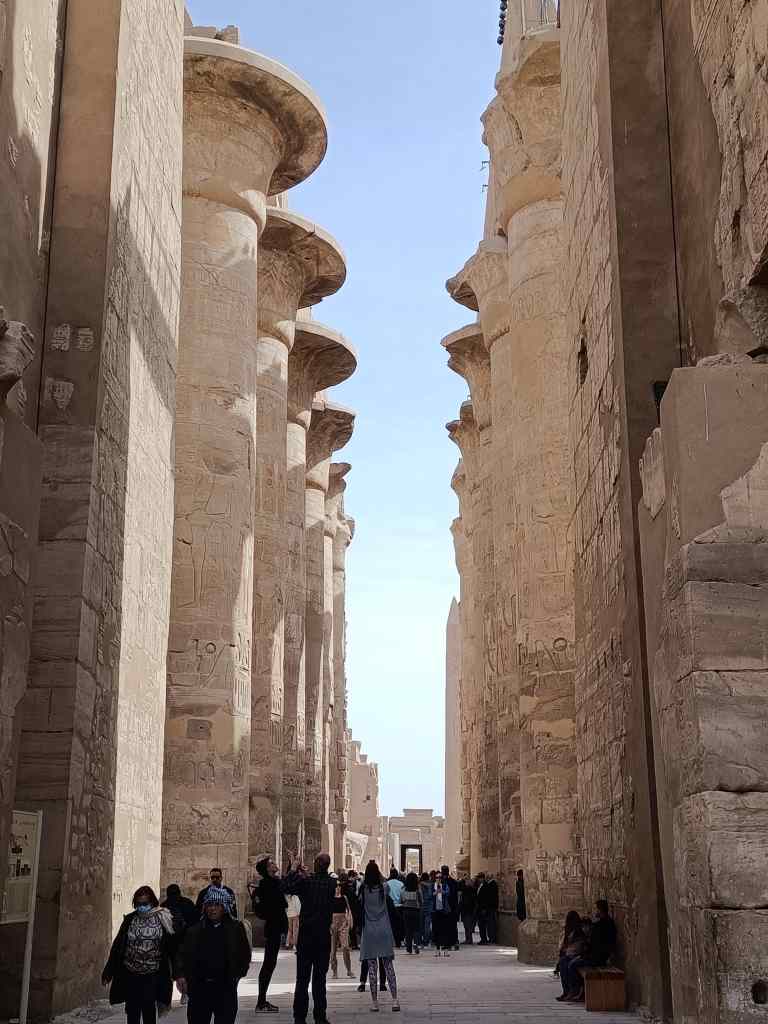
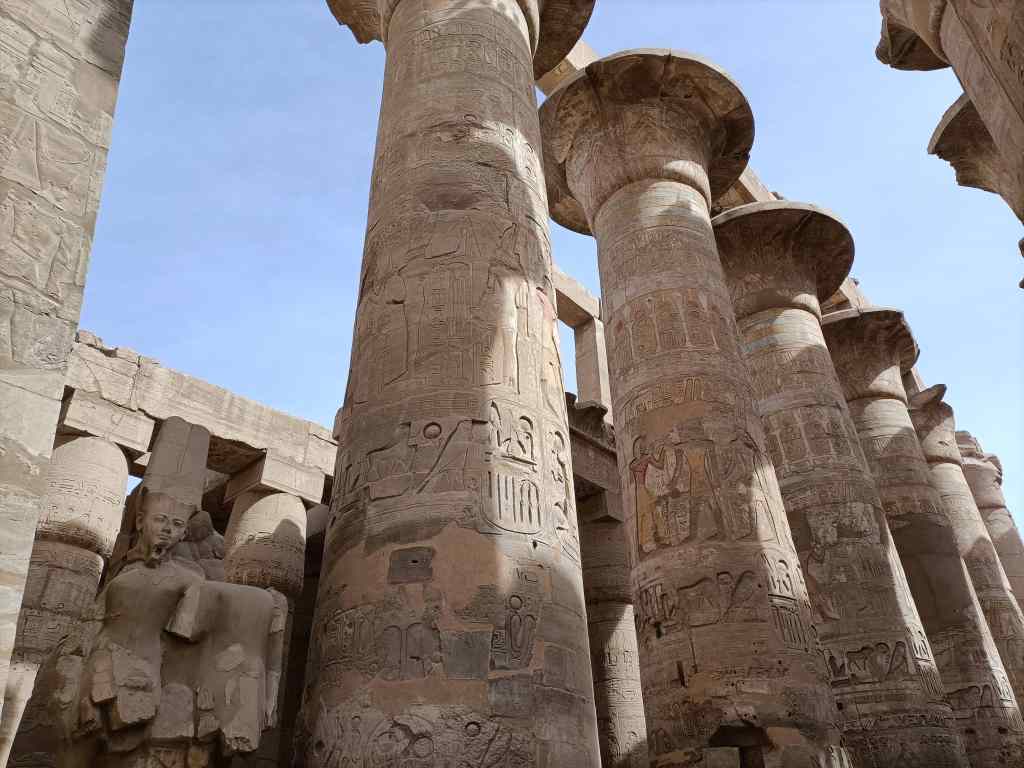
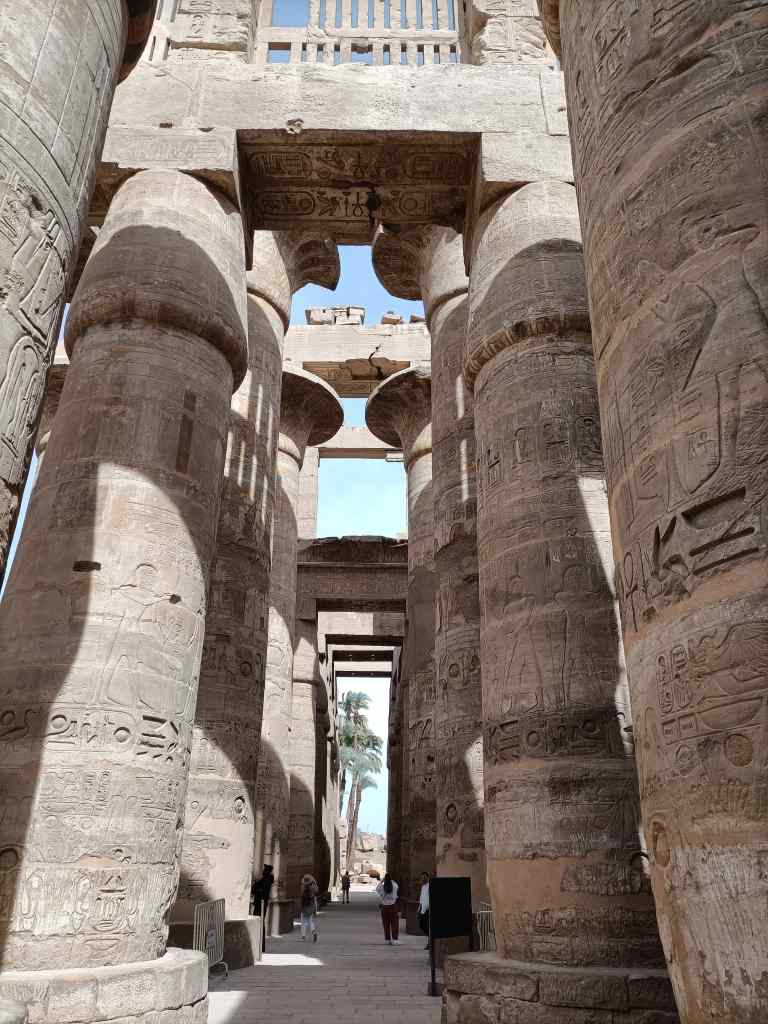
Just past the entrance archway – or “pylon” – an incredible sight opened up of the 134 huge decorated columns that make up the Great Hypostyle Hall, part of the central Temple to Amun. Entering this area felt like going into a thick forest, with huge stone pillars instead of trees. I wandered around, straining my neck to look up at the fragments of the ceiling, some of which still carried the original painting from ancient times. I stayed for thirty minutes, soaking  in the sheer vastness of the temple, and feeling smaller and smaller.

The Great Hypostyle Hall, Karnak
The forest of huge decorated columns is Karnak’s most striking feature
I felt smaller and smaller…

After this amazing sight, I explored the central area further. Then I wandered further south to find a “no entry” sign apparently blocking further progress. A guard gestured to me to come through, and led me to a small Temple of Horus. We were completely alone, and it felt a world away from the crowds in the centre of the complex or the bustling city of Luxor. This temple also gave a good view back over the main complex.

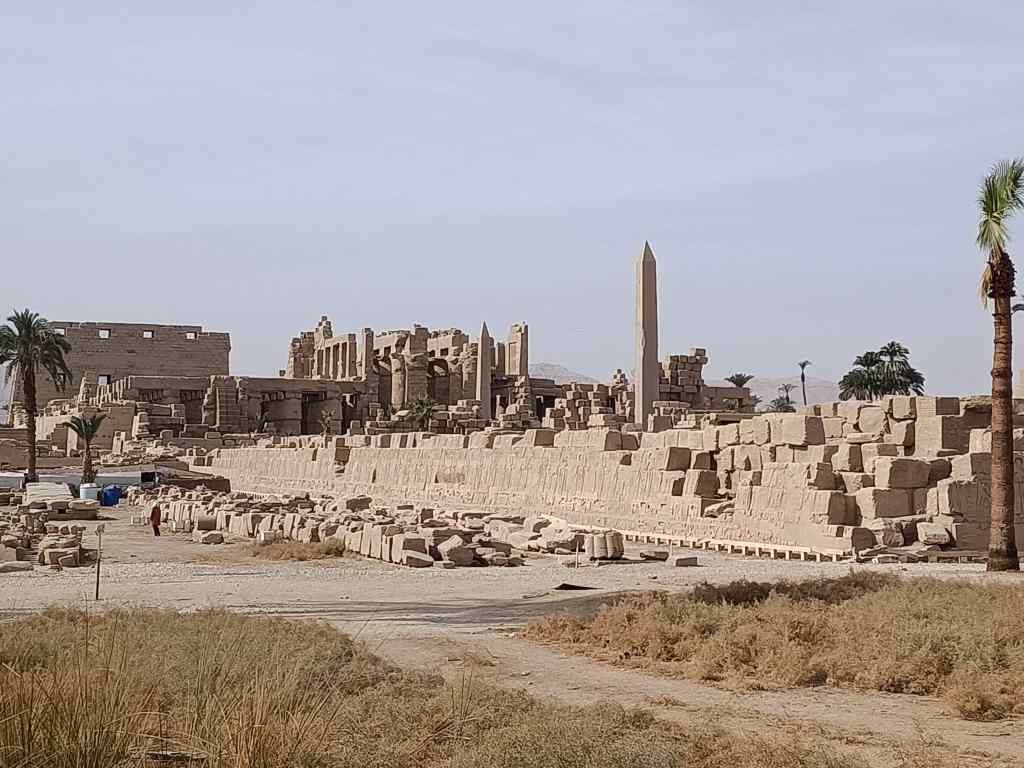
Looking back at the central temples of Karnak

I continued exploring these remote outer parts of the complex. Many areas had “no entry” signs, but friendly guards would usher me through in the expectation of receiving “baksheesh” when I had seen everything. In these little-visited places, I wondered if the guards hadn’t put up the “no entry” signs themselves as a way to augment their salaries. I finally ended up at the remote Temple of Mut (the mother goddess) on the very edge of the site.

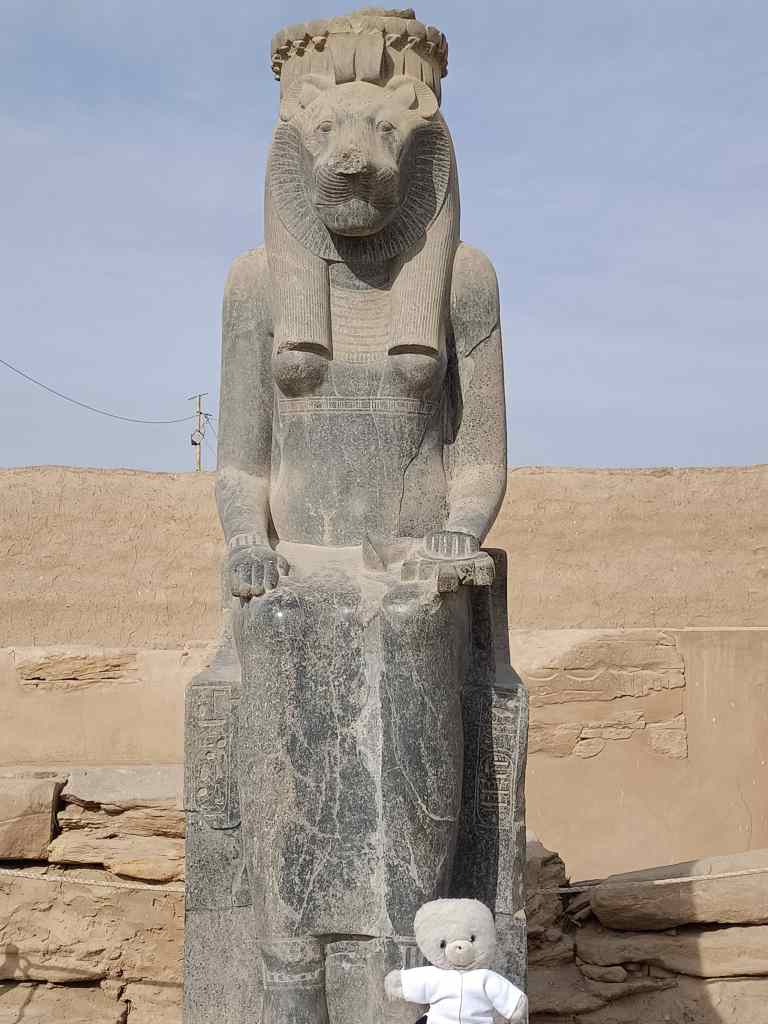
Mut and me

Beyond it lay a marsh – a reminder that in ancient times, the temple complex was often flooded by the Nile. After three hours of walking and admiring the vast monuments of the Temple of Amun and the quieter smaller temples in the outskirts, I felt that the marsh made a logical end to my visit of one of antiquity’s most impressive monuments.

The complex of Karnak finally ends

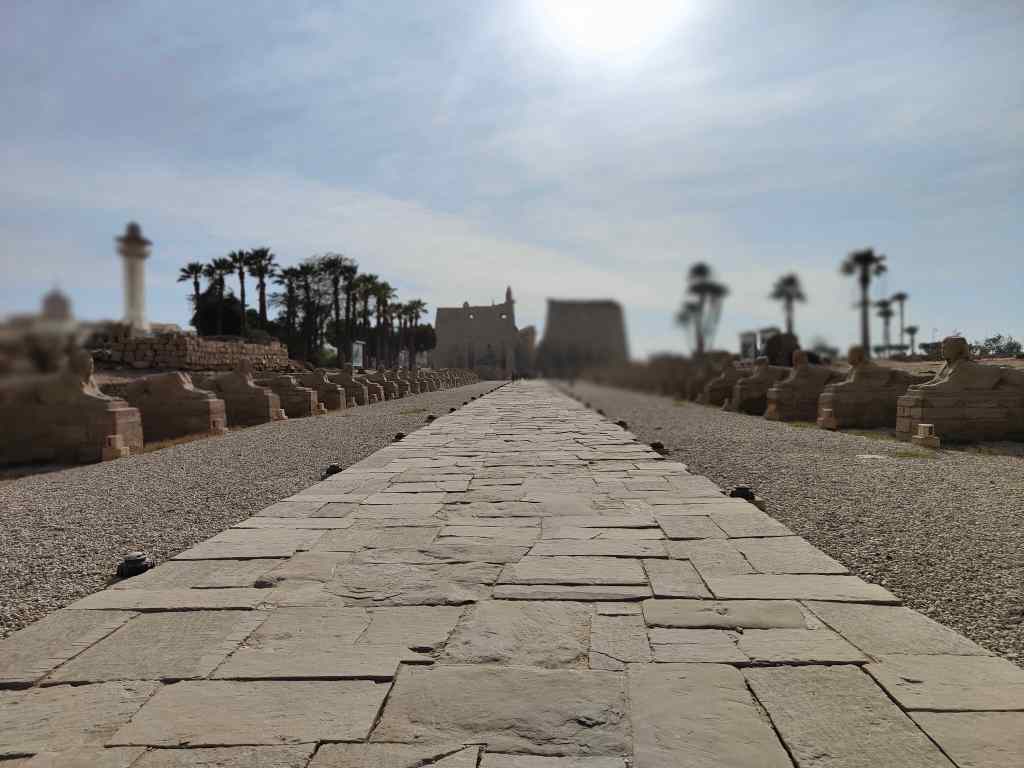
I found the southern gate to the complex where a long, straight ancient road led back to Luxor Temple – the recently-excavated Avenue of the Sphinxes, so called because for the entire 3km of its length the path was flanked by statues of sphinxes, rams or cows on either side. I thought about the countless Egyptian priests that must have used this path for hundreds of years – it was a wonderfully atmospheric way to say goodbye to Karnak.

The Avenue of the Sphinxes
Luxor Temple comes into view

The temple of Luxor was something of a disappointment in comparison to Karnak. It was less impressive than other temples I had seen in Egypt, and was much more crowded than Karnak had been.

The entry to Luxor Temple

The best time to see this temple is at night, when it is illuminated, but I was tired after so much walking and did not want to wait. Instead I strolled down the Corniche along the Nile, admiring the view as the sun set.

Sunset on the Nile at Luxore

It was very pleasant, and even the continual approaches by taxi drivers, people selling things and caleche owners did not spoil my mood. Some of this hassle was done with a good dose of humour. Some examples:

“Why you walk like an Egyptian?” (taxi and caleche drivers)

“Welcome to Alaska” (salesmen trying to get your attention)

“I will hassle you tomorrow” (taxi driver who had stopped working for the day, said with a big smile)

To round off the day, I popped into Winter Palace, the grandest and most historic hotel in Luxor. It was here that Howard Carter announced the discovery of the tomb of Tutankhamun in 1922. It had a wonderful colonial style including a comfortable bar where I had a drink and a snack to celebrate the day’s sightseeing.

A well-deserved drink at the Winter Palace, Luxor

At the beginning of the day, I was worried about having “ancient ruin fatigue”. But the huge, sprawling Temple of Karnak was a sight that even the most jaded traveller would find awesome.

Next Post: Luxor’s West Bank – day 1

Previous Post: From Aswan to Luxor

Aswan to Luxor – Kom Ombo and Edfu Temples

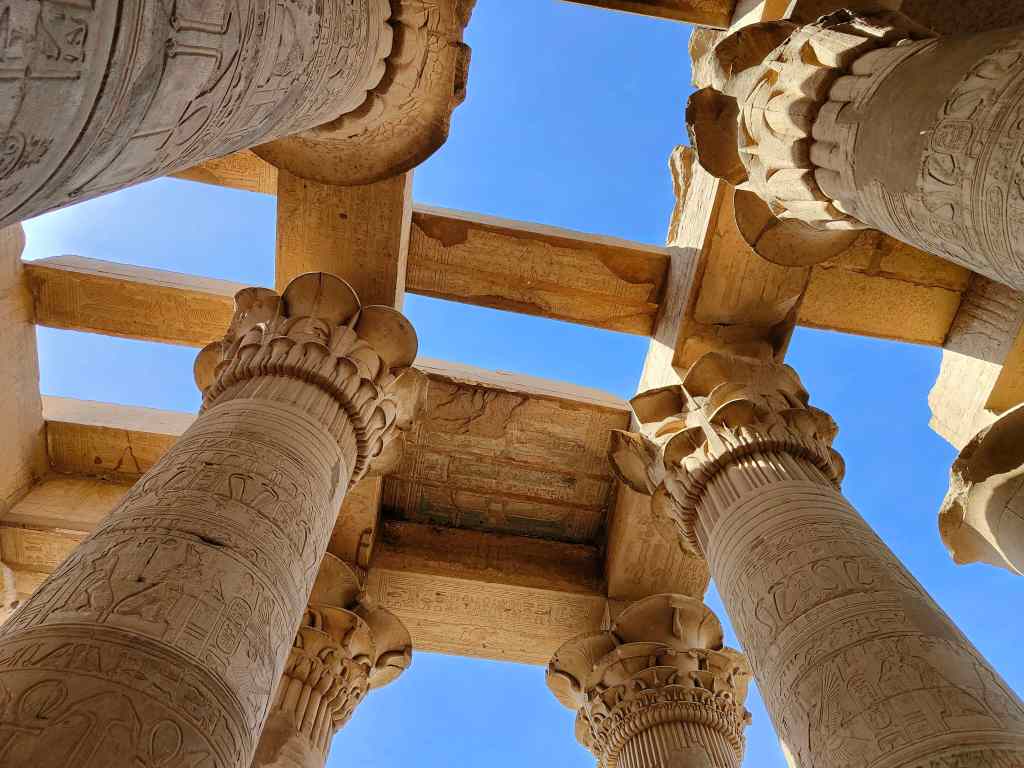
The next day, I left Aswan for my next destination, Luxor. On my way I visited two more temples. The first, Kom Ombo, is dedicated to both the crocodile-headed god Sobek and to Horus. Its courts and sanctuaries are all duplicated for its two gods. It was built around 100BC by Ptolemaic pharaohs. Although damaged by earthquakes and by builders seeking materials for other projects, the temple has a great site on a bend in the Nile, and I found its ruins very beautiful.  

Kom Ombo Temple

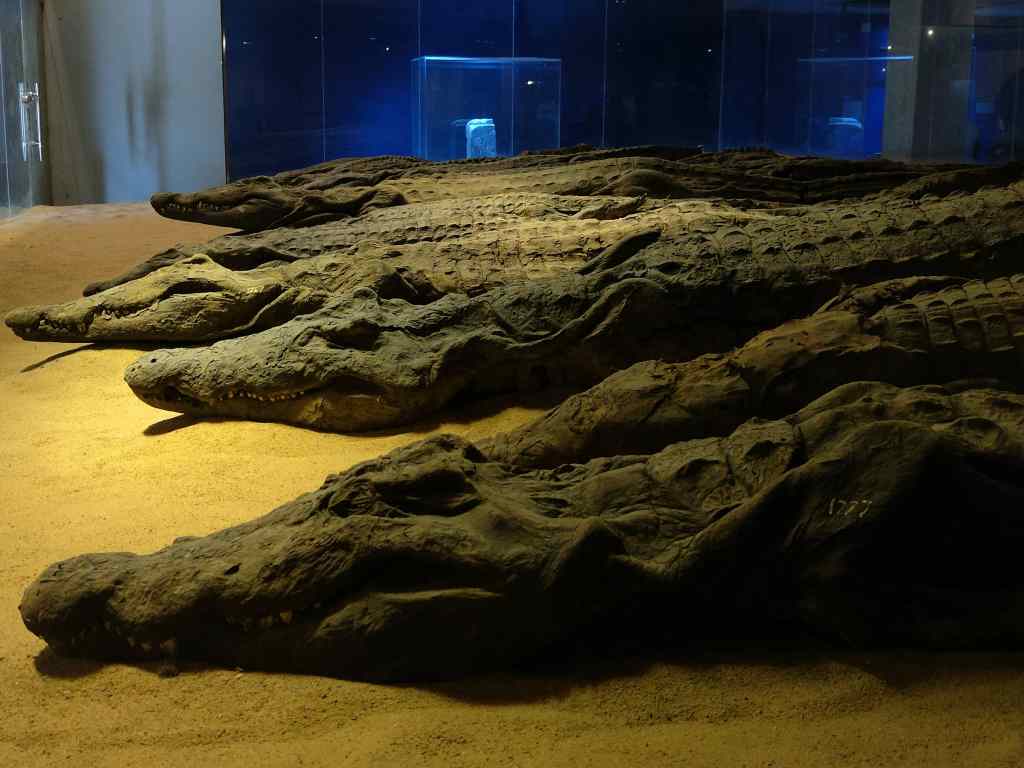
Near the temple was a museum with mummified crocodiles – sacred crocodiles used to live in a pool on the site.

Mummified Crocodiles!

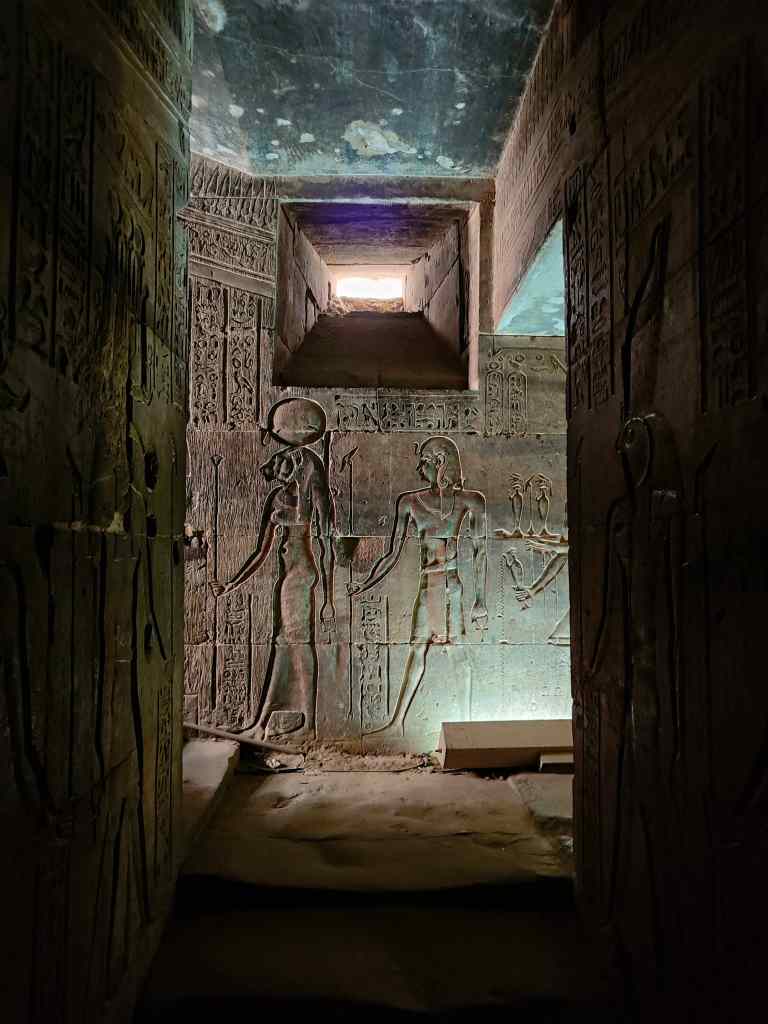
The second temple on my route to Luxor was Edfu, which was built from 237 to 57BC and is dedicated to the falcon-headed god Horus. Like the Great Temple of Ramses, it was forgotten and covered by sand until it was excavated by a French archaeologist in the mid-19th century. It’s long period of burial means that it is very well preserved, and unlike most other ruins, still has an almost intact roof. As a result, the interior of the temple was dark and atmospheric, quite unlike all of the other places I visited in Egypt, which were open to the skies.

Edfu Temple
The atmospheric inside of Edfu Temple

Edfu was a very impressive temple, but I felt I was reaching saturation point for seeing ancient ruins. This was a little worrying, since I was due to spend four days in my next destination, Luxor – home to some of the world’s most famous archaeological sites.

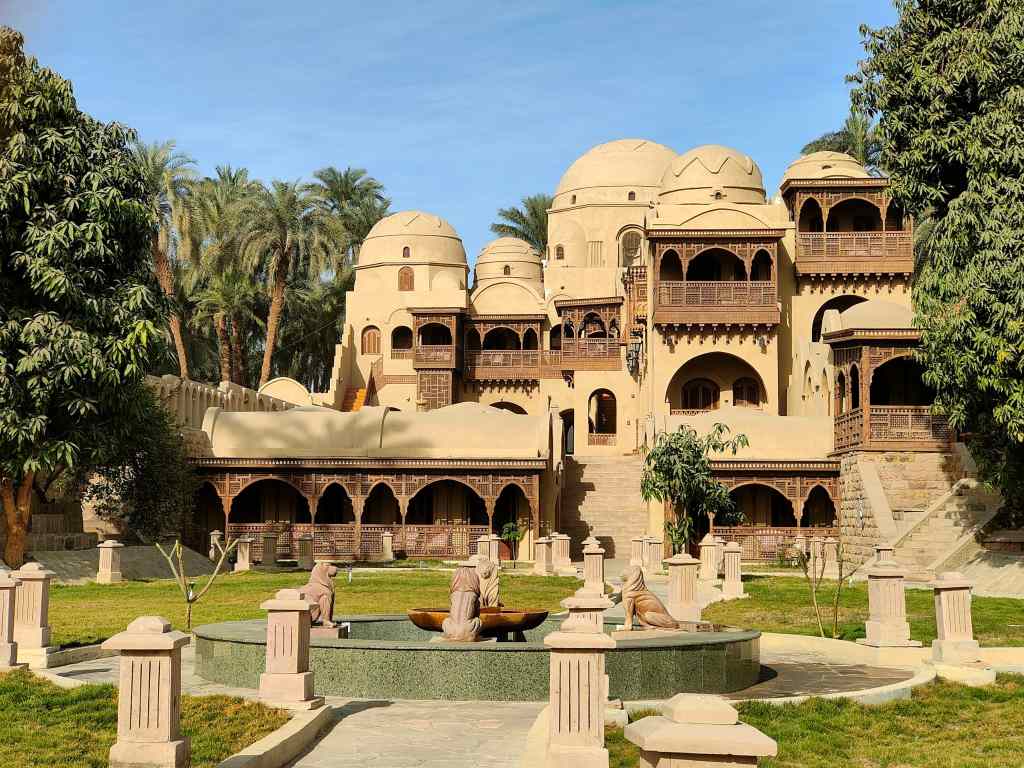
As we approached Luxor my driver scratched his head and looked hard at his sat-nav. We were heading for the west bank of the Nile, not the busy east bank where most of the hotels are. We entered a village-like area with narrow dirt tracks and simple buildings. We had to turn around once, as the route indicated went down a street too narrow for our car, but finally found my hotel – a huge place looking like an Arabian palace, totally unlike the modest houses all around.

My unusual hotel in Luxor

The hotel had been constructed by an Egyptian architect and his English wife. Neither had ever managed a hotel before, never mind built one, and the place had some quirks resulting from their inexperience. However its plus points easily outweighed these disadvantages. It occupied a huge plot, and behind the main building was a long strip of land with a pool and gardens, reaching right up to the River Nile. On both sides were fields with horses and buffalo.

The view across the Nile from the hotel’s garden – in the middle on the opposite bank, you can just see Luxor Temple

I was a bit worried about our remote location, but the hotel owner came to greet me and told me that they operated a free ferry across the Nile to get the city. After enjoying my room for a while, I decided to use this facility to cross the river to check out the centre of Luxor. It was now dark, and on the way to the pier, I got to enjoy another aspect of the hotel’s design. 

My hotel at night

The ferry dropped me off in a particularly drab part of Luxor to the south of the centre, and as I explored on foot, I was continually hassled by taxi drivers and the owners of horse-drawn carriages. I got a bite to eat in a pasta restaurant and headed back to the comfort of my hotel. My lodgings were really nice, but I had not liked my first impression of Luxor, and wondered whether I really wanted to see even more ancient ruins…….no matter how impressive they might be.

Next Post: Luxor’s East Bank and Karnak

Previous Post: Abu Simbel

Abu Simbel and the Great Temple of Ramses II

The next couple of days were devoted to temples…and lots of driving. First, I made the long trip south to Abu Simbel, near the border with Sudan to see the Great Temple of Ramses II, one of Egypt’s most famous monuments. Getting their required a three-hour drive. After a couple of hours being driven through featureless, dull desert, the side of the road suddenly became green with crops grown using the water from Lake Nasser – but soon that too became rather boring. Fortunately, the temple was worth the effort of getting there. It was located on a pretty site, next to the bright blue waters of Lake Nasser.

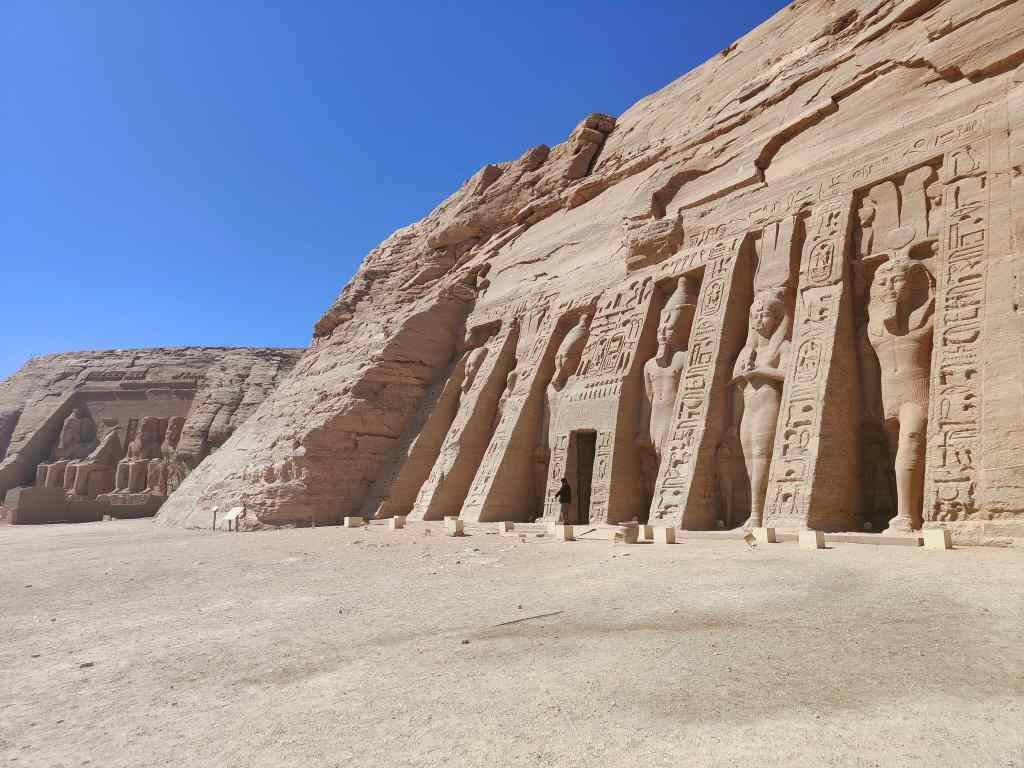
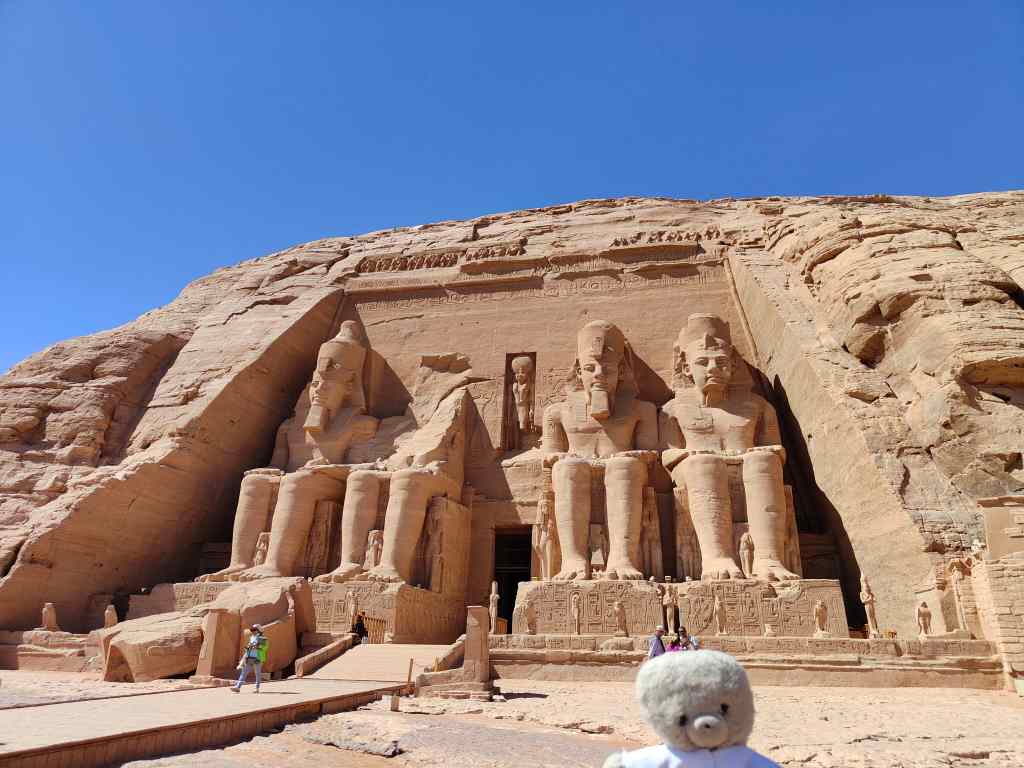
The spectacular site of the Great Temple of Ramses and the Temple of Hathor

The Great Temple of Ramses II has a long and interesting history. It was built in the 13th century BC and orientated such that the rising sun would shine right through the temple to its inner sanctuary on exactly two days each year – Ramses’ birthday and the anniversary of his coronation.  After the fall of the pharaohs, it was forgotten and was almost completely covered by sand. A Swiss archaeologist stumbled across the top of the head of one of the four giant statues of Ramses that guard the temple’s entrance and started excavating to uncover the Great Temple of Ramses II and the nearby Temple of Hathor. The temple was nearly lost again when the Aswan dam was constructed. Like the Temple of Isis at Philae, it was one of several important archaeological sites that were moved to higher ground by an international group of archaeologists to save them from being submerged. The Great Temple of Ramses II was possibly the most challenging such project. It involved cutting the temple into hundreds of blocks, averaging 20 tonnes each, creating an artificial hill to provide the temple’s backdrop, and rebuilding the temple in the newly created cliff. The engineers also tried to mirror the orientation of the old site as closely as possible but could not get an exact match – the rising sun now illuminates the sanctuary one day later than it did the original temple. I had timed my trip well – my guest house owner had advised to leave early, and many people leave at six in a convoy of vehicles from Aswan with a police escort, a relic from the time that the road was considered a target for terrorists. Instead, I left at a leisurely half past eight and arrived at half past eleven, missing all of the tour groups.

The temple of Hathor with the Great Temple of Ramses II in the backgound

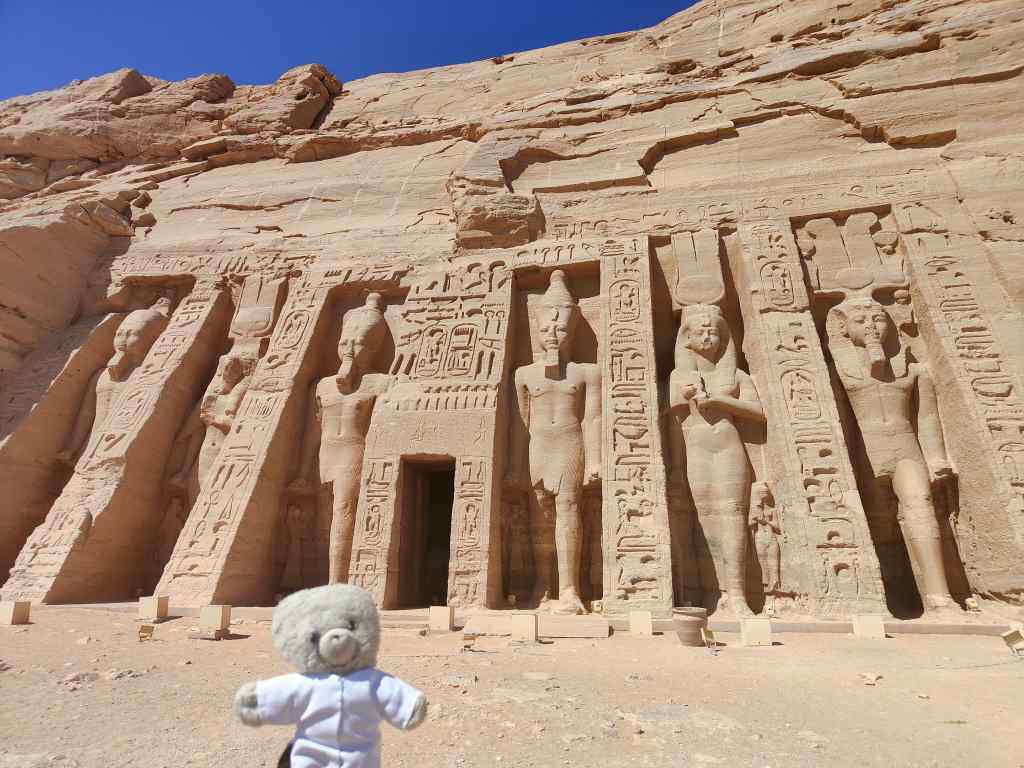
First, I visited the Temple of Hathor, the goddess of love. The entrance had three large statues of Ramses and his favourite queen, Nefertari; unusually she was represented on the same large scale as her husband (usually wives and children were carved much smaller).

The temple of Hathor
Inside the Temple of Hathor

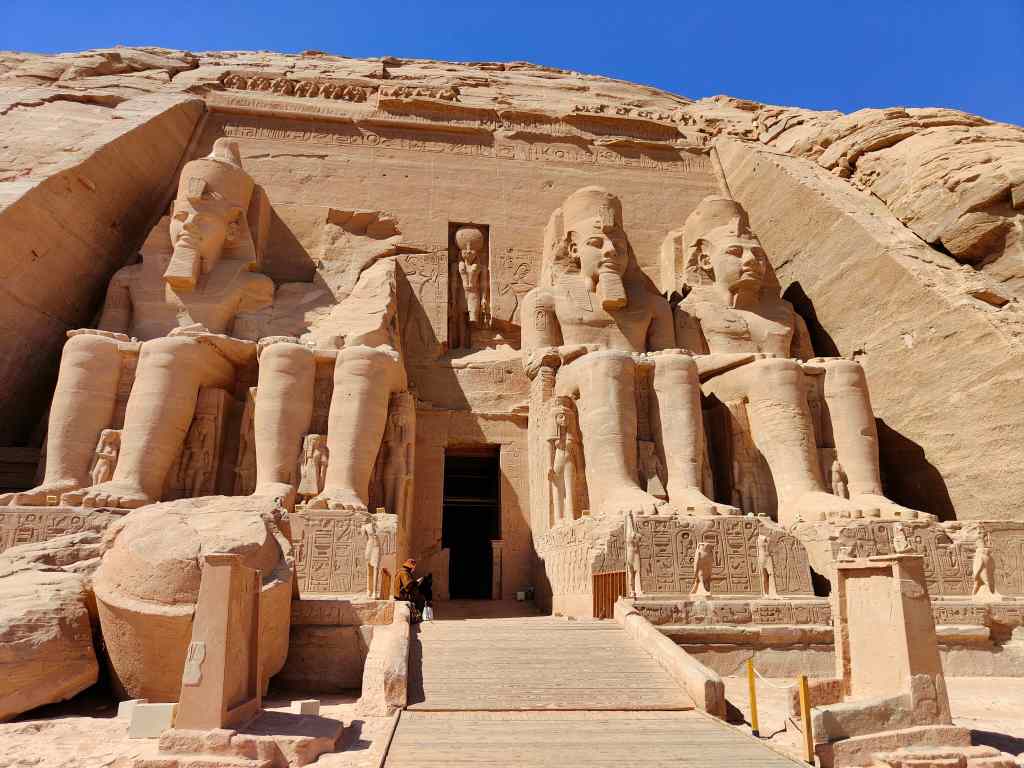
Next, I visited the main attraction, the Great Temple of Ramses II. It is dedicated to the gods Ra, Amun and Ptah………but is mostly a tribute to Ramses II himself. The four huge statues of him at the temple’s entrance are one of Egypt’s most widely recognised sights, and in real life are just as impressive as they are in photos.

The Great Temple of Ramses II

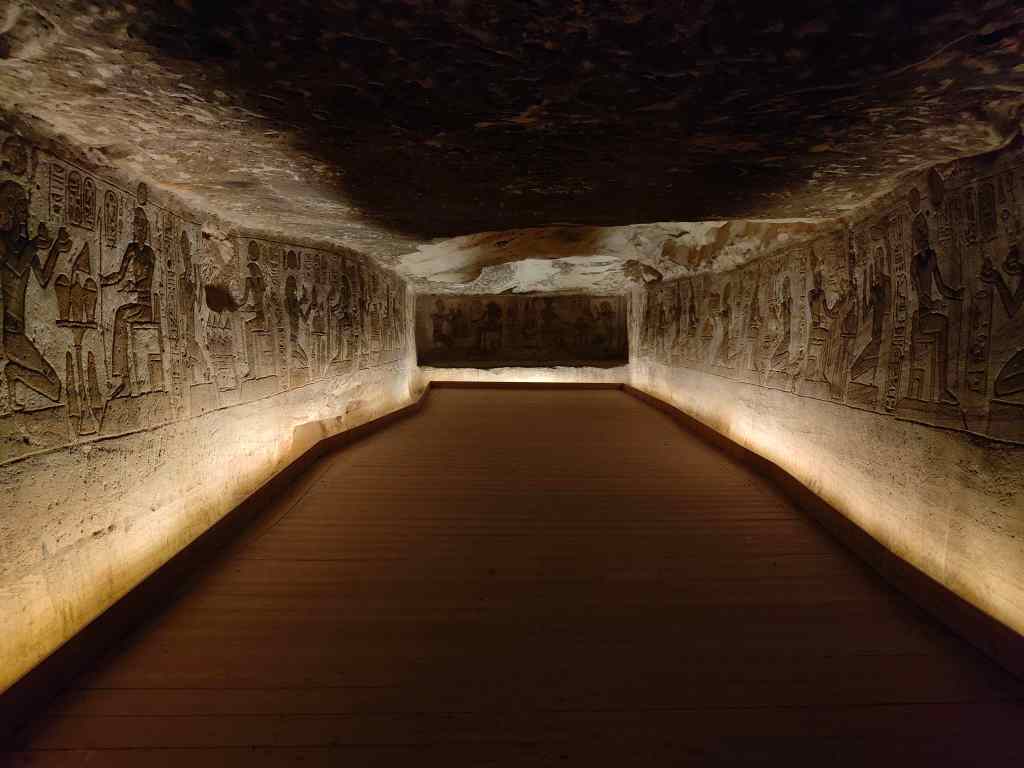
The interior of the temple has scenes from the life of Ramses II. He probably became pharaoh at the age of 21 (though some sources say even earlier) and may have died aged 90 – a reign of around 70 years. Egyptians say he was a “busy” man. He fought many battles – including a key victory over the Hittites that secured the independence of Egypt- constructed cities, temples and monuments and had over 100 children from fourteen wives. His favourite wife was Nefertari, and he built a magnificent tomb for her in the Valley of the Queens in Thebes (now Luxor).

Ramses slaughtering the Hittites

Several passages led into the rock away from the main temple – probably they were storage areas
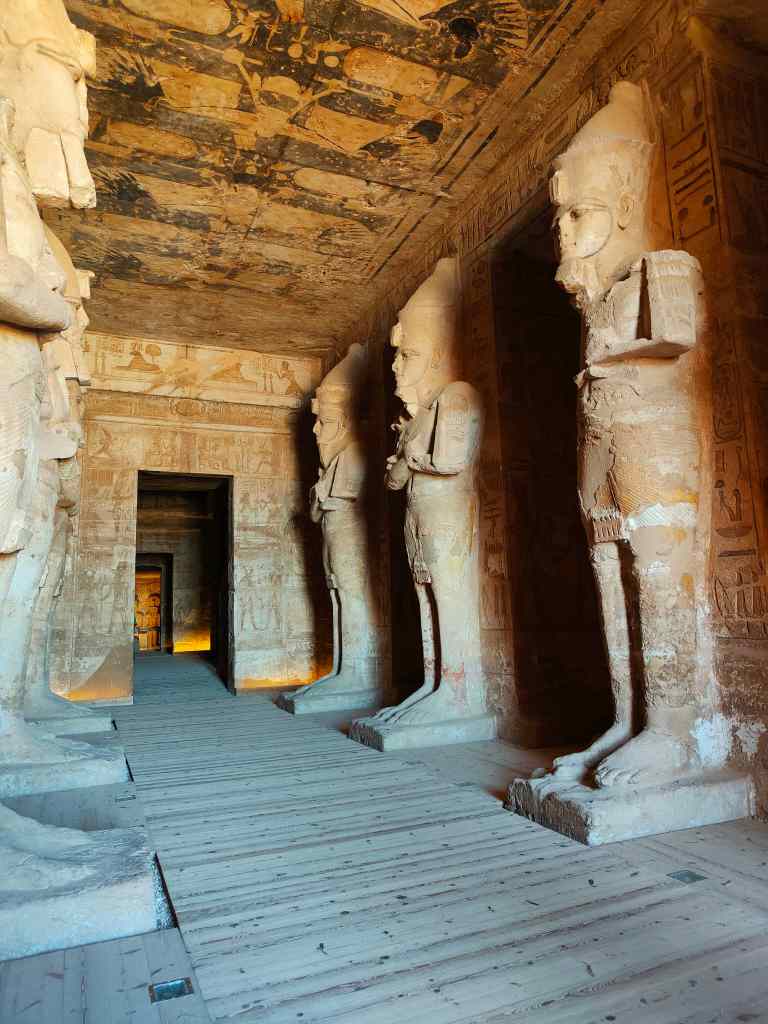
Yet more Ramses statues inside

The Great Temple of Ramses II is an amazing sight and a monument to the things humans capable of when they work together. Construction of such a large and beautiful temple, 2500 years ago, at the very edge of the area controlled by Ramses’ Egypt was an astonishing achievement. But so too was the international project to save the temple from flooding by moving it piece by piece to a new location. If only today’s humans could rediscover this spirit of cooperation.

Previous Post: A day on the Nile

Next Post: From Aswan to Luxor

A Day on the Nile and the Temple of Isis, Philae

Today was a very busy day. I had breakfast on my guest house’s roof terrace just as the sun was rising.

Aswan – The view at breakfast

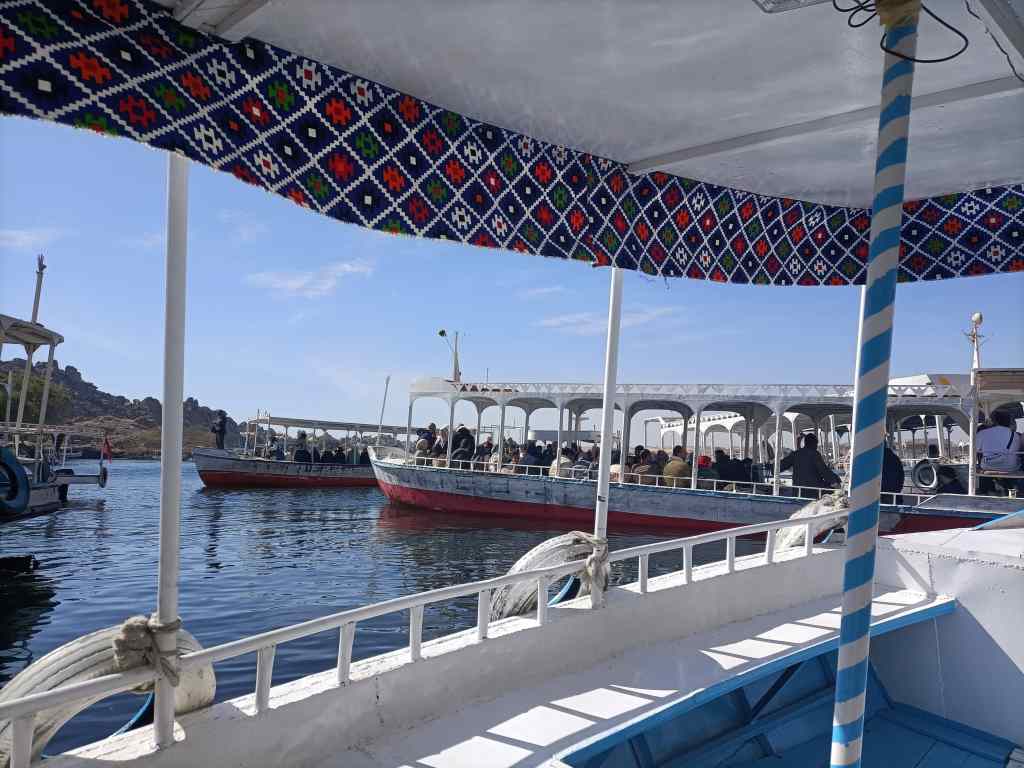
Then I crossed over the mainland with the public ferry and made a short drive by taxi to the banks of Lake Nasser (formed by the Aswan Dam) to visit the Temple of Isis at Philae. It was the last day of Egyptian school holidays, and the temple was a popular destination for local tour groups and families with children. At the lake’s edge, many boats jostled to take visitors over to the island where the temple was located. I negotiated a rate for a private boat. The boatman seemed very happy to take an exotic passenger rather than yet another group of locals – not many bears visit Egypt.

Boats jostling to get to Philae Island

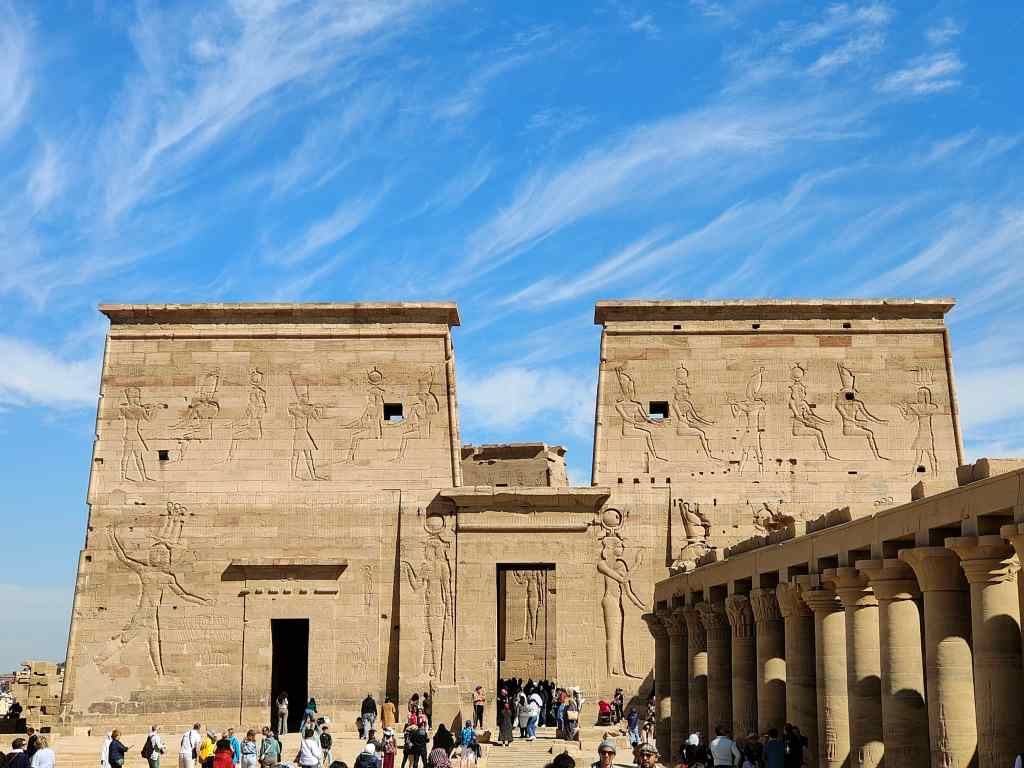
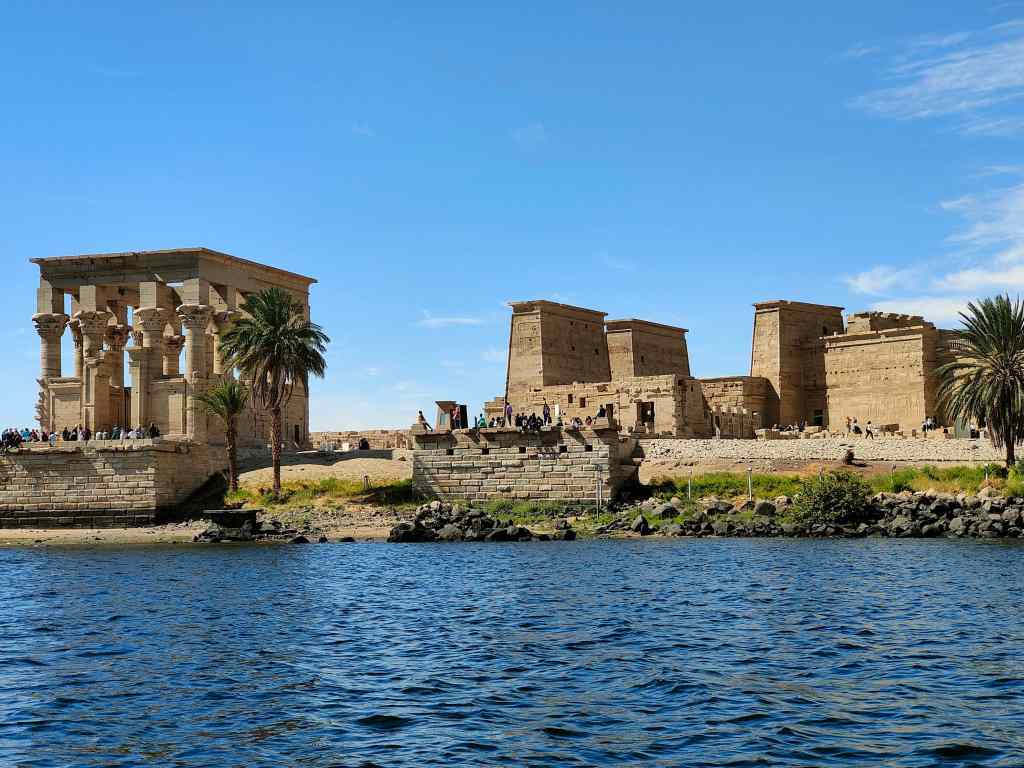
The Temple of Isis is relatively modern by Egyptian standards. It was started around 690BC, though most of it was built around the third century BC by the Ptolemaic pharaohs (Egypt’s last dynasty of pharaohs before Roman rule). The Romans added some sections of their own – the Egyptian goddess Isis had become popular throughout their empire. After the Romans adopted Christianity, the temple was used as a Christian shrine, and most of the images of Egyptian gods were defaced. After the first Aswan dam was built in 1902, the temple was regularly flooded. The second Aswan dam in 1970 threatened to totally submerge the temple forever, but it was moved piece by piece to a new island with higher ground as part of the international effort to save the antiquities threatened by the new dam.

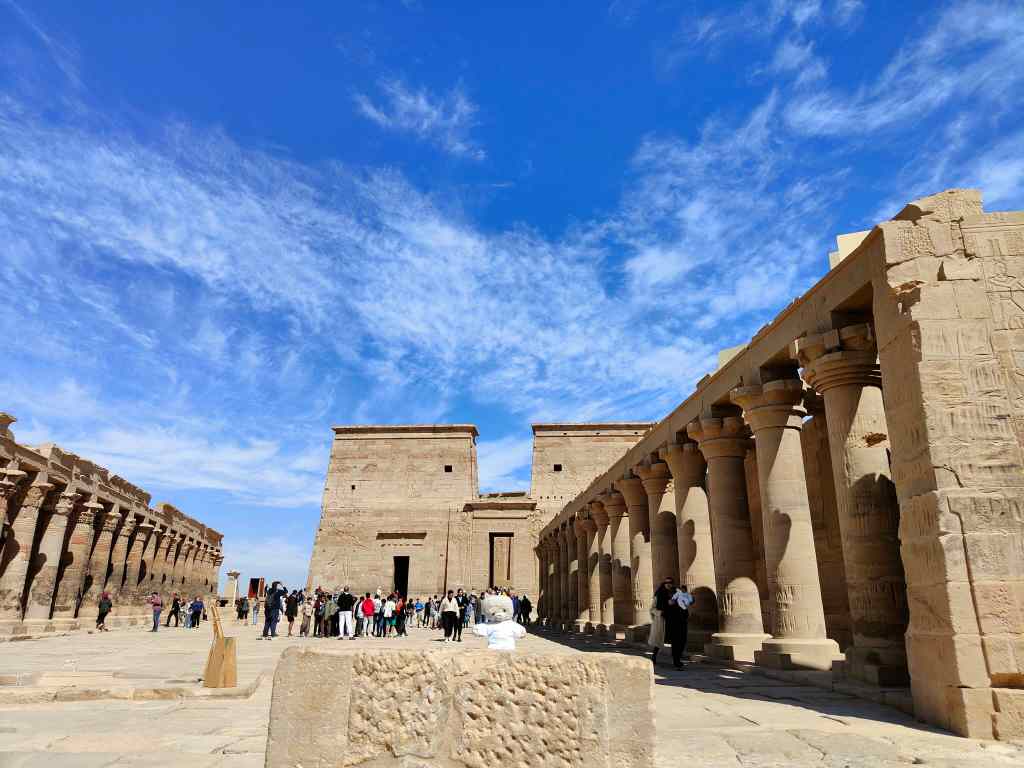
The Temple of Isis

I spent an hour and half admiring the different buildings making up the complex – including the courtyard of the main Temple of Isis….

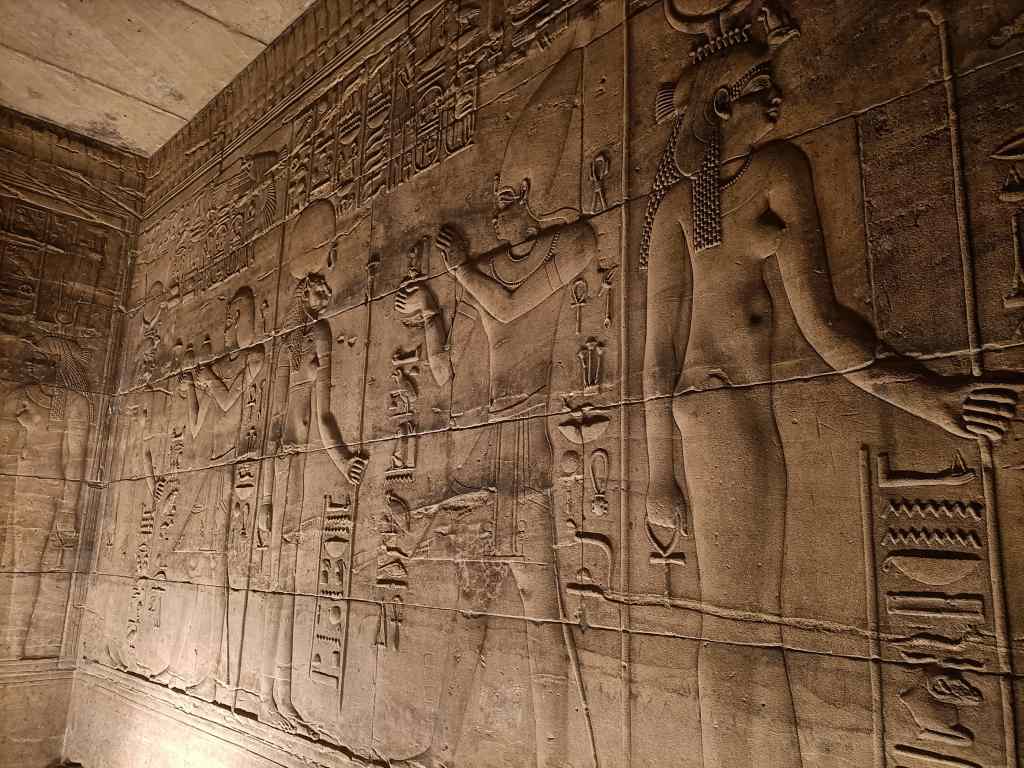
…….the interior of the Temple of Isis…….

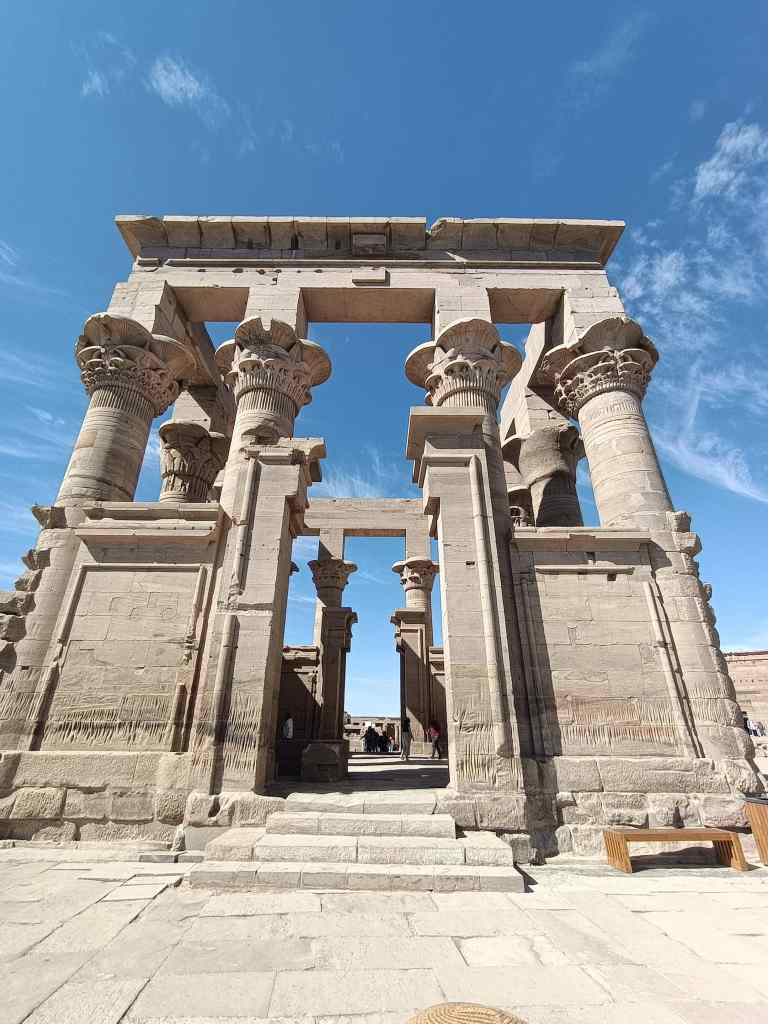
……and the kiosk of Trajan, named after the Roman emperor.

Kiosk of Trajan, Philae Island

The site was busy, and I found I could take some of the best pictures – without anyone getting in the way – from the boat on the way back.

The Temple of Isis seen from Lake Nasser

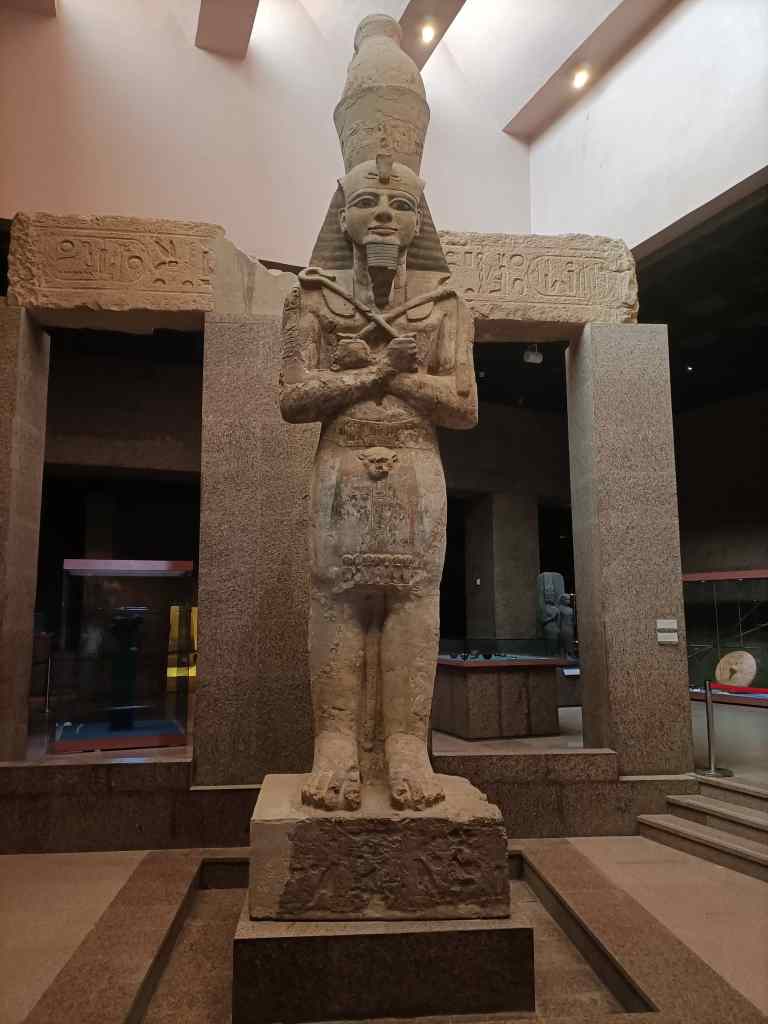
Next my taxi dropped me off at the Nubian Museum in Aswan. This catalogues the history of the state of Nubia, that spent most of its existence being occupied by, or having to pay tribute to, its more powerful Egyptian neighbour to the south.  The history was interesting, but the items on display suffered from comparison with the Egyptian Museum in Cairo, which I had visited only two days earlier.

In the Nubian Museum, Aswan

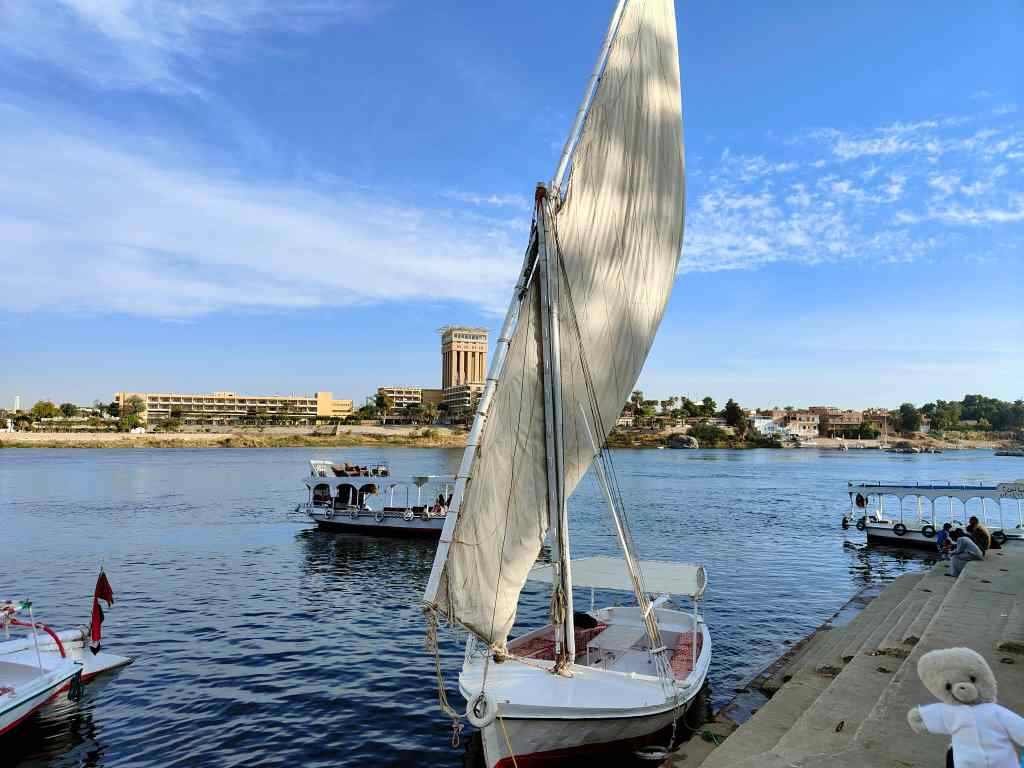
After visiting the museum, I had lunch and a coffee in a café overlooking the Nile and then I set off on a trip on a “felucca” – a traditional Egyptian sailing boat..

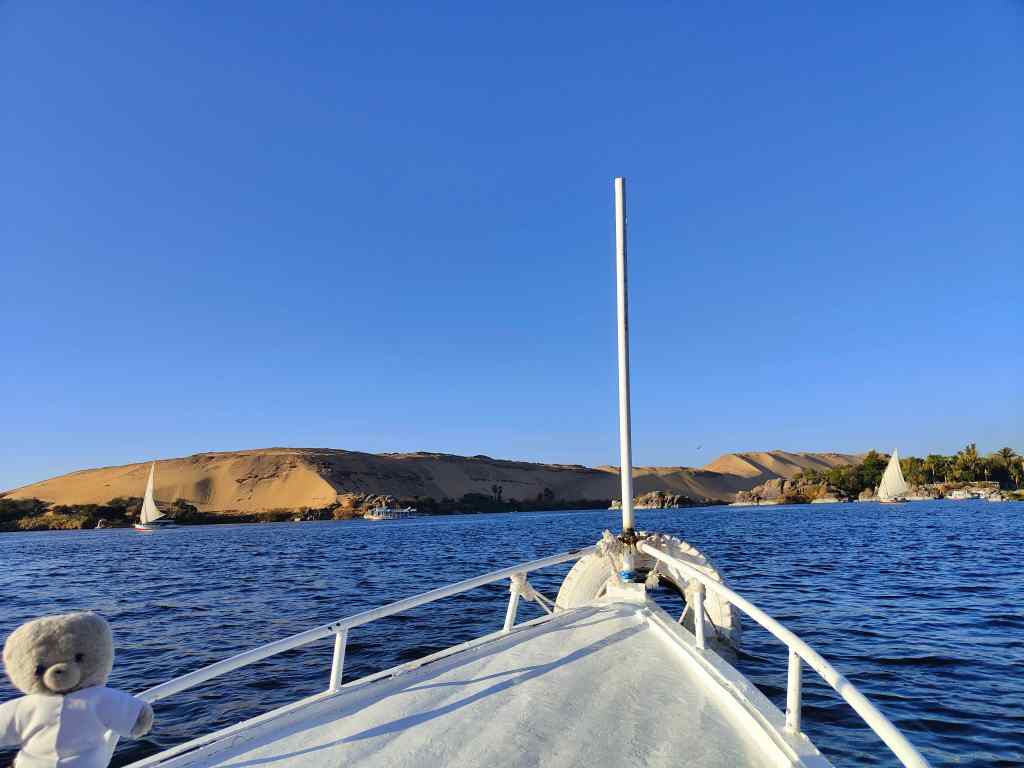
Starting my Felucca trip at Aswan

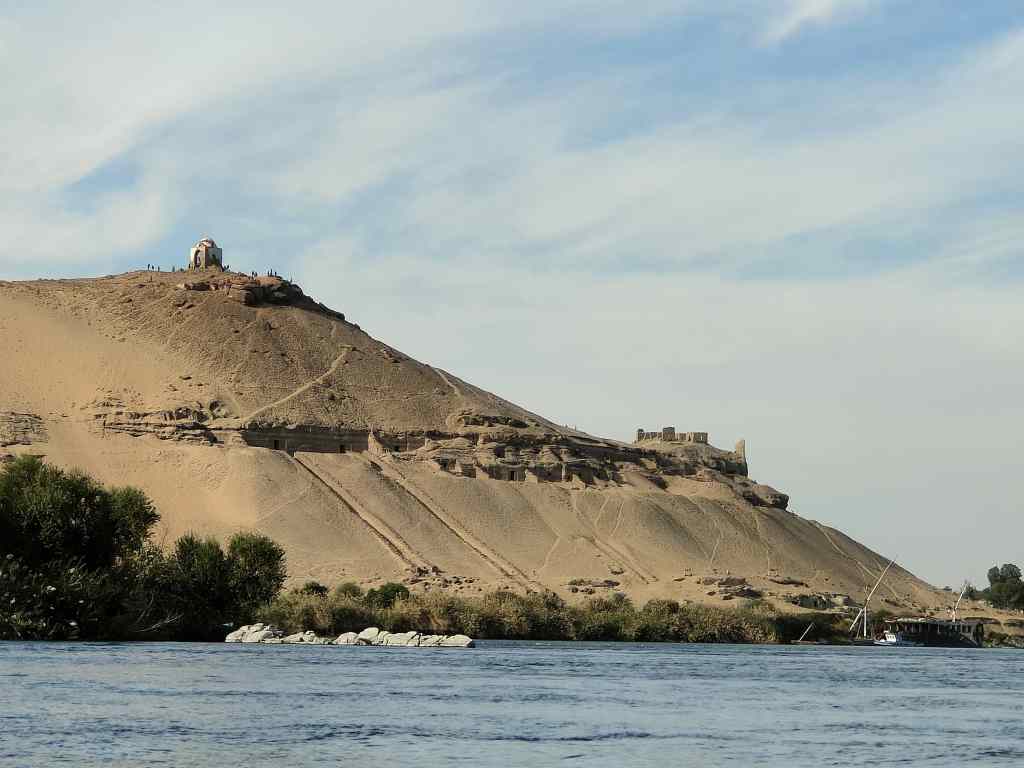
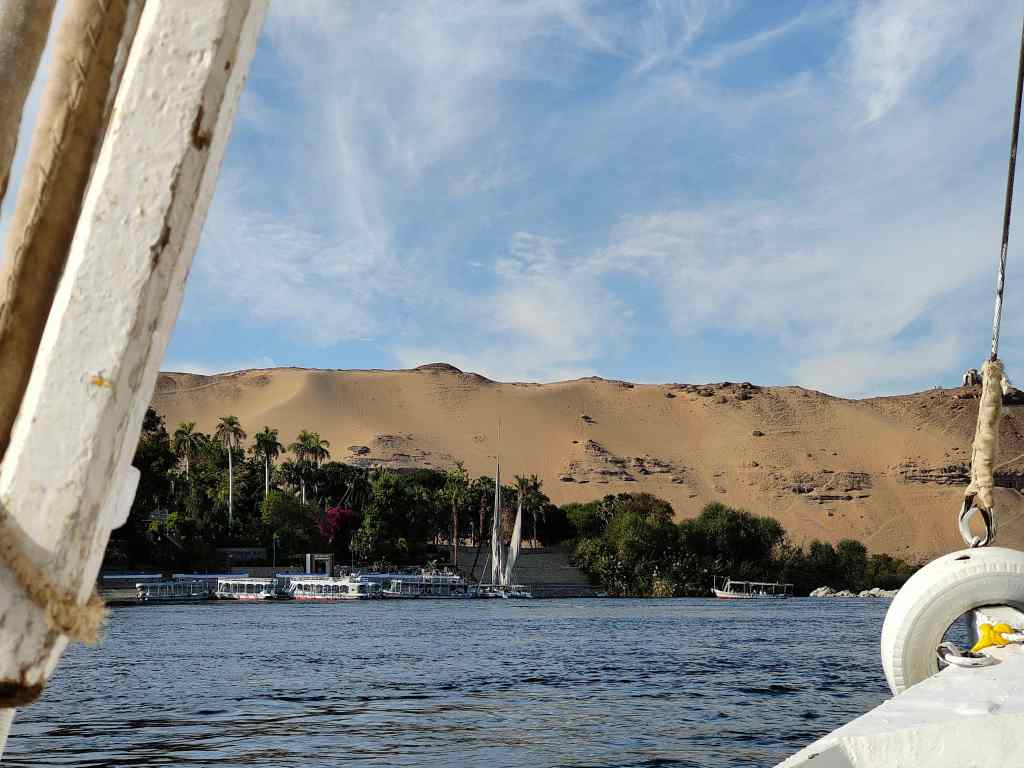
The weather was warm and sunny, and my trip offered great views of the mountains on the west bank of the Nile – every hill seemed to have some ancient ruin built on it.

The West Bank of the Nile at Aswan

I asked the boatman to drop me briefly at Aswan’s botanical gardens, located on one of the many islands in this part of the river. In Victorian times, the island was given to the British general Lord Kitchener, who was passionate about exotic plants and turned the area into gardens. The story about their foundation was more interesting than the gardens themselves, and I was soon back on my boat enjoying the early evening sun.

Kitchener’s Island, Aswan, home to the Botanic Gardens
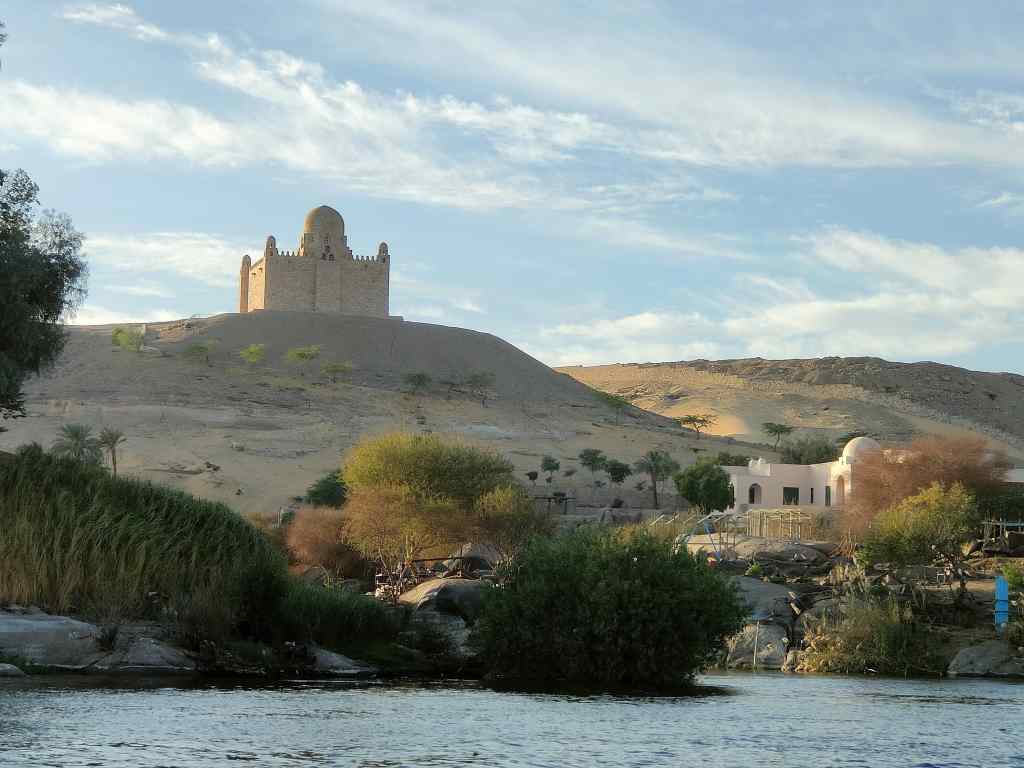
The Mausoleum of the late Aga Khan – head of the Ismaili Muslims

The boat dropped me off back at my guest house on Elephantine Island and I set off immediately to the northern tip of the island to enjoy the sunset from the ruins of Abu. This area contained ruins of many different ages – some as old as 3000BC and some as recent as the 14th century AD – all jumbled together and most in an extreme state of dilapidation. One of the most interesting ruins was a “nilometer” – a set of steps going down to the river, flanked with stones with measuring markings that showed the height of the Nile. This was a very important instrument, because in ancient times, the pharaoh set taxes based on the maximum height of the river during its annual flood. A higher flood meant more water and more rich sediment washed down from central Africa, and so better crops for the kingdom’s farmers.Getting in was a typical Egyptian experience – the security guard said the site was closed for the evening but I could get in if I paid him the normal entrance fee. The ruins were just that – ruins – but the site was a great place from which to enjoy the setting sun.

Sunset at the northern tip of Elephantine Island, Aswan

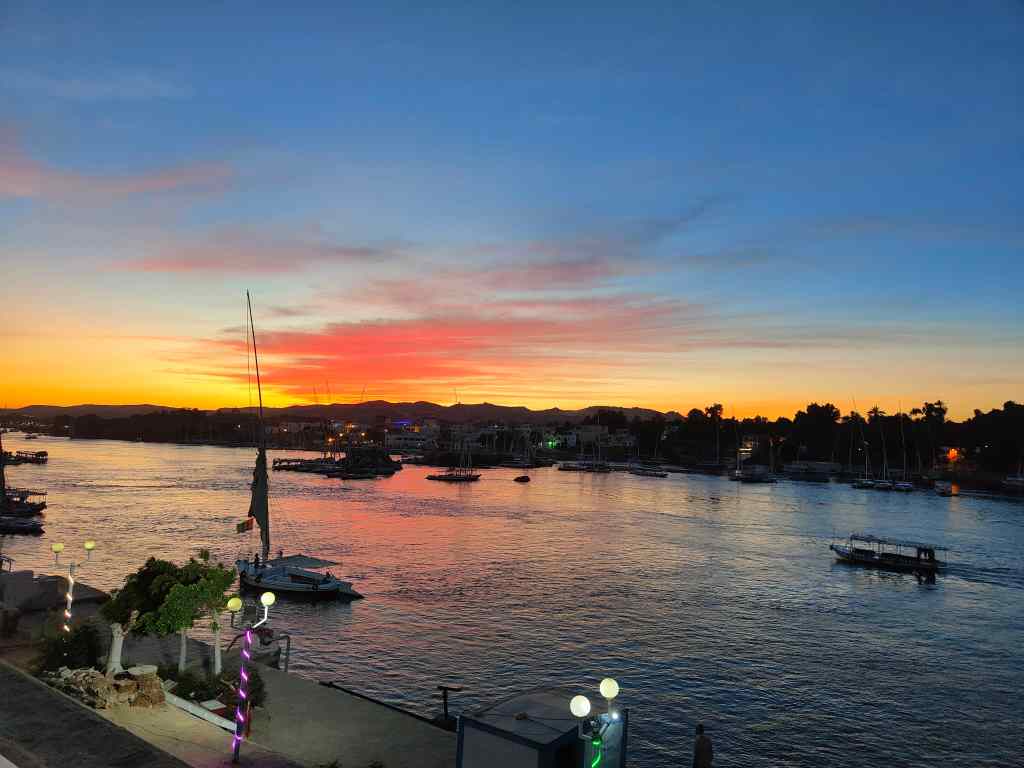
The final part of the day was enjoying an early dinner and a fiery red sunset from a restaurant in Aswan city.

A Nile sunset at Aswan

It had been a very busy day, but I got home early enough to write a bit of my blog and make my first post before collapsing into bed. My guesthouse had basic furnishings, but its internet worked a lot better than that of the modern hotel I stayed at in Cairo.

Previous Post: Cairo to Aswan

Next Post: Abu Simbel and the Great Temple of Ramses II

From Coptic Cairo to Aswan and the Nile
During the night I found out that the “Blue Nile” riverboat moored nearby (see previous post) was a nightclub which played very loud music into the early hours of the morning. The songs were clearly audible in my hotel; the volume inside the boat must have been deafening. The nightclub, combined with the honking of car horns, the screaming of police sirens and the early morning call to prayers from the nearby mosque all meant that I slept badly. Like New York, Cairo is a city that never sleeps.

In the afternoon I was due to fly to my next destination, Aswan. I would come back to Cairo for a few days at the end of my trip, but today I had to choose which of the city’s attractions to see in a sleep-deprived morning. I opted for Coptic Cairo. The Copts are a minority Christian group and their church – the Coptic Orthodox Church – is one of the oldest branches of Christianity, which legends say was brought to Egypt by St Mark in AD 42. Under the Romans, Christianity eventually became the official religion of the whole empire, and for a while was the main religion of Egypt. The Coptic Church split from the main Christian church in 322 following a disagreement about the exact divine nature of Christ. After the Arab conquest of Egypt in 642, Islam gradually displaced Christianity to leave the Copts as a small minority.

View of the main street of Coptic Cairo

Coptic Cairo is a small enclave of old Cairo which houses many churches, but also the Coptic Museum, a synagogue and a mosque. To get in, you need to pass through a bag check and every hundred metres in the main street, armed police were stationed. Egypt has had a long history of bloody terrorist attacks, and security for any area that draws crowds is always tight.
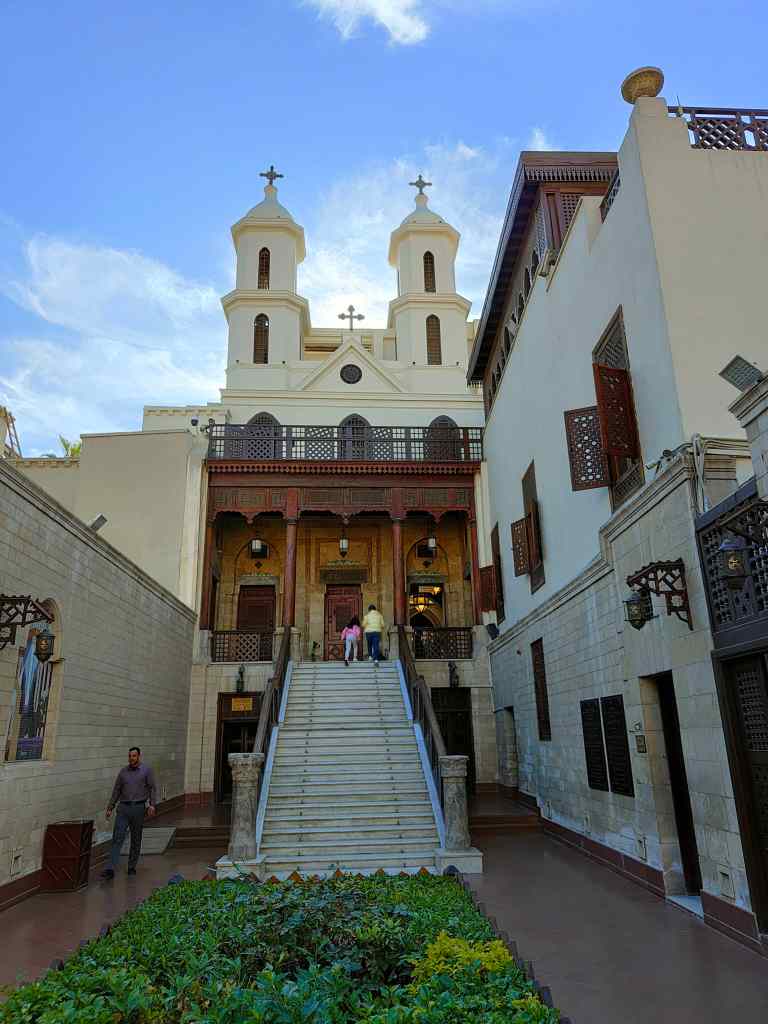
Once through the security check, it was like entering a different world. The anarchic traffic of Cairo was replaced by one empty central street (cars are not allowed in) and a wonderful calm. I started my visit at the Hanging Church, so called because it was built on top of the gate of an old fortress. The church was originally built around 690AD, though a new façade with two bell towers was added in the 19th Century. It is probably the most famous of Coptic Cairo’s churches.
The Hanging Church

Next, I found the Greek Orthodox Church of St George

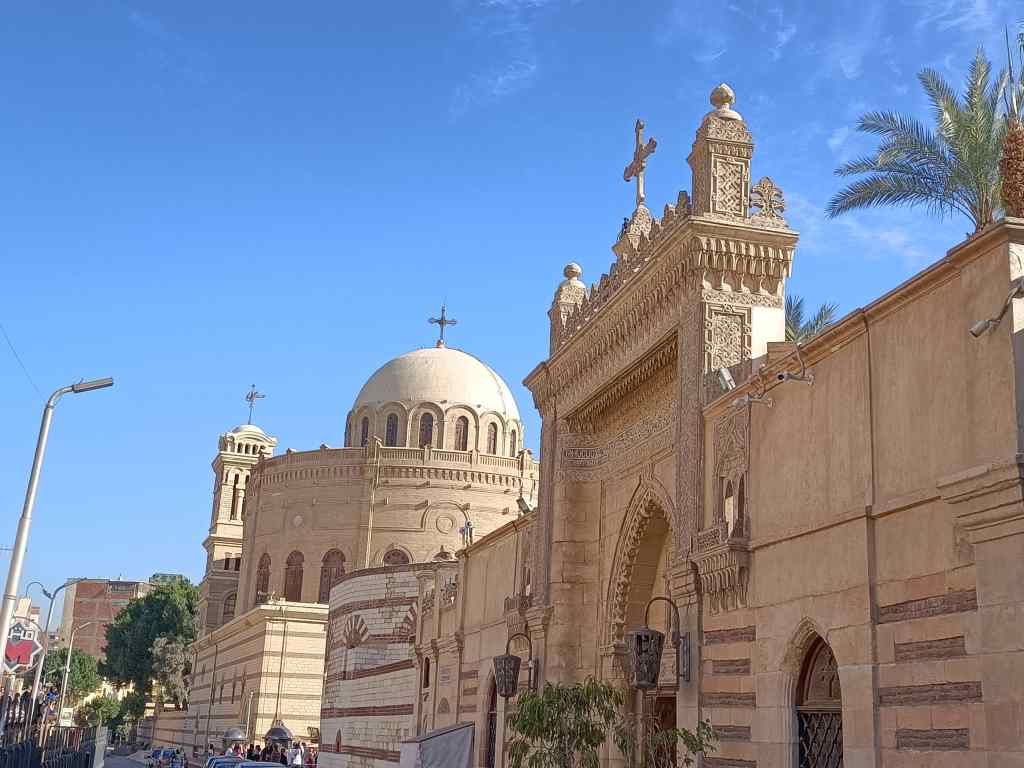
Church of St. George

And then the Coptic Museum, which I strolled around for about an hour. It had collections of Coptic art, icons and fabrics; the old building it was housed in was as interesting as the collections themselves.

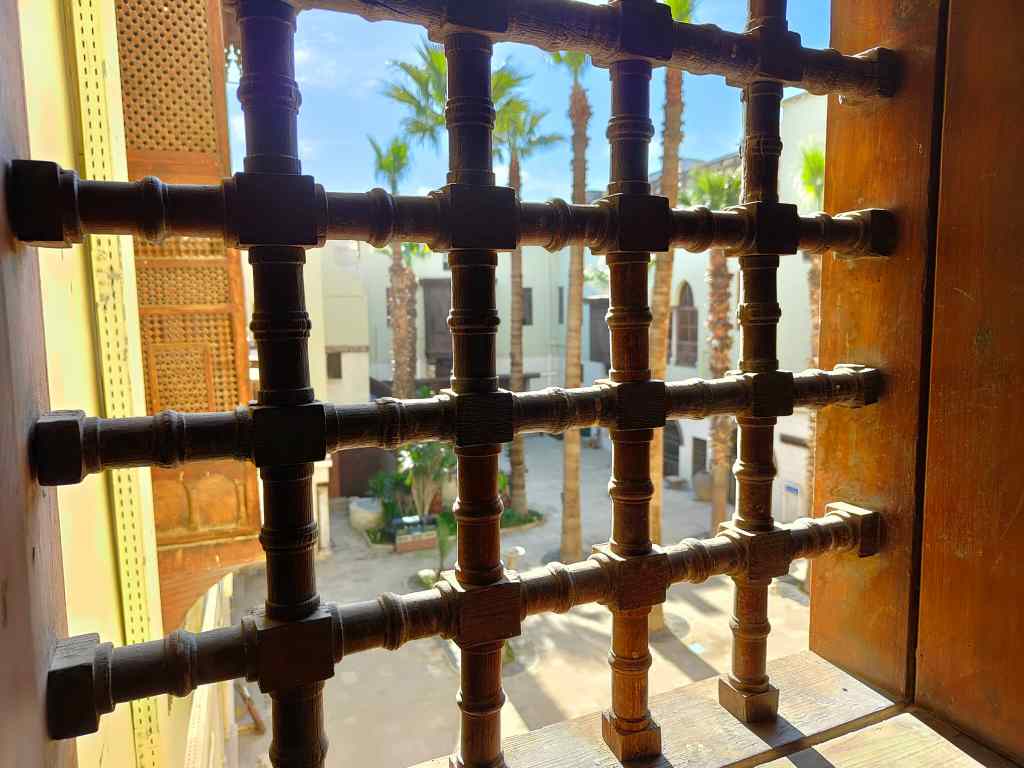
Looking out from the Coptic Museum
In the courtyard of the Coptic Museum

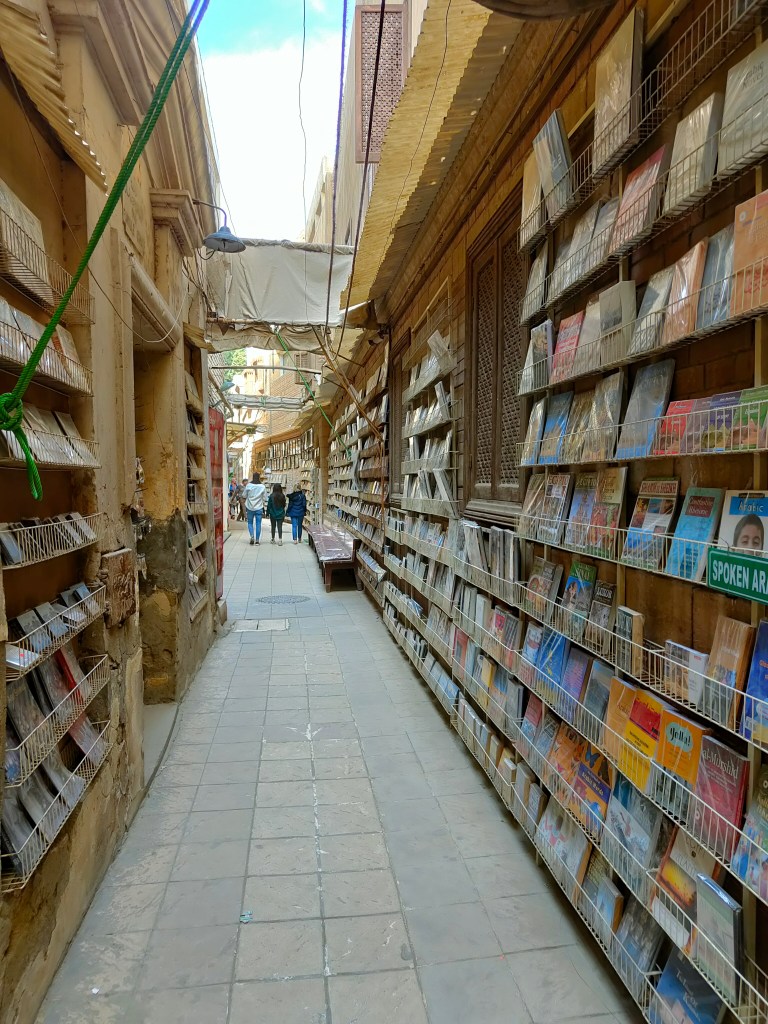
Finally, leading off from the only road, I found a little maze of side alleys, leading to yet more churches and a synagogue. When I arrived, Coptic Cairo had been quiet, but now there were many visitors – some Egyptians on a weekend outing, and some foreign tour groups, which mostly seemed to be Russians.

Bookseller in Coptic Cairo

It was time to move on, and I grabbed an Uber back to my hotel to pick up my bags and then another one to the airport. It was Friday, the first day of the Arab weekend, so everything went very smoothly with no traffic jams. At the airport I was treated to one of the toughest security checks I had ever had – shoes, belt and watch all had to be removed and scanned, and then I was thoroughly “frisked” for concealed weapons in my fur.

The flight flew over endless yellow desert sand, interspersed with a few mountains. Occasionally I caught a glimpse of the blue ribbon of the river Nile lined with bright green vegetation on both banks.  I arrived on time in Aswan, a town on the Nile that was the historic boundary between the ancient Egypt of the Pharaohs and the rival Nubian state. The latter enjoyed brief periods of independence but spent most of its history occupied by, or subjugated by, its more powerful southern neighbour. Today, Aswan is also known for the famous Aswan dam.

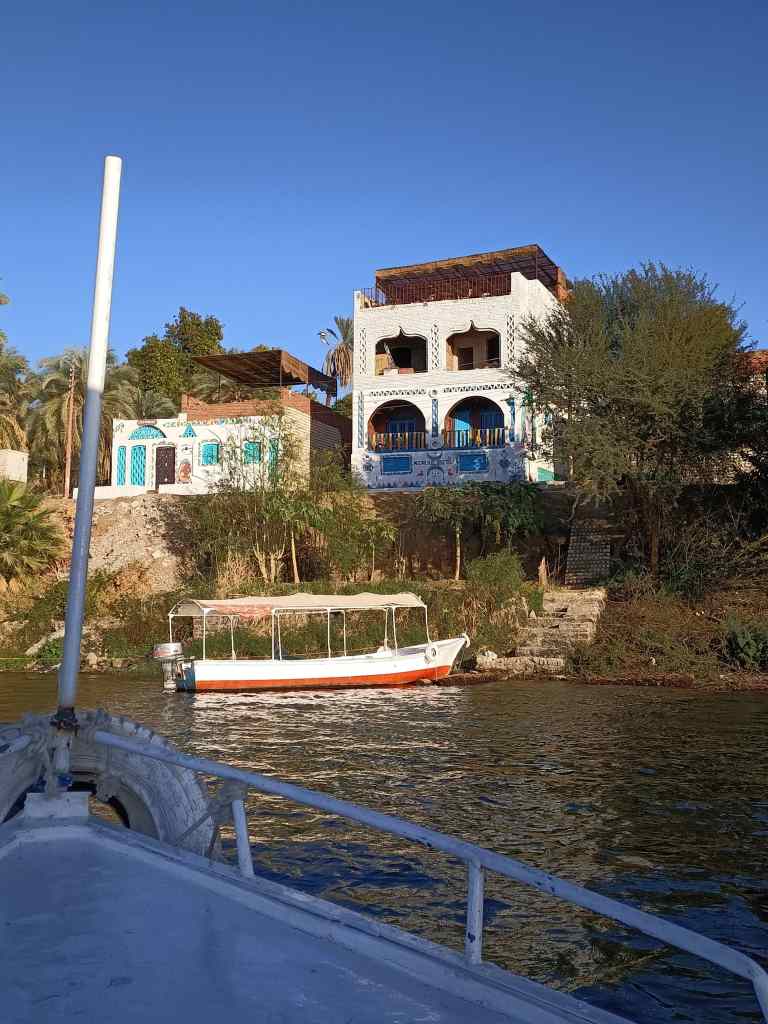
My guest house was on Elephantine Island, a place only accessible by boat. It has several ancient ruins, one ugly modern hotel, and many small townhouses. Some of these were painted with distinctive Nubian bright patterns of coloured geometric shapes. My guest house was on the other side of the island, and its owner picked me in his motor launch to take me there. It was the first of many times I got to experience the pleasure of sailing on the Nile.

On the way to my guest house at Aswan……
…..and arriving (my guest house is on the left)

I arrived just in time to have a welcome drink on the roof terrace.  The view was beautiful, and the owner pointed out local landmarks like the Mausoleum of the last Aga Khan (head of the Ismaili Muslim sect) and the Monastery of St Simeon. After the chaos of Cairo, it was wonderfully peaceful……if rather chilly after sunset. I was glad of my fur!

The view from my balcony, Aswan
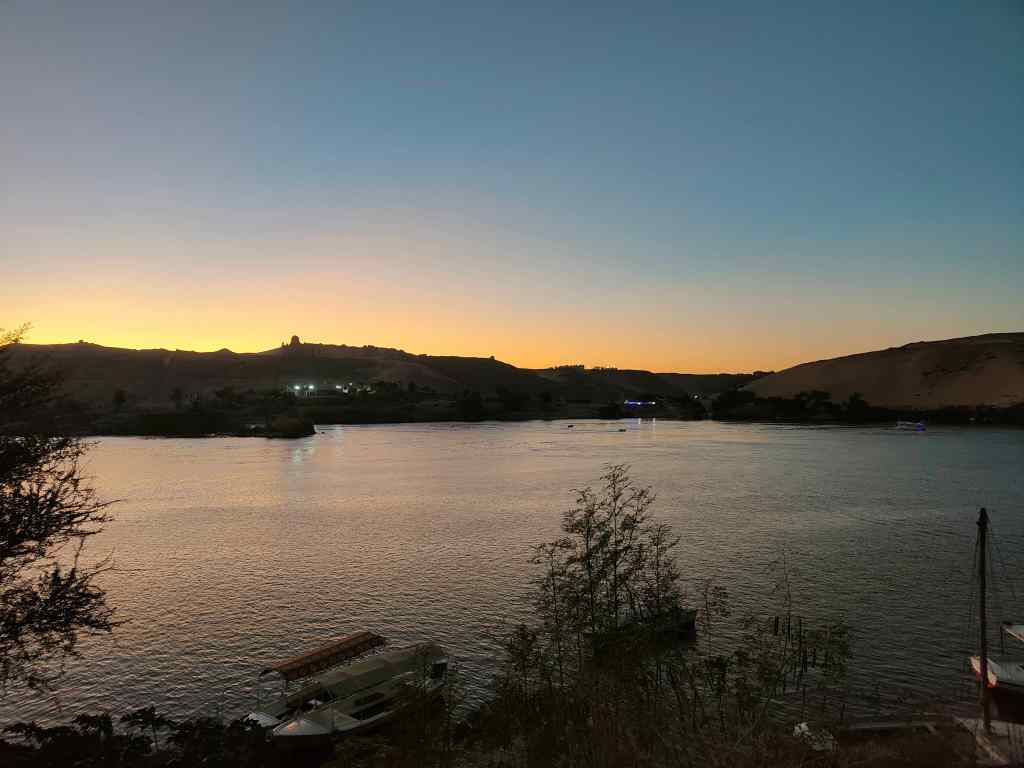
The sun sets over the Nile, Aswan

I decided to explore the island and see if I could reach the hotel, which had a panoramic terrace and bar in its ugly modern tower. I walked through a maze of twisting and turning small streets with no names…amazed to find that Google Maps could navigate through the area. When I had nearly reached the hotel, someone told me that it was surrounded by a wall and only accessible by special ferry from the main city. Instead I found a restaurant at the river’s edge, and enjoyed a beer watching the lights of Aswan city in the distance and listening to the boats chugging past.

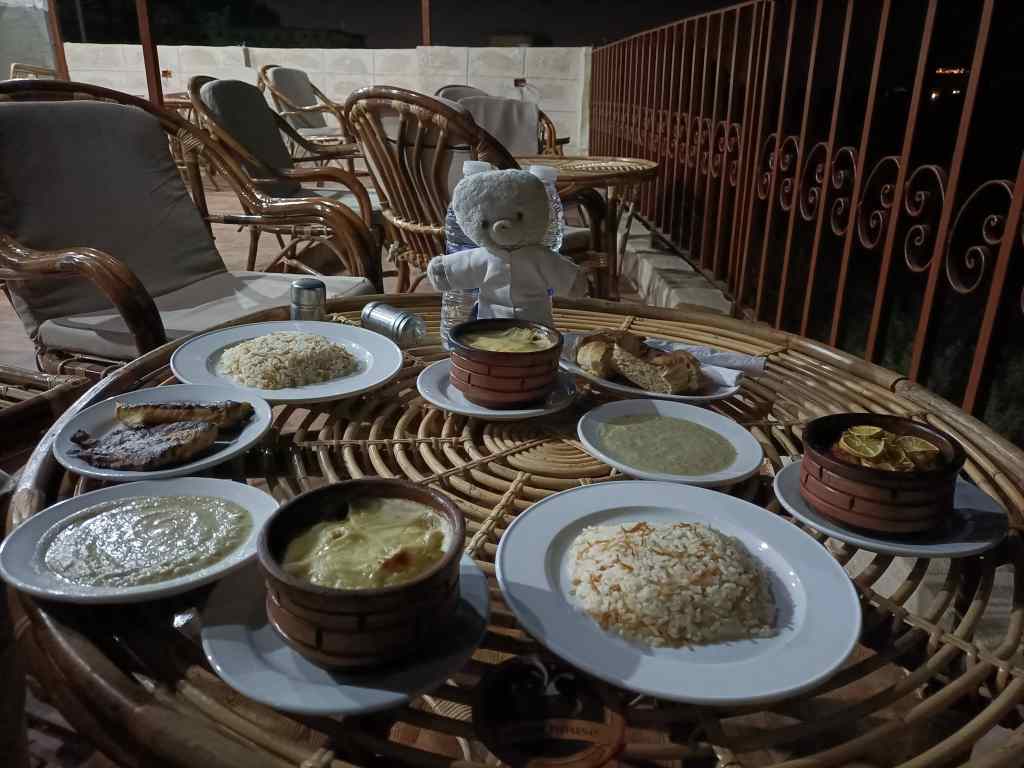
I had dinner back in my guest house, and enjoyed freshly caught Nile perch……..

A feast of fresh Nile Perch

…… before wrapping myself up in warm blankets in bed.

Next Post: A day on the Nile

Previous Post: A Bear in Cairo

ABC – A Bear in Cairo

The Bear is Back!

This trip is to Africa, to Egypt.  I want to get away from the cold in the UK and get a little bit of sun. My first stop, almost inevitably, is Cairo. My flight arrived on time and I breezed through the formalities of getting my visa on arrival and a sim card for my phone. I was soon sitting in a taxi, expecting to be stuck for hours in Cairo’s famous traffic jams – but instead I reached my hotel in only forty minutes.

The next morning, I set off for Cairo’s most famous attraction – the pyramids at Giza, a suburb of the city. Getting there was fun. First, I took Cairo’s metro. This was built recently, with the first line opening in 1987, but already looks rather tired and run down. However, it works well and soon I was at Giza metro station, where several polite Egyptians helped me find the minibus that went to the pyramids. On arrival I joined a queue of people jostling to buy entrance tickets, and then filed in together with many other visitors – mostly Egyptian.

The pyramids and Sphinx from near the entrance to the Giza site

From the entrance to the Giza pyramids was a walk of about 500m up a hill. Every few steps I was proposed a horse or camel ride, and having to dodge other visitors, avoid horse droppings or carts rushing past made the climb something of an ordeal.

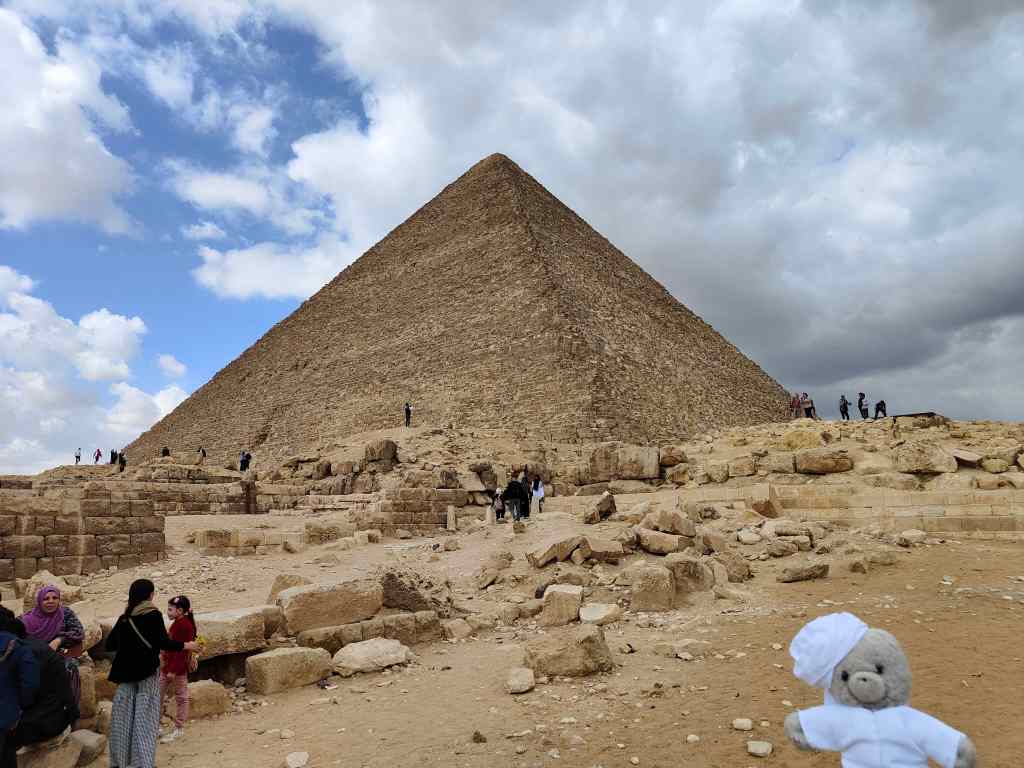
I finally got to the base of the Khufu Pyramid, the largest pyramid (although its neighbour, the Khafre Pyramid looks taller because it was built on higher ground). As expected, the “Great Pyramid” was an awesome sight.

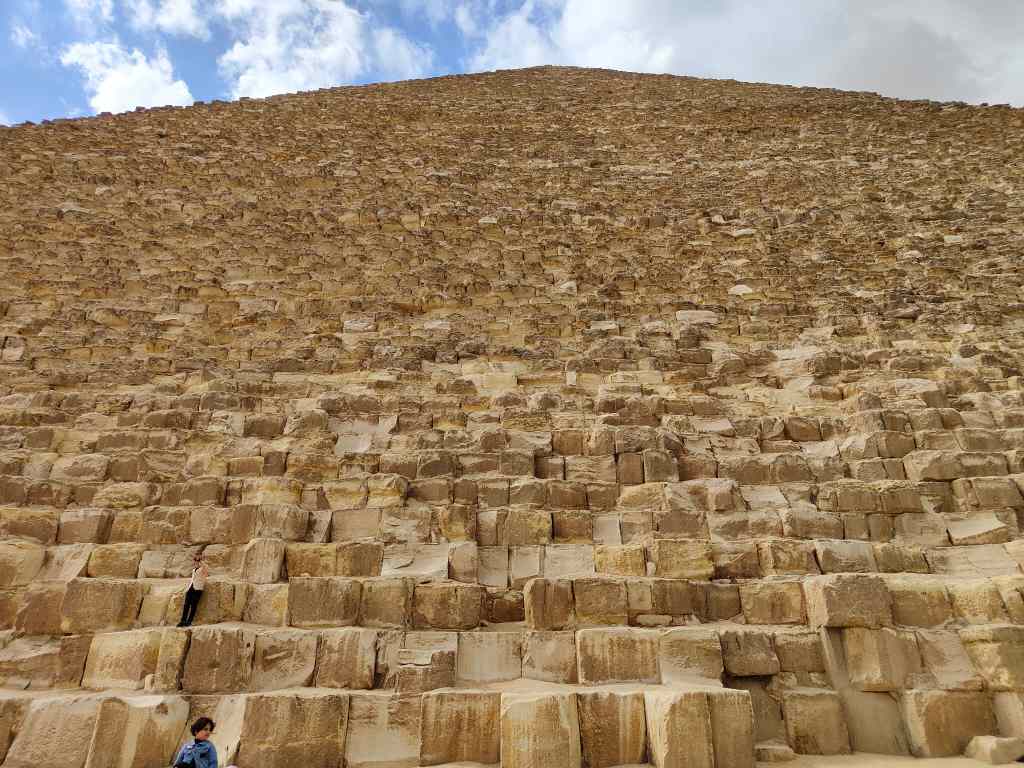
The Great Pyramid of Khufu
Makes you feel small (especially small teddy bears)

It is hard to believe that over 4,500 years ago, human beings had the ability to build something so massive – 2.3 huge blocks of stone, weighing 6 million tonnes in total. It remained the tallest man-made structure in the world for 3,800 years.

I had invested in a ticket to visit the inside – a narrow, low path through the rock climbed steeply into the heart of the pyramid. It was a hot and humid inside and I had to squeeze past people coming the other way – not a place for people with claustrophobia.

Into the heart of the Great Pyramid

Finally, I reached an unremarkable chamber where the king’s equally unremarkable sarcophagus stood. I am sure that this will not be the highlight of my trip, but at least I can say I did it.

The rather disappointing burial chamber of Pharaoh Khufu

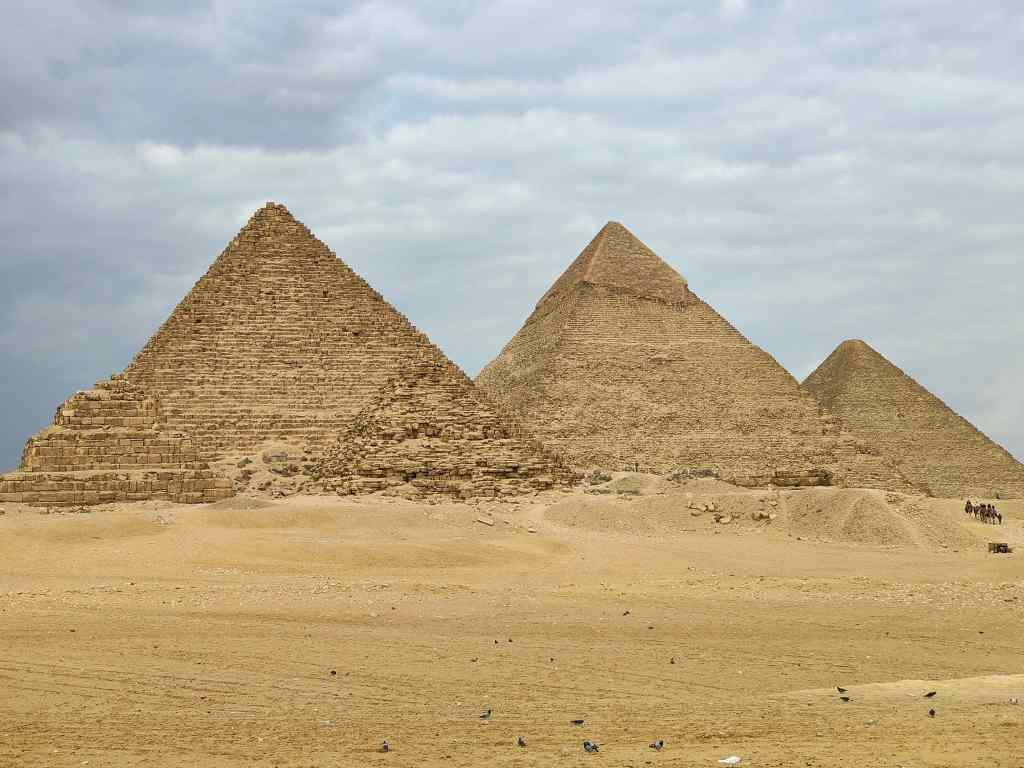
From the Great Pyramid I walked around to the Khafre Pyramid and then into the desert to a panoramic view point as camels and horse-drawn carriages sped past me on either side. Again, the walking was hard going – this time from walking through dirty sand littered with camel droppings and discarded plastic bottles.  I was rewarded with a wonderful view of the three pyramids, without the crowds this time.

The definitive photo of the pyramids at Giza
Finally a view without Giza’s usual crowds

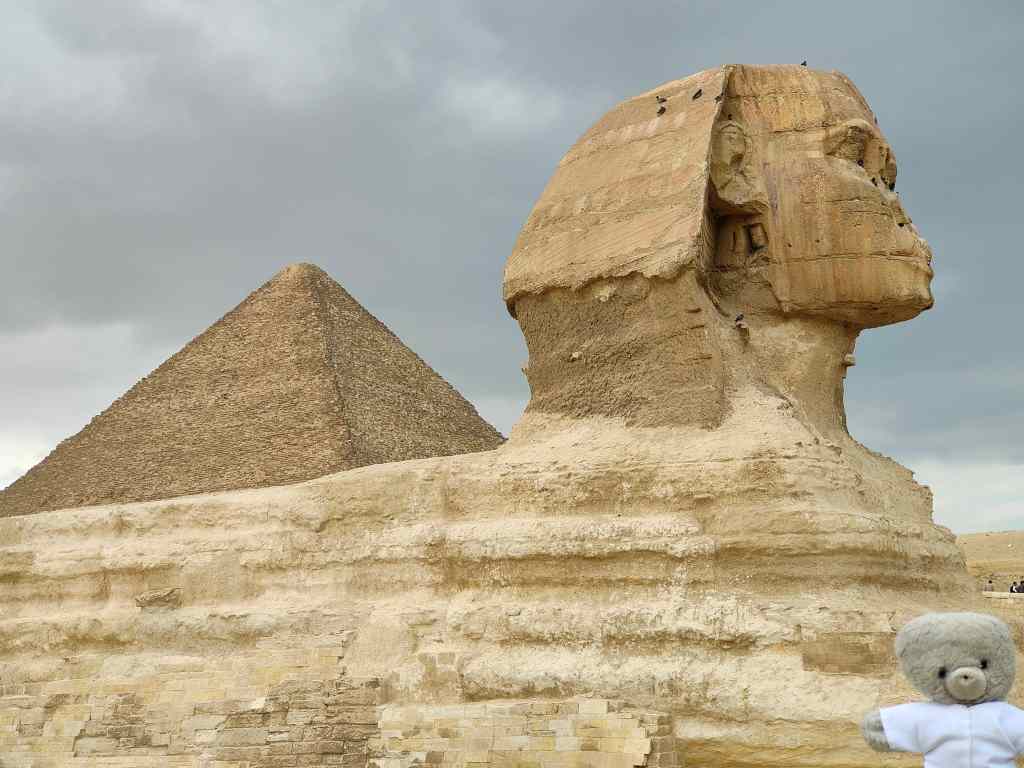
I headed back to main entrance, passing the famous “Sphinx” on the way – which in real life looks a lot smaller than in photos. 

My new friend the Sphinx, Giza

To get back to the centre of the city, I tried Uber and found that it is by far the best way to get around Cairo. Cars arrive quickly, the “comfort” category ones even have rear seatbelts (a rarity in Egypt), and even after a generous tip, the rides are so cheap that you feel very sorry for the drivers. Forty minutes and $5 later I was back in the centre of Cairo in front of the impressive exterior of the Egyptian Museum.  

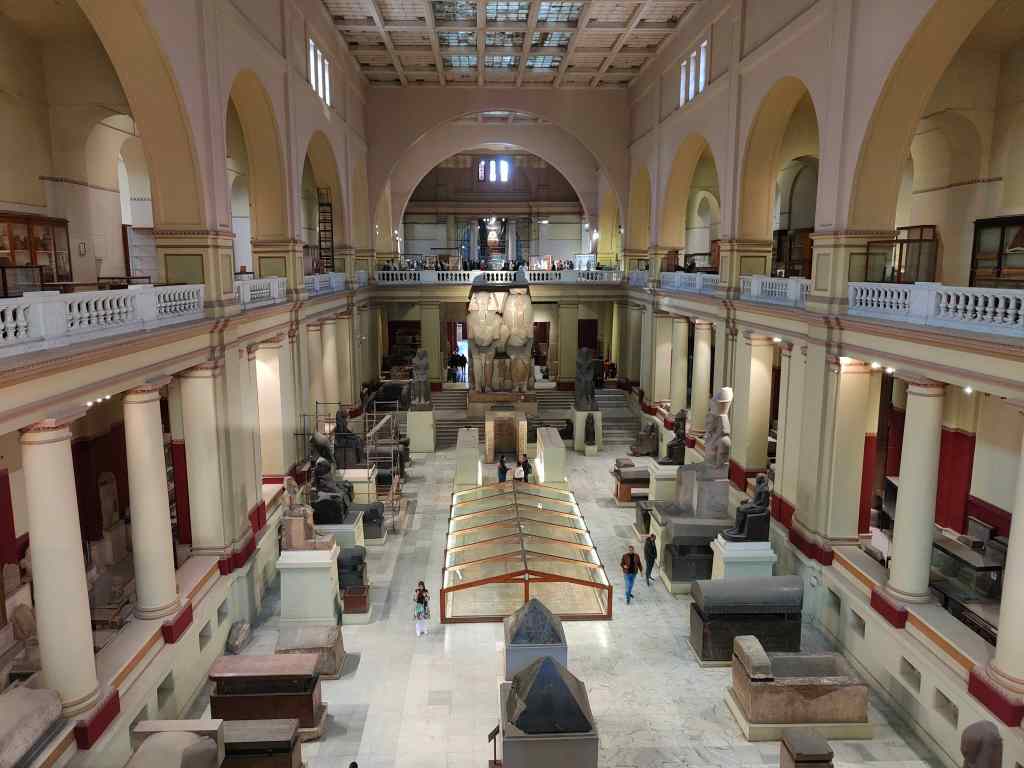
Inside, on a first impression the place had an abandoned feeling, like the home of an elder relative who hoarded their possessions throughout their life. Sometimes items were described in Arabic, English and French, sometimes in Arabic and English, sometimes in Arabic only, sometimes not at all…….and once in Braille only. A huge new museum to house Egypt’s archaeological treasures is scheduled to open sometime (its opening has already been postponed by several years), so this might explain the apparent neglect of the current museum.

The Entrance Hall of the Egyptian Museum, Cairo

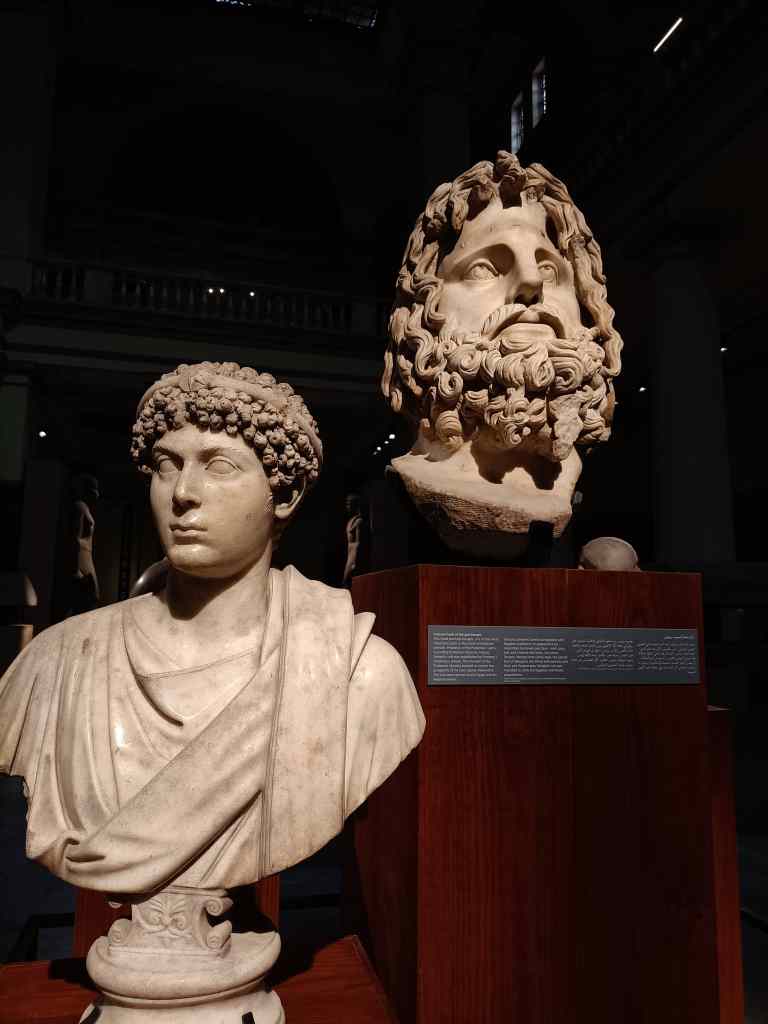
However, once I started exploring, I loved the place. I wandered around dimly lit corridors, stumbling upon treasure after treasure. Being able to hunt out exceptional items for myself, became part of the fun.

Some of the Egyptian Museum’s treasures

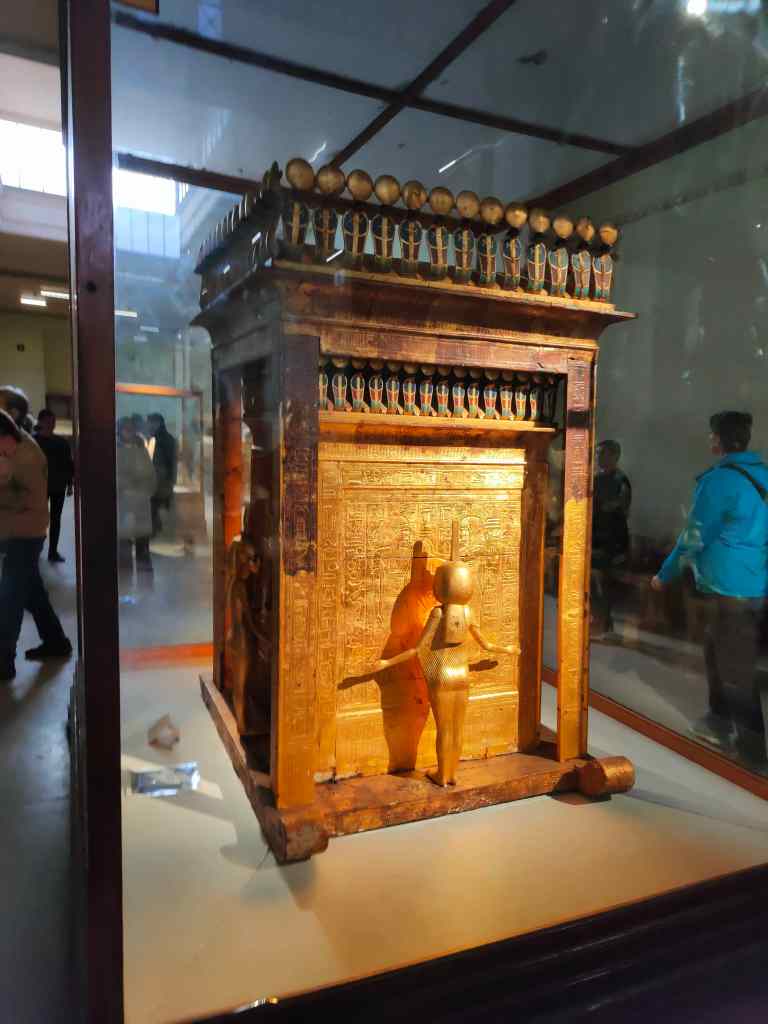
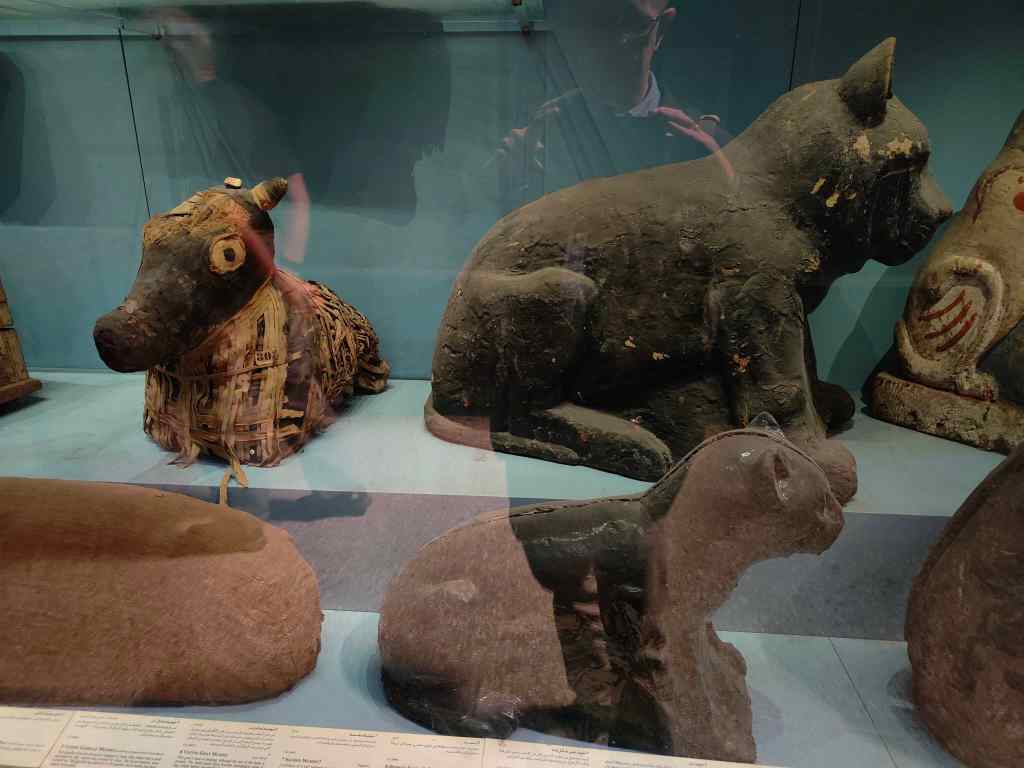
In most of the rooms there were few visitors, but the presence of a crowd announced the museum’s highlight – the contents of Tutankhamen’s grave (photos not allowed sadly!). Here the display and lighting were perfect, and despite the queue, the items on show dazzled me – not just the famous death mask, but also his jewellery and two coffins. After this memorable sight, I continued to wander around the museum, enjoying lesser-known exhibits like the mummies of the Pharoah’s pets and farm animals (cats, dogs, cows and even one mummified crocodile. At closing time, I sneaked back to the Tutankhamen display for a second look, and enjoyed having the room almost to myself.

Mummified pets in their coffins, Egyptian Museum Cairo

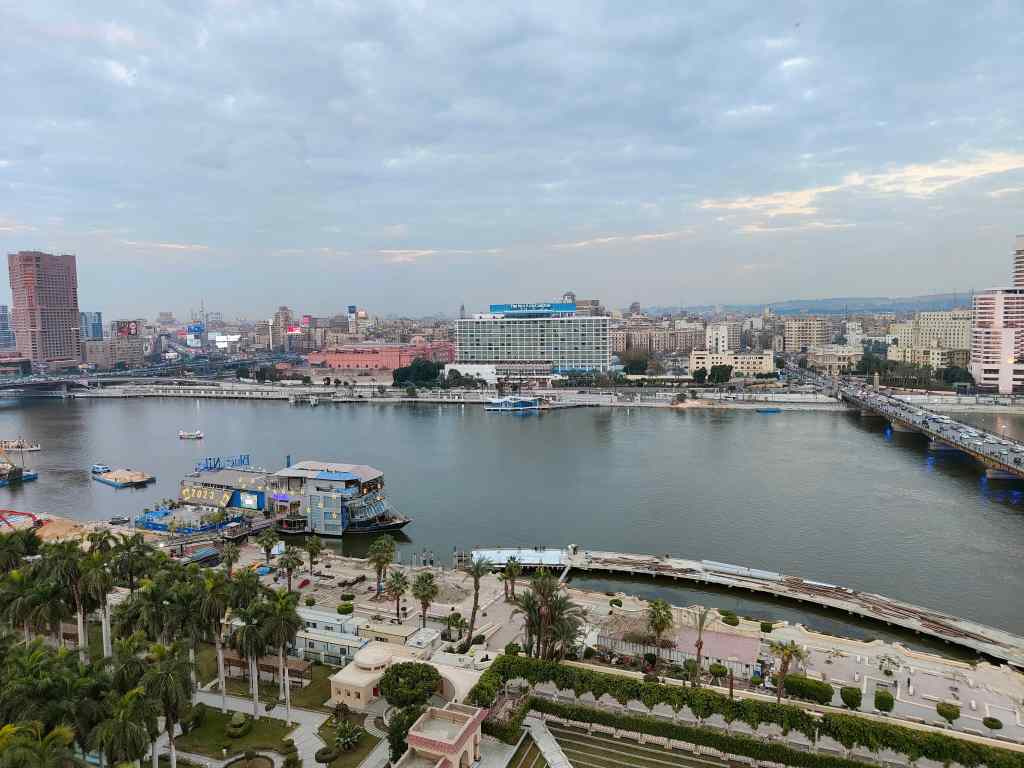
I headed back to my hotel and enjoyed the view of the Nile with a non-alcoholic cocktail from the roof terrace.

The view from my hotel, Cairo – note the “Blue Nile” boat which will feature in my next post

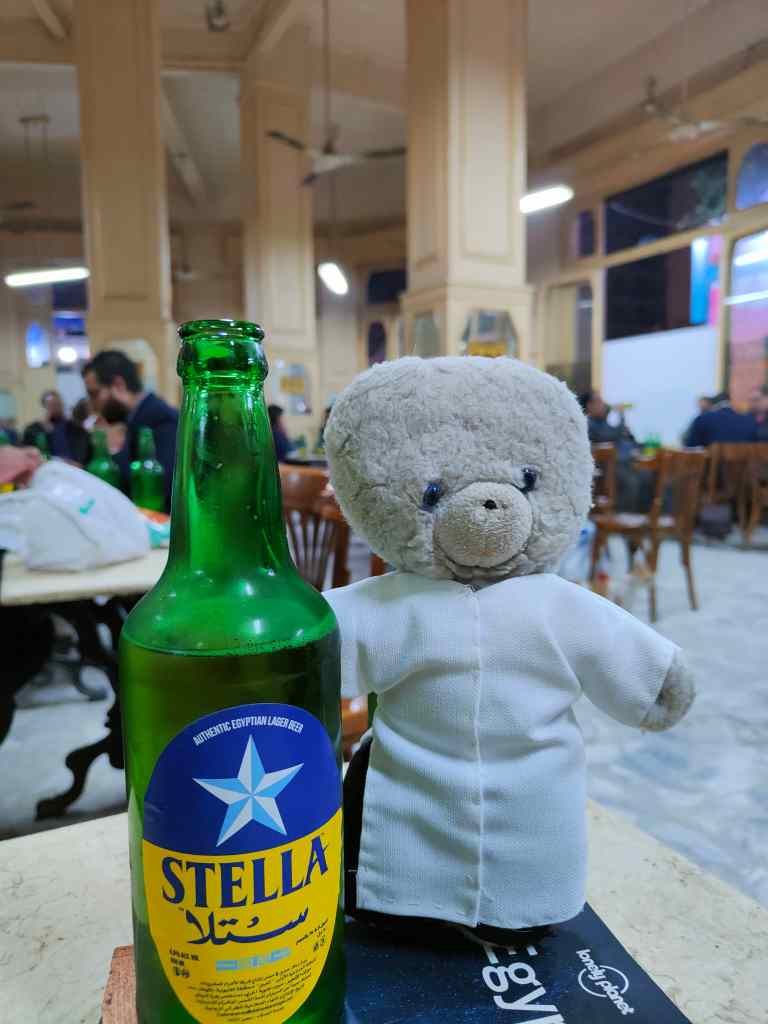
I then headed off to Cairo’s downtown in search of beer – which is not widely available. Outside of high-end hotels, alcohol is served mainly in rather seedy bars. I chose the most respectable looking one and was given a cold beer as soon as I had sat down – beer being the only thing on the menu. The local brew Stella turned out to be perfectly drinkable. 

The local beer Stella in one of the more respectable Cairo bars selling alcohol

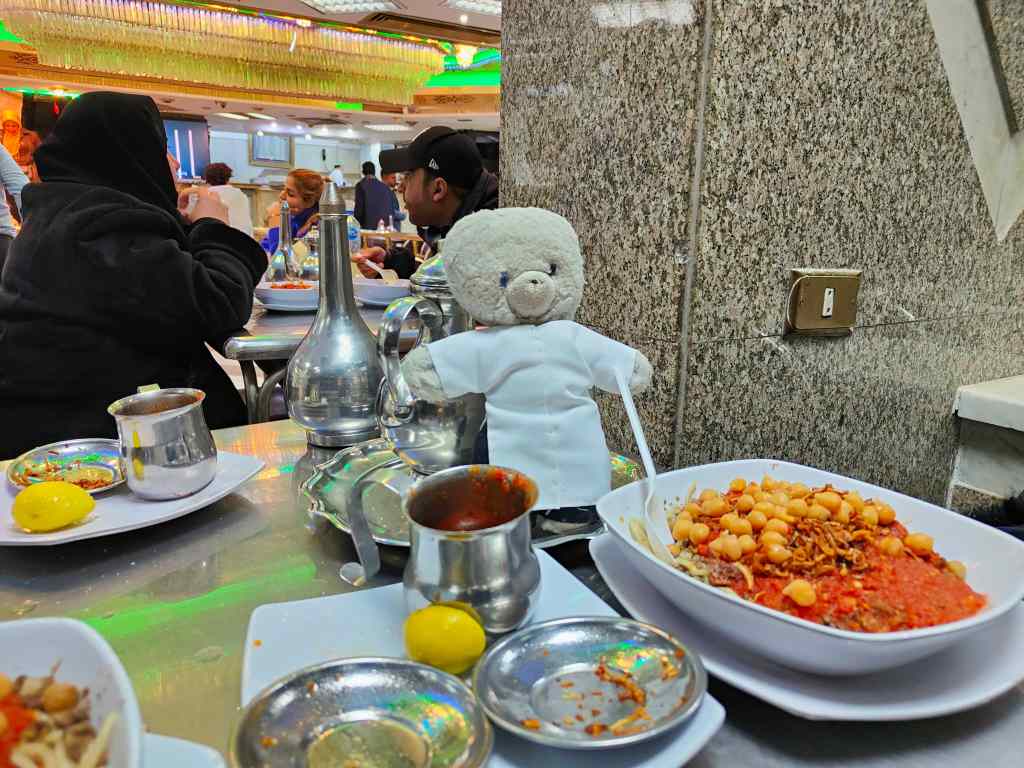
Dinner was “kushari” – a vegetarian dish made with chickpeas, lentils and pasta in a spicy tomato sauce, prepared by the waiter in front of me with a splash of showmanship. I asked for the bill and was just about to pay what I thought was a very reasonable 227 Egyptian Pounds (7€) when the waiter apologised and said he had made a mistake. I was astonished when the bill for my large meal for two (bears have big appetites!) came back as 127EGP or 4€.

Kushari in Cairo

Back at my hotel, I settled down for a quiet night. I had seen one of the wonders of the world – the pyramids and the Sphinx. But I had a nagging feeling that I had simply ticked off an item from Egypt’s (or the world’s) “must see” list rather than actually enjoying the experience. The Egyptian museum, on the other hand, was an unexpected gem of a place, and Cairo’s downtown was chaotic fun.

Next Post: From Coptic Cairo to Aswan
Trouspinet’s Top Tips and Highlights for Argentina

Wow, what a journey that was! Argentina jumps effortlessly into the list of my top 5 destinations of all time, and for scenery, it would be No. 1. However, this trip required lots of planning, and I also learnt a lot as I was travelling. In this post I list my personal highlights and give some tips for planning (valid as of November 2022).

TROUSPINET’S HIGHLIGHTS

To help you plan your trip, here is my ranking of the places I visited on this trip:

  1. Quebrada de Humahuaca (northwest Argentina)
  2. Perito Moreno Glacier, Patagonia
  3. Foz Iguazu
  4. Mount Fitzroy, Patagonia
  5. Torres del Paine, Chilean Patagonia
  6. The drive from Mendoza to Aconcagua
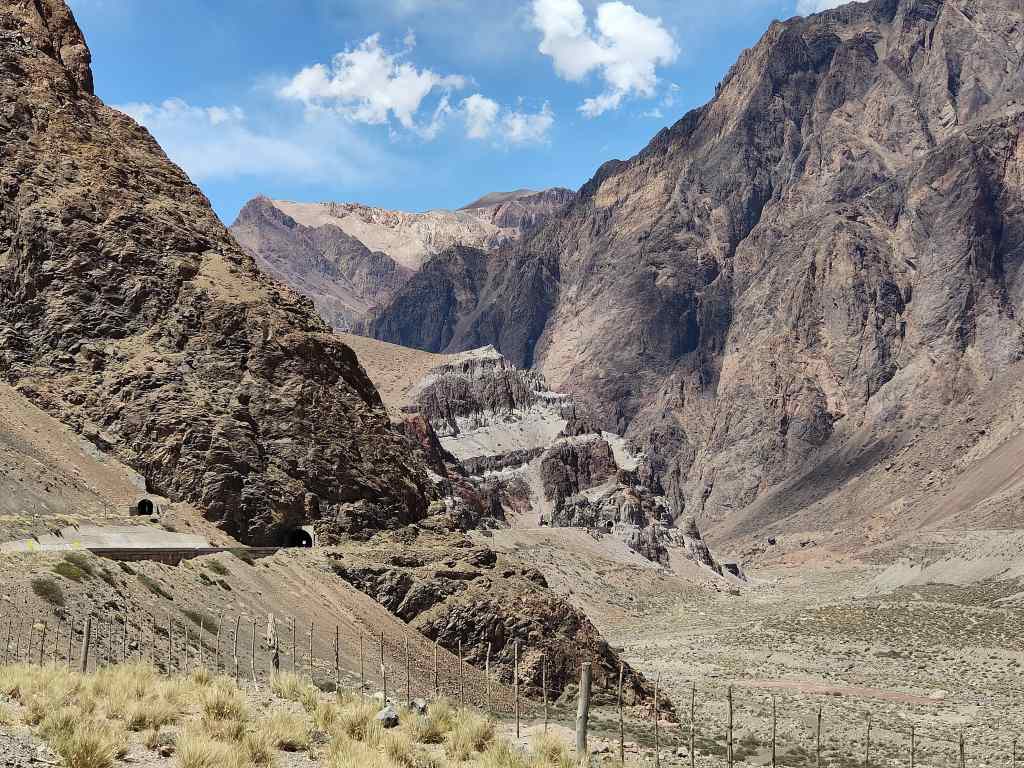
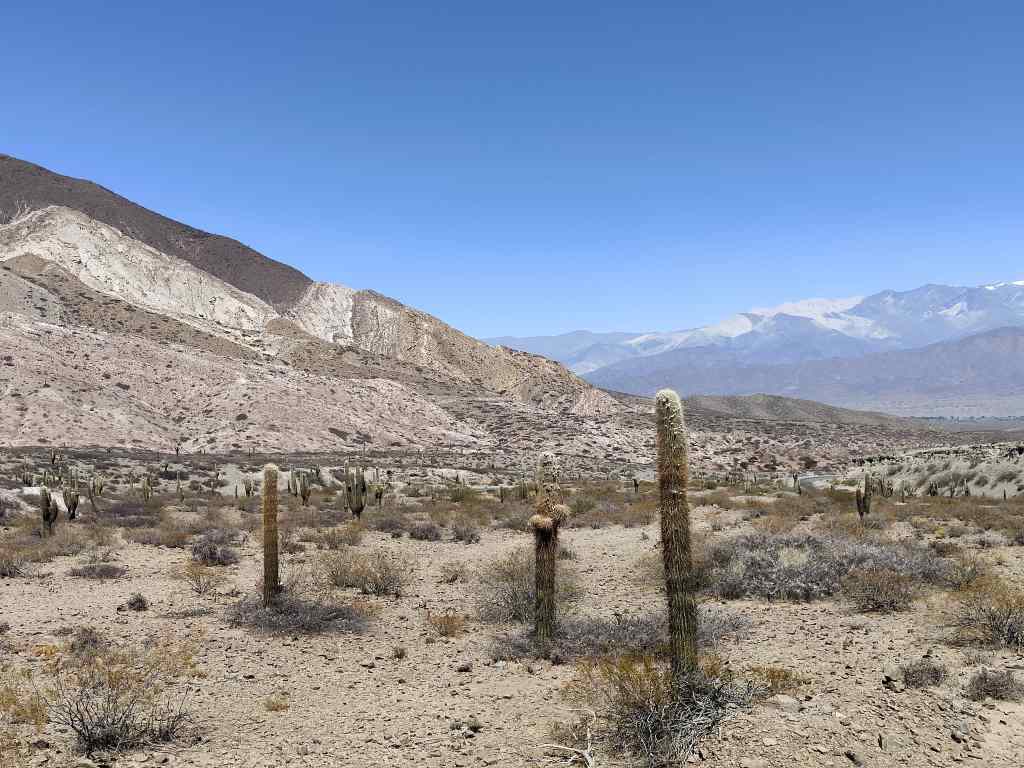
  7. The drive from Salta to Cachi
  8. Puerto Varas and the Chilean Lake District
  9. Buenos Aires
  10. Mendoza’s vineyards
  11. Bariloche and the Argentine Lake District
  12. Salta

I put Bariloche and Salta bottom because there are places in Europe a bit like them, whilst the other places are unique in the world. But I really enjoyed even my lower-ranked locations on this trip – I simply didn’t have a single bad travelling day.

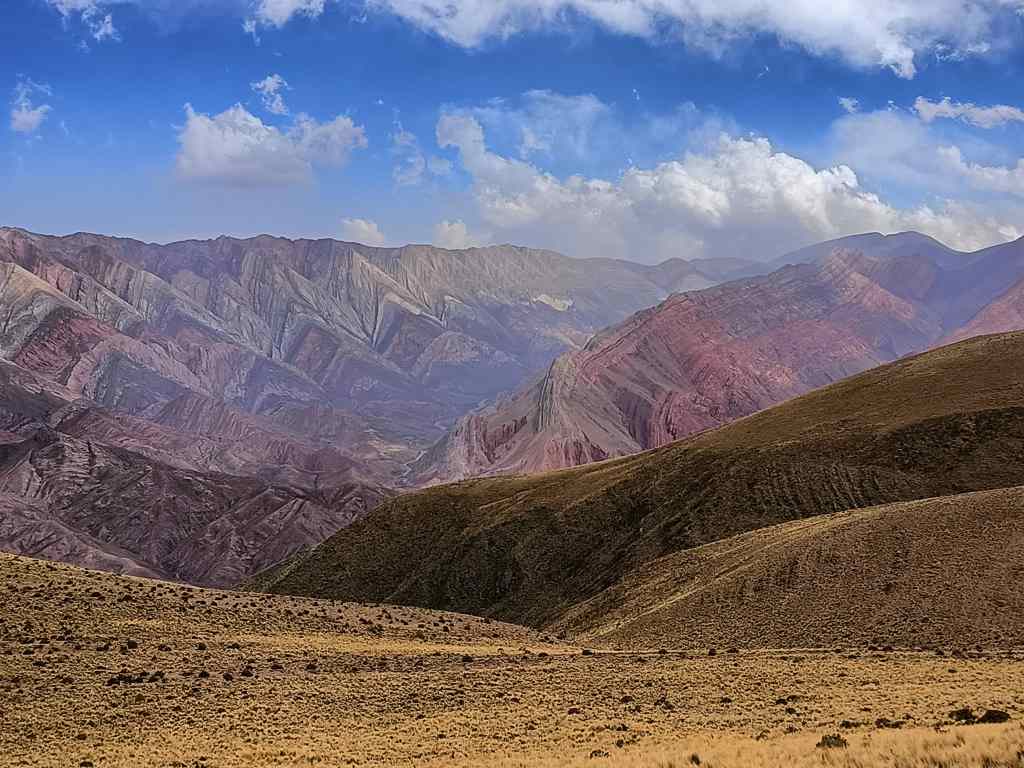
The Quebrada de Humahuaca

TROUSPINET’S TOP TIPS

Be Selective – Distances are huge, as is the choice of places to visit.

Unless you have the time (and endurance) for 12-36 hour bus rides, you will need to fly if you want to see many of the country’s highlights. I went for nearly one month, usually flew between destinations, but still did not have time to see everything I wanted to. After much thought, I regretfully excluded Ushuaia and some of the national parks from my list. You will also have to make some hard choices.  

Perito Moreno Glacier

Check which Internal Flights operate

The main flight operators in Argentina are Aerolineas Argentinas, JetSmart and FlyBondi. Argentine airlines have a bad reputation for reliability and punctuality, but I had no major delays in any of my seven internal flights.

Check when flights go direct from one regional destination to another (eg Salta to Mendoza), without having to go back to Buenos Aires and out again. These flights will save you a lot of time and money, but they don’t operate every day. The popular and very convenient Bariloche-El Calafate flight only operates in the peak tourist season – late November to February.  If you do have to fly back to Buenos Aires, remember it has two airports – the very convenient Aeroparque Newberry (AEP) located in the city, and Ezeiza (EZE), which is a long way out of town. Book ahead for anything In, To or From Patagonia over November – February. The region is hugely and justifiably popular in the southern summer. I went in November – not the peak season – and even then, I heard that the buses from El Calafate to Bariloche were fully booked for several days.

Foz Iguazu

Monte Fitz Roy

Accommodation – Check the Exchange Rate when you book

I used Booking.com to book hotels. You get quoted a price in US$. Once you have made a booking, contact the hotel to ask if they apply the official exchange rate if you choose to pay in pesos. Most of my hotels agreed to this; only one asked for the blue rate (so I cancelled and booked somewhere else). If you pay like this, you save 50%! More expensive hotels add 20% VAT to their bills, which can you avoid by paying with a foreign credit (but then you get the official exchange rate, so it is still better to pay with cash).

AirBnB is not recommended, because you pay in advance in your own currency. It may have been bad luck, but the one place I booked with them was of very poor quality and seemed more aimed at local tourists.

Torres del Paine

Don’t Rely too much on Guidebooks

Things change quickly in Argentina. Our guidebook claimed to have been reprinted in January 2022, but was hopelessly out of date.

The Road from Mendoza to Aconcagua

Packing

Check average weather conditions and pack accordingly. Patagonia and Tierra Del Fuego are cold even in the southern summer and need very warm clothing and waterproofs. Aerolineas Argentinas (but not the other airlines) has a limit of 15kg for checked baggage, so you may also need to pack light and fully use the allowances of 8kg for carry-on baggage and 3kg for a personal item. The 15kg rule is not strictly enforced – we were usually a couple of kilos over, but the check-in staff ignored this.

On the way to Cachi

Learn some (Argentine) Spanish

In touristy areas like Patagonia and parts of Buenos Aires, you can get by with English. But in most other places, few people other than hotel staff spoke a second language. If you already speak some Castilian Spanish, be aware that there are big differences in the pronunciation of “y” and “ll”, and that the second person singular “tu” is replaced by “vos” – with different verb endings. I didn’t find any good books on Argentine Spanish, but I found this website (for intermediate speakers) to be very good- https://argentalk.com

Mount Osorno, Chilean Lake District

That’s all for now. I could write a lot more, but I am worried I will bore my readers. If anyone has a question, please leave a reply at the bottom of this page. Happy Travelling!

Plaza de Mayo, Buenos Aires

Blog at WordPress.com.

Up ↑