Trouspinet’s Top Tips and Highlights for Argentina

Wow, what a journey that was! Argentina jumps effortlessly into the list of my top 5 destinations of all time, and for scenery, it would be No. 1. However, this trip required lots of planning, and I also learnt a lot as I was travelling. In this post I list my personal highlights and give some tips for planning (valid as of November 2022).

TROUSPINET’S HIGHLIGHTS

To help you plan your trip, here is my ranking of the places I visited on this trip:

  1. Quebrada de Humahuaca (northwest Argentina)
  2. Perito Moreno Glacier, Patagonia
  3. Foz Iguazu
  4. Mount Fitzroy, Patagonia
  5. Torres del Paine, Chilean Patagonia
  6. The drive from Mendoza to Aconcagua
  7. The drive from Salta to Cachi
  8. Puerto Varas and the Chilean Lake District
  9. Buenos Aires
  10. Mendoza’s vineyards
  11. Bariloche and the Argentine Lake District
  12. Salta

I put Bariloche and Salta bottom because there are places in Europe a bit like them, whilst the other places are unique in the world. But I really enjoyed even my lower-ranked locations on this trip – I simply didn’t have a single bad travelling day.
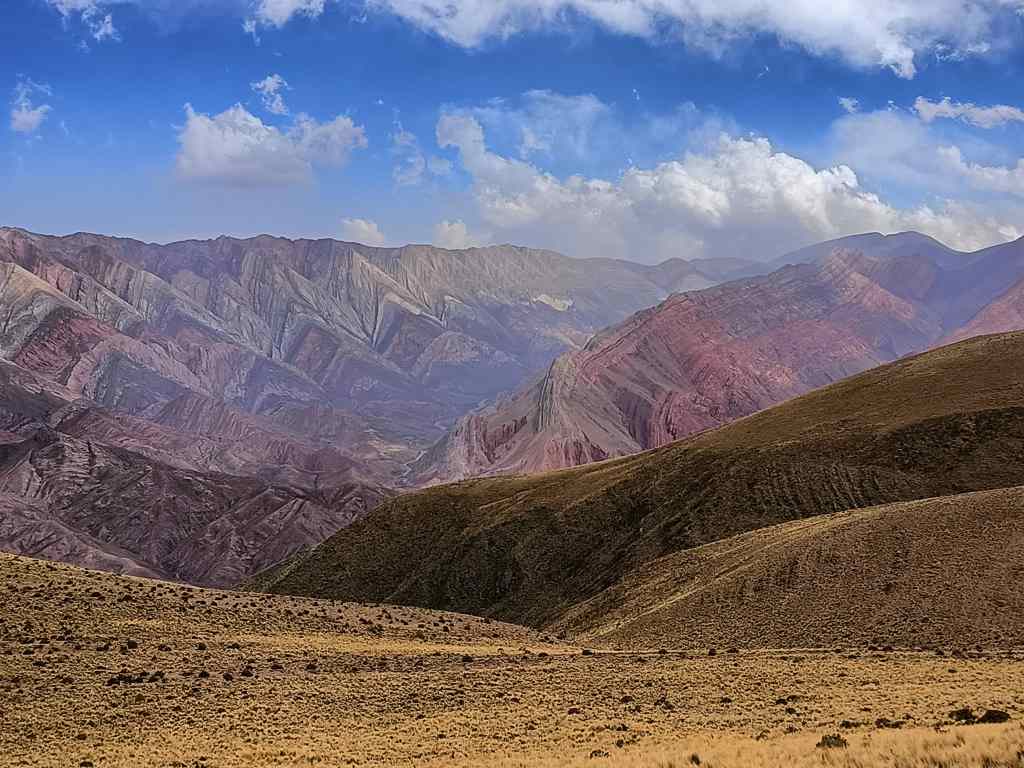
The Quebrada de Humahuaca

TROUSPINET’S TOP TIPS

Be Selective – Distances are huge, as is the choice of places to visit.

Unless you have the time (and endurance) for 12-36 hour bus rides, you will need to fly if you want to see many of the country’s highlights. I went for nearly one month, usually flew between destinations, but still did not have time to see everything I wanted to. After much thought, I regretfully excluded Ushuaia and some of the national parks from my list. You will also have to make some hard choices.  
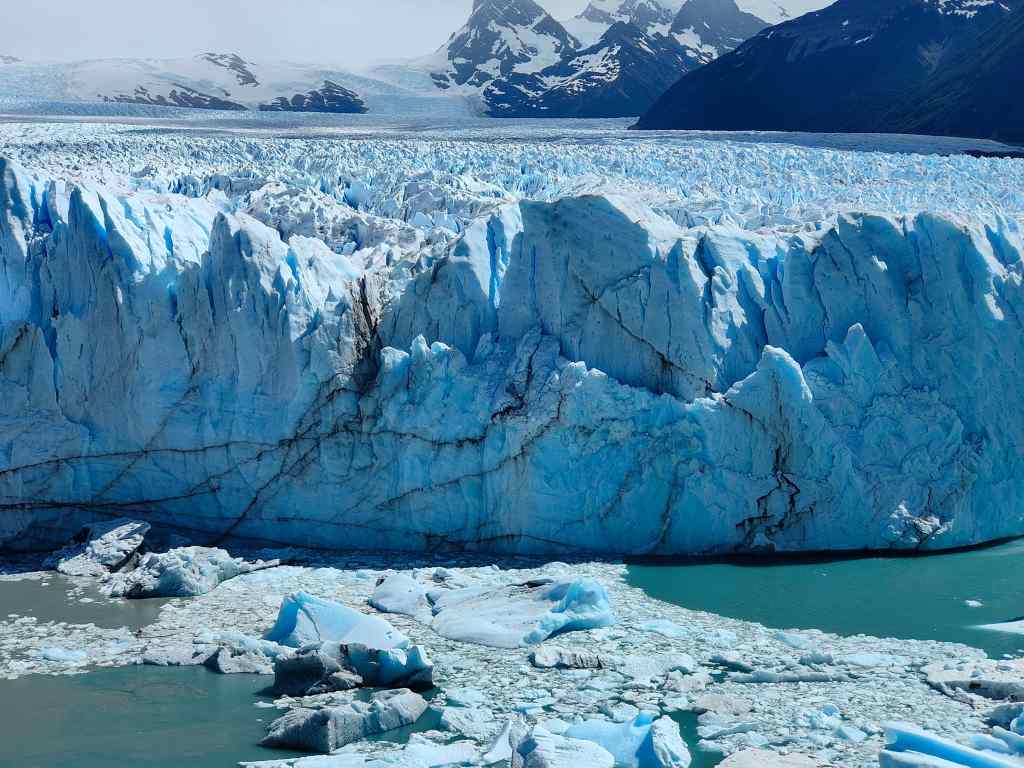
Perito Moreno Glacier

Check which Internal Flights operate

The main flight operators in Argentina are Aerolineas Argentinas, JetSmart and FlyBondi. Argentine airlines have a bad reputation for reliability and punctuality, but I had no major delays in any of my seven internal flights.

Check when flights go direct from one regional destination to another (eg Salta to Mendoza), without having to go back to Buenos Aires and out again. These flights will save you a lot of time and money, but they don’t operate every day. The popular and very convenient Bariloche-El Calafate flight only operates in the peak tourist season – late November to February.  If you do have to fly back to Buenos Aires, remember it has two airports – the very convenient Aeroparque Newberry (AEP) located in the city, and Ezeiza (EZE), which is a long way out of town. Book ahead for anything In, To or From Patagonia over November – February. The region is hugely and justifiably popular in the southern summer. I went in November – not the peak season – and even then, I heard that the buses from El Calafate to Bariloche were fully booked for several days.

Foz Iguazu

Monte Fitz Roy

Accommodation – Check the Exchange Rate when you book

I used Booking.com to book hotels. You get quoted a price in US$. Once you have made a booking, contact the hotel to ask if they apply the official exchange rate if you choose to pay in pesos. Most of my hotels agreed to this; only one asked for the blue rate (so I cancelled and booked somewhere else). If you pay like this, you save 50%! More expensive hotels add 20% VAT to their bills, which can you avoid by paying with a foreign credit (but then you get the official exchange rate, so it is still better to pay with cash).

AirBnB is not recommended, because you pay in advance in your own currency. It may have been bad luck, but the one place I booked with them was of very poor quality and seemed more aimed at local tourists.

Torres del Paine

Don’t Rely too much on Guidebooks

Things change quickly in Argentina. Our guidebook claimed to have been reprinted in January 2022, but was hopelessly out of date.
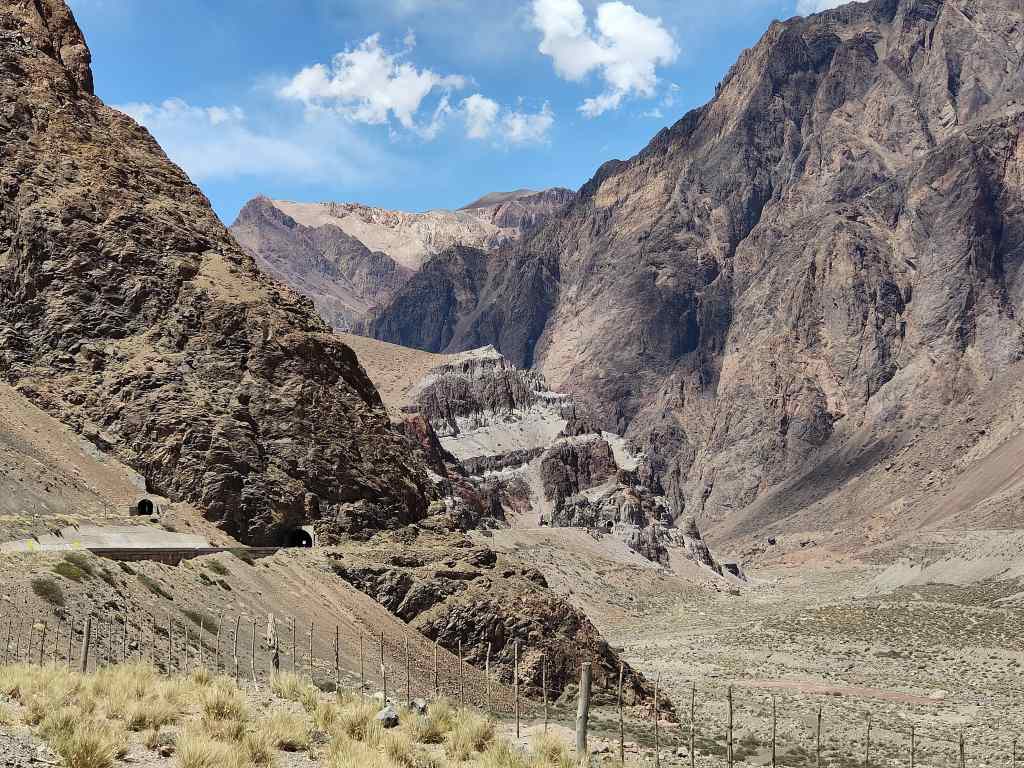
The Road from Mendoza to Aconcagua

Packing

Check average weather conditions and pack accordingly. Patagonia and Tierra Del Fuego are cold even in the southern summer and need very warm clothing and waterproofs. Aerolineas Argentinas (but not the other airlines) has a limit of 15kg for checked baggage, so you may also need to pack light and fully use the allowances of 8kg for carry-on baggage and 3kg for a personal item. The 15kg rule is not strictly enforced – we were usually a couple of kilos over, but the check-in staff ignored this.
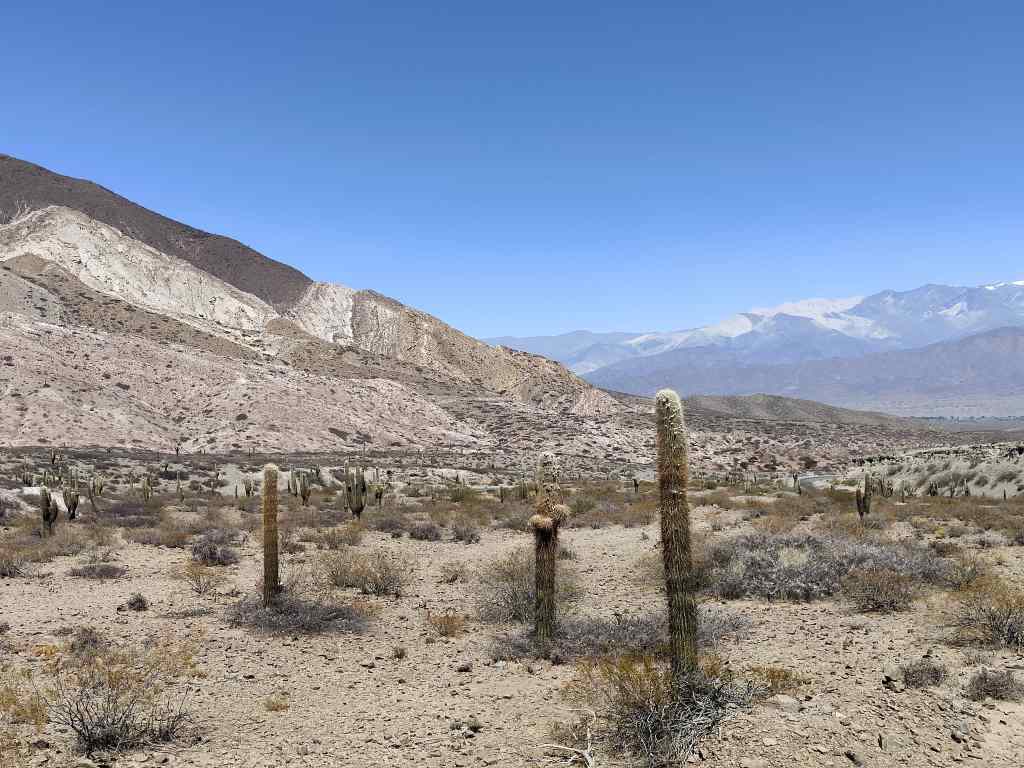
On the way to Cachi

Learn some (Argentine) Spanish

In touristy areas like Patagonia and parts of Buenos Aires, you can get by with English. But in most other places, few people other than hotel staff spoke a second language. If you already speak some Castilian Spanish, be aware that there are big differences in the pronunciation of “y” and “ll”, and that the second person singular “tu” is replaced by “vos” – with different verb endings. I didn’t find any good books on Argentine Spanish, but I found this website (for intermediate speakers) to be very good- https://argentalk.com

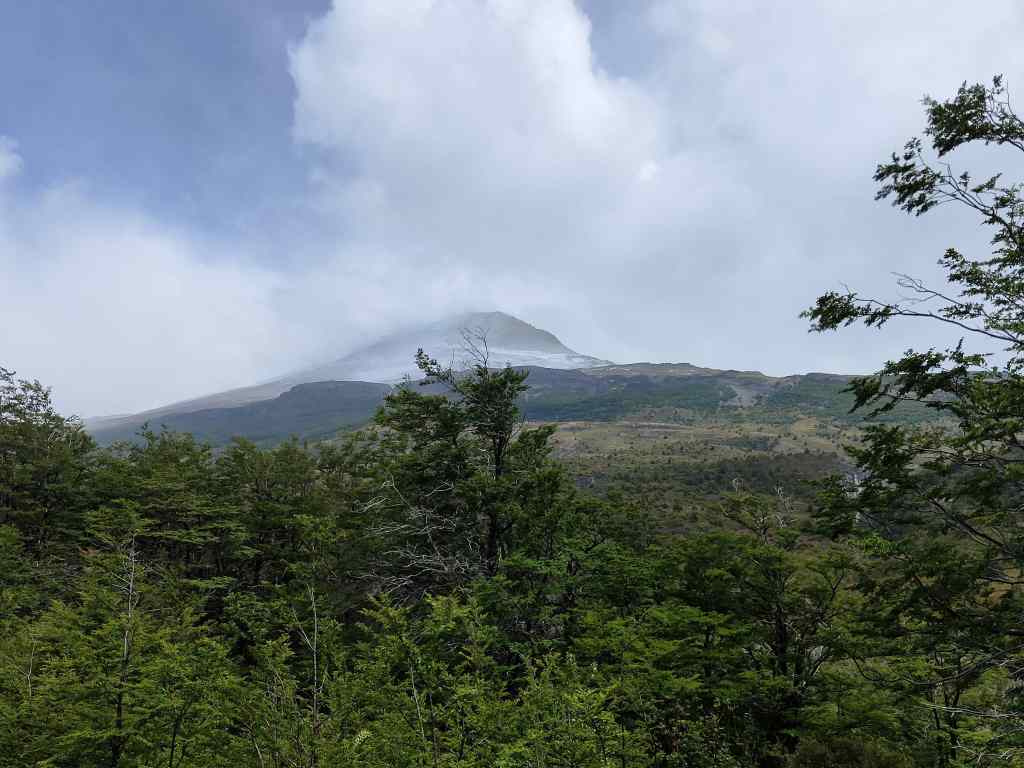
Mount Osorno, Chilean Lake District

That’s all for now. I could write a lot more, but I am worried I will bore my readers. If anyone has a question, please leave a reply at the bottom of this page. Happy Travelling!

Plaza de Mayo, Buenos Aires

(Almost) the End of the World – Puerto Natales and Torres del Paine, Chile

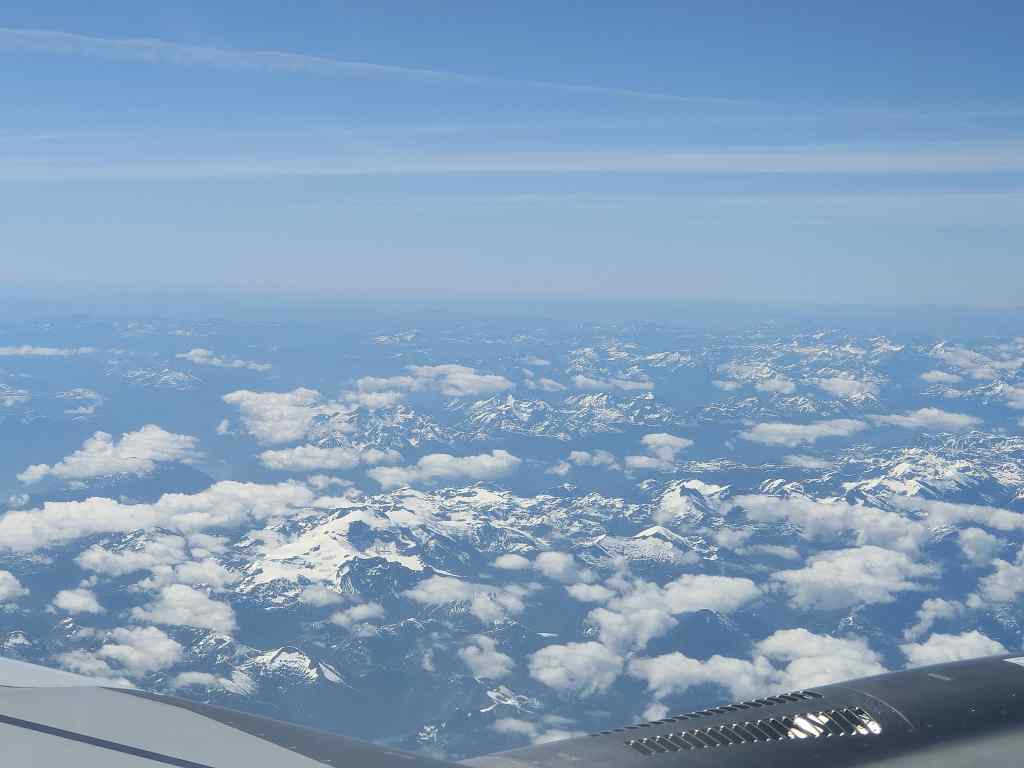
Today was a big day for me – I was due to fly nearly 2000km to Puerto Natales, the furthest south I had ever been. It was a critical part of my complicated South American itinerary; if the flight were cancelled, my only alternative would be a 36-hour bus ride. I was a little nervous, since the only airline serving the route was one I had never heard of, called “SKY”.  I was also worried about the weather forecast, which was for cold temperatures, strong winds and rain at my destination. But my flight passed without incident, and with my window seat on the left hand side of the plane, I had a great view of the Andes. Even better, I could see that the cloud cover was light, meaning that the forecast bad weather had not yet arrived.

Flying to Puerto Natales

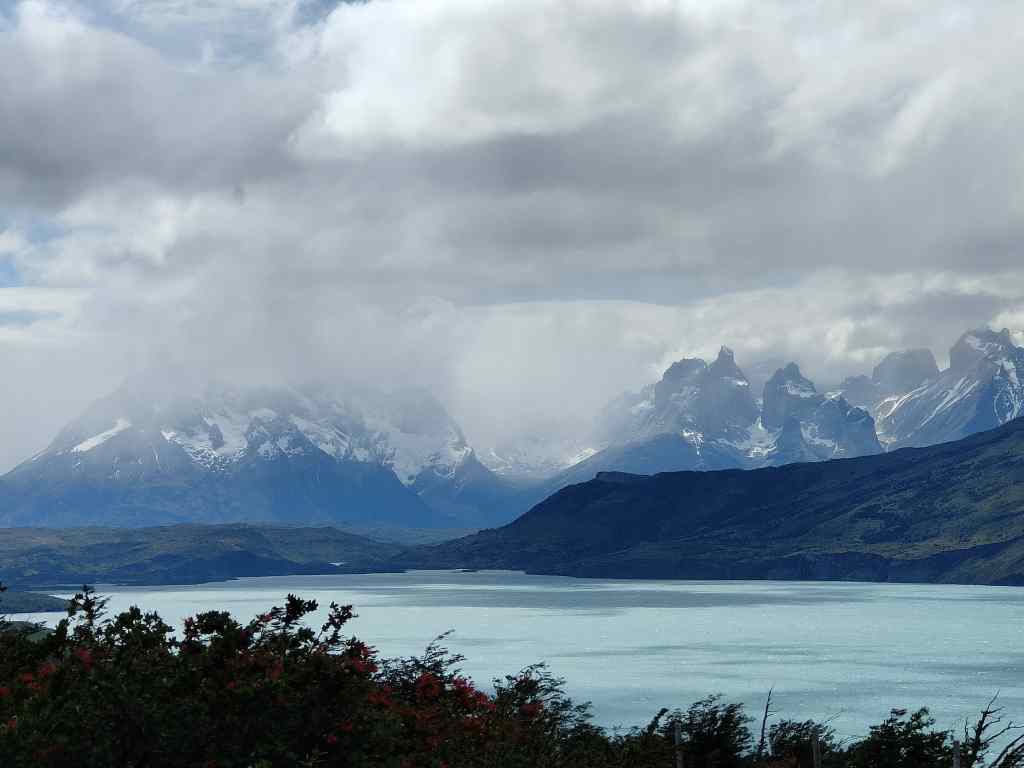
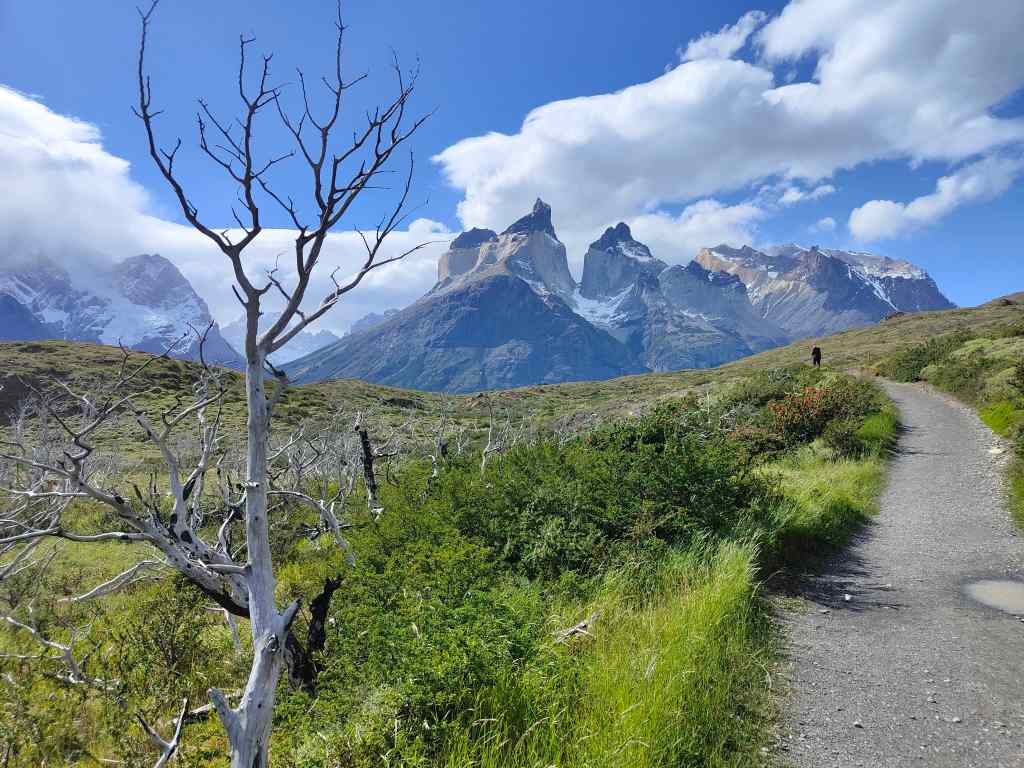
At the airport, my hire car was waiting for me. I dropped by bags at my hotel and headed straight off to my main destination – the Torres del Paine national park, praying the weather there would be as good as it was in Puerto Natales. After an hour’s drive through increasingly spectacular scenery, the distinctive granite towers of Torres del Paine came into view. At first, they were distant, and partially shrouded in cloud…..

First glimpse of Torres del Paine

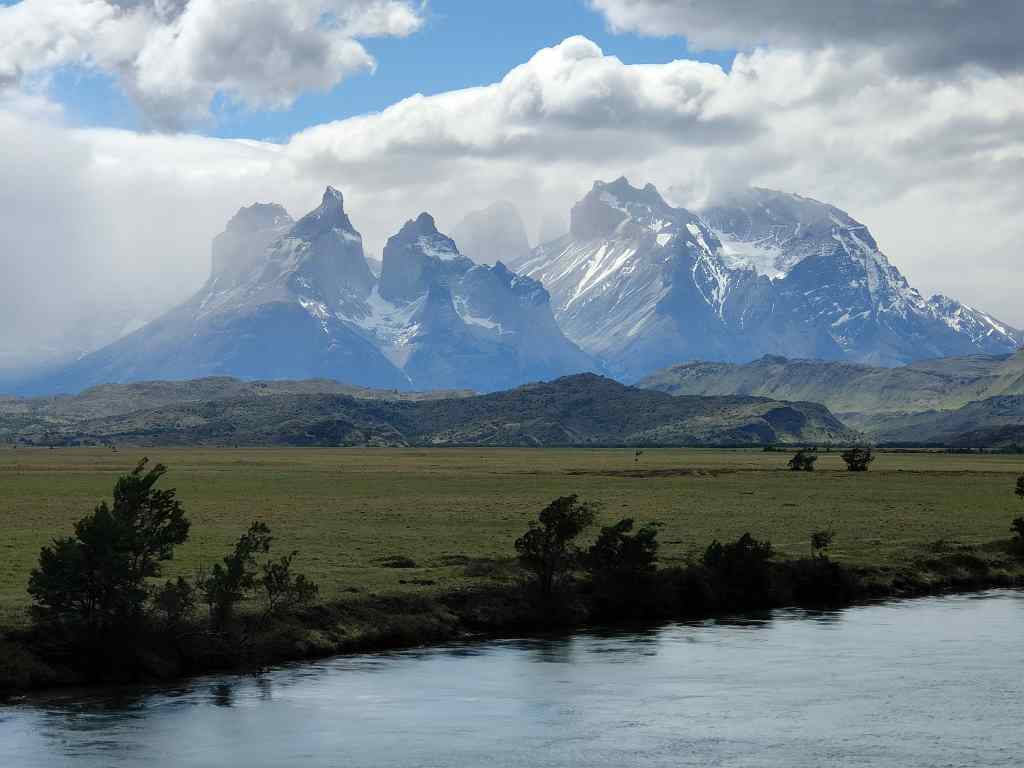
….but as I got closer the clouds began to lift.

The clouds lift

I reached the park entrance station, where the rangers explained that I had to get my entrance permit online. They offered me access to their Wifi. I entered the endless details required for the permit, and got all the way to the payment screen only to discover my credit card company needed confirmation by SMS……..and there was no phone reception. I explained my predicament to the head ranger, and also told him that I had checked their website that very morning and read that could you pay the entrance fee in cash. After some hesitation, the ranger let me through provided I promised to buy my ticket when I got back to my hotel. I breathed a sigh of relief – the first views of the mountains promised an exceptional day – not something I would want to miss. I drove into the park and the clouds lifted.

Good weather!!

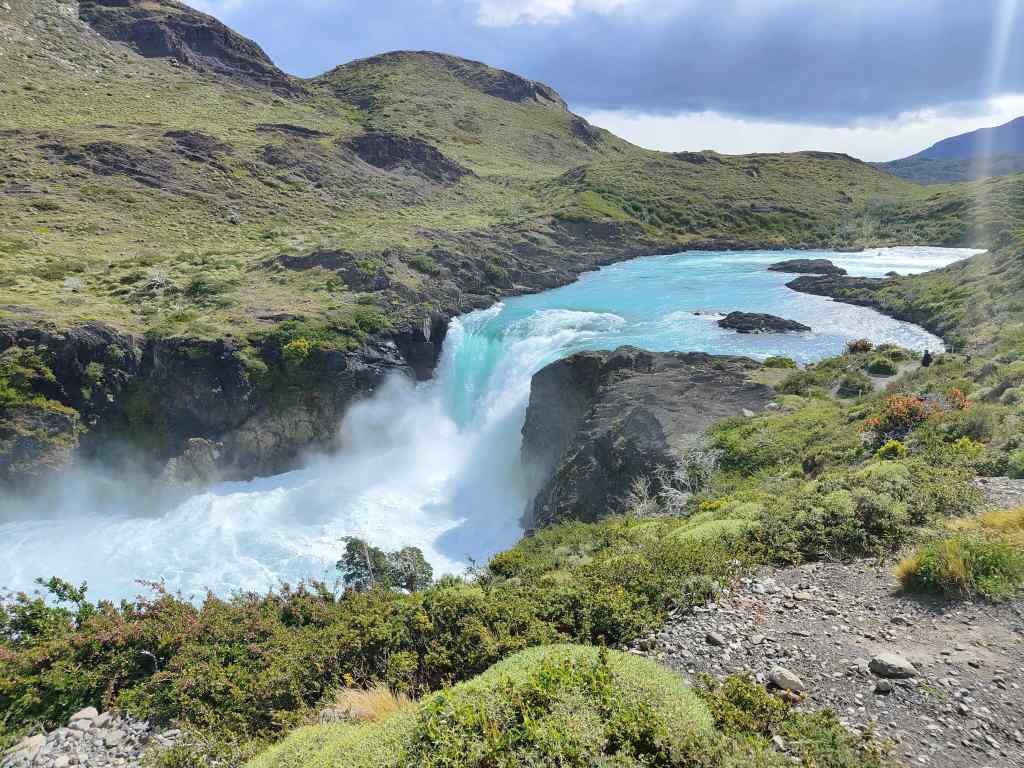
It was already early afternoon, and I didn’t have time for a long trek, so I drove to one of the car parks and hiked first to a waterfall……

Salto Grande Waterfall
Ferocious winds are a feature of the park

The wind is often very strong in Torres del Paine. Today it was “only” about 65km/h, but it can be even stronger and force the park rangers to close some of the paths.

After admiring the waterfall, I continued, against a ferocious wind, to a mirador at the base of the towers.

It was not raining, but the wind picked up sheets of spray from the lake and drove them over the water’s surface. Sometimes the spray spiralled upwards into a strange vortex.  

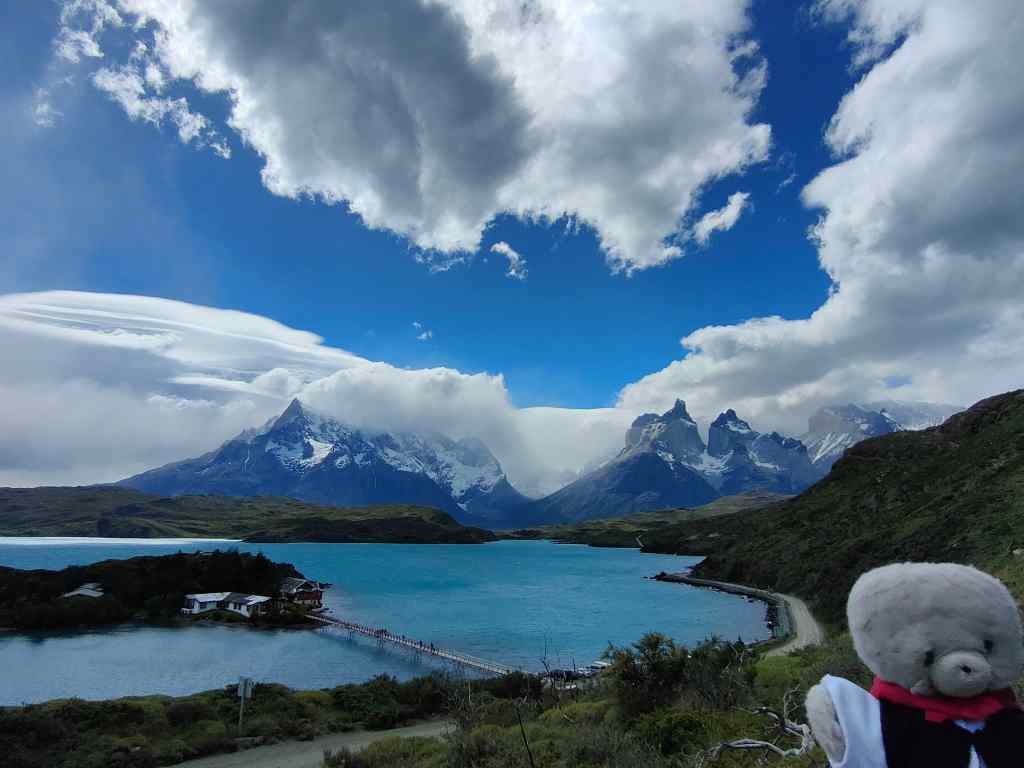
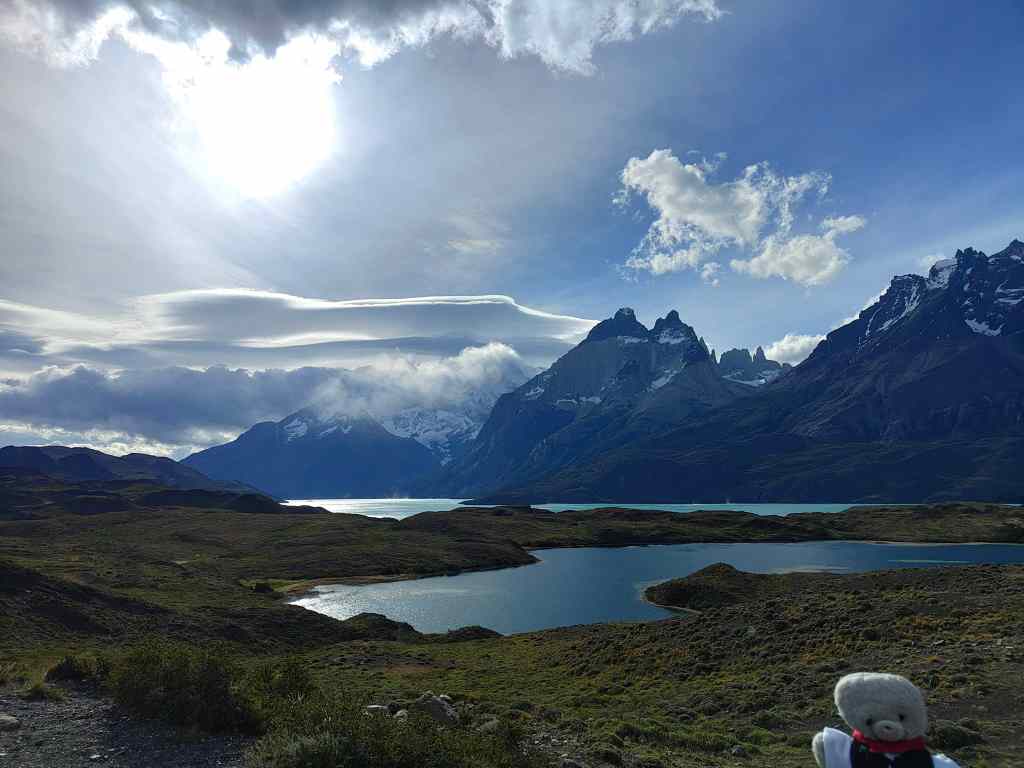
I finally reached the end of my short walk and was rewarded with a magical view of the giant granite pillars soaring vertically into the sky, in front of a brilliant blue lake.

the Torres del Paine seen from the end of my trail

Many visitors to the park do a 4-5 day circuit around the towers, which is called the “W”. It is extremely popular, so they have to book one of the limited campsite spaces many months in advance. I felt rather jealous since my schedule only allowed 1 ½ days in the park. I retraced my steps to my car. Although I had only walked 4km, the continual battle with the wind had left me quite tired.

I continued my driving route through the park, stopping a few more miradors to take pictures, before making the long drive back to Puerto Natales.

More beautiful landscapes on the way back

I took a different road this time, which was called the “Road of the End of the World”.

“La Ruta del Fin del Mundo”

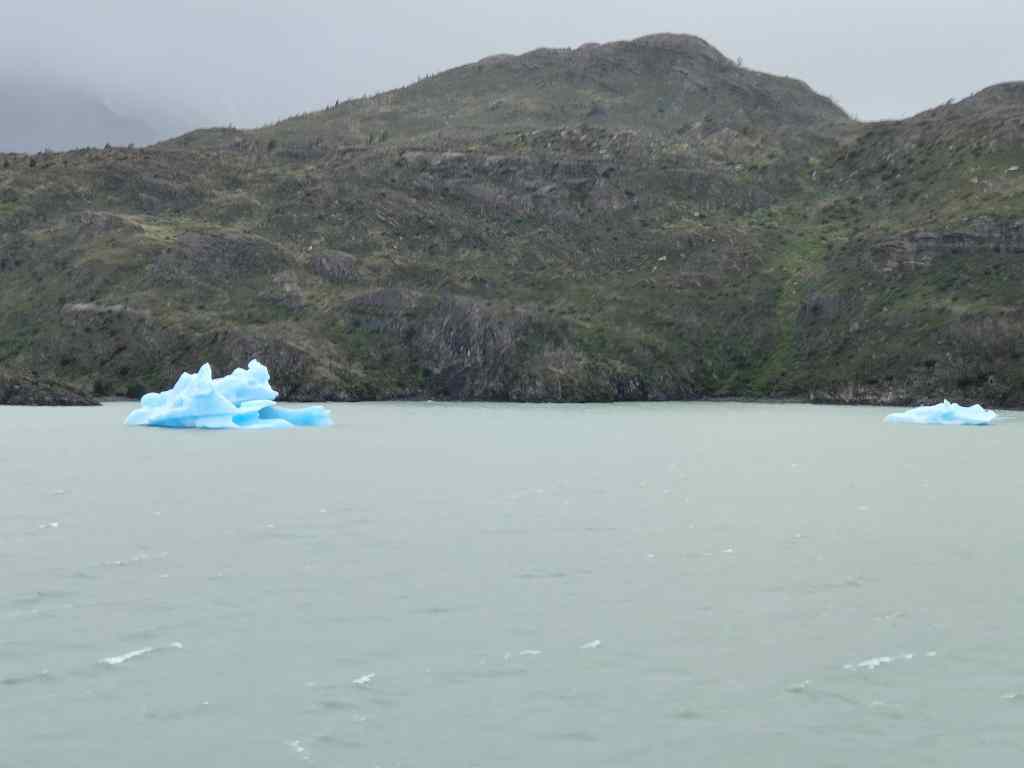
 It was late when I arrived, so I had a quiet dinner in my hotel and went to bed. The next day I was less lucky with the weather. Clouds hung over Puerto Natales, but unlike the previous day they got thicker as I approached Torres del Paine.  When I arrived, it started raining. Although the rain was light, the wind whipped it horizontally into my face as I walked, and it stung like hail. I abandoned my plans for an ambitious walk  and did a short circuit around Lago Grey, a lake containing floating mini-icebergs from a nearby glacier. The wind was even stronger than the day before – the park rangers said 80km/h – and a couple of times I felt it was gong to lift me right off my paws.

Mini Icebergs on Lago Grey

The bad weather showed no signs of changing, so I drove back to Puerto Natales to see what the town had to offer. I was no longer envious of the people doing the “W” trek – they would be stuck on the mountain and be forced to walk 10-20km to their next campsite in these appalling conditions. On the way back there were occasionally breaks in the clouds and some nice views.

When the clouds lift the scenery is majestic

Puerto Natales turned out to be a frontier town and centre for backpackers and outdoor sports enthusiasts. Most people wore heavy rainproof jackets, walking boots and a woolly hat. The town had a lot of restaurants and bars aimed at tourists. I tried one surprisingly elegant one for a cocktail before enjoying a pizza elsewhere.

Trouspinet’s solution to a rainy day……Cocktails!

I was stoical. It was a shame not to see Torres del Paine’s towers in their glory a second time, but at least I had seen them once, and this was the first bad weather day in over 2 weeks of travelling.

Next Post: El Chalten and Monte Fitz Roy

Previous Post: Puerto Varas

Blog at WordPress.com.

Up ↑