Temple of Hathor, Dendara and El Gouna, Red Sea

Today I left Luxor to head to the Red Sea. On the way, I made a brief stop to see the Temple of Hathor (goddess of love) at Dendara. It is relatively recent by Egyptian standards, with its main structures being built under the Ptolemeic pharaohs just before Roman rule.
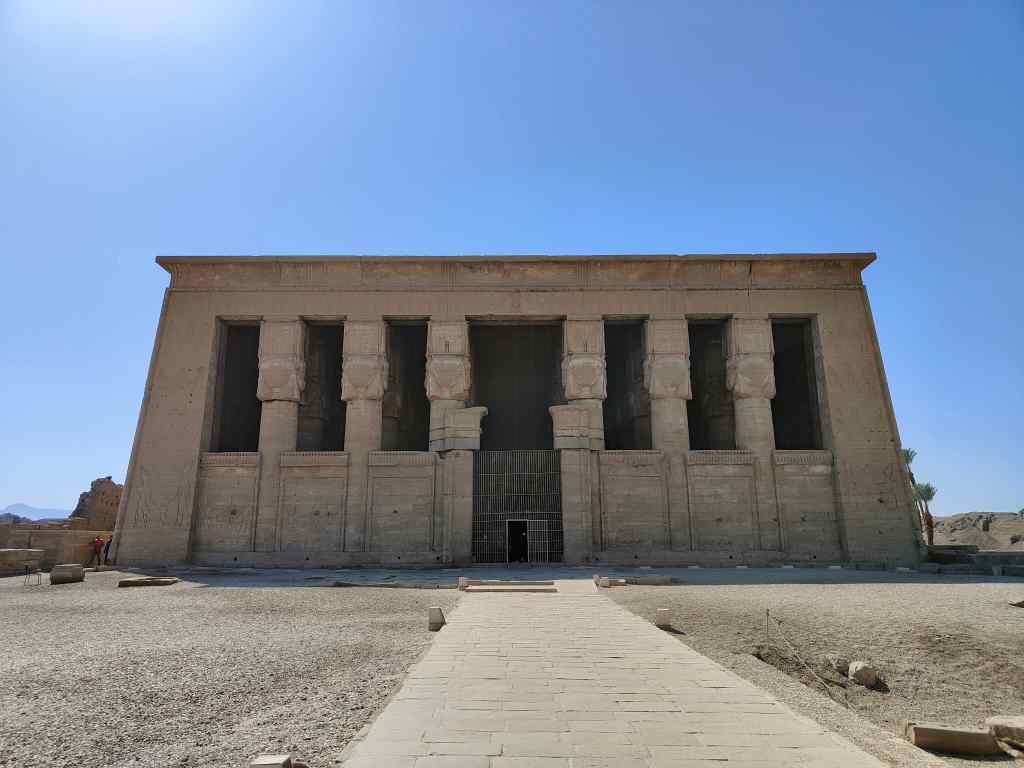
The Temple of Hathor at Dendara

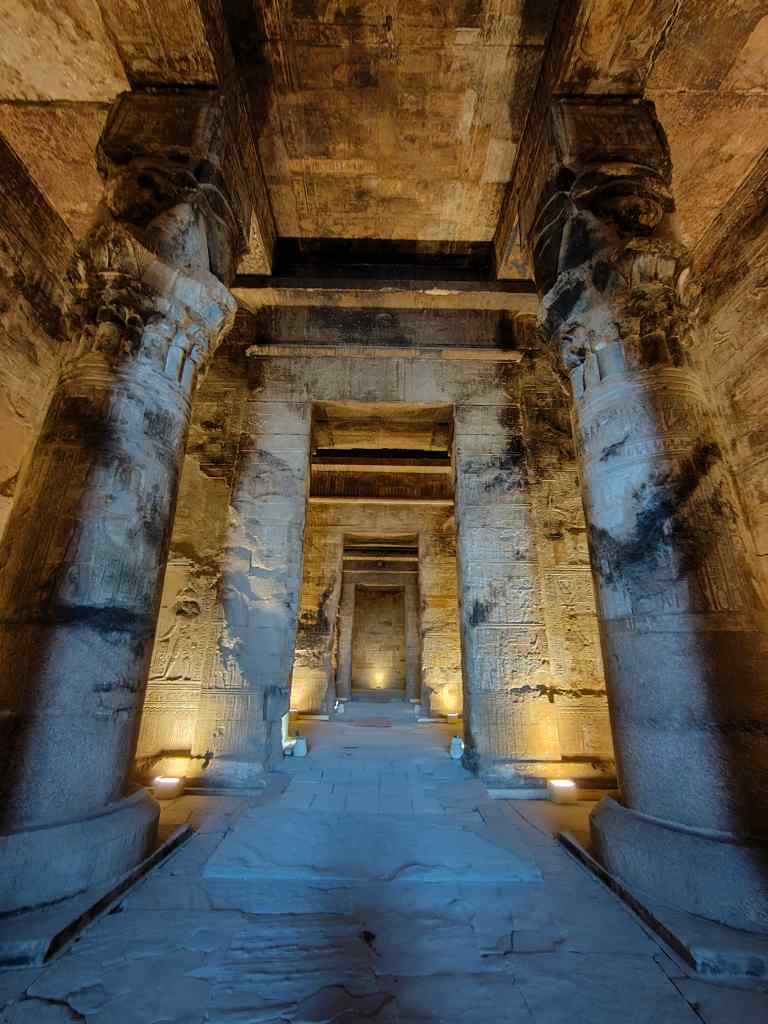
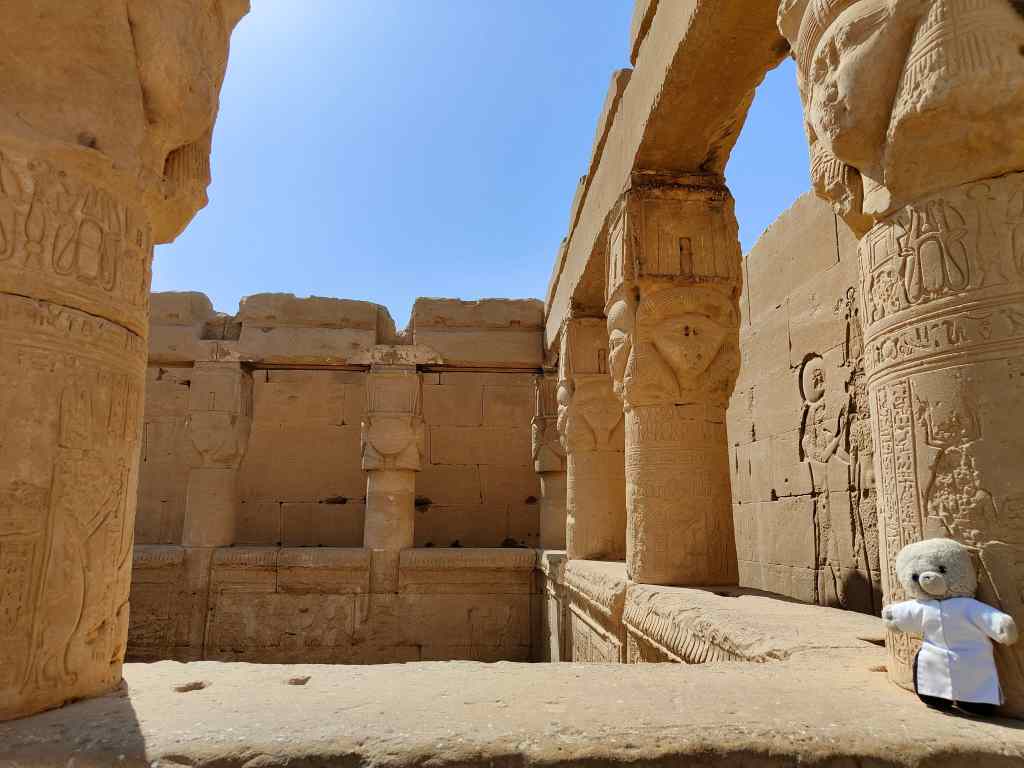
The art work on the columns and ceiling was amongst the most beautiful I had seen in Egypt.

Richly decorated columns and ceiling at the Temple of Hathor, Dendara
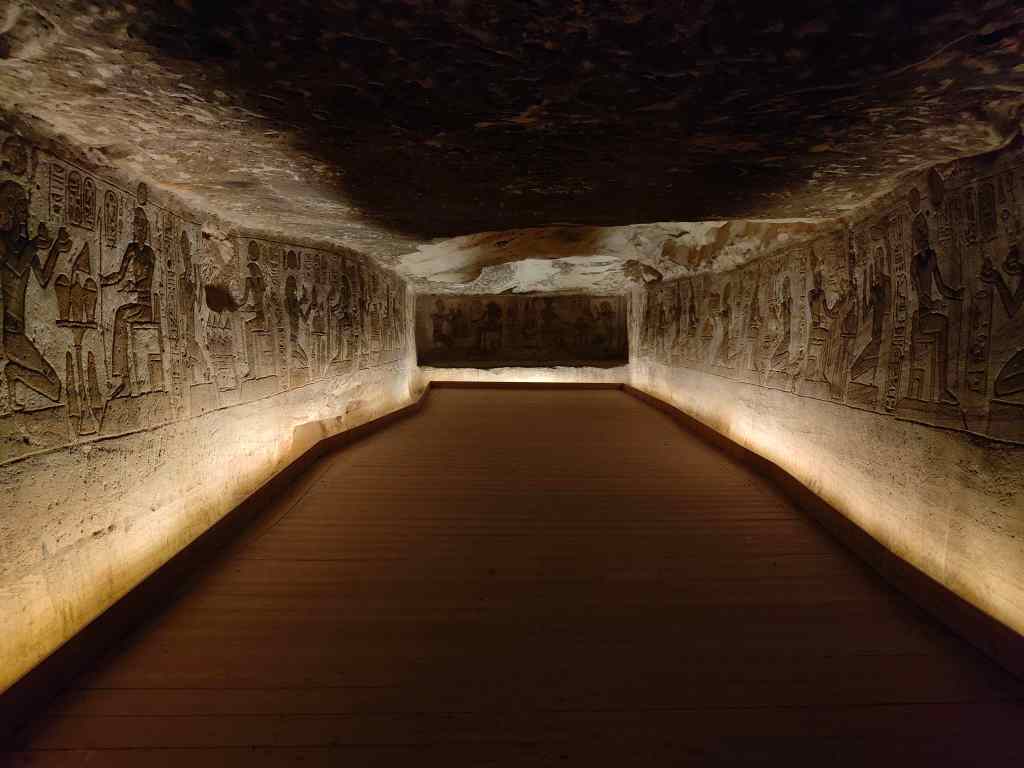
A dark, atmospheric main hall leading into the Temple of Hathor

It is one of the best preserved ancient temples, and still has its roof – which you can walk up on to.

Amazing detail on the ceiling – Temple of Hathor, Dendara
Me on the roof of the Temple of Hathor, Dendara

An hour after Dendara, the road reached the coast and then headed north. To my left, was desolate, empty desert. To my right, all along the sea, there was mile after mile of ugly concrete sprawl around the main city called Hurghada. Many buildings had been abandoned unfinished – perhaps the Egyptians like ruins so much that they skip the “completed” stage of a building project and go straight to “ruined”. But when I reached my destination of El Gouna, things completely changed – the town was surrounded by lush green vegetation, which contrasted with the barren sand all around. There was a security check to enter town, and the buildings suddenly became modern and well-maintained.

After ten days of intensive visiting of ancient ruins, I had booked a couple of days here to unwind by the sea. On my first day, I wandered around the town. It was built around a lagoon, with many gated communities and some impressive private houses – again, with their own security. It felt more like the US than Egypt.

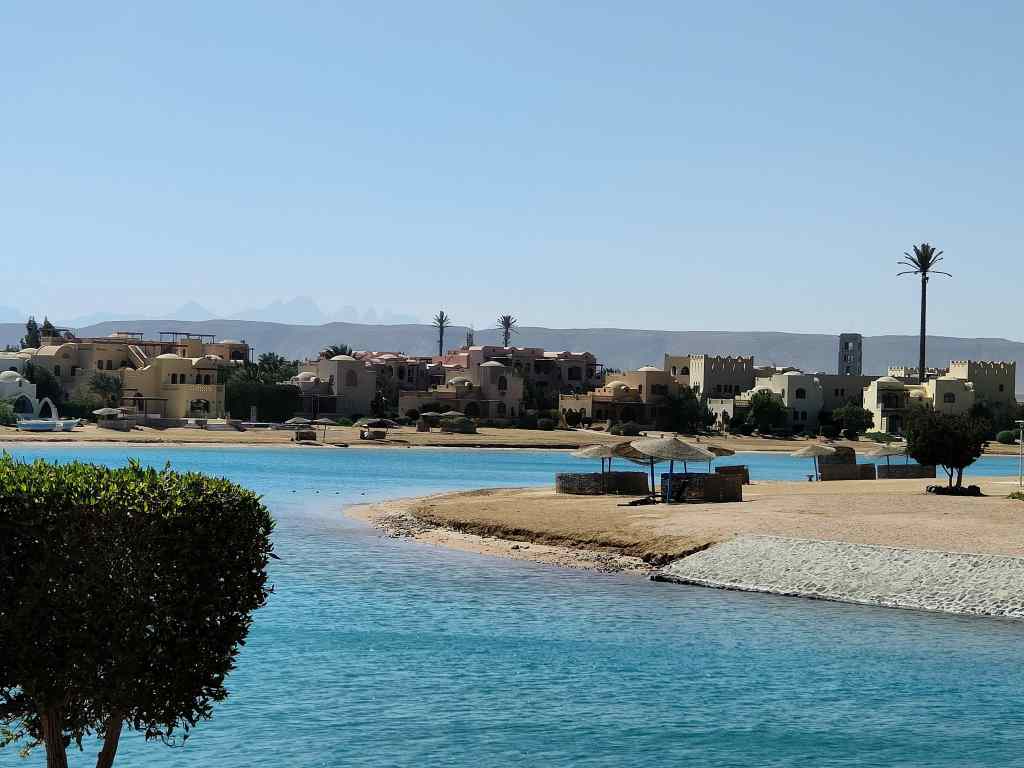
An impressive private house on its own island at El Gouna
The sea behind me, mountains in the far distance – El Gouna

When I reached the beach, I found that El Gouna was popular with kite-surfers. The wind was strong, and good kite-surfers had fun making extravagant jumps, whilst beginners struggled to stay upright. The location was beautiful, with the mountains of the Sinai peninsula in the background across the sea. I have always wanted to try kite-surfing, but with a wind like this a little fluffy bear like me would have been blown all the way to Sinai.
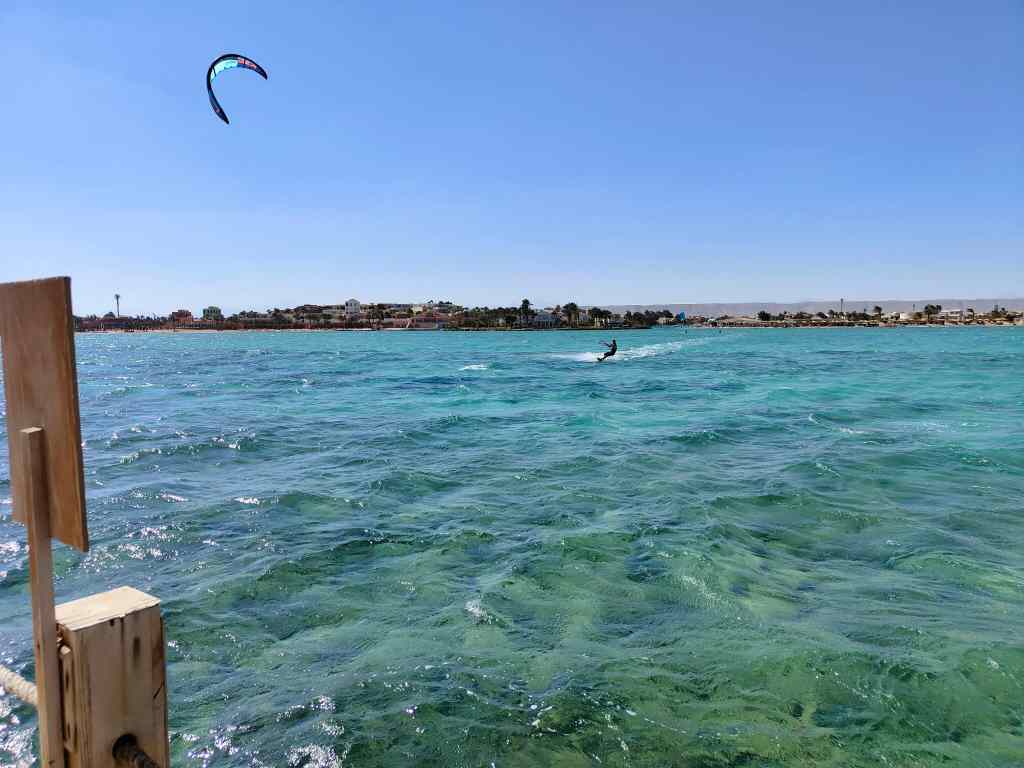
Kite surfer at El Gouna

My own sport is diving, and I did a couple of dives the next day, the highlight of which was seeing a worryingly large (remember I am small!) camouflaged octopus. After diving there was not a lot to do except laze by the pool – the weather was just warm enough for this, with the late February sun.
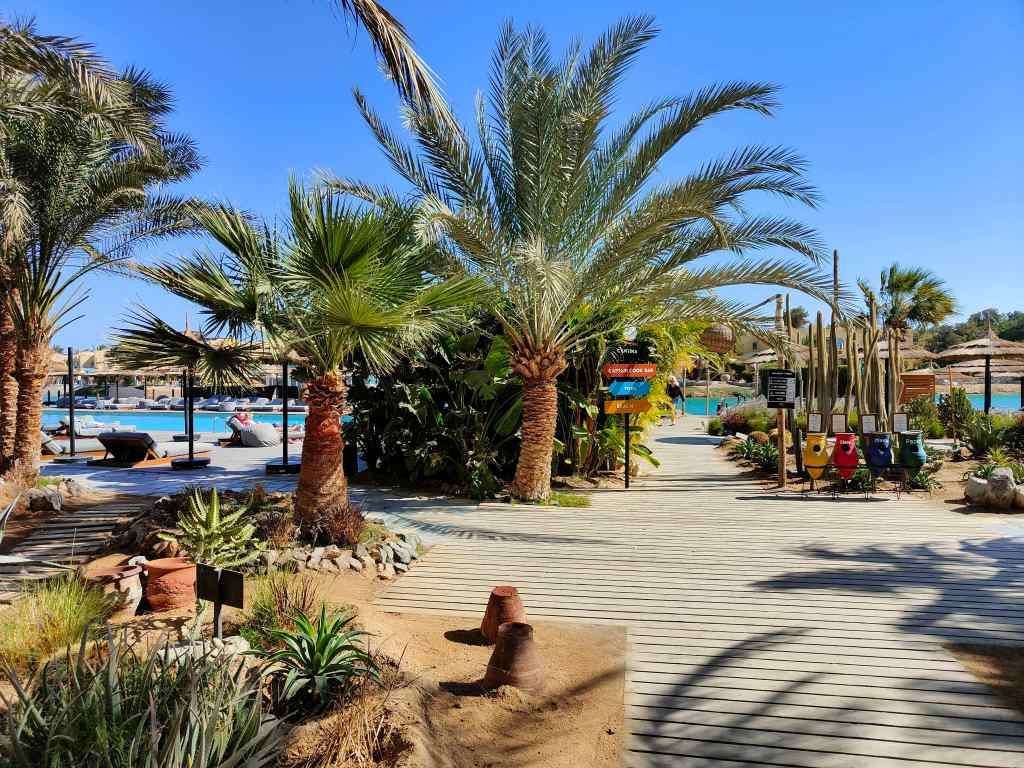
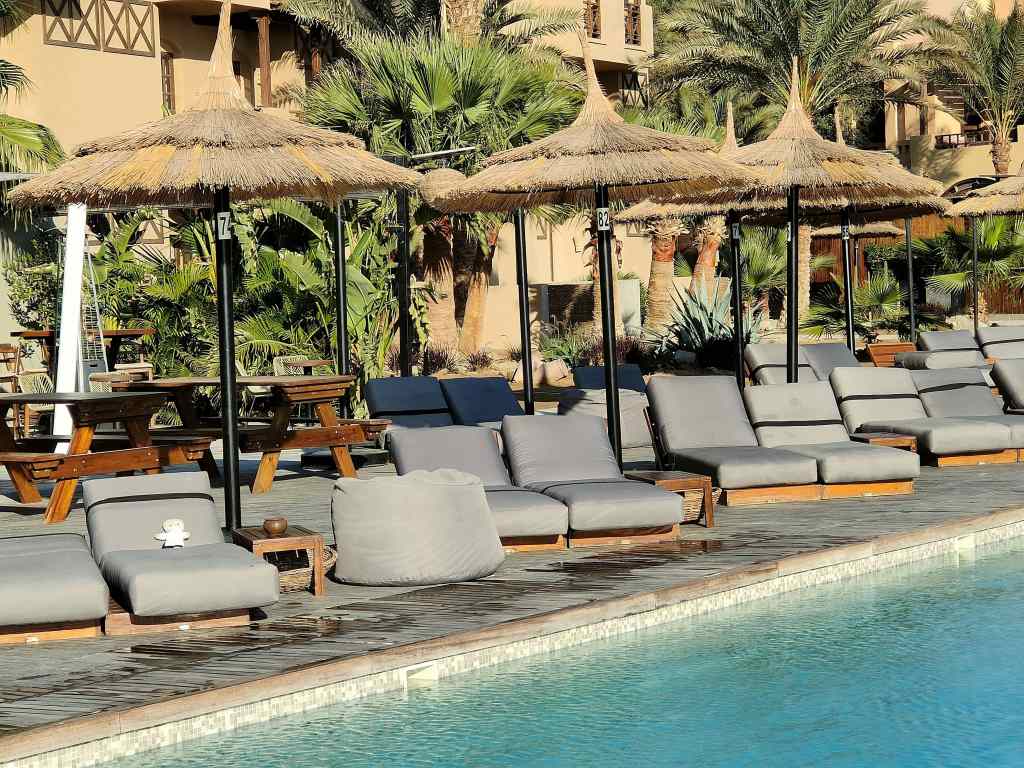
My hotel at El Gouna on the Red Sea
Chilling by the pool – el Gouna

It was nice to recharge for a couple of days after seeing so many ruins. My next stop was Cairo, which would require all of my energy…

Next Post: Cairo, the city that never sleeps

Previous Post: Luxor, Valley of the Kings
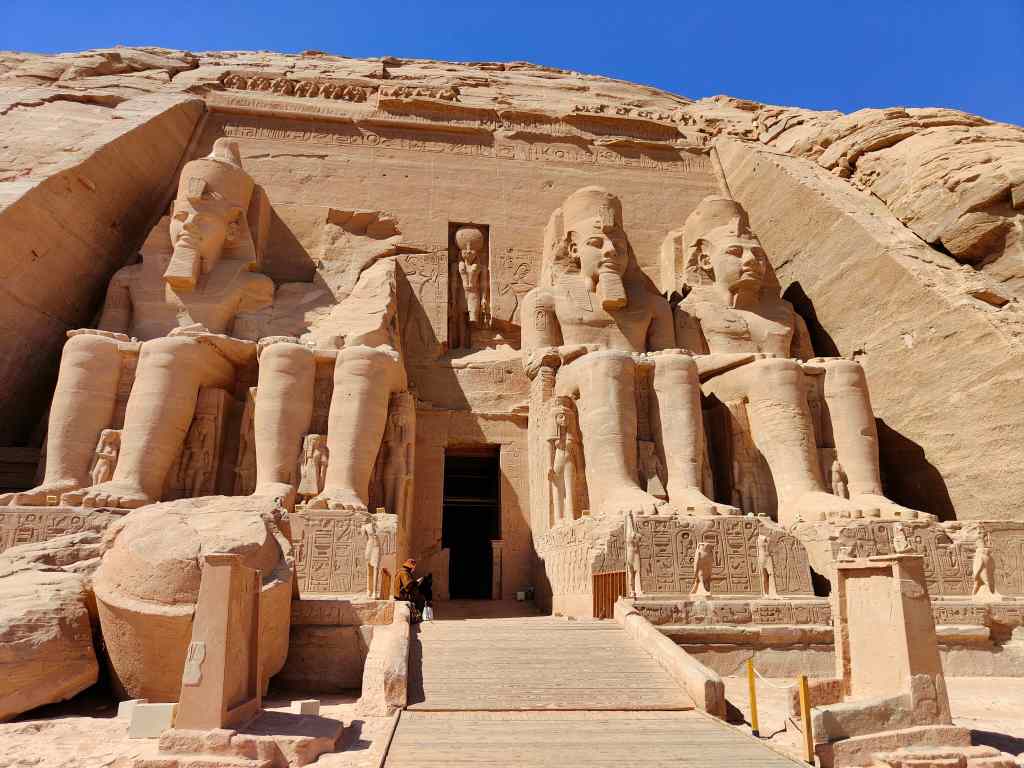
Abu Simbel and the Great Temple of Ramses II

The next couple of days were devoted to temples…and lots of driving. First, I made the long trip south to Abu Simbel, near the border with Sudan to see the Great Temple of Ramses II, one of Egypt’s most famous monuments. Getting their required a three-hour drive. After a couple of hours being driven through featureless, dull desert, the side of the road suddenly became green with crops grown using the water from Lake Nasser – but soon that too became rather boring. Fortunately, the temple was worth the effort of getting there. It was located on a pretty site, next to the bright blue waters of Lake Nasser.

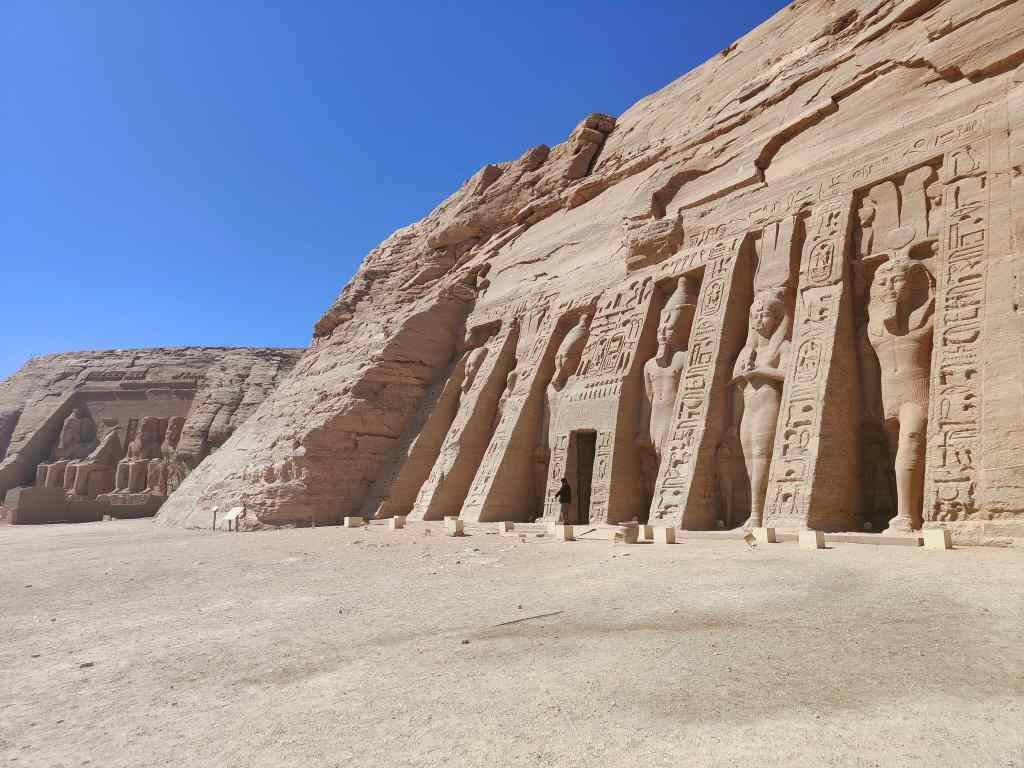
The spectacular site of the Great Temple of Ramses and the Temple of Hathor

The Great Temple of Ramses II has a long and interesting history. It was built in the 13th century BC and orientated such that the rising sun would shine right through the temple to its inner sanctuary on exactly two days each year – Ramses’ birthday and the anniversary of his coronation.  After the fall of the pharaohs, it was forgotten and was almost completely covered by sand. A Swiss archaeologist stumbled across the top of the head of one of the four giant statues of Ramses that guard the temple’s entrance and started excavating to uncover the Great Temple of Ramses II and the nearby Temple of Hathor. The temple was nearly lost again when the Aswan dam was constructed. Like the Temple of Isis at Philae, it was one of several important archaeological sites that were moved to higher ground by an international group of archaeologists to save them from being submerged. The Great Temple of Ramses II was possibly the most challenging such project. It involved cutting the temple into hundreds of blocks, averaging 20 tonnes each, creating an artificial hill to provide the temple’s backdrop, and rebuilding the temple in the newly created cliff. The engineers also tried to mirror the orientation of the old site as closely as possible but could not get an exact match – the rising sun now illuminates the sanctuary one day later than it did the original temple. I had timed my trip well – my guest house owner had advised to leave early, and many people leave at six in a convoy of vehicles from Aswan with a police escort, a relic from the time that the road was considered a target for terrorists. Instead, I left at a leisurely half past eight and arrived at half past eleven, missing all of the tour groups.

The temple of Hathor with the Great Temple of Ramses II in the backgound

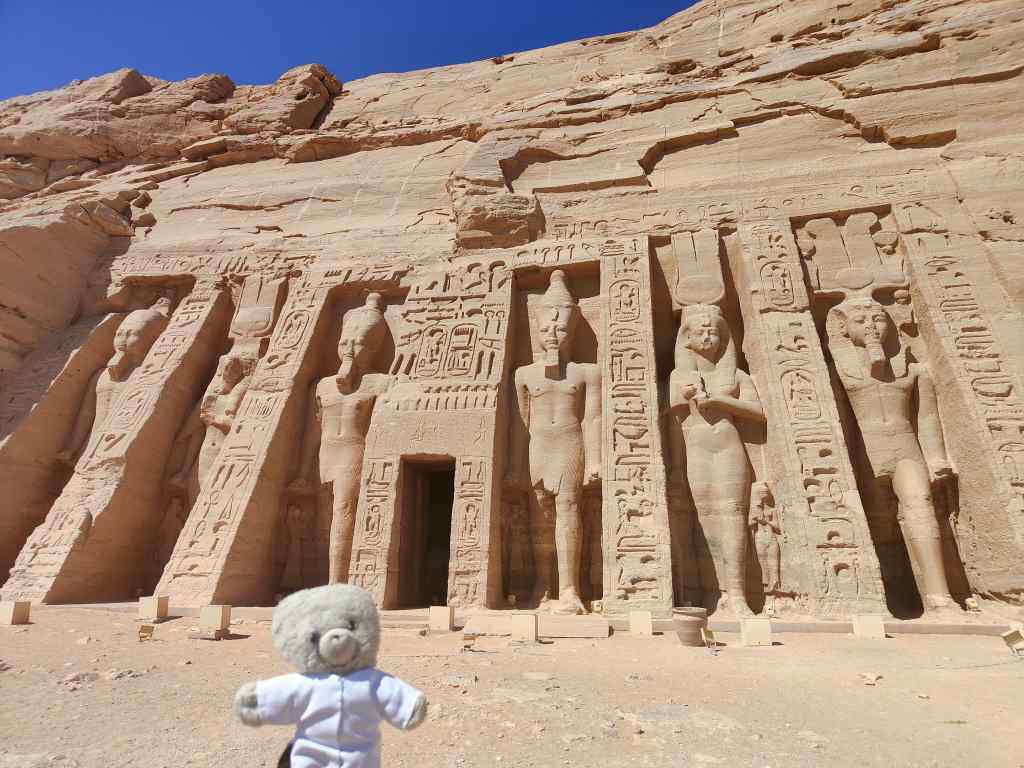
First, I visited the Temple of Hathor, the goddess of love. The entrance had three large statues of Ramses and his favourite queen, Nefertari; unusually she was represented on the same large scale as her husband (usually wives and children were carved much smaller).

The temple of Hathor
Inside the Temple of Hathor

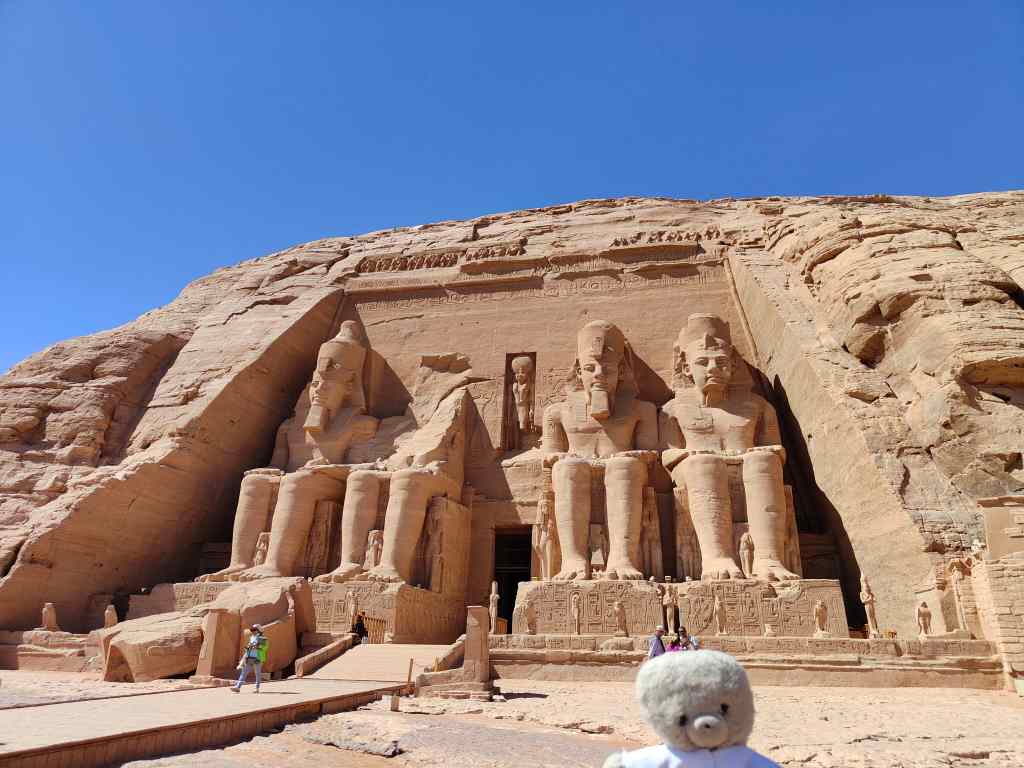
Next, I visited the main attraction, the Great Temple of Ramses II. It is dedicated to the gods Ra, Amun and Ptah………but is mostly a tribute to Ramses II himself. The four huge statues of him at the temple’s entrance are one of Egypt’s most widely recognised sights, and in real life are just as impressive as they are in photos.

The Great Temple of Ramses II

The interior of the temple has scenes from the life of Ramses II. He probably became pharaoh at the age of 21 (though some sources say even earlier) and may have died aged 90 – a reign of around 70 years. Egyptians say he was a “busy” man. He fought many battles – including a key victory over the Hittites that secured the independence of Egypt- constructed cities, temples and monuments and had over 100 children from fourteen wives. His favourite wife was Nefertari, and he built a magnificent tomb for her in the Valley of the Queens in Thebes (now Luxor).

Ramses slaughtering the Hittites

Several passages led into the rock away from the main temple – probably they were storage areas
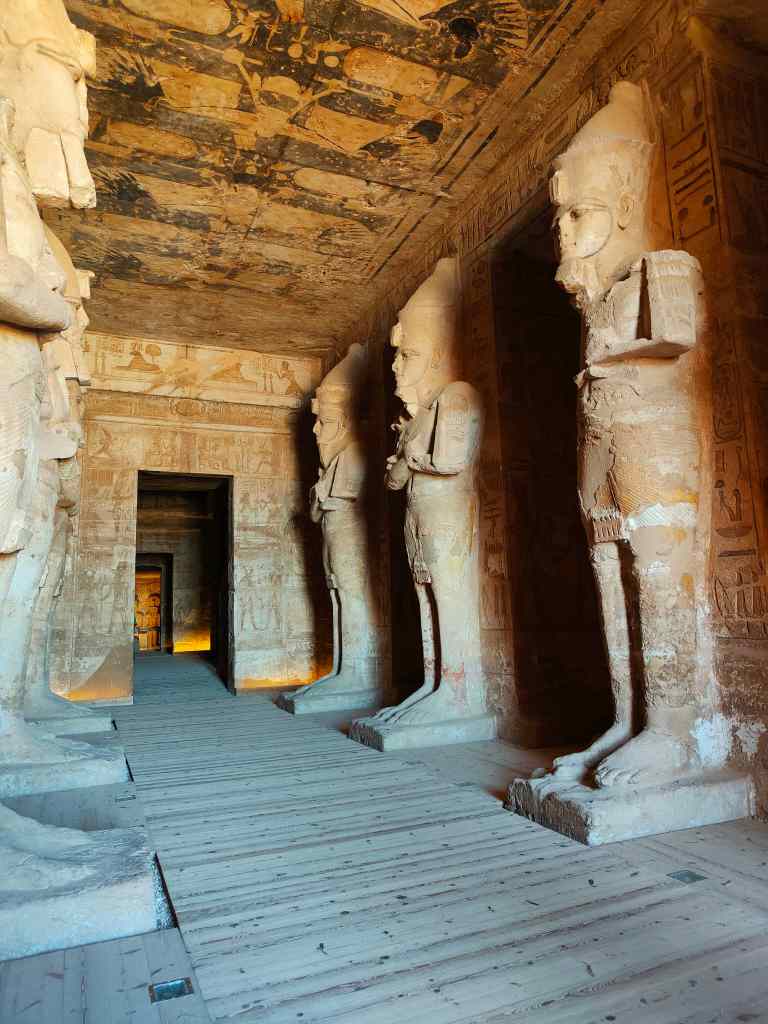
Yet more Ramses statues inside

The Great Temple of Ramses II is an amazing sight and a monument to the things humans capable of when they work together. Construction of such a large and beautiful temple, 2500 years ago, at the very edge of the area controlled by Ramses’ Egypt was an astonishing achievement. But so too was the international project to save the temple from flooding by moving it piece by piece to a new location. If only today’s humans could rediscover this spirit of cooperation.

Previous Post: A day on the Nile

Next Post: From Aswan to Luxor

Blog at WordPress.com.

Up ↑