Farewell to Shikoku – Ritsurin Garden and Naruto Whirlpools

Today we were due to leave Takamatsu and the island of Shikoku. Before we left, we took advantage of some sunny weather to visit Ritsurin, one of Japan’s most famous gardens. It lived up to its reputation, with a beautiful setting at the foot of a mountain…..
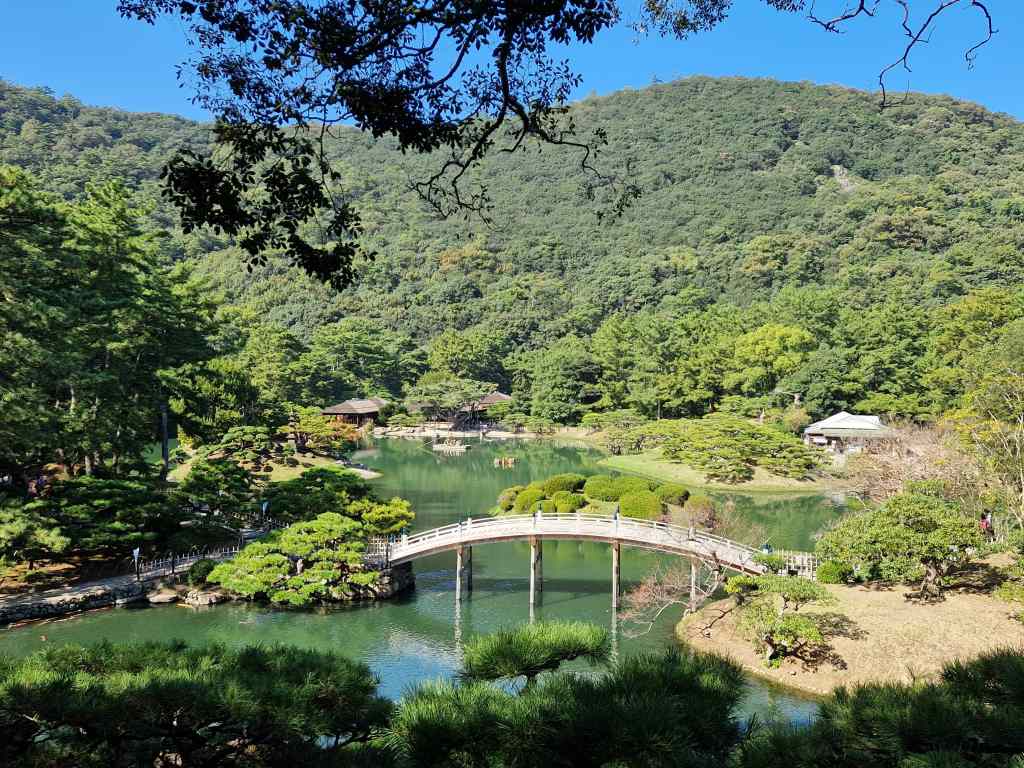
Ritsurin Garden bridge view
The most famous view of Ritsurin
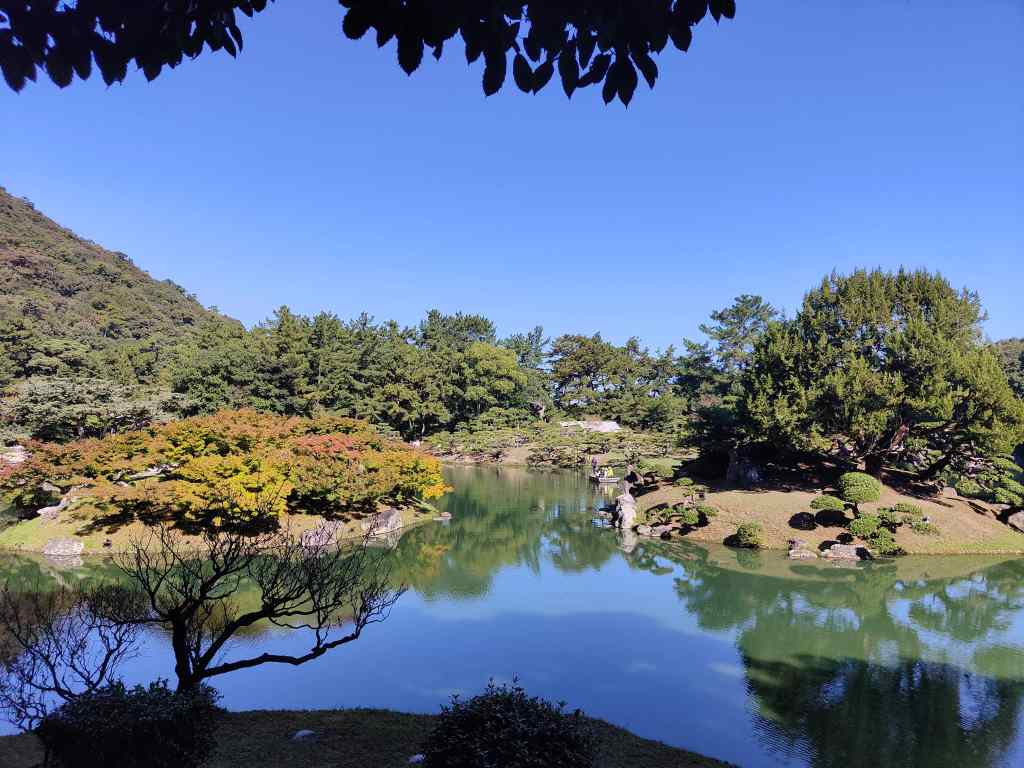
Ritsurin lake
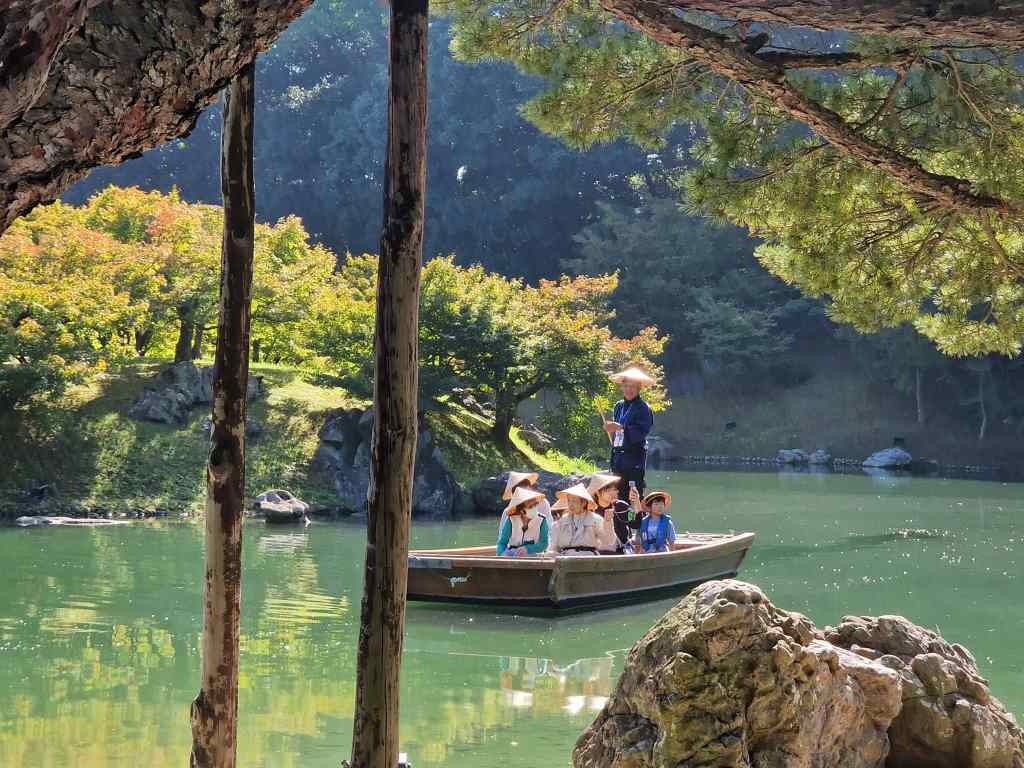
Ritsurin’s lake hosts popular boat trips in traditional costume
Boating on Ritsurin lake


…..and many ponds containing voracious carp. The latter were very well fed by the visitors, who could buy rice sticks to give them from one of the park’s cafés.
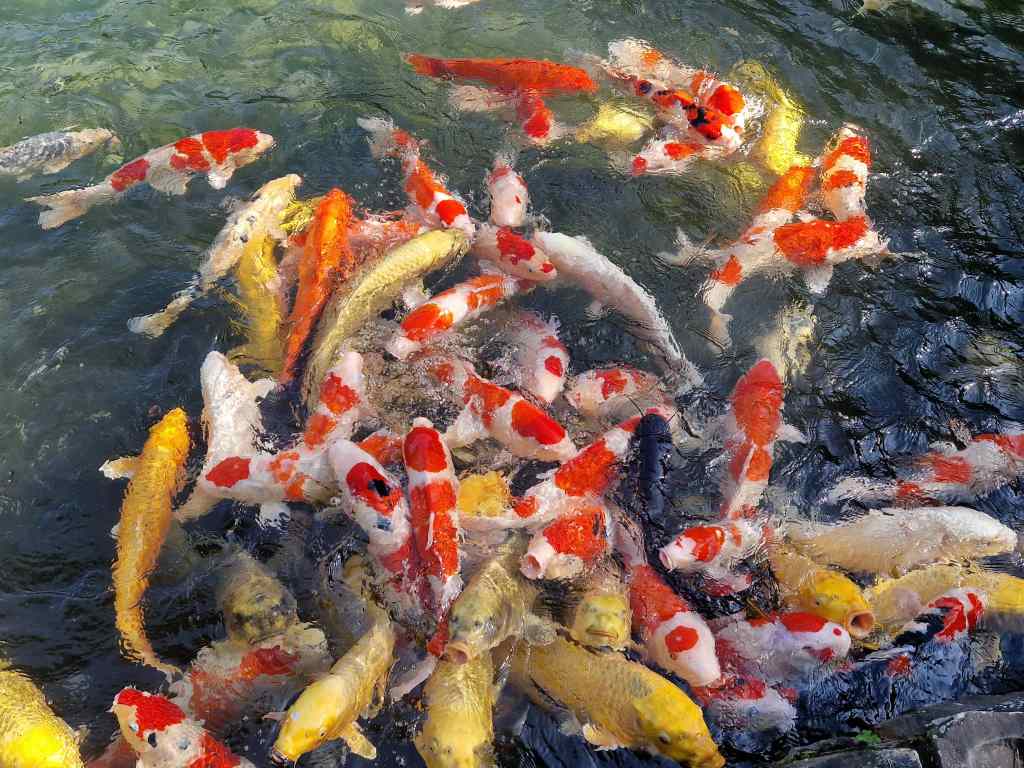
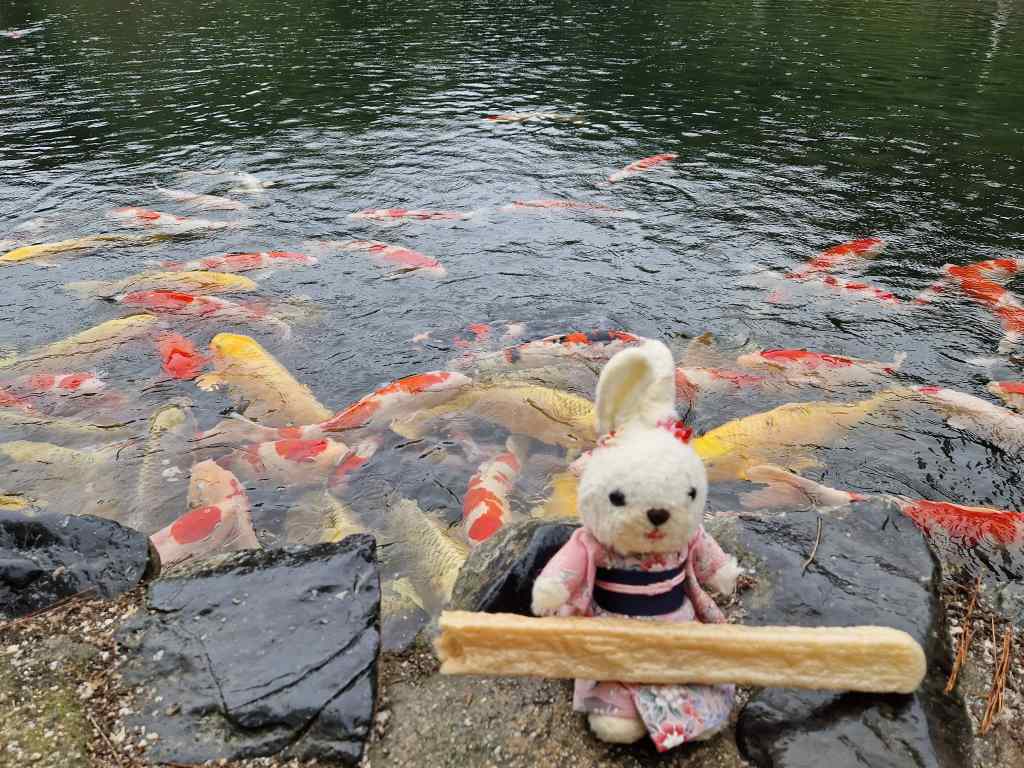
Carp at Ritsurin
Ravenous Ritsurin carp
Feeding Carp Ritsurin
Don’t fall in Aki!

The carp were not the only wildlife in the garden; as we strolled around, there was an announcement over loudspeakers warning people not to approach a wild boar that had been seen entering the park from the mountain if they met it. At first, I misheard them and thought they said “bear”, which was worried everyone would run away from us…..

Ritsurin also had some unusual trees, like an evergreen Japanese oak which had sprouted from an acorn lodged 1.8m up in the branches of a now-dead pine tree, managed to put roots down to the ground and outlive its host. Its roots still start from the same height. There was also a pine that grown from a bonsai presented by the shogun to the local lord in 1863….
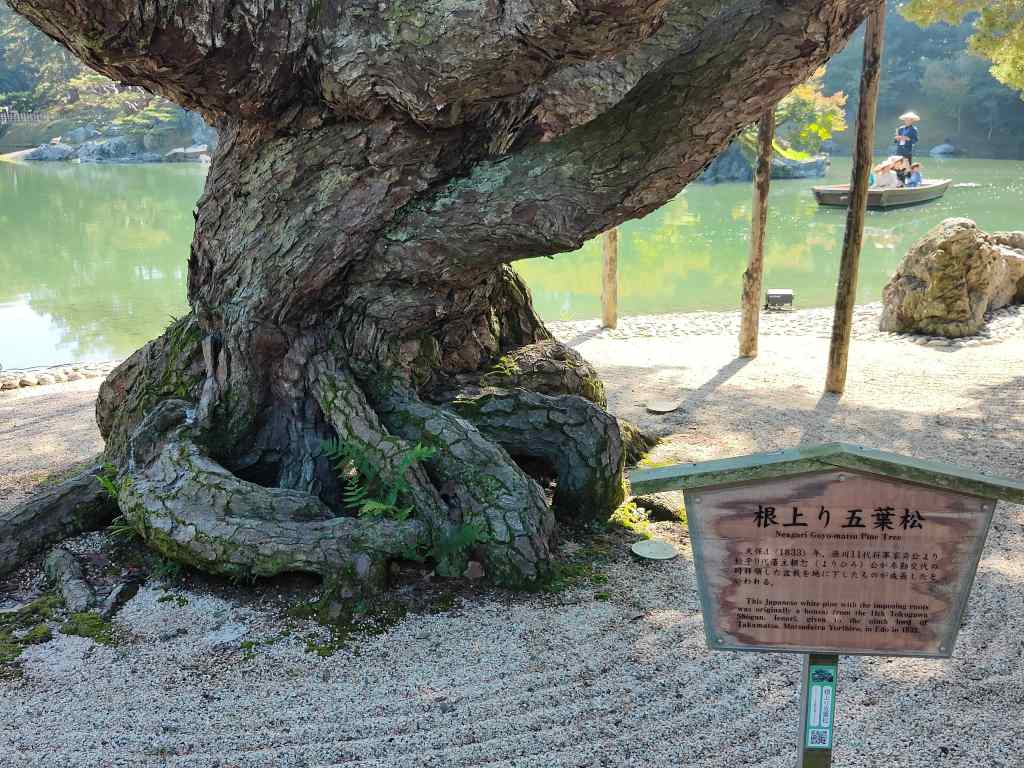
A pine grown from a bonsai!

Finally the gardens had a pleasant tea room overlooking the pond, where ladies in kimonos performed the tea ceremony as they served us our matcha.

Ritsurin tea room
In Ritsurin’s tea room

After a couple of hours in Ritsurin we headed off, with an ultimate destination of Kyoto. At the very end of the island of Shikoku we visited one last attraction there – the whirlpools of Naruto. These are a tidal phenomenon that form twice a day when two sea currents, headed in opposite directions, crash into each other, and we were lucky enough to be passing at exactly the right time to see them. First, we set out in a tourist cruise, right into the middle of the foaming sea. I am not sure if we saw any actual whirlpools, but the sight of the sea foaming around was very impressive and a lot of fun.
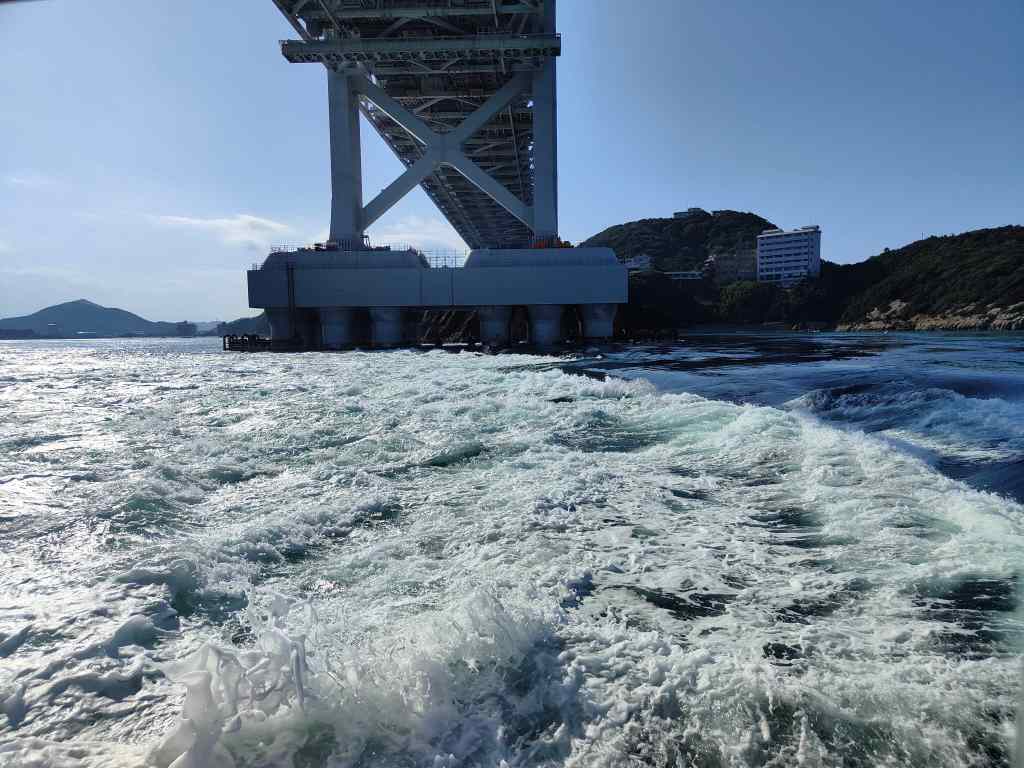
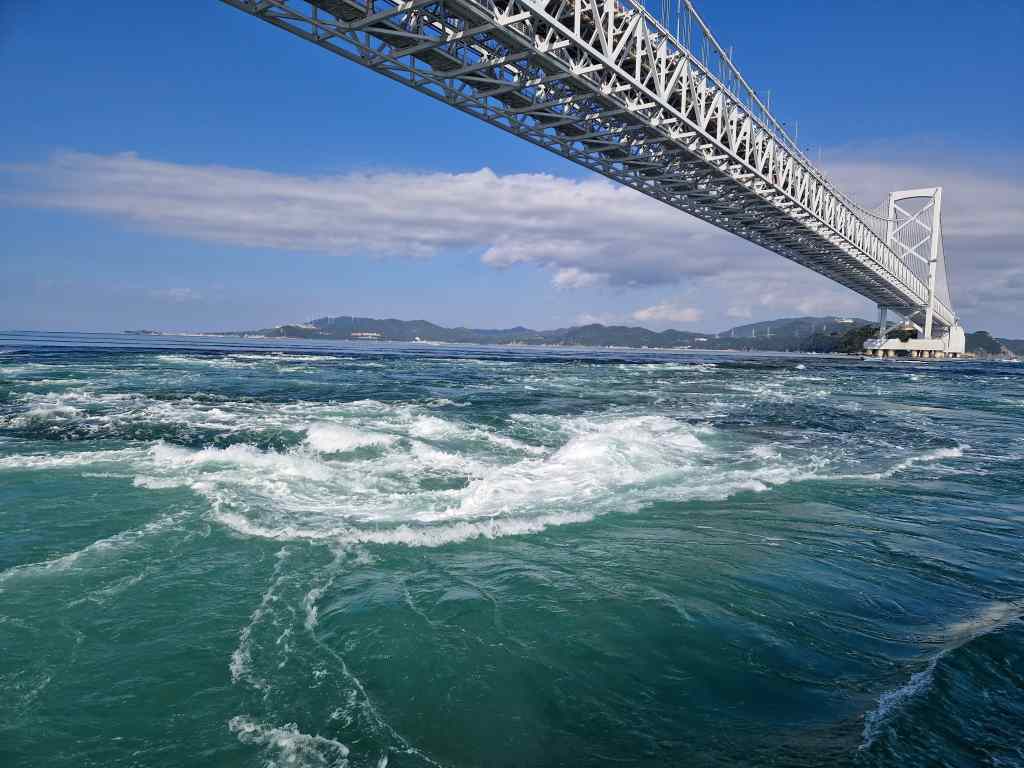
Naruto Whirlpools
Naruto Whirlpools – the sea boils….
Naruto Whirlpools under the bridge
A whirlpool and spectacular bridge, Naruto

Next we climbed on to the magnificent bridge that links Shikoku to the neighbouring island of Awajishima.
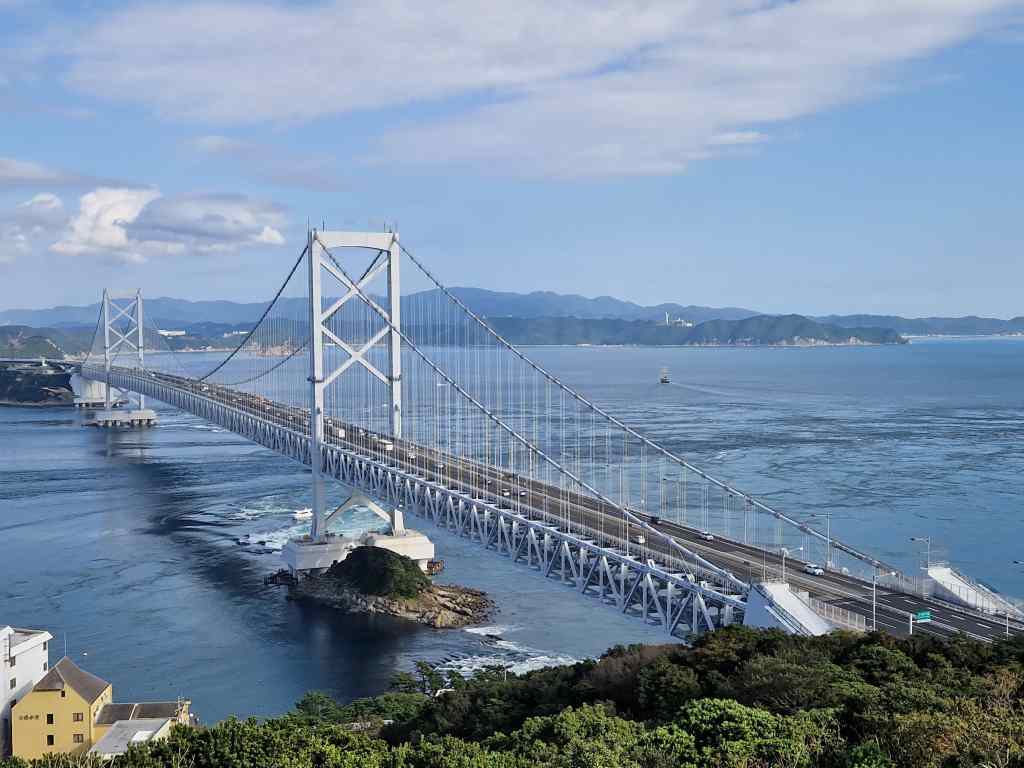
One of the bridges connecting Shikoku to the rest of Japan

There a viewing platform had been set up to view the “whirlpools” from above – including glass panels that let you look straight down onto the sea. It might have been the scary height, or the violent churning of the sea, but after a few minutes of looking at this, my head was spinning. Aki coped a bit better and managed to take some striking photos through the glass.
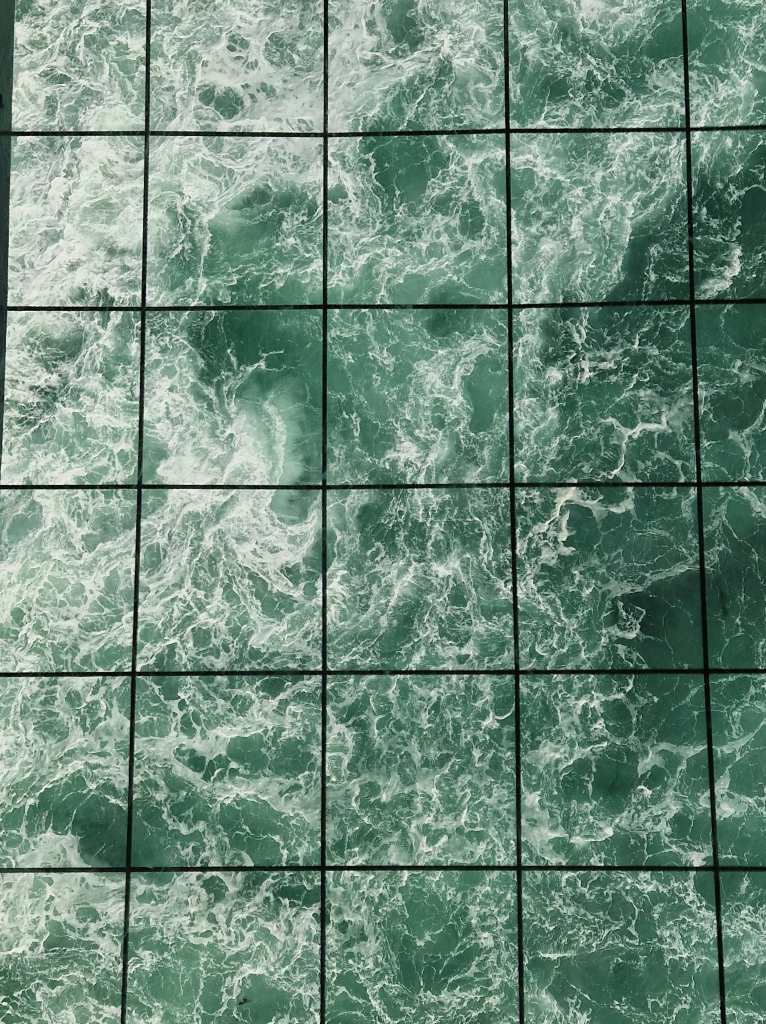
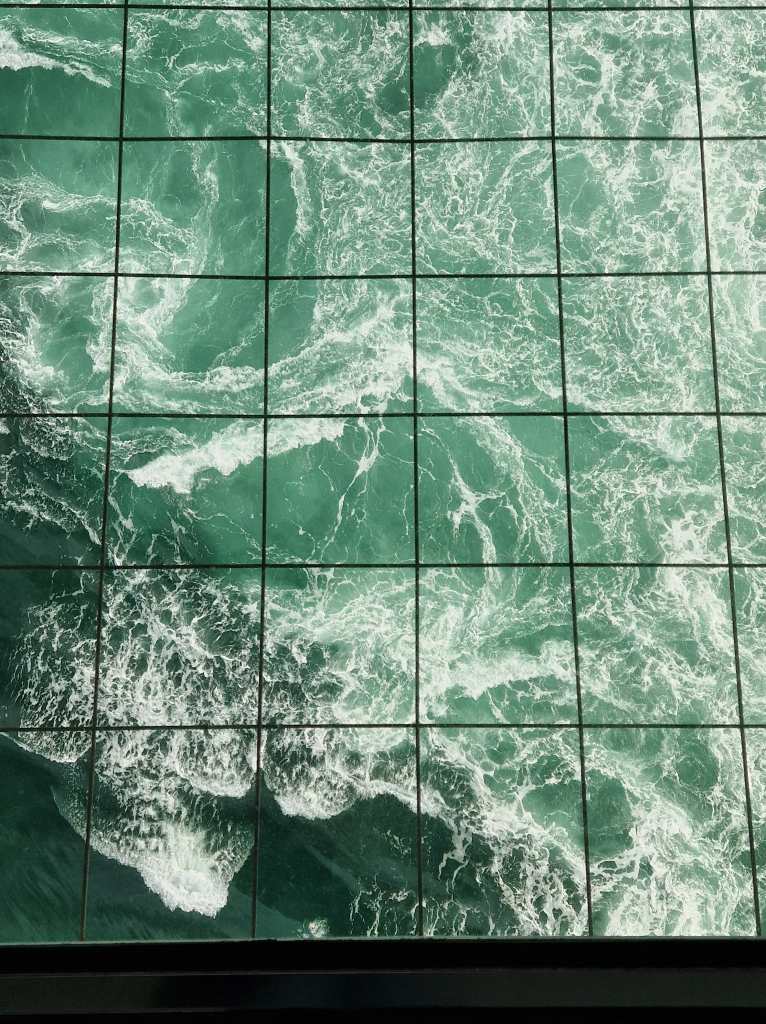
Making our own modern art – worthy of display in Naoshima?
Naruto's Whirlpools seen from bridge
Naruto Whirpools seen from the bridge’s observation deck


From the bridge we drove on, over the island of Awajishima and finally over another beautiful bridge onto Honshu, Japan’s biggest island. We were greeted by a first sight of Kobe, a city in Japan’s incredibly densely populated province of Kansai. From then on, the remaining two hours of our drive was through a dense urban sprawl along busy expressways.
It was a stark contrast with Shikoku, with its open spaces, clear roads and few tourists. We had enjoyed getting off the beaten track. Whilst Shikoku’s tourist sights may not quite match some of the most popular ones in the rest of Japan, the laid-back atmosphere, excellent value food and accommodation and friendly people made for a great week. Indeed, on several occasions local people had started to talk to us, despite the language barrier – something that had rarely happened in the rest of Japan.

Our arrival in Kyoto was inauspicious. We dropped off our hire car but then made the mistake of walking to our rental home, thinking that it would be a good way to get to know the city. Our route took us through some remarkable drab parts of central Kyoto. Surely such a famous destination had to be better than this? Tomorrow we would find out.

Next Post: Kyoto, heaven and hell

Previous Post: Naoshima
Naoshima – an arty day trip from Takamatsu

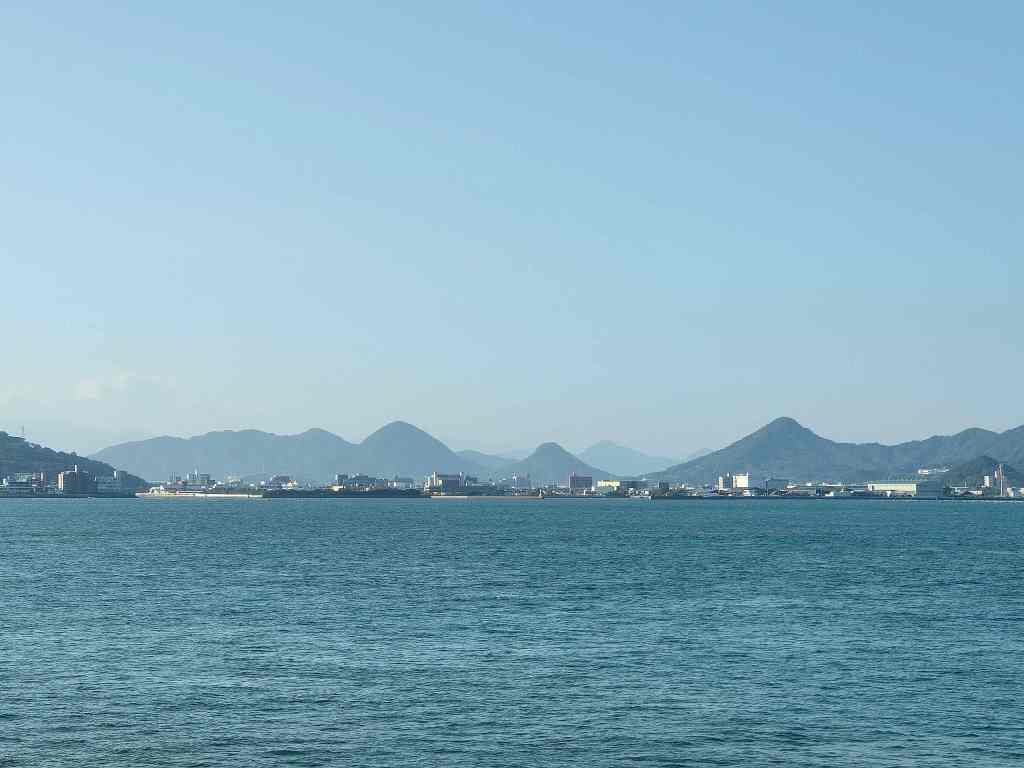
On our third day in Takamatsu the rain finally stopped. We were woken by bright sunshine streaming into our room and decided to start our day earlier than planned. We took the early ferry from Takamatsu to Naoshima, a small island in the Inland Sea which has become famous for its contemporary art museums and galleries. The 1-hour boat trip gave great views of the sea, the many small islands, and back towards the mountains of Shikoku.

Takamatsu from the sea
View back to Takamatsu from the ferry to Naoshima

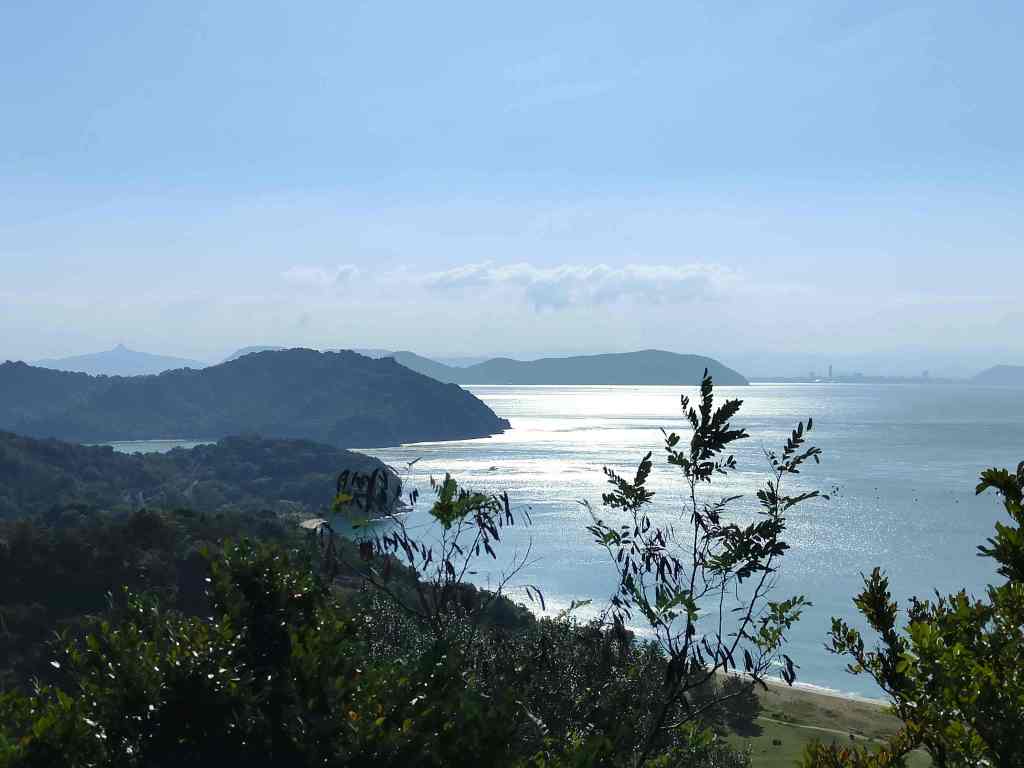
Arriving early turned out to be very wise. Naoshima was firmly on the main tourist route, and many foreign and Japanese visitors were milling around the port. We planned to hire bicycles to get around but found that nearly all of the rental outlets had sold out. Luckily, we managed to rent the very last pair of bikes available and set off to explore. Naoshima had a Mediterranean feel to it – the weather was hot, the pace of life was slow, and there were many beaches. Our bikes were electric and helped us climb a steep hill offering a wonderful view of the sea.

Naoshima Island scenery
Naoshima island has many great views

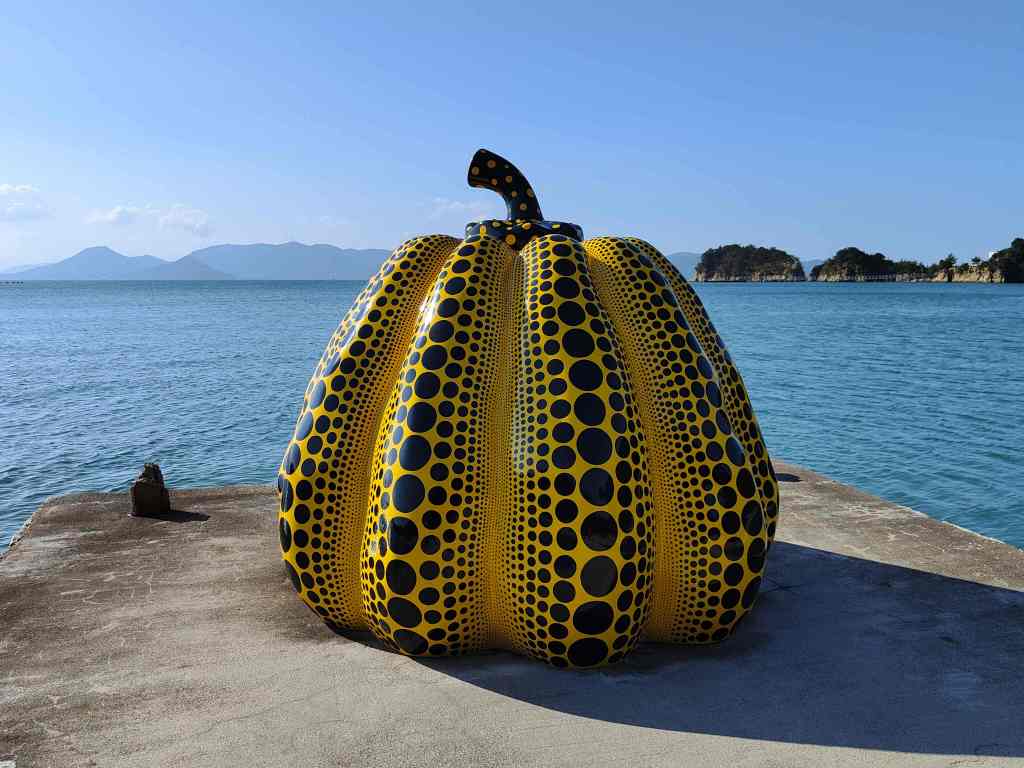
The first art we saw was at the bottom of the same hill – one of Yayoi Kusama’s brightly coloured pumpkins, whose yellow and black design contrasted pleasantly with the blue sky and sea. We had seen a slightly smaller version already at Kanazawa, and also one at London, so wondered if the artist mass-produces them.

Naoshima Pumpkin
Naoshima’s iconic Kusama Pumpkin

The pumpkin stood at the side of the road leading up to the Benesse House Museum, the first and largest art museum to be built on Naoshima. The Benesse corporation is active in the education and childcare businesses, but for the past thirty years has also been active in promoting art, especially on Naoshima. The museum had a small but diverse collection of modern art – as usual, we liked some exhibits but did not understand others.

Benesse House Museum
Art we didn’t understand
Some of Naoshima’s art that we did understand
Exhibit Benesse House Museum


Our next stop was further down the road at the island’s only village, Honmura. There, various different artists have created installations in vacant houses. Most of these creations were pretty strange, begging the question – Why? Although the art left us cold, Honmura was still a nice place to stroll around and a good place for lunch.

weird art on Naoshima
Yes, but why???

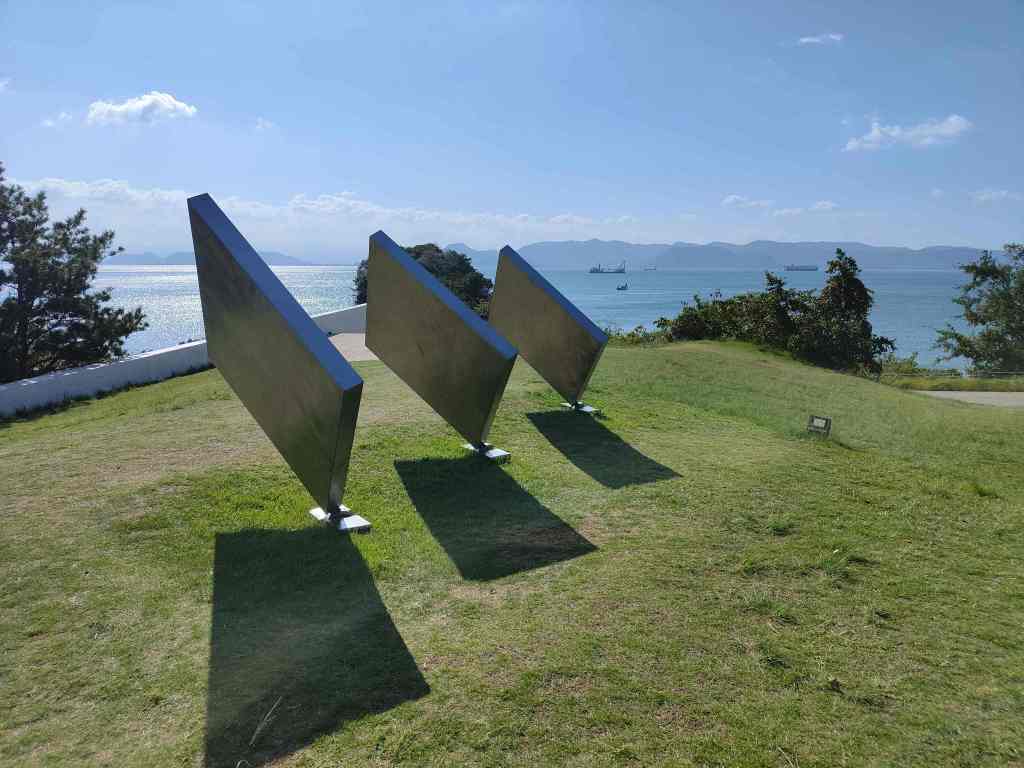
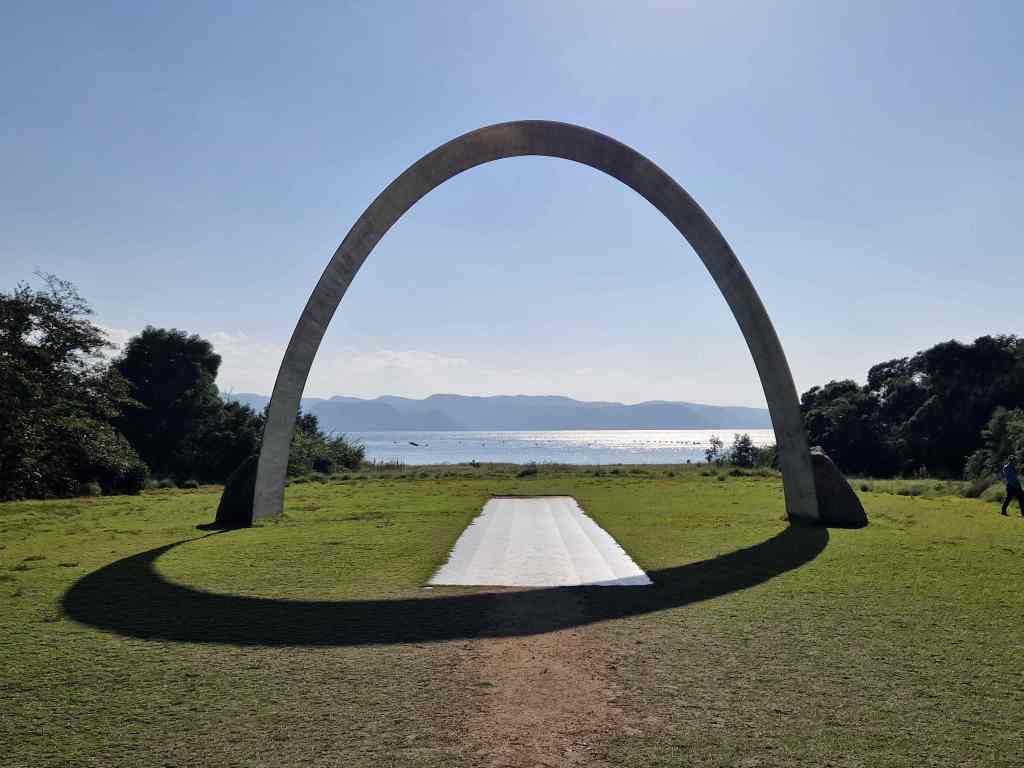
After eating, we backtracked to a second museum run by the Benesse corporation, the Lee Ufan Museum, devoted to work by the eponymous artist. The collection was very small, and we spent more time outside admiring a graceful metal arch by the beach than we did inside looking at Ufan’s work.

Lee Ufan Museum on Naoshima
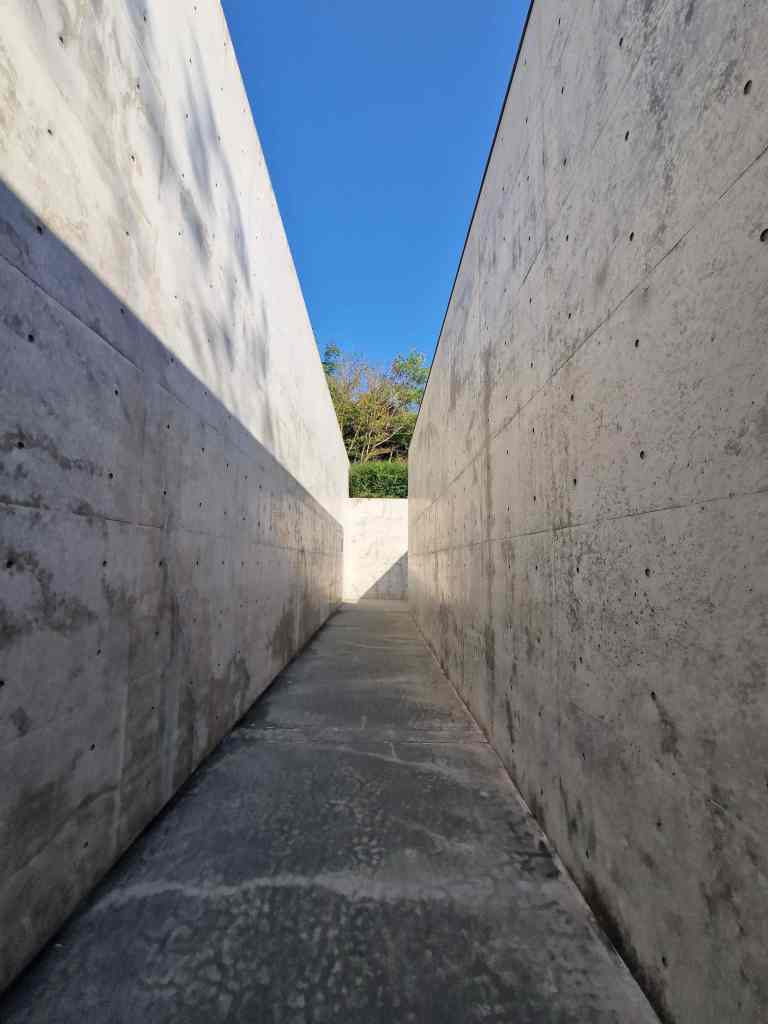
The three Benesse museums share the same brutalist concrete design by Tadao Ando
Arch, Naoshima
A much-photographed arch on Naoshima

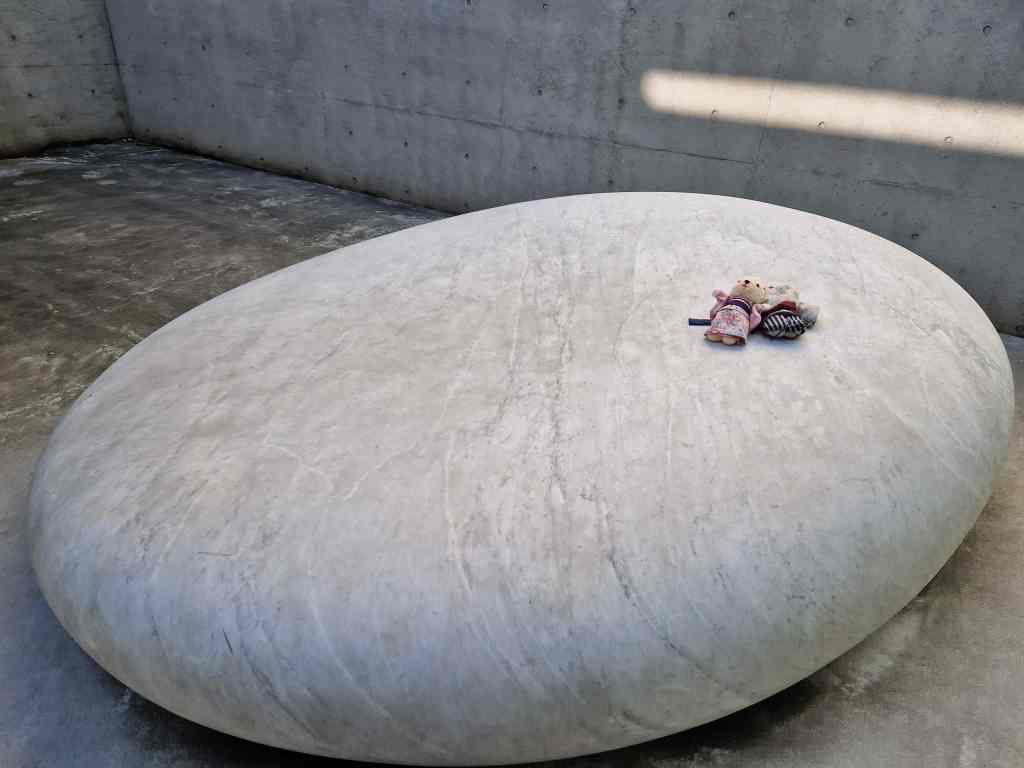
Finally, we visited the Chichu museum, the third Benesse venture on the island. This also had a very small collection and due to its popularity sells tickets with a strict time slot. The first room of the museum was devoted to four pictures of water lilies by Monet. Maybe for Japanese visitors these were amazing, but we had recently visited the Musée Marmottan in Paris and so had seen more, and arguably better, Monet paintings of lilies. The second set of exhibits in the Chichu museum were by James Turrell, but a very long queue to see them had formed along a dark, uninteresting corridor. We worried that if we stayed, we would miss our ferry back home, so moved on to the final exhibit – a huge granite sphere by Walter de Maria, dominating a cathedral-like underground room. We thought it was a brilliant piece of work, which made up for the disappointment of the other exhibits. Sadly though photos were not allowed.

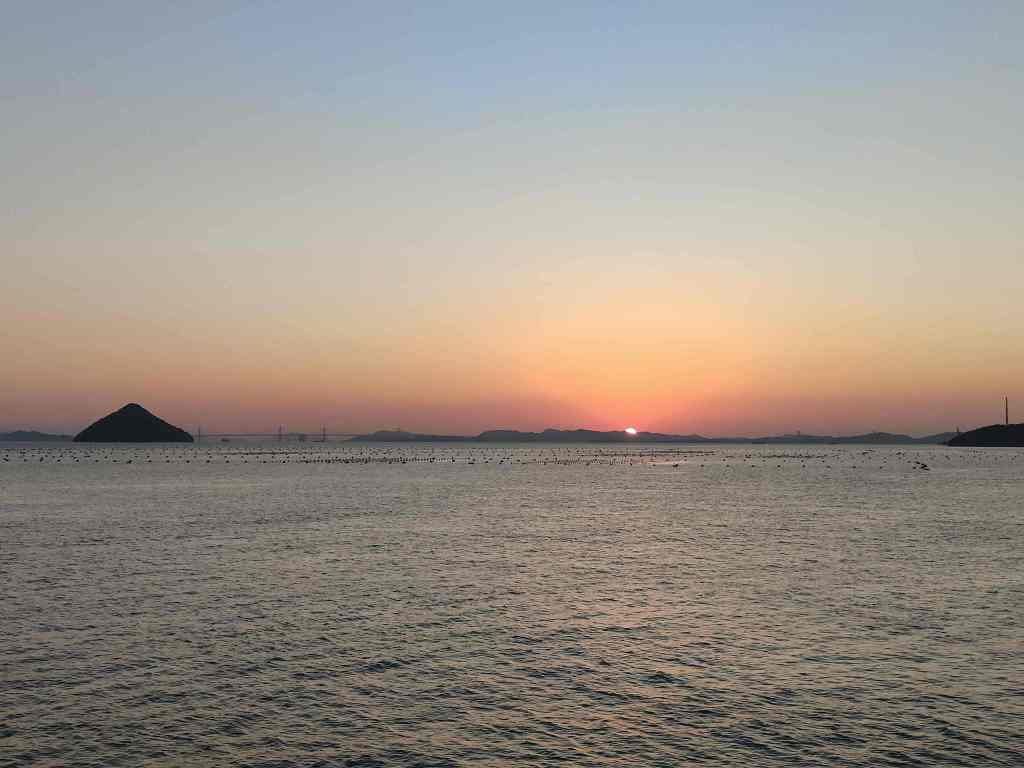
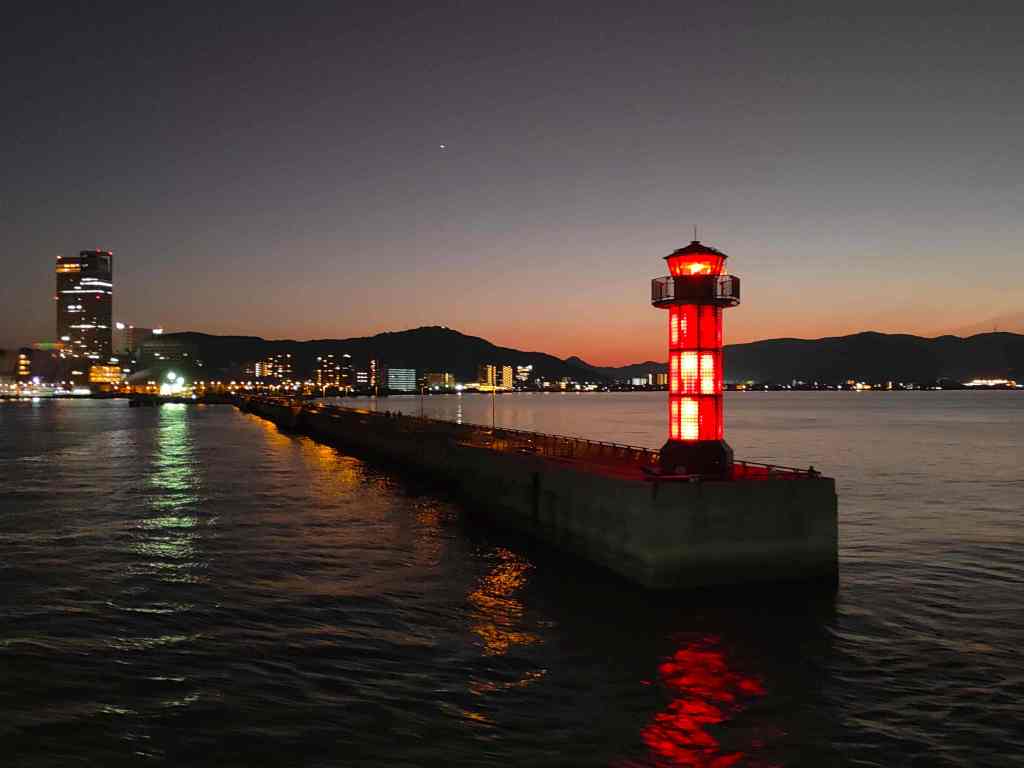
After a few minutes admiring the sphere, it was time to head back to the port to join a very long queue for the 17.00 ferry back to Takamatsu. The return trip gave us a nice sunset over the mountains of Honshu, and a surprising highlight of the trip – Takamatsu’s lighthouse, made out of bright red glass. This was probably the modern art highlight of the day!

ferry-Takamatsu-Naoshima
Sunset on the Inland Sea, ferry Naoshima-Takamatsu
Takamatsu-lighthouse
Takamatsu’s lighthouse – the best art of the day!

We had greatly enjoyed our time, even if we found the art museums somewhat underwhelming compared to what we could see back home in London or Paris. The real joys of the trip were the ferry rides over the Inland Sea and the exploration of the pretty island of Naoshima by bicycle – especially doing all this in bright sunshine after two days of rain.

Next post: Ritsurin Garden and Naruto Whirlpools

Previous Post: Shikoku – Iya Valley, Kotohira

More Shikoku – Iya Valley, Kotohira…and a Typhoon at Takamatsu

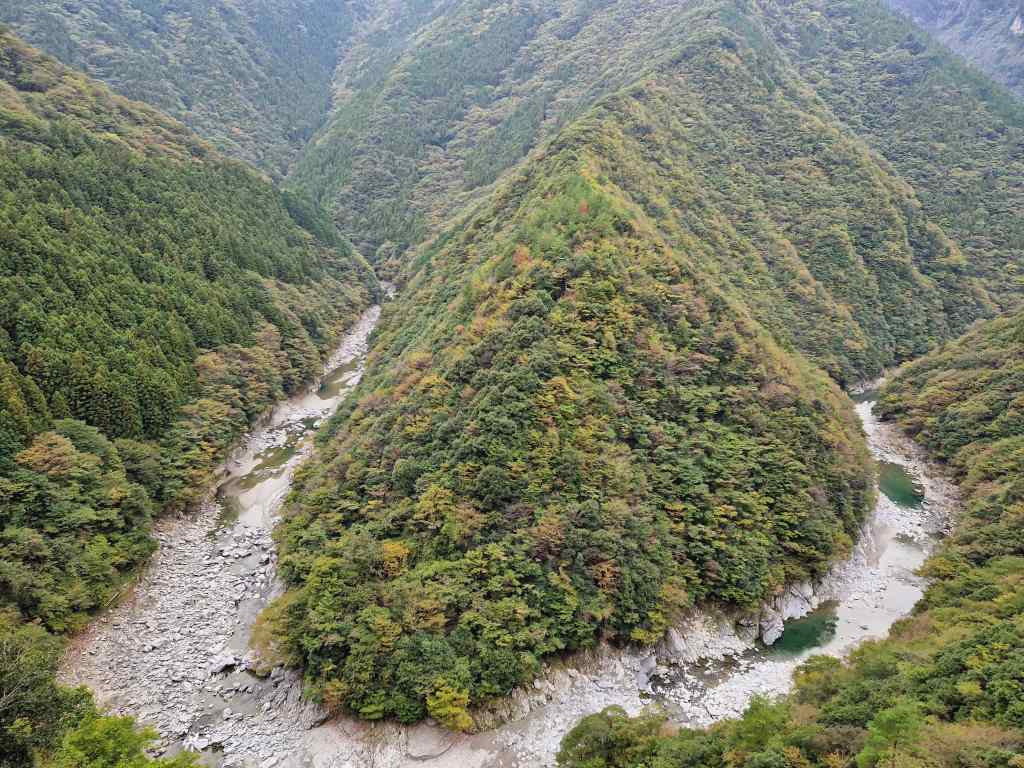
Today our final destination was Takamatsu, on the coast of the Inland Sea on Shikoku. The road took us north, to the lower part of the Iya Valley. There were some nice viewpoints but at this altitude no sign yet of the autumn leaves that had dazzled us yesterday.

Lower Iya Valley viewpoint
View of the lower Iya Valley

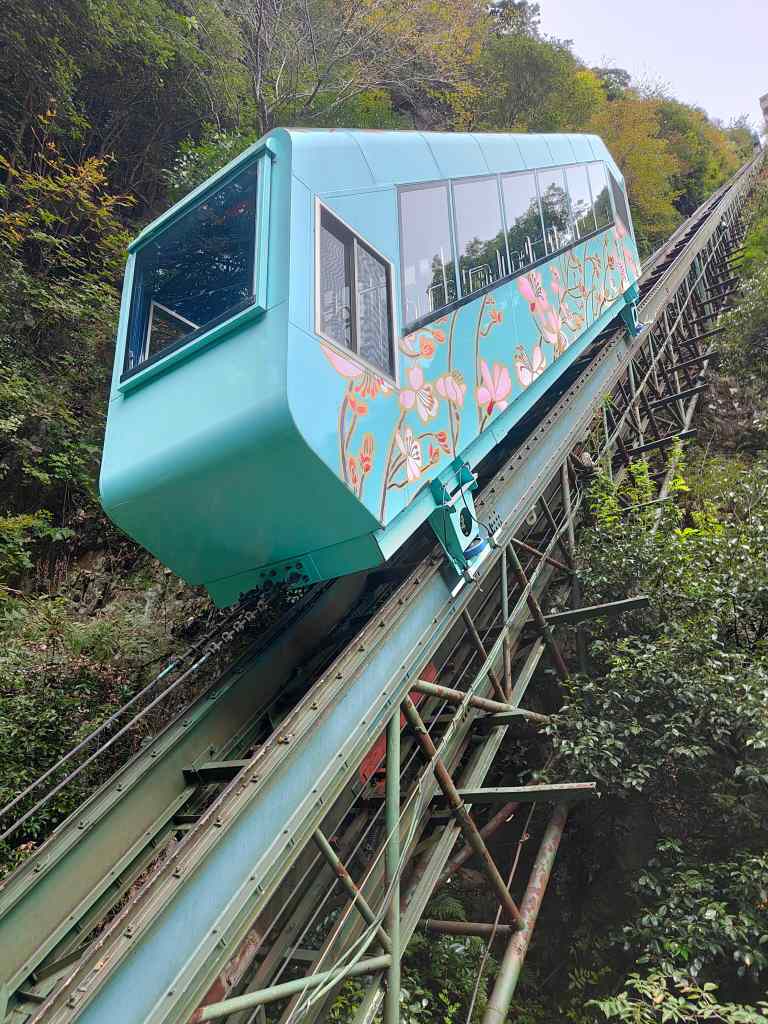
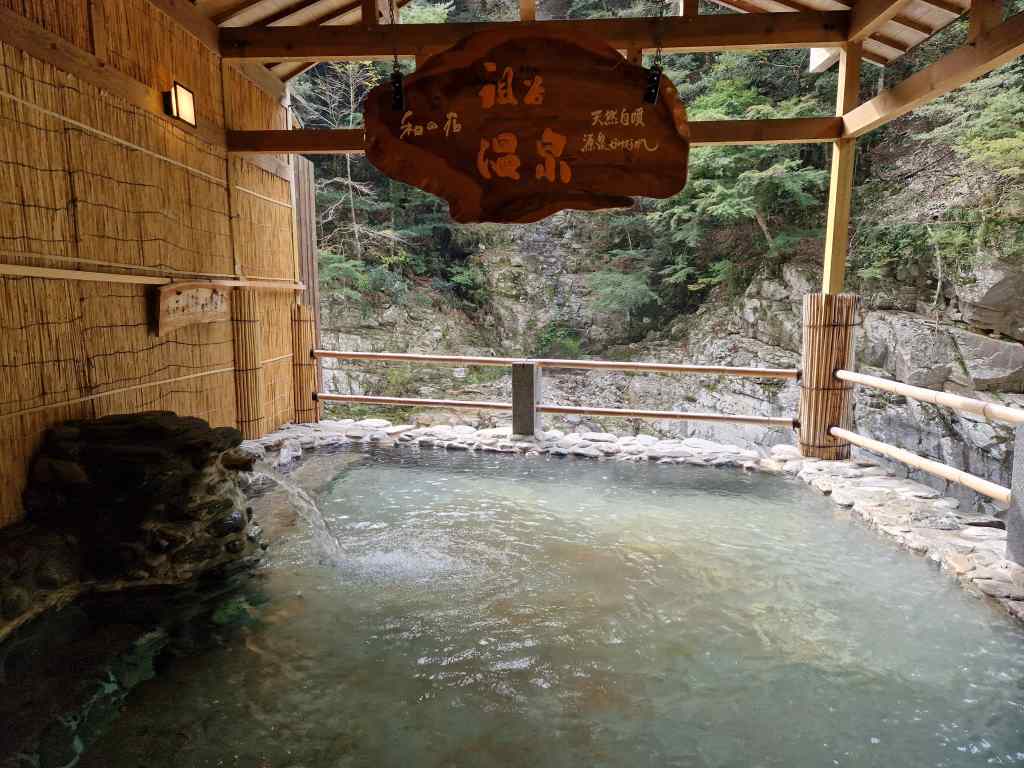
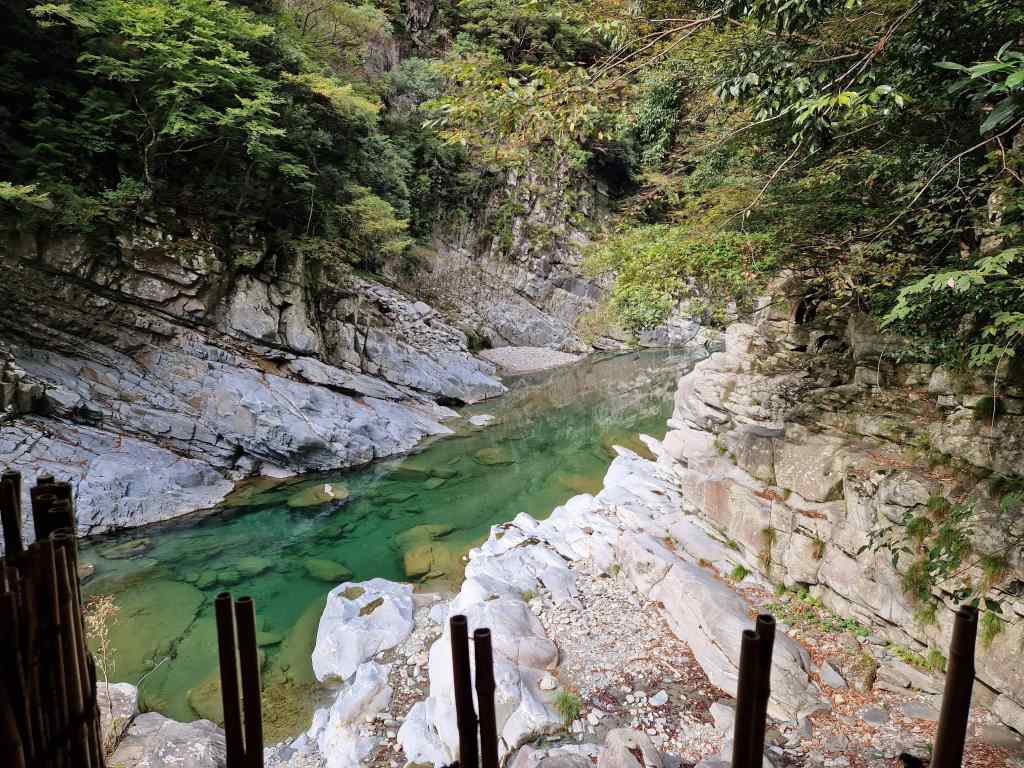
We made one stop at a hotel to try their onsen, located at the valley floor far below. Access was via a cable car, and once there Aki and I both had our respective female and male baths to ourselves. The setting was idyllic, and since the water temperature was not too hot, we stayed for an hour enjoying the view.

Taking a cable car to the onsen!
The onsen and its great views


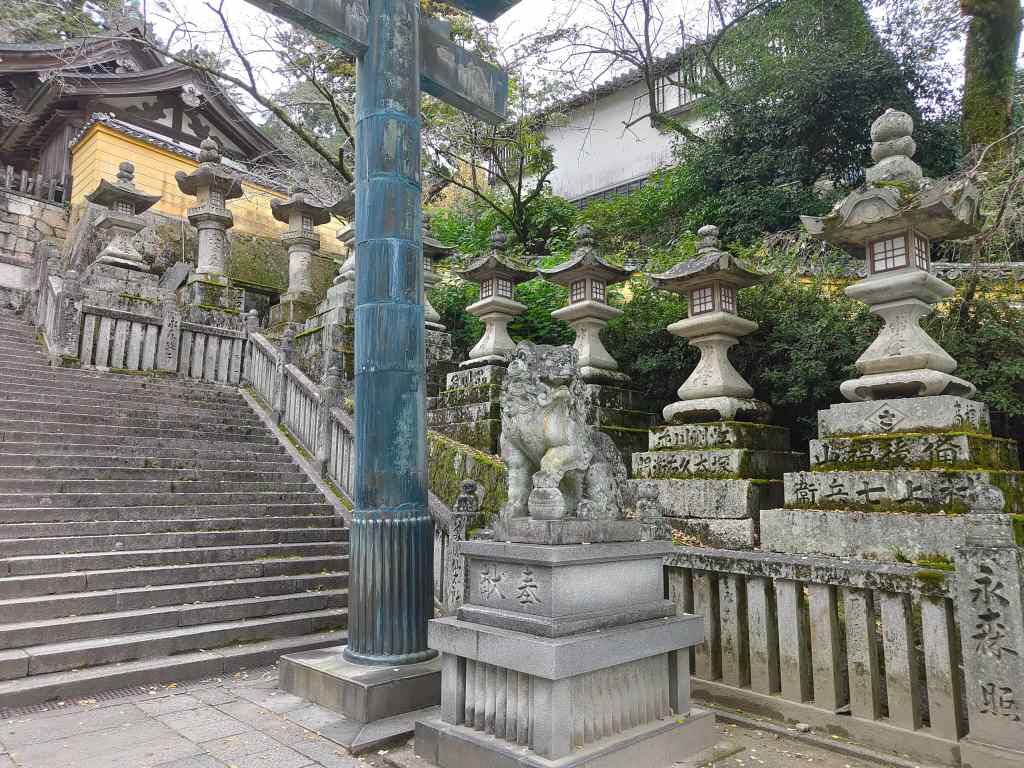
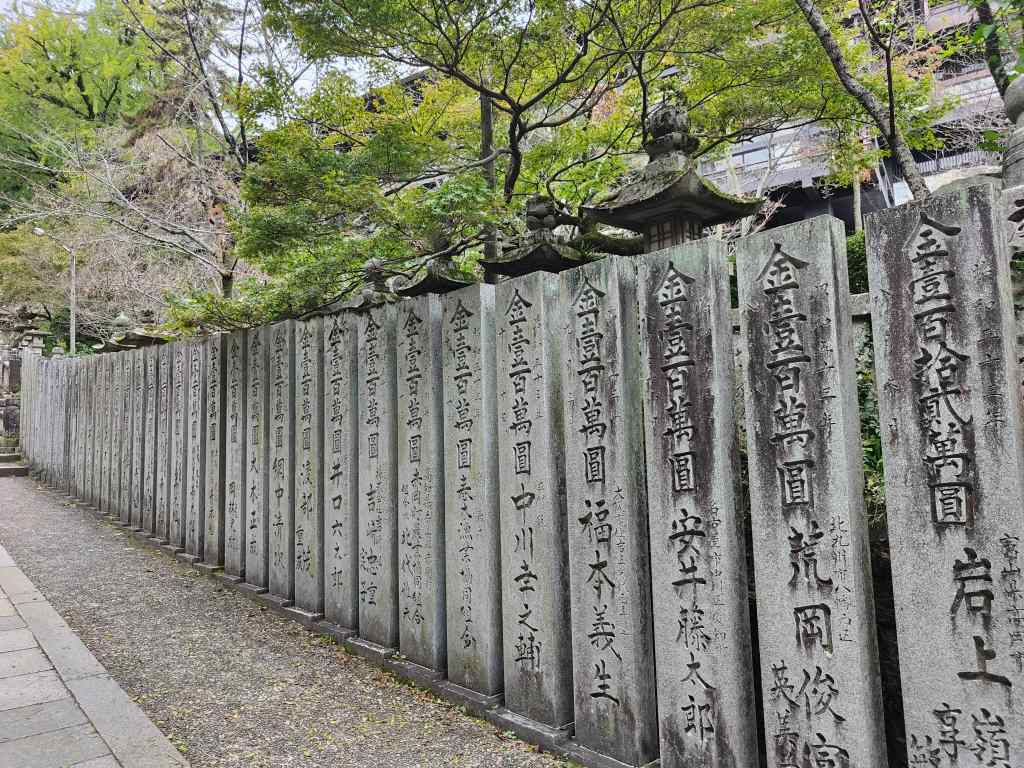
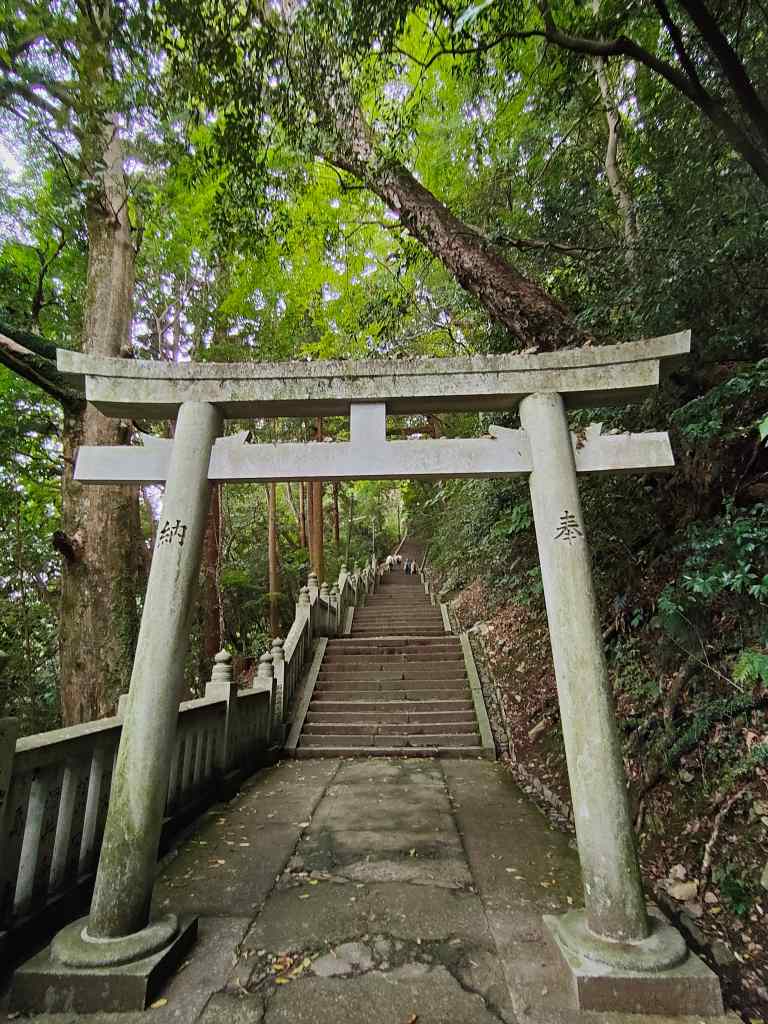
Relaxed, and very clean, we set off again. The road finally left the mountains and arrived at the city of Kotohira, the site of Shikoku’s most popular shrine, Kompirasan, which is dedicated to seafarers. The approach to the shrine involved a steady climb up steep steps, initially past souvenir shops, cafés and food stalls, then more interestingly through torii and past hundreds of engrave granite columns.

Kotohira
Kotohira – Up and Up…..
Kotohira

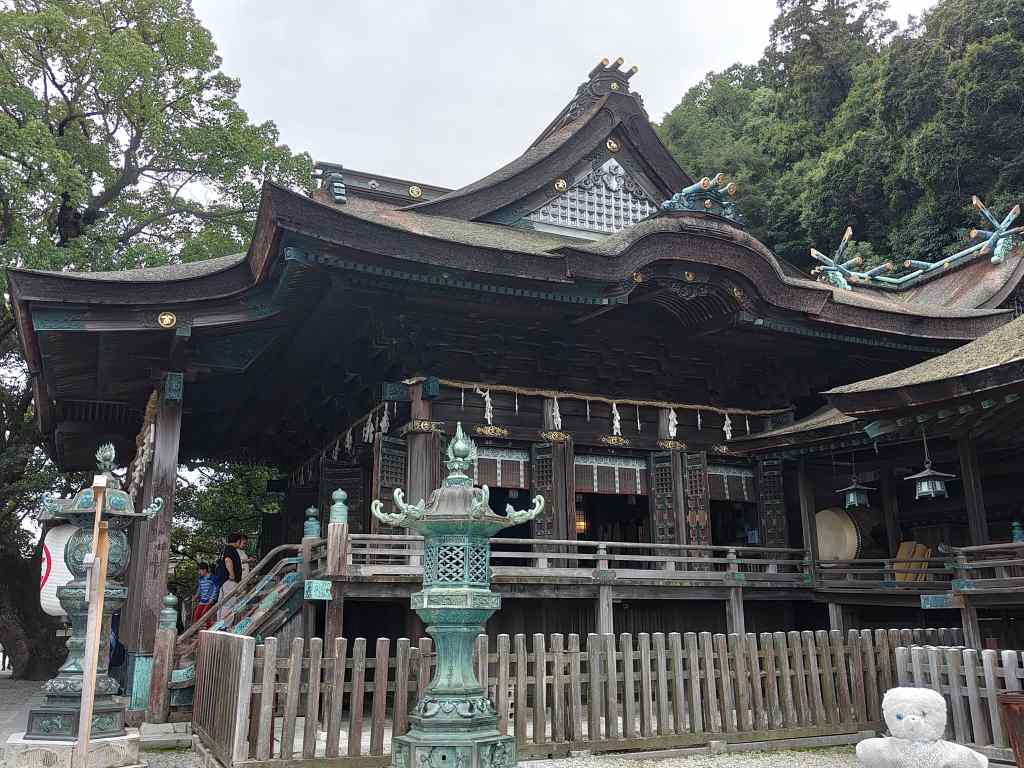
After 785 steps we reached a very beautiful temple complex with views over the city and countryside.

Kotohira-gu
The main temple – Kotohira-gu

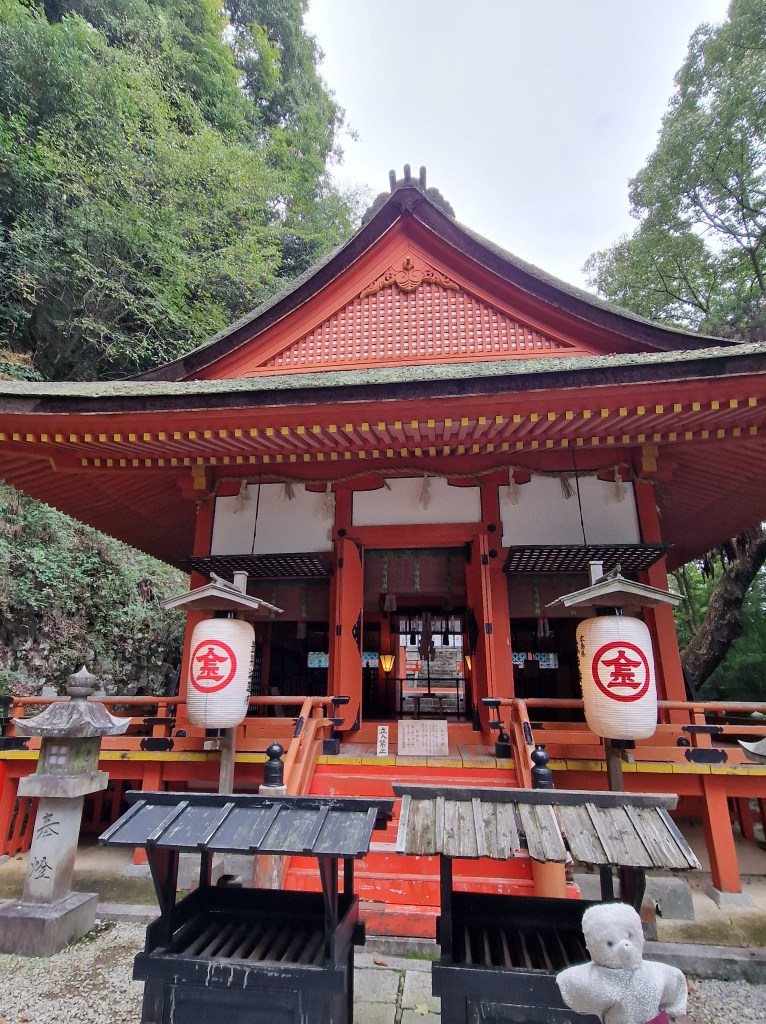
Another 583 steps (making 1368 in total) took us to the temple’s inner shrine, which was disappointingly simple compared to the main temples lower down.

more steps Kotohira
Kotohira: Up and Up again….
top temple Kotohira
Kotohira – The rather simple inner temple

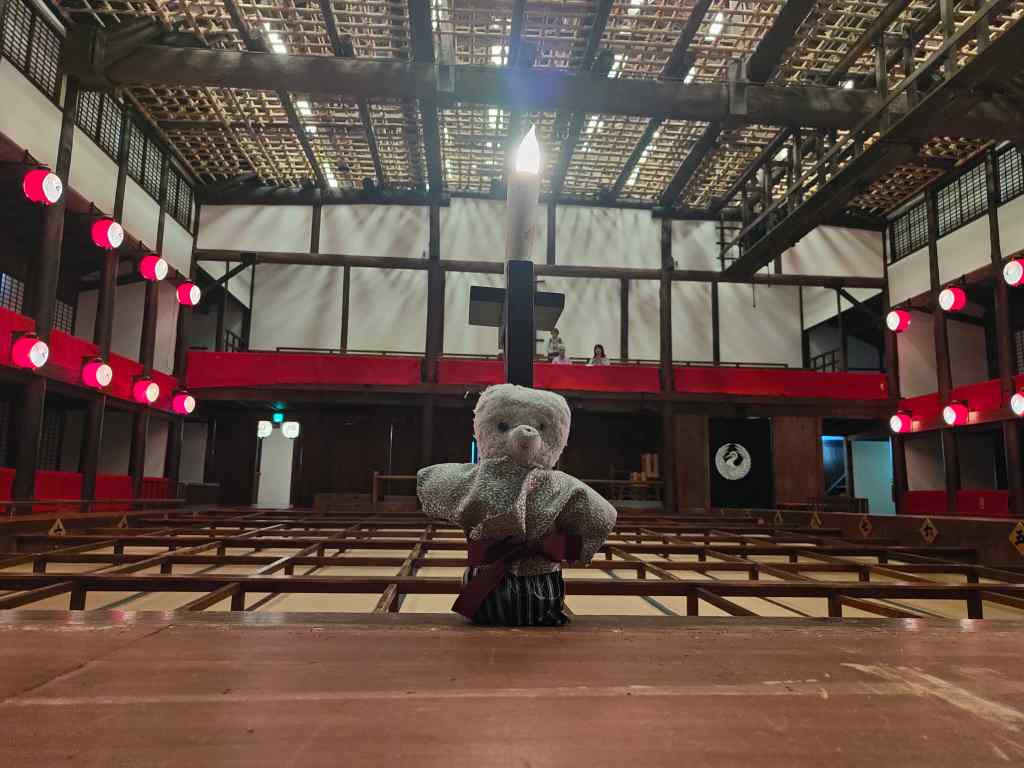
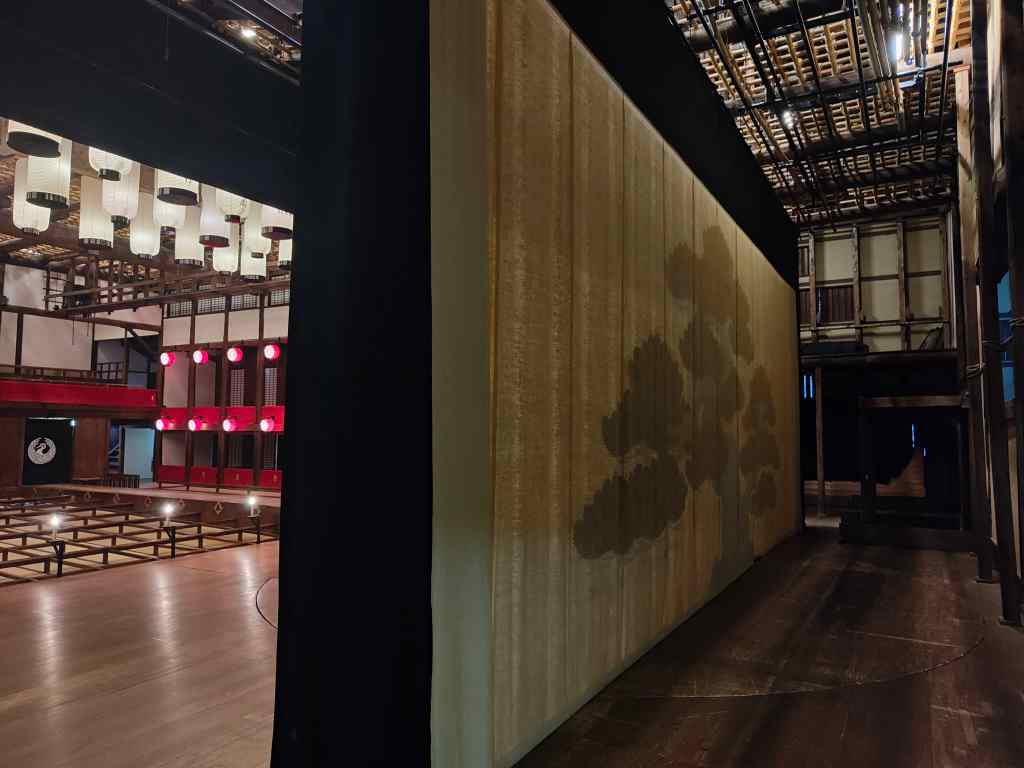
Our hike down was fast, and we arrived at the bottom just in time to visit Kotohira’s kabuki theatre before it closed. It is the oldest surviving one in Japan, and it was very interesting to visit all around – the place where the audience sits, the stage itself, and backstage.

Kabuki theatre Kotohira
Trouspinet on stage at Kotohira’s kabuki theatre!
Kabuki theatre Kotohira
Front stage and backstage

From Kotohira it was another hour by car to reach Takamatsu. As before, finding our Airbnb flat required some time, and we had to message our host to say we were lost. She lived in the flat below and came out to show us the way. It was another very comfortable and large flat – which was just as well, because over the next two days the remnants of a typhoon passed over Japan and it rained hard continuously.
There are many things you can visit with Takamatsu as a base, but sadly most of them require good weather. We ventured out once under the rain to see the city’s small castle, before deciding that it would be better to invest our time catching up on email, washing clothes, exercise – and this blog.

Takamatsu castle
Takamatsu’s castle

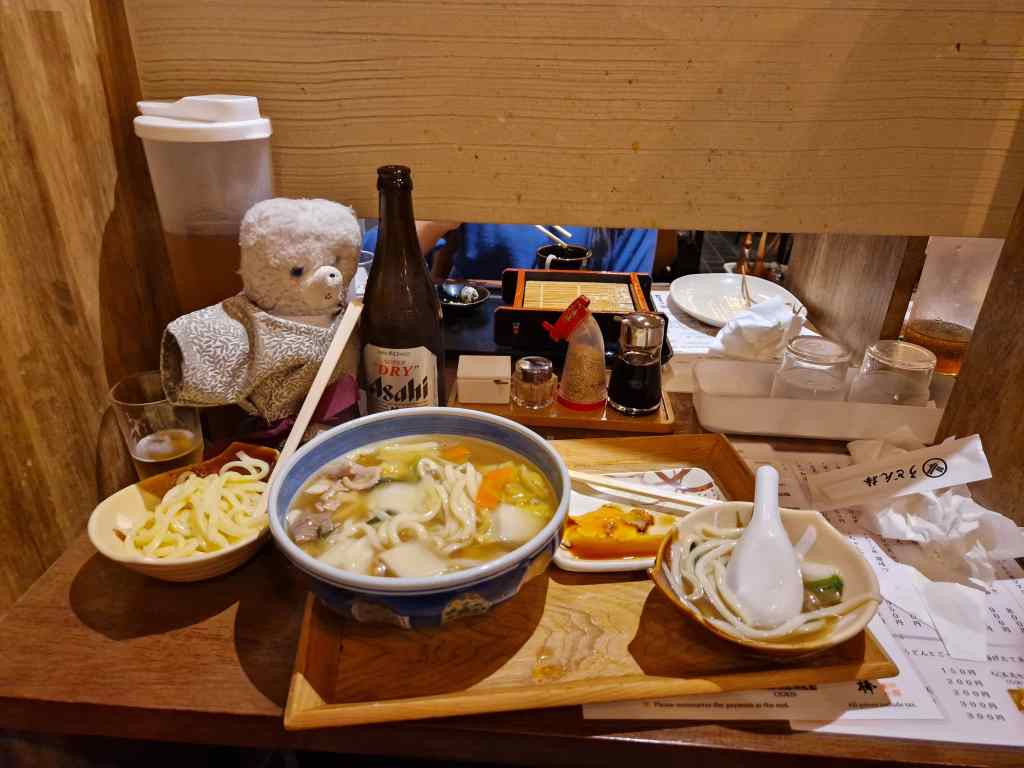
In the evenings at least we had some great indoor entertainment – sampling Takamatsu’s famous Udon noodles. Good food is always the best answer to bad weather!

Udon Noodles Takamatsu specaility
Noodle Feast in Takamatsu!

Next Post: Naoshima

Previous Post: Iya Valley

Blog at WordPress.com.

Up ↑