Beauty and the Beast – from Bielsa to Andorra

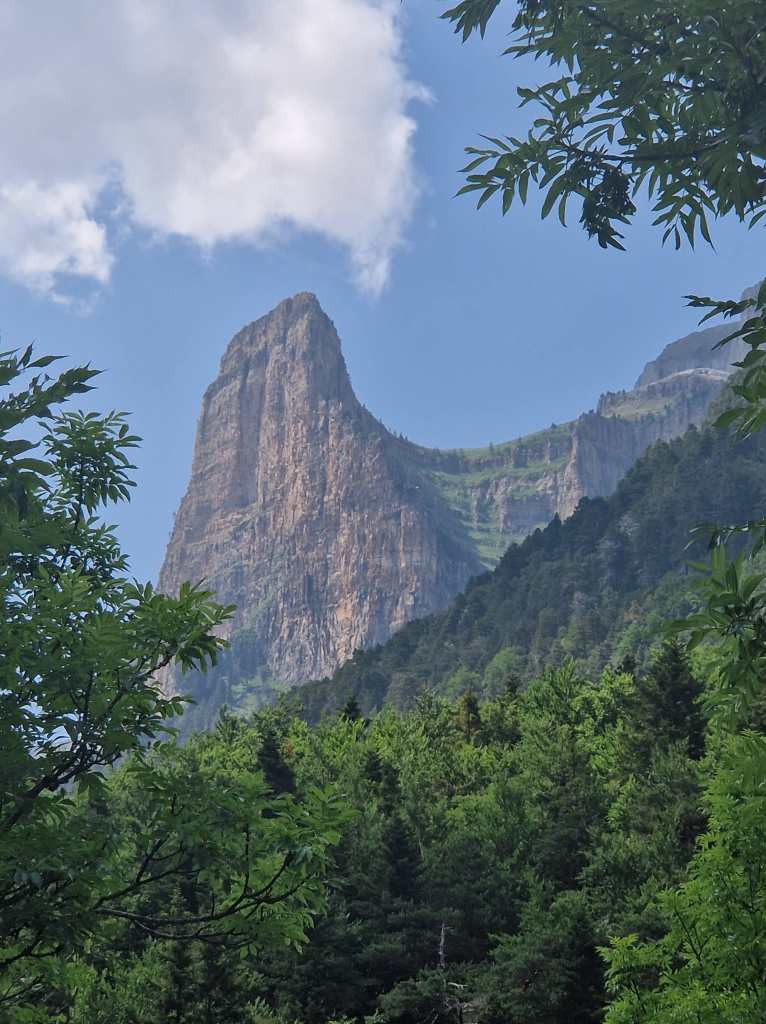
Today I began the long drive back to Toulouse via the tiny country of Andorra – a tiny principality sandwiched between Spain and France in the Pyrenees. First, I made a short detour driving up the Valle de Pineta from Bielsa to reach a semi-circular wall of mountains similar to the Cirque de Gavarnie that I had visited a couple of days before. I did not have time for a walk, so simply stopped to admire the view and take photos.
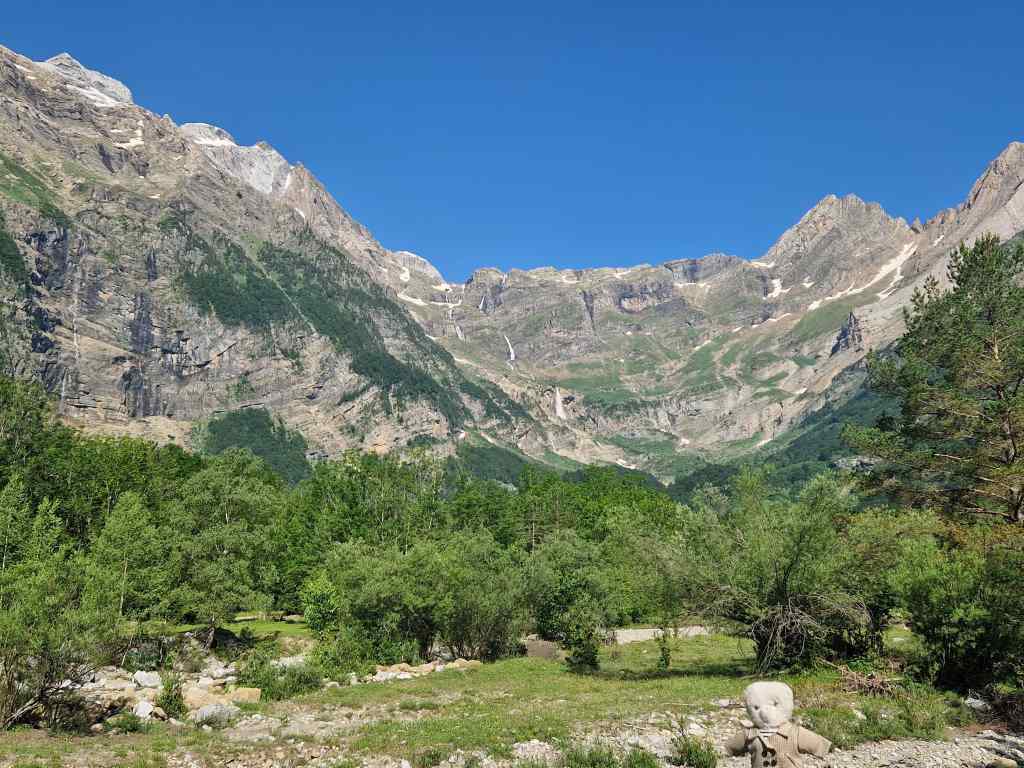
The magnificent scenery of the Valle de Pinetas

The road to Andorra was pleasant rather than spectacular. Occasionally I would stumble across pretty mountain villages but mostly the countryside was dry and deserted.

On the road from Spain to Andorra

My main excitement during the drive was watching the low fuel warning light come on and anxiously checking where the next petrol station might be – I had seen none for miles – but in the end I made it to the small border city of La Sue d’Urgell, which had one. The entry to Andorra, a few km further ahead, was marked by a large customs and immigration post, and suddenly the road changed completely. It still went through pleasant mountains but was much busier and lined on either side by shopping centres and (suddenly) endless petrol stations. As I approached Andorra la Vella – the country’s main and only city – the traffic became denser, and the ugly modern constructions more oppressive.

After fighting my way through traffic jams and roadworks, I found my hotel and set off to explore on foot. The city was unlike anything I had seen anywhere before. It completely filled what might once have been a pretty river valley, surrounded by mountains. There was a tiny old town, accessible by walking up a hill or taking an elevator, where I stopped for some inventive cocktails in one of the many cheap bars.

Entering Andorra’s old town
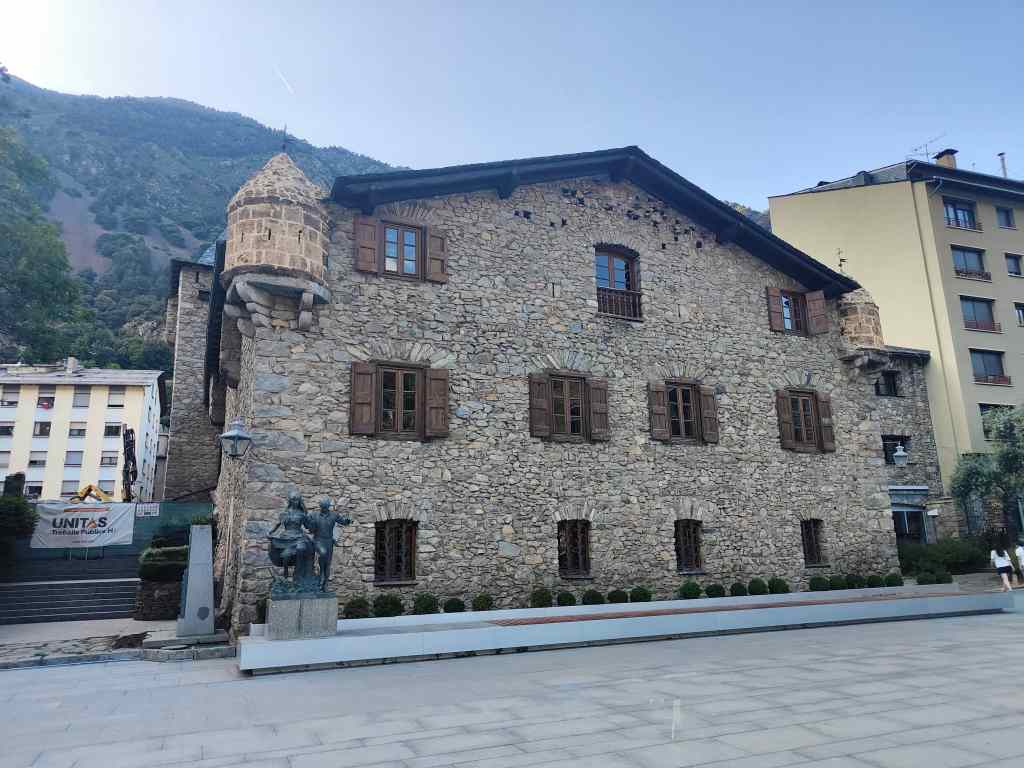
One of Andorra’s few old buildings
Enjoying cheap drinks in Andorra’s old town

Outside of this area, the city was a dense mass of duty-free shopping, traffic, building sites and road works. Its main landmark was the fast-flowing river La Valira that flows right through the centre – it seemed to me that the water was rushing to revert to nature and escape the ugliness of man’s work.

Andorra’s new town and a statue by Dali

Having bought some presents for my friends, I thought the best use of my time would be to treat myself to dinner in a good restaurant – and I was reward by an excellent and well reasonably priced feast. Andorra la Vella had been a strange experience. It has lots of duty free shops, good hotels, and some excellent value bars and restaurants…but frankly it is an ugly city. I was glad to see it once, but also glad to be moving on back to France the next day.

Previous Post: From the Canyon d’Añisclo to Ordesa and Monte Perdido National Park

Next Post: Back to France – Foix and Carcassone
From the Canyon d’Añisclo to Ordesa and Monte Perdido National Park

Today I set off from Bielsa on what turned out to be a spectacular driving tour. I headed south, before turning off onto a small side road to the Canyon d’Añisclo. The road entered a deep river gorge,  with steep sides before splitting into two separate one-way tracks.

Approaching the Canyon d’Añisclo

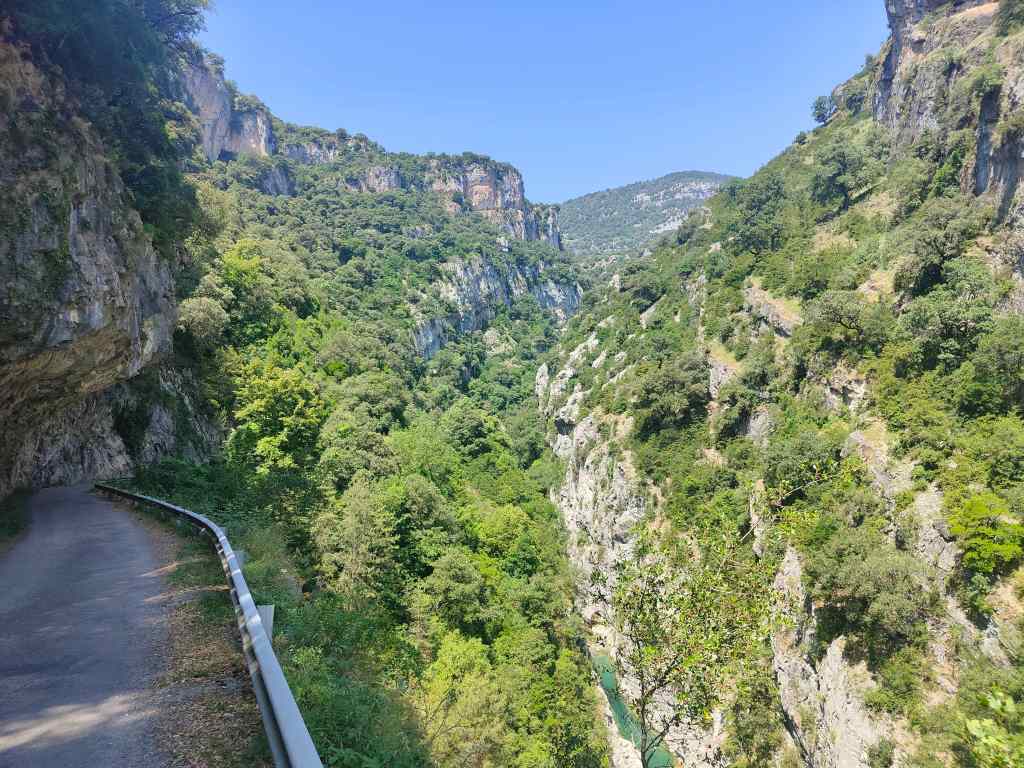
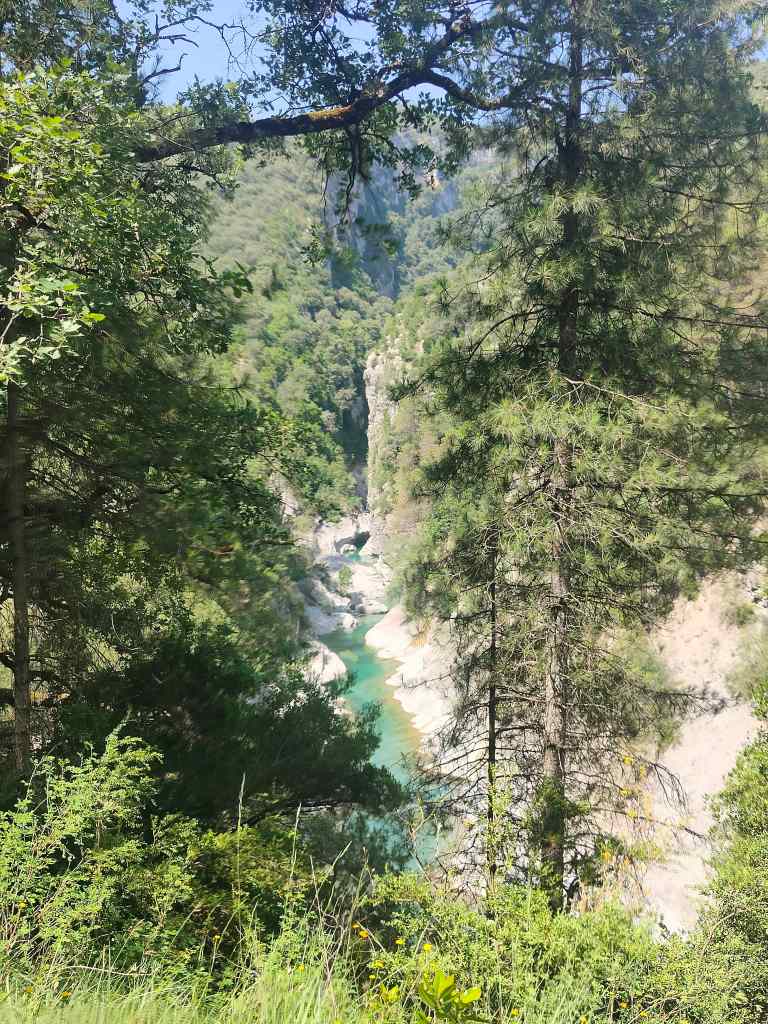
My route wound along the side of a small river, with steep cliffs towering far above me.

Deep in the Anisclo Gorge

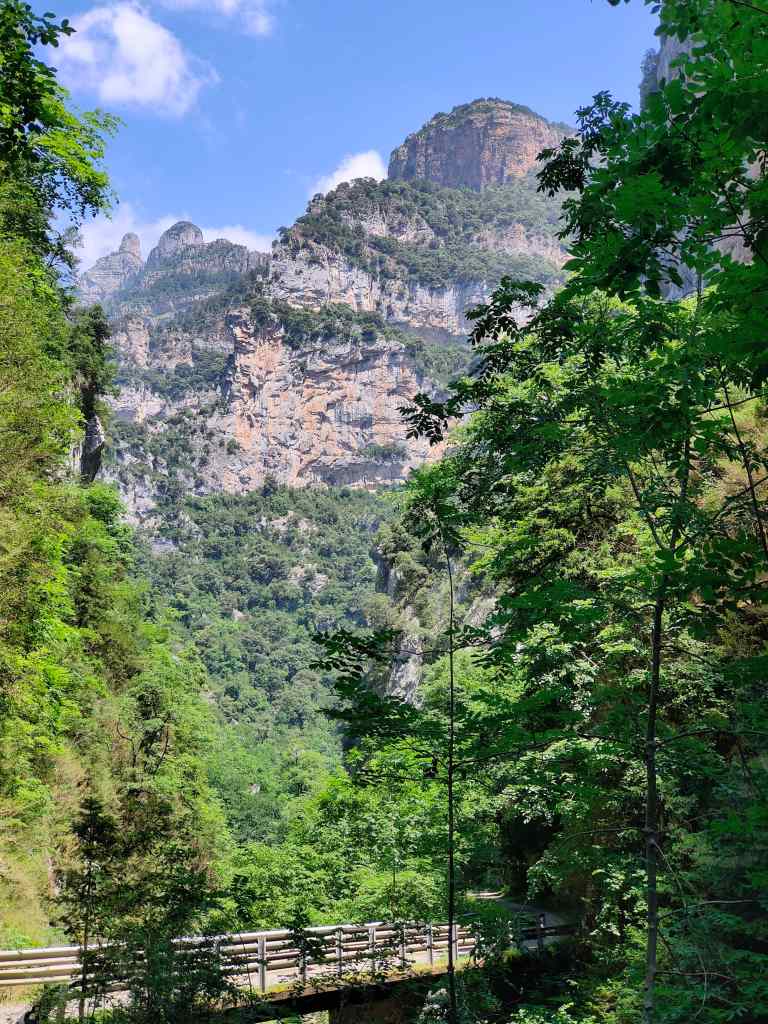
I made slow progress – not because the driving was difficult, but because I made so many stops to take pictures of the amazing scenery.

Scenery in the Canyon d’Añisclo

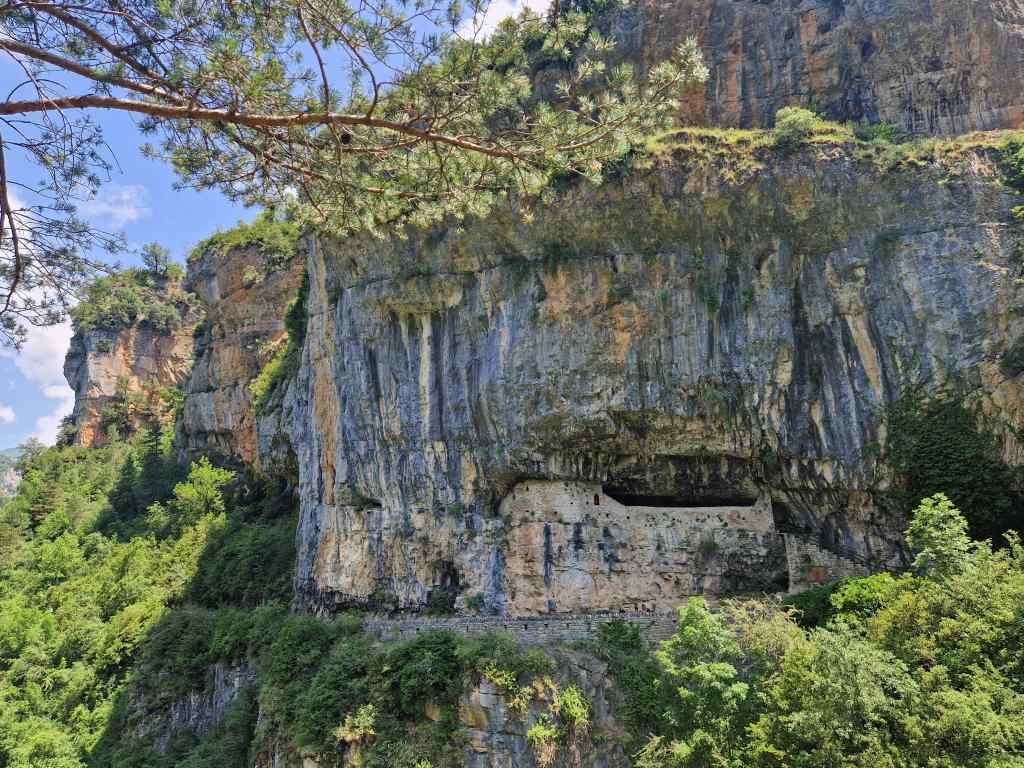
I arrived at a small parking area and got out to stretch my legs and have a look around. The car park offered spectacular views up and down the canyon, and to the other side where some sort of chapel had been carved into the cliff face.

Is that…..a little chapel in the cliff face?
Yes! The chapel of San Urbez

A sign advertised a short circular walk named after San Urbez, a local hermit who lived in the area. 

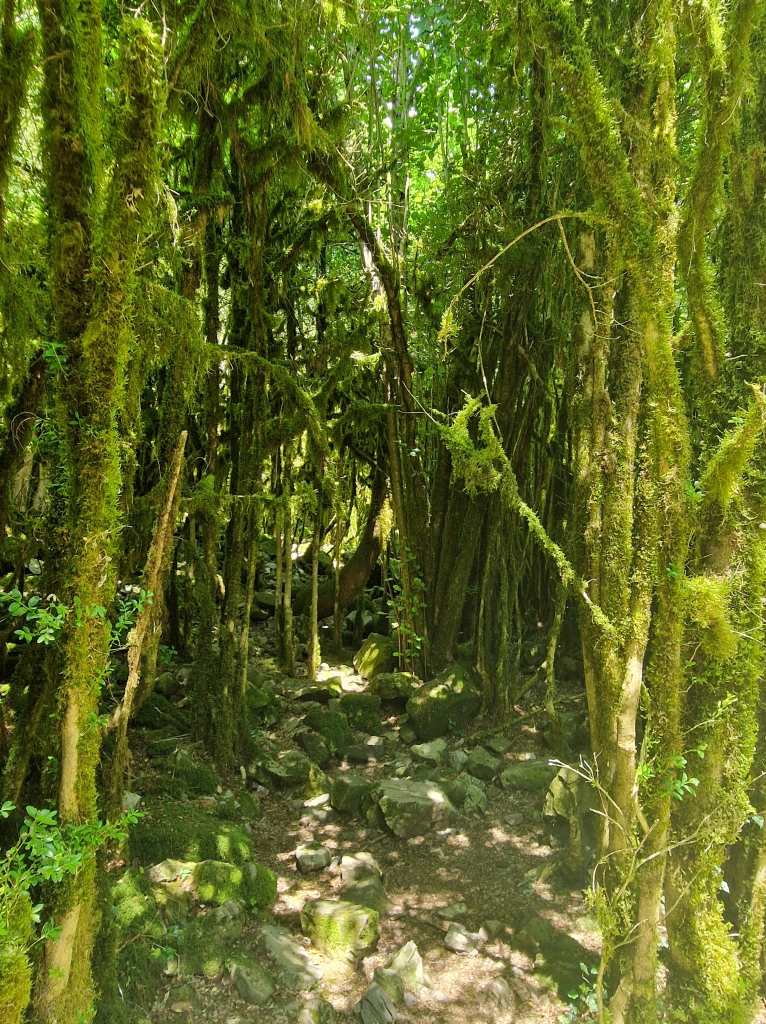
An interesting forest in the Canyon d’Añisclo

The path led down through a pretty forest, crossed a bridge and then climbed up to the chapel – which was furnished with simple pews,  as if it was still in occasional use.

The chapel of San Urbez

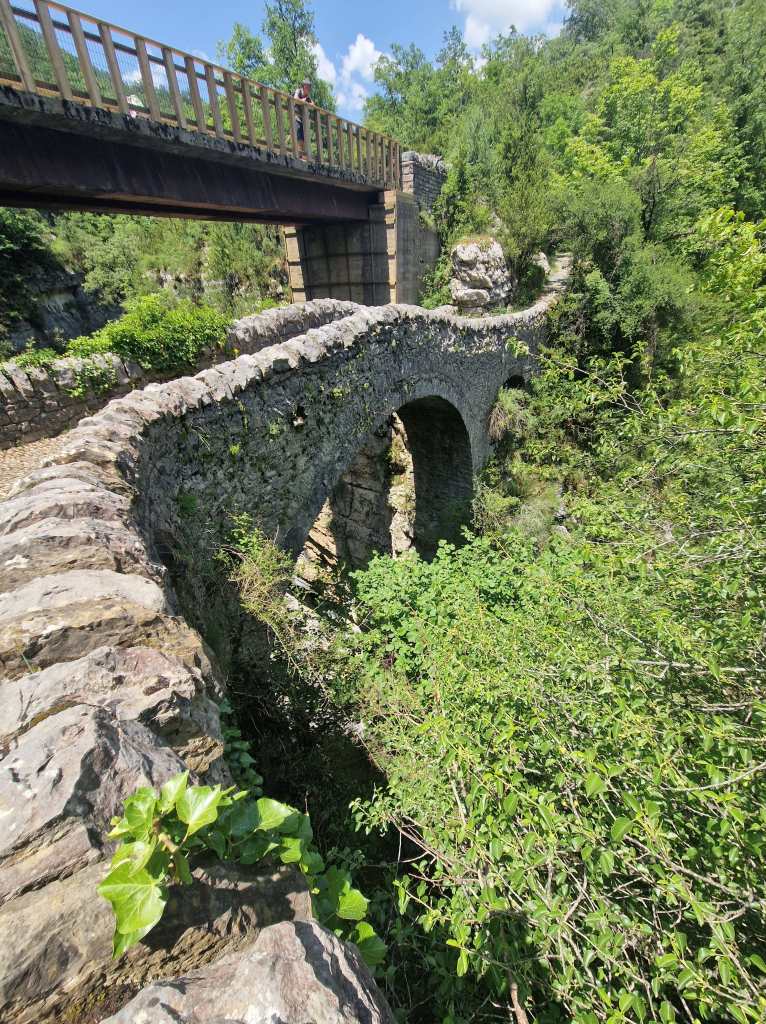
After the chapel I had the choice of using an ancient bridge or a new one built on top of it to regain my car.

A choice of bridges

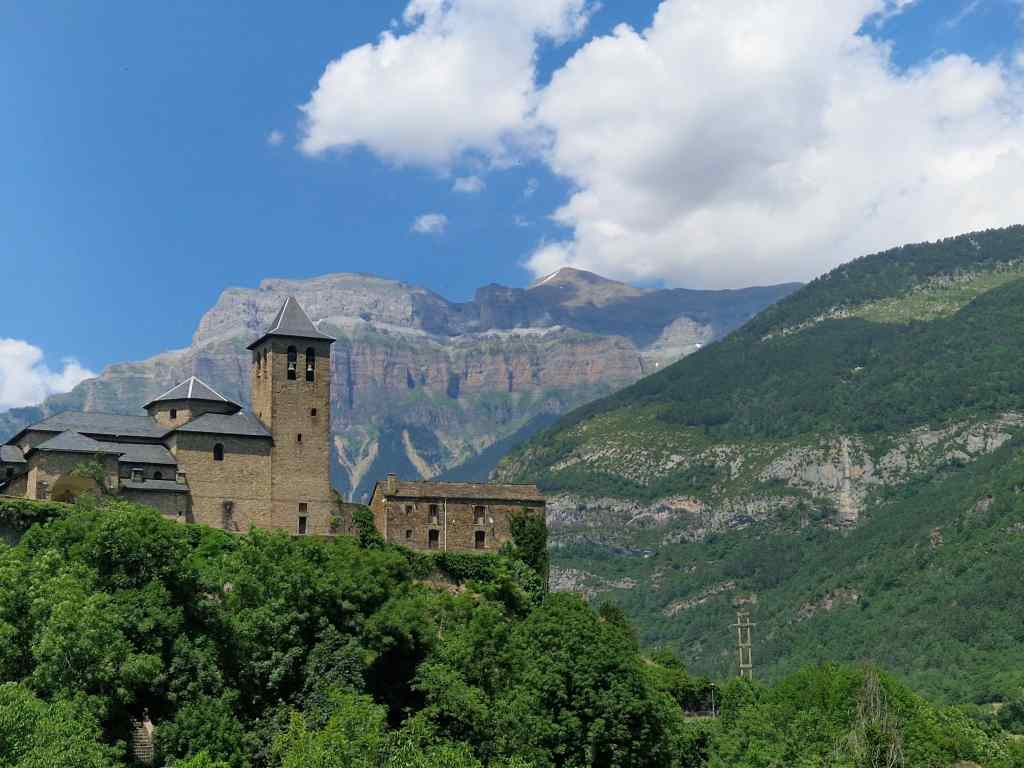
I spent another hour driving through some impressive mountain scenery, noticing that the Spanish Pyrenees are different to the French ones – steeper, and much drier.  I stopped for a drink at Torla, a pretty old town that is the gateway to the Ordesa and Monte Perdido National  Park.

Photogenic Torla

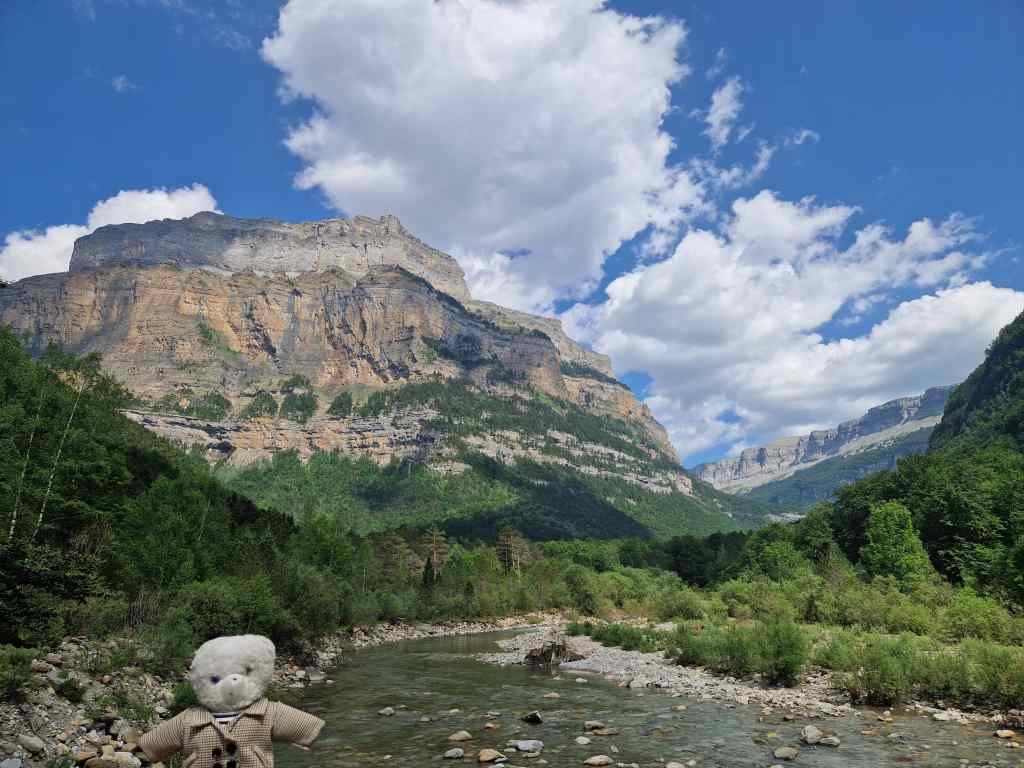
The road into the park followed a gorge with steep mountains on either side, finally arriving at a large car park. Looking around, I felt myself  transported to some of the most spectacular national parks I had seen in America – on all sides mountains towered above me, some of them twisted into fantastical shapes. I had read that the car park was the starting point for some amazing hikes, but sadly I did not have the time to do anything more than stroll a short way up the river valley and absorb the jaw-dropping views. I resolved to come back and explore Ordesa properly another time.

In Ordesa and Monte Perdido National Park
Amazing mountains in Ordesa and Monte Perdido National Park

Finally, it was time to head back, and in a couple of hours I was back in Bielsa – for once, getting home early enough to be able to relax a bit, sort out my photos and write my blog. I stopped by the local supermarket to buy dinner and stock up on a typically Spanish tradition – sweet, fortified wines and sherries served directly from big casks.

Minimum two litre purchase!

The minimum amount you could buy was two litres, which cost a derisory seven euros. I bought some sherry and enjoyed a glass sitting on the town’s main square in the early evening sun, reflecting on an exceptional day.

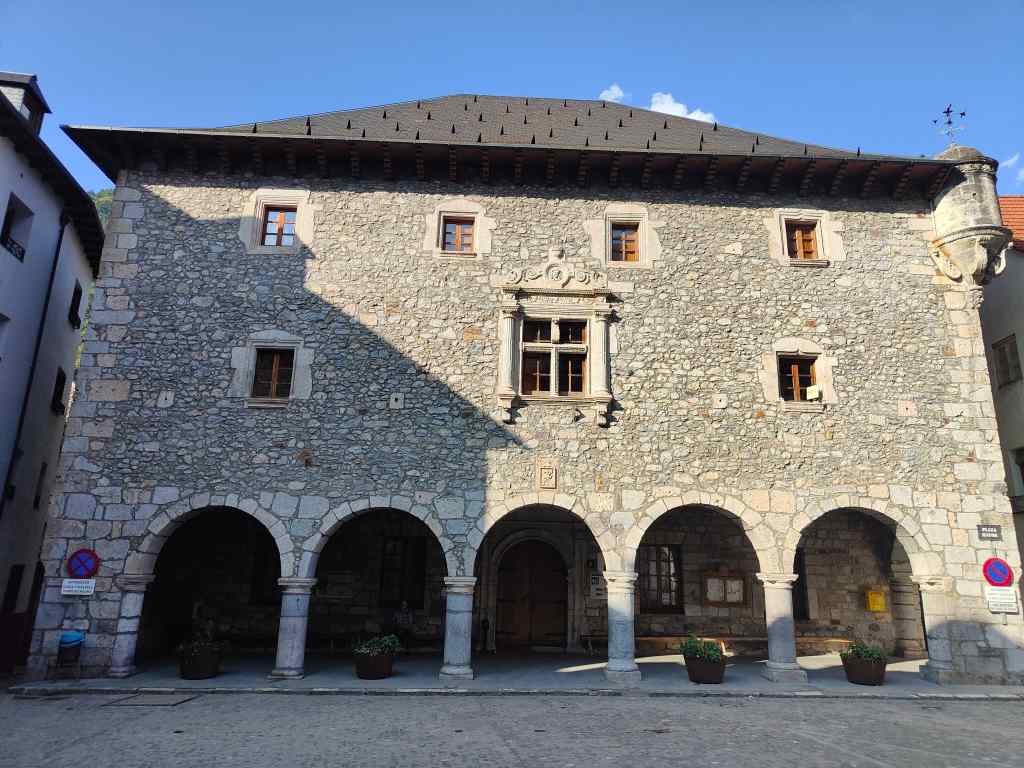
Old building in Bielsa’s plaza

As my regular readers know I am a well-travelled bear but finding such scenery in a place only a few hours flying/driving from London was something really special. I will be back.

Previous Post: Cirque de Gavaranie

Next Post: From Bielsa to Andorra

Toledo, a “bucket list” city

Today was my last full day in Spain, and I decided to use it to visit Toledo, a small town about 80km south of Madrid with a very long history. Just as Cuenca gets very few visitors, Toledo gets a lot, and my train there was packed. Toledo was a small settlement back in Roman times, but achieved prominence when it became the capital of the kingdom of the Visigoths, one of the barbarian tribes occupying Spain during and after the fall of the Roman Empire. Later Toledo was briefly the capital of Imperial Spain under the Emperor Charles V, before his successor moved it to Madrid. The city was famous for its tolerance, as a place where Christians, Muslims and Jews lived together in relative peace.
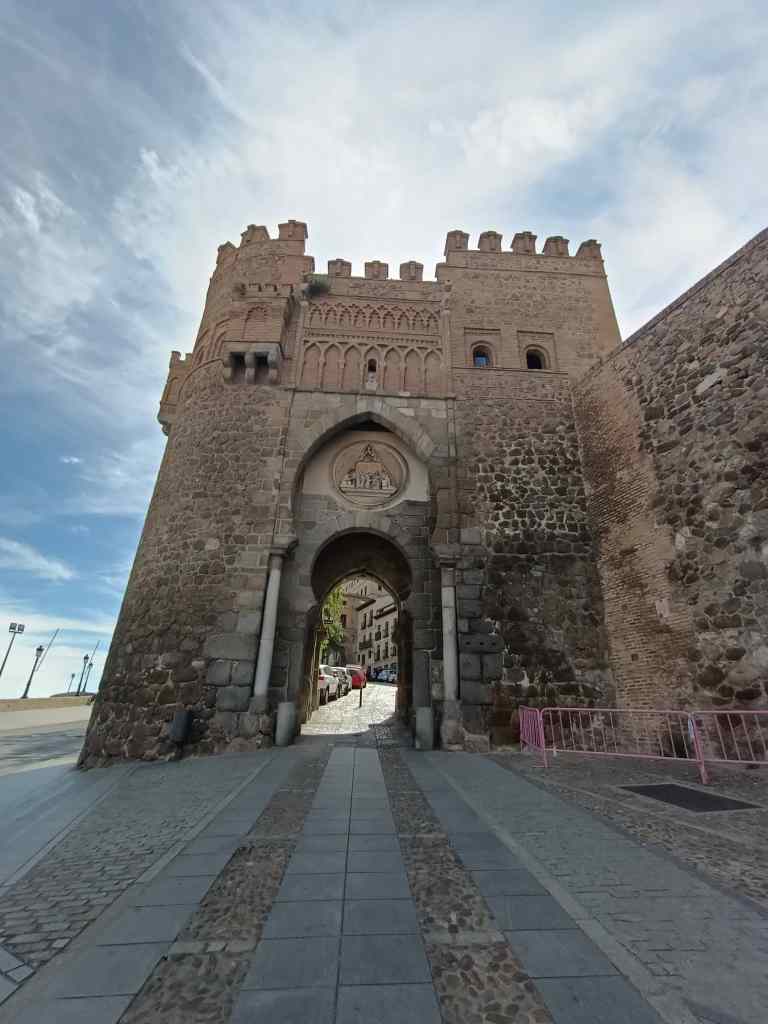
On arrival at the station, I took a bus to one of the gates marking the entry to the old town.

One of the gates leading into the old city of Toledo

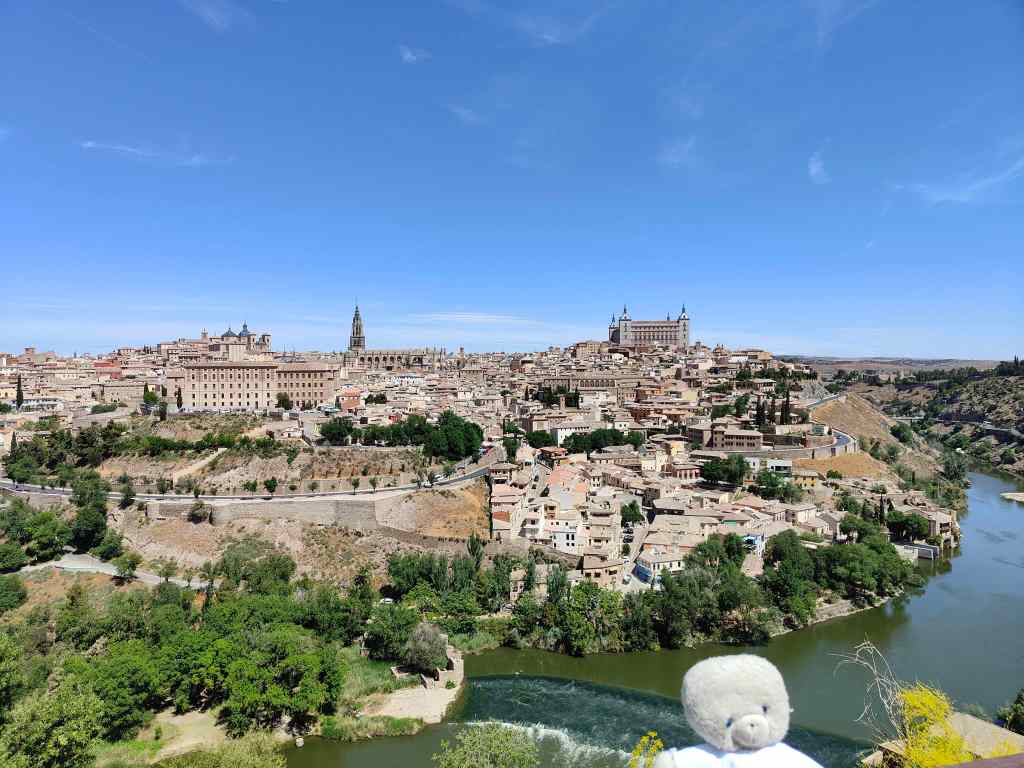
The street then led steeply uphill – it is said that Toledo is built on three hills. The lanes were narrow and windy, but also shady, since long rolls of cloth were suspended above to protect from the sun. I enjoyed wandering around, before deciding to take a trip on the tourist train. This is not something I would normally consider, but it was the only way to get to a famous viewpoint of Toledo, which had been painted by countless artists.

THE view of Toledo, painted by El Greco and many others

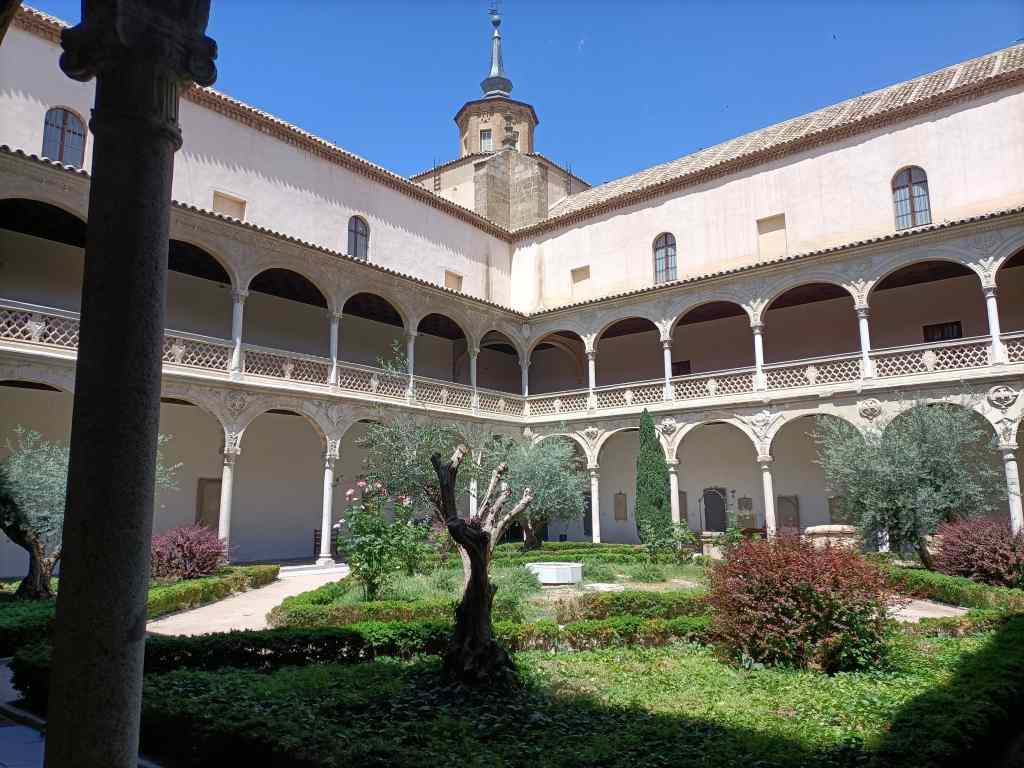
The train dropped me back in the centre, and I continued my exploration, first visiting the castle, where interestingly a new building had been constructed entirely around the ruins of the old fort (sorry, forgot to take a photo!). Then I check out one of the very many museums in Toledo, housed in the Hospital de Santa Cruz, a place founded in the 15th to provide help to poor and orphaned children.

The peaceful cloister of the Museum de Santa Cruz

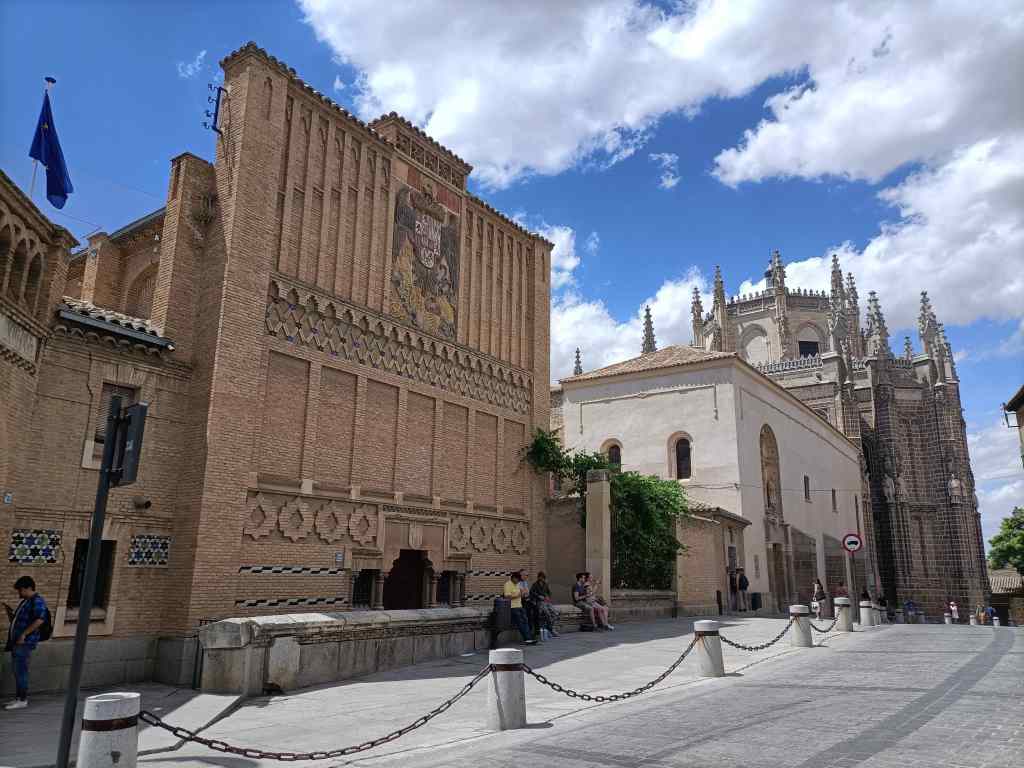
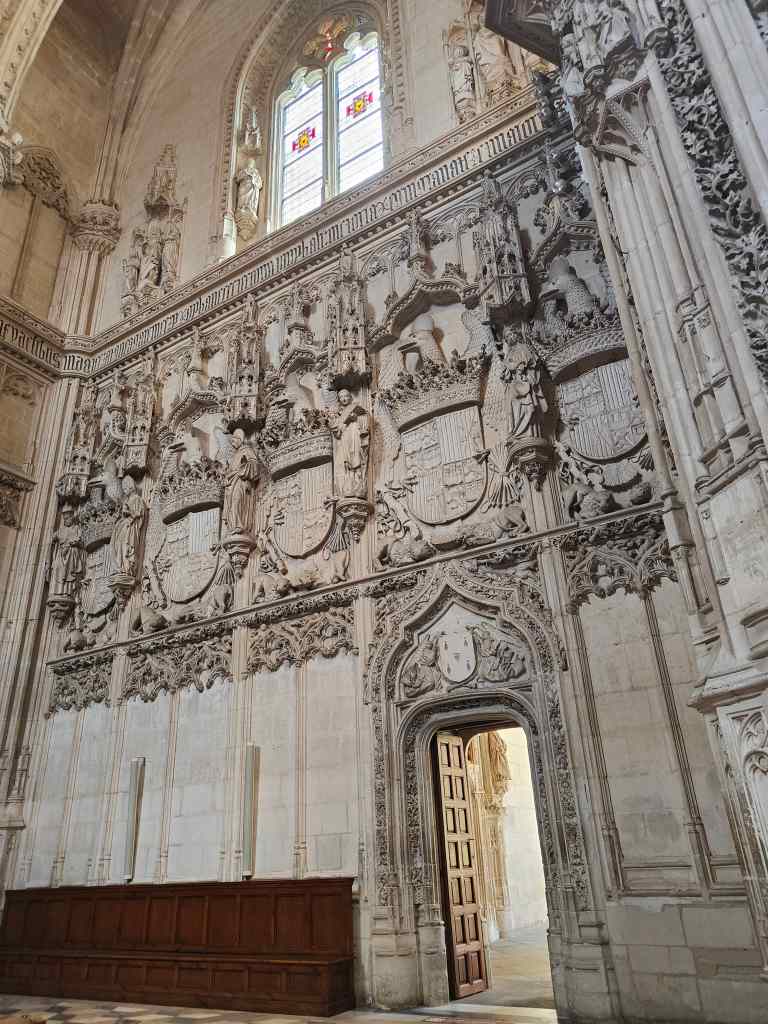
It had an interesting collection of art, some by the local painter El Greco, and displays covering the history of Toledo and renaissance Spain. Next I headed all the way across the town to visit the beautiful Monasterio de San Juan de los Reyes, which dates from the 15th Century. It had a peaceful cloister and much beautiful, intricate stone carving.

The outside of the Monasterio de San Juan de los Reyes (the building on the right)
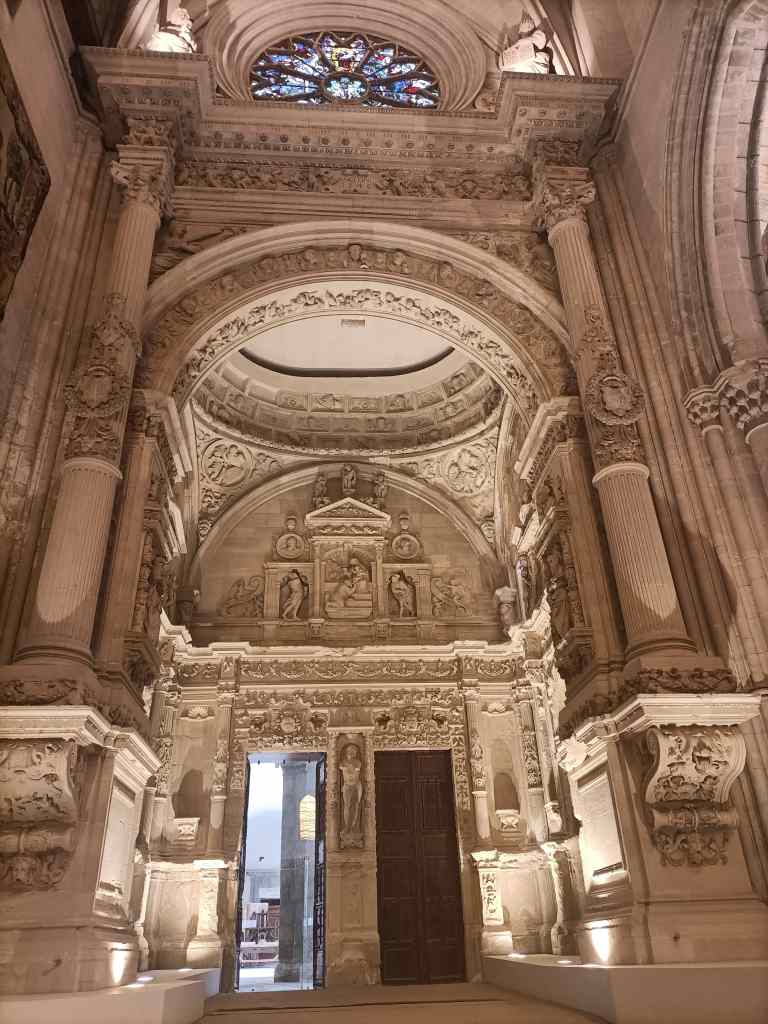
Intricate carving inside the Monasterio de San Juan de los Reyes, Toledo

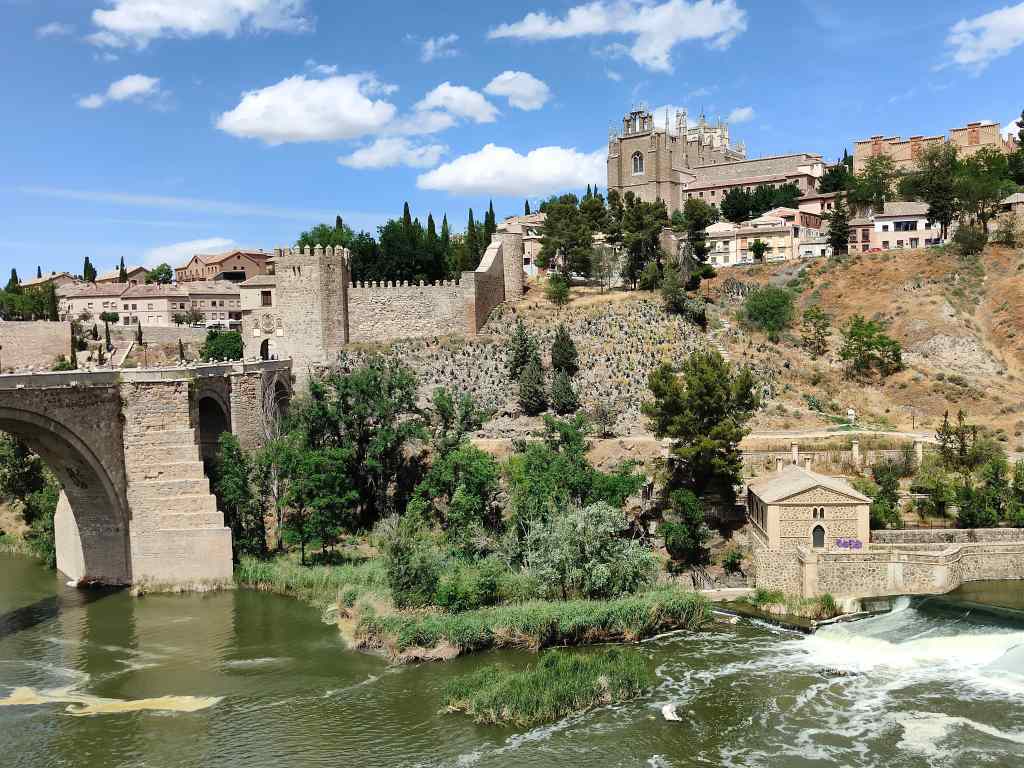
Nearby was the Puente de san Martin, which offers another of the definitive views over Toledo.

Another of the definitive views of Toledo

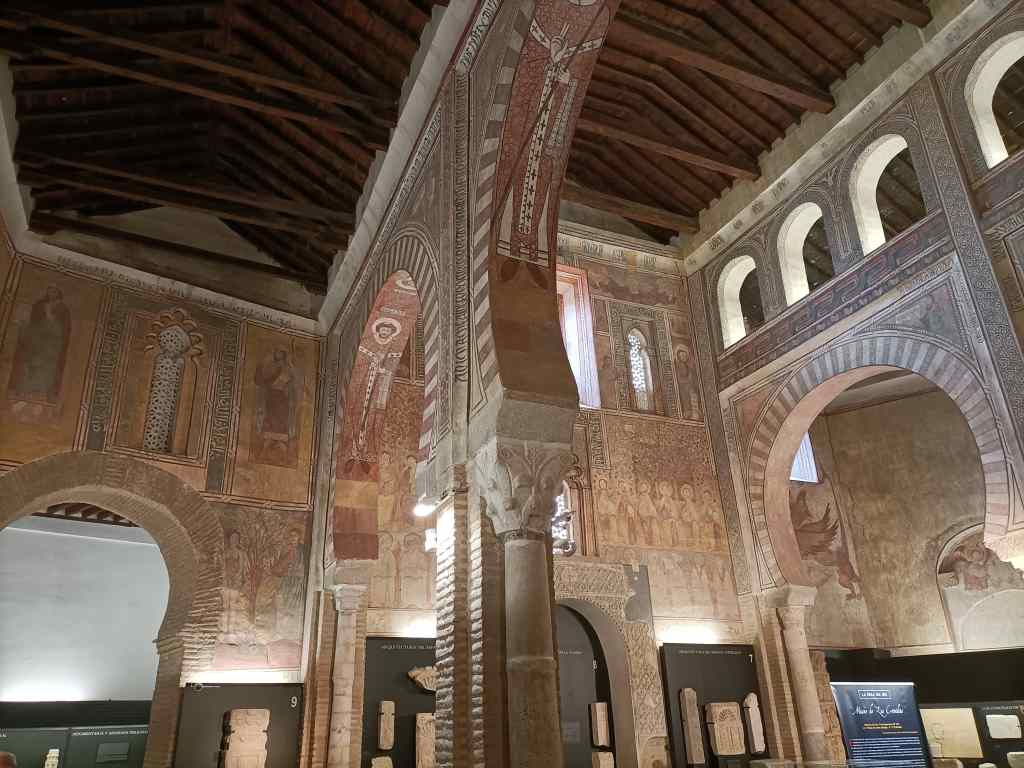
Next I hauled myself back up the steep hill, on the way to the cathedral, popping in to a museum dedicated to Visigoth culture on the way. There, the explanation was all in Spanish, and the items on display were the usual pots and pans from less advanced ancient civilisations – maybe exciting to an archaeologist, but not to me. But at least the museum was housed in an interesting former church and was cool after the long climb up the hill in the sun.

The museum of Visigoth culture in Toledo

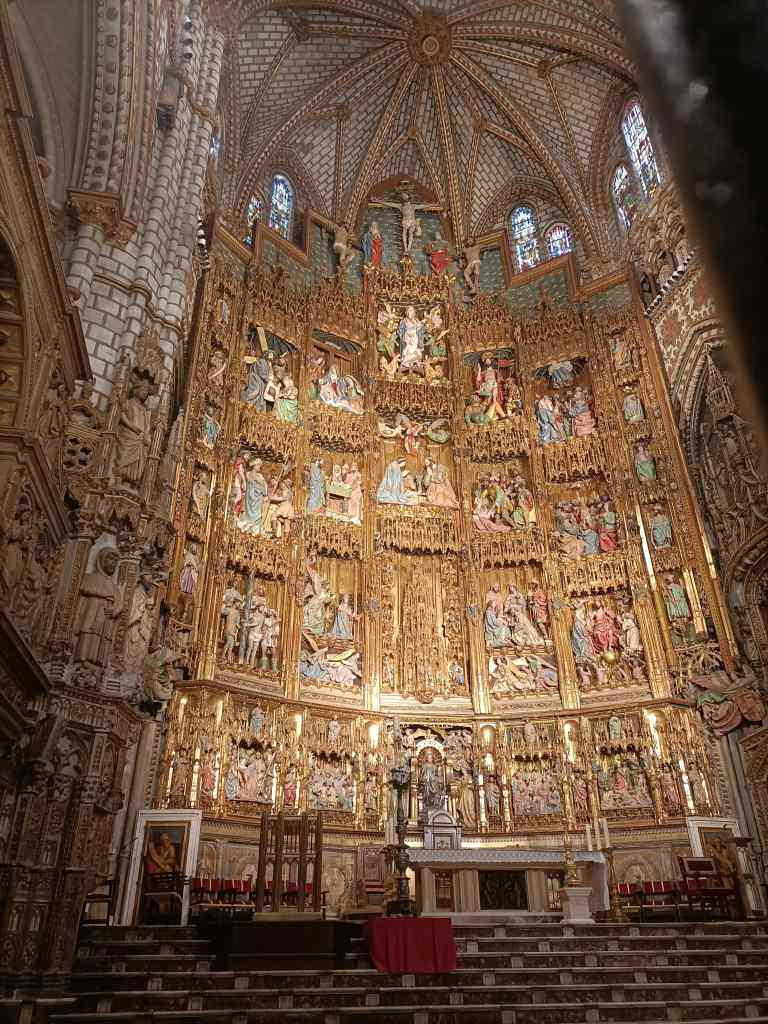
I then had the luxury of walking downhill to the cathedral, one of Toledo’s “must see” attractions. It was built in the 13th Century in the High Gothic style on the site of an older church used by the Visigoths – possibly since the 7th century. Although it is one of the most famous cathedrals in Spain, I found it rather dark. Being closely surrounded by other buildings, it was also hard to appreciate its size and architecture fully from the outside.

Inside Toledo Cathedral

I returned to the train station in the late afternoon, tired after continuously climbing up and down Toledo’s three hills. I had visited almost all of the main sights – expect the El Greco museum (renaissance painting is not my thing). This is no small achievement for someone with little legs, so I rewarded myself with a beer and snoozed on the way back to Madrid.

For my last night in Spain, I treated myself to dinner on the rooftop of one of the grand buildings on the Gran Via. I had to enjoy the warmth of the sun whilst I still could!

Street top view of the Gran Via, Madrid
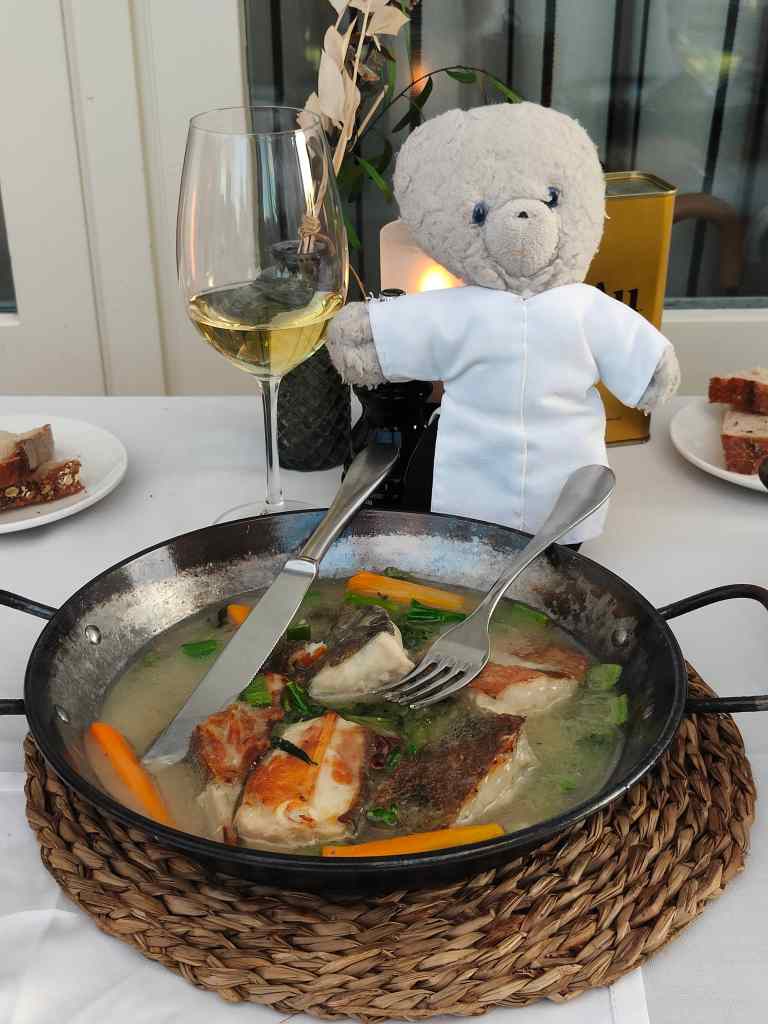
Fish! (Turbot?)

Well, that’s it for the moment. Back to cold and rainy London. My next trip will be to Eastern Europe in September, stay tuned!

Previous Post: Madrid – Parque del Retiro

On to Madrid – Parque del Retiro and the Casino de Madrid

The next day, I got up early to have one last look at the spectacular view from Cuenca’s bridge, in the morning light this time.

Cuenca’s famous view – in morning light this time

Then I set off to the station to continue my route to Madrid. My second Spanish train trip was not as smooth as the first. The modern-looking but empty station of Cuenca had a security check for baggage and the bored and zealous staff there detected my Swiss army knife in my bag. I had no idea this was not allowed on the train. They got very excited (this must have been the highlight of their day) and told me I had to leave it somewhere inside the station. I took this as a hint that if I concealed it discretely somewhere (just not in the bag which went through the scanner) they would turn a blind eye, so I ducked out of sight, hid the knife in my pocket and returned to the platform….to see one of the guards waiting for me, armed with a hand-held metal detector. I didn’t want the indignity of having my fur checked so took out my knife and left it on a table where he could see it, but the guard still checked me anyway, even making me take my hat off. He then recorded my ticket number – maybe as proof that they had been working, maybe to report me. It was the third Swiss army knife I had lost on my travels. At the ticket check, I had another surprise. The man there said that the free baggage allowance was only for a small bag (the size of carry-on luggage in a plane), and I would have to pay 30 euros to the staff on the train to transport my suitcase. My favourable impression of Spanish trains was beginning to wane, but once onboard, I stowed my case quickly in the luggage wrack and nobody asked me to pay extra for it. The train sped through the flat Spanish countryside, reaching Madrid in an hour.

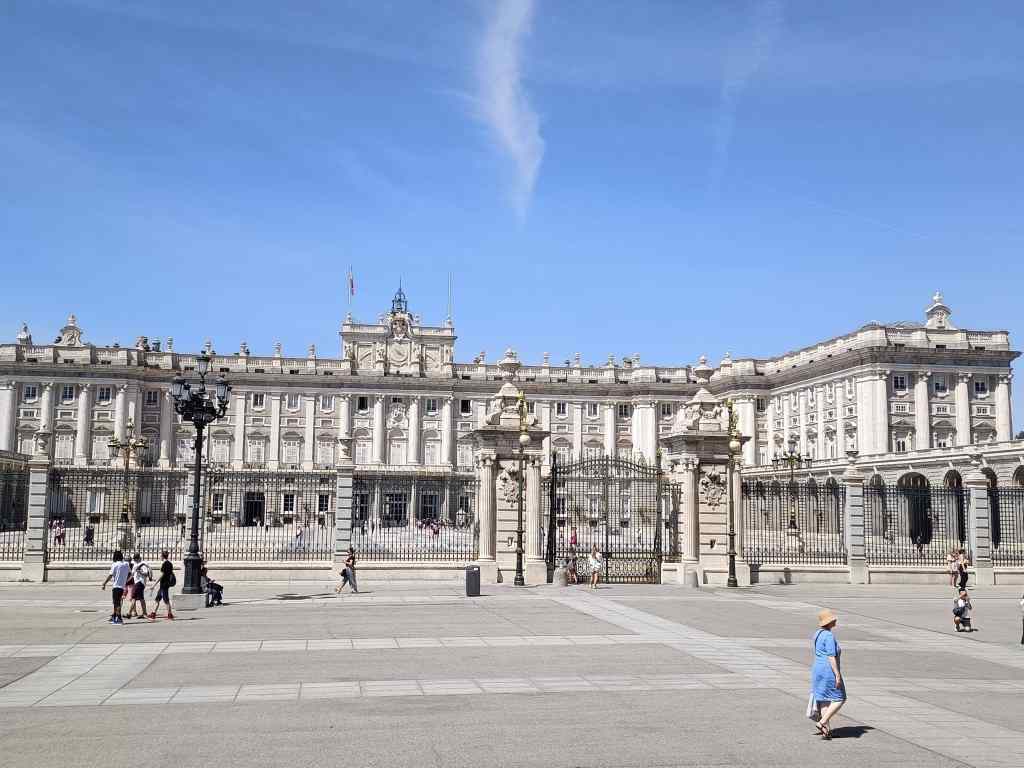
I already knew the city from previous visits, so decided to spend a relaxed afternoon visiting some familiar places, and a few new ones. My flat was right in the centre, and I walked down the wide avenues to the Royal Palace….

The Royal Palace, Madrid

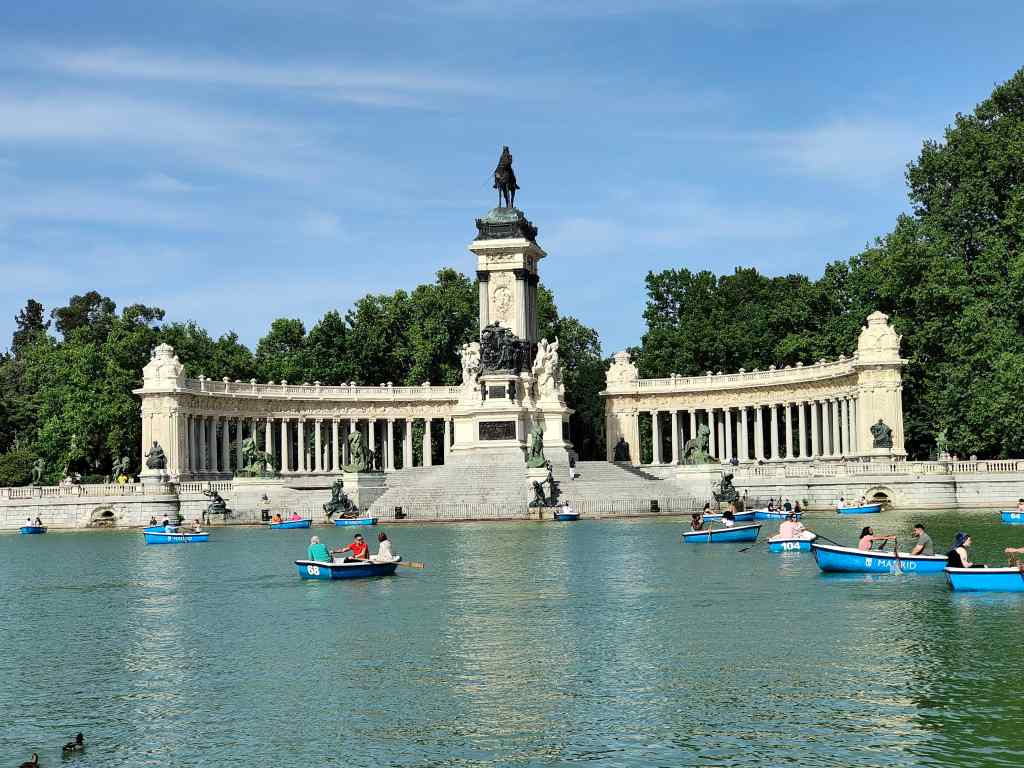
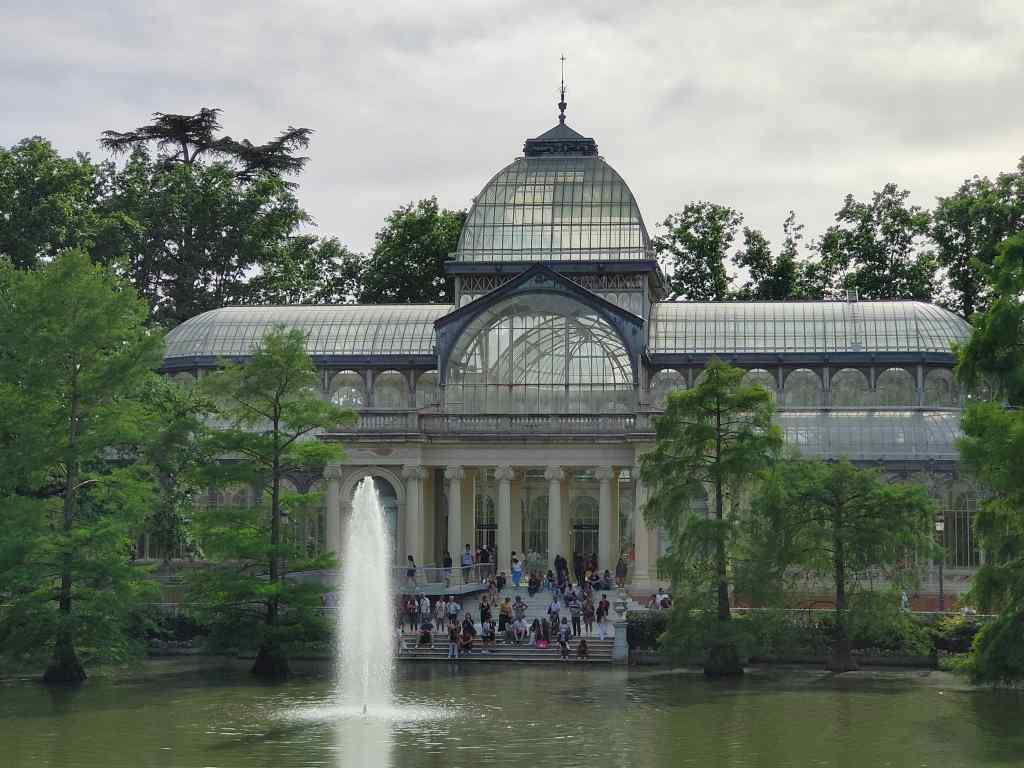
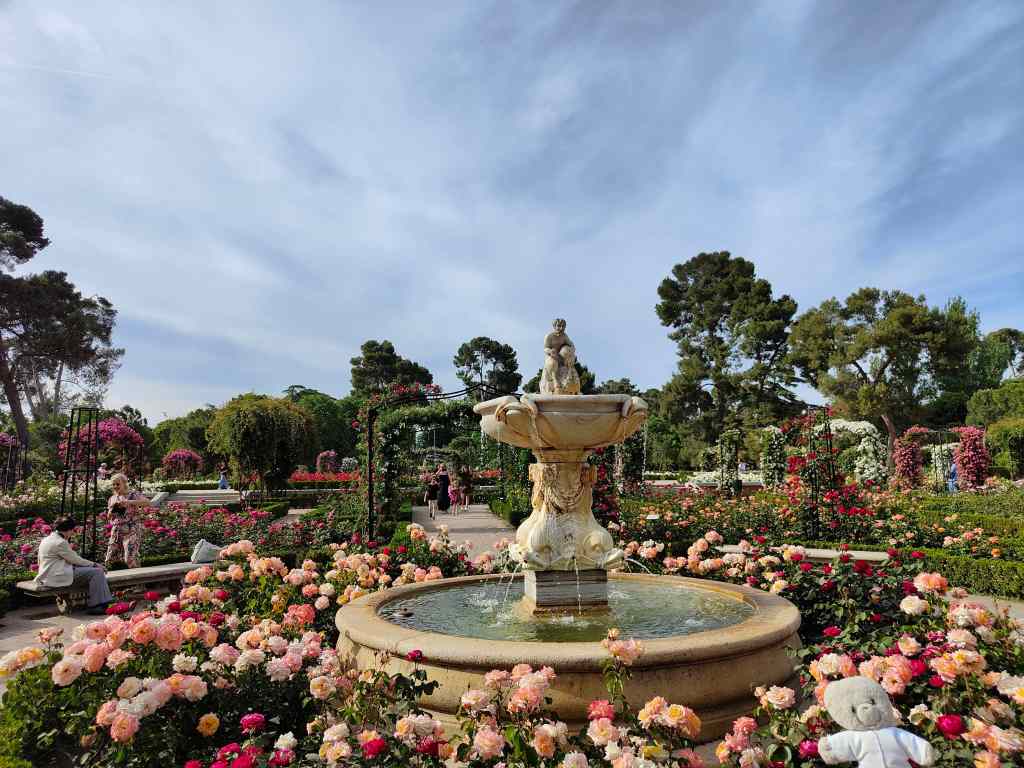
….and then back across town to the Parque del Retiro, where Madrilenos go to cool off in hot weather (although it was only May, it was already quite hot). I spent a happy couple of hours there, enjoying a drink in the shade, visiting the crystal palace and the rose garden.

Parque del Retiro – the Boating Lake
The Crystal Palace, Parque del Retiro
The Rose Garden, Parque del Retiro

From the park I headed to the Reina Sofia Art Institute, which houses work by famous 20th century Spanish artists like Picasso, Miro and Dali. It was a very large building and I found the layout confusing – the works by the best-known artists were spread out amongst dozens of different rooms, forcing you to visit the whole museum if you wanted to sure not to miss the more famous paintings. Maybe this was intentional, but I had already spent the whole afternoon walking and soon my little legs were tired. Still, it is hard to not like a museum that is the home for Picasso’s magnificent Guernica painting, which I saved to last to enjoy (smaller crowds near the museum’s closing time!). Sadly, no pictures allowed so here is a link to the famous picture…..

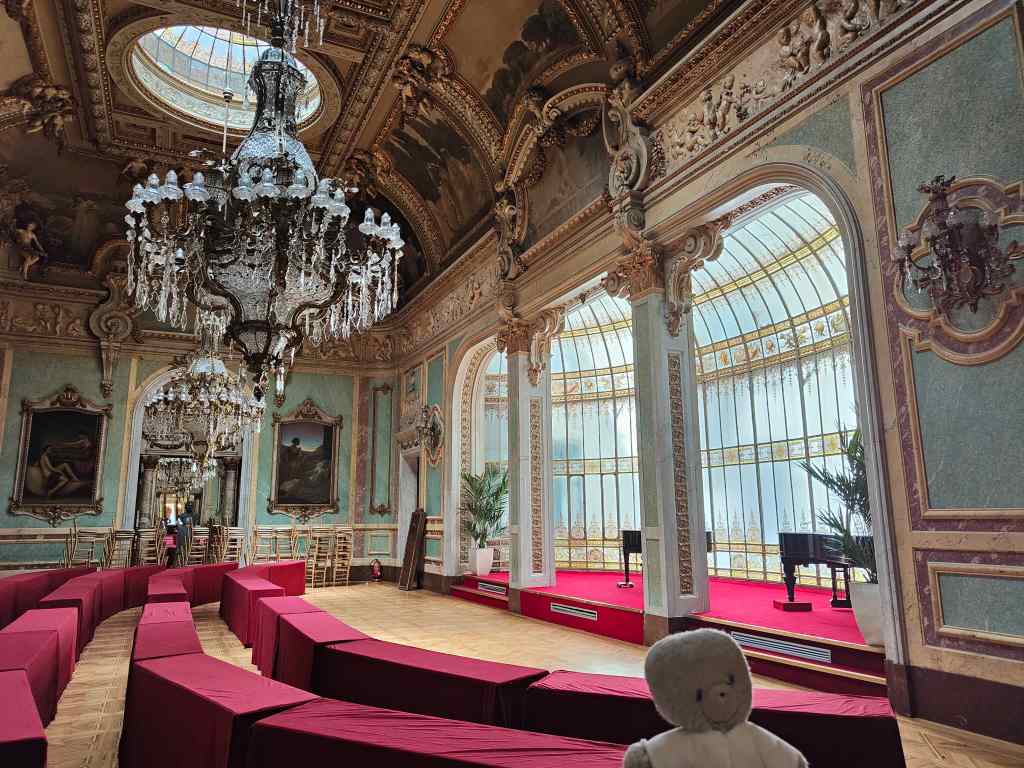
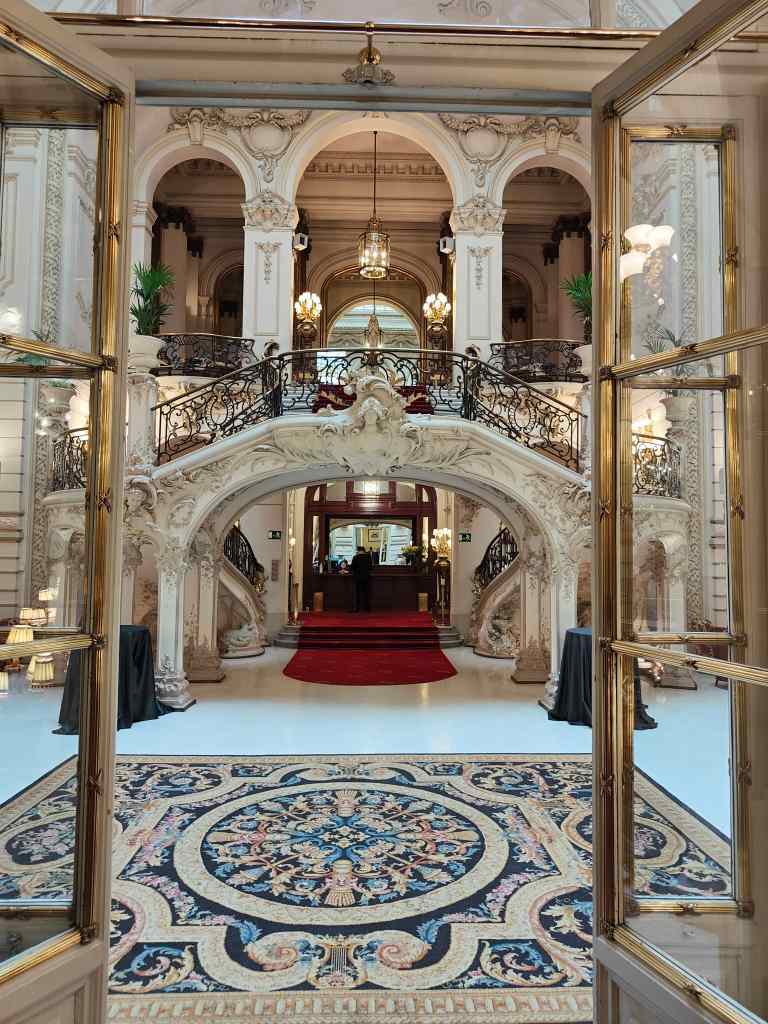
After the museum I just about had the energy to walk home, popping in to the Casino de Madrid for a well-earned aperitif. The casino is now a private members’ club, and my membership of my London club gave me access. It was a beautiful building, with many impressive rooms and a stunning staircase.

Inside the Casino de Madrid
The Magnificent Staircase, Casino de Madrid
A well-earned aperitif in the Casino de Madrid

After my aperitif, I had dinner back in my flat, accompanied by a bottle of red wine given to me by the exceptionally friendly owner. It came from his own vineyard near Cuenca, and I had great pleasure in telling him how much I had liked the place.

Next Post: Toledo

Previous Post: Cuenca

Cuenca, an unexpected highlight

The next stop of my short Spanish trip was Cuenca, a small town located halfway between Valencia and Madrid.  I went by train, which covered the 200km distance in an hour, reaching speeds of nearly 300km/h in places.

Why fly when a train can go this fast?

I arrived at a very smart, new train station which bore a strong resemblance to an airline terminal – except that there were almost no people. Cuenca did not seem to be a very popular destination.

My space-age train arrives in Cuenca

The station was a long way out of town, so I took a taxi which first went through an unremarkable modern part of the city, before climbing a steep hill to the old town, where my flat was. I settled in and then set off to explore. At first site, the old town was small, with the typical winding streets and old buildings you can find in many places in Spain.

Cuenca’s old city

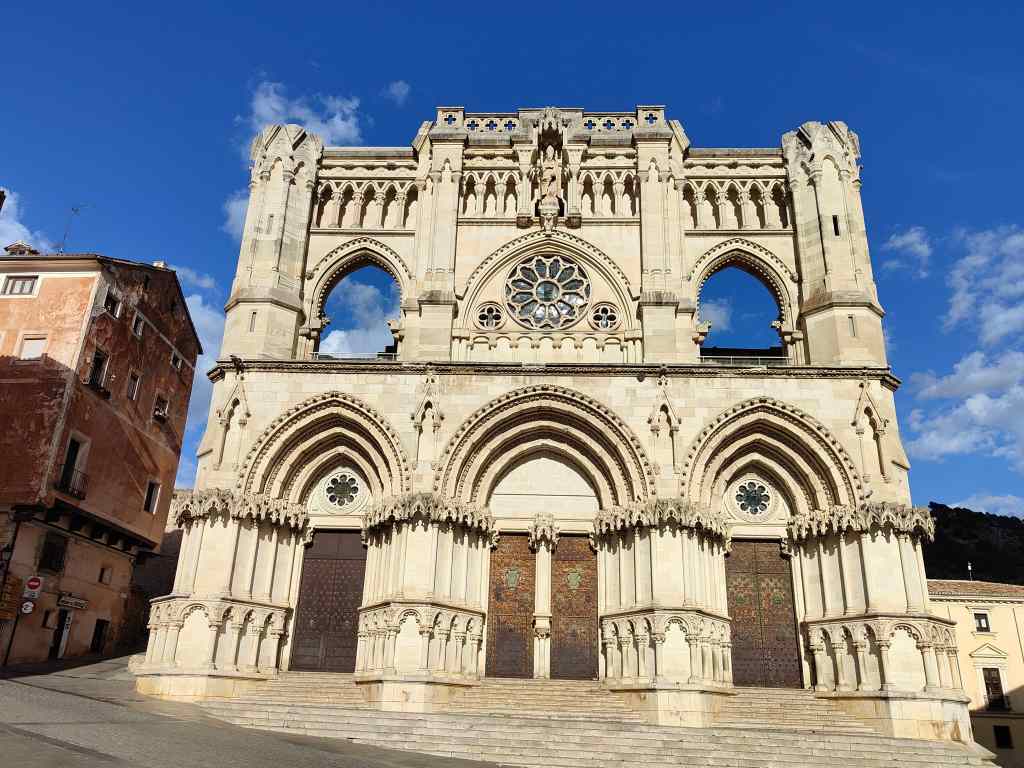
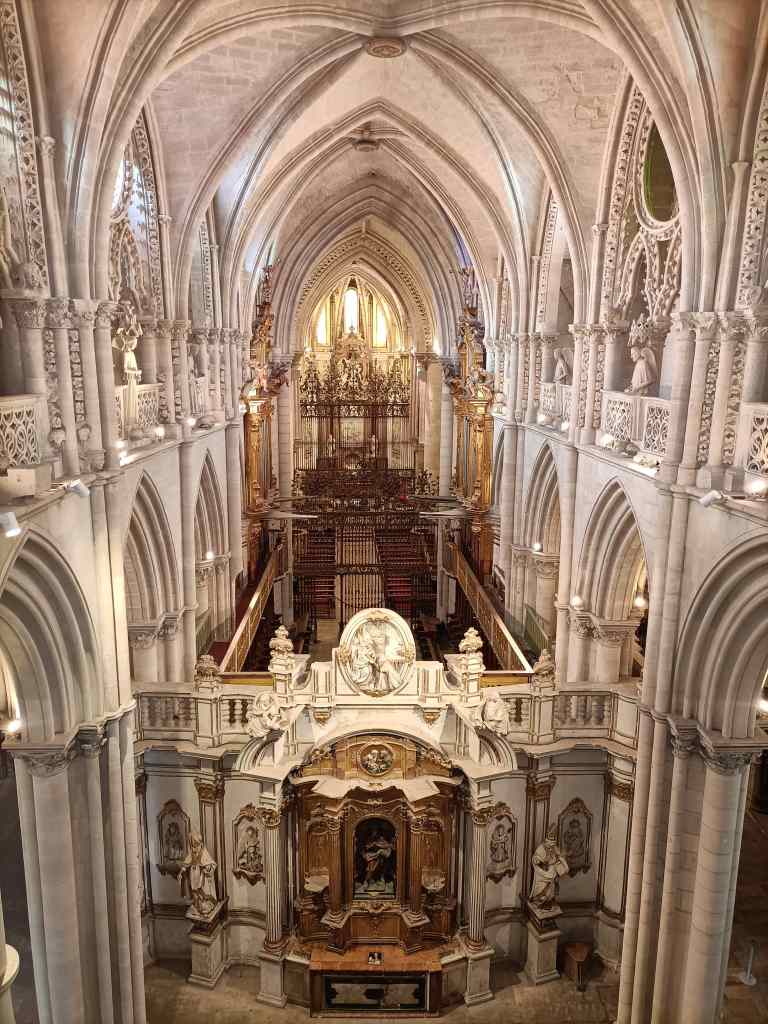
I soon found the main square, where the cathedral was located. This huge building was originally constructed in the 12th century but underwent many modifications and additions since that time. It was a big surprise, rivalling many of the more famous churches I have seen around Europe. The interior was pleasant and light, with many small chapels leading away from the central aisle.

Inside Cuenca Cathedral
The ceiling of one of the many chapels of Cuenca’s cathedral
A view from the triforium, Cuenca Cathedral

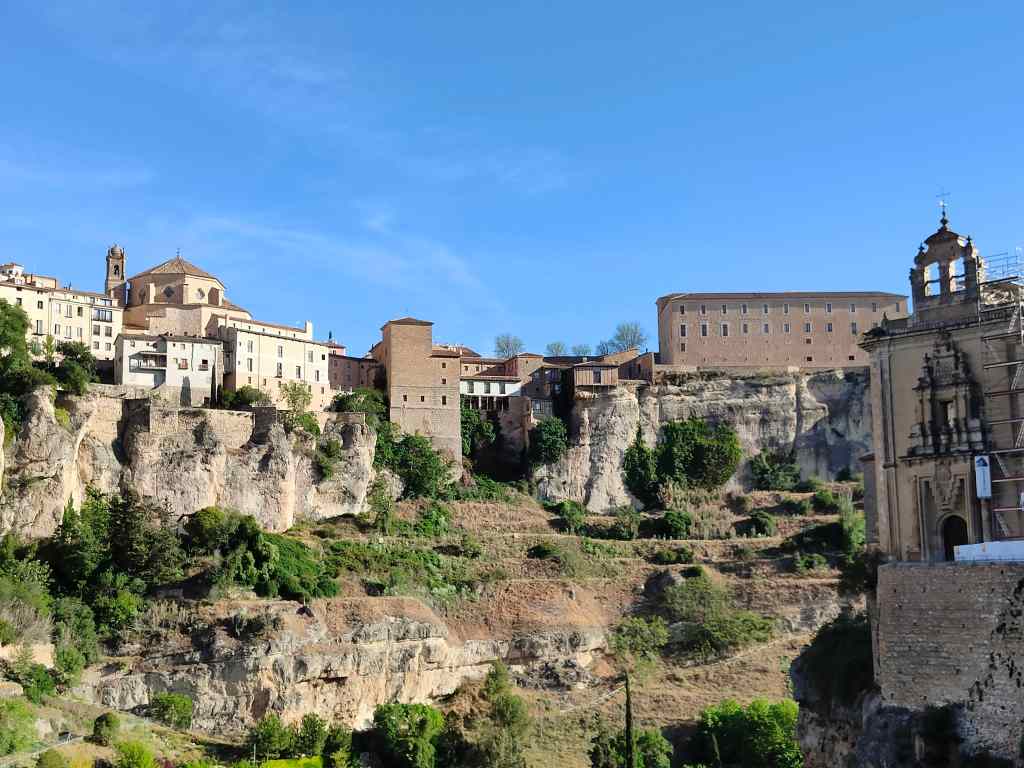
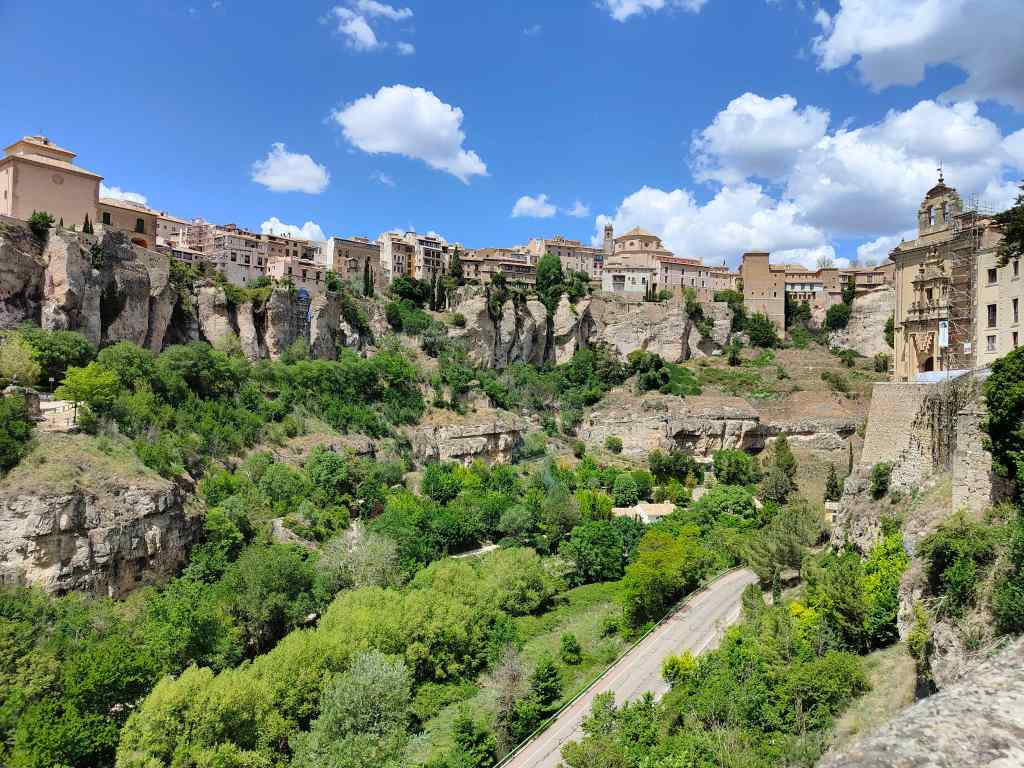
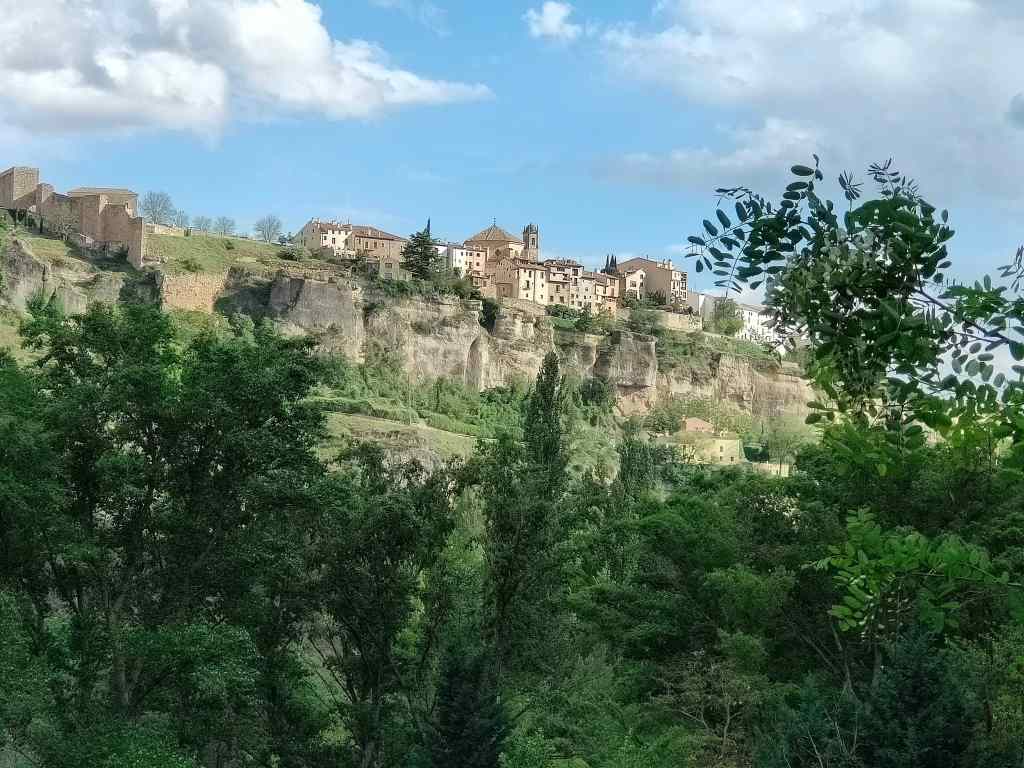
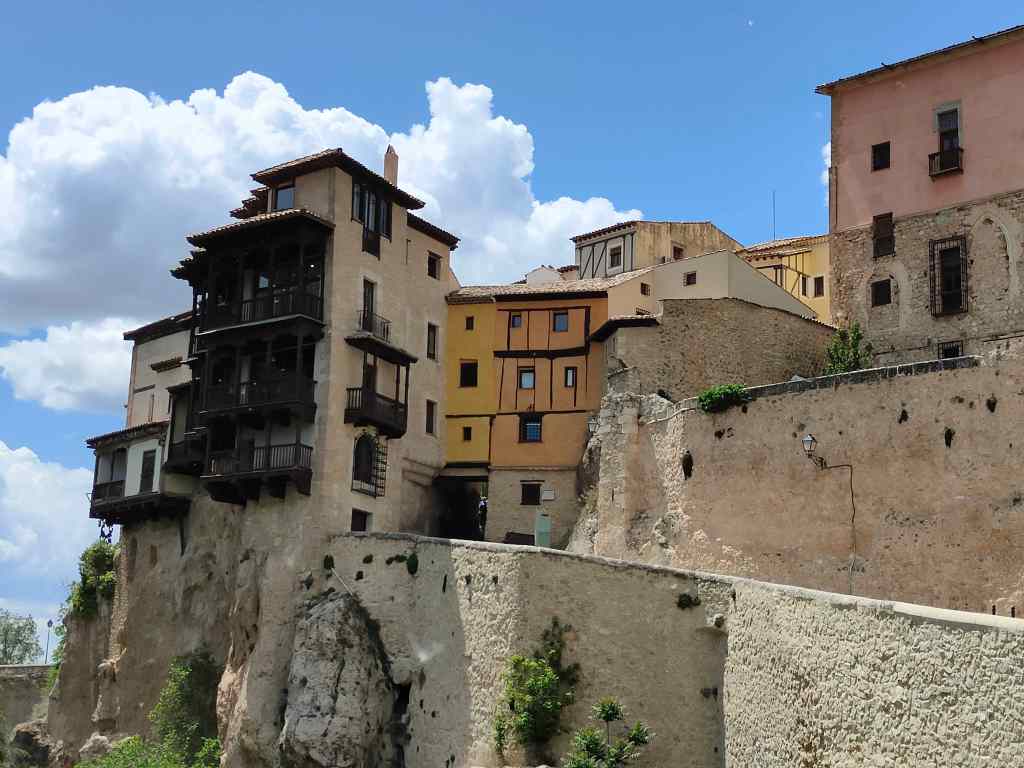
After the cathedral I headed down a steep slope for a view of Cuenca’s best-known attraction – its “hanging houses”, perched precariously on the edge of a sheer cliff.  One of these houses is home to a museum of abstract art.

Cuenca’s hanging houses
The Museum of Abstract Art lives up to its name

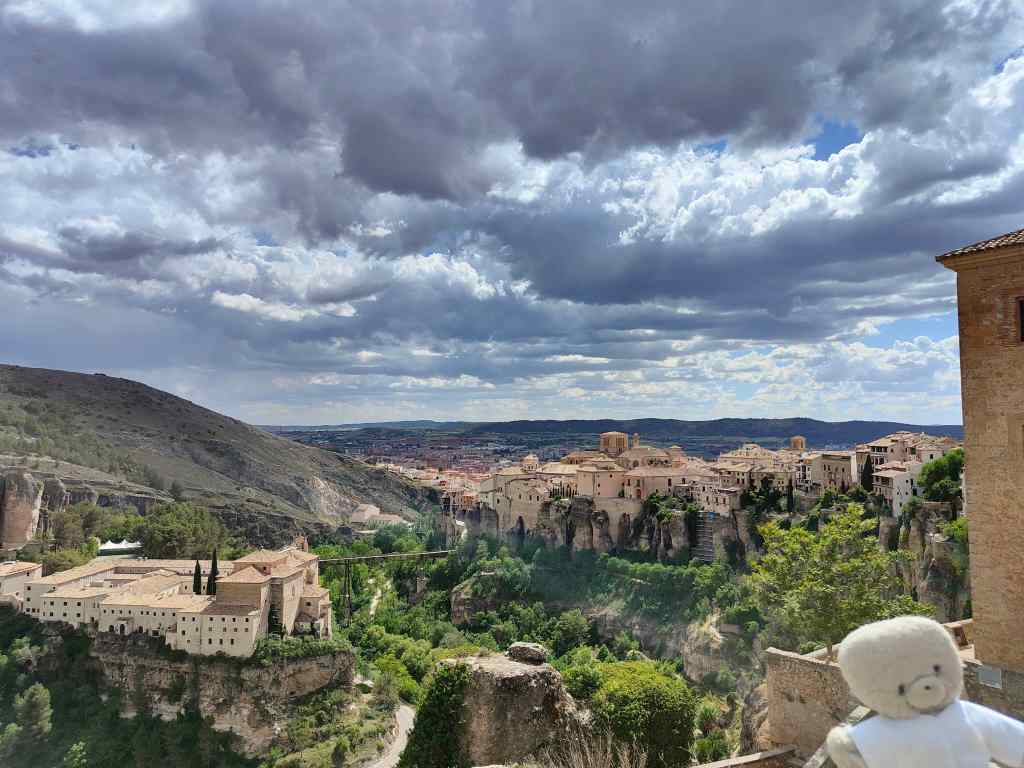
Further down the slope, a long wooden bridge ran across the deep ravine at the city’s edge, connecting it to another hill and the city’s “parador” hotel. The bridge and the hotel offered spectacular views back to Cuenca.

The amazing view from the bridge over the ravine

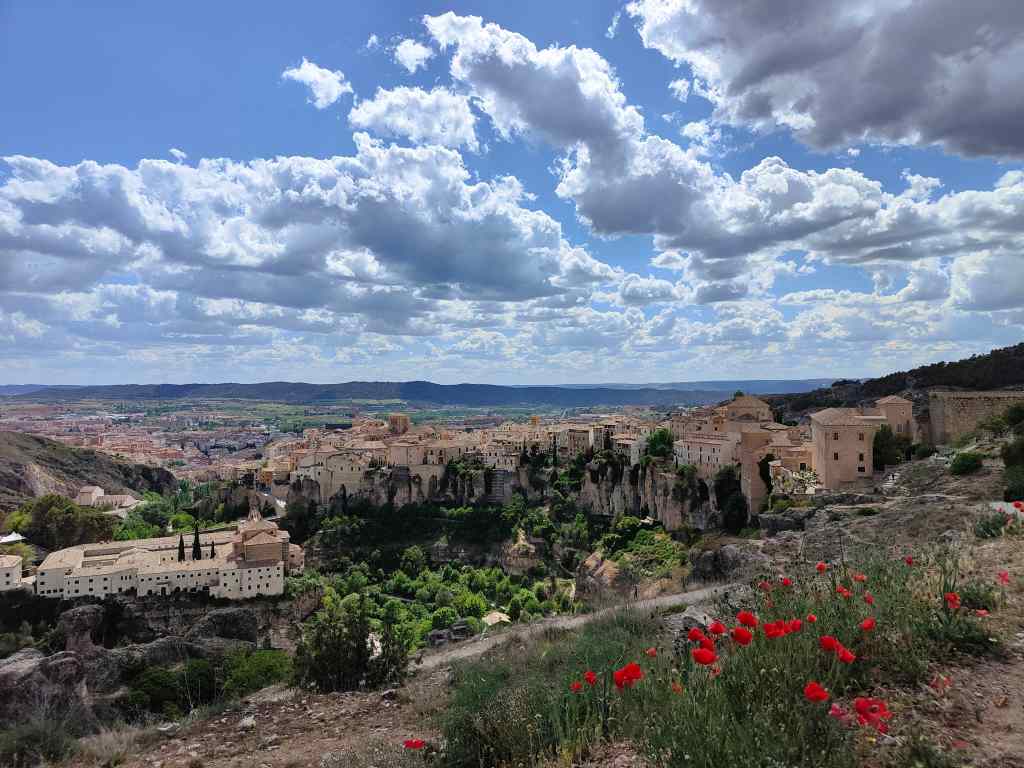
I returned to the old town, and this time headed up a steep hill, past a convent to the ruins of a castle. This was first built by the moors, who recognised Cuenca’s strategic location and founded the city in the 8th century. The town changed hands regularly between moors and Christians in the centuries that followed. The area gave yet more amazing views back to the city.

Another great view of Cuenca
….and yet another

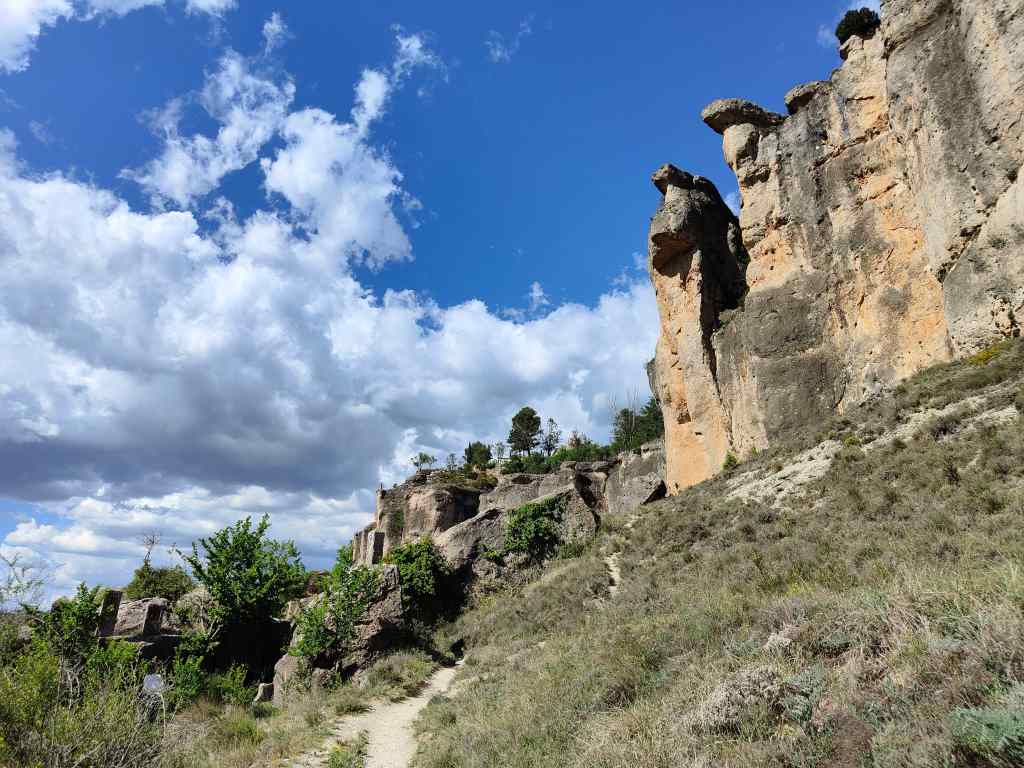
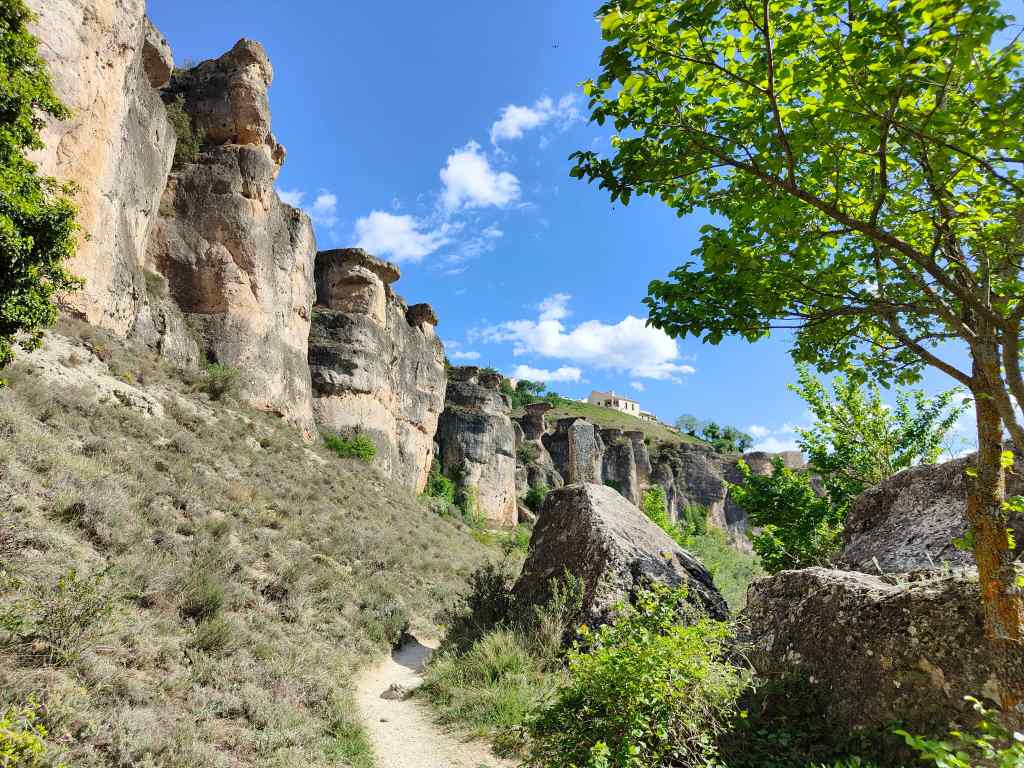
I walked back down the hill, intending to go sit at a café for the rest of the afternoon, but instead I met a group of Spanish walkers who recommended a walking route that led away from the city through some interesting rock formations. I took their advice and was rewarded with more beautiful views. The path ran below a mountain ridge for a few kilometres, before descending to a river, which I followed to get back to Cuenca.

Starting off on the walking trail
Looking back towards Cuenca
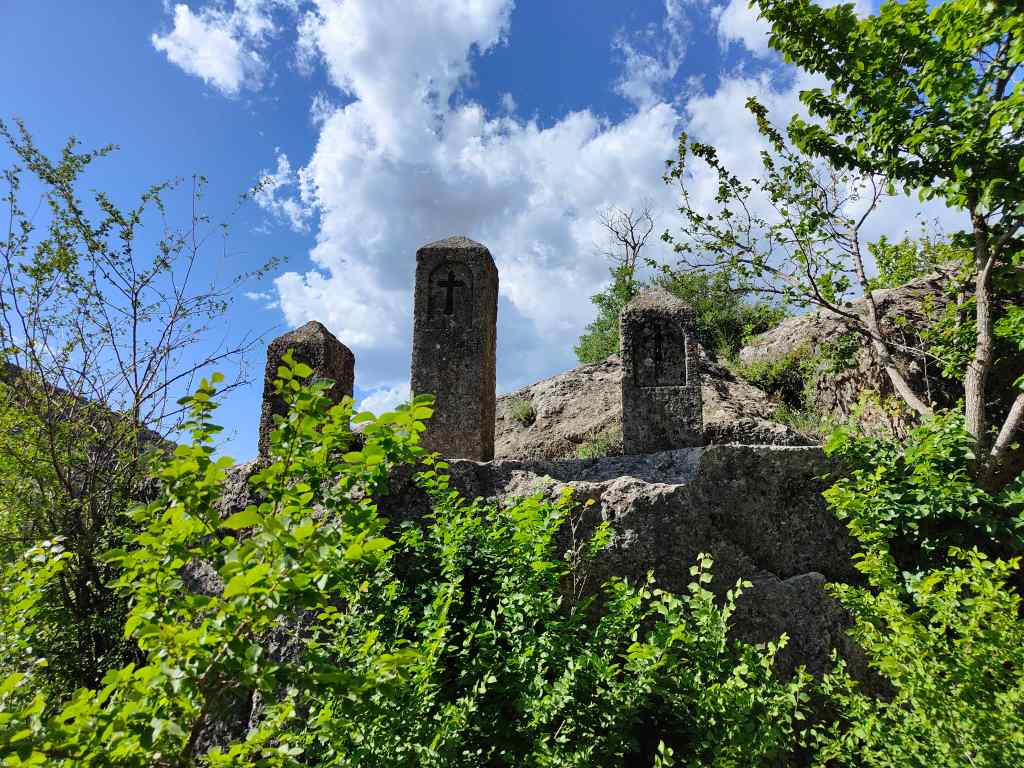
An unusual place for a small cemetery
The way back – Cuenca comes into view

On arriving, I made the steep climb back to the main square and finally sat down for a well-earned and much needed drink, enjoying the views of the main square and cathedral – this time, empty of people. Cuenca seems to be visited mostly by day-trippers from Madrid (and not many of them), and is very quiet at night when they have gone.

Cuenca Cathedral in the evening sun, and an empty Plaza Mayor

I enjoyed a dinner of yet more ham and cheese in my flat, sitting on a sofa with a great view of Cuenca’s steep valley.  The little-known city had greatly exceeded my expectations – with its beautiful views, magnificent cathedral and many walking routes.

Next Post: Madrid and the Parque del Retiro

Previous Post: Valencia

Modern Valencia and its City of Arts and Sciences

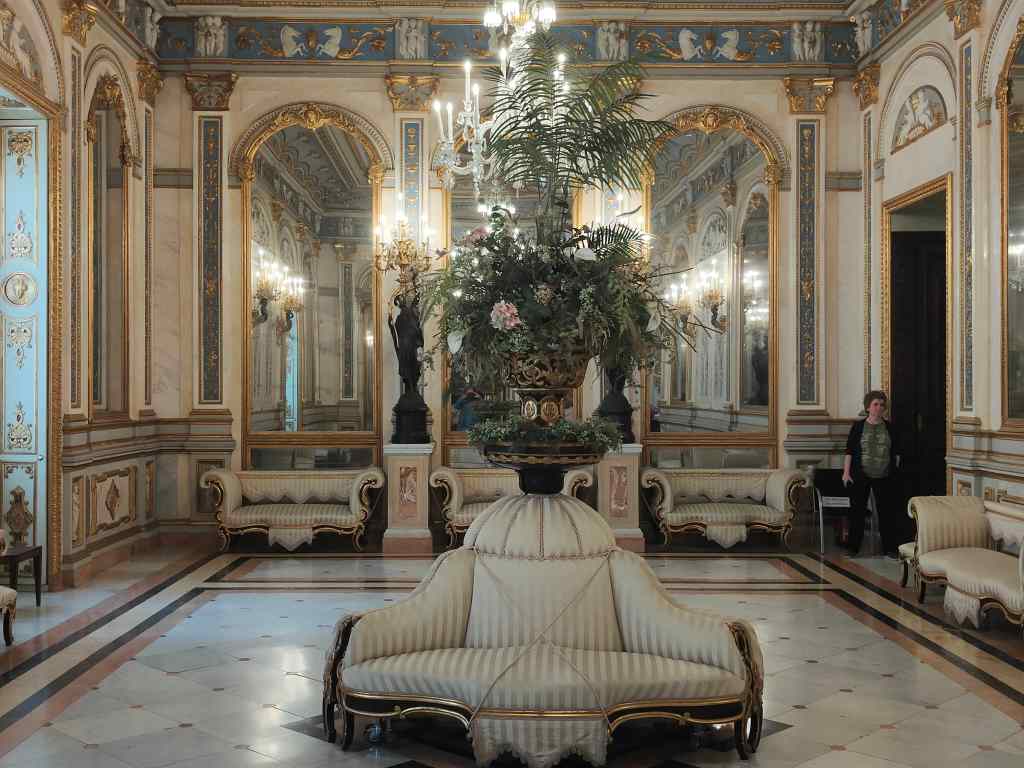
The next morning, I set off to visit the ceramics museum. Mostly, I was interested in exploring the interior of the wonderful old palace it was housed in, but the museum itself was also interesting, with a sprawling collection ranging from Roman pottery to works by Picasso.

The ornate exterior of Valencia’s Ceramics Museum
Inside Valencia’s Ceramics Museum

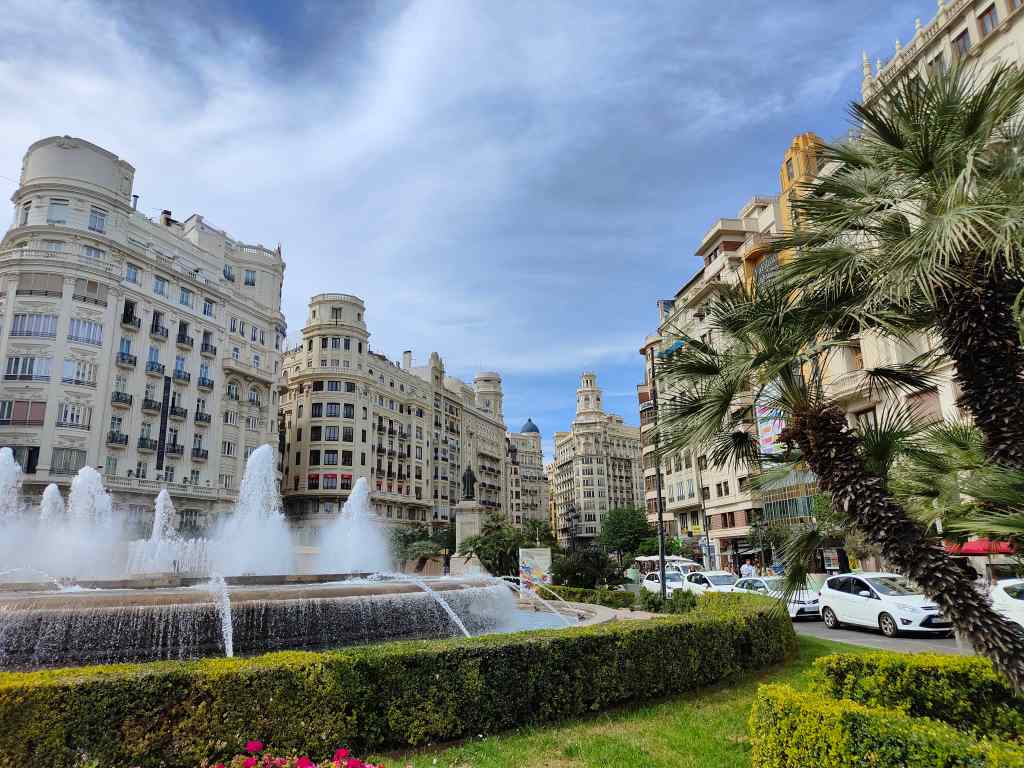
I then made my way southeast, towards the port and the sea. The city changed character as old winding lanes gave way to wide avenues with tall, elegant buildings.

Wide streets and elegant buildings of modern Valencia

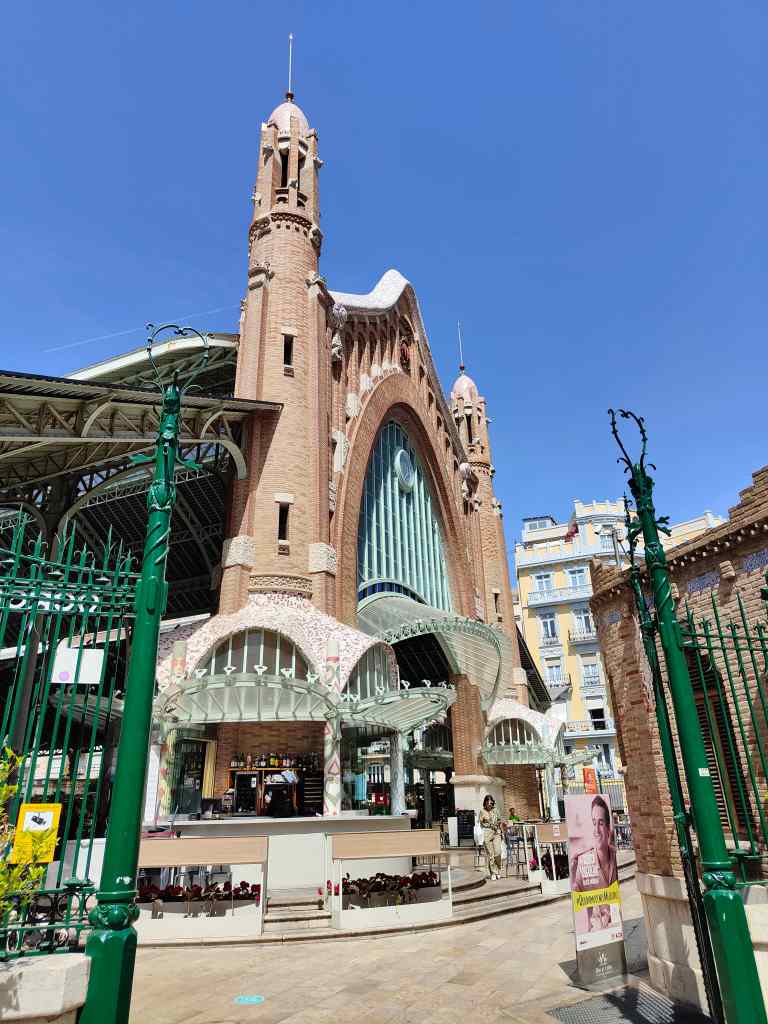
A highlight was the Mercado de Colon – a former market, which is now home to many small restaurants and cafes. Its art nouveau style reminded me of Gaudi in Barcelona, although it was the work of a different, local, architect.

The Mercado de Colon, Valencia

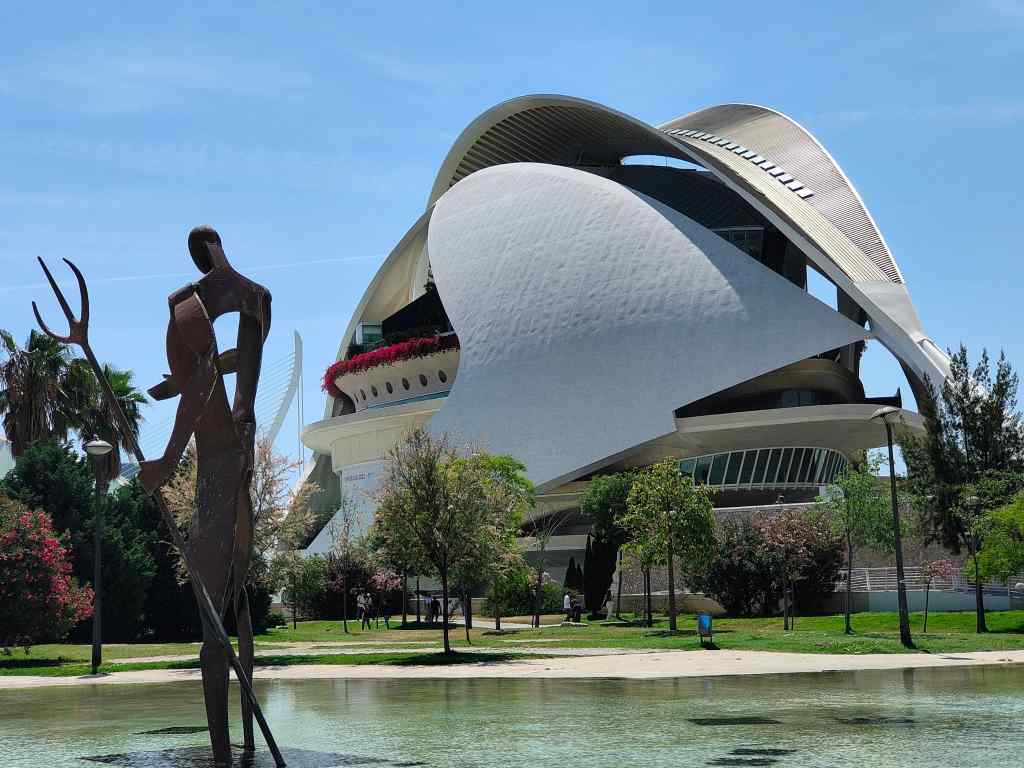
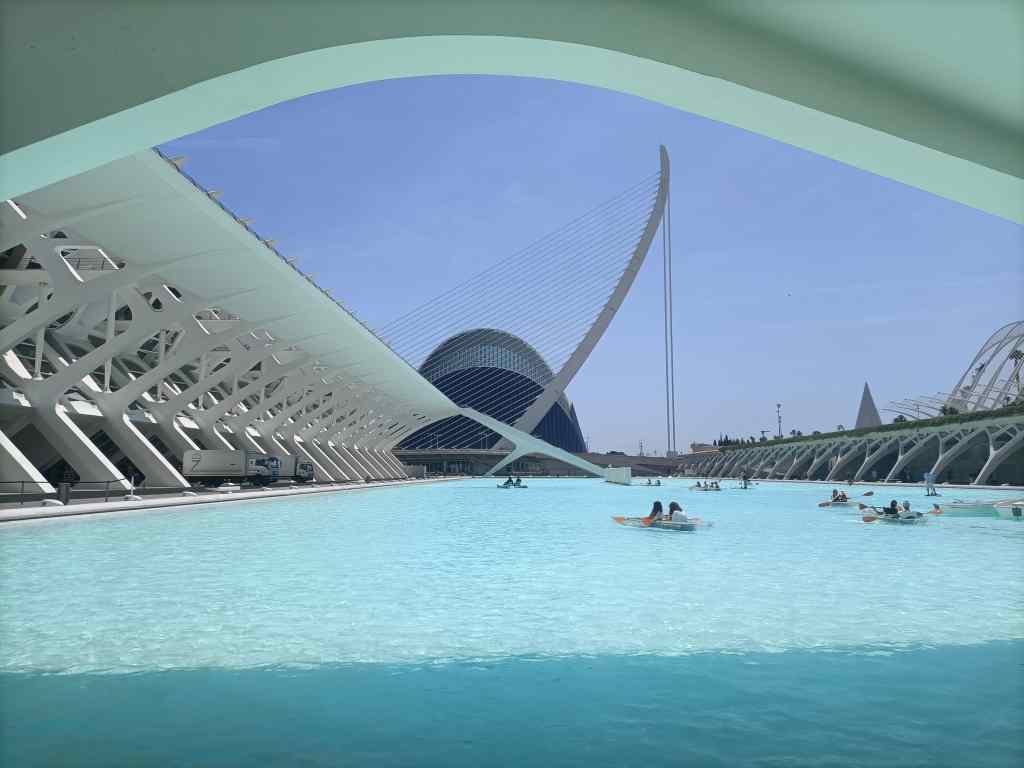
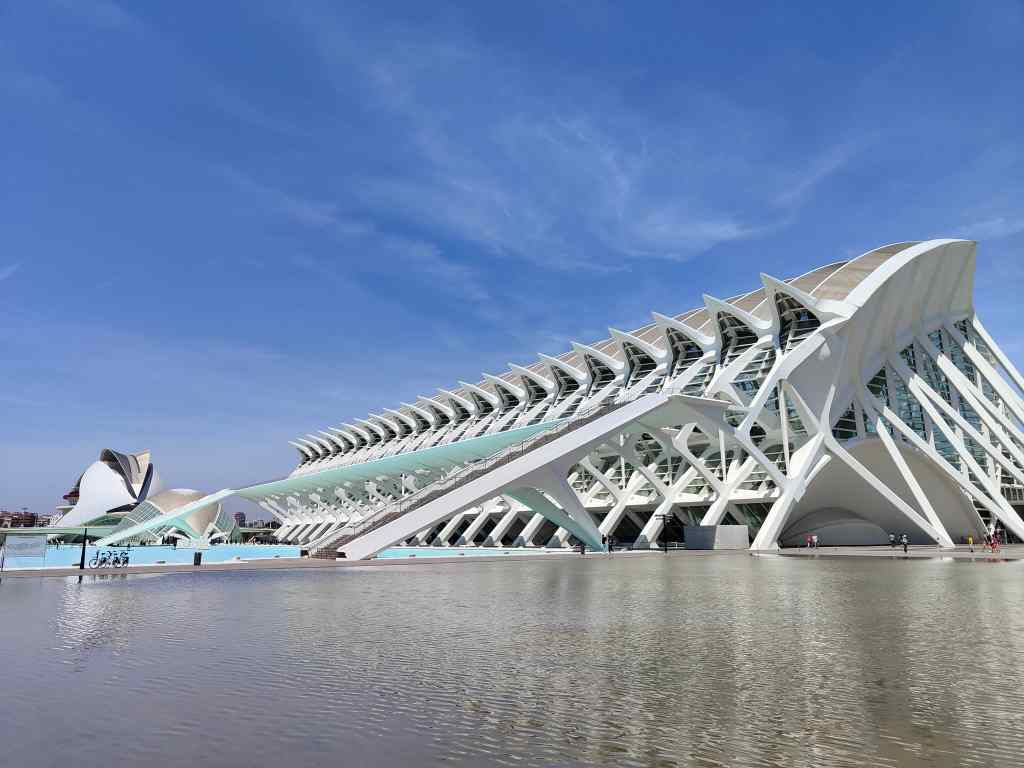
Next, I found Valencia’s Turia Park, an 8km-long stretch of gardens and sports grounds, laid out along now dry bed of the Turia river and winding around the city’s north and east sections. The park led to Valencia’s City of Arts and Sciences, which contains many spectacular modern buildings designed by architect Santiago Calatrava, including the city’s concert hall, a science museum, and a cinema.

An ultra-modern venue for concerts, City of Arts and Sciences
Valencia’s Science Museum and pool for kayaking or paddleboarding
Valencia’s Science Museum, City of Arts and Sciences

It was some of the most successful modern architecture I had ever seen. The walk ended in a garden, which offered some shade against the hot afternoon sun.

A beautiful garden in the City of Arts and Sciences, Valencia

A short distance away, I could see the huge cranes of Valencia’s harbour, a reminder that the city remains an active container and ferry port.

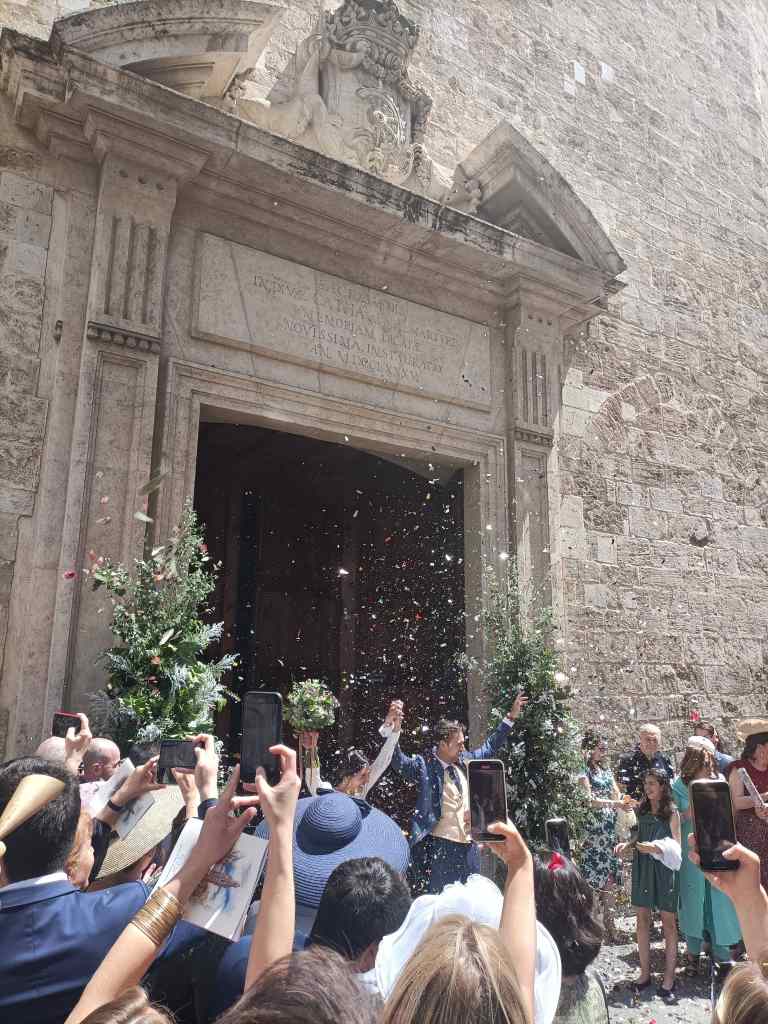
My final day in Valencia was devoted to my first Spanish wedding. It started early, at 1pm, with the marriage service in a pretty church in the old city. Emerging outside, the newly-weds were greeted by the traditional showers of confetti, plus (a Spanish custom) a salvo of military-grade firecrackers – which were so powerful that the road had to be cordoned off to protect passers-by. From the church we took a bus to an estate (“hacienda”) outside the city for a drinks reception and a large, late lunch. This was followed by sketches presented by the newly-weds’ friends and animated dancing. At 11pm, huge plates of paella were prepared and served, whislt the dancing continued. The buses finally returned to the city at 1am. It was one big, 12-hour celebration of life – the Spanish certainly now how to party!

Next Post: Cuenca

Previous Post: Valencia’s Old Town

Valencia’s old city – Lonja, Valencia Cathedral and Torres de Serranos

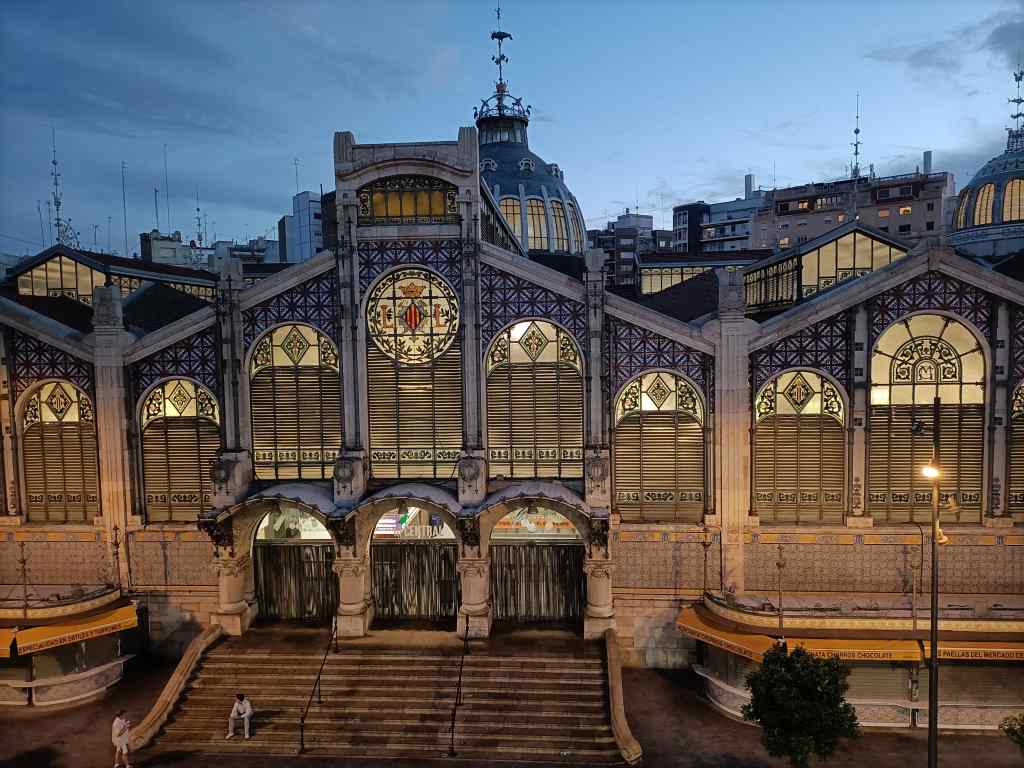
Brrrrrr. It has been a long, cold, wet………spring in London. I was beginning to wonder why I bothered to emerge from hibernation to endure such miserable weather. It was definitely time to feel the warmth of the sun again, so I seized on the chance to attend a marriage in Valencia, Spain. This is Spain’s third largest city, but is much less visited than more popular Spanish destinations. It is located on the country’s Mediterranean coast, about 350km southeast of Madrid. I arrived and found my flat – right in the centre, opposite the huge central market building.

View of the Valencia’s market at night from my flat

The next morning I visited the market to get some ham and cheese for later….

Inside Valencia Market on the next morning

…… and then set off to discover the city. Today, I explored the “old city” with its winding lanes and shady squares. Valencia’s golden age was in the 14th and 15th centuries, when it was a centre for trade with other Mediterranean cities. One of my first stops was a building dating from this period – the UNESCO-listed Lonja. It has two wings – a trading hall, where contracts were settled, and a maritime tribunal, for settling disputes.

The Lonja, Valencia from the outside
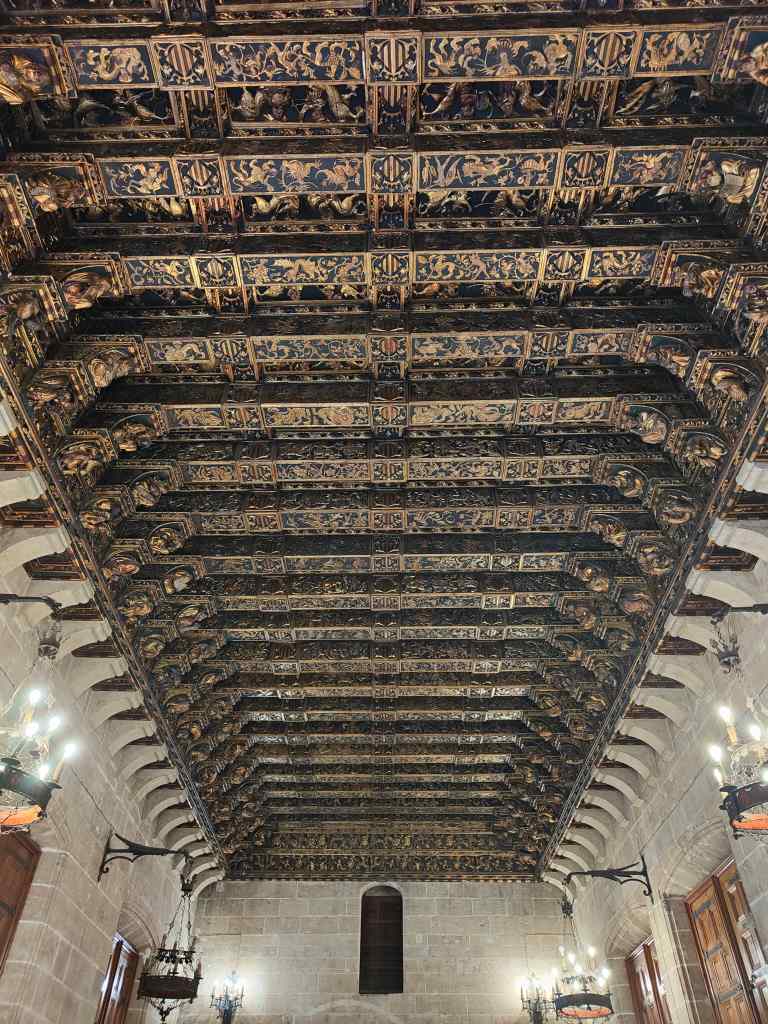
The ornate ceiling inside the hall of the maritime tribunal…
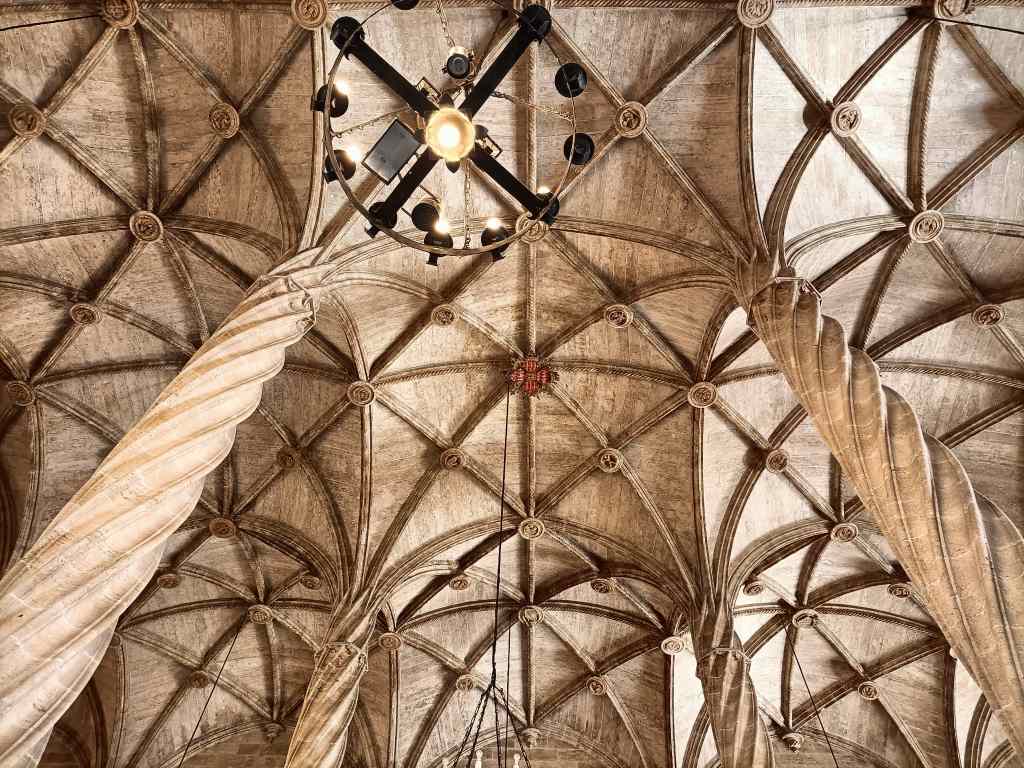
….and the ceiling of the trading hall, Valencia

I spent a pleasant morning wandering around, occasionally popping into some of the many ancient churches or stopping for a drink in one of the countless cafes. Sitting outside in the sun was a blissfully experience after the past few months in London’s rain. It was a pleasantly warm 25C; May is a good time to visit, before the summer heat becomes oppressive.

The old town hall, Valencia
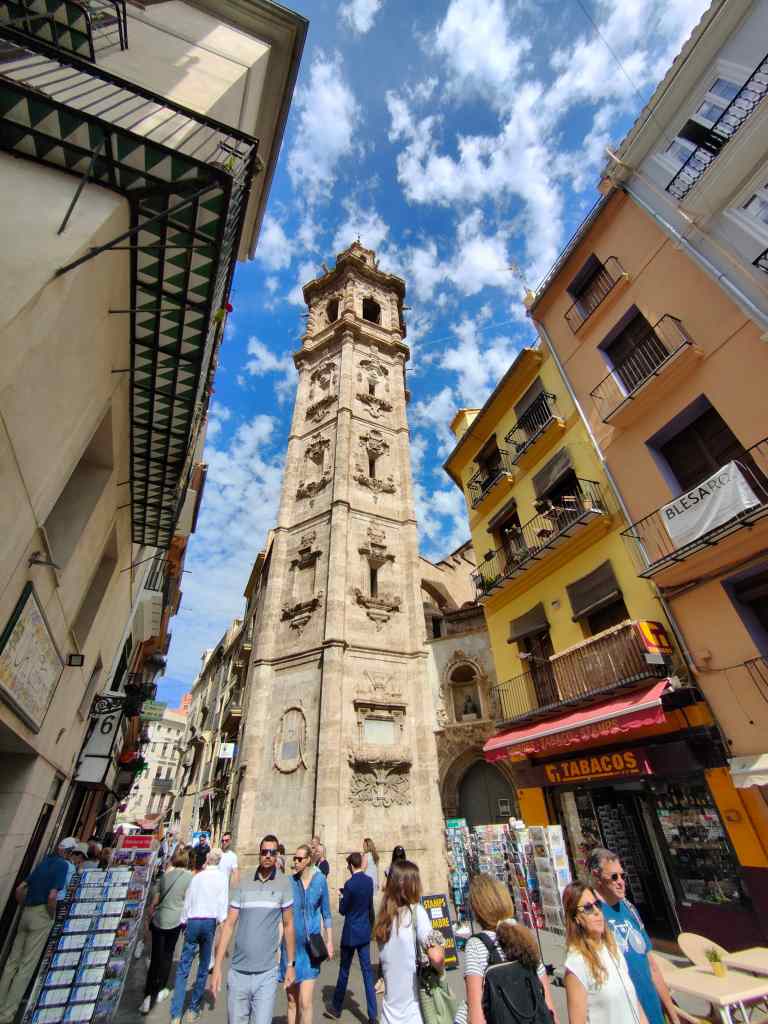
Typical street scene in Valencia
One the many squares in Valencia’s old city, viewed from my café

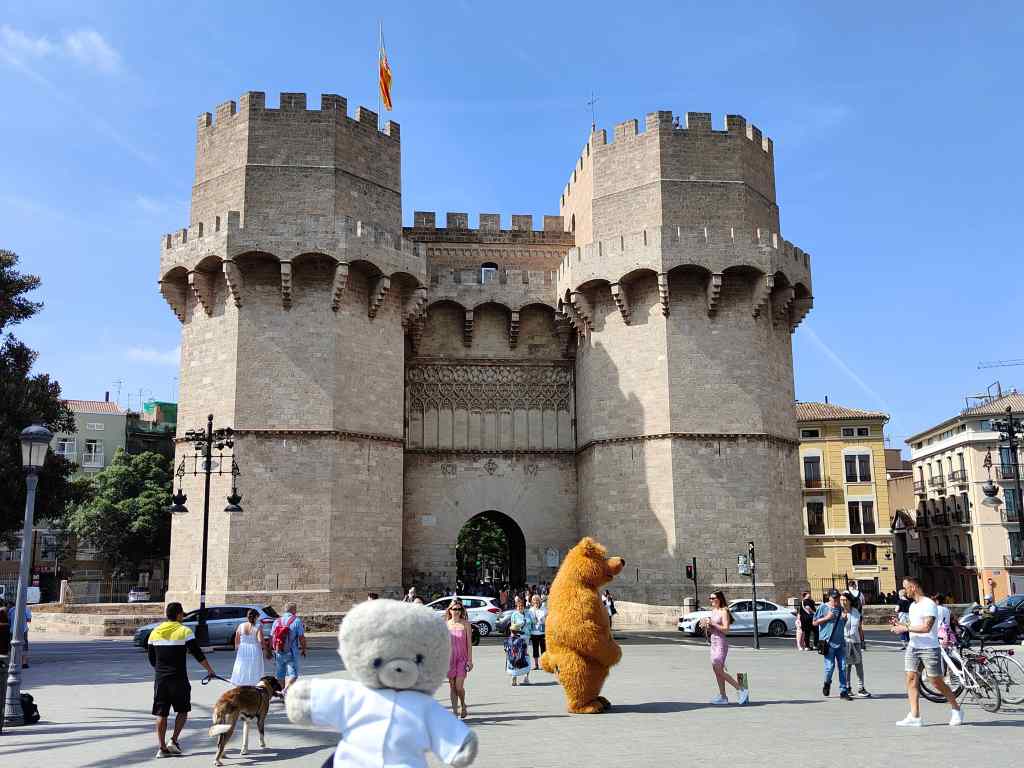
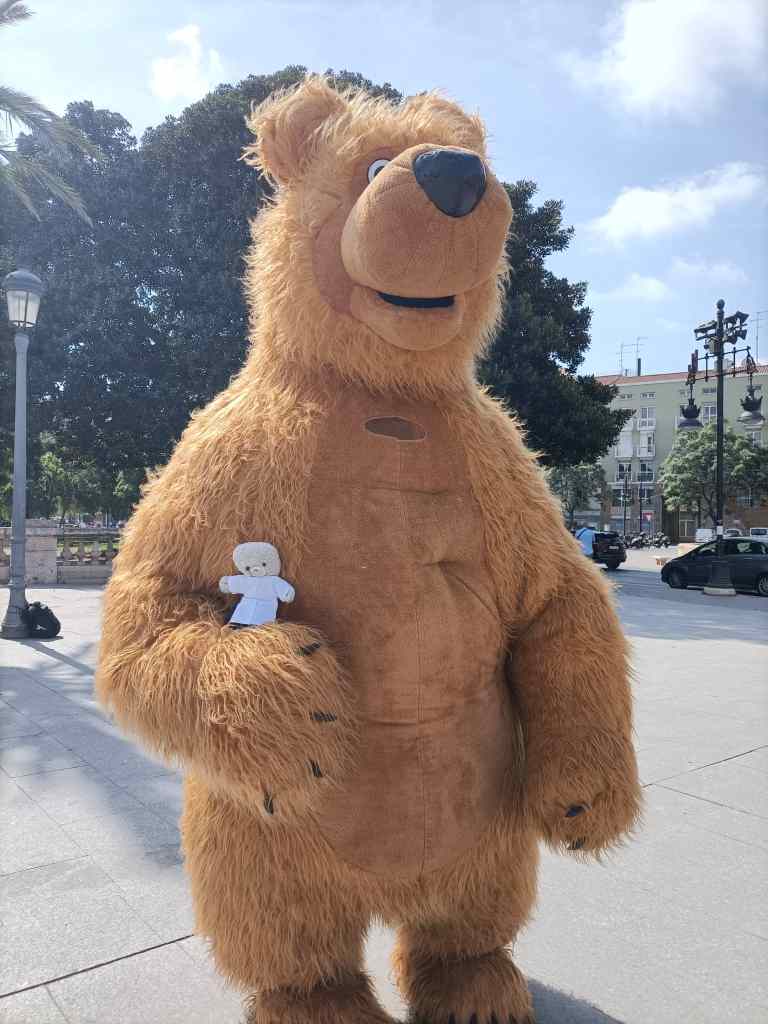
The old city used to be surrounded by a wall, but all that remains of it now are two gates, of which the 14th century Torres de Serranos is the more impressive.  There, I thought I had met a fellow bear, only to discover that in reality it was a human dressed in a costume. For a reason I cannot understand, some other humans would occasionally give him money. I felt sorry for him; it must have been very hot inside his outfit and not worth the small change he was collecting from passers-by.

The Torres de Serranos, Valencia
Not the fellow bear I had thought he was….

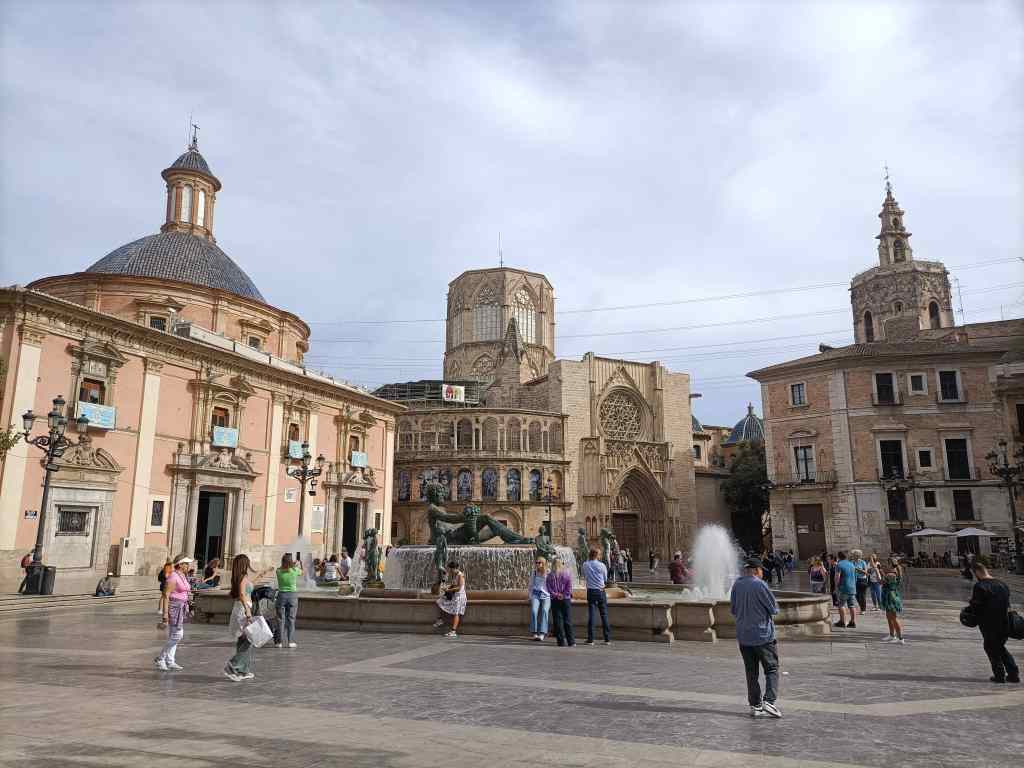
Next, I found Valencia’s cathedral, which has a famous relic – supposedly the cup Christ drank from at the last supper.

The chapel housing Christ’s cup from the Last Supper (in the middle)

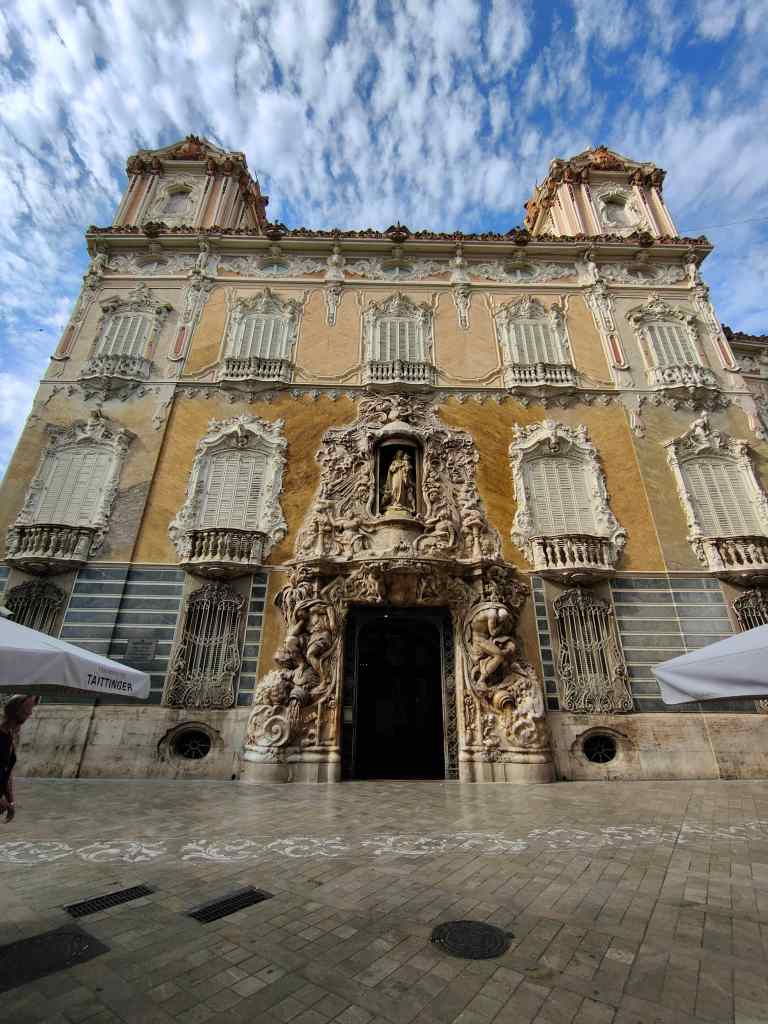
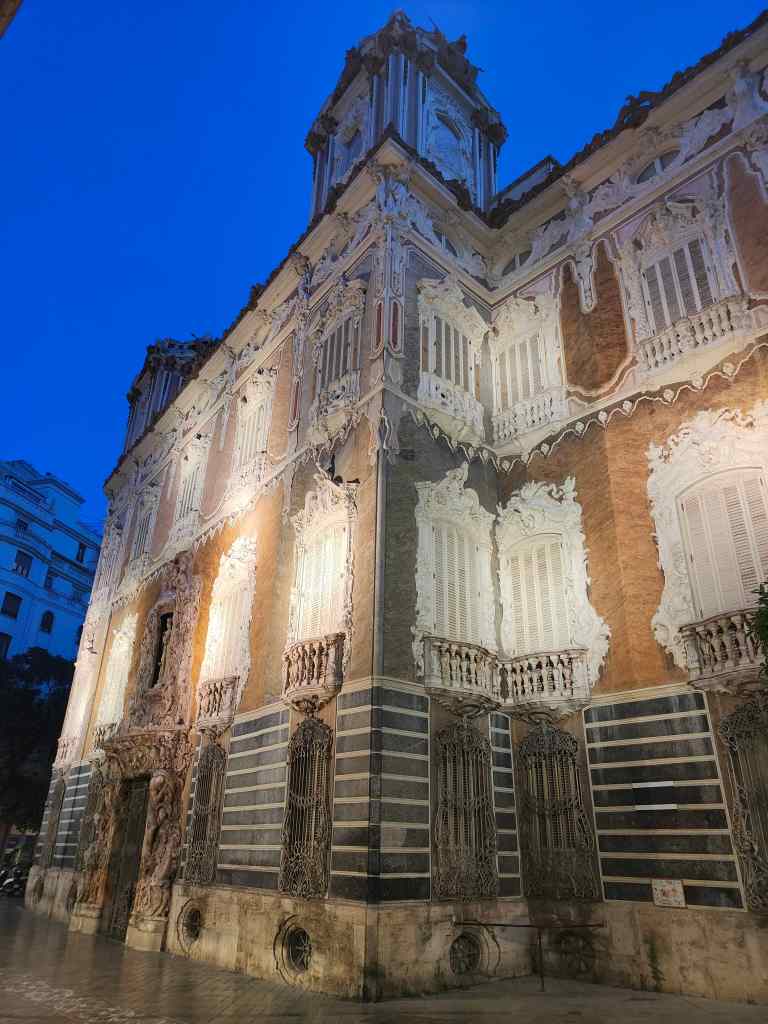
On my way back to my flat, I bumped into what was possibility the prettiest building I had seen so far – the Palace of the Marqués de Dos Aguas. It was originally a gothic building but was converted to its current Baroque appearance in the 18th century. It now houses a ceramics museum, which I decided to visit first thing next day.

One of the most elegant palaces of Valencia’s old city

Back in my flat, I enjoyed bread, cheese, ham and some good Spanish red wine………with my window wide open to enjoy the evening air. Not something I could do back home in London in May!

Next Post: Valencia – City of Arts and Sciences

Hot (a return to Andalusia)

The Bear is Back!

Now that I am able to travel again, I am taking full advantage, and this time I am off to Andalusia in the south of Spain. Every experienced travelling bear knows that the hot month of June is not the best the time to visit the south of Spain, but for reasons I won’t bore you with, I could not choose the date of my visit.

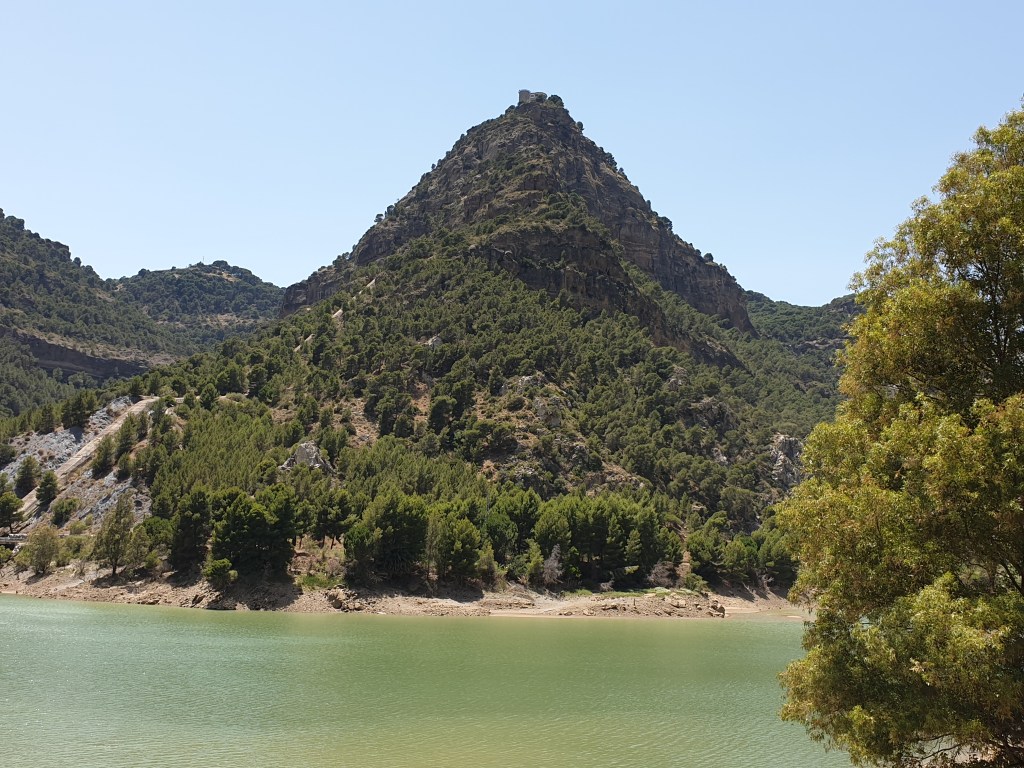
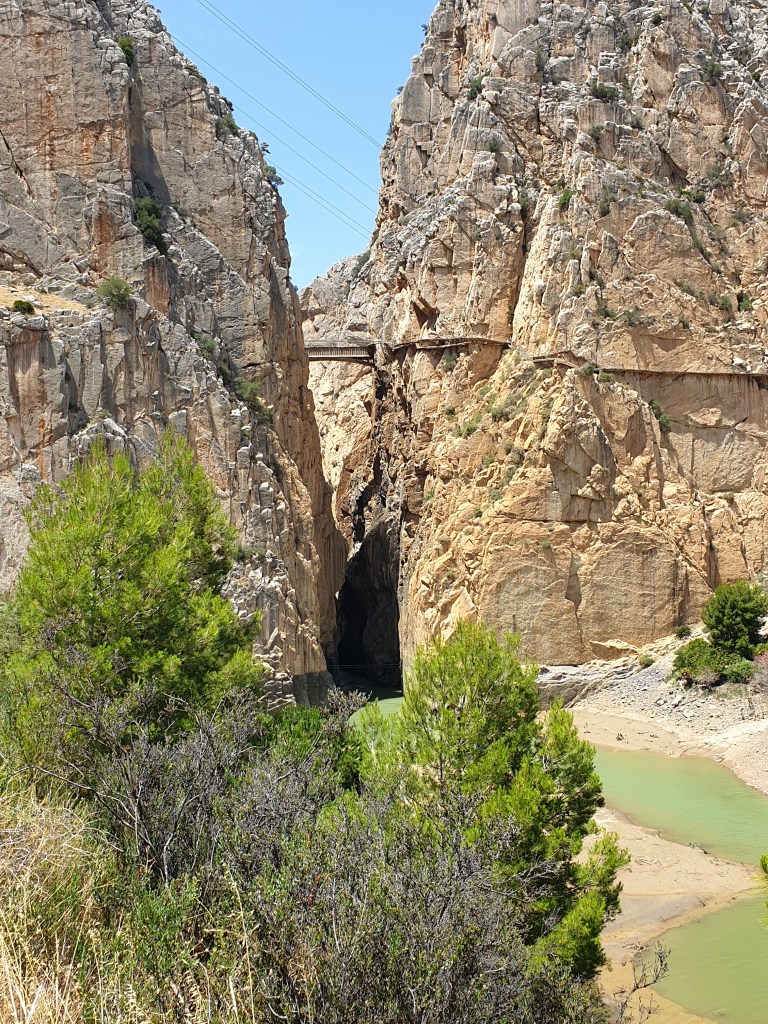
My itinerary was centred on Sevilla, but the only direct flight was with Ryanair leaving at 0700 from Stanstead so instead I took BA to Malaga. I arrived to an easily bear-able (sorry!) 26C and picked up my hire car. Instead of taking the direct route along the motorway, I opted for a scenic drive across country, passing through the pretty “white town” of Alora before heading into the mountains to El Chorro, the starting point for the famous “Camenito Del Rey” walk. 

Mountain scenery on the way to El Chorro

The 8km path clings to the side of a sheer cliff with spectacular views down into the gorge.  When planning this trip, I had been disappointed that all the tickets for this popular walk were already sold out, but when I stopped to take pictures, I soon changed my mind.  Walking for two to  three hours in the afternoon heat would have been very unpleasant, and it was much nicer to enjoy the scenery from the comfort of an air-conditioned car.

The start of the Camenito Del Rey walk

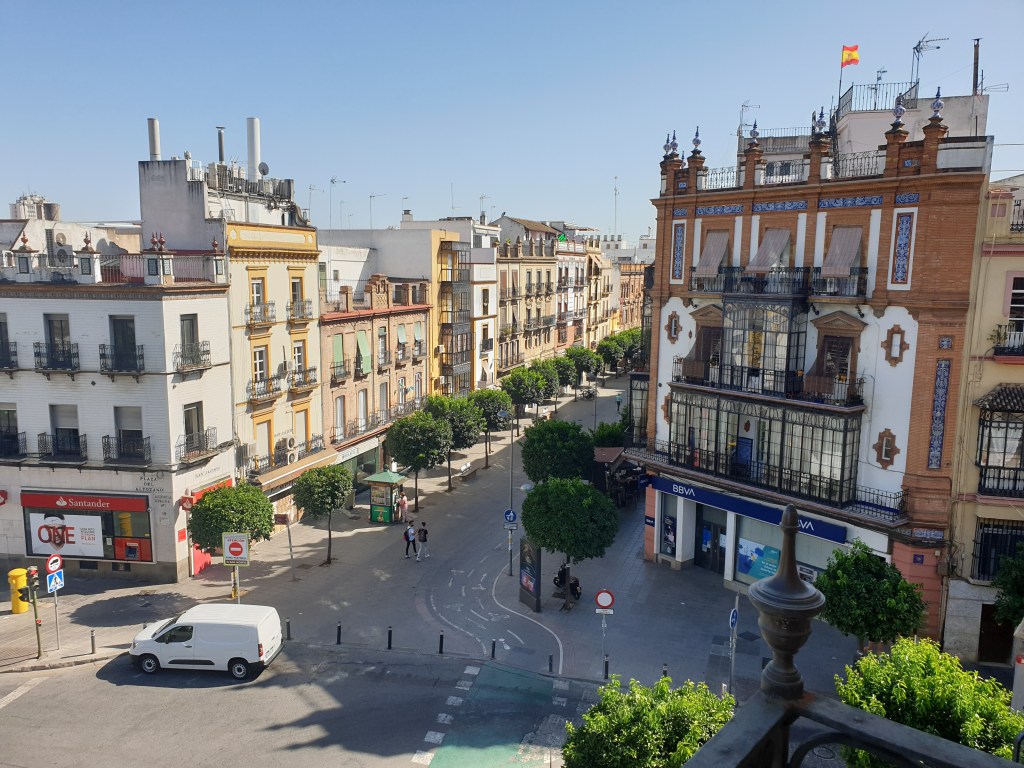
The road left the mountains and headed across rolling hills, planted with olive trees or grass.  The open views and empty, fast roads gave a sense of freedom and being on holiday. I accelerated across the empty landscape to join the main motorway leading into Seville.  I found my flat easily, and more importantly found the underground parking next door – parking on the street in Seville is impossible.  My apartment was in the Triana district, just across the river from the historic centre.

The view from my balcony

After checking in, I hurried straight to the Alcazar, a fifteen-minute walk that felt longer in the 35C heat.  I noticed that almost everyone I met was wearing a face covering. I checked on my phone and indeed, this was required by law in Spain, so I reluctantly slipped on my own mask – which of course made walking in the street even hotter and sweatier.  

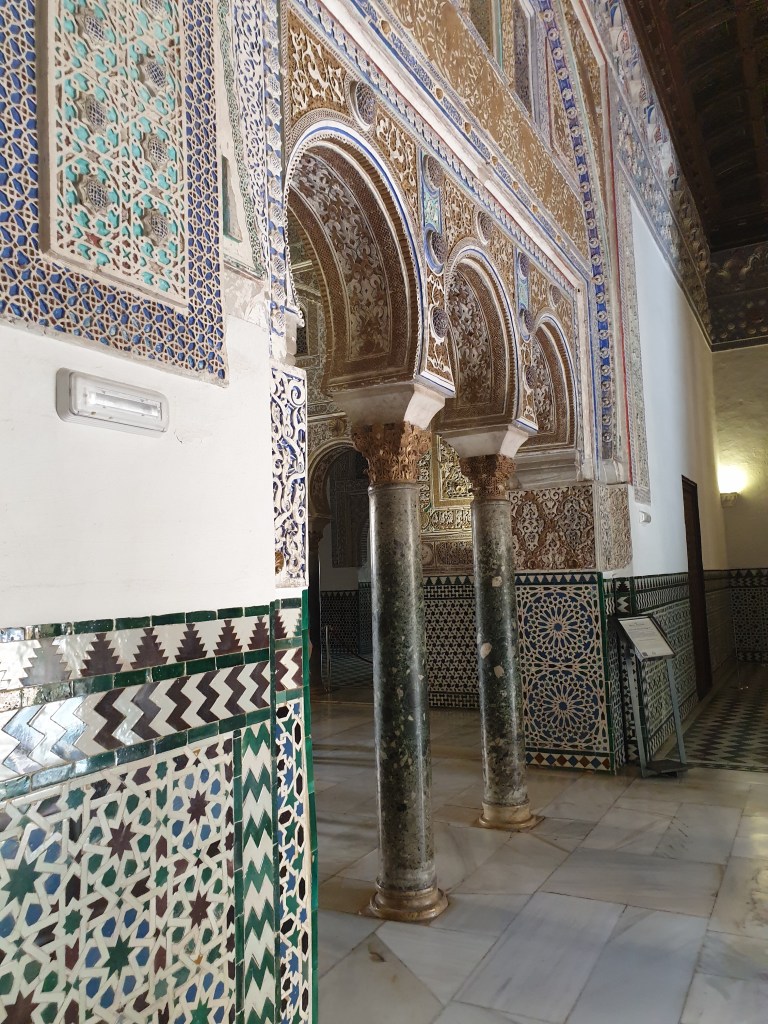
Fortunately the Alcazar was worth the effort – it is a palace built  for the Christian kings of Spain from the 14th century onwards, over a period of 500 years.  Many architectural styles were used in its construction, but the most beautiful parts copy Moorish architecture.

The entrance to the Alcazar

I tried to dodge the intense sun beating down onto the palace’s courtyards, spending my time in the beautiful Moorish reception rooms……….

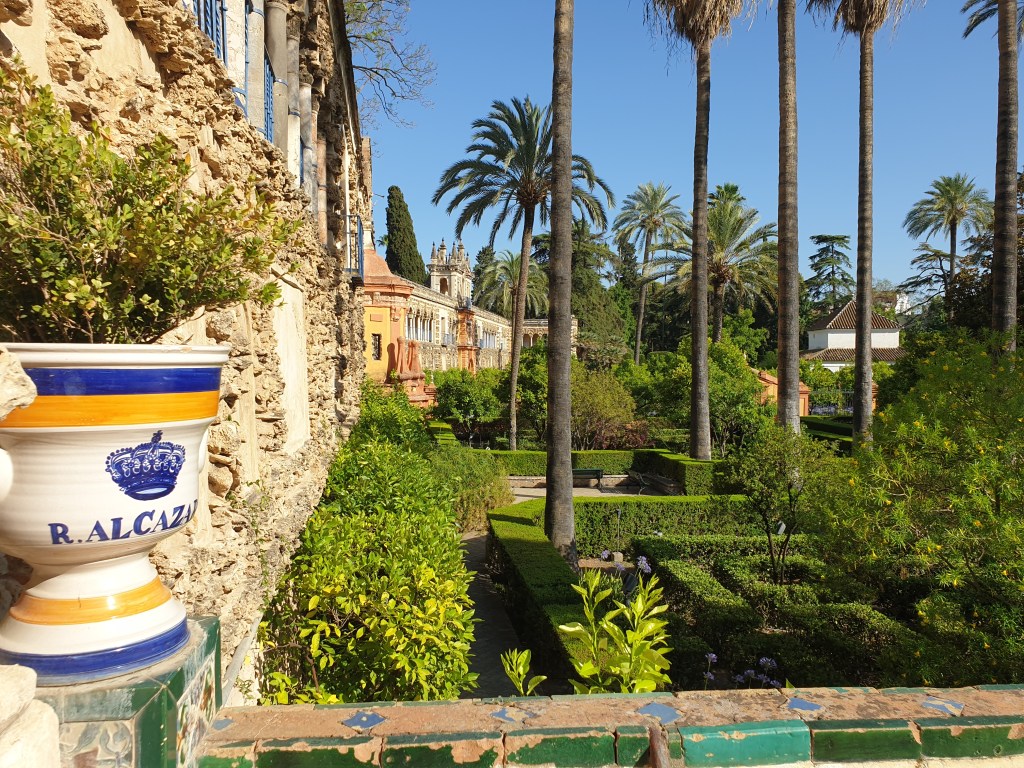
…..before heading for the famous gardens.

Even though it was now seven in the evening, the sun seemed even stronger than in the mid-afternoon.  In the afternoon, my hat protected me, but now. whenever I had to leave the protection of shady trees, the sun hit me with a ferocious broadside that roasted my whole body and soon had my fur drenched in sweat.

I left the Alcazar Gardens at closing time, and walked backed through small, winding and shady side streets to the centre and the cathedral, a huge structure that dominates the city and which I planned to visit another day.  I stopped briefly for a well-deserved drink in a small traditional bar, decorated with typical Andalusian tiling, before heading back to my flat. There are very many bars and restaurants in Spain, which spill out onto welcoming open-air terraces on the street. The law allows people to take off their face masks when sitting down to eat or drink, making an already popular pastime even more widespread amongst the Sevillanos than usual.

On my way I saw an ice-cream seller and could not resist ordering some to try to cool down.  I soon realised my mistake – the refrigeration unit was not up to the challenge of the heat. My two scoops of vanilla and strawberry were already melting, and streams of sticky liquid ran down my cone. I had to gulp it all down quickly before the whole thing disappeared, and got my paws and arms covered in gooey liquid.

I was relieved to reach the cool of my flat, where the air conditioning had finally kicked in to offer a welcoming 21C respite from the heat.  I rested for a bit after a hectic day before heading out for a pleasant dinner of tapas at a neighbouring bar. The Triana area was very busy, with the streets full of people sitting on terraces and talking animatedly. It was still hot, but now – at 10 in the evening when most locals go out – pleasantly so.  It was a nice way to unwind after a very busy day. 

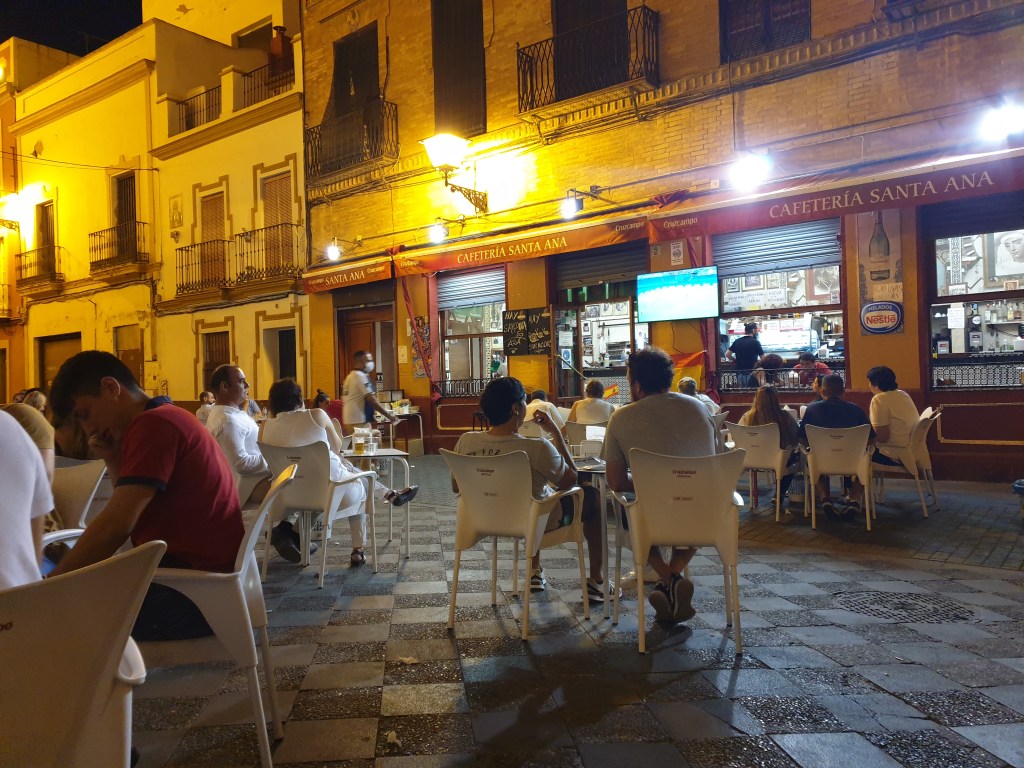
Seville street life in the un-touristy Triana district

Sorry, no photos me today – with my sticky sweaty fur I didn’t feel very photogenic. An internet celebrity like me needs to carefully manage their online image!

Blog at WordPress.com.

Up ↑