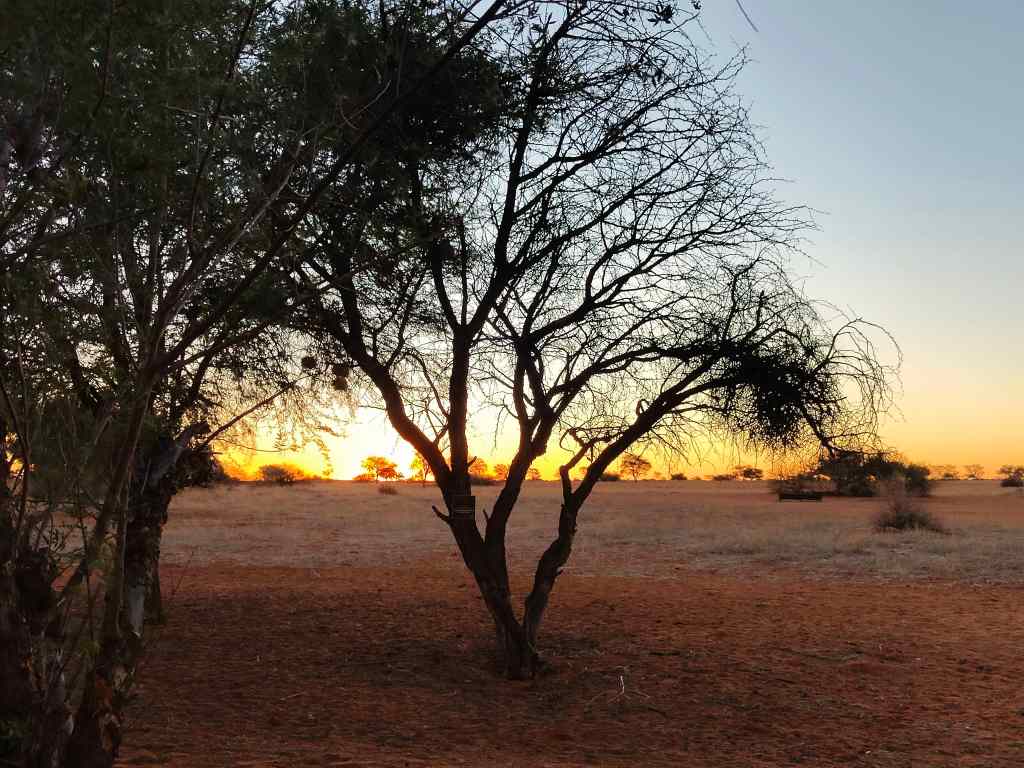
My previous post covered the last full day of sightseeing I had in Namibia. The next day I woke early to see the rising sun casting long shadows over my lodge.
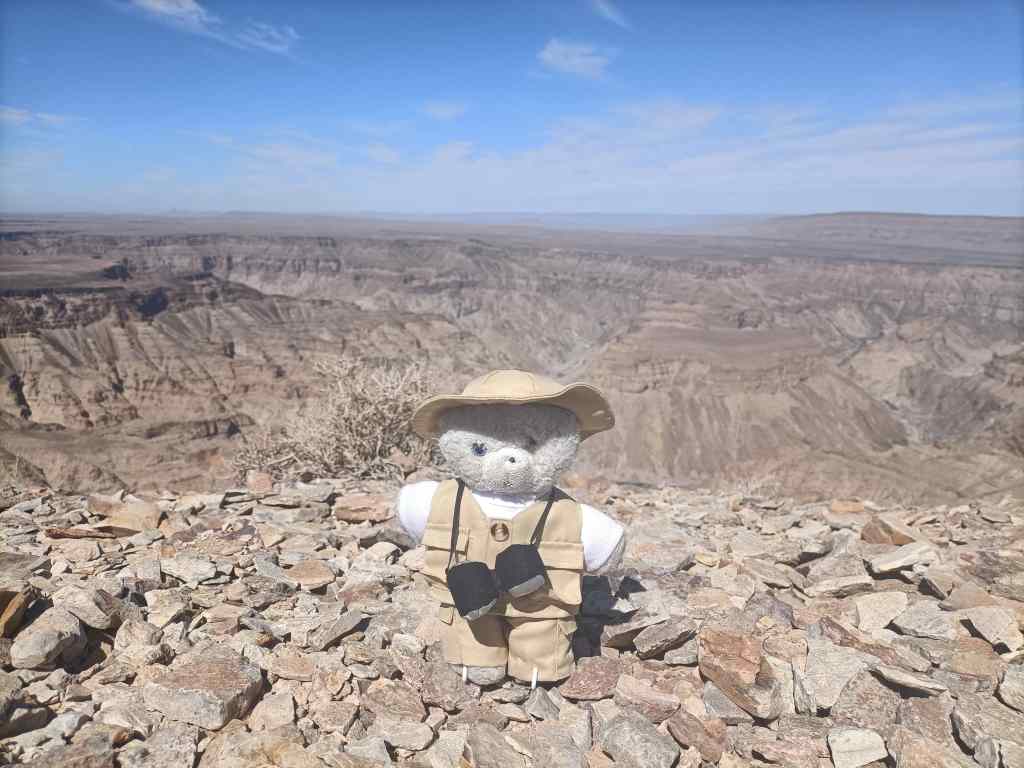
Next, I revisited Fish River Canyon briefly in the morning….
Early morning at Fish River Canyon
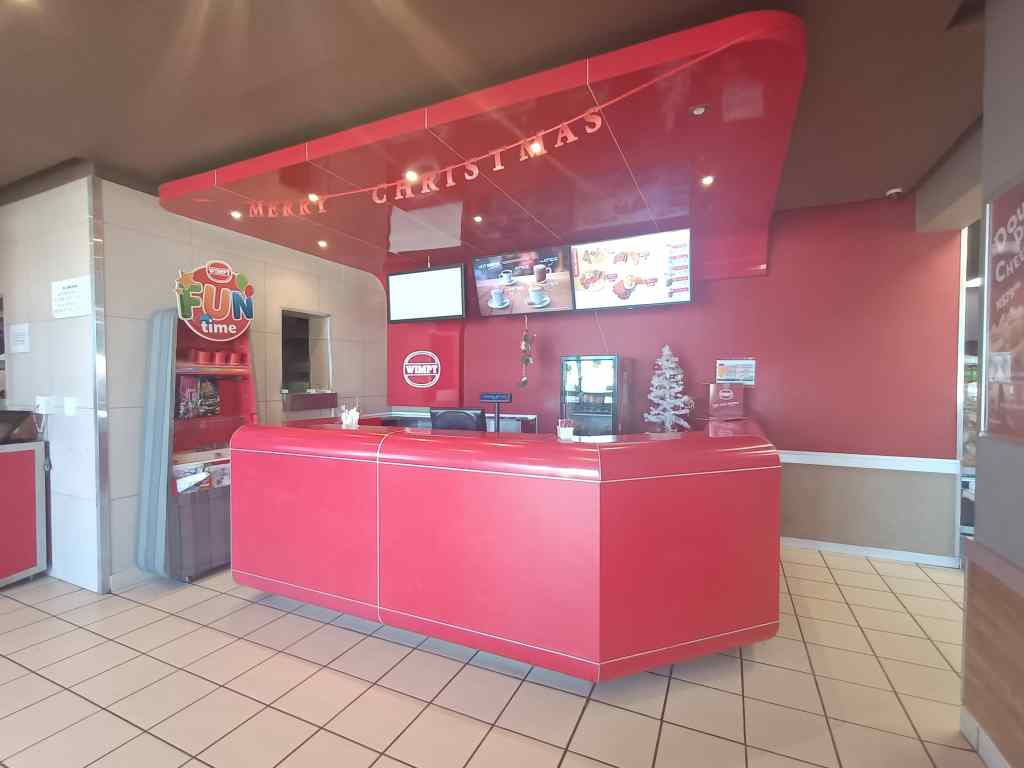
…before making a rather boring six hour drive north, to a lodge near a town called Mariental. This was not a destination in itself, but a convenient place to spend the night on the long, long way back to Windhoek. Now I know why Fish River Canyon is so little visited – it is so far away from anywhere else. Namibia’s B1 is surfaced, flat and fast, but must be one of the most boring roads on the planet. The “highlight” of these six hours was finding a Wimpy restaurant at a service station – I though they had died out, but apparently they still thrive in Africa. The décor was wonderfully sixties kitsch.
I thought it was extinct…..Wimpy lives on in Africa
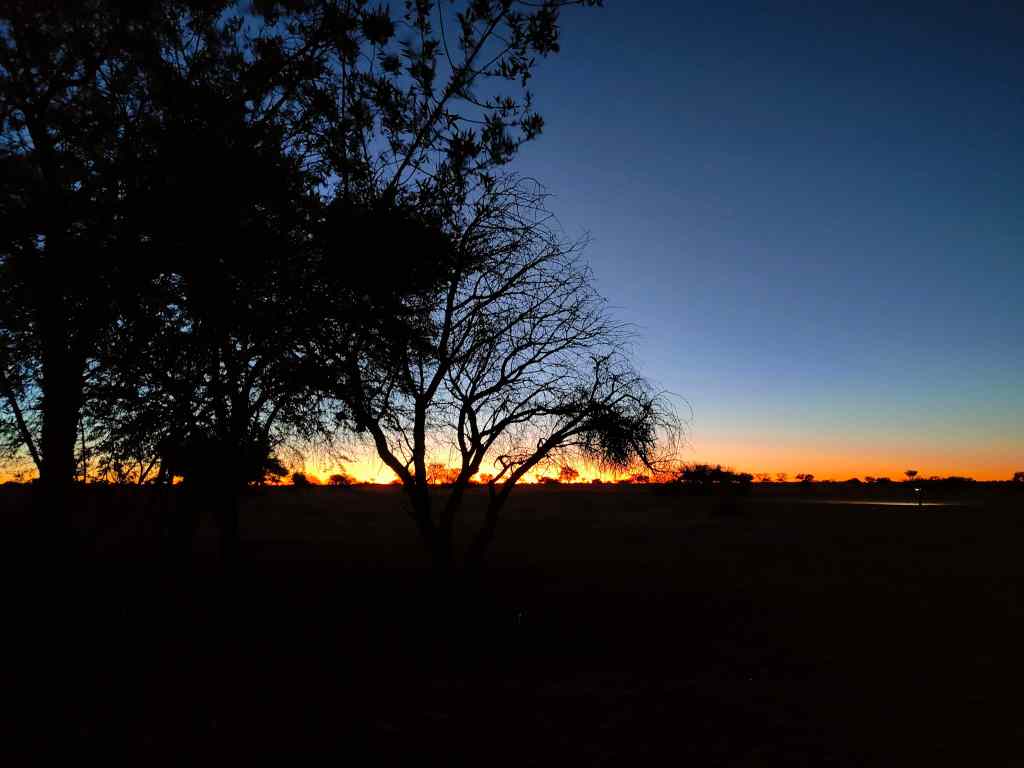
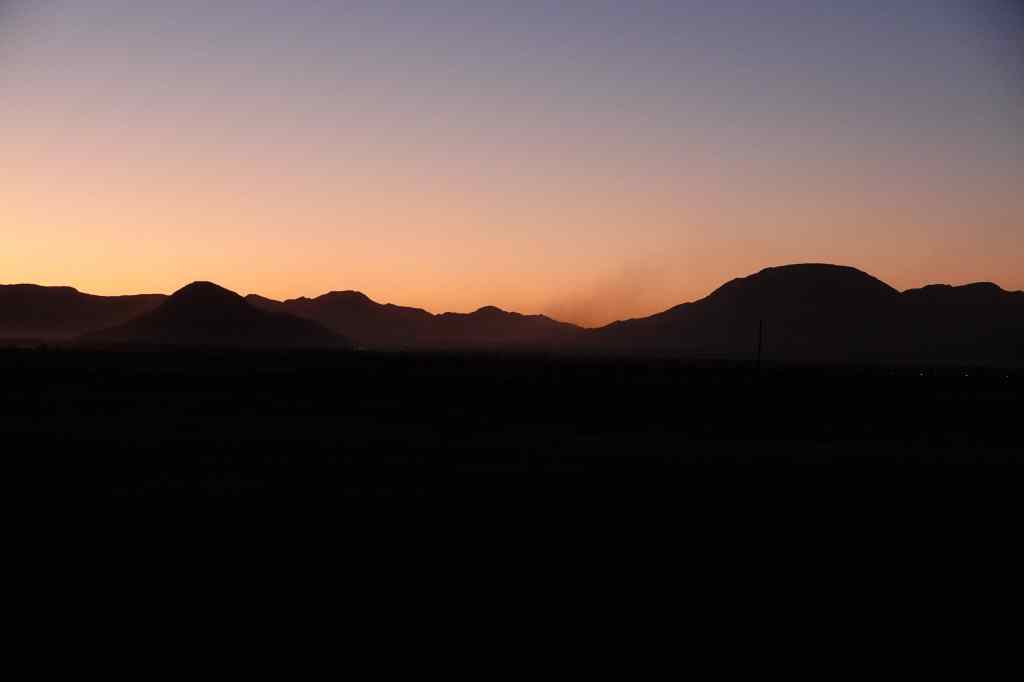
I finally arrived at around five, having driven all day (or so it seemed). I had originally intended to go on the lodge’s “sundowner” game drive, but since I was tired, I decided instead to spend my last night in Namibia sitting on the big swinging chair on my balcony, and watch the sunset with a good glass of wine.
Watching the sunset over the Kalahari desert
The next morning, I got up early and continued the road to the north – another 3 ½ hours – to Windhoek airport, to catch my early afternoon flight to Cape Town, where my adventure will continue. On returning my hire car, I found out that in 20 days I had driven over 5,000km – at an average speed often limited to 70km/h by Namibia’s gravel roads. Namibia has many world class attractions, but getting to them requires a big investment in time.
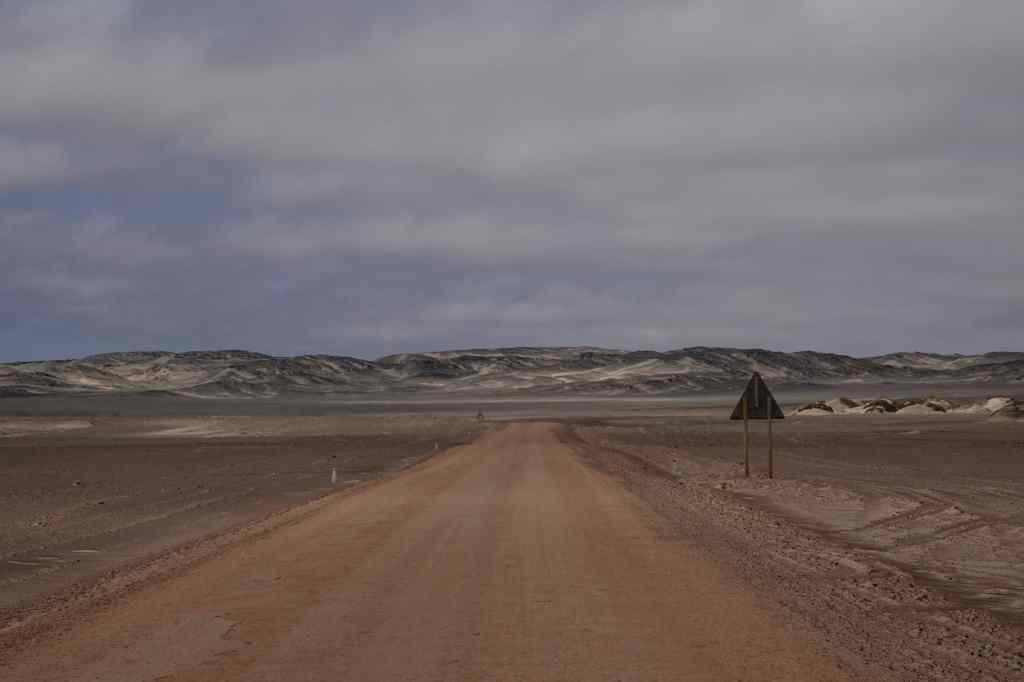
Be prepared for lots of this driving around Namibia…..
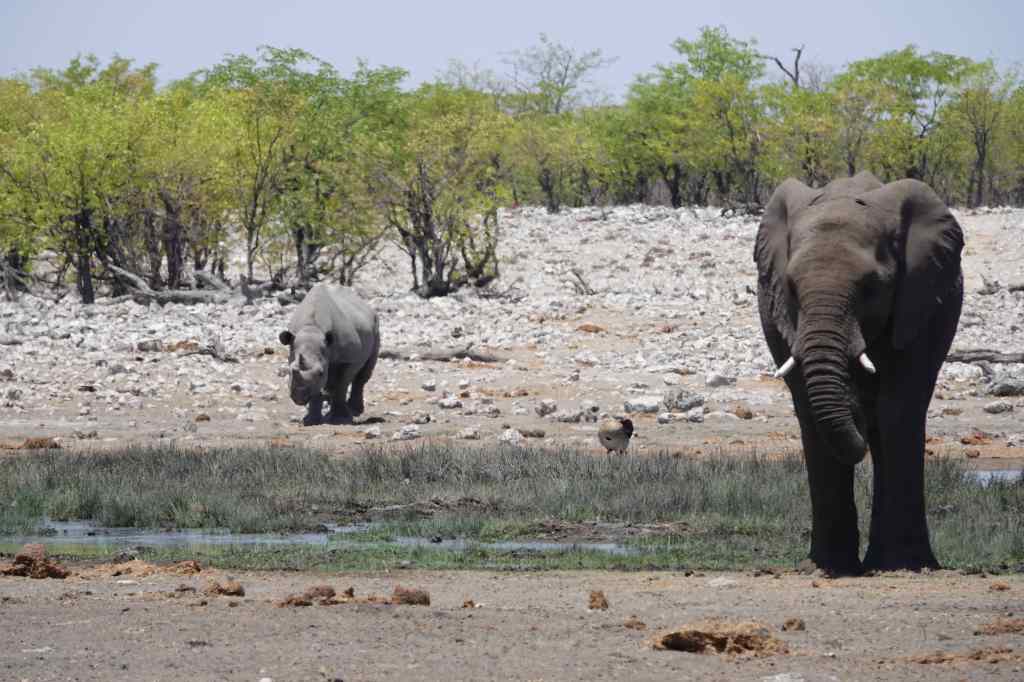
So that was the end of my Namibia trip – now I am off to South Africa for more adventures. It’s time to share a few photos of the highlights. First, there was the wonderful park of Etosha and its wildlife…..
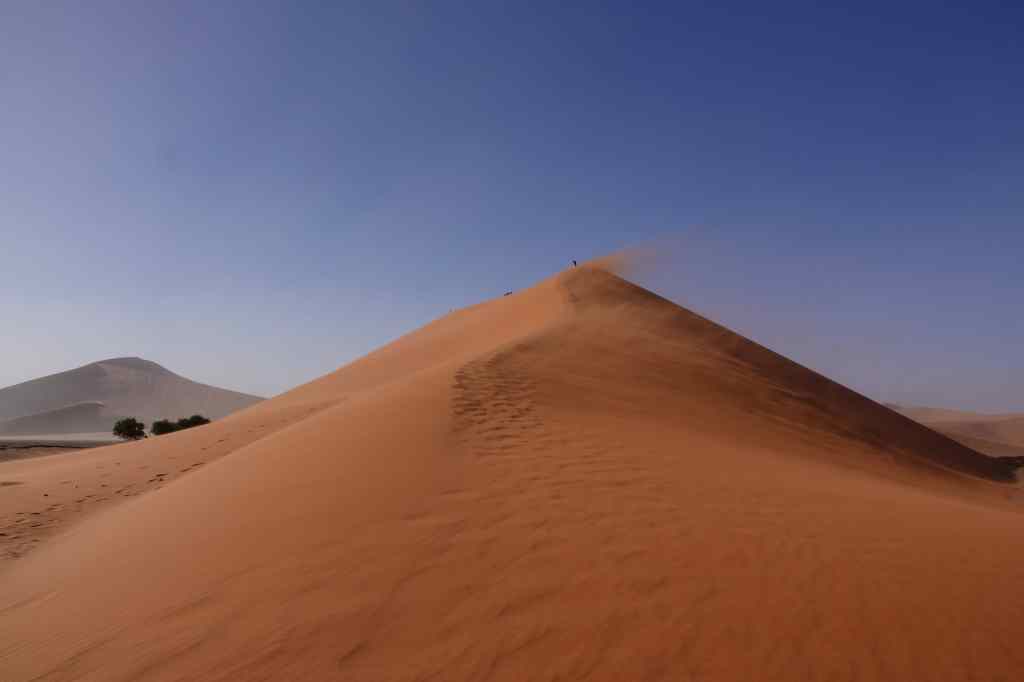
Namibia’s next world class attraction are the dunes of Sossusvlei
Sossusvlei!
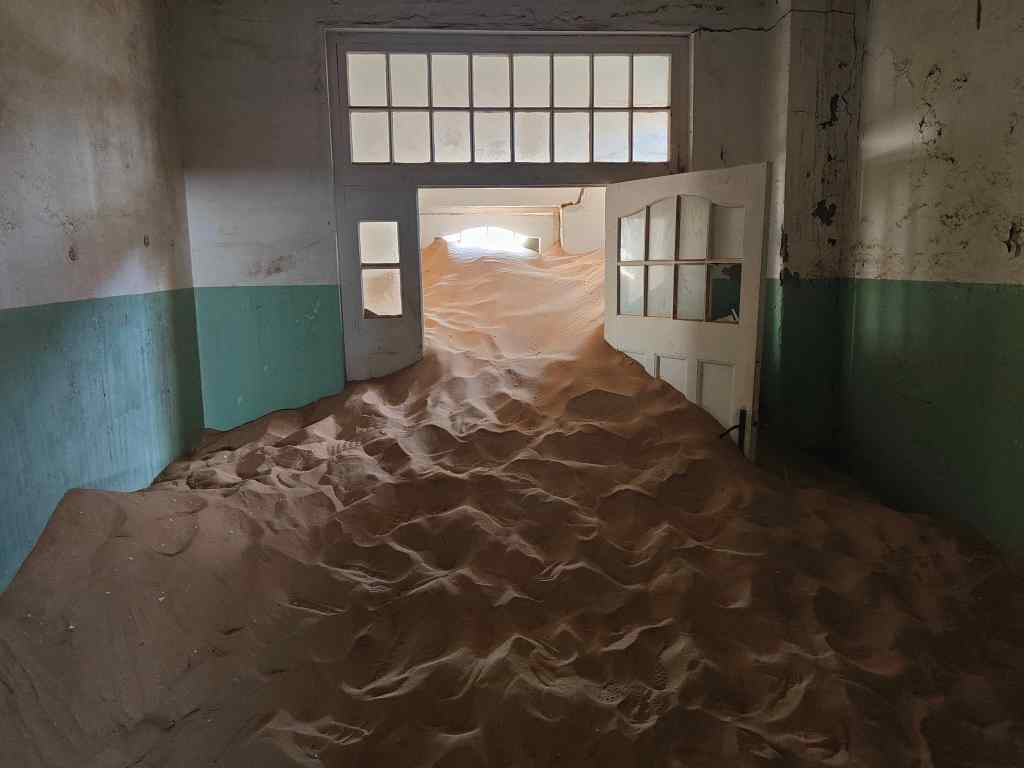
I will also always remember Kolmanskop, as a symbol of the power of nature over man……
The irresistible force of nature at Kolmanskop
….and my solo drive down to Eagle’s Rock in Fish River Canyon. It is not often you get a view this like all to yourself.
Eagle’s Rock, Fish River Canyon
I was keen to see if South Africa can match Namibia as a travel experience. Keep reading my blog to find out!
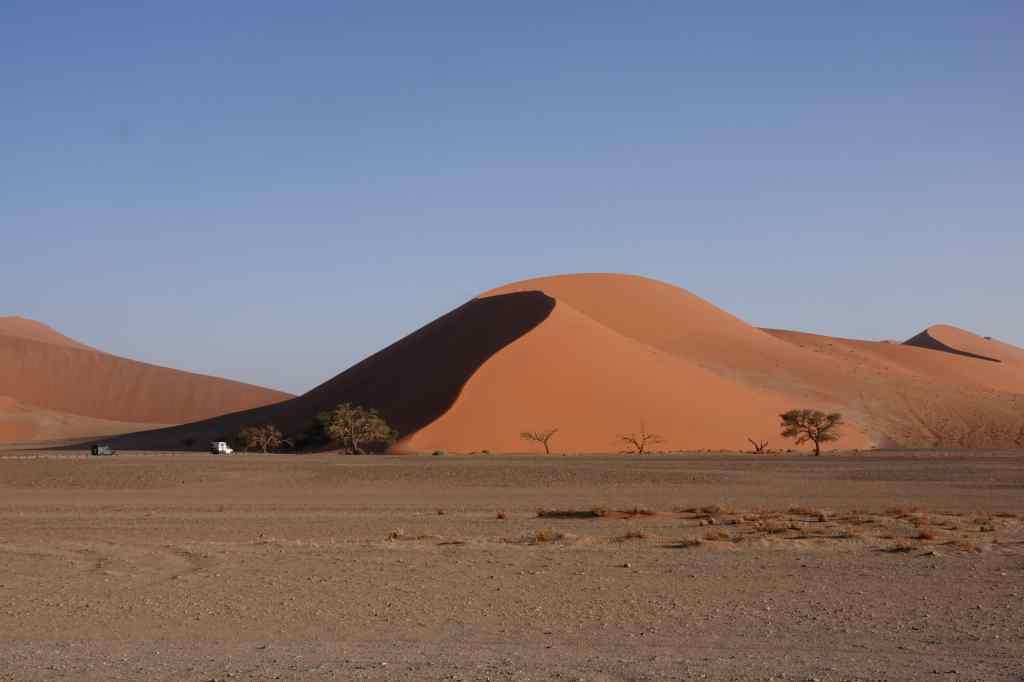
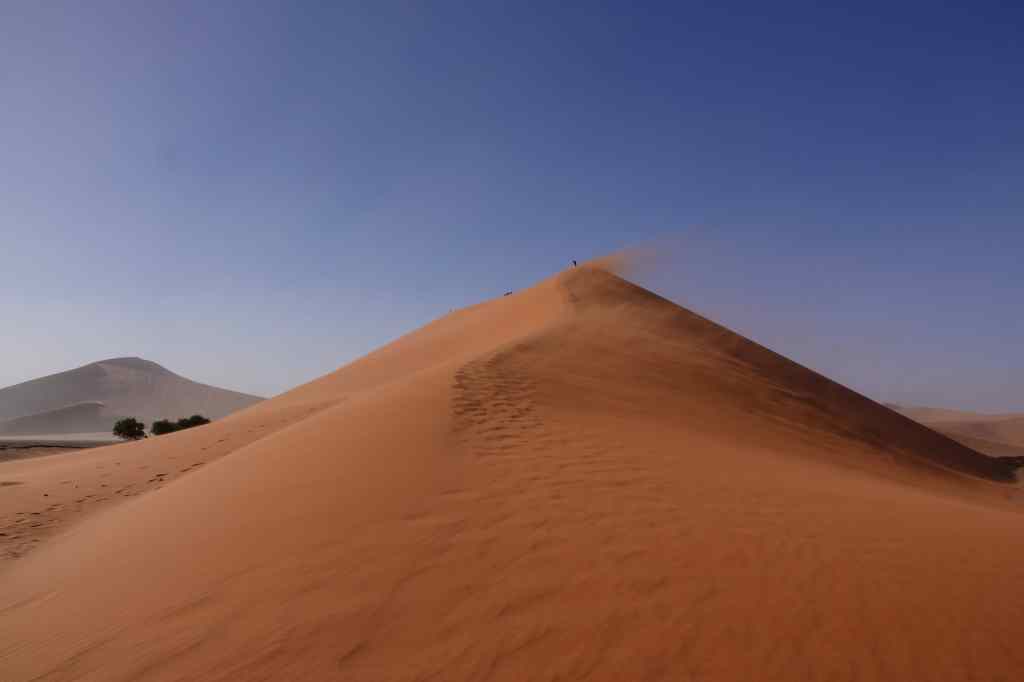
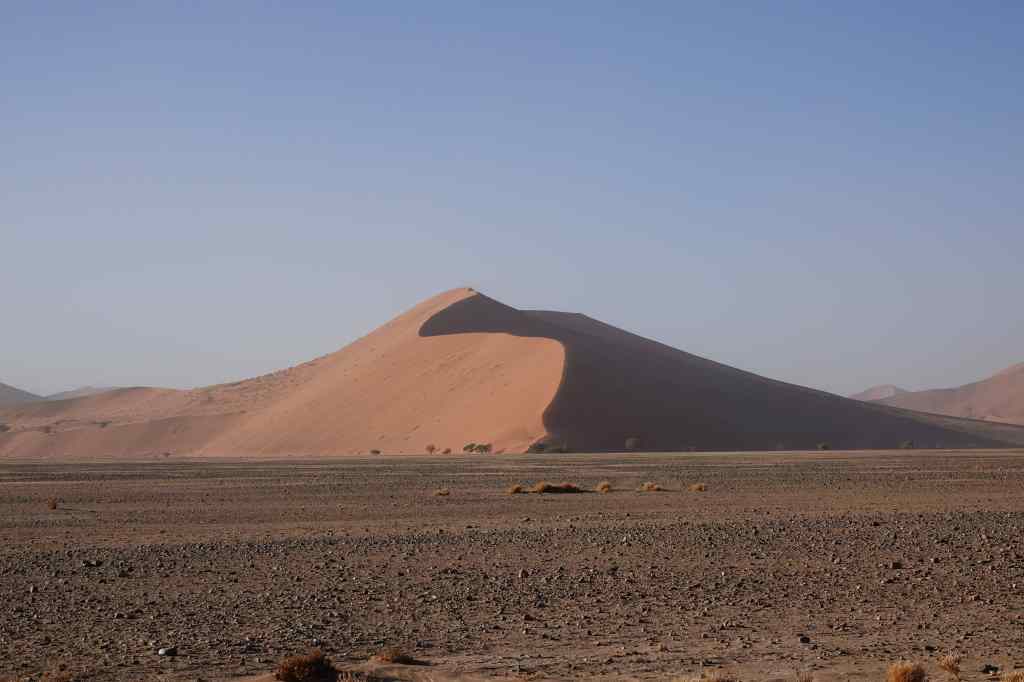
A dune on the now familiar drive down to Sossusvlei
Today my luck finally changed. When the alarm woke me at 5.30am, all was quiet outside – there was no wind. I hurried to get breakfast and then set off on the now familiar drive to Sossusvlei National Park. I drove straight to the very end, to Sossusvlei itself and found that almost all the other visitors had stopped earlier, at Dune 45 or the Dead Vlei. I had the place almost to myself and set off to climb Big Mommy dune.
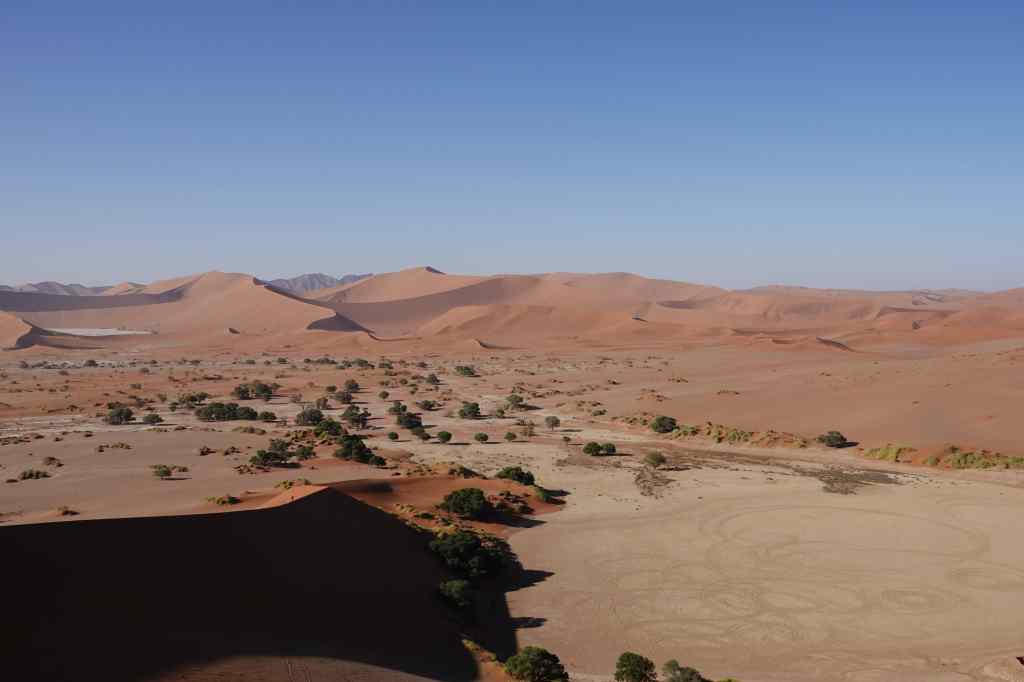
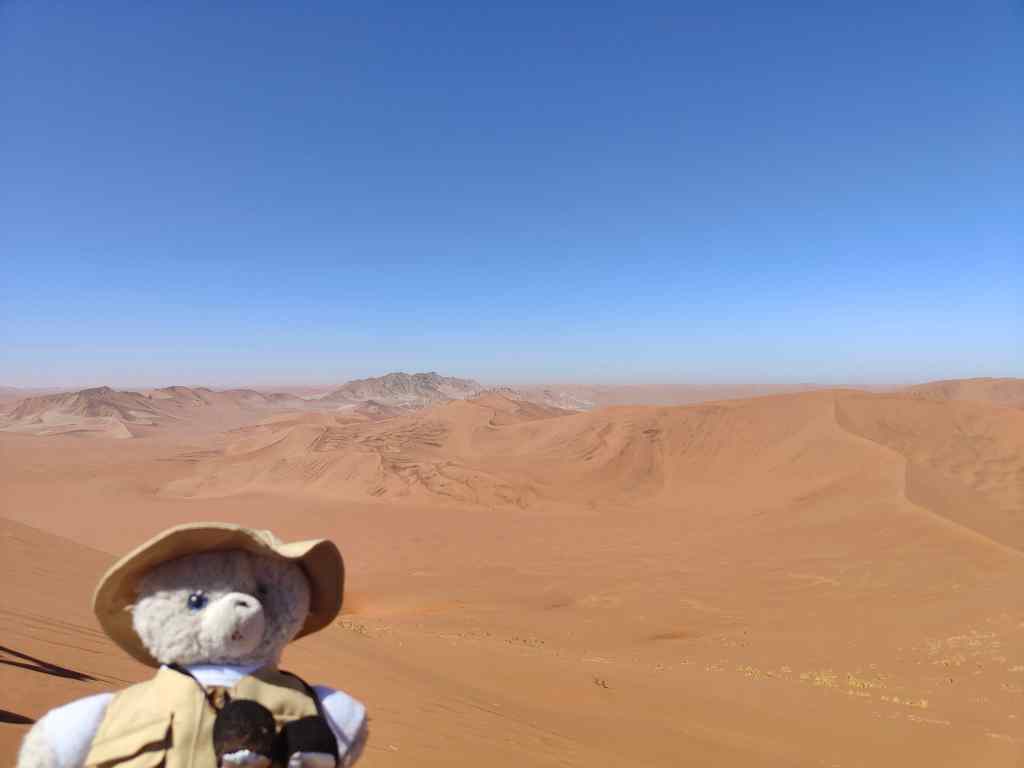
Looking back at Sossusvlei from the flanks of Big Mommy
It was hard going. The sand stretched up before me, perfectly bare and flat, and devoid of any sign of humans or other large animals having passed that way. The only marks it bore were faint traces left by snakes. For every three steps I made forward, I would slip back two. I finally made it to a pleasant sandy ridge, and lay down to catch my breath and peak over the top to see an endless sea of sand, stretching away into the distance.
Resting on a ridge on the side of Big Mommy
I looked at my watch. I had been walking an hour and was less than half way up. I was not sure the view from the top of “Big Mommy” would be any better, and if I tried to find out, I would use up the entire morning on the climb. Walking after noon would be impossibly hot.
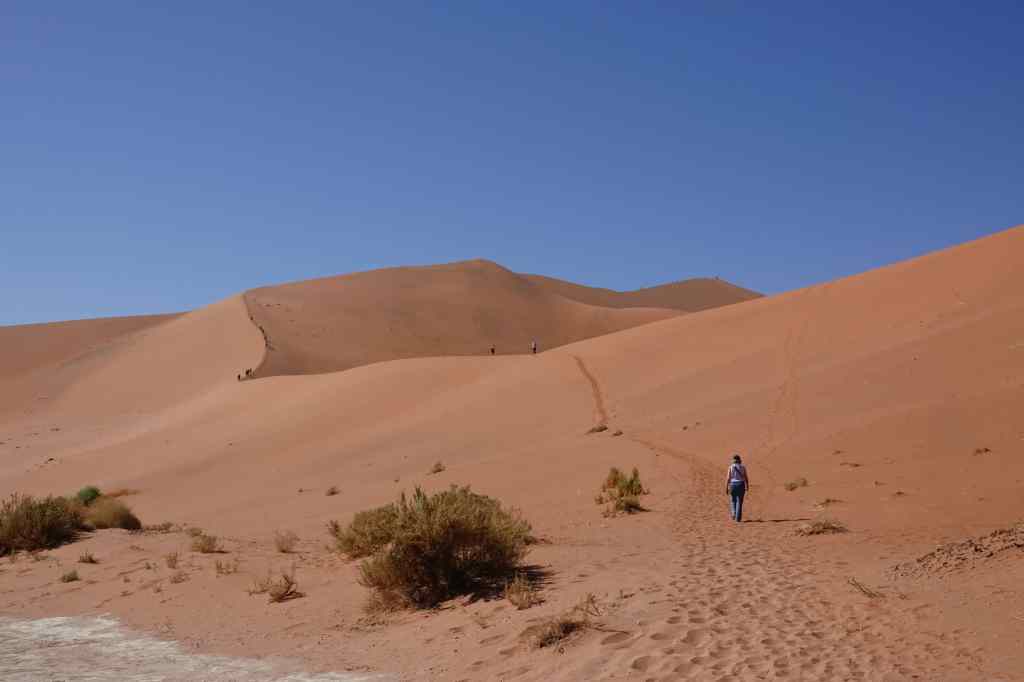
I decided to retrace my steps to the Dead Vlei car park, where a steady stream of visitors were setting off to climb “Big Daddy”.
The start of the popular climb of Big Daddy
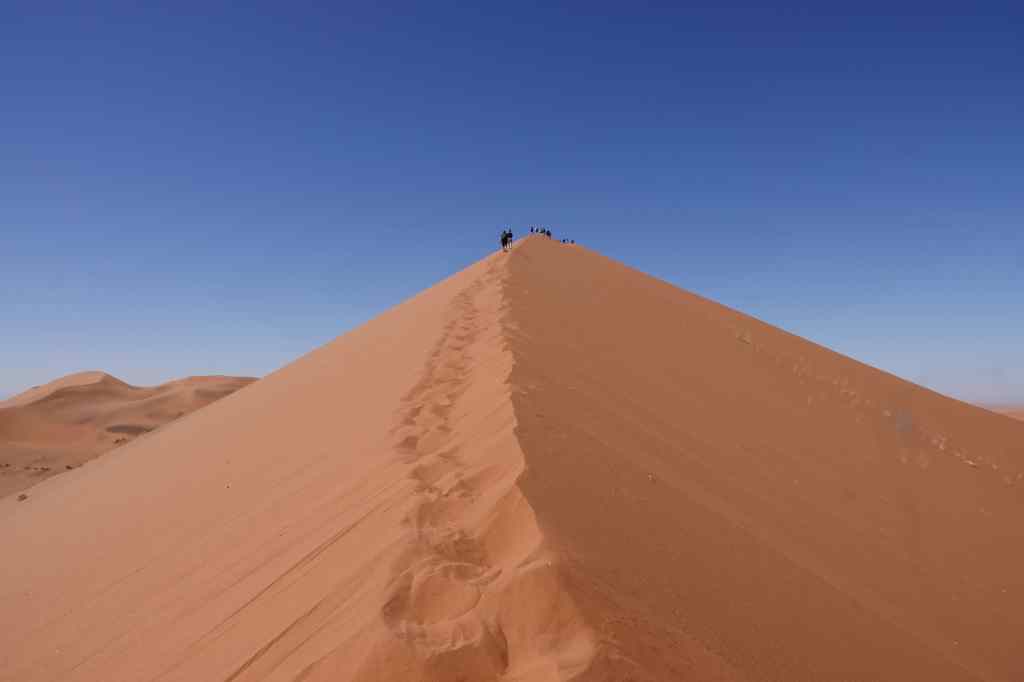
I followed in their tracks and found that this climb was much easier – the earlier guests had compacted the sand, and I could use their footprints as a sort of staircase.
A much easier pathA view from half way up Big Daddy
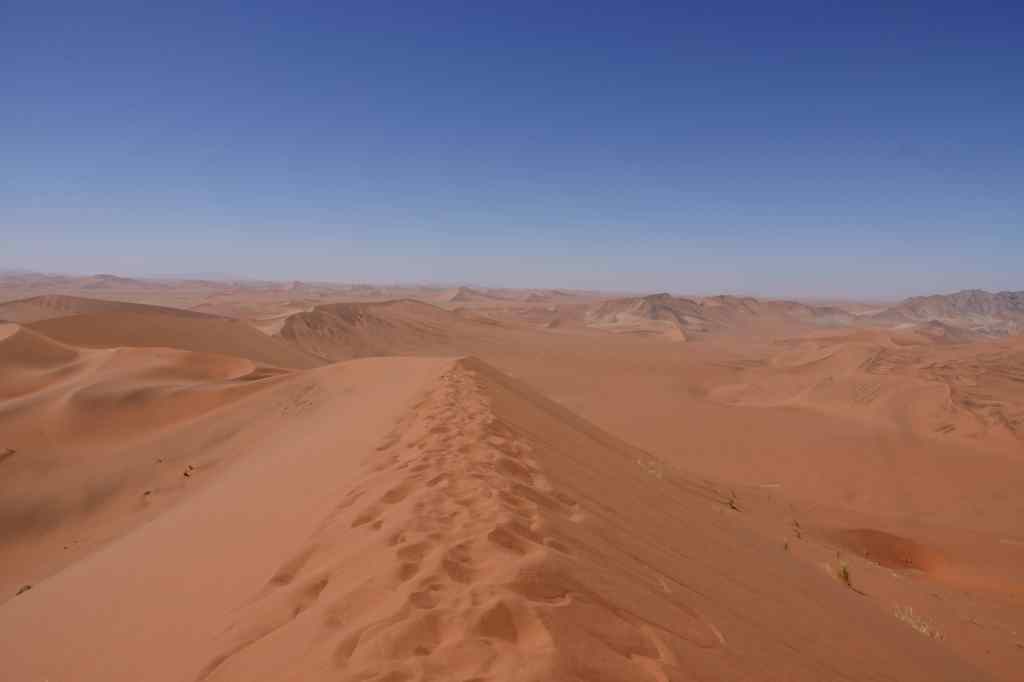
To reach the top took me just under an hour, and I was rewarded with an amazing 360 degree view – east along the river valley and the road, north to the Dead Vlei and “Big Mommy”, south to a range of mountains, and west across countless smaller dunes. In the far distance I fancied I could see the coast and the South Atlantic Ocean some 50km away – or maybe it was the combination of my imagination and a heat mirage.
On top – looking southwestLooking west from Big Daddy dune
I stayed a long time absorbing the view and recovering from my exertions. Then I made my descent, which was much quicker than the climb. I noticed some of the taller humans running straight down the steepest part of the dune, making great big strides with their legs. The soft sand swallowed each foot as it landed, and then slid downwards with the foot’s owner. The same shifting sand that had made going up so hard made going down fun…….and very quick. Even with my smaller teddy legs, I was at the bottom of the slop in five minutes, with my shoes full of sand and a big smile on my face.
The base of the dune gave a new perspective to the shrivelled trees of the Dead Vlei.
The Dead Vlei again
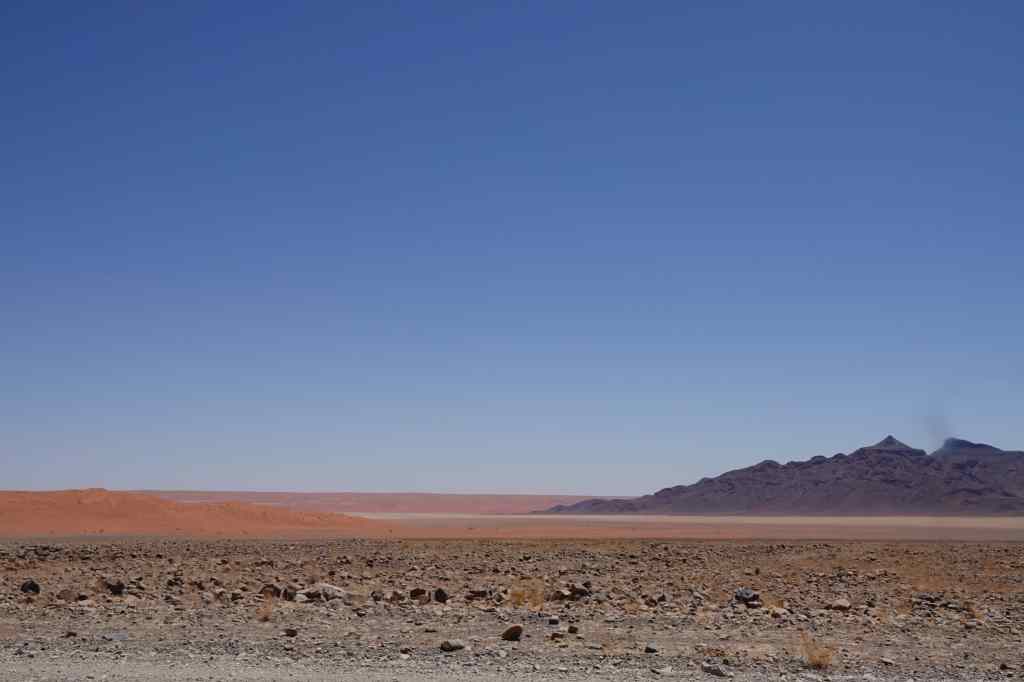
I traversed the barren empty space in the heat of the late morning to regain my car – hot, tired but happy. I drove back to the park entrance for a well-earned coffee and a cold drink, before making the roughly two hour drive to my next destination – a place called Duwisib, about two hours driving to the south. The road was spectacular – more red and yellow sand dunes, but this time alternating with black and brown rocky mountains. But after my early start and exertions on Big Daddy and Big Mommy I was too tired to stop to take many photos. More about Duwisib in my next post.
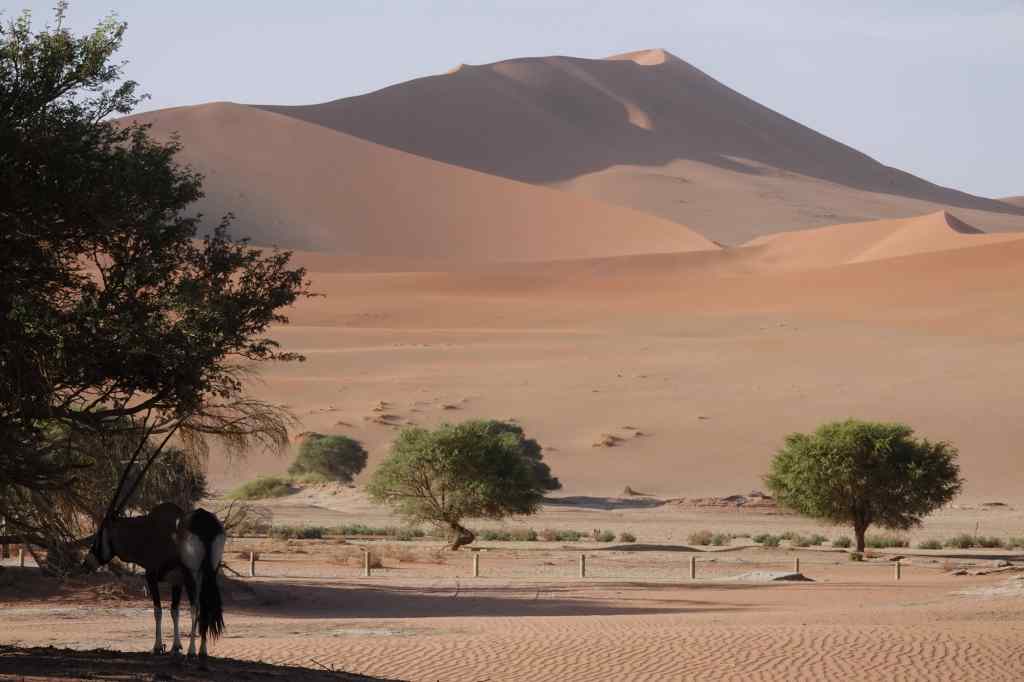
The next day I woke up early again to check the wind. It was still strong, so I went back to sleep. When I got up, I could have a leisurely breakfast and enjoy the lodge’s pool and the view from my room – a desert plain with mountains in the distance, occasionally visited by groups of Oryx.
Oryx stroll past my veranda
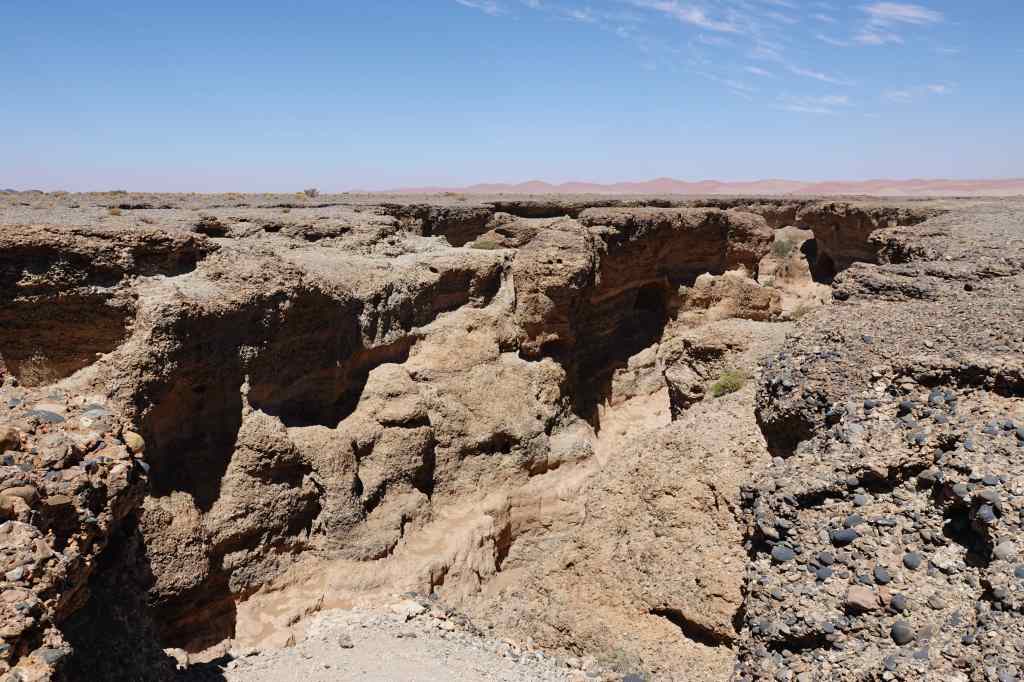
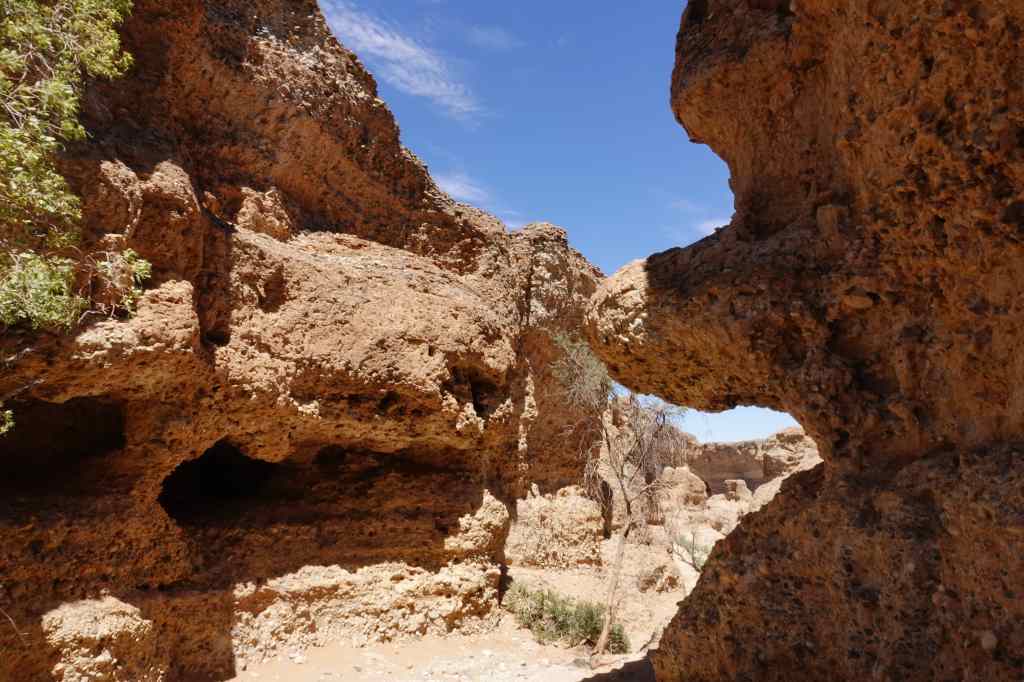
In the afternoon, I went to visit Sesriem Canyon – also in the national park. It was an interesting fissure in the ground, protected from wind and sun, so ideal to visit at that time.
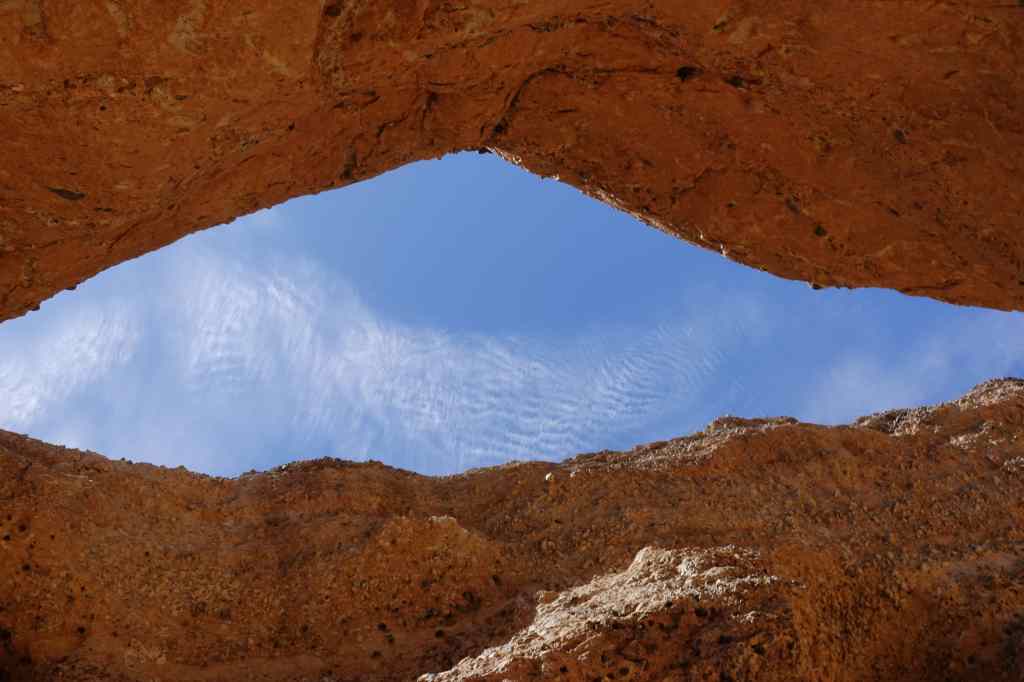
Sesriem canyon – from aboveInside Sesriem CanyonA narrow path inside Sesriem CanyonLooking up
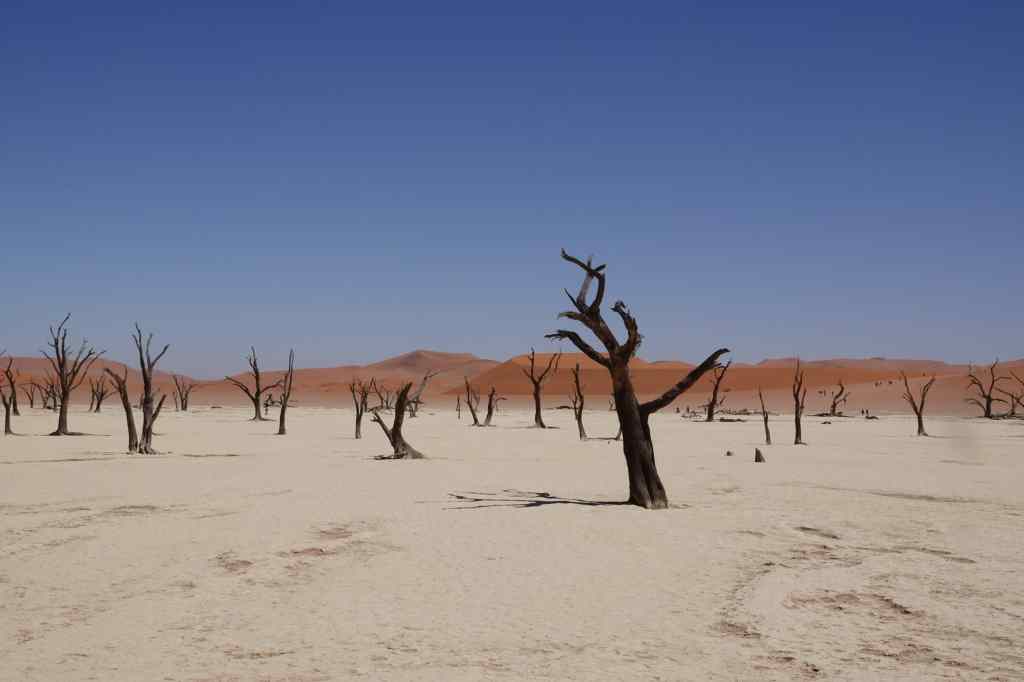
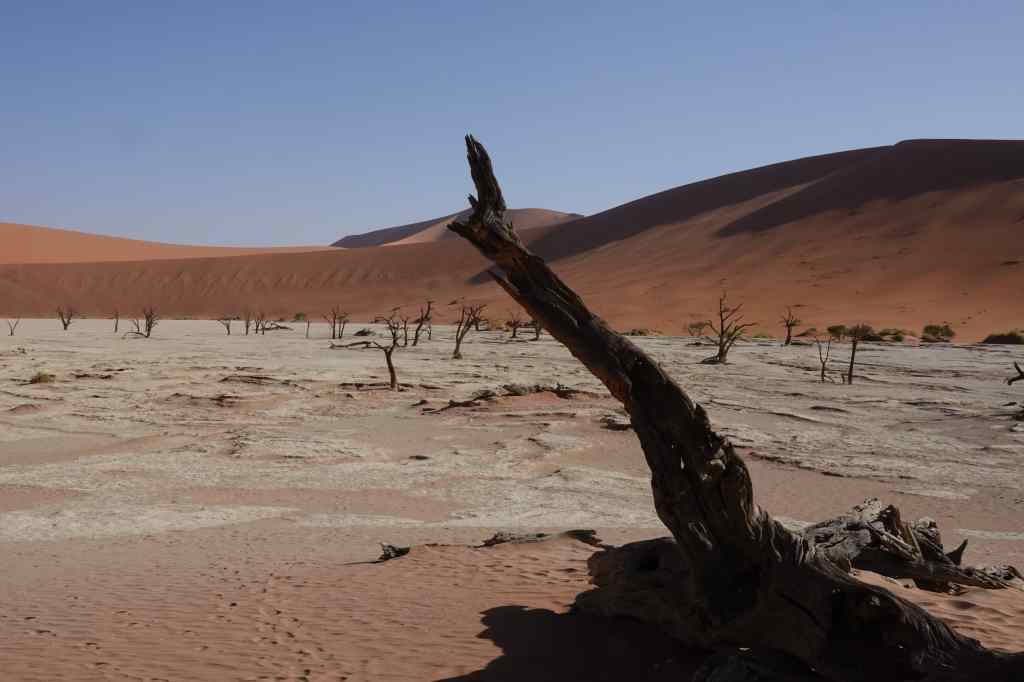
After visiting the canyon, I noticed that wind had dropped so I continued the road to the end, to visit the more famous giant dunes. I arrived first at the “Dead Vlei” – an atmospheric area of dead trees at the base of “Big Daddy” dune. All the other visitors were heading in the opposite direction, leaving the park. In Afrikaans, a “vlei” is a low-lying area of ground, sometimes filled with water, sometimes dry.
The Dead Vlei
From there I continued to the very end of the road, along a sandy track that was only suitable for 4×4 vehicles, to Sossusvlei itself. I arrived at around half past five to find that everyone else had left and I was the only visitor. Ahead of me rose Big Mommy dune, but since I had to be out of the park by sunset, I did not have enough time to climb it. Instead, I enjoyed the perfect calm and the company of a solitary Oryx who had wandered this far. I resolved to hike the dunes the following day, whatever the weather.
In front of Big Mommy duneSossusvlei with Big Mommy Dune and a solitary Oryx
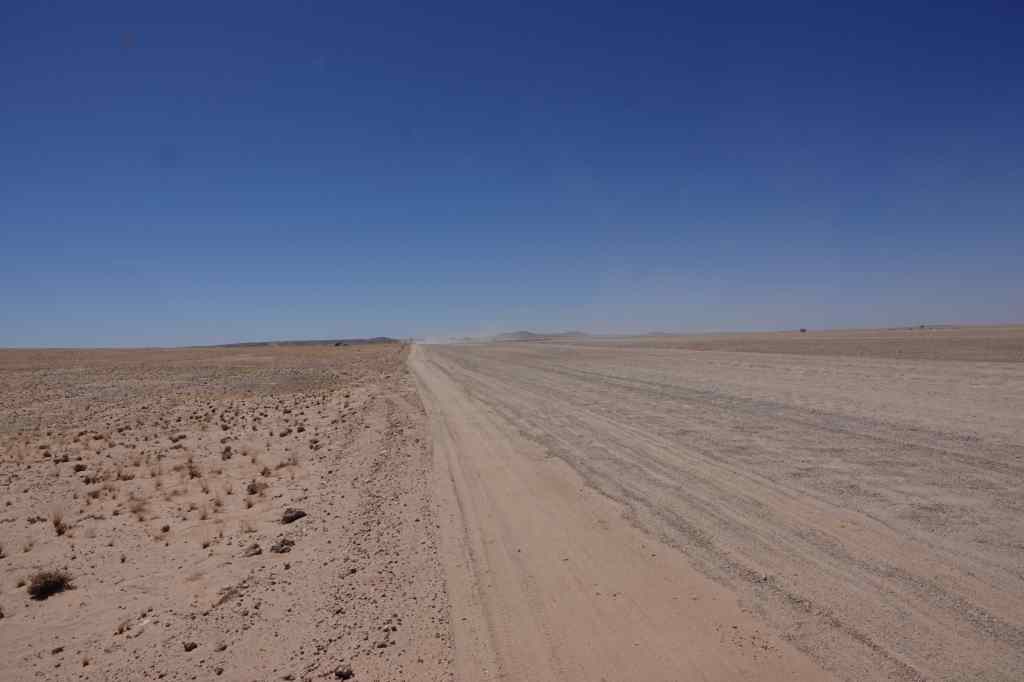
Today I made the long drive from Swakopmund on the coast to the centre of Namibia, to a place called Sesriem, near Sossusvlei, where Namibia’s most famous sand dunes are located. At Swakopmund several people told the road was in bad condition and the drive very boring. At first, they seemed to be right, as I crossed an almost featureless desert while bouncing up and down as I drove over a badly corrugated section of track.
An unpromising start to the drive
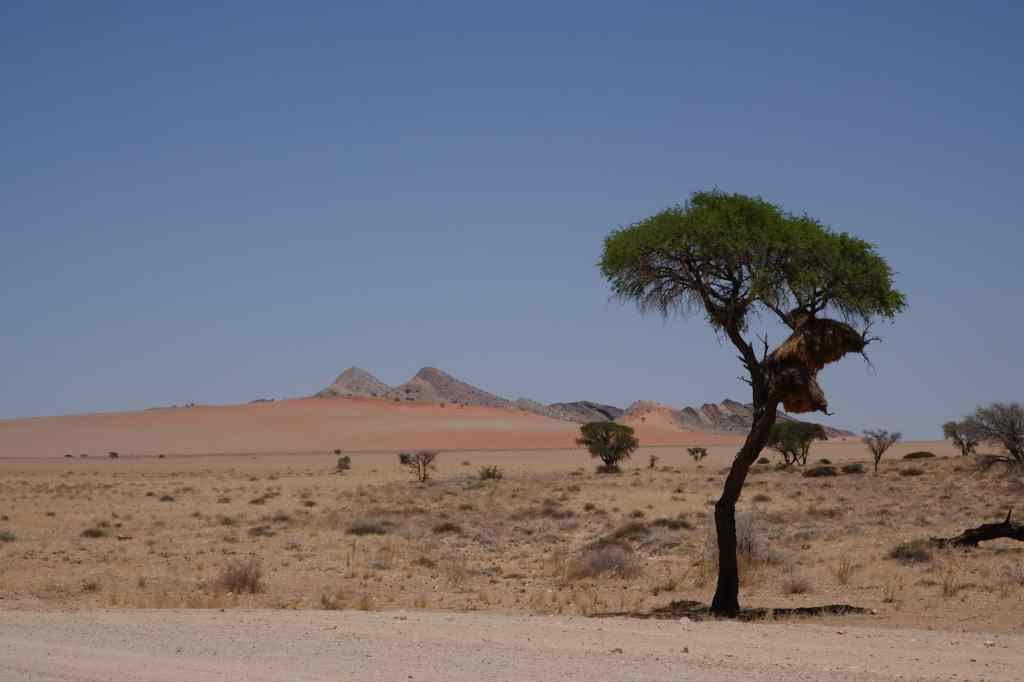
But later the road improved, and the scenery became interesting.
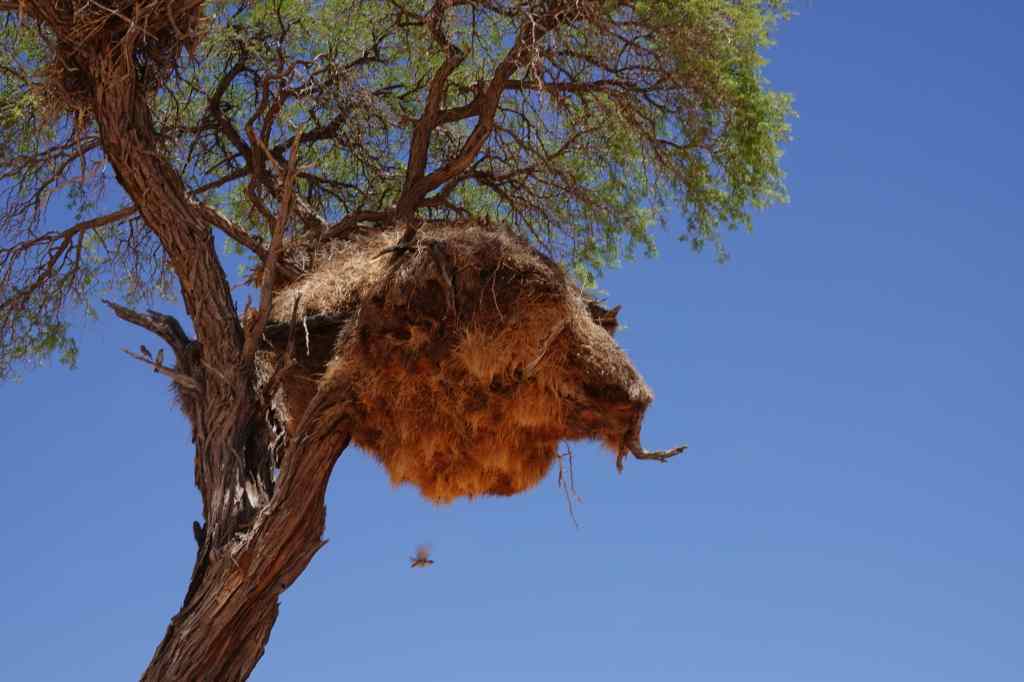
The famous red dunes begin to appear…A weaver bird nest
After a few hours I reached a tiny settlement, aptly named Solitaire. It sat at the main road junction in its region and had all the essentials for travellers in Namibia – a petrol station, car repair workshop and a very good café with bakery. I enjoyed an excellent cappuccino as a stream of other drivers came and went.
The essential stop of Solitaire, with its collection of rusting vintage cars
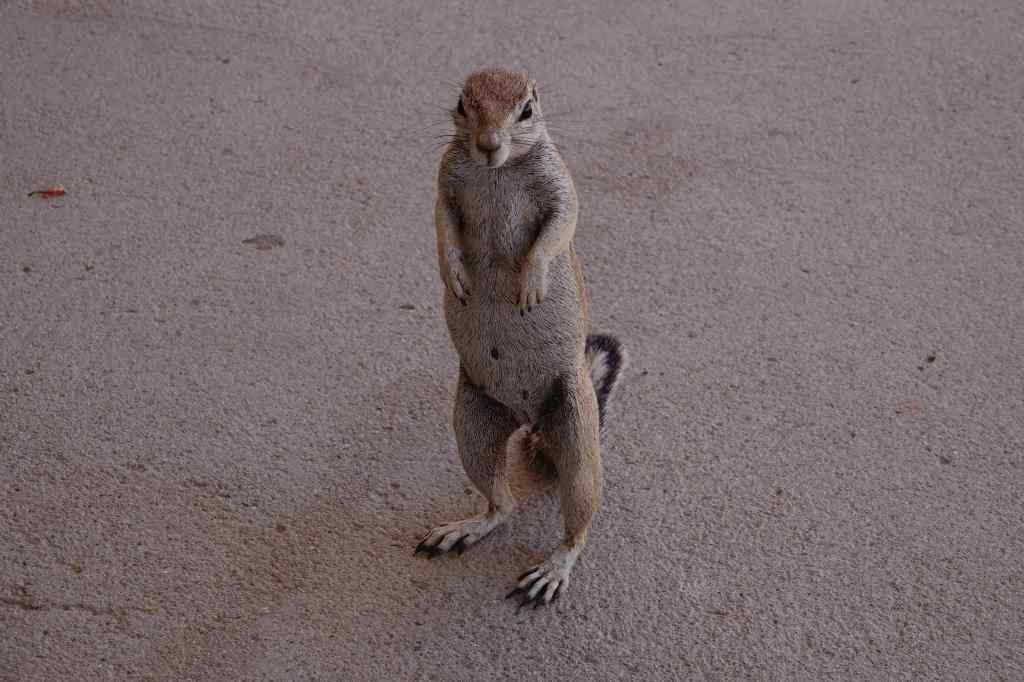
I also made friends with this little chap.
This ground squirrel had worked out that the cafe was a good place to get fed by visitors
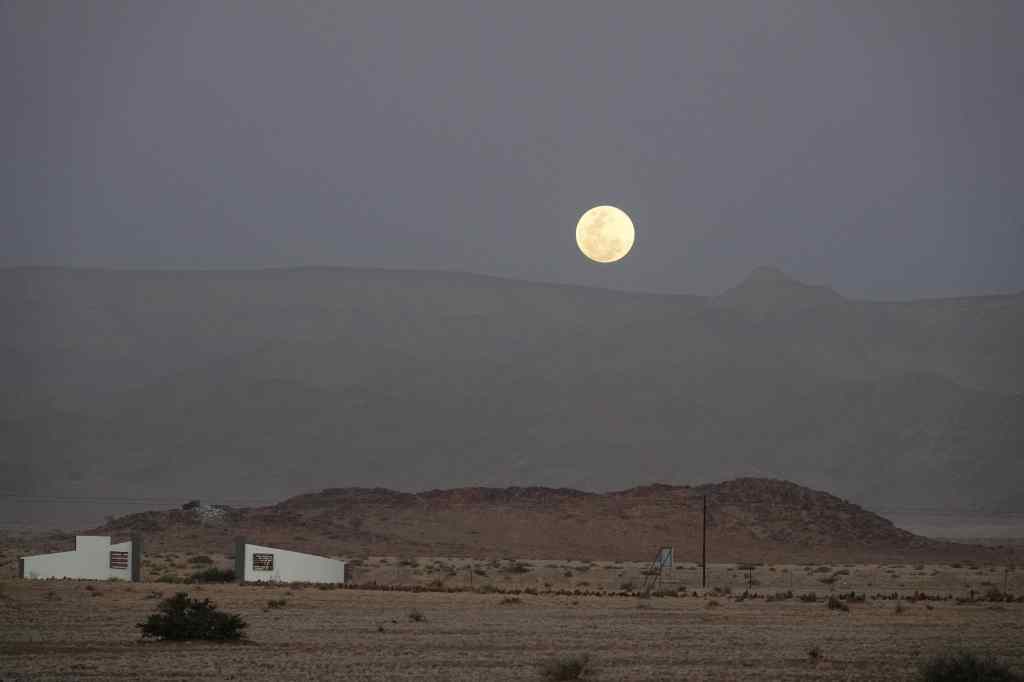
From Solitaire it was a short drive to my accommodation – yet another bush camp, located on a flat desert plain, about forty minutes drive from the entrance to the Sossusvlei national park. I enjoyed a glass of wine from their lounge as I watched the moon rise over the distant mountains.
Moonrise over the camp’s gates
Most visitors travel to the sand dunes either early in the morning or late in the afternoon, when it is cooler and when the light is better for photography. My early morning visit involved getting up at 5.30am in order to get to the dunes area for 7.30am. I awoke to sound of a strong wind, which worried me – wind and sand are not a good combination. I did not manage to shower, since the hot water was provided by solar power, and the sun had not yet risen. As I had breakfast, the sky changed colour, and it became quite light, even before the sun appeared.
The light changing in the desert before sunrise
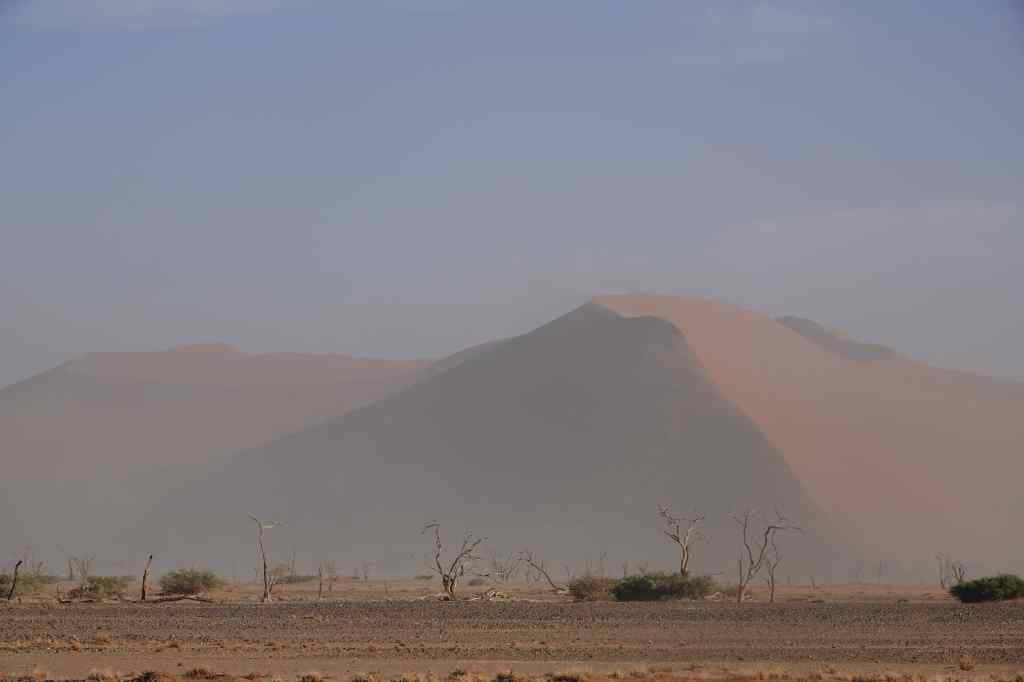
I drove off to the park entrance, which was at the start of the long valley of a now-dry river lined on both sides with sand dunes. The river’s course was marked by dead and living trees – the latter surviving from water that continued to pass deep underground. There was a good asphalt road that followed the valley, with great views of the dunes on either side – at least, when the ferocious wind occasionally stopped, and the dust settled.
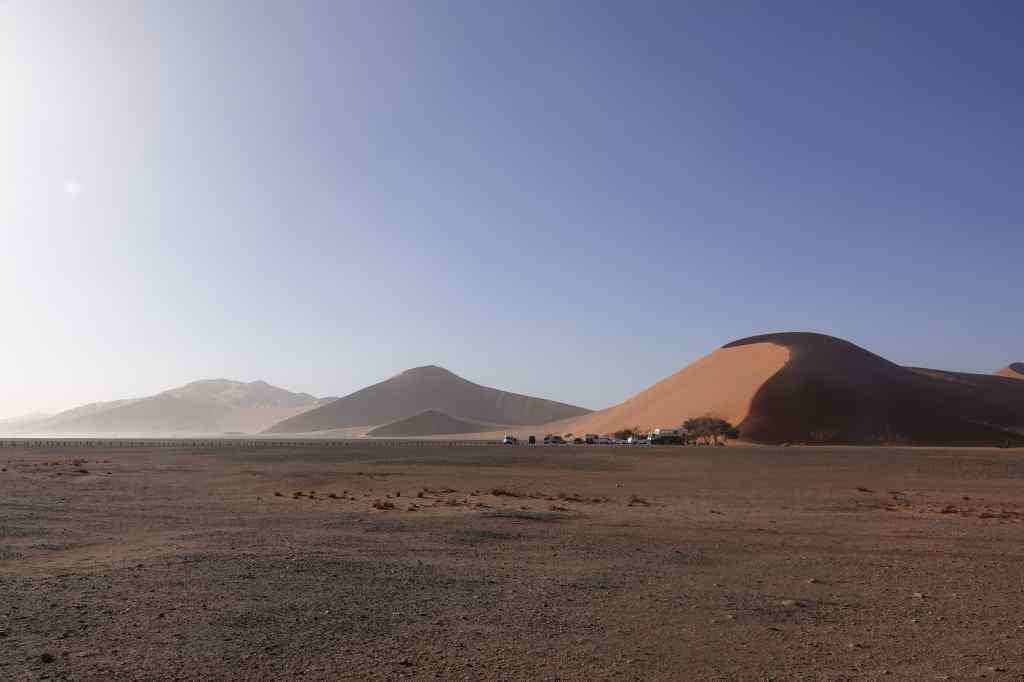
Some of the many dunes lining the road
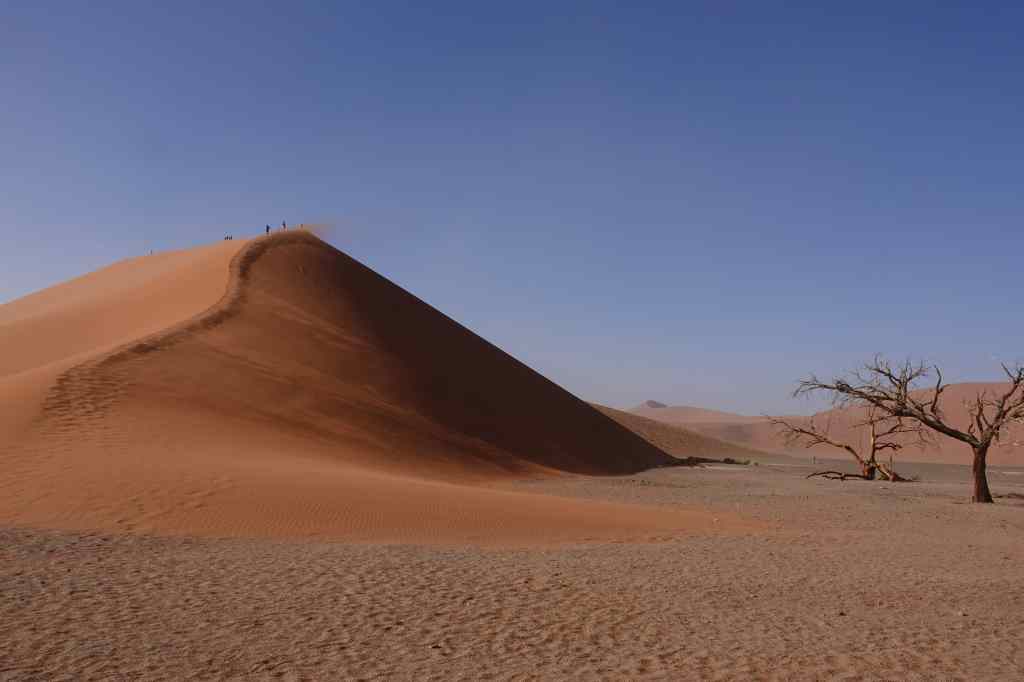
One of the best known is called Dune 45 and had already many people trying to climb it.
The ever popular Dune 45
I continued right to the end of the road, where there was a parking area in a depression (or “vlei”) at the base of very largest dunes. I was greeted with an almost apocalyptic scene. Visitors struggled to open their car doors against the force of the wind, and then staggered around, holding onto their hats and bowing their heads to hide their faces from the stinging sand. I realised that visiting this part of the park was pointless and drove back to Dune 45, where conditions seemed to be better.
Back at Dune 45 “base camp”
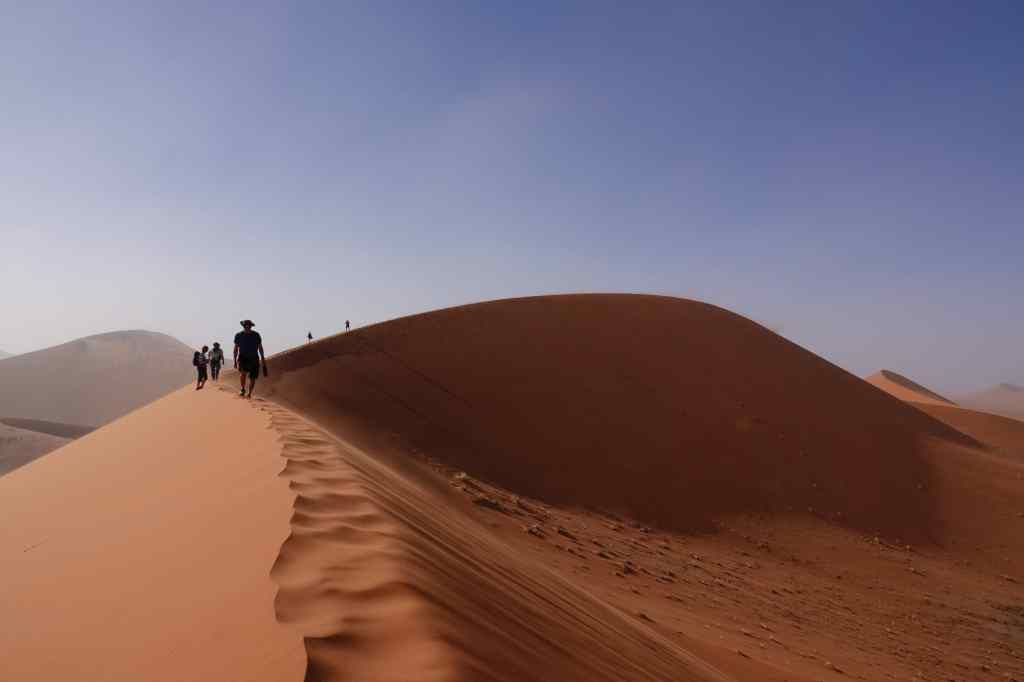
I parked at the base of the dune and struggled up the bright red sandy slope. My worries about not showering were soon forgotten as the wind sandblasted my fur, no doubt removing any possible dirt and a few layers of skin. It was a hard climb – for every little step forward I would slip backwards half a step in the sand.
Part way up Dune 45
Half-way up, I dropped the lens cap of my camera and it rolled on its side all the way down – I could not have done such a perfect trajectory if I had tried. I had to hurry down the slope to collect it before it got buried by sand and lost forever. Then I recommenced the long struggle up….
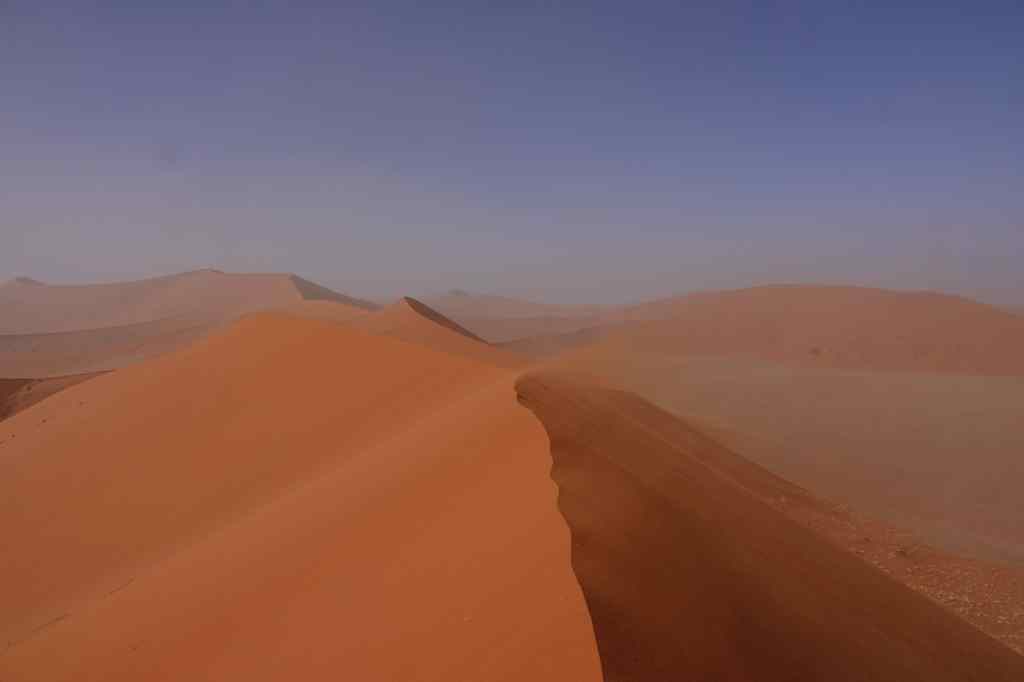
The view from the top of Dune 45, Sossusvlei
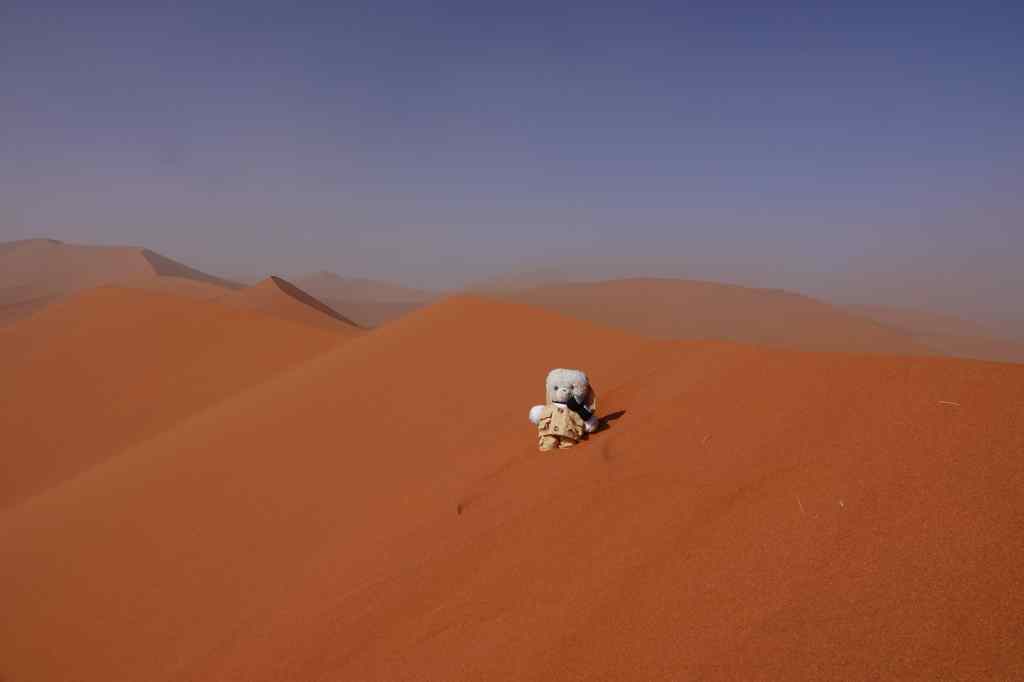
When I finally managed to struggle to the top, my efforts were well worth it. There were fine views across the field of dunes and the opportunity to take some great selfies.
Made it!
Proud of my achievement I headed back to the park gate to the small village of Sesriem and enjoyed a much needed coffee. I headed back to my bush camp to catch up on some lost sleep and to enjoy the pool before dinner. I had been surprised that my tour agent had booked me three nights near Sossusvlei, but now I was very glad – I had several more chances to see the largest dunes, at the end of the valley, under more favourable conditions. And my brief morning visited supported my guidebook’s assertion that the area was one of Africa’s most spectacular attractions.










 Trouspinet travels