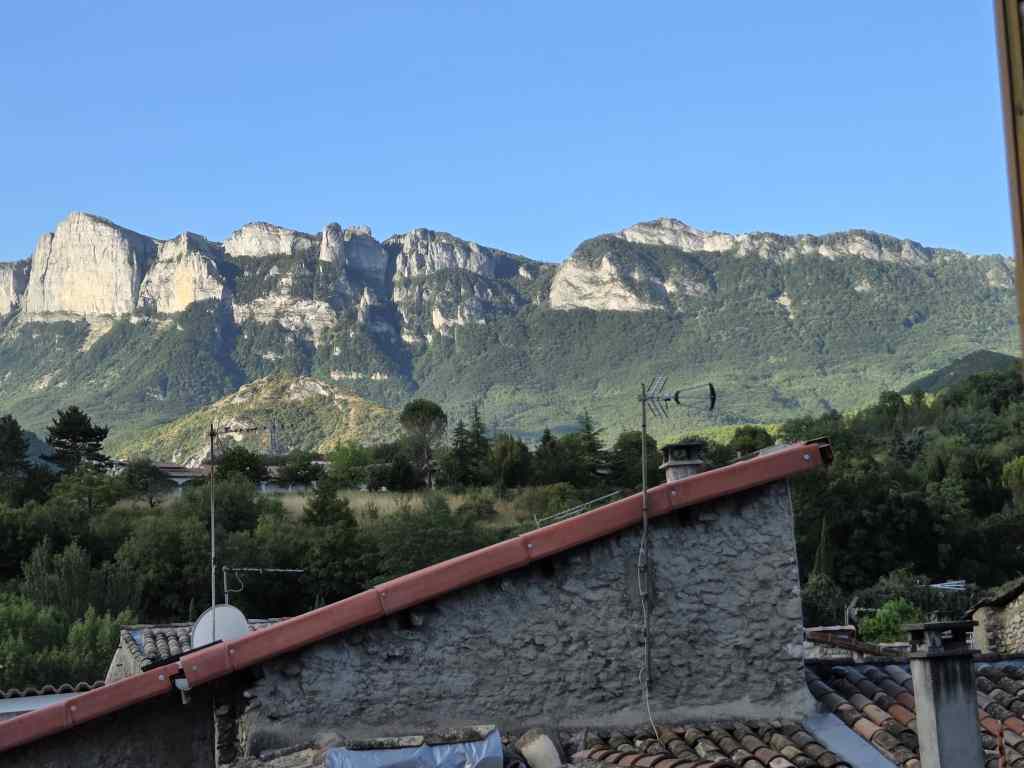
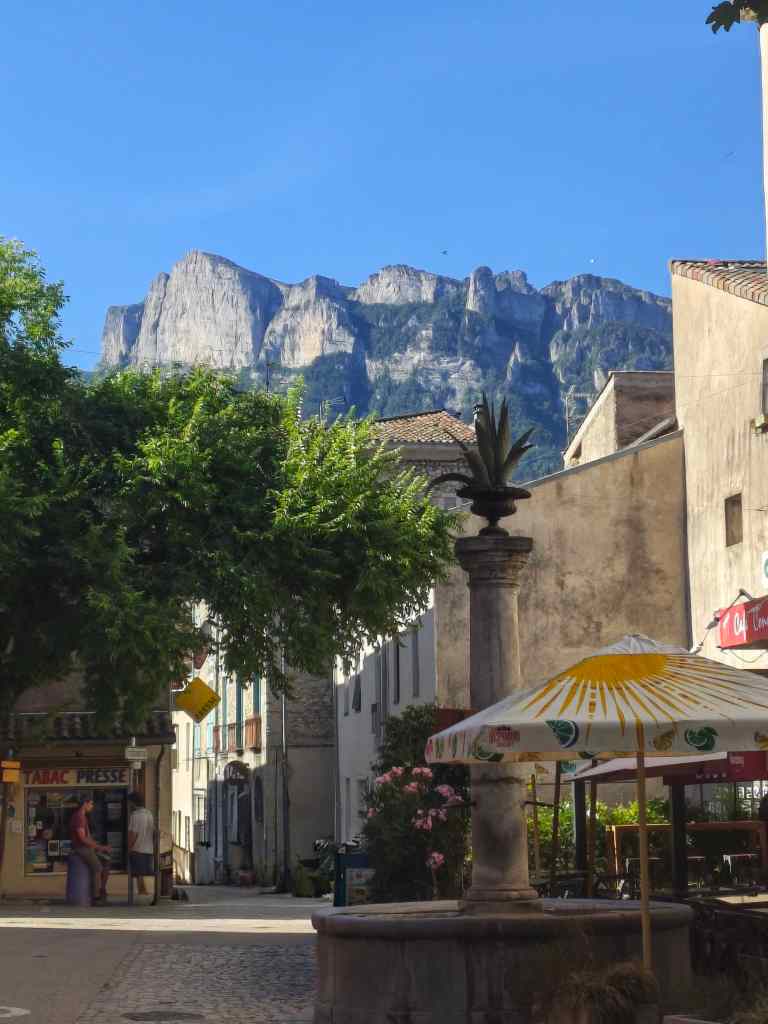
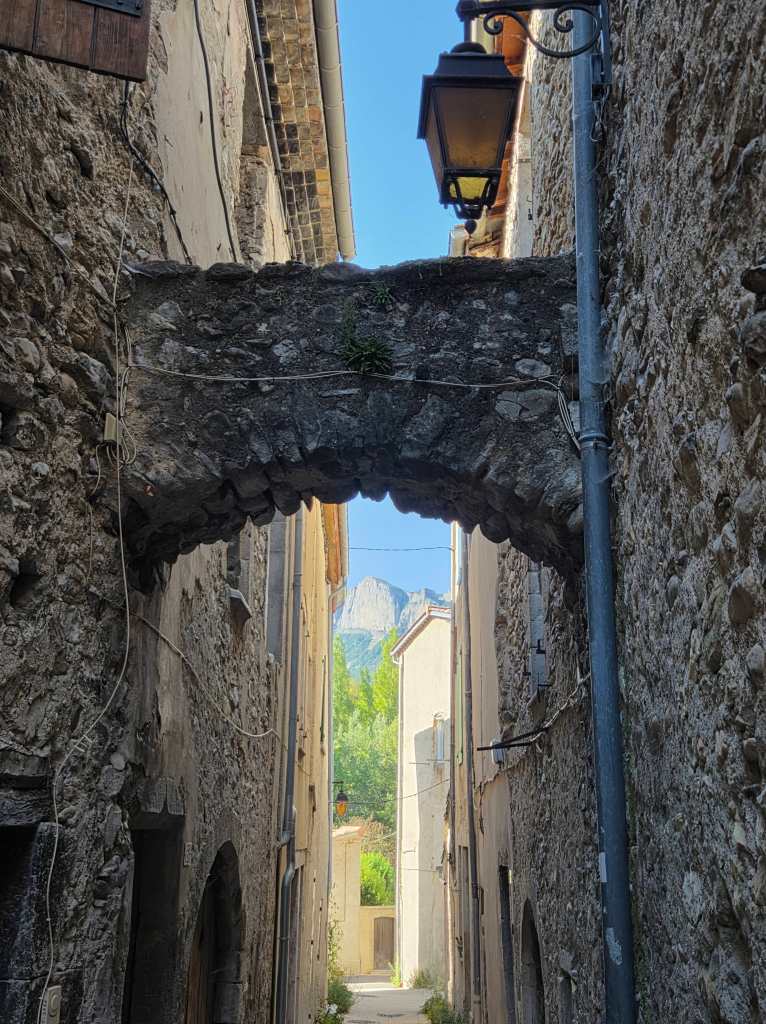
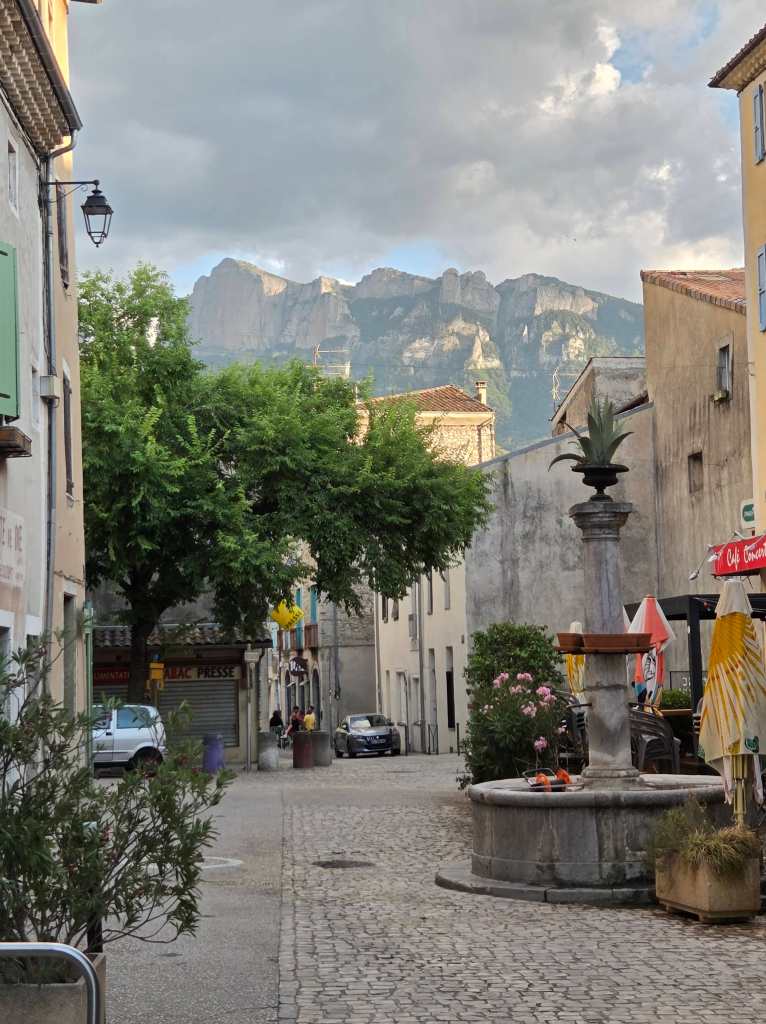
After waking up, I flung open my bedroom windows to be greeted by a great view of the area around Saillans. I spent a final half and hour exploring more hidden passages and admiring the backdrop of the mountains surrounding the town on all sides.
Looking out over the roofs of Saillans from my bedroom windowSaillans’ square in the morning lightAnother dark passageway with imposing mountains in the background
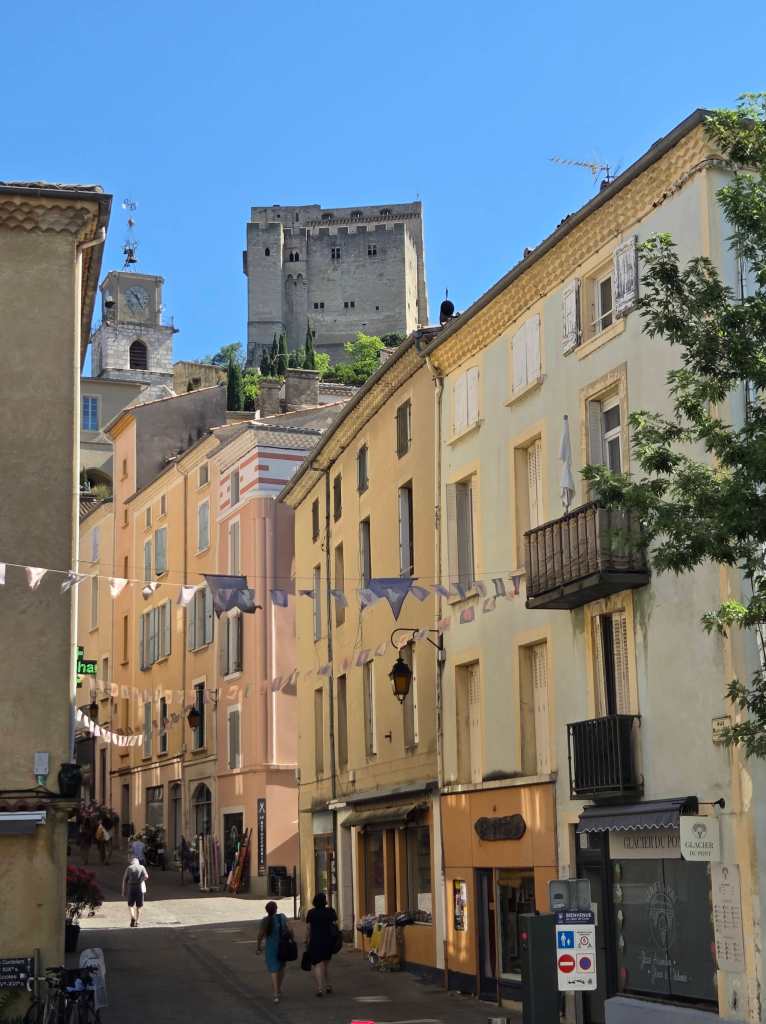
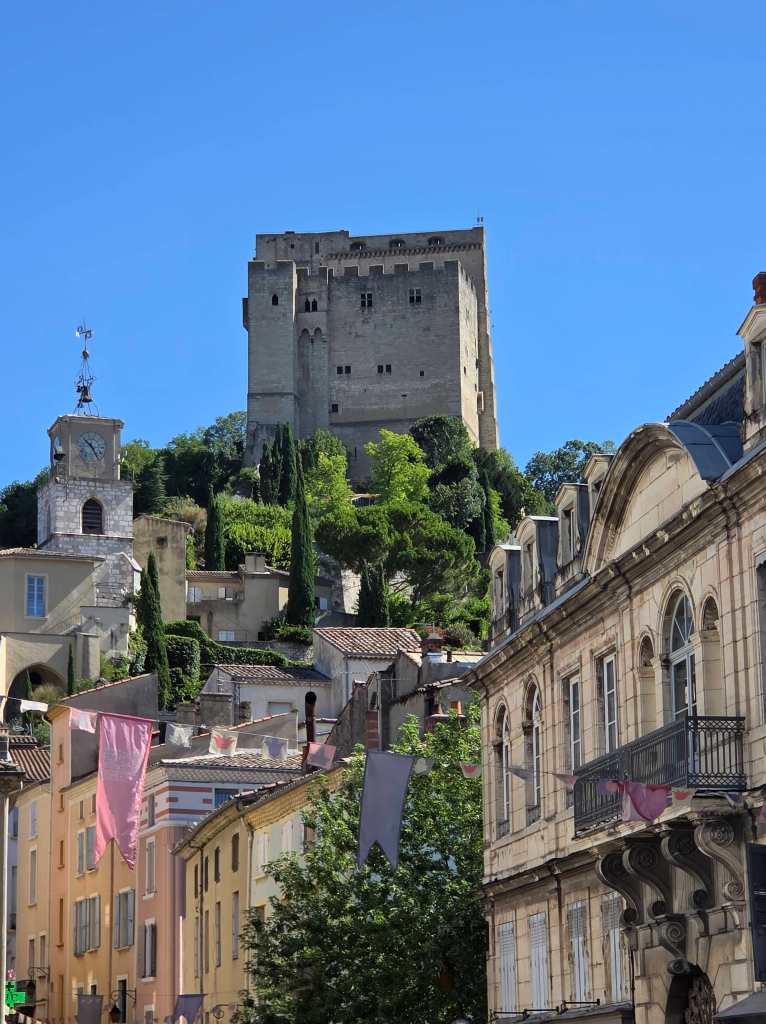
Then I got back in my car and headed to the next impossibly pretty town of my trip – Crest (pronounced “kray” in English), famed for its tower – possibly the tallest stone keep in all of Europe. Indeed the Tour de Crest was visible for miles from the road as I approached the town.
La Tour de Crest – The Tower of Crest
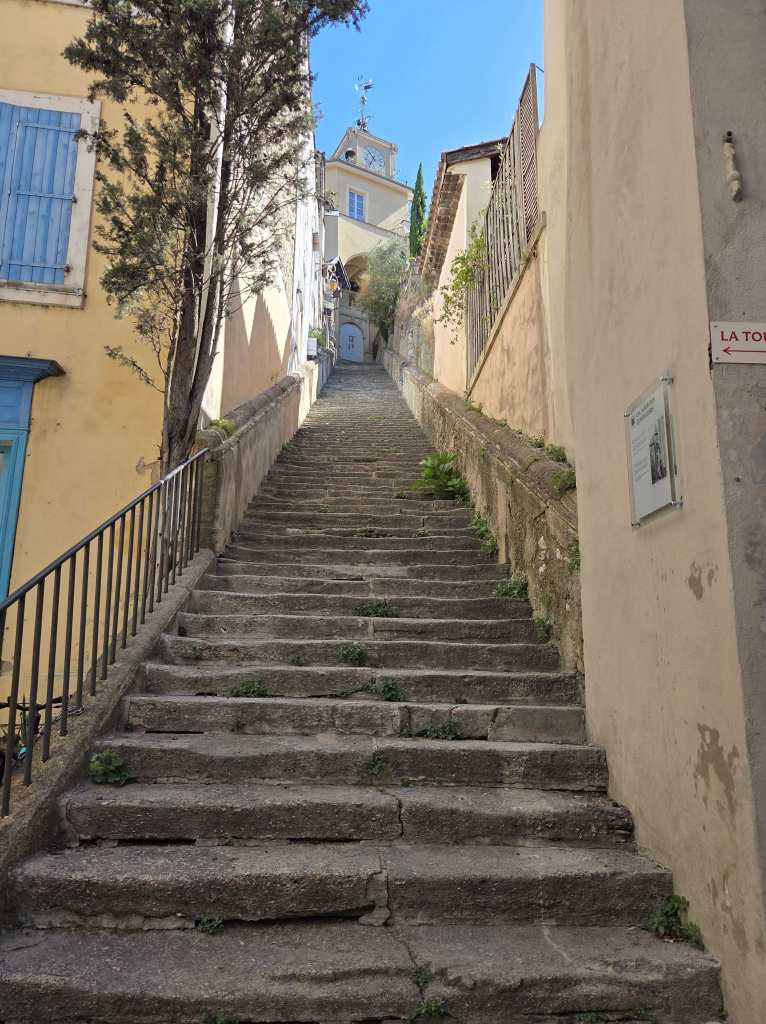
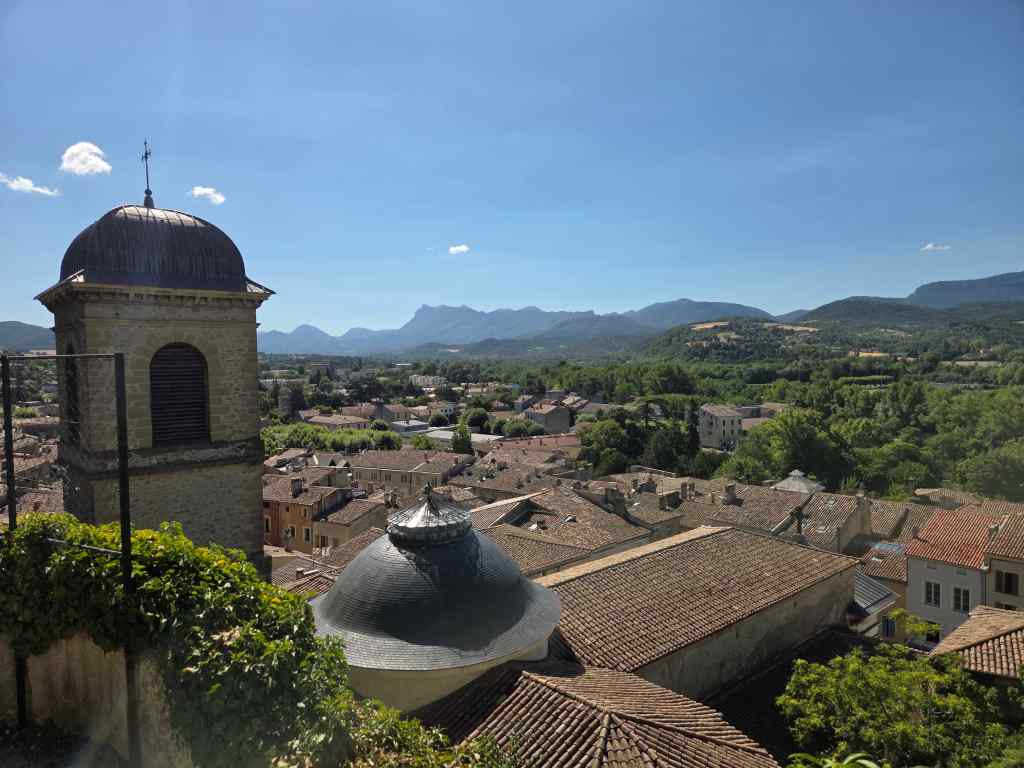
I parked my car, strolled through the town and then up an imposing set of steps to visit the tower. The building has a long history; it was originally built in 1394 and was part of a castle complex, and then a prison from the 1700s to the mid nineteenth century. I worked my way steadily up through a series of rooms with displays about the tower’s history until I reached the roof, which offered wonderful views but which was swept by a strong wind – the famous Mistral – which made me worried I would be blown away.
So many steps for my little legs!The view from just below the Tower of Crest
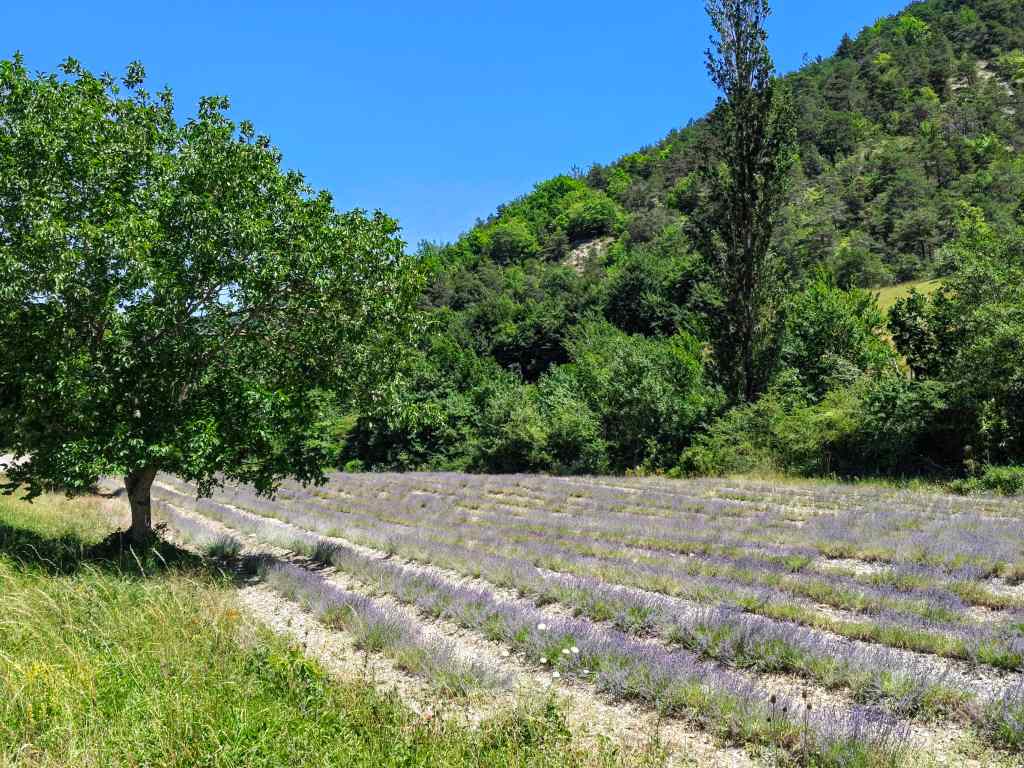
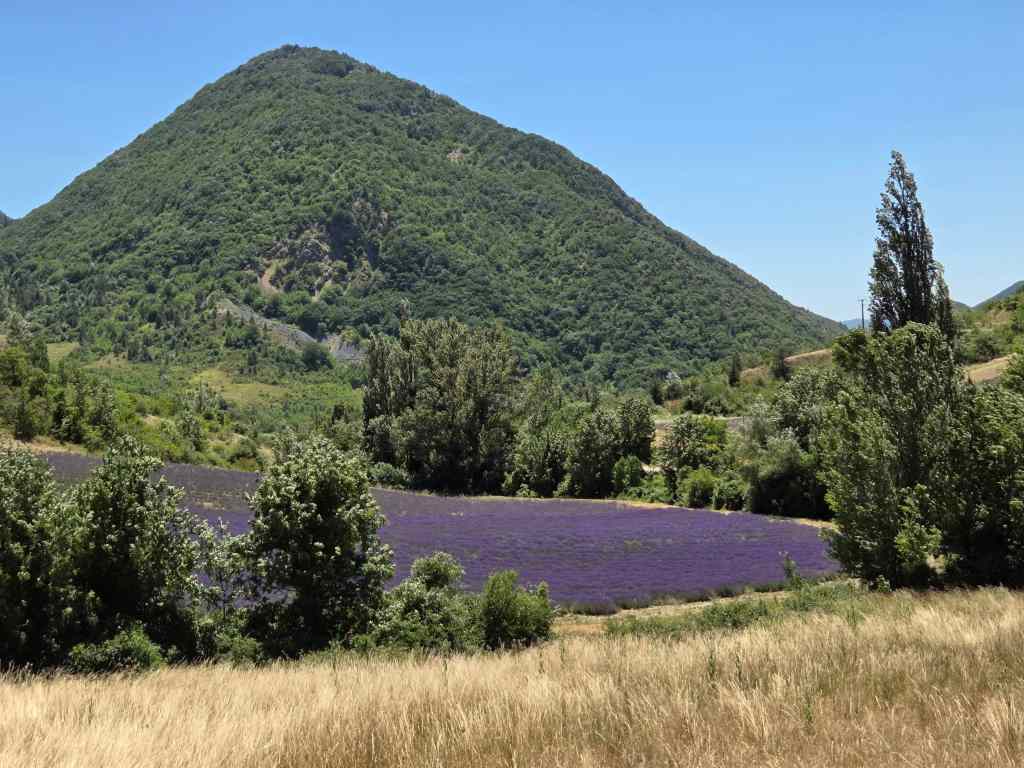
After visiting the tower, I had a coffee in the town’s main square before continuing my drive south along a pretty road. Occasionally I passed fields of lavender – the harvest that year was unusually late, and a few fields were still in bloom. I stopped to breath in the scent and admire the hundreds of butterflies visiting the flowers.
Lavender fields in the Drome region….and butterflies
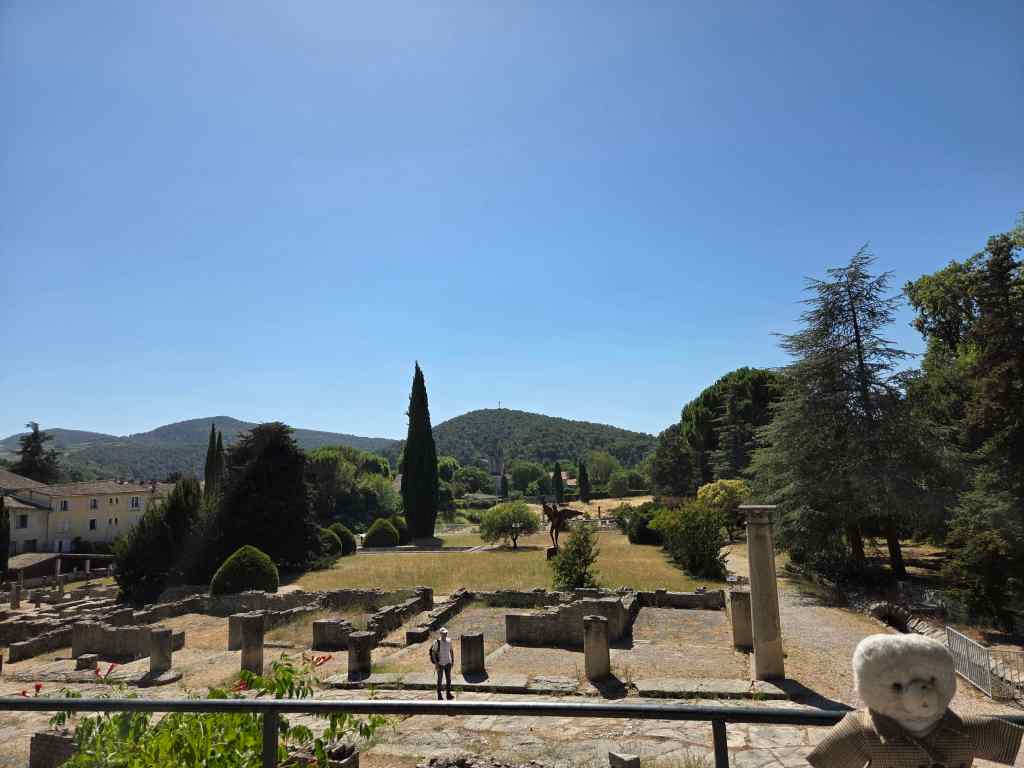
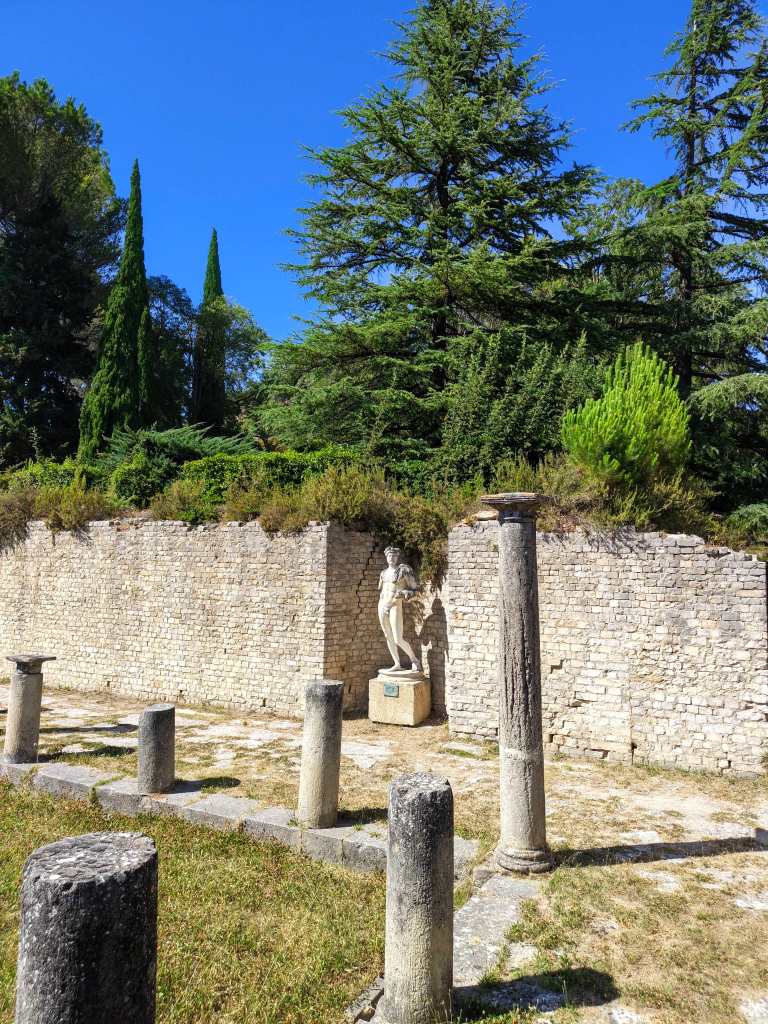
My route took me further south, past Nyons (which I would visit on a different day) and on to Vaison-la-Romaine in the Vaucluse region of France. This ancient town was once a major Roman city and many ruins remain to this day. I summoned up just enough energy to explore them in the heat of mid-afternoon sun.
Roman ruins in Vaison-la-Romane
Vaison-la-Romane also has a medieval area with a Roman bridge, which is supposed to be pretty, but it was very hot and I didn’t want to arrive at my gite late, since I wanted to spend a bit of time chilling beside their pool after two very busy days of sightseeing. I stopped at a roadside shop selling food specialities of the region and bought some bread, olives, cherries, cheese and wine for dinner.
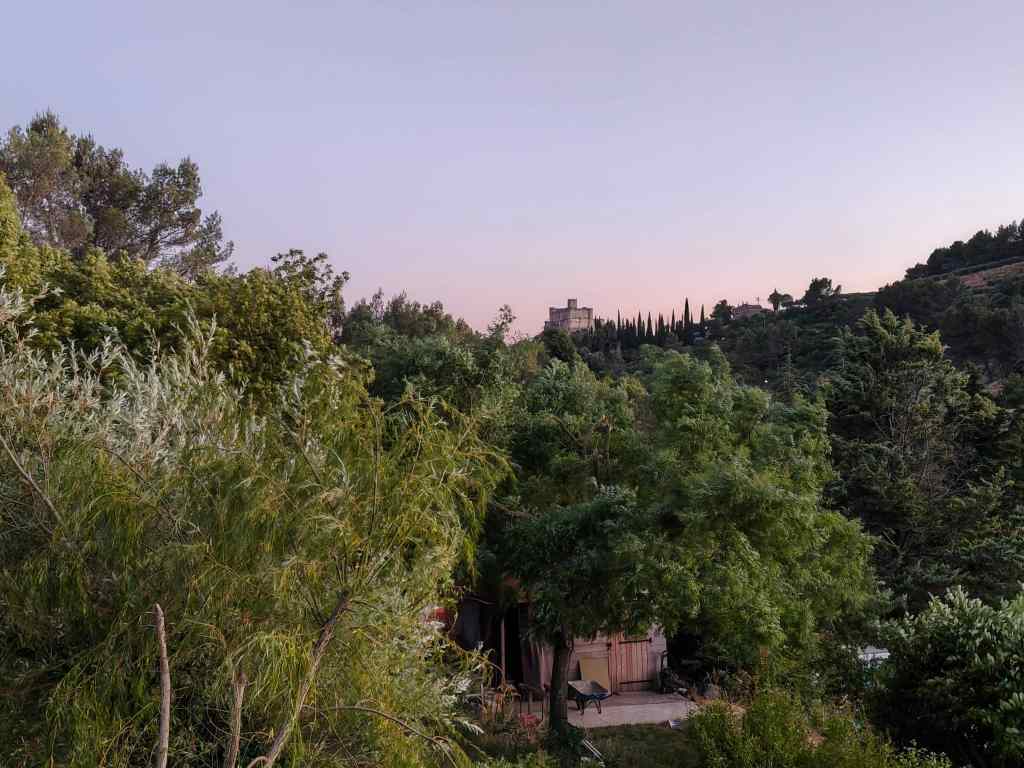
My lodgings were wonderful – a small bed and breakfast which had been bought as a ruin by a couple, who had then stylish renovated it themselves (the husband was formerly a builder by profession). I spent the evening by the pool enjoying the food I had bought – including probably the best cherries I have ever tasted – and watching the sun set over the nearby Chateau du Barroux.
Looking out from my room to the Chateau de Barroux
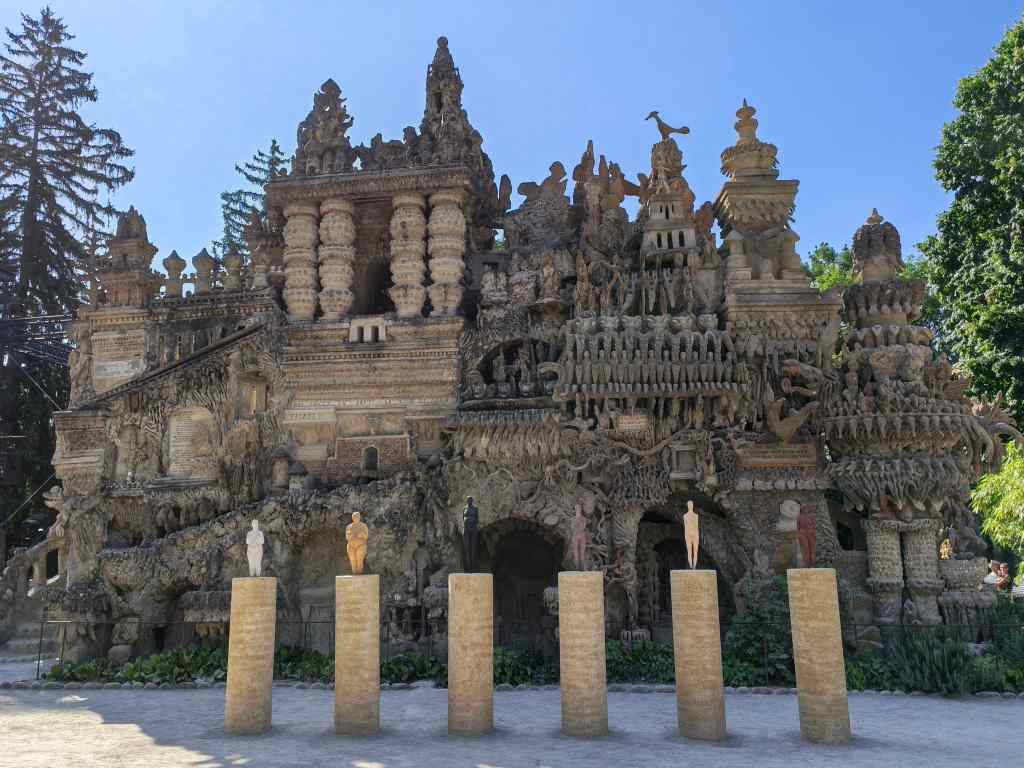
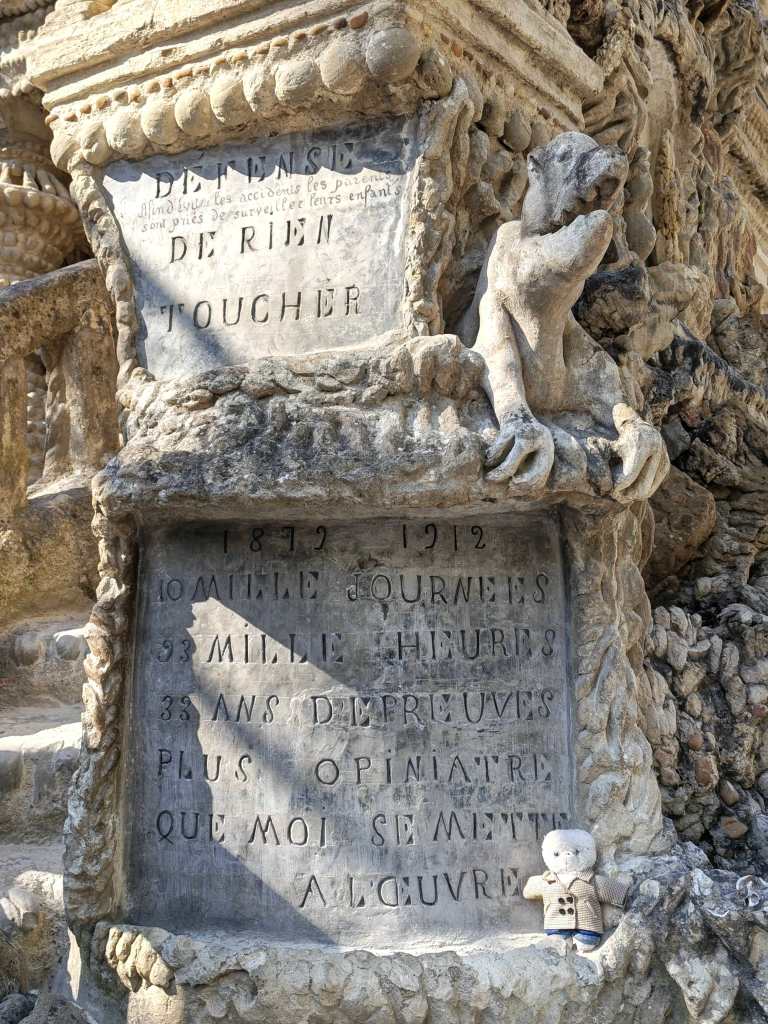
Back on Road! This time I am in France for a week, attending a wedding but also taking the opportunity to explore a bit at the same time. My first stop is Hauterives, about an hour’s drive south of Lyon. It is a pleasant village, but one which would have remained totally anonymous had it not been for “Facteur Cheval” – the village postman in the late 1800s. Not content with a mail round covering some 40km on foot, Ferdinand Cheval became interested in the different rocks he found in the countryside, began to take them back to his house in a wheelbarrow…….and in 1879 started to build a monument in his back garden, using the samples he had collected plus small amounts of purchased chalk and cement. Totally self-taught and unaided, he carried on building for thirty three years. He let his imagination run wild, helped by pictures on the postcards and magazines he was delivering to other people every day. He finally finished his project in 1912, aged 76.
The North facade of the Palais Ideal du Facteur Laval
The incredible monument soon became a tourist attraction. Some people considered it a remarkable piece of architecture in the naif style. Others called it an ugly folly built by an uneducated peasant. One of the early visitors nicknamed it Cheval’s “Palais Ideal” or ideal palace, a name that the postman liked and adopted for his creation. A different early visitor took photographs without authorisation to make postcards, causing Cheval to bring the world’s first ever court case for visual copyright, which he won.
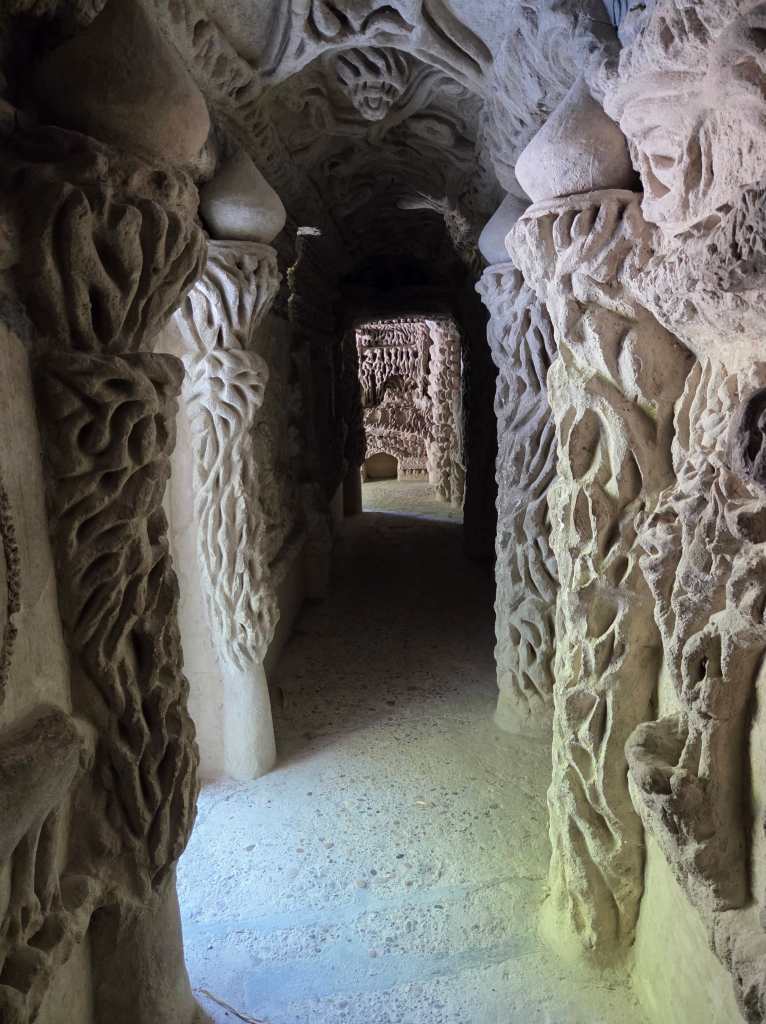
My first impression on approaching the palace’s north facade was one of puzzlement. At first sight the art work was indeed basic and bizzare, with sculptures representing scenes from the Garden of Eve including a crudely represented Adam, Eve and snake. I wondered why I had made such a detour to look at a bunch of rocks roughly held together by chalk and cement. But having made the effort to get here, I decided to give the place a chance and wandered around its outside before diving into a tunnel passing through its heart and then heading up to the roof.
Inside the Palais Ideal
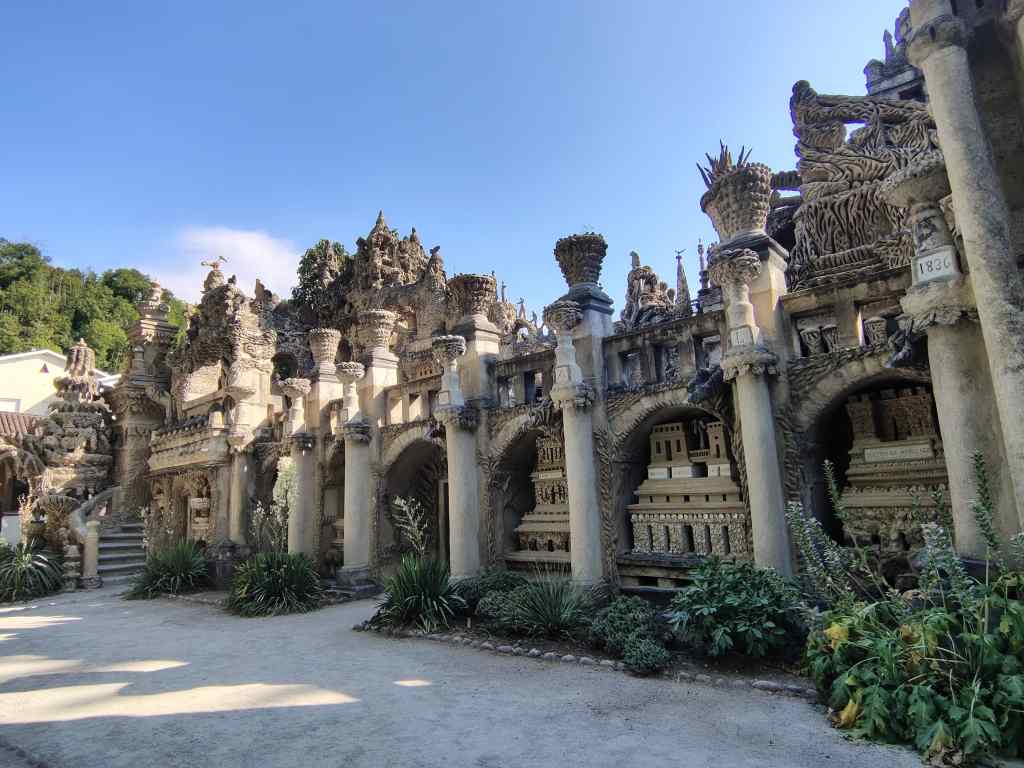
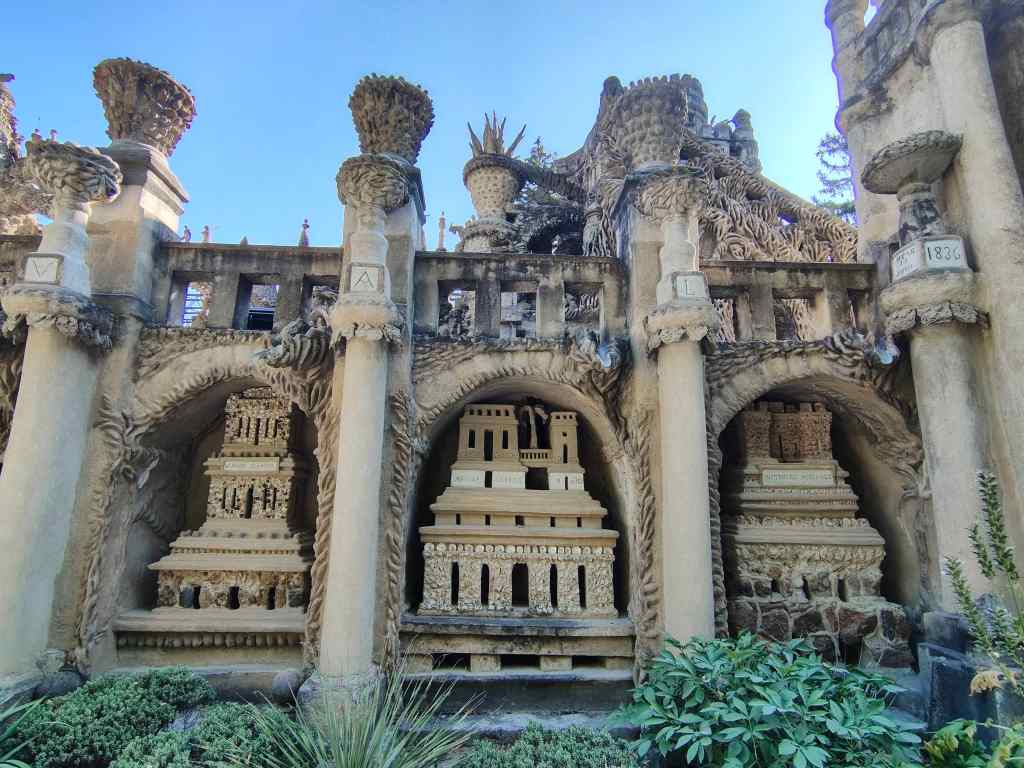
After a short time, the “palace” began to grow on me. On the west side were reproductions of architecture from around the world – a house in Algers, a swiss chalet, a mosque, a medieval european castle, even an attempt to represent the White House in the USA.
The West facade of the Palais IdealThe “White House” is on the left in case you didn’t recognise it…..
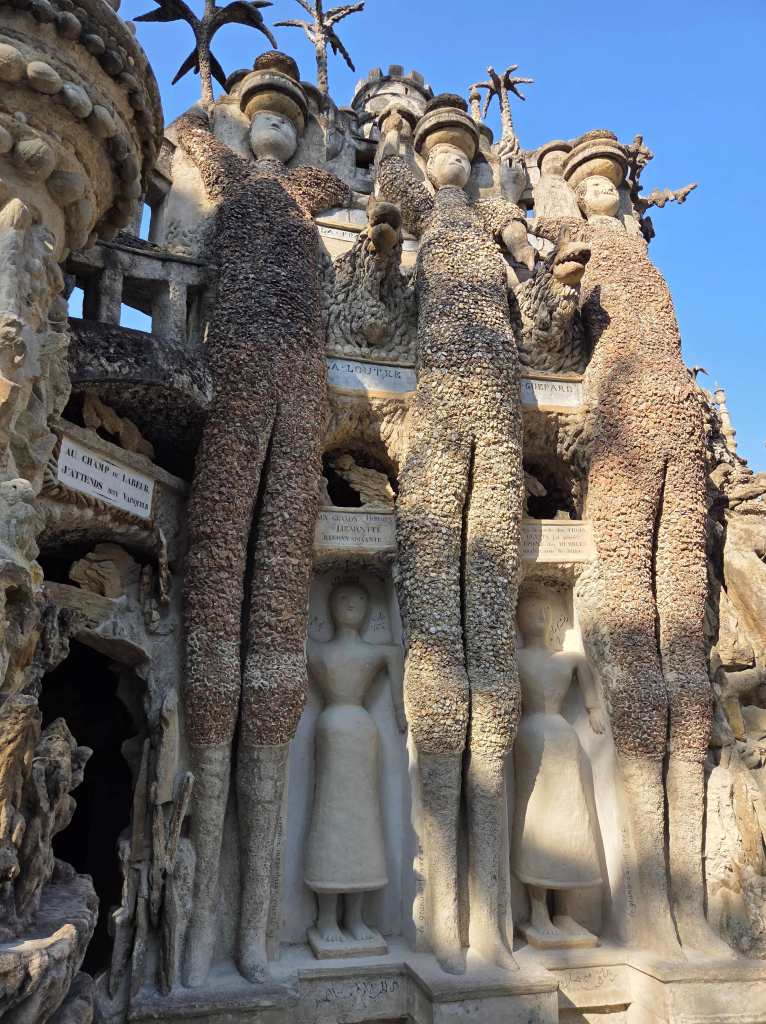
On the east facade were three strangely-chosen giants from past history – Archimedes, Vercingetorix and Caesar. And all over the palace were inscriptions reflecting a deeply personal, humanist view of the world.
Giants of the Palais IdealInscriptions at the Palais Ideal
When it was finally time to leave I was enchanted by what I had seen and very glad I had come. The Palais Ideal is a remarkable creation, unique in the world – the work of a single man, uneducated perhaps, but with a strangely haunting vision of architecture…..and of life.
Inspired, happy and with a strange peaceful feeling, I headed onwards, south to Saint-Antoine-L’Abbaye, a small village located in the Isere department of France, which won the title of “France’s favourite village” in 2025 – a coveted award made annually.
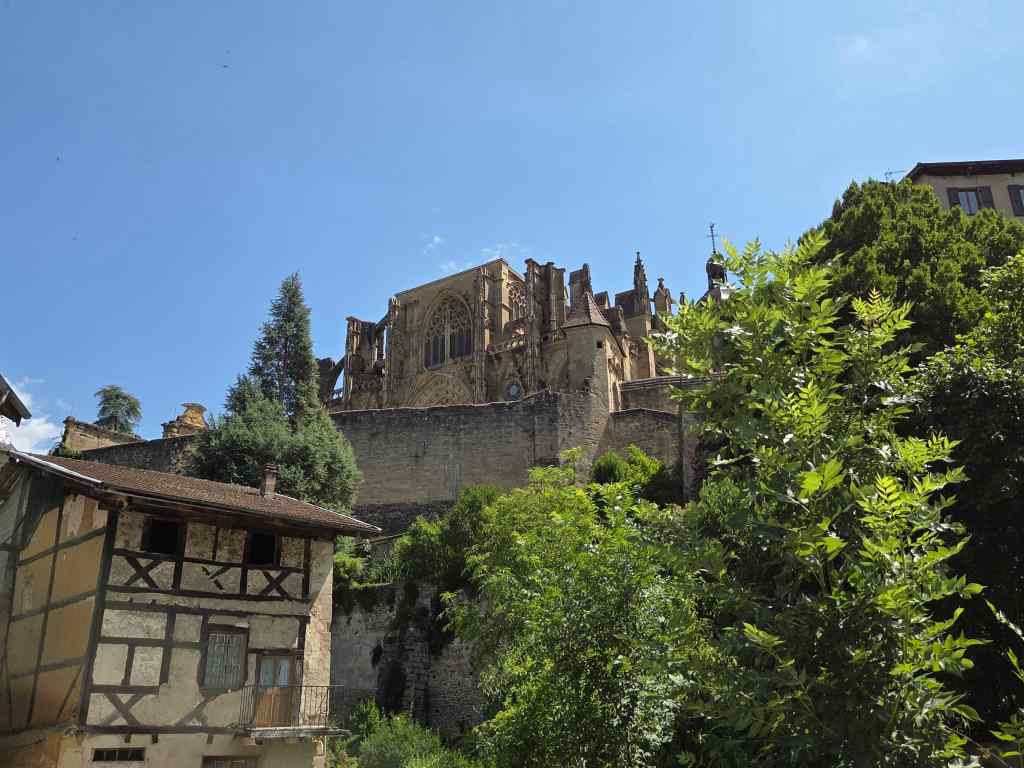
Saint-Antoine-L’Abbaye from below
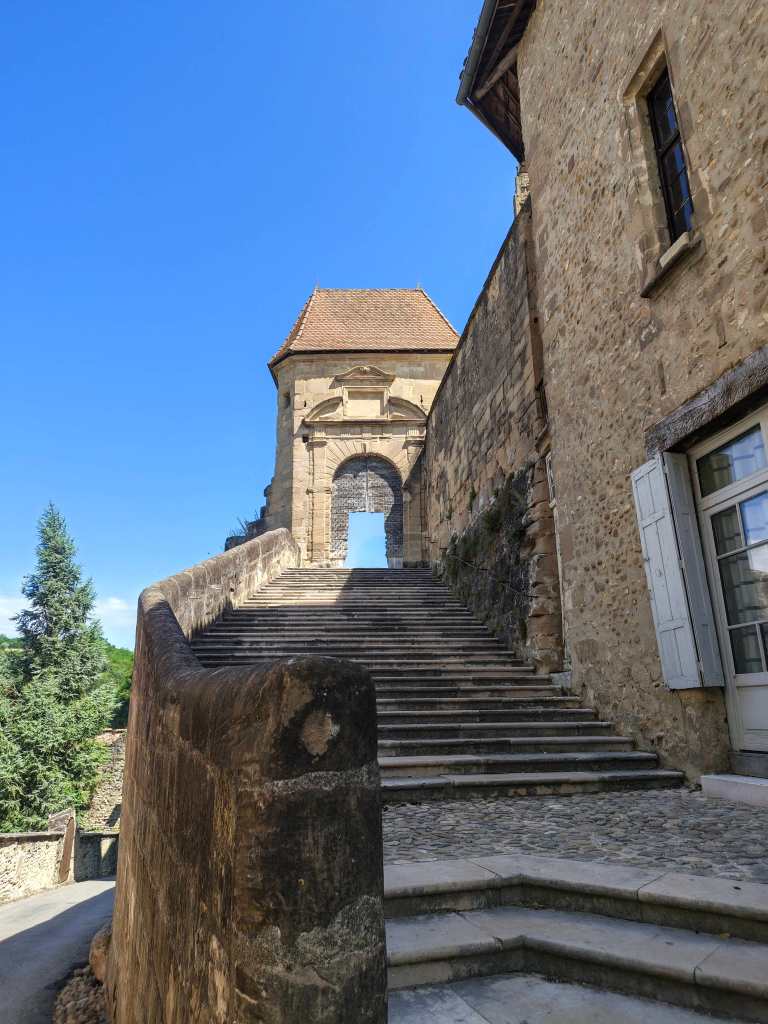
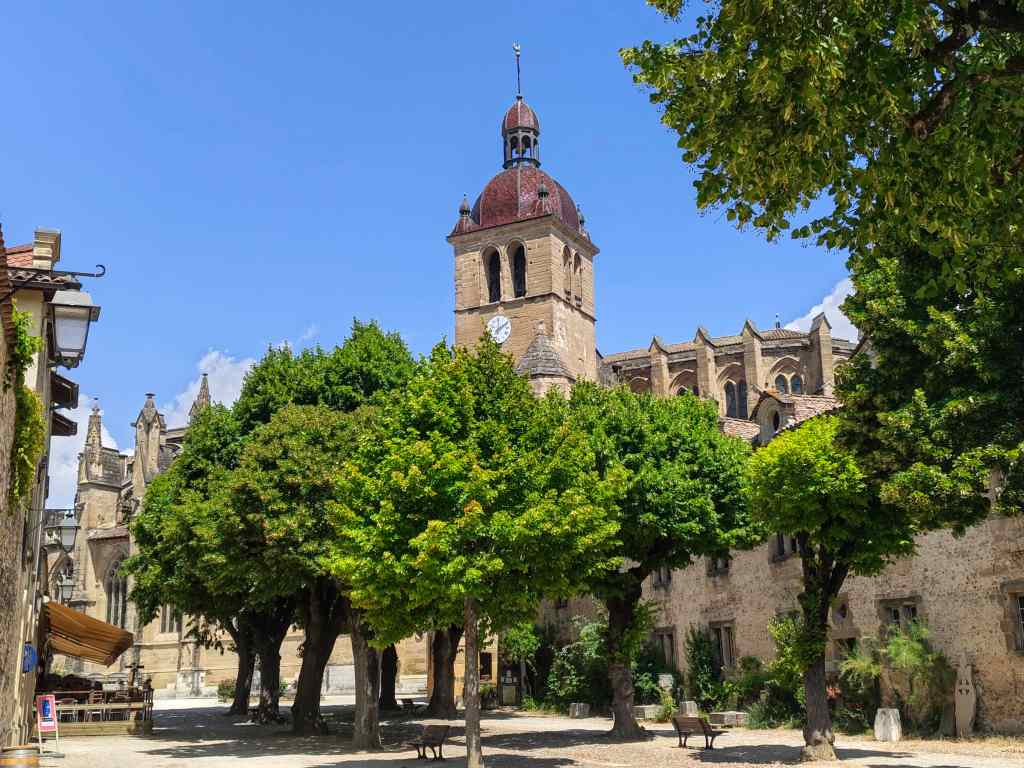
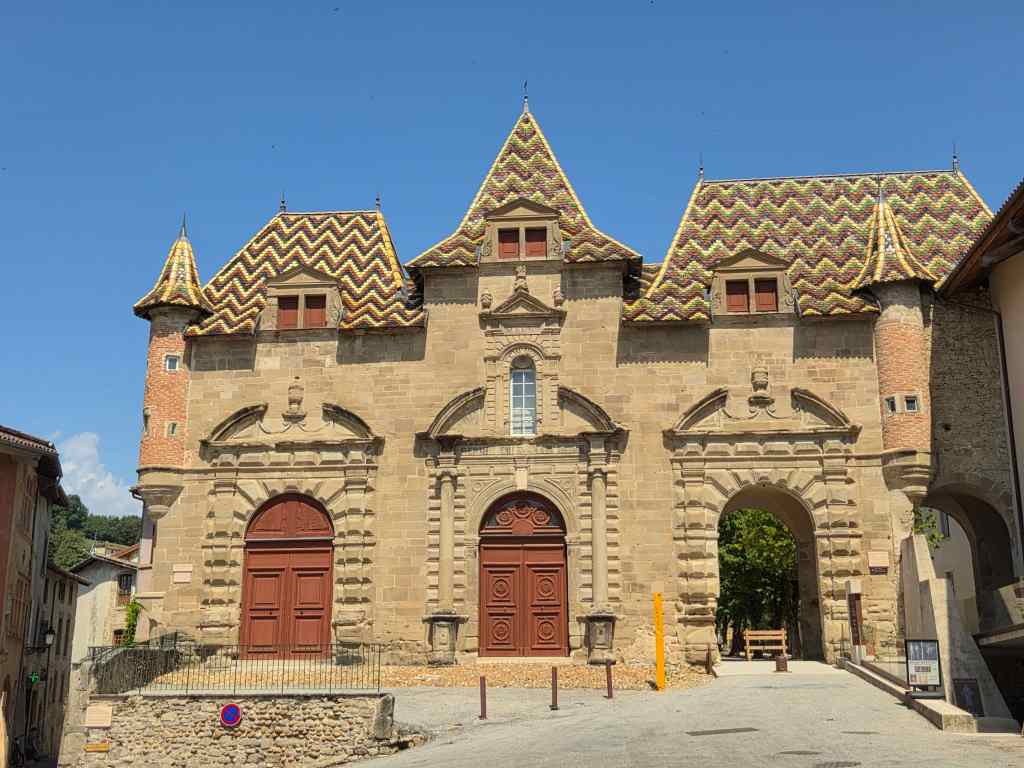
I left my car at the foot of a steep hill and clambered up to the 900-year old gothic abbey to find a sun-drenched village square and some beautiful old buildings. After wandering around in the heat, I discovered a wonderful small shady garden in an inner courtyard and sat down to enjoy a fresh breeze whilst the sleepy village baked in the midday sun.
The steep walk upSaint-Antoine-L’Abbaye’s main squareBeautiful Building in Saint-Antoine-L’Abbaye
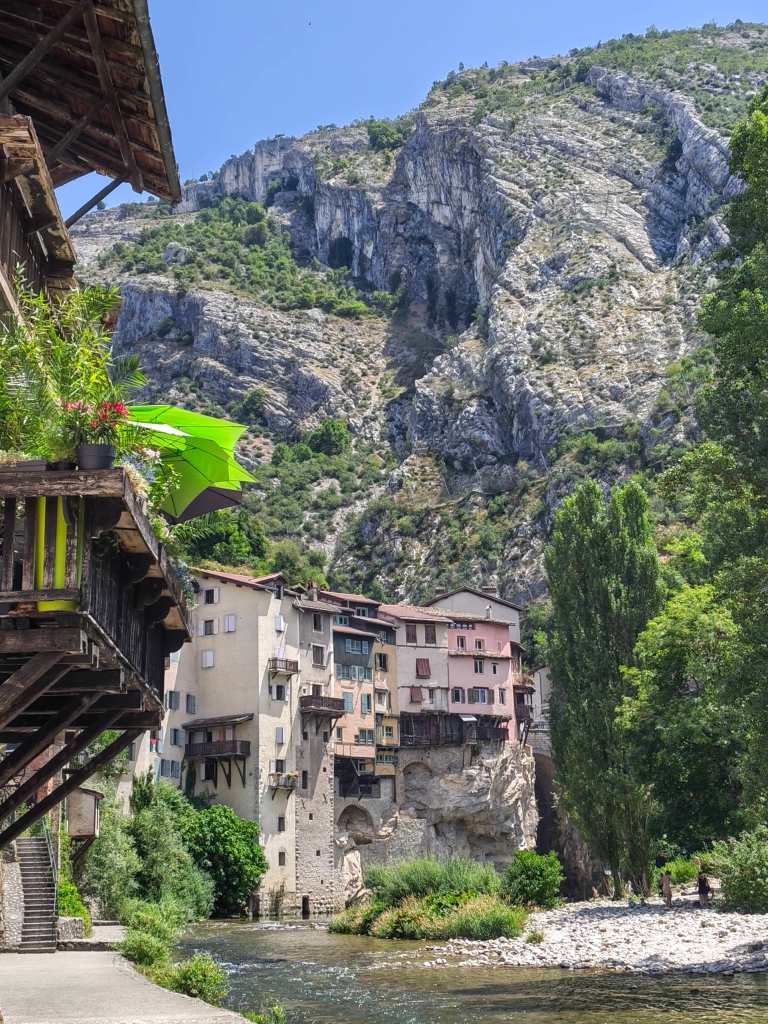
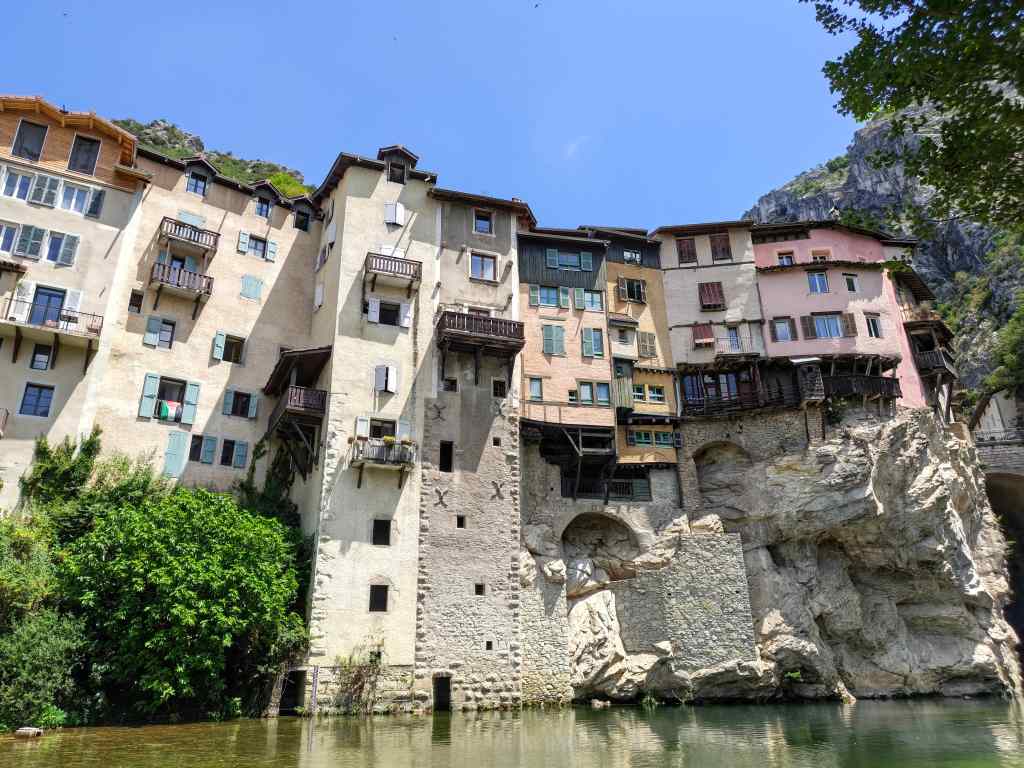
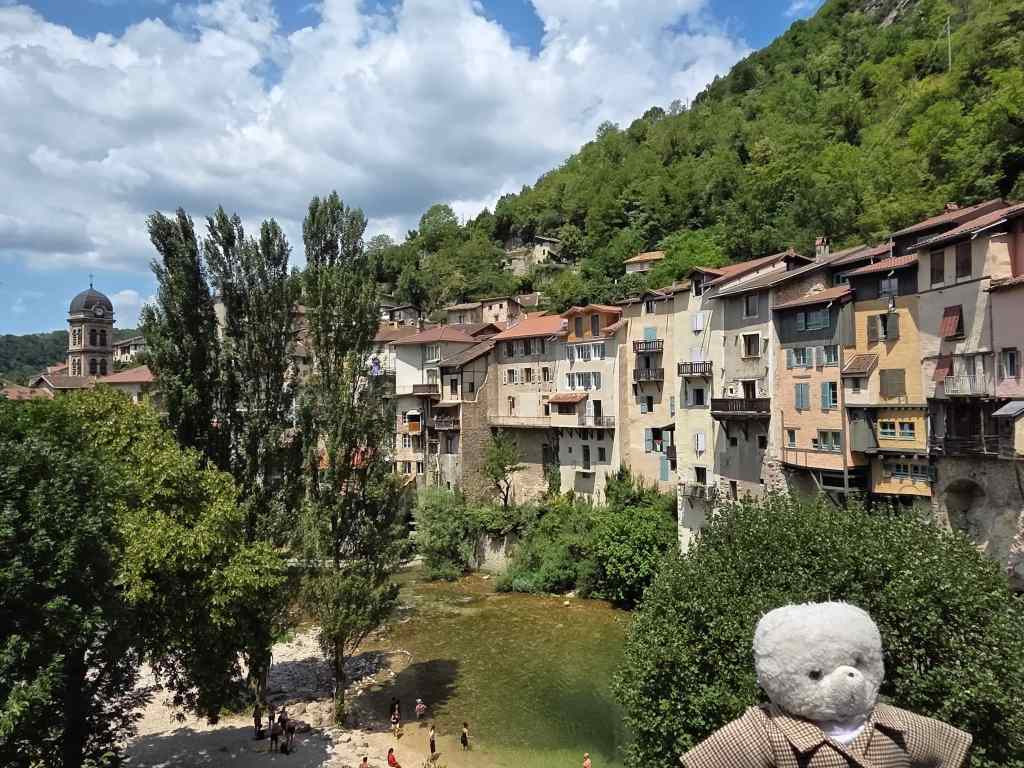
Feeling very relaxed, I decided it was time to move on again – this time south to the Vercors, a rugged mountainous area of France famous as a centre for the resistance against the Nazis during the second world war. The gateway to this region was another impossibly pretty village called Pont-en-Royans, with curious suspended houses hanging over the side of a small river.
Pont-en-Royans’ hanging housesPont-en-Royans
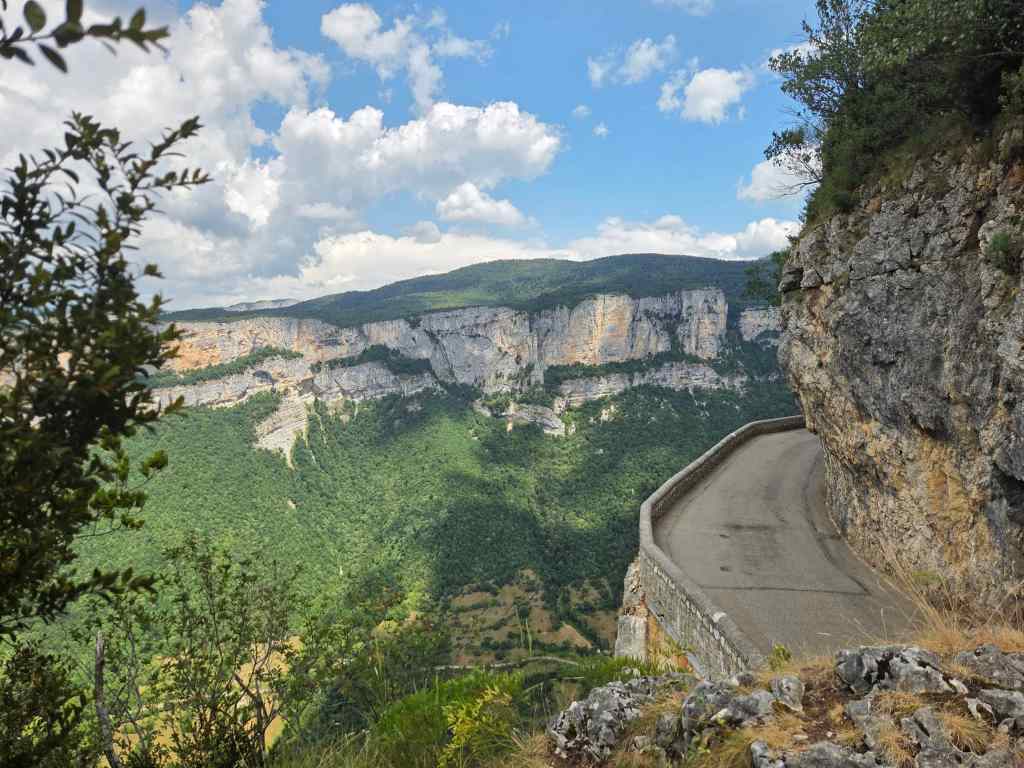
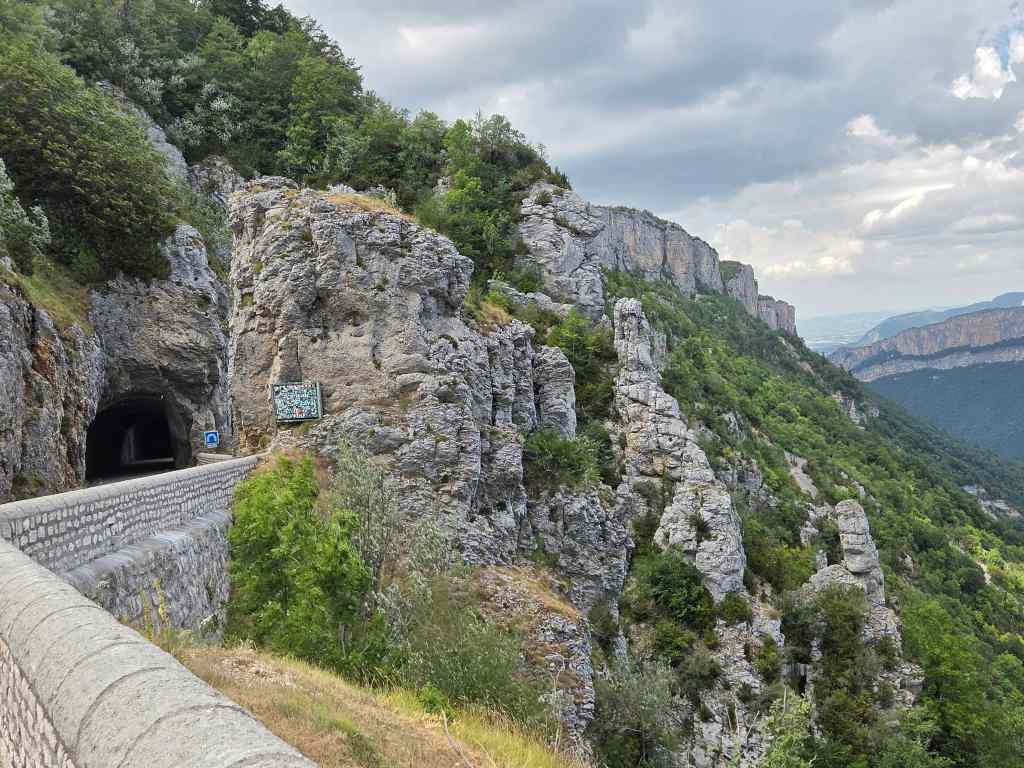
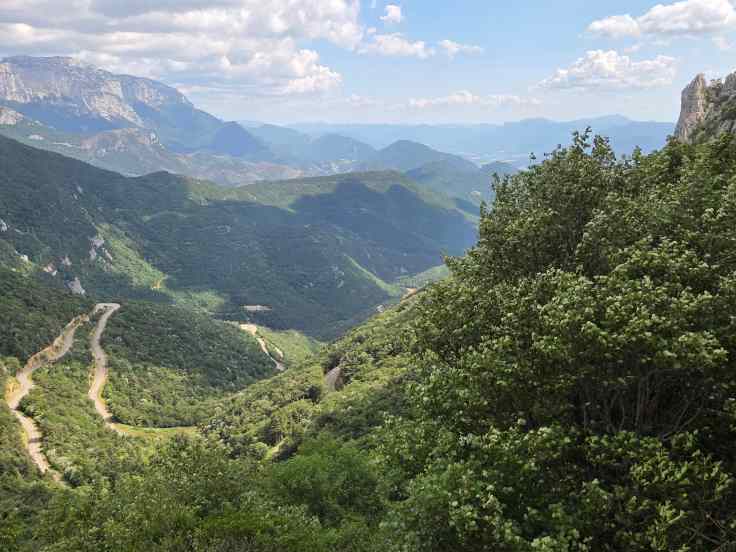
From there my path headed up steeply into the mountains to the Route Combe Laval, a famous mountain road carved into the face of a cliffs and reputed to be one of the most exciting drives in Europe. It was indeed a spectacular road, with narrow tunnels cut in the rock and sweeping views of the mountains.
La Combe LavalDescending from La Combe Laval towards Die
I continued to the French city of Die, where sadly I didn’t have time to stop except to do a short tasting of the local wines in a cellar just outside of the centre. Die is known for its sparkling wines made from a unique local grape, Clairette…….but unfortunately I found that this style of wine was not really to my taste. I carried on to my overnight destination of Saillans, a small town in the Drome region, which was barely mentioned in my guide book and which I had only chosen because its location was convenient for the next day’s driving. However Saillans turned out to be a very positive surprise – its compact historical centre was packed with an unusually high concentration of bars and restaurants, which serviced a local population that seemed unusually young for a small French village lost in the countryside.
The main square, Saillans
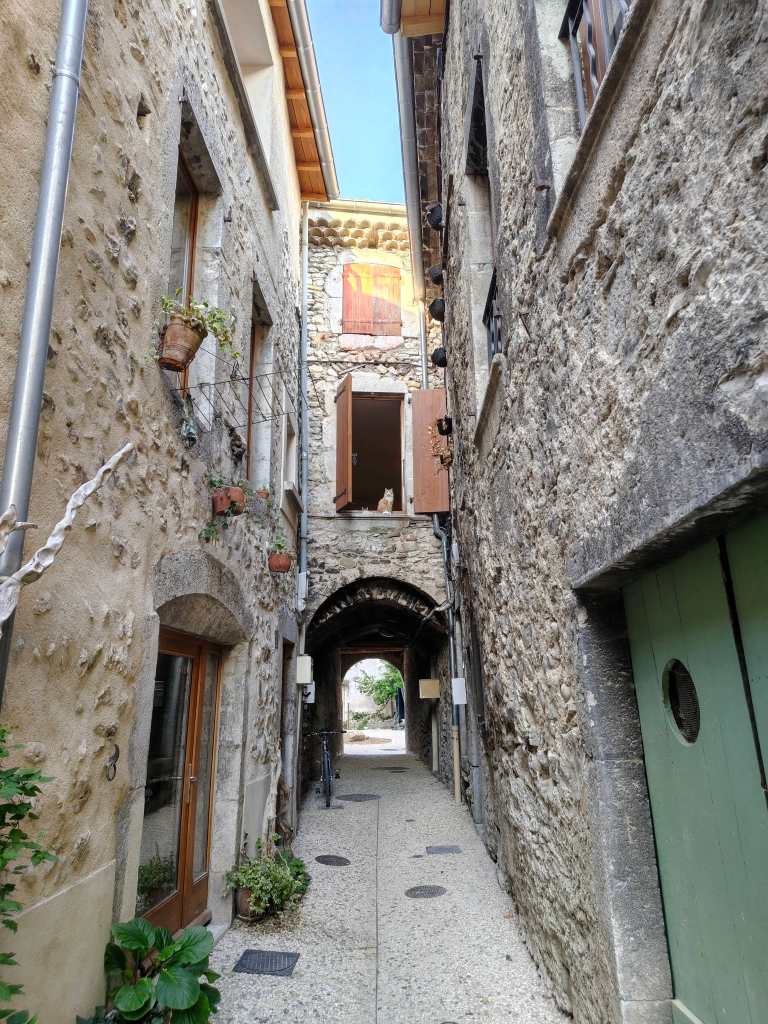
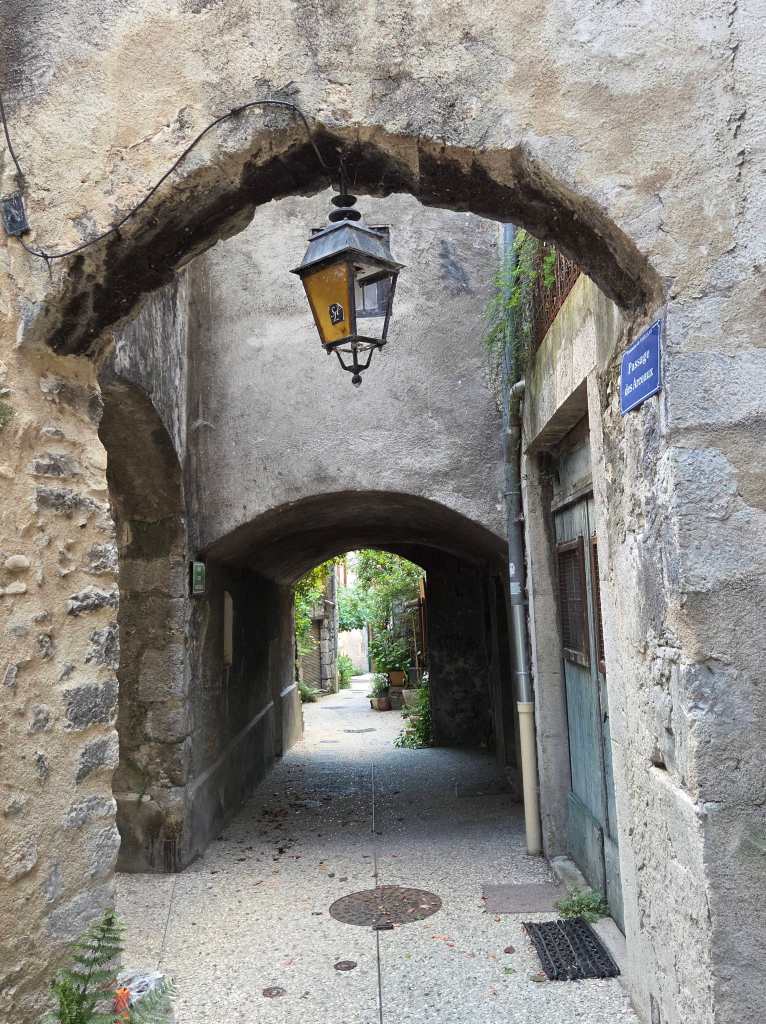
A sign in the town’s main square proposed an interesting short walking tour, which led me through narrow passageways shaded by frequent arches……..
Shady passageways in Saillans
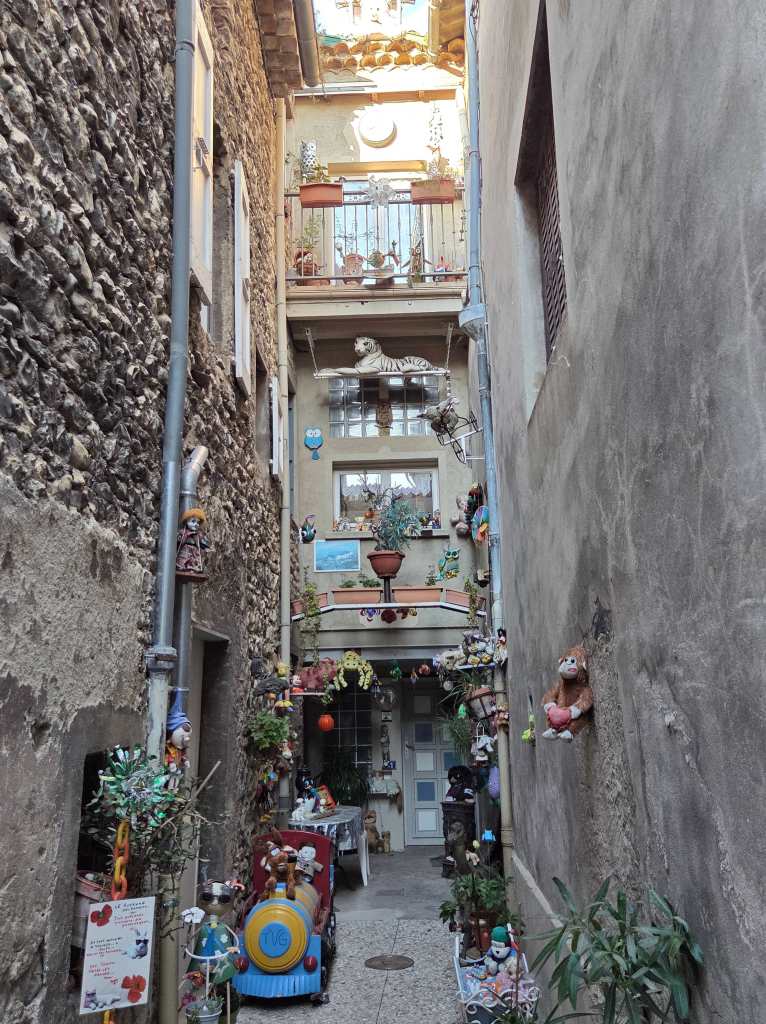
…….and strange cul-de-sacs. In one of these the owners had left an amazing collection of toys, with a sign encouraging parents to let their children play there. The town had a young, bohemian and arty feel – quite unlike the usual sleepy provincial French village.
A children’s playground, Saillans – spot me, Trouspinet if you can!
After the walking tour I settled down to eat and drink at one of Saillans’ busy cafés. 15€ bought me an enormous cheese platter which was almost too much to eat, so I had to order some of the local red wine to help me wash it down. The Drome is not France’s most prestigious wine area, but its produce was perfectly drinkable and at 4€ a glass, who cares. When I paid for dinner I had the unusual experience of being pleasantly surprised by how small the bill was, and headed off to my room to digest my meal and review the day’s events. France is a remarkably rich tourist destination – in the space of just one day I had contemplated one of the world’s strangest architectural works, visited the two stunning villages of Saint-Antoine-L’Abbaye and Pont-en-Royans, done one wine tasting, driven one of Europe’s most spectacular mountain roads and ended up in the interesting small arty town of Saillans. I don’t think such a variety of attractions in such a small area exists anywhere else on earth.

 Trouspinet travels