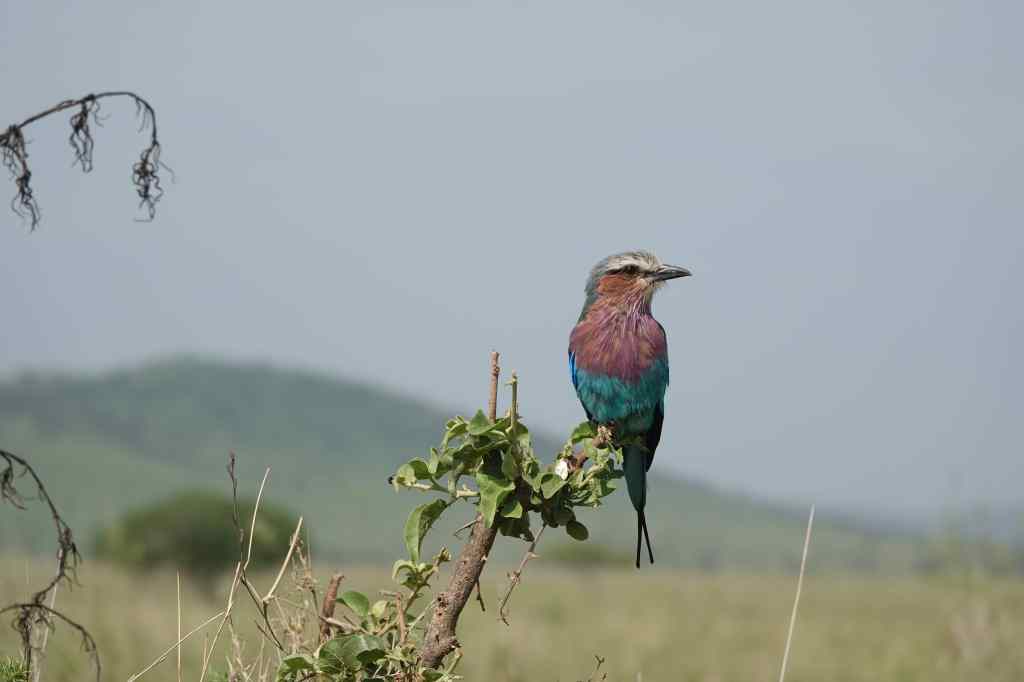
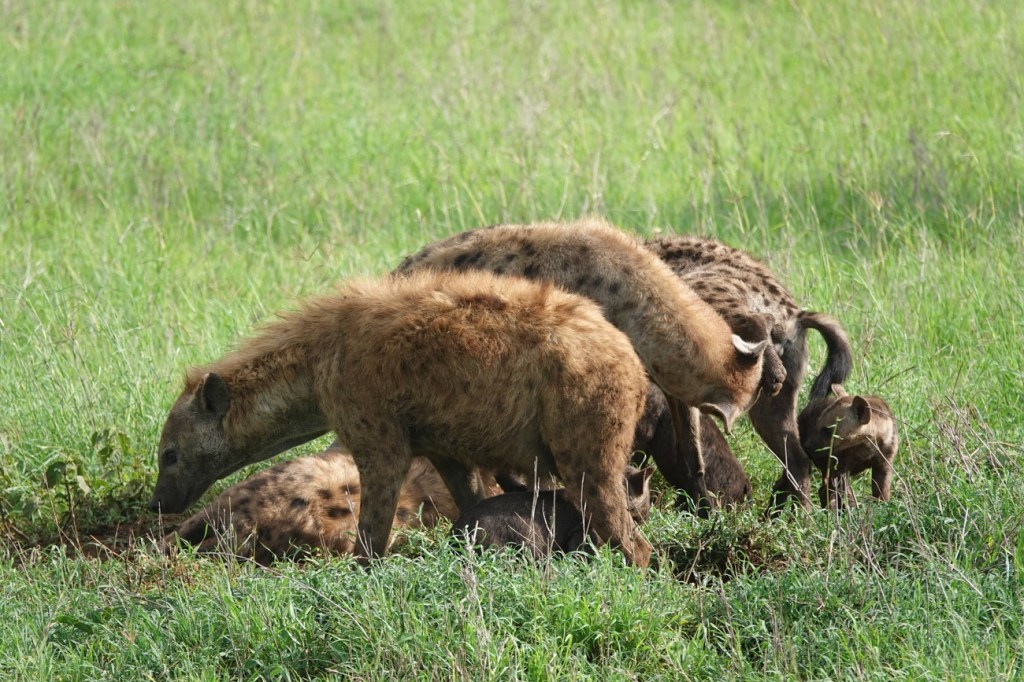
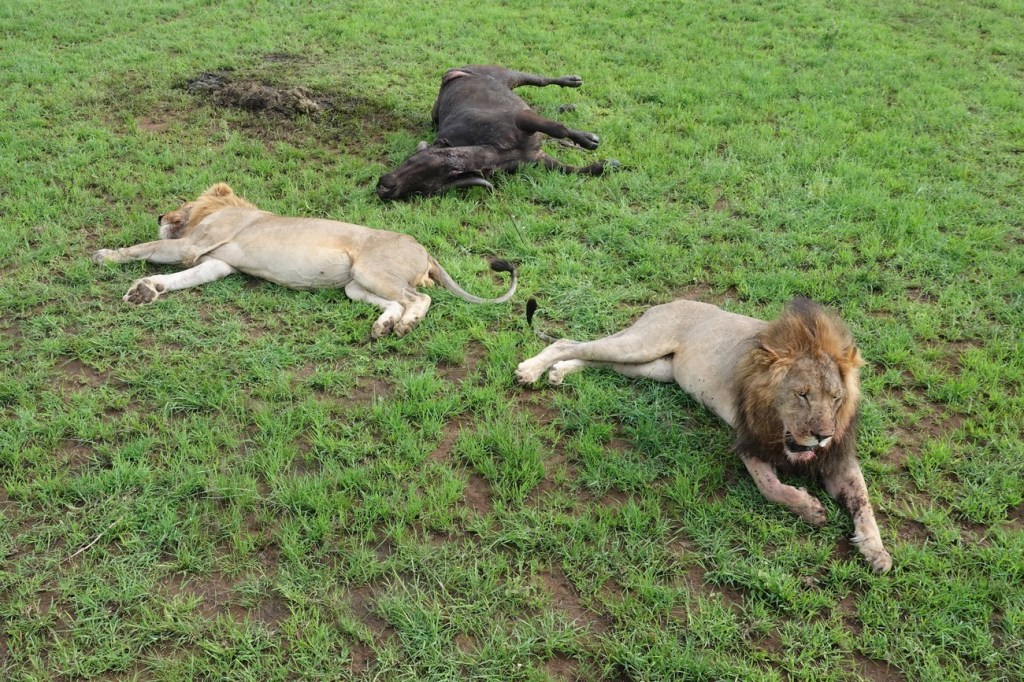
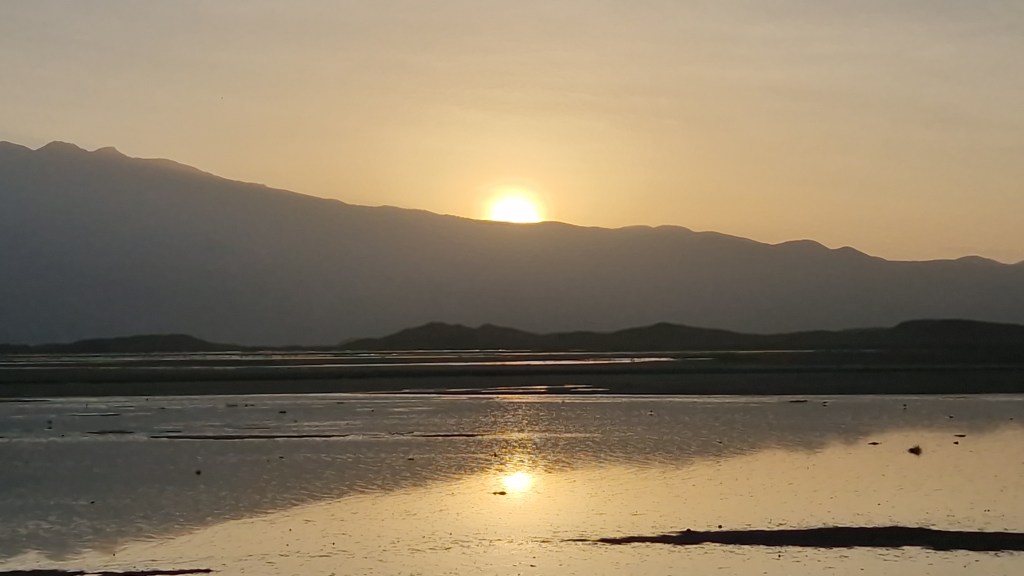
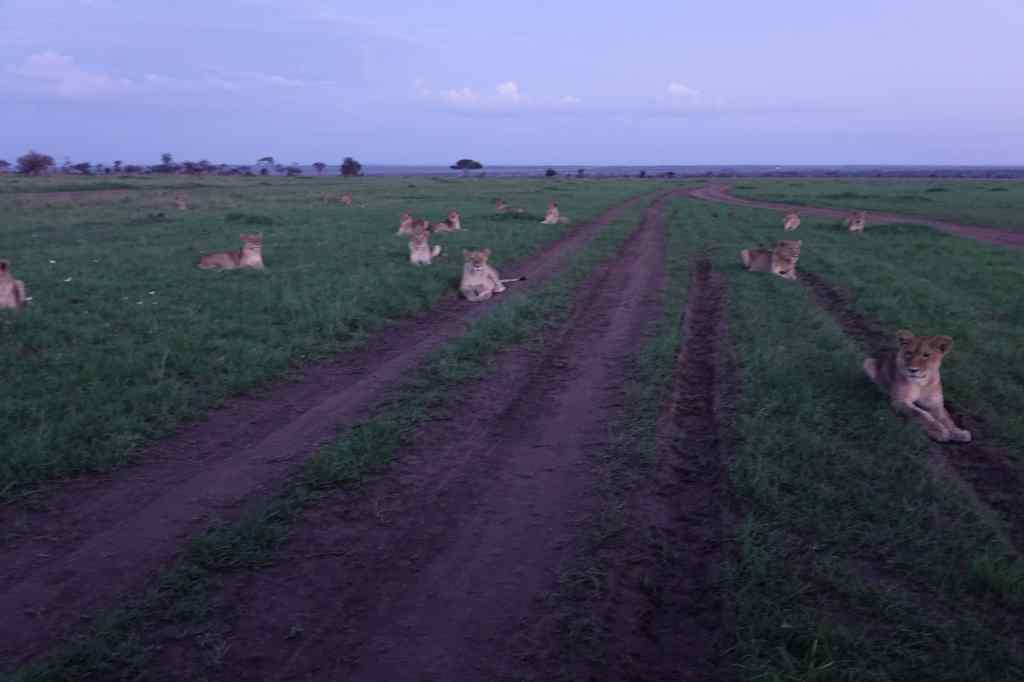
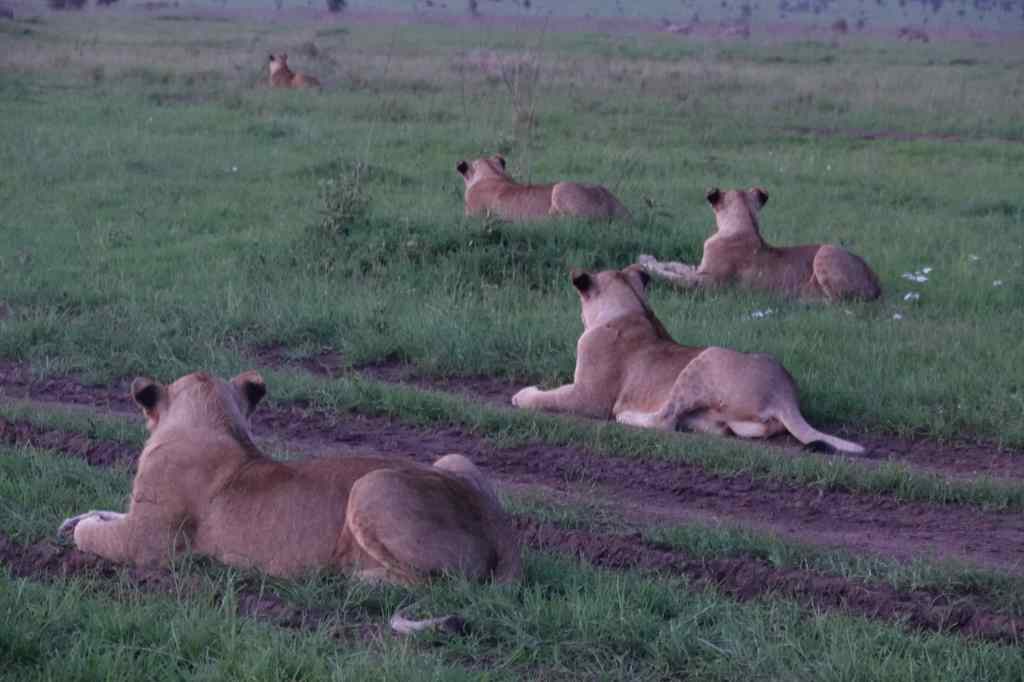
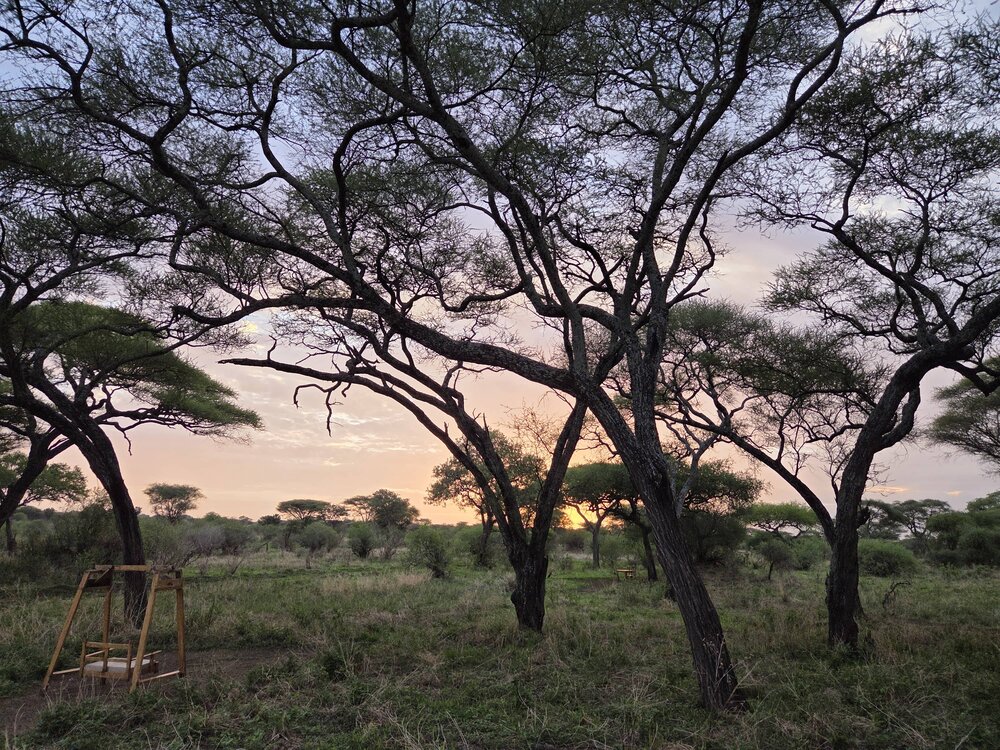
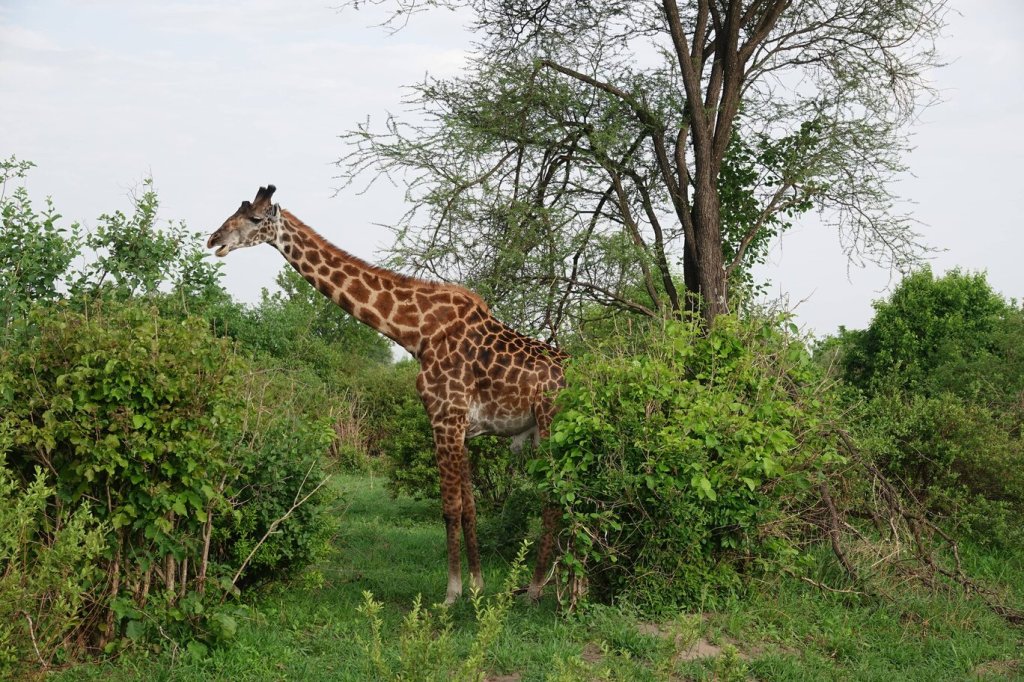
Etosha National Park – hidden leopard and lion, aggressive rhino and lots of giraffes and elephants!
Elephant Etosha
Day 1 at Etosha

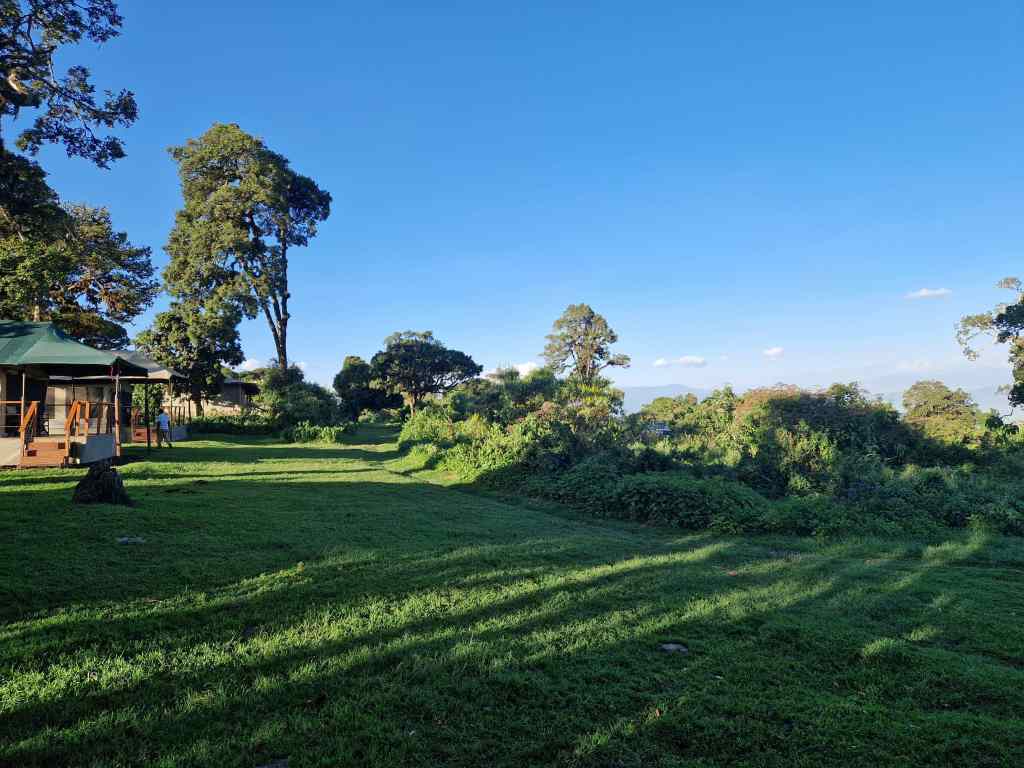
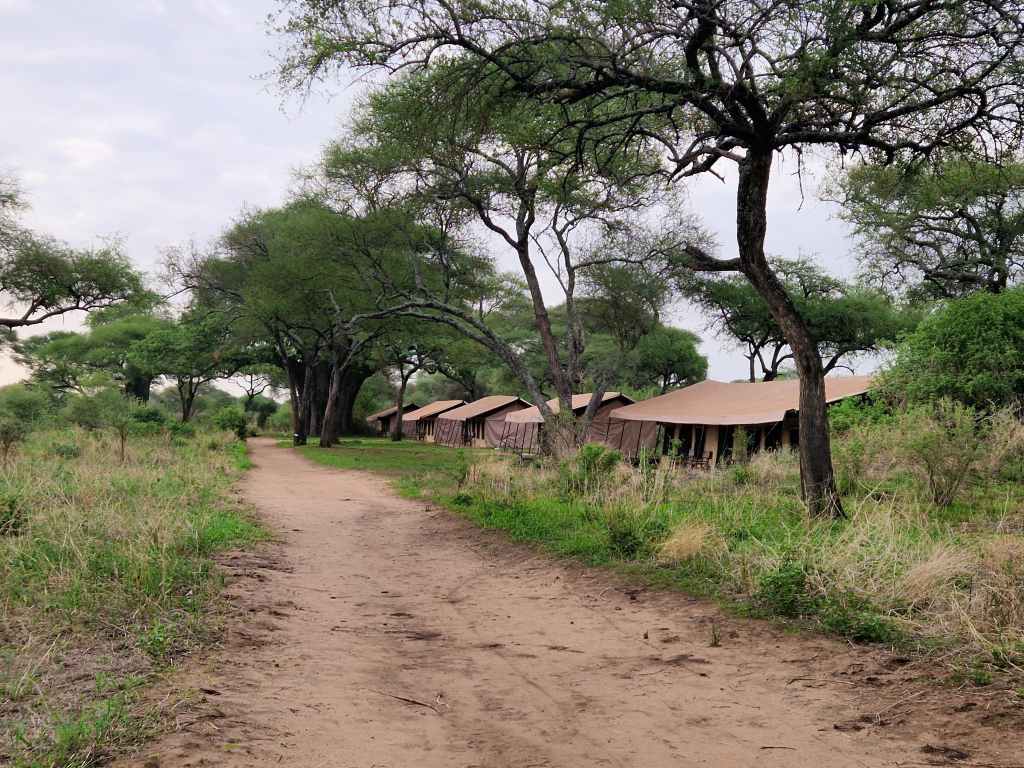
The following morning I was woken up by birds chattering in the bush outside. I opened up the flaps of my tent and sat in bed enjoying the morning air with a cup of coffee. The tent was flooded with light from all sides, and it felt like I was sitting in the open air in the middle of the bush.

camp Etosha
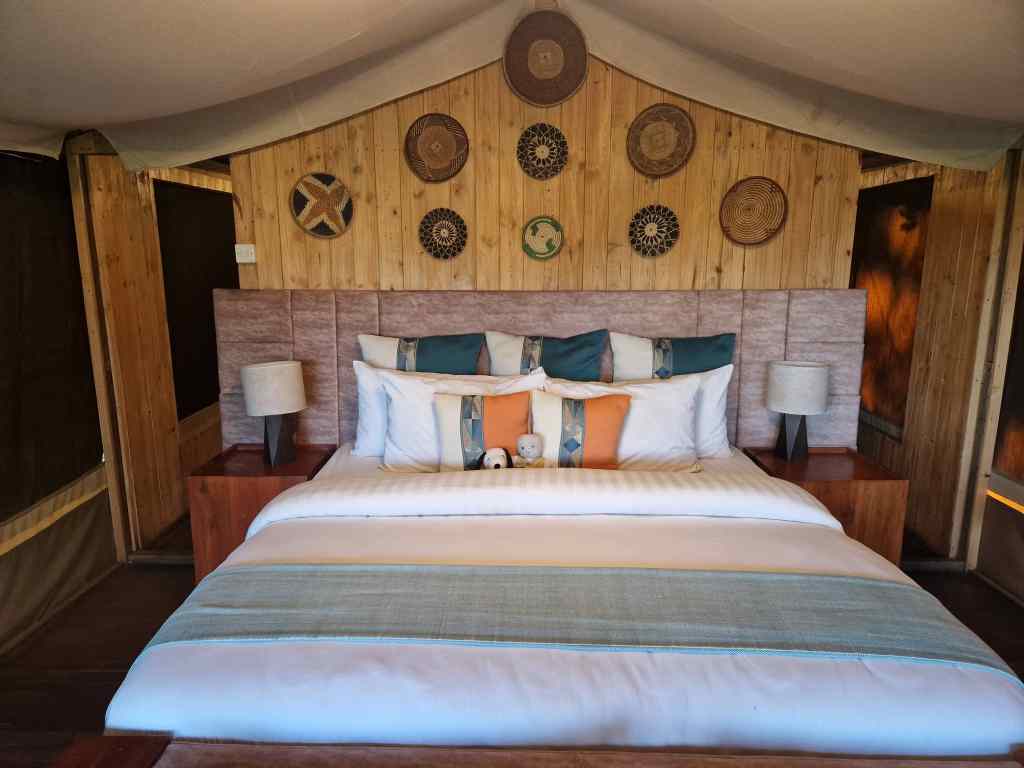
The morning light flooding through my room at Etosha
camp Etosha
The room is part hut, part tent, with canvas sides

After breakfast I set off again to the park. There are two ways to visit Etosha – one is in your own car, making your own itinerary, and one on an organised “game drive” in a truck with other tourists and a guide. The organised tour offers better chances to see animals, since the guides know where to look and communicate their sightings to other guides by phone. But having invested in a big 4×4 I wanted to keep my independence and drive myself. Serious visitors enter the park at its 06.30 opening time to have the best chances of spotting the less easily seen game – particularly the big cats. After my three days of travelling I did not have the energy for another early start and reached the park at around 9, when some of the organised groups were already returning.
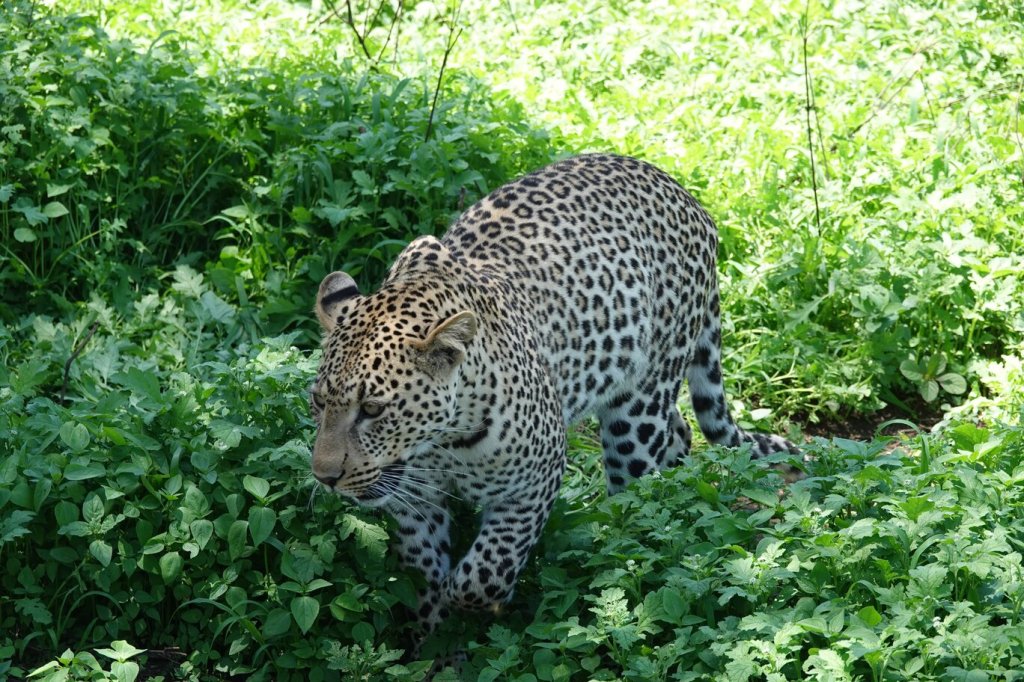
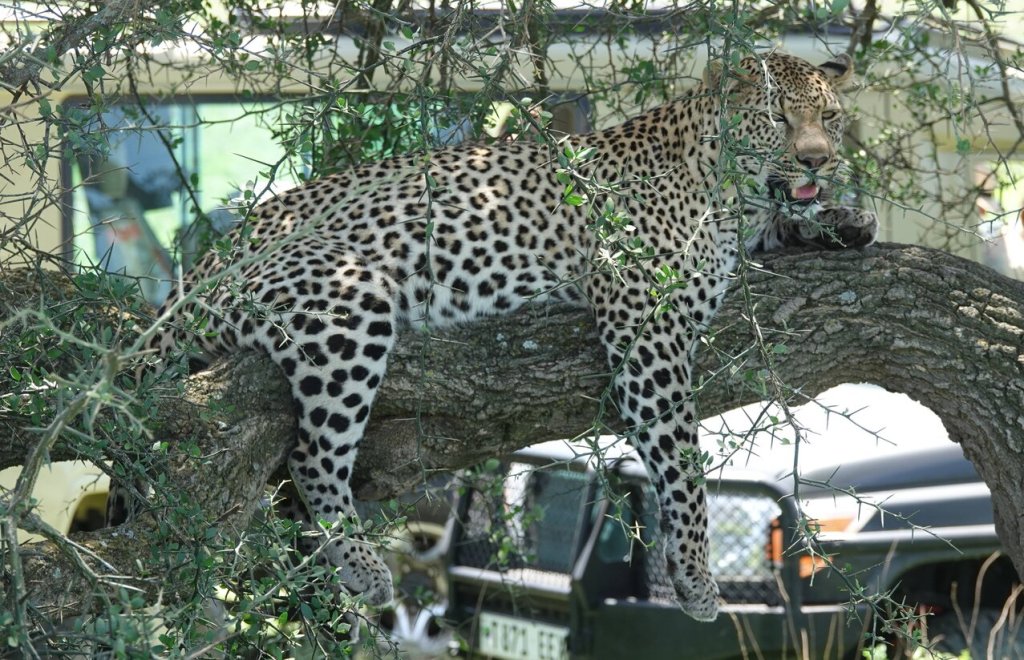
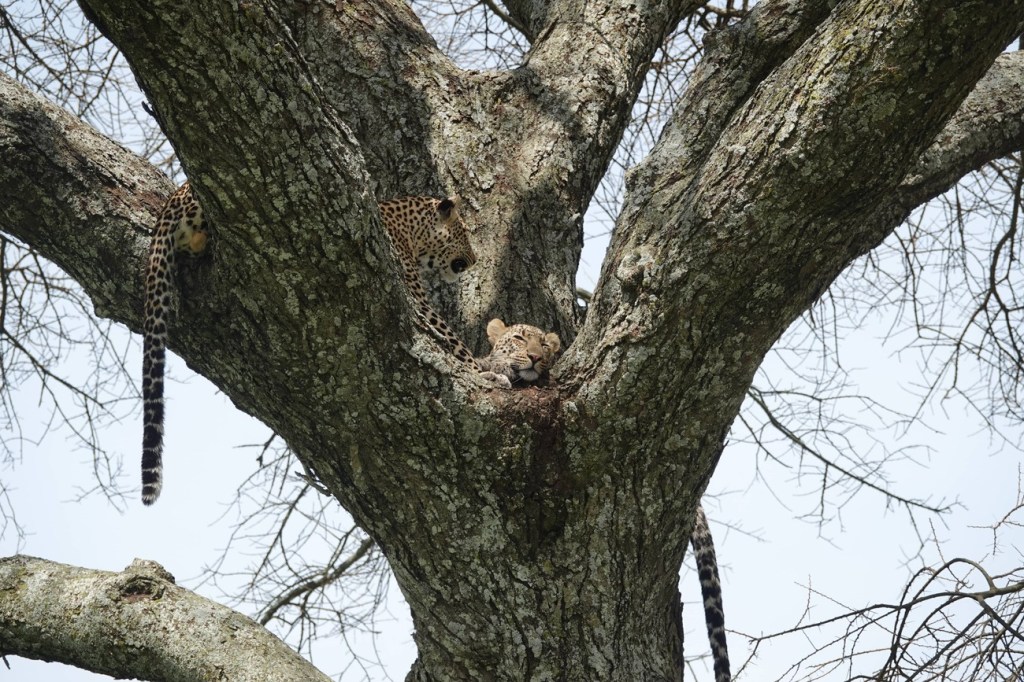
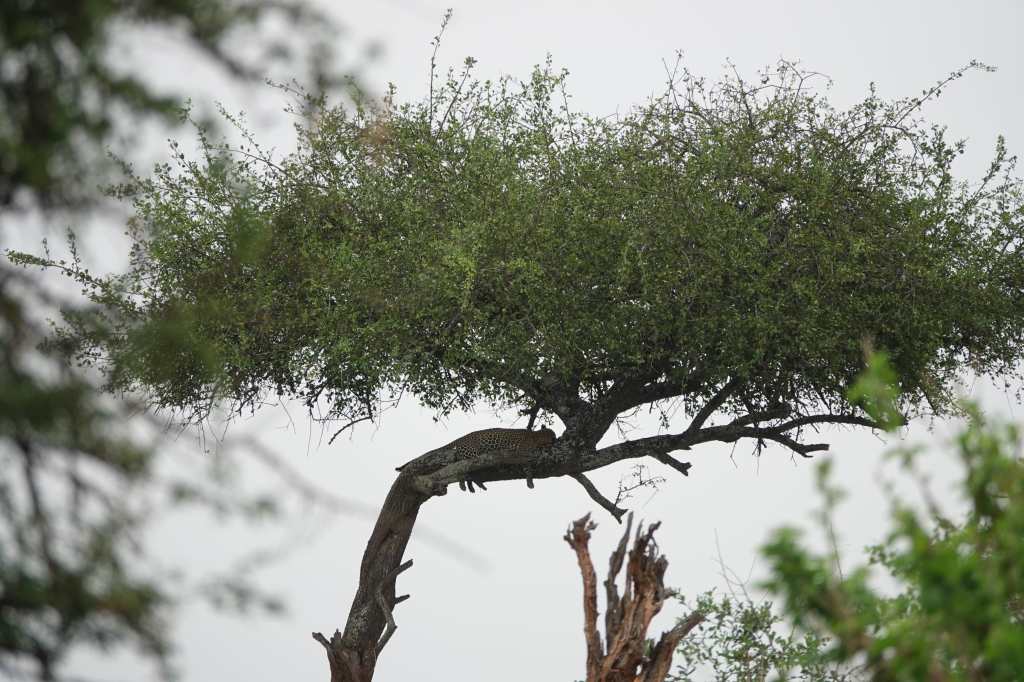
Despite my late start I was very lucky. First I spotted – very briefly – a leopard, one of the most elusive animals in Etosha National Park, but I was a little too slow to get a really good photo.

Leopard Etosha
Leopard (disappearing behind the tree trunk)

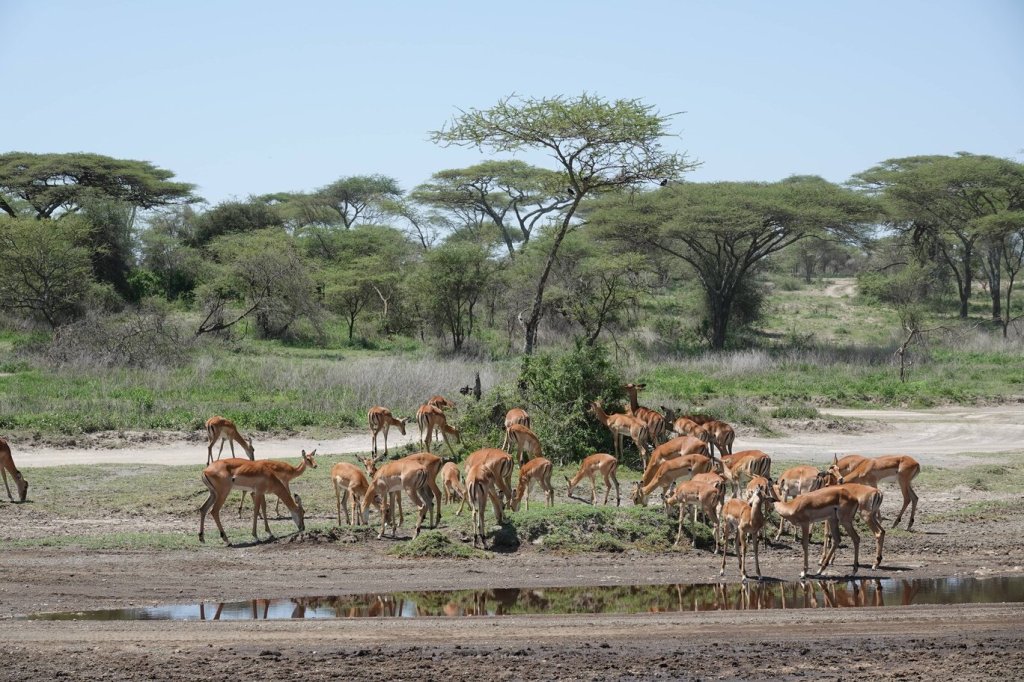
October was the end of the dry season in Etosha, and the once abundant water brought by the rains had reduced to a few waterholes where the game comes to drink. This makes for the best time for spotting wildlife. My first visit to a waterhole did not disappoint; a group of oryx and springboks were drinking, soon to be followed by zebra and some kudu.

Oryx-at-Etosha
Etosha – Oryx and Impala at the water hole

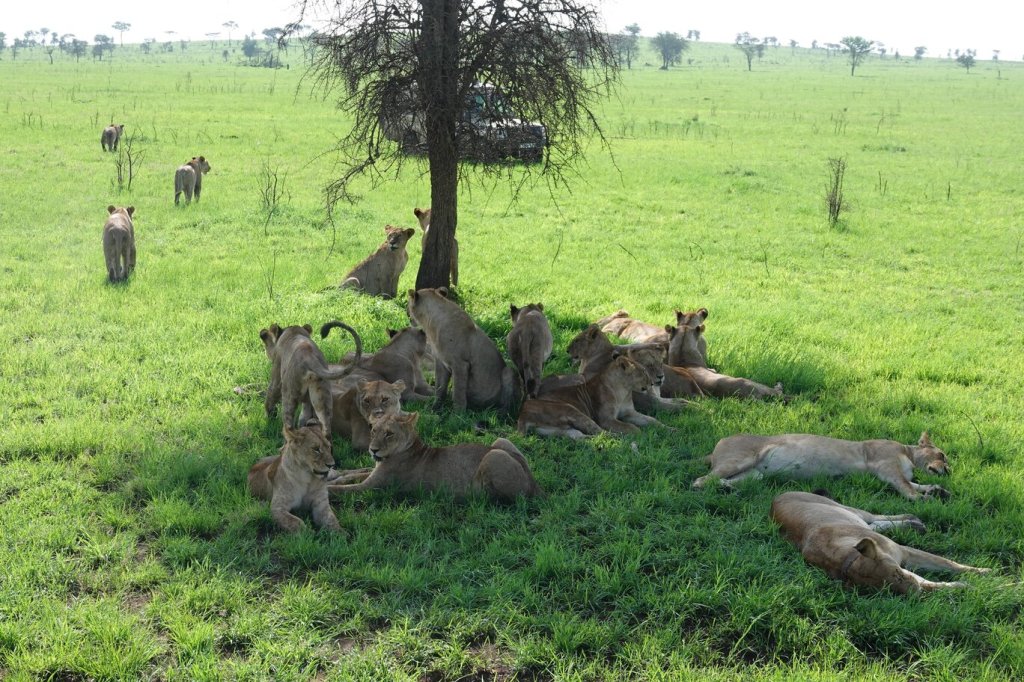
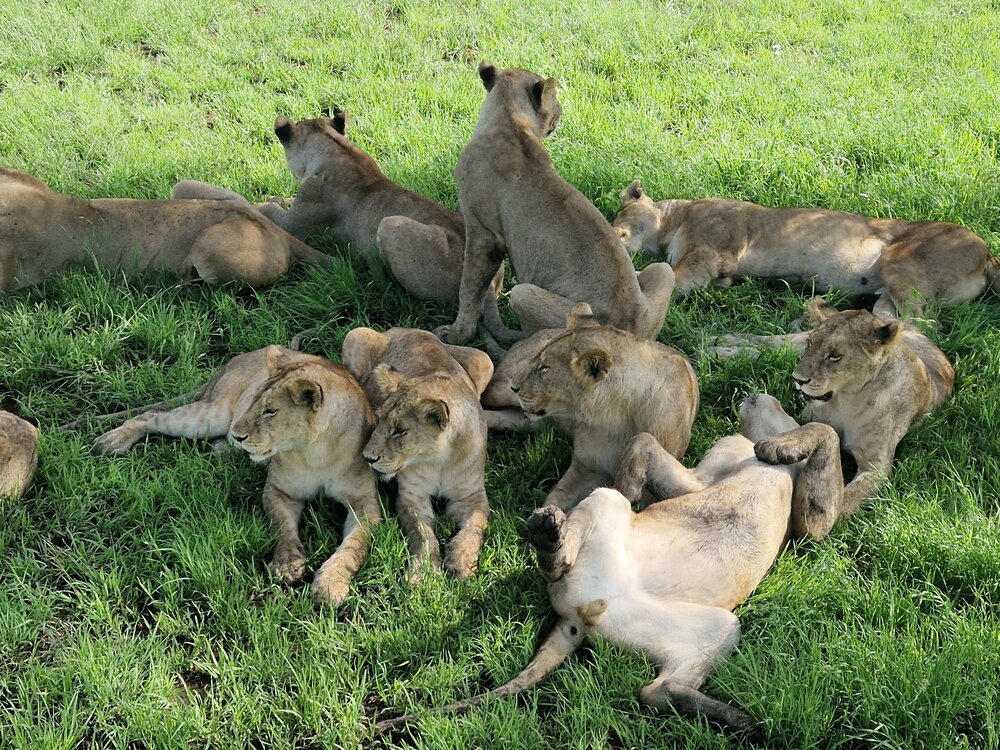
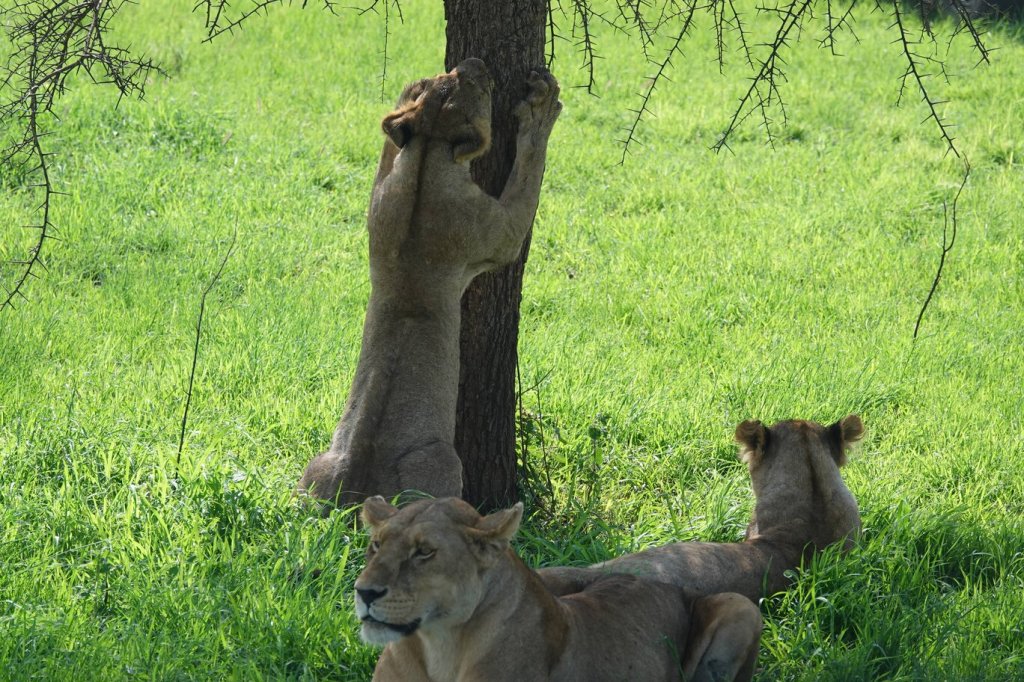
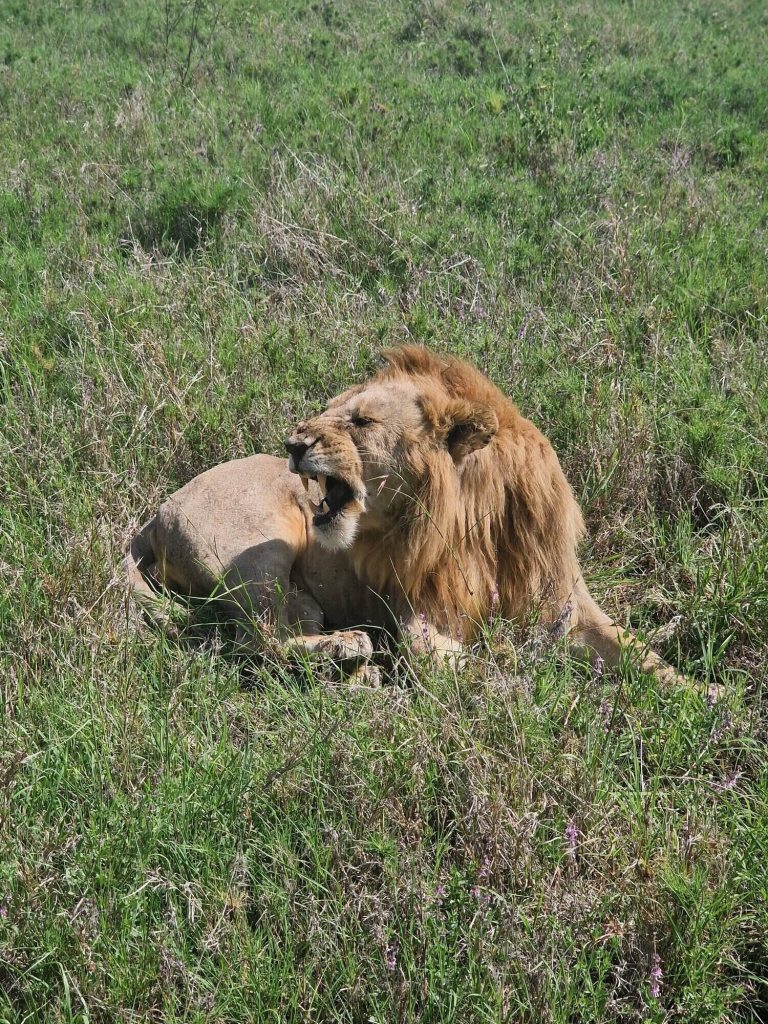
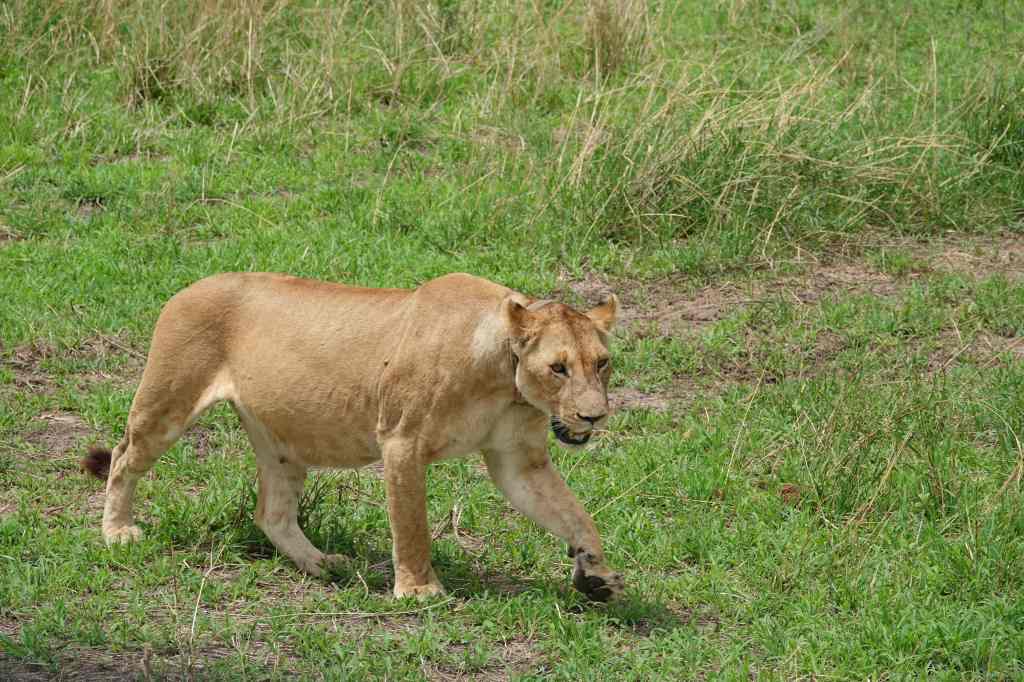
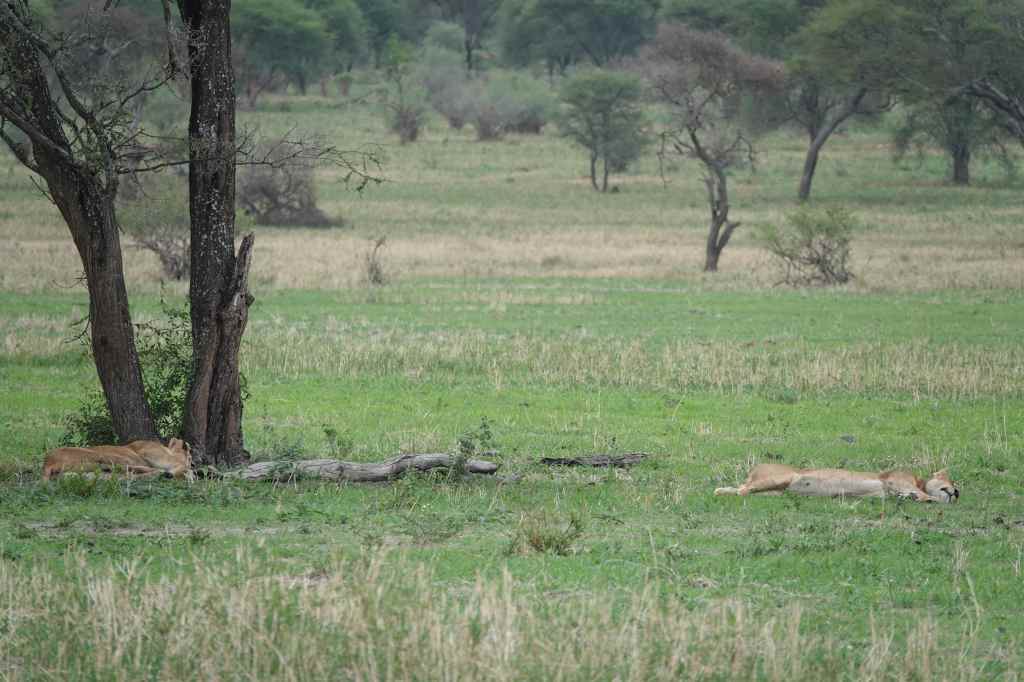
On my way to the next waterhole, I had a stroke of luck and noticed a lion, sheltering from the late morning sun under a bush. Sadly my lack of mastery of my new camera caused me to mess up my photo.

Lion-at-Etosha
Lion hiding from the sun (top left)

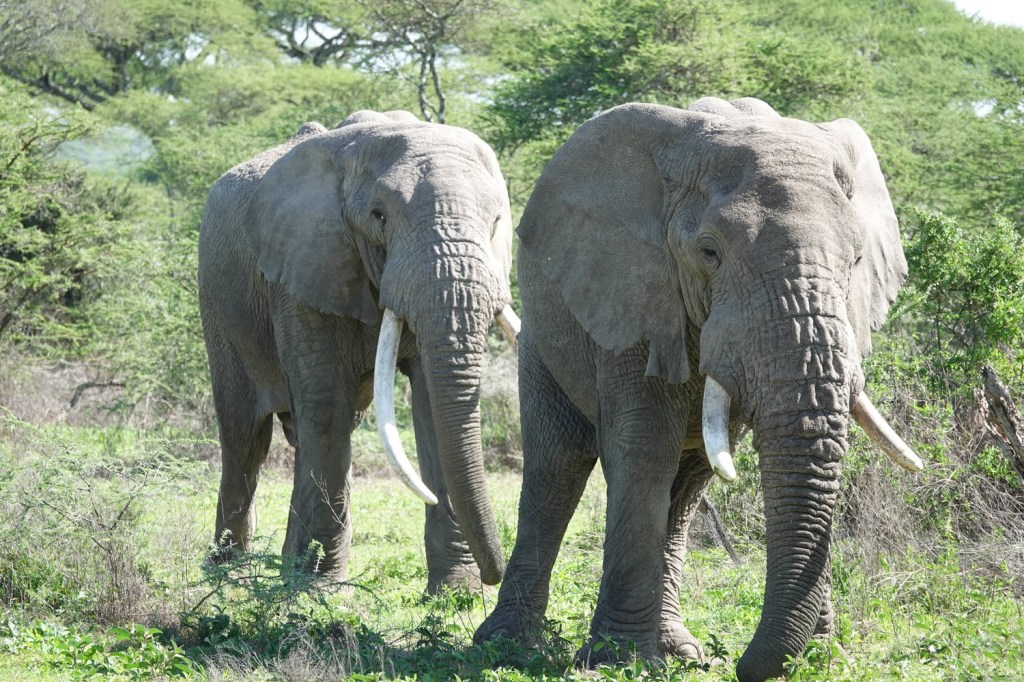
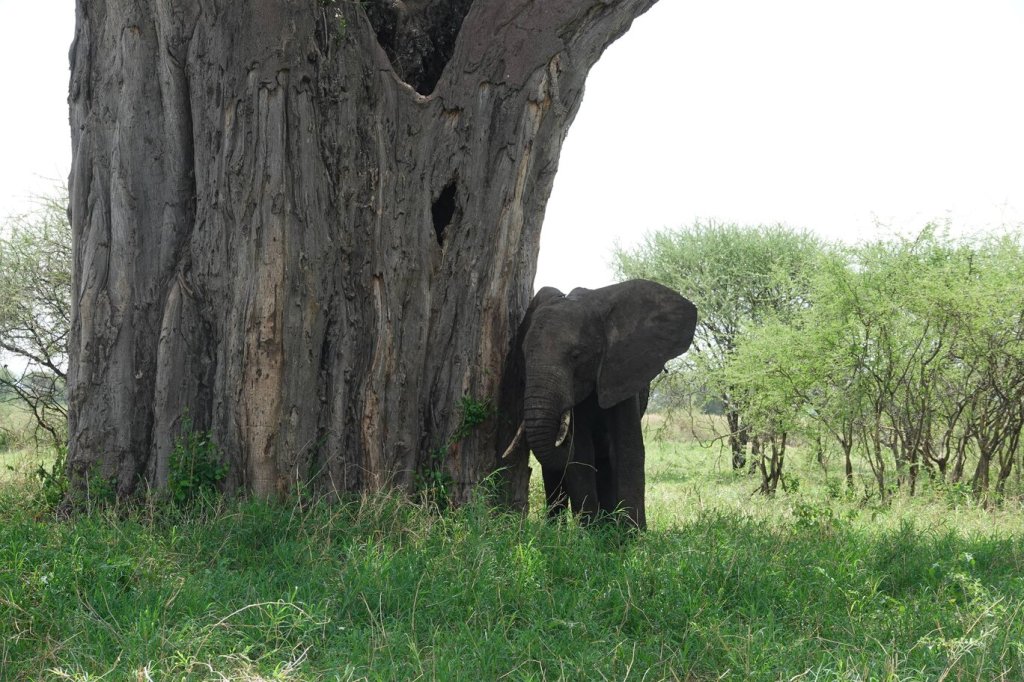
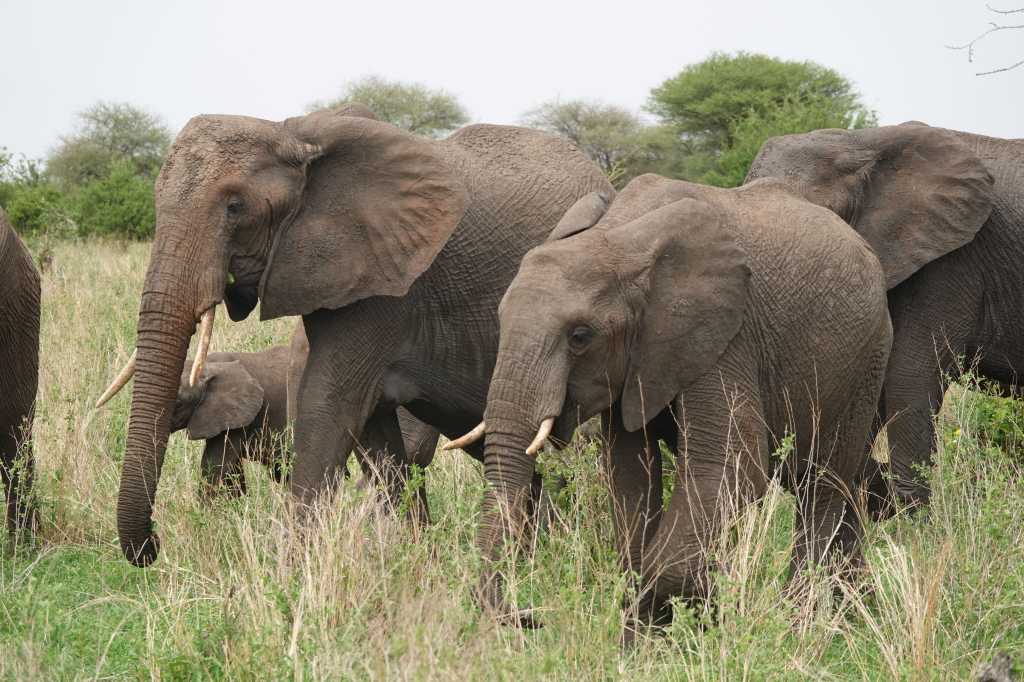
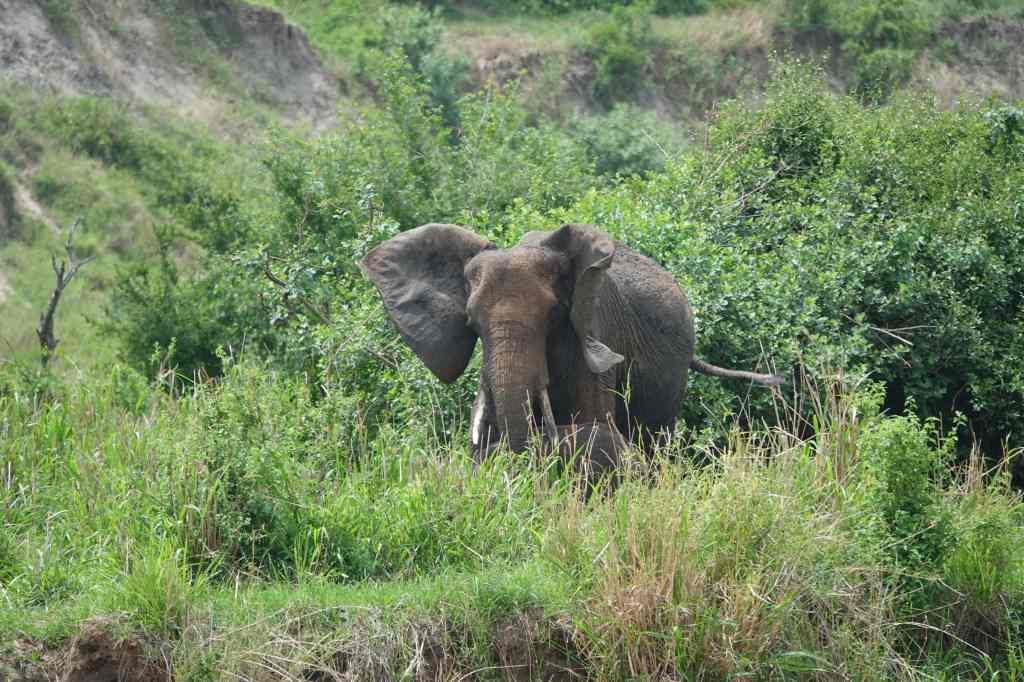
The final waterhole of my morning visit was home to a small group of elephants, who had come to drink and cool off by spraying themselves with water. Elephants seemed very common at Etosha.

Elephant-and-Impala
Elephant and Impala at a waterhole, Etosha

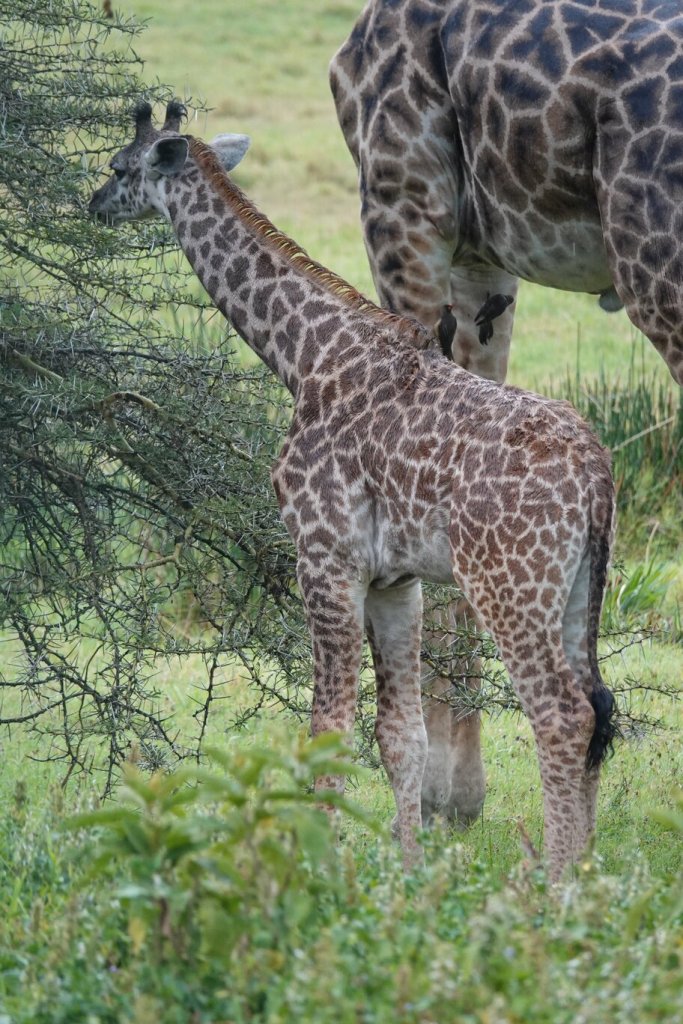
Watching the giraffes drink was the most interesting. They would approach very slowly, then look around for several minutes. Then they would slowly splay their legs and lower their necks to drink. I suppose that their caution is because they is only ever vulnerable to predators in this rather awkward drinking position.

Giraffe-at-Etosha
Etosha – a giraffe drinking

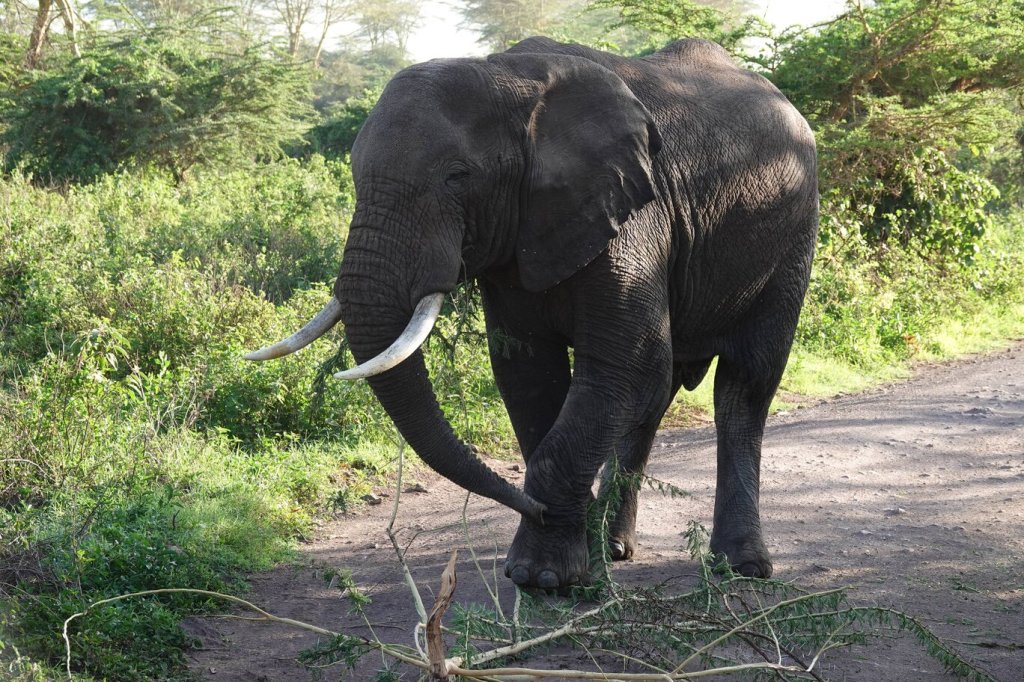
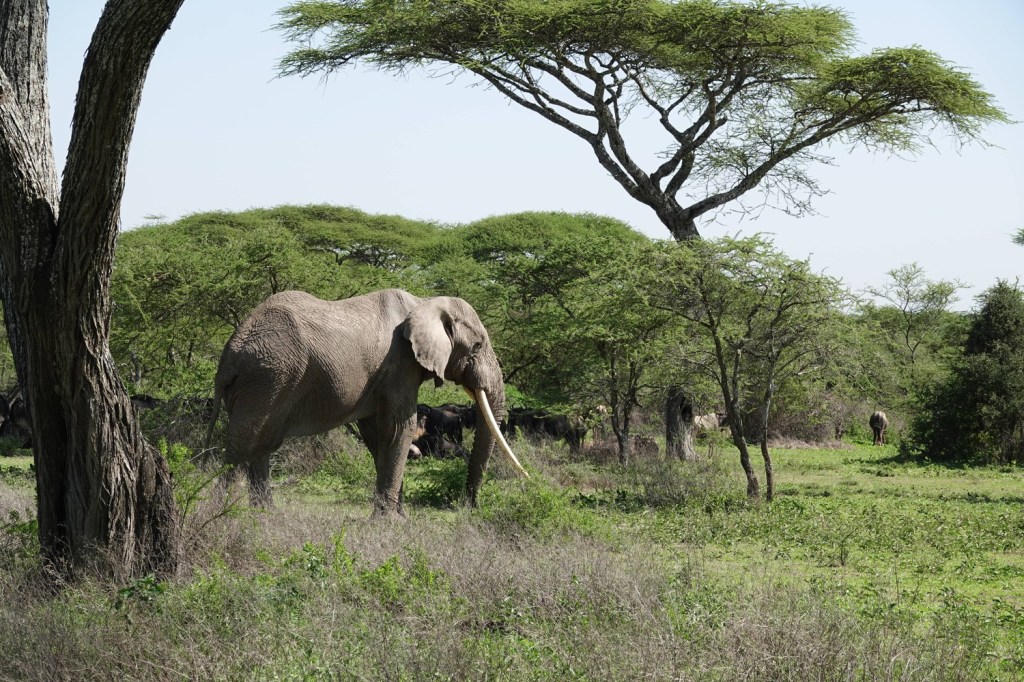
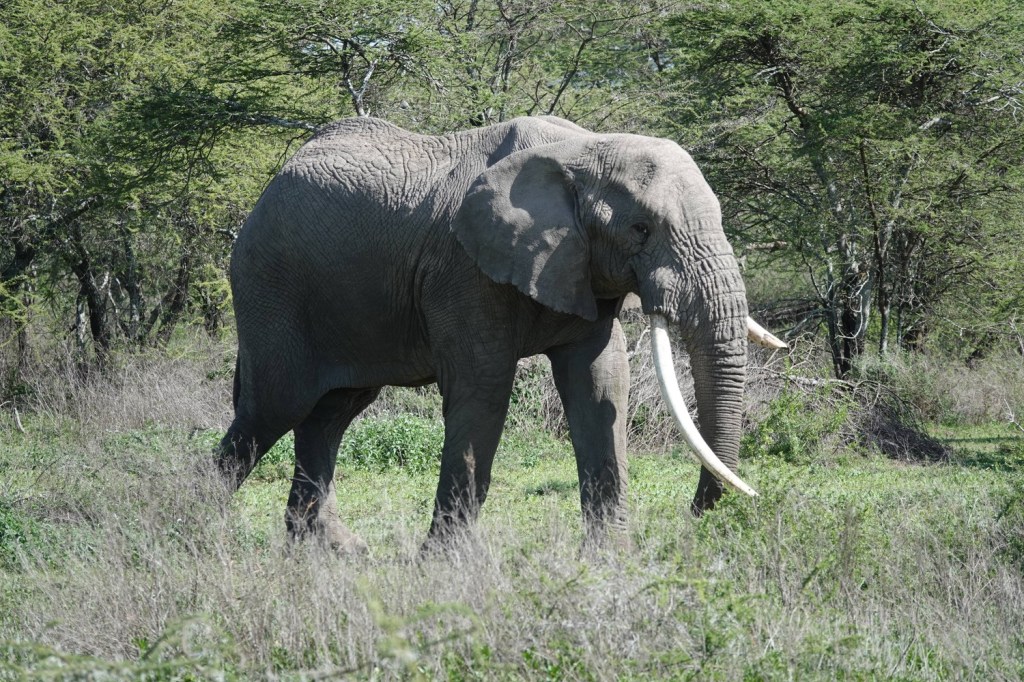
It was now one o’clock, and the hottest part of the day had arrived. This meant that animal sightings would be much harder, so I drove back to my lodge to relax by the pool. At 4pm I set off again for my evening “game drive”. I visited a couple of waterholes without luck, before setting off along a remote track.  At first the landscape was empty and dry, and I began to regret my choice of route. But then I bumped into an old, grey wrinkled elephant just standing by the side of the track. He looked a bit crumbly, and like many elephants in Etosha National Park, had broken tusks (apparently a lack of minerals means that few Etosha elephants have big healthy tusks).

Elephant-Etosha
A solitary old elephant

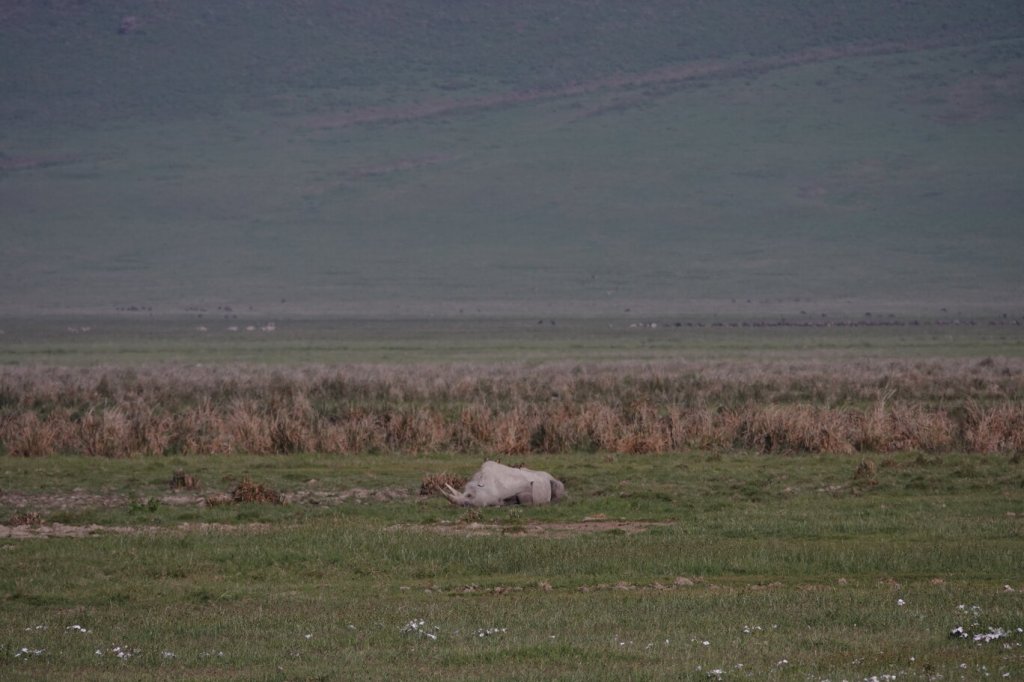
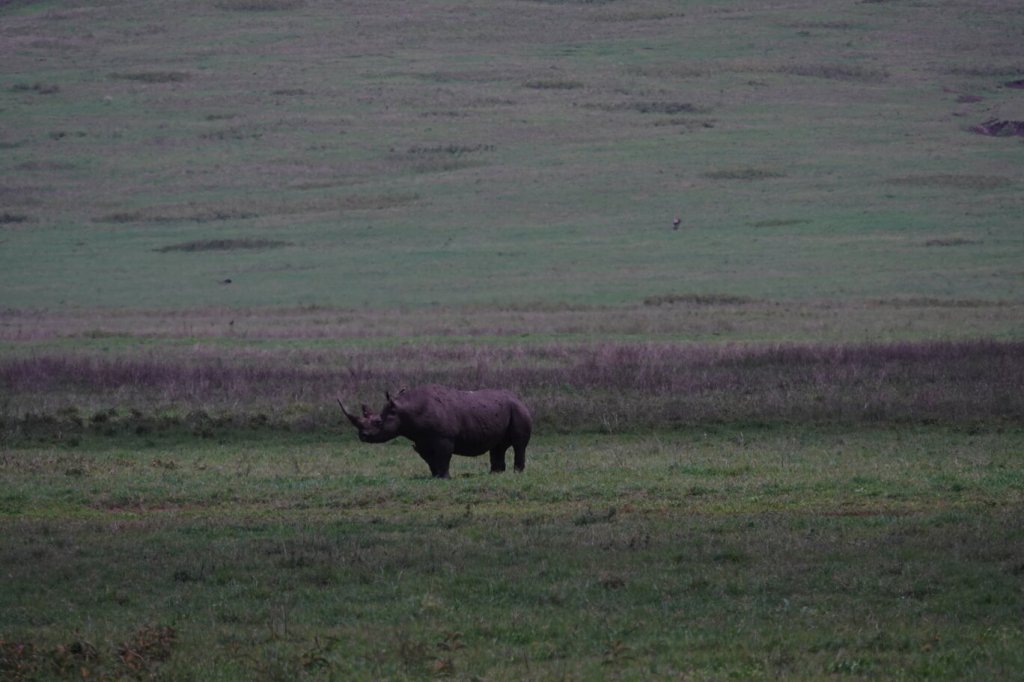
The old elephant, isolated and maybe rejected by his herd, made me feel rather sad, but transformed my feeling about my drive, which became a big adventure. I drove off onto a flat plain. In the distance, I could see the silhouettes of other lumbering elephants and tall giraffes; occasionally the track would bring me face to face with one. I’d stop to let the giraffes run away, but slow down and pass the elephants carefully – my guidebook had a whole page devoted to what you should do if an elephant charges your vehicle. I felt that I had landed on another planet, or gone back to some prehistoric time on earth, before the rise of man. I was enjoying the feeling of total detachment from the modern world when I stumbled upon the highlight of the afternoon – a rare white rhino. I stopped and we looked at each other with curiosity, whilst I took more photos.

White Rhino Etosha
Face to face with a white Rhino at Etosha

I noticed the sun was sinking on the horizon, so looked at my watch and checked the map. I was a long way from the entrance and I had an hour to reach the gate before it closed. I hurried off, initially pursued by the rhino. I raced the sun as it dipped down to the horizon and cast long shadows of trees over the plain and the road. I didn’t want to have to find out what happened to people that got stuck in Etosha after closing time, and made it there exactly at the 19.02, to be the very last vehicle to leave. As I drove off I heard a guard say “Right, home now!” to her colleague.

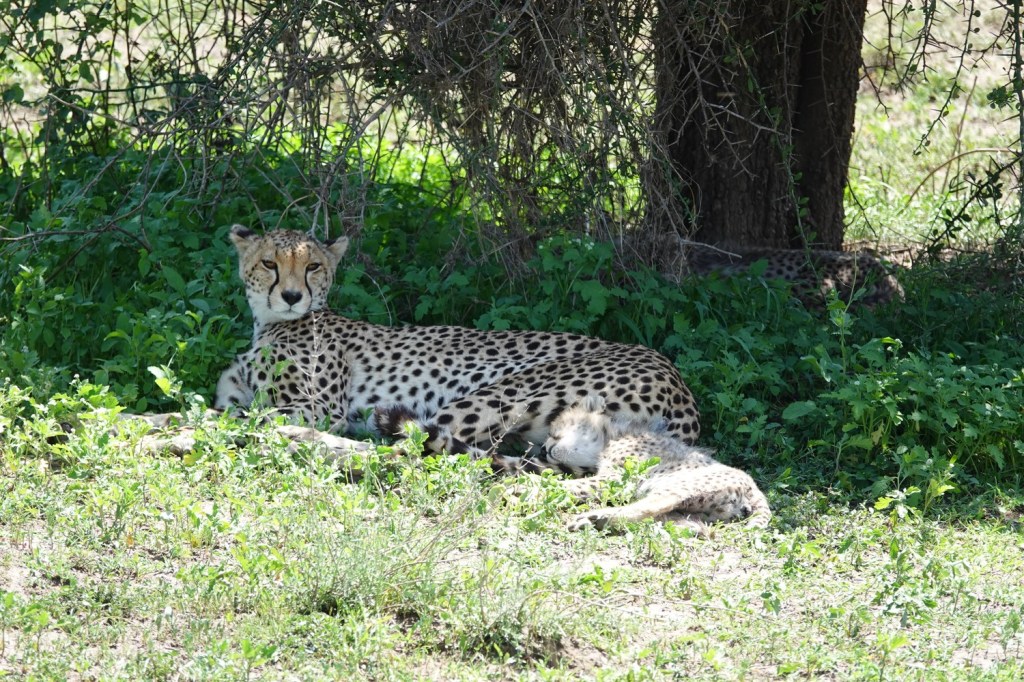
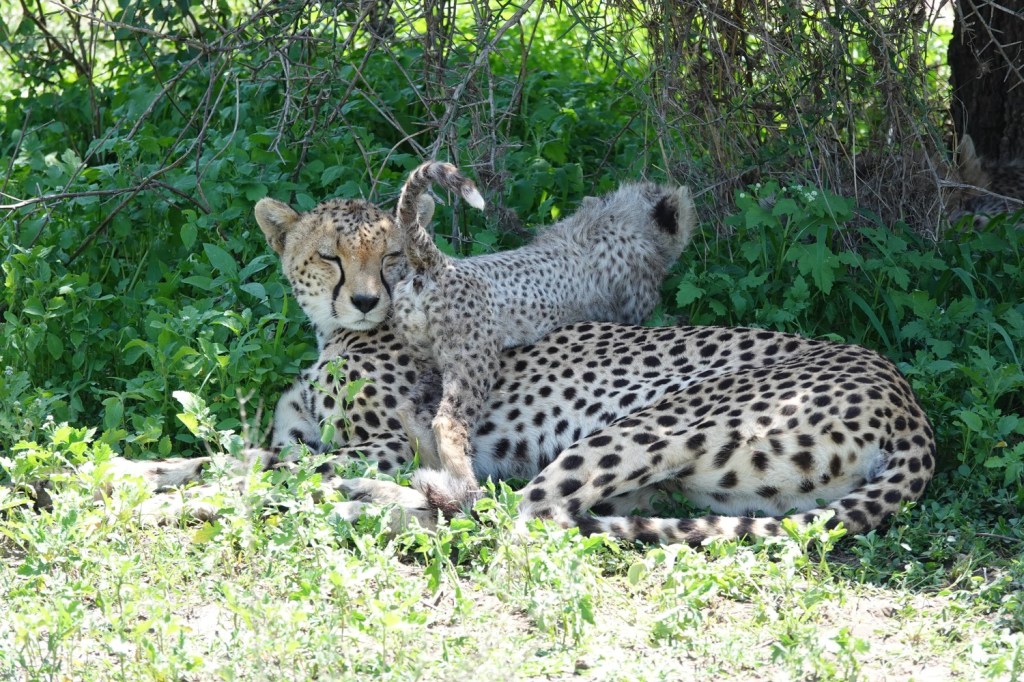
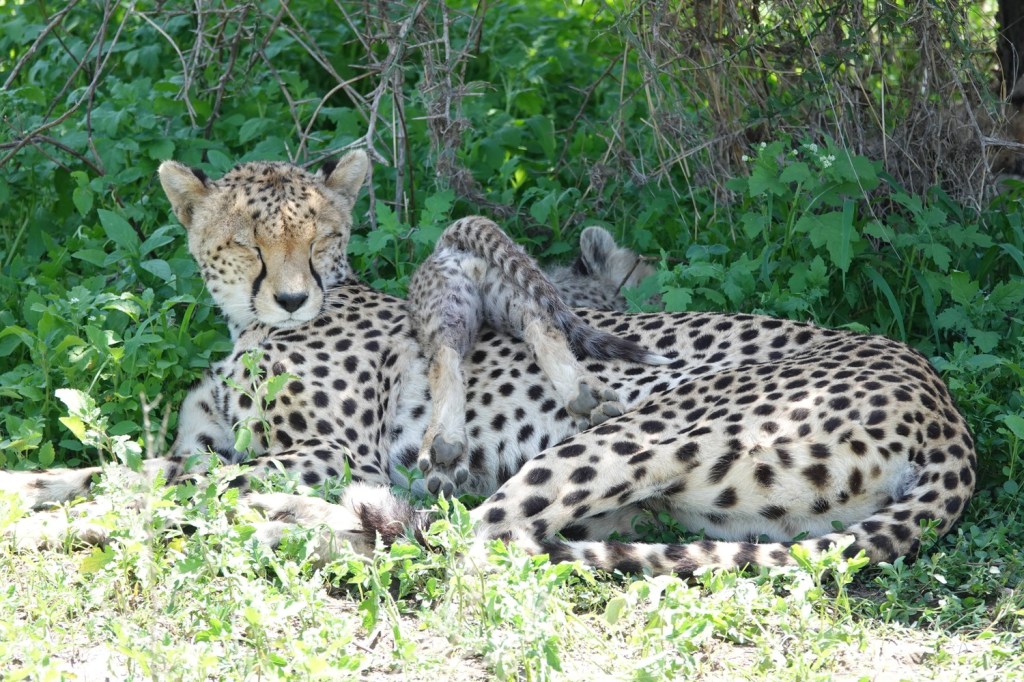
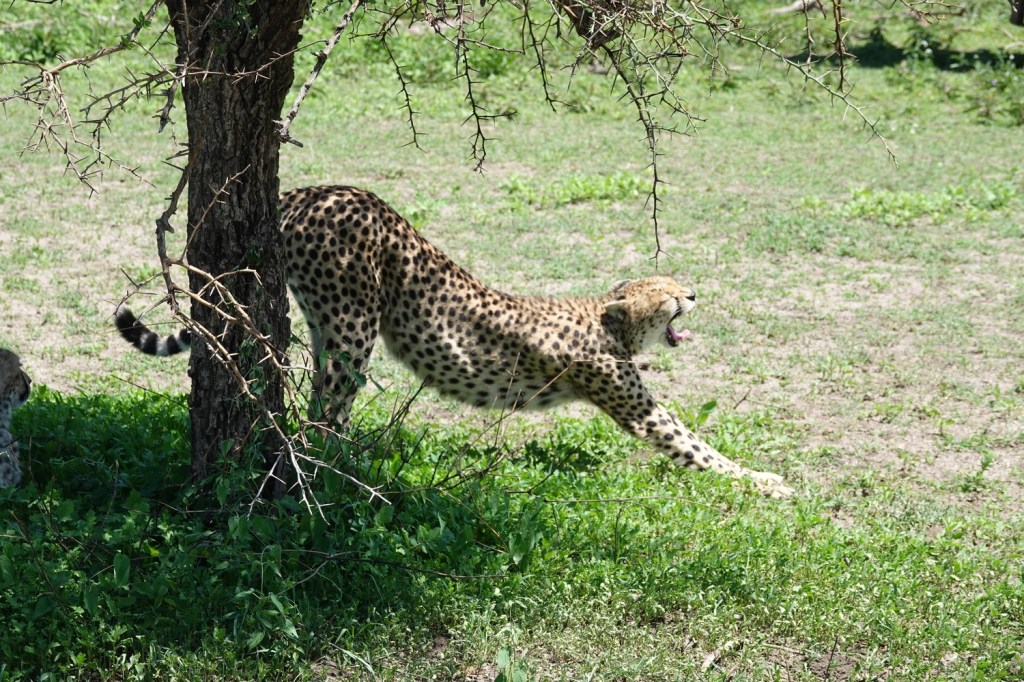
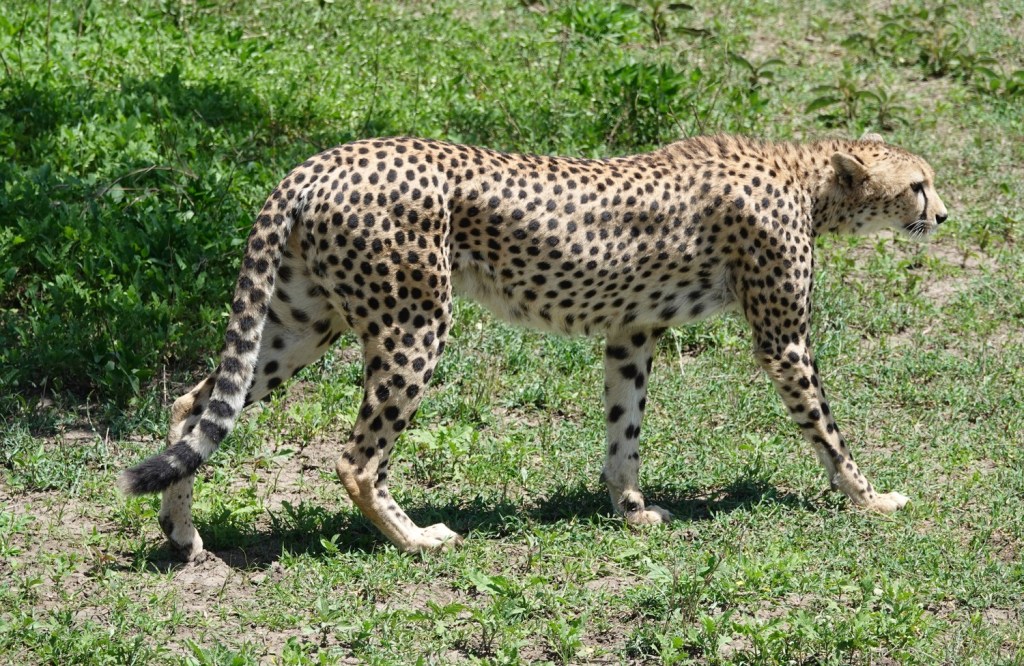
Back at my camp, I had another excellent dinner (fish this time – how did they get it here, so far inland?) and then collapsed into the bed in my tent, very happy with day’s game spotting. Out of all of the larger animals at Etosha, I had been lucky enough to see everything except the eland (Africa’s largest antelope) and the cheetah.

Previous Post – The Long Trip to Etosha National Park

Next Post – Day 2 at Etosha

Bundala, the National Park at the End of the World

Today I had booked another safari – but this time leaving in the afternoon. Two very early starts in the last few days were as much as I could take, no matter how many animals I might miss. My destination was Bundala National Park, which is also very near Tissa, but which receives a fraction of the visitors that crowded Yala does.

I spent the morning relaxing by the pool and admiring the lake, where a man was fishing, and some women were washing clothes. They seemed unconcerned by the sight of small crocodile sunning itself on a nearby rock – I would have been worried that it might have larger and hungrier parents.

View from my hotel over the lake

My safari jeep arrived, and we set off at two o’clock. Unlike the modern road to Yala, the road to Bundala was in poor repair. I sensed that very few people went this way. The park entrance also looked uncared for and dilapidated.  A few dogs came up to inspect us, but there were no humans around to ask us to pay the entrance fee, and my guide had to open the gates himself.  We were clearly the only visitors.

Typical Bundala scenery

Bundala is a wetland park formed out of many lakes lying just in from the coast, and a sign at the entrance announced that was ranked 287th in UNESCO’s list of wetland areas deserving protection. I had never heard of this list, and thought it was maybe better not to publicise appearing in 287th place. The first animals I saw were water buffalo. Unlike Yala, where multiple jeeps would descend on a solitary leopard, here the buffalo queued up to check out the unusual sight of a visitor.

In this park the animals queued to watch tourists

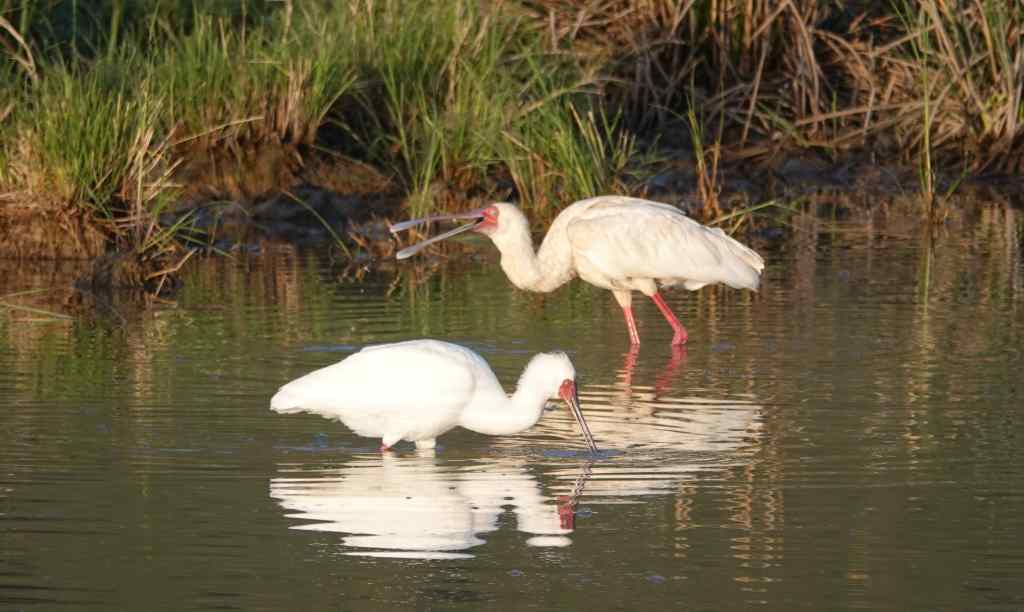
Bundala is most famous for its birdlife and sure enough there were birds everywhere – large groups of peacocks, brightly coloured kingfishers, bee-eaters, egrets, herons, and eagles hunting for fish.  There were also some species I had never seen before, like the purple swamp hen and the spoonbill. They all seemed more nervous of our jeep than the birds in Yala, and the peacocks would run away from us at great speed.

The purple swamp hen
Test – spot the eagle

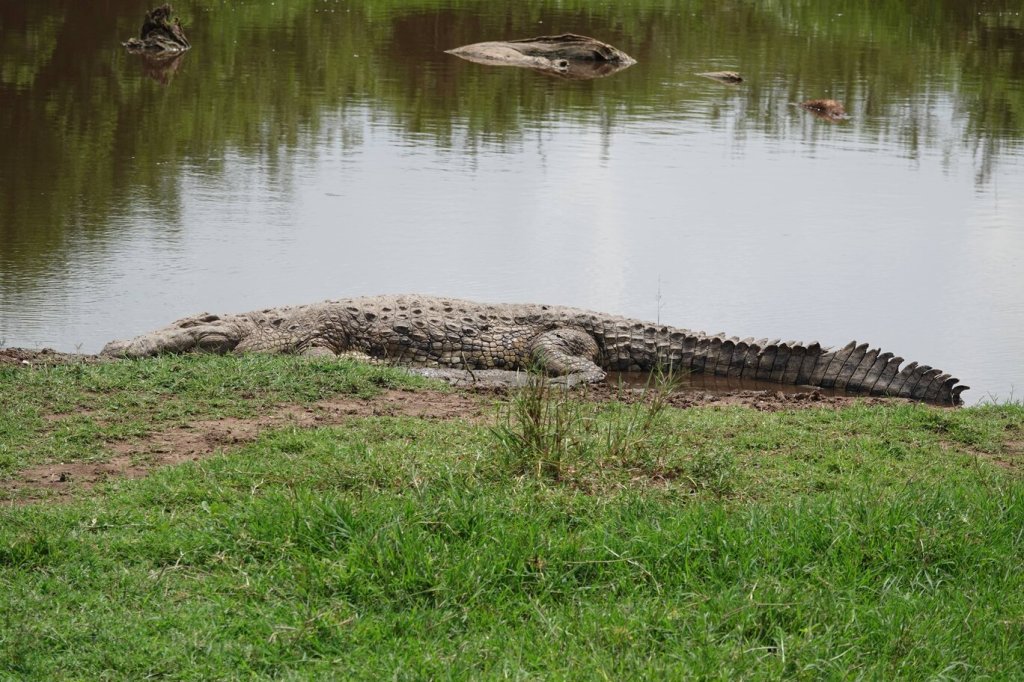
Bundala’s other speciality was crocodiles. I saw so many that after a while, I only paid attention to the very biggest ones. The reptiles often lay on the road directly in front of us and would only get out of the way when they were sure we were heading in their direction. Then they would scramble into the water and disappear, leaving only a train of bubbles.

Camouflaged Crocodiles – how many can you see?
Too big to bother to hide

Although I made fewer sightings of larger mammals at Bundala than I had at Yala, the experience of driving around a deserted nature reserve was much more rewarding.

Giant lizard on a termite nest

The sense of being all alone increased when we reached a cliff overlooking the sea. Large waves rolled in and broke over the boulders below me. Ahead of me, the sea stretched to the horizon – looking south, the next land would be Antarctica, thousands of miles away. It felt like the end of the world – and in some ways, it was.

The end of the Indian sub-continent

The afternoon was drawing on, and as the sun approached the horizon its light reflected off the myriad of small lakes that make up the park. A strong breeze from the sea kept me pleasantly cool. The park was quiet, except for the murmur of our jeep’s engine and the rustle of leaves in the wind.  

More typical Bundala scenery

I was rather sorry when the park gates appeared in front of us again, meaning the safari was over. This time, a park ranger was on duty. My guide gestured to ask whether we should sign our vehicle in and out again, but the ranger silently replied with a shake of the head to say that could go without any formalities. Words seemed unnecessary. I said a fond goodbye to Bundala, one of Sri Lanka’s least visited, but in my view best, national parks.

Leopards and Dancers

This morning I duly struggled to get up at 4.30am to leave at five for my safari in Yala national park. Yala is famous as being the best place to see wild leopards in Sri Lanka, and so is the most visited park on the island.  Sure enough, my safari jeep and its specialist guide/driver were waiting for me at the hotel entrance, as was my packed breakfast. The early start ensured we were the second vehicle in the queue to enter when the park opened at six, which was also when the sun rose.

My driver went along well-established trails of red soil that led through the jungle.  As it became light, I could admire the scenery, with its mix of red (the soil) green (the jungle), brown (large rocks on the horizon) and blue (lakes) colours.  

Yala scenery

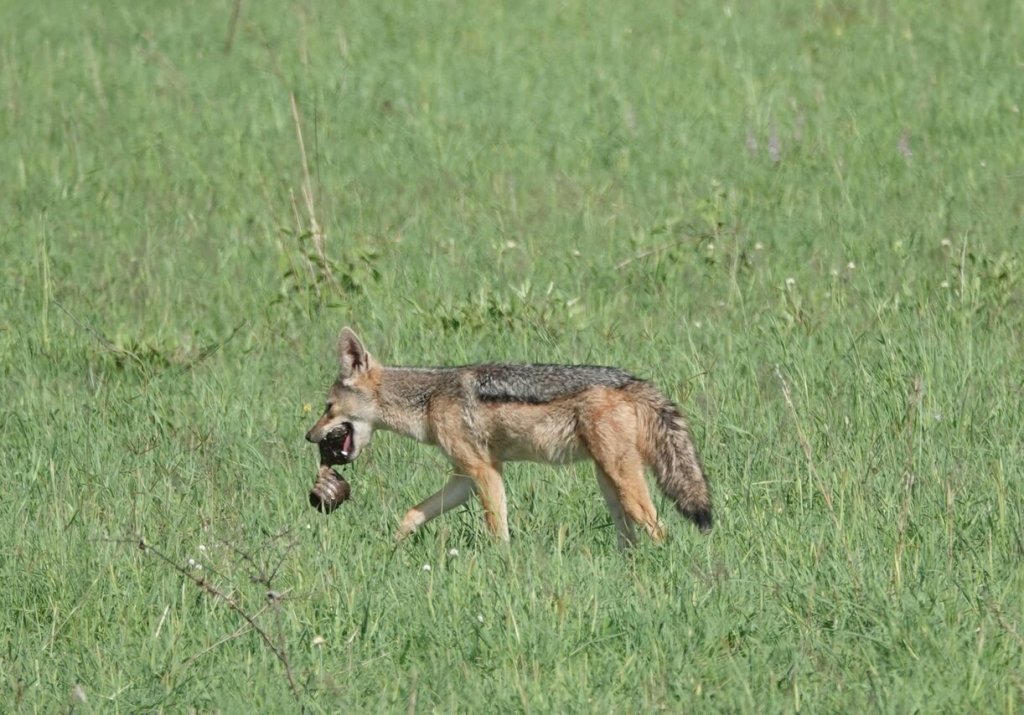
The guide said that sightings of leopards, elephants and bears were rare, but that there would be lots of other animals and birds to see. Sure enough, we saw bee-eaters (small brightly coloured birds), eagles, deer, crocodiles, and a jackal. Sadly, my mobile phone camera proved woefully inadequate for taking pictures needing a zoom, so most of my photos are not worthy of my blog.

After an hour, my guide got excited. The guides keep in touch with each other by phone, and one of them had spotted a leopard.  We rushed around the park to be the second jeep to arrive on the scene, and sure enough, lazing in the sun on a distant rock, was a leopard.  The view was partly hidden by trees, so it took me a while to spot it, with my guide’s help. I just had time to take a (rather poor and fuzzy picture) when more jeeps arrived.

Leopard?

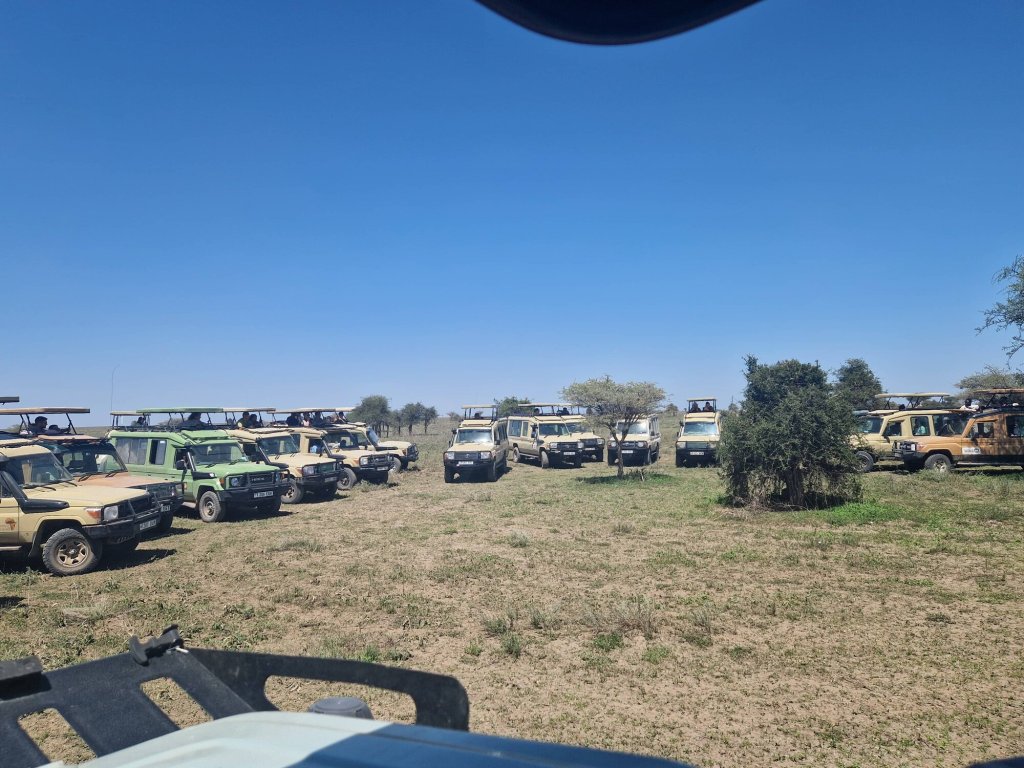
The peace of the scene was shattered as vehicles jostled for position and tourists squeeled with excitement. One newly arrived jeep pulled up just in front us, blocking my view. The vehicles all kept their engines running, and soon the air filled with the stench of diesel fumes.

LEOPARD!!!!!! LEOPARD!!!! LEOPARD!!!!

Somewhat disappointed by the “circus” of a leopard sighting, I asked my driver to move on – which proved difficult, since he had been blocked in by the other jeeps.  We finally got free and continued our exploration of the park alone, which I found much more enjoyable.  We saw lots more smaller animals and birds – my favourite was a mongoose and her baby, who came up close to investigate us.

Mother mongoose checks us out

Our driver was heading to the park exit, when he got another message on his phone, turned his jeep around and rushed to a spot where elephants had been heard.  When we arrived there were a couple of other vehicles watching a small group of the animals through thick jungle. We waited, and our patience was rewarded when they broke cover and crossed the road.

Tick the box – Elephants

After the elephants, my driver took me back to the hotel, happy that he had delivered the top two attractions – leopard and elephant – and could therefore expect a good tip. It is a shame that the park’s bears are very rarely seen – I would have liked to greet a distant relative.

I spent the hot afternoon catching up on sleep and then lazing by the pool. I texted my regular guide that in the evening I would like to visit  Kataragama, a holy town and pilgrimage site with some temples. My guidebook said at this time of year there should be a major religious festival happening there, and that pilgrims walked the entire length of Sri Lanka to attend. However, it was impossible to find any more details about this on the internet, or the exact dates. My guide texted back with great excitement to say that today there would be a big procession, which only took place once a year, to mark the end of the festival.

We made the short drive to the temple and found that a large but well-organised crowd had gathered along the procession route, and saw the last of the performers entering the temple to take up their places.

The Temple at Kataragama

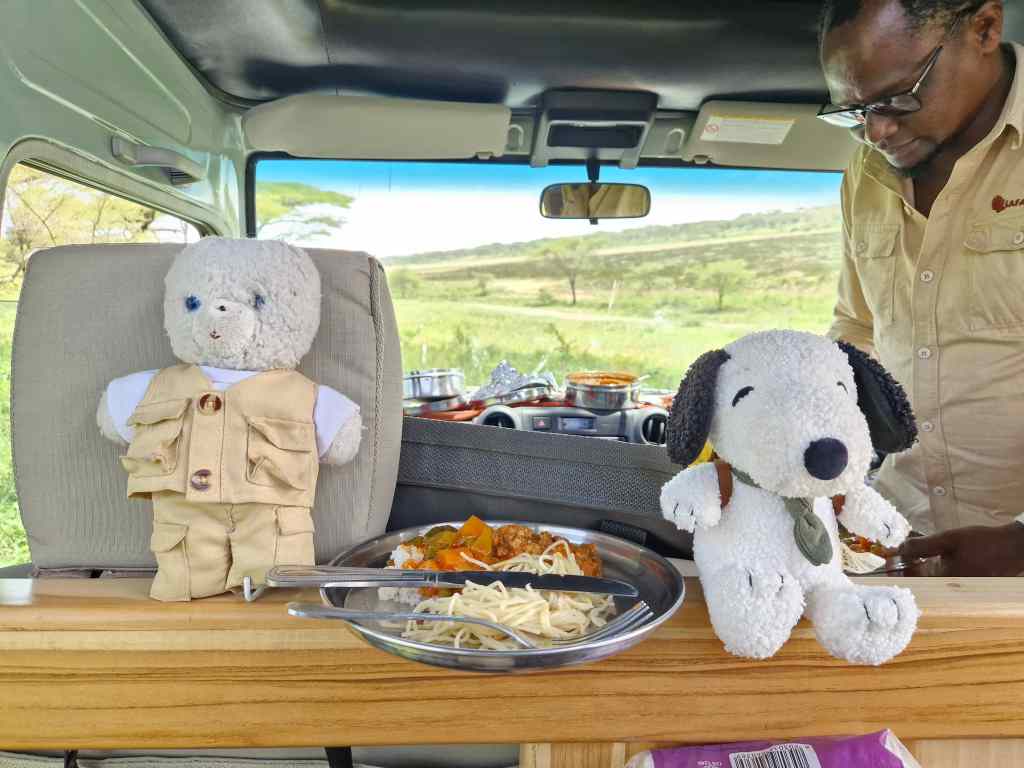
My guide found me an excellent space, from which even a short little teddy bear had a good view of the route. I sat down like everyone else to enjoy the show; one of the other spectators lent me a plastic sheet to sit on. The procession exceeded all my expectations. It started with a group of men cracking huge whips (sounding like firecrackers or gunshots).

These were followed by a group of men juggling fire. Fire was a recurring theme, with men bearing flaming lamps walking by the side of the route. There was even someone with a big cylinder of fuel to refuel them as they went.

After that, wave upon wave of dancers in elaborate costumes filed past to the sound of drums and various wind instruments. Each wave was completely different to the preceding one.

The procession starts….

The guide said the procession was Buddhist, but then changed his mind and said it was Hindu. It seemed to have elements of both – the temple was definitely Hindu, but the performers also often carried Buddhist flags.

These flags might be of the Hindu god Garuda
Buddhist Flags

After each five groups of dancers, there would be a processional elephant covered in brightly coloured cloth.

The first elephant arrives
Another elephant

I lost count how many groups of dancers there were – maybe around thirty, meaning that there must have been around six hundred performers. Not only were their costumes magnificent, and their dancing elegant, but they all seemed to be having a good time and smiled broadly.

The dancers all seemed joyful

The procession closed with a large richly dressed ceremonial elephant carrying a sacred relic (my guide couldn’t explain to me what exactly). The crowd rose to throw flowers over the animal.

The end of the procession – an elephant carrying a sacred relic

I had sat, captivated, for over an hour – this unexpected event had been one of the highlights of my trip. It had been the polar opposite of touristy Yala park – I think I was the only tourist present.

Blog at WordPress.com.

Up ↑