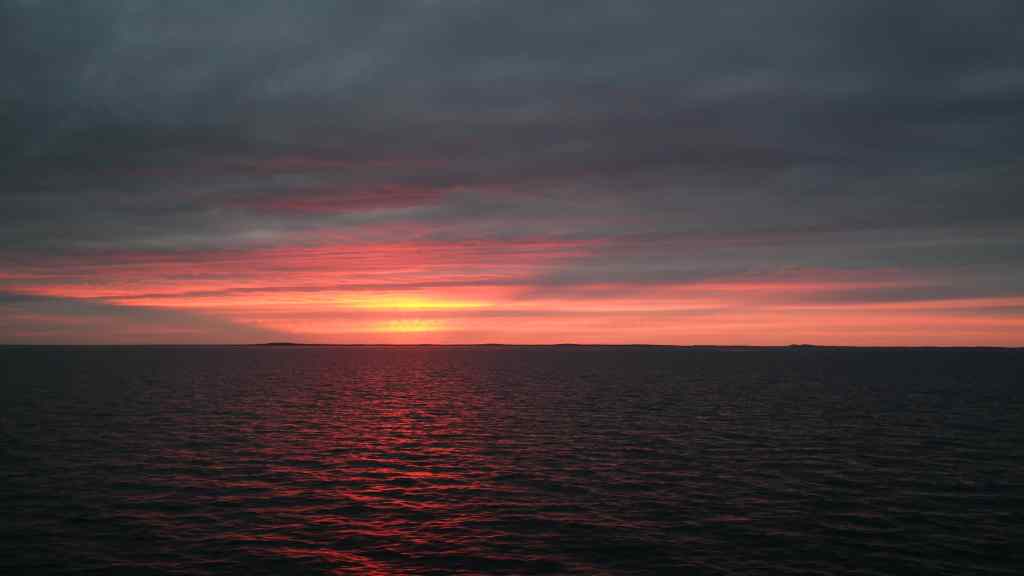
The Russian Caucasus 2 – Ossetia, Ingushetia and Chechnya

This post continues my exploration of the Russian Caucasus into the supposedly wild and exciting republics of North Ossetia, Ingushetia and Chechnya – a famously restless and troubled part of Russia. Here is a map to remind readers where these places are:
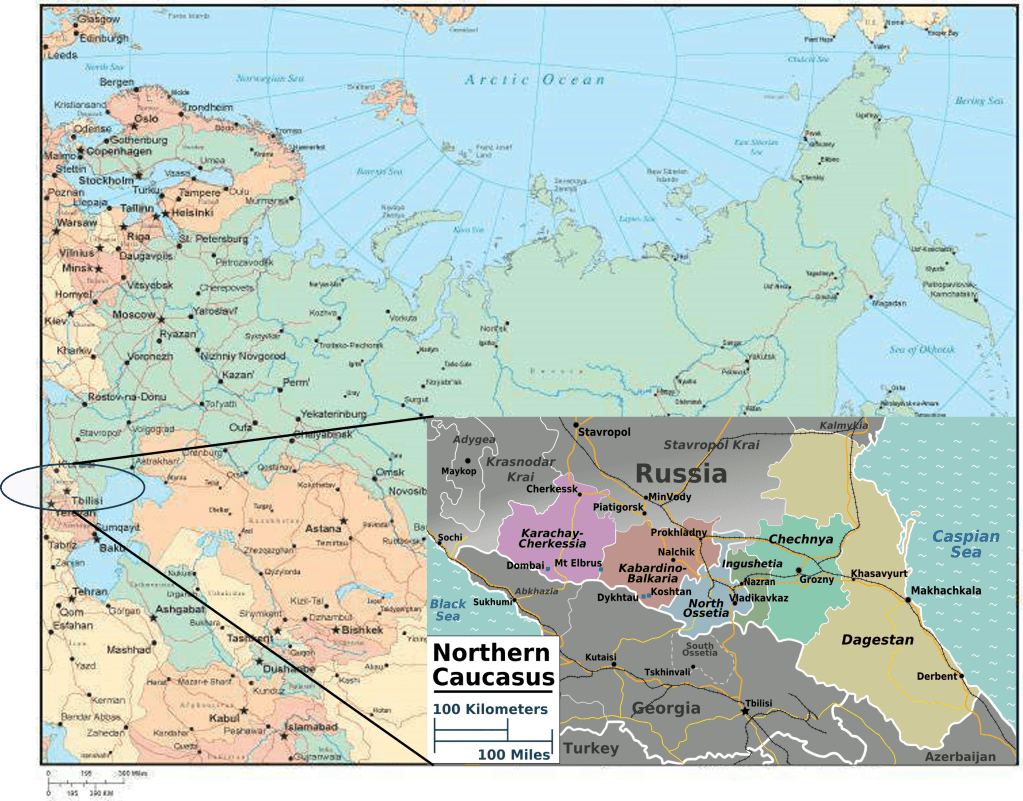
The Russian Caucasus – detailed map by Peter Fitzgerald

I made this trip using three different guides, one for each republic, and started in Vladikavkaz in North Ossetia. It was founded in 1784 as a Russian fortress controlling entry to a strategically important gorge, and its importance increased further when the Georgian Military Highway was built to link Russia to Georgia (then part of tsarist Russia’s growing empire) in 1799. As Russian influence extended south, Vladikavkaz became an important administrative and industrial centre. Today the city is pretty, relaxed provincial city backed by impressive mountains…..
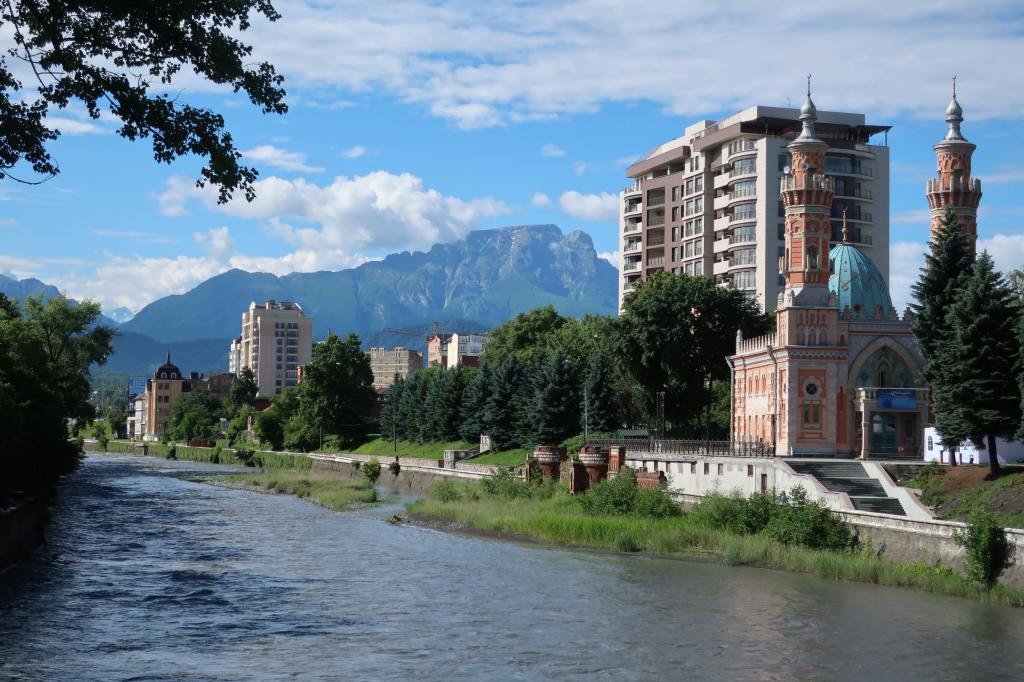
Vladikavkaz

…..and has some grand old buildings.
A grand old building in Vladikavkaz
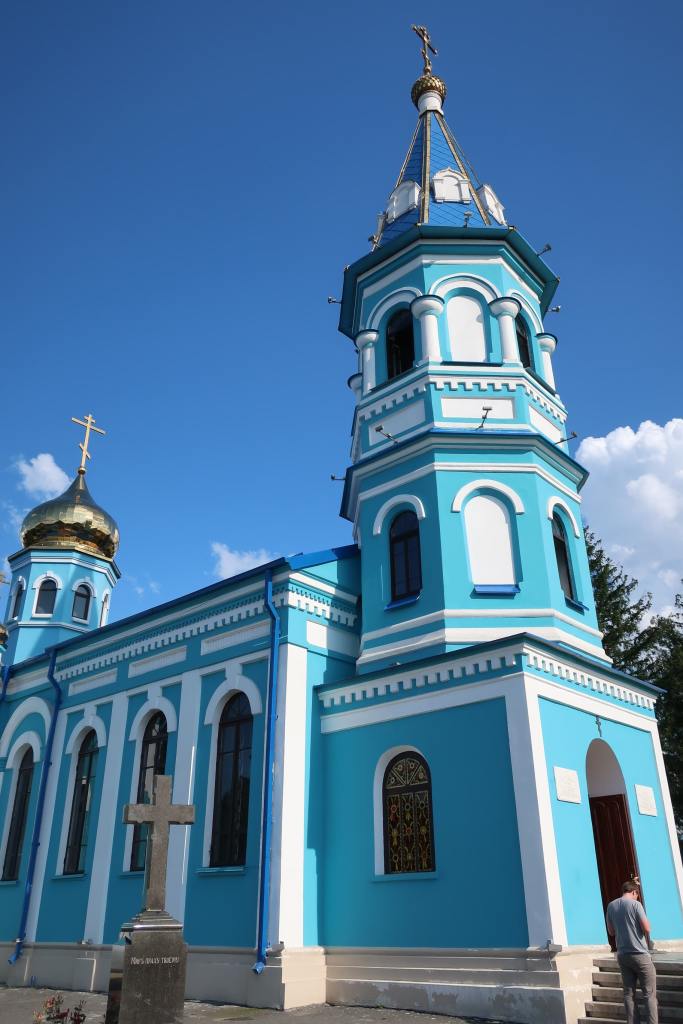
A church in Vladikavkaz. The city is mainly Slavic and Christian

During WWII the German army reached as far south as Ossetia in its quest to seize the Soviet oil-producing centre in Azerbaijan, but they were beaten back by the Red Army at Vladikavkaz after fierce fighting. A short way outside of the town is a large memorial to the heroes of this battle – including one soldier who threw himself across the opening of a German machine gun post to stop the enemy from being able to fire at his colleagues. My guide emphasised the heroic role of the Ossetian people in resisting the Nazis and said that the neighbouring Ingush and Chechens had not fought as bravely and were the source of the all the trouble in the region.
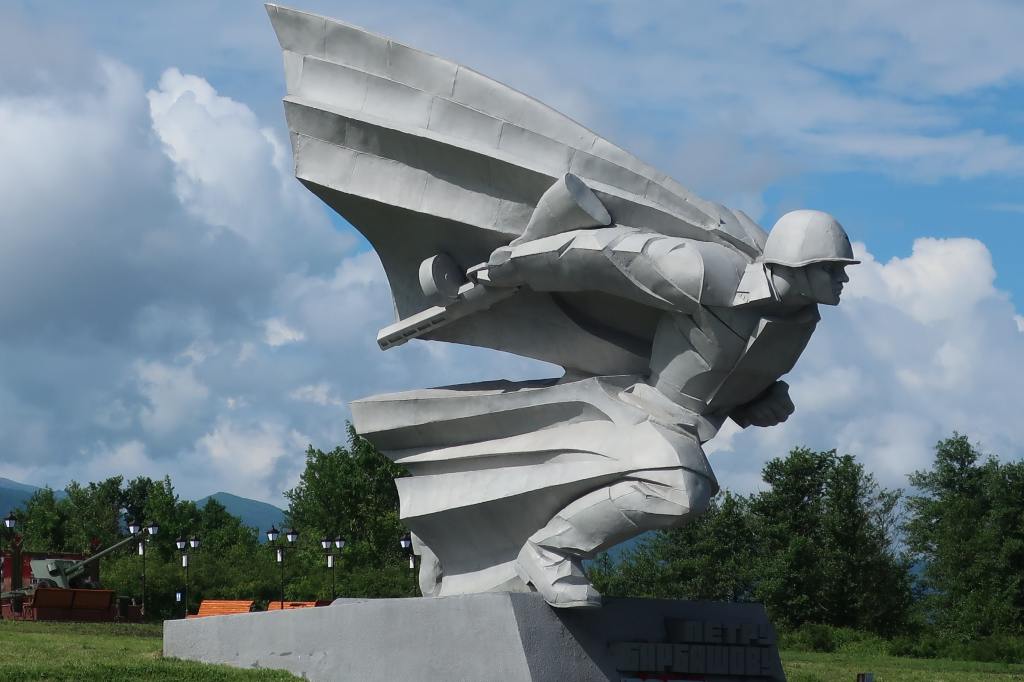
Statue at the Vladikavkaz war memorial

Vladikavkaz was interesting enough but would probably not have justified my trip in its own right, and after a day I was transferred to the border with Ingushetia to continue my trip and meet my next guide. The border post was intimidating, with armed guards, and I needed a special permit to get through.
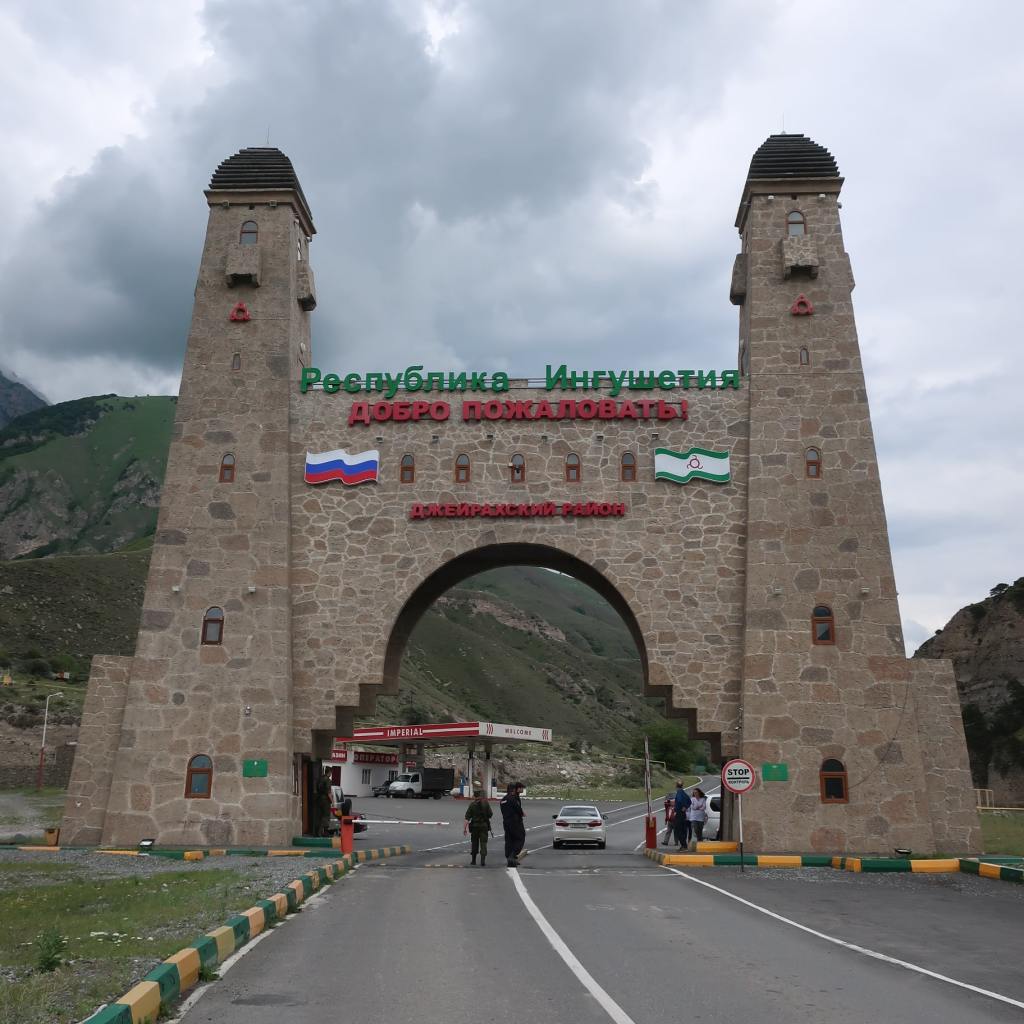
The North Ossetia – Ingushetia border

Here, the vibe suddenly became very different. The landscape changed from pleasant, forested valleys to wild, empty mountains; instead of churches there were mosques; and the few local people looked at us suspiciously.
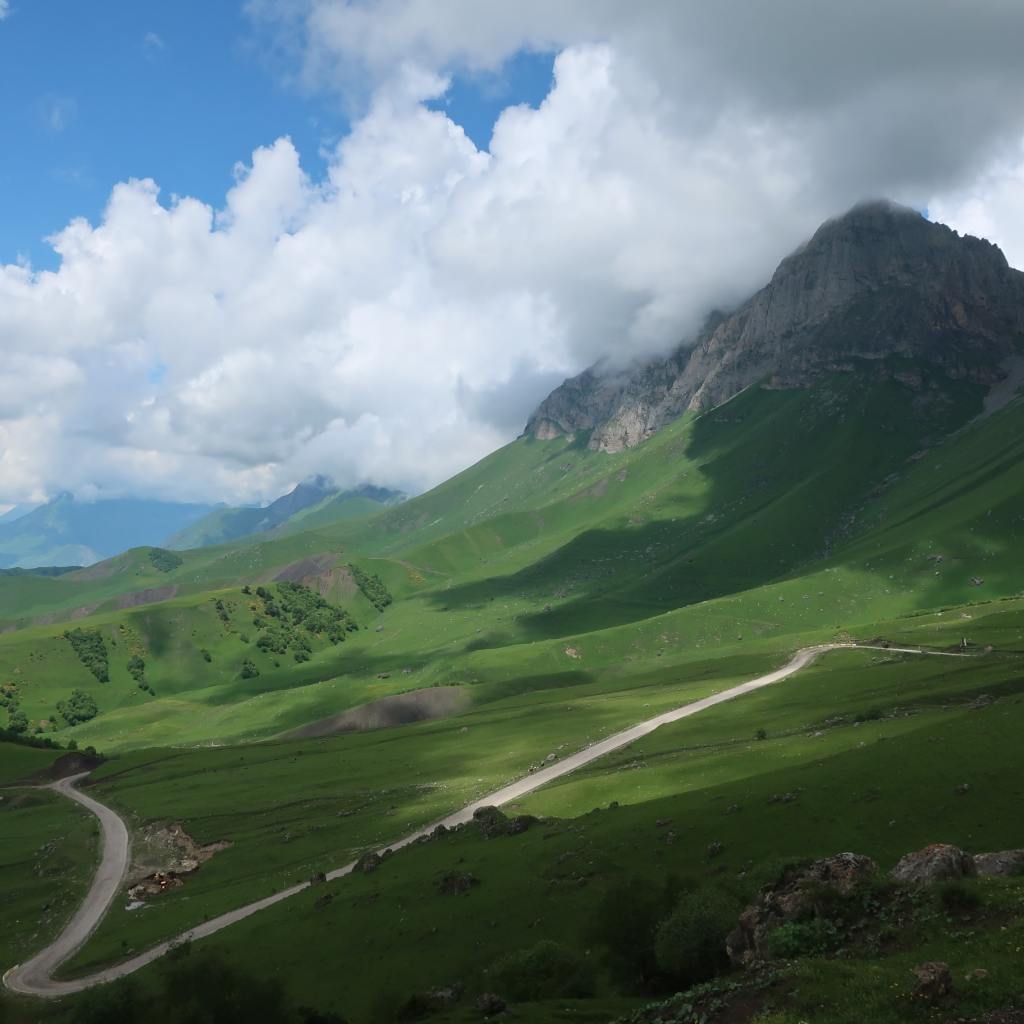
Ingushetia scenery

The countryside was sprinkled with small empty villages, each having several defensive towers.
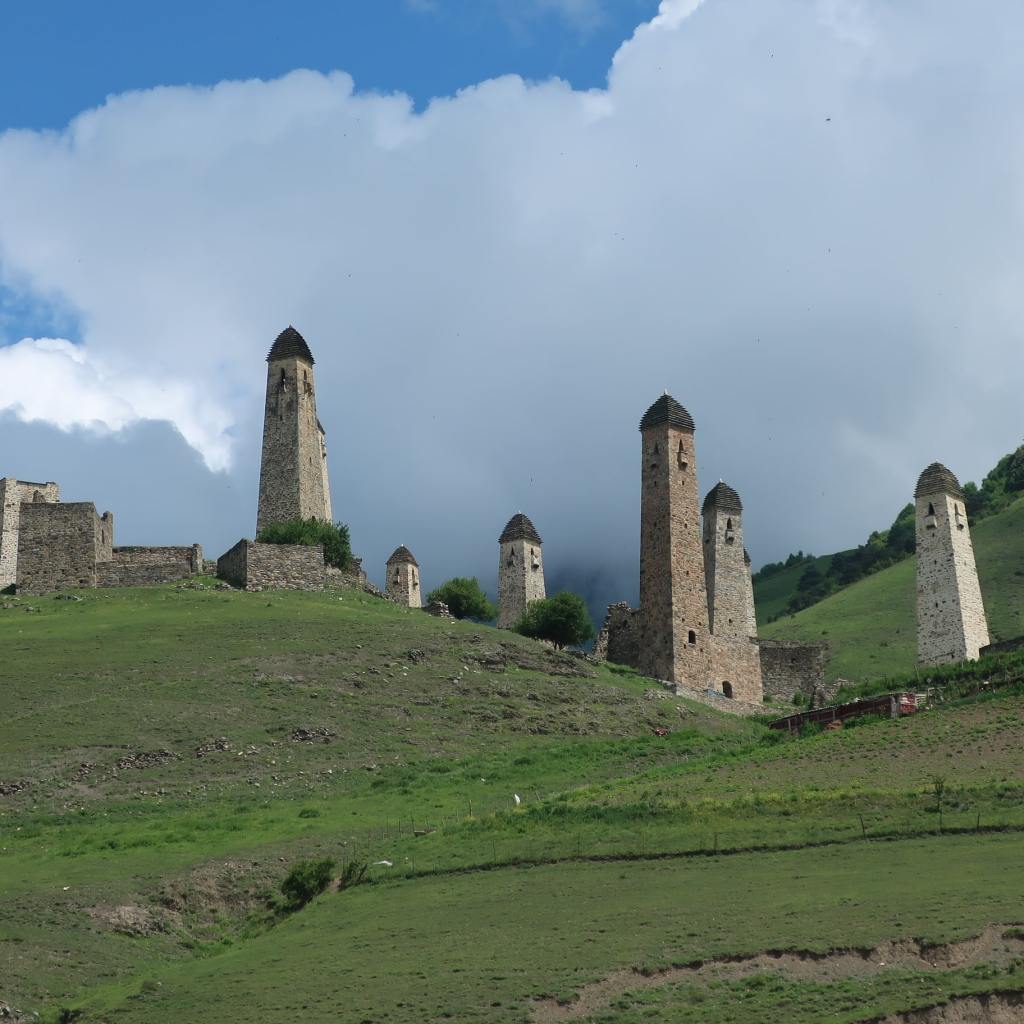
A typical abandoned Ingush village

Our guide explained how the villagers would take refuge in these structures when threatened by bandits – something which must have happened very often. He also said that the Ingush had indeed fought heroically in the Red Army but their role in WWII was not much mentioned by the authorities because they were Muslim. Instead, their reward was to be forcibly shipped off on Stalin’s orders to even more remote parts of the Soviet empire to create new settlements in places like Siberia or Kazakhstan – an often-unsuccessful experiment which led to them freezing or starving to death. Our guide clearly and understandably deeply disliked Stalin and claimed that he was in fact Ossetian, and not Georgian as is commonly believed. According to him, all the region’s problems were caused by the Ossetian and the Chechens.
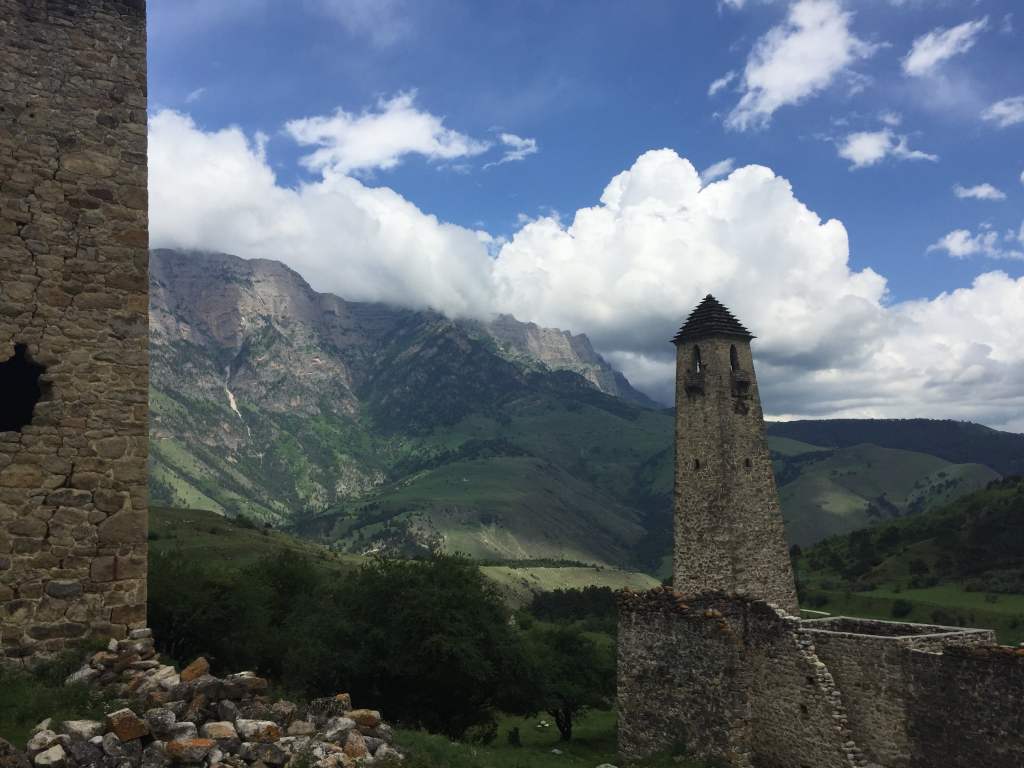
Another Ingush village

Although somewhat intimidating, Ingushetia was a very beautiful and interesting place to visit, and I left regretting that I could not stay longer. I was driven to the border with Cheyna – a surprisingly relaxed crossing compared to the one between Ingushetia and Ossetia – to be met by my third guide, a Chechen.
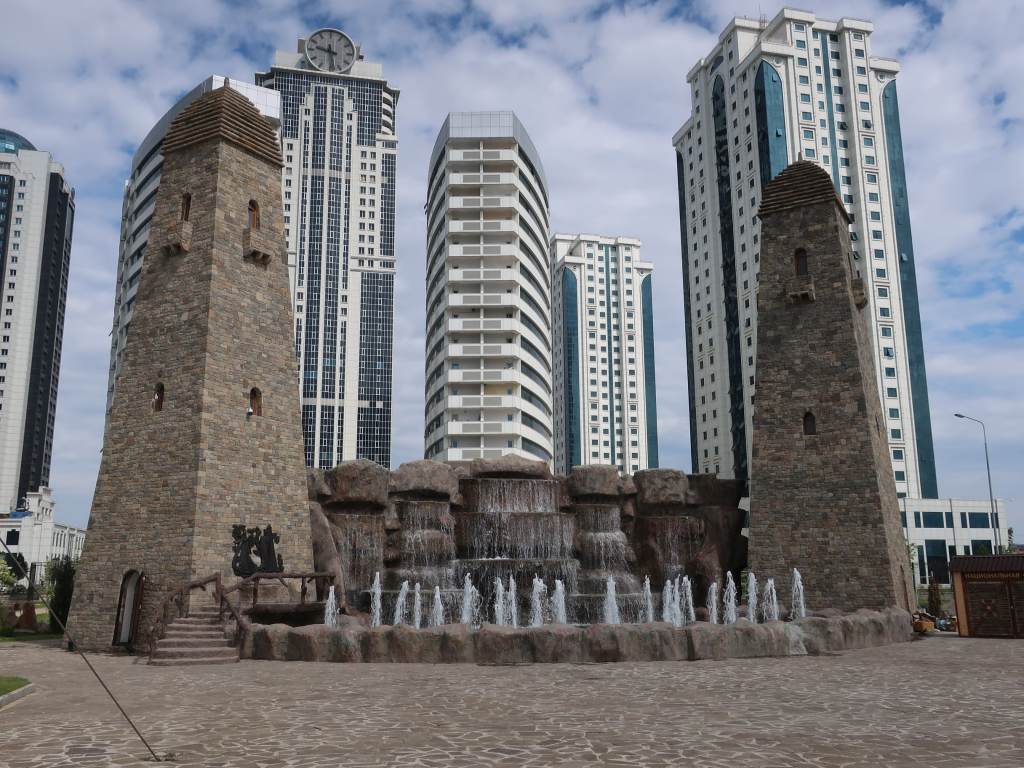
Grozny, capital of Chechnya, with skyscrapers and a recreation of old defensive towers

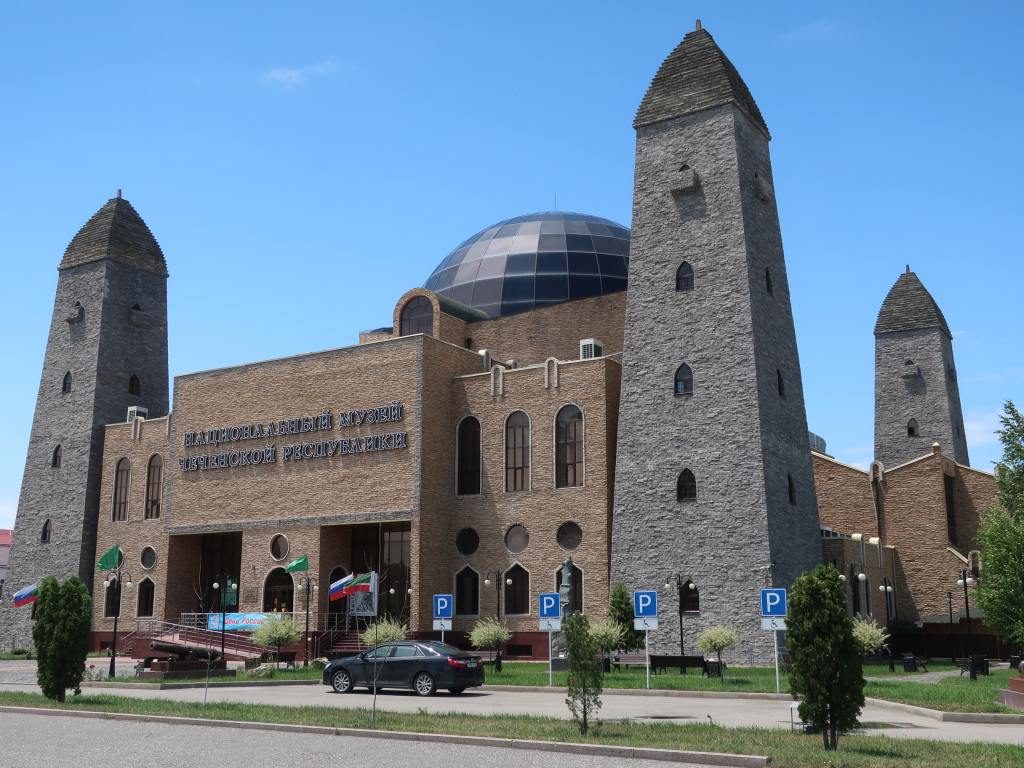
Despite its fearsome reputation, based on the violence of this republic’s bloody 10-year struggle for independence and the alleged role of Chechen people in criminal activity in Russia, the capital city Grozny was a rather dull place. Almost completely rebuilt after the city was flattened in the war from 1999 to 2009, it boasted new skyscrapers, mosques and government buildings – as well as a history museum largely devoted to the cult of the current leader, Ramzan Kadyrov and his father (president before him until he was assassinated). Kadyrov rules the republic with an iron fist and is fiercely loyal to Russian president Putin and his pictures are everywhere. My guide avoided talking about the history of Chechnya or its current leaders but did say that in his view all of the region’s troubles were caused by the Ossetians and Ingush, and not the Chechens.
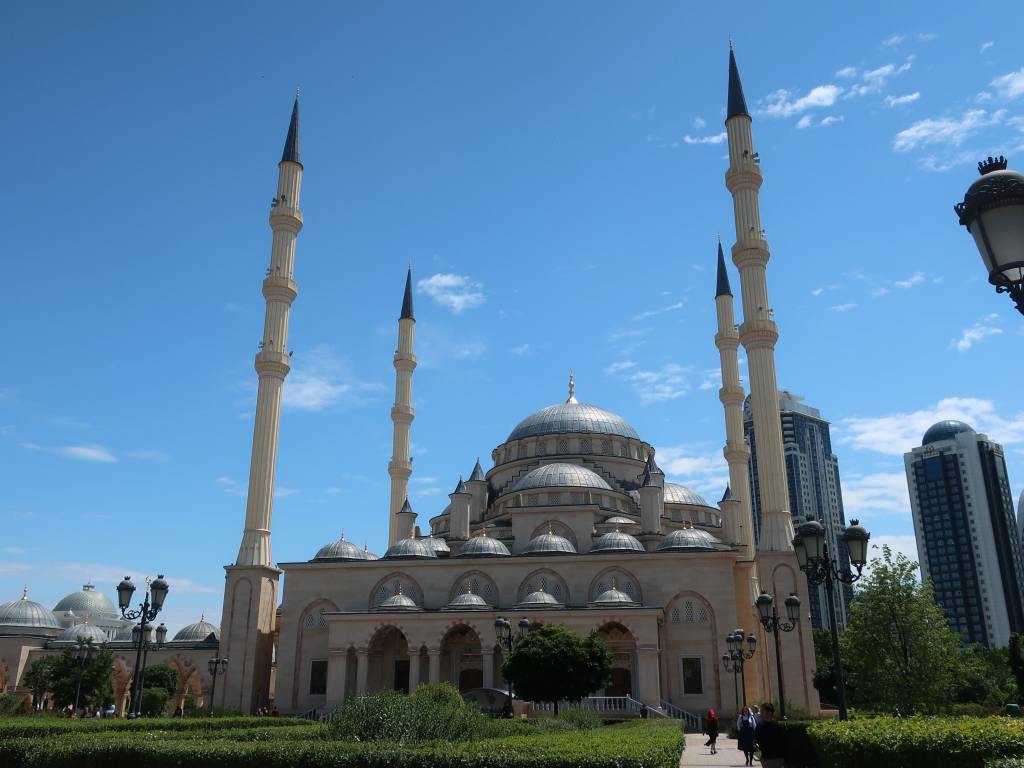
The main mosque in Grozny
The Museum of the Chechen Republic

After a day wandering around looking at modern buildings, visiting the impressive main mosque and the bizarre history museum, I had seen enough and headed to the airport for my flight back to Moscow. It has been an interesting week seeing a part of Russia that very few tourists visit – not even Russian ones – and learning about the region’s troubled past. For me, Ingushetia was the most impressive of the three republics, despite a vague feeling of being unwelcome there, and I would like to go back one day to go walking in their wild mountains and visit more of their eerie, empty villages. In the region I also still have not visited the republic of Dagestan, which contains the city of Derbent (Russia’s most southerly city and probably its oldest) and its fort, dating from the times of the Persian Empire (6th century BC).
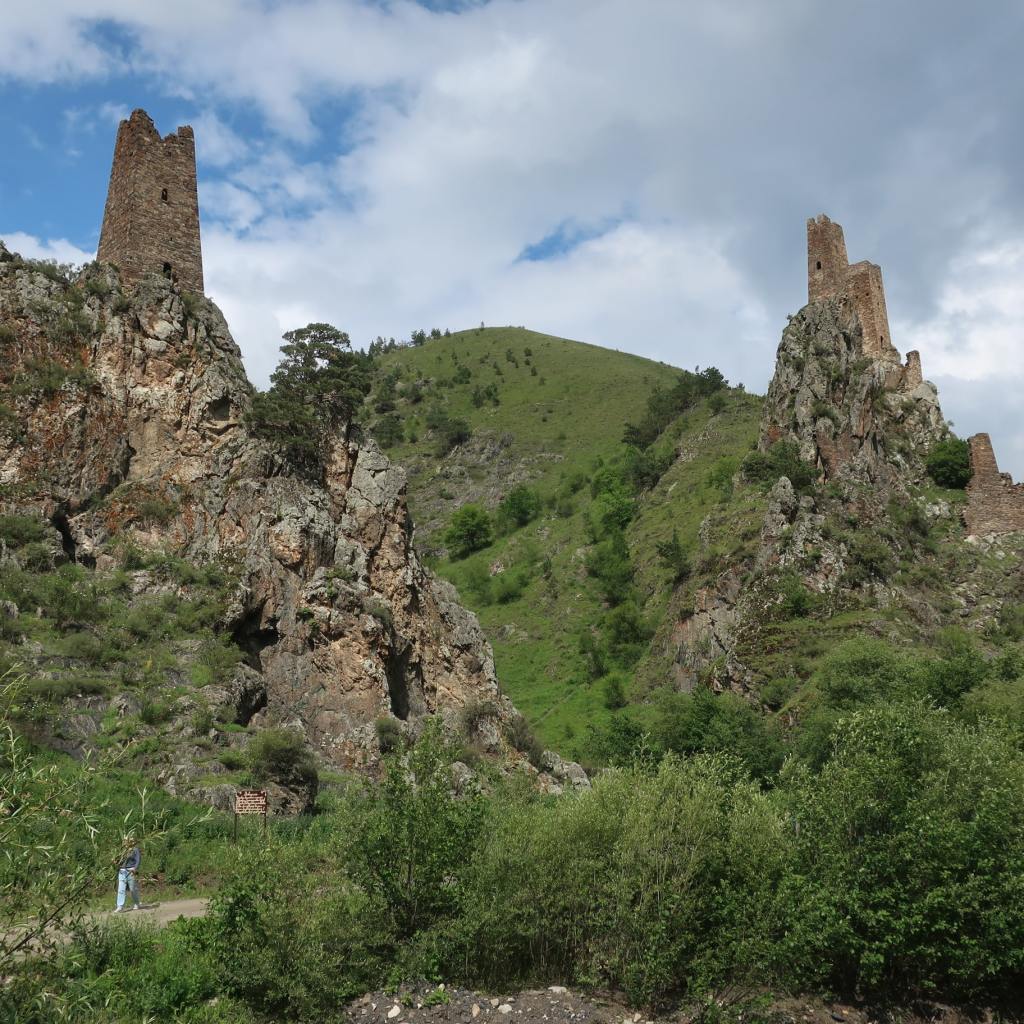
More defensive towers, Ingushetia

Previous Post: The Russian Caucasus part 1

The Russian Caucasus 1 – Kislovodsk and Elbrus
This post is about an often-troubled part of the Russia – the Caucasus,  located at the southern end of European Russia. North of the border are the mountainous Russian republics of Chechnya, Ingushetia, North Ossetia and Dagestan, whilst south of the border lie the former Soviet republics of Georgia and Azerbaijan. In some parts of this region the peoples are very different to the Slavs that make up most of population of the rest of Russia, and many are Muslim, giving the region a completely different feel. The area has often been a hotbed of discontent against Russian rule, typified by the brutal civil war in Chechnya, which lasted from 1999 to 2009.

The Russian Caucasus – detailed map by Peter Fitzgerald

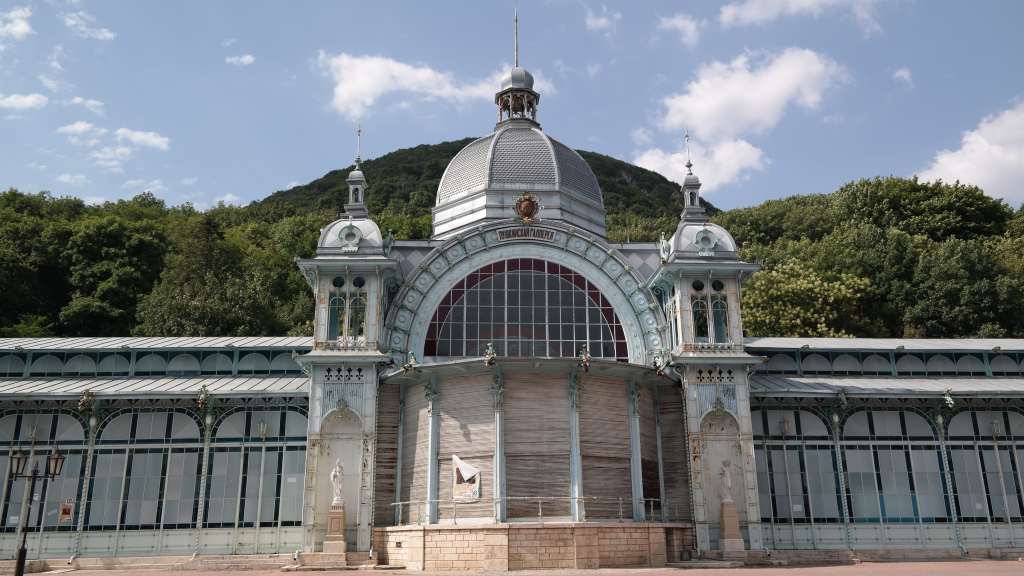
However, my first trip to the Russian Caucasus was  to a rather safer area a little further north, in Stavrapol Kray, a popular holiday destination for Russians since tsarist times. People came here to enjoy the pleasant climate, mountains and many hot springs providing mineral water with claimed healing properties. My main base was the pleasant city of Kislovodsk -literally meaning “acid waters” – nestled at the foot of tall and steep mountains and with the hot springs and spa complex obligatory for any self-respecting city in the region.

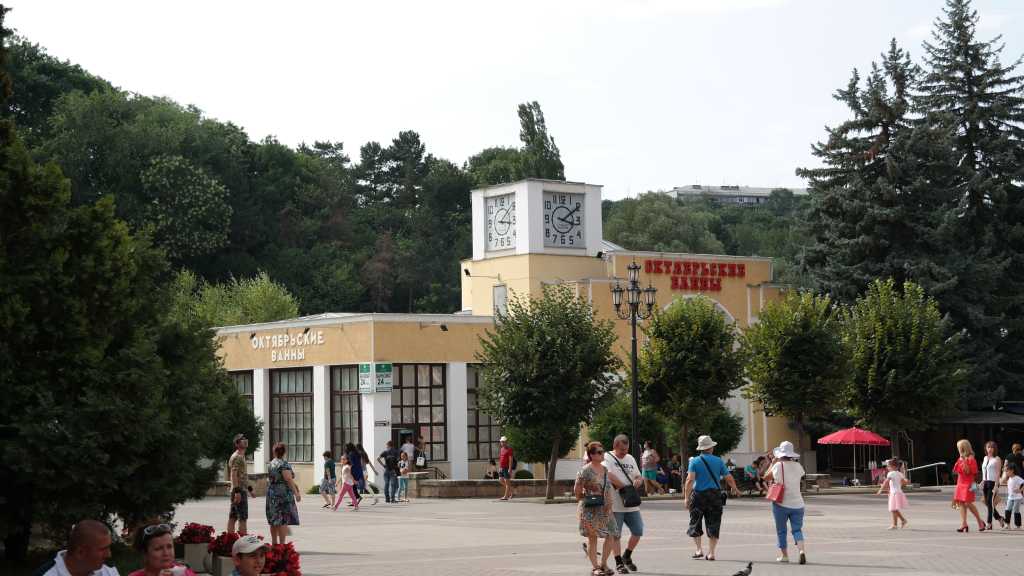
The spa baths in Kislovodsk
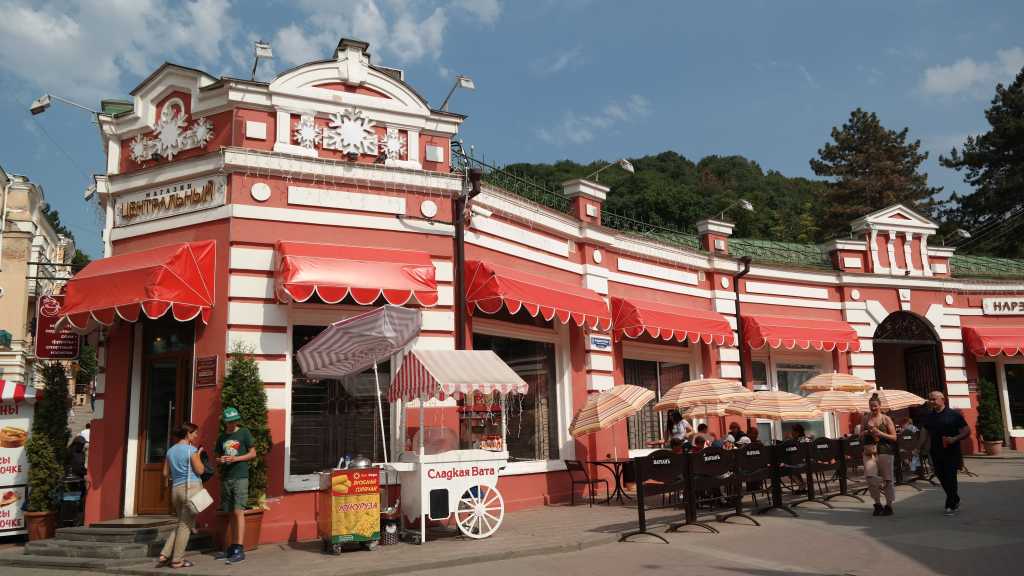
A summer holiday vibe in Kislovodsk

Kislovodsk has a huge park which stretched all the way from the town itself, through various ornamental gardens and then through wild forest to a hilltop which offers views back over the city – and in the far distance, Mount Elbrus, Europe’s highest mountain.

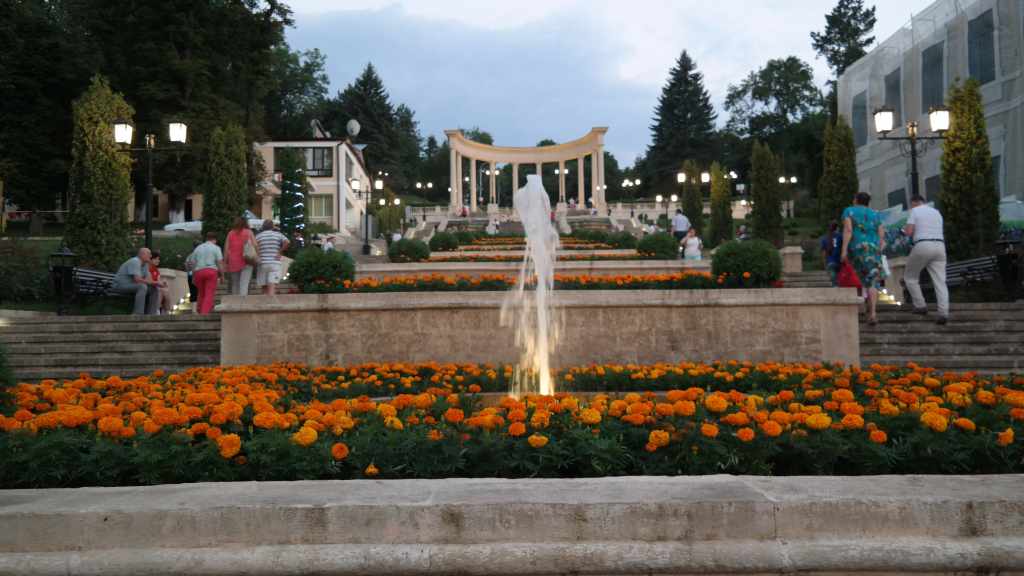
Ornamental fountains in Kislovodsk’s huge park
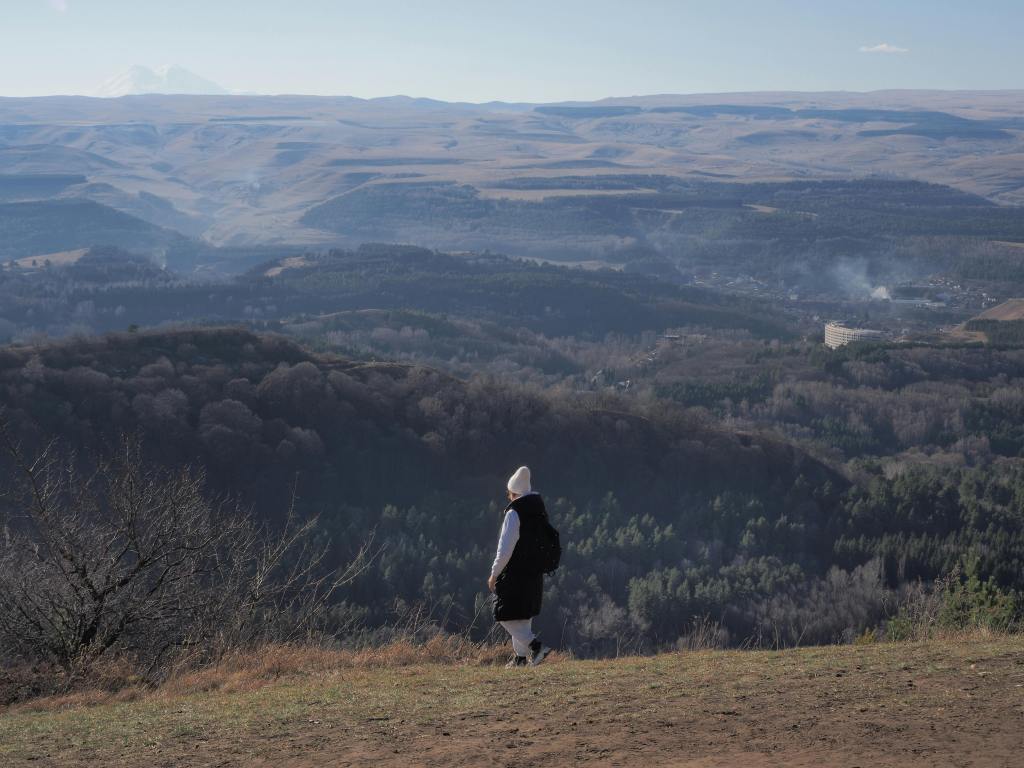
Looking back towards Kislovodsk from the hill at the end of the park with Elbrus in the distance top left

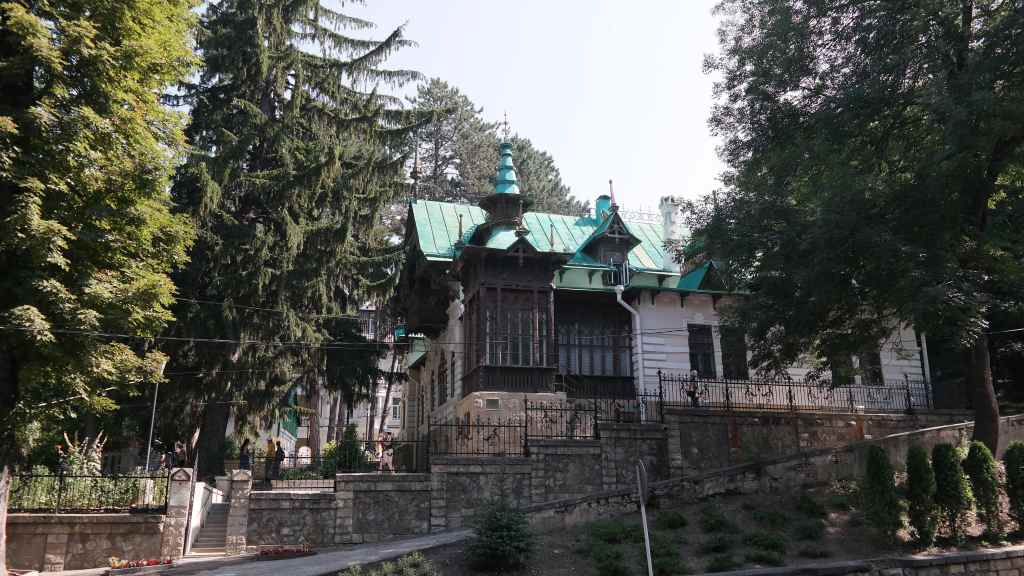
Kislovodsk was THE place to go on holiday in tsarist times and had many famous visitors. One prominent fan was the famous singer Shalyapin, who rented a beautiful house here which you can still visit to this day. One summer the composer Rachmaninov visited him and they offered a free concert to the city’s inhabitants, throwing open the doors of the house’s concert room.

Shalyapin’s house in Kislovodsk

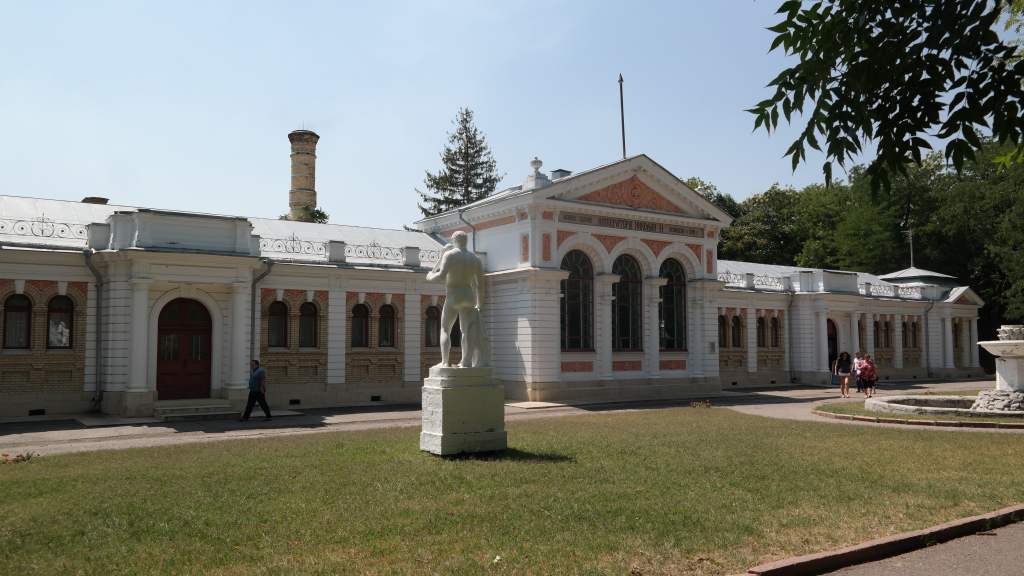
Near Kislovodsk there are many other spa cities, such as Piyatigorsk, Yessentuki and Zheleznovodsk.  Some have retained the opulence of the tsarist days, with large spa complexes like this –

A modern spa complex (Yessentuki I think)

…whilst other once-opulent buildings have fallen into abandon.

…and a derelict one (I think in Zheleznovodsk)

My trip to region also included an excursion to Dombay, Russia’s first ski resort, and located close to the Georgian border.  The trip had some nice views of Mount Elbrus along the way.

Mount Elbrus seen on the way to Dombay

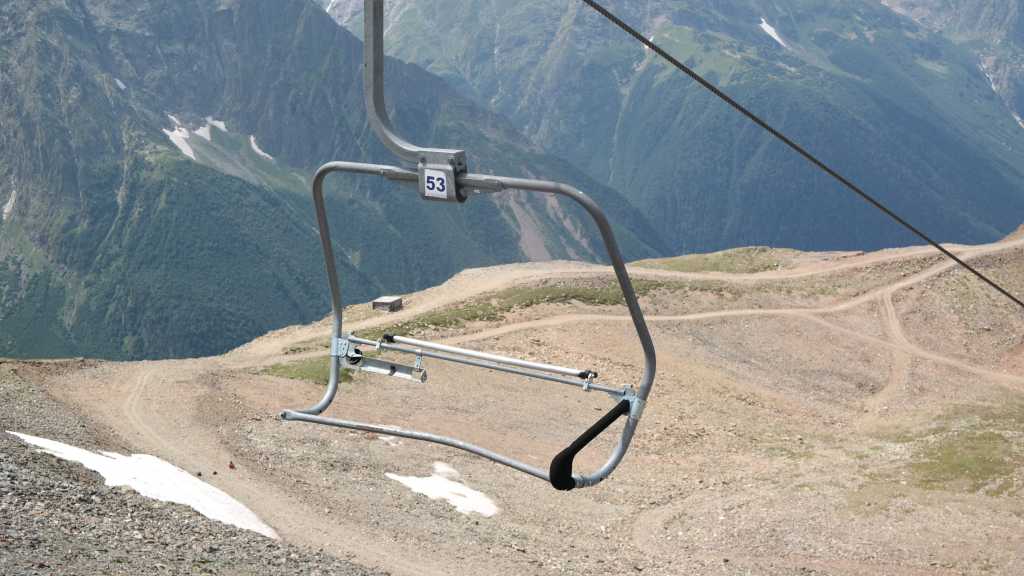
As a ski destination, Dombay has fallen far behind the bigger resorts near Sochi, and some of its chair lifts looked perilous……

Hmmm……

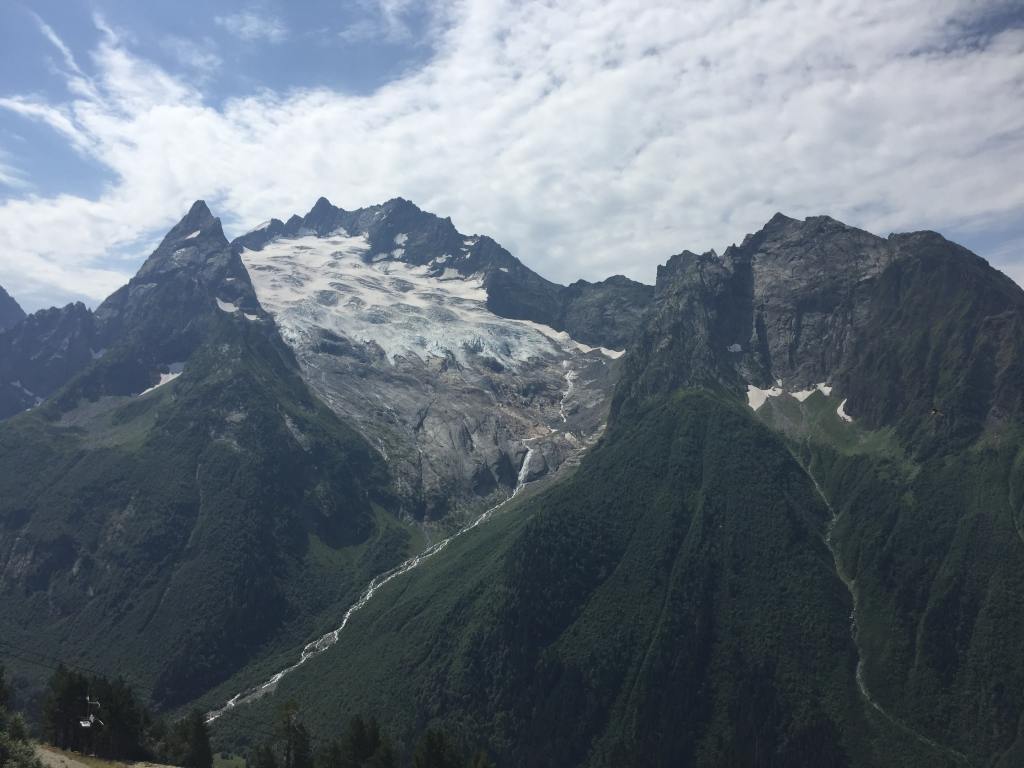
….but the town was surrounded by pretty mountains and made a nice day-long excursion.

Mountain scenery at Dombay

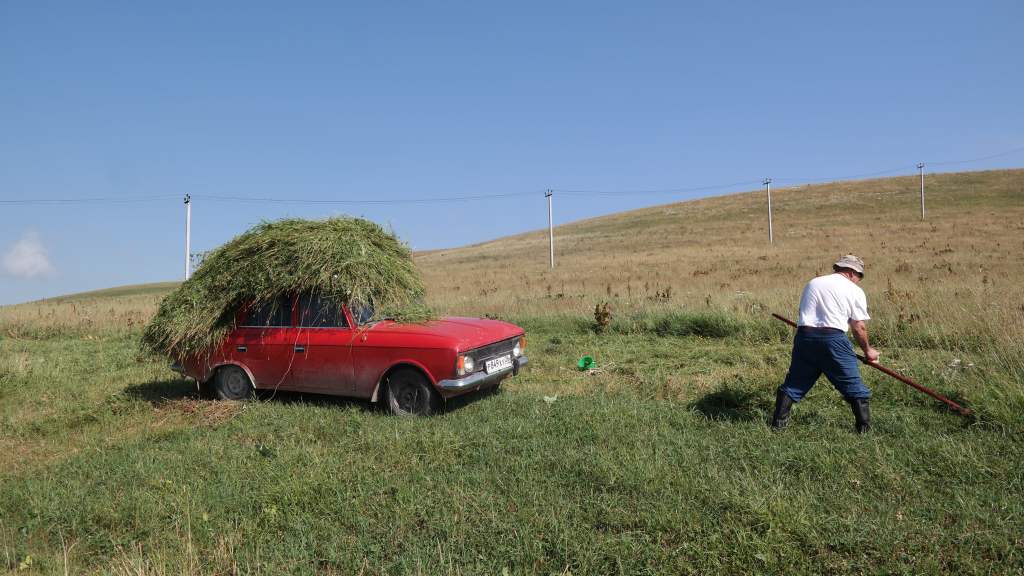
My final experience in this “Russian” part of the Caucus was a trip out into the countryside into a rural area where few other tourists go.

Rural scene in the deep Caucasus countryside

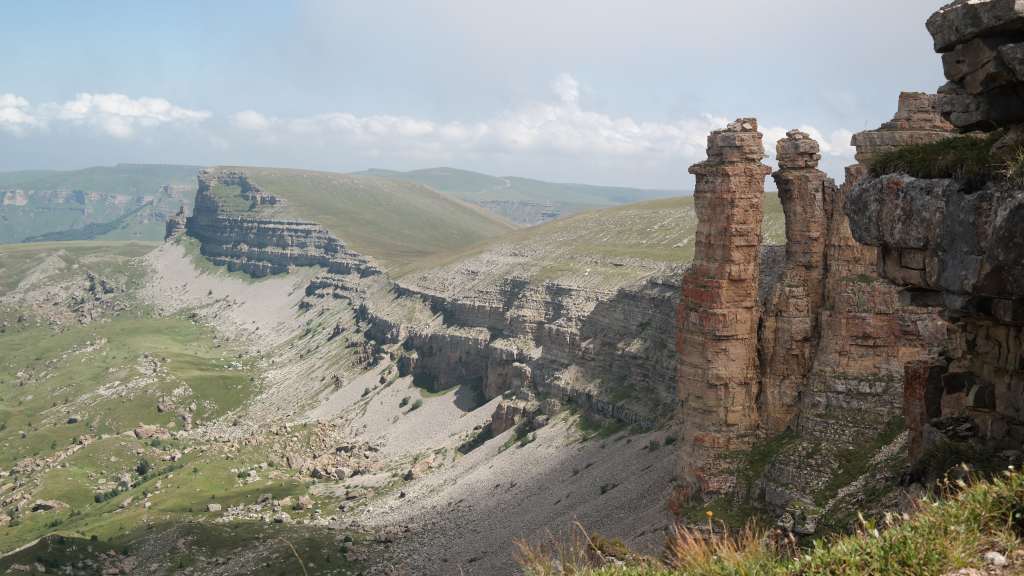
Our guide took us to a wild plateau, edged with weird rock formations and dominated by Mount Elbrus in the distance.

Wierd rock formations on a plateau near Mount Elbrus

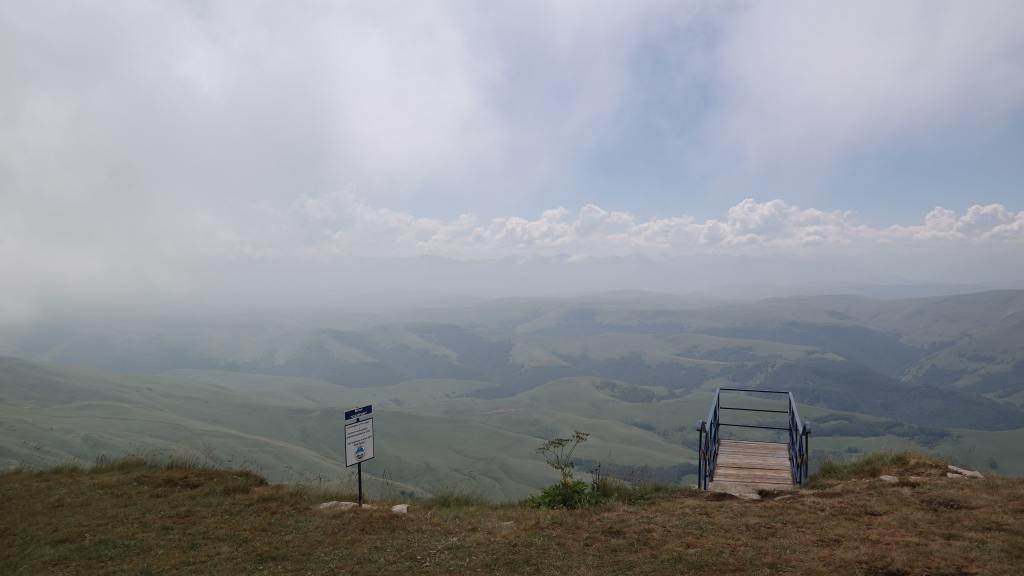
It was almost completely empty except for a shepherd on horseback and his large flock….. and a tiny café set in the most unlikely location on the edge of a cliff.  Next to the café was a viewing platform with a sheer drop of several hundred feet underneath it, but having seen the condition of the some of the Russian ski lift equipment in Dombay, I did not dare to venture onto to it.

A step into the unknown

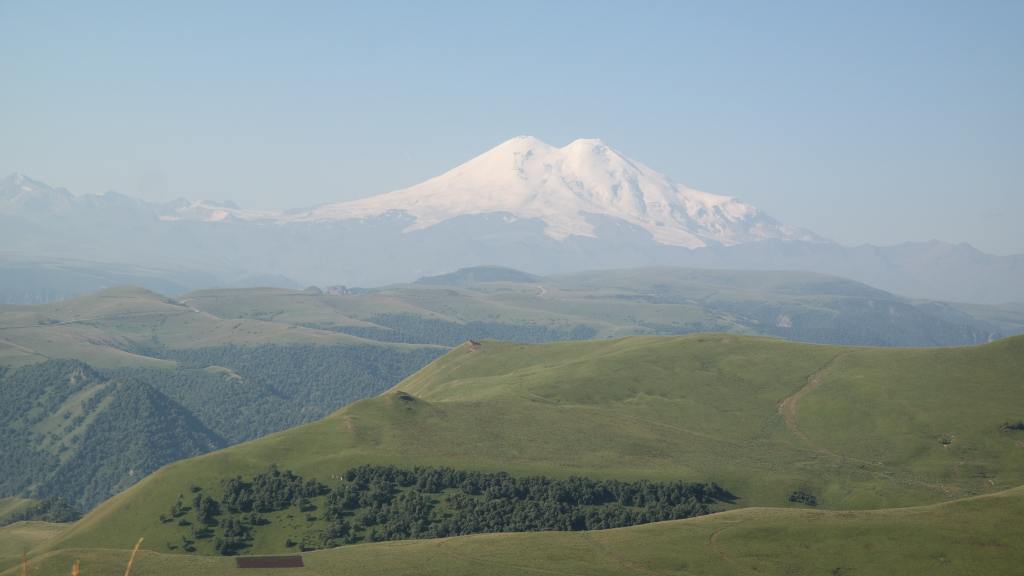
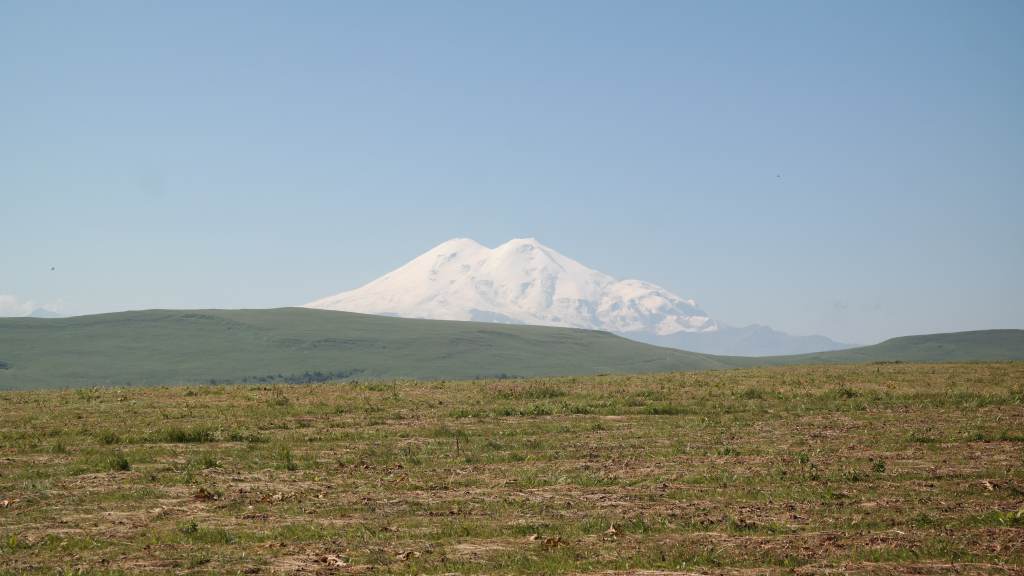
In any case the view of Elbrus was just as good from the safety of solid ground.

Mount Elbrus

That’s it for this post about the area around Kislovodsk in the Russian Caucasus. My next post will cover the wild Russian republics of North Ossetia, Ingushetia and Chechnya. Stay tuned!

Previous Post: Moscow 2013-2019

Next Post: The Russian Caucasus 2 – North Ossetia, Ingushetia and Chechnya

Moscow 2013-2019

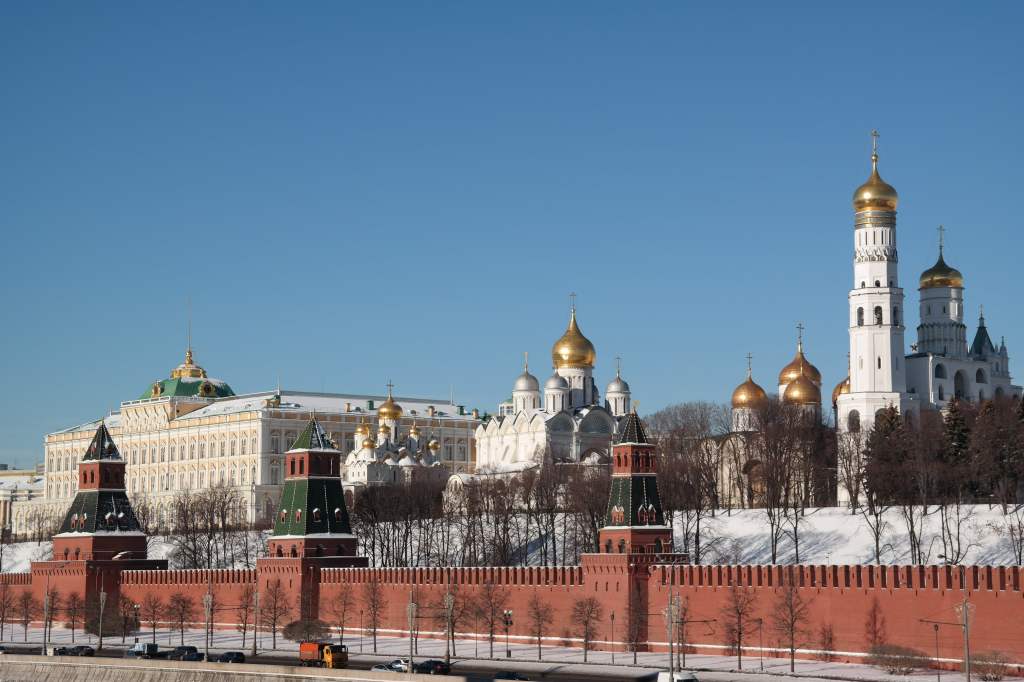
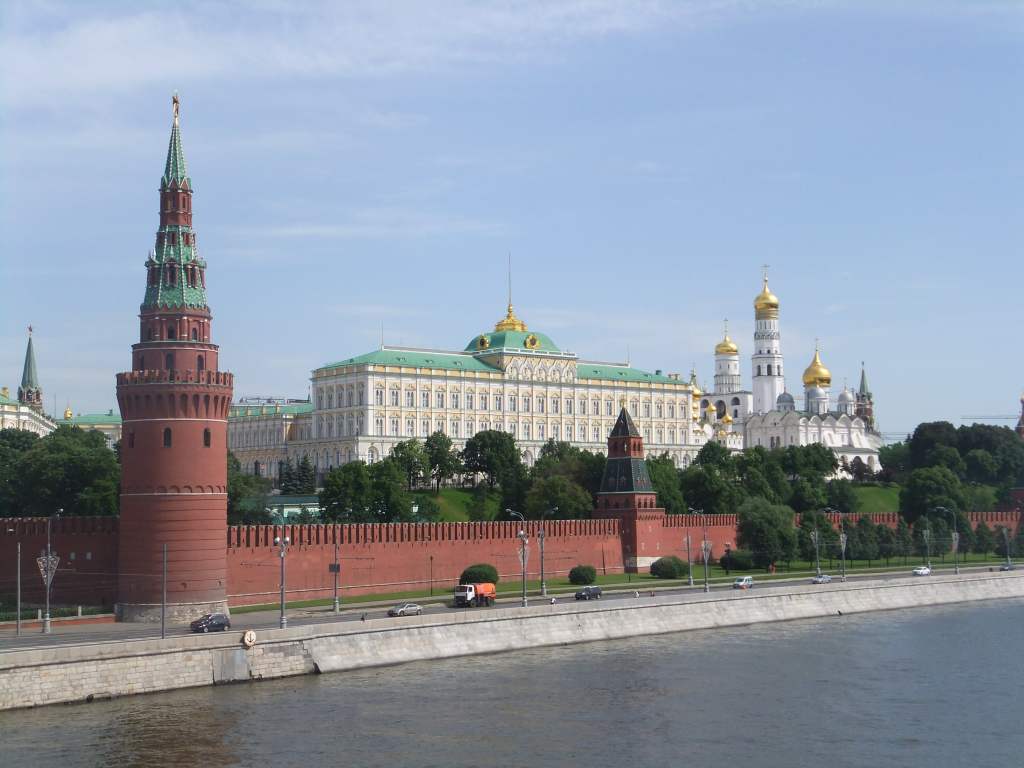
The Kremlin on a sunny winter’s day

My previous post was about the dark and wild Moscow I experienced over 2008-9; this one is devoted to the increasingly beautiful city I saw the second time I lived there, from 2013-2019. Even on arriving at Sheremetyevo airport in 2013 I saw many changes – the immigration process had been automated, and the long queues at passport control had disappeared, and a new motorway into the city centre avoided the notorious traffic jams I had suffered before on the old Leningradskoe Shosse. What I saw on arrival was just one part of a huge makeover the city was undergoing. The new mayor had embarked on a binge of construction of new roads and new metro lines, whilst discouraging people from driving into town by limiting parking spaces. The result was that traffic congestion was much improved, as more people took public transport to work – which gives me the chance to talk about one of Moscow’s most famous sights, the Moscow metro.

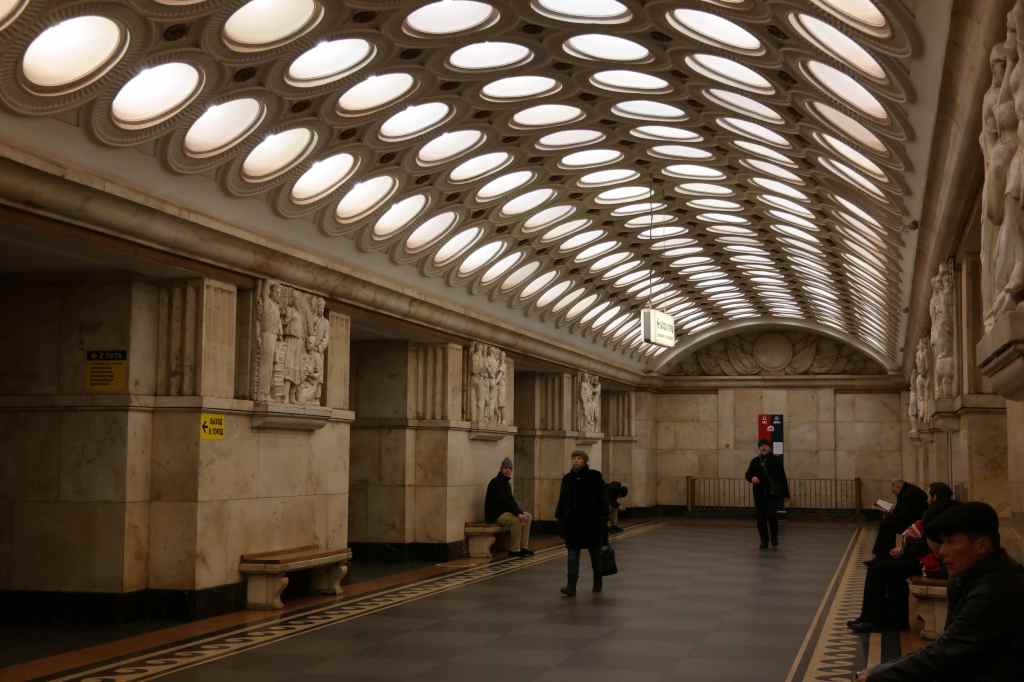
Elektrozavodskaya station, one of my favourites

The metro is famous for its beautiful stations, of which around fifteen stand out. They showcase the triumphant, imposing and bulky Soviet style, with high ceilings, ornate columns, large chandeliers and pictures or mouldings of Soviet heroes like soldiers, workers or farmers. They were intended to be “underground palaces of the people”, and it was said that each was made to look different, so that illiterate peasants arriving in Moscow could know where they were.

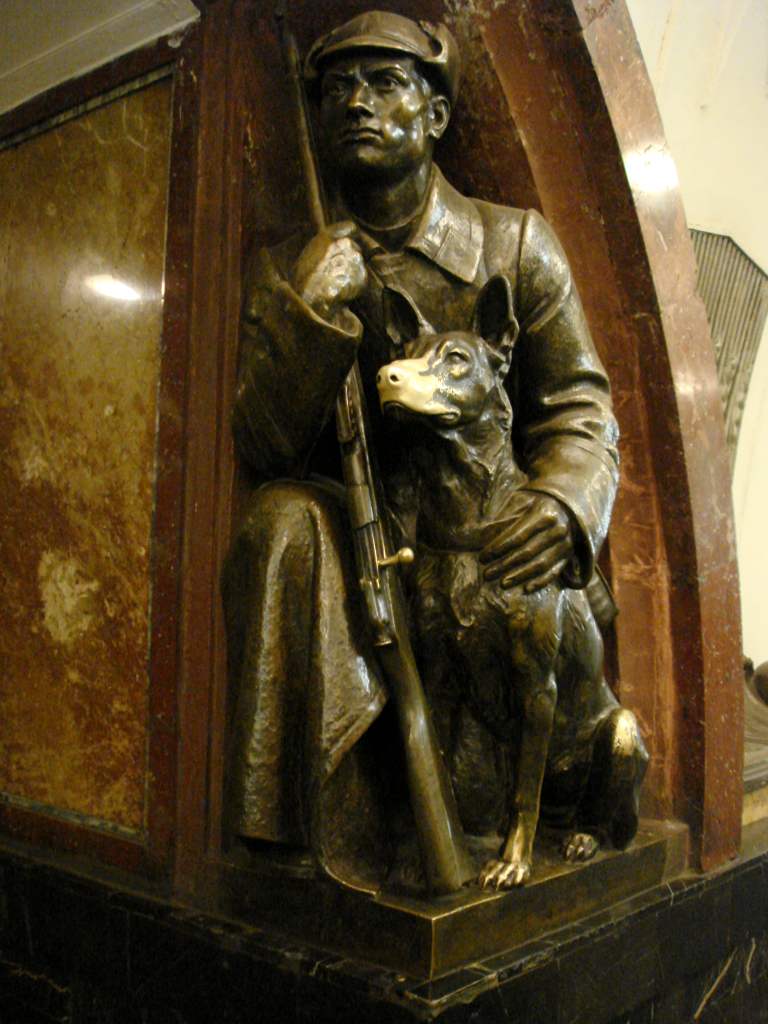
The partisan soldier and dog, Revolution Square station

My favourite was Revolution Square, where the Soviet heroes were cast as bronze statues; there is a famous soldier with a dog, whose snout was a bright shiny gold from being touched by millions of passers-by, who believed that rubbing the nose brought luck. The first parts of the Metro were completed under Stalin, including the circular brown line which has some of the most impressive stations. Legend has it that whilst Stalin was discussing plans to develop the system with his subordinates, he put his coffee cup down on a network map, leaving a brown coffee-stain ring – which became a new line.

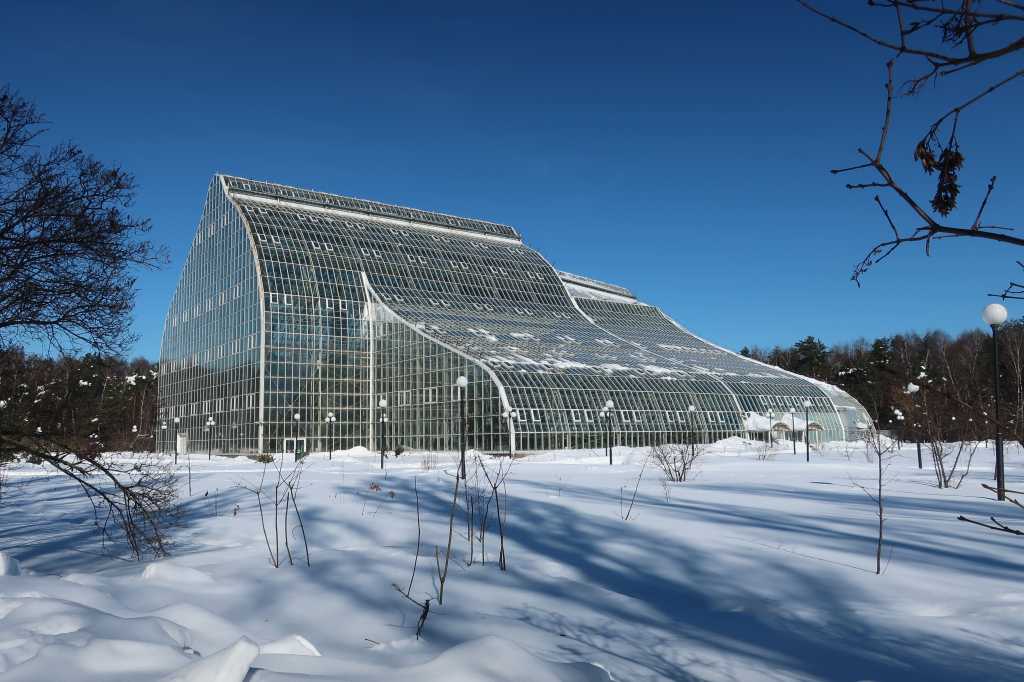
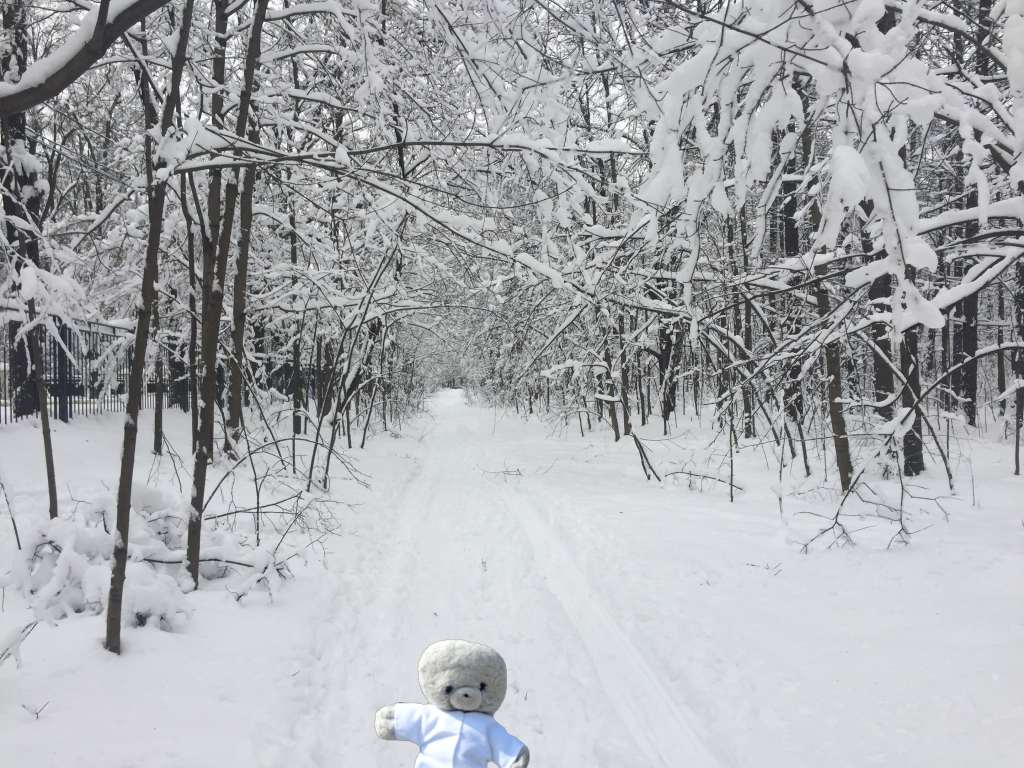
The reduced traffic in Moscow led to improved air quality, and an end to the smog that used to hang over the city most of the winter. On a sunny day, this was replaced by bright blue sky and at weekends I would enjoy going cross country skiing in locations like the huge botanical gardens.

Futuristic glass house in Moscow’s amazing botanical gardens
Getting lost on a ski track in a Moscow park

The mayor’s public works binge also included digging up most of central Moscow to lay smart new granite pavements. For two years this effort turned the city centre into a big building site, and a vicious (but false) rumour circulated that mayor’s wife owned a business making paving stones.

The road near my flat in 2017

The work was finally finished in 2018, just before Russia hosted the football world cup. Even those that had suffered from the years of roadworks had to admit that the city looked much smarter as a result. All of this spending on public projects left a city that was bright, beautiful and comfortable – a complete contrast to the dark, intimidating but slightly more fun version of Moscow that I had experienced over 2008-9.

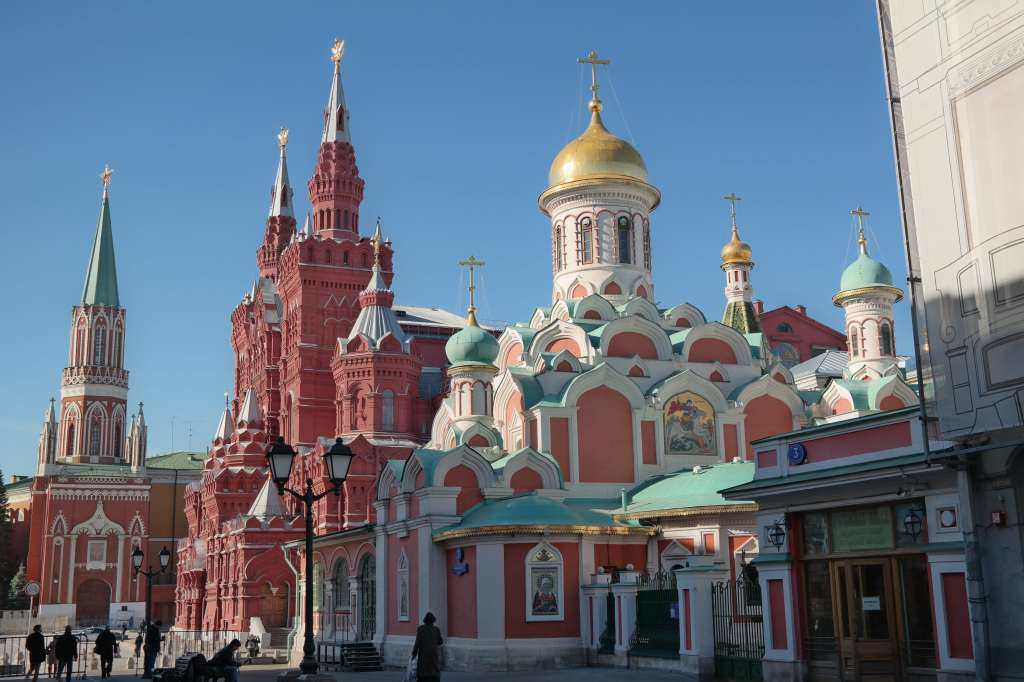
Moscow after the roadworks – near Red Square in 2018
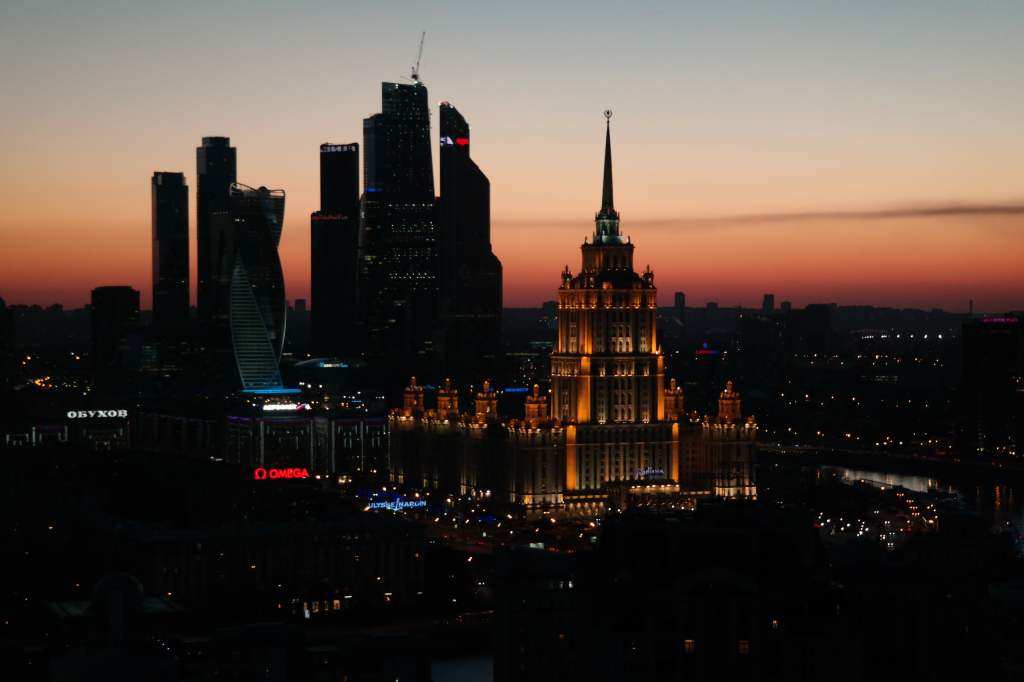
View of the Ukraine Hotel and Moscow City business district

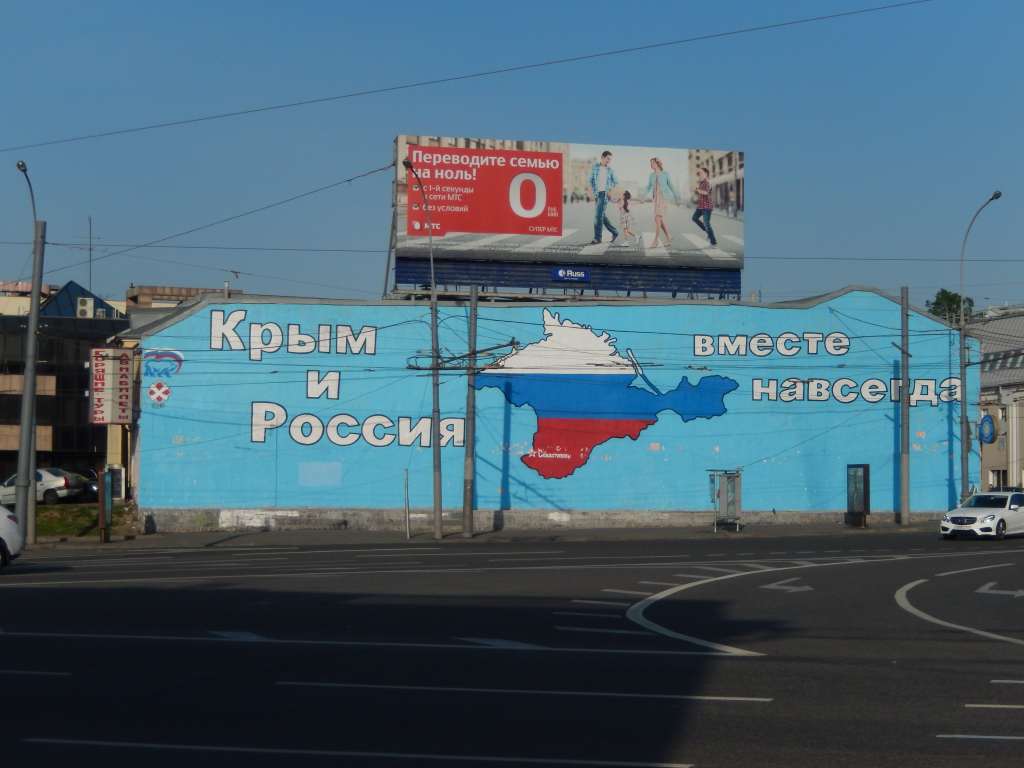
However, this transformation of Moscow was accompanied by increasingly worrying developments in Russia’s social and political scene, as the country changed from a shaky democracy to absolution rule by Putin. 2014 saw Russia’s annexation of Crimea, a very popular action in Russia generally.

Street Art in 2014

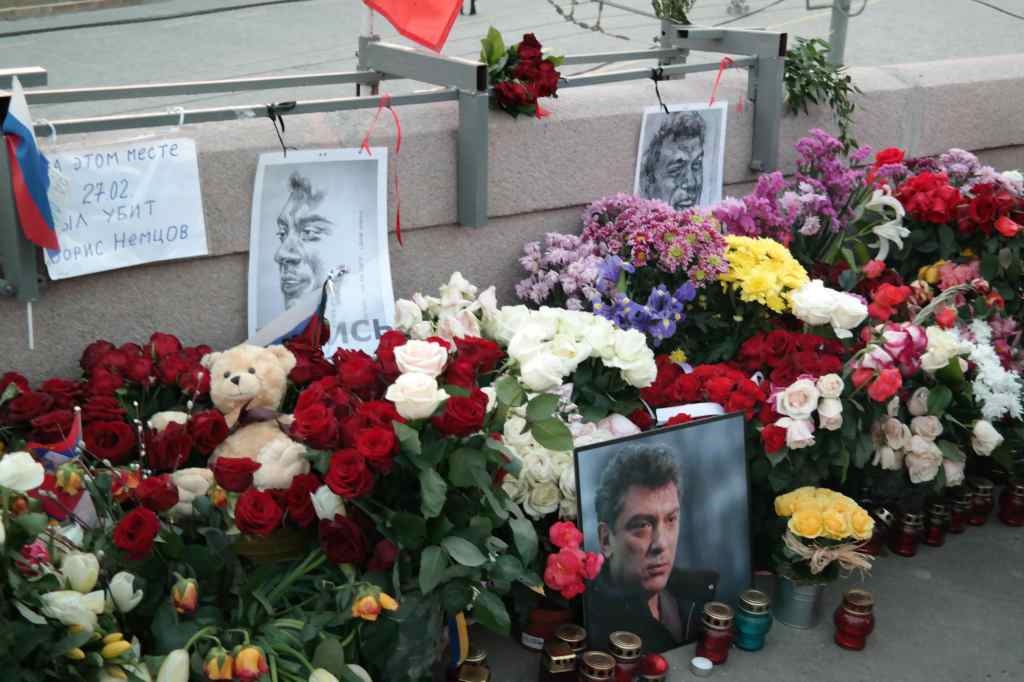
…and 2015 saw the assassination of the opposition leader Boris Nemtsov on the bridge leading to the Kremlin, in the very centre of Moscow.  For many years after, supporters laid flowers on the spot where he was killed.

Memorial to Boris Nemtsov

It would be sad to end this post on such a downbeat note, so I will finish by describing yet another of the mayor’s project’s – the new Zaryadye Park, inaugurated in 2017. This was built on the site of the abandoned building site and derelict hotel described in my previous post.

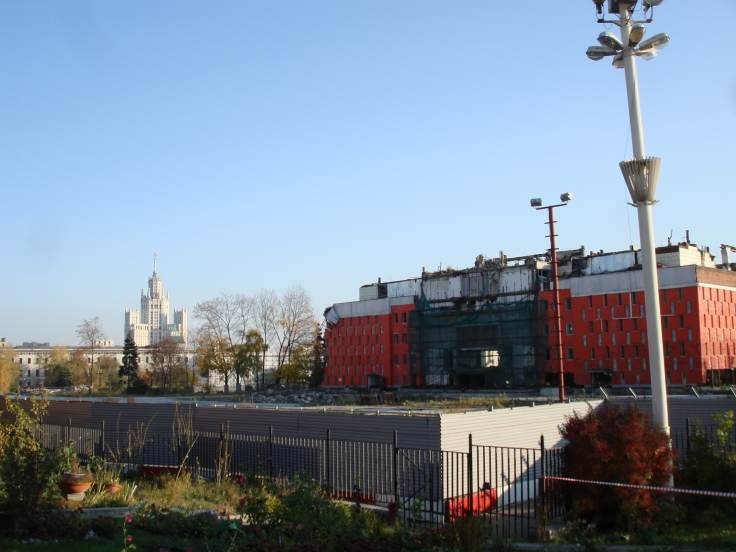
The Hotel Rossiya ruins in 2008….

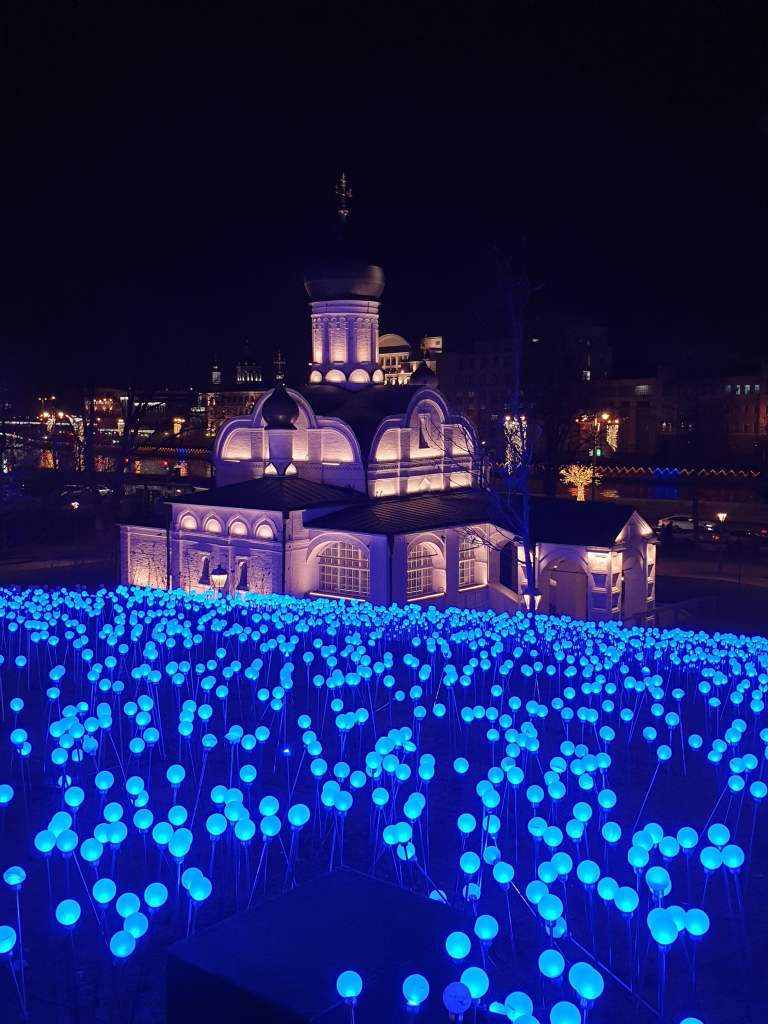
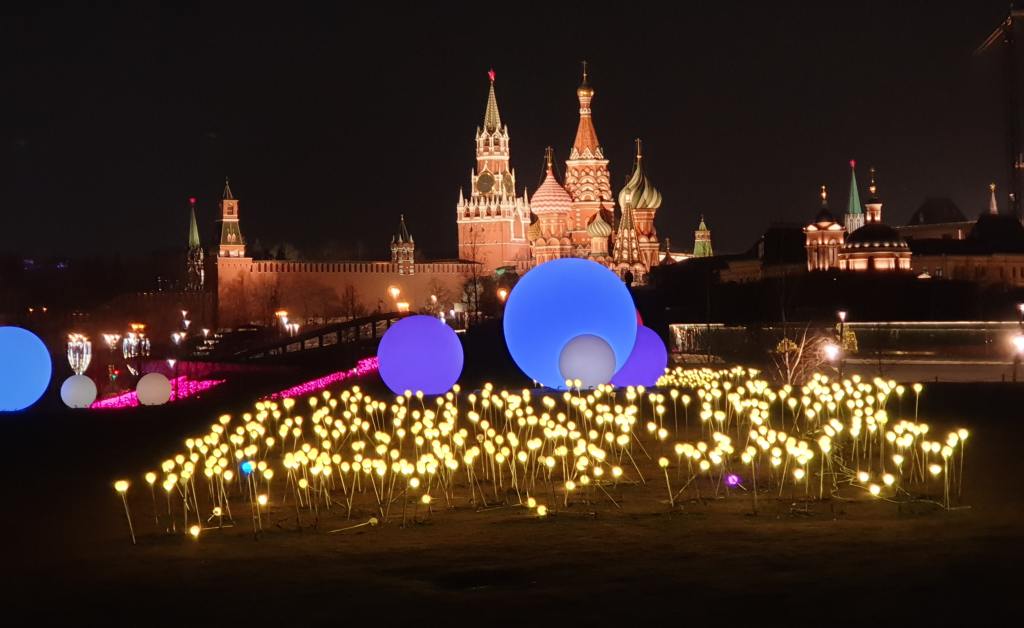
They were replaced by gardens, an artificial hill with views over the Kremlin, yet another concert venue, and a restaurant complex. It was a brilliant project, and shows what Russia is capable of when money is put to good use instead of disappearing into well-connected people’s pockets.

…and views from Zaryadye Park’s artificial hill in 2018

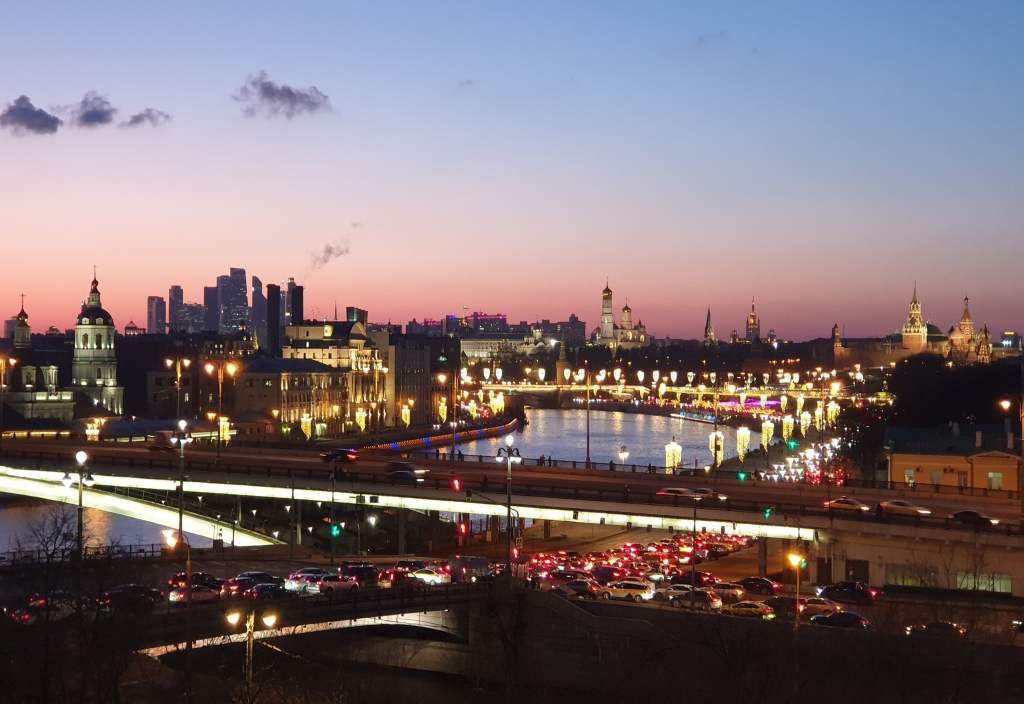
And the Stalin building you can see lurking behind the decaying hotel in my 2008 photo? That is still residential accommodation, but some of the units were now available for hire as really cool Airbnb stays. I booked one for my last trip to Moscow in 2021, with an incredible view of the city from my window.

View from my Airbnb in the Stalin Building, 2021
It was a wonderful way to say farewell to a city that I had seen transformed in just a few years. I left with a heavy heart, and am not sure when I will be back, but at least I have these photos, many happy memories, and many Moscow friends. My next post continues my journey around Russia, this time visiting the Caucasus near the border with Georgia.

Previous Post: Moscow 2008-2009

Next Post: The Russian Caucasus

Moscow: 2008-2009

The classic view of Moscow – the Kremlin

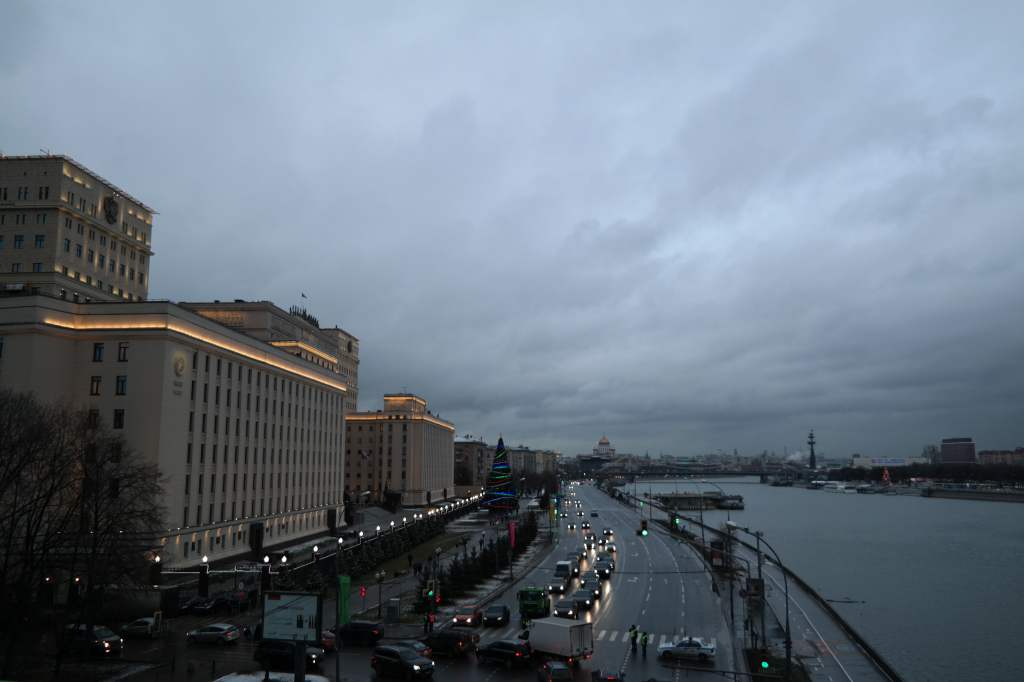
In the next couple of posts I will cover Russia’s capital city, Moscow. I lived there twice, from 2008-9 and from 2013-2019. The two experiences were completely different, and in this post I will describe the Moscow of the earlier years. I arrived in December 2007, just in time for the Russian winter, and my overwhelming memory of this time was of dark, grey skies, intimidating buildings and insane traffic jams.

Moscow in Winter – 2008

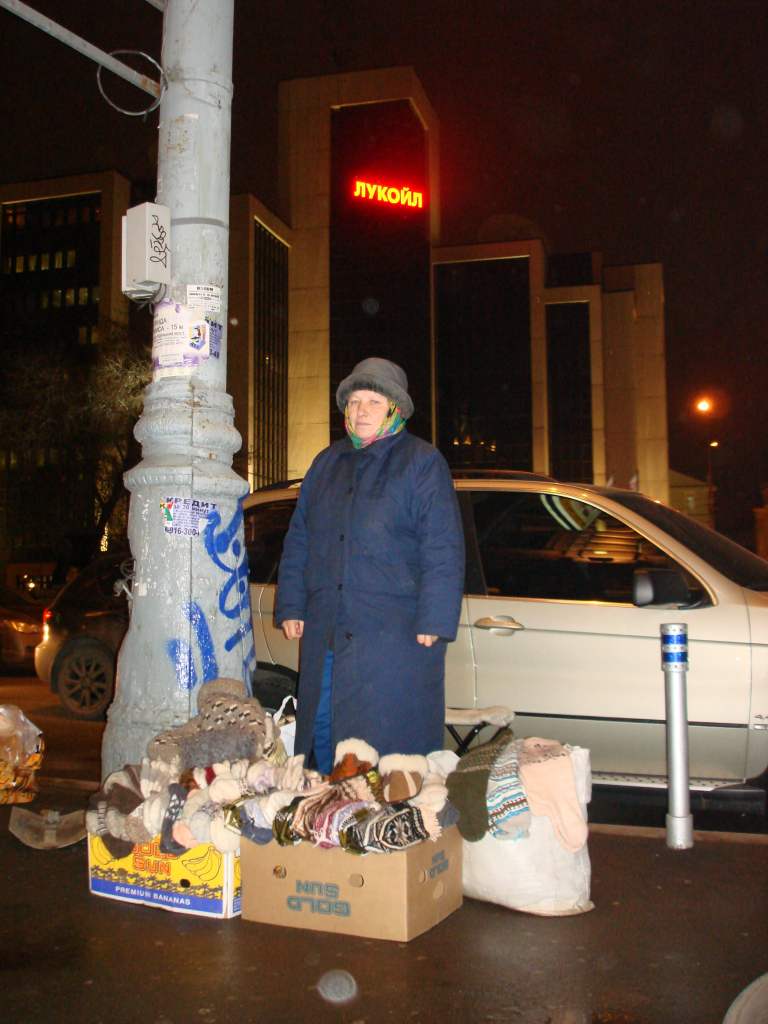
The streets were cold and unfriendly. There were a lot of stray dogs roaming around, a few beggars and homeless people, and old “babushkas” trying to make ends meet by selling items they had knitted.

Babushka selling knitwear

My own flat was in a well-known building, the Dom Rossiya, built just before the revolution to provide flats for Moscow’s emerging middle class. After the revolution it was converted to communal flats for workers, with each large apartment converted into several small ones, accessed from a long corridor leading to a communal kitchen. With the return to capitalism, many of these “communalkas” had been converted back into large flats, offices, or artists studios. Dom Rossiya’s many entrances and staircases were a hive of activity and each was slightly different. Mine was particularly run-down, and often smelt of urine, since homeless people (“Bomsh” in Russian slang) would come in and sleep there at night. But once I crossed the threshold of my flat, I entered a completely different world………..a 300m2 apartment, of which half had been designed as a venue for concerts, with rows of seats on two levels in a semi-circle around a grand piano.

Inside my flat, Moscow

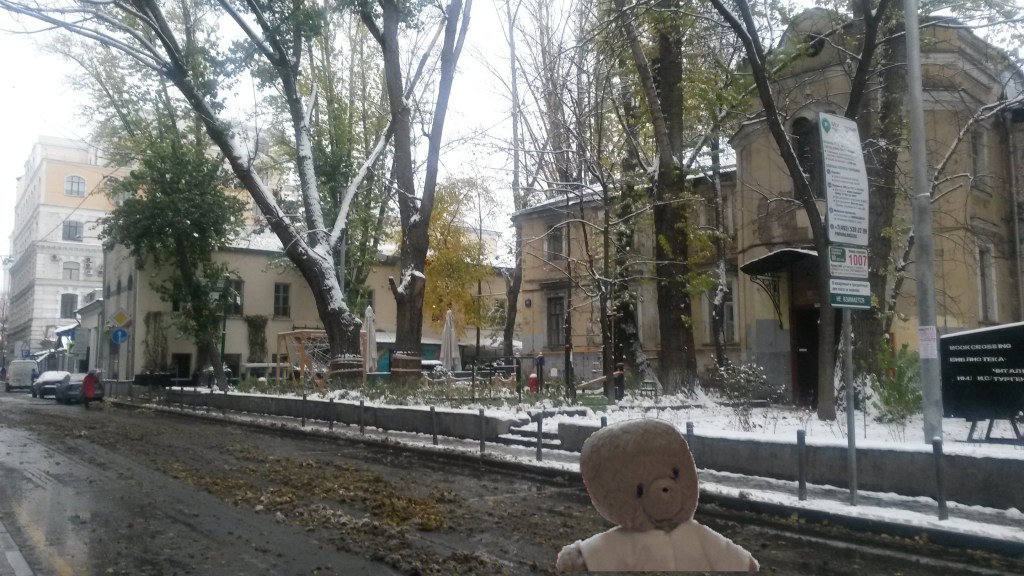
Many people assume that the Russian winter is hard to live through because it cold, but is not true – the interiors of buildings are kept warm (and often uncomfortably hot) by a huge city-wide communal hot water system. No, the Russian winter of 2007-8 was hard because of the lack of light. For five months the sun rises late and sets early, and even during the day the sky was usually a dark grey colour, as the city was covered with the smog from thousands of old cars sitting in huge traffic jams. After the long winter comes a short spring, but things don’t get much better. The winter snow thaws and turns into a yucky brown slush that coats your trousers and shoes.

Moscow in “spring”

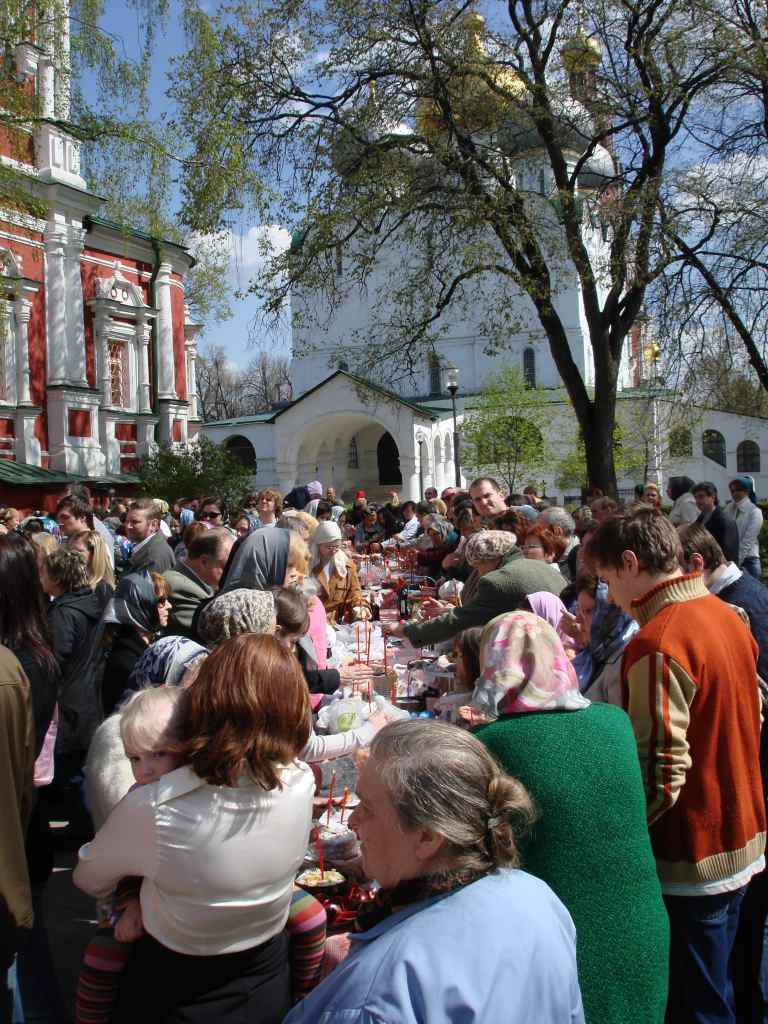
Finally, the snow melts away and the good weather arrives – and everyone leaves their cramped apartments and comes outside to celebrate. Sometimes this happens early with the orthodox Easter in late April or early May…….

Easter Celebration, Moscow 2008

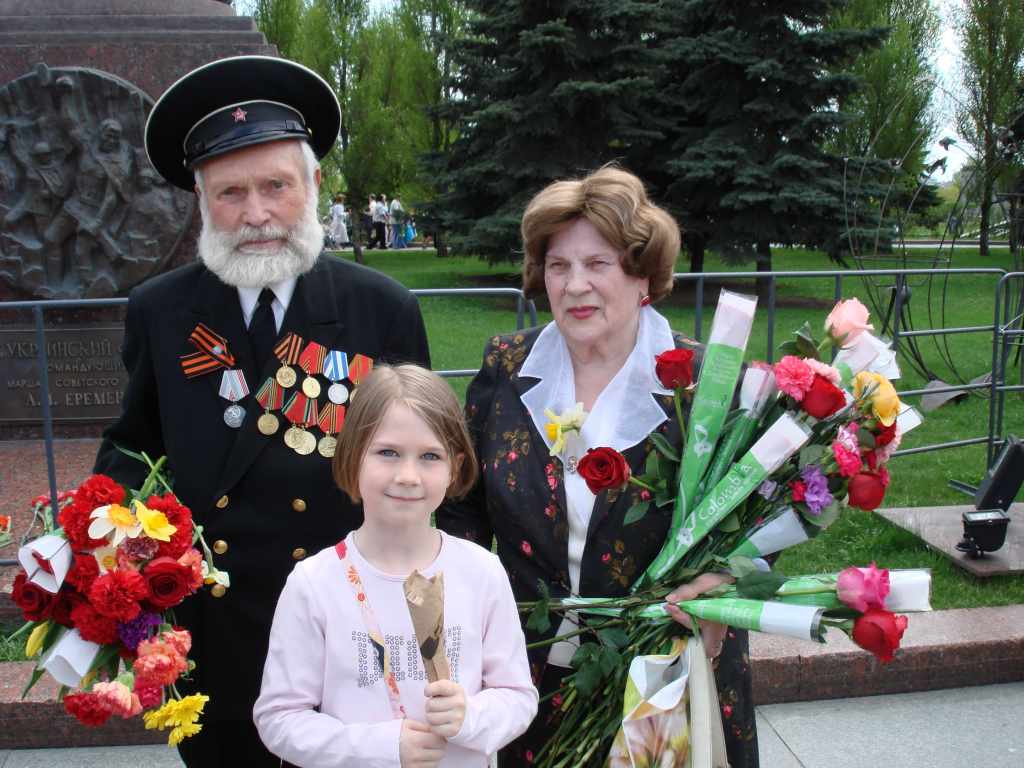
But more traditionally the good weather starts around Victory Day celebrations on the 9th, which are taken very seriously in Russia, a country that lost around a quarter of its population during World War II through military action or starvation. Of course, there is the famous parade on this day, but there are dozens of other activities taking place all through the city – concerts, lectures, fairground activities, street stalls selling WWII soldiers’ rations…. In 2008, there were still some war veterans alive, and there was a touching tradition of people offering them flowers.

Victory Day Veterans, Moscow 2008

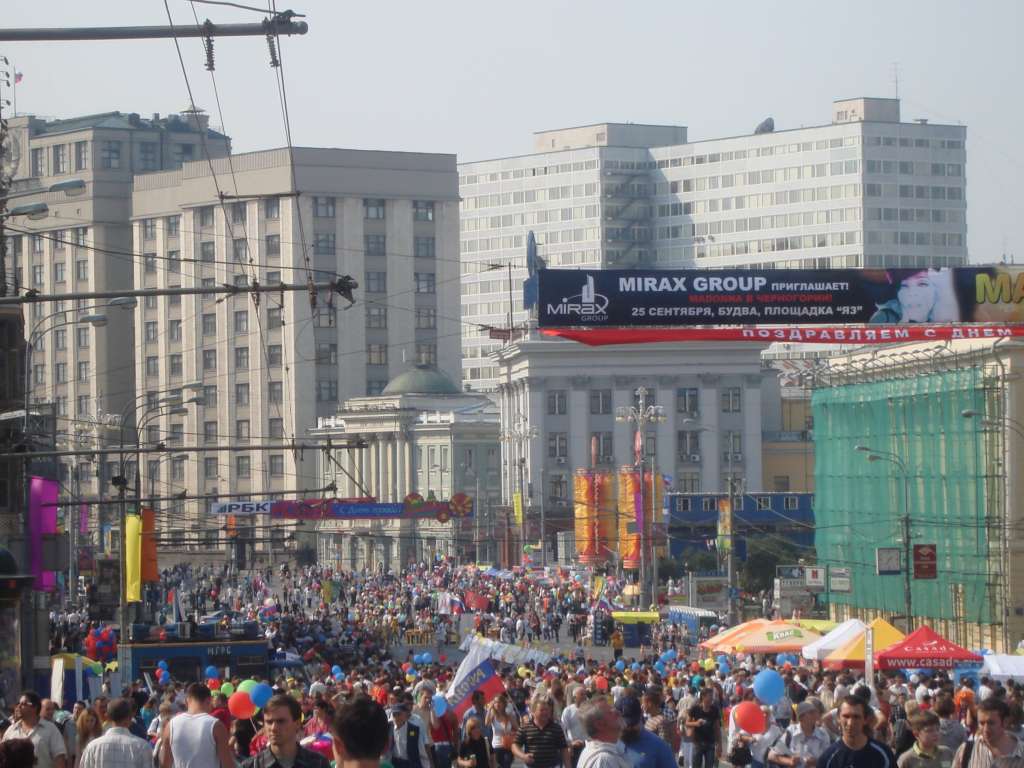
June, July and August bring the Russian summer. Just as winter is cold and dark, the summer is warm and light. The sun seems to hang in the air as a great glowing ball of fire, reluctant to dip below the horizon, and bathing the city in a strange orange light. The streets, once lonely and cold, fill with people enjoying drinks on pavement cafes, listening to excellent street performers, or simply strolling around and enjoying the weather.

Moscow City Day, 2008 – crowds on the street

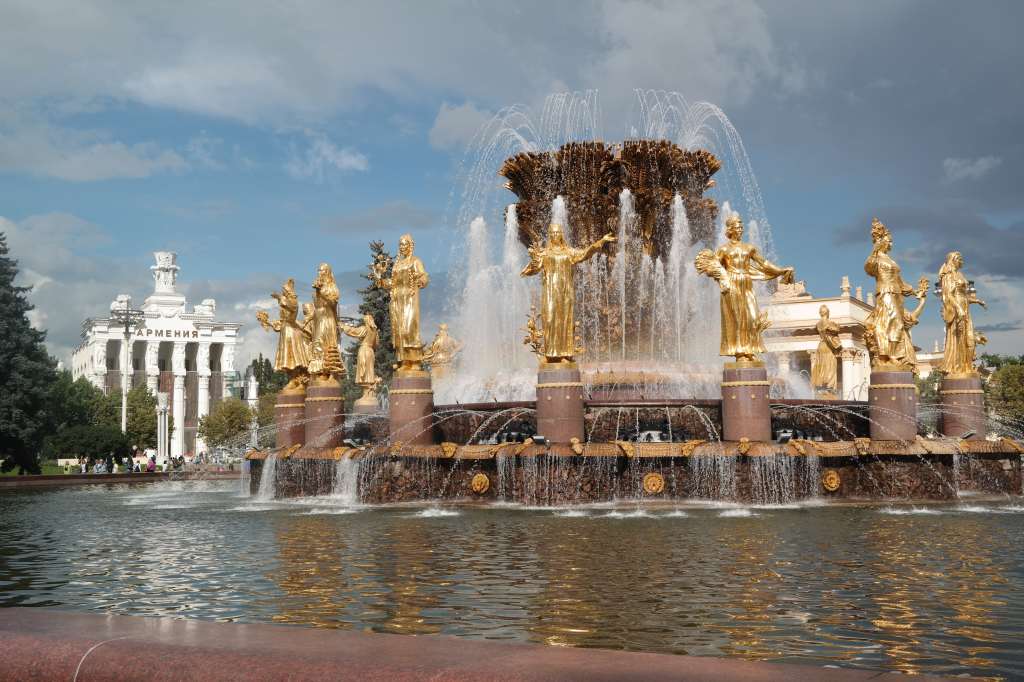
Apart from enjoying central Moscow, summer is also a great time to visit some of the attractions a bit further away, like VDNK, an exhibition centre built to celebrate the different republics that made up the Soviet Union and their supposed harmonious friendship….

The Fountain of the Friendship of Peoples at VDNK

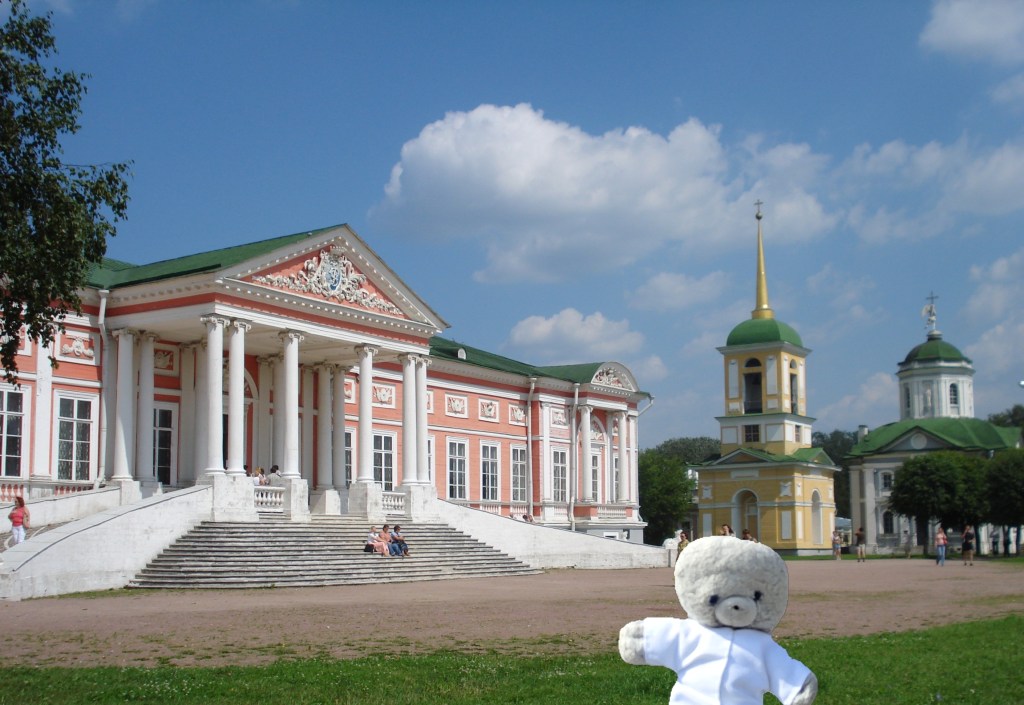
….or some of the old aristocratic or royal palaces that surround the city

A palace near Moscow

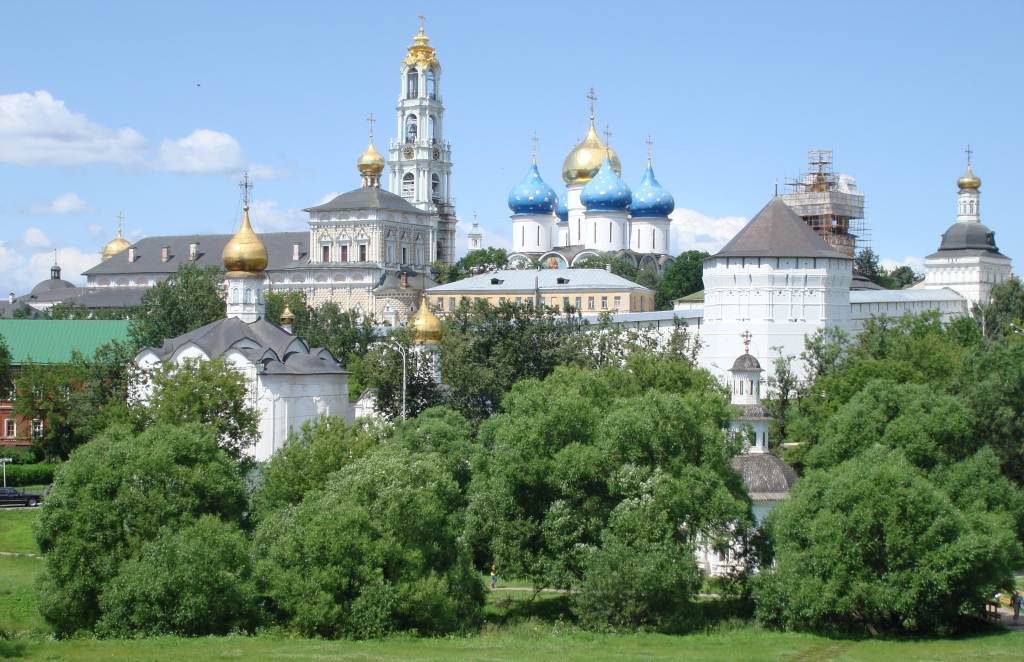
….or  the pretty towns of the “Golden Ring”, like the important religious centre, Sergeev Posad.

Sergeev Posad near Moscow

The Moscow autumn is very short. The weather beings to change in September. In October, the leaves suddenly fall from the trees over a couple of short weeks and in November, the first snow usually falls, and the long winter begins again.

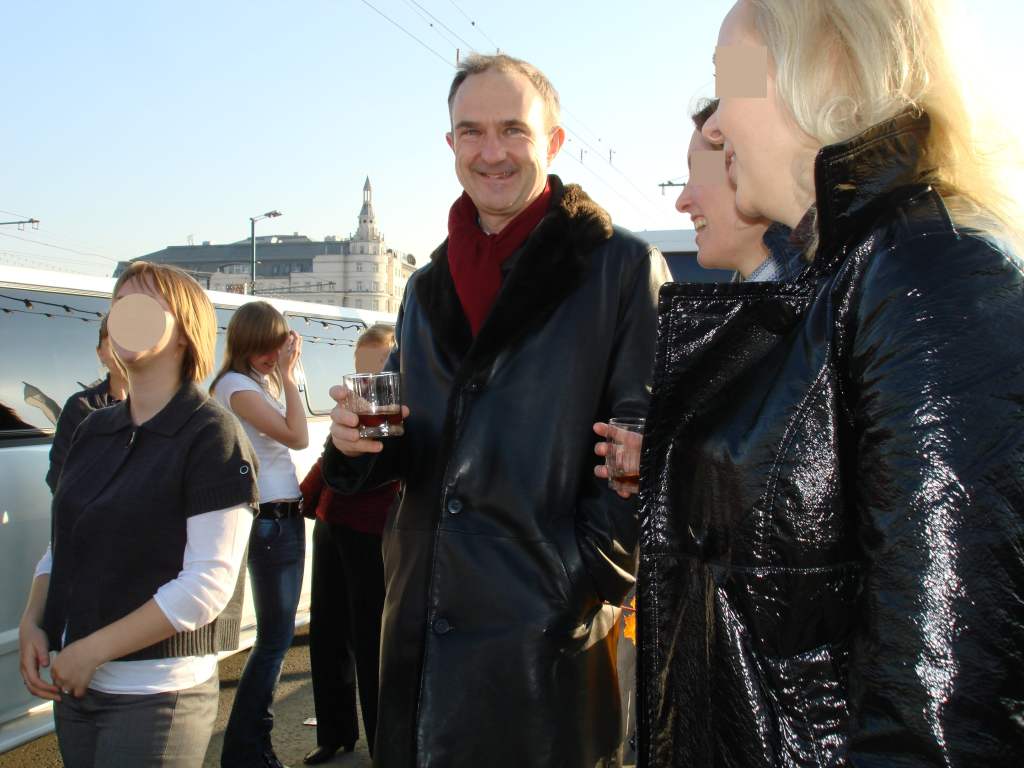
The Moscow of 2008-9 was an amazing place, full of contradictions and (usually pleasant) surprises. At first site, the Moscovites were a dour, unsmiling bunch, but once I got to know people, I made many lasting friendships. The city felt safe, because there were always lots of police on the streets, but in my relatively small expat community there were several violent deaths from bungled robberies or traffic accidents. When you went out, you could never be sure how the evening would end – quietly going back home or getting caught up in some drunk adventure with crazy Russians. One day I was walking over the bridge leading to the Kremlin with my chief editor, when we were accosted by a group of very merry ladies who were standing next to a stretch limousine and drinking cognac. They invited us to go for a drive, and……. the rest of the story can be read in my book, Caviar, Vodka and Tears.

My editor getting into trouble again…

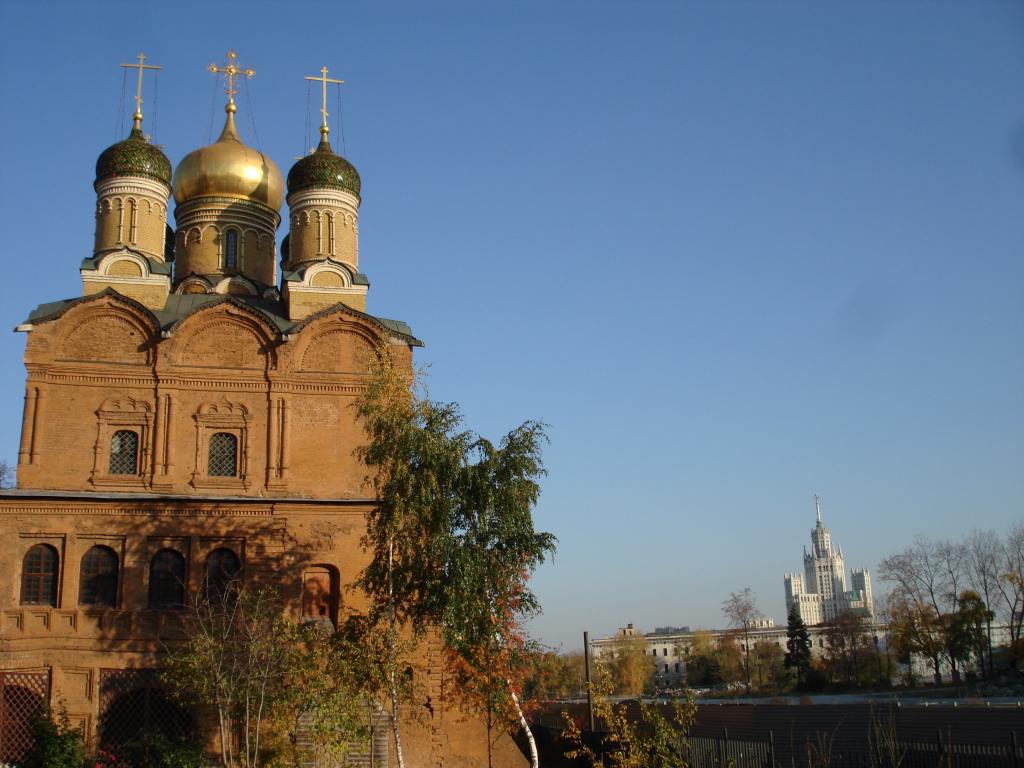
There was one special place that for me summed up the chaotic Moscow of 2008-9. It was a small parking area a short distance away from Red Square and was usually deserted. Directly in front of me, was a beautiful 17th century orthodox church.  In the distance on the horizon, stood one of the “seven sisters” – impressive buildings commission by Stalin to celebrate the might of the Soviet Union.

My favourite Moscow view, left hand side….

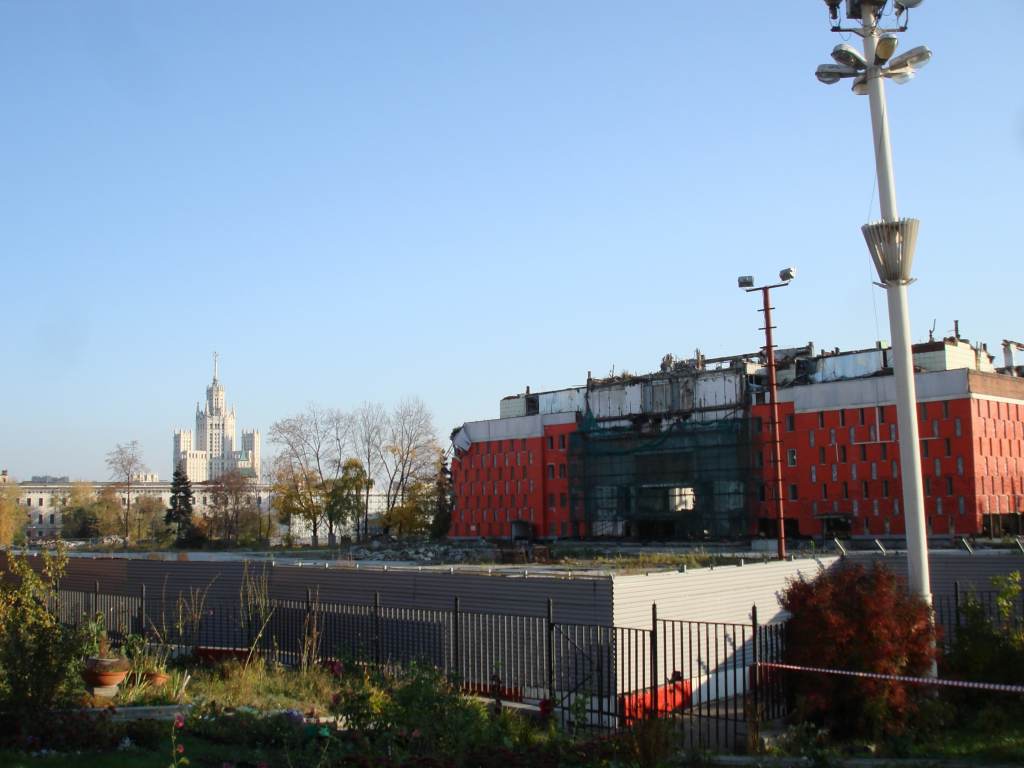
And to the right was the shell of an abandoned hotel surrounded by waste ground. This was the once elite Rossiya Hotel, used to accommodate dignitaries visiting the Kremlin. It was finished in 1967 but aged rapidly and was closed in 2006. A project was agreed to convert the area into an entertainment complex, but the developer who won the contract was accused of corruption and fled to the UK, leaving the decaying site you can see in the photo below.

…and right hand side

The power of the church, the state, and omnipresent corruption – this one vista summed up contemporary Moscow perfectly.

My next post will present the Moscow  of 2013-2109, a city transformed by massive investment. Stay tuned to see how it changed and what happened to my favourite view!

Previous Post: Off the beaten Track in St Petersburg

St. Petersburg – off the beaten track

My previous post was about the classical sights of St Petersburg – this one will cover the sides of the city that a typical tourist never sees and some of the wild adventures that always seemed to happen to me or my team when I visited. My second trip to St Petersburg was during the Russian New Year holidays in January, in the middle of the Russian winter. Not surprisingly, it was very different to my visit during the summer. On a sunny day, the city would look beautiful under a light coating of snow….

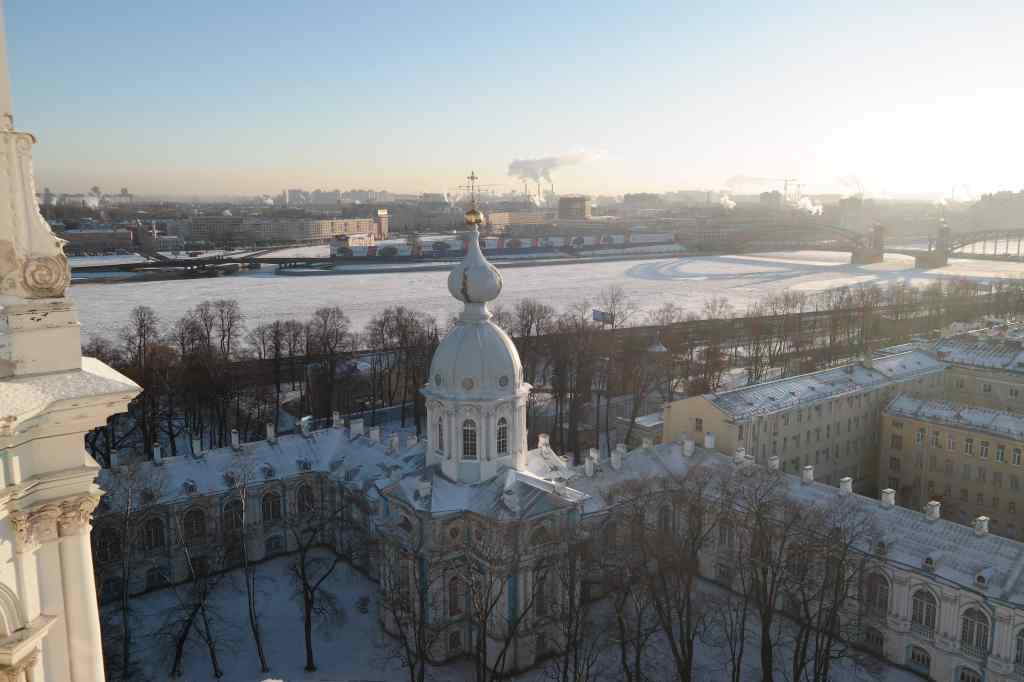
St Petersburg on a sunny winter’s day – magical
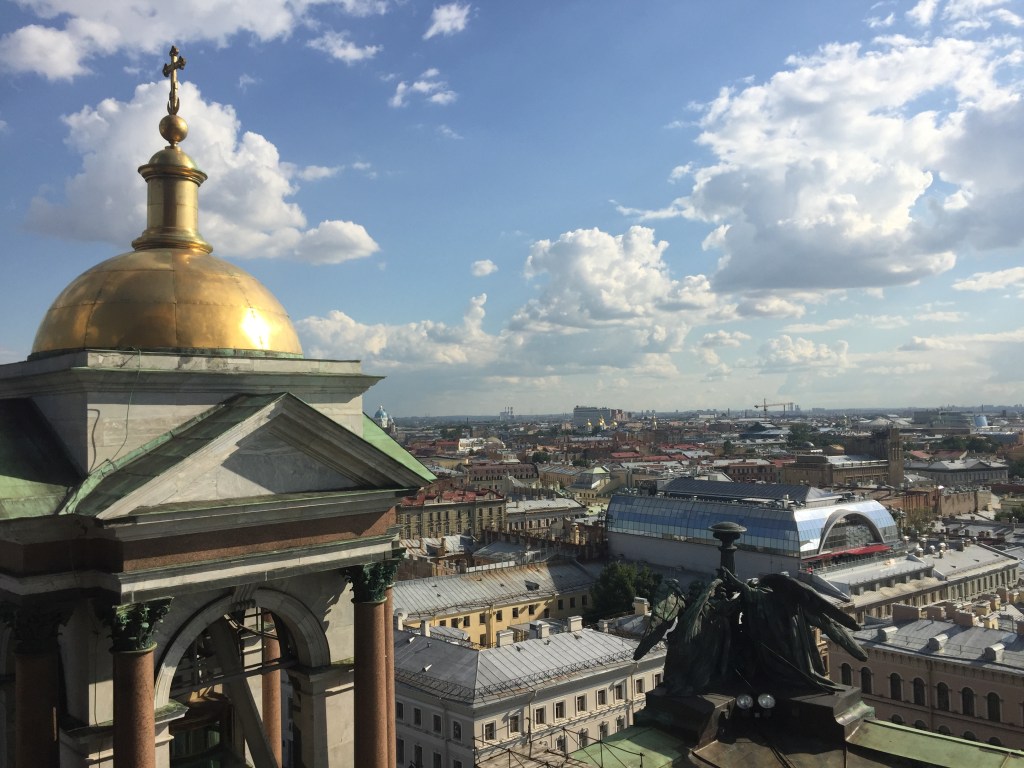
The view from the tower of Smolny Cathedral
Smolny Cathedral

But on an overcast day, it would look like this – very damp and dark.

A dark winter’s day in St Petersburg

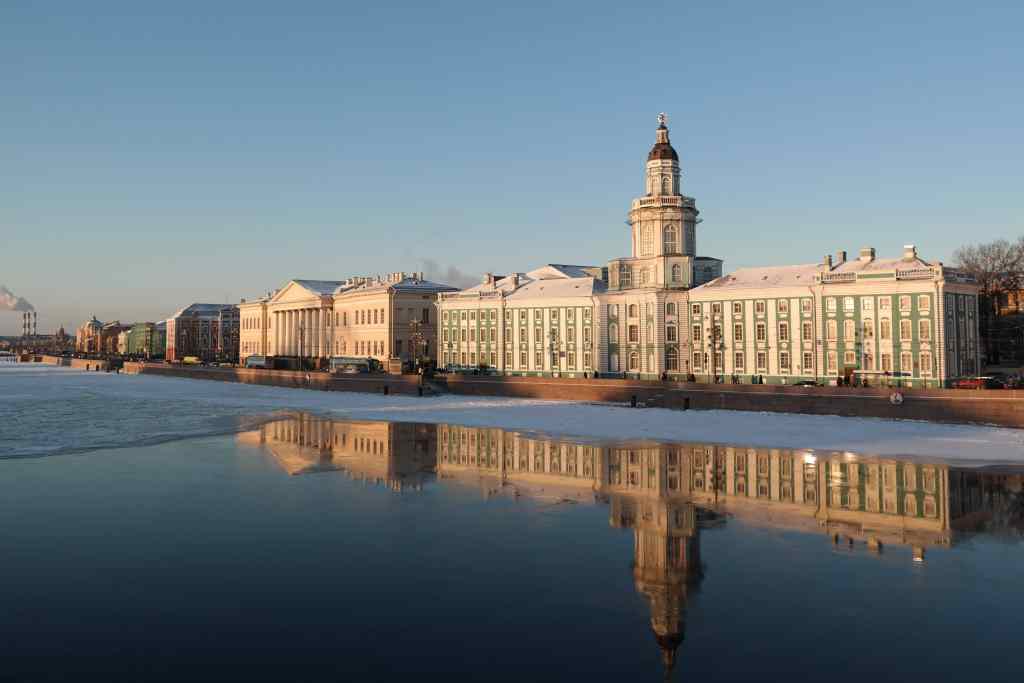
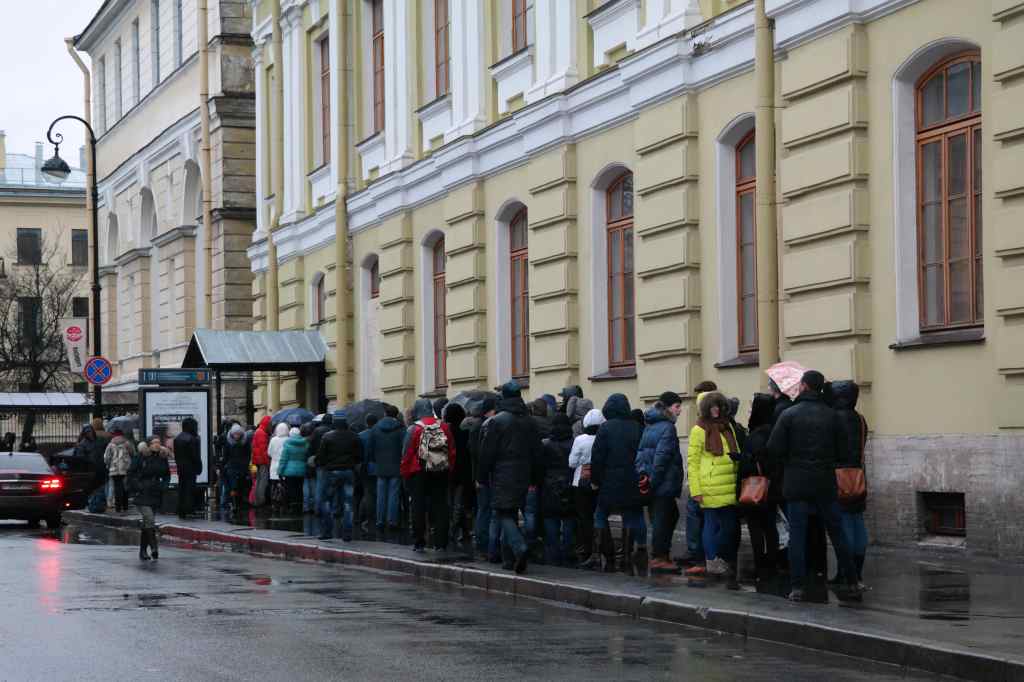
Although the temperature was slightly higher than in Moscow where I was living, it felt a lot colder, due to the high levels of dampness – it was a cold that rapidly reached your bones and made you shiver, even with warm clothes on. The days were even shorter than in Moscow’s winter, with sunrise at 10am and sunset at 4pm.  The foreign tourist crowds were gone…….to be replaced by crowds of locals all trying to visit the same famous attractions like the Hermitage or (below) the Kunstkamer (a collection of biological freaks assembled by Peter the Great) at the same time with their children.

Queuing to enter the Kunstkamer on a winter’s day

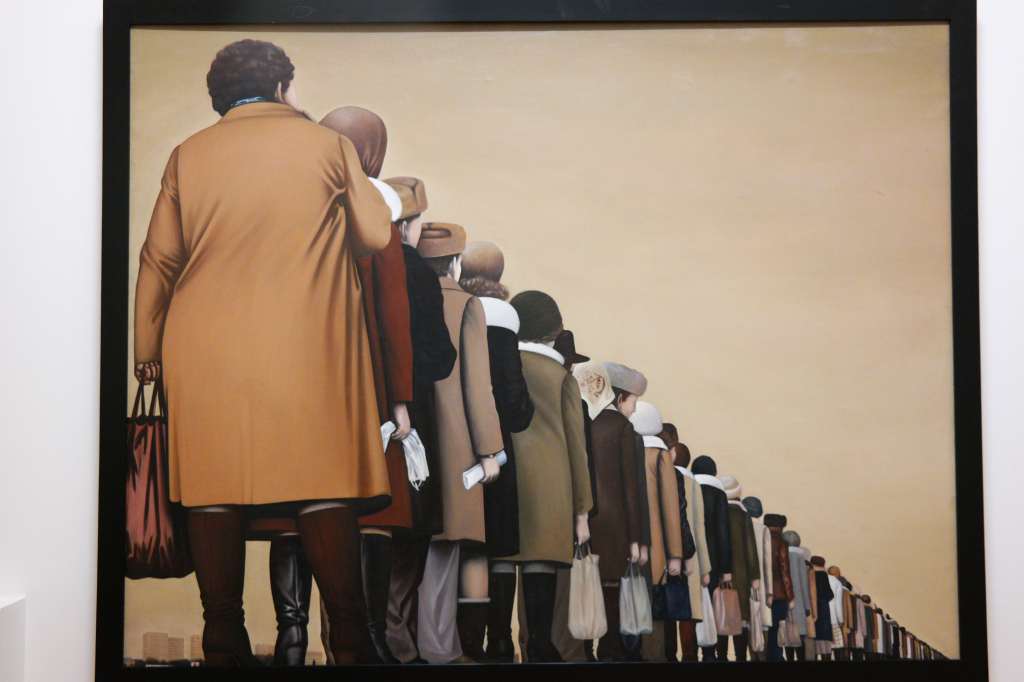
Fortunately, less well-known museums like the excellent Russian Museum were still almost empty.

One of the many excellent paintings in the Russian Museum, St Petersburg

After my winter visit, I started going to St Petersburg on business at least once a month and visited the districts outside of the impressive centre. In these less touristy parts of the city, many of the buildings might once have been beautiful but were now old and crumbling. St Petersburg suffered terribly during WWII, when the siege of Leningrad by Finnish and German forces caused the death by starvation of around a fifth of its population and resulted in the destruction of many of its buildings. A huge restoration effort has gone into the most famous areas of the city, but much of the rest looks rather neglected.

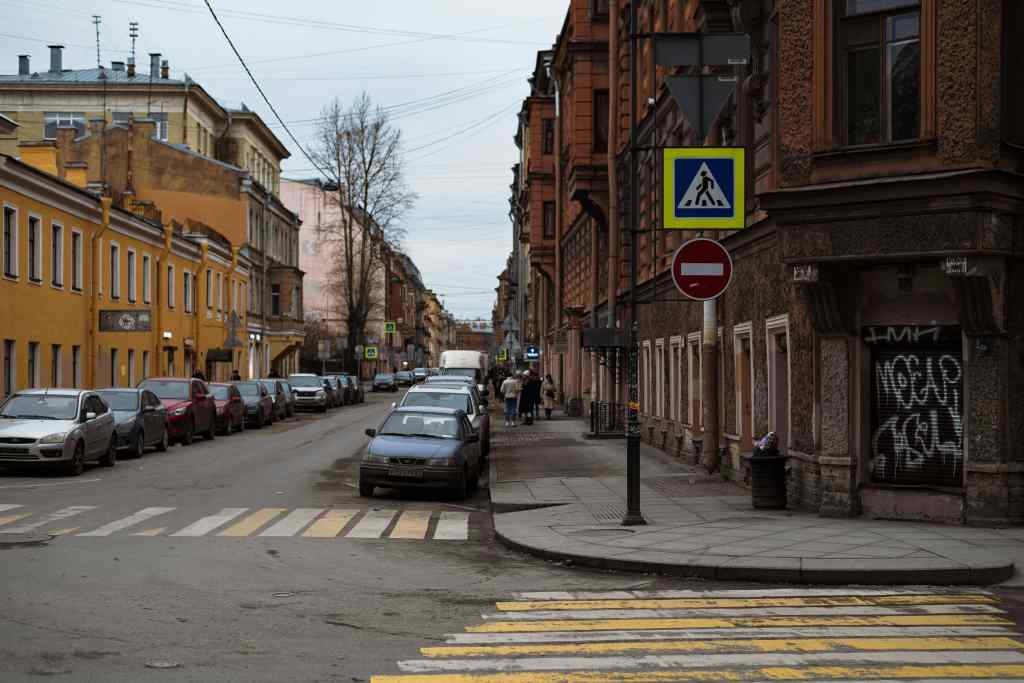
Off the beaten track – typical St Petersburg suburb

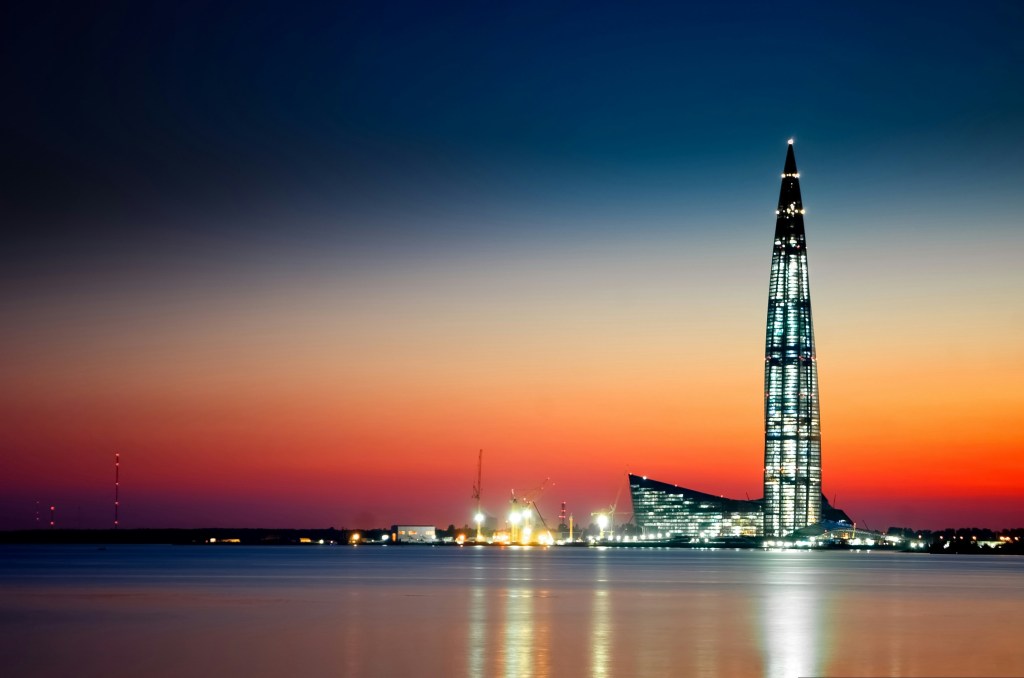
Not all of St Petersburg’s suburbs are run-down though. The islands to the north east of the historic centre used to be undeveloped land, but have now received massive new investments and are home to a brand new football stadium, expensive homes, trendy restaurants and flashy new office buildings – like Gazprom’s 87-story skyscraper at the Lakhta Centre.

The Gazprom tower at the Lakhta Centre

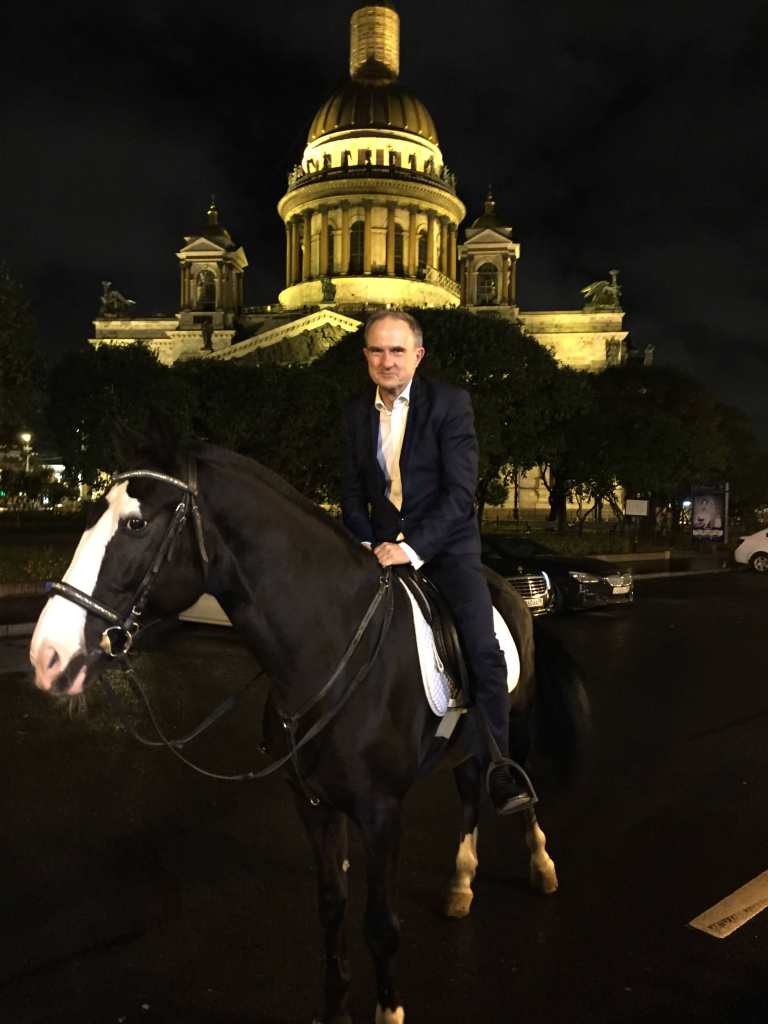
My many visits to St Petersburg allowed me to absorb and enjoy the city’s unique atmosphere – more laid back and arty than Moscow, occasionally slightly seedy, but usually lots of fun. As a result of befriending local residents, I had many adventures. On one occasion my chief editor was forced to ride a horse around St Isaac’s cathedral at 2am, after a drunken evening with the Russian publishing company we had just agreed a deal with.

Riding a horse around St Isaac’s Cathedral at 2am

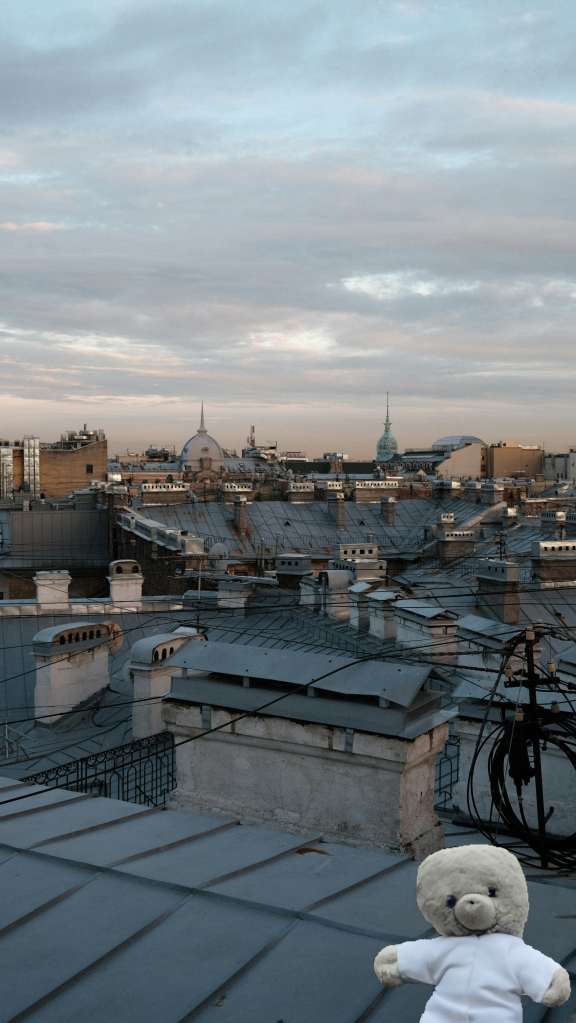
On another, I was invited to a rather hazardous excursion across the rooftops of the city. This is a popular, semi-official, activity for Russian tourists, but I found it pretty scary…….

A trip over the roofs of St Petersburg

In any case the view is not as good as the one you get from the more traditional tourist attraction, the towers of St Isaac’s Cathedral….

The view from St Isaac’s Cathedral

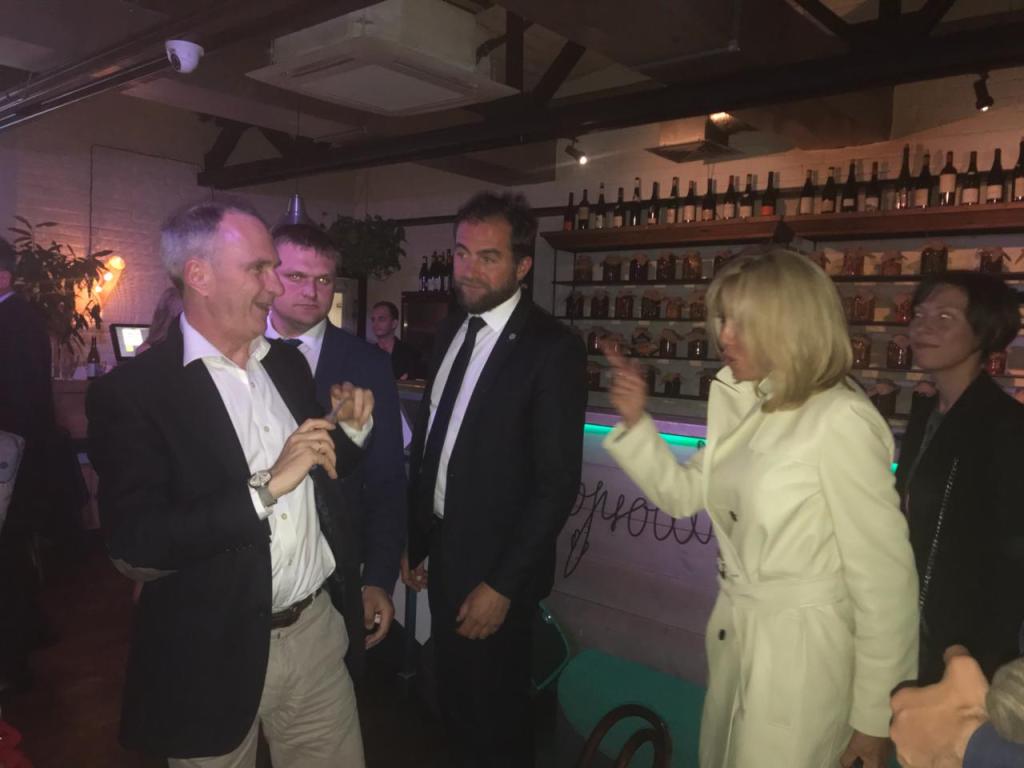
On another occasion my chief editor again got into trouble, at a trendy restaurant on one of the city’s many islands during the St Petersburg Economic Forum……

My editor in trouble with Mme Macron

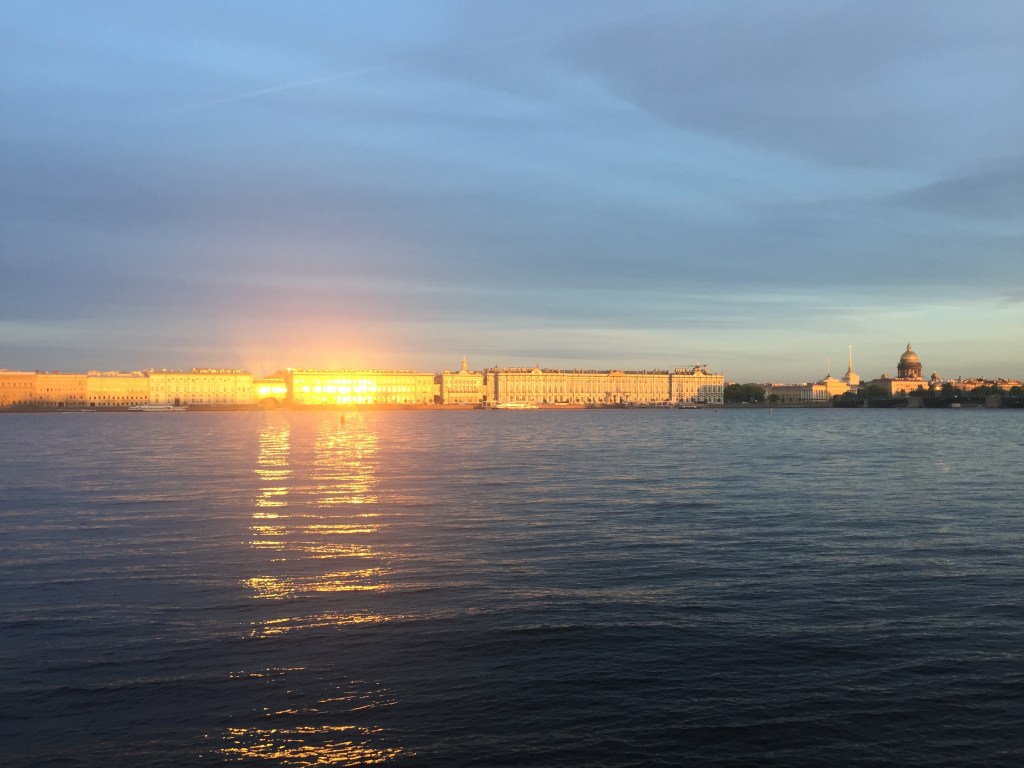
What an evening that was! The Forum takes place in June, and just as days are very short and dark in winter, in June they are long and light – although the sun sets at 10.30pm, it never seems to get completely dark before it rises again at 03.30. On this particular evening the setting sun was reflected in the many windows of the Winter Palace, making it look like the Neva River was on fire. This “White Nights” version of St Petersburg is the one I will remember forever. Some of my adventures in the city are described in my book, for more details click here.

The Winter Palace at sunset in summer

Previous Post: Classical St Petersburg

Next Post: Moscow 2008-2009

Saint Petersburg 1 – Classical sights

The second post in this series about Russia is devoted to Saint Petersburg. This is the Russian city most familiar to western visitors, and indeed its centre is a very pretty place well worthy of a few days’ stay, with world class attractions like the Hermitage and the royal palaces. My first visit was a holiday in the summer, which followed a classic circuit of the city’s highlights, but later I visited in winter and then I started to go there frequently on business. This gave me a very different perspective of the city and led to some of my most bizarre and fun adventures in Russia. I will cover the different sides of St Petersburg in two separate posts.

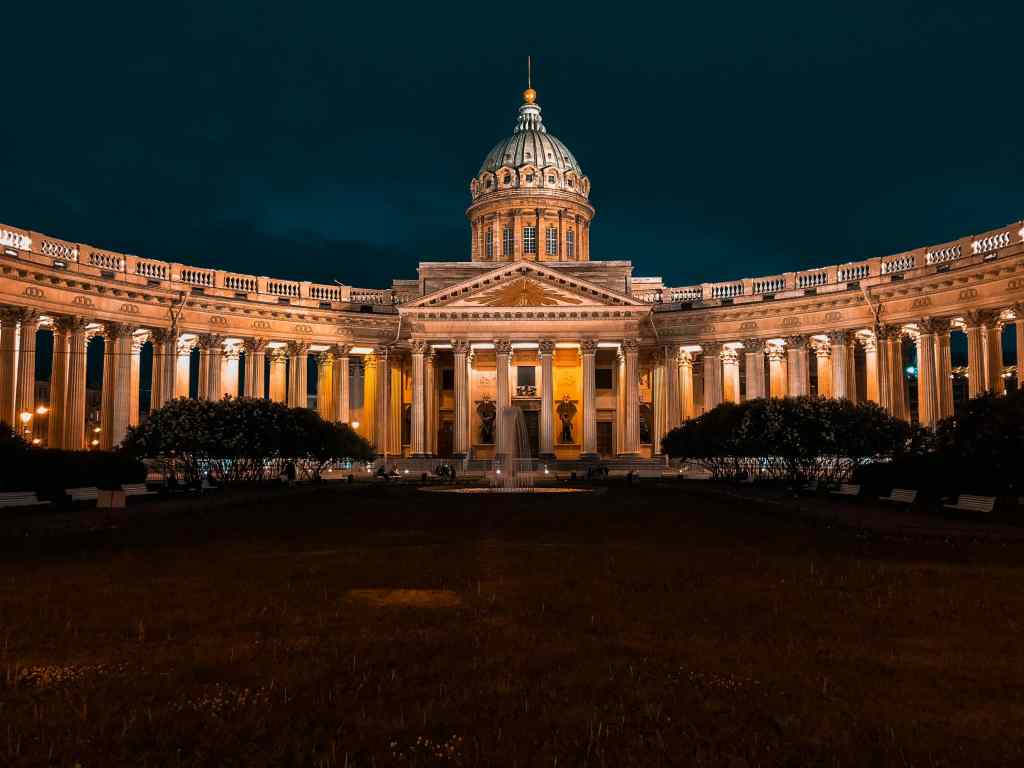
Classic St Petersburg – Kazan Cathedral

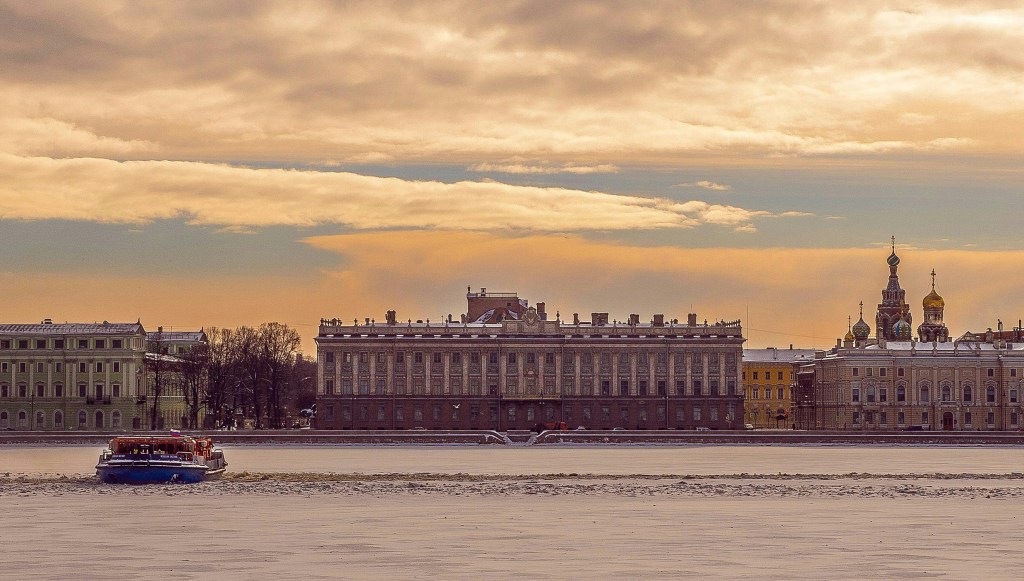
First, I will describe the classic St Petersburg that most tourists see. The city was founded in 1703 by the tsar Peter the Great, on boggy land on the shores of the Neva River – territory that had only just been claimed by Russia after a war with Sweden. Peter employed an Italian architect to design some beautiful classical buildings, whilst the labour force for its construction included many Swedish prisoners. Maybe not surprisingly, the centre of Saint Petersburg looks like other European cities built in the same period, with majestic houses along the Neva River and the surrounding canals.  A boat trip along these waterways is a popular way for visitors to get a first impression of the city.

A boat trip on the Neva River, Saint Petersburg

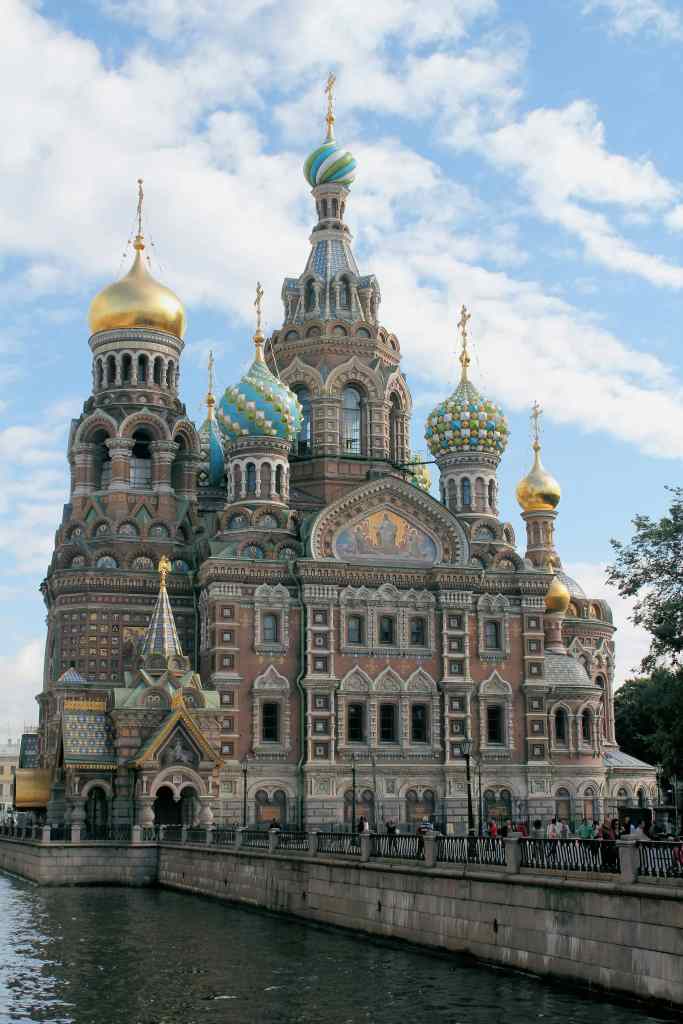
The centre of St Petersburg has many magnificent buildings, like Kazan Cathedral (first picture in this post) or the Church on Spilled Blood, built on the spot where tsar Alexandra II was assassinated in 1881.

The Church on Spilled Blood Saint Petersburg

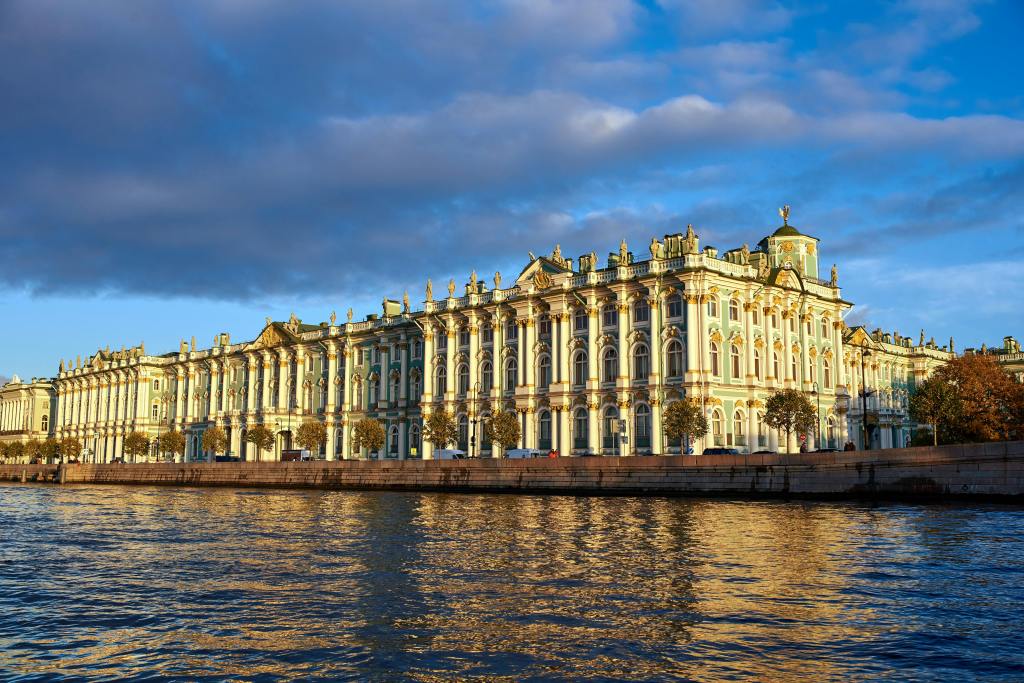
One of the highlights of the centre of St Petersburg is the famous museum, the Hermitage, which owns a staggering three million items – of which only a small proportion are put on display. It was founded by Catherine the Great in 1764 as an extension to her Winter Palace in order to house her growing art collection and acquired its name from its being an exclusive, inaccessible place that only the tsar’s family could visit. The collection steadily grew, and new buildings were added to house them – although a few major works were sold by the cash-strapped communist regime in the 1920s. The communists also transformed the tsars’ former Winter Palace into yet another part of the museum, and today is the second largest in the world by surface area.  

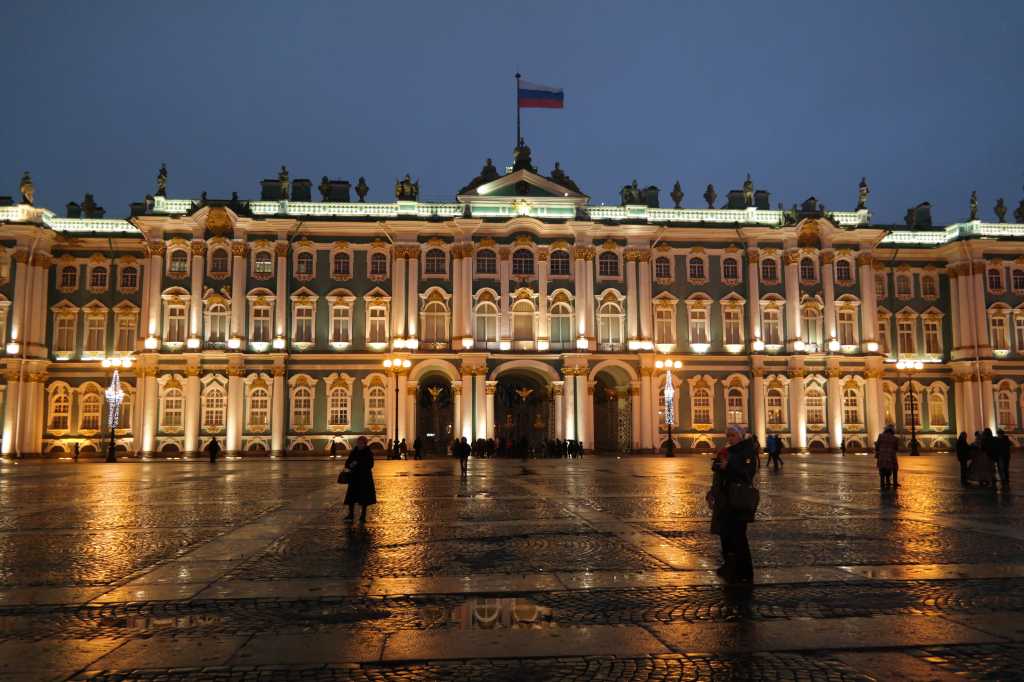
The Winter Palace

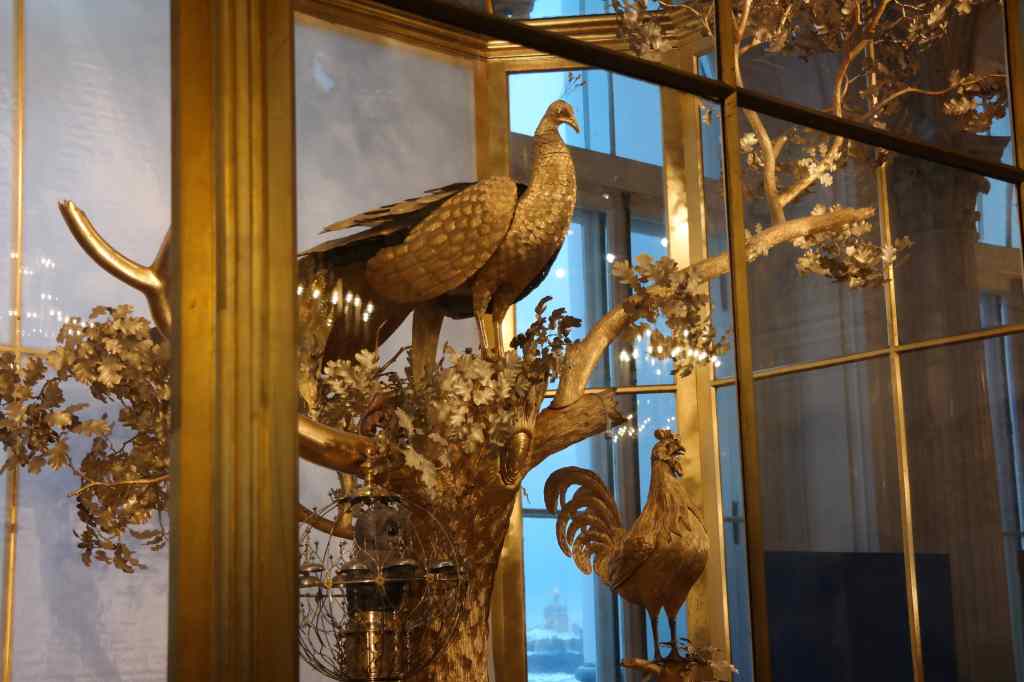
I have visited the Hermitage many times, and indeed its collection is amazing. Highlights include this incredible golden Peacock Clock and a collection of old masters that includes works by da Vinci and Rembrandt.

The Peacock Clock at the Hermitage Museum

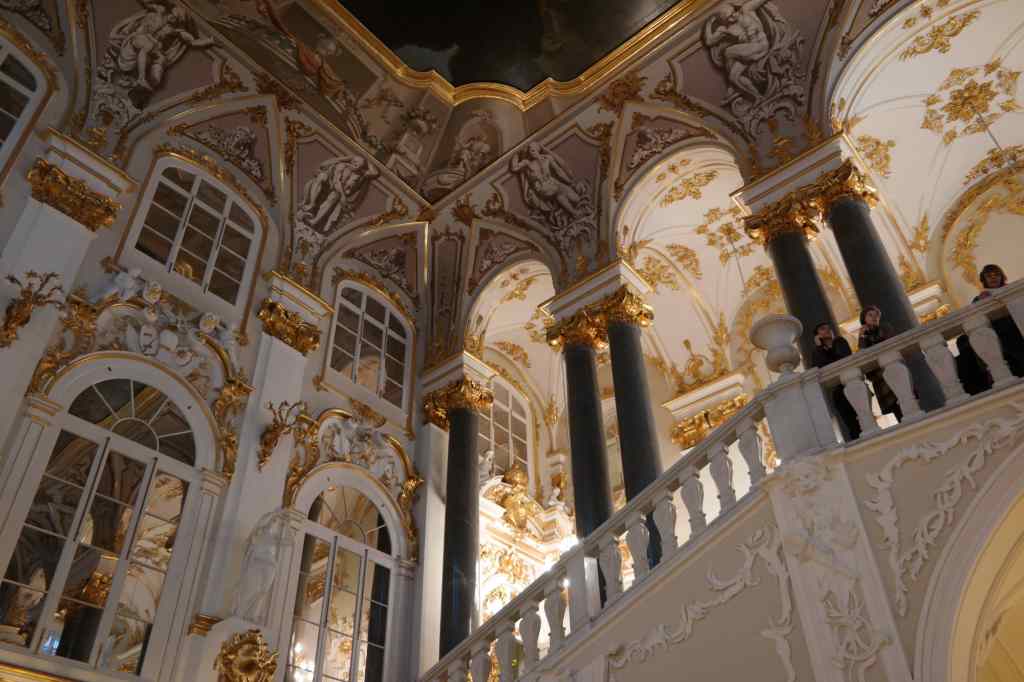
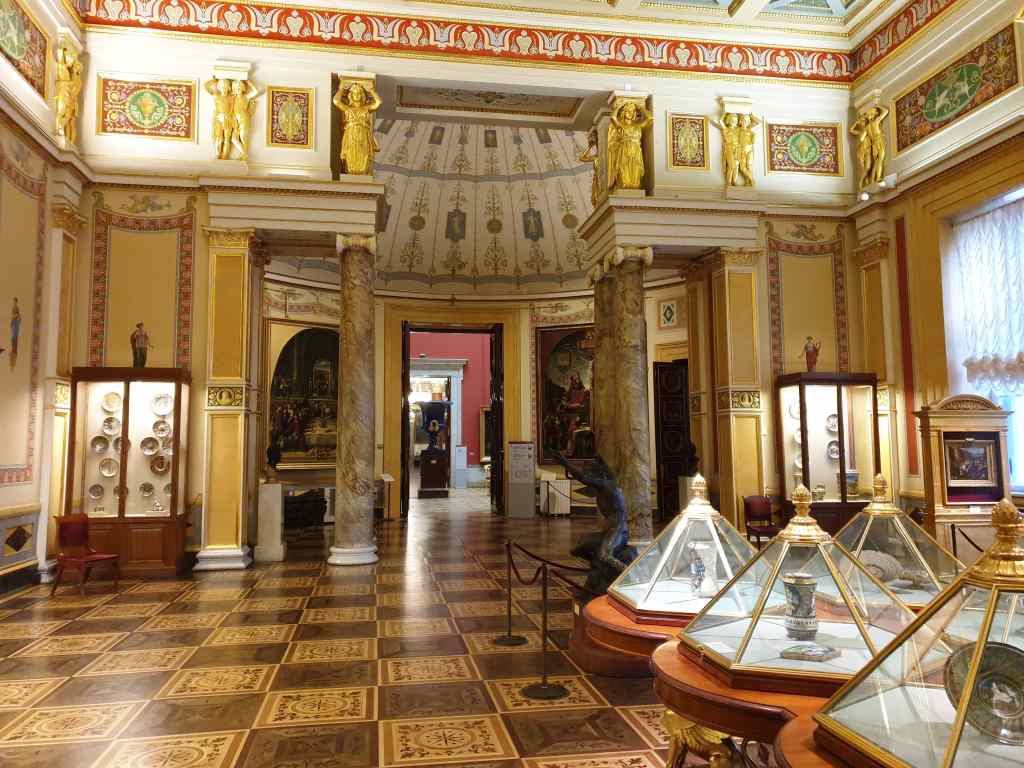
However, I think I actually simply prefer walking around and admiring the magnificent interiors of the former Winter Palace -such the Grand Gala Staircase or the Malachite Room, which was the home of the Russian Provisional Government formed after czar Nicholas II abdicated until the Hermitage was stormed by workers and sailors at the start of the Bolshevik Revolution.

The Grand Gala Staircase at the Hermitage
One of the quieter rooms in the Hermitage

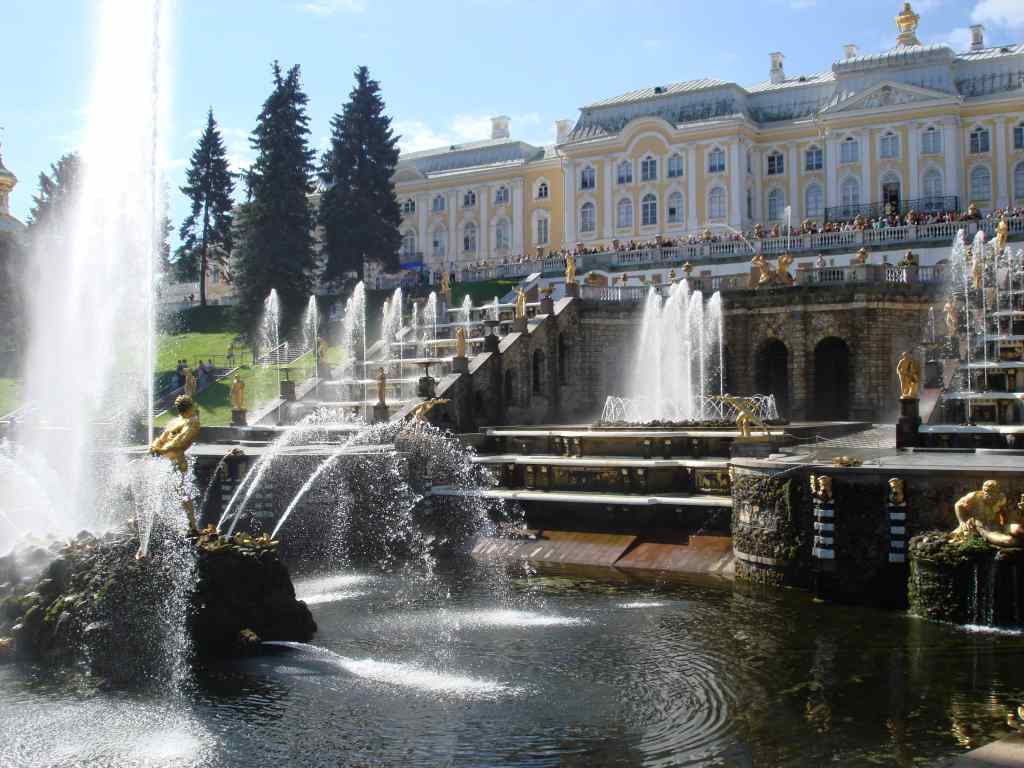
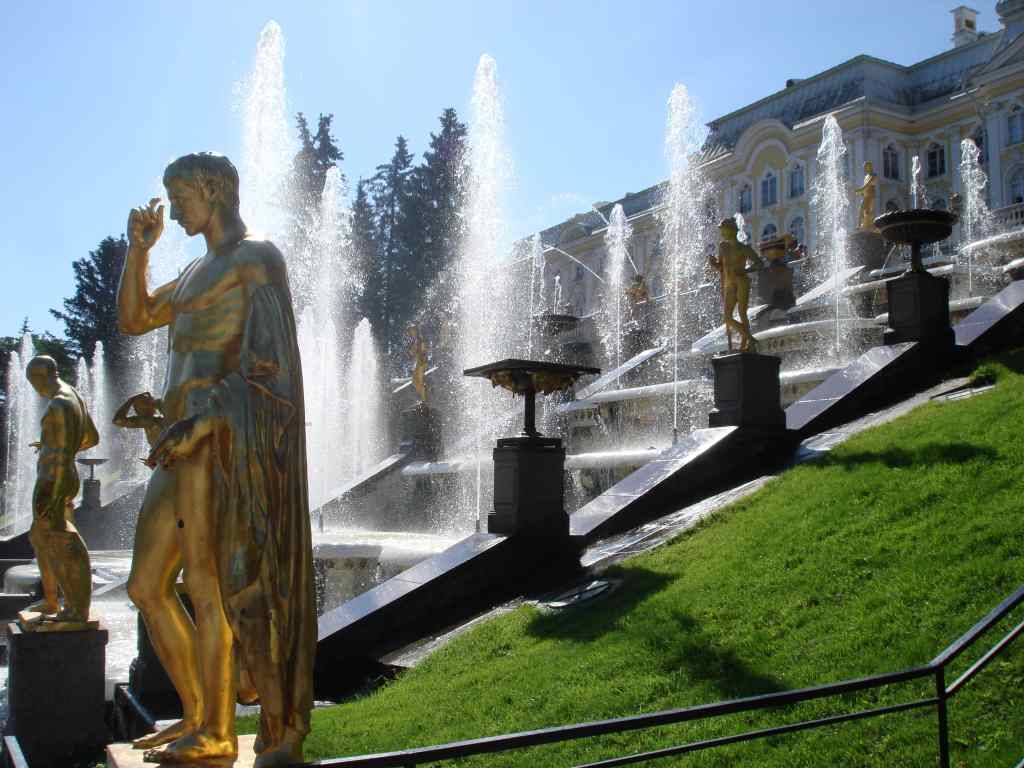
Magnificent palaces are not confined to the centre of St Petersburg. A short distance away from the city are several of the Russian tsars’ summer palaces. One of the most spectacular is Peterhof, built by Peter the Great and most easily reached by a short ride in a hydrofoil. Peterhof is a huge palace, famous for its many fountains, of which the most impressive is the Grand Cascade, which sits between the palace and the sea.

The Grand Cascade, Peterhof
Close up of the fountains of the Grand Cascade

The palace itself is also beautiful, although what you see today is a reconstruction after the Nazis demolished the original structure during the siege of Leningrad.

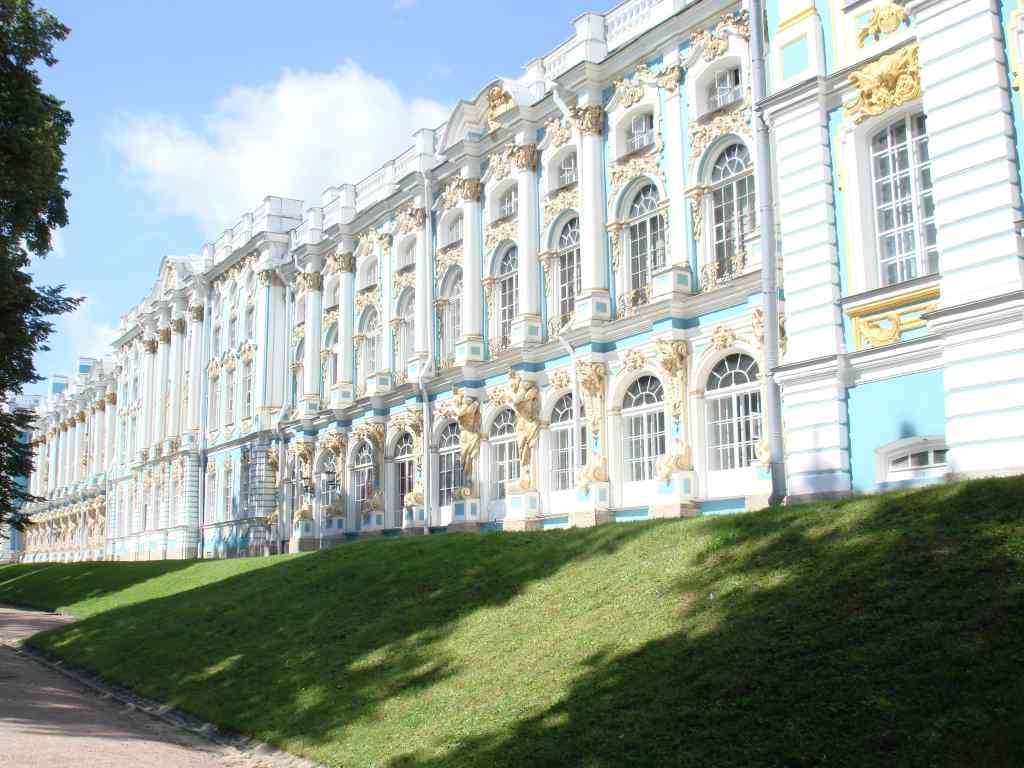
Another huge palace complex near St Petersburg is Catherine’s Palace, located about 30km from the city in a town called Tsarskoye Selo or Pushkin.  This is even bigger than Peterhof and was also completely gutted by German forces during WWII – so what you see today is again mostly restoration.

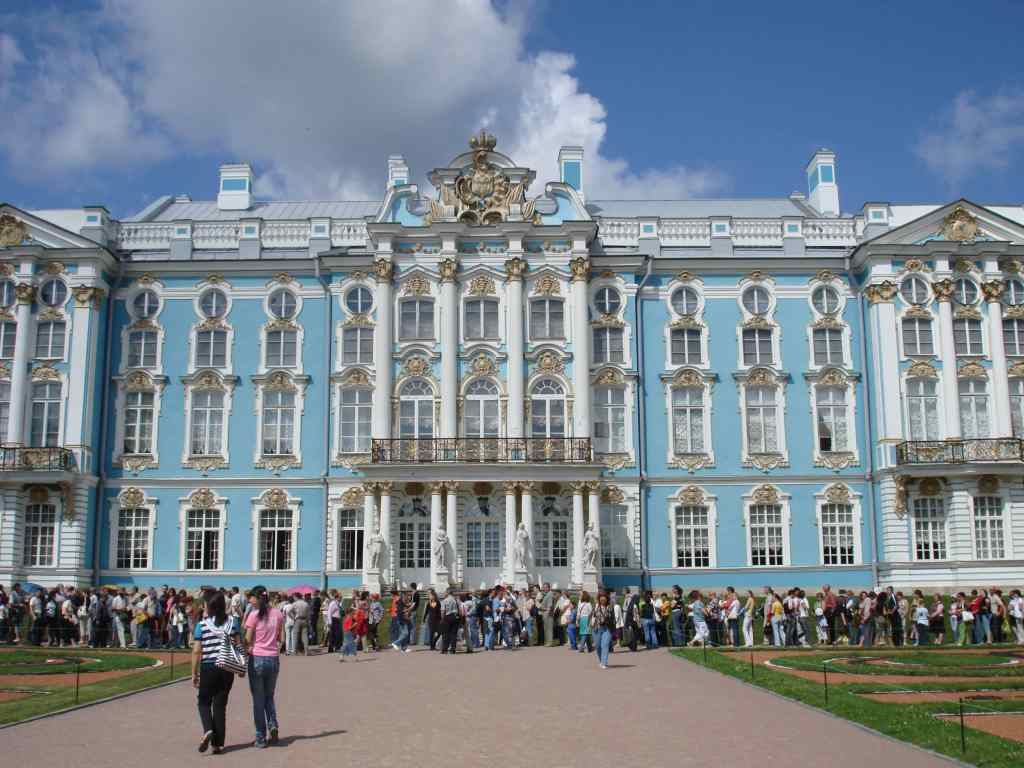
The exterior of Catherine’s Palace
…and the queue to get in!

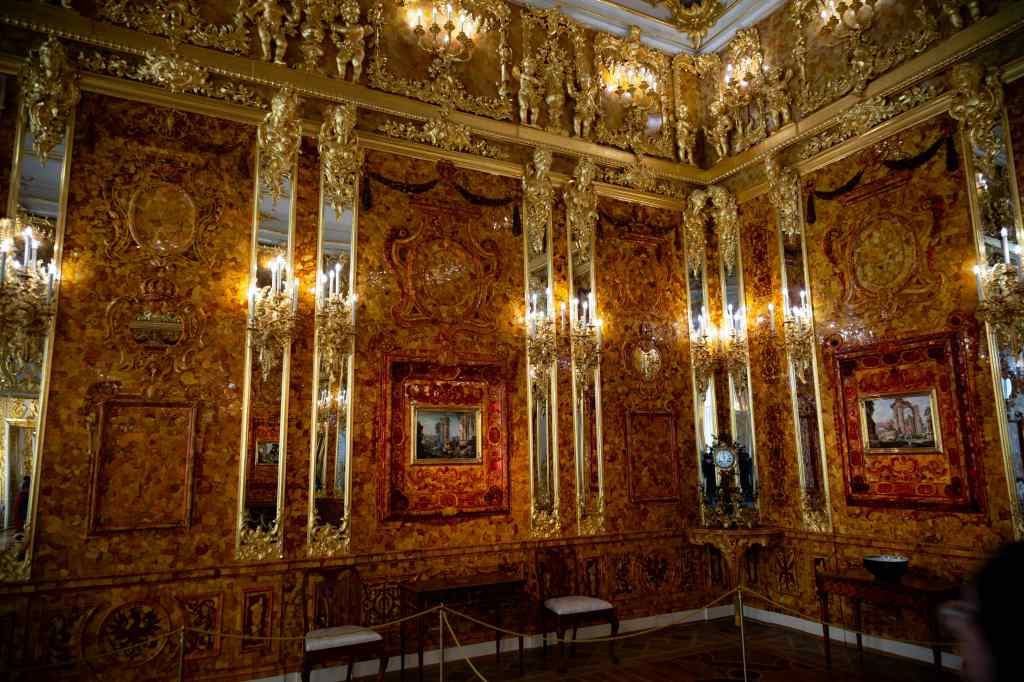
One of the highlights of Catherine’s Palace is the Amber Room, a chamber decorated with amber panels, which has a mysterious history. It was originally located in Charlottenburg Palace in Berlin but was given by the Prussian king to his ally, Peter the Great. Eventually it was moved to the Catherine’s Palace where it was feted as the “eighth wonder of the world”. When the Nazi forces occupied the area, they took apart the Amber Room and shipped it to Konigsberg in Germany (now Kaliningrad in Russia) – but when advancing Russian troops captured the city in 1945, no trace of the room could be found even after years of searching. Eventually it was decided to rebuild a new Amber Room in the restored palace, a project that was took 23 years and which finished in 2003.

The Amber Room, Catherine’s Palace

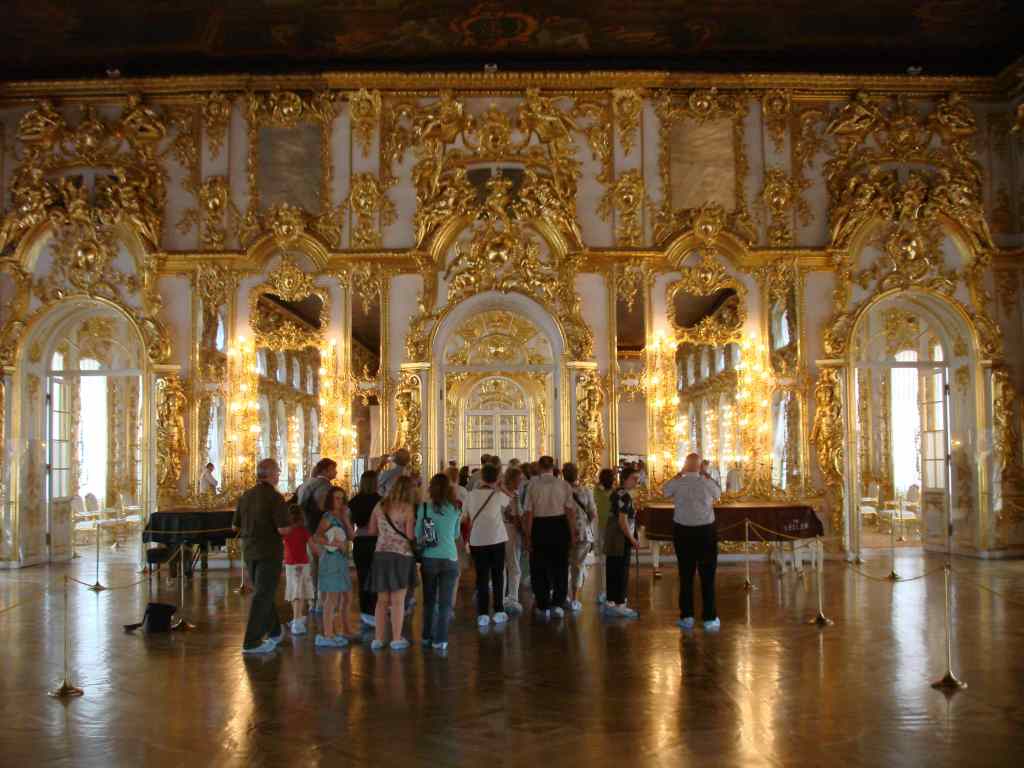
Sadly, the Amber Room was closed for maintenance on my visit, so I had to content myself with the rest of the palace. This was certainly opulent, but in my humble opinion, not always in the best taste – the architects seemed to have been instructed to cover the walls of every room with gilt, and after a while this endless dazzle of gold became a bit repetitive….and even a bit tacky.

One of an endless series of over-gilded rooms, Catherine’s Palace

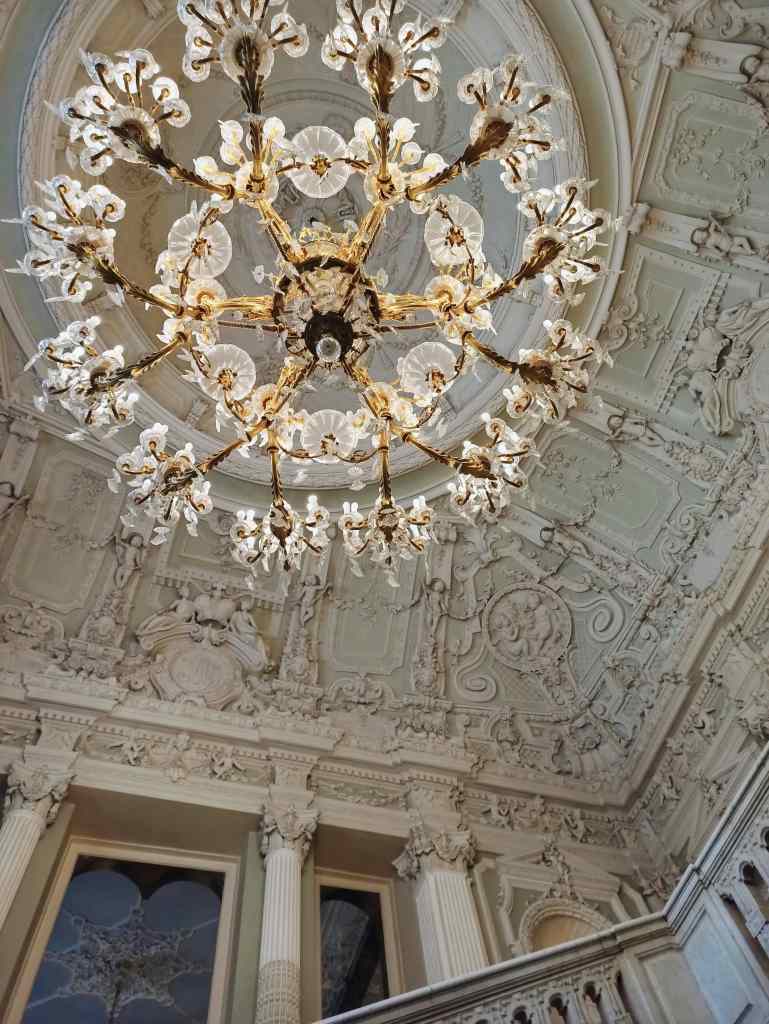
My favourite St Petersburg Palace was the Yusupov Palace, located on a canal in the centre and a complete contrast to Catherine’s Palace and Peterhof. It was originally built in 1776 by a French architect, and over the years went through many modifications. In 1830 it was bought the Yusupov family, the second richest family in Russia after the Tsar’s.

The Entrance Staircase at the Yusupov Palace

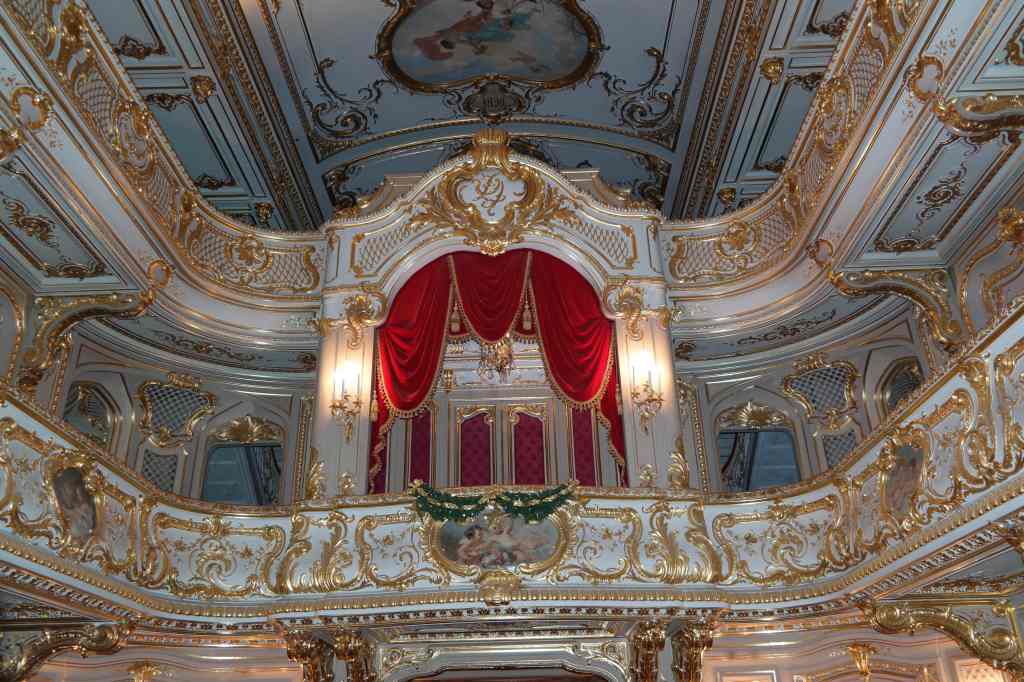
I liked this palace because of the range of architectural styles used to build it, its more human scale and its tasteful interior decoration. One of its highlights is its small theatre, where plays are still performed for the general public.

The Theatre at the Yusupov Palace

The Yusupov Palace is also famous as the place where the monk Rasputin was assassinated in 1916. Many Russian nobles had become deeply worried that his influence over the Tsarina was damaging the standing of the royal family and adding to the deep social unrest Russia was experiencing. A group of them, led by Prince Felix Yusupov, heir to the Yusopov fortune, lured him here for a dinner of pies laced with cyanide. This though failed to kill Rasputin, so instead they shot him three times and dumped his body into the nearby river. Felix escaped serious punishment for the murder, but his actions didn’t stop the revolution, which forced the whole family to leave their palace and flee to France with their best jewels and paintings. 

The Yusupov Palance seems an appropriate place to end my blog on the traditional sights of St Petersburg – the scene of an unsuccessful attempt to forestall inevitable social change. Wandering around the excessive opulence of the Winter Palace, Peterhof, Catherine’s Palace and the many magnificent building of central St Petersburg, it is not surprising that the 1917 revolution happened. Especially when one contrasts the extravagant centre of the city with the its poorer areas, located only a short walk away – which I will cover in my next post.

Previous Post: Solovki Islands

Next Post: Off the beaten track in St Petersburg

Russia – the Solovki (Solovetsky) Islands

For the next few posts, I am going to do something a bit different by going back to the past. I lived and worked in Russia for a total of seven and half years, from 2008-9 and 2013-2019. I travelled extensively, from Karelia to the Caucuses, to the frozen Siberian north in winter, to lake Baikal (twice), and magical Kamchatka. I also completely crossed the country by train, on the Trans Siberian and then the “BAM”. On my return to London, I wrote Caviar, Vodka and Tears, a book about my experiences living, working and travelling in this unique country.To accompany the launch of my book, I am going to do a few posts about my travels, as a memory of happier times, before the Ukraine war. Hopefully at some point there will be peace, and it will be possible and morally acceptable again to travel in Russia. The next few posts will describe the amazing travel experiences I had whilst living there.  

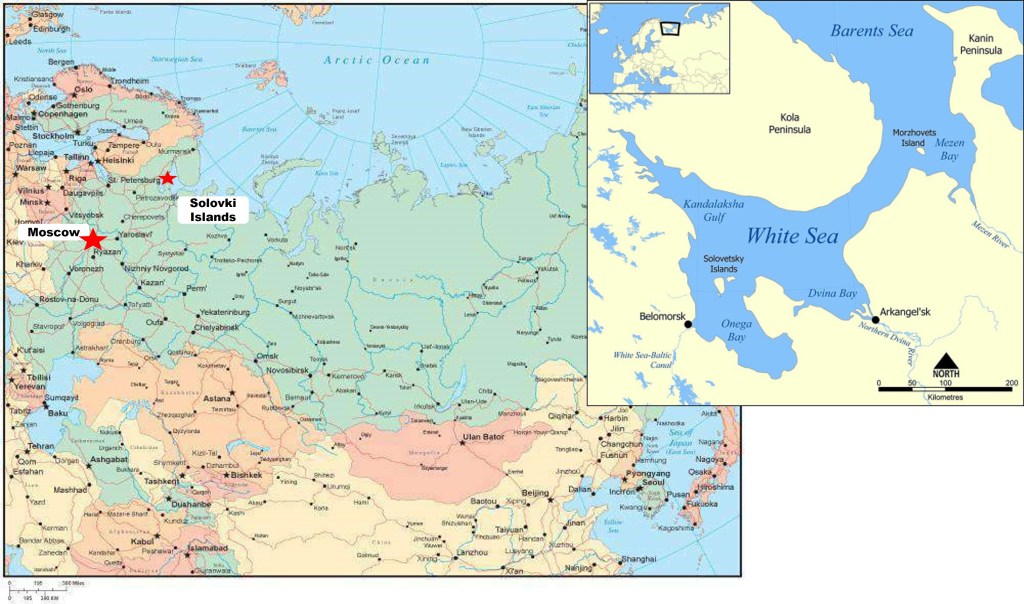
The Solovki (or Solovetsky) Islands sit in the White Sea in the Far North of Russia

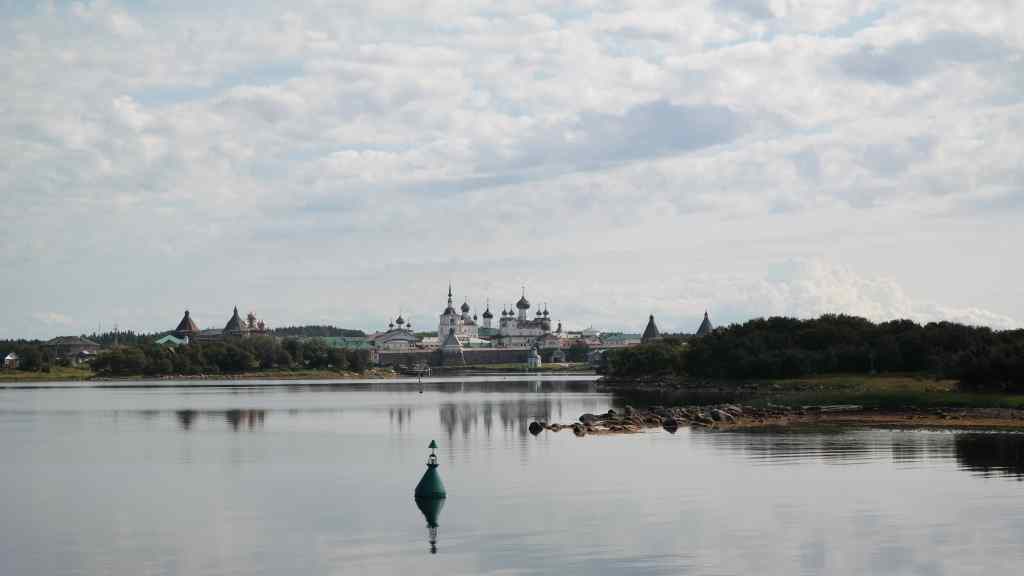
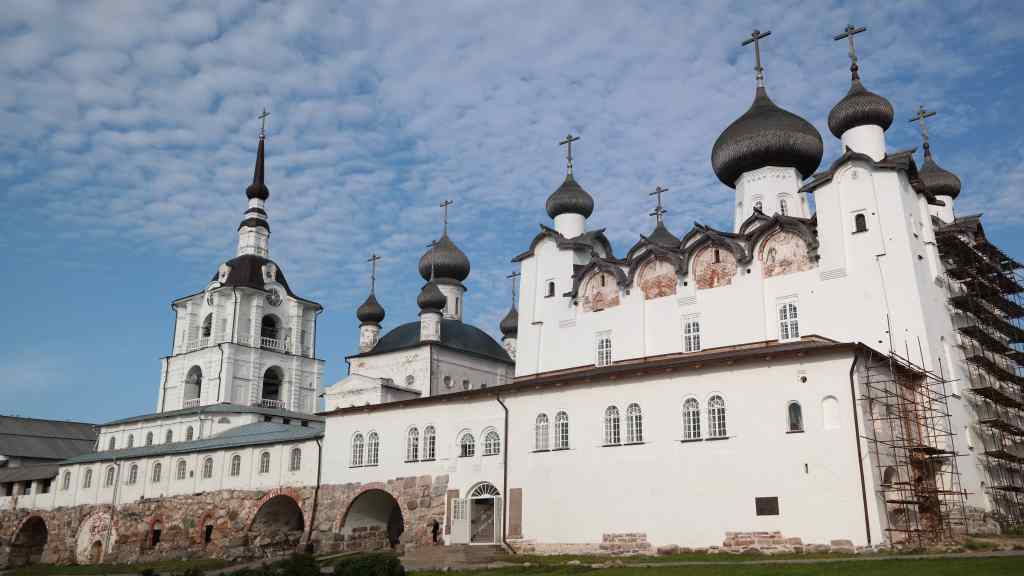
I will start with one of my favourite destinations – the magical Solovki or Solovetsky Islands, located in the White Sea in Russia’s far north, just outside the arctic circle. To get there you can fly via Arkhangelsk, but the flights are often cancelled due to strong winds or fog, which make landing dangerous. So instead I took the train to a small town called Belomorsk, and then a ferry  – which is the best way to go because it was what the islands’ earliest settlers did, and because you get this wonderful view as you slowly approach the famous Solovetsky Monastery….

My first glimpse of magnificent Solovetsky Monastery from my ferry
Solovetsky Monastery’s defensive walls

The monastery was founded by monks who made the then risky trip across the sea in the 15th century and has had a tumultuous history that mirrors that of Russia as a whole. By the 16th century it had become an important pilgrimage centre, though the journey there was still fraught with danger, and it added protective walls against marauding Finns and German Teutonic Knights. It was also one of Ivan the Terrible’s favourite prisons for people he disliked but could not be bothered to execute. During the Crimean war the monastery was even attacked by a British warship, but its cannonballs bounced harmlessly off the thick walls and the enterprising monks later sold them as souvenirs to pilgrims.

Inside the walls of Solovetsky Monastery

In 1926, under the early years of communism, the monastery became the centre of Russia’s first Gulag for political prisoners and was notorious for its harsh conditions. Thousands of people died from cold, starvation or overwork – or were simply shot.

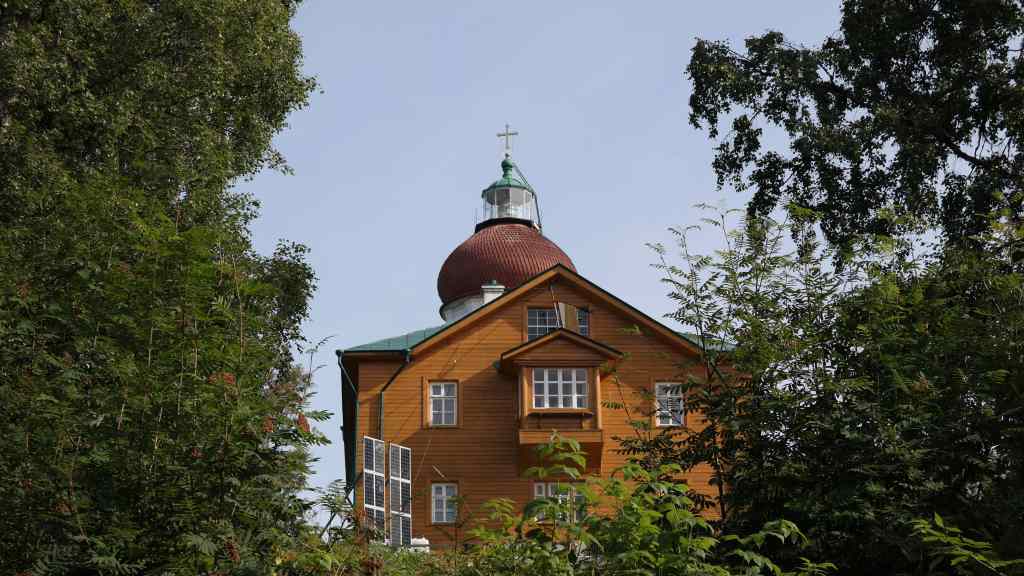
The “Kartser” of the Gulag, now a lighthouse

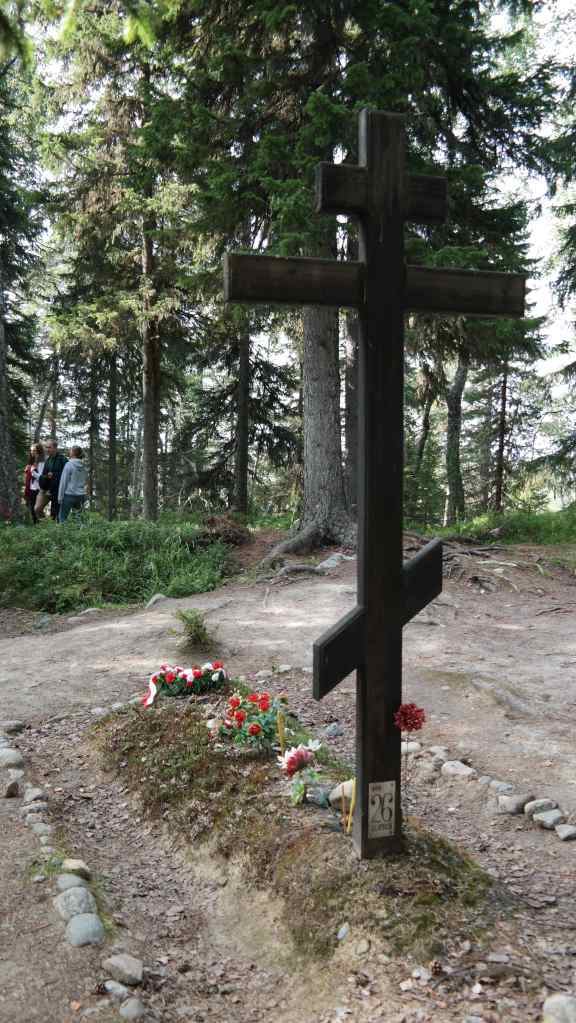
This photo of an apparently peaceful building, sitting on a hill on the end of the main Solovetsky Island, shows one of the saddest places in Russia. It was originally a chapel but became the kartser or punishment cell of the Gulag. Few of the people sent here survived – most either froze to death, because the building was not insulated, or were shot and their bodies thrown down the nearby hill. Today, volunteers have dug up the remains of some of the victims and have given them a proper burial, with a cross to mark their graves.

One of the graves near the Kartser – this one is for 26 Gulag prisoners, whose bodies were nearby

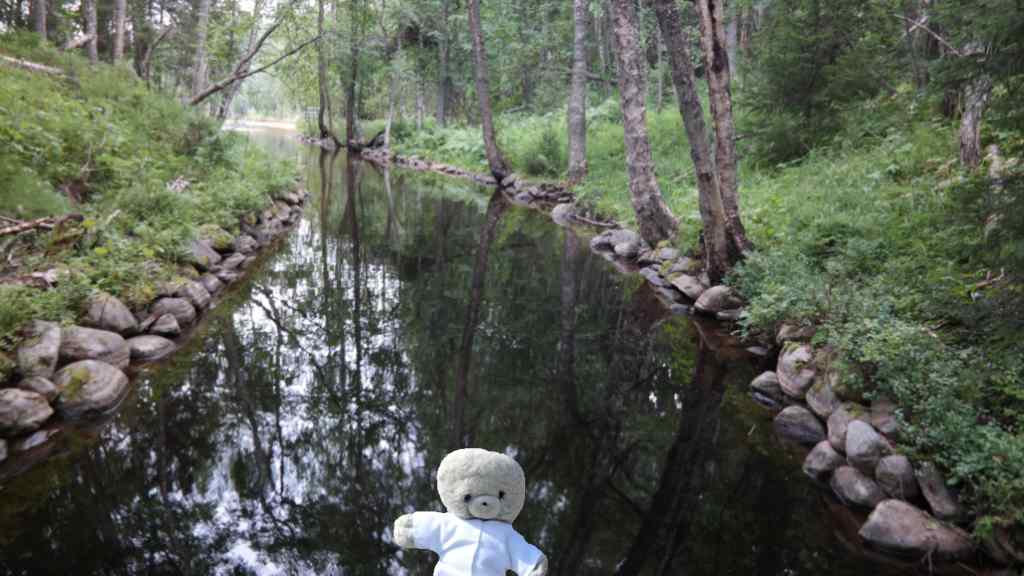
Away from the monastery, the main Solvetsky Island has an extensive system of lakes joined by canals. These are great fun to explore now by hiring a rowing boat, but back in the gulag days, this was the site of the hardest work for the prisoners – chopping down trees and floating their trunks along the canals –  often in freezing water -to a central sawmill.  

In a boat on one of Big Solovetsky Island’s canals

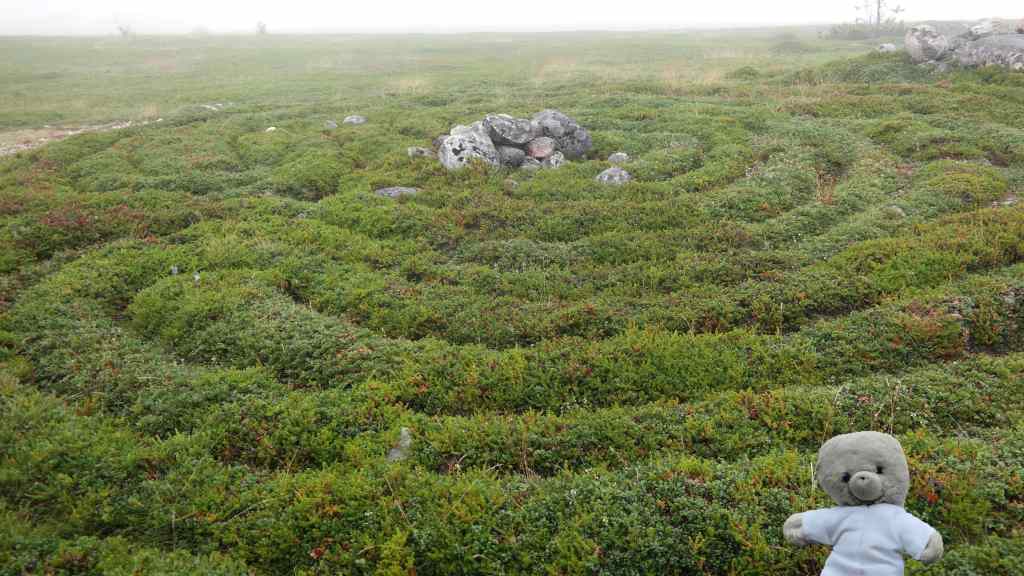
Around the main Solovetsky Island there is a constellation of smaller islets, mostly uninhabited, which can be visited by a short boat trip. Some of these have strange spiral structures or “labyrinths” made out of rocks, left by some ancient and now forgotten previous inhabitants – no one knows what their purpose was or who made them.

An ancient stone labyrinth, Solovetsky Islands

Let’s return to the monastery. The Gulag was also the first to close in Russia, in 1939, and the monastery building later became a training centre for naval cadets. After the collapse of communism, monks began to return to the island and now Solovetsky Monastery is once again a thriving religious centre.  

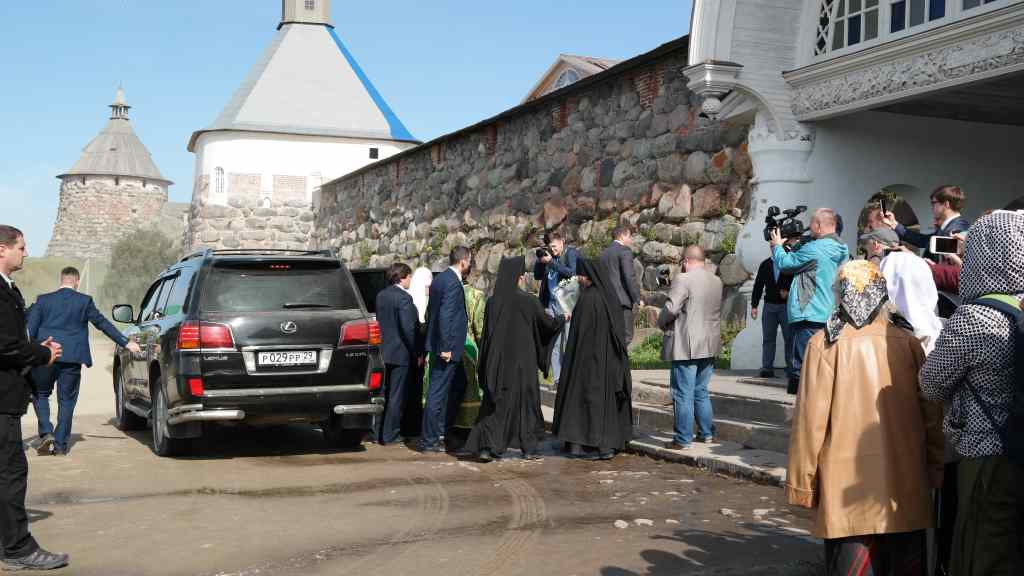
My visit coincided with that of Patriach Kirill, head of the Russian Orthodox church. He is a controversial figure who in one of his earlier jobs made a fortune for the church by importing cigarettes and other goods duty free and then reselling them in Russia.  Today he is a strong supporter of President Putin who has declined to criticise Russia’s actions in Ukraine.

Patriach Kirill visits Solovetsky Monastery

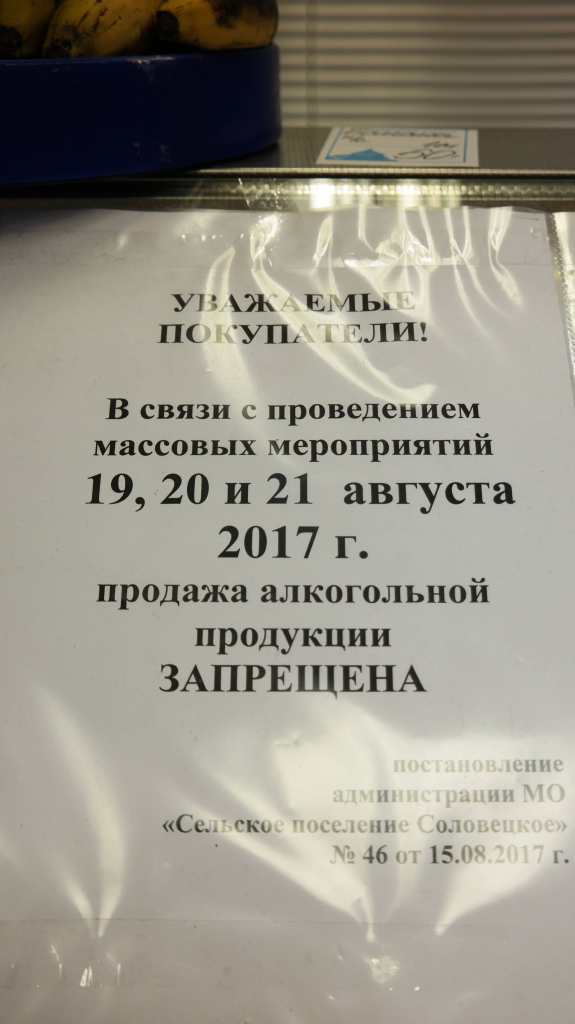
During Kirill’s visit  the sign below appeared in the island’s only shop. It says that due to the special event, sale of alcohol is banned for three days. I  saw a local man taking a photo of this notice and asked him why, to which he replied: “My wife sent me to buy vodka. If I come back empty-handed, she will think I drank it all myself.”

Disappointment for the Solovetsky locals!

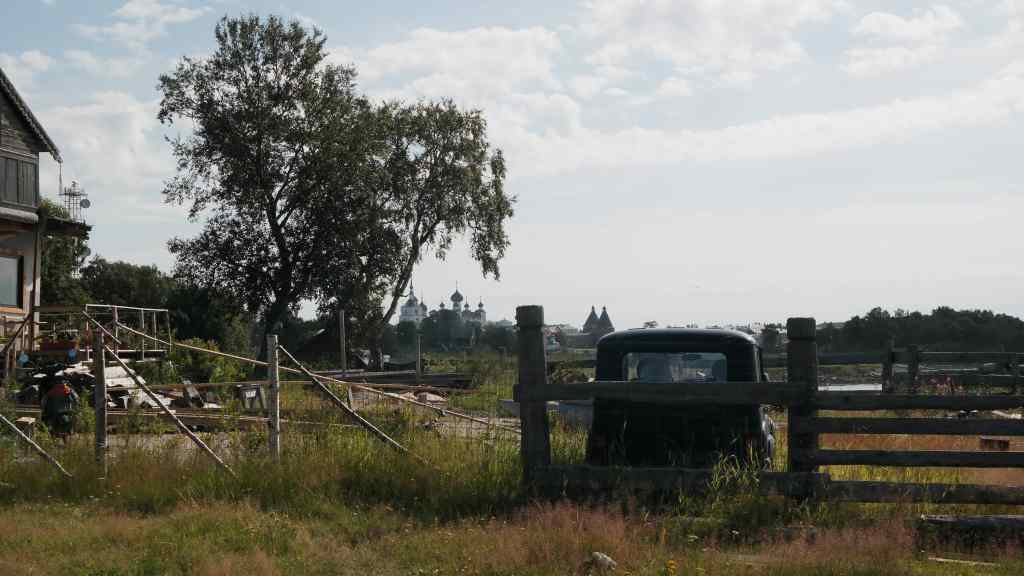
In total I spent three days on the Solovki Islands, also visiting their interesting botanical gardens and the Gulag Museum. Somehow, the islands have a very special, spiritual feeling, that is hard to describe. Was it the influence of an ancient religious centre, now back in its prime? Or the souls of the thousands of prisoners who perished here? Or simply the pleasant breeze and the smell of the sea air? I will never know.

For me, this photo captures some of the special atmosphere of the Solovetsky Islands

On the way back on the ferry to Belomorsk, I was treated to a beautiful sunset that perfectly rounded off my visit to the islands and the reinforced my sense of inner peace.

Leaving the Solovki Islands – sunset over the White Sea

Whilst waiting for my train at Belomorsk station, I had a completely different, very Russian travel experience – which you can read more about on this link.

Check out my book’s webpage on this link.

Blog at WordPress.com.

Up ↑