Farewell to New Zealand – Wai-o-Tapu and Te Puia

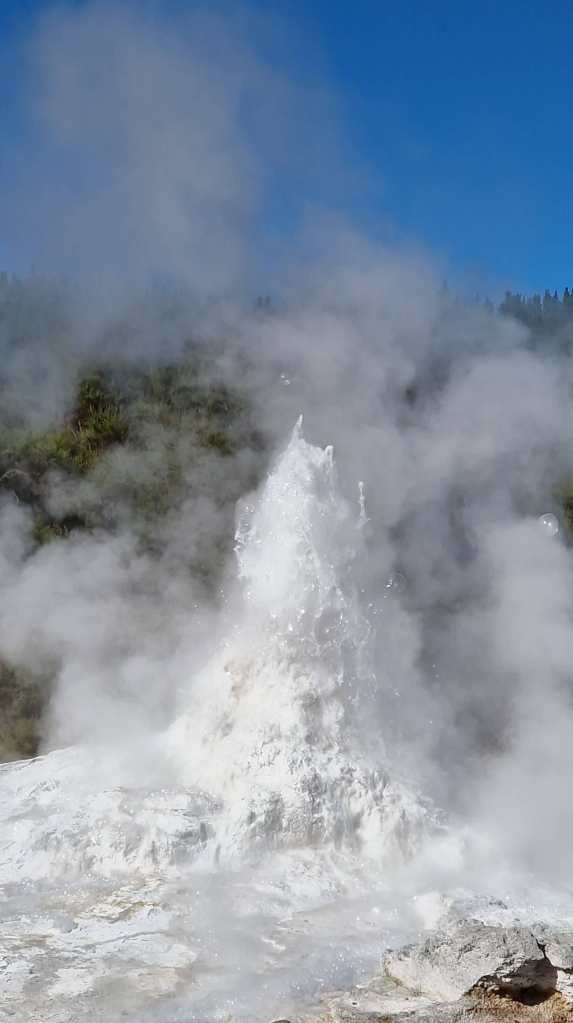
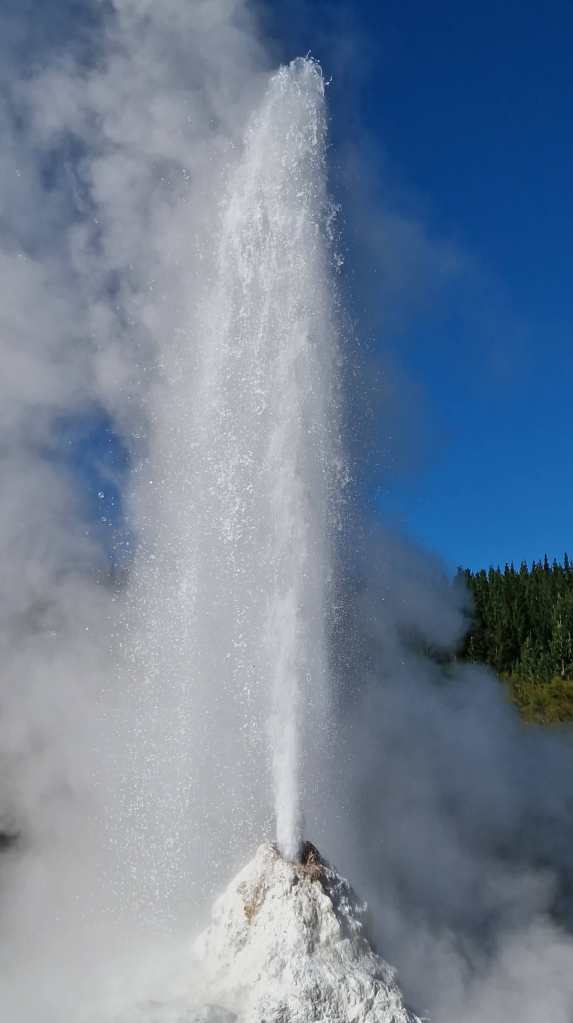
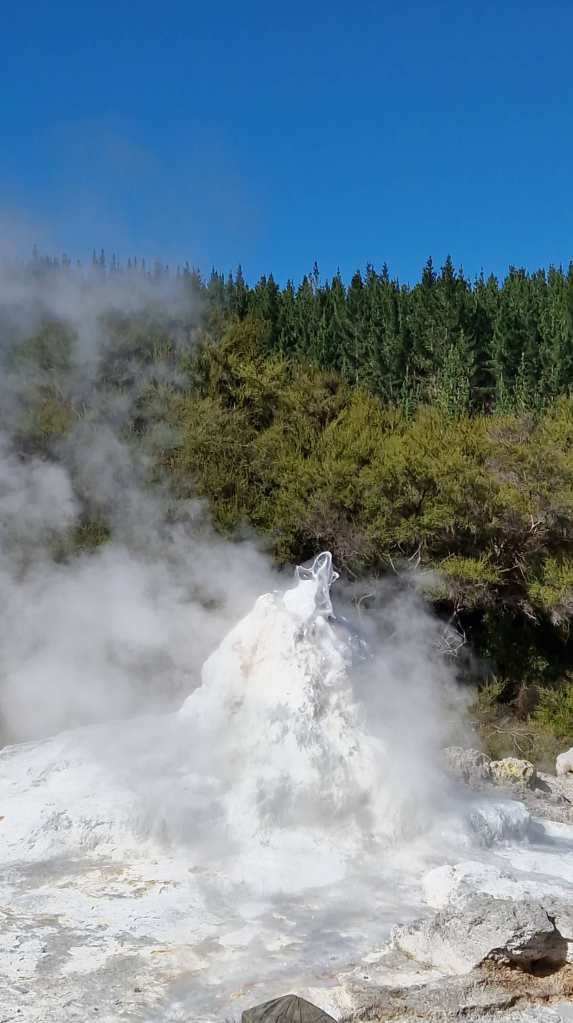
Today was my last day in New Zealand. I have been here nearly four weeks, and the time has flown past. I visited one last geothermal park outside of Rotorua called Wai-O-Tapu. My visit started at Lady Knox Geyser, which erupts at 10.15 every day. I was a little puzzled by the precision of this event – surely a natural phenomenon like a geyser should be at least a bit variable, and what happens when New Zealand goes from summertime to wintertime (as it just had)? All was revealed when I joined a large group of tourists sitting in an amphitheatre around the geyser. One of the park employees explained that the geyser had been discovered when a group of workers had been washing their clothes in the nearby hot springs. They introduced some detergent into the water, which triggered a spectacular eruption (and panic amongst the surprised workers, who ran around naked to escape). In modern times, at 10.15 every day, a park employee puts some detergent down the hole of the geyser to trigger an impressive, if partially artificial, spectacle.
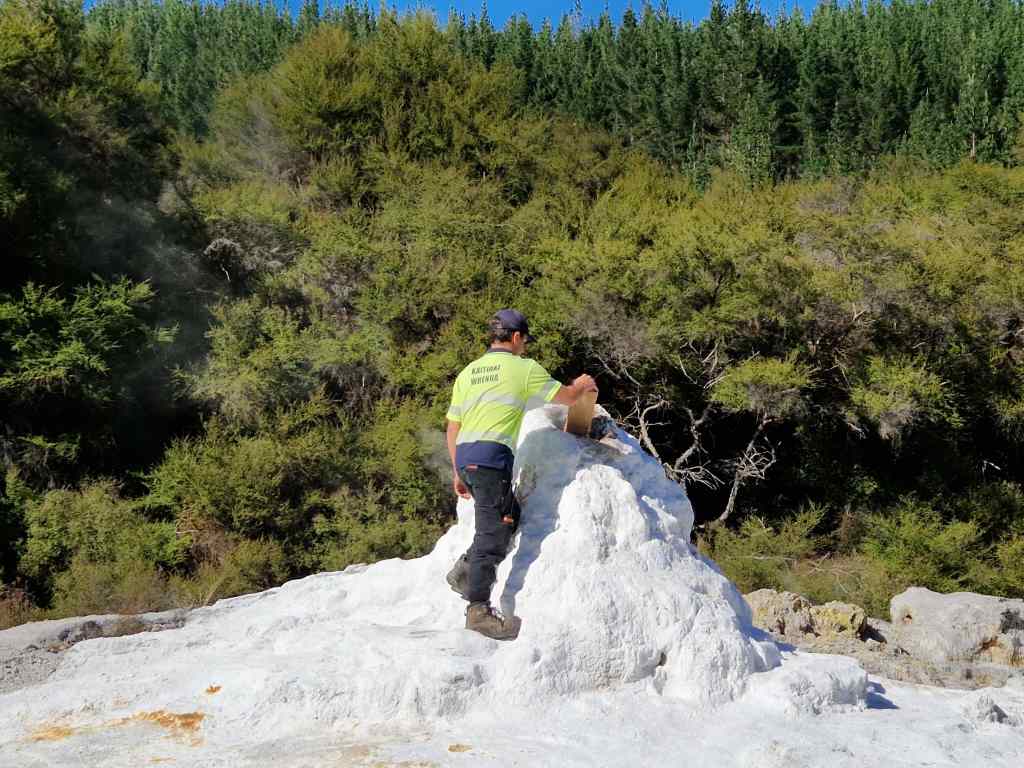
Loading detergent into Lady Knox geyser
Bubbling…..
….spurting….
…and erupting

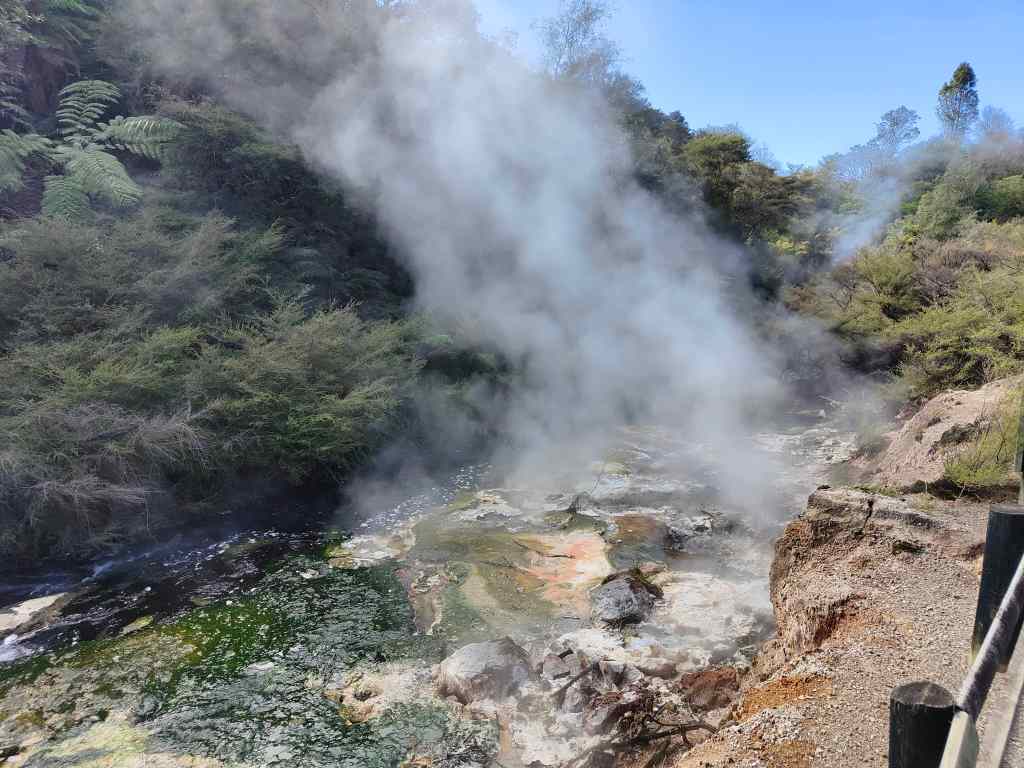
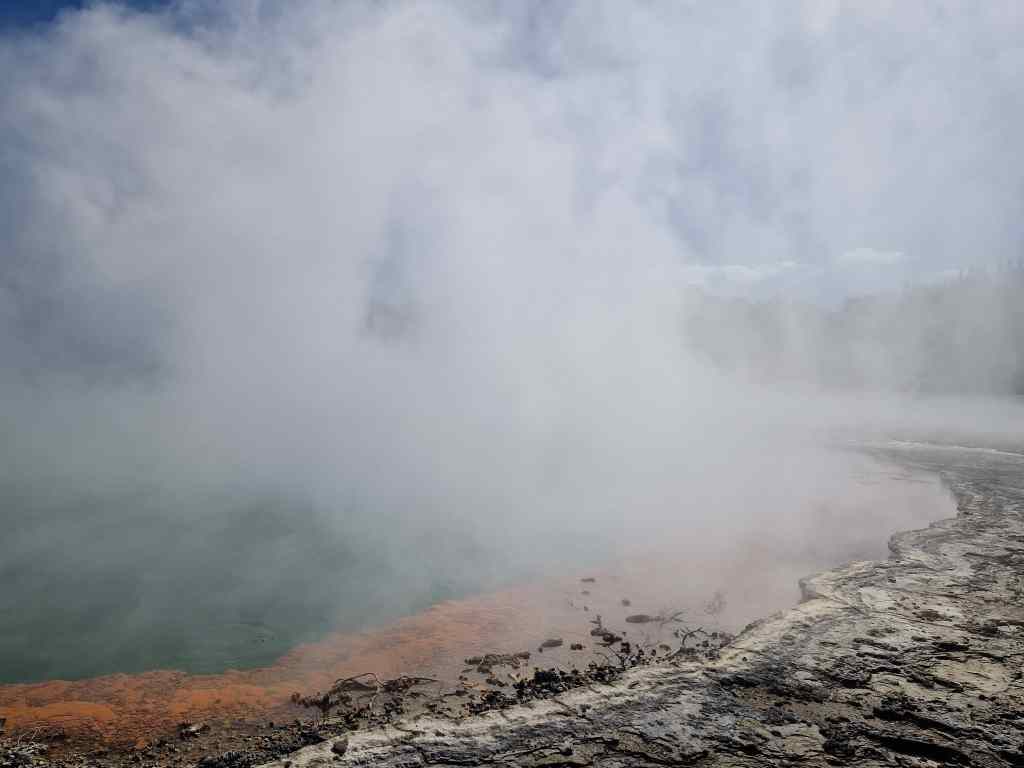
With the geyser show over, the crowd headed to the park’s main entrance to start out on a path through a prehistoric landscape of bubbling mud pools, smoking hot springs and tranquil lakes. Wai-O-Tapu park is particularly known its brightly coloured rock formations, including the famous Champagne Pool.
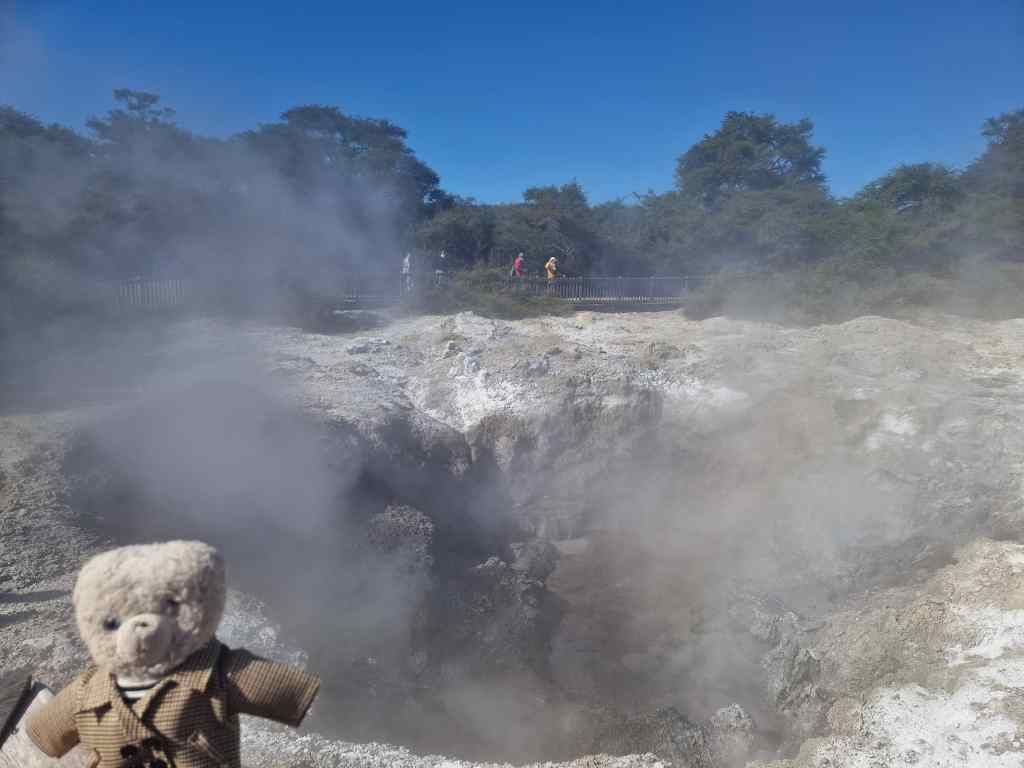
Steaming Crater at Wai-O-Tapu
Wai-O-Tapu – the Champagne Pool
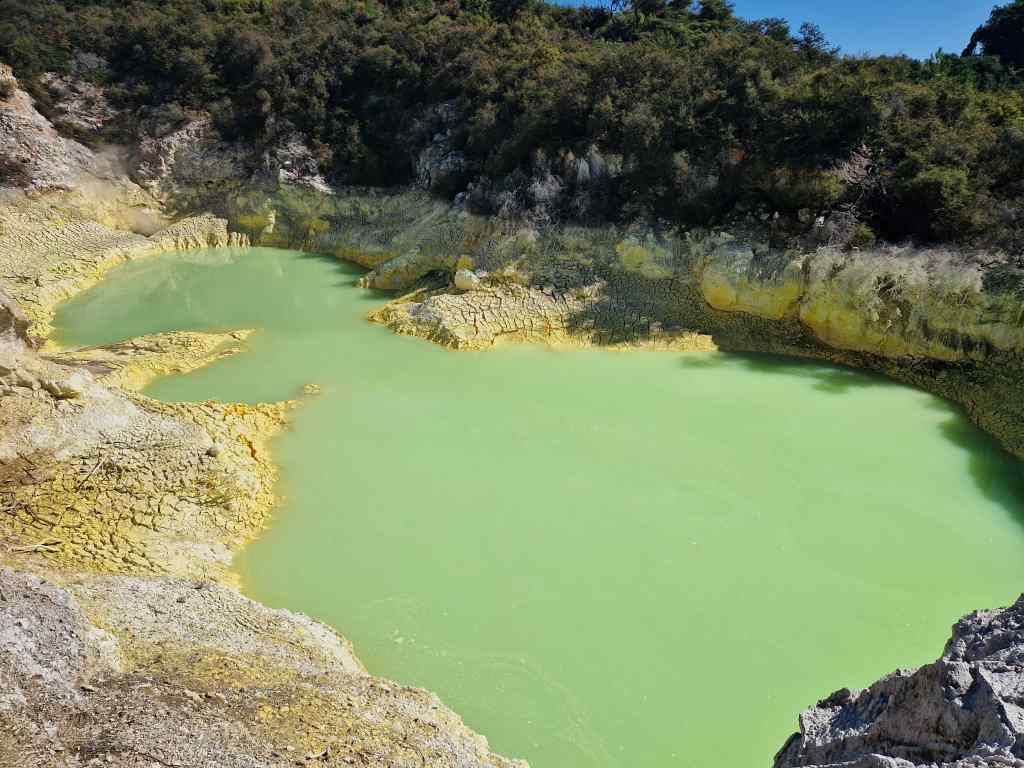
Wai-O-Tapu – sulphur lined pool
Detail of sulphur at Wai-O-Tapu

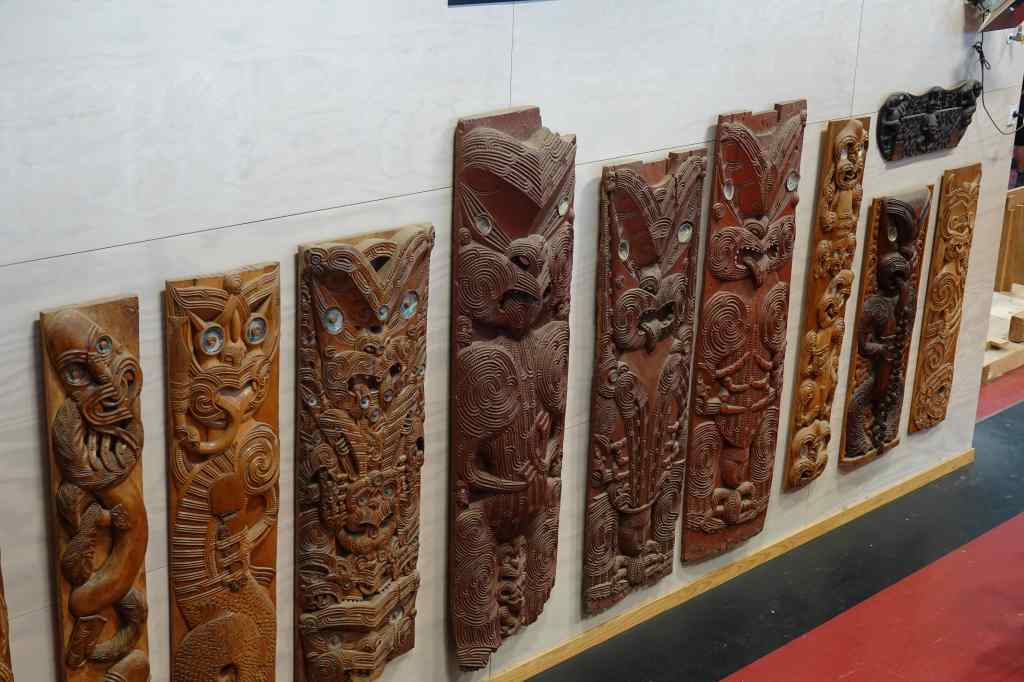
After a couple of hours exploring Wai-O-Tapu, it was time for a complete change – a tour of the Maori cultural centre Te Puia. After the slightly sad experience of visiting the neighbouring village of Whakarewarewa, my expectations were not so high, but I was pleasantly surprised. The visit started with a visit to a training centre where students learn Maori crafts like sculpture (a male activity) or weaving (a female one), where we got to see some wonderful pieces of art.
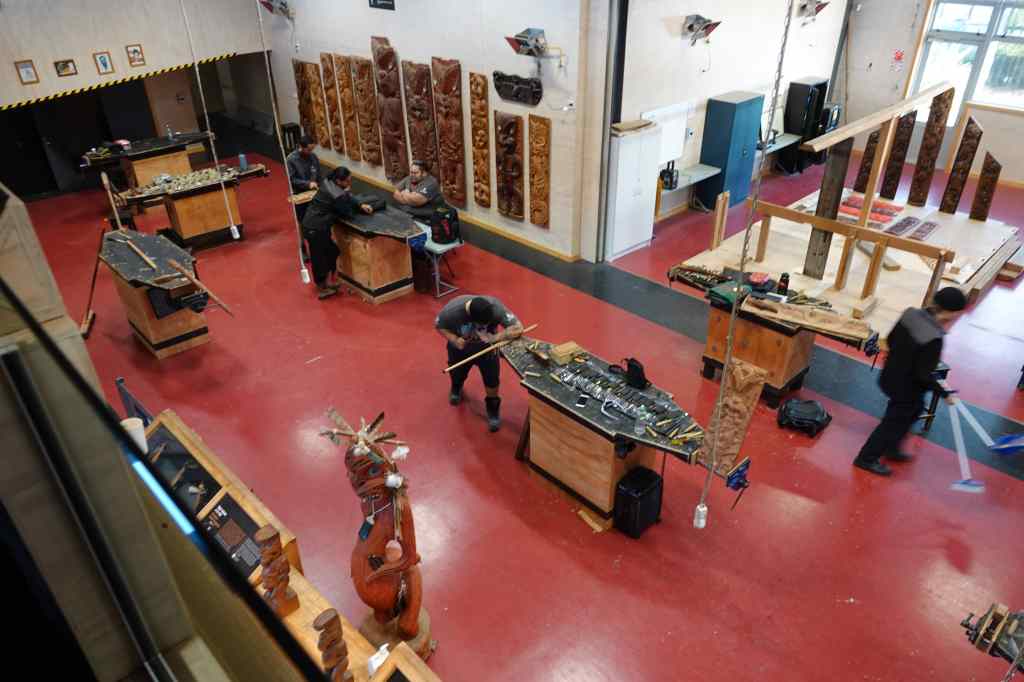
The carving workshop at Te Puia
…and some of its work

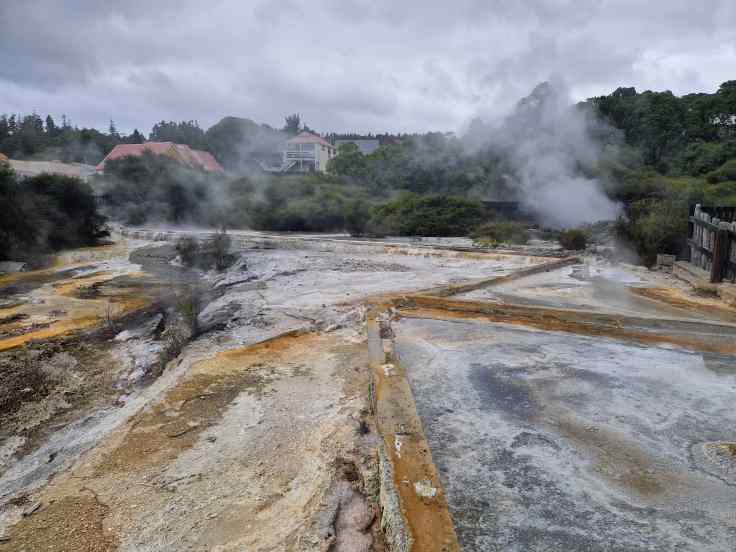
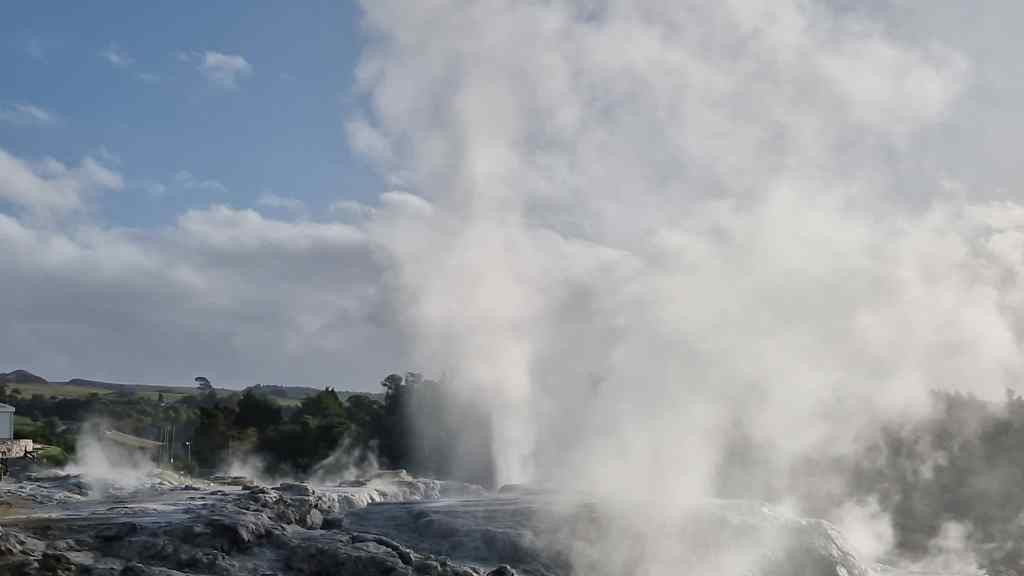
Next, there was a rapid visit to a kiwi conservation centre where I got a glimpse of their recently born, but still very large, kiwi chick. The birds are nocturnal, so during tour hours their enclosures are kept in near darkness, and no photos were allowed. After that was a visit to the Pohutu geyser area, for yet another look at Rotorua’s geothermal area. The viewing area at Te Puia was much closer than at Whakarewarewa, so I could get a really good look, but sadly Pohutu was not very active.
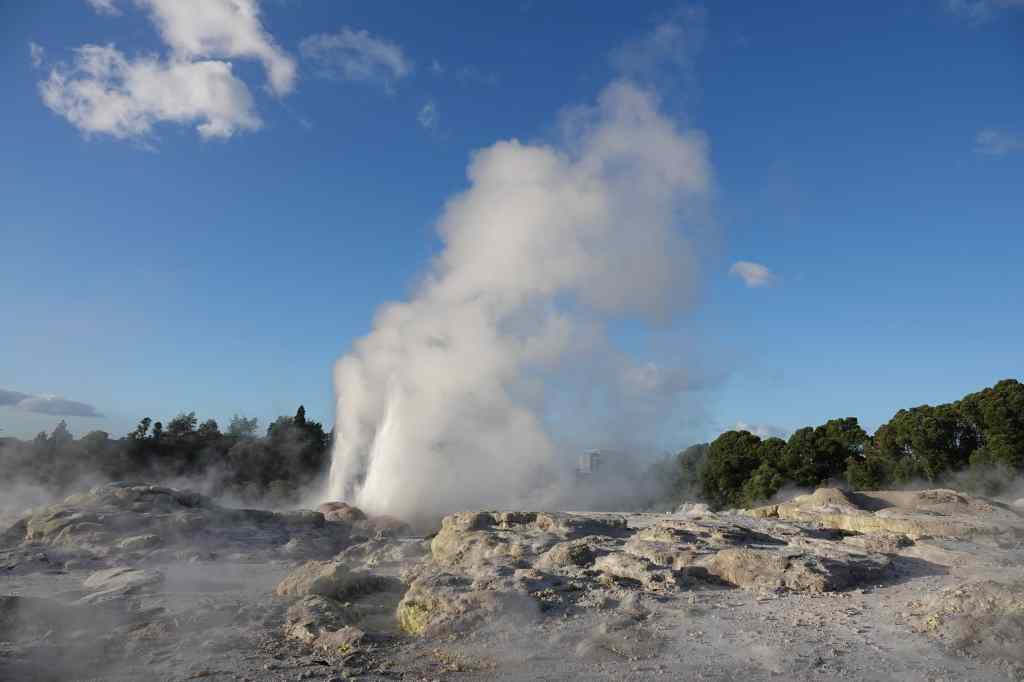
Pohutu geyser at Te Puia

After a buffet dinner our group was treated to a performance of Maori songs and dances in the marae, the large meeting house found in all Maori settlements. Before we could enter, there was an elaborate ritual in which a succession of warriors came to challenge and intimidate the leader of our group, swirling their weapons through the air, sticking out their tongues and making their eyes bulge.

Warriors line up to challenge visitors at Te Puia marae

When that didn’t work the final warrior put down a leaf on the floor in front of our leader, a peace offering showing that we were welcome to visit them. Once everyone was inside and seated, there was another Maori tradition, the powhiri, or speech of welcome – spoken only in Maori. With the lengthy formalities over, our hosts switched to English to welcome us and explain the series of Maori songs and dances they presented, including the famous haka war dance.
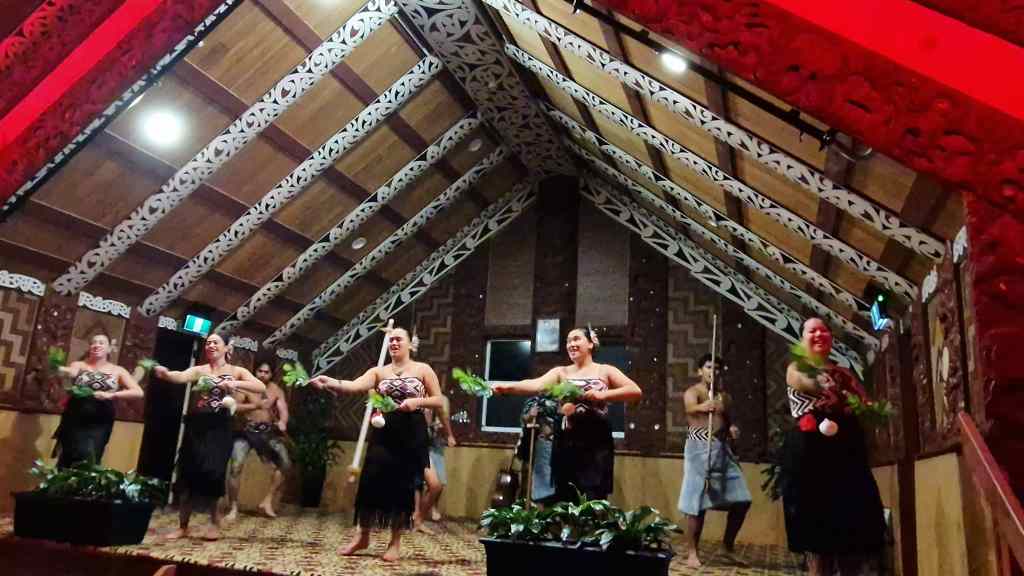
Maori song at Te Puia

This all probably sounds very touristy, and of course, it was. However, the show was presented with such enthusiasm that I soon found myself thoroughly enjoying the occasion and clapping wildly at the end. The evening still had not quite finished though, and we were invited for one last look at Pohotu – this time at night, with the geyser lit up by floodlights. Around the observation area there were stone terraces heated geothermally, and I sat on one to watch as the staff distributed hot chocolate. I stayed nearly an hour, as our Maori hosts passed among the crowds chatting to people, and was finally rewarded by a small eruption of Pohotu.

Pohutu at Night

It had been a great day and a good way to end my trip to New Zealand and Australia. Tomorrow I will make the 2-3 hour drive up to Auckland airport, and then the even longer twenty-nine-hour flight back home to London via Doha. New Zealand has been a special place with many amazing things to see, but it is a looooong way from anywhere. Memories that will stay with me forever include flying around Mount Cook, seeing blue whales in Kaikoura, the geothermal areas around Rotorua, hiking to Mount Aspiring’s glacier and sailing Milford Sound. Had the weather been kinder to me, maybe the Marlborough Sounds, Abel Tasman Park and the Tongariro Alpine Crossing would also have made my list of highlights. I think I will be back one day to give them another look, and to visit some of the areas I missed this time – like the country’s sub-tropical far north. But with the huge distance, I suspect it will be part of a round-the-world tour rather than a dedicated trip.
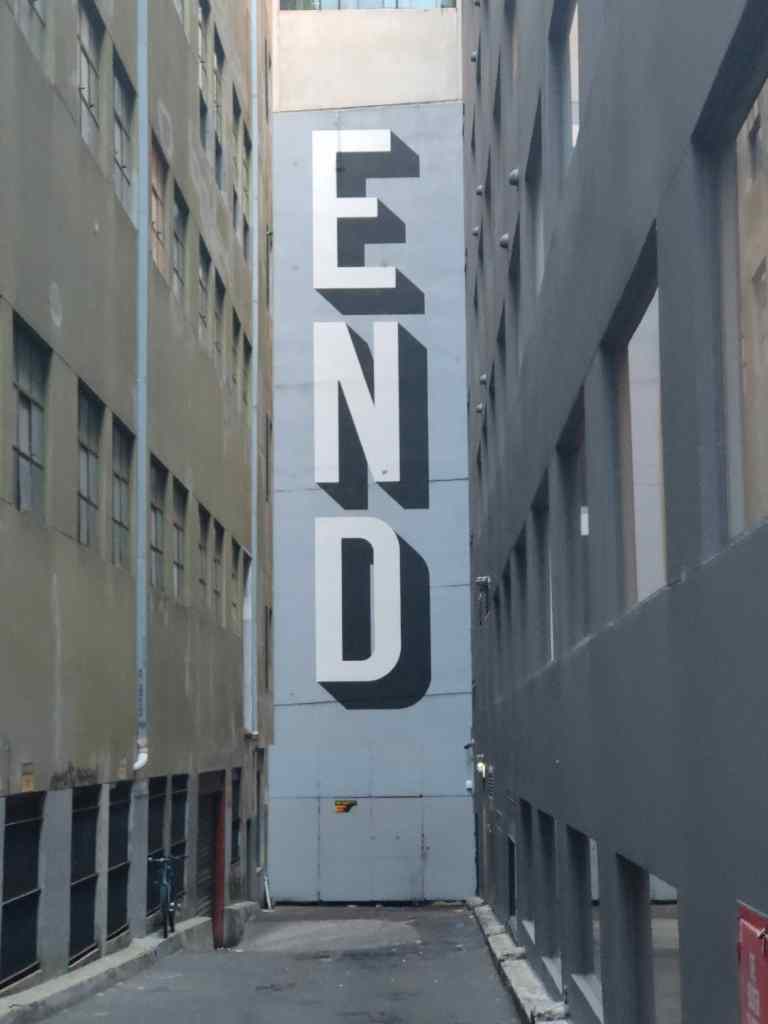
Melbourne Street Art

Previous Post: Rotorua – Kaituna Falls and Waimangu

Rotorua Day 2 – Hiking Waimangu and rafting the Kaituna River

Today I visited a different geothermal park – the Waimangu Volcanic Valley, an area formed when Mount Tarawera erupted in 1886. The eruption levelled several Maori villages, killing many people, and destroyed the Pink and White Terraces which had been a major tourist attraction and were claimed to be the “8th wonder of the world”. It left a caldera, which over the years filled with water to become a much-expanded Lake Rotomahana (a smaller lake of that name had existed earlier).
Today, the Waimangu valley is the world’s youngest geothermal ecosystem, and the only one created as a direct result of a volcanic eruption. It is also once again a tourist attraction, although a less popular one than others in the Rotorua area and I was pleasantly surprised that I often had the place to myself.
The park is visited by walking an 8km path downhill, starting at a huge pool of boiling water (Frying Pan Lake, one of the world’s biggest hot springs)………

Frying Pan Lake, Waimungu Park

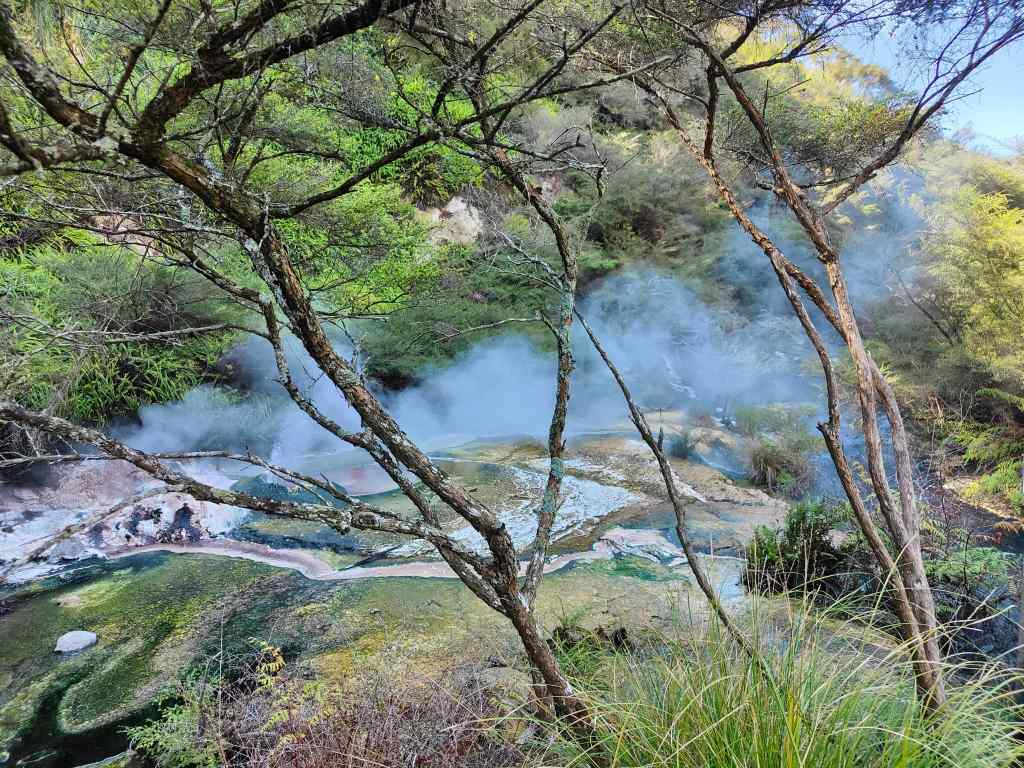
…. and following a boiling stream of water that runs through a pleasant valley, past lots of smaller springs…..

The path at Waimungu follows this boiling stream

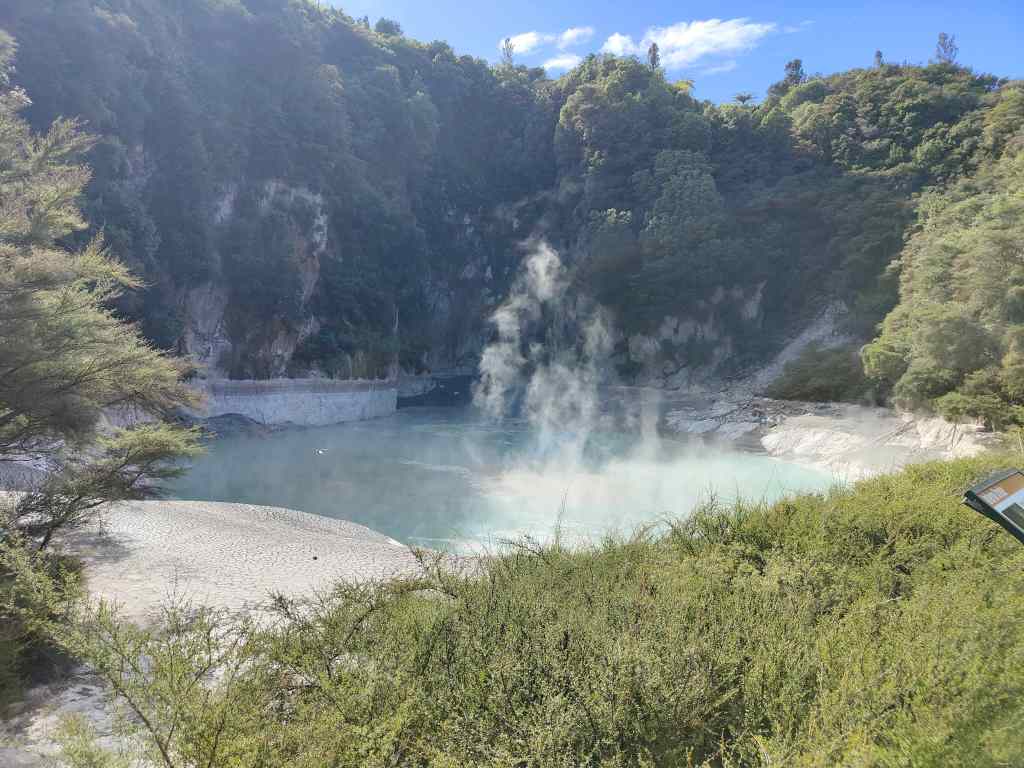
…. and a boiling caldron of water called Inferno Crater.

Inferno Crater at Waimungu Volcanic Valley

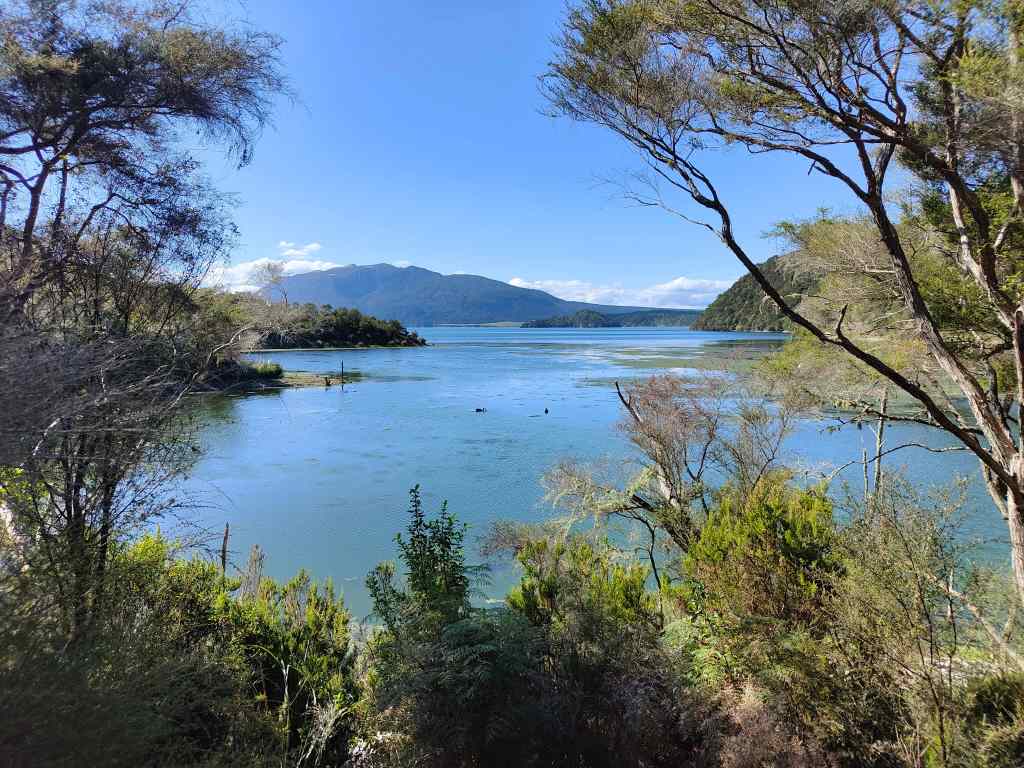
The stream eventually arrives at peaceful Lake Rotomahana, home to much birdlife, including black swans, from where most people use the park’s shuttle bus to return to its entrance.

Lake Rotomahana at the end of the Waimungu Volcanic Valley

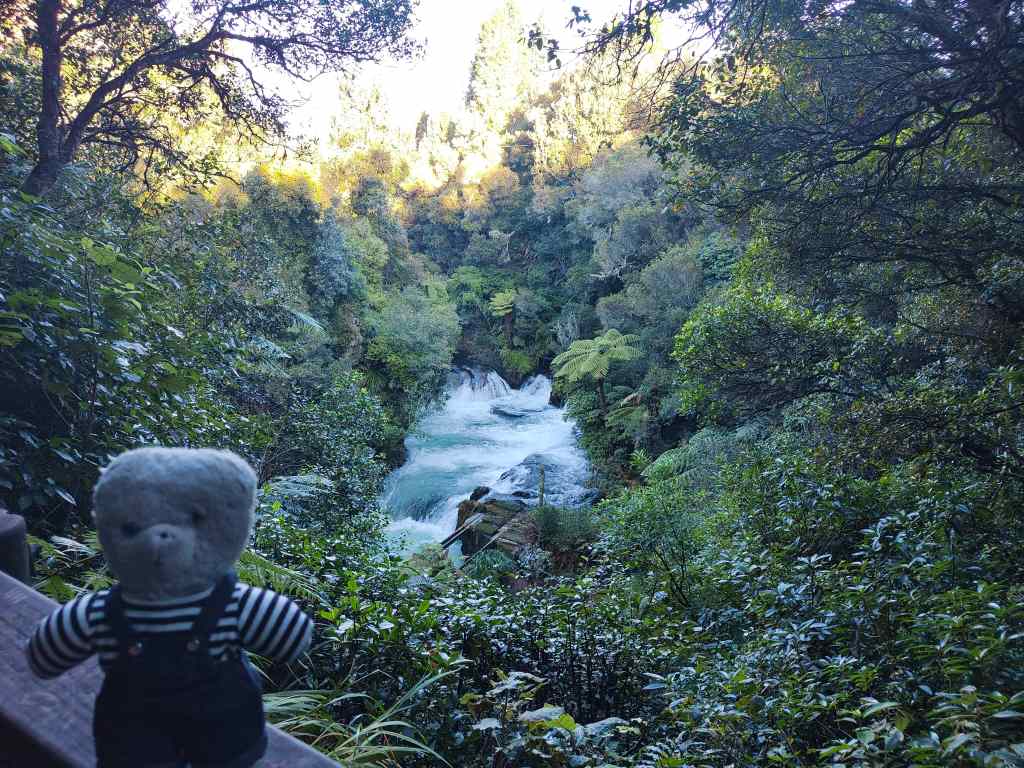
From Waimungu I went to visit something completely different – the waterfalls on the Kaituna River. These are found in a scenic valley, to the northeast of Rotorua.

Okere waterfall on the Kaituna River

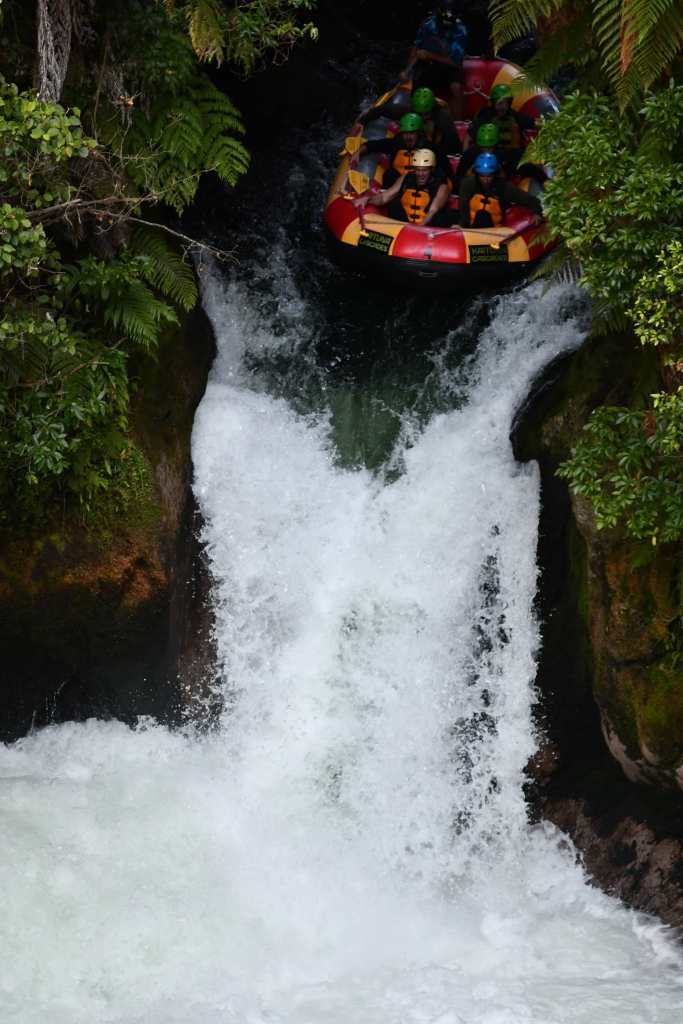
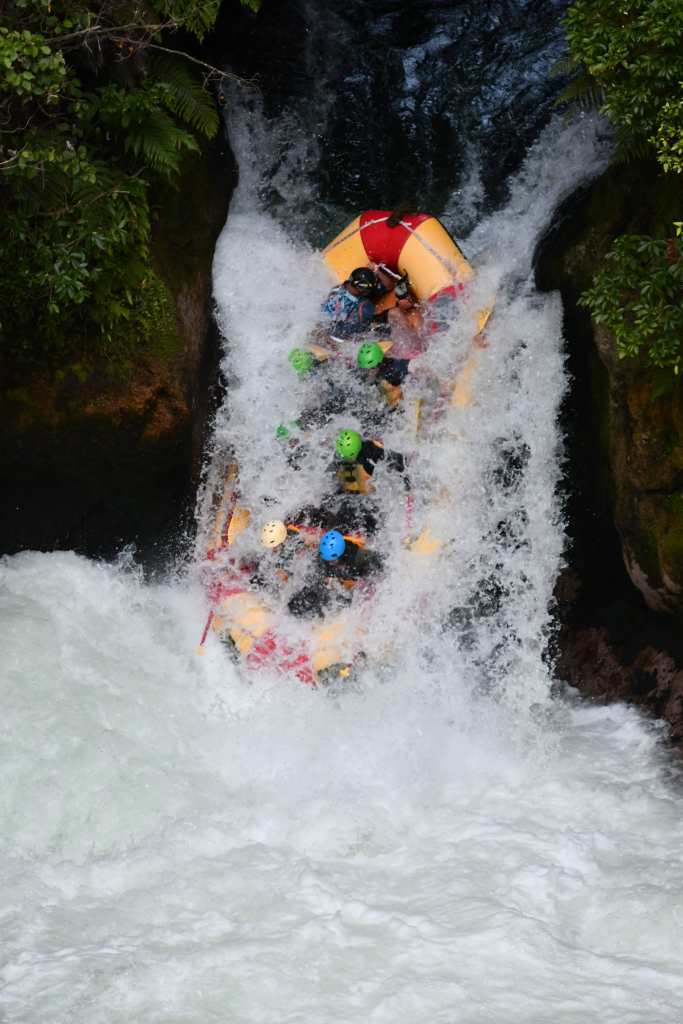
The area is beautiful, but the real attraction here is the possibility to go white water rafting, a trip that includes descending a 7-metre waterfall (the highest in the world that is open to commercial rafting operators). Unfortunately, the rafting company had a minimum height requirement for passengers, so teddy bears are unable to participate, but I did let my human assistant editor have a go. I watched as his raft approached the famous waterfall….

The Raft approaches Okere Waterfall

and then plunged down….

Half way down Okere Waterfall

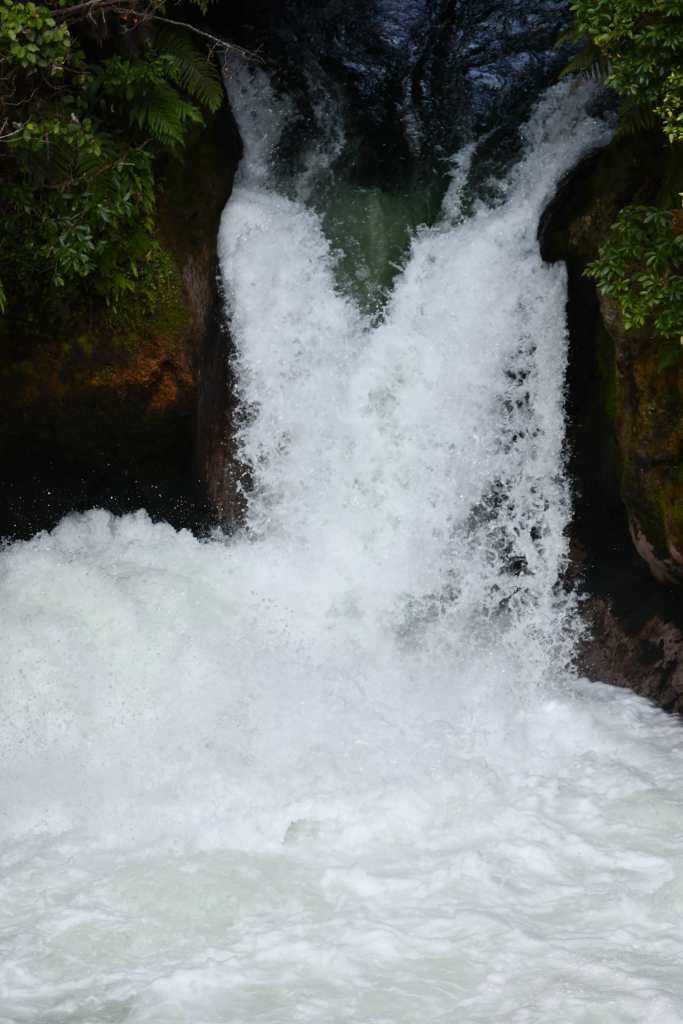
….completely disappearing under the water.

Time to look for a new assistant!

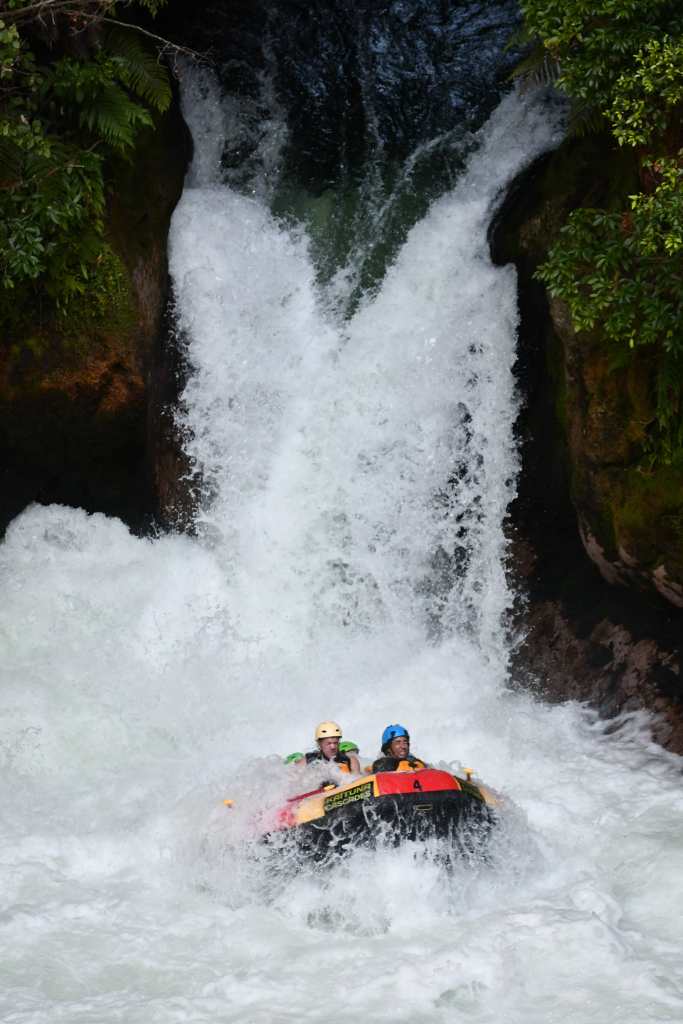
I briefly wondered if I should start advertising for a new assistant, but then the raft reappeared from under the foam with all its crew members still on board.

The raft reemerges from the water on the Kaituna River

It was now late afternoon, and I headed back home. After a difficult introduction I was beginning to like Rotorua. The geothermal sites are really exceptional, and it was nice to let my assistant have some fun with the rafting, even if it would have been even better to try this for myself. It is a demanding job working for Trouspinet and my subordinates need to let their hair down occasionally…….

Letting my assistant have some fun for a change (he is in the front)

Previous Post: Rotorua Day 1

Next Post: Rotorua -Wai-o-tapu and Te Puia

Rotorua Day 1 – Oreiko Karako, Whakarewarewa and the Redwood Forest

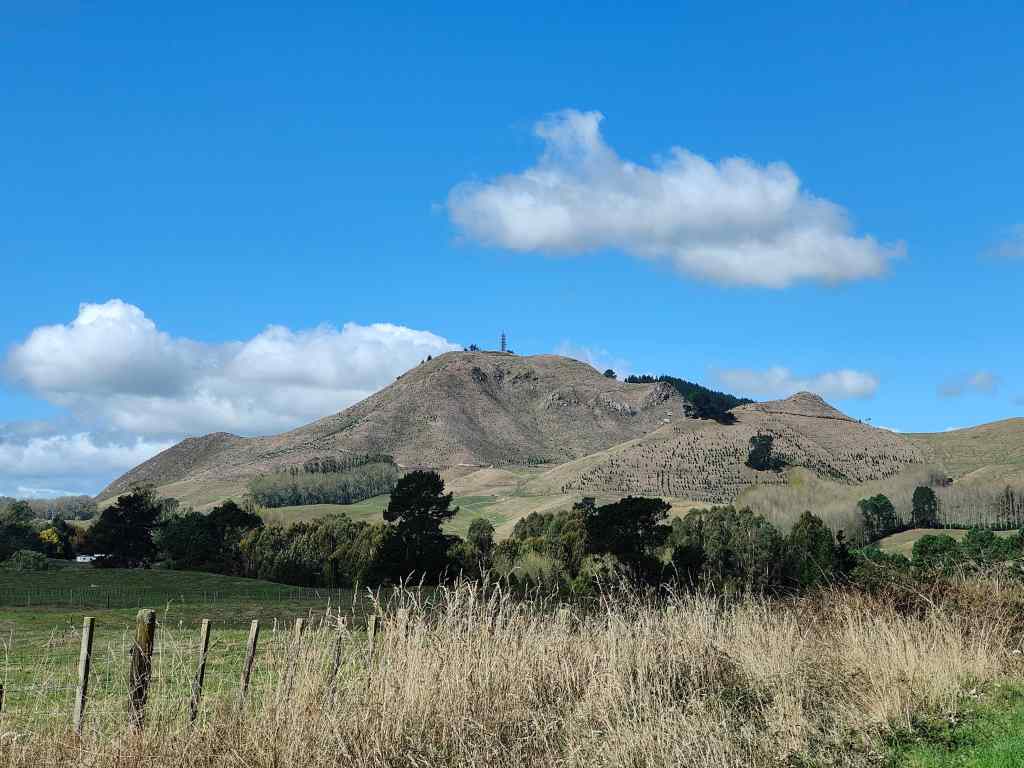
From Lake Taupo I headed north to Rotorua, a small city that is a centre of Maori culture and also of New Zealand’s volcanic activity. On the way there I stopped at Oreiko Karako, a geothermal park, found after a pleasant twenty-minute detour through picturesque countryside off the main Taupo to Rotorua road. Its relative remoteness meant that there were very few guests.

Typical New Zealand scenery

The geothermal area is accessed by a short boat trip across a lake.

The ferry to Oreiko Karako
Oreko Karako
Entry to Oreiko Karako Geothermal Park

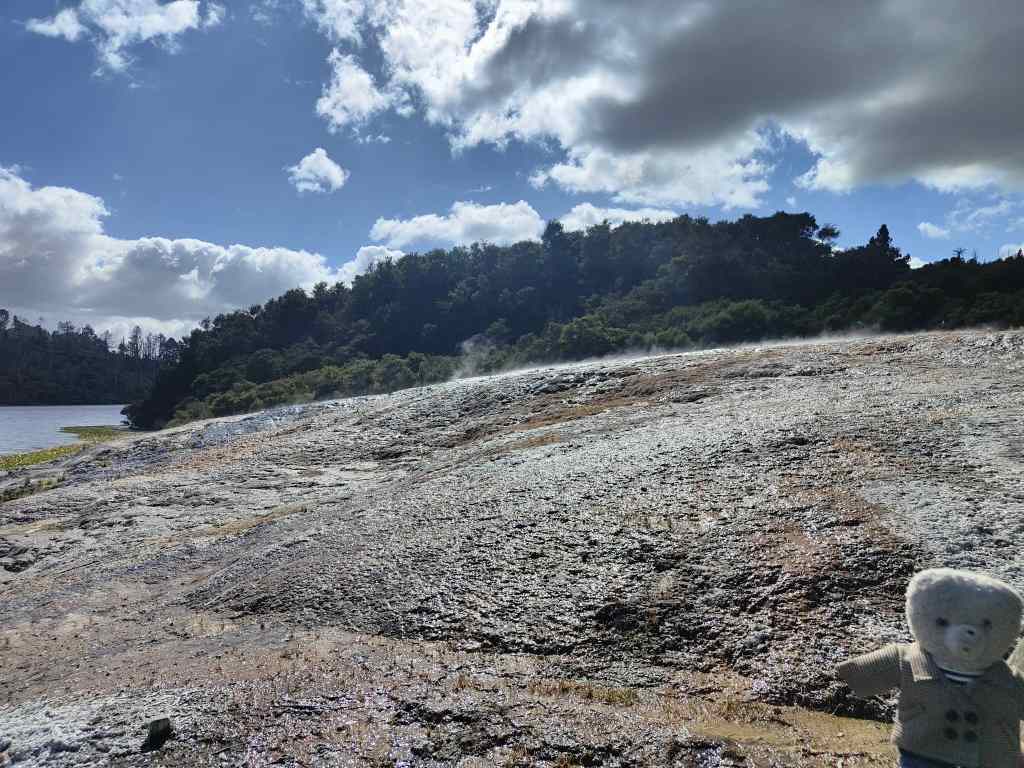
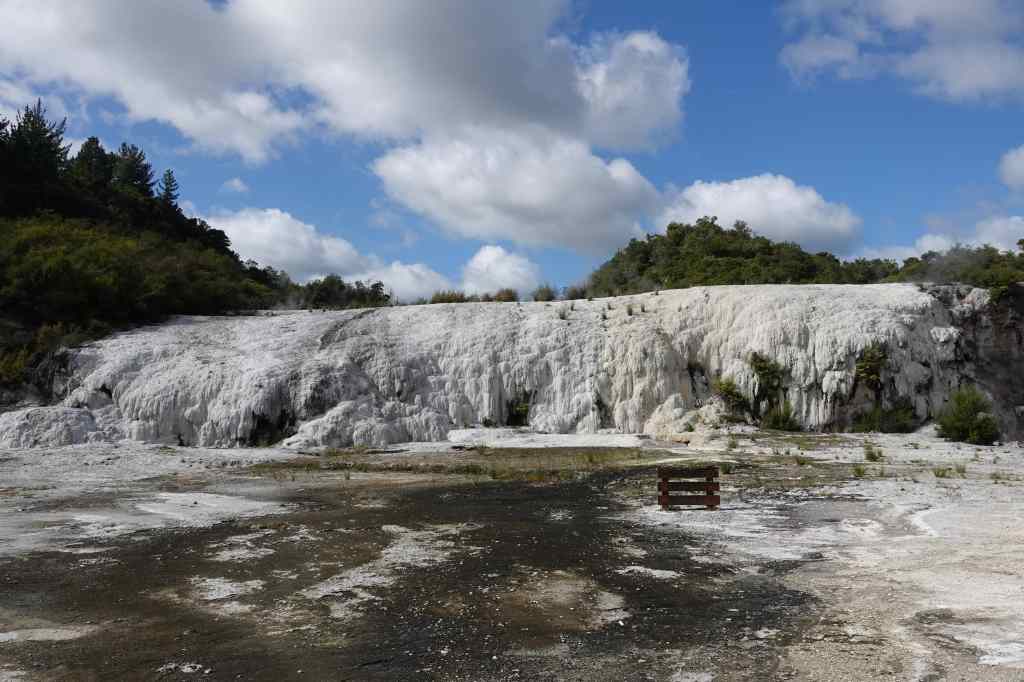
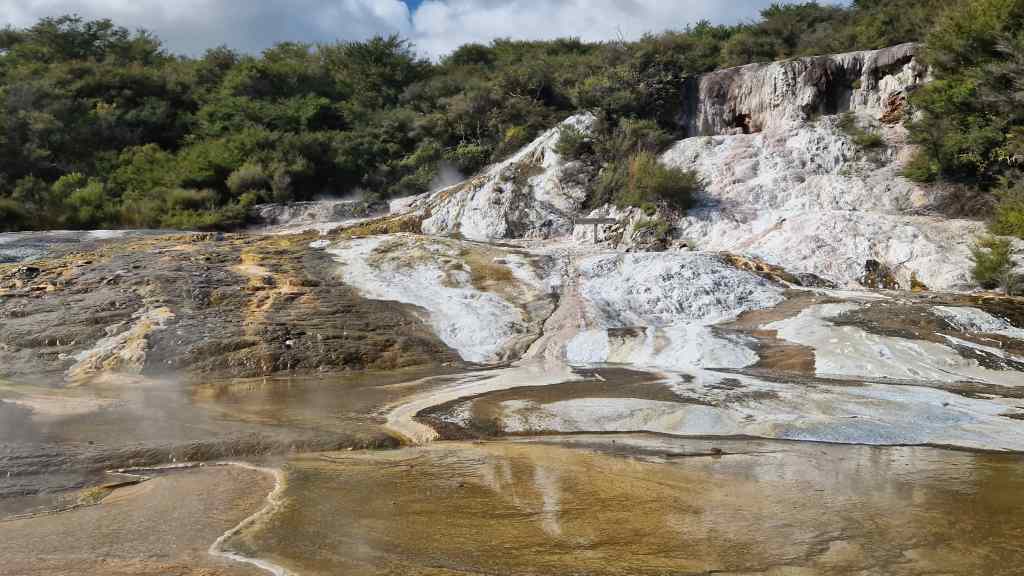
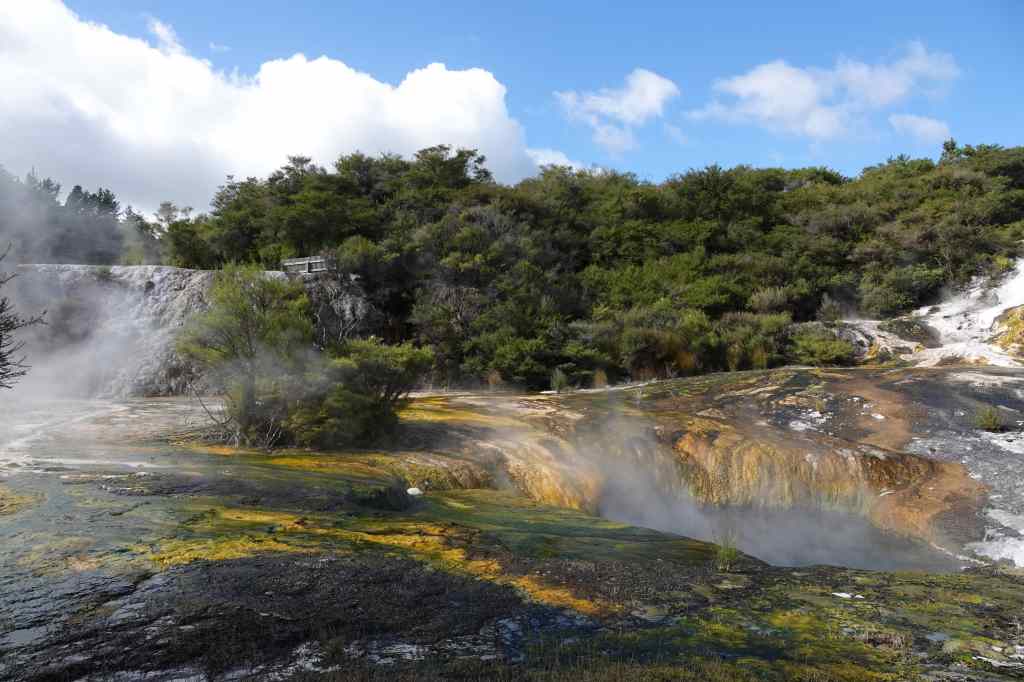
Once on the other side, a raised pathway led past a series of pools of nearly boiling water surrounded by a stunning display of rocks coloured by volcanic minerals. I spent a wonderful hour there, happy to have the place almost to myself.

A spectacular geothermal display
Wonderful colours at Oreiko Karako

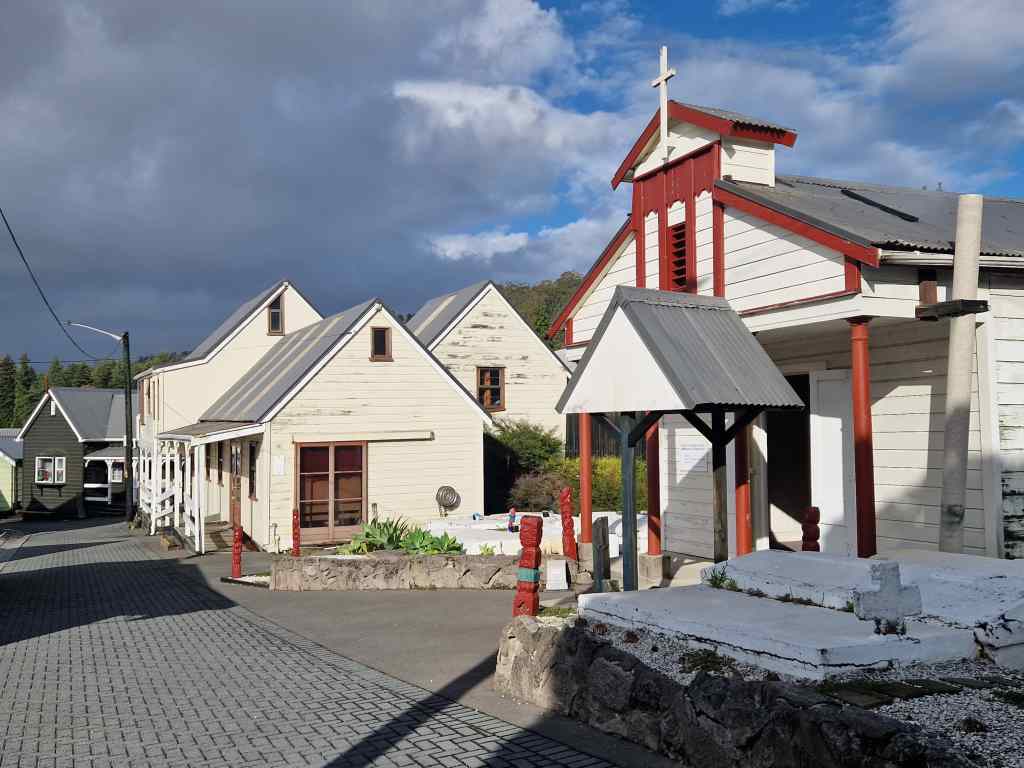
Form Oreiko Karako I drove on to Rotorua. Like many other New Zealand towns, first impressions were not favourable. There was a sprawl of ugly commercial development stretching out along the road entering the city. It also looked much rougher than the sleepy places I had seen before; I saw the first beggars of my trip, and also some drunks shouting abuse at each other. I checked in to my bed and breakfast and immediately set off to explore. My first stop was a tour of Whakarewarewa, a Maori village sitting around hot springs and a geyser. Guided tours by local Maori have a long history in this area, first starting in the 1830s to nearby geothermal features called the Pink and White Terraces. These were buried by a devasting volcanic eruption in 1886, but the tradition of Maori showing visitors around Rotorua’s geothermal features and their village lives on to this day.

Houses and the church at Whakarewarewa
The bathing area at Whakarewarewa

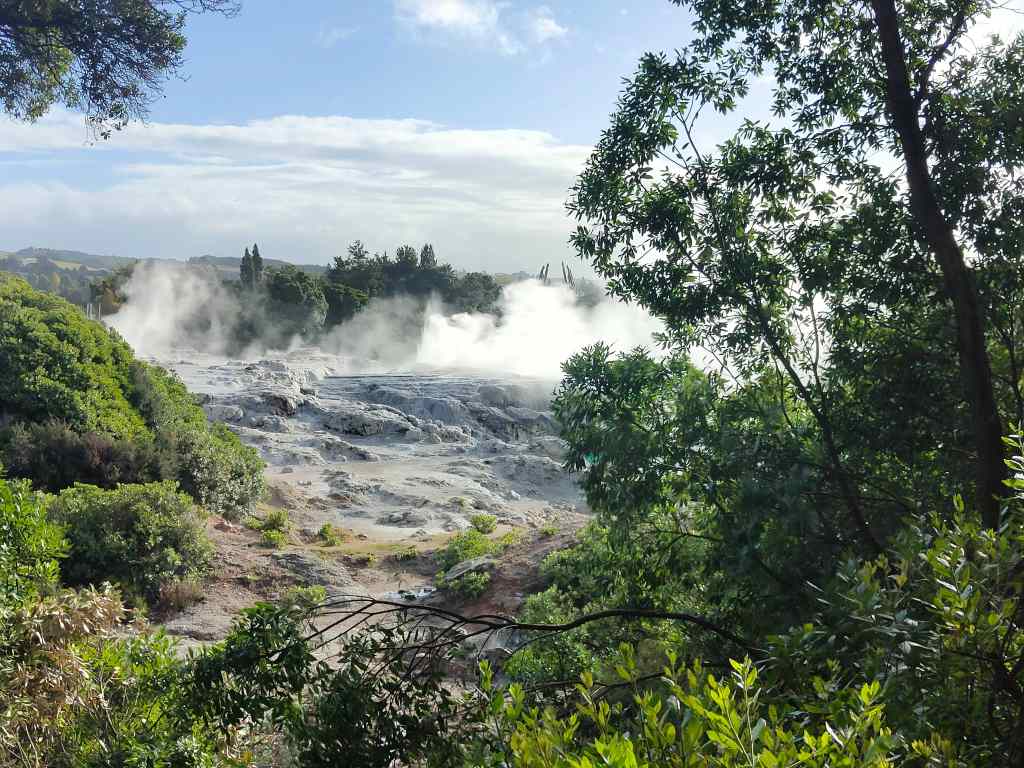
Whakarewarewa is one of the last remaing Maori villages and the only one to be located on geothermal land. The Maori houses today are simple modern wooden structures, and the village was quiet with very few people about. It somehow felt rather sad, a feeling reinforced when our guide talked of the damage done to Maori culture by colonialists. The most interesting part of the tour was seeing how the local people use the abundant boiling hot water in everyday life – particularly for cooking and bathing. These gifts of nature have been used in this way ever since the village was first settled, probably around 1325, and made the land a valuable asset that the local tribe often had to defend against marauders – successfully, since village of Whakarewarewa was never once taken in battle and has remained the ancestral home of the Tūhourangi Ngāti Wāhiao people all this time. The tour ended on a viewing platform overlooking several geysers. The biggest one of the group, Pohutu, erupts roughly every hour, so I waited patiently, and sure enough after twenty minutes, a stream of steam and water spurted into the air. The jet from the geyser can reach a height of 30 metres, making it the biggest geyser in the southern hemisphere.

Waiting for Pohutu geyser….
Pohutu delivers

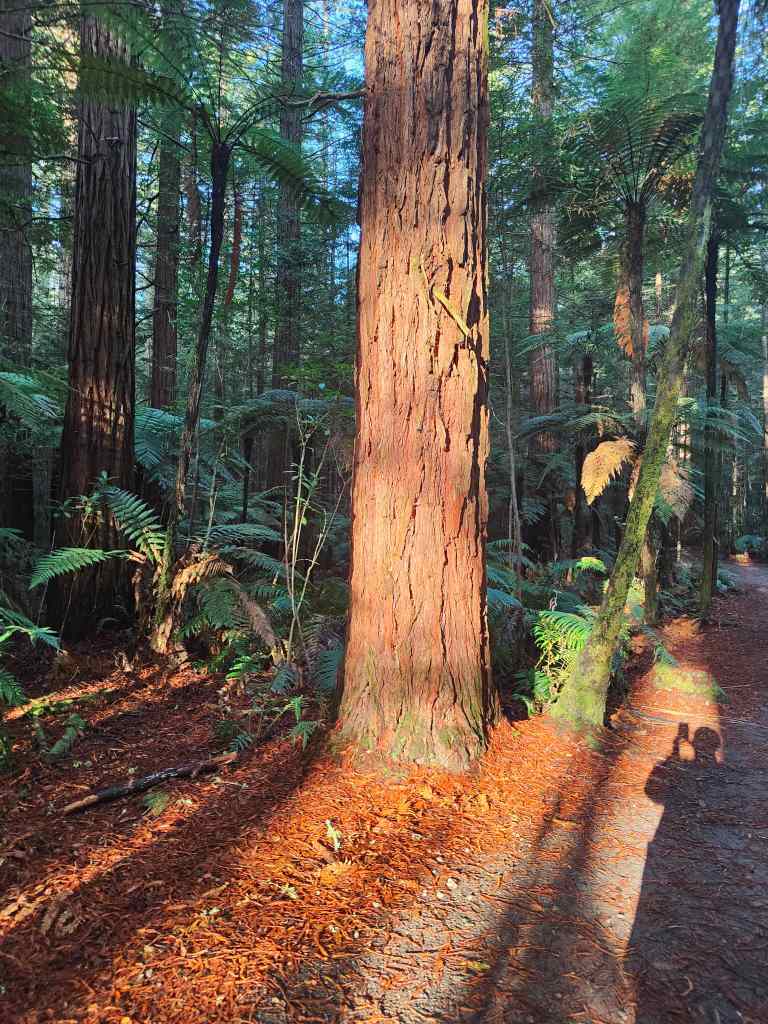
To end my day, I made a visit to Whakarewarewa Forest, which draws visitors to admire its tall redwood trees. You can pay to go on a raised walkway through the trees, but it did not look very high, so I preferred to simply stroll along a short trail in the evening light. The redwoods were impressive…..

Redwoods in the forest

….but in my view the real stars of the forest were the giant tree ferns.

…and giant ferns

It had been a very varied day, with a geothermal park, a Maori village and a forest walk all making up for the less than impressive modern city of Rotorua. But the area still had a lot more to offer, and I looked forward to tomorrow, when I was due to see visit the Te Puia Maori cultural centre and another geothermal park, which was supposed to be even better than Oreiko Karako.

Next Post: Rotorua – Kaituna river and Waimangu

Previous Post: Taupo

Blog at WordPress.com.

Up ↑