Today I headed west from Etosha to Damaraland, a remote and dry part of Namibia that has famous collections of rock art (although most of Namibia is remote and dry). I spent the morning visiting a couple more waterholes, both of which were teaming with wildlife.
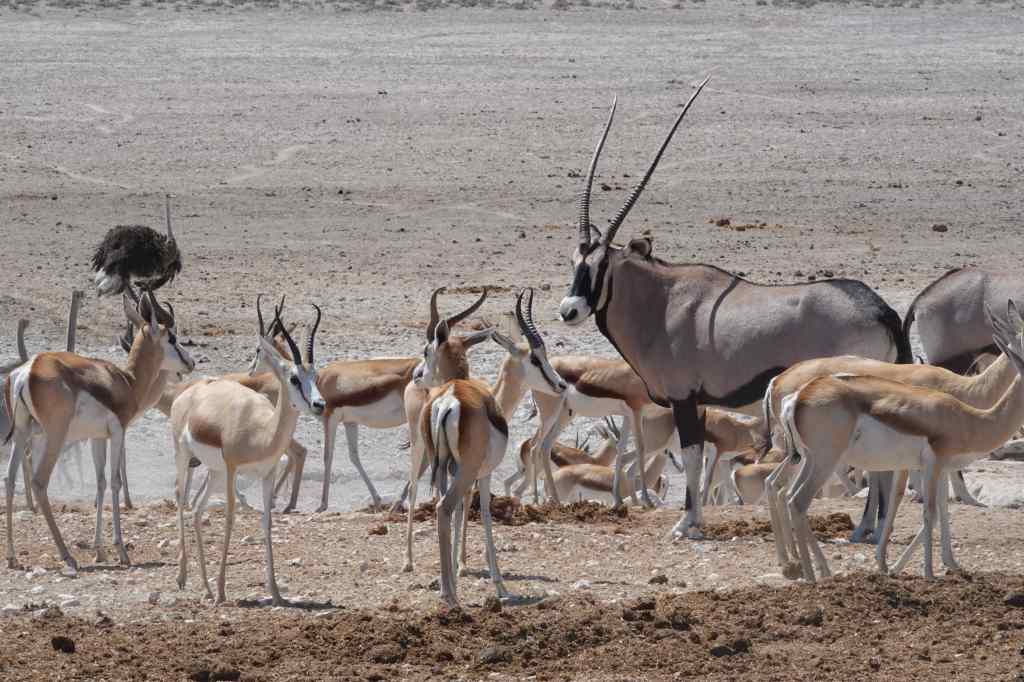
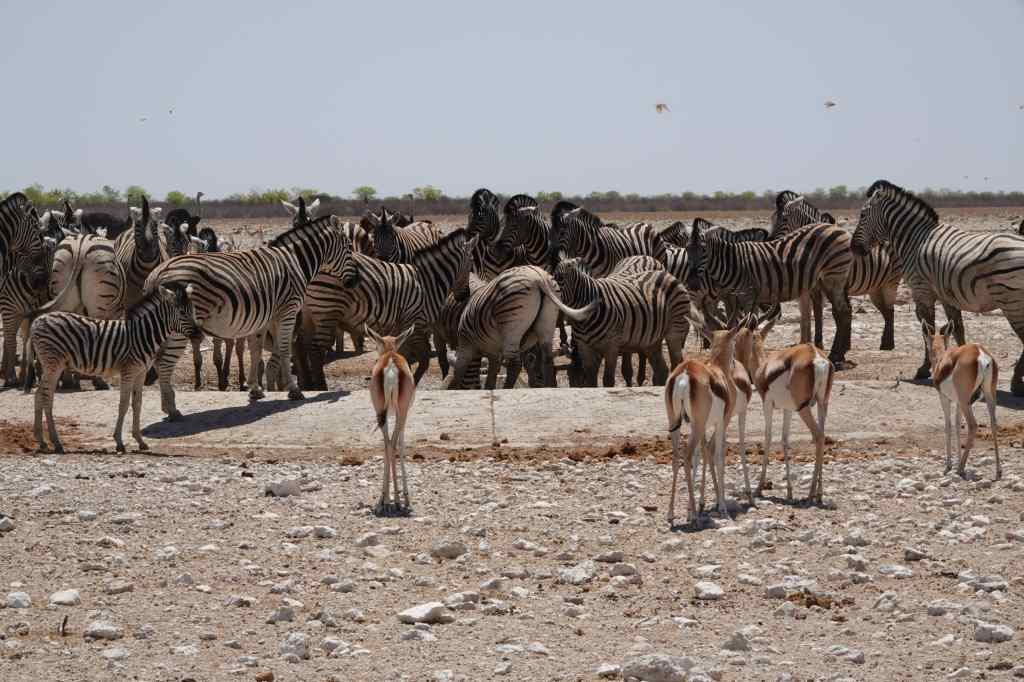
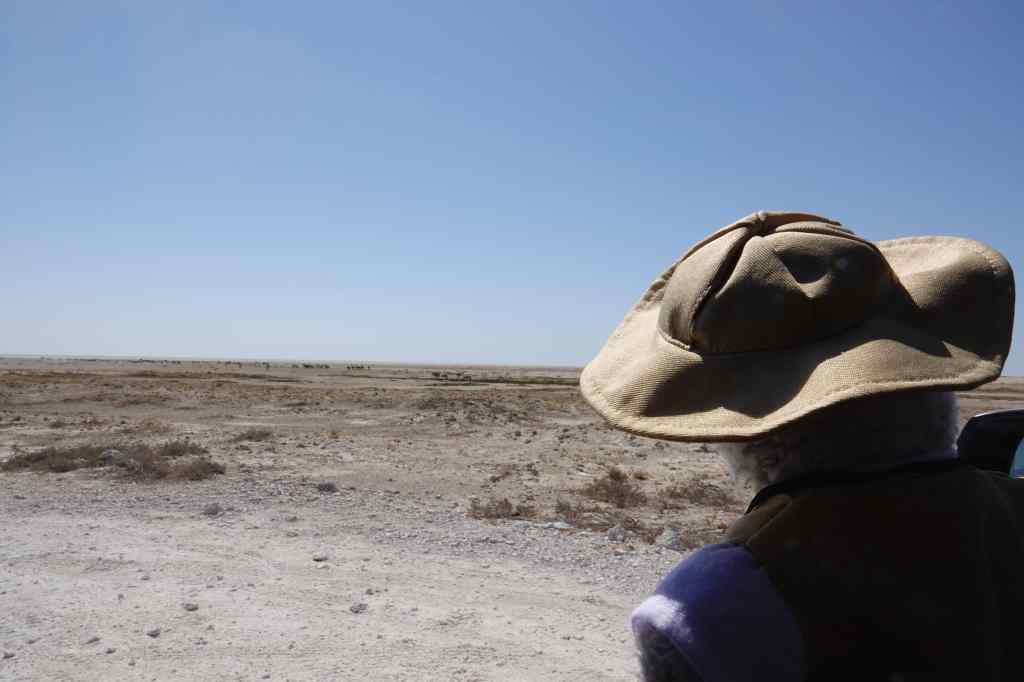
I then headed south to one of the park’s gates and said a sad goodbye to Etosha. It certainly deserves its reputation as one of the best places in the world to see game. I continued south to the town of Outjo, where I managed to find a usb cable for my camera (an essential first step in writing my blog). From there I headed west. At first, the road was asphalted, but then it turned into gravel. The scenery changed, as endless plains gave way to mountains and some interesting rock formations.
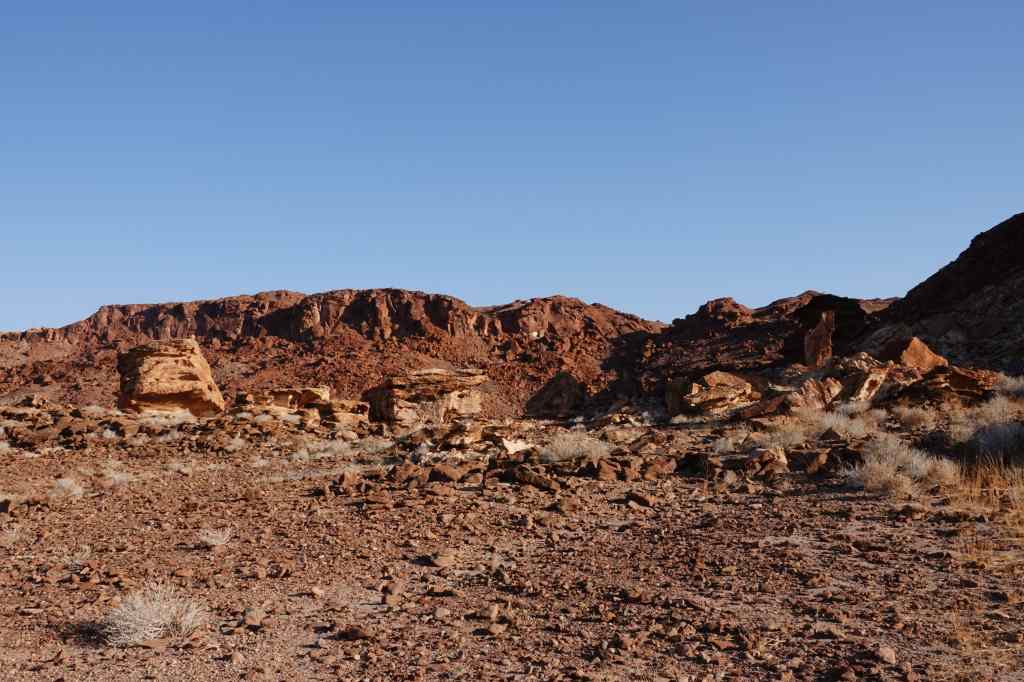
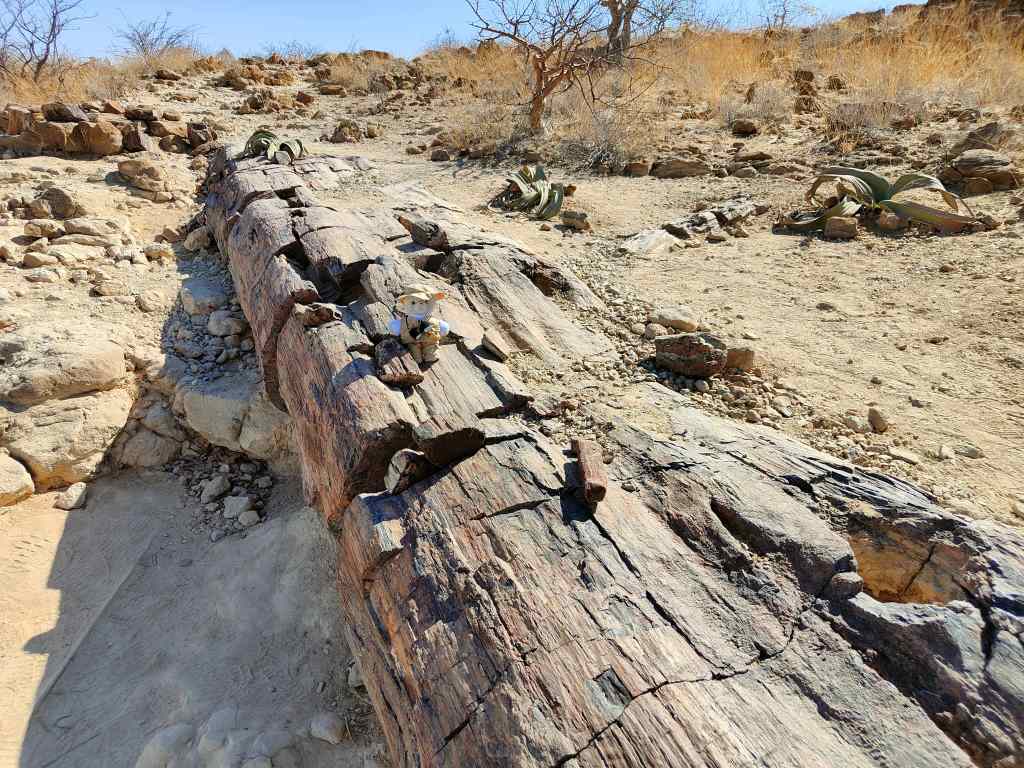
I made a brief stop at the site of a petrified forest. Thousands of years ago, a great flood deposited some huge tree trunks, hundreds of kilometres away from where they had been growing. The trees were buried by sand and their organic matter slowly replaced by minerals – fossilising them.
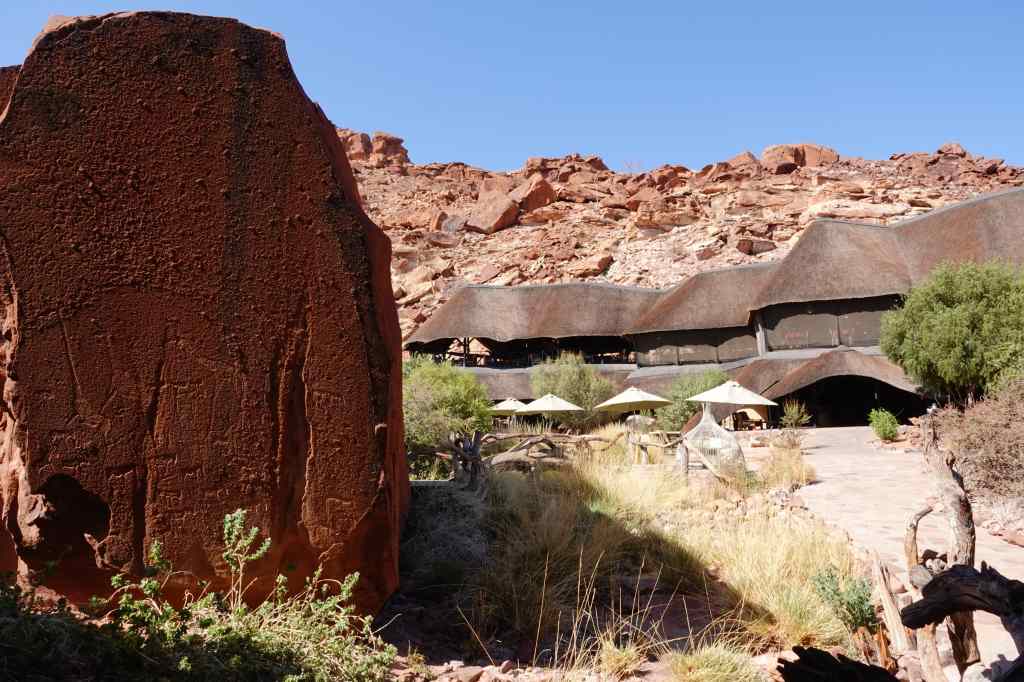
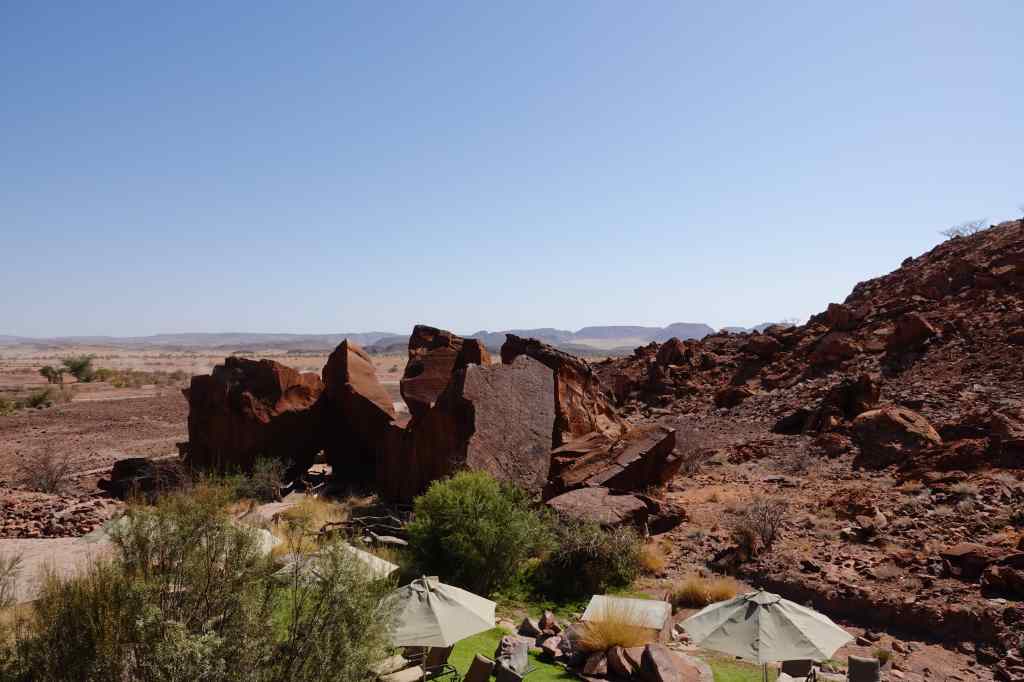
My next lodge was at a placed called Twyfelfontein, at the end of a particularly remote country road. It was built into the side of a mountain, around a bright red outcrop of rocks. I arrived in the late afternoon and settled down in the bar for an aperitif before an excellent buffet dinner.
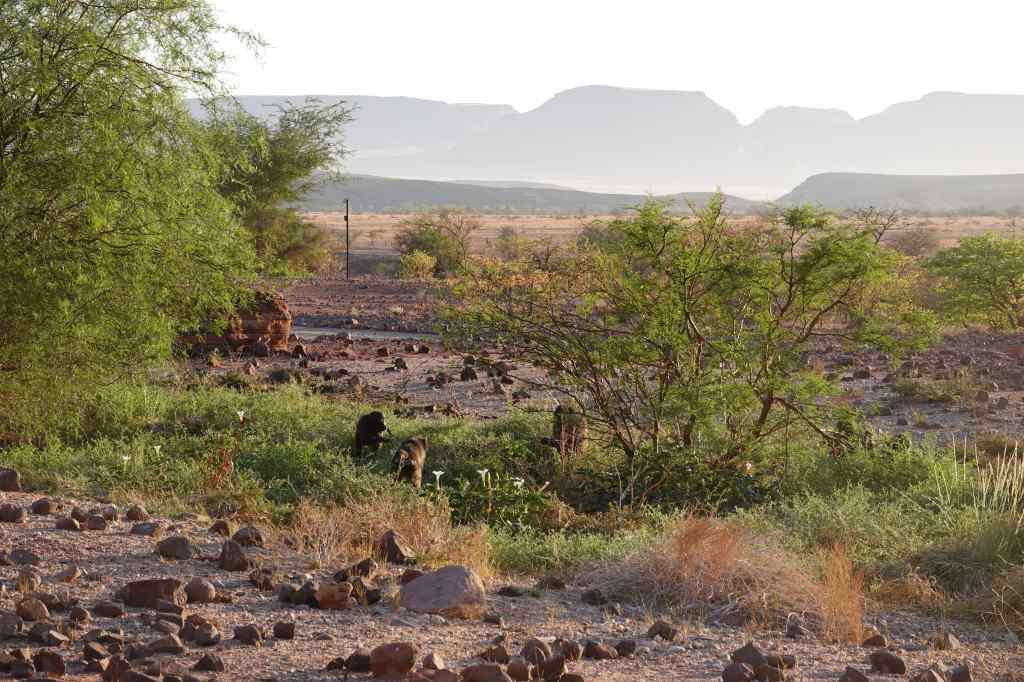
The next morning, I awoke to find baboons playing and drinking from the pond in front of my room.
I had breakfast and to avoid the heat and the crowds, I set off early to the Unesco-listed Twyfelfontein rock art site, a short drive away. The area was inhabited by bushmen for thousands of years, and they left thousands of rock engravings (at Twyfelfontein) and some paintings (at a nearby site). I was assigned a guide who showed me around. She said the engravings were five to six thousand years old (on the web I have seen a range of estimates from one to ten thousand) and served various purposes.
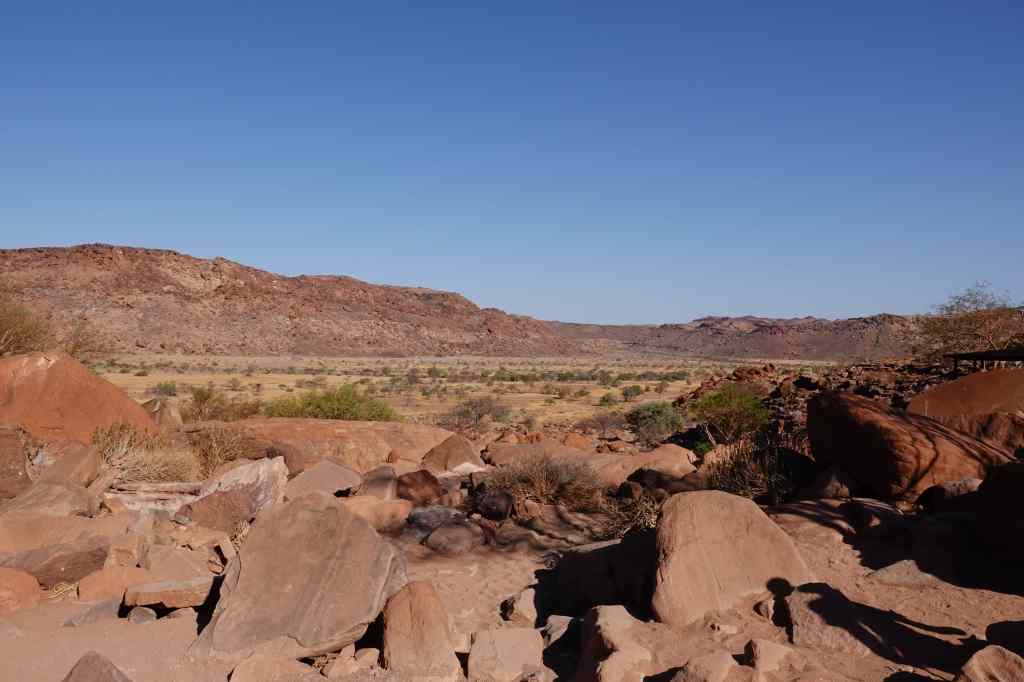
The first set she showed us had representations of animals, and she said it was used to teach the bushmen children about the game in the area and how to hunt.
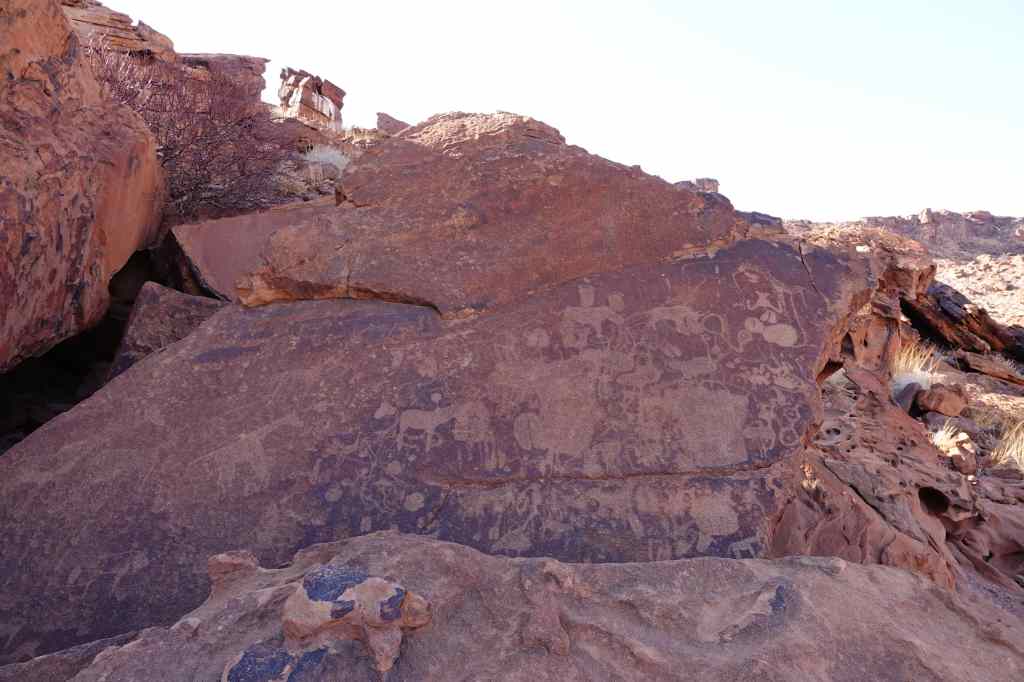
A second set was a map, showing the location of local waterholes – marked with exactly the same symbol that is used on maps today – a circle with a dot in the middle.
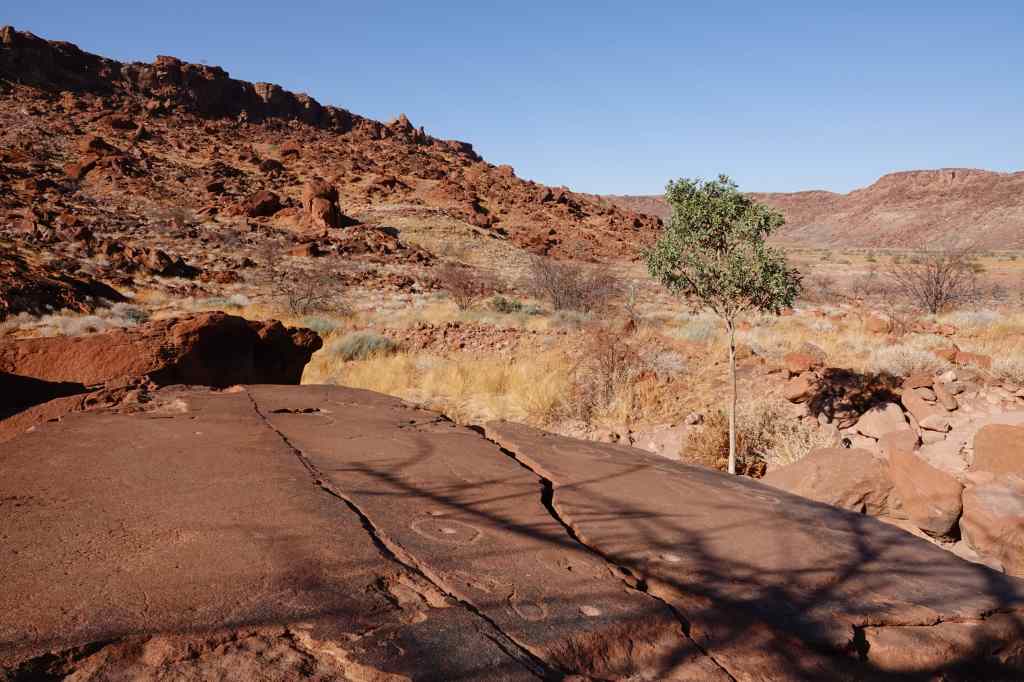
A third set showed more animals, including even seals and penguins – the coast is over a hundred km away, and the engravings prove that the bushmen led a nomadic existence and travelled widely. However there were no pictures of bears…..
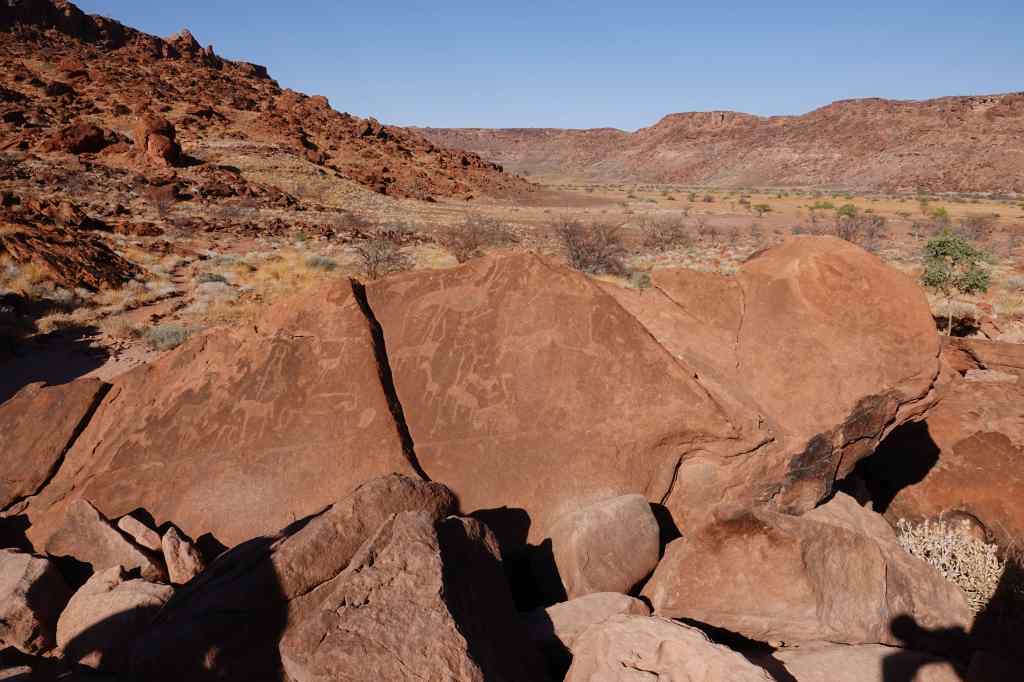
Other carvings had a religious significance. It is believed that the bushmen had a spiritual leader or shaman, who would go into a trance and have visions. The trance was believed to be a spirit world where the shaman would receive powers to heal the sick and bring rain. In this world, the shaman would change shape into powerful animals and saw strange geometric patterns – both of which are represented in the carvings. The giraffe was a common motif. It was believed to be a sacred animal to the bush, since it had its head in the clouds and could bring rain. The animal is often shown with stylised, wispy legs which may represent the feeling the shaman had during the trance of rising into the air.
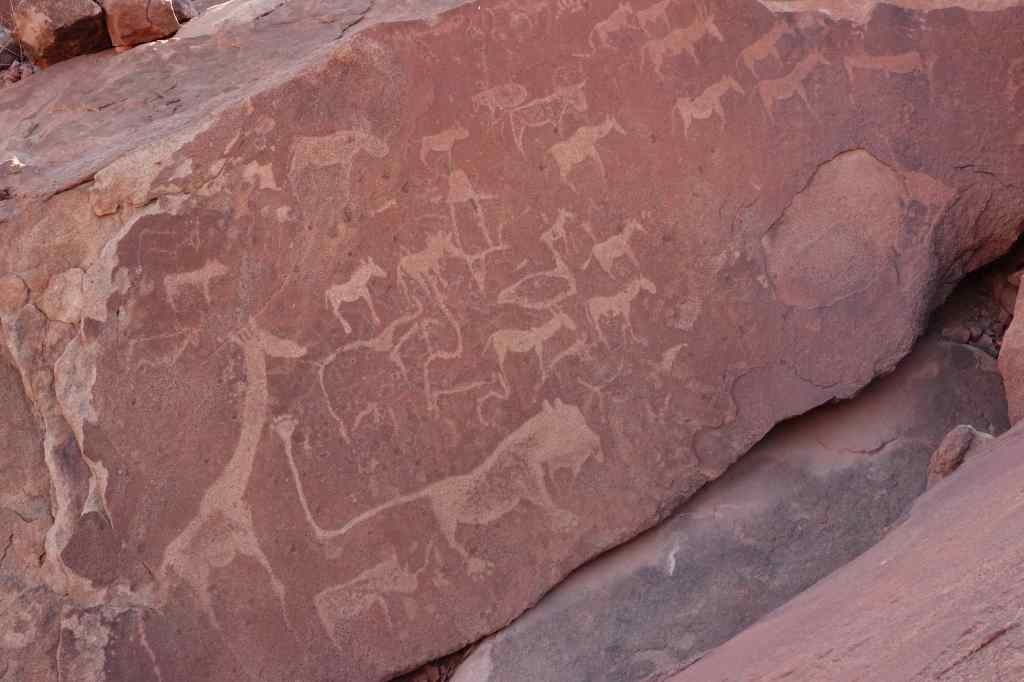
The most famous engraving represents another man/beast fusion from a shaman’s trances – a lion with human feet instead of paws and another human hand on the end of a very long tail.
The visit was very interesting, mostly for the guide’s explanation and the excellent information and displays in the visitor centre. These also explained the history of the site, first occupied by hunter/gatherer bushmen, who eventually settled to become farmers – a precarious life that depending upon the rains. In the 1940s an Afrikaans farmer and his family arrived from Cape Town. He gave the site its name, “Twyfelfontein” which means “doubtful spring” in English. The Afrikaans farmer family struggled to cope with the erratic rains and spring for fourteen years before leaving.
My visit lasted only about an hour and I headed back to my base, where I checked out yet more engravings on the rocks right in front of the hotel.
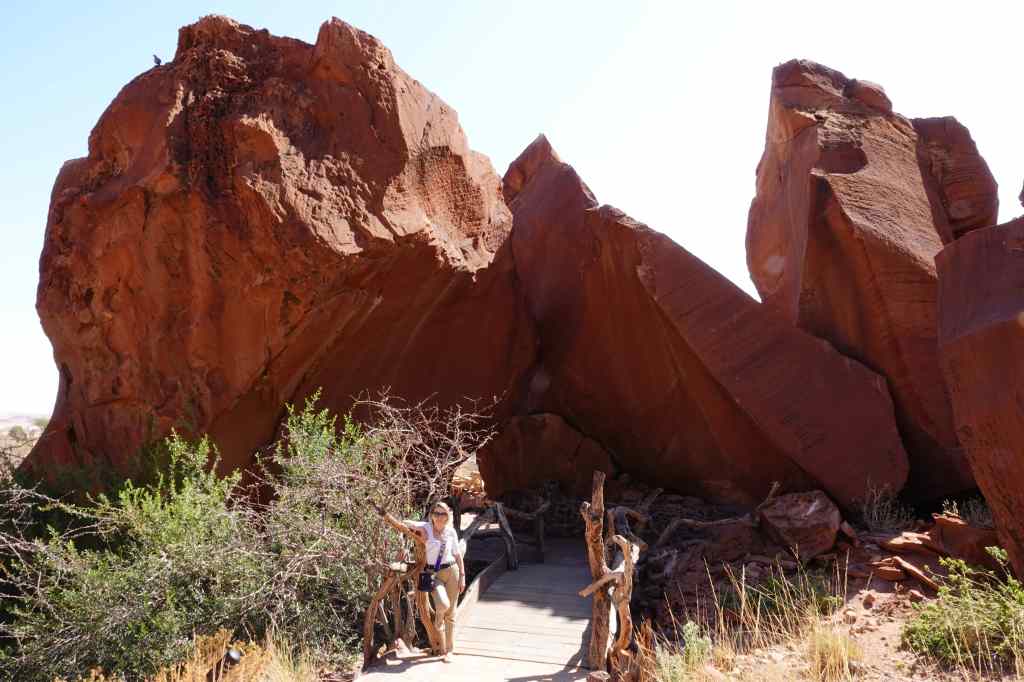
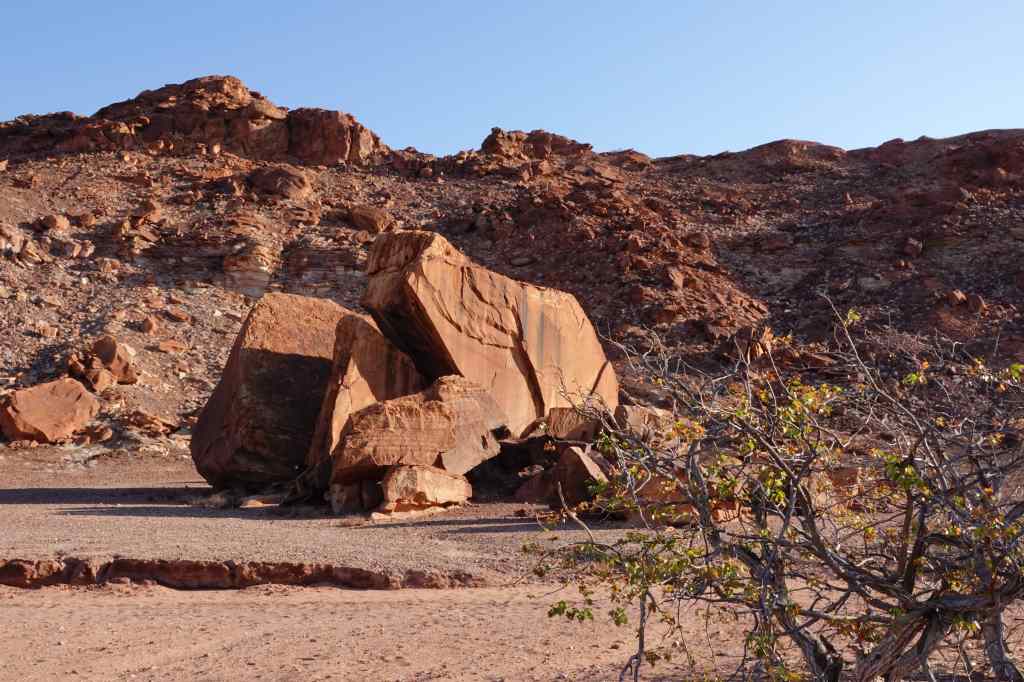
Then I settled down by the pool – after six days spent sitting in cars or airplanes, it was nice to swim and laze in the sun. In the early evening I went for a short walk around the along a marked trail – that eventually petered out. Still, it was pleasant to stretch my legs and absorb more of the austere, rocky scenery of the area.
I had dinner and went to bed early, so as to be ready for the long drive the next day along the famous Skeleton Coast. It was a part of the holiday I was looking forward to with anticipation.
Next Post – the Skeleton Coast
Previous Post – Day 2 at Etosha
 Trouspinet travels