Rotorua Day 2 – Hiking Waimangu and rafting the Kaituna River

Today I visited a different geothermal park – the Waimangu Volcanic Valley, an area formed when Mount Tarawera erupted in 1886. The eruption levelled several Maori villages, killing many people, and destroyed the Pink and White Terraces which had been a major tourist attraction and were claimed to be the “8th wonder of the world”. It left a caldera, which over the years filled with water to become a much-expanded Lake Rotomahana (a smaller lake of that name had existed earlier).
Today, the Waimangu valley is the world’s youngest geothermal ecosystem, and the only one created as a direct result of a volcanic eruption. It is also once again a tourist attraction, although a less popular one than others in the Rotorua area and I was pleasantly surprised that I often had the place to myself.
The park is visited by walking an 8km path downhill, starting at a huge pool of boiling water (Frying Pan Lake, one of the world’s biggest hot springs)………

Frying Pan Lake, Waimungu Park

…. and following a boiling stream of water that runs through a pleasant valley, past lots of smaller springs…..
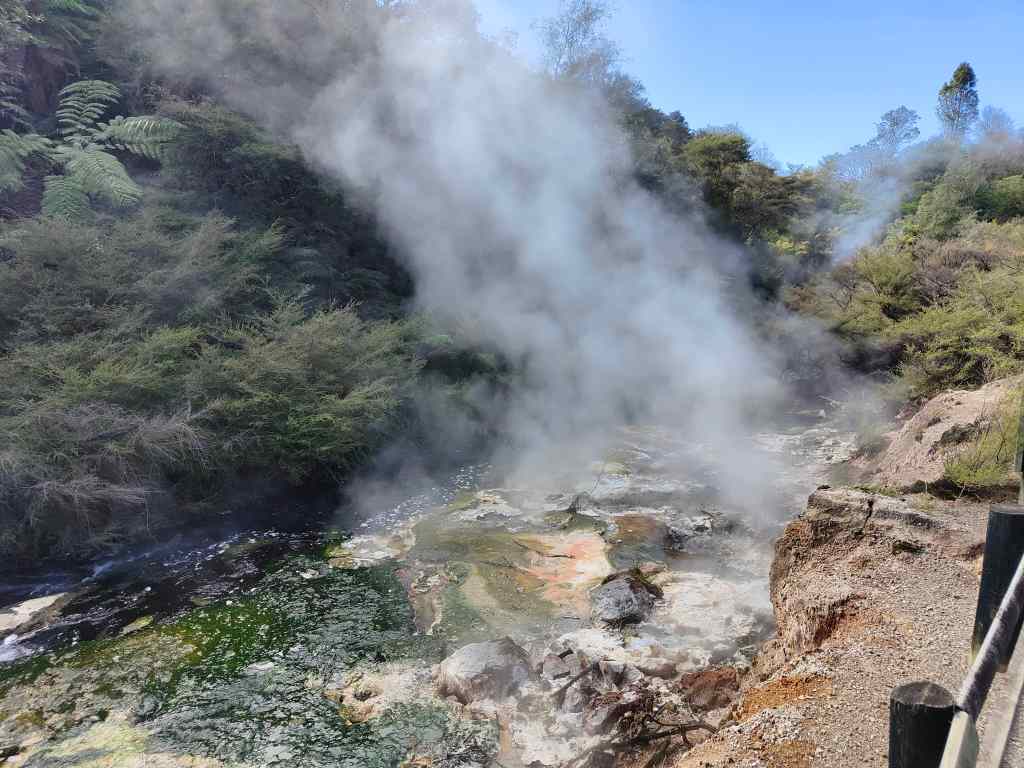
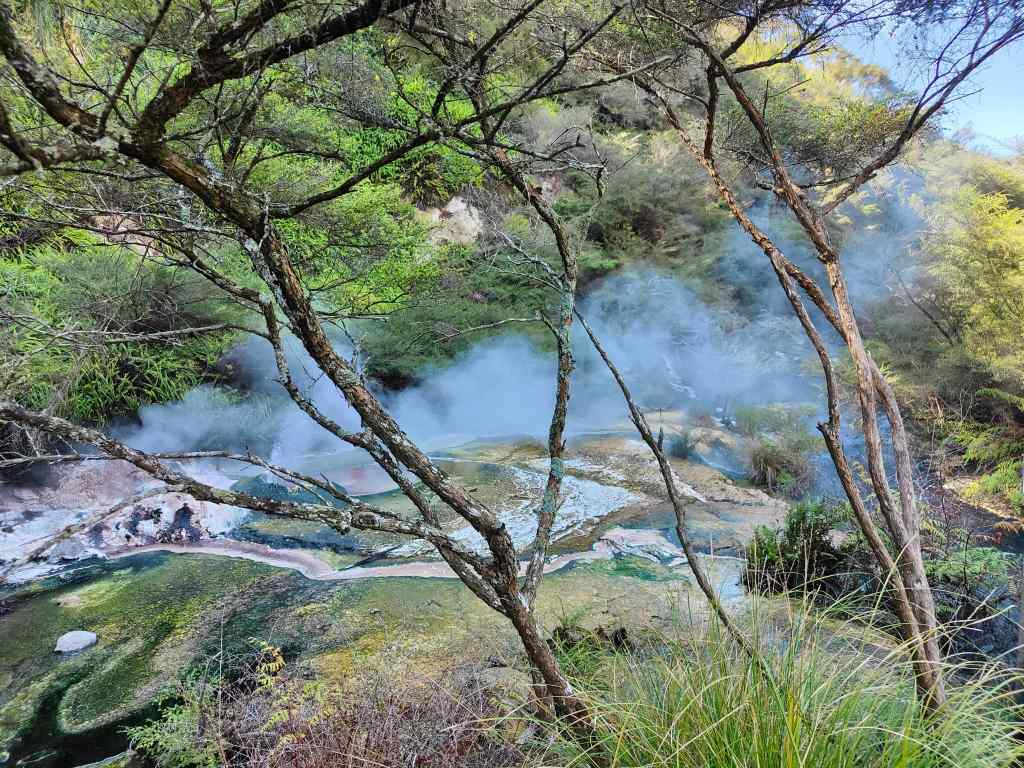
The path at Waimungu follows this boiling stream

…. and a boiling caldron of water called Inferno Crater.
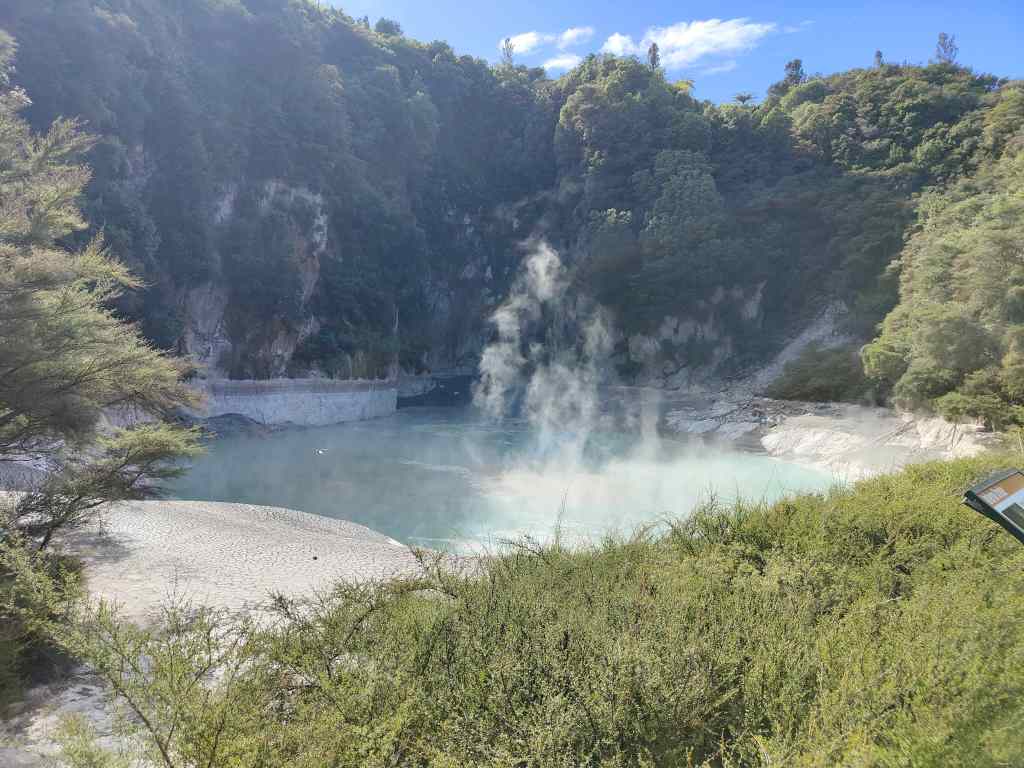
Inferno Crater at Waimungu Volcanic Valley

The stream eventually arrives at peaceful Lake Rotomahana, home to much birdlife, including black swans, from where most people use the park’s shuttle bus to return to its entrance.
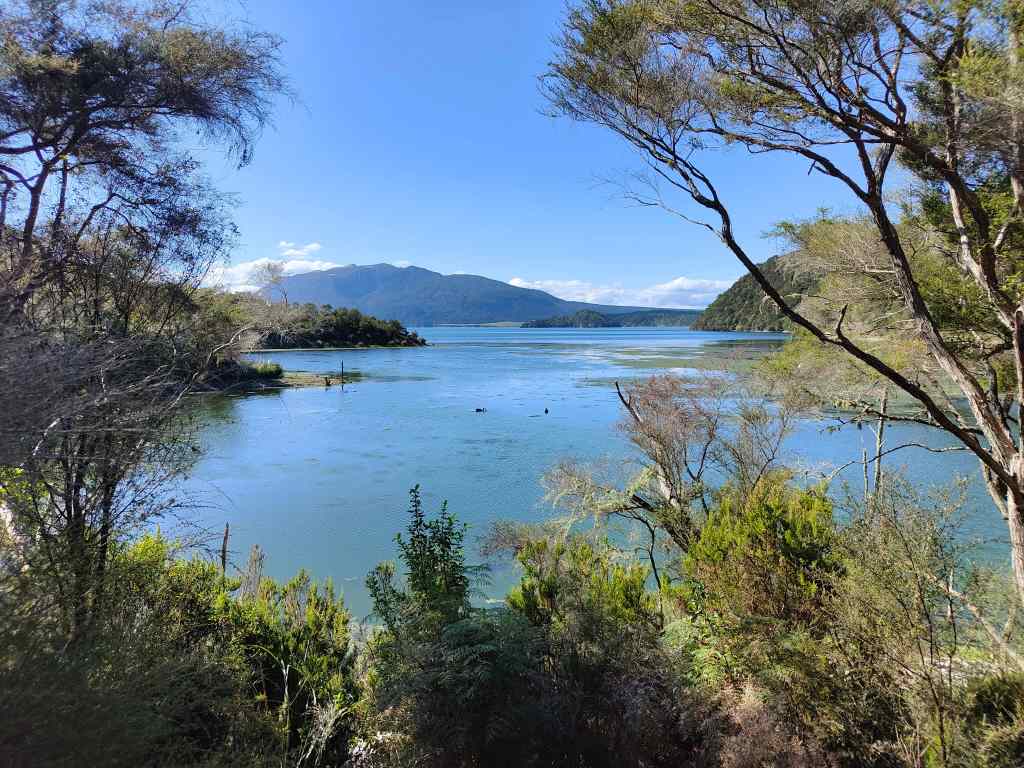
Lake Rotomahana at the end of the Waimungu Volcanic Valley

From Waimungu I went to visit something completely different – the waterfalls on the Kaituna River. These are found in a scenic valley, to the northeast of Rotorua.
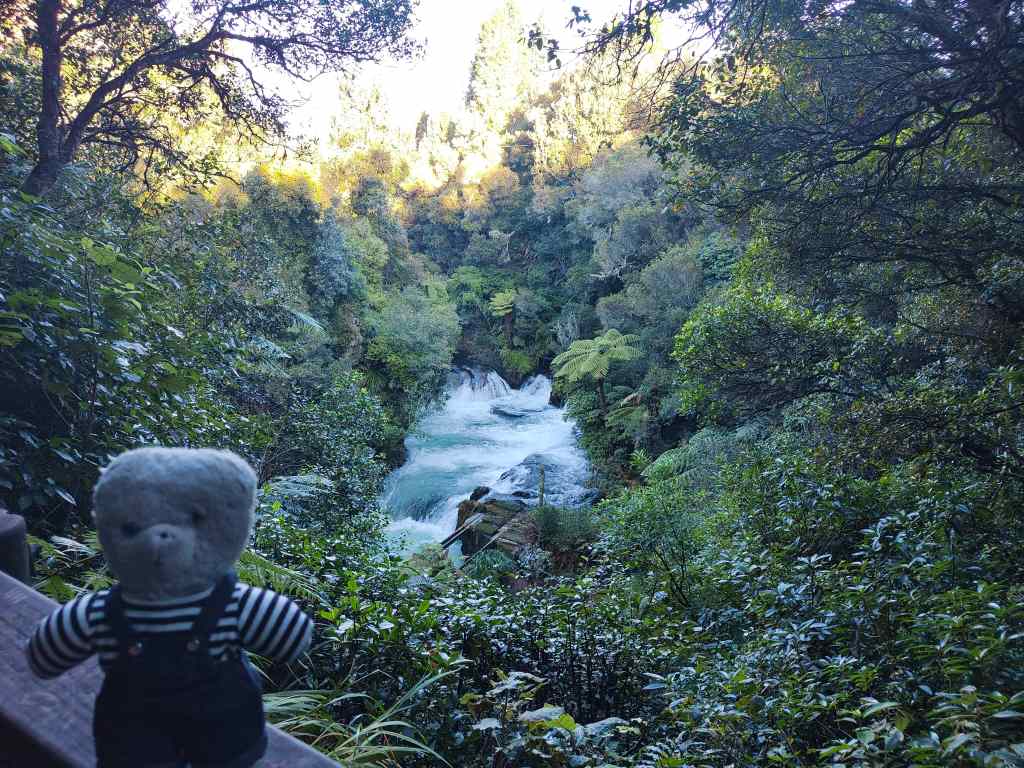
Okere waterfall on the Kaituna River

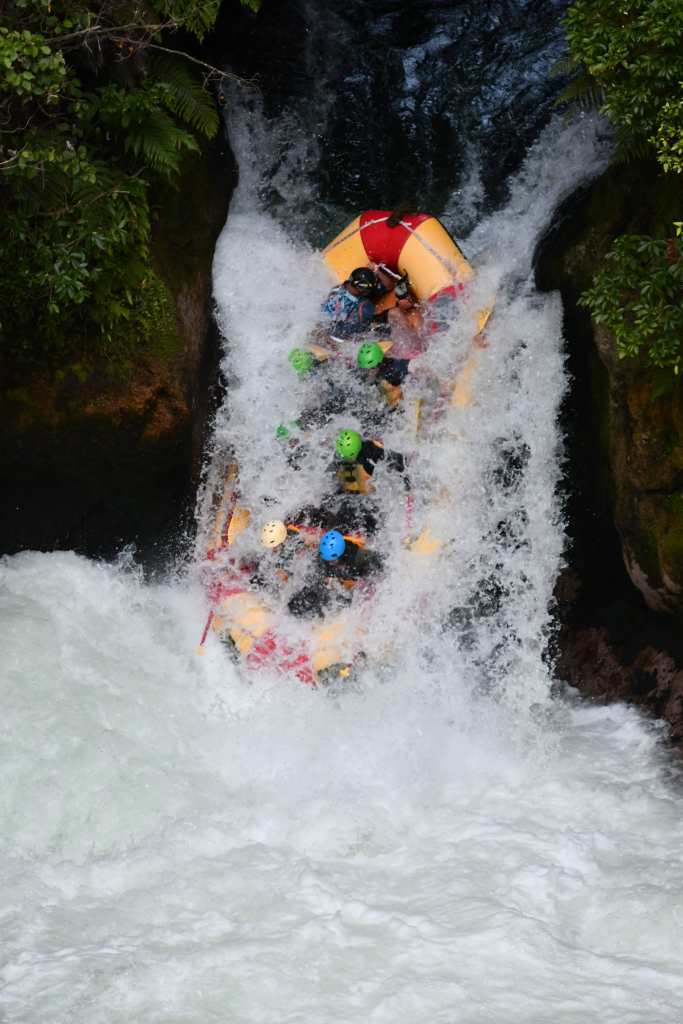
The area is beautiful, but the real attraction here is the possibility to go white water rafting, a trip that includes descending a 7-metre waterfall (the highest in the world that is open to commercial rafting operators). Unfortunately, the rafting company had a minimum height requirement for passengers, so teddy bears are unable to participate, but I did let my human assistant editor have a go. I watched as his raft approached the famous waterfall….
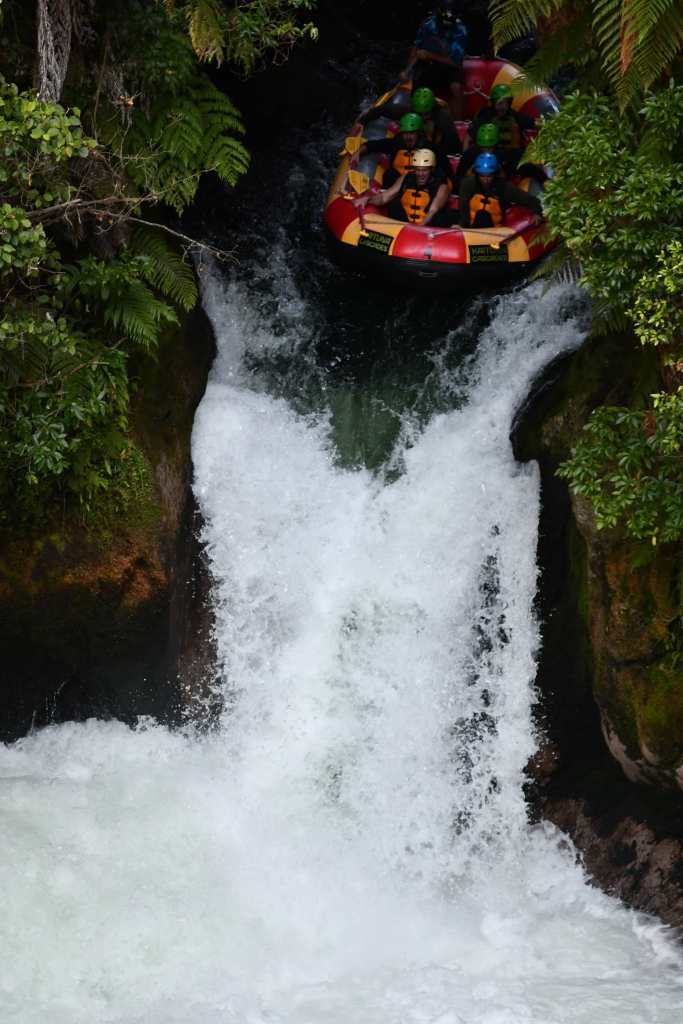
The Raft approaches Okere Waterfall

and then plunged down….

Half way down Okere Waterfall

….completely disappearing under the water.
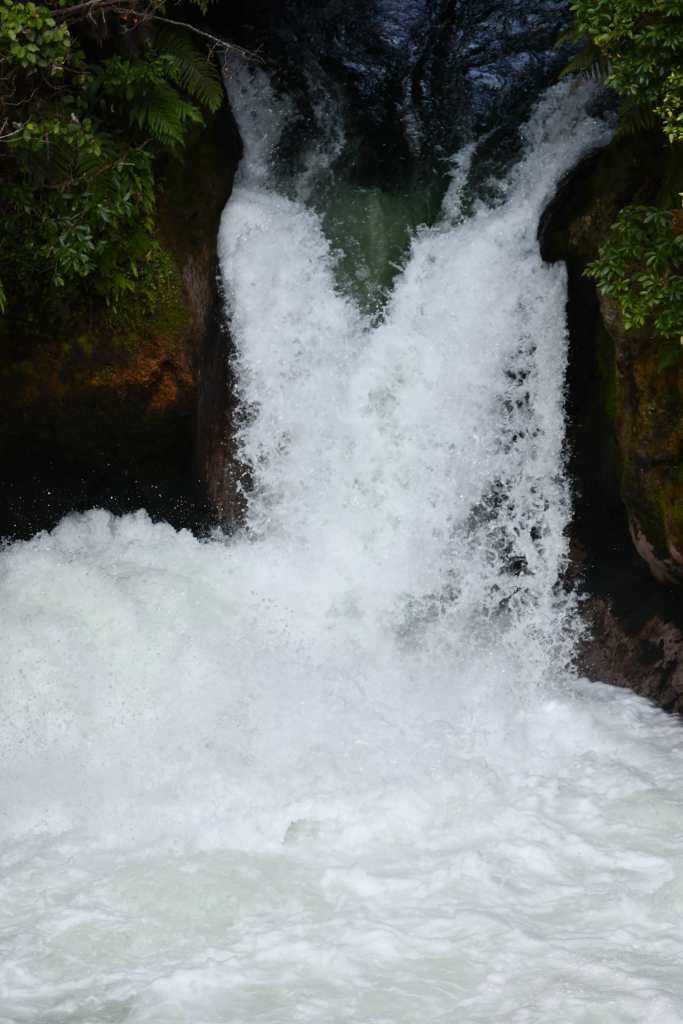
Time to look for a new assistant!

I briefly wondered if I should start advertising for a new assistant, but then the raft reappeared from under the foam with all its crew members still on board.
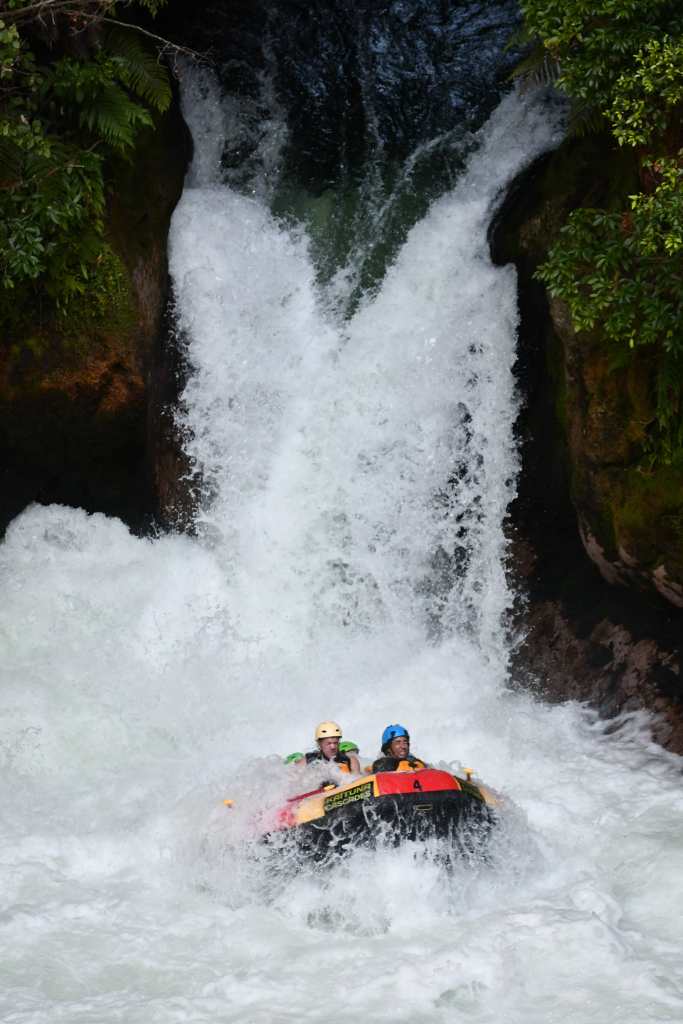
The raft reemerges from the water on the Kaituna River

It was now late afternoon, and I headed back home. After a difficult introduction I was beginning to like Rotorua. The geothermal sites are really exceptional, and it was nice to let my assistant have some fun with the rafting, even if it would have been even better to try this for myself. It is a demanding job working for Trouspinet and my subordinates need to let their hair down occasionally…….

Letting my assistant have some fun for a change (he is in the front)

Previous Post: Rotorua Day 1

Next Post: Rotorua -Wai-o-tapu and Te Puia

Hiking in Štrbské Pleso, Slovakia and rafting the Dunajec Gorge, Poland

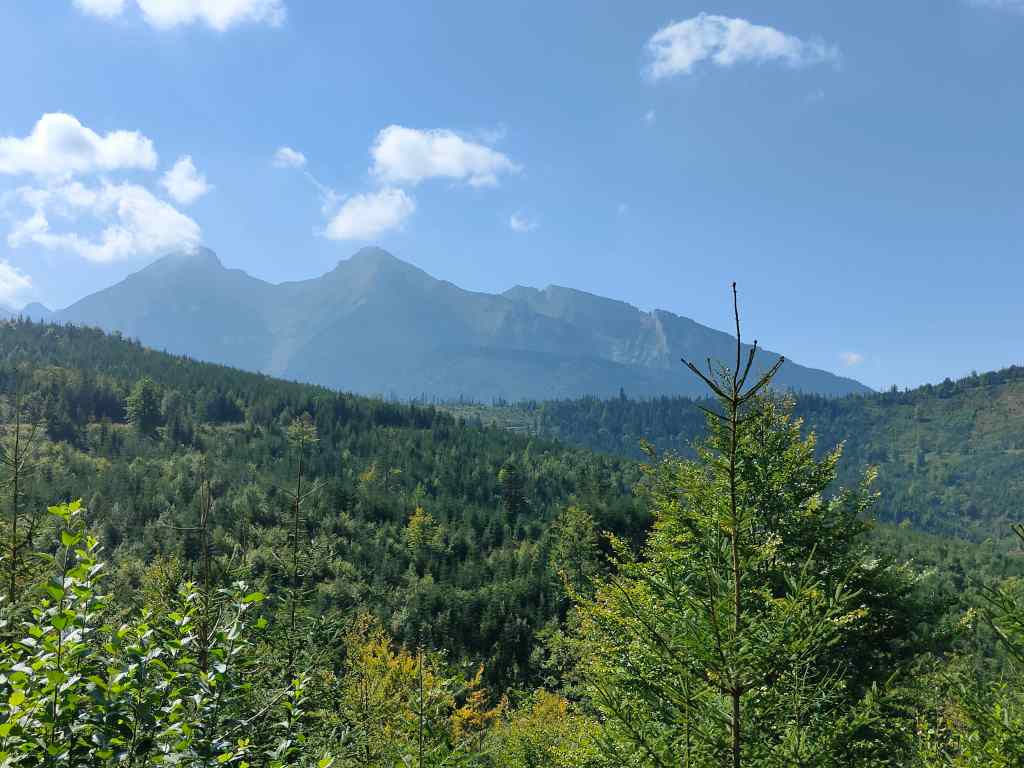
The next day I decided to explore the Tatras from the Slovak side. The border was only 20km and soon I was in Slovakia enjoying a different perspective of the mountains. On this side they are higher and rise straight up from a flat green plane.

Scenery on the way to Štrbské Pleso

After an hour, I reached a town called Tatry-Štrbské Pleso. It looked a smart Alpine ski resort town in France or Switzerland. Since I had set off a bit late, nearly all of the usual parking spaces were already taken. The only place left was the car park of the Kempinski Hotel. A sign at the entrance announced that they charged a very steep 30 euros a day. With no other choice, I drove in and had a stroke of luck – the machine that issued timed entry tickets for the car park was broken, and the hotel’s reception said that I could park for free.

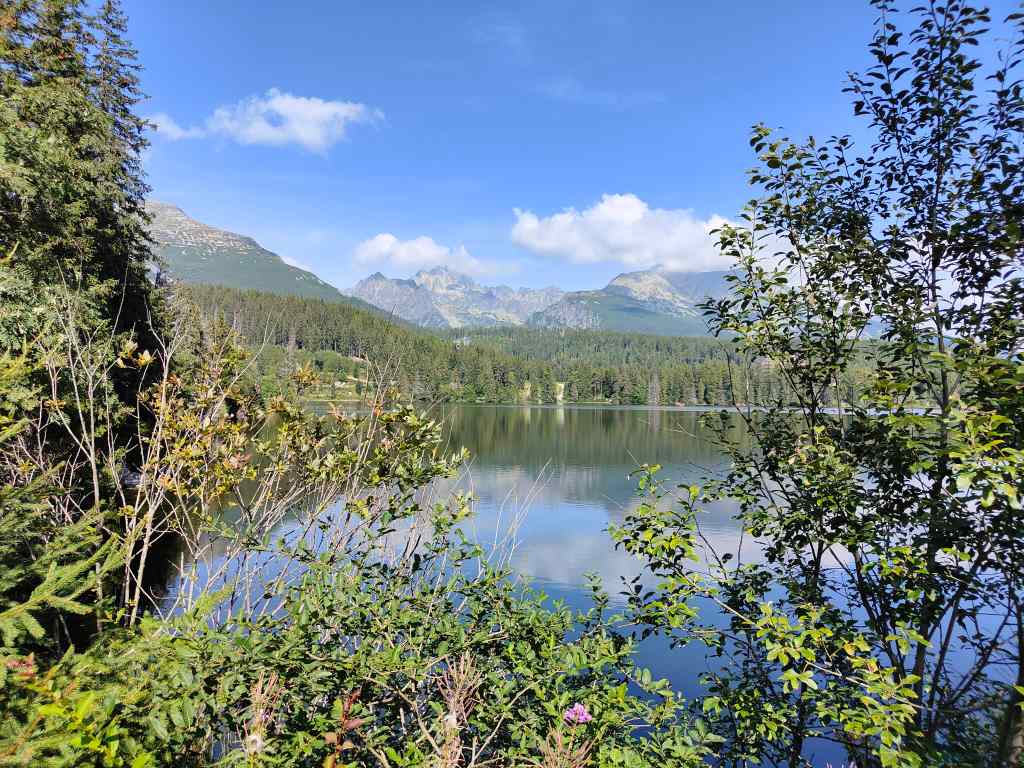
The town was located on a mountain lake. A path leading around the edge seemed to be a popular outing for visitors, and also offered some nice views of the mountains.

The Lake at Strbske-Pleso

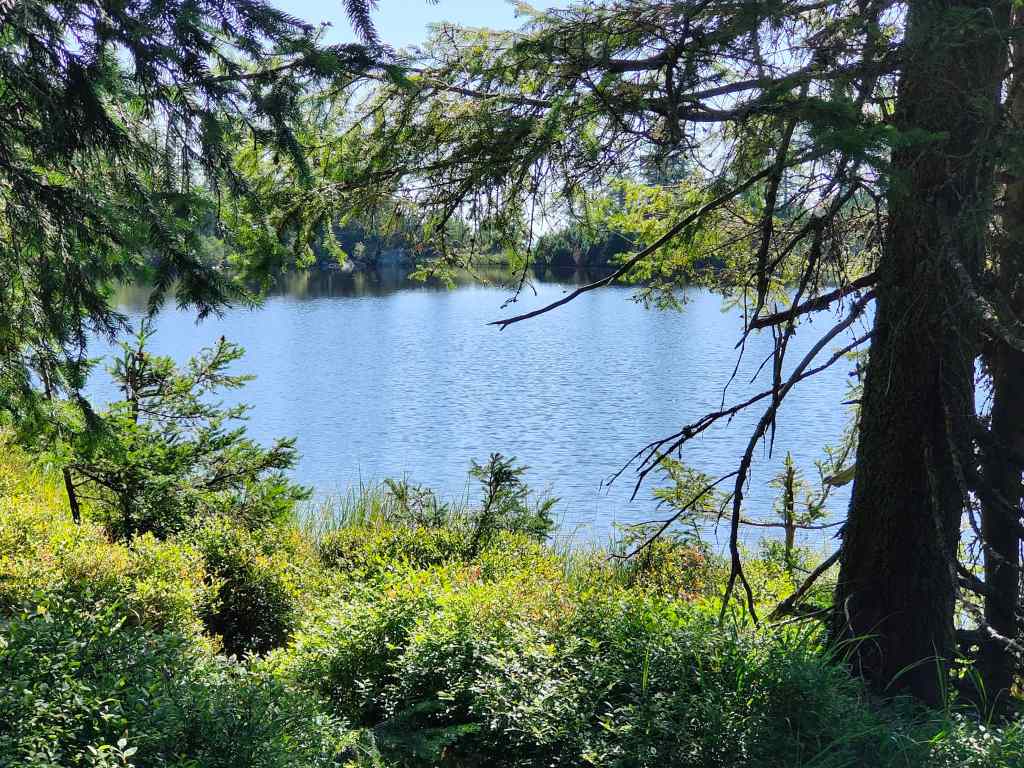
After strolling around for a bit, I set off on my main walk – out of the town and a short way into the mountains to another, smaller lake. It was pretty but not very demanding – which was fine, since I was feeling rather lazy. Maybe another day I will try one of the more strenuous routes from Štrbské Pleso, some of which go right up into the High Tatras – including the climb to Mount Rysy on the Polish border, the highest point in the Tatras mountains.

Scenery in the Slovak Tatras
My Destination

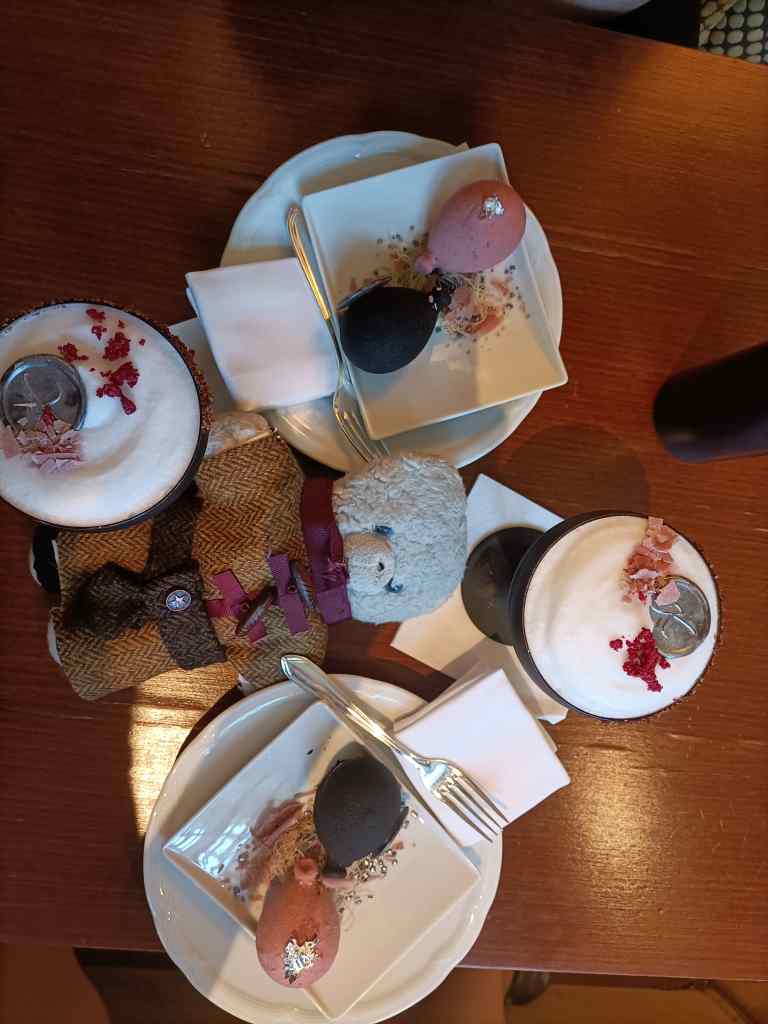
I ate my sandwiches by the side of the lake before heading back to the Kempinski, where I invested the saving I had made on parking by enjoying their special offer for a cocktail and an alcohol-infused cake. My editorial assistant had to sit and watch me eat and drink, since Slovakia has a zero mg/ml alcohol limit for driving. I don’t pity them too much though, since following me on my travels around the world is a pretty cool job.

Ordered for two but eaten by one – Kempinski Hotel, Strbske-Pleso

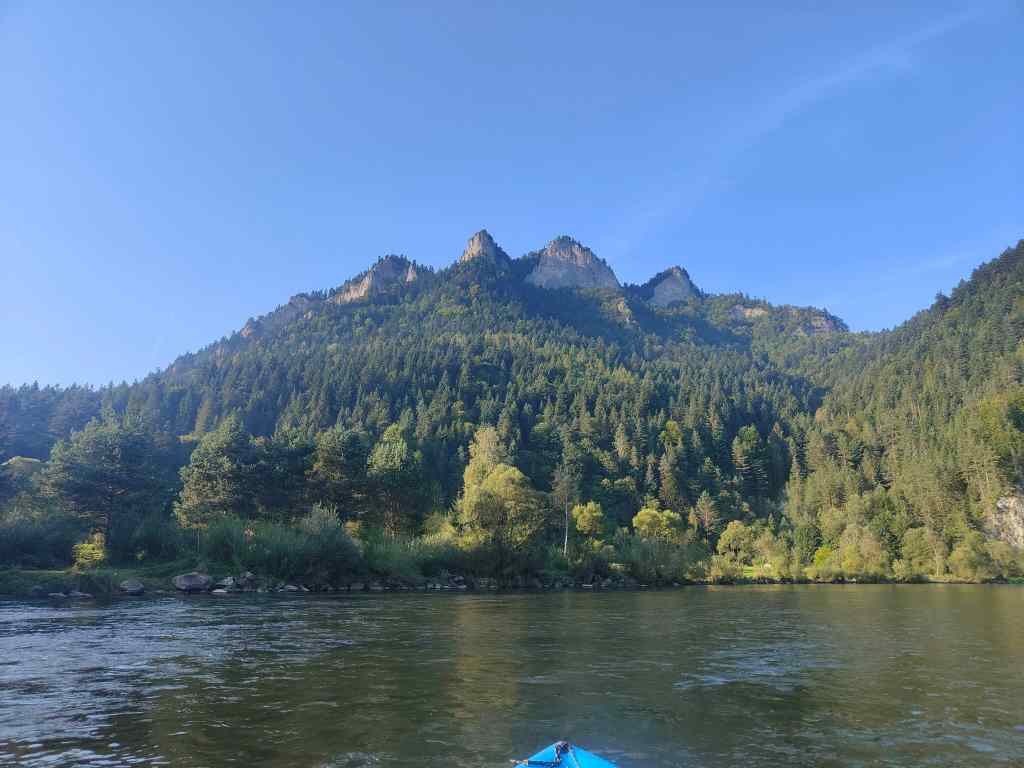
The following day I tried something different – rafting down the Dunajec River Gorge, a little way to the east from where I was staying. The road there took me through Slovakia again, with many neat and pretty mountain villages and some nice views of the Tatras.

More Slovak Tatras scenery near Štrbské Pleso

I stopped for lunch at a town on the river called Szczawnica back in Poland – don’t ask me how this pronounced, I am constantly amazed at the Polish language’s refusal to use vowels. This was the arrival point for the various rafting options and I ordered some more excellent local trout whilst watching the river traffic.

The most popular and famous option for visiting the gorge, recommended in all the guide books, is with a local rafting cooperative. Their rafts are large square constructions manned by two men dressed in traditional costume, who stand and steer the raft with poles. The raft has rows of seats for up to 25 tourists. These vessels move very slowly, and the people arriving looked rather bored, so instead I decided to hire a kayak and paddle myself.

I drove back to one of the hire companies I had seen at the approach to the town, and from there they took me in a mini-bus to a place 17km upstream where they kept their kayaks. I set off and paddled downstream, assisted by a gentle current.

The start of my rafting on the Dunajec Gorge
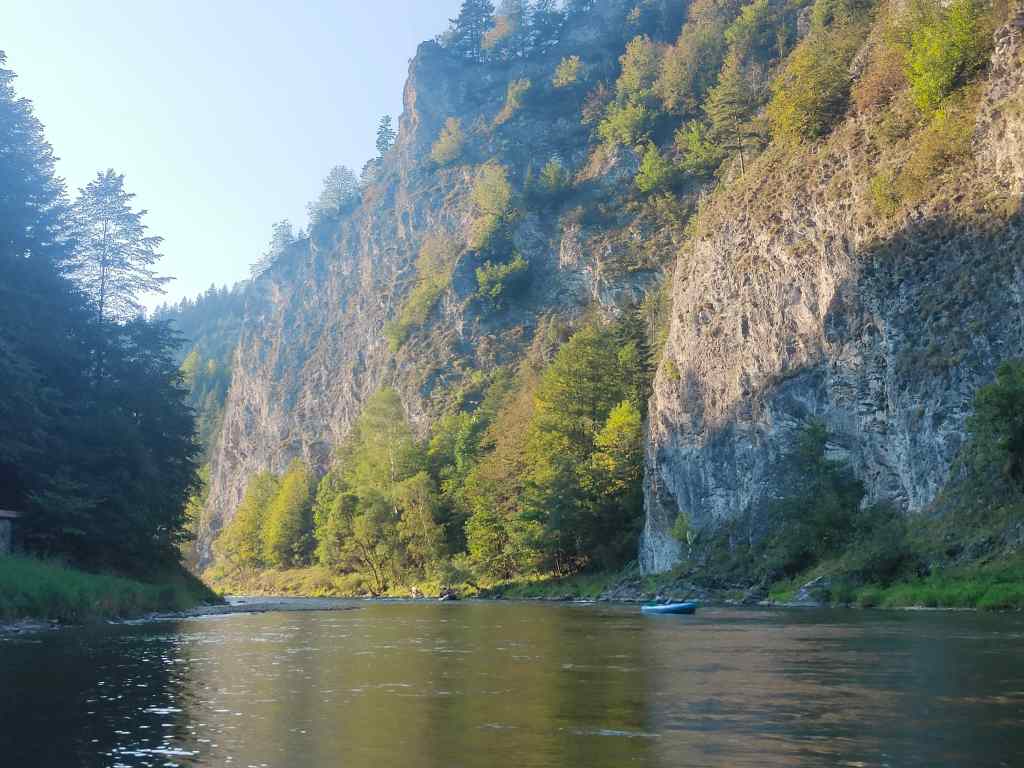
Inside the Dunajec Gorge

It was good fun, even if the scenery was pleasant rather than spectacular. I liked the way that cliffs closed in on both sides of the river, even if this meant that the gorge was in the shade and it was hard to take good pictures. There are no real rapids in the gorge, but you still have to navigate carefully to avoid getting grounded in the shallow parts of the river. After three hours I had arrived back at the kayak base, with tired arms. I was also a bit wet, but my fur helped me keep warmer than the human tourists making the trip.

It had been a another good, but slightly lazy day. Back at my chalet I had some steak and got an early night in anticipation of some rather more strenuous hiking the next day.

Next Post: High Tatras – the Valley of the Five Lakes and Szpiglasowy Wierch

Previous Post: The Tatras Mountains

Blog at WordPress.com.

Up ↑