Mount Aspiring and Wanaka

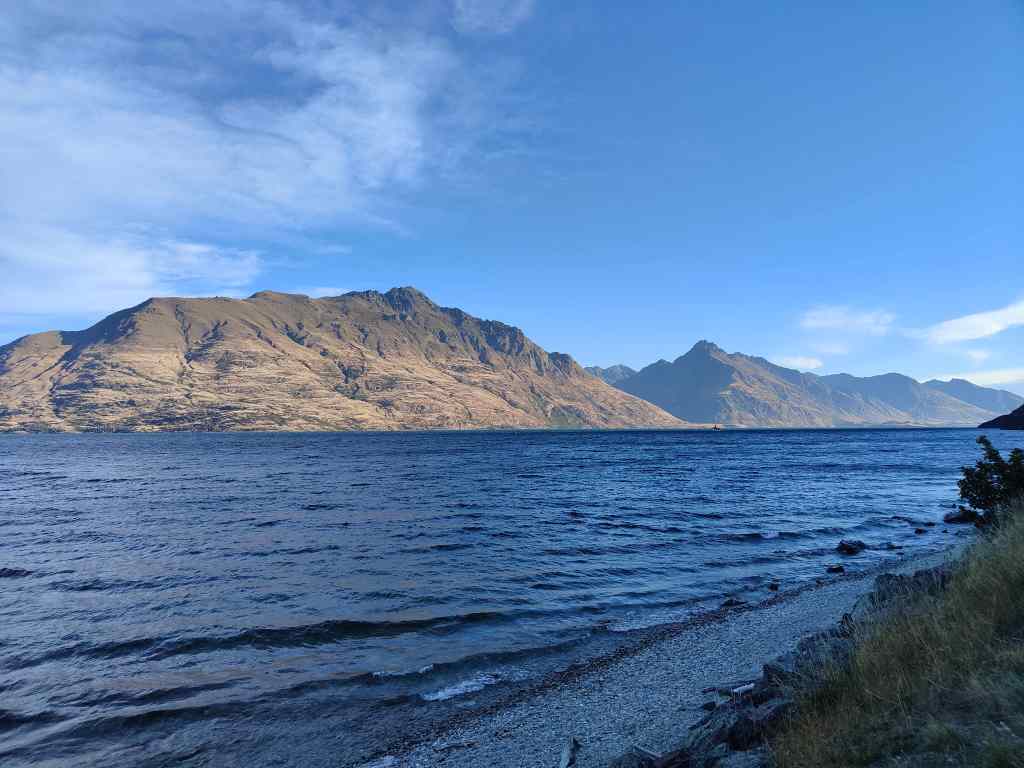
Today was a very full day, since I had to get from Te Anau in the south to Wanaka, in the middle of New Zealand’s South Island. On the way there was the usual pleasant New Zealand scenery, especially near Lake Wakitipu on the approach to Queenstown.
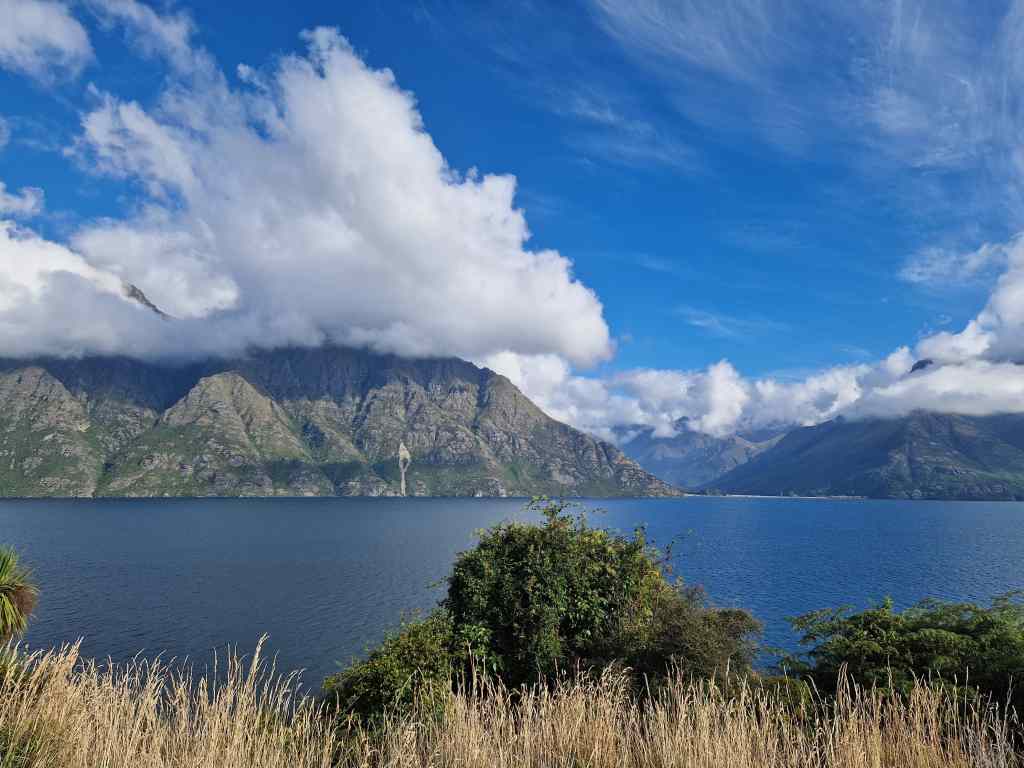
Lake Wakitipu, near Queenstown

I made a brief stop for a morning coffee at Arrowtown, a small gold rush town that time forgot. It has one main street with traditional old houses……..and lots of tourists.
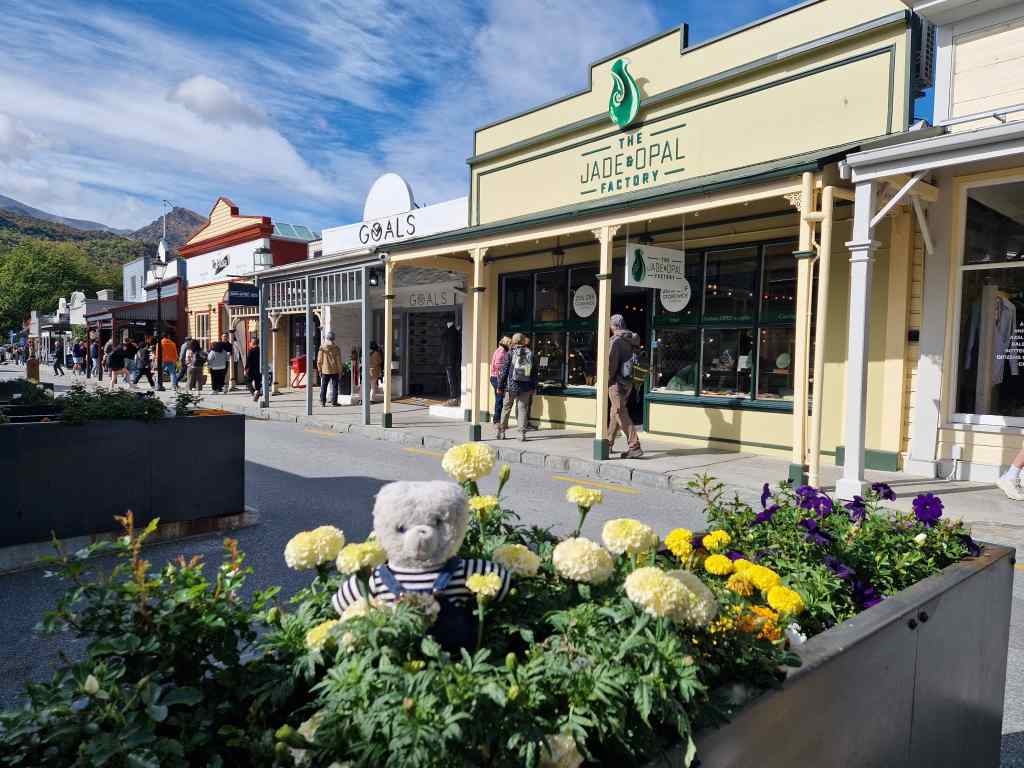
Arrowtown’s main (only?) street

From Arrowtown, I continued my route north over the scenic Crown Range of mountains.
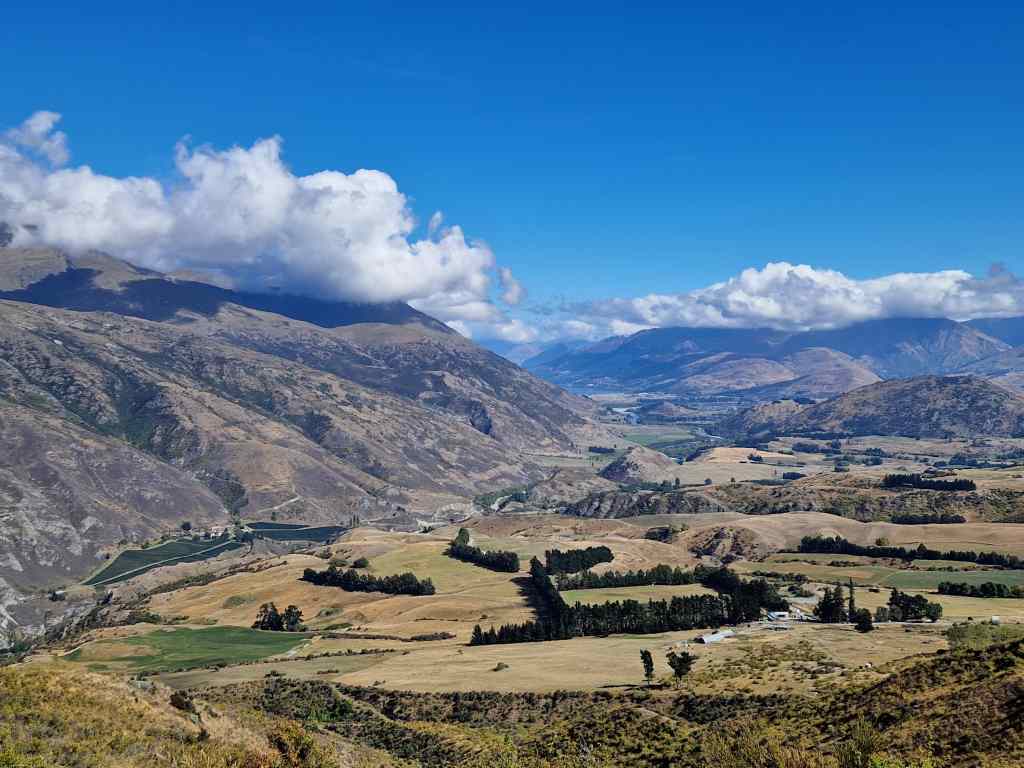
Crossing the scenic Crown Range

In the early afternoon I arrived at Wanaka, a popular tourist destination located on a lake. It seemed to be similar to Queenstown but on a smaller scale and more laid back. I found my B+B, quickly dropped my stuff and immediately set off again for the day’s main activity – a hike up to Mount Aspiring’s glacier. The road to get there was worth the trip in itself, and went through some beautiful countryside, with my destination often visible at the end of a long valley.
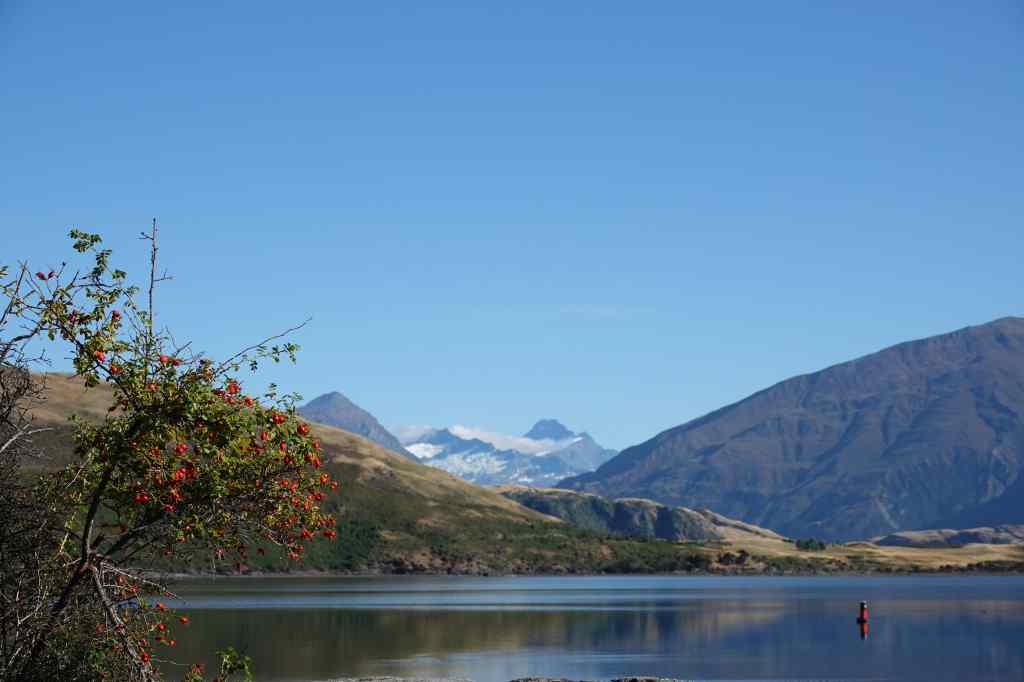
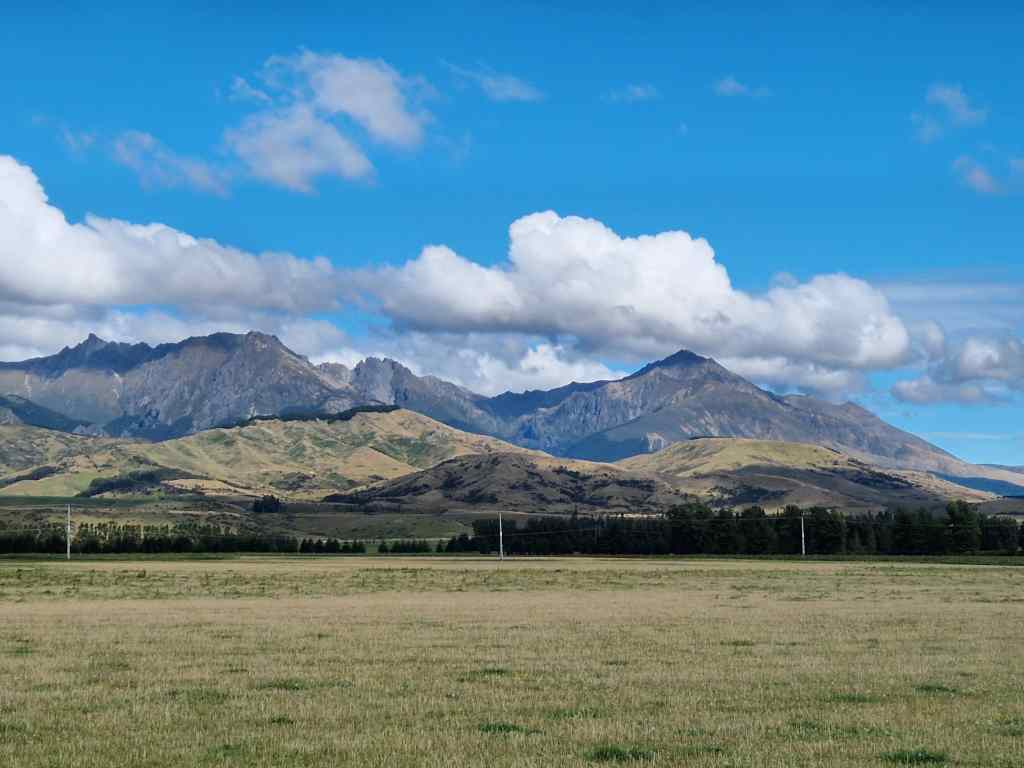
Mount Aspiring from a distance

On the way there were some road hazards typical of New Zealand….

New Zealand Road Hazard

Just before the starting place for the hike I made a short stop at the incredibly scenic Wishbone Falls, where water tumbled down from cliffs into a lush valley with rich vegetation.
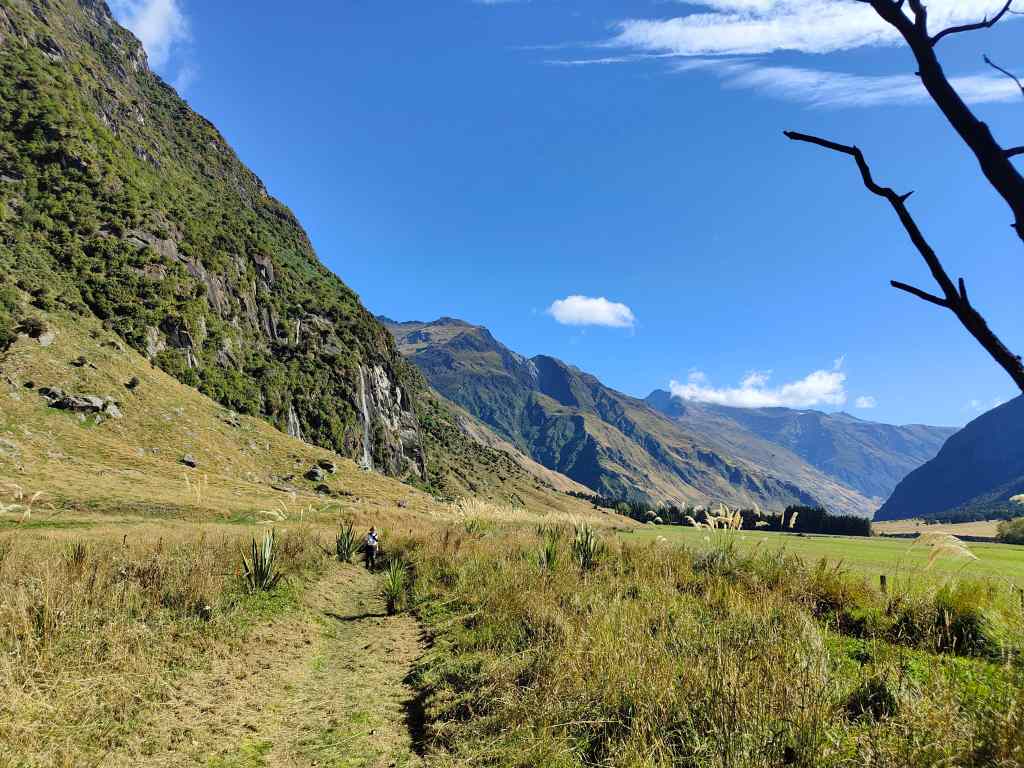
Wishbone falls from afar….
…and close up, with rainbow

A few minutes’ drive further on from the waterfall was the end of the road and the car park for hikers walking to Mount Aspiring. The path was quite easy and went through even more beautiful countryside…
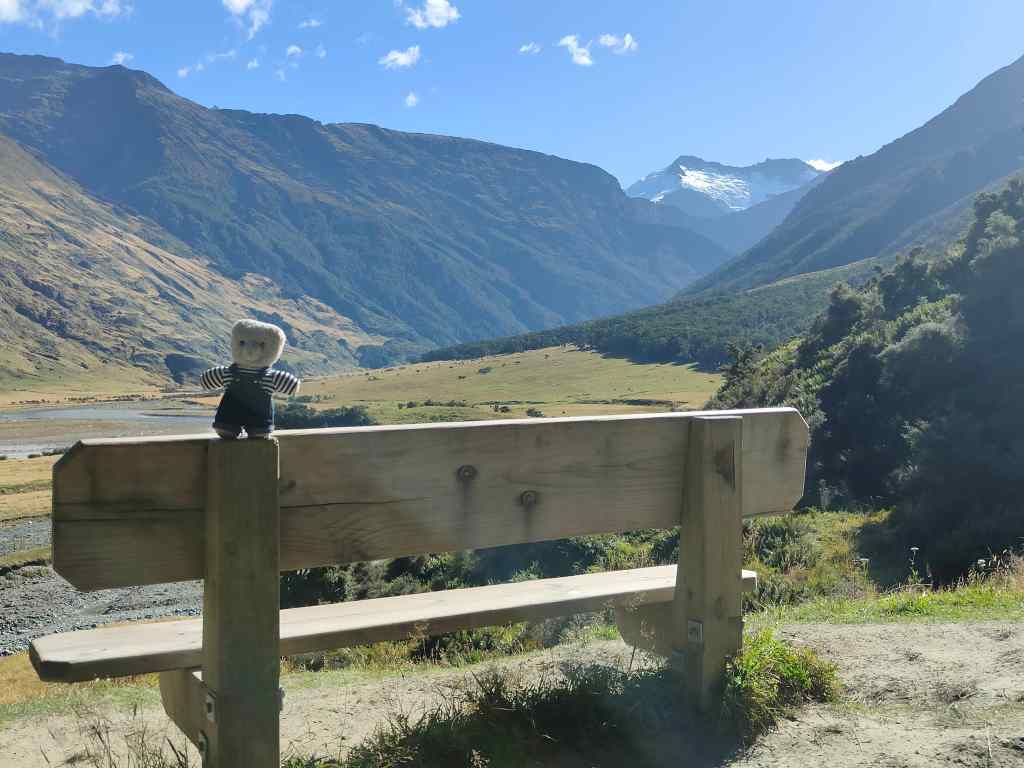
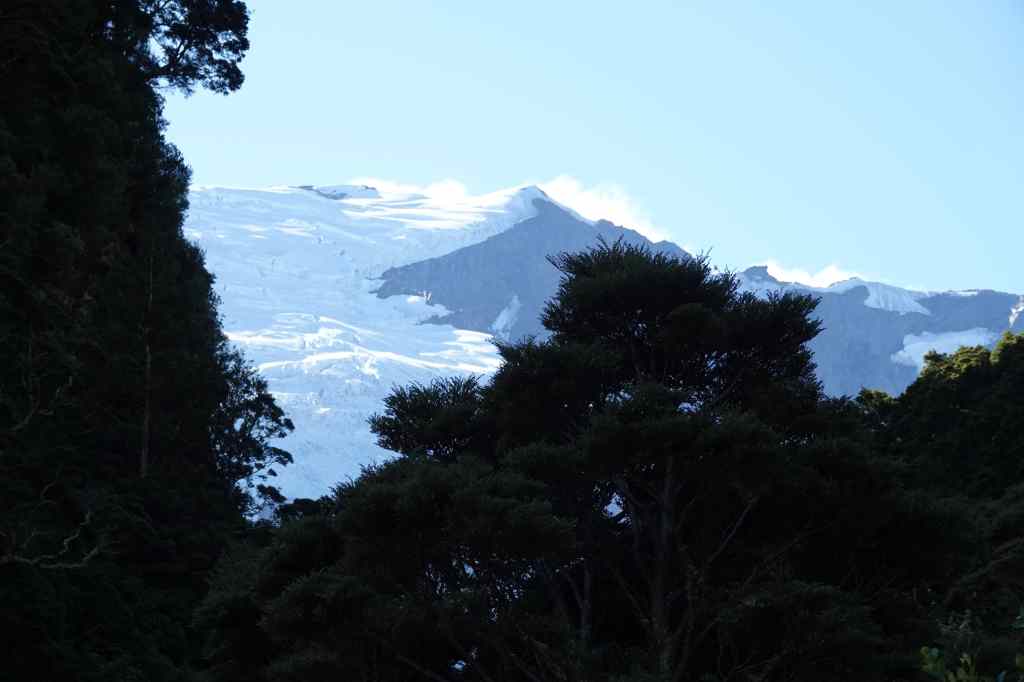
Mount Aspiring’s glacier beckons in the distance

….and then rose more steeply through a forest.
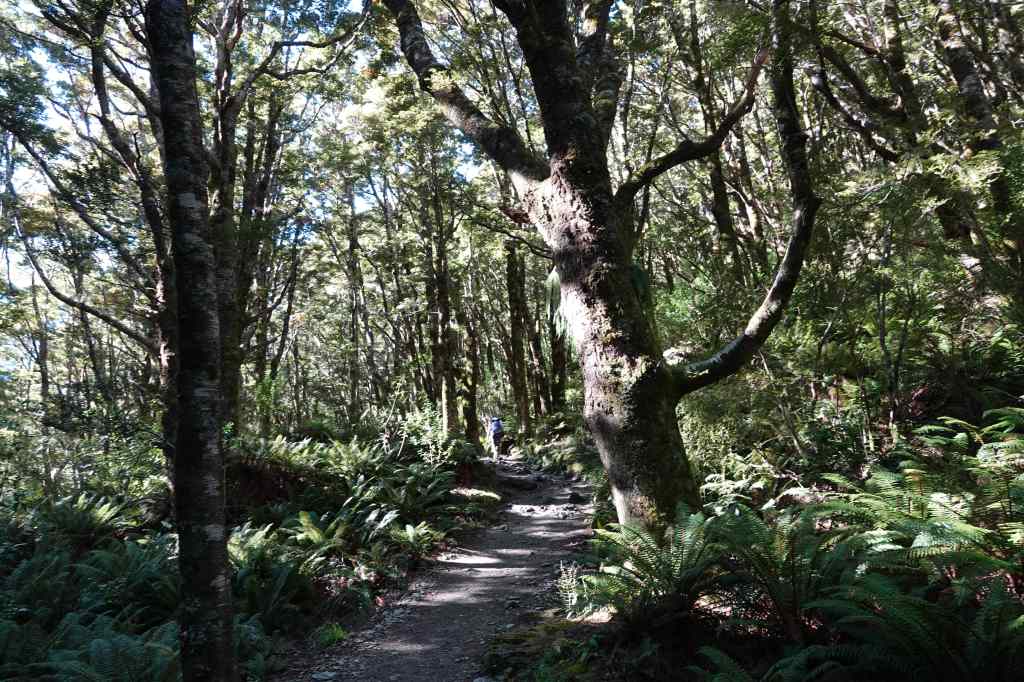
Ahead, the Mount Aspiring’s glacier played peek-a-boo with me as it ducked in and out of sight.

The glacier plays hide-and-seek

A final steep climb brought me to the upper viewing station, which gave an uninterrupted view of glacier in all its glory and about a dozen waterfalls falling from it. Unfortunately, since I had set off late, the glacier itself was in shade so my photos were a bit disappointing, but it was still an amazing sight.

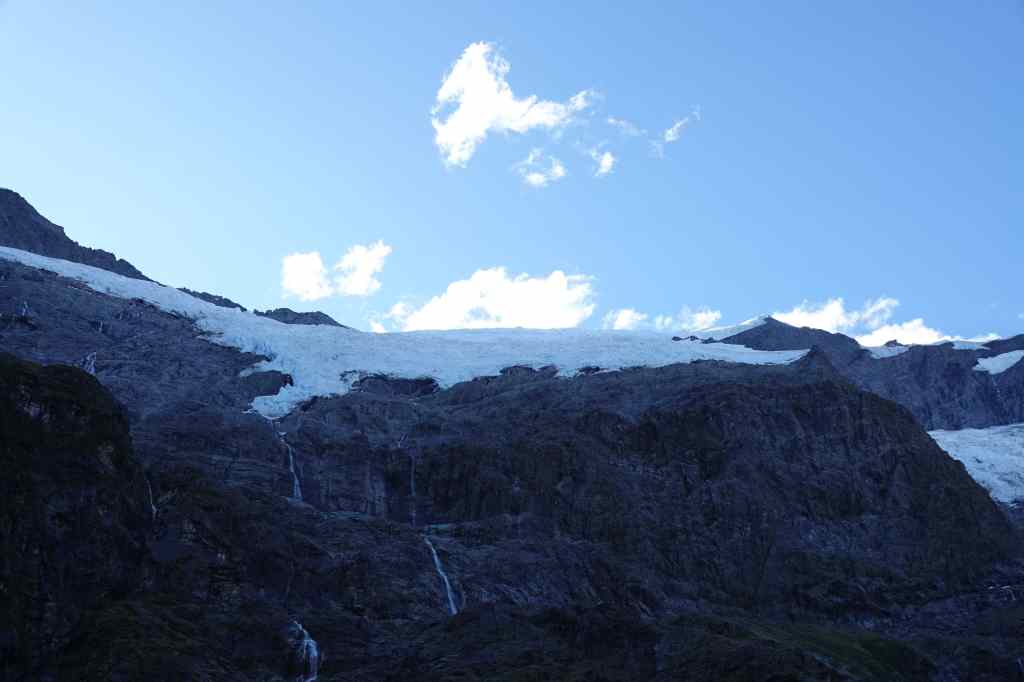
Mount Aspiring glacier
Close up of the glacier
The glacier towers over the forest

The return trip brought out the positive side of my late start – the evening sun brought out wonderful colours in the mountains ahead of me. Sometimes I thought I was looking at a huge canvas of abstract modern art, painted with bold, broad brushstrokes on the cliffs.
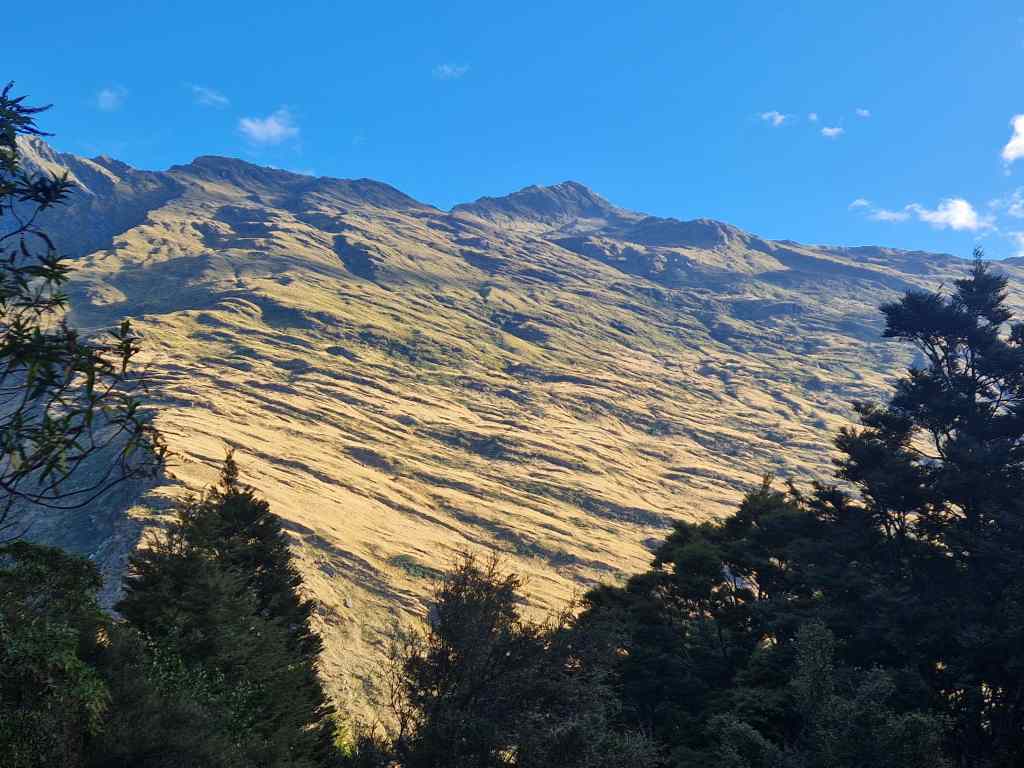
Evening light, Mount Aspiring area
Clouds cast shadows on the mountains
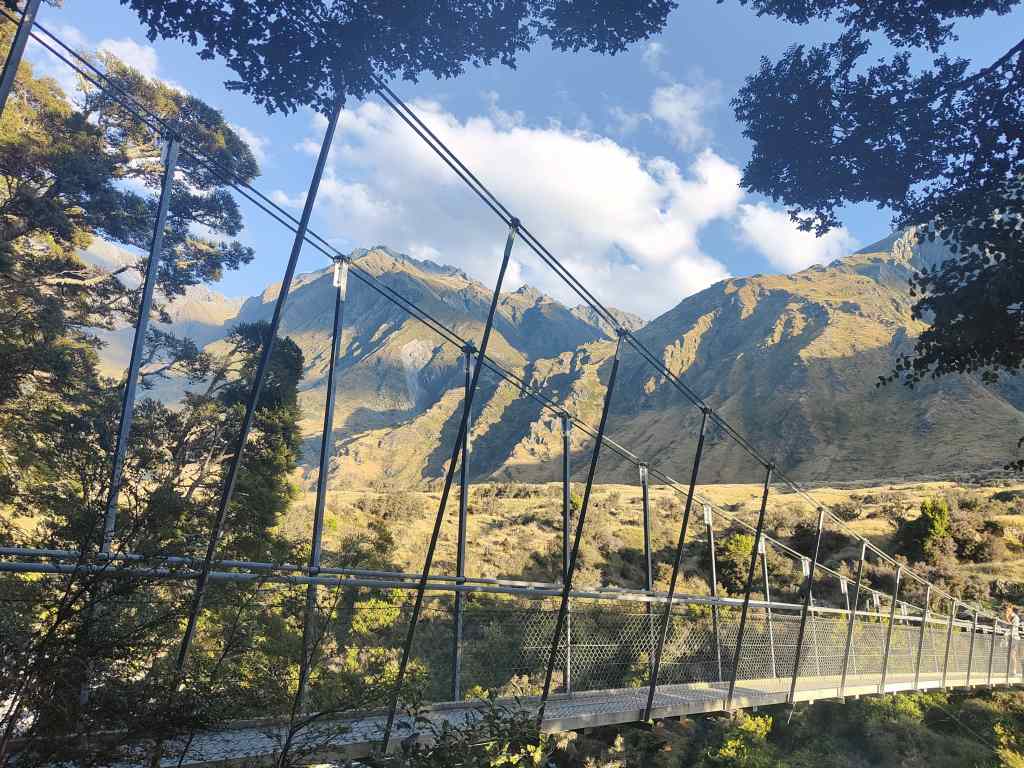
Typical NZ hikers’ bridge

The drive home was just as beautiful as the outward trip, but looked quite different in the fading light. It had been a very good day and one of the best hikes I had ever done – alpine pastures, mountain streams, forests, waterfalls and a glacier all in the space of a fairly undemanding 11km walk. As a reward I treated myself to a very good dinner in one of the few restaurants still open in Wanaka by the time I got back, and contemplated the wonders of nature over monkfish and some excellent New Zealand sauvignon blanc.

Previous Post: Milford Sound

Next Post: Mount Cook and the Hooker Valley Track
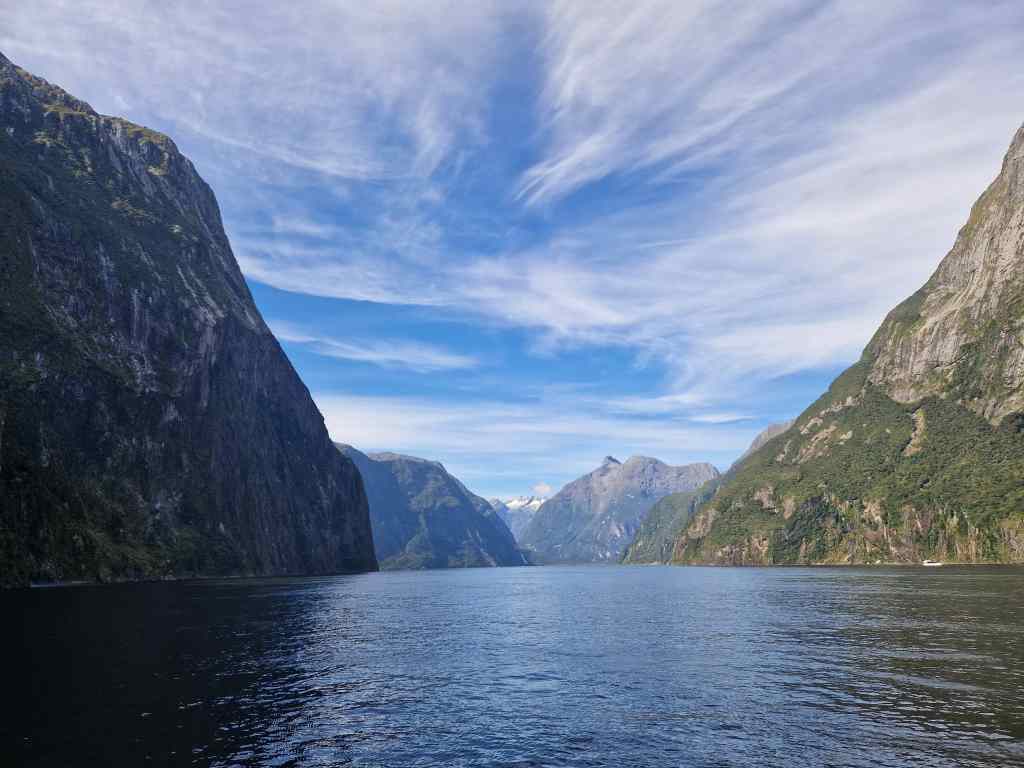
The Amazing Milford Sound

The wonderful Milford Sound

From Queenstown I drove to the small town of Te Anau, which sits on the lake of the same name (actually the biggest lake by volume of water in Australasia). It took a 2 and half hour drive to get there. Although I had heard that the road was boring compared to others in New Zealand, I found it quite pretty.

Typical NZ scenery on the way from Queenstown to Te Anau

On arrival I used my time to make an interesting trip across the lake to see a cave inhabited by thousands of glowworms. The cruise was scenic…..

Lake Te Anau

……and the glowworm cave visit very atmospheric. There was an interesting explanation about the glowworms, which are the maggots of a fly called the fungus gnat. They make a nest of sticky threads and then light themselves up to attract flies and moths, which get stuck and are then eaten. The cave visit was conducted mostly in silence, with filming or use of mobile phones prohibited. The highlight was a boat trip, during which we floated in total silence and darkness through a tunnel, admiring the cave roof with its glowworms. It was like looking up and admiring the constellations of the night sky.

However, my main reason for coming to Te Anau was not glowworms. The town is one of the main access points to New Zealand’s Fjordland National Park, and in particular to Milford Sound, one of the world’s most famous scenic spots. This “sound” is more accurately called a fjord, since it is a long, deep inlet of the sea, with very steep walls, formed millions of years ago by the action of glaciers. It is possible to visit the area on a very long day trip from Queenstown, but I preferred to not to be in a rush and to have more time to explore. I had booked an 11.15 boat trip along Milford Sound, wanting to avoid the midday rush, when lots of tour groups arrive from Queenstown. I set off early along the Milford Road that leads to the fjords. It was incredibly beautiful, but on the way there I only had time to make a couple of stops.

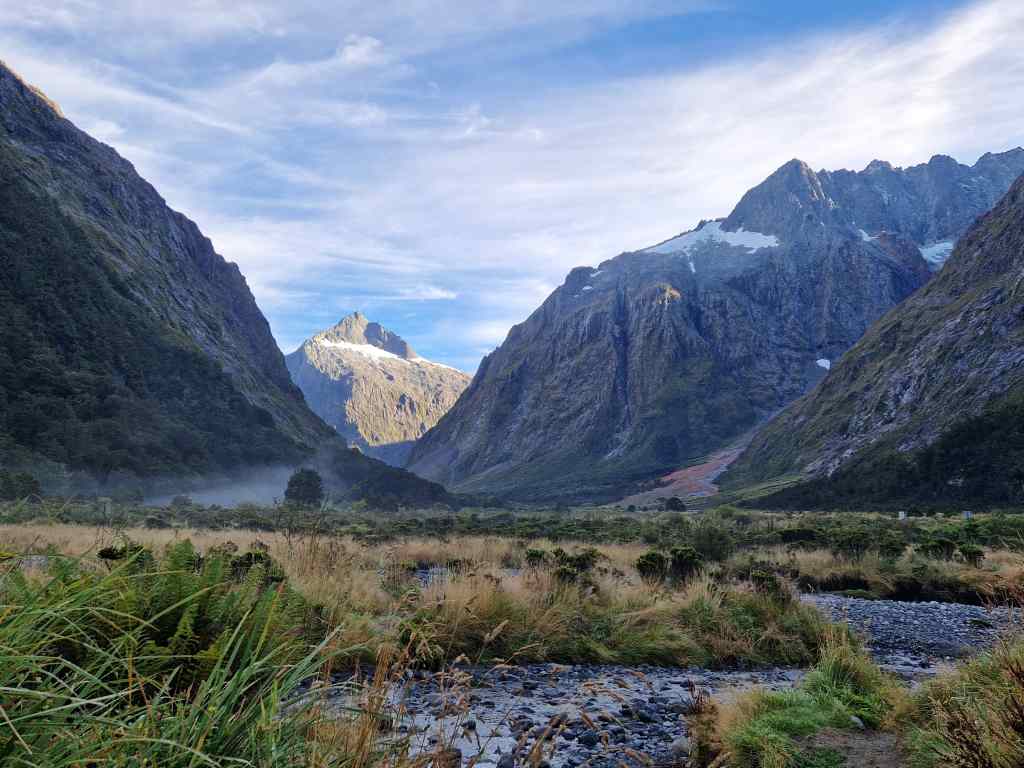
On the way to Milford Sound
More Milford Road scenery

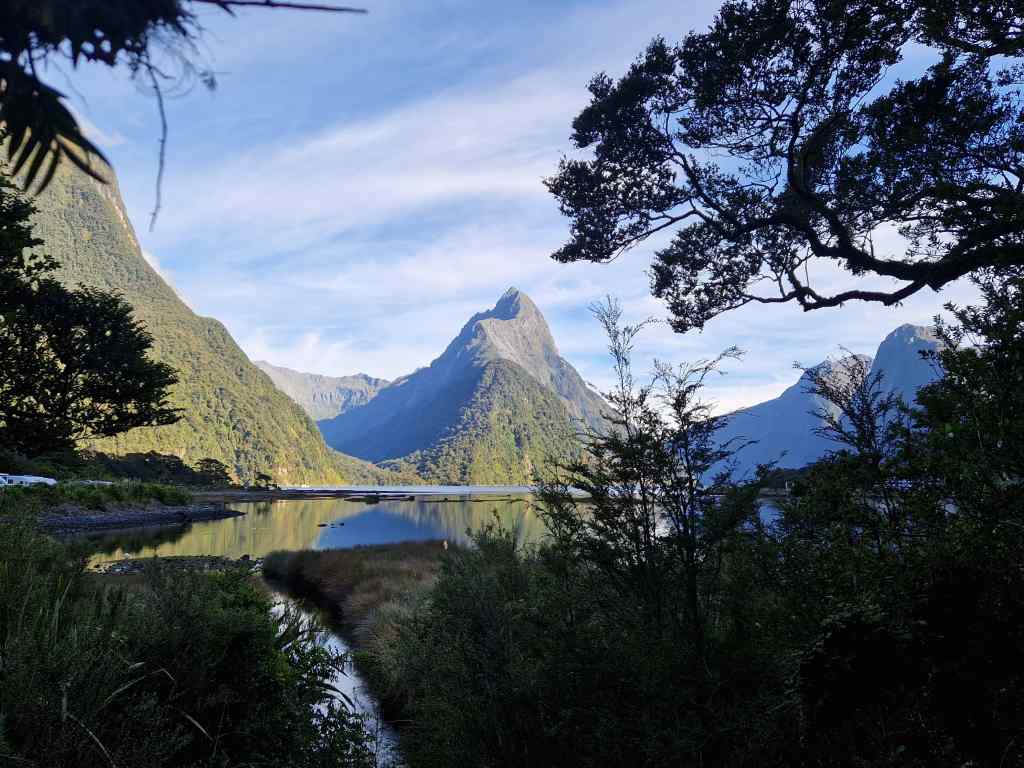
I arrived in good time, parked my car and strolled through an empty parking area for buses to the ferry terminal. On the way I stopped to admire Mitre Peak, an iconic landmark of Milford Sound.

Mitre Peak, a Milford Sound landmark

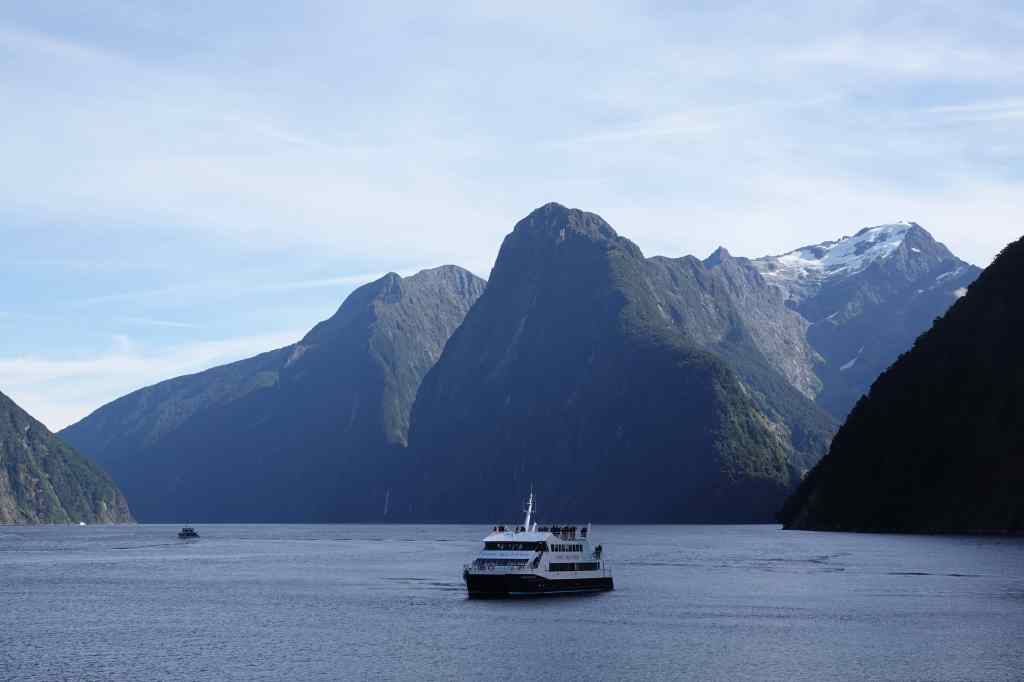
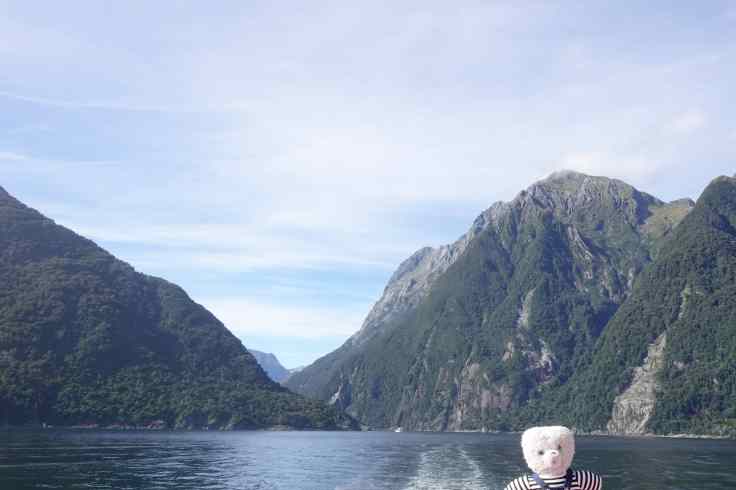
Soon I was on my way on a modern cruise ship, admiring some fantastic scenery.

Cruise ship on Milford Sound
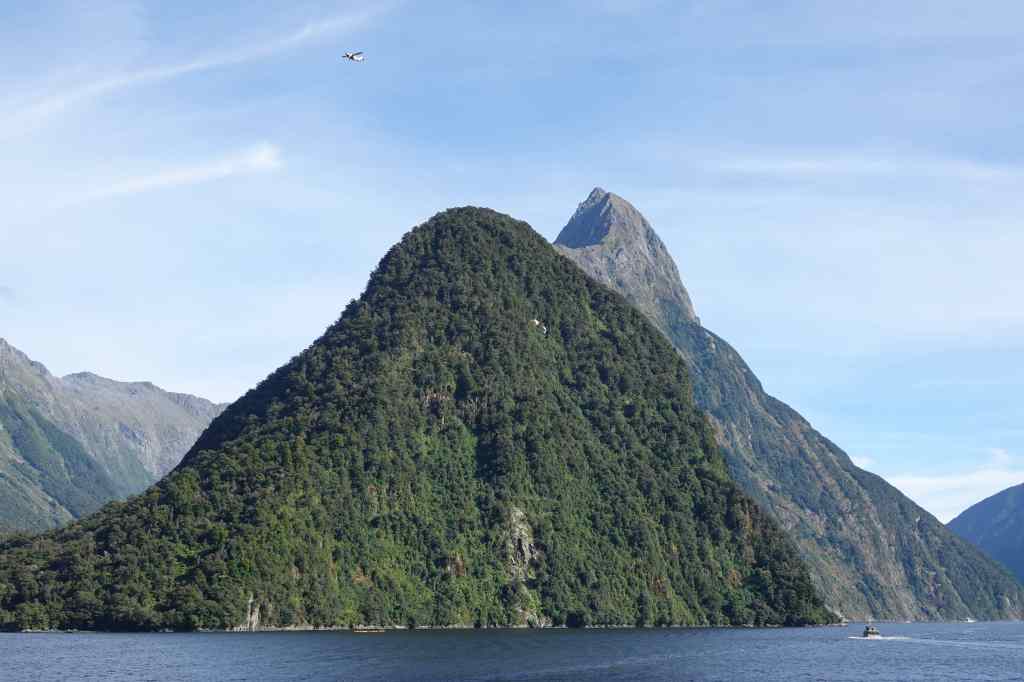
Mitre Peak up close
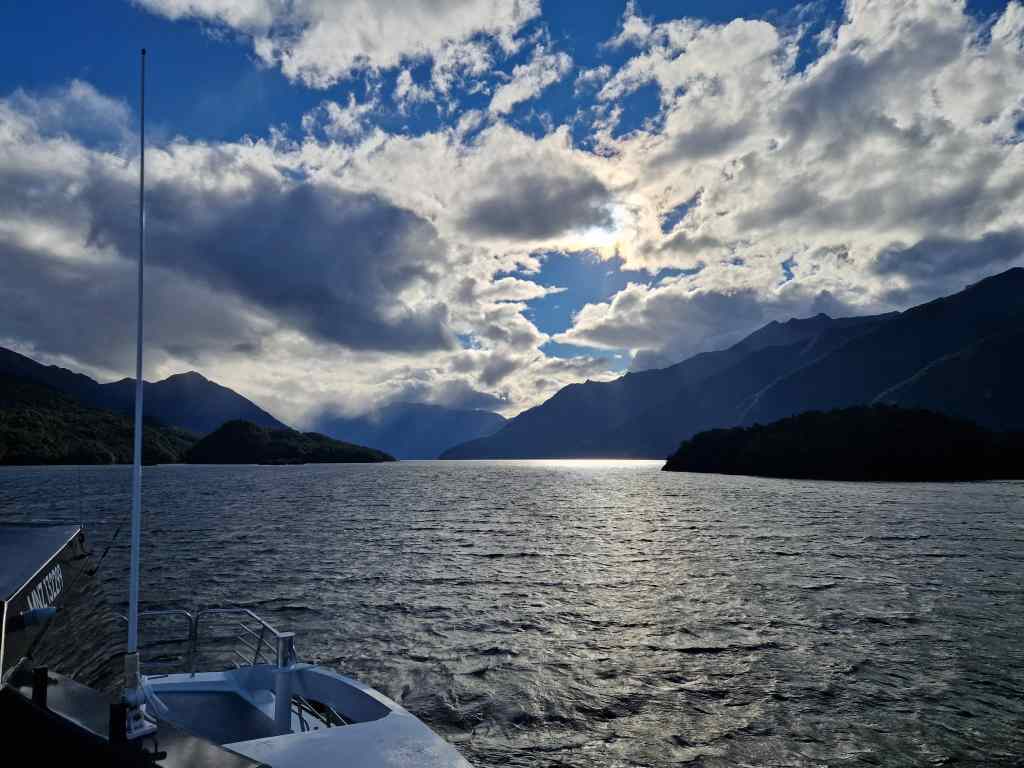
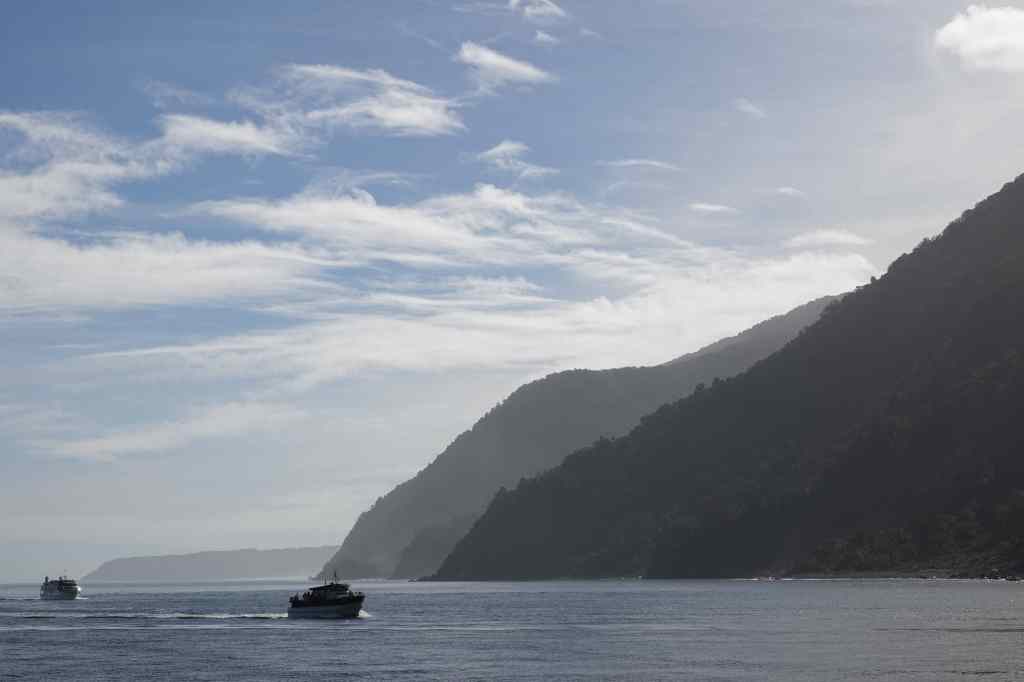
Cruising on Milford Sound

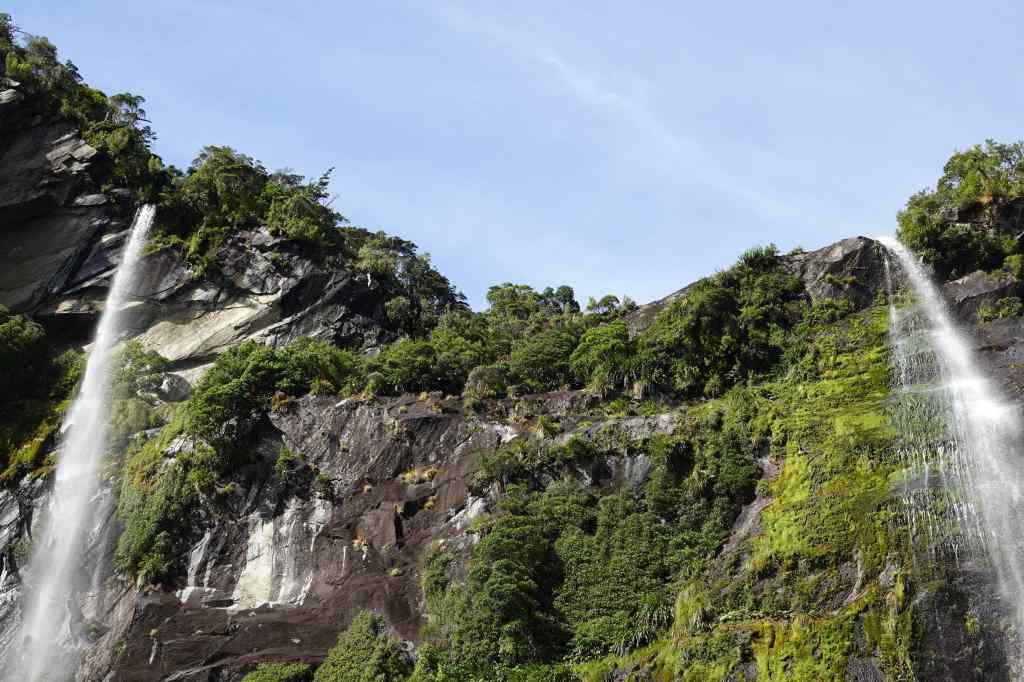
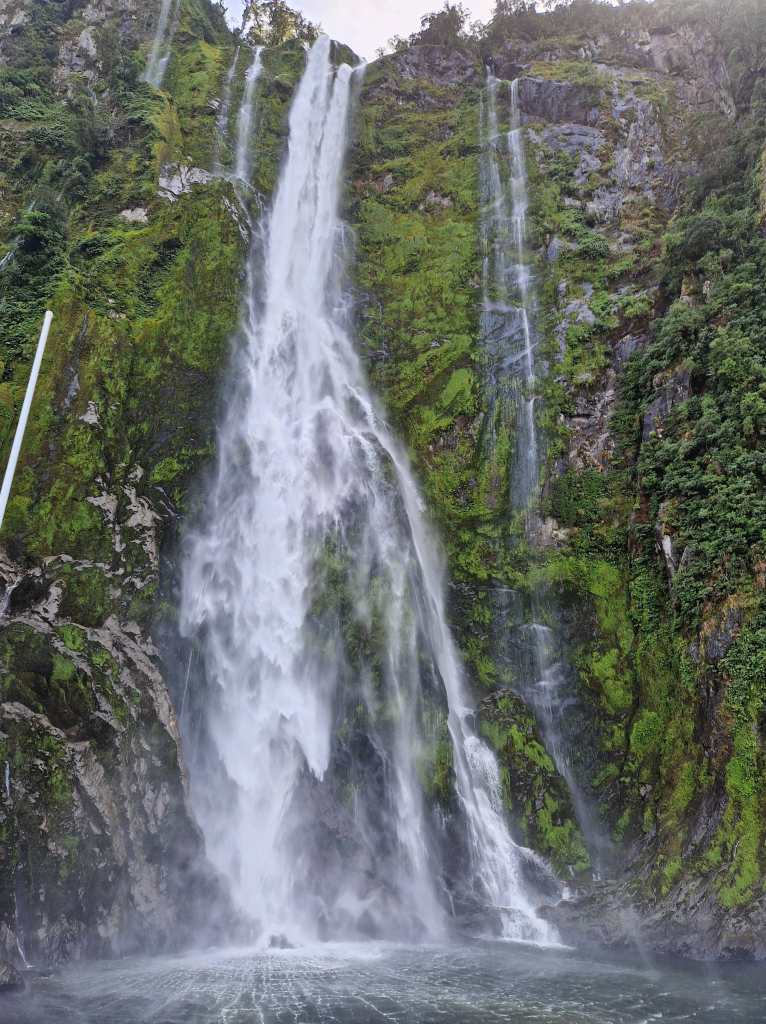
I don’t think my sailing was sold out, so as we passed Milford Sound’s famous waterfalls, it was possible to take pictures without too much jostling from other tourists.

Milford Sound Waterfalls
…and another
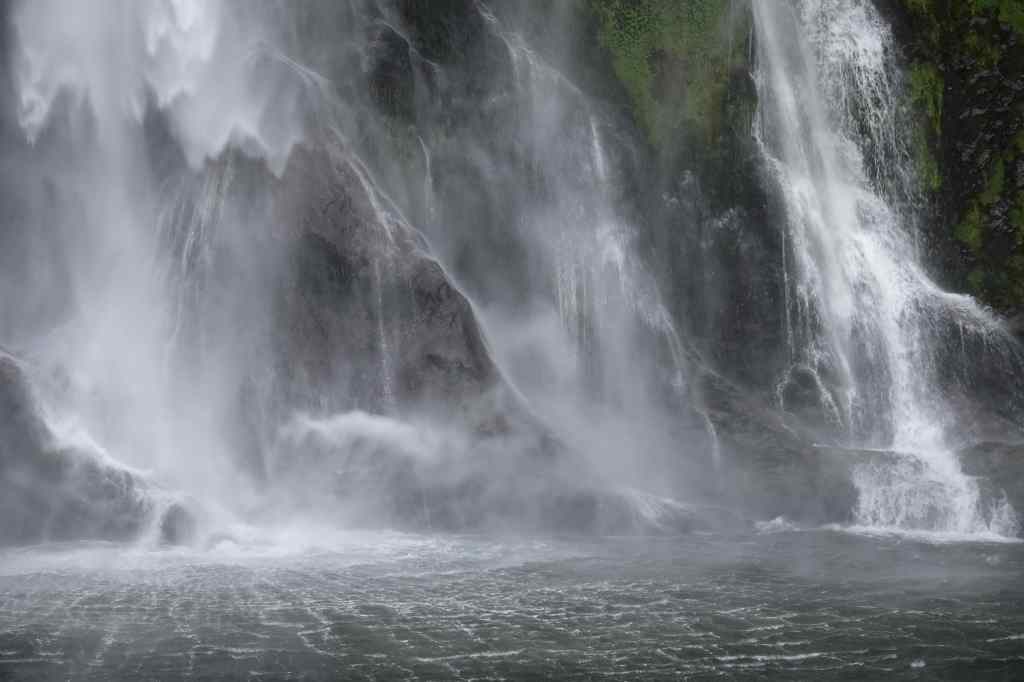
Up close in the waterfall

The cruise headed down the fjord to the beginning of the Tasman Sea, which separates New Zealand from Australia.

There, it turned around to head back to port. On the way back I could see why Milford Sound remained undiscovered for many years – from the open sea, the tall mountains of the shore appear to be continuous. It was only discovered in 1812 by accident by a Welsh captain, whose ship had been blown close to the shore in a storm. He named it after his home town of Milford Haven.

Harrison Cove, Milford Sound

The time flew by as one spectacular vista followed another, and after 90 minutes we were back at the ferry terminal to disembark. It was now rush hour; long queues were waiting to board the ships moored there, and the parking area which had been empty earlier was now full with over a hundred buses. I drove back to Te Anau at a leisurely pace, pausing to visit some scenic spots I had had to rush past in the morning. These included the well-known Mirror Lakes, whose water reflects the surrounding mountains on a still day.

Mirror Lakes, Milford Road

I got back to Te Anau in the late afternoon. It had been a very special day; Milford Sound fully deserves its reputation as one of New Zealand’s highlights, but I think I might even have preferred the spectacular drive along the Milford Road to get there.

Previous Post: Queenstown

Next Post: Mount Aspiring

Welcome to New Zealand – Queenstown, Ben Lomond and jet boating

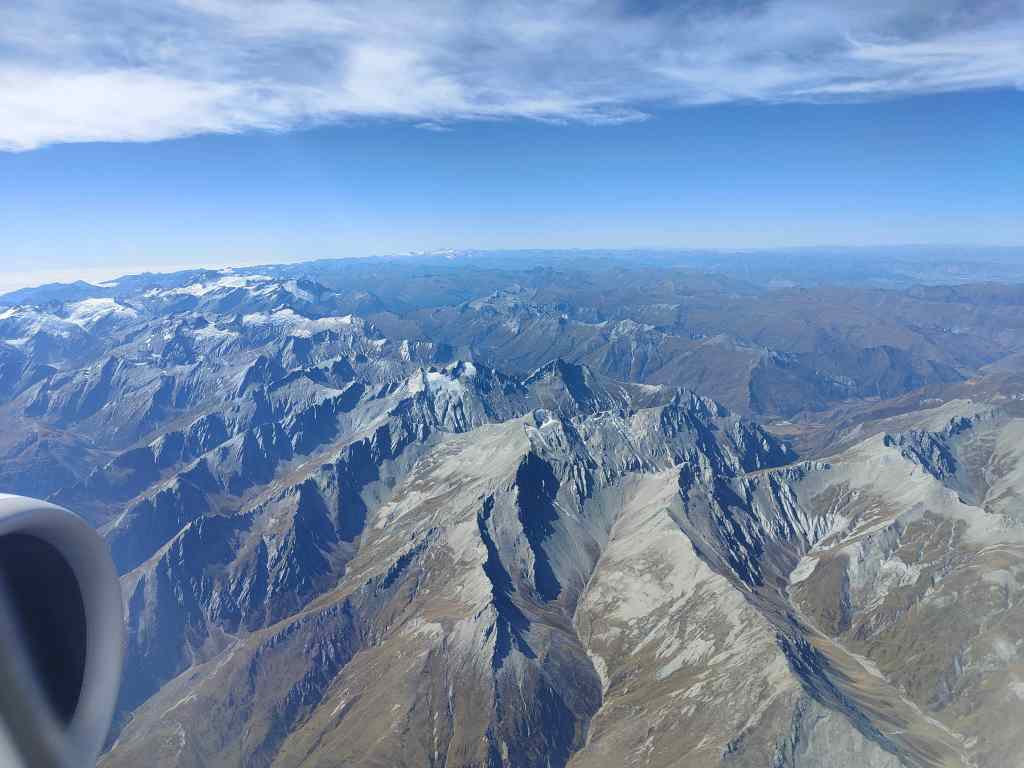
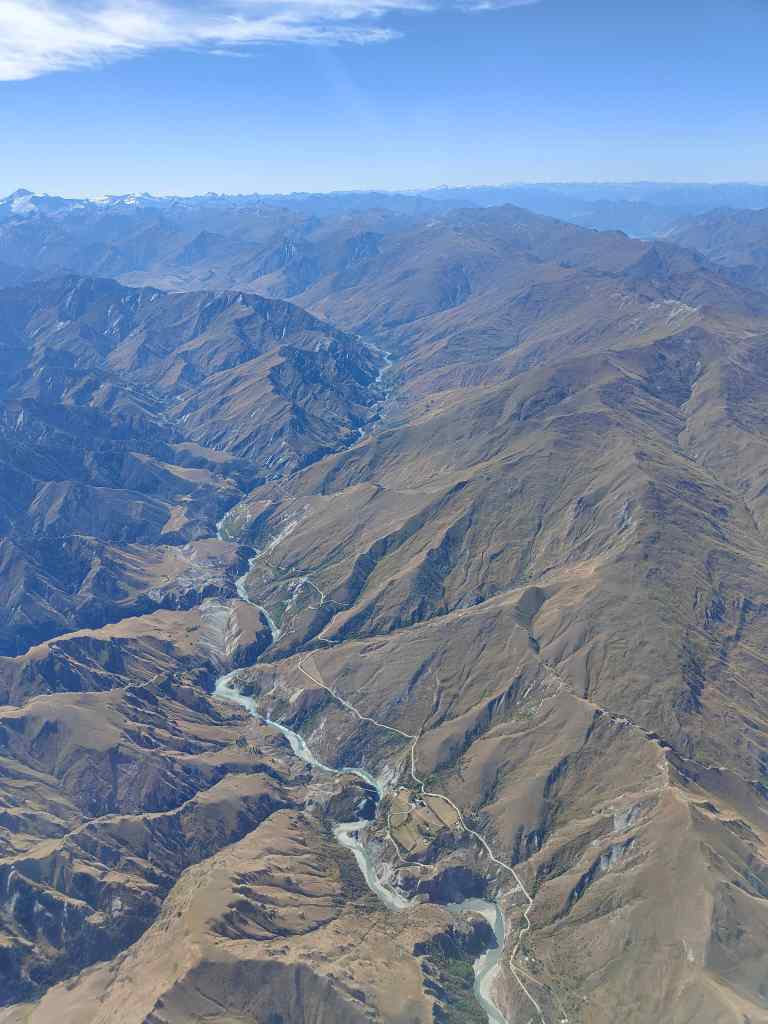
From Melbourne I flew to New Zealand, where I planned to spend three weeks travelling. It was already deep into New Zealand’s autumn, so I decided to visit the South Island first and then make my way up to the North. The flight into Queenstown gave a spectacular introduction to New Zealand’s amazing scenery.

Views from the flight Melbourne-Queenstown

Queenstown is a small city sitting on a lake, which is a major transit hub and tourist destination. From my hotel I strolled to the lakeside, the heart of the town. On the way I passed travel agencies offering every imaginable type of outdoor sport – bungee jumping, parachuting, canyoning, mountain biking and more. There were shops selling the requisite gear for these activities, including several outlets selling goods for the upcoming ski season. The streets were full of tourists, some slim and in sporty outdoor gear, and some plumper and in normal casual clothes. The vibe was like a French ski resort in high season, and indeed in winter Queenstown is also one of New Zealand’s most popular ski destinations.
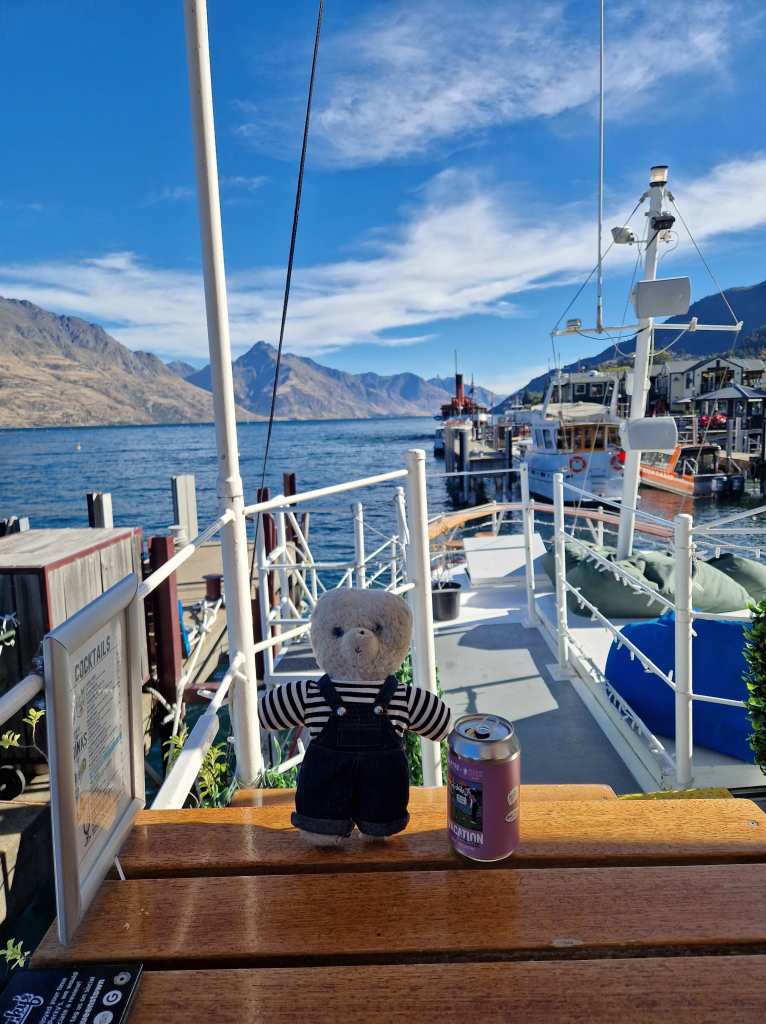
I spent my first afternoon making a short walk along the lake and then chilling on a floating bar back in town.

Queenstown’s Lake Wakatipu
Drinking by the side of (or on) Lake Wakatipu is a popular activity in Queenstown

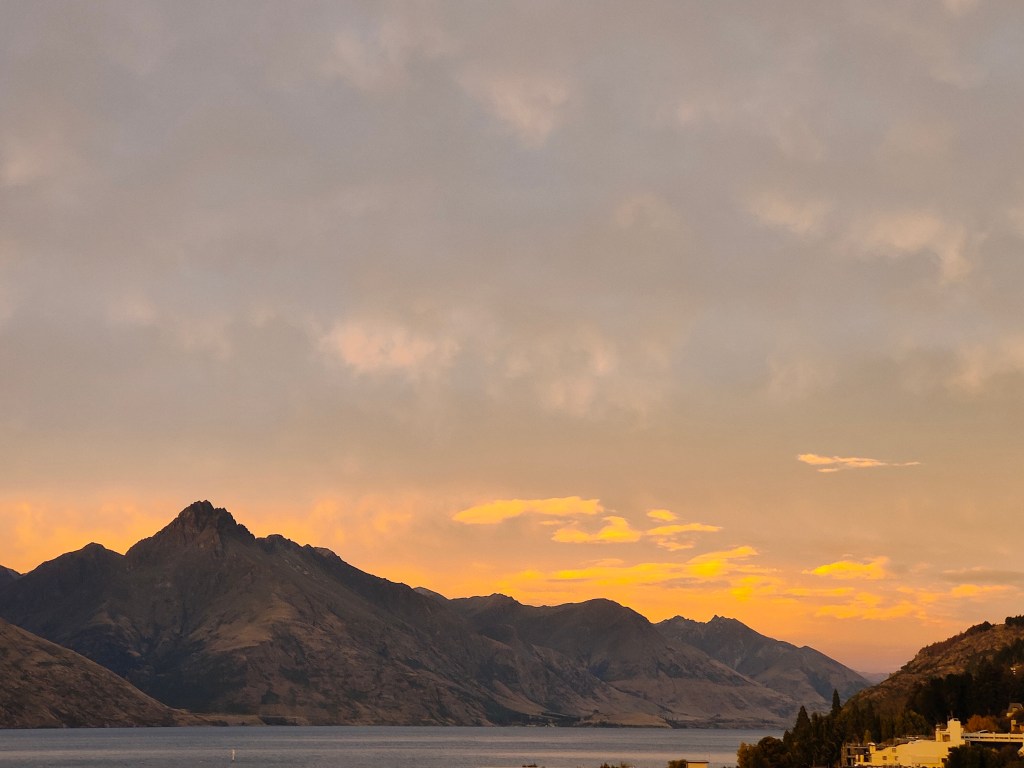
The next morning, I woke up early and enjoyed sunrise from my hotel’s terrace.

Sunrise over Queenstown

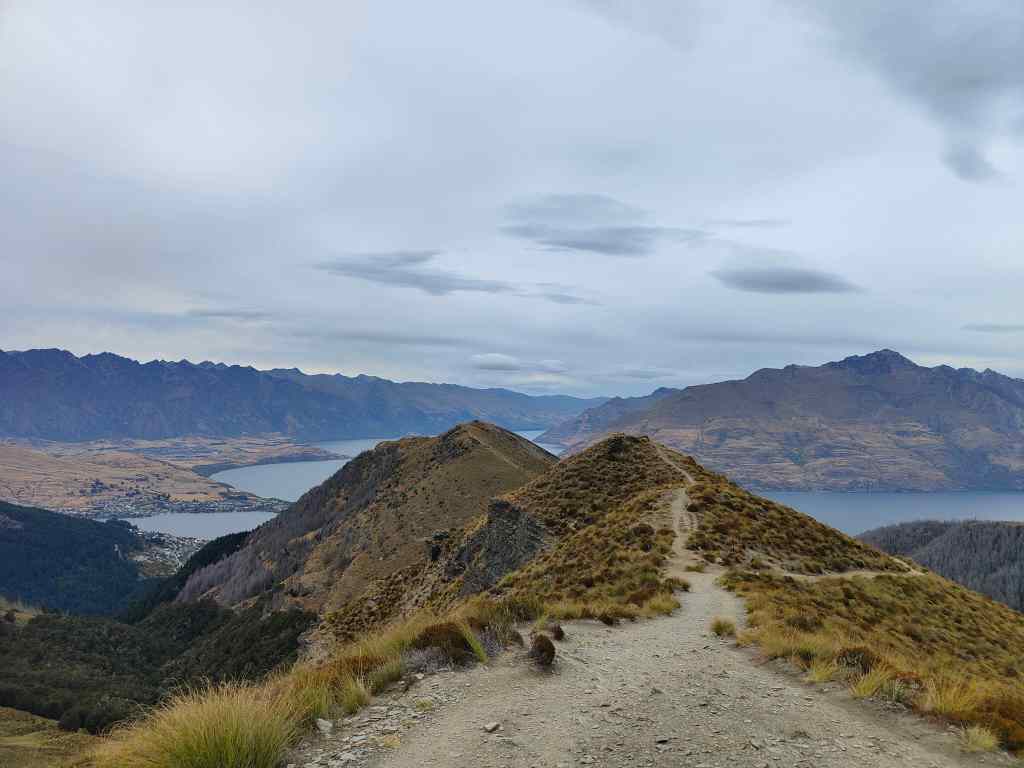
My body was now totally confused – Melbourne had been 11 hours ahead of the UK, but the time difference with New Zealand was 13 hours. I didn’t think that more than 12 hours was possible but then realised that New Zealand, unlike London, was still on summer daylight-saving time. Profiting from the cool morning air, I set off on Queenstown’s most interesting walk, the ascent of Ben Lomond. At first, I was a bit disappointed, because the forecast sun had not materialised, but as I made the steep climb up, I started sweating and was happy for the shade the clouds provided. As my climb progressed, the views got better and better.

The view half way up Ben Lomond…
….and the summit ahead

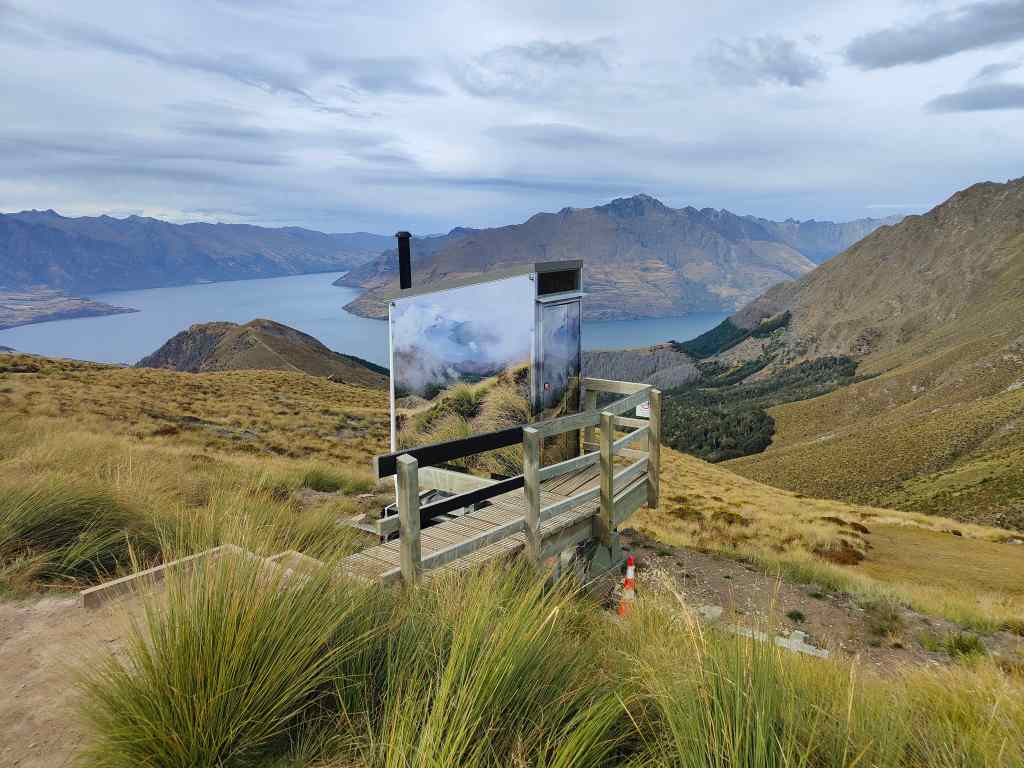
At roughly the halfway point there was a rather special toilet for hikers, painted so that it blended into the mountain landscape.

An original toilet for hikers on Ben Lomond

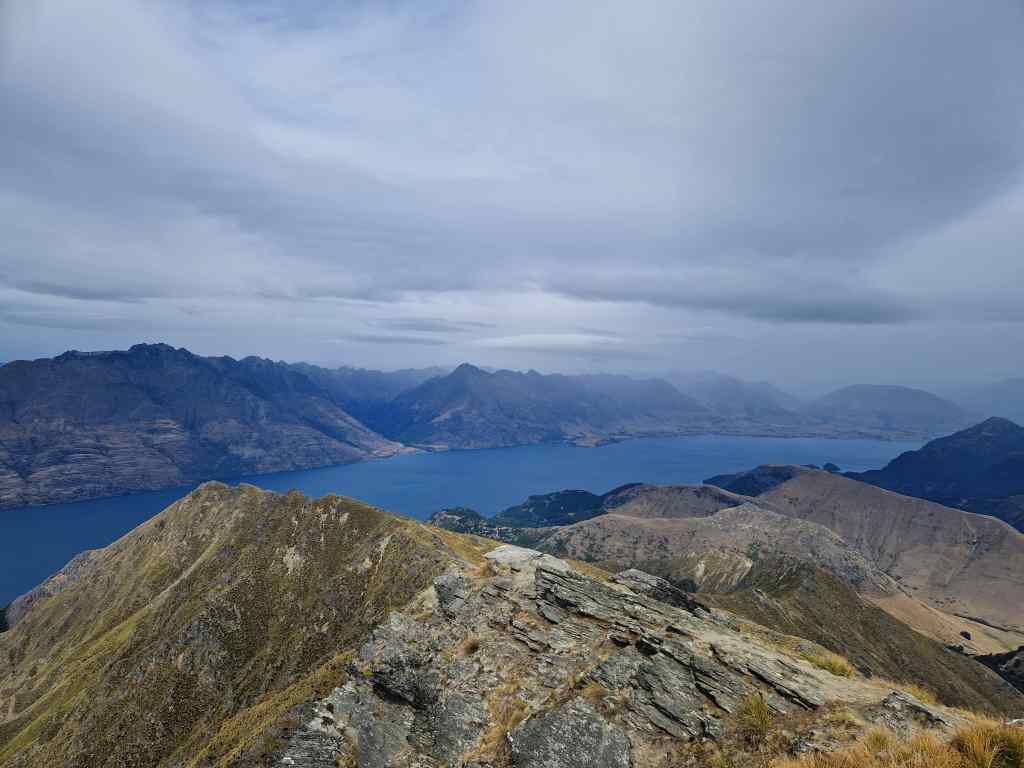
The summit offered 360° views. In the west I could see Queenstown far below, whilst to the east mountains towered out of a bank of approaching dark clouds. The mountains to the south, in the Fjordland National Park (subject of a future post), still carried the vestiges of last winter’s snow. I enjoyed the views and snacked on some chocolate bars until the first drops of rain on my fur announced that it would be a good time to head back down.

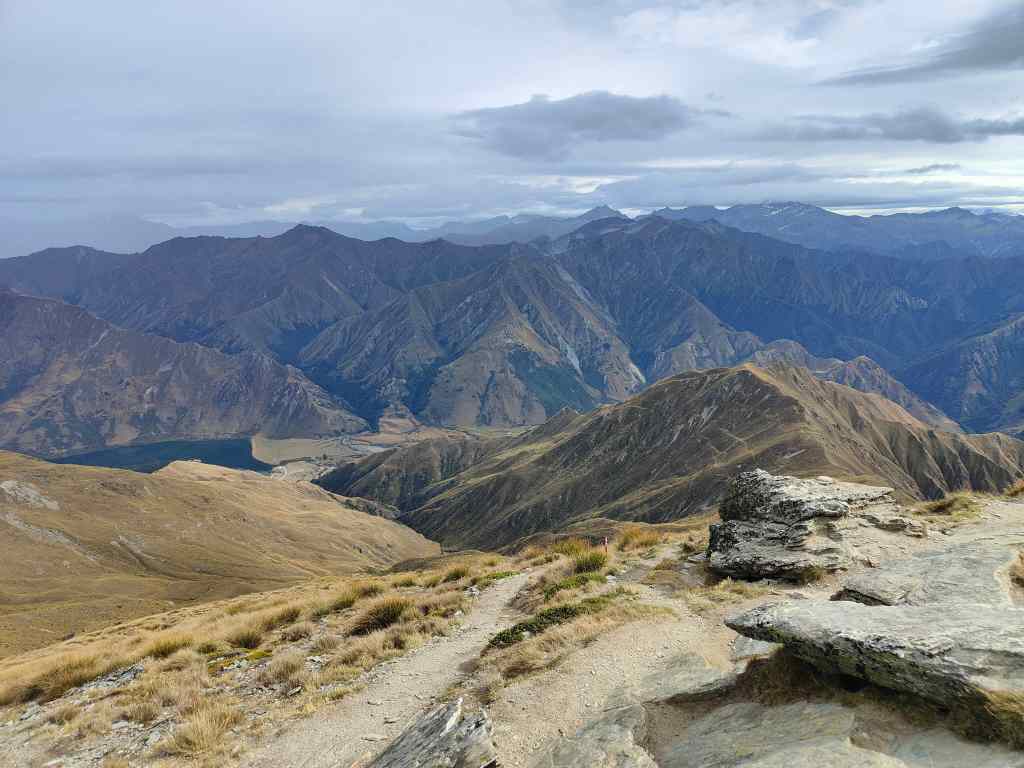
Views from Ben Lomond’s summit


The climb and descent had taken me around four and half hours, so I had plenty to time to try some other typical Queenstown activities. First, I had a coffee in a trendy café, then I decided to try a jet boat ride.

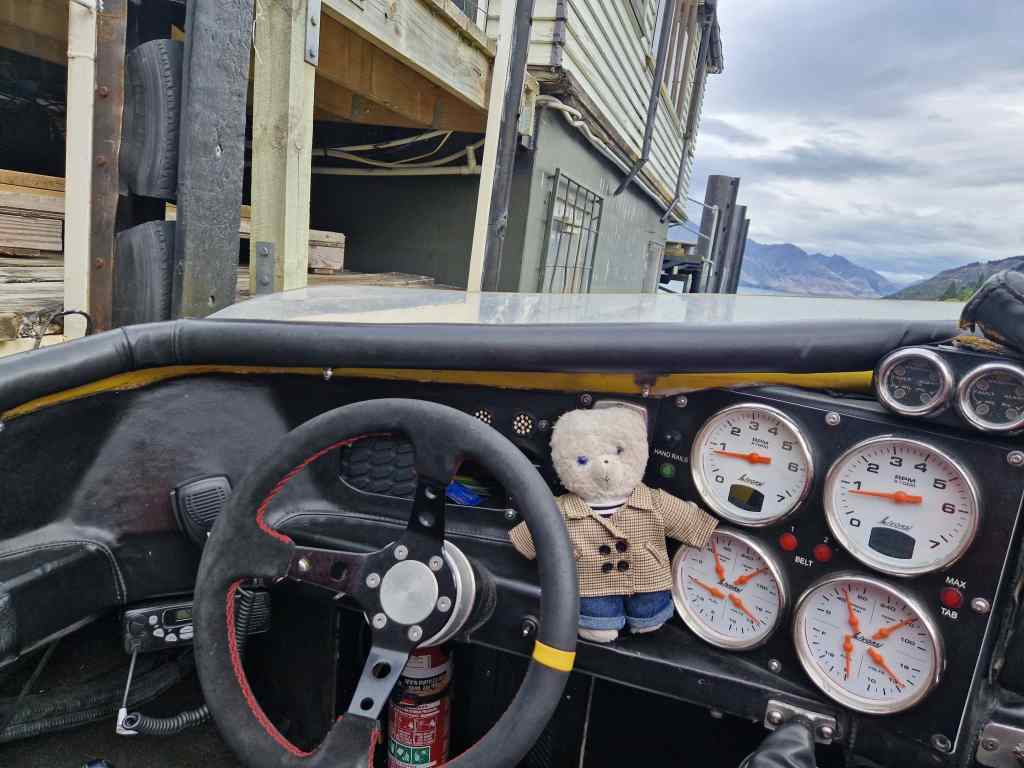
Yes, I have a jet boat licence!

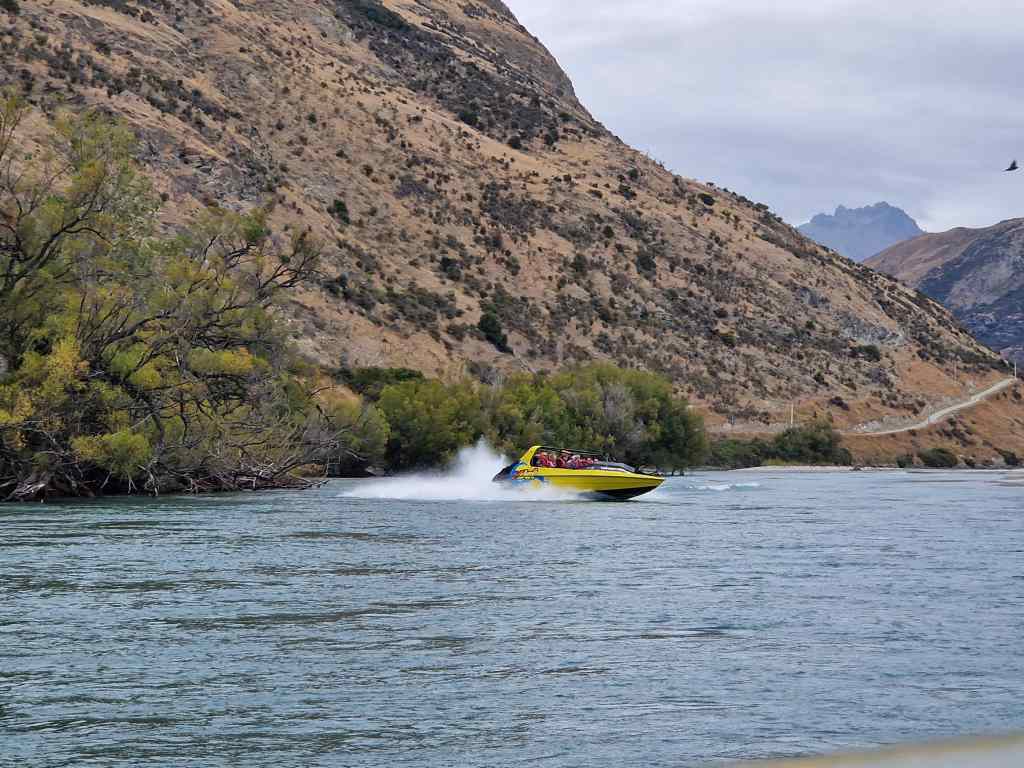
I chose one of the operators offering tours from the main jetty on the lakeside and was soon whizzing across the lake and then up the Shotover River at speeds of up to 95kmph.

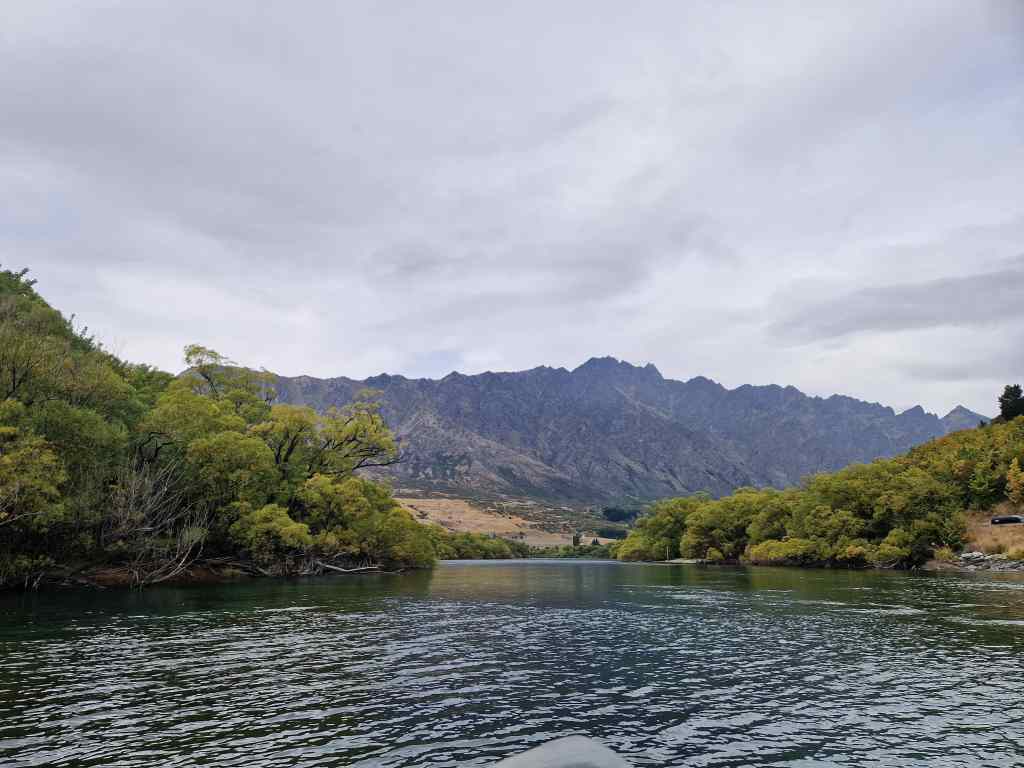
Speeding up the Shotover River

To add some excitement to the speed, our pilot entertained us by making several 360° spins.

A jet boat does a spin

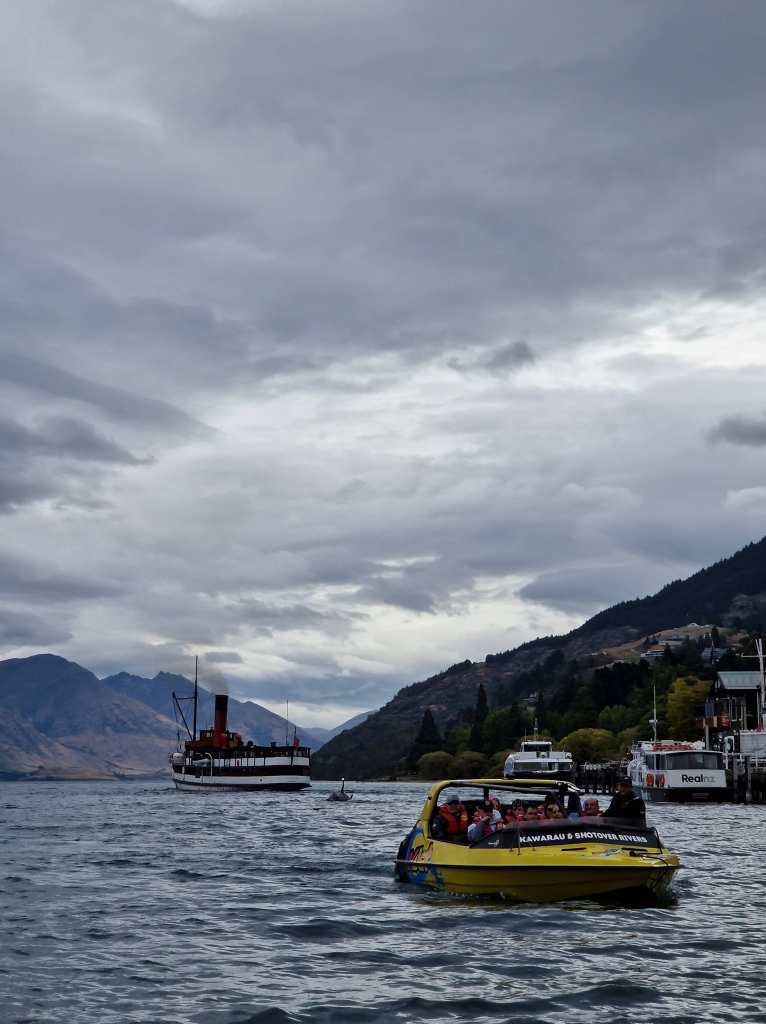
Our boat returned to the quay with happy passengers. On arrival, we could see almost the whole range of Queenstown boating options – a traditional old wooden ferry, a jet boat, and a strange two-seater shark-shaped vessel (just visible in the photo below), part way between a boat and a submarine, which was apparently capable of great speed.

Maritime transport in Queenstown

My first day had been an encouraging introduction to New Zealand. On the way back to my hotel (a slow walk with stiff legs after the climb) I bought a bottle of Pinot Noir and an obscenely large pizza and enjoyed both on the terrace of my hotel.

Previous Post: Melbourne

Next Post: Milford Sound

Blog at WordPress.com.

Up ↑