More deepest Puglia – Martina Franca and Alberbello

Today I continued my exploration of deepest Puglia with visits to two more hilltop towns with old city centres. The first was Martina Franca, the biggest city in the area (albeit with a population of only 49,000). I found it similar to Cisternino – very picturesque with a well-defined old town which contained winding streets, churches, and a pretty main square. It was also not too busy, and was another nice place to happily lose oneself in for a couple of hours after a coffee on the main piazza.

Enjoying a cappuccino in Martina Franca’s piazza
Martina Franca’s fine piazza

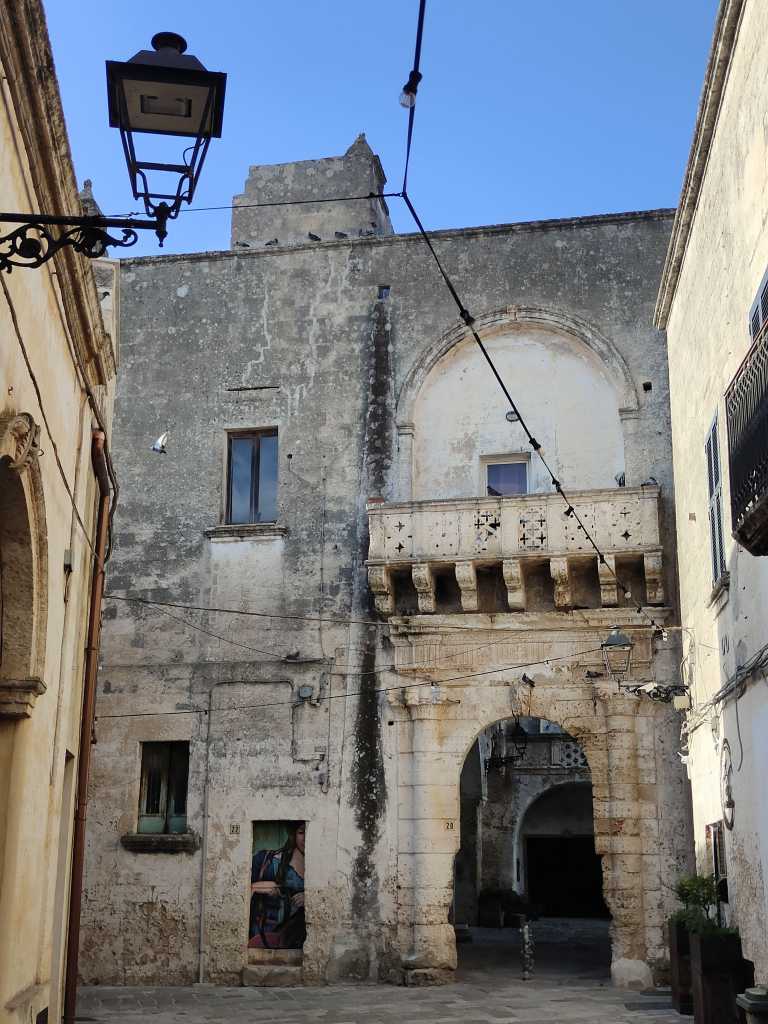
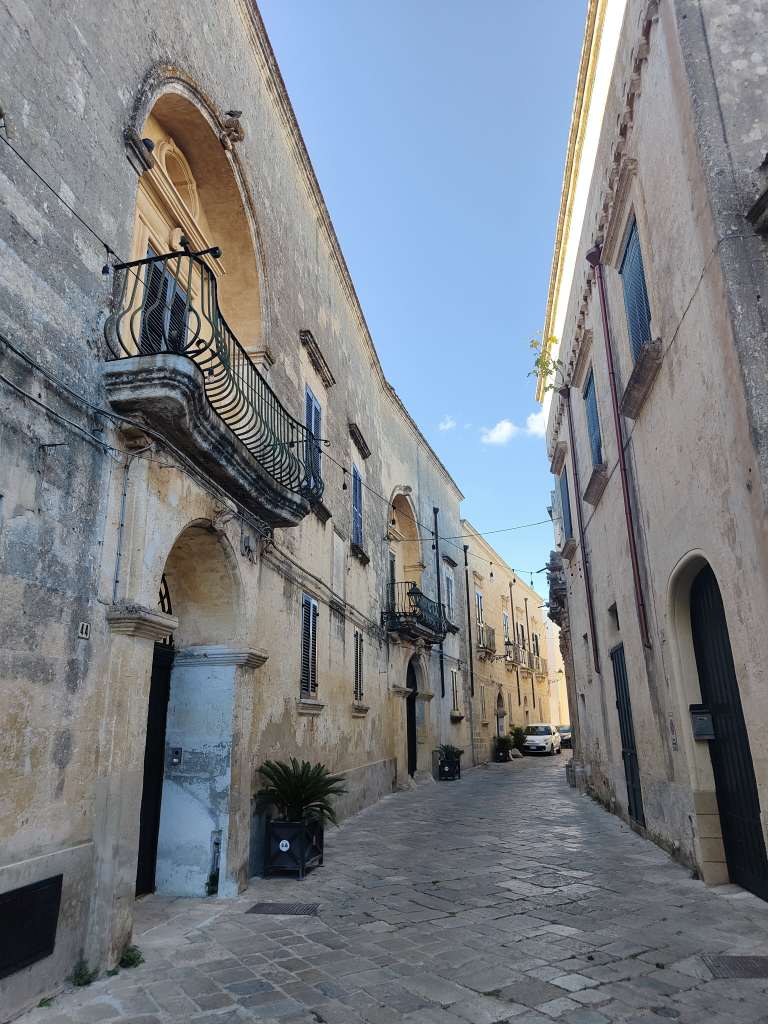
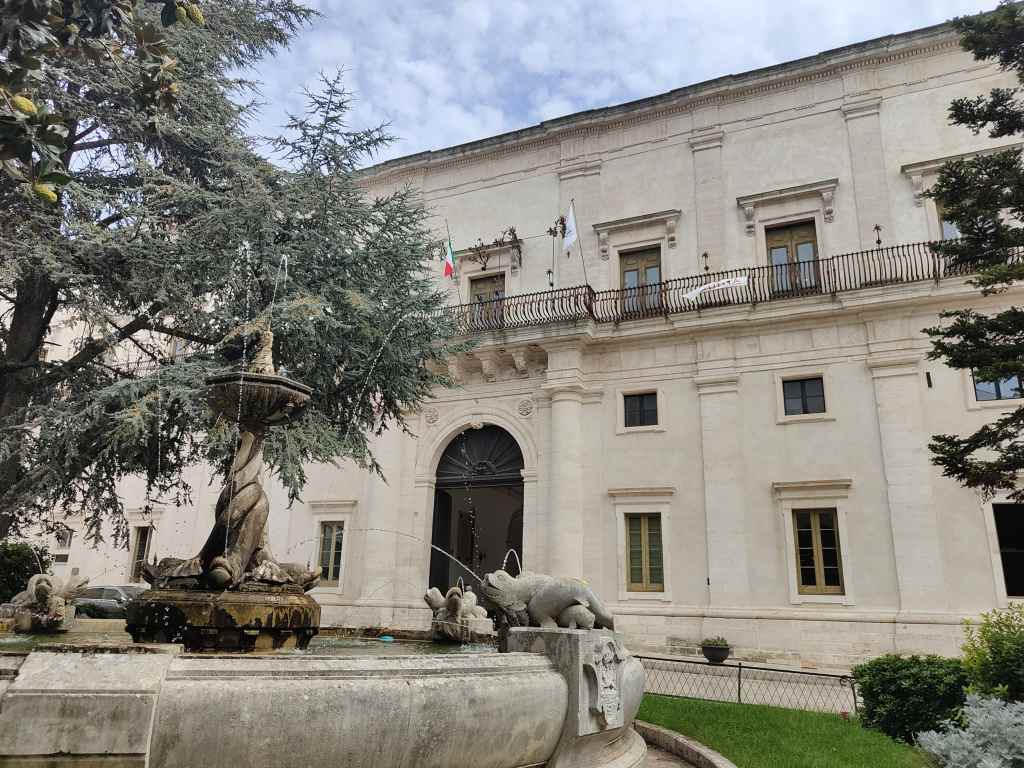
I thought that Cisternino’s small streets were more interesting, but Martina Franca had the more impressive monumental buildings, including a large church and a palace.
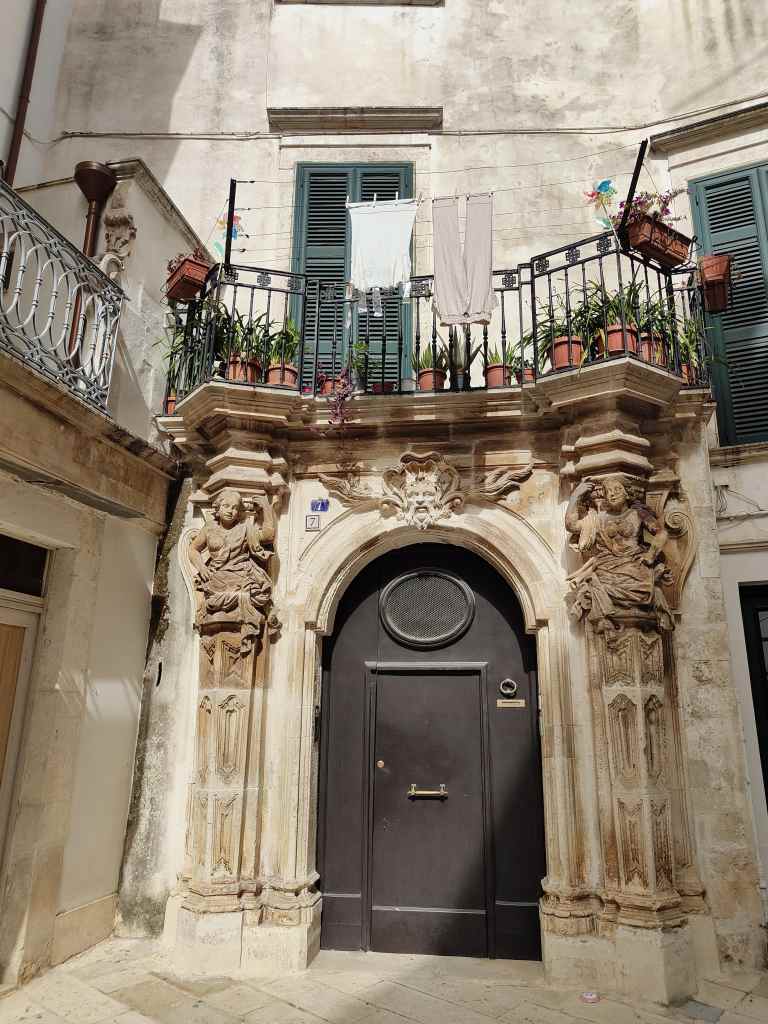
Building in a side street, Martina Franca
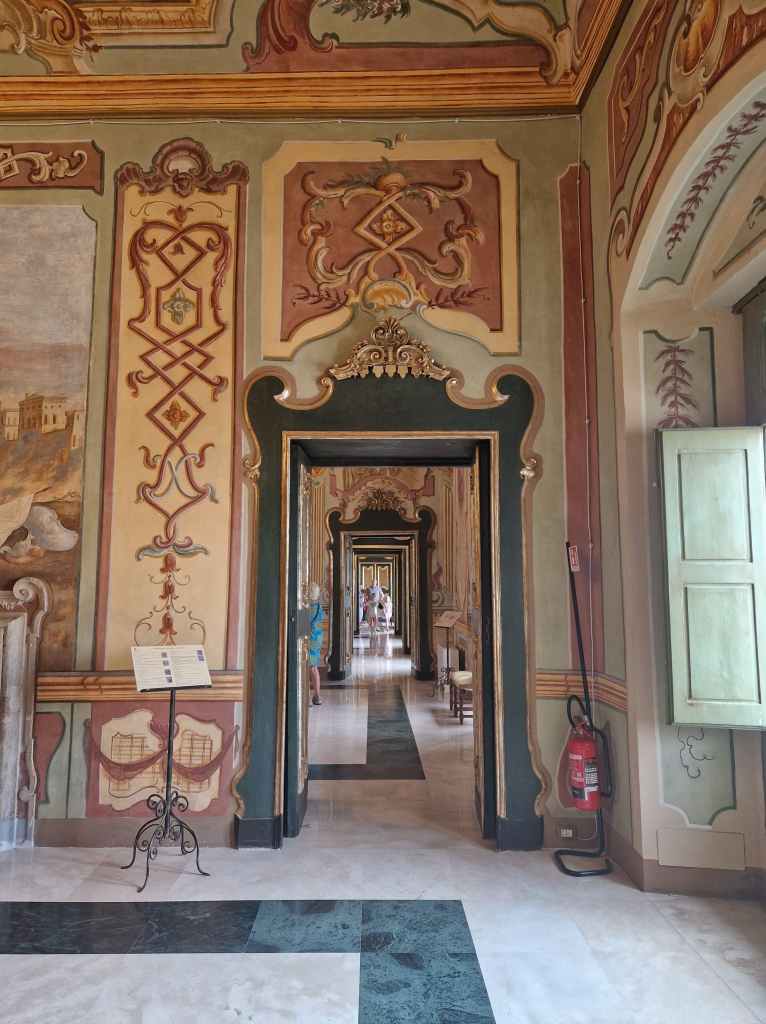
The outside of the Palazzo Ducale, Martina Franca…
….and inside

Next, I visited yet another hilltop village – Locorotundo, which I found to be more like Ostuni. It had a picturesque hilltop old town, visible for miles around from the surrounding plains, but its centre was too small to get properly lost in, and too crowded to get a feeling of discovering something for oneself. I took a couple of photos to prove I had been there before returning to Cisternino for dinner.
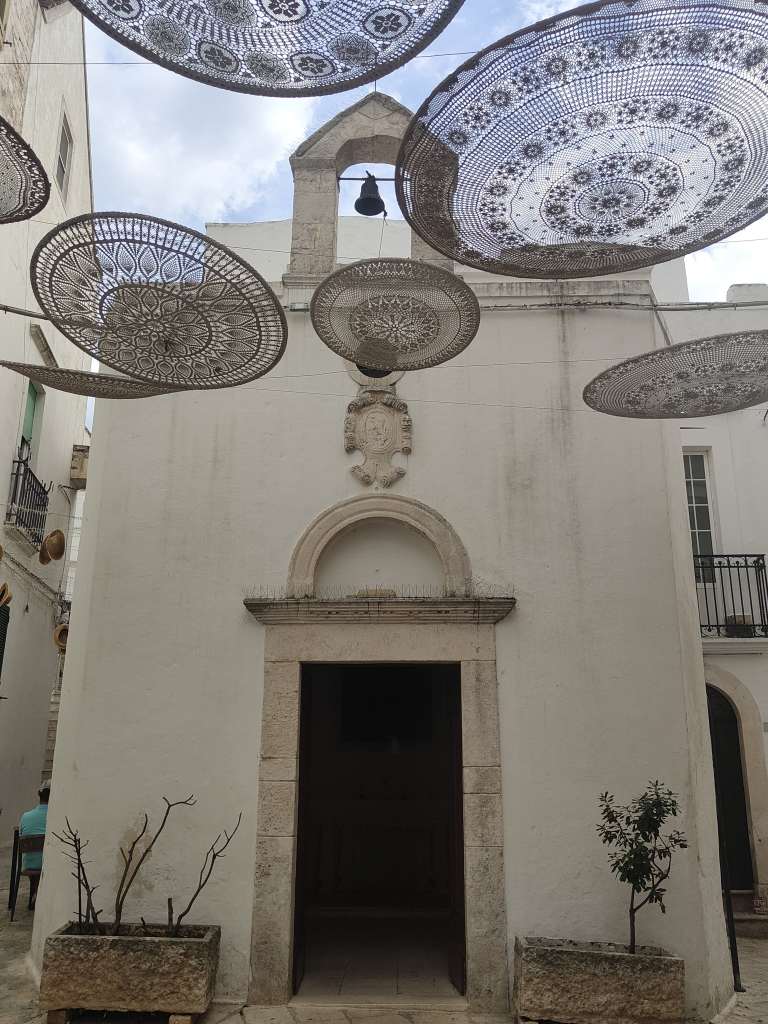
A photo of Locorotondo to prove that I was there

The next day I woke up early to make the four-hour trip back to Salerno to return my hire car. On the way I made a short early-morning stop at Alberobello, a small town known for its remarkable number of trulli – 1,600 apparently. These earned the town its listing as a UNESCO world heritage site, and a place on any tourist’s list of things to see in Puglia. The trulli were indeed a spectacular and strange sight, and I spent half an hour exploring them.
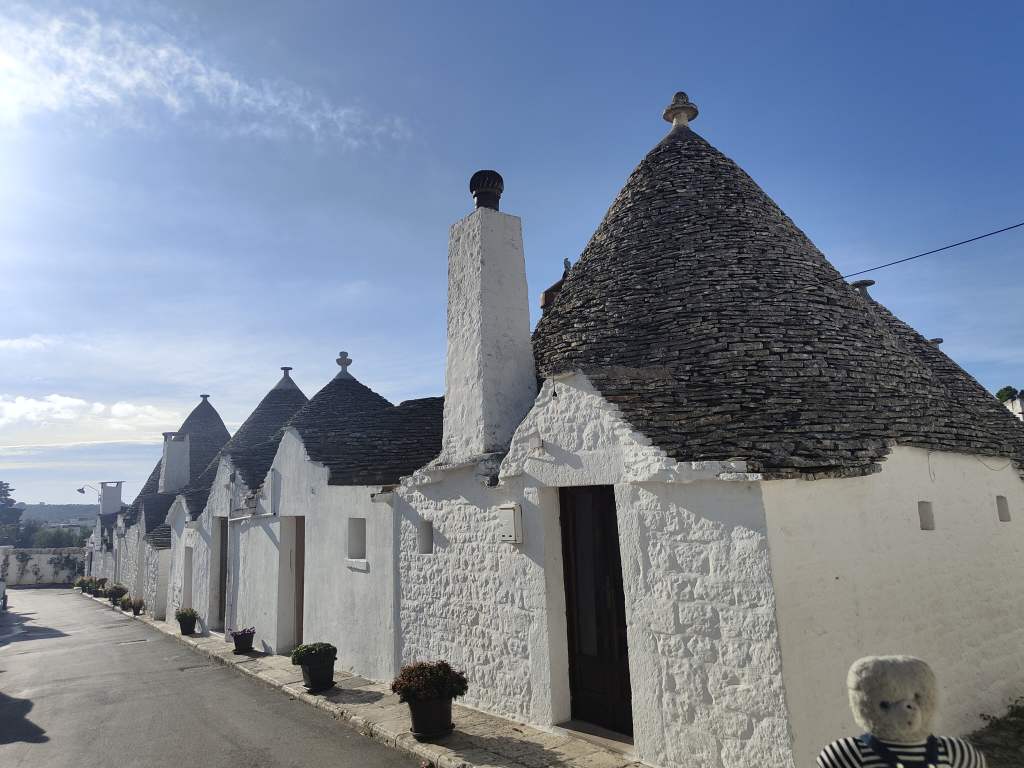
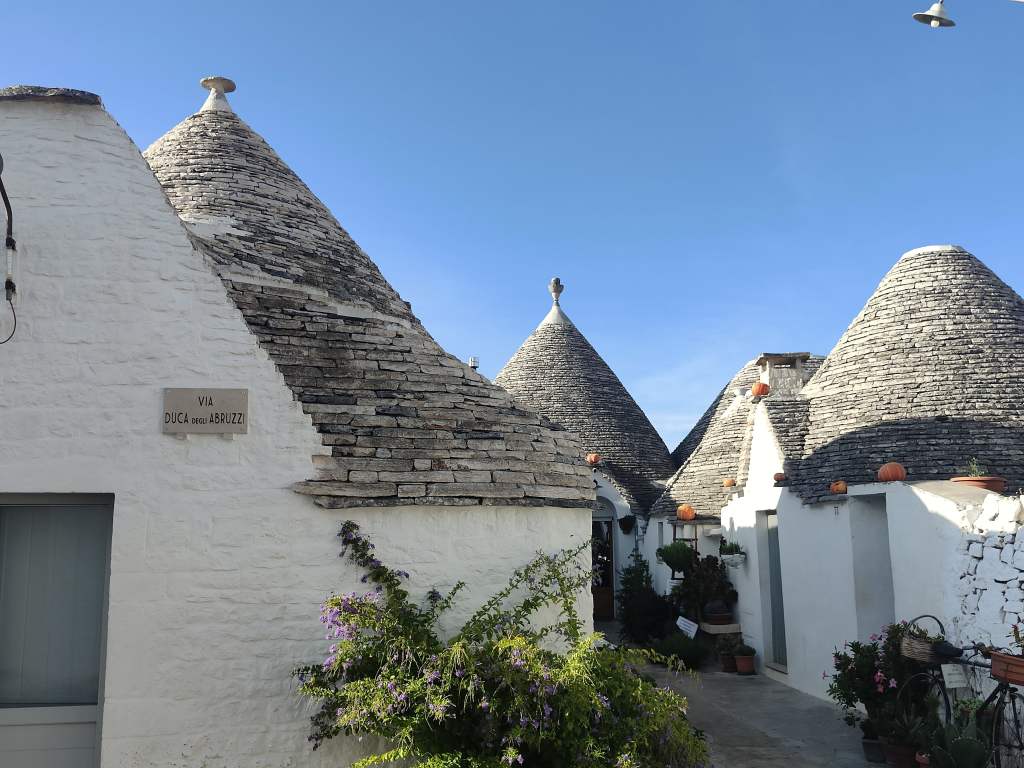
The first of many trulli at Alberobello

I looked at my watch, and wondered briefly whether I should not stop here longer to explore more deeply. But I had a deadline to return the hire car before the rental office in Salerno closed for its 1pm siesta break, so I decided to drive on. Leaving at that time turned out to be a good decision. On my way back to the car park, I crossed streams of other visitors heading the other way, and as I drove out of the town, I passed a veritable armada of tour buses driving in. It was clear that by 9.30 the small town would be overrun.
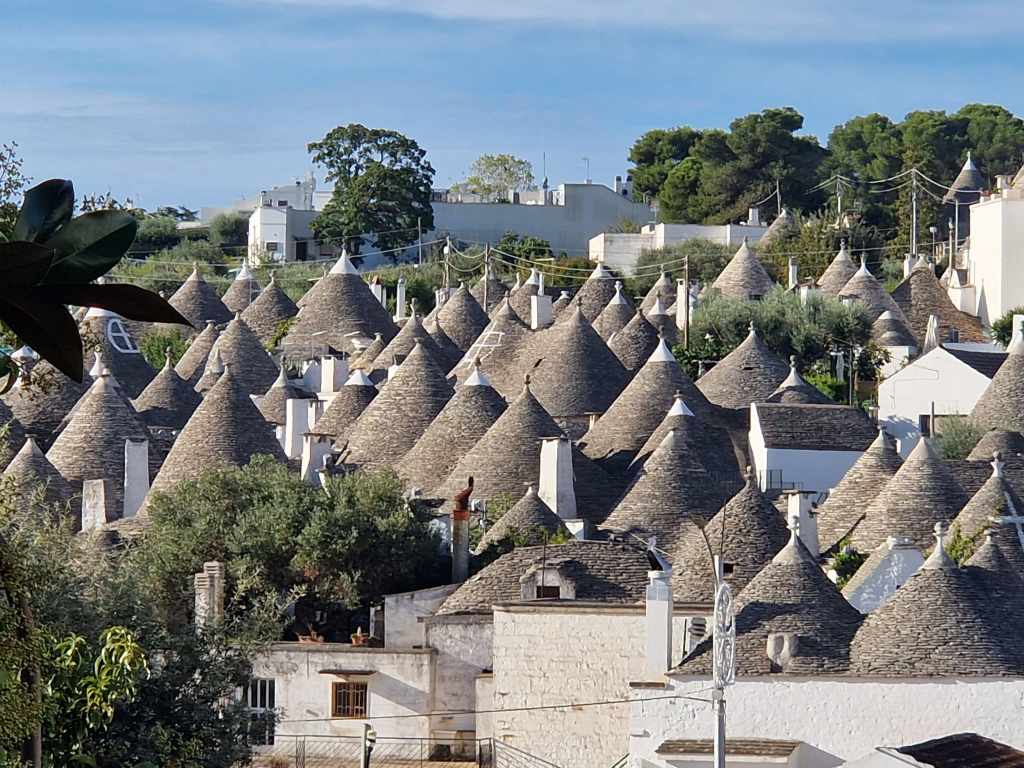
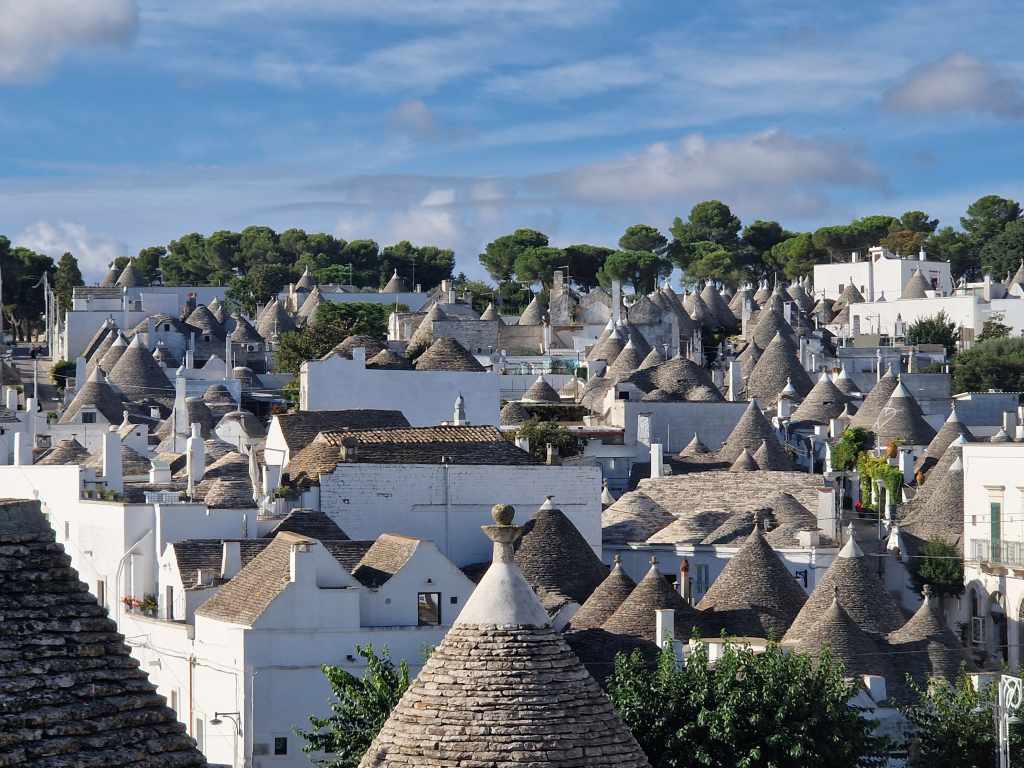
Hundreds of Alberobello’s trulli sit on one picturesque hillside

My drive back to Salerno proved challenging. Not because of the driving habits of local drivers, which were actually quite good, but because of the crazy rules imposed by the authorities. There were frequent road works (but no sign of anyone working) which were an excuse to limit the speed on perfectly good stretches of road to 50km/h (30 miles/hour) or even lower. It seemed that the government has bought thousands of “max 50km/h” signs that they did not know what to do with. The local drivers ignored these ridiculous limits and drove at an appropriate speed for the road conditions – often at twice or even three times the advertised limit. The rare speed cameras were well advertised in advance by signs and could also be spotted from far away by watching for when the drivers ahead braked suddenly. As a law-abiding foreign bear, I had an uncomfortable choice – obey the speed limit and cause a big queue of angry drivers to build up behind me, or drive like the locals. I won’t reveal my decision but let it be said that I arrived at Salerno in a slightly stressed condition just in time to return my car.

From Salerno I took the train to Naples for the last two nights of my Italian trip. I had enjoyed Puglia but thought that I had seen enough pretty villages and trulli and was yearning to experience the excitement of a big city once again. Whilst not always easy, Naples turned out to be exactly what I needed, and an exact opposite to the cute small towns of the last few days. Check out my blog tomorrow to find out more!
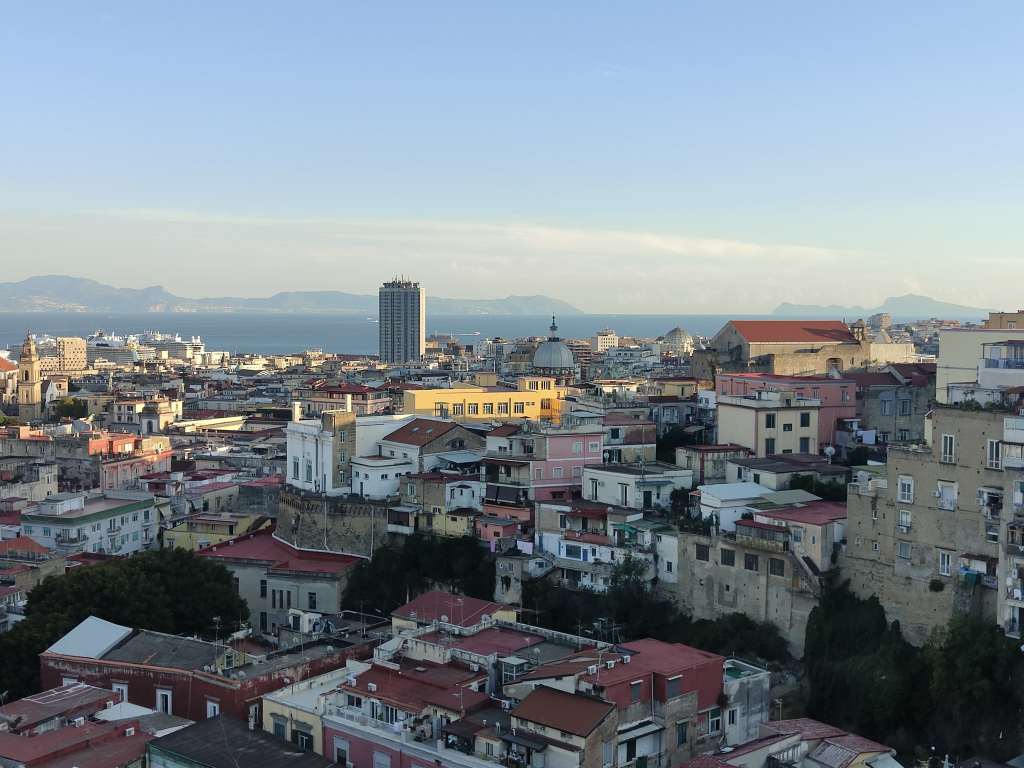
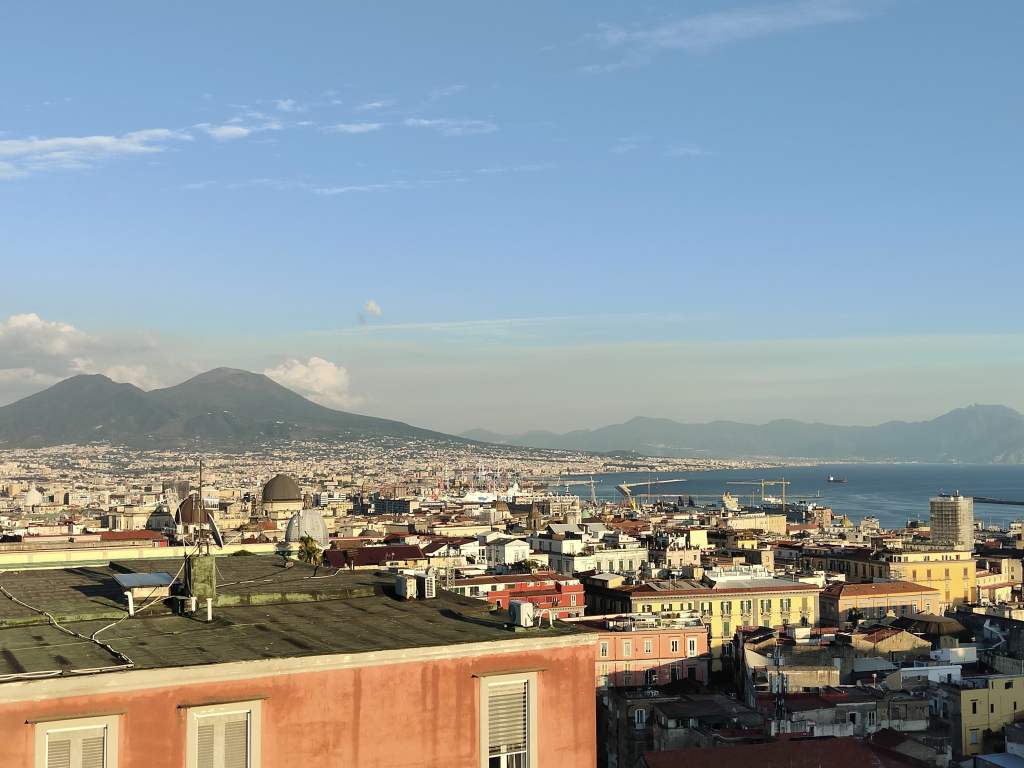
A teaser for my next post – the view of Naples from my accommodation!

Previous Post: Ostuni and Cisternino

Next Post: Naples
Trulli, madly deeply – Ostuni and Cisternino

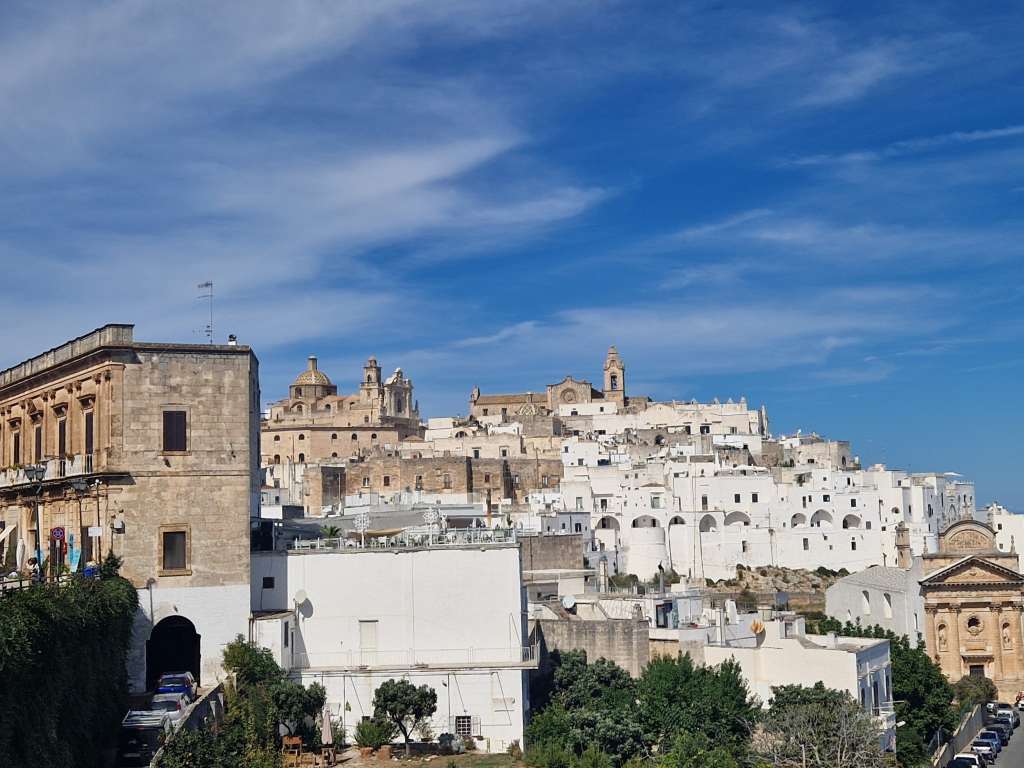
My next couple of days were devoted to exploring inland Puglia, with its pretty, white, hilltop villages and strange “trulli” (more about these below). I said a sad goodbye to Lecce and drove north to my first stop, Ostuni. This is arguably the prettiest town in Puglia, whose old town has a maze of windy lanes snaking up a hill. It dominates the surrounding plain and its visual impact is enhanced by the brilliant white colour of its houses, like villages in Greece.

Ostuni – beautiful from a distance

However, Ostuni’s beauty, and its proximity to the coast and the airport at Bari make it a popular destination for tour groups, and when I visited, it did not have enough small passageways to absorb the number of tourists it gets. I took lots of photos, but after a couple of hours wandering around, always seeming to come back to the same crowded piazza in front of the town’s 15th century cathedral, I had had enough and decided to drive on.

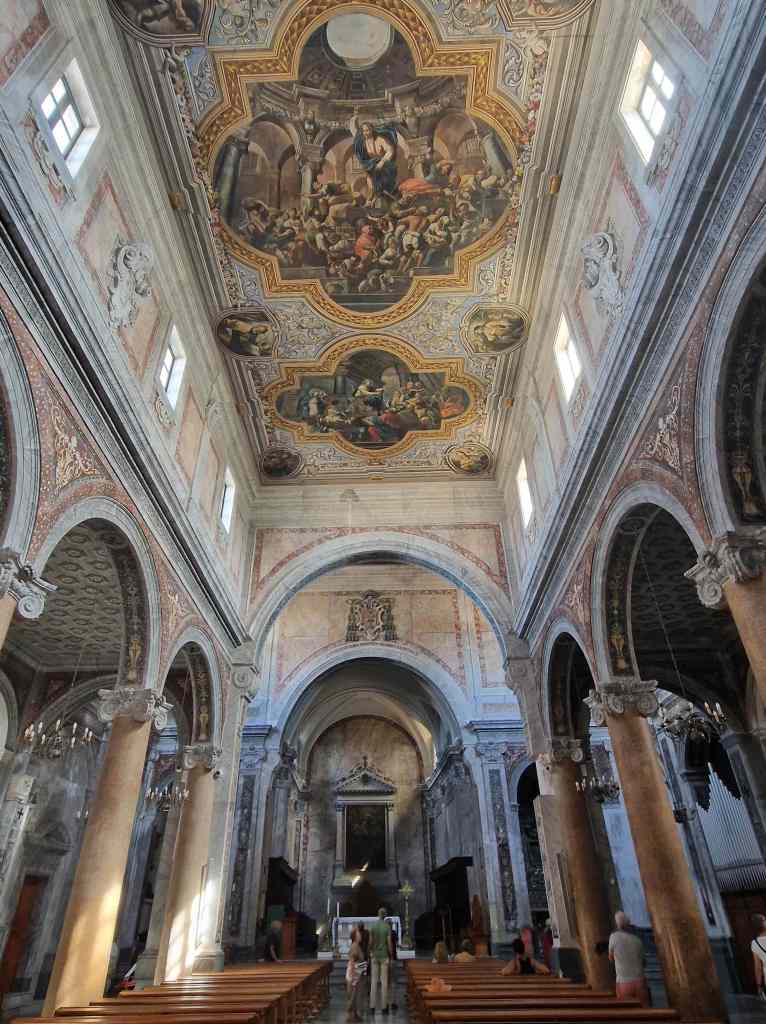
Inside Ostuni’s cathedral
The crowded piazza in front of the cathedreal

My decision to leave Ostuni earlier than I had planned left me with time to kill before I could check into my accommodation, and I decided to visit the little-known town of Cisternino. Unlike Ostuni, whose brilliant white old town is clearly visible for miles around, Cisternino’s was hidden behind more modern buildings, and on first appearances the city looked an unremarkable place. I had lunch in a local trattoria where I got a plate of excellent bombetti (little parcels of meat) for a ridiculously low price. Feeling very full after a big meal, I set off to look for the old town. I found a small archway in an ordinary looking modern building, and ducked under it to enter a different world – once again made up of winding narrow streets, white-painted houses and churches.

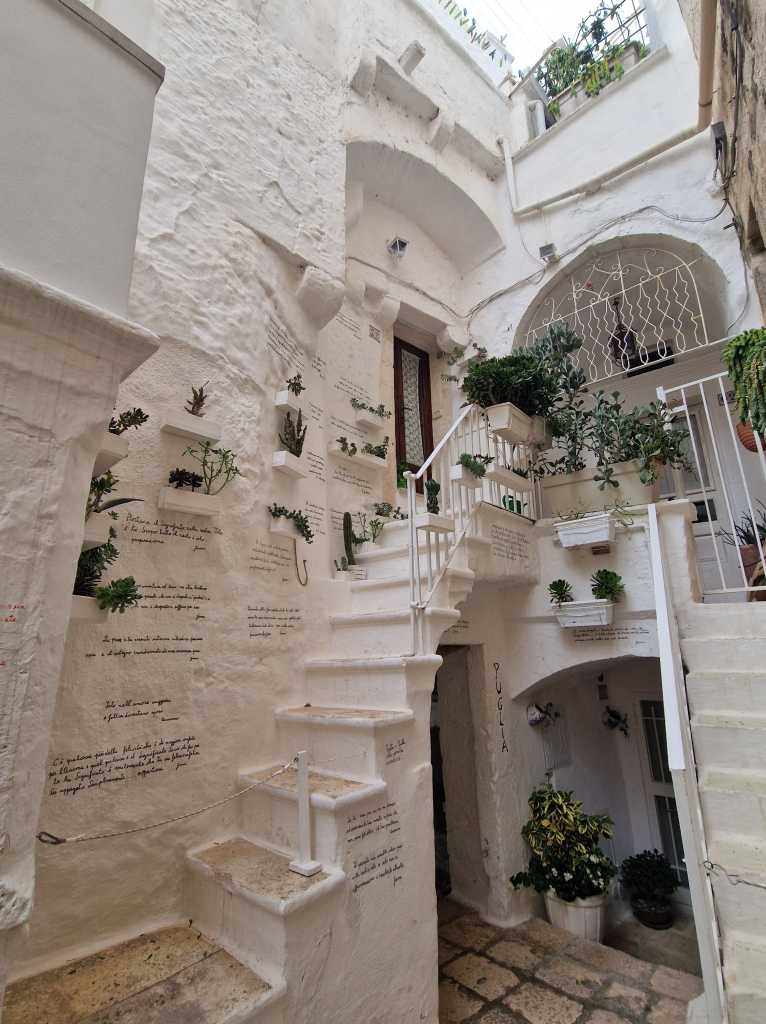
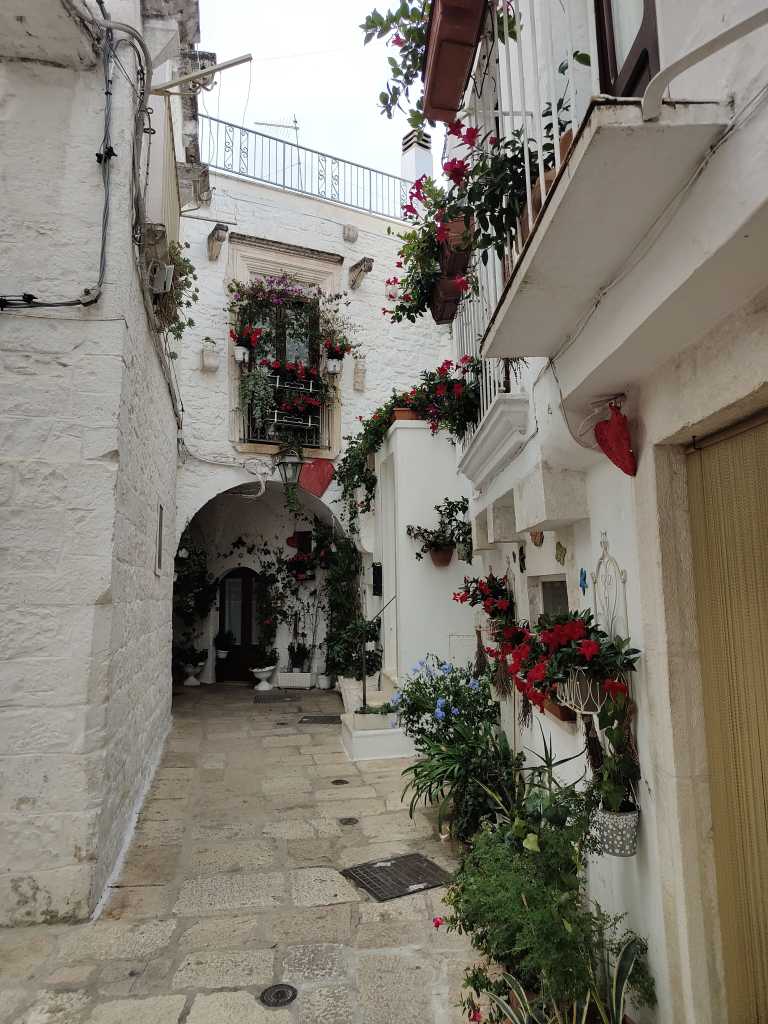
Hidden alleyways in Cisternino

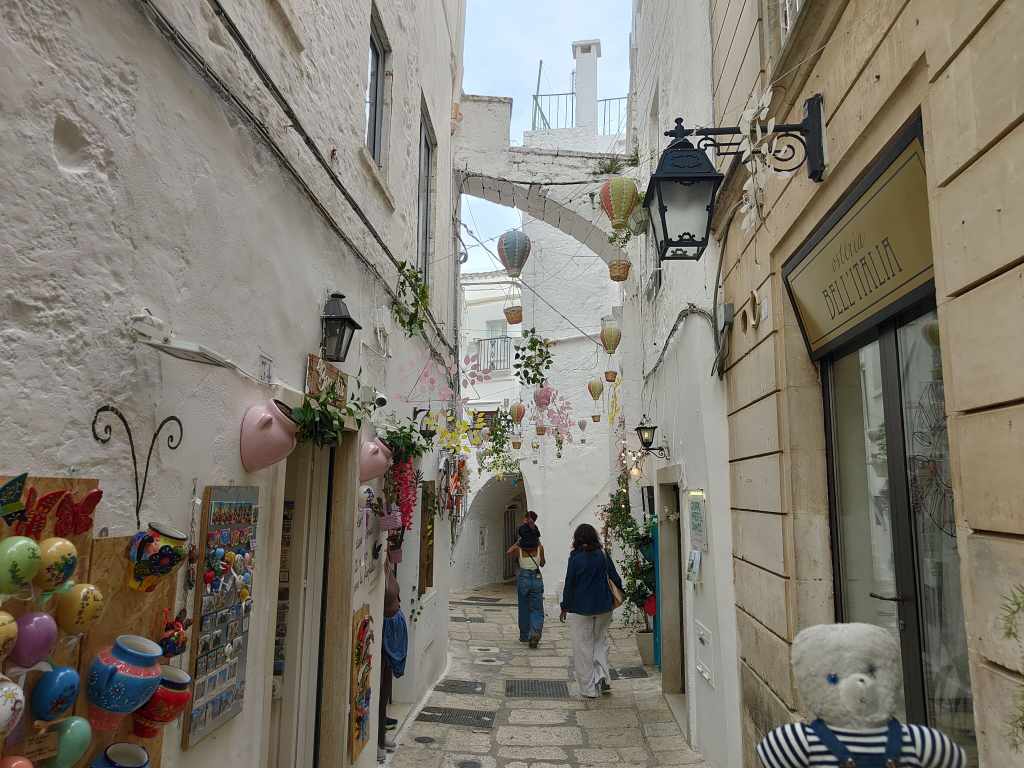
The residents of the old town had gone to great lengths to make the area interesting, decorating it in all sorts of imaginative ways. In some alleys, children’s swings with poetic inscriptions on the bottom of their seats hung above me; others were lined with red hearts and red flowers, and yet more displayed models of small hot air balloons hanging in the air above me.

Suspended art works in Cisternino
Red flowers and red hearts in Cisternino

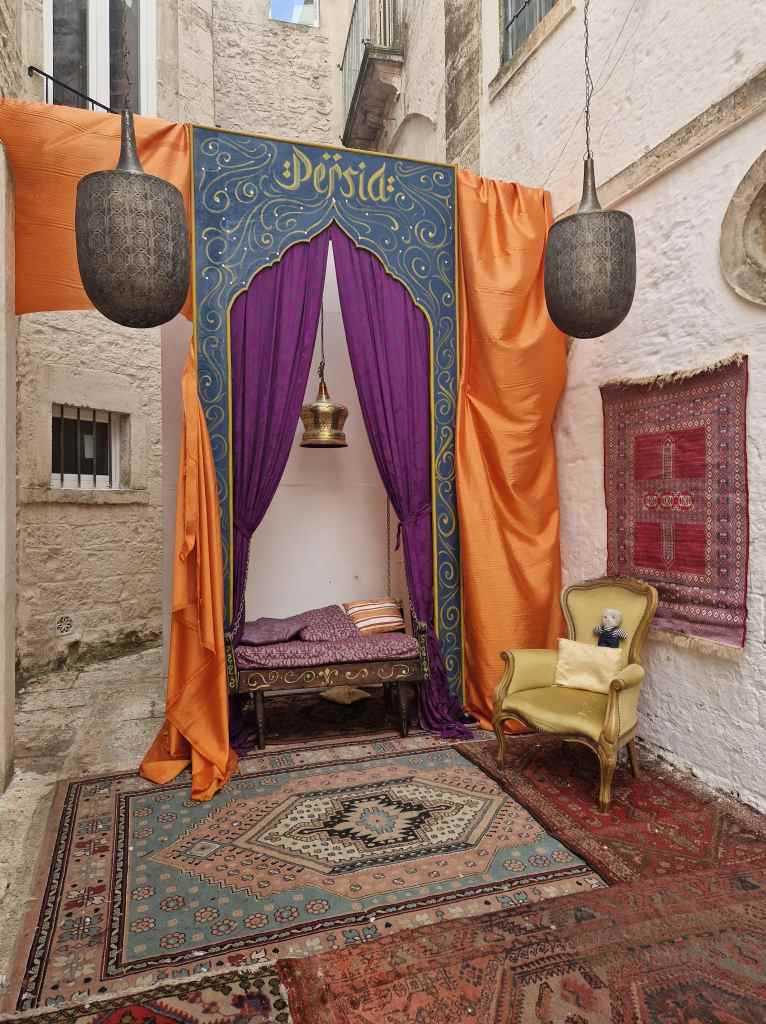
There were also some larger installations around the theme of countries in Asia – here is the one devoted to Persia:

Asian-themed display in Cisternino

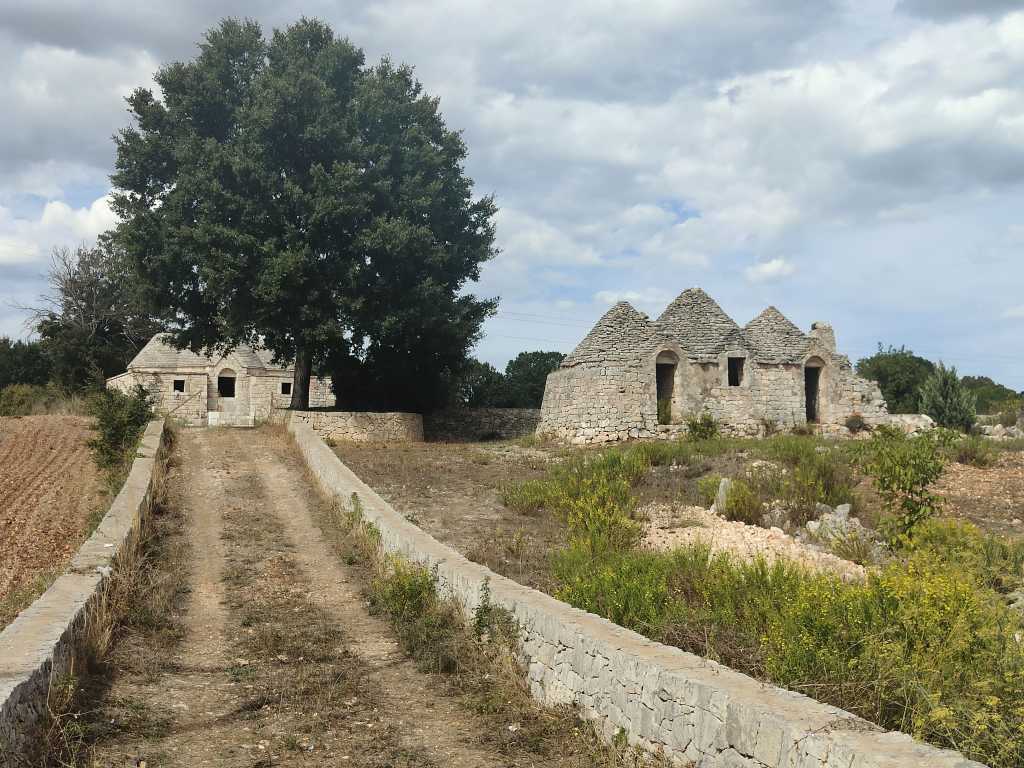
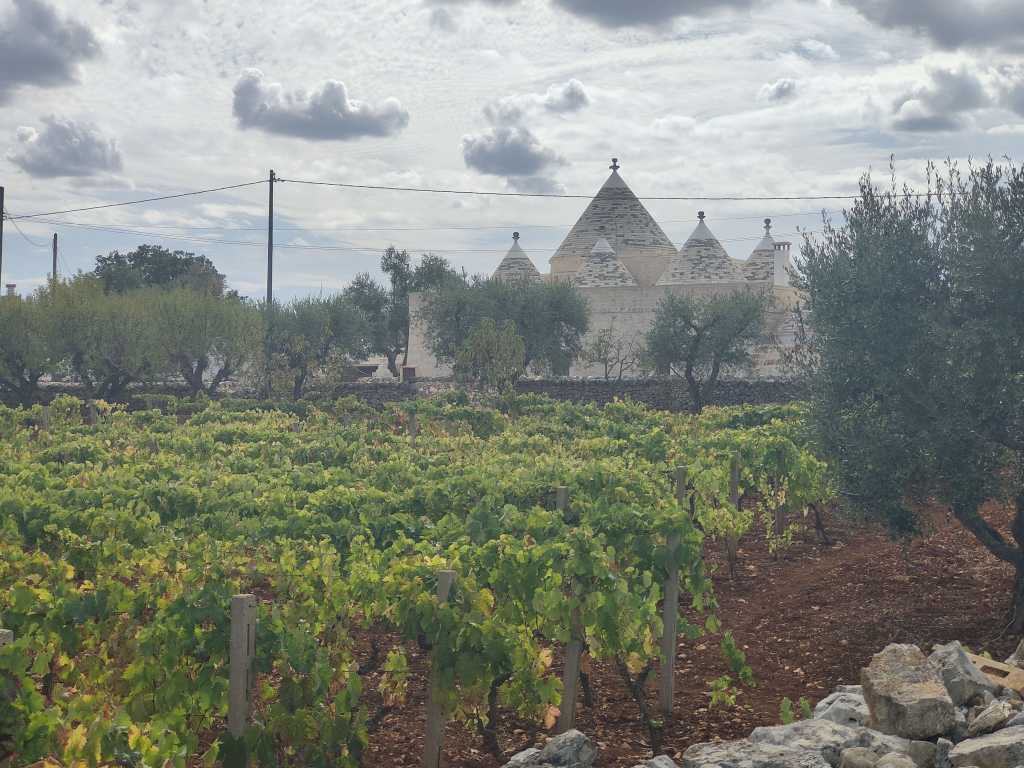
It was wonderful strolling around to see what new artistic ideas might lie behind the next corner. It was also very quiet – bumping into a fellow tourist was a pleasant surprise rather than a constant nuisance, like it had been in Ostuni. From being a stopgap to kill time before check-in, Cisternino had become one of the highlights of Puglia, and I was charmed by the place. But eventually it was time to go, and I drove on to my accommodation – a “masseria” or fortified farmhouse. The road led through the dry Puglia countryside down tiny country roads that crossed fields of olives or vines and were dotted with “trulli” – traditional stone huts with conical roofs. These were originally built as temporary storage facilities for farms, or as modest dwellings for agricultural labourers – but now many have been restored to provide accommodation for tourists.

Trulli on the backroads of Puglia
Trulli and vines, Puglia

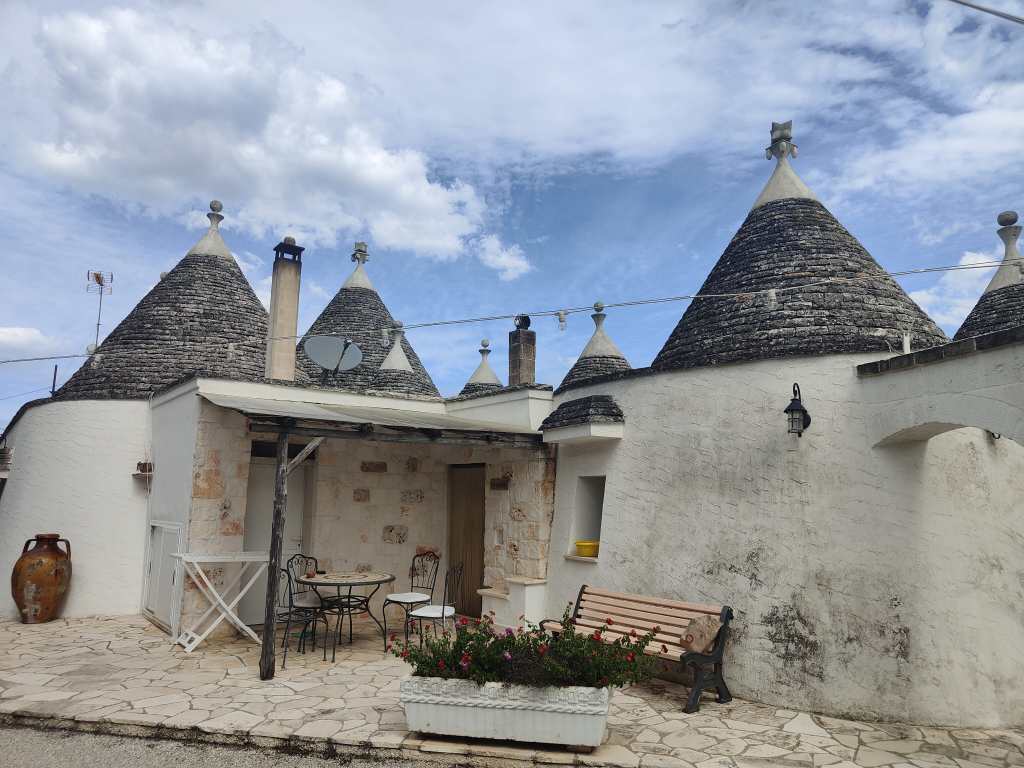
I eventually reached my masseria late in the afternoon. I had booked a room in one of these converted trulli, a popular idea with the many farmers who now make a living from agrotourism alongside cultivating crops. Staying in a trullo was something I thought I had to do whilst in Puglia, and was fun to do once, but I found the room a bit dark since the windows were very small.

My accommodation – a converted trullo

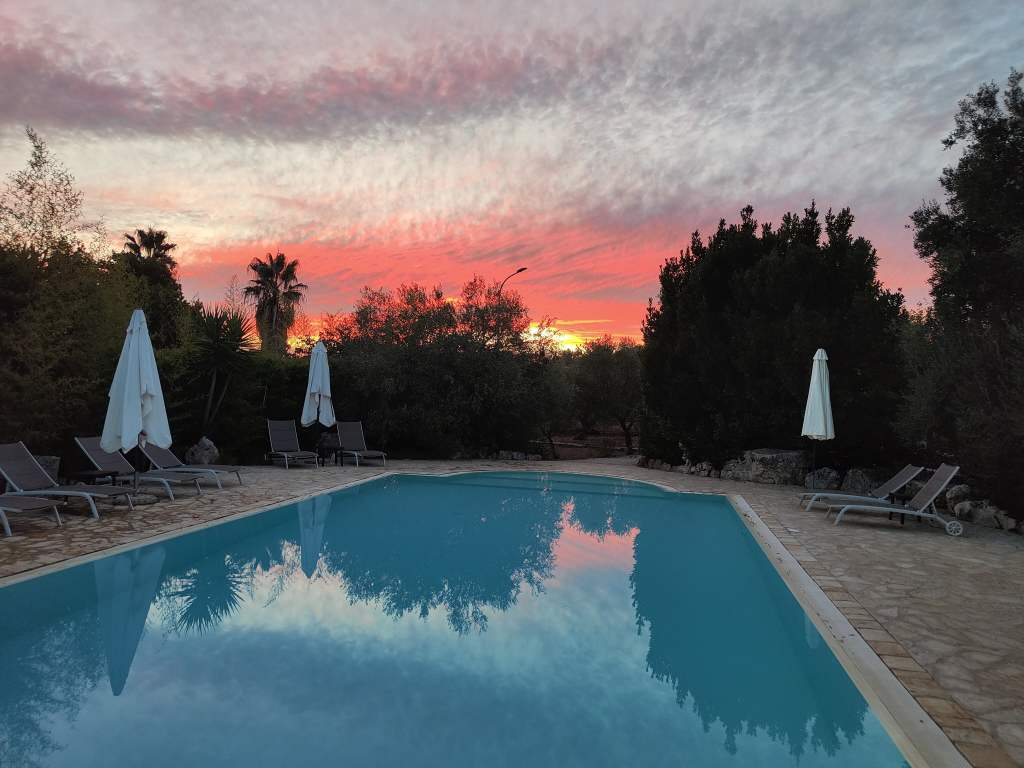
After check-in, I lay by the pool catching up on my blog. It had been a day of contrasts – I had been a bit underwhelmed by popular Ostuni, but charmed by little-known Cisternino, and was curious to see what other gems lay hidden in this remote part of inland Puglia – so remote in fact that my masseria had no mobile phone coverage.

Sunset in Puglia

Previous Post: Otranto and Puglia’s heel

Next Post: Puglia – Martina France and Alberobello

Otranto and the tip of Italy’s heel

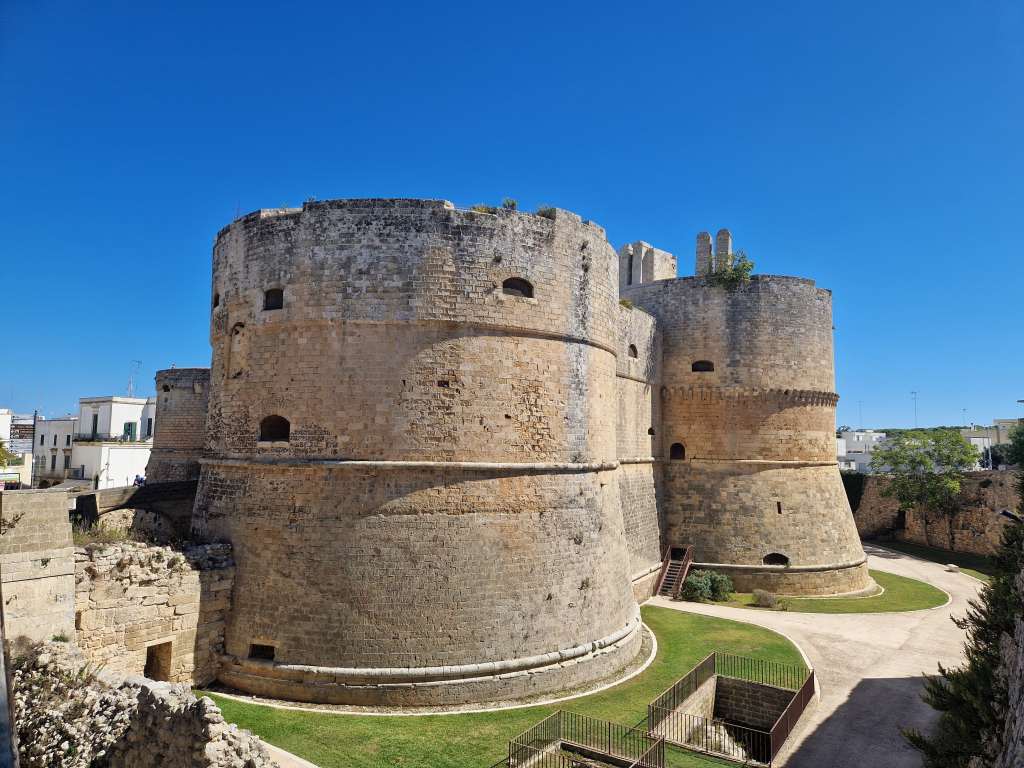
Today I made a day trip out of Lecce down to the very tip of Italy’s heel. I drove a short distance east to reach the coast, and then headed south. At first the road was not especially scenic as it went through a series of seaside resorts, some of which were so shabby that even the backdrop of the deep blue Adriatic Sea could not make them attractive. After an hour things improved when I reached the historic city of Otranto. This has Roman origins but is most noted historically for a particularly bloody event in 1480, when an Ottoman force laid siege and eventually captured the city after a fierce struggle. Much of the population was slaughtered in the aftermath of the battle, including the bishop, who was sawed in half. Surviving women and children were sold off into slavery, but eight hundred male survivors also remained. They were offered a choice – execution or conversion to Islam. All chose the former and were martyred on the spot.

Otranto’s castle
Otranto’s port

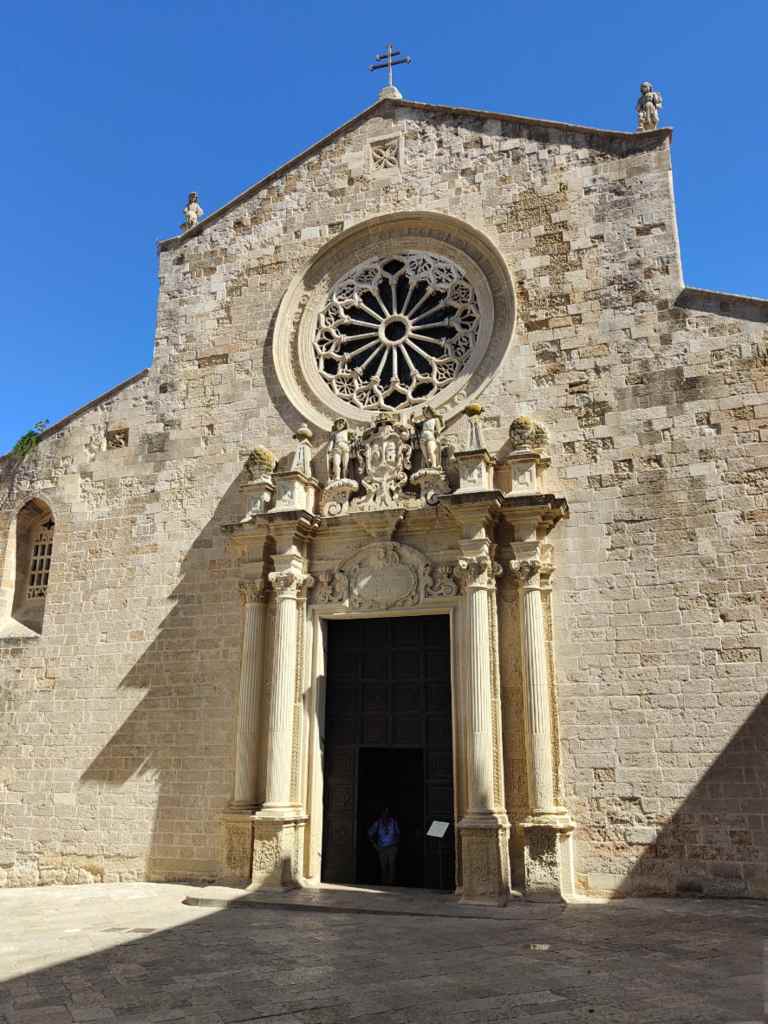
Otranto is now a pretty town with an imposing castle and an interesting looking duomo (cathedral). Seeing a large tour group enter, I opted to explore the winding streets of the old town first, but on returning found that the duomo had closed for a two-hour lunch break.

The outside of the Otranto’s Duomo

I continued my drive and the scenery became more beautiful and the seaside towns smarter, some with some interesting Moorish-style buildings.

The coast south of Otranto
One of the moorish-style buildings lining the coastal road

My final destination St Maria de Leuca was a pleasant enough place, located at the very tip of Italy’s heel. I stopped for a coffee to celebrate reaching one of the extremities of Europe.

The end of Europe! Santa Maria de Leuca

One my drive back to Lecce I discovered what was probably the highlight of the day – Presicce, yet another beautiful small Italian town where time seems to have stopped. I arrived in the late afternoon to find the place almost deserted and all of the shops and cafes shut, except for one bar in front of the town’s ancient church. The hot sun and somnolent town risked sending me to sleep, so I ordered a gelato and coffee to wake me up before exploring a bit more.

Presicce’s beautiful church….
….and pretty but empty streets

The town was exceptionally beautiful but seemed to be not only completely off the tourist trail but also slowly dying as native people left; I noticed several houses with “for sale” signs on them. This depopulation of small rural areas is a big problem in Italy’s south, so much so that the government offers tax breaks for people to go to live in small municipalities. But although Persicce was a wonderful place to visit for an hour so, it was so quiet that I wondered how I could possible live there, and headed back to enjoy the relatively busy street life of Lecce for my last evening there.

Previous post: Lecce

Next Post: Ostuni and Cisternino

Lecce

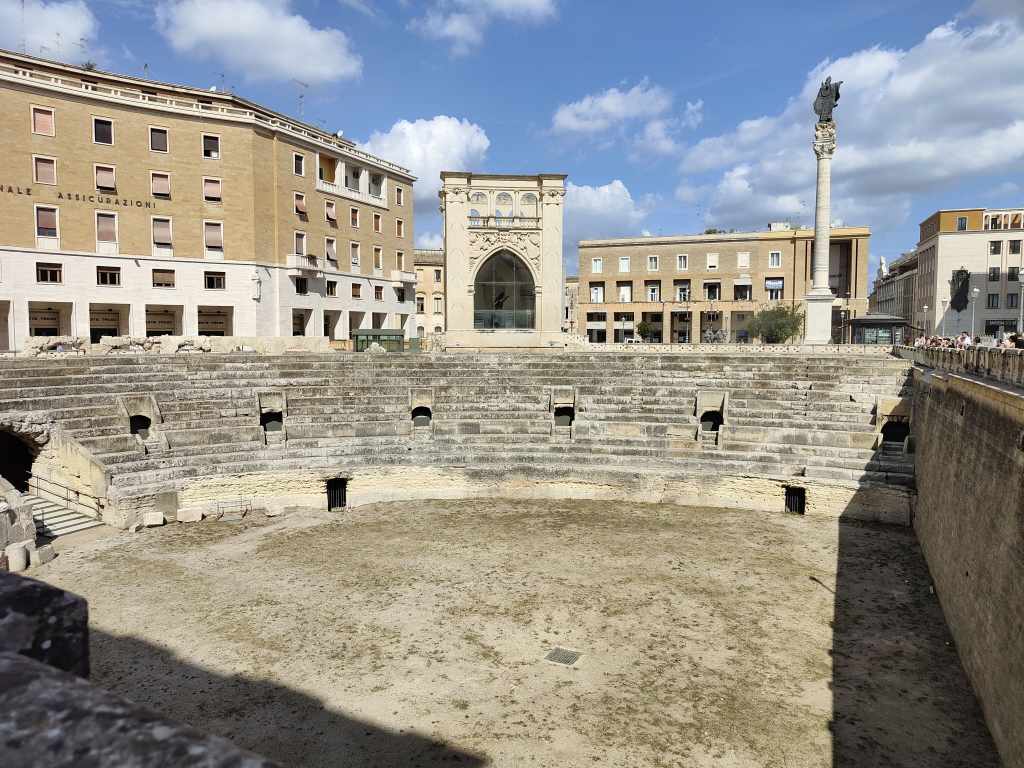
My next destination was Lecce in Puglia, an ancient city famed for its baroque buildings. Lecce was first settled in pre-Roman times, became a Roman city with an amphitheatre which survives to this day, and then spent the next few centuries changing hands between Ostrogoth invaders, the Eastern Roman Empire, Normans and Lombards. It eventually ended up as part of the Kingdom of Naples in 1463, and had a period of peace and prosperity that saw a building boom of baroque-style churches in the 1600s. Today Lecce is a popular tourist destination with a compact old city centre, which is a joy to visit on foot.
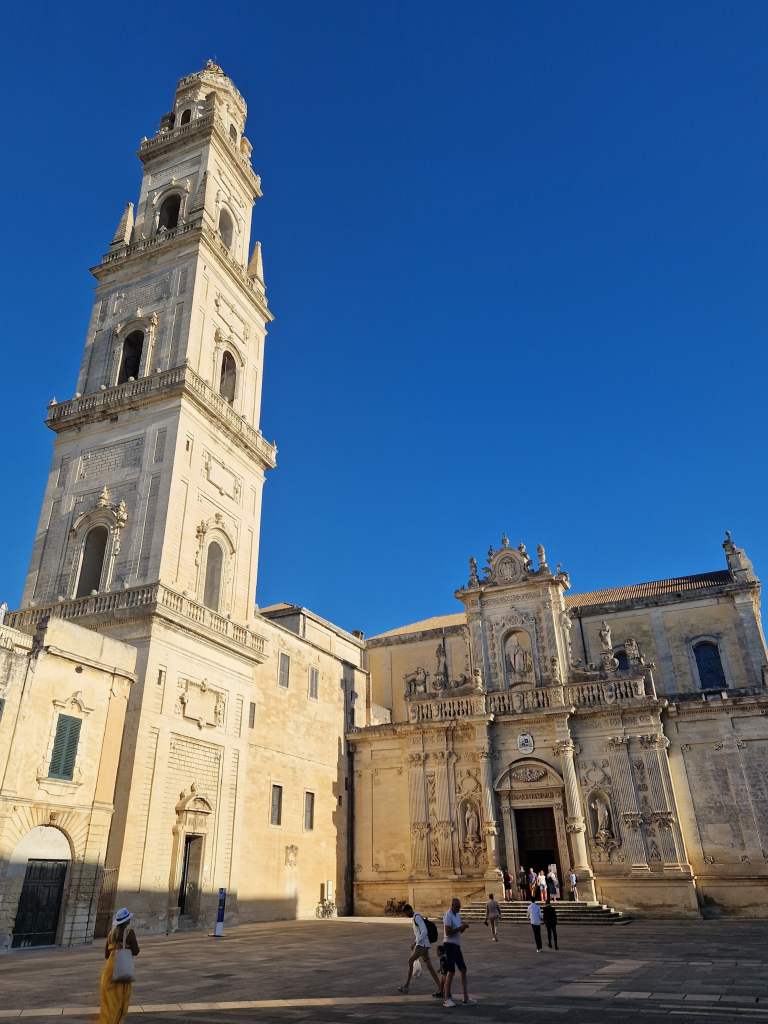
I spent a full day exploring Lecce, wandering down old streets from one beautiful baroque building to another. There are famous sights, which attract tourist groups, like Lecce’s Duomo –

Lecce’s Duomo in mid afternoon
Inside Lecce’s Duomo

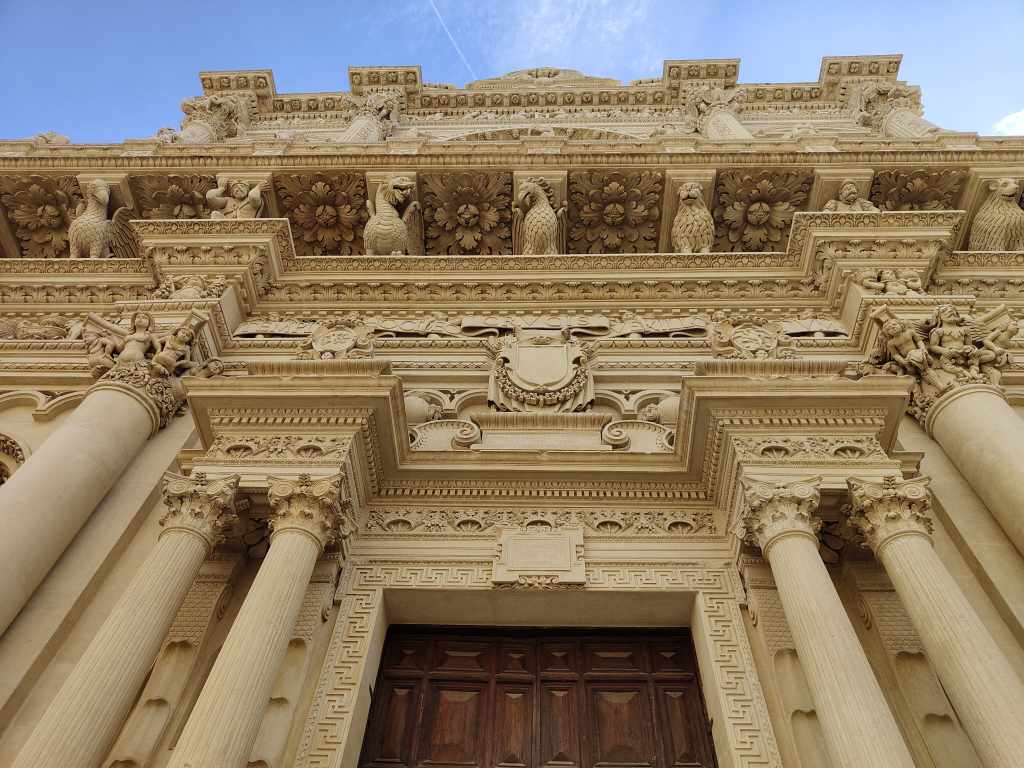
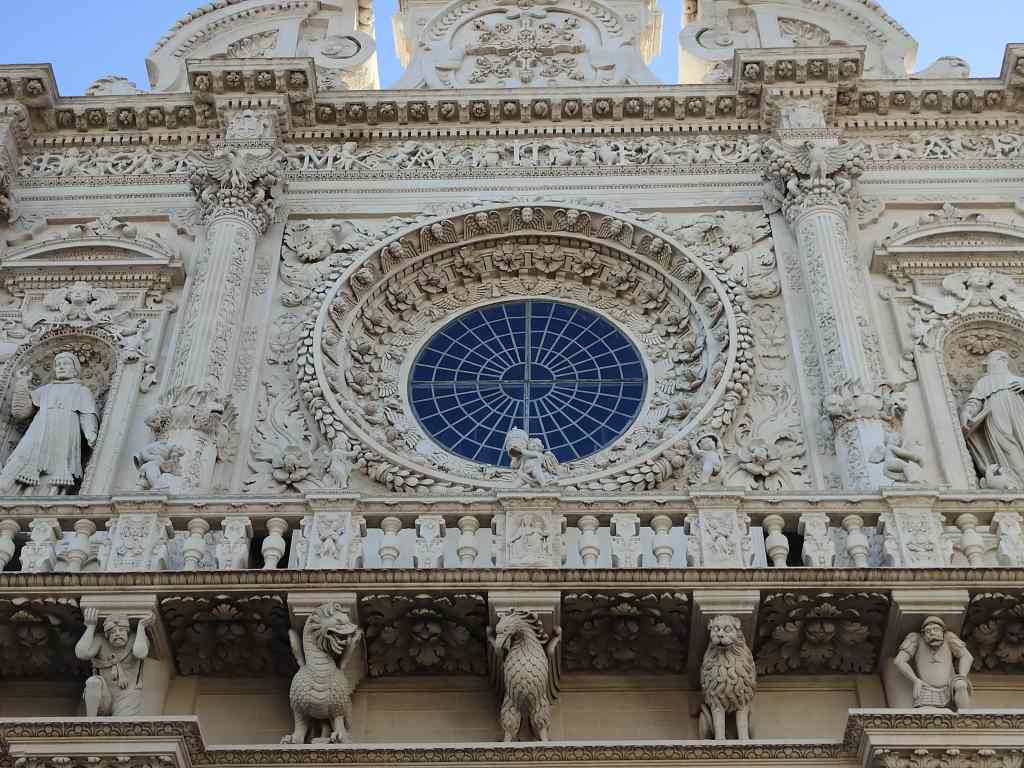
…..and the stunning Basilica di Santa Croce

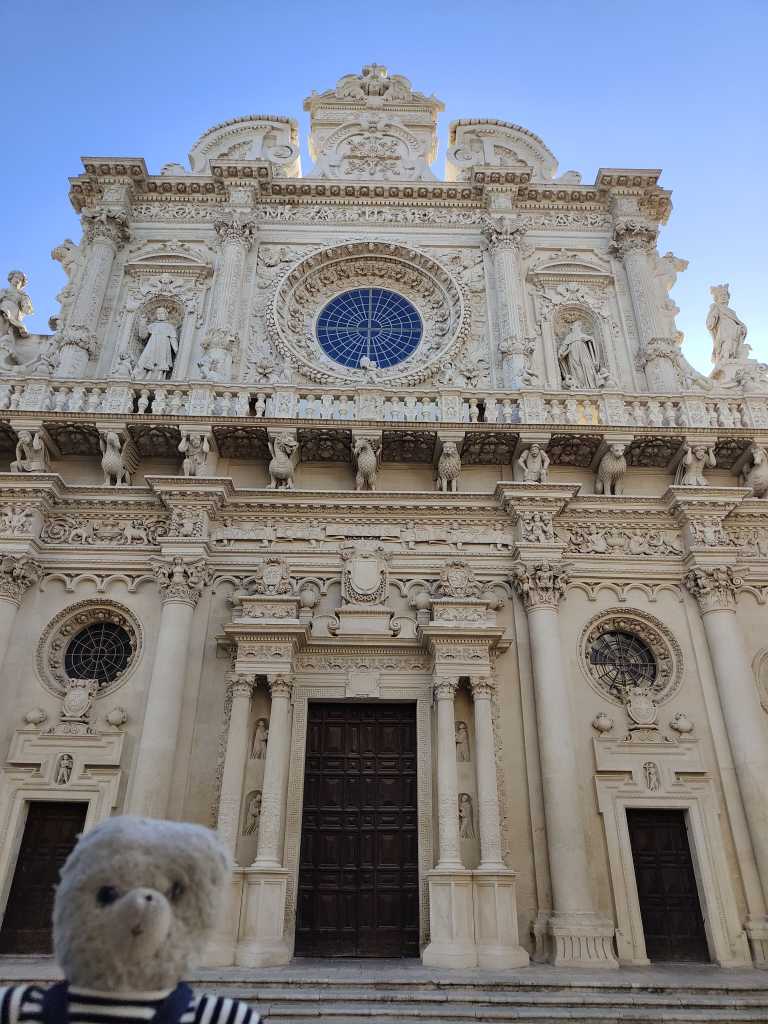
The Facade of the Basilica Santa Croce

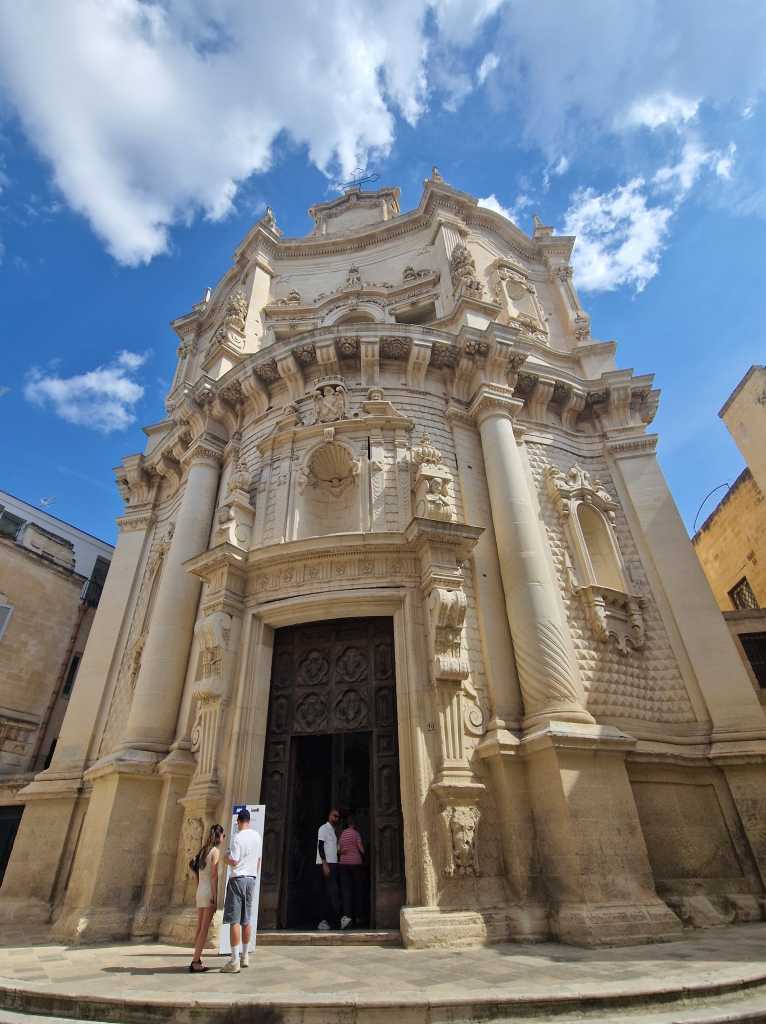
Then there are less-known baroque churches which are part of a multi-site ticket issued by the tourist office, like San Matteo –

San Matteo Church

The Roman amphitheatre however is a bit of a disappointment if you have travelled a lot like me…..

Lecce’s Amphitheatre

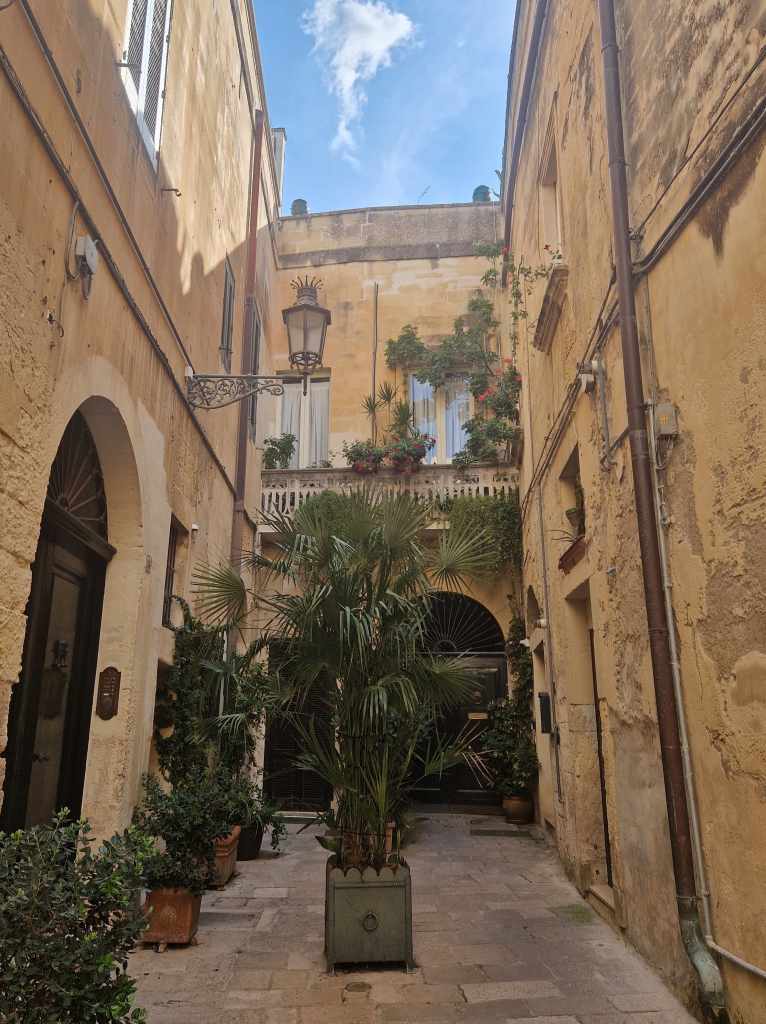
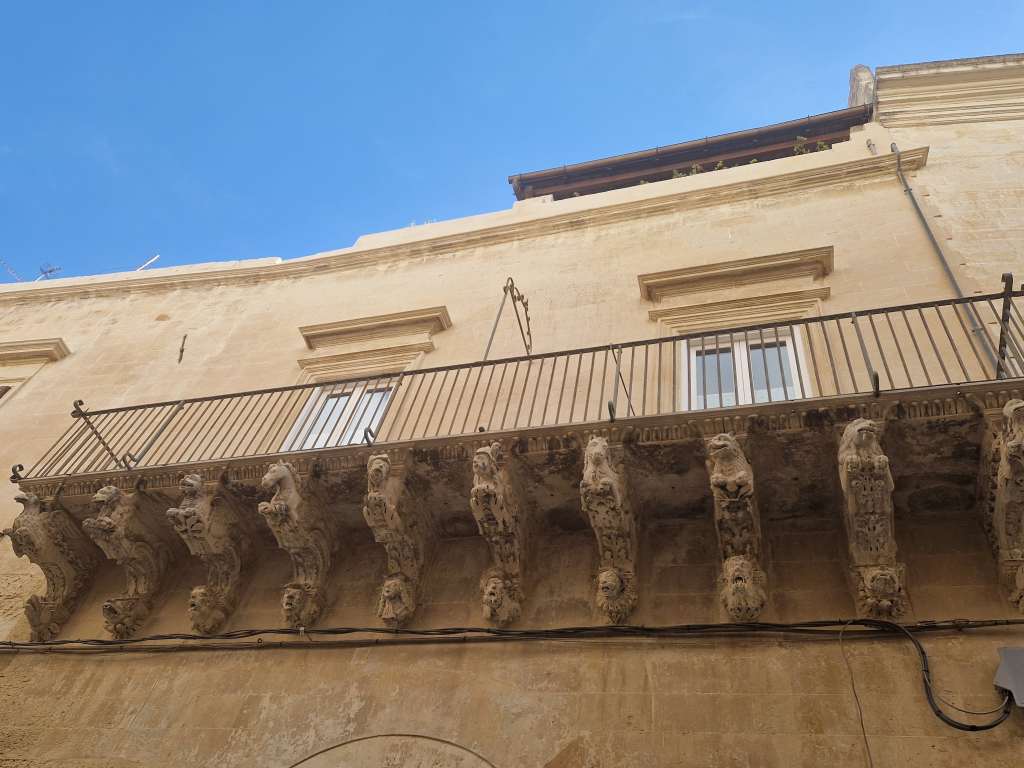
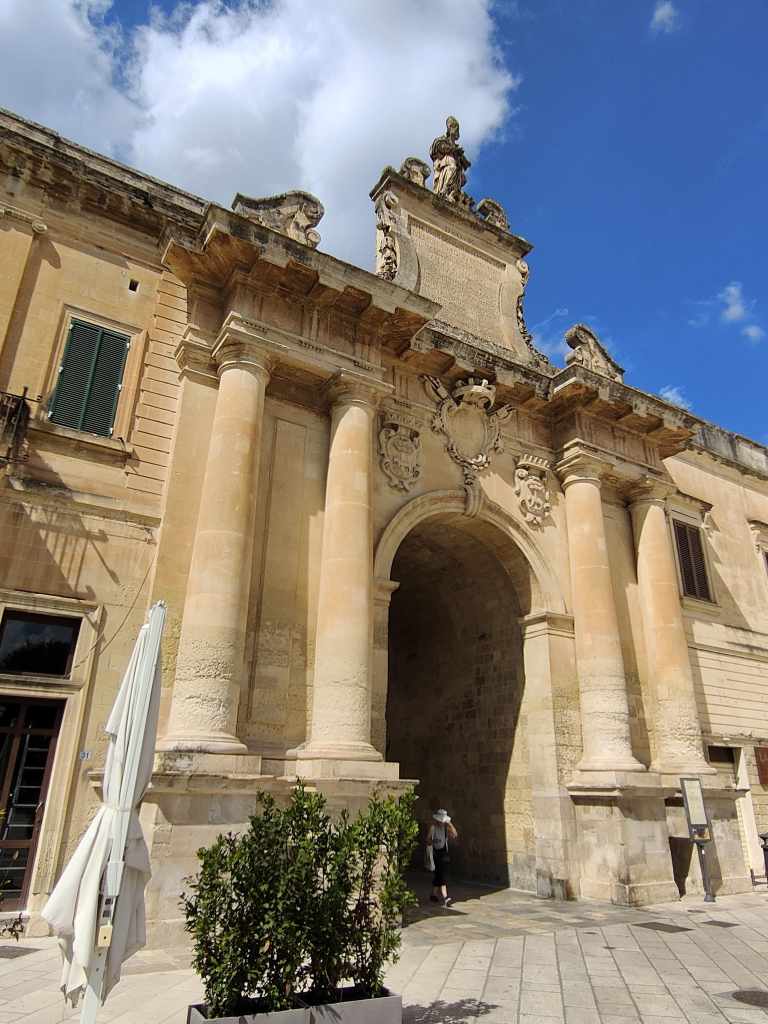
Probably the real joy of Lecce though is wandering around from cafe to cafe during the day and bar to bar at night, catching a glimpse of everyday buildings where people still live but which still have astonishing baroque features – like this quiet courtyard…

Quiet Courtyard in Lecce

…..or this balcony…..

Balcony detail, Lecce

…or this gate leading into the old city.

Entrance Gate to the Old City

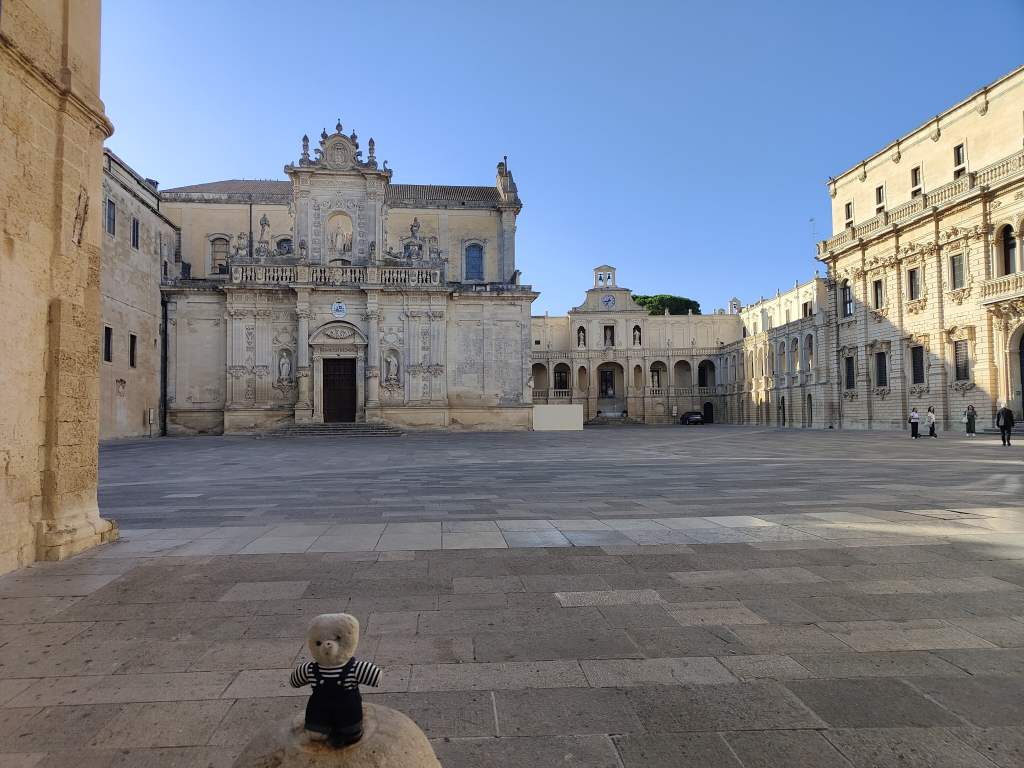
Once I had seen the major sites in Lecce once, I visited them again and again, enjoying how the atmosphere changed in the light of early morning or the evening. So here is the Duomo again, twice…..

The Duomo at Night, Lecce
Piazza del Duomo in the early morning

and Santa Croce……

Santa Croce Basilica at Night….
Santa Croce in the Morning
The Amazing Carvings on Santa Croce’s facade

It all made for a very satisfying, relaxing stay. But as I sat down in front of my computer at the end of the day, I wondered what to write for my blog. There had been no problems, no amusing episodes or unique experiences to write about. I had simply had a very nice time in a beautiful city. So I decided to let the pictures do the talking for me, and this post has a lot of them, but few words.

Previous Post: Matera

Next Post: Otranto and Italy’s heel

Blog at WordPress.com.

Up ↑