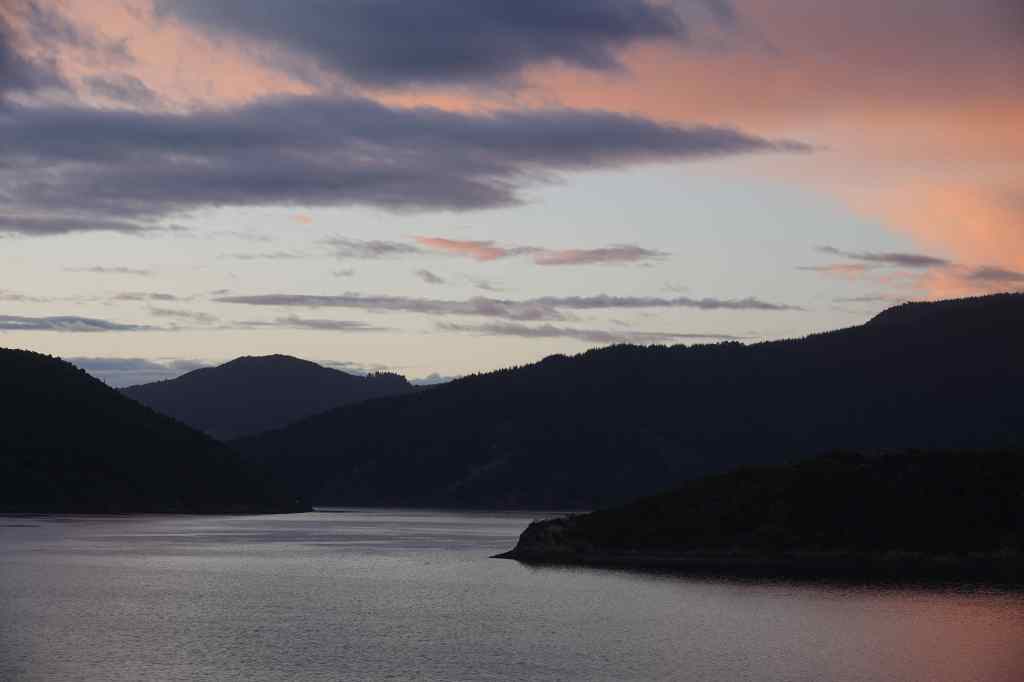
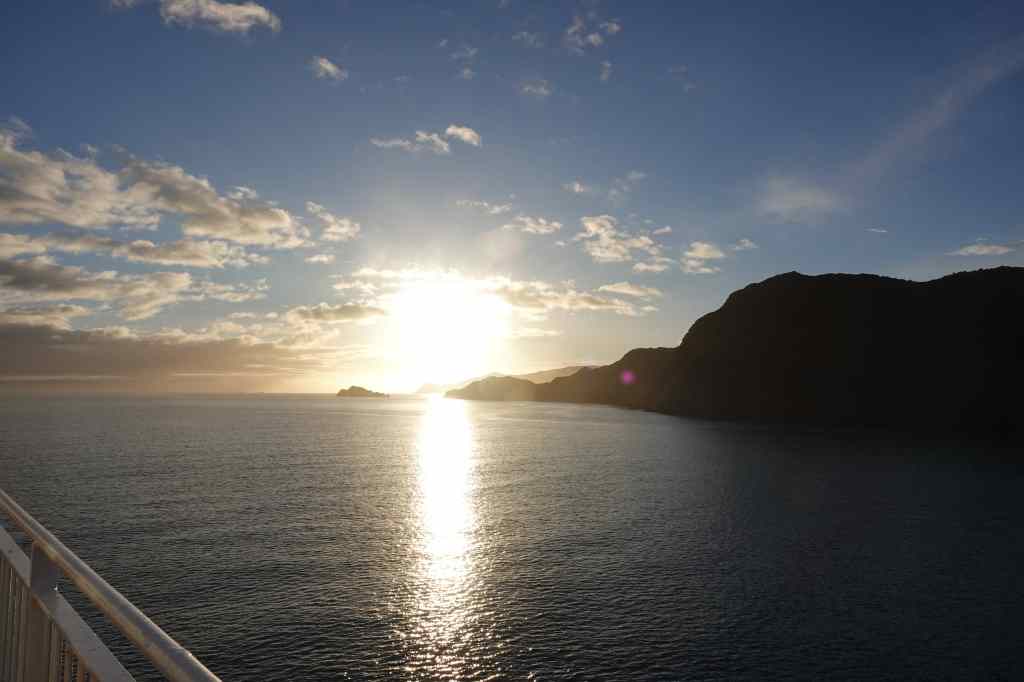
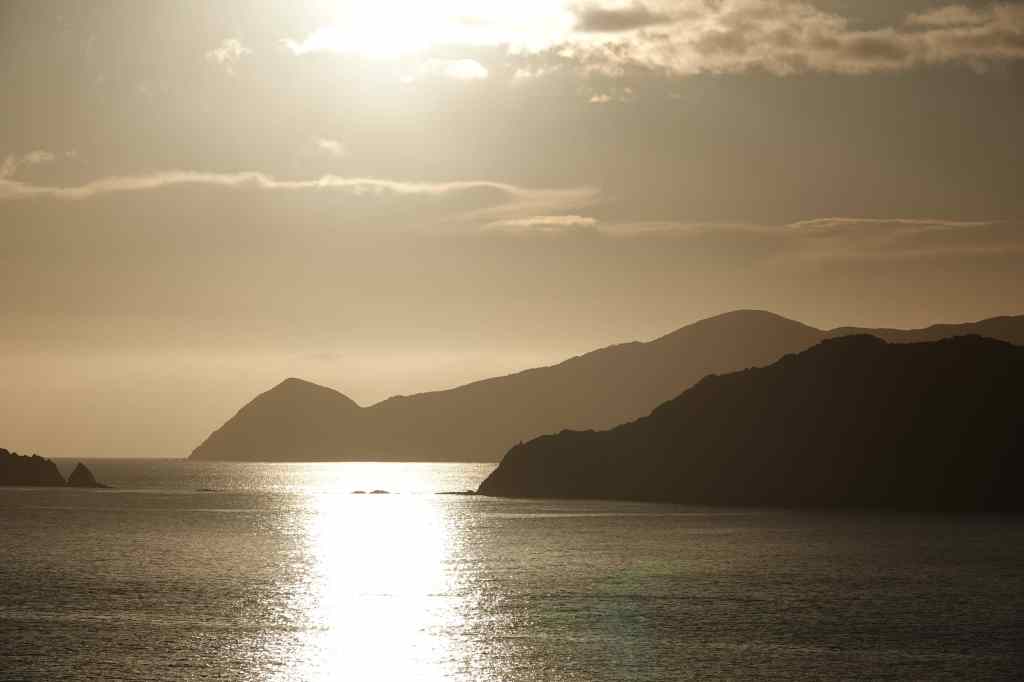
This morning I had to get up unreasonably early to check in for my ferry across the Cook Strait from Picton on the South Island to Wellington on the North Island. I had booked a crossing at 09.30 but the ferry company brought this forward to 07.30 and also required that I turn up at least sixty minutes before to check in, so I had to sit for an hour in the dark in a queue of cars waiting to board. The ferry was not full and after boarding I had lots of space to sit and relax in front of a large (and – shame on Interislander Ferries – also dirty) viewing window in the passenger lounge. We set sail just as the sun began to rise and I went out on deck to get some last views of Queen Charlotte Sound.
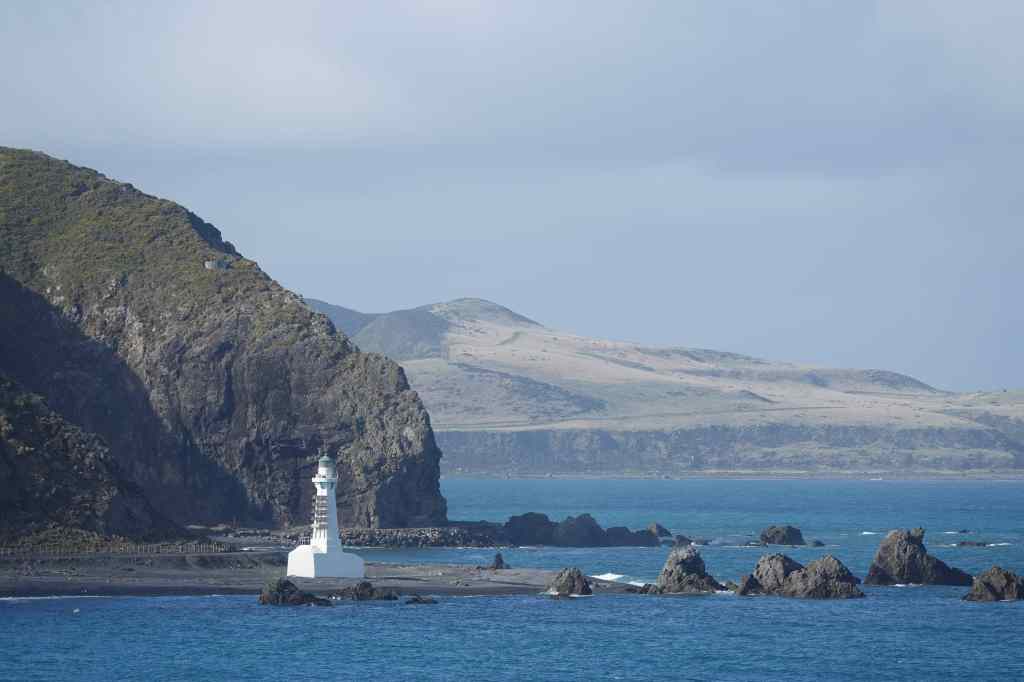
Just before sunrise in the Marlborough Sounds….…and at sunrise….…and after……and a lighthouse on the North Island near Wellington
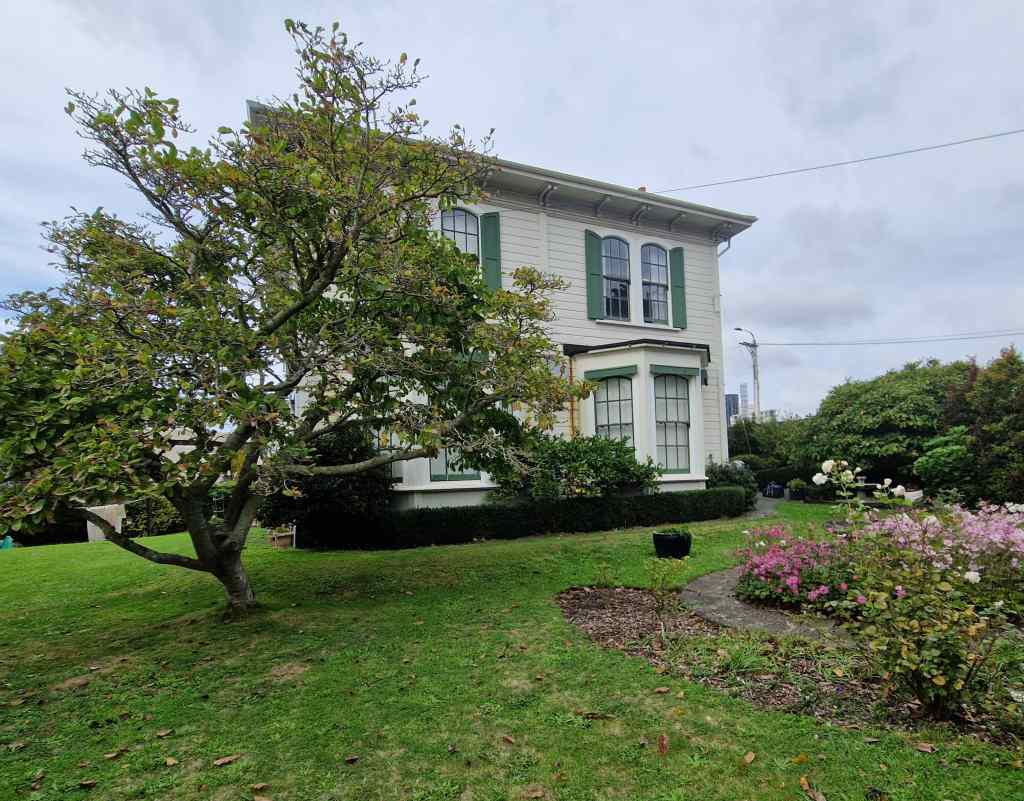
After three and half hours of sailing we arrived in Wellington, the capital of New Zealand and its third biggest city – albeit with a population of only 212,000 people. My accommodation was in a pretty villa in the scenic and historic Thorndon area of the city.
My accommodation in Wellington
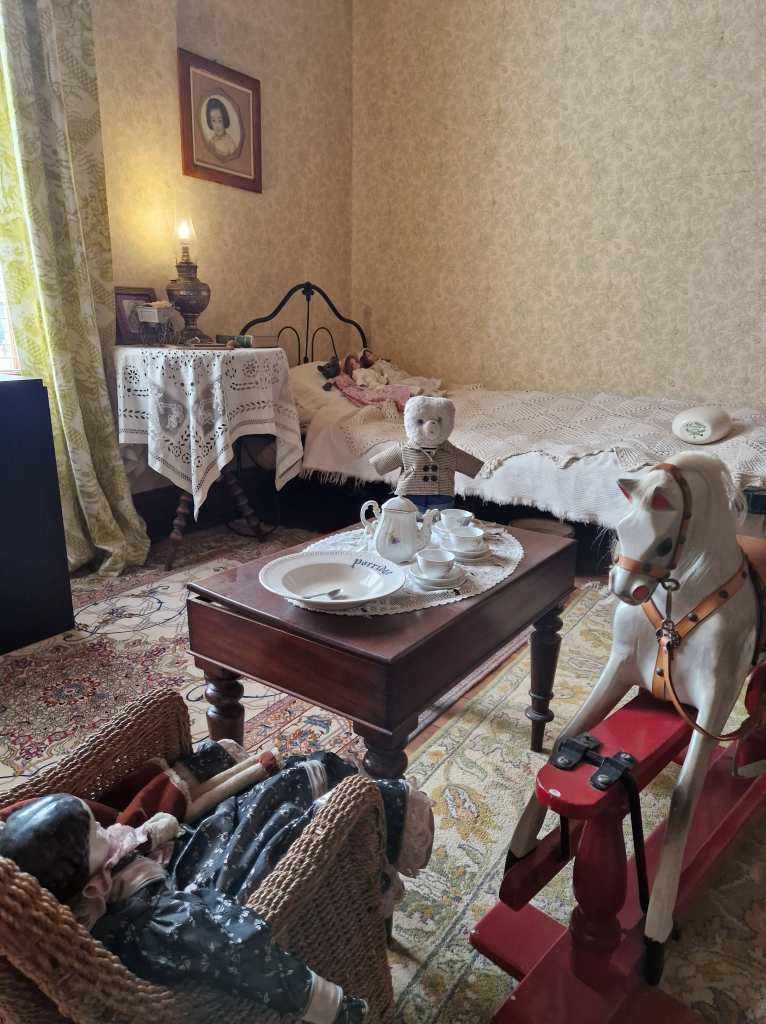
Right next to my accommodation was a similar house, which hosted a museum devoted to New Zealand writer Katherine Mansfield.
In the Katherine Mansfield Museum, Wellington
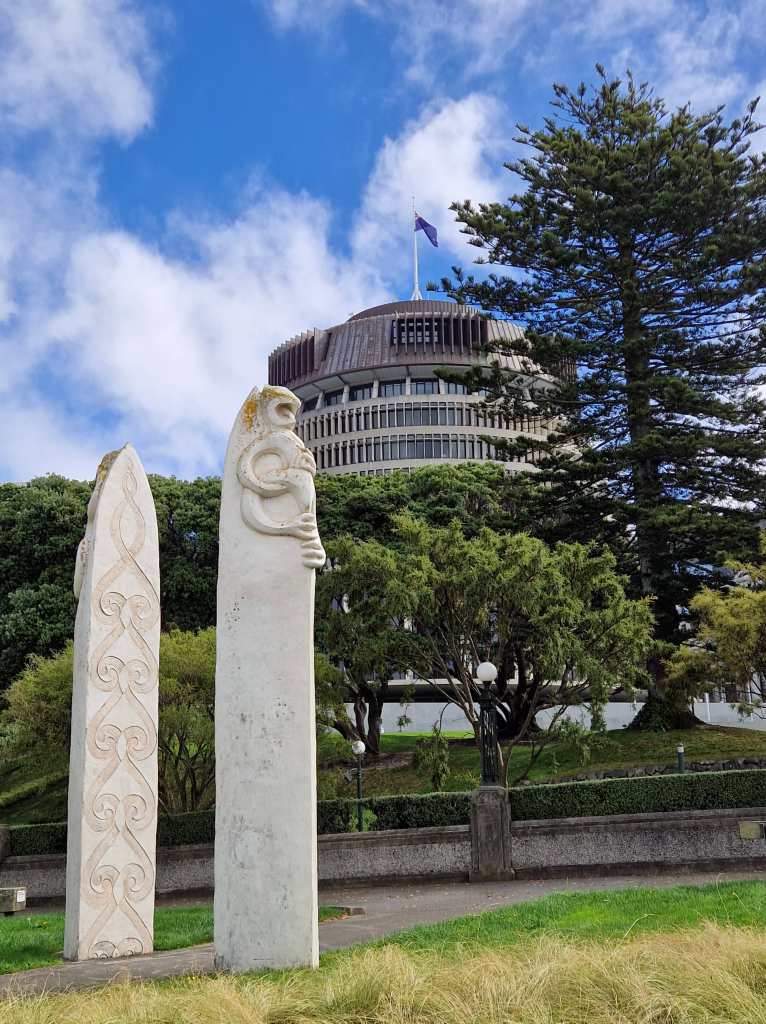
I made a brief visit before strolling into the city centre. My walk took me past the “Beehive” – part of a complex of government buildings which houses the offices of the prime minister and cabinet ministers….
The “Beehive”, Wellington
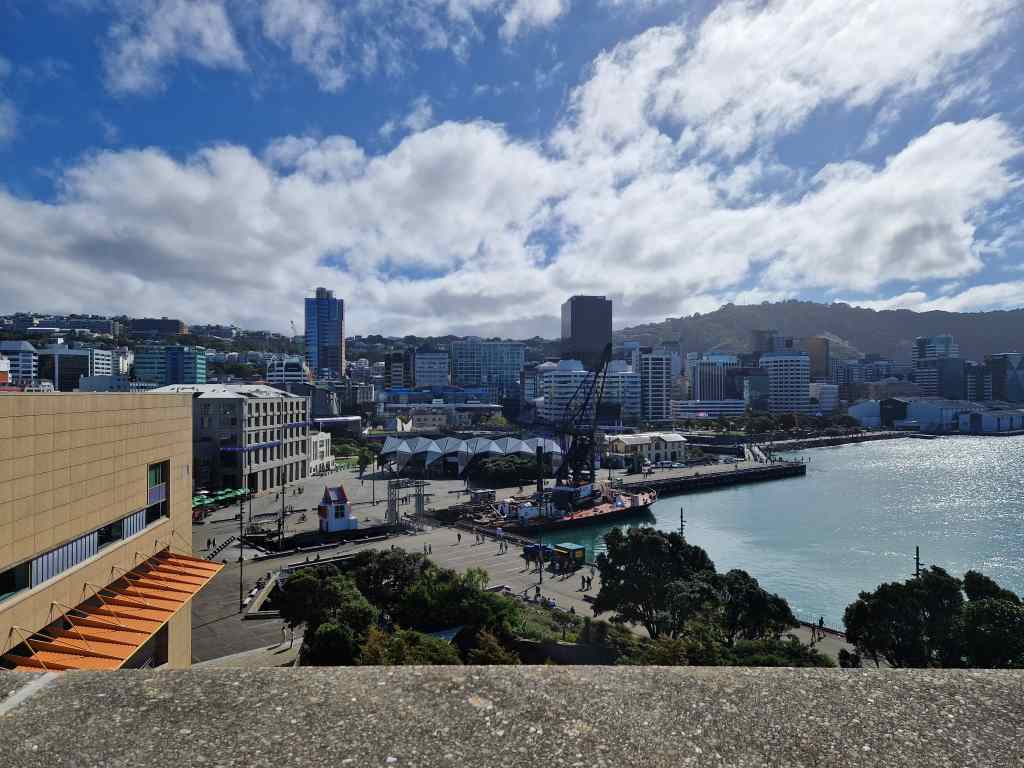
…..and then further on to Wellington’s pleasant waterfront.
Wellington’s waterfront taken from Te Papa Tongarewa
There I checked out the Museum of New Zealand or Te Papa Tongarewa, dedicated to the history, wildlife and geology of the country. Amongst many other things, I was surprised to learn that the Maori only discovered New Zealand about 800 years ago, probably on boats from the South Cook Islands further north – and that it was the very last large land mass to be settled by humans. The museum had a large exhibit about a very special part of the country’s history – the signing of the Treaty of Waitangi between the British government and 500 Maori chiefs. It gave the British sovereignty over the islands in return for protection of the rights of the Maori. However the treaty was, perhaps deliberately, poorly translated with big differences between the English and Maori versions, leading to confusion and conflict.
Maori exhibits in Te Papa Tongarewa
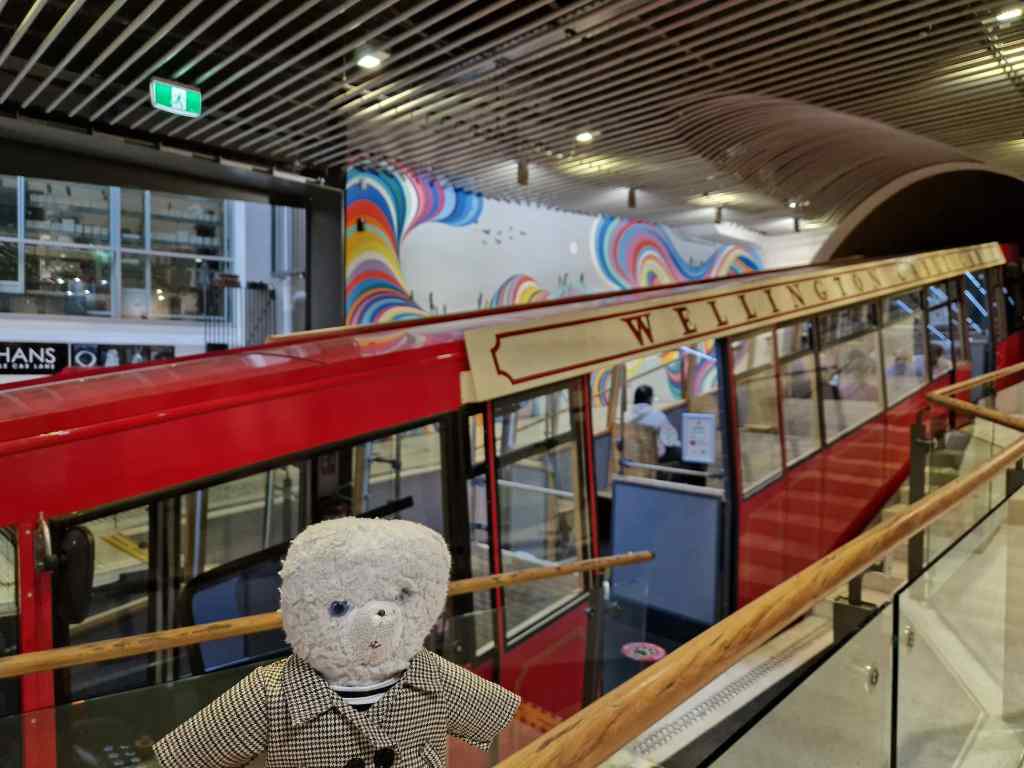
From the museum I followed a traditional tourist route, taking a cable car up to the steep hill dominating the city. The café on top offered an excellent view of Wellington.
Wellington’s touristy but fun cable car…and the view over Wellington from the cable car station
From the top of the hill, I strolled down through the city’s pretty botanical gardens and then through the suburb of Thorndon back to my house. Despite the very early start it had been a good day – and after two days of rain it was a pleasure to see the sun again. Wellington had been an interesting stop – one of the smallest capital cities in the world, with a wonderful setting, a world class museum and the laid-back vibe typical of a minor provincial town in most other countries. Plus I had finally taken some good pictures of the Marlborough Sounds!
So far, most of my posts have covered one day of travelling. This post will cover four days visiting two of New Zealand’s highlights – the Marlborough Sounds and Abel Tasman Park. There is a simple reason why two such memorable places get so little text – the weather was awful, and two of these days were almost completely washed out. After my whale-watching flight in Kakoura, I headed north to the tip of the North Island. State Highway One was scenic, with nice sea and mountain views, but slow going, with more than its usual share of roadworks. I reached Blenheim, the capital of Marlborough’s wine country, in the early afternoon. I thought about visiting the city for a coffee break, or even the famous nearby Cloudy Bay winery for a tasting, but Blenheim’s outskirts were so ugly that I hurried on to Picton on the north coast, the entrance point to the Marlborough Sounds.
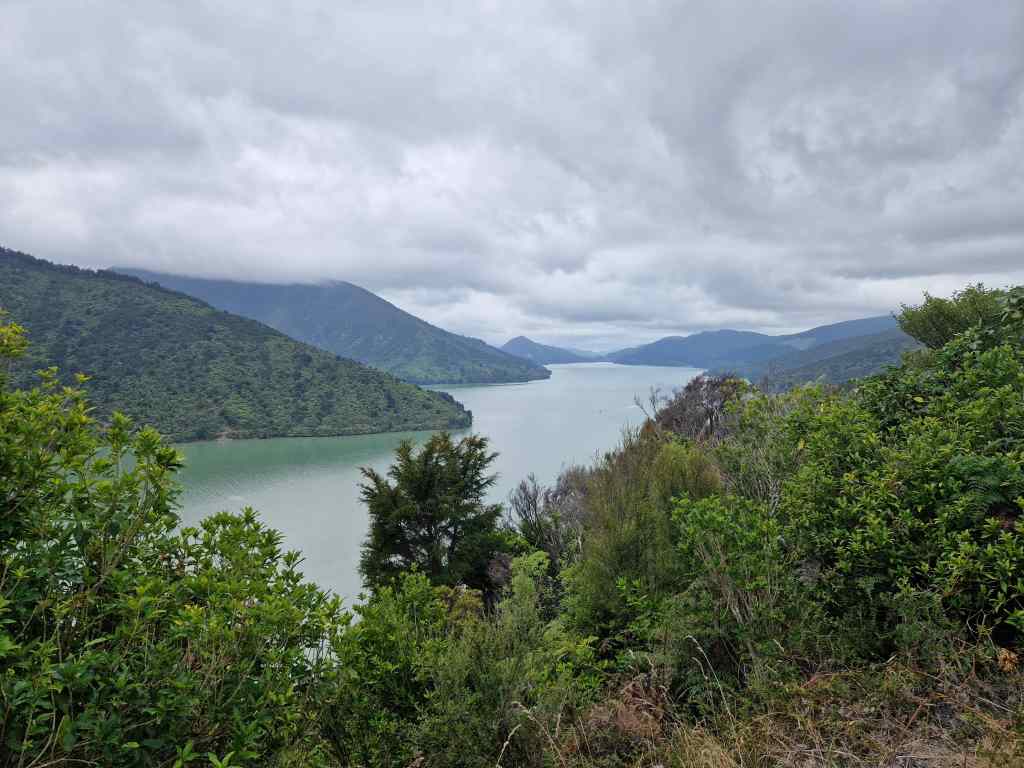
The Queen Charlotte Sound near Picton on a cloudy dayThe view of Pelorus Sound from Cullen Point
The Marlborough Sounds are the estuaries of a series of rivers emptying into the Cook Strait between New Zealand’s North and South Islands, which form a jagged coast with countless islands and peninsulas. Indeed, this relatively small area contains around a quarter of the total length New Zealand’s coastline. The Sounds are very thinly populated, with a few fishing towns, holiday homes, campsites and resorts. Much of the area – and many of the resorts – is only accessible by boat, but a few narrow, winding roads also lead into the region. I had booked a resort on one of side roads leading off from the popular Queen Charlotte’s Drive scenic route which links Picton and the small port of Havelock. The route would have been beautiful….had the sun made an appearance to bring out the colours of the water and vegetation. But instead the weather was stubbornly overcast, and the sea remained a dull grey colour. After an hour of scenic but slow driving I arrived at my resort.
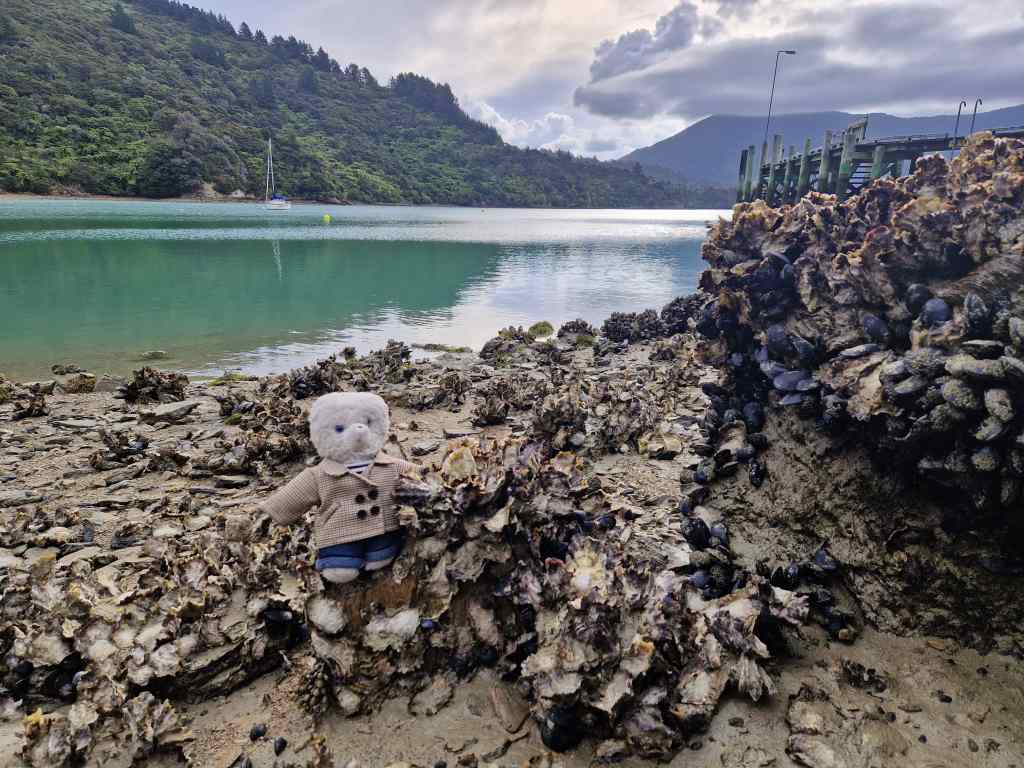
The Mahua Sound near my hotel
It was a beautiful, utterly remote and so laid-back that the hotel did not give guests room keys – this part of rural New Zealand has so little crime that people do not bother to lock their doors. It was just a shame that the sky remained overcast, and the sea water which was bright blue in my guide book remained a dull grey. It was possible to go hiking or to hire kayaks or paddleboards to explore the Sounds, but the weather did not inspire me to try any physical activities and instead I explored the beach a bit, where I found some wild oysters……
…..and then sat reading, admiring the view from my room as the sun set.
The view of the Mahua Sound from my room
The next day I had originally planned to explore the Sounds some more and then devote the whole of the day after to visiting another of New Zealand’s highlights, the Abel Tasman Park. However, seeing a forecast of very bad weather coming, I drove west straight to the park. It has a spectacular 60km coastal track, which takes 3 to 5 days, and the best way to experience the area is either to walk the whole path, or take a water taxi into the heart of the park, walk a section, and come back on a return boat trip. But I arrived too late to take an outward boat and had to content myself with a short walk from the park entrance to Apple Tree Bay, about 5km in.
The Entrance to Abel Tasman Park
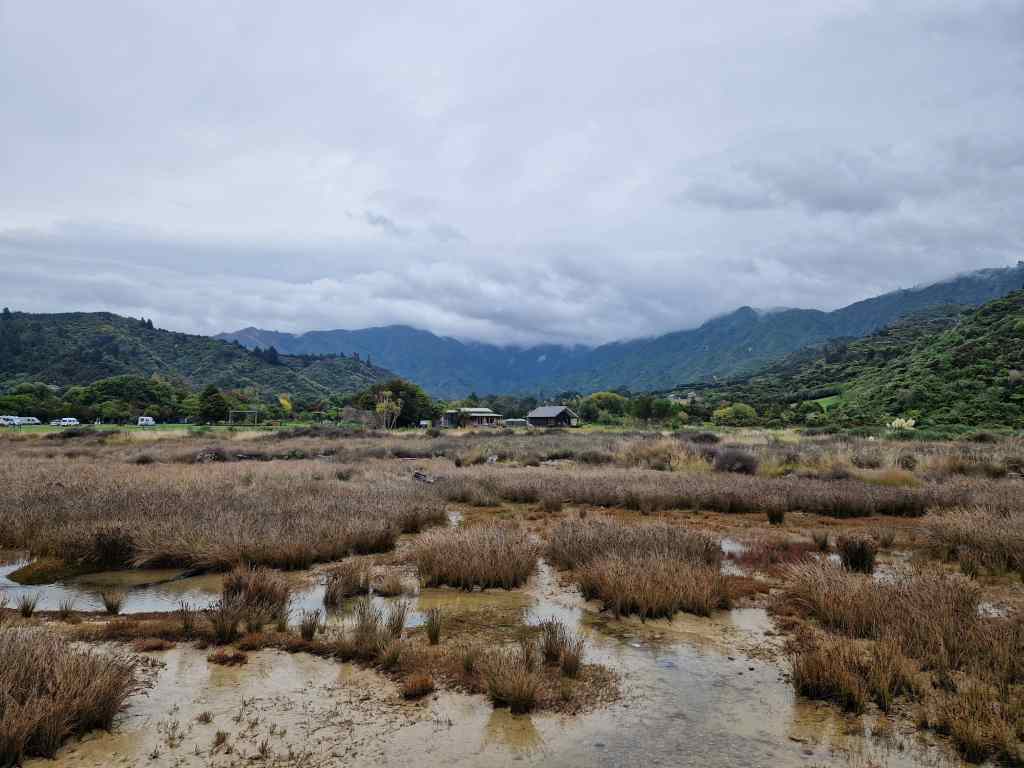
Despite my limited programme, I was immediately enchanted by my walk. The path led from the park entrance gates, across the a river estuary…..
River Estuary at the start of Abel Tasman Park
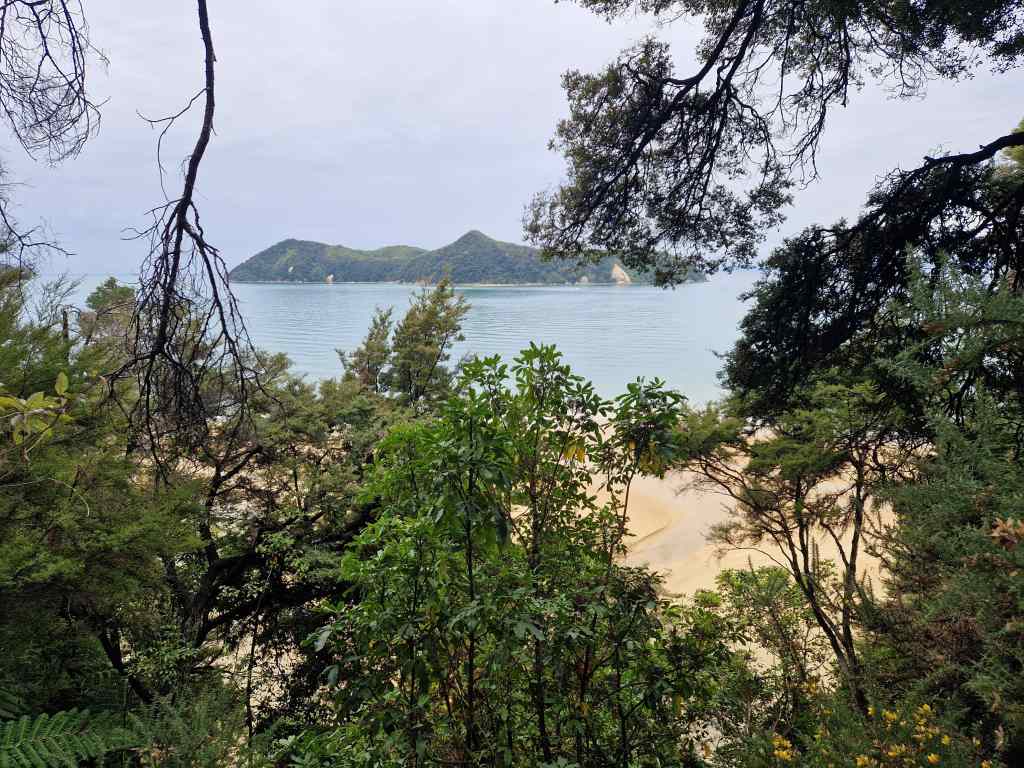
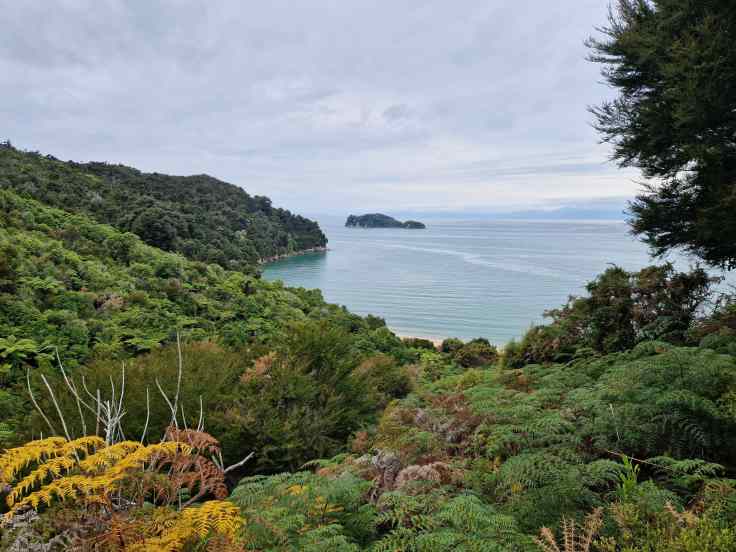
…and then along the coast, past many bays with sandy beaches.
Typical view from the coastal path at Abel Tasman Park
The sides of the path were lined with lush vegetation, including many giant ferns. Not only were the views impressive but the hike was also a treat for other senses; I was accompanied by unusual and beautiful birdsong, quite unlike what I hear back home, and in many places the path had a strong, sweet smell of honey. To this day I still don’t know which plants make this scent, which I smelt often in New Zealand.
Luxuriant vegetation and giant ferns at Abel Tasman Park
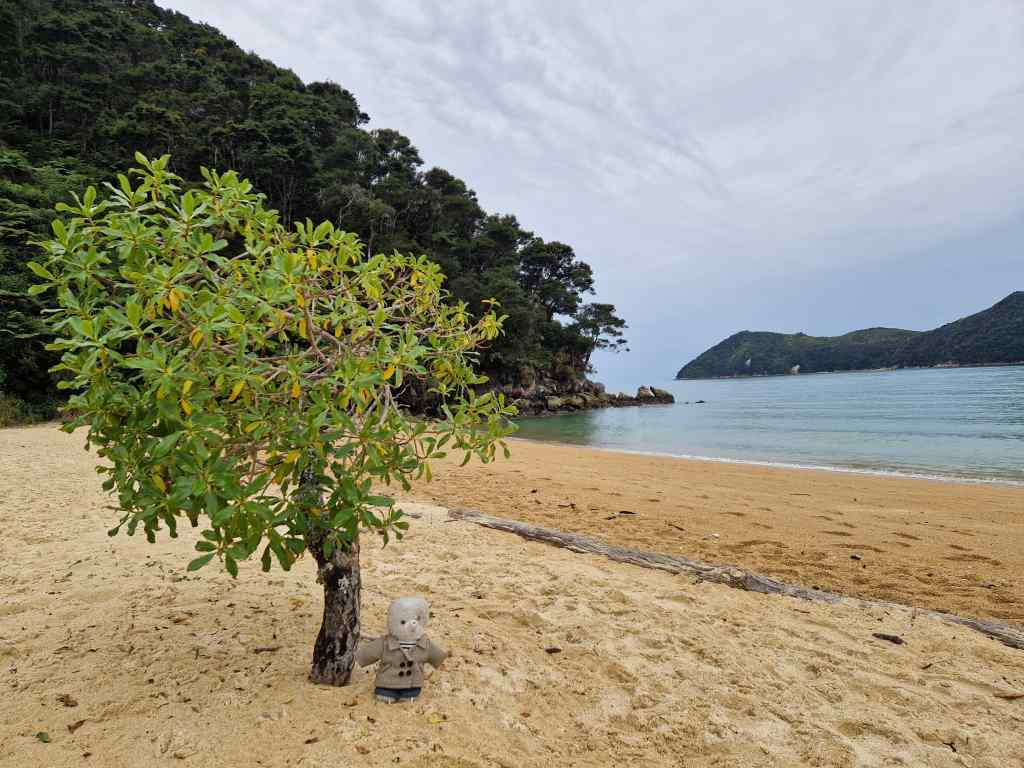
I spent a pleasant half an hour on the beach at Apple Tree Bay……..
Apple Tree Beach
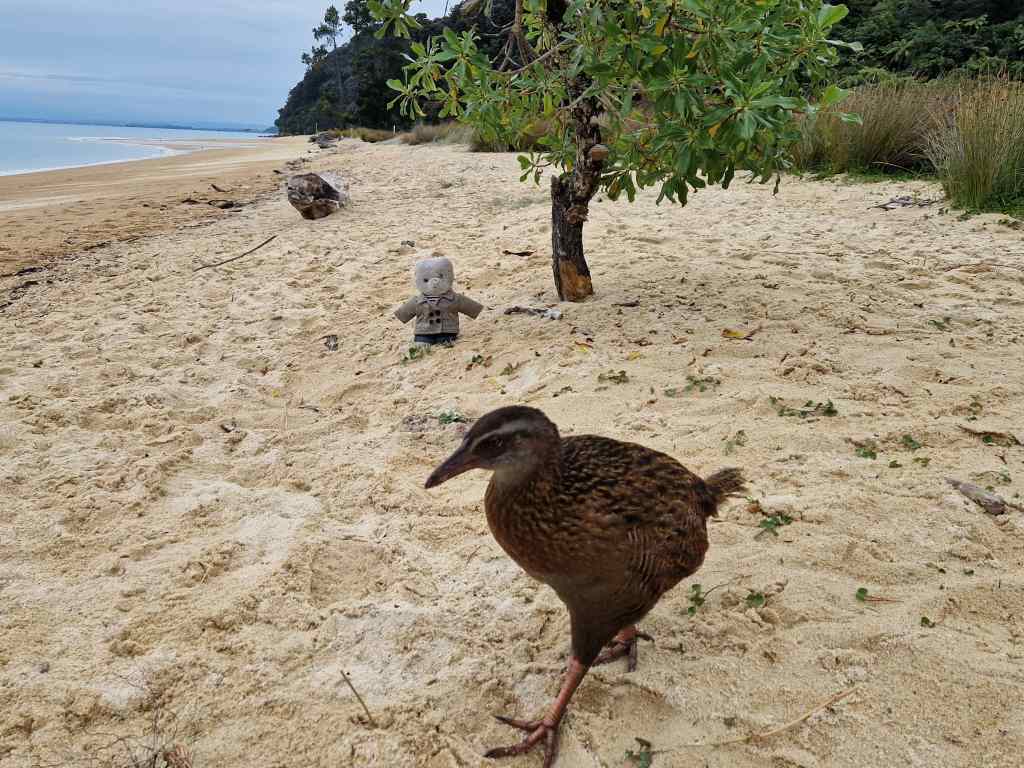
…and met a new friend, a weka, one of New Zealand’s many flightless bird species.
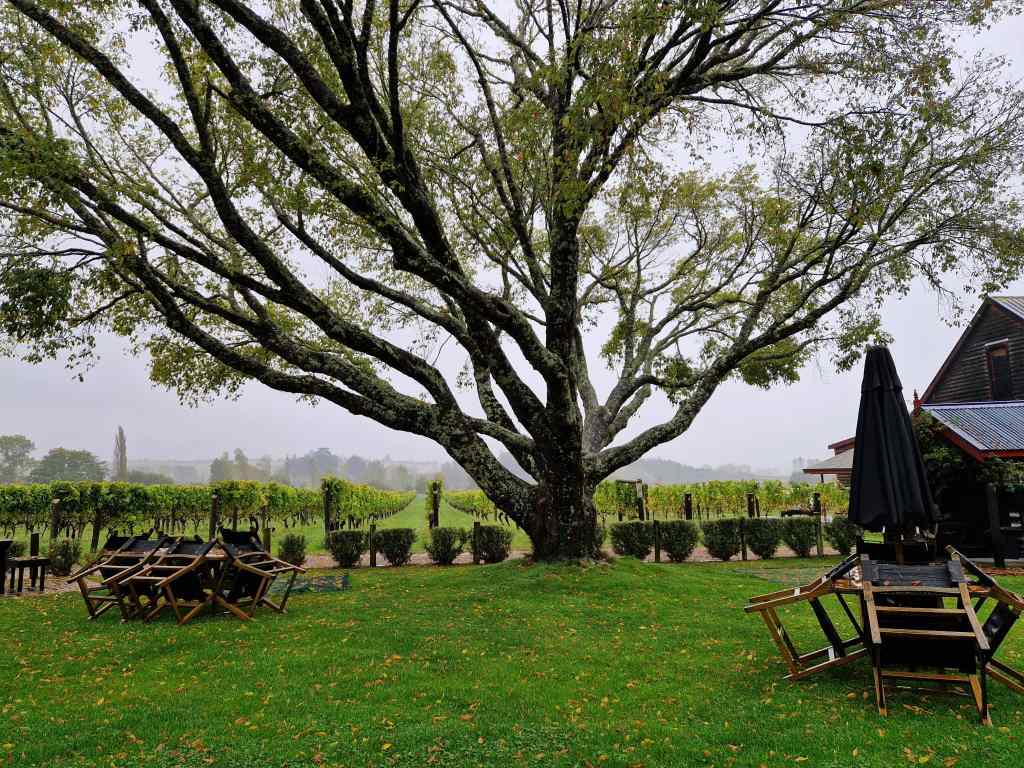
On my way back from Apple Tree Bay it started raining. I got back to my car without getting too wet, but then the skies opened and it rained hard all evening and all of the next day. Fortunately, my accommodation was probably the best value placed I have ever stayed in – a large and beautifully furnished apartment looking out over the bay of the city of Nelson. It was the perfect place to sit out some impossibly bad weather. My only activity for the next day was visiting a local winery for a tasting and a light lunch……
Neudorf winery in the rain, near Nelson, New Zealand
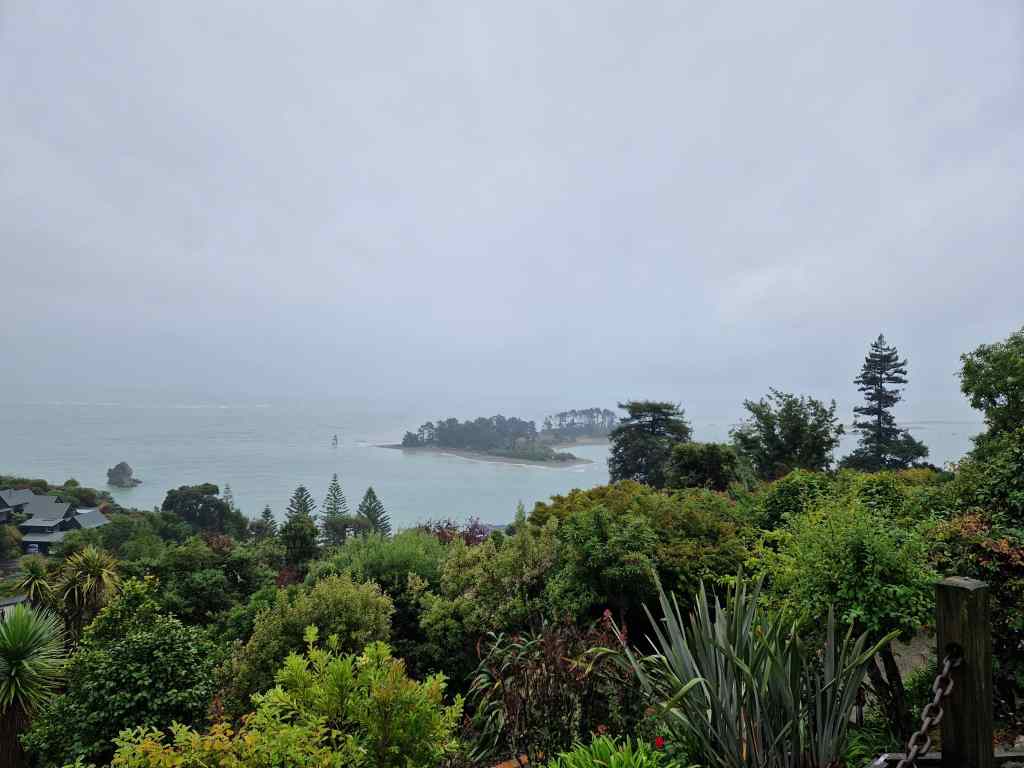
…..after which it was all to easy to sit back and admire the view from my flat. I ventured out once to buy some excellent turbot for dinner from a nearby shop on the seafront. Somehow, when the weather outside is this bad, staying in a nice place with a good view gives you a really cosy feeling.
The view from my flat in Nelson
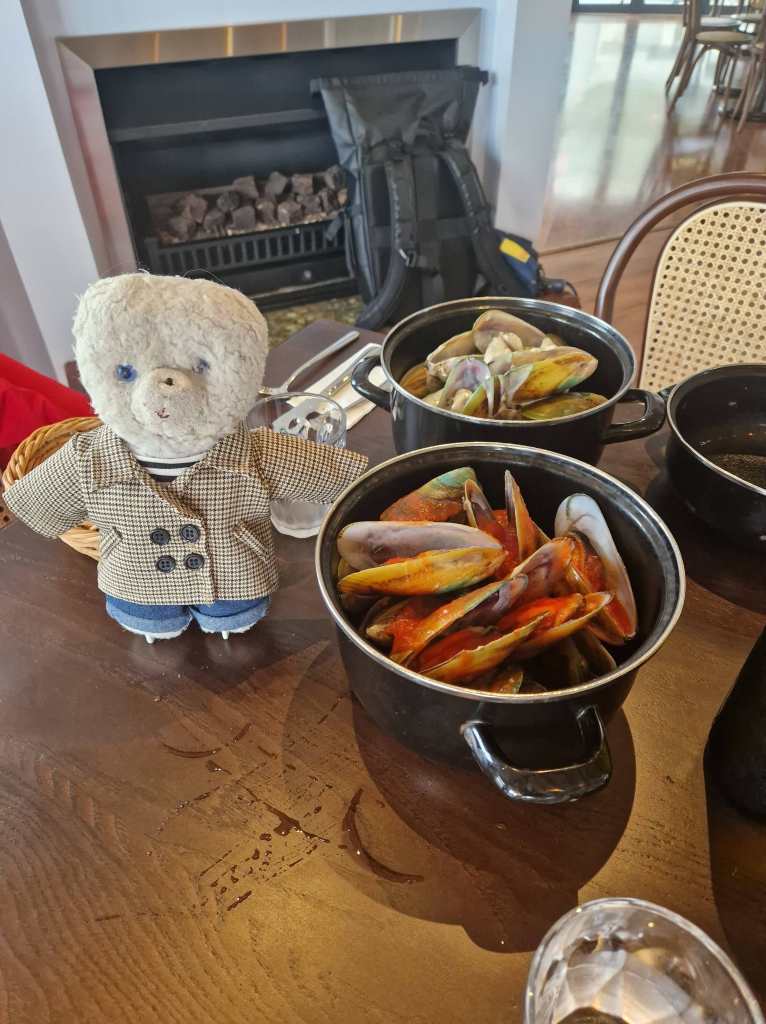
On day two of the storm, I had to check out and made the short drive east back to Picton in heavy rain. I stopped for lunch on the way in the town of Havelock, which is known for its greenshell mussels – which are enormous and very tasty.
Greenshell Mussels in Havelock
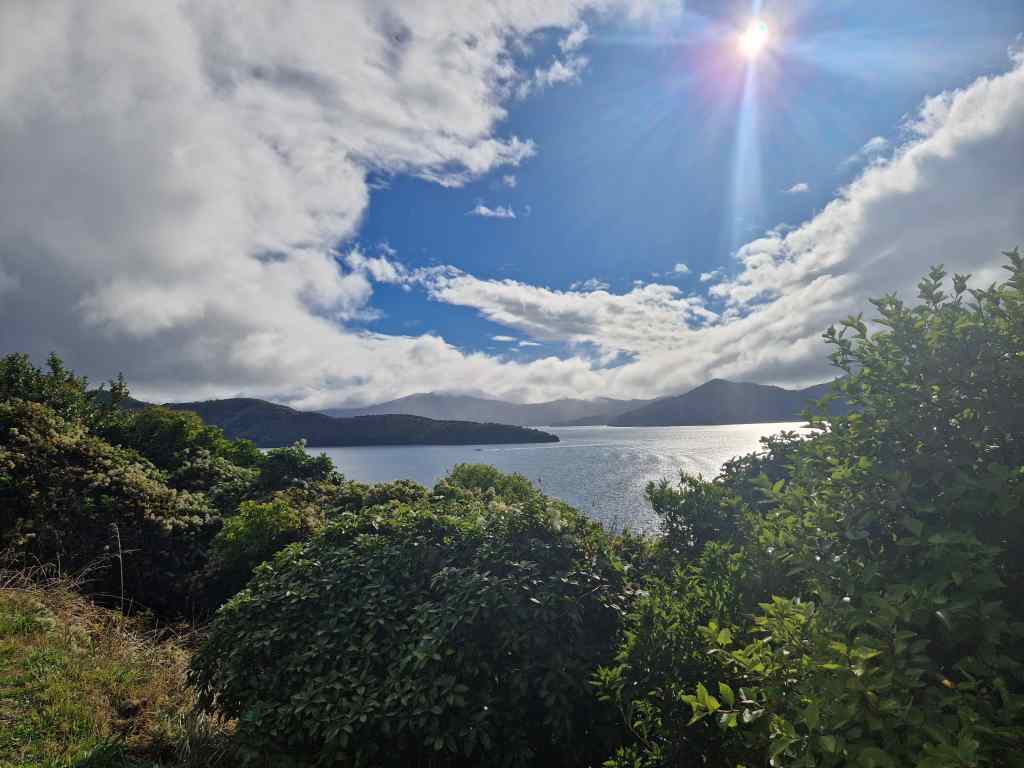
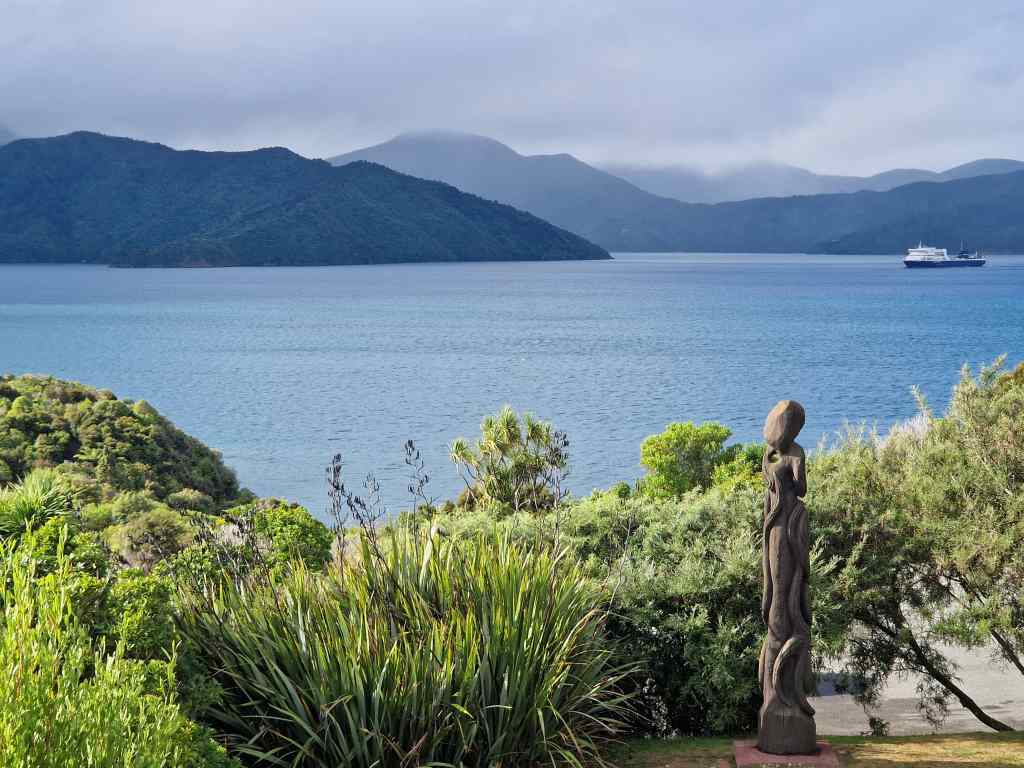
I reached Picton in the late afternoon and the sun finally put in an appearance. I used the remaining two hours of daylight driving around the area, seeing what the past two days could have been like if the weather had been kinder.
Picton – Queen Charlotte Sound in the sun this timeThe bright blues seas of the Marlborough Sounds finally appear!
Still, I cannot complain – so far I have been fairly lucky overall with the weather, and even under clouds, the Marlborough Sounds and Abel Tasman Park were pretty. At least I have an excuse to come back and visit the area again, hopefully when the sun is out.







 Trouspinet travels