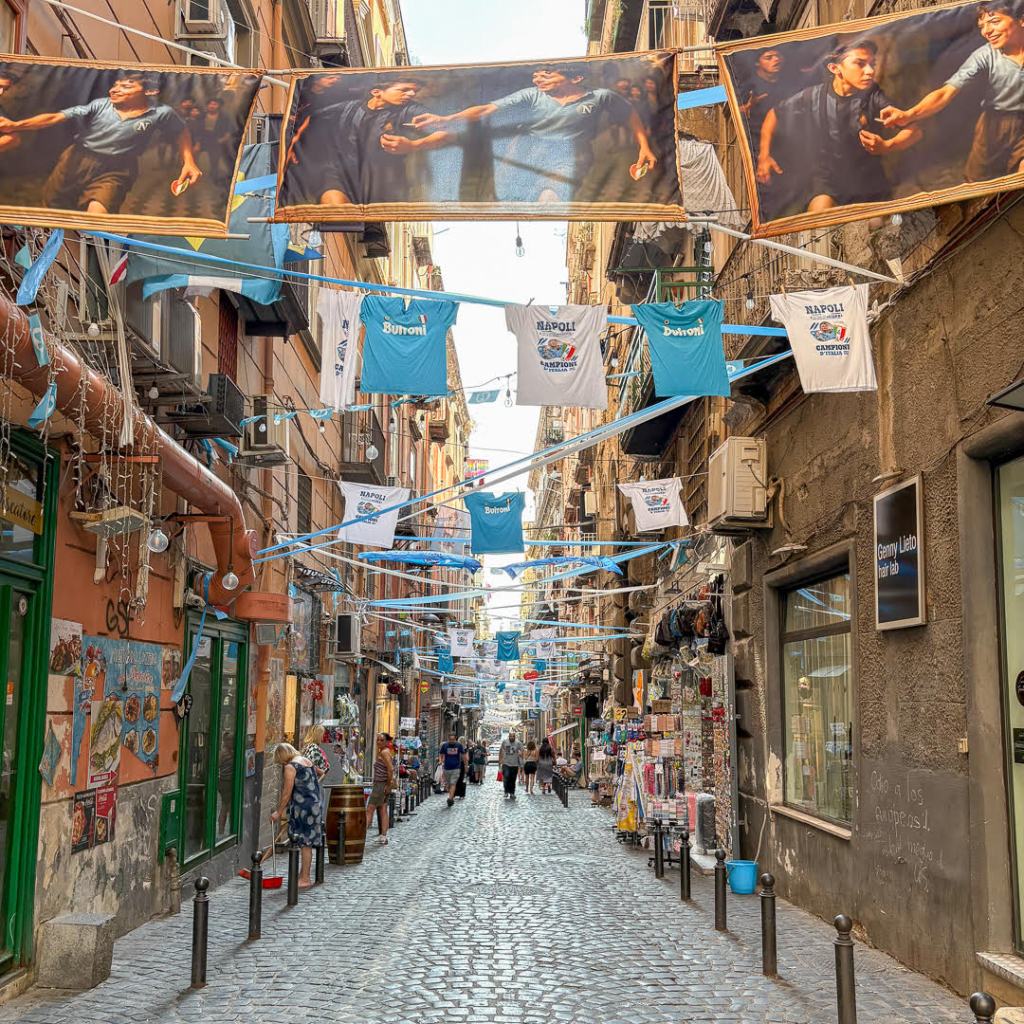
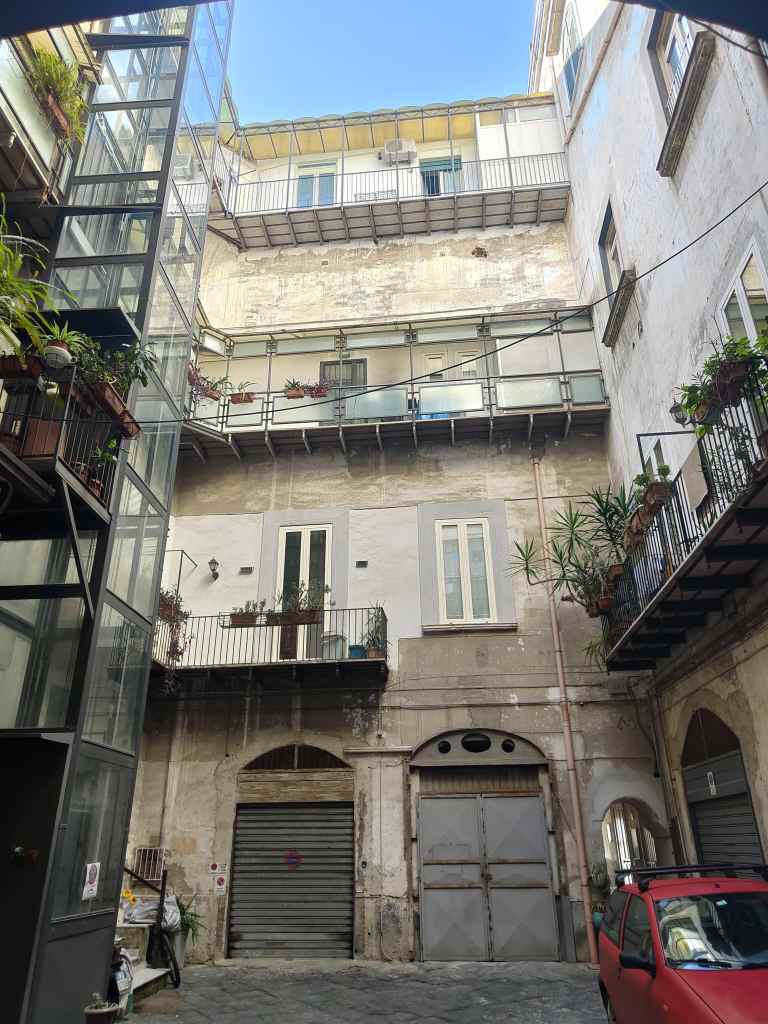
For the end of my exploration of Italy’s south, I had reserved a couple of nights in Naples. I had already spent one night here at the start of my trip, in an upmarket area near the port and the sea. This time I had chosen to stay in the centre, and my accommodation gave me a good introduction to the joys and frustrations of the city. It was a bed and breakfast establishment located in a typical Naples side street, lined with tall houses that might once have been grand, but which were now in need of refurbishment. A large wooden door opened into a rather dingy internal courtyard, from where a rickety lift took me up to the top floor of my building.
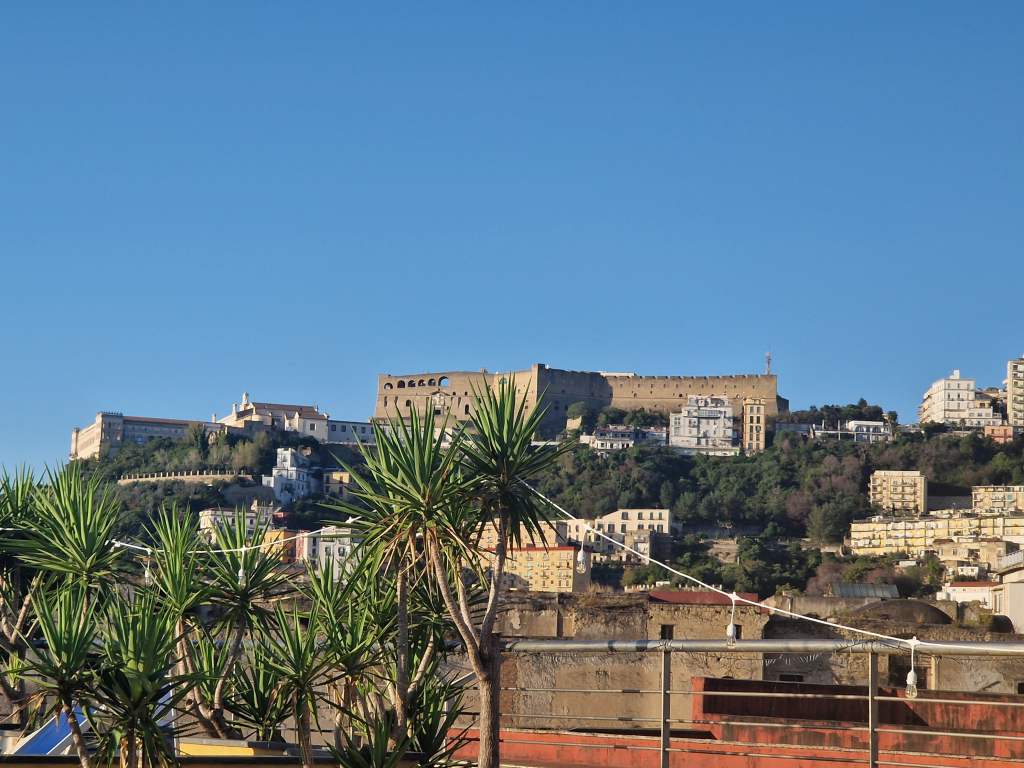
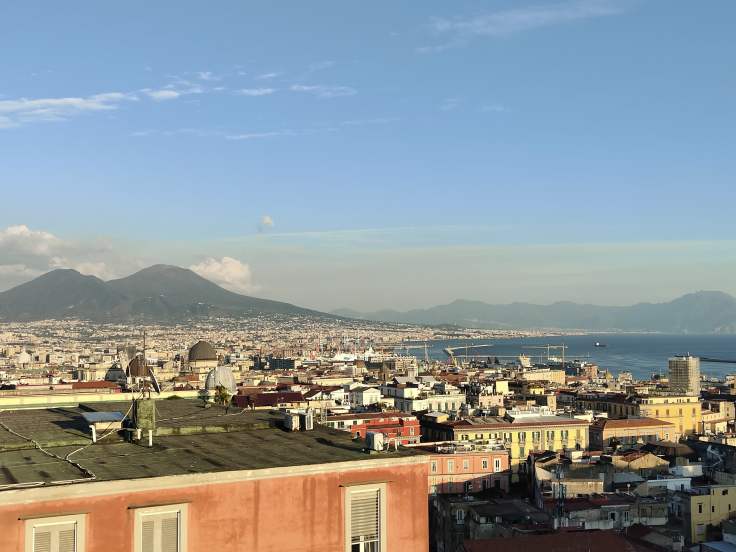
At the check in, my host led me to a room which was bigger, but not as nicely furnished, as the one I had booked. I complained and was told via Google translator that my original room was occupied. After I insisted, I was told I could have my chosen room after a two-hour wait. I was regretting my choice of accommodation until I was led up to the owner’s roof terrace for a welcome aperitif. There I enjoyed an Aperol spritz and some nibbles…and an amazing 360 degree view of Naples, a city with one of the very best settings in the whole world.
After freshening up, I set off to explore. My first stop was the Naples National Archaeological Museum, which has one of the best collections of ancient art in the world. I was lucky to visit when they had a special evening opening, and the galleries were quiet and very atmospheric.
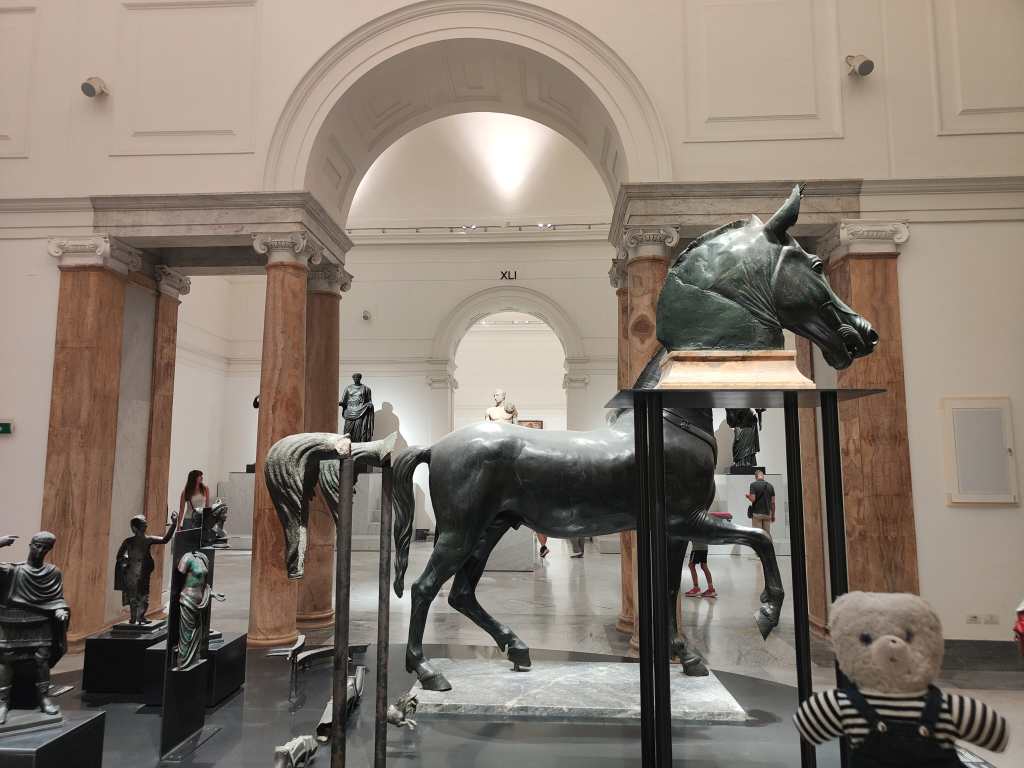
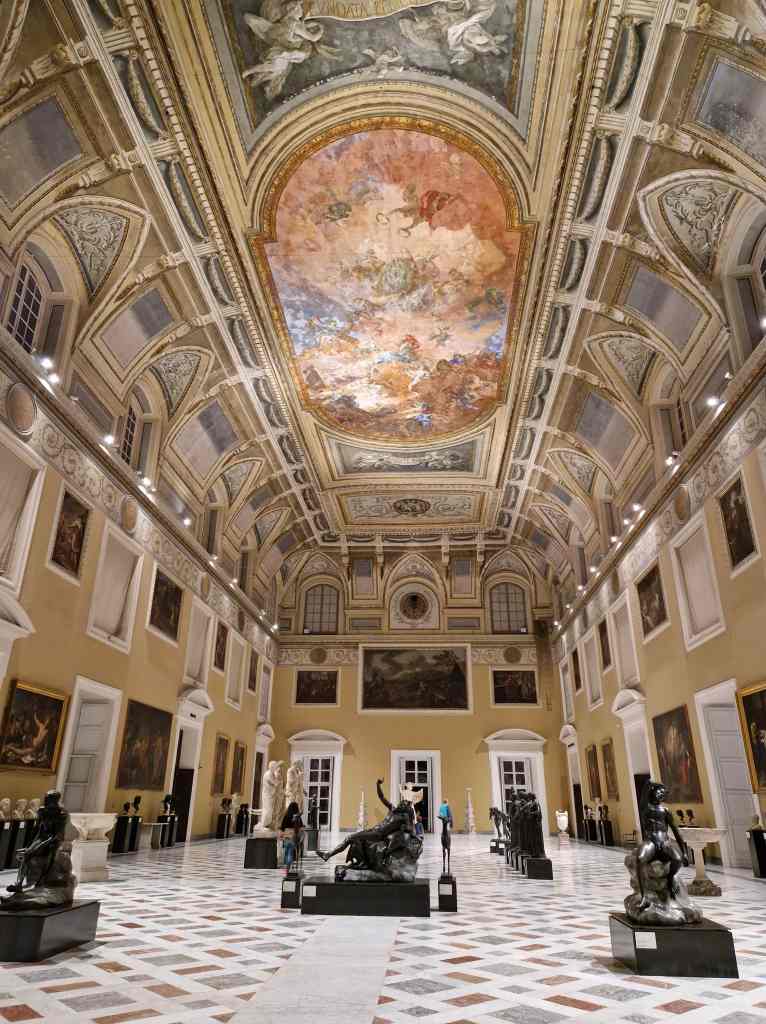

Many of the museum’s exhibits come from nearby sites like Pompeii and Herculaneum, but the museum also houses the magnificent Farnese collection, first assembled by Cardinal Alessandro Farnese (later to become Pope Paul III) in the 16th century and originally kept in his palace in Rome.
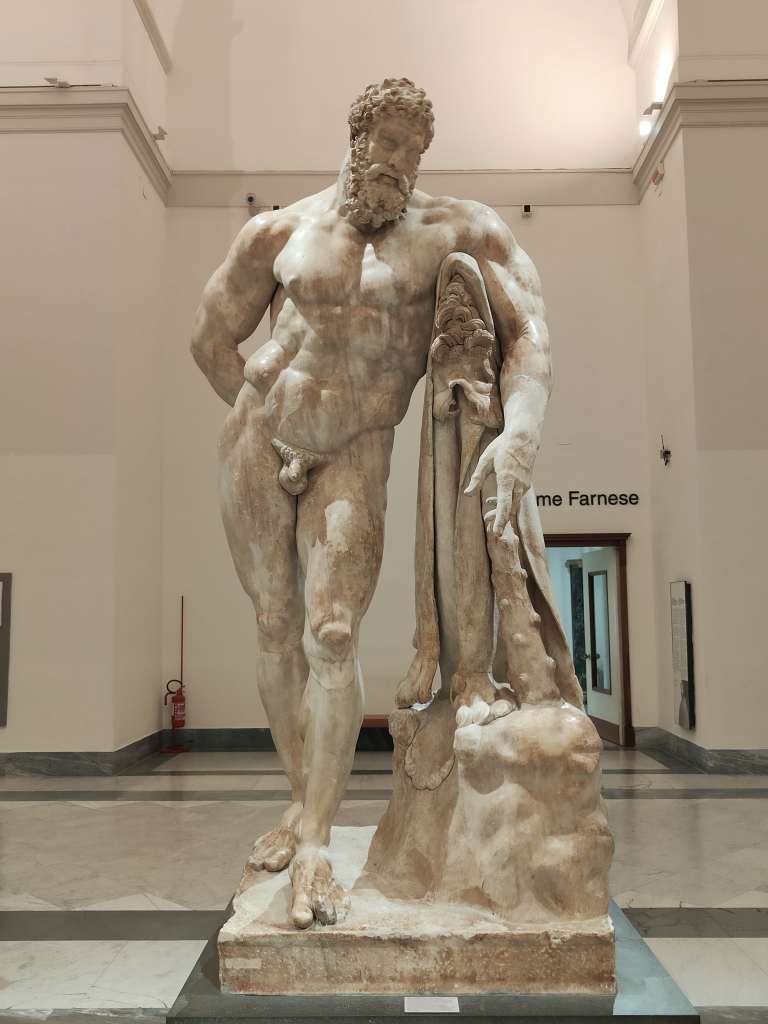
The museum is huge, and you could easily spend a day there, but I was a bit tired and limited myself to a couple of hours seeing the highlights. Apart from the magnificent mosaics and sculptures, there was also a fun exhibit of items that had been recovered after being stolen, together with the stories of their recovery. Some of these were quite funny, involving organised crime, disorganised crime, corrupt officials, innocent grandmas, bankrupt aristocrats or dodgy art dealers versus a special unit of the carabinieri set up to recover lost art work.
My next day was spent exploring central Naples, a chaotic, dirty, occasionally beautiful and always lively city. It is a good place to explore on foot – which is a good thing, since the traffic is terrible and the driving mad. My exploration started in the Rione Sanita district, a short walk from my accommodation. This was once where aristocracts lived, but became one of Napoli’s poorest areas with a reputation for corruption and crime. Today it is considered safe again to walk around but is still a poor, working class district, which features narrow streets lined by tall, once grand but now crumbling buildings, whose walls were covered in graffiti and from whose balconies clothes were hanging to dry. Even here though, in one Naples’ least touristy neighbourhoods, there were some stunning buildings to be seen by those brave enough to venture here.

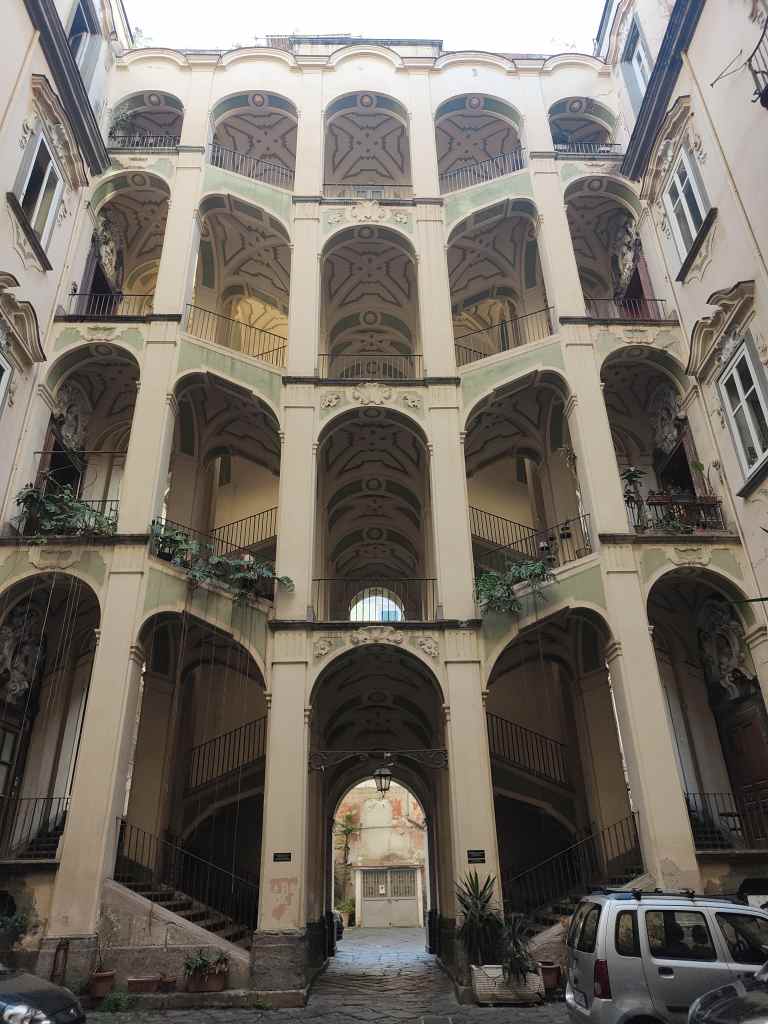
Every street seemed to have a small shrine in the wall of a house, and every small neighbourhood had a church – some dilapidated, some magnificent. Apart from Christianity, Neapolitans’ other religion is football, and every street also had a mural either devoted to the fact that Napoli had won the Italian championship four times or to the former star player Diego Maradonna, who last played for them in 1991, but is still worshiped locally.
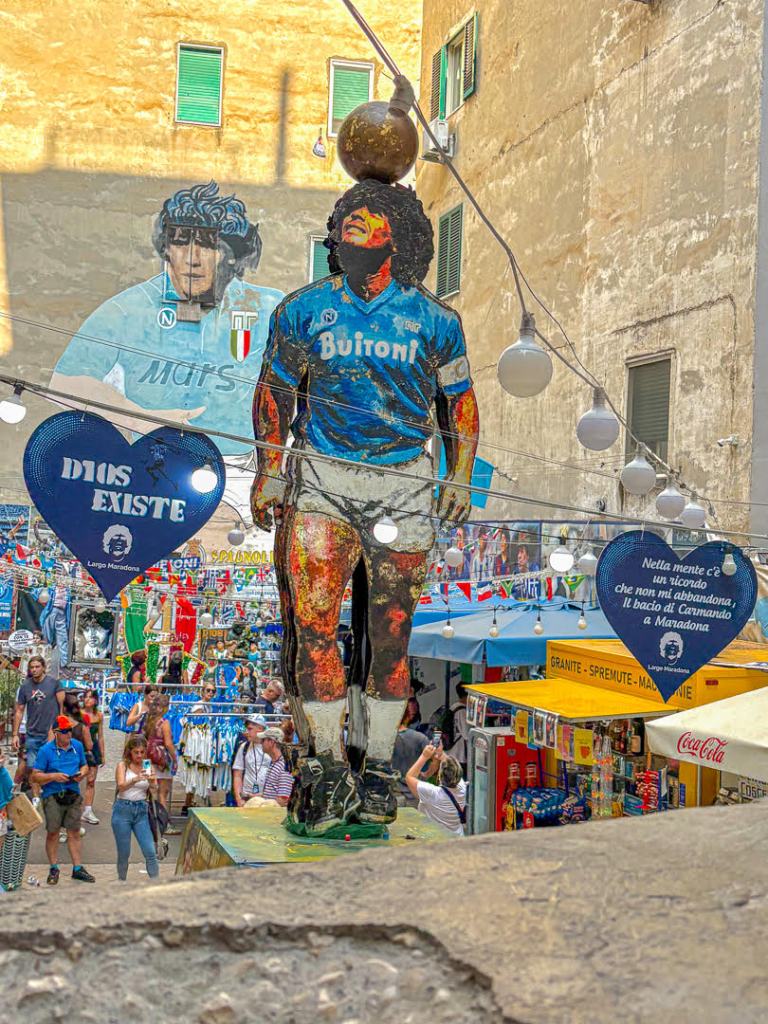
My walk then took me into Naples’ Centro Storico, the heart of the city. This was a noticeable richer area, with many more visitors. Compared to Raino Sanita, it had the same narrow streets, more old buildings, slightly less litter and graffiti, but also had cafes, restaurants and shops for tourists.
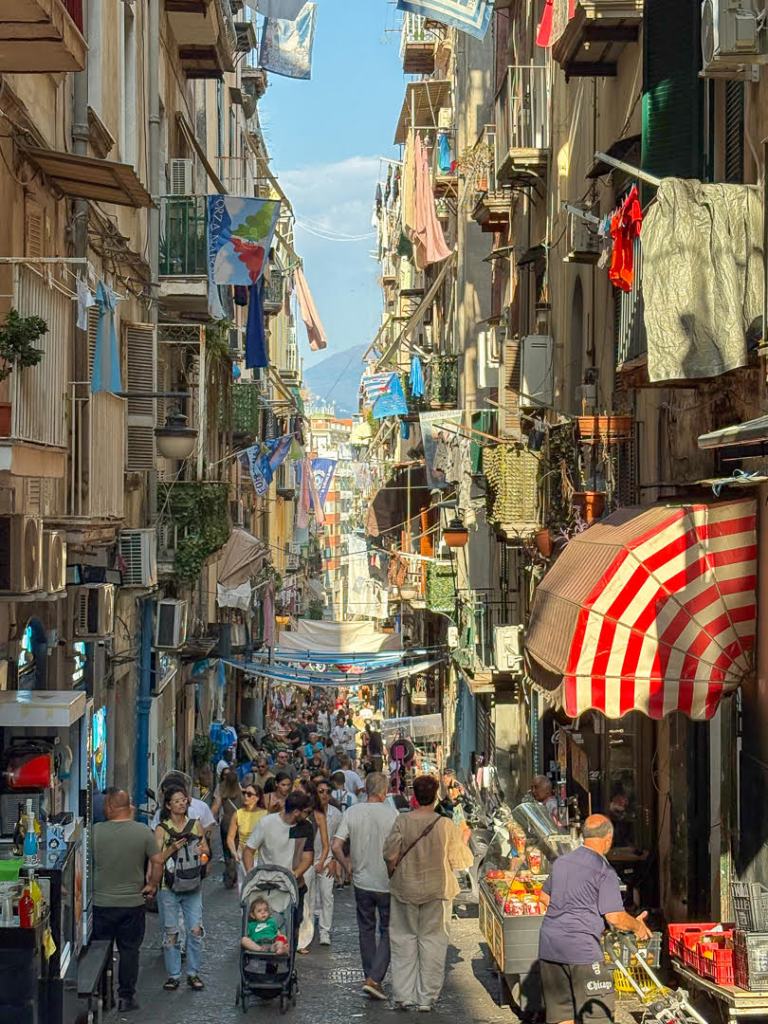
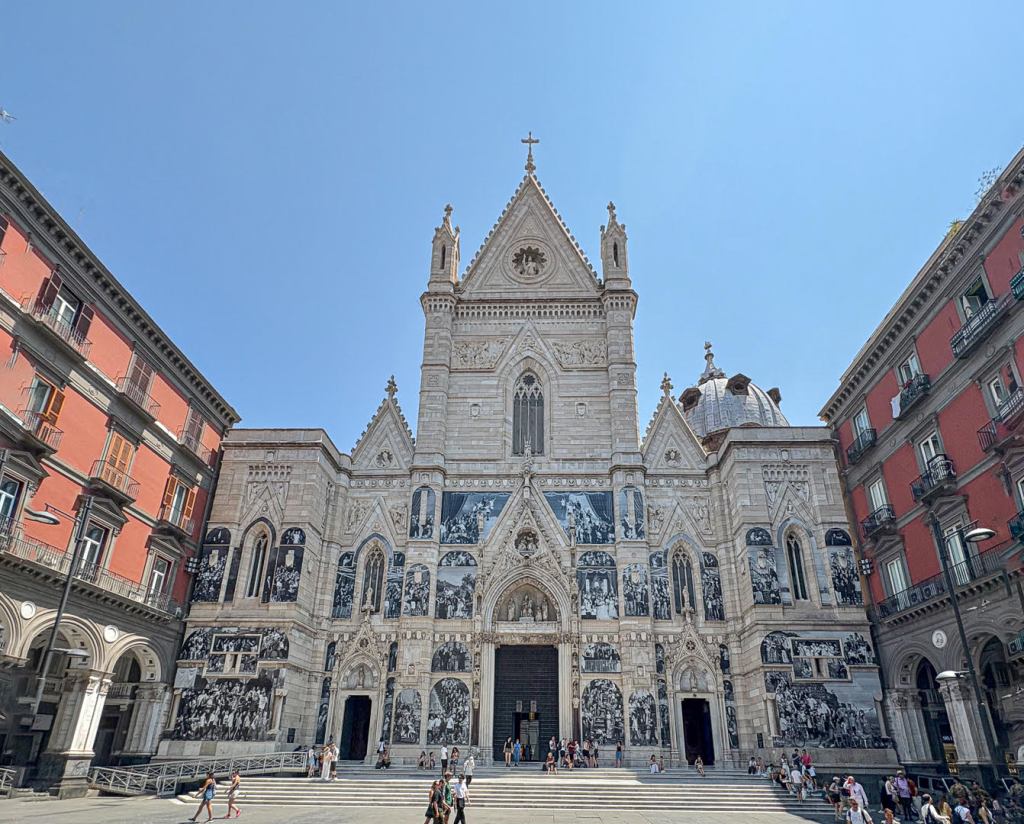
Amid all this seething, dirty and fascinating urban sprawl are many world-class tourist attractions – so many in fact that I only had time to visit a small portion of them. Best known is Naples’ Duomo, which was my next stop. It has a magnificent interior, and which houses the skull and two vials of dried blood of San Gennaro, the patron saint of the city. The latter were collected after the saint’s beheading in 305AD and the blood inside is supposed to miraculously liquefy on specific dates three times a year – a time of great celebrations amongst devotees.
A short stroll further into the Centro Storico brought me to yet another beautiful church – this time a small baroque one.
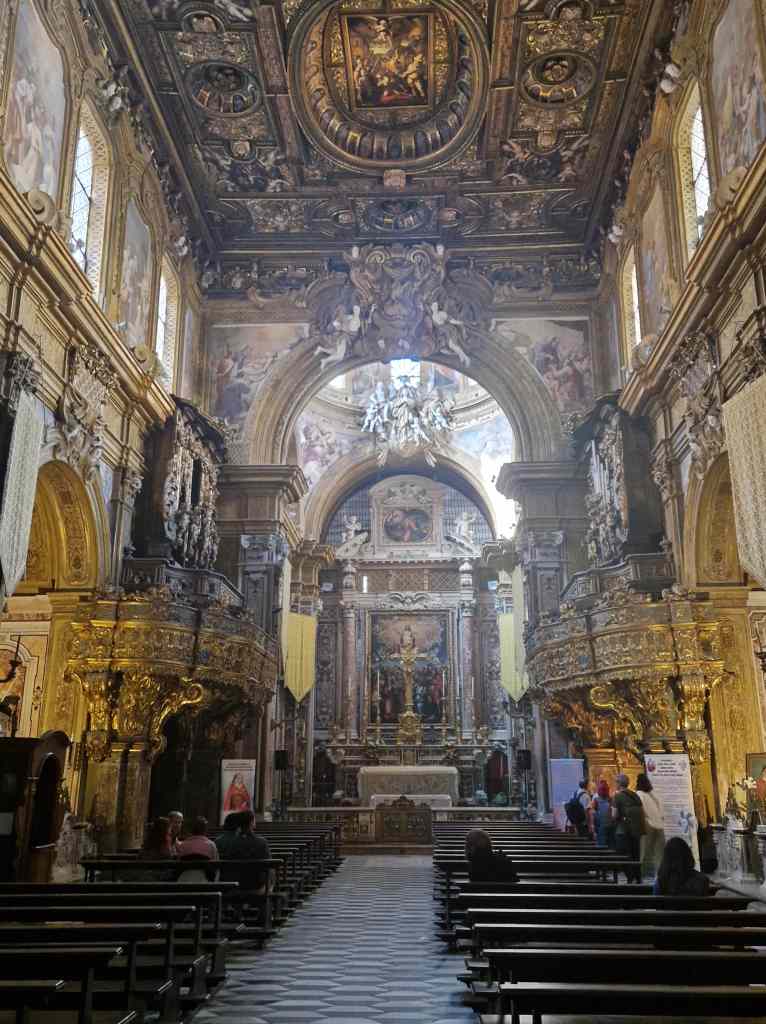
The cathedral is indeed impressive, but I found the Church of Gesu Nuovo (“New Jesus”) even better. This huge building was originally a palace, dating from 1470, but its owner fell into disgrace and it was confiscated and sold to the Jesuit order for them to convert to a church, whose construction began in 1584.

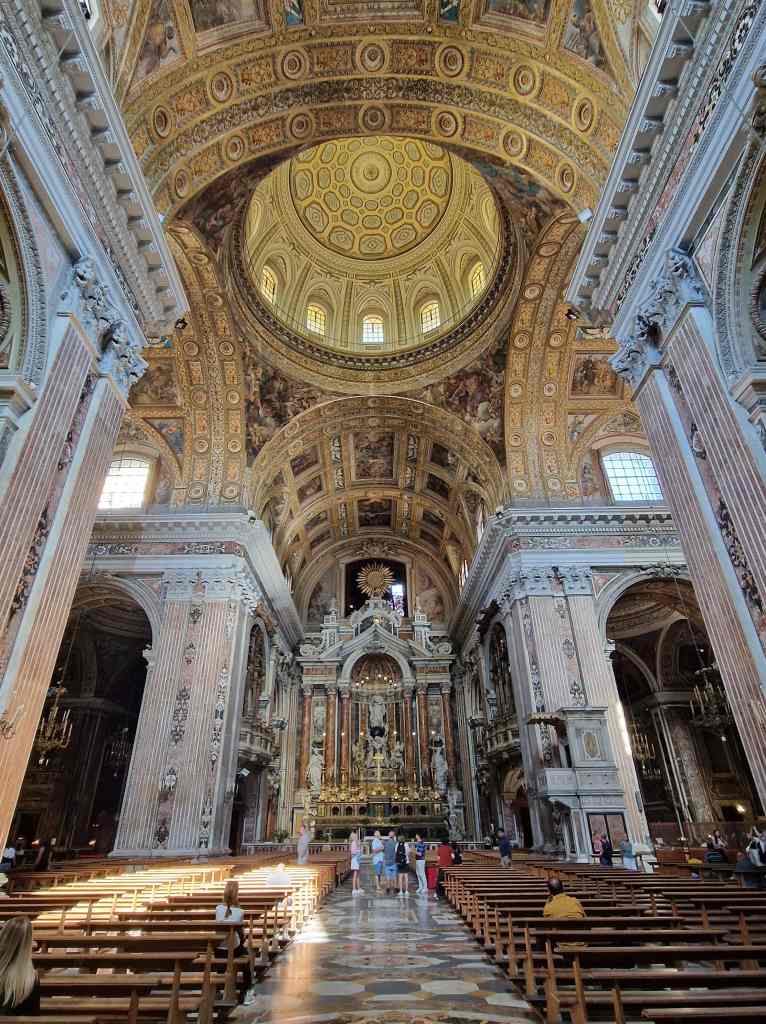
Today it is in my opinion the most beautiful church in Naples and certainly the biggest. A curious addition to the usual pictures of saints adorning the walls was an unusual twisted chunk of metal – an inscription explained that this was a bomb that fell through the church roof during WWII, but which failed to explode – something of course put down to divine intervention!
My stroll carried on past yet more interesting squares and buildings, like the Piazza Bellini and Piazza Dante.
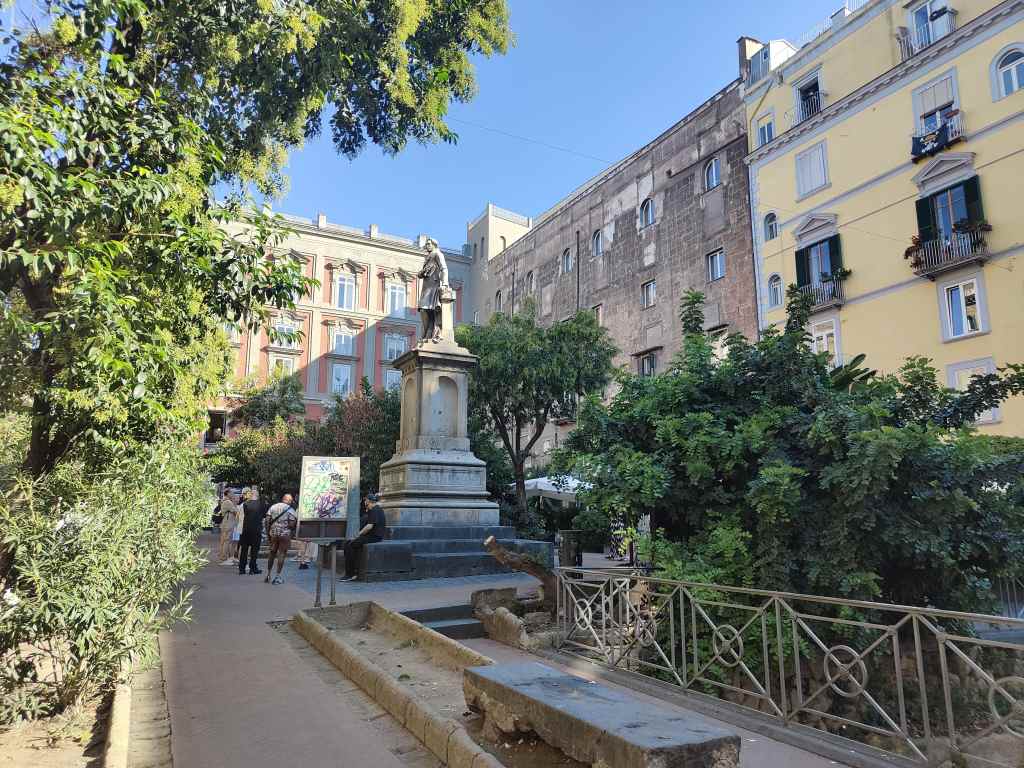
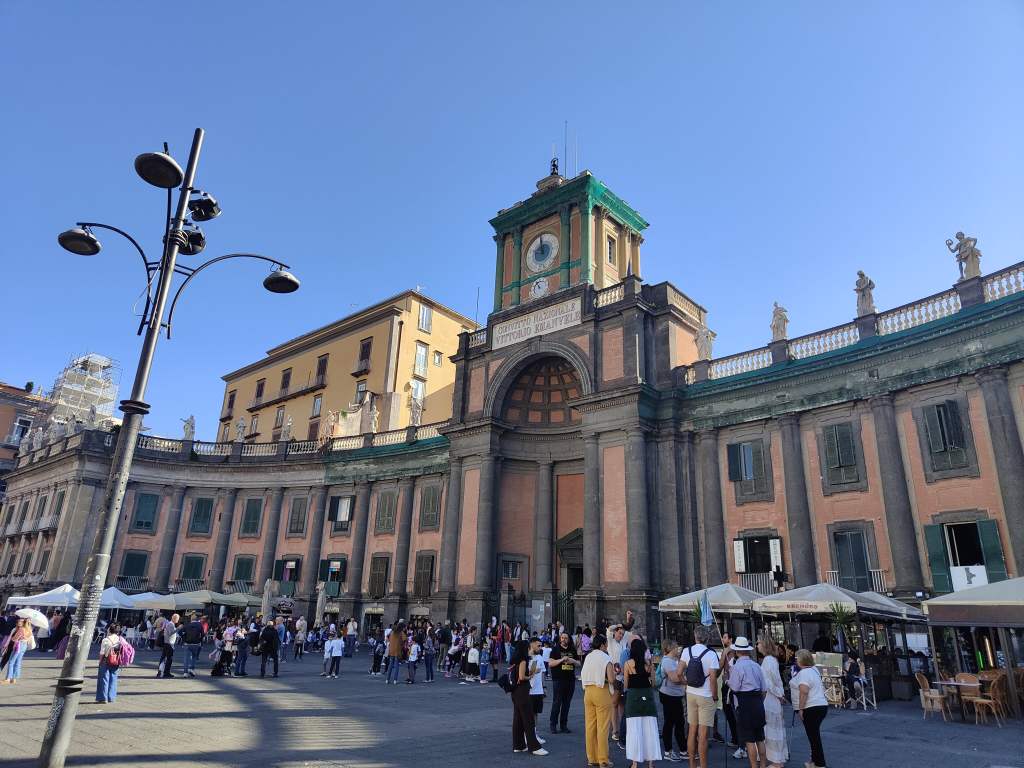
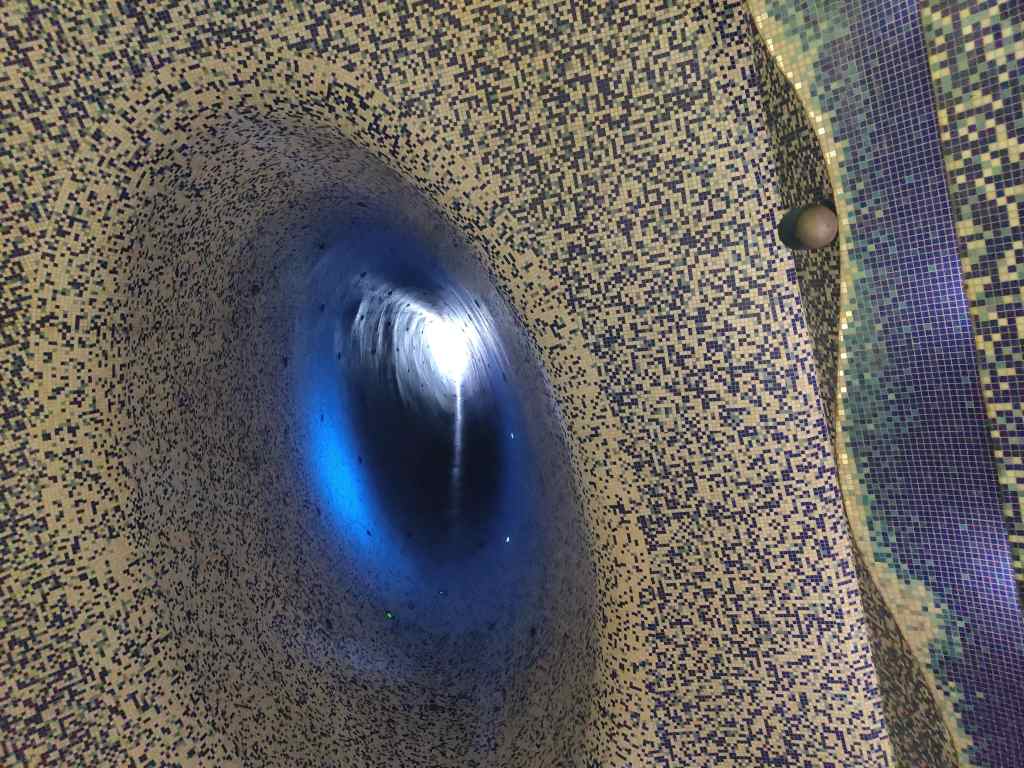
I finally ended up on Via Toledo, a main road in a more modern part of town. The metro station there is one of several in Naples that have important modern art installations, and is worth a visit even if you are not travelling anywhere.

I took the metro back home and sat on my terrace enjoying the view and working on my blog as the sun set. I was hoping to see Naples’ many monuments at night, but the local authorities do not light up their buildings in the evening, so they were all hidden in darkness. This was a real shame, since I am convinced that nighttime Naples could be a spectacular sight, like Paris or Moscow – if only they would illuminate their city. To console myself I headed out for dinner in a local pizzeria, which was, as I expected, excellent and very reasonably priced. Apart from an imaginative and tasty octopus pizza and good wine, it was nice to be eating at an outside terrace in late September when I know that in London I would be shivering indoors.

Over dinner I reflected on the last day and a half in Naples. I had found it an exceptional city, quite unlike anything I had seen elsewhere in the world – it felt like somewhere that could have been in Africa, but with European architecture. I loved its energy, crumbling historic buildings and magnificent setting on the Bay of Naples – and could forgive its chaotic traffic, noise and dirt. With some investment, Naples could rival Paris for its beauty – but for the moment I am rather glad that it remains as it is. I now had one day left to spend in the area, which I devoted to one of the world’s most famous sites – stay tuned to see which one (although I imagine many readers will already have guessed!).
Previous Post: Martina Franca and Alberobello
Next Post: Pompeii
 Trouspinet travels