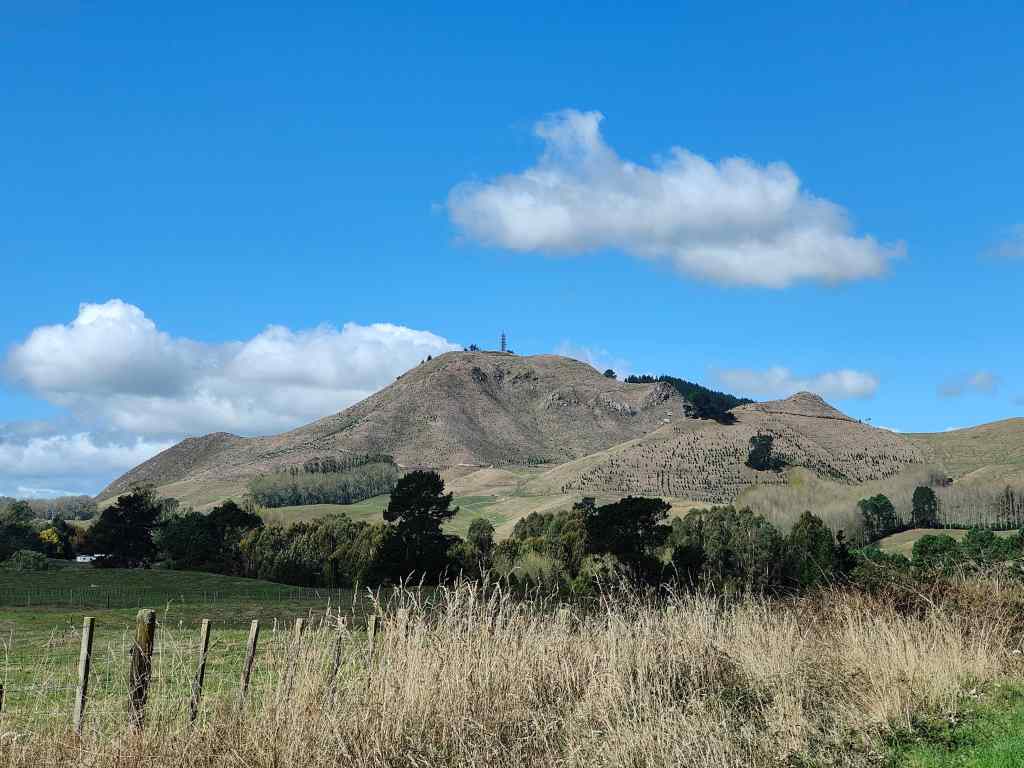
From Lake Taupo I headed north to Rotorua, a small city that is a centre of Maori culture and also of New Zealand’s volcanic activity. On the way there I stopped at Oreiko Karako, a geothermal park, found after a pleasant twenty-minute detour through picturesque countryside off the main Taupo to Rotorua road. Its relative remoteness meant that there were very few guests.
The geothermal area is accessed by a short boat trip across a lake.

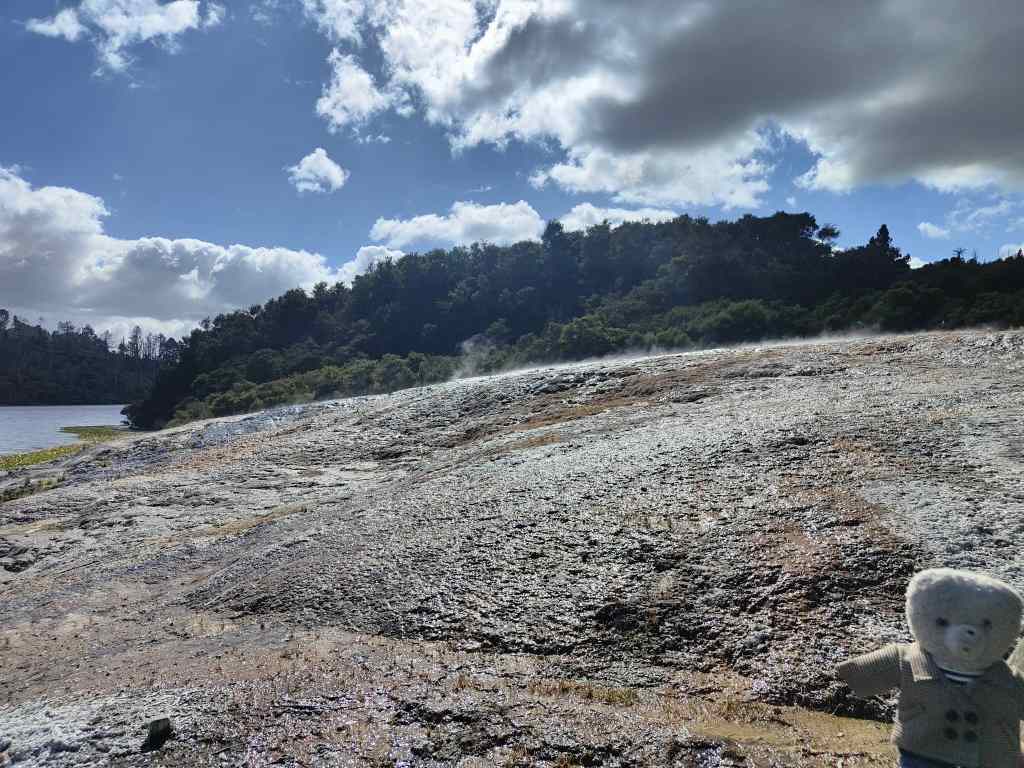
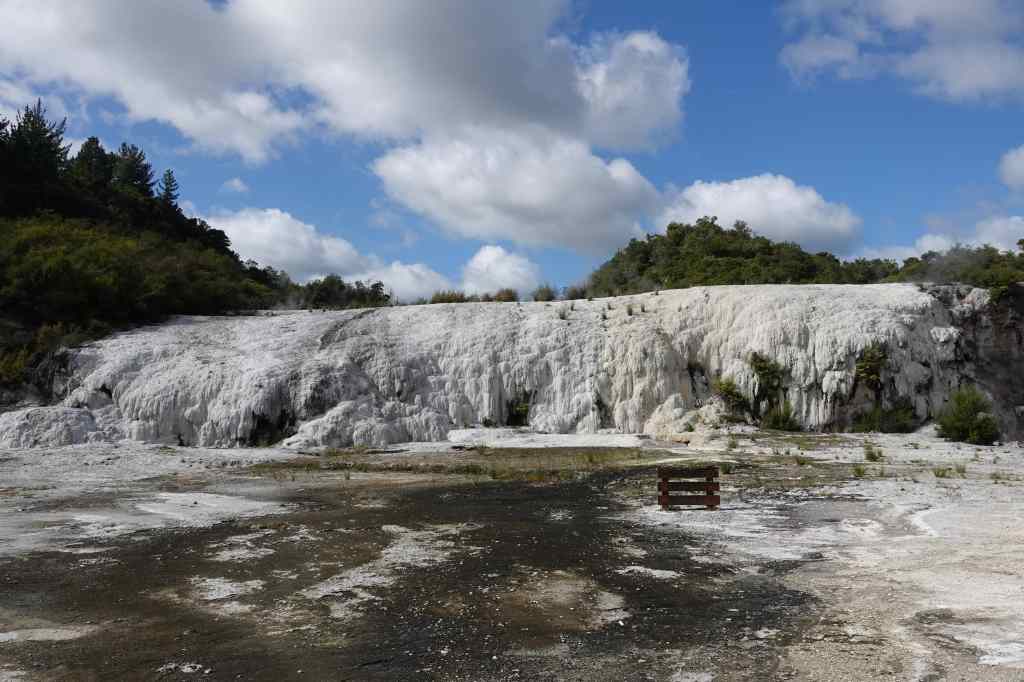
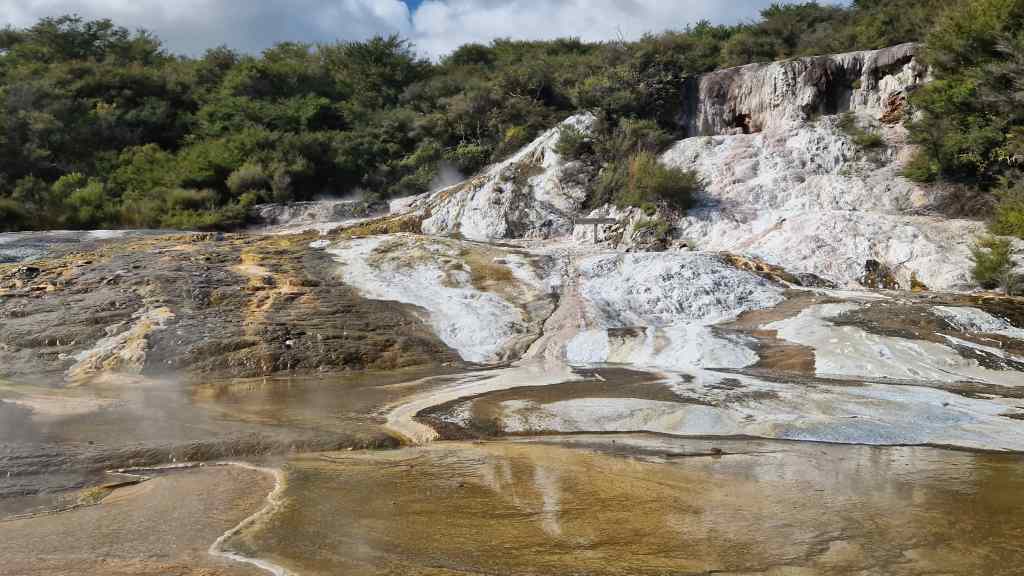
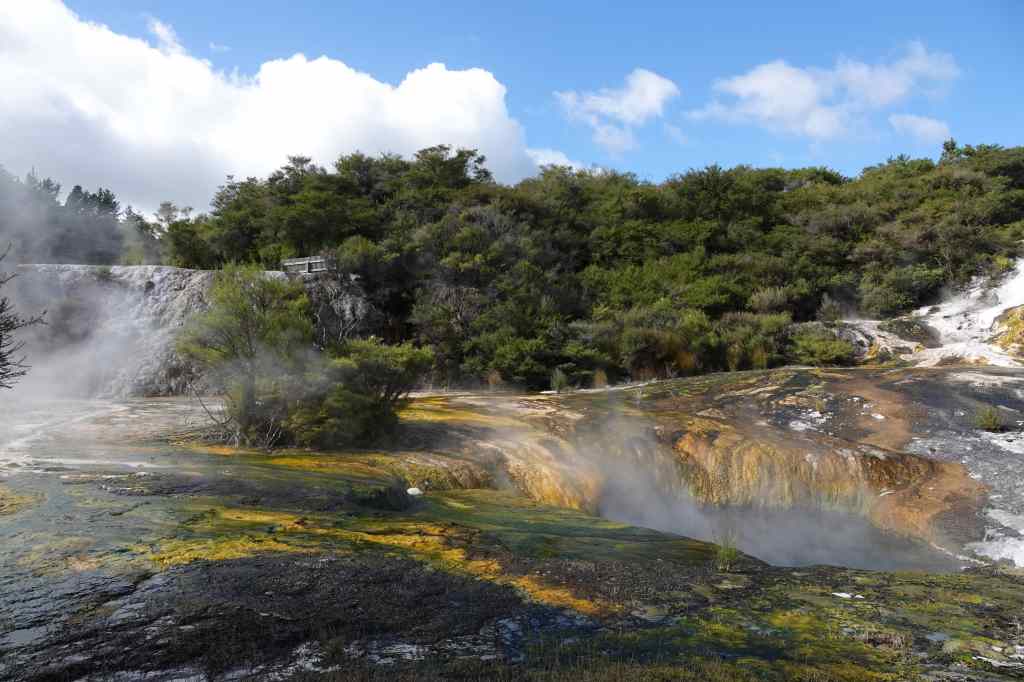
Once on the other side, a raised pathway led past a series of pools of nearly boiling water surrounded by a stunning display of rocks coloured by volcanic minerals. I spent a wonderful hour there, happy to have the place almost to myself.
Form Oreiko Karako I drove on to Rotorua. Like many other New Zealand towns, first impressions were not favourable. There was a sprawl of ugly commercial development stretching out along the road entering the city. It also looked much rougher than the sleepy places I had seen before; I saw the first beggars of my trip, and also some drunks shouting abuse at each other. I checked in to my bed and breakfast and immediately set off to explore. My first stop was a tour of Whakarewarewa, a Maori village sitting around hot springs and a geyser. Guided tours by local Maori have a long history in this area, first starting in the 1830s to nearby geothermal features called the Pink and White Terraces. These were buried by a devasting volcanic eruption in 1886, but the tradition of Maori showing visitors around Rotorua’s geothermal features and their village lives on to this day.
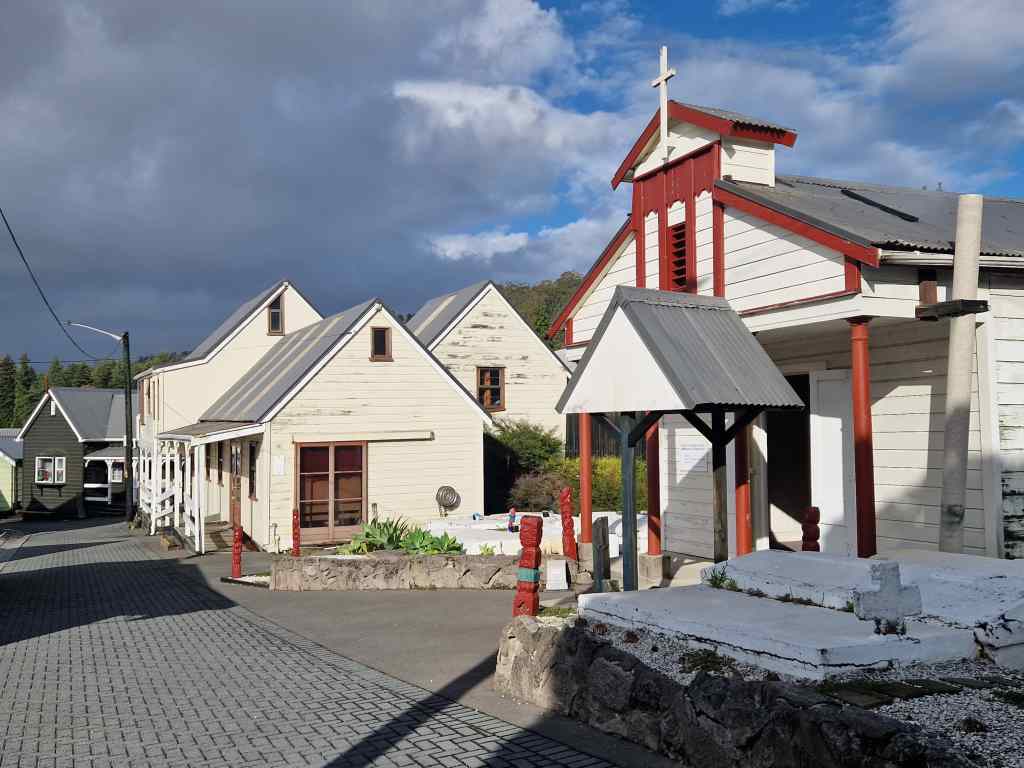
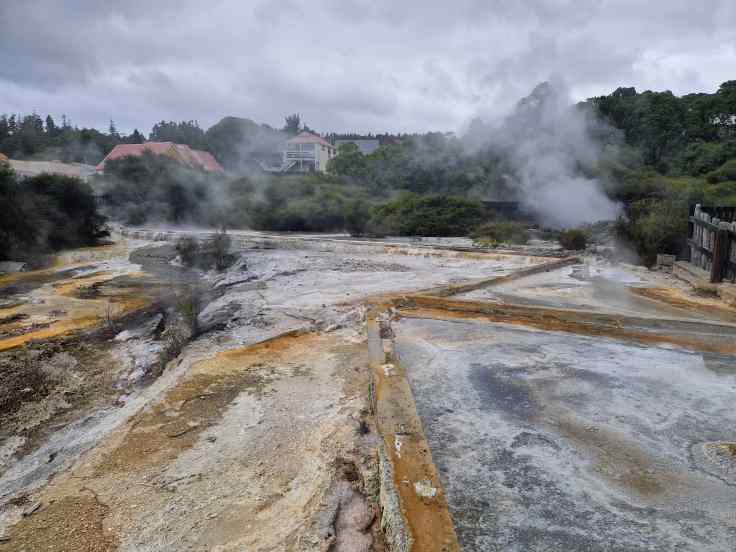
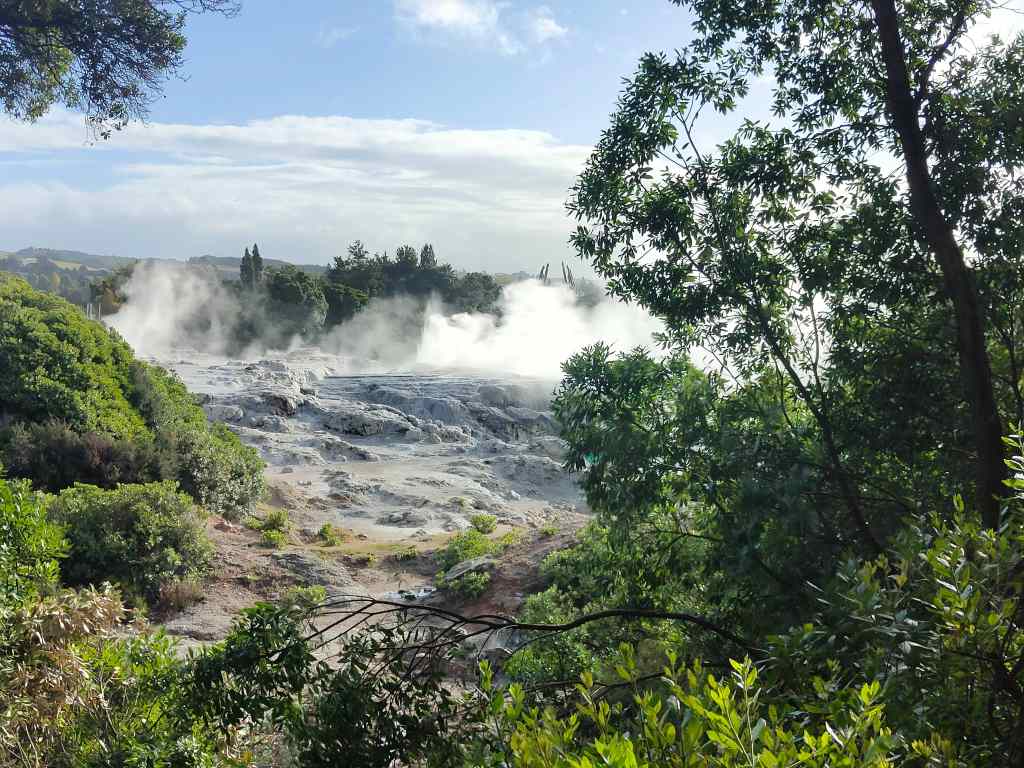
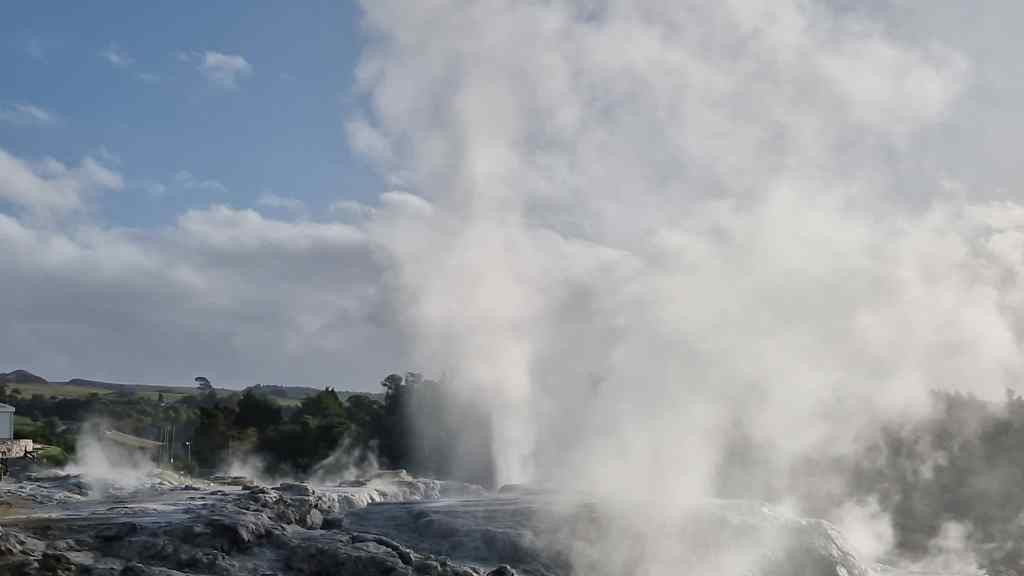
Whakarewarewa is one of the last remaing Maori villages and the only one to be located on geothermal land. The Maori houses today are simple modern wooden structures, and the village was quiet with very few people about. It somehow felt rather sad, a feeling reinforced when our guide talked of the damage done to Maori culture by colonialists. The most interesting part of the tour was seeing how the local people use the abundant boiling hot water in everyday life – particularly for cooking and bathing. These gifts of nature have been used in this way ever since the village was first settled, probably around 1325, and made the land a valuable asset that the local tribe often had to defend against marauders – successfully, since village of Whakarewarewa was never once taken in battle and has remained the ancestral home of the Tūhourangi Ngāti Wāhiao people all this time. The tour ended on a viewing platform overlooking several geysers. The biggest one of the group, Pohutu, erupts roughly every hour, so I waited patiently, and sure enough after twenty minutes, a stream of steam and water spurted into the air. The jet from the geyser can reach a height of 30 metres, making it the biggest geyser in the southern hemisphere.
To end my day, I made a visit to Whakarewarewa Forest, which draws visitors to admire its tall redwood trees. You can pay to go on a raised walkway through the trees, but it did not look very high, so I preferred to simply stroll along a short trail in the evening light. The redwoods were impressive…..
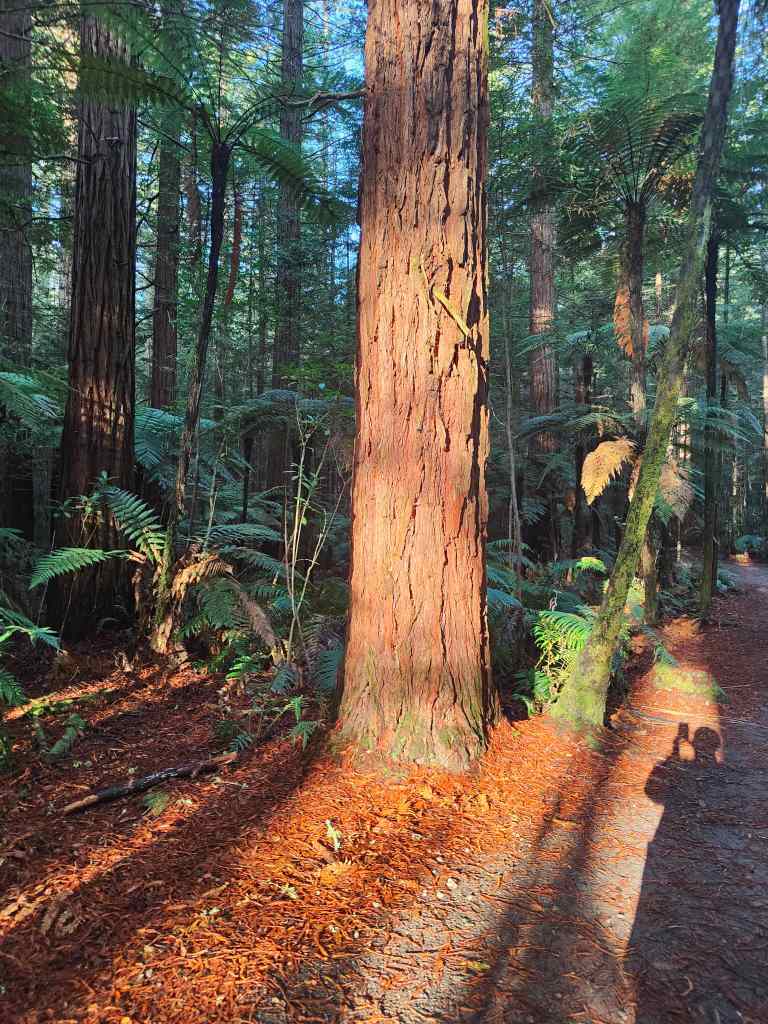
….but in my view the real stars of the forest were the giant tree ferns.

It had been a very varied day, with a geothermal park, a Maori village and a forest walk all making up for the less than impressive modern city of Rotorua. But the area still had a lot more to offer, and I looked forward to tomorrow, when I was due to see visit the Te Puia Maori cultural centre and another geothermal park, which was supposed to be even better than Oreiko Karako.
Next Post: Rotorua – Kaituna river and Waimangu
Previous Post: Taupo
 Trouspinet travels