More Shikoku – Iya Valley, Kotohira…and a Typhoon at Takamatsu

Today our final destination was Takamatsu, on the coast of the Inland Sea on Shikoku. The road took us north, to the lower part of the Iya Valley. There were some nice viewpoints but at this altitude no sign yet of the autumn leaves that had dazzled us yesterday.
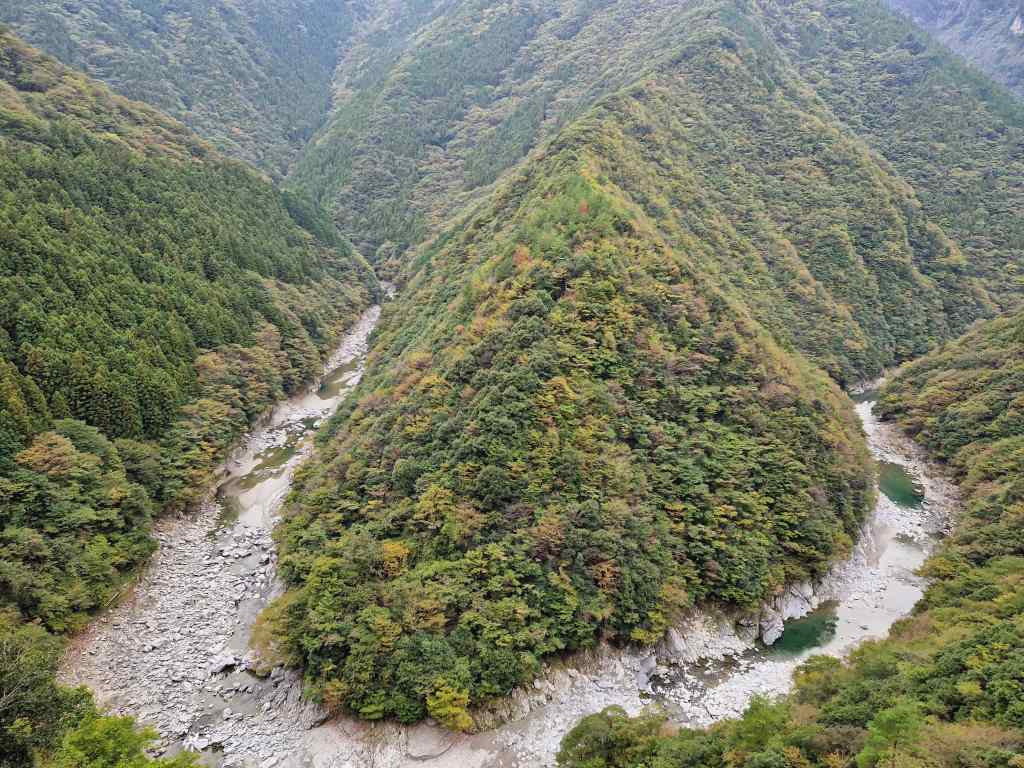
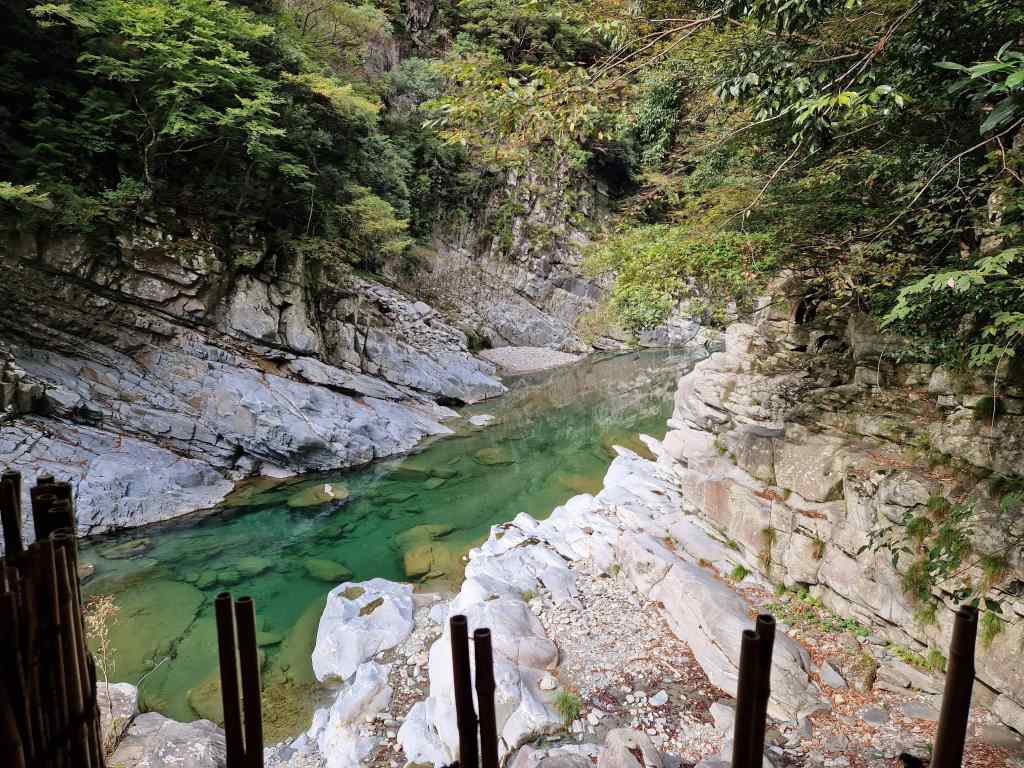
Lower Iya Valley viewpoint
View of the lower Iya Valley

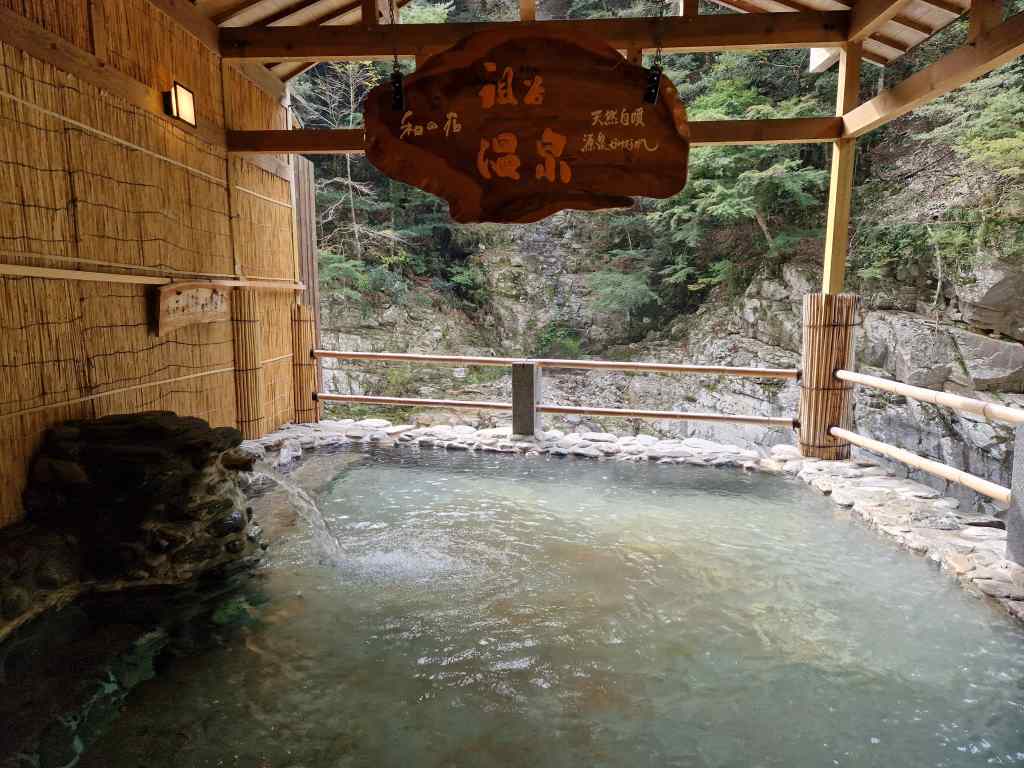
We made one stop at a hotel to try their onsen, located at the valley floor far below. Access was via a cable car, and once there Aki and I both had our respective female and male baths to ourselves. The setting was idyllic, and since the water temperature was not too hot, we stayed for an hour enjoying the view.
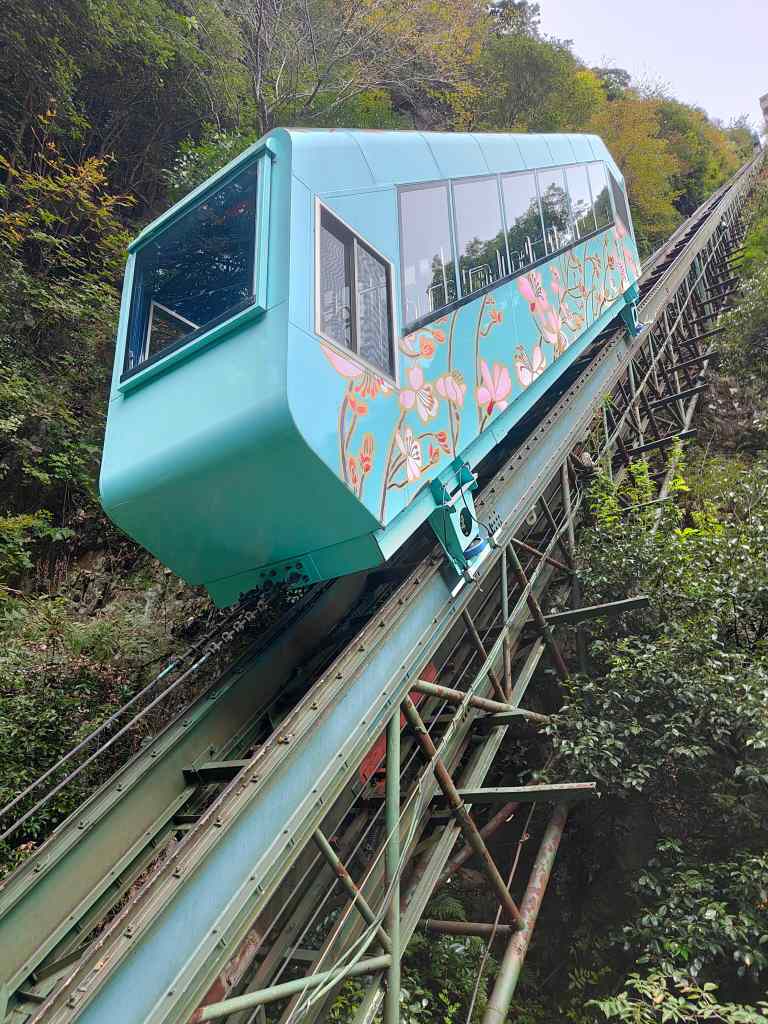
Taking a cable car to the onsen!
The onsen and its great views


Relaxed, and very clean, we set off again. The road finally left the mountains and arrived at the city of Kotohira, the site of Shikoku’s most popular shrine, Kompirasan, which is dedicated to seafarers. The approach to the shrine involved a steady climb up steep steps, initially past souvenir shops, cafés and food stalls, then more interestingly through torii and past hundreds of engrave granite columns.
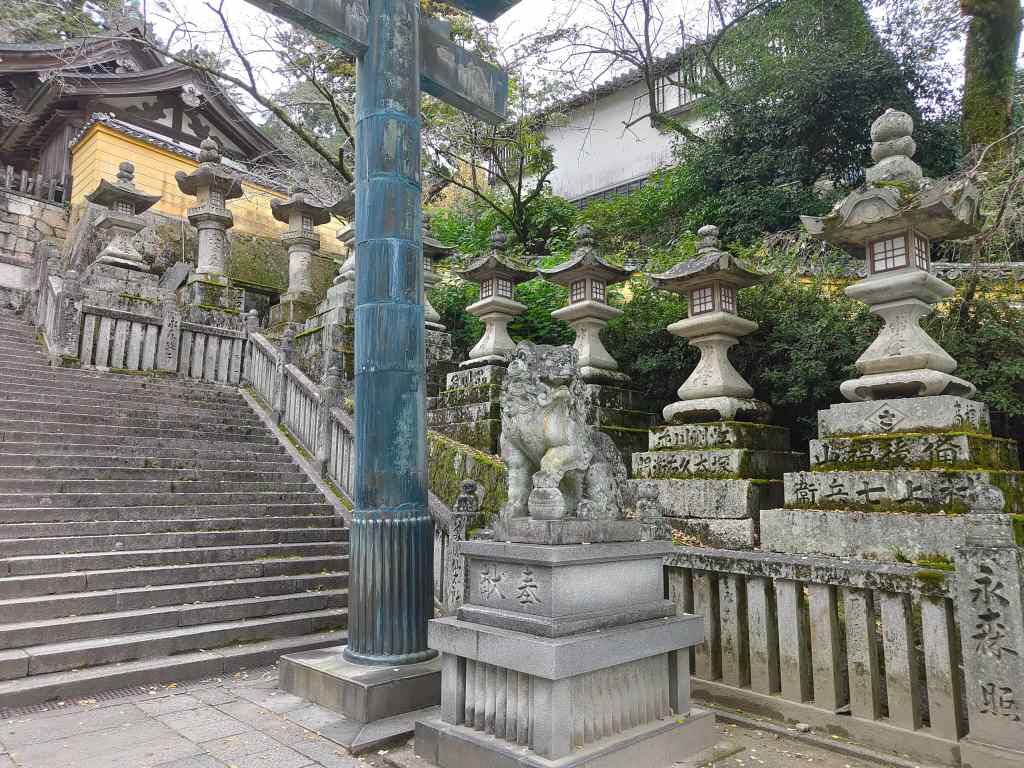
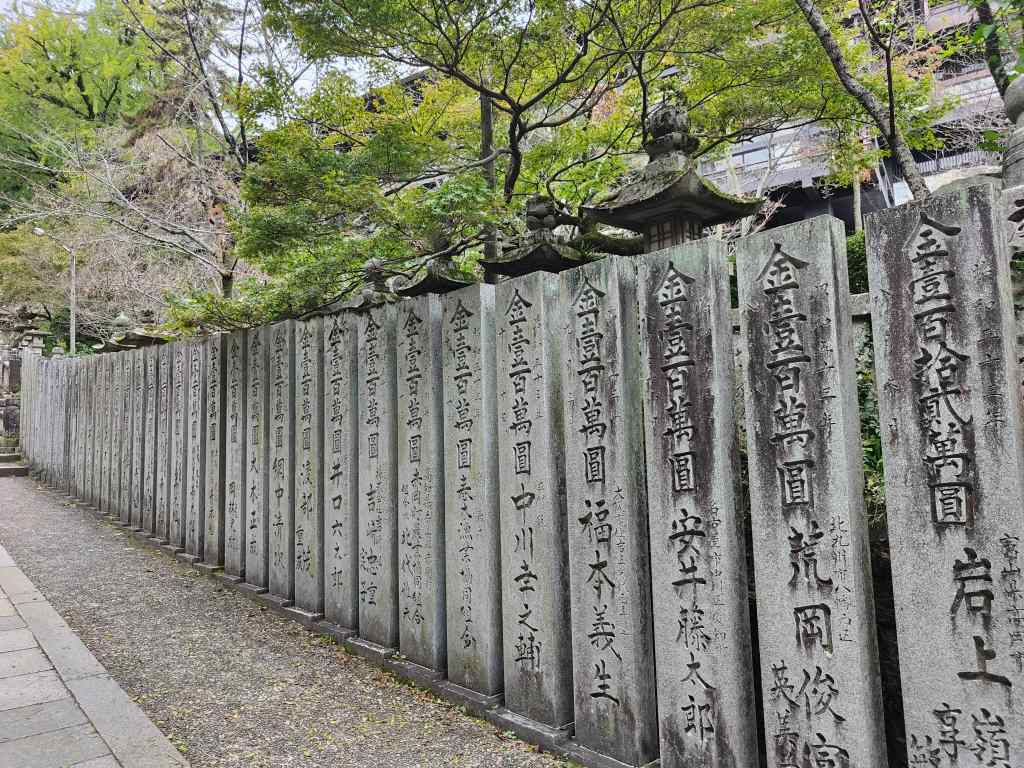
Kotohira
Kotohira – Up and Up…..
Kotohira

After 785 steps we reached a very beautiful temple complex with views over the city and countryside.
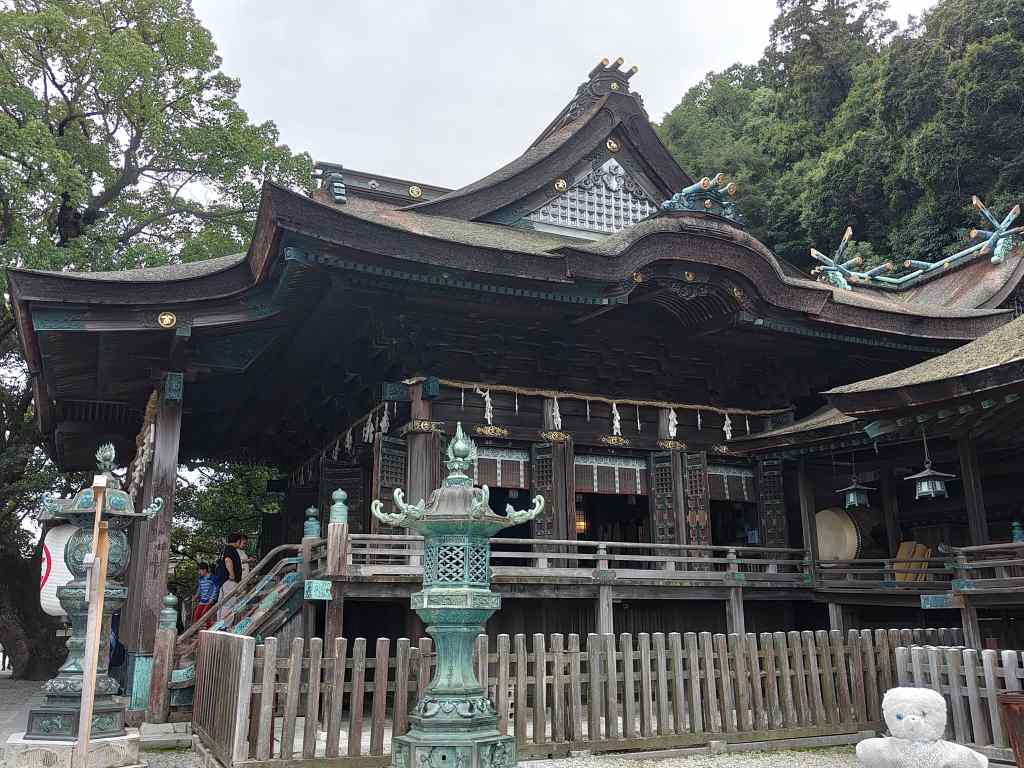
Kotohira-gu
The main temple – Kotohira-gu

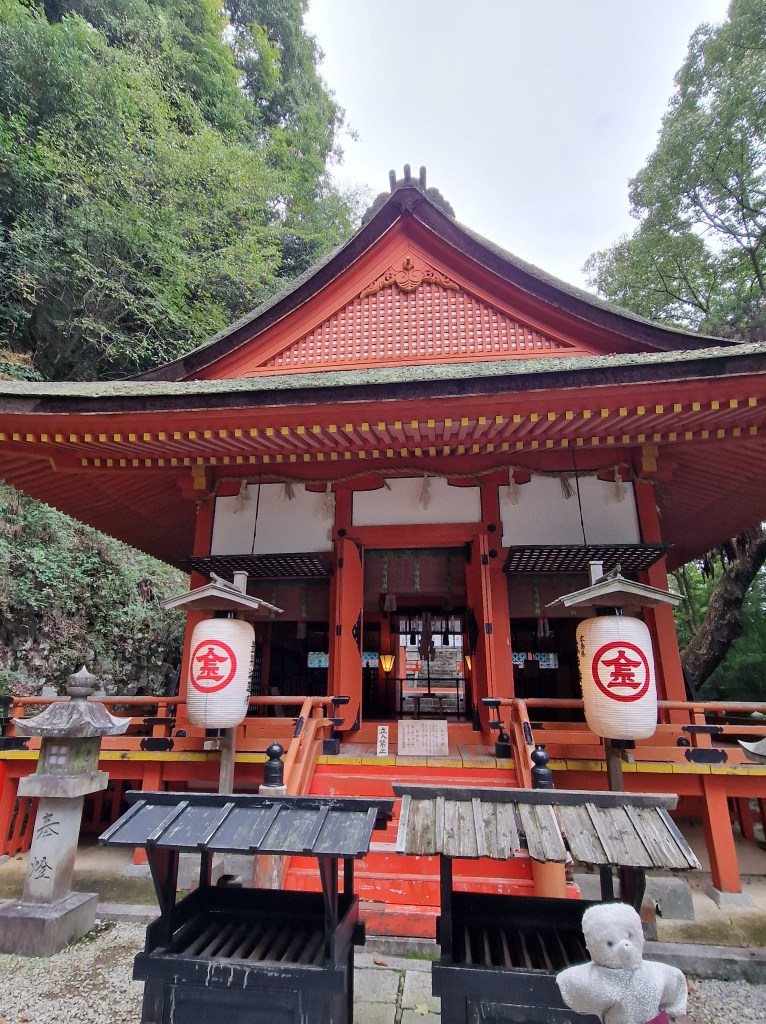
Another 583 steps (making 1368 in total) took us to the temple’s inner shrine, which was disappointingly simple compared to the main temples lower down.
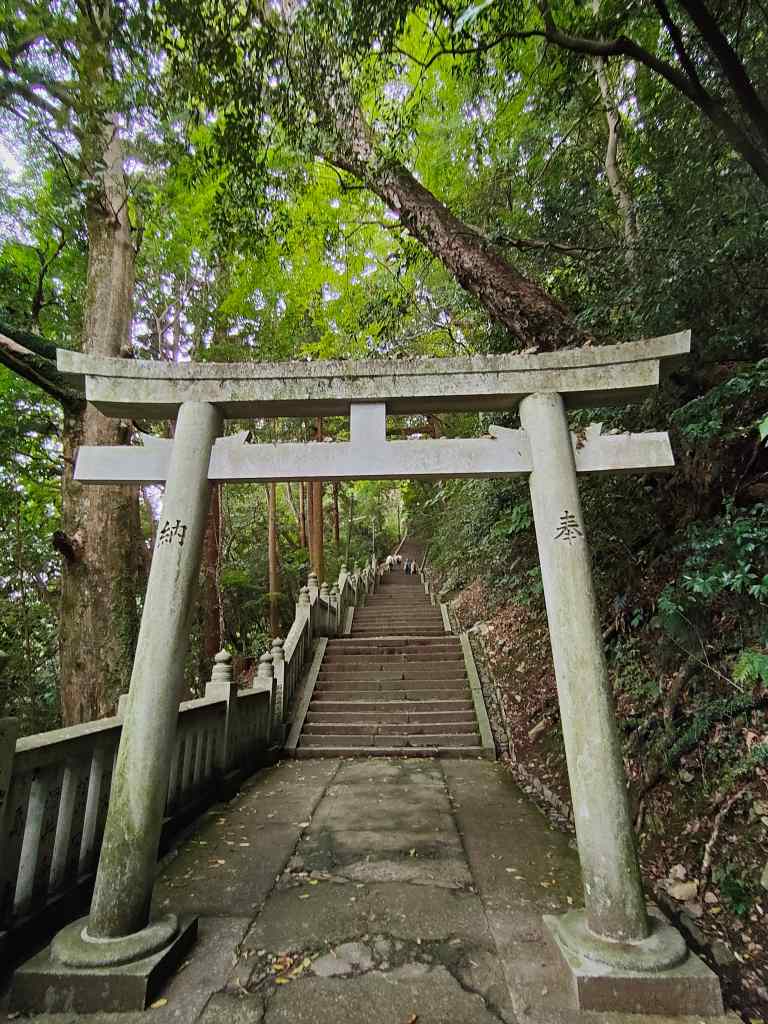
more steps Kotohira
Kotohira: Up and Up again….
top temple Kotohira
Kotohira – The rather simple inner temple

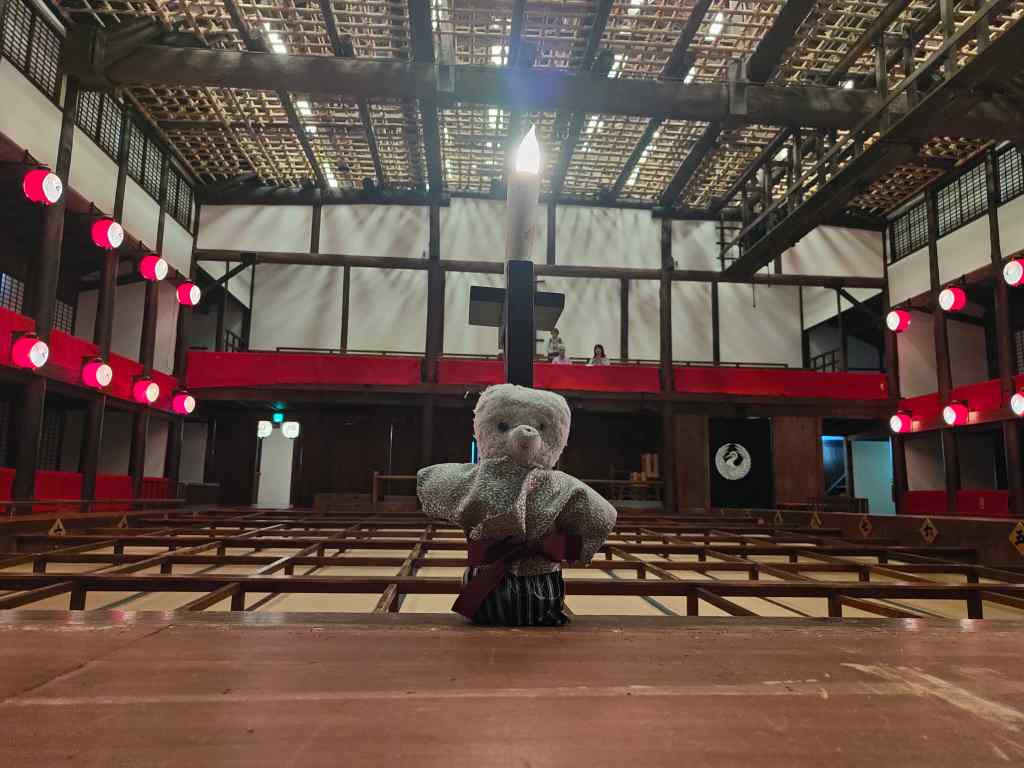
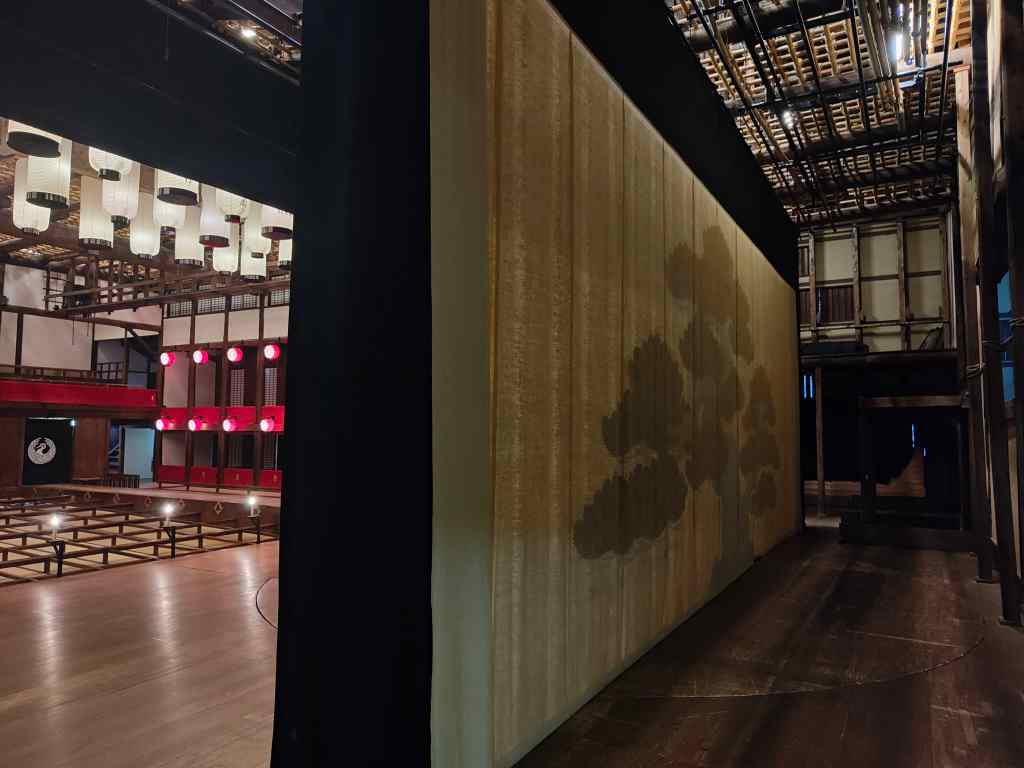
Our hike down was fast, and we arrived at the bottom just in time to visit Kotohira’s kabuki theatre before it closed. It is the oldest surviving one in Japan, and it was very interesting to visit all around – the place where the audience sits, the stage itself, and backstage.
Kabuki theatre Kotohira
Trouspinet on stage at Kotohira’s kabuki theatre!
Kabuki theatre Kotohira
Front stage and backstage

From Kotohira it was another hour by car to reach Takamatsu. As before, finding our Airbnb flat required some time, and we had to message our host to say we were lost. She lived in the flat below and came out to show us the way. It was another very comfortable and large flat – which was just as well, because over the next two days the remnants of a typhoon passed over Japan and it rained hard continuously.
There are many things you can visit with Takamatsu as a base, but sadly most of them require good weather. We ventured out once under the rain to see the city’s small castle, before deciding that it would be better to invest our time catching up on email, washing clothes, exercise – and this blog.

Takamatsu castle
Takamatsu’s castle

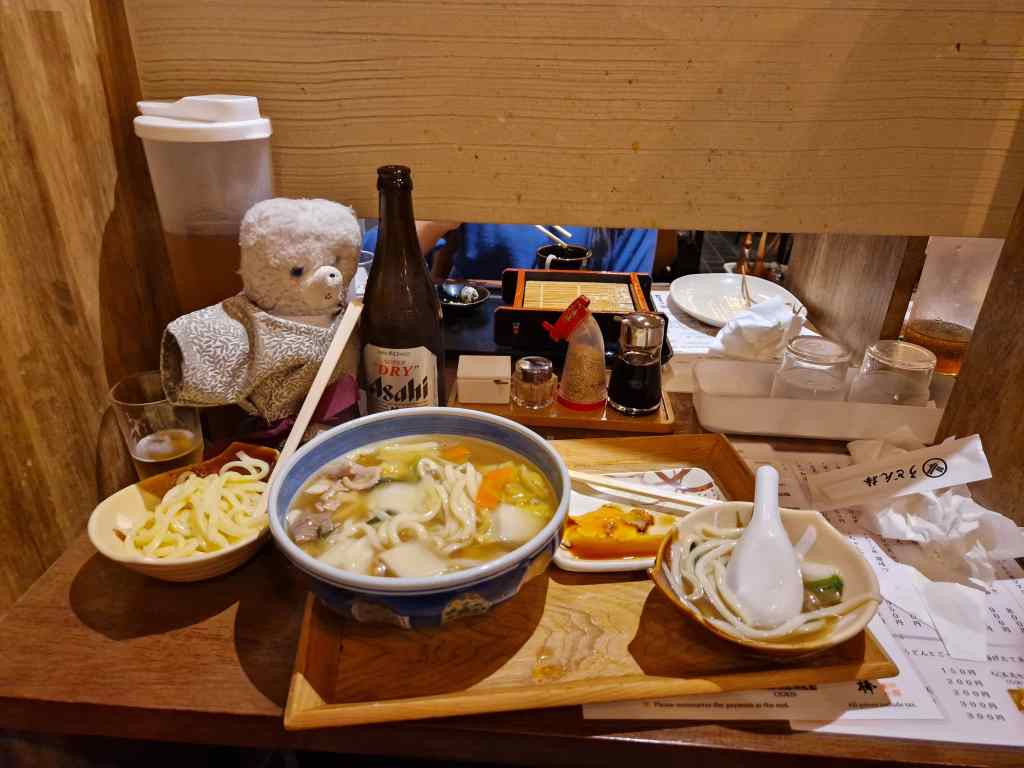
In the evenings at least we had some great indoor entertainment – sampling Takamatsu’s famous Udon noodles. Good food is always the best answer to bad weather!
Udon Noodles Takamatsu specaility
Noodle Feast in Takamatsu!

Next Post: Naoshima

Previous Post: Iya Valley

Almost off the beaten track – Matsuyama

We arrived in the evening in Matsuyama where I had booked an Airbnb. These seem to offer great accommodation options in Japan, if you are prepared for the difficulties of finding the address (or communicating it to a taxi driver). The place we had reserved proved to be worth the effort, with a wonderful host. We had a large downstairs living room, with small but beautiful Japanese gardens on two sides, and a large upstairs sleeping room.

bedroom Matsuyama
The bedroom of our Airbnb in Matusyama

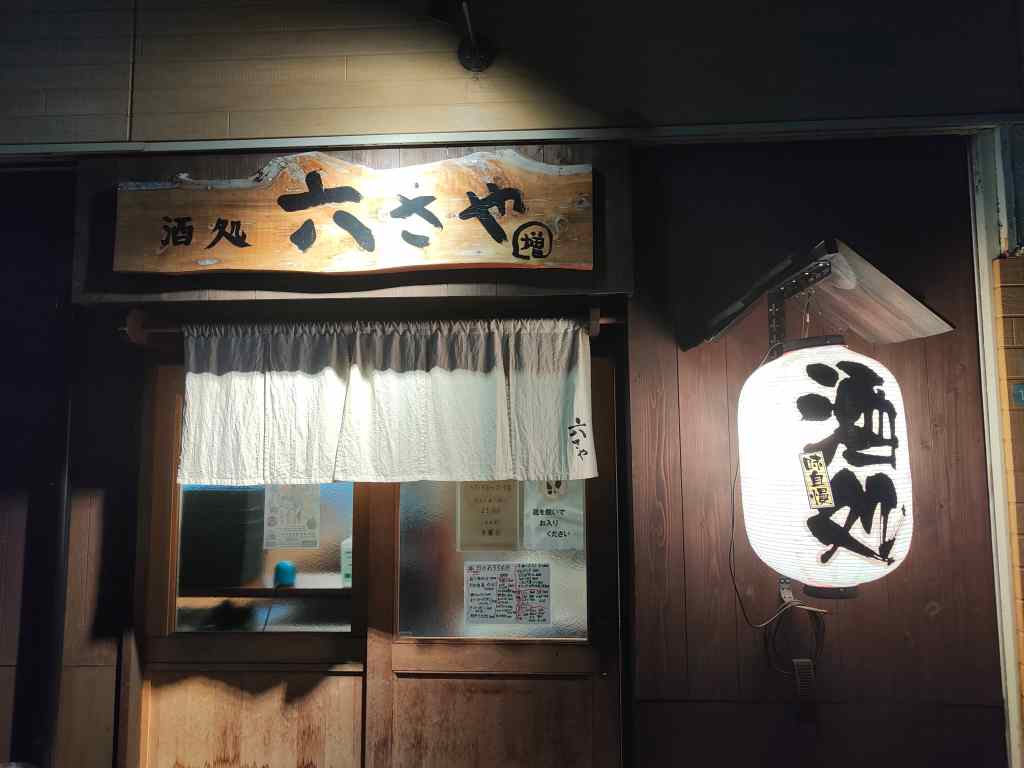
After settling in we set off to find dinner. We were in a residential area, far away from the centre of Matsuyama, and the options were all very traditional Japanese. An outside light and sign would indicate the existence of a restaurant, but to see what one was like, you had to slide open the door – more or less committing yourself to eating there if they had space. On our first night we were lucky and ate very well, and very cheaply.

restaurant Matsuyama
Local restaurant in Matsuyama – slide the door

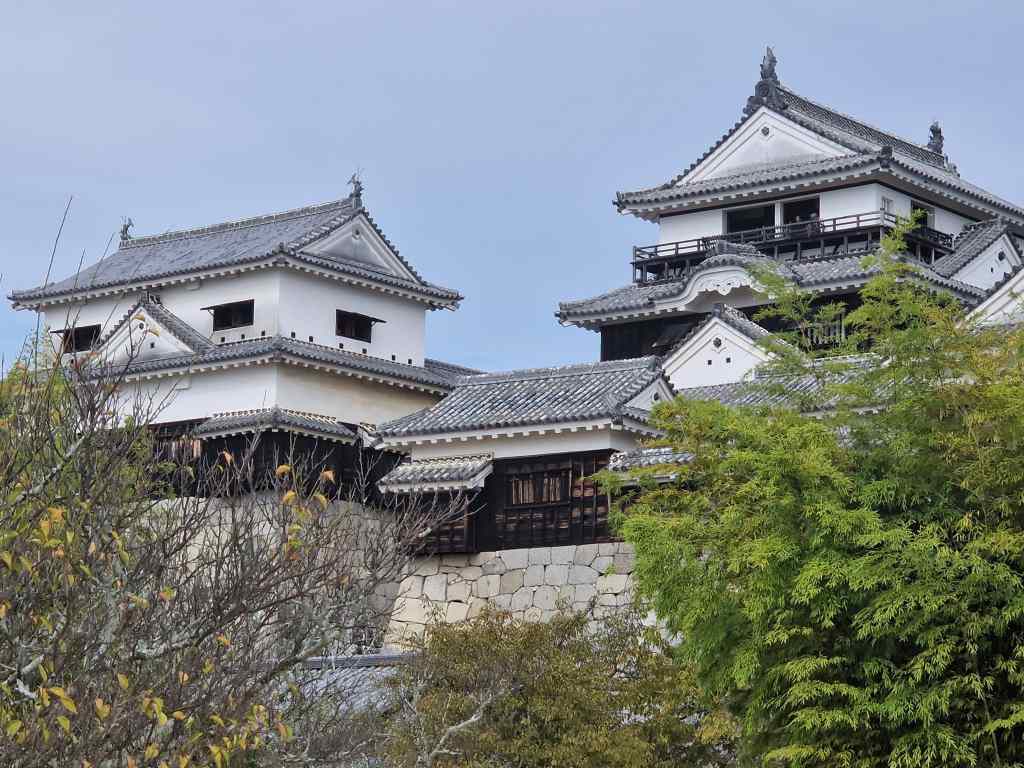
After a good night’s sleep, we set off to explore. Matsuyama is the largest city on the little-visited island of Shikoku. It is almost, but not quite, off the beaten track for western tourists, with a few making a short trip over from Hiroshima. First we saw the inevitable castle. Matsuyama’s version was bigger than the others we had seen in Japan, and offered good views over the surrounding area….but we were beginning to think that all Japanese castles look pretty similar.

Matsuyama castle
Matsuyama Castle

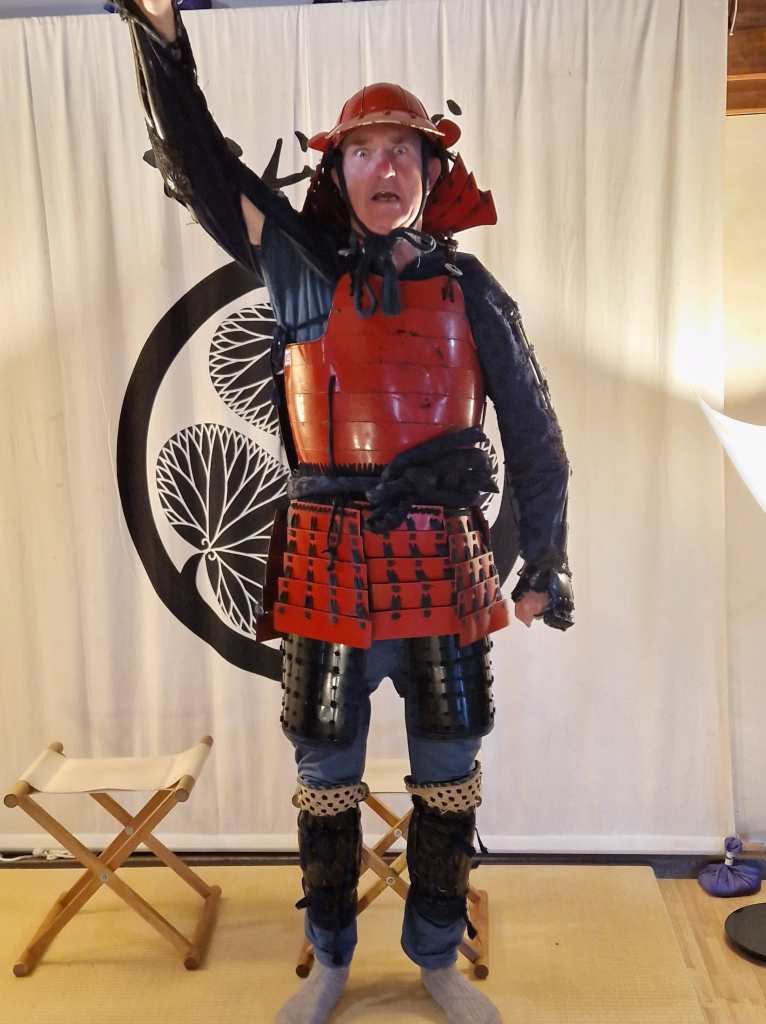
All the same, a fun highlight of our visit was the opportunity to watch human tourists dressing up as samurai (unfortunately they had no teddy-size costumes to offer for us).

Human tourist dressed as samurai

From the castle we headed to the spa town of Dogen, now a suburb of Matsuyama. It had a completely different atmosphere, with a wonderful retro train station, many shrines, several quirky attractions and one very famous one.

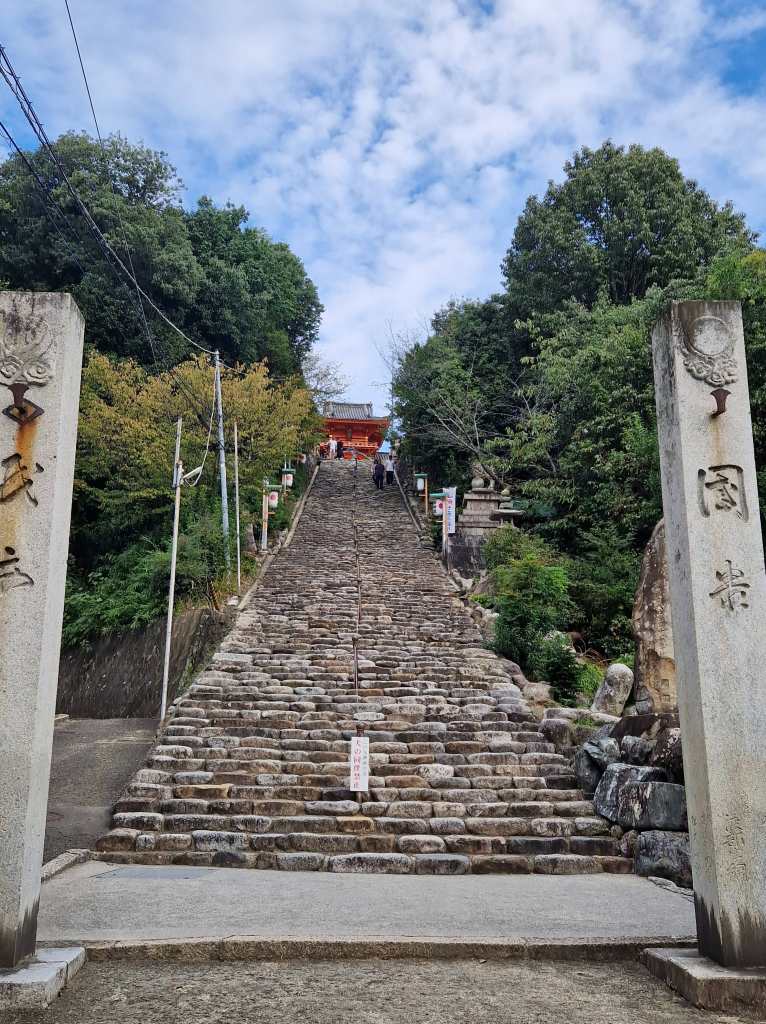
Temple in Matsuyama, Shikoku
Steep steps to this Matsuyama temple!

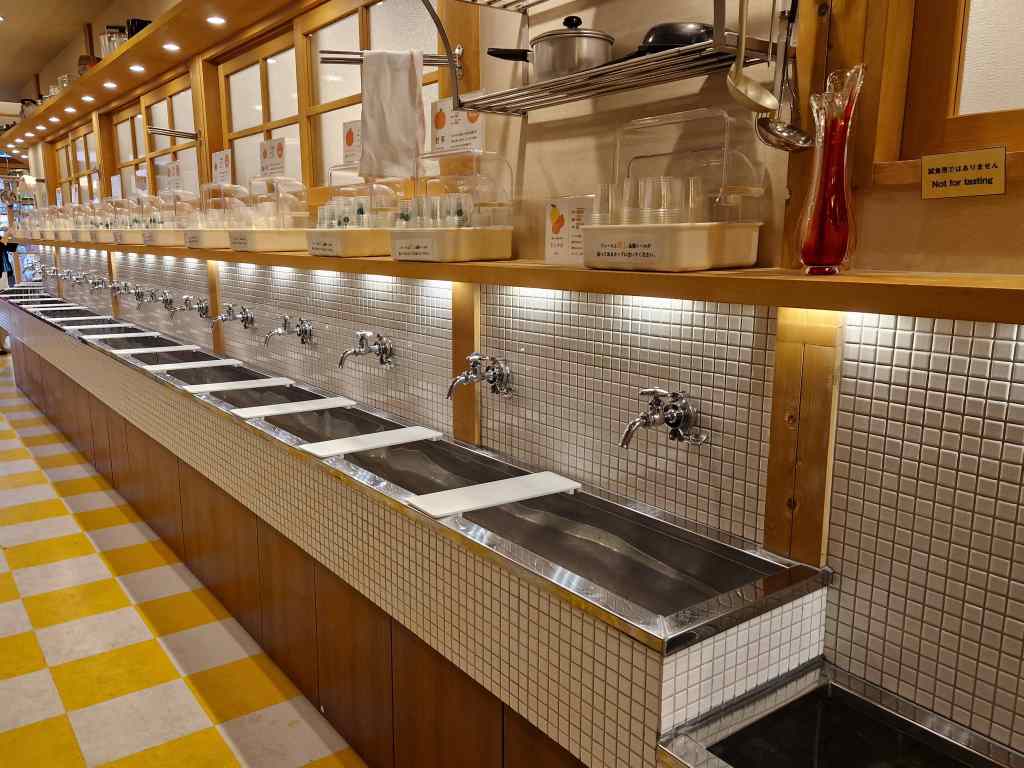
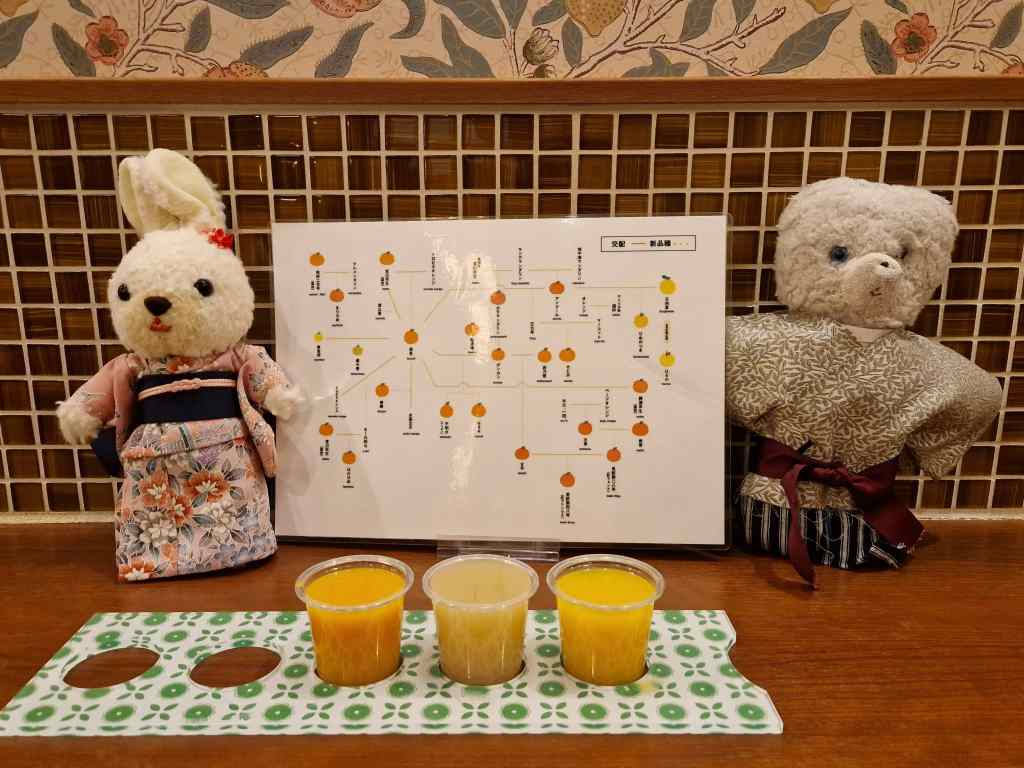
Amongst the off-beat things you can do here is tasting citrus fruit juice. We found a bar where they had around 20 varieties of mandarin juice on tap – you fill up small cups yourself and pay according to the number of samples and the varieties chosen. The bar gave helpful guides to the sweetness and acidity of each choice, and a genealogical chart showing how they were related.

You can taste around 20 varieties of mandarin juice


The famous attraction here is Dogo Onsen, Japan’s oldest and probably most famous onsen, and supposedly the inspiration for the bathhouse in the Ghibli film “Spirited Away”. Records document people coming here as early as the sixth century, and legends tell of gods visiting well before that. The current structure dates from the 1890s and is a wonderfully elegant building.

Dogo Onsen in Matsuyama
Dogo Onsen, Matusyama, from the outside

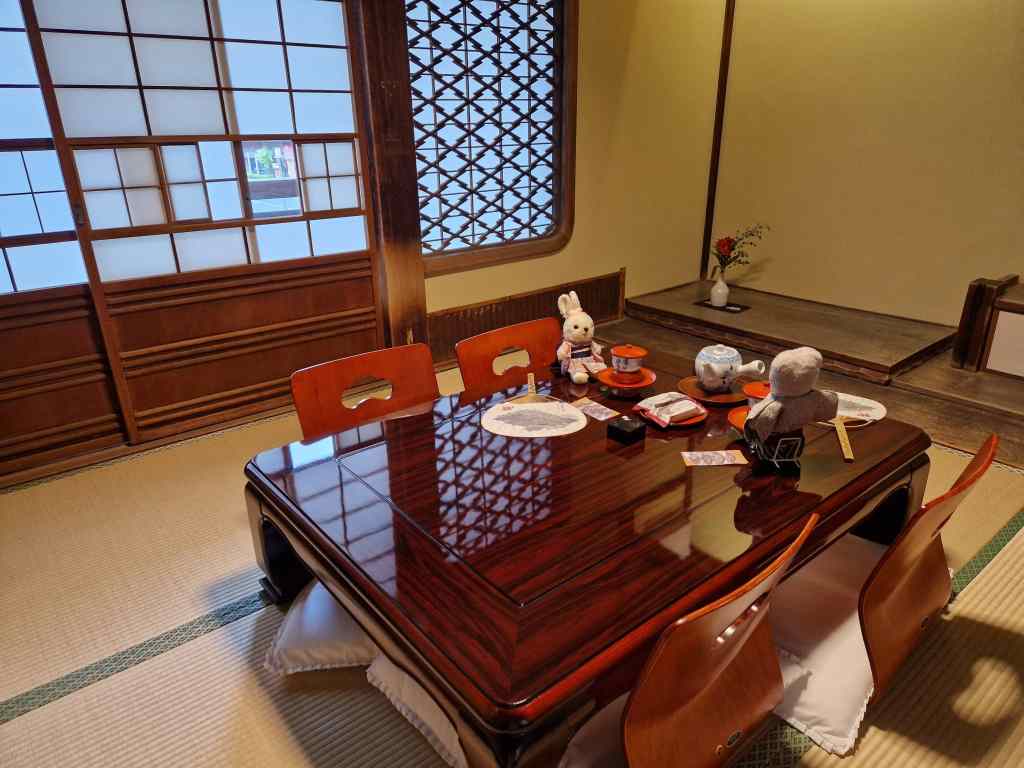
We bought tickets for a private room, got changed into the yukatas provided and were treated to a typically Japanese experience. A maid in a traditional kimono brought us tea and a snack and explained which areas we could visit, with much bowing and many “arigato gozaimasu” (thank yous). We enjoyed our tea before trying the separate male and female onsen reserved for the private room guests.

Private room in Dogo Onsen

The bath itself was a bit of an anticlimax – an elegant enough room, but fairly small, and on the inside with no natural light. The water was a hot 40°C, so even the experienced Japanese visitors did not soak for too long. We retired back to our room to cool down, and then made a tour of the building, of which one of the highlights was a private bath reserved for the emperor.

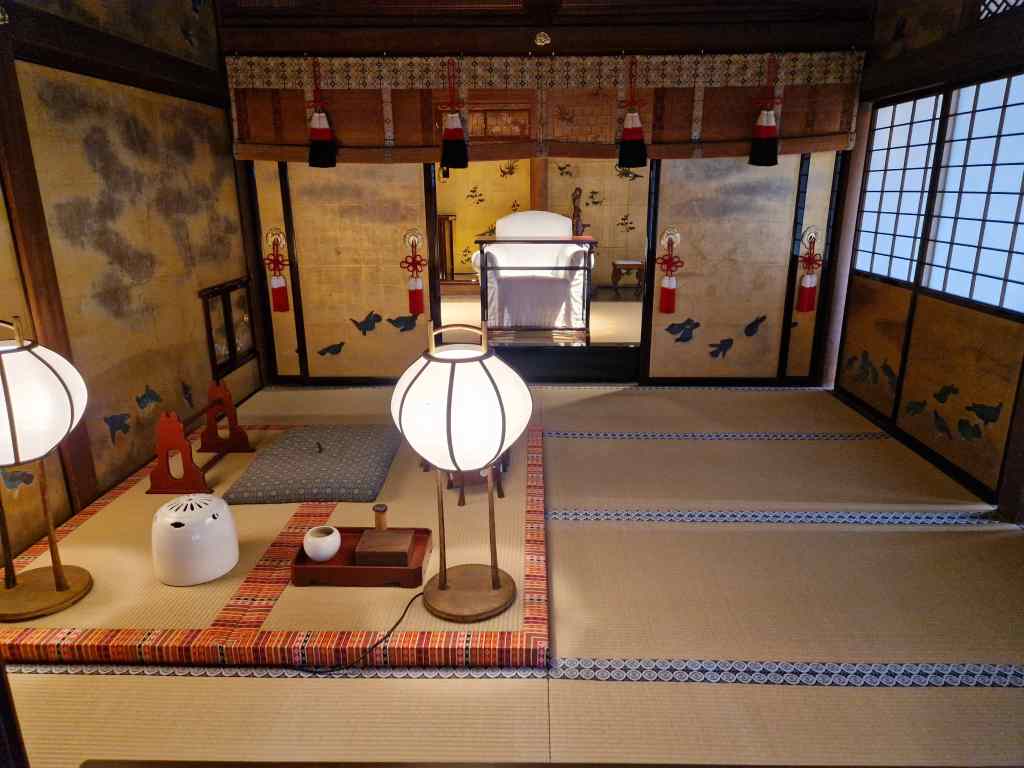
Emperor's Room Dogo Onsen
The Emperor’s changing room

We had one more, short, final dip in our own bath before our ninety minute visit time was up and we had to leave. The joy of the experience was more the atmosphere, the building and the ceremony rather than the actual bath itself.
On emerging outside we found that it had started to rain, so we headed back to our flat and then out to eat. The restaurant we had enjoyed the night before was full, so we tried another and were less lucky. It seemed to be a place where people came to drink more than to eat, and half the seats were already taken by a group of three drunk locals. They were very friendly but also noisy. The owner continually topped up their glasses with whisky from one of the bottles kept behind the counter; in places like this you buy your own bottle, which they write your name on.

Bottles for frequent visitors to the restaurant

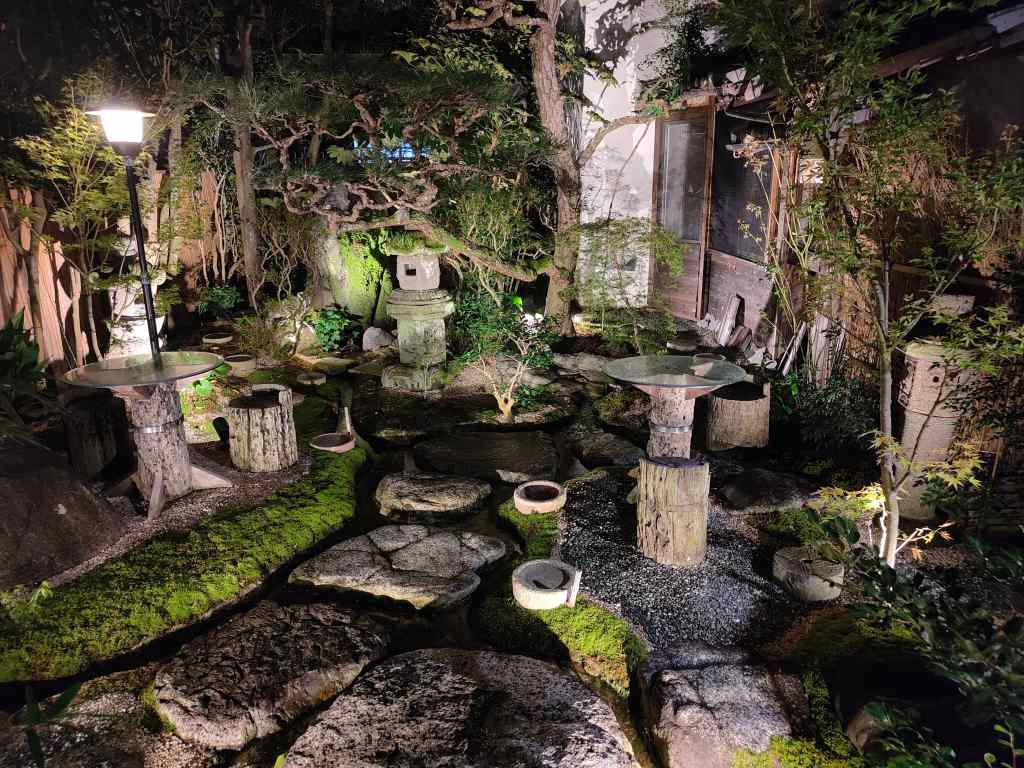
We retired back to our flat. It was still raining, but we opened the sliding doors to our Japanese gardens and enjoyed listening to the raindrops falling on the plants outside. The sight and sound were hypnotic and peaceful, and the prelude to a great night’s sleep.

Japanese garden in Matsuyama
One of our Japanese gardens at night

Next Post – from Matsuyama to Kochi, Shikoku

Previous Post – Magical Miyajima

Off the Beaten Track in the Japanese Alps

In the Norikura Region in Autumn

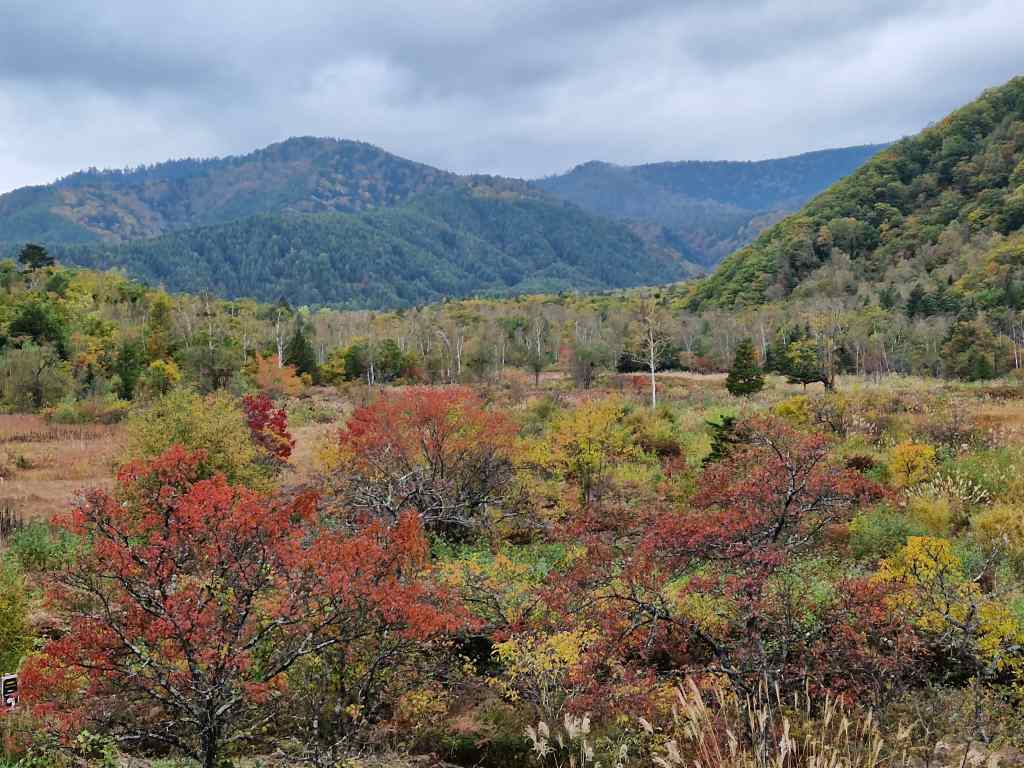
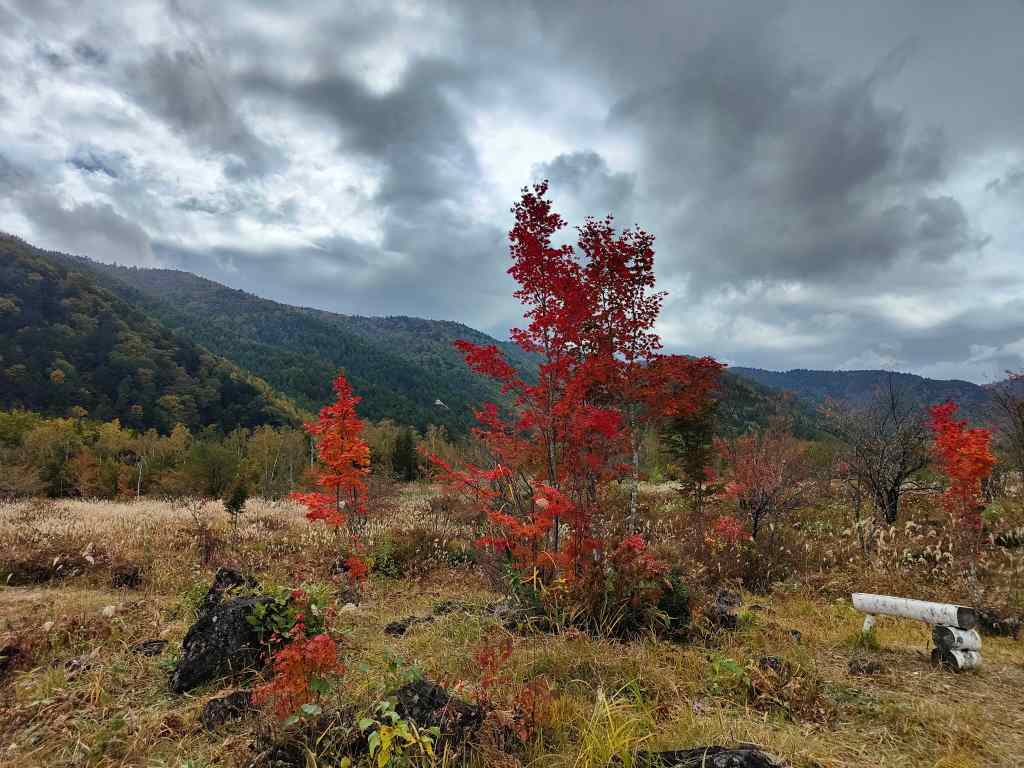
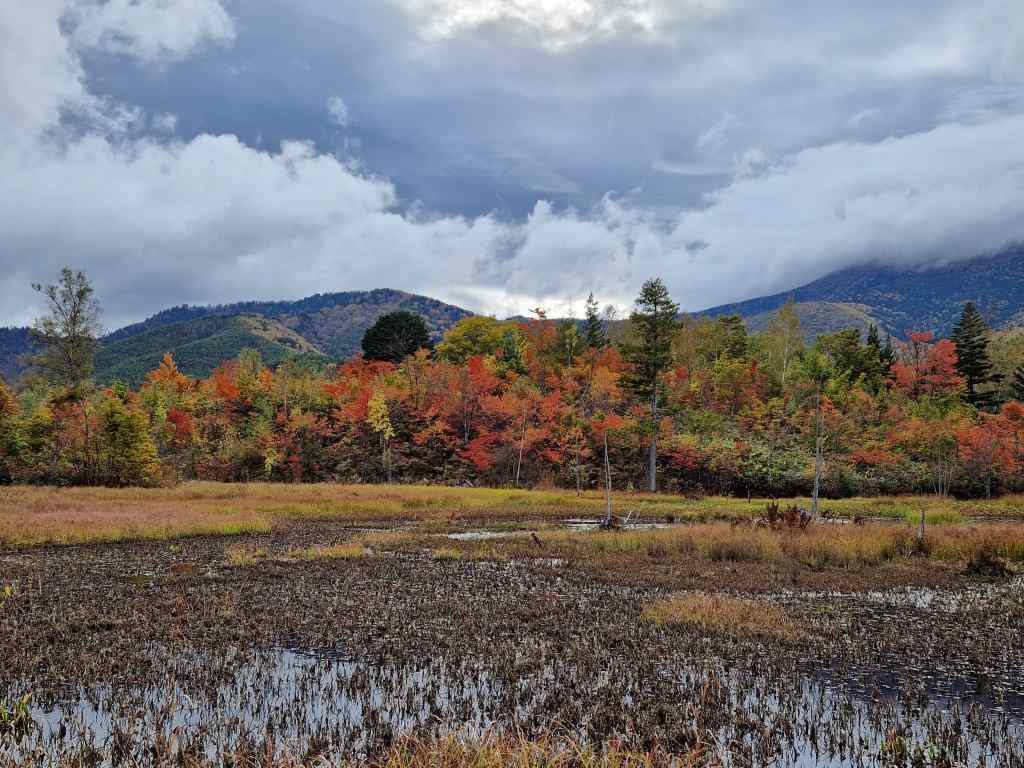
Today was one of those wonderful days when a traveller discovers something for themselves. Our original plan was to drive to the Japanese Alps, and then take a bus/cable car to Mount Norikura, Japan’s third highest volcano. However, when we got into the mountains, it was cloudy and we thought that we would not see anything at the top. As we wondered what to do, Aki noticed a small sign with a picture of a large, bright red maple tree, so we followed the direction it indicated and found ourselves driving through a beautiful meadow, with nature’s autumn colours on full display – but this time with the red that we had been missing during our walk at Kamikochi.

The view from the café

The road went past a café, which, unusually for remote places in Japan, served excellent coffee and which had an excellent view of the scenery. In the car park in front, there was a sign showing a few short walks in the area, so we made a circular hike of around 5km, marvelling at the colours and taking lots of photos. We saw very few other people on our way, and almost no foreigners at all. Most of the people we did see were gathered around the big red maple tree shown on the road sign.

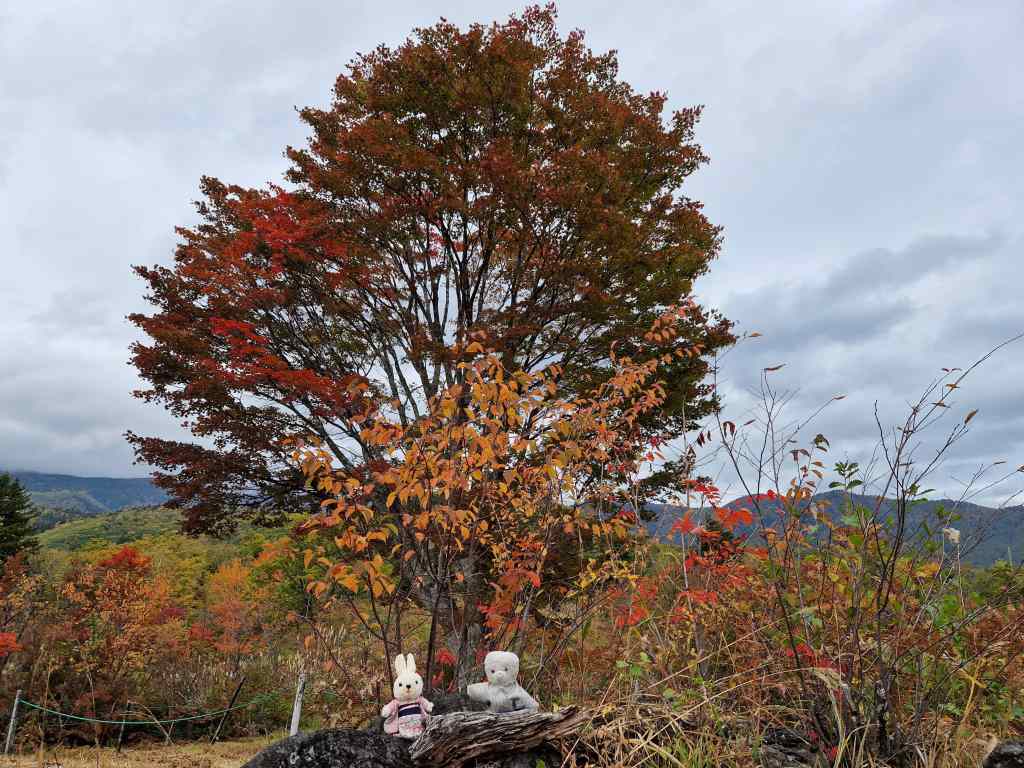
The locally famous big red maple tree

Our guidebooks did not mention the area. Maybe outside of autumn it is nothing special, but for us it was one of the highlights (so far) of Japan.

More stunning red colours….
…and more

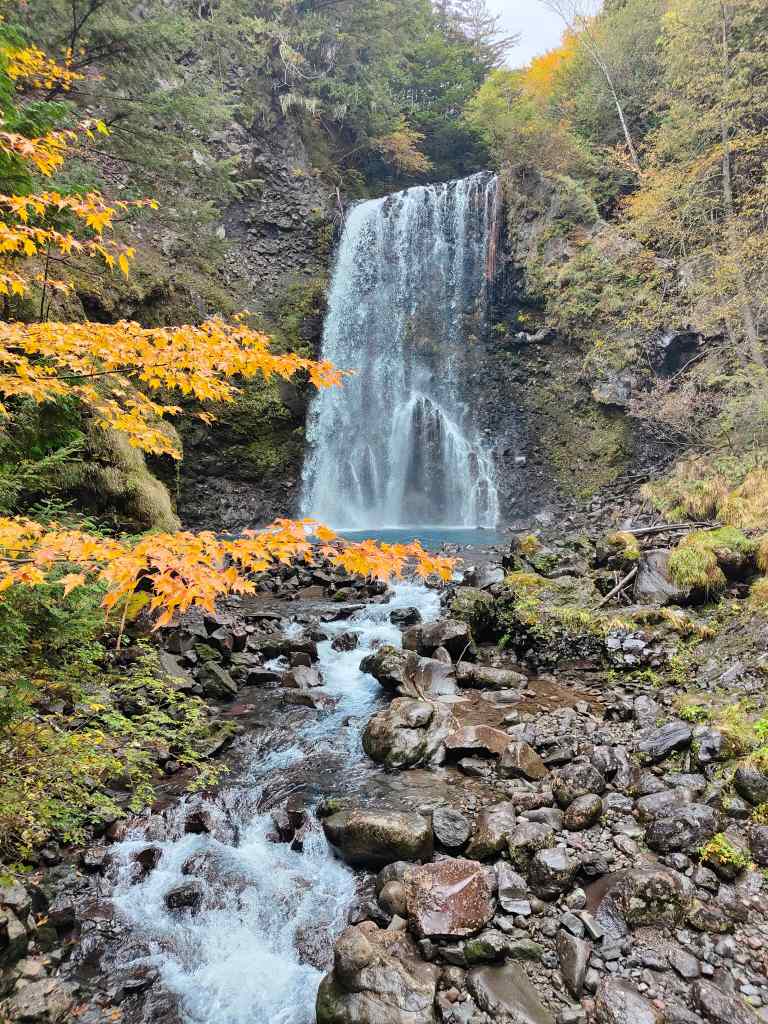
The map also showed a couple of waterfalls, which were a bit far to reach on foot, so we drove to visit the Zengorno and Sanbon falls, both of which were well worth the drive and short hike.

Zengorno falls
Sanbon Falls

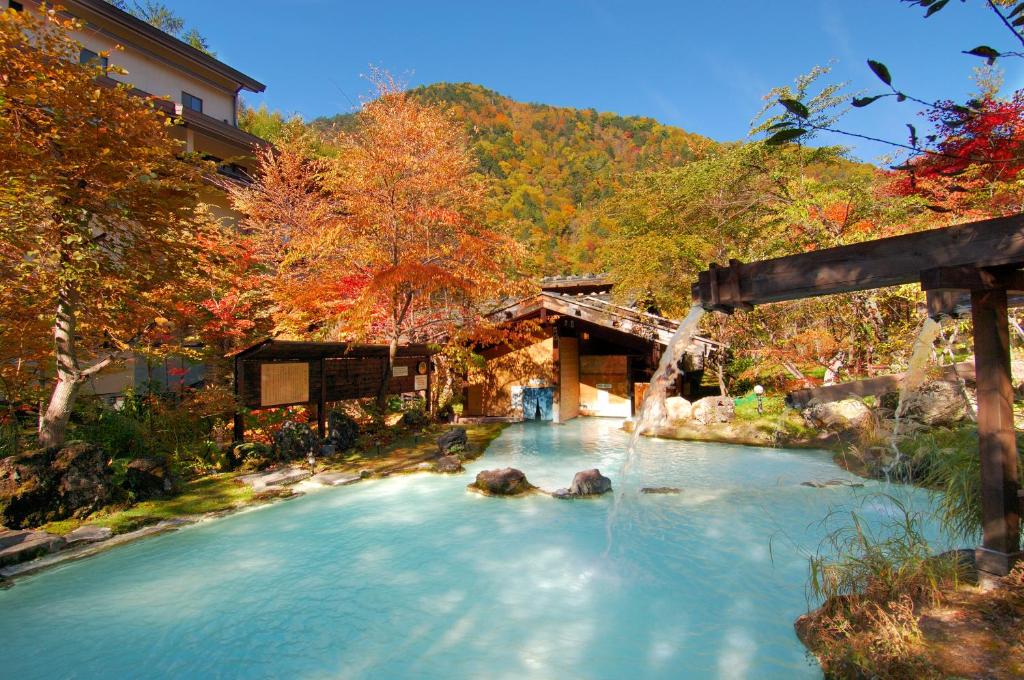
After a day hiking in beautiful forests, it was time for another of Japan’s traditions – a dip in an “onsen” or hot bath. These are found all over Japan and are hugely popular. They are often fed by volcanic hot springs, particularly in the Japanese Alps region. We drove to the well-known spa town of Shirahone Onsen, which was a short distance away, and paid for a day visit to the baths at the Awanoyu Ryokan (a hotel). After getting undressed and carefully washing in a shower room, we soaked in a pleasant outdoor pool for an hour. The water was milky white, and a relaxing 40°C, whilst the pool was surrounded by trees at the bottom of the river valley. Sadly no photos were allowed, so I have to use this one found on their website (from a rather sunnier day!).

It was a pleasant way to end a day of exploration and surprises, well off the beaten track.

Next Post: Matsumoto

Previous Post: Kamikochi

Blog at WordPress.com.

Up ↑