Cairo – the city that never sleeps: Manial Palace, Cairo Tower and Egyptian Museum

From El Gouna I started the long way home by taking the 7-hr bus ride back to Cairo. When I arrived, I lost the data connection on my mobile and had a frustrating time trying and failing to order an Uber whilst surrounded by persistent taxi drivers. I didn’t want to take a taxi off the street since my accommodation was located in a very unusual, hard to explain, place – but one that was listed on Uber.  After restarting my phone a few times, I finally managed to get a connection and soon arrived at……..a houseboat on the River Nile, which was to be my base for the next few days.

My home in Cairo – a houseboat on the Nile

Equipped with a new sim card that I had bought the previous evening, the next day I set off to explore Cairo. Mostly I used Uber to get around, which removed all the hassle of negotiating a price and explaining where I wanted to go – most taxi drivers didn’t speak English. Uber’s “Comfort” category even offered the possibility (but not guarantee) of a seat belt in the rear seats. My first destination was Cairo Tower, an attraction popular with locals which offered views over the city – including, once the morning haze had cleared, the pyramids at Giza.
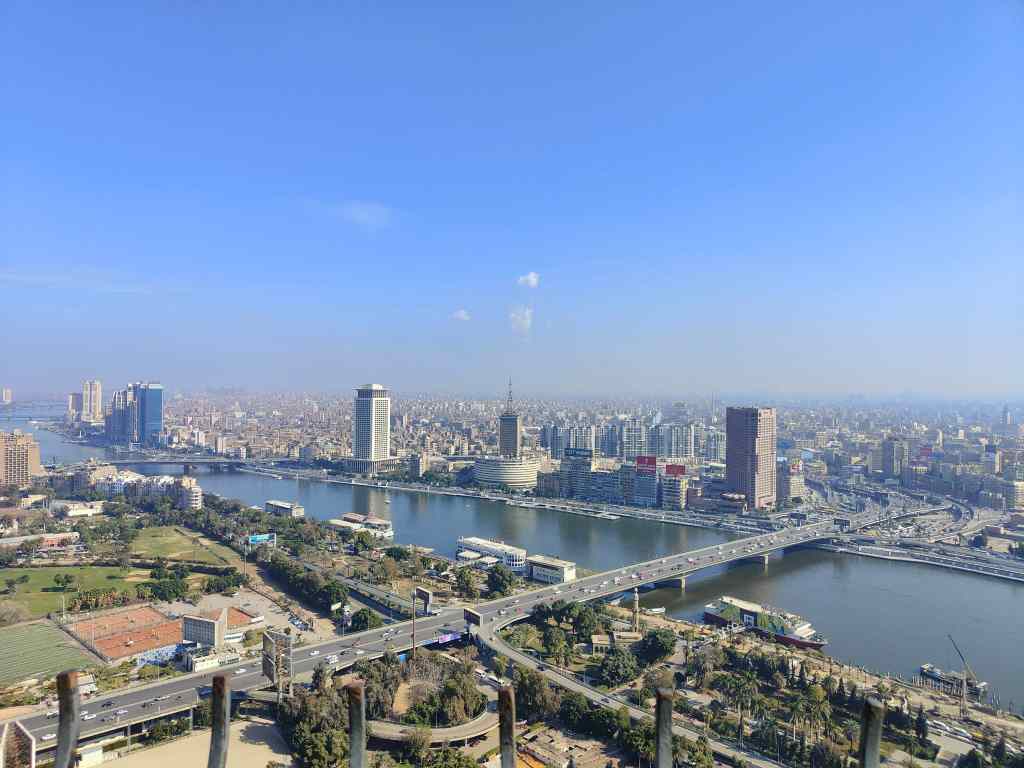
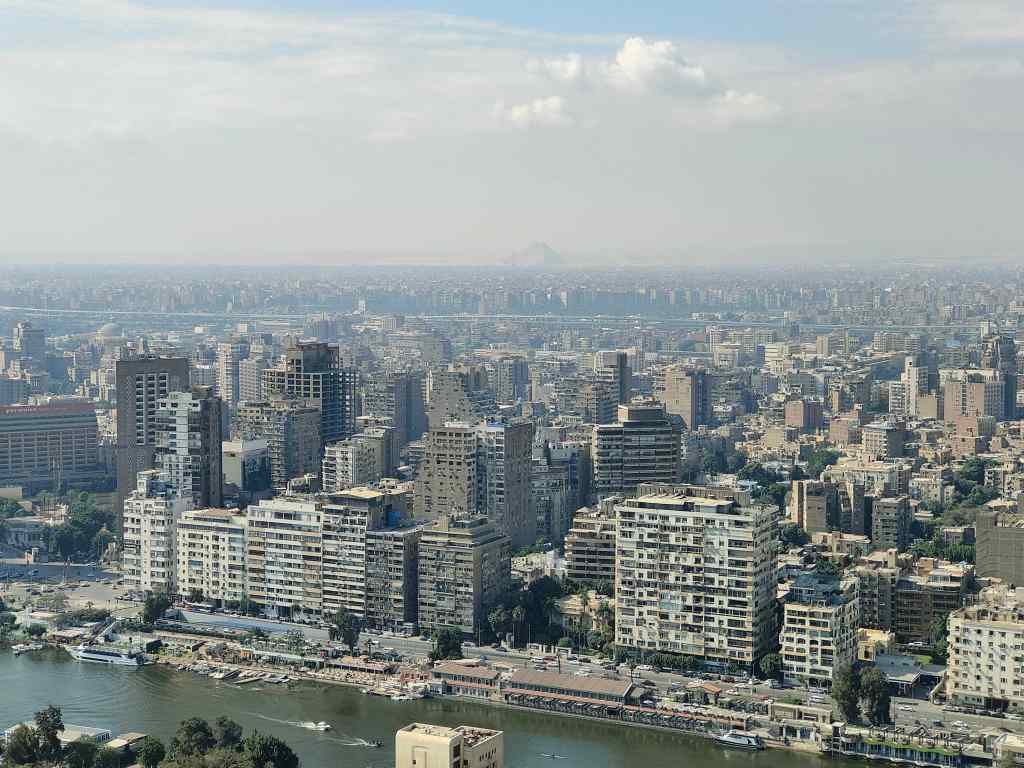
The view from Cairo Tower
Another Cairo Tower view, with the Giza pyramids in the distance

From there I visited the Manial Palace, built between 1899 and 1929 by Prince Mohammed Ali Tewfik, a member of the Egyptian royal family in the period when Egypt was an monarchy under British “protectorate”.  His palace comprised several different buildings in large, pretty gardens – the prince was a keen collector of rare plants.
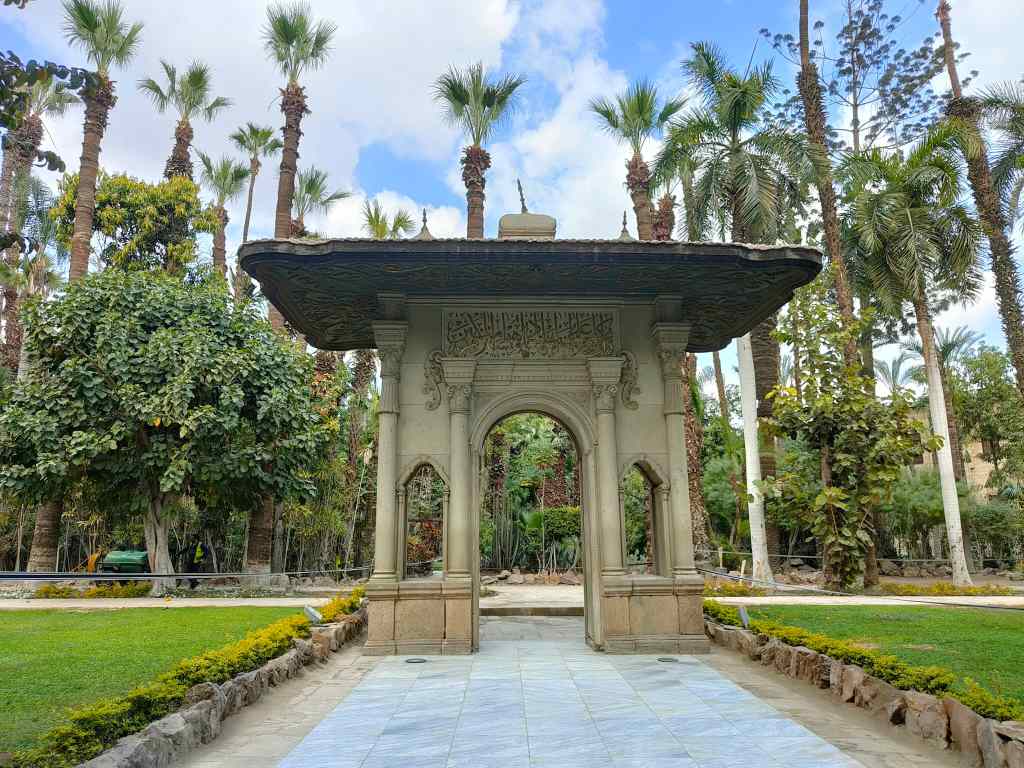
The Gardens of the Manial Palace

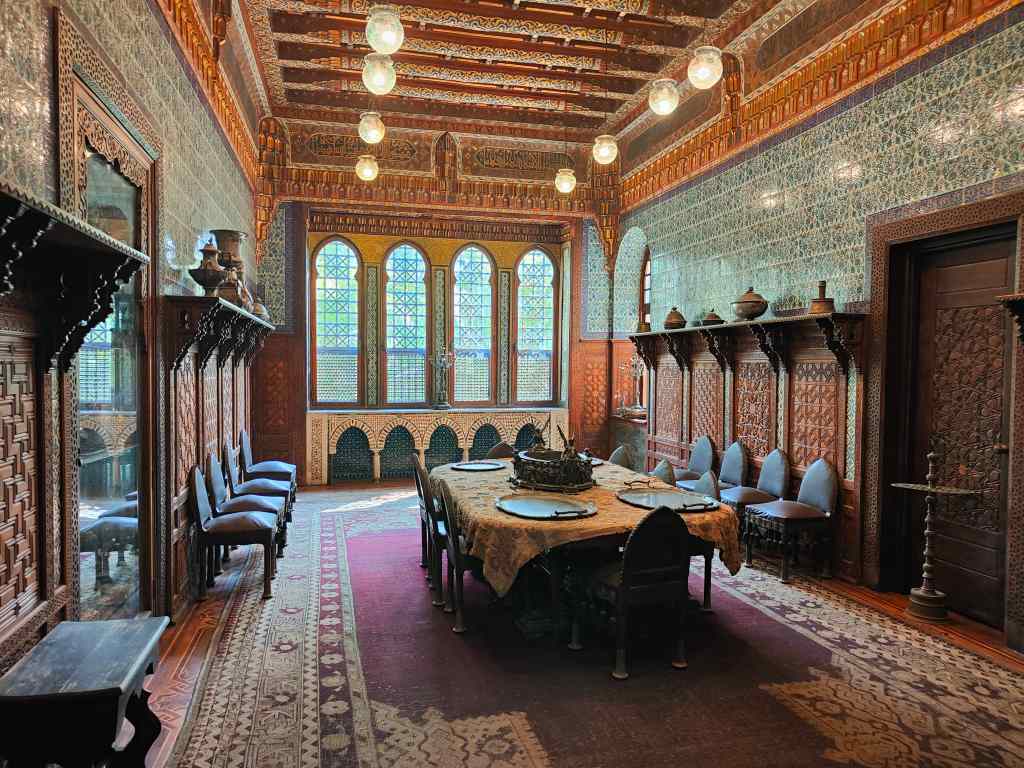
Most interested was the Residential Palace in which the prince lived, which was richly decorated in a variety of styles – Ottaman, Moorish, Persian and even European.   

The entrance to the Residential Palace at Manial
A reception room at the Manial Palace

Also interesting was the Throne Palace, which was built to impress.
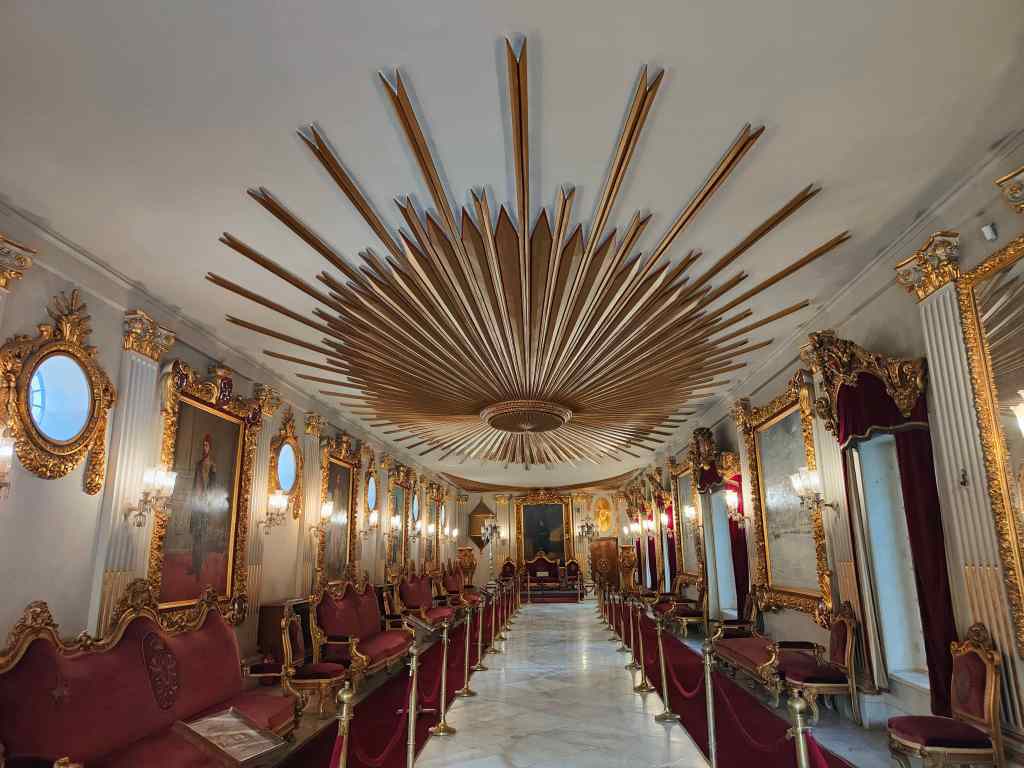
The Throne Palace at Manial

Manial Palace was spectacular but for some strange reason, the gardens and many of the most interesting rooms were roped off, meaning you could only look at them from a distance.

It was approaching noon, and one of the guardians insisted I share his lunch with him – falafel and eggplant in a piece of bread. Such small acts of kindness are common in Egypt; the previous night someone had spent twenty minutes helping me buy a new sim card. Unfortunately, many offers of help later turn into a request for baksheesh or pressure to buy something, but I was getting better at guessing which proposals were genuine and could be accepted without later being hassled.

Next, I headed off to visit the nearby Monastirli Palace to find that it had been long since closed. However, there was a curious attraction nearby – a nilometer for measuring the depth of the Nile. There were many such instruments along the Nile in Egypt (see my Aswan post); this was built in 861 AD.

Cairo’s Nilometer

From there I headed back to my houseboat to enjoy some of the afternoon sun. Having such a relaxing place to retire to for a break was a real pleasure. Cairo is a bit like an Arab New York – sprawling, full of interesting places to visit, but also busy, dirty and crowded. Visiting takes a lot out of you.
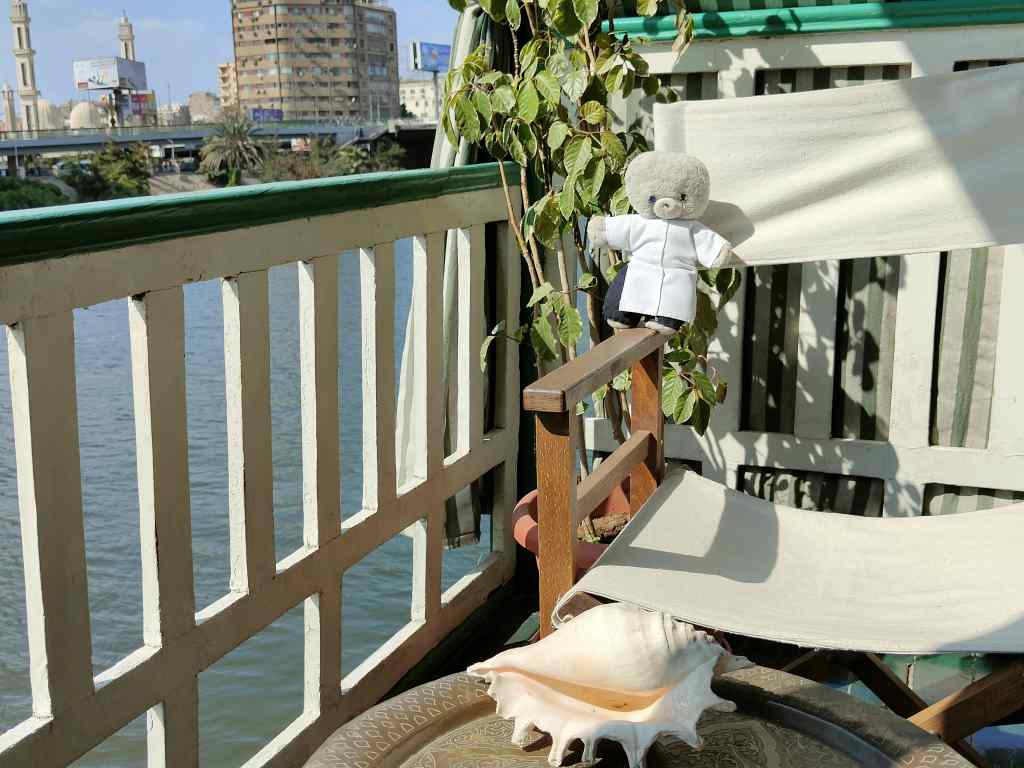
Recharging my batteries on my houseboat in the early afternoon by the Nile in Cairo

Having recharged my batteries, I made a second visit to the chaotic collections of the Egyptian museum, one of the highlights of my first two days in Egypt.
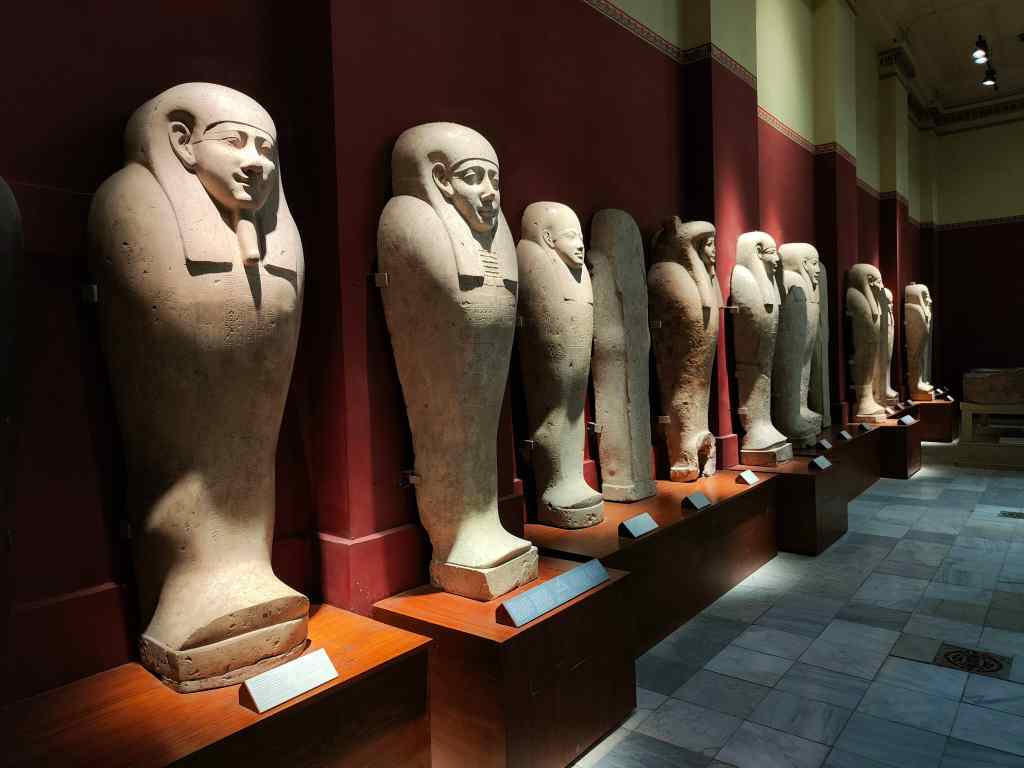
More treasures of the Egyptian Museum, Cairo
Yet more Egyptian Museum priceless relics….but no explanation or labelling anywhere

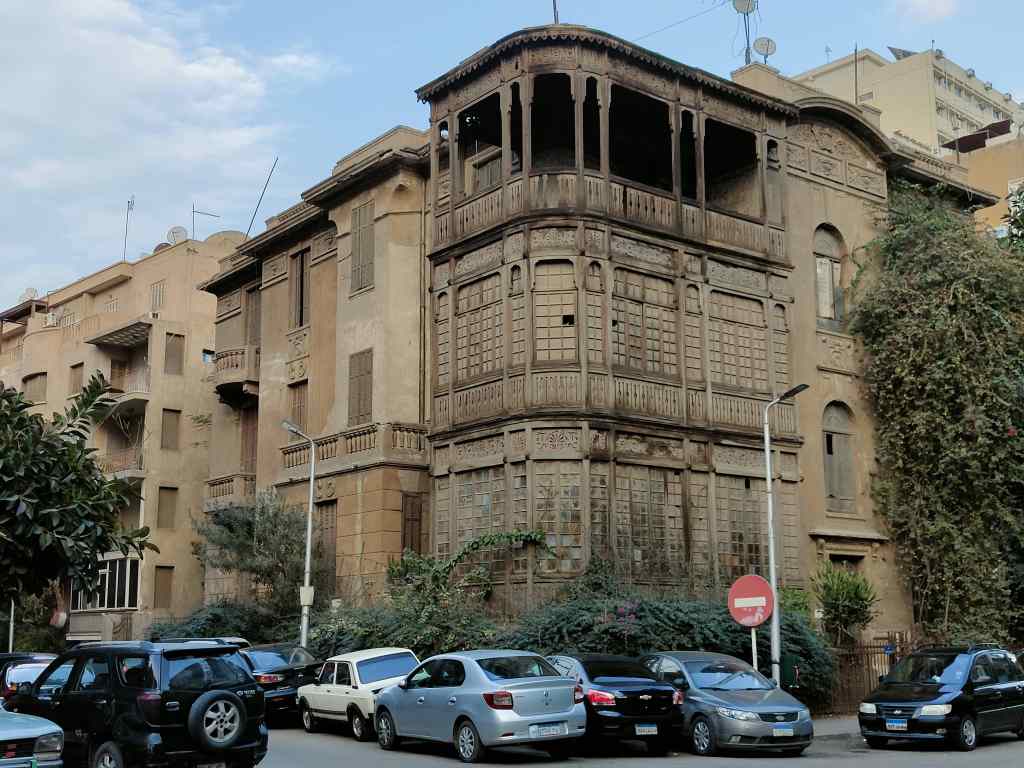
It was late afternoon, and my guidebook recommended a walk around the Garden City, an area of pretty but crumbling mansions from Egypt’s colonial period.  Sure enough, it was a very pleasant part of the city, and I took lots of photos.
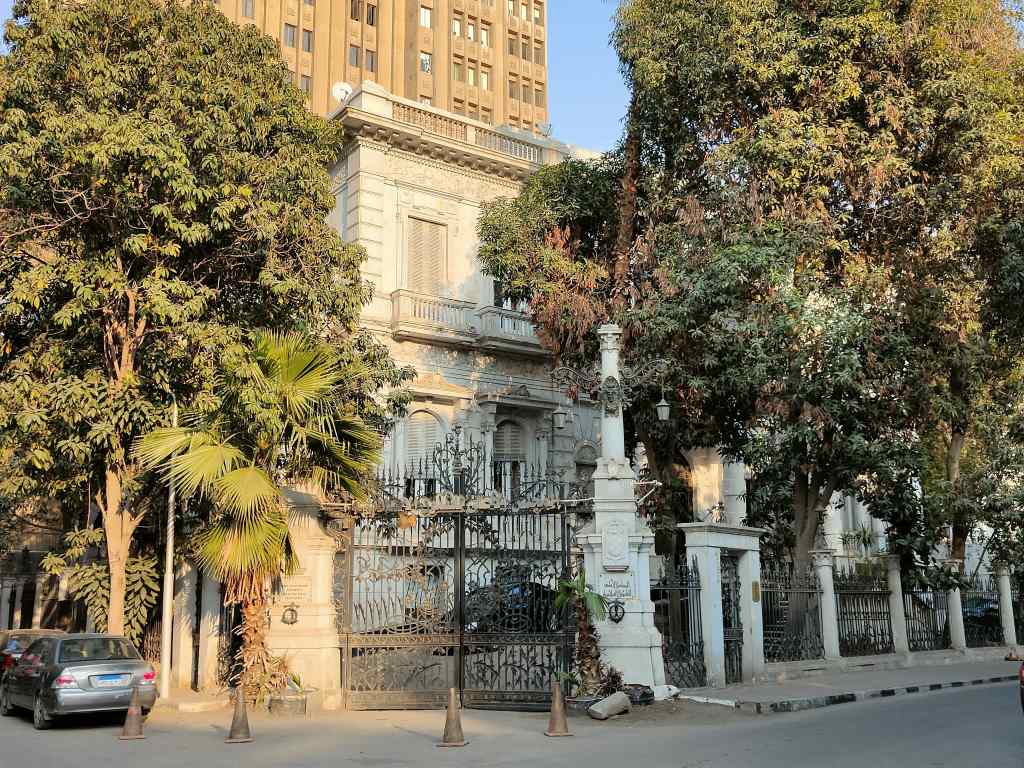
A mansion in the Garden City, Cairo
Old wooden building in the Garden City, Cairo

I discovered that walking in Cairo requires bravery. There are few pedestrian crossings or underpasses, and to cross the street you need to stride forward confidently into the dense traffic, holding out your arm to the oncoming traffic (pleading? praying?). Since I am small and easily overlooked, I didn’t dare try this on my own, but waited until someone local ventured forth. I would then cross with them, making sure that they were between me and the onrushing cars.

I survived my walk, and after another couple of hours chilling in my houseboat, headed out for dinner in the upmarket area of Zamalek. Cairo was an exciting city, but the continual bustle and noise makes it a tiring place. Back in my comfortable houseboat, I settled down to sleep, using a pair of earplugs to keep out the sounds of traffic (all night), partygoers in passing cruise boats (until 2am) the mosque’s call to prayers (5am), and the shouting of rowing coaches to early morning rowers on the Nile (from 7am). Cairo is a 24-hour city.

Next Post: Islamic Cairo

Previous Post: Chilling on the Red Sea – El Gouna
Luxor’s East Bank and Karnak

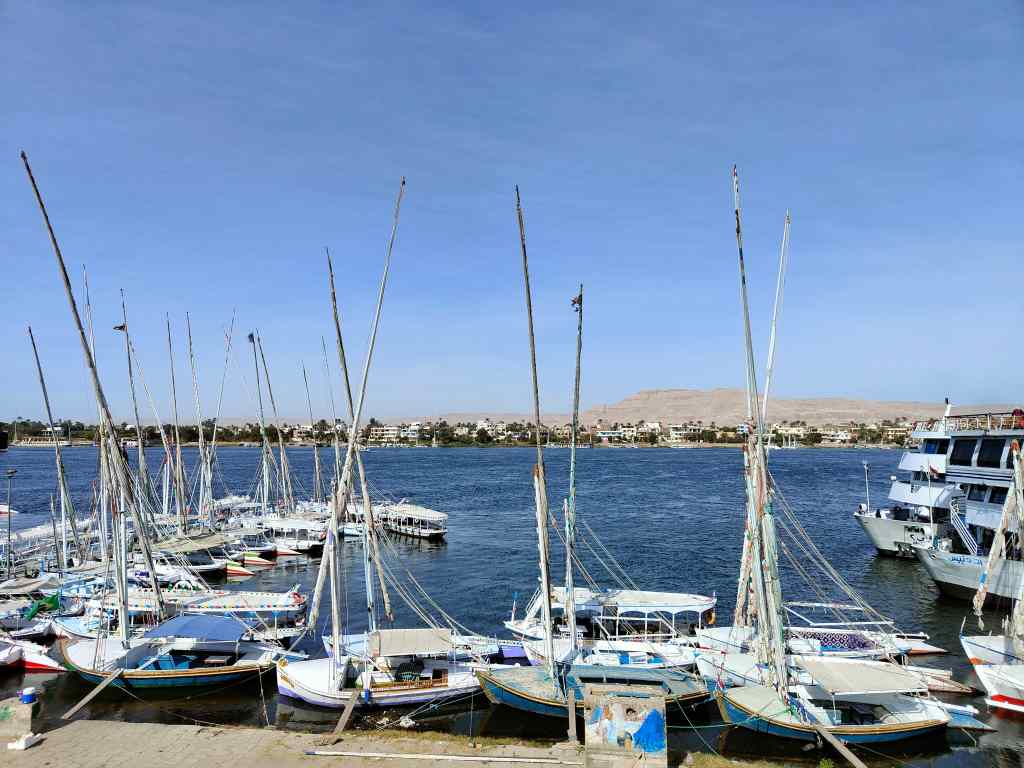
Today I crossed the river again to visit the sites on the Luxor’s east bank.  I reached the centre of Luxor, which was much nicer than the part I had visited the day before, with a pretty waterfront opposite the Temple of Luxor.

The view across the Nile from Luxor’s corniche
Luxor Temple from the outside

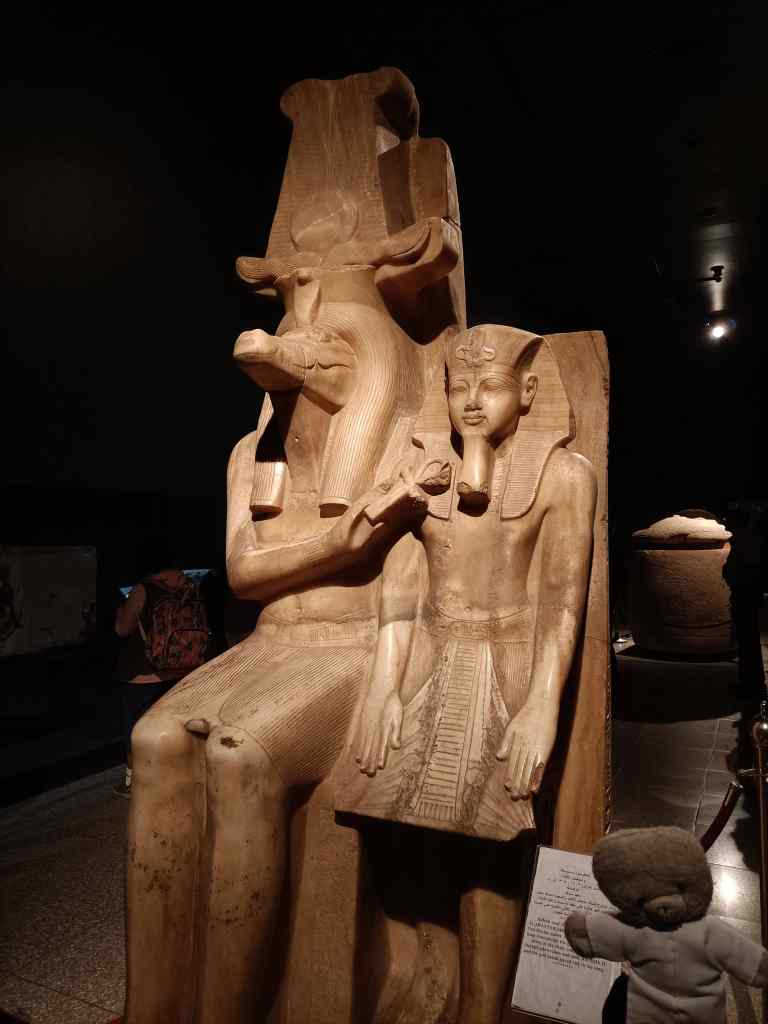
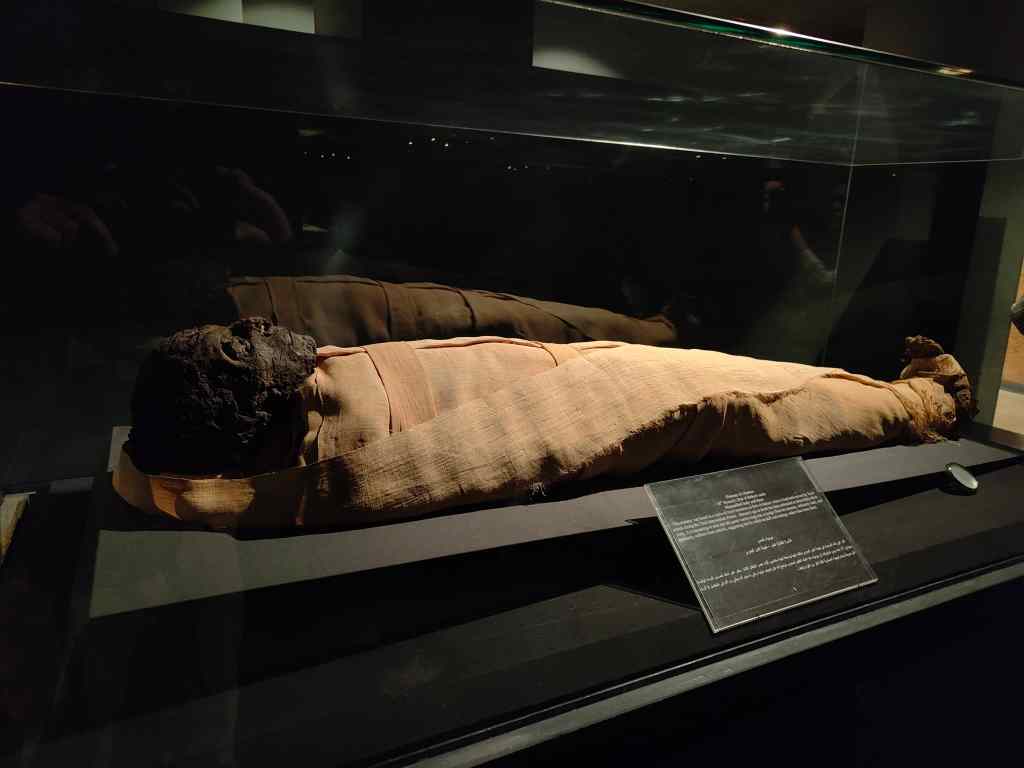
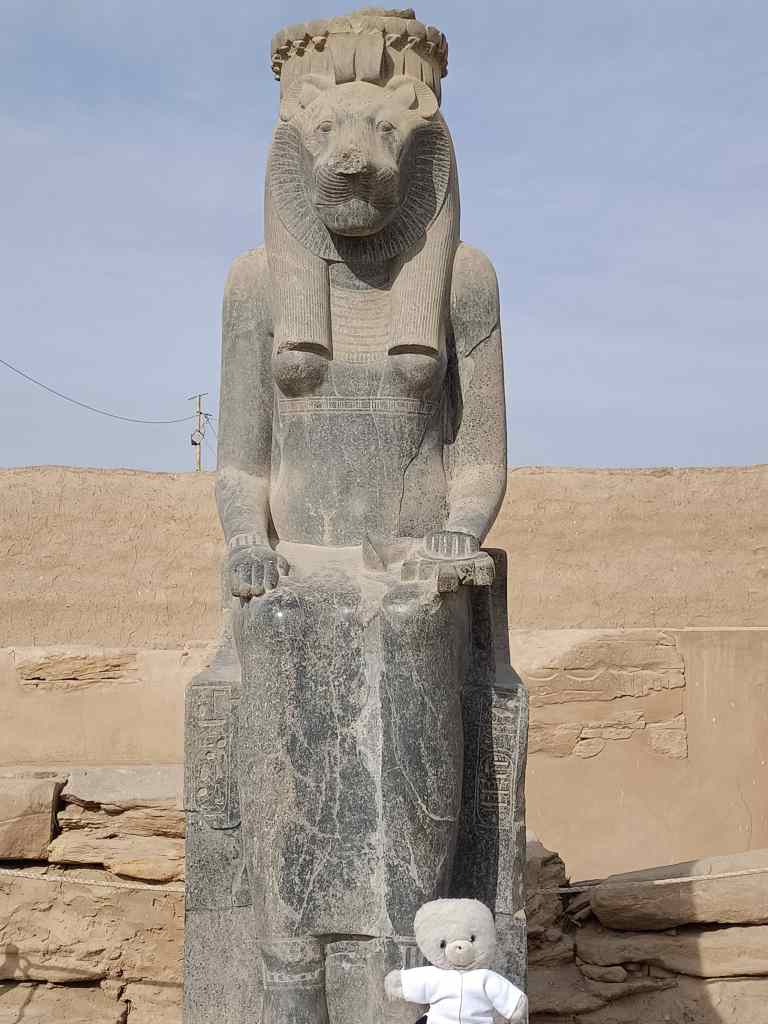
My first visit was to the Luxor museum – a small but high quality collection of the items found in the area. I particularly liked this statue of the god Sobak with pharaoh Amenhotep III.  There were also two mummified bodies on display; I wondered if the owners would have appreciated being dug up to be inspected by tourists.

The god Sobak, Pharaoh Amenhotep III and me
Mummy of Pharaoh Ahmose

From the museum I walked up along the Nile to Karnak, a place of superlatives. This complex of temples became Egypt’s most important religious site when the kingdom’s capital was moved to Thebes (now called Luxor) and royalty started to be buried in the Valley of Kings on the city’s west bank. Starting around 1950 BC, for nearly 2000 years  successive pharaohs sought to leave their mark for posterity by adding to the previous structures. The most impressive and largest buildings were constructed during the reigns of Seti I and Rameses II, around 1290 BC.  The final complex consisted of a huge central temple to Amun, the local god, and several smaller temples devoted to other gods, and covers a vast area. The central Temple of Amun alone is bigger than St Paul’s Cathedral and St Peter’s Basilica combined.

The entrance to Karnak

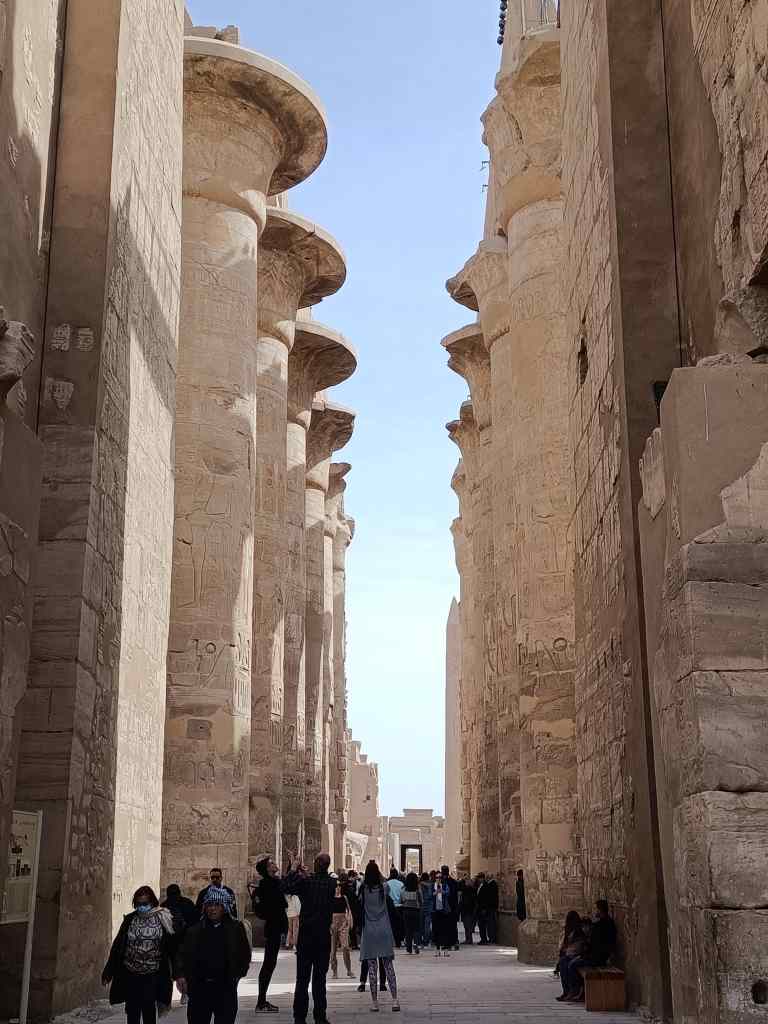
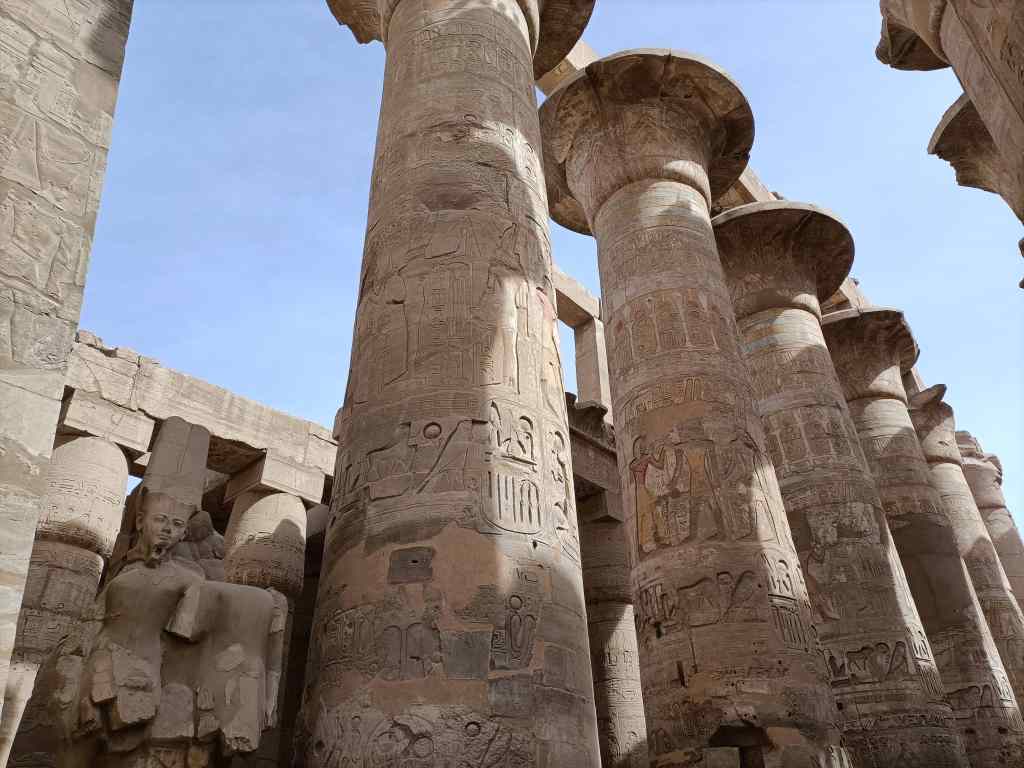
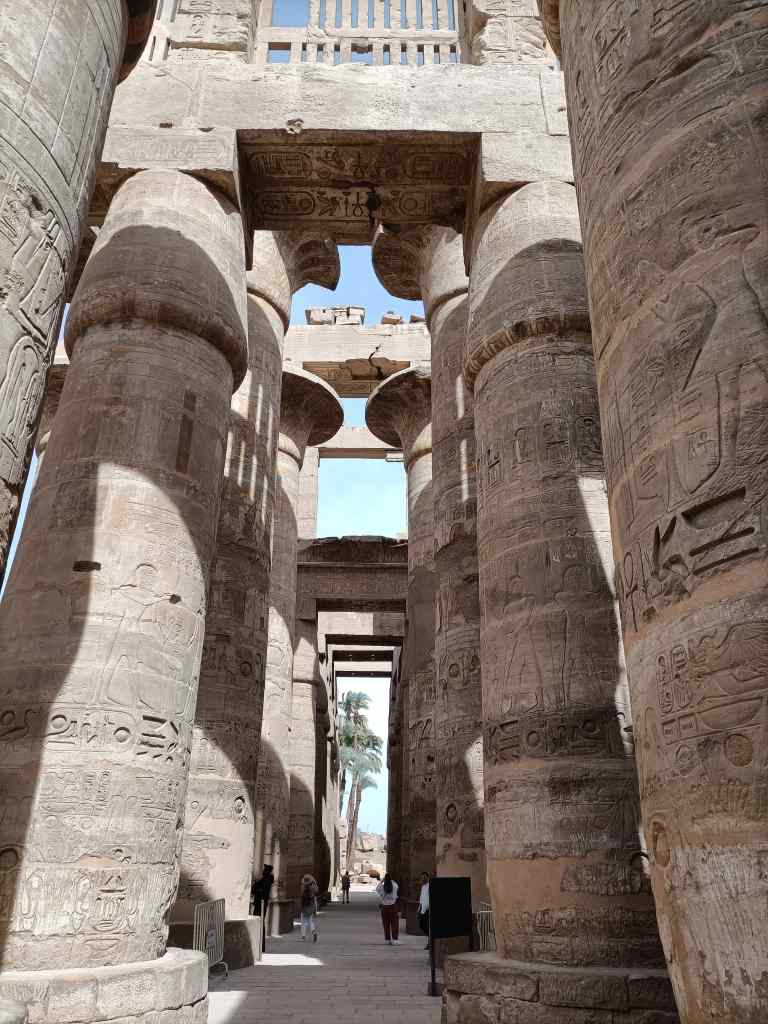
Just past the entrance archway – or “pylon” – an incredible sight opened up of the 134 huge decorated columns that make up the Great Hypostyle Hall, part of the central Temple to Amun. Entering this area felt like going into a thick forest, with huge stone pillars instead of trees. I wandered around, straining my neck to look up at the fragments of the ceiling, some of which still carried the original painting from ancient times. I stayed for thirty minutes, soaking  in the sheer vastness of the temple, and feeling smaller and smaller.

The Great Hypostyle Hall, Karnak
The forest of huge decorated columns is Karnak’s most striking feature
I felt smaller and smaller…

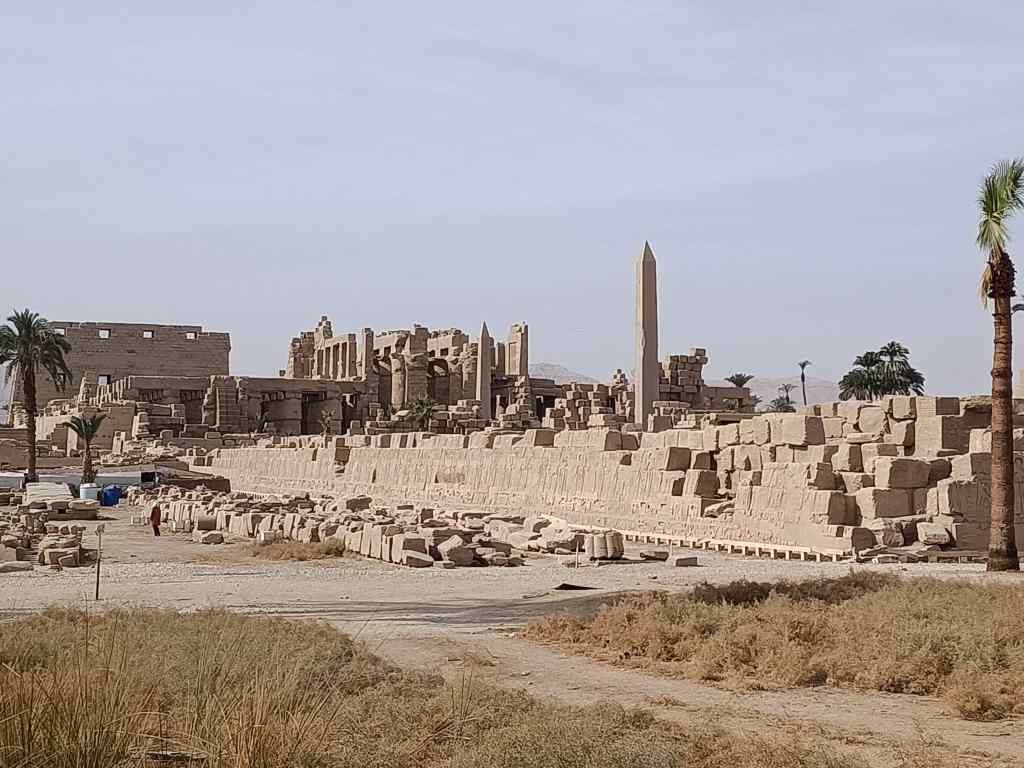
After this amazing sight, I explored the central area further. Then I wandered further south to find a “no entry” sign apparently blocking further progress. A guard gestured to me to come through, and led me to a small Temple of Horus. We were completely alone, and it felt a world away from the crowds in the centre of the complex or the bustling city of Luxor. This temple also gave a good view back over the main complex.

Looking back at the central temples of Karnak

I continued exploring these remote outer parts of the complex. Many areas had “no entry” signs, but friendly guards would usher me through in the expectation of receiving “baksheesh” when I had seen everything. In these little-visited places, I wondered if the guards hadn’t put up the “no entry” signs themselves as a way to augment their salaries. I finally ended up at the remote Temple of Mut (the mother goddess) on the very edge of the site.

Mut and me

Beyond it lay a marsh – a reminder that in ancient times, the temple complex was often flooded by the Nile. After three hours of walking and admiring the vast monuments of the Temple of Amun and the quieter smaller temples in the outskirts, I felt that the marsh made a logical end to my visit of one of antiquity’s most impressive monuments.

The complex of Karnak finally ends

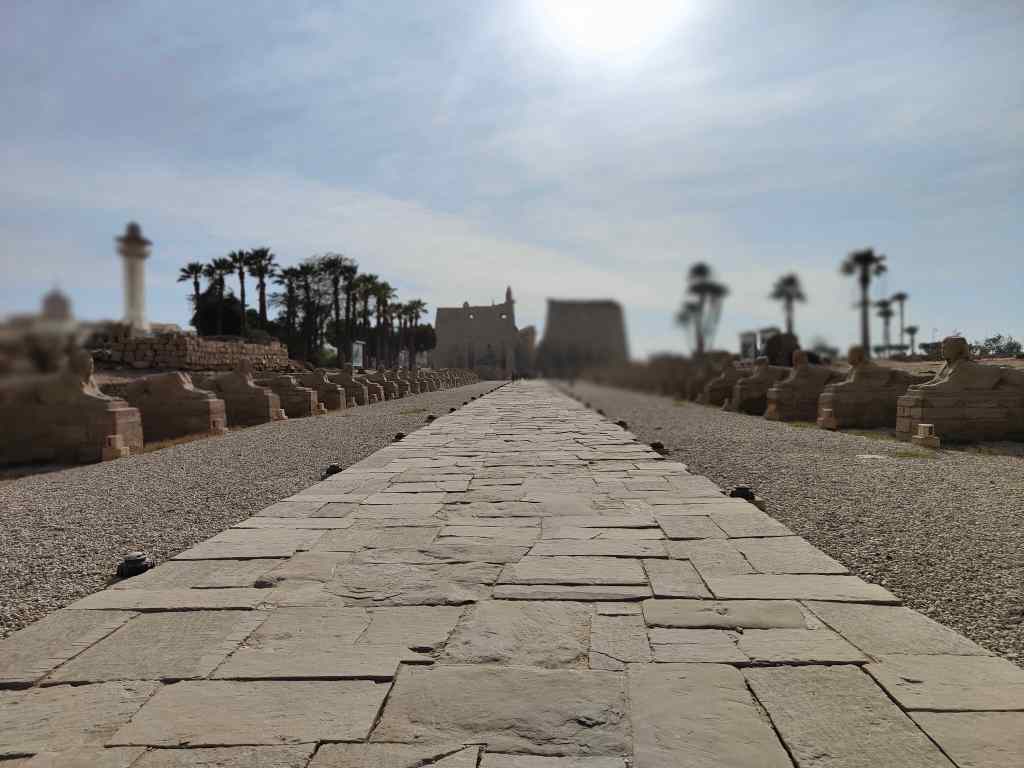
I found the southern gate to the complex where a long, straight ancient road led back to Luxor Temple – the recently-excavated Avenue of the Sphinxes, so called because for the entire 3km of its length the path was flanked by statues of sphinxes, rams or cows on either side. I thought about the countless Egyptian priests that must have used this path for hundreds of years – it was a wonderfully atmospheric way to say goodbye to Karnak.

The Avenue of the Sphinxes
Luxor Temple comes into view

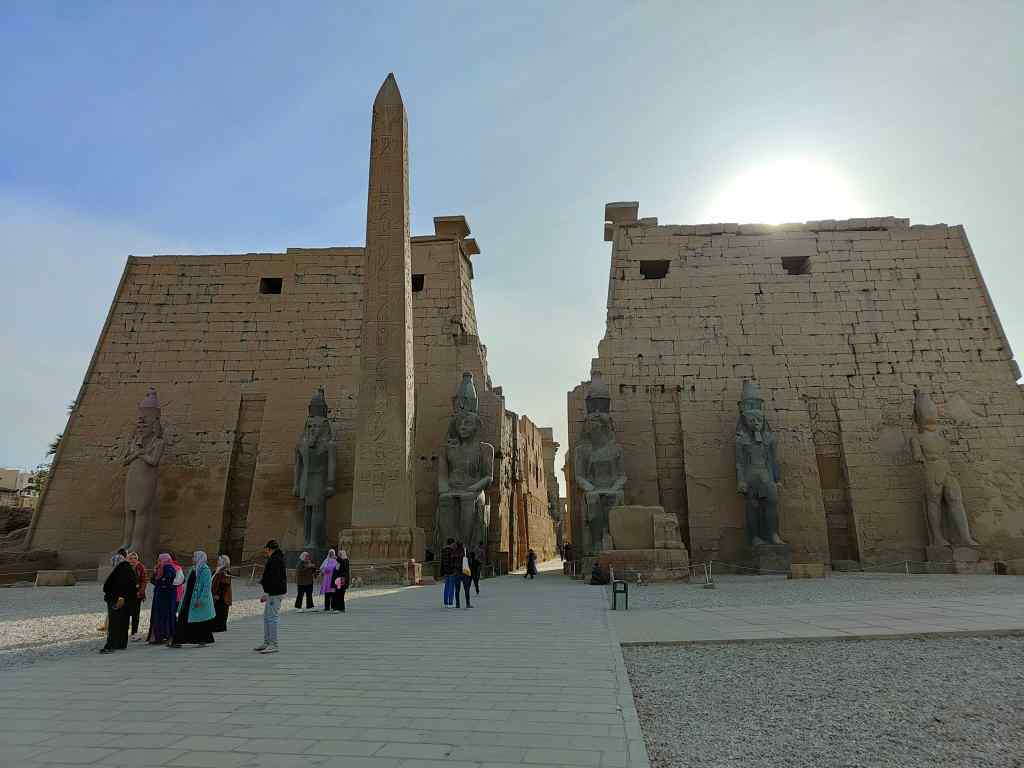
The temple of Luxor was something of a disappointment in comparison to Karnak. It was less impressive than other temples I had seen in Egypt, and was much more crowded than Karnak had been.

The entry to Luxor Temple

The best time to see this temple is at night, when it is illuminated, but I was tired after so much walking and did not want to wait. Instead I strolled down the Corniche along the Nile, admiring the view as the sun set.

Sunset on the Nile at Luxore

It was very pleasant, and even the continual approaches by taxi drivers, people selling things and caleche owners did not spoil my mood. Some of this hassle was done with a good dose of humour. Some examples:

“Why you walk like an Egyptian?” (taxi and caleche drivers)

“Welcome to Alaska” (salesmen trying to get your attention)

“I will hassle you tomorrow” (taxi driver who had stopped working for the day, said with a big smile)

To round off the day, I popped into Winter Palace, the grandest and most historic hotel in Luxor. It was here that Howard Carter announced the discovery of the tomb of Tutankhamun in 1922. It had a wonderful colonial style including a comfortable bar where I had a drink and a snack to celebrate the day’s sightseeing.

A well-deserved drink at the Winter Palace, Luxor

At the beginning of the day, I was worried about having “ancient ruin fatigue”. But the huge, sprawling Temple of Karnak was a sight that even the most jaded traveller would find awesome.

Next Post: Luxor’s West Bank – day 1

Previous Post: From Aswan to Luxor

A Day on the Nile and the Temple of Isis, Philae

Today was a very busy day. I had breakfast on my guest house’s roof terrace just as the sun was rising.

Aswan – The view at breakfast

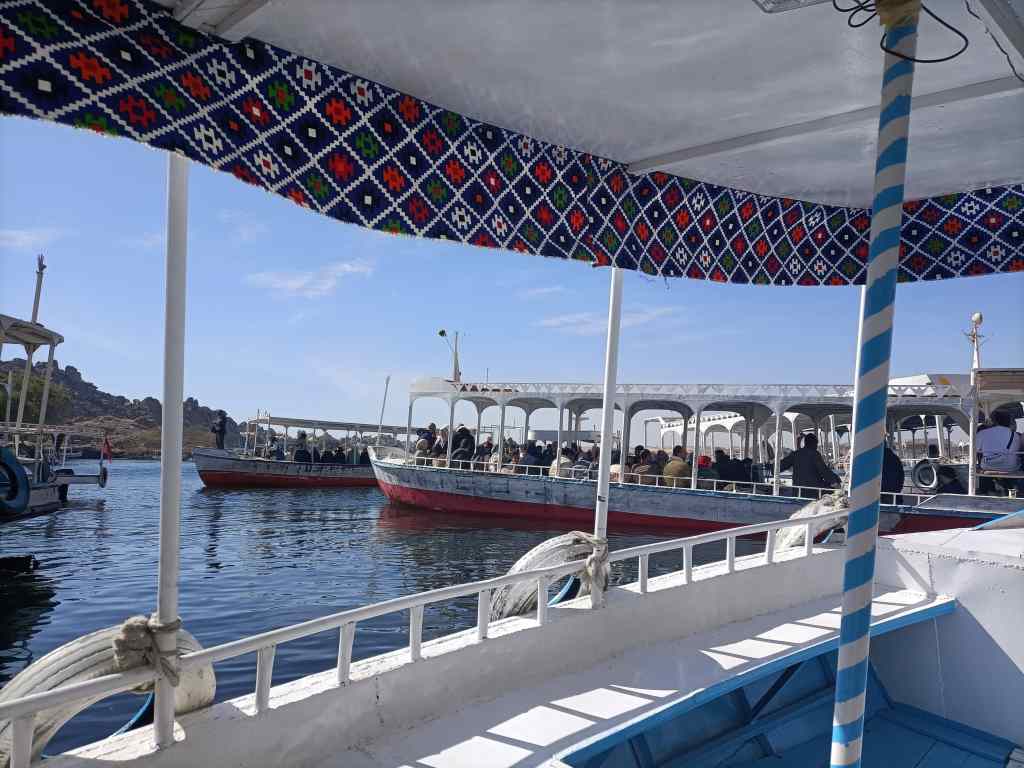
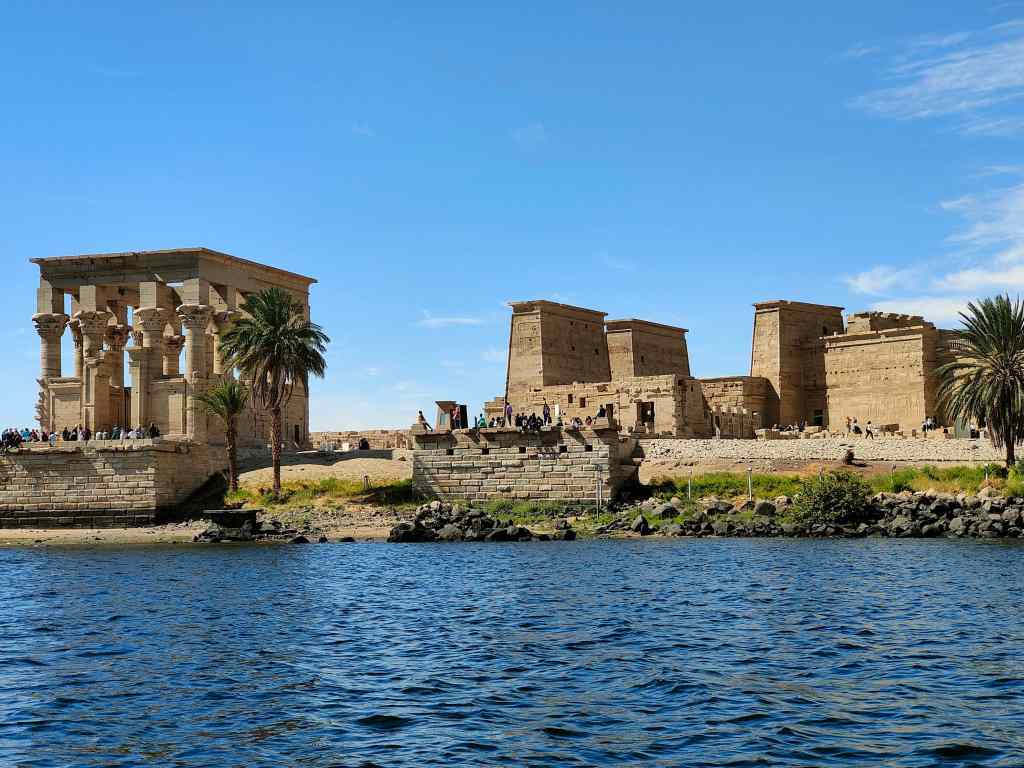
Then I crossed over the mainland with the public ferry and made a short drive by taxi to the banks of Lake Nasser (formed by the Aswan Dam) to visit the Temple of Isis at Philae. It was the last day of Egyptian school holidays, and the temple was a popular destination for local tour groups and families with children. At the lake’s edge, many boats jostled to take visitors over to the island where the temple was located. I negotiated a rate for a private boat. The boatman seemed very happy to take an exotic passenger rather than yet another group of locals – not many bears visit Egypt.

Boats jostling to get to Philae Island

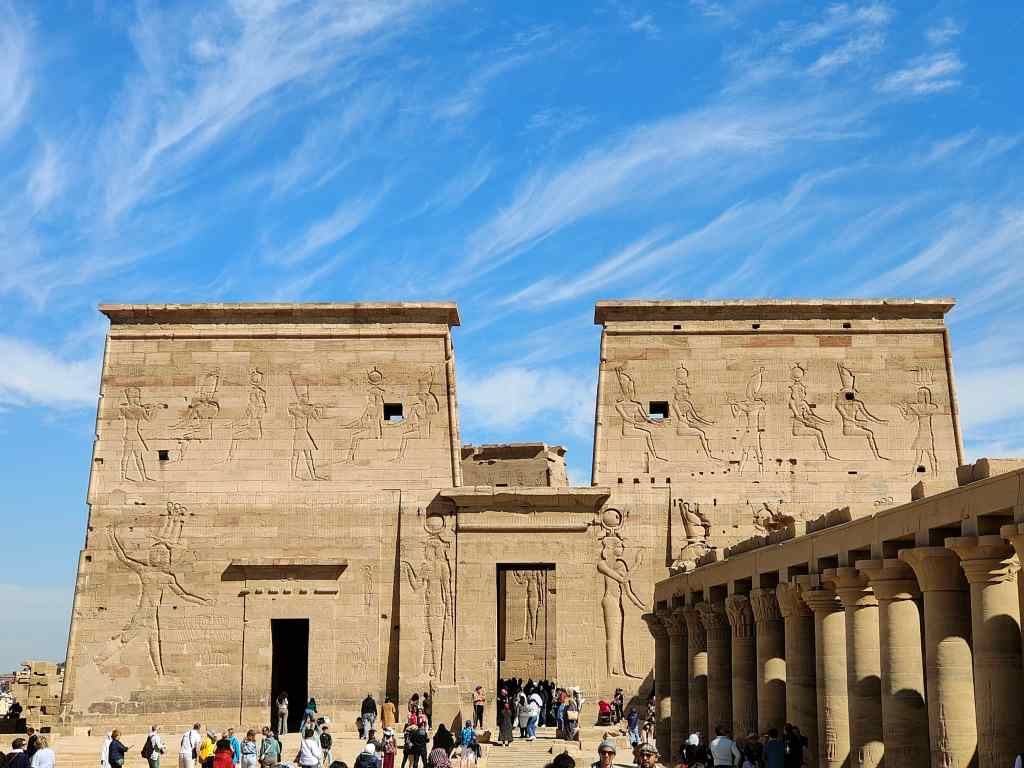
The Temple of Isis is relatively modern by Egyptian standards. It was started around 690BC, though most of it was built around the third century BC by the Ptolemaic pharaohs (Egypt’s last dynasty of pharaohs before Roman rule). The Romans added some sections of their own – the Egyptian goddess Isis had become popular throughout their empire. After the Romans adopted Christianity, the temple was used as a Christian shrine, and most of the images of Egyptian gods were defaced. After the first Aswan dam was built in 1902, the temple was regularly flooded. The second Aswan dam in 1970 threatened to totally submerge the temple forever, but it was moved piece by piece to a new island with higher ground as part of the international effort to save the antiquities threatened by the new dam.

The Temple of Isis

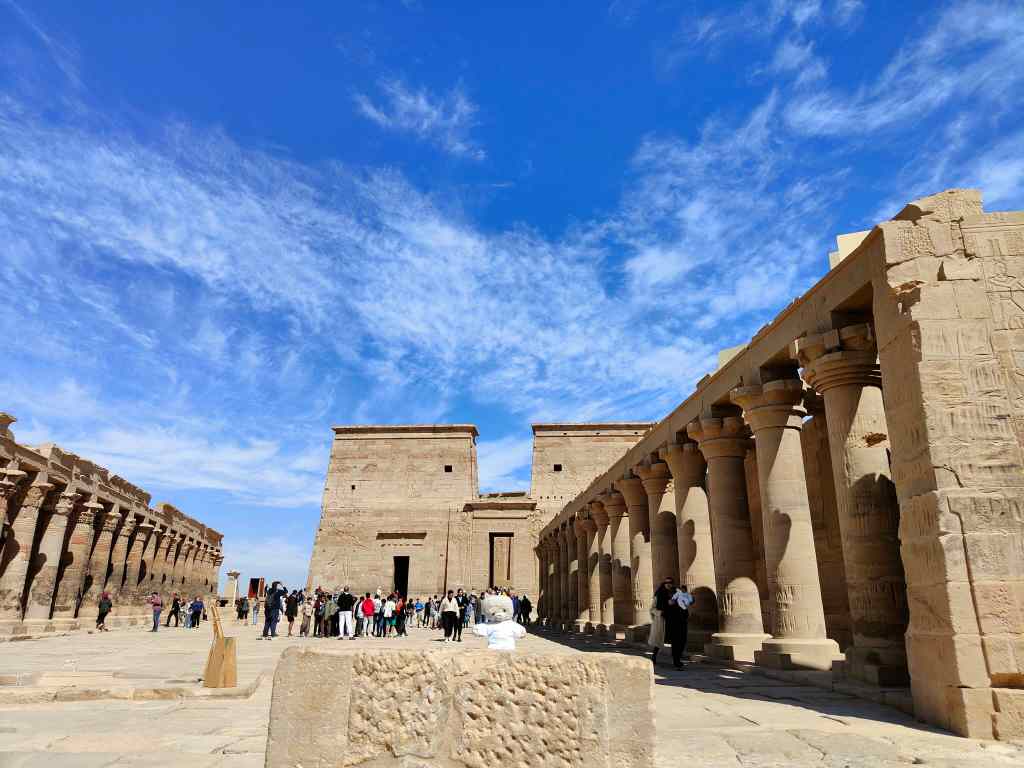
I spent an hour and half admiring the different buildings making up the complex – including the courtyard of the main Temple of Isis….

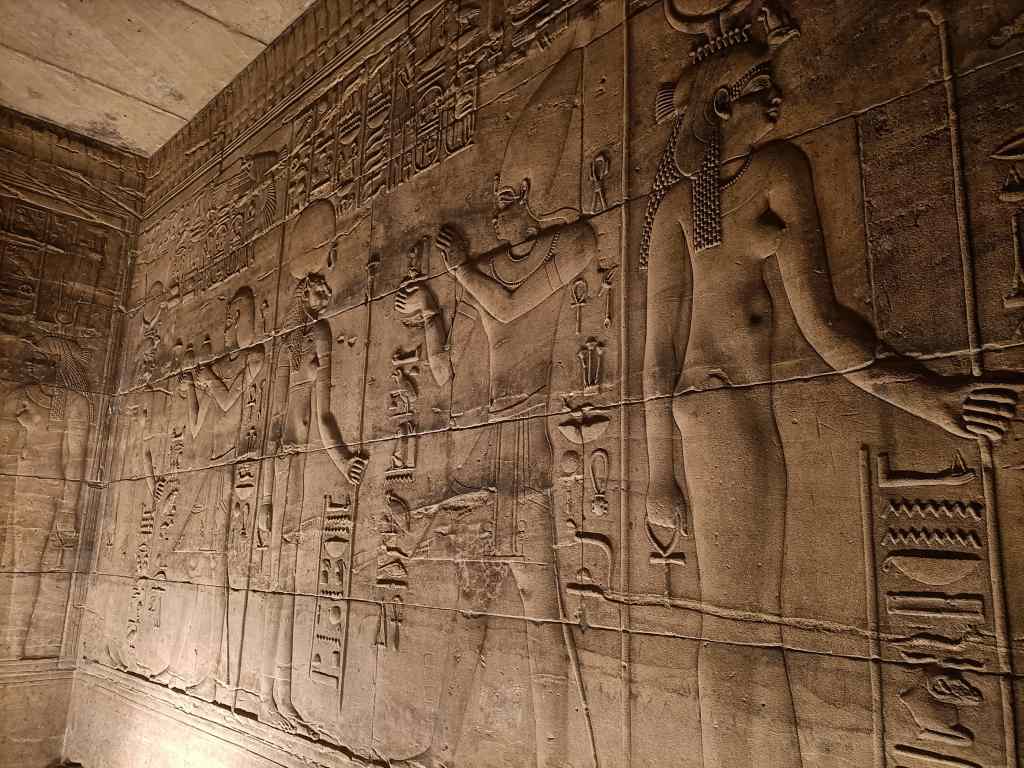
…….the interior of the Temple of Isis…….

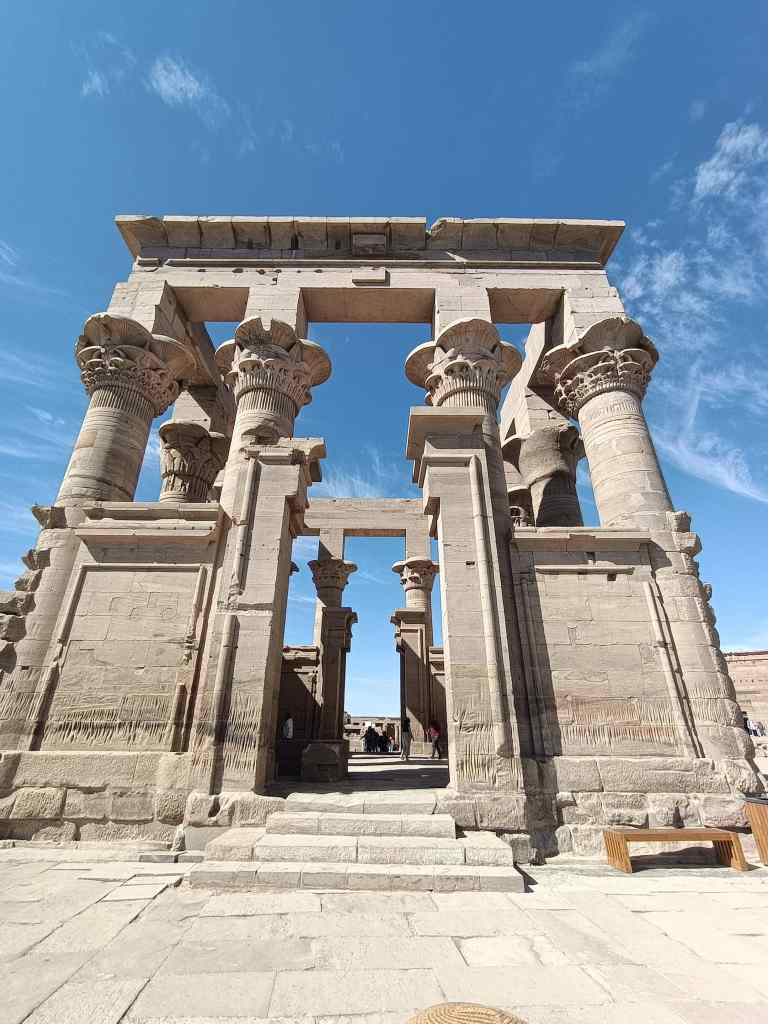
……and the kiosk of Trajan, named after the Roman emperor.

Kiosk of Trajan, Philae Island

The site was busy, and I found I could take some of the best pictures – without anyone getting in the way – from the boat on the way back.

The Temple of Isis seen from Lake Nasser

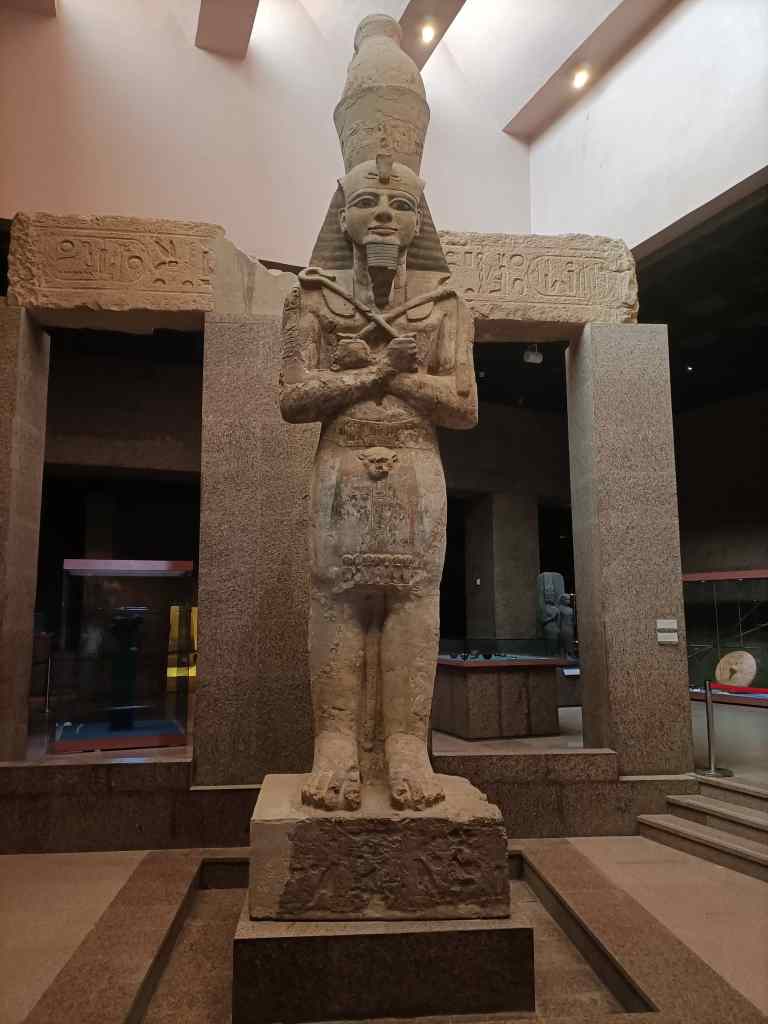
Next my taxi dropped me off at the Nubian Museum in Aswan. This catalogues the history of the state of Nubia, that spent most of its existence being occupied by, or having to pay tribute to, its more powerful Egyptian neighbour to the south.  The history was interesting, but the items on display suffered from comparison with the Egyptian Museum in Cairo, which I had visited only two days earlier.

In the Nubian Museum, Aswan

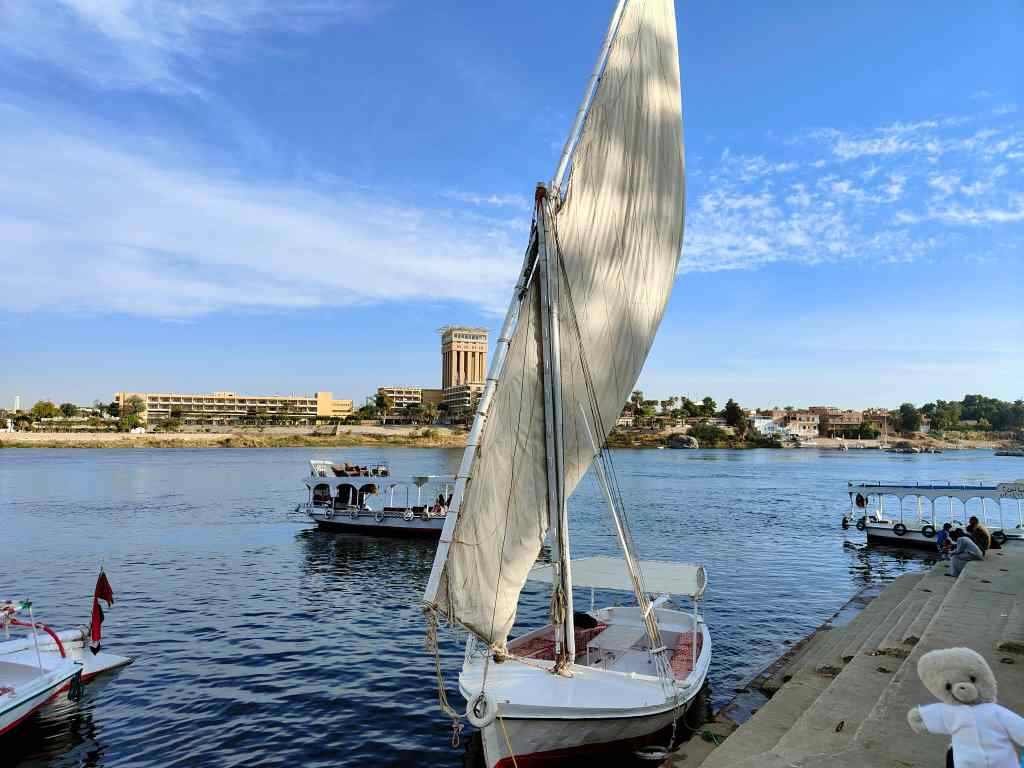
After visiting the museum, I had lunch and a coffee in a café overlooking the Nile and then I set off on a trip on a “felucca” – a traditional Egyptian sailing boat..

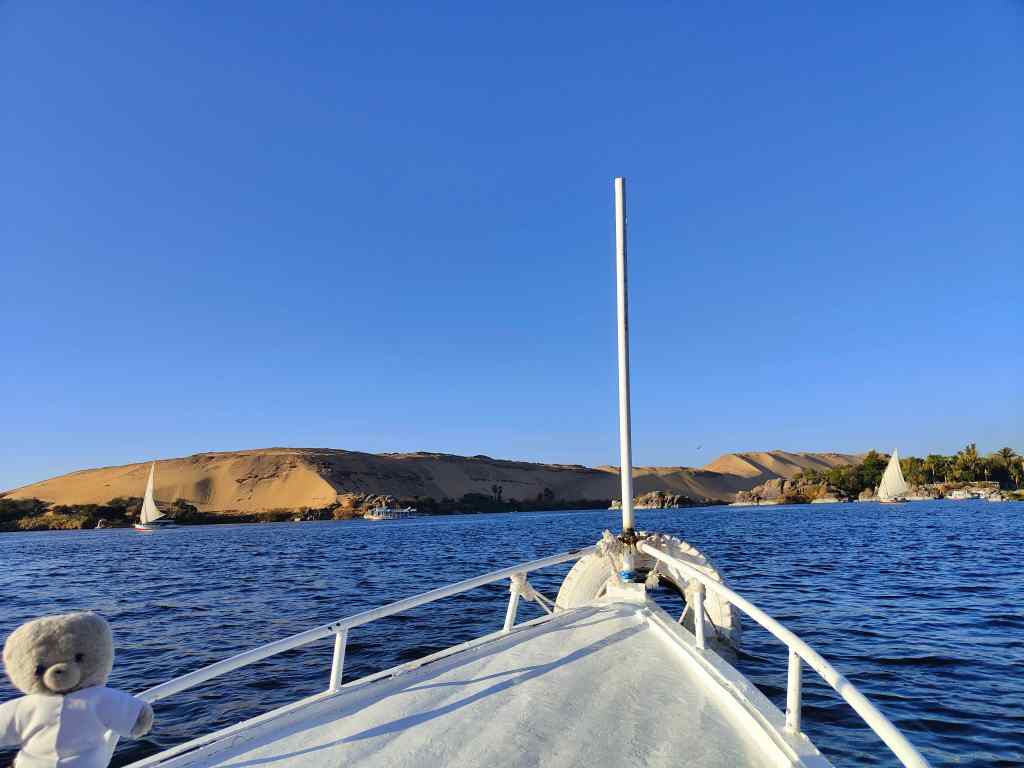
Starting my Felucca trip at Aswan

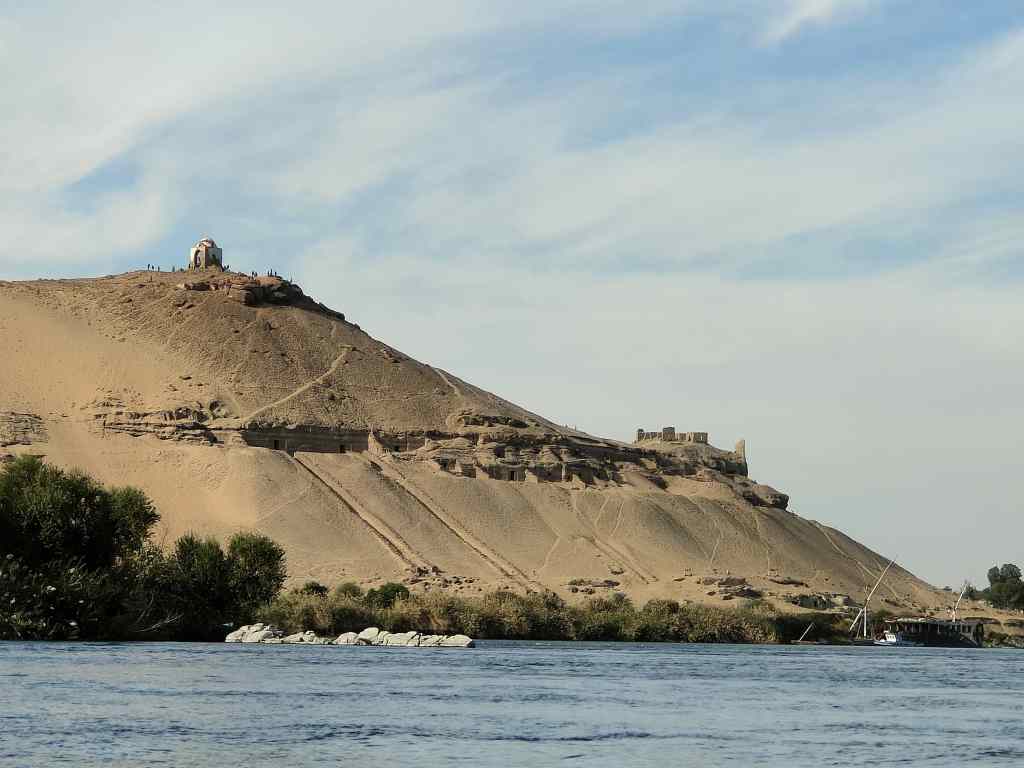
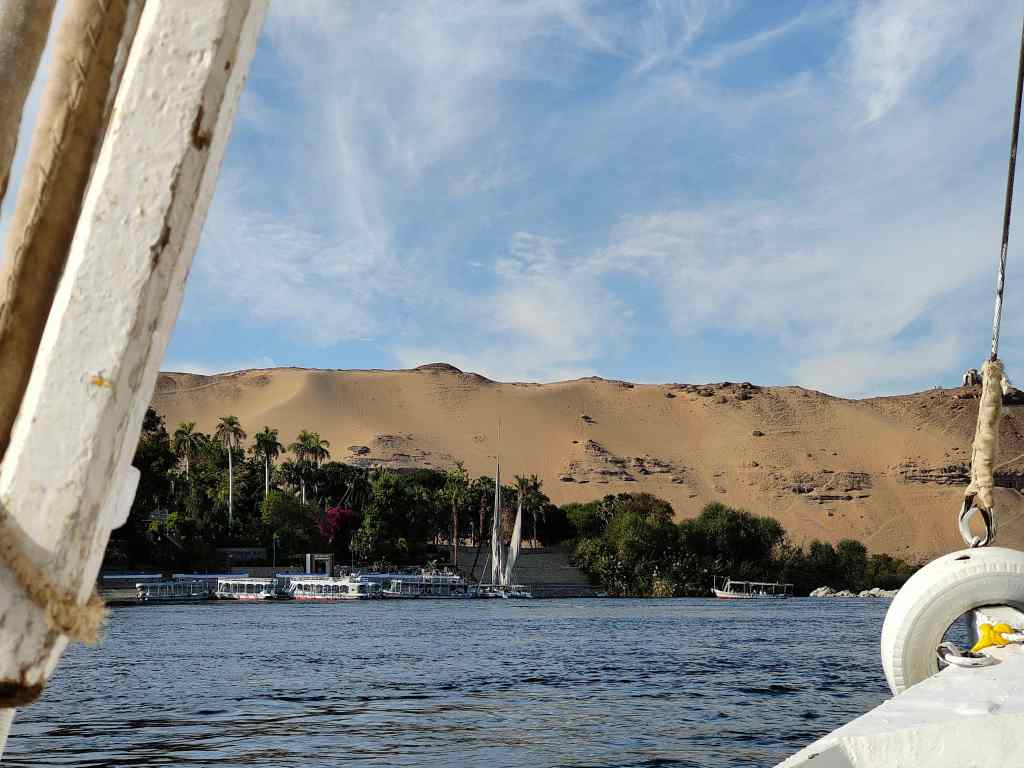
The weather was warm and sunny, and my trip offered great views of the mountains on the west bank of the Nile – every hill seemed to have some ancient ruin built on it.

The West Bank of the Nile at Aswan

I asked the boatman to drop me briefly at Aswan’s botanical gardens, located on one of the many islands in this part of the river. In Victorian times, the island was given to the British general Lord Kitchener, who was passionate about exotic plants and turned the area into gardens. The story about their foundation was more interesting than the gardens themselves, and I was soon back on my boat enjoying the early evening sun.

Kitchener’s Island, Aswan, home to the Botanic Gardens
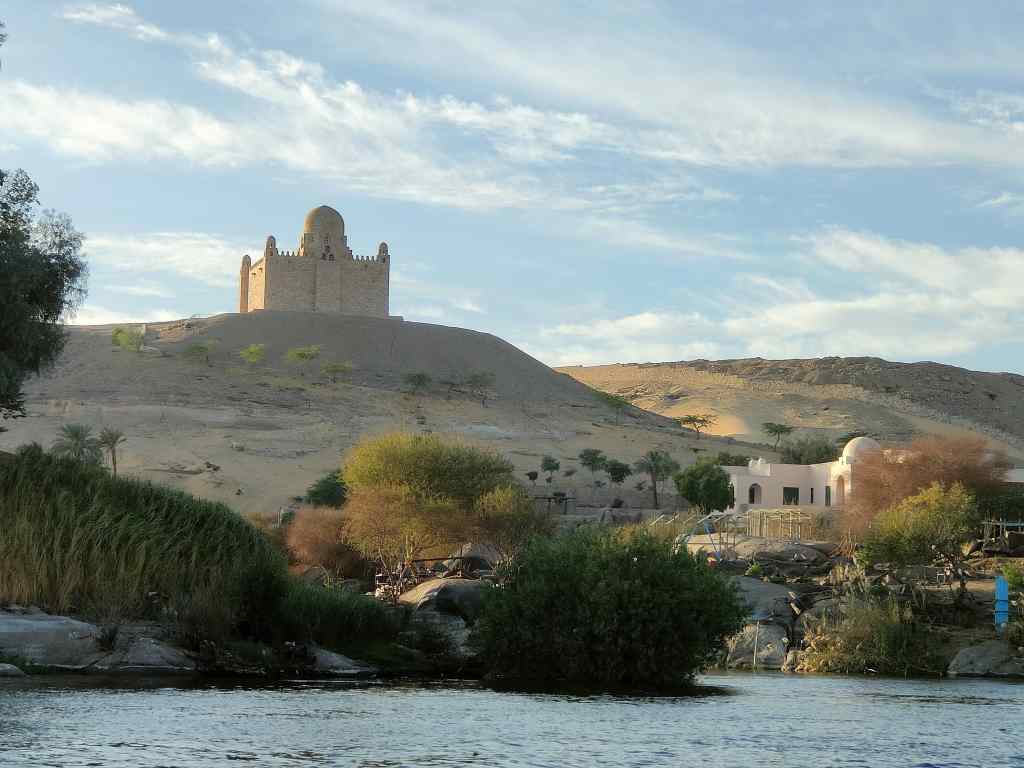
The Mausoleum of the late Aga Khan – head of the Ismaili Muslims

The boat dropped me off back at my guest house on Elephantine Island and I set off immediately to the northern tip of the island to enjoy the sunset from the ruins of Abu. This area contained ruins of many different ages – some as old as 3000BC and some as recent as the 14th century AD – all jumbled together and most in an extreme state of dilapidation. One of the most interesting ruins was a “nilometer” – a set of steps going down to the river, flanked with stones with measuring markings that showed the height of the Nile. This was a very important instrument, because in ancient times, the pharaoh set taxes based on the maximum height of the river during its annual flood. A higher flood meant more water and more rich sediment washed down from central Africa, and so better crops for the kingdom’s farmers.Getting in was a typical Egyptian experience – the security guard said the site was closed for the evening but I could get in if I paid him the normal entrance fee. The ruins were just that – ruins – but the site was a great place from which to enjoy the setting sun.

Sunset at the northern tip of Elephantine Island, Aswan

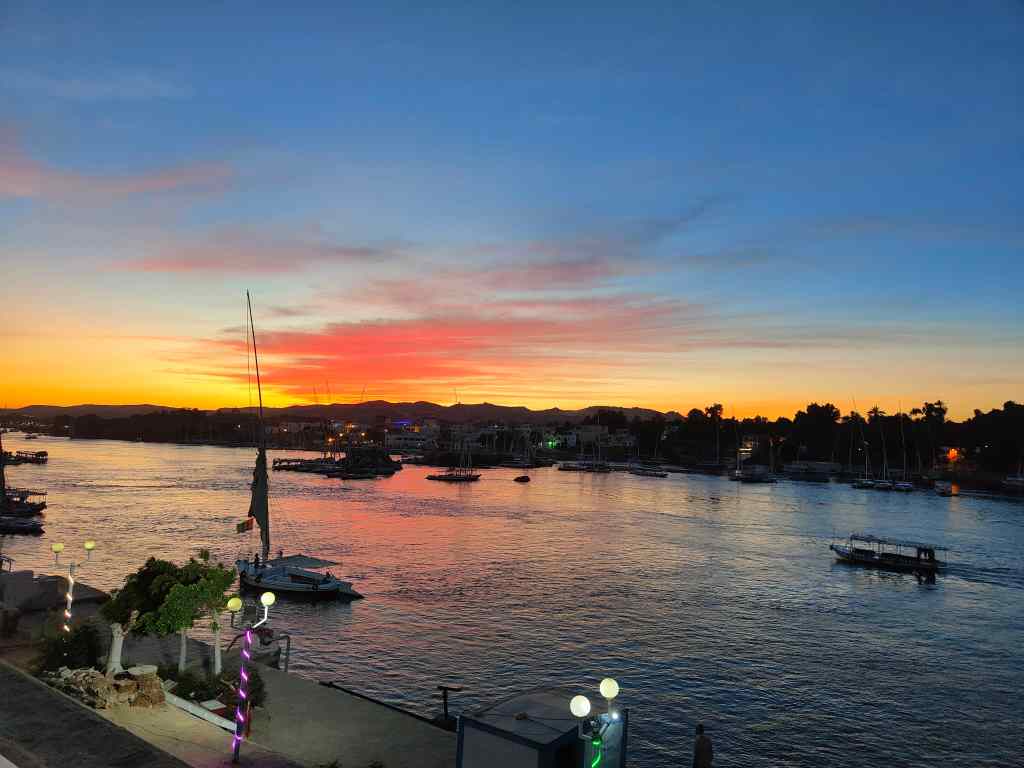
The final part of the day was enjoying an early dinner and a fiery red sunset from a restaurant in Aswan city.

A Nile sunset at Aswan

It had been a very busy day, but I got home early enough to write a bit of my blog and make my first post before collapsing into bed. My guesthouse had basic furnishings, but its internet worked a lot better than that of the modern hotel I stayed at in Cairo.

Previous Post: Cairo to Aswan

Next Post: Abu Simbel and the Great Temple of Ramses II

From Coptic Cairo to Aswan and the Nile

During the night I found out that the “Blue Nile” riverboat moored nearby (see previous post) was a nightclub which played very loud music into the early hours of the morning. The songs were clearly audible in my hotel; the volume inside the boat must have been deafening. The nightclub, combined with the honking of car horns, the screaming of police sirens and the early morning call to prayers from the nearby mosque all meant that I slept badly. Like New York, Cairo is a city that never sleeps.

In the afternoon I was due to fly to my next destination, Aswan. I would come back to Cairo for a few days at the end of my trip, but today I had to choose which of the city’s attractions to see in a sleep-deprived morning. I opted for Coptic Cairo. The Copts are a minority Christian group and their church – the Coptic Orthodox Church – is one of the oldest branches of Christianity, which legends say was brought to Egypt by St Mark in AD 42. Under the Romans, Christianity eventually became the official religion of the whole empire, and for a while was the main religion of Egypt. The Coptic Church split from the main Christian church in 322 following a disagreement about the exact divine nature of Christ. After the Arab conquest of Egypt in 642, Islam gradually displaced Christianity to leave the Copts as a small minority.

View of the main street of Coptic Cairo

Coptic Cairo is a small enclave of old Cairo which houses many churches, but also the Coptic Museum, a synagogue and a mosque. To get in, you need to pass through a bag check and every hundred metres in the main street, armed police were stationed. Egypt has had a long history of bloody terrorist attacks, and security for any area that draws crowds is always tight.

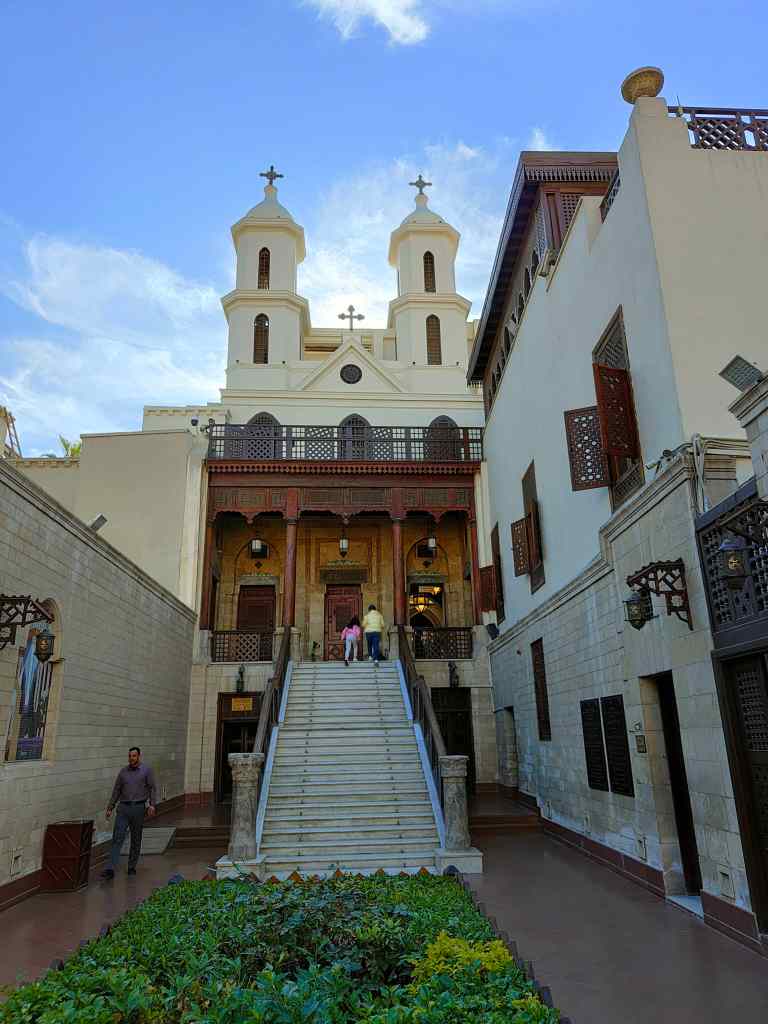
Once through the security check, it was like entering a different world. The anarchic traffic of Cairo was replaced by one empty central street (cars are not allowed in) and a wonderful calm. I started my visit at the Hanging Church, so called because it was built on top of the gate of an old fortress. The church was originally built around 690AD, though a new façade with two bell towers was added in the 19th Century. It is probably the most famous of Coptic Cairo’s churches.

The Hanging Church

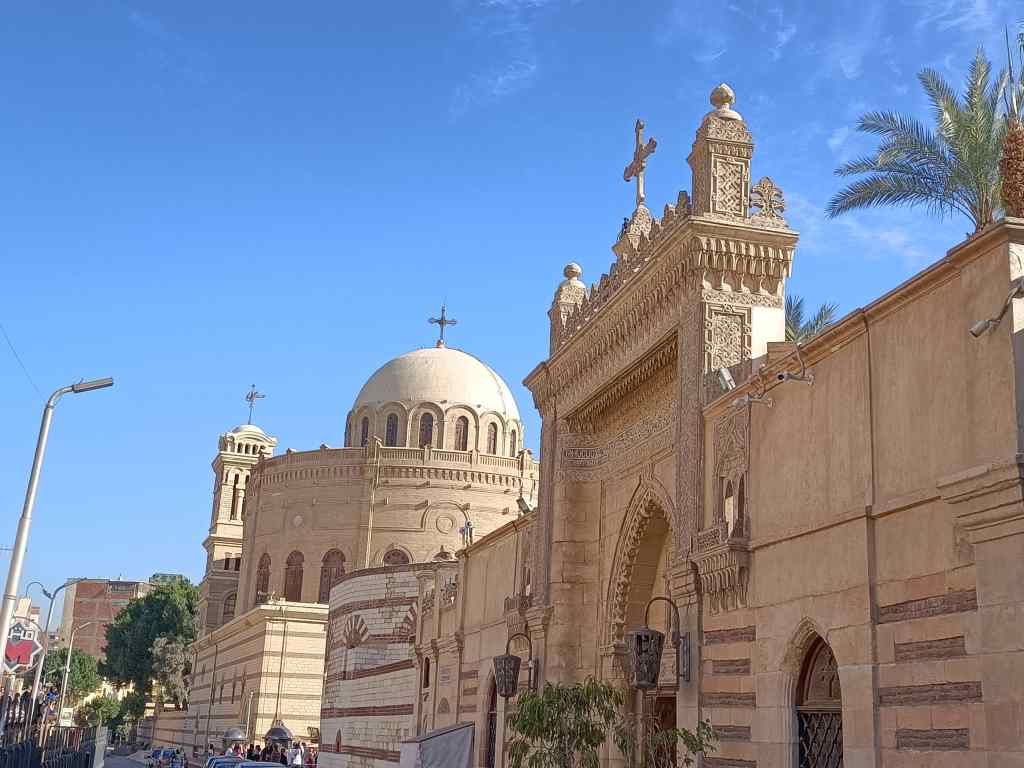
Next, I found the Greek Orthodox Church of St George

Church of St. George

And then the Coptic Museum, which I strolled around for about an hour. It had collections of Coptic art, icons and fabrics; the old building it was housed in was as interesting as the collections themselves.

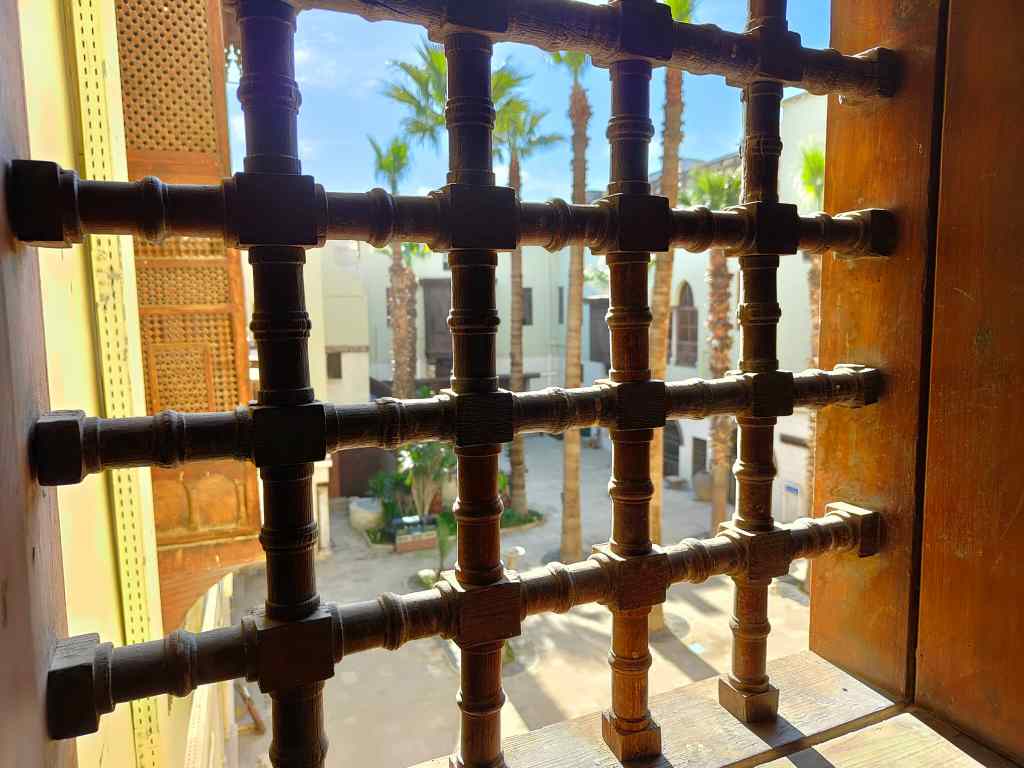
Looking out from the Coptic Museum
In the courtyard of the Coptic Museum

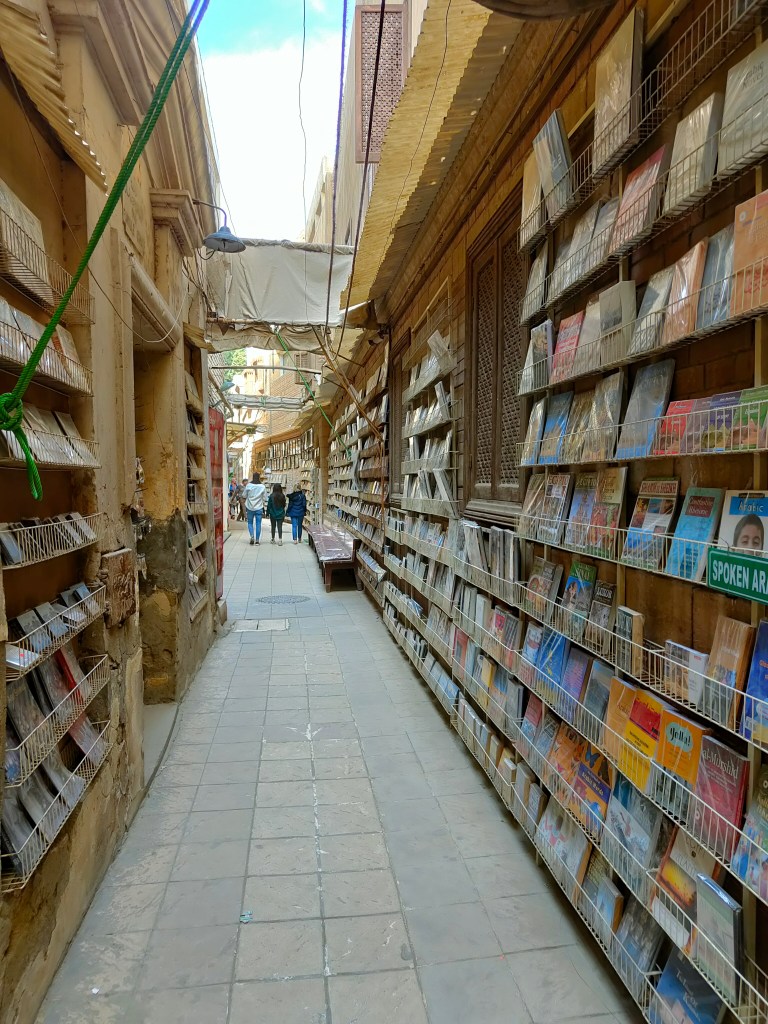
Finally, leading off from the only road, I found a little maze of side alleys, leading to yet more churches and a synagogue. When I arrived, Coptic Cairo had been quiet, but now there were many visitors – some Egyptians on a weekend outing, and some foreign tour groups, which mostly seemed to be Russians.

Bookseller in Coptic Cairo

It was time to move on, and I grabbed an Uber back to my hotel to pick up my bags and then another one to the airport. It was Friday, the first day of the Arab weekend, so everything went very smoothly with no traffic jams. At the airport I was treated to one of the toughest security checks I had ever had – shoes, belt and watch all had to be removed and scanned, and then I was thoroughly “frisked” for concealed weapons in my fur.

The flight flew over endless yellow desert sand, interspersed with a few mountains. Occasionally I caught a glimpse of the blue ribbon of the river Nile lined with bright green vegetation on both banks.  I arrived on time in Aswan, a town on the Nile that was the historic boundary between the ancient Egypt of the Pharaohs and the rival Nubian state. The latter enjoyed brief periods of independence but spent most of its history occupied by, or subjugated by, its more powerful southern neighbour. Today, Aswan is also known for the famous Aswan dam.

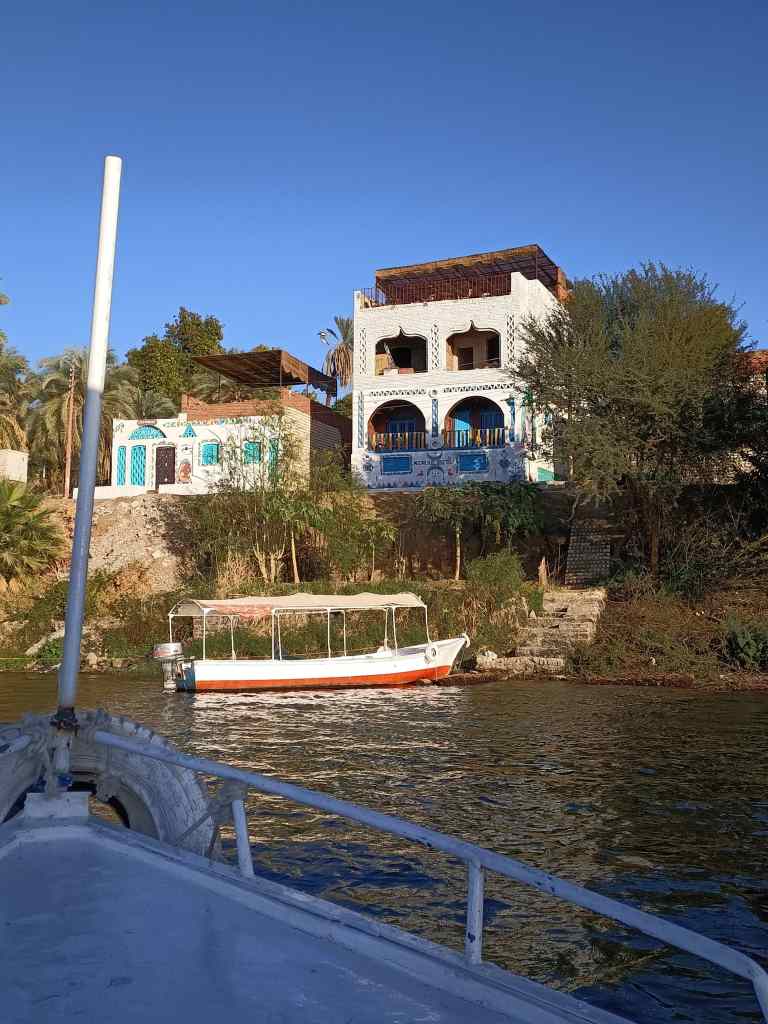
My guest house was on Elephantine Island, a place only accessible by boat. It has several ancient ruins, one ugly modern hotel, and many small townhouses. Some of these were painted with distinctive Nubian bright patterns of coloured geometric shapes. My guest house was on the other side of the island, and its owner picked me in his motor launch to take me there. It was the first of many times I got to experience the pleasure of sailing on the Nile.

On the way to my guest house at Aswan……
…..and arriving (my guest house is on the left)

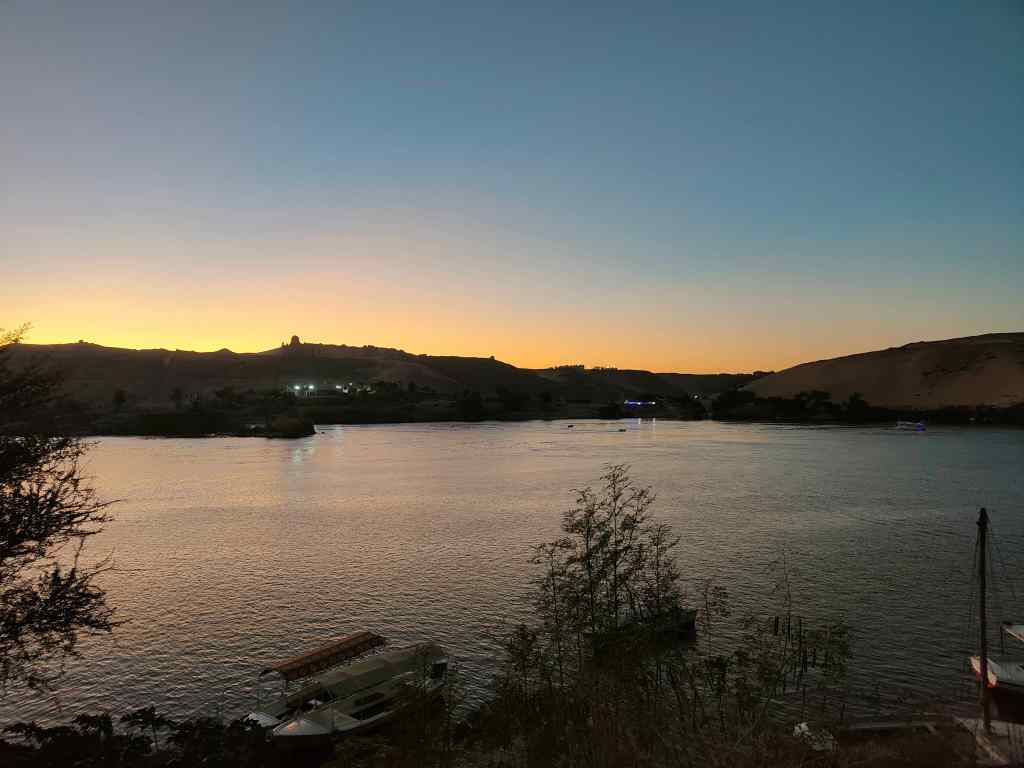
I arrived just in time to have a welcome drink on the roof terrace.  The view was beautiful, and the owner pointed out local landmarks like the Mausoleum of the last Aga Khan (head of the Ismaili Muslim sect) and the Monastery of St Simeon. After the chaos of Cairo, it was wonderfully peaceful……if rather chilly after sunset. I was glad of my fur!

The view from my balcony, Aswan
The sun sets over the Nile, Aswan

I decided to explore the island and see if I could reach the hotel, which had a panoramic terrace and bar in its ugly modern tower. I walked through a maze of twisting and turning small streets with no names…amazed to find that Google Maps could navigate through the area. When I had nearly reached the hotel, someone told me that it was surrounded by a wall and only accessible by special ferry from the main city. Instead I found a restaurant at the river’s edge, and enjoyed a beer watching the lights of Aswan city in the distance and listening to the boats chugging past.

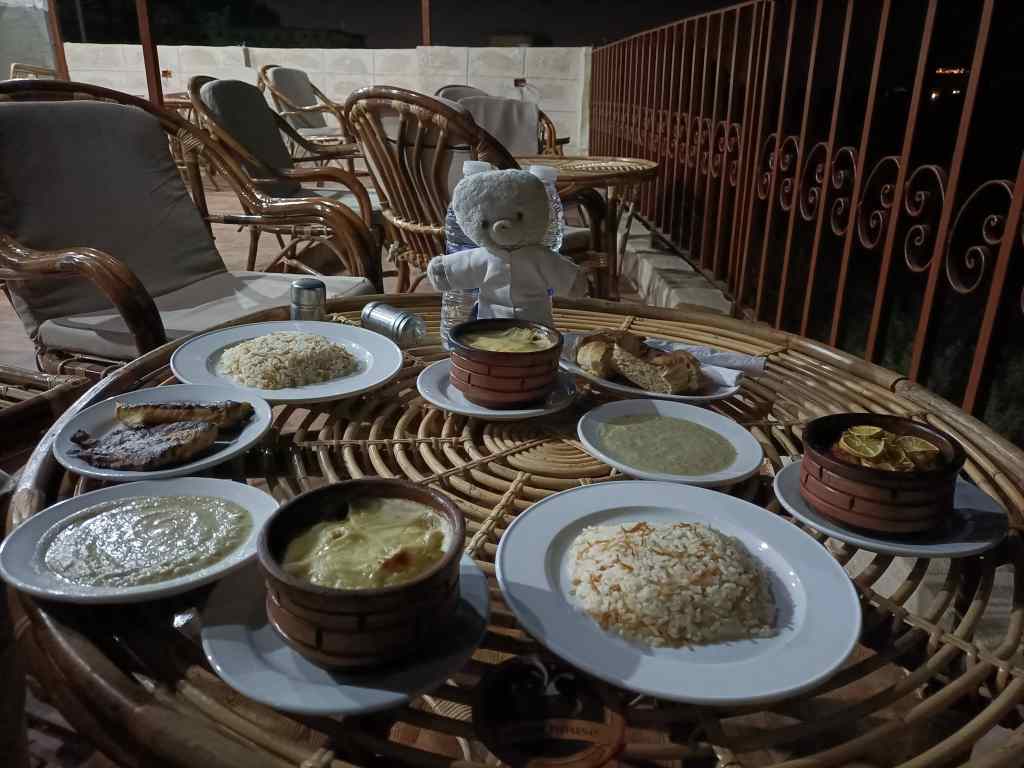
I had dinner back in my guest house, and enjoyed freshly caught Nile perch……..

A feast of fresh Nile Perch

…… before wrapping myself up in warm blankets in bed.

Next Post: A day on the Nile

Previous Post: A Bear in Cairo

Blog at WordPress.com.

Up ↑