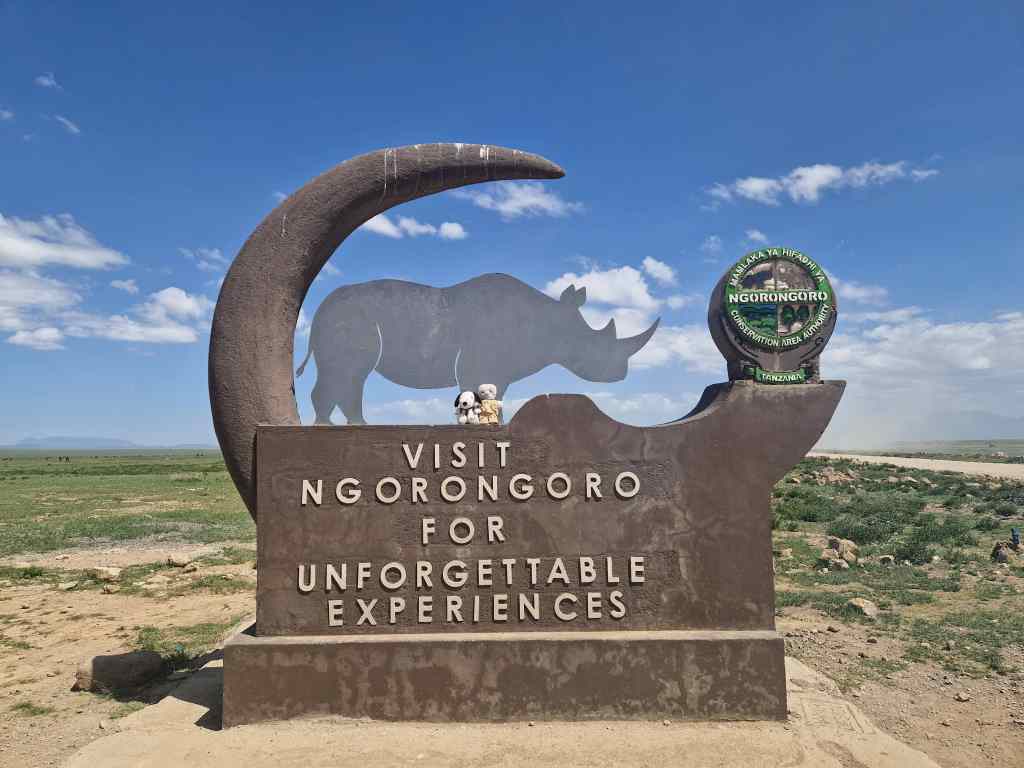
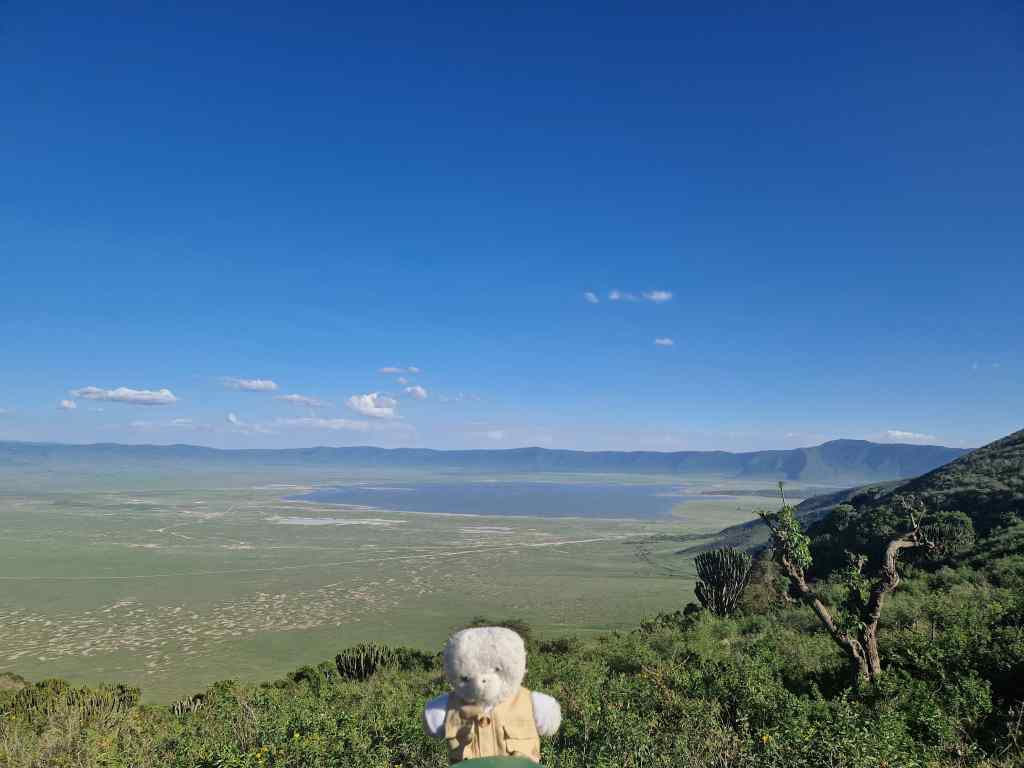
Today we got up early to experience one of Tanzania’s highlights – the Ngorongoro Crater, a huge volcanic caldera covering around 260 square kilometres. The area is home to a unique ecosystem, including lions, rhinos, elephant, hippos and many different types of antelope – but no giraffes, since the sides of the crater are too steep for them to enter. Our guide Estomih wanted us to be at the entrance gate at 06.00, saying that in the afternoon, the crater gets very busy with day trippers from the Serengeti or even from Arusha.
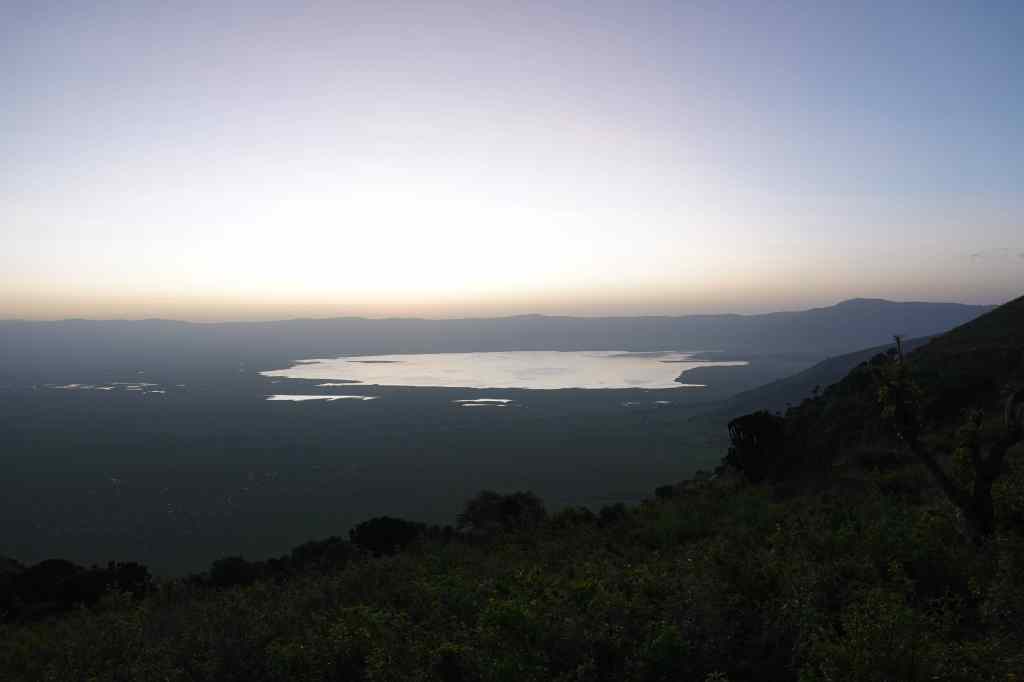
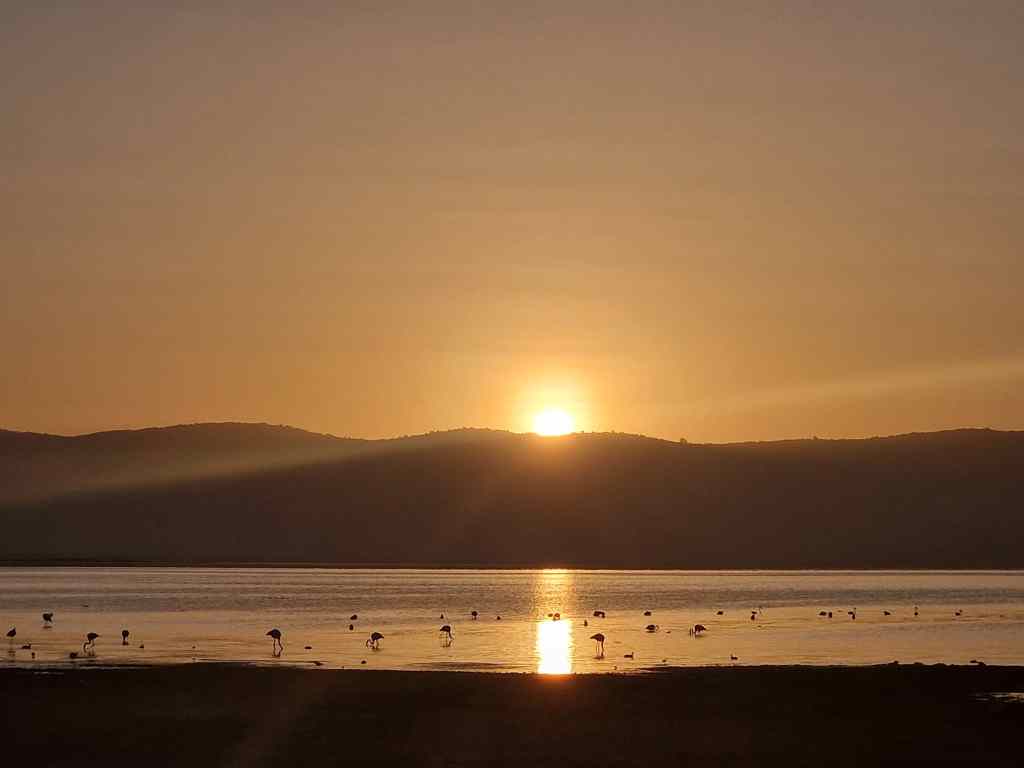
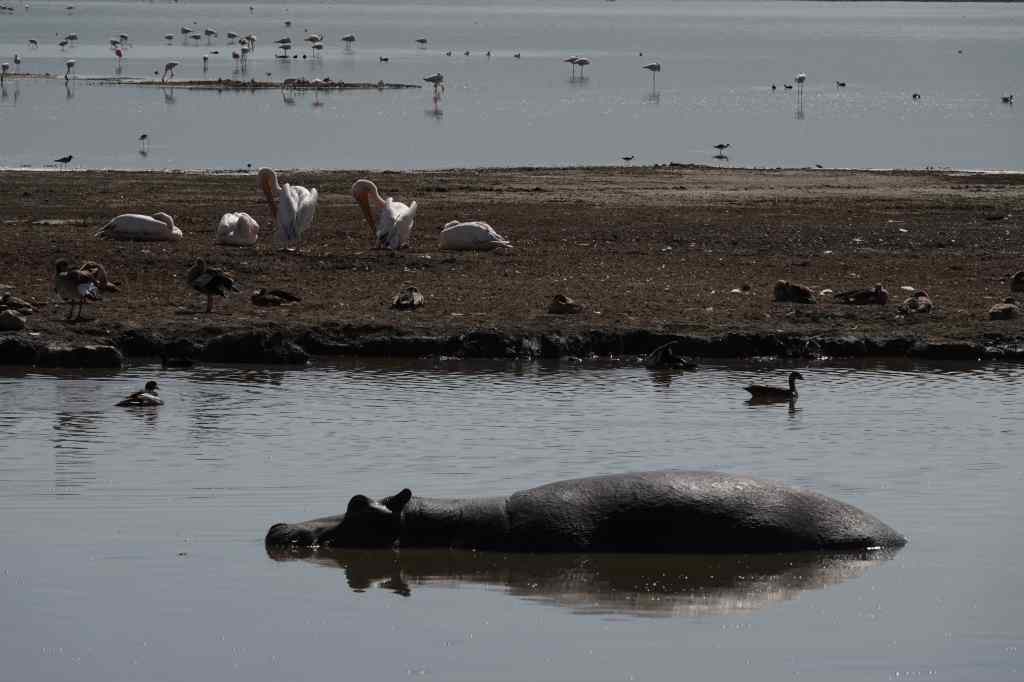
We arrived at the lip of the crater just as it started to get light, Estomih bought our (very expensive) permits, and we set off down a steep slope along a one-way road. Our first stop was the lake at the bottom of the caldera – apparently the largest volcanic lake in the world, and home to flamingos, hippos and pelicans.

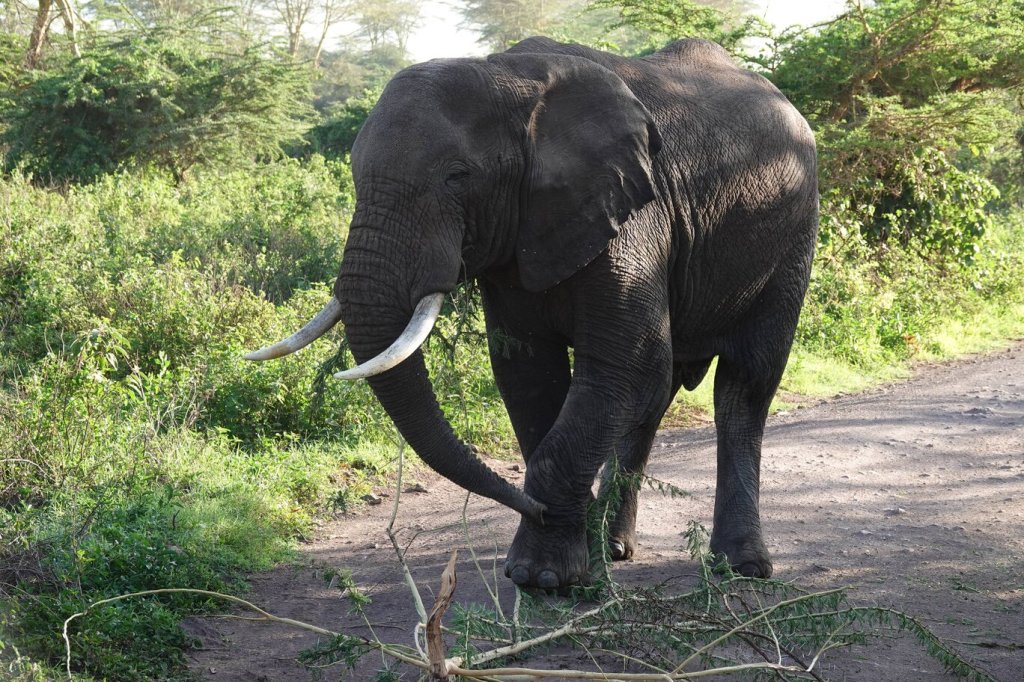
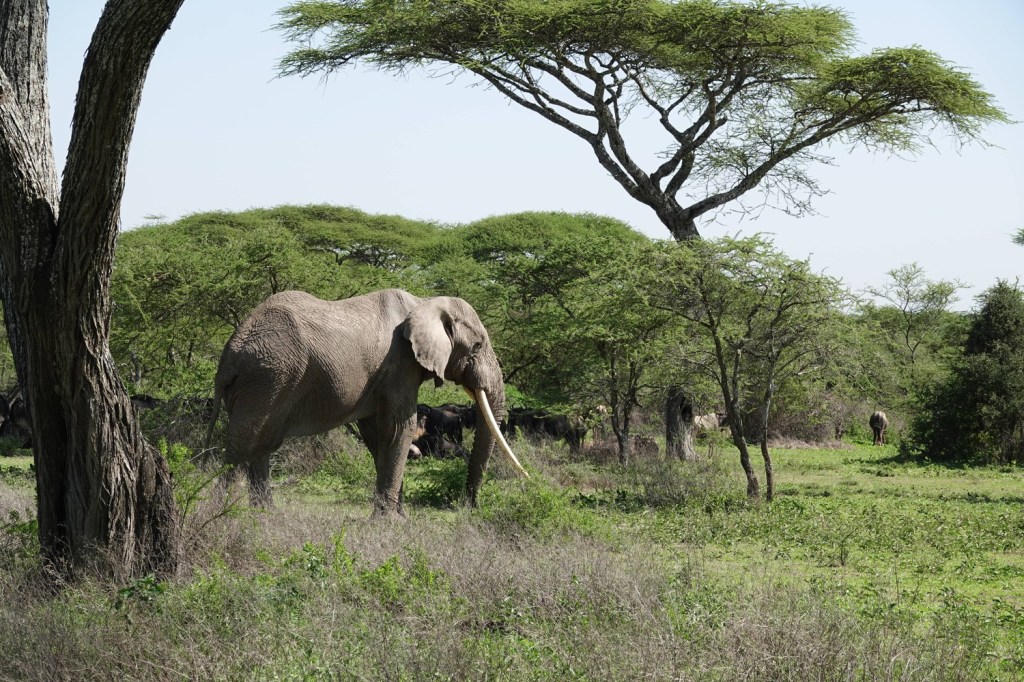
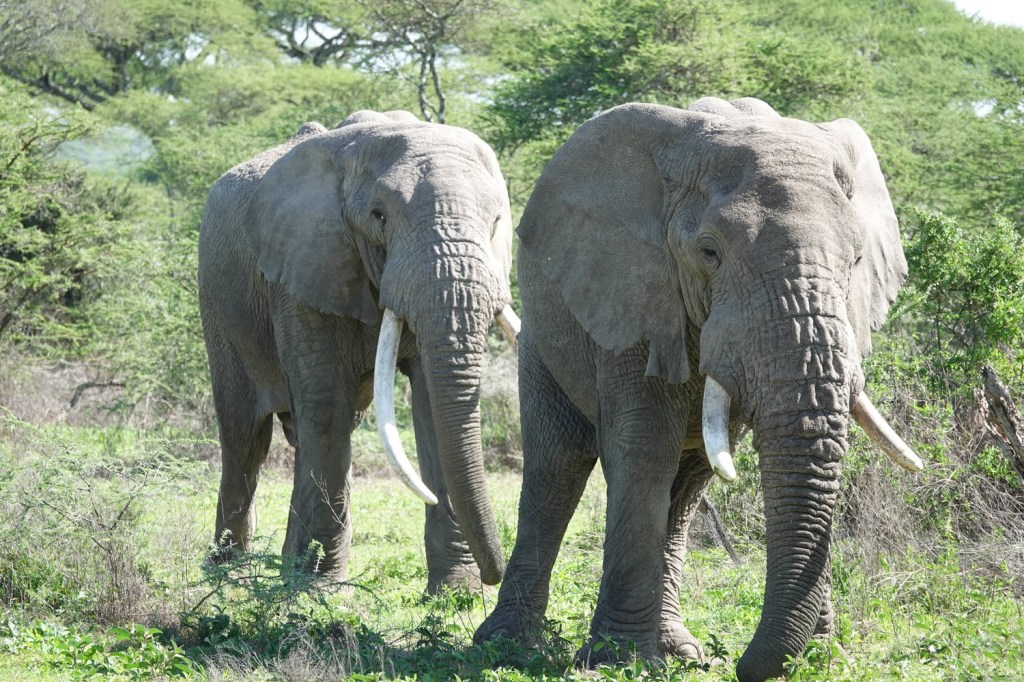
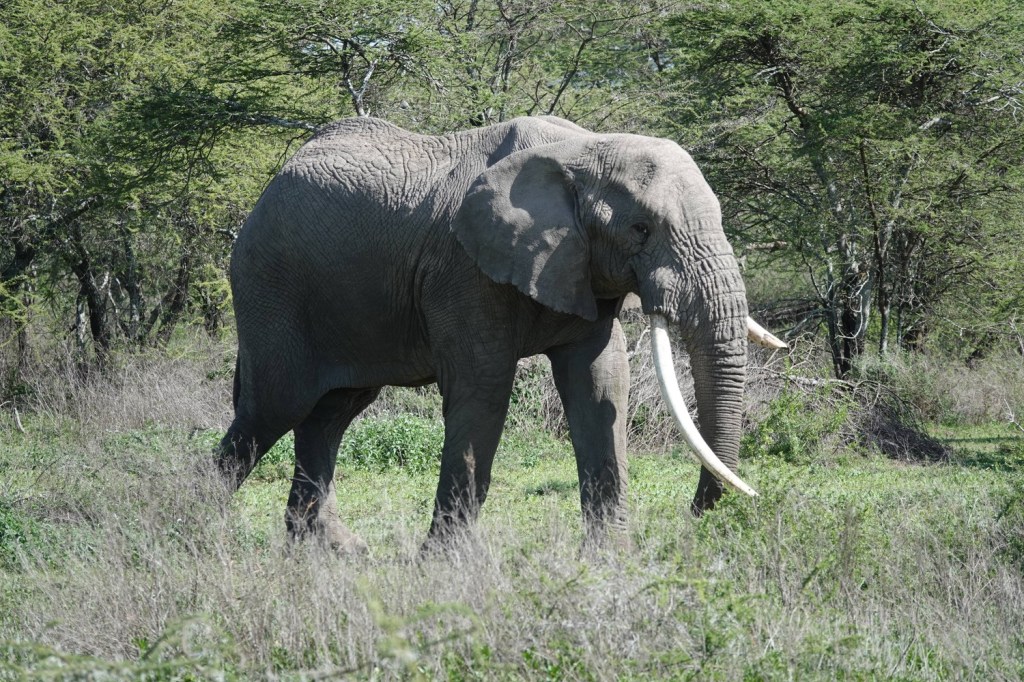
Next we headed to the small forest occupying the south end of the crater. There, through the trees, we caught a glimpse of some white rhinos in the far distance. This species was driven to extinction in Tanzania by poaching, and in 2025 eighteen were brought from South Africa to a special protected enclosure at Ngorongoro to see if they thrive and can eventually be released into the wild. Whilst we were admiring these massive animals, Estomih heard on the radio that back on the plains of the crater, a wild black rhino had been sighted, so we hurried off to see it. However, our road was unexpectedly blocked by an elephant having his breakfast, and we had to wait until he had hauled his tree branch out of the way before we could continue.
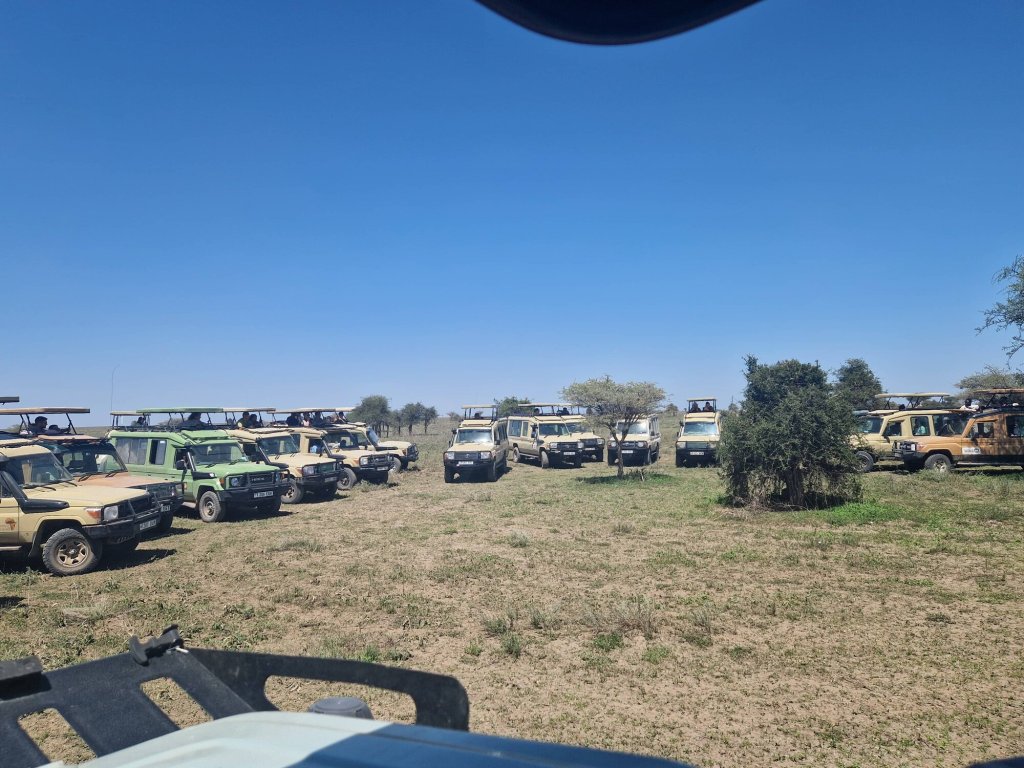
The black rhino proved to be a bit of a disappointment. It was far away, and lying down, disappointing the large group of tourists in jeeps that had assembled to watch it.
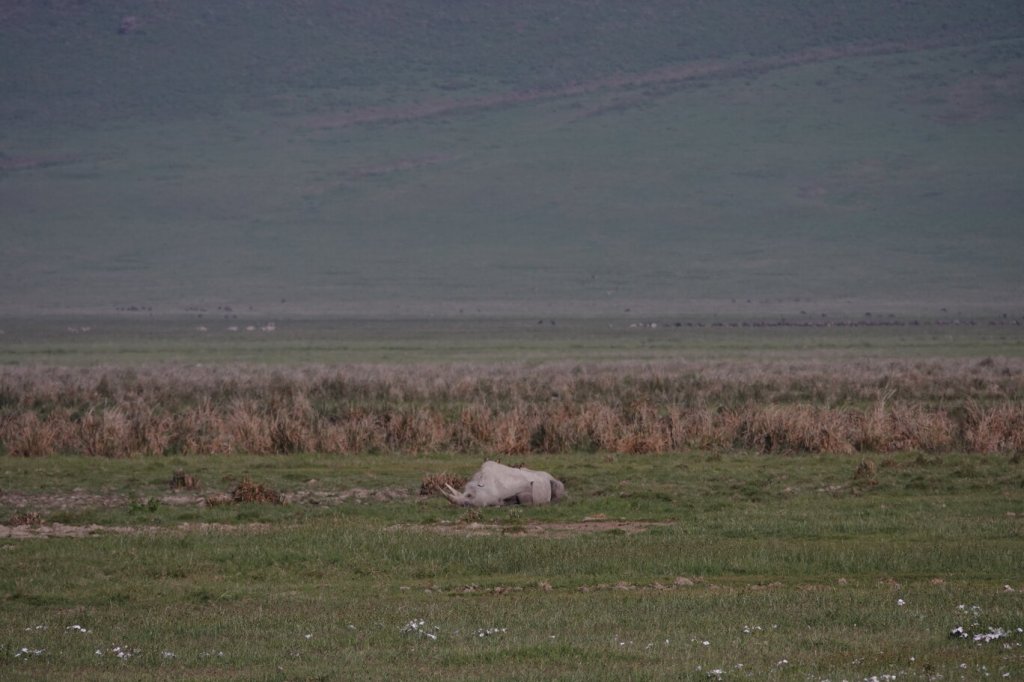
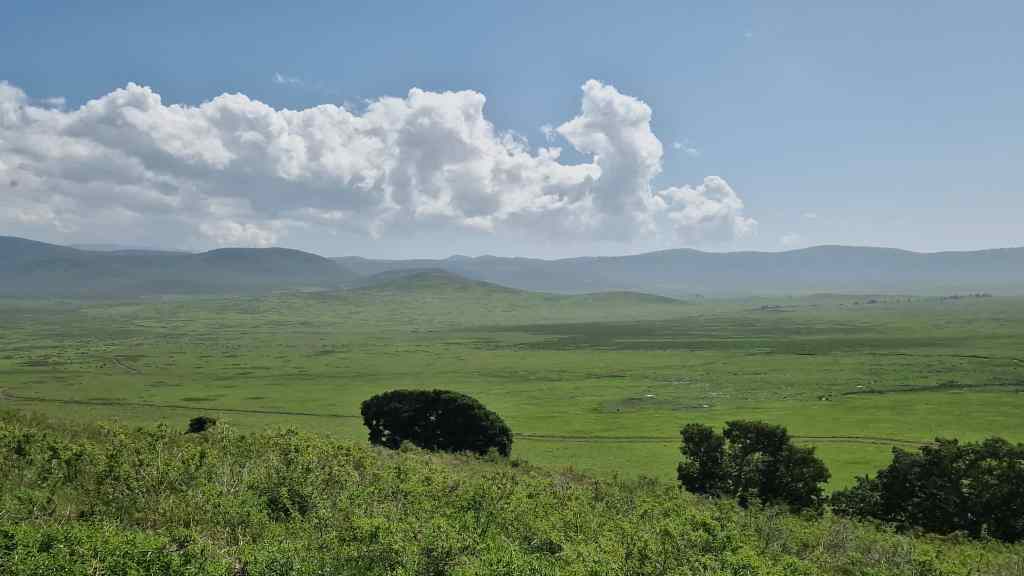
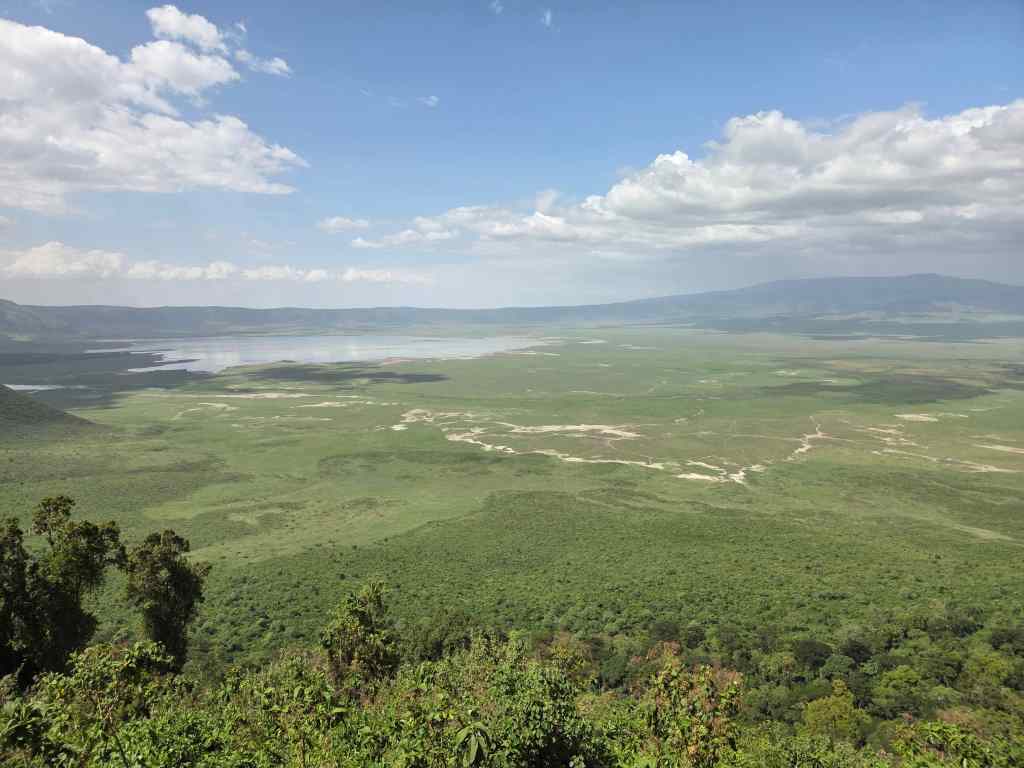
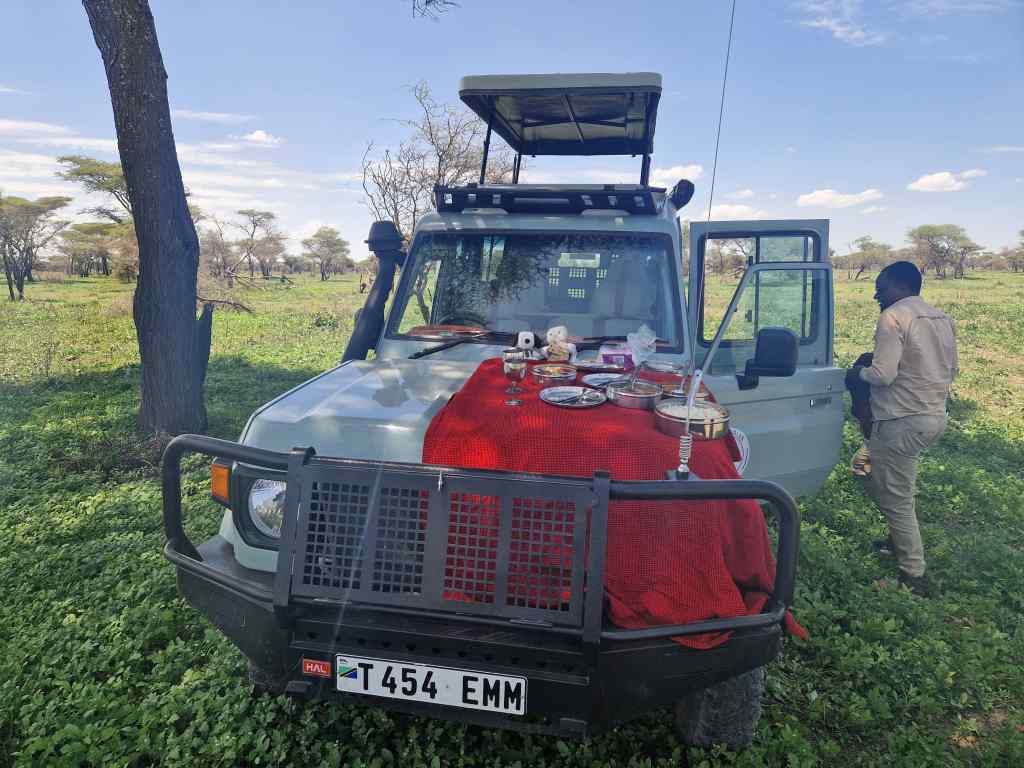
We had breakfast in our jeep, hoping the rhino might at least get up and walk a bit, but when we had finished he was still stubbornly immobile, so we headed of to see the rest of the crater. It was a beautiful sight, justifying its reputation as one of Africa’s seven natural wonders.
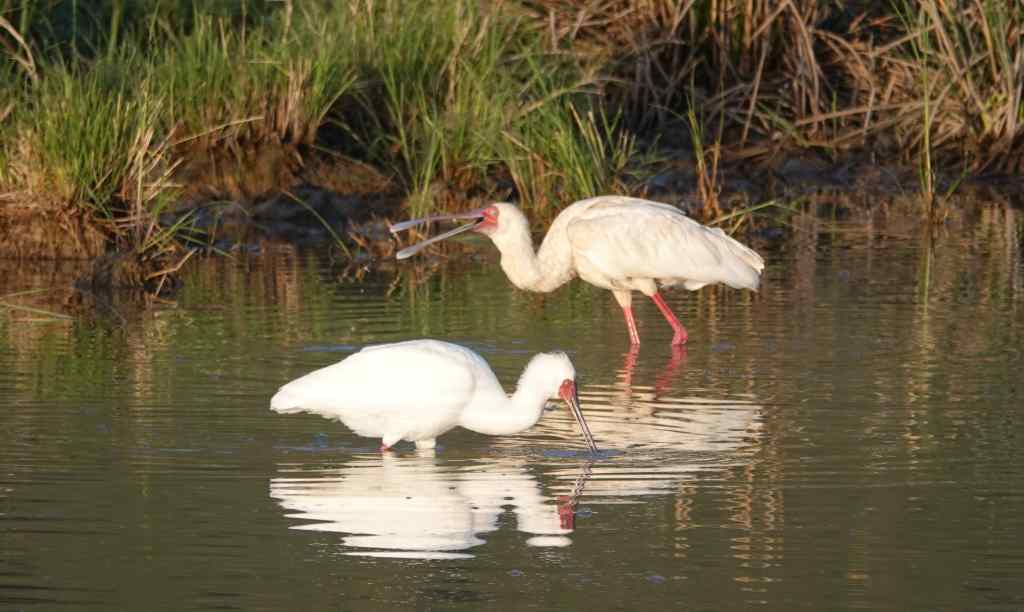
Soon it was time for lunch, which we ate at a picnic spot beside a small lake. The area was busy – just as Estomih had said, day trippers had arrived from the Serengeti, and the crater was now quite busy. We were concentrating on eating and protecting our food from the black kites circling overhead, when suddenly on top of a hill overlooking the lake appeared a group of lions. I quickly calculated that even with my small teddy legs, I could reach the safety of my jeep before a lion could reach me, but they ignored us and passed on their way.
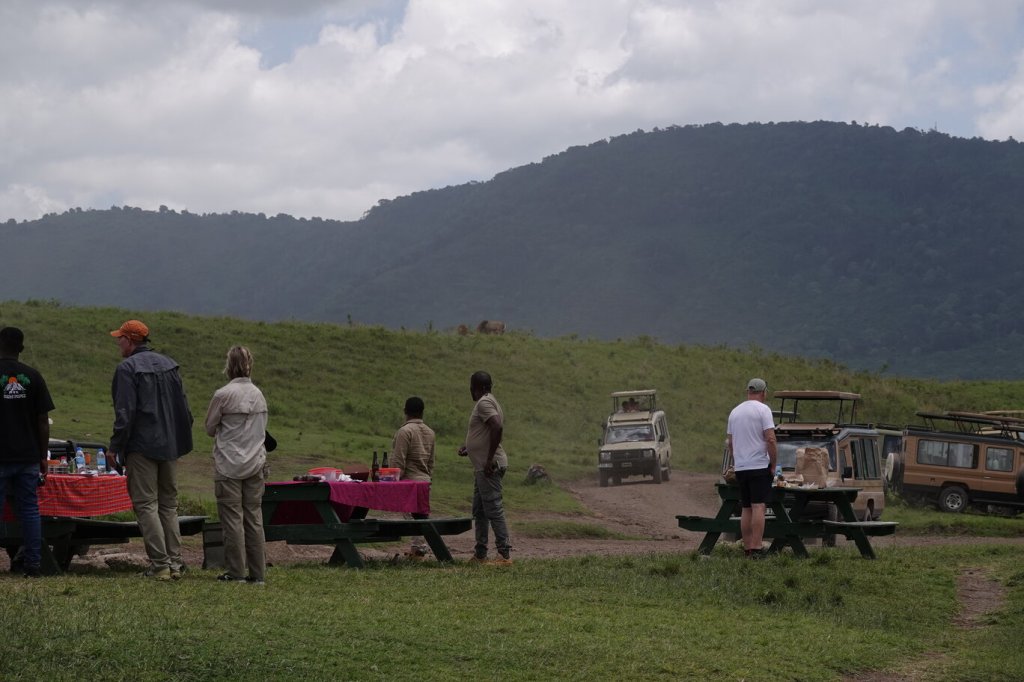
Estomih once again got a message on the radio about another rhino sighting, so we hurriedly finished eating and headed off…..to run into a big traffic jam caused by the lions we had just seen. They were now walking down the main road, oblivious to the chaos they were causing behind them. It seemed that the tourist jeeps divided into two groups – those with passengers like us who had seen lots of lions and were hurrying to see the much rarer rhino, and those with people who had just arrived and found lions exciting. The latter groups would stop frequently for pictures, making the traffic jam even worse.
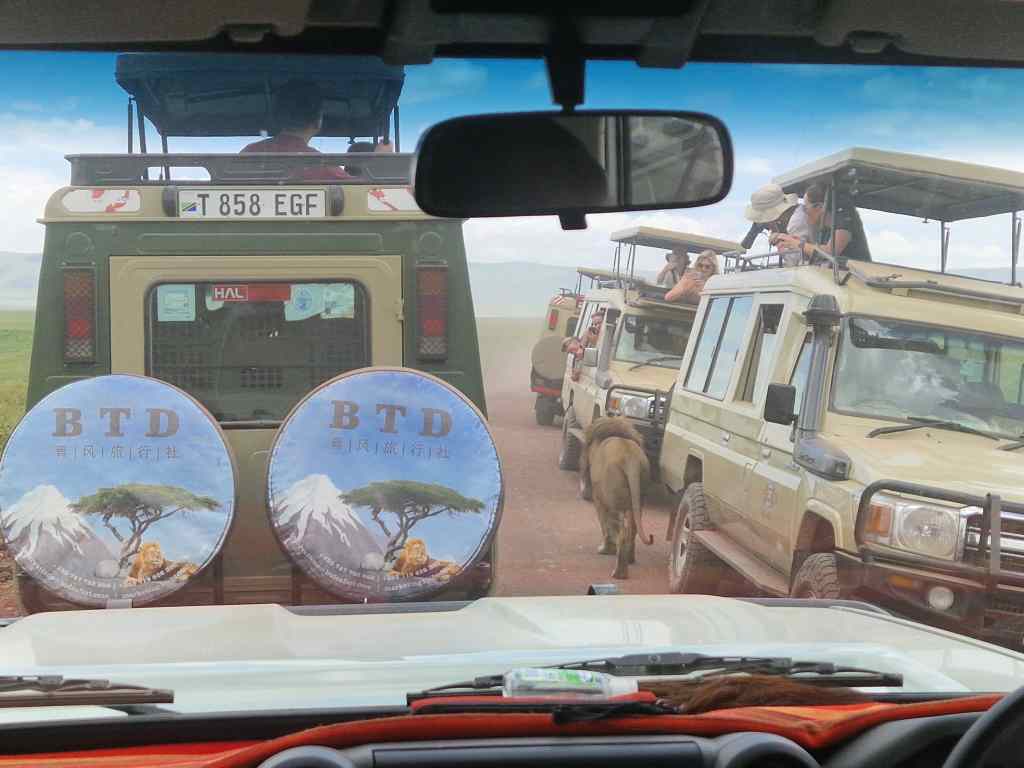
Eventually we fought our way past the lions and found the black rhino, who, whilst still being a long way off, was at least walking around and posing for photos.
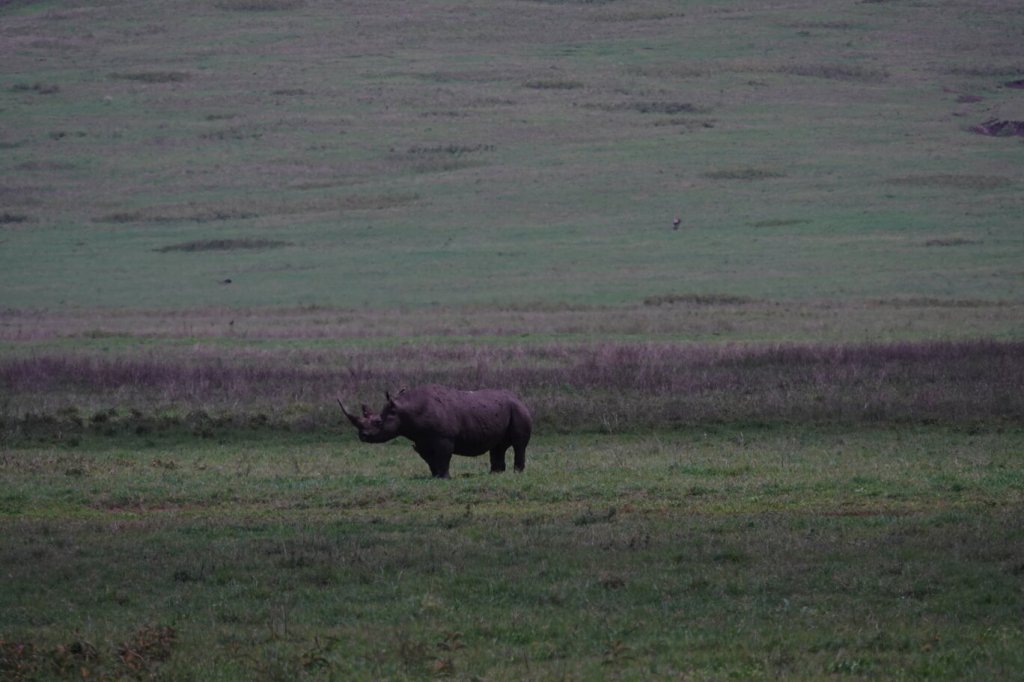
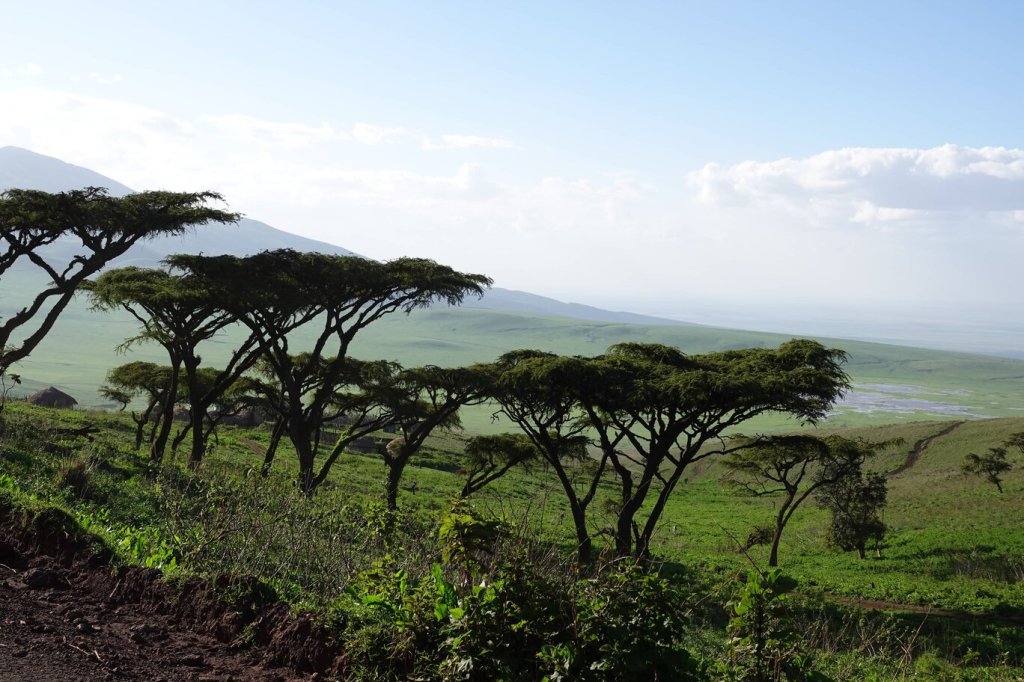
We took a few pictures of him before it was time to leave Ngorongoro – to control traffic and preserve the environment, the authorities only issue a six-hour permit to visit, and ours was due to expire at two pm. On the steep road back to the crater rim we had time for one last stop to admire the view of one of the most magical places in the world.
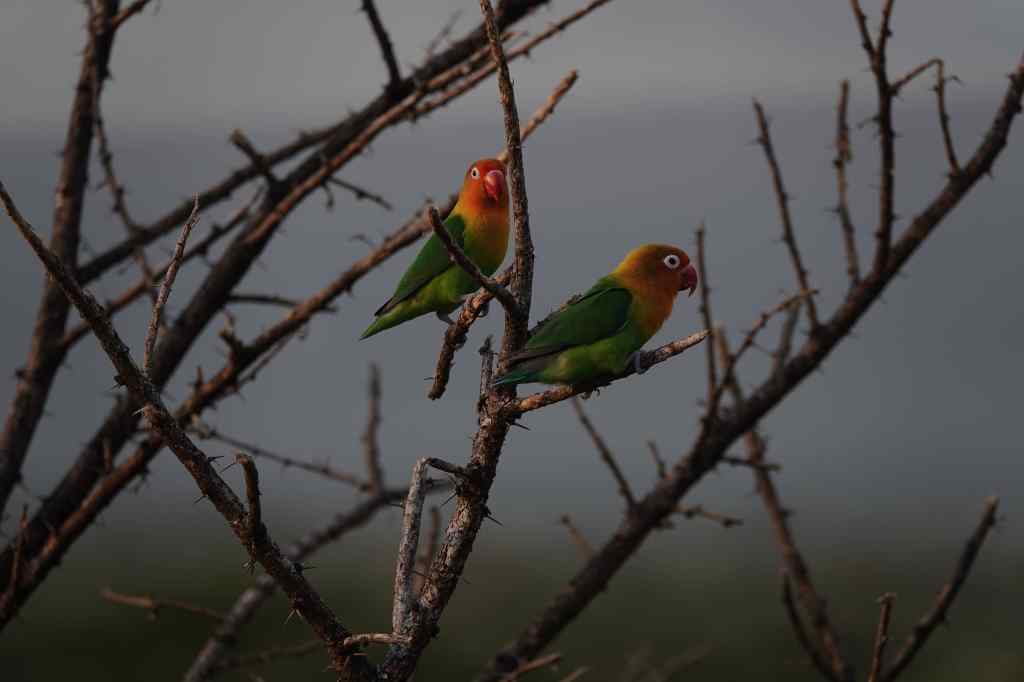
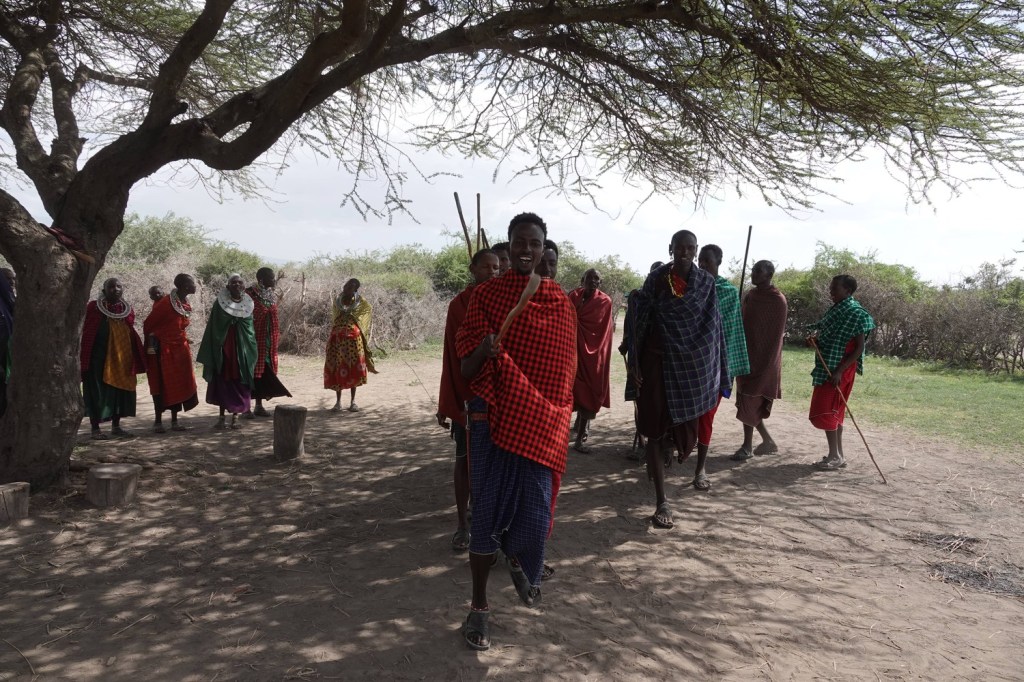
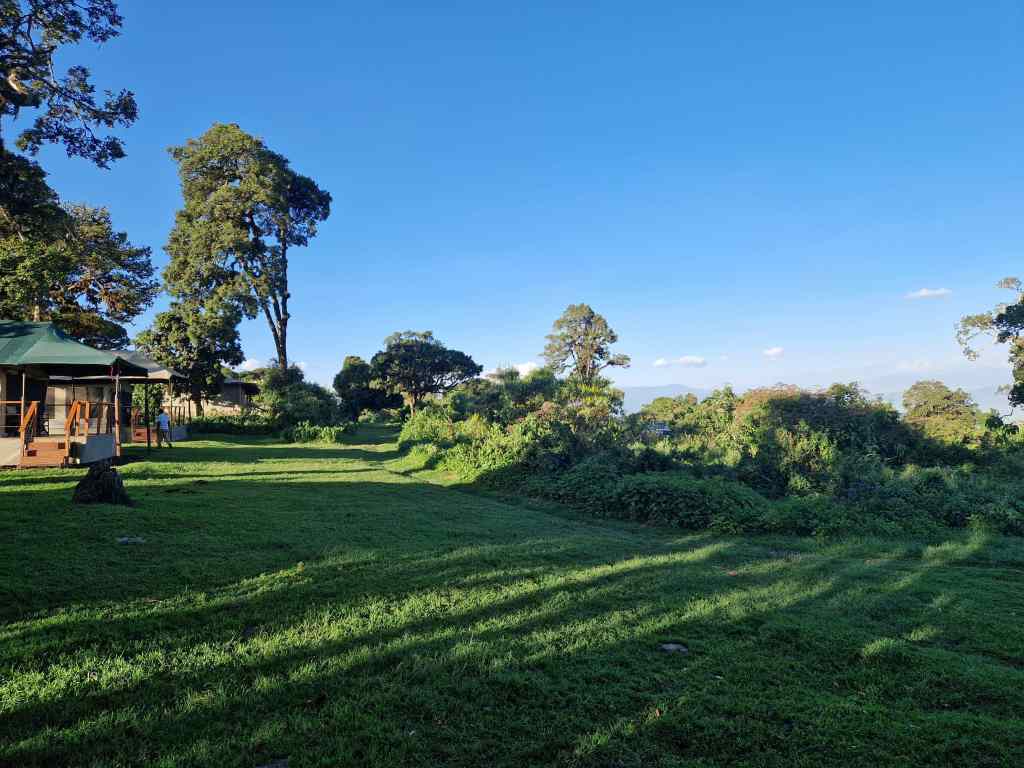
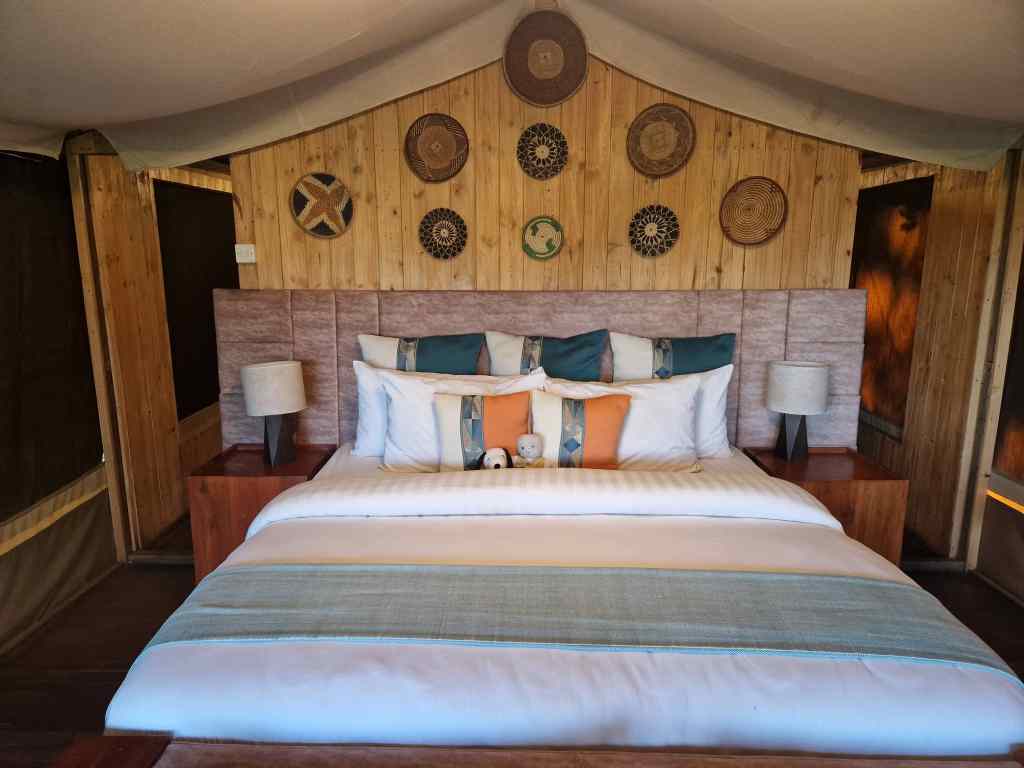
At the exit to the park, we continued our road east on the main road back towards Arusha, and then turned south on a dirt track to Lake Eyasi, arriving at our lodge in the mid-afternoon for once. This gave us time to sit in front of our room, looking at the sun setting over the lake, enjoying the company of a flock of lovebirds and absorbing what we had seen over the past few days in the Serengeti and Ngorongoro. The trip so far had been mostly devoted to Tanzania’s animals – it was now time to meet more of the country’s people……
Previous Post: From the Serengeti to Ngornogoro
Next Post: Hunting with the Hadzabe

 Trouspinet travels