From the Canyon d’Añisclo to Ordesa and Monte Perdido National Park
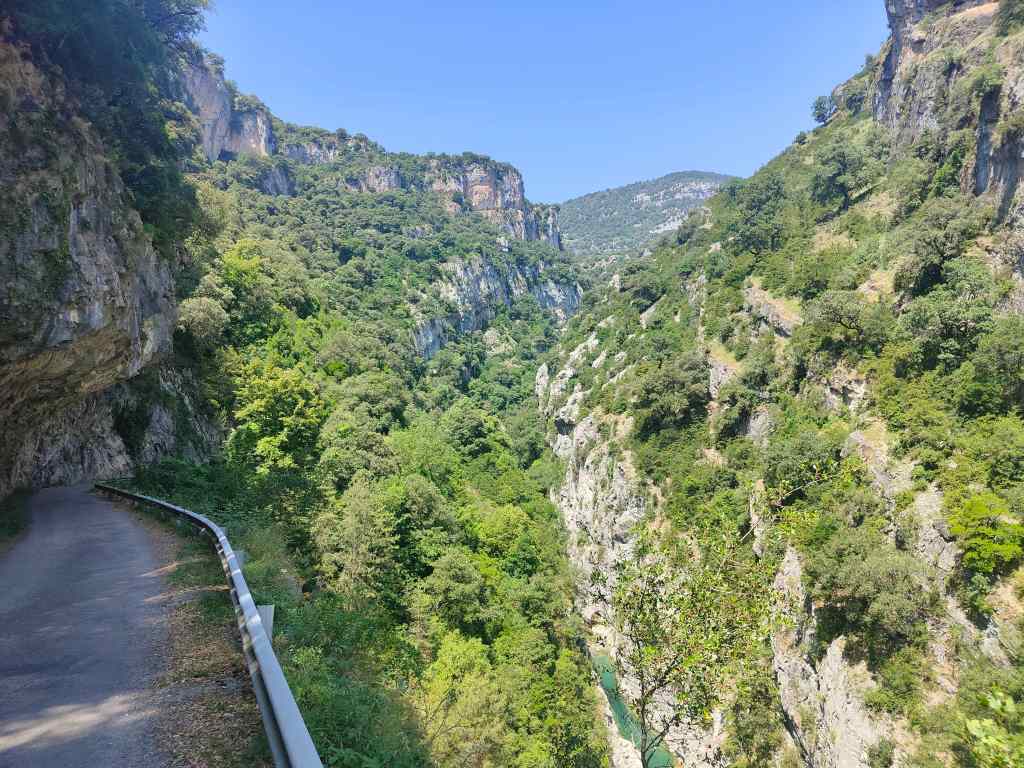
Today I set off from Bielsa on what turned out to be a spectacular driving tour. I headed south, before turning off onto a small side road to the Canyon d’Añisclo. The road entered a deep river gorge,  with steep sides before splitting into two separate one-way tracks.

Approaching the Canyon d’Añisclo

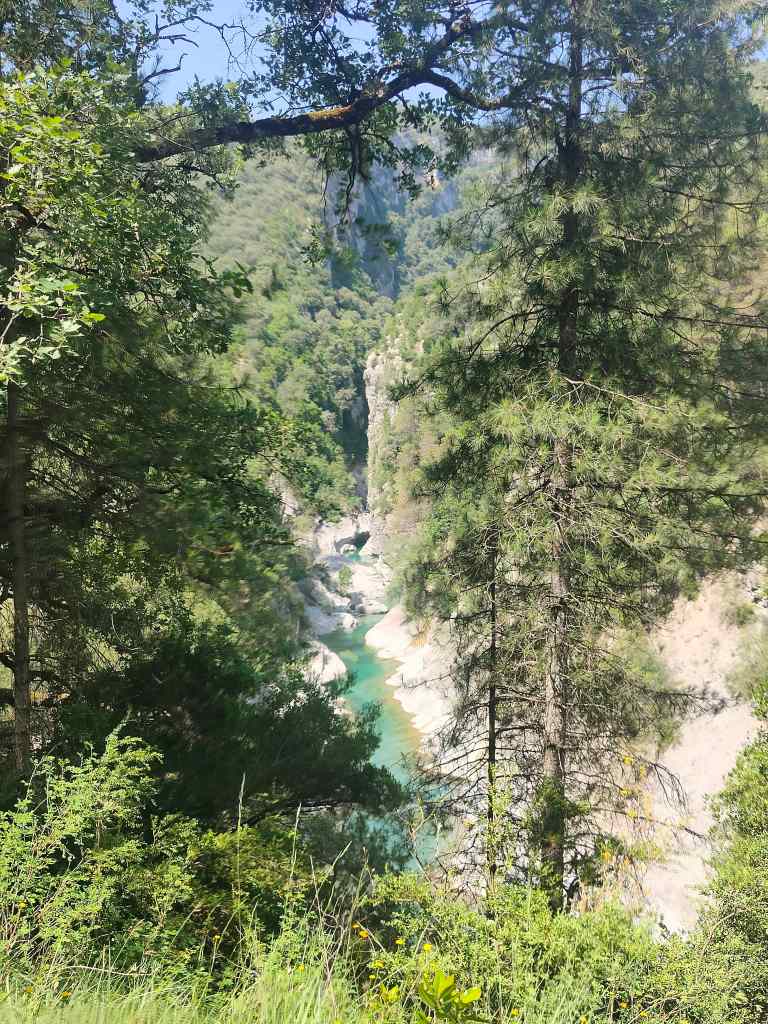
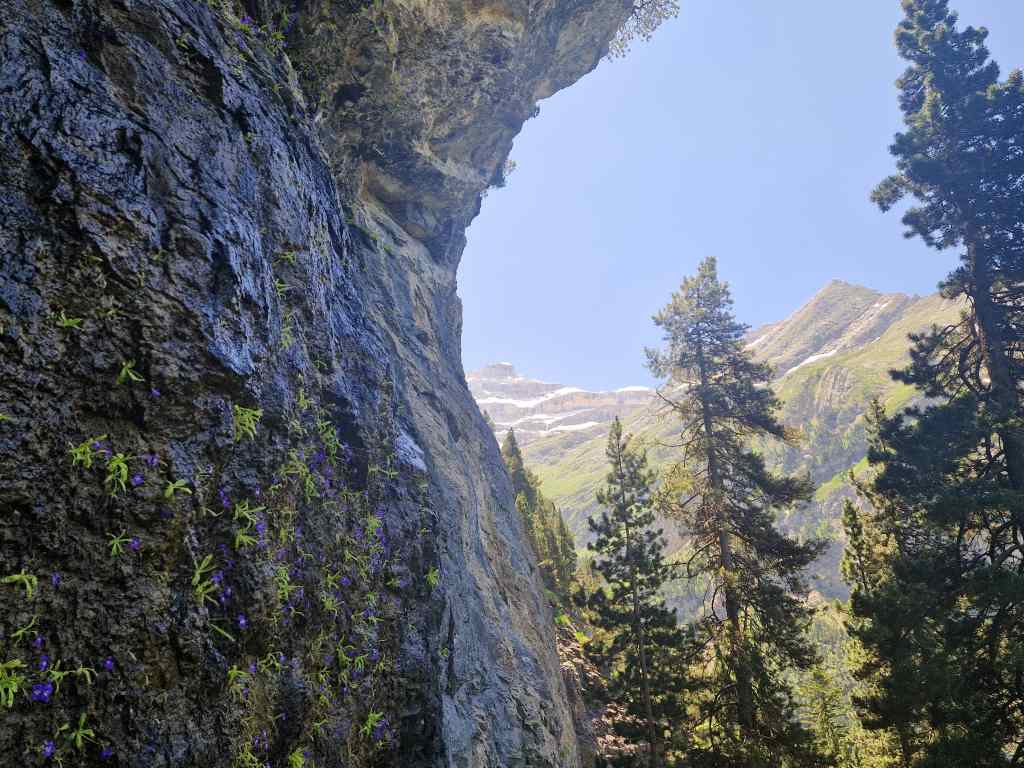
My route wound along the side of a small river, with steep cliffs towering far above me.

Deep in the Anisclo Gorge

I made slow progress – not because the driving was difficult, but because I made so many stops to take pictures of the amazing scenery.

Scenery in the Canyon d’Añisclo

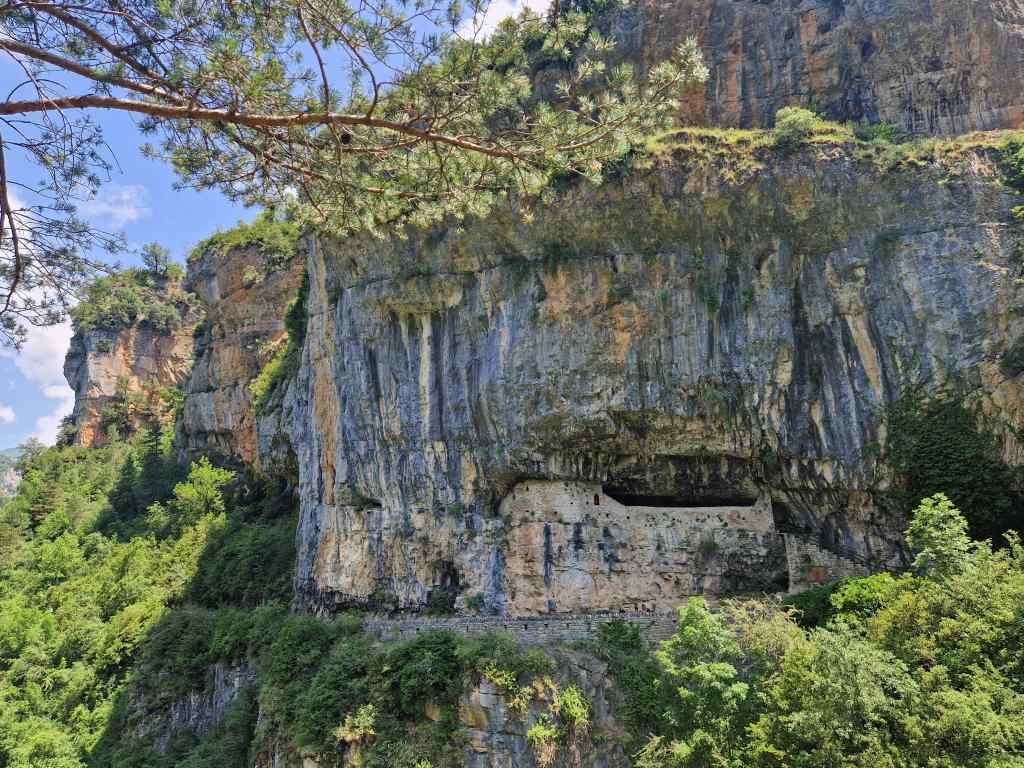
I arrived at a small parking area and got out to stretch my legs and have a look around. The car park offered spectacular views up and down the canyon, and to the other side where some sort of chapel had been carved into the cliff face.

Is that…..a little chapel in the cliff face?
Yes! The chapel of San Urbez

A sign advertised a short circular walk named after San Urbez, a local hermit who lived in the area. 

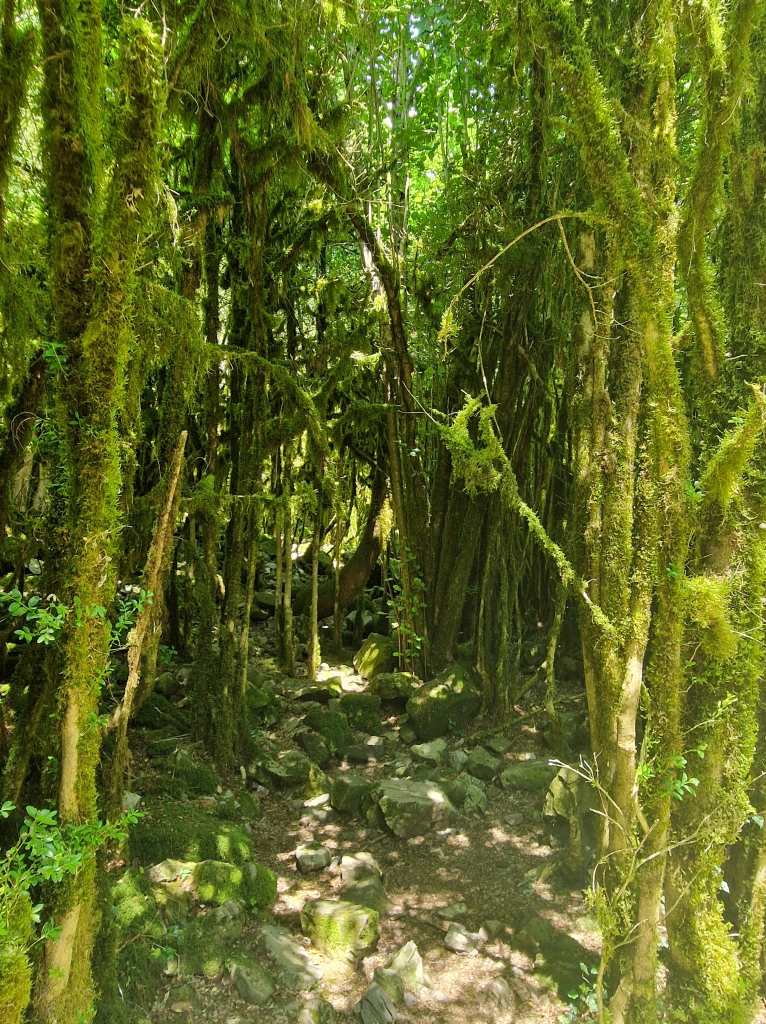
An interesting forest in the Canyon d’Añisclo

The path led down through a pretty forest, crossed a bridge and then climbed up to the chapel – which was furnished with simple pews,  as if it was still in occasional use.

The chapel of San Urbez

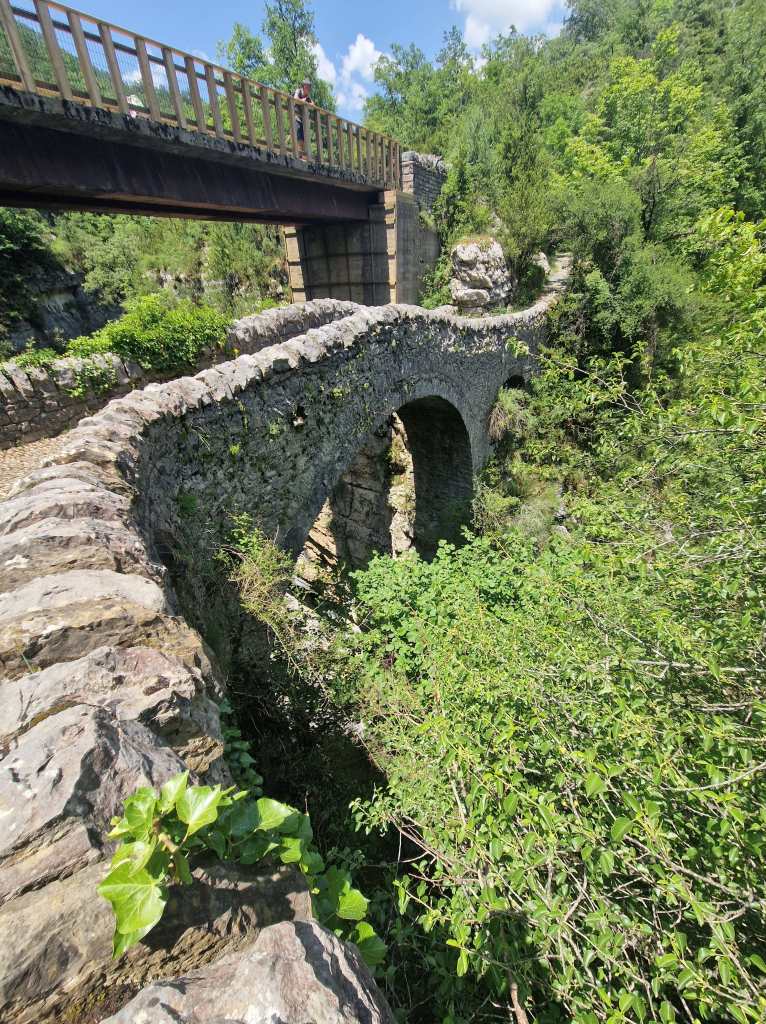
After the chapel I had the choice of using an ancient bridge or a new one built on top of it to regain my car.

A choice of bridges

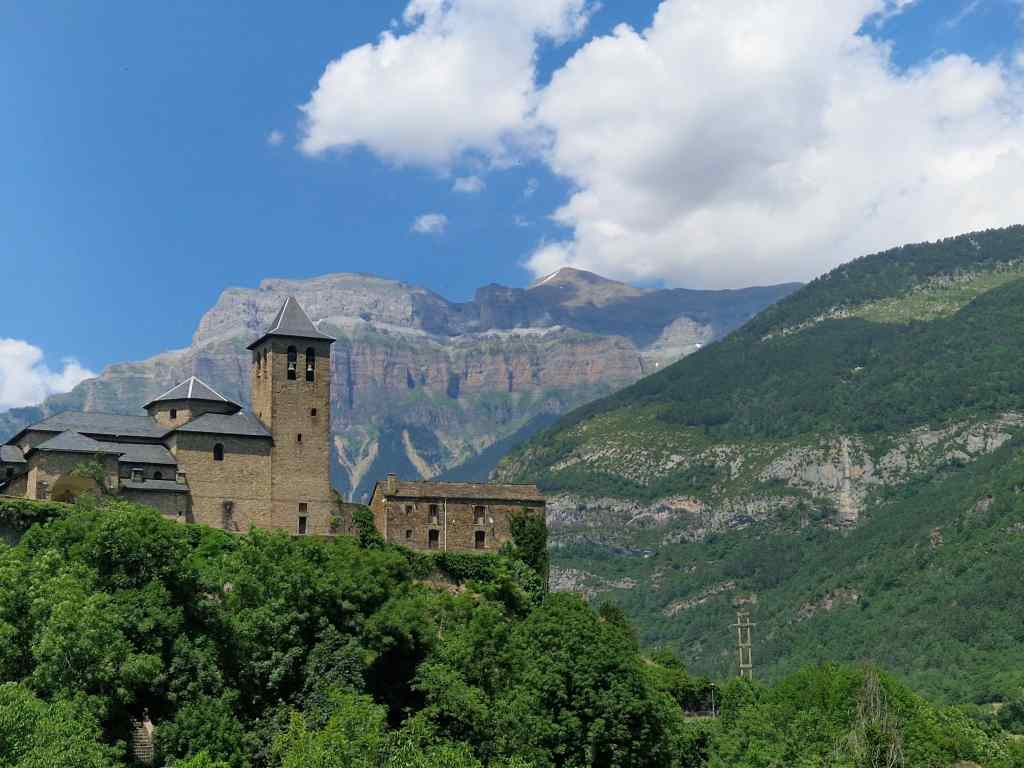
I spent another hour driving through some impressive mountain scenery, noticing that the Spanish Pyrenees are different to the French ones – steeper, and much drier.  I stopped for a drink at Torla, a pretty old town that is the gateway to the Ordesa and Monte Perdido National  Park.

Photogenic Torla

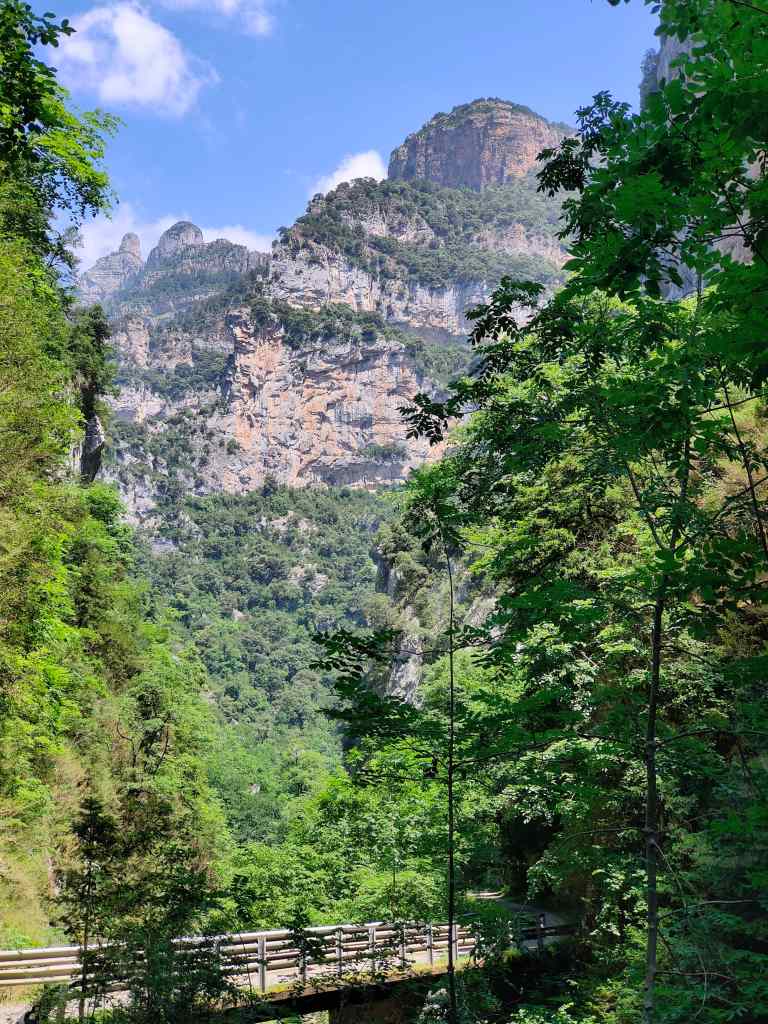
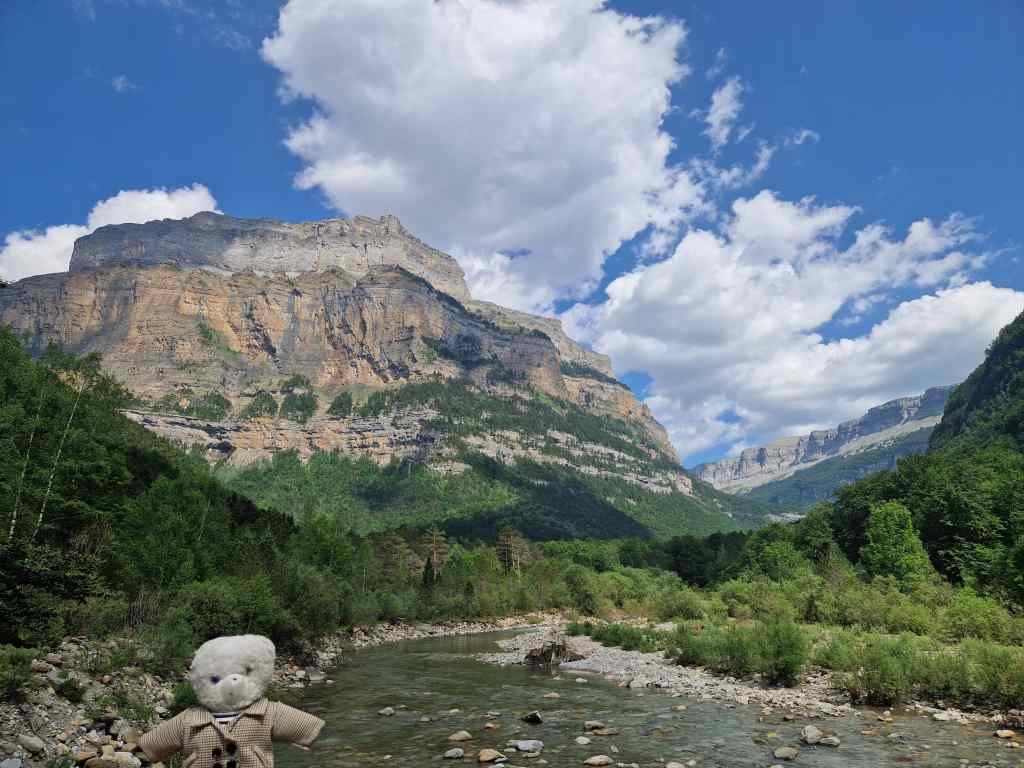
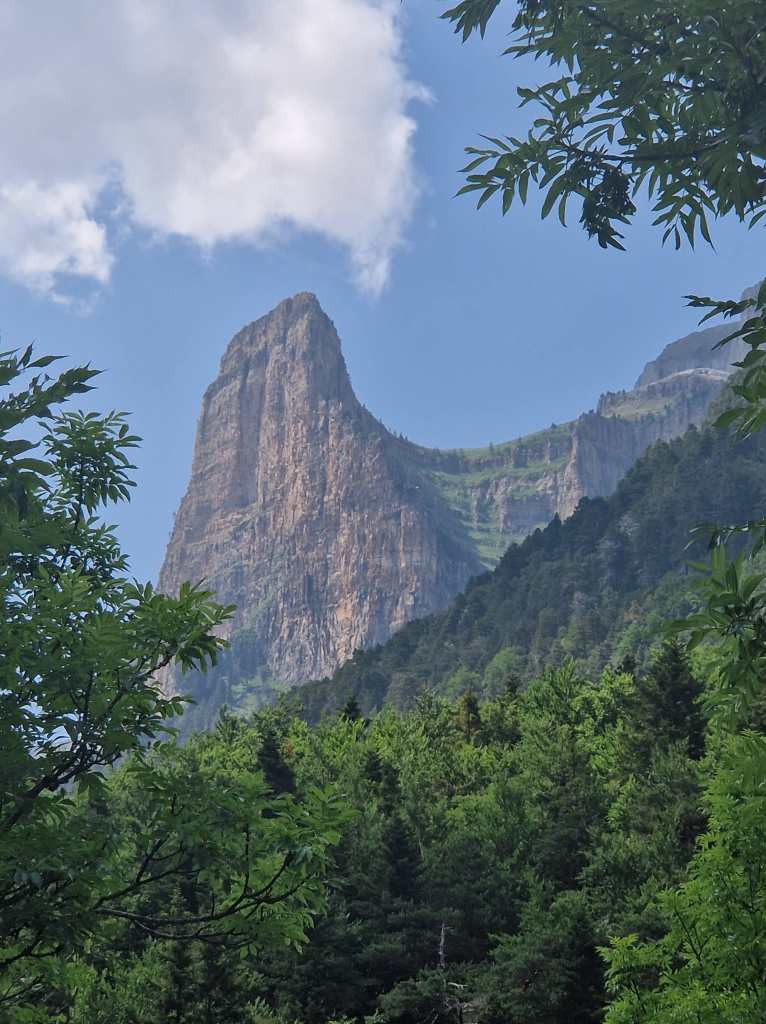
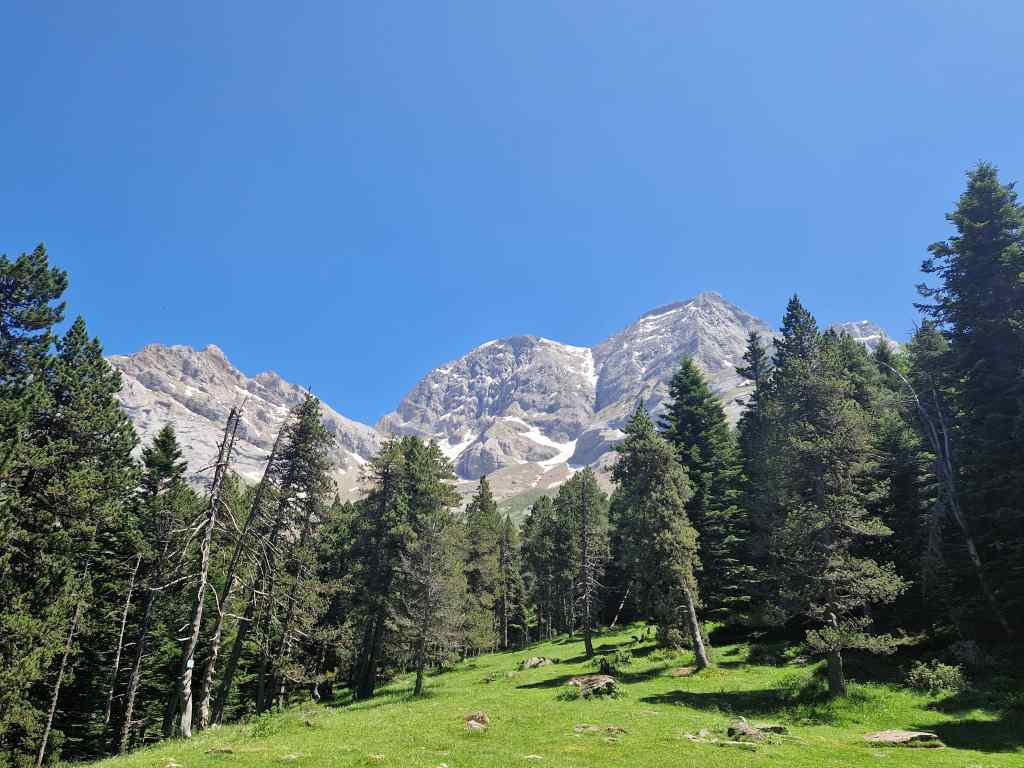
The road into the park followed a gorge with steep mountains on either side, finally arriving at a large car park. Looking around, I felt myself  transported to some of the most spectacular national parks I had seen in America – on all sides mountains towered above me, some of them twisted into fantastical shapes. I had read that the car park was the starting point for some amazing hikes, but sadly I did not have the time to do anything more than stroll a short way up the river valley and absorb the jaw-dropping views. I resolved to come back and explore Ordesa properly another time.

In Ordesa and Monte Perdido National Park
Amazing mountains in Ordesa and Monte Perdido National Park

Finally, it was time to head back, and in a couple of hours I was back in Bielsa – for once, getting home early enough to be able to relax a bit, sort out my photos and write my blog. I stopped by the local supermarket to buy dinner and stock up on a typically Spanish tradition – sweet, fortified wines and sherries served directly from big casks.

Minimum two litre purchase!

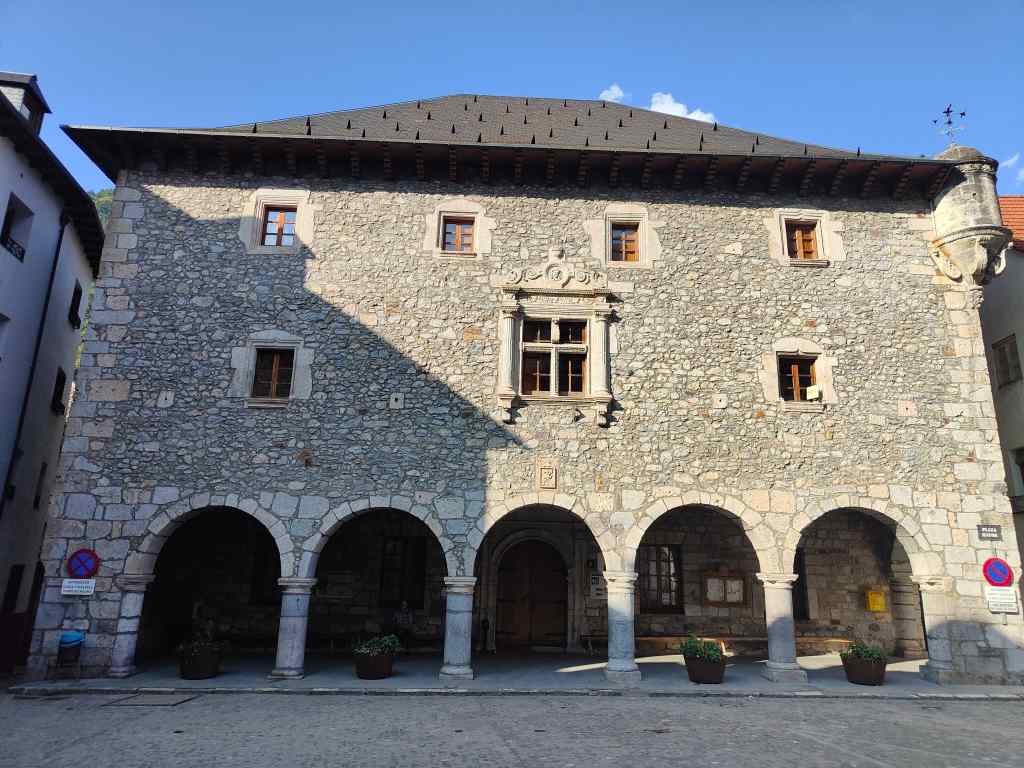
The minimum amount you could buy was two litres, which cost a derisory seven euros. I bought some sherry and enjoyed a glass sitting on the town’s main square in the early evening sun, reflecting on an exceptional day.

Old building in Bielsa’s plaza

As my regular readers know I am a well-travelled bear but finding such scenery in a place only a few hours flying/driving from London was something really special. I will be back.

Previous Post: Cirque de Gavaranie

Next Post: From Bielsa to Andorra

The Cirque de Gavarnie – a Pyrenees Classic

Today I enjoyed one of the Pyrenees’ most famous sights – the Cirque de Gavarnie. This time I set off from Tarbes without a cloud in the sky and was soon driving up a beautiful river valley towards the high mountains. The road passed some pretty spa towns, but my busy itinerary for the day did not allow me the time to stop at any of them. After an hour and half, I reached the village of Gavarnie, the base for my hike.

The hike to the Cirque de Gavarnie is one of the most famous and popular in France, and when I arrived at 11.00, the car park was already quite busy. Along with many other walkers, I set off on a flat easy track which followed the banks of the valley’s fast-running river – the same one I had been following on my drive to get here.

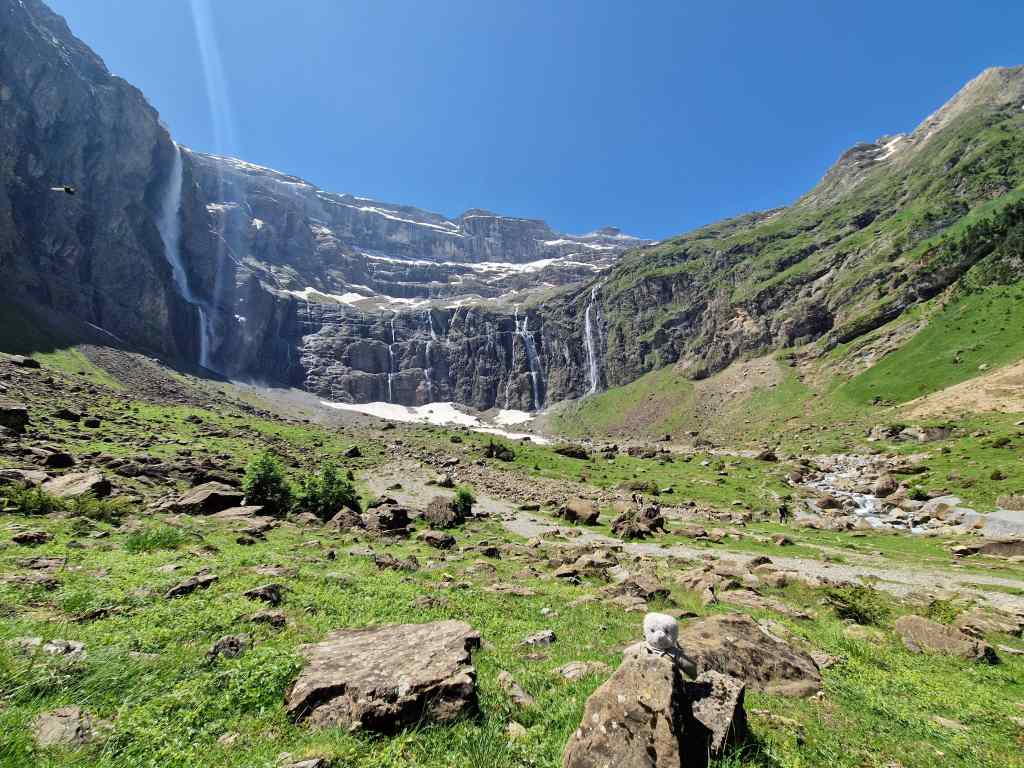
The cirque seen from the start of the walk at Gavarnie

Even from the walk’s starting point, there was quite a good view of the cirque – a semi-circular wall of mountains with waterfalls cascading down their sides. This view got more and more impressive as I approached my destination.

Further along the walk

After a few kilometres the easy, wide path ended at a bar/restaurant and turned into a mountain track which passed over a mini glacier. At first, I wondered whether this was safe to cross – the ice had two large holes, through which you could hear the river bubbling below. But the much heavier human walkers set across confidently, so I followed in their footsteps (literally) and was soon clambering up the rocky scree that lies at the base of the cirque.

A glacier with worrying holes

I sat down and had a long picnic, soaking up some of the most beautiful mountain scenery I had ever seen.

A well-earned break inside the Cirque de Gavarnie

Rested, I put on waterproofs and clambered up to the largest waterfall – La Grande Cascade – getting a close as I could without getting totally soaked.

Near the waterfalls, Cirque de Gavarnie

I chose to return to Gavarnie by a different, more difficult track that climbed up the side of a mountain. I turned around frequently to see the cirque flitting in and out of view, as if it was playing hide and seek with me. The path also offered impressive views of other mountains….

More pretty mountains

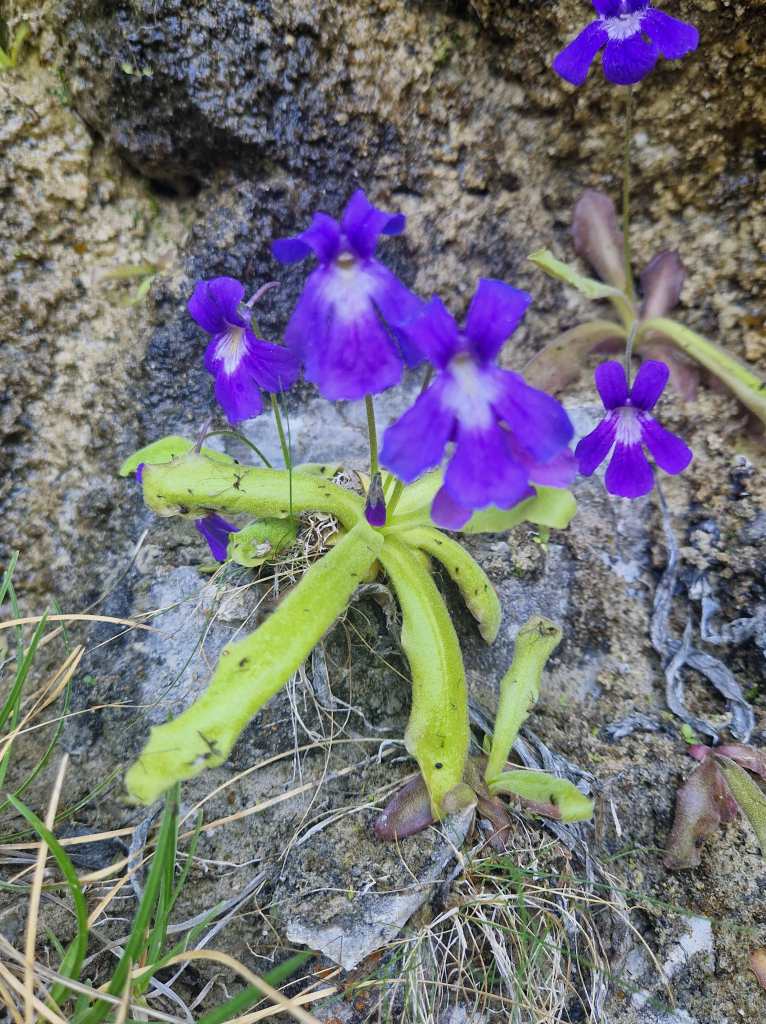
A final bonus of my return route was spotting a large group of butterworts (carnivorous plants) clinging to the rock face. These plants secrete a sticky liquid onto their leaves which traps insects, which the plant then digests.

Butterworts near the Cirque de Gavarnie
A Butterwort – the black spots on its leaves are dead insects

I got back to my car later than I had expected – probably I had spent too long sitting contemplating the beauty of the site – and my satnav gave me the unpleasant surprise that I had two and half hours driving to reach my destination for the night, the small town of Bielsa in Spain. On the sinuous mountain roads (which Google always underestimates) I knew it would probably take me even longer.

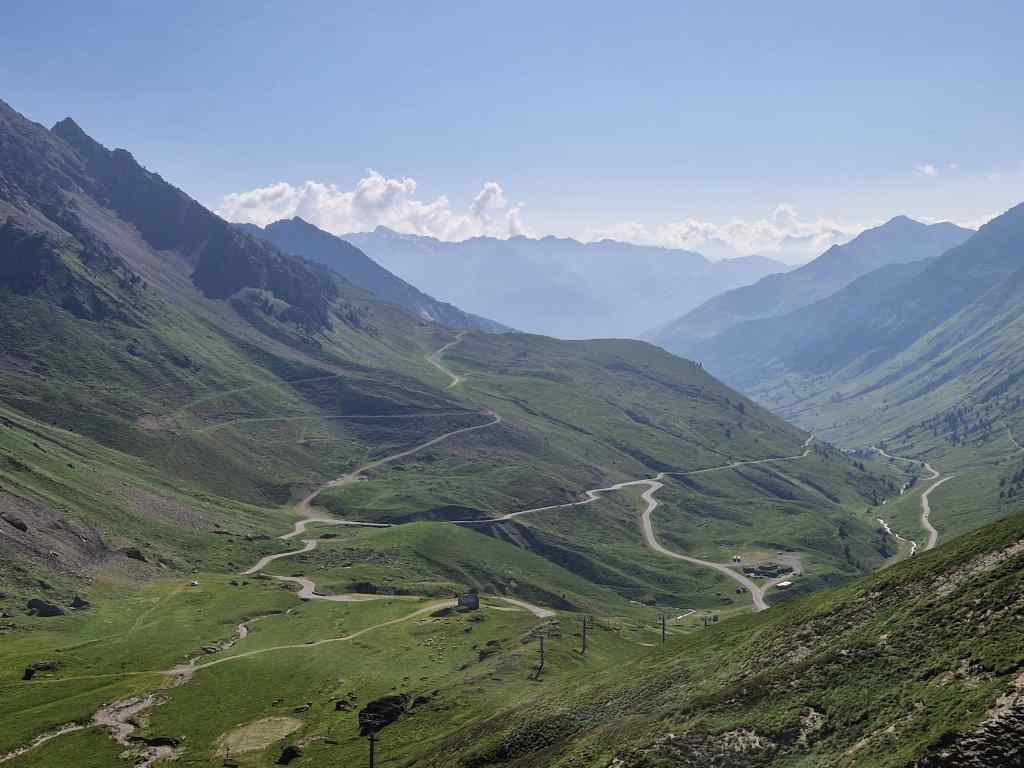
At first, I enjoyed the drive, as it passed some spectacular high Pyrenees sights, including the famous Col de Tourmalet…

View from the top of the Col de Tourmalet

….and the Pic Du Midi, an observation point served by a very expensive cable car, which due to lack for time I had to drive past (I was also not sure that the view would really be any better than what I had seen already, and probably not worth the exorbitant 60€ cost of the ride).

The Pic du Midi observation platform

Descending from the Col de Tourmalet I felt tired so stopped to refresh myself in the pretty village of Arreau, before heading on towards the Tunnel de Bielsa leading into Spain.

The pretty town of Arreau in the Pyrenees

I finally reached Bielsa at 20.30, but my driving was not over. Google kept proposing routes to reach my lodgings along tiny lanes so narrow that even a motorbike would struggle to get through. I called the house’s owners and explained my predicament in faltering Spanish. When they eventually understood me, they send their daughters to help guide me through the maze of streets, and I finally arrived in my room a tired and slightly grumpy teddy around nine o’clock. I had probably tried to tackle too much in one day, and all I wanted to do now was to sit down and have a drink in the café on the town’s main plaza. Although Bielsa was a very small town, there were several bars and restaurants still open and small groups of people sitting on tables in the square. The pleasant atmosphere and cold beer helped improved my mood and prepare me for a good night’s sleep after a very long but fulfilling day.

Previous Post: Pau and Tarbes

Next Post: The Spanish Pyrenees – Canyon d’Añisclo plus Ordesa and Monte Perdido National Park

Rotorua Day 2 – Hiking Waimangu and rafting the Kaituna River

Today I visited a different geothermal park – the Waimangu Volcanic Valley, an area formed when Mount Tarawera erupted in 1886. The eruption levelled several Maori villages, killing many people, and destroyed the Pink and White Terraces which had been a major tourist attraction and were claimed to be the “8th wonder of the world”. It left a caldera, which over the years filled with water to become a much-expanded Lake Rotomahana (a smaller lake of that name had existed earlier).
Today, the Waimangu valley is the world’s youngest geothermal ecosystem, and the only one created as a direct result of a volcanic eruption. It is also once again a tourist attraction, although a less popular one than others in the Rotorua area and I was pleasantly surprised that I often had the place to myself.
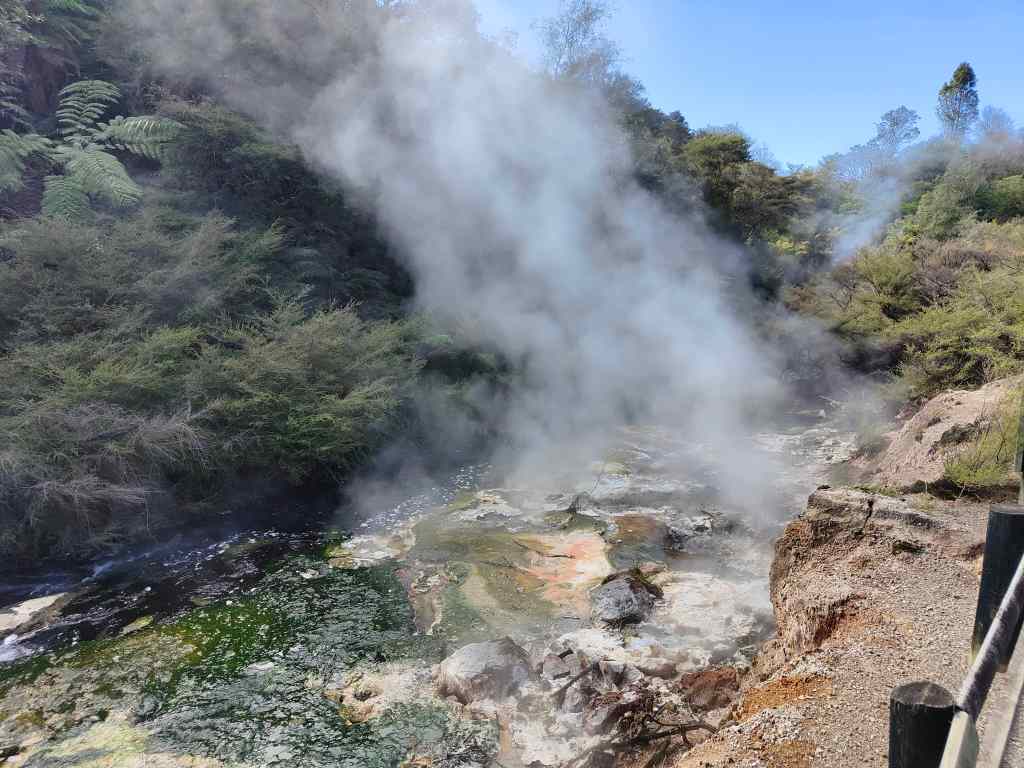
The park is visited by walking an 8km path downhill, starting at a huge pool of boiling water (Frying Pan Lake, one of the world’s biggest hot springs)………

Frying Pan Lake, Waimungu Park

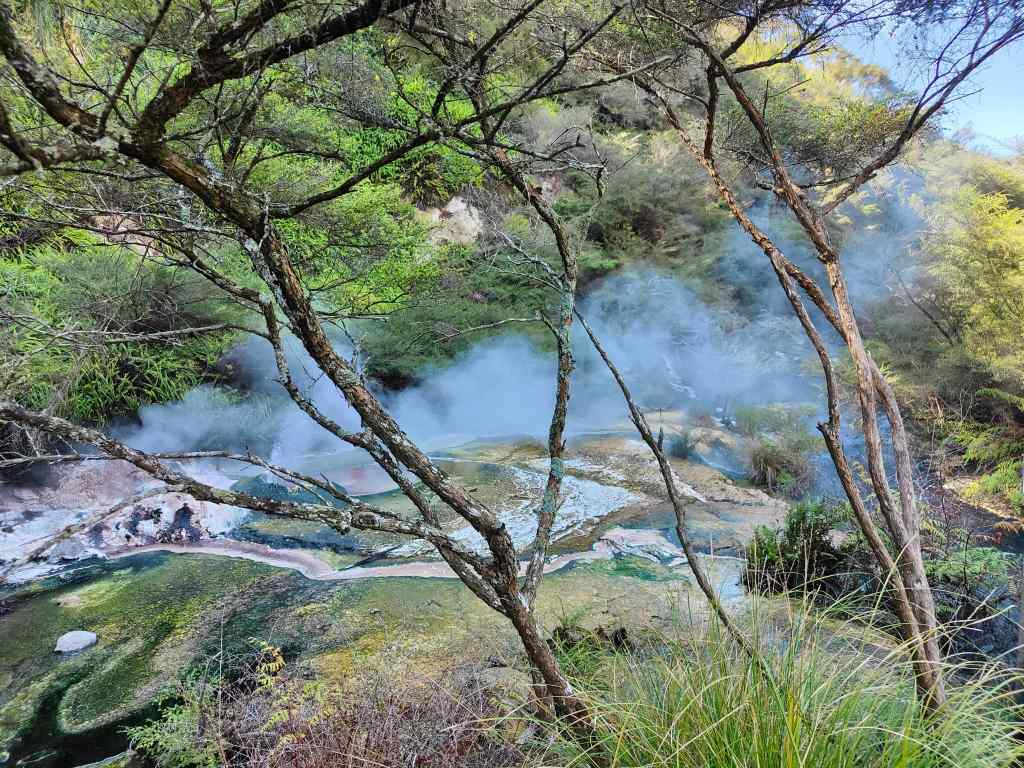
…. and following a boiling stream of water that runs through a pleasant valley, past lots of smaller springs…..

The path at Waimungu follows this boiling stream

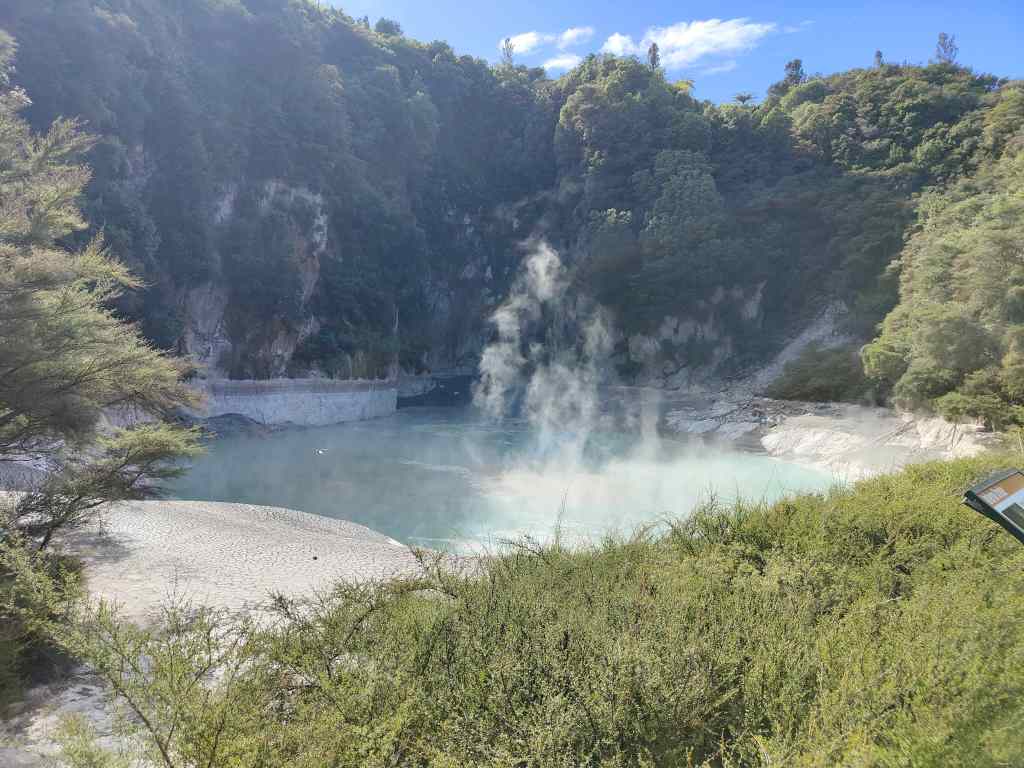
…. and a boiling caldron of water called Inferno Crater.

Inferno Crater at Waimungu Volcanic Valley

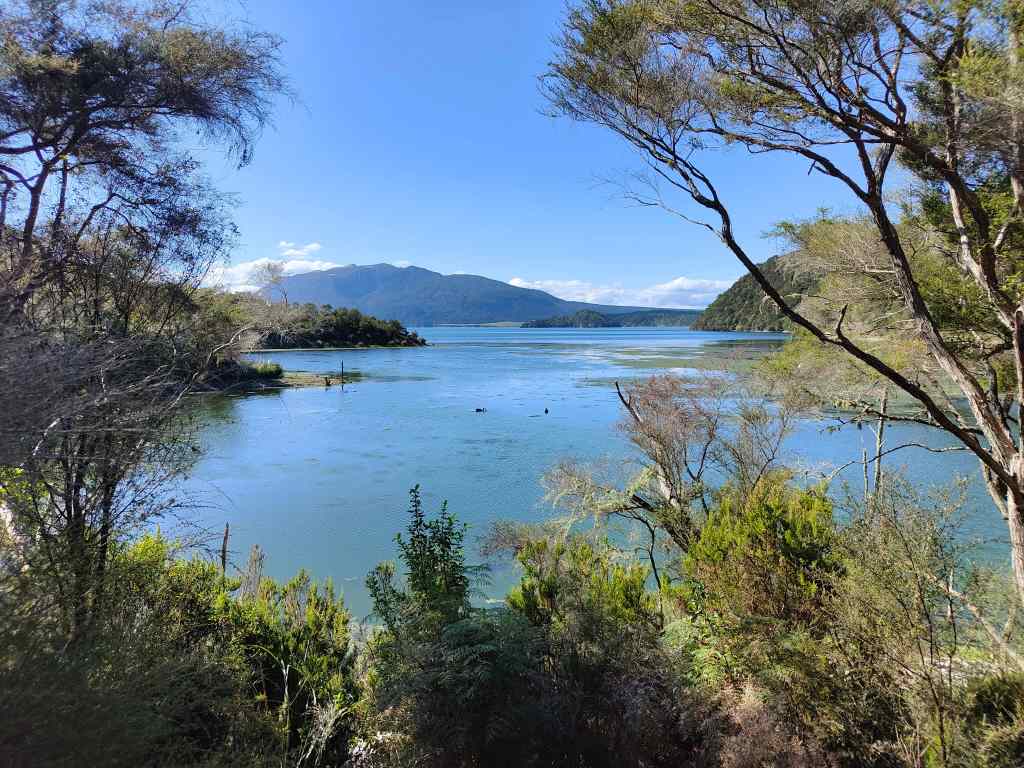
The stream eventually arrives at peaceful Lake Rotomahana, home to much birdlife, including black swans, from where most people use the park’s shuttle bus to return to its entrance.

Lake Rotomahana at the end of the Waimungu Volcanic Valley

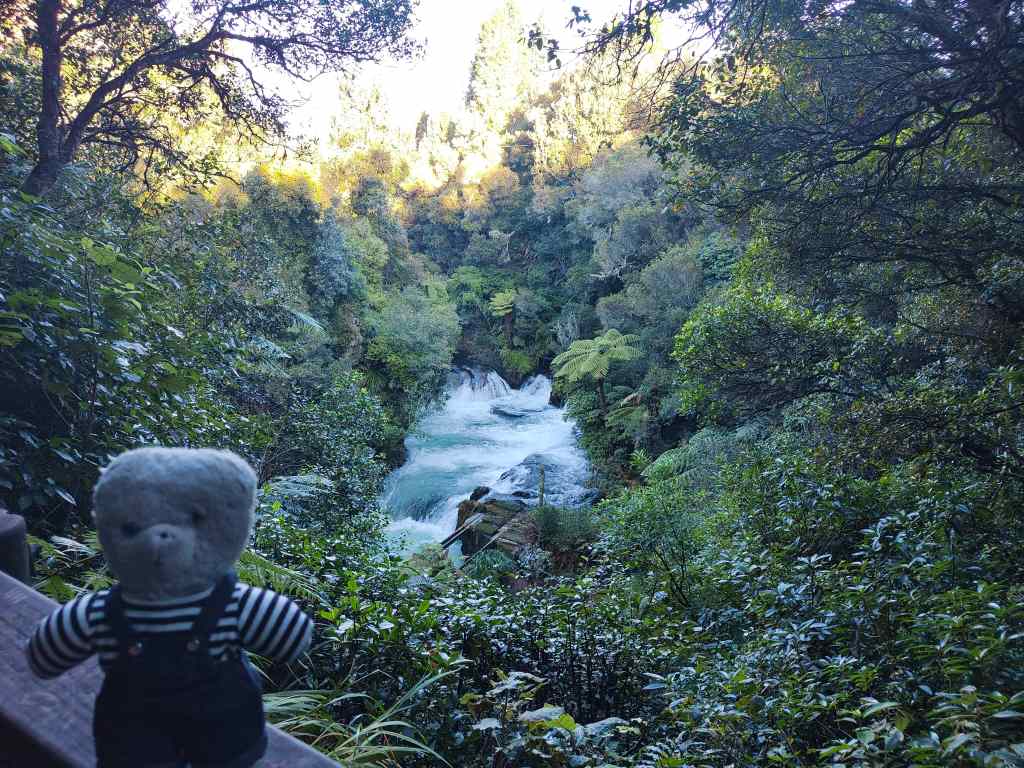
From Waimungu I went to visit something completely different – the waterfalls on the Kaituna River. These are found in a scenic valley, to the northeast of Rotorua.

Okere waterfall on the Kaituna River

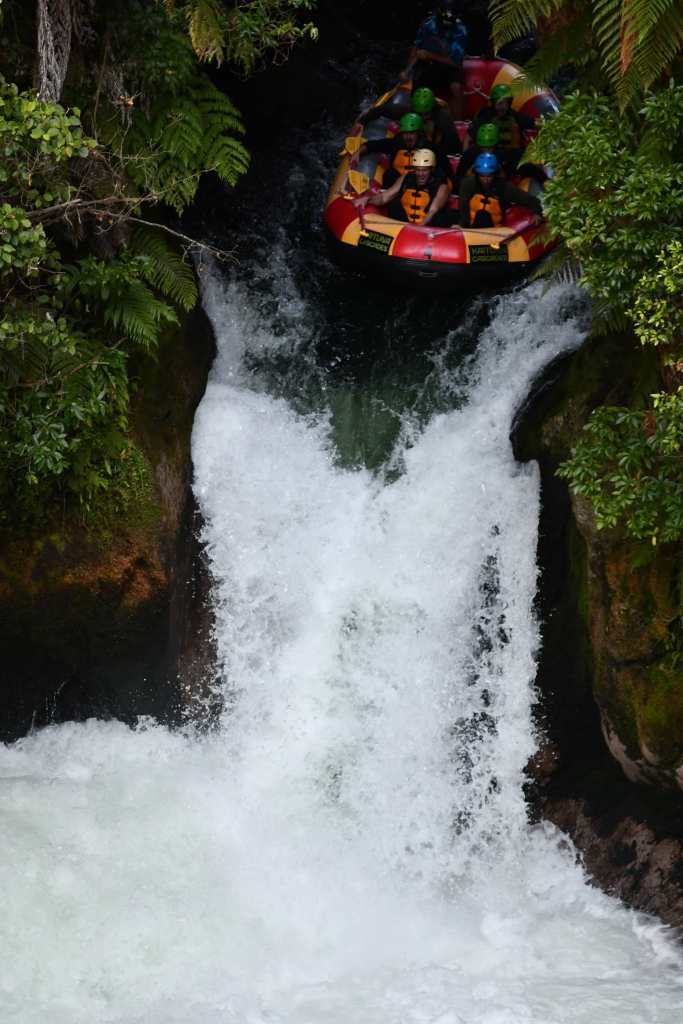
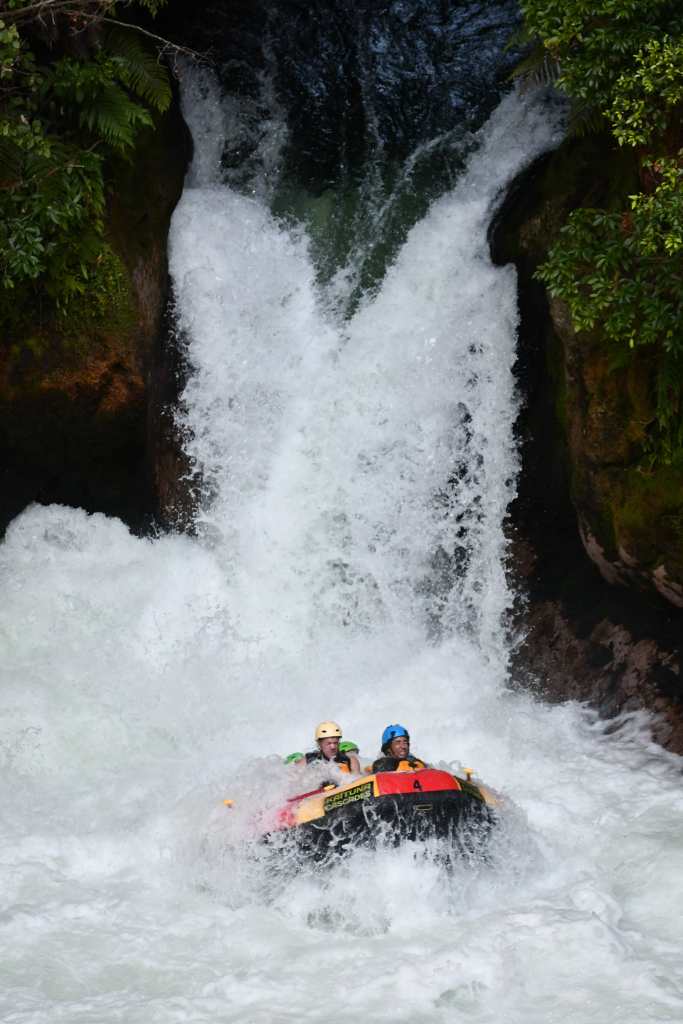
The area is beautiful, but the real attraction here is the possibility to go white water rafting, a trip that includes descending a 7-metre waterfall (the highest in the world that is open to commercial rafting operators). Unfortunately, the rafting company had a minimum height requirement for passengers, so teddy bears are unable to participate, but I did let my human assistant editor have a go. I watched as his raft approached the famous waterfall….

The Raft approaches Okere Waterfall

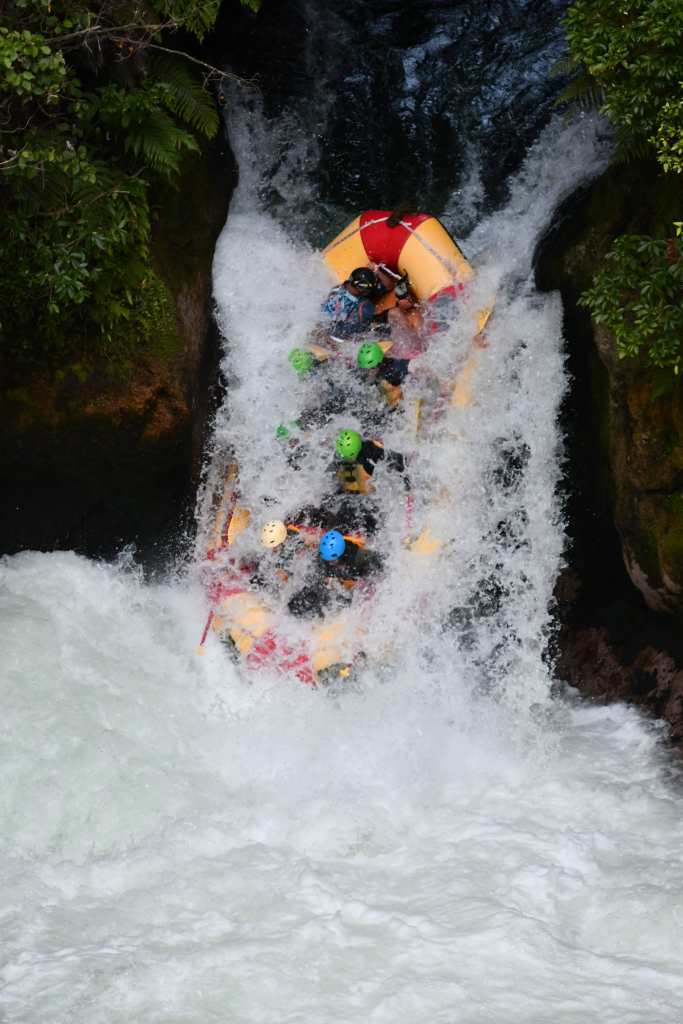
and then plunged down….

Half way down Okere Waterfall

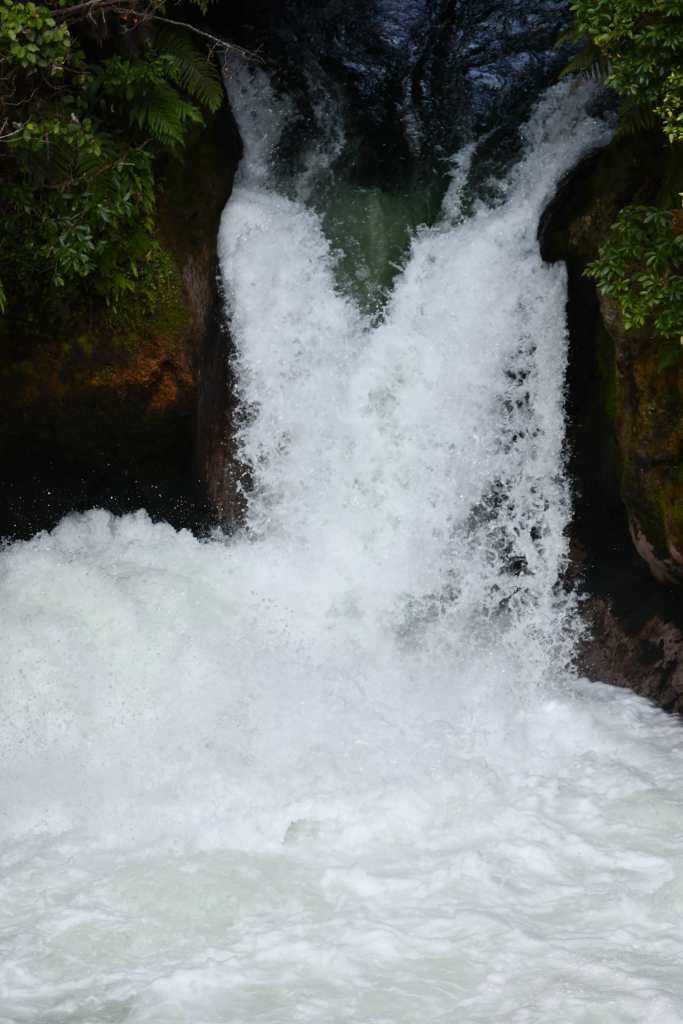
….completely disappearing under the water.

Time to look for a new assistant!

I briefly wondered if I should start advertising for a new assistant, but then the raft reappeared from under the foam with all its crew members still on board.

The raft reemerges from the water on the Kaituna River

It was now late afternoon, and I headed back home. After a difficult introduction I was beginning to like Rotorua. The geothermal sites are really exceptional, and it was nice to let my assistant have some fun with the rafting, even if it would have been even better to try this for myself. It is a demanding job working for Trouspinet and my subordinates need to let their hair down occasionally…….

Letting my assistant have some fun for a change (he is in the front)

Previous Post: Rotorua Day 1

Next Post: Rotorua -Wai-o-tapu and Te Puia

Kaikoura, lobster and my first blue whales

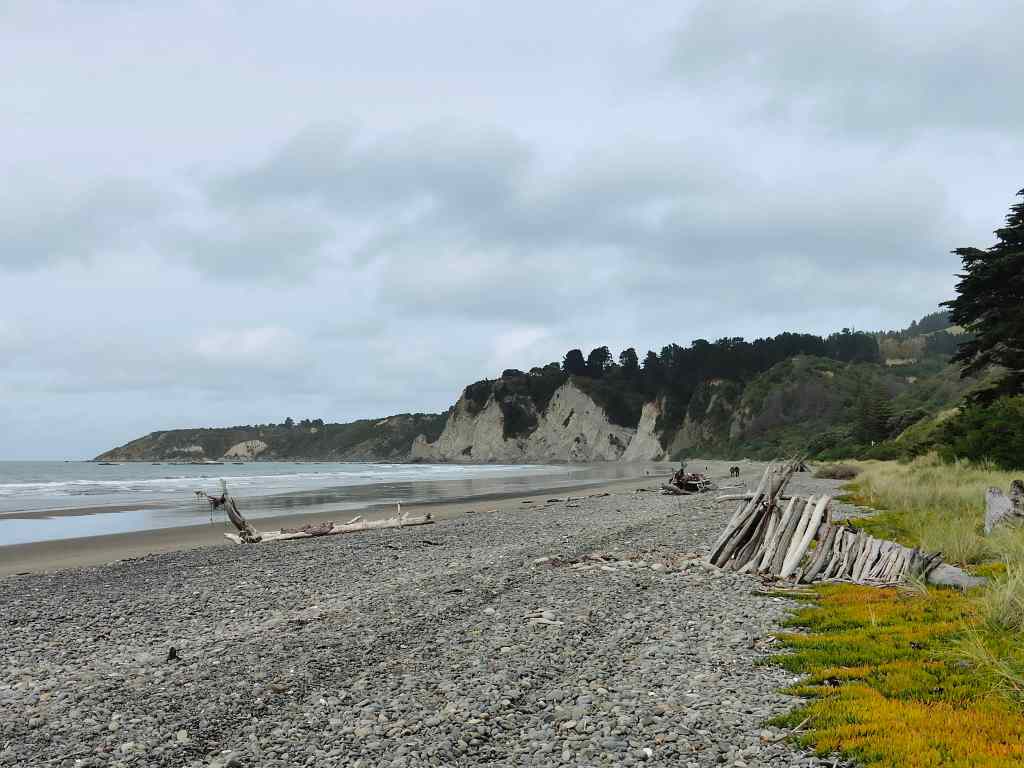
Today I drove up the east coast of New Zealand’s South Island from Christchurch to Kaikoura, a destination famous for its marine life. Around half way along the road, a sign offered a scenic drive around Gore Bay. It wasn’t in either of my guide books but I decided to give it a try, and was rewarded with one of those “off the beaten track” discoveries that makes travelling fun. After a bit of driving past some interestingly-shaped cliffs (the Cathedral Gully), a little path planted with sub-tropical flowers led from the road to the beach. I was almost the only one there, and took time to savour a moment of solitude.

A pretty path leads to Gore Beach
Gore Beach

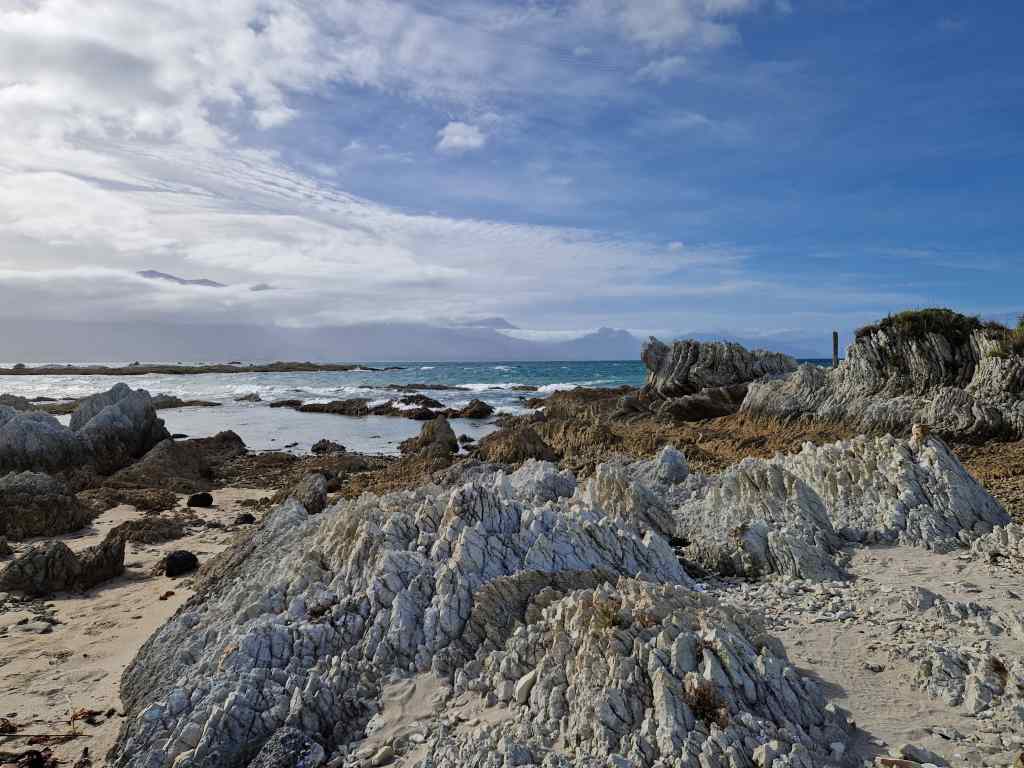
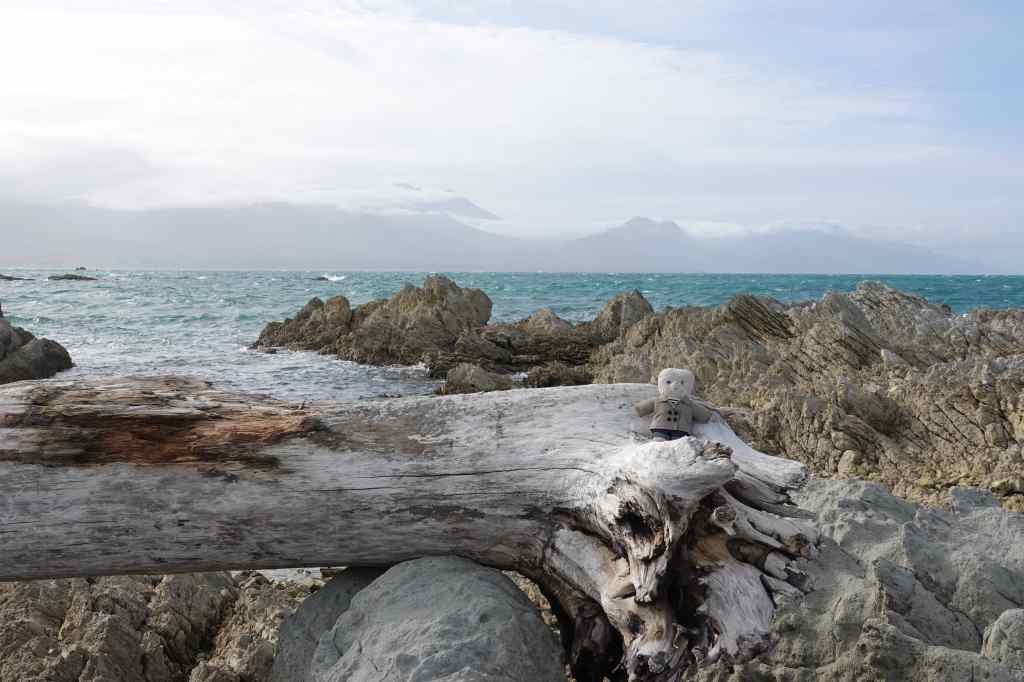
Refreshed, I completed the rest of the day’s driving, checked into my hotel and spent the late afternoon wandering around Kaikoura’s wild peninsula, which was raised nearly two metres from the sea during a recent earthquake. There were views over the bay to far-off mountains……..

Scenery on the Kaikoura Peninsula track

……lots of fur seals……

Lazy fur seals on the Kaikoura Peninsula

…and birds……

Kaikoura Peninsula – a black and white shag

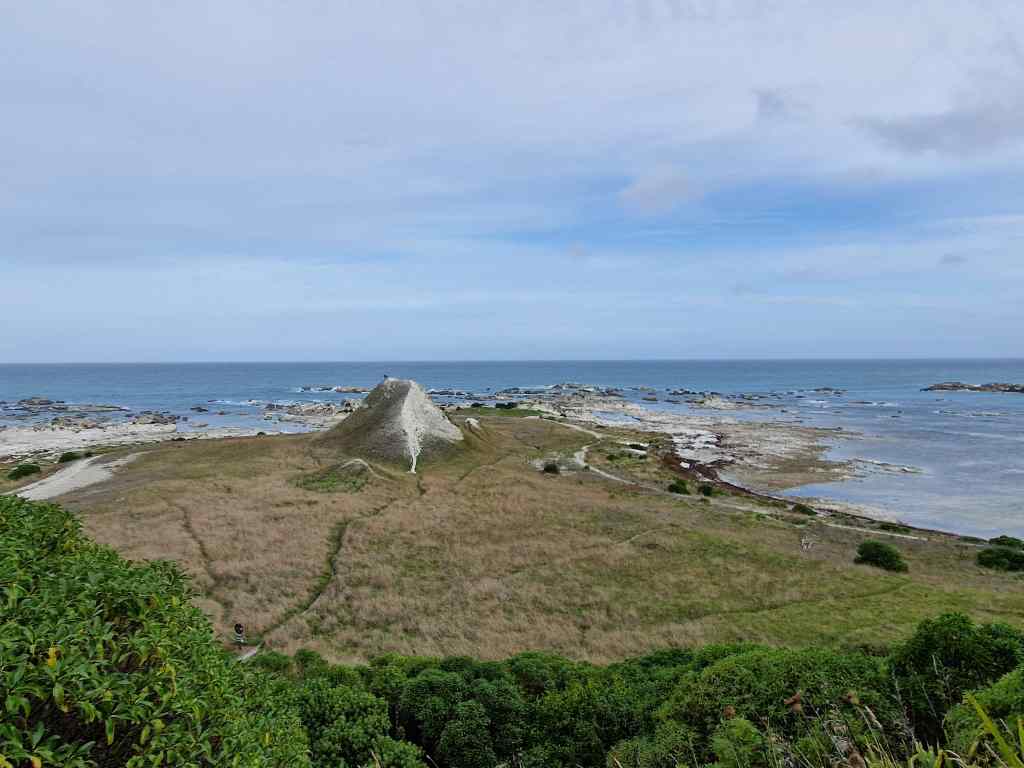
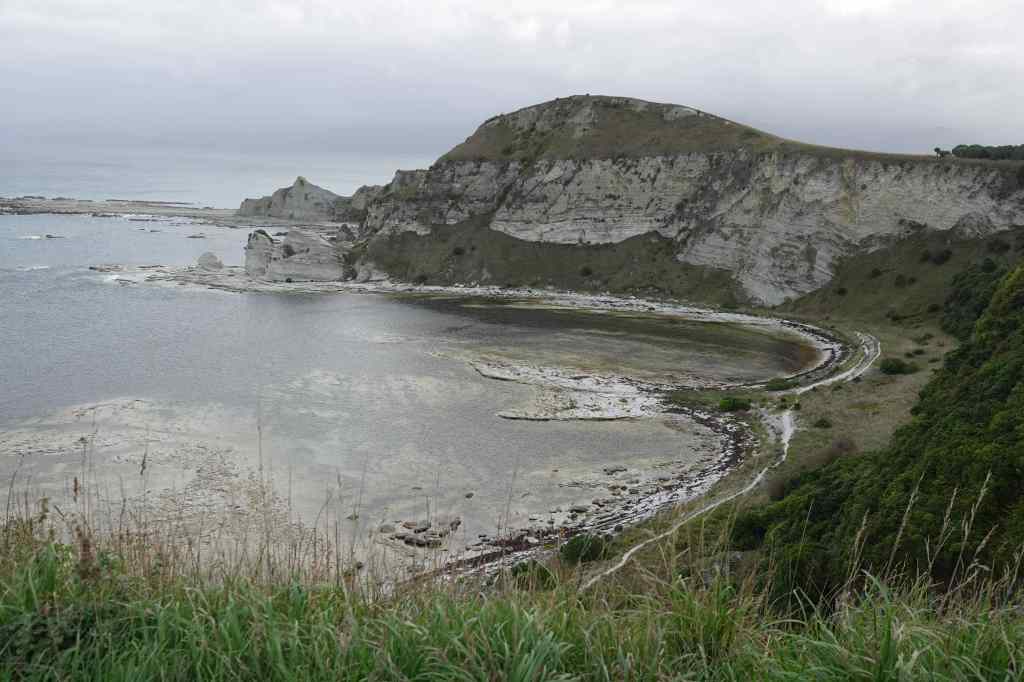
….and wild scenery and cliffs.

The scenic Kaikoura Peninsula

My hike was probably only about 10km but walking on the pebbly shore and then up and down steep slopes was quite tiring. It was getting dark and cold when I reached my car, with evening approaching. I needed a good dinner to warm me up…….and found one on my way back home at “Cod and Crayfish”, a fish and chip shop on the main road going through the city. What New Zealander’s call a crayfish – in Maori, Koura – would be more often called a rock lobster in other parts of the world. Kaikoura (meaning “eat lobster” in Maori) is supposed to be the best place in New Zealand to taste some, so I enjoyed a feast of lobster and blue cod with chips for my dinner.

A Kaikoura crayfish feast

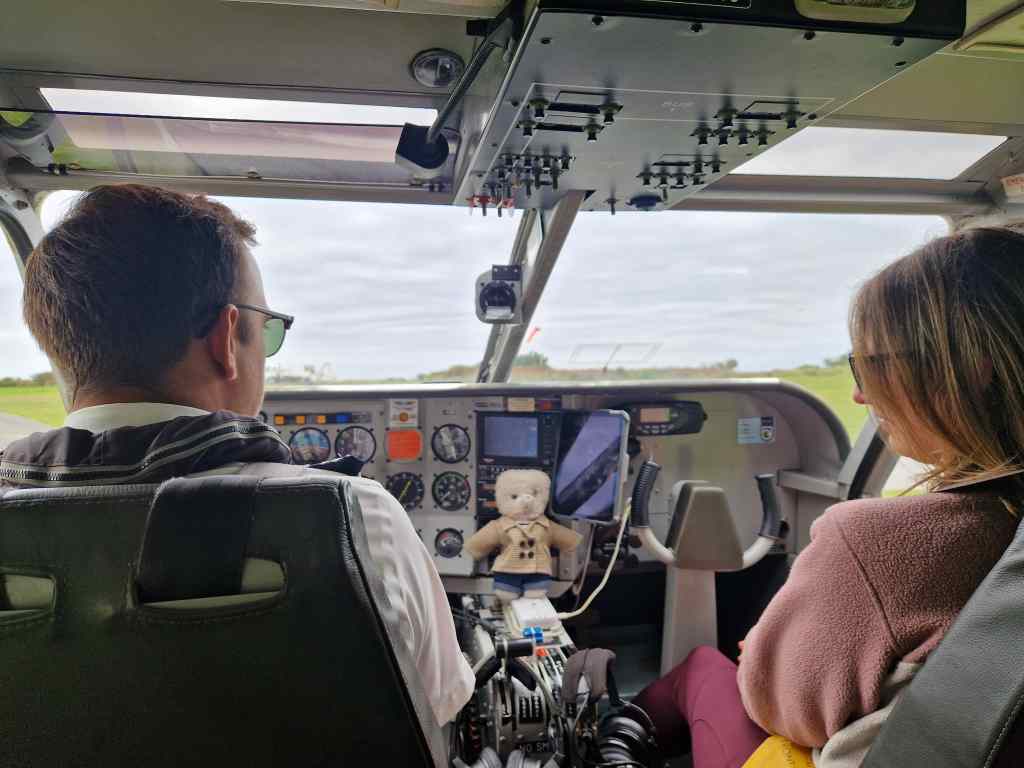
Although the walk around Kaikoura’s peninsula was nice, most people come here to venture onto the sea in search of whales and dolphins. I was no exception, and next morning I checked in for a whale-watching flight with Air Kaikoura. It is also possible to look for whales by boat, but I remembered my unsuccessful excursion in Iceland when I spent four hours on the sea only to see one small minka whale, so I opted for a shorter and (surprisingly) cheaper option. I set off from Akaroa airfield with a group of six other tourists plus the pilot in a small Cessna plane for a forty-minute flight.

Setting off to look for whales with Air Kaikoura

We all scanned the sea intently, faces pressed to the plane’s windows and cameras in hands or paws, but saw nothing. The pilot’s initially enthusiastic commentary and explanation about the lives of whales trailed off, and slowly people began to drop their arms and sit back in their seats. I looked at my watch – our forty minutes was up. I had resigned myself to yet another unsuccessful whale hunt, when suddenly…..

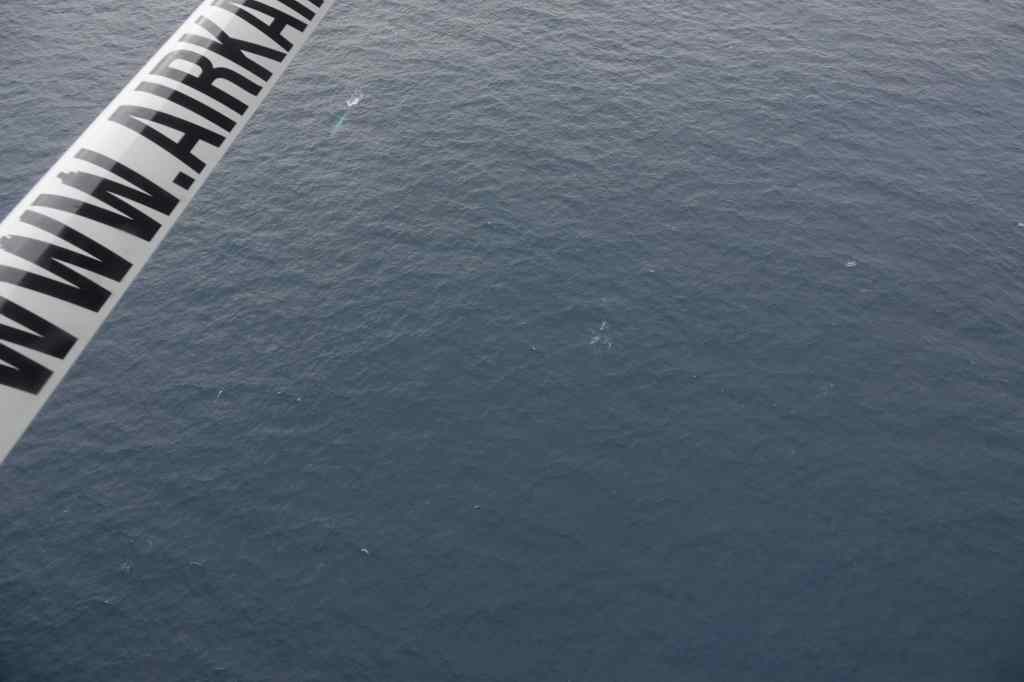
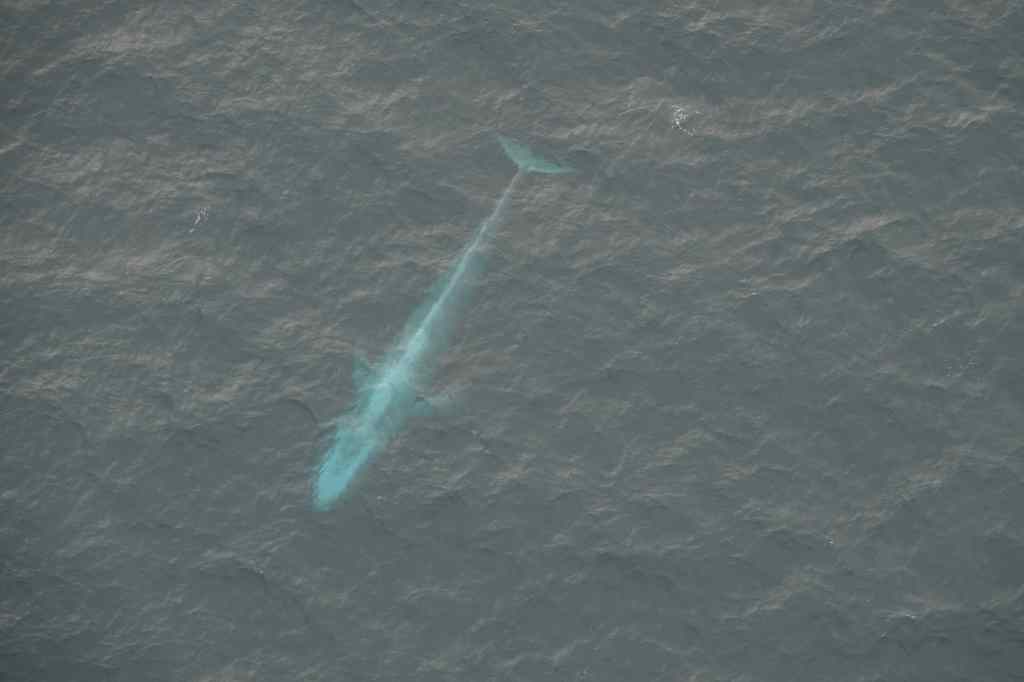
What’s that? Maybe…..Yes, a blue whale!

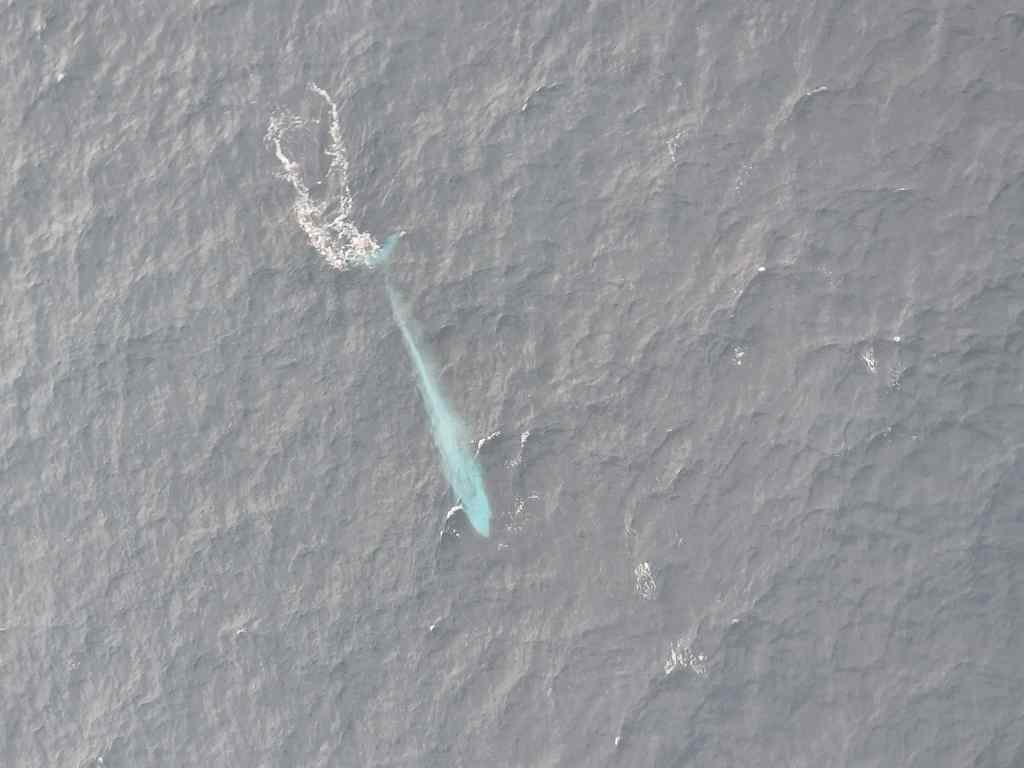
…..a blue whale appeared. The blue whale is the largest animal ever to inhabit the earth, and a truly amazing sight. Soon, two more blue whales appeared out of nowhere.

Two more blue whales!

The pilot swooped down, circling so that each side of the plane could get a close look. He was visibly excited, and said that even he only saw blue whales once ever two or three weeks or so, and hardly ever three at once.

Close ups of one of the blue whales

It was a wonderful experience watching these majestic animals making their way through the ocean, and ticked off one of my bucket-list items, that I thought I might never achieve. I don’t normally mention commercial enterprises in my blog, but I really have to say thanks here to Air Kaikoura for extending our flight by nearly half so that we could observe the whales properly. It was a fitting end to my stay in Kaikoura, and I set off on the long coastal road up to far north of the North Island in good spirits.

Next Post: The Marlborough Sounds and Abel Tasman Park

Previous Post: The Banks Peninsula, Akaroa and Dolphins

Blog at WordPress.com.

Up ↑