Wow – Japan’s Alpine Route

Today we set off on one of Japan’s great travel experiences – the Alpine Route. This involves a succession of different modes of transportation that delivers travellers across the Japanese Alps – from Ogizawa in the southeast to Toyama in the northwest. In our case, the trip included extra sections getting to the starting point and also from Toyama to our final destination of Kanazawa. I had researched the trip on the web, but was rather confused by the description given by the Japanese transport company managing the route. It all seemed rather complicated, including surrendering our luggage at the start and magically getting it back at the end.

We had to set off early on the 07.48 local train from Matsumoto to Omachi. The weather was cloudy and I worried about the complexity of the trip, whether we would actually see anything up in the mountains, and how cold it would be on top (the weather forecast for Murodo, the highest point of the route, was 0°C). A physical discomfort was soon added to our mental ones; our backsides started to get uncomfortably hot. Although it was a basic local train, the seats were heated when they detected that they were occupied by passengers. The intensity of the heating suggested that they were designed for the depths of the Japanese winter, when temperatures in this area can drop to -15 °C – and not for autumn. We found the only way to survive was to continually change seats, moving on when our new places got too hot to endure. The few other passengers in the train – all Japanese – looked at us with puzzlement. They seemed not to mind having their posteriors roasted.

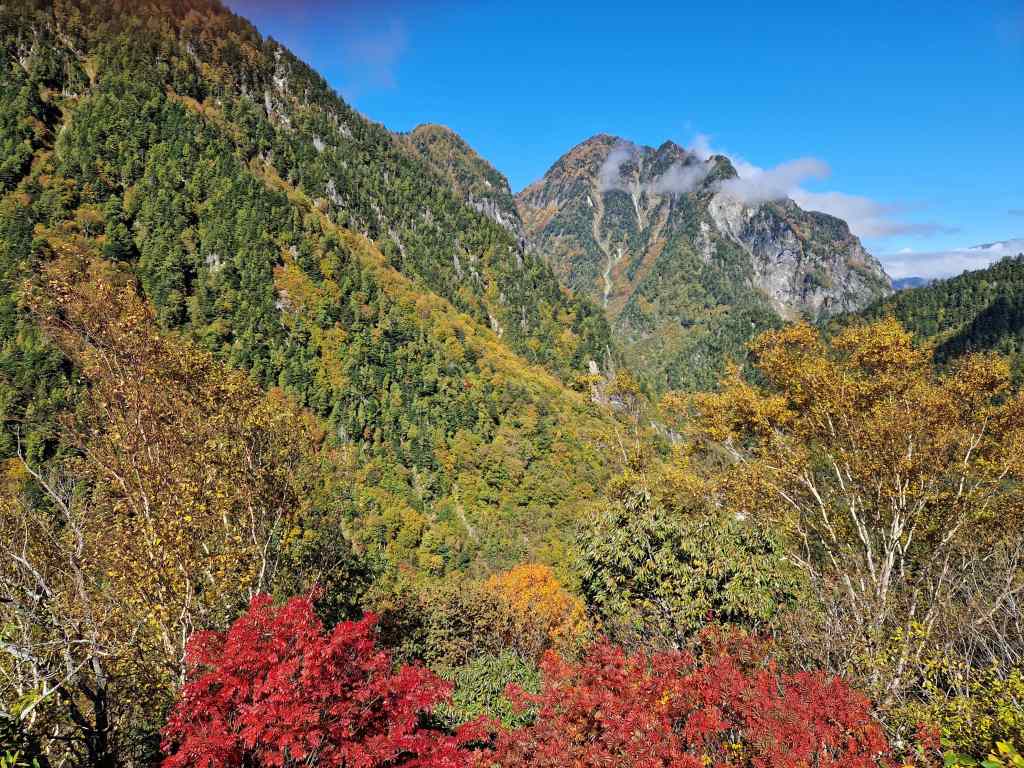
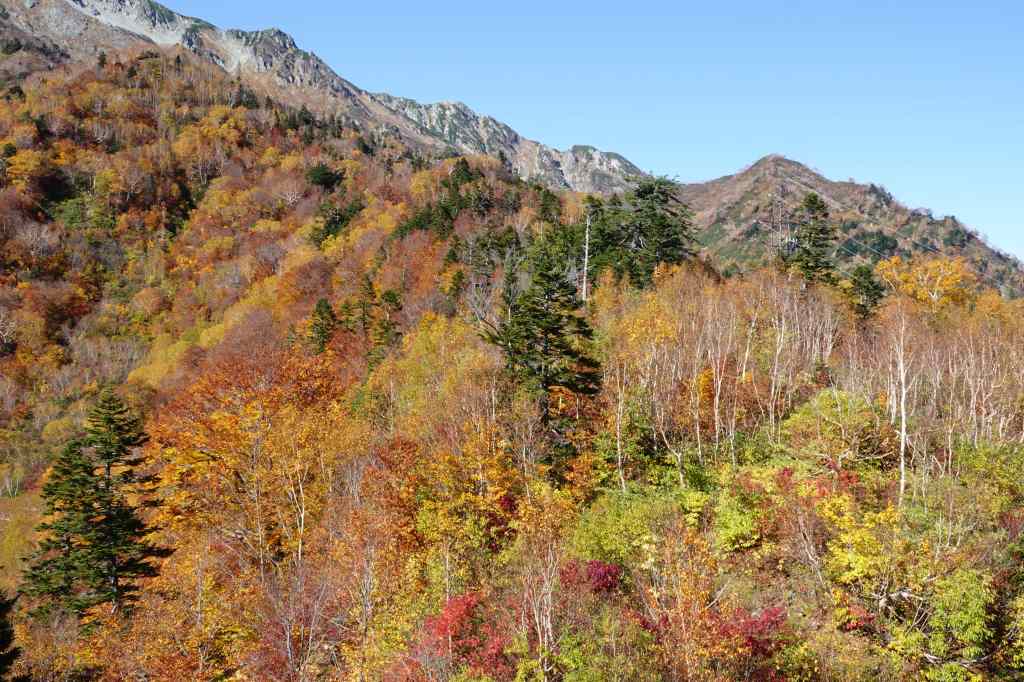
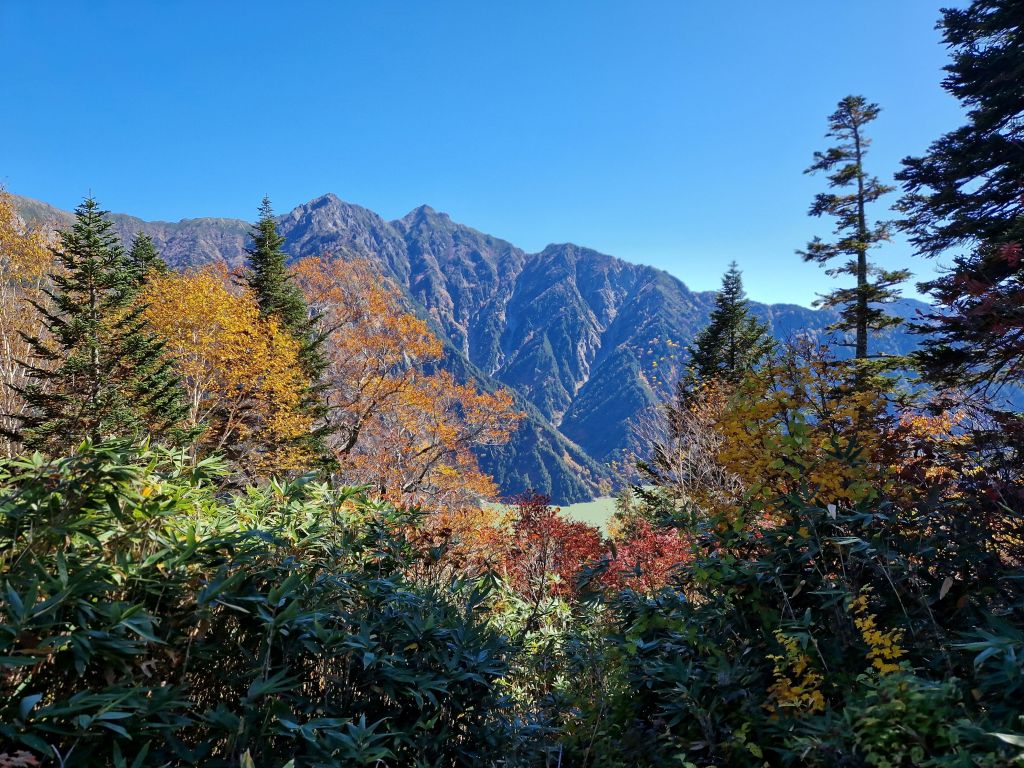
We arrived at the small, uninteresting town of Otomachi about an hour later and were glad of the exposure to cold mountain air. We found the office offering bag forwarding and handed over our luggage, wondering if we would see it again, and waited for a local bus to a place called Ogizawa, which marked the beginning of our ascent into the mountains. This turned out to be another unremarkable small settlement. To get this far we had spent three hours on mundane local trains and buses, under heavy clouds, and were thinking that the Alpine Route had better be good to justify all this effort. Next, an electric bus took us through a long tunnel to the first stop on the Alpine Route proper. As the bus slowed down to stop at its destination, we could see brilliant sunlight streaming in from outside and hurried off to admire the first of a series of amazing sights – the Kurobe dam. From this point on, words cannot do justice to the scenery and I will let our photos tell most of the story of an amazing trip.
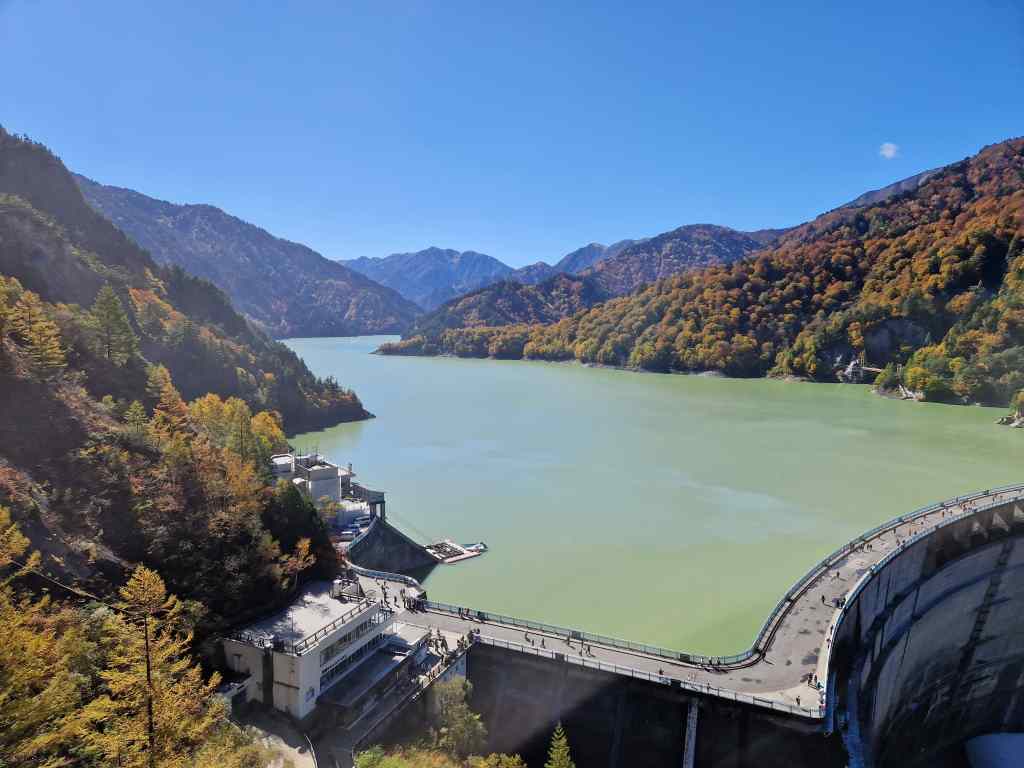
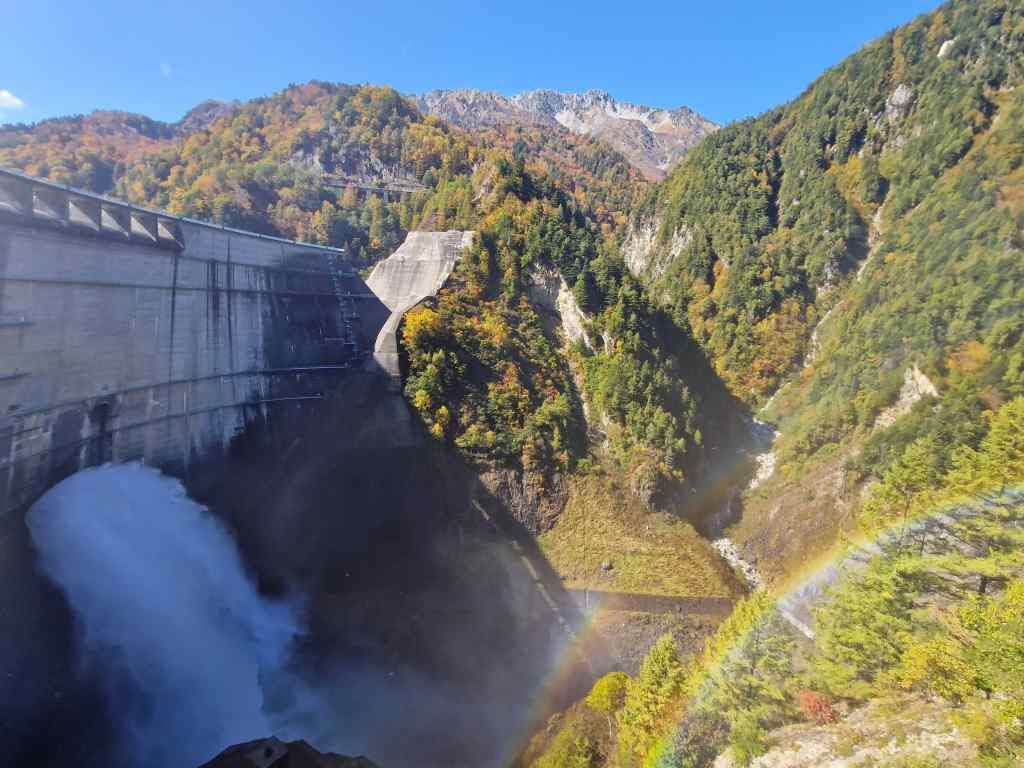
The Kurobe dam
Kurobe dam double rainbow
Scenery around the Kurobe dam

From the Kurobe dam there was a cable car to Kurobedaira, where there was a small botanical garden and yet more stunning views.
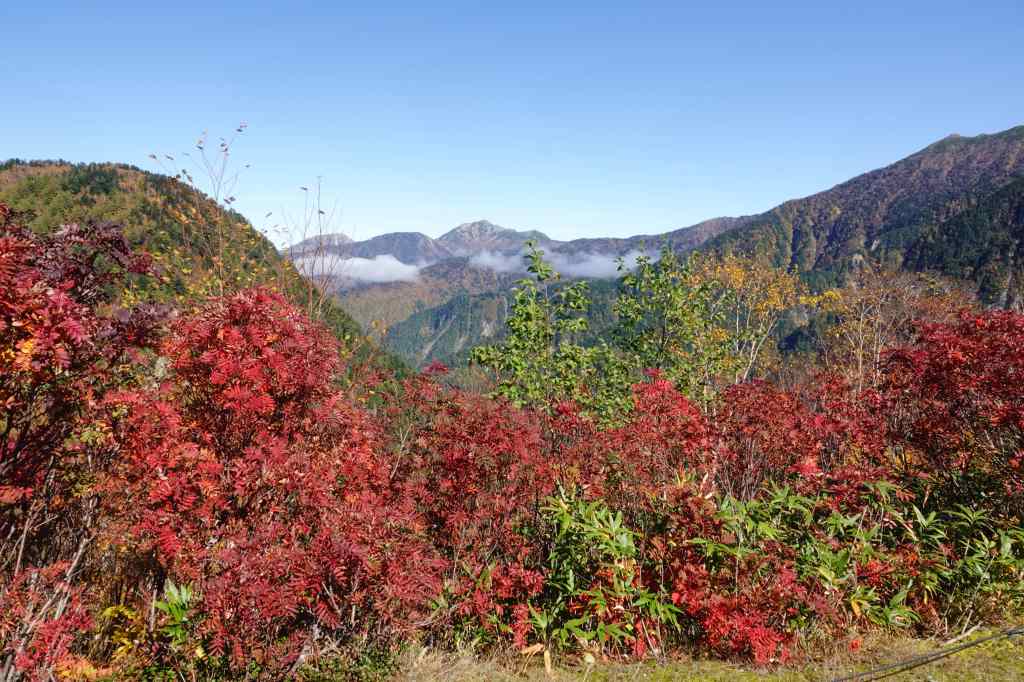
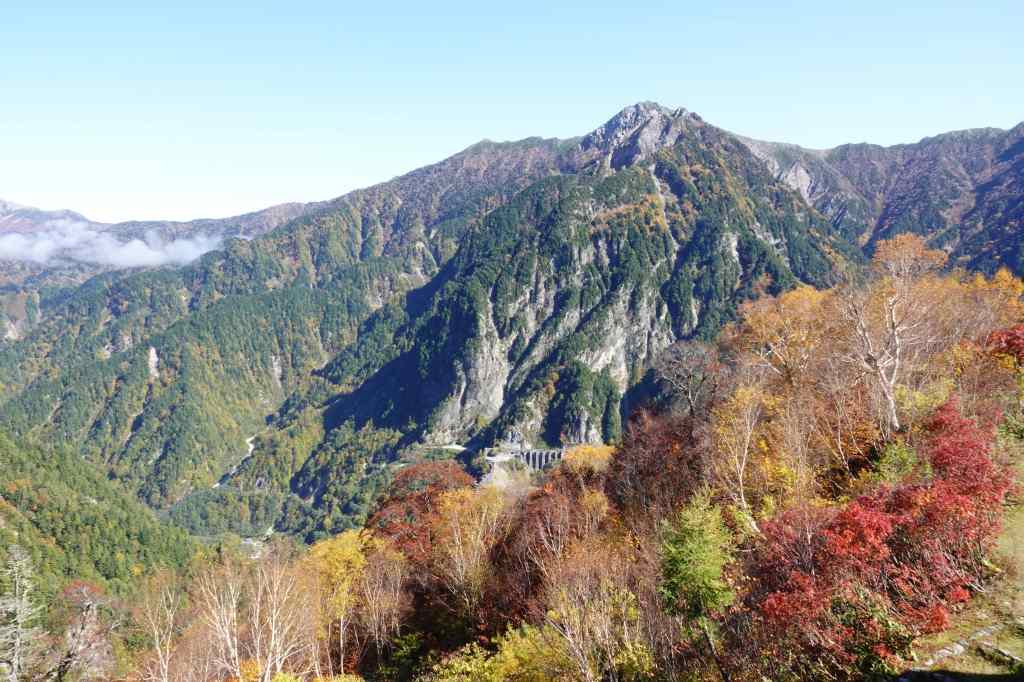
Views at Kurobedaira

From Kurobedaira the Tateyama ropeway took us to Daikanbo….
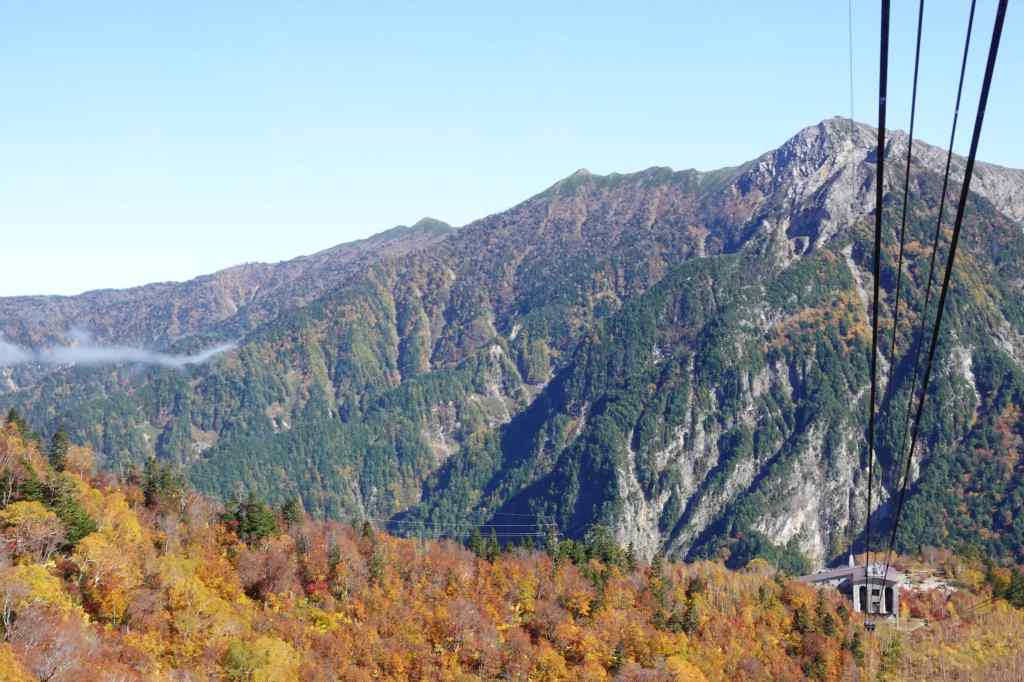
On the Tateyama ropeway

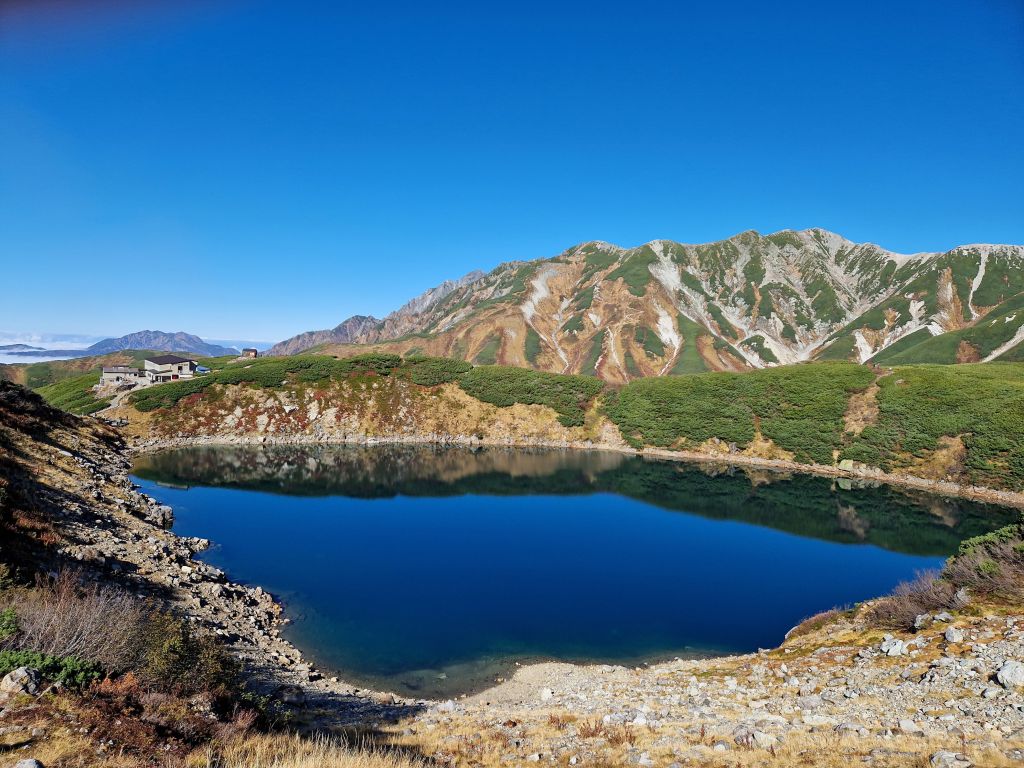
….from where an electric trolleybus took us through the mountain to the highest point of the trip, Murodo (2450m), where the scenery markedly changed and where we made a short hike.
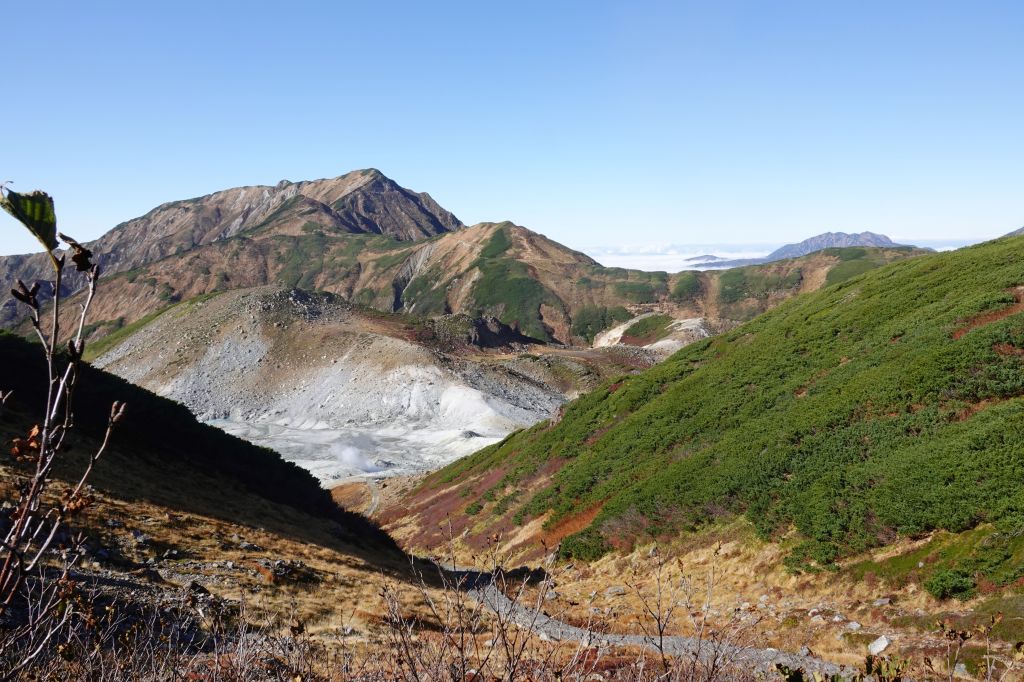
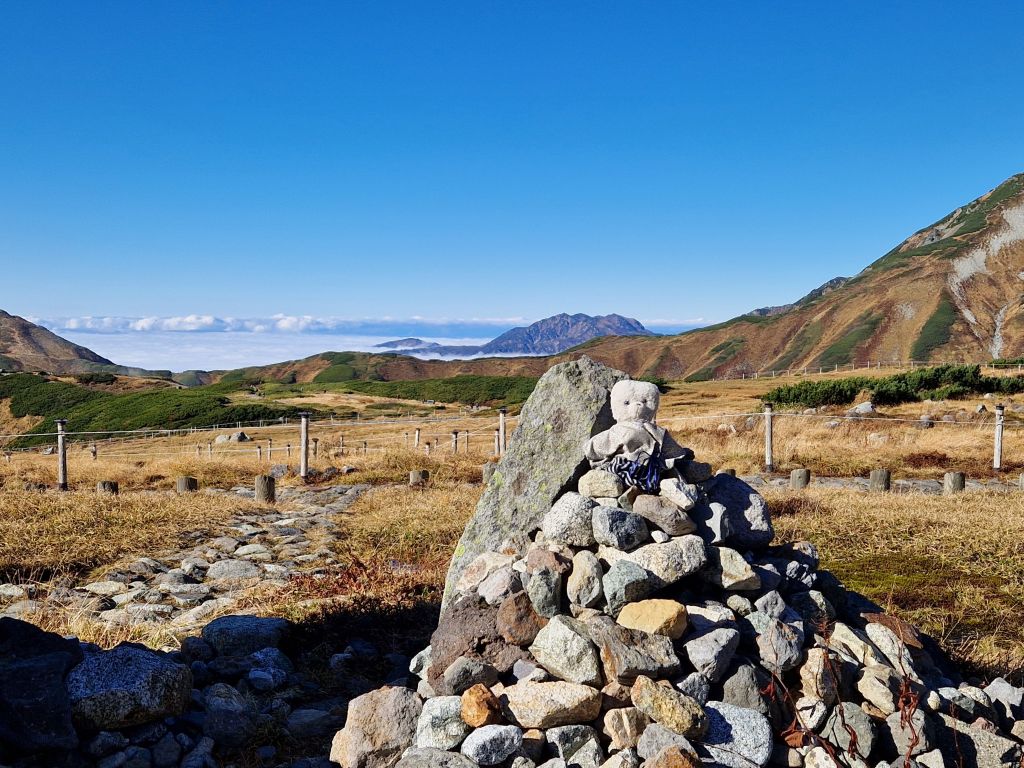
Hiking around Murodo

From Murodo, there was a regular bus down to Midagahara. On the way we saw, and then entered, the magical “sea of cloud”.
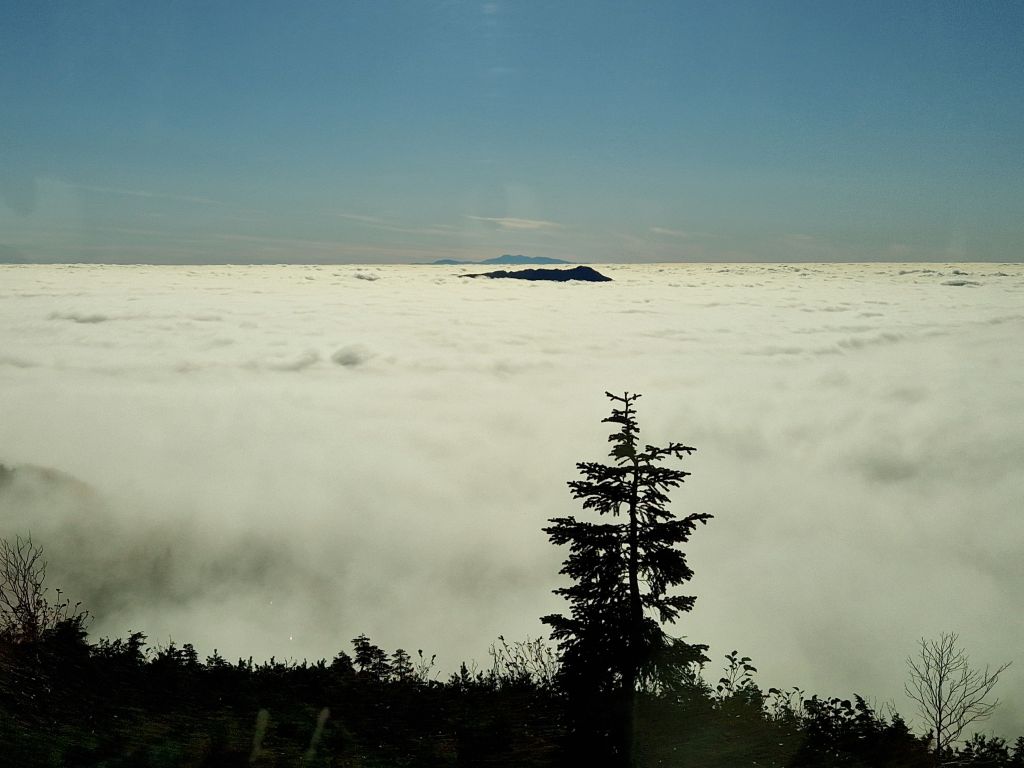
The Sea of Cloud

After we had entered the “sea of cloud” the weather was, unsurprisingly, cloudy and there was not much more to see. We still had to take a cable car down to Tateyama (where our luggage was magically waiting for us), then a painfully slow local train to Toyama, and then an express “shinkansen” to Kanazawa, and then a taxi to our house. We finally arrived at around seven, after 11 hours of travelling – half of which had been magical. We dumped our bags and headed out to the nearest restaurant. They only had a menu in Japanese, written with such a highly stylised script that Google Translate could only decipher the words “conger eel”, “egg” and “today’s horse” amongst a sea of hieroglyphics. We asked the waiter to choose for us, setting a budget of 7,000 yen, and were served a real feast with six courses including – sashimi, tempura, omlet and miso – all of very high quality. We ate so well that it was a relief when tea arrived to signal the end of the meal. It was a fitting end to an exceptional day.
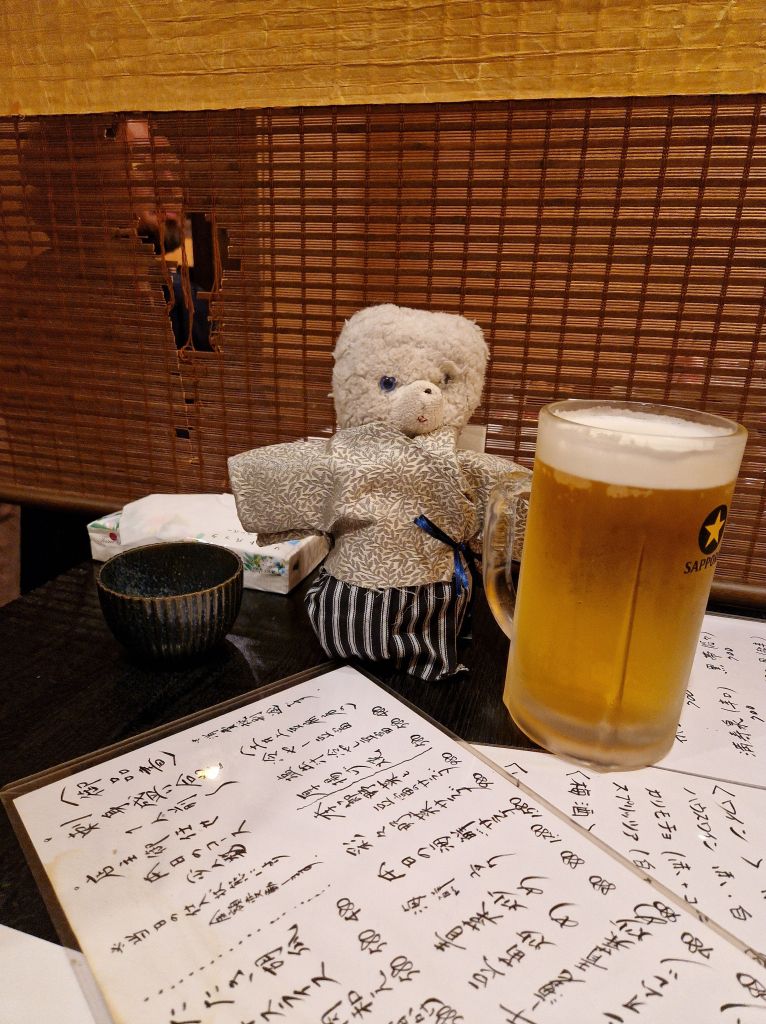
Trying to figure out the menu

Previous Post: Matusmoto

Next Post: Kanazawa
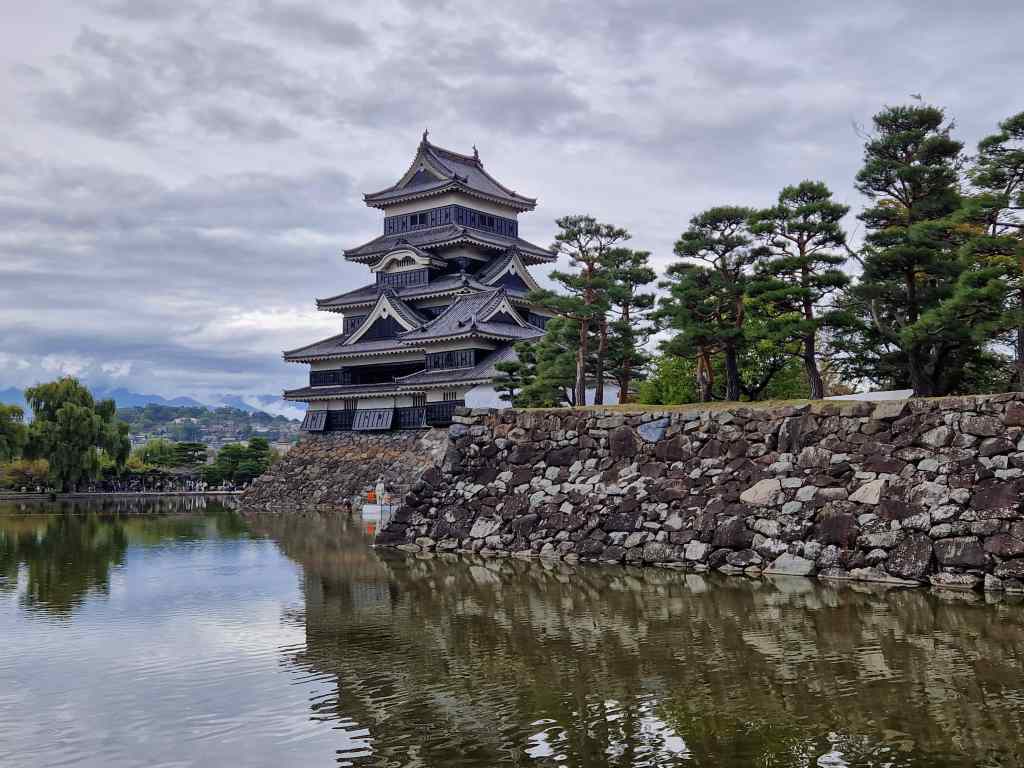
Quirky Matsumoto

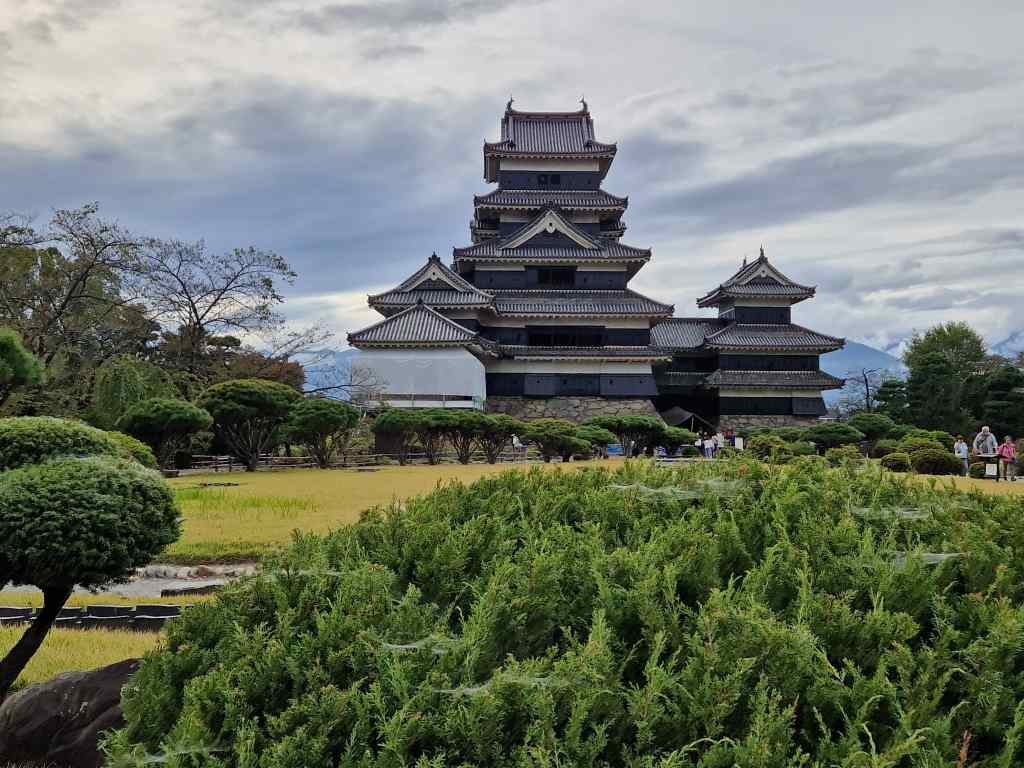
Matsumoto’s main tourist attraction – its castle

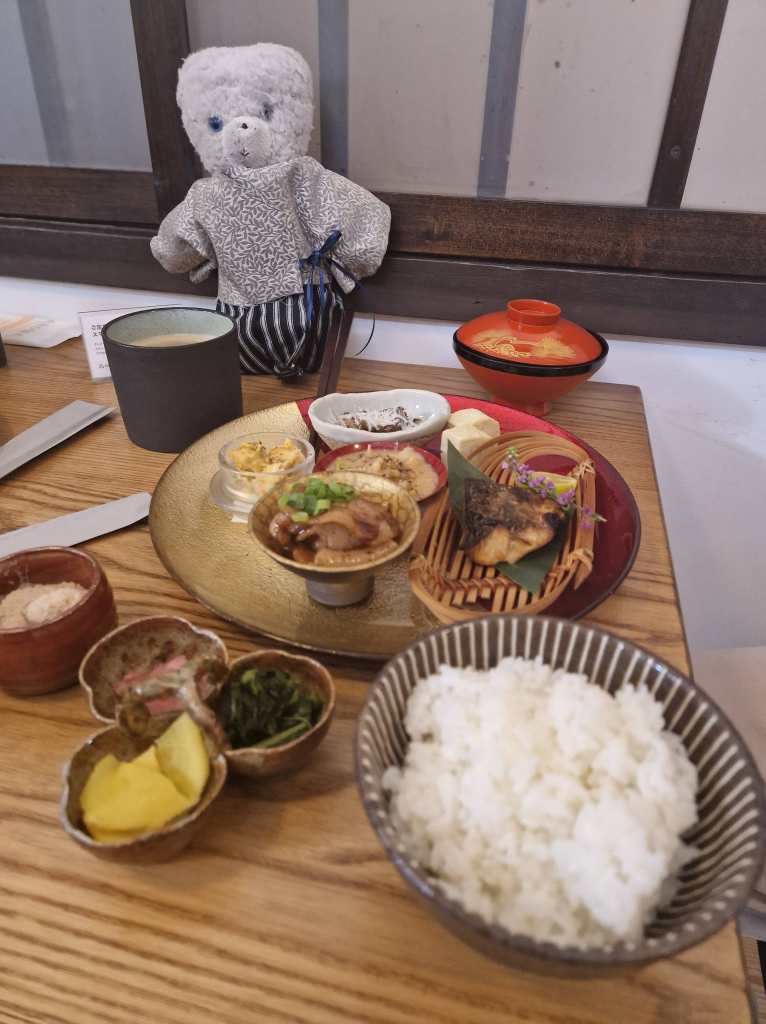
Today the weather forecast was for heavy rain, and so we decided to visit Matsumoto, the small city we had chosen as a base for exploring the Japanese Alps. First we had a big traditional Japanese breakfast.

Breakfast Japanese-style

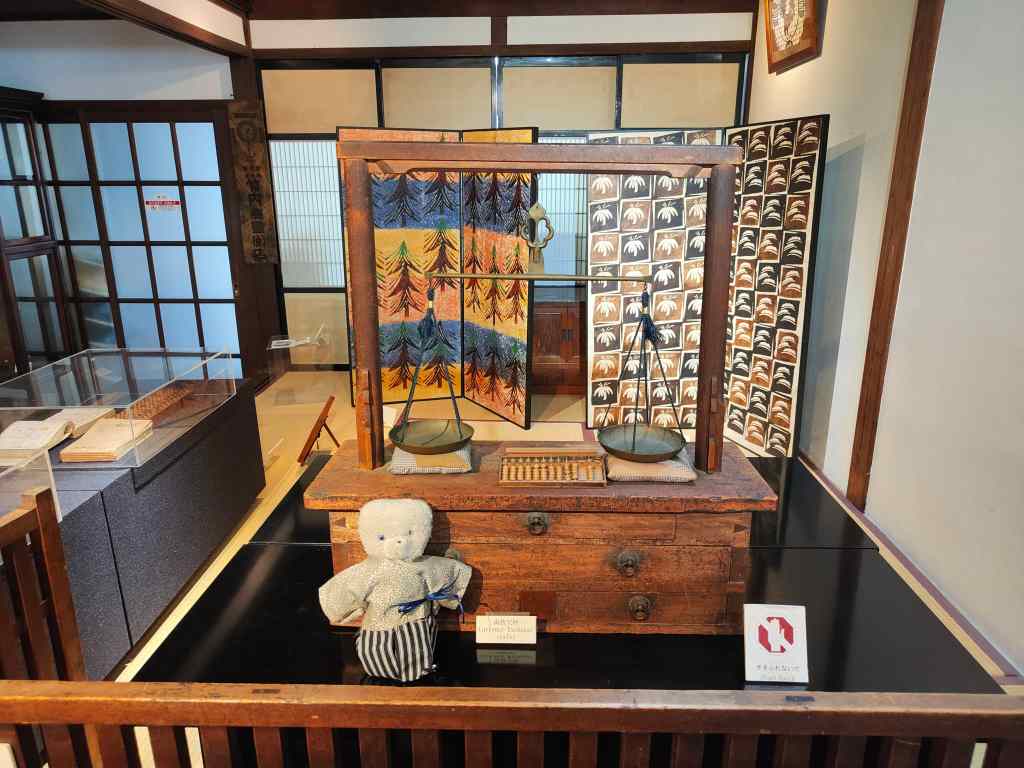
Matsumoto is a pleasant, quirky place with some classic and some very unusual tourist attractions. One of the former was just across the road from our ryokan (hotel) – a museum devoted to weighing scales. This was such a weird idea that we had to visit. It was actually quite fun, with a collection of old devices from different centuries, and a whole room devoted to the once important task of weighing silk worm cocoons.

The Scales Museum

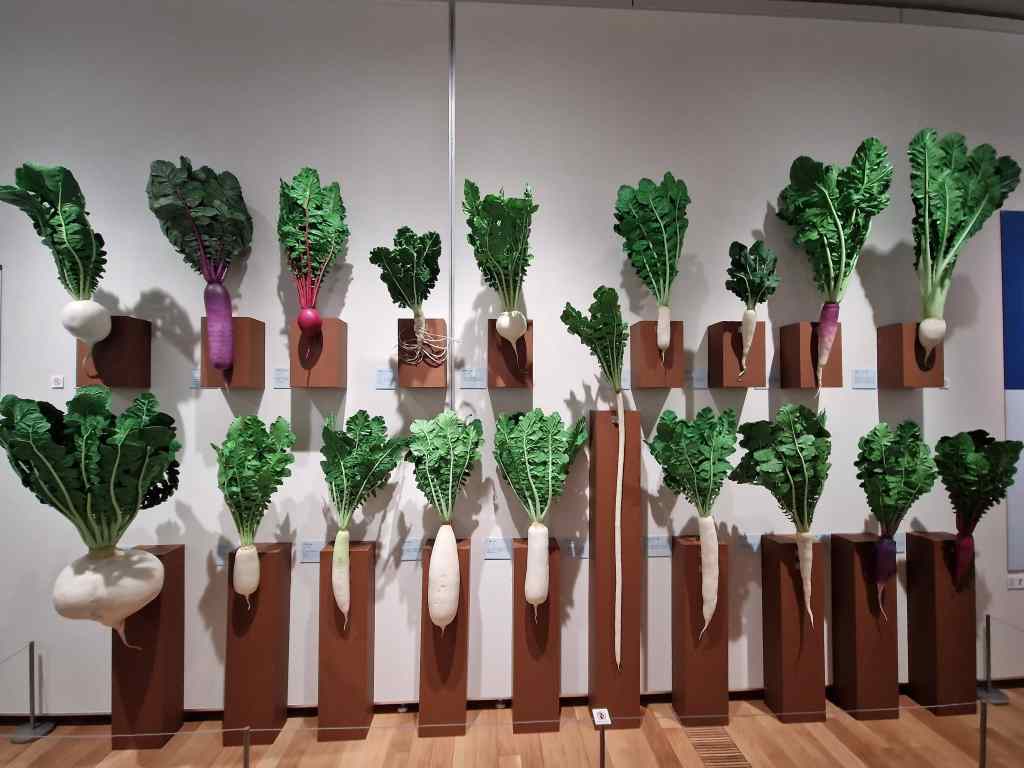
Our next destination was Matsumoto’s famous castle, but on the way we saw the Matsumoto City Museum, which advertised a special exhibition about the art of Japanese food. Unfortunately, this had only one panel with any English explanation, and we were left looking at plastic models of different types of fish or radishes. We did at least learn that around Japan’s coasts and in its rivers there are 4500 species of fish, as compared to only 300 in my native UK.

A weird museum exhibit

Matsumoto castle was a more traditional tourist destination. It is one of the few castles remaining intact from Japan’s feudal age, and was built around 1600. From the outside, the castle, its moat and grounds were beautiful. Inside was rather disappointing – it was quite bare, with a few museum exhibits about weapons and other aspects of life in that period. The interior was laid out over six floors linked by very steep staircases. Each successive floor got smaller and smaller, the staircases became steeper and stepper, and the queue of visitors to go up them got longer and longer – all to reach a totally empty sixth floor.

Matsumoto castle – impressive from the outside

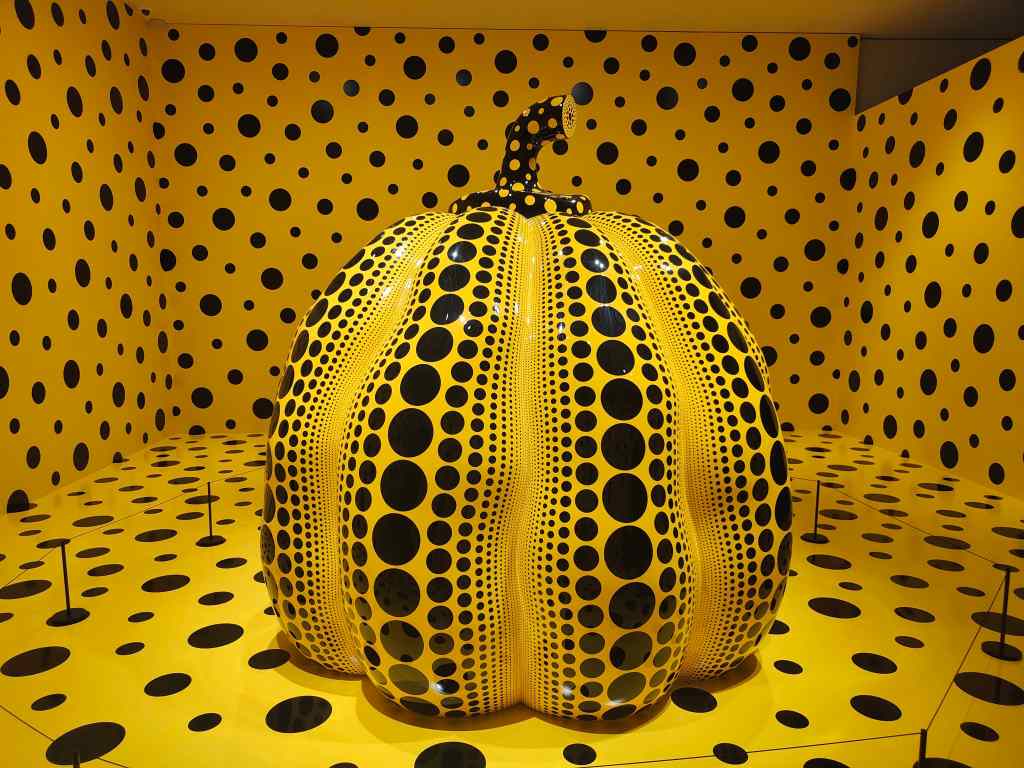
Our next destination was the Matsumoto City Museum of Art. The highlight here is a series of rooms devoted to the Japanese artist Yayoi Kusama, who was born here. Some rooms were devoted to her work using mirrors, and then we came across this huge colourful pumpkin…

Pumpkin by Yayoi Kasuma

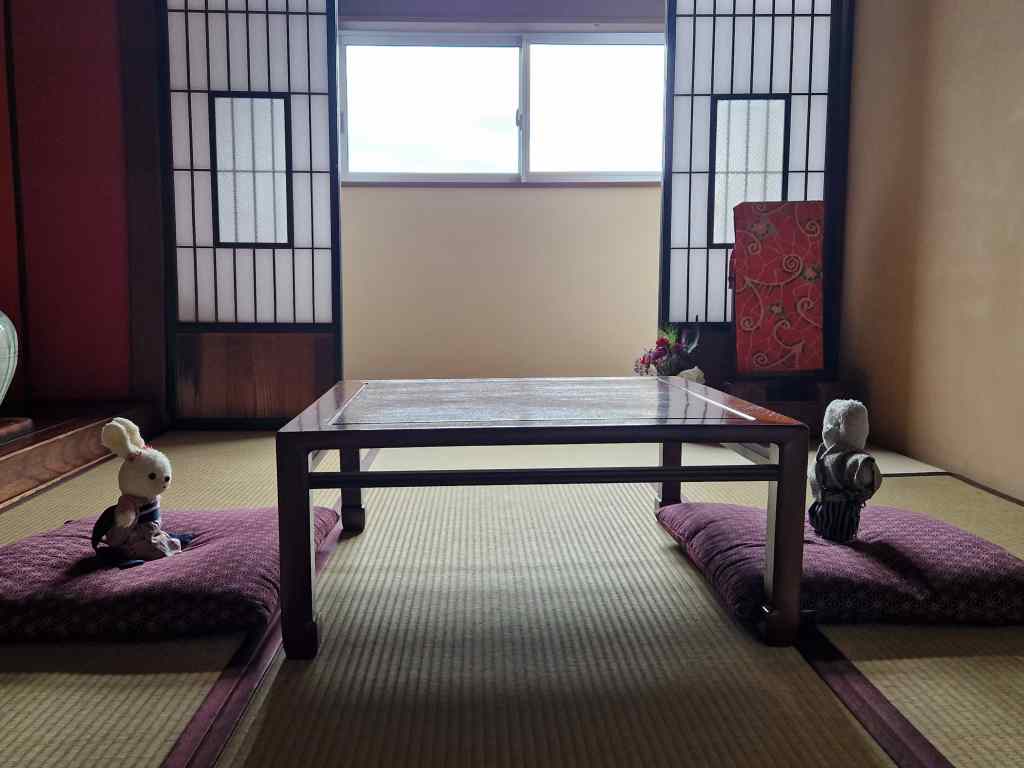
Having seen almost all Matsumoto had to offer, we returned to our ryokan to wait for the expected rain. A ryokan is a traditional Japanese inn, and ours was a comfortable place to sit and work.

Our ryokan and our room

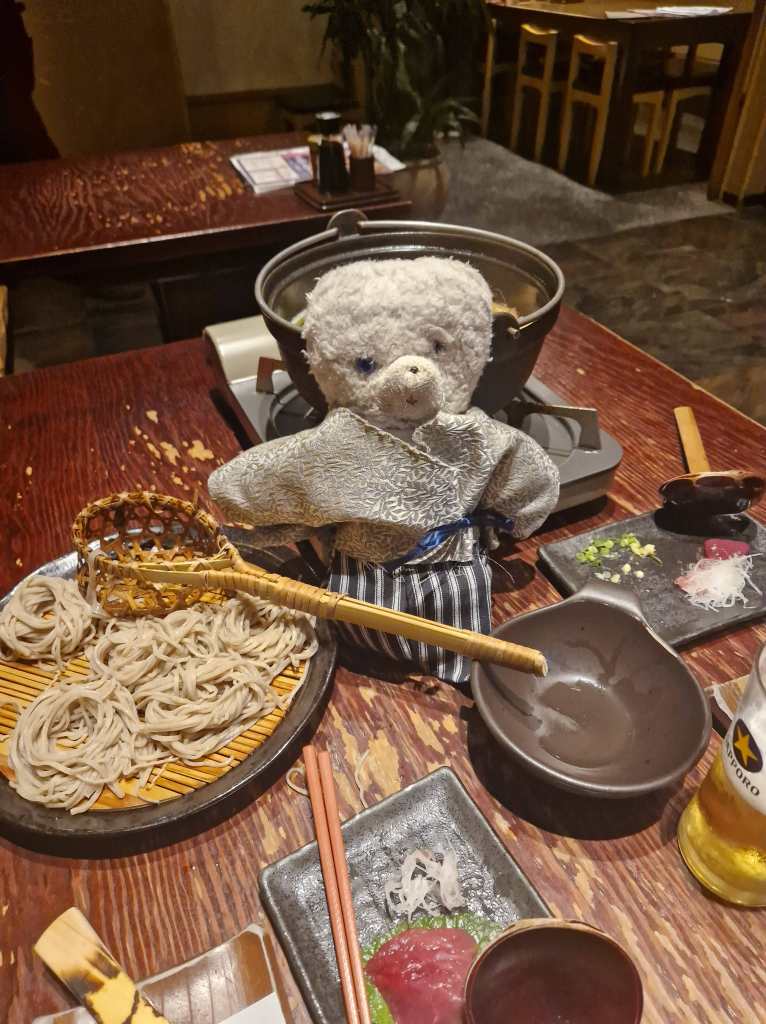
We only ventured forth at dinner time, to a restaurant recommended by our host. It was so popular, that we had to queue to get in, but once sat behind a table, we enjoyed a huge feast of soba noodles (made from buckwheat flour).

Soba noodles feast!

Matsumoto had been a pleasant base for our trips around the Japanese Alps, but tomorrow we were due to move on, for something that I hoped would be a highlight of our tour around Japan.

Previous Post: Off the Beaten Track in the Japanese Alps

Next Post: The Alpine Route

Off the Beaten Track in the Japanese Alps

In the Norikura Region in Autumn

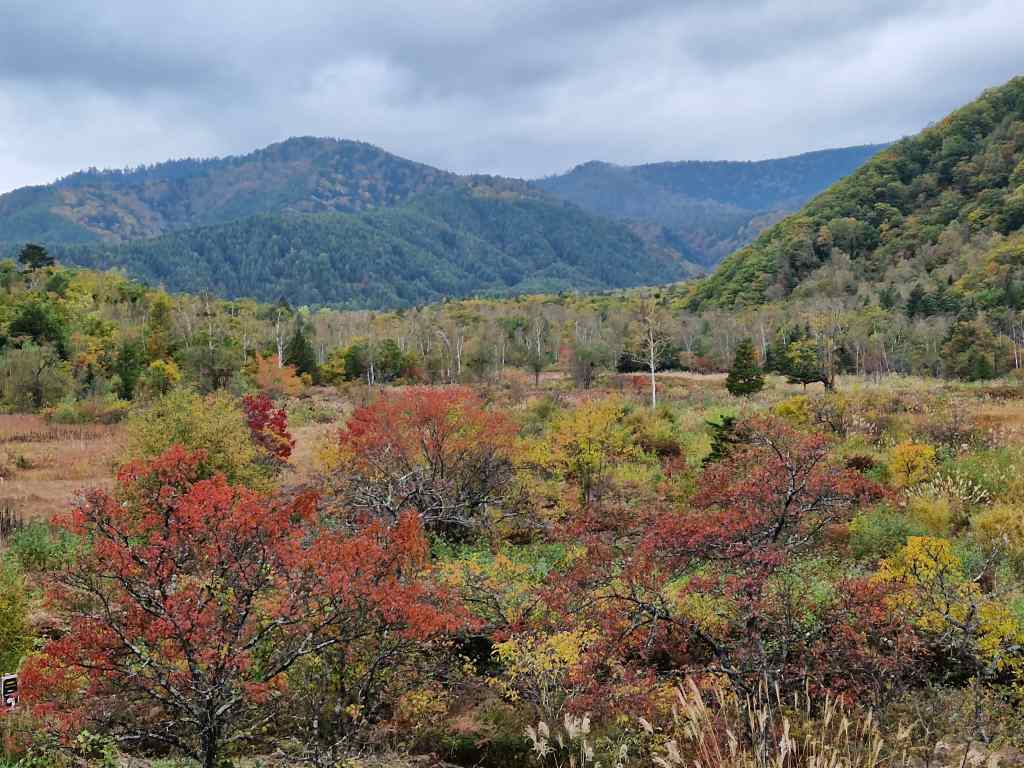
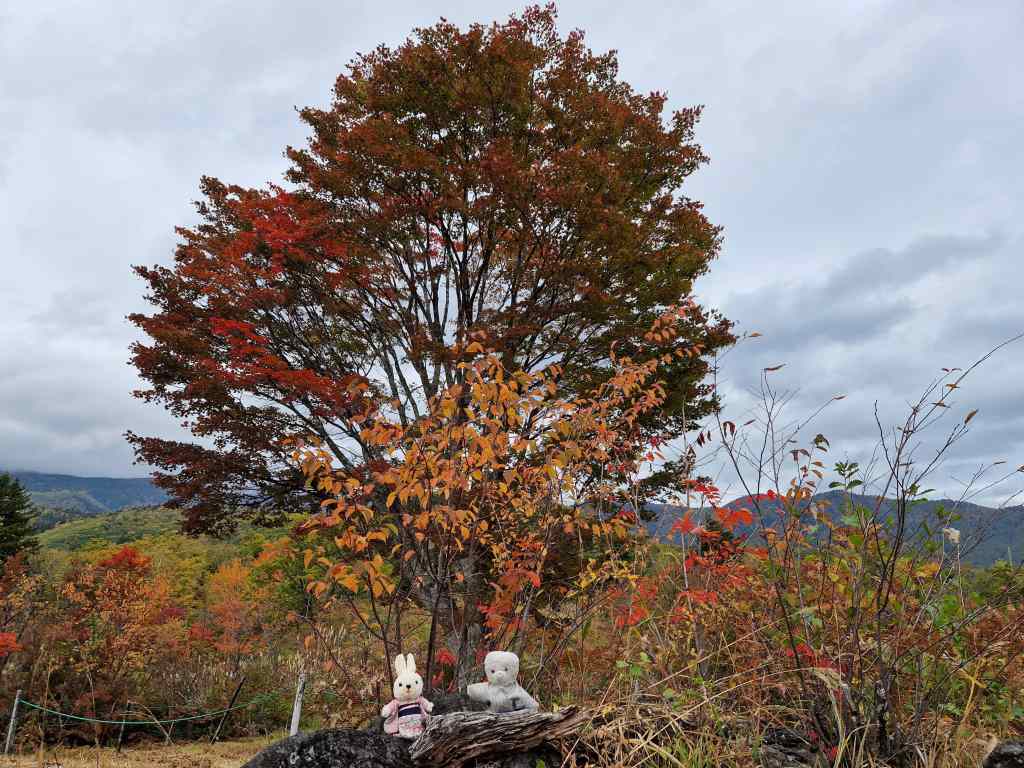
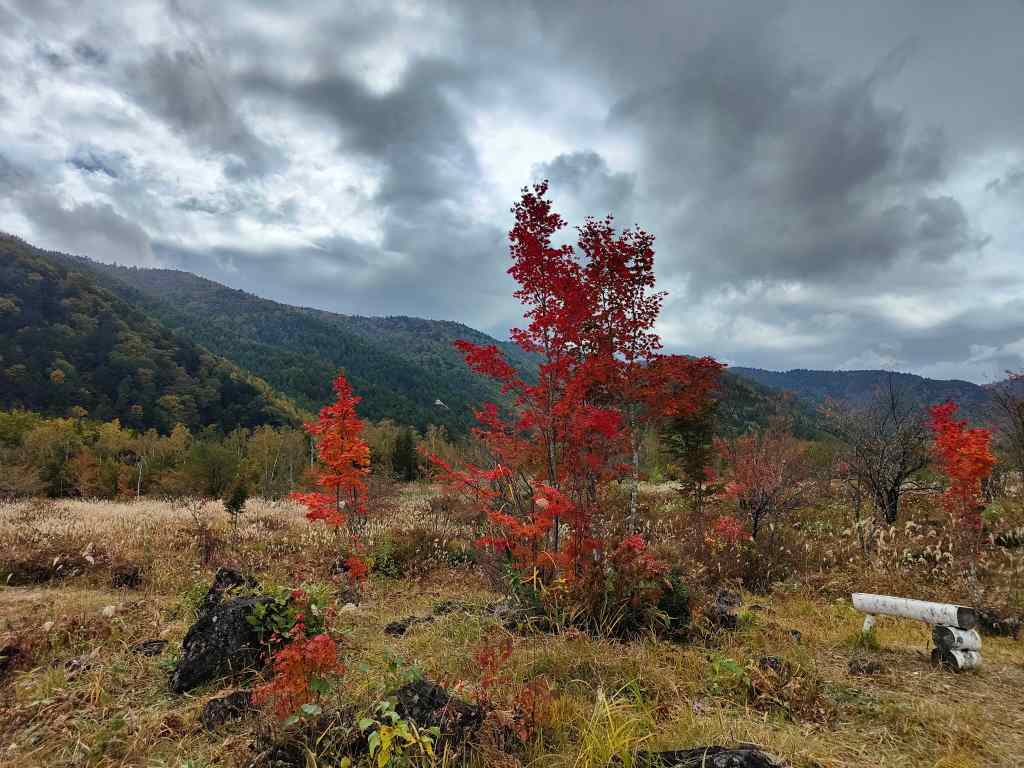
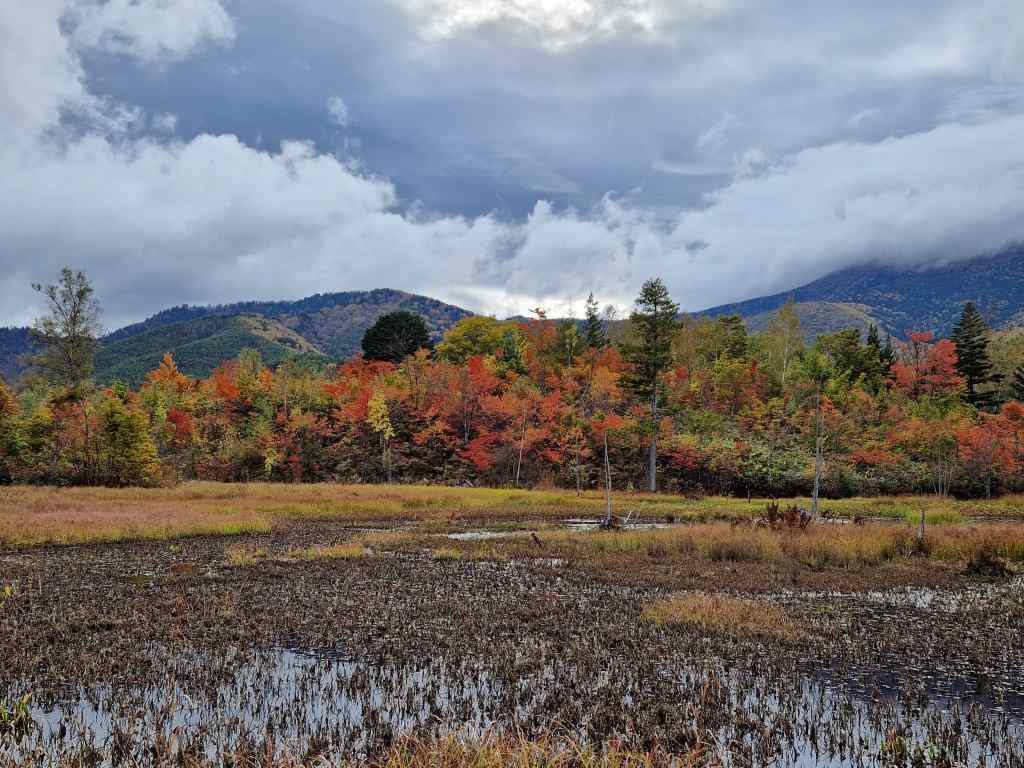
Today was one of those wonderful days when a traveller discovers something for themselves. Our original plan was to drive to the Japanese Alps, and then take a bus/cable car to Mount Norikura, Japan’s third highest volcano. However, when we got into the mountains, it was cloudy and we thought that we would not see anything at the top. As we wondered what to do, Aki noticed a small sign with a picture of a large, bright red maple tree, so we followed the direction it indicated and found ourselves driving through a beautiful meadow, with nature’s autumn colours on full display – but this time with the red that we had been missing during our walk at Kamikochi.

The view from the café

The road went past a café, which, unusually for remote places in Japan, served excellent coffee and which had an excellent view of the scenery. In the car park in front, there was a sign showing a few short walks in the area, so we made a circular hike of around 5km, marvelling at the colours and taking lots of photos. We saw very few other people on our way, and almost no foreigners at all. Most of the people we did see were gathered around the big red maple tree shown on the road sign.

The locally famous big red maple tree

Our guidebooks did not mention the area. Maybe outside of autumn it is nothing special, but for us it was one of the highlights (so far) of Japan.

More stunning red colours….
…and more

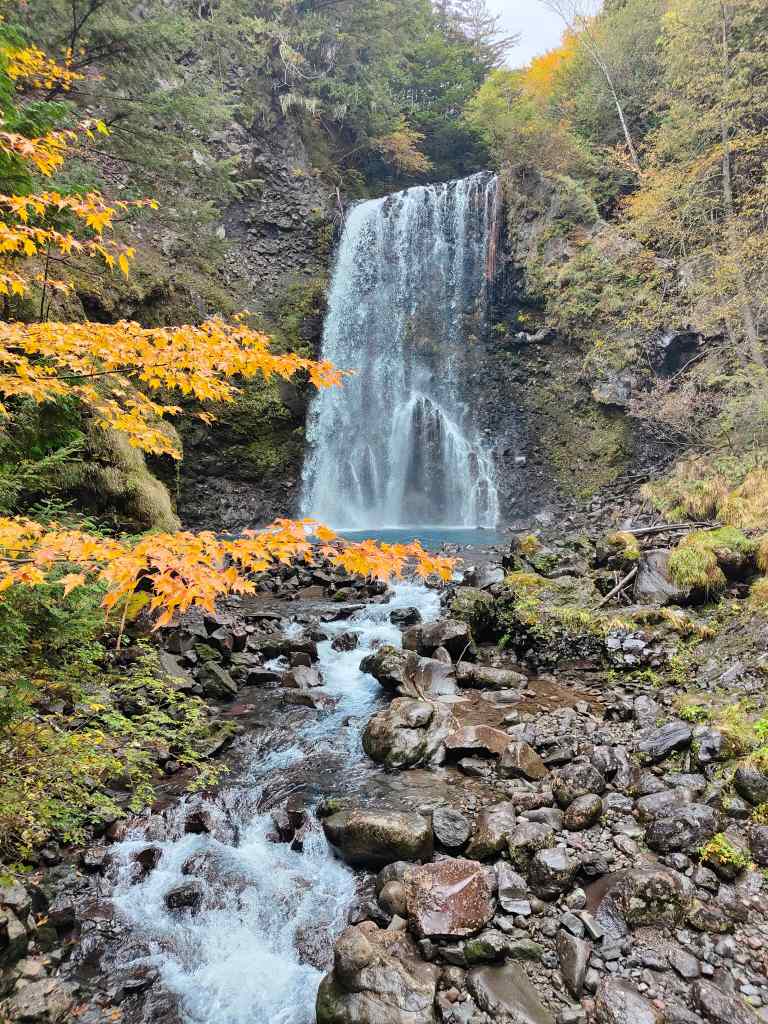
The map also showed a couple of waterfalls, which were a bit far to reach on foot, so we drove to visit the Zengorno and Sanbon falls, both of which were well worth the drive and short hike.

Zengorno falls
Sanbon Falls

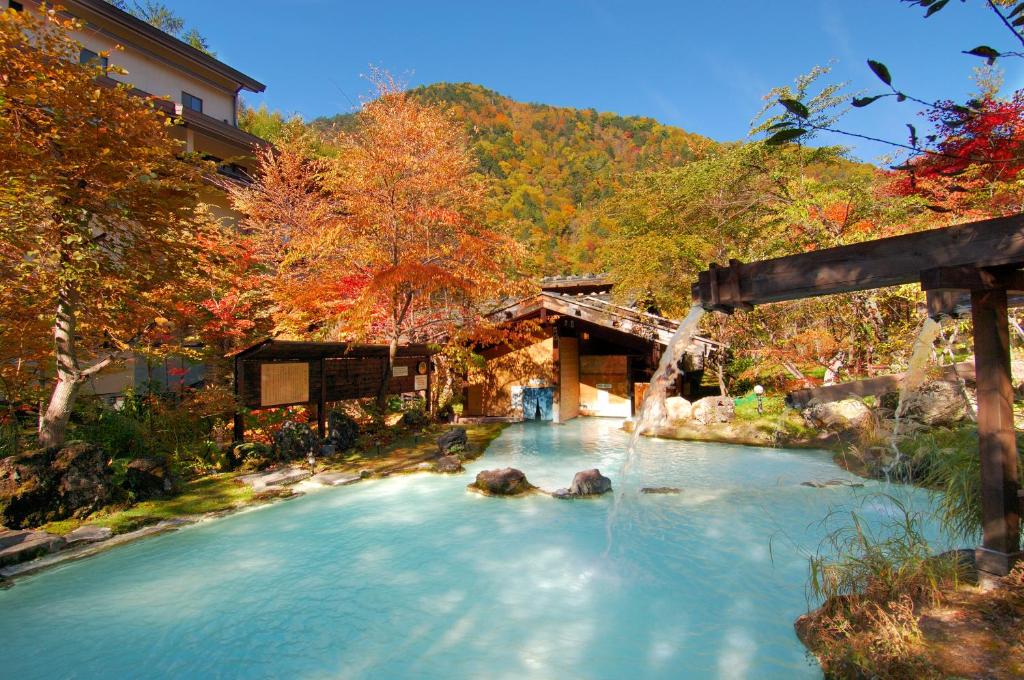
After a day hiking in beautiful forests, it was time for another of Japan’s traditions – a dip in an “onsen” or hot bath. These are found all over Japan and are hugely popular. They are often fed by volcanic hot springs, particularly in the Japanese Alps region. We drove to the well-known spa town of Shirahone Onsen, which was a short distance away, and paid for a day visit to the baths at the Awanoyu Ryokan (a hotel). After getting undressed and carefully washing in a shower room, we soaked in a pleasant outdoor pool for an hour. The water was milky white, and a relaxing 40°C, whilst the pool was surrounded by trees at the bottom of the river valley. Sadly no photos were allowed, so I have to use this one found on their website (from a rather sunnier day!).

It was a pleasant way to end a day of exploration and surprises, well off the beaten track.

Next Post: Matsumoto

Previous Post: Kamikochi

Autumn Colours in Kamikochi

Near the start of our walk in Kamikochi

Today we left Tokyo for Matsumoto in the Japanese Alps. The easiest way to get there is by train, but I was hoping to visit the Fuji Five Lakes area on the way, so hired a car from Shinjuku. Driving in Tokyo was easier than expected and after a few turns our satnav delivered us onto an expressway heading straight to our destination. But when we got to the mountains it was cloudy, with no chance of seeing Fuji again, so we headed straight for Matsumoto and explored the city in the afternoon – more about this in a future post.

The next day we used our hire car to drive to one of Japan’s most popular attractions – Kamikochi. This is a protected area in the heart of the Japanese Alps, and the starting point for many pretty walks or more ambitious climbs of the surrounding mountains. Private cars are not allowed to drive all the way there, instead you have to use one of the many parking lots on the highway and take a bus for the last 10km to the national park.

On arrival there was a large reception area with restrooms, tourist information, ticket booth for the return buses and some snack stalls. We bought some coffee but immediately regretted it. The hot black liquid resembled dishwater and was hopelessly weak – coffee is the one food/drink that many Japanese establishments haven’t really mastered yet. What’s worse, there was nowhere to dispose of our paper cups, so we had to carefully throw away our drink and fold them into our backpacks. Japan is amazingly clean, maybe because there are almost no litter bins anywhere, and people are used to taking their rubbish home with them.

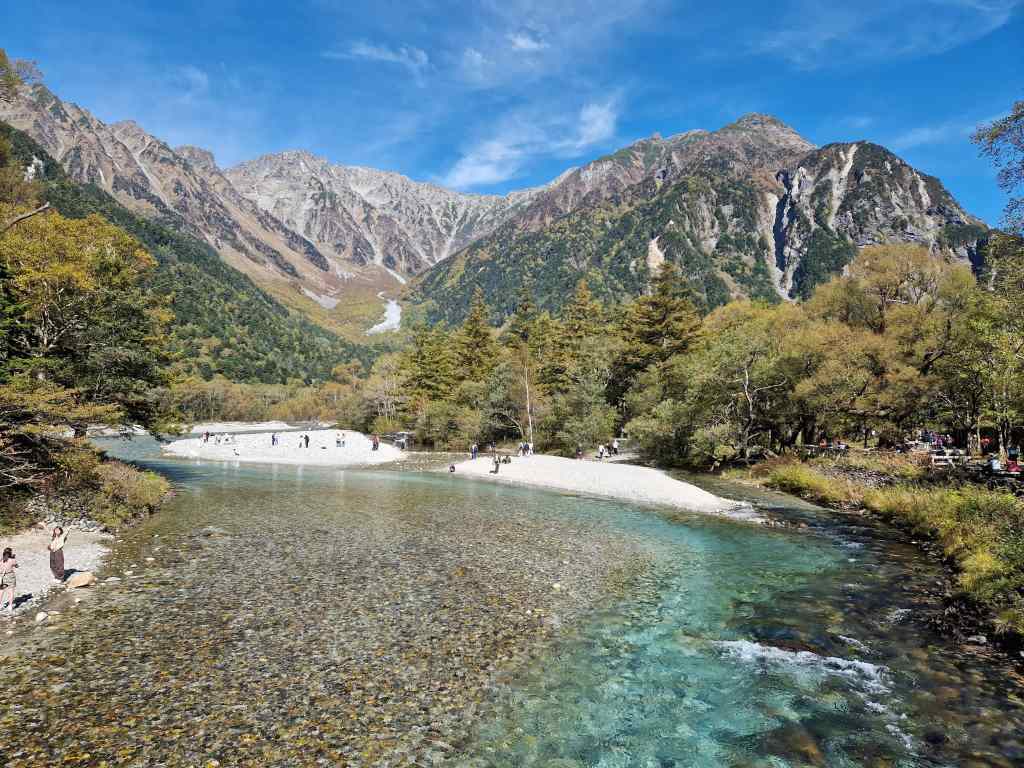
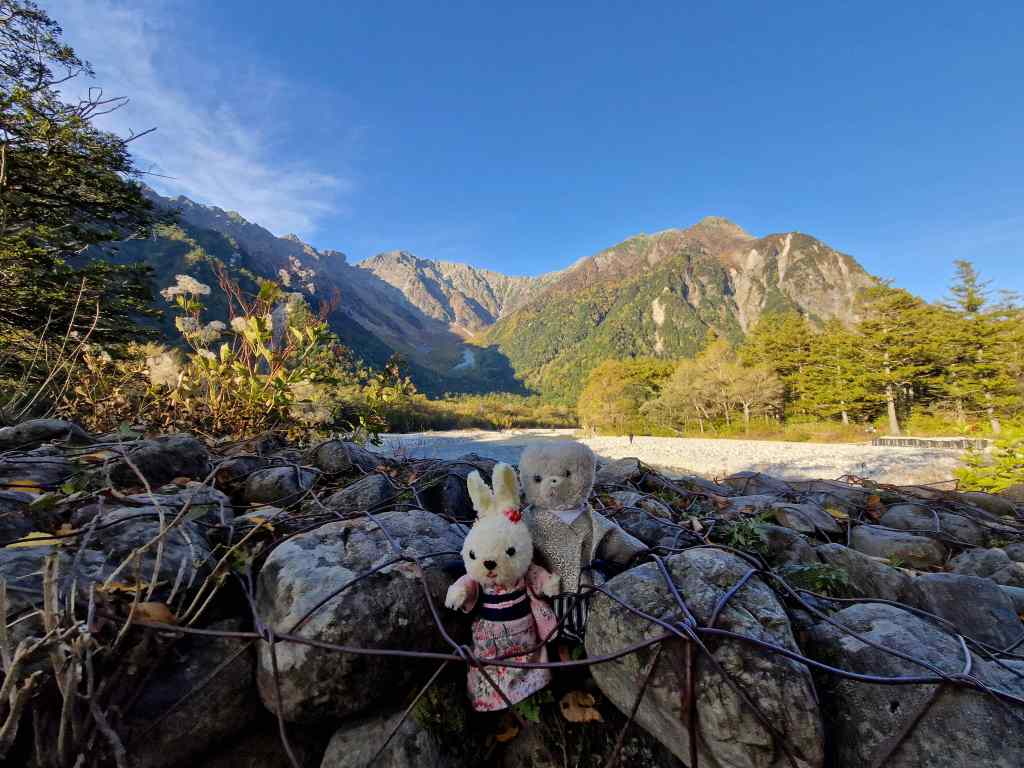
View from Kappabashi Bridge

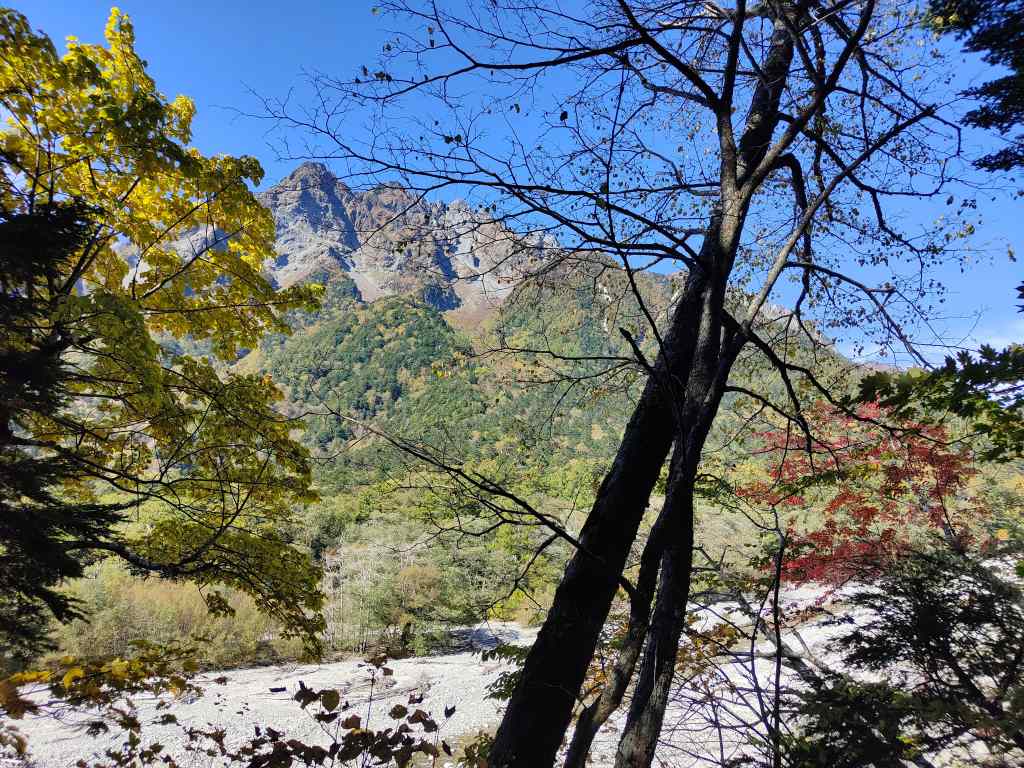
A short walk took us the popular Kappabashi bridge, with great views up and down the valley, including an iconic vista of the Hotaka peaks. It was crowded with tourists trying to take selfies, so we didn’t stay long and instead set off on our walk. It was a beautiful day, and the autumn leaf colours were spectacular, with all shades of green, yellow and gold – although we didn’t see much of the brilliant red colours that we had been expecting.

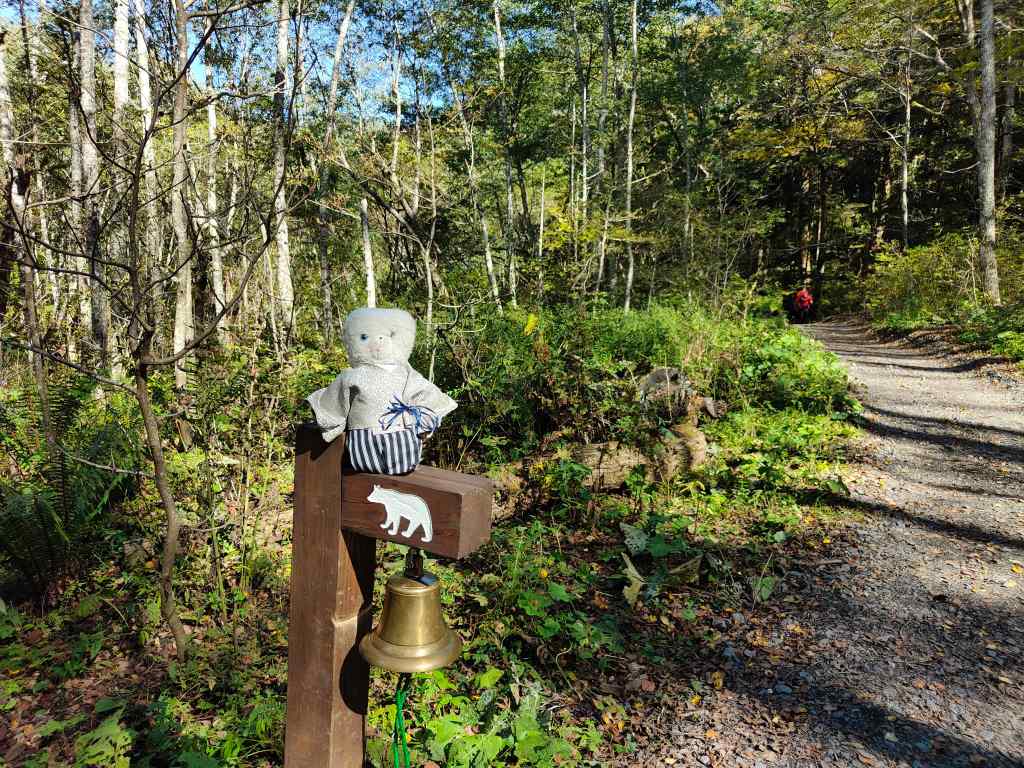
Our walk took us along the bank of the river. We met many other hikers coming the other way, most of whom were Japanese. They greeted us with a smile and a cheery “Konnichiwa” (hello). Many of them were wearing little bells that jangled as they walked, to deter bears. In my opinion no self-respecting wild bear would go anywhere near a path with so many humans passing along it, and the continual jangling annoyed me a bit. The obsession with bears seemed to be deeply felt, and the park authorities had also put up lots of warning signs and occasional bear bells along the path for additional protection.

Bear and Bear Bell

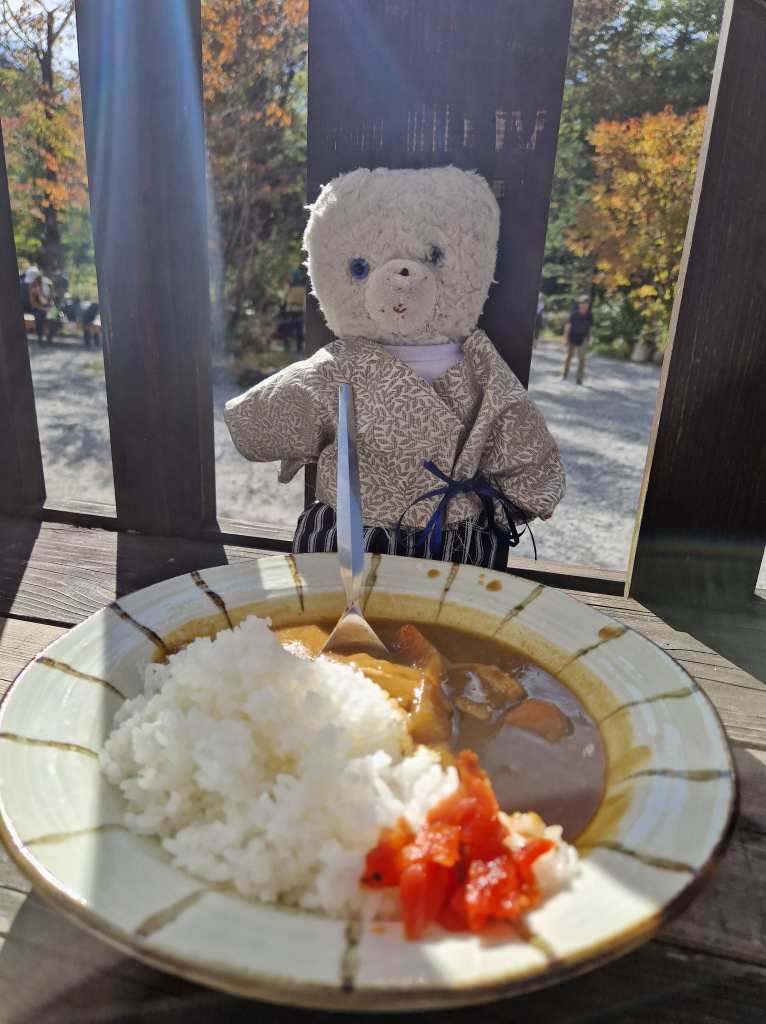
At the end of the trail was a small restaurant, where we enjoyed another local culinary highlight – a tasty Japanese “katsu” curry.

Mmm….Katsu Curry

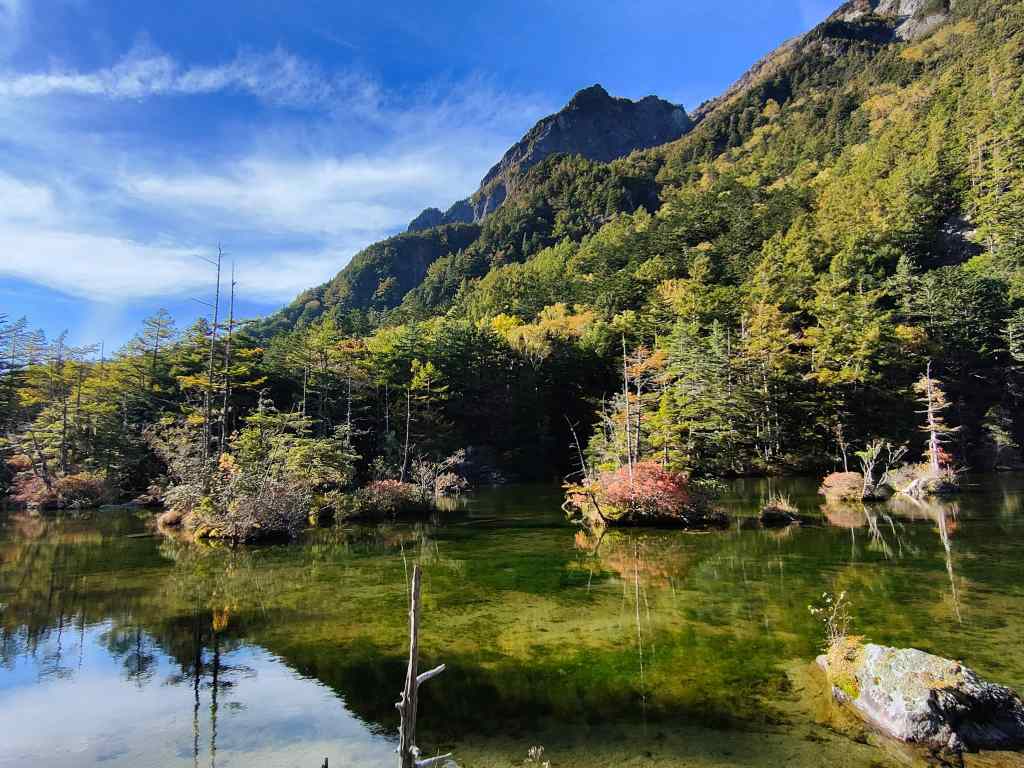
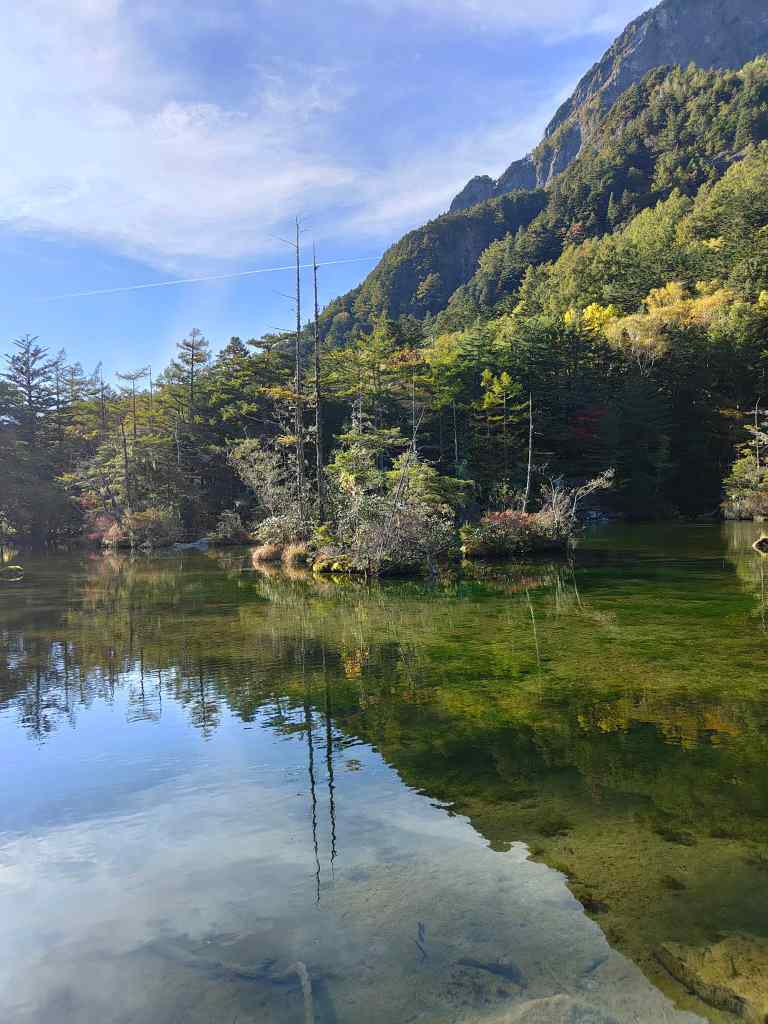
The way back followed the other side of the river. At about halfway, there was a large, still pond (the Tashiro Pond), surrounded by trees with their autumn leaves. We sat down, breathed deeply and simply enjoyed nature’s beauty. 

The stunning Tashiro Pond

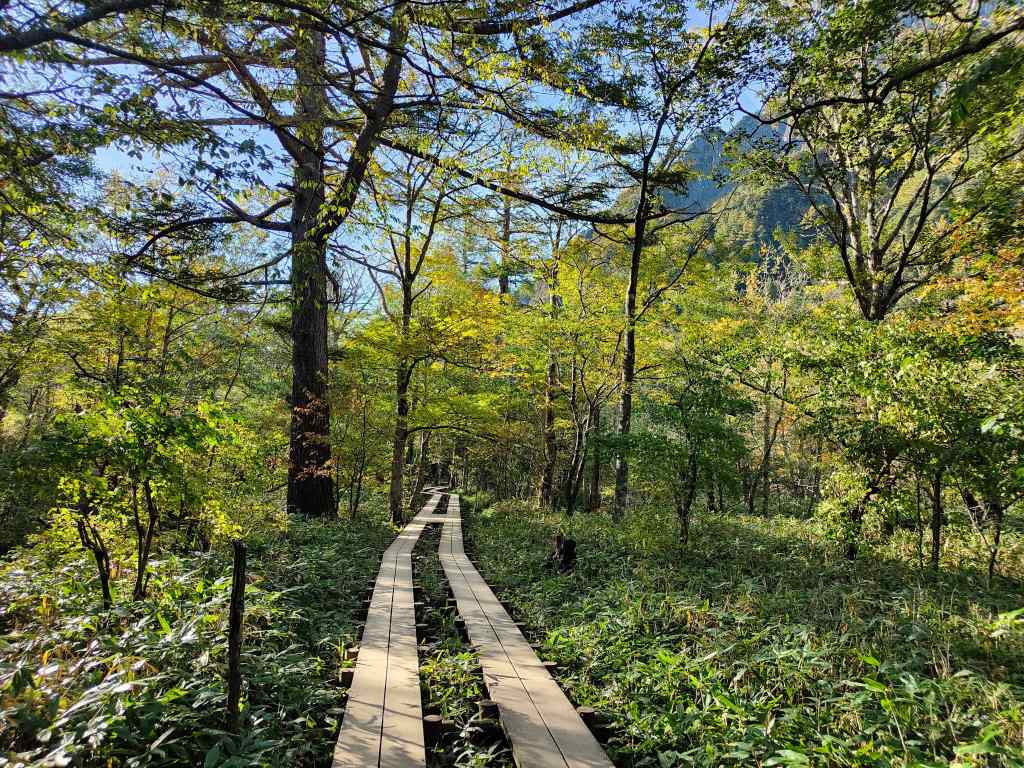
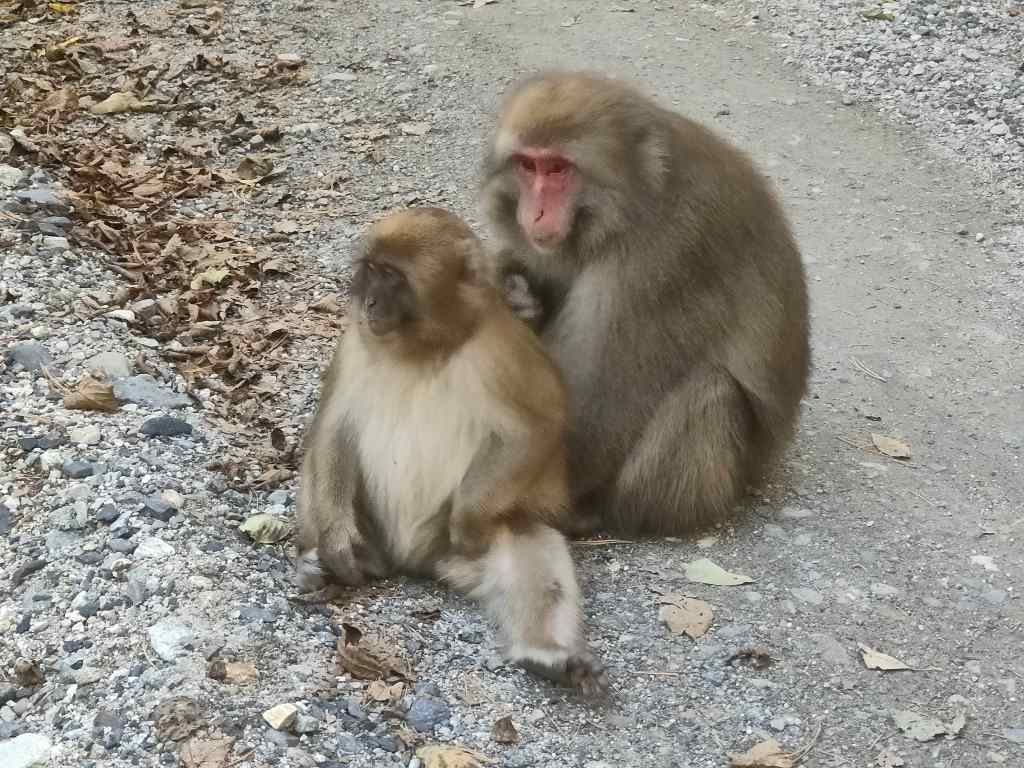
When we finally decided to move on from our idyllic spot, the path continued along a raised walkway through a green forest, where we met some monkeys. They ignored us as they strolled on, not even bothering to beg for food – they knew that in well-disciplined Japan, no one would feed them.

Green forest for a change
Furry Friends

The sun was now beginning to set, and the autumn foliage offered yet more variants on gold and yellow in the evening light. We arrived back at the trailhead delighted with our day out, thinking that Kamikochi deserved its reputation as one of Japan’s top sights.

Back near Kappabashi at the end of the afternoon

Previous Post: At Home in Tokyo

Next Post: Off the Beaten Track in the Japanese Alps

Blog at WordPress.com.

Up ↑