Toledo, a “bucket list” city

Today was my last full day in Spain, and I decided to use it to visit Toledo, a small town about 80km south of Madrid with a very long history. Just as Cuenca gets very few visitors, Toledo gets a lot, and my train there was packed. Toledo was a small settlement back in Roman times, but achieved prominence when it became the capital of the kingdom of the Visigoths, one of the barbarian tribes occupying Spain during and after the fall of the Roman Empire. Later Toledo was briefly the capital of Imperial Spain under the Emperor Charles V, before his successor moved it to Madrid. The city was famous for its tolerance, as a place where Christians, Muslims and Jews lived together in relative peace.

On arrival at the station, I took a bus to one of the gates marking the entry to the old town.
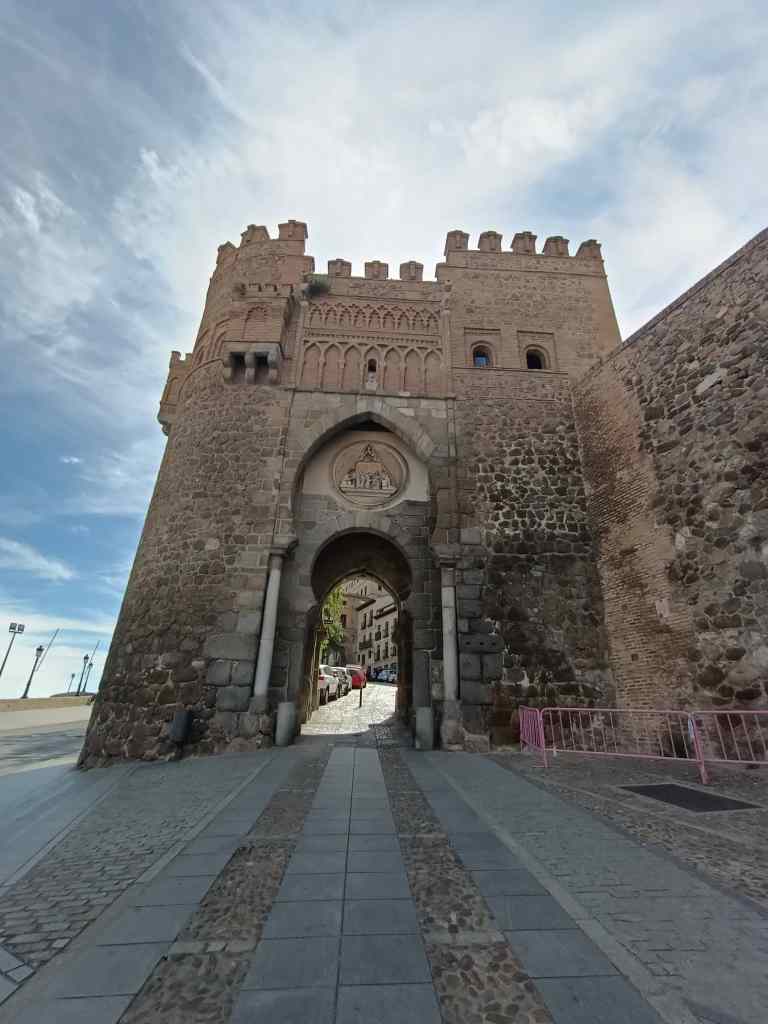
One of the gates leading into the old city of Toledo

The street then led steeply uphill – it is said that Toledo is built on three hills. The lanes were narrow and windy, but also shady, since long rolls of cloth were suspended above to protect from the sun. I enjoyed wandering around, before deciding to take a trip on the tourist train. This is not something I would normally consider, but it was the only way to get to a famous viewpoint of Toledo, which had been painted by countless artists.
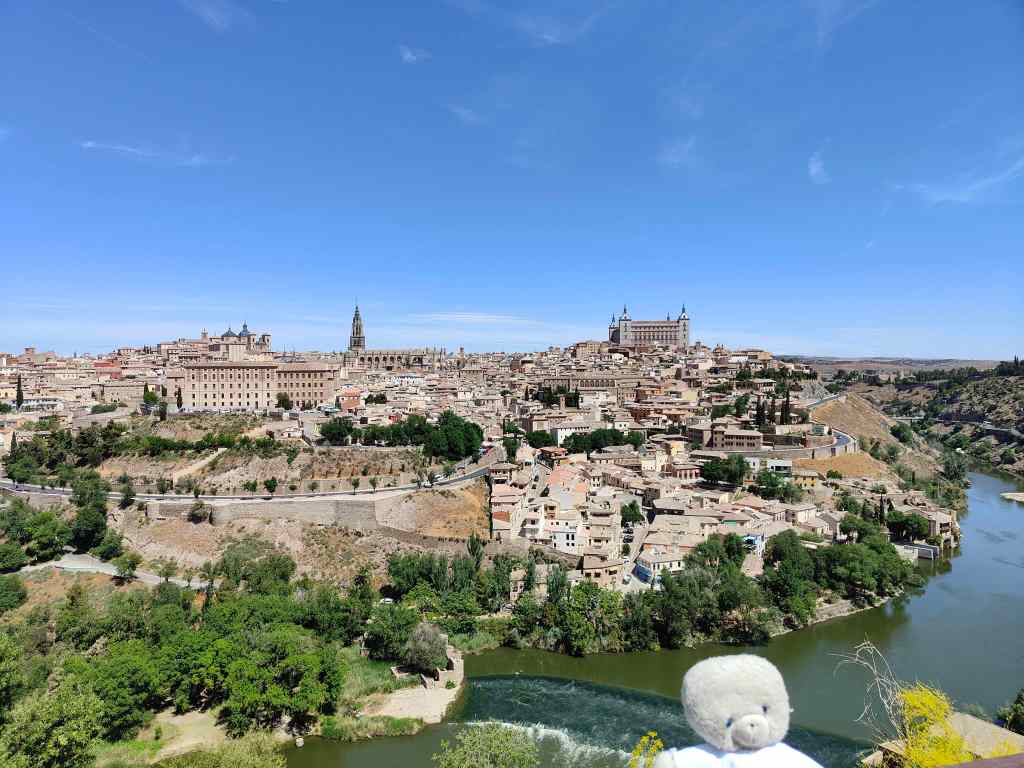
THE view of Toledo, painted by El Greco and many others

The train dropped me back in the centre, and I continued my exploration, first visiting the castle, where interestingly a new building had been constructed entirely around the ruins of the old fort (sorry, forgot to take a photo!). Then I check out one of the very many museums in Toledo, housed in the Hospital de Santa Cruz, a place founded in the 15th to provide help to poor and orphaned children.
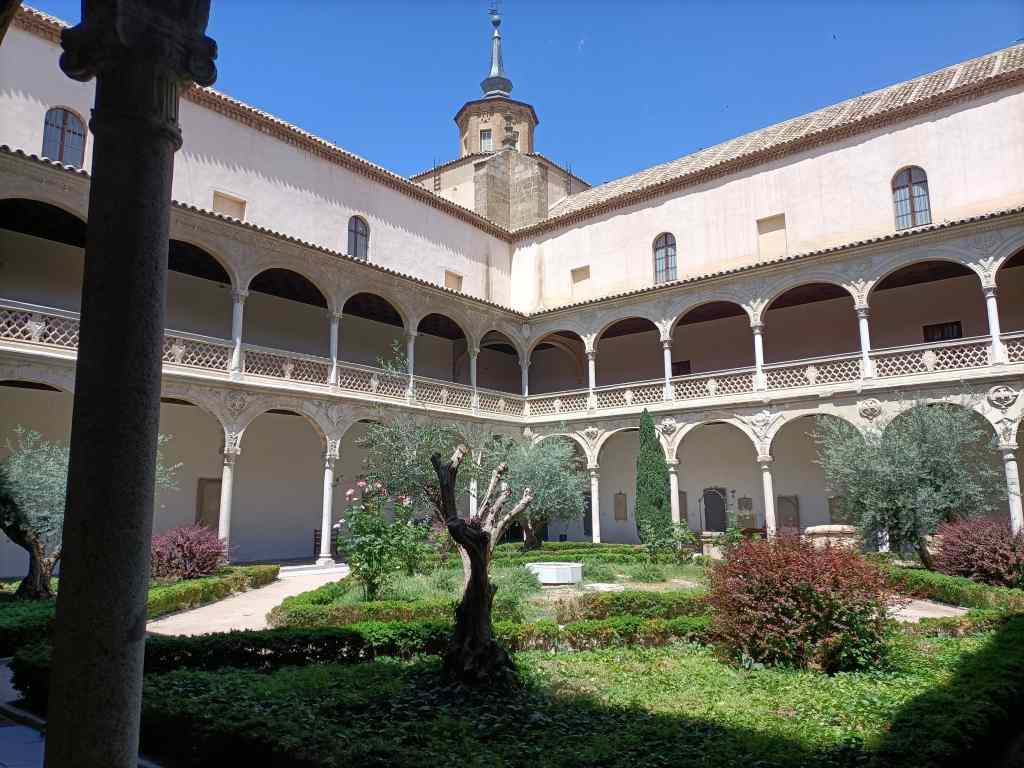
The peaceful cloister of the Museum de Santa Cruz

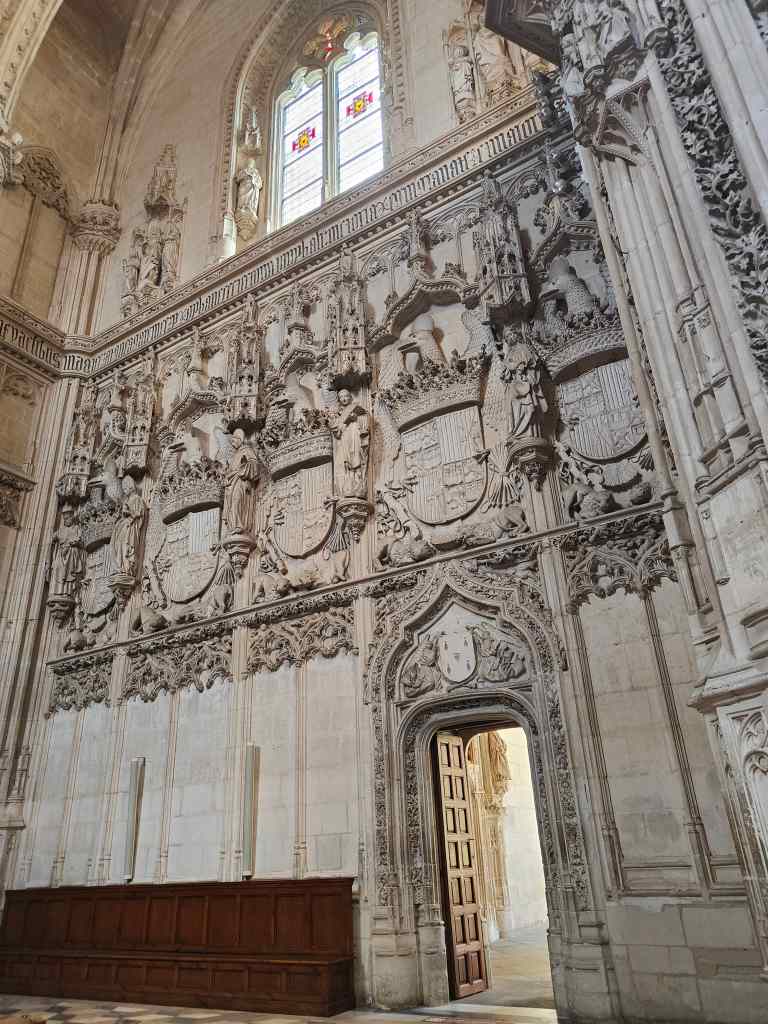
It had an interesting collection of art, some by the local painter El Greco, and displays covering the history of Toledo and renaissance Spain. Next I headed all the way across the town to visit the beautiful Monasterio de San Juan de los Reyes, which dates from the 15th Century. It had a peaceful cloister and much beautiful, intricate stone carving.
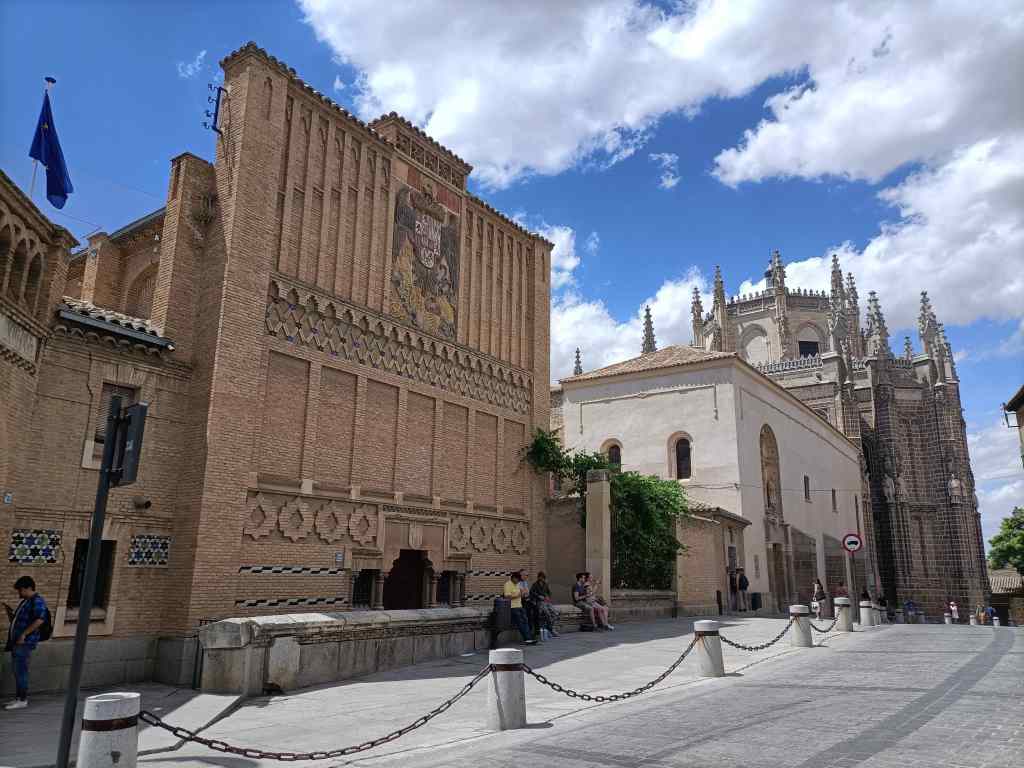
The outside of the Monasterio de San Juan de los Reyes (the building on the right)
Intricate carving inside the Monasterio de San Juan de los Reyes, Toledo

Nearby was the Puente de san Martin, which offers another of the definitive views over Toledo.
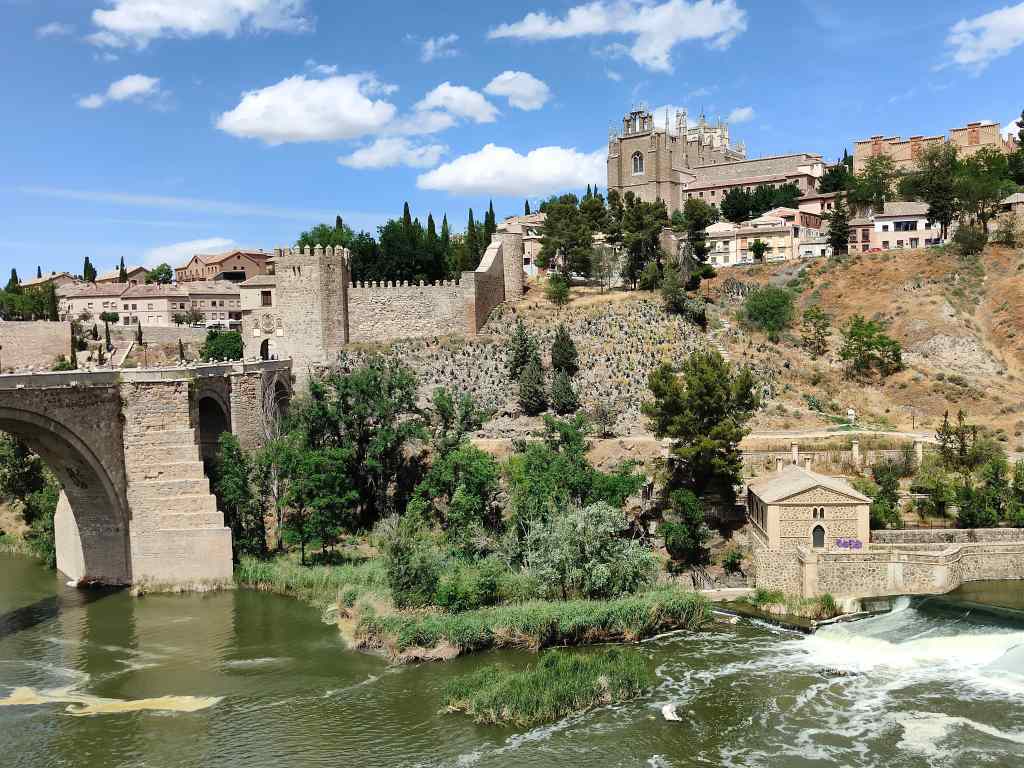
Another of the definitive views of Toledo

Next I hauled myself back up the steep hill, on the way to the cathedral, popping in to a museum dedicated to Visigoth culture on the way. There, the explanation was all in Spanish, and the items on display were the usual pots and pans from less advanced ancient civilisations – maybe exciting to an archaeologist, but not to me. But at least the museum was housed in an interesting former church and was cool after the long climb up the hill in the sun.
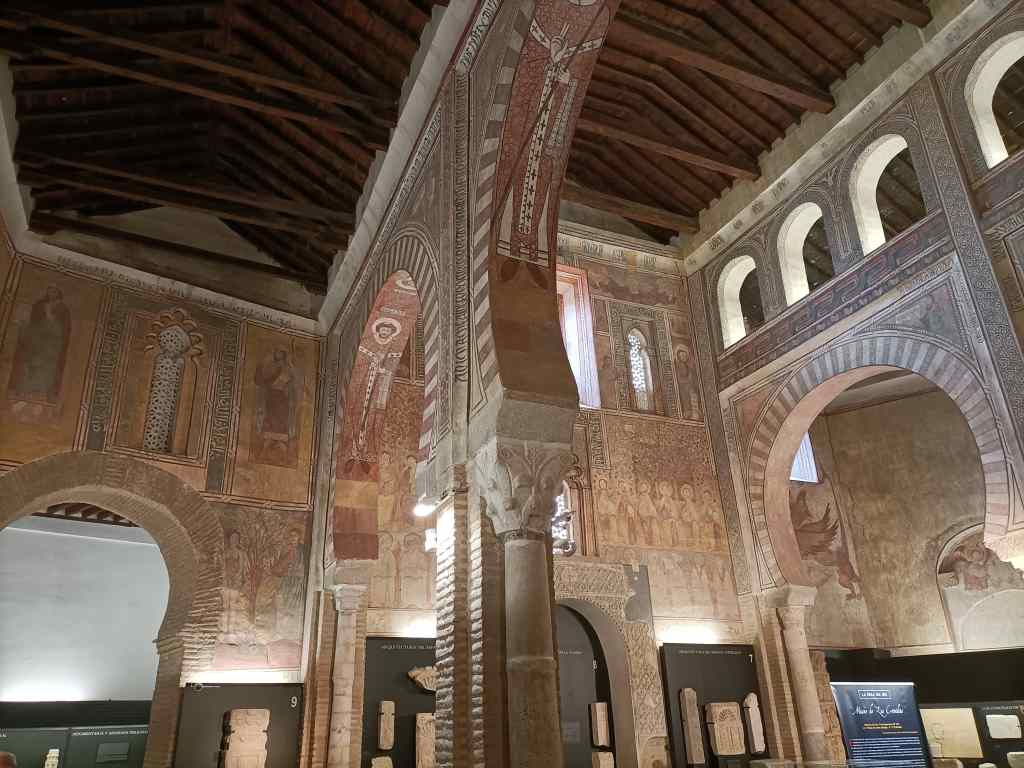
The museum of Visigoth culture in Toledo

I then had the luxury of walking downhill to the cathedral, one of Toledo’s “must see” attractions. It was built in the 13th Century in the High Gothic style on the site of an older church used by the Visigoths – possibly since the 7th century. Although it is one of the most famous cathedrals in Spain, I found it rather dark. Being closely surrounded by other buildings, it was also hard to appreciate its size and architecture fully from the outside.
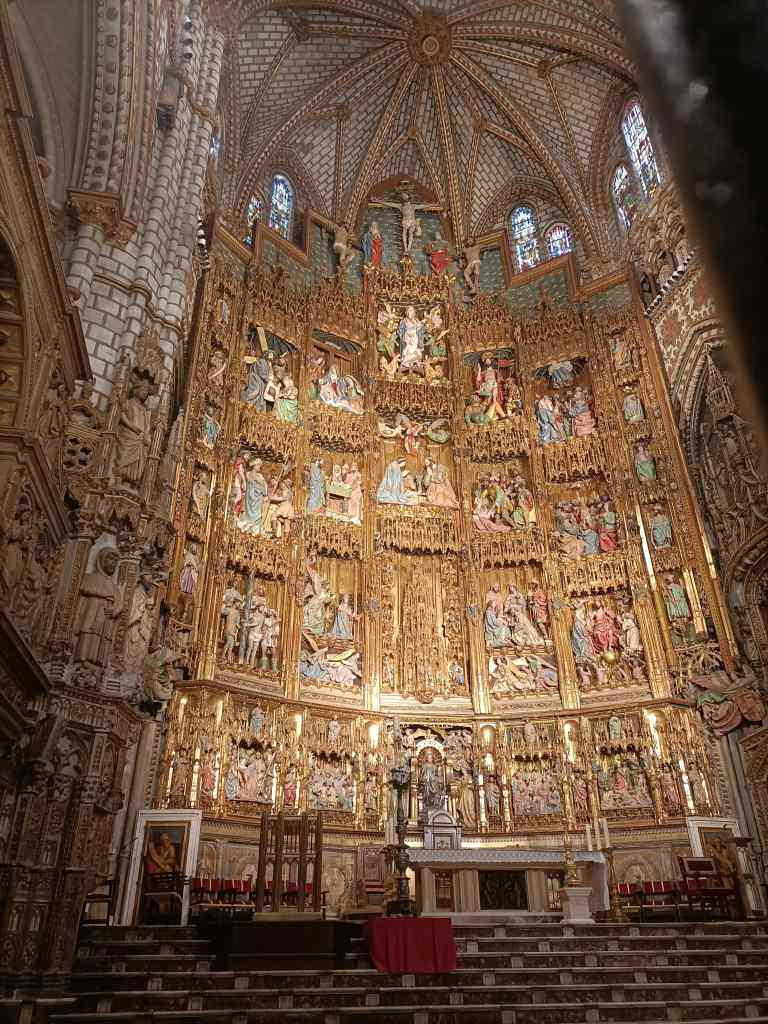
Inside Toledo Cathedral

I returned to the train station in the late afternoon, tired after continuously climbing up and down Toledo’s three hills. I had visited almost all of the main sights – expect the El Greco museum (renaissance painting is not my thing). This is no small achievement for someone with little legs, so I rewarded myself with a beer and snoozed on the way back to Madrid.

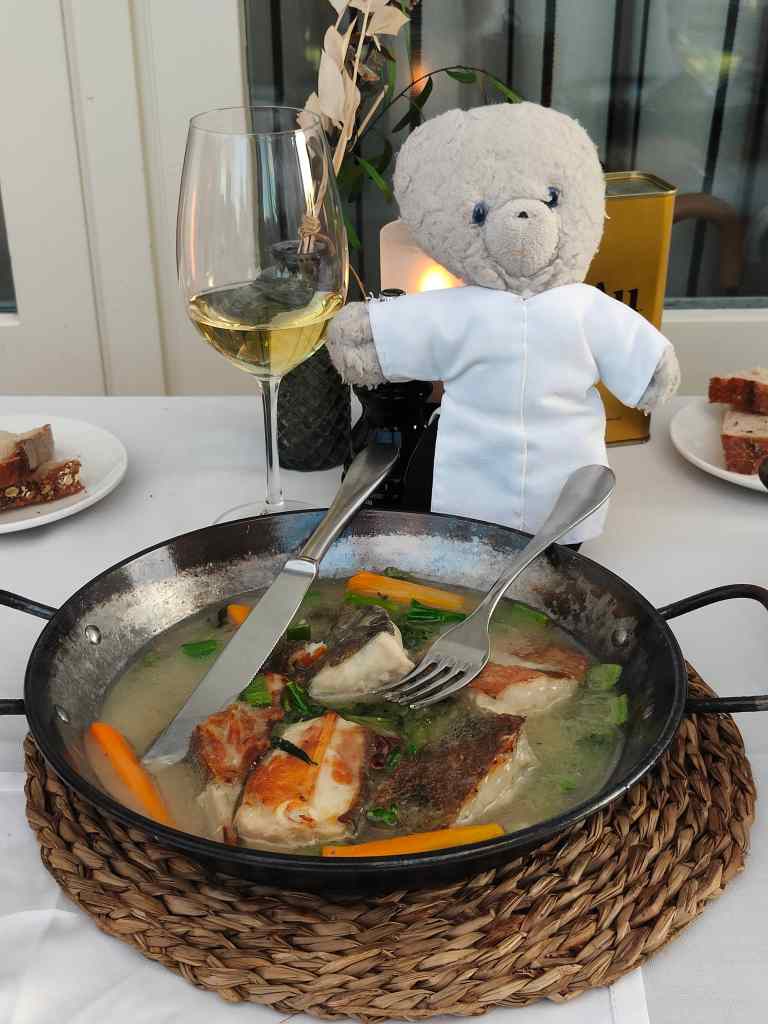
For my last night in Spain, I treated myself to dinner on the rooftop of one of the grand buildings on the Gran Via. I had to enjoy the warmth of the sun whilst I still could!

Street top view of the Gran Via, Madrid
Fish! (Turbot?)

Well, that’s it for the moment. Back to cold and rainy London. My next trip will be to Eastern Europe in September, stay tuned!

Previous Post: Madrid – Parque del Retiro
On to Madrid – Parque del Retiro and the Casino de Madrid

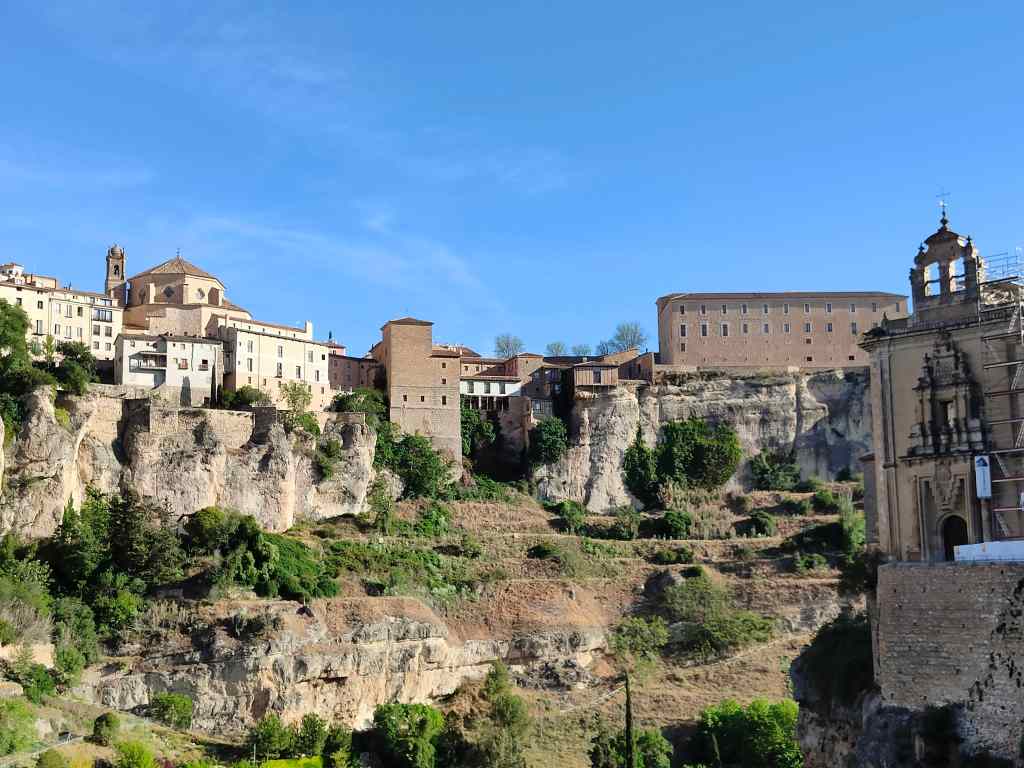
The next day, I got up early to have one last look at the spectacular view from Cuenca’s bridge, in the morning light this time.

Cuenca’s famous view – in morning light this time

Then I set off to the station to continue my route to Madrid. My second Spanish train trip was not as smooth as the first. The modern-looking but empty station of Cuenca had a security check for baggage and the bored and zealous staff there detected my Swiss army knife in my bag. I had no idea this was not allowed on the train. They got very excited (this must have been the highlight of their day) and told me I had to leave it somewhere inside the station. I took this as a hint that if I concealed it discretely somewhere (just not in the bag which went through the scanner) they would turn a blind eye, so I ducked out of sight, hid the knife in my pocket and returned to the platform….to see one of the guards waiting for me, armed with a hand-held metal detector. I didn’t want the indignity of having my fur checked so took out my knife and left it on a table where he could see it, but the guard still checked me anyway, even making me take my hat off. He then recorded my ticket number – maybe as proof that they had been working, maybe to report me. It was the third Swiss army knife I had lost on my travels. At the ticket check, I had another surprise. The man there said that the free baggage allowance was only for a small bag (the size of carry-on luggage in a plane), and I would have to pay 30 euros to the staff on the train to transport my suitcase. My favourable impression of Spanish trains was beginning to wane, but once onboard, I stowed my case quickly in the luggage wrack and nobody asked me to pay extra for it. The train sped through the flat Spanish countryside, reaching Madrid in an hour.

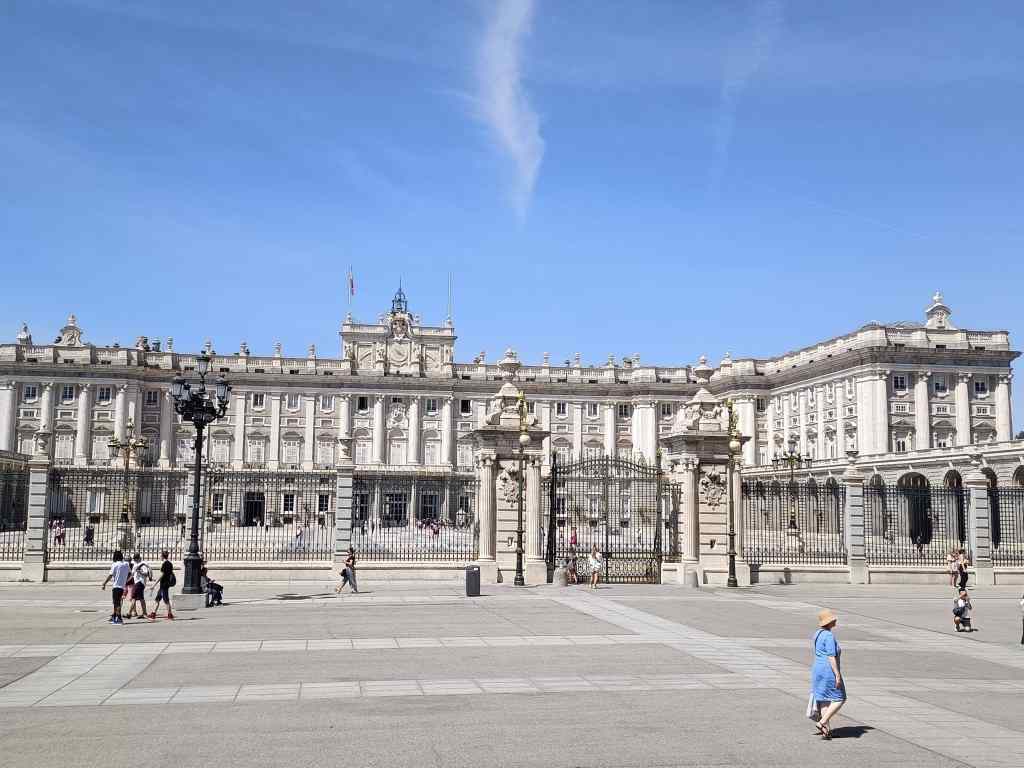
I already knew the city from previous visits, so decided to spend a relaxed afternoon visiting some familiar places, and a few new ones. My flat was right in the centre, and I walked down the wide avenues to the Royal Palace….

The Royal Palace, Madrid

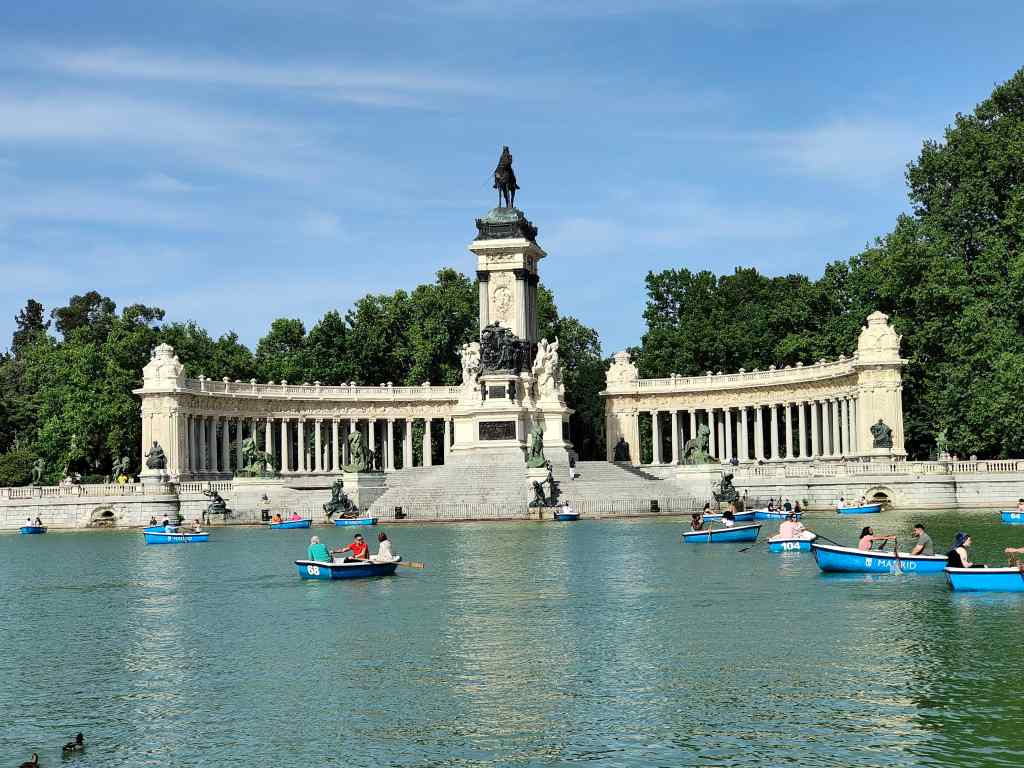
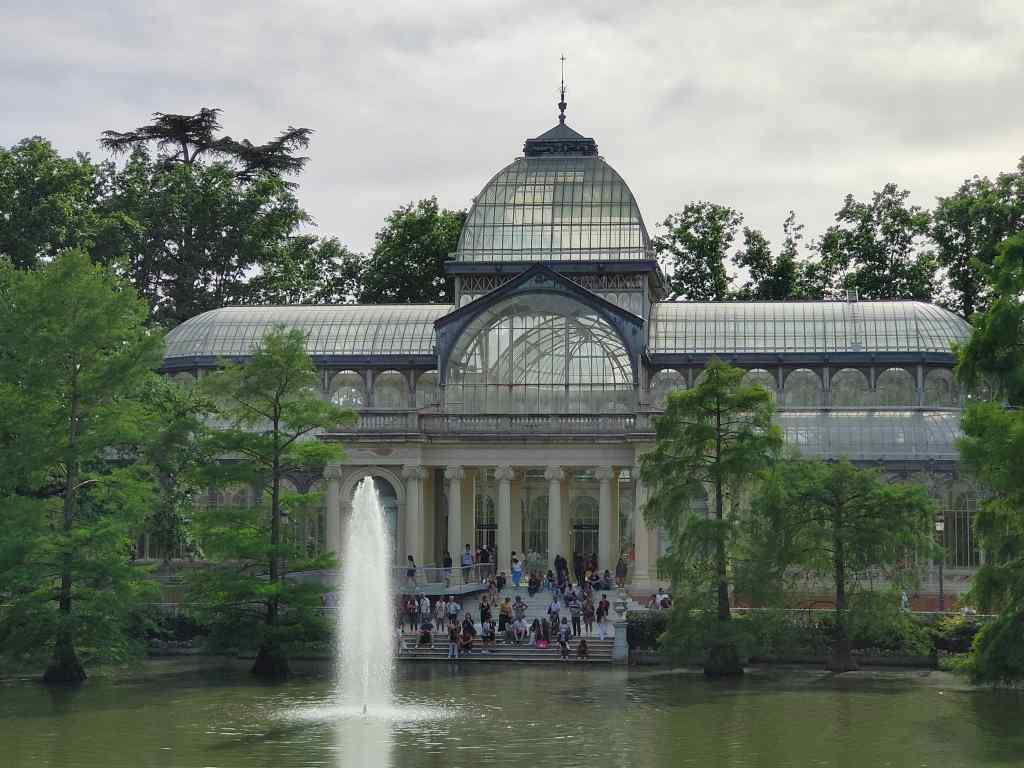
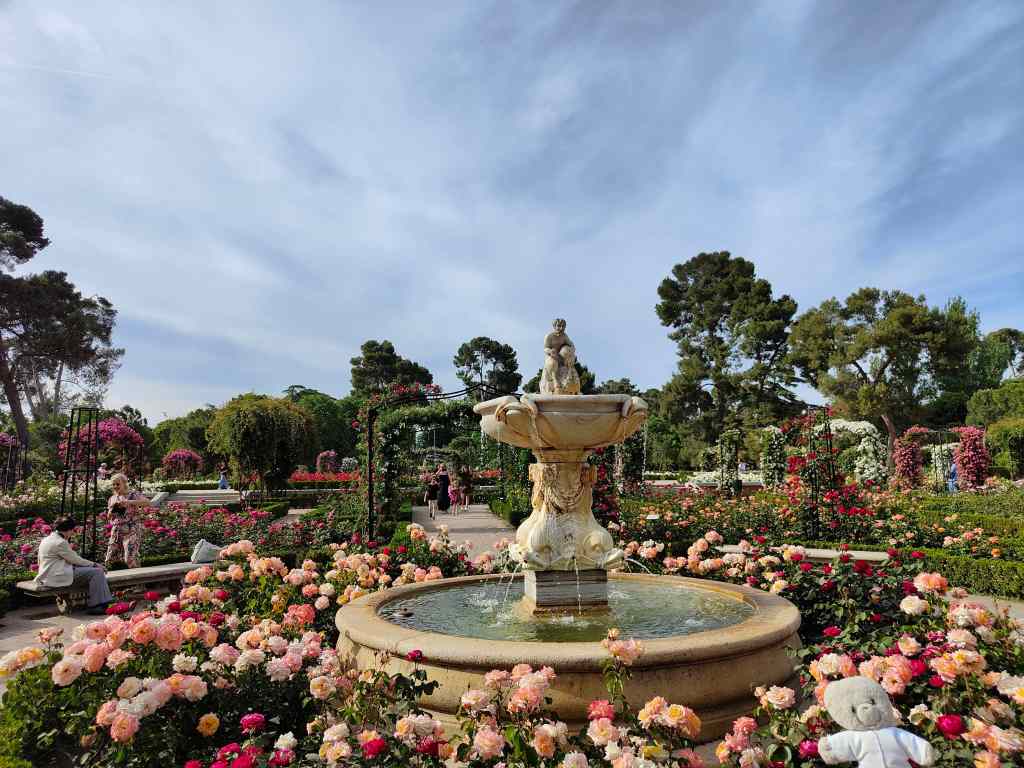
….and then back across town to the Parque del Retiro, where Madrilenos go to cool off in hot weather (although it was only May, it was already quite hot). I spent a happy couple of hours there, enjoying a drink in the shade, visiting the crystal palace and the rose garden.

Parque del Retiro – the Boating Lake
The Crystal Palace, Parque del Retiro
The Rose Garden, Parque del Retiro

From the park I headed to the Reina Sofia Art Institute, which houses work by famous 20th century Spanish artists like Picasso, Miro and Dali. It was a very large building and I found the layout confusing – the works by the best-known artists were spread out amongst dozens of different rooms, forcing you to visit the whole museum if you wanted to sure not to miss the more famous paintings. Maybe this was intentional, but I had already spent the whole afternoon walking and soon my little legs were tired. Still, it is hard to not like a museum that is the home for Picasso’s magnificent Guernica painting, which I saved to last to enjoy (smaller crowds near the museum’s closing time!). Sadly, no pictures allowed so here is a link to the famous picture…..

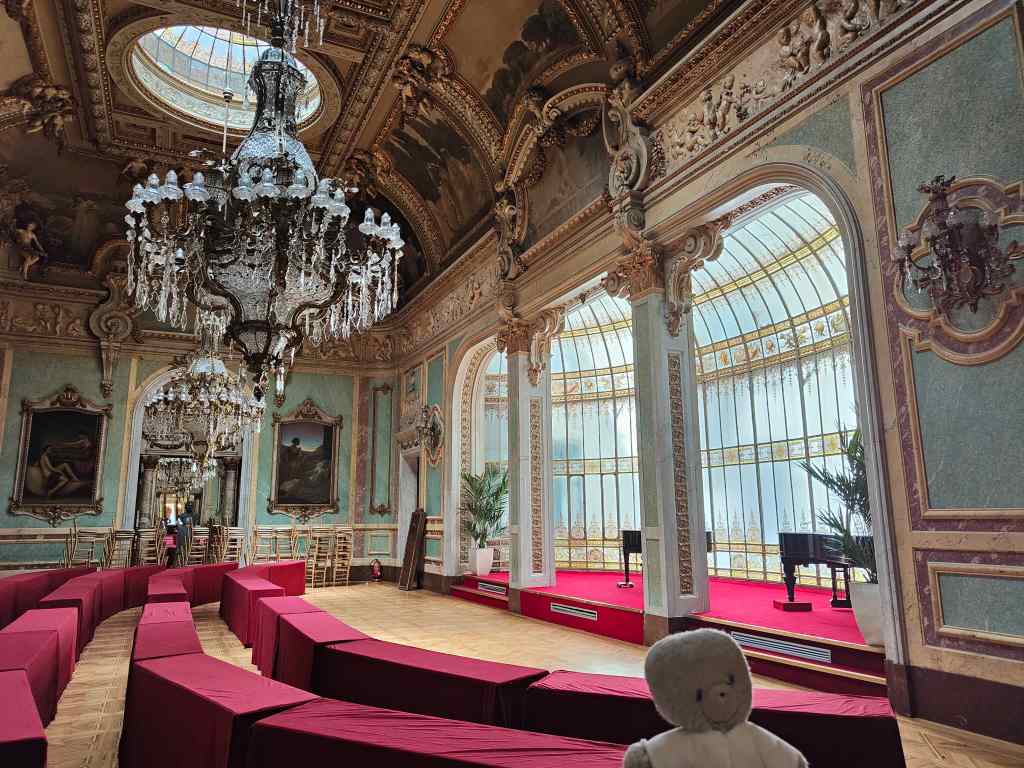
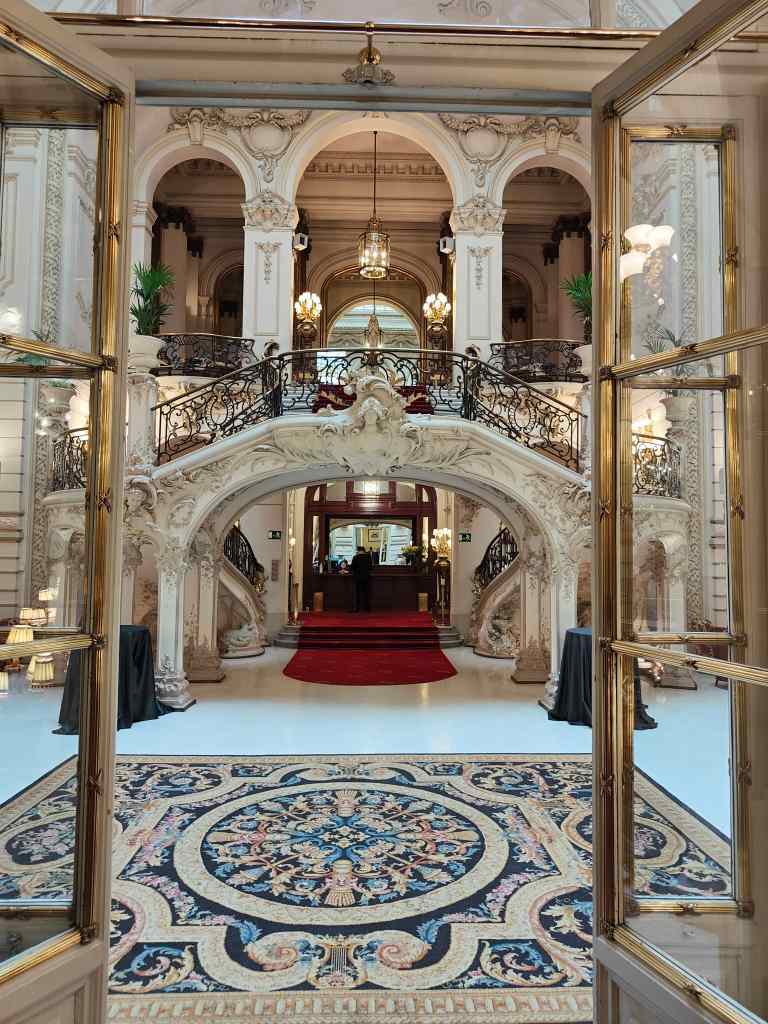
After the museum I just about had the energy to walk home, popping in to the Casino de Madrid for a well-earned aperitif. The casino is now a private members’ club, and my membership of my London club gave me access. It was a beautiful building, with many impressive rooms and a stunning staircase.

Inside the Casino de Madrid
The Magnificent Staircase, Casino de Madrid
A well-earned aperitif in the Casino de Madrid

After my aperitif, I had dinner back in my flat, accompanied by a bottle of red wine given to me by the exceptionally friendly owner. It came from his own vineyard near Cuenca, and I had great pleasure in telling him how much I had liked the place.

Next Post: Toledo

Previous Post: Cuenca

Blog at WordPress.com.

Up ↑