Off the beaten track – along the Orange River and Namibia/South African border

Today I had one of these long drives that had become typical of my holiday in Namibia – from Luderitz in the southwest corner to Fish River Canyon, in the south. There was a direct – and rather dull looking – main road that could take me most of the way there. But since I had already travelled part of this, I decided on a detour around the southernmost part of the country, the border with South Africa.

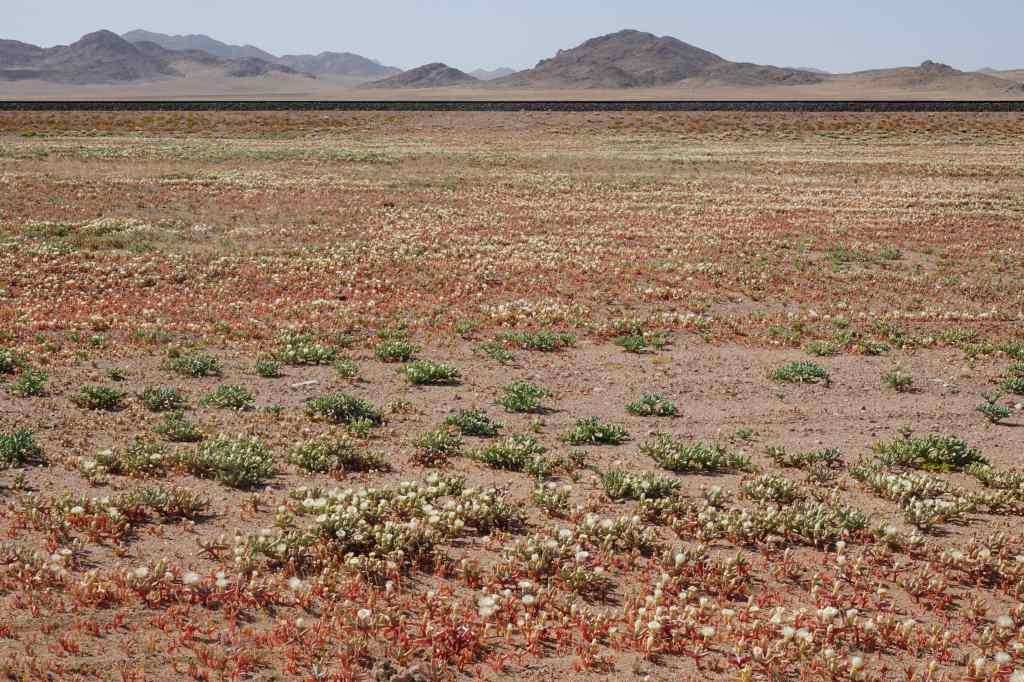
Shortly after Luderitz, I had a pleasant surprise – on either side of the road was a carpet of flowers. They are only visible in the morning, and close during the afternoon sun, so I had missed them on the way here. They stretched away in all directions as far as the eye could see.
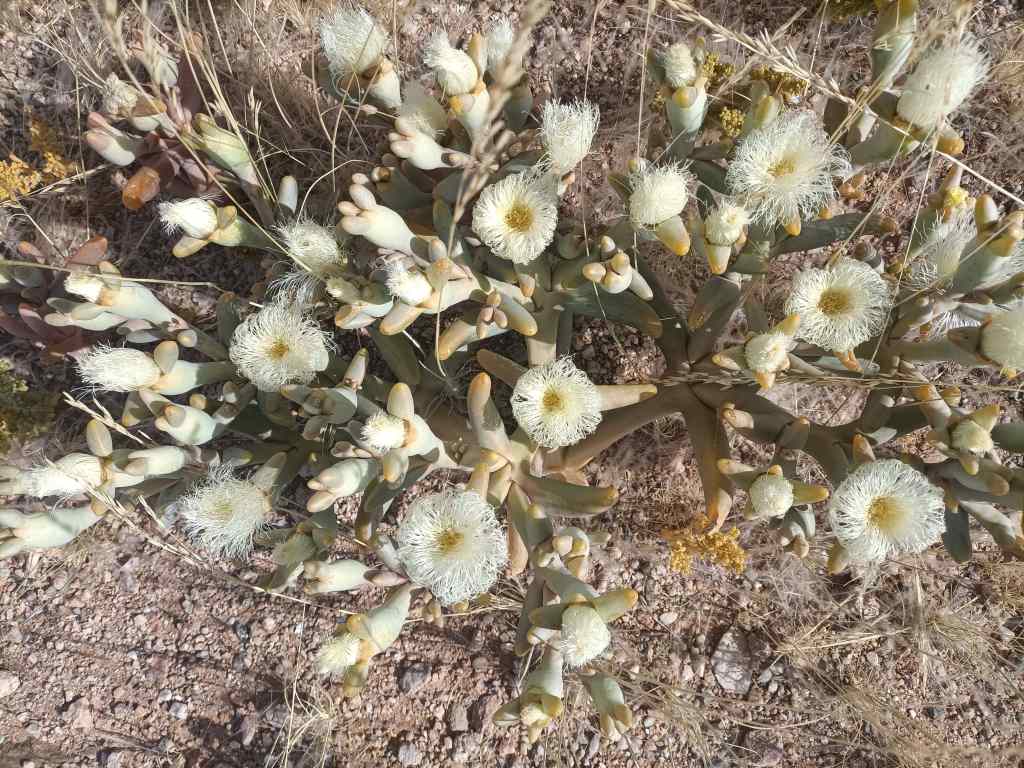
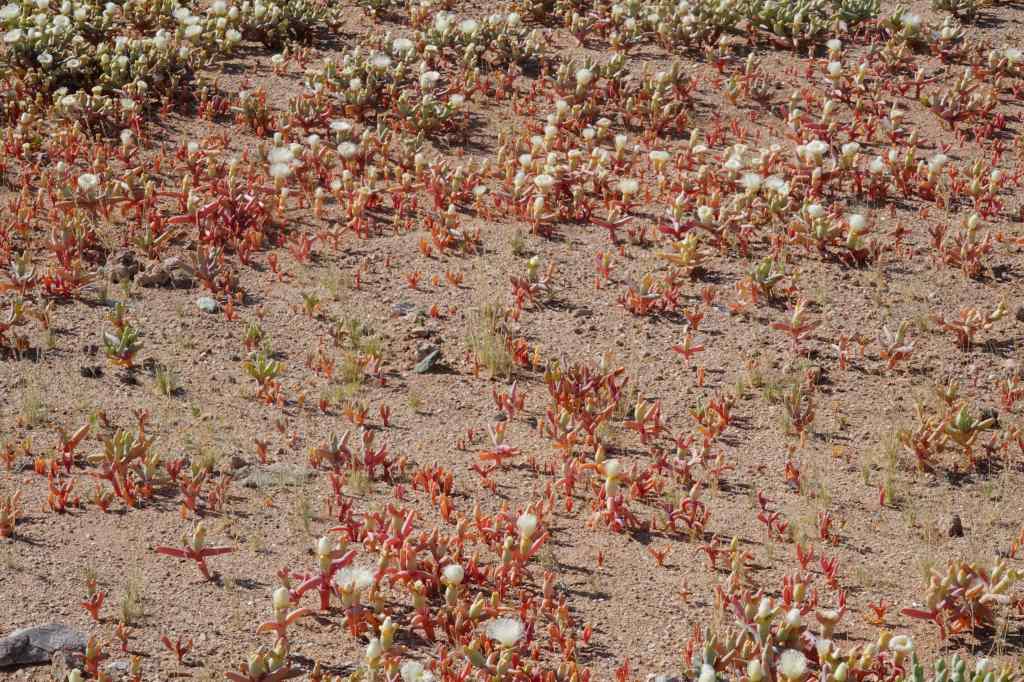
flowers on the road near Luderitz
White flowers….
flowers on the road near Luderitz
Red flowers….
more flowers on the road near Luderitz
As far as you can see

I stopped for a very good coffee at a town called Aus and decided to fill up on fuel. It was a lucky decision, since the station at the next town, Rosh Pinah – some 170km away – had run out of diesel. Rosh Pinah is a major centre for Namibia’s mining industry, and well off the main tourists routes. It had a similar feel to Luderitz, with many unoccupied people lounging around on the streets and looking at me with curiosity.
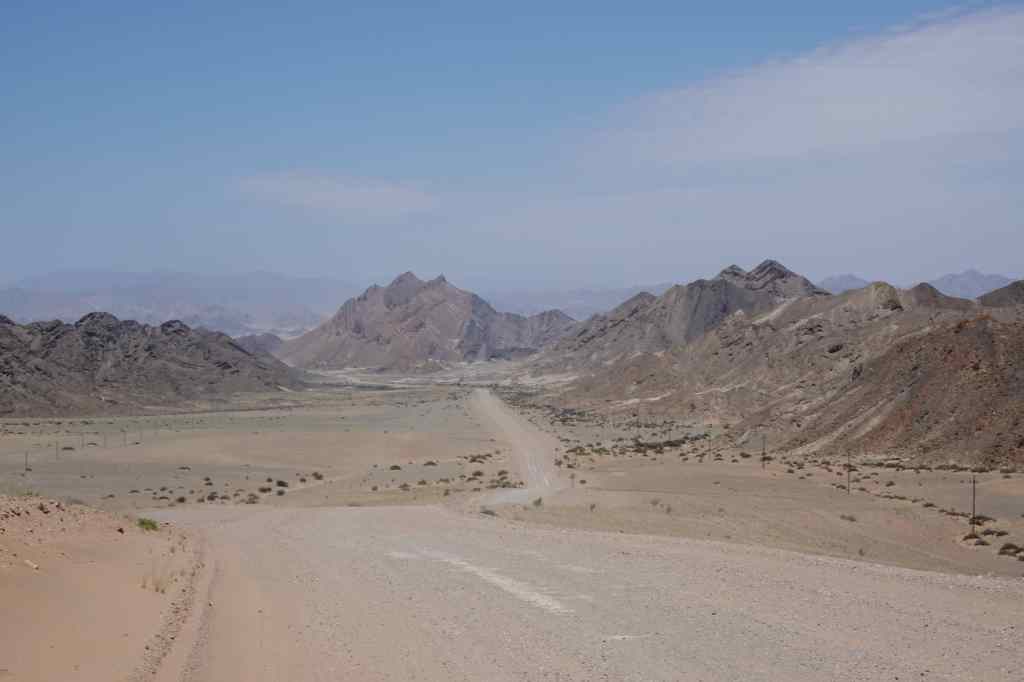
Near Rosh Pinah – typically dry Namibian scenery

From Rosh Pinah the road headed east, following the Orange River, which marks the border with South Africa. It was dry season and the river was low, but it was still the first running water I had seen during all my time in Namibia. The road was empty, and passed some nice scenery (green for a change!) and a few shuttered camps offering kayaking excursions.
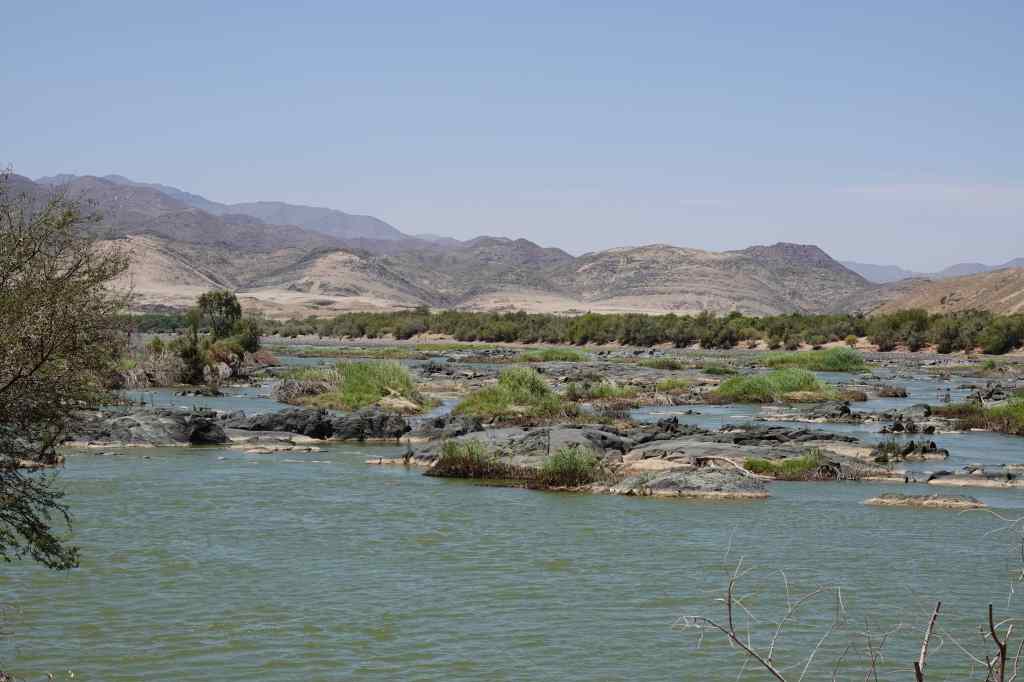
The Orange River, border Nambia and South Africa
50km further on – the Orange River, the first running water I had seen for two weeks!

After enjoying the scenery along the river, I arrived at a huge vineyard just outside the town of Aussenkehr.
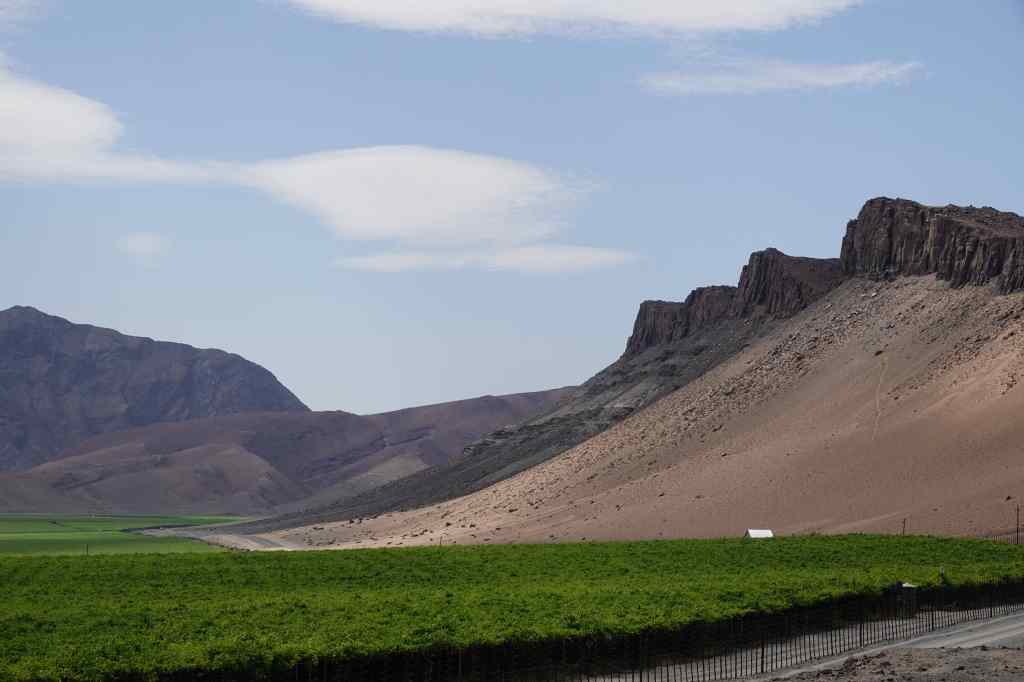
Vineyard on the Orange River
A huge vineyard on the Orange River

I had been on the road for six hours, and was tired. I ventured into the town in search of coffee but could only find a big branch of Spar where I bought a Red Bull. Most of Aussenkehr was a shanty town consisting of small shacks made of corrugated iron, and again groups of people hung around the shopping area and stared at me.  At this place far from the tourist route, I had discovered the reality of Namibia for the majority of its people, and it’s a good time to talk a bit about the country and its history.

Aussenkehr
Aussenkehr’s shanty town

Before the Europeans arrived, Namibia was a typical African country settled by many different tribes – such as the Herero and the Nama – each with their own language and culture. They scraped an existence by farming or hunting in the country’s harsh, dry environment.

The country was largely ignored by colonial powers until the late 19th century – from the sea, the Namibian deserts looked inhospitable and unpromising territories. Then in 1883, the German trader Adolf Luderitz bought an area in the southwest of the country (around the city that bears his name today) from a Nama chief. He then persuaded chancellor von Bismark to declare Namibia a German territory. Colonial rule of Namibia was particularly brutal, even by the standards of the time, and culminated in what was possibly the world’s first attempted genocide (of the Nama and Herero peoples).

During the First World War, South Africa (allied to Britain) conquered the German colony of Namibia and proceeded to “administer” it – in practice, exploiting the country’s resources and its people. Eventually international pressure, UN resolutions and an armed struggle persuaded South Africa to grant Namibia independence – but only in 1990. Since then, the young country has done better than many other African countries, remaining a stable democracy and slowly addressing its many problems.

One of the most pressing issues facing Namibia is unemployment, which is around 20%. This is why there were so many people hanging around Namibian towns like Luderitz with nothing to do. Another problem is huge inequality and widespread poverty – many people are very poor, and live in shanty towns like the one at Aussenkehr. On the usual tourist circuit, visitors are insulated from the reality of life in Namibia for many of its people. You go from one nice lodge to the next, eat good food and drink good wine.

From Aussenkehr the road headed north across an especially featureless landscape, devoid even of plants.
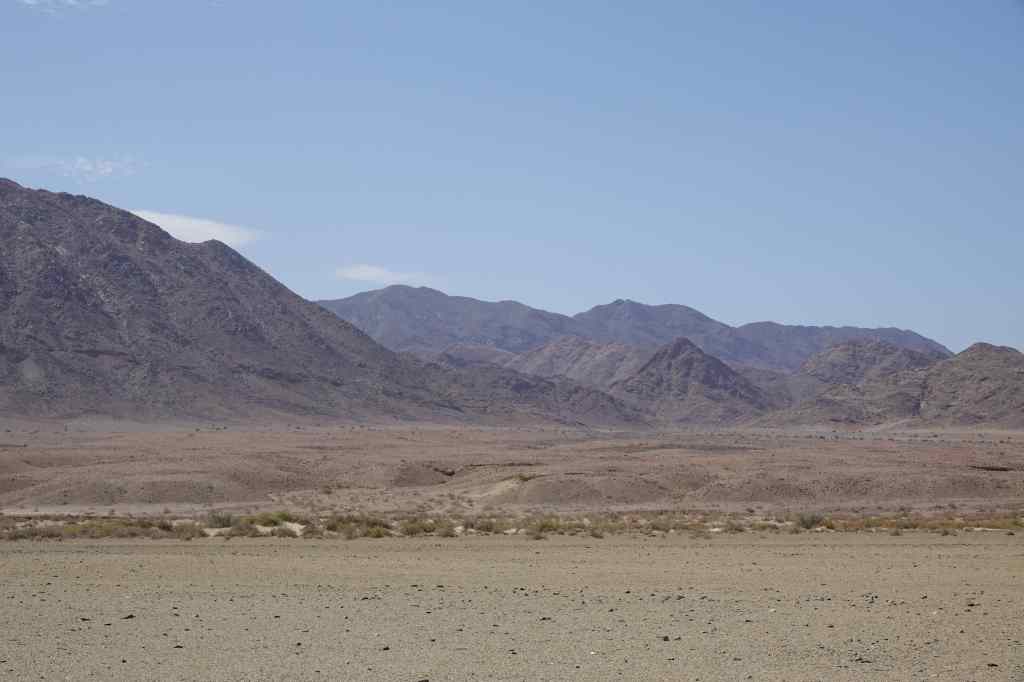
towards the Fish River Canyon
The lunar landscape approaching Fish River Canyon

The landscape had a certain barren beauty, and further north, hinted at the spectacular Fish River Canyon that lay just out of sight behind the mountains – which I would see the next day. But I was tired, and after eight hours on the road, I was relieved to arrive at my destination – yet another stylish tourist lodge. I had found my excursion around the far south of Namibia and my brush with real life interesting, but was glad to be back on the comfortable tourist circuit.
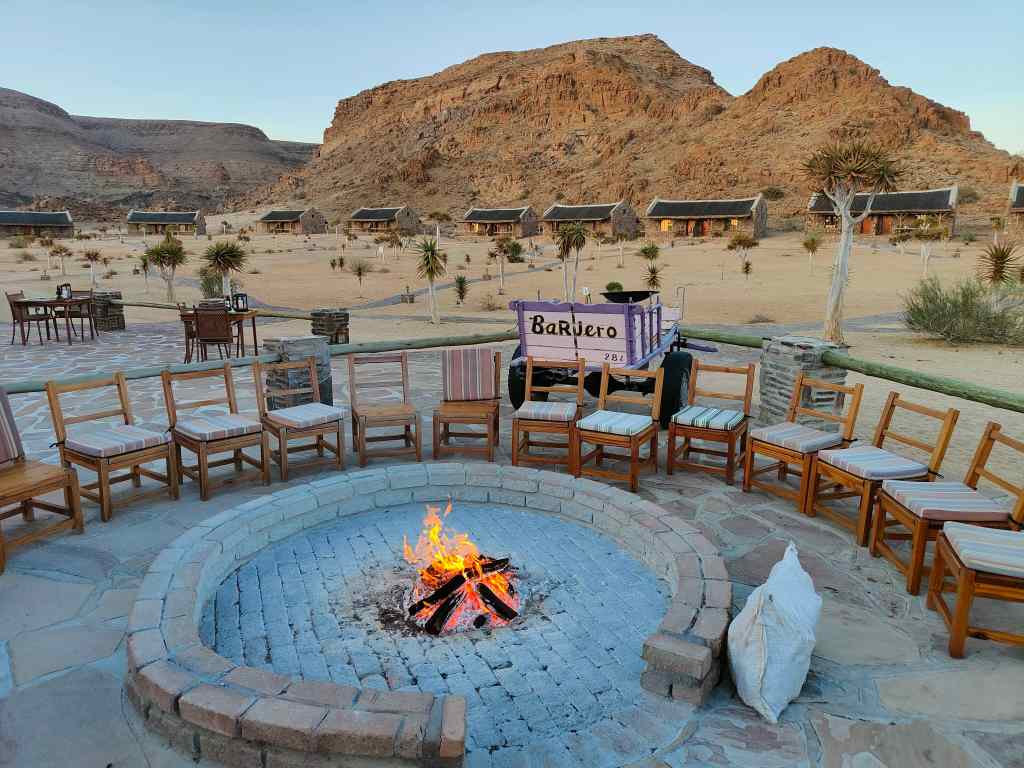
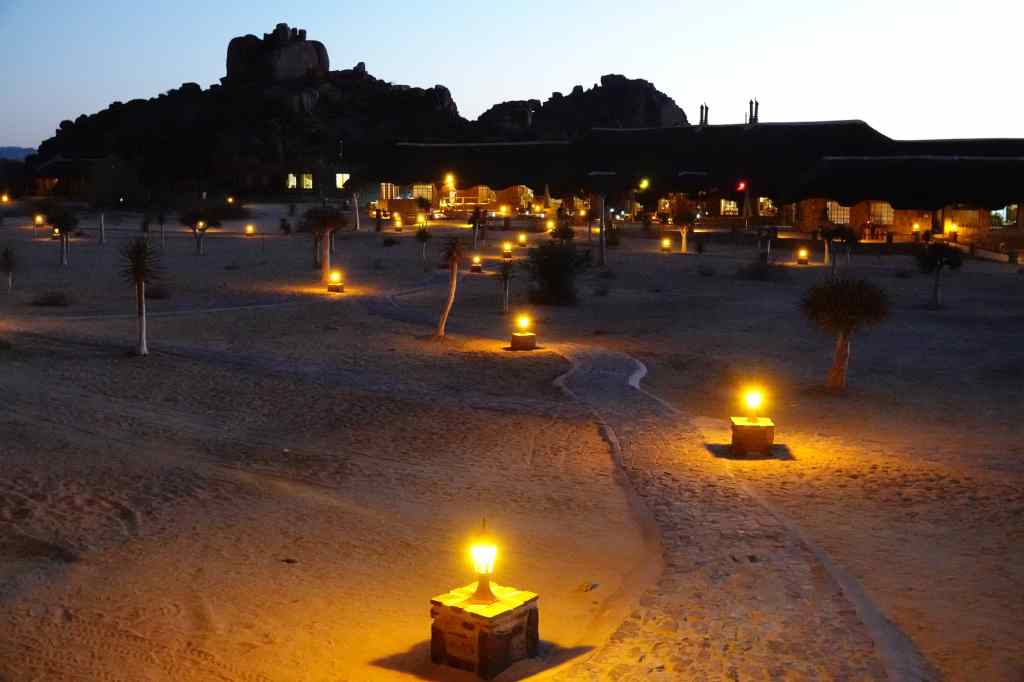
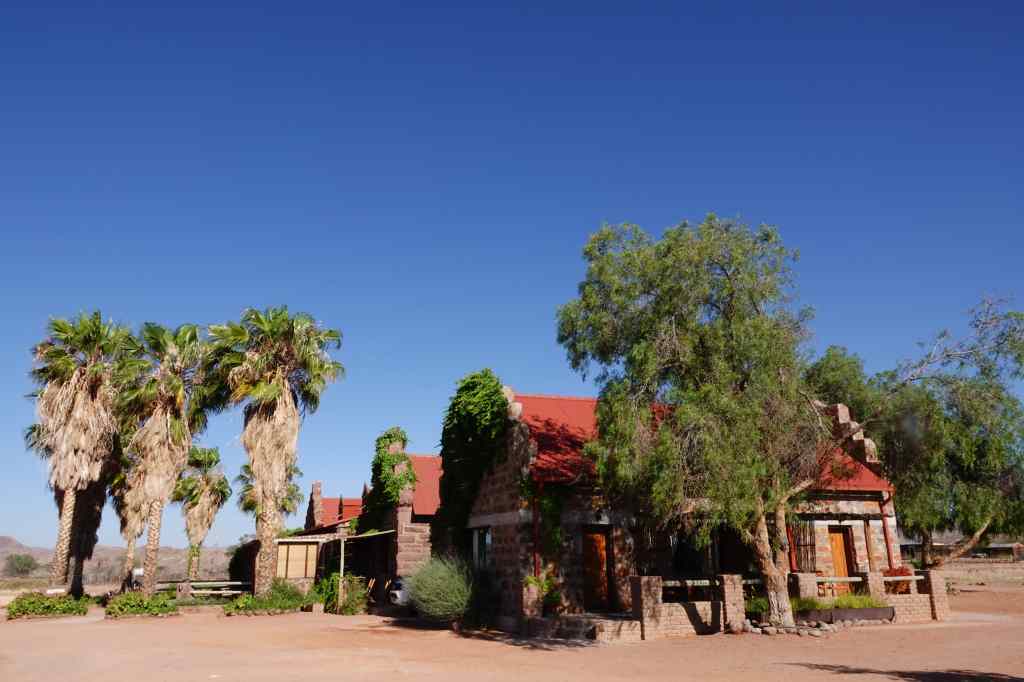
At the Canyon Lodge, Fish River
at the Canyon Lodge Fish River
Canyon Lodge

Next Post: Fish River Canyon

Previous Post: Luderitz, Kolmanskop and Halifax Island

Luderitz – the Kolmanskop Ghost Town and Halifax Island’s Penguins

Kolmanskop
House in Kolmanskop

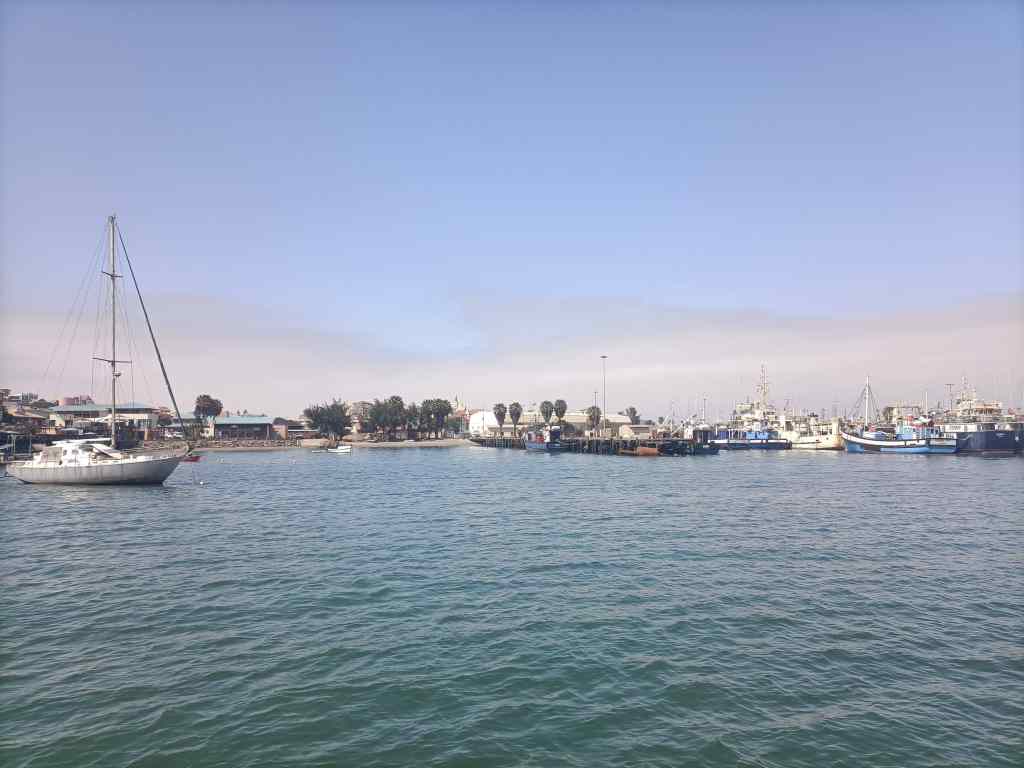
Today I had two very different experiences – one wet and one dry. I woke early to make the 8am departure of a catamaran cruise to Halifax Island, home to a colony of African penguins. The port of Luderitz was quite busy – in addition to a small fishing industry, several giant diamond-mining ships operate there. The latter scrape the sea floor, sieve the mud, and harvest large quantities of high quality diamonds.

Luderitz port
Luderitz port

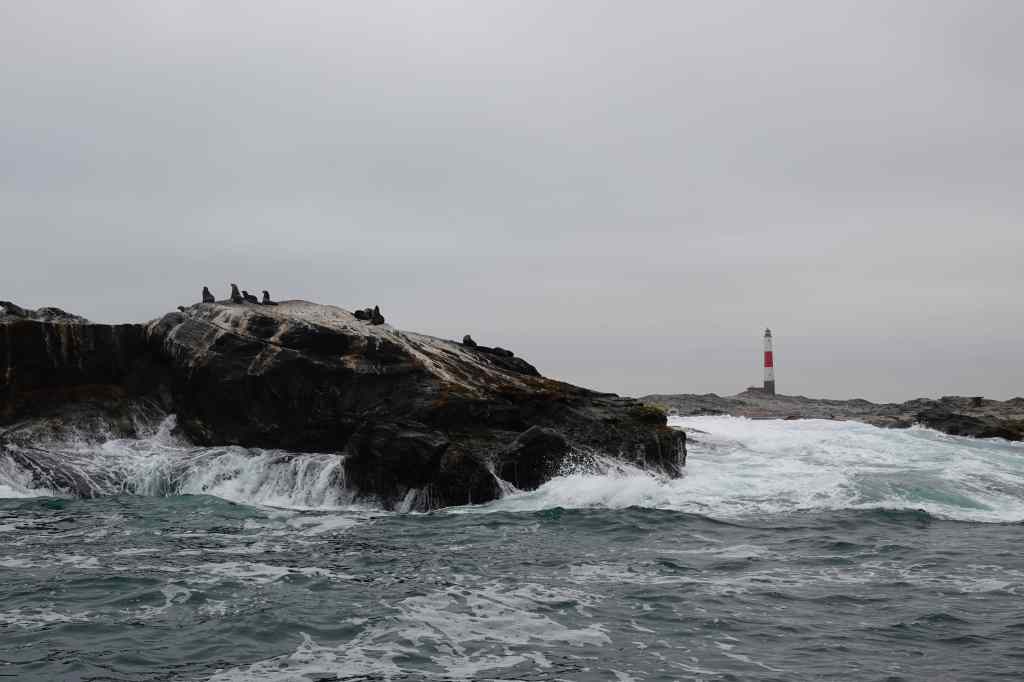
On the way to see the penguins we passed the port’s lighthouse and a few seals; dolphins also followed our boat but proved frustratingly hard to capture on film.

Luderitz lighthouse and seals

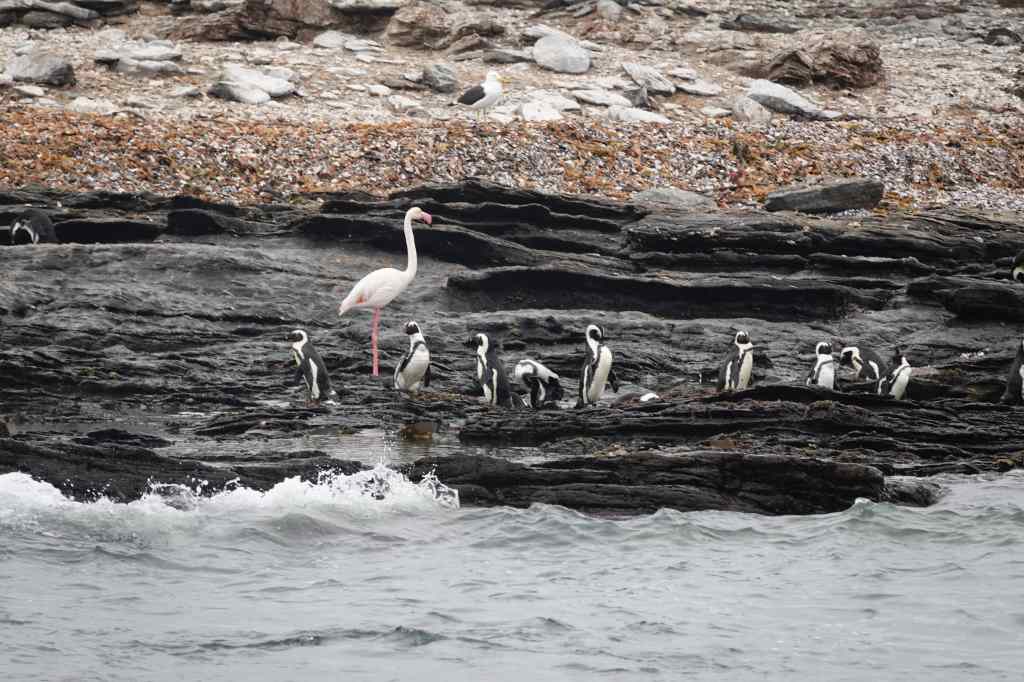
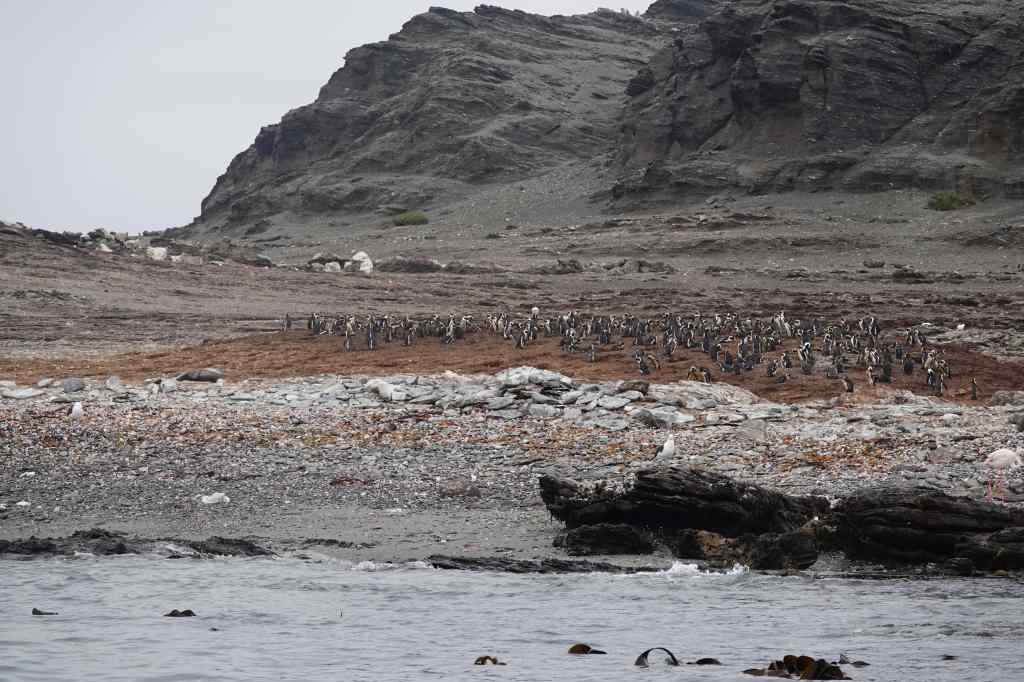
When we got to Halifax Island, we saw a large colony (about 1,000 pairs) of nesting penguins with the added bonus of a few flamingos. It was the first time I had seen penguins in the wild.

Penguins and a flamingo on Halifax Island

Most of the penguins nested in two large groups, standing on top of a large mound of guano from generations of birds. I thought this was not the most hygienic place to raise young.

Nesting in their own droppings…hmmmm

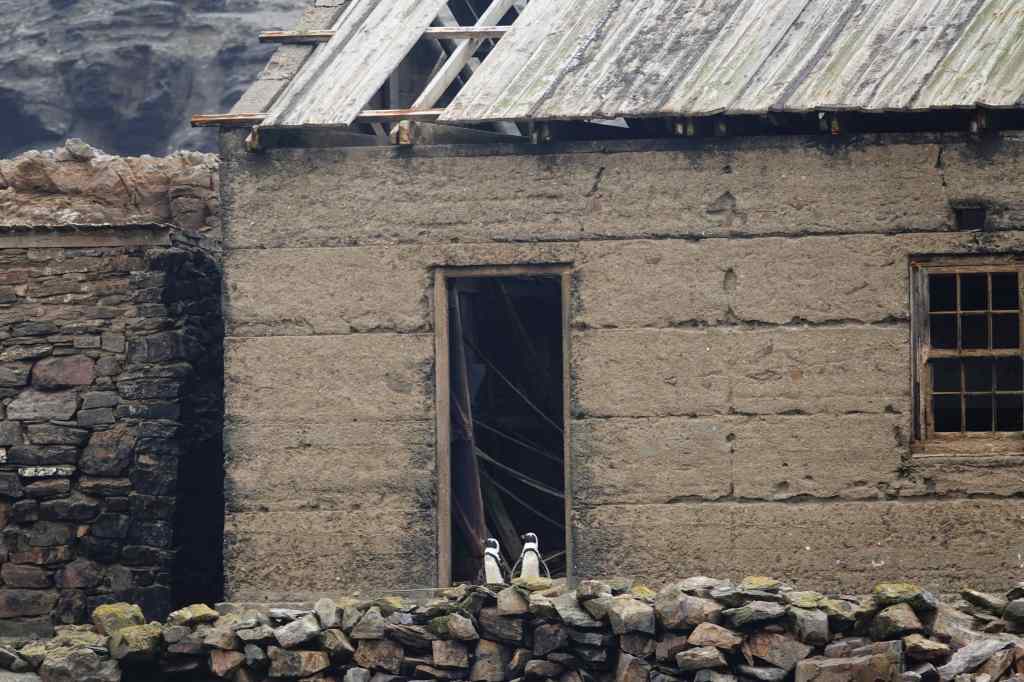
One couple had instead chosen to nest in an abandoned house, which seemed a much more sensible place to me.

Luderitz penguin couple
Houseproud penguins on Halifax Island

After my cruise, I went shopping in the town of Luderitz to buy food to cook that evening. After many evenings of steak, I wanted to find some fresh fish….but bizarrely the city had none, despite being a fishing port. I had to buy meat yet again, and settled back in my room and looked at the sea for a midday break. A seal and a dolphin came looking for fish in the sea right in front of my room – I hope they had more success than I did!

In the early afternoon, I set off for my second excursion of the day, to the abandoned diamond mining town of Kolmanskop. Diamonds were discovered by accident in the area in 1908, by a worker clearing sand from railway tracks. The find prompted a prospecting boom of which the town of Kolmanskop was initially the centre. The miners – mostly German colonists – systematically stripped and sieved the surface levels of sand, at their peak producing a million carats per year of diamonds (or about 12% of total global production). Many became rich in the process, though the native people who provided the manual labour got little or nothing for their efforts. The residents built a hospital, school, and even a casino.

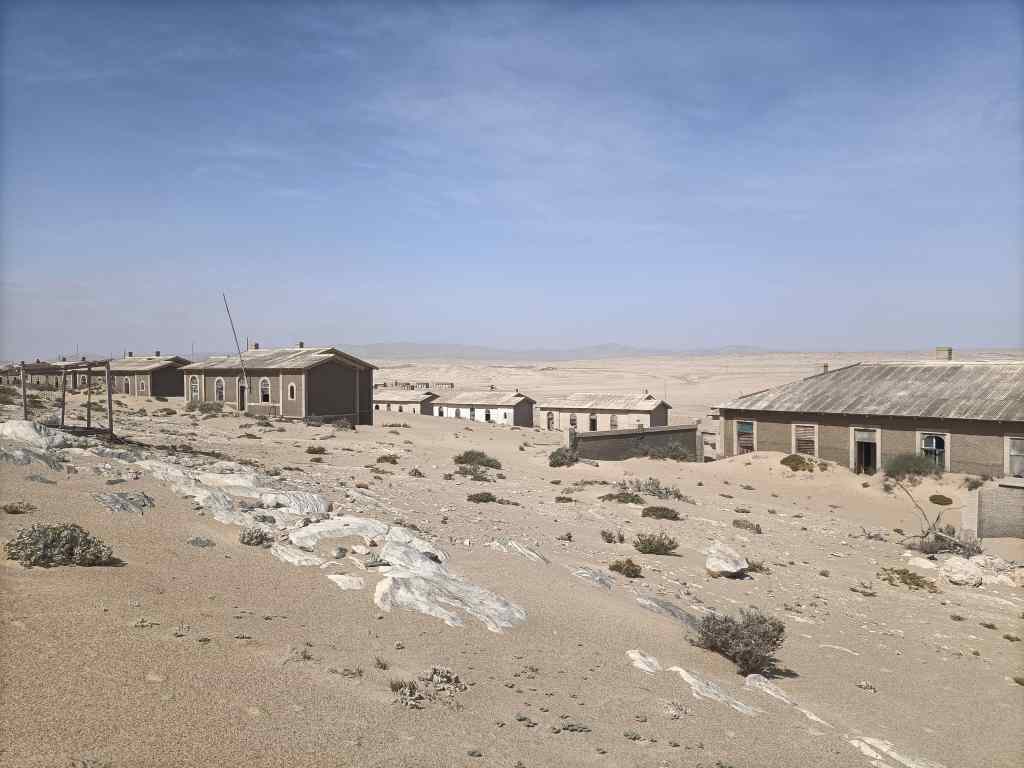
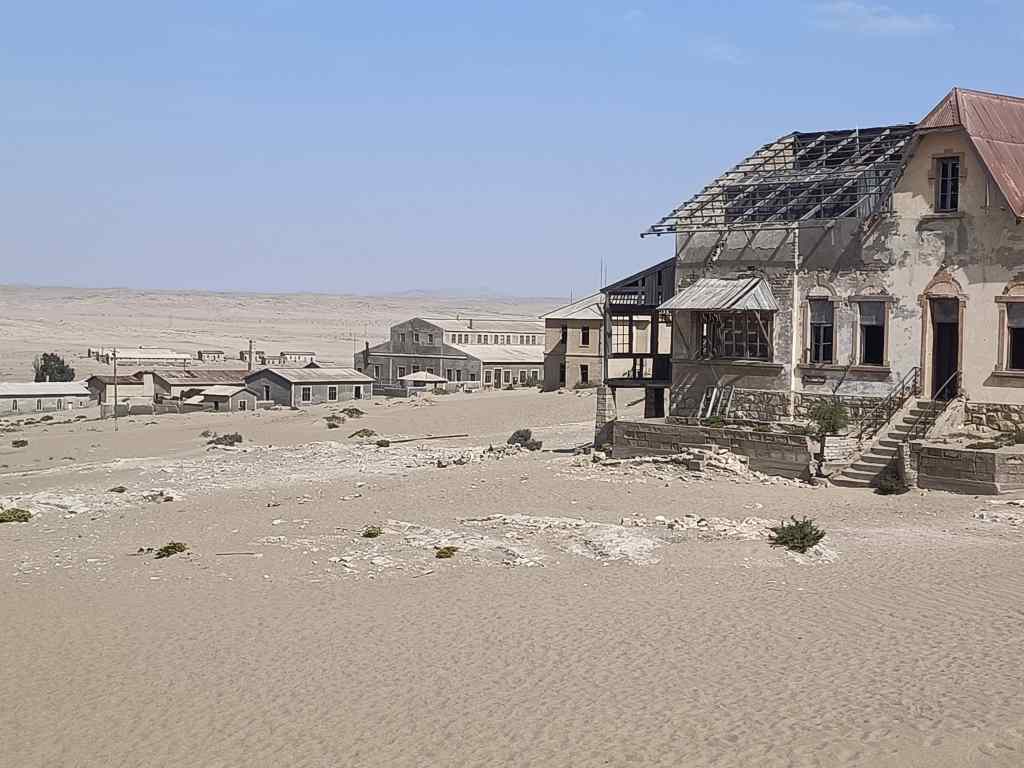
Kolmanskop overview
Overview of Kolmanskop
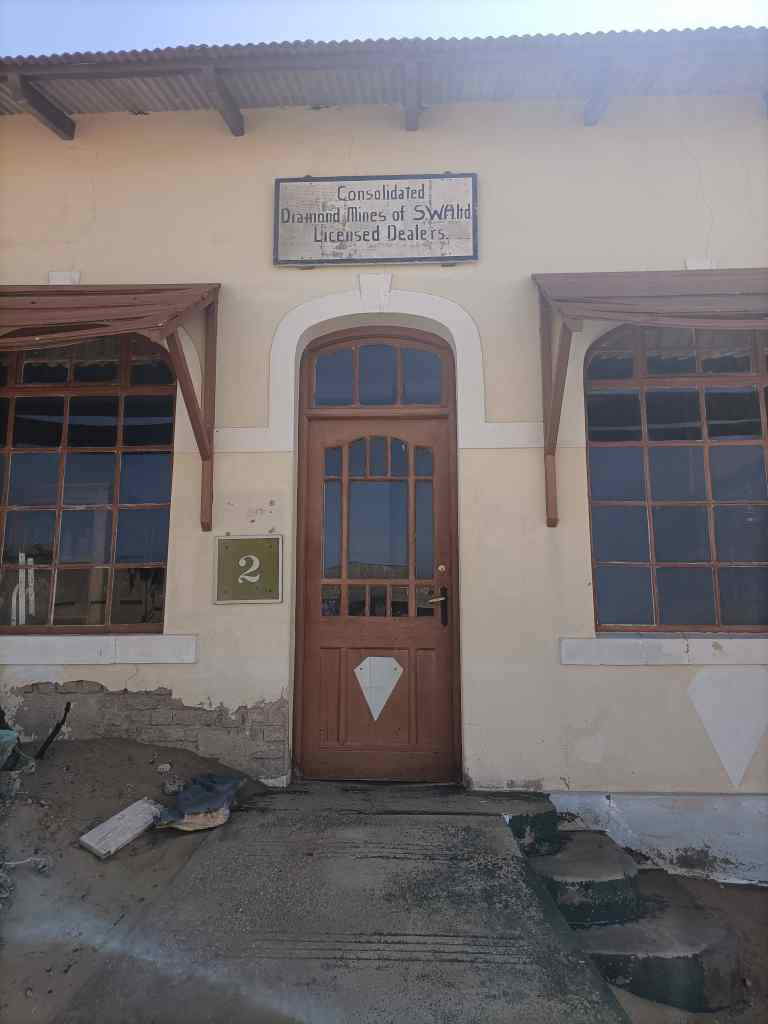
Kolmanskop office
The diamond trading counter

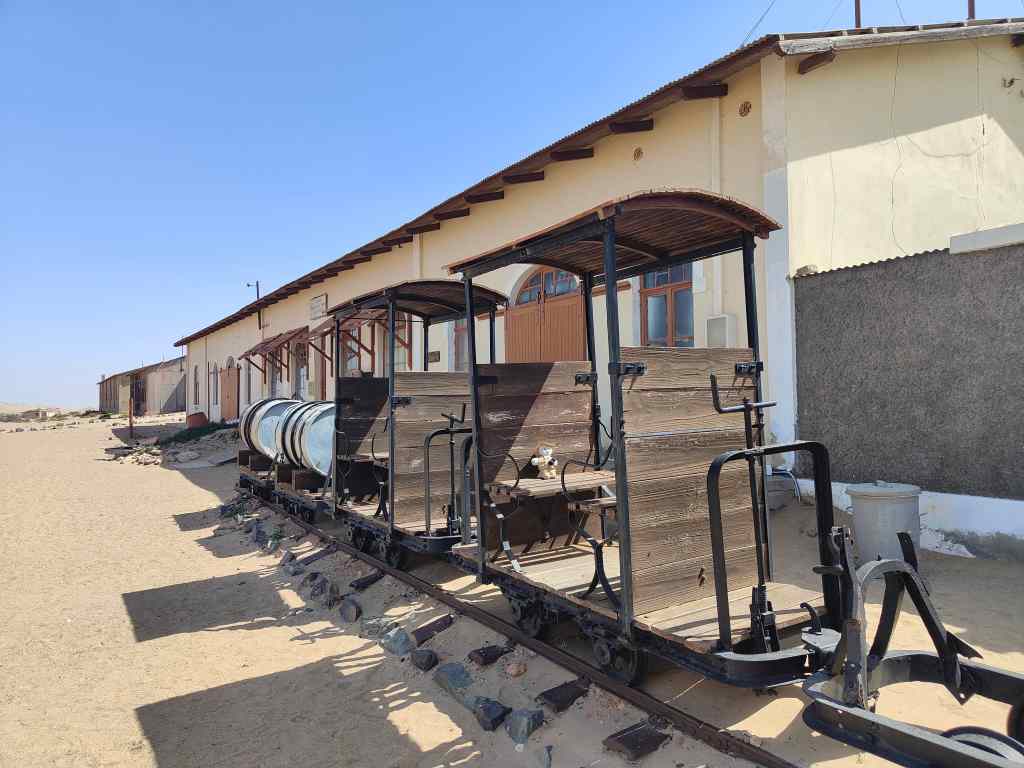
There was a butcher, baker and ice factory, and fresh water was brought in by rail and stored in a big tank on the hill above the town.

A dedicated train line kept Kolmanskop supplied

It couldn’t last. In the late 1920s, the ground around Kolmanskop was almost depleted, and in 1928 another big diamond field was found in a different place. The town’s residents abandoned it, and by the 1950s it was deserted. The sand dunes that constantly move around the area – and which even today need constant clearing from the roads and the railway line – swept in to reclaim the town.

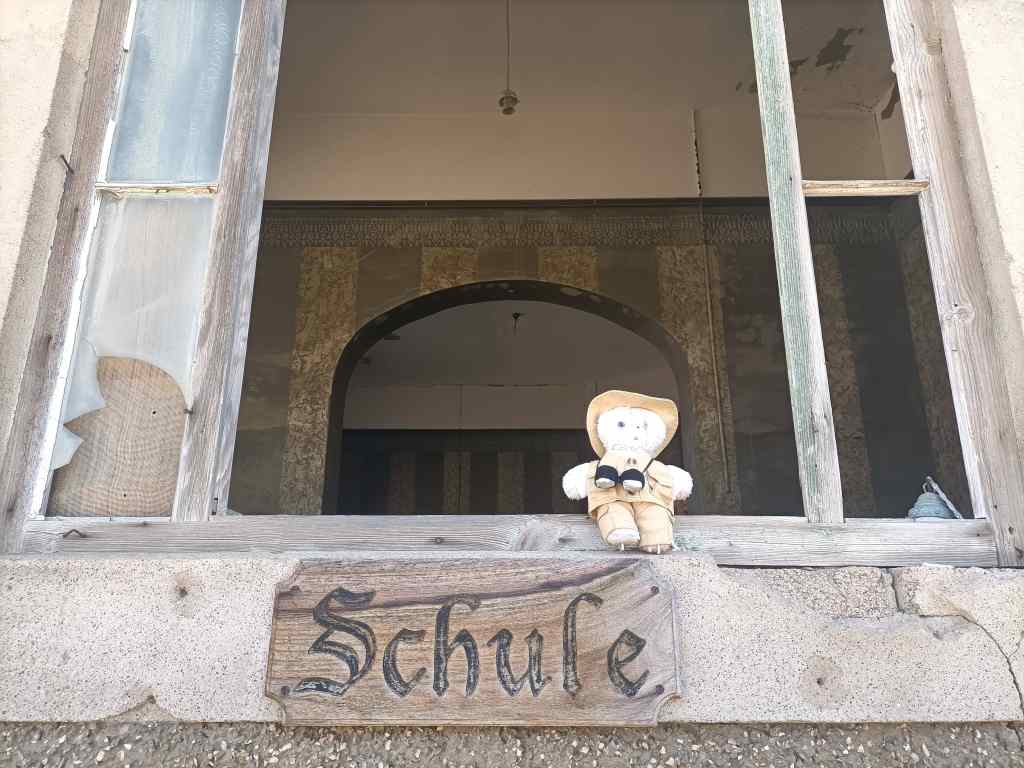
Kolmanskop's school
Entry to Kolmanskop’s school

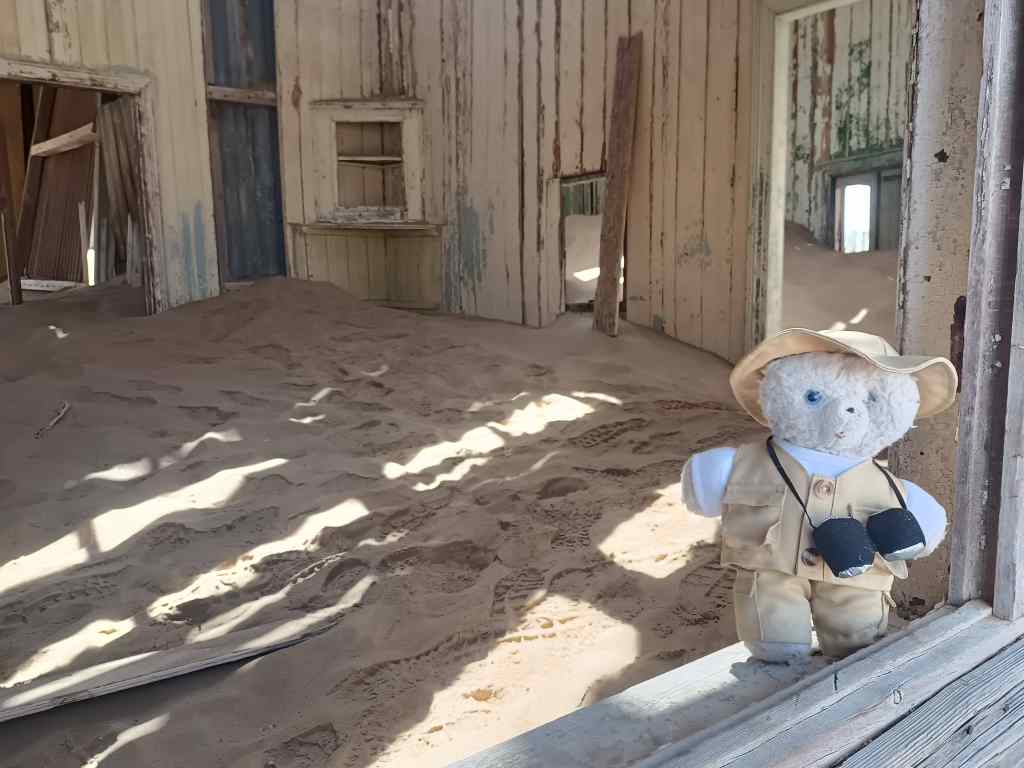
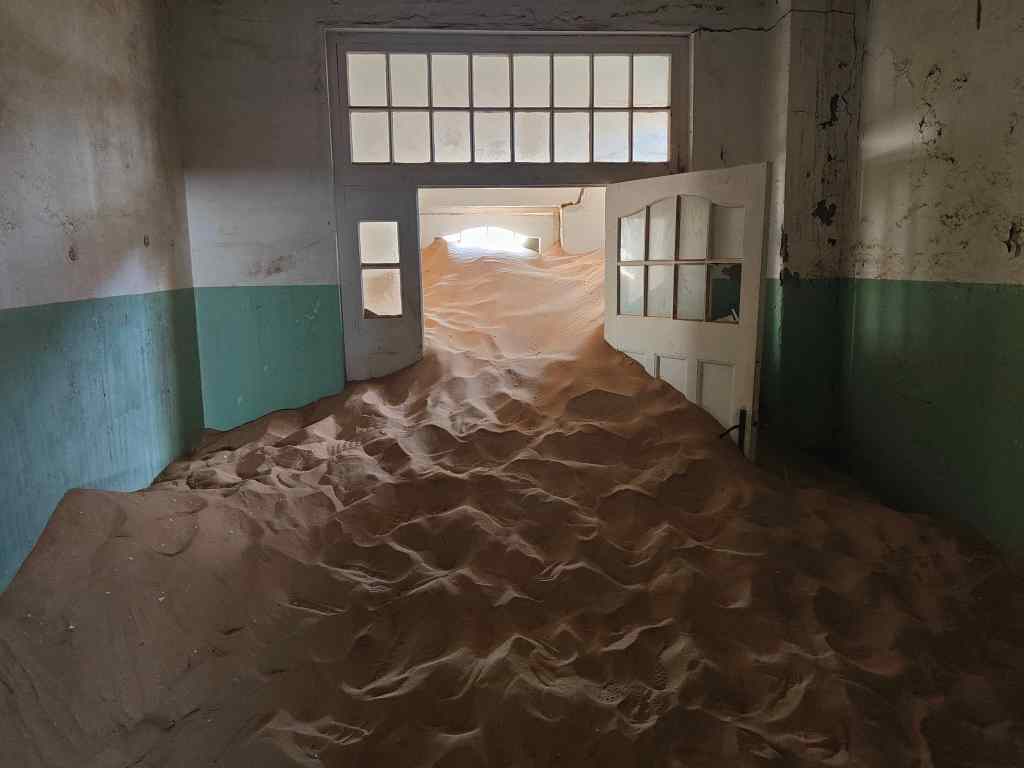
Today, Kolmanskop has become a tourist attraction. Most people visit on the guided tours in the morning, but I bought a special ticket allowing me to walk round in the afternoon, and I had the place completely to myself. A few buildings had been restored, but most had been allowed to slowly decay. The most atmospheric were those which were in the path of the shifting sand dunes. Sand would pile up on their outside walls and force an entry through doors or windows, piling up inside as a continuation of the marching dune.

Sand invading house, Kolmanskop
The irresistible force of nature takes over Kolmanskop’s houses
Kolmanskop the force of nature

I also liked some of the grandest houses, built for the town’s management – like the accountant’s, the architect’s or the quartermaster’s residences. These were built on slightly higher ground and had so far escaped the marching sand dunes.

The accountants house

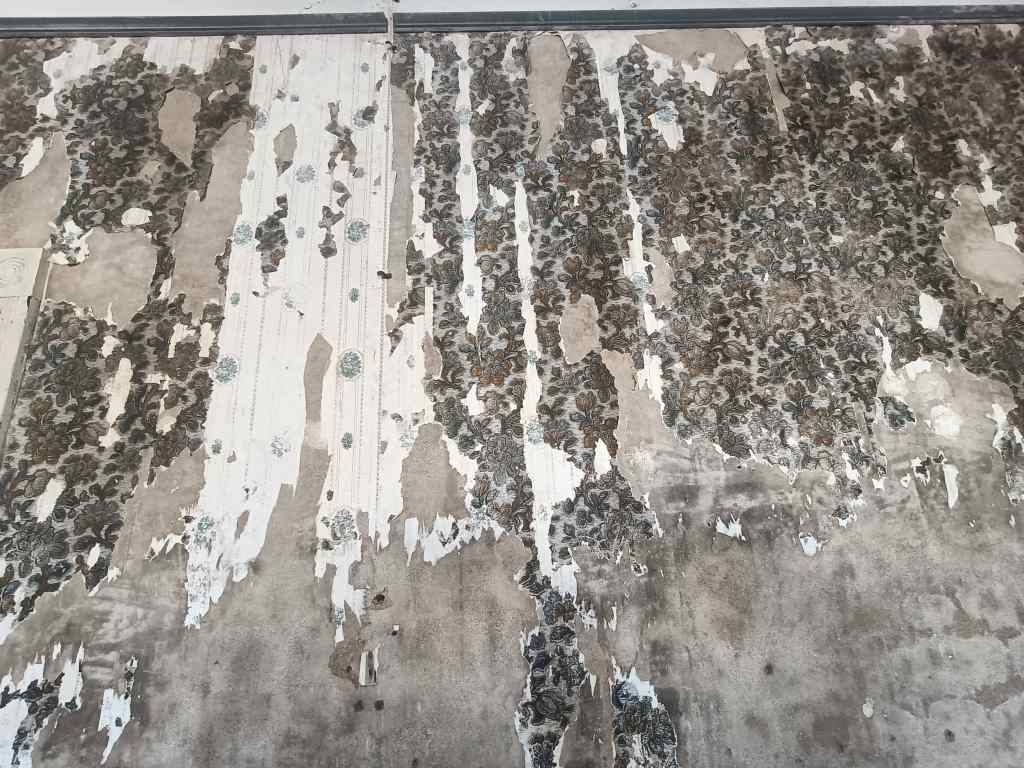
Inside, ornate wallpaper peeled from their walls, and a strange silence reigned. I sat on the veranda of the accountant’s house in the late afternoon sun, reflecting on the transience of life and the futility of humanity’s attempts to defy nature.  

Kolmanskop wallpaper
Faded glory and the transience of human existence

Previous post: Duwisib and its desert horses

Next Post: Off the beaten track in Namibia – Orange River and South African border

Duwisib – the sad story of Hans and Jayta Von Wolf and their horses

My accommodation in Duwisib was a working farm with a few guest bedrooms, which made a pleasant change to the more commercial lodges I had been staying in up until then. The splashes of green surrounding the farm – plants and fields fed by water from a well – made a welcome change to the constant brown, red and yellow of the Namib desert.

Duwisb Guest Farm
Duwisib Guest Farm
Duwisb Guest Farm
Some green in the landscape for once
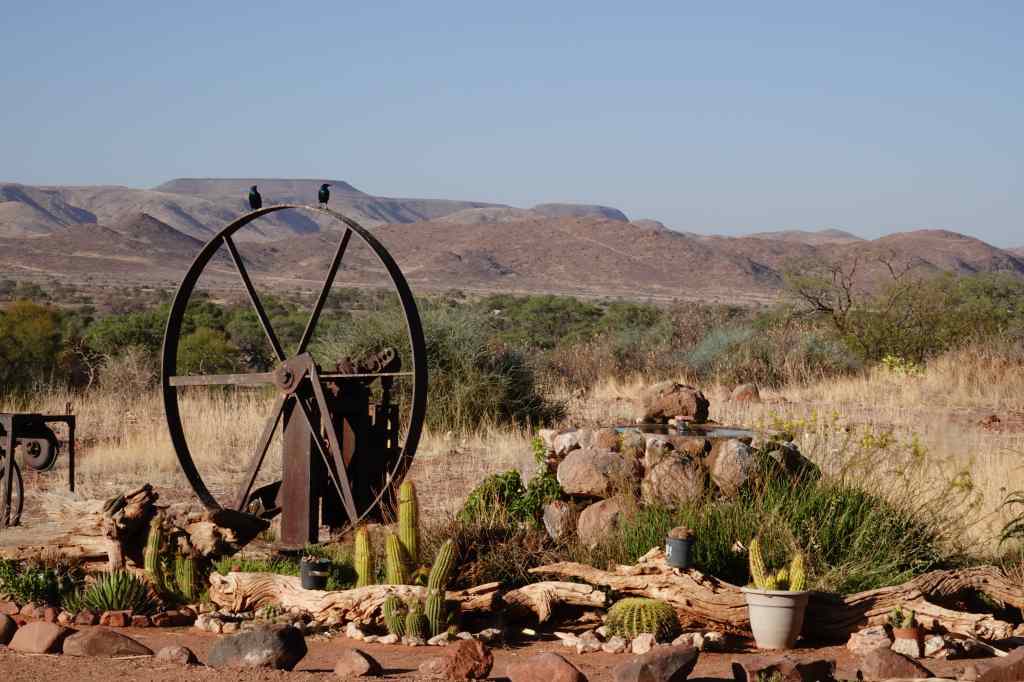
Old farm equipment

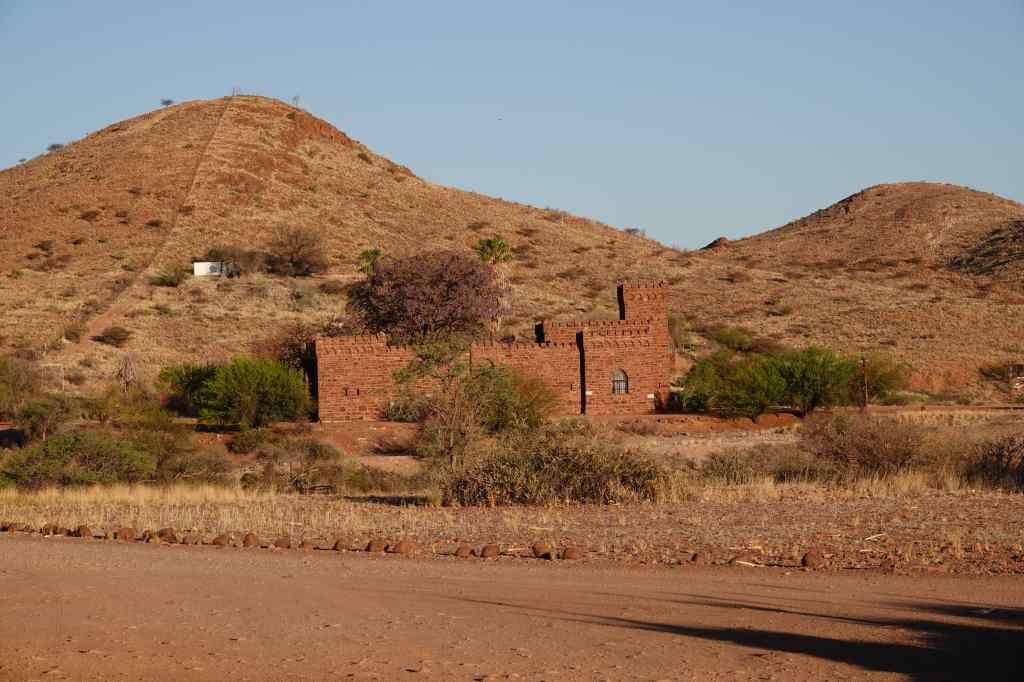
The farm’s owner showed me around and pointed out the small gothic castle improbably located a short way away.

Duwisib Castle
Duwisib Castle

The latter had a strange and sad history. It was the project of a former officer in the German army, Hans Heinrich von Wolf. Poor himself, he married a rich American, Jayta Humphries, who paid for the considerable cost of the project (most of the materials were imported by ship from Germany, then hauled by oxen 300km inland). The newly wed couple camped for two years next to the building site until the work was finally finished in 1909. Von Wolf had intended to use the castle as base to live whilst establishing a farm and breeding horses – a strange project in a near-desert environment. However, the von Wolfs only enjoyed their property for five years; in 1914 war broke out whilst they were travelling to Europe and their ship was diverted to Rio de Janeiro, where Hans Heinrich was interned. He was finally released a couple of years later, and the couple continued their trip to Europe in 1916, where von Wolf rejoined the German army and was killed two weeks later. Jayta never returned to the castle, and eventually remarried and settled in Europe. After the von Wolfs, the castle’s ownership changed hands many times, and today it is owned by the government. It used to be possible to visit but never reopened after the Covid epidemic. The farm owner said we could probably see inside if we made an arrangement with the guardian, but for me it was enough to see the castle from the outside.

The guest farm also gave me the chance to meet some fellow travellers over dinner to swap stories and information. This was also a welcome change after dining on a table alone at desert lodges. I checked that the road I wanted to use the next day, the D707, was open and passable and that its reputedly great scenery was worth the extra time. One of my fellow diners had just come from that direction and assured me that all was good.

So next morning I set off on another fairly long drive, this time to Luderitz, on the coast in the southwest corner of Namibia. The D707 lived up to its scenic reputation and I made lots of stops to take pictures.

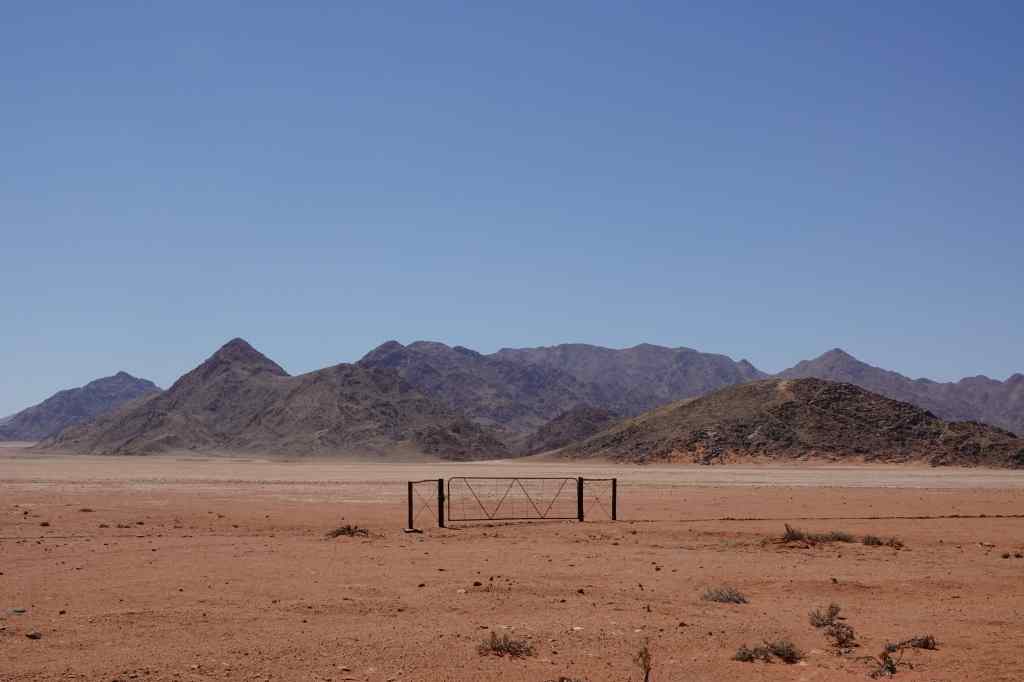
Back to red and brown scenery on the D707
A gate to nowhere…
Still on the D707

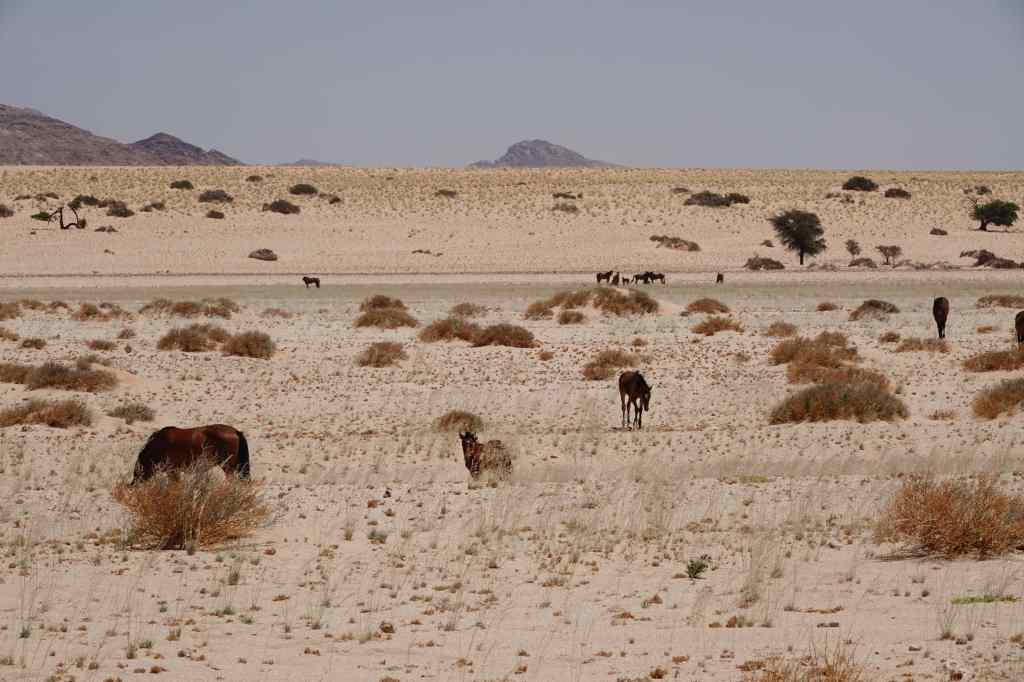
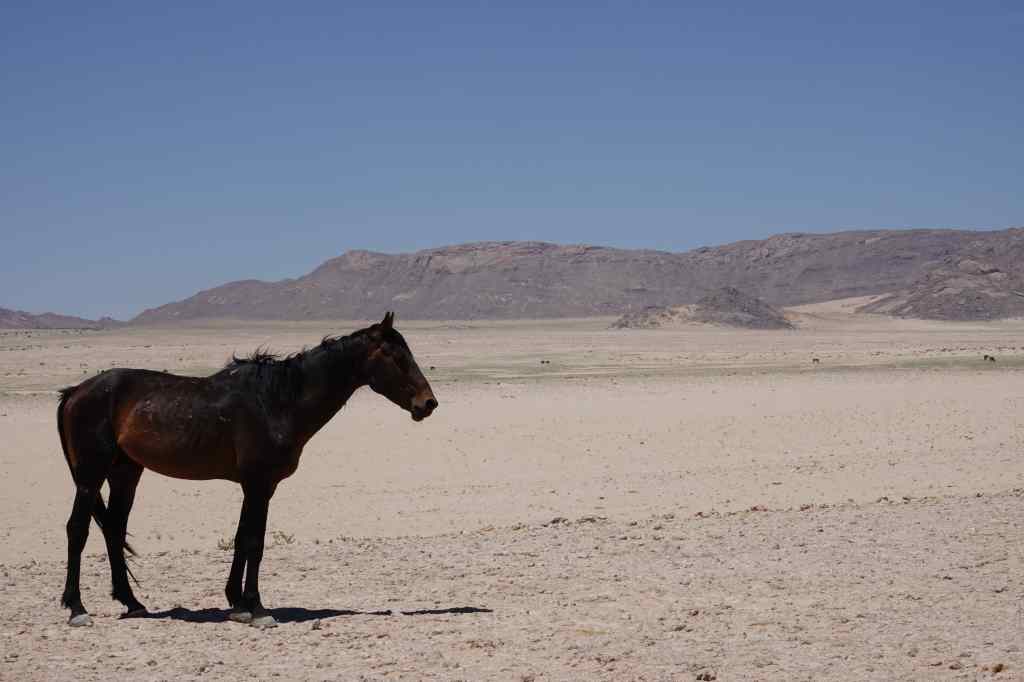
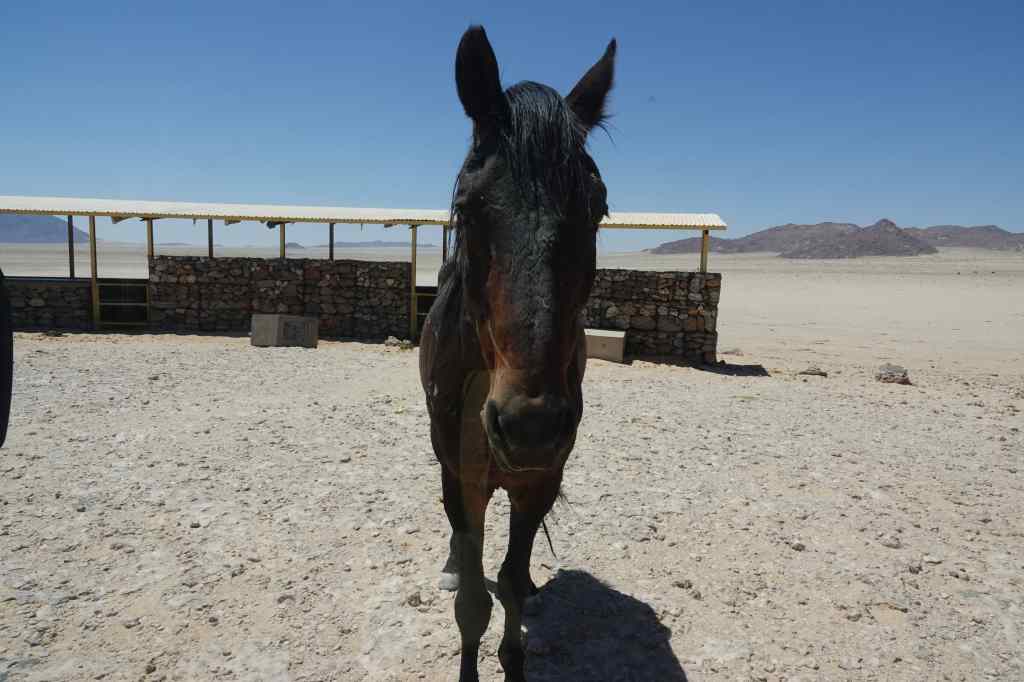
Next, I joined the straight flat and dull but fast B4 to the coast. I made one stop on route, to see a herd of wild horses – the only ones anywhere in the world to live in desert conditions. One theory is that the horses’ ancestors escaped from von Wolf’s farm over a hundred years ago.

desert horses
Desert Horses!
desert horse
A horse poses for my shot
Hungry desert horse
This horse was hungry and approached my car looking for food

After another hour I reached Luderitz, which is known for its colonial German architecture. Indeed, it had a couple of old churches and other buildings dating from its time as the centre of a mining boom just over a hundred years ago (more about this tomorrow). But today the town feels rather poor. The many unoccupied people on the streets stared at me as if they had never seen a bear before, and I felt slightly uncomfortable. Fortunately, my accommodation was in a smart area, right on the sea shore and I checked in and enjoyed the view whilst preparing two very different excursions for the next day.

Next Post: Luderitz

Previous Post: Sossusvlei – Meet Big Daddy and Big Mommy

Blog at WordPress.com.

Up ↑