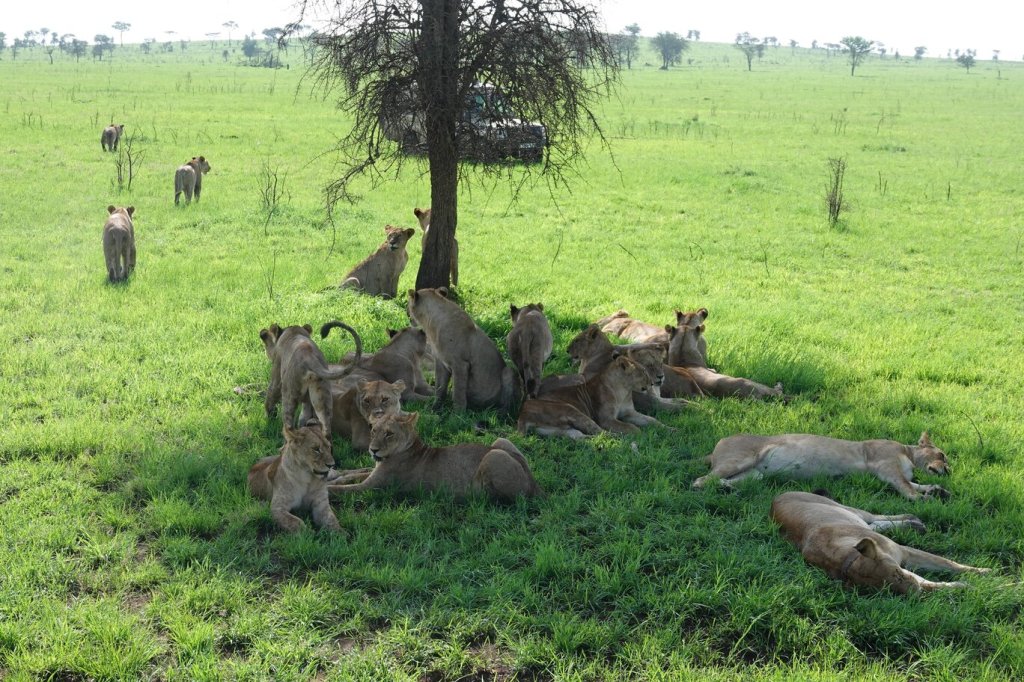
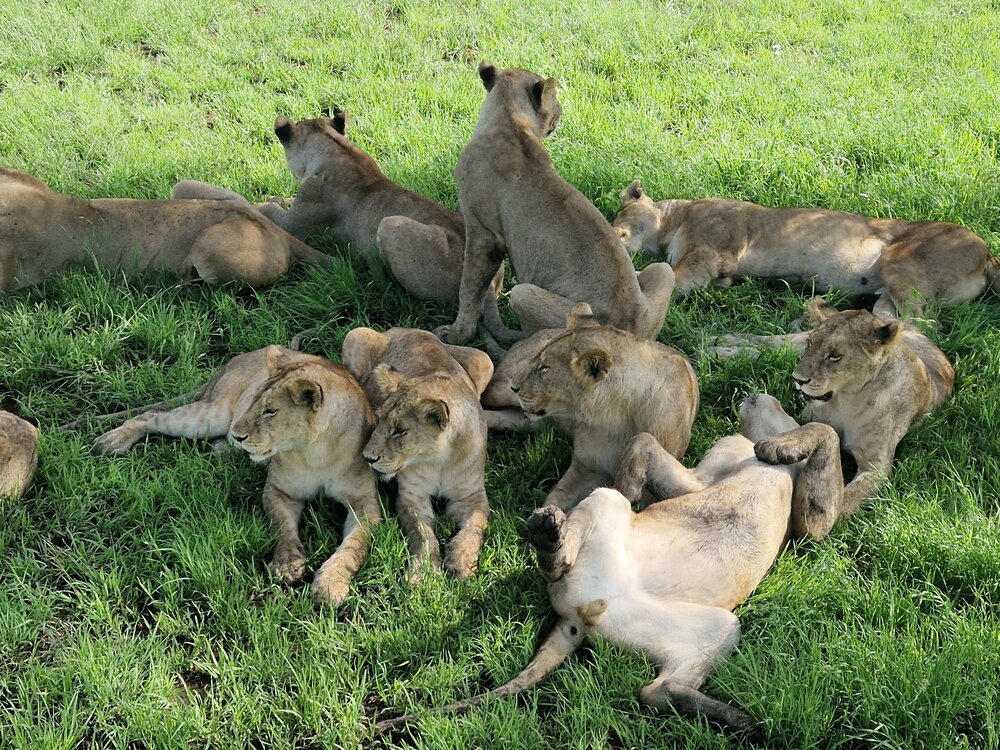
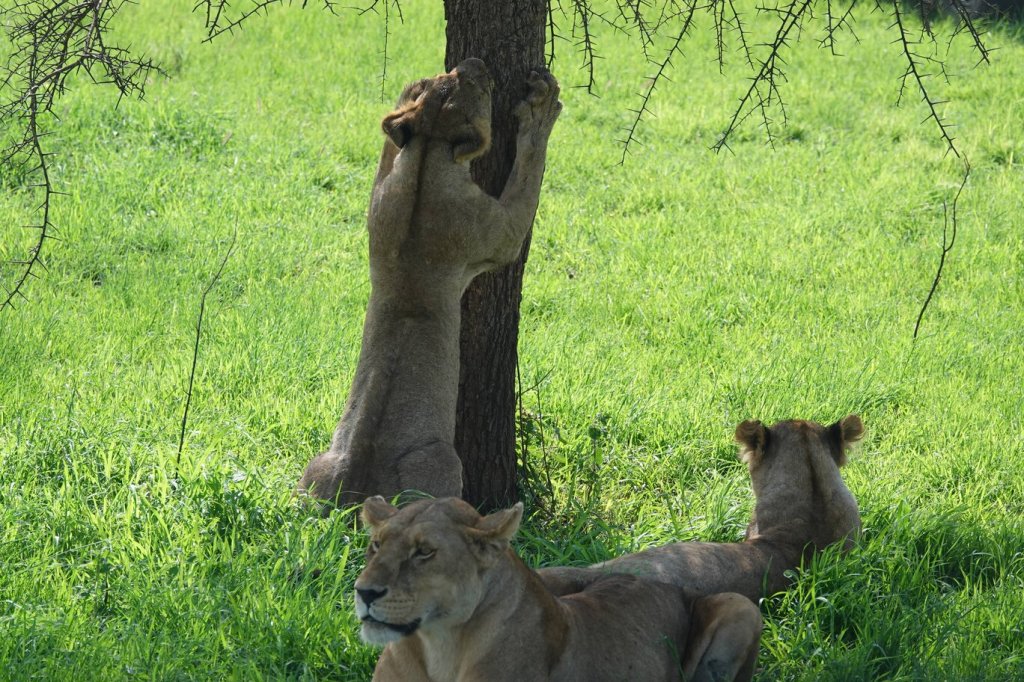
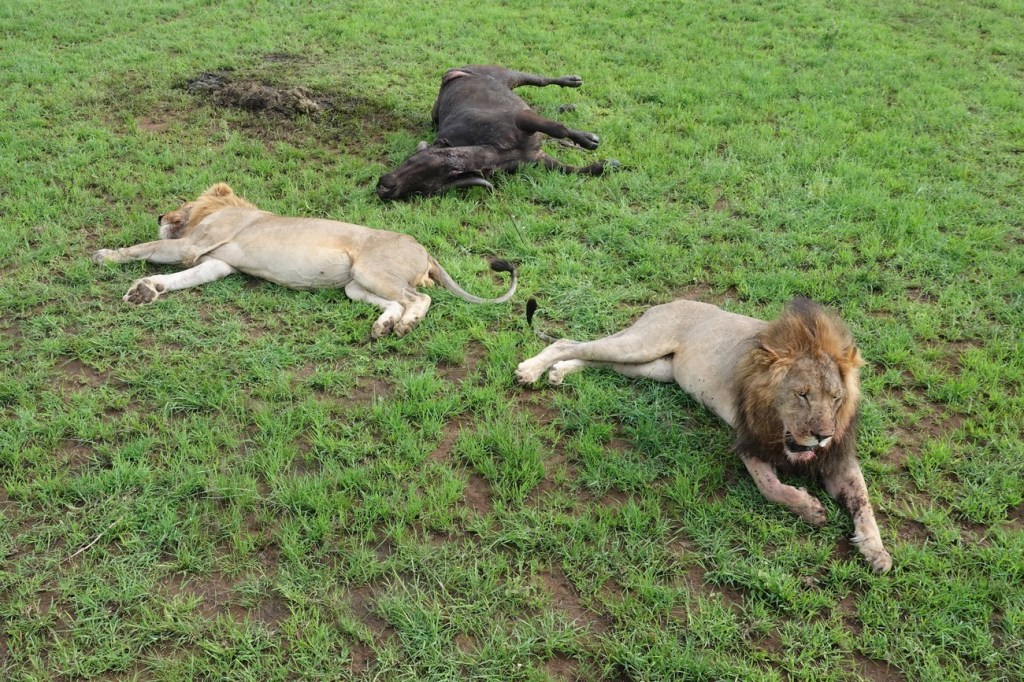
Today we were due to move from our camp in the centre of the Serengeti to one in the southern part of the park, enjoying a game drive along the way. Our day started well when we bumped into another superpride of lions. Initially we thought they were hunting some nearby buffalo, but instead they ambled along, inspecting our jeep and moving from one shady tree to the next.
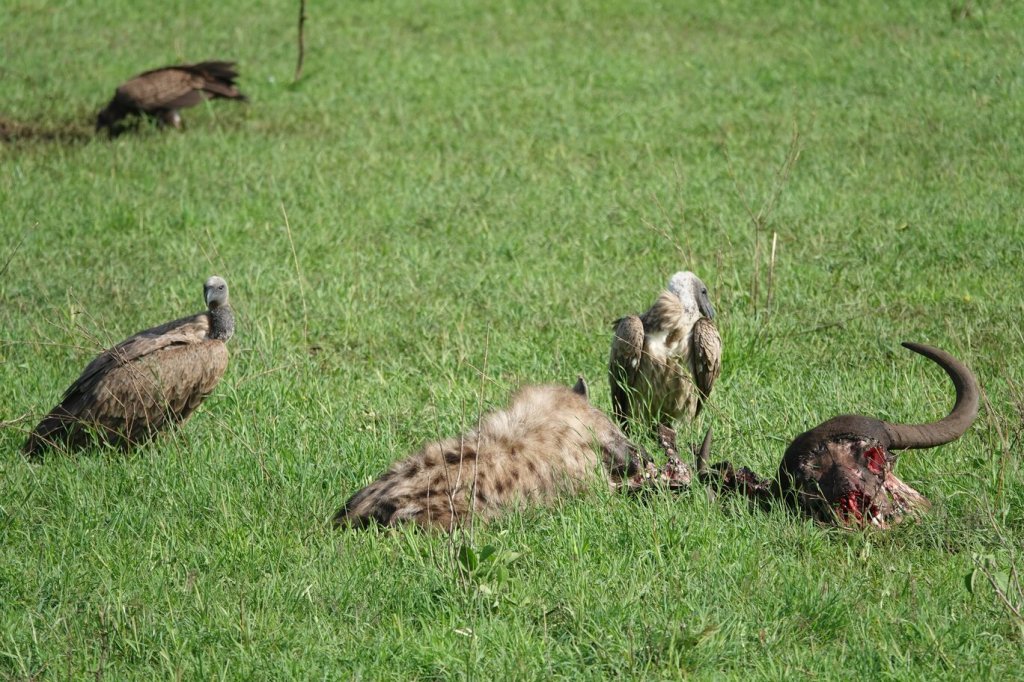
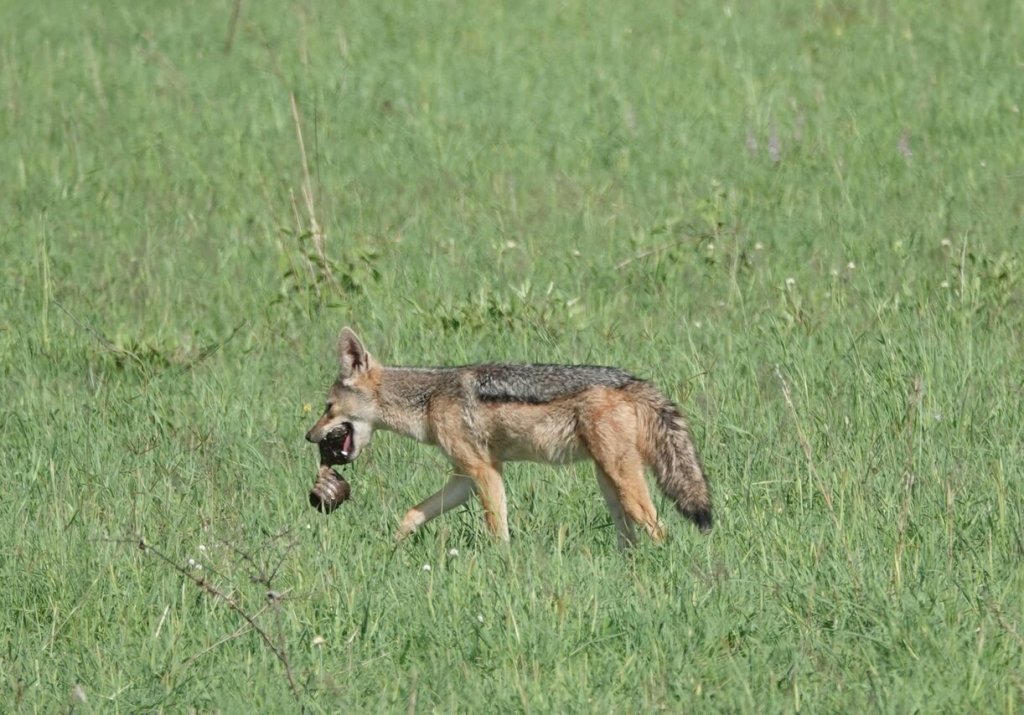
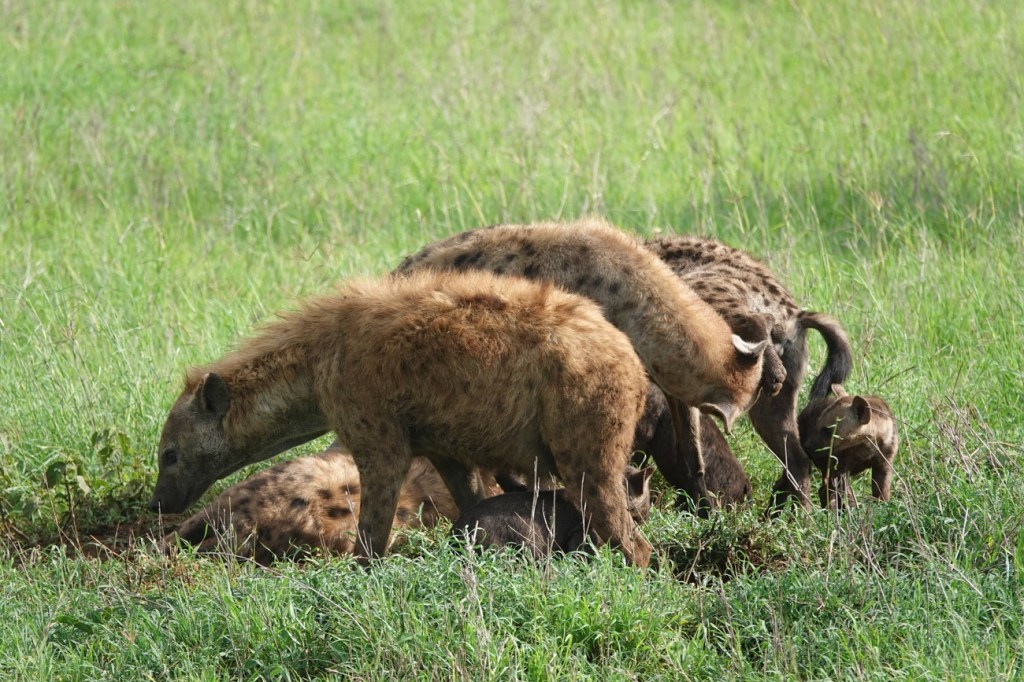
After this chance encounter we revisited the slain buffalo we had seen the previous day to see if the two lions were still there. It turned out that they had moved on, and been replaced by a couple of hyenas. All that was left of the poor buffalo was its skull – the hyenas have powerful jaws that can crush bones and will eat any part of any animal left over by more powerful predators. A couple of vultures waited patiently for the last hyena to finish, but we were not sure if anything would be left for them. Nearby a nimble jackal seemed to have managed to grab a bone from under the hyenas’ noses and was carrying it away to a safe distance to enjoy it.
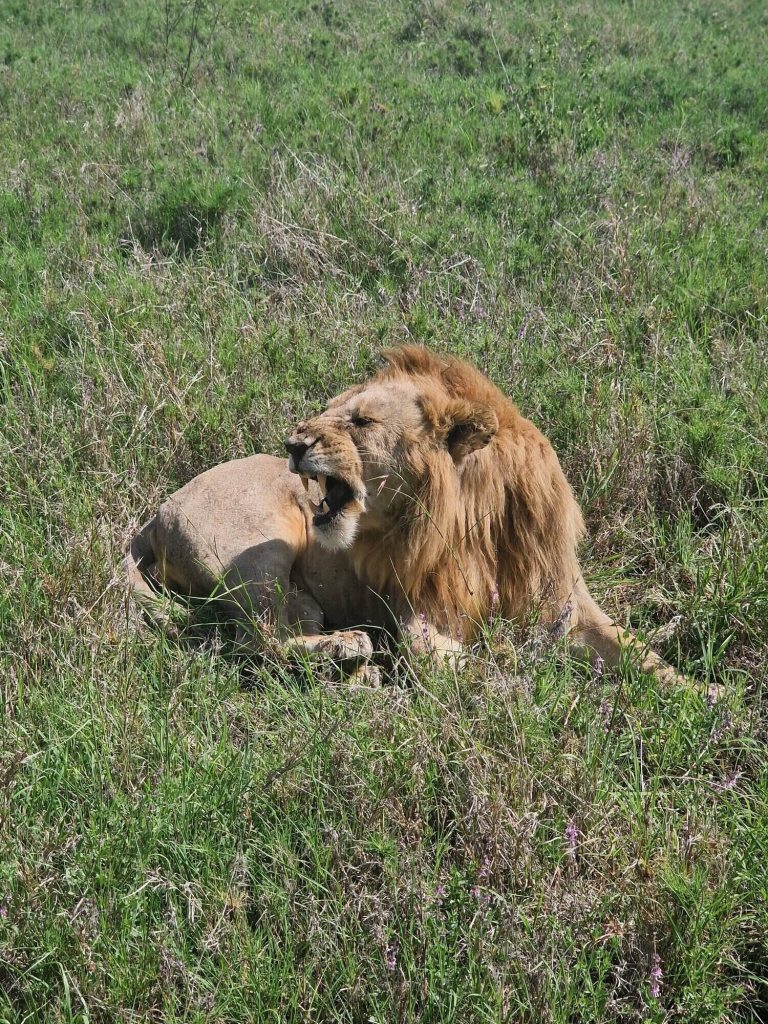
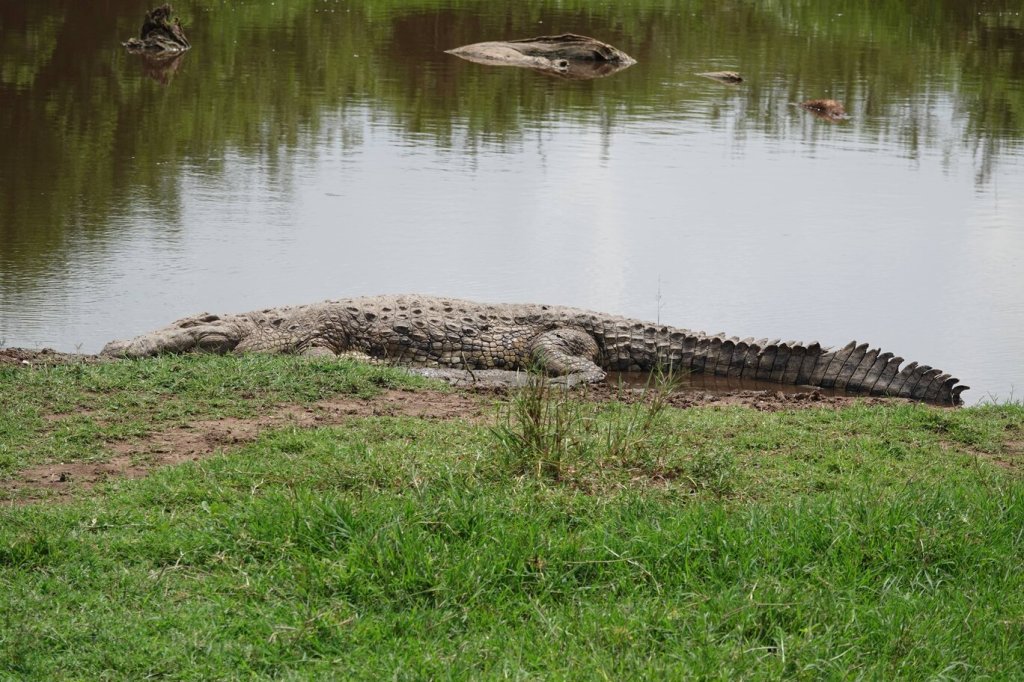
After the initial success of the early morning, we had less luck as the day wore on. We did find a group of three male lions hiding in the long grass, and spot a solitary Nile crocodile.
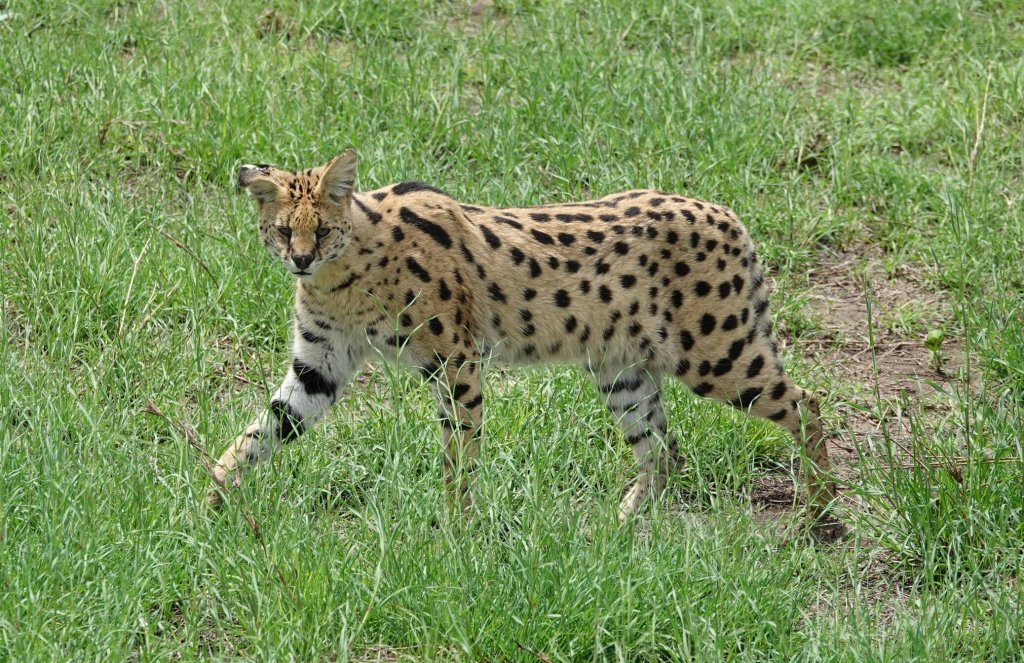
But then we spent a lot of time heading towards a reported sighting of a cheetah, only to find lots of jeeps and no signs of any animals. It was time for us to head south to our next camp, and we drove along a long and dusty road that initially appeared rather uninteresting. However we were lucky with two chance sightings of fairly rare animals – first we saw a bat-eared fox, an extremely cute animal that sadly disappeared into its burrow before I could take a picture. Next, we found a serval, a really beautiful smaller relative of leopards and cheetahs, who was much more happy to be filmed.
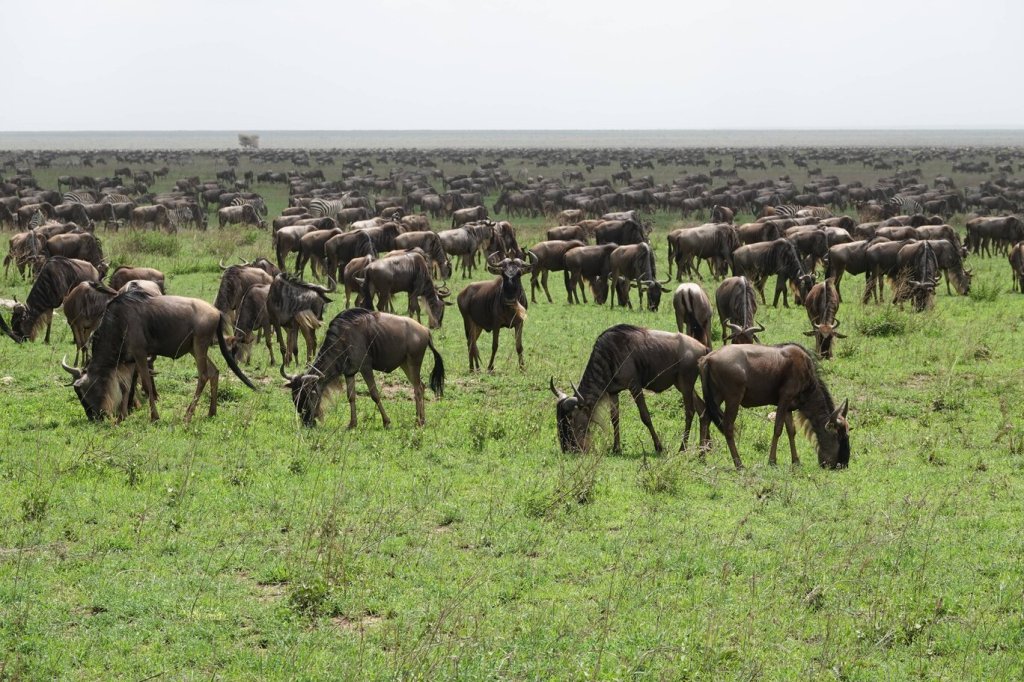
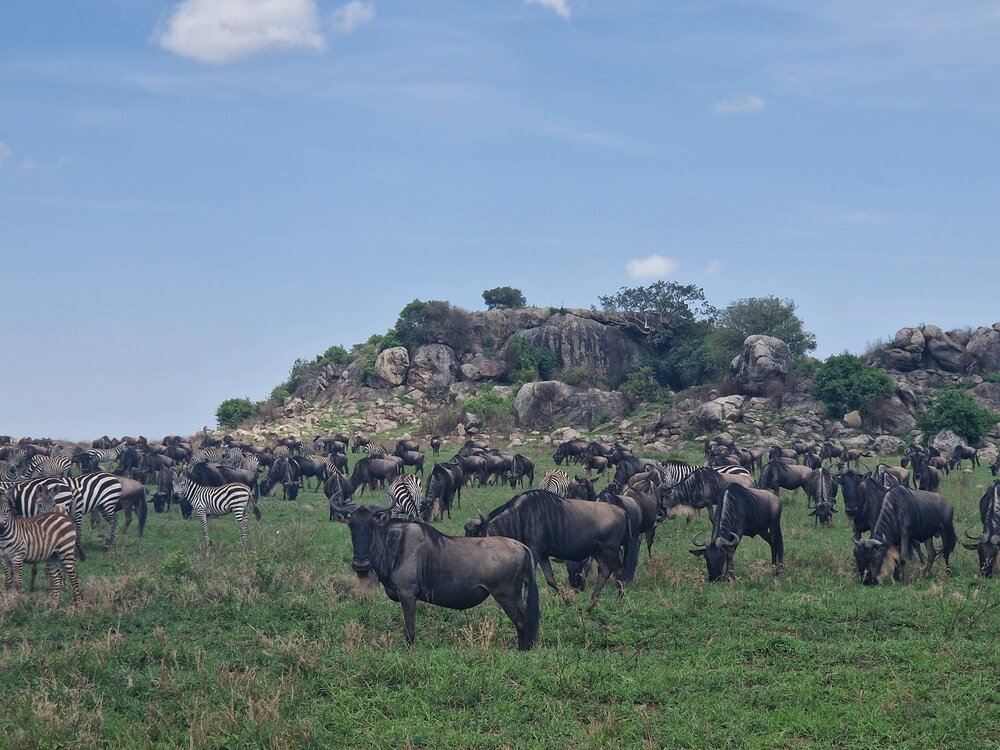
Further along the road we came across an amazing sight that the Serengeti is famous for – a huge herd of wildebeest and zebra, stretching all the way to the horizon and turning the yellow/green landscape into a mass of black animal bodies. In January most of these animals are found in the south of the park, which is why we had seen relatively few of them so far. In the summer most of them move north in a vast migration and make the hazardous crossing of the crocodile-infested Mara River into Kenya, before returning later in the year.
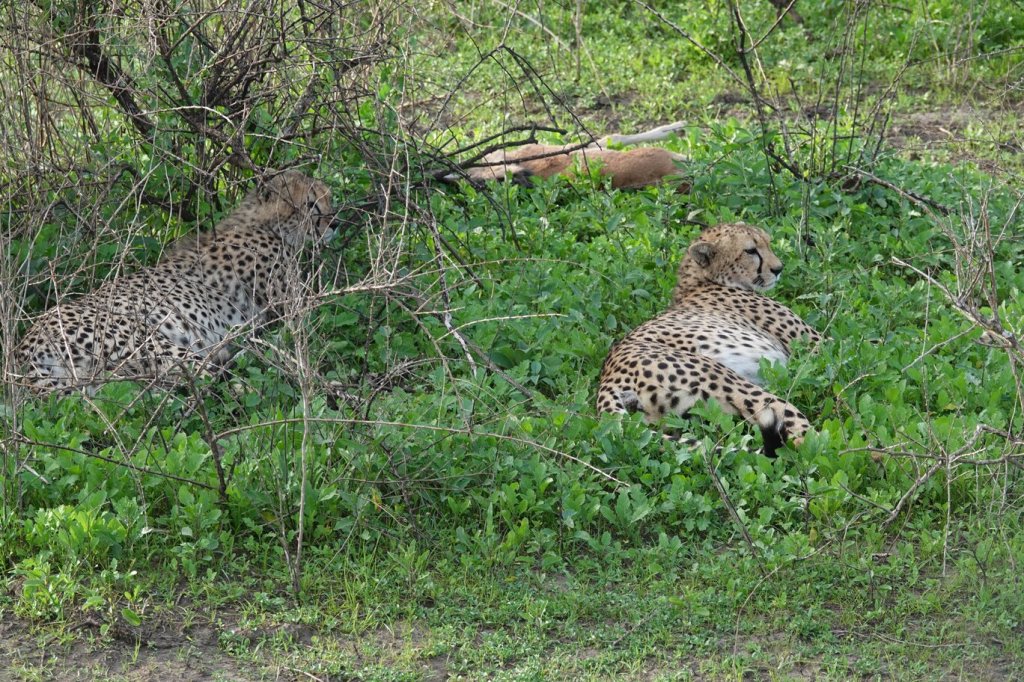
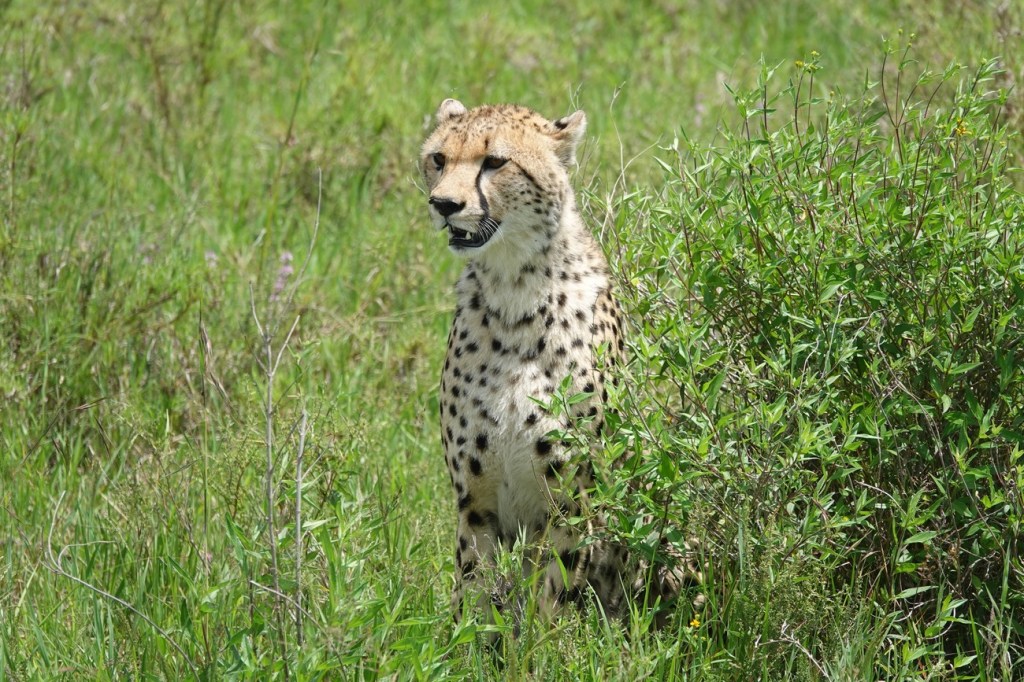
As we reached the southern part of the Serengeti it was getting late, but our guide Estomih insisted that we should check out two sightings of cheetahs before checking into our camp. We were a bit sceptical after several long days and our unsuccessful search in the morning, but eventually gave in to his enthusiasm. First we found a couple of young males, who had killed a gazelle, and were digesting their meal in the shade of a tree.
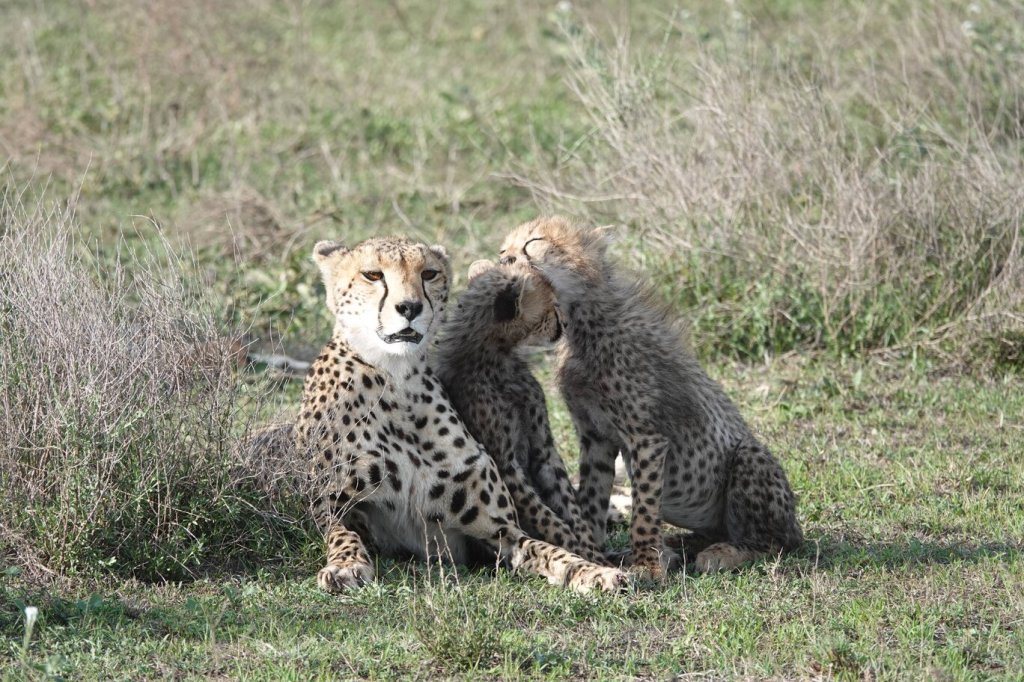
A bit further away, we found one of the highlights of our trip – a female cheetah with four cubs. She had caught them a young gazelle and was scanning the horizon for threats as they ate. When they had finished eating they approached her and gave her an affectionate lick.

We finally reached our accommodation after sunset. It was a special mobile camp, which can be disassembled and moved to follow the migrating wildebeest. Despite this, it was remarkably comfortable and well-appointed. On arrival we went straight to dinner and then to bed, aware that the next day we would have to get up even earlier than usual for a very special treat.
Previous Post: The Serengeti – Leopards and Cheetahs
Next Post: Floating over the Southern Serengeti

 Trouspinet travels