From Lake Natron to Serengeti National Park (and 48 lions)

We woke up early and were ready to leave at six as our guide Estomih had suggested. Our first destination of the day was Lake Natron, a large salt lake that stretches across the border between Tanzania and Kenya. We arrived just in time for sunrise. Estomih parked the jeep, leaving us to make the short walk to the water’s edge across a mudflat.
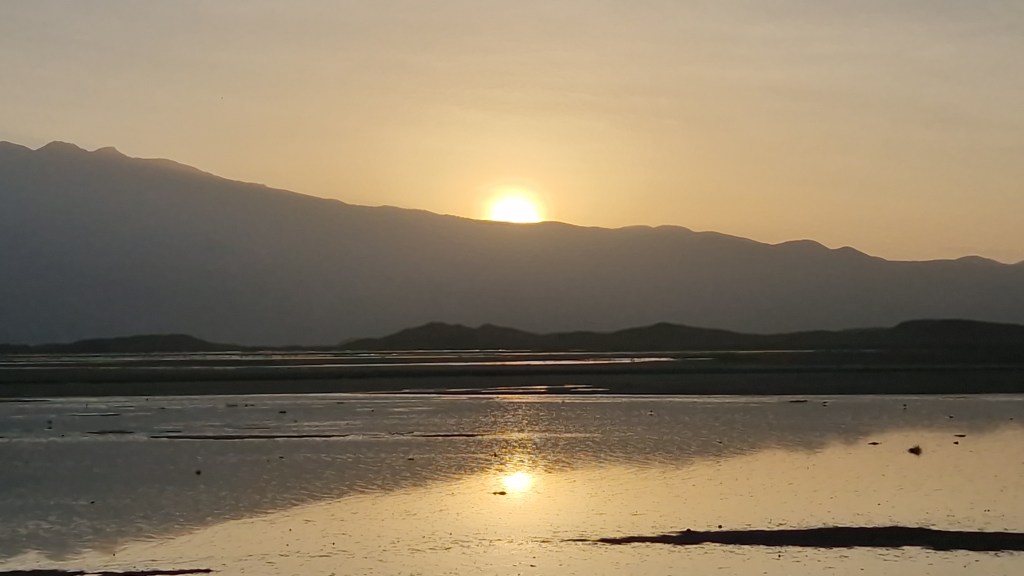
Sunrise at Lake Natron
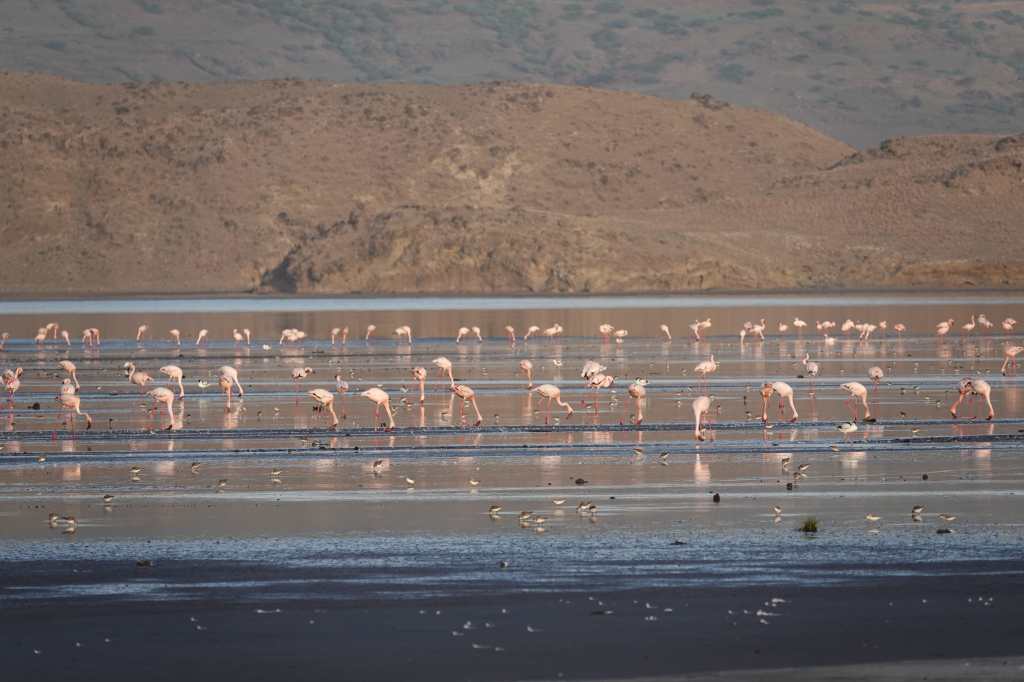
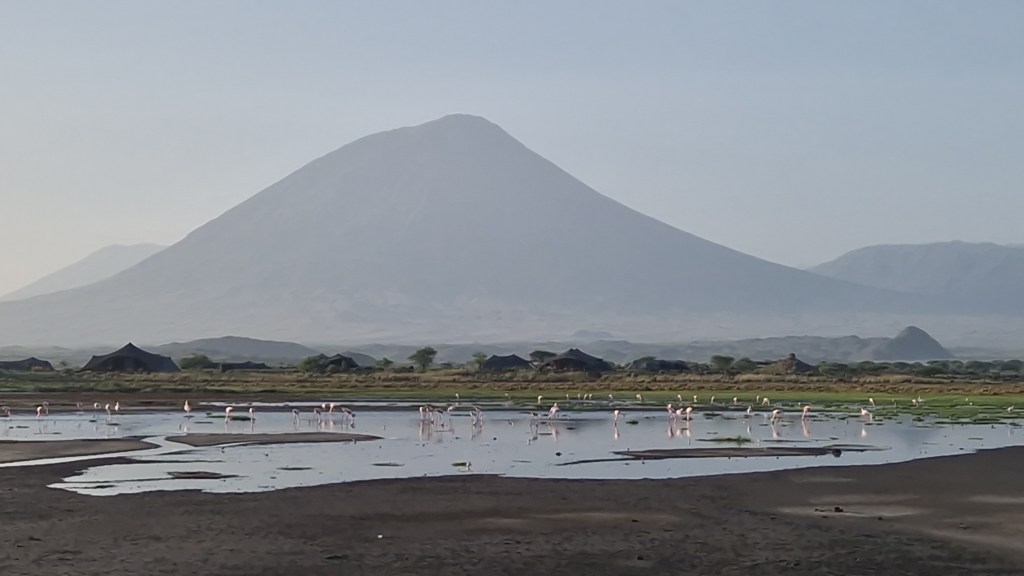
The flamingos appear at Lake Natron

As it got lighter, we saw Lake Natron’s most famous sight – its flamingos, their pink colour enhanced by the early morning sun. From a distance they resembled a long pink band running along the short of the lake.
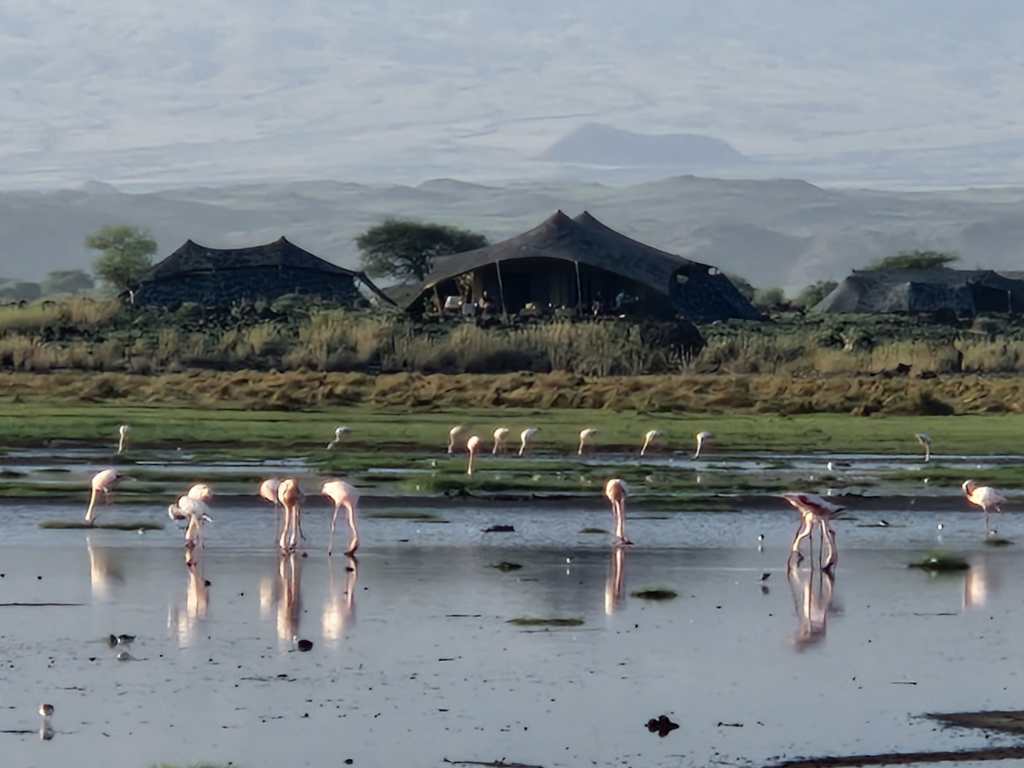
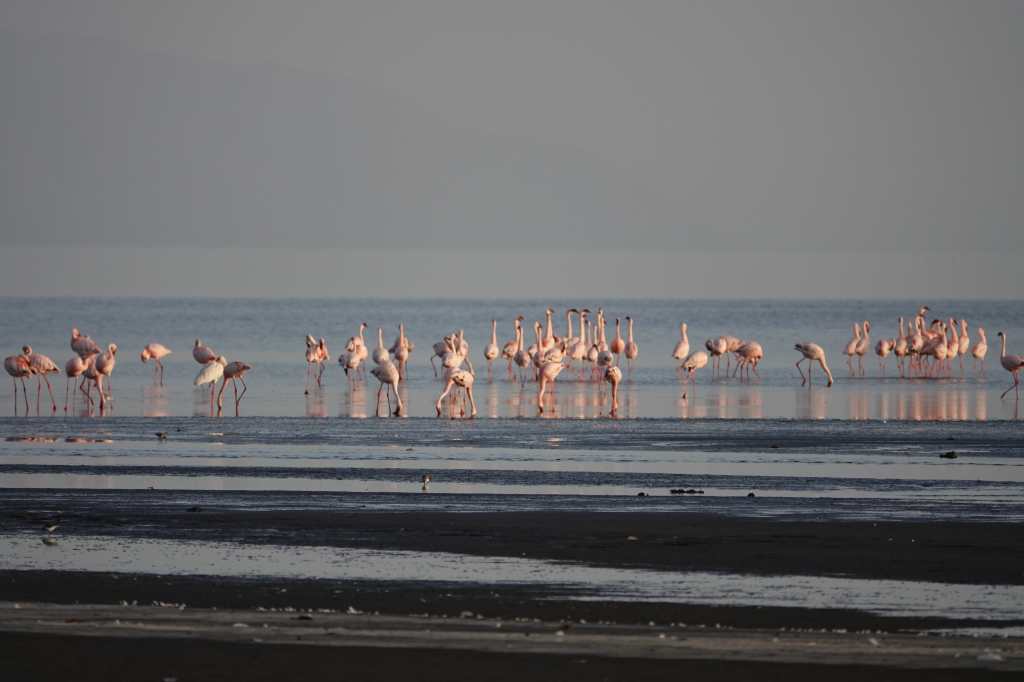
Flamingos…..
……..and more flamingos

We were the only visitors there, and the lake had a very peaceful feeling, with the silence only broken by the occasional honking of the birds when we got too close to them. We spent about an hour there soaking up the atmosphere and then headed back to our lodge for breakfast, where we also admired the busy weaver birds who built nests in the nearby trees.
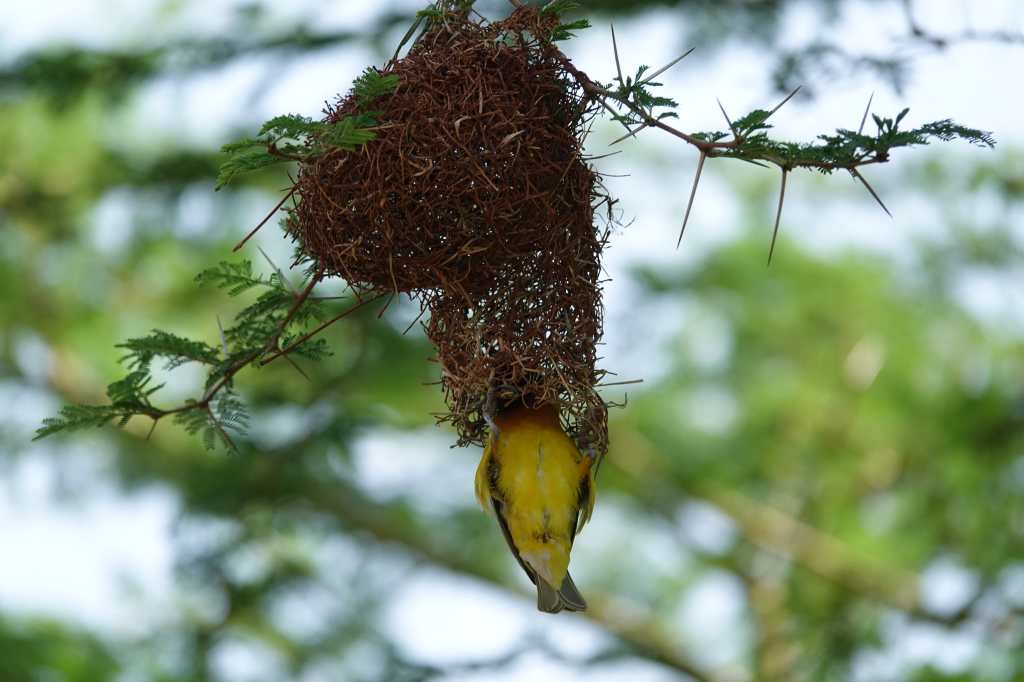
A busy weaver bird

Refreshed and dosed with coffee, we got back into the jeep and made the four-hour drive along the back roads of Tanzania to the Klein’s gate, the northern entrance to the Serengeti National Park. The road was very quiet and quite scenic, and the time passed quickly.
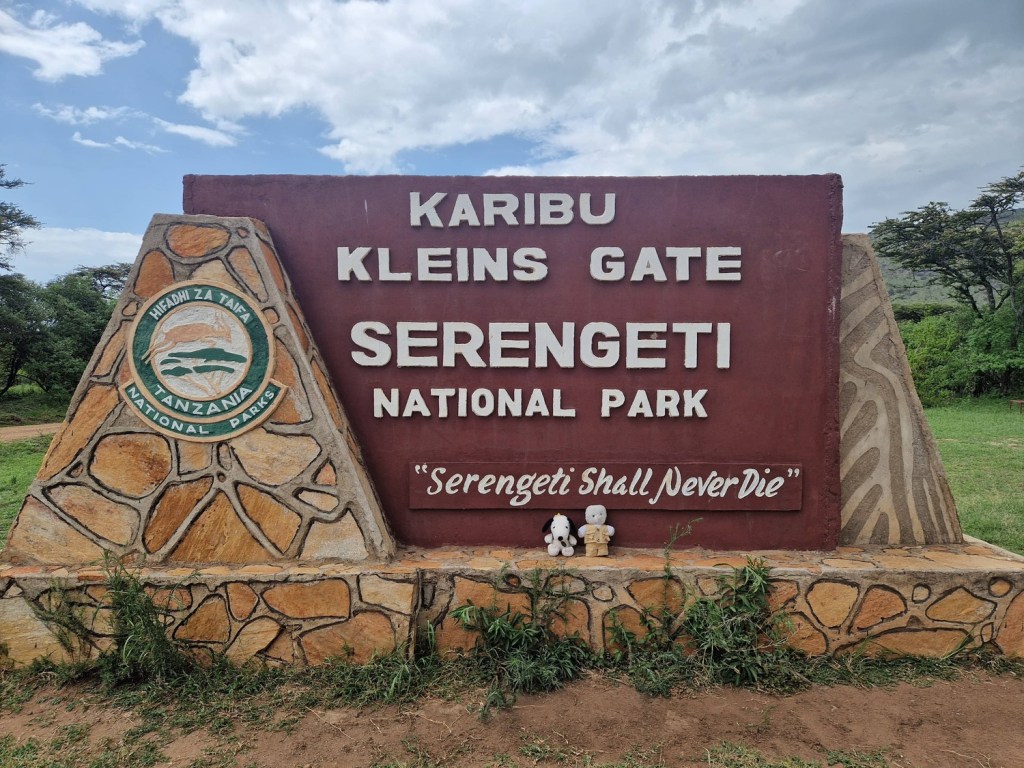
Klein’s Gate, Serengeti National Park

We stopped for lunch just outside the entrance, and then in the early afternoon Estomih bought our pass and with mounting anticipation, we headed into the famous park. Initially, it was an anti-climax. We saw a few antelope and other small animals, but nothing remarkable. Estomih’s jeep had a radio with which he communicated with other guides, usually to share tips about where to see big cats. But this afternoon the guides were all complaining about how quiet things were.

Estomih headed off to an area where some lions had been seen earlier in the day, and suddenly on the horizon I saw the distinctive profile of a large, old male lion with his large bushy mane. We rushed to look and found we had discovered one of the Serengeti’s “superprides” – a social group consisting of about a dominant male lion, many lionesses and even more cubs and young lions.
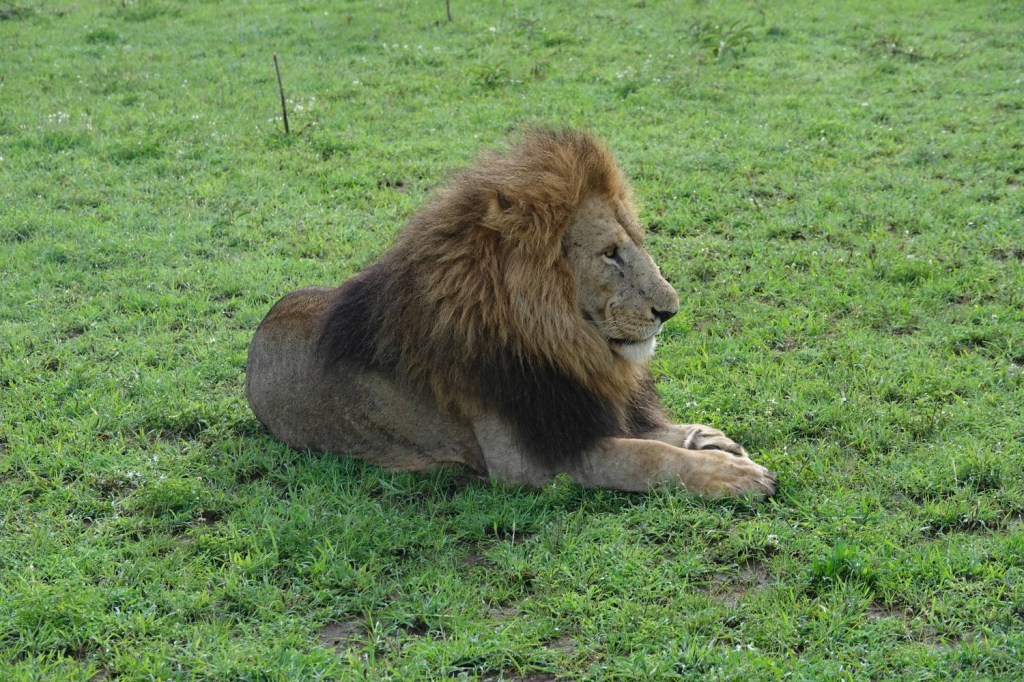
The leader of the superpride

Each member of the group behaved differently. The old male lounged around. He got up once to sniff our jeep suspiciously before peeing on our spare wheel to mark his territory, and then lay down again right beside us.
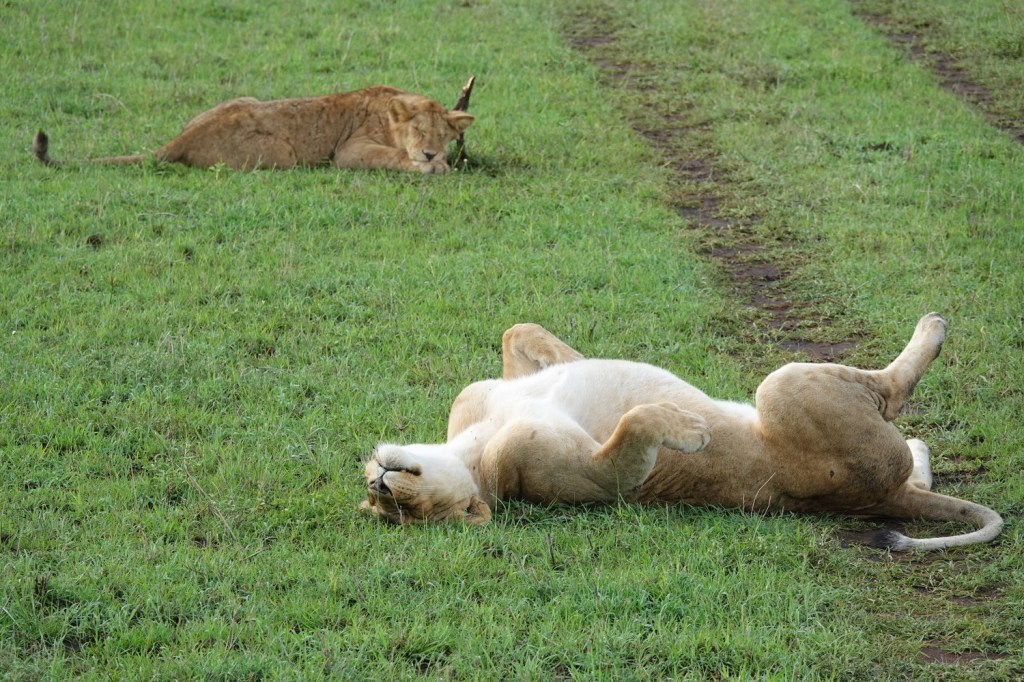
Lionesses relaxing

The lionesses walked around greeting each other and sometimes would roll around in the grass, with their tummies in the air – reminding me of my own little pet cat back home.
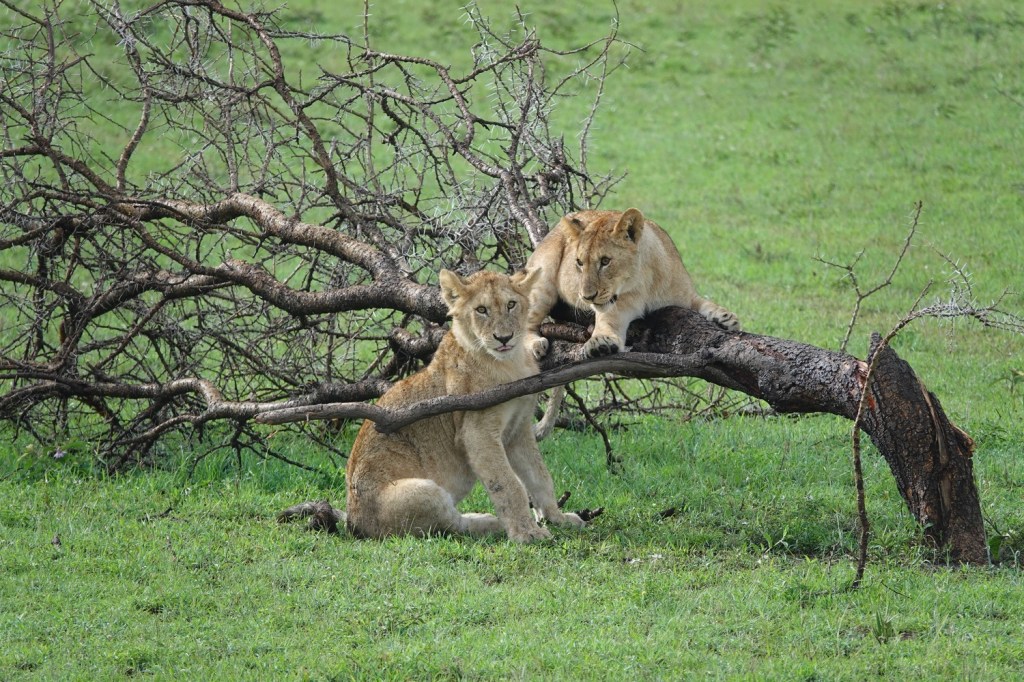
Cubs playing, Serengeti National Park

The younger lions on the other hand were very active and always playing.
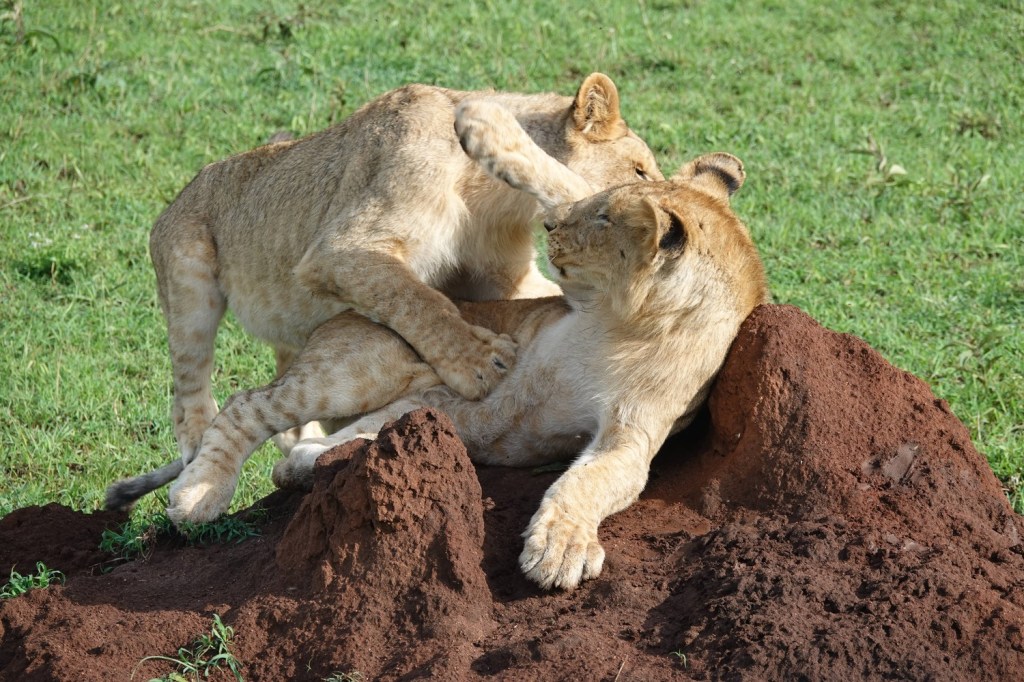
At first we were one of only two jeeps to have discovered this pride, and had the amazing spectacle almost to ourselves. But as time passed more jeeps arrived, and we decided to move on. A short drive away we discovered yet more lions – a lioness with three young cubs, which Estomih said were part of the same superpride.
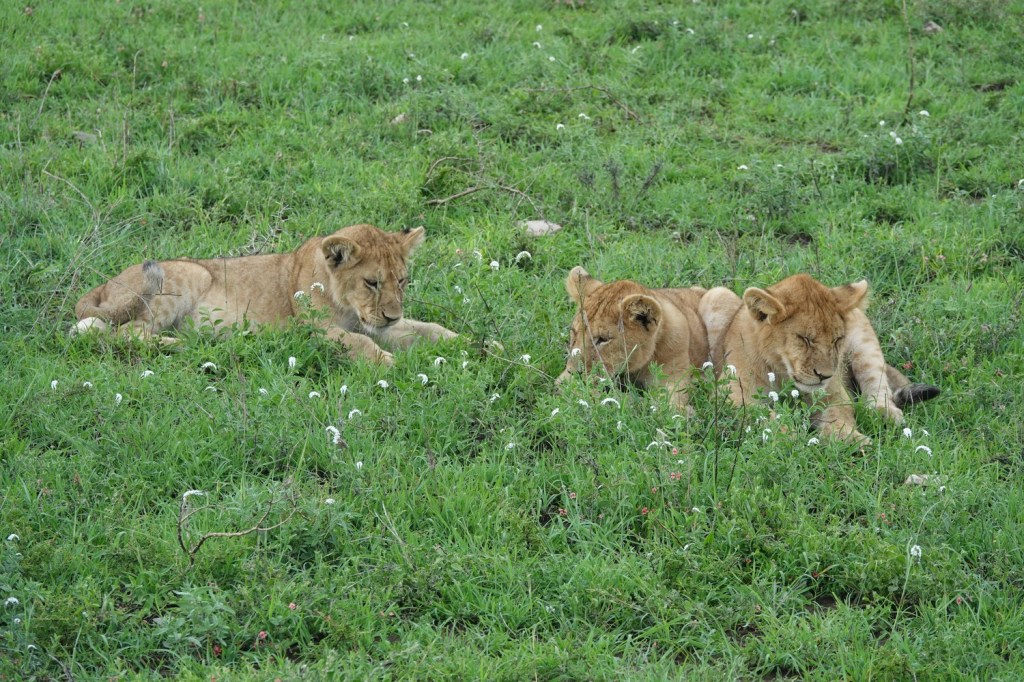
Yet more lion cubs

Another short drive away we found two more male lions, lounging around in a base used for balloon flights. In total that brought the number of lions we had seen to twenty eight.
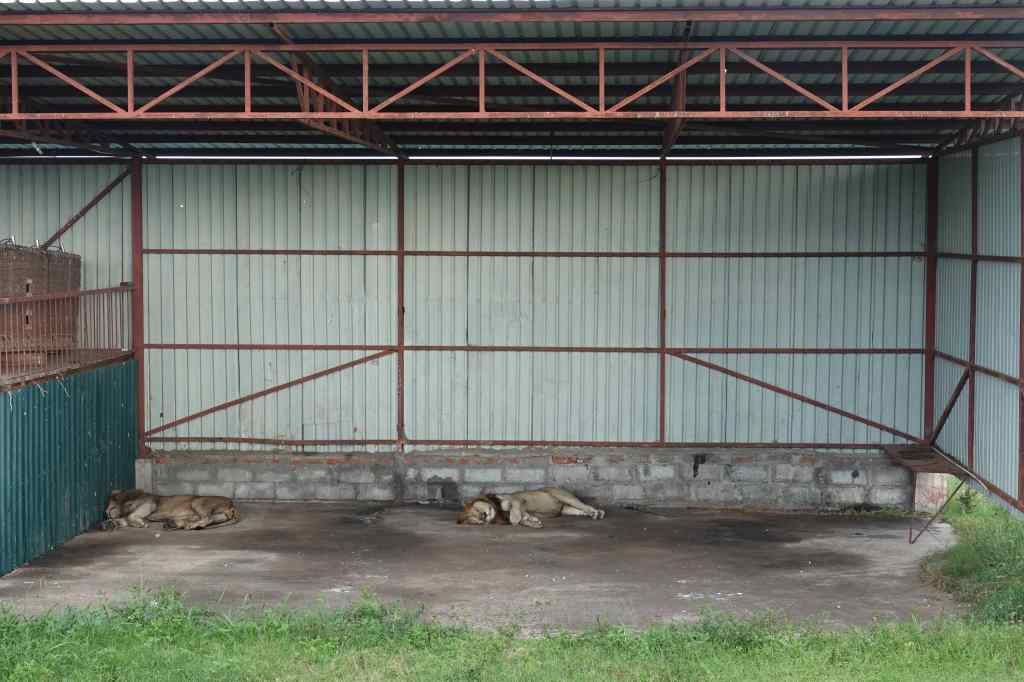
Two outcast males

It was getting late, and it was time to head on to our camp for the night. In the fading light we caught a quick glimpse of a hippo that had left its river…….
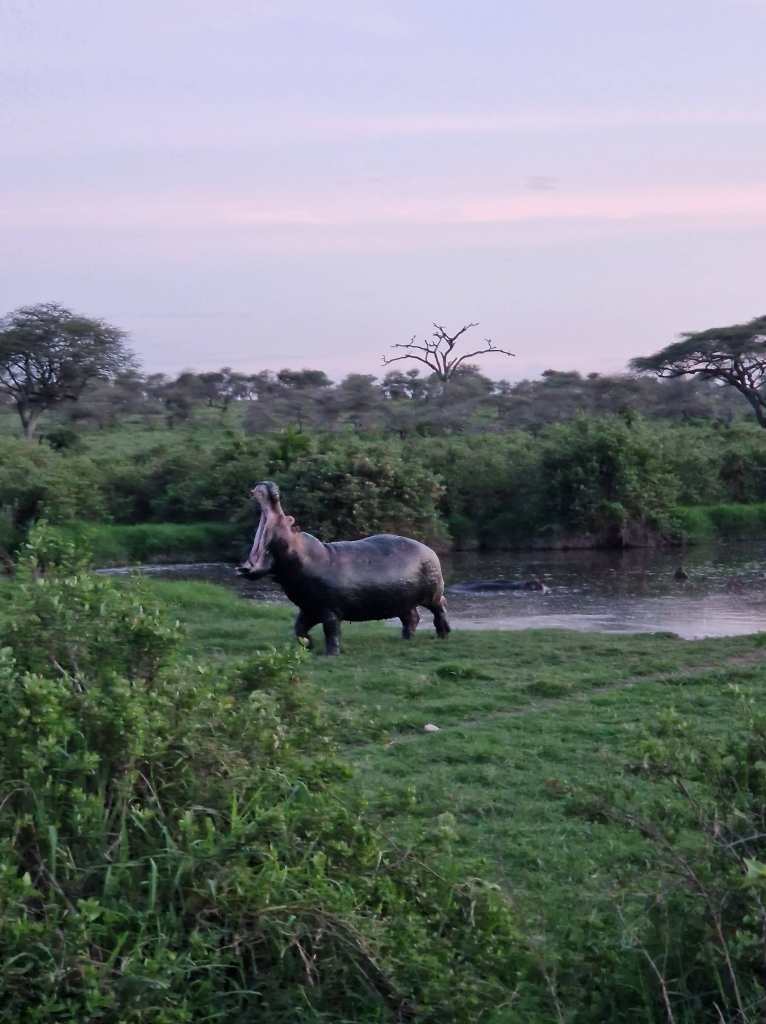
Hippo, Serengeti National Park

……and then just a bit later, a group of over twenty mostly female lions in a pack hunting zebra, spread out right across the track we were using. We stopped to take pictures, but they largely ignored us, staring intently into the distance in front of them. One of the lionesses got up to sniff the spare wheel which the large male had sprayed earlier, and looked at us suspiciously for a while before rejoining the group.
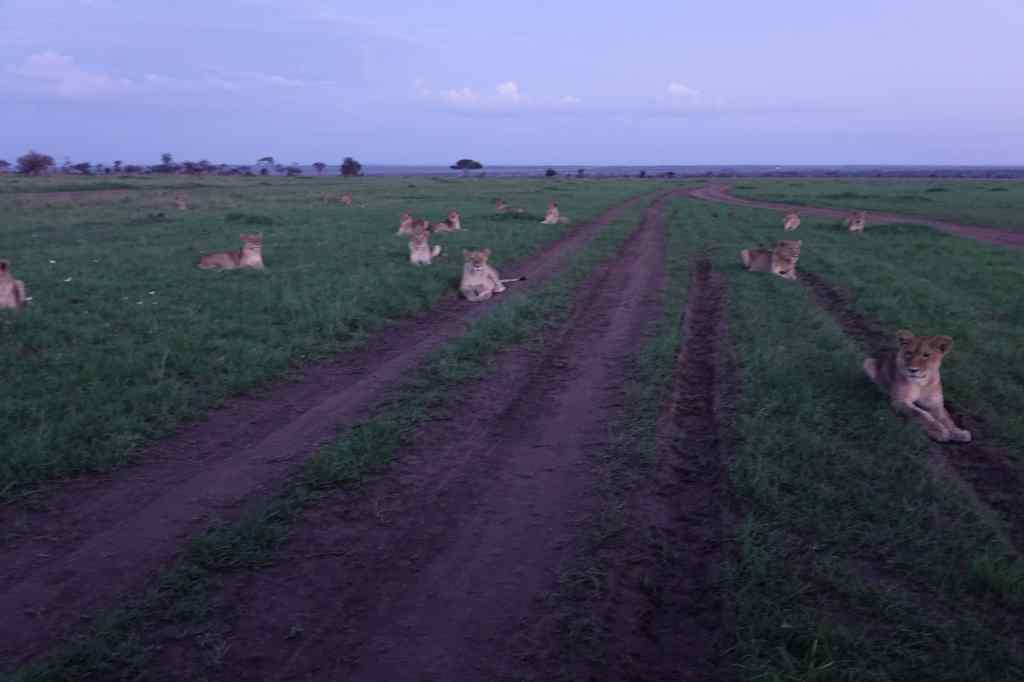
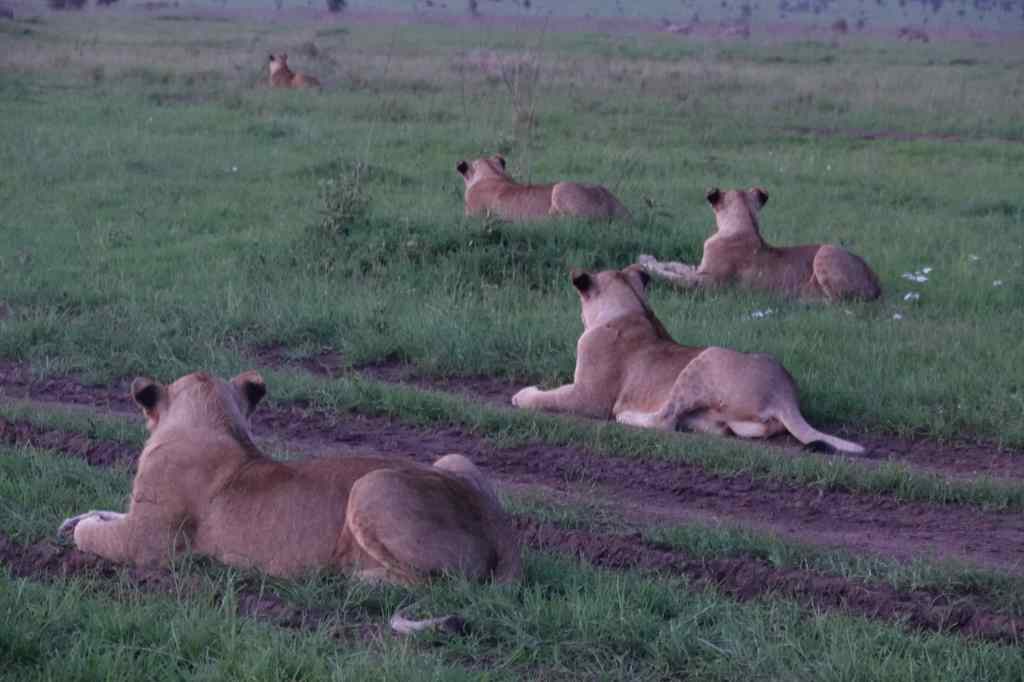
Dusk -a hunting pack of lionesses

Sadly, it was now very late, and we could not stay long to admire the lionesses. We finally got to our camp at about seven thirty, after a day which had started at six. We were impressed by Estomih’s stamina and dedication, and remembered that his work was not yet over – he still had to clean the jeep and wash up the plates from our lunch. What an amazing day – after the spectacular flamingos of Lake Natron, we had seen no less than forty-eight lions in the space of a few hours in the Serengeti National Park. Our expectations for the next three days we would spend there were now sky-high.

Previous Post: From Tarangire to Lake Natron

Next Post: The Serengeti – leopards, cheetahs and yet more lions
Tanzania – Tarangire National Park

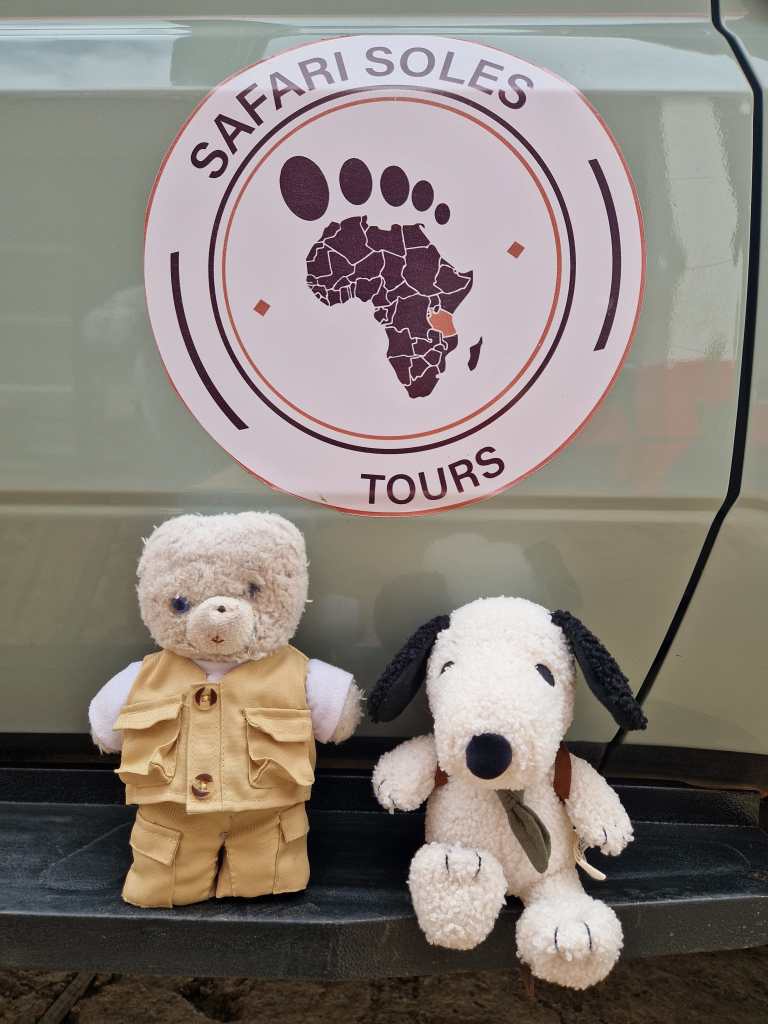
Trouspinet (left) and Snoopy

Welcome from Trouspinet the vagabond teddy bear! This time my destination is Tanzania, and I am accompanied by my friend Snoopy for a two week safari. As far as I know, there are no bears in this part of the world, but I am hoping to see lions, leopards, cheetahs, elephants and lots more – plus some amazing scenery and interesting people. We travelled in January to escape the depressing winter weather in London, but made the mistake of booking a flight passing through Schiphol airport in Amsterdam, where a couple of days of cold snowy weather had caused the cancellation of most of the flights. I followed developments anxiously online, but miraculously my flight from London into Amsterdam and my continuation to Tanzania were both among the small number of flights that operated.

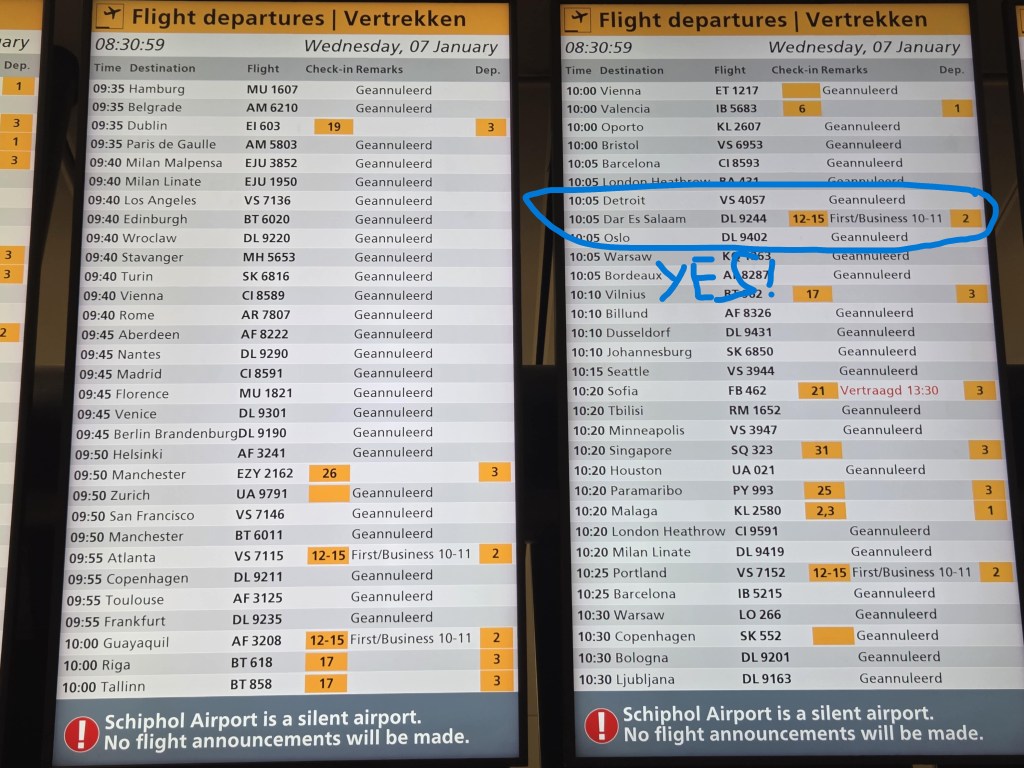
Chaos at Schiphol airport, but we were very lucky

From the freezing cold in Amsterdam, we arrived in Arusha, Tanzania’s third biggest city, late in the evening. Immigration and baggage claim were both very efficient and soon after landing we were enjoying some warm fresh air and a cold beer by the side of my hotel’s swimming pool. We slept well and next day after breakfast met Estomih, who was to be our driver and guide for the next twelve days. He showed us to a large and comfortable specialised safari jeep with an opening roof, and we set off to our first destination, Tarangire National Park, a two hour drive away.

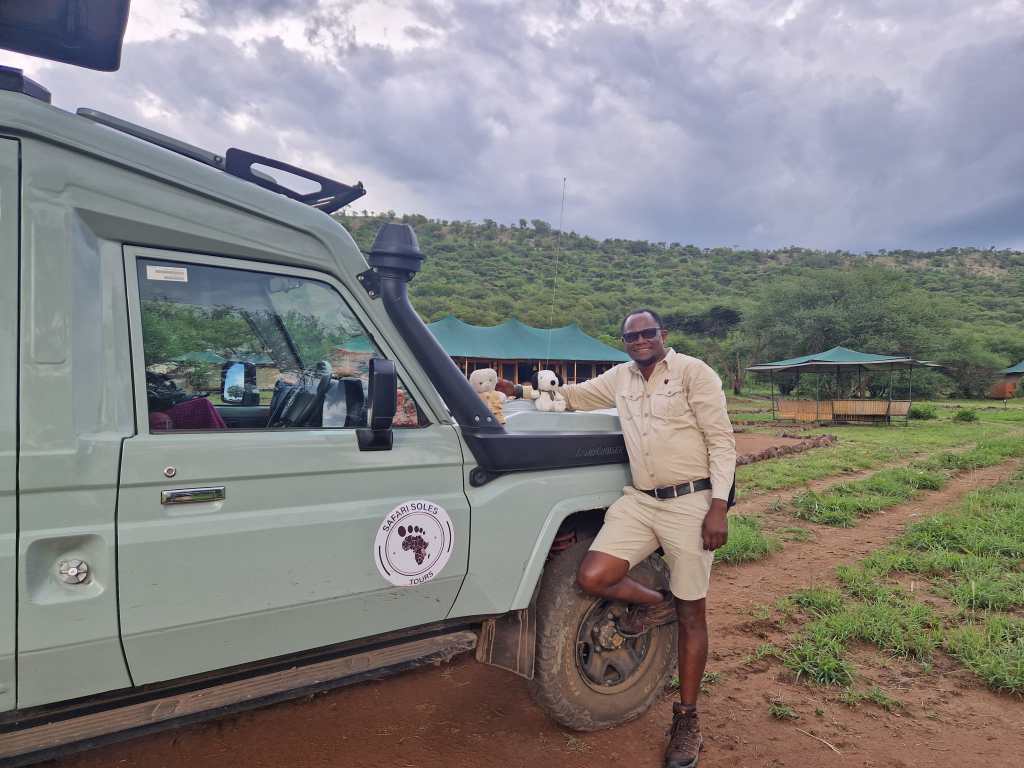
Our guide Estomih
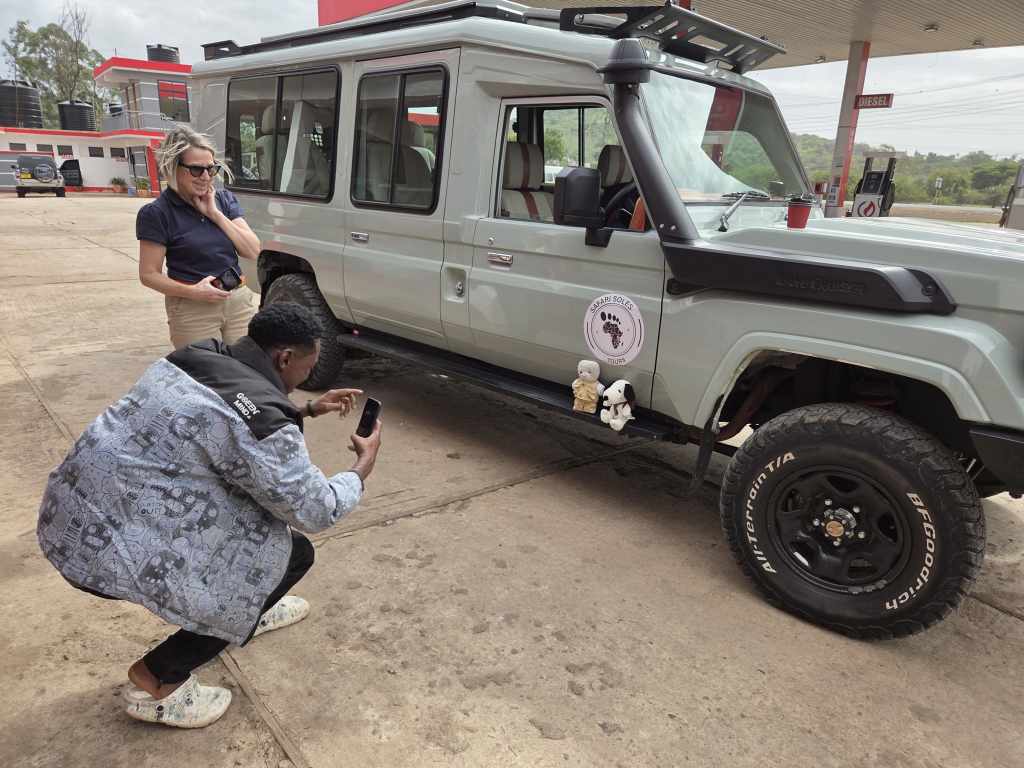
Locals were curious to see a teddy and dog on safari
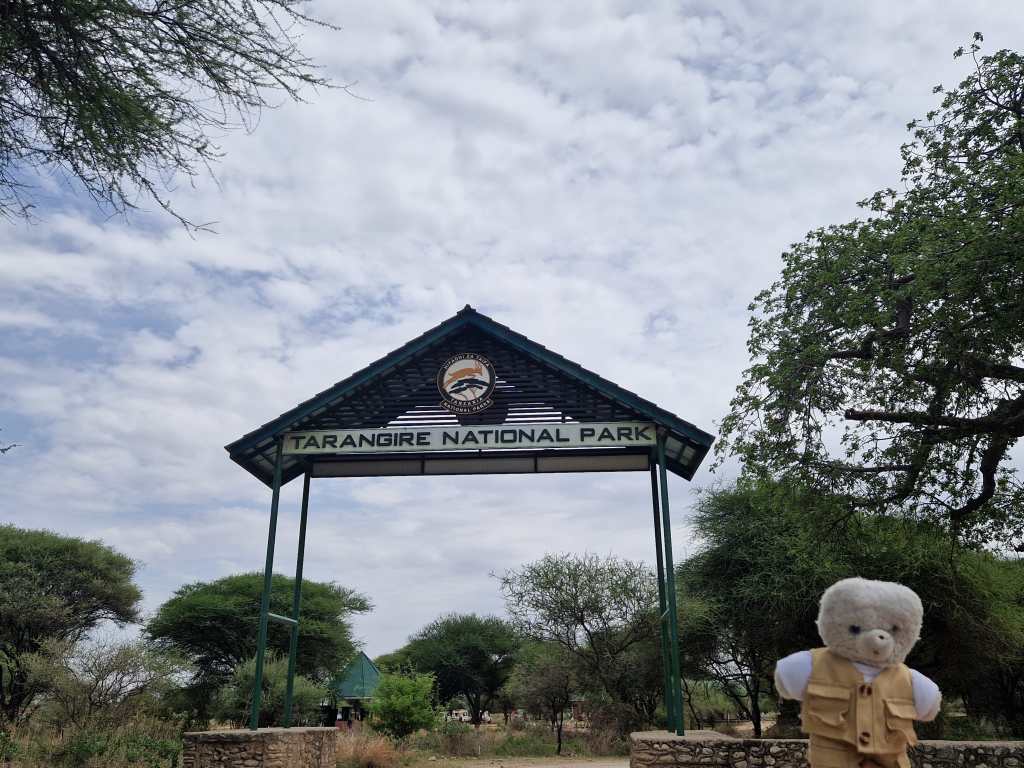
The entrance to Tarangire National Park

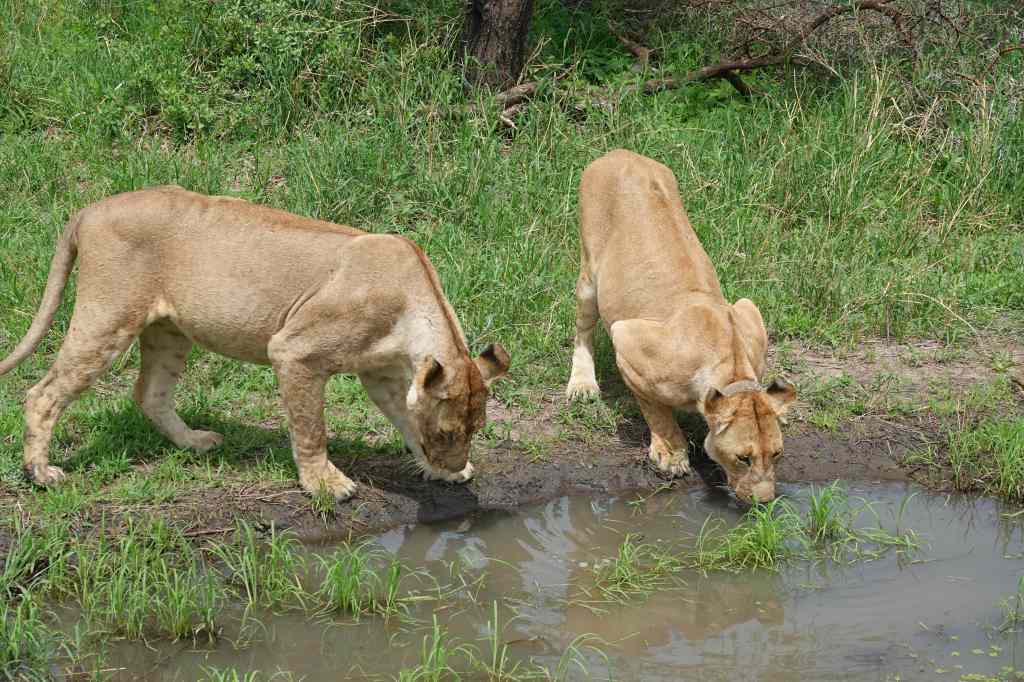
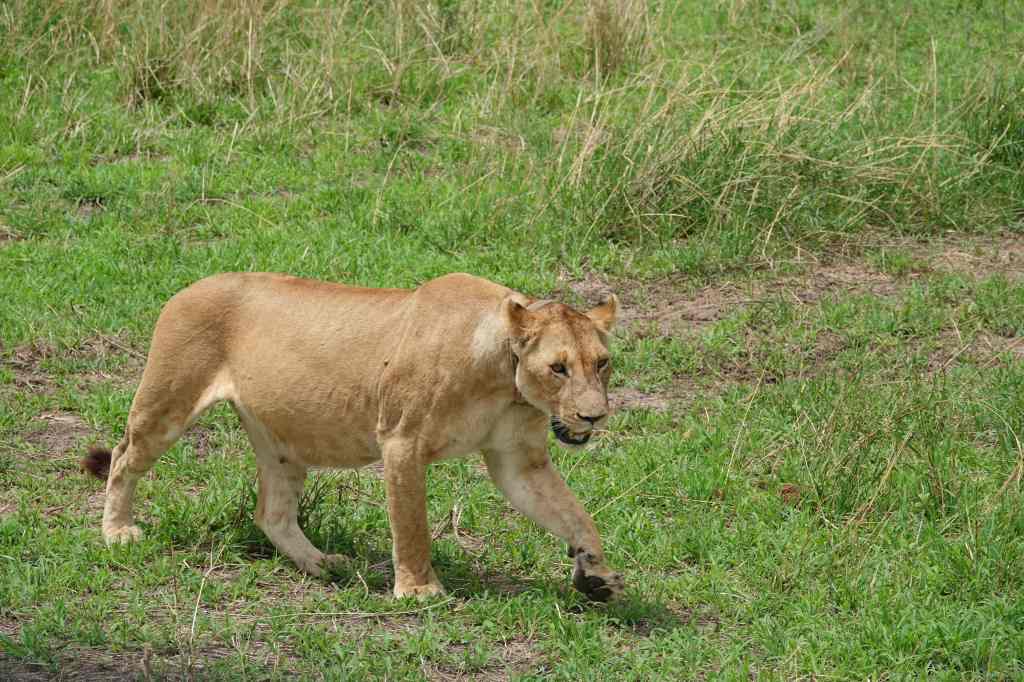
Tarangire Park is known for its dense forests, baobab trees and elephants. It is also home to lions and leopards, but they are usually hard to see because of the vegetation. However, luck smiled on us and a short way after the park entrance we bumped into a group of three lionesses drinking water and half-heartedly stalking some nearby zebra.

Two lionesses drinking water
A third lioness stalking zebra

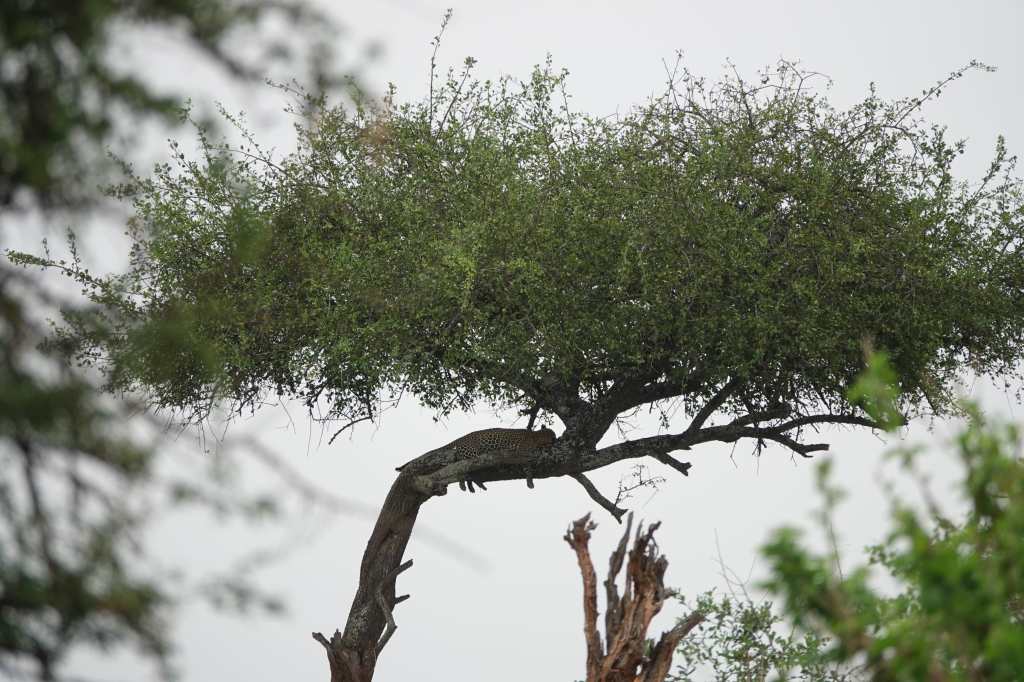
A short way further into the park we came across a leopard, hiding high in a tree.

A lazy leopard in a tree

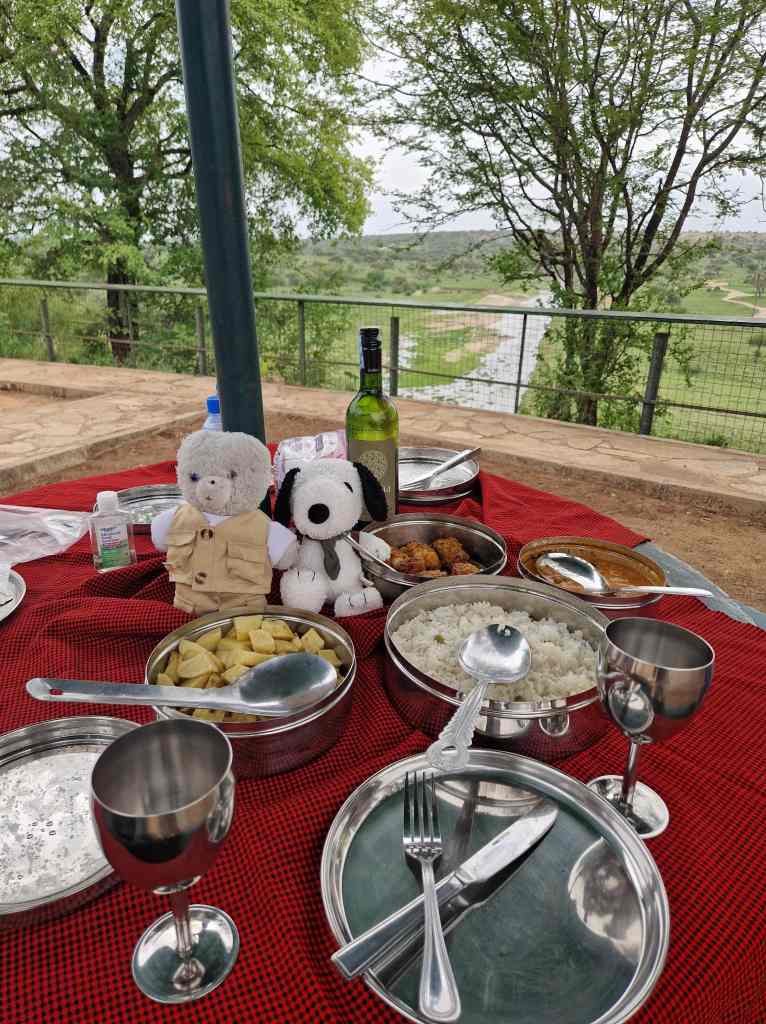
Surprisingly, finding Tarangire’s famous elephants proved rather harder. We drove around searching but the huge animals were nowhere to be seen, so instead we made a break for lunch at one of the park’s picnic areas. This proved to be a treat, and was to be a highlight of each day of our trip. Estomih brought a huge picnic hamper out of the jeep, found a picnic table, and set out a spread of rice, meat and vegetable stews, fish and fruit. As a final flourish he even produced a bottle of Tanzanian wine.

A feast at Tarangire National Park

We spent a leisurely hour sampling this feast and relaxing, occasionally driving away naughty monkeys who would jump onto tourists’ tables and steal any unguarded food.

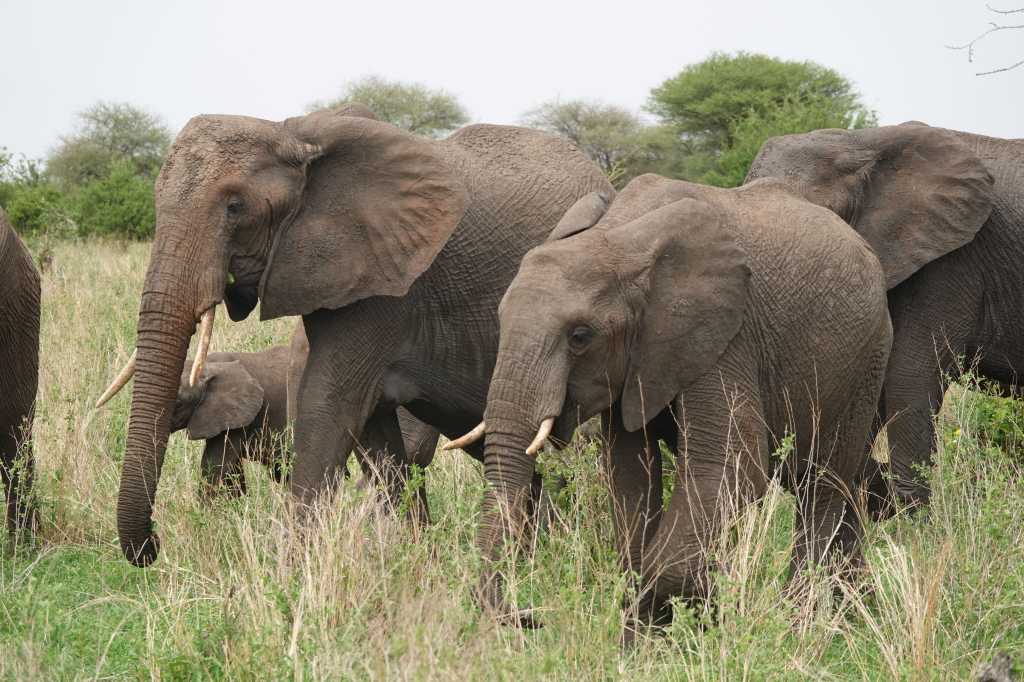
After lunch we set off to explore again, and soon stumbled on a large herd of elephants slowly making their way through the jungle.

A herd of female and young elephants

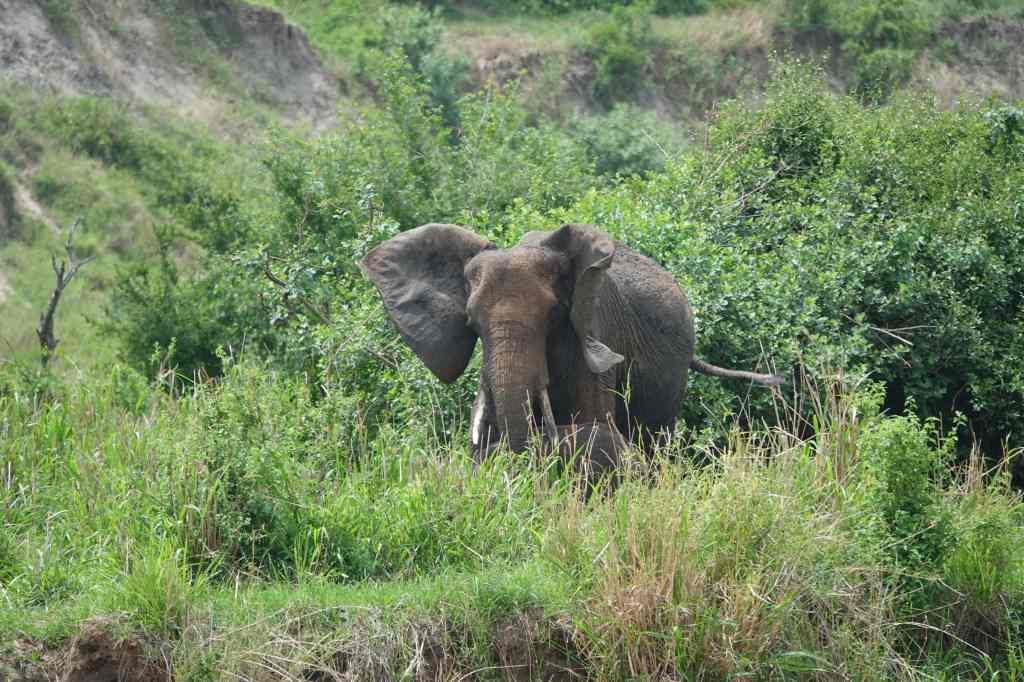
We also bumped into a few single adult males, who usually live separately from the herds of females and babies.

A solitary male elephant

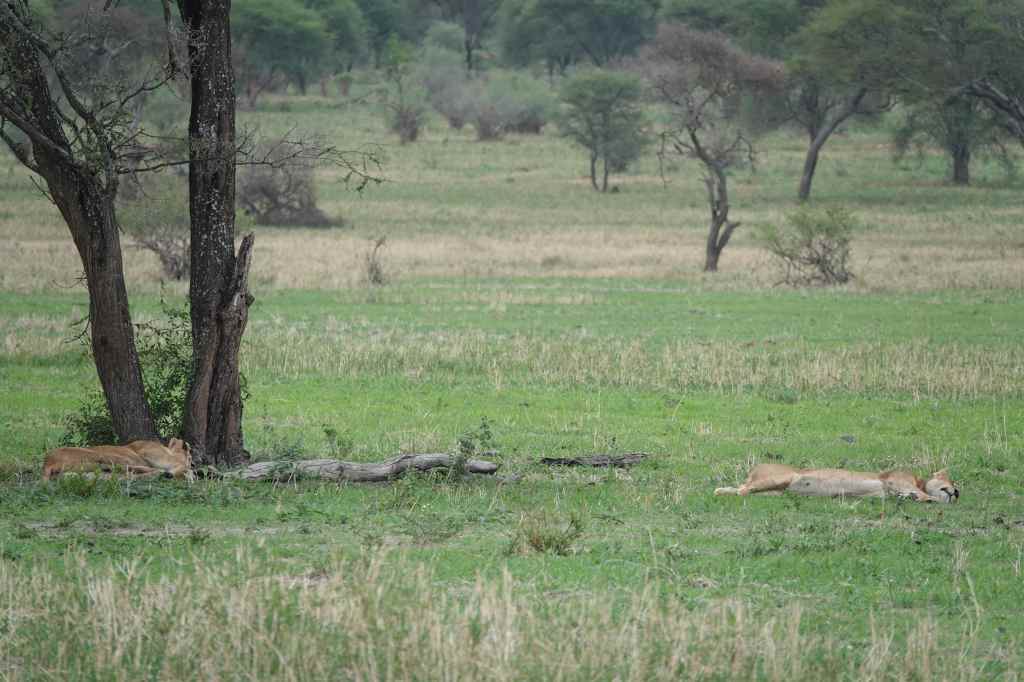
As the afternoon wore on, it grew hot, and the wildlife became harder to see. Estomih drove us towards the remote part of the park where our camp was located; on the way we saw two more very sleepy lions.

Two sleepy lions

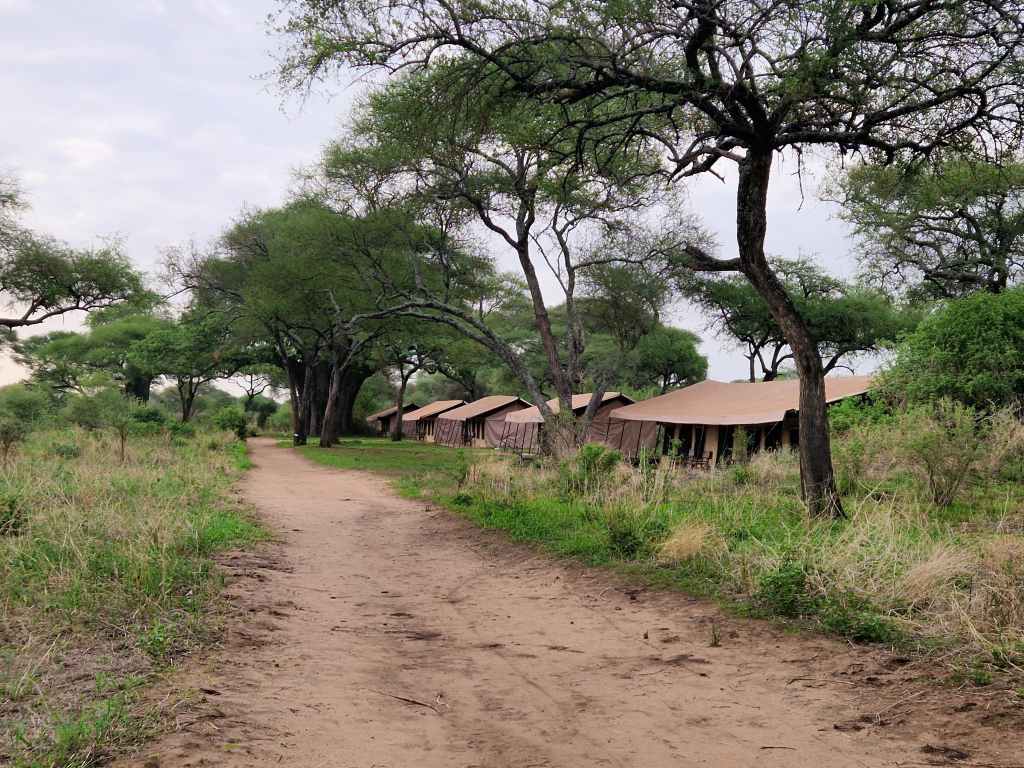
Our accommodation was located inside the park, meaning that it can be visited by wild animals, especially at night. The manager introduced us to his camp, and explained the rules to us – the most important one being to use the walkie-talkie in our room to ask for an escort to take us to and from the restaurant at night. He said that there had been cases where camp staff or tourists had been attacked by animals, but that inside our tent we were quite safe. After dinner – which was good, given the remoteness of the site – we settled down in our tent for the evening. It was large, with a big bed and separate toilet and shower inside. We were soon drifting to sleep, listening to the sounds of the jungle around us. Our safari trip around Tanzania had started well.

Our bush camp at Tarangire National Park

Etosha National Park – hidden leopard and lion, aggressive rhino and lots of giraffes and elephants!

Elephant Etosha
Day 1 at Etosha

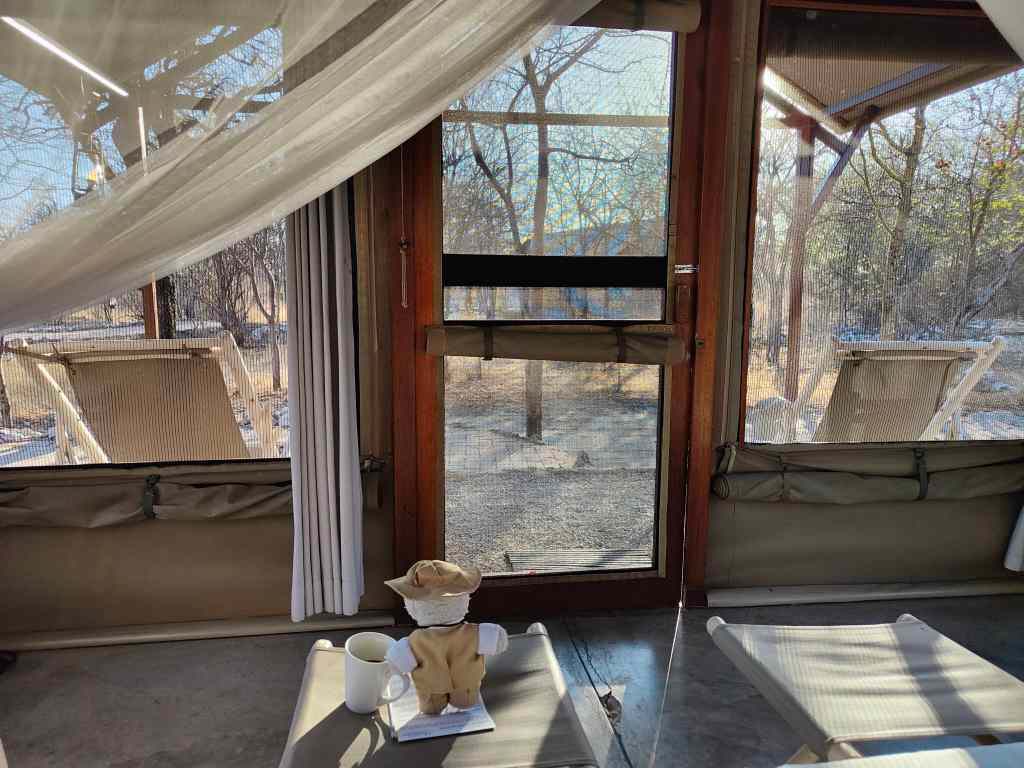
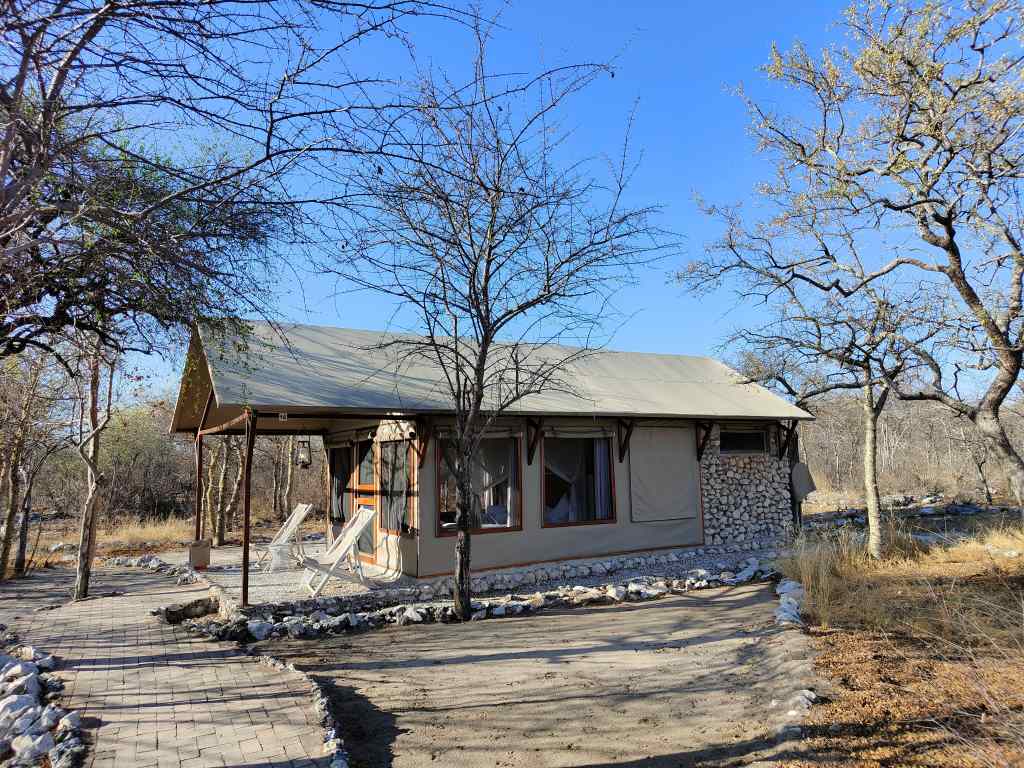
The following morning I was woken up by birds chattering in the bush outside. I opened up the flaps of my tent and sat in bed enjoying the morning air with a cup of coffee. The tent was flooded with light from all sides, and it felt like I was sitting in the open air in the middle of the bush.

camp Etosha
The morning light flooding through my room at Etosha
camp Etosha
The room is part hut, part tent, with canvas sides

After breakfast I set off again to the park. There are two ways to visit Etosha – one is in your own car, making your own itinerary, and one on an organised “game drive” in a truck with other tourists and a guide. The organised tour offers better chances to see animals, since the guides know where to look and communicate their sightings to other guides by phone. But having invested in a big 4×4 I wanted to keep my independence and drive myself. Serious visitors enter the park at its 06.30 opening time to have the best chances of spotting the less easily seen game – particularly the big cats. After my three days of travelling I did not have the energy for another early start and reached the park at around 9, when some of the organised groups were already returning.

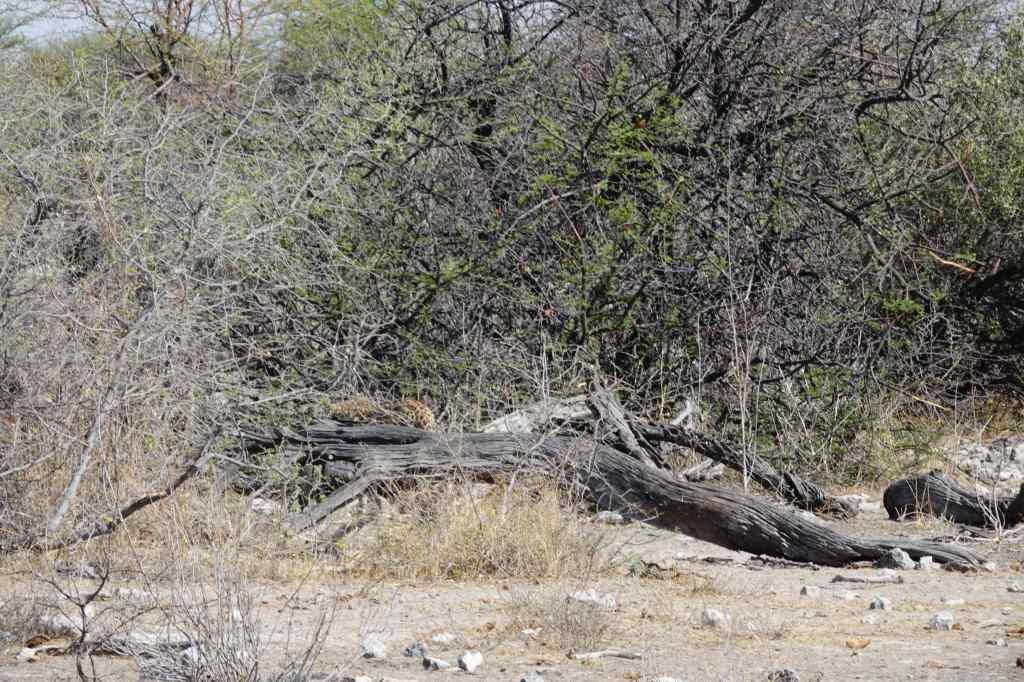
Despite my late start I was very lucky. First I spotted – very briefly – a leopard, one of the most elusive animals in Etosha National Park, but I was a little too slow to get a really good photo.

Leopard Etosha
Leopard (disappearing behind the tree trunk)

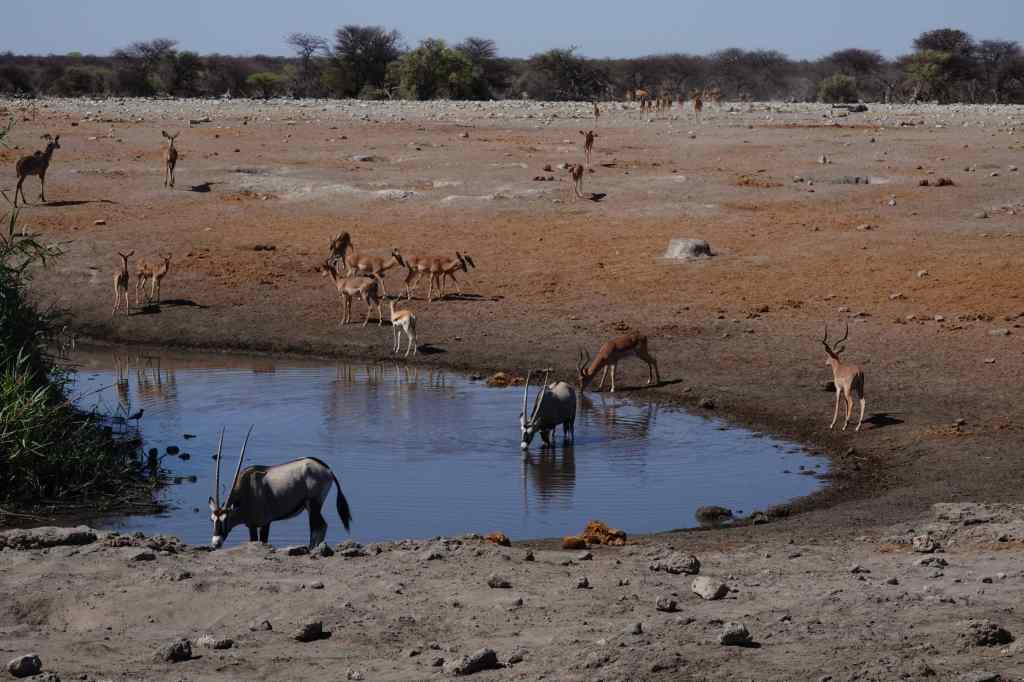
October was the end of the dry season in Etosha, and the once abundant water brought by the rains had reduced to a few waterholes where the game comes to drink. This makes for the best time for spotting wildlife. My first visit to a waterhole did not disappoint; a group of oryx and springboks were drinking, soon to be followed by zebra and some kudu.

Oryx-at-Etosha
Etosha – Oryx and Impala at the water hole

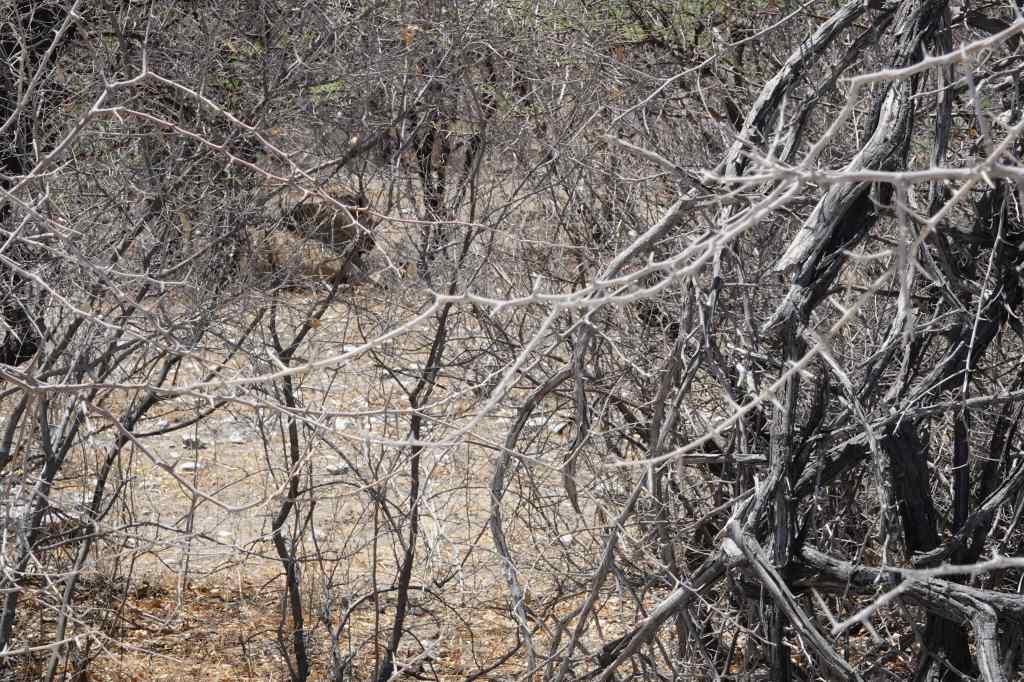
On my way to the next waterhole, I had a stroke of luck and noticed a lion, sheltering from the late morning sun under a bush. Sadly my lack of mastery of my new camera caused me to mess up my photo.

Lion-at-Etosha
Lion hiding from the sun (top left)

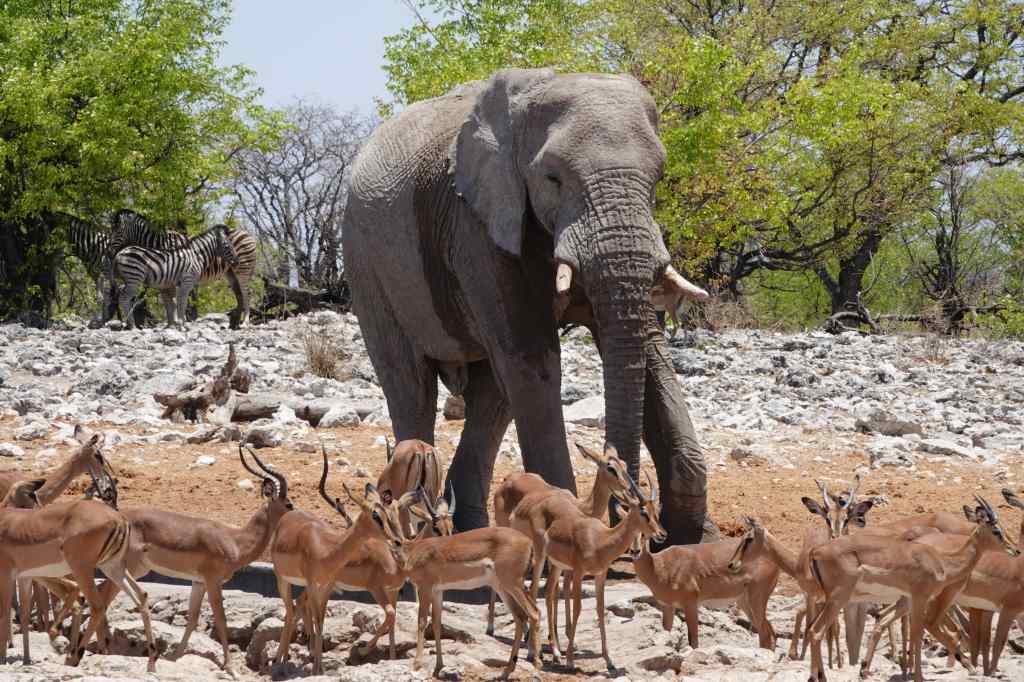
The final waterhole of my morning visit was home to a small group of elephants, who had come to drink and cool off by spraying themselves with water. Elephants seemed very common at Etosha.

Elephant-and-Impala
Elephant and Impala at a waterhole, Etosha

Watching the giraffes drink was the most interesting. They would approach very slowly, then look around for several minutes. Then they would slowly splay their legs and lower their necks to drink. I suppose that their caution is because they is only ever vulnerable to predators in this rather awkward drinking position.

Giraffe-at-Etosha
Etosha – a giraffe drinking

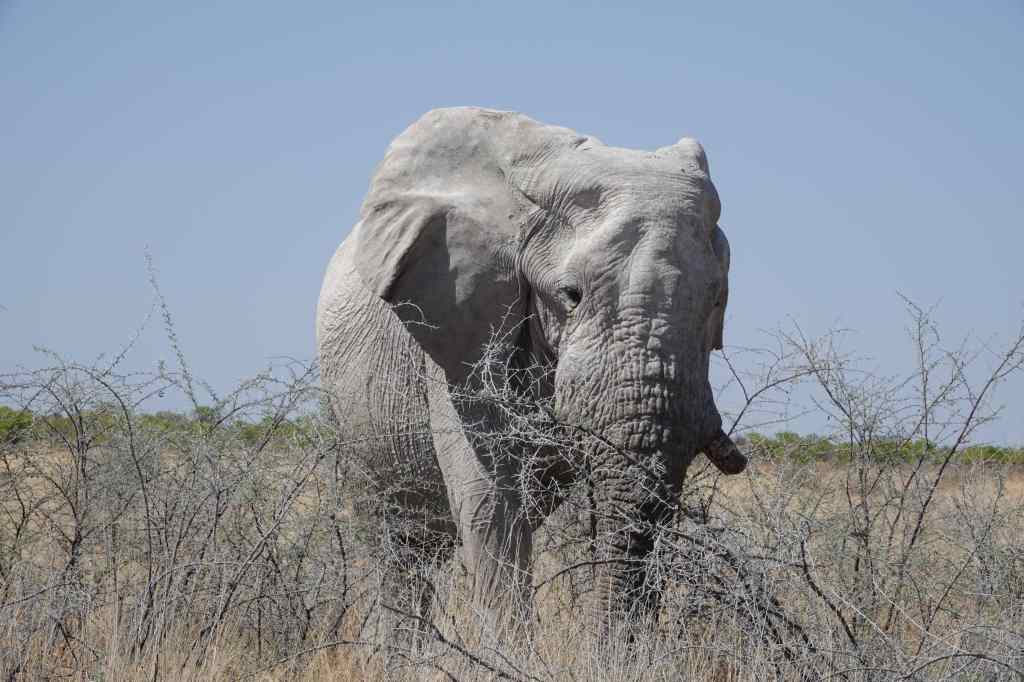
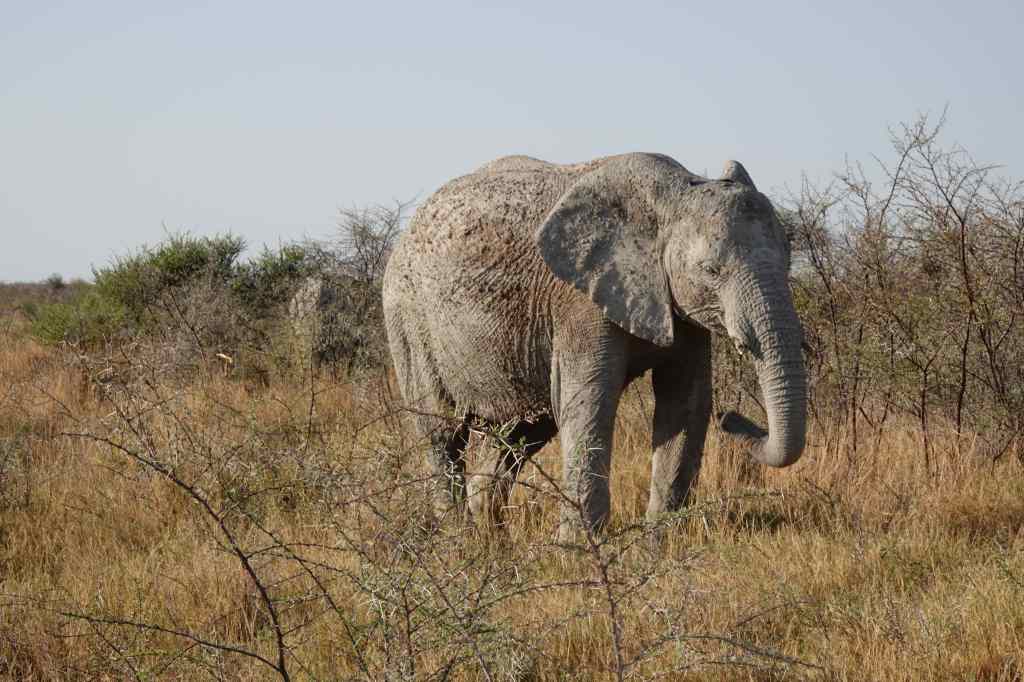
It was now one o’clock, and the hottest part of the day had arrived. This meant that animal sightings would be much harder, so I drove back to my lodge to relax by the pool. At 4pm I set off again for my evening “game drive”. I visited a couple of waterholes without luck, before setting off along a remote track.  At first the landscape was empty and dry, and I began to regret my choice of route. But then I bumped into an old, grey wrinkled elephant just standing by the side of the track. He looked a bit crumbly, and like many elephants in Etosha National Park, had broken tusks (apparently a lack of minerals means that few Etosha elephants have big healthy tusks).

Elephant-Etosha
A solitary old elephant

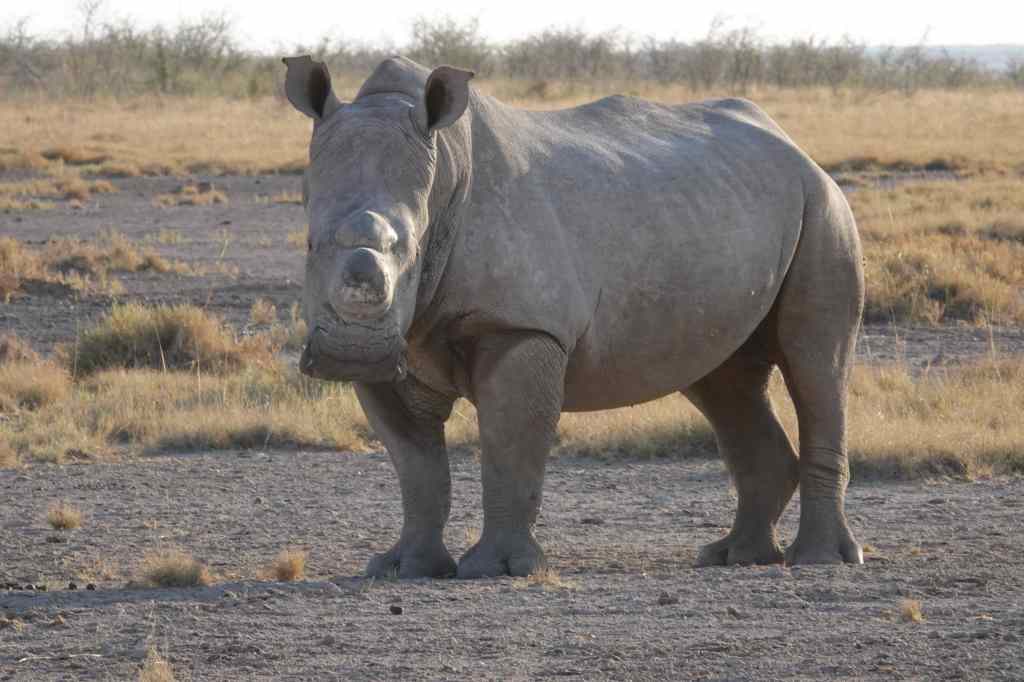
The old elephant, isolated and maybe rejected by his herd, made me feel rather sad, but transformed my feeling about my drive, which became a big adventure. I drove off onto a flat plain. In the distance, I could see the silhouettes of other lumbering elephants and tall giraffes; occasionally the track would bring me face to face with one. I’d stop to let the giraffes run away, but slow down and pass the elephants carefully – my guidebook had a whole page devoted to what you should do if an elephant charges your vehicle. I felt that I had landed on another planet, or gone back to some prehistoric time on earth, before the rise of man. I was enjoying the feeling of total detachment from the modern world when I stumbled upon the highlight of the afternoon – a rare white rhino. I stopped and we looked at each other with curiosity, whilst I took more photos.

White Rhino Etosha
Face to face with a white Rhino at Etosha

I noticed the sun was sinking on the horizon, so looked at my watch and checked the map. I was a long way from the entrance and I had an hour to reach the gate before it closed. I hurried off, initially pursued by the rhino. I raced the sun as it dipped down to the horizon and cast long shadows of trees over the plain and the road. I didn’t want to have to find out what happened to people that got stuck in Etosha after closing time, and made it there exactly at the 19.02, to be the very last vehicle to leave. As I drove off I heard a guard say “Right, home now!” to her colleague.

Back at my camp, I had another excellent dinner (fish this time – how did they get it here, so far inland?) and then collapsed into the bed in my tent, very happy with day’s game spotting. Out of all of the larger animals at Etosha, I had been lucky enough to see everything except the eland (Africa’s largest antelope) and the cheetah.

Previous Post – The Long Trip to Etosha National Park

Next Post – Day 2 at Etosha

Blog at WordPress.com.

Up ↑