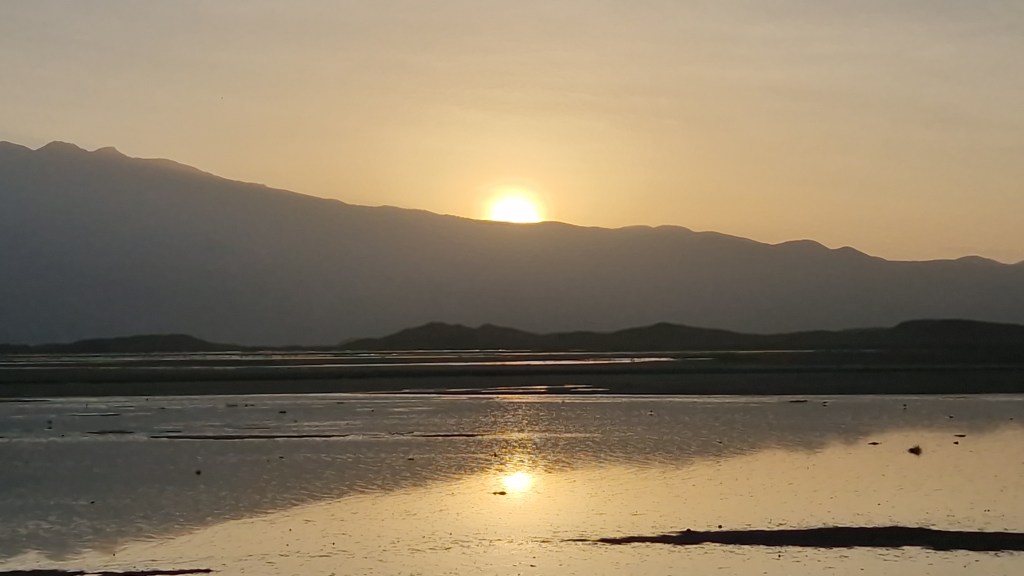
We woke up early and were ready to leave at six as our guide Estomih had suggested. Our first destination of the day was Lake Natron, a large salt lake that stretches across the border between Tanzania and Kenya. We arrived just in time for sunrise. Estomih parked the jeep, leaving us to make the short walk to the water’s edge across a mudflat.
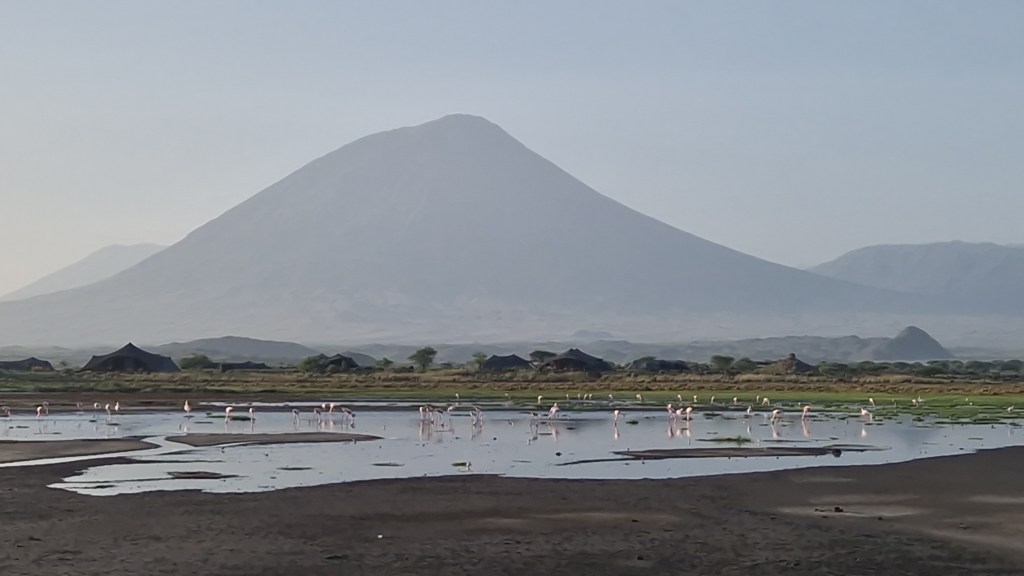
As it got lighter, we saw Lake Natron’s most famous sight – its flamingos, their pink colour enhanced by the early morning sun. From a distance they resembled a long pink band running along the short of the lake.
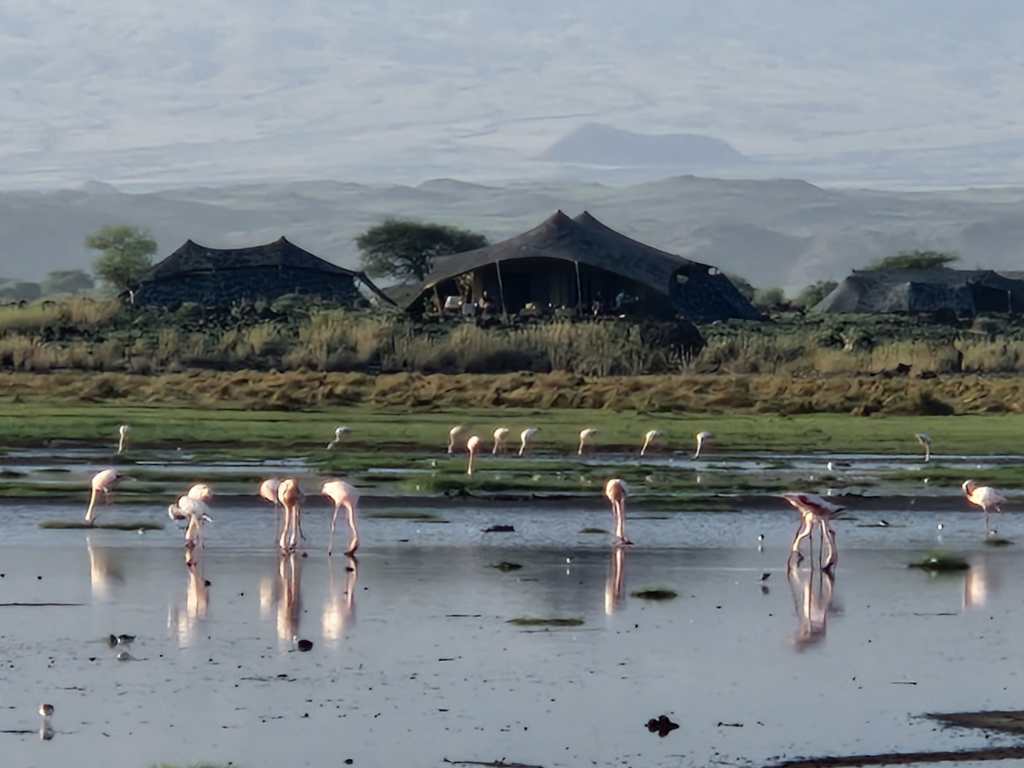
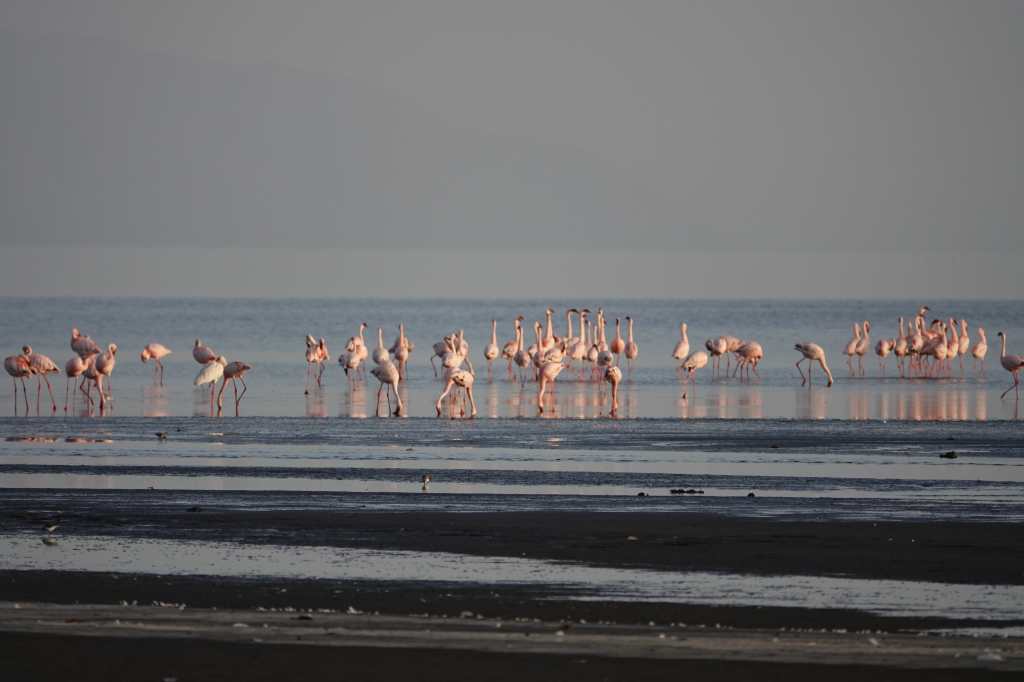
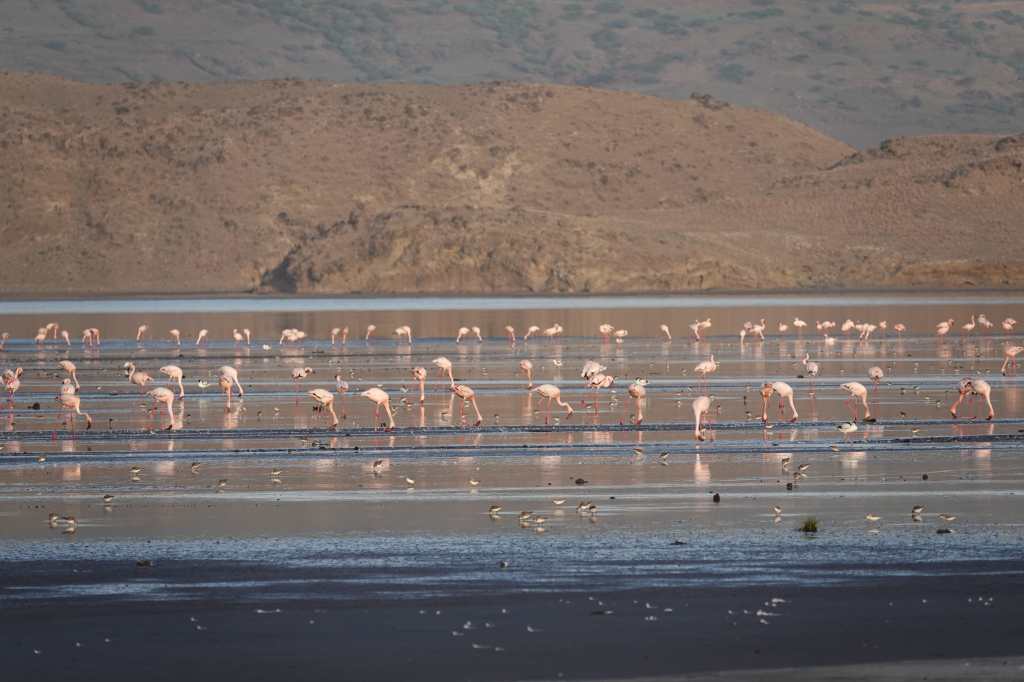
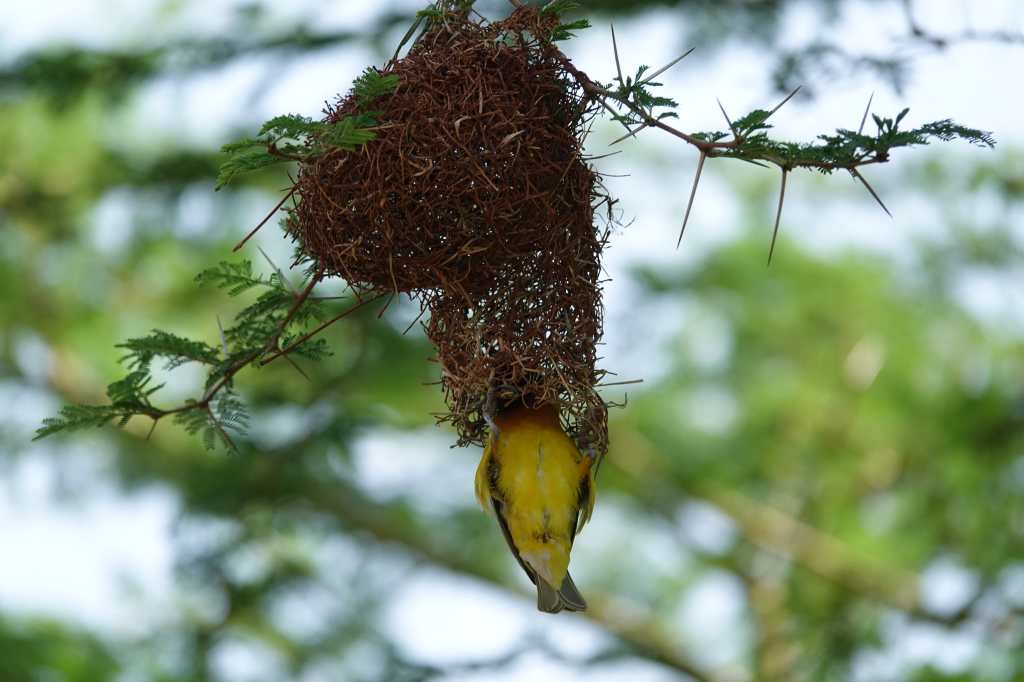
We were the only visitors there, and the lake had a very peaceful feeling, with the silence only broken by the occasional honking of the birds when we got too close to them. We spent about an hour there soaking up the atmosphere and then headed back to our lodge for breakfast, where we also admired the busy weaver birds who built nests in the nearby trees.
Refreshed and dosed with coffee, we got back into the jeep and made the four-hour drive along the back roads of Tanzania to the Klein’s gate, the northern entrance to the Serengeti National Park. The road was very quiet and quite scenic, and the time passed quickly.
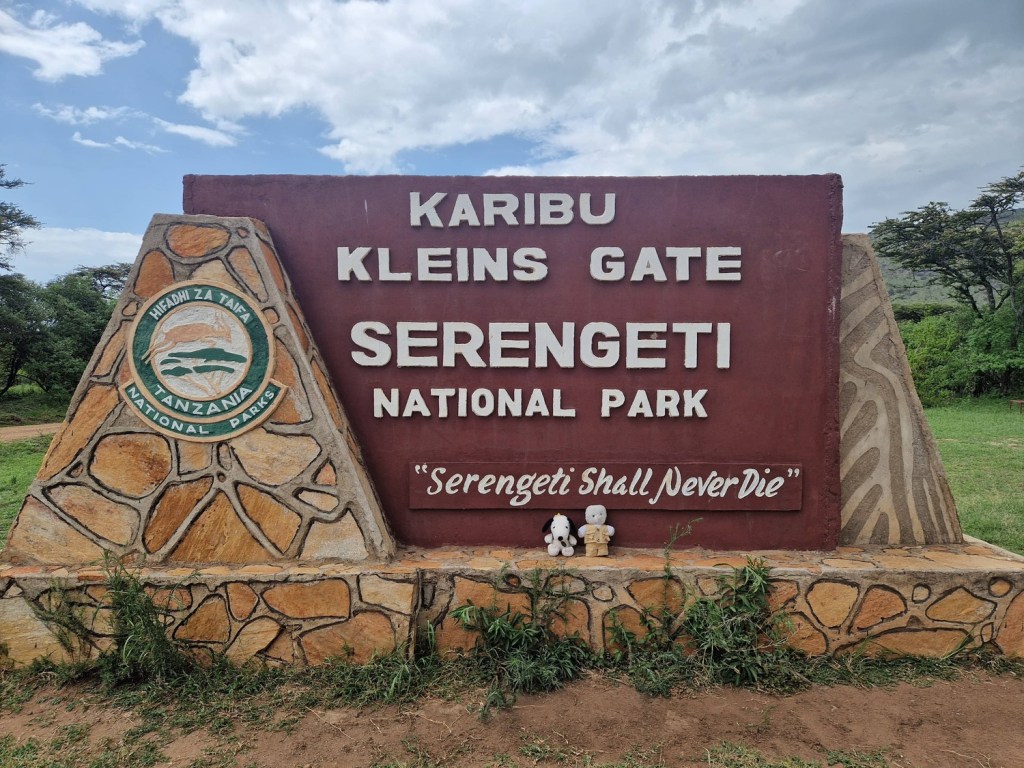
We stopped for lunch just outside the entrance, and then in the early afternoon Estomih bought our pass and with mounting anticipation, we headed into the famous park. Initially, it was an anti-climax. We saw a few antelope and other small animals, but nothing remarkable. Estomih’s jeep had a radio with which he communicated with other guides, usually to share tips about where to see big cats. But this afternoon the guides were all complaining about how quiet things were.
Estomih headed off to an area where some lions had been seen earlier in the day, and suddenly on the horizon I saw the distinctive profile of a large, old male lion with his large bushy mane. We rushed to look and found we had discovered one of the Serengeti’s “superprides” – a social group consisting of about a dominant male lion, many lionesses and even more cubs and young lions.
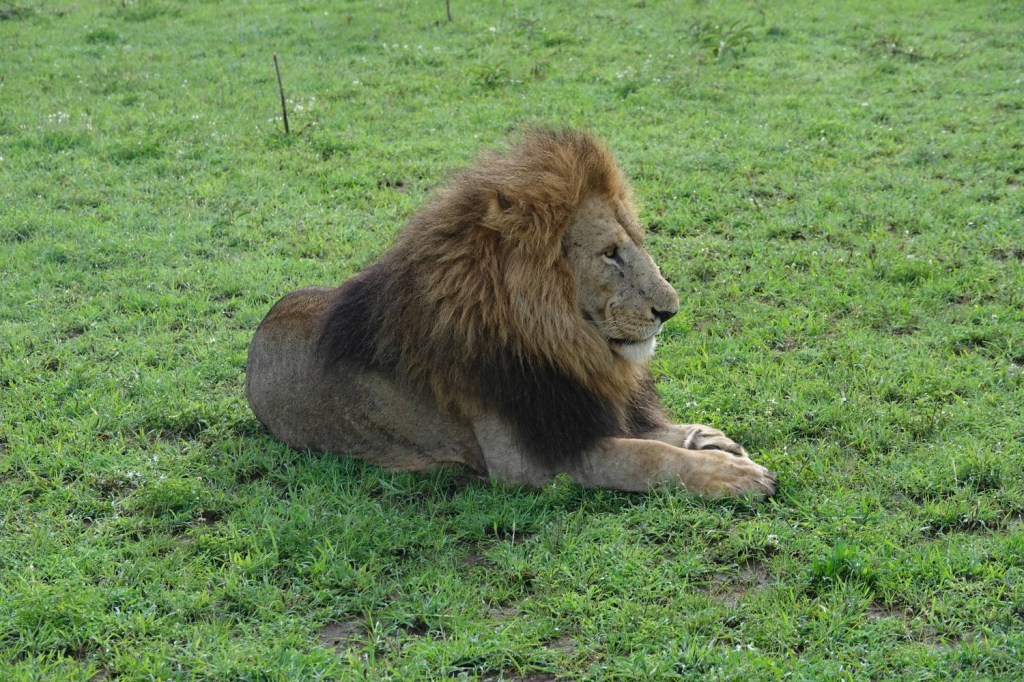
Each member of the group behaved differently. The old male lounged around. He got up once to sniff our jeep suspiciously before peeing on our spare wheel to mark his territory, and then lay down again right beside us.
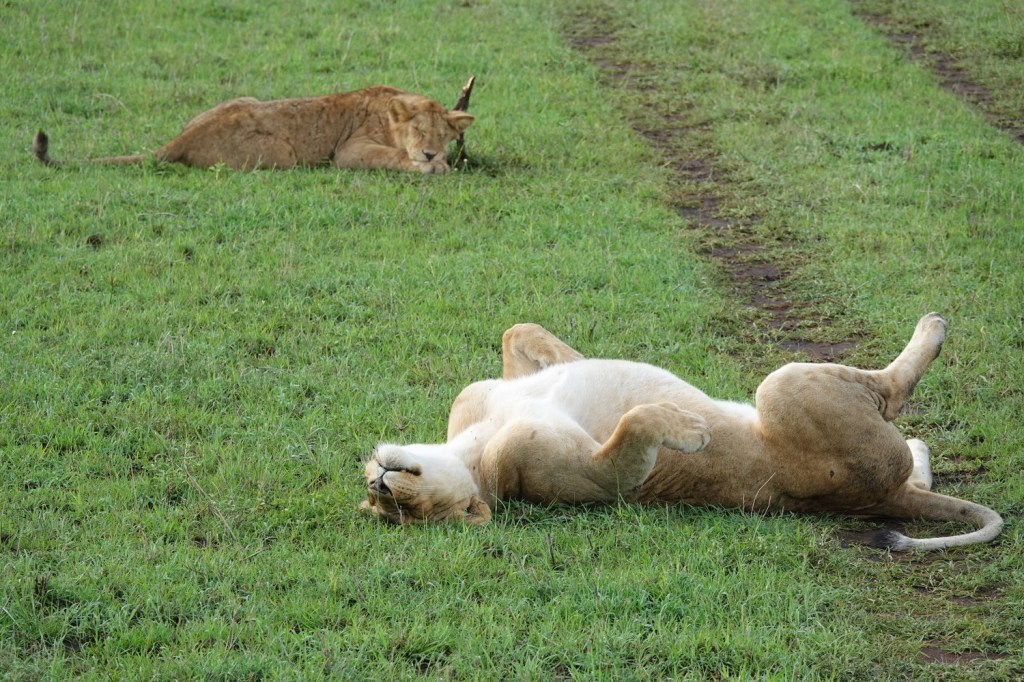
The lionesses walked around greeting each other and sometimes would roll around in the grass, with their tummies in the air – reminding me of my own little pet cat back home.
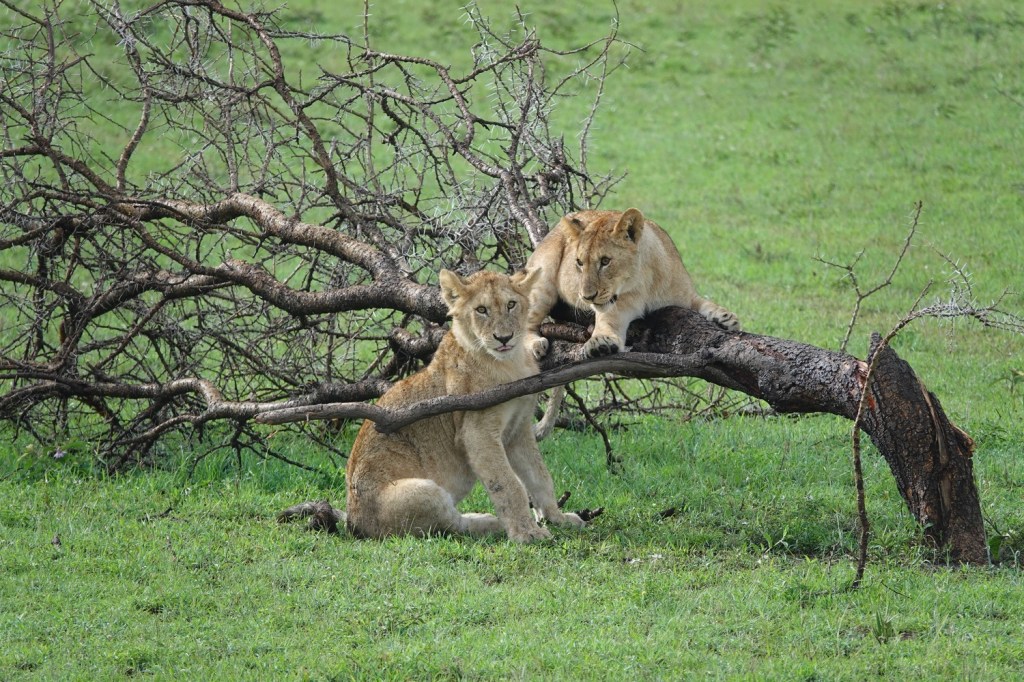
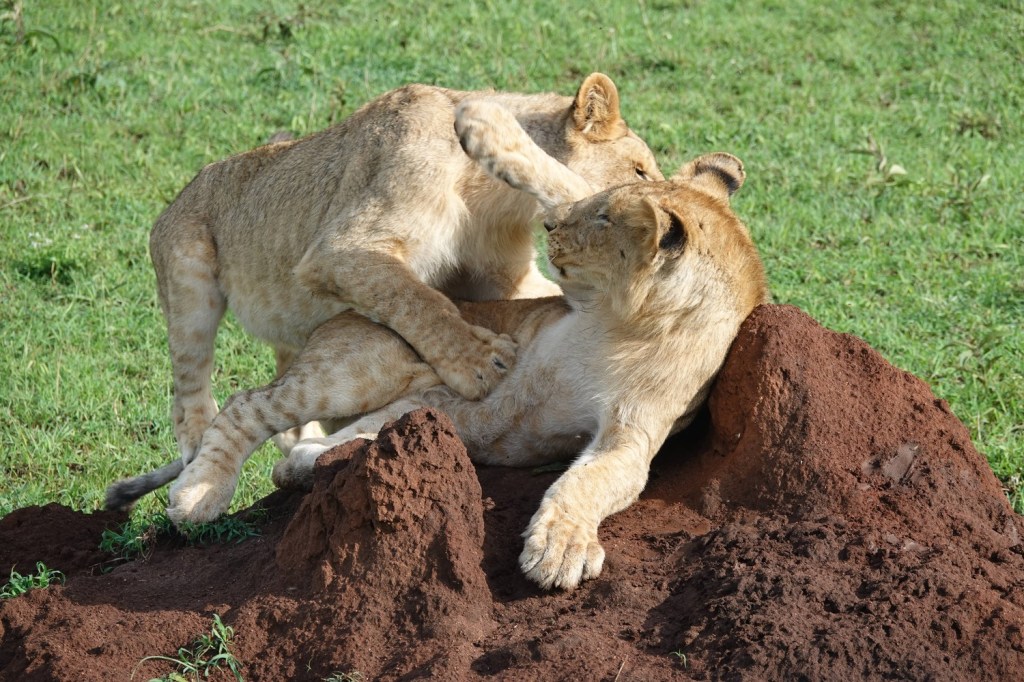
The younger lions on the other hand were very active and always playing.
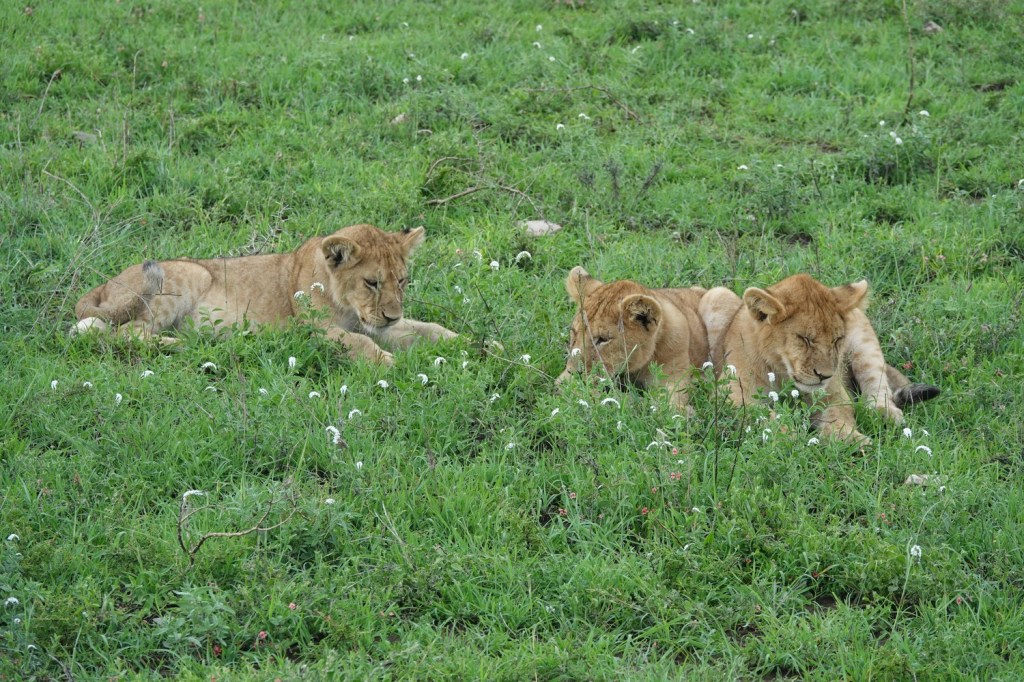
At first we were one of only two jeeps to have discovered this pride, and had the amazing spectacle almost to ourselves. But as time passed more jeeps arrived, and we decided to move on. A short drive away we discovered yet more lions – a lioness with three young cubs, which Estomih said were part of the same superpride.
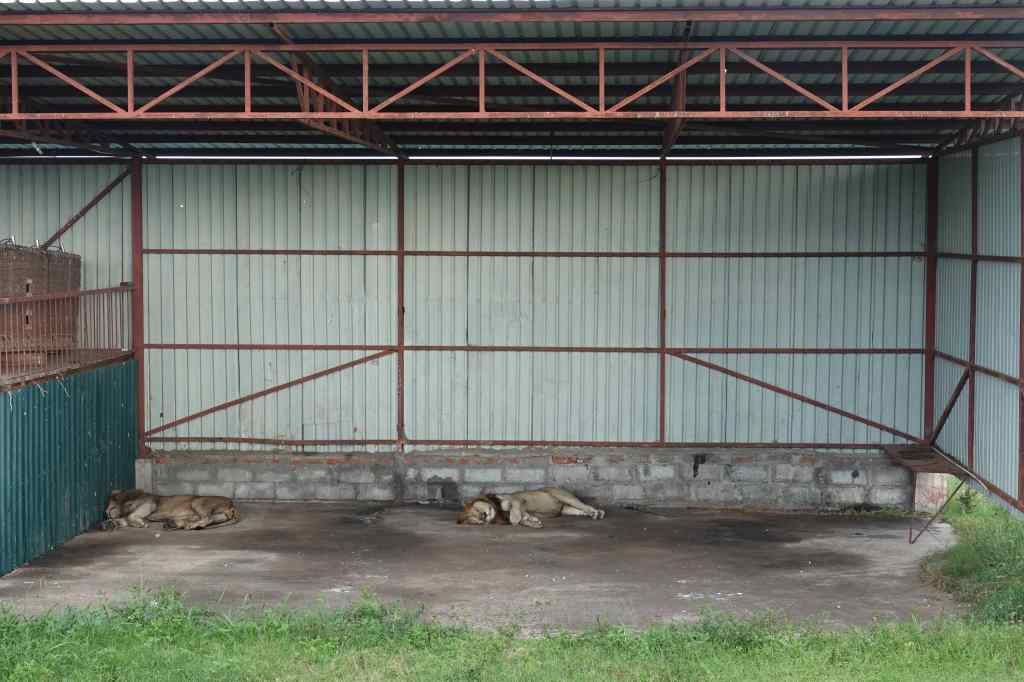
Another short drive away we found two more male lions, lounging around in a base used for balloon flights. In total that brought the number of lions we had seen to twenty eight.
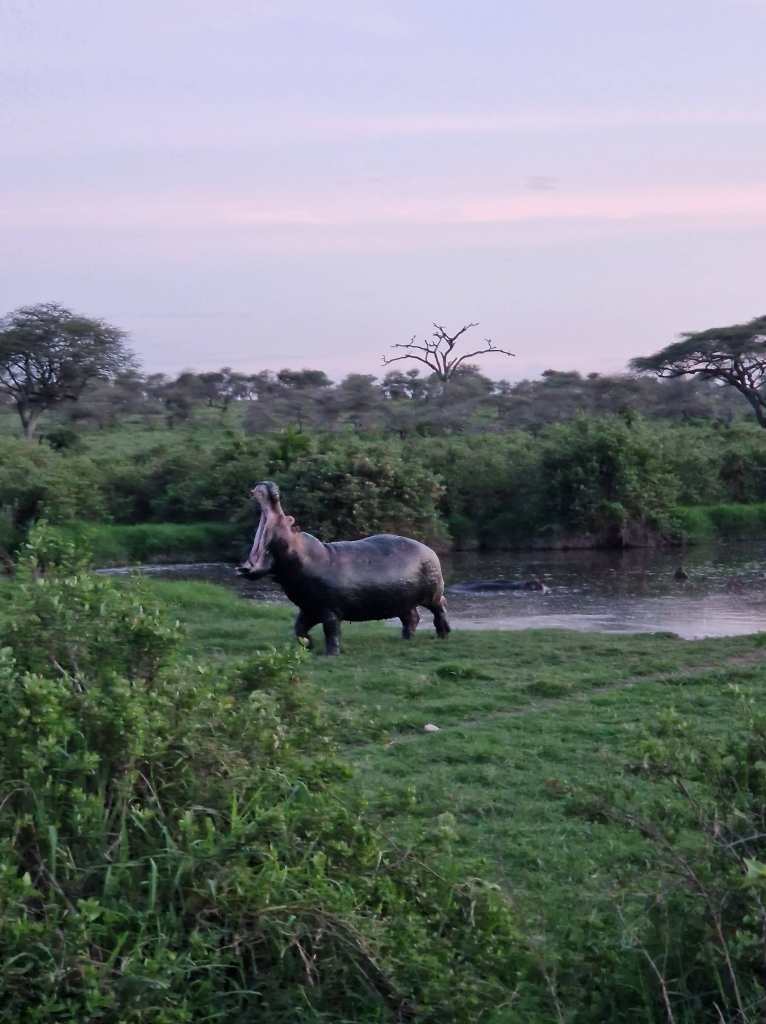
It was getting late, and it was time to head on to our camp for the night. In the fading light we caught a quick glimpse of a hippo that had left its river…….
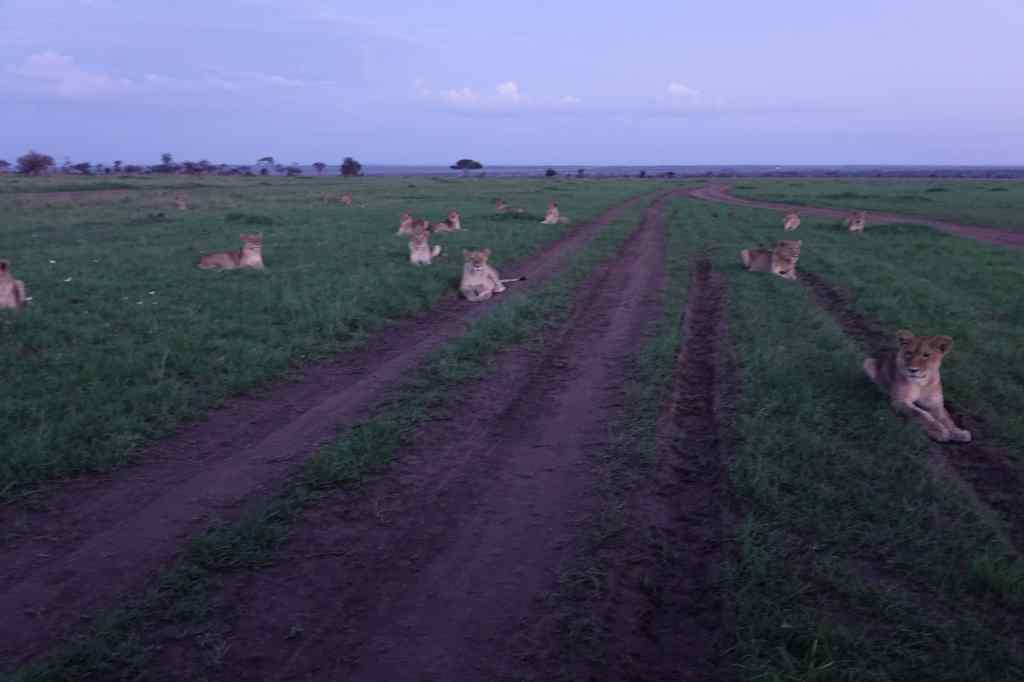
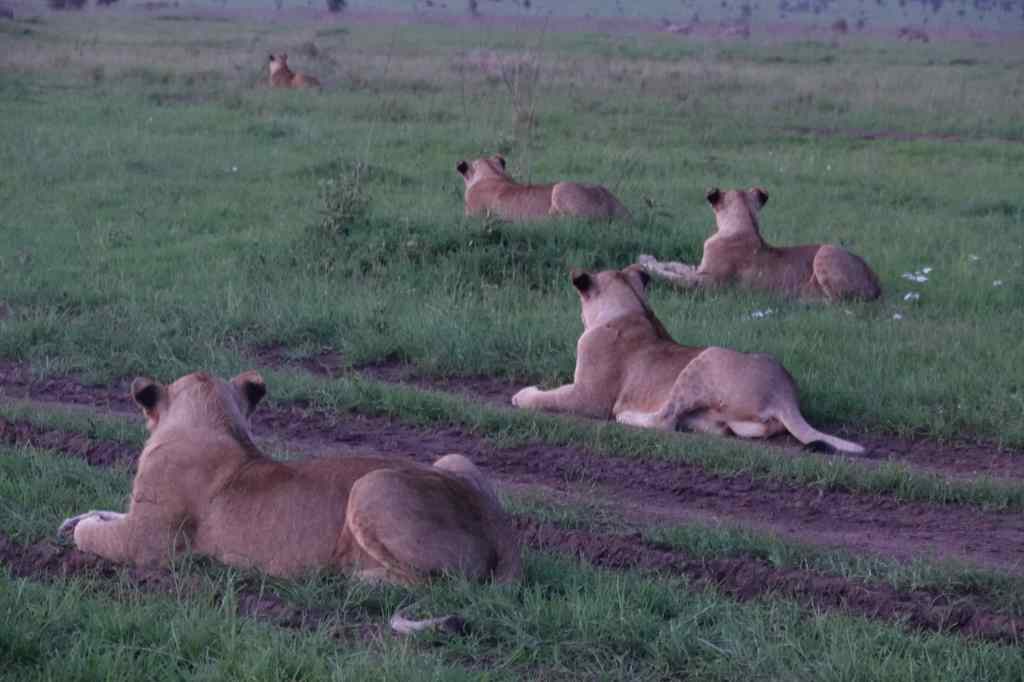
……and then just a bit later, a group of over twenty mostly female lions in a pack hunting zebra, spread out right across the track we were using. We stopped to take pictures, but they largely ignored us, staring intently into the distance in front of them. One of the lionesses got up to sniff the spare wheel which the large male had sprayed earlier, and looked at us suspiciously for a while before rejoining the group.
Sadly, it was now very late, and we could not stay long to admire the lionesses. We finally got to our camp at about seven thirty, after a day which had started at six. We were impressed by Estomih’s stamina and dedication, and remembered that his work was not yet over – he still had to clean the jeep and wash up the plates from our lunch. What an amazing day – after the spectacular flamingos of Lake Natron, we had seen no less than forty-eight lions in the space of a few hours in the Serengeti National Park. Our expectations for the next three days we would spend there were now sky-high.
Previous Post: From Tarangire to Lake Natron
Next Post: The Serengeti – leopards, cheetahs and yet more lions
 Trouspinet travels