On our third day in Takamatsu the rain finally stopped. We were woken by bright sunshine streaming into our room and decided to start our day earlier than planned. We took the early ferry from Takamatsu to Naoshima, a small island in the Inland Sea which has become famous for its contemporary art museums and galleries. The 1-hour boat trip gave great views of the sea, the many small islands, and back towards the mountains of Shikoku.
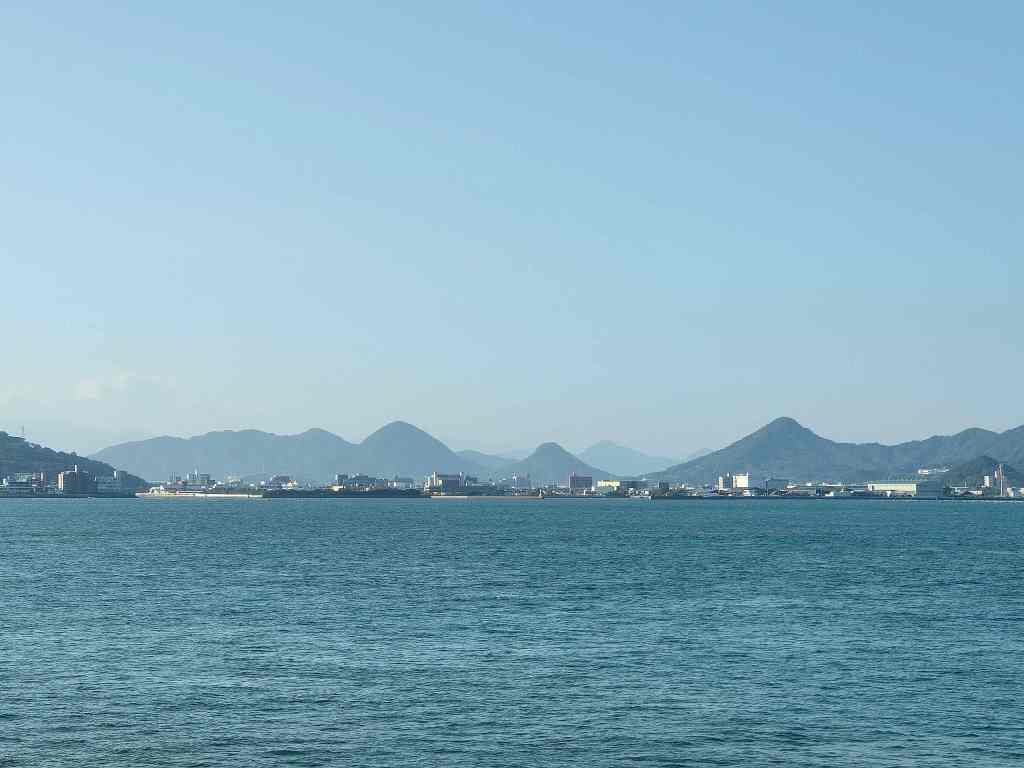
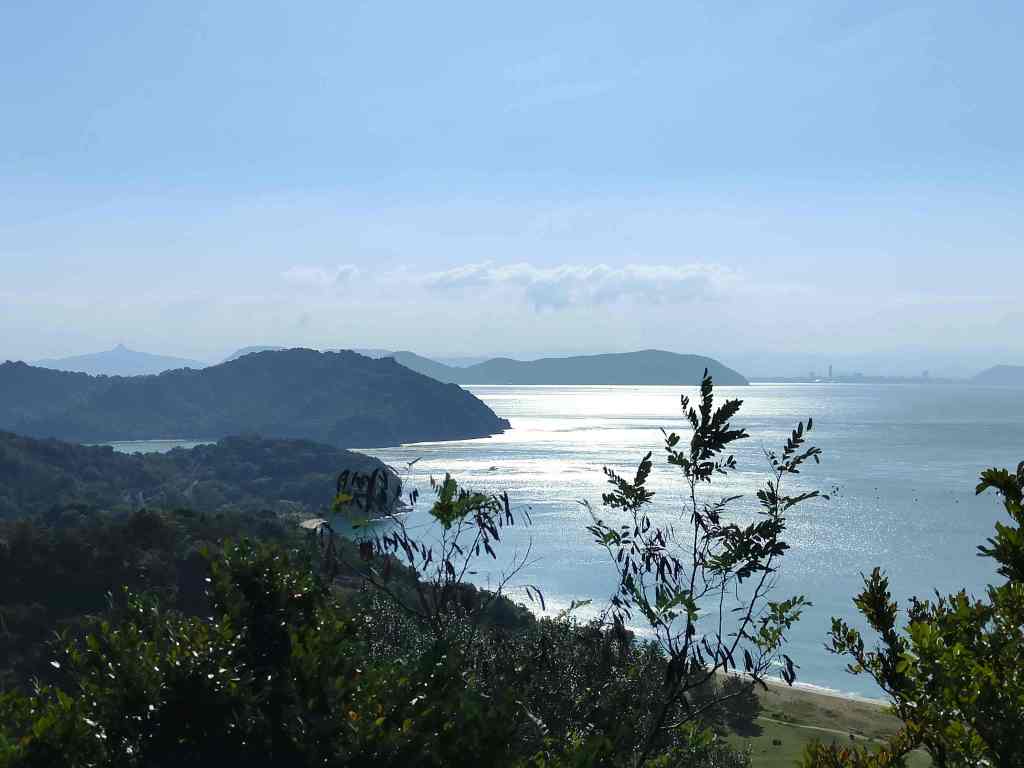
Arriving early turned out to be very wise. Naoshima was firmly on the main tourist route, and many foreign and Japanese visitors were milling around the port. We planned to hire bicycles to get around but found that nearly all of the rental outlets had sold out. Luckily, we managed to rent the very last pair of bikes available and set off to explore. Naoshima had a Mediterranean feel to it – the weather was hot, the pace of life was slow, and there were many beaches. Our bikes were electric and helped us climb a steep hill offering a wonderful view of the sea.
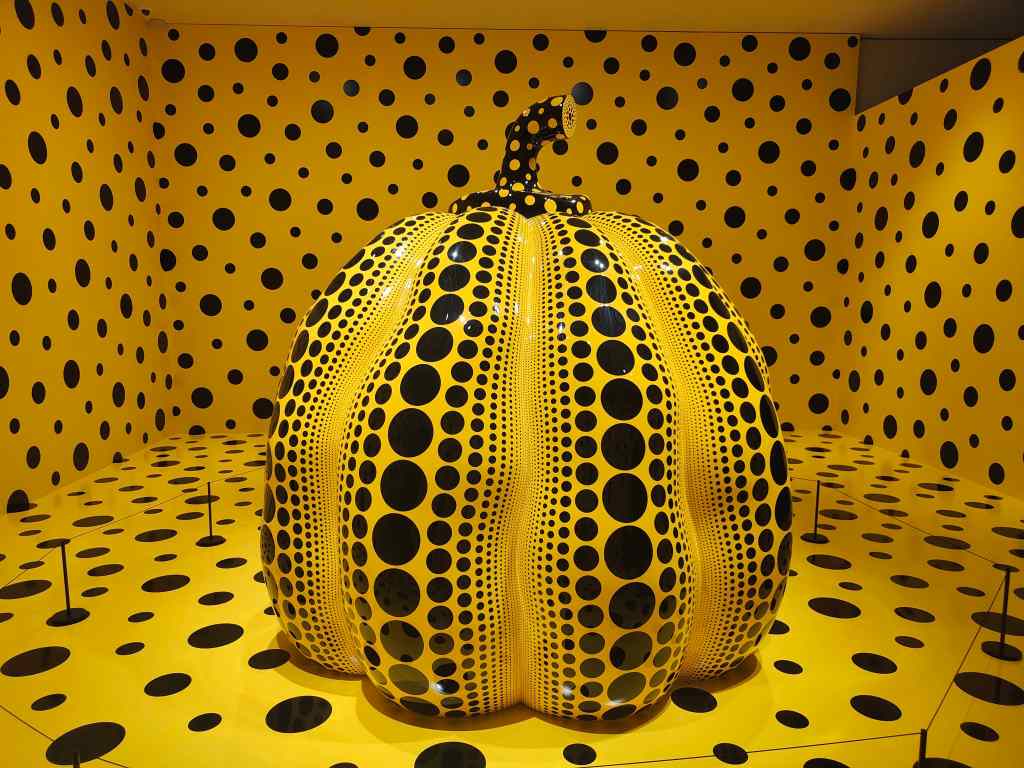
The first art we saw was at the bottom of the same hill – one of Yayoi Kusama’s brightly coloured pumpkins, whose yellow and black design contrasted pleasantly with the blue sky and sea. We had seen a slightly smaller version already at Kanazawa, and also one at London, so wondered if the artist mass-produces them.
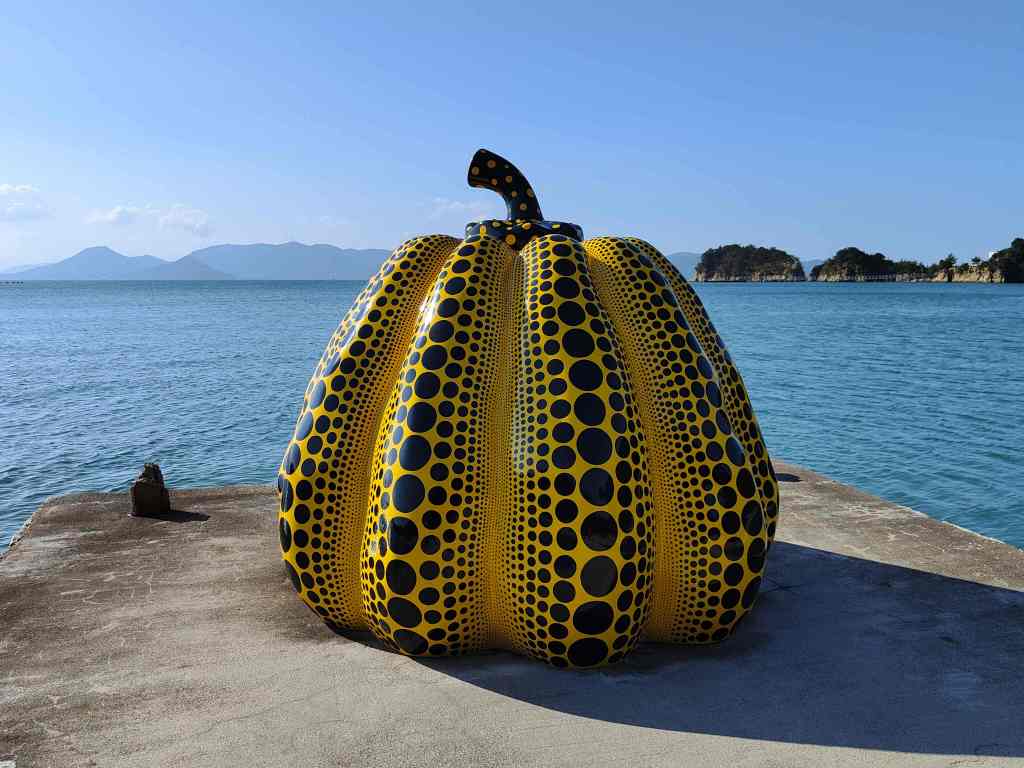
The pumpkin stood at the side of the road leading up to the Benesse House Museum, the first and largest art museum to be built on Naoshima. The Benesse corporation is active in the education and childcare businesses, but for the past thirty years has also been active in promoting art, especially on Naoshima. The museum had a small but diverse collection of modern art – as usual, we liked some exhibits but did not understand others.

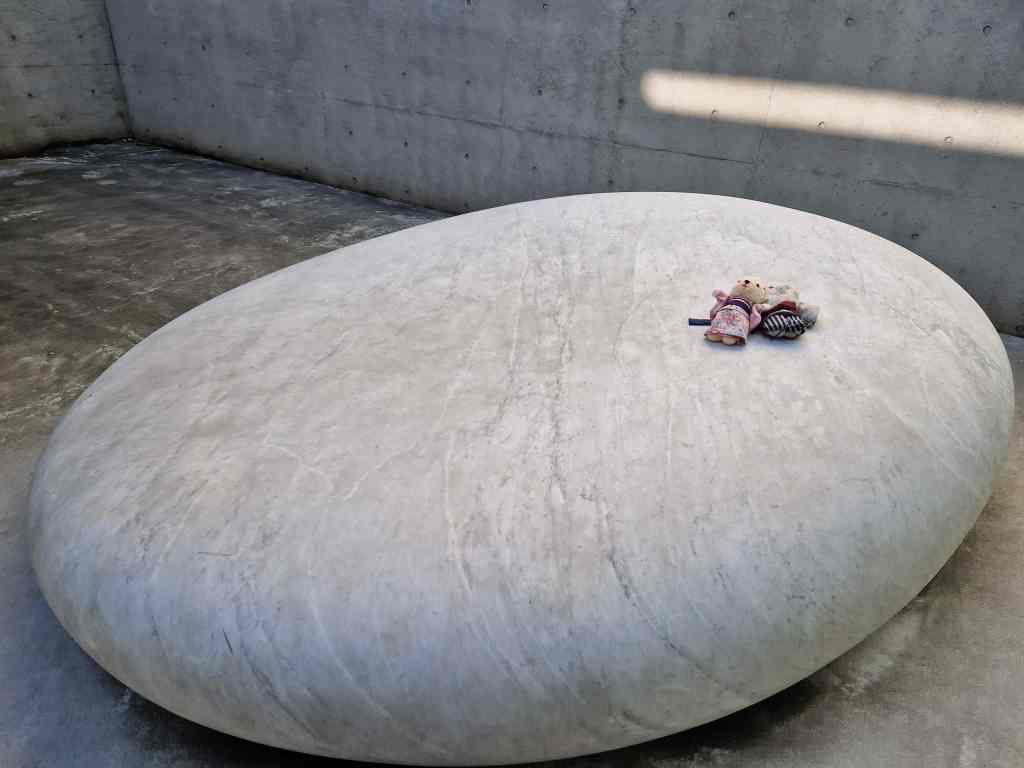
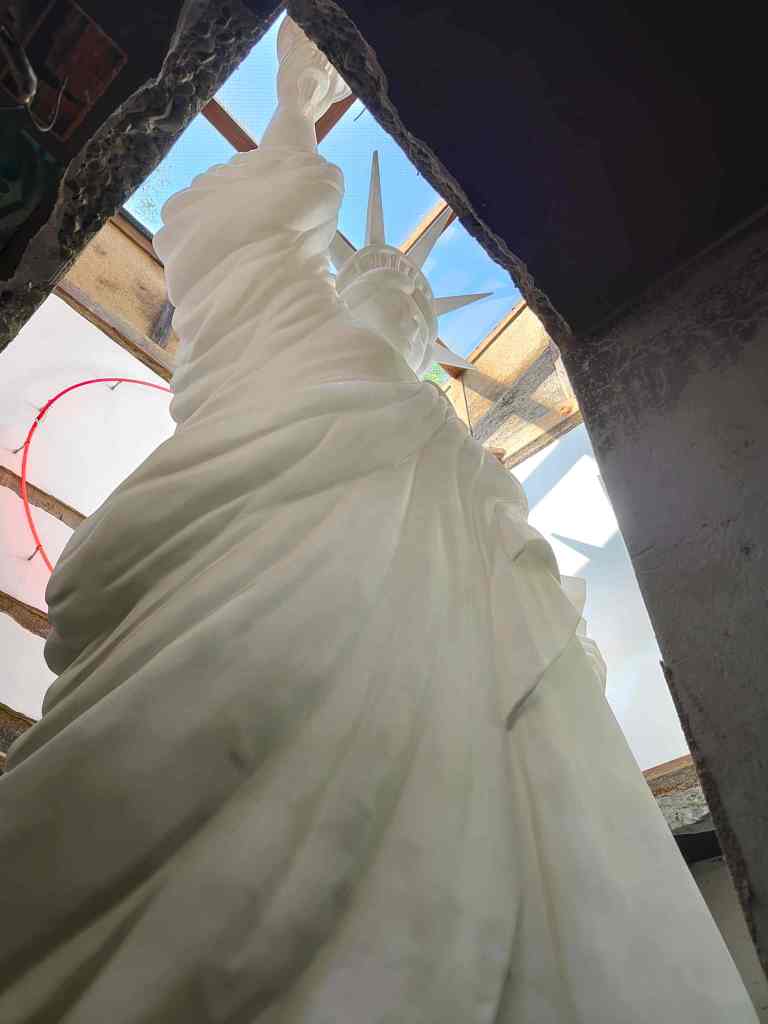
Our next stop was further down the road at the island’s only village, Honmura. There, various different artists have created installations in vacant houses. Most of these creations were pretty strange, begging the question – Why? Although the art left us cold, Honmura was still a nice place to stroll around and a good place for lunch.
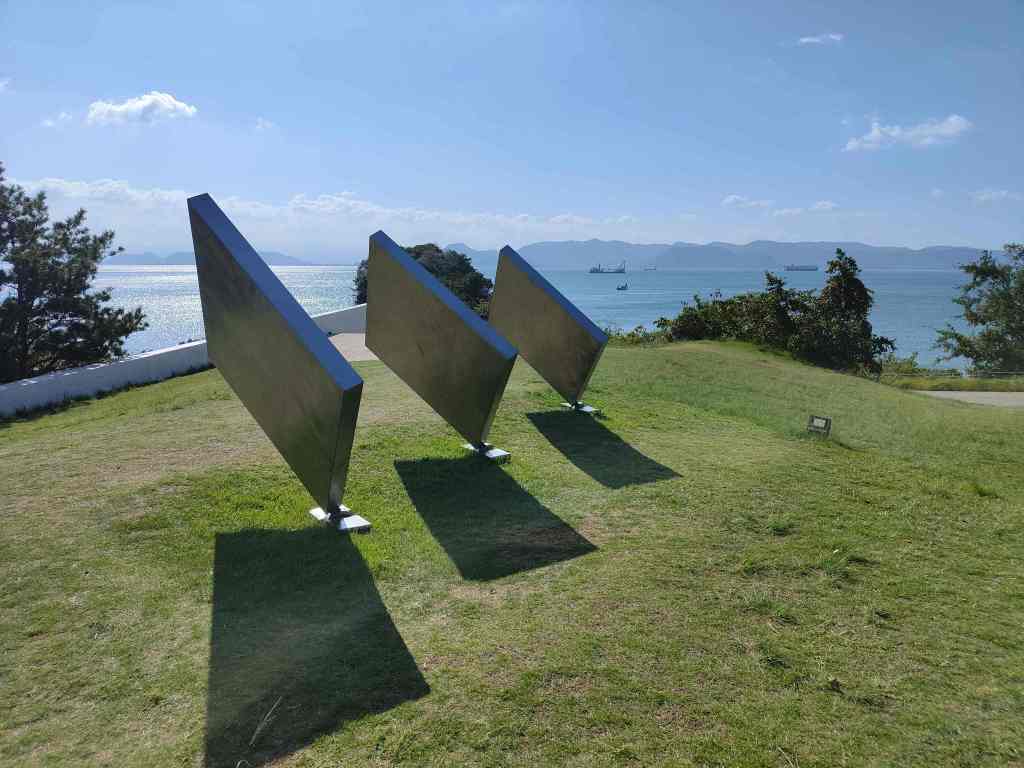
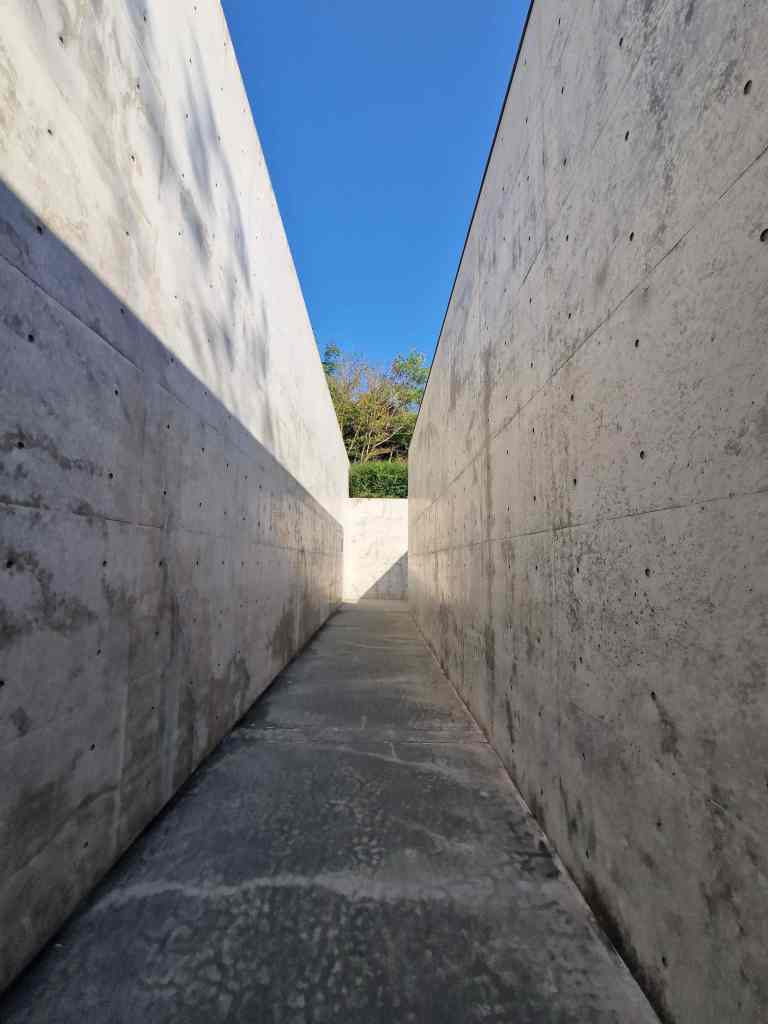
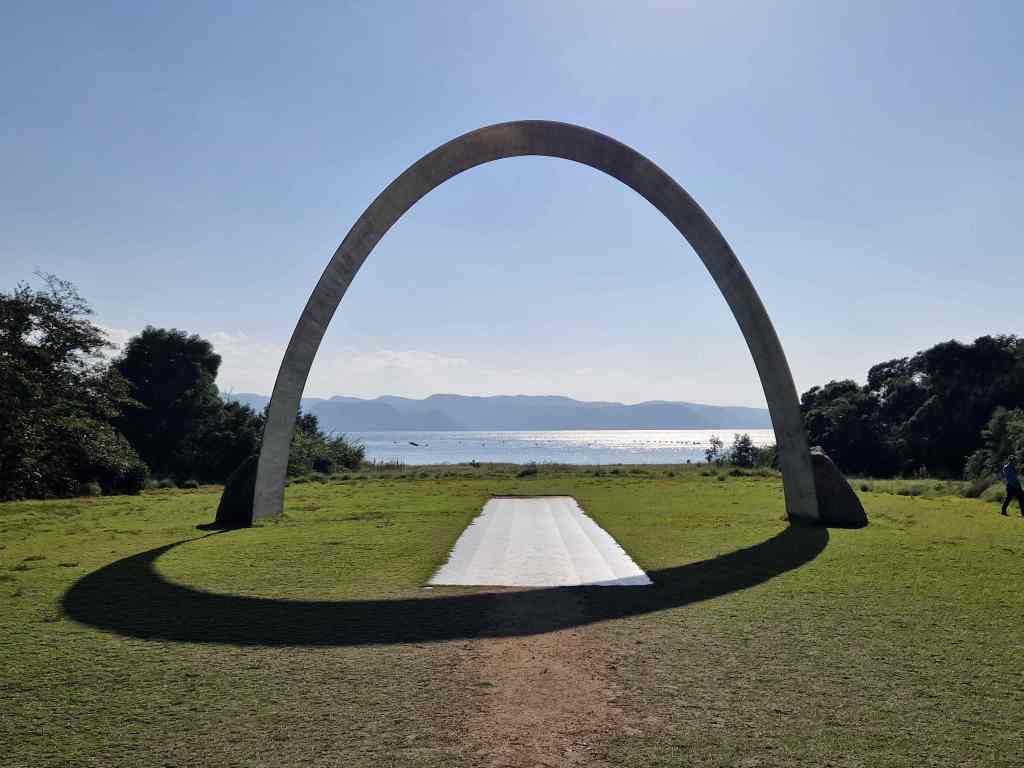
After eating, we backtracked to a second museum run by the Benesse corporation, the Lee Ufan Museum, devoted to work by the eponymous artist. The collection was very small, and we spent more time outside admiring a graceful metal arch by the beach than we did inside looking at Ufan’s work.
Finally, we visited the Chichu museum, the third Benesse venture on the island. This also had a very small collection and due to its popularity sells tickets with a strict time slot. The first room of the museum was devoted to four pictures of water lilies by Monet. Maybe for Japanese visitors these were amazing, but we had recently visited the Musée Marmottan in Paris and so had seen more, and arguably better, Monet paintings of lilies. The second set of exhibits in the Chichu museum were by James Turrell, but a very long queue to see them had formed along a dark, uninteresting corridor. We worried that if we stayed, we would miss our ferry back home, so moved on to the final exhibit – a huge granite sphere by Walter de Maria, dominating a cathedral-like underground room. We thought it was a brilliant piece of work, which made up for the disappointment of the other exhibits. Sadly though photos were not allowed.
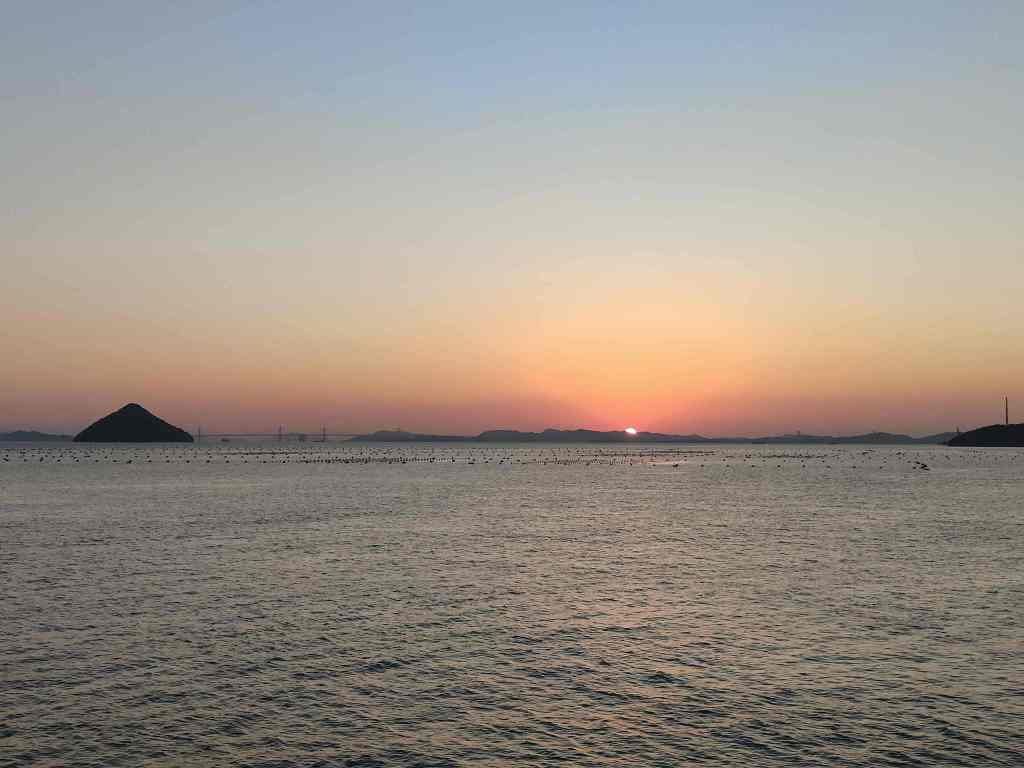
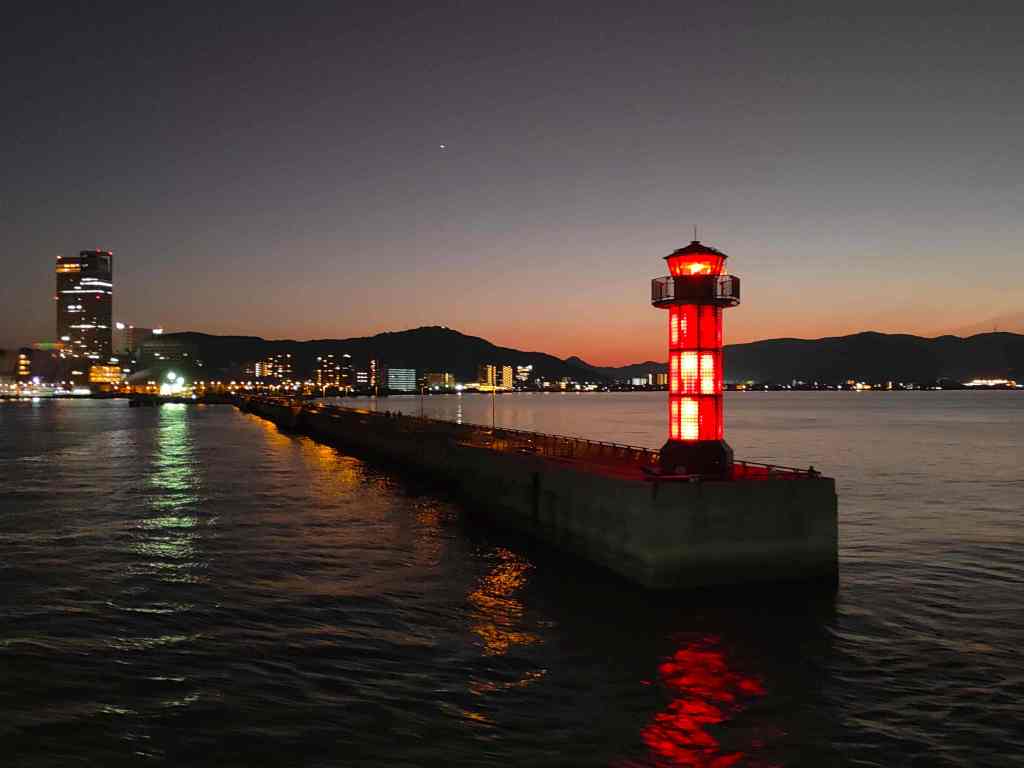
After a few minutes admiring the sphere, it was time to head back to the port to join a very long queue for the 17.00 ferry back to Takamatsu. The return trip gave us a nice sunset over the mountains of Honshu, and a surprising highlight of the trip – Takamatsu’s lighthouse, made out of bright red glass. This was probably the modern art highlight of the day!
We had greatly enjoyed our time, even if we found the art museums somewhat underwhelming compared to what we could see back home in London or Paris. The real joys of the trip were the ferry rides over the Inland Sea and the exploration of the pretty island of Naoshima by bicycle – especially doing all this in bright sunshine after two days of rain.
Next post: Ritsurin Garden and Naruto Whirlpools
Previous Post: Shikoku – Iya Valley, Kotohira

 Trouspinet travels