On our first day in Kyoto we followed a well-travelled tourist route. Our first stop was the Kiyomizudera temple, one of Kyoto’s biggest and most popular, founded 1250 years ago. It was located closed to our house, and we found a little side street to get there through a different temple and then a cemetery.

The path was pretty and quiet, but when we reached the Kiyomizudera’s gates everything changed.
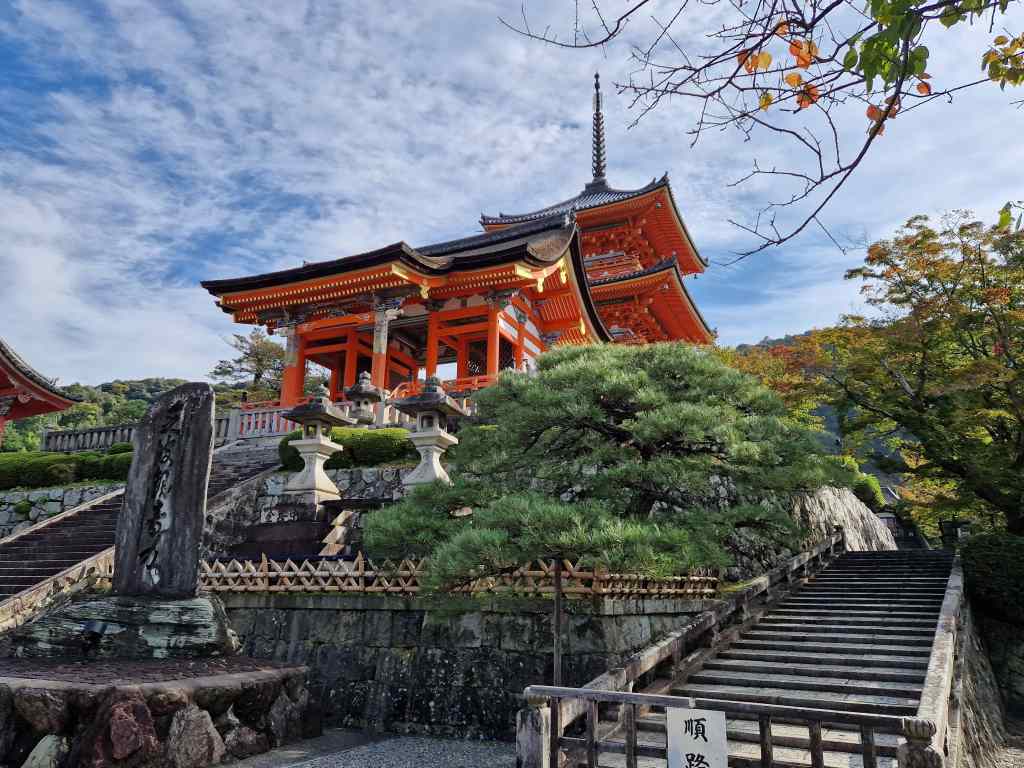
The whole area was packed with people – tour groups, individual travellers, Westerners, Asians, Japanese. After the big empty spaces of Shikoku it was a big shock, and it was only 9.30 am. We fought our way through the crowds and made a rapid visit of the main temple and its famous wooden stage, which projects over a forest of maple trees that becomes a riot of red-coloured leaves in the fall. Normally at this time in November we would be seeing the beginning of this amazing spectacle, but sadly for us the weather had been unusually hot, and the peak season for autumn colours was still two to three weeks away.

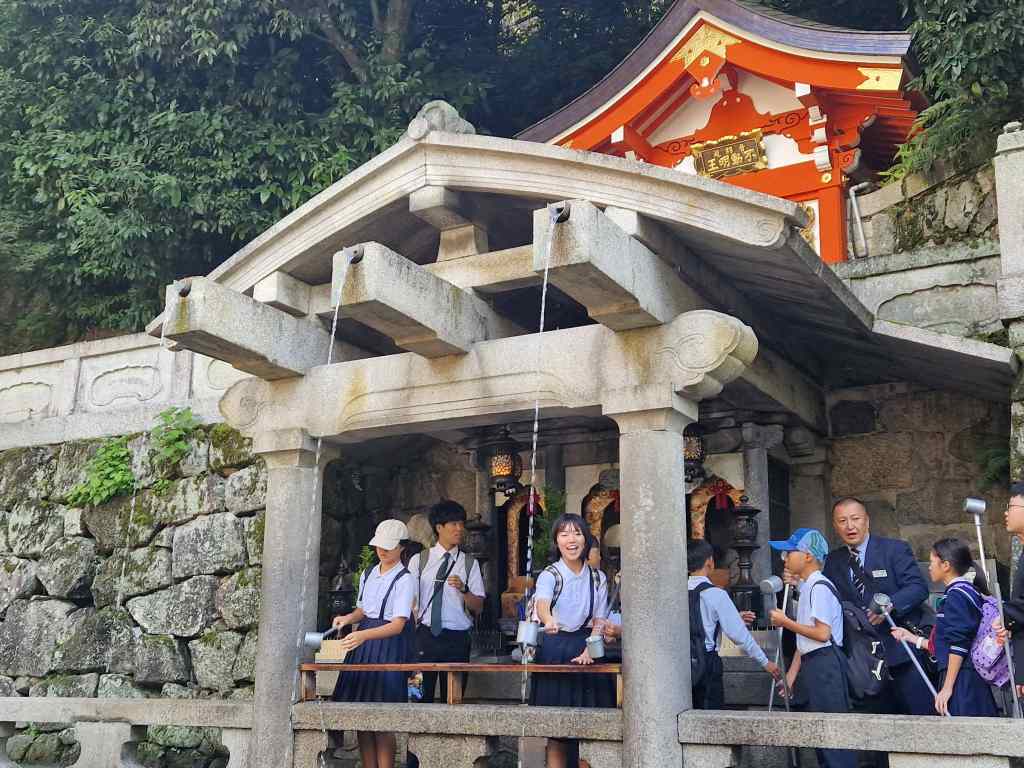
Just below the temple area there was the Otowa waterfall. It was split into three separate channels and visitors could queue up to drink water from one of them. The different streams supposedly grant the drinker longevity, love or success, with the last one being very popular with schoolchildren before their exams – as we saw.
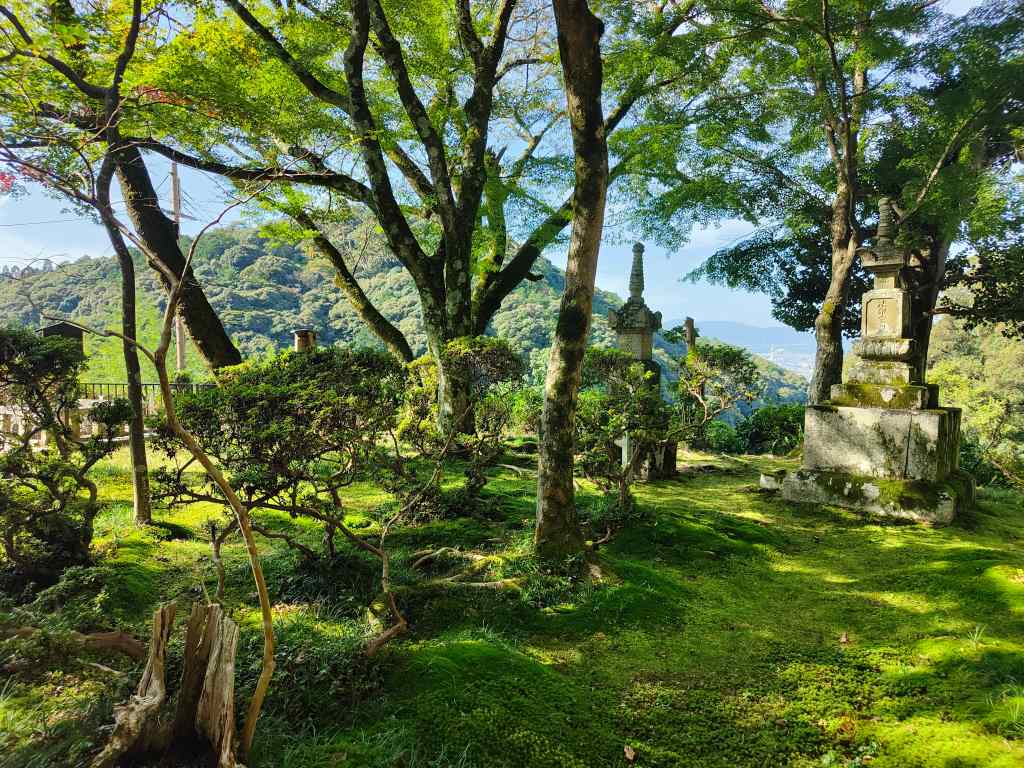
We headed away from the main temple with its crowds, and up a small hill to another, much smaller temple whose name I forget. It was extremely pretty, with a mossy garden and great views. The very few visitors paid 100 Yen (about 50c) into an honesty box to enter.

Our experience at Kiyomizudera was repeated many times during our stay in Kyoto – we would visit a famous site, and jostle with crowds of other tourists – and then walk a couple of hundred metres to a different place, which would be almost as beautiful, but empty. There are literally hundreds of such small, less-visited, temples dotted around Kyoto.
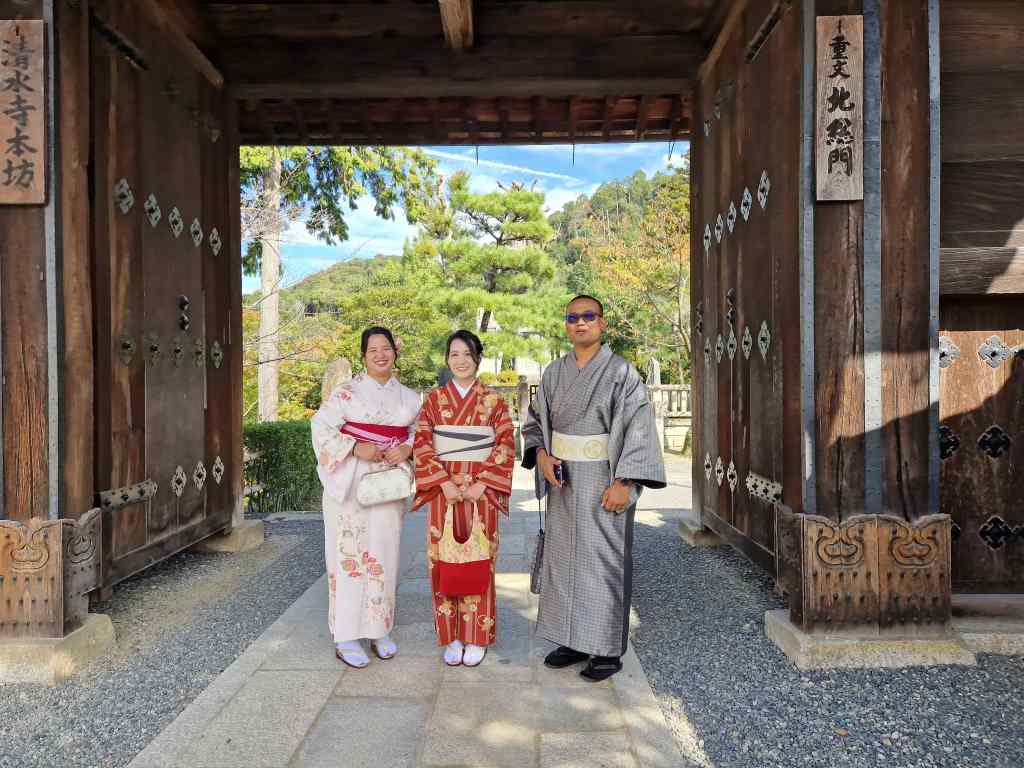
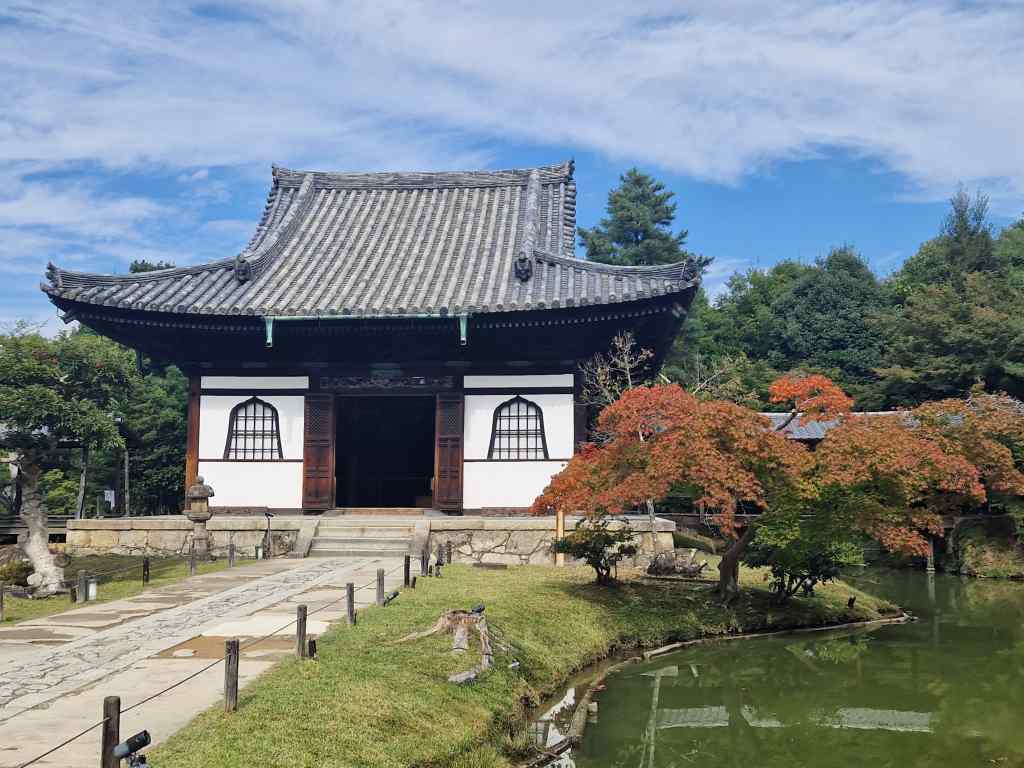
We retraced our steps to Kiyomizudera, and this time took the usual route down through the popular Higashiyama area rather than the side street we had used earlier. Just as our arrival had been heaven – quiet and pretty – our return was hellishly busy. It was a narrow street lined with food stalls and souvenirs shops and crowded with tourists. Fortunately, we only had to endure this for a short stretch before we turned off, heading for the Kodaiji Temple. We met some smartly dressed Japanese people on the way – many visitors to Kyoto choose to wear traditional clothing, and there are lots of shops where you can hire kimonos.
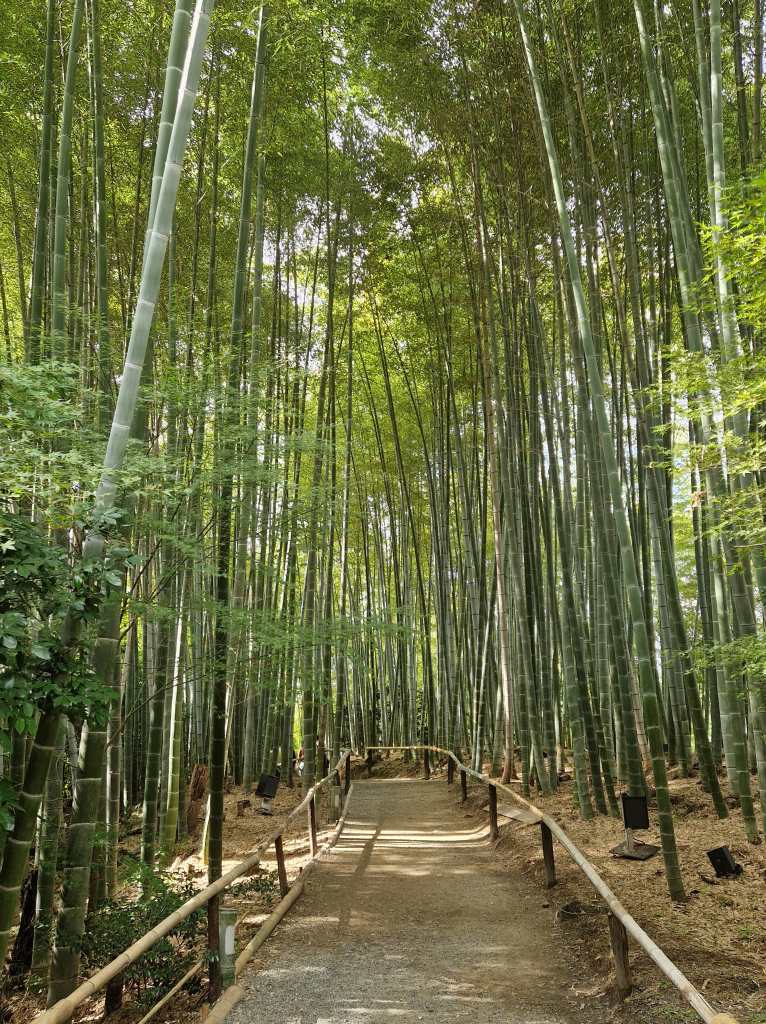
Kodaiji temple was pleasantly quiet and also very beautiful, with its own small bamboo forest.
Our next destination was in the south of Kyoto – the Fushimi Inari Shrine, where hundreds of vermillion torii gates line paths that climb up a steep, forested mountain. We arrived at around 3pm, to find that this site is also on Kyoto’s “must see” list, and our “heaven and hell” experience repeated itself. This time, hell was arriving and joining the jostling crowds trying to squeeze through the first set of gates.
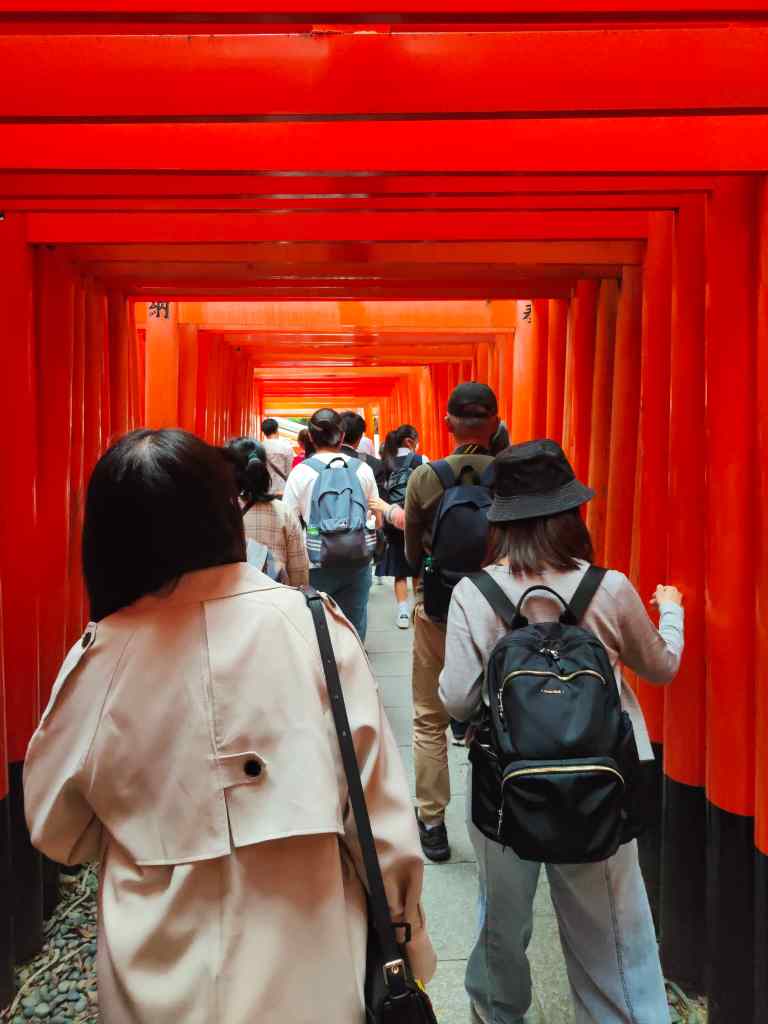
After fifteen minutes of ducking and weaving, we wondering what the big deal was – surely a set of medium-sized red torii could not be that interesting, not matter how many of them there were? Particularly if you had to spend your time trying not to be trodden on by larger human visitors rather than looking at the things you came to see.
However, after a bit more walking, the path branched and became less busy. Many of the visitors only come to mill around and take selfies at the lower part of the shrine, and don’t walk very far up. Soon we could even pose for our own selfies……..
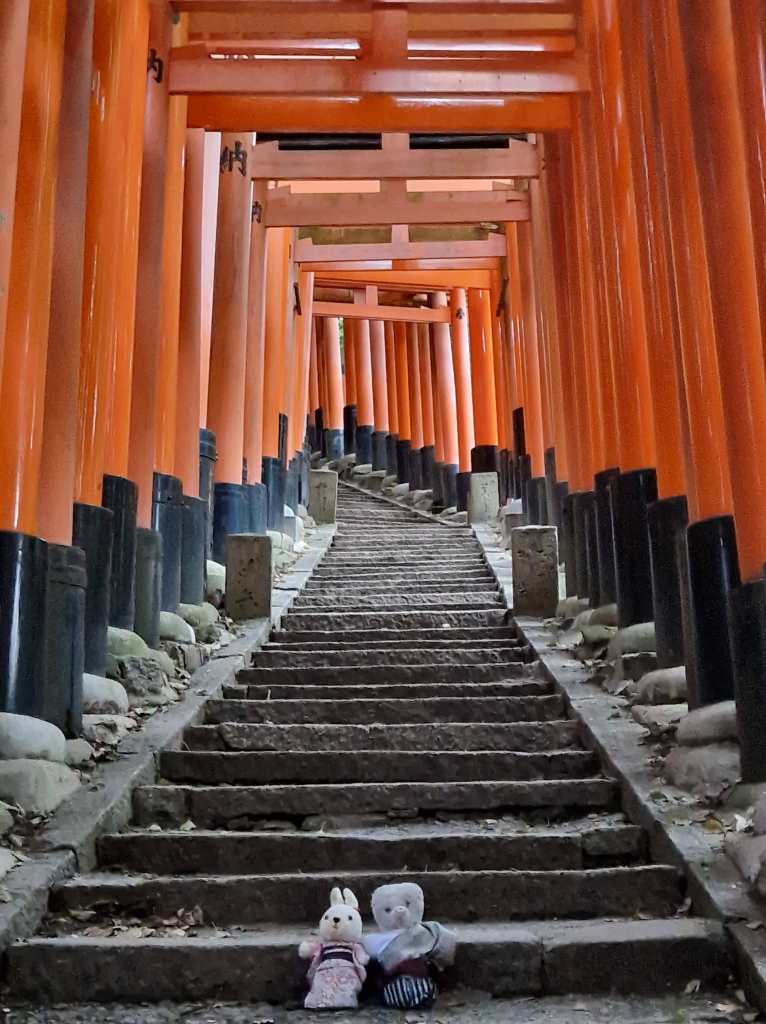
The further up we went, the more we liked the place. In addition to two main paths going up, there were many branches leading to interesting small shrines or patches of forest.

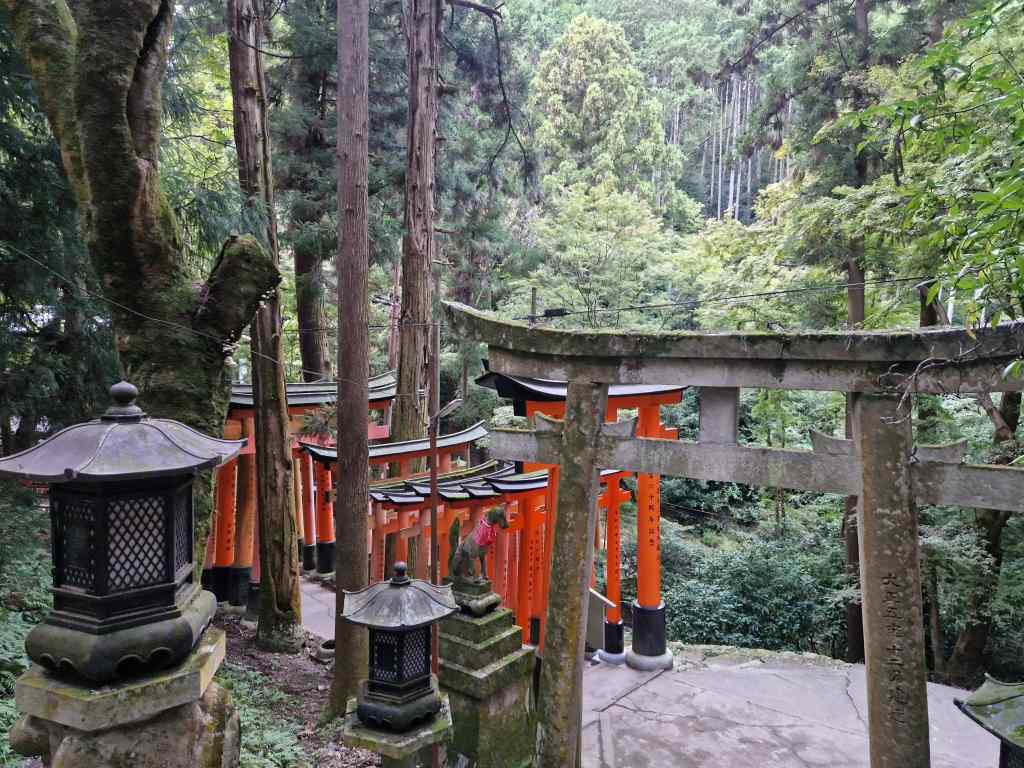

We spent about an hour making our way slowly to the top – which turned out to be not a particularly interesting part of the complex. But to make up for this slight anti-climax, nearly all the visitors suddenly disappeared and, on the way down, we had the shrine almost to ourselves as the sun sank and a few scattered lights came on, throwing shadows of the torii onto the path. It was wonderfully atmospheric….and a bit spooky.
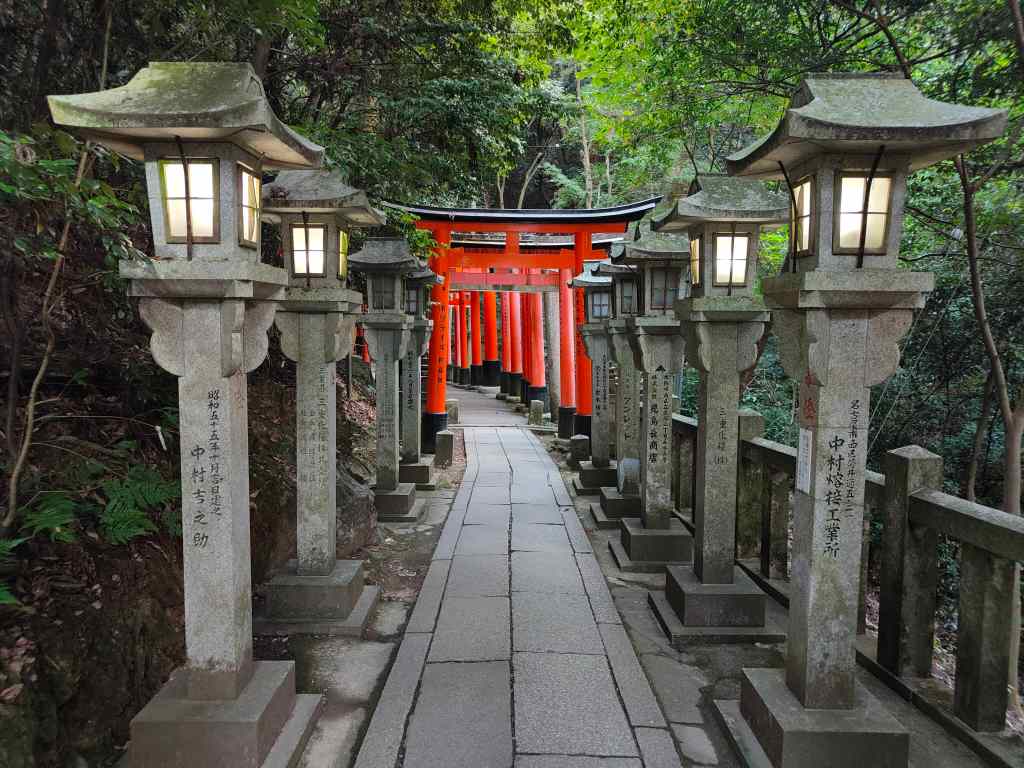
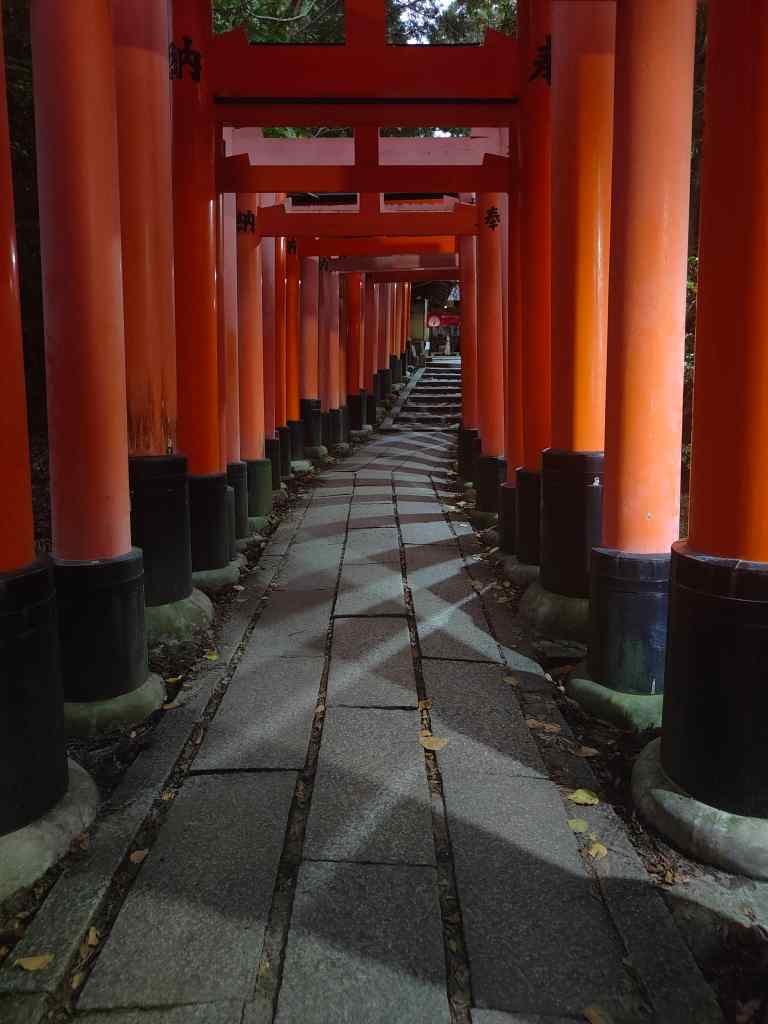
We found a clearing where we could enjoy sunset over Kyoto, before continuing our descent in the dark. Surprisingly, the arrival of night saw more people coming the other way, climbing the mountain in the dark. The torii became even spookier.

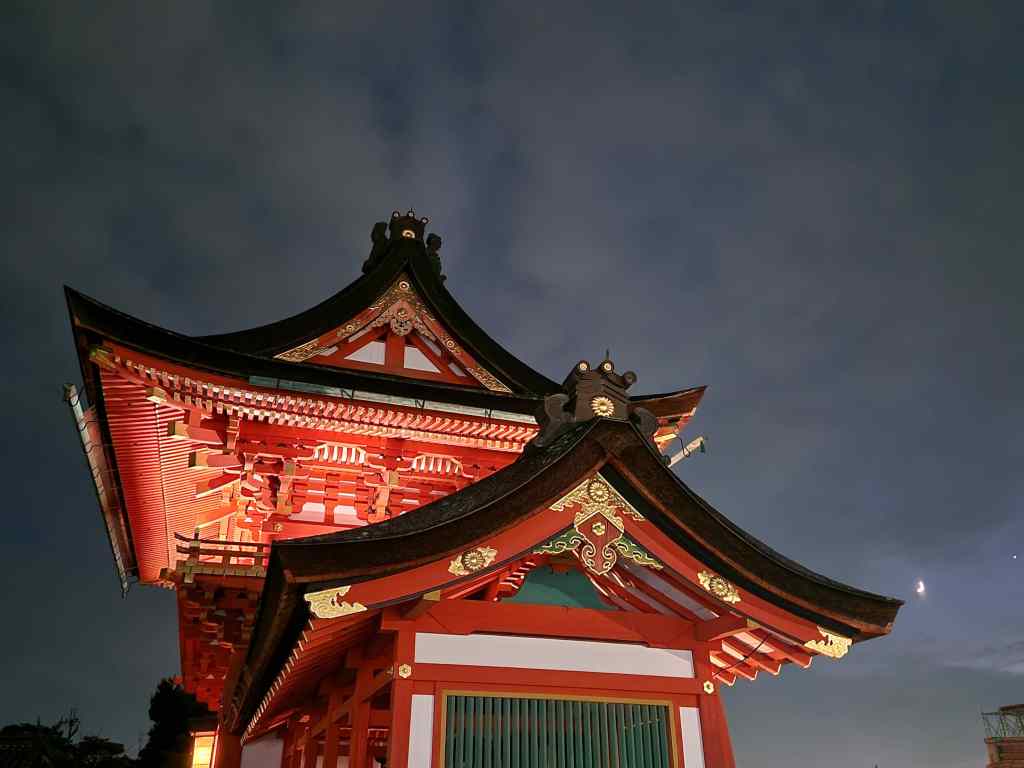
We finally arrived back at the main buildings at the entrance to the shrine, now shining bright red and white against the night sky.
It had been a long day, and our phones told us that we had walked seventeen kilometres on our little woolly teddy and rabbit legs, including lots of climbing. We thought we were beginning to understand Kyoto – it has some amazing “must see” places, for which you need to plan your arrival time carefully if you don’t want to be crushed by fellow tourists. And it has hundreds of smaller places, many of which are nearly as pretty, but which are almost empty. Over the next few days we would try to combine visiting both.
Next Post: Nara – in search of enlightenment and coffee
Previous Post: Farewell to Shikoku – Ritsurin Gardens and Naruto Whirlpools
 Trouspinet travels