Back to Tokyo (Asakusa and Ueno) – Farewell to Japan

The Shinkansen covered the 476 km between Kyoto and Tokyo in around two hours twenty minutes – an average speed of just over 200km/h.
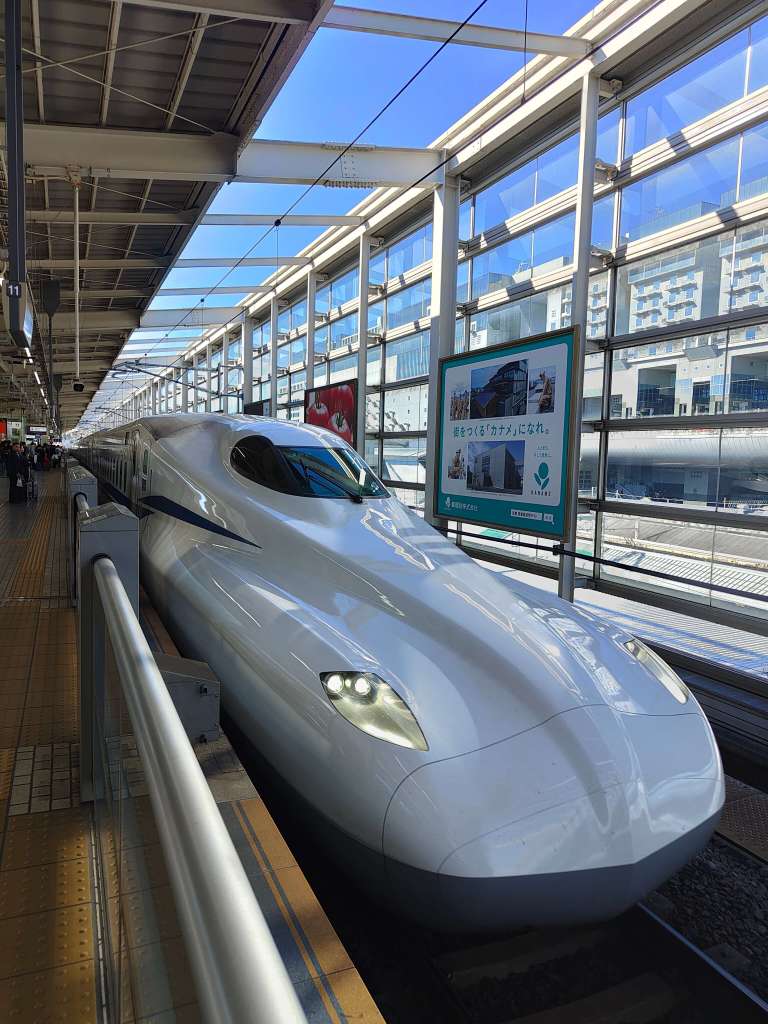
Shinkansen kyoto tokyo
Japan’s famous Shinkansen train

It is an amazing service, with departures every 5 to 10 minutes during peak periods – a bit like London’s tube, except much faster, plus it actually works and is spotlessly clean. On the way we were treated to one last view of Mount Fuji.
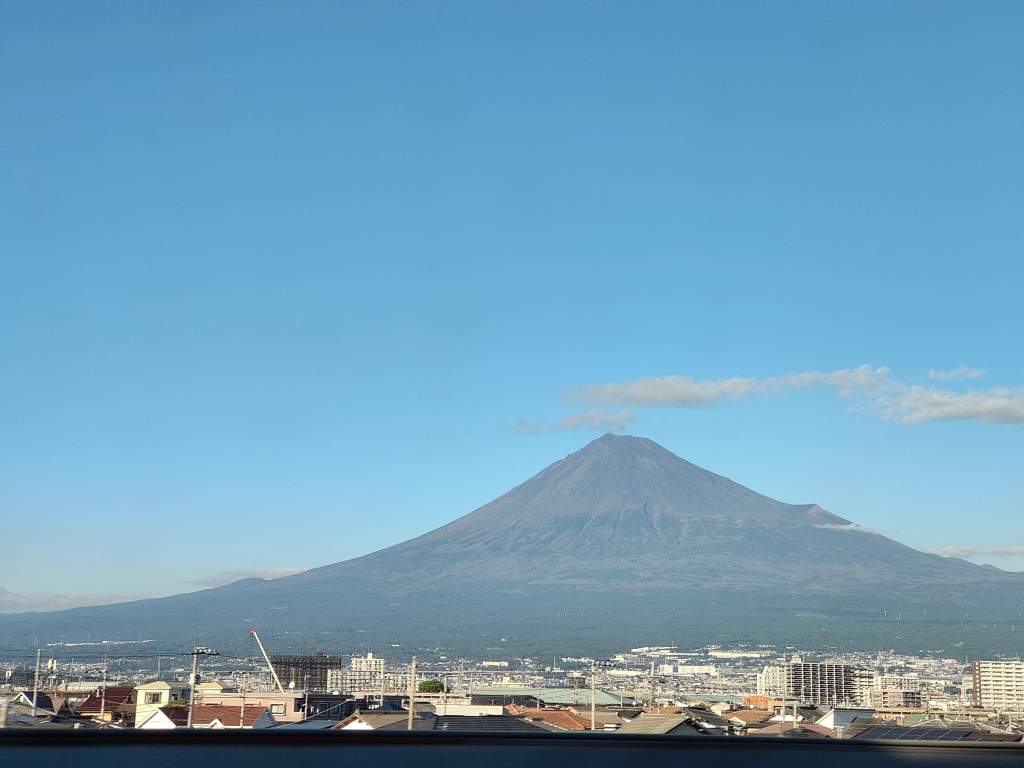
Fuji from train
Goodbye, Fuji San!

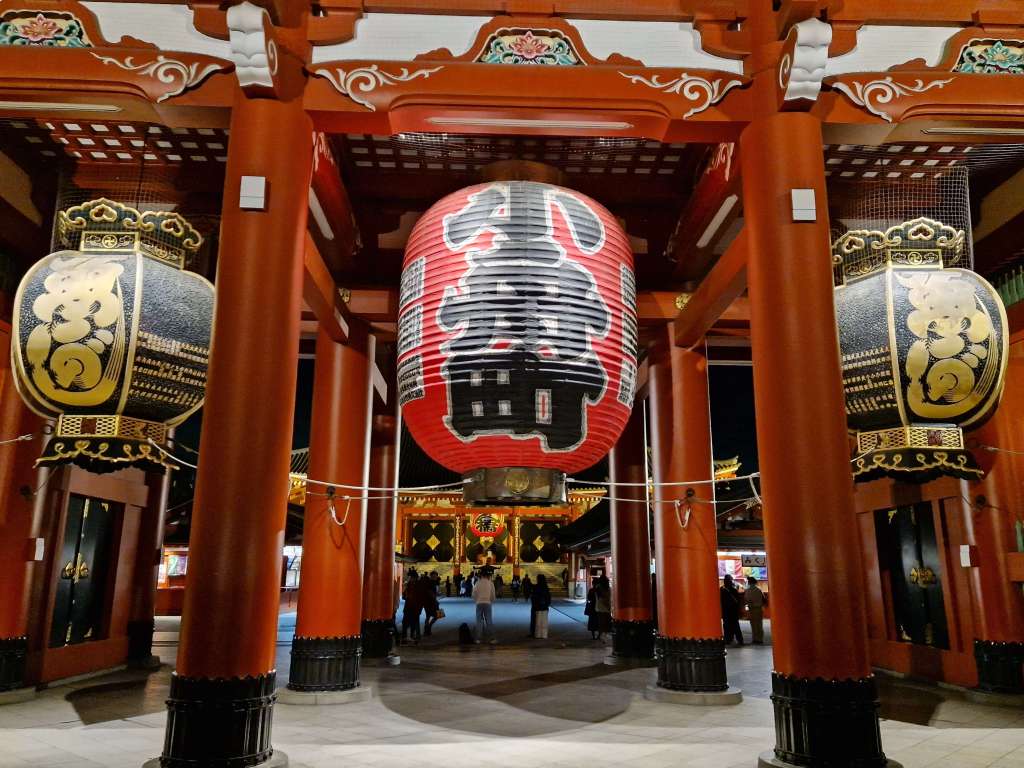
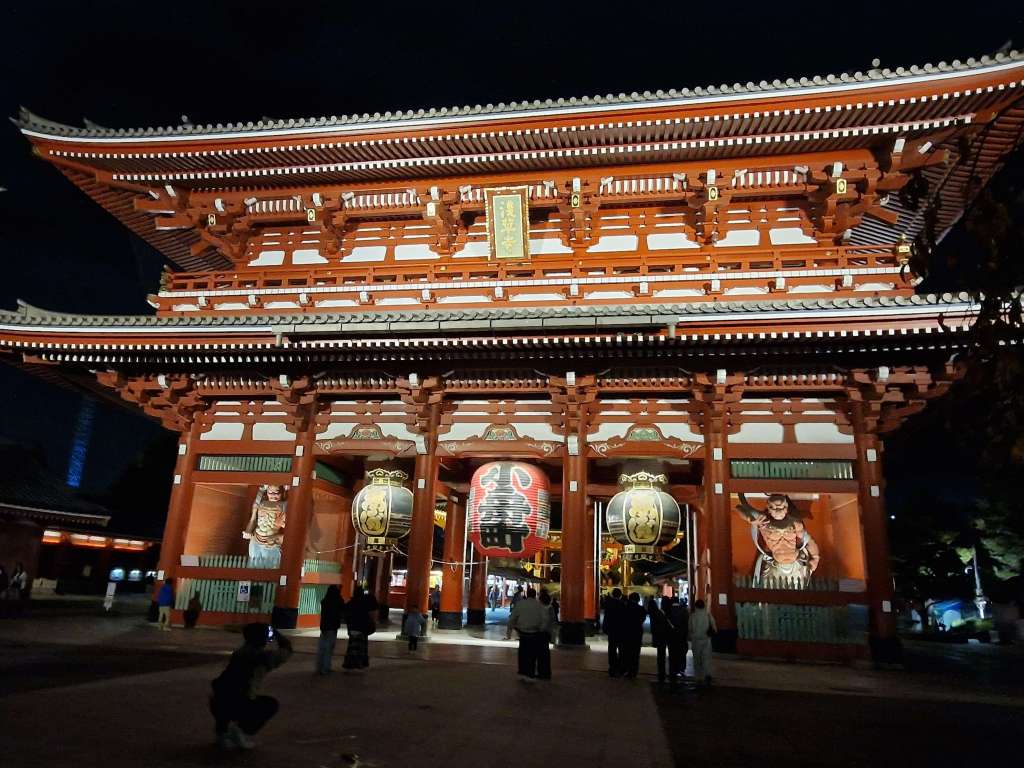
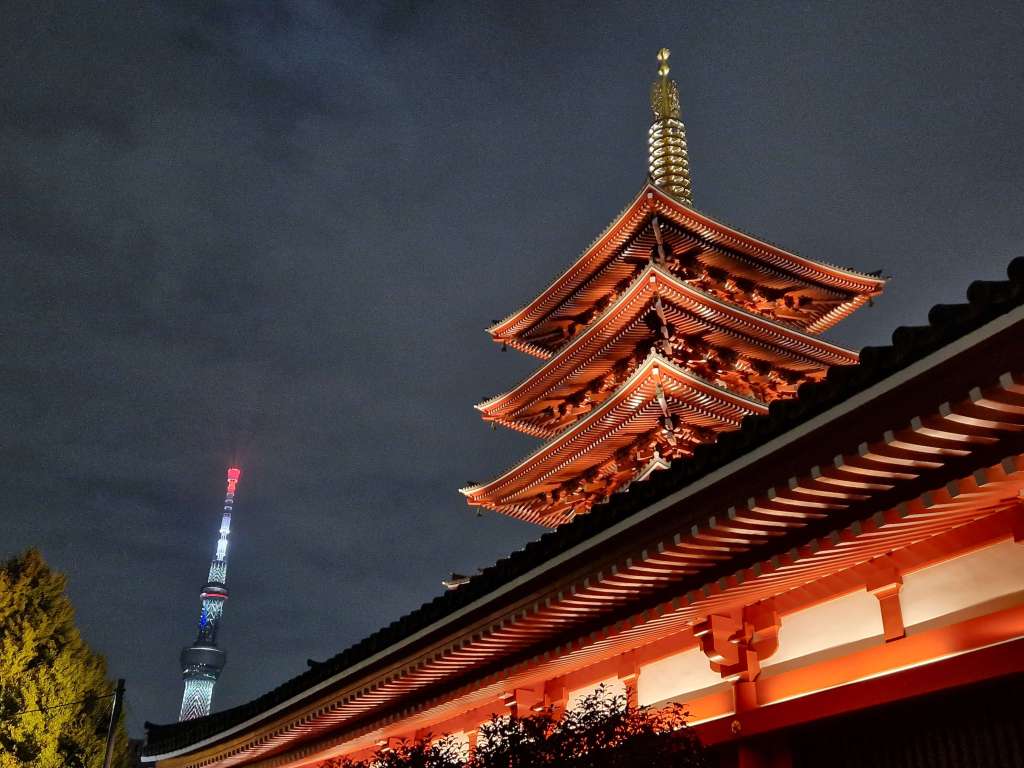
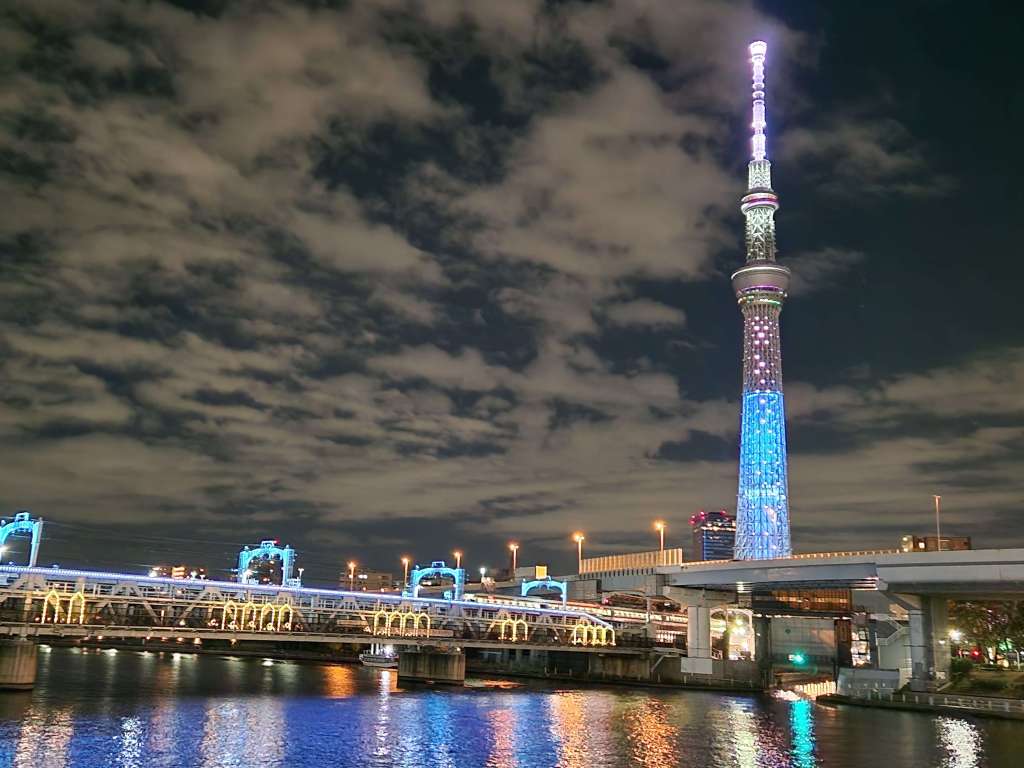
Getting from Tokyo Station to our hotel in Asakusa would take us another hour (average speed 7 km/h, including lots of scratching our heads trying to find the right line to take), but we were glad of the effort we made to get there. It is famous as being Tokyo’s most traditional area, with low-rise buildings, restaurants and markets. We arrived in the early evening, checked into our hotel and set off to explore. Asakusa was very different to Shinjuku or central Tokyo, and we liked it a lot. The highlight of the area was the Senso-ji temple – built in 645, and probably the city’s most famous single building. It looked magnificent against the night sky, with one of Tokyo’s best-known modern constructions, the Skytree, standing behind it.
Asakusa senso ji
Asakusa – Senso-ji Temple and the Skytree
Asakusa skytree
Asakusa – the river and the Skytree
Senso-ji detail
Asakusa – details of Senso-Ji
Senso-ji Asakusa

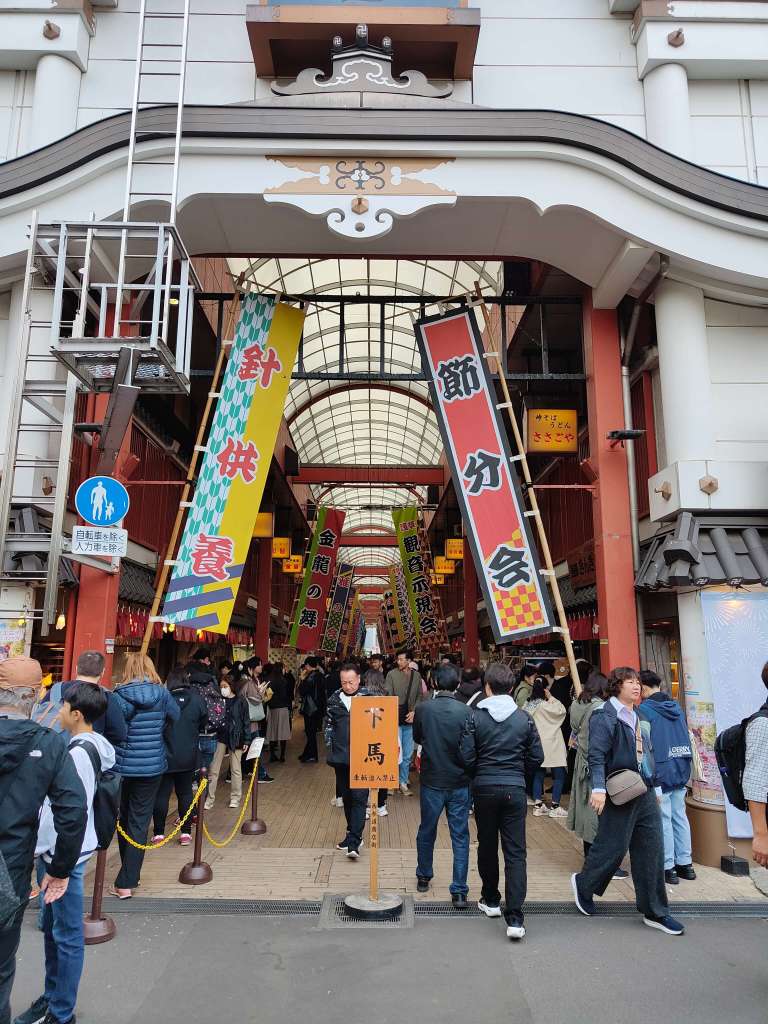
The next day we explored Asakusa some more so that Aki could go souvenir shopping. The street going from the temple’s outer to inner gates was packed with shops, many selling traditional Japanese costumes. It was very busy, but in a pleasant way. Although the shops are mostly now directed at tourists, a shopping area has existed here for several centuries.
shopping mall Asakusa
A shopping arcade in Asakusa

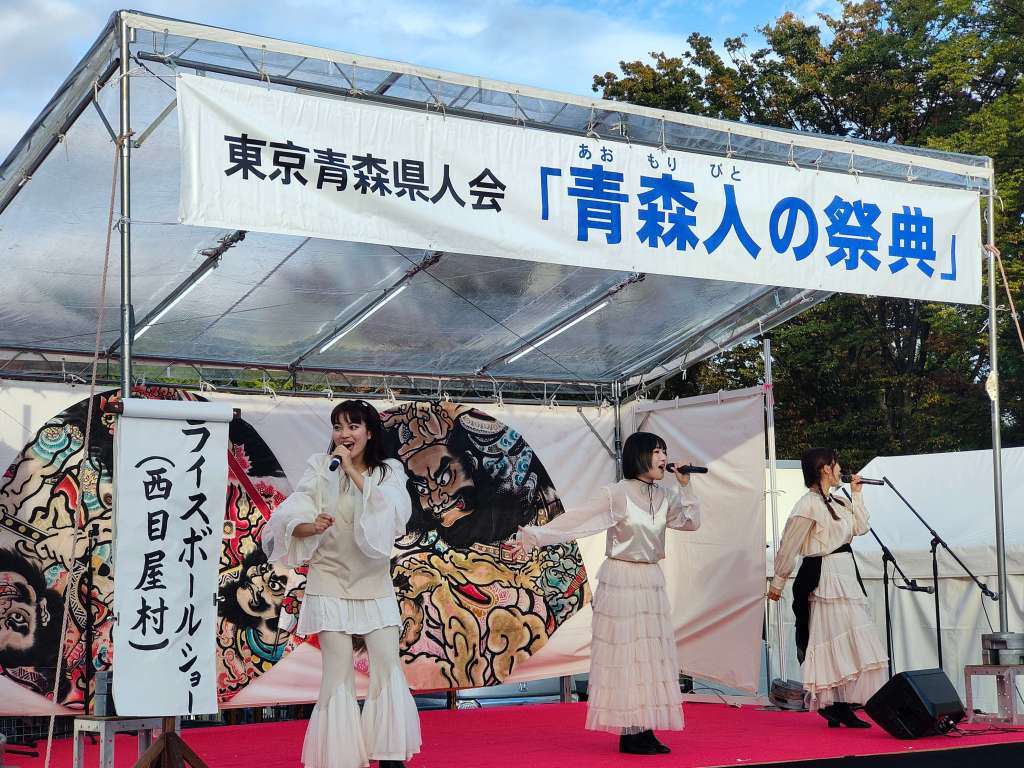
In the afternoon we made the trip to Ueno, another interesting suburb of Tokyo. The centre of this district is Ueno Park, which was busy with locals enjoying a Sunday outing or visiting one of the many museums in the area. We enjoyed live music, street food and the Museum of Western Art – maybe a strange choice for western tourists, but it was offering free entry without the long queue for the very popular Tokyo National Museum.
Ueno park concert
Free concert in Ueno Park

As night fell, we found yet another interesting temple – Bentendo – which sits in large lake covered with lotus plants.

Bentendo temple Ueno
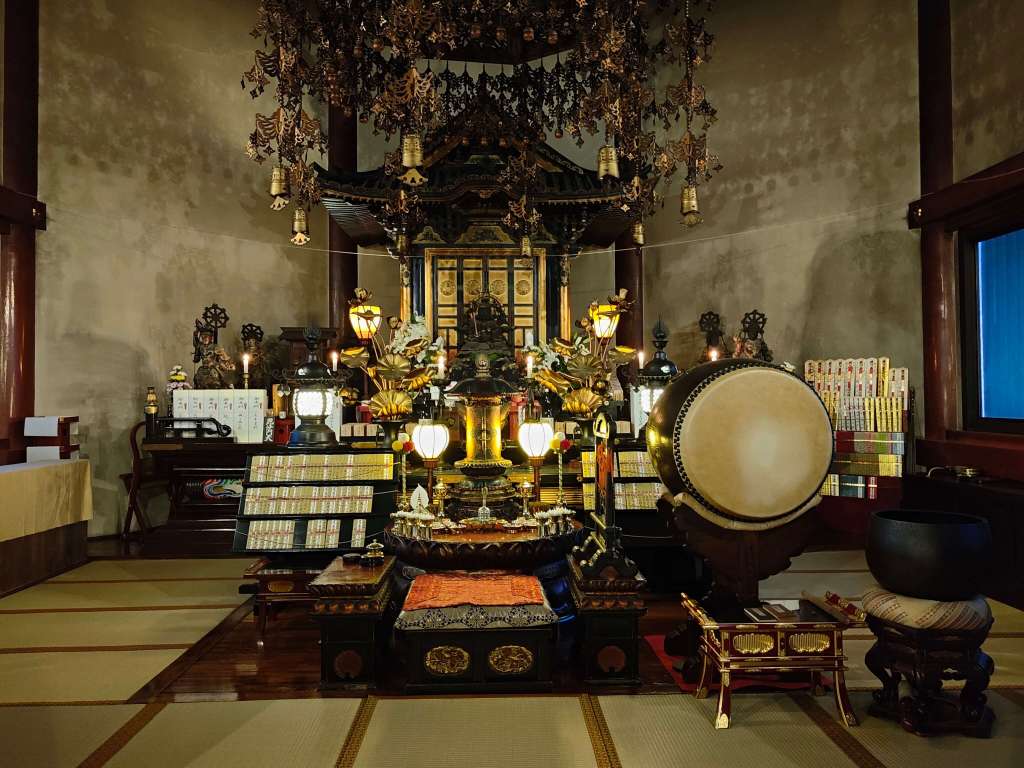
In and around Bentendo Temple
Bentendo Temple, Ueno
inside Bentendo temple Ueno

We headed back to Asakusa for our last night in Japan, which we started in a crab restaurant. We drank a bit too much celebrating the end of our trip, and after dinner decided to visit one of the amusement arcades we had seen all over Japan to get rid of some of the loose change we had accumulated over nearly a month. We tried to grab a prize with a claw machine game, knowing full well that it is usually a good way to waste money. Amazingly we managed to liberate this furry friend from his captivity in the arcade and will be taking him back to Europe to present to a newly-arrived great-niece in our family. I hope that one day when she grows up his owner takes him back to Japan and he can relive some of our amazing adventures here.
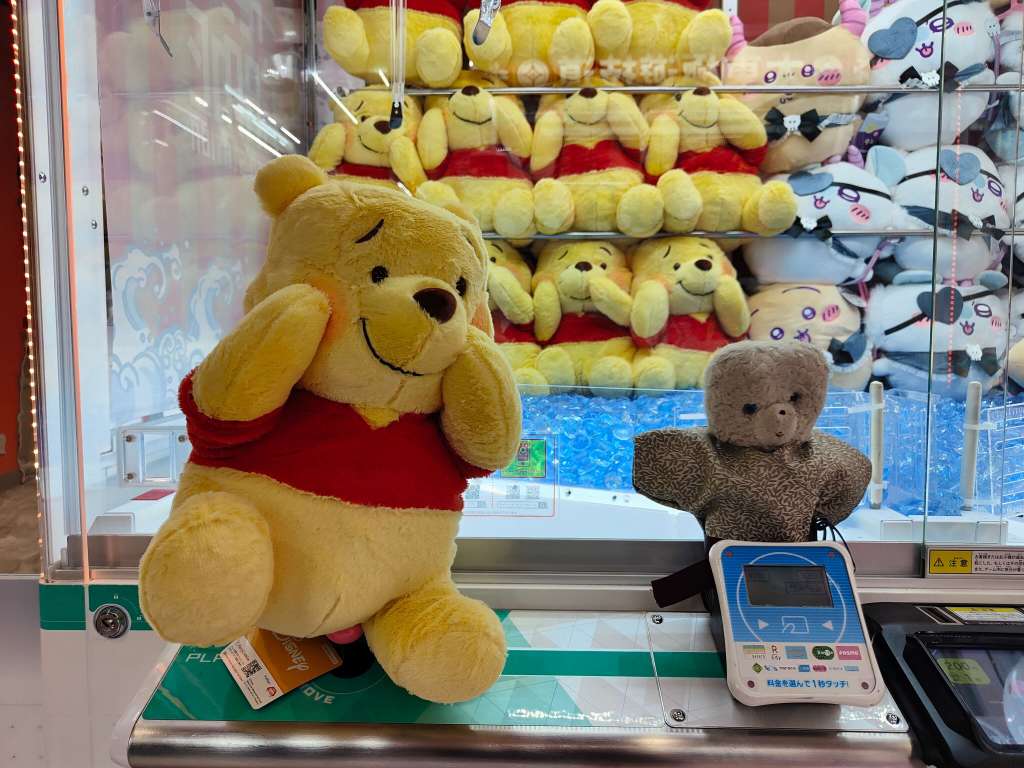
Games arcade Asakusa
Liberating a fellow teddy!

Well, that’s all for this trip. We have been in Japan for a month, during which we have experienced the huge city of Tokyo, Nikko, Mount Fuji, the Japanese Alps in autumn, the provincial cities of Kanazawa and Hiroshima, magical Miyajima, little-visited Shikoku with its mountains, and the countless temples of Kyoto. We have stayed in some great places, enjoyed meeting the friendly and helpful Japanese people, and had many memorable meals. But Japan is a big place, and it is impossible to see everything in one trip. We will back – next time probably to explore the island of Kyushu in the far south and to catch Kyoto when the autumn colours peak.

Previous Post – Farewell to Kyoto
Farewell to Kyoto – Silver Temple and Philosopher’s Path
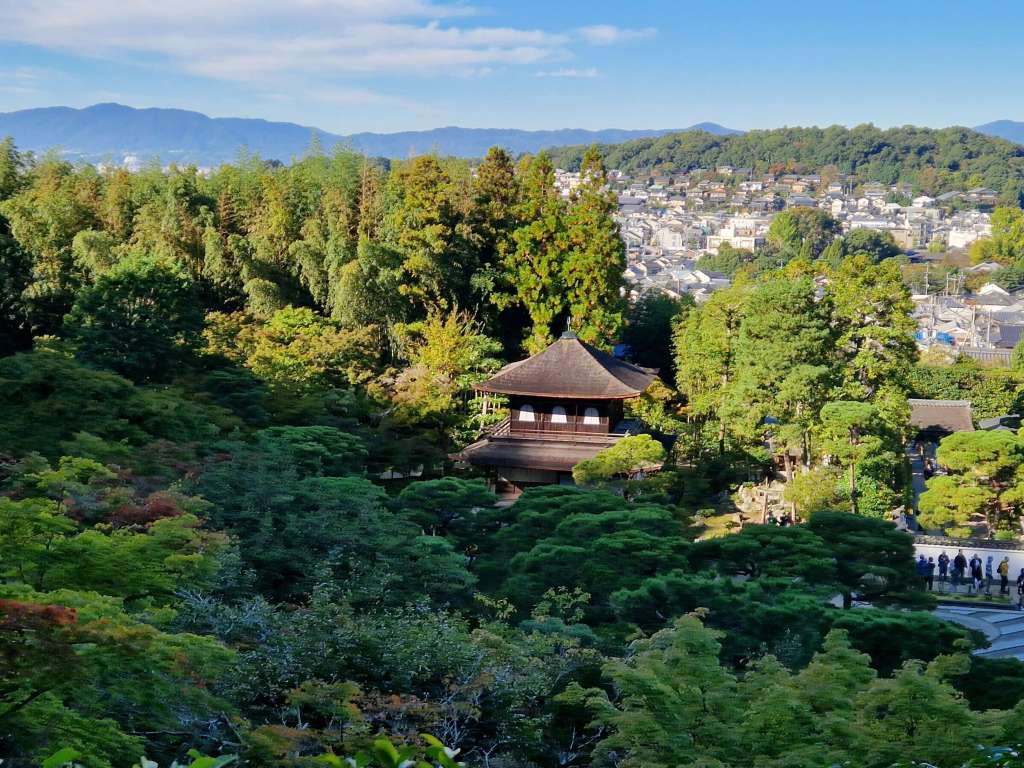
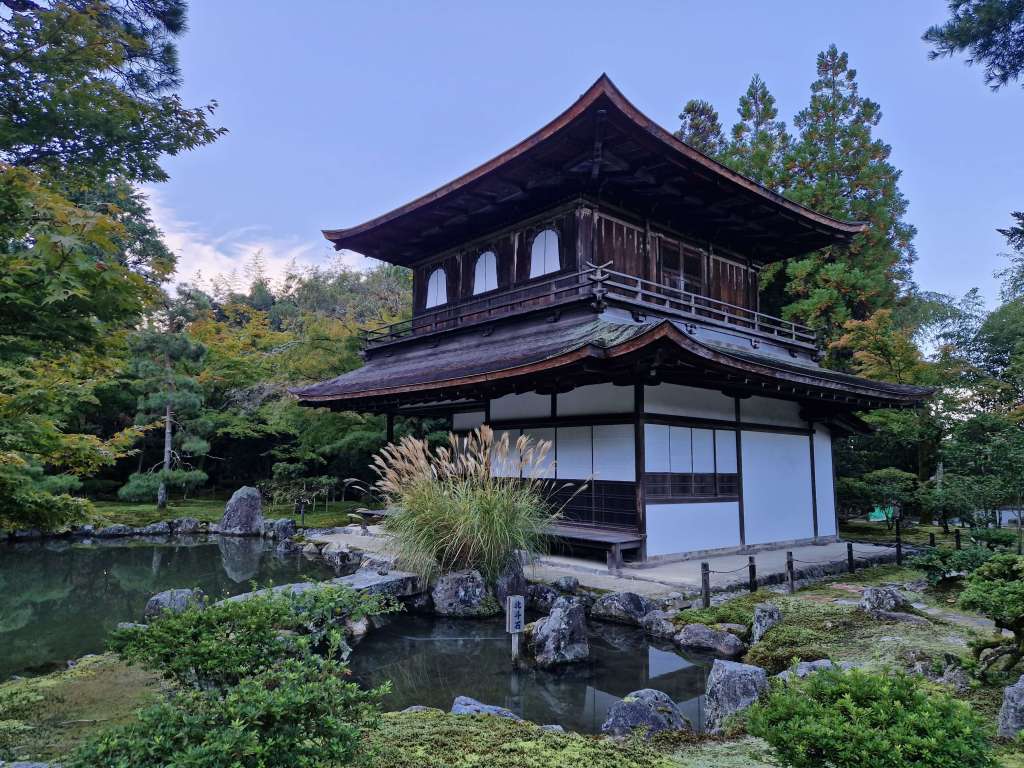
This was to be our last day in Kyoto so of course we visited……..some more temples! First was the Silver Temple or Ginkaku-ji, the last attraction on our “must see” list. This was built by the grandson of the shogun who had built the Golden Temple, which we visited yesterday. Its design matches that of the earlier building, and it too served as its builder’s retirement villa before being converted to a temple. However, Ginkaku-ji has never been silver – the name probably arose as a nickname to distinguish it from the Golden Temple. It was fairly close to our house, so we managed to arrive for its opening at 8.30, to find that we had beaten the crowds……but also that the morning sun was still hidden behind a mountain, and the temple and its garden were in shade. Unusually for Japan, this wooden structure has never burnt down, and what you see is the much restored original, dating from 1482.

Silver Temple Kyoto
The Silver Temple, Kyoto and its garden in the early morning shade
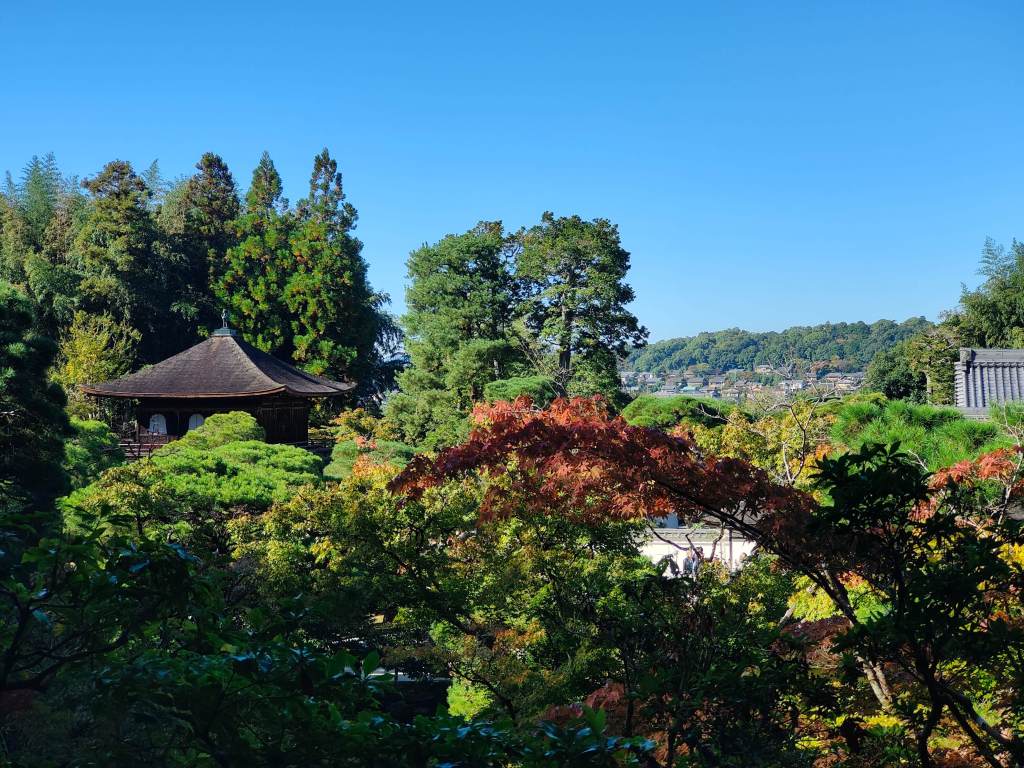
Silver Temple Kyoto from above
The Silver Temple from above
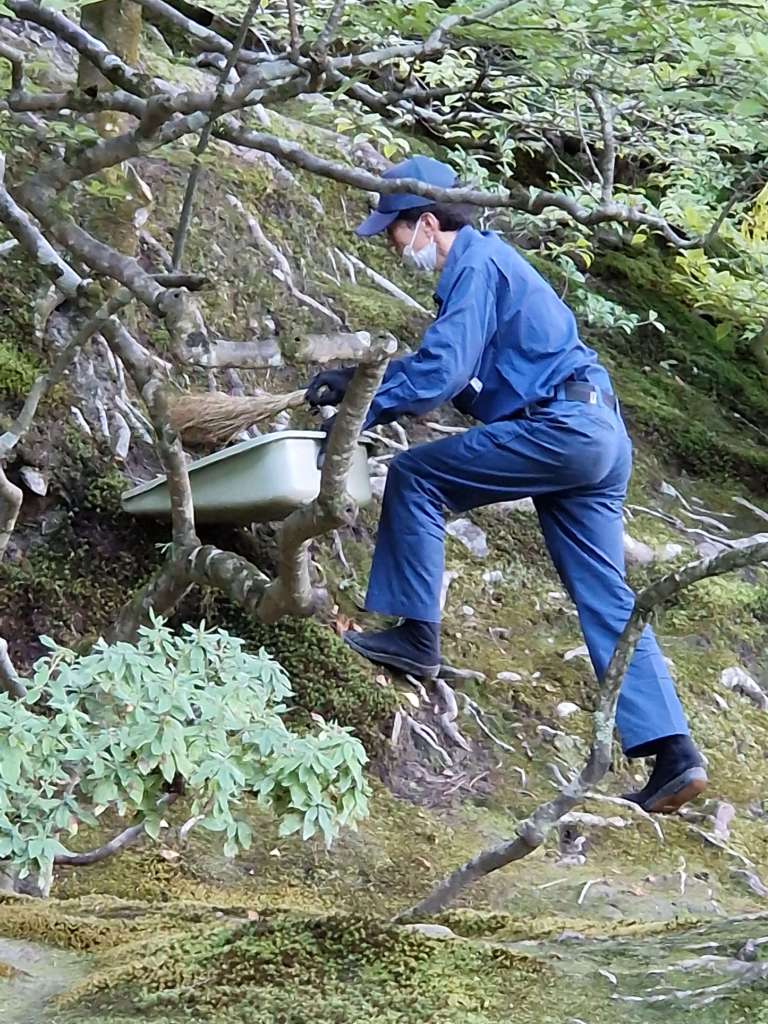
gardener cleaning leaves
The gardeners here even sweep away dead leaves…a big job in autumn

We decided to wait until the sun could reveal their full beauty, which took nearly an hour.

Silver Temple from above morning
The sun begins to reach the Silver Temple
Silver Temple Kyoto mid-morning
The Silver Temple, Kyoto in all its glory
dry sand garden in Silver Temple Kyoto
These dry sand gardens are popular in Japanese temples

The Silver Temple lies at the start of a popular walk called the Philosopher’s Path, which runs along the side of a small canal lined with cherry trees. In spring it must be spectacular (and horribly crowded) but in autumn it was pleasant and quiet. There are a lot of temples close to the path, some well-known and quite popular and some totally off the main tourist circuit. We tried a couple of each type, enjoying the feeling of freedom of making up our plans as we went and not having to do any more crowded “must see” attractions. Even the slight disappointment of being served our weakest yet cup of latte – warm milk that may once have seen a coffee bean – did not spoil our mood.

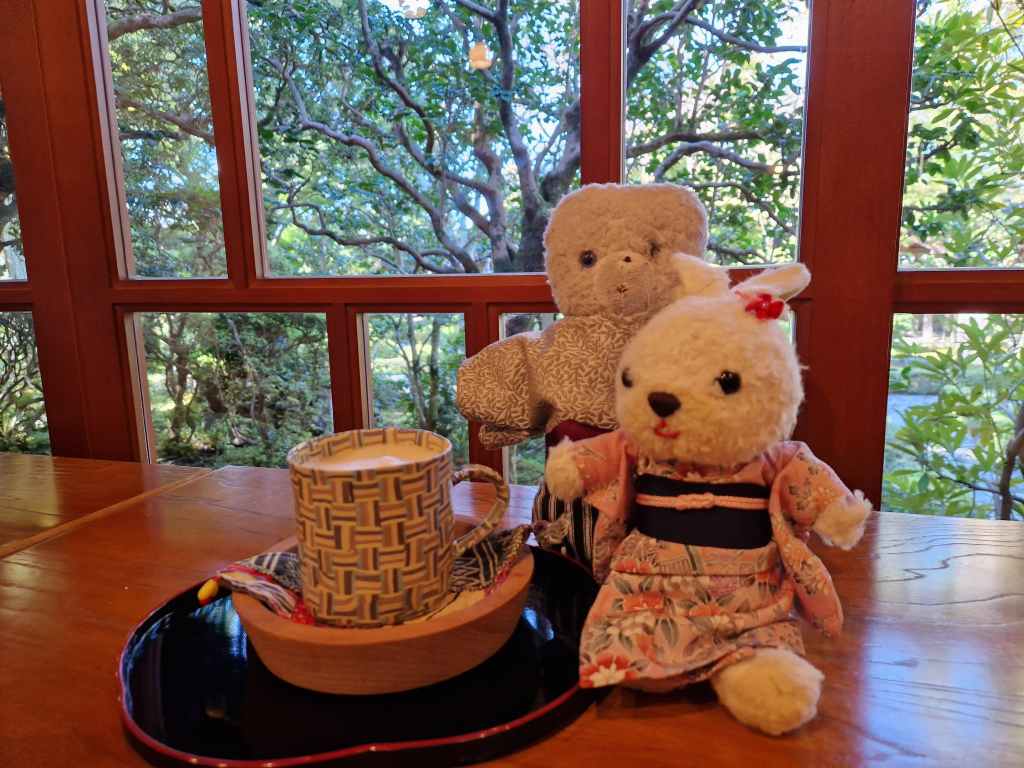
on the philosopher's path
The beautiful setting made up for the weakest ever coffee….

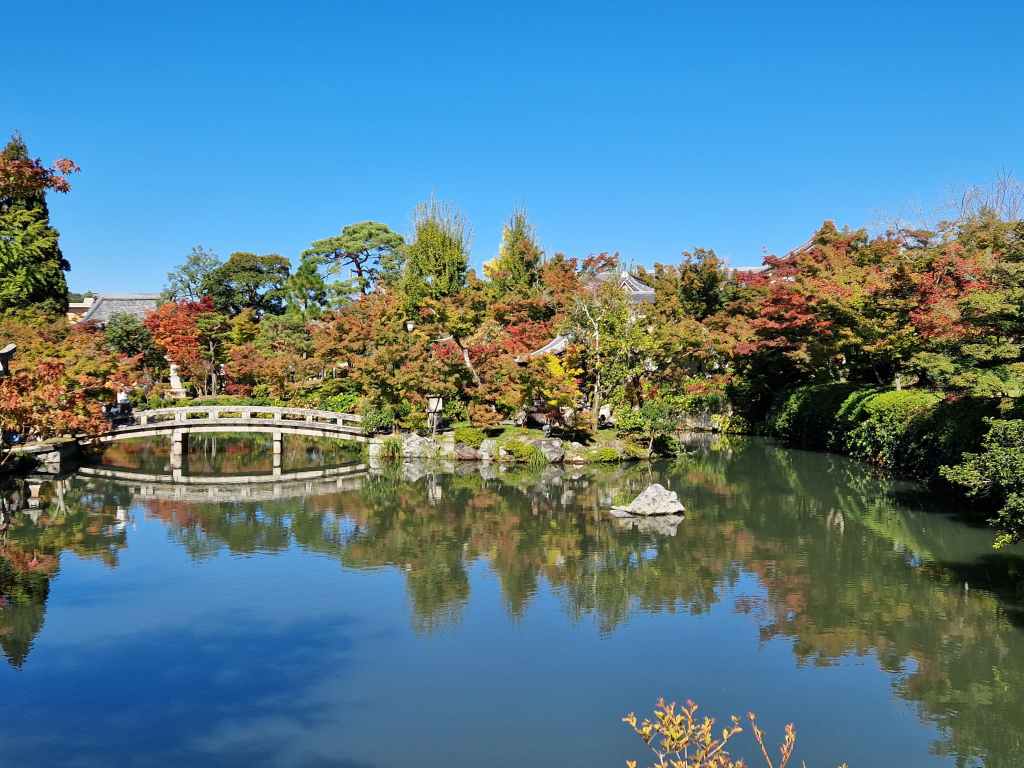
A highlight of our stroll was seeing our best yet Kyoto autumn colours at the Eikando Temple.

Eikando-temple-colours
Eikando Temple – the best autumn colours yet of our Kyoto stay
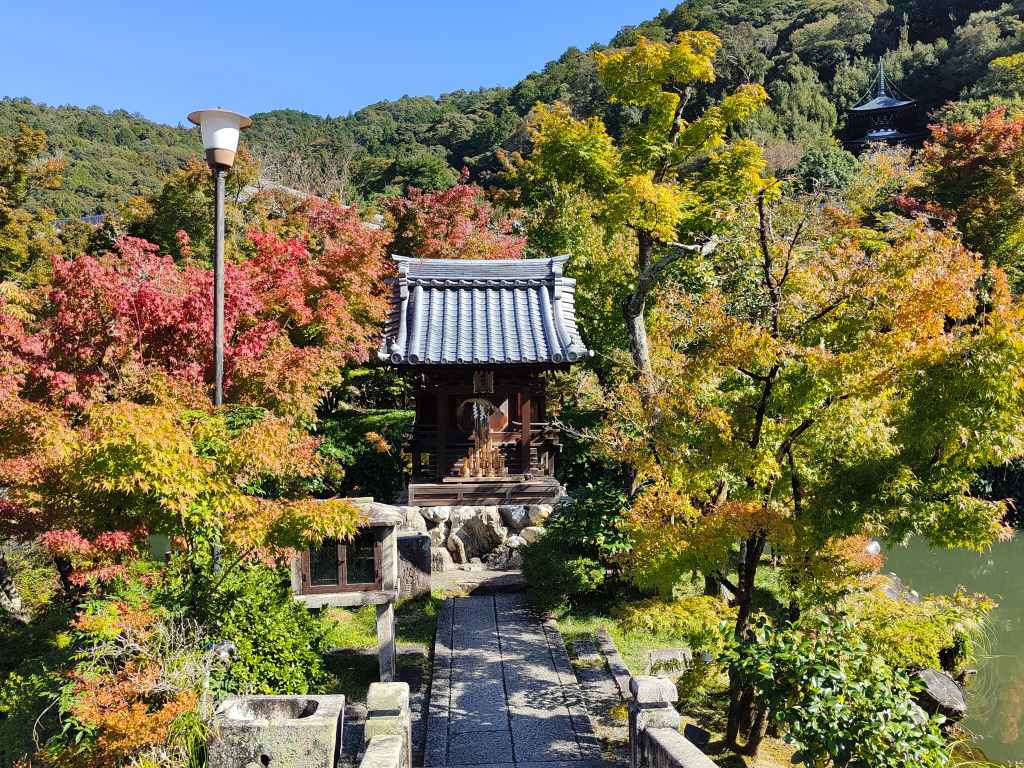
Small shrine at Eikando Temple

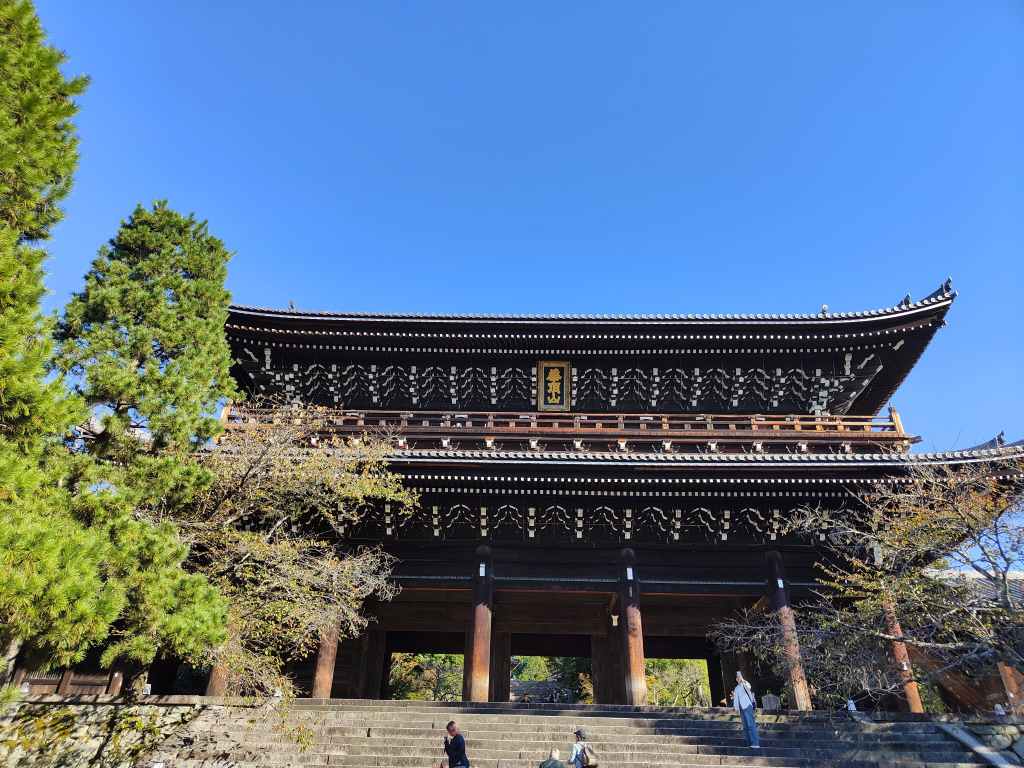
We finally ended up at the Chionin Temple, near our house, with its huge entrance gate.

Chionin-ji Kyoto
Chionin Temple, Kyoto

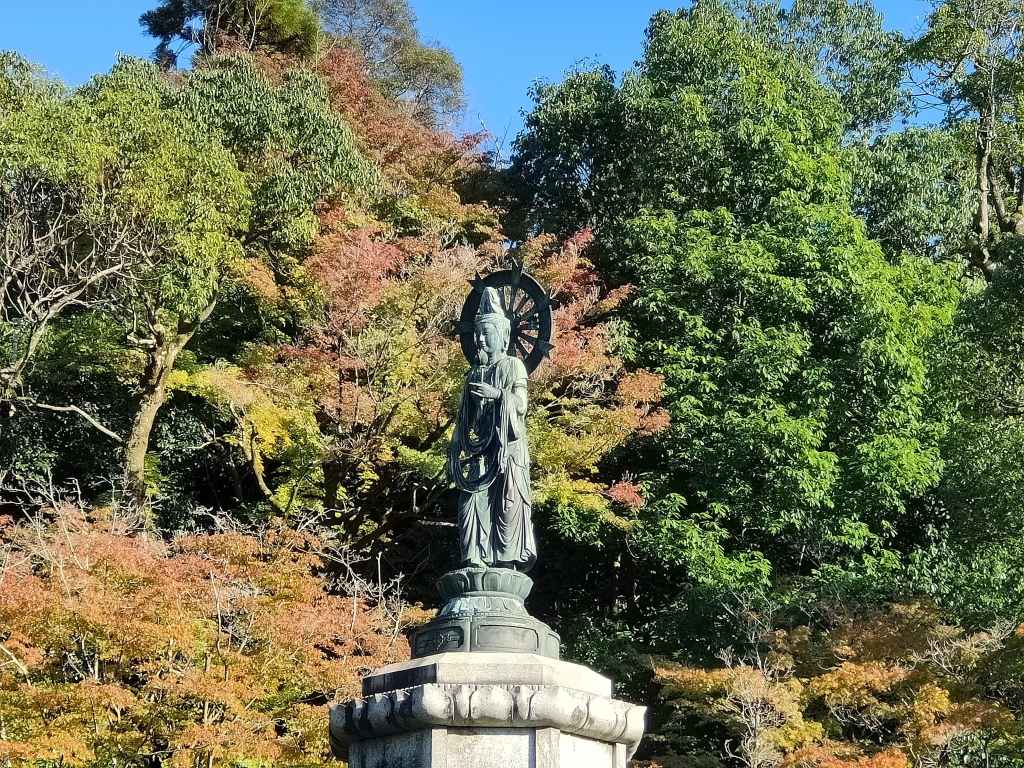
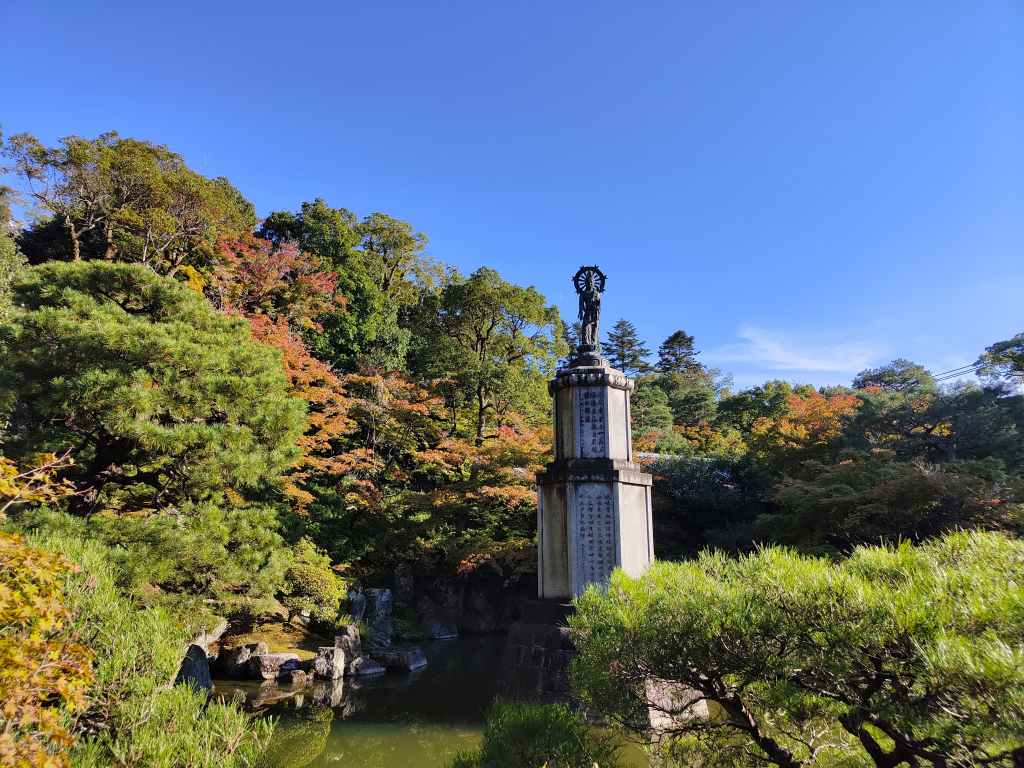
It had two gardens. The one we liked better was the Yuzen garden, which is actually modern – dating from 1954. It had probably the most evocative statue we had seen in Japan, a Buddha standing in a small lake. It was a fitting end to our visit to a city that we had finally got to like. At first we had been repelled by Kyoto’s ugly centre and crowds of other tourists. But we had now discovered that the real joy of the place is wandering around the hundreds of less-visited temples – it is a feeling unlike anything else on the planet.

Statue Chionin-ji Kyoto
A fitting farewell to Kyoto

We said a goodbye to our statue and all that it represented of the best of Kyoto, picked up our bags at our house and headed to the station to catch our Shinkansen (bullet train) to Tokyo.

Next Post – Back to Tokyo and Farewell to Japan

Previous Post – Kyoto – Golden Temple and Kyoto Castle

Kyoto – Golden Temple and Castle

Feeling refreshed after a day’s break from visiting stuff, we woke early, and took a taxi to the Golden Temple or Kinkaku-ji, in the northern suburbs. The long ride let us appreciate the city’s geography. Kyoto sits in a valley and nearly all of the tourist attractions lie in the outer suburbs, at the foot of pretty, forested mountains. The centre is a highly developed and rather ugly urban sprawl and crossing through it is quite time consuming.
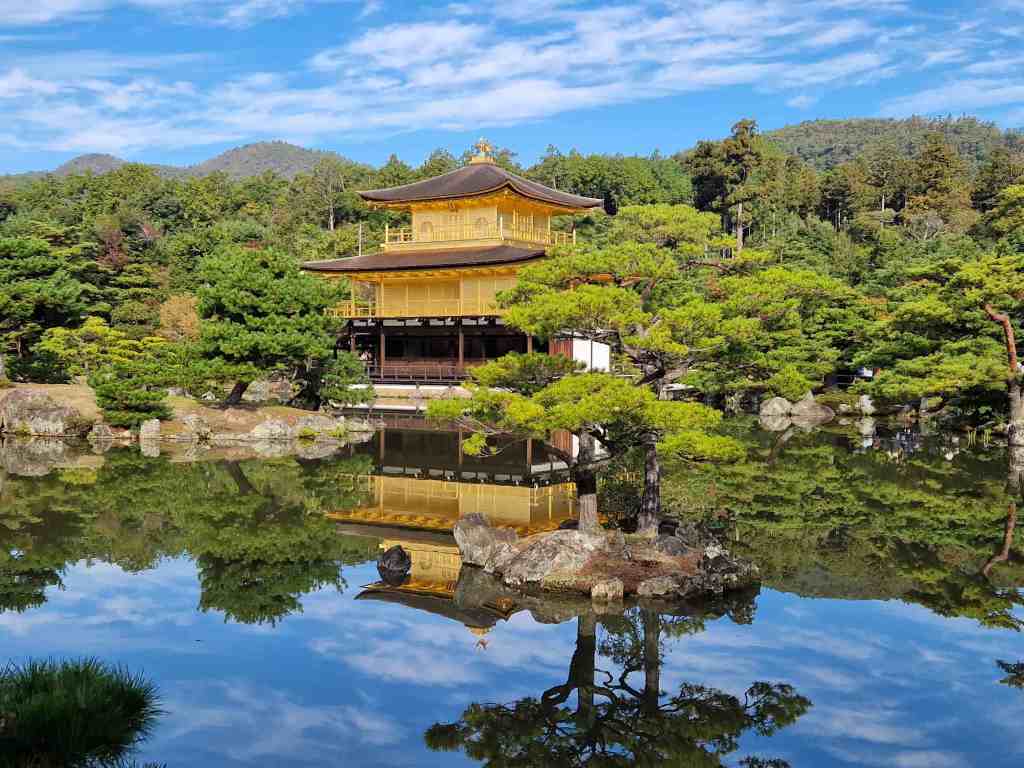
We arrived for the 09.00 opening of the temple to find that there was already a large queue waiting to get in – foreign and Japanese tourists, and groups of schoolchildren. Still, the crowds were worth it, since the Golden Temple really is an unmissable sight – a temple entirely covered in gold leaf (even the gutters are gilded) sitting by a lake in a beautiful garden. We joined the throng to take one of THE essential Kyoto photos, of the temple with its reflection in the water.

Golden Temple Kyoto Kinkaku
The classic view of the Golden Temple
Golden Temple Kinkaku Kyoto
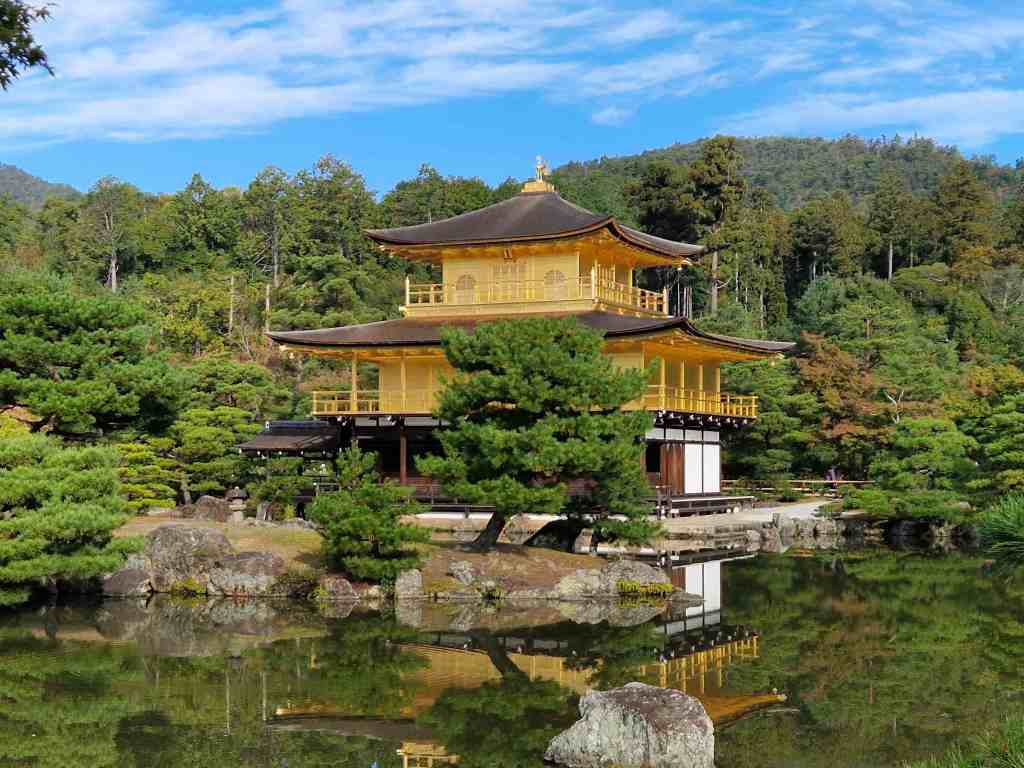
A close up view of the Golden Temple

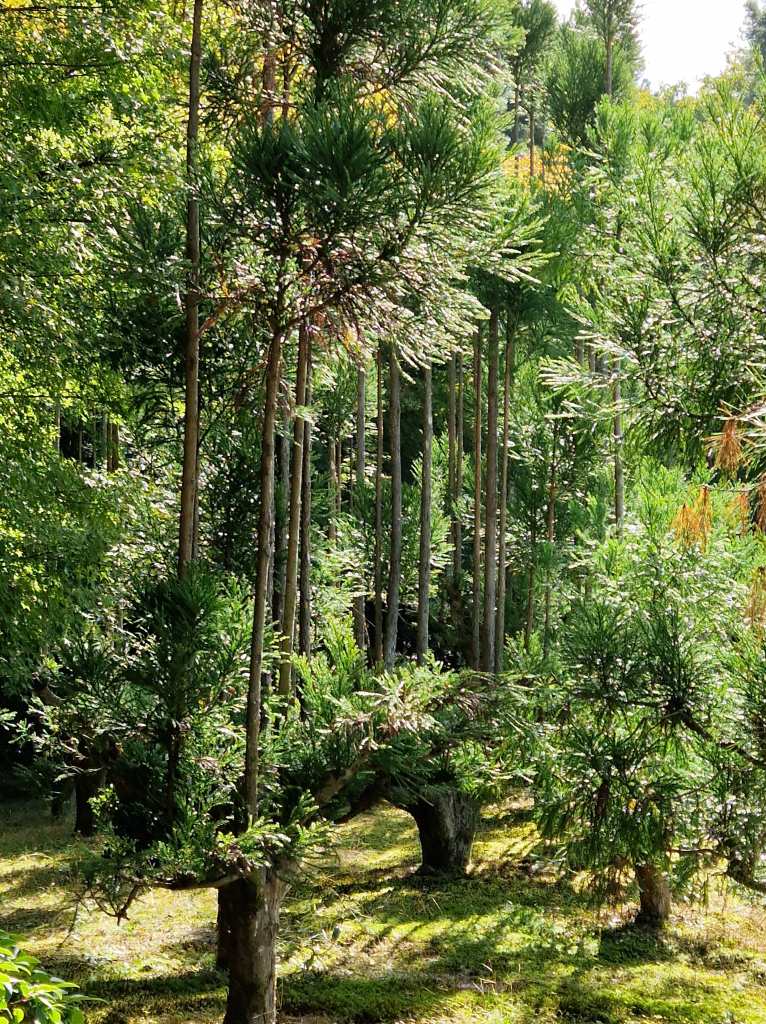
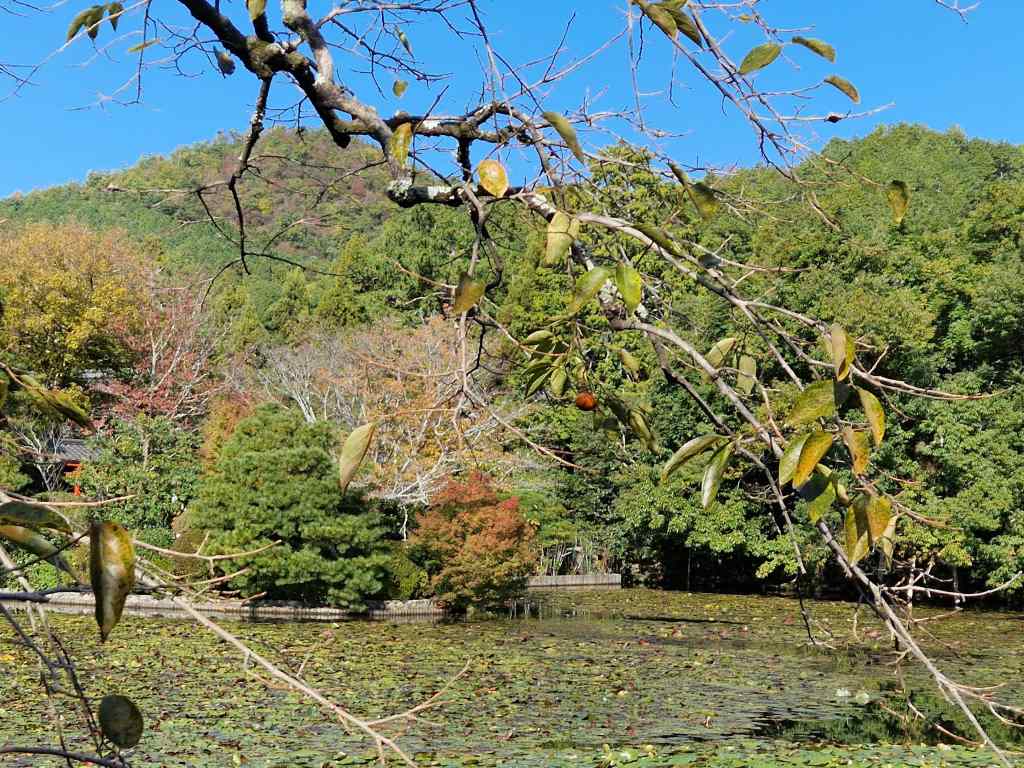
The building was originally a villa for the shogun Ashikaga Yoshimitsu and was first built in 1408. After his death, it was turned into a temple as per the terms of his will. Over the years it has burnt down and been rebuilt many times, most recently in 1950 when it was set alight by a deranged monk. The current building dates from 1955. A well-trodden path led – with a strict one-way system – past the temple, through its garden and to the exit. The visit had taken us about thirty minutes. Since we had come such a long way, we wanted to see as much as we could of this northern part of Kyoto as possible, so we took a taxi to the nearby Ryoan-ji temple. It could not compete with Kinkaku-ji’s beauty, but it was a haven of peace with a beautiful pond and some very strange pine trees, somehow made to grow like giant inverted chandeliers.

Ryoan-ji temple Kyoto
In the Ryoan-ji Temple
Garden of Ryoan-ji
Pine Trees made to grow like chandeliers!
Ryoan-ji lake
Lake at Ryoan-ji (with the very last fruit of the season)

Next, we visited yet another temple, Ninna-ji, which was about twenty minutes away by foot. This was another beautiful, peaceful place with almost no visitors.

Ninna-ji temple Kyoto
Building at Ninna-ji Temple

It was now midday, and we wondered what to do next. At the back exit of the complex was a sign advertising a mini-pilgrimage of 88 local temples over 10km – imitating Shikoku’s 88-temple 1200km epic trek. It was an intriguing prospect…..but we had already saturated on religious buildings for the day.
We stopped in the Ninna-ji’s café to study the map and decide our next move. It was advertised as a “luxury relaxation space” but the coffee was as weak as dishwater. Still, the break was useful as Aki pointed out that Kyoto castle, a rare attraction in the city centre, could be worth visiting on the way back. I was doubtful – the castles we had visited so far were all very similar, pretty from the outside but empty and boring inside. Kyoto’s castle, being on the plain, was not even likely to have a good view. Still, the only other option seemed to be to visit yet more temples, so we gave it a go – and were very happy we did.

kyoto castle
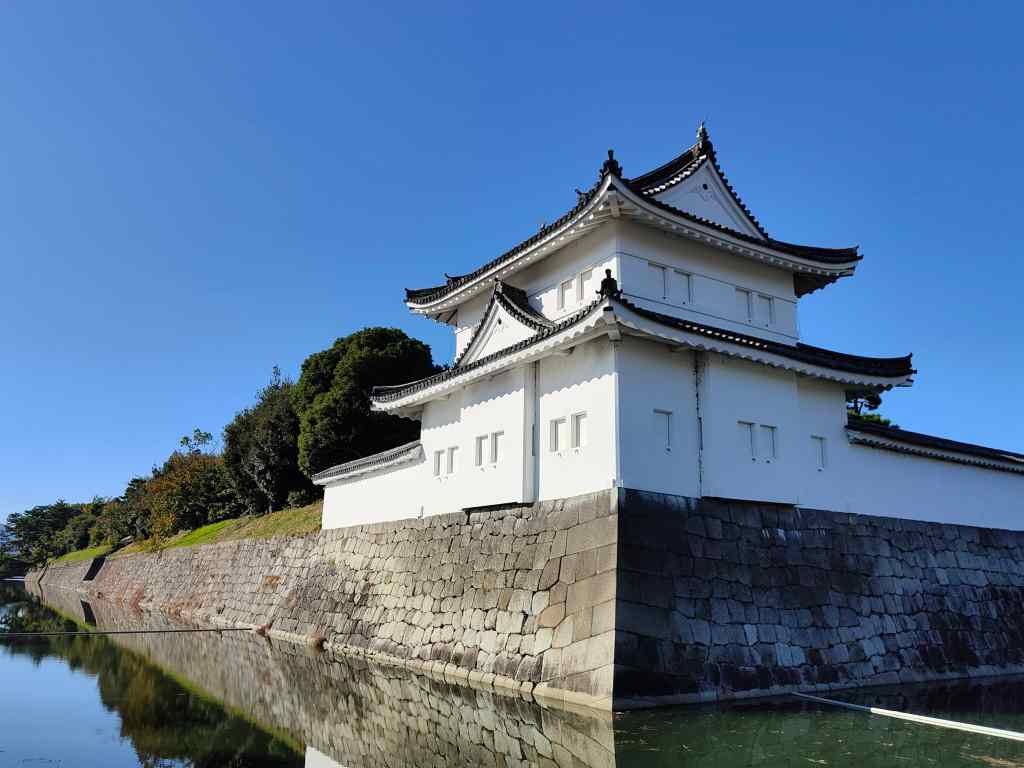
Kyoto Castle from the Outside
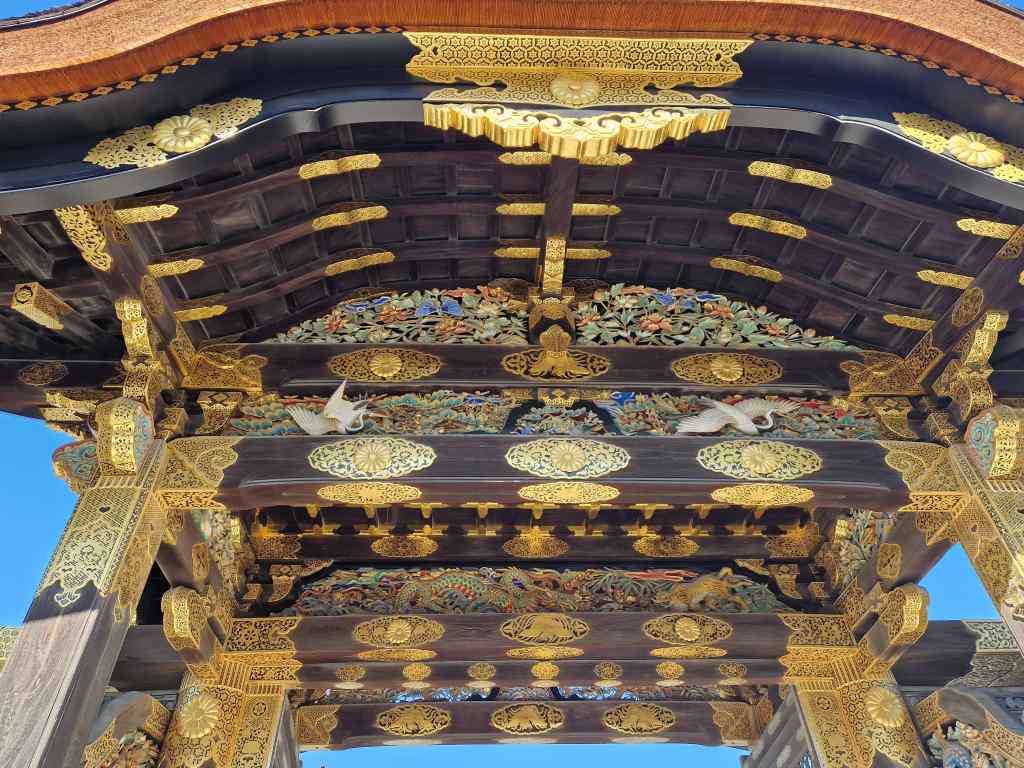
Kyoto Castle Gate
The magnificent entrance gate

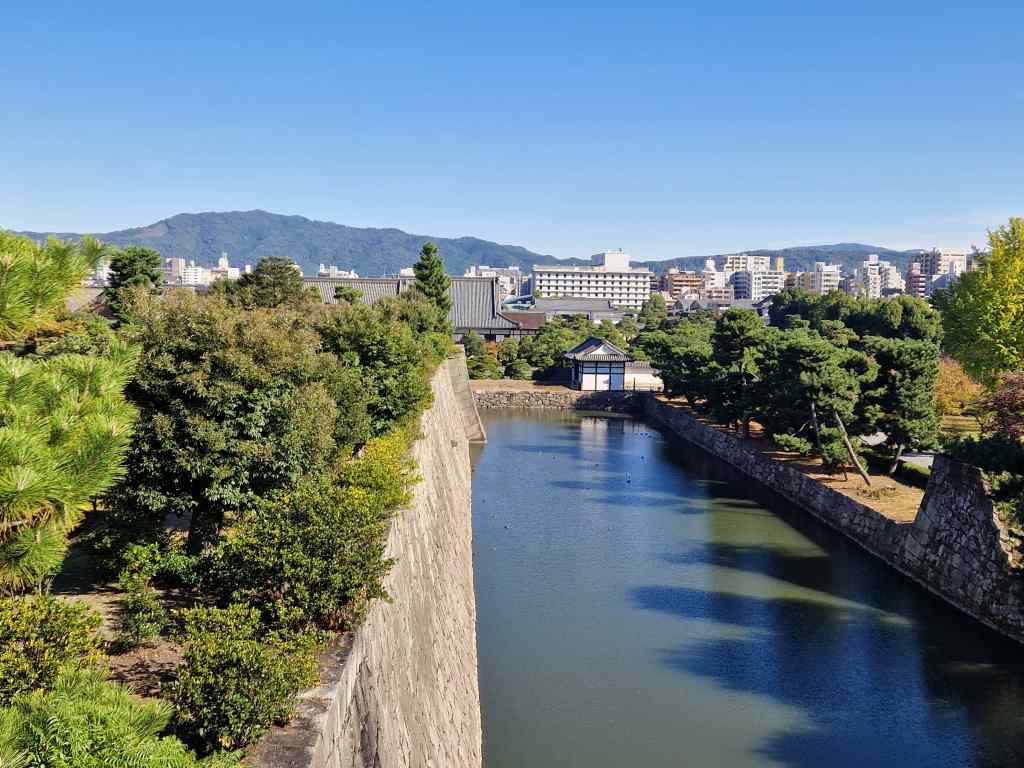
Building of the castle started in 1603 to provide the Kyoto residence of Tokugawa Ieyasu, a purpose it served until the fall of the Tokugawa shogunate, when it was briefly used as a residence of the newly reinstated emperor of Japan. The highlight of the visit was the beautiful Ninomaru Palace, located inside the defensive walls. This was a place where the shogun would receive guests or consult with officials, and consisted of a series of sumptuously decorated rooms (sadly no photos were allowed). It was so interesting that we went around twice before strolling around the palace’s garden with its inevitable tearoom. The Ninomaru Palace was one of the highlights of our stay in Kyoto – perhaps because it was not yet another temple.

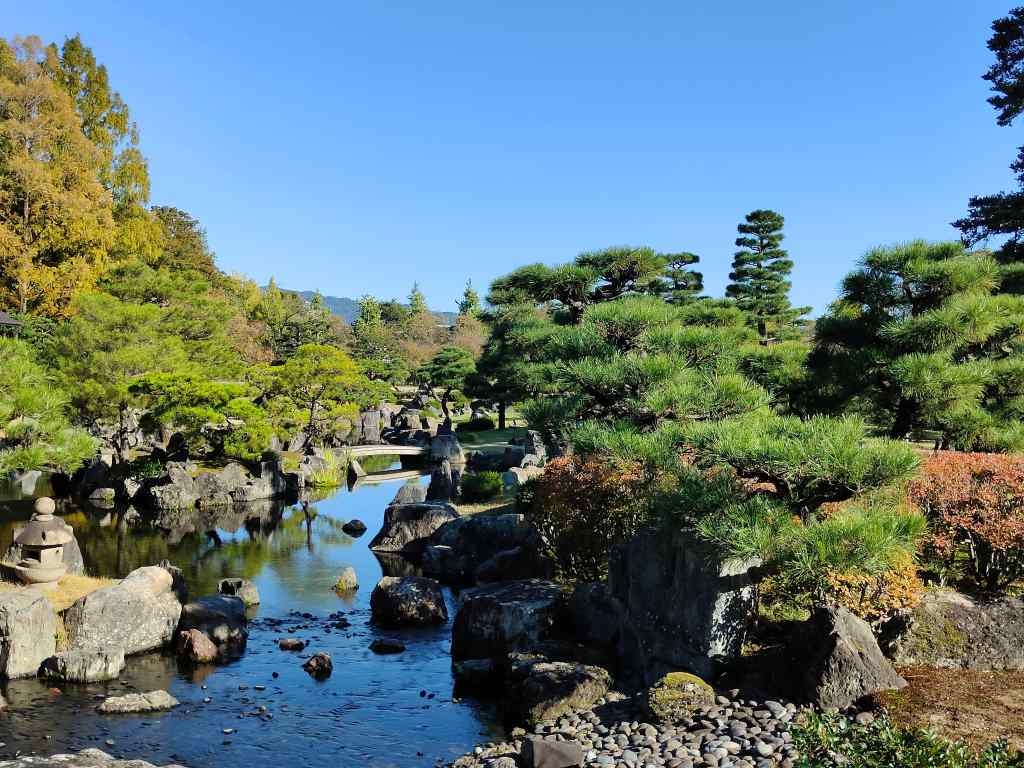
kyoto castle garden
Garden of Kyoto Castle
view of Kyoto from castle
The view from the ramparts – with central Kyoto’s urban sprawl in the background

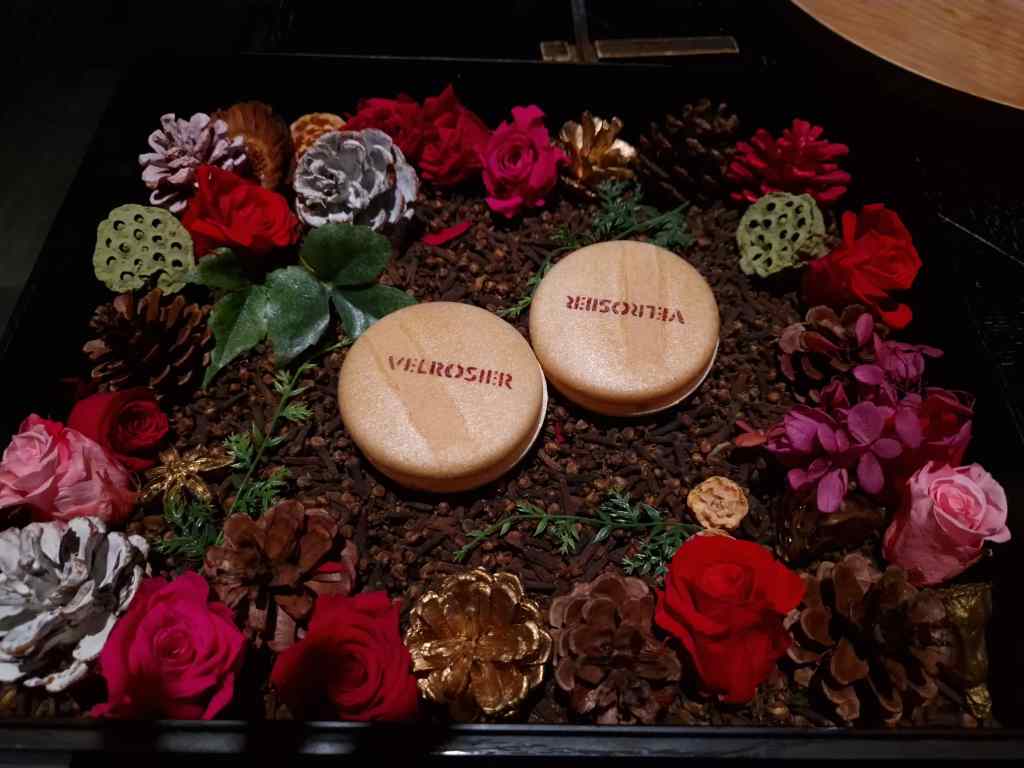
That evening we had planned another non-temple activity – dinner in Velrosier, a restaurant which had just won its second Michelin star. The food throughout our trip in Japan had been consistently excellent and very good value. Having tried lots of different types of cheap or mid-range restaurants – all very good – we wanted to try a top-end place. Japan has a lot of Michelin-rated restaurants and we wanted to see if the hype was justified. Dinner at Velrosier was probably the best meal we had ever had, beating more expensive and higher rated places we had visited in London – a two-hour feast of Chinese-inspired cooking. After similar experiences in Europe, we would usually wonder if a meal – however good – could justify the cost of top-end dining. Here, we wondered how on earth they could make a profit on what they had served us – five cooks prepared fourteen exquisite courses for only ten guests. Japan really is a foodie’s paradise.

Velrosier restaurant Kyoto
A meal to remember!

Next Post: Farewell to Kyoto
Previous Post: Nara

Nara and its amazing Daibutsuden – in search of enlightenment and coffee

Today we made a short excursion our from Kyoto to the city of Nara, capital of Japan from 710 to 794. Today Nara is a medium sized provincial city, but back in the 8th century some of Japan’s most beautiful temples were built there, many of which remain today. Our trip started at Kyoto’s train station, which was almost as crowded as Shinjuku’s. However, in Tokyo everyone seems to know where they are going and how to behave, whilst in Kyoto, many foreigners looked lost. They formed large groups that blocked passageways or looked around dumbly, unaware that behind them a big rucksack was swinging that could knock over smaller Japanese passengers (or teddy bears). We were glad to get on our train and make the 40-minutes trip.
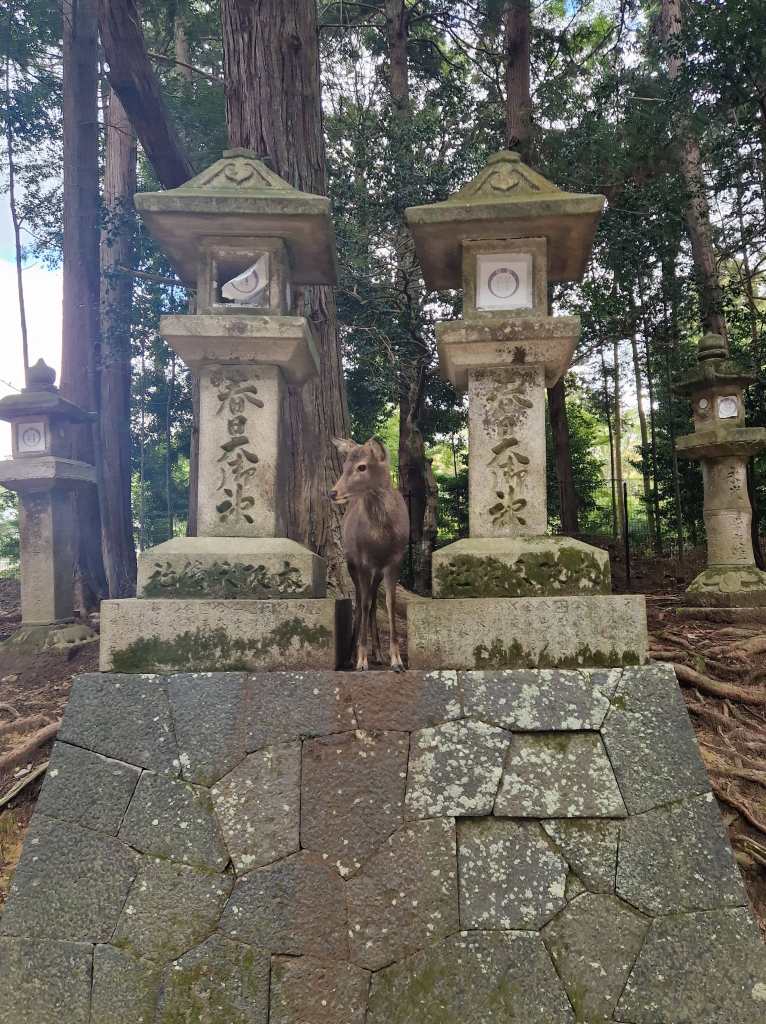
The station at Nara was located right next to the city’s park, which is also one of its tourist attractions and which houses many of its old temples. The park is home to hundreds, maybe even thousands, of “sacred” deer. They have grown used to humans and hang around expectantly, waiting for a tourist to feed them some of the rice crackers sold by many small shops.

Deer at Nara
One of very many deer at Nara. Cute at first, but…..

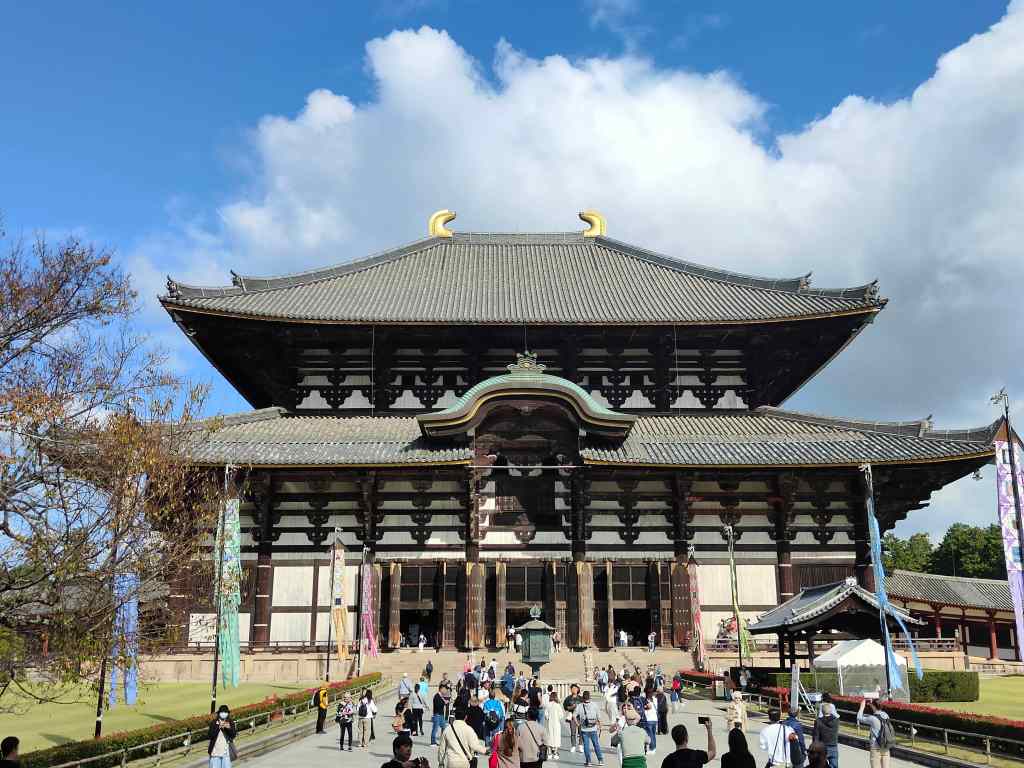
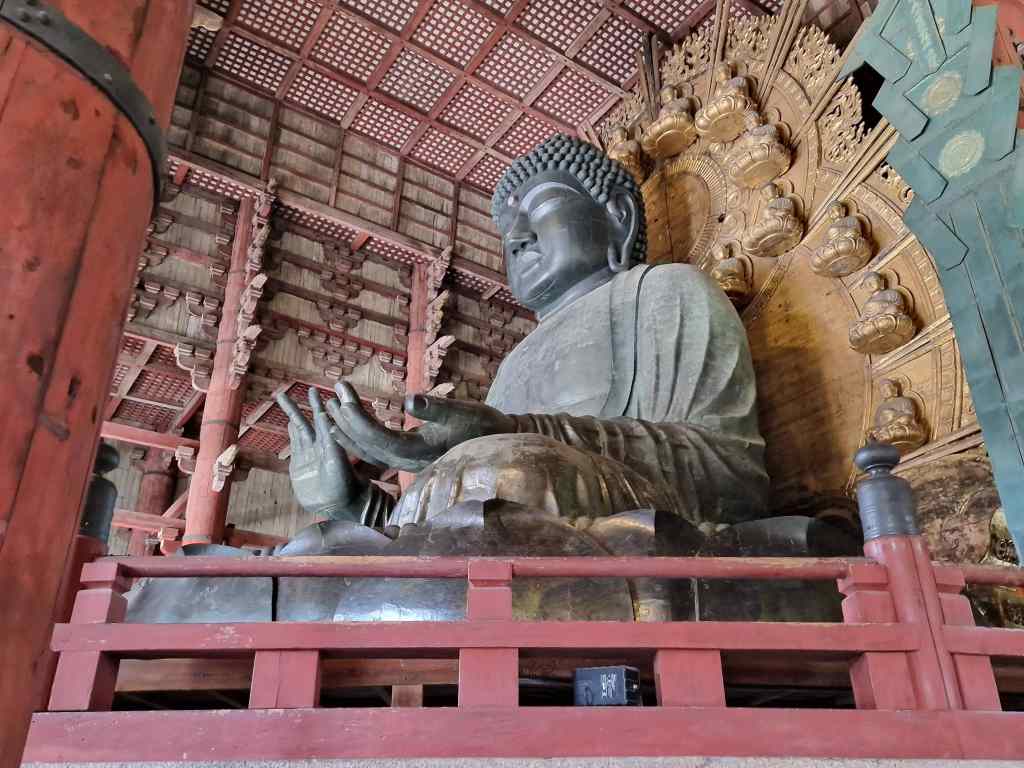
We didn’t feed the deer – some of them looked so hungry that they could swallow us along with the rice crackers – and headed straight for Todai-ji temple, one of the most famous in Japan and first completed in 752. The temple’s centrepiece is the huge Daibutsuden or Big Buddha Hall, which houses an enormous gilded bronze Buddha statue. This hall has been destroyed by fire and rebuilt several times, most recently in 1709. Today, it is possibly still the world’s biggest wooden building (though the title is disputed) – but before 1709 it was even bigger, the last reconstruction being scaled down to save money.

Daibutsuden or Big Buddha Hall
Nara -the Daibutsuden or Big Buddha Hall and Big Buddha himself
big Buddha

The hall and the majestic Buddha inside are really mind-blowing sights, and we made the circuit of the interior twice, to make sure we fully soaked up the atmosphere.

statue in Daibutsuden
Other statues in the hall
Daibutsuden statue

After that we visited a few other buildings in the huge Todai-ji complex, finishing at their interesting museum – which had some magnificent Buddhist sculptures (photos not allowed) and most importantly a café that served acceptable coffee. Finding a good caffeine fix is a problem in Japan, and most coffee and tea houses sell horribly weak filter coffee, which just isn’t strong enough even for a little teddy.
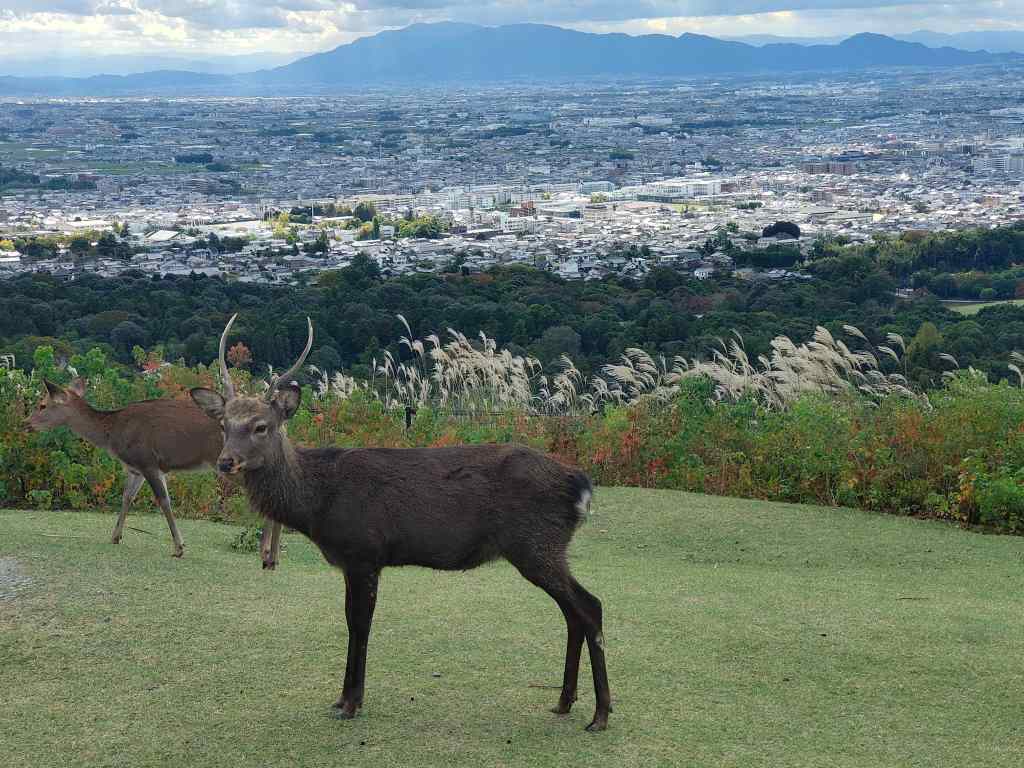
After a reviving drink we walked up a steep hill with good views over the city. The autumn colours were just starting, but sadly it was clear that we would miss the peak by a couple of weeks. The “sacred” deer on top of the hill were particularly aggressive, and one young male even attacked a tourist that had tried to limit him to one rice cracker.

Nara view with deer
A nice view over Nara and a very naughty male deer

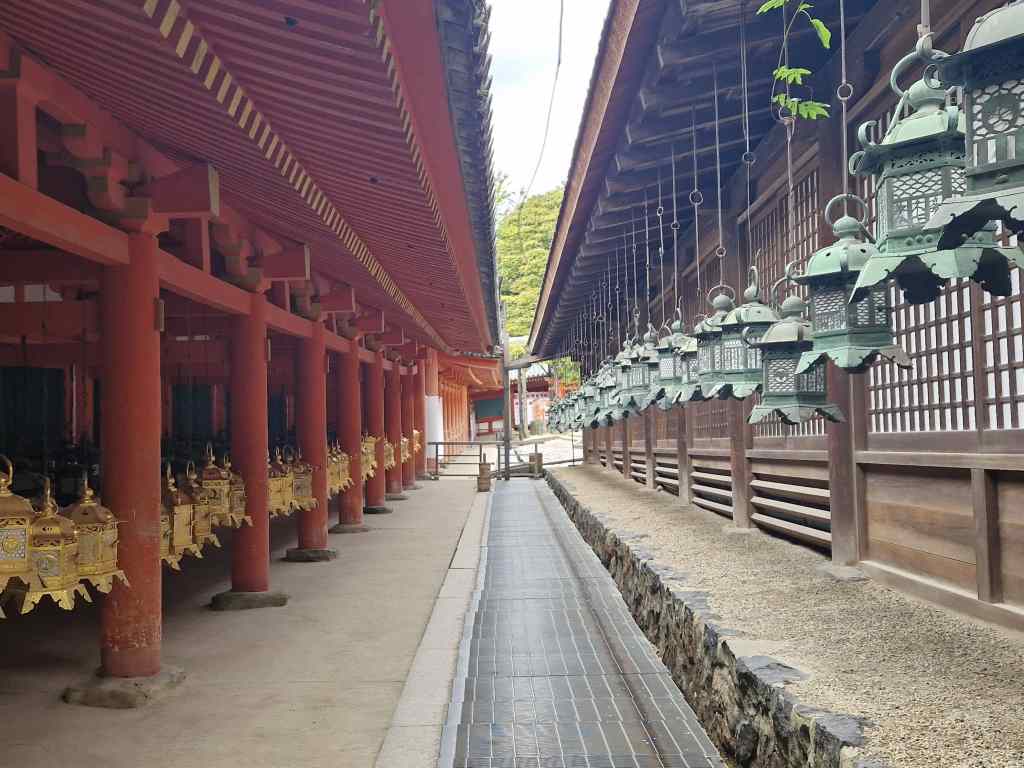
We walked back down the hill and strolled on to the Kasuga Taisha shrine. On the way, we felt a sudden drop in our energy levels and wandered around the place on autopilot. Looking at our photos later on that evening, they looked interesting, but at the time it was simply one temple too many – or one cup of coffee too few.

Kasuga Taisha shrine Nara
Inside Kasuga Taisha at Nara
Kasuga Taisha inside Nara

We strolled back to the station, wondering how long to stay in Nara. Our train back was booked for 18.30, but we were running out of energy and things to see in the area of the park. We decided to make one last stop at the Nara National Museum – partly because we thought it would contain more of the wonderful Buddhist sculptures we had seen earlier, and partly because the cafés in museums tended to have better coffee than elsewhere. Sadly, neither hope was fully realised. The museum was housed in two buildings with an underground passage between them. It was very popular, and entry was by timed slots. We joined a large queue of mostly Japanese visitors, to be ushered into a series of rooms displaying scrolls, fragments of cloth and old pots. These seemed to greatly excite everyone else, and there was a two-person deep crowd around each exhibit, making it very hard for us to see anything. We probably set a speed record for visiting the first part of the museum, lured on by the knowledge that there was a café in the passage leading to the second building….but the coffee there was as weak as it had been everywhere else. At least the next part of the museum did contain some magnificent sculptures, though you could only take photos of a small selection of them.

statue, Nara National Museum
In the Nara National Museum

We left the museum with even less energy than when we entered. On the way back to the station, we visited one more temple – Horyuji. Apparently it has the world’s oldest surviving wooden buildings, dating from 607, but it failed to excite us, and we chose to catch an early train back to Kyoto. We left feeling that we hadn’t done justice to Nara. The temples ranged from the interesting Horyuji to the spectacular Todai-ji, but we didn’t have the energy to appreciate them. There were other highly rated temples near to the city, but we didn’t have time to visit them.
We decided it was time to take a break from temple-hopping and spent the next day in Kyoto shopping, watching a dance show by one of the Geisha associations, and cruising the nightlife area of Pontocho, a narrow street lined with restaurants and bars.

Pontcho, Kyoto
Pontocho, Kyoto’s nightlife area

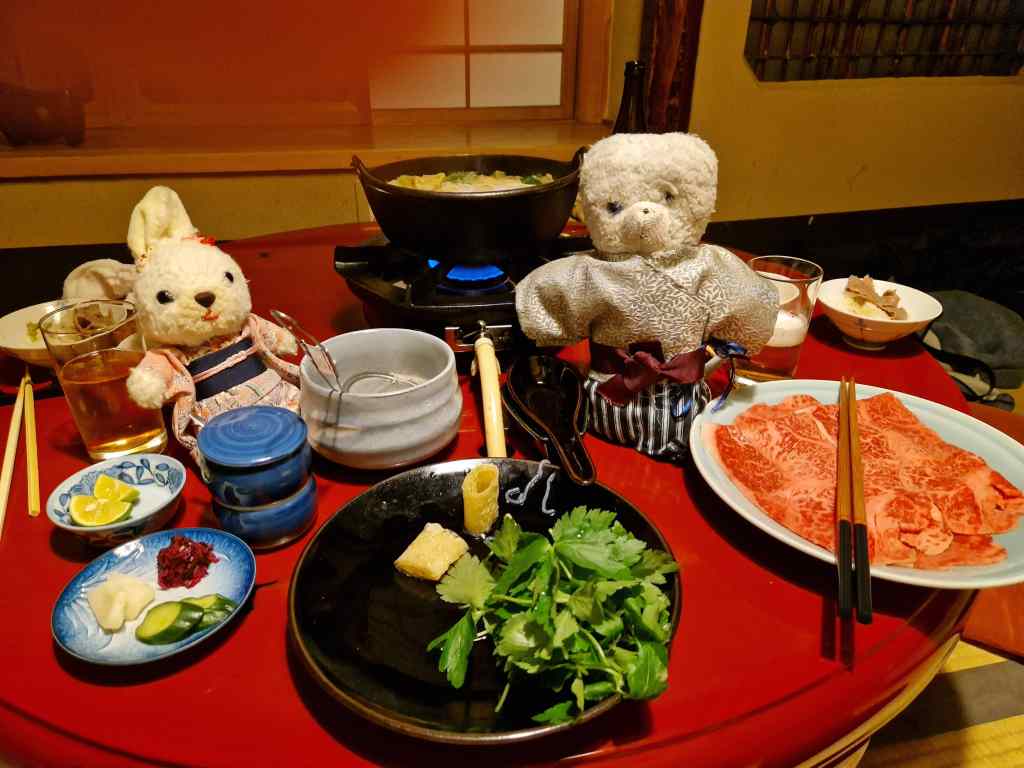
We opted for a shabu-shabu dinner – thin slices of Japanese beef that you take with your chopsticks and swish around in a boiling hot pot of water and vegetables for a few second until they are cooked. The meat melted in the mouth!

Shabu-shabu
In a shabu-shabu restaurant in Kyoto

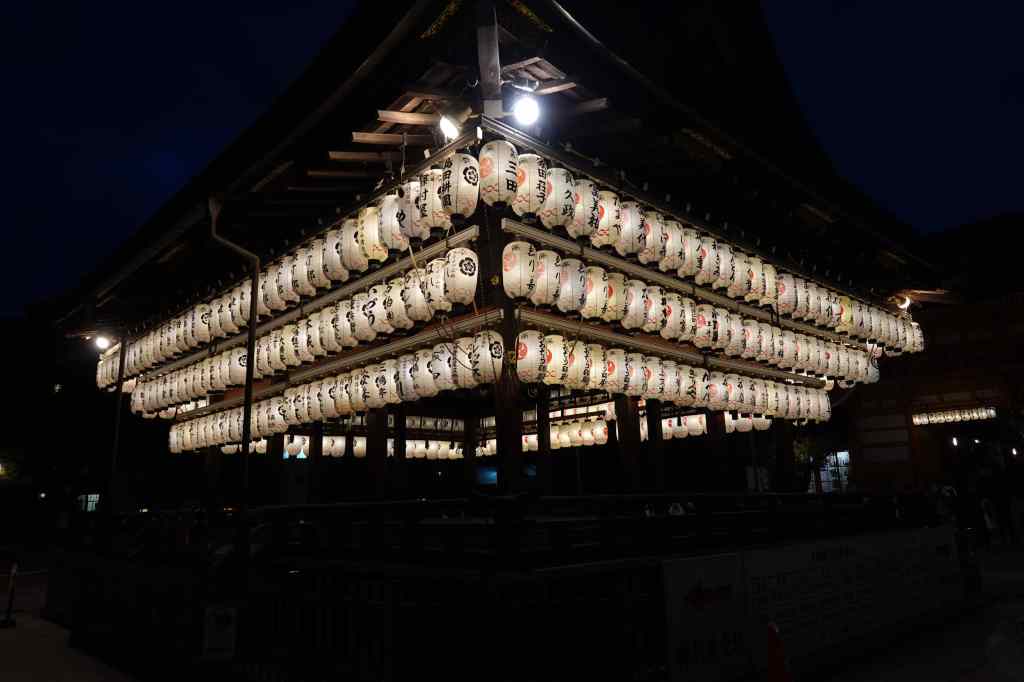
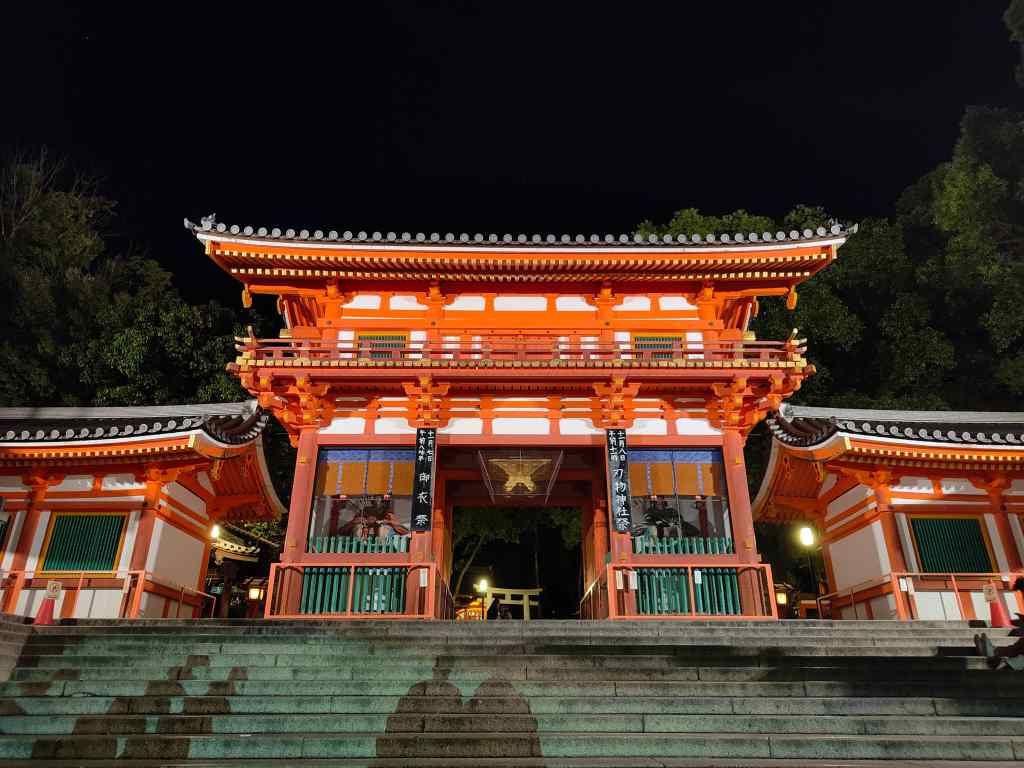
Still, it is harder to avoid photogenic temples in Kyoto, so despite our resolution not to visit one today, we still found ourselves taking photos of the colourful Yasaka Shrine in the early evening, after the Geisha show. Temples often look at lot better at that time, when the crowds have left and their red and white colours contrast with the night sky. Our enjoyment of this shrine suggested to us that tomorrow we would be ready for some more temple visiting…

Yasaka shrine at night
The Yasaka Shrine
Yasaka shrine at night
Yasaka shrine – really impressive at night!

Next Post: Kyoto Golden Temple and Castle

Previous Post: Heaven and Hell in Kyoto – Kiyomizudera and Fushimi Inari

Heaven and Hell in Kyoto – Kiyomizudera and Fushimi Inari

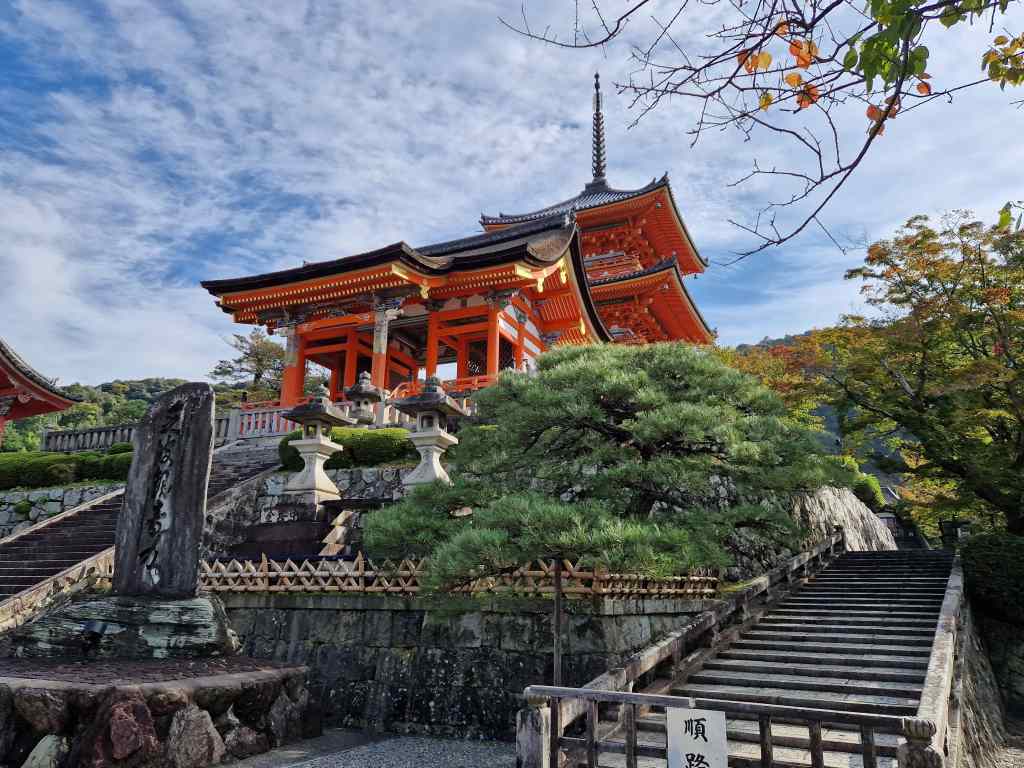
On our first day in Kyoto we followed a well-travelled tourist route. Our first stop was the Kiyomizudera temple, one of Kyoto’s biggest and most popular, founded 1250 years ago. It was located closed to our house, and we found a little side street to get there through a different temple and then a cemetery.

Cemetery near Kiyomizudera
The back way to Kiyomizudera

The path was pretty and quiet, but when we reached the Kiyomizudera’s gates everything changed.

Entrance to Kiyomizudera
The Kiyomizudera temple’s entrance

The whole area was packed with people – tour groups, individual travellers, Westerners, Asians, Japanese. After the big empty spaces of Shikoku it was a big shock, and it was only 9.30 am. We fought our way through the crowds and made a rapid visit of the main temple and its famous wooden stage, which projects over a forest of maple trees that becomes a riot of red-coloured leaves in the fall. Normally at this time in November we would be seeing the beginning of this amazing spectacle, but sadly for us the weather had been unusually hot, and the peak season for autumn colours was still two to three weeks away.

Kiyomizudera-viewing-platform
The famous (and packed) Kiyomizudera viewing platform, taken from a safe distance

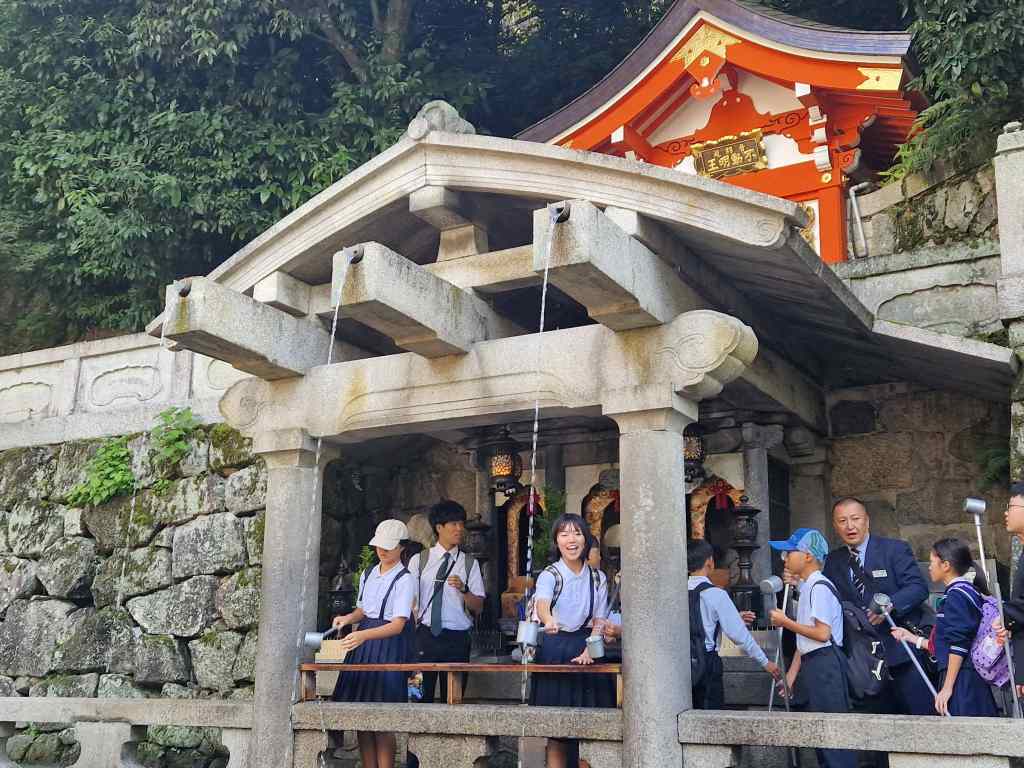
Just below the temple area there was the Otowa waterfall. It was split into three separate channels and visitors could queue up to drink water from one of them. The different streams supposedly grant the drinker longevity, love or success, with the last one being very popular with schoolchildren before their exams – as we saw.

Otowa waterfall
Schoolchildren hoping for success in exams

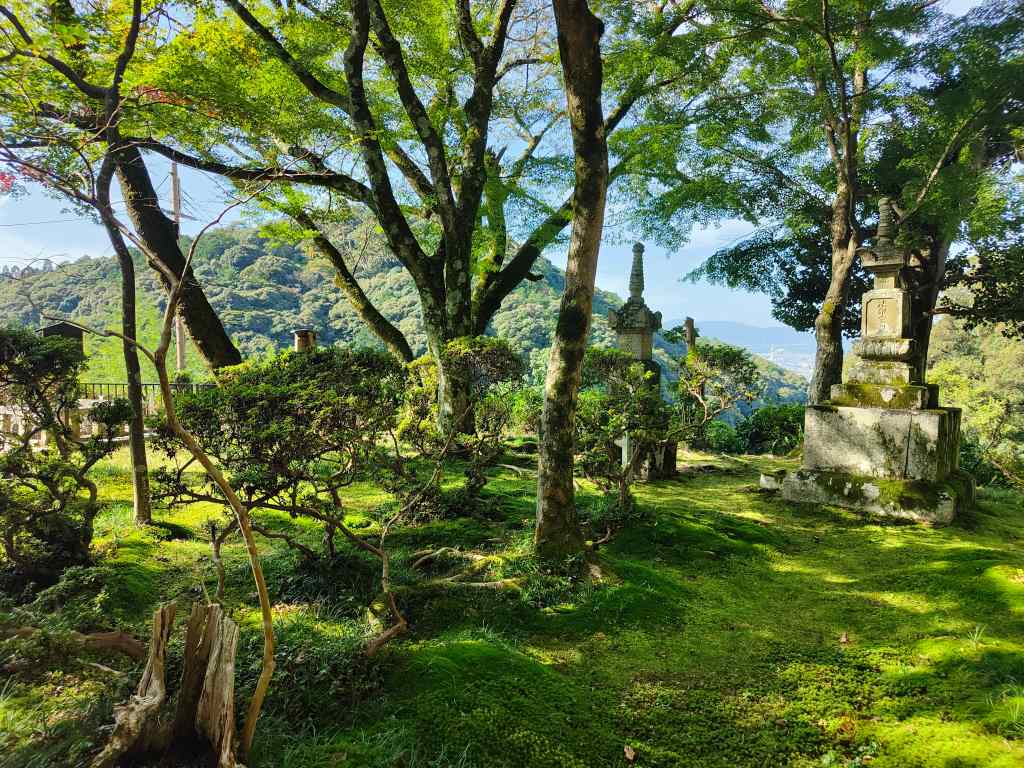
We headed away from the main temple with its crowds, and up a small hill to another, much smaller temple whose name I forget. It was extremely pretty, with a mossy garden and great views. The very few visitors paid 100 Yen (about 50c) into an honesty box to enter.

small temple near Kiyomizudera
A small, forgotten temple near Kiyomizudera
near Kiyomizudera

Our experience at Kiyomizudera was repeated many times during our stay in Kyoto – we would visit a famous site, and jostle with crowds of other tourists – and then walk a couple of hundred metres to a different place, which would be almost as beautiful, but empty. There are literally hundreds of such small, less-visited, temples dotted around Kyoto.
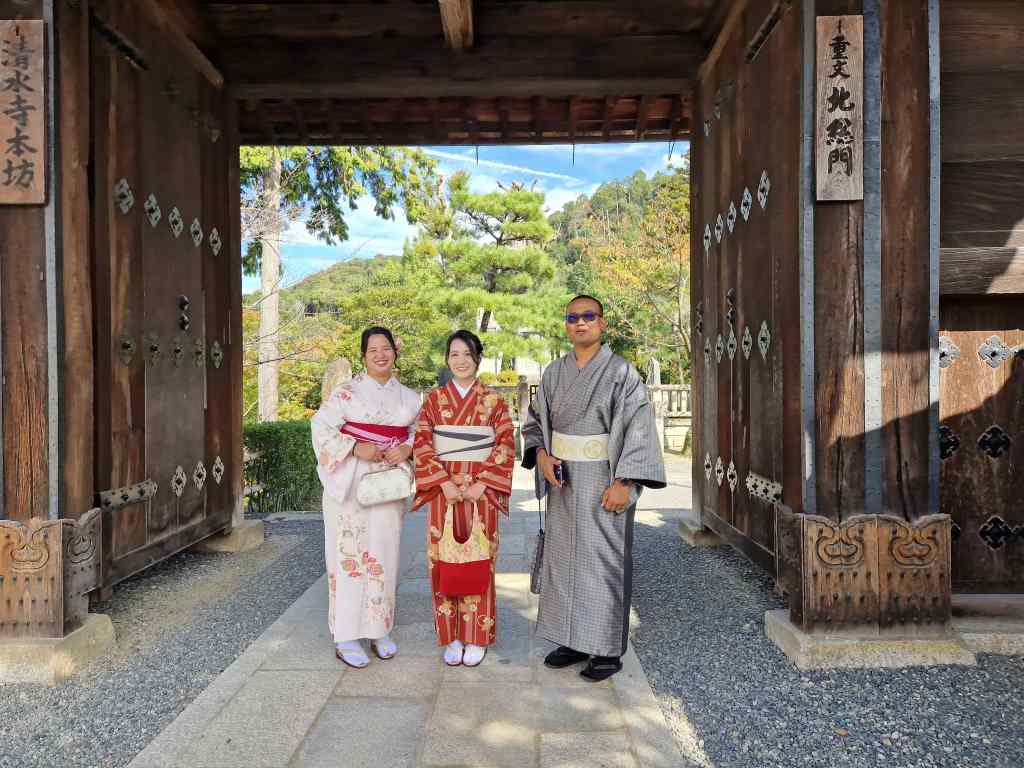
We retraced our steps to Kiyomizudera, and this time took the usual route down through the popular Higashiyama area rather than the side street we had used earlier. Just as our arrival had been heaven – quiet and pretty – our return was hellishly busy. It was a narrow street lined with food stalls and souvenirs shops and crowded with tourists. Fortunately, we only had to endure this for a short stretch before we turned off, heading for the Kodaiji Temple. We met some smartly dressed Japanese people on the way – many visitors to Kyoto choose to wear traditional clothing, and there are lots of shops where you can hire kimonos.

Elegant visitors to Higashiyama
Elegant Japanese visitors in Higashiyama

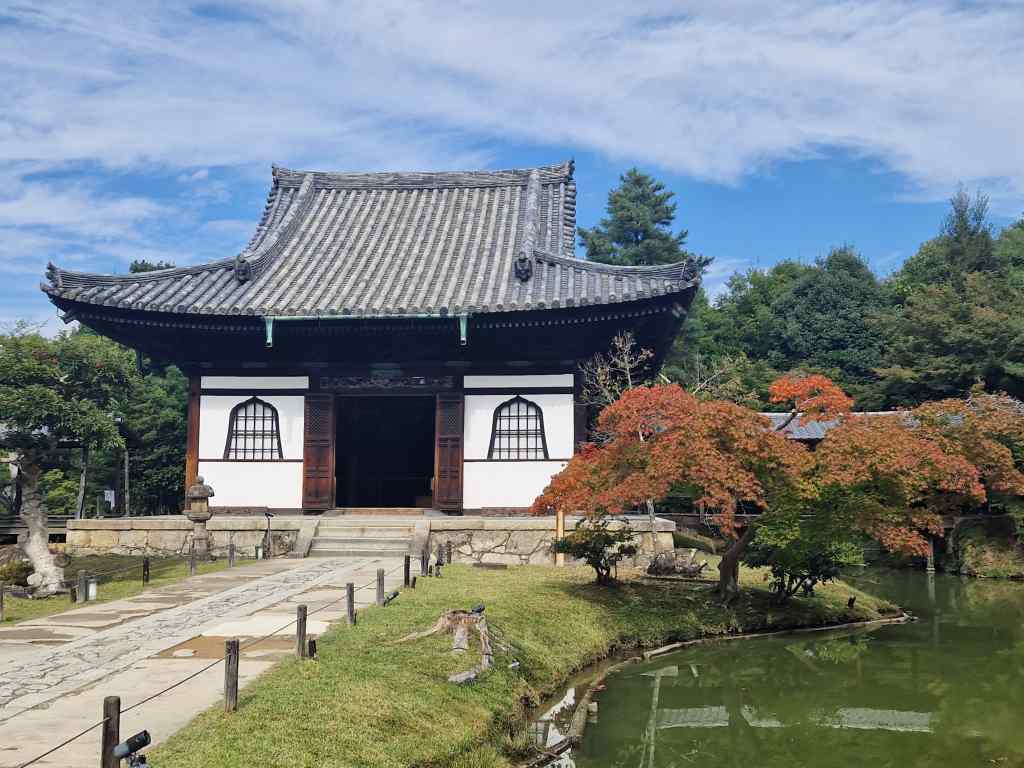
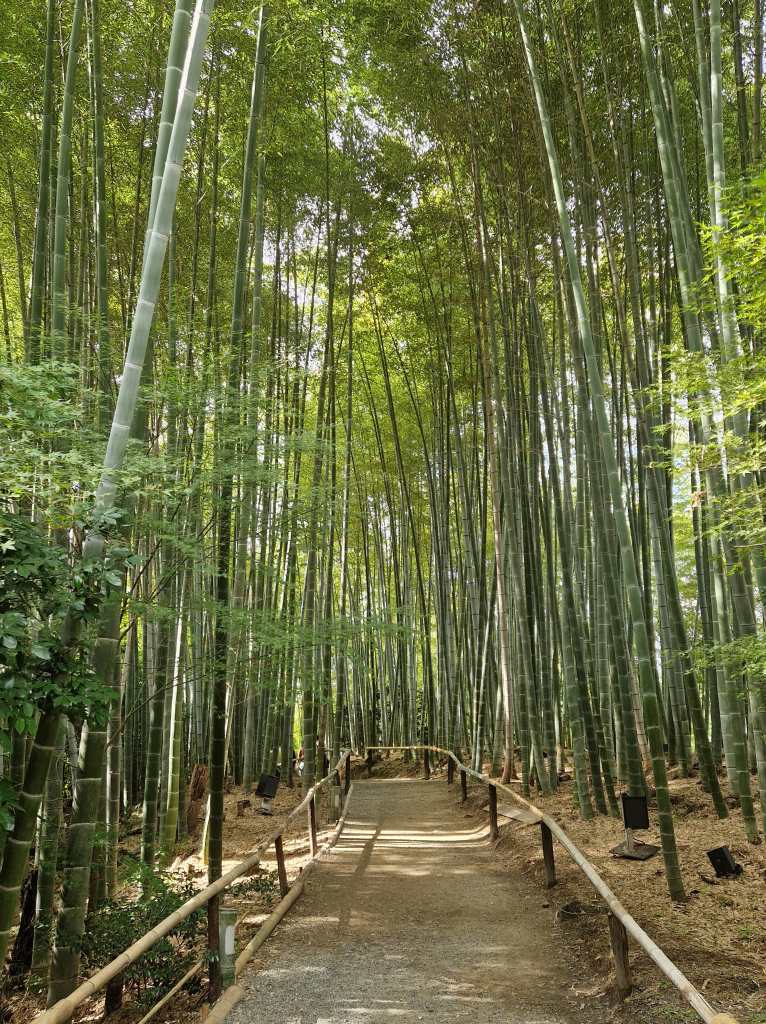
Kodaiji temple was pleasantly quiet and also very beautiful, with its own small bamboo forest.

Kodaiji temple
Kodaiji Temple and its bamboo forest
Bamboo forest at Kodaiji

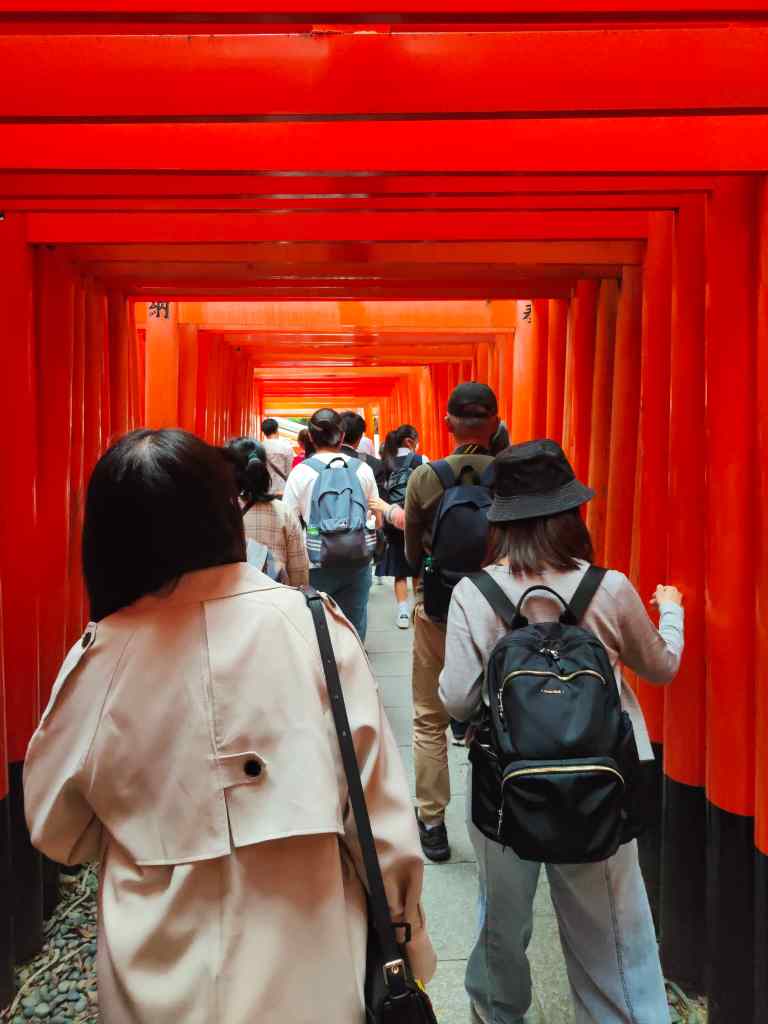
Our next destination was in the south of Kyoto – the Fushimi Inari Shrine, where hundreds of vermillion torii gates line paths that climb up a steep, forested mountain. We arrived at around 3pm, to find that this site is also on Kyoto’s “must see” list, and our “heaven and hell” experience repeated itself. This time, hell was arriving and joining the jostling crowds trying to squeeze through the first set of gates.
Crowded Entrance to Fushimi Inari
Hell on earth – entrance to Fushimi Inari

After fifteen minutes of ducking and weaving, we wondering what the big deal was – surely a set of medium-sized red torii could not be that interesting, not matter how many of them there were? Particularly if you had to spend your time trying not to be trodden on by larger human visitors rather than looking at the things you came to see.
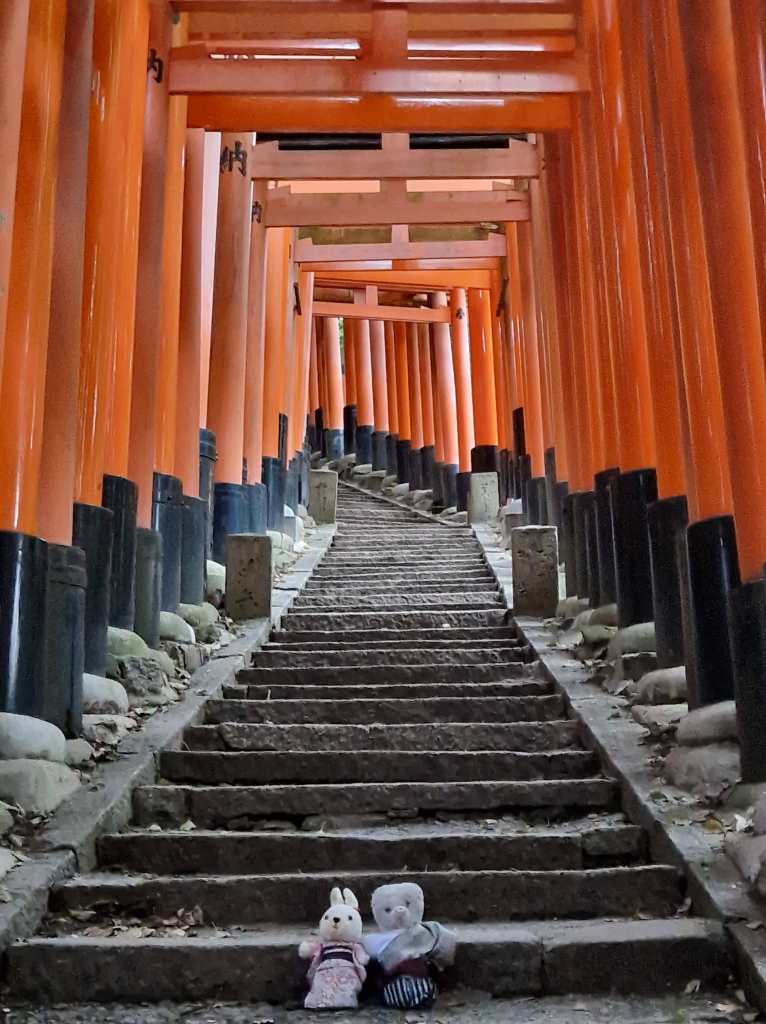
However, after a bit more walking, the path branched and became less busy. Many of the visitors only come to mill around and take selfies at the lower part of the shrine, and don’t walk very far up. Soon we could even pose for our own selfies……..

Half way up Fushimi Inari

The further up we went, the more we liked the place. In addition to two main paths going up, there were many branches leading to interesting small shrines or patches of forest.

maze of torii Fushimi Inari
A maze of torii gates at Fushimi Inari
quiet area at Fushimi Inari
Peaceful shrine Fushimi Inari
A small shrine at Fushimi Inari

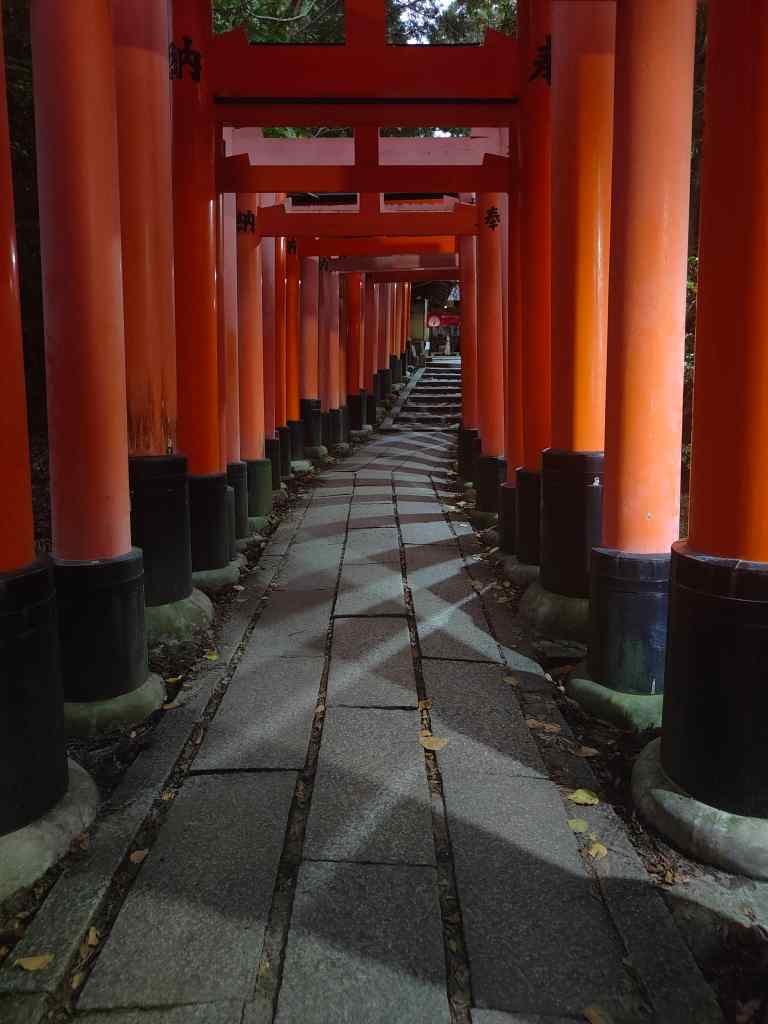
We spent about an hour making our way slowly to the top – which turned out to be not a particularly interesting part of the complex. But to make up for this slight anti-climax, nearly all the visitors suddenly disappeared and, on the way down, we had the shrine almost to ourselves as the sun sank and a few scattered lights came on, throwing shadows of the torii onto the path. It was wonderfully atmospheric….and a bit spooky.

Dusk at Fushimi Inari
Dusk falls at Fushimi Inari
evening at Fushimi Inari
Shadows lengthen

We found a clearing where we could enjoy sunset over Kyoto, before continuing our descent in the dark. Surprisingly, the arrival of night saw more people coming the other way, climbing the mountain in the dark. The torii became even spookier.

night at Fushimi Inari
Night falls at Fushimi Inari

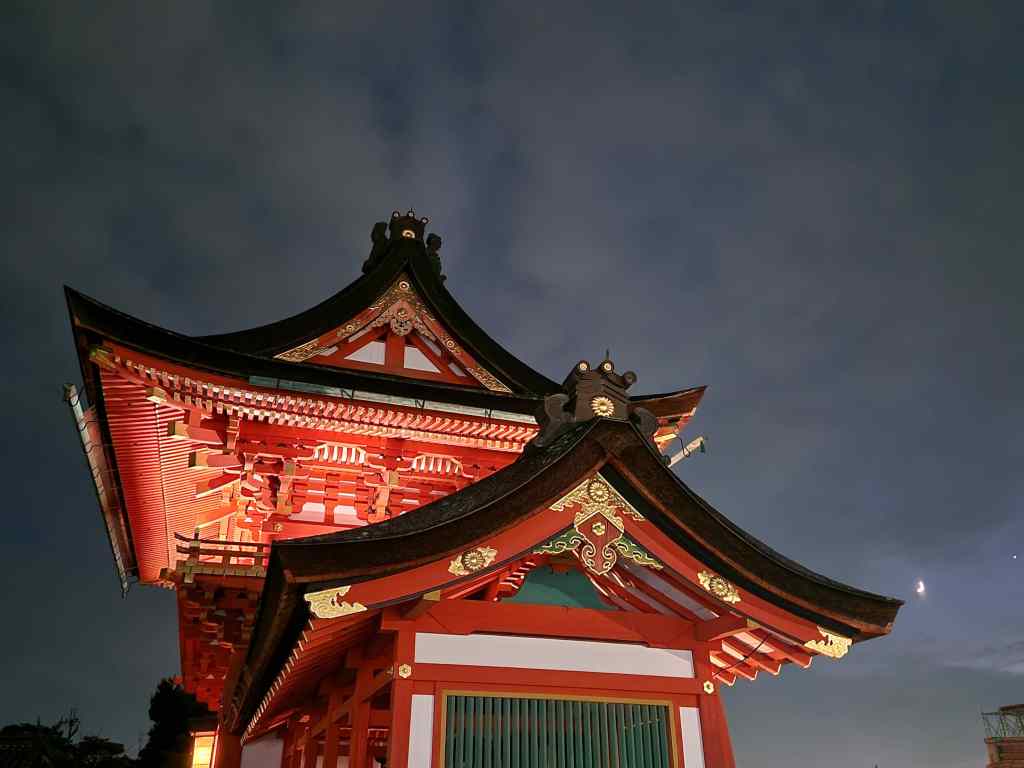
We finally arrived back at the main buildings at the entrance to the shrine, now shining bright red and white against the night sky.

Temple at entrance, Fushimi Inari, night
Back at the main entrance to Fushimi Inari

It had been a long day, and our phones told us that we had walked seventeen kilometres on our little woolly teddy and rabbit legs, including lots of climbing. We thought we were beginning to understand Kyoto – it has some amazing “must see” places, for which you need to plan your arrival time carefully if you don’t want to be crushed by fellow tourists. And it has hundreds of smaller places, many of which are nearly as pretty, but which are almost empty. Over the next few days we would try to combine visiting both.
Next Post: Nara – in search of enlightenment and coffee

Previous Post: Farewell to Shikoku – Ritsurin Gardens and Naruto Whirlpools

Farewell to Shikoku – Ritsurin Garden and Naruto Whirlpools

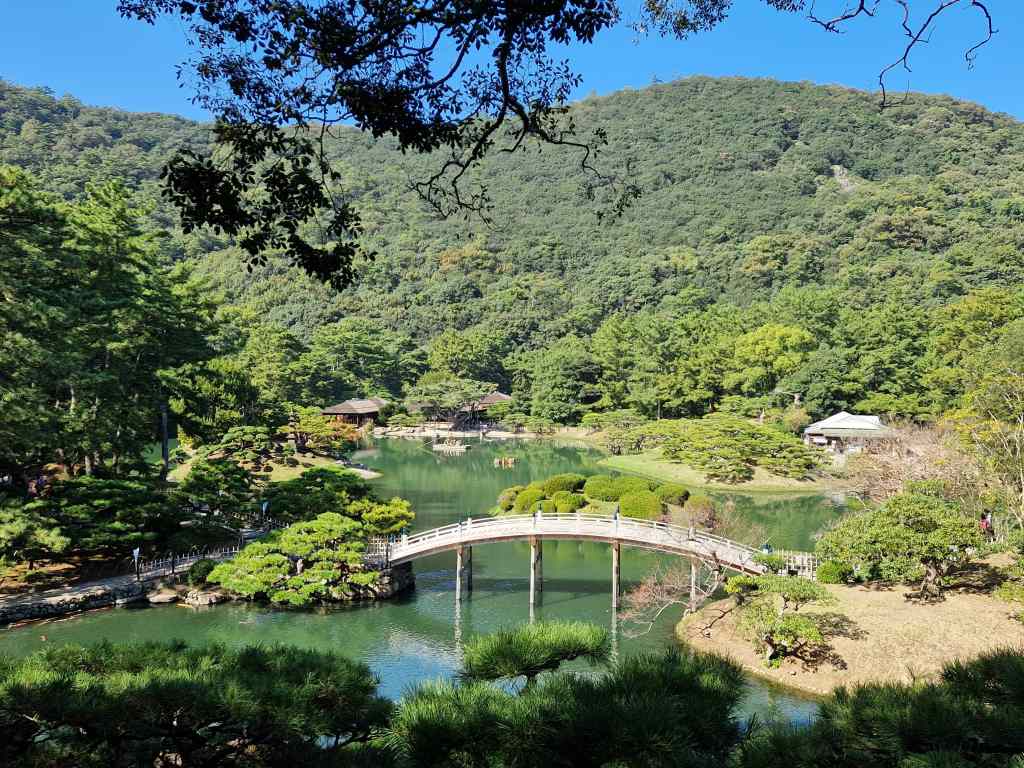
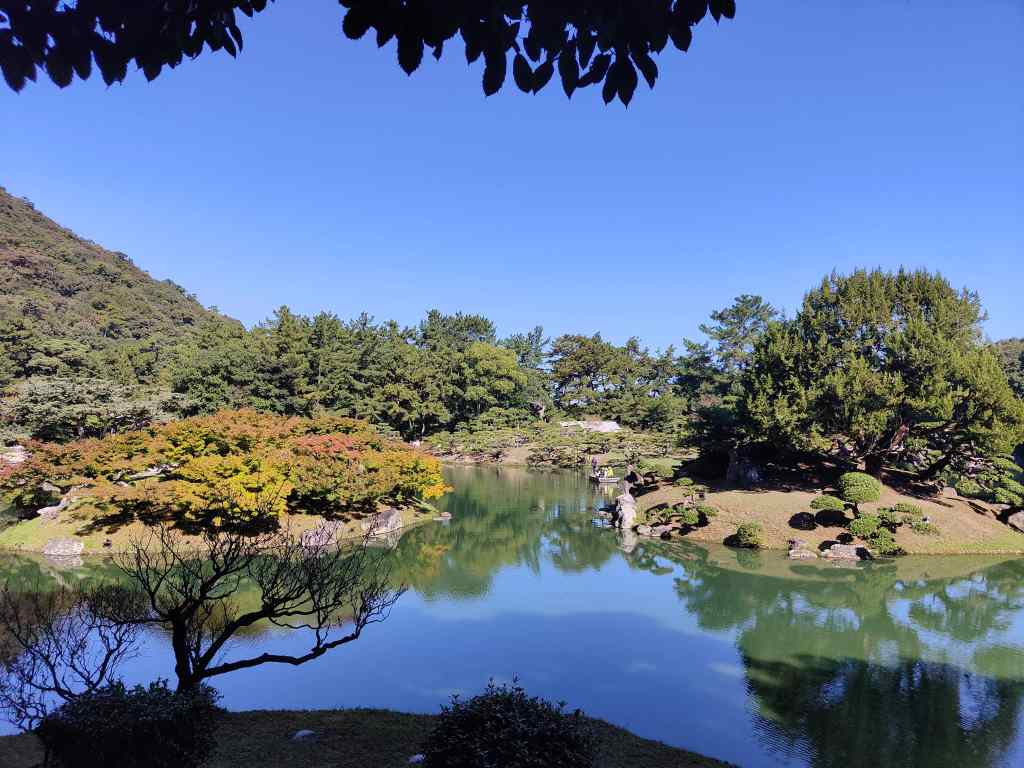
Today we were due to leave Takamatsu and the island of Shikoku. Before we left, we took advantage of some sunny weather to visit Ritsurin, one of Japan’s most famous gardens. It lived up to its reputation, with a beautiful setting at the foot of a mountain…..

Ritsurin Garden bridge view
The most famous view of Ritsurin
Ritsurin lake
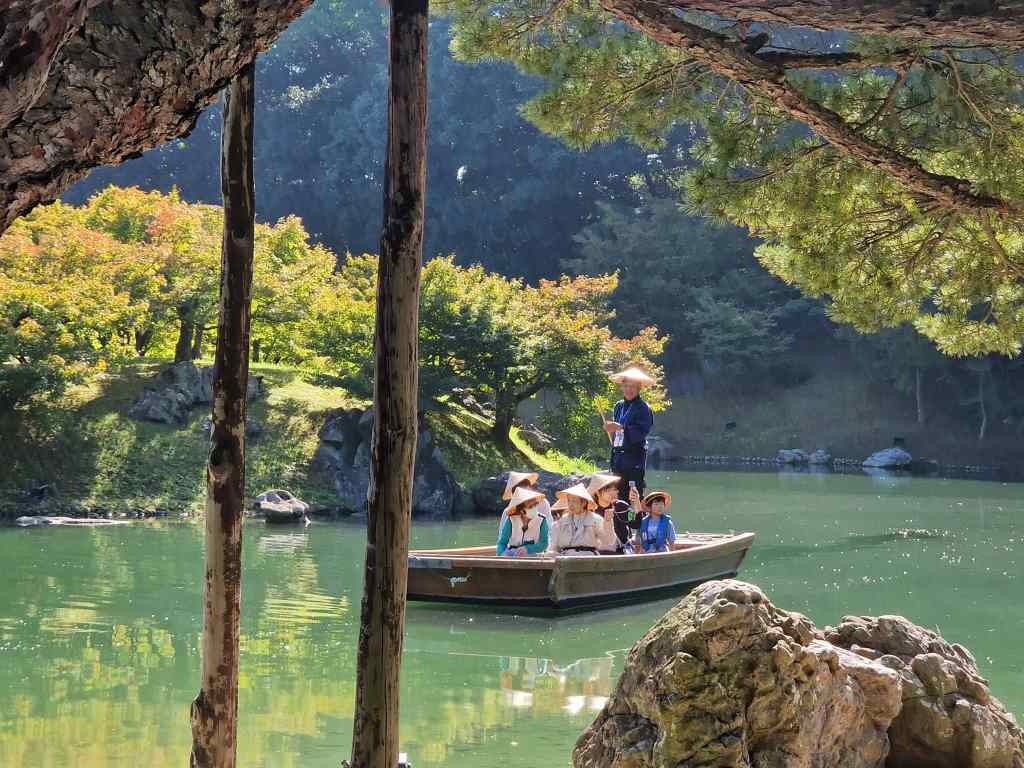
Ritsurin’s lake hosts popular boat trips in traditional costume
Boating on Ritsurin lake


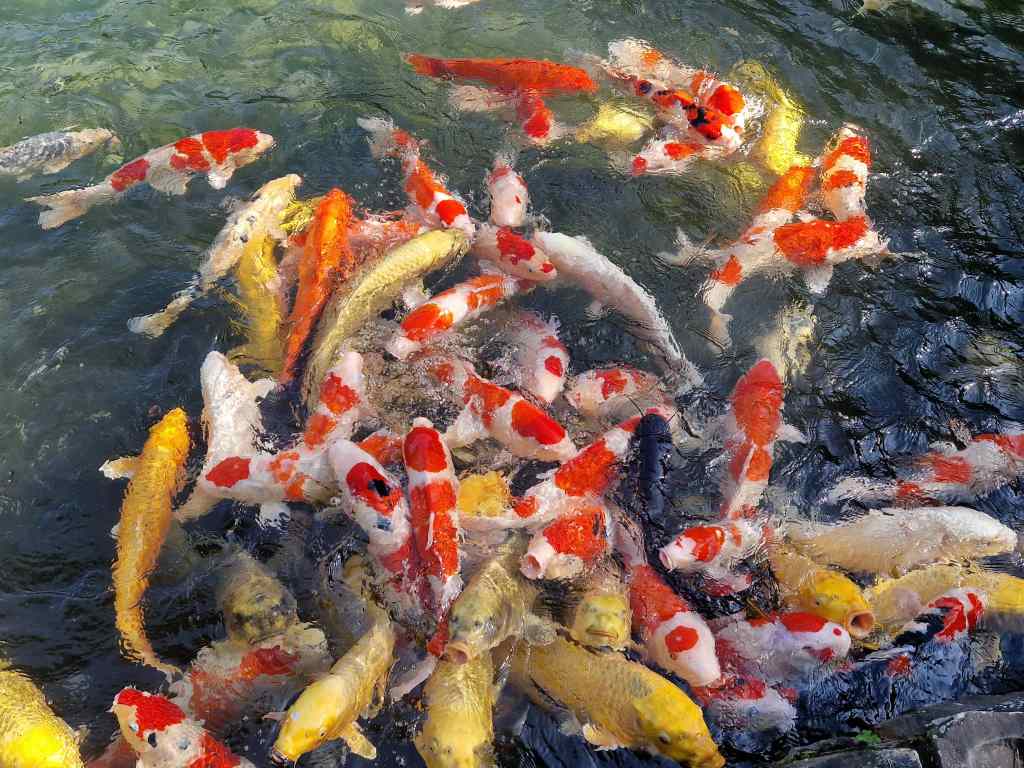
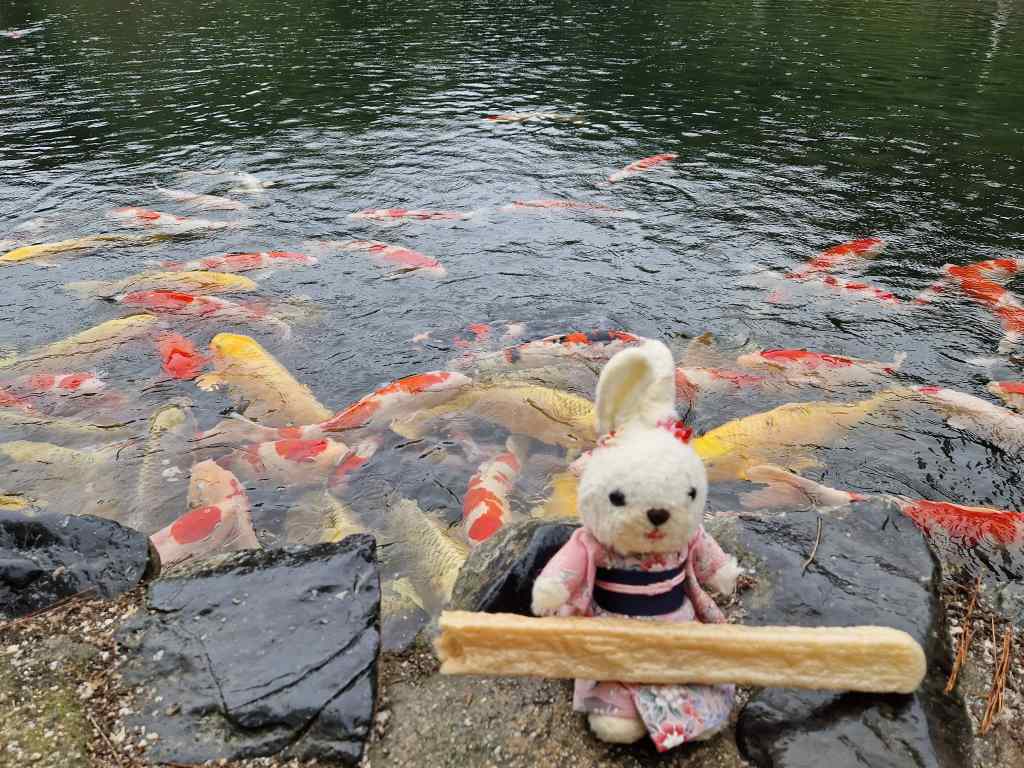
…..and many ponds containing voracious carp. The latter were very well fed by the visitors, who could buy rice sticks to give them from one of the park’s cafés.

Carp at Ritsurin
Ravenous Ritsurin carp
Feeding Carp Ritsurin
Don’t fall in Aki!

The carp were not the only wildlife in the garden; as we strolled around, there was an announcement over loudspeakers warning people not to approach a wild boar that had been seen entering the park from the mountain if they met it. At first, I misheard them and thought they said “bear”, which was worried everyone would run away from us…..

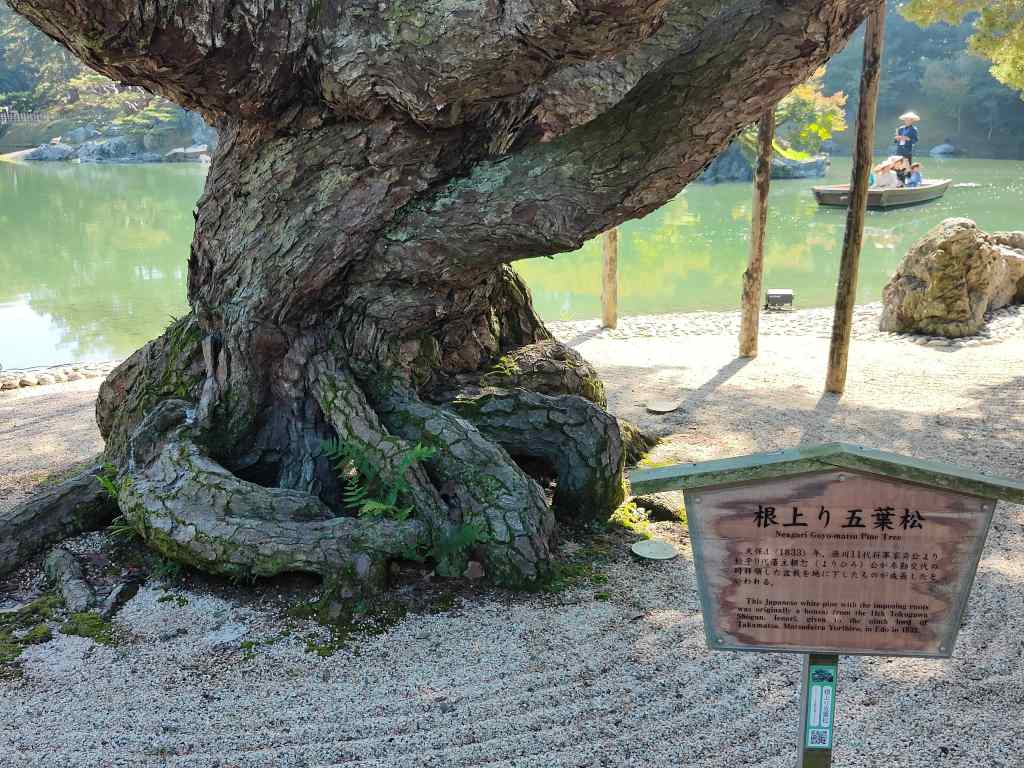
Ritsurin also had some unusual trees, like an evergreen Japanese oak which had sprouted from an acorn lodged 1.8m up in the branches of a now-dead pine tree, managed to put roots down to the ground and outlive its host. Its roots still start from the same height. There was also a pine that grown from a bonsai presented by the shogun to the local lord in 1863….

A pine grown from a bonsai!

Finally the gardens had a pleasant tea room overlooking the pond, where ladies in kimonos performed the tea ceremony as they served us our matcha.

Ritsurin tea room
In Ritsurin’s tea room

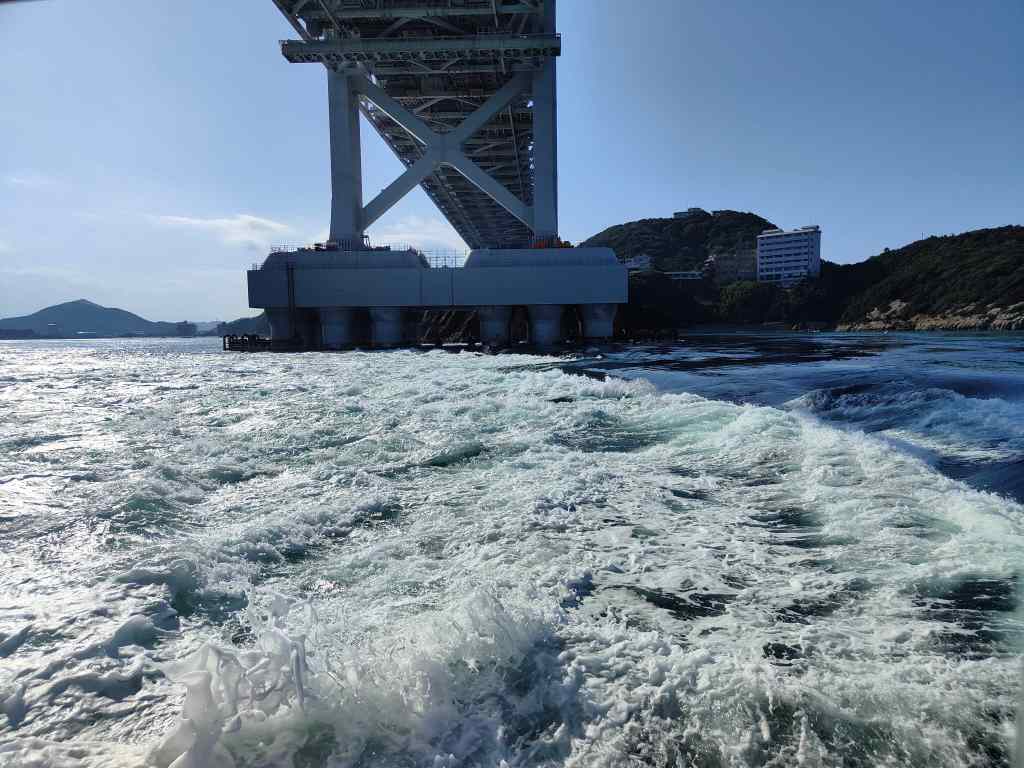
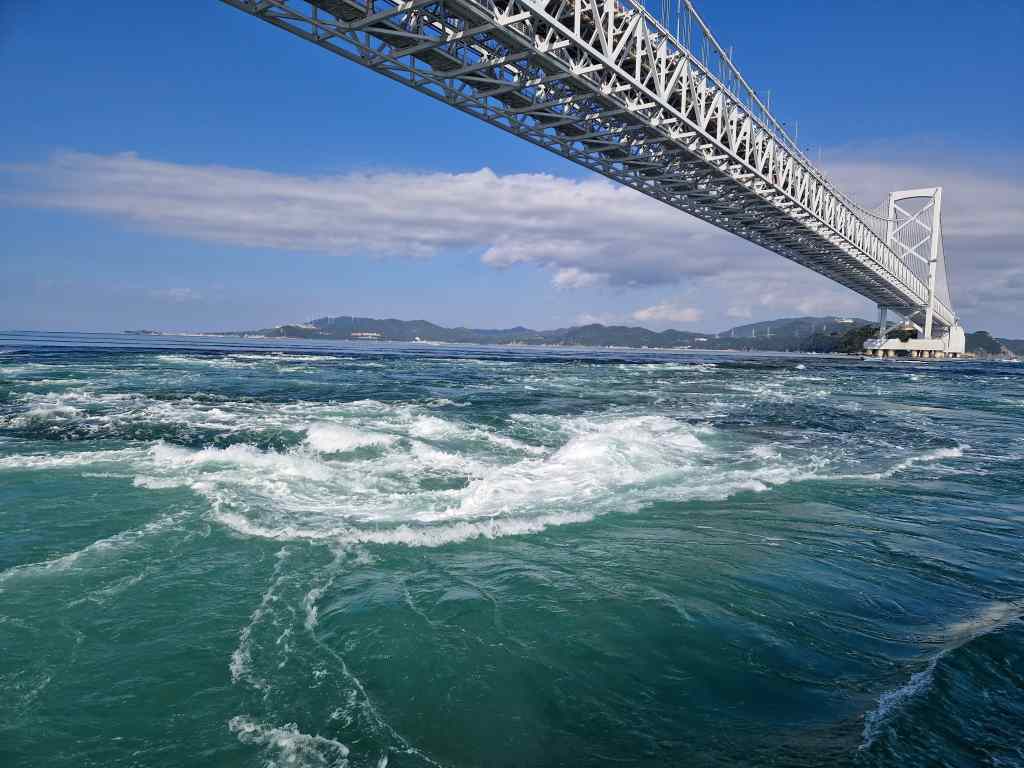
After a couple of hours in Ritsurin we headed off, with an ultimate destination of Kyoto. At the very end of the island of Shikoku we visited one last attraction there – the whirlpools of Naruto. These are a tidal phenomenon that form twice a day when two sea currents, headed in opposite directions, crash into each other, and we were lucky enough to be passing at exactly the right time to see them. First, we set out in a tourist cruise, right into the middle of the foaming sea. I am not sure if we saw any actual whirlpools, but the sight of the sea foaming around was very impressive and a lot of fun.

Naruto Whirlpools
Naruto Whirlpools – the sea boils….
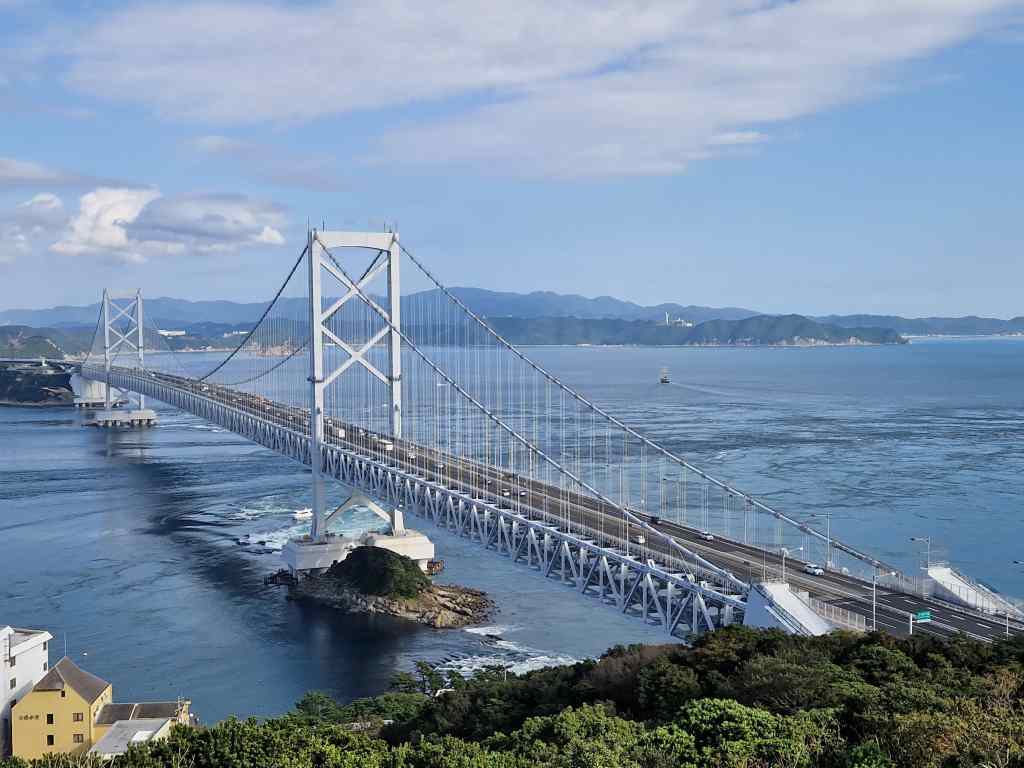
Naruto Whirlpools under the bridge
A whirlpool and spectacular bridge, Naruto

Next we climbed on to the magnificent bridge that links Shikoku to the neighbouring island of Awajishima.

One of the bridges connecting Shikoku to the rest of Japan

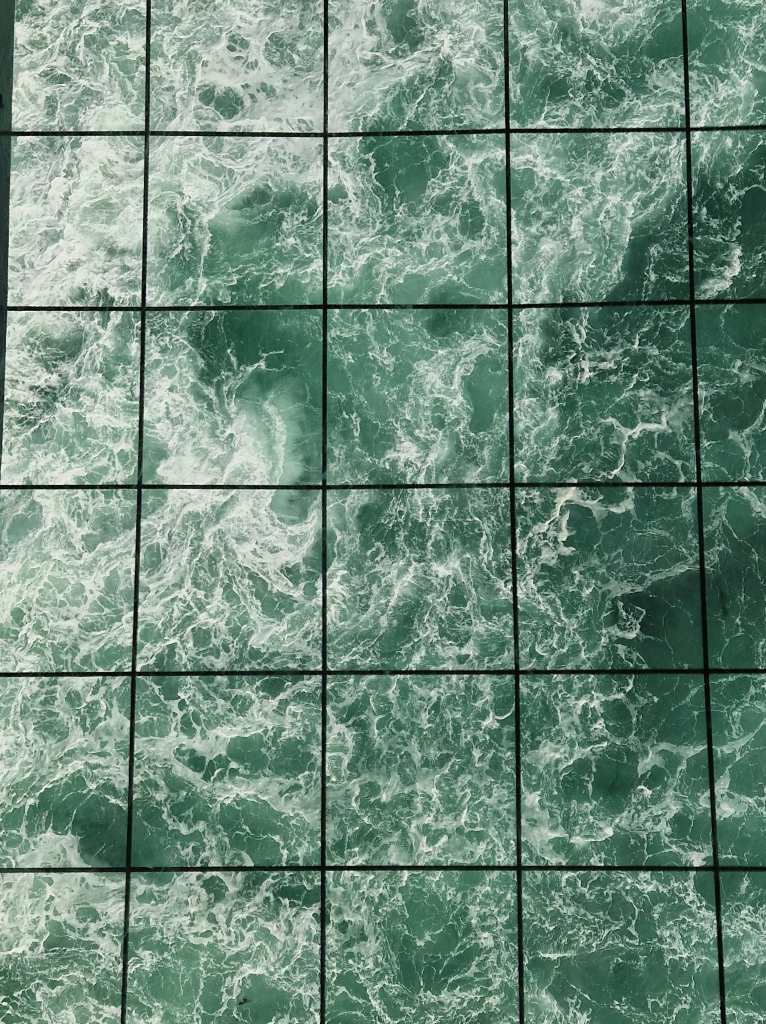
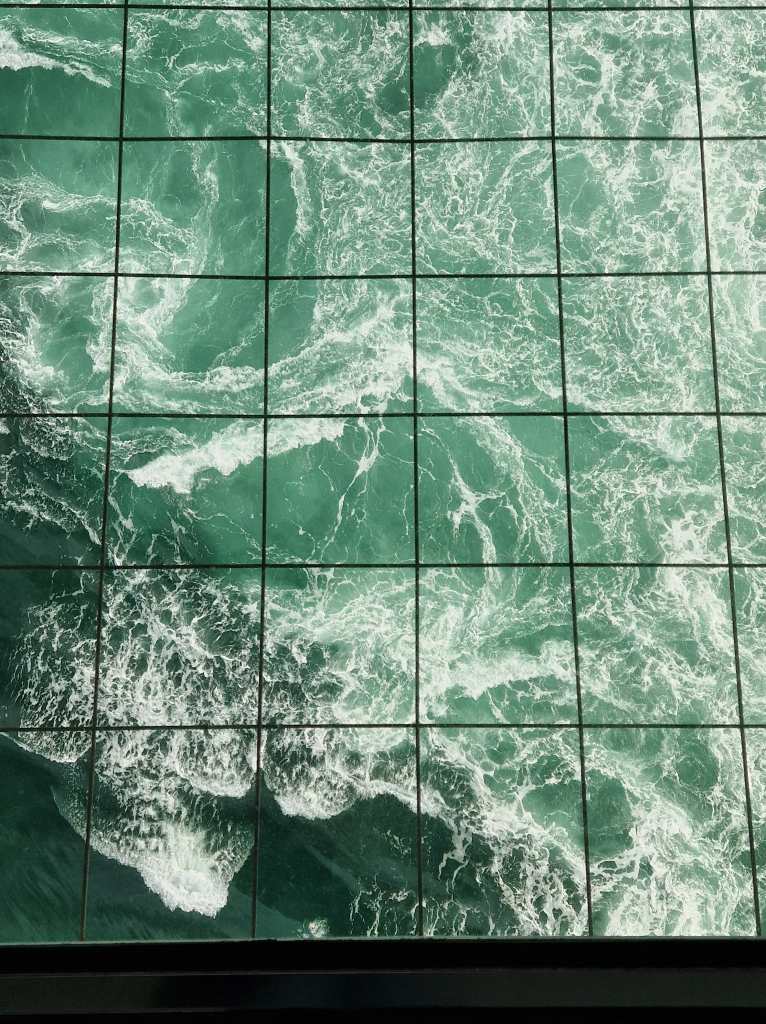
There a viewing platform had been set up to view the “whirlpools” from above – including glass panels that let you look straight down onto the sea. It might have been the scary height, or the violent churning of the sea, but after a few minutes of looking at this, my head was spinning. Aki coped a bit better and managed to take some striking photos through the glass.

Making our own modern art – worthy of display in Naoshima?
Naruto's Whirlpools seen from bridge
Naruto Whirpools seen from the bridge’s observation deck


From the bridge we drove on, over the island of Awajishima and finally over another beautiful bridge onto Honshu, Japan’s biggest island. We were greeted by a first sight of Kobe, a city in Japan’s incredibly densely populated province of Kansai. From then on, the remaining two hours of our drive was through a dense urban sprawl along busy expressways.
It was a stark contrast with Shikoku, with its open spaces, clear roads and few tourists. We had enjoyed getting off the beaten track. Whilst Shikoku’s tourist sights may not quite match some of the most popular ones in the rest of Japan, the laid-back atmosphere, excellent value food and accommodation and friendly people made for a great week. Indeed, on several occasions local people had started to talk to us, despite the language barrier – something that had rarely happened in the rest of Japan.

Our arrival in Kyoto was inauspicious. We dropped off our hire car but then made the mistake of walking to our rental home, thinking that it would be a good way to get to know the city. Our route took us through some remarkable drab parts of central Kyoto. Surely such a famous destination had to be better than this? Tomorrow we would find out.
Next Post: Kyoto, heaven and hell

Previous Post: Naoshima

Naoshima – an arty day trip from Takamatsu

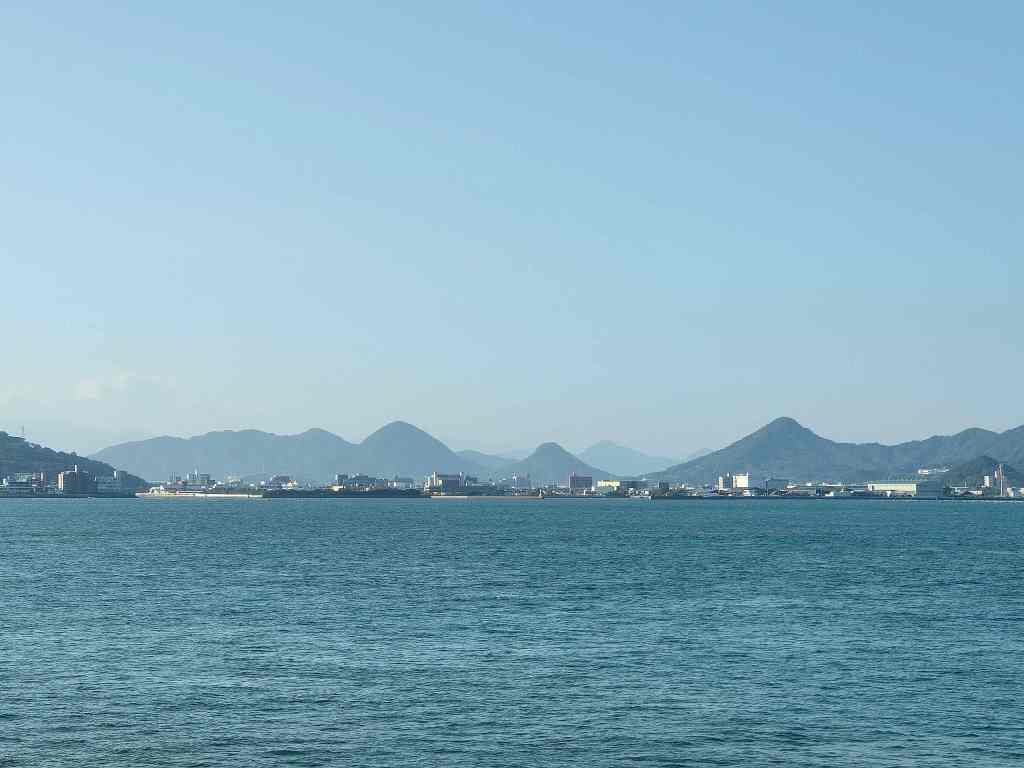
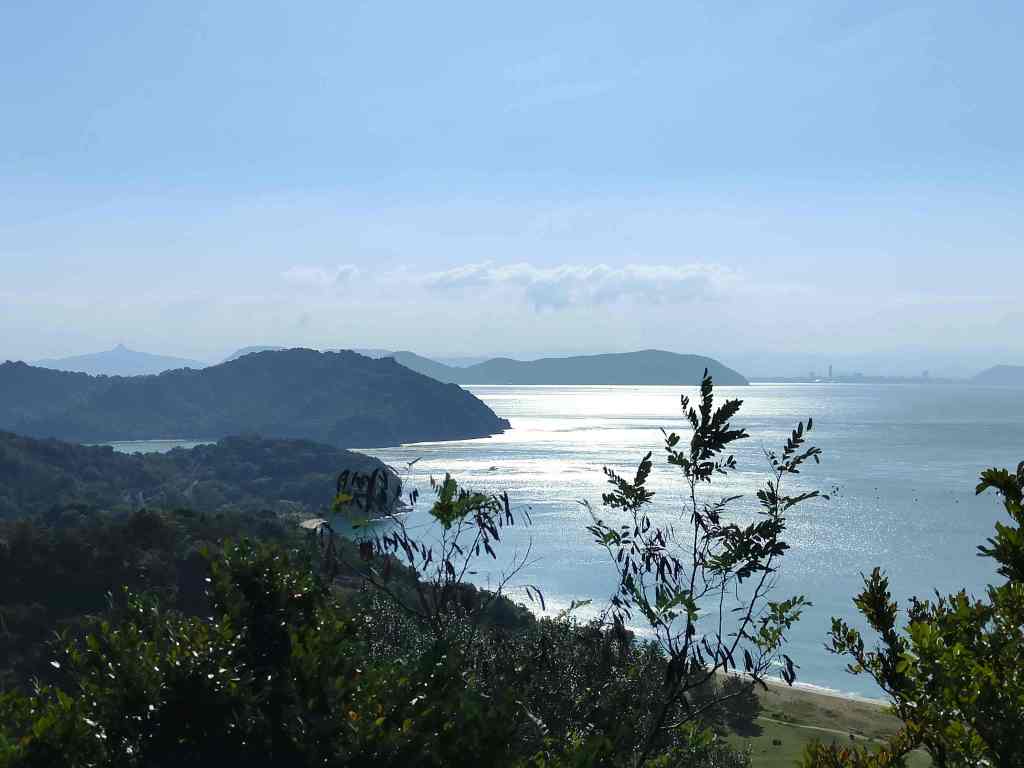
On our third day in Takamatsu the rain finally stopped. We were woken by bright sunshine streaming into our room and decided to start our day earlier than planned. We took the early ferry from Takamatsu to Naoshima, a small island in the Inland Sea which has become famous for its contemporary art museums and galleries. The 1-hour boat trip gave great views of the sea, the many small islands, and back towards the mountains of Shikoku.

Takamatsu from the sea
View back to Takamatsu from the ferry to Naoshima

Arriving early turned out to be very wise. Naoshima was firmly on the main tourist route, and many foreign and Japanese visitors were milling around the port. We planned to hire bicycles to get around but found that nearly all of the rental outlets had sold out. Luckily, we managed to rent the very last pair of bikes available and set off to explore. Naoshima had a Mediterranean feel to it – the weather was hot, the pace of life was slow, and there were many beaches. Our bikes were electric and helped us climb a steep hill offering a wonderful view of the sea.

Naoshima Island scenery
Naoshima island has many great views

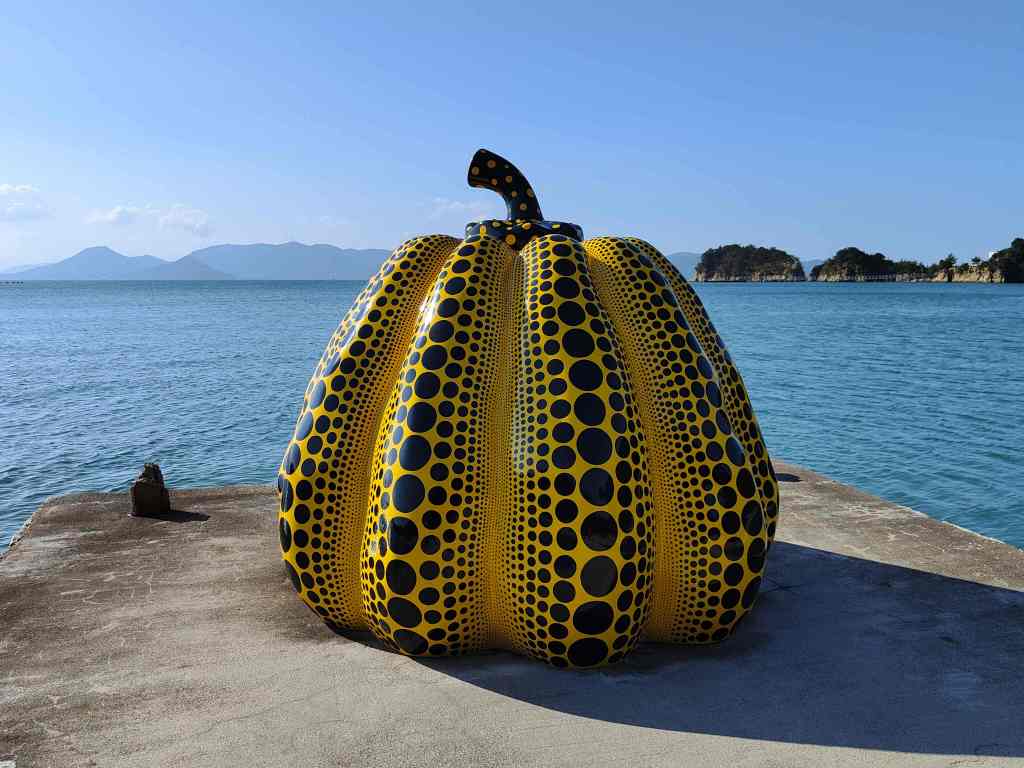
The first art we saw was at the bottom of the same hill – one of Yayoi Kusama’s brightly coloured pumpkins, whose yellow and black design contrasted pleasantly with the blue sky and sea. We had seen a slightly smaller version already at Kanazawa, and also one at London, so wondered if the artist mass-produces them.

Naoshima Pumpkin
Naoshima’s iconic Kusama Pumpkin

The pumpkin stood at the side of the road leading up to the Benesse House Museum, the first and largest art museum to be built on Naoshima. The Benesse corporation is active in the education and childcare businesses, but for the past thirty years has also been active in promoting art, especially on Naoshima. The museum had a small but diverse collection of modern art – as usual, we liked some exhibits but did not understand others.

Benesse House Museum
Art we didn’t understand
Some of Naoshima’s art that we did understand
Exhibit Benesse House Museum


Our next stop was further down the road at the island’s only village, Honmura. There, various different artists have created installations in vacant houses. Most of these creations were pretty strange, begging the question – Why? Although the art left us cold, Honmura was still a nice place to stroll around and a good place for lunch.

weird art on Naoshima
Yes, but why???

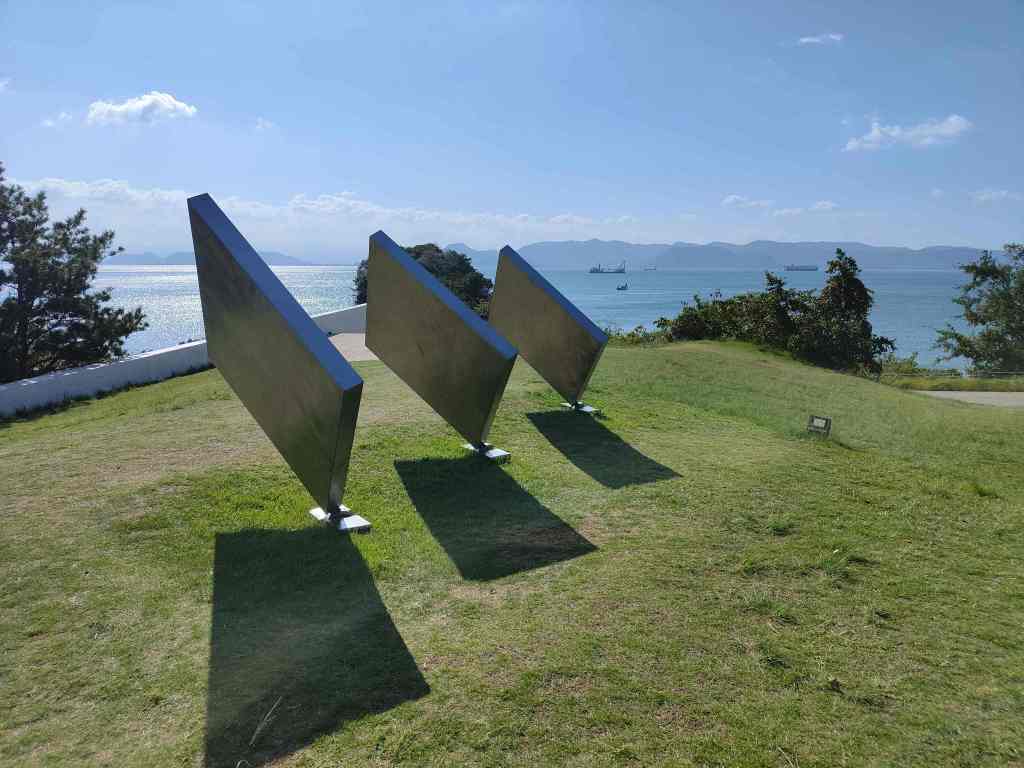
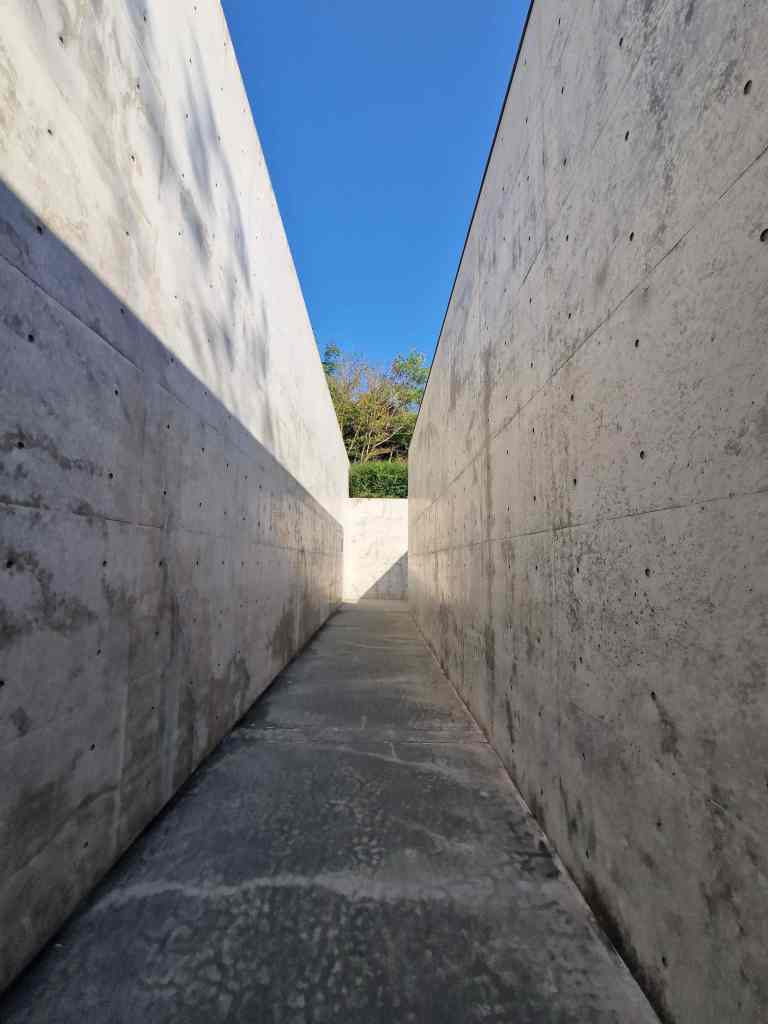
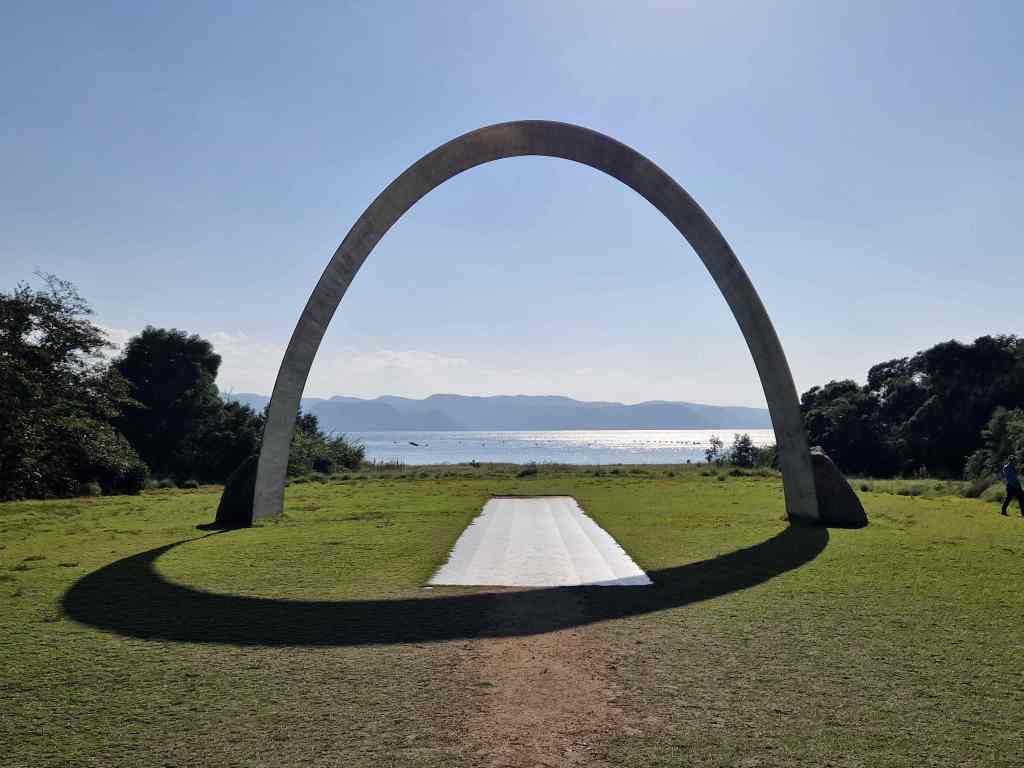
After eating, we backtracked to a second museum run by the Benesse corporation, the Lee Ufan Museum, devoted to work by the eponymous artist. The collection was very small, and we spent more time outside admiring a graceful metal arch by the beach than we did inside looking at Ufan’s work.

Lee Ufan Museum on Naoshima
The three Benesse museums share the same brutalist concrete design by Tadao Ando
Arch, Naoshima
A much-photographed arch on Naoshima

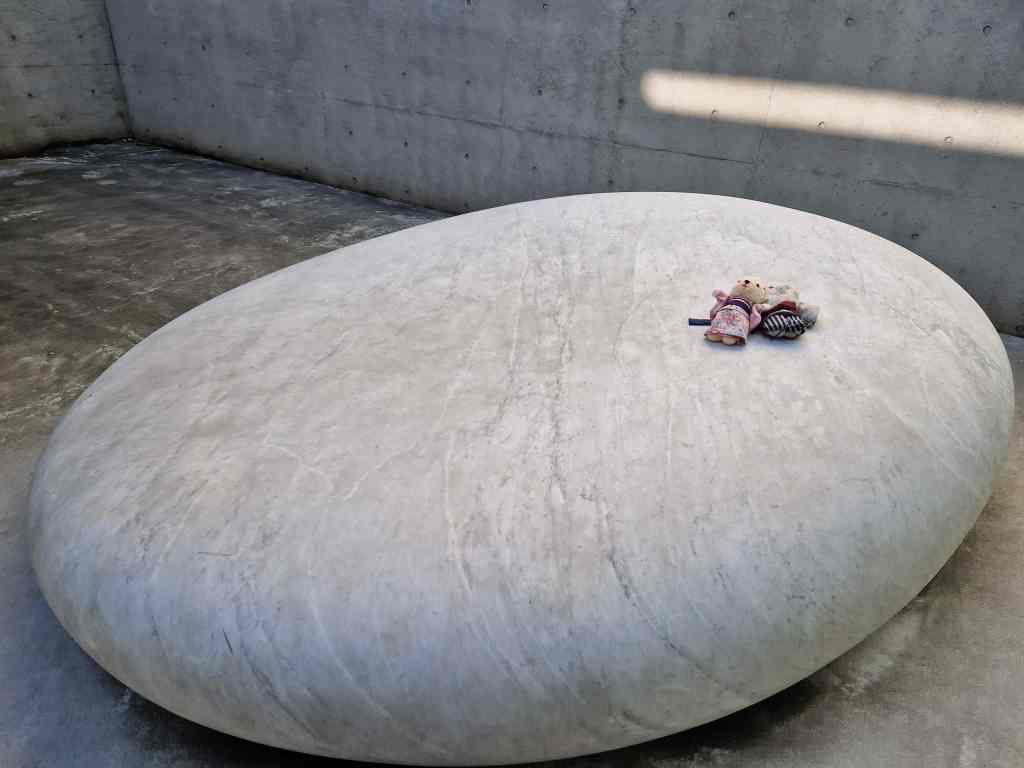
Finally, we visited the Chichu museum, the third Benesse venture on the island. This also had a very small collection and due to its popularity sells tickets with a strict time slot. The first room of the museum was devoted to four pictures of water lilies by Monet. Maybe for Japanese visitors these were amazing, but we had recently visited the Musée Marmottan in Paris and so had seen more, and arguably better, Monet paintings of lilies. The second set of exhibits in the Chichu museum were by James Turrell, but a very long queue to see them had formed along a dark, uninteresting corridor. We worried that if we stayed, we would miss our ferry back home, so moved on to the final exhibit – a huge granite sphere by Walter de Maria, dominating a cathedral-like underground room. We thought it was a brilliant piece of work, which made up for the disappointment of the other exhibits. Sadly though photos were not allowed.

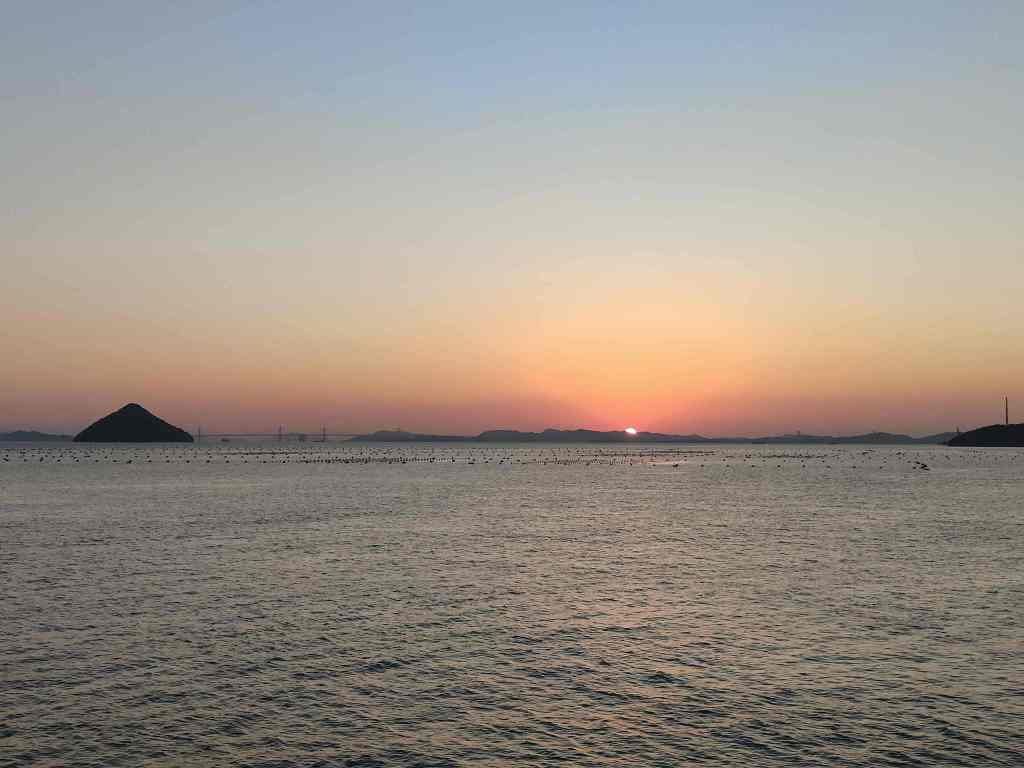
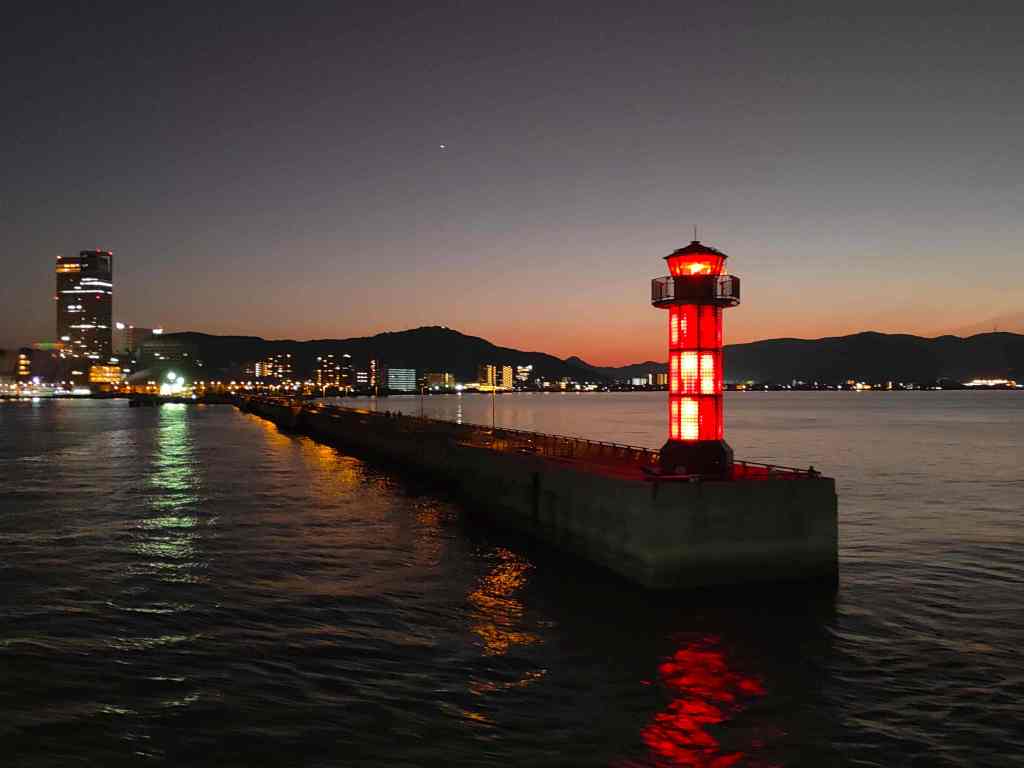
After a few minutes admiring the sphere, it was time to head back to the port to join a very long queue for the 17.00 ferry back to Takamatsu. The return trip gave us a nice sunset over the mountains of Honshu, and a surprising highlight of the trip – Takamatsu’s lighthouse, made out of bright red glass. This was probably the modern art highlight of the day!

ferry-Takamatsu-Naoshima
Sunset on the Inland Sea, ferry Naoshima-Takamatsu
Takamatsu-lighthouse
Takamatsu’s lighthouse – the best art of the day!

We had greatly enjoyed our time, even if we found the art museums somewhat underwhelming compared to what we could see back home in London or Paris. The real joys of the trip were the ferry rides over the Inland Sea and the exploration of the pretty island of Naoshima by bicycle – especially doing all this in bright sunshine after two days of rain.

Next post: Ritsurin Garden and Naruto Whirlpools

Previous Post: Shikoku – Iya Valley, Kotohira

More Shikoku – Iya Valley, Kotohira…and a Typhoon at Takamatsu

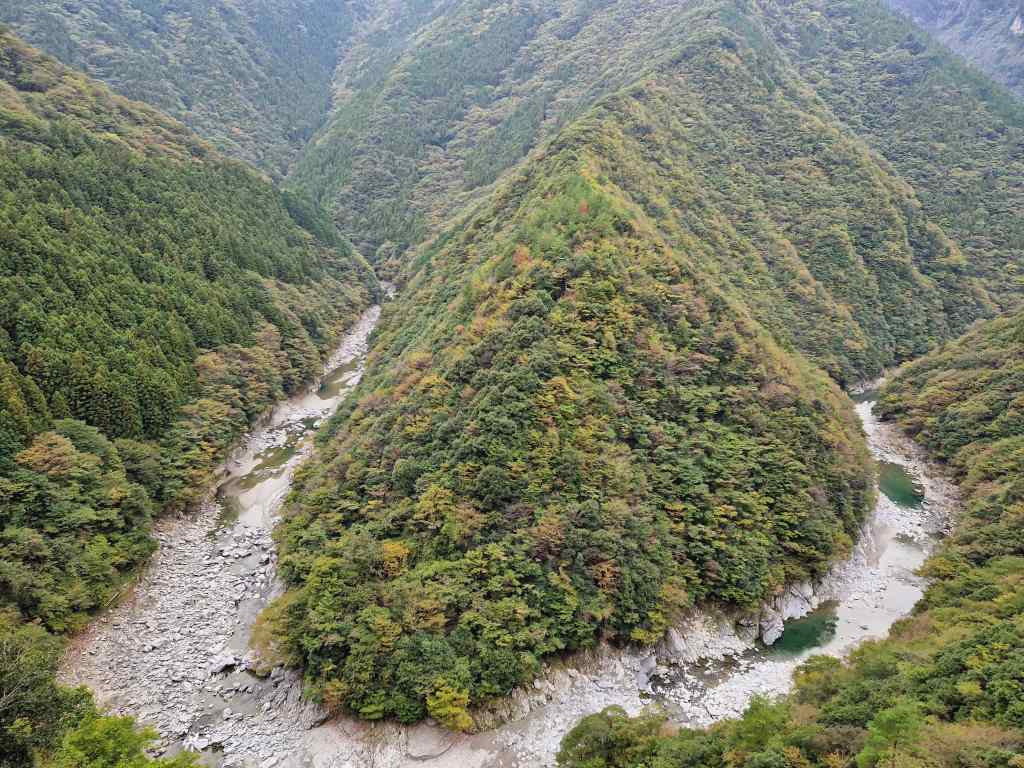
Today our final destination was Takamatsu, on the coast of the Inland Sea on Shikoku. The road took us north, to the lower part of the Iya Valley. There were some nice viewpoints but at this altitude no sign yet of the autumn leaves that had dazzled us yesterday.

Lower Iya Valley viewpoint
View of the lower Iya Valley

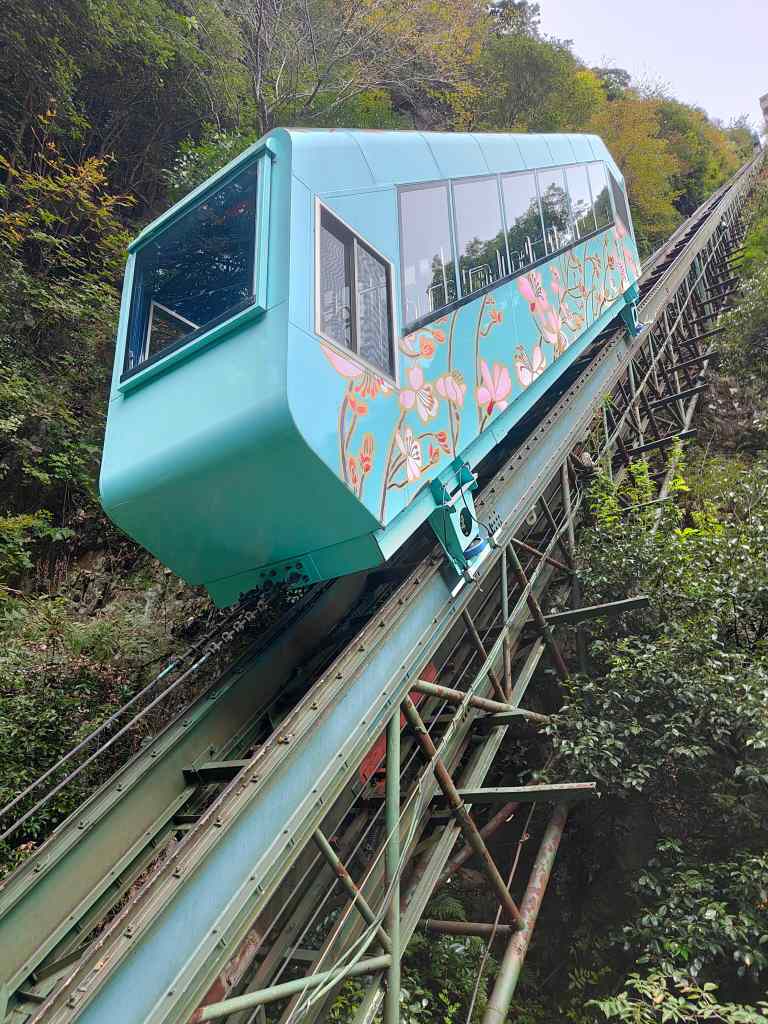
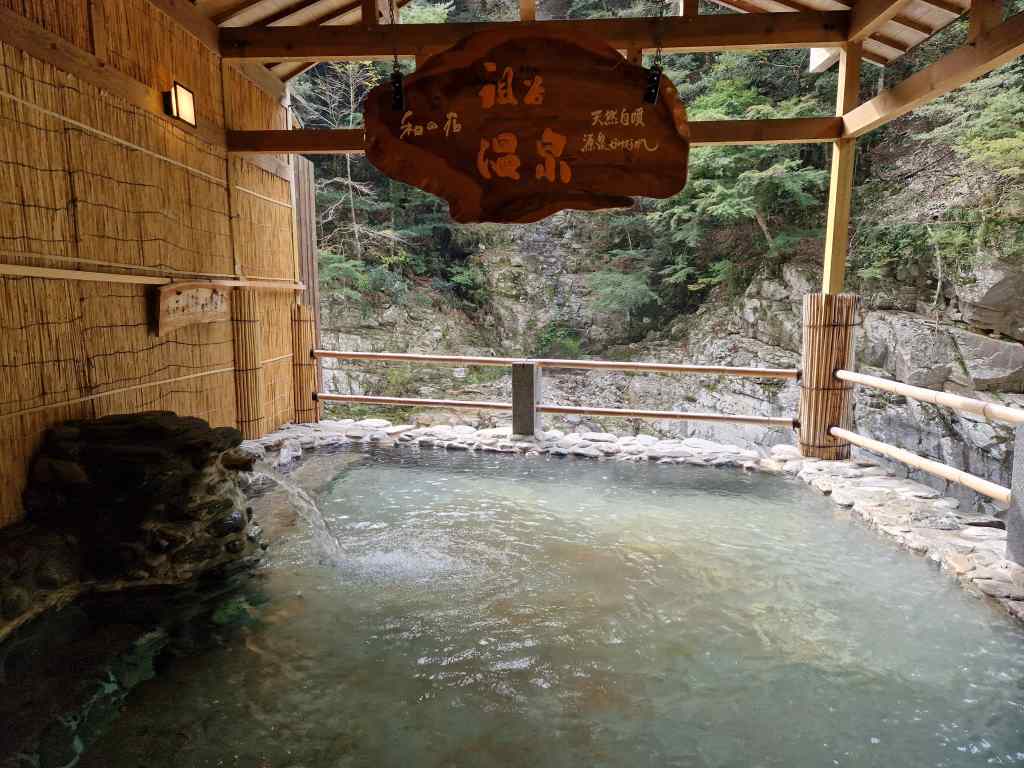
We made one stop at a hotel to try their onsen, located at the valley floor far below. Access was via a cable car, and once there Aki and I both had our respective female and male baths to ourselves. The setting was idyllic, and since the water temperature was not too hot, we stayed for an hour enjoying the view.

Taking a cable car to the onsen!
The onsen and its great views


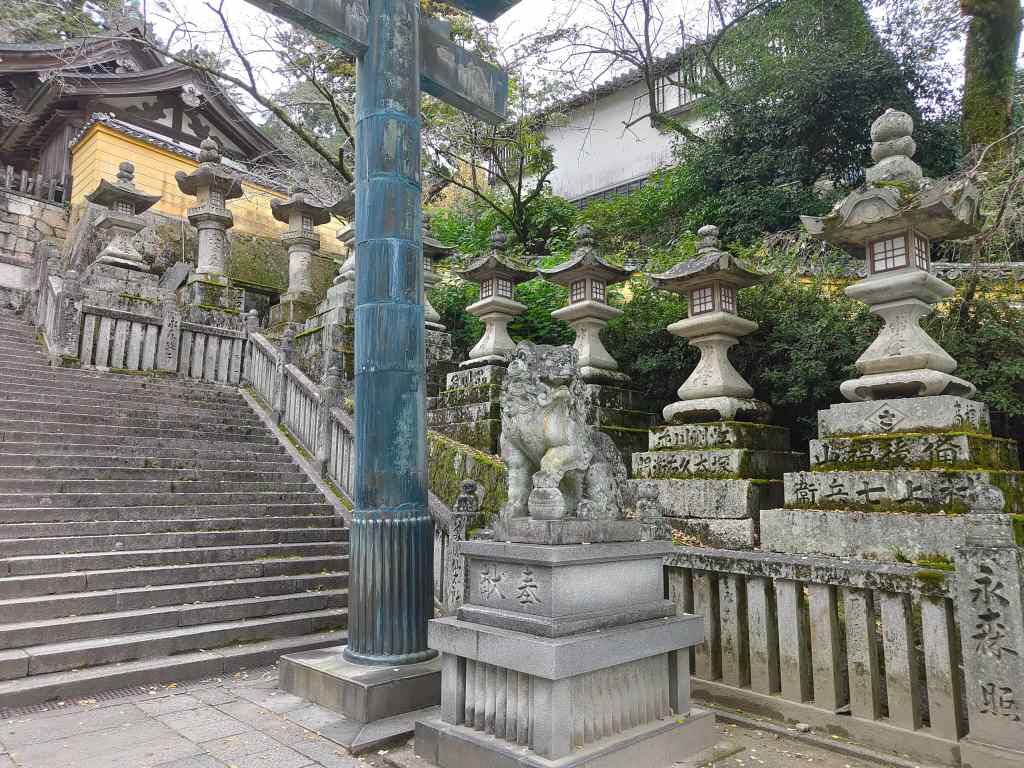
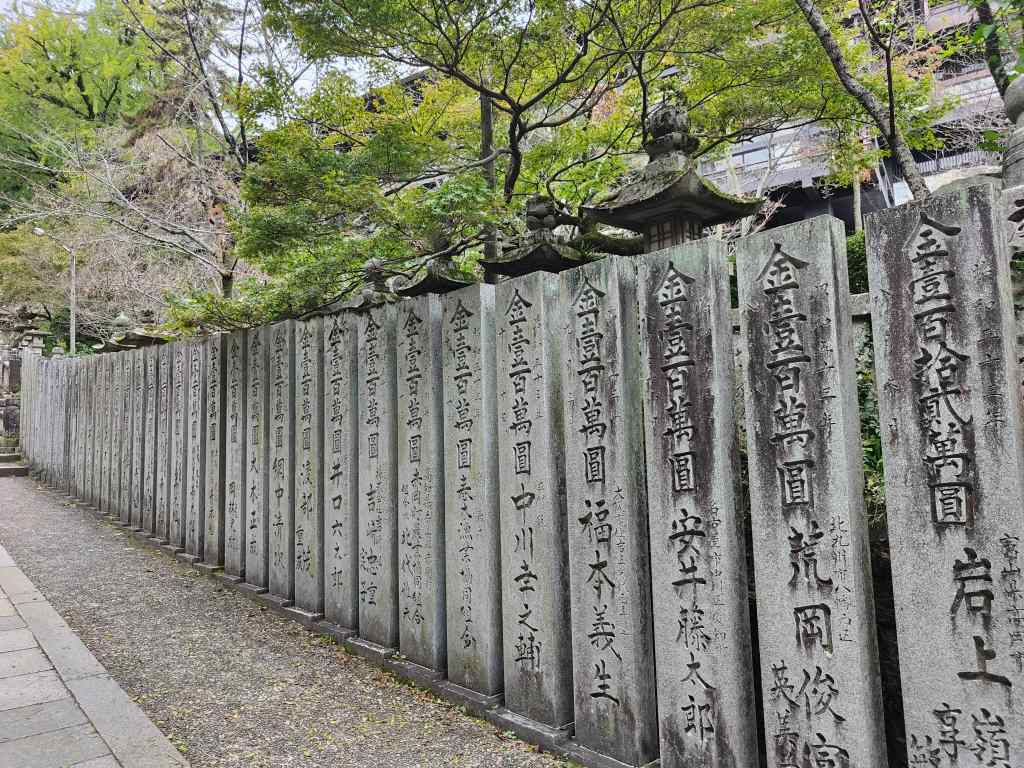
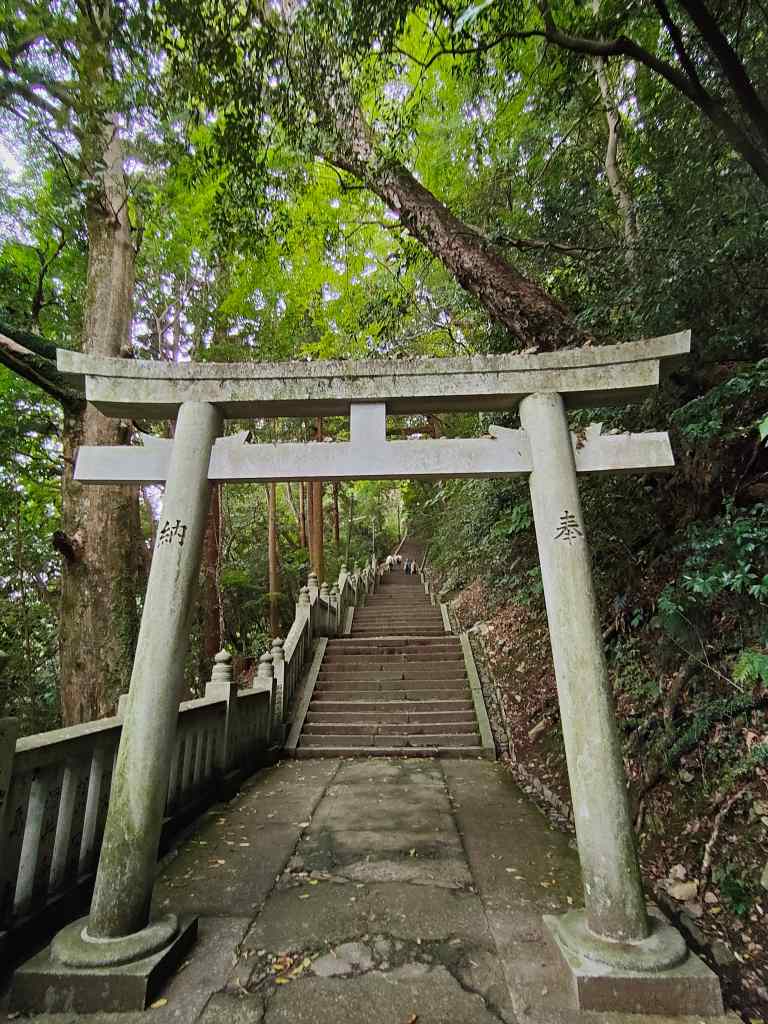
Relaxed, and very clean, we set off again. The road finally left the mountains and arrived at the city of Kotohira, the site of Shikoku’s most popular shrine, Kompirasan, which is dedicated to seafarers. The approach to the shrine involved a steady climb up steep steps, initially past souvenir shops, cafés and food stalls, then more interestingly through torii and past hundreds of engrave granite columns.

Kotohira
Kotohira – Up and Up…..
Kotohira

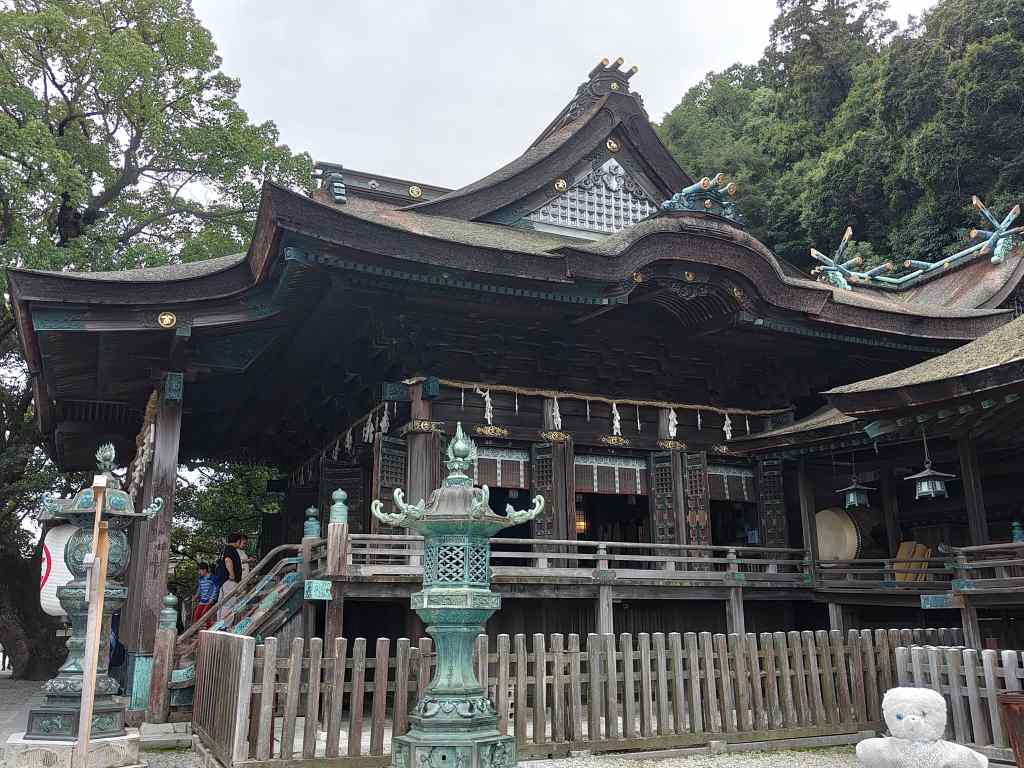
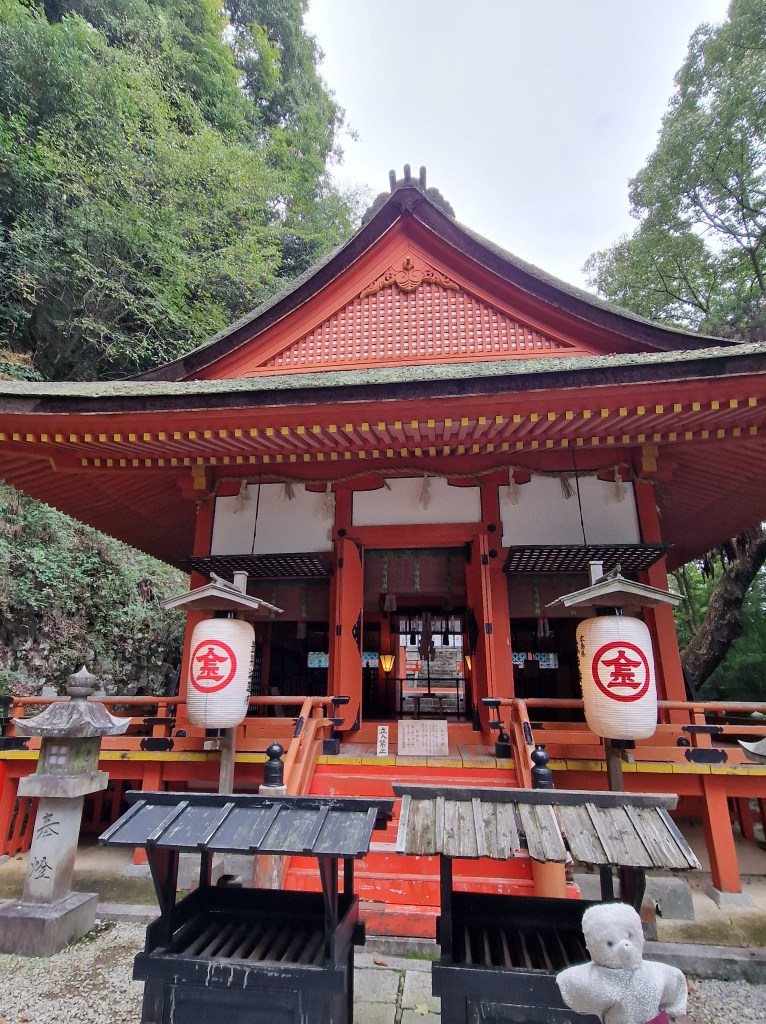
After 785 steps we reached a very beautiful temple complex with views over the city and countryside.

Kotohira-gu
The main temple – Kotohira-gu

Another 583 steps (making 1368 in total) took us to the temple’s inner shrine, which was disappointingly simple compared to the main temples lower down.

more steps Kotohira
Kotohira: Up and Up again….
top temple Kotohira
Kotohira – The rather simple inner temple

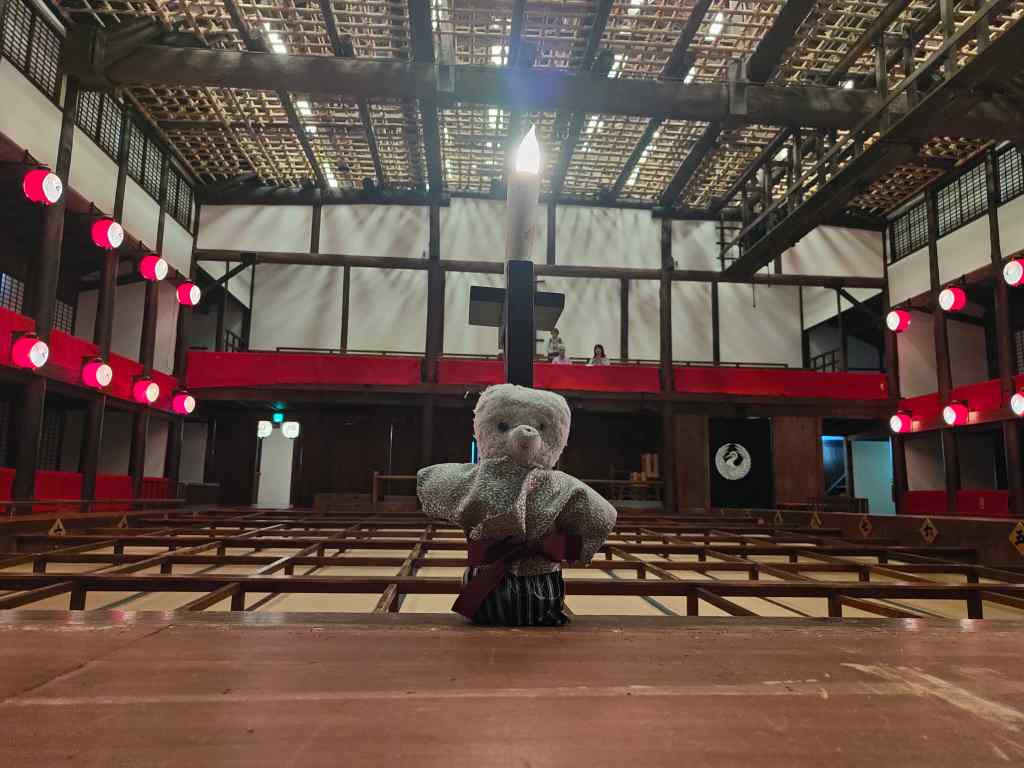
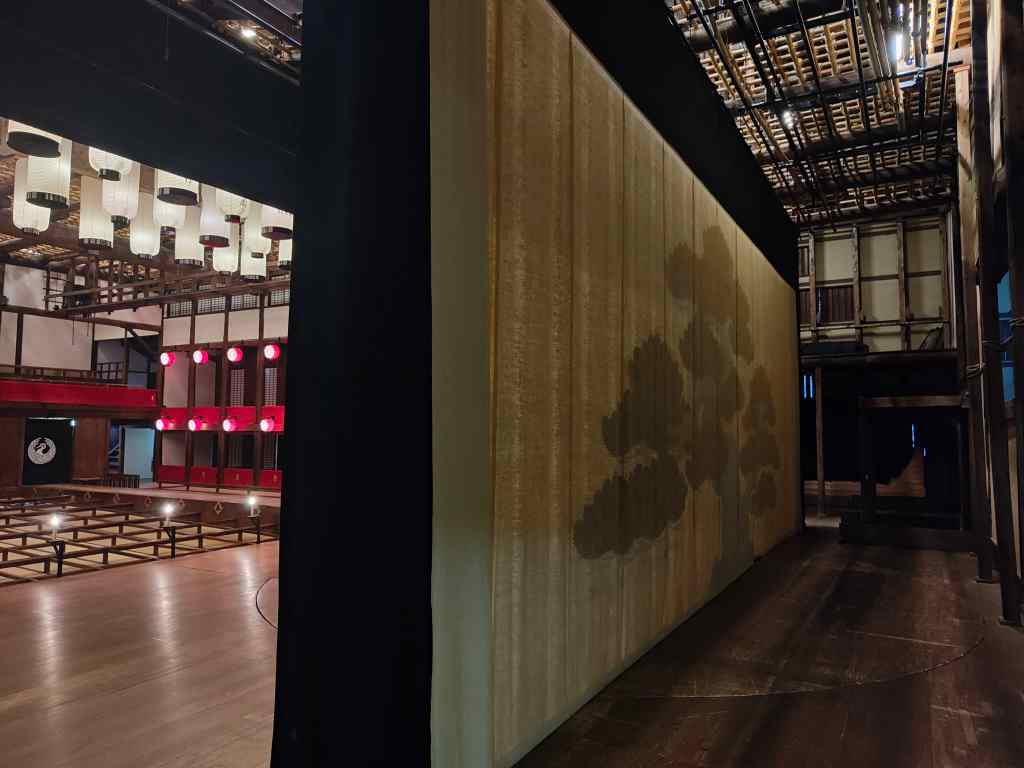
Our hike down was fast, and we arrived at the bottom just in time to visit Kotohira’s kabuki theatre before it closed. It is the oldest surviving one in Japan, and it was very interesting to visit all around – the place where the audience sits, the stage itself, and backstage.

Kabuki theatre Kotohira
Trouspinet on stage at Kotohira’s kabuki theatre!
Kabuki theatre Kotohira
Front stage and backstage

From Kotohira it was another hour by car to reach Takamatsu. As before, finding our Airbnb flat required some time, and we had to message our host to say we were lost. She lived in the flat below and came out to show us the way. It was another very comfortable and large flat – which was just as well, because over the next two days the remnants of a typhoon passed over Japan and it rained hard continuously.
There are many things you can visit with Takamatsu as a base, but sadly most of them require good weather. We ventured out once under the rain to see the city’s small castle, before deciding that it would be better to invest our time catching up on email, washing clothes, exercise – and this blog.

Takamatsu castle
Takamatsu’s castle

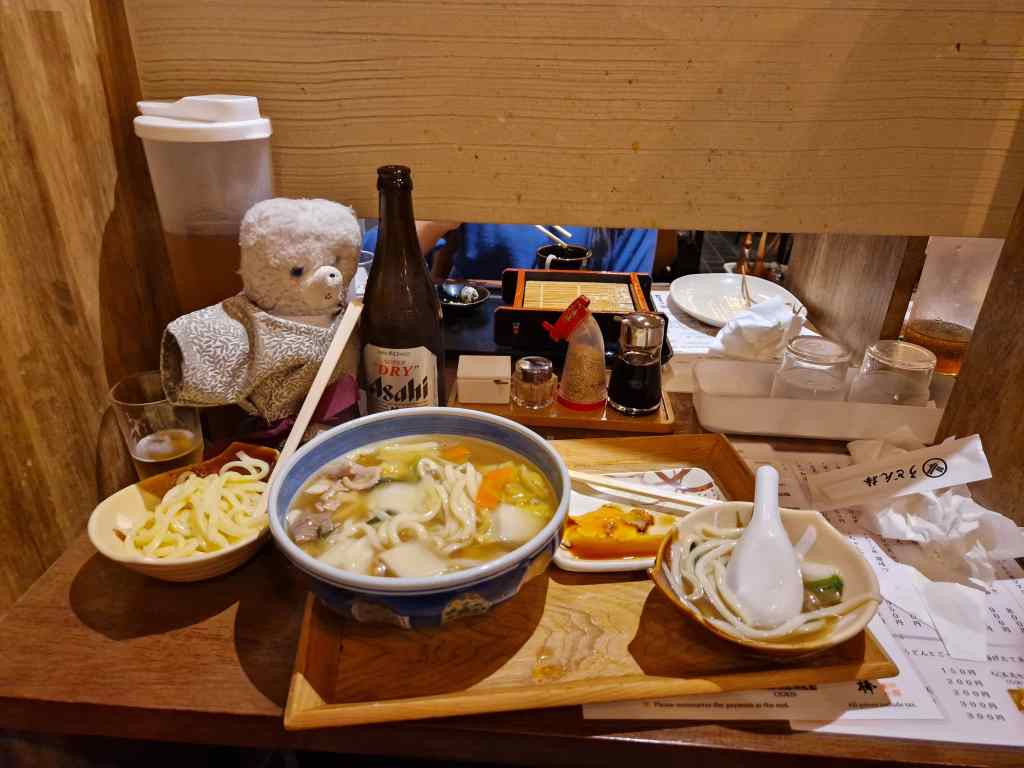
In the evenings at least we had some great indoor entertainment – sampling Takamatsu’s famous Udon noodles. Good food is always the best answer to bad weather!

Udon Noodles Takamatsu specaility
Noodle Feast in Takamatsu!

Next Post: Naoshima

Previous Post: Iya Valley

The Iya Valley – Nagoro Scarecrow Village, Vine Bridges and Tsurugi-san

Iya-Valley-autumn-colors
The beautiful Iya Vally in the Fall

We woke up and were treated to the typical multiple course ryokan breakfast, which we ate whilst keeping an eye on the weather outside. It had stopped raining, but was still cloudy. However, as we finished our tea, we suddenly saw a patch of blue sky. Perhaps we would be lucky.
We set off in our car on a road following the Iya river, climbing up the remote and sparsely-populated valley. We saw very few people in the settlements we passed, but after a few miles we came across a village that at first sight appeared to be teaming with life.

Nagoro Scarecrow Village
Finally some people!?

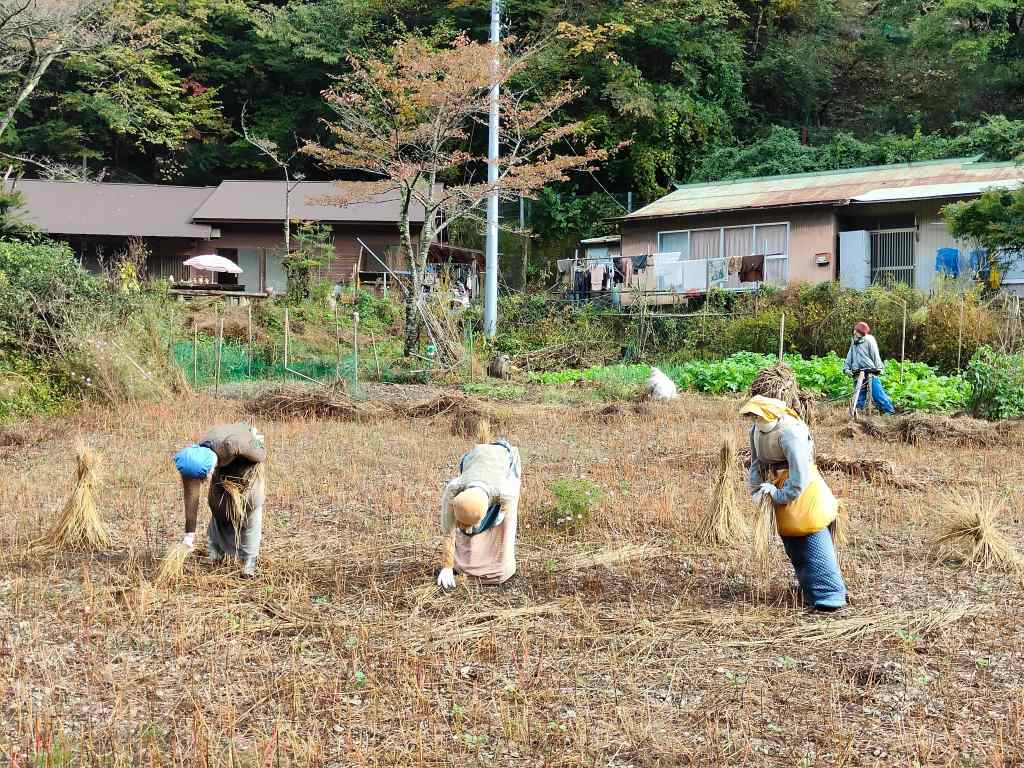
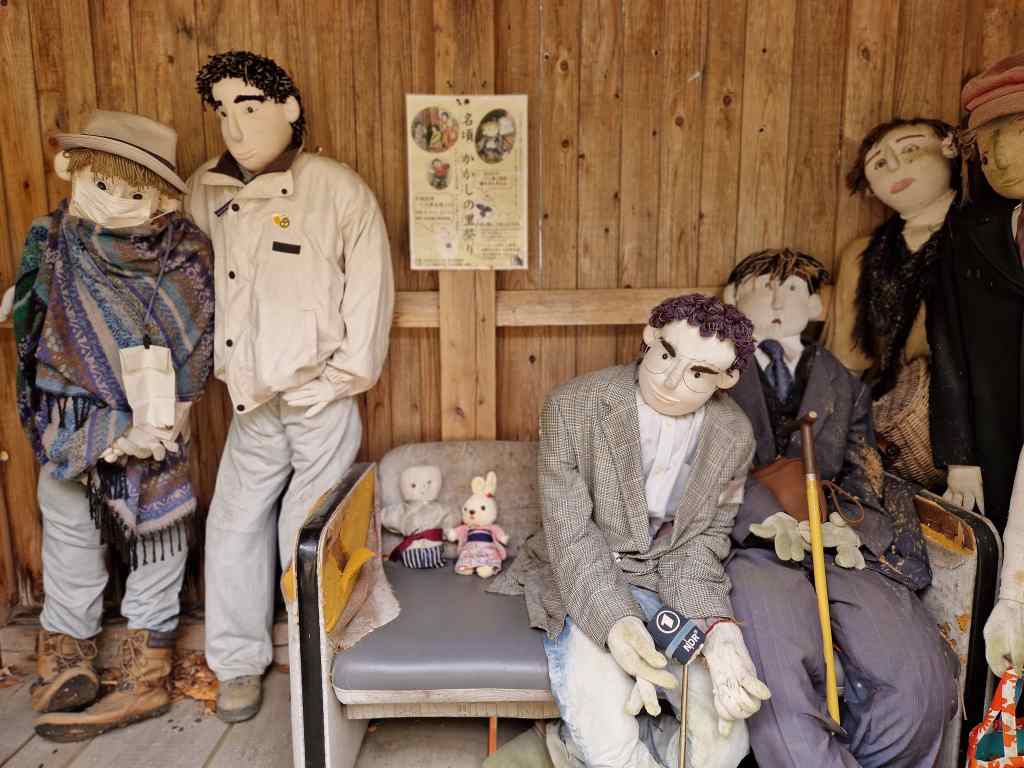
On closer inspection, the “people” were dummies, more usually used scarecrows for scaring away birds. They were everywhere – harvesting in the fields, waiting for a bus, working on the road, even engaging in a tug of war in the sports hall of a disused school.

Scarecrows-waiting-for-bus-Nagoro
Meeting the locals at Nagaro

Consulting our guide book we realised we had arrived at Nagaro village. The scarecrow story started when a woman moved to the village to look after her aged father. To occupy herself, she made a scarecrow in his likeness, which was so realistic that fellow villagers would say “good morning” to it as they passed. She made more figures, many using local residents as models, as way of relieving boredom and loneliness – the area is suffering from depopulation as older residents die and younger people move to the cities to find better jobs. Other people followed her example, and now there are around 350 scarecrows in the village, which has become a tourist attraction. When we visited we saw around 100 scarecrows, two human tourists and one dog – but no local people. So although the initiative has put Nagoro on the map, it has not solved their depopulation problem.
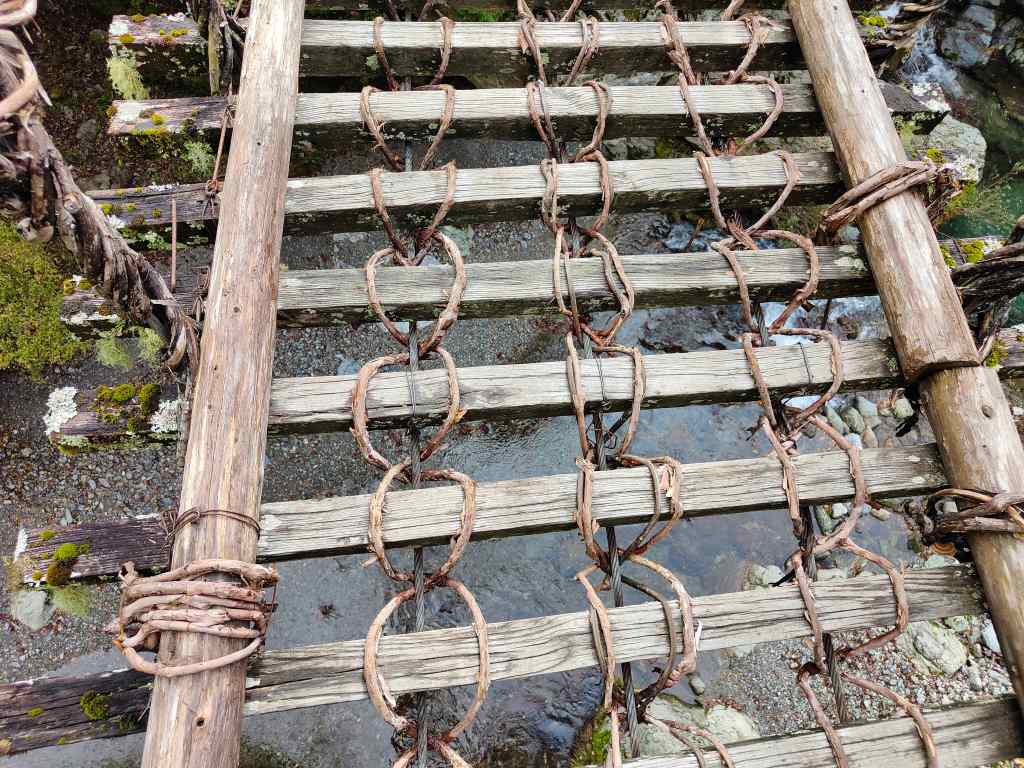
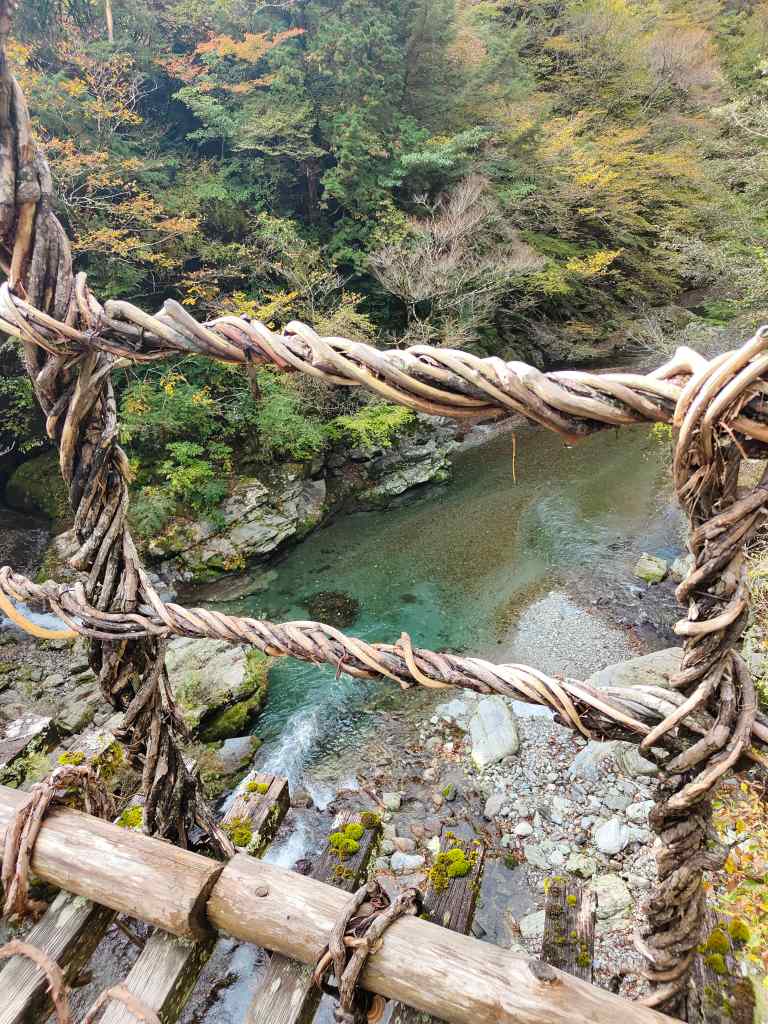
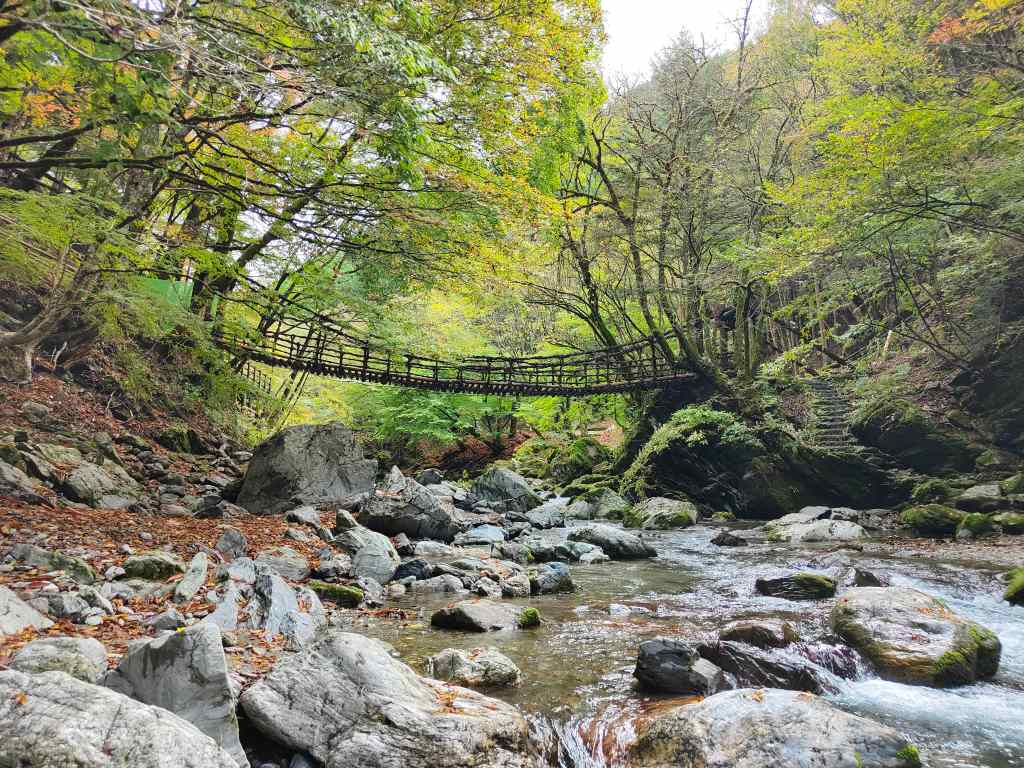
A few miles down the road there was another, more famous tourist attraction – a pair of “vine bridges”. These structures are made from planks of wood tied together with natural vines and were originally built hundreds of years ago, no one is quite sure by whom or why. There were originally many such bridges over the Iya river, but now only three remain, of which two were here, almost side by side – the larger one is nicknamed the “male” bridge and the smaller one, “female”.

Iya Valley Vine Bridge
The “male” vine bridge
Don't look down!
Don’t look down….
Don't look to side!
…or to the side!

I cautiously stepped across on the male bridge with my little teddy legs, leaving Aki, who does not like heights, behind me to film my progress. The gaps between the planks were quite big, and I think even a human could have slipped between them into the river, clearly visible under my paws far below. Certainly a little teddy could fall through and disappear without trace into the water. I finally made it across and let out a big sigh of relief. I used the “female” bridge to get back, and fortunately this was shorter and lower, and less of an ordeal to cross. With my adrenaline rush over I could relax with Aki to enjoy the wonderful scenery around the area.

Iya Valley Female Bridge
The “female” bridge

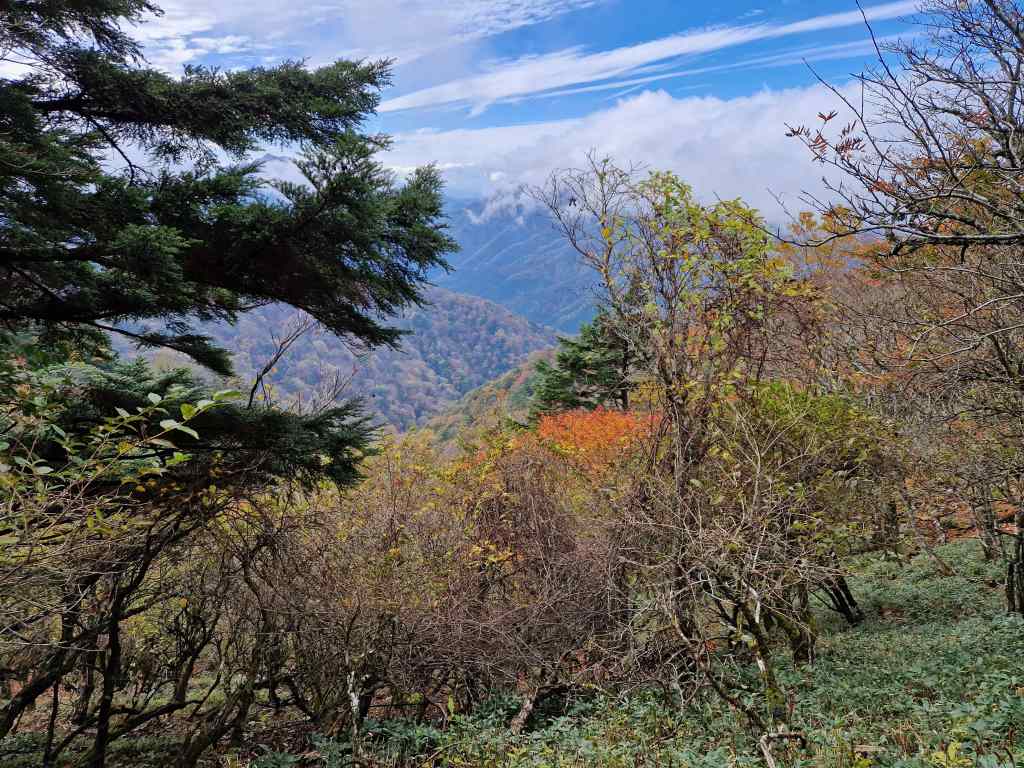
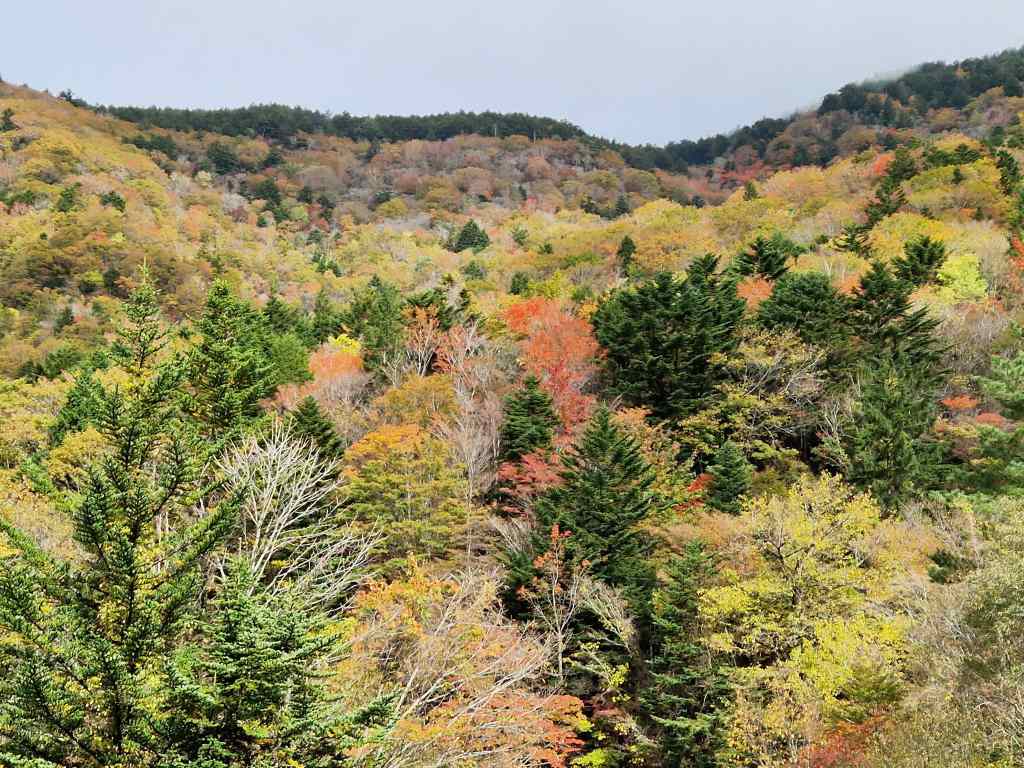
We continued our drive up the valley, steadily gaining altitude. As we rose, the vegetation changed and we found ourselves driving through mixed forests, including many spectacular maple trees, their leaves a bright red. The mountains were a patchwork of greens, yellows and reds, and very beautiful.

Autumn Colors in Iya Valley
Iya valley colours

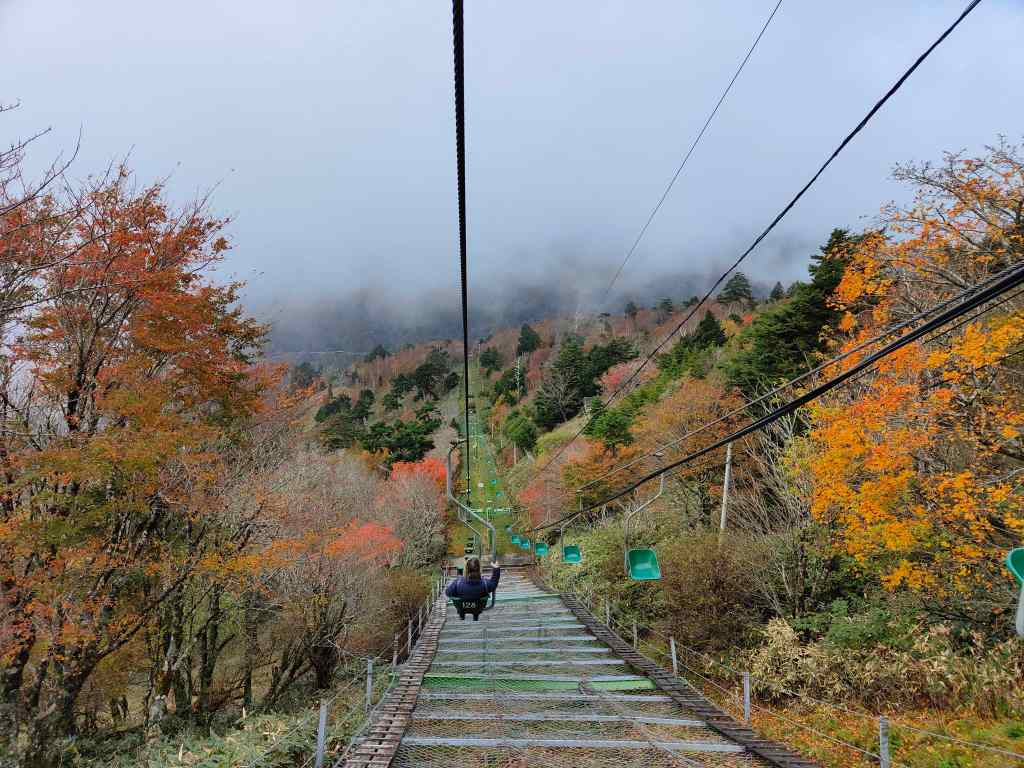
We arrived at the chairlift station taking hikers up to the starting point for trails leading to the various mountains surrounding us. The chairlift ride itself gave wonderful views of the forests’ autumn colours, even if it was a little scary, since the chairs lacked any protective barriers to stop you falling off.

Tsurugi Chair lift
A spectacular but not very safe chair lift


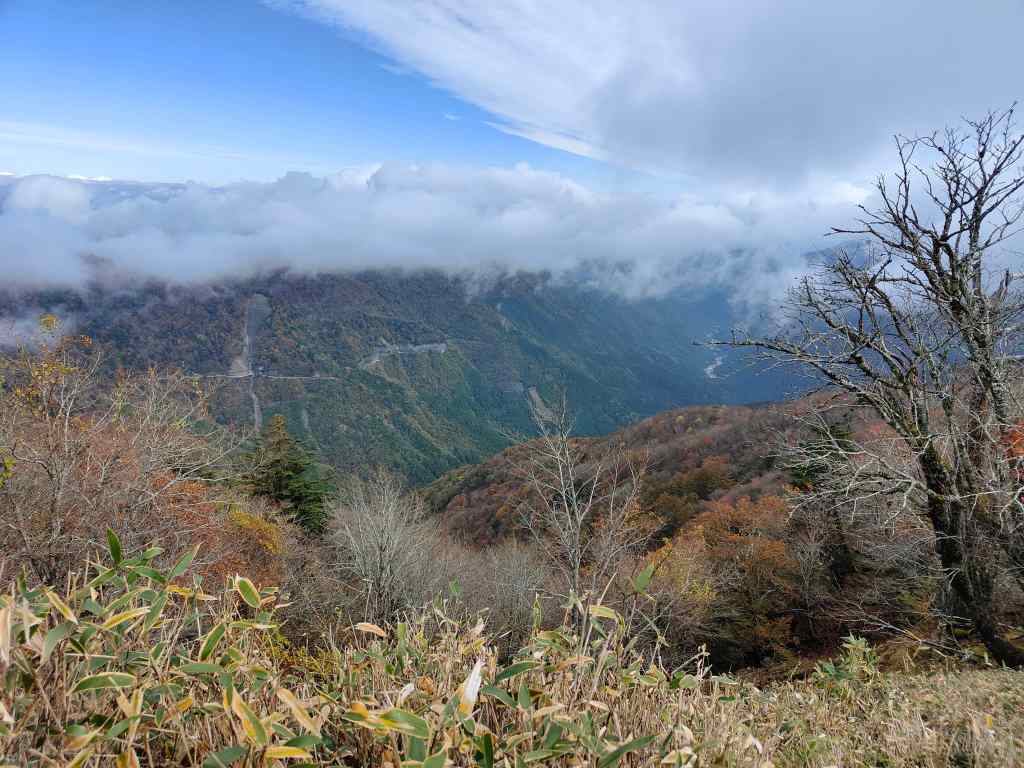
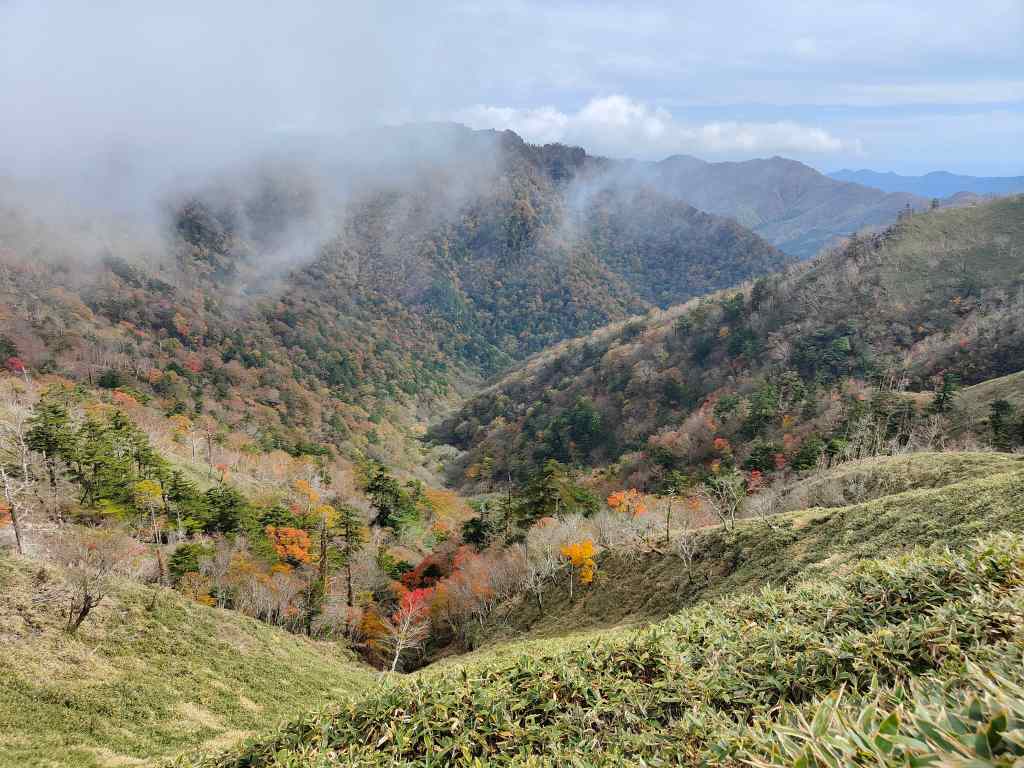
The most popular climb in the area is Mount Tsurugi, the second highest mountain on Shikoku island. But we decided to climb the very slightly smaller Mount Jirogyu, which the Iya Valley tourist information website said offered even better views. We paused continually on the way up to take pictures of the wonderful views in a mix of cloud and bright sunshine.

View Tsurugi area
Views on the way up Mount Jirogyu
Climbing Mount Tsurugi

But as we neared the end of the climb and with our goal in sight, clouds blew in from the west, obscuring the summit.

Mount Jirogyu Summit
Mount Jirogyu summit beckons as clouds rush in

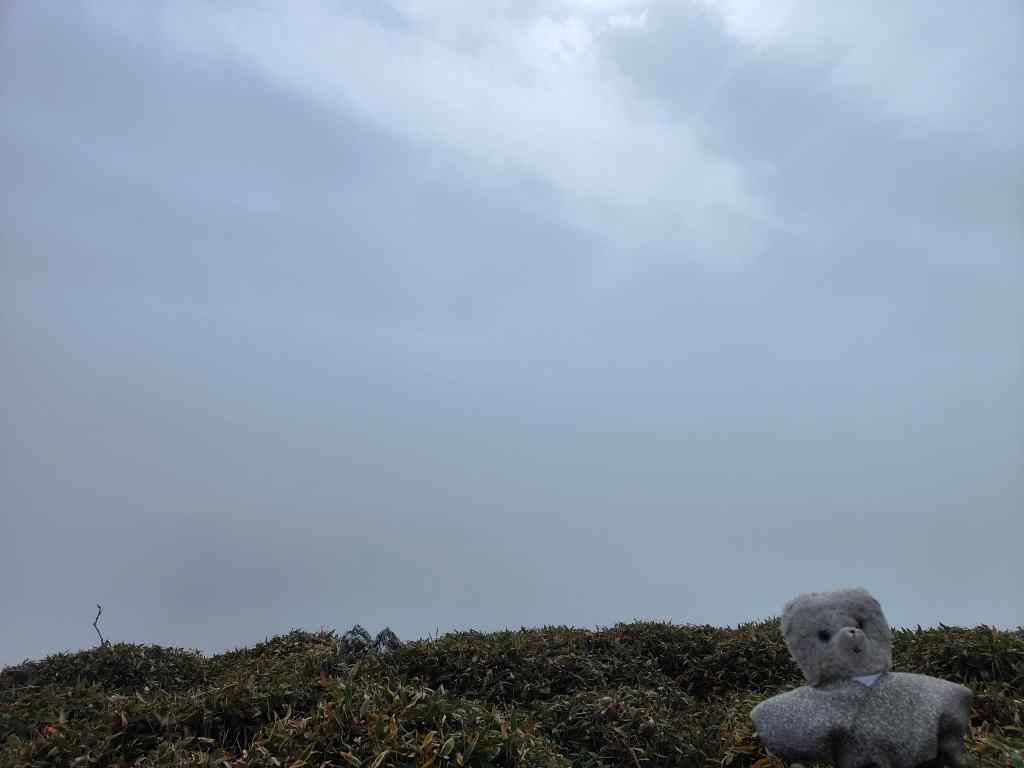
We climbed up all the same, but all that we could see at the top was thick cloud.

on Mount Jirogyu
Shame! The “view” at the top.

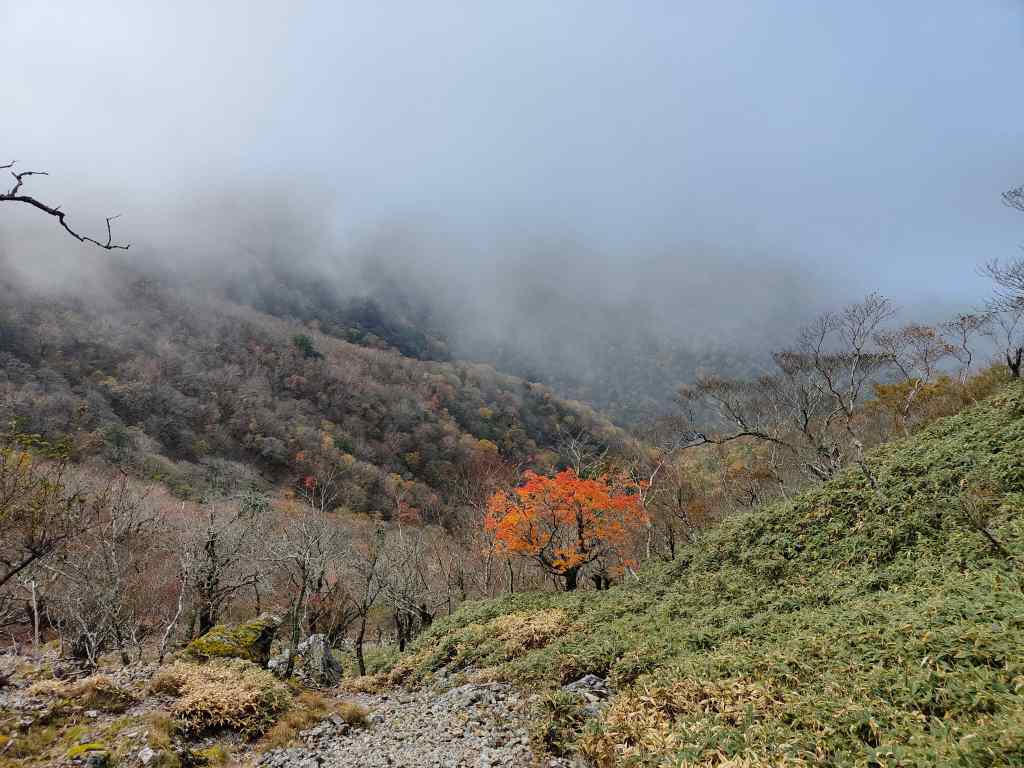
Out of the sun, it was chilly and windy, so we hurried back down. Below the clouds we could once again enjoy the autumn foliage.

View mount Tsurugi
Views on the way down
Tsurgui area

We drove back to our ryokan to have a hot bath to warm up, after our exposure to the cold mountain air and damp clouds. It had been a brilliant day but could have been perfect if only we had started maybe an hour earlier so that we could enjoy the view from the summit of Mount Jirogyu . That will have to be a plan for another trip – we liked the Iya Valley so much that we will try to come back one day.

Next Post: More Iya Valley, Kotohira and Takamatsu

Previous Post: Kochi (Japan), Shikoku

Off the beaten track in Shikoku – from Matsuyama to Kochi via Uchiko

Today we set off deeper into the island of Shikoku. First stop was a small old town called Uchiko, many of whose buildings date from the Edo period (1603-1868). It was a laid-back sort of place, with a slow pace of life, which we enjoyed as we strolled around. We ended up spending much longer there than planned.

Uchiko Kabuki theatre
Uchiko’s kabuki theatre
A courtyard in Uchiko
Courtyard in Uchiko

After a coffee for the road, we set off through Shikoku mountains and forests to our next destination, the port city of Kochi on Shikoku’s south coast. The road twisted and turned upwards, through dense forests – sometimes of pine, sometimes of bamboo.

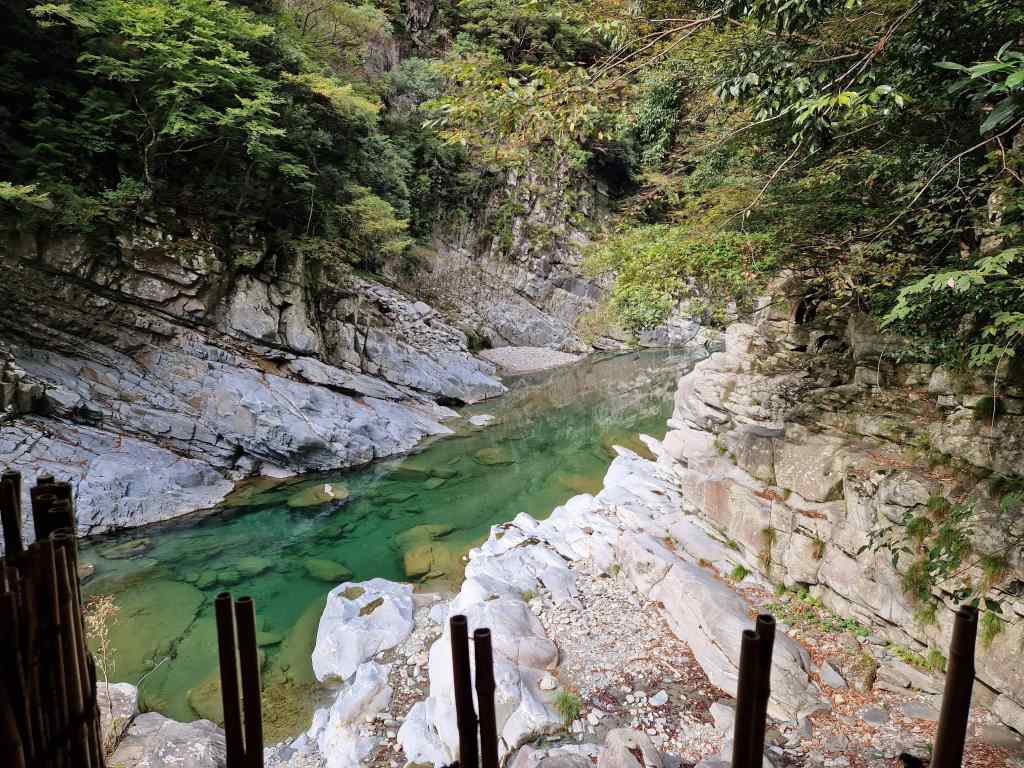
It then followed the path of a pretty gorge, turning into a single lane road, in places barely wider than our small car. Driving was quite tricky, but Aki handled it well, as I navigated.

A pretty river gorge in central Shikoku

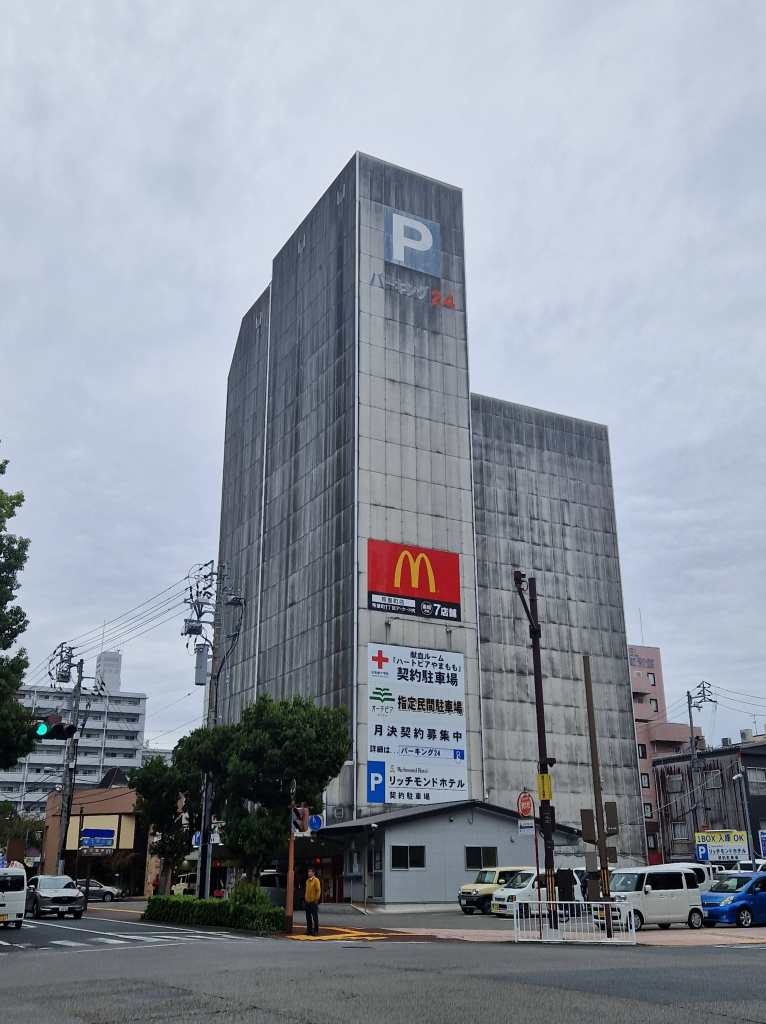
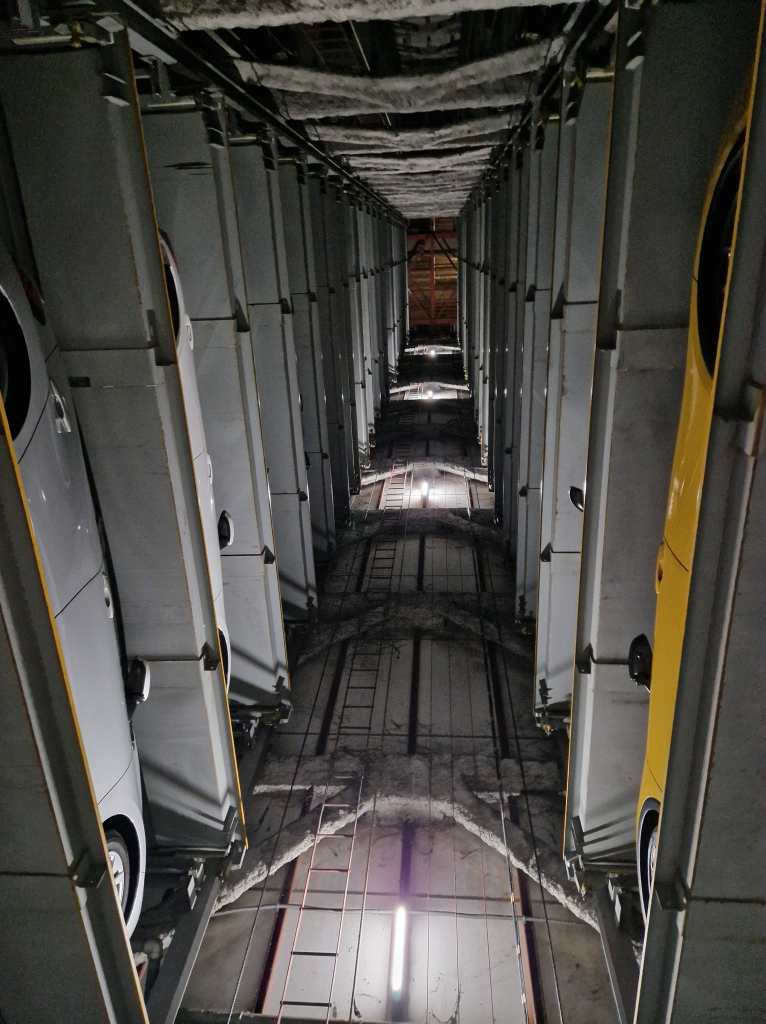
Fortunately, we were the only people on the road and never had to deal with a car coming the other way. We had chosen a very pretty, but also very slow route for which Google had calculated a hopelessly optimistic travel time. As a result, we arrived in Kochi after night had fallen. We parked our car in the tower recommended by the hotel. Being Japanese, Aki has seen these before but for me it was a complete surprise; She drove into one of the tower’s four entry bays, parked the car on a sort of platform at ground level, and we got out. I was wondering what would happen next and how this could possibly be a car park, when the platform rotated 90 degrees and rose up into the air, disappearing up the shaft of the building. It was a fully automated system where a computer places your car into one of the available spaces deep inside the block somewhere. The attendant told us the tower could hold 200 vehicles. He gave us a ticket and impressed on us the importance of not losing it!

parking tower in Kochi Shikoku
A new experience – a parking tower!


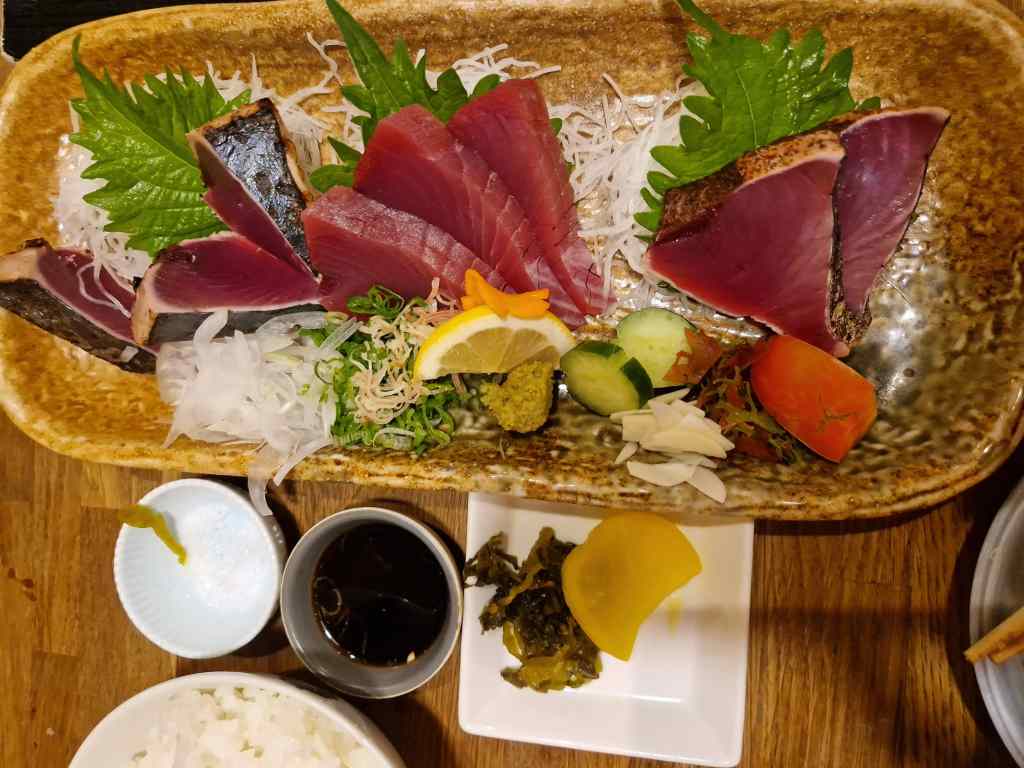
We checked into our hotel – it was one of only two modern-style hotel rooms we had booked for the whole trip, and seemed to be used mostly by business travellers. Our room was small, but comfortable enough. After unpacking we set off straight for dinner. Like any port city in Japan, Kochi is known for its seafood and its speciality is seared raw tuna. We ordered some and got a huge plate for a price that back home would have got you one small tuna steak in a supermarket.

All this (plus one piece we already ate) for 12€ in a Kochi restaurant!

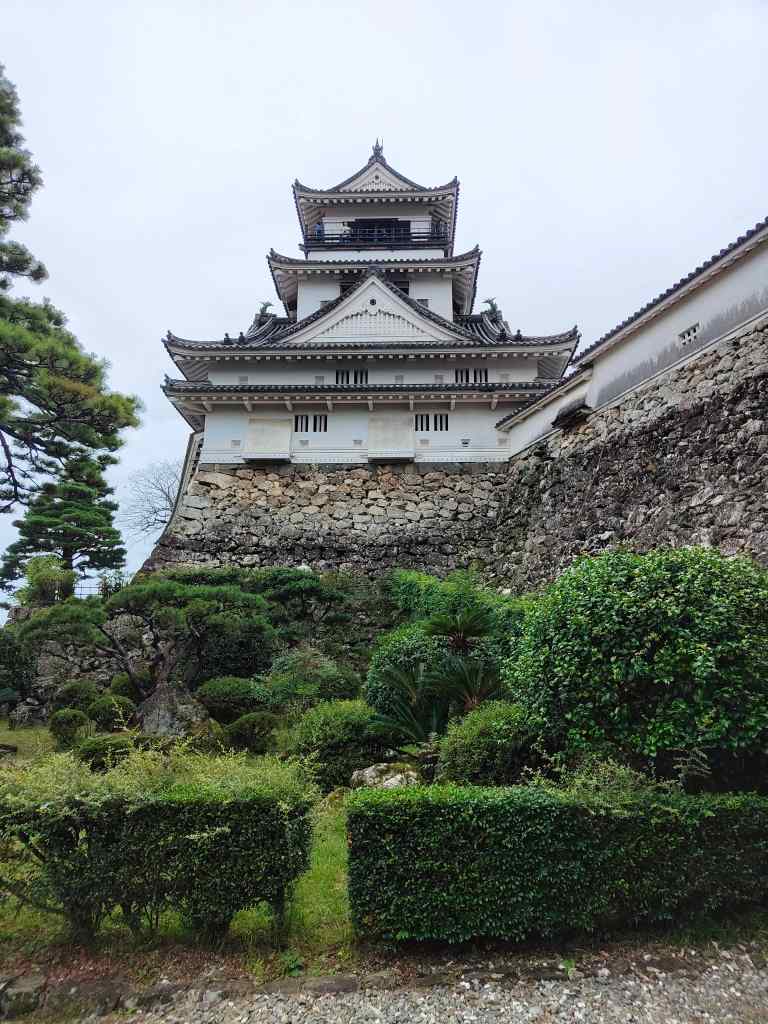
The next day we explored more of Koch. First stop, as always, was the castle, which I liked, even though it looked very similar to the others we had seen in Japan. The view from the top was particularly impressive, looking north, I could count no fewer than eight successive mountain ranges, one behind the other.

Shikoku Kochi castle
Kochi castle
view from Kochi castle
One of the views of Shikoku from the top of Kochi castle

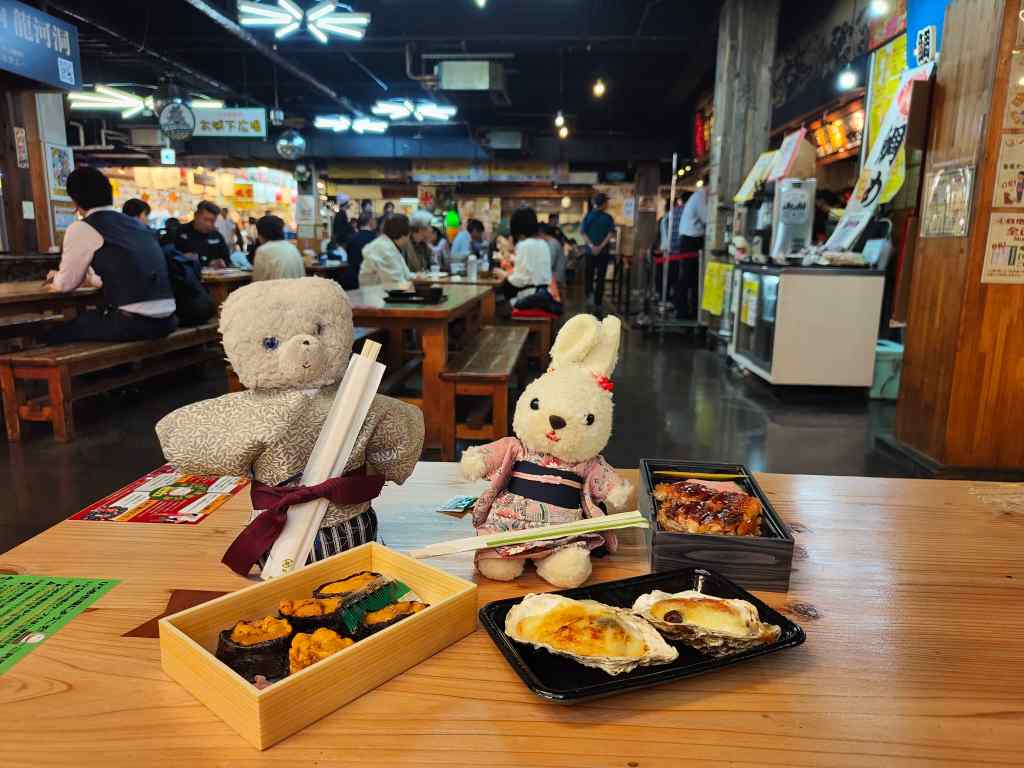
Back in Kochi town we stopped for brunch in the market, treating ourselves to fish, oysters and sea urchin – the latter being one of the few expensive forms of seafood here.

Kochi market
Brunch in Kochi market

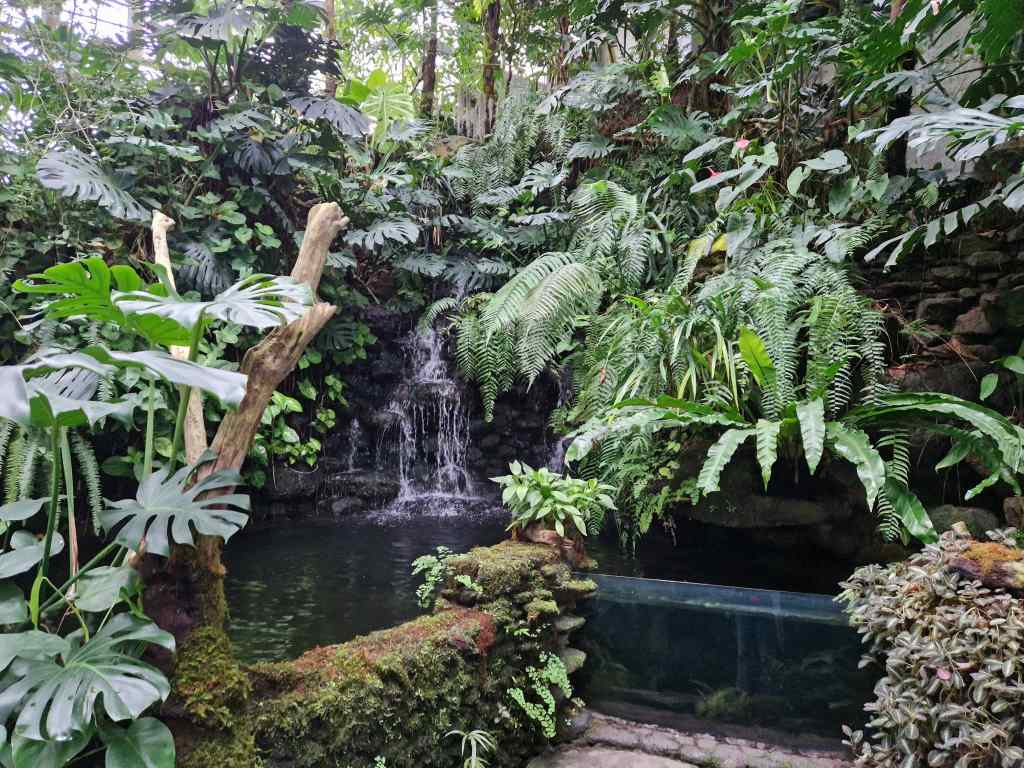
We checked out from our hotel and recovered our car, which appeared from the depths of the tower as if by magic – this time facing forward, towards the road, ready to be driven off. Our next destination was the Iya Valley, deep in the Shikoku mountains, but on the way we visited two attractions on the outskirts of Kochi. The first was the Makino Botanical Garden, named after a famous Japanese botanist. It seemed to be a spring and summer garden, with no flowers in autumn.

Makino garden in Kochi Shikoku
In the hothouse of the Makino Garden

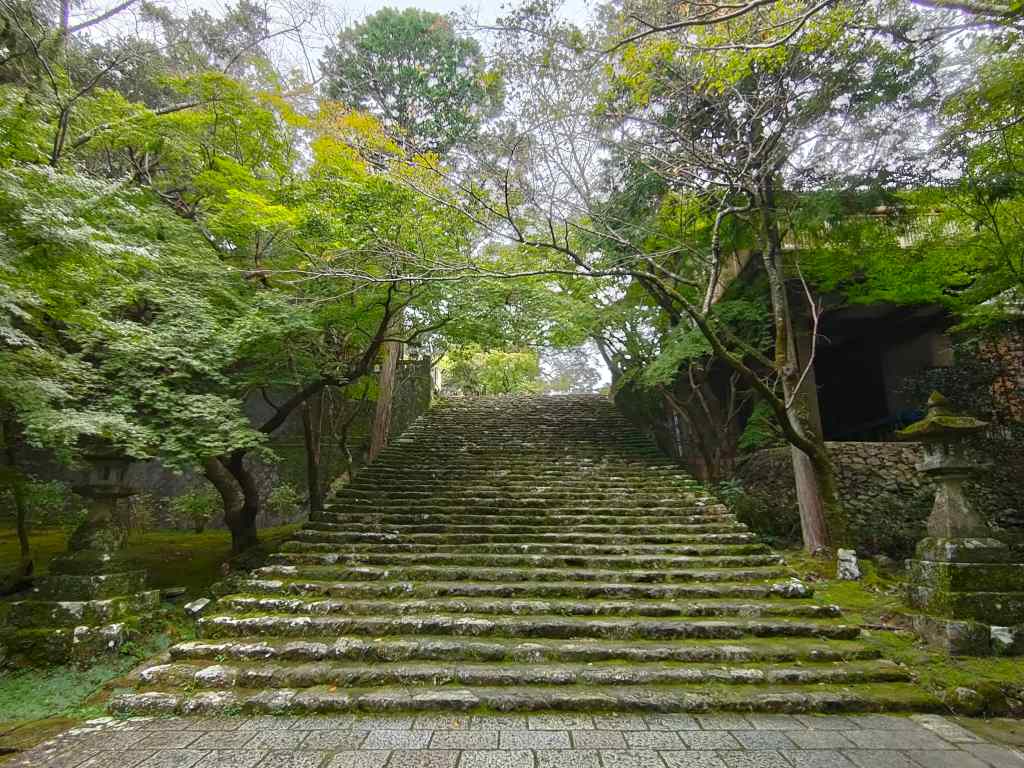
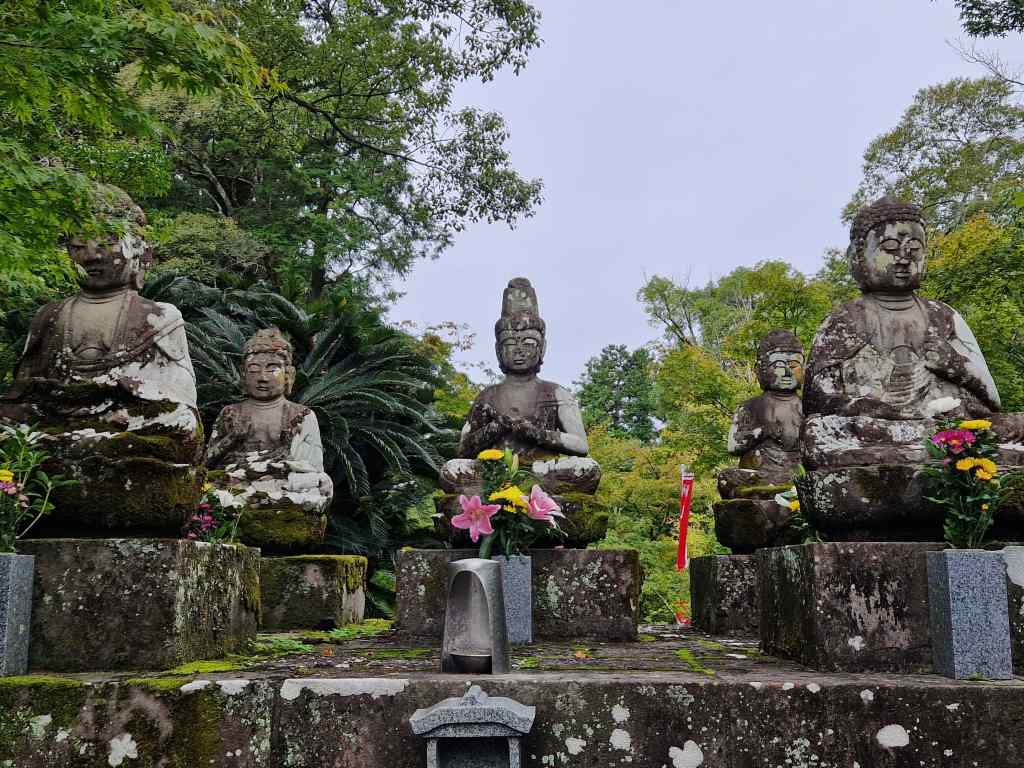
The Chikurinji temple next door made up for the slight disappointment of the gardens. It grounds radiated harmony and peace, and would have been a good place to sit and meditate, if we had had time. Shikoku is home to a famous circular pilgrimage that includes 88 temples dotted around the island and is 1,200 km long. Chikurinji is temple number 31 on this route, and we saw some pilgrims, dressed in white, praying at the shrine.

Chikurinji temple Kochi
The atmospheric entrance to Chikurinji temple
Inside the temple grounds
pilgrim approaches temple Kochi
A pilgrim enters the main gate

It was now time to head on into the mountains. The scenery became rugged and would have been very impressive, had it not been raining. We arrived at our destination – a basic ryokan – in the late afternoon and spent the time before dinner catching up on admin. This included anxiously checking tomorrow’s weather forecast……there would not be much to do on a rainy around here. Fingers crossed for tomorrow…..

Shikoku mountain scenery
Typical Shikoku mountain scenery on the way to the Iya valley

Next Post: Iya Valley , Shikoku

Previous Post: Matsuyama, Shikoku

Blog at WordPress.com.

Up ↑