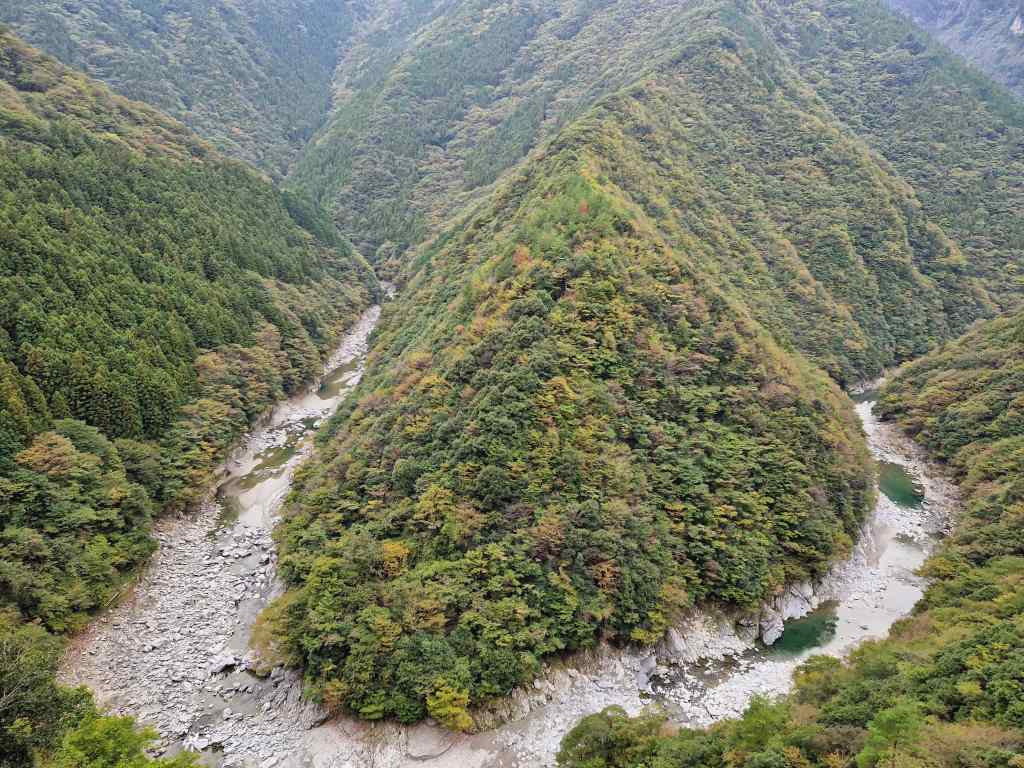
Today our final destination was Takamatsu, on the coast of the Inland Sea on Shikoku. The road took us north, to the lower part of the Iya Valley. There were some nice viewpoints but at this altitude no sign yet of the autumn leaves that had dazzled us yesterday.
View of the lower Iya Valley
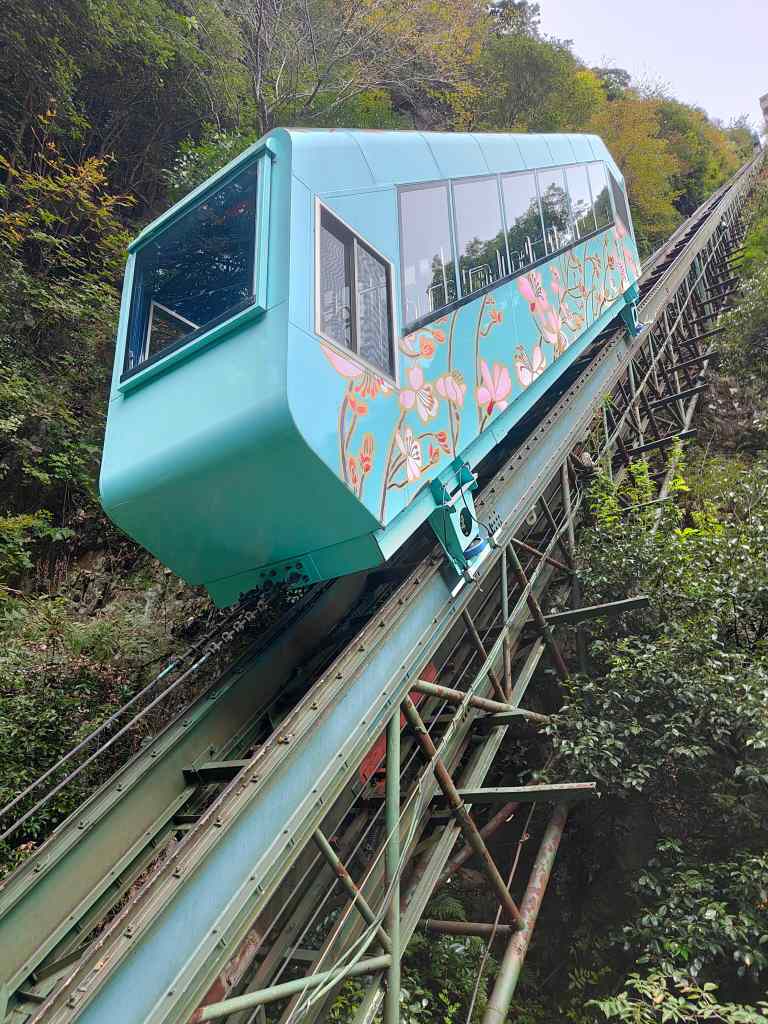
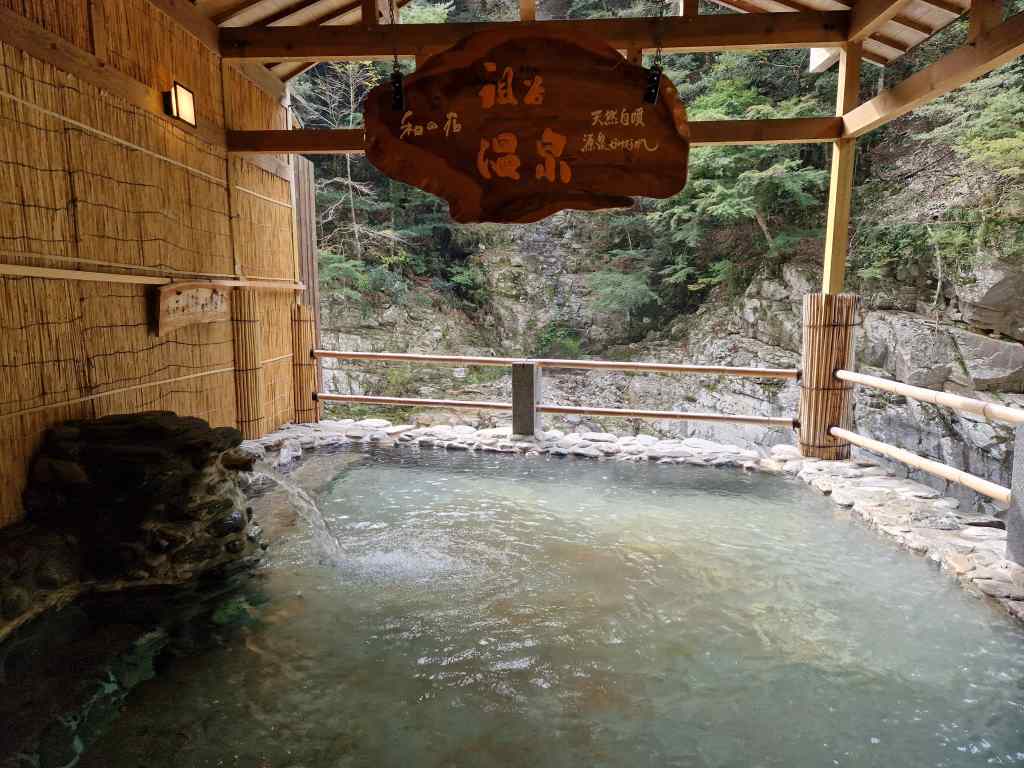
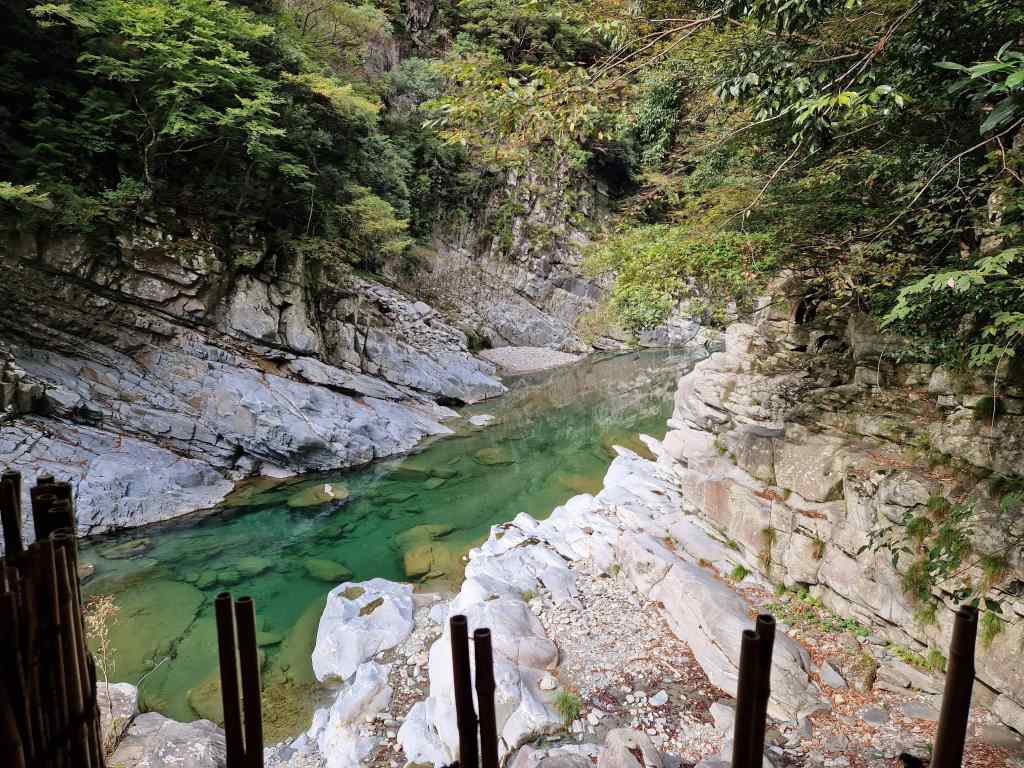
We made one stop at a hotel to try their onsen, located at the valley floor far below. Access was via a cable car, and once there Aki and I both had our respective female and male baths to ourselves. The setting was idyllic, and since the water temperature was not too hot, we stayed for an hour enjoying the view.
Taking a cable car to the onsen!The onsen and its great views
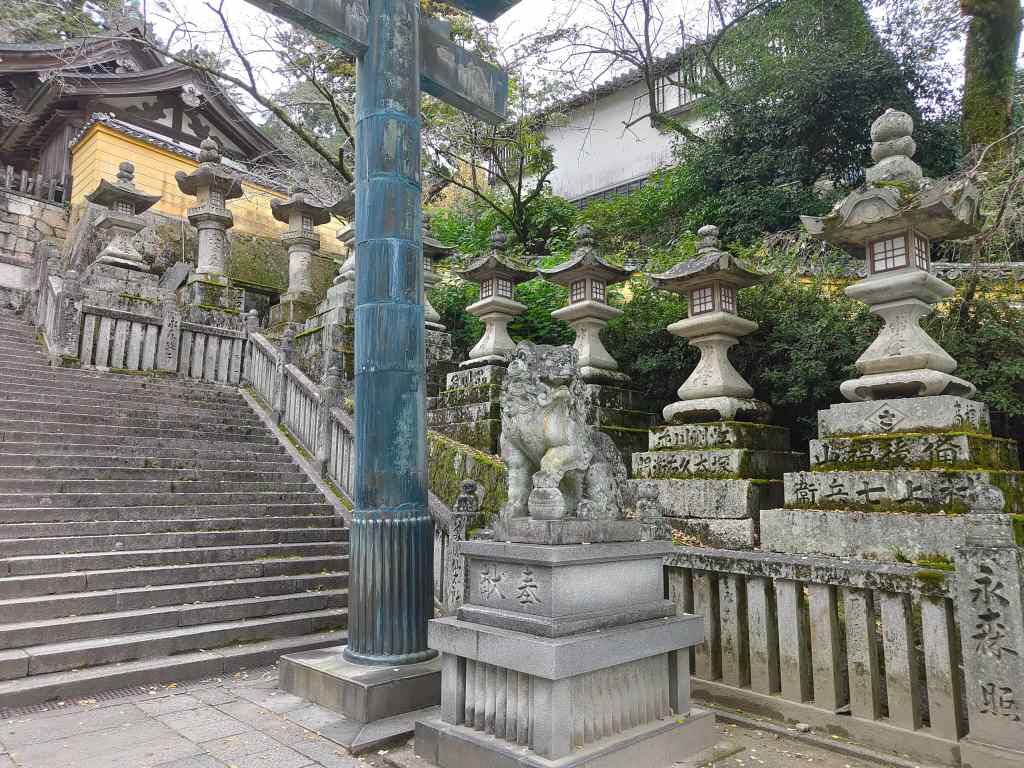
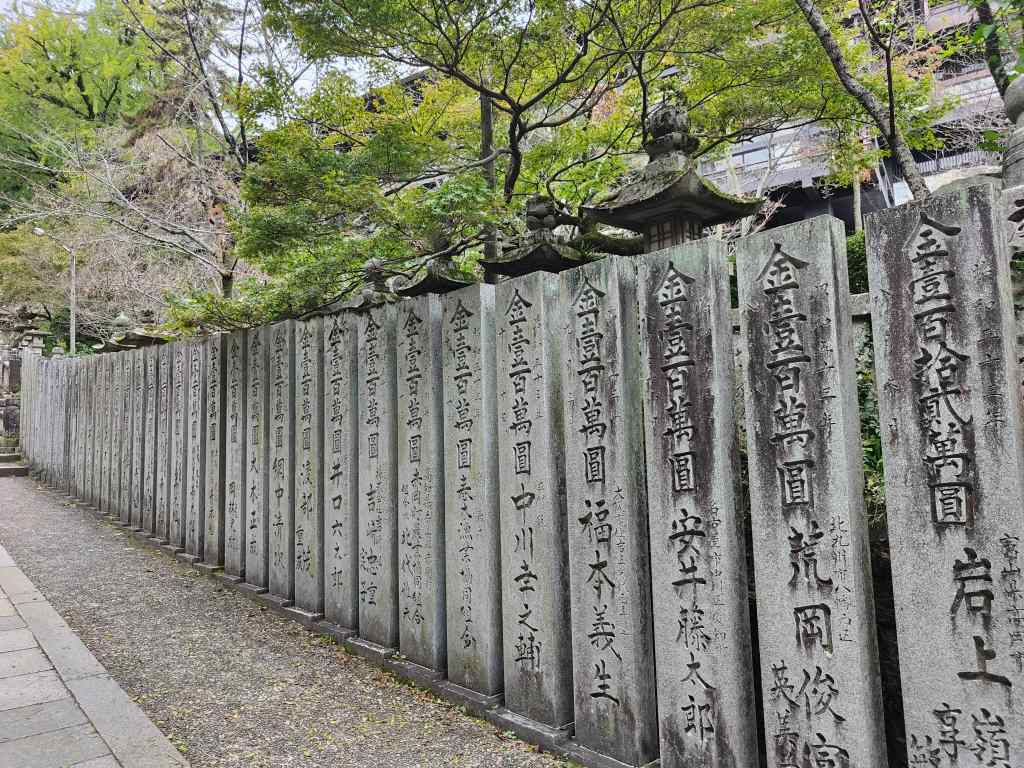
Relaxed, and very clean, we set off again. The road finally left the mountains and arrived at the city of Kotohira, the site of Shikoku’s most popular shrine, Kompirasan, which is dedicated to seafarers. The approach to the shrine involved a steady climb up steep steps, initially past souvenir shops, cafés and food stalls, then more interestingly through torii and past hundreds of engrave granite columns.
Kotohira – Up and Up…..
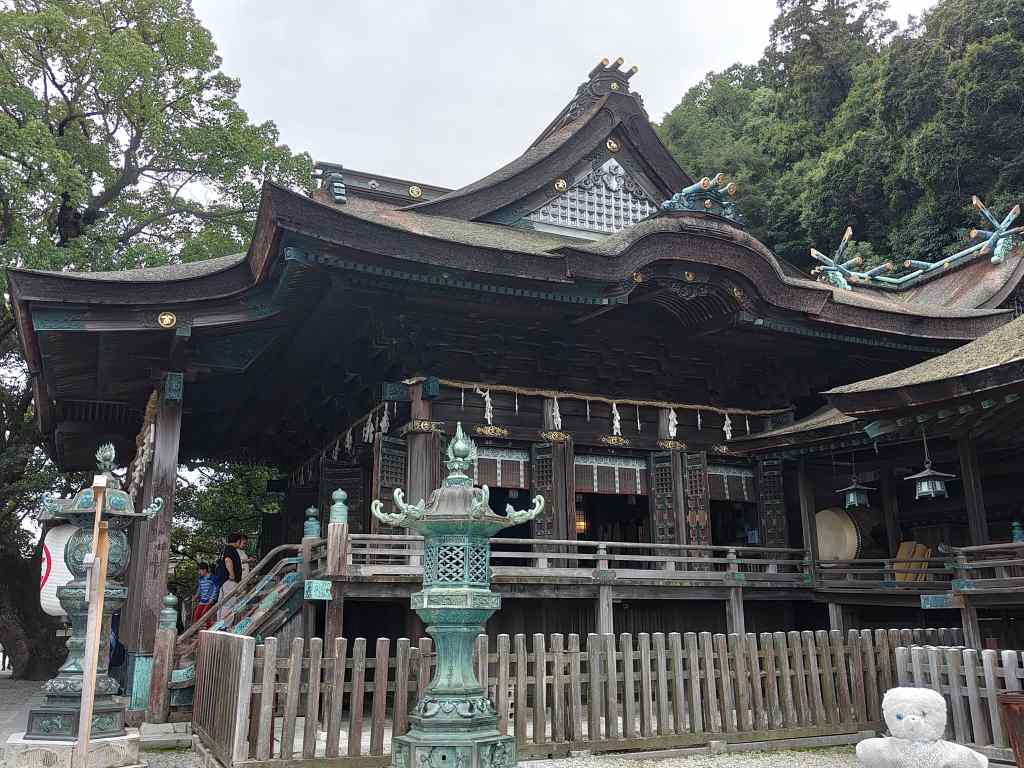
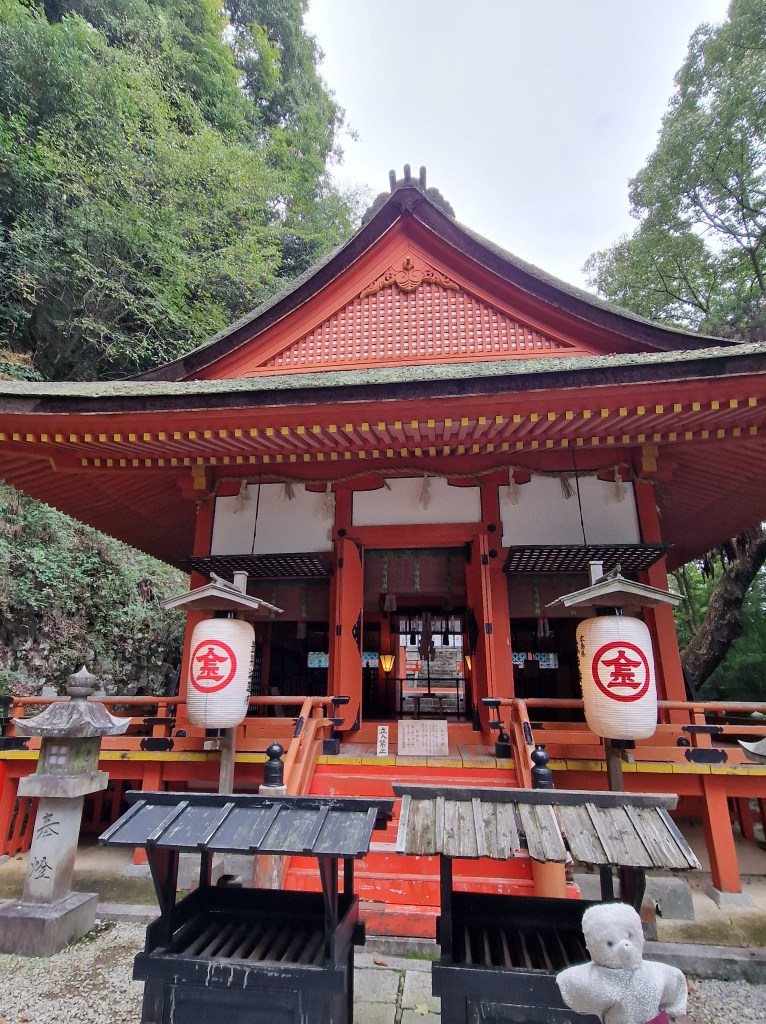
After 785 steps we reached a very beautiful temple complex with views over the city and countryside.
The main temple – Kotohira-gu
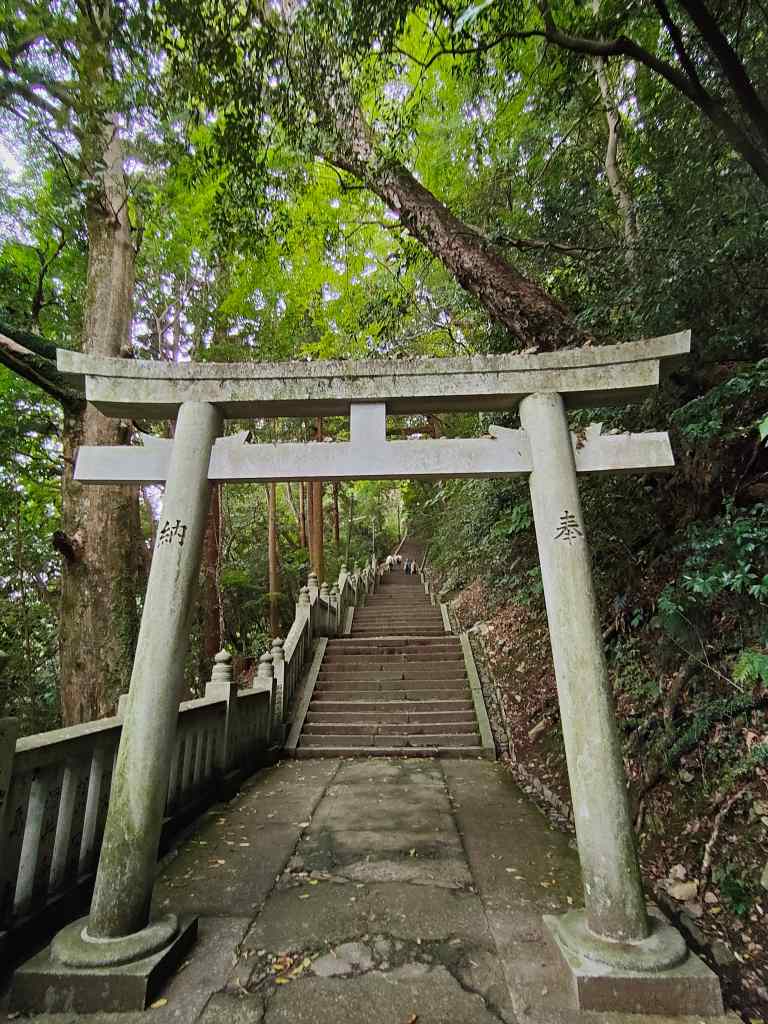
Another 583 steps (making 1368 in total) took us to the temple’s inner shrine, which was disappointingly simple compared to the main temples lower down.
Kotohira: Up and Up again….Kotohira – The rather simple inner temple
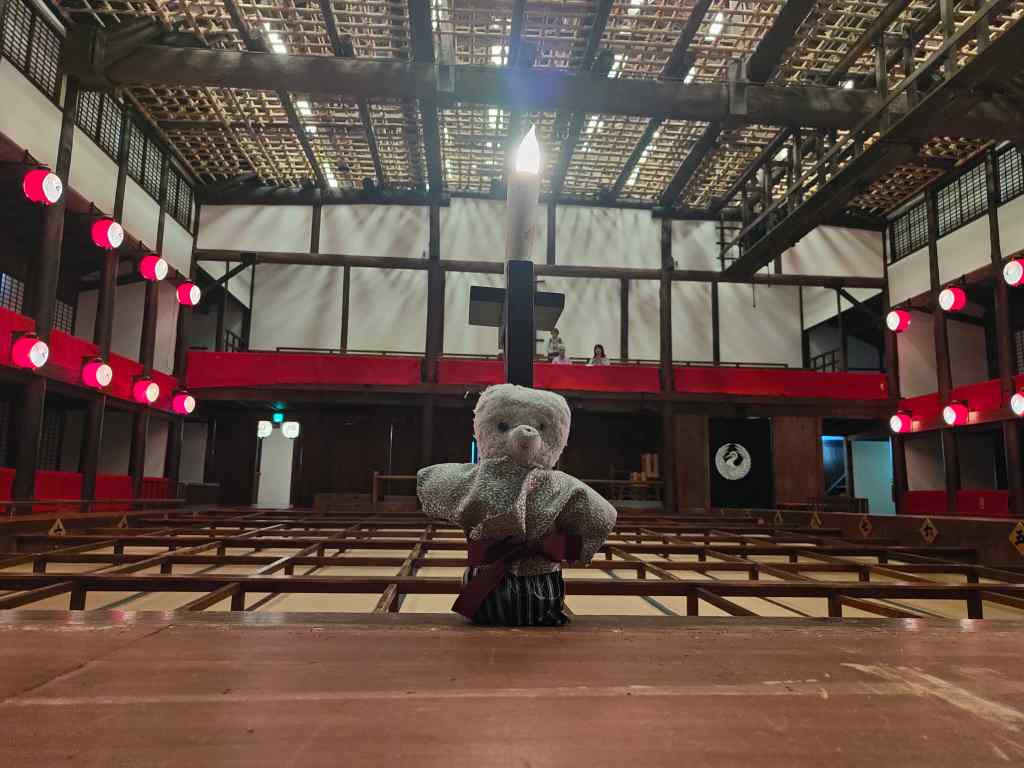
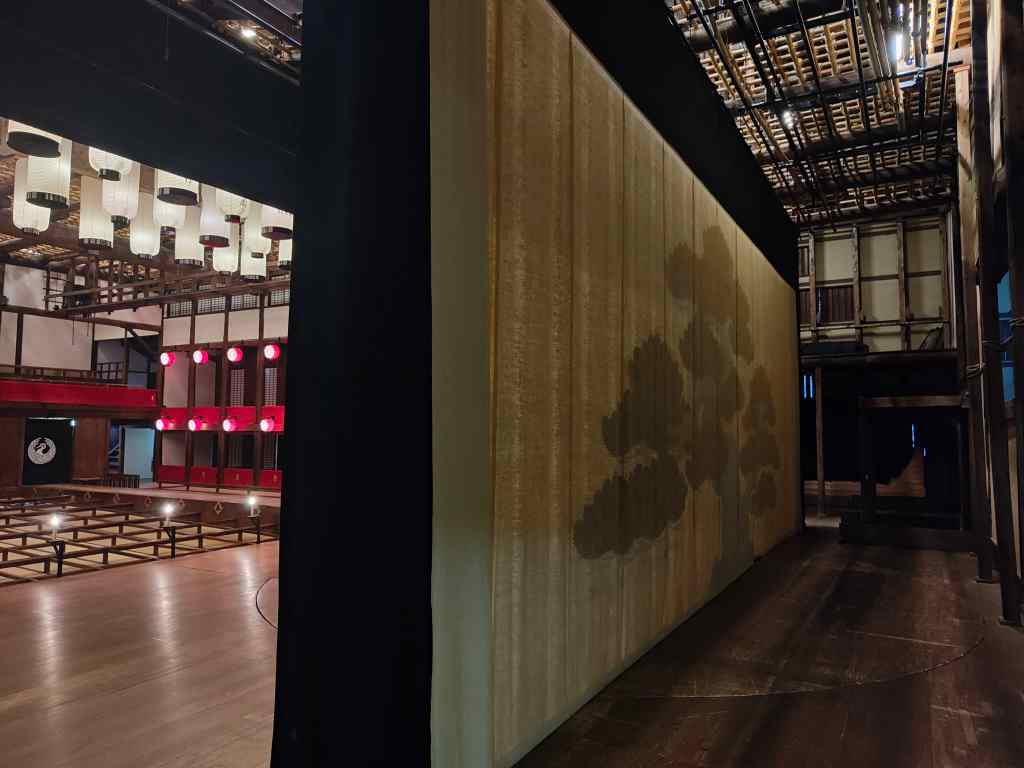
Our hike down was fast, and we arrived at the bottom just in time to visit Kotohira’s kabuki theatre before it closed. It is the oldest surviving one in Japan, and it was very interesting to visit all around – the place where the audience sits, the stage itself, and backstage.
Trouspinet on stage at Kotohira’s kabuki theatre!Front stage and backstage
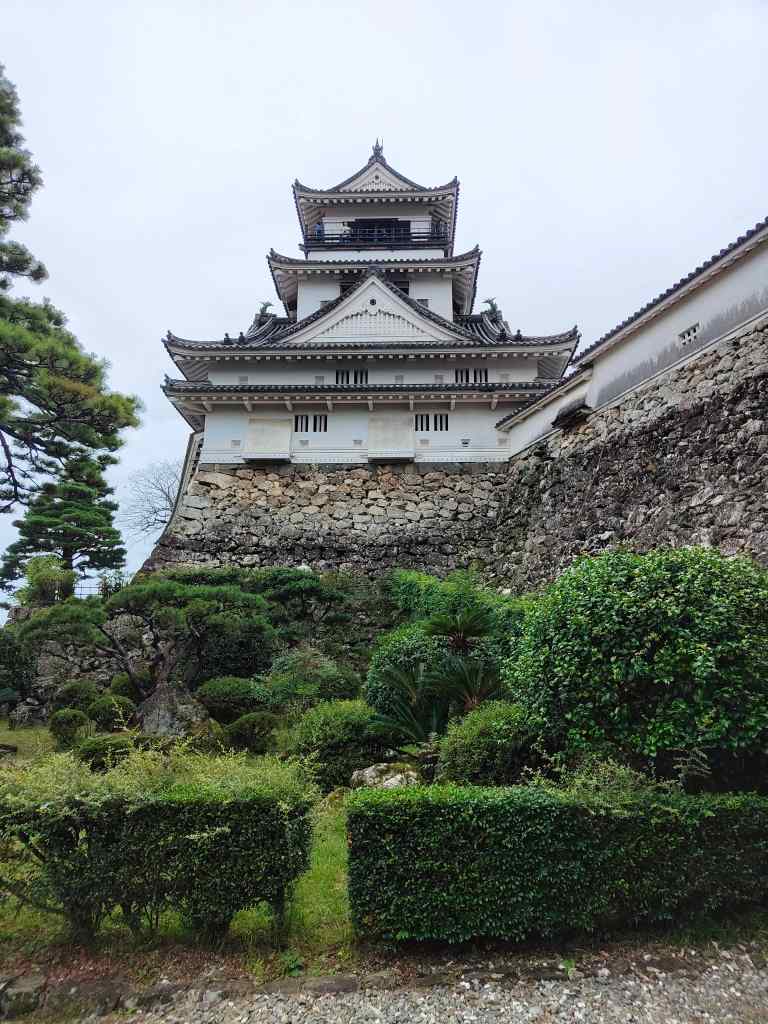
From Kotohira it was another hour by car to reach Takamatsu. As before, finding our Airbnb flat required some time, and we had to message our host to say we were lost. She lived in the flat below and came out to show us the way. It was another very comfortable and large flat – which was just as well, because over the next two days the remnants of a typhoon passed over Japan and it rained hard continuously. There are many things you can visit with Takamatsu as a base, but sadly most of them require good weather. We ventured out once under the rain to see the city’s small castle, before deciding that it would be better to invest our time catching up on email, washing clothes, exercise – and this blog.
Takamatsu’s castle
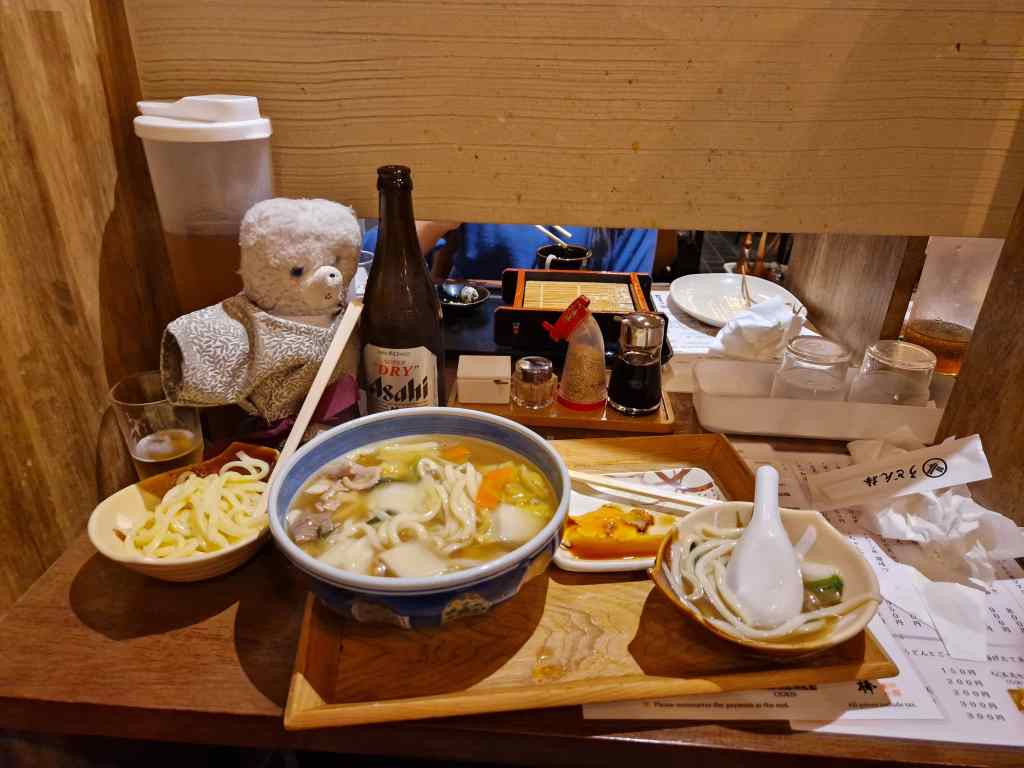
In the evenings at least we had some great indoor entertainment – sampling Takamatsu’s famous Udon noodles. Good food is always the best answer to bad weather!
We woke up and were treated to the typical multiple course ryokan breakfast, which we ate whilst keeping an eye on the weather outside. It had stopped raining, but was still cloudy. However, as we finished our tea, we suddenly saw a patch of blue sky. Perhaps we would be lucky. We set off in our car on a road following the Iya river, climbing up the remote and sparsely-populated valley. We saw very few people in the settlements we passed, but after a few miles we came across a village that at first sight appeared to be teaming with life.
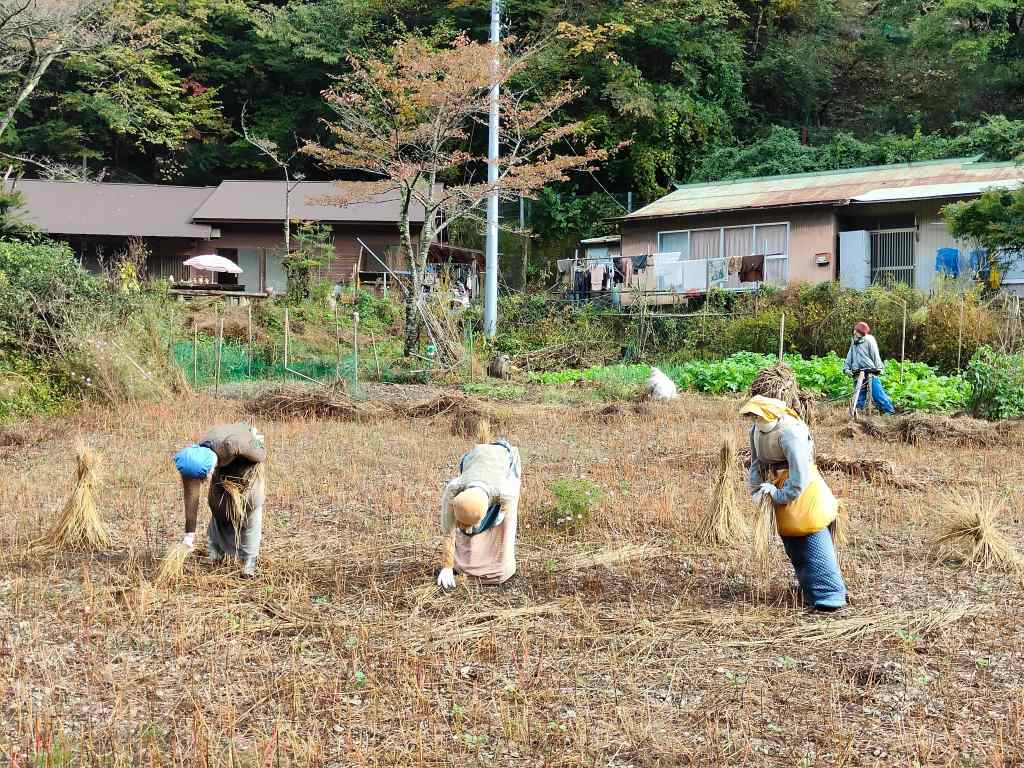
Finally some people!?
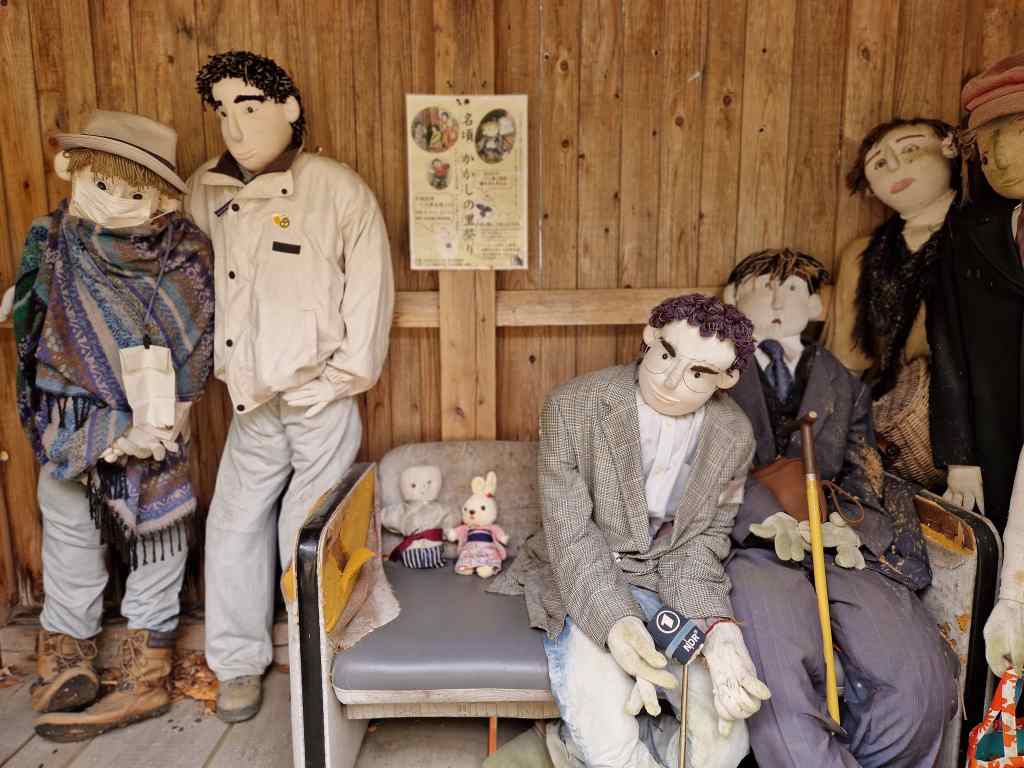
On closer inspection, the “people” were dummies, more usually used scarecrows for scaring away birds. They were everywhere – harvesting in the fields, waiting for a bus, working on the road, even engaging in a tug of war in the sports hall of a disused school.
Meeting the locals at Nagaro
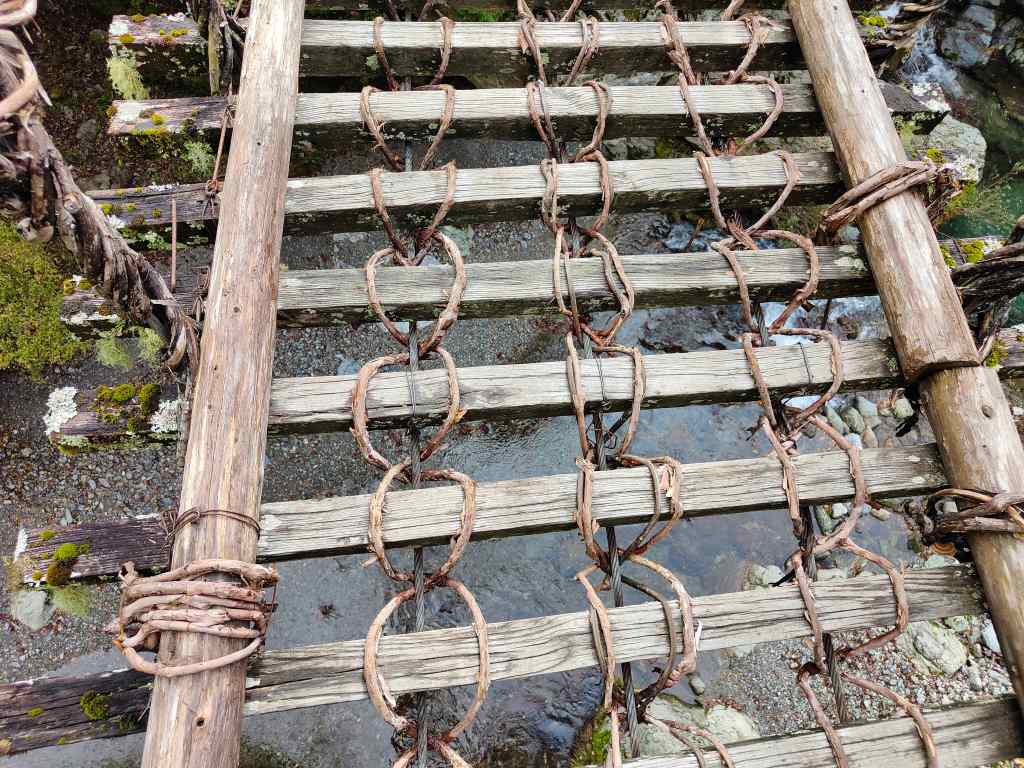
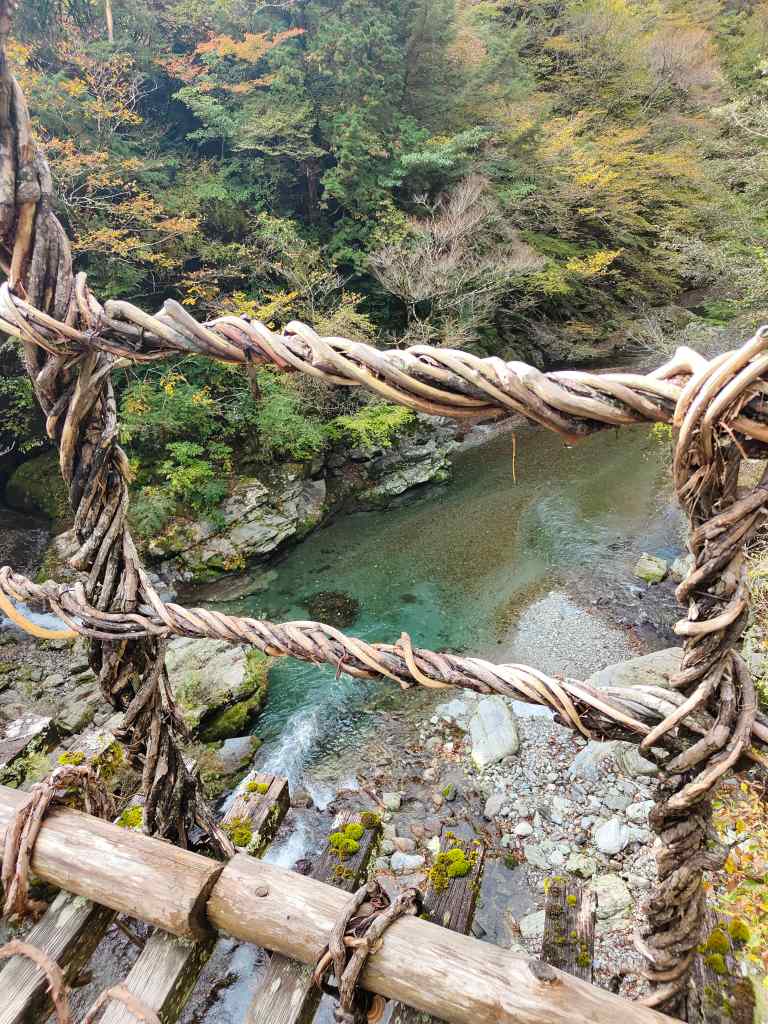
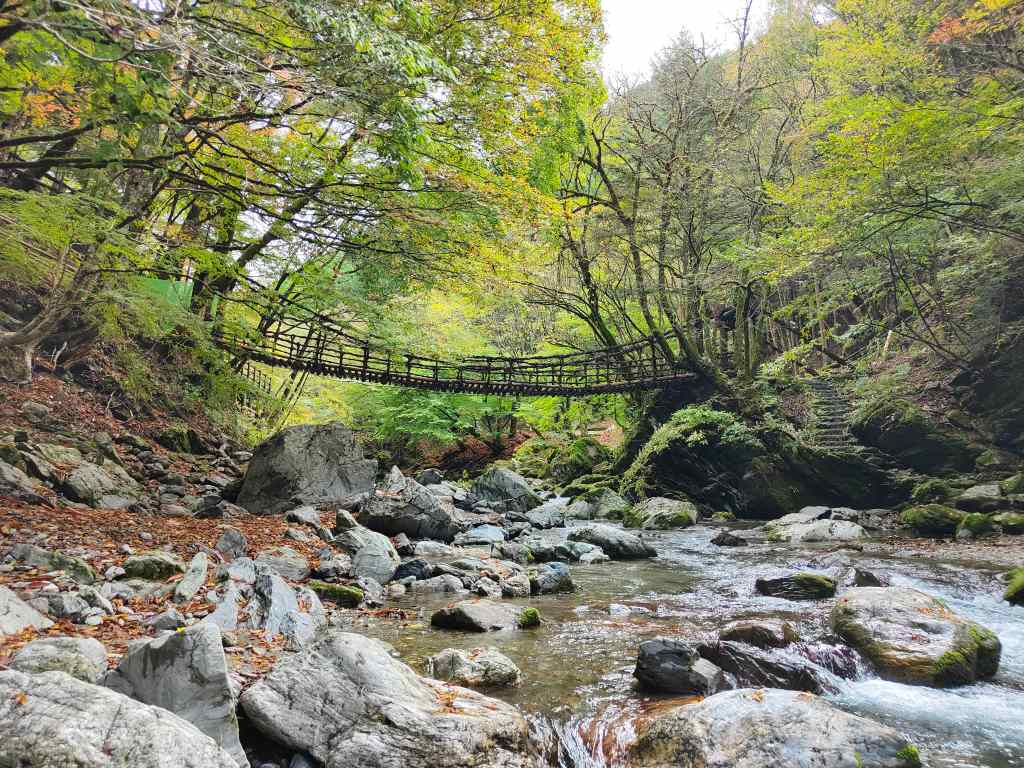
Consulting our guide book we realised we had arrived at Nagaro village. The scarecrow story started when a woman moved to the village to look after her aged father. To occupy herself, she made a scarecrow in his likeness, which was so realistic that fellow villagers would say “good morning” to it as they passed. She made more figures, many using local residents as models, as way of relieving boredom and loneliness – the area is suffering from depopulation as older residents die and younger people move to the cities to find better jobs. Other people followed her example, and now there are around 350 scarecrows in the village, which has become a tourist attraction. When we visited we saw around 100 scarecrows, two human tourists and one dog – but no local people. So although the initiative has put Nagoro on the map, it has not solved their depopulation problem. A few miles down the road there was another, more famous tourist attraction – a pair of “vine bridges”. These structures are made from planks of wood tied together with natural vines and were originally built hundreds of years ago, no one is quite sure by whom or why. There were originally many such bridges over the Iya river, but now only three remain, of which two were here, almost side by side – the larger one is nicknamed the “male” bridge and the smaller one, “female”.
The “male” vine bridgeDon’t look down….…or to the side!
I cautiously stepped across on the male bridge with my little teddy legs, leaving Aki, who does not like heights, behind me to film my progress. The gaps between the planks were quite big, and I think even a human could have slipped between them into the river, clearly visible under my paws far below. Certainly a little teddy could fall through and disappear without trace into the water. I finally made it across and let out a big sigh of relief. I used the “female” bridge to get back, and fortunately this was shorter and lower, and less of an ordeal to cross. With my adrenaline rush over I could relax with Aki to enjoy the wonderful scenery around the area.
The “female” bridge
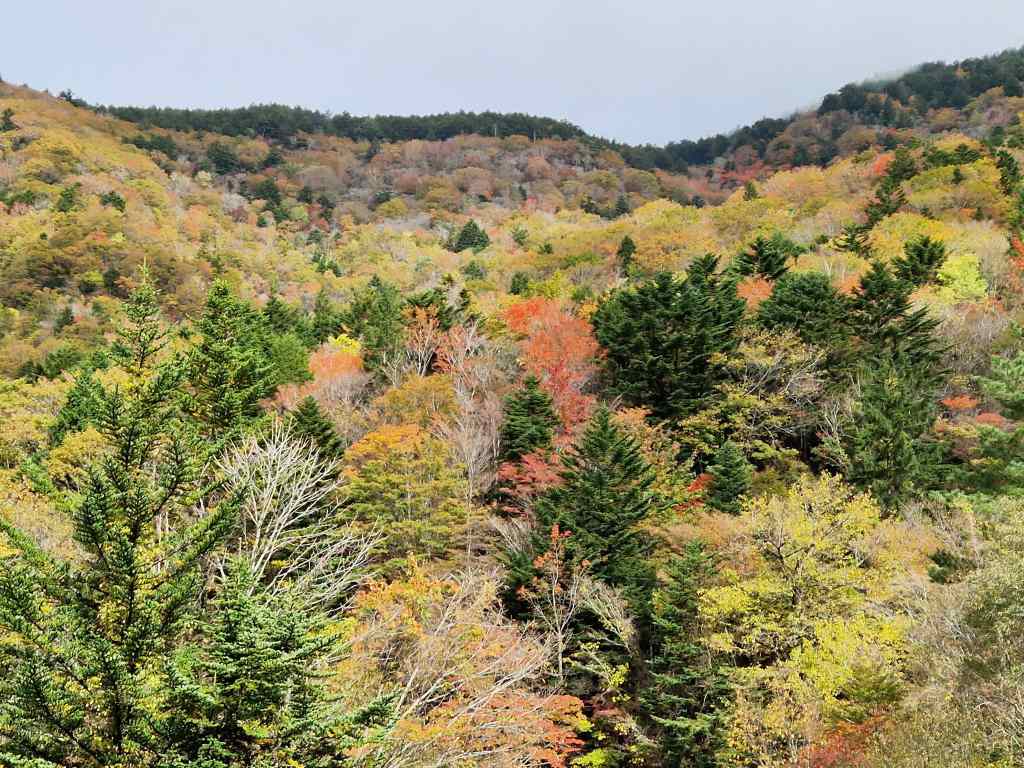
We continued our drive up the valley, steadily gaining altitude. As we rose, the vegetation changed and we found ourselves driving through mixed forests, including many spectacular maple trees, their leaves a bright red. The mountains were a patchwork of greens, yellows and reds, and very beautiful.
Iya valley colours
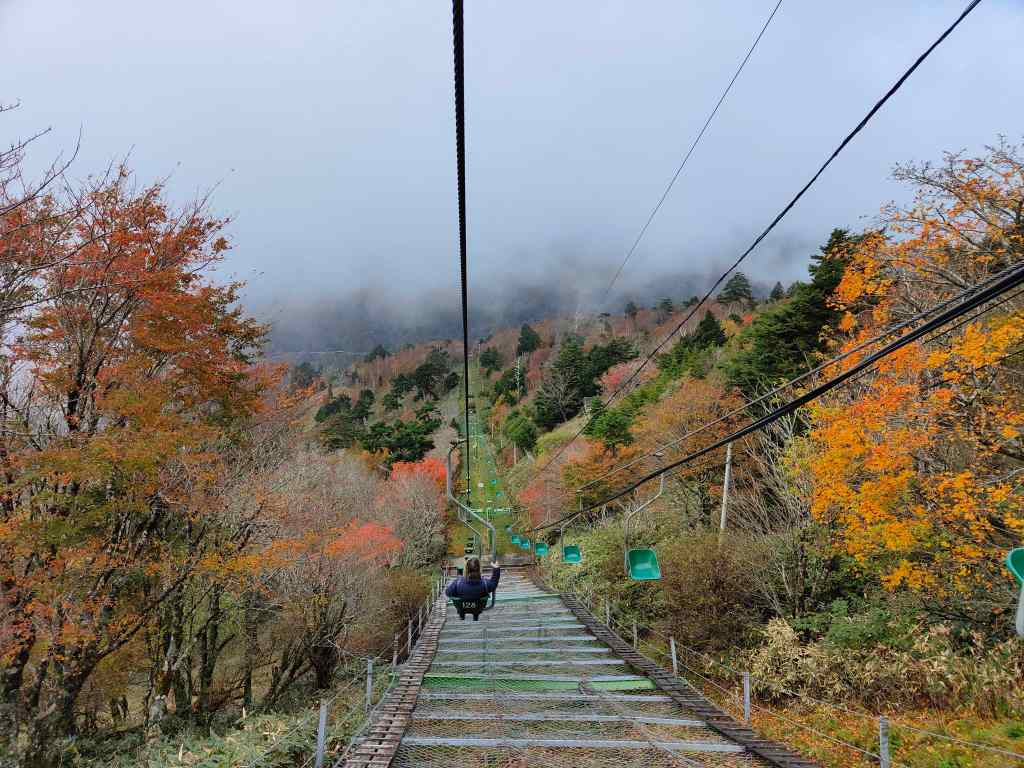
We arrived at the chairlift station taking hikers up to the starting point for trails leading to the various mountains surrounding us. The chairlift ride itself gave wonderful views of the forests’ autumn colours, even if it was a little scary, since the chairs lacked any protective barriers to stop you falling off.
A spectacular but not very safe chair lift
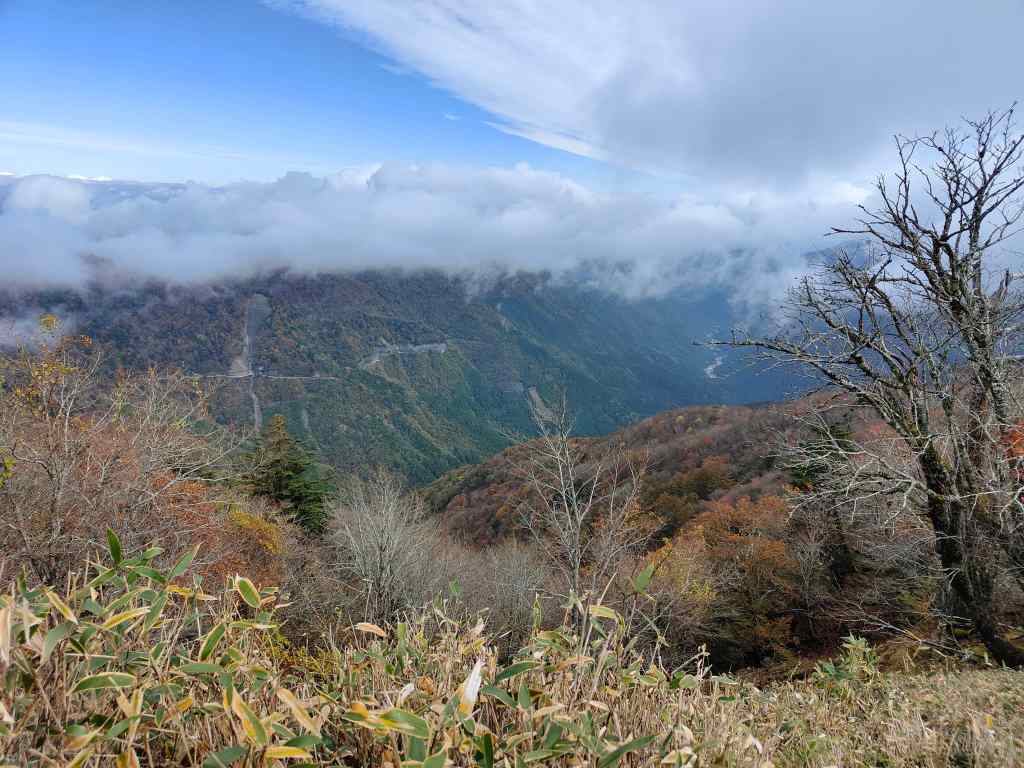
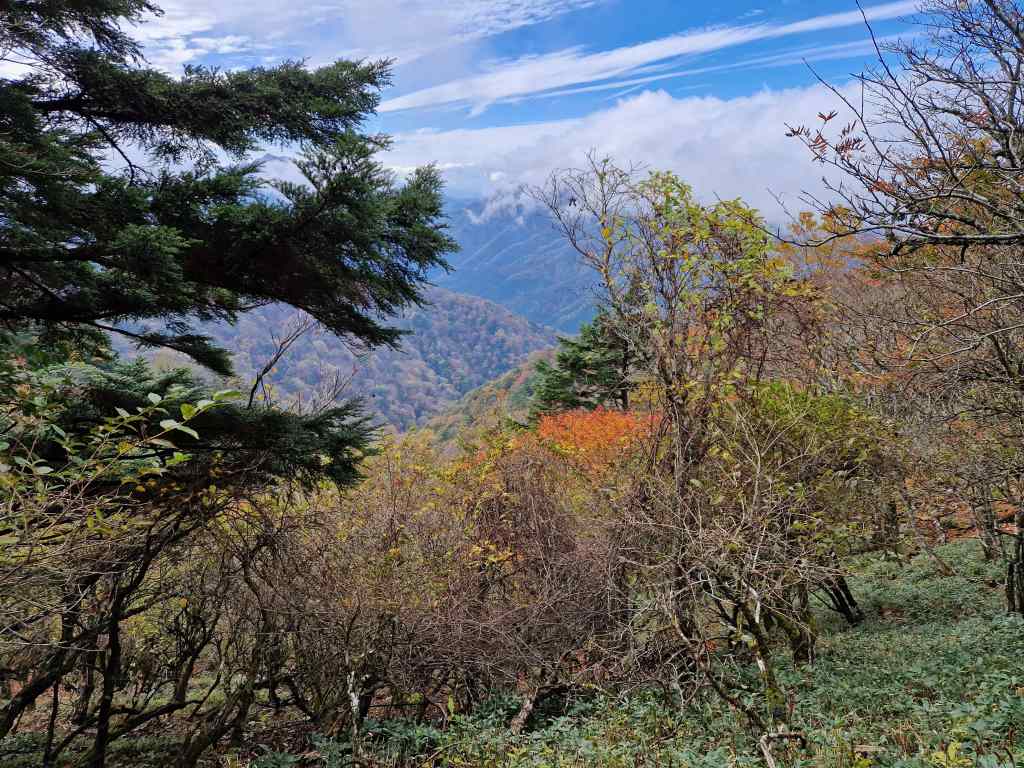
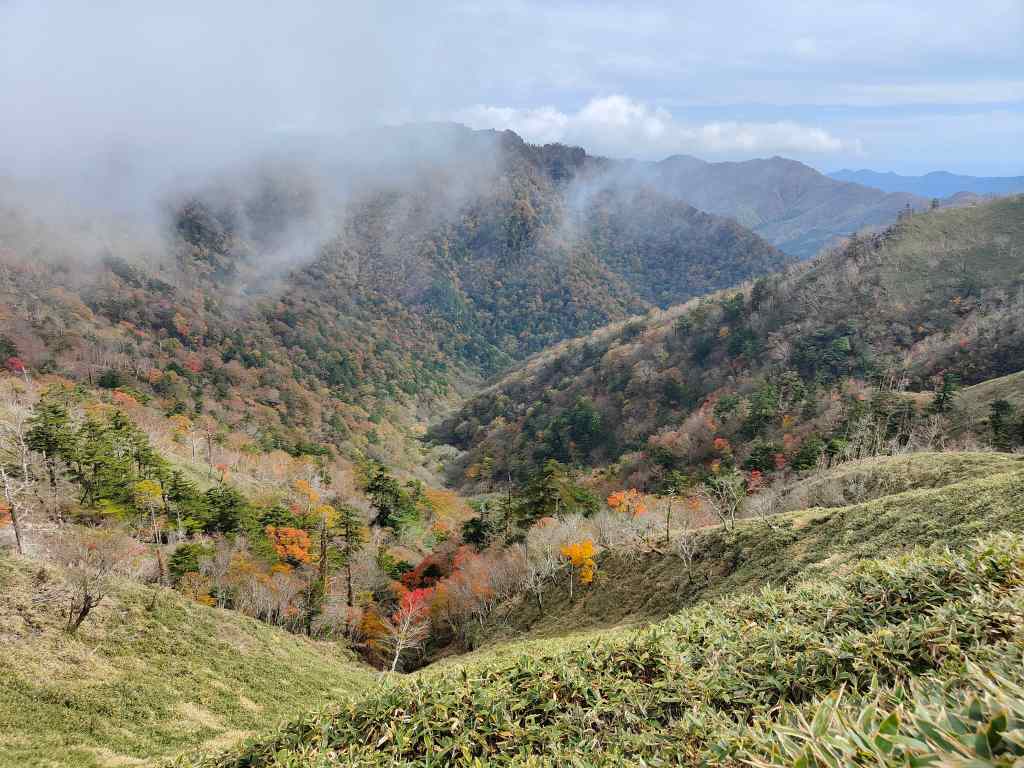
The most popular climb in the area is Mount Tsurugi, the second highest mountain on Shikoku island. But we decided to climb the very slightly smaller Mount Jirogyu, which the Iya Valley tourist information website said offered even better views. We paused continually on the way up to take pictures of the wonderful views in a mix of cloud and bright sunshine.
Views on the way up Mount Jirogyu
But as we neared the end of the climb and with our goal in sight, clouds blew in from the west, obscuring the summit.
Mount Jirogyu summit beckons as clouds rush in
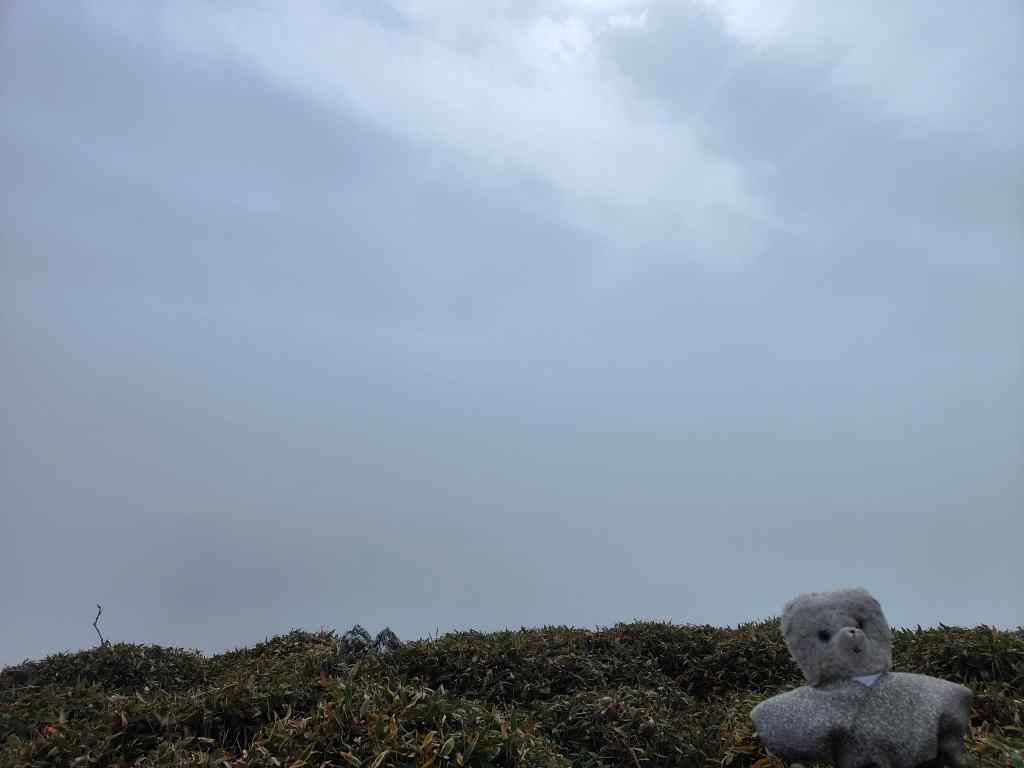
We climbed up all the same, but all that we could see at the top was thick cloud.
Shame! The “view” at the top.
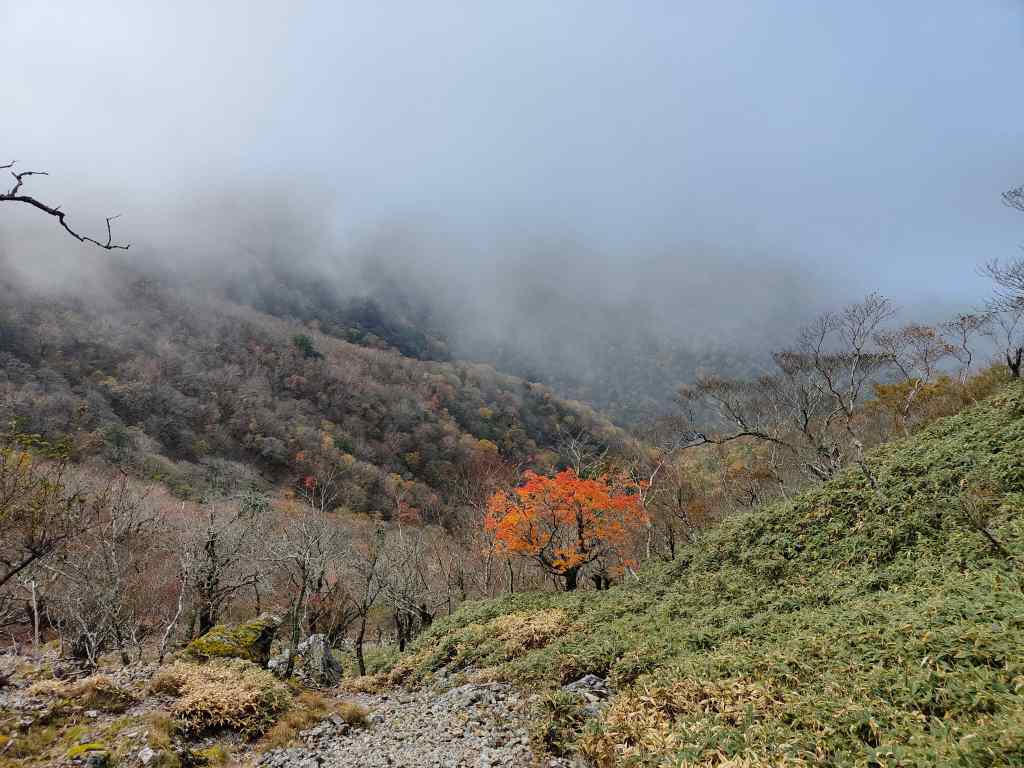
Out of the sun, it was chilly and windy, so we hurried back down. Below the clouds we could once again enjoy the autumn foliage.
Views on the way down
We drove back to our ryokan to have a hot bath to warm up, after our exposure to the cold mountain air and damp clouds. It had been a brilliant day but could have been perfect if only we had started maybe an hour earlier so that we could enjoy the view from the summit of Mount Jirogyu . That will have to be a plan for another trip – we liked the Iya Valley so much that we will try to come back one day.
Today we set off deeper into the island of Shikoku. First stop was a small old town called Uchiko, many of whose buildings date from the Edo period (1603-1868). It was a laid-back sort of place, with a slow pace of life, which we enjoyed as we strolled around. We ended up spending much longer there than planned.
Uchiko’s kabuki theatreCourtyard in Uchiko
After a coffee for the road, we set off through Shikoku mountains and forests to our next destination, the port city of Kochi on Shikoku’s south coast. The road twisted and turned upwards, through dense forests – sometimes of pine, sometimes of bamboo.
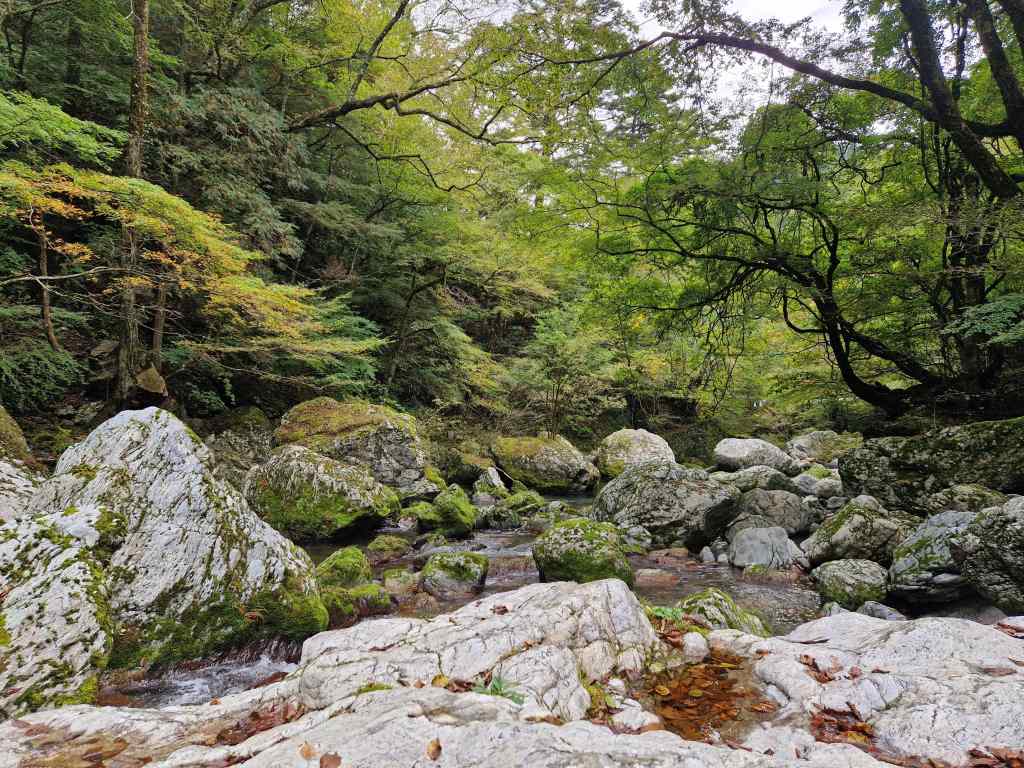
It then followed the path of a pretty gorge, turning into a single lane road, in places barely wider than our small car. Driving was quite tricky, but Aki handled it well, as I navigated.
A pretty river gorge in central Shikoku
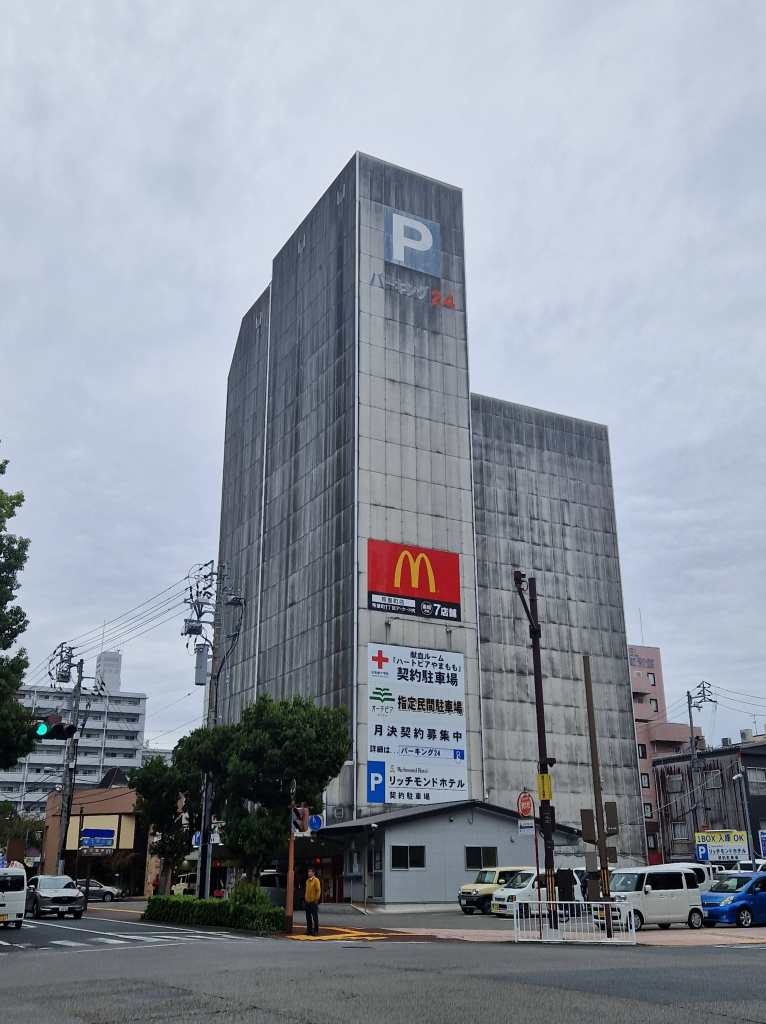
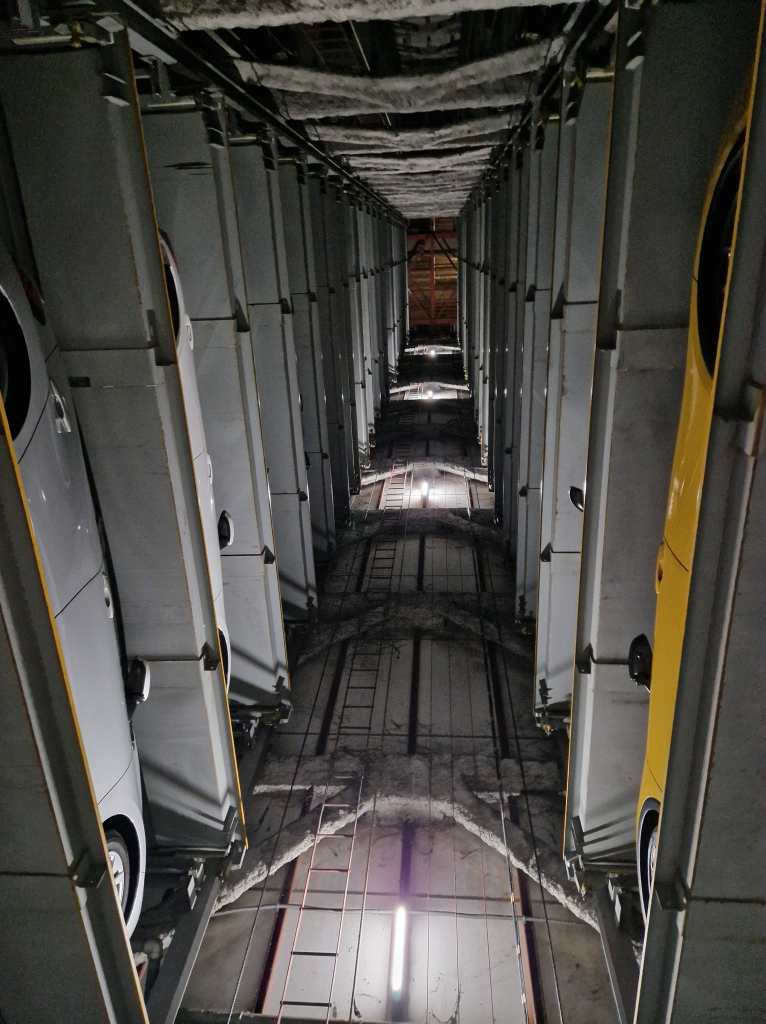
Fortunately, we were the only people on the road and never had to deal with a car coming the other way. We had chosen a very pretty, but also very slow route for which Google had calculated a hopelessly optimistic travel time. As a result, we arrived in Kochi after night had fallen. We parked our car in the tower recommended by the hotel. Being Japanese, Aki has seen these before but for me it was a complete surprise; She drove into one of the tower’s four entry bays, parked the car on a sort of platform at ground level, and we got out. I was wondering what would happen next and how this could possibly be a car park, when the platform rotated 90 degrees and rose up into the air, disappearing up the shaft of the building. It was a fully automated system where a computer places your car into one of the available spaces deep inside the block somewhere. The attendant told us the tower could hold 200 vehicles. He gave us a ticket and impressed on us the importance of not losing it!
A new experience – a parking tower!
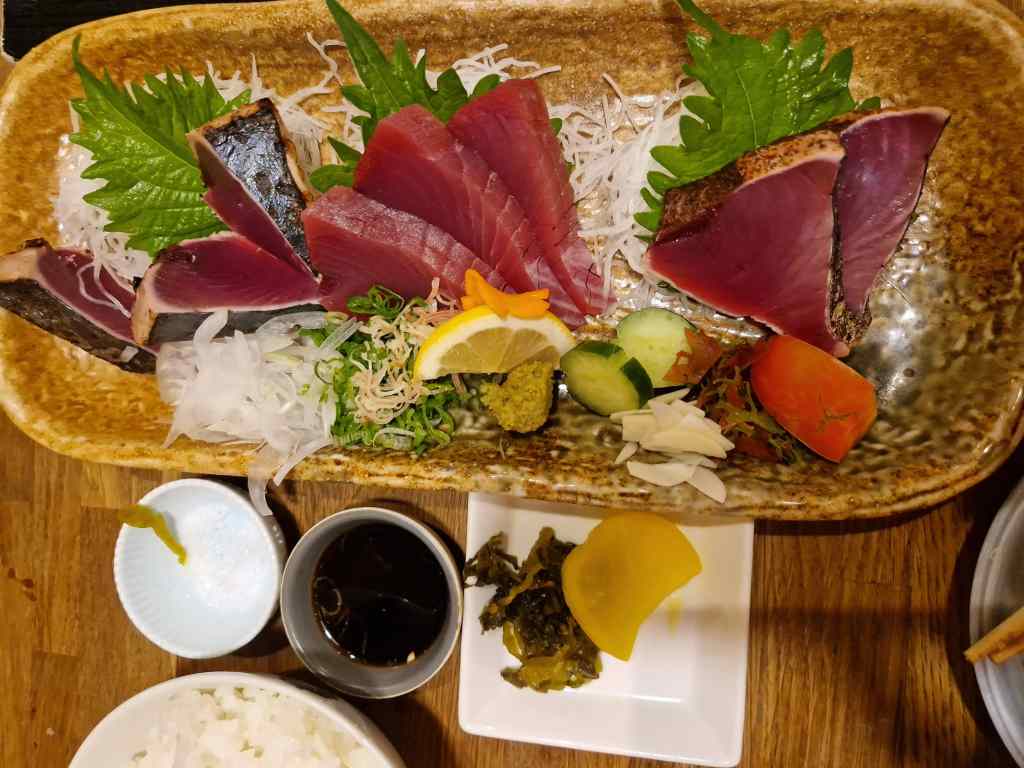
We checked into our hotel – it was one of only two modern-style hotel rooms we had booked for the whole trip, and seemed to be used mostly by business travellers. Our room was small, but comfortable enough. After unpacking we set off straight for dinner. Like any port city in Japan, Kochi is known for its seafood and its speciality is seared raw tuna. We ordered some and got a huge plate for a price that back home would have got you one small tuna steak in a supermarket.
All this (plus one piece we already ate) for 12€ in a Kochi restaurant!
The next day we explored more of Koch. First stop, as always, was the castle, which I liked, even though it looked very similar to the others we had seen in Japan. The view from the top was particularly impressive, looking north, I could count no fewer than eight successive mountain ranges, one behind the other.
Kochi castleOne of the views of Shikoku from the top of Kochi castle
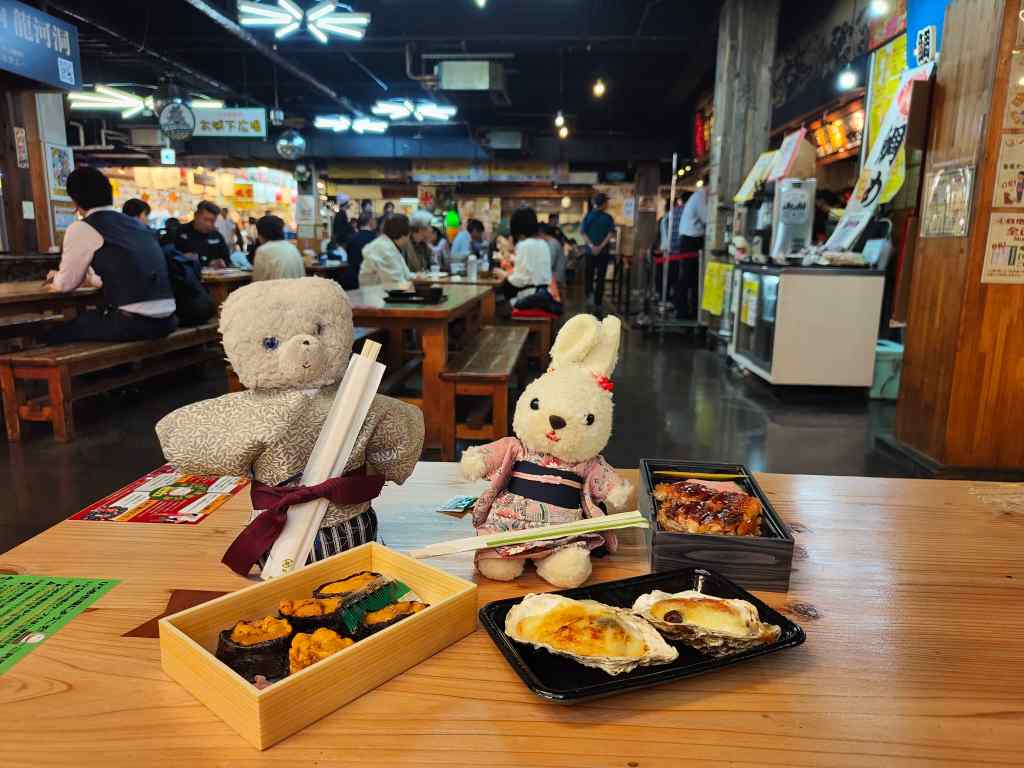
Back in Kochi town we stopped for brunch in the market, treating ourselves to fish, oysters and sea urchin – the latter being one of the few expensive forms of seafood here.
Brunch in Kochi market
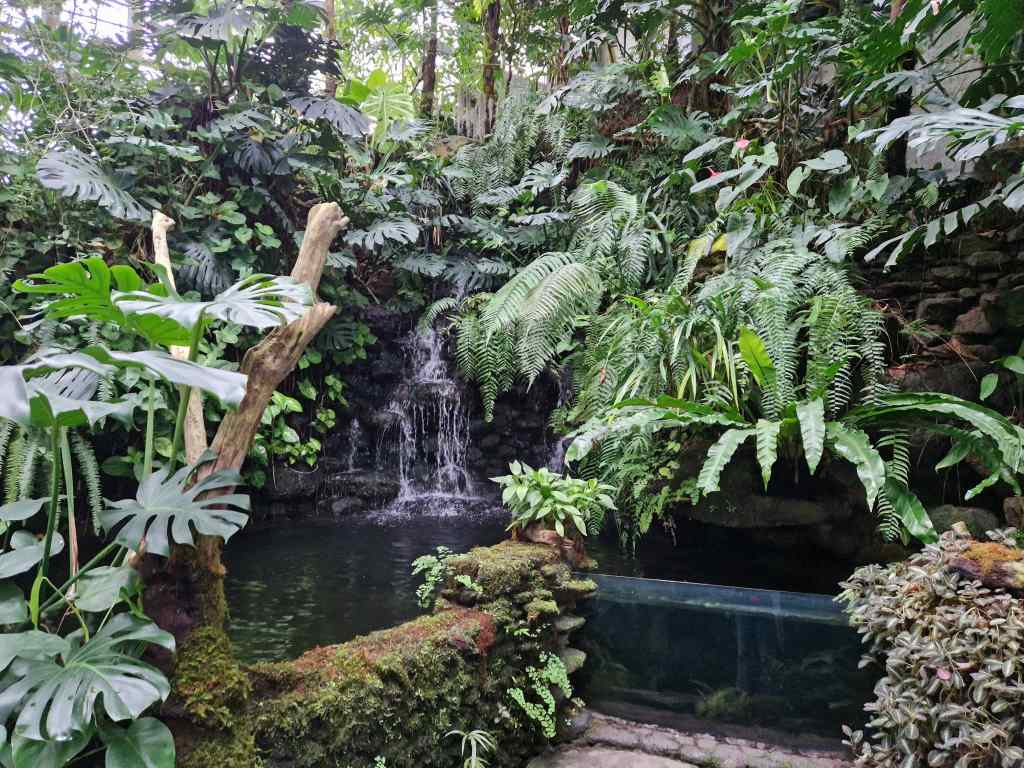
We checked out from our hotel and recovered our car, which appeared from the depths of the tower as if by magic – this time facing forward, towards the road, ready to be driven off. Our next destination was the Iya Valley, deep in the Shikoku mountains, but on the way we visited two attractions on the outskirts of Kochi. The first was the Makino Botanical Garden, named after a famous Japanese botanist. It seemed to be a spring and summer garden, with no flowers in autumn.
In the hothouse of the Makino Garden
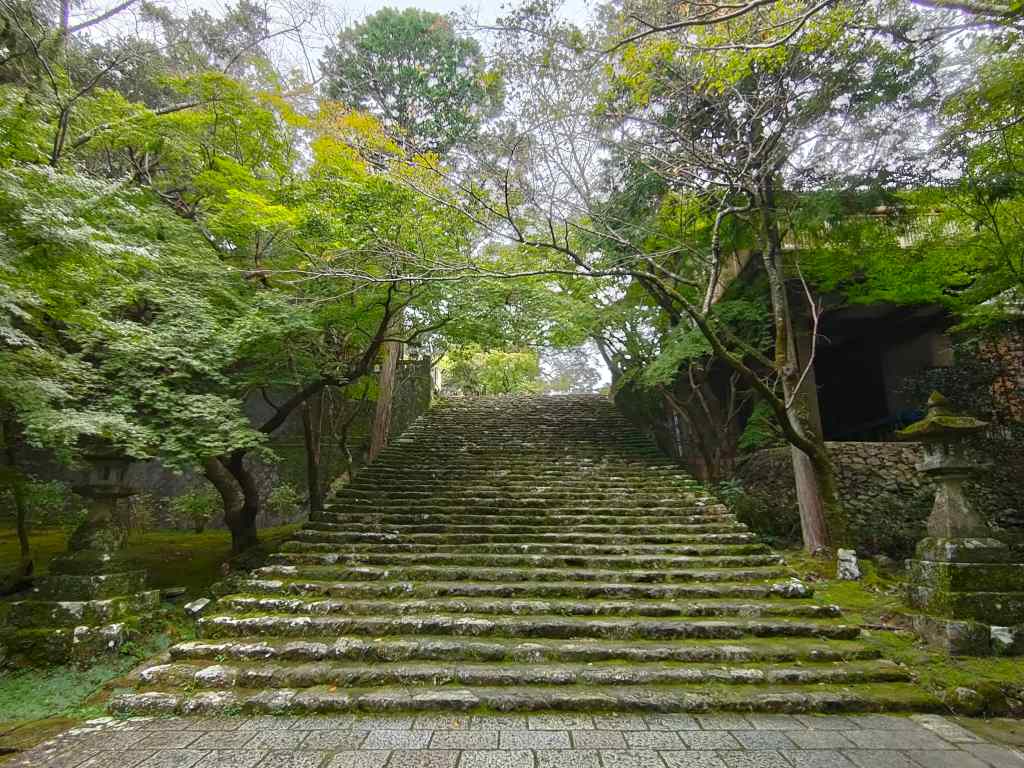
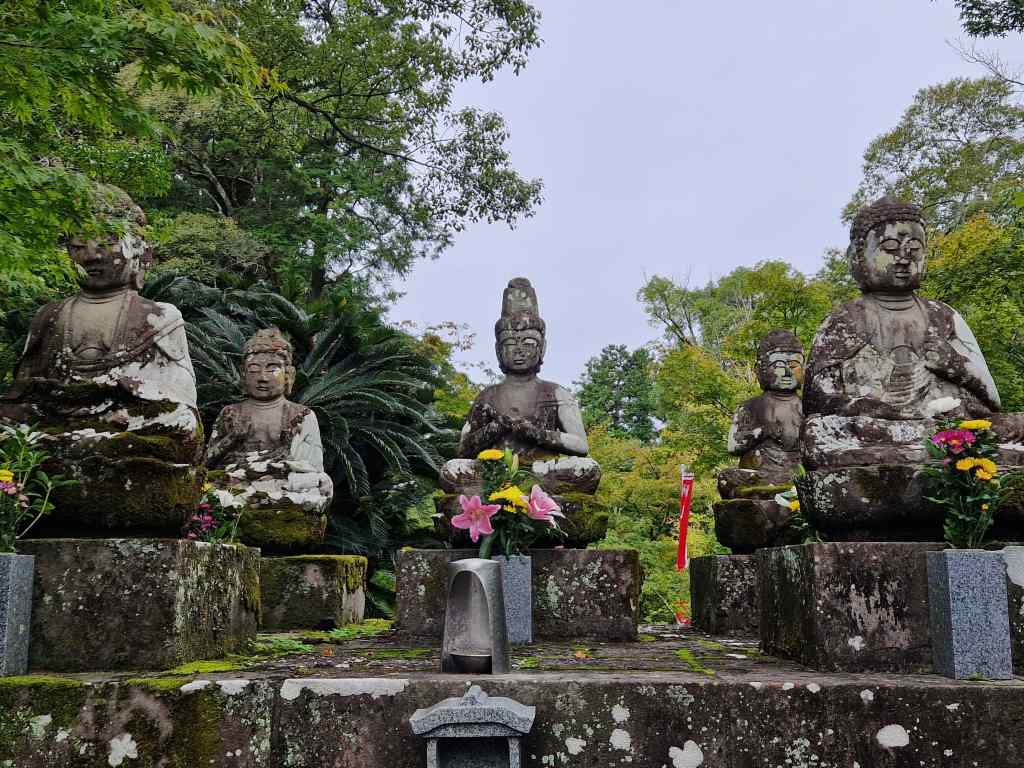
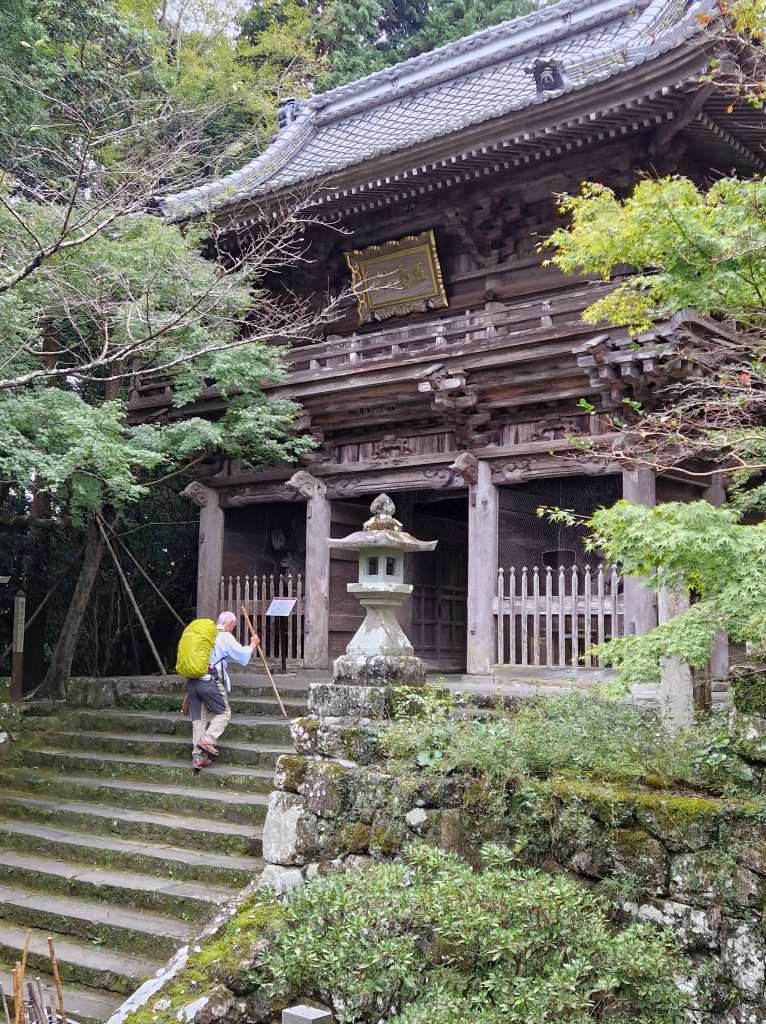
The Chikurinji temple next door made up for the slight disappointment of the gardens. It grounds radiated harmony and peace, and would have been a good place to sit and meditate, if we had had time. Shikoku is home to a famous circular pilgrimage that includes 88 temples dotted around the island and is 1,200 km long. Chikurinji is temple number 31 on this route, and we saw some pilgrims, dressed in white, praying at the shrine.
The atmospheric entrance to Chikurinji templeInside the temple groundsA pilgrim enters the main gate
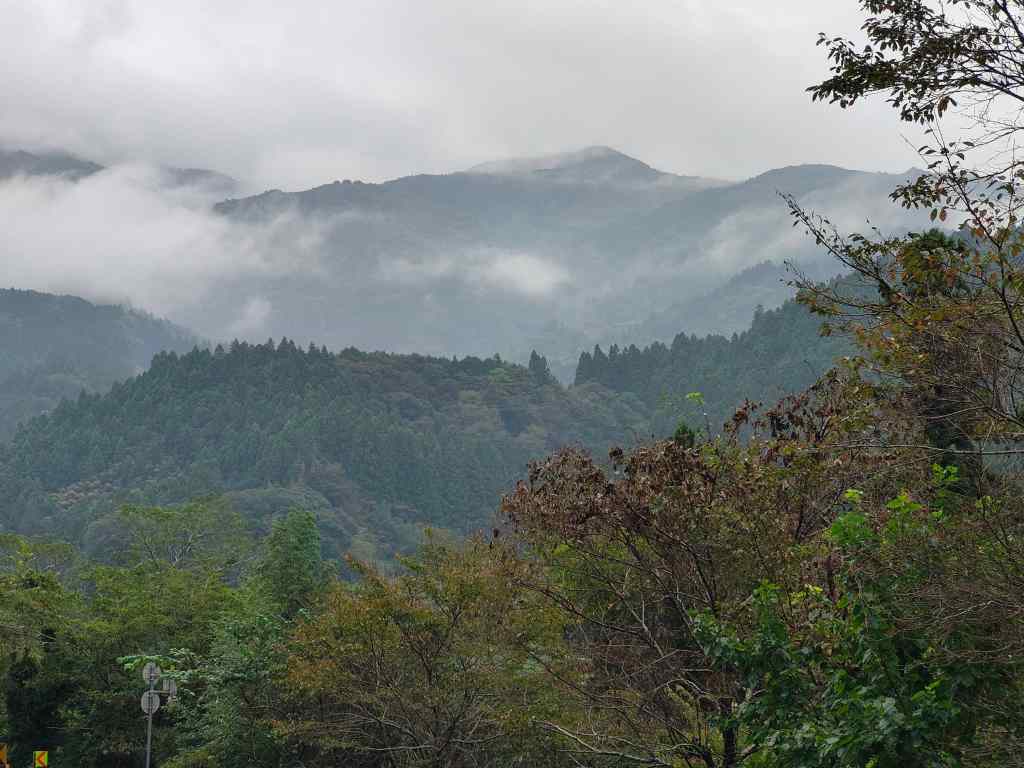
It was now time to head on into the mountains. The scenery became rugged and would have been very impressive, had it not been raining. We arrived at our destination – a basic ryokan – in the late afternoon and spent the time before dinner catching up on admin. This included anxiously checking tomorrow’s weather forecast……there would not be much to do on a rainy around here. Fingers crossed for tomorrow…..
Typical Shikoku mountain scenery on the way to the Iya valley







 Trouspinet travels