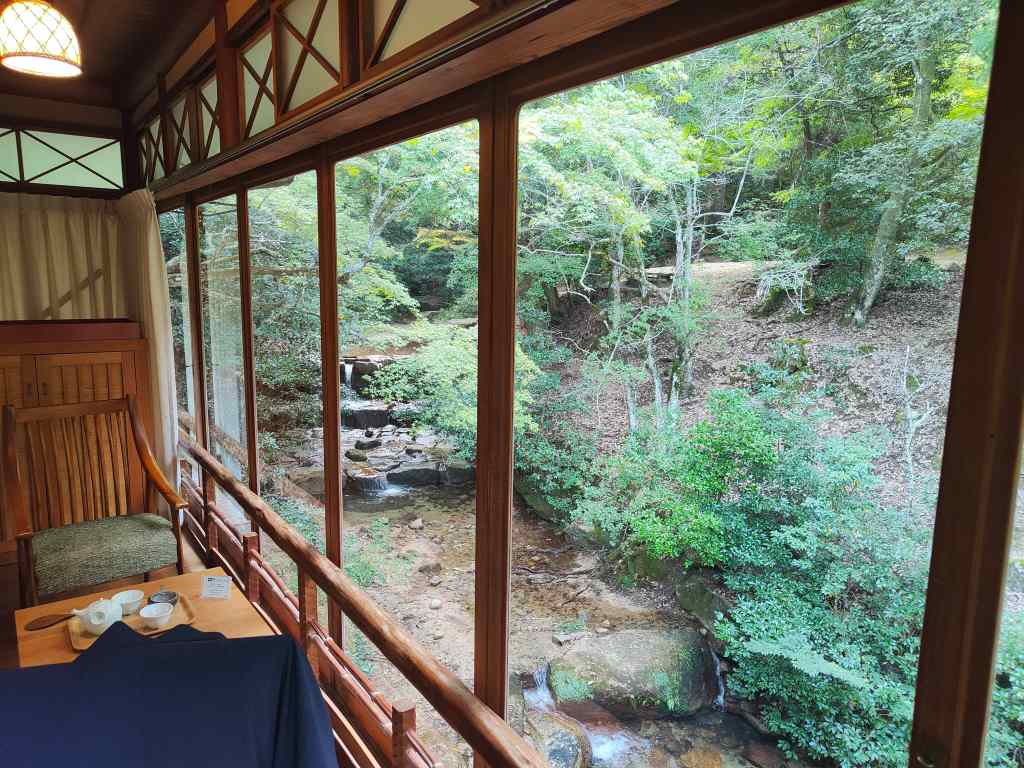
From Hiroshima we took a short ferry ride to the small island of Miyajima. On arrival, the area near the ferry terminal was quite touristy, with restaurants, cafés, souvenir shops, lots of visitors – and many deer, who roam around freely. The more domesticated ones hang around the town, trying to beg or steal food from the tourists (no unattended snack is safe from them); the wilder ones roam through the forests of the island. I had splurged on a treat for our accommodation – a night in Iwaso, one of Japan’s top ryokans (traditional inns). We found the place easily, but at reception they very apologetically told us that they were overbooked……..and would regretfully have to upgrade up to a private cottage. It was probably the best room in the whole place, located right at the end of property, next to a small stream. We lost no time in settling in and enjoyed the view and pleasant sound of water cascading over rocks.
It was now late afternoon and we set off to explore, first following the sound of traditional Japanese music drifting through the forest. We came across a performance of traditional Japanese dance, representing two priests overcoming two demons.
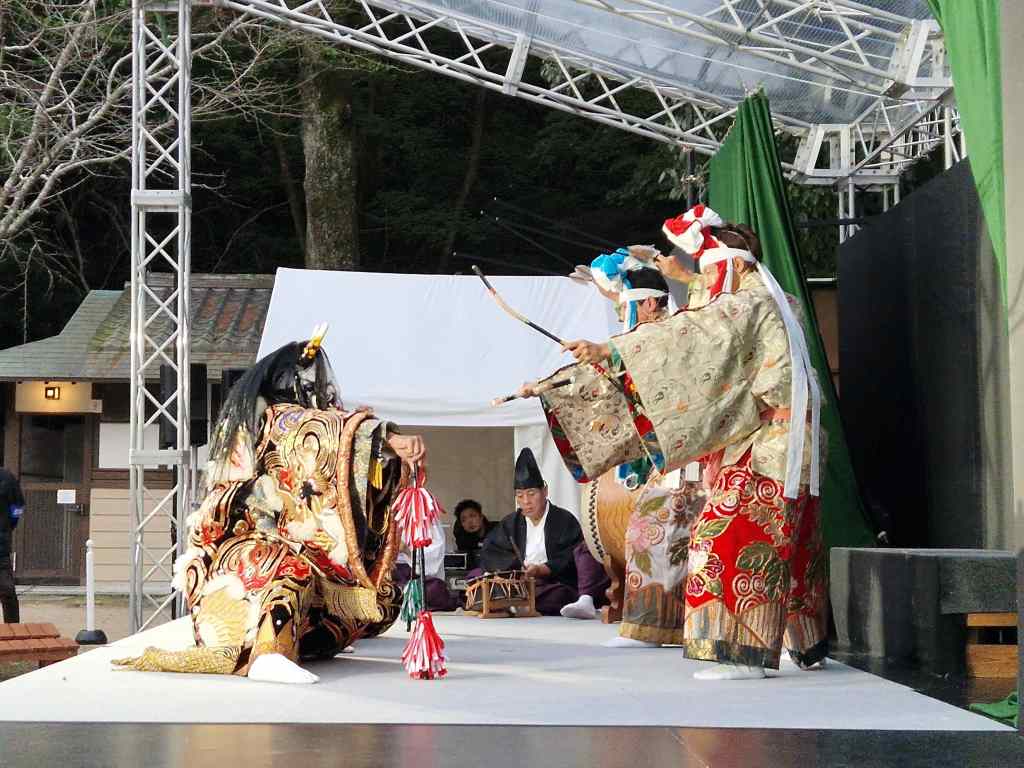
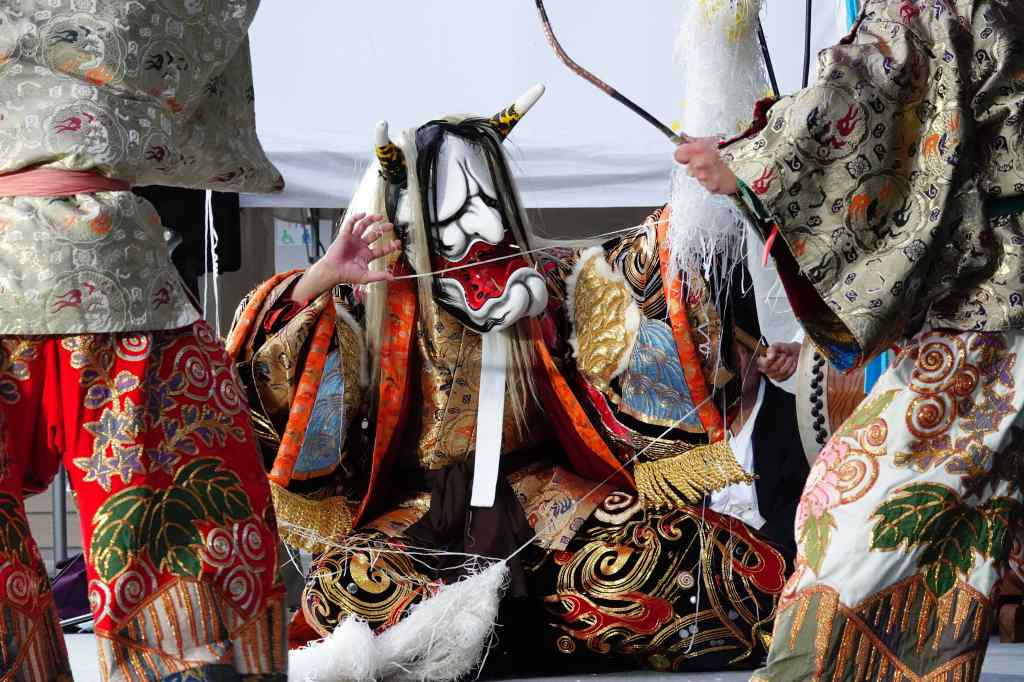
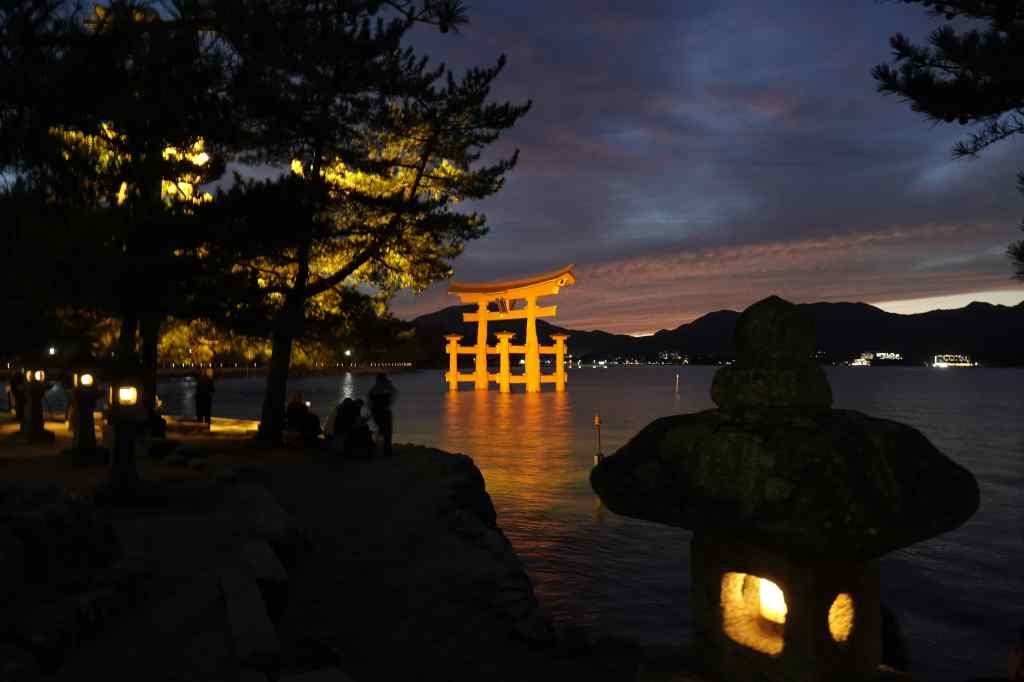
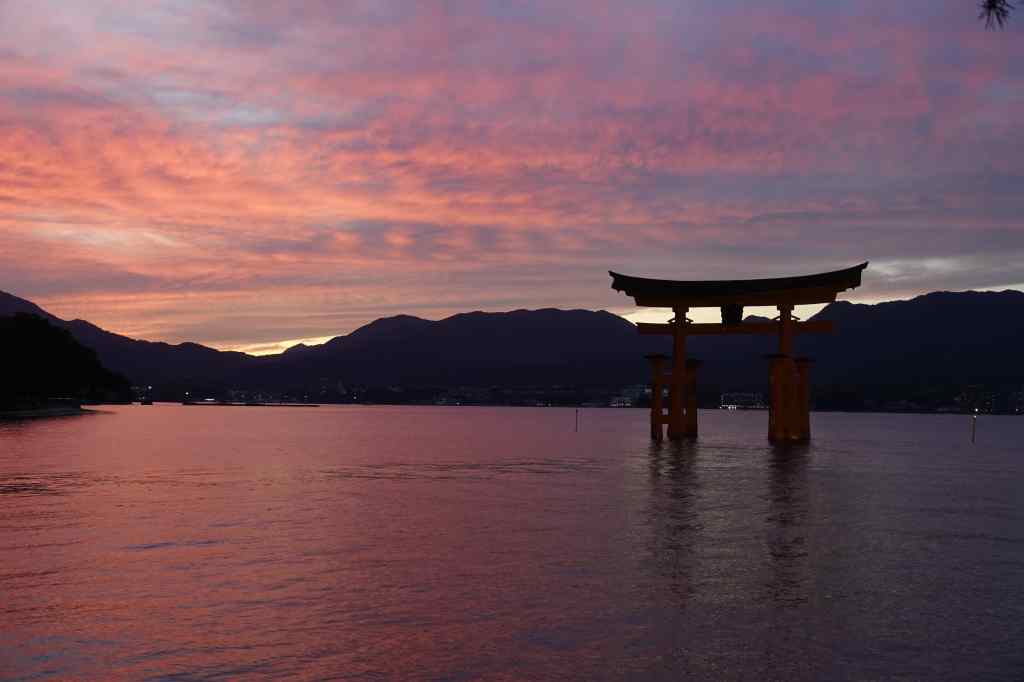
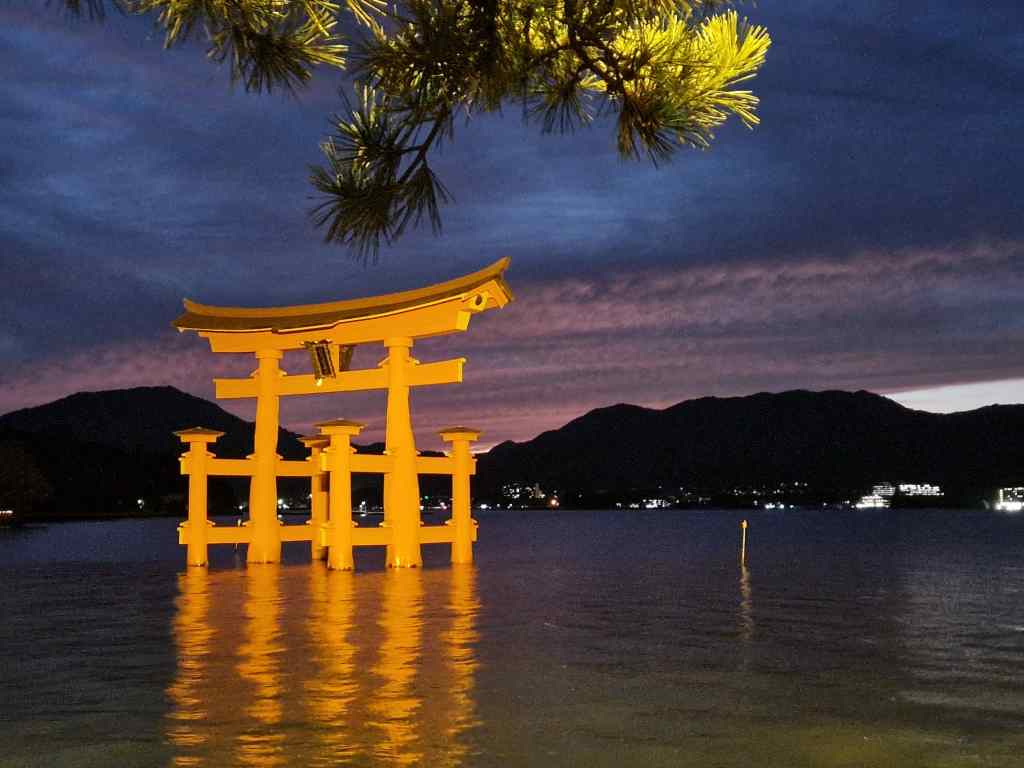
It was a wonderfully colourful spectacle, but it seems there not so many ways that demons can be vanquished, and after half an hour it got a bit repetitive. Since it was nearly time for sunset, we left the dancers and hurried to see the famous torii, the gate to the Itsukushima shrine, which at high tide appears to be floating on the sea. Despite the crowd of other tourists, we found a free bench on the seashore to watch as the sky turned from blue to orange to red to purple. As it grew dark, lights came long to illuminate the torii, which shone a bright red in the night. I had to discipline myself to stop taking photos and instead sit back and simply enjoy the beauty.

After that, it was time for dinner at the ryokan. The hotel had provided traditional Japanese clothing – a yukata (a casual form of a kimono) and a haori jacket to wear on top. They were very comfortable and when we arrived at the restaurant, we were glad to see most guests had opted to wear them. Dinner itself was a feast with many courses, which we chose to accompany with sake. Returning to our room, we found that the staff had prepared it for bed time by setting up two futon beds in the middle of the room.
Well fed and watered, we settled down on our comfortable beds and listened to the sounds of the stream outside until we fell fast asleep. We awoke for another sumptuous meal – breakfast this time. There were so many small bowls of food set out on our tray that the hotel provided a sort of map to tell us which was which.
Suitably nourished, we returned to enjoy our cottage for the remaining time left to us before check-out. We left Iwaso with a heavy heart, depositing our bags at reception and setting off to explore the island. First we returned to the Itsukushima shrine. It was now low tide, and the famous torii could be approached across the wet sand of the beach.
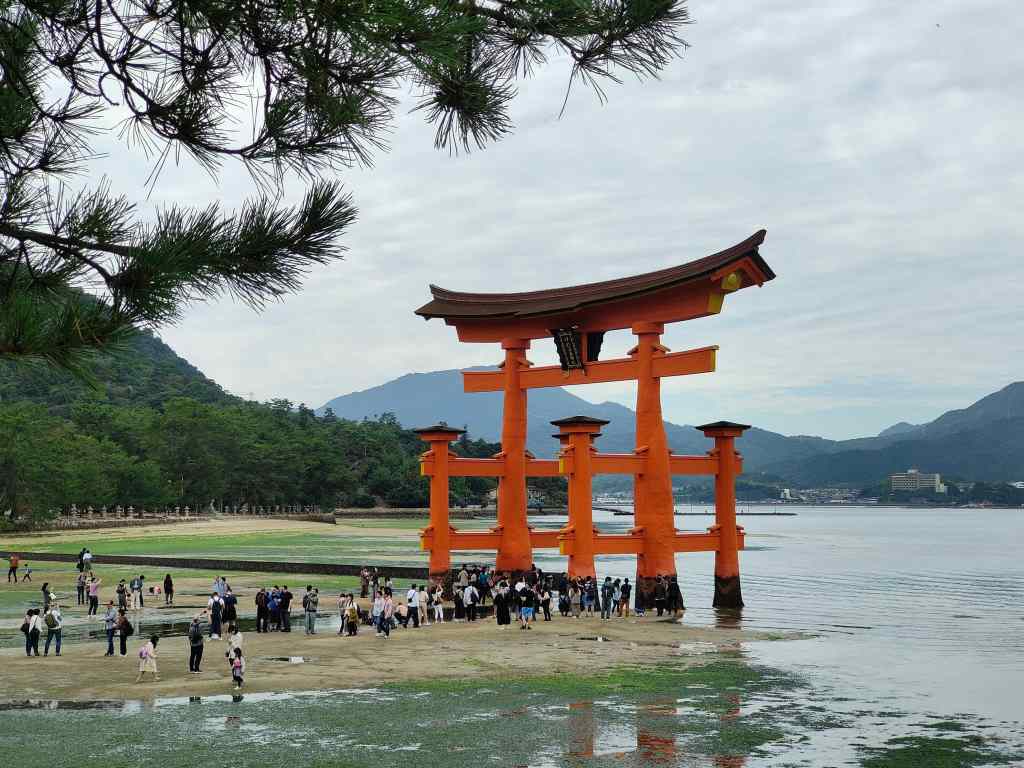

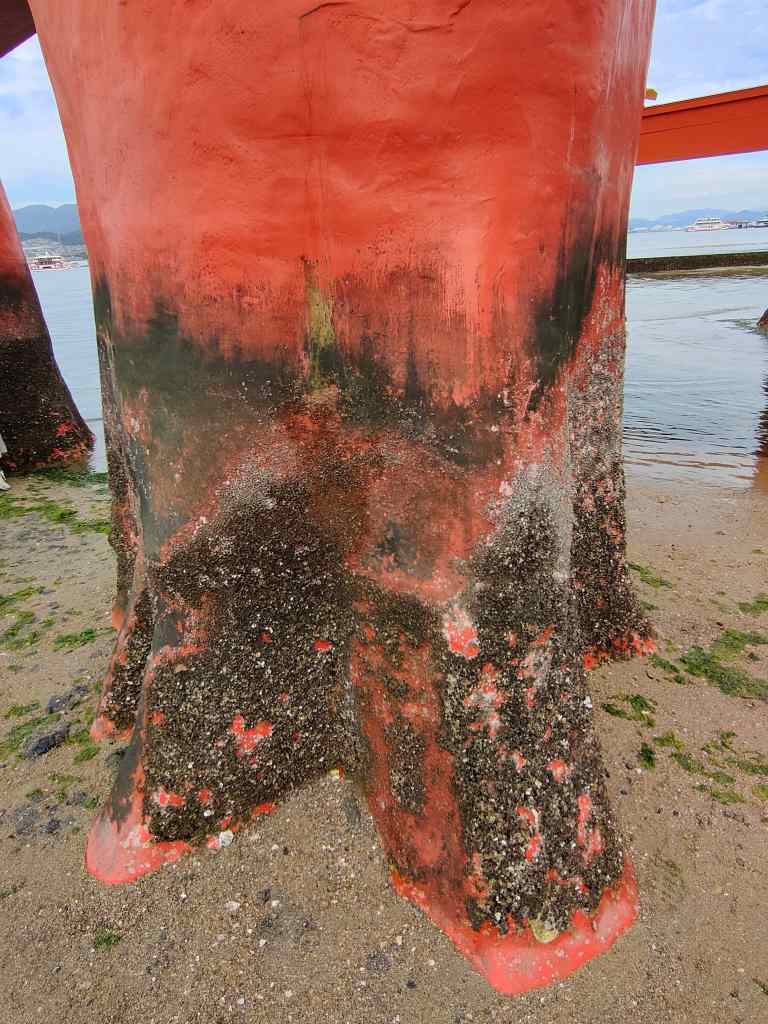
Legends say that the first torii on this site was built in 593, when the shrine was established. Over the years the torii has been replaced many times, and it probably took its current form in the 16th century. The torii we see today dates from 1875.
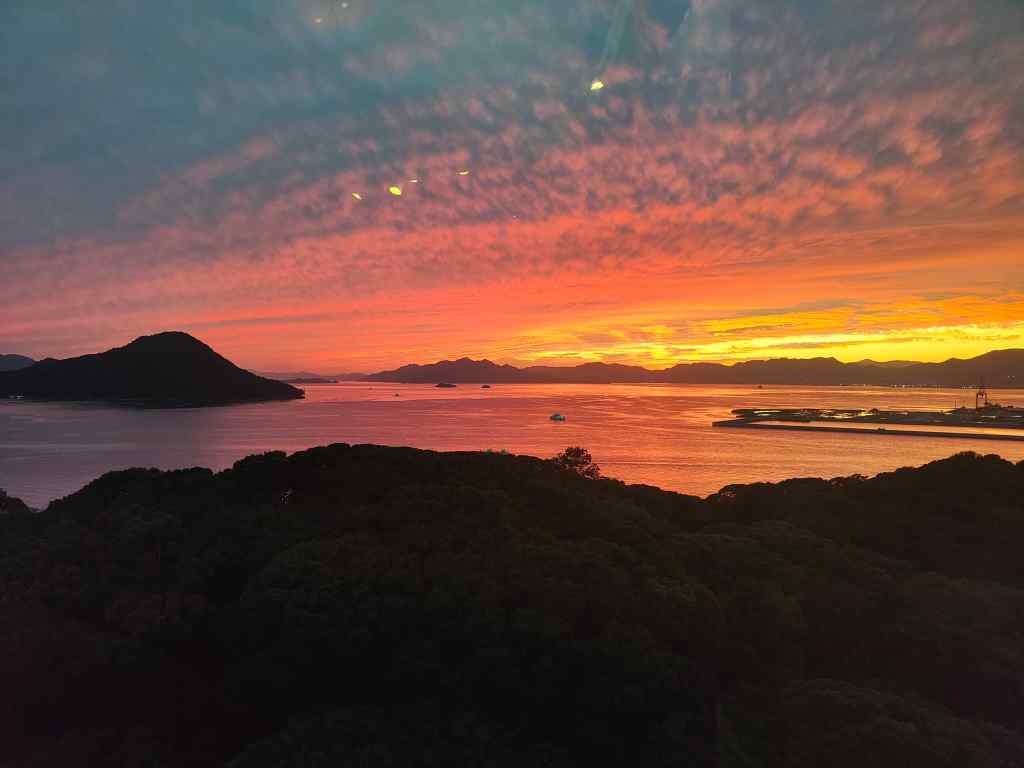
We dragged ourselves away from the beautiful, harmonious structure of the torii to take the cable car up to near the top of Mount Misan, Miyajima’s main mountain. We then walked the short remaining distance to the summit for some great 360 degree views over the Inland Sea, forward to Shikoku and back towards Hiroshima.
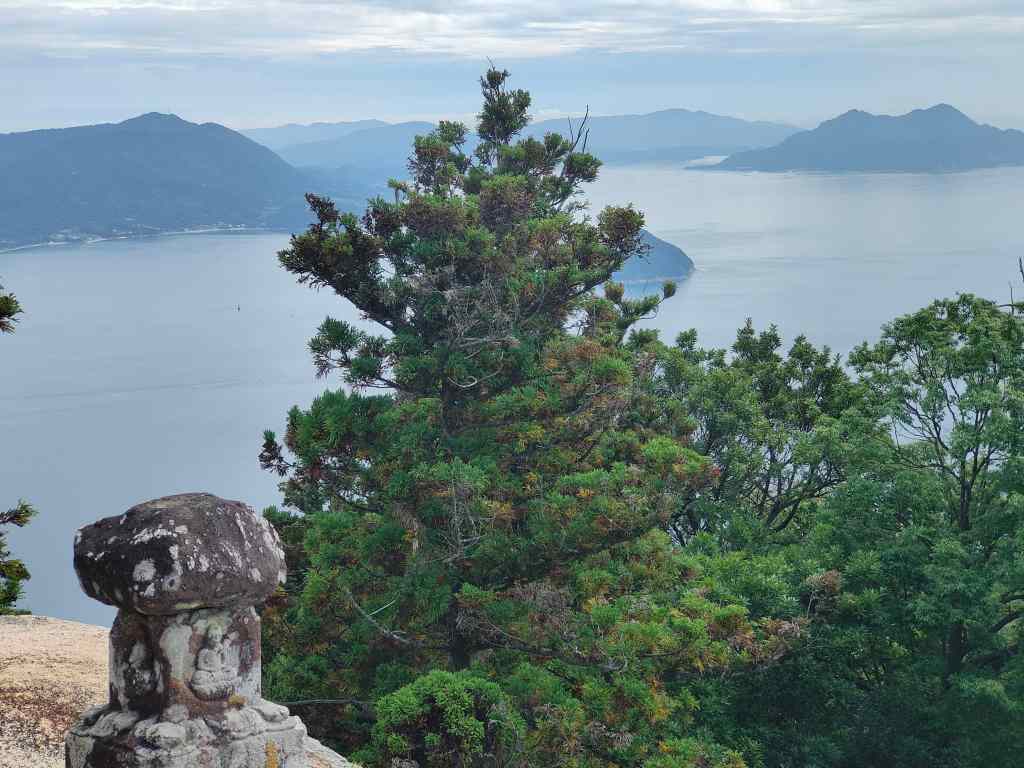
We decided to walk down rather than take the cable car again, which turned out to be a lucky decision.
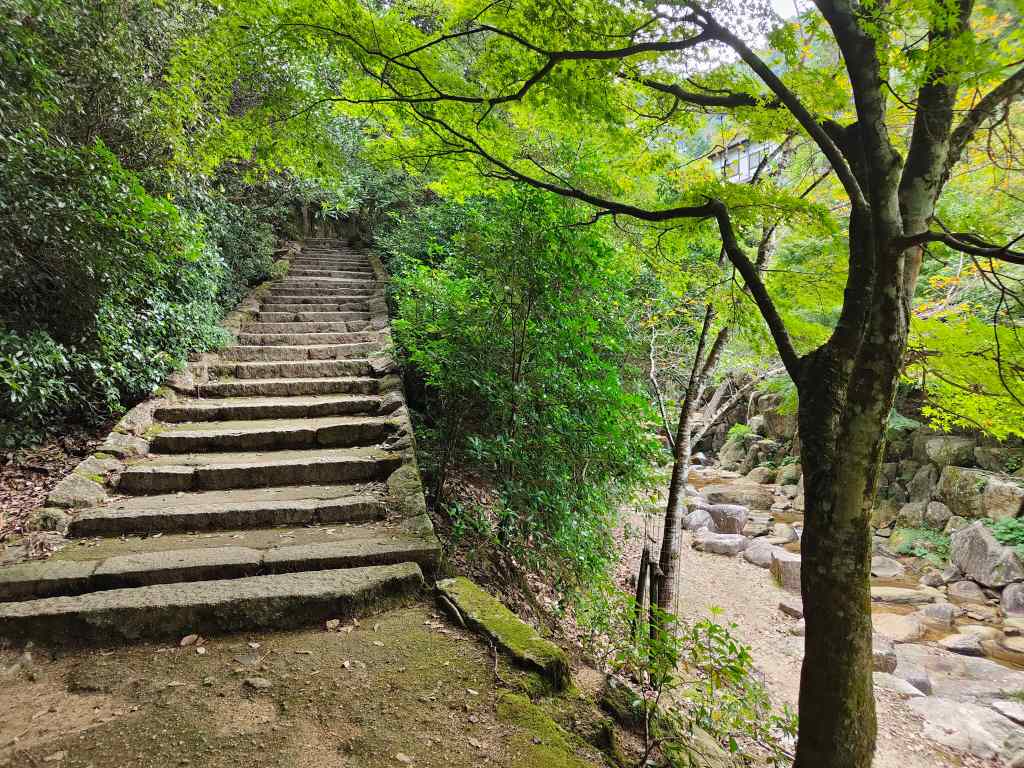
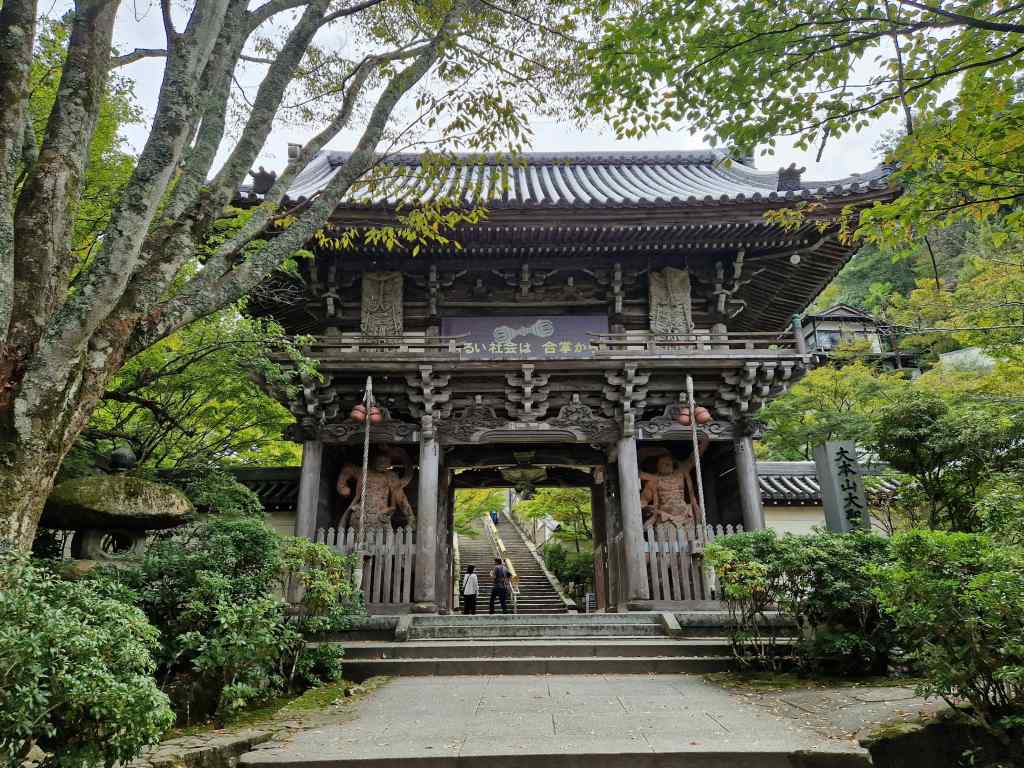
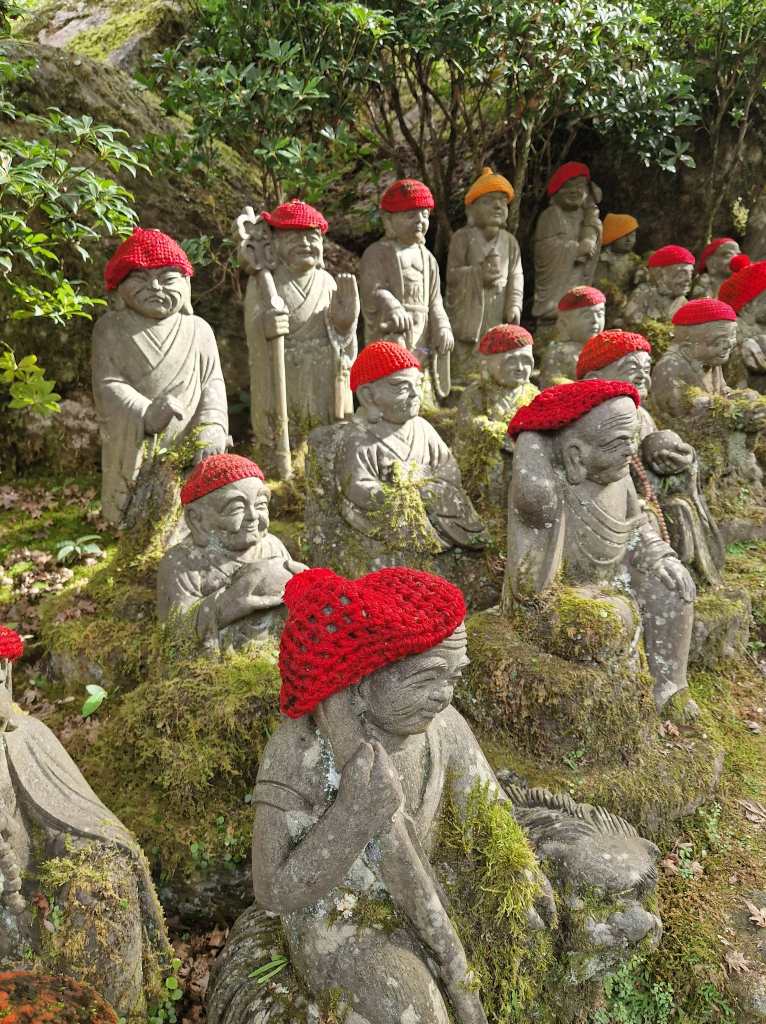
We chose one of the many different possible paths at random and after passing through dense forest, arrived by chance at the mighty gates of the Daisho-In complex, which turned out to be an unexpected highlight of Miyajima, with some unusual sights quite different to what we had seen already in other temples in Japan.

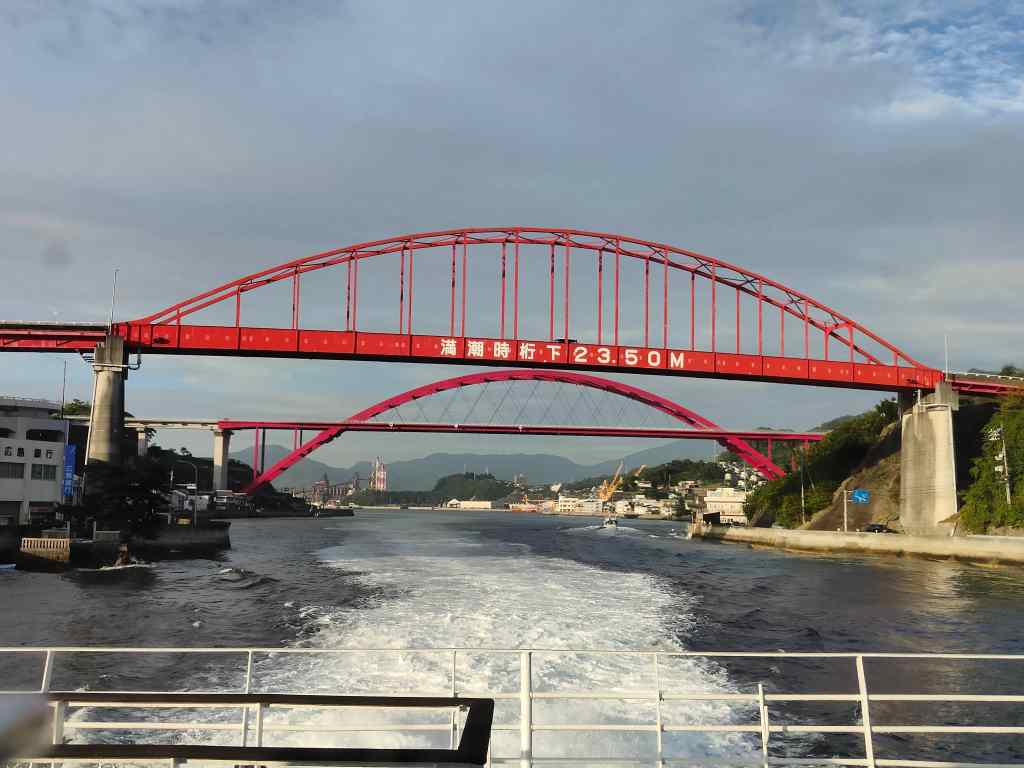
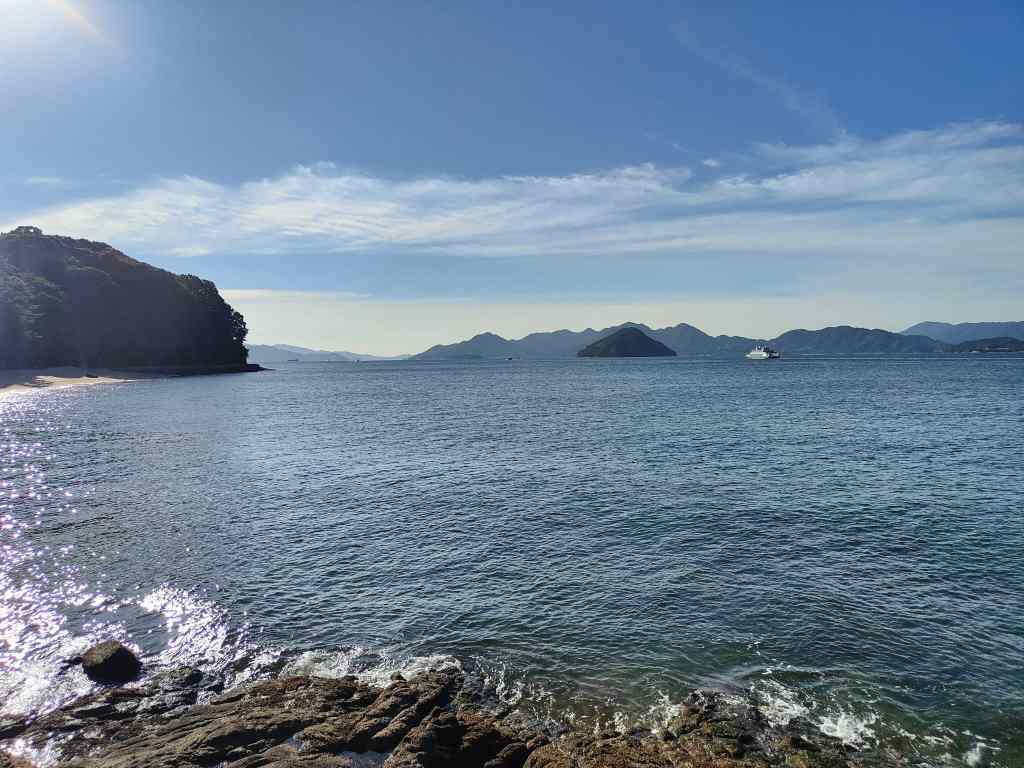
It was now time to leave magical Miyajima. We picked up our bags at the hotel, and their shuttle service dropped us at the ferry terminal. Our day ended with pleasant cruises across the Inland Sea – firstly back to Hiroshima port, and then by “jetboat” on to Matsuyama on Shikoku, the fourth largest island of Japan’s archipelago. The day and a half on Miyajima had been truly memorable and one of the highlights of our trip so far. Once you get away from the crowds around the ferry terminal, the island emanates a sense of peace and harmony, of which the beautiful torii is the ultimate expression.
Previous Post: Hiroshima
Next Post: Matsuyama



 Trouspinet travels