Etosha National Park – Okaukeujo waterhole and more elephants and rhinos!

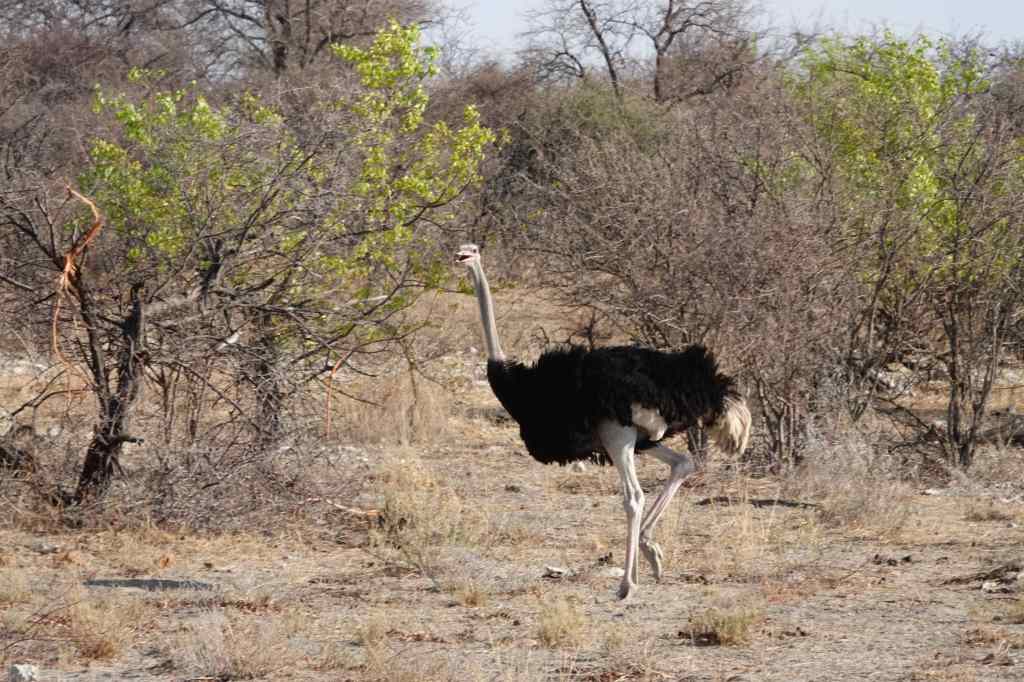
Ostrich at Etosha National Park
An Ostrich runs away from my car

Today I was due to move from the Mushara Bush camp, just outside the east gate of the park, to the Okaukuejo camp located inside the central gate. It was about 150km away, so I combined moving with a “game drive” which included parts of the park I had not visited before. I said a sad farewell to the Mushara Bush Camp, which had been a wonderful place to stay, and set off.

This morning I was less lucky with my game spotting. I tried a track called “Eland Drive”, since I had yet to see the eland, Africa’s biggest antelope. At first, there was no sign of any animals – just lots of unusually green trees, which contrasted with the dry scrub that makes most of the park. I found it surprising that animals seemed to be avoiding this cooler area with lots of edible vegetation- maybe predators were hiding somewhere, out of my sight. After an hour’s driving I finally ran into some zebra and springbok, and as I progressed, they became more and more numerous. I also glimpsed a red hartebeest….but no elands.
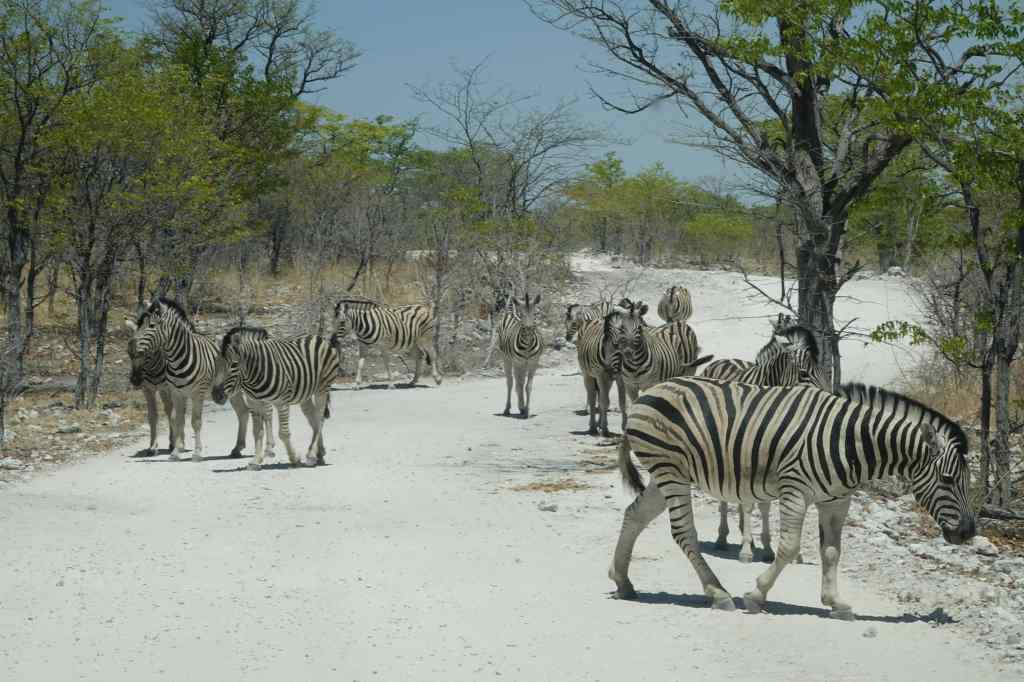
Zebra at Etosha National Park
Zebra blocking the route at Etosha

After the slight disappointment of Eland Drive, I reverted to the usual strategy of visiting waterholes. In the midday sun, these were dominated by elephants, who drank and sprayed their bodies with water to keep cool.  At my first waterhole, there was a family group with a couple of babies.
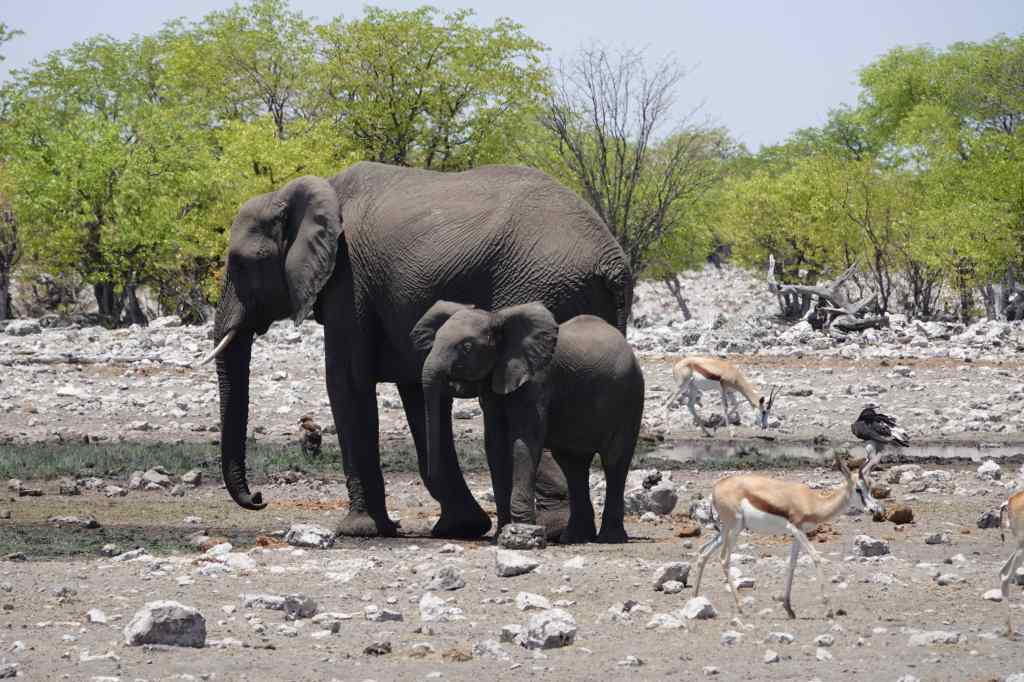
Mummy and baby elephant
Mummy and Baby Elephant at an Etosha waterhole

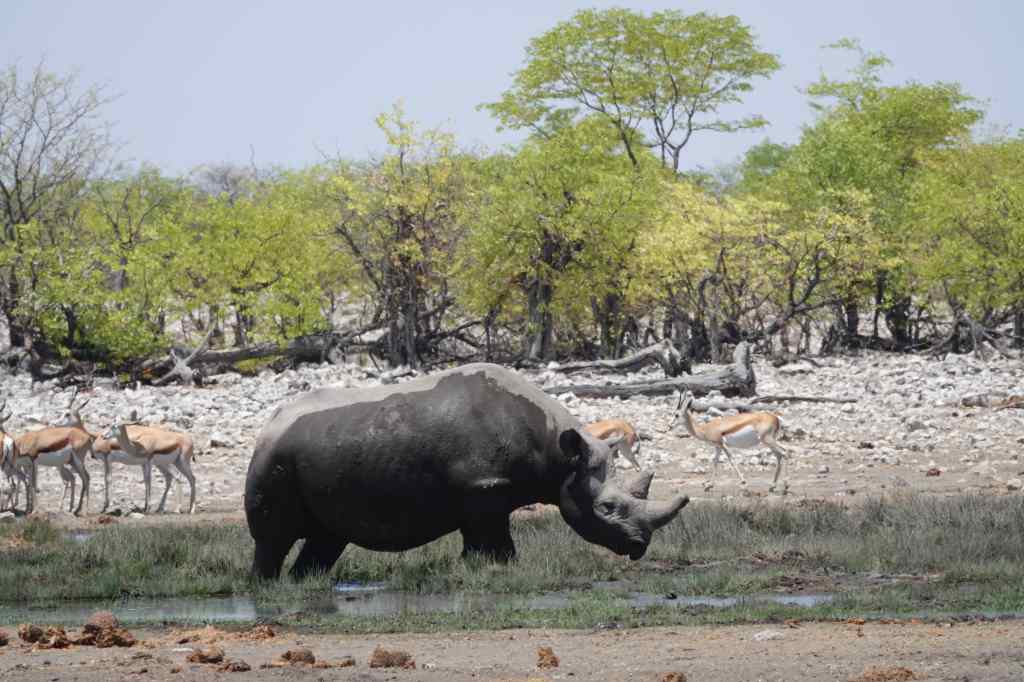
After a few minutes a rhino joined the group. Etosha has white and black rhinos. Confusingly, they are both the same grey colour and the main difference between them is the shape of their lip. This one had a pointed lip, so was probably a black rhino.
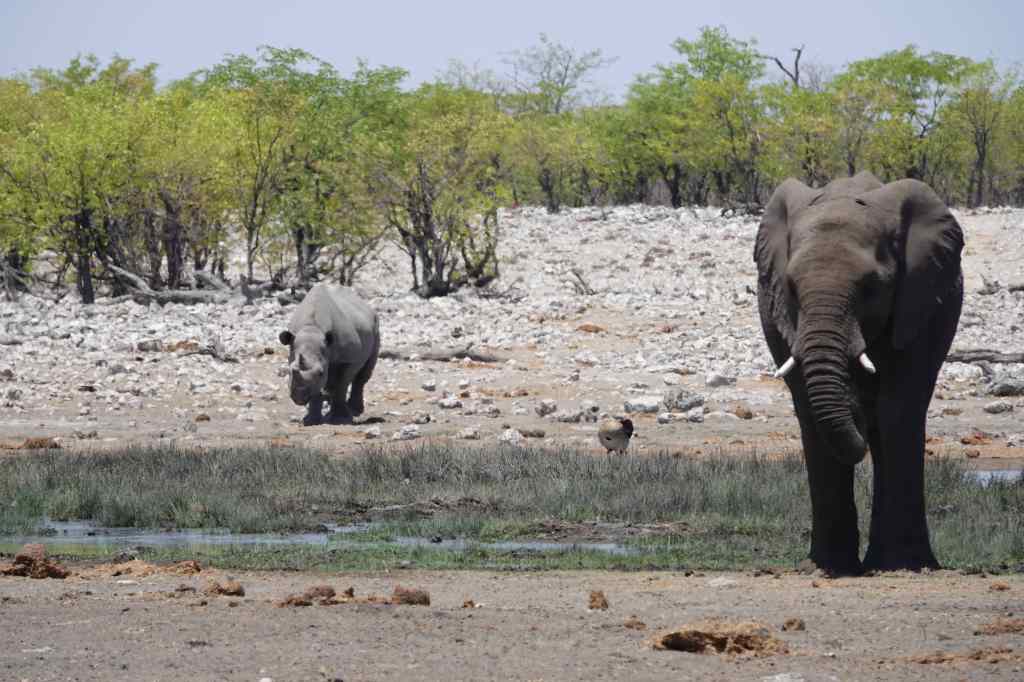
Black Rhino approaches waterhole
A black rhino joins the group….
Rhino at Etosha
….and changes colour after rolling in the mud.

The next two watering holes I visited also featured elephants. At the first, two of them were washing and drinking.
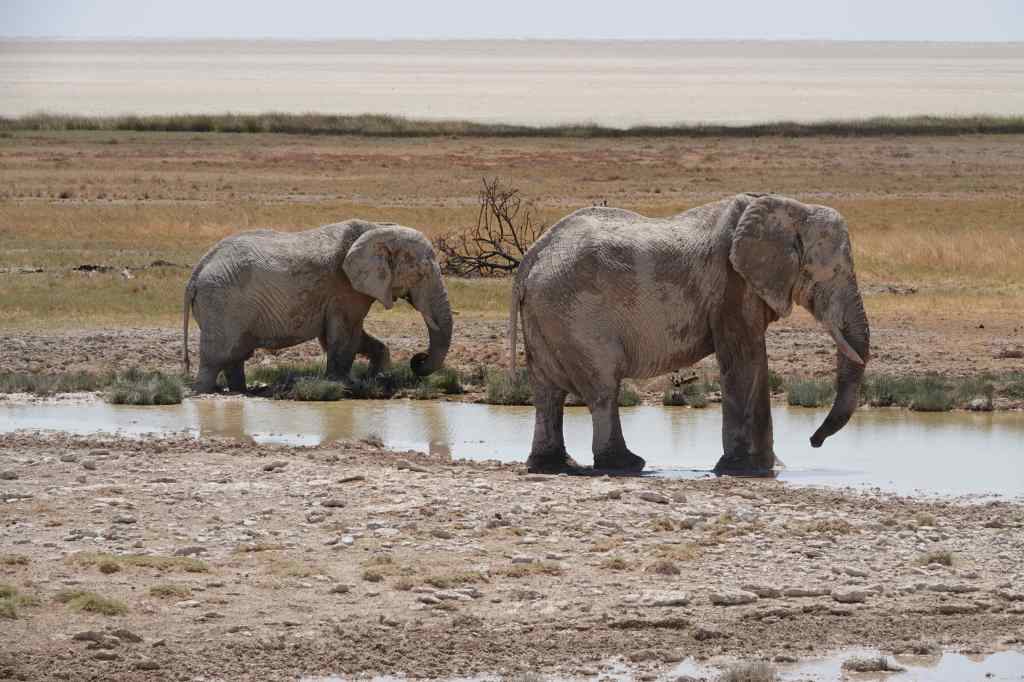
Elephants at Etosha
More elephants at Etosha….

At the second, a couple appeared to express affection to each other with their trunks.
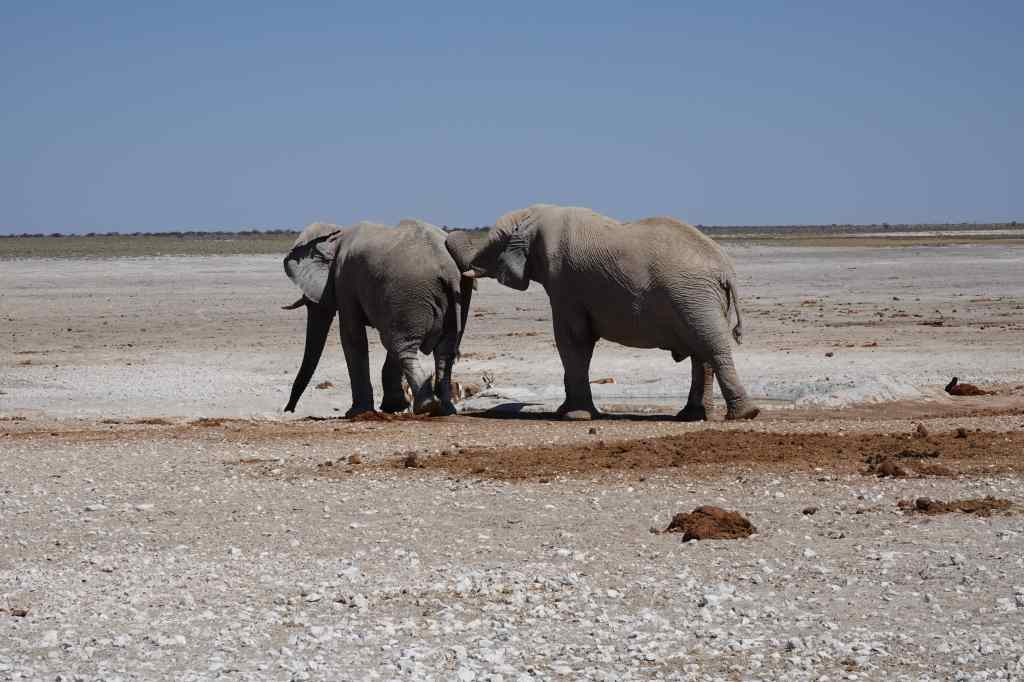
 more elephants at Etosha
….yet more elephants

I finally arrived at Okaukuejo, a government-owned camp near Etosha’s main entrance. It is famous for having a large watering hole just outside the camp, which is lit up during the night and frequently visited by lions, elephants and rhino. After checking in, I went straight there and found a viewing platform and lots of other guests with cameras and binoculars……but no animals. So instead, I headed off to the swimming pool to spend the hottest hours of the afternoon – like the elephants I had seen earlier!

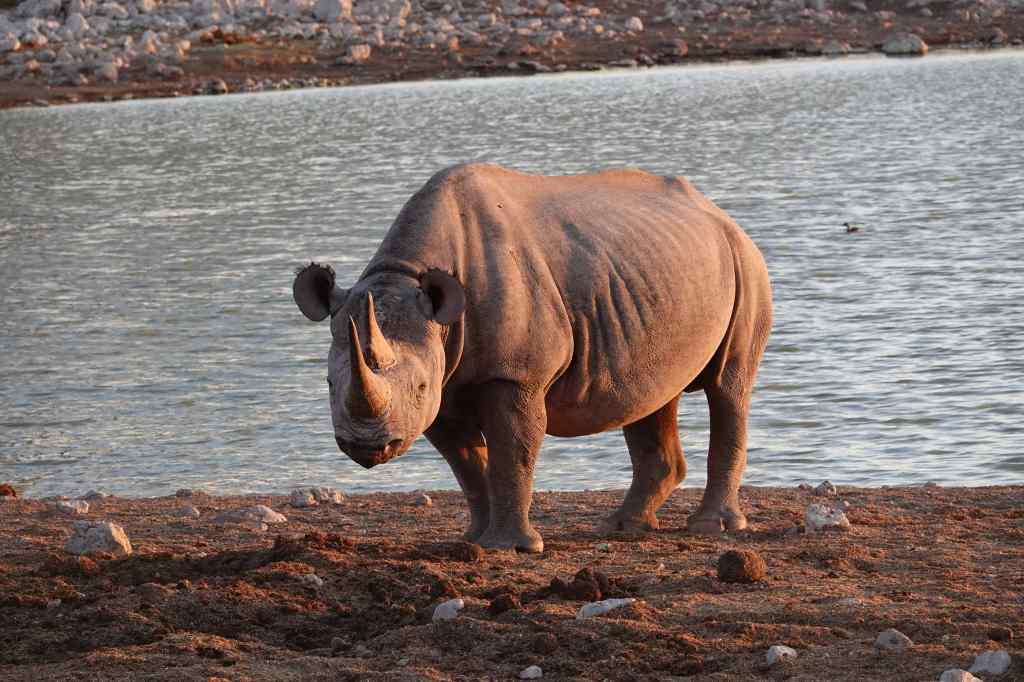
At six, as the sun was setting, I returned to the Okaukeujo waterhole to find an elephant, giraffe and magnificent black rhino. The latter approached the viewing platform, watched the crowd of humans for a while, and then lay down on the ground to snooze. It was an amazing sight, and I was a little puzzled as to why the waterhole viewing area was not overflowing with fellow tourists and their cameras.
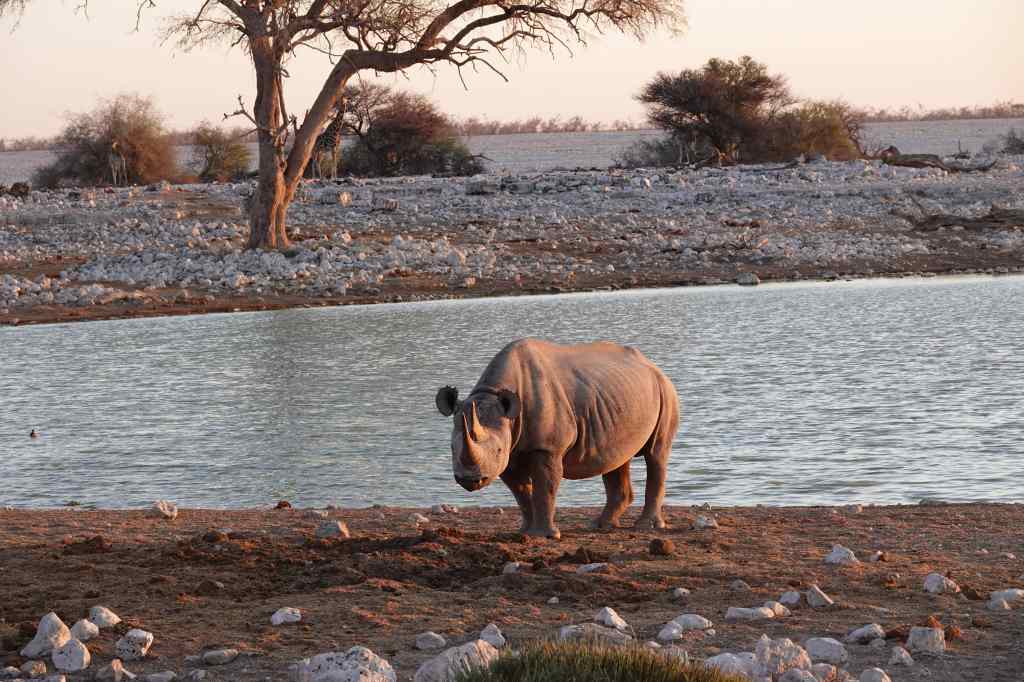
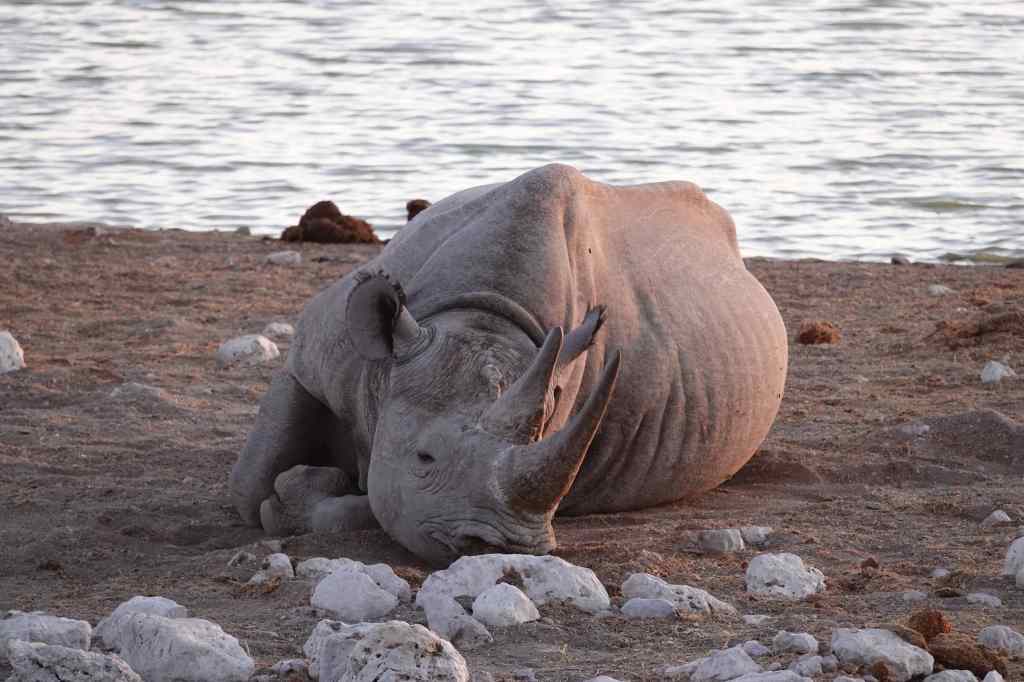
Rhino at Etosha
The rhino stares at us……
Rhino at Okaukuejo Watering Hole
…and then sits down to sleep.

With this thought in my mind, I headed off to dinner. It was a chaotic affair. The waitress told me that I had booked table 32, but after half an hour of waiting there, a group of German ladies arrived to claim my place. They went to fetch the reservation list which showed that I should have been on table 25. In any case, the choice of table made little difference since the waitresses were all busy serving in a different part of the restaurant and completely ignored us all. I realised that if I sat there patiently, I would wait forever, so I collared the person who seemed to be the drinks waitress and ordered steak and a beer. After another long wait, the steak arrived – tasty and tender, but cold – without the beer. To get this, I had to accompany my waitress to the bar and stand there reminding her of my order, as she was accosted by a stream of other complaining customers. A simple dinner of steak and a beer took ninety minutes, even thought my persistence meant that I was one of the first to be served. After finishing my beer, I hurried back to the waterhole but found it quiet – the elephant had left, and the rhino was still asleep on the ground.  I suddenly realised why the waterhole was not overcrowded with fellow guests – many of them were stuck in the restaurant, still waiting for their dinner. With nothing new to see, I headed back to my hut for an early bedtime, resolving to try my luck again if I woke up during the night.

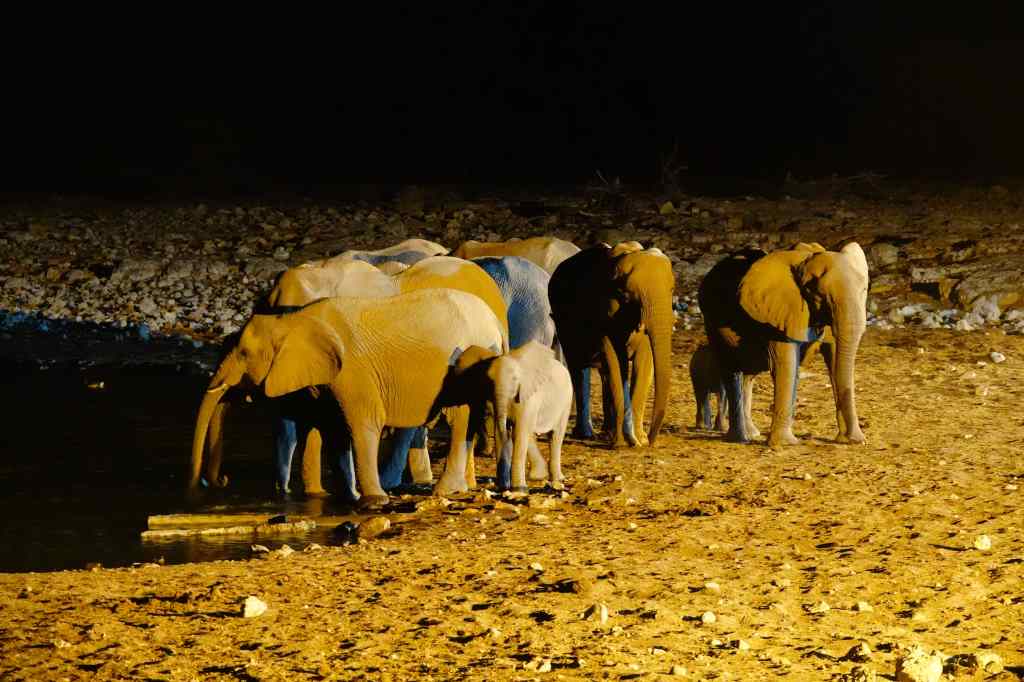
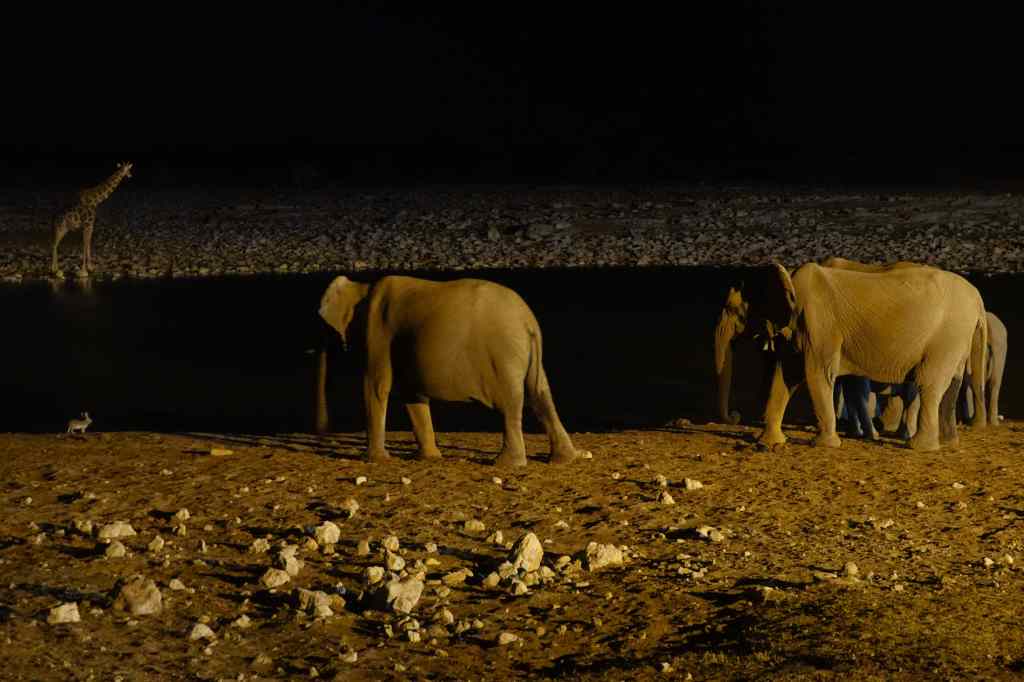
I returned to the waterhole at 2am to find a wonderful sight – a herd of elephant, including several babies, drinking quietly in the moonlight. I stayed for a half an hour, watching the elephants, a cautious giraffe, and finally a tiny scrub hare – not much bigger than me – taking its place to drink alongside the massive elephants.

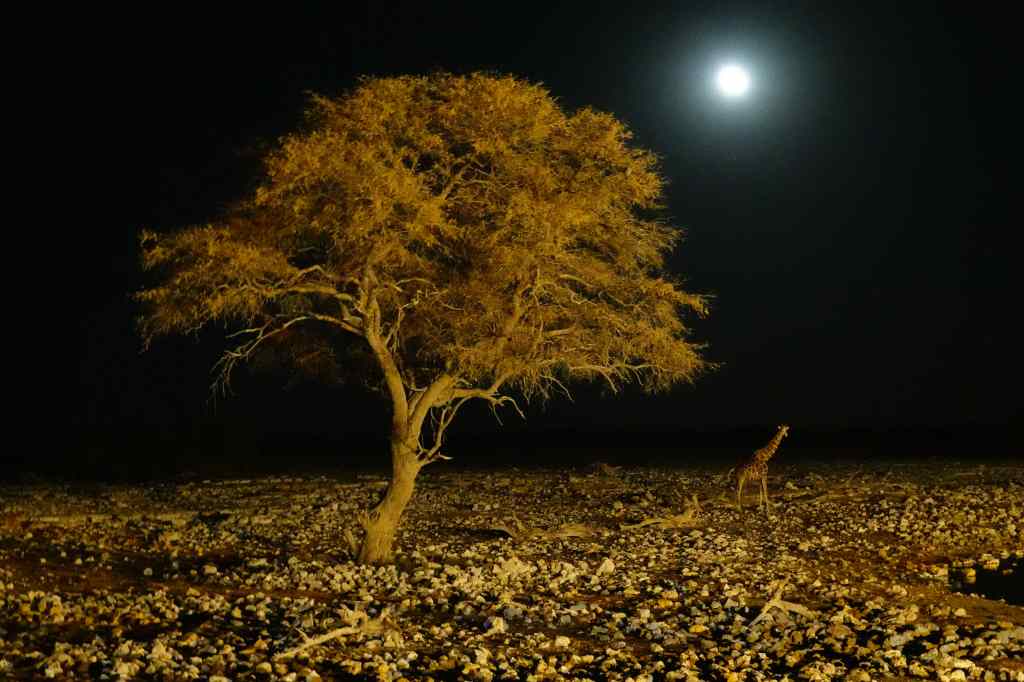
Elephants at Okaukuejo Waterhole
2am at the Okaukeujo waterhole, Etosha
A giraffe approaches Okaukuejo
A giraffe approaches the Okaukeujo waterhole
Elephants at Okaukuejo Etosha
The elephants continue to drink
scrub hare and elephants Okaukuejo
A tiny scrub hare (left) joins the elephants

Finally, the herd of elephants headed off into the night, and I decided to do the same. It had been a memorable day, and I went back to my hut to sleep for the rest of the night.
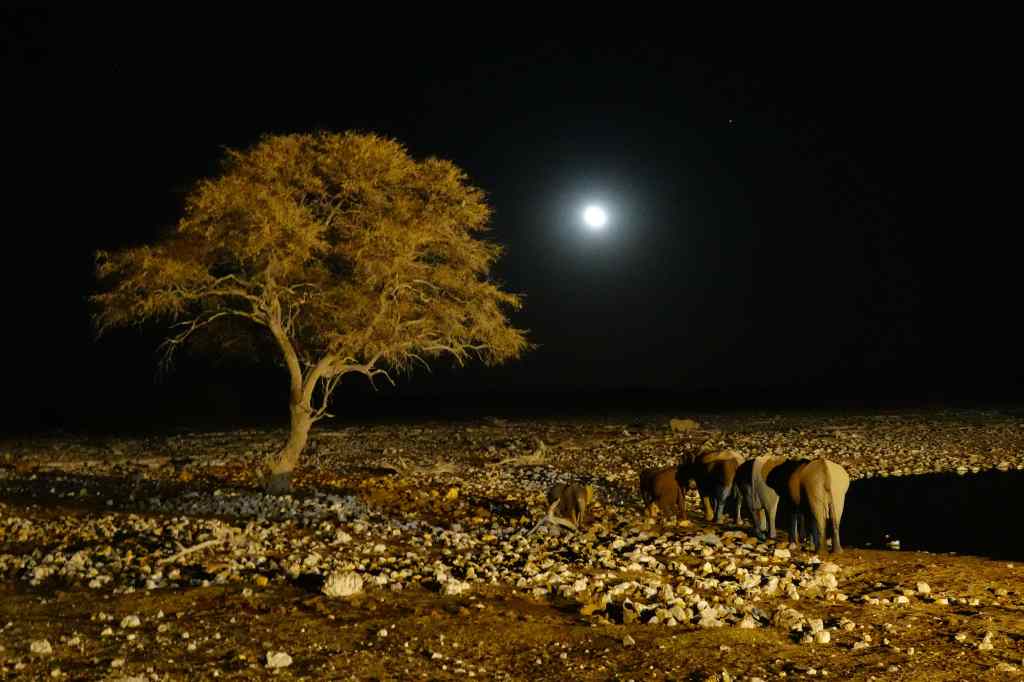
Elephant herd Okaukuejo
The elephant family leaves Okaukeujo waterhole and heads off into the night

Next Post: Twyfelfontein and its rock art

Previous Post: My first full day at Etosha
Etosha National Park – hidden leopard and lion, aggressive rhino and lots of giraffes and elephants!

Elephant Etosha
Day 1 at Etosha

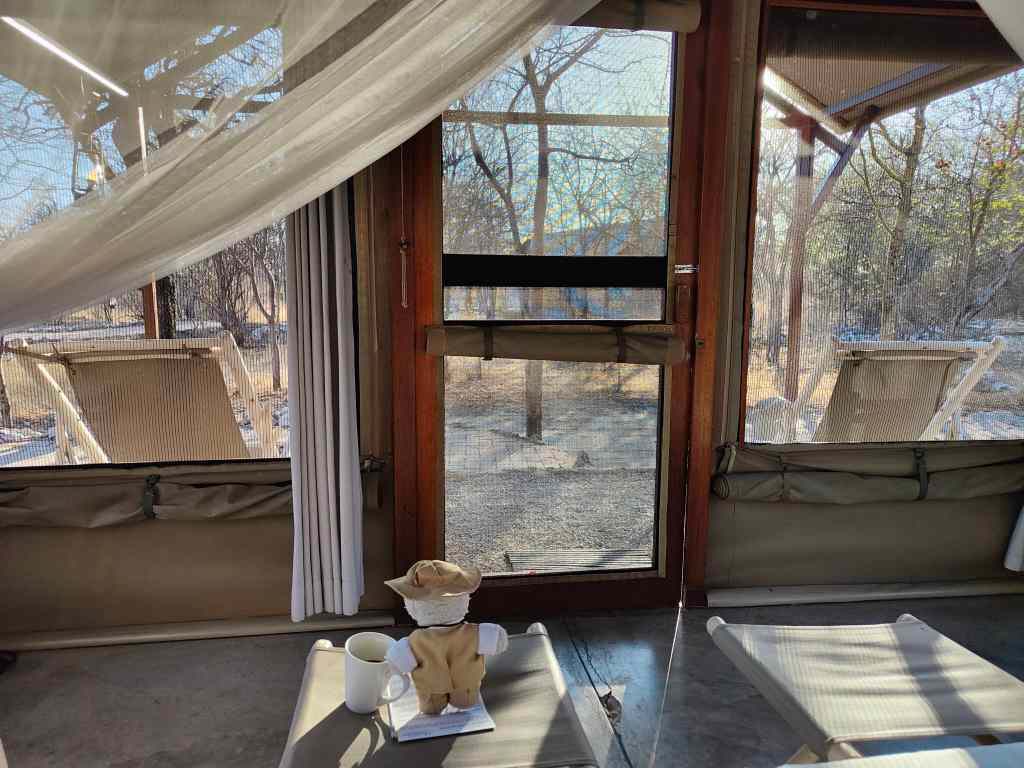
The following morning I was woken up by birds chattering in the bush outside. I opened up the flaps of my tent and sat in bed enjoying the morning air with a cup of coffee. The tent was flooded with light from all sides, and it felt like I was sitting in the open air in the middle of the bush.

camp Etosha
The morning light flooding through my room at Etosha
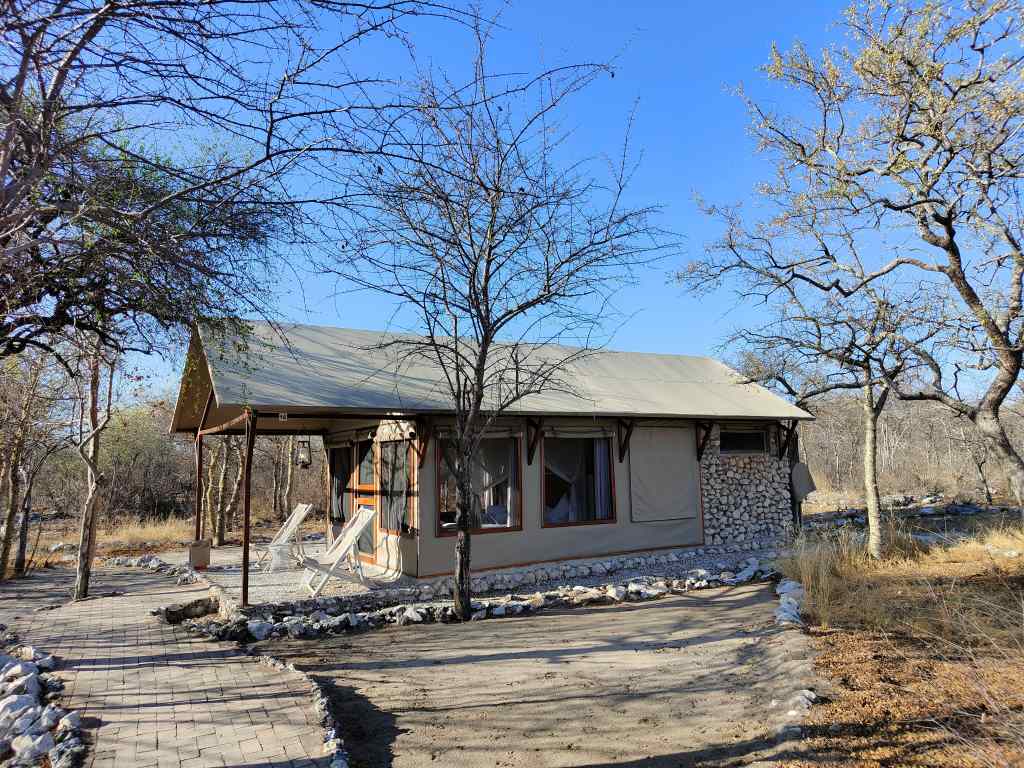
camp Etosha
The room is part hut, part tent, with canvas sides

After breakfast I set off again to the park. There are two ways to visit Etosha – one is in your own car, making your own itinerary, and one on an organised “game drive” in a truck with other tourists and a guide. The organised tour offers better chances to see animals, since the guides know where to look and communicate their sightings to other guides by phone. But having invested in a big 4×4 I wanted to keep my independence and drive myself. Serious visitors enter the park at its 06.30 opening time to have the best chances of spotting the less easily seen game – particularly the big cats. After my three days of travelling I did not have the energy for another early start and reached the park at around 9, when some of the organised groups were already returning.

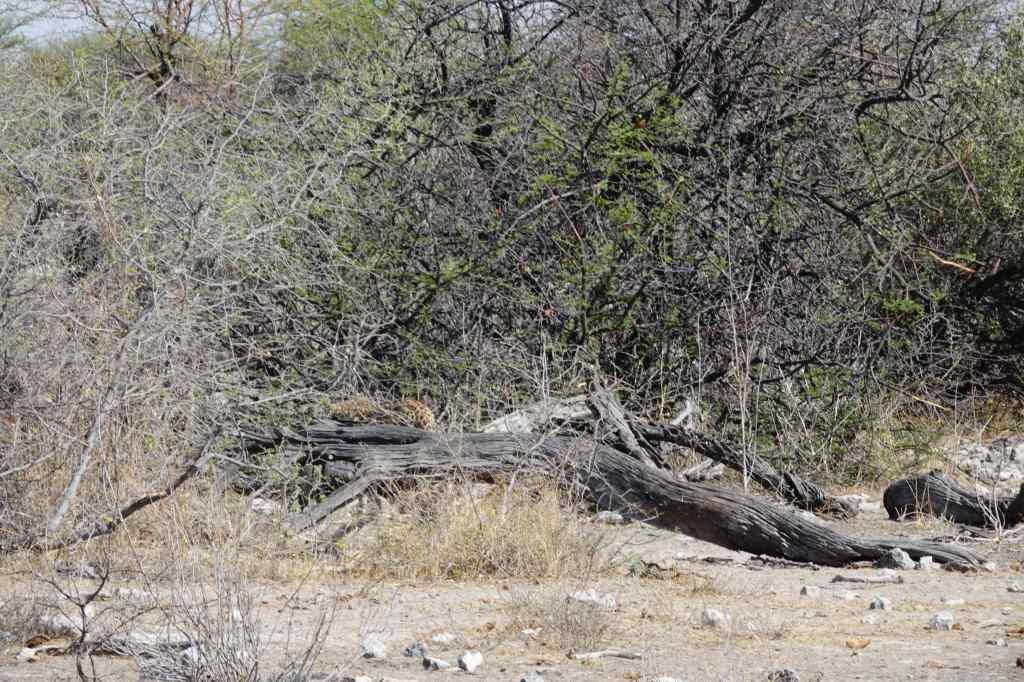
Despite my late start I was very lucky. First I spotted – very briefly – a leopard, one of the most elusive animals in Etosha National Park, but I was a little too slow to get a really good photo.

Leopard Etosha
Leopard (disappearing behind the tree trunk)

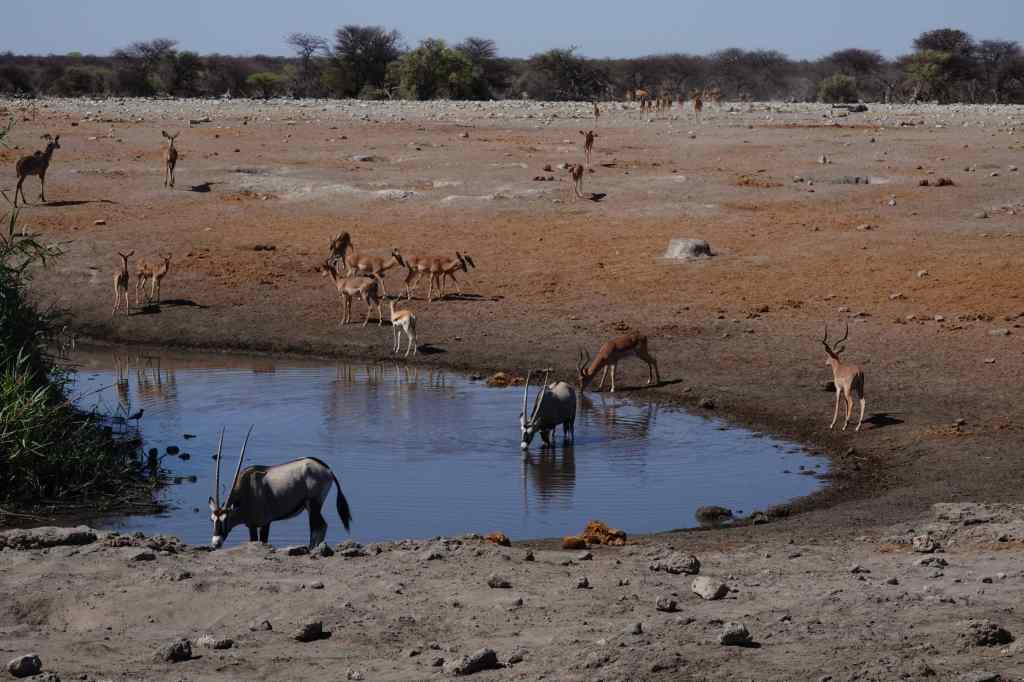
October was the end of the dry season in Etosha, and the once abundant water brought by the rains had reduced to a few waterholes where the game comes to drink. This makes for the best time for spotting wildlife. My first visit to a waterhole did not disappoint; a group of oryx and springboks were drinking, soon to be followed by zebra and some kudu.

Oryx-at-Etosha
Etosha – Oryx and Impala at the water hole

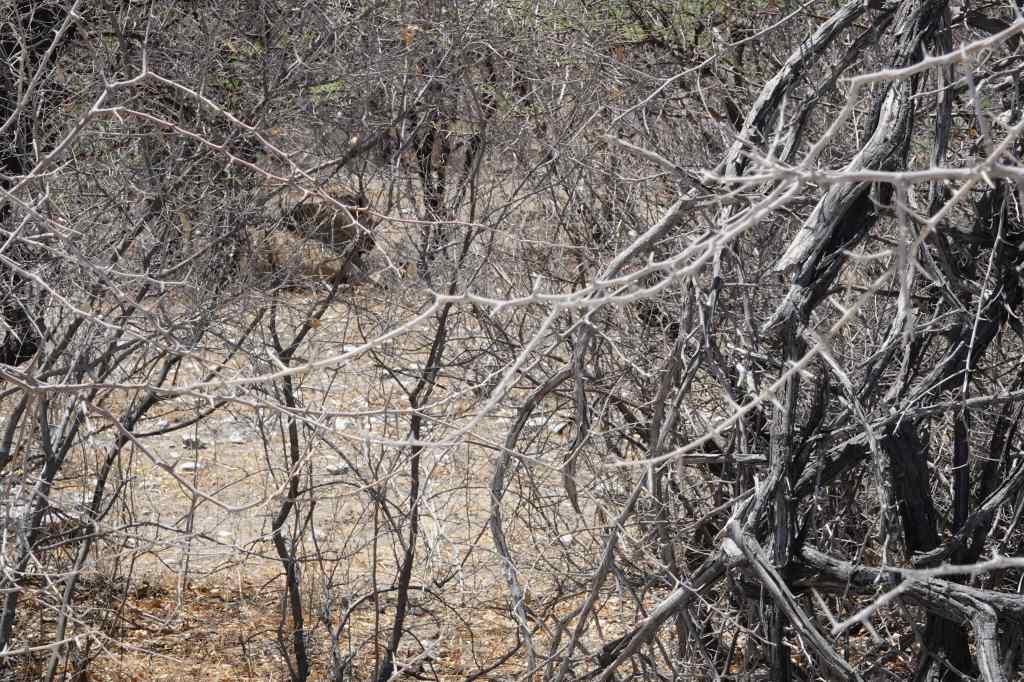
On my way to the next waterhole, I had a stroke of luck and noticed a lion, sheltering from the late morning sun under a bush. Sadly my lack of mastery of my new camera caused me to mess up my photo.

Lion-at-Etosha
Lion hiding from the sun (top left)

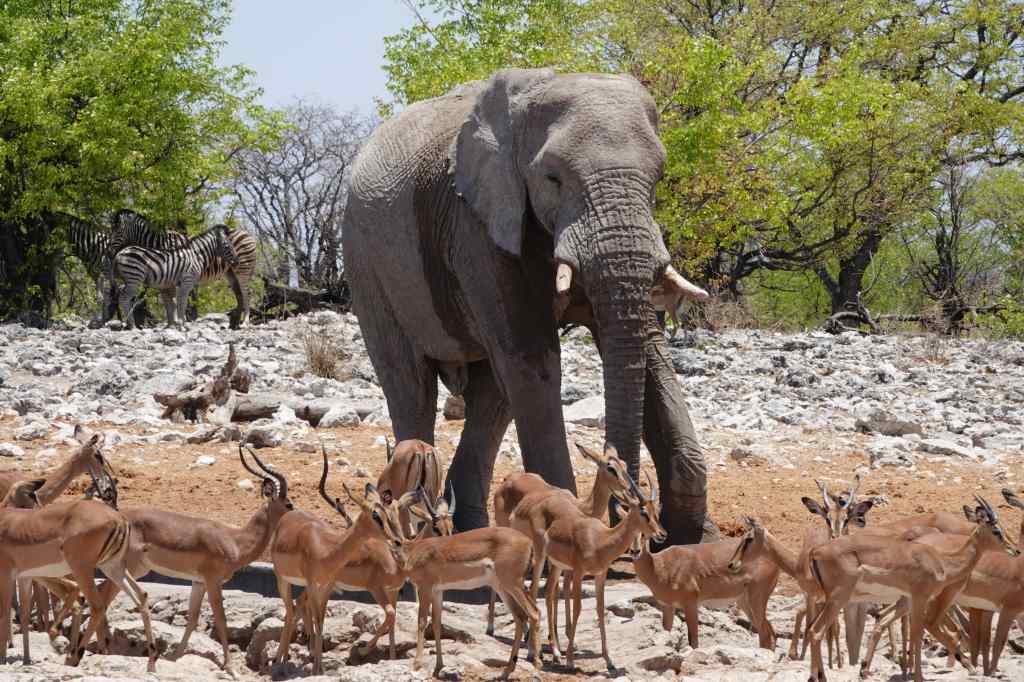
The final waterhole of my morning visit was home to a small group of elephants, who had come to drink and cool off by spraying themselves with water. Elephants seemed very common at Etosha.

Elephant-and-Impala
Elephant and Impala at a waterhole, Etosha

Watching the giraffes drink was the most interesting. They would approach very slowly, then look around for several minutes. Then they would slowly splay their legs and lower their necks to drink. I suppose that their caution is because they is only ever vulnerable to predators in this rather awkward drinking position.

Giraffe-at-Etosha
Etosha – a giraffe drinking

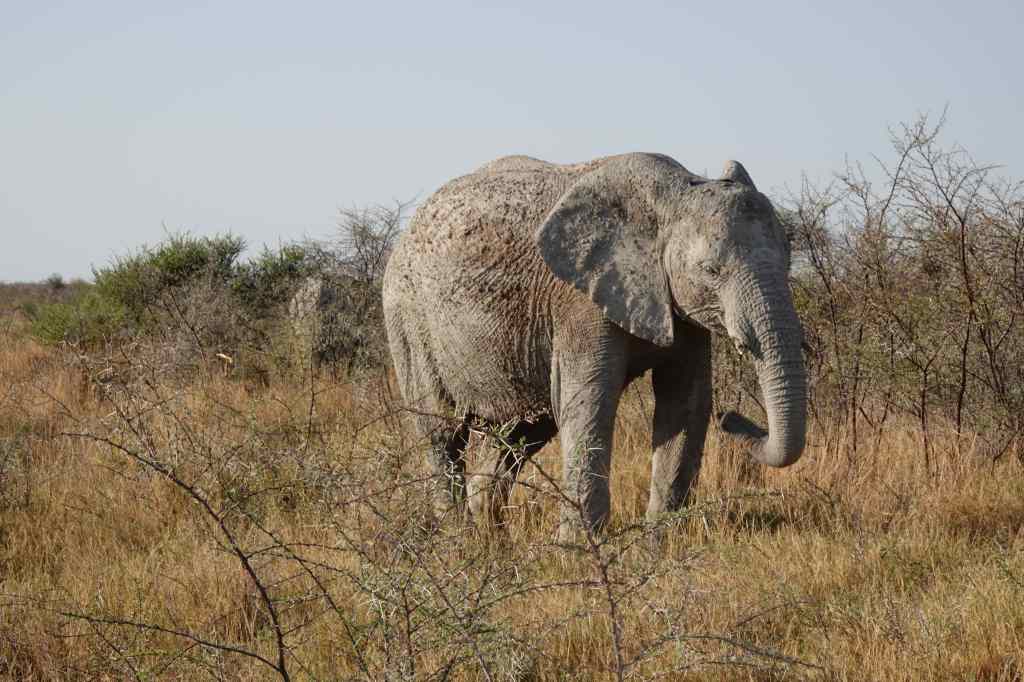
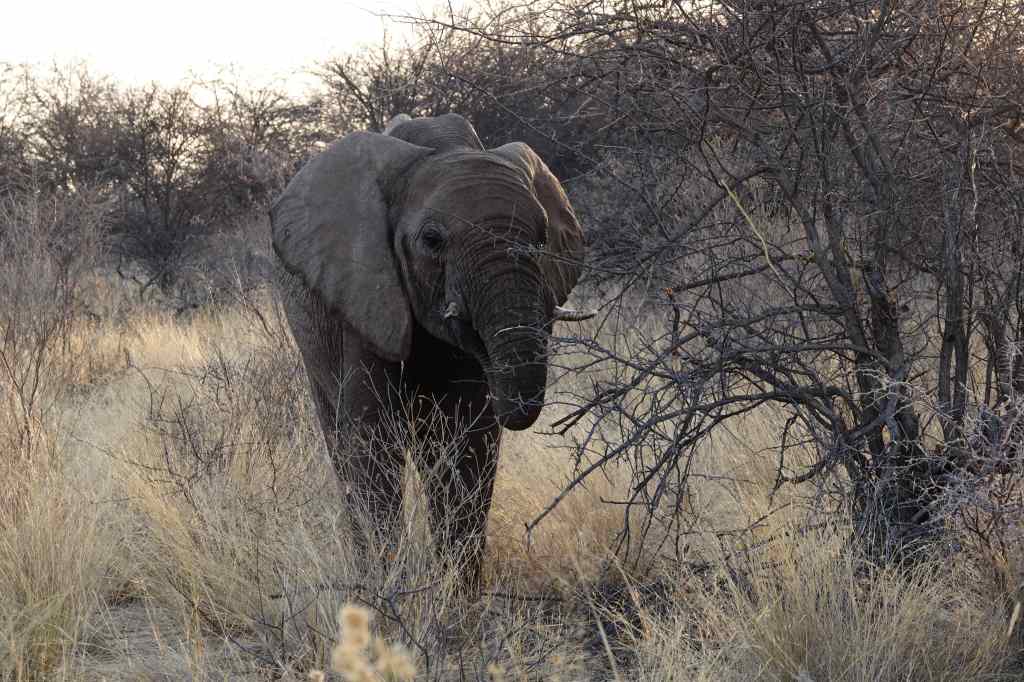
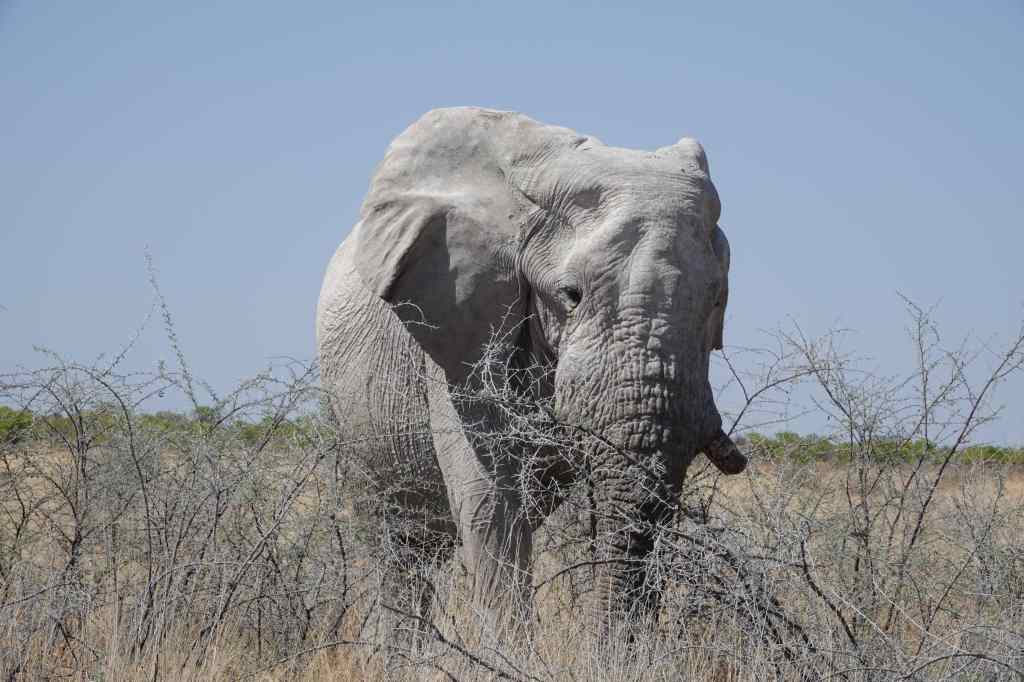
It was now one o’clock, and the hottest part of the day had arrived. This meant that animal sightings would be much harder, so I drove back to my lodge to relax by the pool. At 4pm I set off again for my evening “game drive”. I visited a couple of waterholes without luck, before setting off along a remote track.  At first the landscape was empty and dry, and I began to regret my choice of route. But then I bumped into an old, grey wrinkled elephant just standing by the side of the track. He looked a bit crumbly, and like many elephants in Etosha National Park, had broken tusks (apparently a lack of minerals means that few Etosha elephants have big healthy tusks).

Elephant-Etosha
A solitary old elephant

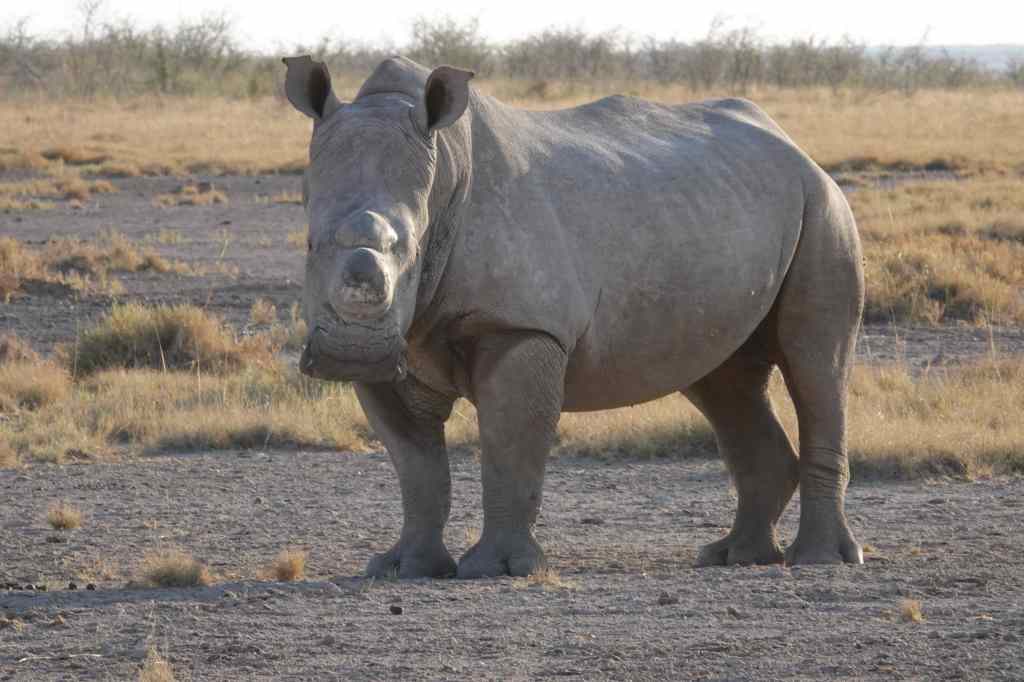
The old elephant, isolated and maybe rejected by his herd, made me feel rather sad, but transformed my feeling about my drive, which became a big adventure. I drove off onto a flat plain. In the distance, I could see the silhouettes of other lumbering elephants and tall giraffes; occasionally the track would bring me face to face with one. I’d stop to let the giraffes run away, but slow down and pass the elephants carefully – my guidebook had a whole page devoted to what you should do if an elephant charges your vehicle. I felt that I had landed on another planet, or gone back to some prehistoric time on earth, before the rise of man. I was enjoying the feeling of total detachment from the modern world when I stumbled upon the highlight of the afternoon – a rare white rhino. I stopped and we looked at each other with curiosity, whilst I took more photos.

White Rhino Etosha
Face to face with a white Rhino at Etosha

I noticed the sun was sinking on the horizon, so looked at my watch and checked the map. I was a long way from the entrance and I had an hour to reach the gate before it closed. I hurried off, initially pursued by the rhino. I raced the sun as it dipped down to the horizon and cast long shadows of trees over the plain and the road. I didn’t want to have to find out what happened to people that got stuck in Etosha after closing time, and made it there exactly at the 19.02, to be the very last vehicle to leave. As I drove off I heard a guard say “Right, home now!” to her colleague.

Back at my camp, I had another excellent dinner (fish this time – how did they get it here, so far inland?) and then collapsed into the bed in my tent, very happy with day’s game spotting. Out of all of the larger animals at Etosha, I had been lucky enough to see everything except the eland (Africa’s largest antelope) and the cheetah.

Previous Post – The Long Trip to Etosha National Park

Next Post – Day 2 at Etosha

Namibia – the long trip to Etosha National Park

A Black Rhino, Etosha National Park

Well, I hope the black rhino got your attention. The vagabond teddy bear is back on the road, this time in Namibia in Africa. Actually, I have been away for over a week already, but limited access to Wi-Fi means that I will be writing my blog with several days’ delay. My trip to Windhoek, the capital of Namibia took the best part of two days as I flew with overnights in Amsterdam and Cape Town, to where I will return for a few days at the end of the trip. My overnight in Cape Town was very pleasant; I sped through immigration and baggage collection and got a shuttle to the city’s only airport hotel. The next morning, I returned to the airport for the two hour flight to Windhoek, and had the chance to meet a fellow celebrity.

Big Man and Little Bear at Cape Town Airport

My arrival at Windhoek went much less smoothly. My flight arrived just after a huge A380, and getting through immigration, buying a sim card, and collecting my car took three hours. The hire car company made me watch a safety video, which explained that the accident rate in Namibia is 50x higher than in Europe and showed how to drive safely on Namibia’s many gravel roads. Two immaculately dressed men in suits then demonstrated how to change a car tyre – something that many tourists will need to do.

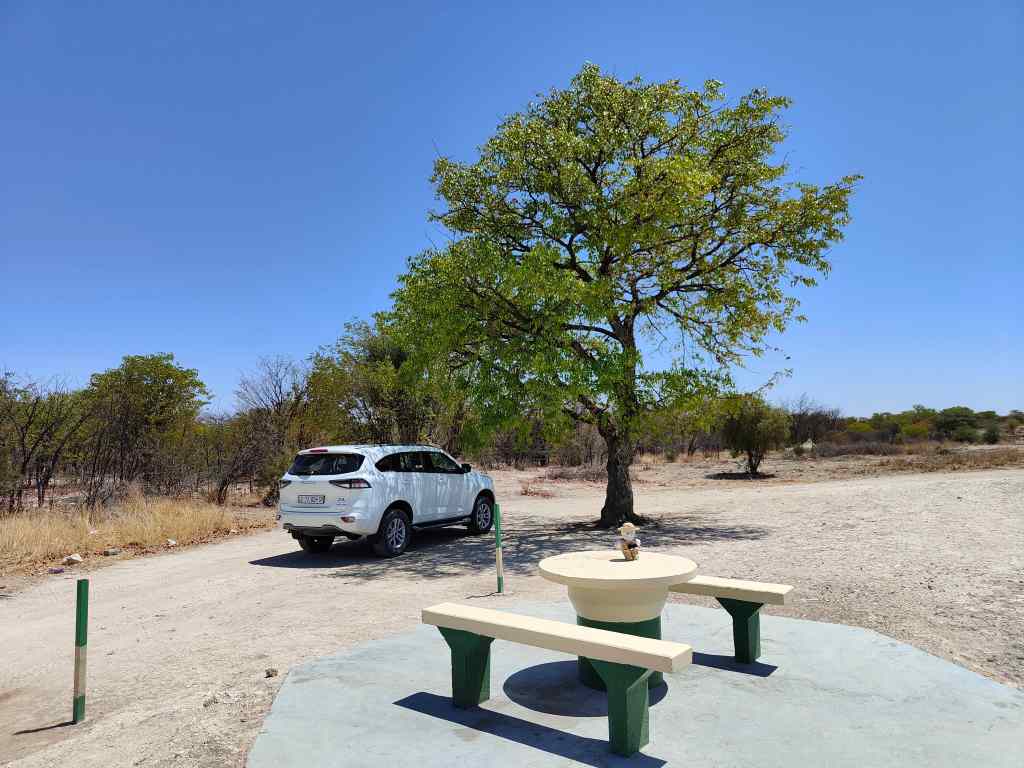
I spent the night in a small guest house in Windhoek, and had dinner in a local restaurant, finding that the steaks were good and the wine cheap – always a good start for a holiday. The next morning, I set off on the long drive north to Etosha National Park. The road was straight, asphalted, and monotonous, with one lane each way. On this type of road, the speed limit is a generous 120km/h (75m/h) and I covered the 520 km in about 6 hours including breaks. Every 10km or so the road had a rest area consisting of a table, chairs and a waste bin located under a shady tree – except for the tree, each one is identical to all the others all through Namibia.

on the road to Etosha
On the Road from Windhoek to Etosha in Namibia

I finally arrived at 4pm at the Mushara Bush Camp, a lodge located just outside of the park. Eager to finally see something interesting after nearly three full days travelling and overnighting, I dumped my bags in my rather stylish tent, and set off to the park gate in my car, where I paid my entrance fee and bought a guidebook which had a map and several pages of drawings of the reserve’s animals. As soon as I had driven inside, a new world opened up. Antelope and giraffes stood nonchalantly by the side of the road (or sometimes in the road), as the bush began to come back to life after the heat of the midday sun. Like most newly arrived visitors, I spent a lot of time photographing giraffes, springboks and zebras – animals so common that after a couple of days I barely noticed them anymore.

giraffe at Etosha
Giraffe at Etosha
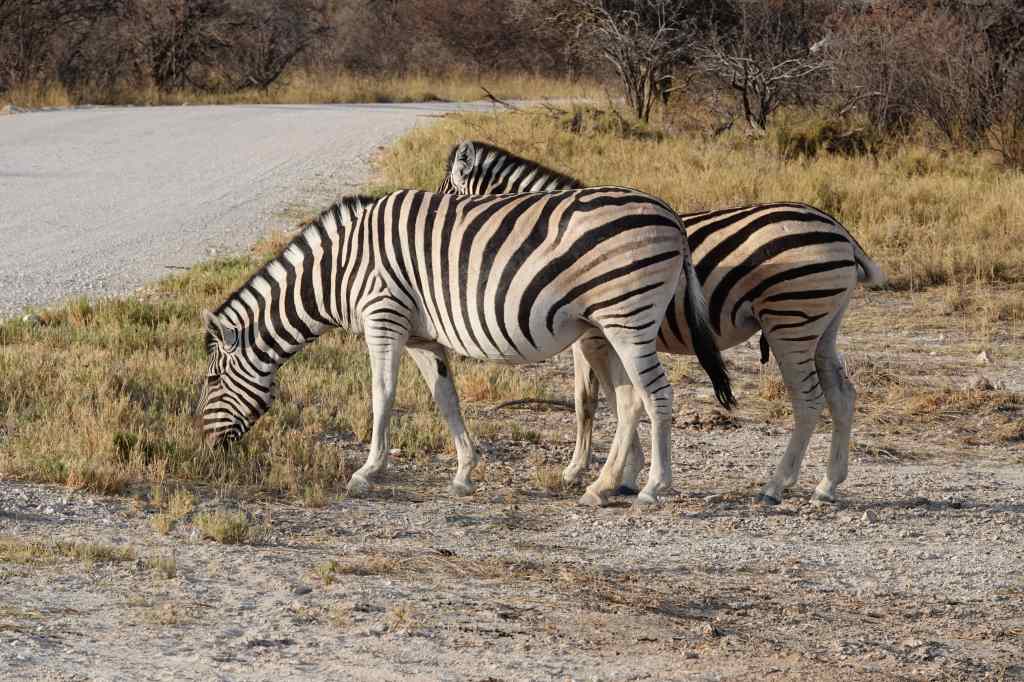
Zebra at Etosha
Zebra
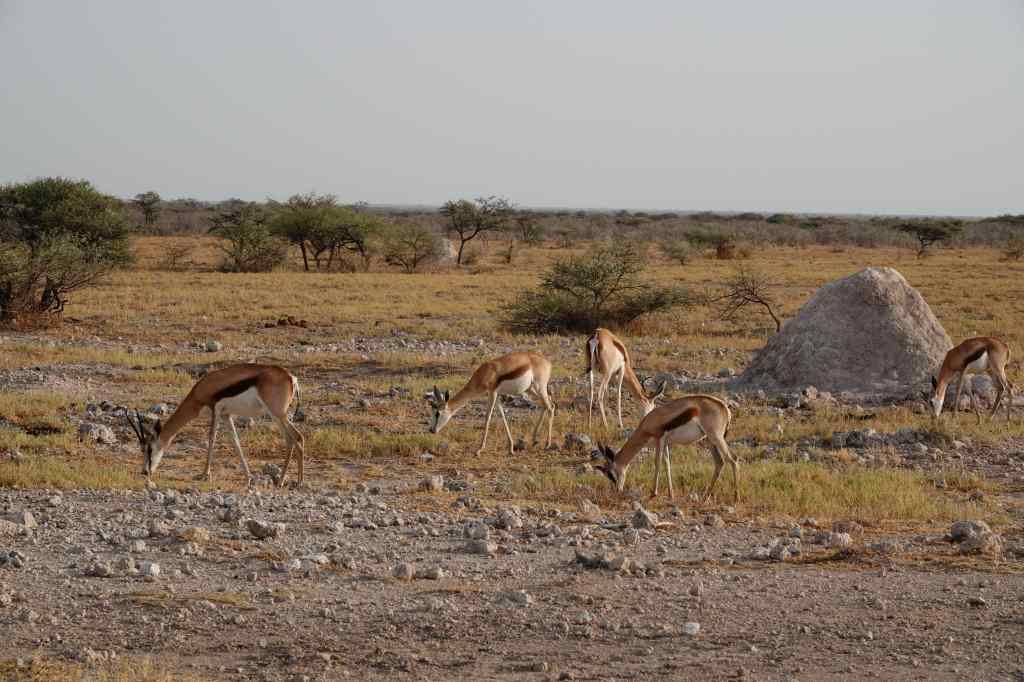
springbok-Etosha
The Ubiquitous Springbok
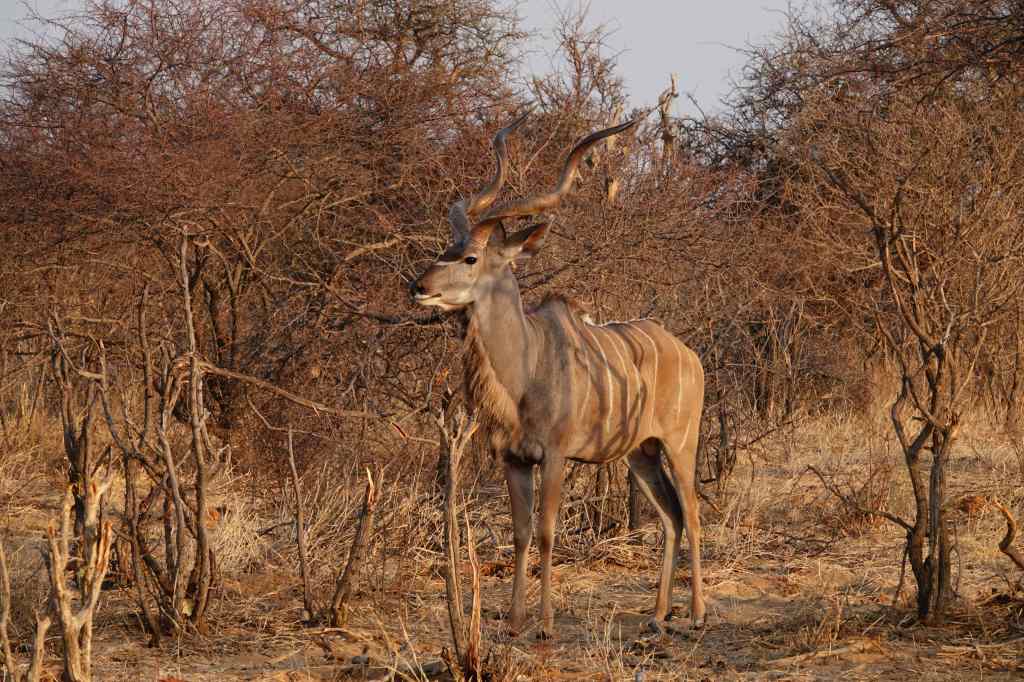
Kudu-at-Etosha
A Kudu

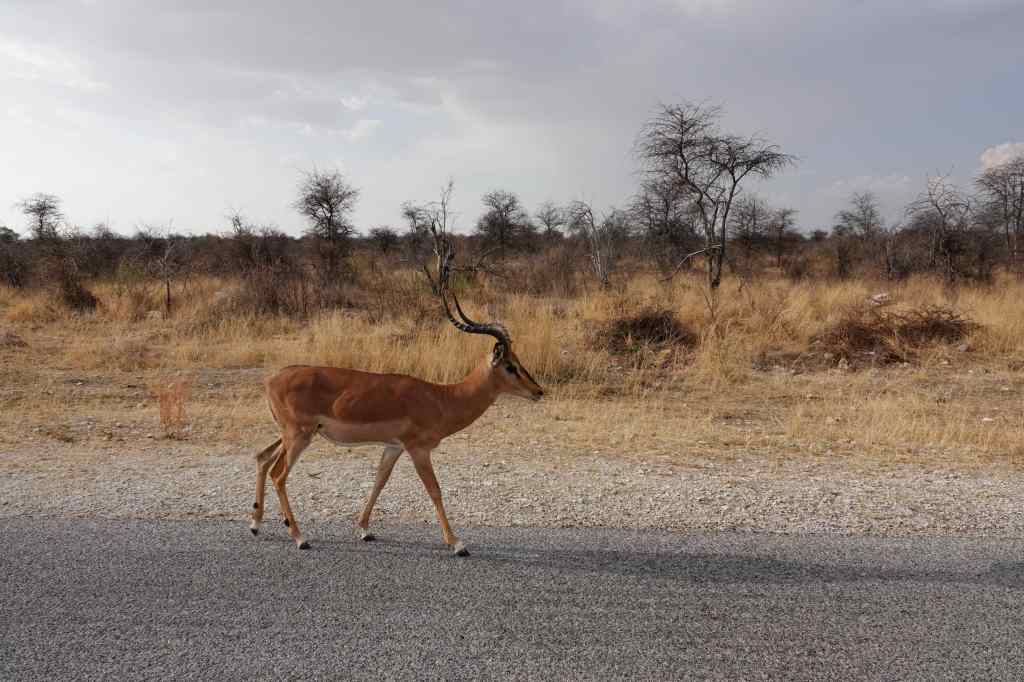
The concentration of wildlife, so close to the road, was amazing. Although I thought I was snapping common animals, when I got home and checked my photos against the park’s guide, I realised I had also spotted the rare black-faced impala.

impala etosha
The Black-Faced Impala, once rare but now common at Etosha

I spent a couple of pleasant hours driving around and trying out the settings on my complicated new camera. I was pleased that towards the end of my visit, I bumped into this elephant.

My First Elephant at Etosha

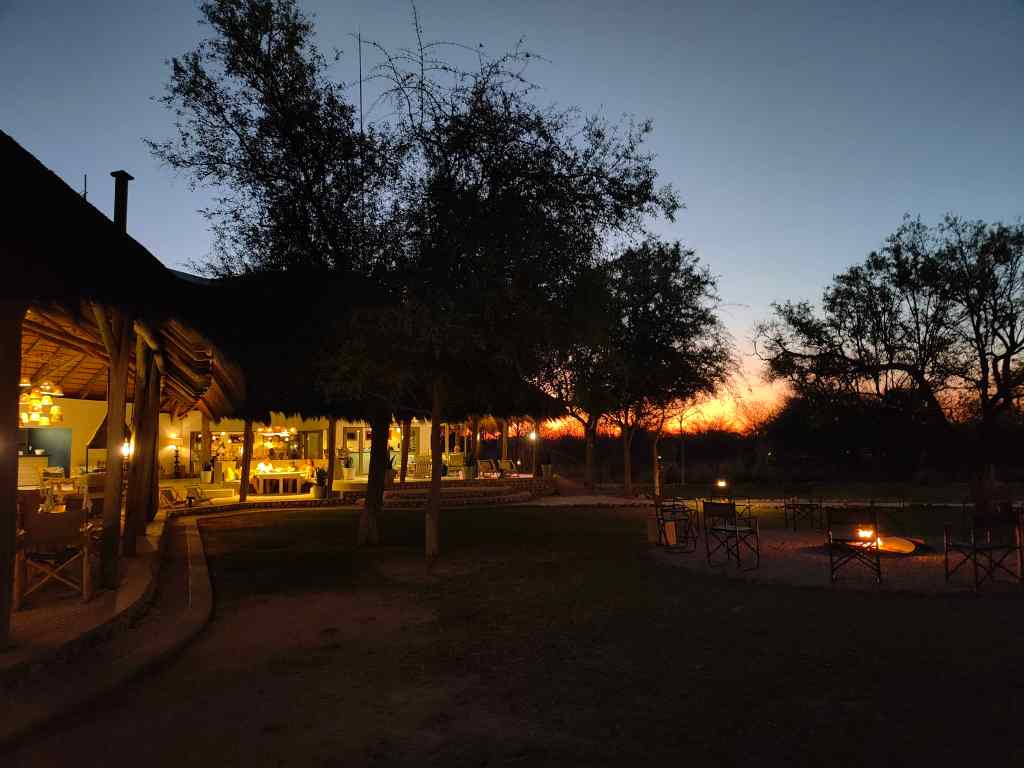
The sun sank slowly, bathing the bush in an orange light and reminding me that I had to be back in time for the park gate closure at the very precise time of 19.02.  Back at my bush camp I enjoyed a drink beside the campfire, with the background of a still dark red sky.

Mushara Bush Camp at Dusk Etosha
Mushara Bush Camp at Dusk

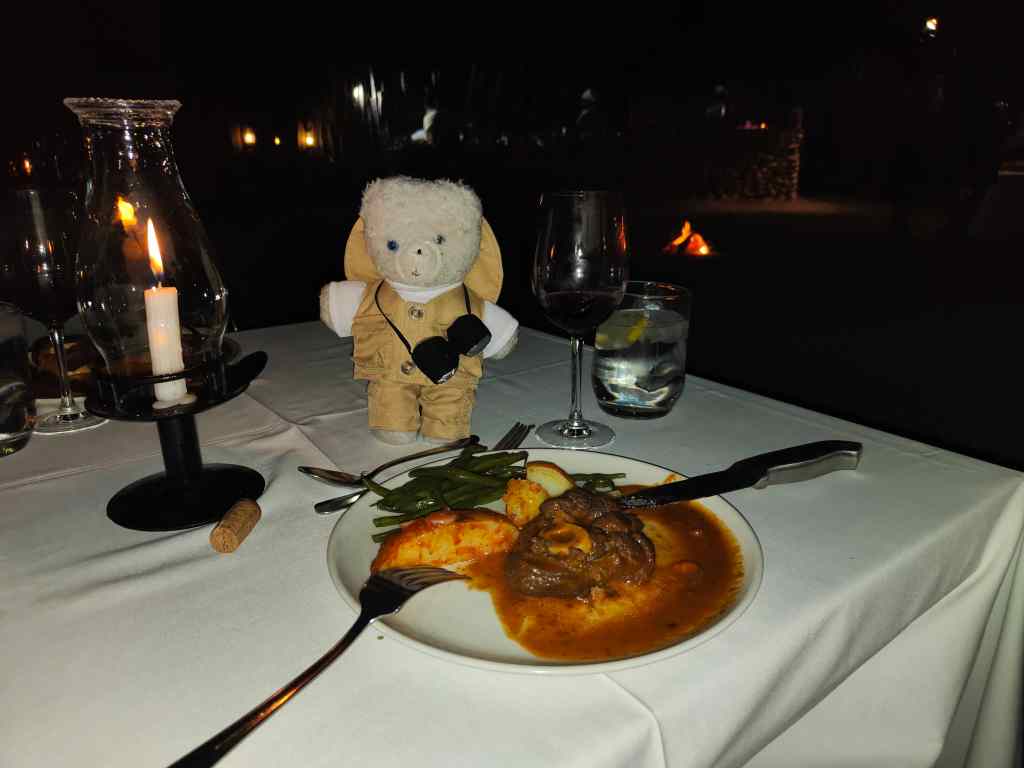
Dinner was excellent – kudu stew and impala steak (presumably not a black-faced impala).

dinner Mushara Bush Camp Etosha
Excellent Food and Wine

Then I settled down to try to watch the rugby world cup semifinal between England and South Africa, whose team is nicknamed the springboks. The lodge had no television, and I rapidly understood that the camp’s Wi-Fi would never cope with video. It even struggled with text updates, so I spent an anxious couple of hours continually hitting the “refresh” button on my browser to see England build a healthy lead, only to concede a late penalty and lose 15-16 in the dying minutes.

Trying to follow England vs South Africa by text update

Disappointed, I headed to my car to pick up a bottle of water for the night…..only to run in to a small group of springboks. Out of all the animals living in Namibia, it was the one I least wanted to see at that moment.

Next Post: First Full Day at Etosha

Blog at WordPress.com.

Up ↑