From Coptic Cairo to Aswan and the Nile

During the night I found out that the “Blue Nile” riverboat moored nearby (see previous post) was a nightclub which played very loud music into the early hours of the morning. The songs were clearly audible in my hotel; the volume inside the boat must have been deafening. The nightclub, combined with the honking of car horns, the screaming of police sirens and the early morning call to prayers from the nearby mosque all meant that I slept badly. Like New York, Cairo is a city that never sleeps.

In the afternoon I was due to fly to my next destination, Aswan. I would come back to Cairo for a few days at the end of my trip, but today I had to choose which of the city’s attractions to see in a sleep-deprived morning. I opted for Coptic Cairo. The Copts are a minority Christian group and their church – the Coptic Orthodox Church – is one of the oldest branches of Christianity, which legends say was brought to Egypt by St Mark in AD 42. Under the Romans, Christianity eventually became the official religion of the whole empire, and for a while was the main religion of Egypt. The Coptic Church split from the main Christian church in 322 following a disagreement about the exact divine nature of Christ. After the Arab conquest of Egypt in 642, Islam gradually displaced Christianity to leave the Copts as a small minority.
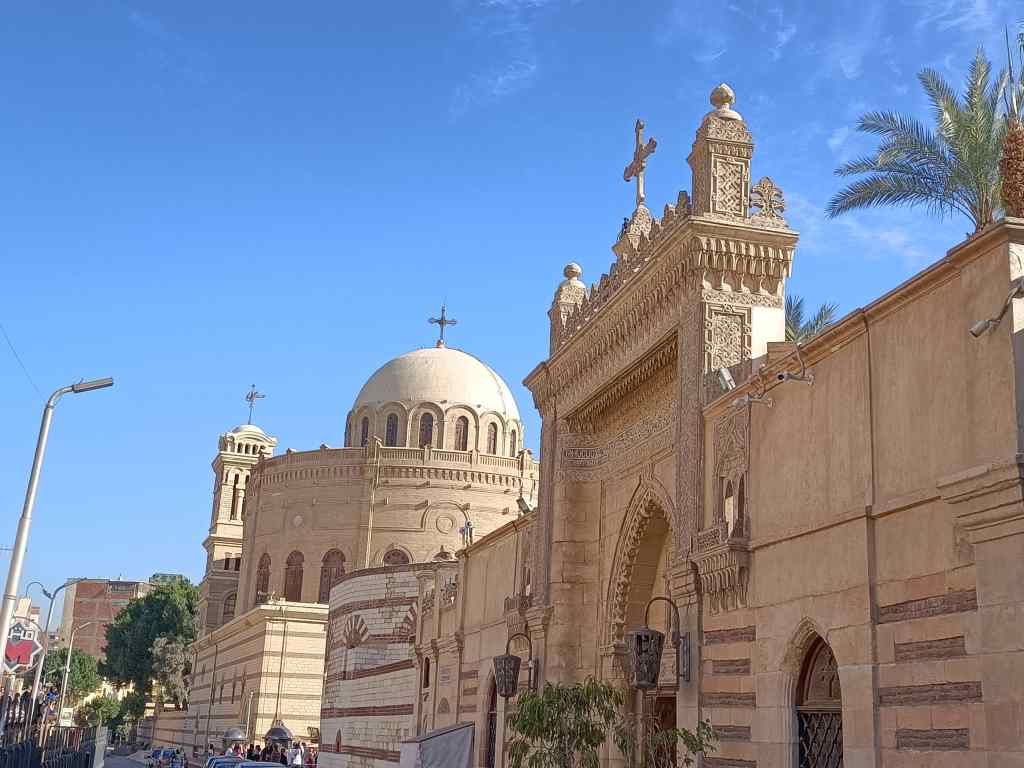
View of the main street of Coptic Cairo

Coptic Cairo is a small enclave of old Cairo which houses many churches, but also the Coptic Museum, a synagogue and a mosque. To get in, you need to pass through a bag check and every hundred metres in the main street, armed police were stationed. Egypt has had a long history of bloody terrorist attacks, and security for any area that draws crowds is always tight.

Once through the security check, it was like entering a different world. The anarchic traffic of Cairo was replaced by one empty central street (cars are not allowed in) and a wonderful calm. I started my visit at the Hanging Church, so called because it was built on top of the gate of an old fortress. The church was originally built around 690AD, though a new façade with two bell towers was added in the 19th Century. It is probably the most famous of Coptic Cairo’s churches.
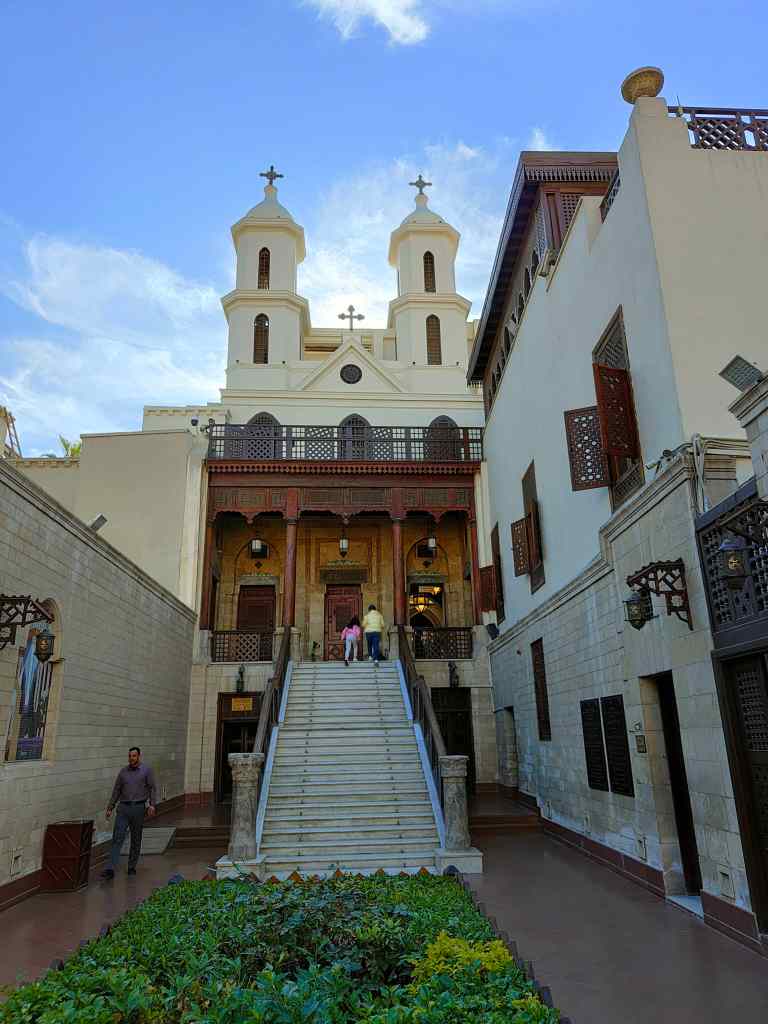
The Hanging Church

Next, I found the Greek Orthodox Church of St George

Church of St. George

And then the Coptic Museum, which I strolled around for about an hour. It had collections of Coptic art, icons and fabrics; the old building it was housed in was as interesting as the collections themselves.
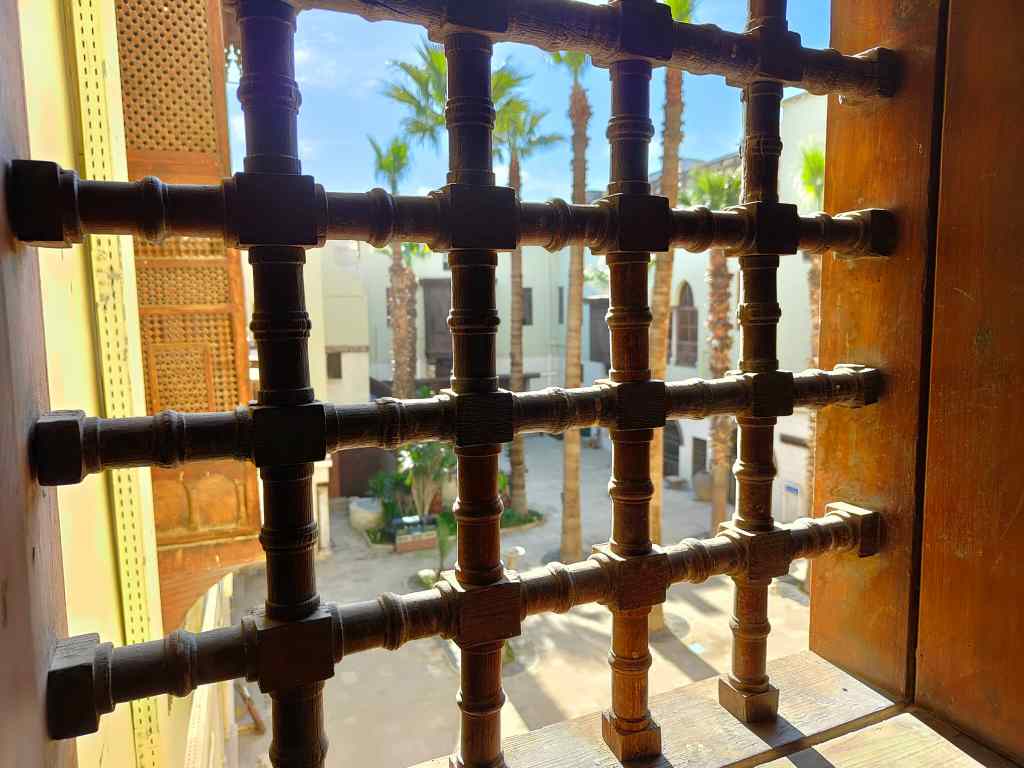
Looking out from the Coptic Museum
In the courtyard of the Coptic Museum

Finally, leading off from the only road, I found a little maze of side alleys, leading to yet more churches and a synagogue. When I arrived, Coptic Cairo had been quiet, but now there were many visitors – some Egyptians on a weekend outing, and some foreign tour groups, which mostly seemed to be Russians.
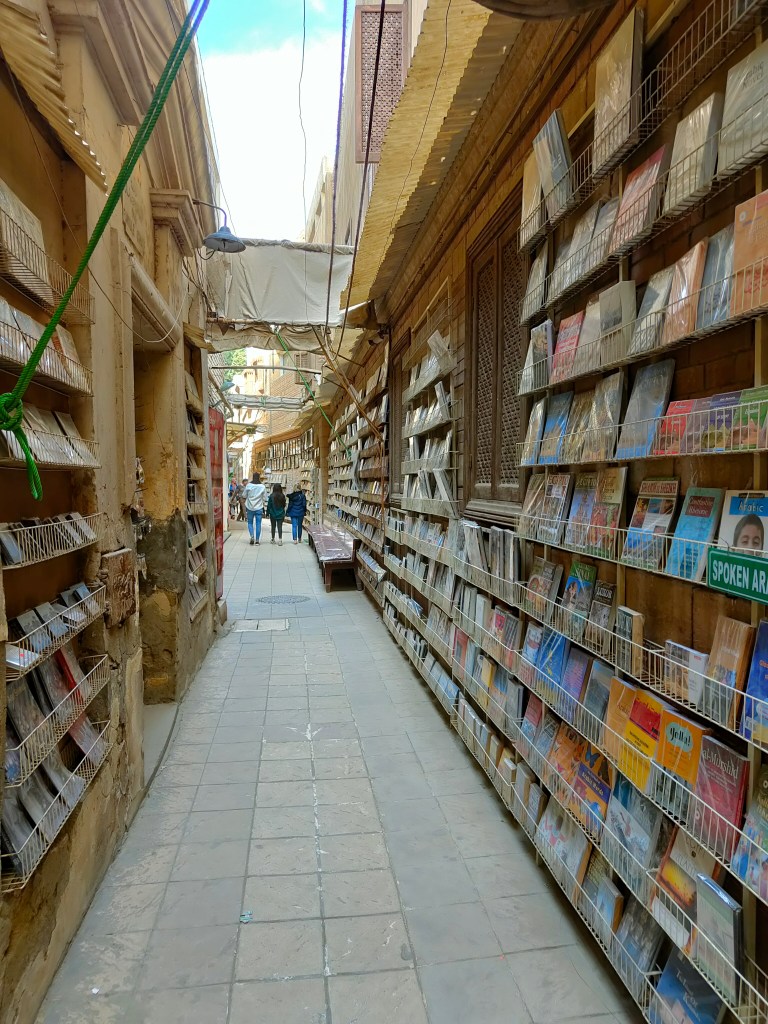
Bookseller in Coptic Cairo

It was time to move on, and I grabbed an Uber back to my hotel to pick up my bags and then another one to the airport. It was Friday, the first day of the Arab weekend, so everything went very smoothly with no traffic jams. At the airport I was treated to one of the toughest security checks I had ever had – shoes, belt and watch all had to be removed and scanned, and then I was thoroughly “frisked” for concealed weapons in my fur.

The flight flew over endless yellow desert sand, interspersed with a few mountains. Occasionally I caught a glimpse of the blue ribbon of the river Nile lined with bright green vegetation on both banks.  I arrived on time in Aswan, a town on the Nile that was the historic boundary between the ancient Egypt of the Pharaohs and the rival Nubian state. The latter enjoyed brief periods of independence but spent most of its history occupied by, or subjugated by, its more powerful southern neighbour. Today, Aswan is also known for the famous Aswan dam.

My guest house was on Elephantine Island, a place only accessible by boat. It has several ancient ruins, one ugly modern hotel, and many small townhouses. Some of these were painted with distinctive Nubian bright patterns of coloured geometric shapes. My guest house was on the other side of the island, and its owner picked me in his motor launch to take me there. It was the first of many times I got to experience the pleasure of sailing on the Nile.
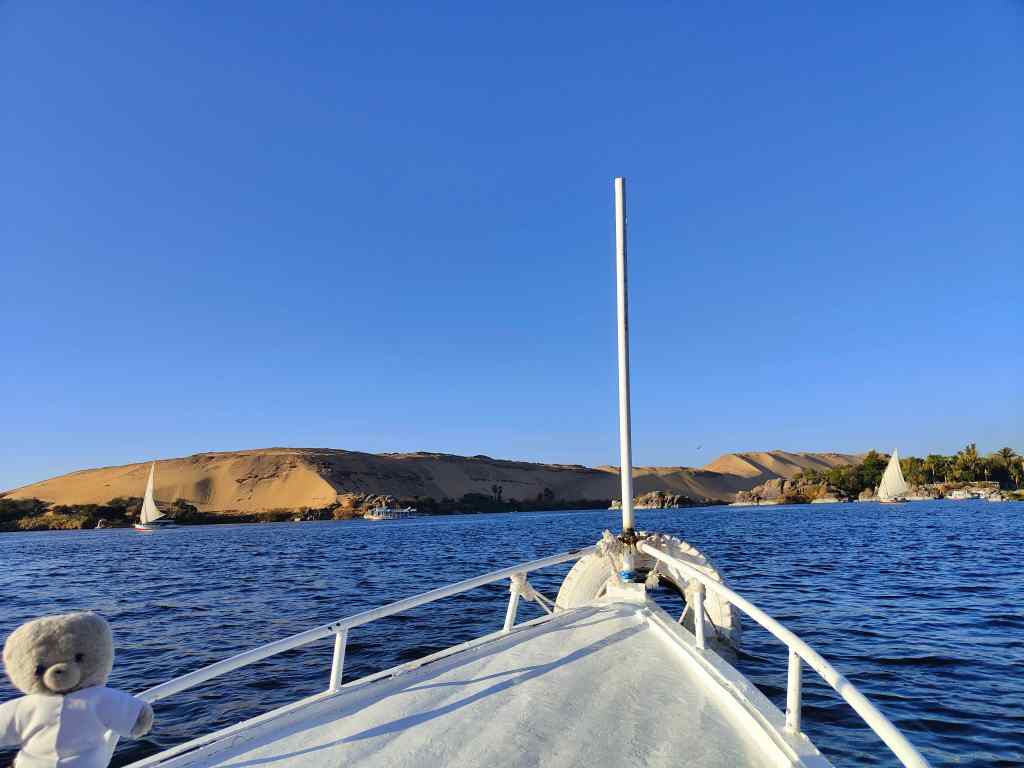
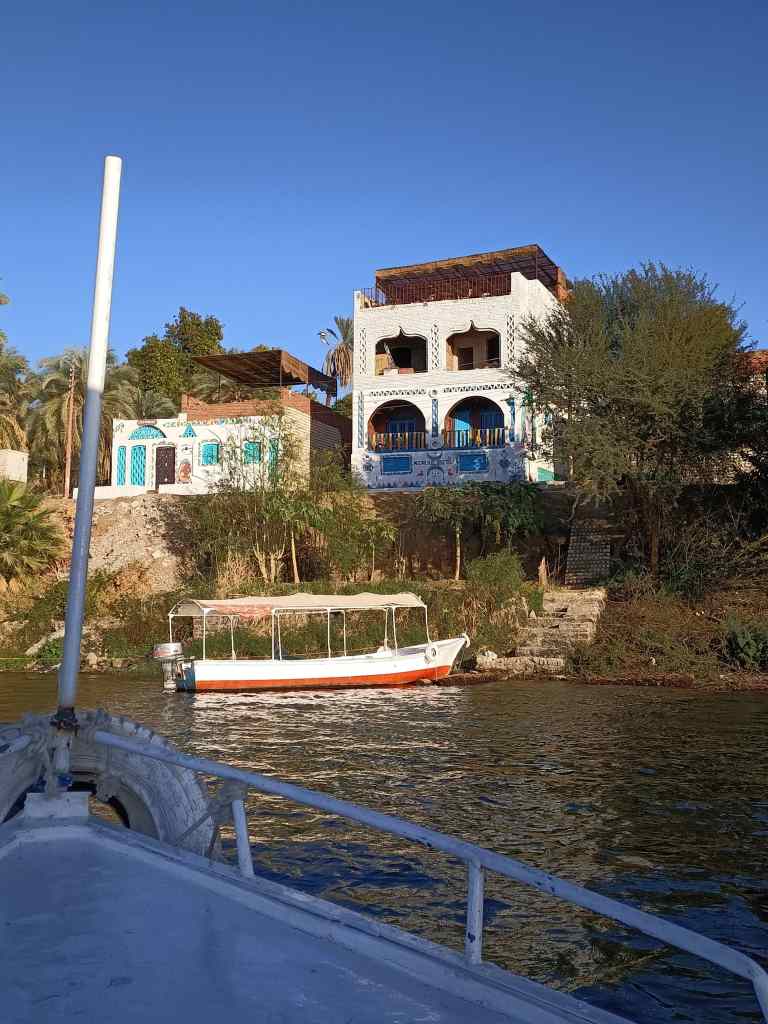
On the way to my guest house at Aswan……
…..and arriving (my guest house is on the left)

I arrived just in time to have a welcome drink on the roof terrace.  The view was beautiful, and the owner pointed out local landmarks like the Mausoleum of the last Aga Khan (head of the Ismaili Muslim sect) and the Monastery of St Simeon. After the chaos of Cairo, it was wonderfully peaceful……if rather chilly after sunset. I was glad of my fur!

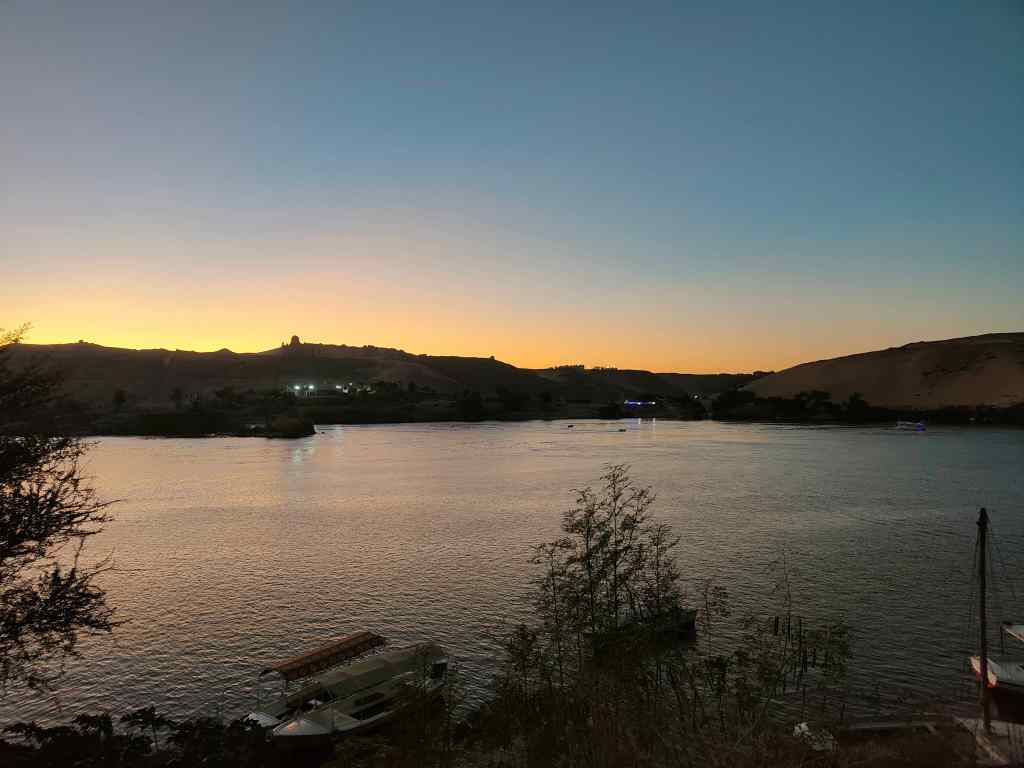
The view from my balcony, Aswan
The sun sets over the Nile, Aswan

I decided to explore the island and see if I could reach the hotel, which had a panoramic terrace and bar in its ugly modern tower. I walked through a maze of twisting and turning small streets with no names…amazed to find that Google Maps could navigate through the area. When I had nearly reached the hotel, someone told me that it was surrounded by a wall and only accessible by special ferry from the main city. Instead I found a restaurant at the river’s edge, and enjoyed a beer watching the lights of Aswan city in the distance and listening to the boats chugging past.

I had dinner back in my guest house, and enjoyed freshly caught Nile perch……..
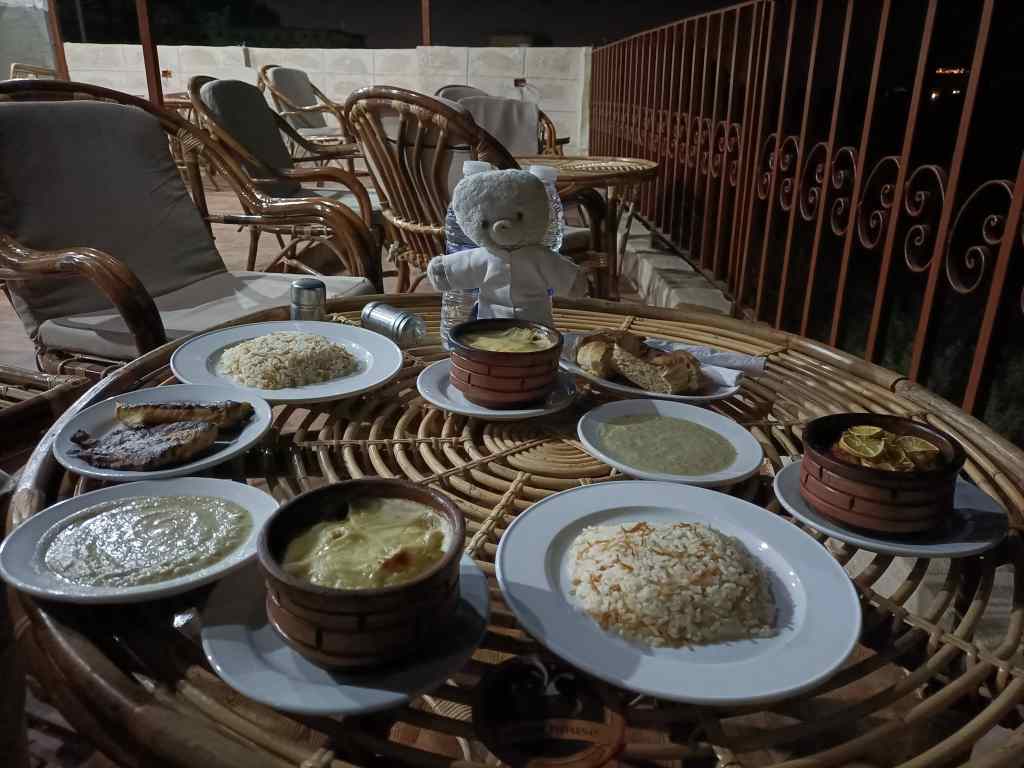
A feast of fresh Nile Perch

…… before wrapping myself up in warm blankets in bed.

Next Post: A day on the Nile

Previous Post: A Bear in Cairo
ABC – A Bear in Cairo

The Bear is Back!

This trip is to Africa, to Egypt.  I want to get away from the cold in the UK and get a little bit of sun. My first stop, almost inevitably, is Cairo. My flight arrived on time and I breezed through the formalities of getting my visa on arrival and a sim card for my phone. I was soon sitting in a taxi, expecting to be stuck for hours in Cairo’s famous traffic jams – but instead I reached my hotel in only forty minutes.

The next morning, I set off for Cairo’s most famous attraction – the pyramids at Giza, a suburb of the city. Getting there was fun. First, I took Cairo’s metro. This was built recently, with the first line opening in 1987, but already looks rather tired and run down. However, it works well and soon I was at Giza metro station, where several polite Egyptians helped me find the minibus that went to the pyramids. On arrival I joined a queue of people jostling to buy entrance tickets, and then filed in together with many other visitors – mostly Egyptian.

The pyramids and Sphinx from near the entrance to the Giza site

From the entrance to the Giza pyramids was a walk of about 500m up a hill. Every few steps I was proposed a horse or camel ride, and having to dodge other visitors, avoid horse droppings or carts rushing past made the climb something of an ordeal.

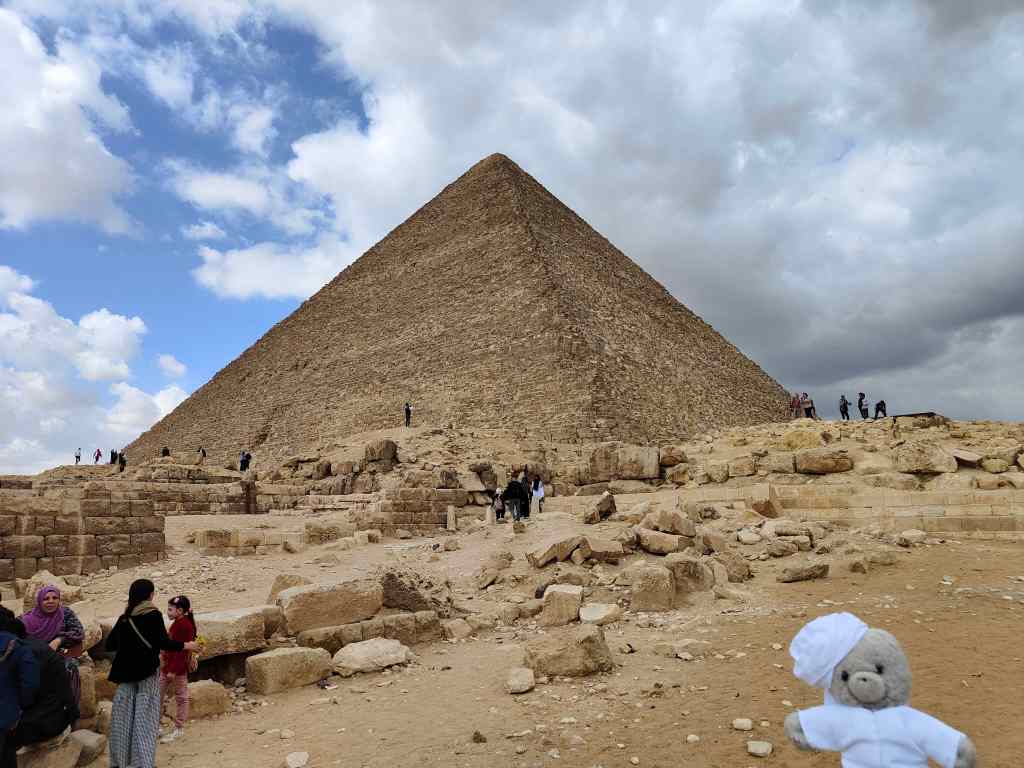
I finally got to the base of the Khufu Pyramid, the largest pyramid (although its neighbour, the Khafre Pyramid looks taller because it was built on higher ground). As expected, the “Great Pyramid” was an awesome sight.

The Great Pyramid of Khufu
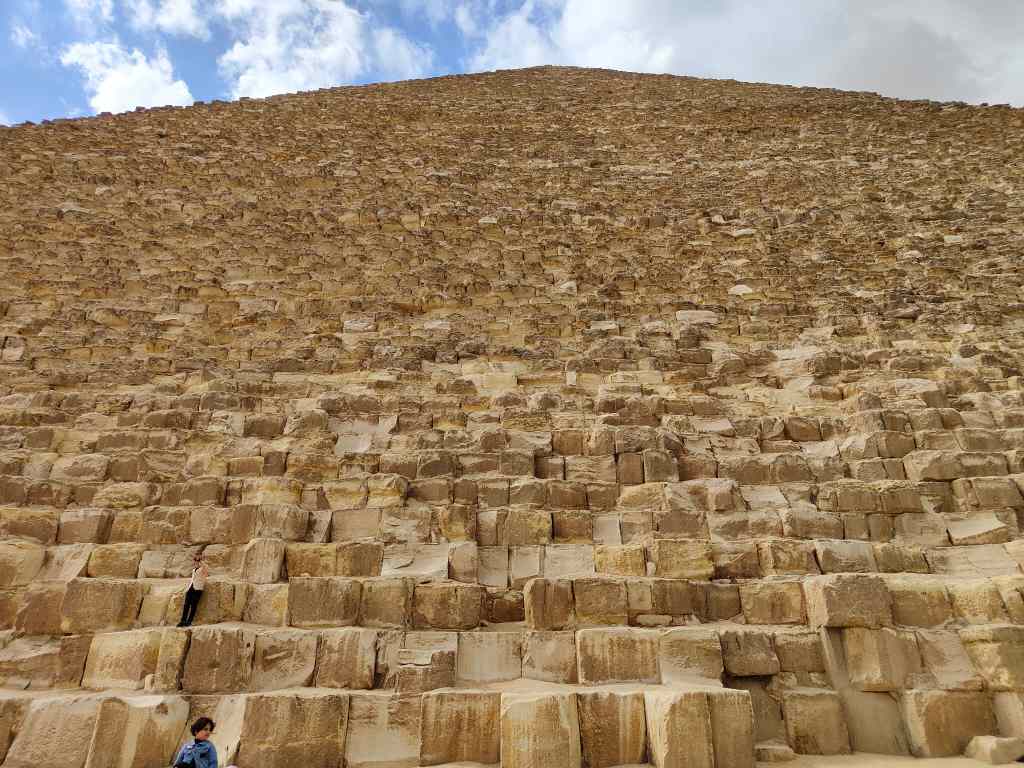
Makes you feel small (especially small teddy bears)

It is hard to believe that over 4,500 years ago, human beings had the ability to build something so massive – 2.3 huge blocks of stone, weighing 6 million tonnes in total. It remained the tallest man-made structure in the world for 3,800 years.

I had invested in a ticket to visit the inside – a narrow, low path through the rock climbed steeply into the heart of the pyramid. It was a hot and humid inside and I had to squeeze past people coming the other way – not a place for people with claustrophobia.

Into the heart of the Great Pyramid

Finally, I reached an unremarkable chamber where the king’s equally unremarkable sarcophagus stood. I am sure that this will not be the highlight of my trip, but at least I can say I did it.

The rather disappointing burial chamber of Pharaoh Khufu

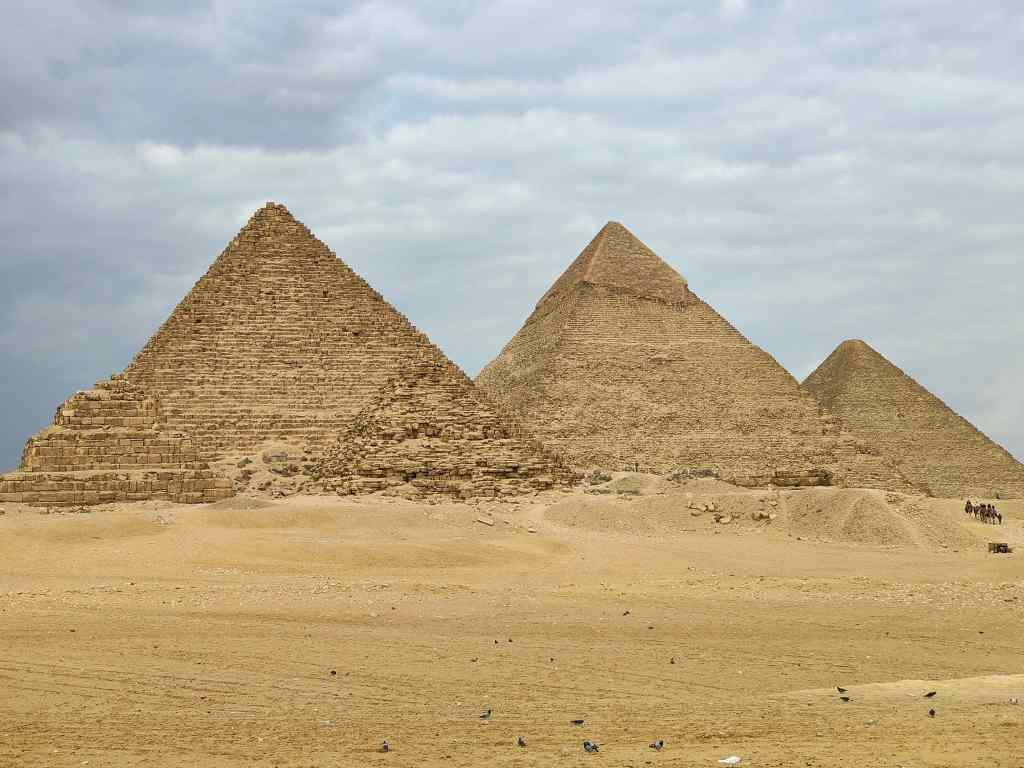
From the Great Pyramid I walked around to the Khafre Pyramid and then into the desert to a panoramic view point as camels and horse-drawn carriages sped past me on either side. Again, the walking was hard going – this time from walking through dirty sand littered with camel droppings and discarded plastic bottles.  I was rewarded with a wonderful view of the three pyramids, without the crowds this time.

The definitive photo of the pyramids at Giza
Finally a view without Giza’s usual crowds

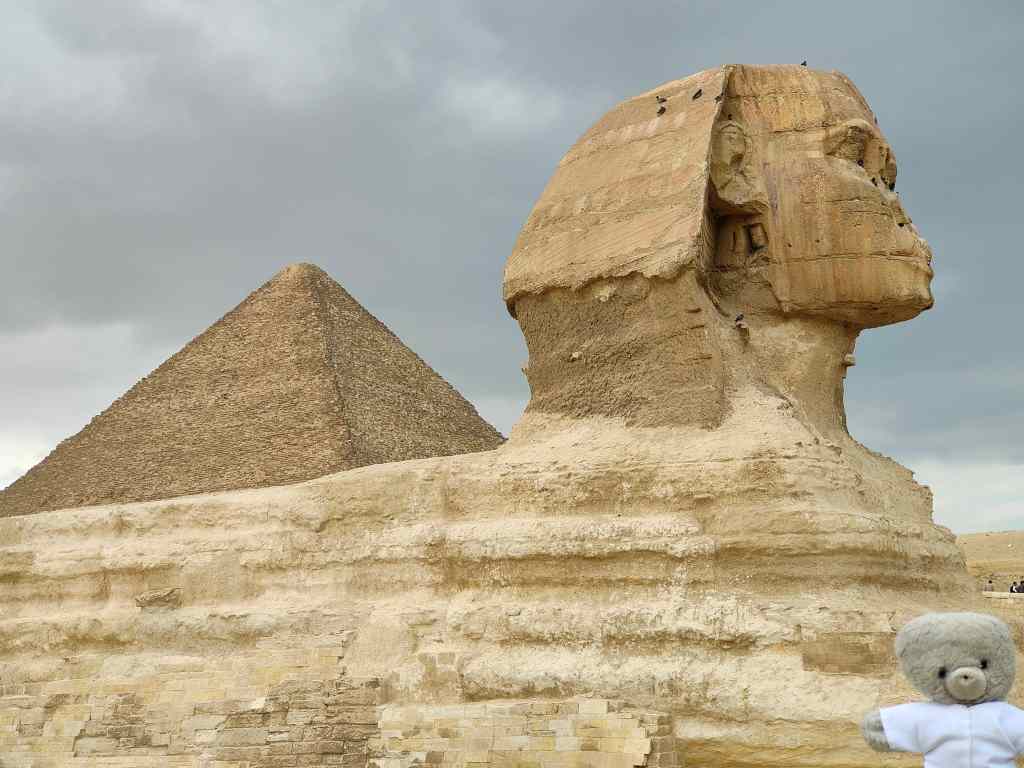
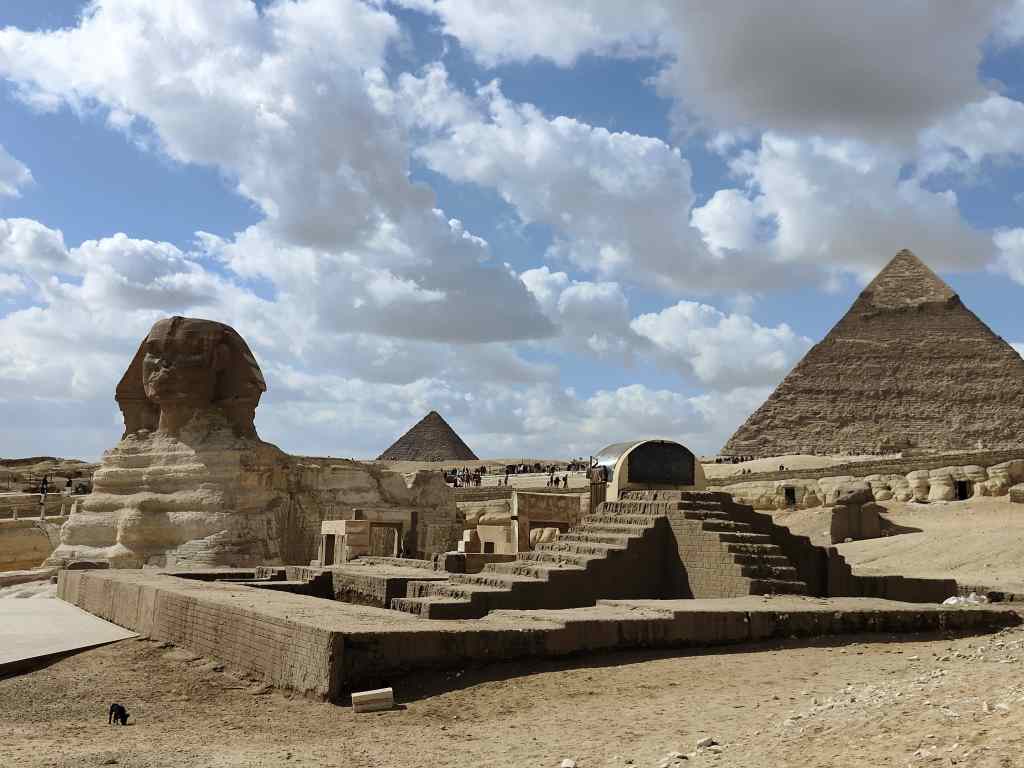
I headed back to main entrance, passing the famous “Sphinx” on the way – which in real life looks a lot smaller than in photos. 

My new friend the Sphinx, Giza

To get back to the centre of the city, I tried Uber and found that it is by far the best way to get around Cairo. Cars arrive quickly, the “comfort” category ones even have rear seatbelts (a rarity in Egypt), and even after a generous tip, the rides are so cheap that you feel very sorry for the drivers. Forty minutes and $5 later I was back in the centre of Cairo in front of the impressive exterior of the Egyptian Museum.  

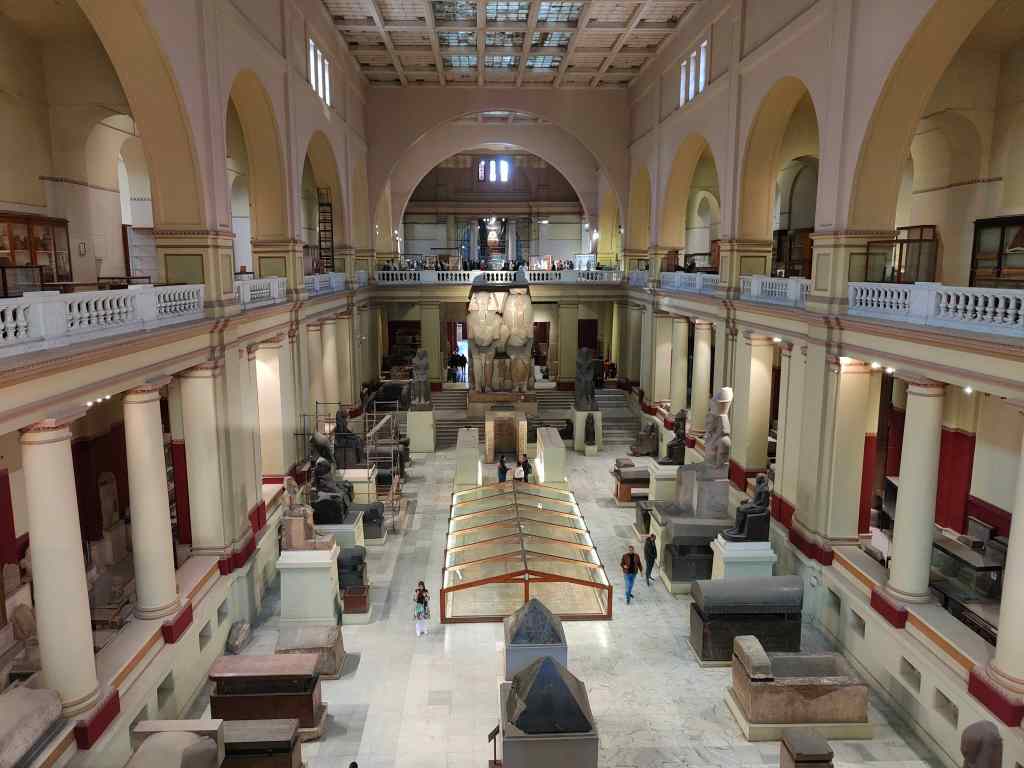
Inside, on a first impression the place had an abandoned feeling, like the home of an elder relative who hoarded their possessions throughout their life. Sometimes items were described in Arabic, English and French, sometimes in Arabic and English, sometimes in Arabic only, sometimes not at all…….and once in Braille only. A huge new museum to house Egypt’s archaeological treasures is scheduled to open sometime (its opening has already been postponed by several years), so this might explain the apparent neglect of the current museum.

The Entrance Hall of the Egyptian Museum, Cairo

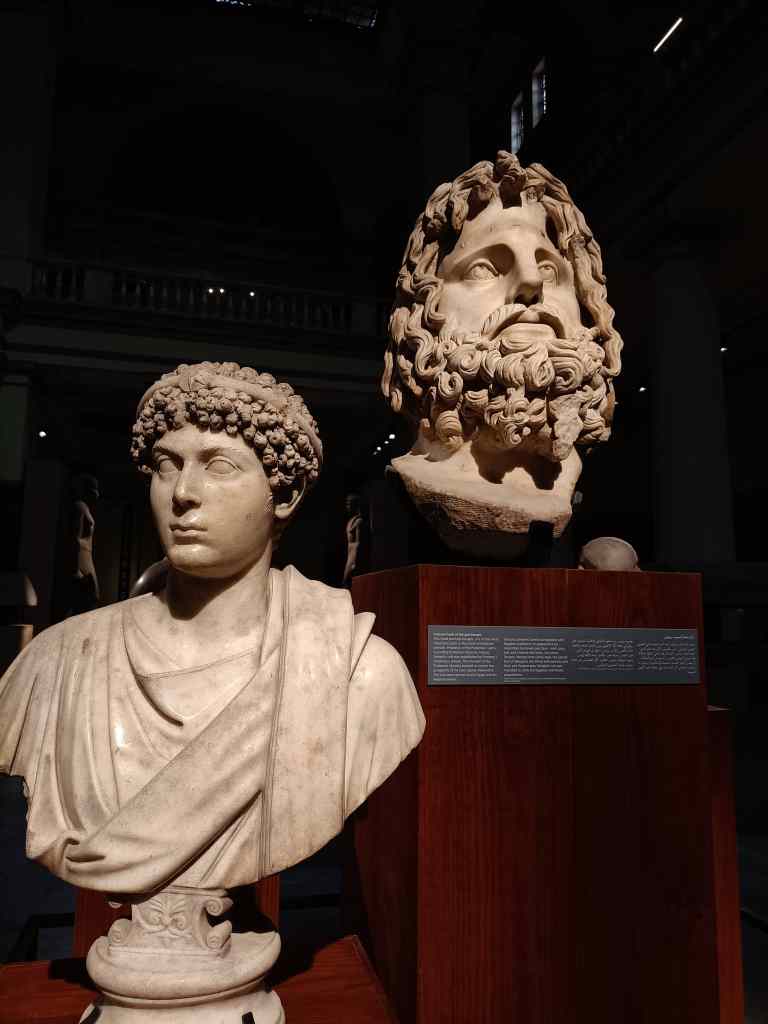
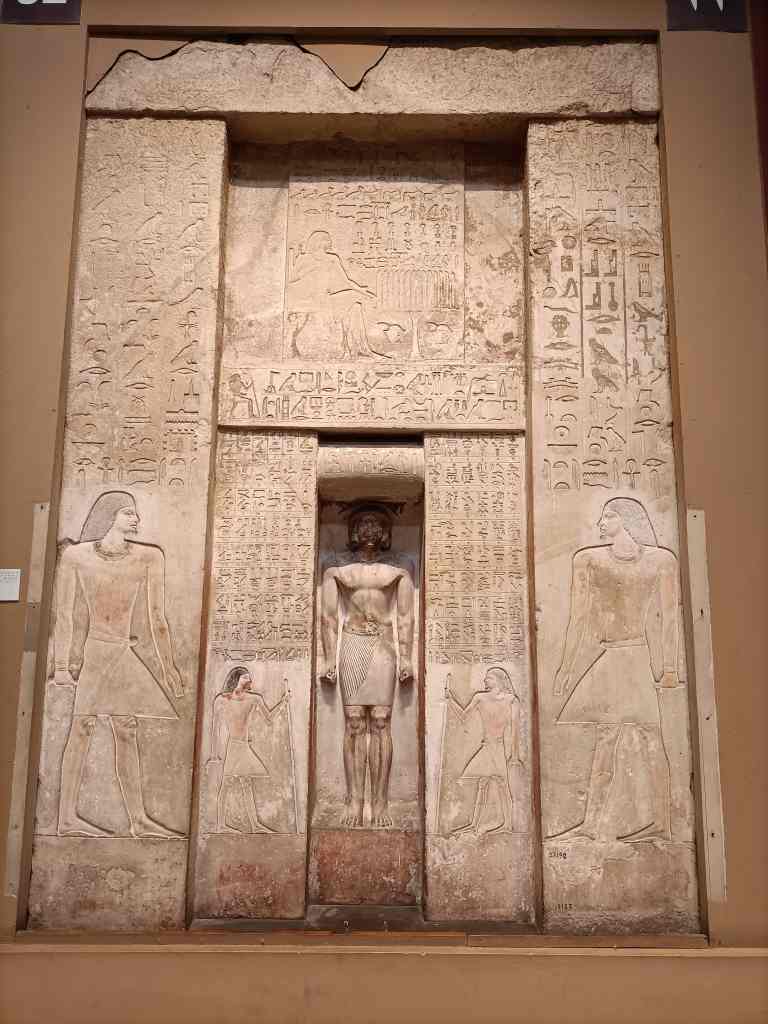
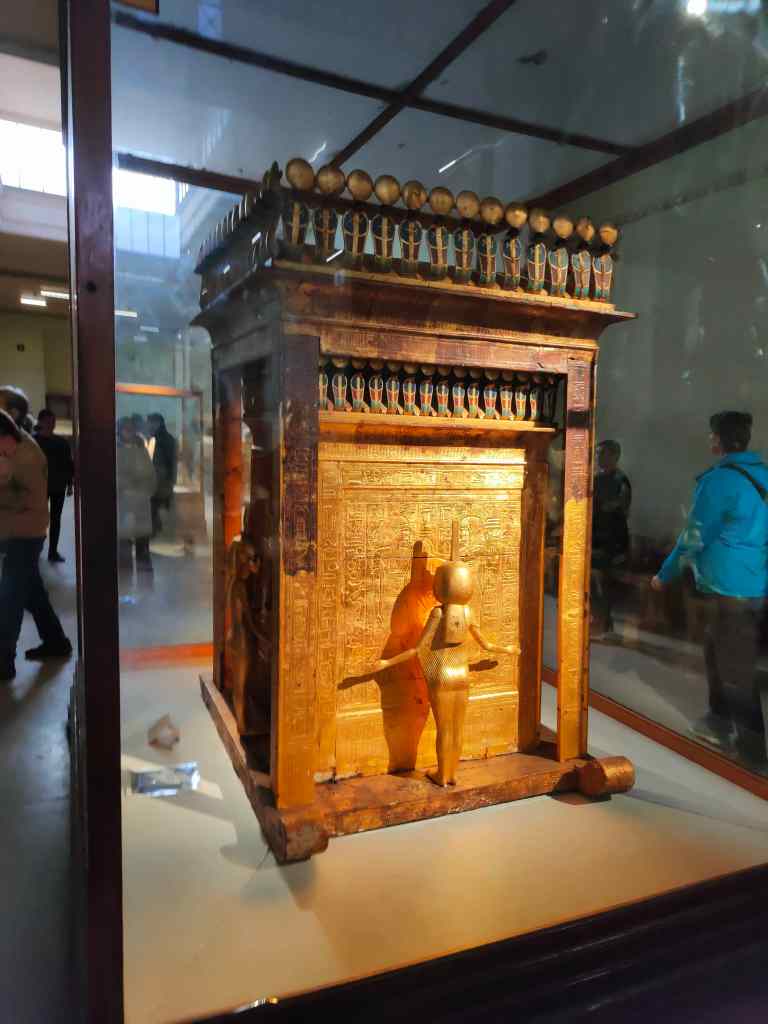
However, once I started exploring, I loved the place. I wandered around dimly lit corridors, stumbling upon treasure after treasure. Being able to hunt out exceptional items for myself, became part of the fun.

Some of the Egyptian Museum’s treasures

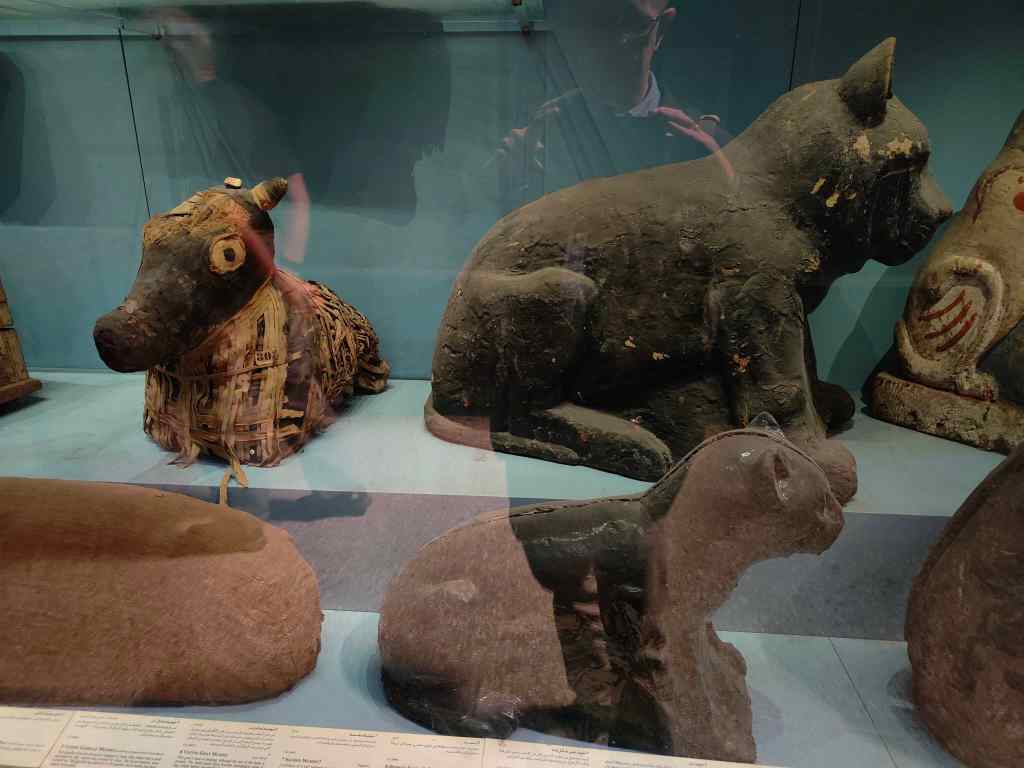
In most of the rooms there were few visitors, but the presence of a crowd announced the museum’s highlight – the contents of Tutankhamen’s grave (photos not allowed sadly!). Here the display and lighting were perfect, and despite the queue, the items on show dazzled me – not just the famous death mask, but also his jewellery and two coffins. After this memorable sight, I continued to wander around the museum, enjoying lesser-known exhibits like the mummies of the Pharoah’s pets and farm animals (cats, dogs, cows and even one mummified crocodile. At closing time, I sneaked back to the Tutankhamen display for a second look, and enjoyed having the room almost to myself.

Mummified pets in their coffins, Egyptian Museum Cairo

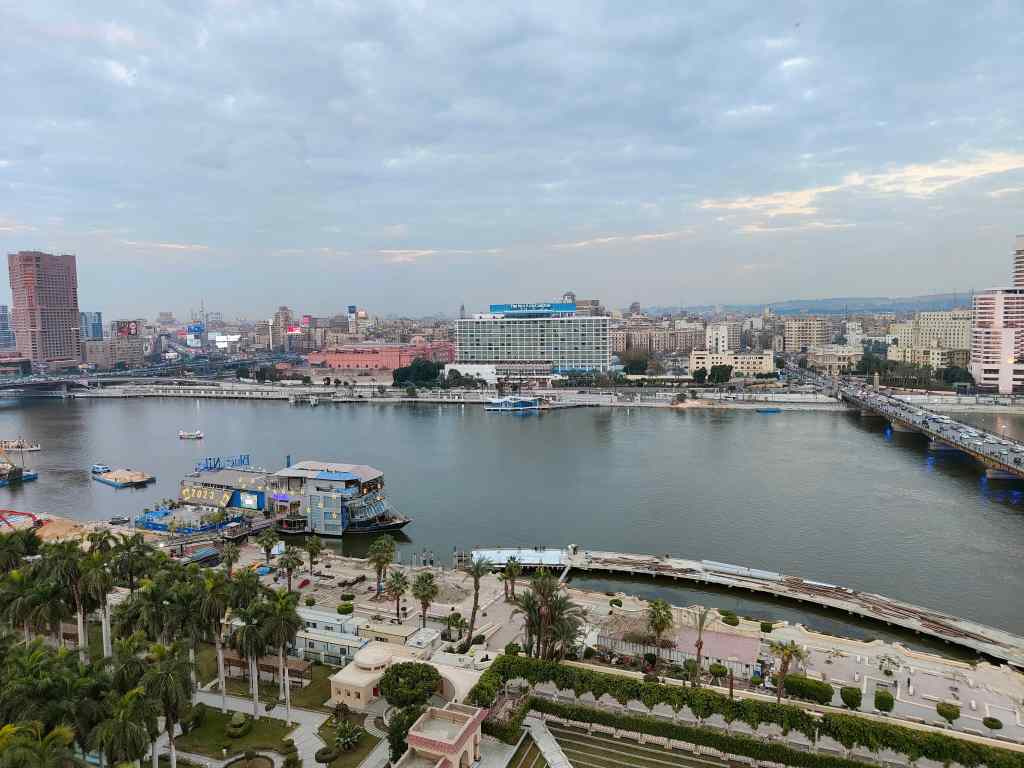
I headed back to my hotel and enjoyed the view of the Nile with a non-alcoholic cocktail from the roof terrace.

The view from my hotel, Cairo – note the “Blue Nile” boat which will feature in my next post

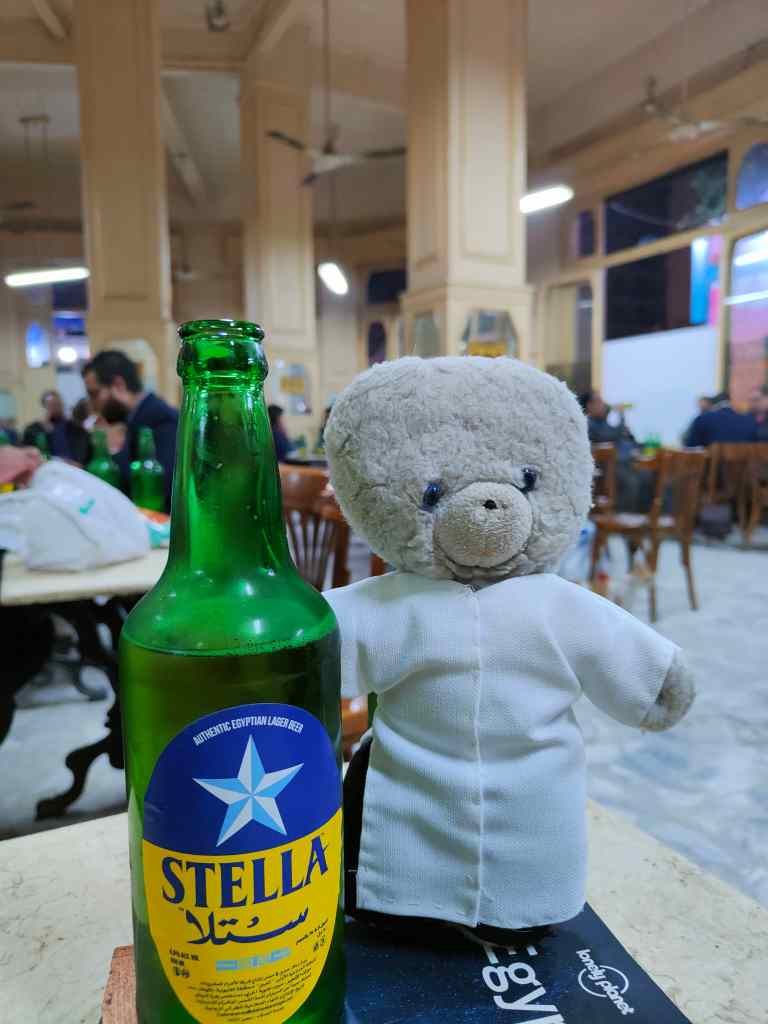
I then headed off to Cairo’s downtown in search of beer – which is not widely available. Outside of high-end hotels, alcohol is served mainly in rather seedy bars. I chose the most respectable looking one and was given a cold beer as soon as I had sat down – beer being the only thing on the menu. The local brew Stella turned out to be perfectly drinkable. 

The local beer Stella in one of the more respectable Cairo bars selling alcohol

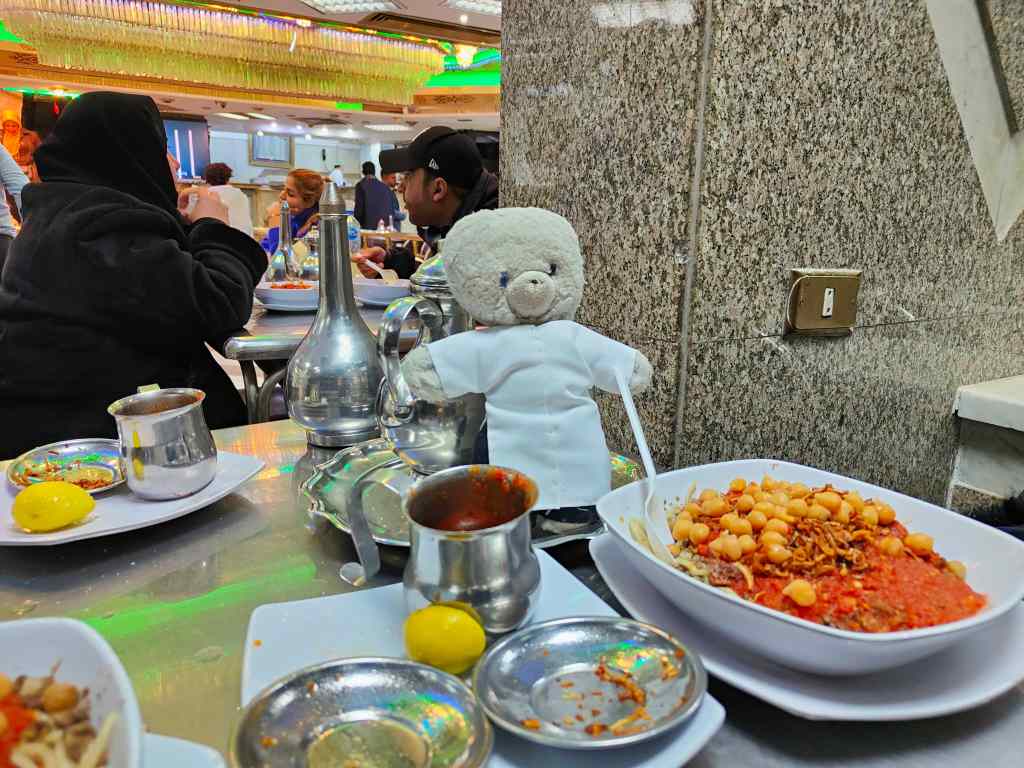
Dinner was “kushari” – a vegetarian dish made with chickpeas, lentils and pasta in a spicy tomato sauce, prepared by the waiter in front of me with a splash of showmanship. I asked for the bill and was just about to pay what I thought was a very reasonable 227 Egyptian Pounds (7€) when the waiter apologised and said he had made a mistake. I was astonished when the bill for my large meal for two (bears have big appetites!) came back as 127EGP or 4€.

Kushari in Cairo

Back at my hotel, I settled down for a quiet night. I had seen one of the wonders of the world – the pyramids and the Sphinx. But I had a nagging feeling that I had simply ticked off an item from Egypt’s (or the world’s) “must see” list rather than actually enjoying the experience. The Egyptian museum, on the other hand, was an unexpected gem of a place, and Cairo’s downtown was chaotic fun.

Next Post: From Coptic Cairo to Aswan

Blog at WordPress.com.

Up ↑