The Banks Peninsula, Akaroa and Dolphins

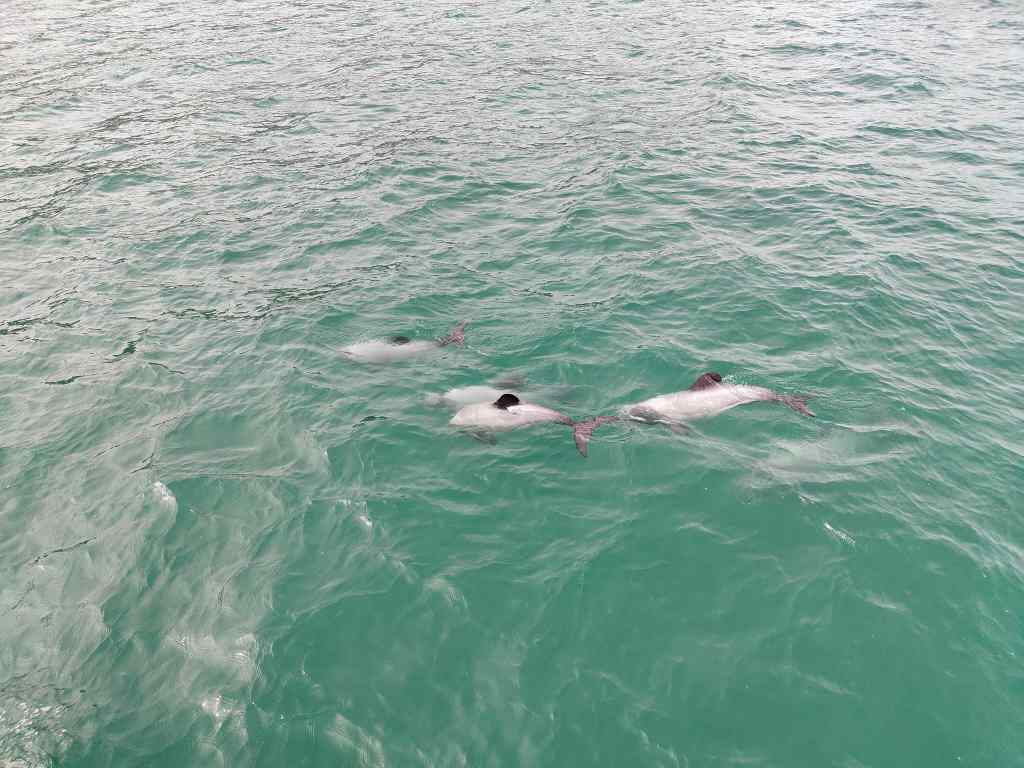
Dolphins in the sea near Akaroa

Today I made a day trip from Christchurch to the Banks Peninsula, which was named by Captain Cook after the famous botanist Joseph Banks who sailed with him, and who particularly enjoyed taking samples of the area’s rich vegetation. My destination was the small town of Akaroa on the very tip of the peninsula. When I checked on my computer, the distance (85km) and time (90mins) for the trip were much longer than I had expected, so I hurriedly got dressed and set off. The trip took even longer than scheduled due to some extensive roadworks on the way out of the city. New Zealand roads are generally in excellent condition and driving is usually a pleasure – except when you run into their very frequent road repairs. I realised that I would not reach Akaroa in time for the morning boat ride I was targeting, so instead I booked a later trip and enjoyed driving through the rolling green countryside (reminiscent of England or Scotland) and made a coffee stop at a cute, quirky village Banks Peninsula village called Little River.
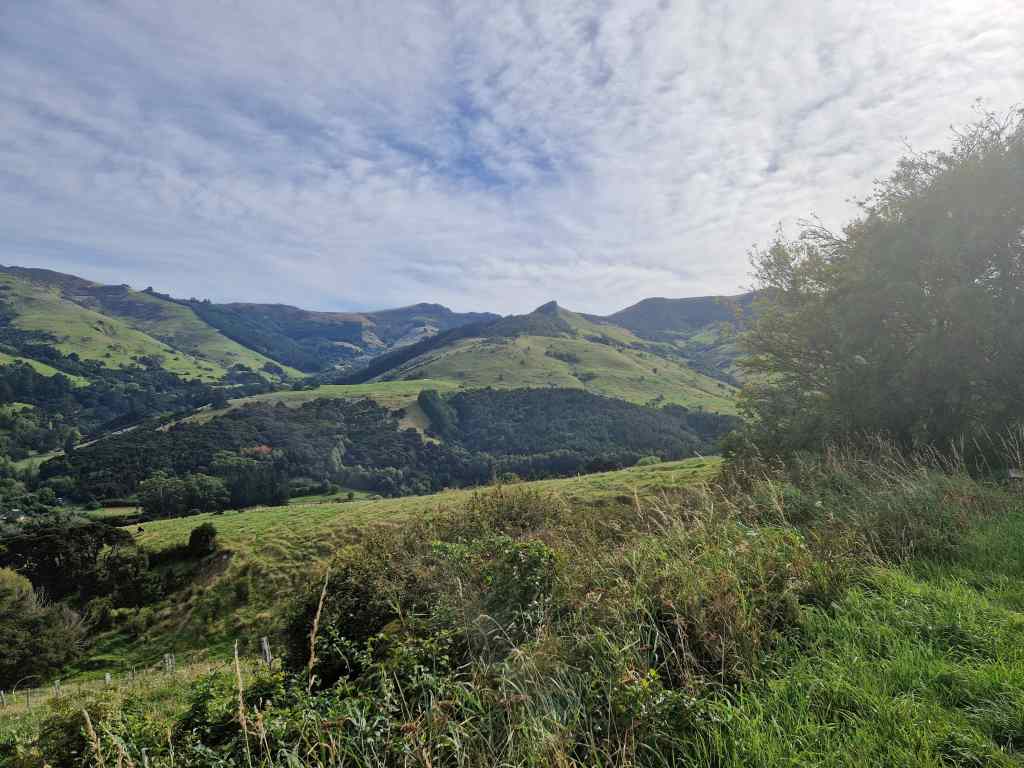
Lush Banks Peninsula scenery
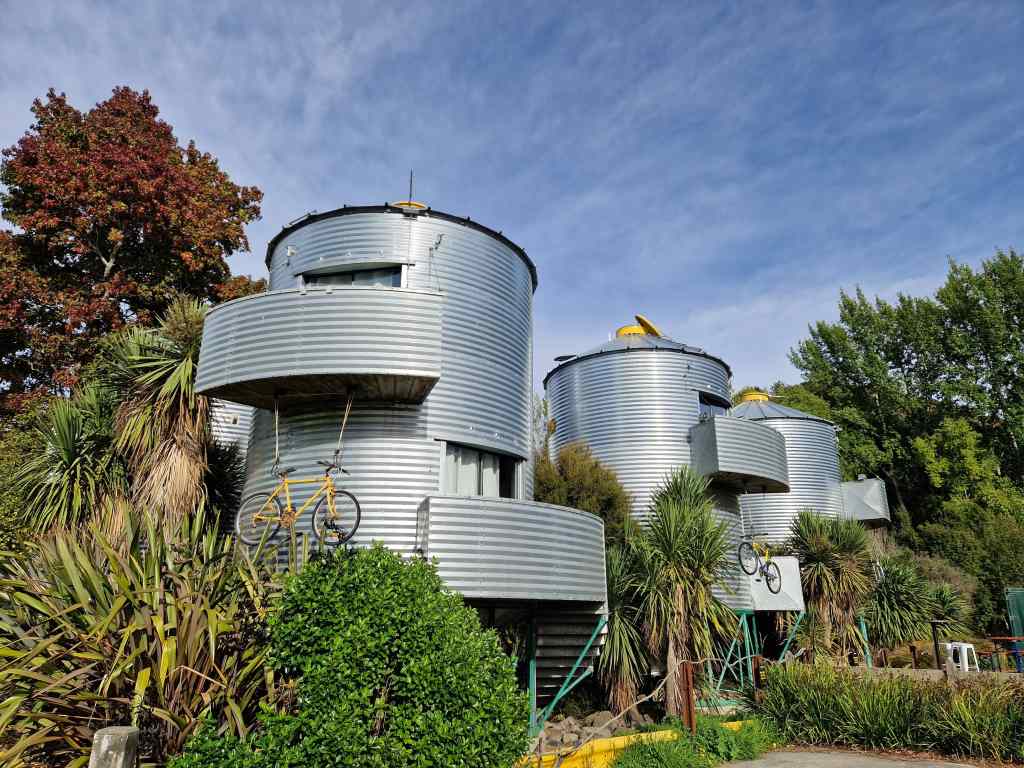
A quirky hotel made from agricultural silos at Little River

As I approached Akaroa the names of the settlements began to have a distinctly French feeling – Duvauchelle, French Farm. This is a reflection of the town’s interesting history. in 1838, a French whaler visited the place and bought land there from local Maori chiefs. He returned to France and recruited a group of prospective settlers with the aim of creating a French colony, and they set sail for their new home in March 1840. However, in May of that year, the British signed the Treaty of Waitangi with the main Maori chiefs, giving sovereignty over the whole country to Britain. The French ship made a stop on the North Island of New Zealand on the way, and the budding colonists let slip their plan to form a colony in a local tavern. Keen to quash any idea of competing territorial claims, the British immediately dispatched their navy to Akaroa and the French arrived to be welcomed by the union jack flying over the settlement and a warship in the harbour. After long negotiations, the British offered the settlers five acres of land each or safe passage back to Europe, provided they accept British rule. Most opted for the land and many of their descendants live in Akaroa to this day.

Akaroa, which means “long harbour” in Maori, is a very pretty small town strung out along a couple of kilometres of a….very long harbour. It was full of arty shops and cafes, and most of the street names were French.
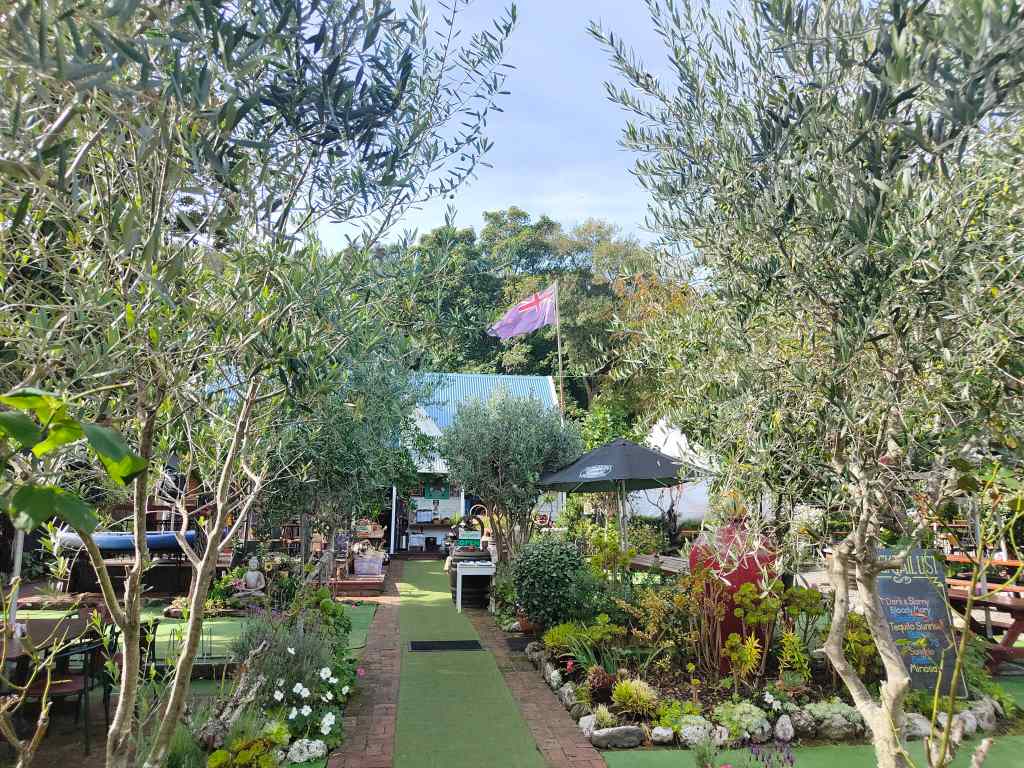
Cute café in Akaroa
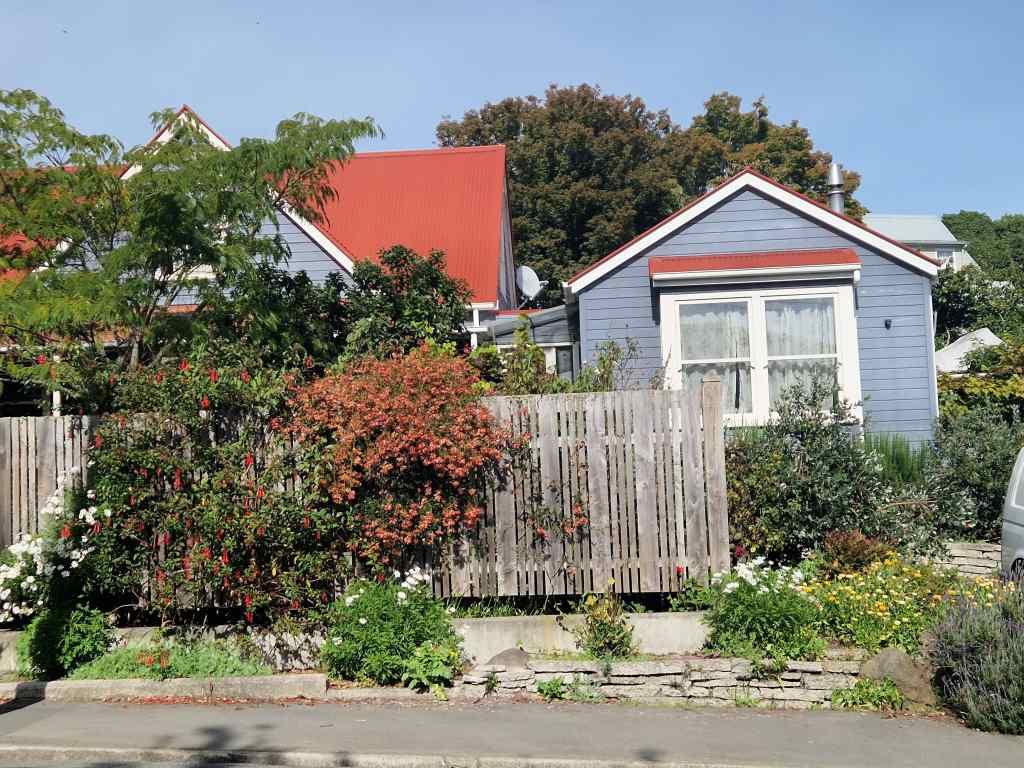
Little Houses in Akaroa

I joined a small group of other tourists for my boat trip and we headed out to into a large arm of the sea, which stretched inland between tall mountains covered with lush vegetation. Millions of years ago, this had been the site of a huge volcano, about as high as Mount Cook. It exploded and its centre collapsed back into the ground, forming a huge caldera which is now underwater. Today this body of water is home to a big variety of wildlife, including the main target for our tour – Hector’s dolphin, the smallest and rarest of the different dolphin species. Onboard our boat was Buster, the dolphin-sniffing dog, who was supposed to bark at the smell of marine mammals.
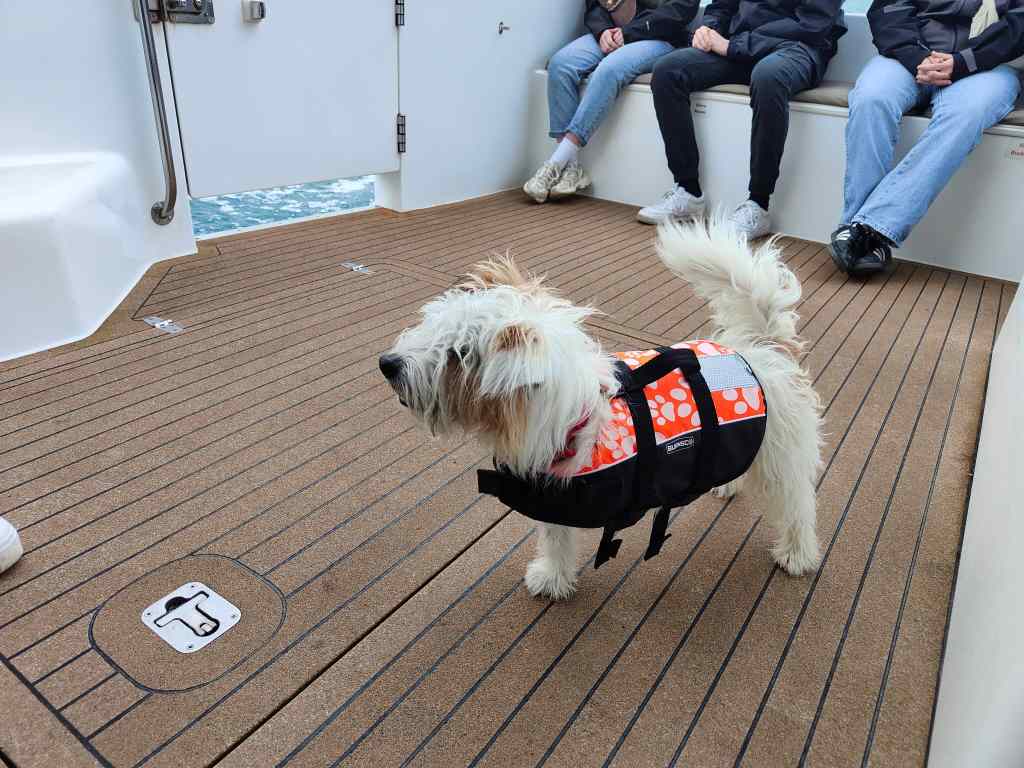
Buster, the dolphin-sniffing dog

I was not sure Buster was on top of his game, because he only barked twice – once at the start, for apparently no reason, and once when the captain’s assistant distributed cookies to the passengers. After half an hour we had the first of three encounters with a pod of dolphins. They seemed to busy feeding and largely ignored our boat.

We encounter our first dolphin

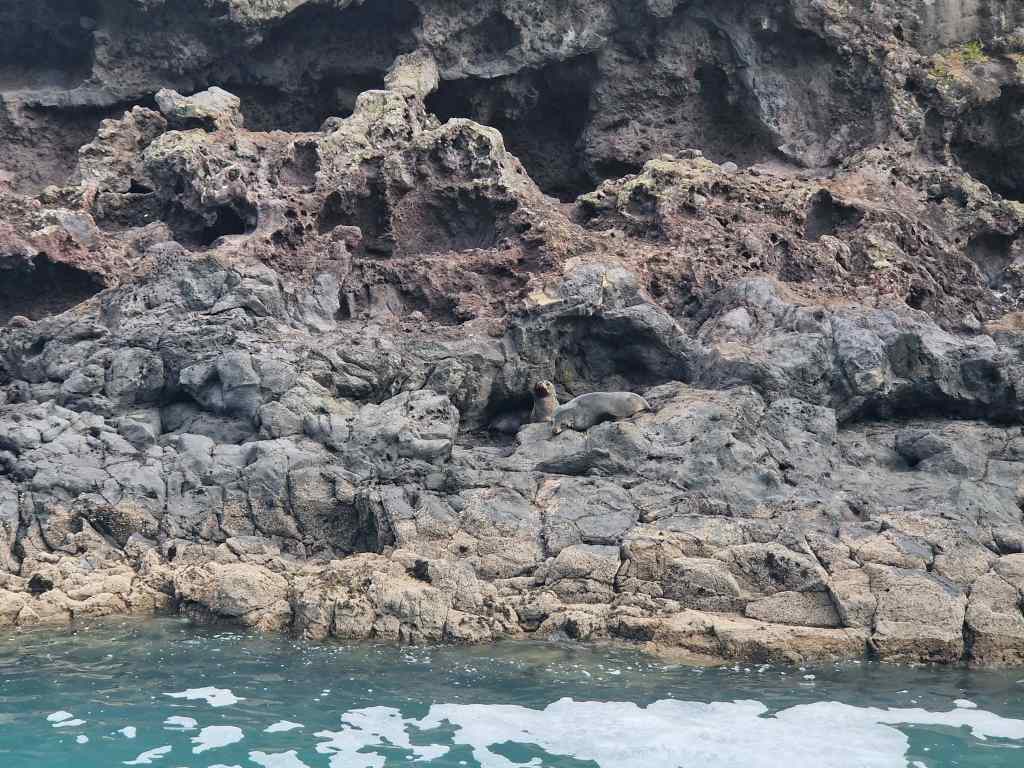
With our main objective completed, the captain showed us some of the pretty coastline in the area, including interesting rock formations and some seals.
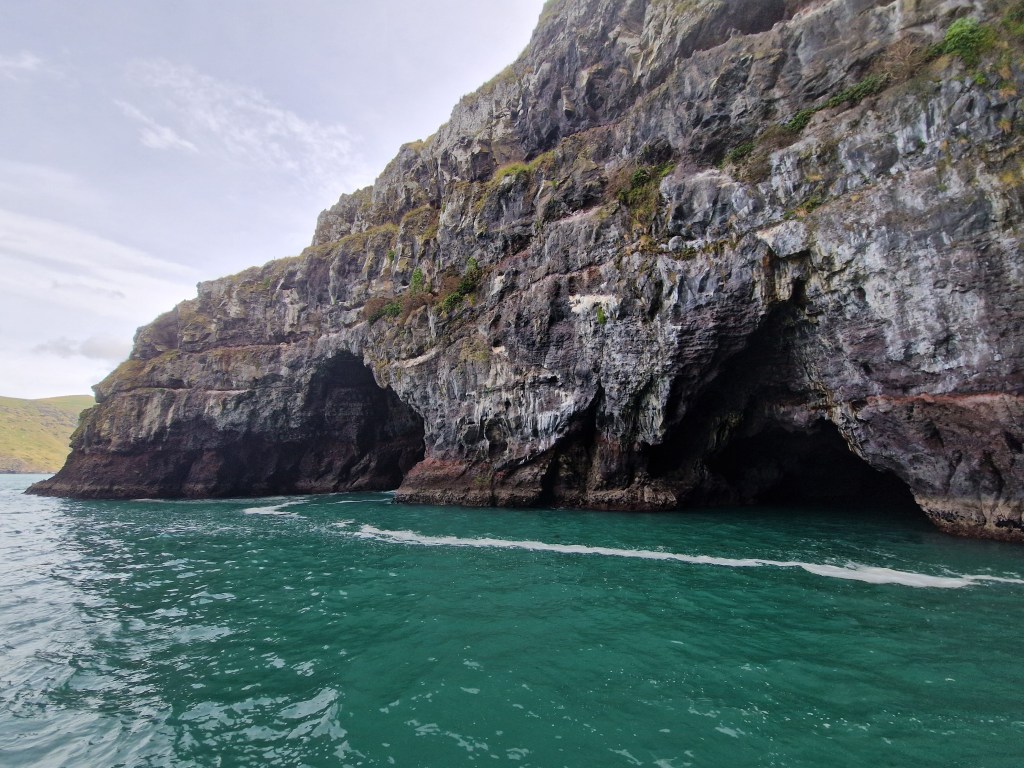
Sea scenery near Akaroa
Cliffs near Akaroa
Akaroa seals

On the way back, we had two more encounters with dolphins.

More Hector’s Dolphins, Akaroa

The bay is also occasionally visited by killer whales and penguins, but we didn’t see any.
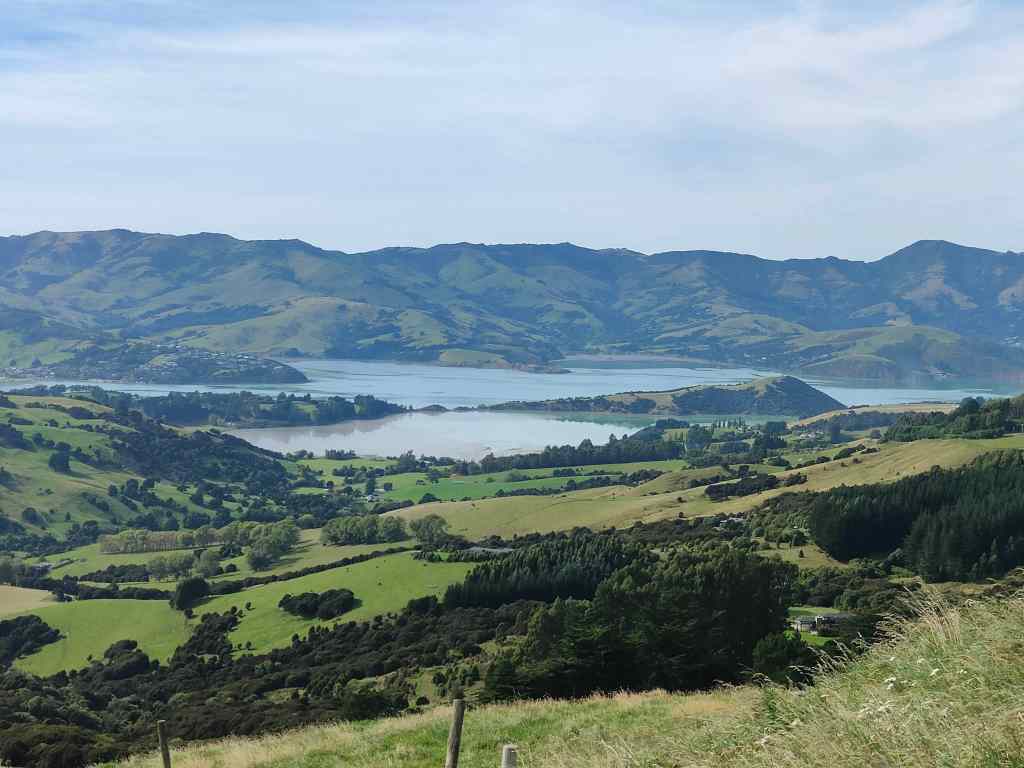
A view from the scenic drive, Banks Peninsula

On the way back from Akaroa I took a scenic route which led up to the mountains surrounding the bay, for some excellent views of the area. It was a good way to end a very laid-back, relaxing excursion to an area with a wonderfully colourful history.

Next Post: Kaikoura, lobster and blue whales

Previous Post: Christchurch
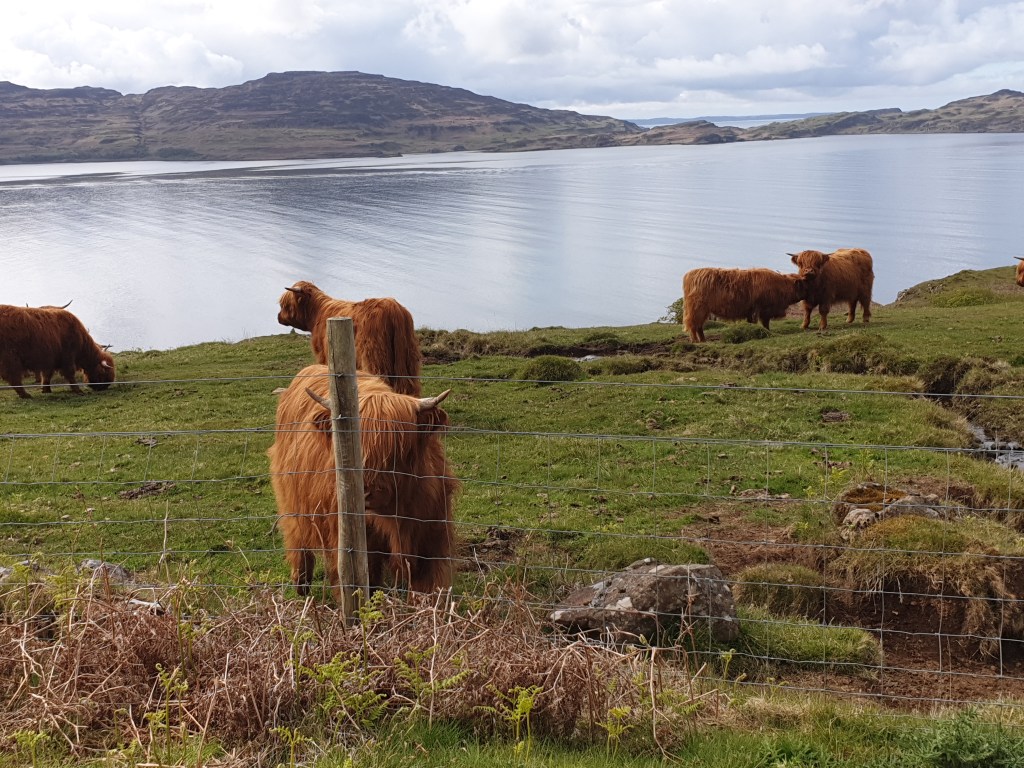
A rally around Mull

Today I had a simple plan – to explore the small coastal roads on the west of Mull,  before reaching the port of Fionnphort, from where I had booked a boat trip to Staffa Island, with its famous Fingal’s Cave.

I set off early, aiming to have about an hour free for a leisurely lunch before the boat trip started at 12.15.  The coast road was pretty, very narrow, and very wild. I stopped several times to take photos. 

Driving along the west coast of Mull
Calgary beach on Mull’s north west coast

There was very little traffic, but after an hour, I met a large 4×4 coming the other way and ducked into a passing place to let him past me.  The driver stopped alongside me and told me that the road ahead was closed for roadworks, and would remain closed for over an hour, and that he had decided it would be quicker to turn around and try another route.  He asked me where I was headed and raised his eyebrows when I told him Fionnphort – it was obviously no longer easy to get there.  After a bit of thinking he advised a route through somewhere called Dervaig and reconnecting with the main road that skirted around the east of the island. 

I considered my options quickly.  If I carried on, I would probably be late for my boat – but I might have a chance if the roadworks were quicker than the man had said.  On the other hand, I had no idea how long the new route would take – there was no phone connection and so no chance to judge the time on Google Maps.  My car’s Satnav was also useless – it refused to consider any option other than the way I had been going. All the same, I decided to take a chance with the huge detour that had been recommended.  After fifteen minutes I found the junction for Dervaig, and regained phone connection.  Google estimated my ETA at Fionnphort as 12.20 – five minutes late, and the satnav had now also recalculated the route with an arrival time of 12.15.   I might make it!   I put my paw to the floor and hurtled along the tiny road leading through Dervaig, grimacing as the car wheels hit potholes or the bottom of the car scraped on the surface of the road.  

Google and Satnav gave continuing feedback on my efforts by adjusting their arrival times; I was pleased that I was keeping up with their schedule and convinced that I could make up some time when the road got better. From the minor road through Dervaig I reached the main coastal road and then branched off into the mountains.  The road cut through spectacular mountain scenery, but I was too busy driving to appreciate it, never mind stop to take photos.  It started to rain hard, and I wondered if I really wanted to do the boat trip after all.  Finally, the road left the mountains and ran along the south coast of the island. The traffic got heavier, and more and more often I was stuck behind slower vehicles or having to stop in passing spaces to let oncoming cars go past.  Google’s ETA edged up – 12.21, 12.23, 12.24…. 

I stopped to call the tour operator and told them I would be about 10 minutes late.  They were very relaxed and said they would wait for me.  The very last stretch of road was even busier, with roadworks being the next hazard to be overcome.  I finally arrived at Fionnphort at 12.34 – 20 minutes late.  I grabbed the parking space closest to the jetty (normally reserved for buses), decided not to waste time buying a parking ticket, and ran to find the captain of our boat waiting patiently for me, and a large group of more agitated tourists.  I gasped some apologies and jumped aboard, hiding in the cabin to conceal my embarrassment whilst the other tourists enjoyed the fresh air on deck.

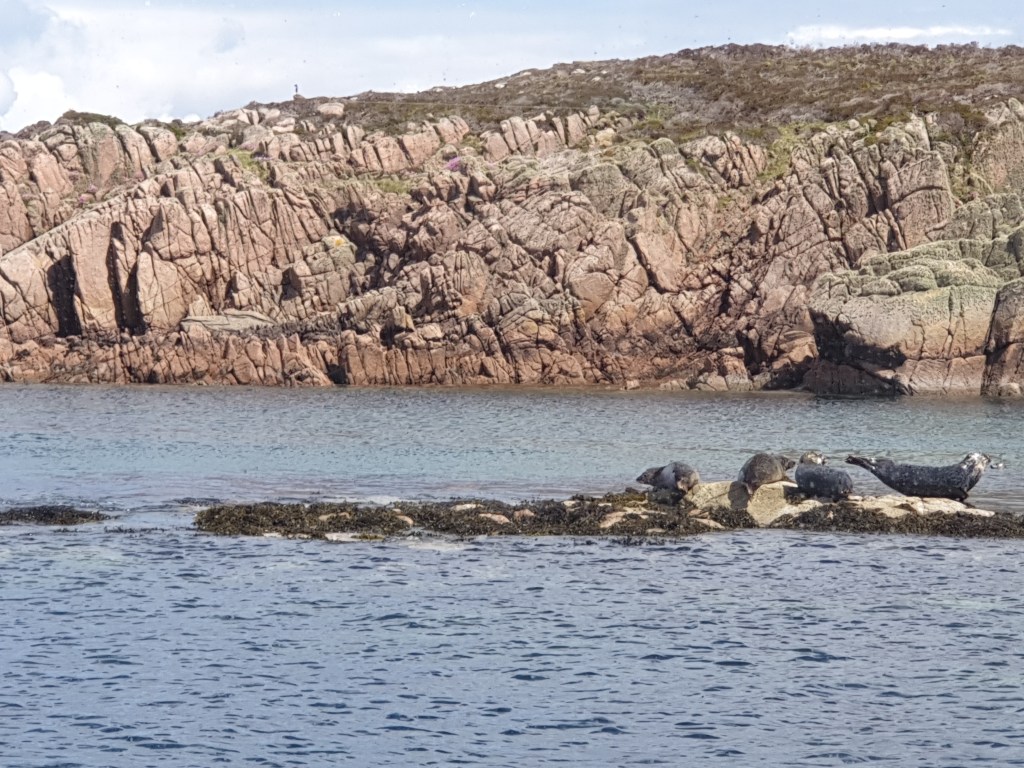
Fortunately, the weather had turned sunny and soon everyone was in a good mood again. First, the boat met with a group of seals sunning themselves on a rock………..

Seals near Fionnphort

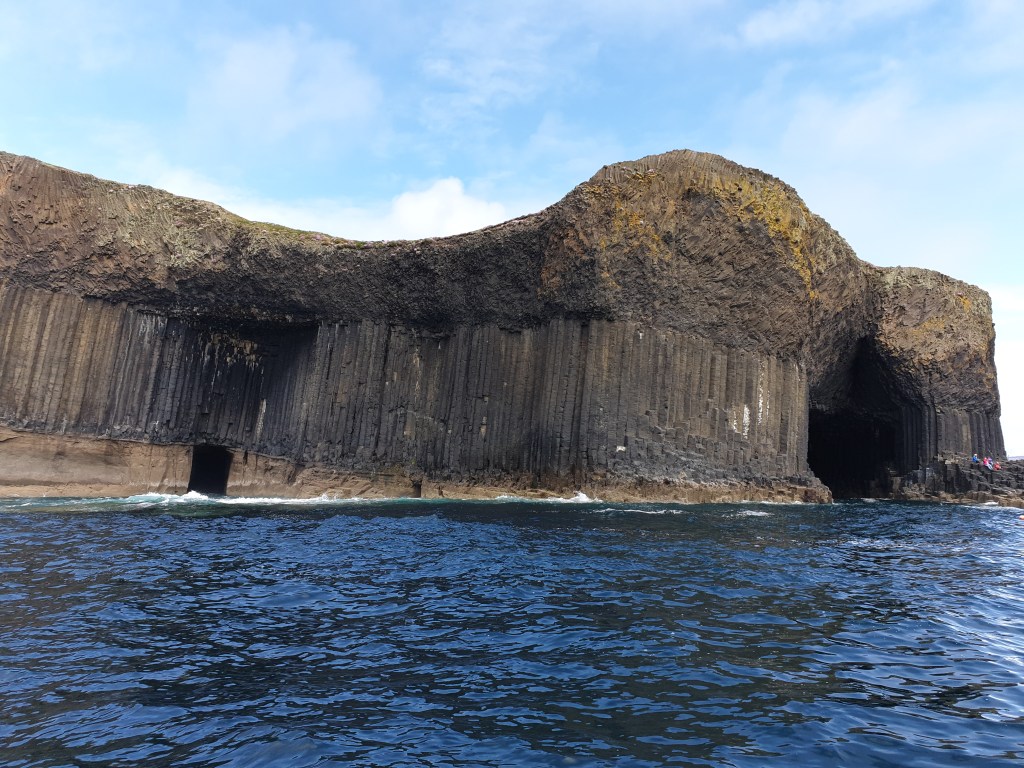
……before reaching spectacular Staffa Island after 30 minutes’ sailing, with its dark basalt rocks rising vertically from the sea. There is a legend that hexagonal blocks that make up the island were laid by a giant, who built a bridge between Ireland and Scotland that also included Giant’s Causeway in Northern Ireland. In reality the hexagonal blocks in both places are the result of molten lava cooling after the same huge volcanic eruption 60 million years ago.

Staffa Island

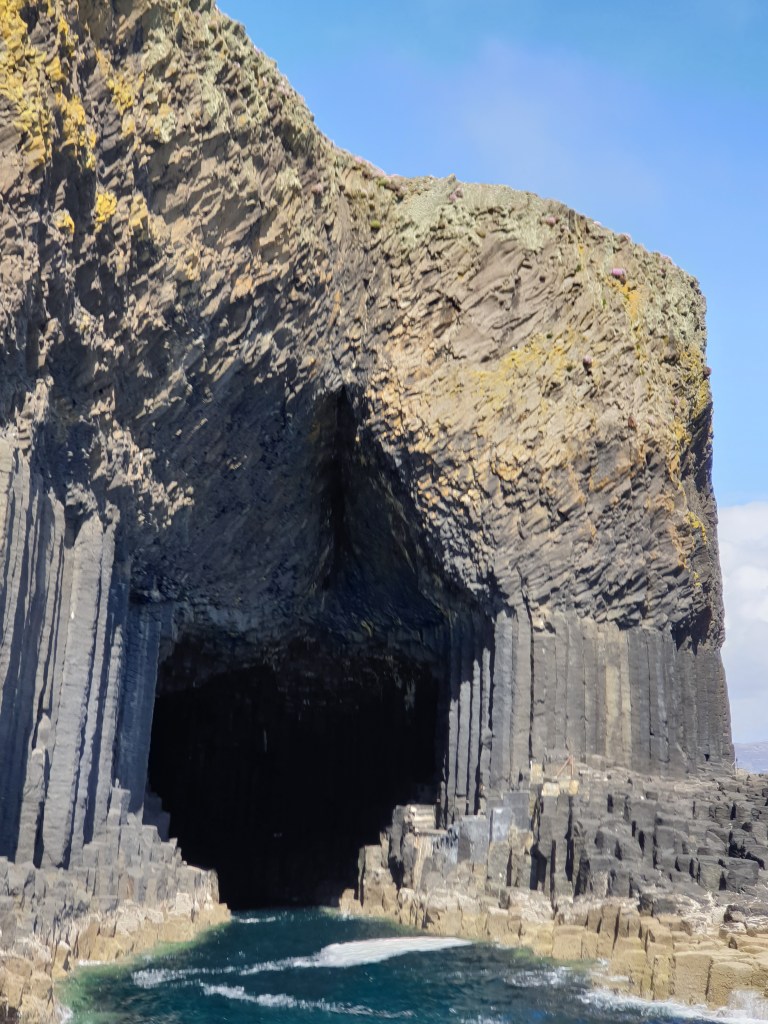
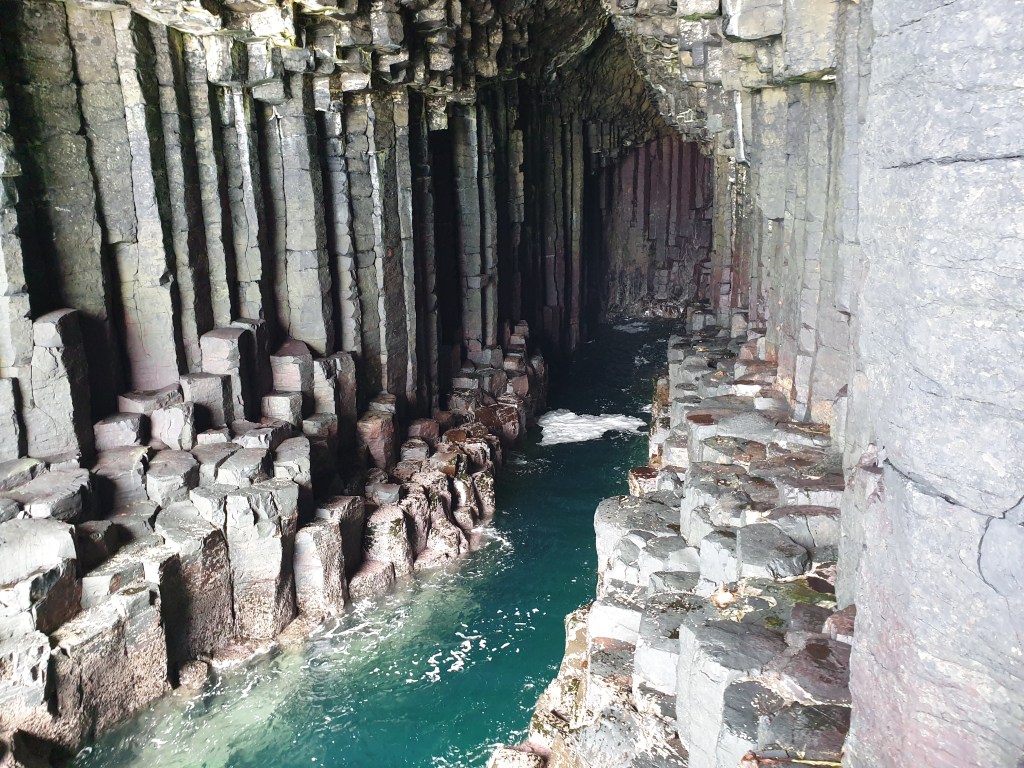
The boat positioned itself so that we could see the famous Fingal’s Cave, where the sea has eroded the blocks to form a spectacular cavern.

The entrance to Fingal’s Cave

Next, the boat moored on the island and the captain gave us an hour to look around.  I headed straight to the cave, beating the rush of the other passengers and taking more photos.

Inside Fingal’s Cave

After that, I headed off to visit the puffin breeding colony on the other side of the island.  When I arrived, the puffins were all bobbing up and down on the surface of the sea, far below the cliffs where expectant tourists were waiting.   I sat and waited, admiring the beautiful views and enjoying the warm sun.

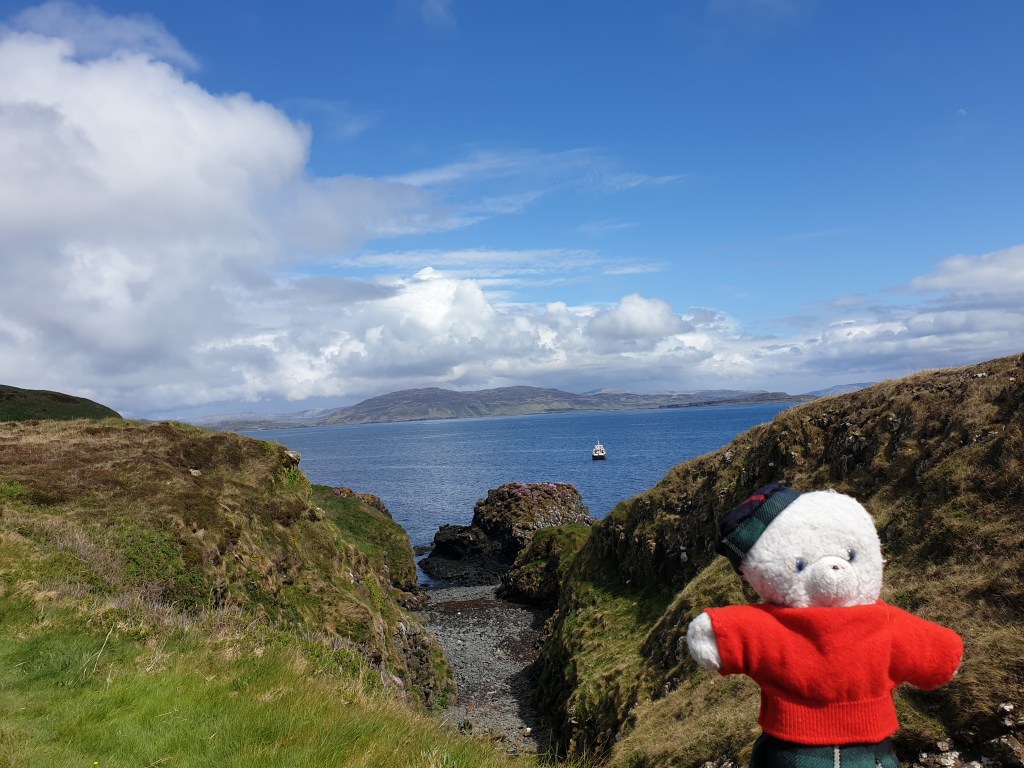
Scenic Staffa Island

Eventually my patience was rewarded, as the birds started to fly back to their nesting grounds. They avoided people, but since I was small, they didn’t seem to be afraid of me, so I could get a really close look.

The puffins arrive and start to play

Finally, it was time to go. I took a few more photos of the beautiful patterns of the rock that makes up the island, and then boarded the boat.

Staffa Island’s strange hexagonal rocks

Whilst sailing back we got an unexpected treat when a school of dolphins decided to swim with us. 

Dolphins following our boat

The tour ended at Iona, a small island just opposite Fionnphort. At the harbour I was met by a fisherman whom I had called the day before to order fresh lobster and crab.  He showed me two live medium sized lobsters and two very large live crabs, which he then placed in a container for me to pick up when I was ready to leave the island.

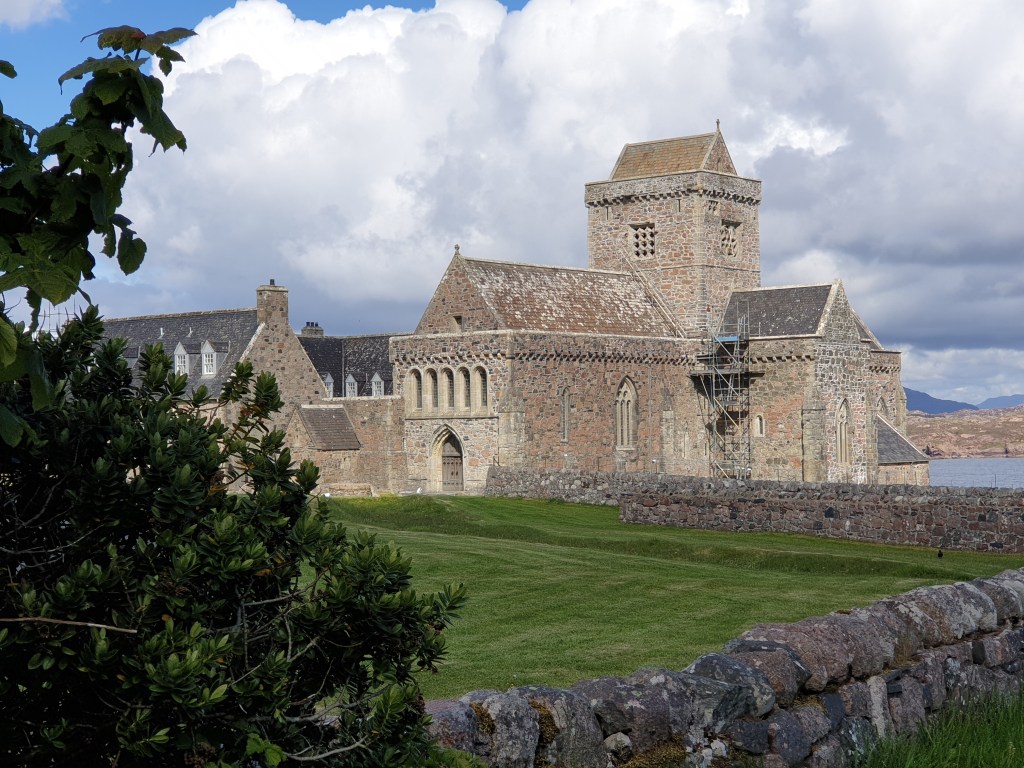
Iona is famous as the place were St Columba landed in Scotland in AD 563. He set up a monastery that became the base from which Scotland was converted to Christianity. The abbey was destroyed by Vikings and rebuilt, only to fall into ruin after the Scottish Reformation in the 16th Century. It was rebuilt again in 1938.

Iona Abbey

Iona is supposed to have a special, spiritual feel and to be a great place for exploring on foot.  But I was tired after all the excitement of the boat excursion and hungry, having missed my lunch. I bought a couple scones and ate them admiring the restored abbey, before picking up my seafood and taking the short ferry ride back to Fionnphort.  I was relieved that my car had not received a parking ticket, and slowly drove back to Tobermory.

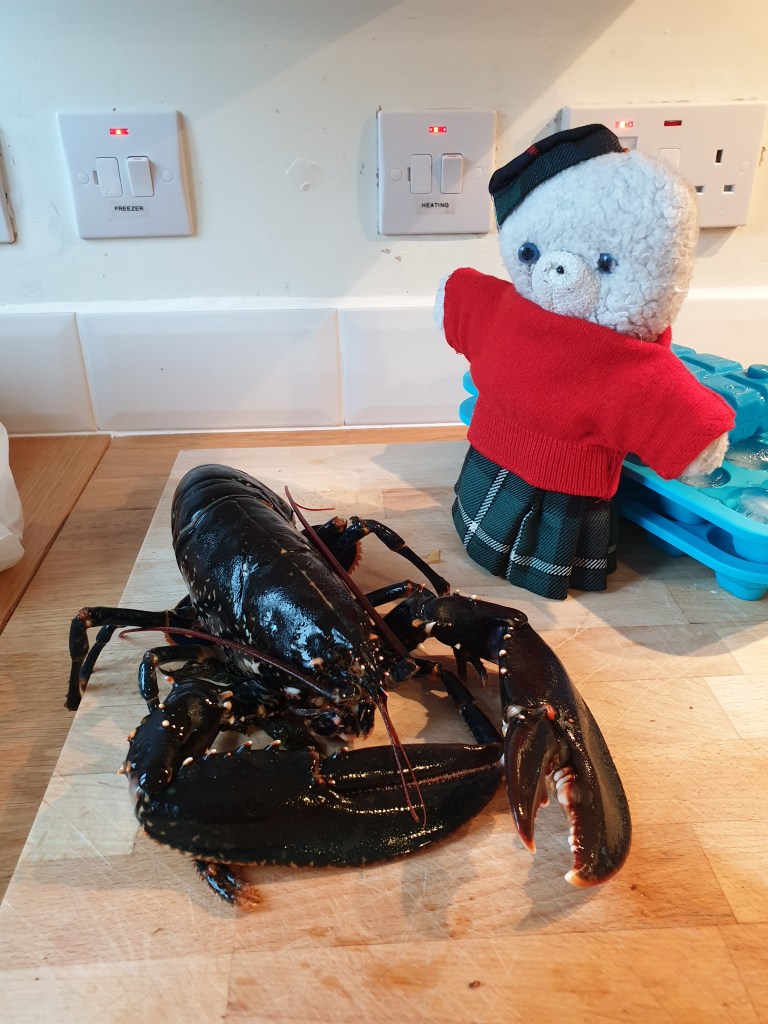
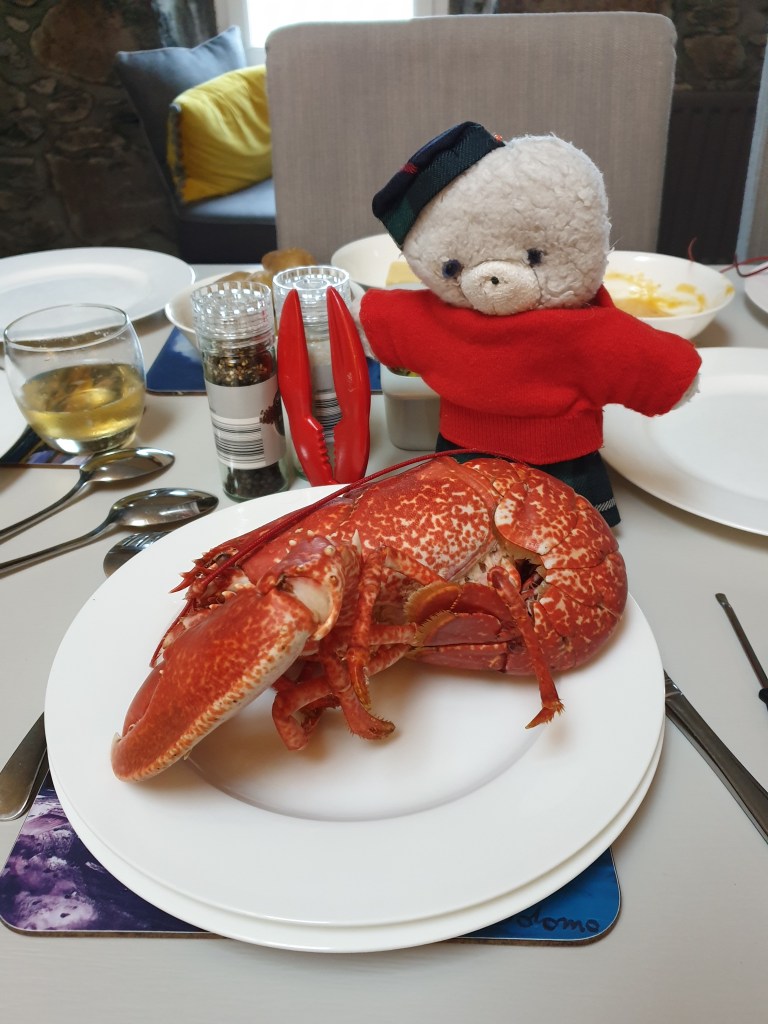
Fresh lobster for dinner, then I collapsed into bed, exhausted.

Dinner before…….
…and after

Blog at WordPress.com.

Up ↑