On to Madrid – Parque del Retiro and the Casino de Madrid

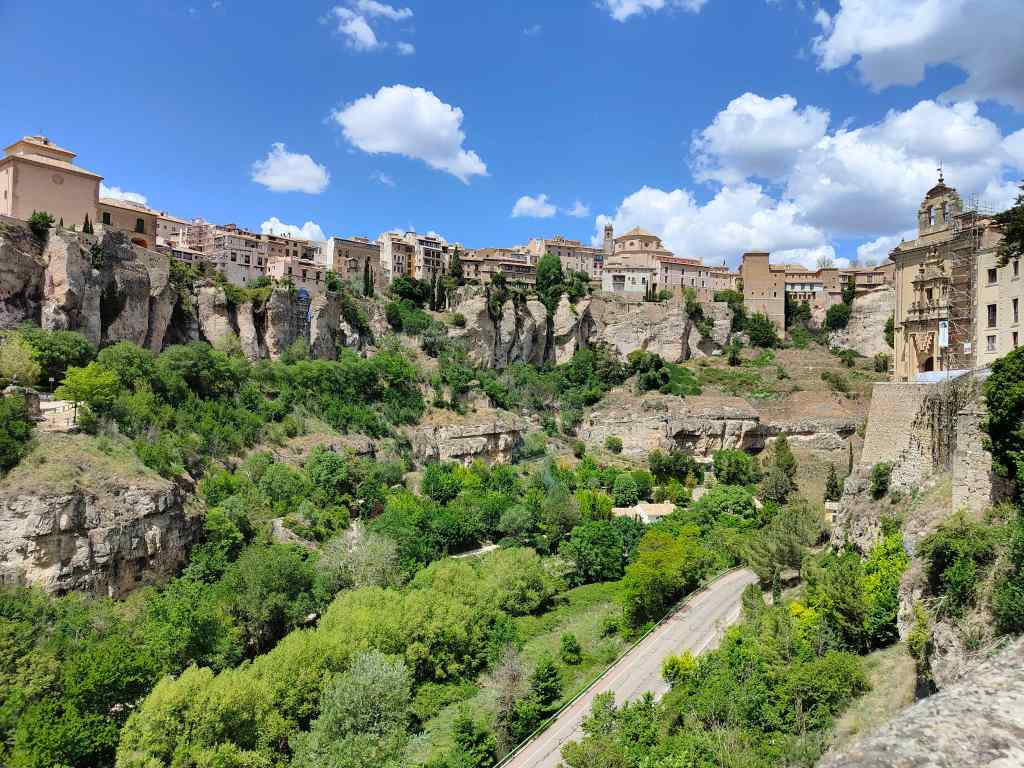
The next day, I got up early to have one last look at the spectacular view from Cuenca’s bridge, in the morning light this time.
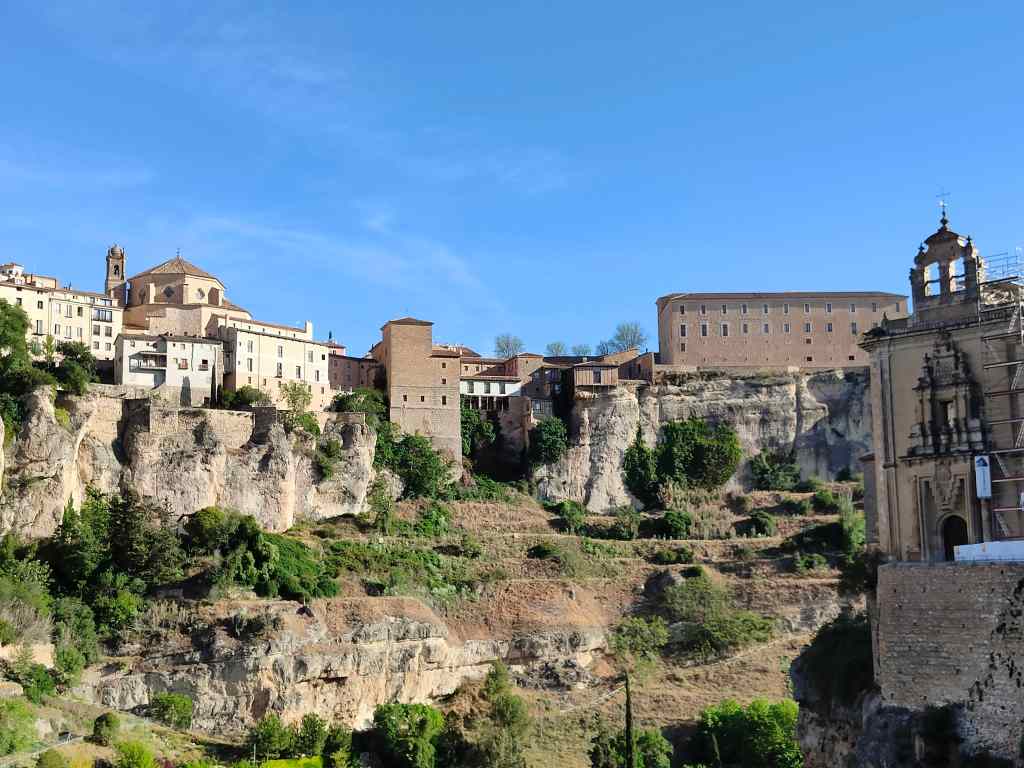
Cuenca’s famous view – in morning light this time

Then I set off to the station to continue my route to Madrid. My second Spanish train trip was not as smooth as the first. The modern-looking but empty station of Cuenca had a security check for baggage and the bored and zealous staff there detected my Swiss army knife in my bag. I had no idea this was not allowed on the train. They got very excited (this must have been the highlight of their day) and told me I had to leave it somewhere inside the station. I took this as a hint that if I concealed it discretely somewhere (just not in the bag which went through the scanner) they would turn a blind eye, so I ducked out of sight, hid the knife in my pocket and returned to the platform….to see one of the guards waiting for me, armed with a hand-held metal detector. I didn’t want the indignity of having my fur checked so took out my knife and left it on a table where he could see it, but the guard still checked me anyway, even making me take my hat off. He then recorded my ticket number – maybe as proof that they had been working, maybe to report me. It was the third Swiss army knife I had lost on my travels. At the ticket check, I had another surprise. The man there said that the free baggage allowance was only for a small bag (the size of carry-on luggage in a plane), and I would have to pay 30 euros to the staff on the train to transport my suitcase. My favourable impression of Spanish trains was beginning to wane, but once onboard, I stowed my case quickly in the luggage wrack and nobody asked me to pay extra for it. The train sped through the flat Spanish countryside, reaching Madrid in an hour.

I already knew the city from previous visits, so decided to spend a relaxed afternoon visiting some familiar places, and a few new ones. My flat was right in the centre, and I walked down the wide avenues to the Royal Palace….
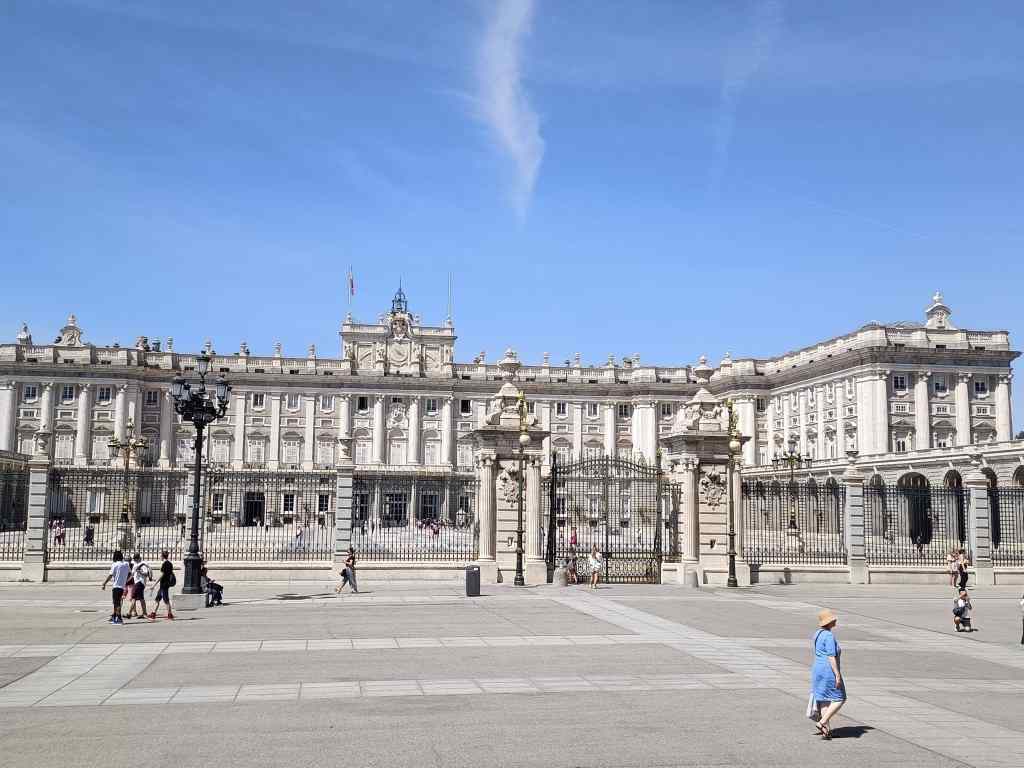
The Royal Palace, Madrid

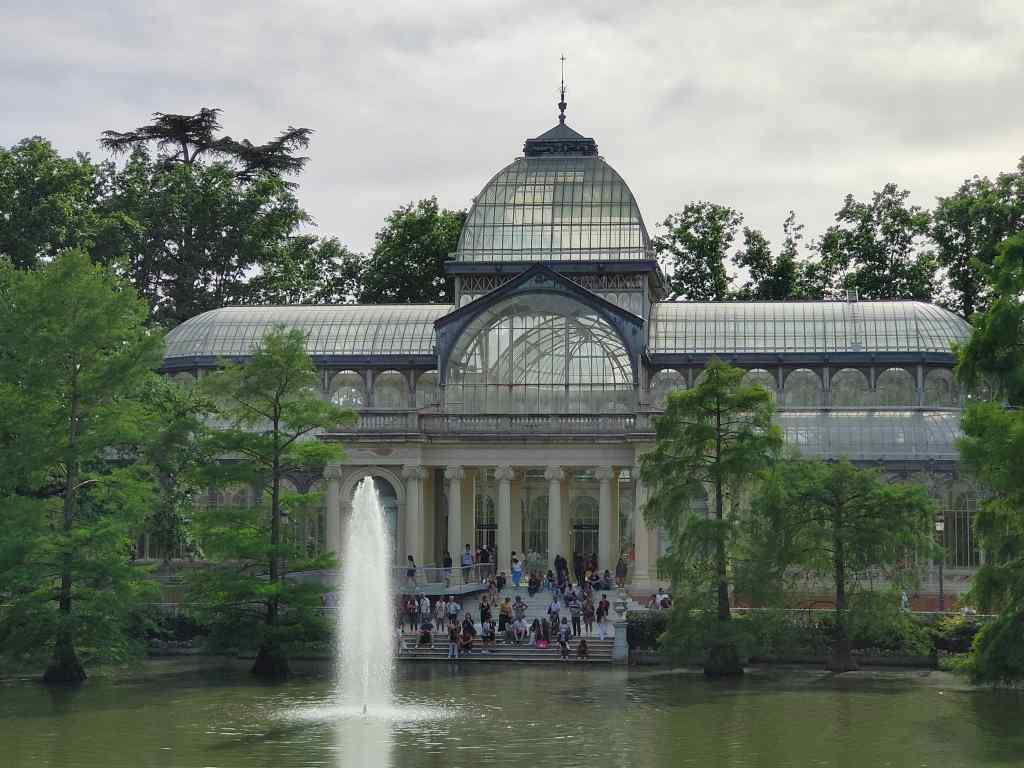
….and then back across town to the Parque del Retiro, where Madrilenos go to cool off in hot weather (although it was only May, it was already quite hot). I spent a happy couple of hours there, enjoying a drink in the shade, visiting the crystal palace and the rose garden.
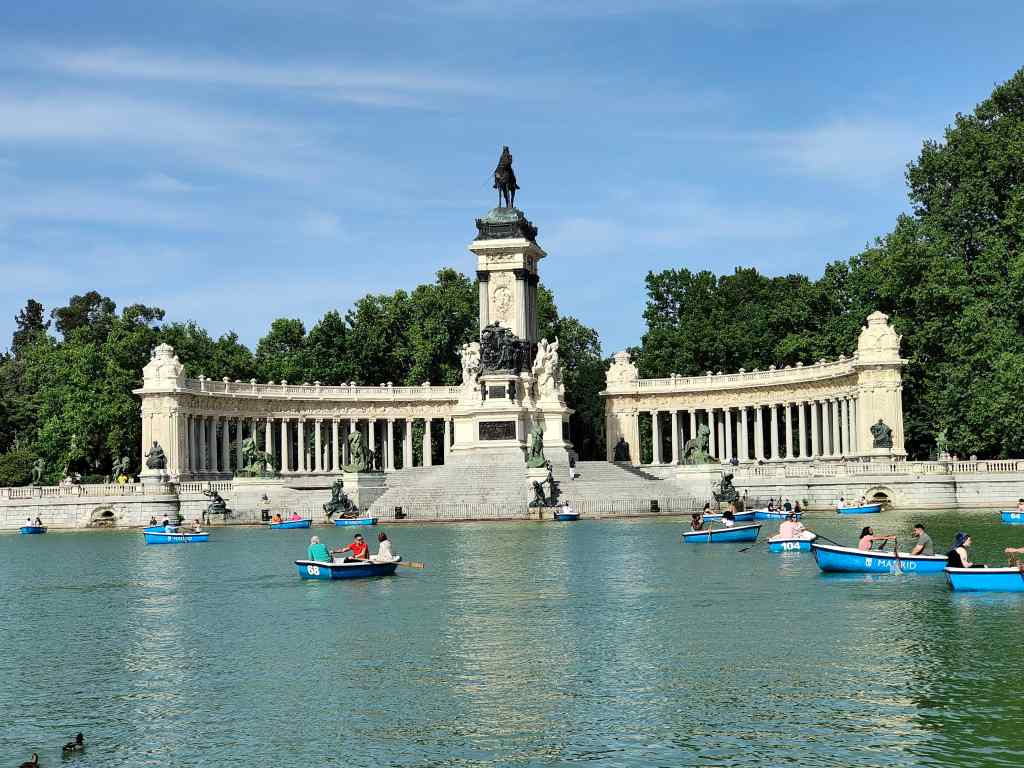
Parque del Retiro – the Boating Lake
The Crystal Palace, Parque del Retiro
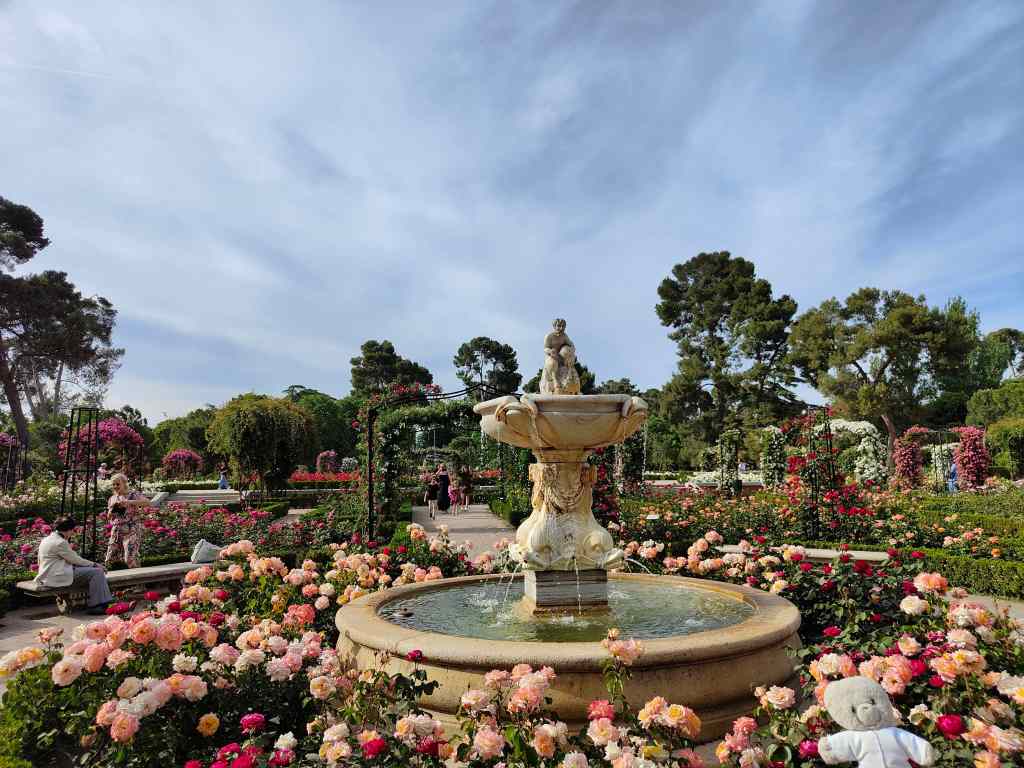
The Rose Garden, Parque del Retiro

From the park I headed to the Reina Sofia Art Institute, which houses work by famous 20th century Spanish artists like Picasso, Miro and Dali. It was a very large building and I found the layout confusing – the works by the best-known artists were spread out amongst dozens of different rooms, forcing you to visit the whole museum if you wanted to sure not to miss the more famous paintings. Maybe this was intentional, but I had already spent the whole afternoon walking and soon my little legs were tired. Still, it is hard to not like a museum that is the home for Picasso’s magnificent Guernica painting, which I saved to last to enjoy (smaller crowds near the museum’s closing time!). Sadly, no pictures allowed so here is a link to the famous picture…..

After the museum I just about had the energy to walk home, popping in to the Casino de Madrid for a well-earned aperitif. The casino is now a private members’ club, and my membership of my London club gave me access. It was a beautiful building, with many impressive rooms and a stunning staircase.
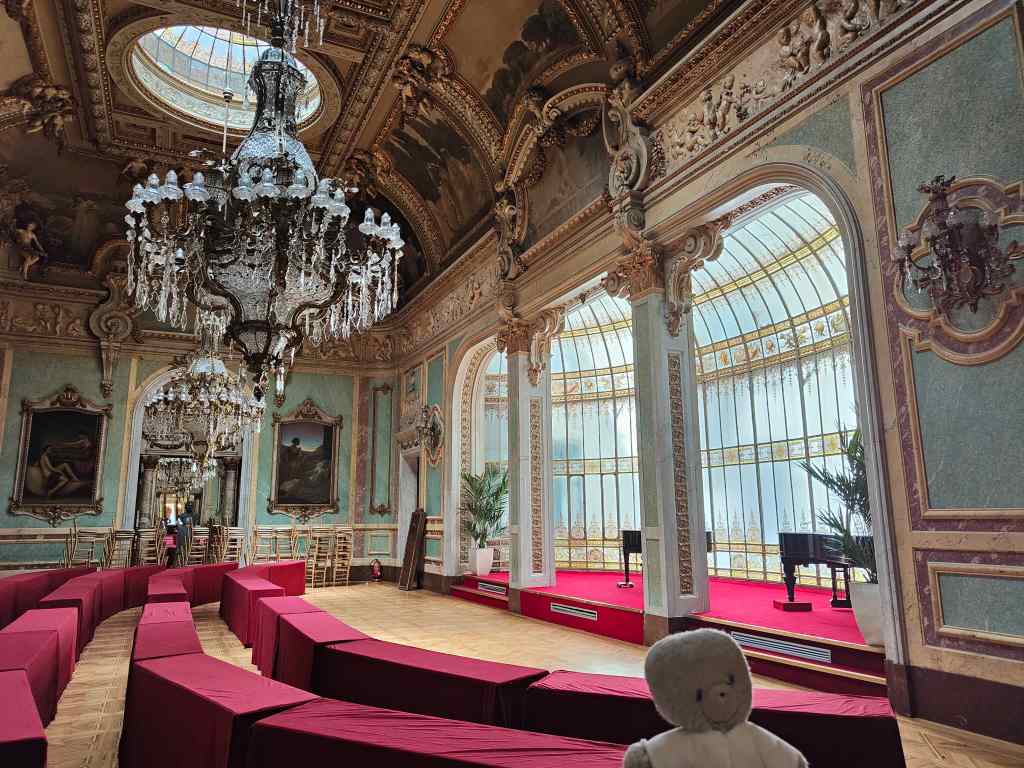
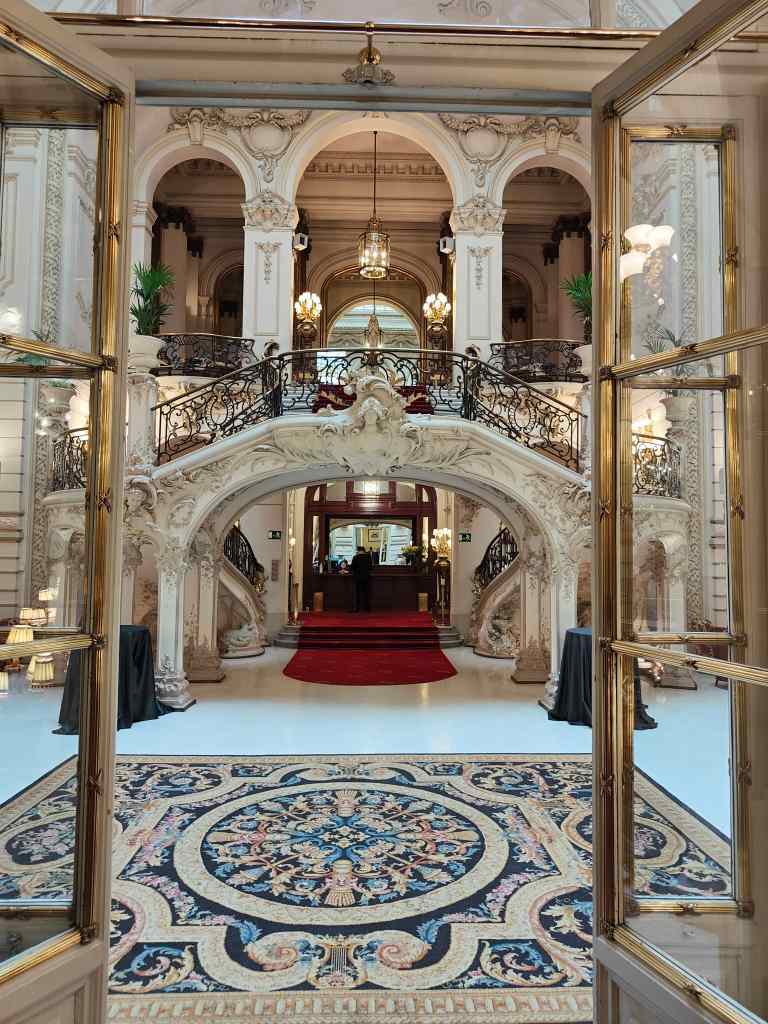
Inside the Casino de Madrid
The Magnificent Staircase, Casino de Madrid
A well-earned aperitif in the Casino de Madrid

After my aperitif, I had dinner back in my flat, accompanied by a bottle of red wine given to me by the exceptionally friendly owner. It came from his own vineyard near Cuenca, and I had great pleasure in telling him how much I had liked the place.

Next Post: Toledo

Previous Post: Cuenca

Cuenca, an unexpected highlight

The next stop of my short Spanish trip was Cuenca, a small town located halfway between Valencia and Madrid.  I went by train, which covered the 200km distance in an hour, reaching speeds of nearly 300km/h in places.

Why fly when a train can go this fast?

I arrived at a very smart, new train station which bore a strong resemblance to an airline terminal – except that there were almost no people. Cuenca did not seem to be a very popular destination.

My space-age train arrives in Cuenca

The station was a long way out of town, so I took a taxi which first went through an unremarkable modern part of the city, before climbing a steep hill to the old town, where my flat was. I settled in and then set off to explore. At first site, the old town was small, with the typical winding streets and old buildings you can find in many places in Spain.

Cuenca’s old city

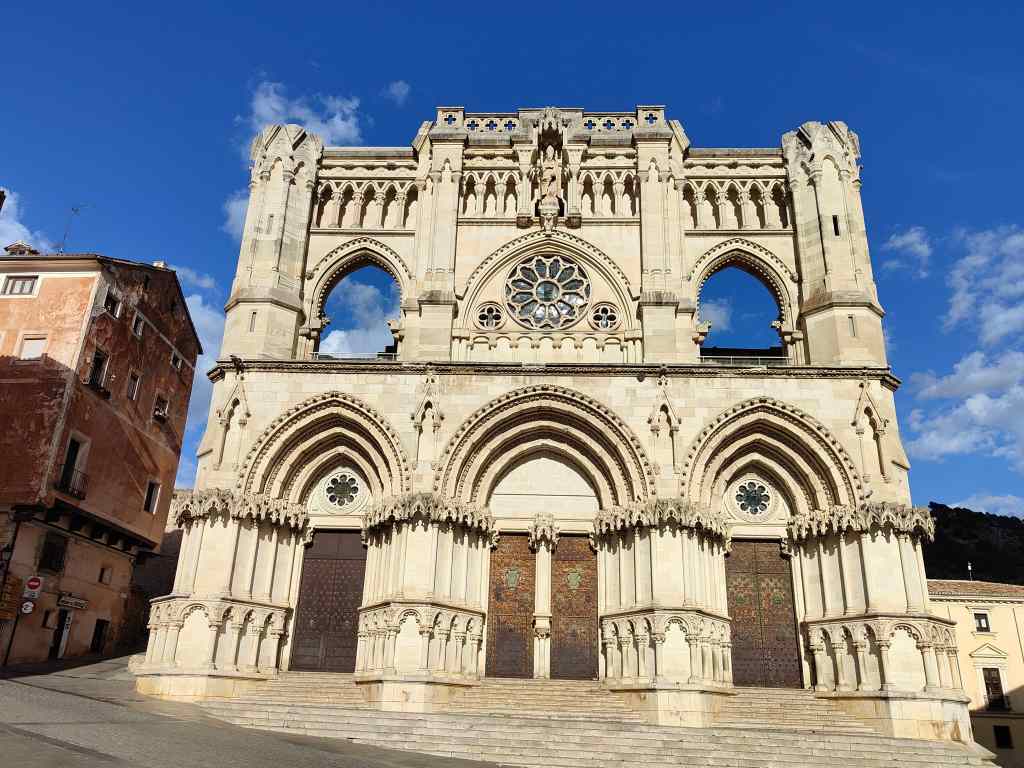
I soon found the main square, where the cathedral was located. This huge building was originally constructed in the 12th century but underwent many modifications and additions since that time. It was a big surprise, rivalling many of the more famous churches I have seen around Europe. The interior was pleasant and light, with many small chapels leading away from the central aisle.

Inside Cuenca Cathedral
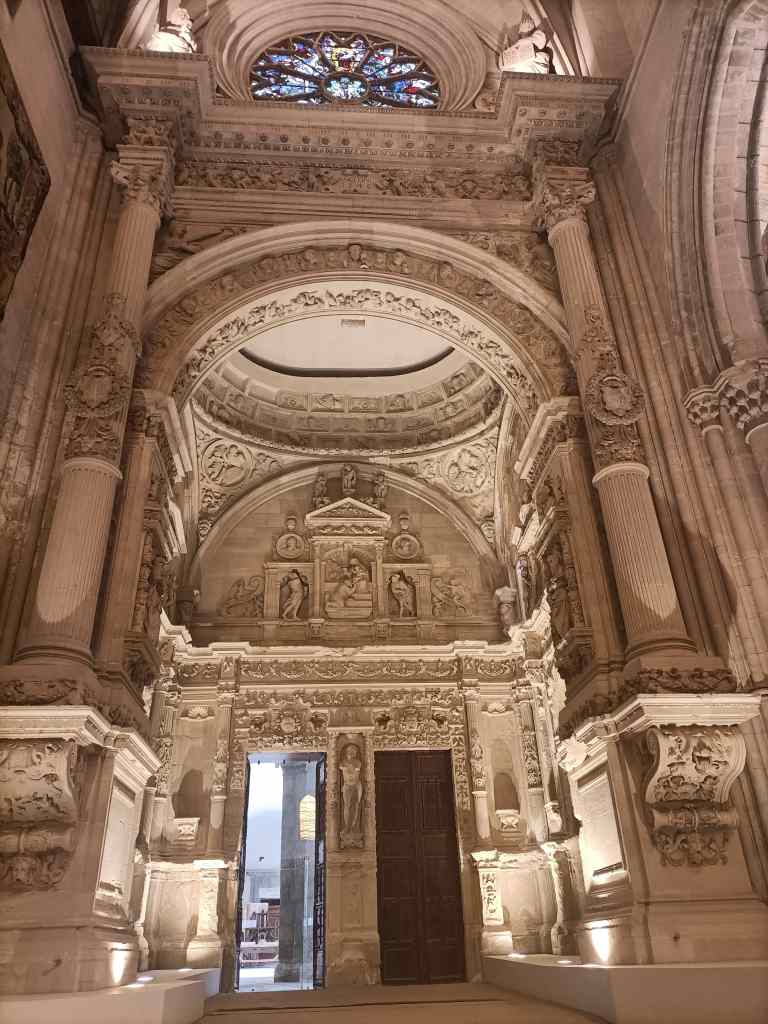
The ceiling of one of the many chapels of Cuenca’s cathedral
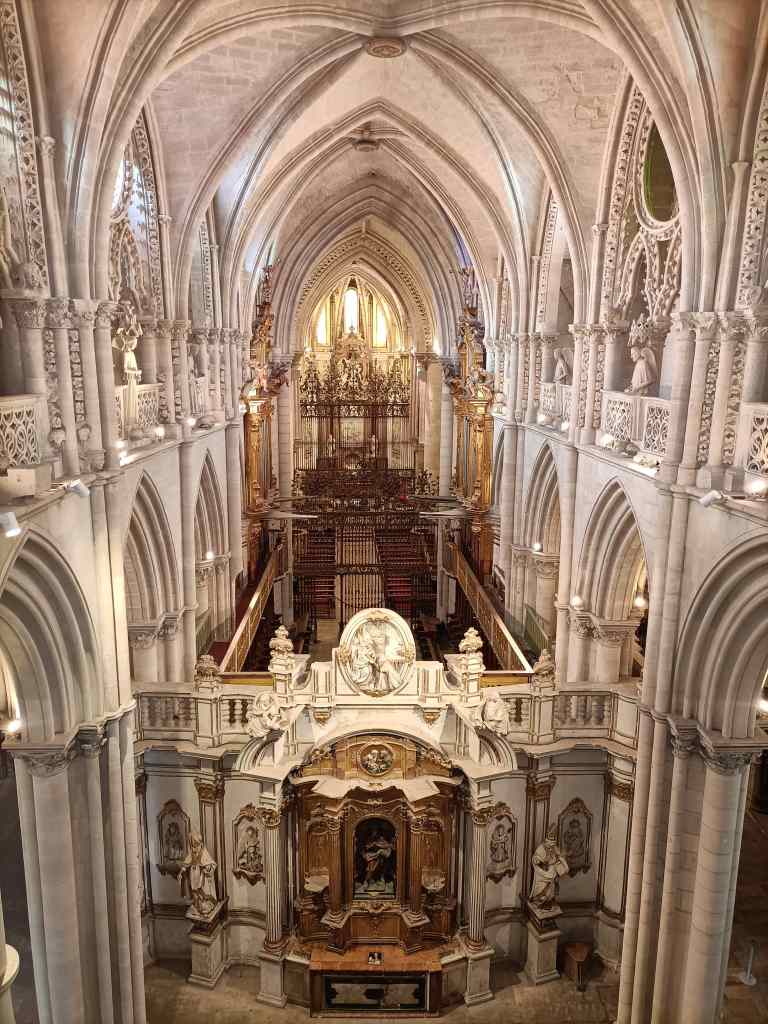
A view from the triforium, Cuenca Cathedral

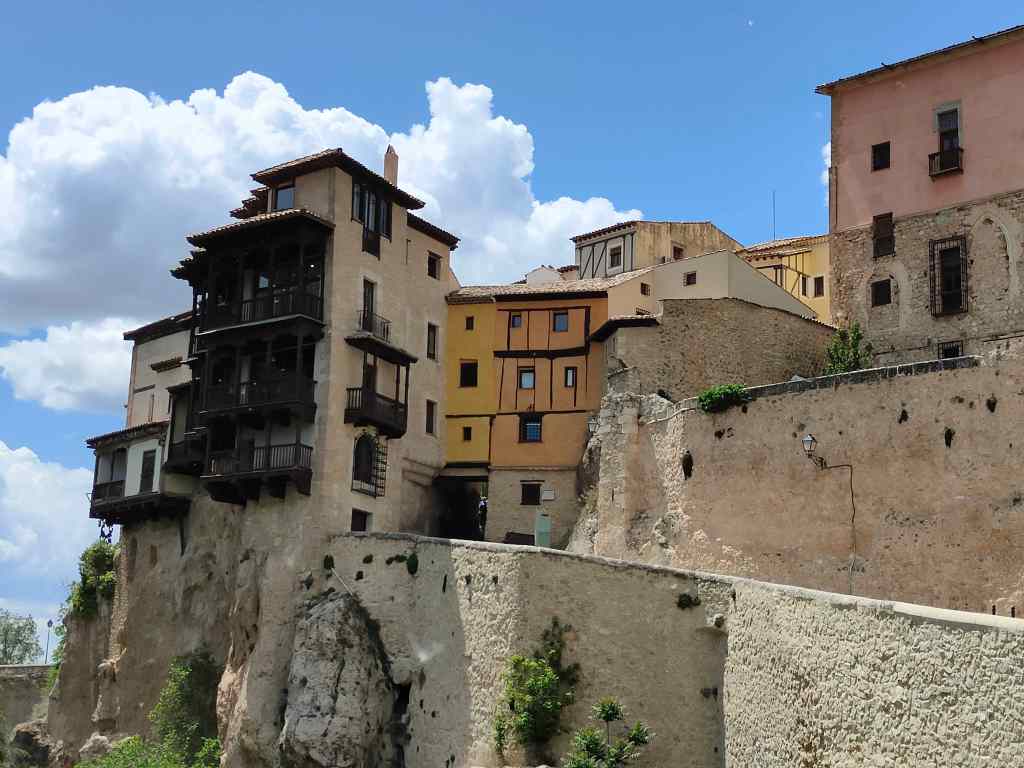
After the cathedral I headed down a steep slope for a view of Cuenca’s best-known attraction – its “hanging houses”, perched precariously on the edge of a sheer cliff.  One of these houses is home to a museum of abstract art.

Cuenca’s hanging houses
The Museum of Abstract Art lives up to its name

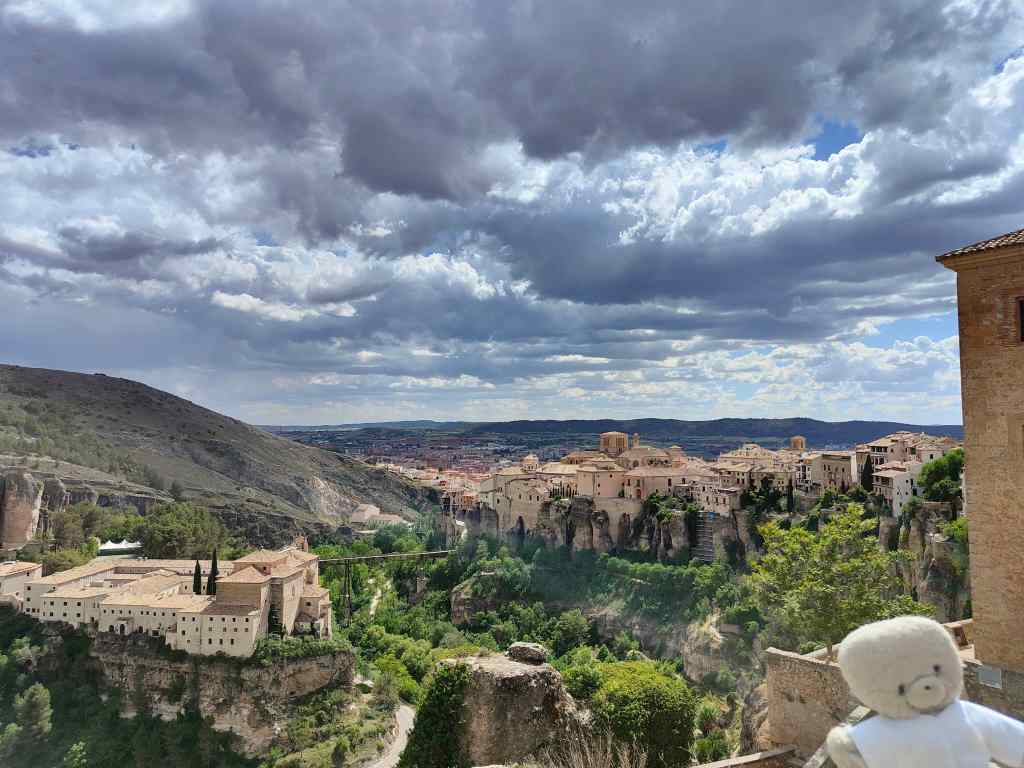
Further down the slope, a long wooden bridge ran across the deep ravine at the city’s edge, connecting it to another hill and the city’s “parador” hotel. The bridge and the hotel offered spectacular views back to Cuenca.

The amazing view from the bridge over the ravine

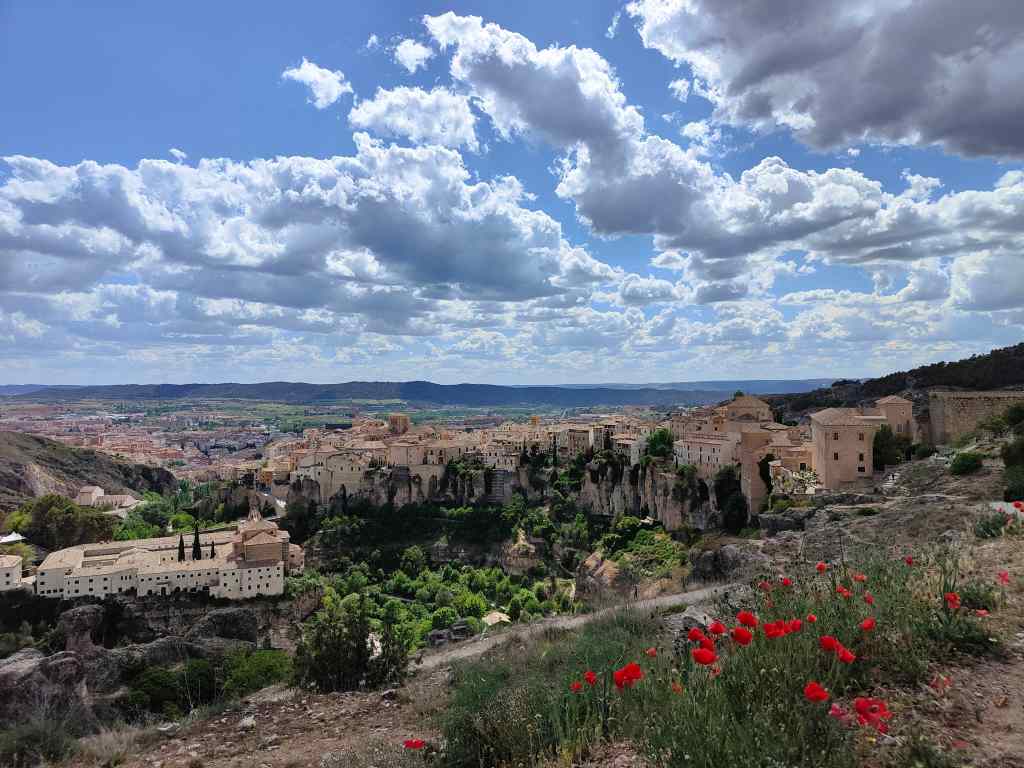
I returned to the old town, and this time headed up a steep hill, past a convent to the ruins of a castle. This was first built by the moors, who recognised Cuenca’s strategic location and founded the city in the 8th century. The town changed hands regularly between moors and Christians in the centuries that followed. The area gave yet more amazing views back to the city.

Another great view of Cuenca
….and yet another

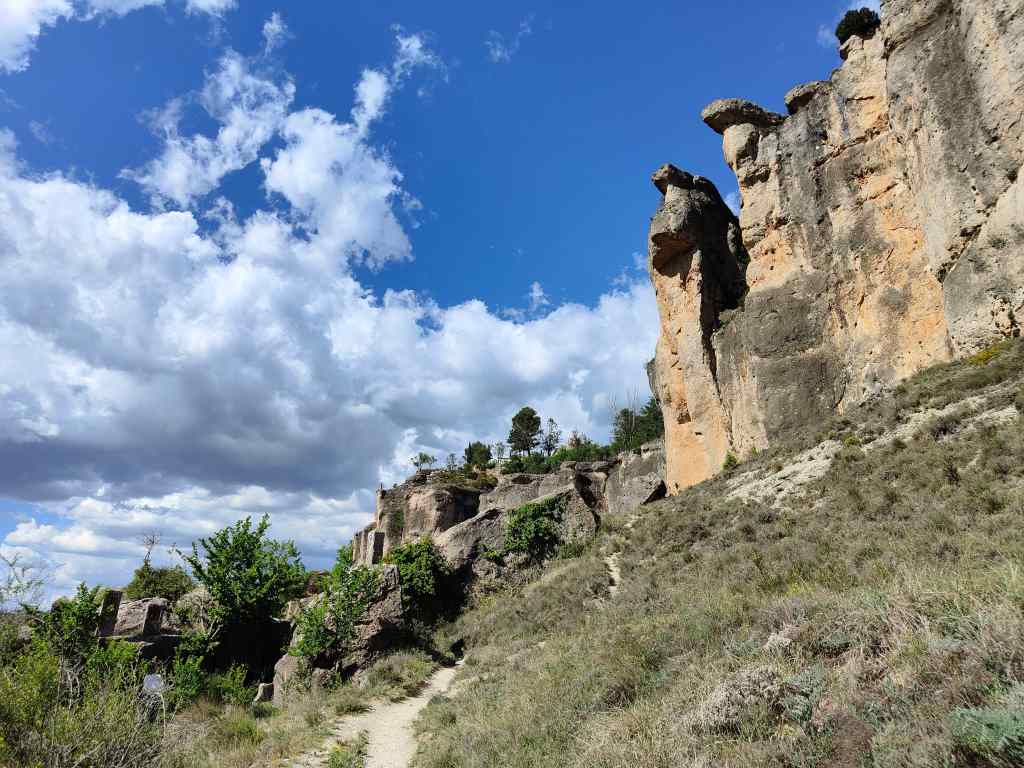
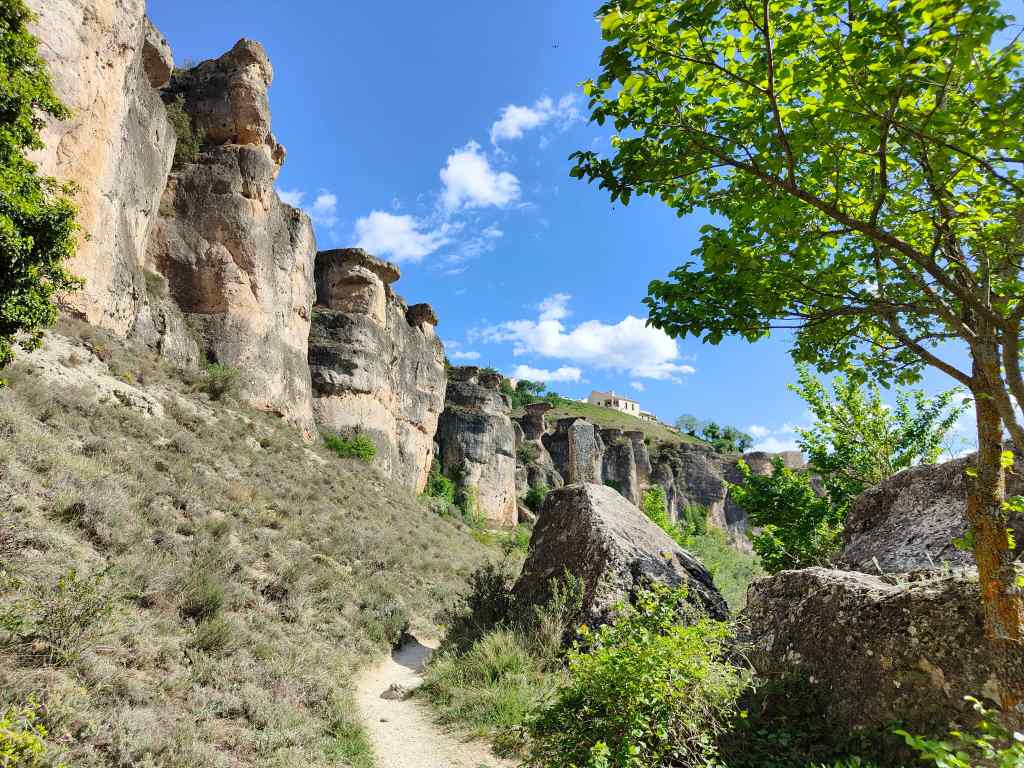
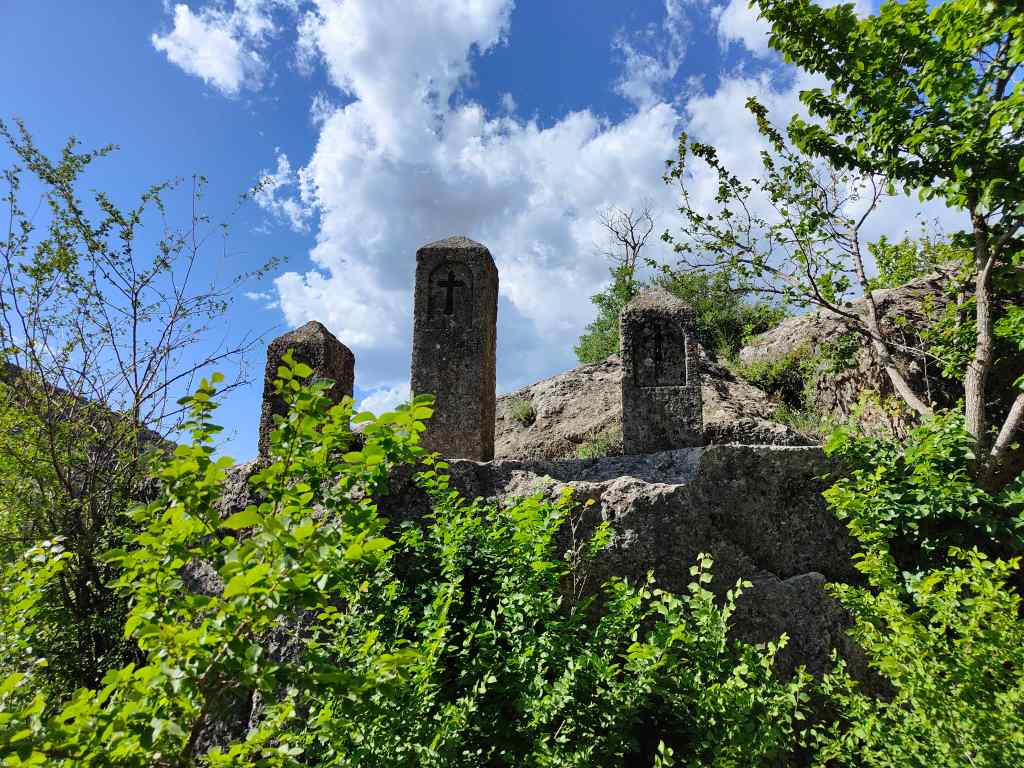
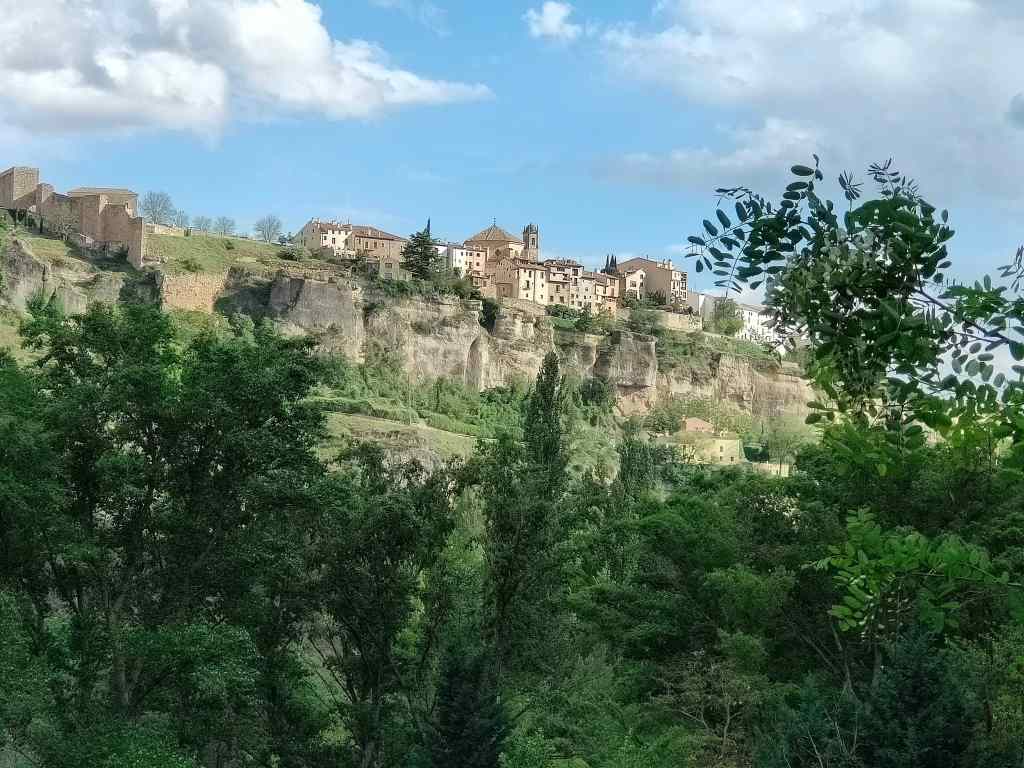
I walked back down the hill, intending to go sit at a café for the rest of the afternoon, but instead I met a group of Spanish walkers who recommended a walking route that led away from the city through some interesting rock formations. I took their advice and was rewarded with more beautiful views. The path ran below a mountain ridge for a few kilometres, before descending to a river, which I followed to get back to Cuenca.

Starting off on the walking trail
Looking back towards Cuenca
An unusual place for a small cemetery
The way back – Cuenca comes into view

On arriving, I made the steep climb back to the main square and finally sat down for a well-earned and much needed drink, enjoying the views of the main square and cathedral – this time, empty of people. Cuenca seems to be visited mostly by day-trippers from Madrid (and not many of them), and is very quiet at night when they have gone.

Cuenca Cathedral in the evening sun, and an empty Plaza Mayor

I enjoyed a dinner of yet more ham and cheese in my flat, sitting on a sofa with a great view of Cuenca’s steep valley.  The little-known city had greatly exceeded my expectations – with its beautiful views, magnificent cathedral and many walking routes.

Next Post: Madrid and the Parque del Retiro

Previous Post: Valencia

Blog at WordPress.com.

Up ↑