East Berlin and the East Side Gallery

Today was my last full day in Berlin and I used it to explore the city’s eastern part. I hopped on the S-Bahn to the Ostbahnhof and made the short walk to see a roughly 1.3km section of the former Berlin Wall. Its western side is covered with uninteresting crude street graffiti – just like it was when it functioned to imprison the citizens of East Berlin. In contrast, its eastern side is now the world’s longest open-air art gallery – the East Side Gallery. 128 artists from around the world started painting immediately after the wall fell in 1989, and their work has been preserved and occasionally repainted ever since.

The gallery has about 100 modern art paintings, often on topical political themes of the time. Some have become famous, such as Honecker and Brezhnev’s socialist kiss, which was so popular it was impossible to photograph without a fellow tourist posing for a picture….
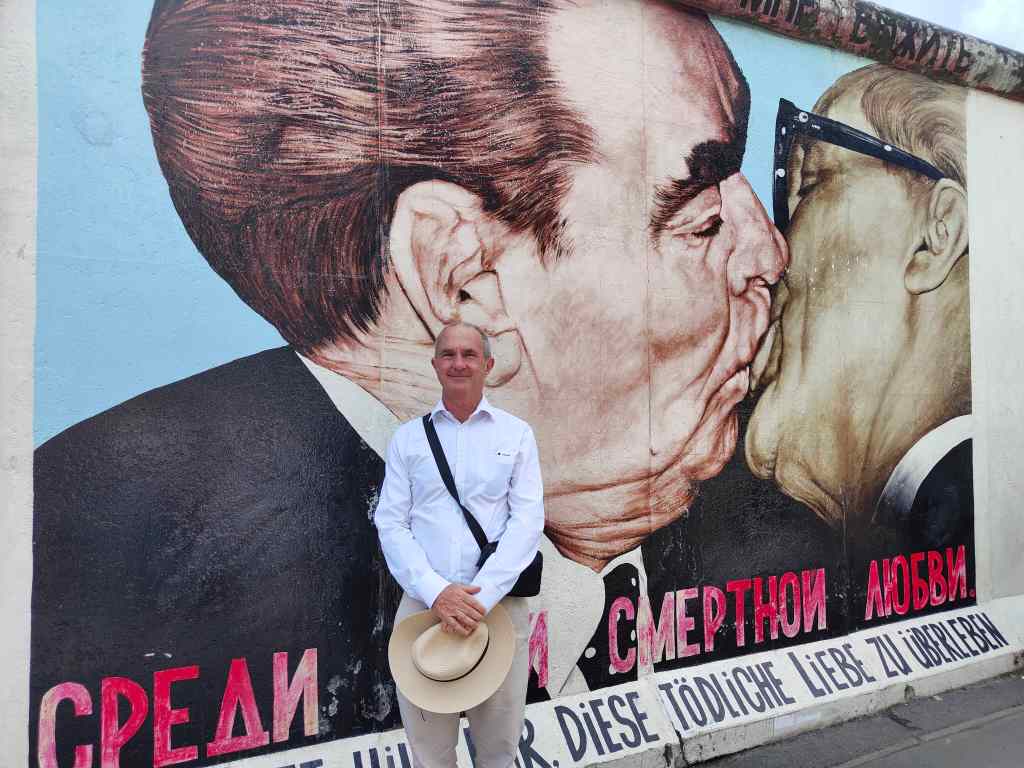
This famous East Side Gallery picture is impossible to photograph without people getting in the way…

I had more luck with this well-known picture of an East German Trabant car breaking through the wall………

“Trabi” – East Side Gallery

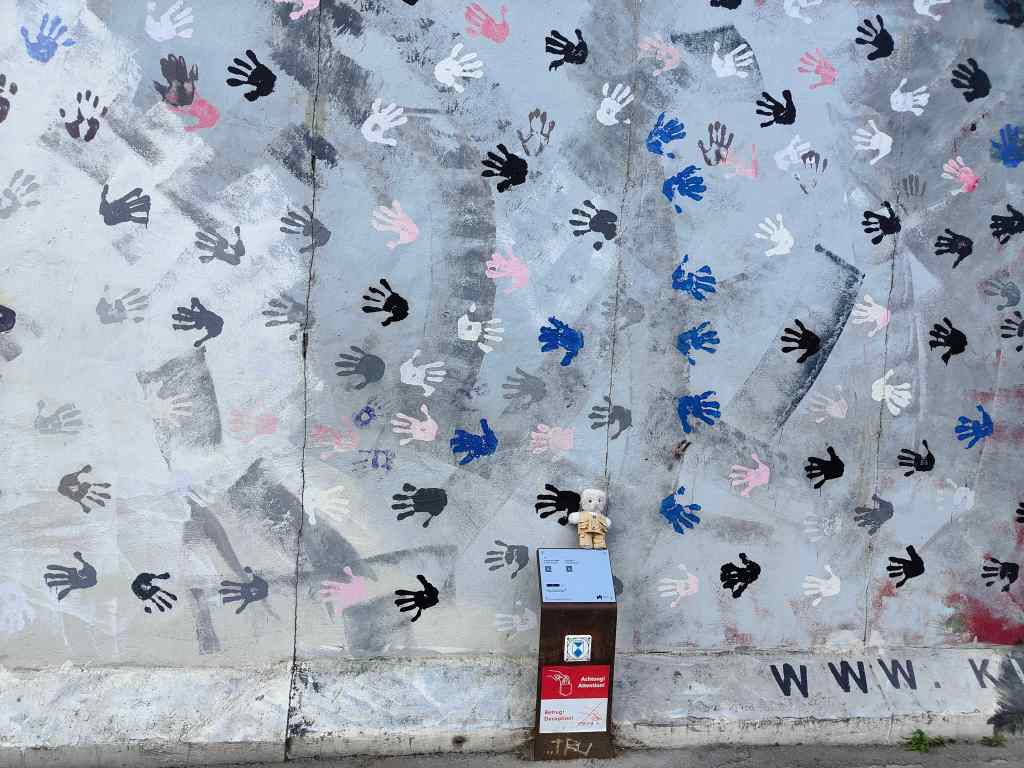
….and this painting of hands…….

Hands – East Side Gallery

I continued my stroll east and found that the city began to resemble Moscow, with the style of its architecture and gas pipes sticking out of the ground.

Typical East Berlin street scene

Next, my walk took me to the RAW area – formerly a site for repairing trains, but now a centre of post-industrial Berlin counterculture, with galleries, clubs, street food and skateboarding arenas. It was a bit like Camden market in London, only less commercial. I felt a little out of place as I was by far the oldest visitor (of course I was also the only bear, but I have got used to that).
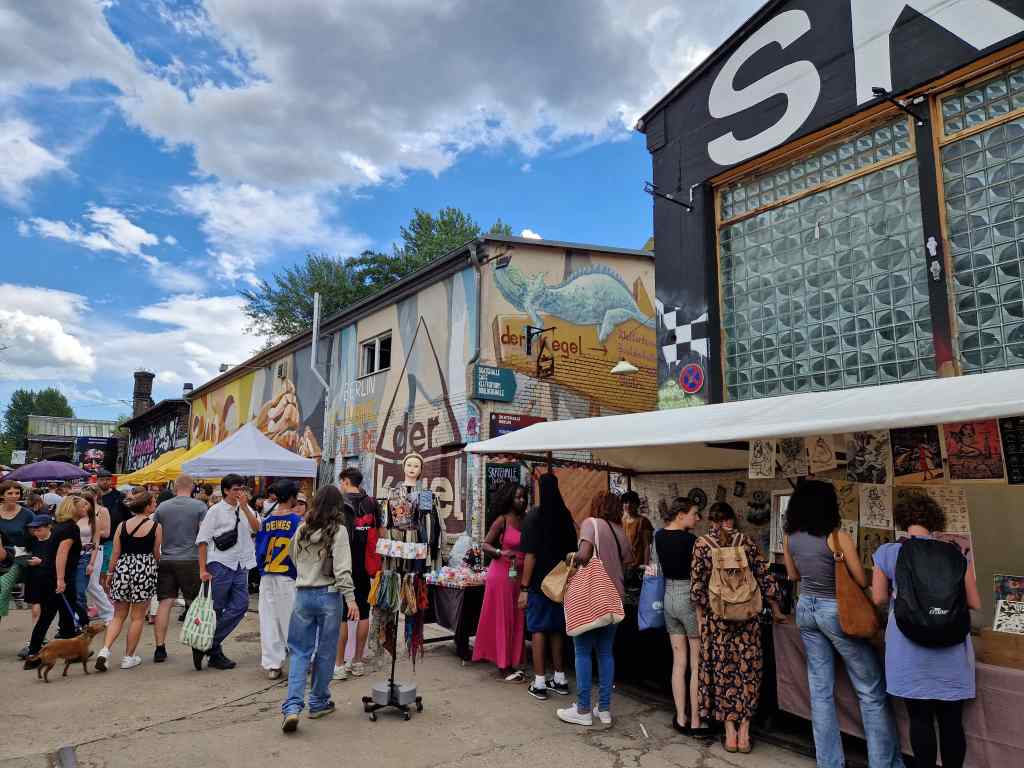
The RAW area in East Berlin

From RAW I headed north to an area where the communist East German government had constructed a long, broad avenue lined with tall buildings in an attempt to show off to the west – Frankfurter and Karl Marx Allees. I found the architecture interesting rather than spectacular – it reminded me of the great Moscow streets like Tverskaya, only rather less impressive. I found myself almost alone except for small groups of Spanish football fans – this part of the city does not attract many tourists.
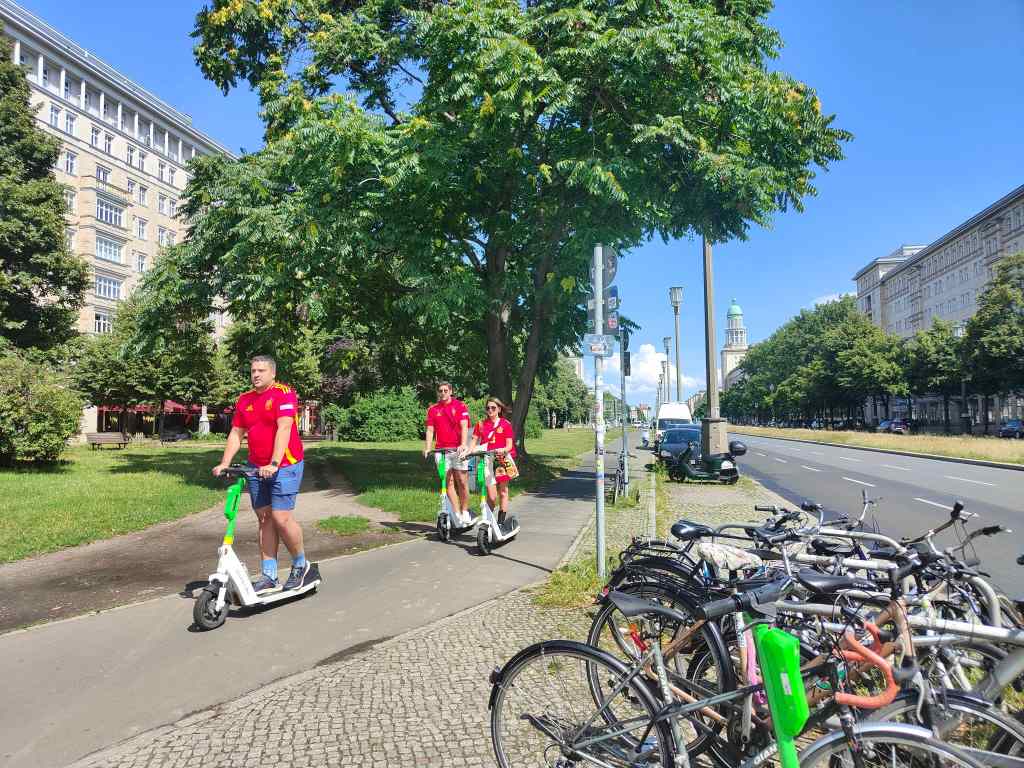
Frankfurter Allee and Spanish football fans

Feeling underwhelmed by the communists’ architectural efforts, I continued to the very heart of Berlin to the city’s last unmissable sight – the Brandenburg Gate, a triumphal arch built over 1788-1791 on the orders of….yes you guessed it…..Frederik II. Now there was a king who knew how to build impressive monuments!

The symbol of Berlin – the Brandenburg Gate (courtesy Nino Keller/Pexels)

Next, I headed home on the U-Bahn. My line continued all the way to the Olympic Stadium, where the finals of the European Football Championships were being held that evening, so I shared the train with lots of football supporters. Most were English and sang happily and noisily. The few Spanish fans sat quietly in their seats, trying not to draw attention to themselves. I was relieved to get off at Charlottenburg and leave the noise behind, and to watch the match over dinner with friends on television rather than at the stadium. We ate pizza and the traditional German football food – currywurst and chips. Tomorrow is farewell to Berlin as I head on to Poland.

Next Post – Poznan (Poland)

Previous Post- Potsdam
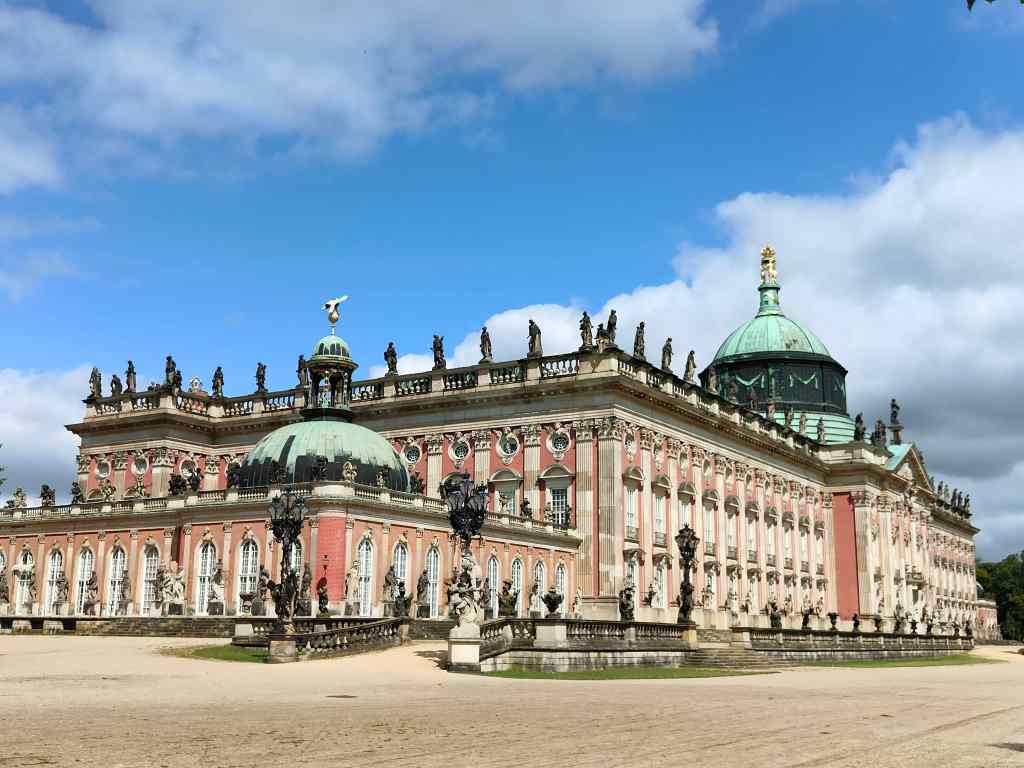
Potsdam – an exceptional day out from Berlin

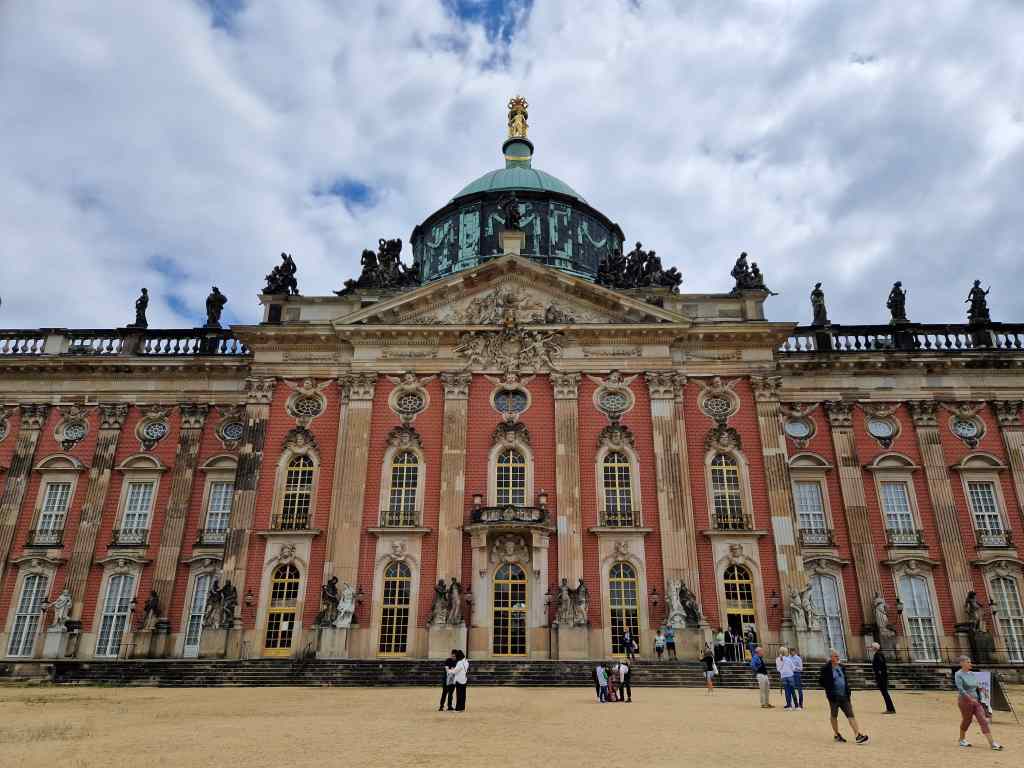
Today I went to Potsdam, a town to the west of Berlin with an amazing collection of things to visit. My first destination was the Neues Palais, a huge palace commissioned in 1764  by King Frederik II of Prussia and completed in only five years. It was built to house and entertain visiting dignitaries – although it had rooms for Frederik, he rarely stayed there, preferring to return to his favourite Sans Souci residence a short distance away (covered later in this post). The colossal Neues Palais was partly modelled on Versailles and built to impress……..which it certainly does.

Views of the colossal Neues Palais, Potsdam
The entrance to the Neues Palais, Potsdam
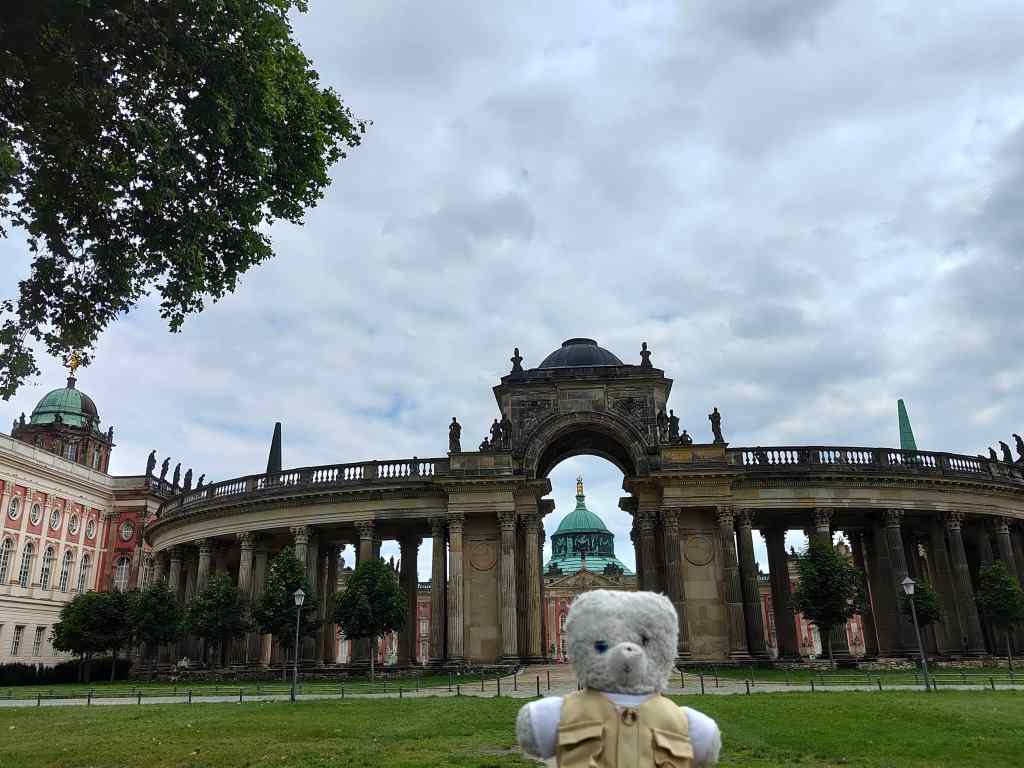
Posing in front of the Neues Palais

I could only visit as part of a guided tour, which was conducted only in German. They gave foreign visitors an audio guide, but from the reactions of the local visitors, its descriptions were much shorter and less amusing than the guide’s anecdotes. All the same, no explanation was needed to be taken aback by the magnificent rooms – first an unusual, sea-shell themed Grotto Hall……

The Grotto Hall in the Neues Palais

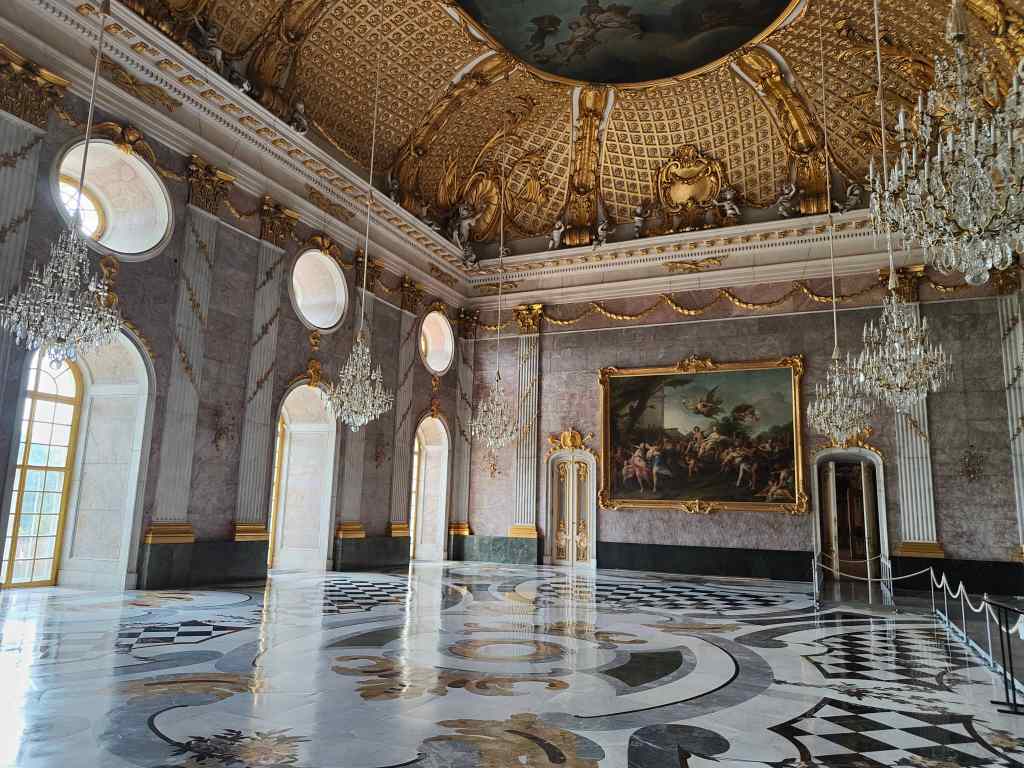
…and then a bit later the amazing Marble Hall located directly above the grotto.

The amazing Marble Hall

Frederik was actively involved in designing the Neues Palais and he insisted that no extra supporting pillars be added to the grotto underneath to carry the huge weight of the Marble Hall. This requirement led almost immediately to structural problems which engineers have wrestled with over the centuries.

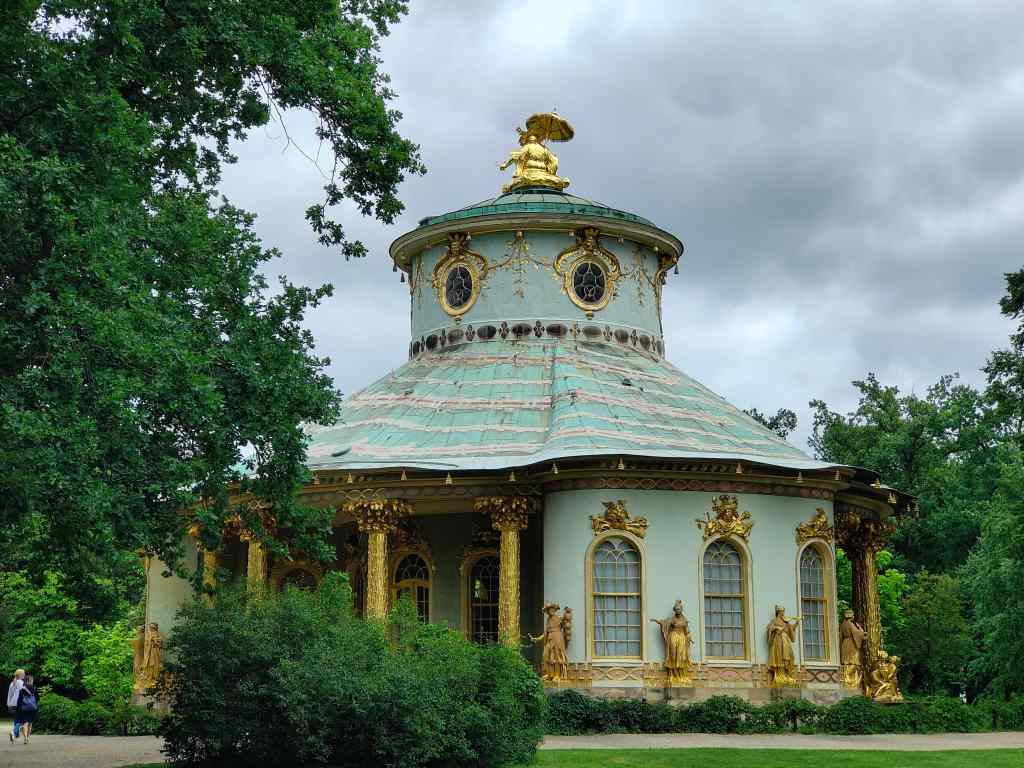
From the Neues Palais I headed through an attractive park back into the town of Potsdam. On the way I stumbled across the incredibly cute Chinese House.

The achingly cute Chinese House
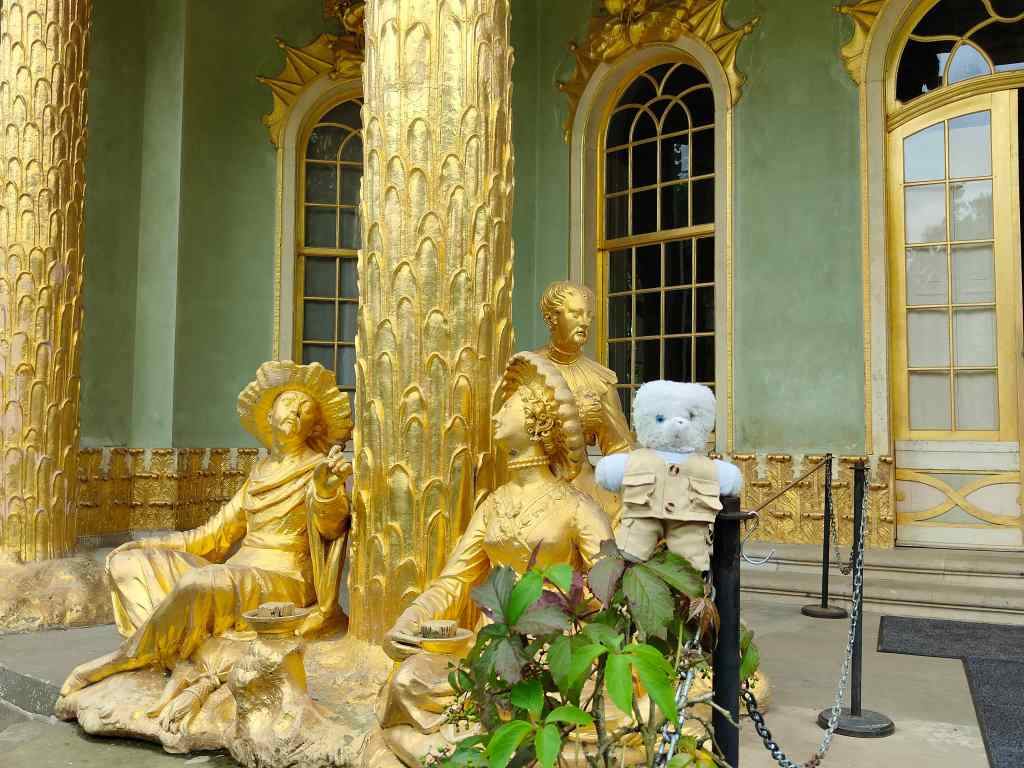
Chinese House figures, Potsdam

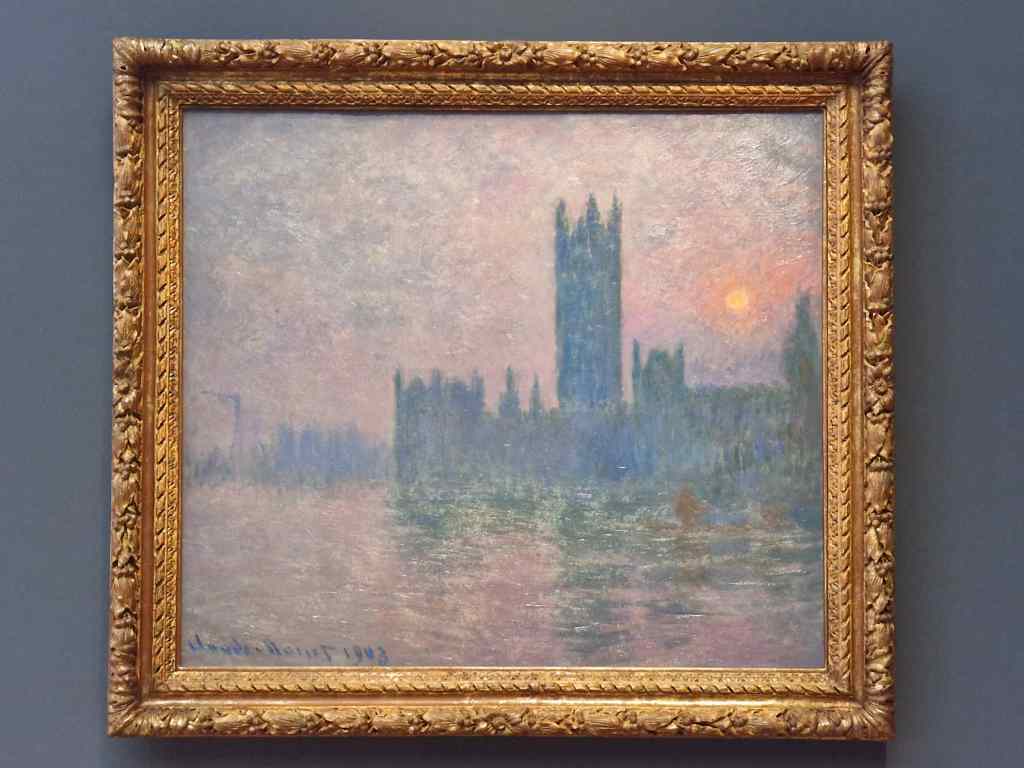
I grabbed some lunch in Potsdam, a pretty town, before heading to the Barberini Museum, housed in a baroque palace also built by Frederik II. It had both an impressive temporary Modigliani exhibition and an amazing permanent collection of impressionist paintings, assembled quite recently by Hasso Plattner, billionaire founder of the SAP software company and patron of the arts.

Part of Hasso Plattner’s collection of impressionists in the Barberini Museum

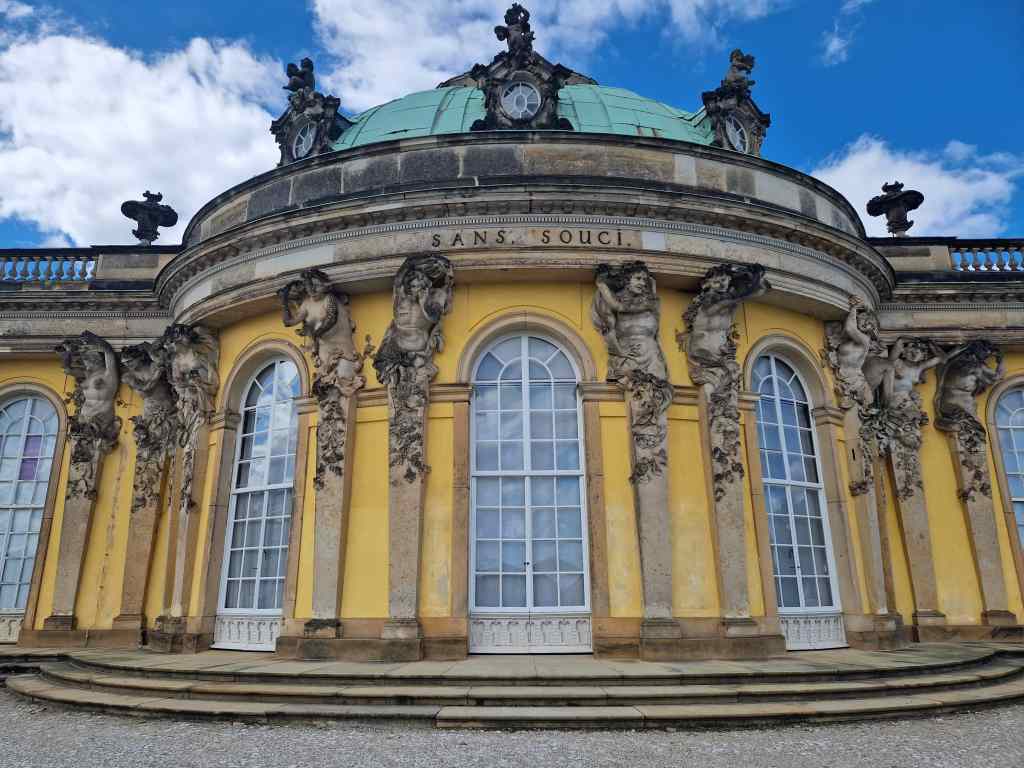
After a couple of hours in the museum I had to hurry back towards the royal park to visit Potsdam’s main attraction – Sans Souci Palace.

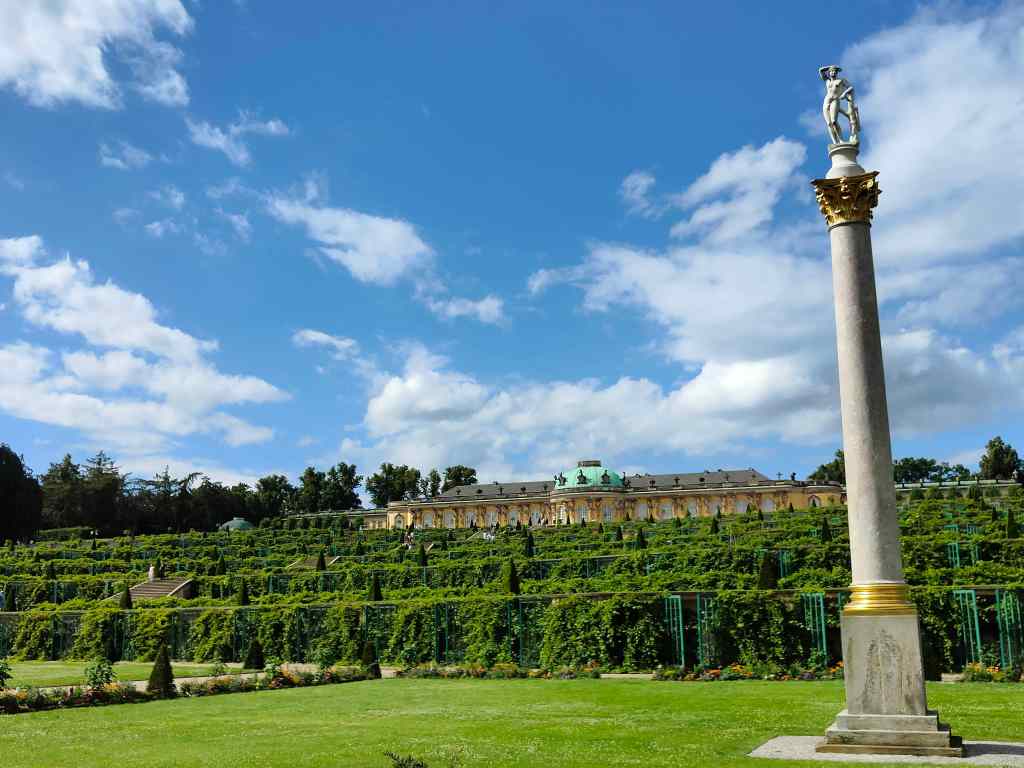
Sans Souci – the pinnacle of baroque taste

This is a much more modest construction than the Neues Palais, and Frederik much preferred to spend his time in this more intimate and relaxing residence, whose name means “without worry” in English. Sans Souci is exquisite and tasteful, and if I had the choice, I would probably agree with Frederik and choose it as my home. However, although it is the best known and most popular attraction in Potsdam, I would rate it as the least interesting tourist experience of a day that had so many highlights. Entry is by timed slot, and since space inside is limited, you join a continuous dense stream of fellow tourists, all attentively listening to their audioguides.

Sans Souci’s steady stream of visitors

It felt rather mechanical and cramped compared to our tour around the vast spaces of the Neues Palais. After my visit I had time to stroll around the park and enjoy the gardens and glimpses of yet more huge royal edifices. The early evening was enhanced by the fact that the sun had finally emerged.

Sans Souci park, Potsdam
Sans Souci Park
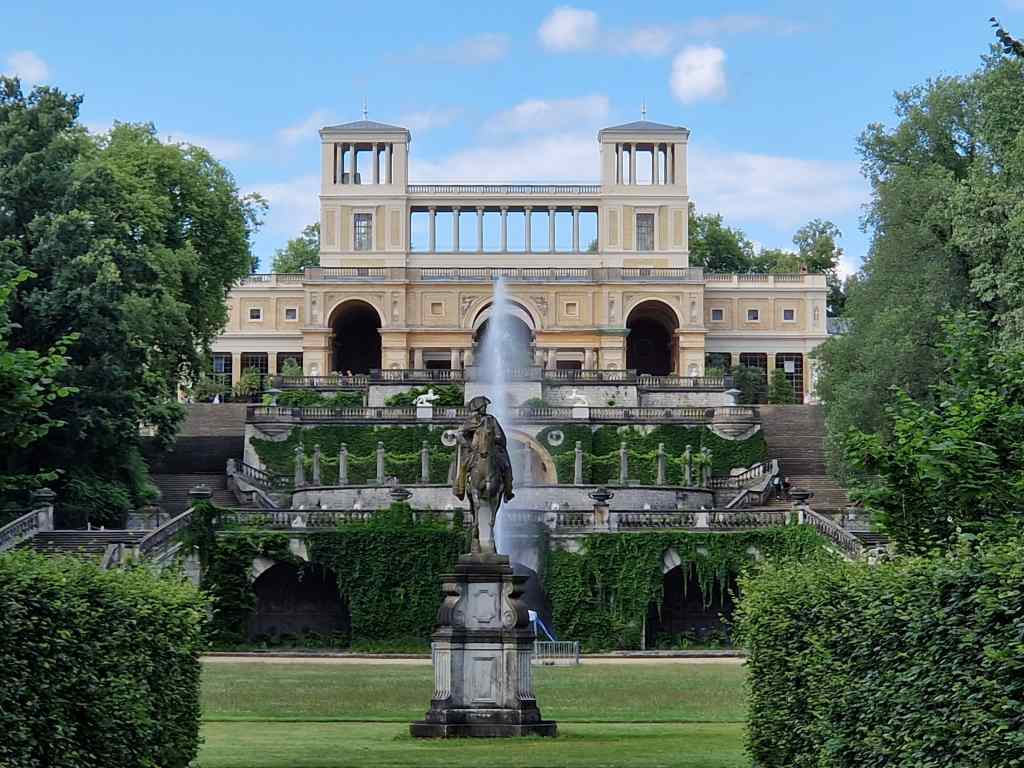
More Potsdam palaces….

I rounded they day off with dinner with my friends at a restaurant on the banks of the nearby Wannsee lake – a perfect way to end an exceptional day.

Next Post – East Berlin

Previous Post – Berlin

The Bear is Back! in Berlin and Museum Island

The Bear is Back!  And what better place to start a new trip than Berlin, a city that has a bear as its symbol.

The author with the coat of arms of Berlin

I am here for two reasons – firstly to visit friends, and secondly on a long-term project to completely cross the earth in multiple trips by land or by boat, without using a plane. I have already crossed Russia by train, the USA by bus and most of Europe by car or rail. I am missing a final section through Eastern Europe, either from Krakow to Kiev (which looks difficult for the moment) or from Berlin to Kaunas in Lithuania. So, after Berlin my trip will carry on through Poland to Warsaw covering about half of the missing section.

Museum Island – one of Berlin’s highlights

On this trip I was also hoping to get some much-needed sun after the wettest, coldest start to a summer in London that anyone can remember. Sure enough, I arrived in Berlin’s new Brandenburg airport (finally complete years late and well over budget) in bright sunshine in the late afternoon and found my flat in the west of the city without trouble. Imagine my disappointment when, contrary to the forecast, I woke up the next morning to hear heavy rain beating against the windows.

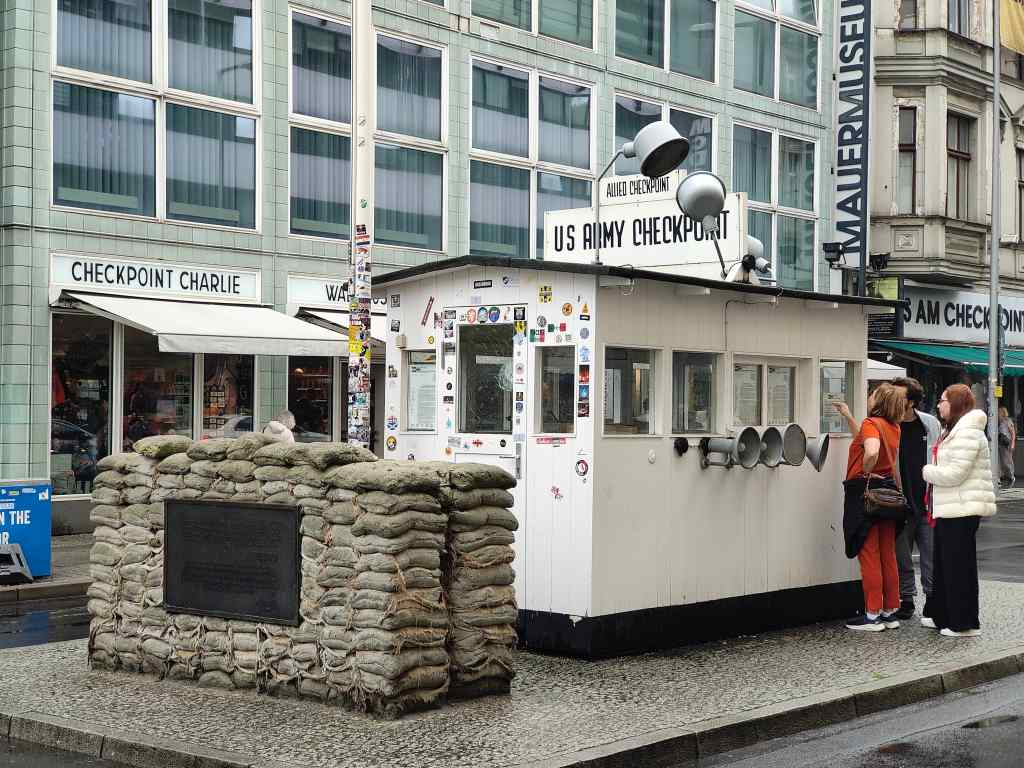
I had a visit of the Reichstag terrace booked for the morning, but in view of the weather changed my plans and started with stroll around town, including Checkpoint Charlie, the main point of entry or exit between the west and east parts of the city during the period when the city was partitioned by the Berlin Wall. I was last here in 1985 when I made the crossing to the east and it was a functioning US/Soviet checkpoint. Today it is a popular tourist destination with a small booth remaining from the US side, an interesting display about the history of the Wall, and lots of tacky tourist shops.

Checkpoint Charlie, Berlin

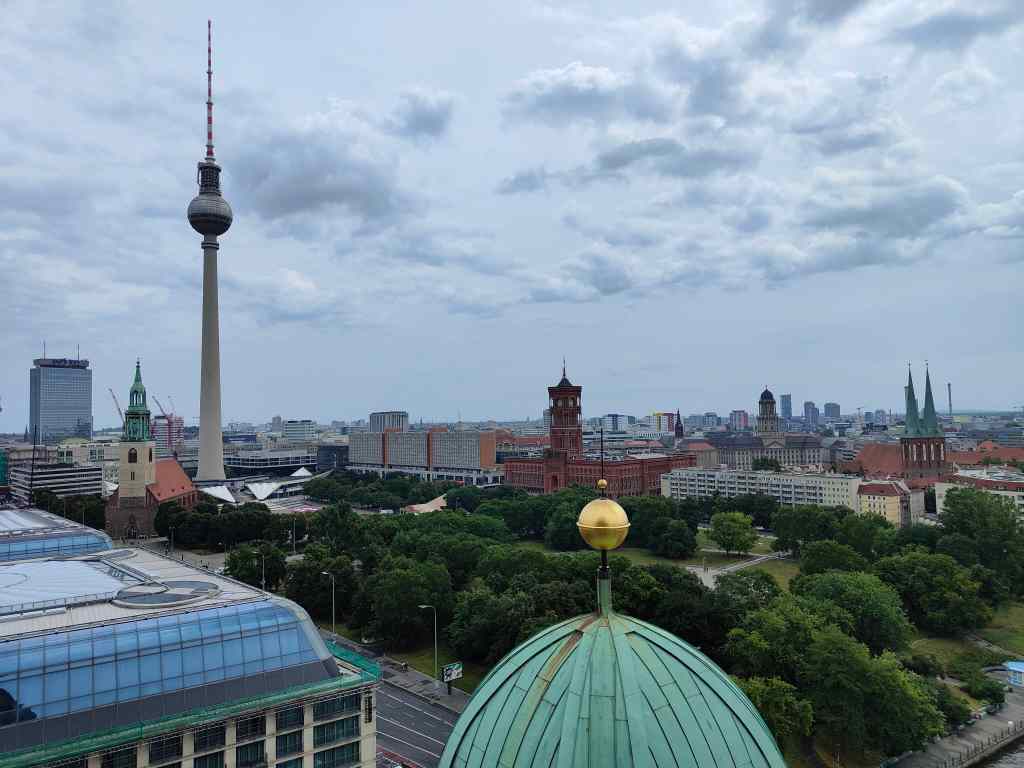
From Checkpoint Charlie, I headed east to Museum Island, home to some of Europe’s best museums. Unfortunately, the most famous of them all, the Pergamon, had recently closed for major repairs and is scheduled to reopen in 2028 (but given Germany’s record for public construction projects, don’t hold your breath). But there was still plenty of choice. It had stopped raining, so first I visit Berlin’s impressive cathedral (Dom) with its cavernous interior and then climbed the tower for the good views from its roof.

Inside Berlin’s Dom
The view from the roof of the Dom on a rainy day

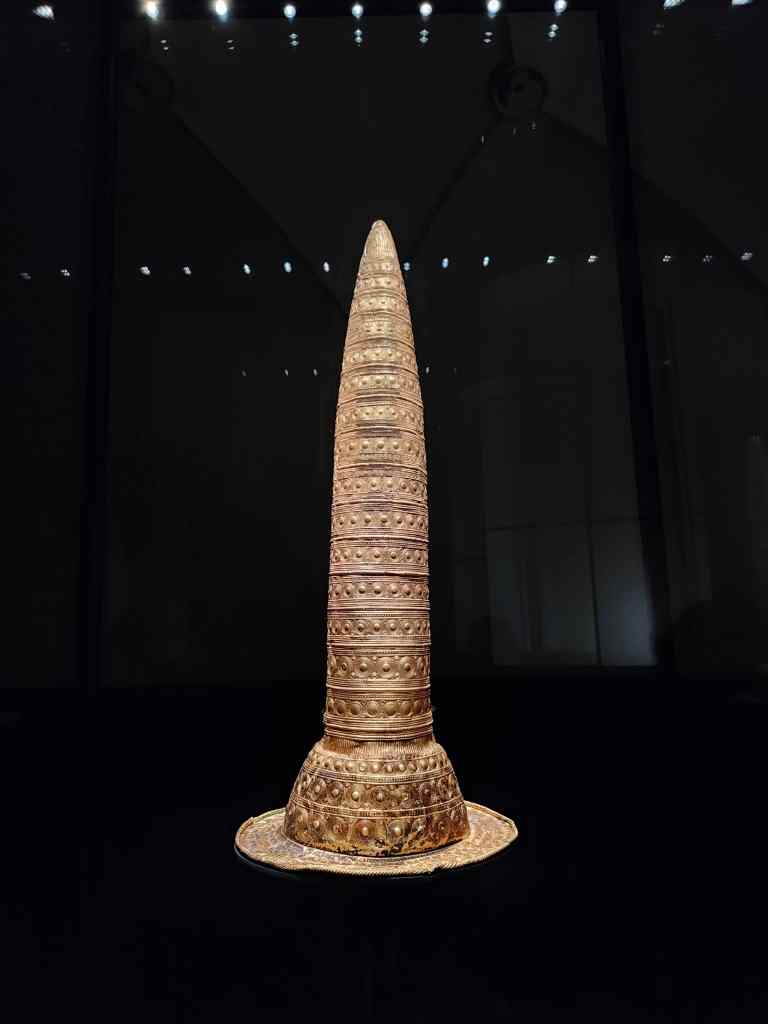
Next, I visited the Neues Museum, built in the middle of the 19th century, but looking a lot older, having been damaged by bombs in the second world war and then neglected during communist rule. It was brilliantly restored after reunification – in many of the rooms the original brickwork is left exposed, giving an old, decaying atmosphere that I found was a great way to present the exhibits. Highlights included a famous bust of the Egyptian queen Nefertiti (no photos allowed here!), a ceremonial gold hat from the bronze age which made me think of Hogwart’s sorting hat in the Harry Potter books, and parts of the treasure of Troy found by the enterprising German business and amateur archaeologist Schliemann.

Inside the Neues Museum, Berlin
The hat from Hogwarts? – Neues Palace, Berlin

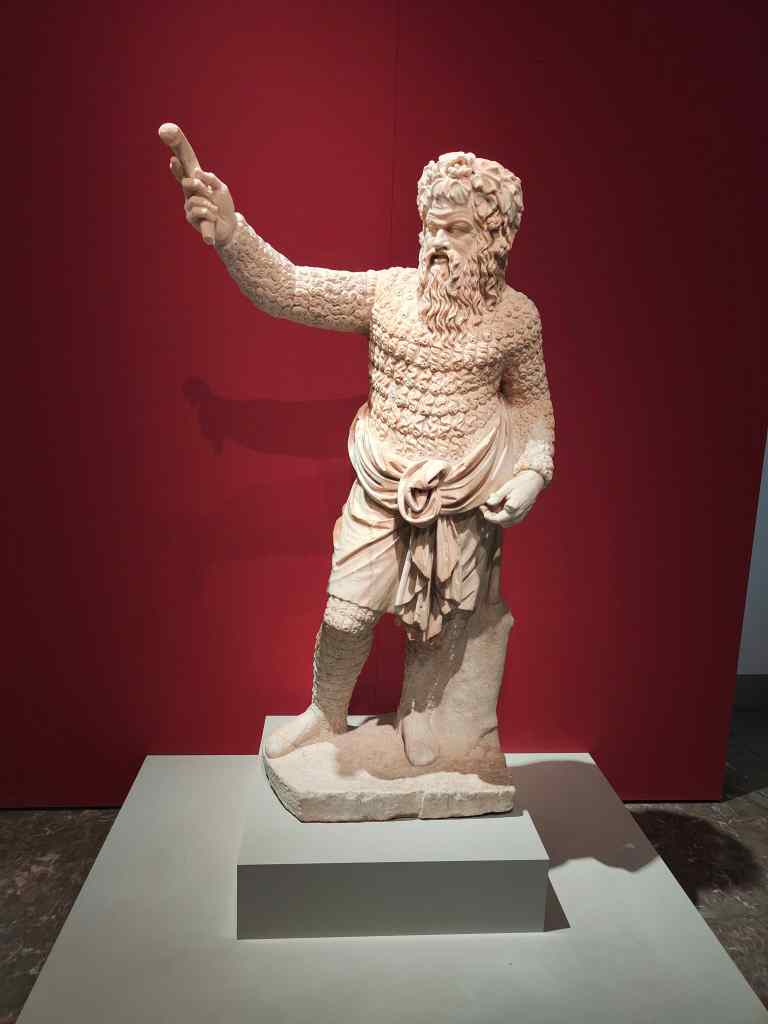
After a wonderful couple of hours wandering around, I visited the nearby Altes Museum, built slightly earlier and looking much older from the outside, but modern on the inside with bright white walls. Its collection is not quite as good as its neighbour’s, but it does have some great pieces like this statue of a roman actor.

Exhibit in the Altes Museum, Berlin

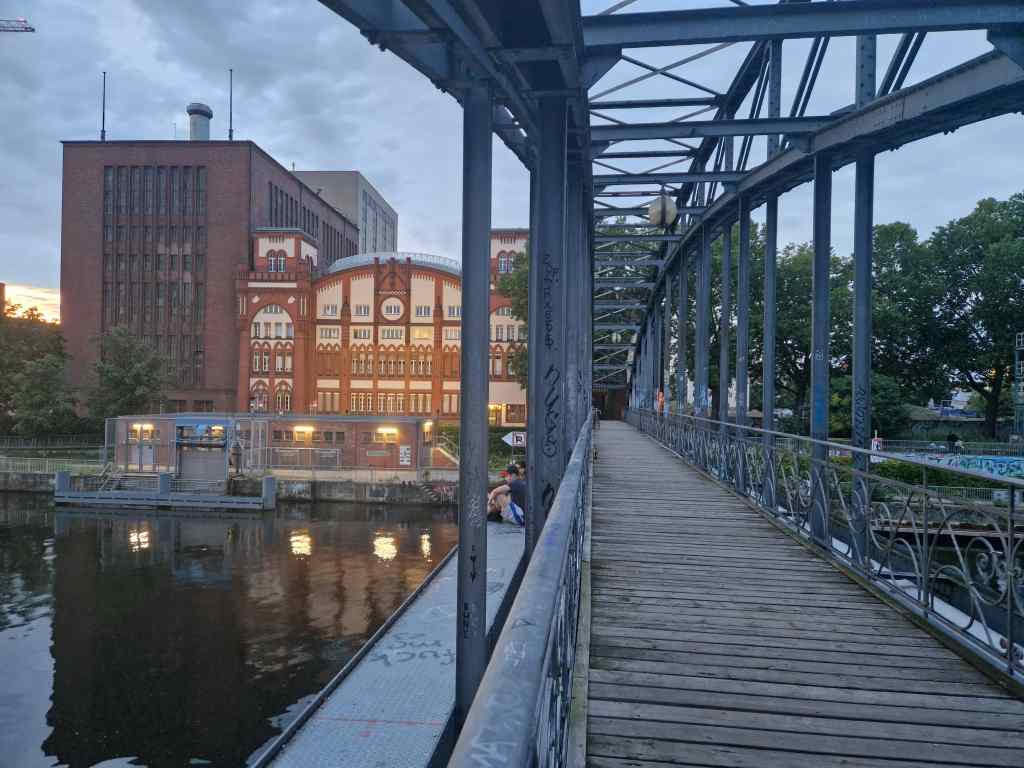
Originally I had planned to visit one more attraction on the island, the Alte Nationalgalerie, but there was long queue outside even for people who already had tickets. I didn’t fancy waiting for an hour in the rain, so headed home to relax. I had dinner with old friends who live in the Charlottenburg area of western Berlin. During our meal it had finally stopped raining, so afterwards we strolled around to explore the area, which had an interesting mix of architecture………

Post-industrial architecture in Charlottenburg, Berlin

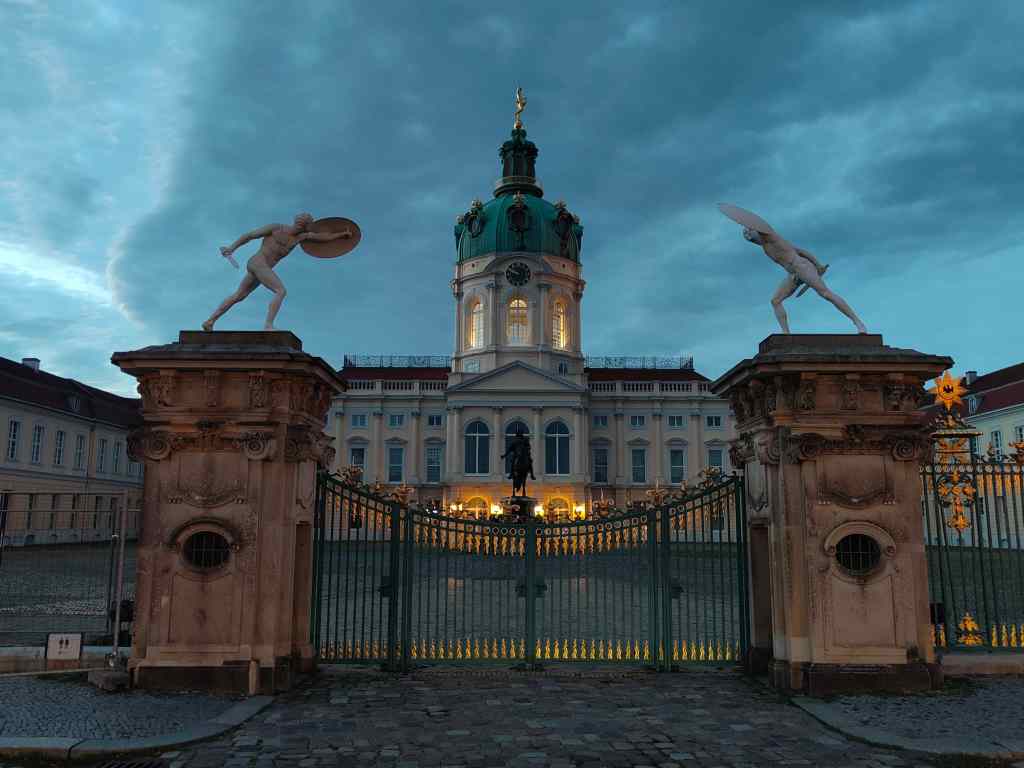
….and was also home to Charlottenburg Palace, whose construction was started around 1700 by Frederick I, King of Prussia and continued through the first half of the 18th century until it became one of the biggest palaces in Europe. I could only admire the building from the outside but did not mind, since on the next day I planned to visit an even more impressive place…….

Charlottenburg Palace at dusk

Next Post – Potsdam

Blog at WordPress.com.

Up ↑