Aswan to Luxor – Kom Ombo and Edfu Temples

The next day, I left Aswan for my next destination, Luxor. On my way I visited two more temples. The first, Kom Ombo, is dedicated to both the crocodile-headed god Sobek and to Horus. Its courts and sanctuaries are all duplicated for its two gods. It was built around 100BC by Ptolemaic pharaohs. Although damaged by earthquakes and by builders seeking materials for other projects, the temple has a great site on a bend in the Nile, and I found its ruins very beautiful.  

Kom Ombo Temple

Near the temple was a museum with mummified crocodiles – sacred crocodiles used to live in a pool on the site.
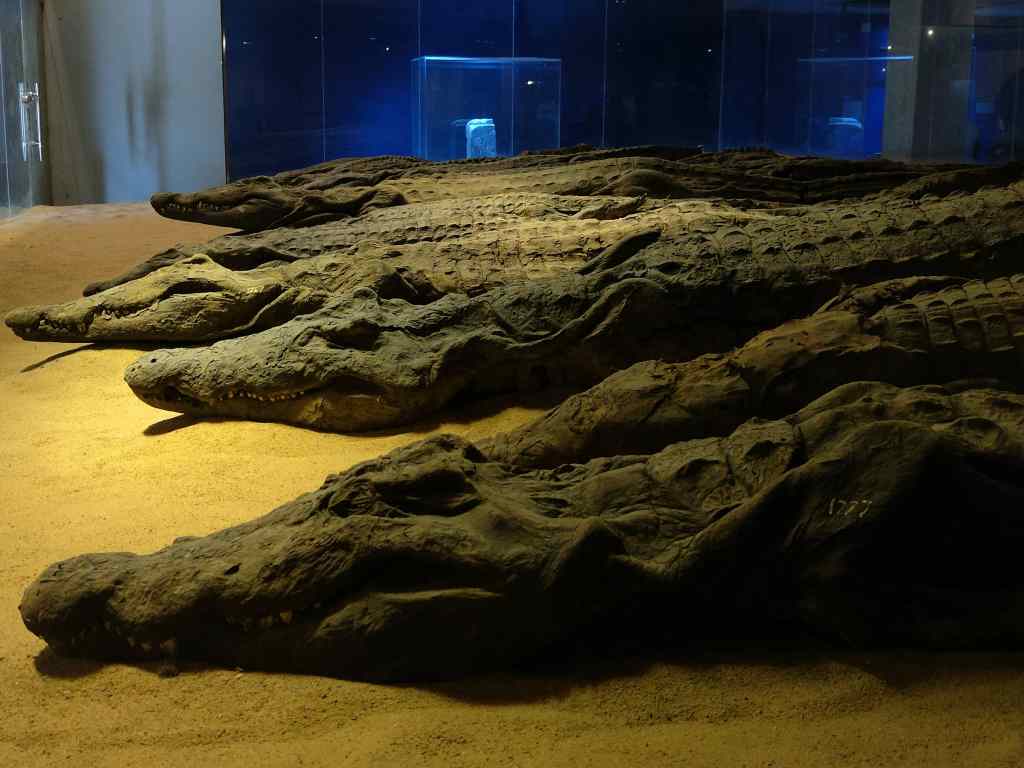
Mummified Crocodiles!

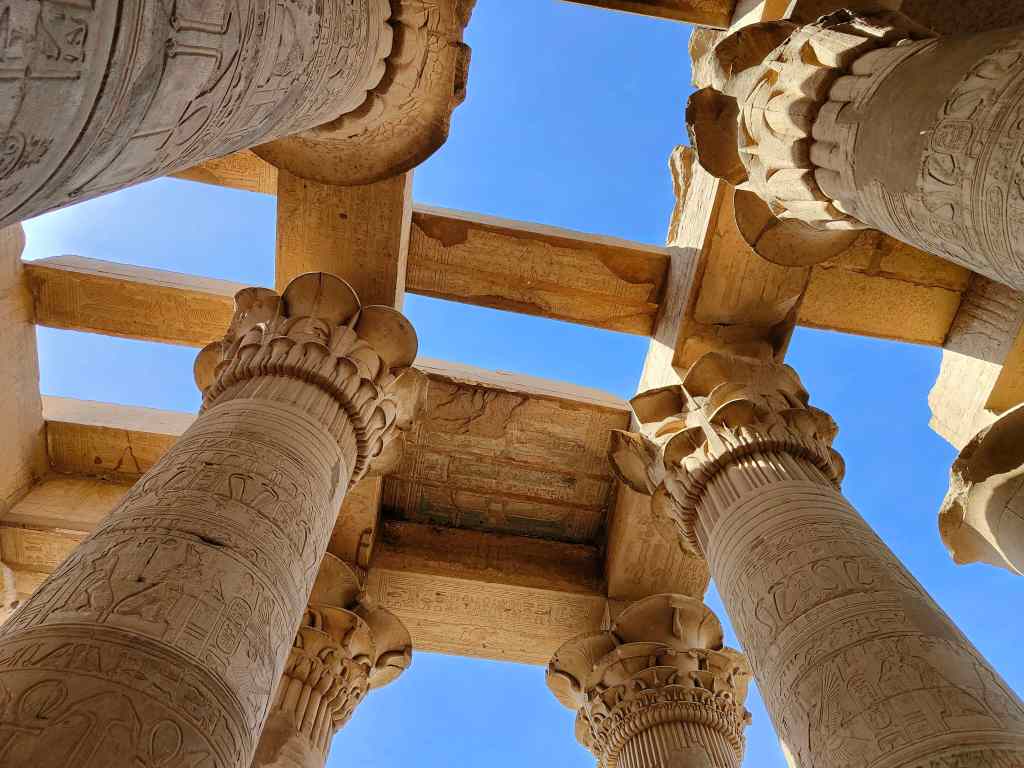
The second temple on my route to Luxor was Edfu, which was built from 237 to 57BC and is dedicated to the falcon-headed god Horus. Like the Great Temple of Ramses, it was forgotten and covered by sand until it was excavated by a French archaeologist in the mid-19th century. It’s long period of burial means that it is very well preserved, and unlike most other ruins, still has an almost intact roof. As a result, the interior of the temple was dark and atmospheric, quite unlike all of the other places I visited in Egypt, which were open to the skies.

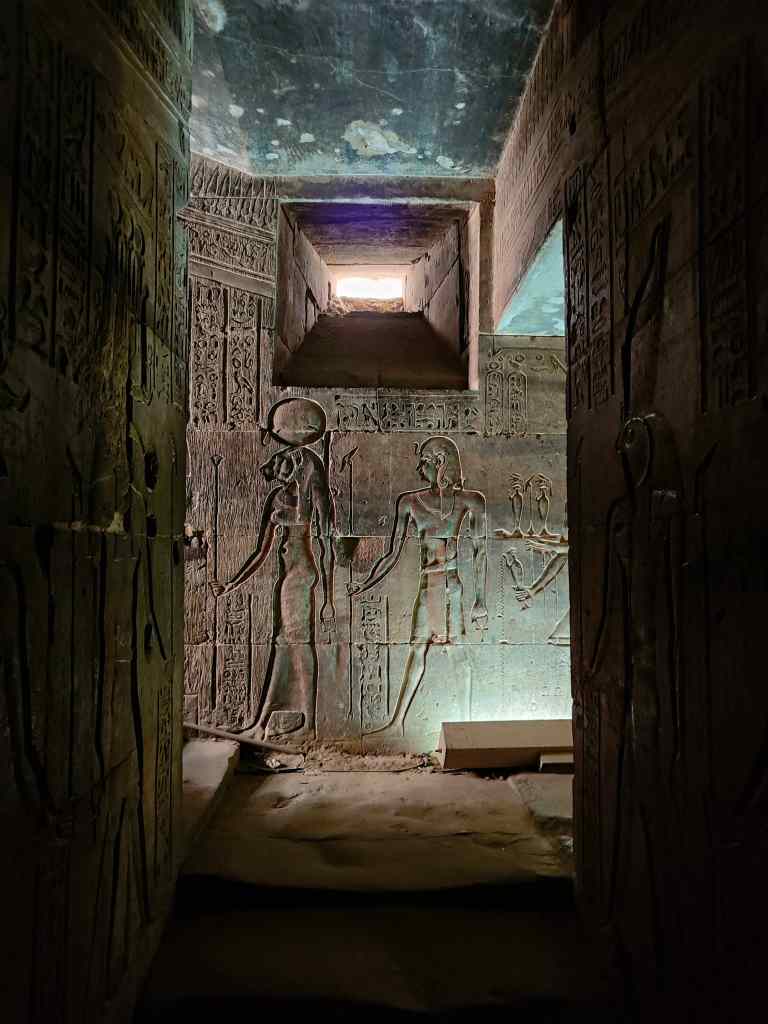
Edfu Temple
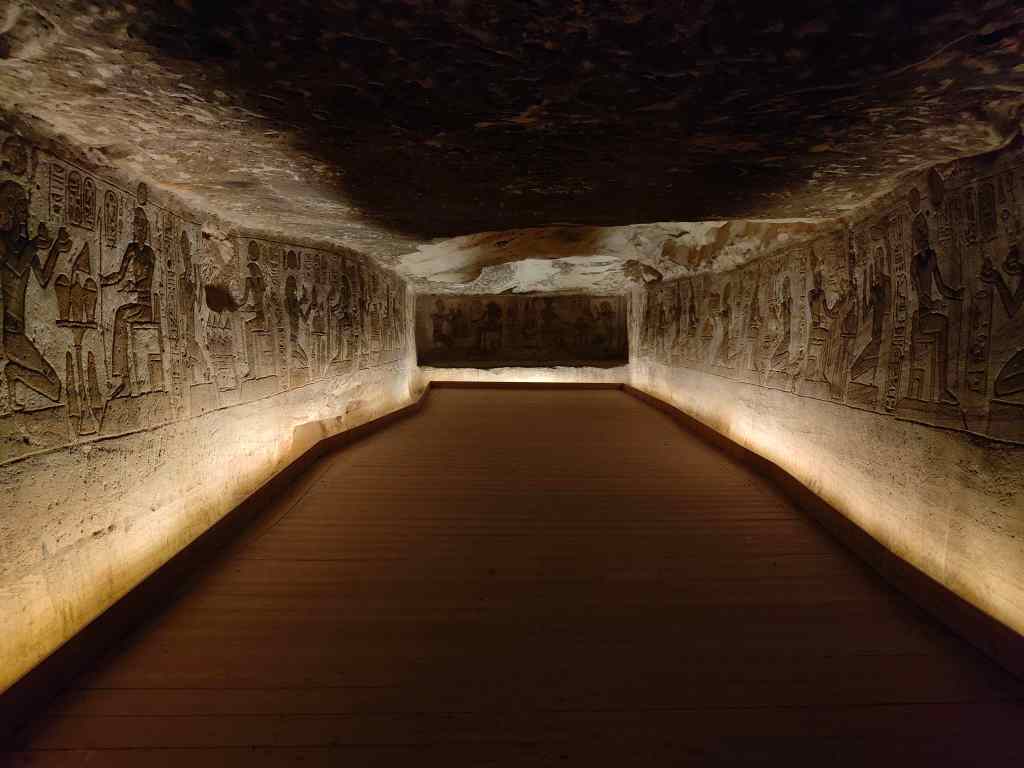
The atmospheric inside of Edfu Temple

Edfu was a very impressive temple, but I felt I was reaching saturation point for seeing ancient ruins. This was a little worrying, since I was due to spend four days in my next destination, Luxor – home to some of the world’s most famous archaeological sites.

As we approached Luxor my driver scratched his head and looked hard at his sat-nav. We were heading for the west bank of the Nile, not the busy east bank where most of the hotels are. We entered a village-like area with narrow dirt tracks and simple buildings. We had to turn around once, as the route indicated went down a street too narrow for our car, but finally found my hotel – a huge place looking like an Arabian palace, totally unlike the modest houses all around.
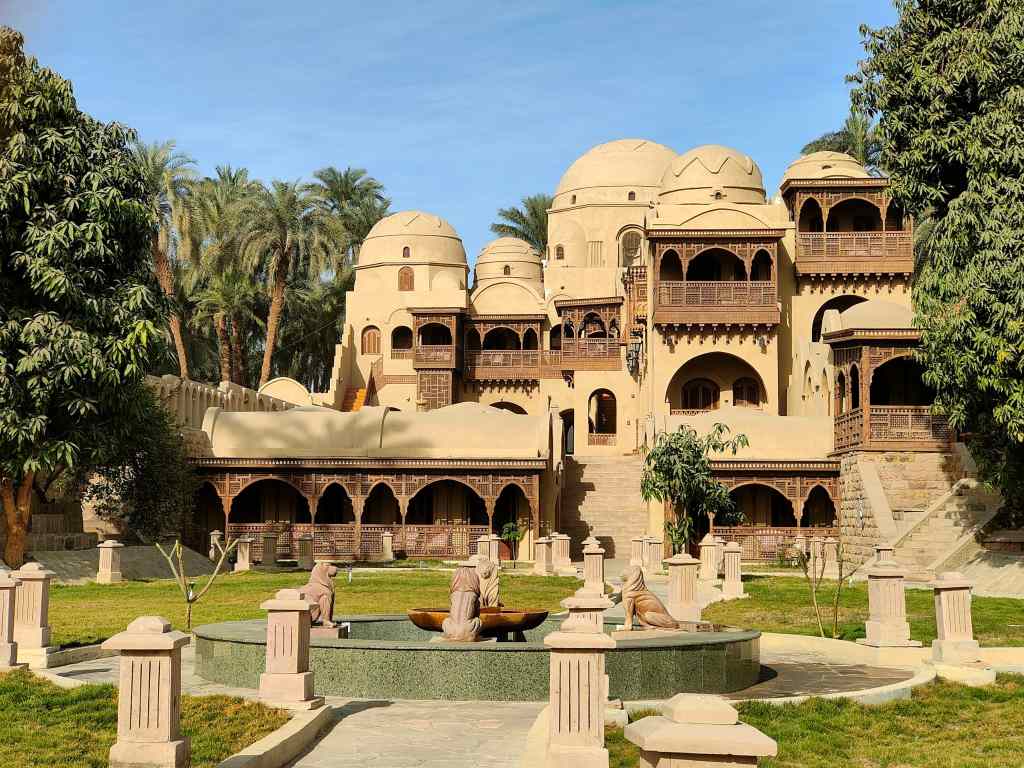
My unusual hotel in Luxor

The hotel had been constructed by an Egyptian architect and his English wife. Neither had ever managed a hotel before, never mind built one, and the place had some quirks resulting from their inexperience. However its plus points easily outweighed these disadvantages. It occupied a huge plot, and behind the main building was a long strip of land with a pool and gardens, reaching right up to the River Nile. On both sides were fields with horses and buffalo.

The view across the Nile from the hotel’s garden – in the middle on the opposite bank, you can just see Luxor Temple

I was a bit worried about our remote location, but the hotel owner came to greet me and told me that they operated a free ferry across the Nile to get the city. After enjoying my room for a while, I decided to use this facility to cross the river to check out the centre of Luxor. It was now dark, and on the way to the pier, I got to enjoy another aspect of the hotel’s design. 
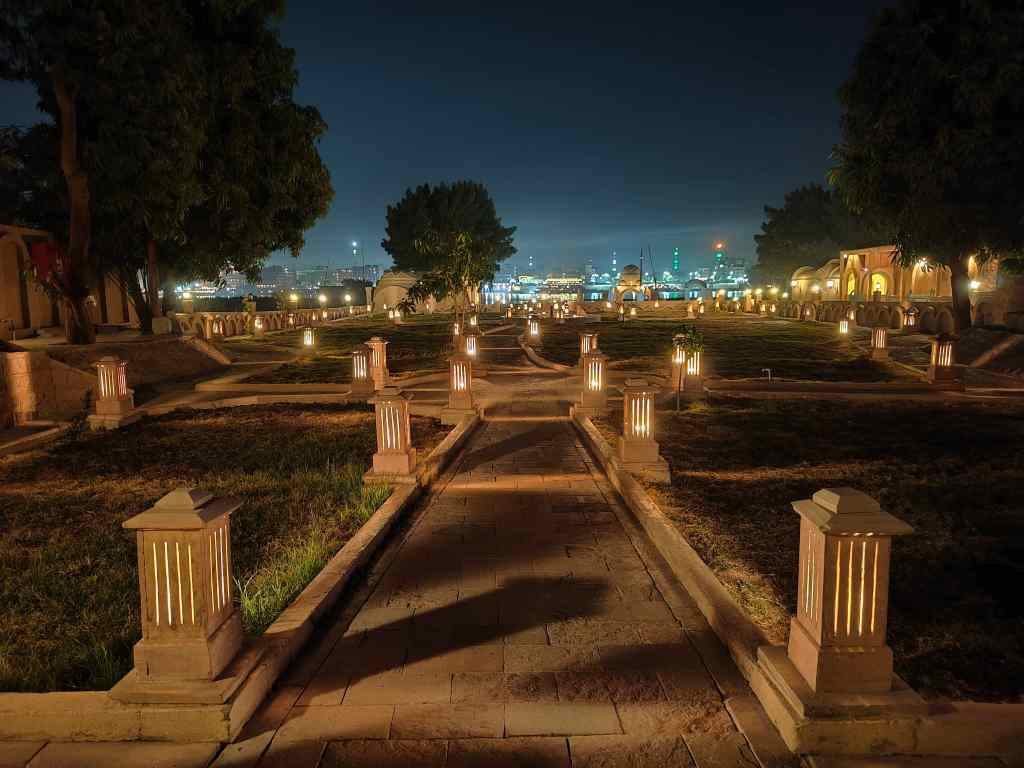
My hotel at night

The ferry dropped me off in a particularly drab part of Luxor to the south of the centre, and as I explored on foot, I was continually hassled by taxi drivers and the owners of horse-drawn carriages. I got a bite to eat in a pasta restaurant and headed back to the comfort of my hotel. My lodgings were really nice, but I had not liked my first impression of Luxor, and wondered whether I really wanted to see even more ancient ruins…….no matter how impressive they might be.

Next Post: Luxor’s East Bank and Karnak

Previous Post: Abu Simbel
Abu Simbel and the Great Temple of Ramses II

The next couple of days were devoted to temples…and lots of driving. First, I made the long trip south to Abu Simbel, near the border with Sudan to see the Great Temple of Ramses II, one of Egypt’s most famous monuments. Getting their required a three-hour drive. After a couple of hours being driven through featureless, dull desert, the side of the road suddenly became green with crops grown using the water from Lake Nasser – but soon that too became rather boring. Fortunately, the temple was worth the effort of getting there. It was located on a pretty site, next to the bright blue waters of Lake Nasser.

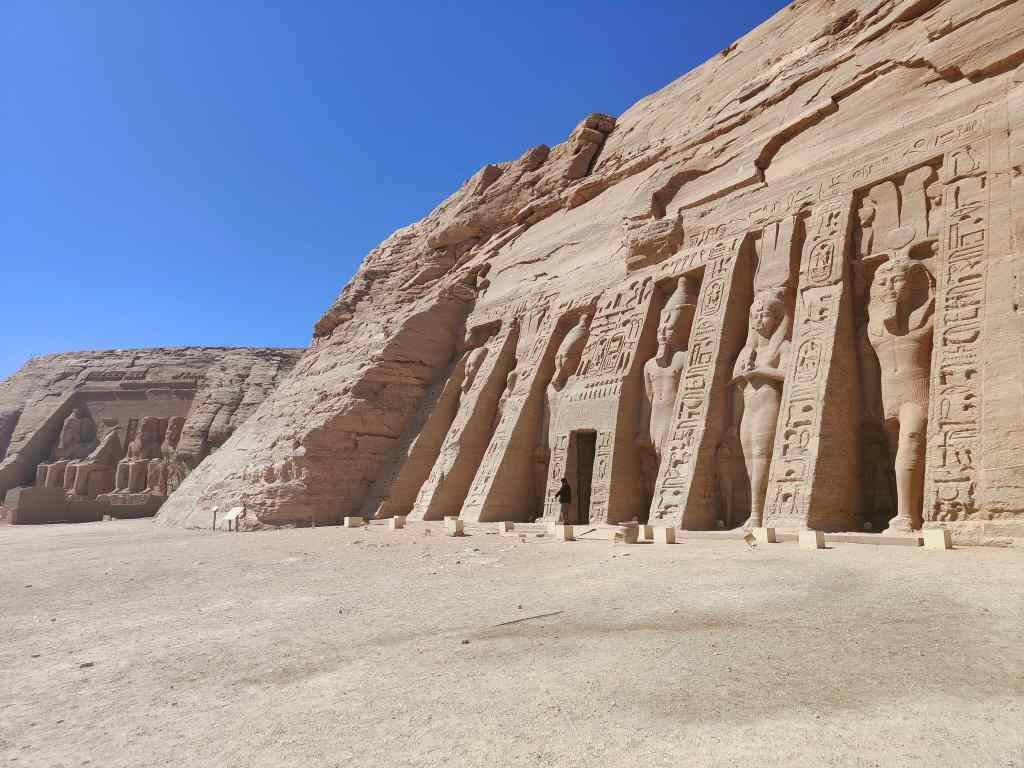
The spectacular site of the Great Temple of Ramses and the Temple of Hathor

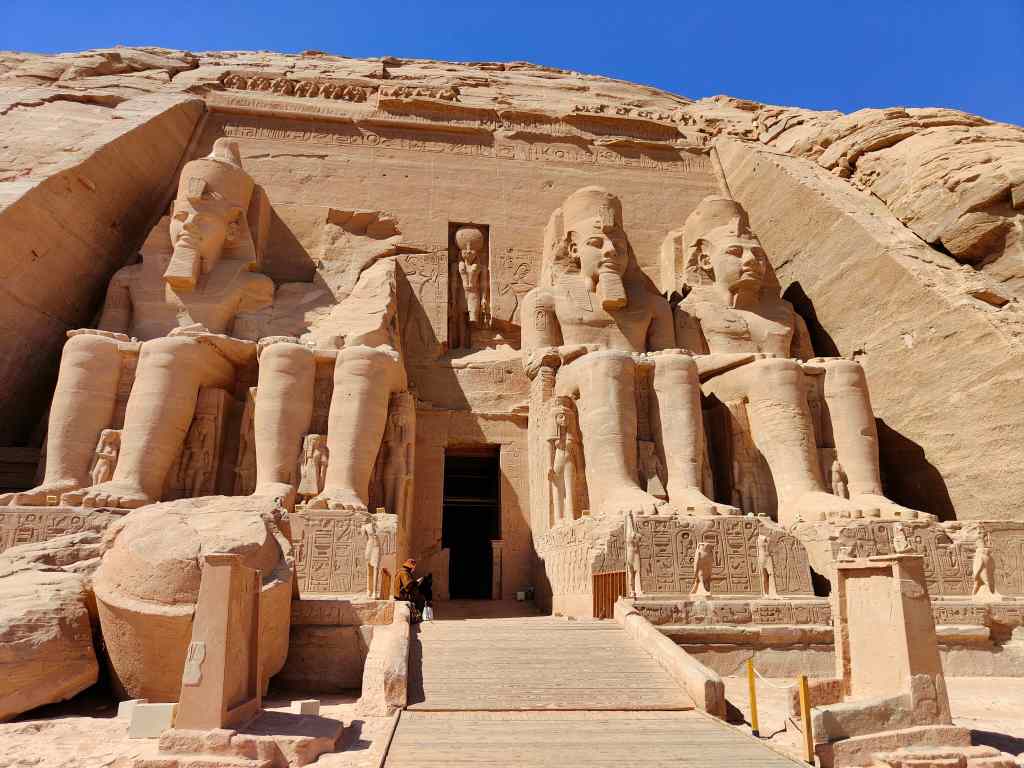
The Great Temple of Ramses II has a long and interesting history. It was built in the 13th century BC and orientated such that the rising sun would shine right through the temple to its inner sanctuary on exactly two days each year – Ramses’ birthday and the anniversary of his coronation.  After the fall of the pharaohs, it was forgotten and was almost completely covered by sand. A Swiss archaeologist stumbled across the top of the head of one of the four giant statues of Ramses that guard the temple’s entrance and started excavating to uncover the Great Temple of Ramses II and the nearby Temple of Hathor. The temple was nearly lost again when the Aswan dam was constructed. Like the Temple of Isis at Philae, it was one of several important archaeological sites that were moved to higher ground by an international group of archaeologists to save them from being submerged. The Great Temple of Ramses II was possibly the most challenging such project. It involved cutting the temple into hundreds of blocks, averaging 20 tonnes each, creating an artificial hill to provide the temple’s backdrop, and rebuilding the temple in the newly created cliff. The engineers also tried to mirror the orientation of the old site as closely as possible but could not get an exact match – the rising sun now illuminates the sanctuary one day later than it did the original temple. I had timed my trip well – my guest house owner had advised to leave early, and many people leave at six in a convoy of vehicles from Aswan with a police escort, a relic from the time that the road was considered a target for terrorists. Instead, I left at a leisurely half past eight and arrived at half past eleven, missing all of the tour groups.

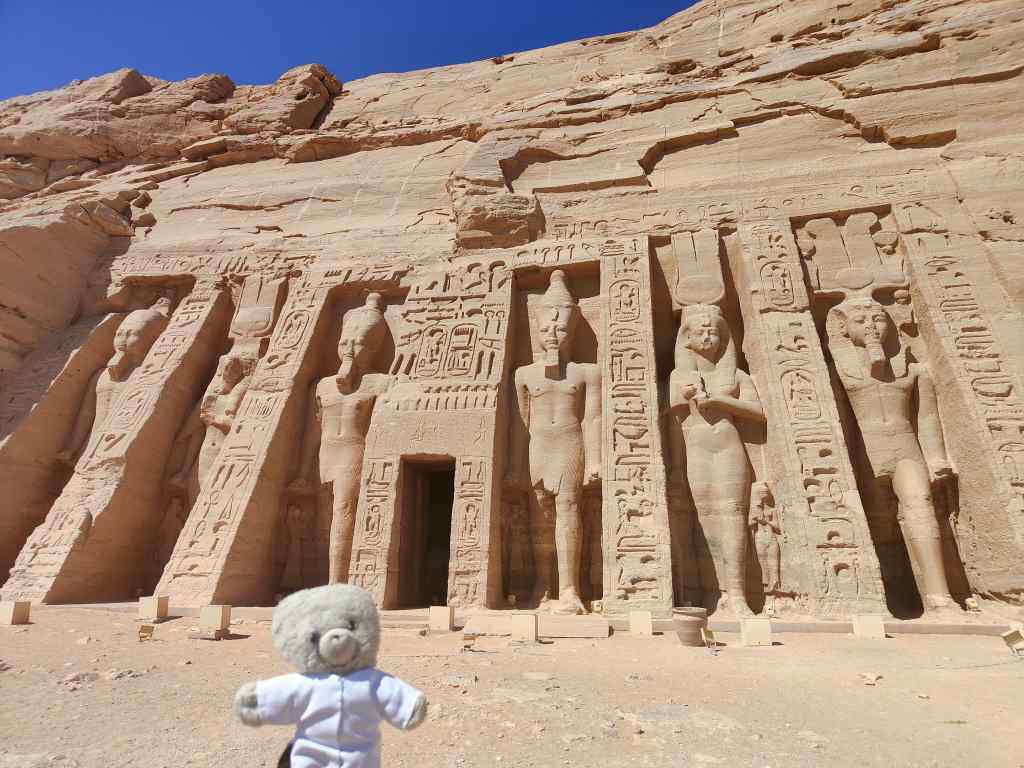
The temple of Hathor with the Great Temple of Ramses II in the backgound

First, I visited the Temple of Hathor, the goddess of love. The entrance had three large statues of Ramses and his favourite queen, Nefertari; unusually she was represented on the same large scale as her husband (usually wives and children were carved much smaller).

The temple of Hathor
Inside the Temple of Hathor

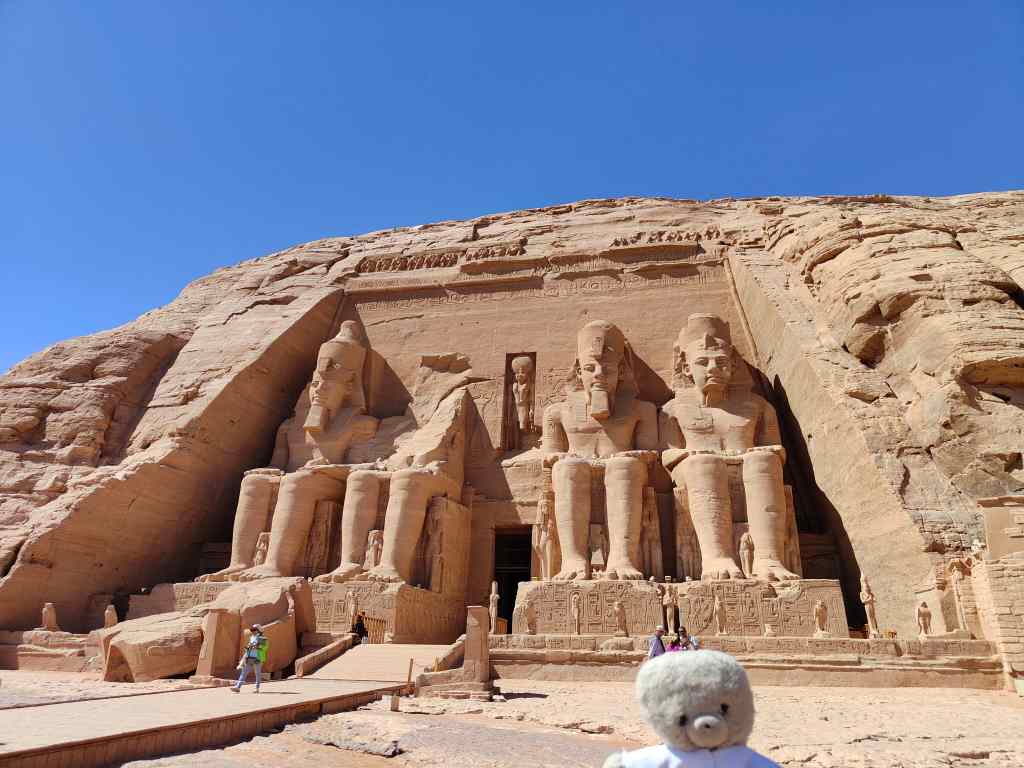
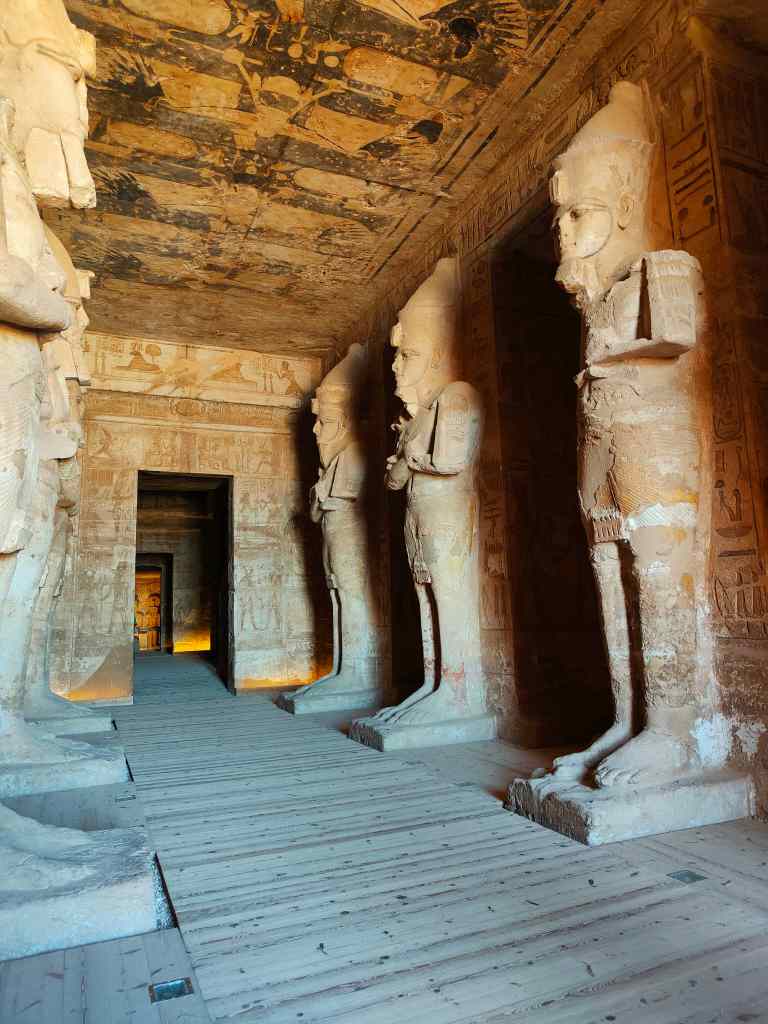
Next, I visited the main attraction, the Great Temple of Ramses II. It is dedicated to the gods Ra, Amun and Ptah………but is mostly a tribute to Ramses II himself. The four huge statues of him at the temple’s entrance are one of Egypt’s most widely recognised sights, and in real life are just as impressive as they are in photos.

The Great Temple of Ramses II

The interior of the temple has scenes from the life of Ramses II. He probably became pharaoh at the age of 21 (though some sources say even earlier) and may have died aged 90 – a reign of around 70 years. Egyptians say he was a “busy” man. He fought many battles – including a key victory over the Hittites that secured the independence of Egypt- constructed cities, temples and monuments and had over 100 children from fourteen wives. His favourite wife was Nefertari, and he built a magnificent tomb for her in the Valley of the Queens in Thebes (now Luxor).

Ramses slaughtering the Hittites

Several passages led into the rock away from the main temple – probably they were storage areas
Yet more Ramses statues inside

The Great Temple of Ramses II is an amazing sight and a monument to the things humans capable of when they work together. Construction of such a large and beautiful temple, 2500 years ago, at the very edge of the area controlled by Ramses’ Egypt was an astonishing achievement. But so too was the international project to save the temple from flooding by moving it piece by piece to a new location. If only today’s humans could rediscover this spirit of cooperation.

Previous Post: A day on the Nile

Next Post: From Aswan to Luxor

A Day on the Nile and the Temple of Isis, Philae

Today was a very busy day. I had breakfast on my guest house’s roof terrace just as the sun was rising.

Aswan – The view at breakfast

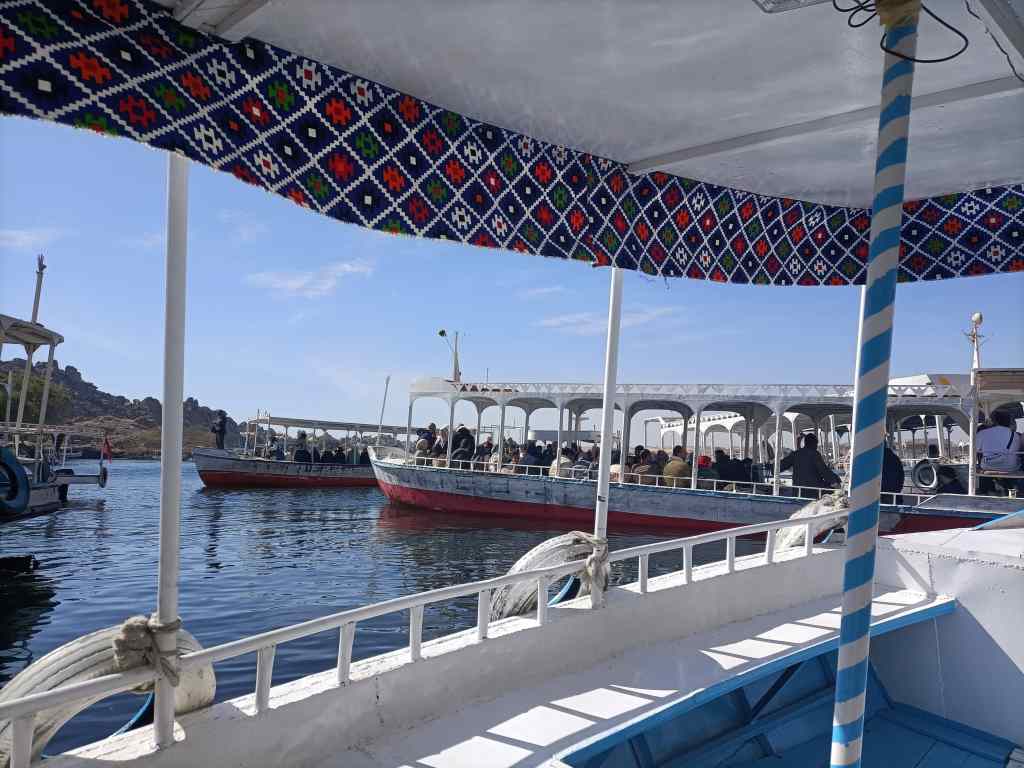
Then I crossed over the mainland with the public ferry and made a short drive by taxi to the banks of Lake Nasser (formed by the Aswan Dam) to visit the Temple of Isis at Philae. It was the last day of Egyptian school holidays, and the temple was a popular destination for local tour groups and families with children. At the lake’s edge, many boats jostled to take visitors over to the island where the temple was located. I negotiated a rate for a private boat. The boatman seemed very happy to take an exotic passenger rather than yet another group of locals – not many bears visit Egypt.

Boats jostling to get to Philae Island

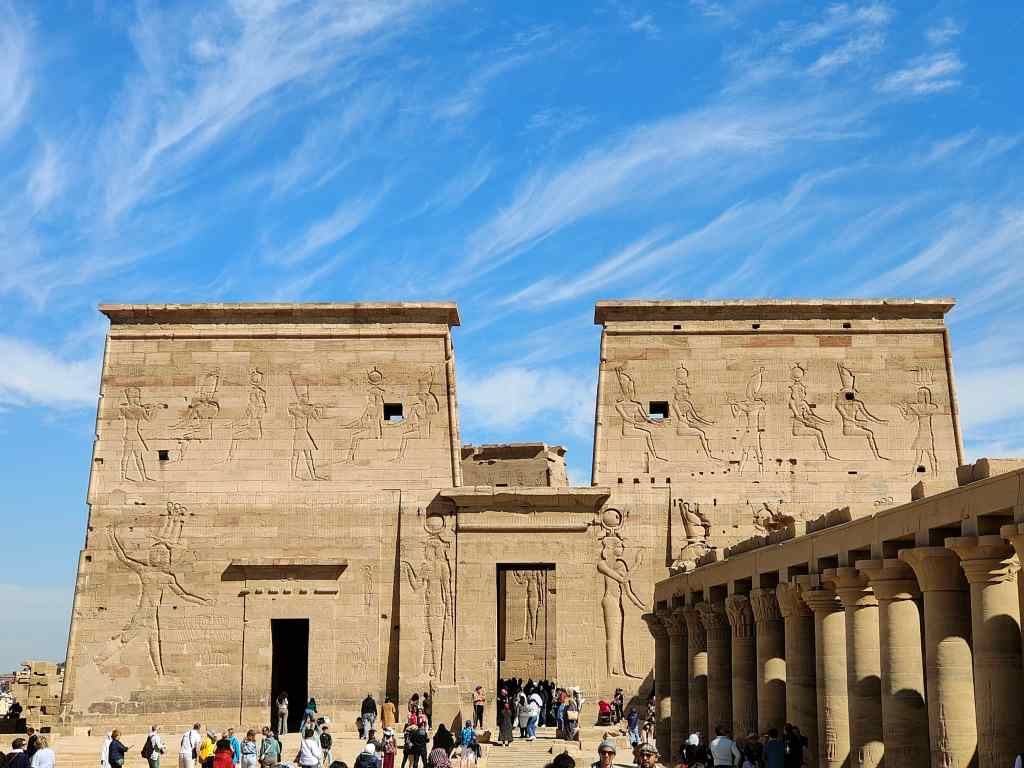
The Temple of Isis is relatively modern by Egyptian standards. It was started around 690BC, though most of it was built around the third century BC by the Ptolemaic pharaohs (Egypt’s last dynasty of pharaohs before Roman rule). The Romans added some sections of their own – the Egyptian goddess Isis had become popular throughout their empire. After the Romans adopted Christianity, the temple was used as a Christian shrine, and most of the images of Egyptian gods were defaced. After the first Aswan dam was built in 1902, the temple was regularly flooded. The second Aswan dam in 1970 threatened to totally submerge the temple forever, but it was moved piece by piece to a new island with higher ground as part of the international effort to save the antiquities threatened by the new dam.

The Temple of Isis

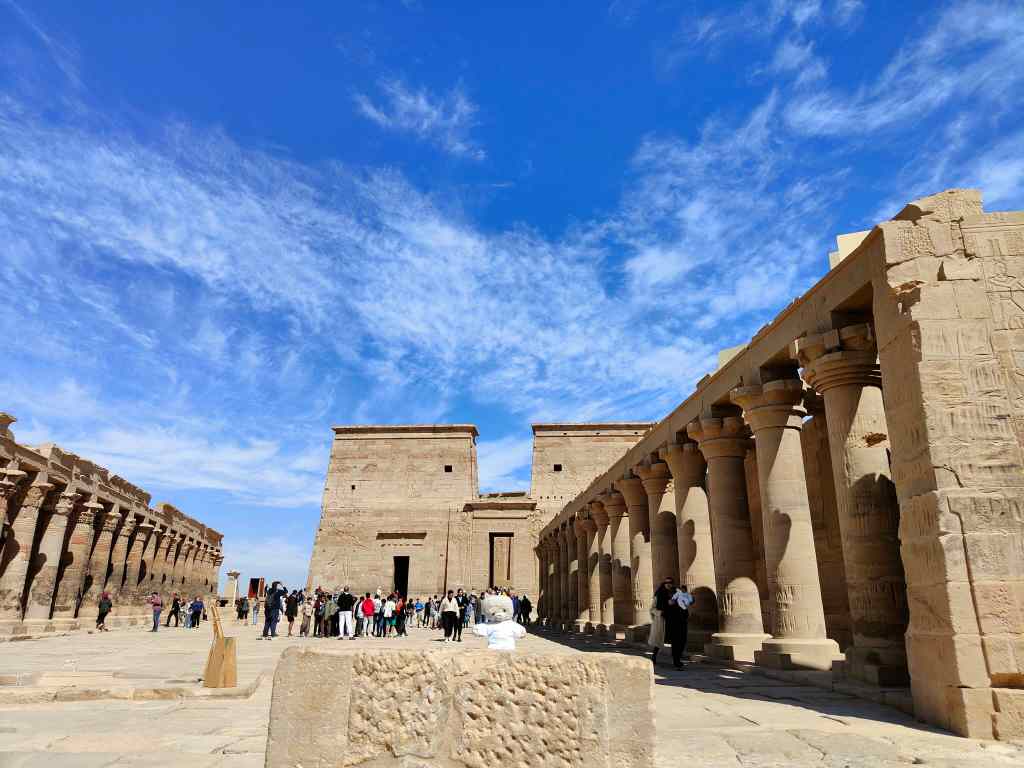
I spent an hour and half admiring the different buildings making up the complex – including the courtyard of the main Temple of Isis….

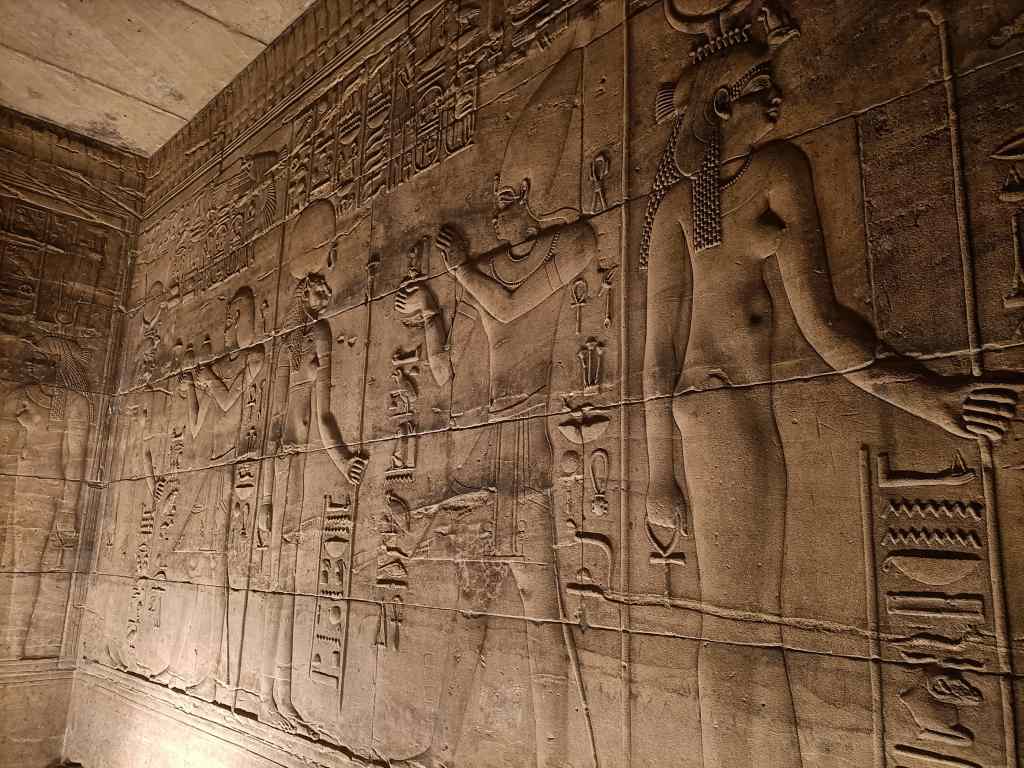
…….the interior of the Temple of Isis…….

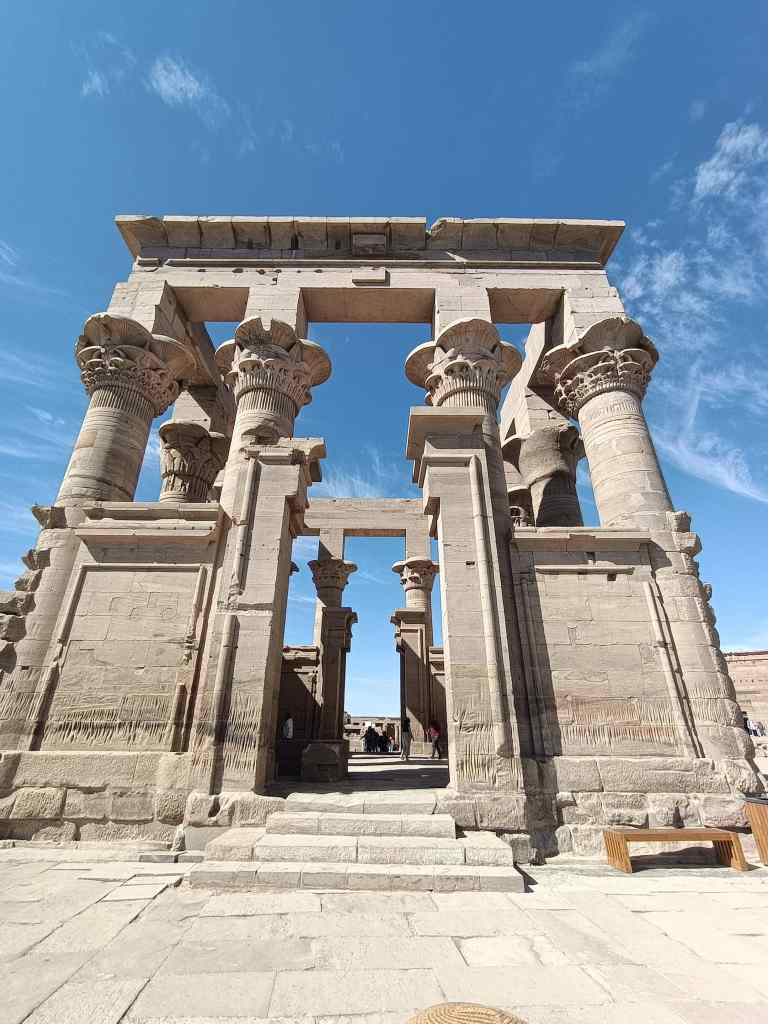
……and the kiosk of Trajan, named after the Roman emperor.

Kiosk of Trajan, Philae Island

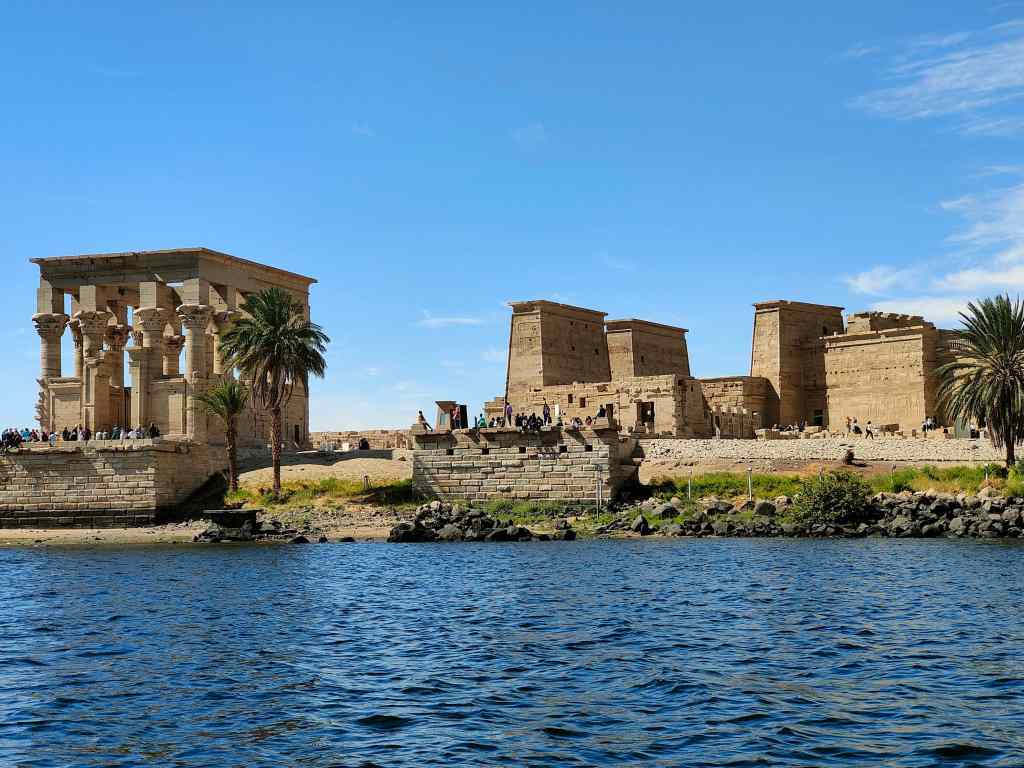
The site was busy, and I found I could take some of the best pictures – without anyone getting in the way – from the boat on the way back.

The Temple of Isis seen from Lake Nasser

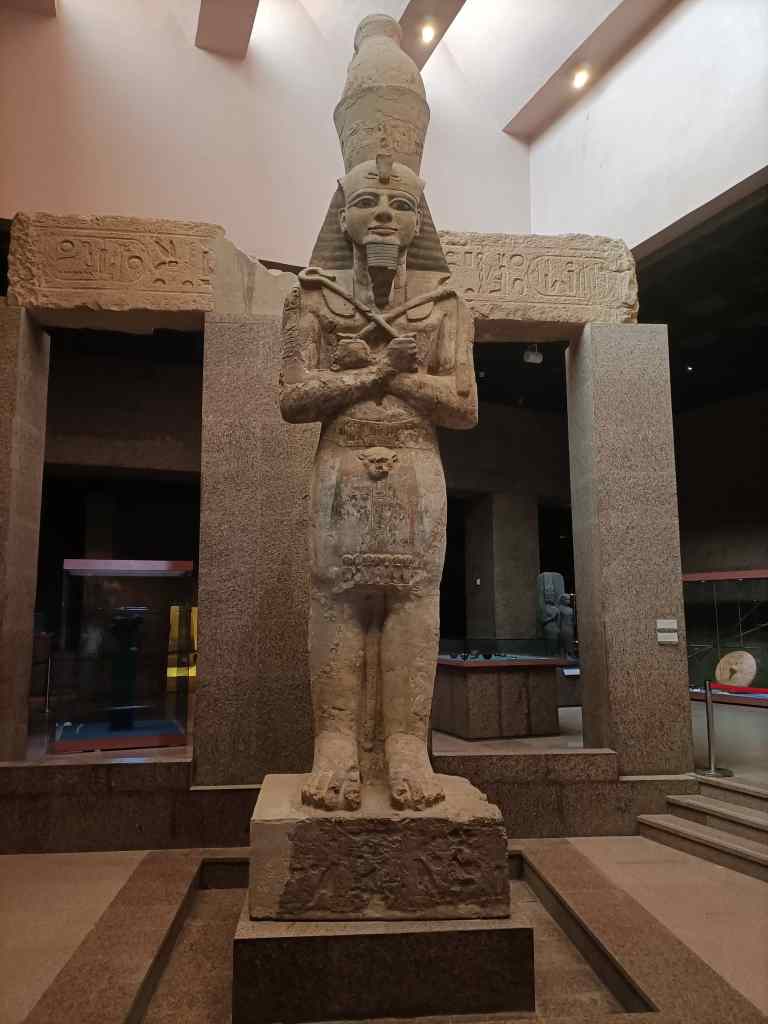
Next my taxi dropped me off at the Nubian Museum in Aswan. This catalogues the history of the state of Nubia, that spent most of its existence being occupied by, or having to pay tribute to, its more powerful Egyptian neighbour to the south.  The history was interesting, but the items on display suffered from comparison with the Egyptian Museum in Cairo, which I had visited only two days earlier.

In the Nubian Museum, Aswan

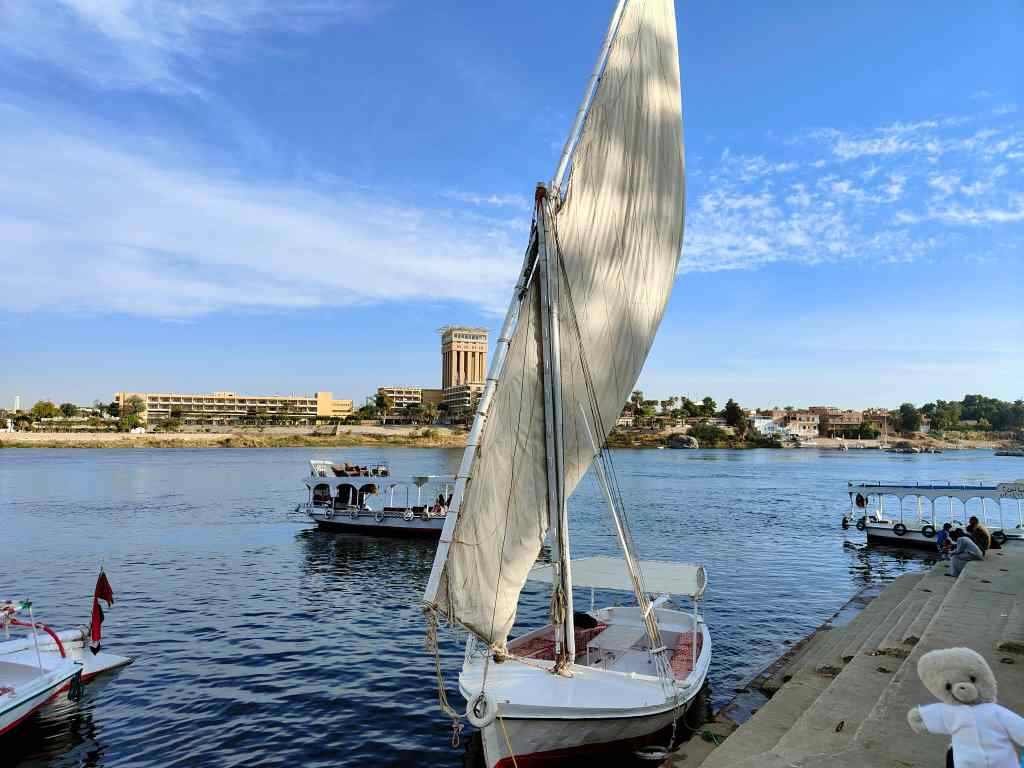
After visiting the museum, I had lunch and a coffee in a café overlooking the Nile and then I set off on a trip on a “felucca” – a traditional Egyptian sailing boat..

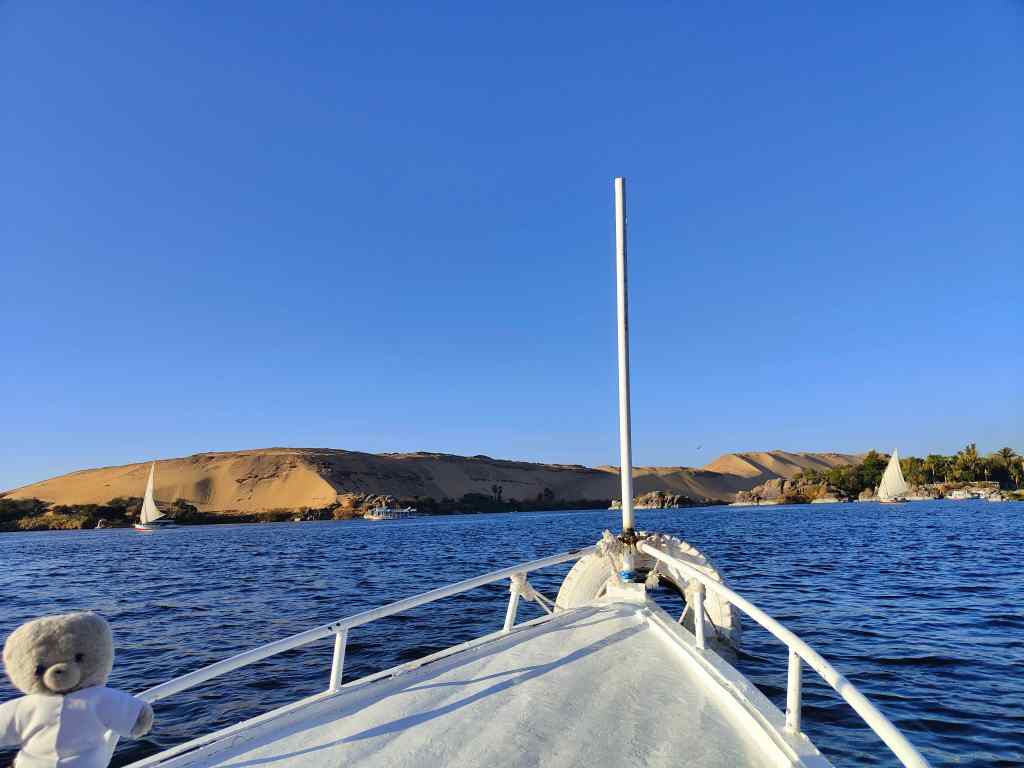
Starting my Felucca trip at Aswan

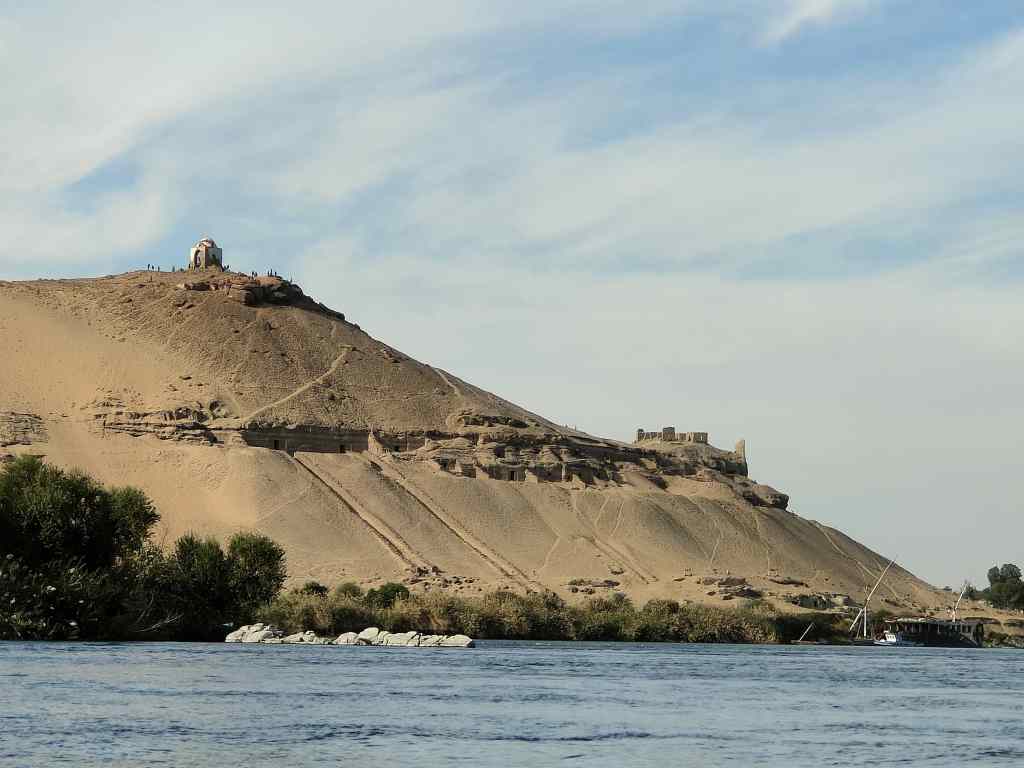
The weather was warm and sunny, and my trip offered great views of the mountains on the west bank of the Nile – every hill seemed to have some ancient ruin built on it.

The West Bank of the Nile at Aswan

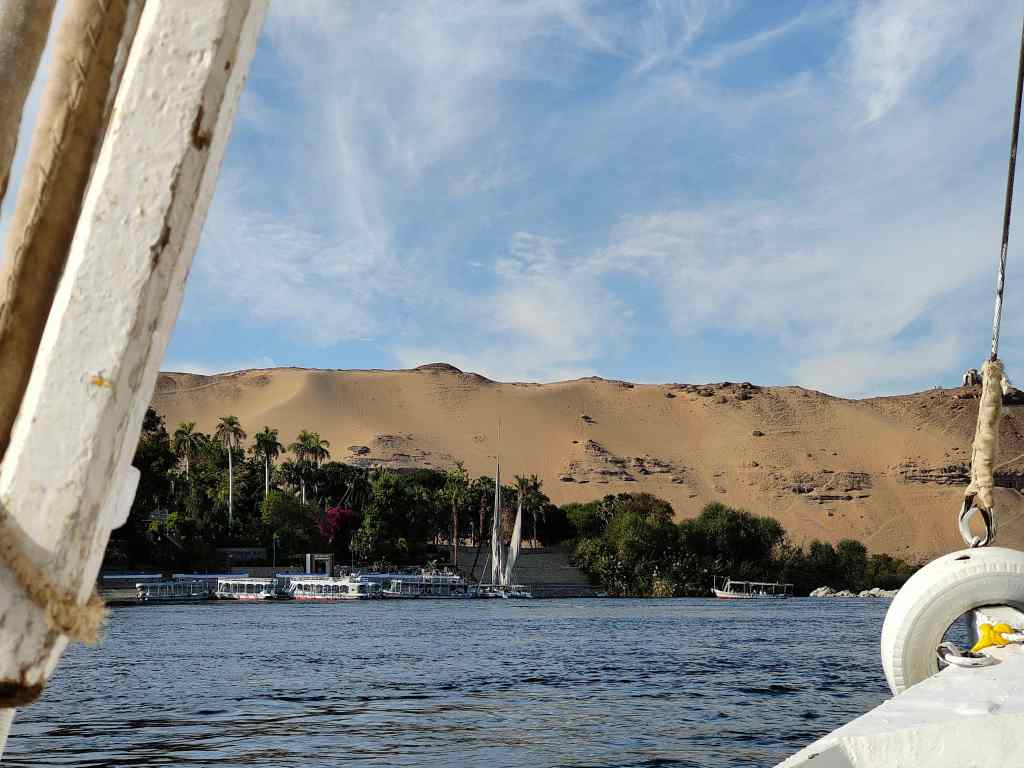
I asked the boatman to drop me briefly at Aswan’s botanical gardens, located on one of the many islands in this part of the river. In Victorian times, the island was given to the British general Lord Kitchener, who was passionate about exotic plants and turned the area into gardens. The story about their foundation was more interesting than the gardens themselves, and I was soon back on my boat enjoying the early evening sun.

Kitchener’s Island, Aswan, home to the Botanic Gardens
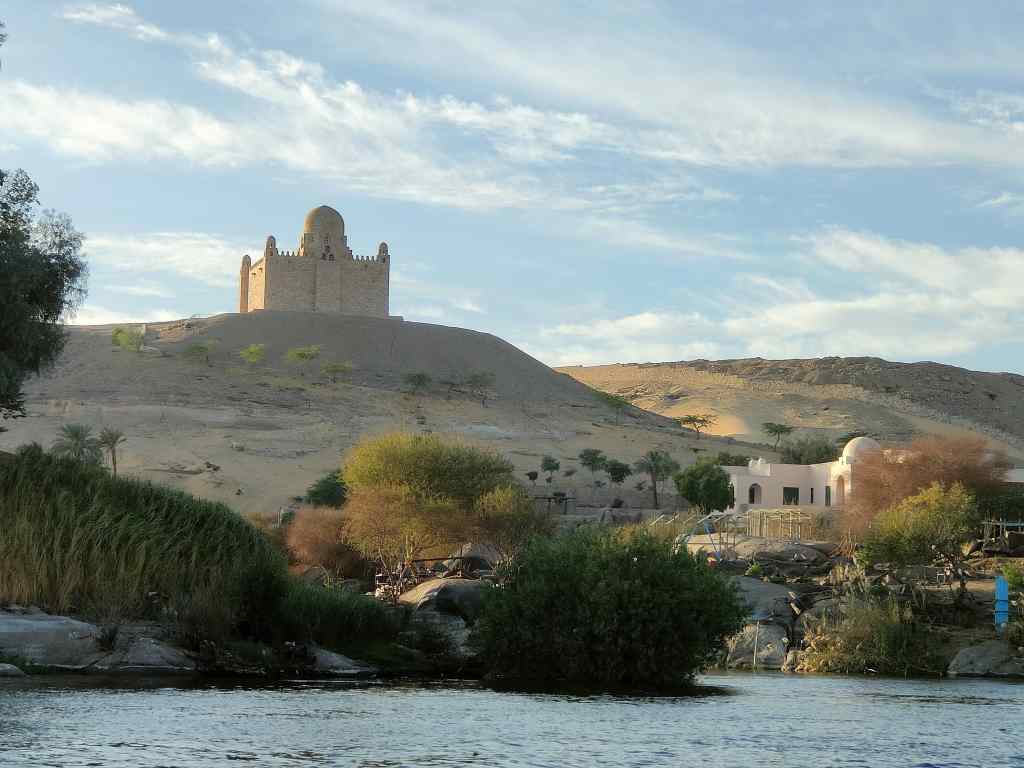
The Mausoleum of the late Aga Khan – head of the Ismaili Muslims

The boat dropped me off back at my guest house on Elephantine Island and I set off immediately to the northern tip of the island to enjoy the sunset from the ruins of Abu. This area contained ruins of many different ages – some as old as 3000BC and some as recent as the 14th century AD – all jumbled together and most in an extreme state of dilapidation. One of the most interesting ruins was a “nilometer” – a set of steps going down to the river, flanked with stones with measuring markings that showed the height of the Nile. This was a very important instrument, because in ancient times, the pharaoh set taxes based on the maximum height of the river during its annual flood. A higher flood meant more water and more rich sediment washed down from central Africa, and so better crops for the kingdom’s farmers.Getting in was a typical Egyptian experience – the security guard said the site was closed for the evening but I could get in if I paid him the normal entrance fee. The ruins were just that – ruins – but the site was a great place from which to enjoy the setting sun.

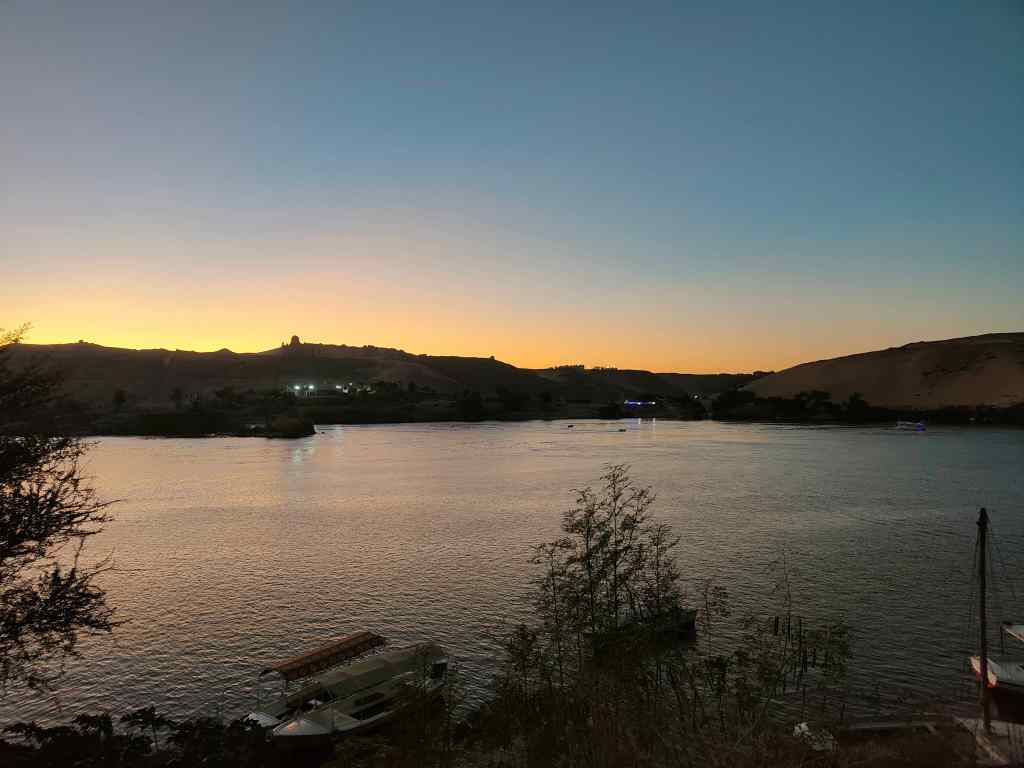
Sunset at the northern tip of Elephantine Island, Aswan

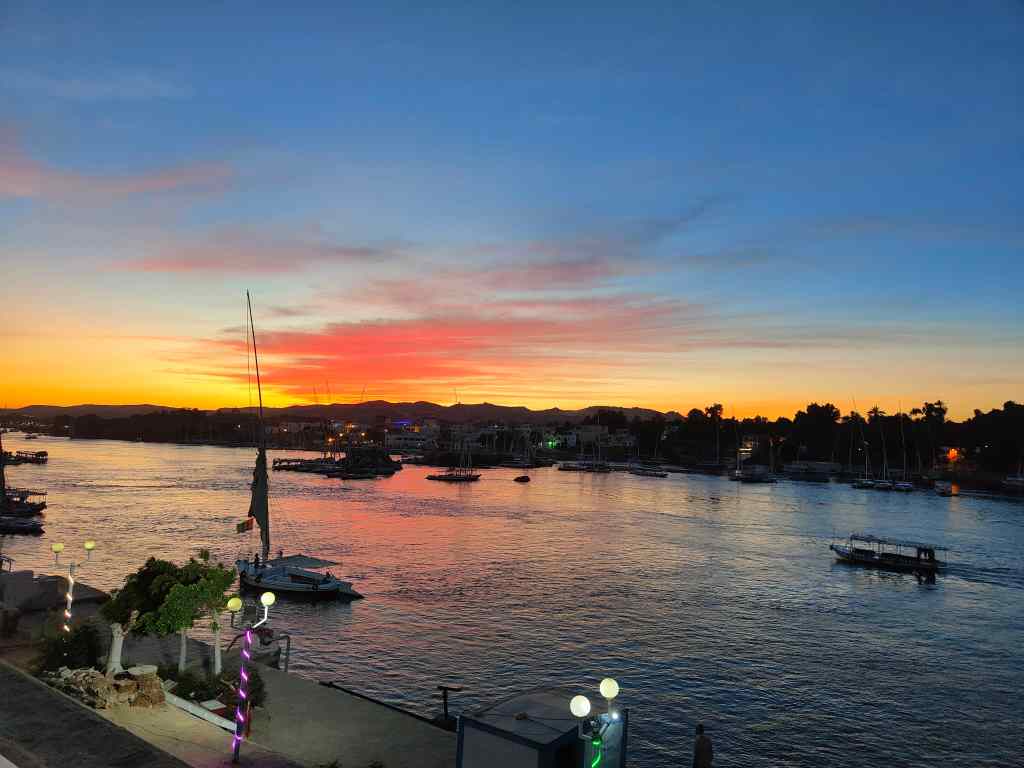
The final part of the day was enjoying an early dinner and a fiery red sunset from a restaurant in Aswan city.

A Nile sunset at Aswan

It had been a very busy day, but I got home early enough to write a bit of my blog and make my first post before collapsing into bed. My guesthouse had basic furnishings, but its internet worked a lot better than that of the modern hotel I stayed at in Cairo.

Previous Post: Cairo to Aswan

Next Post: Abu Simbel and the Great Temple of Ramses II
From Coptic Cairo to Aswan and the Nile

During the night I found out that the “Blue Nile” riverboat moored nearby (see previous post) was a nightclub which played very loud music into the early hours of the morning. The songs were clearly audible in my hotel; the volume inside the boat must have been deafening. The nightclub, combined with the honking of car horns, the screaming of police sirens and the early morning call to prayers from the nearby mosque all meant that I slept badly. Like New York, Cairo is a city that never sleeps.

In the afternoon I was due to fly to my next destination, Aswan. I would come back to Cairo for a few days at the end of my trip, but today I had to choose which of the city’s attractions to see in a sleep-deprived morning. I opted for Coptic Cairo. The Copts are a minority Christian group and their church – the Coptic Orthodox Church – is one of the oldest branches of Christianity, which legends say was brought to Egypt by St Mark in AD 42. Under the Romans, Christianity eventually became the official religion of the whole empire, and for a while was the main religion of Egypt. The Coptic Church split from the main Christian church in 322 following a disagreement about the exact divine nature of Christ. After the Arab conquest of Egypt in 642, Islam gradually displaced Christianity to leave the Copts as a small minority.

View of the main street of Coptic Cairo

Coptic Cairo is a small enclave of old Cairo which houses many churches, but also the Coptic Museum, a synagogue and a mosque. To get in, you need to pass through a bag check and every hundred metres in the main street, armed police were stationed. Egypt has had a long history of bloody terrorist attacks, and security for any area that draws crowds is always tight.

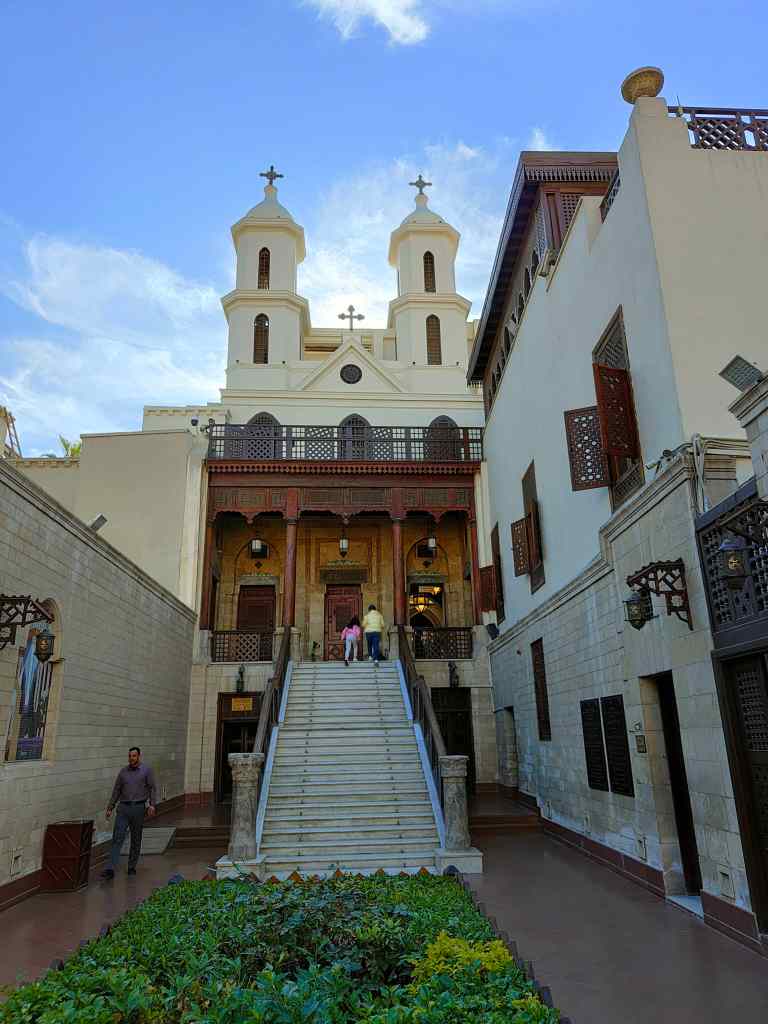
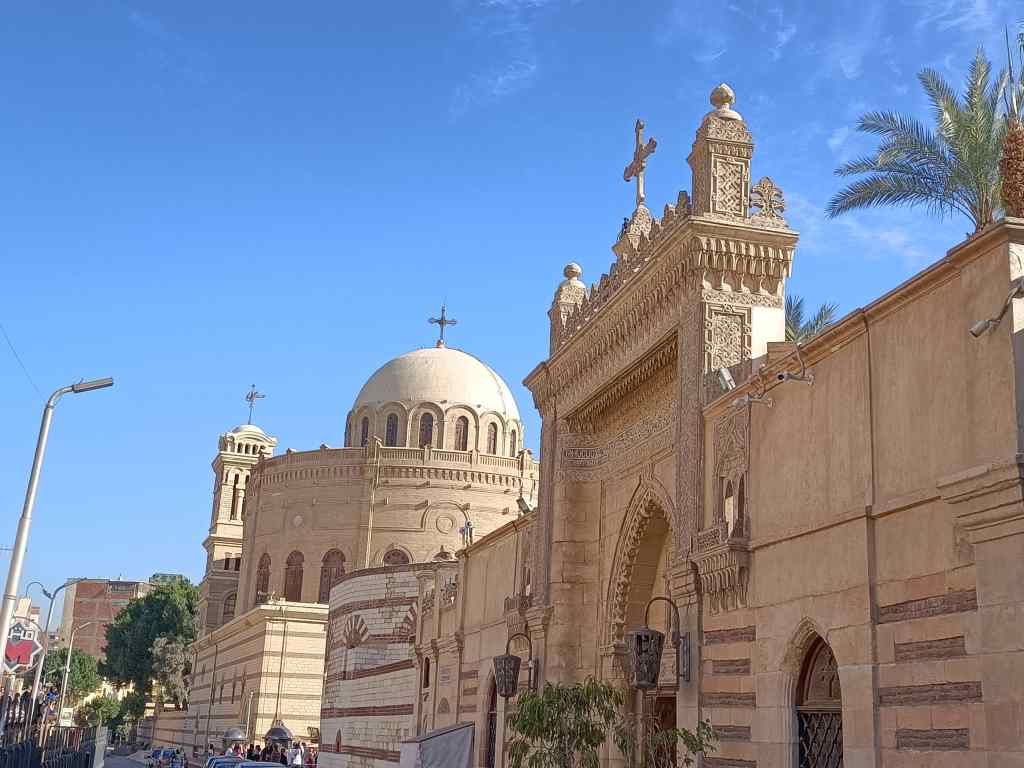
Once through the security check, it was like entering a different world. The anarchic traffic of Cairo was replaced by one empty central street (cars are not allowed in) and a wonderful calm. I started my visit at the Hanging Church, so called because it was built on top of the gate of an old fortress. The church was originally built around 690AD, though a new façade with two bell towers was added in the 19th Century. It is probably the most famous of Coptic Cairo’s churches.

The Hanging Church

Next, I found the Greek Orthodox Church of St George

Church of St. George

And then the Coptic Museum, which I strolled around for about an hour. It had collections of Coptic art, icons and fabrics; the old building it was housed in was as interesting as the collections themselves.

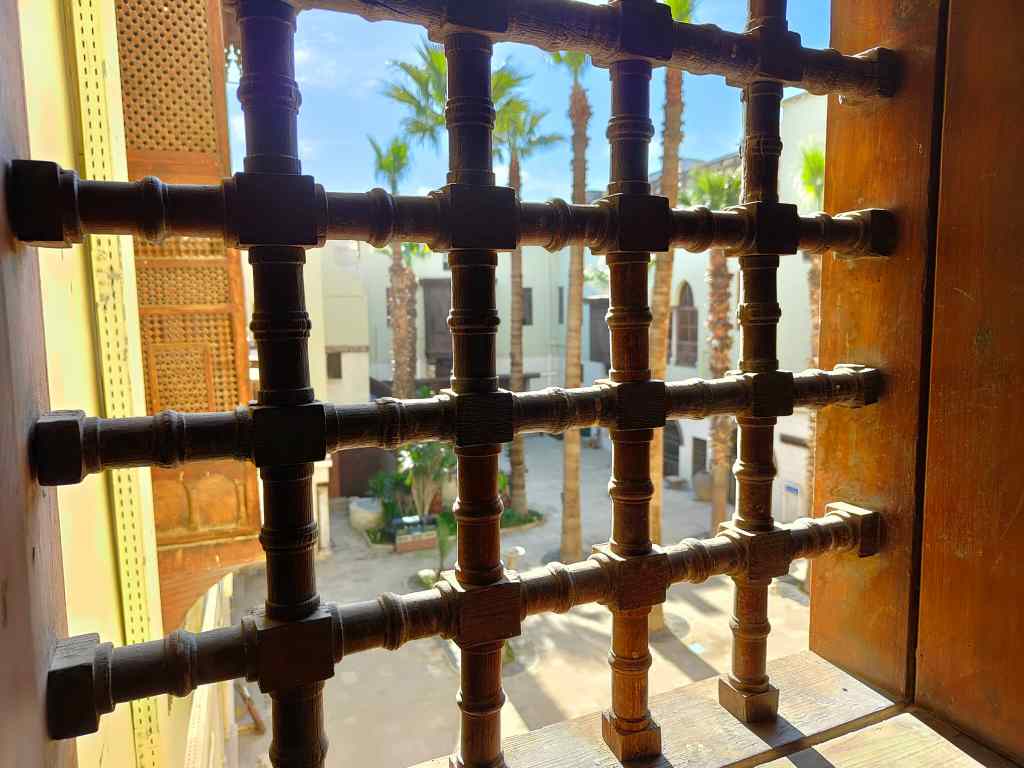
Looking out from the Coptic Museum
In the courtyard of the Coptic Museum

Finally, leading off from the only road, I found a little maze of side alleys, leading to yet more churches and a synagogue. When I arrived, Coptic Cairo had been quiet, but now there were many visitors – some Egyptians on a weekend outing, and some foreign tour groups, which mostly seemed to be Russians.

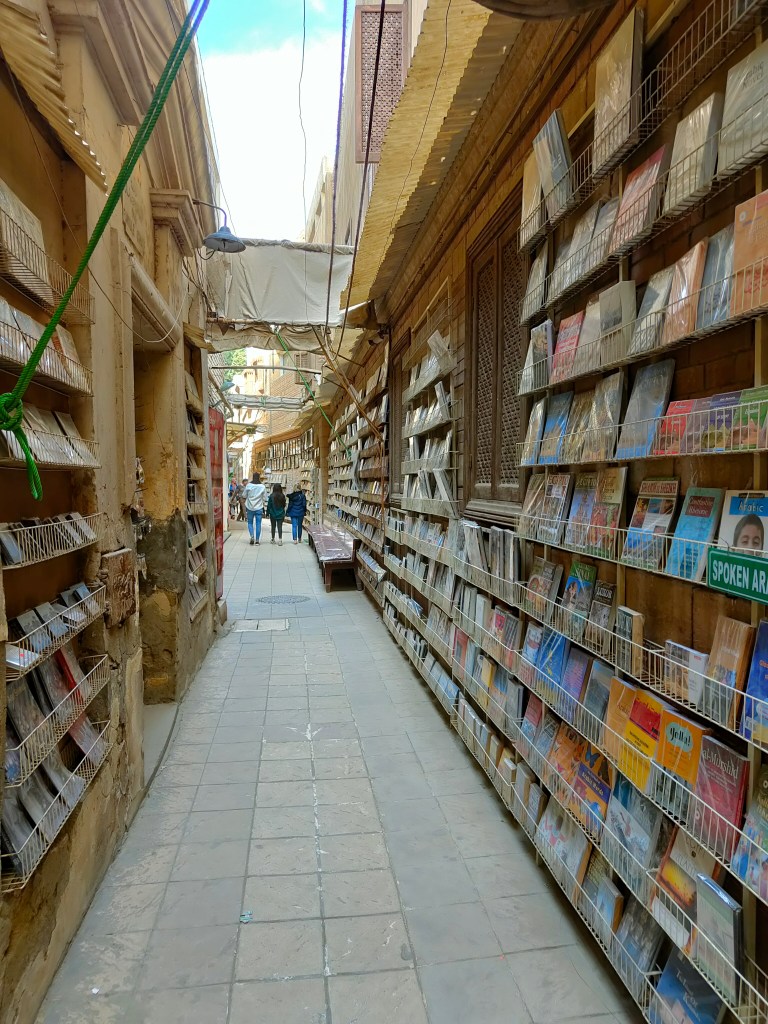
Bookseller in Coptic Cairo

It was time to move on, and I grabbed an Uber back to my hotel to pick up my bags and then another one to the airport. It was Friday, the first day of the Arab weekend, so everything went very smoothly with no traffic jams. At the airport I was treated to one of the toughest security checks I had ever had – shoes, belt and watch all had to be removed and scanned, and then I was thoroughly “frisked” for concealed weapons in my fur.

The flight flew over endless yellow desert sand, interspersed with a few mountains. Occasionally I caught a glimpse of the blue ribbon of the river Nile lined with bright green vegetation on both banks.  I arrived on time in Aswan, a town on the Nile that was the historic boundary between the ancient Egypt of the Pharaohs and the rival Nubian state. The latter enjoyed brief periods of independence but spent most of its history occupied by, or subjugated by, its more powerful southern neighbour. Today, Aswan is also known for the famous Aswan dam.

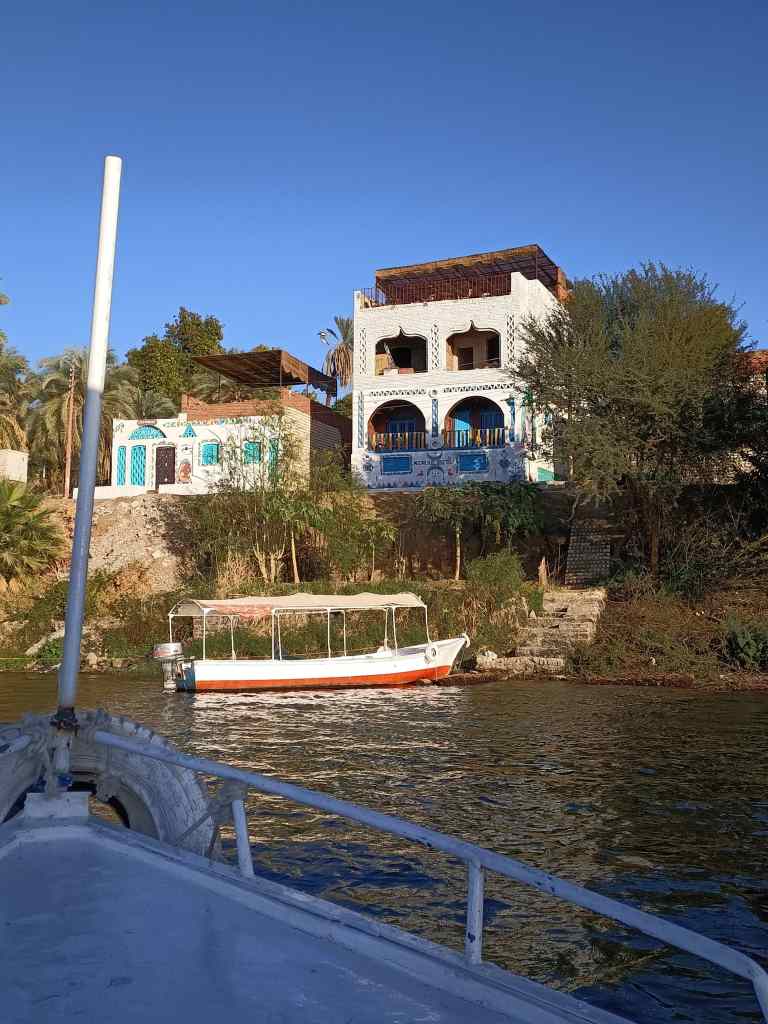
My guest house was on Elephantine Island, a place only accessible by boat. It has several ancient ruins, one ugly modern hotel, and many small townhouses. Some of these were painted with distinctive Nubian bright patterns of coloured geometric shapes. My guest house was on the other side of the island, and its owner picked me in his motor launch to take me there. It was the first of many times I got to experience the pleasure of sailing on the Nile.

On the way to my guest house at Aswan……
…..and arriving (my guest house is on the left)

I arrived just in time to have a welcome drink on the roof terrace.  The view was beautiful, and the owner pointed out local landmarks like the Mausoleum of the last Aga Khan (head of the Ismaili Muslim sect) and the Monastery of St Simeon. After the chaos of Cairo, it was wonderfully peaceful……if rather chilly after sunset. I was glad of my fur!

The view from my balcony, Aswan
The sun sets over the Nile, Aswan

I decided to explore the island and see if I could reach the hotel, which had a panoramic terrace and bar in its ugly modern tower. I walked through a maze of twisting and turning small streets with no names…amazed to find that Google Maps could navigate through the area. When I had nearly reached the hotel, someone told me that it was surrounded by a wall and only accessible by special ferry from the main city. Instead I found a restaurant at the river’s edge, and enjoyed a beer watching the lights of Aswan city in the distance and listening to the boats chugging past.

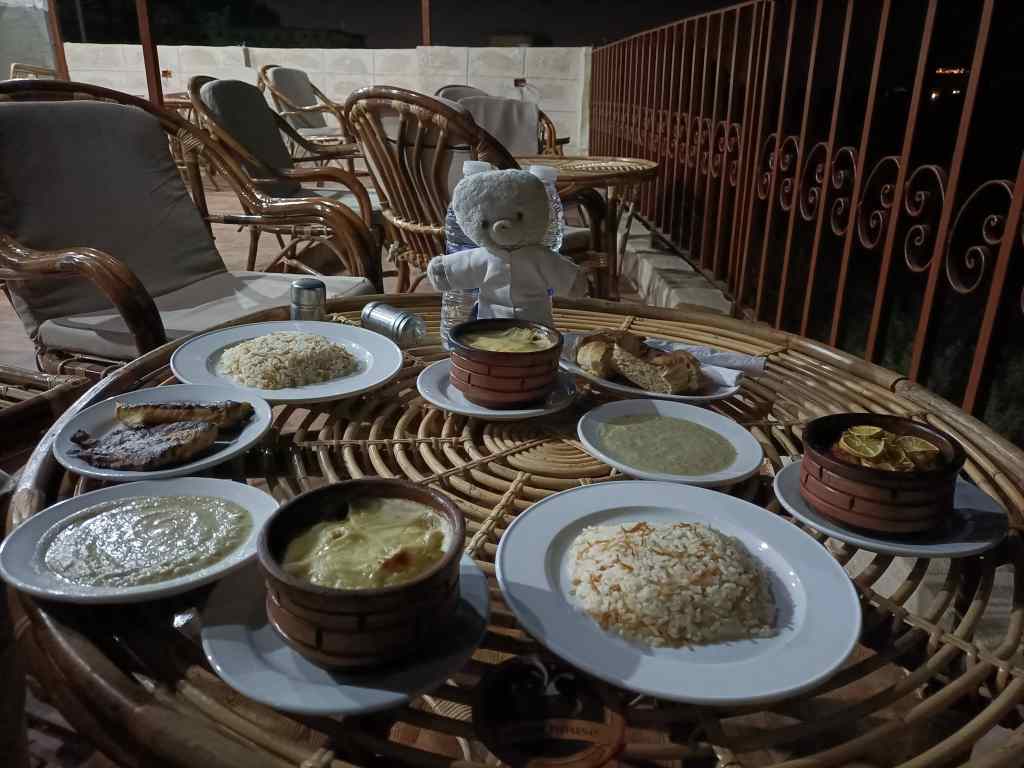
I had dinner back in my guest house, and enjoyed freshly caught Nile perch……..

A feast of fresh Nile Perch

…… before wrapping myself up in warm blankets in bed.

Next Post: A day on the Nile

Previous Post: A Bear in Cairo

Blog at WordPress.com.

Up ↑