Onwards to Cachi and the Parque Nacional de los Cardones

My next day was spent exploring South of Salta, driving to a village called Cachi, lost in the Andean foothills. The road followed a now familiar pattern. First lush, flat green fields with horses and other four-legged road hazards………
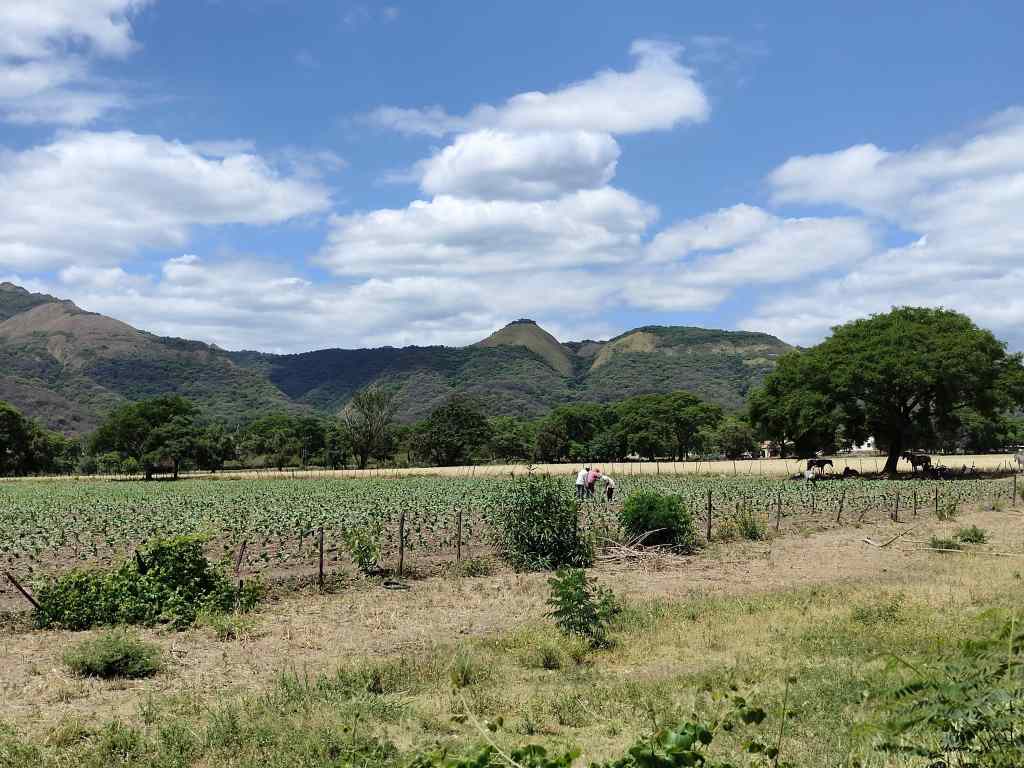
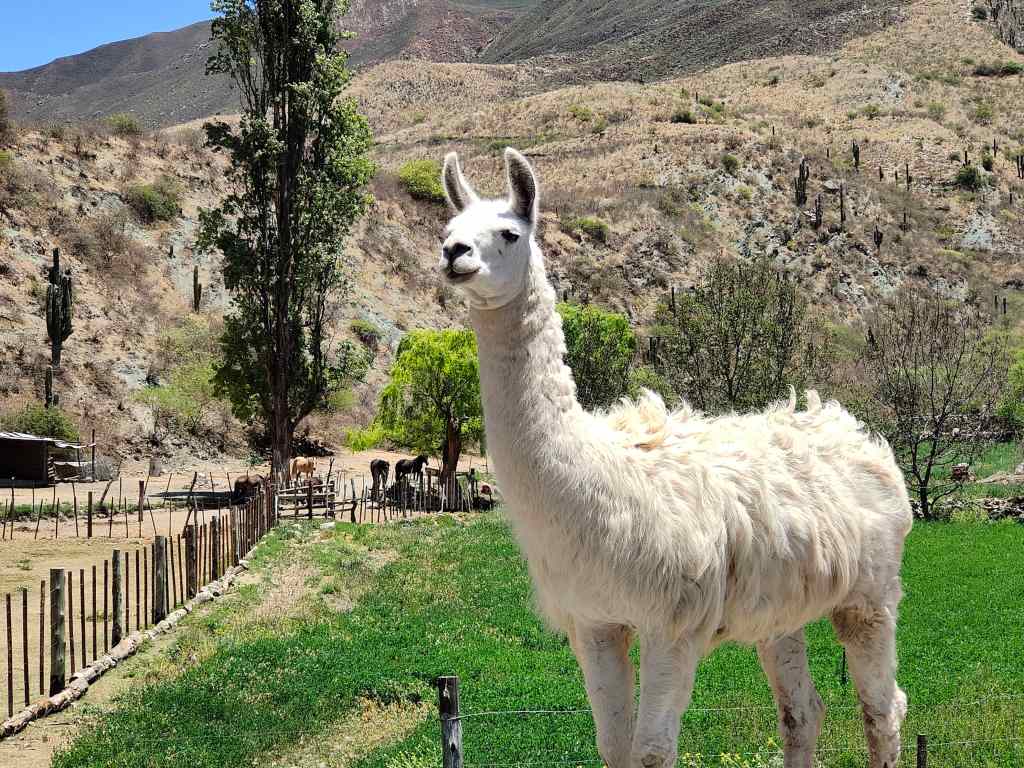
Scenery near Salta

…then a pretty, winding river valley…..
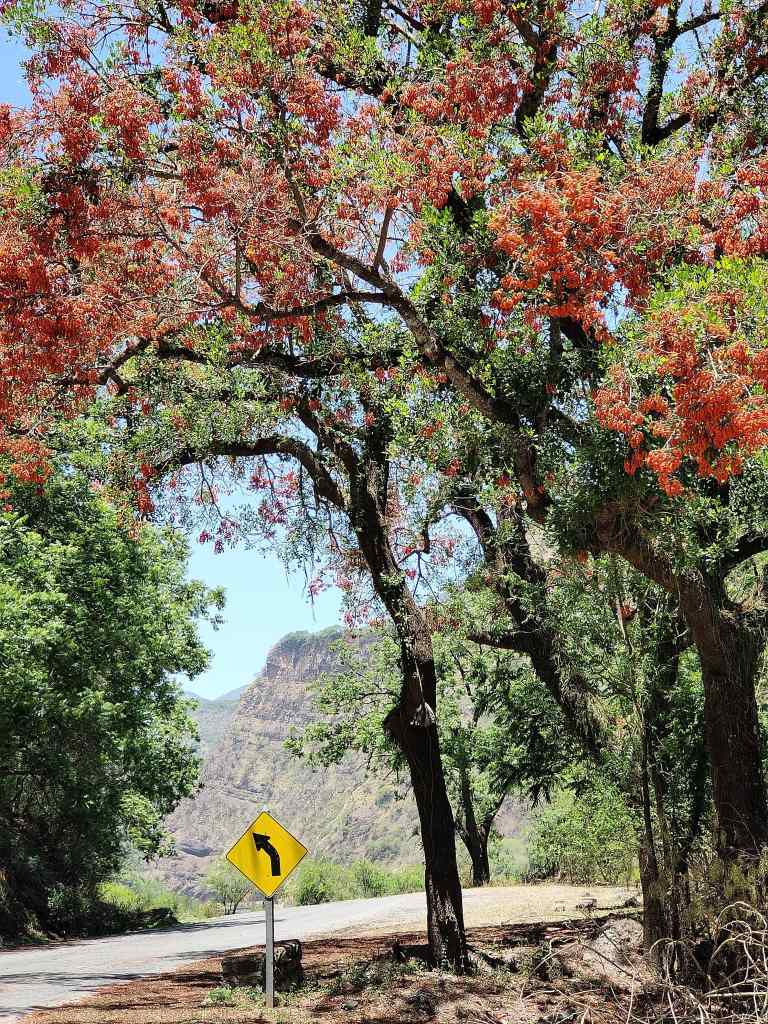
….next a steep climb up dry mountains along a rough track with many hairpin bends.
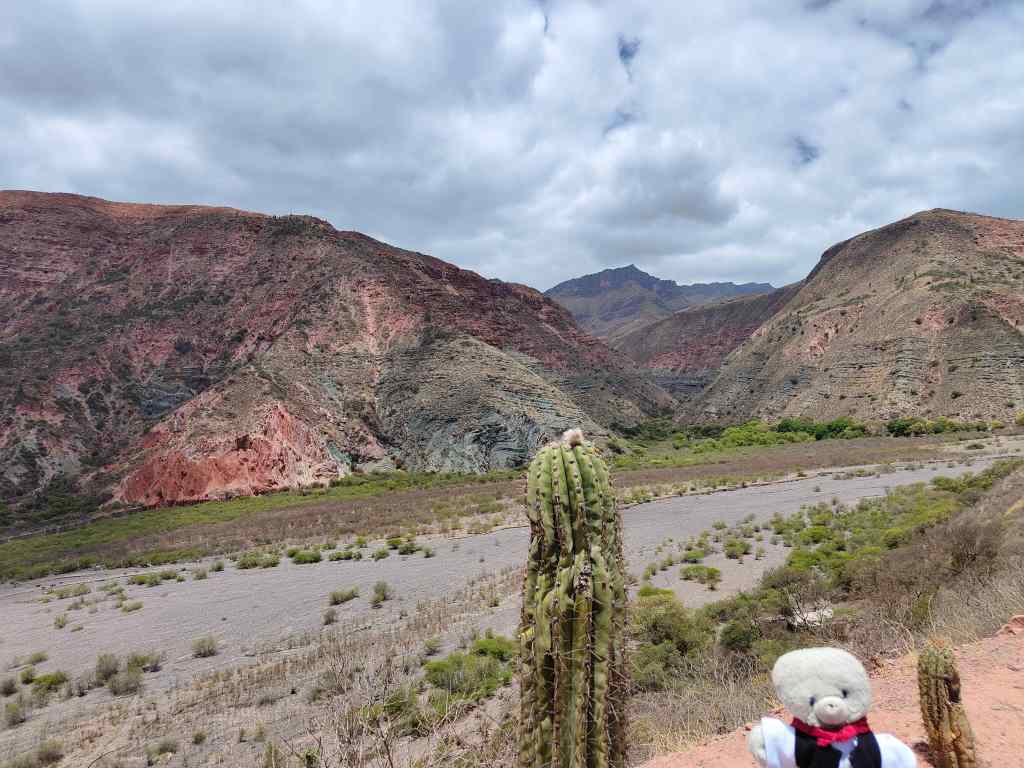
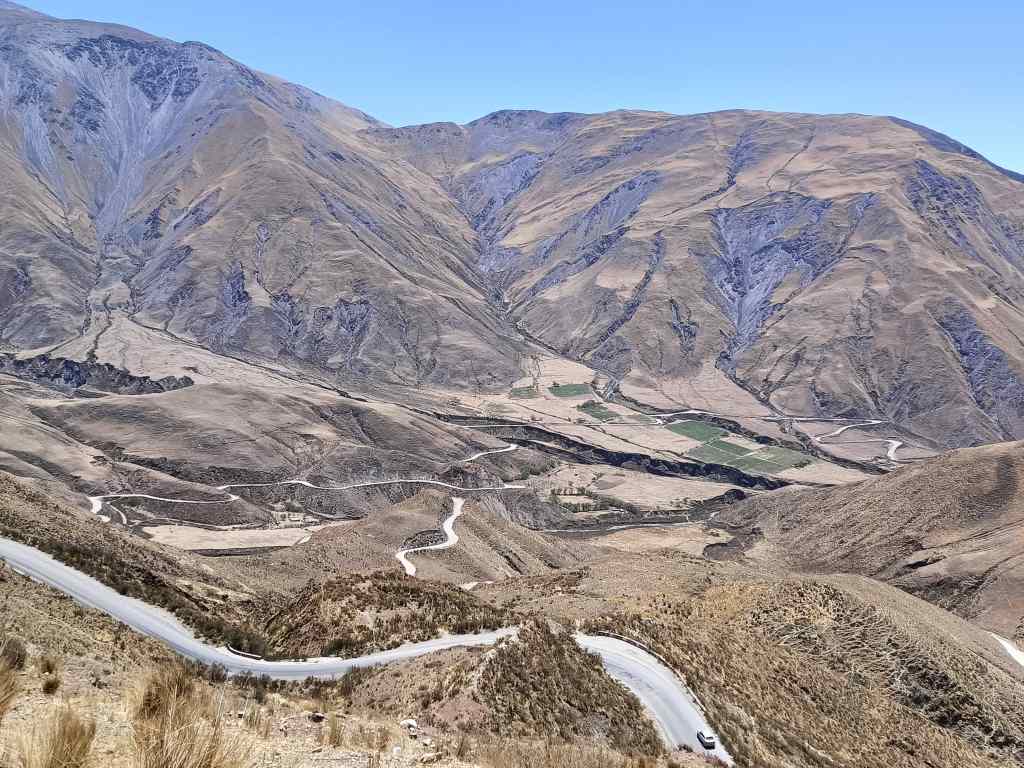
On the road from Salta to Cachi
Hairpin bends on the Salta-Cachi road
Praying to safely negotiate the many hairpin bends seems like a good idea

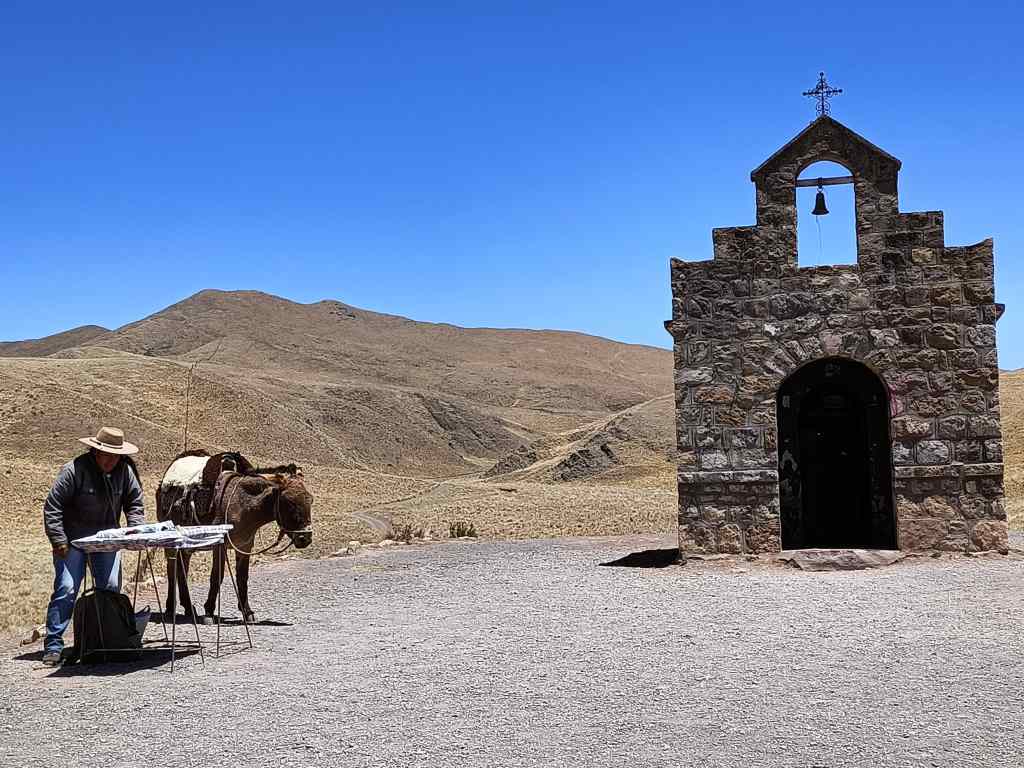
Near the top of the track, I stopped to buy sausage and cheese from some local people. I had now entered the Parque Nacional de los Cardones – (translated literally as the “Cactus National Park”.), and I stopped to enjoy a short walk amidst the wild, empty hills and to eat my lunch.
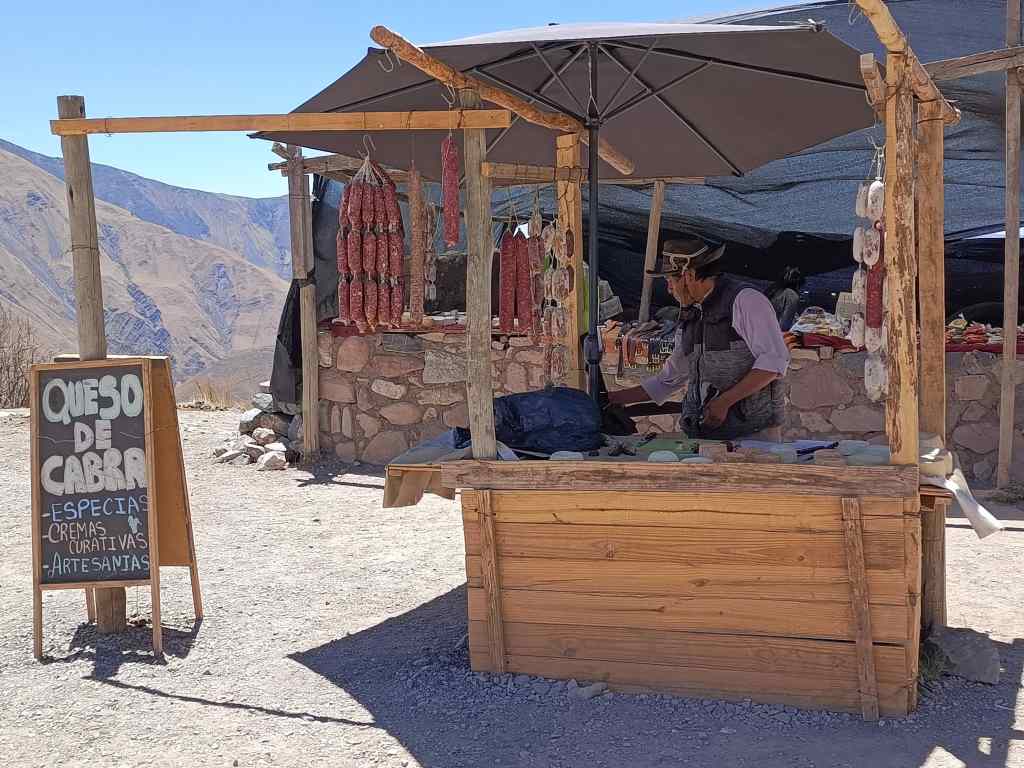
Food stop, Salta-Cachi road

The road continued and reached flat, wild plateau where the reason for the park’s name became evident – the plain was dotted with huge cacti.

The Parque Nacional de los Cardones

In the flat landscape I could see for miles, and the open stretched away into the distance. However the park authorities imposed impossibly low speed limits on this empty road – on average 60km/h but dropping to 30km/h at the (very rare) junctions and even 20km/h on one stretch. There were also signs warning of the danger of hitting wild animals and more signs warning that removing road signs was a criminal offence (it was easy to imagine why – if a sign were to somehow disappear it would considerably reduce the driving times for the few local drivers).
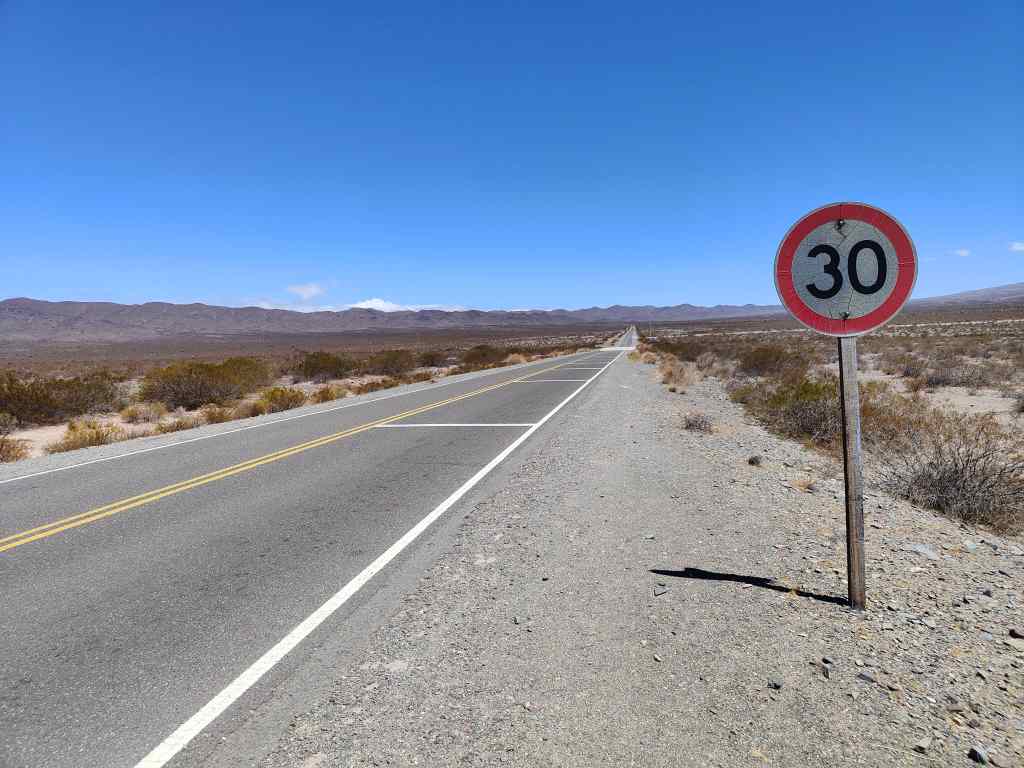
You cannot be serious!! (and this is km/h, not miles/h)

At first, I found progress frustratingly slow. But after a while I got to enjoy the slow progress, as the vastness and emptiness of my surroundings soaked into my brain.
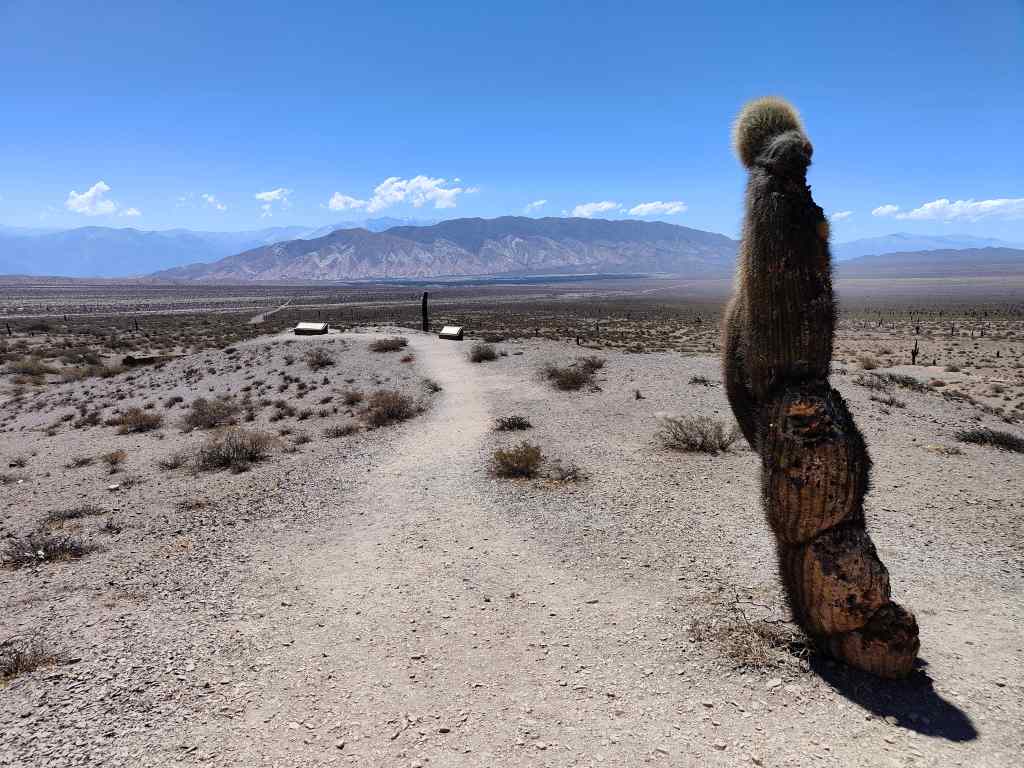
The Parque Nacional de los Cardones

My route left the park and joined the Route National 40 – a famous road that runs the entire length of Argentina. I had joined it 4,500km from where it starts in Tierra del Fuego.
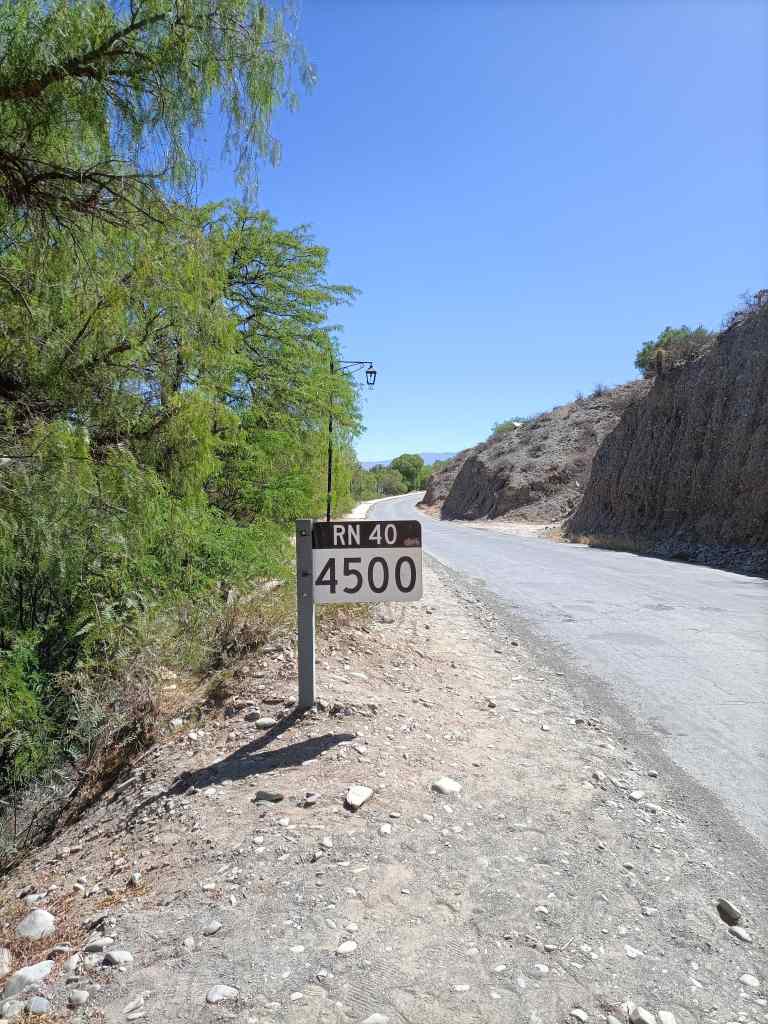
4500km to Tierra del Fuego on RN40

I finally arrived in Cachi five hours after I had left Salta – for a trip that Google said should have taken me three. Perhaps Google agreed with the occasional local drivers who had sped past me in the desert, ignoring the ridiculous speed limits. Cachi is by far the biggest place in the area, but turned out to be more of a village than a town. It was comprised of low rise buildings made from mud brick (“adobe”) and painted white against the sun set around a pretty central plaza. Like most of the places I had visited in Argentina so far, the Andean foothills loomed impressively in the distance.
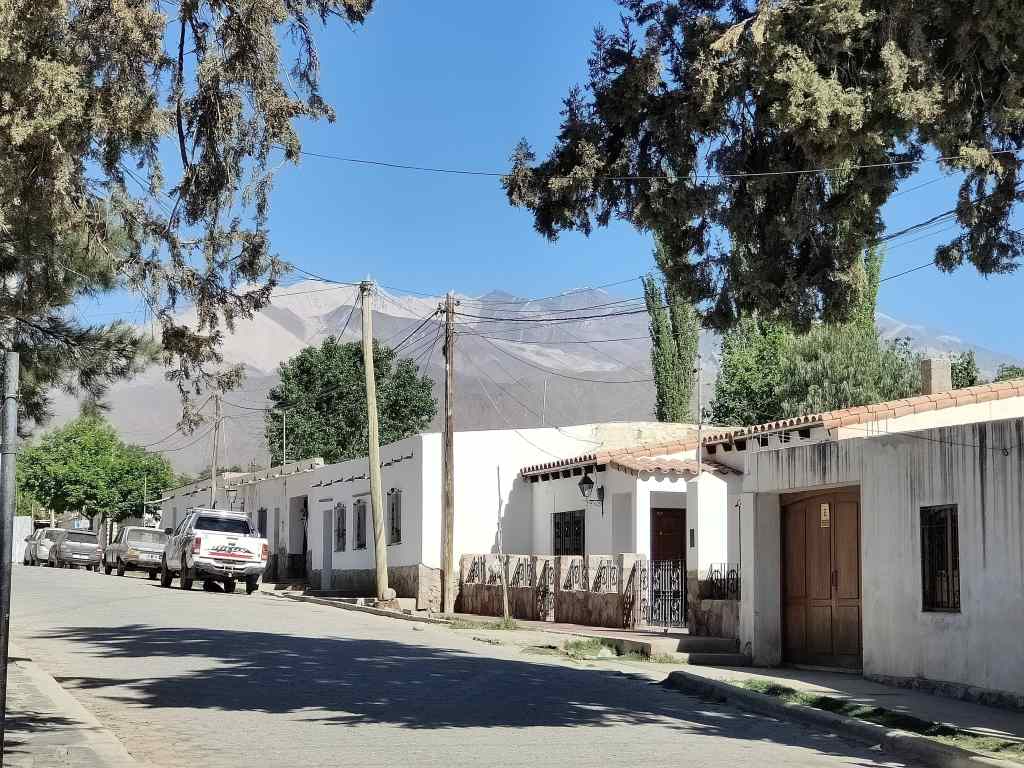
Sleep Cachi in the late afternoon
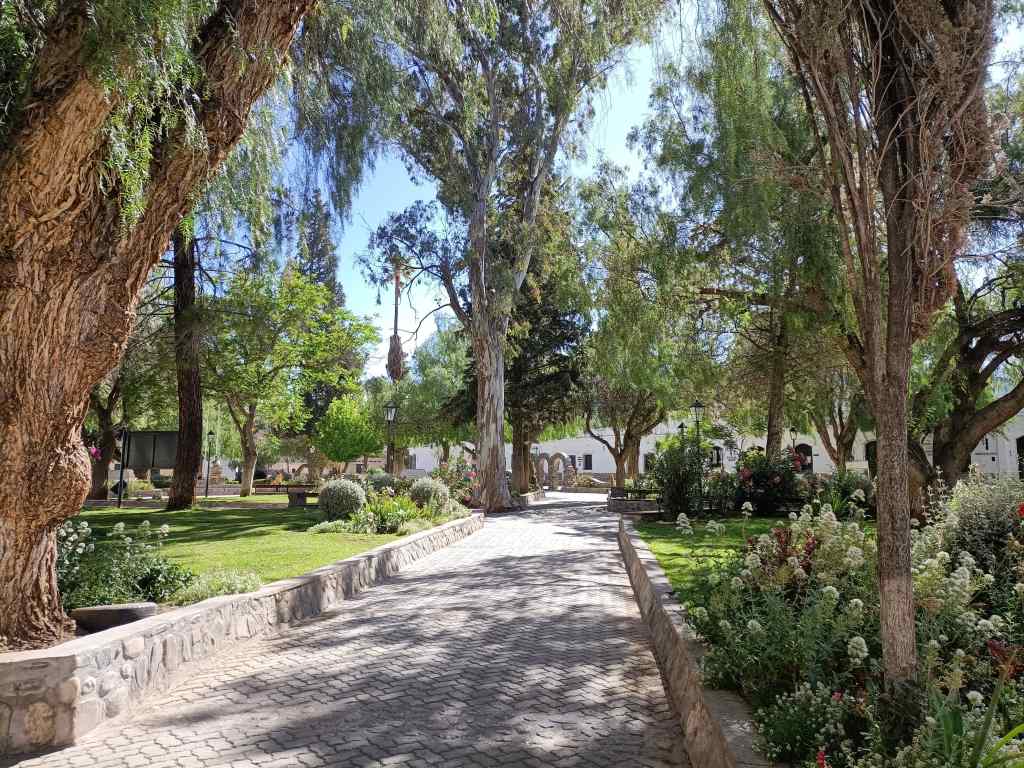
Cachi’s square
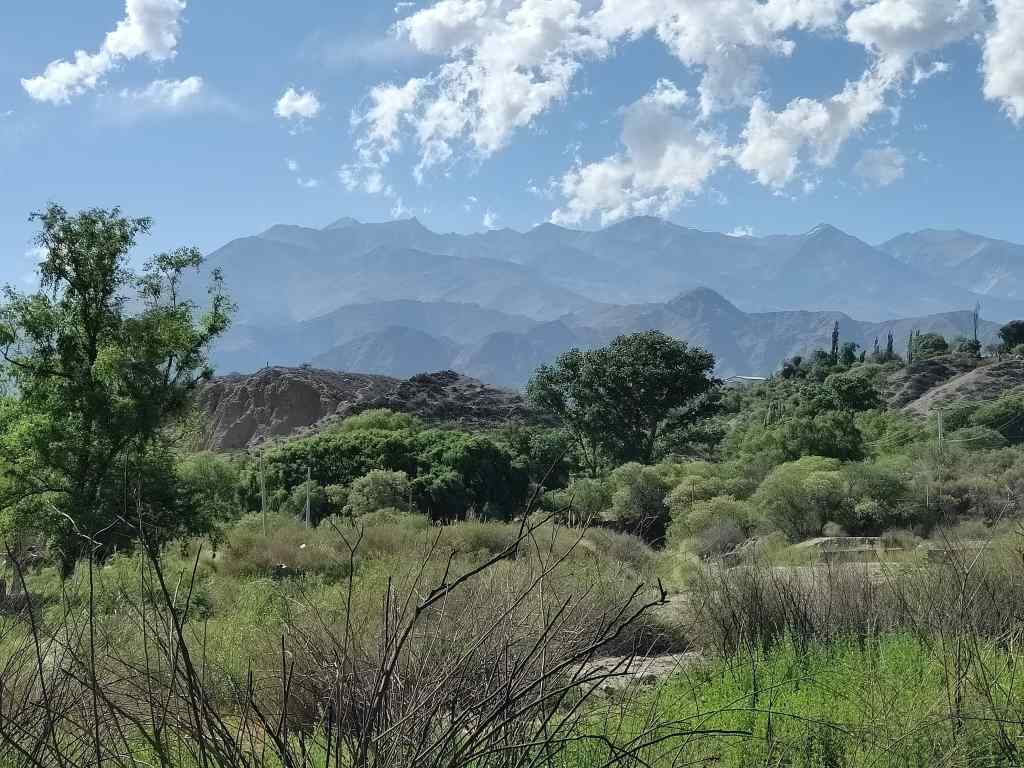
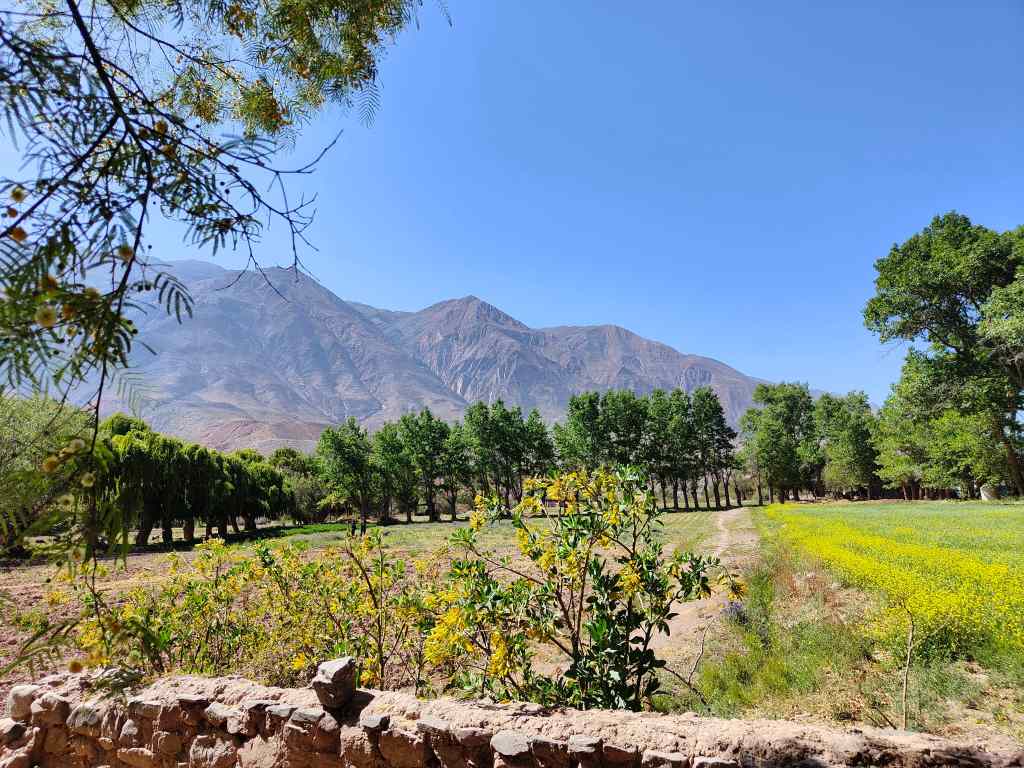
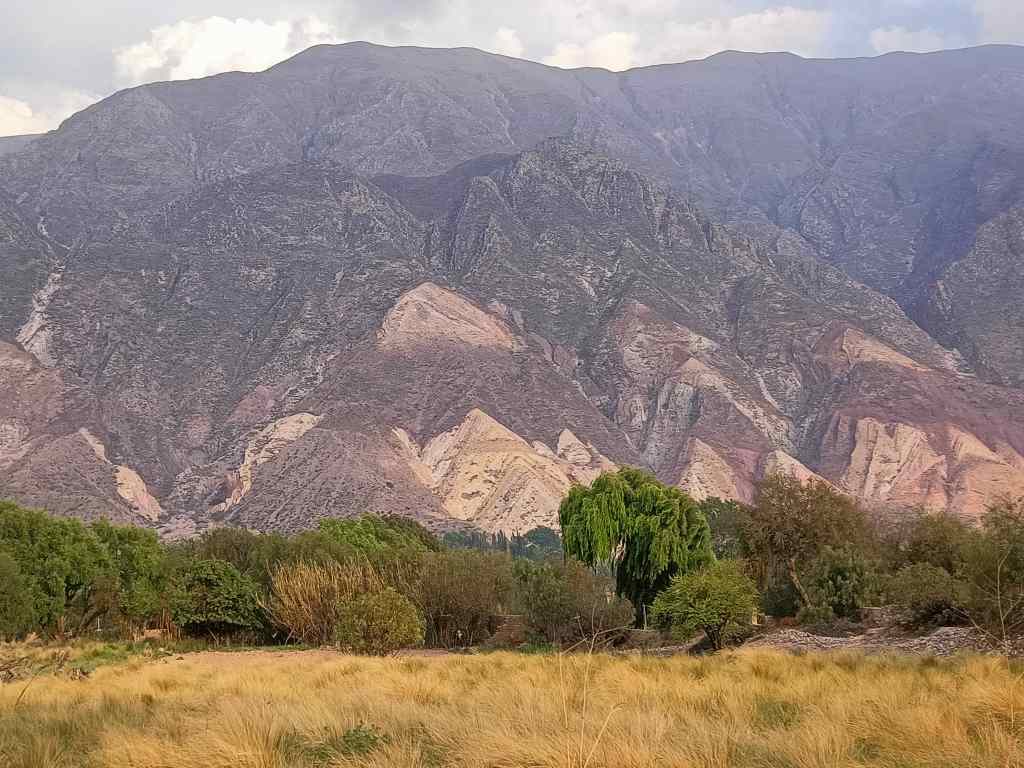
Scenery in and around pretty Cachi

There was not much to do. I soaked in the slow, small-town atmosphere in the central square before going to visit a local wine producer on the outskirts of town. They had a beautiful garden for wine tastings, with views over the mountains. 

Vineyard in Cachi
An exceptional setting and some sublime wine

I enjoyed a refreshing glass of their Torrentes (white) before trying some of their signature Malbec wine. The first wine was good, the second was sublime – a huge, velvety red. I abandoned my plan to visit a restaurant, bought a bottle of the red, and enjoyed it with the rest of my sausage and cheese. Wakefulness turned to sleep in a pleasant alcoholic haze.

Next Post: Mendoza

Previous Post: Salta

From salt to the colonial city of Salta

Sadly, today I had to leave the Quebrada of Humahuaca to drive back to Salta. I chose a different route, to avoid the boring stretch of highway I had driven last time. The spectacularly coloured, dry, mountains continued to flank the road up until the city of Jujuy, where they gave way to flat fields, with mountains brooding in the distance.

On the road to Salta from Purmamarca

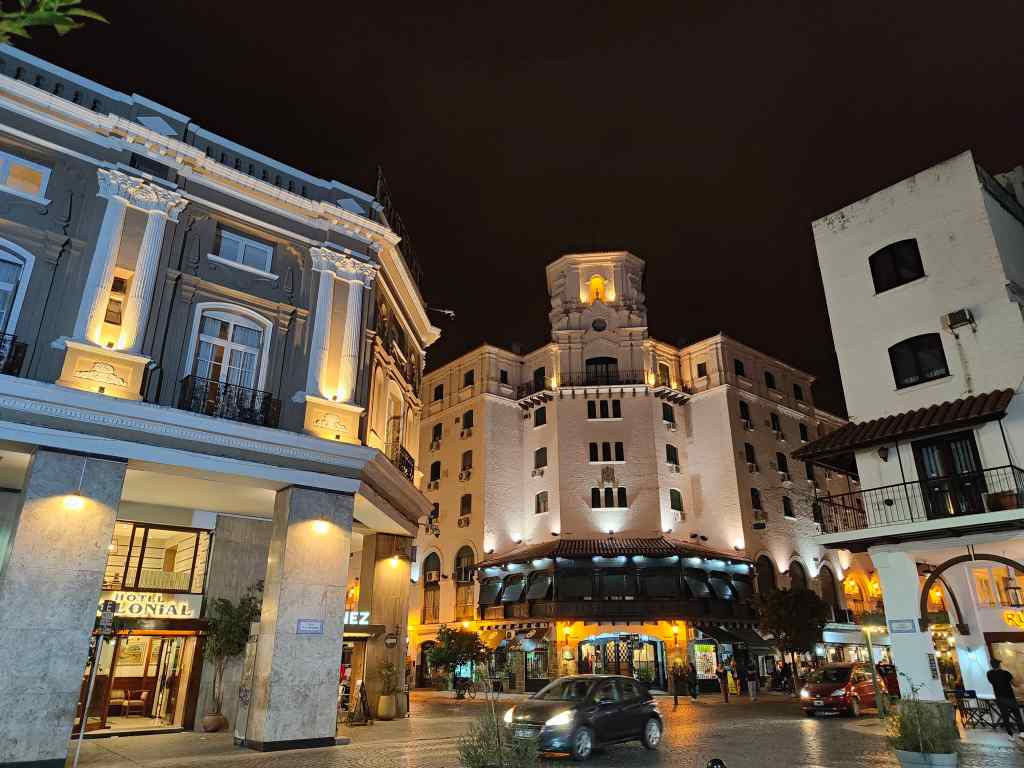
I turned off onto RN9. After a few km the road entered a nature reserve and became very narrow and winding, with barely room for two normal cars to pass. It was a very pretty route, but also tiring as I continually crossed more experienced local drivers hogging more than their share of the available road space. I finally reached Salta at around 4 o’clock and checked into a wonderfully retro hotel located on the central Plaza – the Colonial. My room had two balconies, one that looked onto an ornate church and the other that looked out over the plaza, and I relaxed and enjoyed the view for a bit before setting off to explore the town.

The view from one of my balconies of my hotel in Salta
Grand Old Buildings on Salta’s plaza

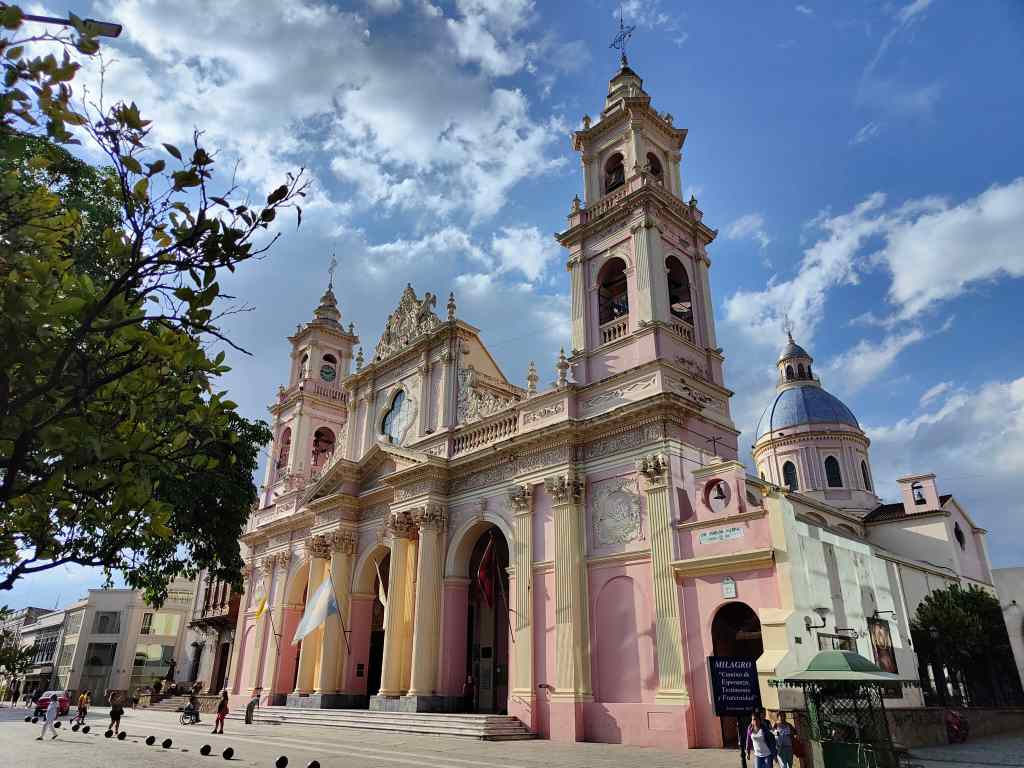
Most impressive of all of Salta’s colonial buildings was the cathedral, which was built in 1878.

Salta Cathedral – outside….
and inside Salta’s cathedral

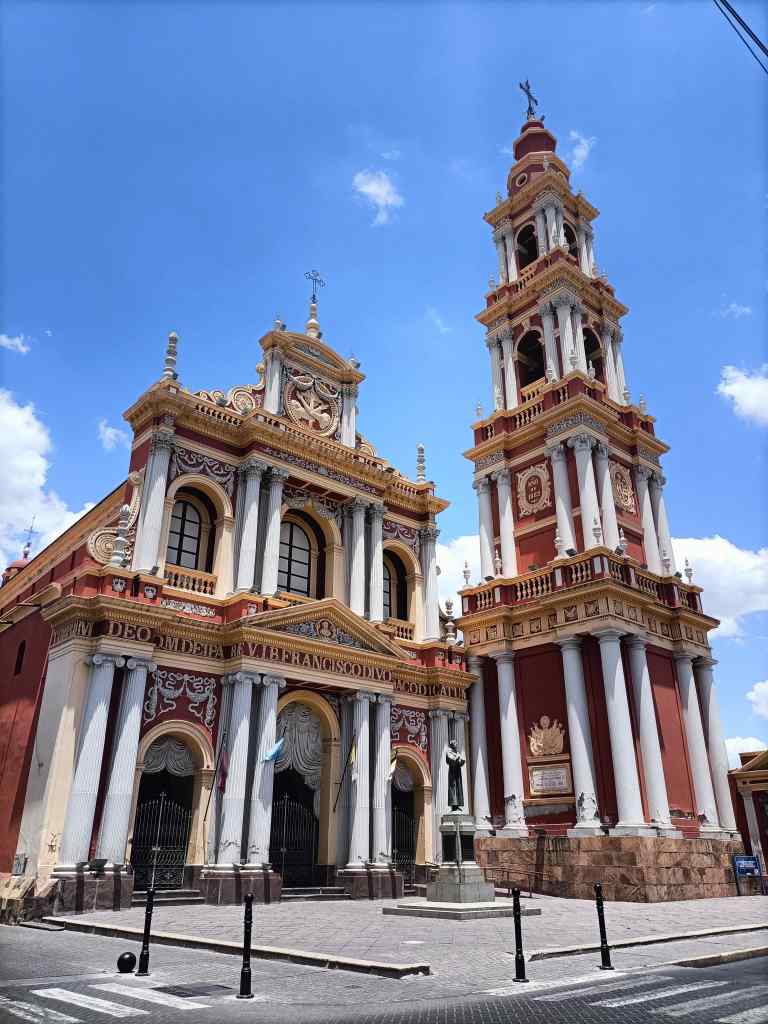
They seem to like gaudily coloured churches here – near the cathedral is the Iglesia San Francisco.

Iglesia San Francisco

For a rather different experience, I visited the Museum of High Altitude Archaeology, which was mostly devoted to an expedition to the volcano Llullaillaco in 1999 which discovered the bodies of three children offered to the mountain by the Incas. As part of an elaborate Inca ceremony, two young children from noble families were “married”, given an alcoholic drink to drug them, and then buried alive, high up on a mountain, whilst they slept. The Incas believed that the children simply passed to another state of existence, where they continued to watch over the living from the land of the dead. With the high altitude and dry air, the corpses were preserved and became mummified. One of the three children was on display – a young girl. Some time ago, her grave had been struck by lightning and part of her face was burnt. It was a macabre sight. I wondered whether they should not have been left in peace, where they had been found, but the museum’s display text claimed that they would have soon fallen victim to thieves. As a justification, the museum displayed a different body, which had been dug up by thieves and trafficked to private collectors before being recovered – in a poor state of preservation. Photos were not allowed, so you will have to imagine the bizarre sight yourself. To lift my mood after such a strange sight, I headed to small restaurant where I had dinner – a good steak with a bottle of wine from the nearby wine region of Cayafate. It was made from the “bonarda” grape– a variety I had never tried before, and which I liked a lot.  Then I spent some time enjoying the lively atmosphere on the main plaza at night, before heading back to my room.

The view of my hotel (left) at night from the Plaza

I finally had some spare time to catch up on my blog and sort out my next delivery of pesos by Western Union.

Next Post: Cachi and the Parque Nacional de los Cordones

Previous Post: Salinas Grande

The Quebrada de Humahuaca – Purmamarca and the Serrania de Hornocal

My next day was spent with getting to the Quebrada de Humahuaca in the far northwest of the country, near the borders with Boliva and Chile – famous for its spectacular coloured rock formations.  I had a couple of hours free in the morning before my flight, which I spent unsuccessfully looking for a Western Union branch that had enough money to pay my second transfer. After that it was a two-hour flight to Salta, and a three hour drive to the small town of Purmamarca. At first the road passed through nondescript, flat, featureless and dry country, with litter strewn by the side of the road. As I approached my destination, it climbed. The weather had become cloudy, but I could still make out the outlines of tall mountains all around me. I arrived at six, to find a town bustling with travellers and full of bars, shops and restaurants serving them; it had a nice, busy atmosphere.  I celebrated my arrival with a beer in a café on the town’s central plaza The clouds had lifted, and I could see that all around the town was surrounded by bright red, brown and green rock formations, promising some interesting exploration over the next two days.

After my beer, I had dinner in a peña – a restaurant where live music is played. The singer asked where everyone was from – the other diners were all from Argentina or other parts of Latin America. Everyone was very interested to meet a bear from London, and I had my photo taken with the singer.  The menu was very reasonably priced and even had a bottle of local red wine for 990 pesos (less than 3€). I was so intrigued that I ordered a bottle, and it turned out to be pretty good. I had a fun evening eating, drinking and listening to the others singing (my Spanish was not good enough to join in).

The next morning my jet lag caused me to wake early, at six. I had a slight headache, which I attributed to the high altitude rather than last night’s wine ;).  I got dressed and set off to explore the town of Purmamarca, hoping to find somewhere for a coffee. Everything was closed and the streets were quiet except for the traders setting up their stalls around the central square.

I abandoned my hunt for breakfast and explored the town instead, with its handsome old church…

……colourful shops

…colourful houses

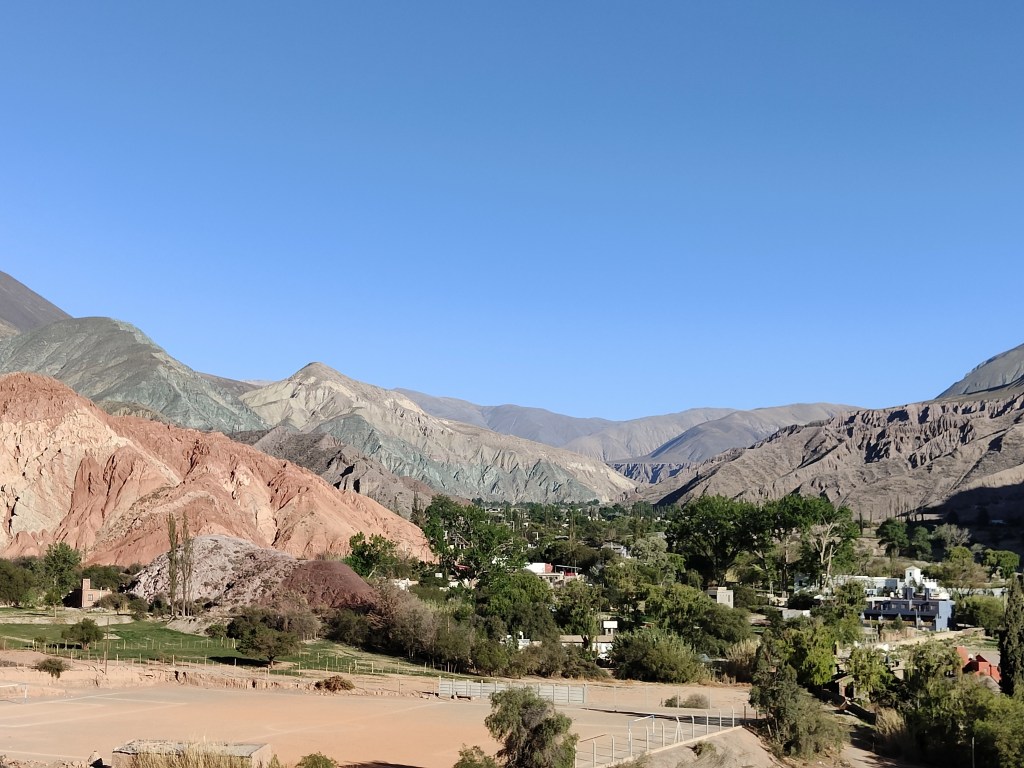
I walked up a steep hill on the outskirts of the town to a mirador (viewing platform) with a 360 view of the town and the surrounding mountains, which glowed in the morning sun. The scenery resembled an impressionist artists pallets, with many shades of red, orange, green, brown and purple. As the sun rose higher, the colours changed, a transformation that continued for the whole day.

The view from the Mirador

It was now eight, and a finally found a place for a reviving coffee before setting off north to explore the valley. The road was spectacular, running along a deep valley with towering, coloured mountains on either side. My first stop was a set of restored buildings which were one of the staging posts for travellers and mail along the route from Bolivia to Buenos Aires. The complex had a beautiful setting, and in the mid-morning sun the colours of the rocks had evolved again, becoming more subtle than the bright display of the dawn.

Next stop was an upmarket restaurant recommended to me by the Tourist Information Office as having the best coffee in the valley. When I arrived though, they had no electricity and could only make me some tea and a huge jug of lemonade, which helped my headache. This place also had amazing surroundings.

I continued driving north past many different strange and colourful rock formations until I reached the town of Humahuarca, the largest settlement in the region. It was a pleasant place with interesting old architecture, and I stopped to eat in the central plaza. I continued my exploration of the town after lunch and even managed to find a Western Union branch that actually had money!

In the late afternoon I set off to see one of the highlights of the region – the Serrania de Hornocal. I drove along a rough track for about an hour, which rose steeply until at 4350 metres I reached a viewing point for one of the most spectacular natural phenomena I have ever scene – a panorama of brightly coloured mountains shaped liked jagged shark’s teeth. It was quite cold and there was a strong wind. The few human visitors were shivering, but I was comfortable under my fur.

At the car park leading to the Serrania de Hornocal

I had hoped to sit and enjoy the view for a long time, watching as the rocks changed colour in the setting sun, but I was unlucky. I had only been there about fifteen minutes when clouds emerged.  The dramatic colours occasionally reappeared when the sun broke through the clouds, but the periods of light got shorter and shorter until the sky and the rocks were both dull grey. I comforted myself that I had arrived just in time to see something that I will remember for ever.

The magnificent Serrania de Hornocal
Colours change in the Serrania de Hornocal as the sun moves and the weather changes

It was a long drive back to Purmamarca, but it was made memorable by yet more wonderful landscapes, now with the colours of the evening sun, which had now re-emerged.

On the road to Purmamarca

When I arrived the sun had already set. I opted for a quiet dinner this time – it had been a long but inspiring day with some of the most beautiful scenery I have ever seen.

Next Post: Salinas Grandes

Previous Post: Buenos Aires

A Bear in Buenos Aires

¡Hola! This time I am writing from Buenos Aires (BA), at the start of a month-long trip around Argentina that I invite you to follow on my blog. I have an ambitious schedule aiming to cover most of this huge country and part of Chile, with the aid of seven internal flights. I am little worried that if anything goes wrong – like a single cancelled flight – my whole plan will fall apart. I arrived on the overnight flight from London via Madrid, and to my relief my bags arrived with me, and I got through immigration and customs very quickly. One less thing to worry about. My plan for today is simple – chill out to recover from my flight and prepare for the next stages of my trip.

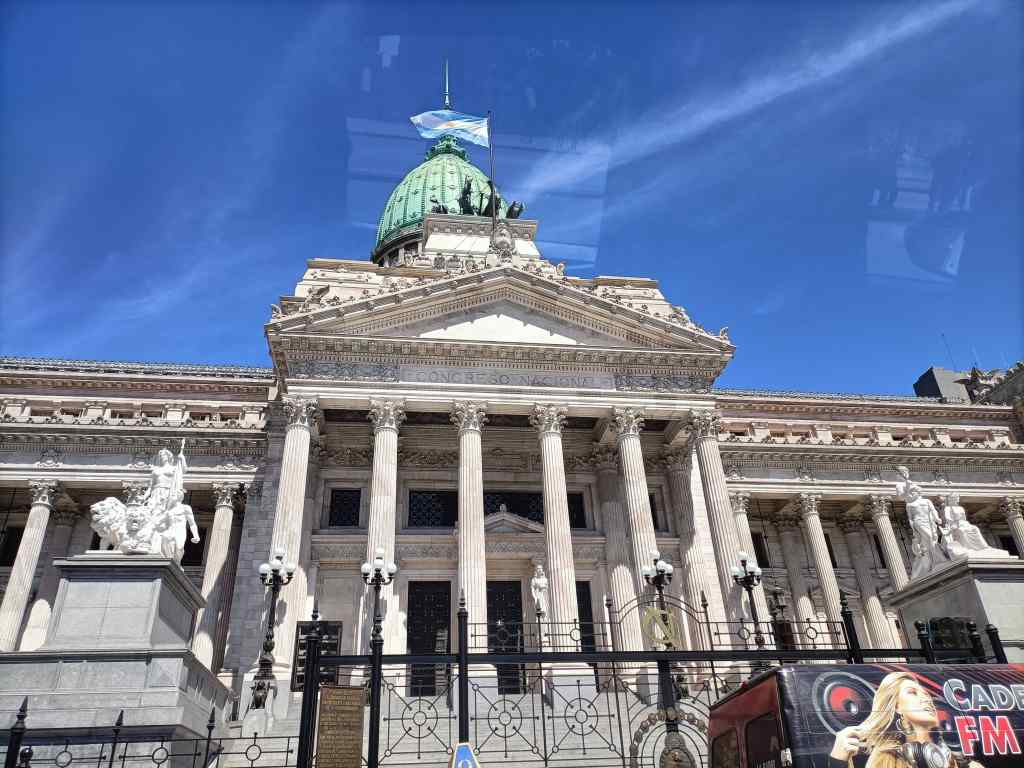
During the long taxi ride in from the airport was struck by the mix of architecture in the city. There are many skyscrapers, but also grand old buildings like the Congress…

The National Congress seen from my taxi

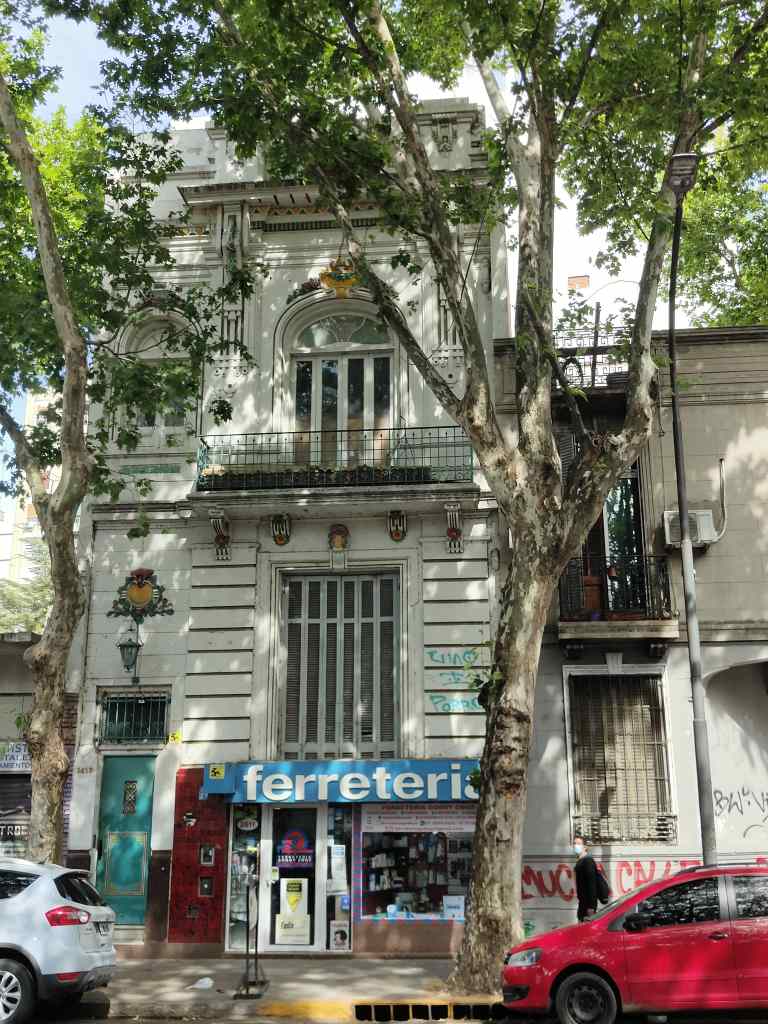
And crumbling but pretty older buildings like this…..

Buenos Aires street scene

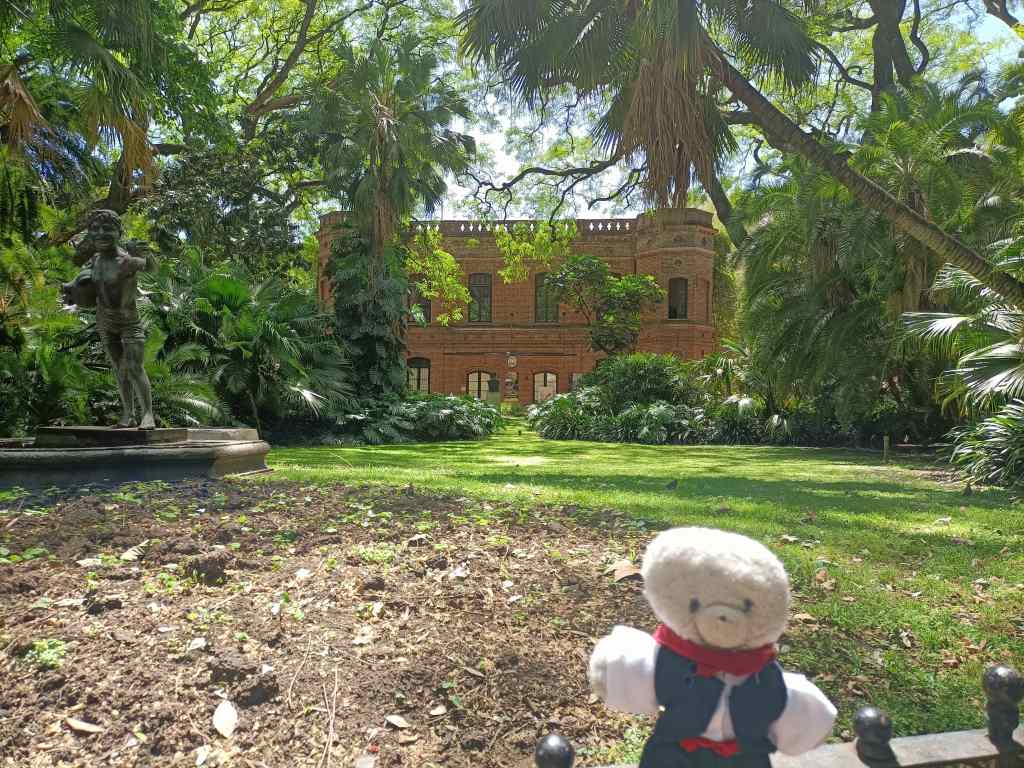
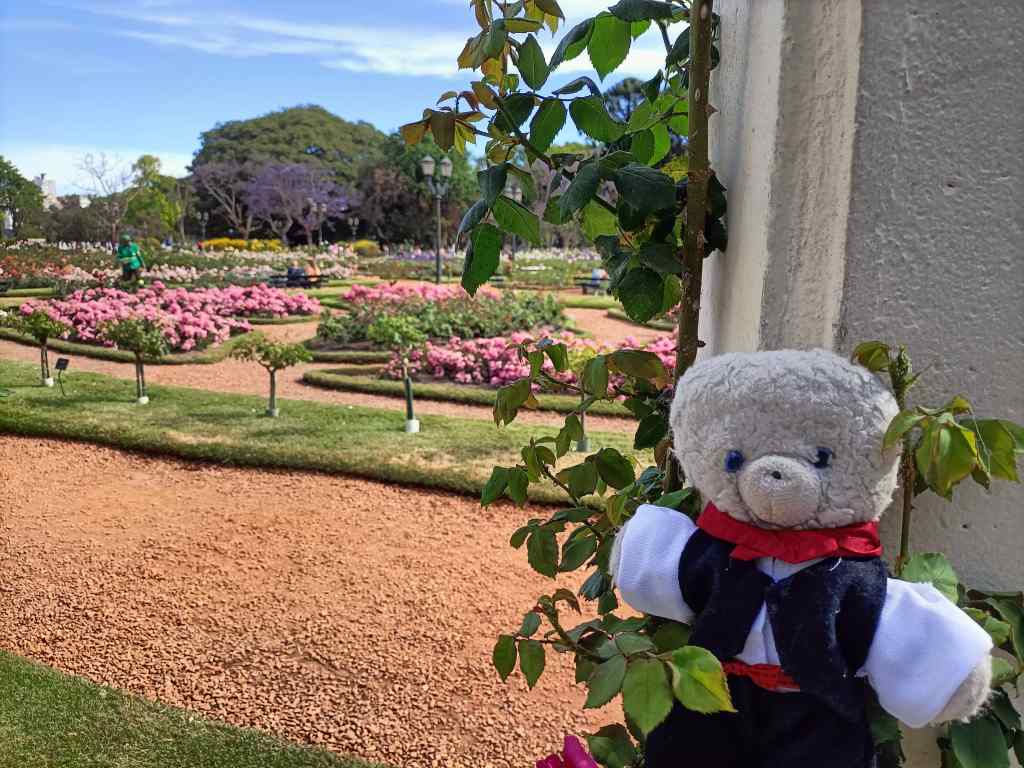
My hotel room was not ready yet, so I spent some time chilling in the Botanical Gardens. The part of Buenos Aires where I am staying is called Palermo and has lots of parks and gardens.

In the Buenos Aires Botanical Gardens

I got my Argentine Sim-Card, and then some local currency – Pesos.  There are two exchange rates in Argentina. The official rate is what you get if change money in a bank or bureau de change, or if you use your credit card. It is about 160 peso to the US$. The unofficial rate is 290 – almost twice as good. This great deal is available from shady and risky money changes in parts of Buenos Aires…….and with Western Union money transfers. WU is very popular here, and there are offices all over town. I found the one closest to my hotel, but they only had enough money for one of my two transfers…….- and in small denomination notes. Still it was enough for the next few days, and I enjoyed a reviving coffee with my newly purchase pesos.

A much needed coffee and one of several wads of pesos from Western Union

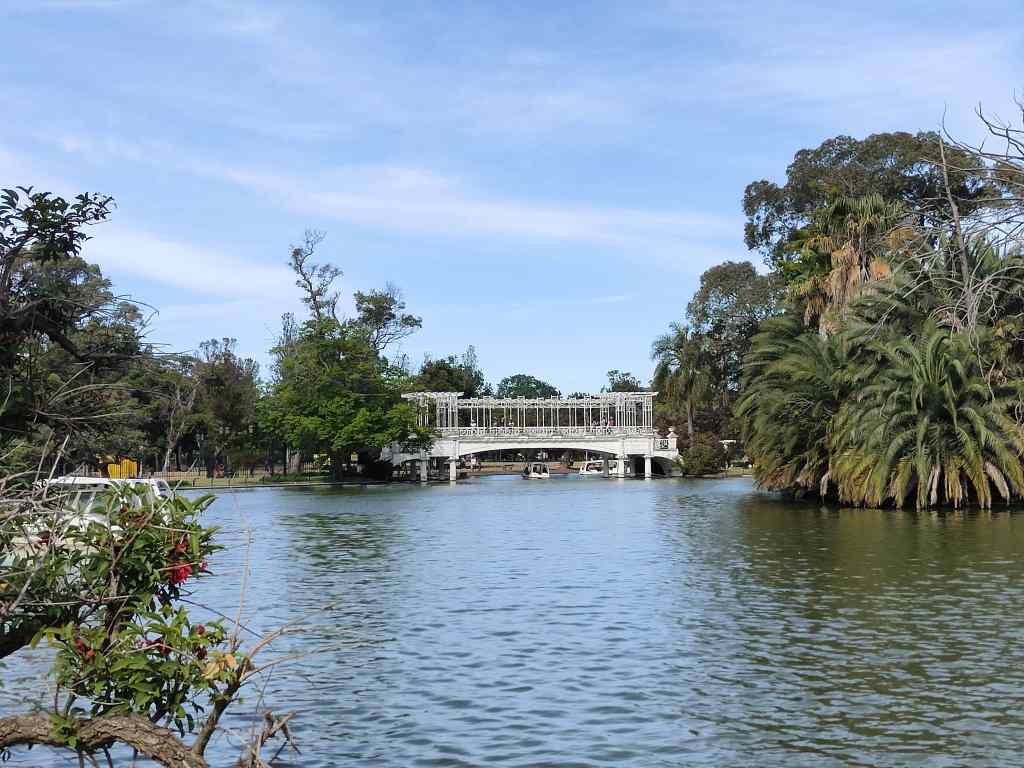
I checked back into my hotel at one, and after a short rest, set off to explore the city. First I found the 3rd of February park, a favourite haunt for Portenos (residents of Buenos Aires). It has rose gardens, lawns where people play football, and a lake where you can rent boats.

The lake in the 3rd of February Park, Buenos Aires
In the 3rd of February Park

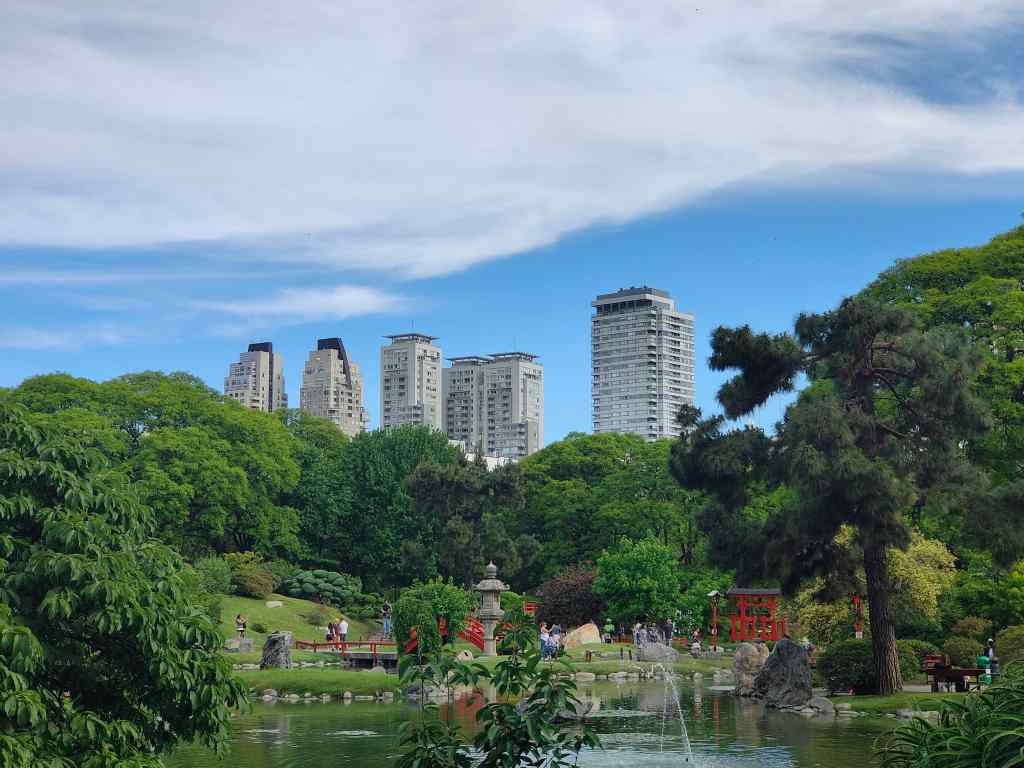
After the public park I visited the Japanese Garden. I was not sure quite what it was doing in the centre of BA, but it was a nice place to explore.

The Japanese Garden, Buenos Aires

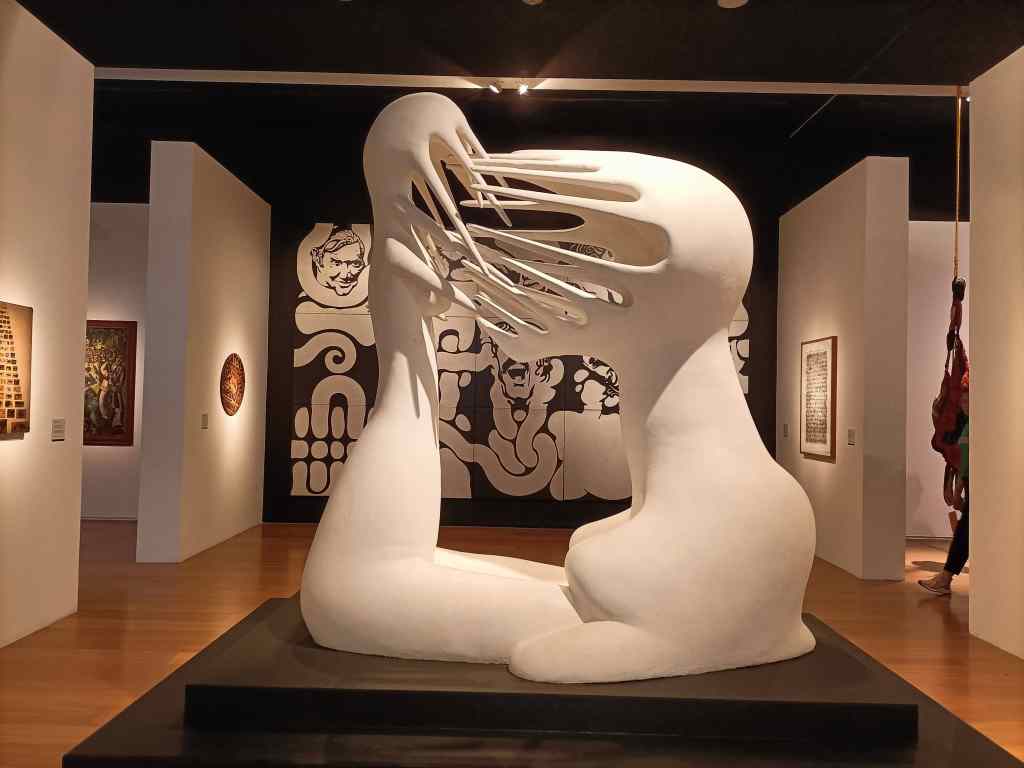
From there I headed to the Museum of Latin American Arts to see some really good displays of contemporary art.

Buenos Aires has a thriving arts scene

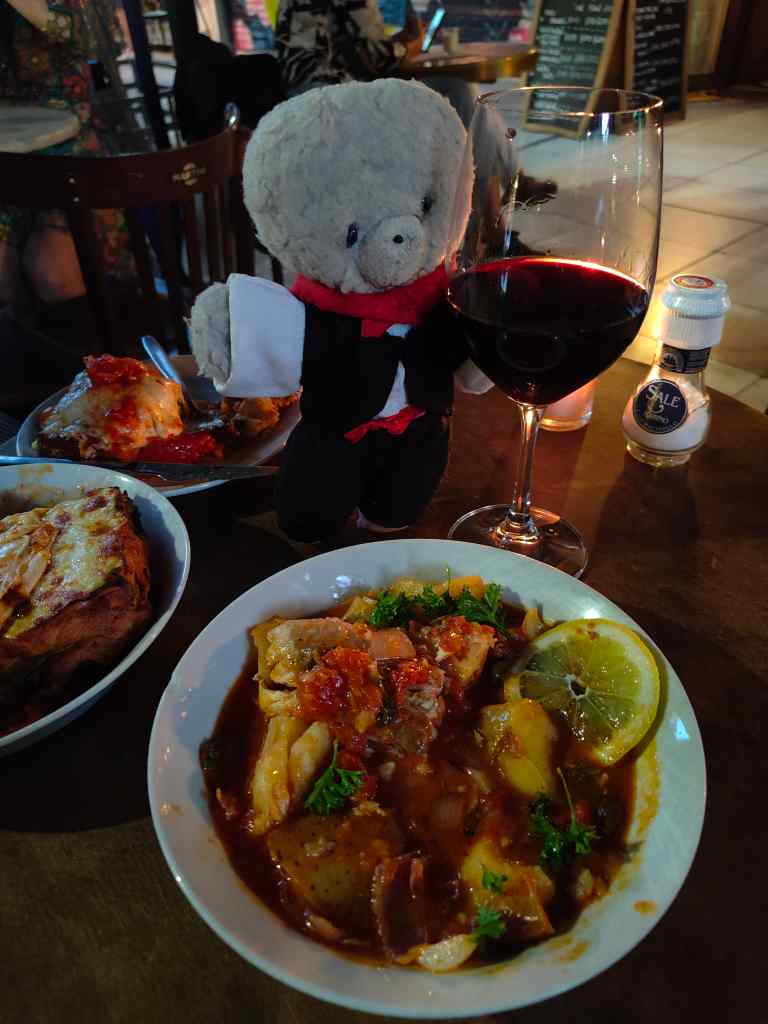
My last stop was an early dinner at a wine bar with a pavement terrace – of which there are lot, because both the weather and the wine are very good in Argentina.

Wine, Food, and Al Fresco restaurants – three things Argentina does very well

I enjoyed tasting some fantastic Argentine wine and food before heading back to the hotel for an early night.  The time difference between Buenos Aires and London is only 3 hours, but even so my body was telling me it was past midnight.

I was happy with my first day in Argentina. The sights I had seen had been pleasant rather than memorable, but I had really liked the atmosphere of Buenos Aires. The people are very friendly and seem relaxed and happy. They spend a lot of their time in the excellent open air cafes and restaurants – and so would I, with food and wine this good. My carefully-planned route takes me around the country without returning here before the very end, but I am looking forward to reporting back in more detail on this pleasant city.

Next Post: The Quebrada de Humahuaca

Blog at WordPress.com.

Up ↑