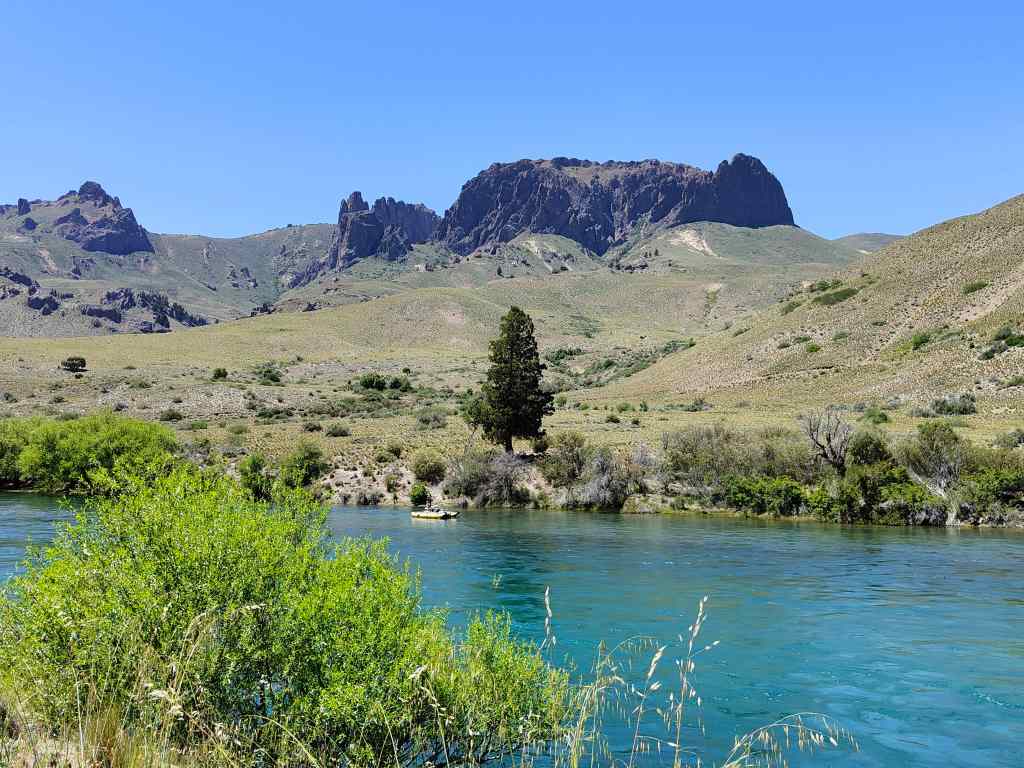
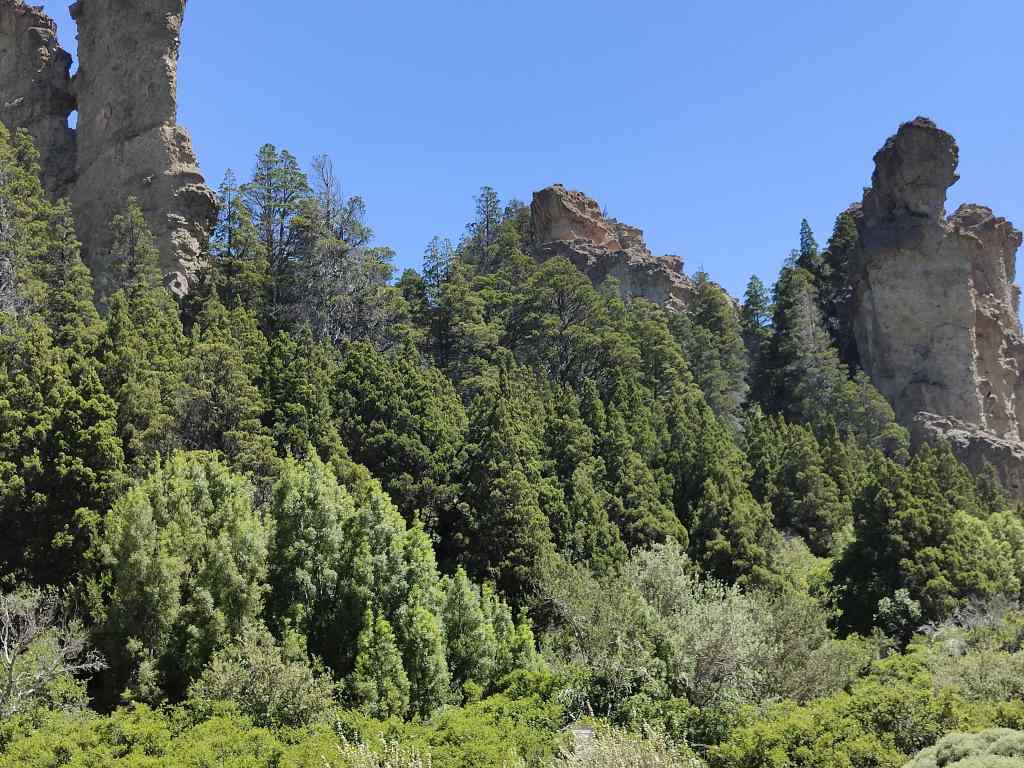
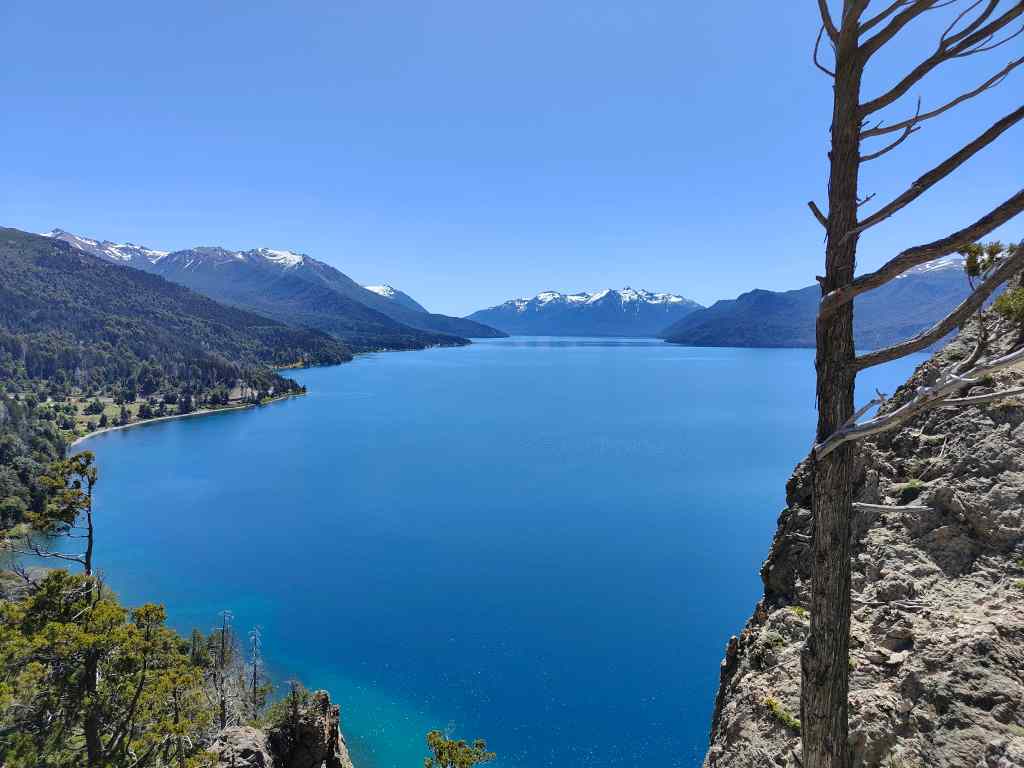
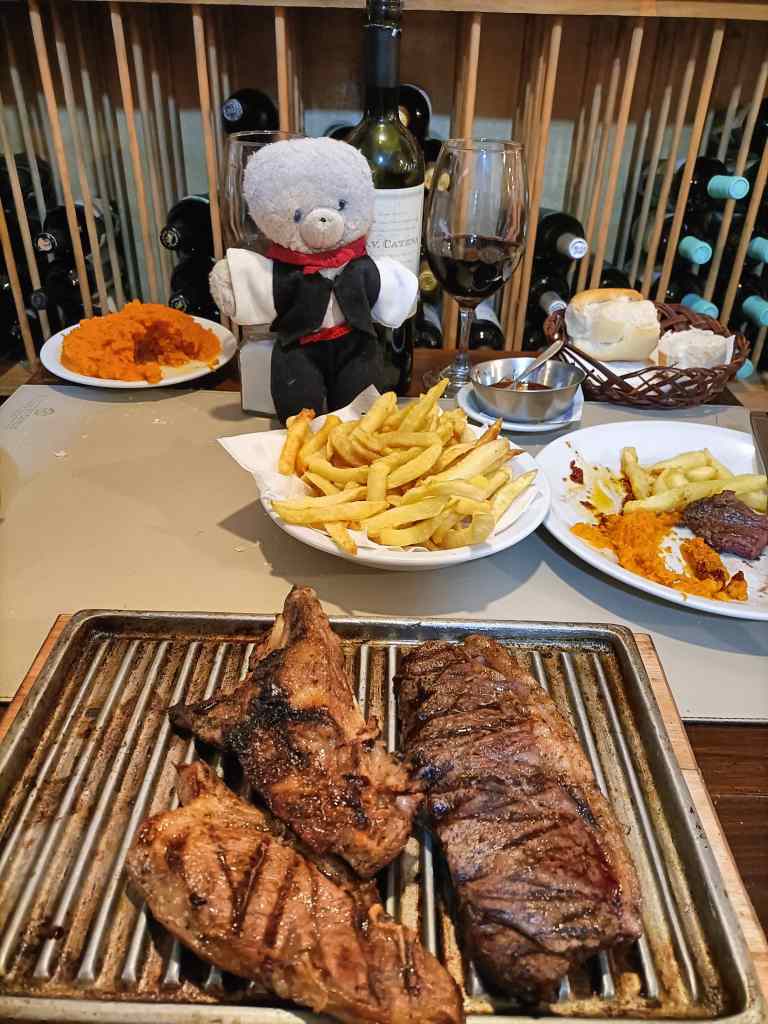
Trouspinet’s Top Tips and Highlights for Argentina

Wow, what a journey that was! Argentina jumps effortlessly into the list of my top 5 destinations of all time, and for scenery, it would be No. 1. However, this trip required lots of planning, and I also learnt a lot as I was travelling. In this post I list my personal highlights and give some tips for planning (valid as of November 2022).

TROUSPINET’S HIGHLIGHTS

To help you plan your trip, here is my ranking of the places I visited on this trip:

  1. Quebrada de Humahuaca (northwest Argentina)
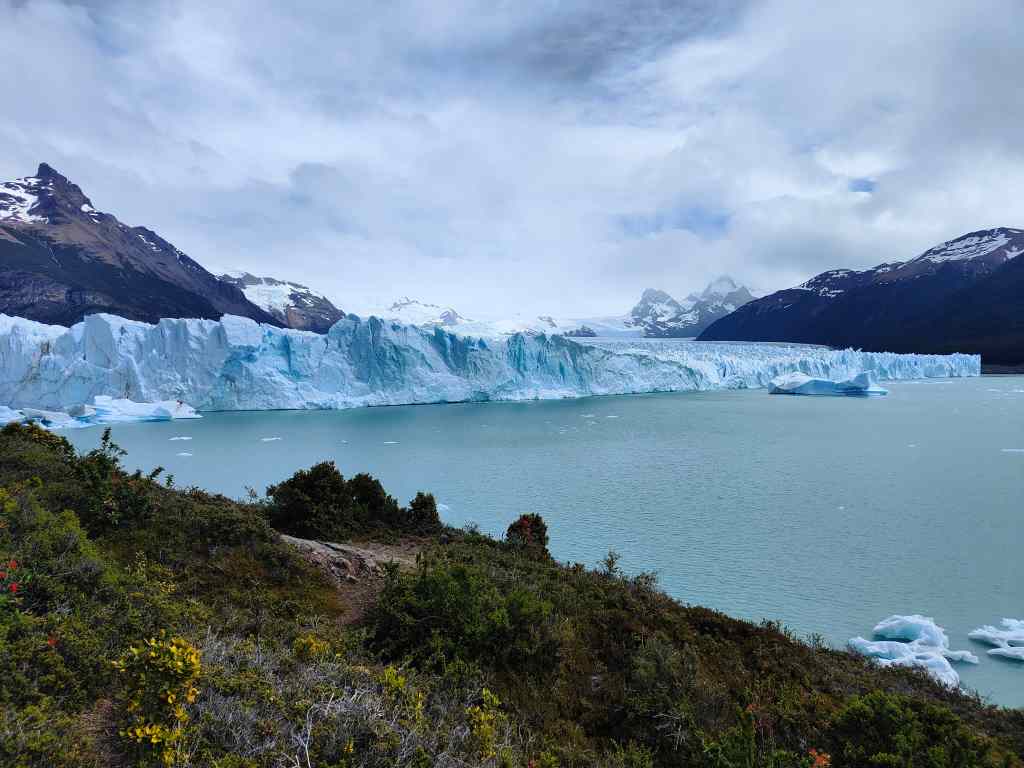
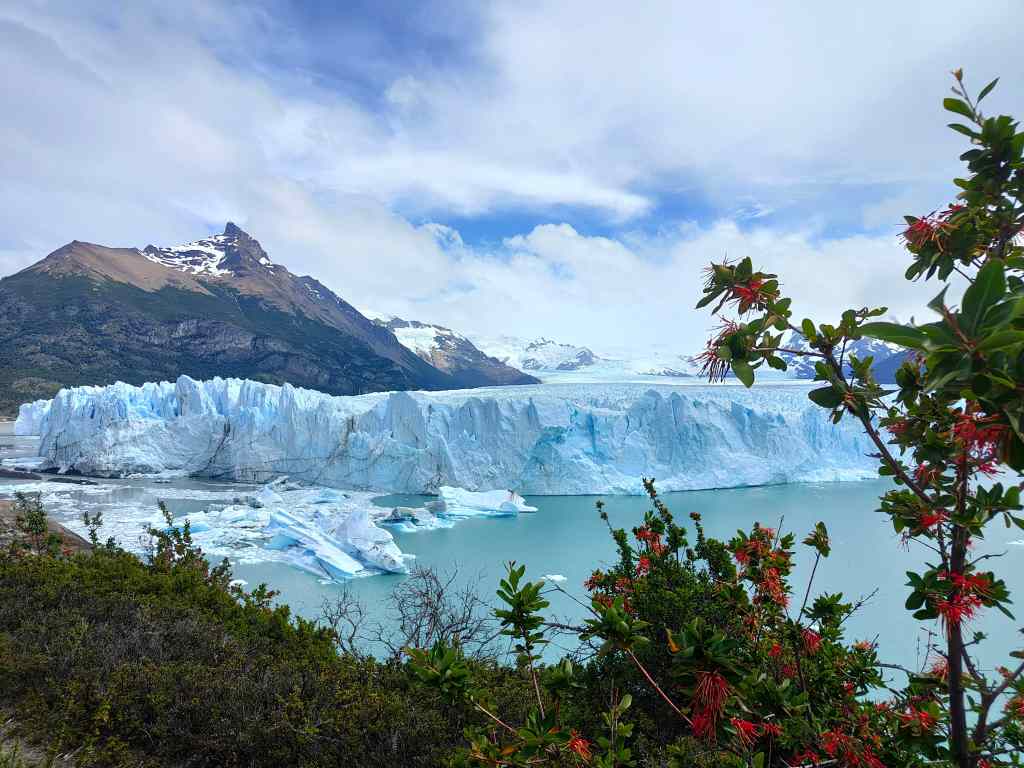
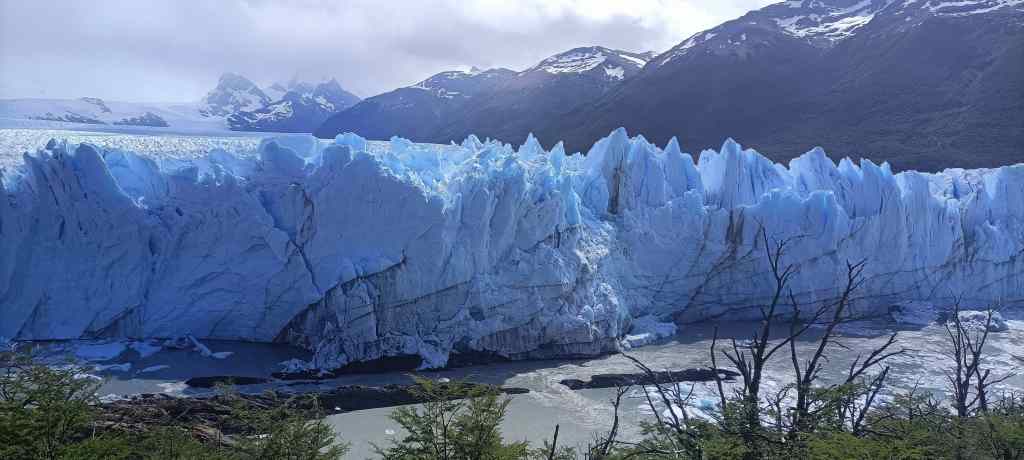
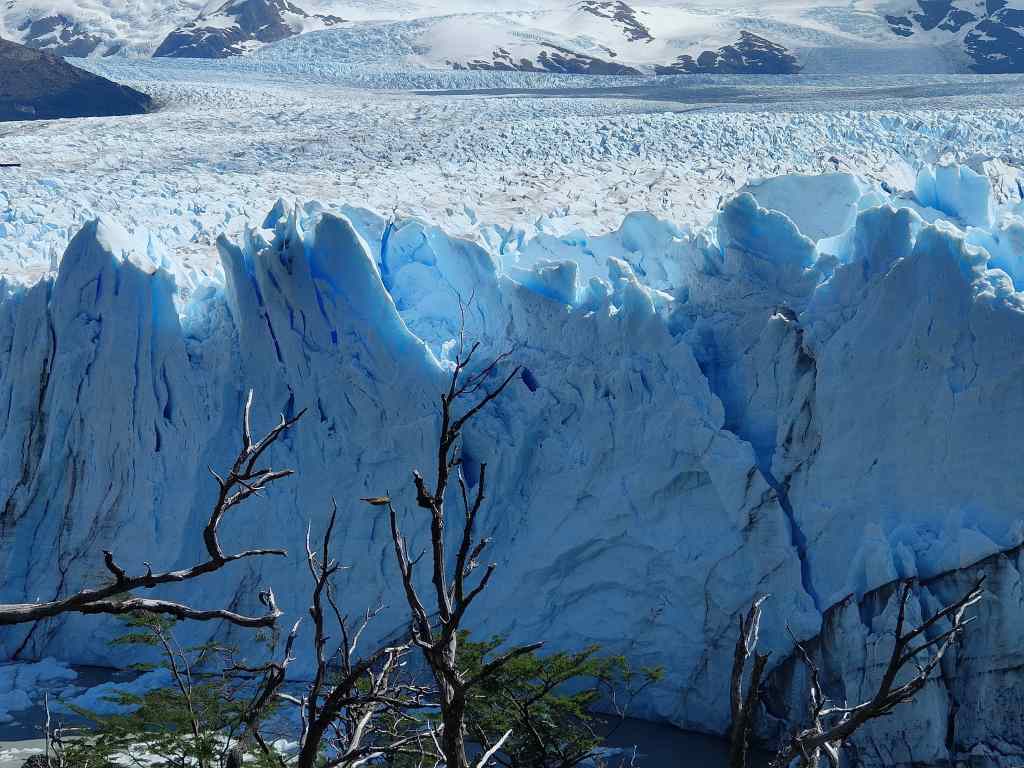
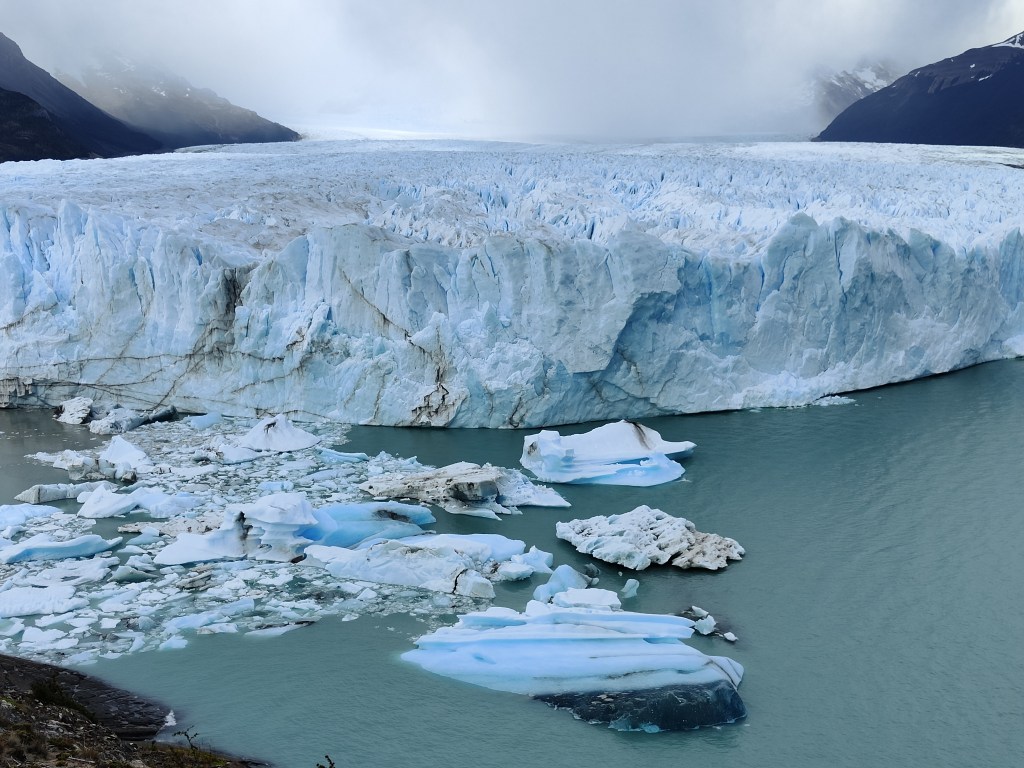
  2. Perito Moreno Glacier, Patagonia
  3. Foz Iguazu
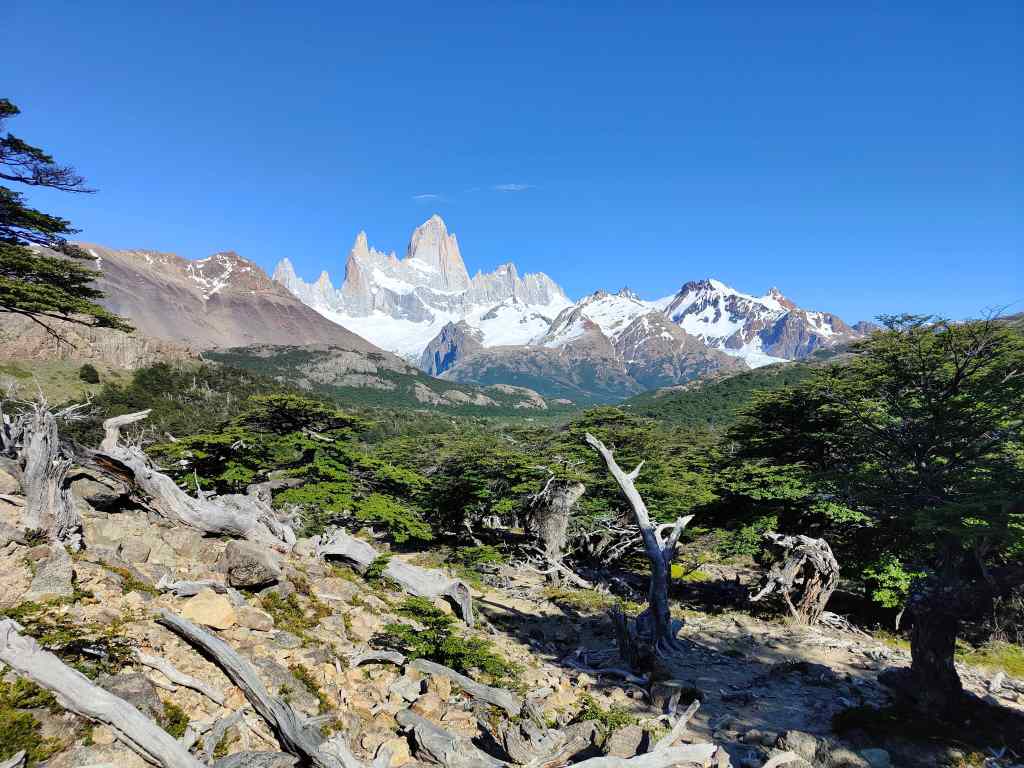
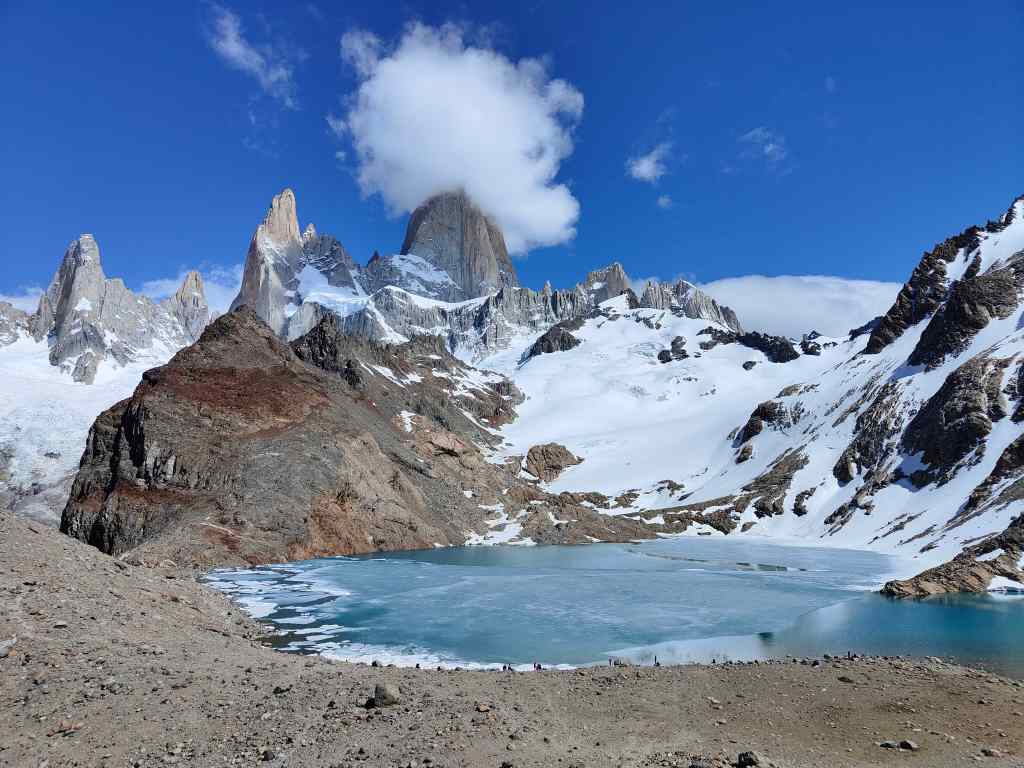
  4. Mount Fitzroy, Patagonia
  5. Torres del Paine, Chilean Patagonia
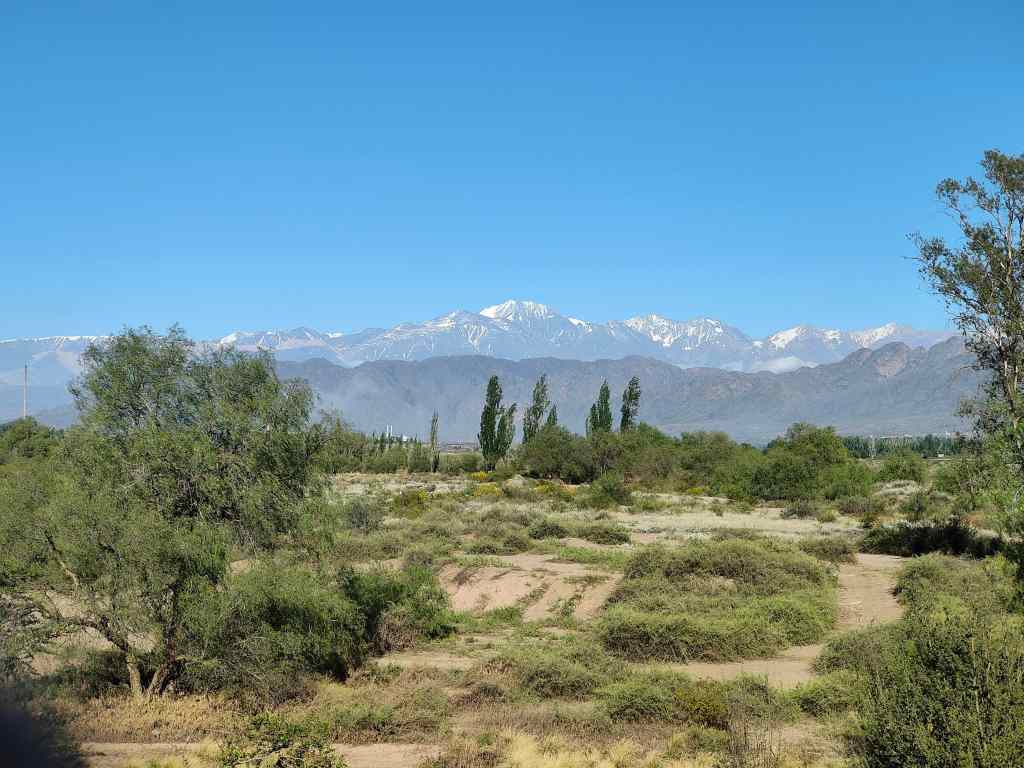
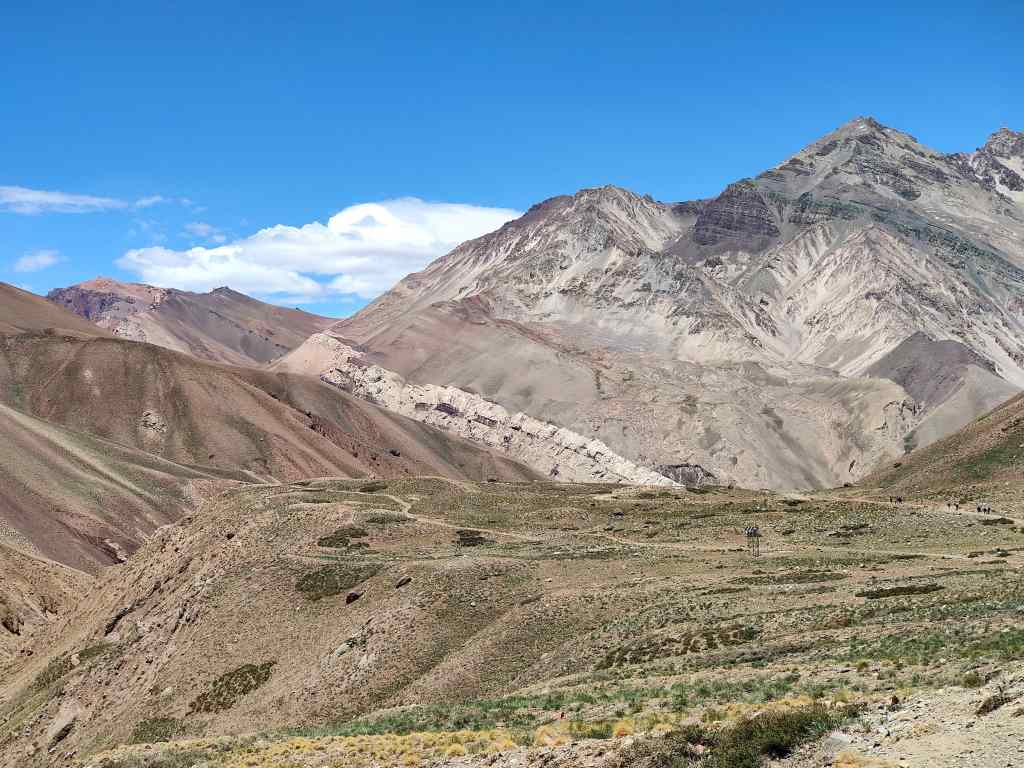
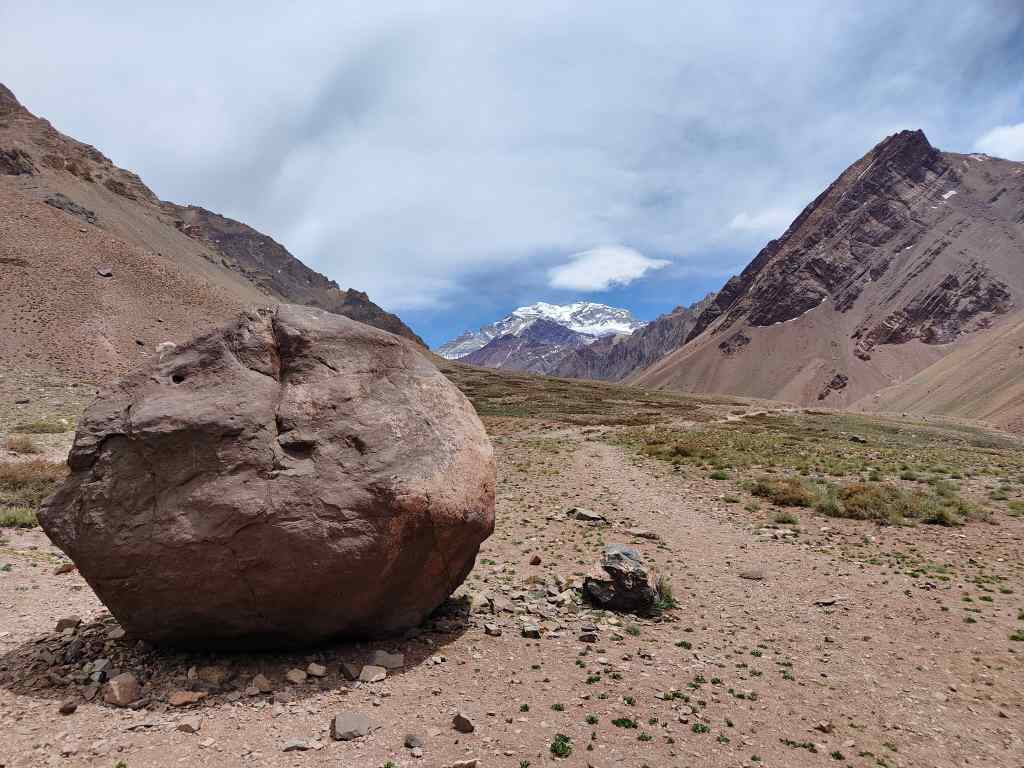
  6. The drive from Mendoza to Aconcagua
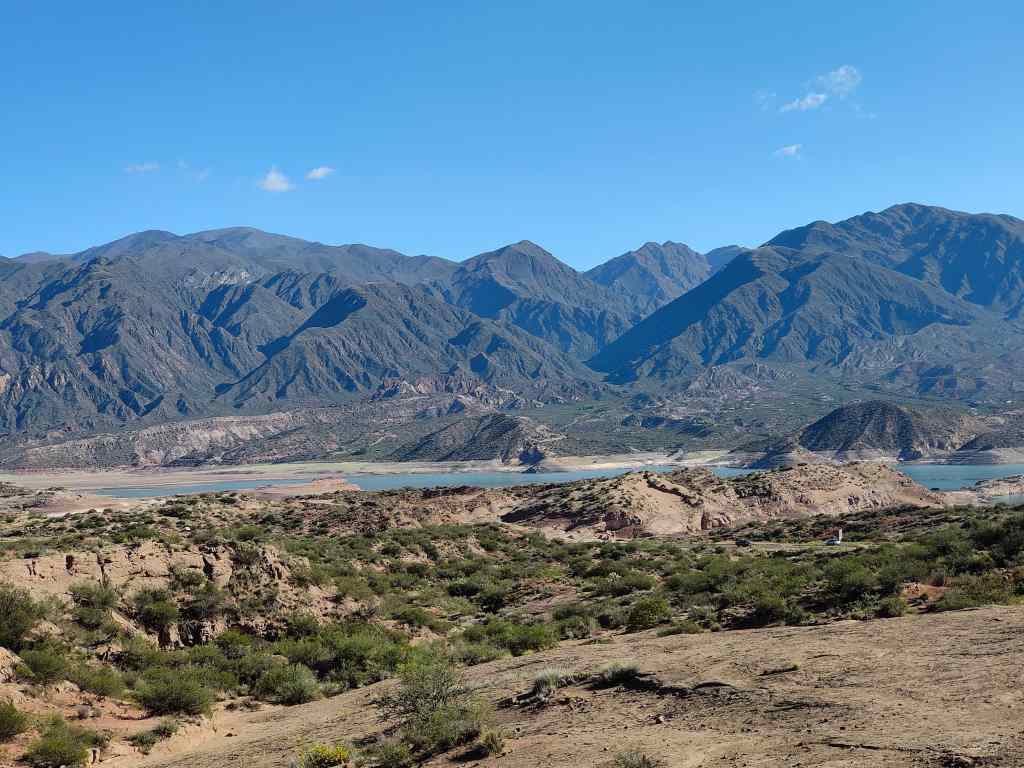
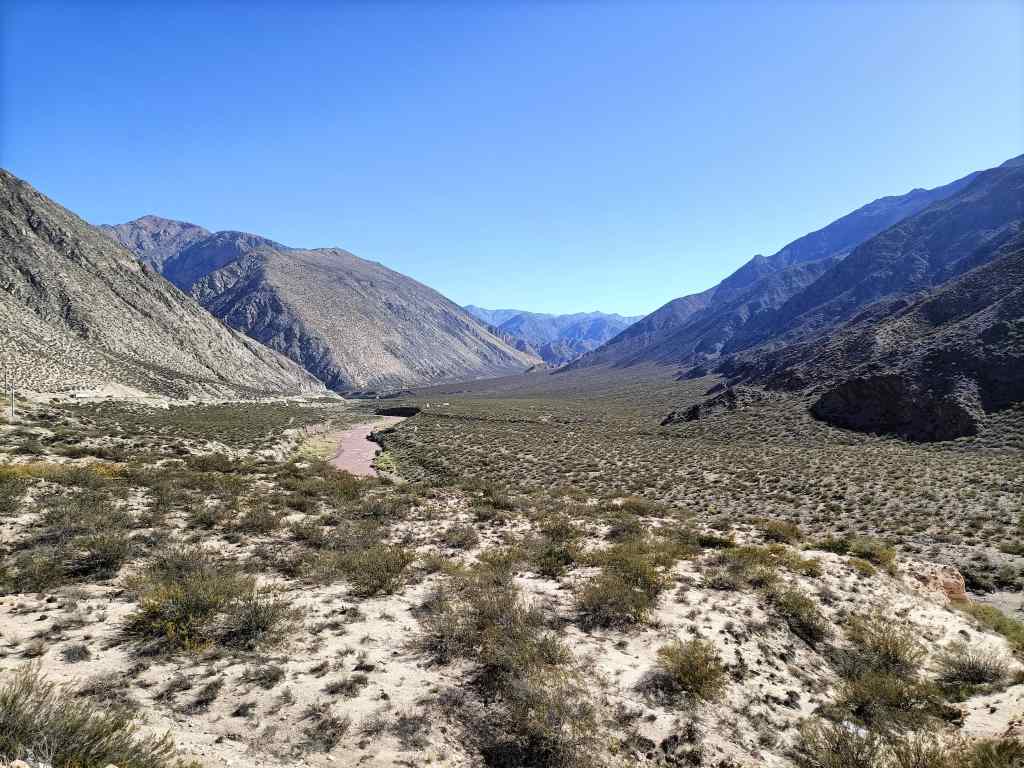
  7. The drive from Salta to Cachi
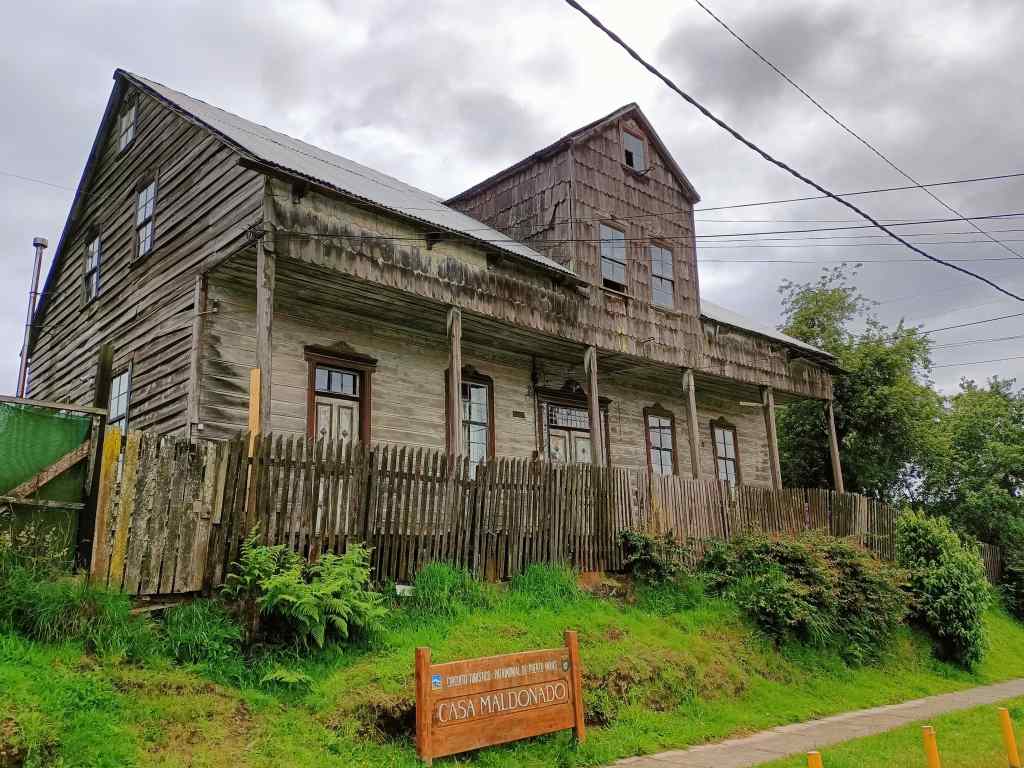
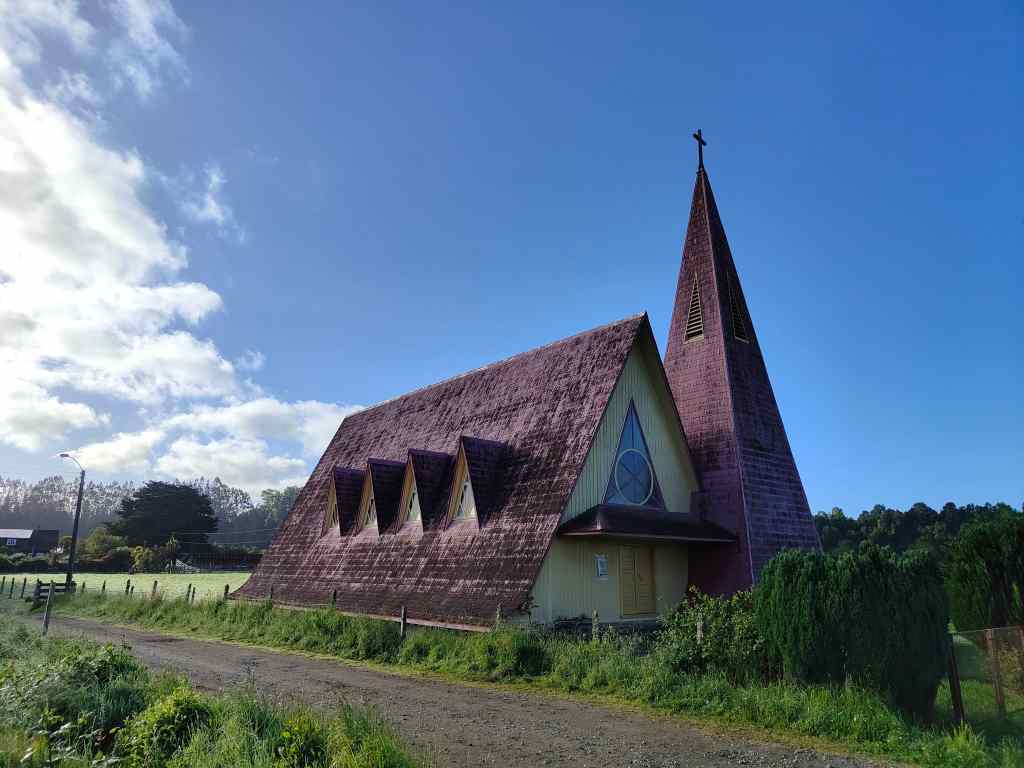
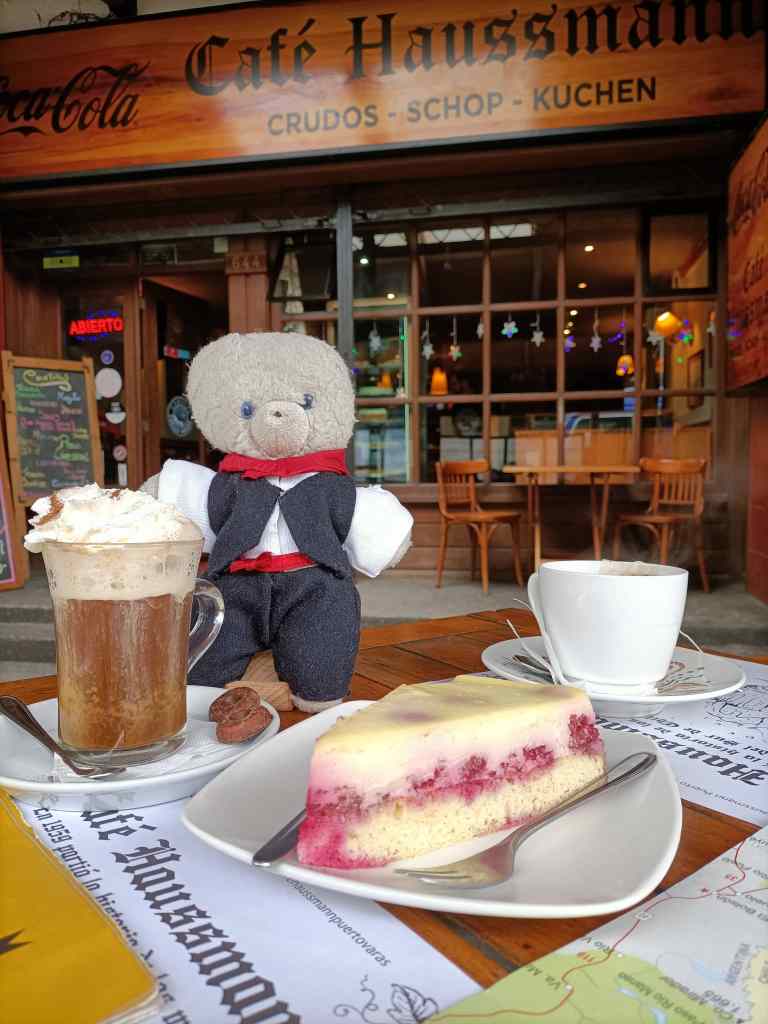
  8. Puerto Varas and the Chilean Lake District
  9. Buenos Aires
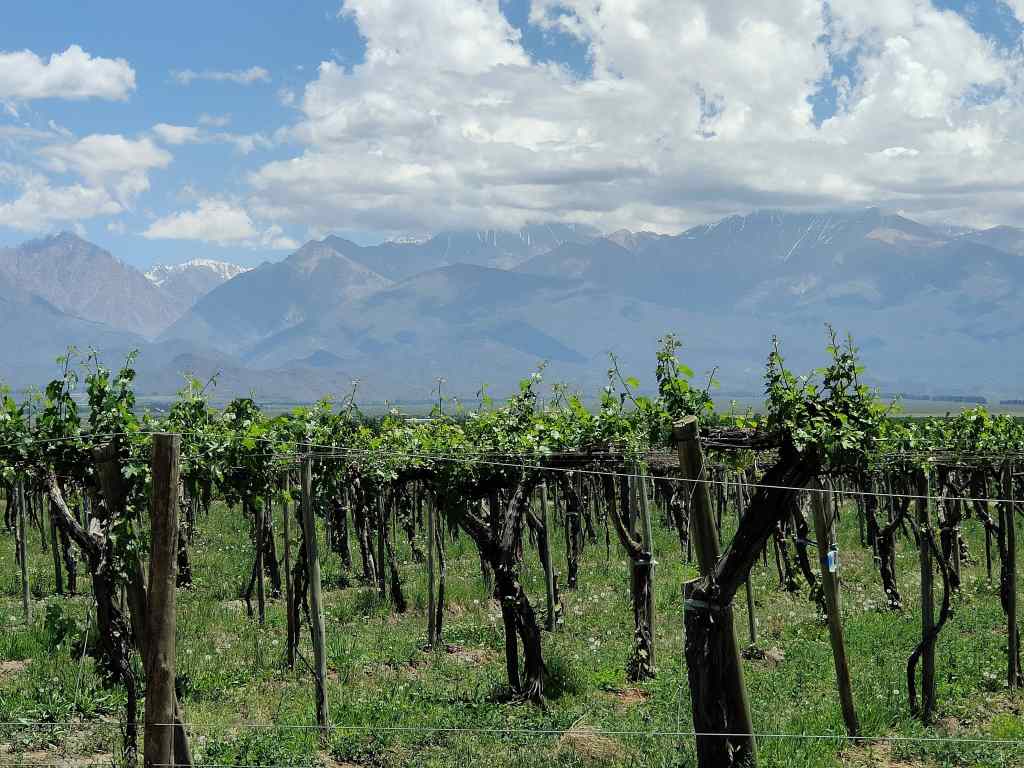
  10. Mendoza’s vineyards
  11. Bariloche and the Argentine Lake District
  12. Salta

I put Bariloche and Salta bottom because there are places in Europe a bit like them, whilst the other places are unique in the world. But I really enjoyed even my lower-ranked locations on this trip – I simply didn’t have a single bad travelling day.
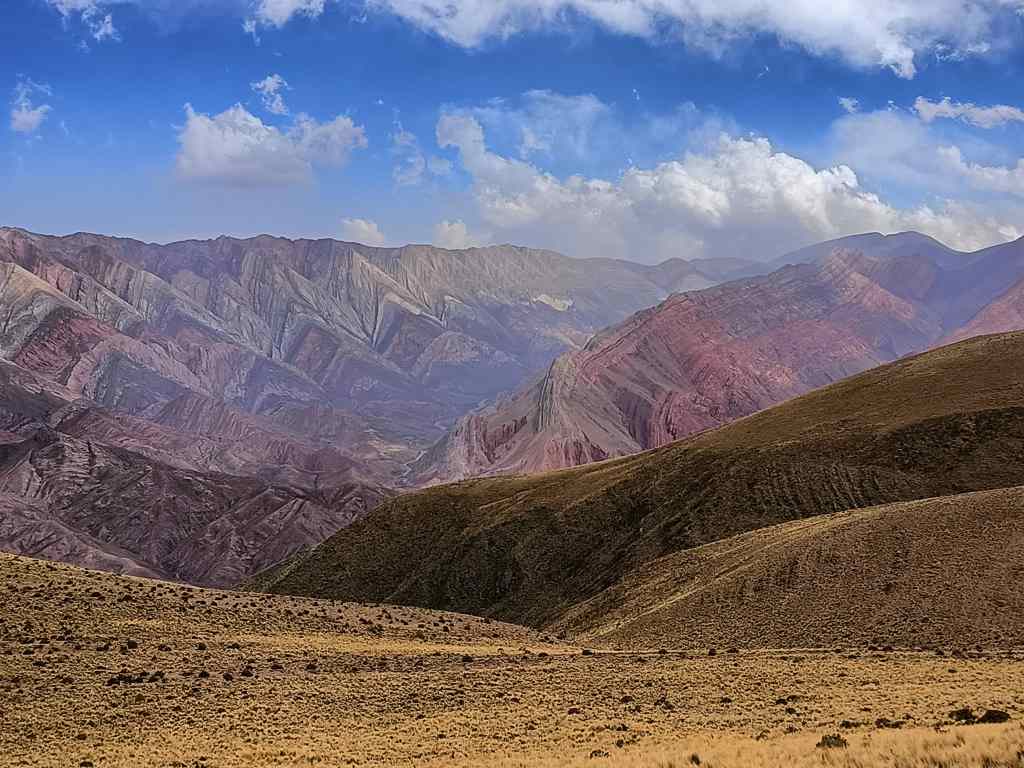
The Quebrada de Humahuaca

TROUSPINET’S TOP TIPS

Be Selective – Distances are huge, as is the choice of places to visit.

Unless you have the time (and endurance) for 12-36 hour bus rides, you will need to fly if you want to see many of the country’s highlights. I went for nearly one month, usually flew between destinations, but still did not have time to see everything I wanted to. After much thought, I regretfully excluded Ushuaia and some of the national parks from my list. You will also have to make some hard choices.  
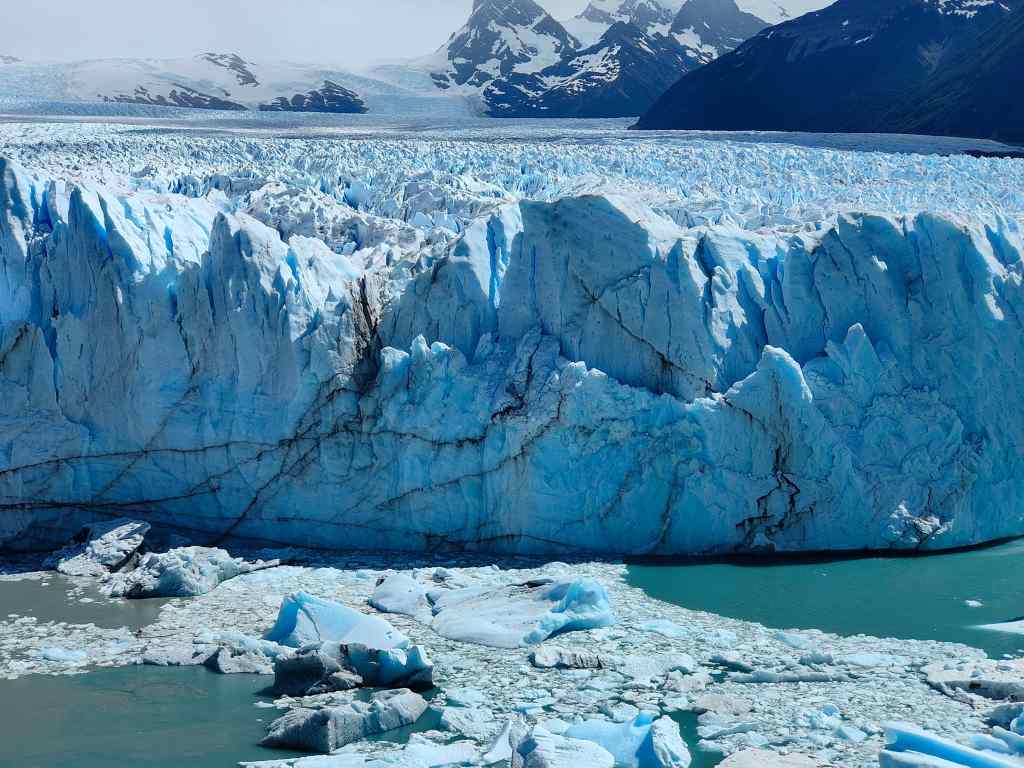
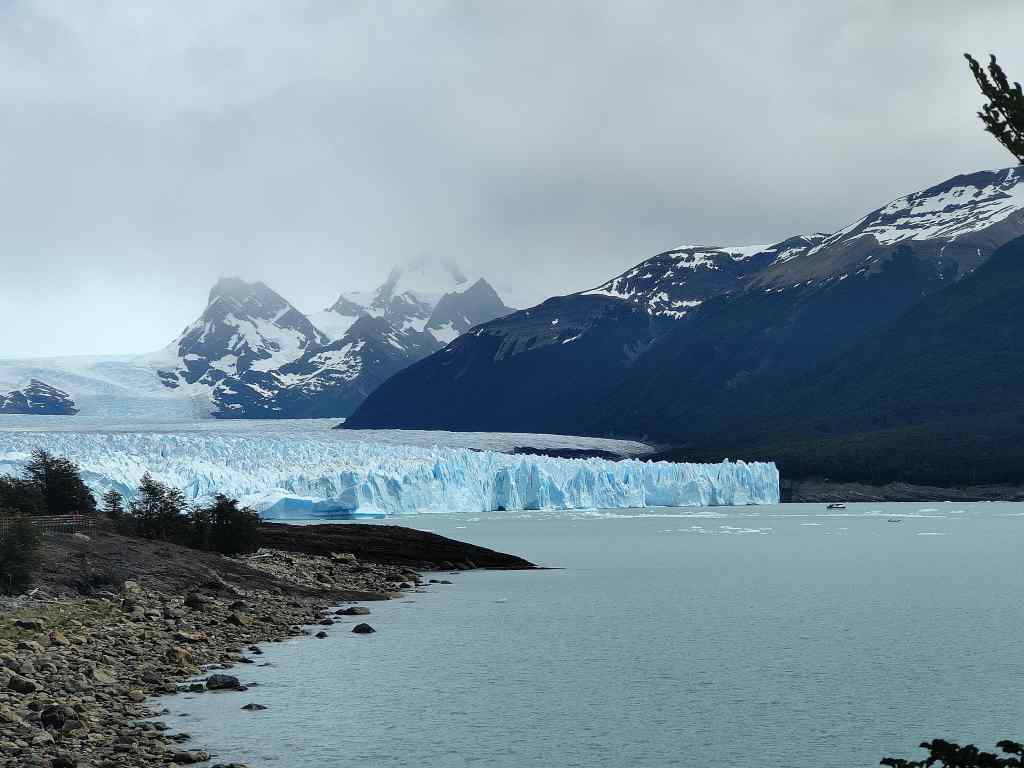
Perito Moreno Glacier

Check which Internal Flights operate

The main flight operators in Argentina are Aerolineas Argentinas, JetSmart and FlyBondi. Argentine airlines have a bad reputation for reliability and punctuality, but I had no major delays in any of my seven internal flights.

Check when flights go direct from one regional destination to another (eg Salta to Mendoza), without having to go back to Buenos Aires and out again. These flights will save you a lot of time and money, but they don’t operate every day. The popular and very convenient Bariloche-El Calafate flight only operates in the peak tourist season – late November to February.  If you do have to fly back to Buenos Aires, remember it has two airports – the very convenient Aeroparque Newberry (AEP) located in the city, and Ezeiza (EZE), which is a long way out of town. Book ahead for anything In, To or From Patagonia over November – February. The region is hugely and justifiably popular in the southern summer. I went in November – not the peak season – and even then, I heard that the buses from El Calafate to Bariloche were fully booked for several days.

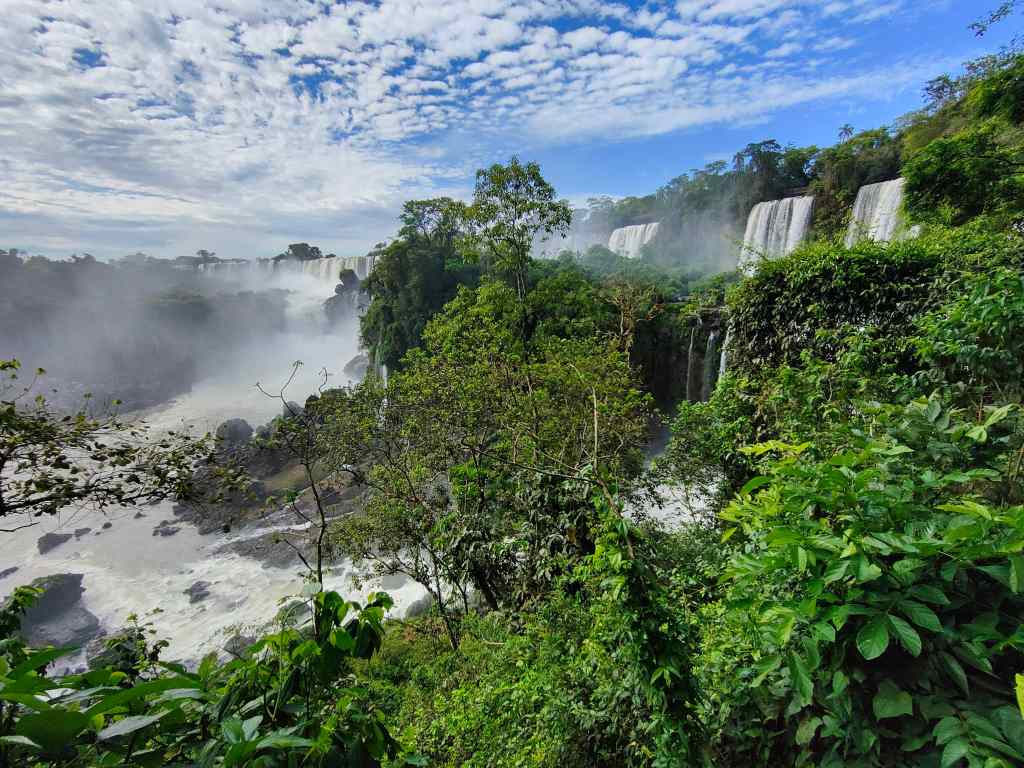
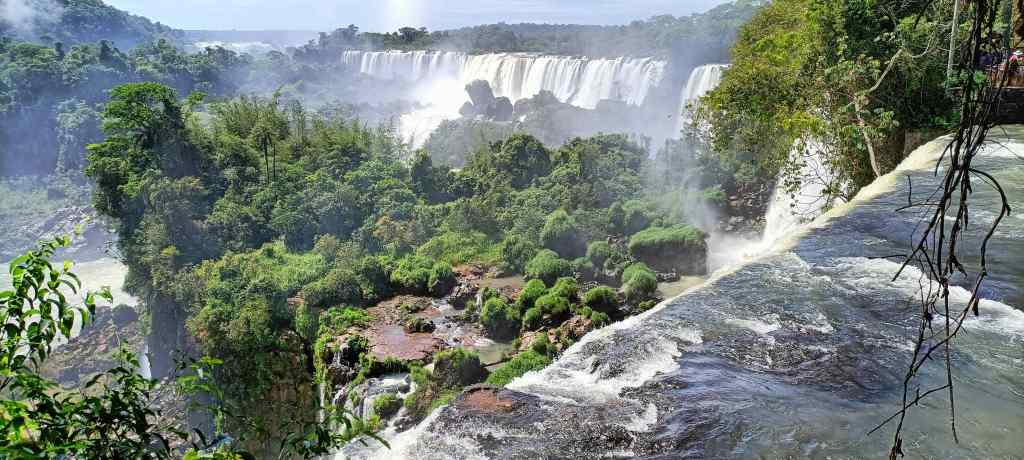
Foz Iguazu

Monte Fitz Roy

Accommodation – Check the Exchange Rate when you book

I used Booking.com to book hotels. You get quoted a price in US$. Once you have made a booking, contact the hotel to ask if they apply the official exchange rate if you choose to pay in pesos. Most of my hotels agreed to this; only one asked for the blue rate (so I cancelled and booked somewhere else). If you pay like this, you save 50%! More expensive hotels add 20% VAT to their bills, which can you avoid by paying with a foreign credit (but then you get the official exchange rate, so it is still better to pay with cash).

AirBnB is not recommended, because you pay in advance in your own currency. It may have been bad luck, but the one place I booked with them was of very poor quality and seemed more aimed at local tourists.

Torres del Paine

Don’t Rely too much on Guidebooks

Things change quickly in Argentina. Our guidebook claimed to have been reprinted in January 2022, but was hopelessly out of date.
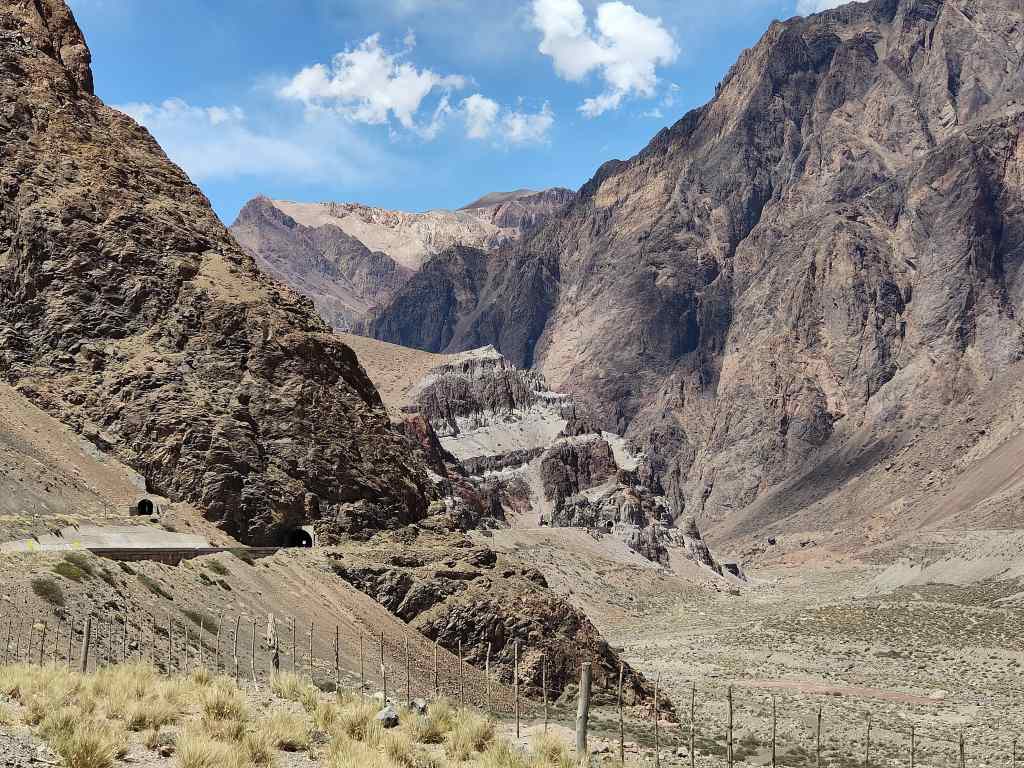
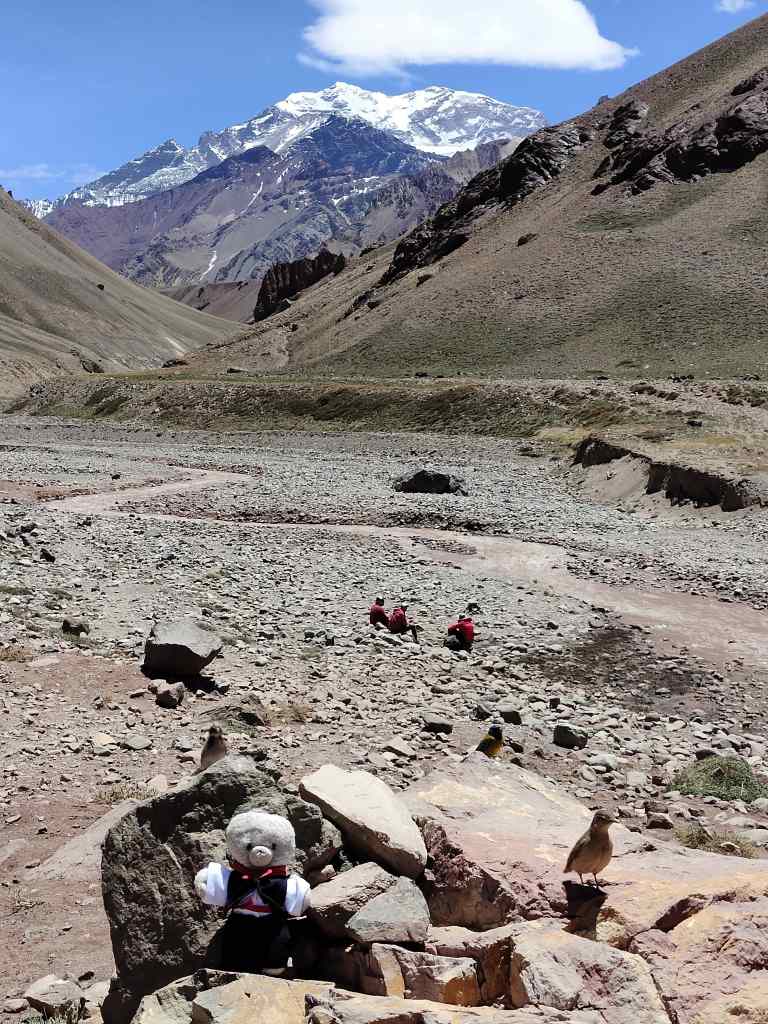
The Road from Mendoza to Aconcagua

Packing

Check average weather conditions and pack accordingly. Patagonia and Tierra Del Fuego are cold even in the southern summer and need very warm clothing and waterproofs. Aerolineas Argentinas (but not the other airlines) has a limit of 15kg for checked baggage, so you may also need to pack light and fully use the allowances of 8kg for carry-on baggage and 3kg for a personal item. The 15kg rule is not strictly enforced – we were usually a couple of kilos over, but the check-in staff ignored this.
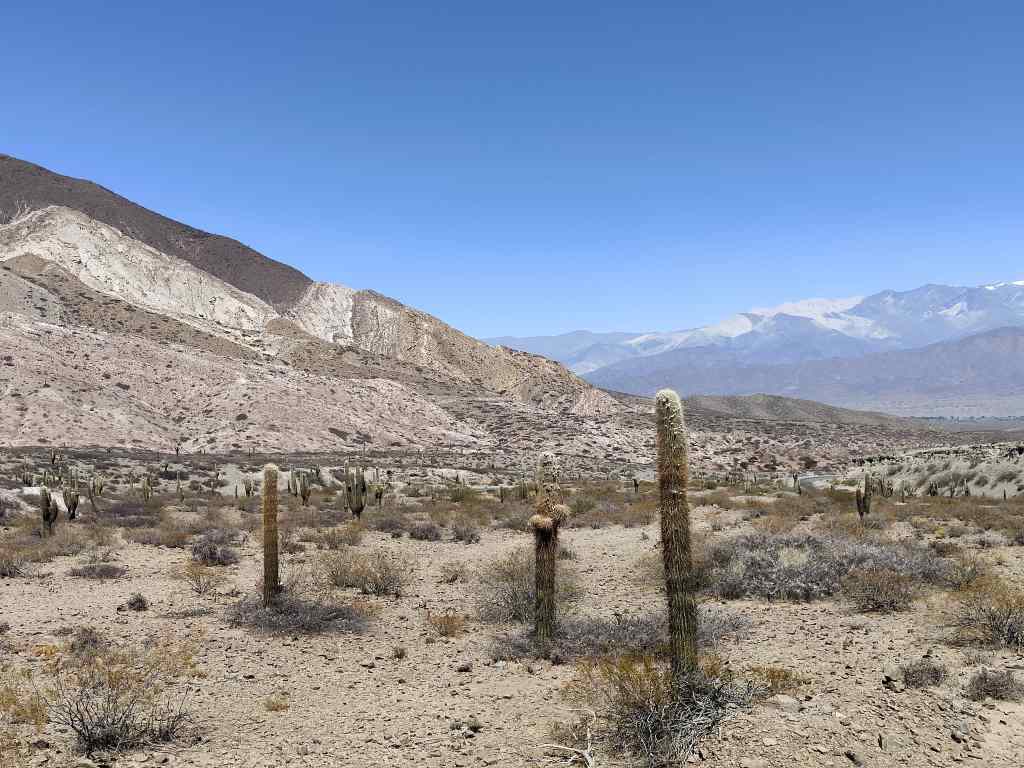
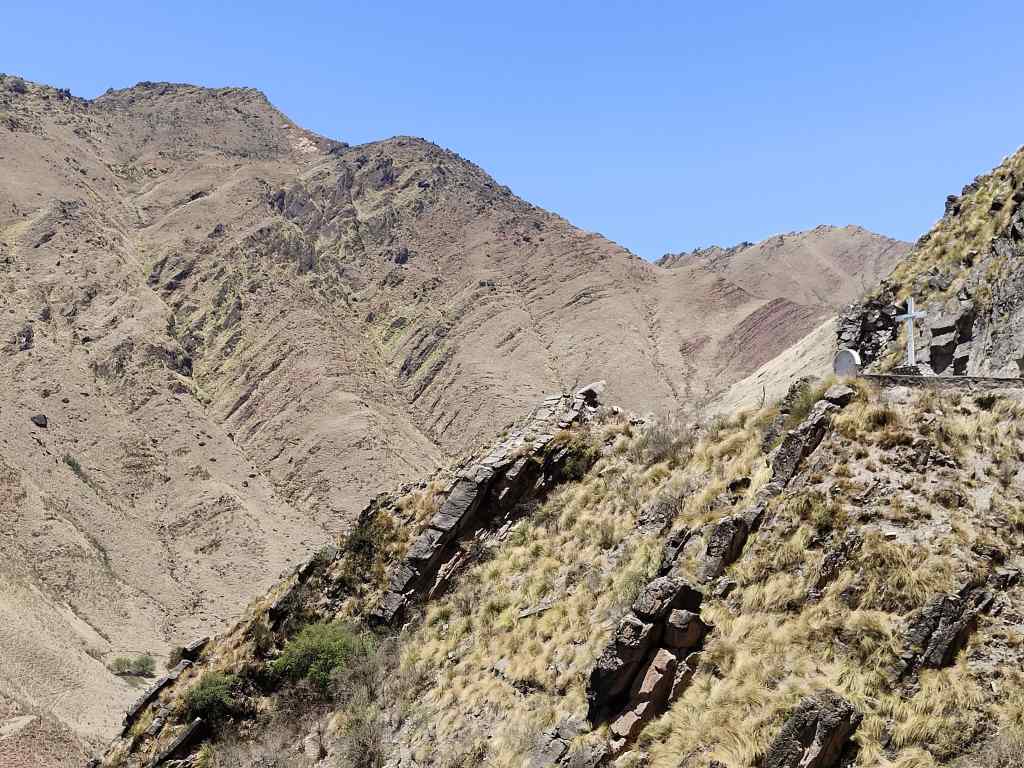
On the way to Cachi

Learn some (Argentine) Spanish

In touristy areas like Patagonia and parts of Buenos Aires, you can get by with English. But in most other places, few people other than hotel staff spoke a second language. If you already speak some Castilian Spanish, be aware that there are big differences in the pronunciation of “y” and “ll”, and that the second person singular “tu” is replaced by “vos” – with different verb endings. I didn’t find any good books on Argentine Spanish, but I found this website (for intermediate speakers) to be very good- https://argentalk.com

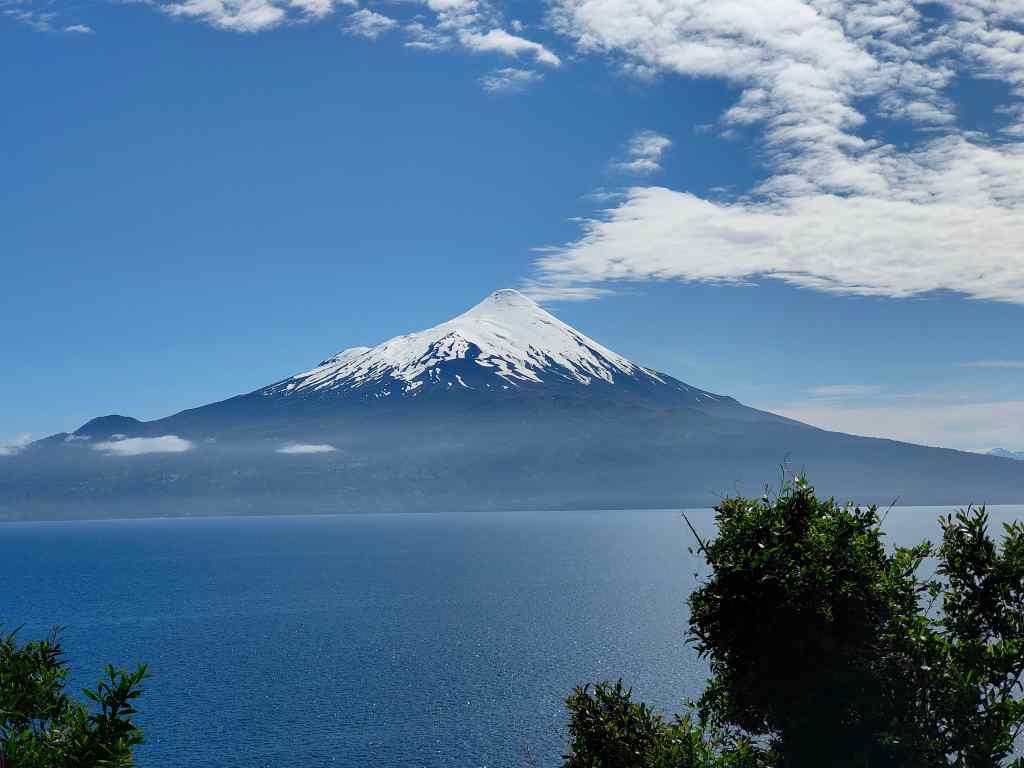
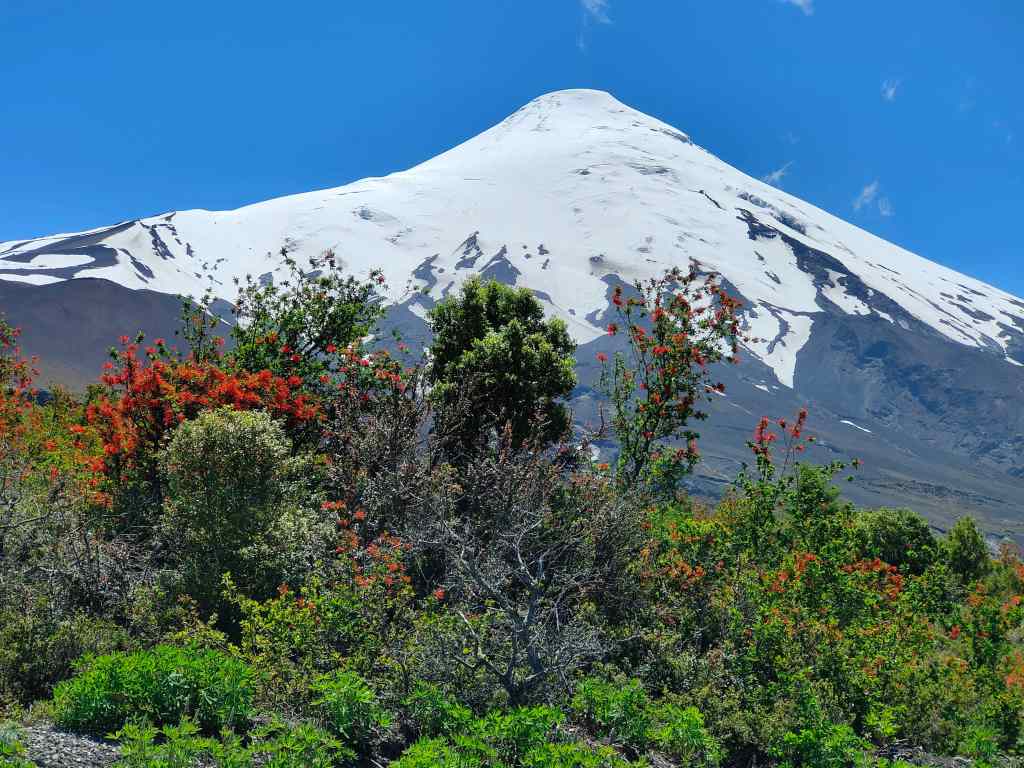
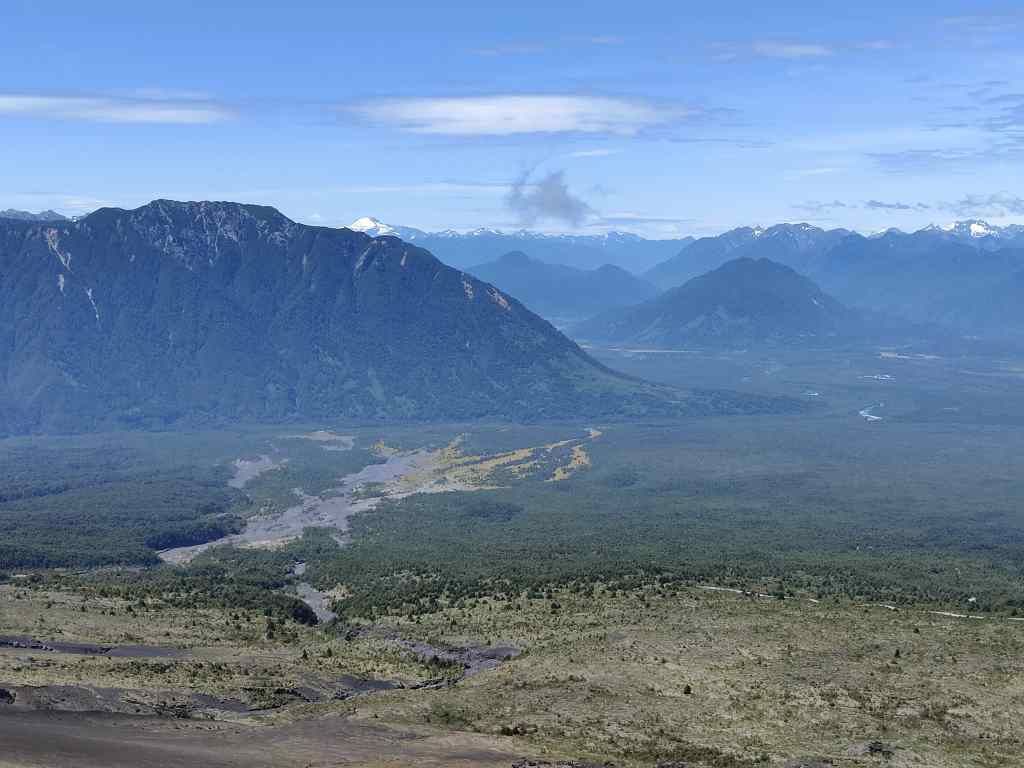
Mount Osorno, Chilean Lake District

That’s all for now. I could write a lot more, but I am worried I will bore my readers. If anyone has a question, please leave a reply at the bottom of this page. Happy Travelling!

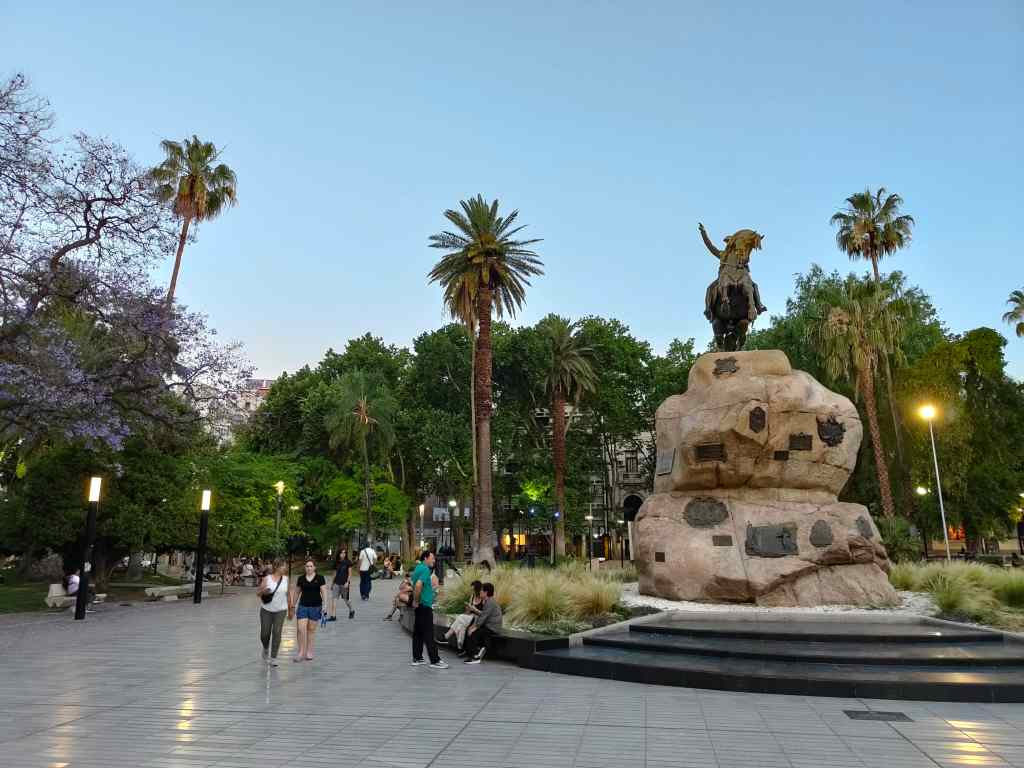
Plaza de Mayo, Buenos Aires

Back in Buenos Aires Part 2 – Strolling Around

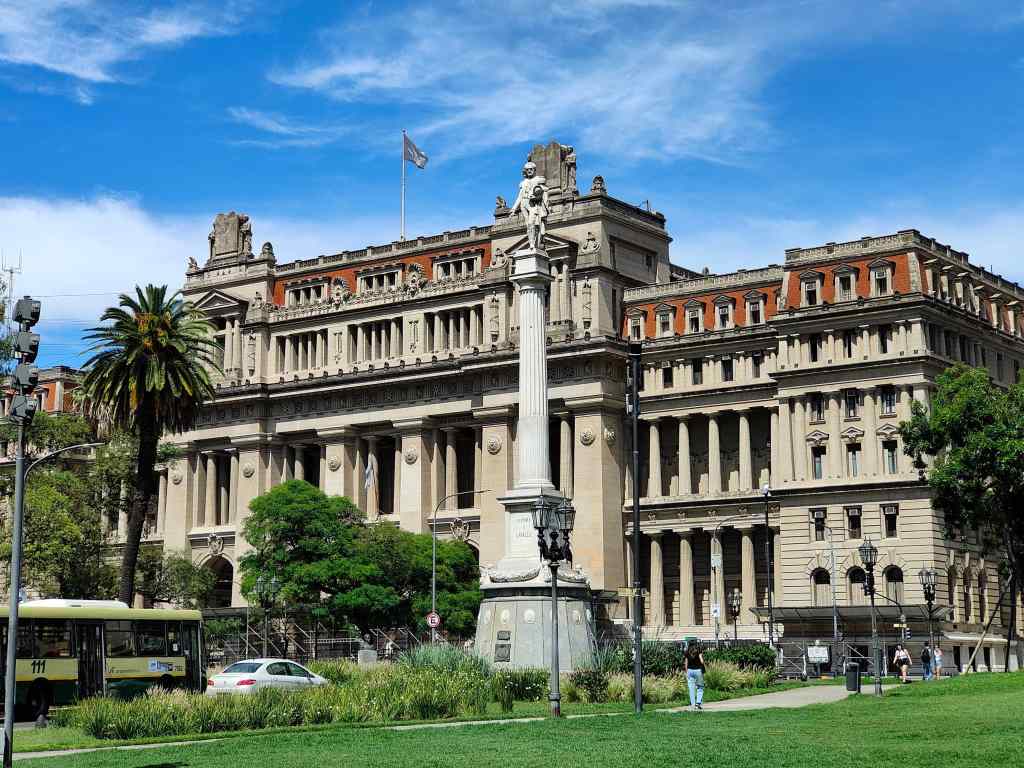
The visit to Tigre completed my sight-seeing in Buenos Aires. I spent the rest of my time simple enjoying the city. It is a very pleasant place, with many parks, and wide avenues. The richer central areas reminded me of Paris, with Hausmann-style mansions set amongst more modern buildings.

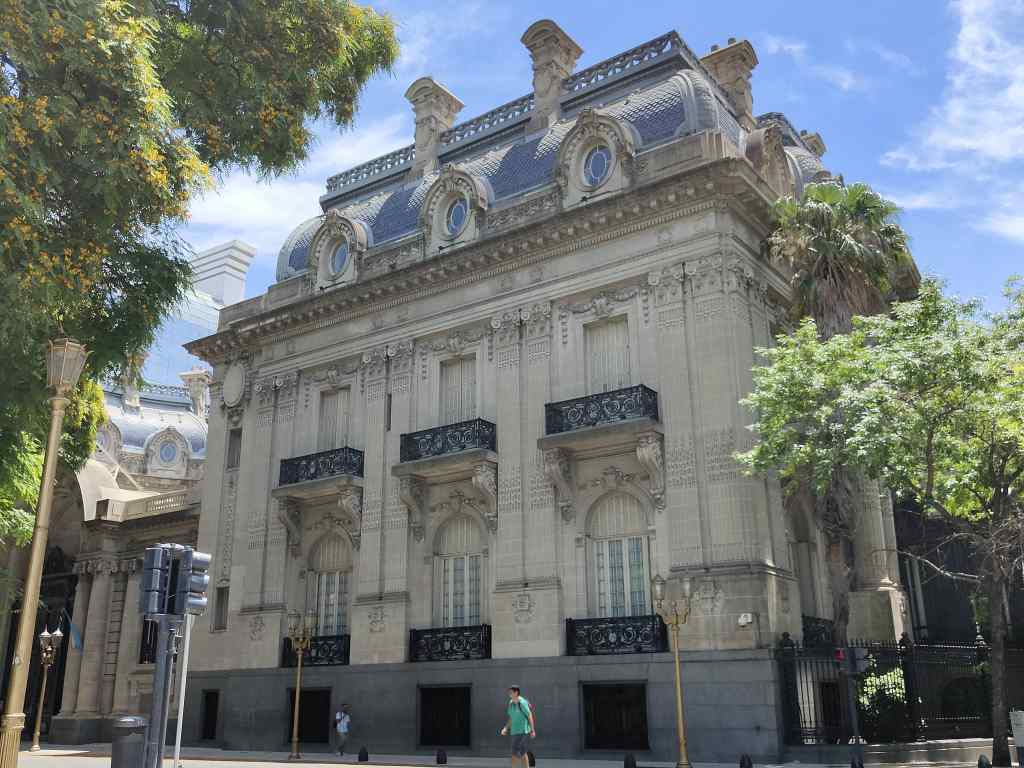
One of many elegant buildings I found by simple wandering around Buenos Aires – the Palacio San Martin
More Elegant Architecture in the centre of Buenos Aires
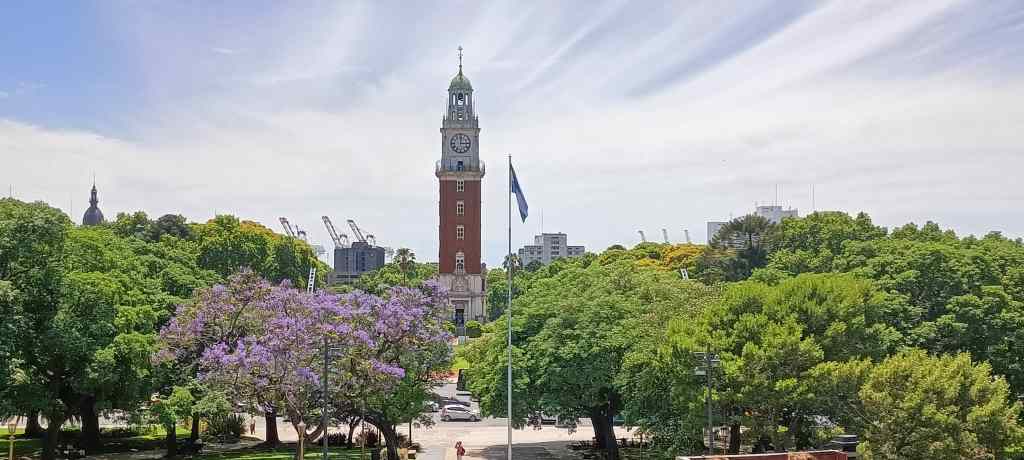
A monumental clock tower in Retiro barrio, built to celebrate independence

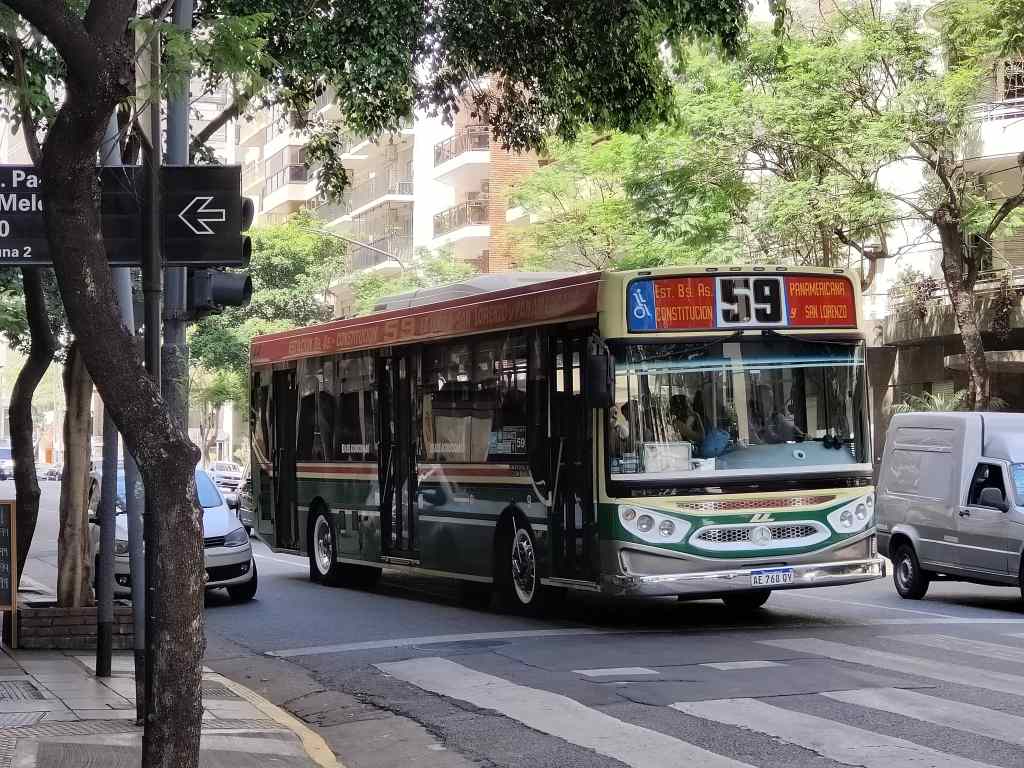
I explored on foot, by taxi and by bus. Getting around proved to be easy. Taxis are abundant and cheap and use their meter without having to be asked. I also bought a “Sube” card to be able to use the buses. This was a bit tricky at first, since you have to tell the driver the name of the stop you will get off at, and since the network is very extensive with hundreds of buses and no maps – but with the help of Google, I managed it. The bus drivers seem to be paid according to how quickly they complete their route and race through the traffic like Formula 1 drivers. You need to sit down as soon as you have paid, since the driver will immediately hit the accelerator and roar off. In the centre, there are places where there are two parallel bus lanes, which allows the drivers of different buses to race each other.  As a result, bus travel is surprisingly fast but might not be totally safe.

One of Buenos Aires’ thousands of buses, all driven by racing drivers.

As I explored the city, I got to know local life better. There was a big inequality of incomes – some barrios are very opulent, and some very poor. The expensive areas have beautiful shady parks with wonderful tropical trees, but these are also places where the many homeless people sleep. Portenos enjoy life, and there are thousands of cafés, bars and restaurants that seem very busy at all hours of the day – I wondered if people ever worked. Sitting on a terrace and watching the world go by is a popular occupation – and a cheap one, since prices for food and drink are a fraction of what you would pay in Europe.

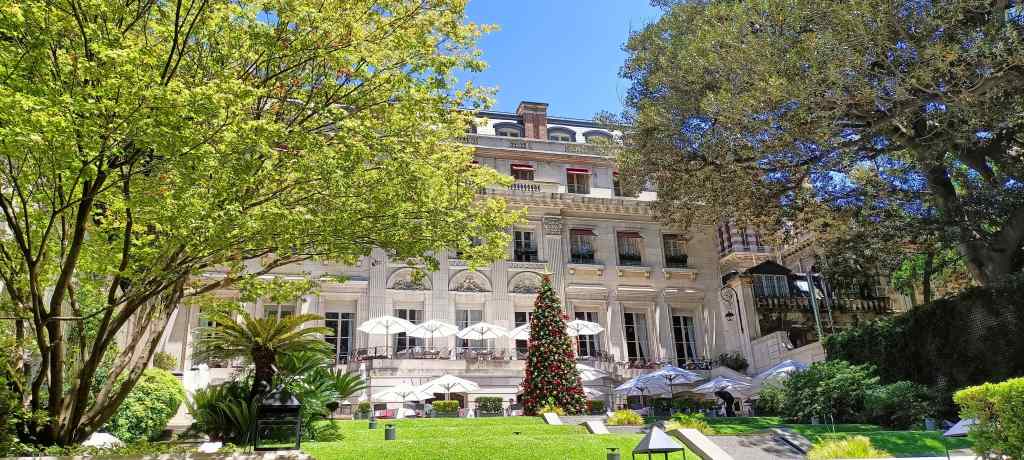
Elegant Terrace at Palacio Duhau, Buenos Aires
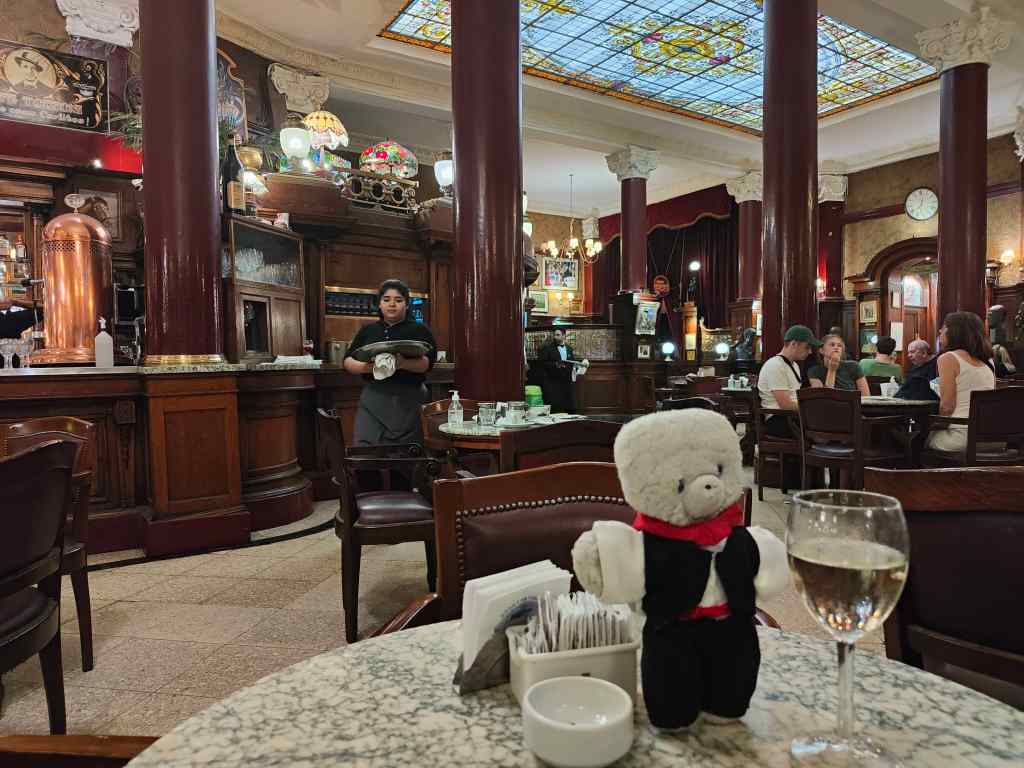
Café Tortoni, one of Buenos Aires’ most famous cafés.

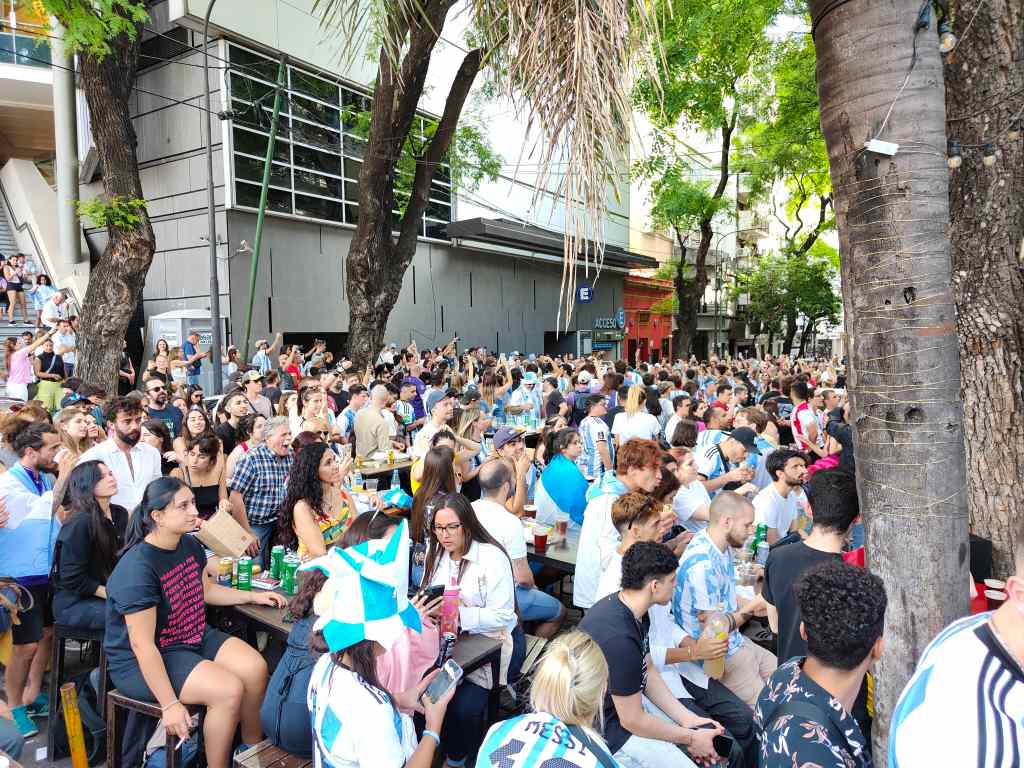
During my stay, this café culture was given a further boost by the football world cup. When Argentina played, those places showing the match would be besieged, whilst the rest of the city ground to a halt.

A bar in Buenos Aires that showed the football
The bar next door, which did not

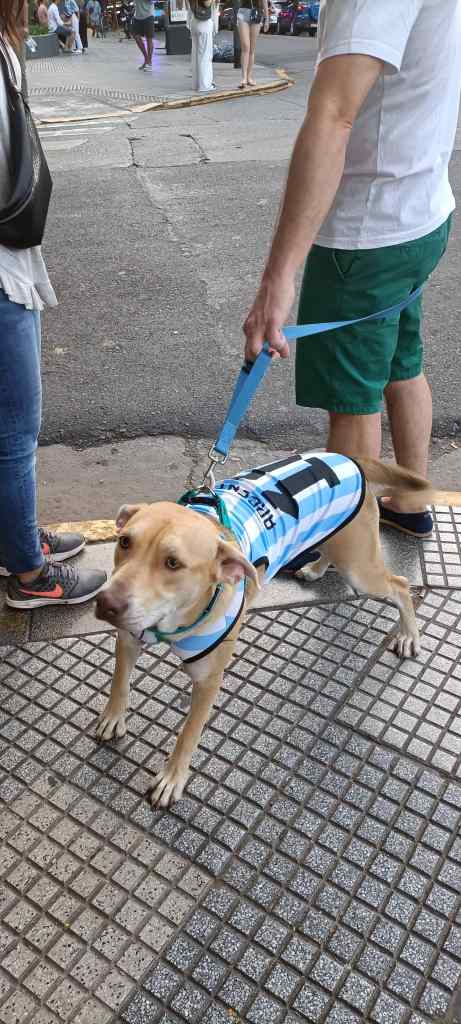
The games that did not involve Argentina were largely ignored. Lots of people wear the football shirt of the national team and everyone (almost literally, I only saw one exception amongst thousands) chooses Messi’s no. 10 shirt (I thought a football team had 11 players?). There were babies and even dogs wearing Messi’s shirt…

“Messi Dog”

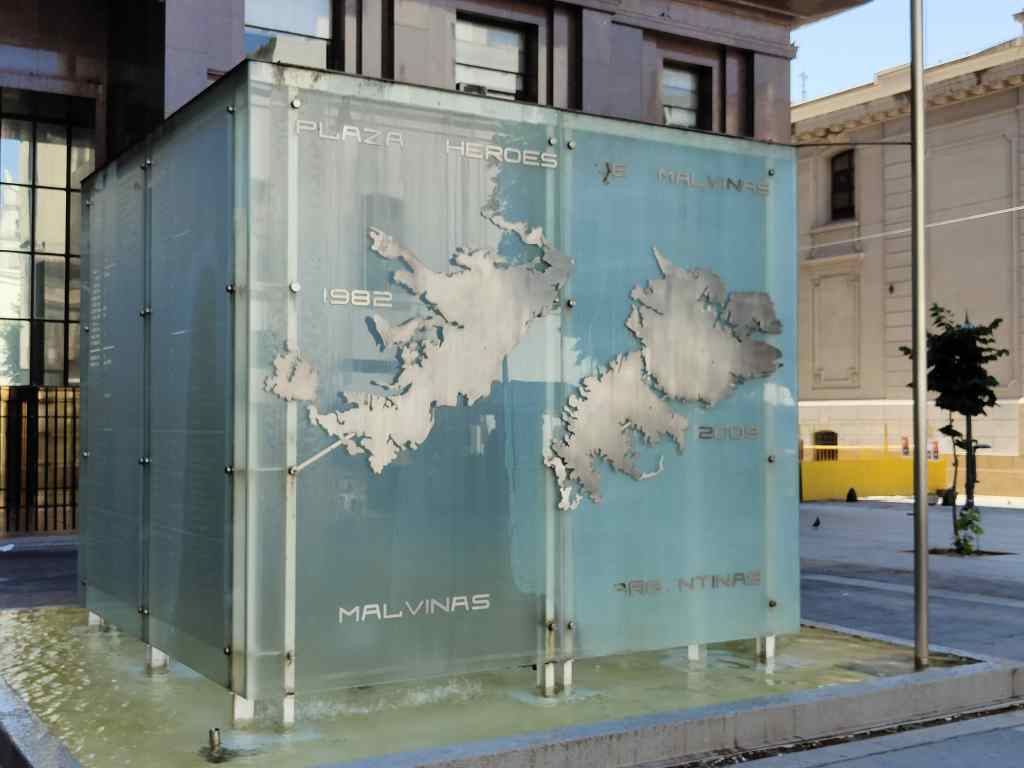
Another striking feature of the city – and Argentina as a whole – is their attachment to the Islas Malvinas, more commonly known as Britain’s Falkland Islands. Argentina lost several hundred soldiers, sailors and airmen in a failed attempt to invade the islands in 1982, and each city has its own square named after the “Heroes of the Malvinas”. Signs everywhere – on public buildings, on buses, in shops – proclaim that “Las Malvinas son Argentinas”.

Buenos Aires’ Plaza of the Heroes of the Malvinas

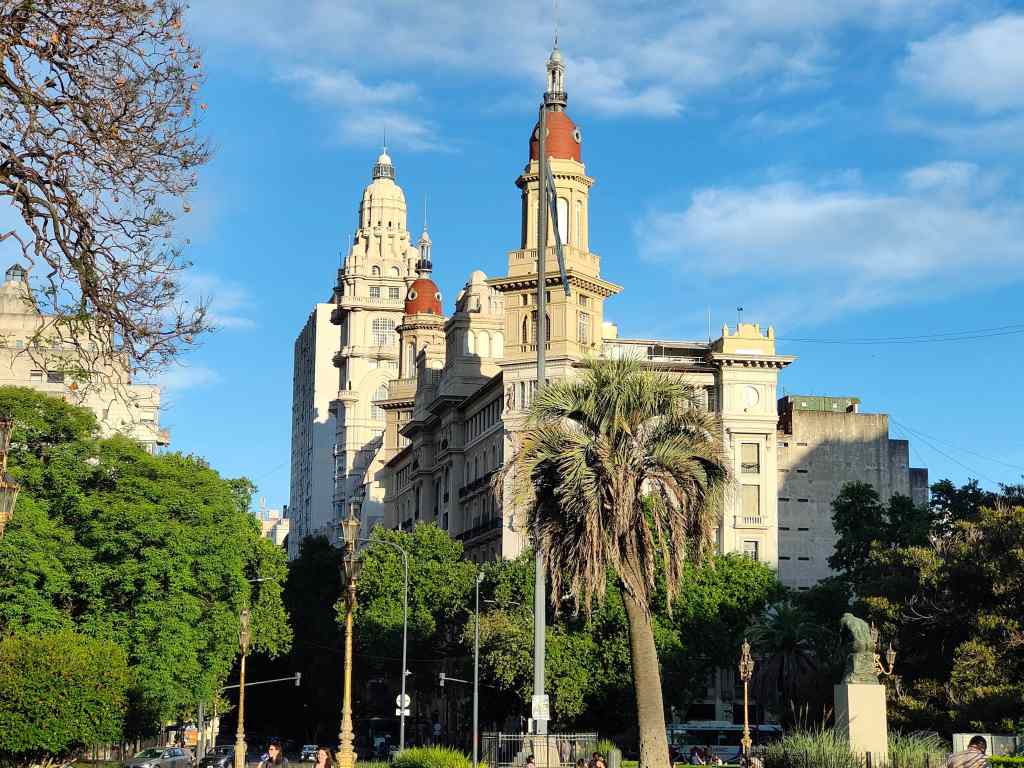
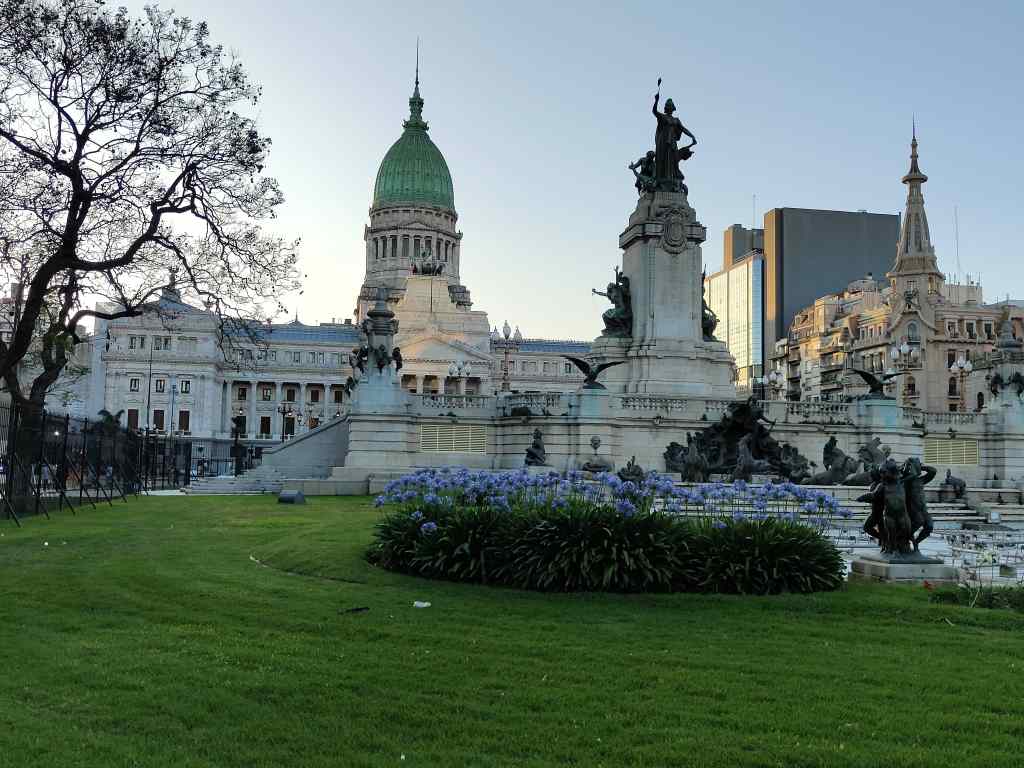
The one thing I failed to properly explore in Buenos Aires was tango. The many tango shows on offer looked very touristy – like the Moulin Rouge in Paris, which I would never consider visiting – so I tried to find a “milonga” or place where ordinary people dance. I found a website listing all the milongas in the city and chose an open air one in front of the Congress building. The dancing was far from the vision of the elegant movement of sexy, well-dressed people I had expected. The few dancers wore jeans and t-shirts and the dance itself reminded me of the exercises they make residents do in old peoples’ homes.  Searching out the “real” tango – if it exists – will need to wait for a future visit. My time wasn’t wasted, since in the evening light I had fine views of two of BA’s most beautiful buildings – the Congress, and the Palacio Barolo.

Palacio Barolo
The Congress Building, Buenos Aires

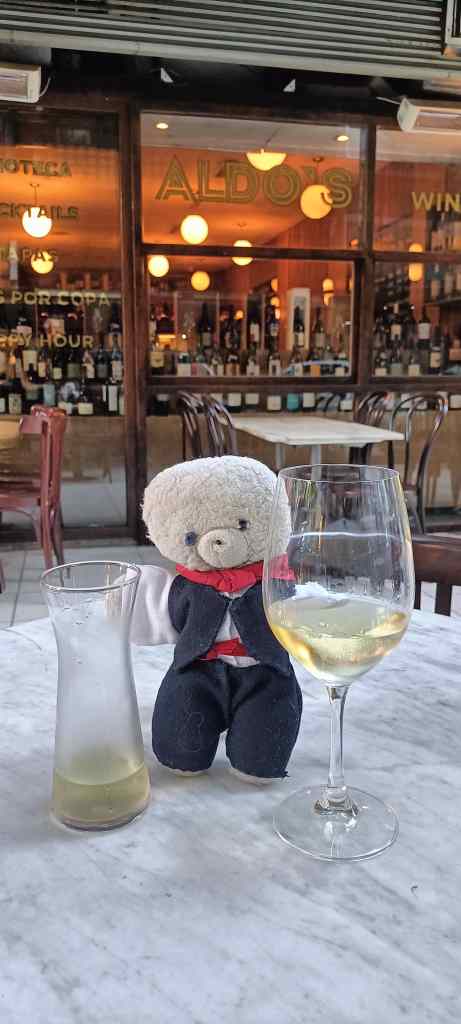
It is now nearly time to go. Here I am sitting at the terrace of Aldo’s wine bar on my last evening with a very good glass of Marsanne – I was sitting at the same terrace almost a month ago at the start of my trip.

Aldo’s Wine Bar, Buenos Aires

What a journey it has been – seven flights, two bus trips across the border with Chile and well over 10,000km travelled to see some of the world’s most spectacular sights. In Buenos Aires it is 30C, sunny and a pint of excellent craft beer costs 2€ (or even less in happy hour). Tomorrow the forecast for London is for a high of 2C and beer costs 6€ a pint. It is rather sad that all of the cold weather clothing I packed for Patagonia is going to be more useful at home. I am not looking forward to going back…I even calculated that I could continue living here in my cheap but excellent flat and save money as compared to living in expensive London. But all good things come to an end…..

That is all for now – next trip is Egypt in February, click the “follow” button at the bottom right of this page if you would like automatic notifications when I post again. My final post of this series will be a “how to” with tips for travelling in Argentina.

Next Post: Top Tips and Highlights for Argentina

Previous Post: Back in Buenos Aires part 1

Back in Buenos Aires – La Recoleta Cemetery, La Boca, San Telmo and Rio de la Plata delta

I ended my trip with four days to enjoy Argentina’s capital, Buenos Aires. Since I was staying a few days, I booked a flat in La Recoleta – a different area, more upmarket than where I stayed before.

Although the flat had a kitchen, I found a very good local restaurant with huge, juicy fillet steak. Eating out was not much more expensive than cooking my own food.

This fillet steak was almost as big as me!

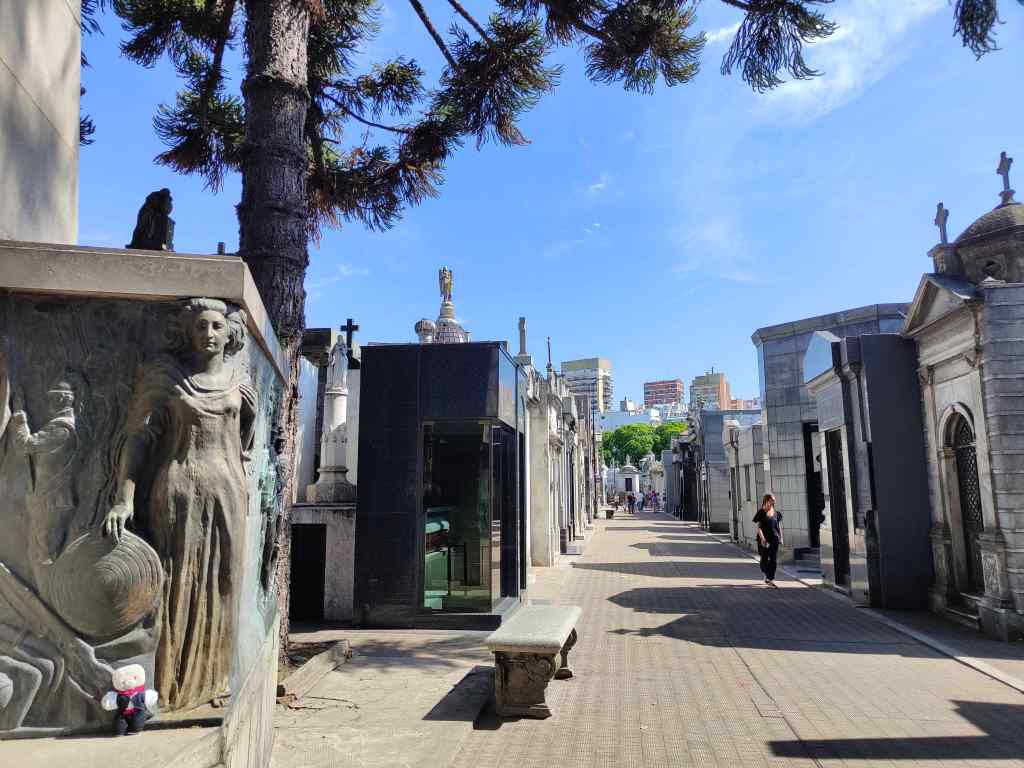
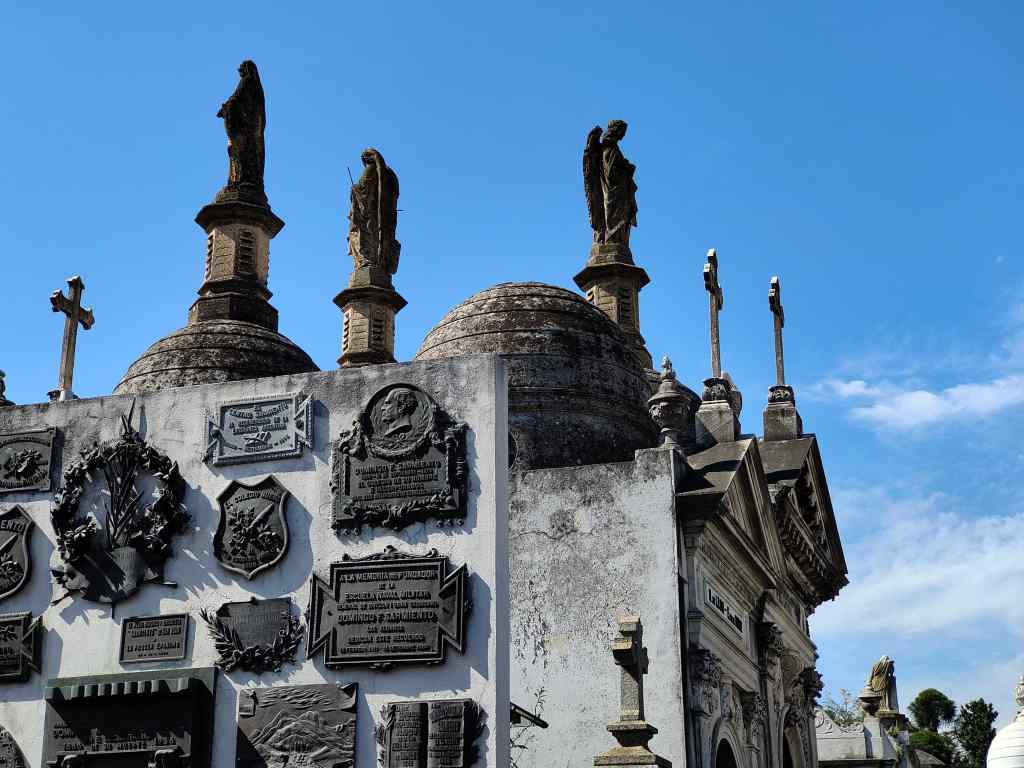
Buenos Aires does not have that many classic tourist sights – I covered the ones recommended in my guidebook in my first two days. My favourite was La Recoleta cemetery, where the great and good (or just rich) of the country are buried. It sits behind a tall wall in one of Buenos Aires’ richest areas, a strange city of death within a city. The many ornate graves make for endless photo opportunities and gave it an eery atmosphere.  They have recently introduced an entrance fee here, and as a result it was pleasantly quiet with few other visitors.

Recoleta Cemetery in Buenos Aires – spooky even during the day
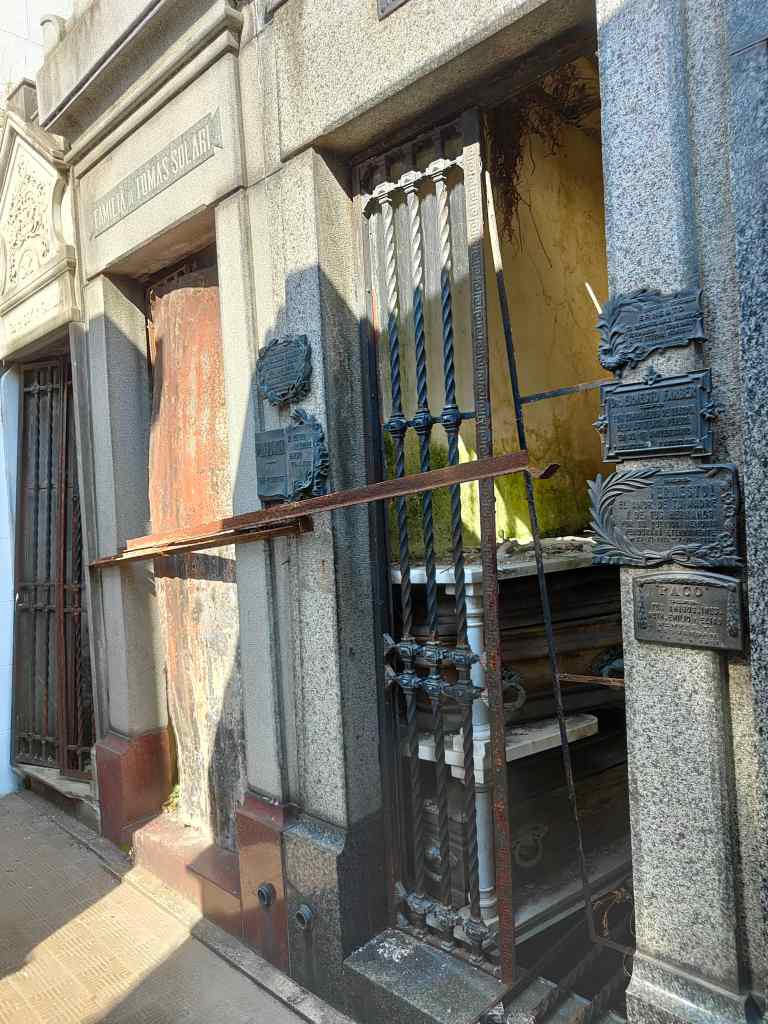
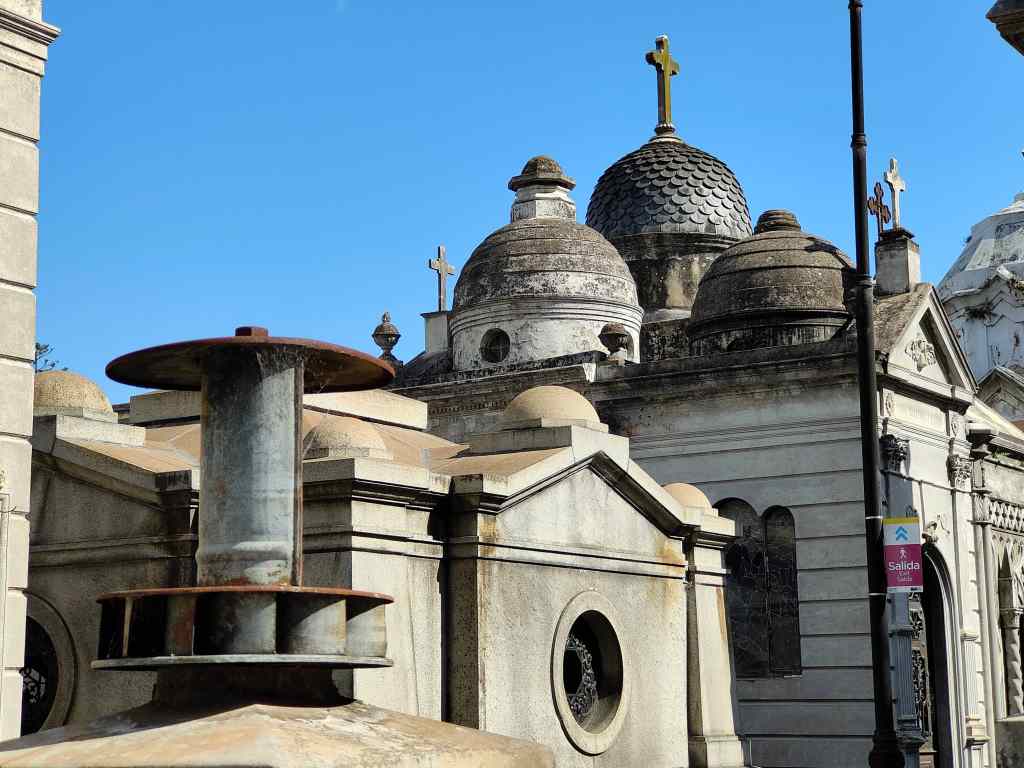
Smart tombs in Recoleta Cemetery
Most tombs are well-maintained, but some are falling into ruin. Eerily, you can see coffins through the glass doors.
The tomb bottom left had ventilation installed….maybe the occupants went to a hot place?

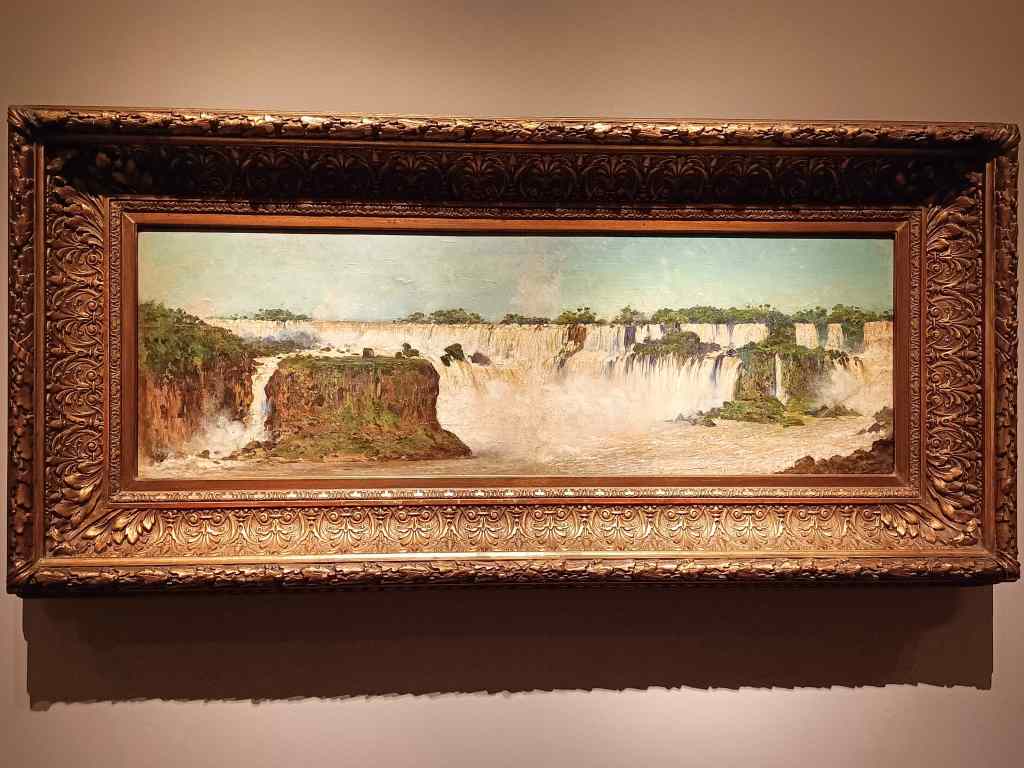
Buenos Aires also has some good museums, like the Museo de Bellas Artes, which has both Argentine and foreign paintings; some of the former reminded me of my epic journey around the country.

Painting of Foz Iguazu in the Museo de Bellas Artes, Buenos Aires
“Without Bread and Without Work”, Museo de Bellas Artes

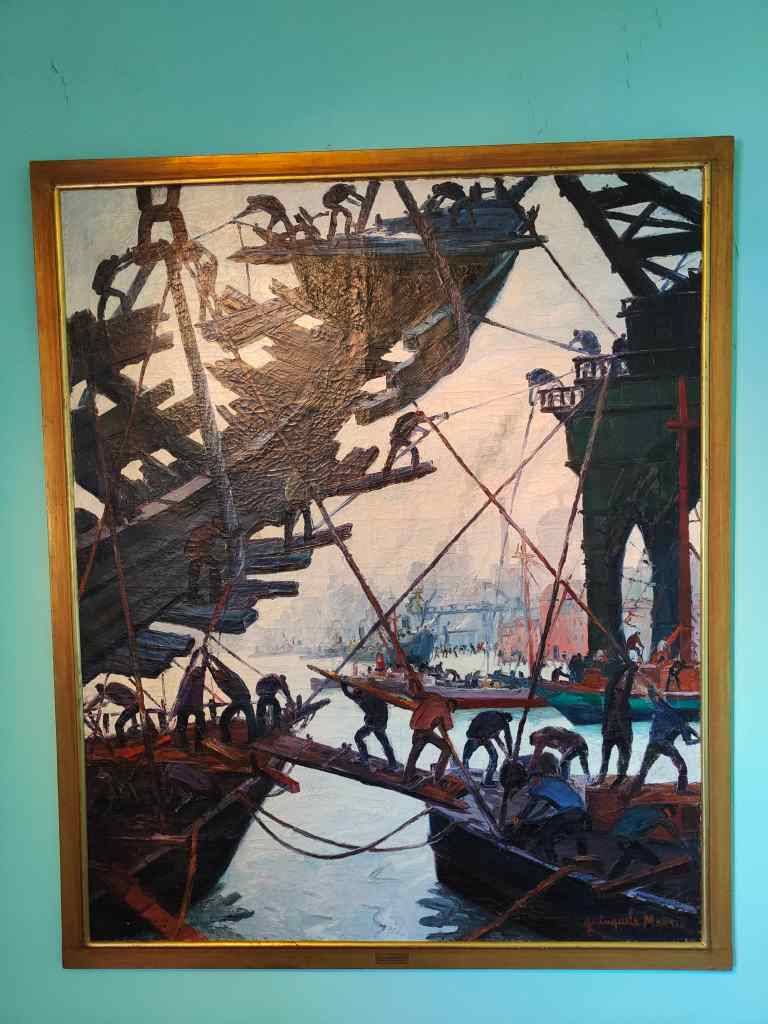
I also liked the Museo Benito Quinquela Martin in a neighbourhood (or “barrio” in Argentine) called La Boca.  Martin specialised in painting the lives of the poor people working in the docks of that area and remains a local hero to this day.

A painting by Benito Quinquela Martin

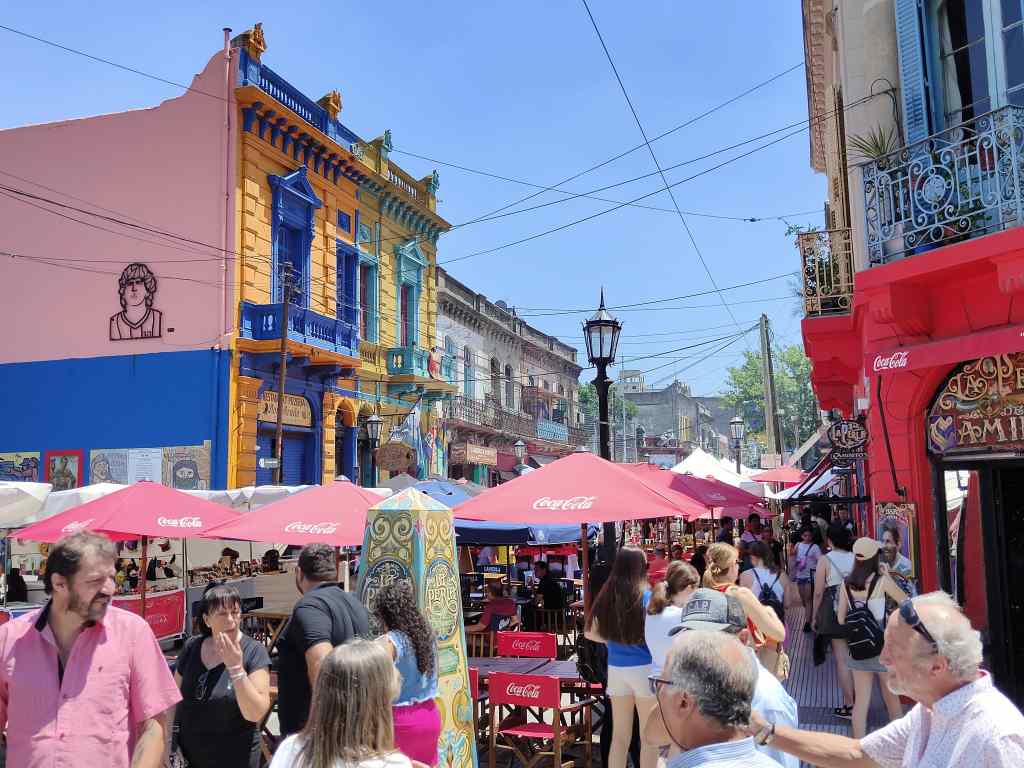
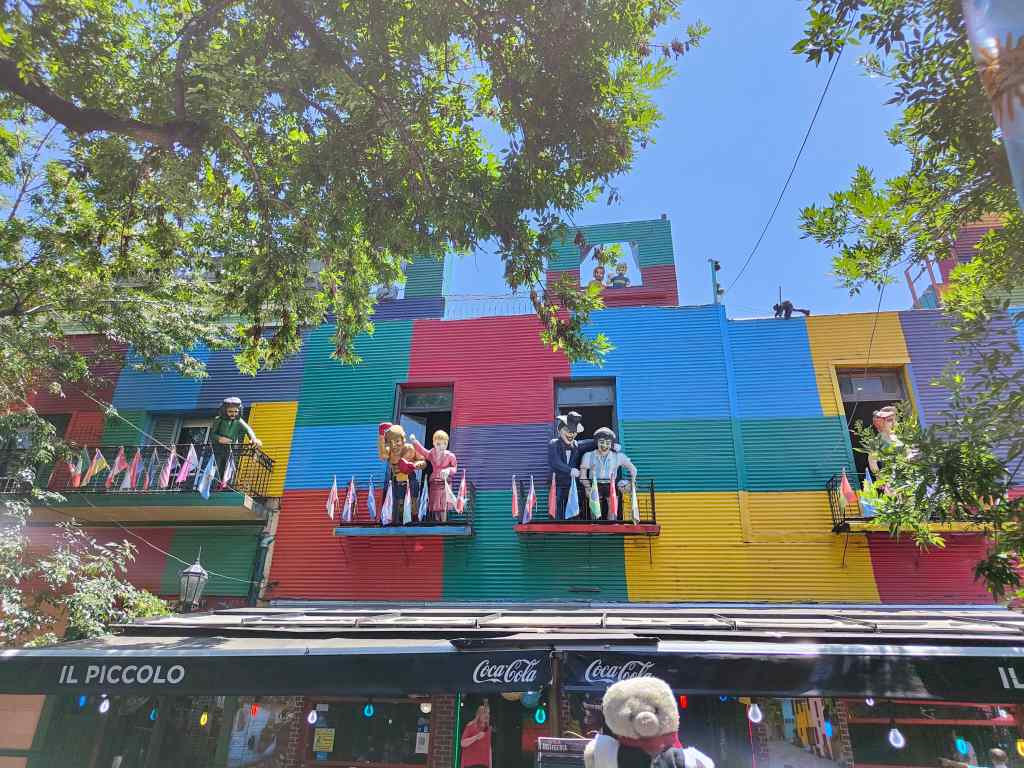
Nowadays, la Boca remains one of BA’s poorest suburbs, although the waterfront has a pretty street called la Caminito, which has brightly coloured houses.  It is very striking, but extremely touristy as well. La Boca is also famous for housing the stadium of the Boca Juniors football club, where Maradona played.

La Boca, Buenos Aires
In the touristy Caminito of La Boca

Another popular area for tourists is San Telmo, BA’s oldest barrio. I went there on Sunday for the famous market, whose stalls spread out for almost a mile to the centre of the city. The ones on the edge of the market sold cheap rubbish aimed at tourists, and I began to think it would be better to visit on a different day when it would be easier to see some of the beautiful older buildings. However, when I reached the heart of San Telmo – the Plaza Dorrego, my opinion changed. The stalls here sold some interesting antiques, and despite the tourist crowds, the square had a wonderful “old-world” atmosphere. I stopped for a while for coffee.

San Telmo Market, Buenos Aires
Plaza Dorrego, San Telmo, market day

Finally, I visited BA’s heart – the Plaza de Mayo, where you can find the Casa Rosada (the presidential palace), the main cathedral, and the “cabildo” or former town hall. This is where Argentines gather to celebrate football victories or demonstrate against the government (both of which they do very often and very energetically).

The heart of Buenos Aires – the Plaza de Mayo and the Casa Rosada

One more place recommended by my guidebook was a nature reserve on the banks of the Rio de la Plata. However, after the spectacular sights I had seen whilst touring the country, it was a disappointment – with more Portenos (residents of central Buenos Aires) noisily enjoying the weekend sun than animal or bird life.  A more successful trip was my visit to Tigre, a small town on the river about 40km northwest of BA. I travelled by boat, and for the first part of the trip got to understand just how big a city BA is.

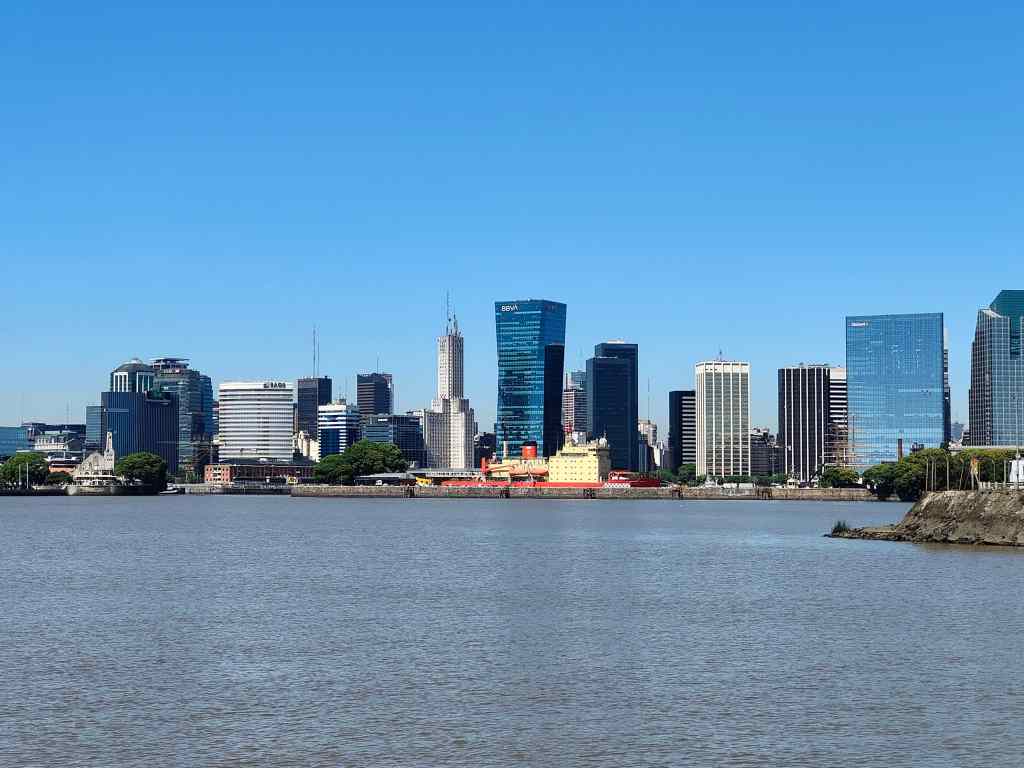
Buenos Aires from the sea

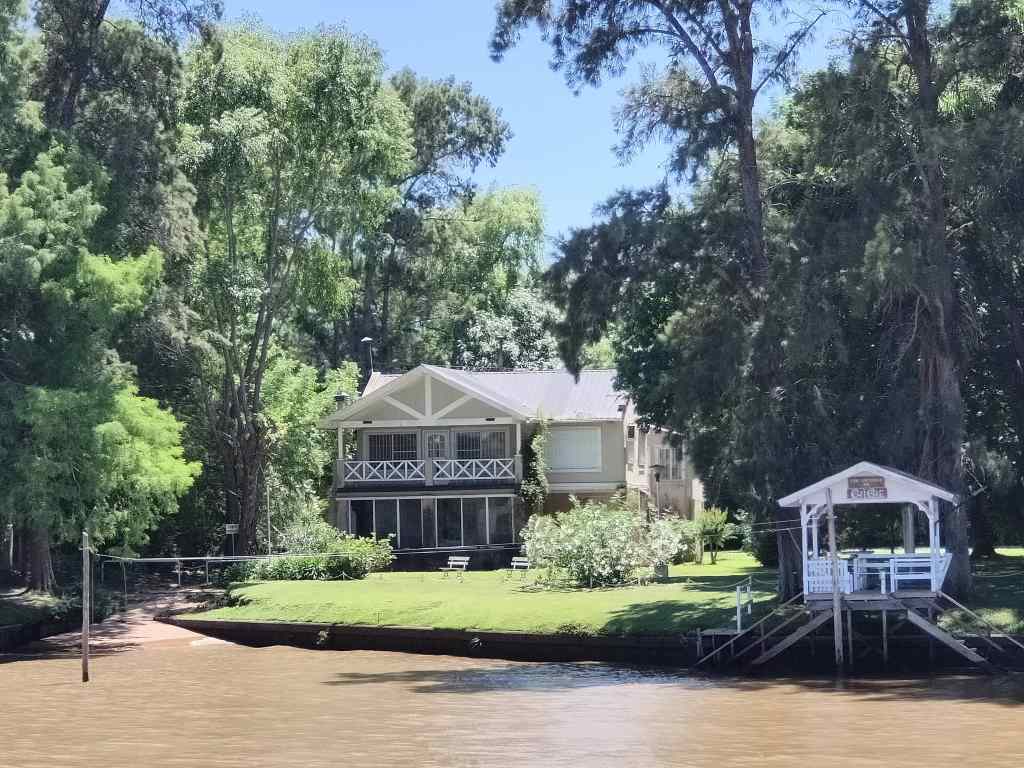
After an hour’s sailing the boat entered the Rio de la Plata delta and the high-rise buildings finally ended, giving way to jungle. The delta (the third largest in the world) is a tangle of smaller rivers making green islands where many BA residents have second homes.  It was a very interesting contrast to Buenos Aires.

One of the many fancy second homes in the Rio de la Plata delta

Most houses are built on stilts, since the area floods often, and there are no roads – people get around by boat.  On the remote islands, the houses are very basic, but in the popular areas they looked luxurious. 

Next Post: Back in Buenos Aires part 2

Previous Post: Foz Iguazu

Water, Water Everywhere – Foz Iguazu

My itinerary next took me to the exact opposite end of the country – Foz Iguazu, on the border with Brazil and Paraguay. It was a long day’s travel to get there, with a change of airport at Buenos Aires. My airline had warned that many people wanted to travel that day and urged me to check in early. When I arrived, I realised that the reason for the warning had nothing to do with the volume of passengers and everything to do with…….el fútbol. All the passengers and many of the staff were watching Argentina beat Poland on a huge screen. As a result, check in was slow but good humoured.

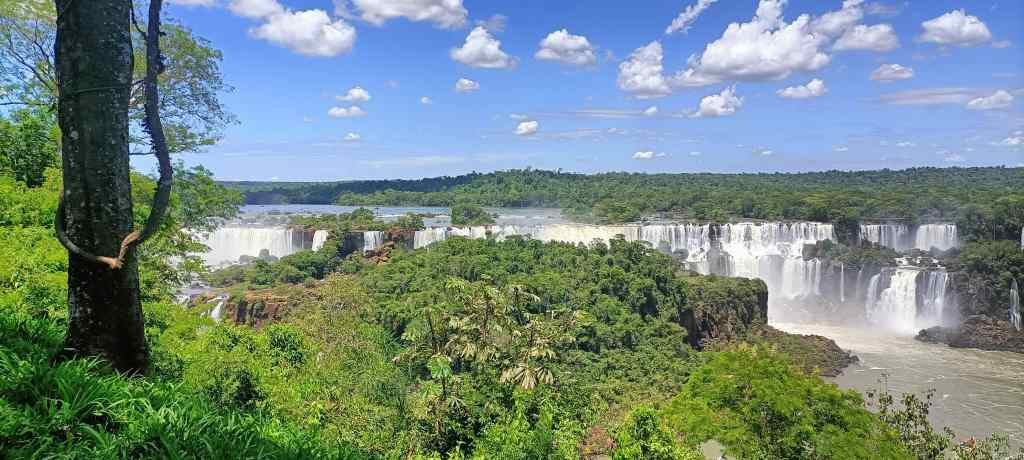
The far north of Argentina was completely different to Patagonia, with lush green jungle and hot, humid weather. I set off to view the famous waterfalls. First I headed to the Brazilian side of the river, where there are the best panoramic views. Crossing the border was quick and easy and soon I was admiring an amazing spectacle. Foz Igauzu is not just one waterfall, but dozens or even hundreds of falls spread out over a few kilometres.

My first view of Foz Iguazu – from the Brazilian side

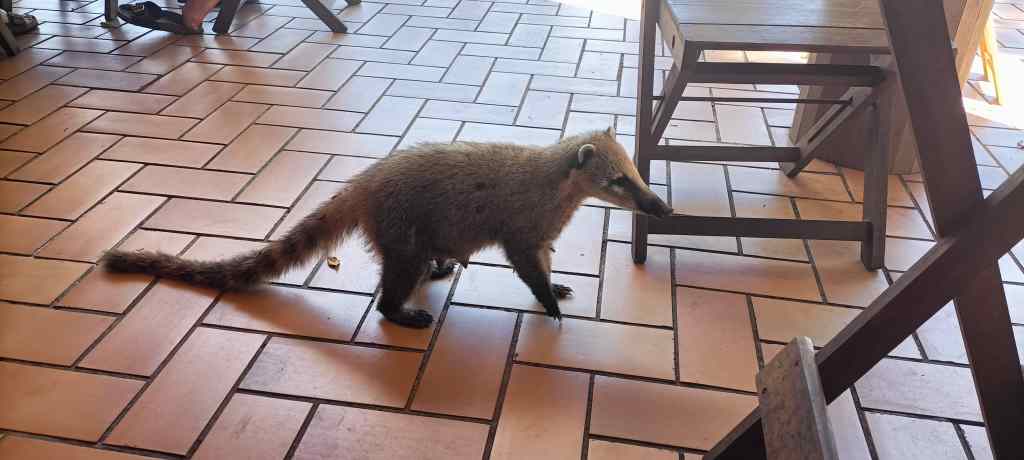
Visitors follow a path running along the river bank, giving a range of views.  After a short walk I stopped for drink, and was met by a small friend (a coati) looking for food.  I had none, which was just as well, since although coatis look cute, they can get aggressive in their search for something to eat.

A hungry Coati at Foz Iguazu

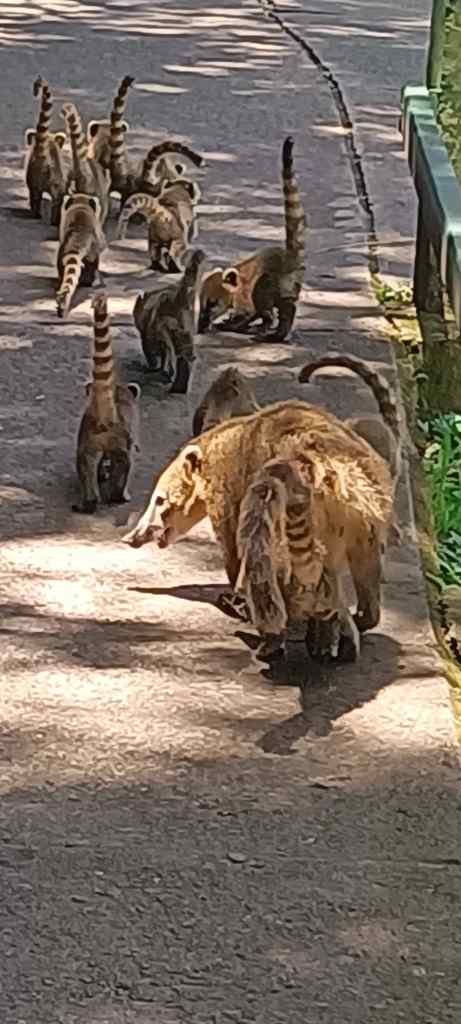
She was probably hungry because she had to feed this lot……..

The path reached the main set of falls on the Brazilian side. There, a walkway led out into the middle of the river to the Garganta del Diablo – the Devil’s throat, probably the most spectacular fall of the lot. The cool spray of water (I was soon soaked), constant roar of water and amazing view into the heart of the falls made for a unique experience.

The Devil’s Throat – Foz Iguazu, Brazilian side
The view from the middle of the river, Foz Iguazu Brazilian side

The next day, I visited the falls from the Argentine side. I set off early to avoid the mid-morning crowds and had the pathway along the “lower circuit” almost entirely to myself. This side of the river offered a very different experience – you could approach the falls more closely along walkways running through pretty jungle. 

Foz Iguazu Argentine Side

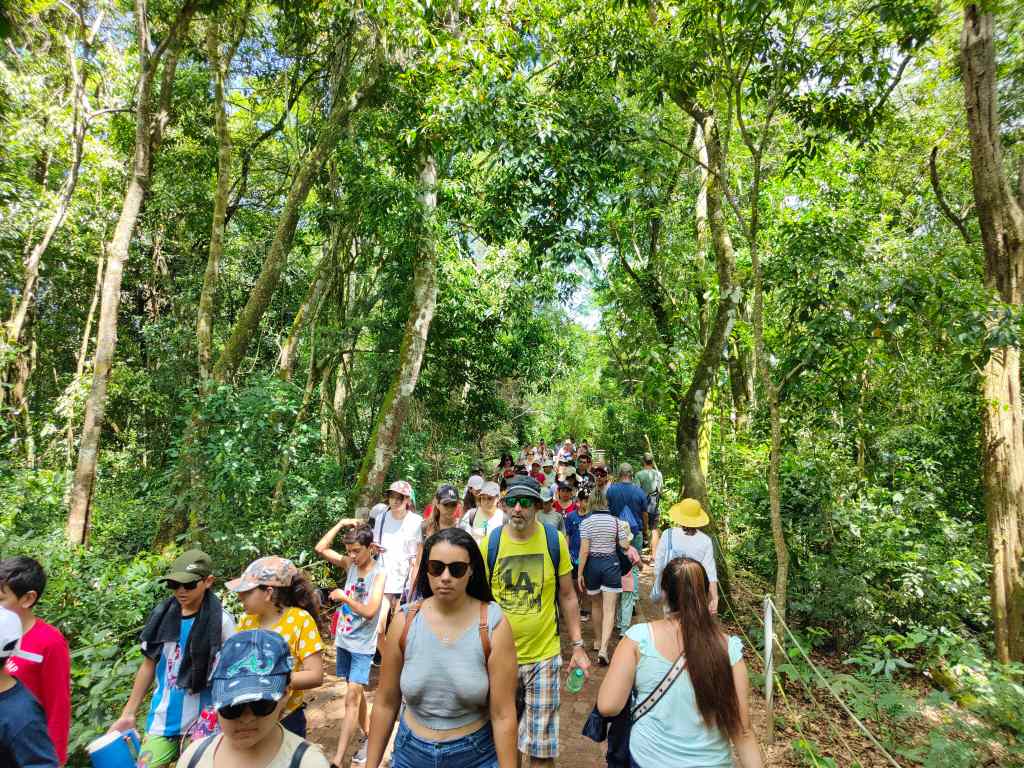
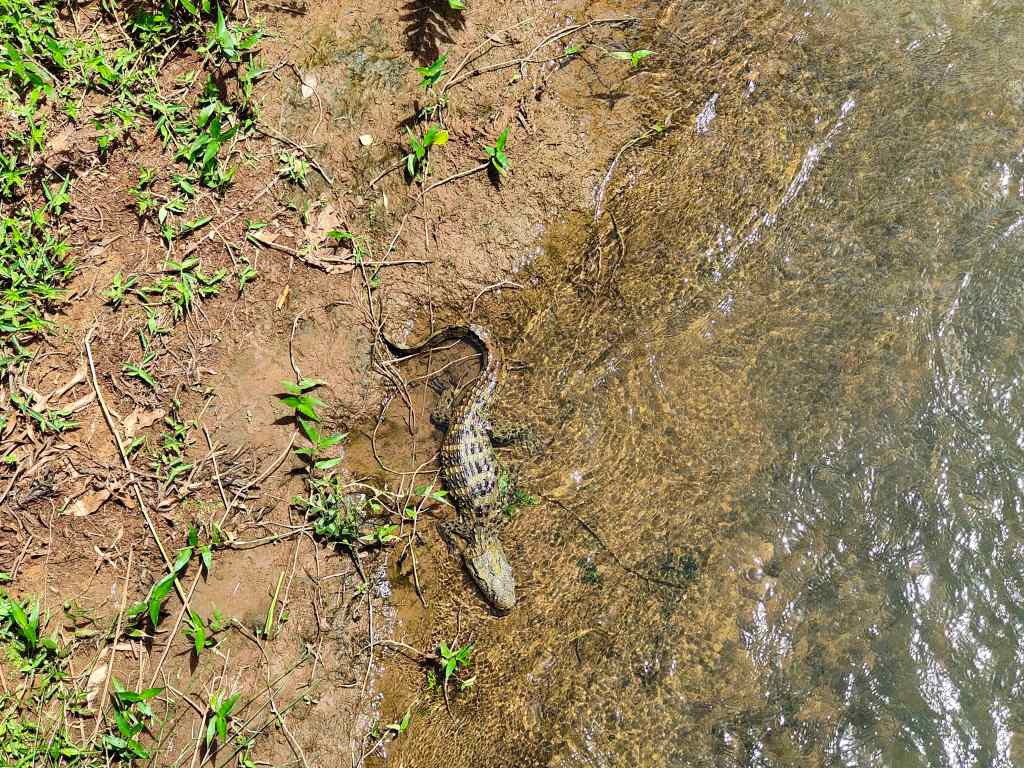
I finished the “lower circuit” just as the first tour groups began to arrive and started the “upper circuit”.  This had more amazing views, but at times was unpleasantly crowded. It was hard for someone small like me to get a view, and when I climbed up onto the railings to take photos, I worried about getting knocked off by tourists jostling to take selfies. The path back from the falls went through some interesting jungle, where I saw a baby crocodile…

Better stick to the paths!
Late morning – rush hour at the Argentine side

After the two classic circuits of the Argentine side, I tried a much less popular short trail through the jungle.  The signs at the start promised of the possibility of seeing monkeys and toucans, and gave advice about what to do if I encountered a puma or a jaguar. This raised my expectations, but sadly I saw only some birds, huge butterflies and giant ants.

Helpful advice for my readers
On one of the jungle trails at Foz Iguazu

The short hike took me about an hour, and it was now one o’clock. I had “done” everything and thought about going back to my hotel, but instead went back to try the upper circuit again. Maybe all those tour groups had a lunch break? I had guessed right – in the heat of the early afternoon, I had the upper circuit almost to myself and could now focus on taking pictures without being jostled.

Foz Iguazu Argentine Side

An added bonus was that the early afternoon sun made rainbows at many of the waterfalls

Foz Iguazu Argentine Side – rainbow

The second visit to the upper circuit was a great way to end my visit to Foz Iguazu, which is one of the wonders of the world – a destination truly at the end of the rainbow.

Next Post: Back in Buenos Aires part 1

Previous Post: El Calafate and Glacier Perito Moreno

El Calafate and Glacier Perito Moreno

Today, I had originally planned to do a short hike and then drive back to El Calafate. But the weather forecast was poor, and every trail had a minimum distance of 16km. Instead, I left early, reached El Calafate at noon, and after checking into my hotel drove to see one of Patagonia’s other highlights – the Perito Moreno Glacier. It was located 80km west of the town and I got there in the early afternoon. From the car park, there was the option of a shuttle bus to the main glacier or a path running along the side of a lake.

I chose the path and was very lucky – the weather had been cloudy and dull, but as soon as I set off, the sun came out. I turned a corner to be greeted with an amazing view of a blue wall of ice gleaming in the afternoon sun.

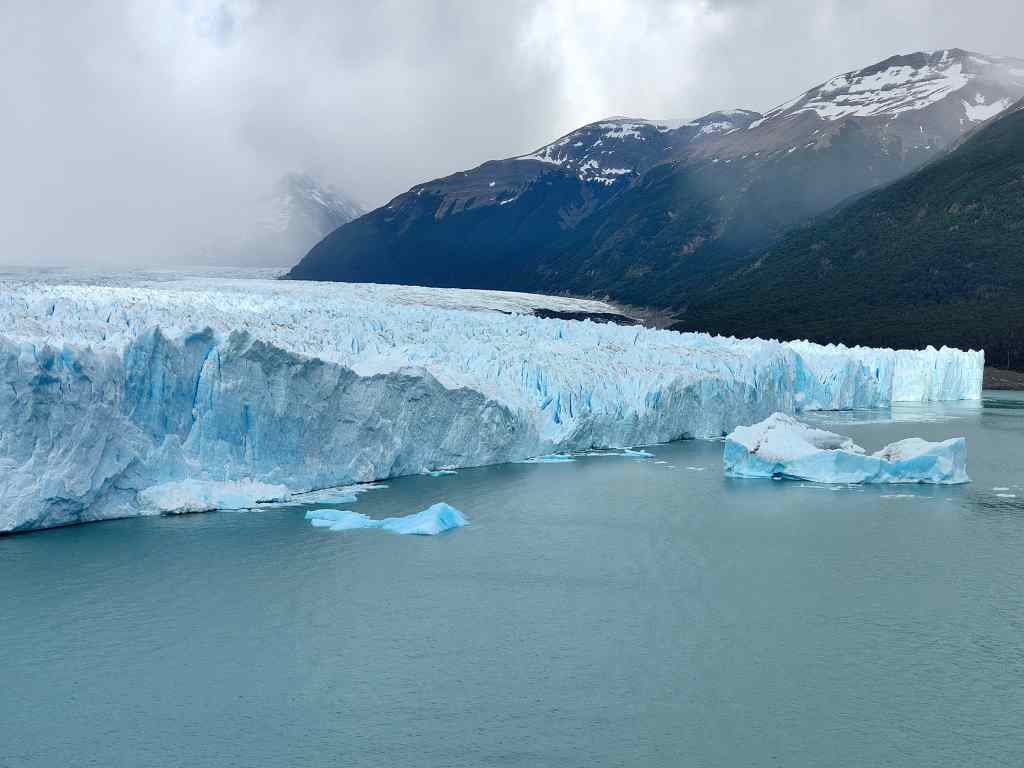
First glimpse of Perito Moreno Glacier – a wall of blue ice

The path – on a raised walkway made of metal – brought me closer and closer to this incredible sight. There were frequent viewing platforms, each giving a slightly different perspective.

As you get closer, Perito Moreno is more and more impressive

The park has several trails, all on walkways. Most visitors seemed to stay on the “yellow” path, where the shuttle bus drops them off. This left the more remote blue and red paths nearly empty, and I spent several hours exploring and taking photographs. 

Up close to Perito Moreno
Wall of Ice – Perito Moreno

From time to time there was a cracking sound as the ice blocks in the glacier moved. The ice advances about 2 metres per day. Fresh ice from the mountains pushes the older ice further down the valley, until it reaches the lake where the warmth of the sun and the water causes it to fracture and break off (“calving”) as small icebergs. I saw – but was too slow to film – some smaller pieces of ice break off and crash into the lake below, with an impressively loud splash.

After a few hours, the clouds returned, and it started to rain lightly – although the Patagonian winds always mean that even light rain always turns into something much more unpleasant. The temperature dropped abruptly. It is hard to dress properly for the weather in Patagonia. When the sun is out, with no wind, it is hot.  When it is windy and sunny, it is cold. When it is cloudy and windy, it is very cold. And when it is windy and raining, it is unpleasantly freezing. 

It was time to leave for today, but I returned on the following day to see the glacier in the morning light.  The views were even better…….

Perito Moreno on Day 2
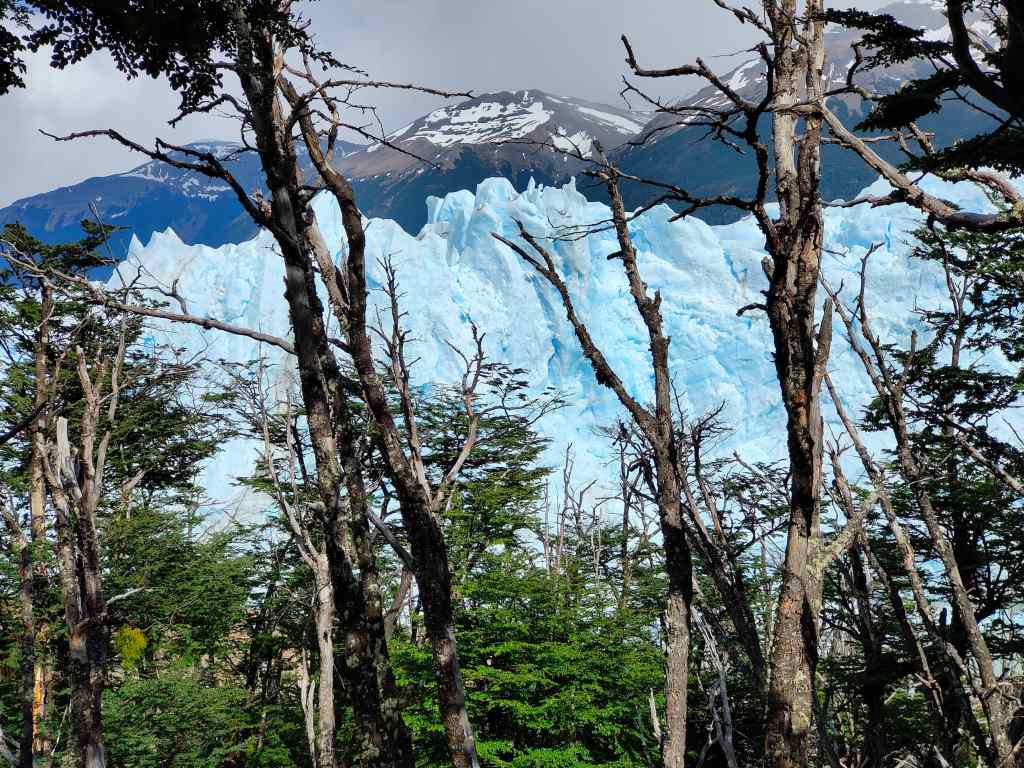
Perito Moreno seen through a forest
More stunning views of the glacier…the morning this time

I noticed that all the ice formations I had noticed the day before had disappeared, to be replaced by new ones. A couple of large icebergs floated in the lake – calving events that must have happened after I had left the day before.

An iceberg that had formed overnight

I found a platform on the “red” trail in front of some rickety-looking ice structures and sat and waited, hoping for a big chunk of ice to fall for me. But my ice remained annoyingly solid, and my patience eventually ran out. I headed back to my car, having spent a total of six hours looking and filming the ice over two half-days. Back in my hotel I admired the hundreds of photos I had taken and started the difficult job of sorting them, before strolling around El Calafate. It was a very pleasant small town, fully dedicated to serving the many tourists that come to visit Patagonia. I had dinner in a craft beer brewery with more excellent Argentine beer and a burger.

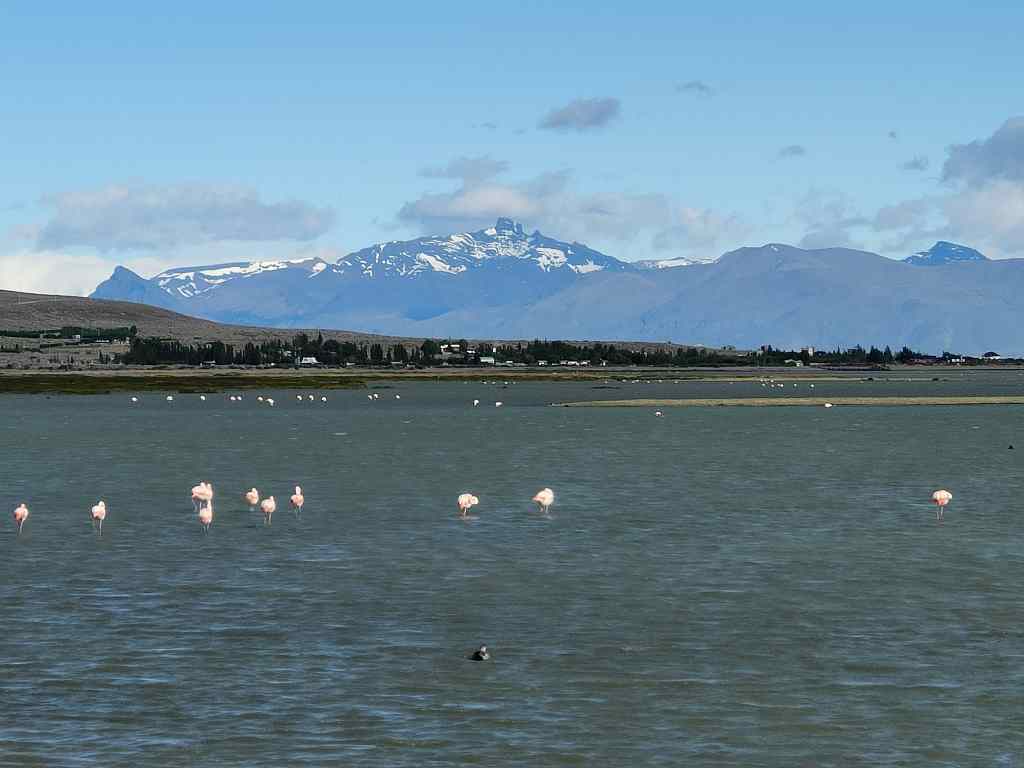
My stay in Patagonia had two last twists. On the way to the airport the next morning I was greeted by a very unexpected sight.

? Surely not….
Yes! Flamingos on Lake Argentina in Calafate

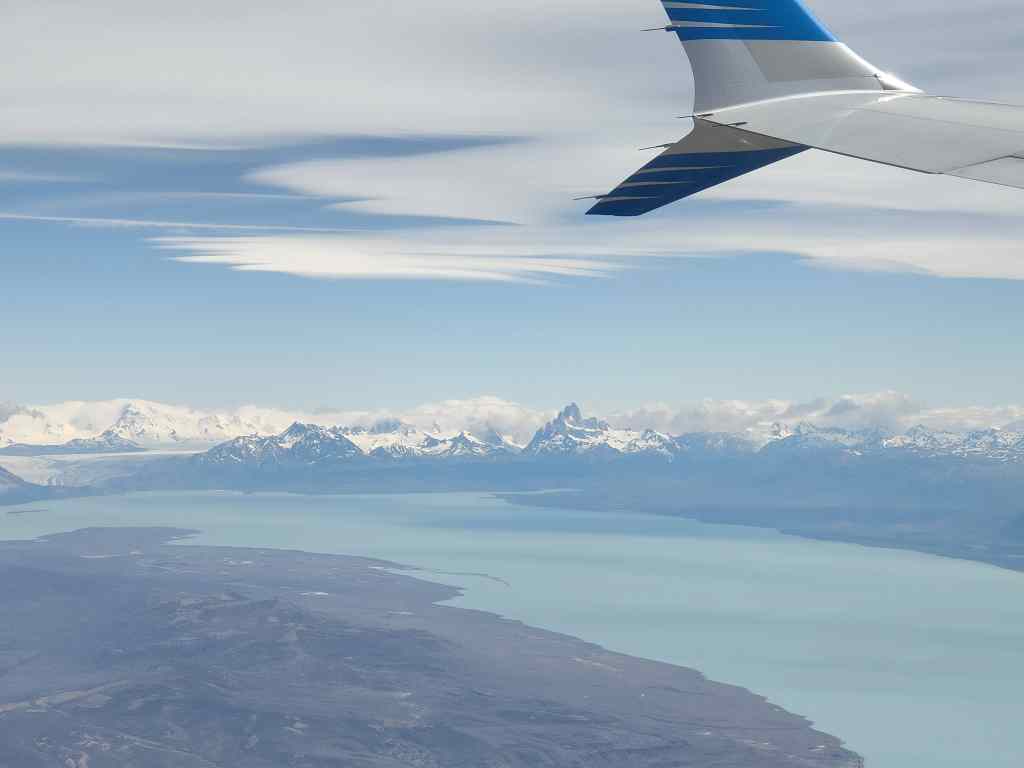
I reached the airport, boarded my plane, and was treated to one last view of Mount Fitz Roy as we took off….

View of Mount Fitzroy

I left Patagonia with a heavy heart. It was incredibly beautiful, with three world-class sights within close proximity of each other – Torres del Paine, Mount Fitz Roy and Perito Moreno. The town of Calafate is named after a blue berry found in the area. Legend has it that if you taste the calafate berry, you will return to Patagonia. I had tried a “Pisco Calafate” cocktail one night. I think the legend might be right.

Next Post: Foz Iguazu

Previous Post: Mount Fitzroy and El Chalten

El Chalten and Monte Fitz Roy – one of the world’s greatest hikes

Today I crossed the border by bus back into Argentina.

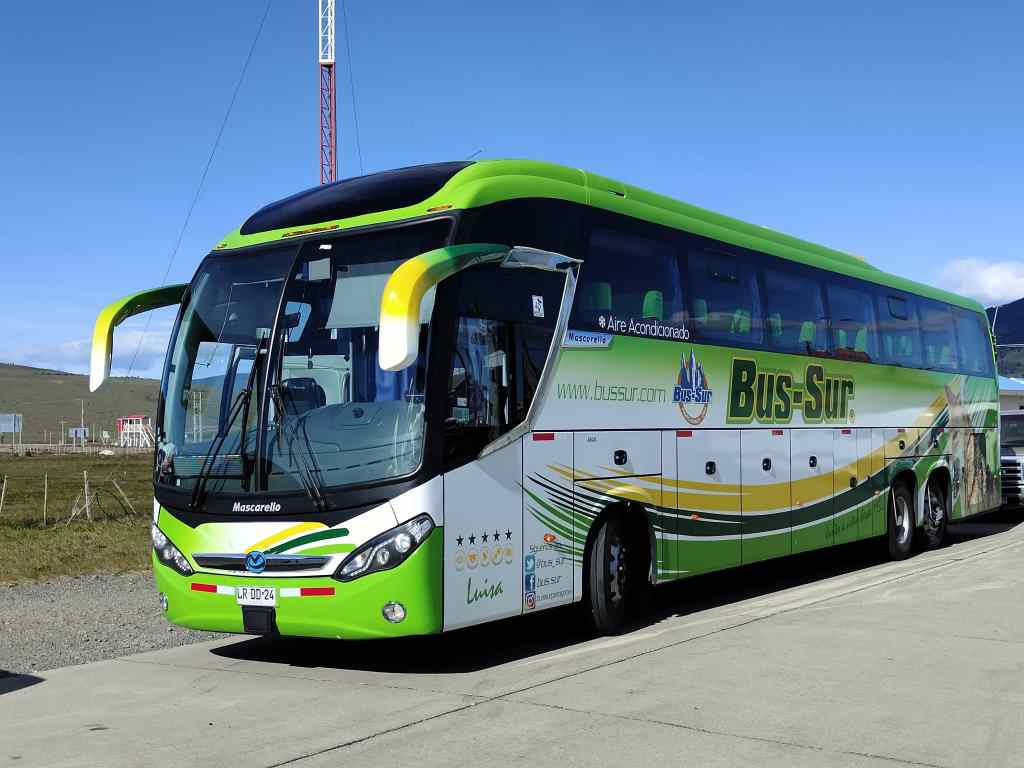
Bus travel in Latin America is comfortable and convenient – at least for a five-to-six-hour trip like this one.  I took some last photos of Chilean Patagonia from my window.

A last view of Chilean Patagonia

Across the border in Argentina, the landscape was quite different – dry and initially flat. We arrived at the small town of El Calafate (more about this in a future blog), where I collected my hire car and headed off to the village of El Chalten, 250km away.

On the RN40 heading north

The road was perfect. Straight, surfaced, and scenic. It ran alongside pretty blue lakes with mountains far in the distance. At first my old friend RN40, took me north. Then after 150km I turned off to the west.  It was strangely quiet, and I crossed very few other vehicles. The road stretched away into the distance, straight like an arrow, and pointing at some magnificent mountains.

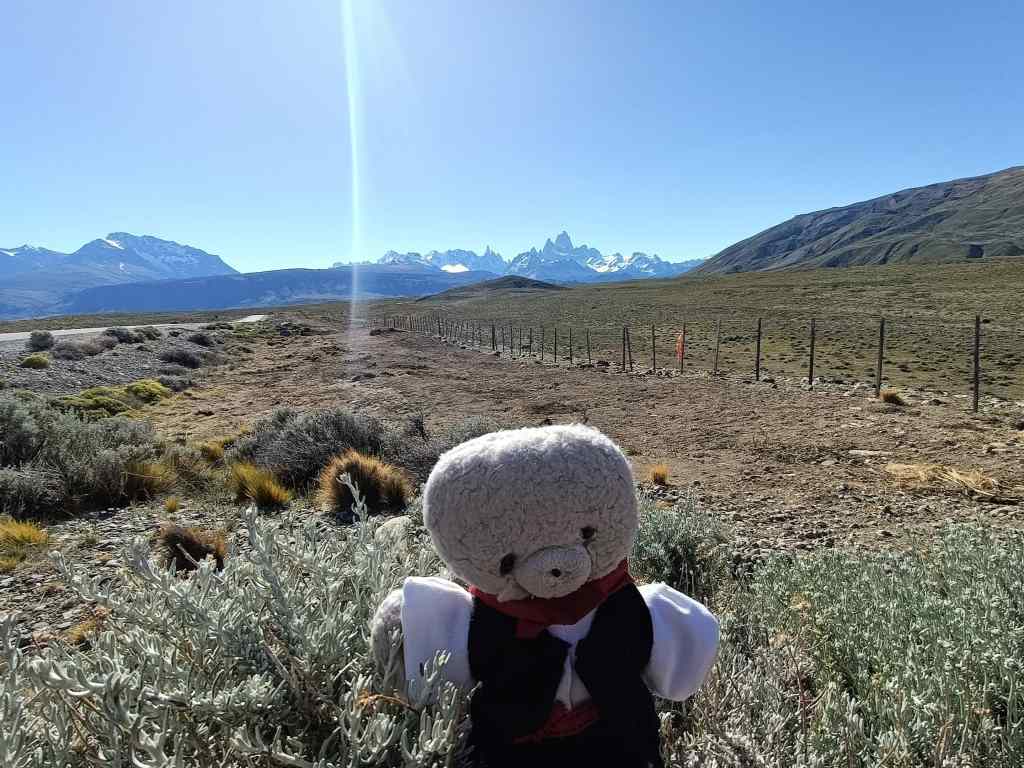
The Fitz Roy range appears ahead, small at first…

The Fitz Roy range in front of me would be the focus of my two days in El Chalten. I entered the Parque Nacional de los Glaciares, one of Argentina’s biggest natural parks.

…then larger…entry to Parque Nacional los Glaciares

As I sped along, the Fitz Roy range grew larger and larger.

….Fitz Roy larger again…this time with El Chalten in the background

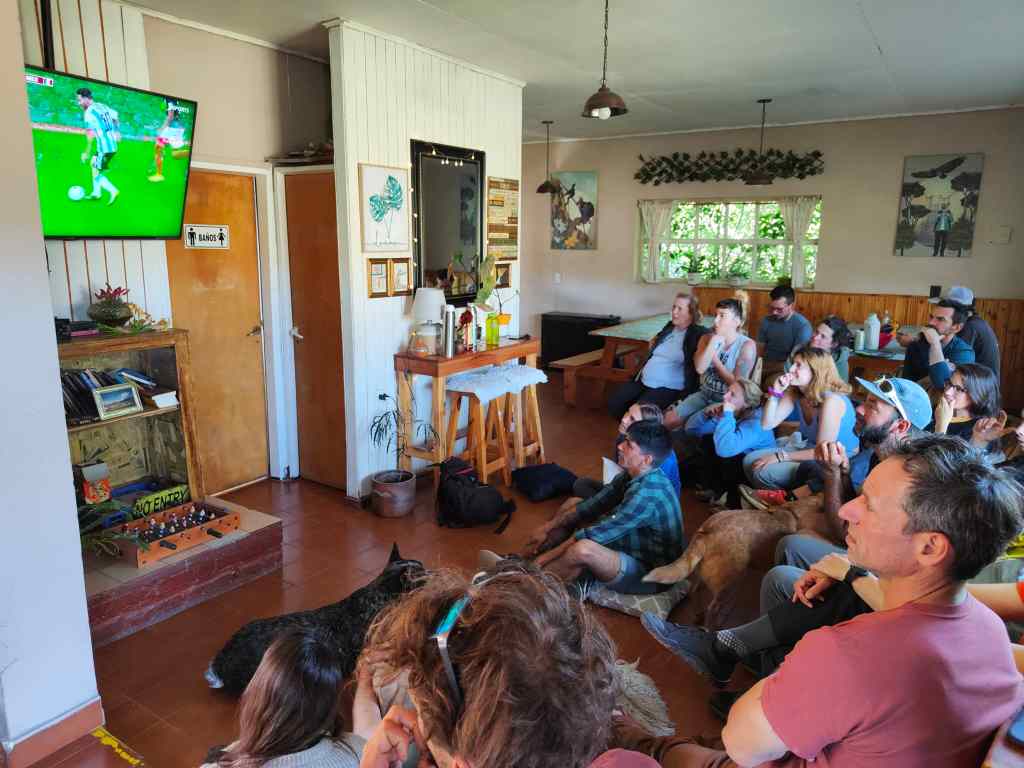
The village of El Chalten itself nestled in a pretty valley, at the foot of the mountains. I liked the place – there was fresh mountain air, amazing scenery and lots of small hostels, shops and restaurants – a typical hiker centre. But it was still very eerily quiet when I arrived at my hostel. I opened the car door and suddenly, from inside the building, there was an eruption of shouting. At first, I thought that there was a violent dispute, but then I realised the voices were happy. Someone emerged from the hostel and shouted “GOOOOOOOOL”.  Argentina had just scored their second goal in their world cup match against Mexico, and thereby avoid elimination at the group stages.

Argentina’s national passion

Inside the hostel everyone was glued to the television. The owner gestured to me that she would be free in five minutes, when the match ended. Nothing is more important in Argentina than football. The match ended, I checked in and set off to explore the town, which was now humming with people celebrating Argentina’s win. Pedestrians hugged each other whilst cars hooted their horns. Two pick-up trucks drove around, carrying groups of flag-waving children. It took an hour for the town to calm down again.

I had a very good dinner, before settling down for a sound night’s sleep ahead of hard day’s walking – the famous hike to Mount Fitz Roy. I set off at eight along an easy, gently sloping trail. The views of the mountain in front of me – a sight I had now seen for 90km since I turned off the RN40 – became more and more impressive.

Ftiz Roy gets bigger again….
…and again…

The path passed through woods and then a pretty river valley before reaching a steep slope. A sign said that the final km would involve a climb of 400m, take an hour, and should only be attempted by fit hikers. It was hard going, made harder by a discouraging sign reached after 40 minutes, which said that there was still one hour to go. The climb was worth it; when I reached the last ridge, a view opened of Mount Fitz Roy right in front of me, with a brilliant blue, partially ice-covered lake at its foot. It was one of the most stunning mountain sights I had ever seen, and I stayed there enjoying it for over an hour.

The glacial lake below the summit of Fitz Roy
The magnificent view at the end of the hike

It was finally time to head back. If the way up was hard on the muscles, the way down was hard on the knees, but it offered a different set of views, this time of the valley spreading out from the mountain’s base.

On the way down…the valley
More Fitz Roy valley views
Tired legs but home is in sight – El Chalten

I made it back to hostel six hours after I had set off, and was tired after a 20km round trip. But it was one of the most memorable hikes I had ever done.

After a shower and a snooze, I rewarded myself with a steak and good bottle of red wine in a restaurant – a good way to end a memorable day.

Next Post: El Calafate and Perito Moreno

Previous Post: Torres del Paine, Chile

Into Chile – Puerto Varas

Next, my itinerary took me across the border to Chile. The 5-hour bus ride went over a mountain pass and then down to the Chilean immigration post.

At the Chilean border post

Passport checks were quick, but Chilean customs controls were slow. They involved making an online declaration and then a search of every baggage item for fruit, meat and dairy products. Workers with rubber gloves opened suspect bags and confiscated apples and bananas from some members of our group, shaking their heads and taking photos of their passports and incorrectly completed customs declarations. The road then descended to a flat, verdant plane with farms and cows. I could have been back home in England if were not for the two snow-capped volcanos – Osorno and Calbuco – in the distance. Puerto Varas turned out to be a very pleasant town – nicer than Bariloche – with cute wooden houses, many constructed by a wave of German immigrants in the 1850s and 60s.  The Germans were welcomed by the fledgling independent Chilean state with a free plot of land and cattle. Even today, the German influence is strongly present in many ways – like the name of my hotel, “Dein Haus”. My room was brilliant, with a panoramic view of the lake and the volcanoes in the distance.

The view of Lake Llanquihe and Calbuco Volcano from my room

It was now late, so I unpacked and headed out into town for dinner in a German “Bierstube”. Like Bariloche, there was good excellent locally brewed craft beer in Puerto Varas, but the prices for food and drink were double what I had got used to paying in Argentina – similar to European prices. The next morning, my view of the volcanoes had disappeared behind cloud and mist, and it was raining. I should have realised that with landscapes this green, it must rain a lot, but after two weeks of continuous sun in Argentina I had forgotten that it could rain and stopped checking the weather forecast. I logged on to my computer and was distressed to see that rain and cloud was forecast for the next two days in Puerto Varas, and after that for the two days I would be spending further south in Puerto Natales. I set off all the same to explore the region and was rewarded when, contrary to expectations, the clouds lifted and the sun came out. The views of volcano Osorno became more and more impressive, and I took a side road to climb up to its summit.

Osorno from a distance….
… and a bit closer…
On the road climbing the endlessly photogenic Osorno volcano

A short walk from the car park was a place offering amazing views over the Andes and back towards Argentine.

The view from the top of Osorno back towards the Argentine border

Next, I decided to drive a less well-known route, making a big loop to the south through the town of Puelo.  The scenery was nice….

…….but the surfaced road turned into a dirt track, and my progress was much slower than I expected. I also had to take a ferry and then drive through the city of Puerto Montt, the regional capital, which turned out to be large, sprawling, ugly and choked with traffic jams.  I got home late and tired, and resolved to take it easier the next day (as I had often done before).

On the following day it was cloudy, and in the morning I spent a pleasant couple of hours exploring the wooden houses of Puerto Varas.

Wooden houses in Puerto Varas, dating from the first settlers
My favourite – this church near Puerto Varas looks like it has sunk into the ground

Photographing the town was made more difficult by the ubiquitous and ugly black cables hanging everywhere – this had been a feature of many of the places I had visited so far, and I was puzzled as to why so many were needed. I pondered this question whilst trying the traditional German “Kaffee und Kuchen”. 

Downtown Puerto Varas – Why so many cables?
Kaffee und Kuchen – a local tradition borrowed from Germany and popular in Puerto Varas

In the afternoon I made a short drive to the Lago de Todos los Santos, one of the most famous sites in the area, but in the cloudy weather the views, whilst still pretty, were less spectacular than the day before.

On the way to the Lago de Todos los Santos

I headed back to my hotel to rest for a bit and then had dinner. I had a big day of me ahead – the trip down to Puerto Natales in the far south of Chile.

Next Post: Puerto Natales and Torres del Paine

Previous Post: Bariloche

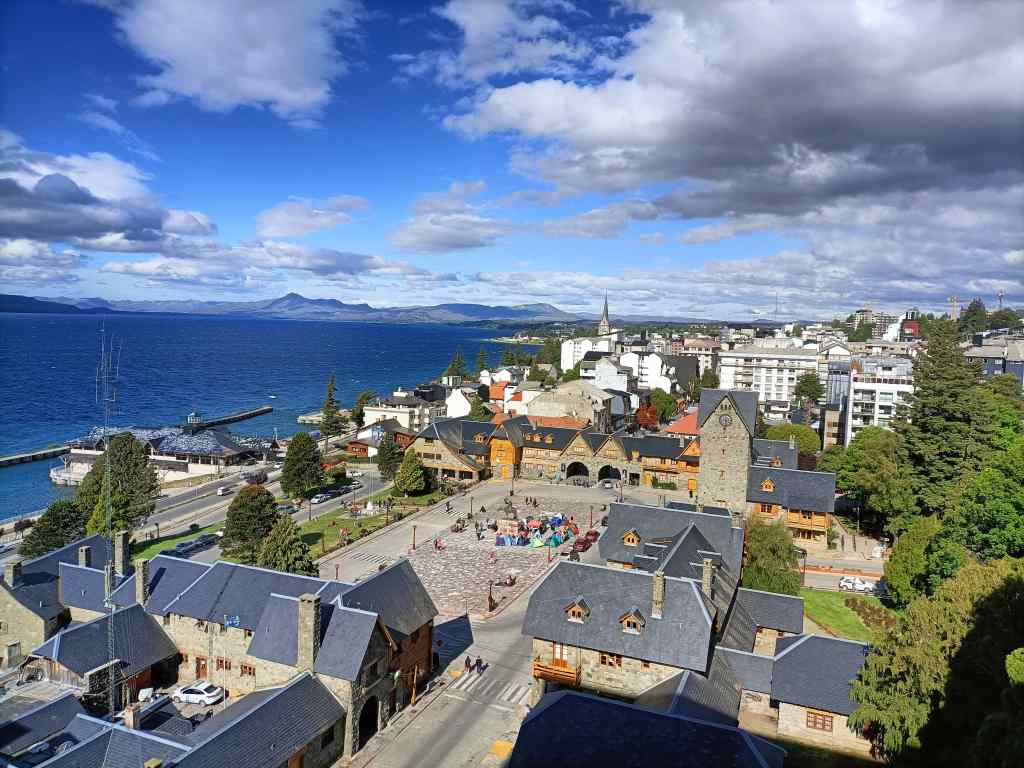
Bariloche – The Seven Lakes, Circuito Chico and Unexpected Problems

From Mendoza I flew to Bariloche, in Argentina’s lake district.  The town itself turned out to be an odd mixture of Alpine-style chalets and ugly concrete buildings. I had booked an AirBNB rather than a hotel because my clothes badly needed washing after ten days on the road. My flat turned out to be in the ugliest, most decrepit modern block in town. After checking in, I nervously checked the location of the fire exits, but at least it was very central and had a nice view of the lake. 

The view from my flat in Bariloche – better to be inside looking out, then outside looking at my building

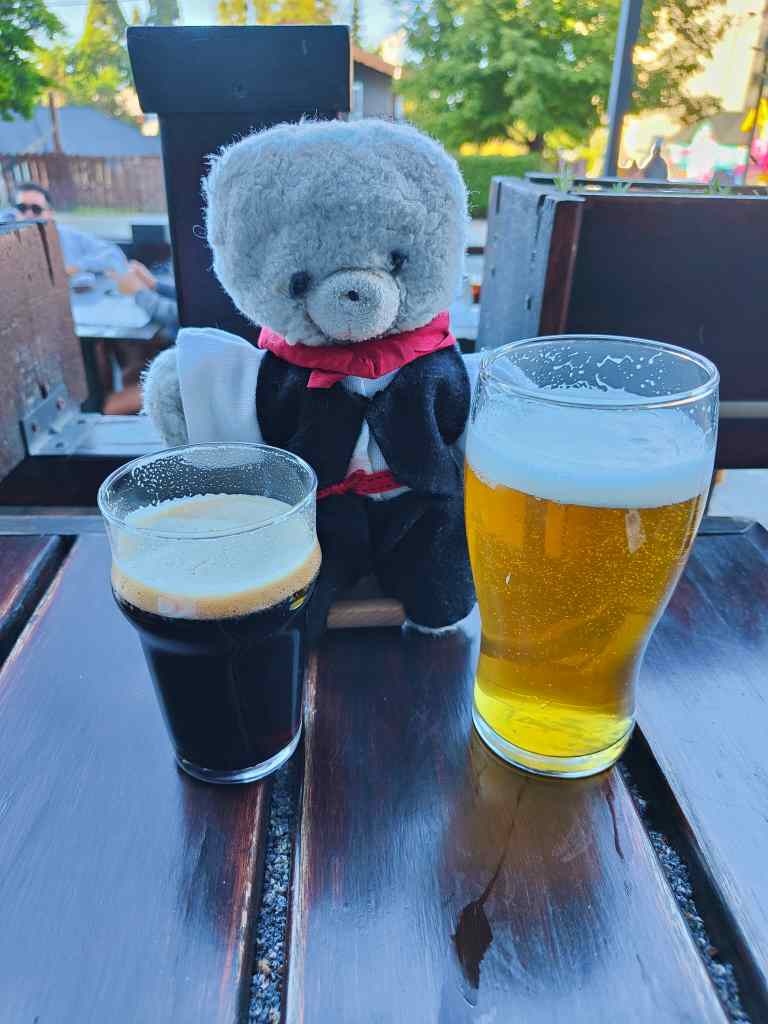
In the afternoon, I relaxed and wrote my blog, and set off to explore Bariloche. It felt like a European ski resort, with lots of cafes and shops catering to hikers and skiers – some of Argentina’s best ski slopes are a short drive away.  Bariloche also has lots of microbreweries serving craft beer. I tried the best-known one, called Manush. The beer was the best I had ever tasted – and remarkably cheap. 

Bariloche has some of the best beer I have ever tasted

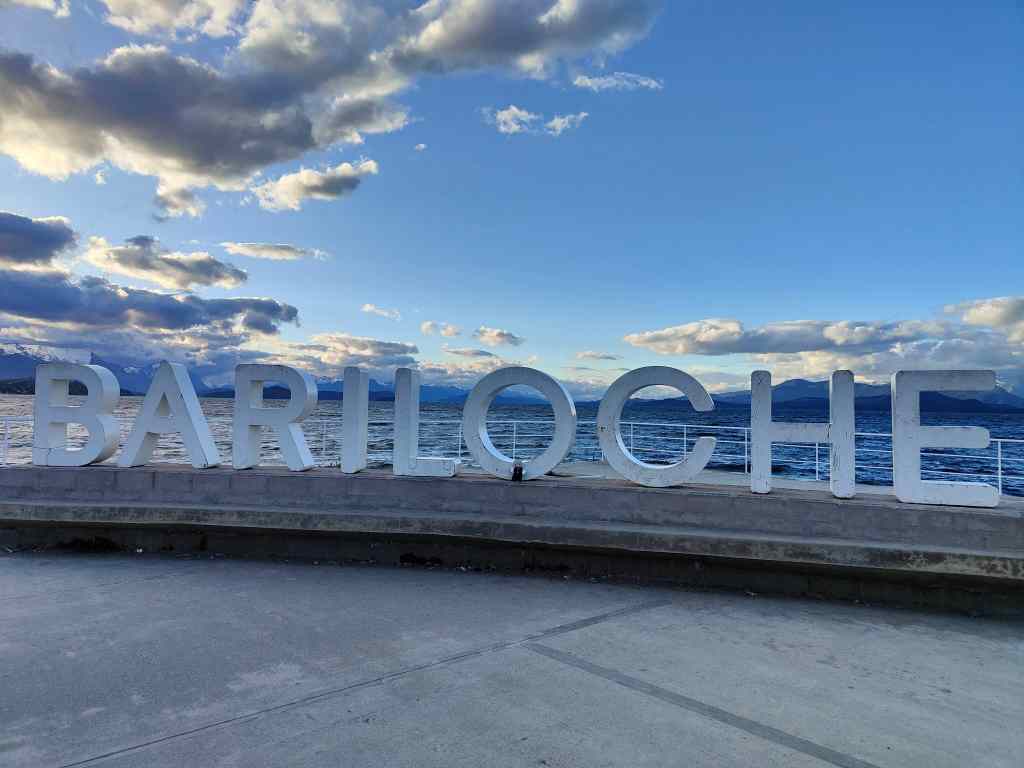
I tried the IPA and chocolate stout, and then  left to try Bariloche’s next specialty – chocolate. The town has lots of shops selling a bewildering variety of the stuff, and even a chocolate museum. I stocked up with a 200g assortment, and then headed to the waterfront. Bariloche is located on a pretty lake, with bright blue water.

Bariloche Waterfront

The sun was setting and suddenly it got very cold. After the 30-35C temperatures of Mendoza, it was a shock to suddenly find temperatures of 5 to 10C – Bariloche is a long way further south, and at high altitude. The cold drove me back to the flat where I spent a quiet evening before settling down to sleep – or so I thought. My room looked out onto the main plaza, which some people (visitors? locals?) used as a race track……..all through the night. The thin walls of my ancient building allowed me to follow every rev of an engine or crunch of gears.

When I got up in the morning, after a very poor night’s sleep, I resolved to write off my investment in my AirBnb flat and booked a new place to stay – outside of town, to have some peace. Before checking in, I picked up my hire car and set off to explore the “cuircuito chico” – a road trip to the west of Bariloche. The scenery was pretty – a bright blue lakes, mountains, and lots of golden broom flowers.

On the road leaving Bariloche
Views from the Circuito Chico

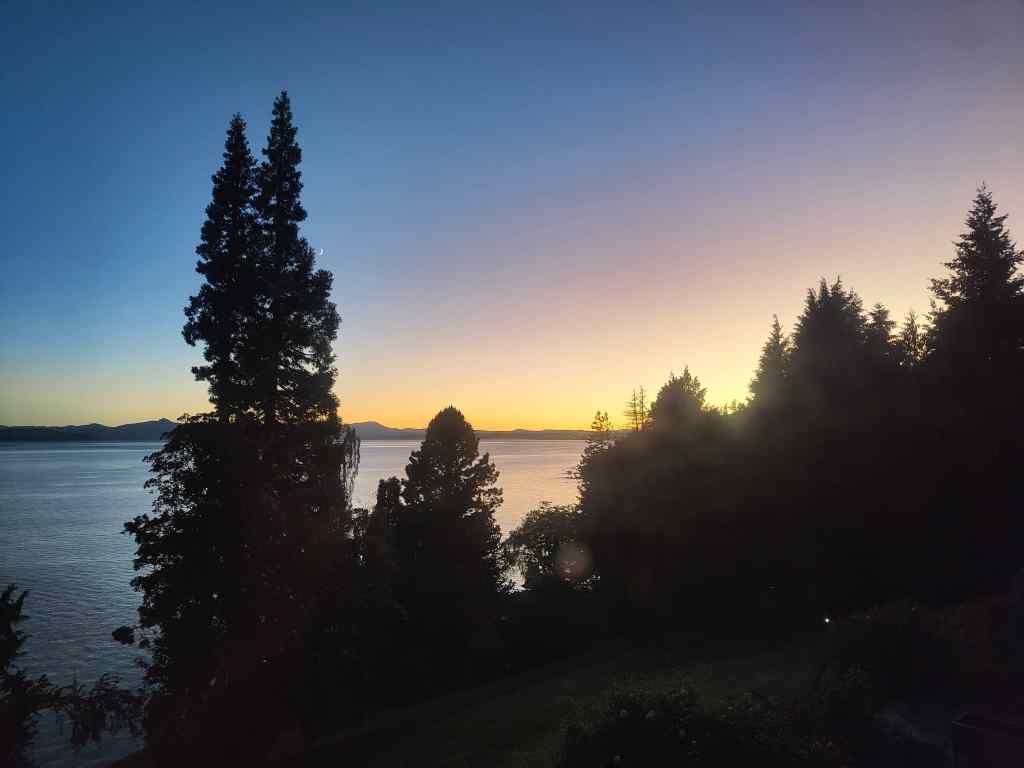
On the way back, I stopped at my hotel. It was a great place, set on the lake with a beach of black volcanic sand and its own waterfall. My room had a 180-degree view of lake and mountains. In the restaurant they served local trout (fish, finally!) with some good local white wine.  

Sunrise from my hotel room in Bariloche

I slept really well in my new, quite, luxurious room and woke up refreshed to drive the Route of the Seven Lakes, one of the famous scenic drives in Argentina. I set off early to avoid the traffic and was soon cruising along the now familiar RN40……….

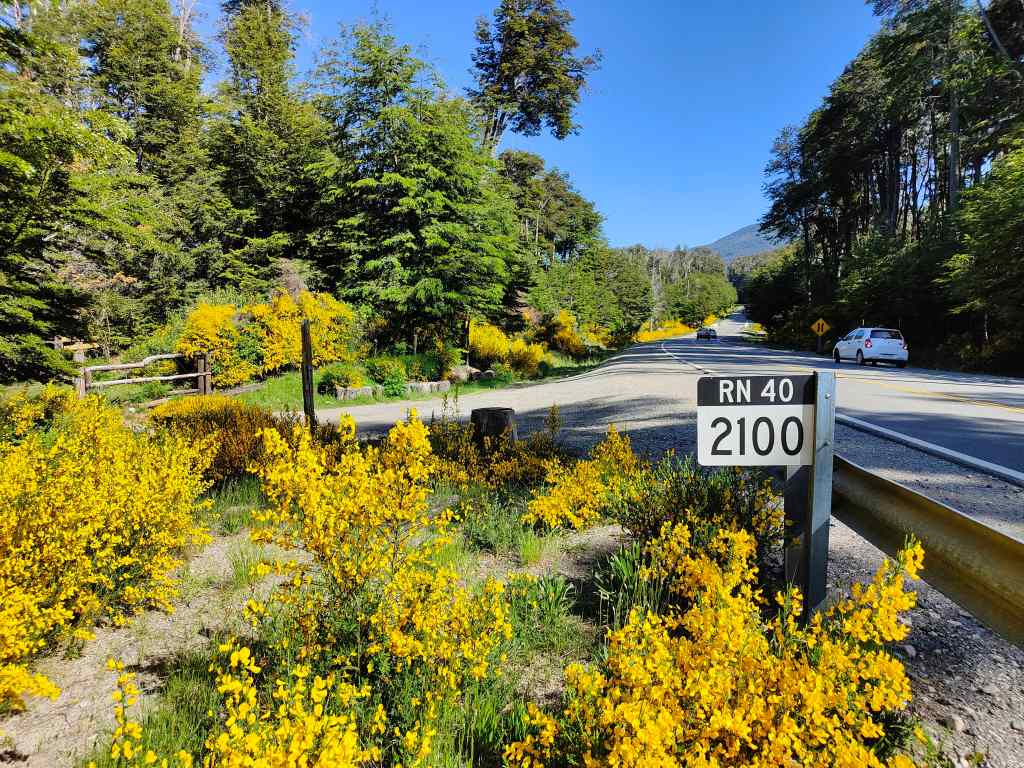
My good friend the RN40. Now only 2100km to Tierra Del Fuego!

………..past some sublime countryside……….

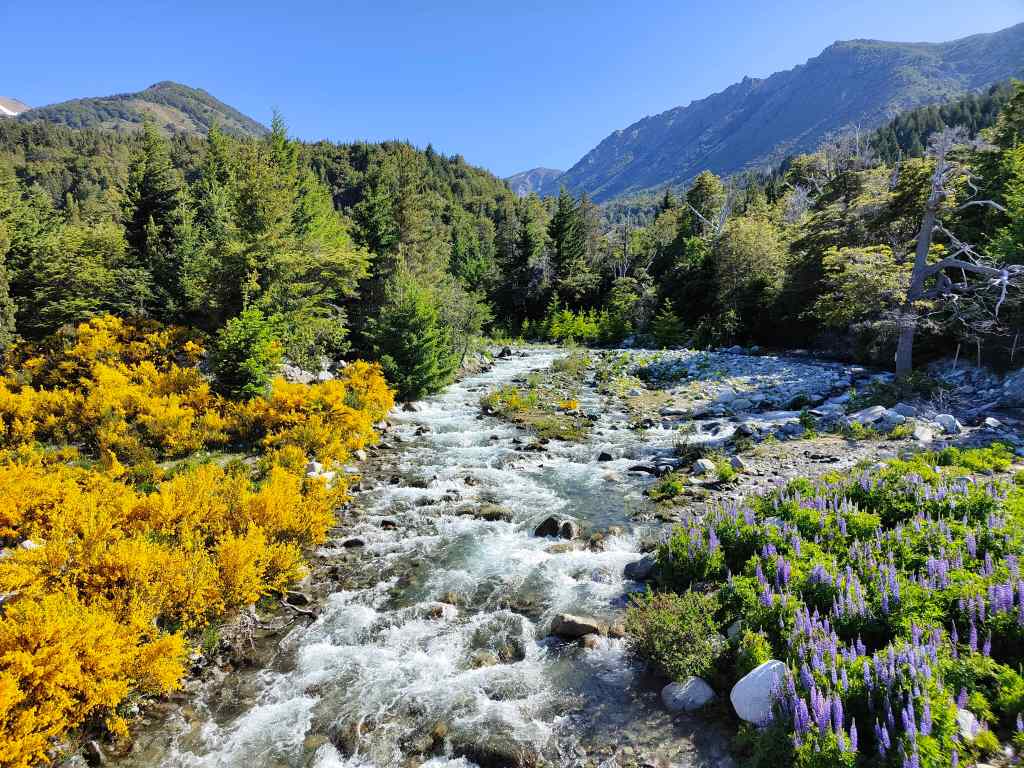
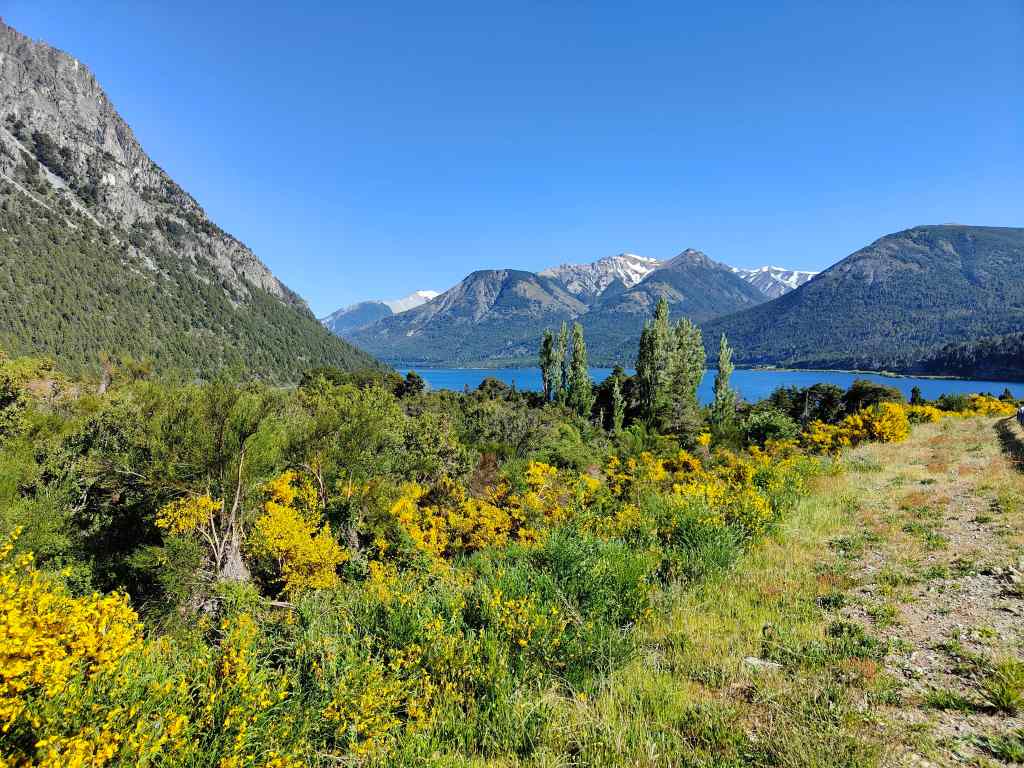
Views from the Route of the Seven Lakes

I was making good progress and was even thinking I could extend my trip to Lanin volcano further north, when I arrived at the town of Villa La Angostura, where the main road had just been blocked for a bicycle race. Total chaos ensued. Race marshals waved the oncoming traffic up dusty side streets. We all arrived at a junction blocked by a grumpy policeman. I got out to ask how long the road would be blocked. At first, the policeman tried to ignore me; when I persisted, he finally told me that the road would be closed for three hours. I turned around and wound my way up and down more dusty tracks in attempt to find another way through, but there was none. Without warning, the authorities had completely blocked the main road running through the region for several hours, to the anger of both local drivers and tourists like me. I was very annoyed; had the road closure been indicated back at Bariloche, I could have done my circuit the other way round and avoided the mess.

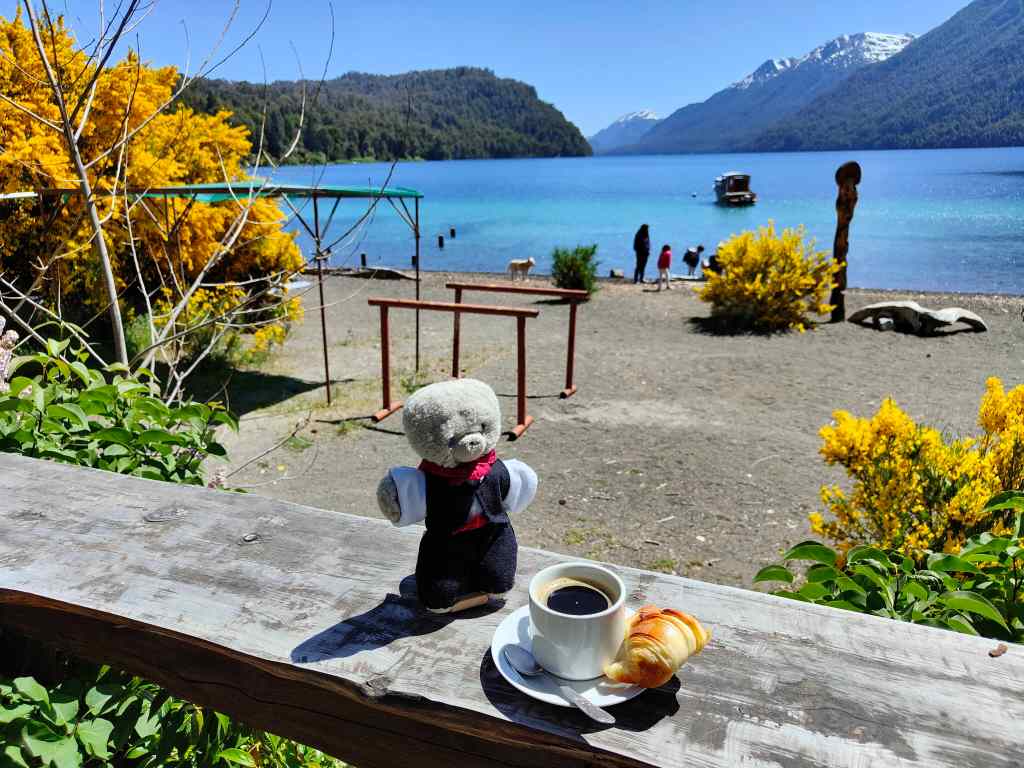
The situation brought one unexpected bonus though. In my search for a way through, I found a very scenic spot – a pretty lake with a beach, shack selling coffee and a short river leading to another lake, which was apparently famous for its fly fishing.

Calming down after a monster traffic jam in Villa La Angostura
The Villa La Angostura region holds many trout fishing records

After drinking some coffee and calming down, I decided to abandon my original plan. I headed back towards Bariloche and took a different road (the RN 237) heading north, which turned out to be very beautiful – with quite different scenery to my original route.  

View from the RN237
One of these rocks is “God’s finger”. Which rock – or which finger – I know not.

I turned off the main road onto a track leading to the village of Villa Traful, which had an impossibly scenic setting and restaurants selling good coffee……but no wifi or phone reception to allow me to check the traffic situation at Villa La Angosgtura.

On the way to Villa Traful

I drove on and reached the RN40 and the Route of the Seven Lakes again, at a point about 30km north of where I had been blocked in the morning. I was relieved to see many trucks go past loaded with bicycles – meaning that the race must have finished, so felt it was safe to head back south to home.

That evening I had dinner in a “parilla” – a place serving grilled meat, and one of Argentina’s culinary highlights. The meat – lamb and beef – was indeed excellent. After I had finished several steaks, they even asked if I wanted more. However, contrary to popular conceptions, bears are omnivores rather than pure carnivores, and I (unlike some of the human diners) had had enough.

In a Bariloche “Parilla”

It had been a strange day. I had not managed to drive the full length of the Route of the Seven Lakes, but had found two good consolation prizes – the quiet, pretty lake with the fly fishermen, and the spectacular scenery of the RN 237, whose winding river valley and sculpted rocks had made a welcome change to the parade of pretty blue lakes and yellow flowers.

Next Post: Puerto Varas, Chile

Previous Post: Aconcagua

Aconcagua – the Summit of the Americas

My plan today was simple – to drive from Mendoza to the Aconcagua National Park to see the highest mountain in the Americas. It was a three-hour drive away, along the RN7 highway that continues all the way to Santiago in Chile. The road led west into the Andes, first passing through the foothills….

Approaching the Andes
In the Foothills

As I climbed, the scenery became increasingly rugged and spectacular……..

Reaching the high mountain

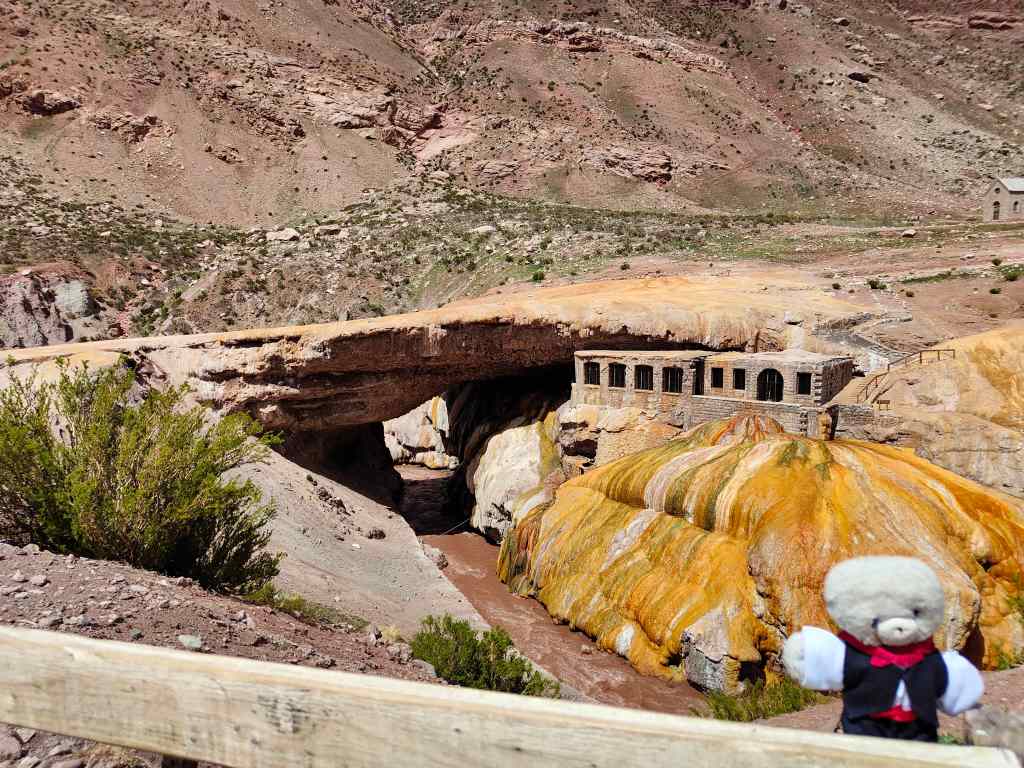
The road was beautiful almost all the away along its 190km length. I am a small teddy, but I felt much smaller as I contemplated the majestic landscapes. Shortly before my destination, there is a quirky natural rock bridge called Puente del Inca that I visited briefly. It was popular with people taking a break from the long drive from Mendoza to Santiago in Chile.

Puerta del Inca

The entrance to Aconcagua National Park was just before the Chilean border. I found to my surprise that you needed to pre-register a visit on the internet. This must have been a new procedure, since it wasn’t mentioned in any of the websites I had seen or my guidebook. Luckily there was a small shop next to the park office, which had wifi (no mobile signal here!) and the friendly owner helped me navigate through the park authority’s registration website. The permit I bought allowed me to walk a short distance into the park to a point with a great view of the mountain – going in any further would require a very expensive climbing permit. The park ranger told me that the walk would take around 2 hours – especially for someone with little legs like me. However, his advice was based on visitors who were not acclimatised to the 3000m altitude; since I had already spent several days in mountains, I could walk much faster and got there in under an hour. I smugly passed several other walkers, who were struggling for breath.

On the way to Aconcagua
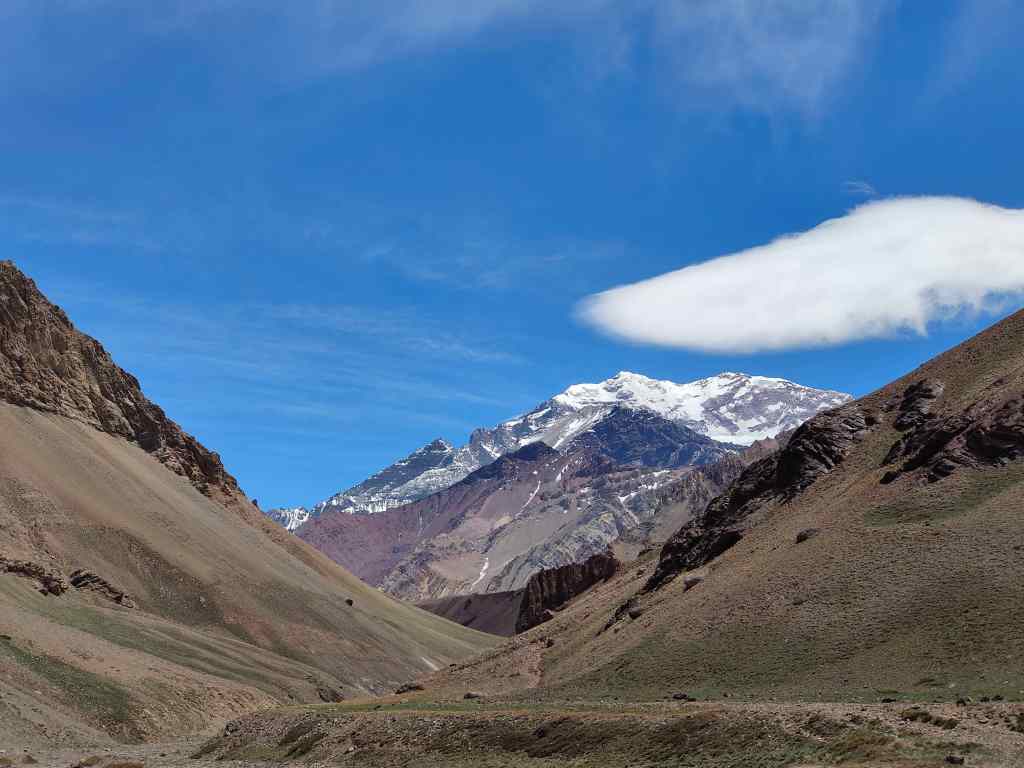
Aconcagua comes into view….
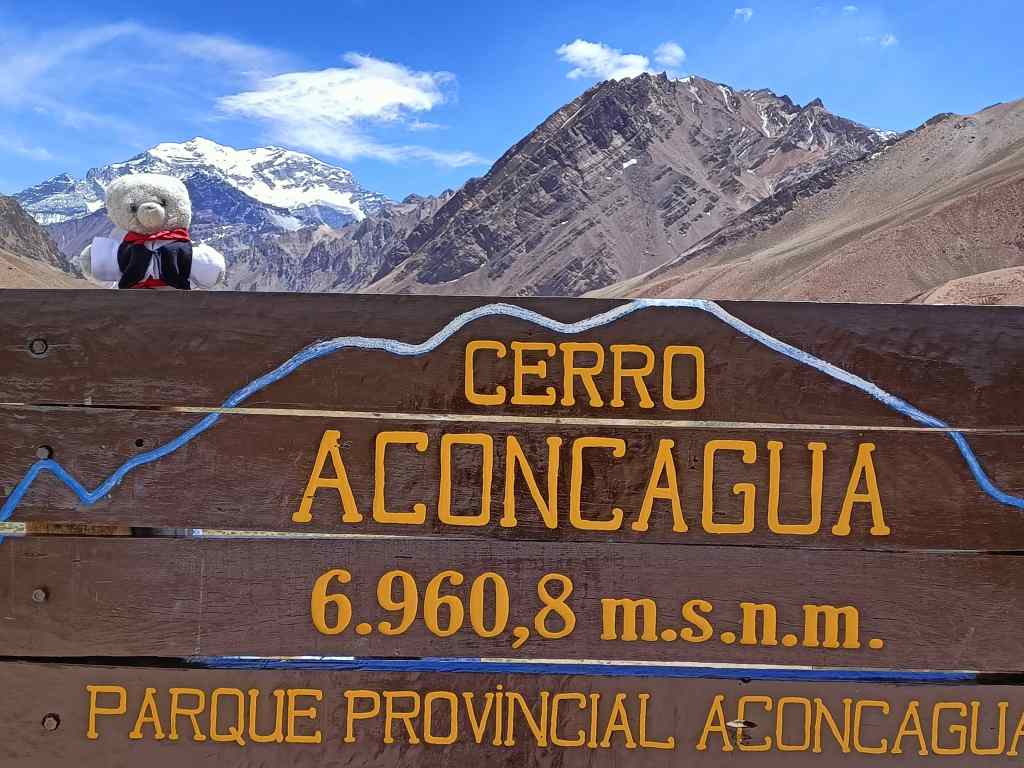
A selfie to prove I was there!

The mountain soon came into view. It is 6,960m tall (increasing by 2cm per year!) and easily the highest mountain in the Americas. Although it is very high, it is supposed to be technically an easy climb; I had been briefly tempted by this idea until I discovered that at least 10 days acclimatisation to extreme altitude is needed before attempting it.

I was lucky to have brilliant sunshine; as with any tall mountain, the top of Aconcagua is often covered in cloud. I soon reached the bridge that marked the end of the route for non-climbers. I stopped for half an hour to admire the view and met some new friends…….

The Magnificent Aconcagua
Aconcagua, Bear and Bear’s New Friends

The drive back was equally spectacular, giving a different perspective to the mind-blowing views I had seen on the way up.  

The road back from Aconcagua to Mendoza was just as impressive as the outward trip

I finally arrived in Mendoza, returned my hire car, and headed to Western Union for some more pesos. I was both lucky and unlucky – they just had enough money left in their branch to pay my latest transfer but had to resort to paying part of my 200,000 pesos with (a lot of) 100 peso notes. I left with all of my pockets filled with wads of cash.

It was now time for dinner. I was tired of eating meat and wanted to have fish for a change.  My guidebook had listed seafood or vegetarian restaurants for all the towns I had visited so far, but these recommendations had all closed! It seems that the life expectancy of a restaurant not serving meat is very short in Argentina. A long internet search revealed one (and only one) restaurant that specialised in seafood, so I headed there to have a nice paella.

More Mendoza Street Life

Back in my flat I collapsed into bed and fell fast asleep. I was very tired. So far, almost every day of my holiday had started early, finished late, and involved lots of driving. There was so much to do, and the never-ending display of beautiful landscapes was almost overpowering. It was getting harder and harder to write my blog. I resolved to take it a bit easier at my next destination, Bariloche in Argentina’s lake district.

Next Post: Bariloche

Previous Post: Mendoza

Mendoza – Argentina’s biggest wine region

From Cachi, I was thinking of driving along a large loop around to the south to visit the wine growing area of Cayafate, but after the long drive through the desert, I realised that I did not have time. So instead I retraced my steps to Salta airport along the same road I used when I came. It was another chance to absorb some brilliant mountain and desert scenery.

More mountain scenery near Cachi

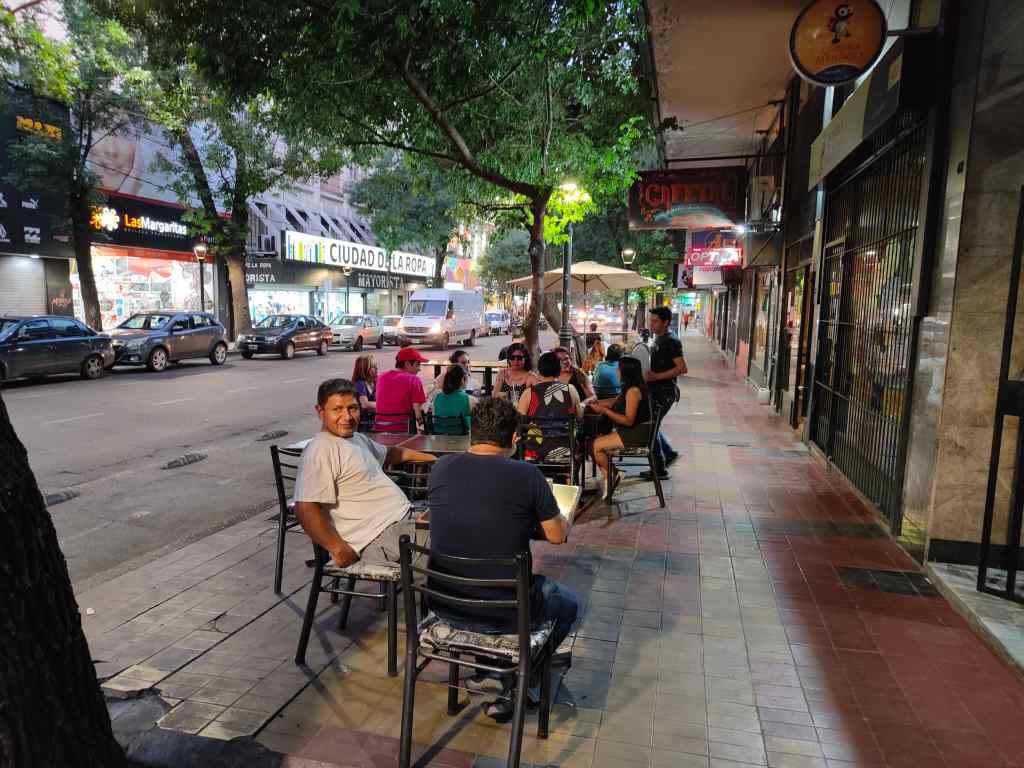
My flight left on time and I arrived in Mendoza in the early evening. I stayed in a quirky house that was 100-years old and still partially occupied by its friendly owner, who bombarded me with information about what to do in the city. Mendoza is a pleasant, rather laid-back city laid out along a grid with several pleasant parks and with lots of outdoor cafes and restaurants.

Mendoza Street Scene
One of Mendoza’s pleasant squares

In itself, it would be a nice place but not a major tourist destination. People come here for two things – the vineyards around the city and Aconagua National Park, a three-hour drive towards Chile into the mountains.

On my first day, I decided to check out the wine growing area. There are several to choose from. The closest to the city are Maipu (very close to the centre) or Luyan de Cuyo, where wine has been made for a hundred years. I chose to make a one hour drive to the Valle de Uco, where production only started in the 1990s.  The road first went along the busy and boring RN40, before turning off onto smaller provincial roads lined with trees and surrounded by vineyards and mountains.

Driving through the Uco Valley, near Mendoza

I decided to visit the Salentein estate, which was founded by a Dutch expat who fell in love with the area – the owners claimed he was the very first wine producer in Uco, although others also claim this title.The estate had a visitor centre with restaurant and art gallery (it seems many of the estates invest in art), where I spend time before my tour started.

Many of the estates have art collections

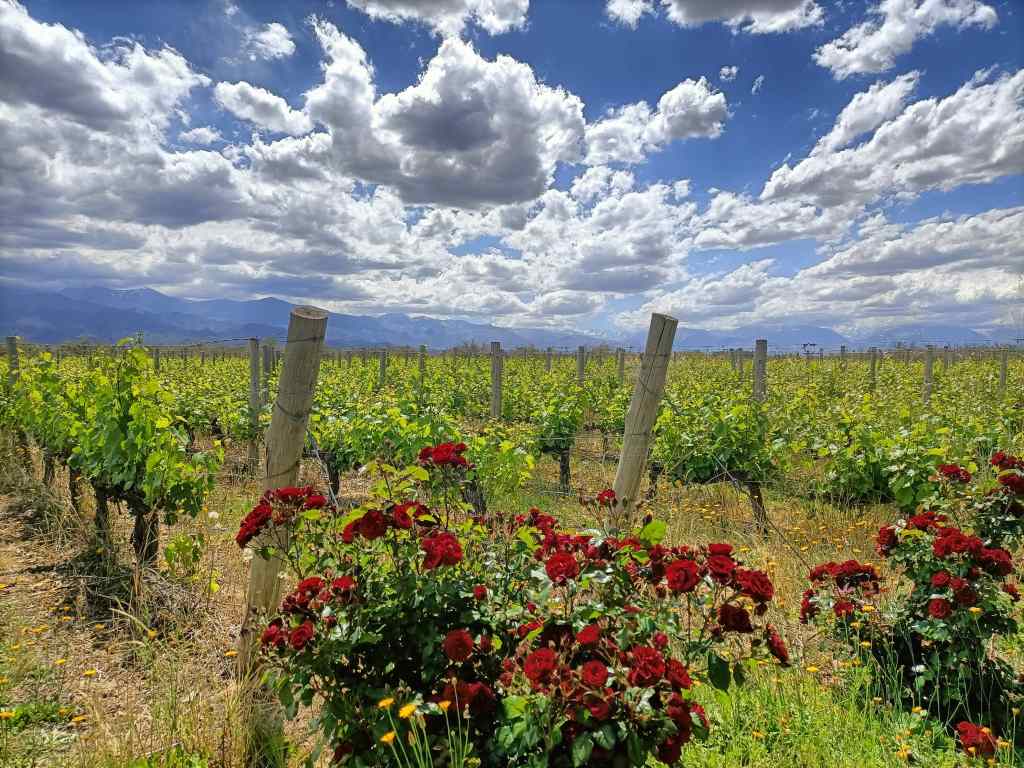
Outside of the visitor centre we were surrounded by vines and, in the distance, the Andean foothills.

Salentein Estate’s vineyards

The guide explained that the valley offered many different climates depending upon the altitude, with each area having its own types of grapes and styles of wine. We walked through the fields to a large, low, modern building where wines are fermented, then stored in oak barrels and bottled.

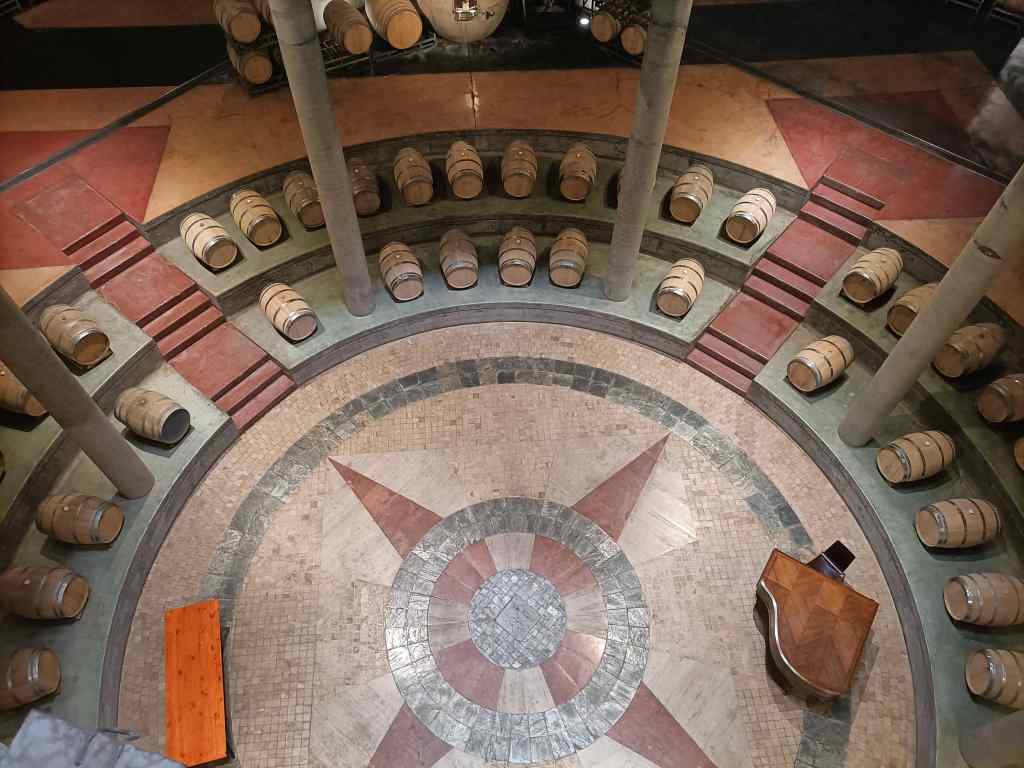
It was an interesting construction, designed to resemble a cathedral, with four wings leading off from a central area where wine-tasting concerts are performed. Most of the structure was underground, and the total volume was much bigger than its looked from the outside.

Inside the Salentein Estate “wine cathedral”

It was hot outside – maybe 30C – but inside, the temperature was pleasantly cool. This was achieved naturally through clever ventilation and without air-conditioning. There was a very pleasant, almost overpowering smell of wine permeating the cool air.

Fermentation in Steel Vats….
First maturation in wooden barrels
Further maturation in smaller barrels, Salentein Estate
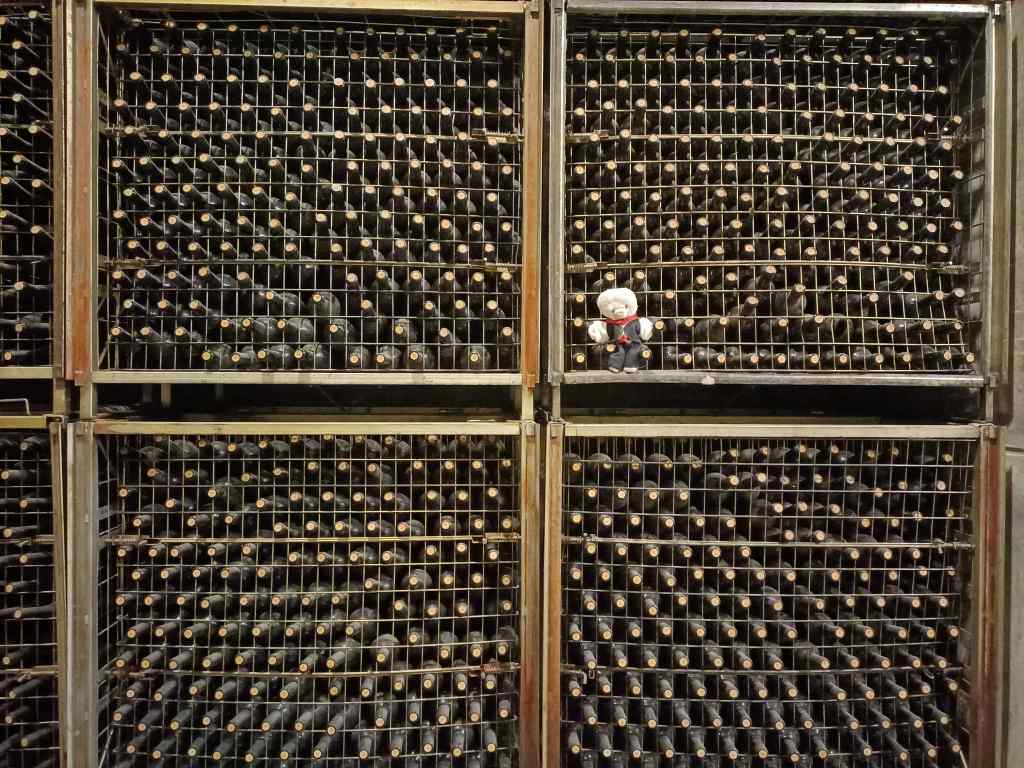
Storage of bottles…

After visiting the various steps in the wine-producing process it was the time everyone had been waiting for – tasting! The estate offered some of their best wines showing the different styles they could produce.
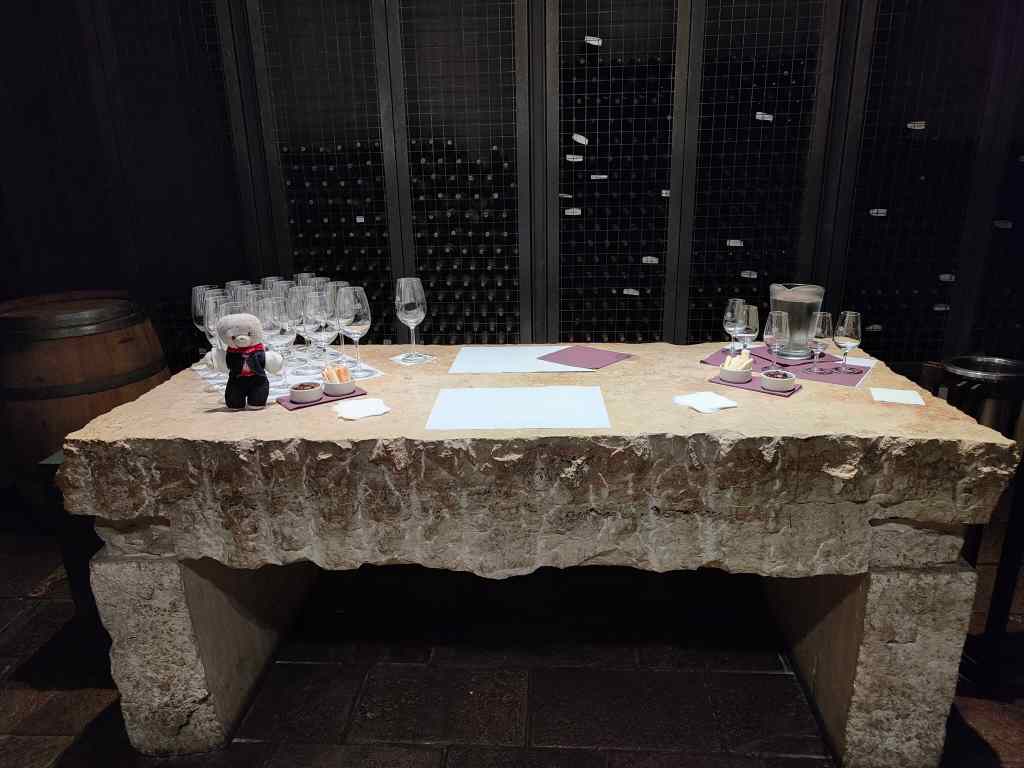
Tasting at the Salentein Estate, near Mendoza! Before….
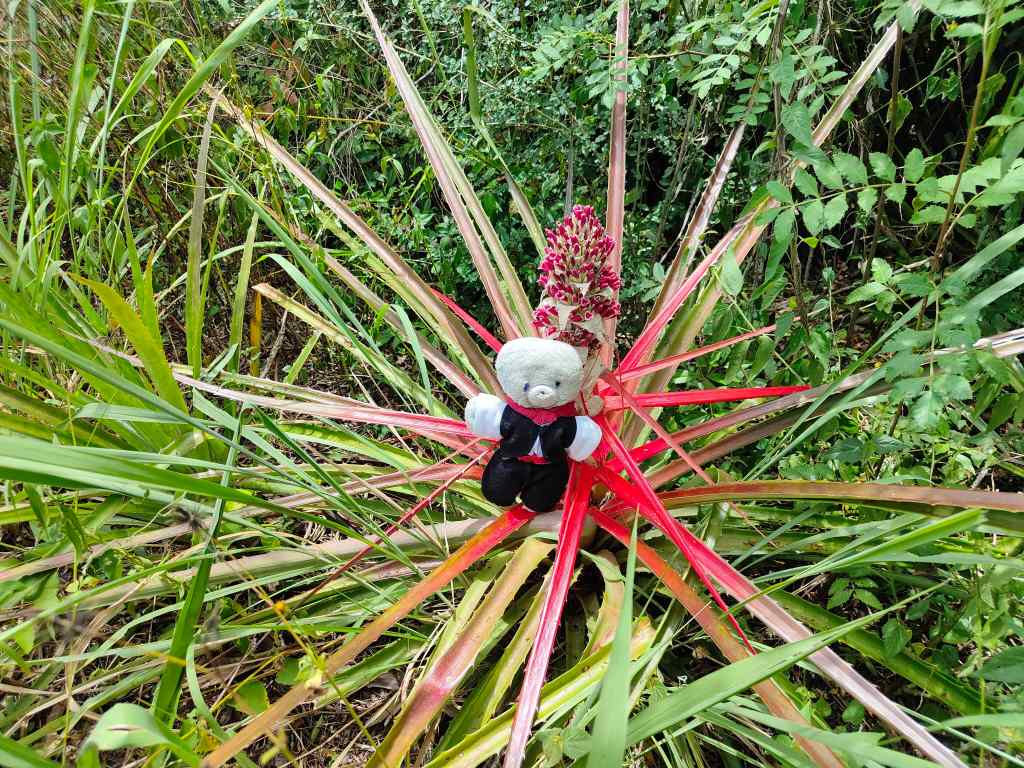
….after

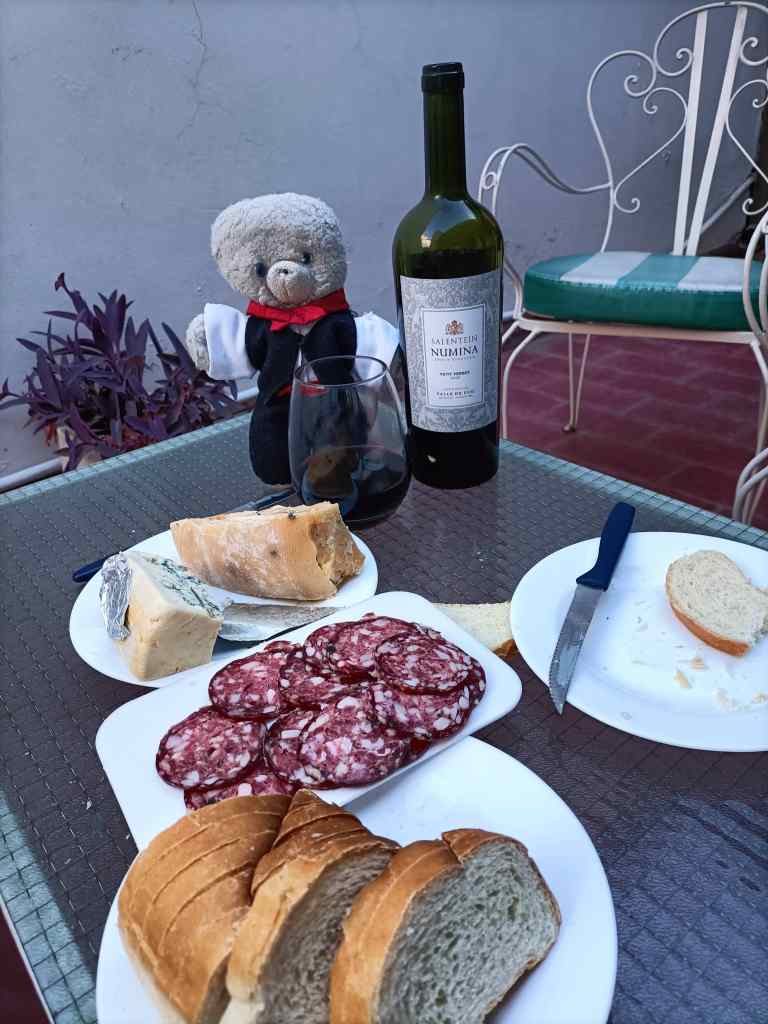
I am very happy that I had invited my editorial assistant to join me on the tour; it meant that I could drink, whilst my driver-assistant had to taste and spit. After the tasting, we were of course invited to visit the shop. I chose to buy a bottle of Petit Verdot, a grape usually found in blends but here offered on its own. Back in my house in Mendoza I enjoyed my purchase with some sausage and cheese in my private patio. A nice way to end a day devoted to wine.

Dinner in my house in Mendoza

Next Post: Aconcagua

Previous Post: Cachi

Blog at WordPress.com.

Up ↑